Cup Final was highlight for Irish rookie Gary Howlett

HowlettGARY HOWLETT is probably the least well remembered player of Brighton’s 1983 FA Cup Final side.
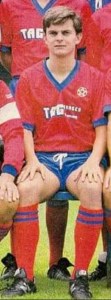
There were plenty of other characters, goalscorers and headline makers to detract from the contribution of a quiet lad from Dublin who almost sneaked into the side under the radar.

That Wembley appearance was only his 11th senior appearance in the Albion first team. Can you imagine?

And as the history books now tell us, he actually only made 26 more appearances for the Seagulls before being transferred to Bournemouth.

Born in Dublin on 2 April 1963, Howlett’s football career began at the famous Dublin-based Home Farm club, which produced dozens of footballers who went on to make names for themselves in England and Ireland; players like Paddy Mulligan, Mick Martin and Ronnie Whelan.

Howlett followed suit and had Manchester United and Coventry City keen to sign him. He chose Coventry because manager Gordon Milne made him feel more welcome. Unfortunately, just when he thought he had the chance of a first team breakthrough, Milne was sacked and his replacement Dave Sexton let him go as part of a cost-cutting measure that saw a dozen players leave the club.

In May 1982, he was back home in Dublin watching the FA Cup Final between Spurs and QPR on TV. Not in his wildest dreams did he imagine just a year later he would be playing in what was then a showpiece occasion watched by a worldwide audience.

Coventry’s youth team manager, John Sillett, had tipped off Mike Bailey about Howlett’s availability and the Albion took him on. Howlett was soon involved in first team training and believed he was on the verge of making the team away at Coventry, of all places, in early December 1982. But Bailey was sacked and it wasn’t until the beginning of March that Howlett finally made the step up.

He was a non-playing substitute for successive away games against Swansea City and West Ham and then, on 22 March 1983, newly-appointed manager Jimmy Melia gave him his first start, at home to Liverpool. And what a debut! The youngster scored as the Seagulls held the league leaders to a 2-2 draw.

With fellow Irishman Gerry Ryan sidelined by injury, Howlett kept his place in the team for a couple more games, sat out two, and then returned to the starting line-up.

Because Ryan was not 100 per cent fit, it was Howlett who got the nod for the FA Cup semi final match against Sheffield Wednesday. He then retained his place for the remaining six league games before being picked for the Cup Final itself.

That momentous match on 23 May 1983 was only 13 minutes old when the young Dubliner made a telling contribution to the game.

It was his chipped diagonal pass over Manchester United centre back Kevin Moran that found Gordon Smith, who arched a header past Gary Bailey to put the Seagulls in dreamland.

Howlett told the press after the match: “I saw Gordon at the back of the goal and just dipped it over Moran.

“I was dying to do something good out there and when the goal came I couldn’t believe it.”

Howlett told the Argus he wasn’t overawed by the occasion but had felt nervous when the national anthem was played.

“Until then all the lads were laughing and joking. It was a great atmosphere beforehand – very relaxed,” he said.

With Albion snatching a replay, Howlett, aged just 20, got to play on the hallowed turf a second time five days later, thus getting the sort of opportunity that eludes the vast majority of players throughout their entire careers.

He was subbed off on 74 minutes (Ryan replacing him) but the game was dead and buried by then anyway.

For Gary Stevens, that Cup Final was the stepping stone to a glittering career. Unfortunately for Howlett, it was the pinnacle and his career never subsequently reached such heights.

Interestingly, in a matchday programme interview with Spencer Vignes in 2004, Howlett reflected that he should have worked harder to ensure he built on that early success.

“Gary Stevens was only a year older than me. After the cup final, he knuckled down and said ‘I want more of this’. I just thought it was going to happen naturally. I didn’t realise I was going to have to work at it.

“That’s the difference between the likes of me and the real pros, people like Roy Keane. Nothing will get in their way.”

Only five years after those two appearances at Wembley, Howlett was turning out in front of 2,500 crowds at York City’s Bootham Crescent.

There had been one brief bright spot, though, and that came when he represented his country.

On 3 June 1984, he earned a full international cap as a 55th minute substitute in a 1-0 win against China.

That Republic of Ireland team also included Brighton teammates Tony Grealish and Ryan. Mick McCarthy was in central defence and the side was captained by Frank Stapleton.

In the season leading up to that, Howlett managed just 17 appearances, plus two as sub, and in the first part of the 1984-85 season he appeared just six times.

In December 1984, Melia’s replacement, Chris Cattlin, sold Howlett for £15,000 to the then Division 3 Bournemouth, where Harry Redknapp was the manager.

Among his teammates at Dean Court were future multi-club manager Tony Pulis and the much-travelled striker Steve Claridge.

Howlett spent four years with the Cherries, making 60 appearances, although he said he was never the same player after damaging his knee ligaments. In his final year, he was sent out on loan to Aldershot and Chester City. At Aldershot, former Seagull Michael Ring was among his temporary teammates.

Howlett at Aldershot

In January 1988, he made a permanent move to York City, and in three years playing in Division Four with the Minstermen, Howlett played a total of 119 games and contributed 13 goals.

He left them in 1991 and went back to Ireland to play for Shelbourne. He also played for Crusaders and was on the coaching staff of Bohemian FC.

Howlett spent nine seasons as manager of Drumcondra in the Leinster Senior League, before switching to their rivals Killester United in 2016.

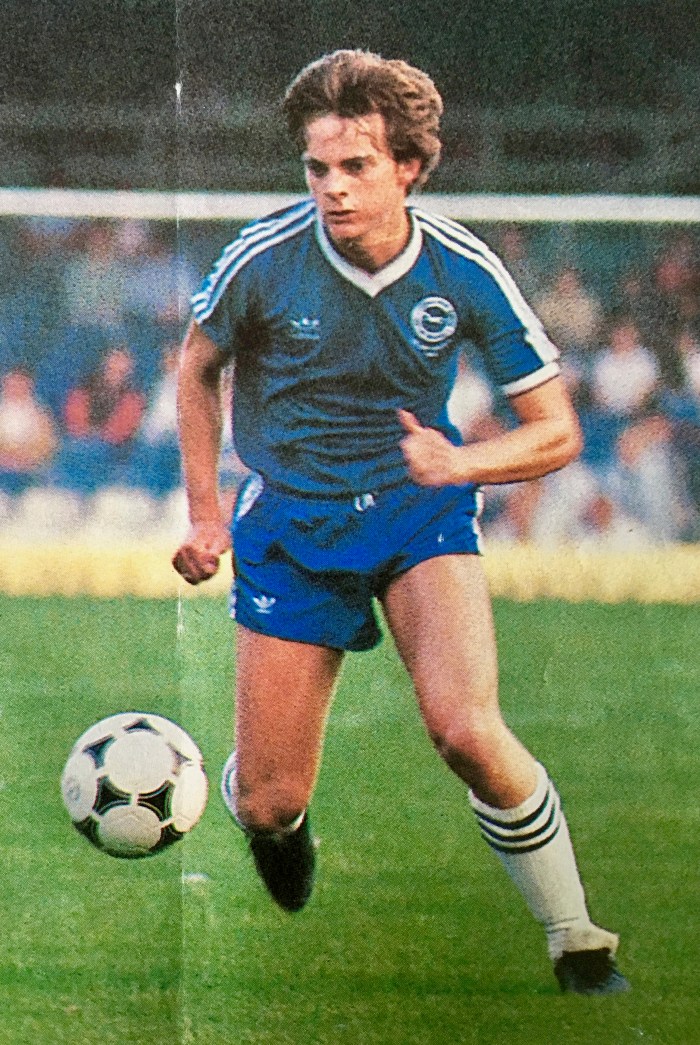
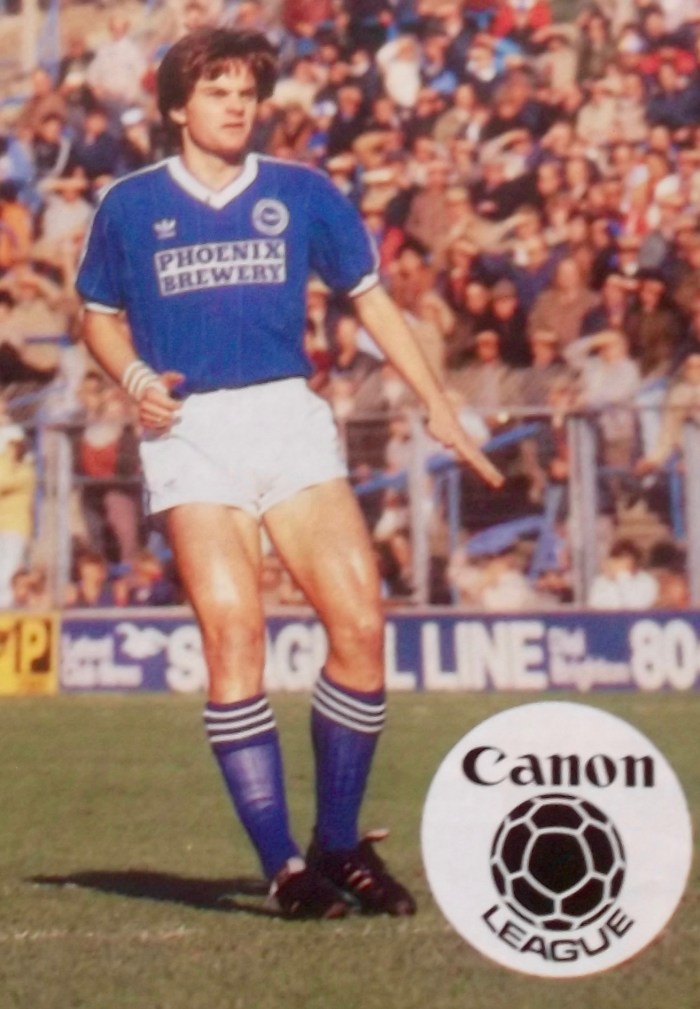
1 howlett2 howlett prog cover3 Howlett cooks by Tony Norman4 howlett now

  • Pictures show Gary Howlett’s entry in the Cup Final programme, on a matchday programme cover, Tony Norman’s shot of him cooking at home and a screen grab of him following a recent managerial appointment. Also, a montage of other headlines and action pictures.

Bertie Lutton’s memorable Easter goal at Bournemouth

STANDING amongst the writhing crush of Albion fans squeezed in behind the goal at Dean Court on the afternoon of Easter Saturday 1972, I struggled to get a clear view of the frenzied action on the pitch.

Brighton equalised, that much was evident from the eruption and movement of the swaying masses, but who applied the finishing touch was anybody’s guess as far as I was concerned.

I later discovered it was none other than Bertie Lutton, the £5,000 Northern Irish international winger signed only three weeks previously from Wolverhampton Wanderers.

Lutton had got himself into the penalty area and with a centre forward-like instinct headed Peter O’Sullivan’s cross past Fred Davies in the Bournemouth goal to cancel out the lead Ted MacDougall** had given the promotion-chasing Cherries.

It was Lutton’s second Albion goal in two days. On Good Friday at the Goldstone, he was on the scoresheet with Bert Murray and Ken Beamish as a bumper crowd of 27,513 (remember this was the third tier of English football) saw Albion beat Torquay United 3-1.

It’s difficult for modern day fans to contemplate but literally 24 hours later, the Albion had travelled nearly 100 miles west to take on Third Division promotion rivals Bournemouth and 22,540 fans crammed into the stadium.

In what was a classic game of two halves, the Cherries dominated the opening 45 minutes and took the lead through MacDougall, a prolific scorer of that period who went on to play for Manchester United, West Ham, Norwich City and Scotland.

Albion threw everything at them after the break and Lutton’s equaliser was fully deserved on the balance of play in the second half.

The goal was enough to keep him in the side for the following three games. After that he reverted to the bench to the end of the season, but was on the pitch, having replaced Kit Napier, when the whistle blew at the end of the 1-1 Goldstone draw with Rochdale that earned Albion promotion as runners up behind Aston Villa…..with Bournemouth three points behind in third place (there were no play-offs in those days).

Raising a glass of promotion-winning champagne in the dressing room with his Brighton teammates after that game must have felt good, but that Dean Court moment was probably as good as it got for the blond-haired Ulsterman in his time on the south coast.

Born in Banbridge, County Down, on 13 July 1950, Bertie’s brief footballing career began with his hometown club, Banbridge Town, and it’s reported just £50 exchanged hands to take him to then English elite side Wolves in 1967.Lutton WWFC

At a time when Wolves were blessed with some outstanding players like Derek Dougan, Hugh Curran, Dave Wagstaffe, Jim McCalliog and Mike Bailey, Bertie managed just 25 matches for Wolves between 1967 and 1971.

Brighton manager Pat Saward, nicknamed The Loan Ranger because of the number of players who he brought in on loan, first acquired Bertie’s services on a temporary basis between September and November in 1971.

He made his debut in a 2-0 defeat at Aston Villa and scored twice in seven games before returning to his parent club.

Then, on 9 March 1972, with the clock ticking down to what in those days was the 5pm transfer deadline, Saward completed a double transfer swoop, securing Lutton’s permanent signing for £5,000 together with Beamish from Tranmere for £25,000 (plus the surplus-to-requirements Alan Duffy).

A delighted Saward declared to Argus reporter John Vinicombe: “Bertie can do a job for us anywhere. This can’t be bad for us. At 21 and with two caps for Ireland he has a future and played very well for us while on loan.

“He can play right or left, up the middle, or midfield and Beamish can fit into a number of positions.”

Maybe it was the versatility Saward referred to that worked against Lutton. When Brighton began the 1972-73 season in the second tier, Lutton was still on the bench. He came on in three games, then got four successive starts before going back to the bench.

Albion were finding life tough at the higher level and although Saward switched things around and brought in new faces, the results went from bad to worse.

bertieluttonLutton started three games in December which all ended in defeat and the 3-0 Boxing Day reverse at Oxford United turned out to be his last appearance for the Albion.

It fell in the middle of a spell of 12 successive defeats during which only five goals were scored – and two of those were penalties, another an own goal!

Saward couldn’t put his finger on the reason for the slump and declared himself dismayed by the attitude of certain players: Lutton was one of three put on the transfer list.

Astonishingly he stepped up a division and went on loan to West Ham. He did well enough to secure a full-time switch to Upton Park and almost a year to the day of his arrival at the Goldstone, he was gone and the shrewd Saward turned a £10,000 profit on the enigmatic Irishman.

Those two caps Saward referred to had come while on Wolves’ books in April 1970 against Scotland and England in the old end-of-season Home International tournament. After his move to West Ham, he gained four more. Indeed, in the history books, he became the first Hammer ever to represent Northern Ireland. He came on as sub in three games in May 1973 and his final appearance was in November that year as a starter in a 1-1 draw away to Portugal.

His only goal for West Ham came in a 1-1 draw away to Derby County on 21 April 1973, where one of his teammates was the aforementioned MacDougall. Sadly Lutton’s West Ham career lasted just 12 games. He was forced to quit English football in 1974 at the age of just 23.

He emigrated to Australia and played semi-professional football in the Australian Soccer League for a number of years and settled in Melbourne.

The ‘where are they now’ website reveals he most recently worked as a supervisor for a logistics company.

  • The website wolvesheroes.com tracked down Lutton in March 2010 and reported a fascinating tale about what happened to a 1970 Mexico World Cup England shirt Bobby Moore had given his old West Ham teammate.

** MacDouGoal! the striker’s autobiography.

Pictures from my scrapbook show Bertie Lutton

  • celebrating a goal for the Albion
  • appearing for Wolves
  • heading the equaliser in the Easter Saturday draw at Bournemouth

3-lutton-stripes

luttoningoal

Lutton alongside George Best during Northern Ireland training
Lutton pictured in 2010 on wolvesheroes.com

Peter Grummitt a contender for Brighton’s best ever no.1

grummitt portraitONE OF the best goalkeepers I’ve ever seen play for Brighton and Hove Albion previously spent a decade with  Nottingham Forest and was an England under 23 international.

Peter Grummitt was outstanding between the sticks and racked up an impressive career total of more than 650 league and cup appearances, virtually half of them in what is now the Premiership.

Born in Bourne (the Lincolnshire market town) on 19 August 1942, he was the last line of defence for Forest between 1960 and 1969, and credited Forest reserve team coach Joe Mallett, a former Southampton stalwart as a player, as the biggest influence on his career.

GrumForestBut he also made 158 appearances for the Albion between 1974 and 1977. Signed on loan initially from Sheffield Wednesday in the wake of the famous 8-2 defeat to Bristol Rovers, he went on to be a key part of the side that was on the up in the mid ‘70s until injury cut short his career, albeit that he was in his mid 30s by then.
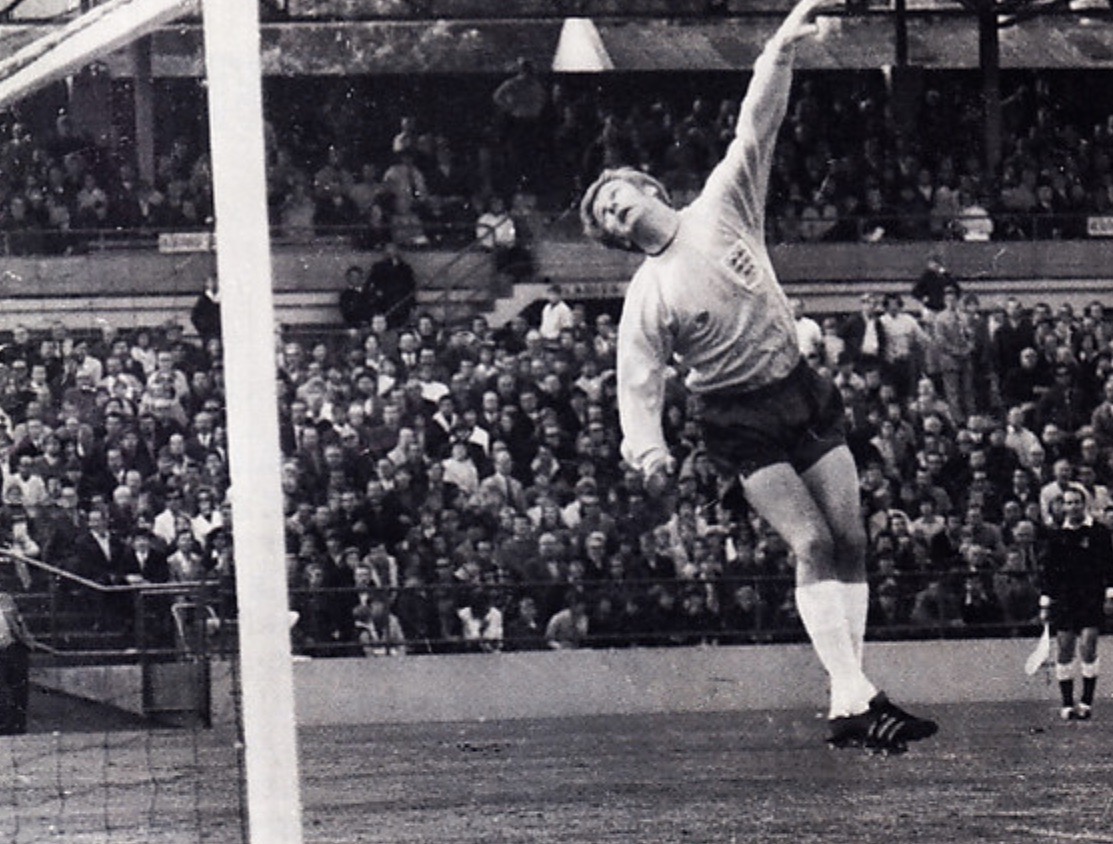
Grummitt headed south having been edged out as first choice at Wednesday, where he’d played 130 games after leaving the City Ground. He knew Brian Clough’s sidekick Peter Taylor well having played in the same Nottingham Taxis cricket team, and Taylor had called him to ask if he fancied the move.

Screenshot

“The fact Brighton were in the Third Division didn’t bother me at all, ” he said. “I knew what sort of managers they both were and I knew straight away that I wanted to go. I met Clough at a motorway service station, we had a chat, and I signed there and then.”

His arrival at the Goldstone was Clough and Taylor’s direct response to that horrendous home defeat to Rovers in front of the TV cameras.  Long-standing no.1 Brian Powney was axed and Grummitt was drafted in for the next game – but in his first match even he had to fish the ball out of his net four times as Tranmere ran out 4-1 winners.

As it turned out, Powney did reclaim the ‘keeper’s jersey when Grummitt was injured in a game against Shrewsbury in a challenge with Ricky Marlowe, who the following season became a teammate.

Looking back, though, the signing of a goalkeeper of Grummitt’s undoubted pedigree was very much the beginning of what was to become a memorable era in the club’s history.

Mrs Grummitt was pleased with the move too, as the matchday programme enlightened us. Jill said the couple had find a house in Saltdean with a sea view. “Both of us have always wanted to live by the sea,” she said.

Their mutual love of horses was also satisfied by Brighton’s closeness to Hickstead, where they were visitors to see shows. Additionally we learned: “Peter’s main interest outside football is golf. Apart from that he is really a home-bird. He’s a master at relaxing and can just switch off by settling fown for a night in front of the television.”

Handyman Grummitt had also concreted part of the garden at the house in Mannings Vale and built in stone fireplace in the lounge.

In the 1960s, he was a contemporary of Chelsea’s Peter Bonetti, and they vied for the number one spot for the England Under 23 team.

Grum EngGrummitt made his debut in a 5-2 win over the Netherlands in Rotterdam on 29 November 1961 when his teammates included future England World Cup winning captain Bobby Moore and future Brighton manager Alan Mullery.
While Bonetti reclaimed the shirt for the next seven matches, Grummitt was back between the sticks two years later when on 13 November 1963 he played in England’s 1-1 draw against Wales at Ashton Gate, Bristol. Those other West Ham World Cup winners, Martin Peters and Geoff Hurst, were in that under 23 line-up, together with Graham Cross, who would also later play for Brighton.

A fortnight later, Grummitt was again in goal when the national under 23s beat West Germany 4-1 at Anfield. But that was his last cap as Bonetti and Jim Montgomery (Sunderland) were selected ahead of him.

However, in 1971, Grummitt went on an end-of-season tour to Australia with an English FA squad that also included Barry Bridges (then of Millwall) and Dennis Mortimer (of Coventry at the time). The group played the Republic of Ireland in Dublin, drawing 1-1, before heading Down Under where they won all nine of the matches they played in various locations across a month.

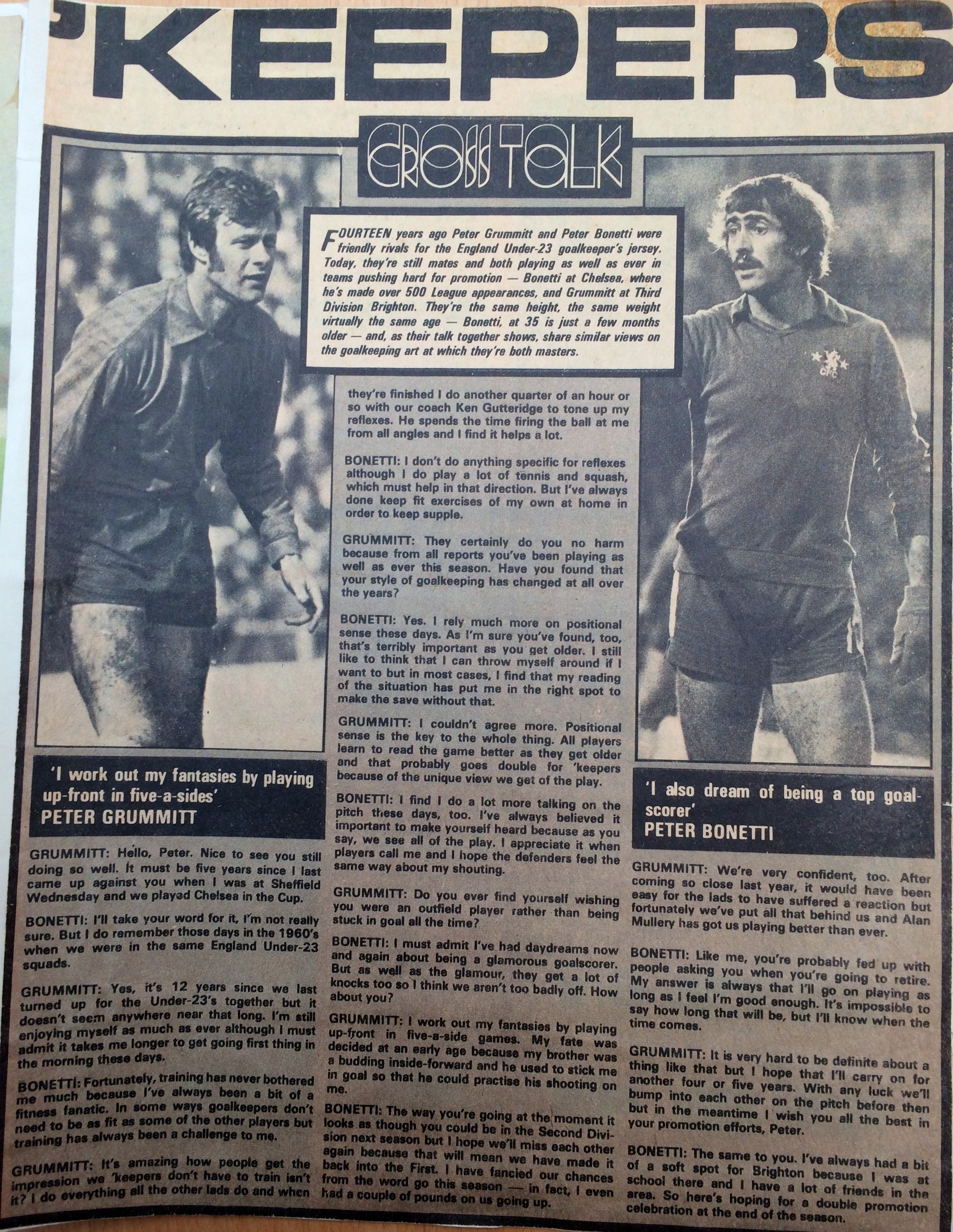
Looking back through my scrapbooks, I found a feature from Shoot! magazine in which Grummitt and Bonetti, by then both 35, exchanged views and memories.

Grummitt revealed how he ended up being a ‘keeper. “My fate was decided at an early age because my brother was a budding inside forward and he used to stick me in goal so that he could practice his shooting on me,” he told the magazine.

In the same article, Grummitt said he hoped he would be able to carry on for another four or five years. Sadly that wasn’t to be. His last game was against the same opponents he’d made his Brighton debut against, Tranmere, and he suffered a knee injury which, together with an arthritic hip, prevented him regaining full fitness and forced him to retire in December 1977.

Grummitt explained in an interview with Spencer Vignes in a 2015-16 matchday programme how his right knee completely let him down. “I’d been going down on the hard ground on my knees for years and I think it got to the point where it just couldn’t take any more,” he said. An operation he underwent involved drilling and scraping the knee to try to make it grow again.

“It did grow eventually, but it was too late for me to stay on at the club,” he said. “If I’d had nine months to recover, then maybe I’d have been okay.” He subsequently had a knee replacement.

Grummitt added: “I’d have liked another two or three years at Brighton, what with us starting to go places, but it wasn’t to be.”

On 2 May 1978, a testimonial for him took place between Albion and an Alan Mullery All Stars XI in front of a crowd of 5,615. In the match programme notes, Mullery admitted when he took over as manager he thought Grummitt might be too old to continue in the first team, but he pointed out: “Until he got his injury, he was as good a goalkeeper as there was in the country at that time.”

Describing him as “a first class goalkeeper”, Mullery praised Grummitt’s character and loyalty. “With players of Peter’s quality they are never forgotten. He has had a tremendous time here at the Goldstone and I certaiinly don’t think anyone will forget him.”

Vignes discovered in his interview how Grummitt used the proceeds from the testimonial to buy a newsagent’s shop in Queens Road, Brighton, as well as briefly managing Lewes and working as a youth coach at Worthing. He also had brief spells playing part-time for Worthing and Dover Athletic but eventually returned to the East Midlands, settling in Newark.

One small claim to fame on my part – I once played in the same team as Grummitt at Withdean Stadium.

Former Argus sports reporter Jamie Baker put together a team of Sussex sports writers for a game and, as one who reported on local football at the time, I was invited to play.

Imagine my surprise as we were getting changed before the match to discover sitting alongside us in the dressing room was Peter Grummitt, who Jamie had drafted in as a “ringer” to try to ensure at least our last line of defence was sound!

grum full

shoot keepers

Grummitt, now contending with dementia, on a visit to the City Ground, Nottingham, in May 2025