Wembley hero Liam Dickinson’s nomadic football journey

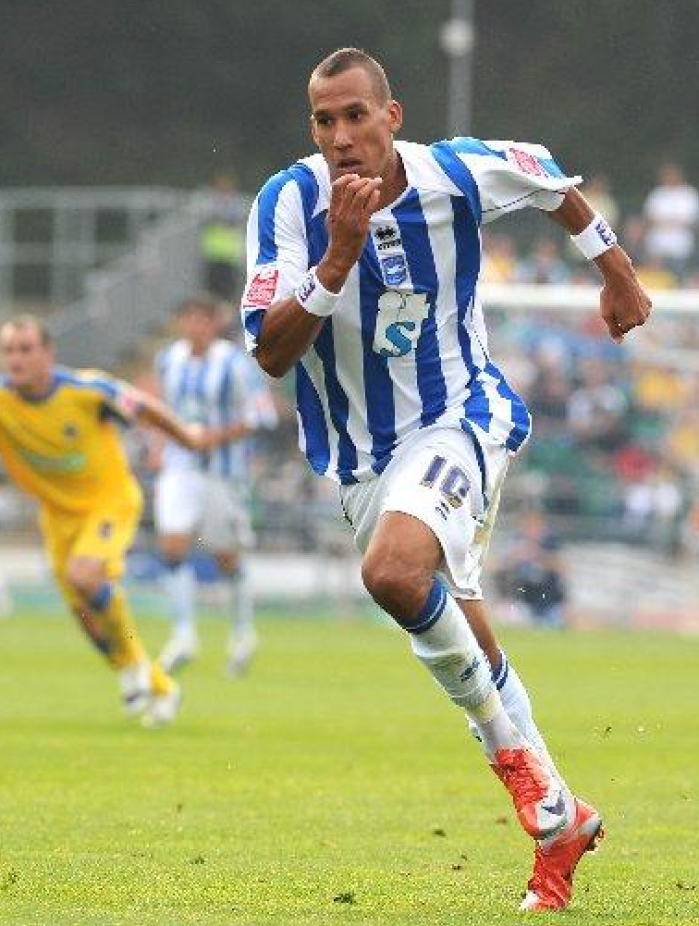
HE’D SCORED a decisive play-off final goal at Wembley for Stockport County but a subsequent £750,000 move to Derby County didn’t work out for Liam Dickinson and Brighton signed him for £300,000 only a year after the Rams had shelled out that big money.

Dickinson didn’t even get a game for the Rams, instead being sent out on loan to Huddersfield Town, Blackpool (where he’d begun his career in their school of excellence) and Leeds United.  He was a player who didn’t stay in the same place for long; in total he featured for 23 different clubs.

Like many before and since, changes of manager were often the cause of him moving on. At Derby, for instance, he was signed by Paul Jewell, recalled from his loan at Blackpool by caretaker manager Chris Hutchings and eventually let go by Nigel Clough.

It had been intended he’d join Leeds in January 2009 but the necessary paperwork didn’t arrive until 14 minutes after the deadline! Further discussions led to a revised deal, but the move was called off because he was injured. He eventually joined up with United in the second week of March and although he scored in a behind-closed-doors friendly against Sheffield United (1-1), he didn’t get on the scoresheet in eight League One games (four starts, four as a sub) under Simon Grayson.

His first start was in a 3-2 win at Crewe and he managed three successive starts, in a 2-2 draw at Leyton Orient, a 1-0 win over old club Stockport and a 1-0 defeat at Leicester but he was not involved in the end-of-season play-offs when Leeds (with Casper Ankergren in goal) lost out to Millwall in the semi-finals.

An enclave of former Stockport teammates – James Tunnicliffe, Jim McNulty, Gary Dicker and Craig Davies – helped Dickinson to choose Brighton as his next club

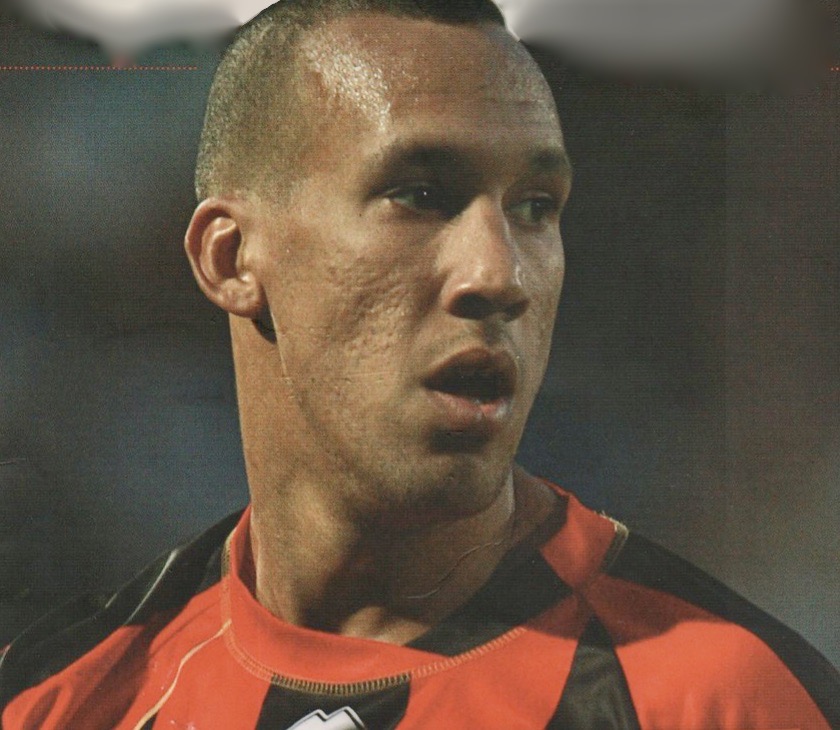
After Brighton boss Russell Slade welcomed the 6’4” forward to Withdean on a three-year contract, he told the club website: “He brings something different to the table. His goalscoring record is very good and he has a good goals-per-game ratio, and like one or two of the other signings I have made this summer, he is hungry to get his career back on track. I’m sure there is a lot more to come from him.”

He scored in his third and fourth games for the Albion, but both came in defeats against former clubs: the first in a 7-1 capitulation to Huddersfield and the next in a 4-2 defeat to Stockport.

He was on the scoresheet in the home 3-3 draw against Hartlepool (Nicky Forster scored Albion’s other two goals) that spelled the end of Slade’s tenure as manager. But it is what happened two days later that many will remember him for.

Unluckily for him, he was pictured carrying a seemingly comatosed young woman in his arms in the middle of Brighton at 1am. The Sun newspaper was covering a renowned student pub crawl ritual at the time and didn’t realise who they’d snapped.

Eagle-eyed Albion supporters did, though, and, after discussion about the incident on fans’ forum North Stand Chat, The Argus picked up the story, running an article headlined ‘Samaritan Brighton and Hove striker scores an own goal’.
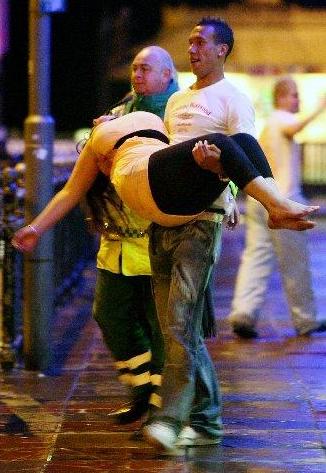
For his part, Dickinson told reporter Ben Parsons how he was on his way home after a meal out in the city when he helped a girl to a car waiting to pick her up.

He said it was simply a coincidence that he was helping the girl when the photos were taken, adding: “I saw two girls holding another girl up. She collapsed in front of us. Her mum or her auntie picked her up in a car. I picked the girl up and put her in the car.

“I didn’t want to just leave her. Anybody else would have done the same thing.”

Albion said they would deal with the matter internally. Dickinson was omitted from the squad for the following game, a 4-4 FA Cup draw with Wycombe Wanderers with caretaker manager Martin Hinshelwood in charge, but he was back in the fold for Gus Poyet’s first game as Slade’s replacement.

In the televised away game at Southampton, he went on as a sub for Forster in Albion’s 3-1 win at St Mary’s. Dan Harding, Dean Hammond and Adam Lallana were in the Saints side.

Dickinson got occasional starts under Poyet but more often than not was sent on as a sub to replace either Glenn Murray or Forster.

Given a start in the FA Cup second round win over Rushden and Diamonds, he scored twice, in the third and 86th minutes, as Albion edged the tie 3-2. He was preferred to Murray in a Boxing Day clash with Leyton Orient that finished goalless but, perhaps to prove a point, two days later the restored Murray hit four at Wycombe in a 5-2 Seagulls win.

Dickinson was back on familiar territory at Edgeley Park in January 2010, but only got a half an hour run-out as a sub against his old club (replacing another former County man in Dicker) as the game finished 1-1, Andrew Crofts salvaging a point with a 90th minute equaliser.

In a 1-1 draw at Leyton Orient, Dickinson started the game and, when he was denied a penalty, incandescent Poyet was sent from the dug-out for protesting.

“If you ask anyone, they will tell you it was a penalty and a red card,” Poyet maintained afterwards. “The referee is 10 yards away and he doesn’t give it. You’ve got a chance to score a penalty and it’s 2-0. It’s a different game.”

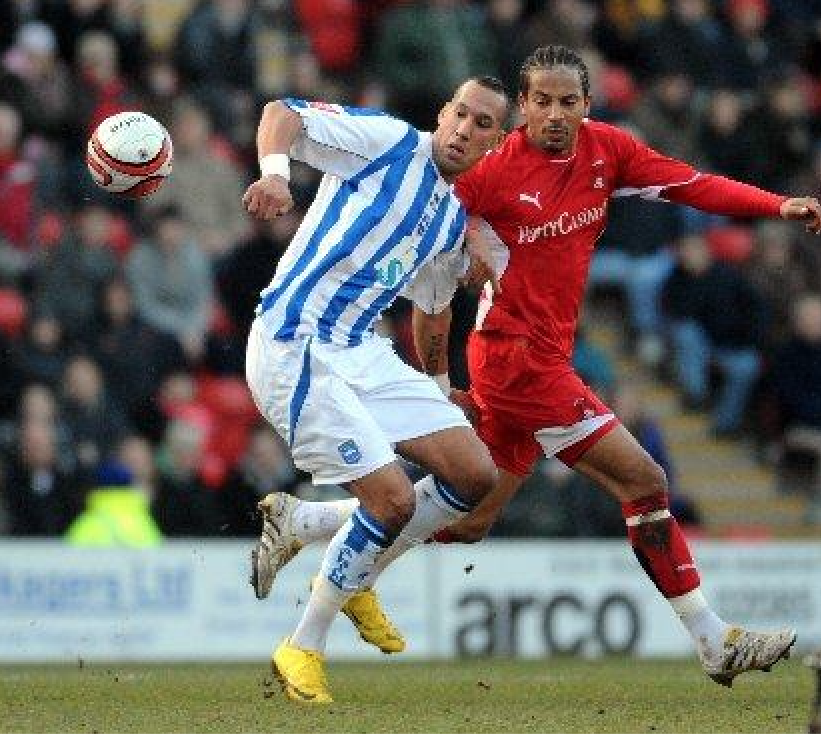
Dickinson took to the field against another of his former clubs in Huddersfield wearing distinctive ‘banana yellow’ boots. “I don’t like dull, boring colours. I like to brighten the pitch up a bit. I’ve had a bit of stick off the lads,” he told The Argus.

The striker, who’d scored six goals in 13 games for the Terriers while on loan, didn’t manage to get on the scoresheet and was replaced by Murray as the game petered out to a 0-0 draw.

At that stage, Dickinson was deputising for Forster who was out of favour with Poyet over a contract dispute.

As the Uruguayan began to bring in his own selections, such as on-loan Kazenga LuaLua, Dickinson chose to go on loan to Championship strugglers Peterborough United, who were managed by his former Stockport boss Jim Gannon. Dickinson scored three in nine games for Posh. On his return to Brighton, he was sold to Barnsley, who were in the Championship at the time, for reportedly half the fee paid out for him just a year earlier.

Tykes boss Mark Robins declared: “He is different to the strikers we have here already and will give us something else up front.

“He is only 24 and still has room for improvement. He has a decent scoring record both in the Championship and in the lower leagues.

“Liam fits in to what we are trying to do here both in terms of on the pitch and within our budget.”

But he made just one start, in a League Cup match, and three sub appearances in the league for Barnsley when his old Derby caretaker manager, Hutchings, took him on loan to Walsall. He didn’t find the net in seven League One games.

Next stop, from January to the end of the season, was Rochdale, the side against which he had scored that 2008 League Two play-off final winner.

But a goalless run of 14 games (seven starts and seven off the bench) prompted this comment from AtThePeake on fansnetwork.co.uk in 2021: “In terms of expectation versus reality, few signings can have disappointed Rochdale fans quite like the loan signing of Liam Dickinson in January 2011.”

The supporter wrote: “Dale were looking for someone to become the fulcrum of an attack that included Chris O’Grady drifting in from the left and the emerging Matt Done playing as a second striker.

“Having seen first-hand the threat Dickinson could be with his aerial prowess, strength and touch in front of goal, Dale fans were reasonably excited that the answer to their striker problem had been found, but it quickly became apparent that the struggles with Derby and Barnsley had affected Dickinson’s confidence.

“During his spell, Dickinson was all too easy to defend against, struggled to hold the ball up and lacked any cutting edge when it came to finishing the chances he did manage to fashion for himself.”

A projected move to Plymouth Argyle was called off after just eight days, with personal reasons being cited, but the nomadic striker’s next stop was League Two Southend United under Paul Sturrock, where he netted 12 goals in 37 matches (33 starts plus four as a sub).

Dickinson scored a dozen times for Southend United

Not for the first time, he found himself in the headlines for the wrong reason when he and two others were reprimanded for a breach of club discipline over an unspecified incident at a hotel the evening before a match at Morecambe.

A broken ankle brought a premature end to his season with the Shrimpers, and it proved problematic in trying to continue his league career elsewhere.

He trained with Port Vale but even his agent Phil Sproson was quoted as saying: “Liam will admit he has been no choirboy in the past.

“He has had quite a few clubs and that’s probably because he has been no angel.

“He is loud and vocal and has had too many nights out over the years – but he has matured.

“He realises he will have to change and toe the line because he has a darker side that has dragged him down in the past.”

As it turned out, he was eventually out for a year because his broken ankle didn’t heal properly. He played two pre-season friendlies for Vale in 2013 but manager Micky Adams didn’t take him on because of ongoing problems with the ankle.

Born in Salford on 4 October 1985, Dickinson was originally a centre-half when he was on the youth books of Blackpool, Bolton and Blackburn. He stepped away from professional football at 16 and studied to be a graphic artist but continued to play in non-league sides. He appeared for Irlam, Swinton, Trafford and Woodley Sports before he was taken on as a pro by Stockport in 2005 after a successful trial.

He scored on his County debut, only five minutes after going on as a 71st-minute sub against Cheltenham Town at Edgeley Park. In three years under Jim Gannon, he hit 33 goals in 94 appearances.

The 2007-08 season was his most prolific term as a league player, netting 21 times from 32 starts and six games from the bench. It also earned him Stockport’s Player of the Year award.

It was to Stockport, then in the Conference North league, that he returned in 2013, but he only managed one goal in 13 games before returning to the non-league arena.

Between 2014 and 2019, he turned out for Stalybridge Celtic, Guiseley, Bradford Park Avenue, FC United of Manchester and finally Droylsden before calling it a day.

In an online chat with Stockport County Live towards the end of the Covid lockdown, in August 2020, Dickinson opened up about his mental health, admitting he’d been through a period when he was suffering with depression.

Post playing, he told his interviewer, he was working installing signage for a print company.
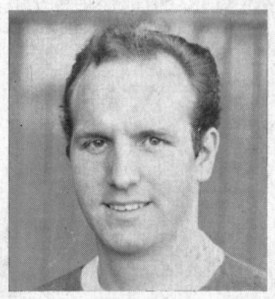
‘Great talent’ England Schools’ captain Barrie Wright quit at 25

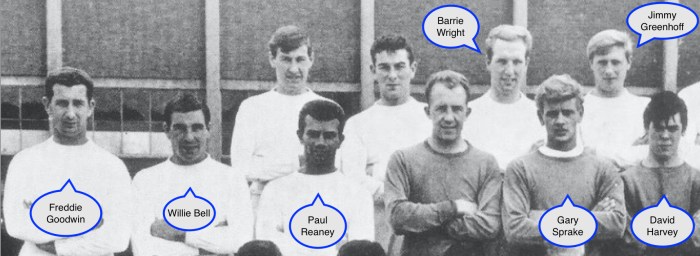
BARRIE WRIGHT (not to be confused with the deep-voiced crooner with a similar-sounding name) was a former Leeds United playing colleague of Freddie Goodwin who followed him to Brighton via America.

Despite showing plenty of early promise, including captaining the England Schools side, Bradford-born Wright played more games for Goodwin’s New York Generals than he did in English league football.

Goodwin signed Wright and goalkeeper Geoff Sidebottom together for the Albion on 31 December 1968, a matter of weeks after he’d succeeded Archie Macaulay as Brighton manager.

The Albion programme in those days eschewed full-scale profiles and simply noted of the new arrival that he “can play on either flank in defence”.

His first Brighton appearance was as a substitute for Charlie Livesey in a 1-1 draw away to Plymouth Argyle on 4 January. He took over Mike Everitt’s left-back slot for the following two games, also both 1-1 draws, at home to Stockport County and away to Bristol Rovers.

But he tweaked his groin in the game against Rovers and missed six matches.

He was restored to left-back for a home goalless draw with Plymouth Argyle on 5 March, and played in the following two games.

One was the 4-0 hammering of Southport at the Goldstone, which was only my second Albion game (having watched them beat Walsall 3-0 three weeks earlier).

The plentiful goalscoring – notably two in each match by Alex Dawson – had me hooked!).

Wright kept the shirt for a 2-1 away win at Shrewsbury, but was then dropped to the bench for the next game, a 2-0 defeat at Oldham, when John Templeman took over at left-back and Stewart Henderson won back the no.2 shirt.

The Yorkshireman didn’t play another game that season although the matchday programme finally got round to telling us more about the player in a short profile item for the home game against Barrow, when I saw Albion score another four goals to secure a comfortable 4-1 win (Dawson again scored twice, the others from Kit Napier and Dave Armstrong).

“Barrie rates Albion as the happiest club he has known, and has quickly settled down in Sussex,” the programme told us.

We also learned he had been a keen angler and was a member of the Bradford Anglers Association, “finding this the perfect relaxation from soccer”.

A useful batsman and medium-fast bowler too, he had added golf to his sporting repertoire when in America and was regularly to be found on a course with Sidebottom.

But back to the football, and Goodwin, having steadied the ship with a number of his own signings, saw Albion finish the 1968-69 season in a comfortable mid-table position.

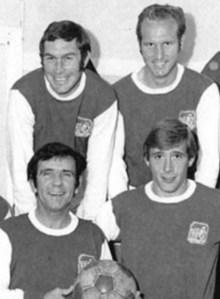
Norman Gall, Wright (top right) and Dave Armstrong enjoy a dressing room laugh with Norman Wisdom.

An alarm Bell would have rung for Wright that summer though – in the shape of experienced Scottish international left-back Willie Bell. Goodwin signed their former Leeds teammate from Leicester City as a player-coach; Wright had understudied Bell at Elland Road.

However, it was Everitt who stepped in for the only two games Bell missed all season, and Wright’s involvement was confined to one substitute appearance in a 2-0 defeat away to Doncaster Rovers, and three games in November and December deputising for Dave Turner in midfield.

The 0-0 draw at home to Orient on 13 December proved to be his last outing for the Albion.

In September 1970, Wright went on loan to Hartlepool United but when he wasn’t able to earn a regular place, decided to quit league football at the age of 25 to become a warehouseman.

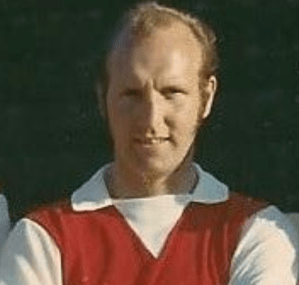
He carried on playing in non-league, though, and appeared in the Northern Premier League with Bradford Park Avenue (right) and Gainsborough Trinity and spent some time with Thackley of the Yorkshire League.

Born in Bradford on 6 November 1945, Wright was one of eleven children – nine of them boys (one brother, Ken, played for Bradford City). Barrie earned selection for Yorkshire Boys and went on to captain the England Schools side on seven occasions in 1960-61.

England Schools captain

He was taken on by Leeds as a teenager, turning professional in 1962 at the age of 17.

mightyleeds.co.uk described Wright as “a defender of rich potential” who first caught the eye in a pre-season friendly against Leicester City, alongside the legendary John Charles.

The Yorkshire Post’s Richard Ulyatt spoke of Wright’s “excellent form” and said he “looked to have the necessary technique”, while accepting that conclusions from “half-speed friendlies … must be taken with reservations”.

Wright spent four seasons at Leeds and was captain of United’s Central League side. He did make a total of eight first team appearances, though. mightyleeds.co.uk discovered this wonderful description of Wright’s league debut for Leeds at home to Preston on 13 April 1963, when he deputised for veteran Grenville Hair at left-back.

Leeds won 4-1, and the aforementioned Ulyatt reported: “For a time Preston tried to probe for a weakness on the Leeds left, where Barrie Wright, 17, was playing his first game as a senior.

“A better forward line might have found him a bit uncertain and occasionally inclined to commit himself too soon to a sliding tackle, but any judge of a footballer would recognise that here was a great talent.

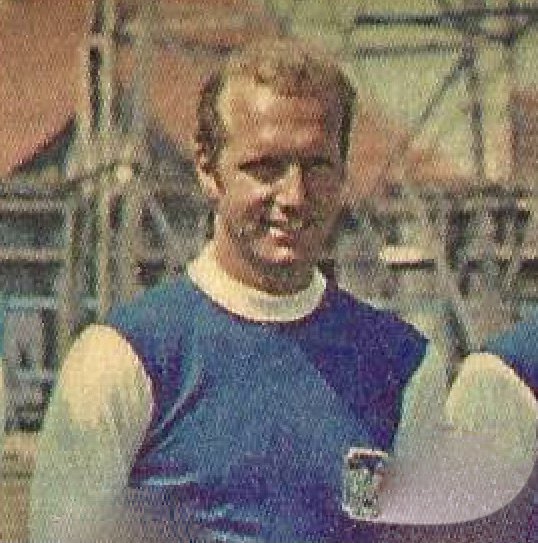
Wright was part of a star-studded squad at Leeds United

“His first contact with the game came after about ten minutes when he delicately headed a pass to Albert Johanneson with the artistry of a basketball player. Soon afterwards he tried to pass the ball 20 yards along the touchline edge from a foot inside the field and failed by inches: that was football. In recent years I have seen only (Jimmy) Armfield, (Alf) Ramsey, (Tony) Allen and (Johnny) Carey do it better.”

He kept his place for two more games: two days later in a 2-1 away win over Charlton Athletic on 15 April (Easter Monday) and a 4-1 home win against the same side the following day!

In the 1963-64 season, when Leeds went on to become Division Two champions, he replaced Paul Reaney in a 2-0 win away to Leyton Orient on 23 November 1963.

Phil Brown in the Evening Post reported: “It was most encouraging to see another youngster, Wright, in the side for the first time this season, respond so well to the occasion.

“He was sharper and sounder than on any of his previous three outings, and that against the fleet and strong Musgrove, and hard trying inside-left Elwood.”

However, it was another two months before he got another chance. On 1 February 1964, he took over at left-back in a 1-1 home draw against Cardiff City. On that occasion the Post’s Brown was less complimentary.

“I was most disappointed with young Wright at left-back,” he wrote. “He grew progressively worse, probably through increasing nervousness.”

Nevertheless, Wright was selected in the England Youth team squad for the 17th UEFA Youth Tournament in the Netherlands in March and April 1964.

England won it and Wright appeared in two of their five matches, both won 4-0: against Portugal in Den Haag on 3 April and against Spain two days later in Amsterdam.

His teammates in those matches included Everton’s Howard Kendall as captain, John Hollins (Chelsea), Harry Redknapp and John Sissons (West Ham), Peter Knowles (Wolves), David Sadler (Man Utd) and Don Rogers (Swindon).

Rather like in the modern era, fringe players tended to get a run-out in the League Cup and Wright made two appearances in the competition in 1964-65, taking over from Reaney in the second round 3-2 win over Huddersfield Town on 23 September, and the third round tie on 14 October when United lost 3-2 at home to eventual semi-finalists Aston Villa.

Wright’s final Leeds first team appearance came once again in the League Cup, when he took Norman Hunter’s no.6 shirt in a much-changed side who lost 4-2 at home to eventual winners West Brom in the third round on 13 October 1965. (West Brom won the two-legged final 5-3 on aggregate against a West Ham side that included Dennis Burnett).

Wright and Sidebottom line up for New York Generals

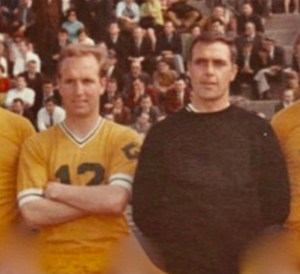
With first team opportunities so rare, Wright eventually left Elland Road in 1966 to try his luck with Goodwin’s New York Generals, joining fellow Brits Sidebottom and Barry Mahy, who had followed Goodwin to the States from Scunthorpe.

The Generals’ most famous player was Cesar Luis Menotti, who later coached Argentina to a World Cup triumph in 1978.

nasljerseys.com records that Wright wore the no.12 shirt and played 26 matches in 1967 and 32 games in 1968.

Wright died aged 78 in November 2023.

Lowe and behold, the centre back who couldn’t get a game

KEITH LOWE is one of those curious cases of a player who joined the Albion on loan but didn’t kick a ball in anger!

He played one game for the reserves and sat on the first team bench for five matches without getting on.

Lowe was just 20 and well down the centre half pecking order at Wolves when Mick McCarthy had just taken charge.

At the beginning of the 2006-07 season, Albion’s first choice centre backs, Adam Hinshelwood and Guy Butters, were both out injured, and Joel Lynch was a doubt after picking up a niggle in a pre-season game. So, manager Mark McGhee took the opportunity to get Lowe on loan for a month.

Candid former Wolves manager McGhee told the Albion matchday programme how the club had done its homework on the youngster, who he described as a “no frills central defender who gets in where it hurts to head it and boot it. Obviously, that’s something we need – a big lad in our box to head it away. With the absence of Guy Butters, we’ve missed that sort of height in pre-season so I hope he will do well for us.

“Obviously I know people well at Wolves, so we don’t think for a minute that we are signing Rio Ferdinand, but we’ve signed a steady young player who’s determined to make a career for himself and wants to do well.”

For his part, Lowe told the Argus: “I’ve found out that there are a few injuries in the defence here so hopefully I’ll get into the team as soon as possible and play as much football as I can.”

Born in Wolverhampton on 13 September 1985, Lowe had progressed through the Wolves academy and was given a first team debut by Dave Jones in the League Cup at the beginning of the 2004-05 season, three weeks before his 19th birthday. Two months later Lowe was awarded a three-and-a-half-year contract and he said:“My family are all Wolves supporters so it’s a bit of a dream come true.”

Although he made 13 appearances at either right-back or centre-back that season, he only played three matches for them under Glenn Hoddle the following season although he gained experience out on loan, at Burnley (under Steve Cotterill), and QPR in the Championship, and Swansea in League One.

“A lot of people have left Wolves but the one thing they have got is a lot of defenders and they have scrapped their reserve team now so it was best to go and play somewhere else,” Lowe told Andy Naylor of the Argus. “I’m looking to play as many games as I can. I wasn’t getting the opportunity I would have liked at Wolves so I jumped at the chance to come and play some football.”

Lowe said that even though McCarthy had not long been in charge, he had already got his starting eleven in mind. “I hadn’t asked to go out on loan yet, but from what I can gather the manager here ‘phoned up our manager and it seemed like the ideal place to come,” he said. “I’ve not been down to Brighton before but my first impressions, even from the drive in, were it seems really nice and I’m really looking forward to it.”

He added: “My aim is to get noticed at Wolves but I’m open to anything that happens. If it’s not going to happen for me at Wolves then I’ll stay here as long as the management staff want me.”

Unfortunately for Lowe, Lynch recovered from a pre-season thigh injury in time to make the starting line-up for the season opener at Rotherham, and he never did manage to force his way into the side.

By mid-August, he confessed in another Argus interview: “I’m very disappointed. I came down here to play football but it hasn’t happened. You’ve got to be professional about it, keep working hard and hopefully it will come.

“We kept clean sheets in our first two games and, when things like that happen, you can’t really go knocking on the gaffer’s door and say: ‘Why am I not in the team?’ The lads have done really well but I’ll just keep working hard in training and hopefully he’ll take note.”

Lowe pressed his claims for a place by scoring on his debut for the Reserves, heading an equaliser from a Tommy Fraser corner on 54 minutes, in front of McGhee, in a 2-1 win away to QPR. He said: “It was nice to get 90 minutes under my belt and it was a good performance and result, so I was pretty pleased.

“Hopefully I’ve caught the gaffer’s attention. I thought I did well enough and I’m just trying to push to get into the team.”

It didn’t happen, though, and McGhee was at pains to point out the circumstances. “We brought him here to play but then Joel got fit and suddenly looked absolutely fine.

“By the time we got Keith down here we weren’t sure he had trained with us enough and done enough work with us. Joel was there and we decided not to gamble with Keith but to play Joel, who has then played so well, so things have conspired against him a wee bit.”

McGhee added: “He did fine at QPR. In the second half, particularly, when we pushed them up the park and asked them to defend in behind, he did it well.”

Lowe might have got a chance in the Carling Cup against Boston United but Wolves were only prepared to allow him to be cup-tied if Albion intended keeping him longer – and McGhee had decided to add to his defensive options by signing veteran Georges Santos.

Lowe headed back to the Black Country, but the following month he went on loan to Cheltenham Town, where he finally saw some league action, playing in 18 matches. It sowed the seed for a later period in his career: he played 133 games for League Two Cheltenham between 2010 and 2014 in a career that ultimately embraced 617 appearances for 13 different clubs.

Lowe spent the final season of his Wolves contract on loan at League One Port Vale. Signed by Martin Foyle, Lowe also featured under his successors Dean Glover and Lee Sinnott, playing in 31 matches. But Vale were relegated in 23rd spot and the defender finally bade farewell to his boyhood club in May 2008.

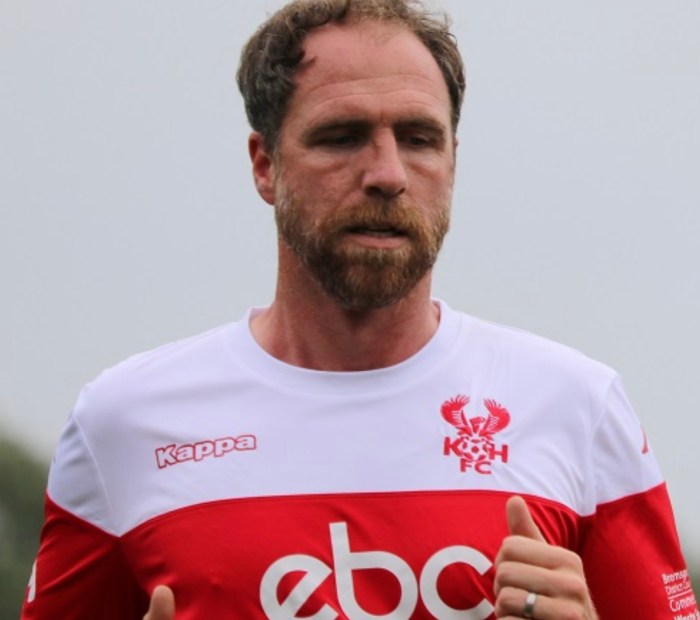
He dropped out of the league for the 2008-09 season, appearing in 52 games for Conference Premier League side Kidderminster Harriers.

Budget issues meant he was released at the end of the season and the following campaign he was back in the league with Hereford United, playing 26 games for the League Two Bulls under John Trewick and former Wolves boss Graham Turner. That spell at Cheltenham came next.

During two years at York City, Lowe collected no fewer than four Player of the Year awards in 2014-15 – three from supporters’ groups and one from local newspaper The Press.“Keith deserves the awards for his consistency,” City boss Russ Wilcox told the newspaper. “To play every league game is always an achievement. It shows you are doing things right on and off the pitch. It means you look after yourself, train properly and are a good professional.”

Released by new York boss Jackie McNamara, Lowe returned to Kidderminster, by then in the National League, where he spent another 18 months, much of it as club captain.

National League Macclesfield Town was his next port of call and he played in all of their matches as they won promotion back into the league in 2017. However, it ended on a sour note in 2019 when he was one of six players to issue the club with a winding up order for unpaid wages.

The 2019-20 season saw him turn out for three different clubs: Southern League Nuneaton Borough, National League North side Bradford Park Avenue and latterly (until the Covid pandemic called a halt to the league) Kidderminster for a third spell.

At the end of the 2021-22 season, he announced his intention to concentrate on developing a career as a teaching assistant. He told the Kidderminster club website: “I’m not ready to stop yet and am very much planning to play part-time next year, but it feels like now is the time to move away from the full-time game and think about the future and the career I’ve been building in schools.”