GOALKEEPER Mikkel Andersen was one of five loan signings in Albion’s line-up for newly-appointed manager Russell Slade’s first match.
Alas the young Dane was unable to help the Seagulls to a much-needed win as they succumbed 2-1 at Leyton Orient on 7 March 2009.
The Danish giant, who came from Reading with a glowing endorsement from ex-Albion boss Steve Coppell, played five matches during Michel Kuipers’ absence through injury – and conceded 10 goals in four defeats.
The one victory he was part of was a convincing one: he was between the sticks when Albion trounced Slade’s previous employer Yeovil Town 5-0 at Withdean (two each for Dean Cox and Nicky Forster, the other a Glenn Murray penalty).
Andersen was still only 20 when he joined the Seagulls and at 6’5” he towered over most of his teammates.
The youngster had spent two years at Reading by then but had already been out on loan three times: to Torquay United and Rushden & Diamonds, where he played three times for each. Ironically, his debut for Rushden came against the club he’d just left, Torquay.
At Brentford, his one appearance for the then League Two Bees was to cover for the suspended Ben Hamer, who was also on loan from Reading.
It might have been brief but Andersen’s performance in Brentford’s 2-1 home win over Bradford City in December 2008 earned him the Man of the Match honour.
In a late flurry of goals, Marcus Bean put Brentford 1-0 up in the 88th minute only for Michael Boulding to equalise in the 89th minute. Bees won the match courtesy of a 90th minute winner from former Albion striker Nathan Elder.
At Brighton, Andersen was reunited with Tony Godden, who had only just succeeded Paul Crichton as Albion’s goalkeeper coach. Godden had previously worked with the Dane at Rushden & Diamonds.
Andersen told the matchday programme: “I was on an emergency loan and he was the coach. I really enjoyed it there and it was Tony who told Brighton about me.
“I’ve been at Reading for two years now and I’ve just signed another new deal for them so hopefully I’ll be there for another two years.
“But you need to play some league games to build up your experience and that is why I am here. I want to develop both as a player and a person – that is why I came to England in the first place, something I always wanted to do when I was growing up in Denmark.”
The month before he joined Brighton, Andersen had made his debut for Denmark’s under 21 international side having already been capped at under 19 and under 20 levels. The Danes beat Malta 1-0.
Albion made their move on Godden’s recommendation shortly before Slade took over from the departed Micky Adams. Caretaker boss Dean White, who completed the deal with chairman Dick Knight, told the Argus: “Mikkel is an up and coming young goalkeeper. He is a big presence and comes highly recommended by Steve Coppell.
“With the current situation as it is we need cover in this position. It’s an important position, Mikkel has played against us in the reserves this season and we know what he’s about.”
Born in the Copenhagen suburb of Herlev on 17 December 1988, Andersen started out with AB Copenhagen and became Denmark’s youngest ever goalkeeper to play senior football when he turned out for them at the age of 17.
It was while on a pre-season tour with AB Copenhagen, playing against a Reading XI at Palmer Park, a municipal multi-sports venue in Reading, he earned his break in the English game.
“AB is ten minutes from home,” he said. “I wanted to come to England to develop as a player and a person.
“I was on a training camp with AB and we played against Reading and after that they gave me a couple of trials. They signed me when I turned 18.”
Although Andersen had been on a pre-season tour with the Royals and been selected as goalkeeper back-up on the bench, there were several other loan spells away from Berkshire before he finally made his first team debut.
For much of his time at the club, he was behind Marcus Hahnemann and Adam Federici in the goalkeeping pecking order.
He spent almost the whole of the 2009-10 season at Bristol Rovers (playing 39 matches) and returned the following season when he featured a further 19 times, before returning to Reading. He was awarded the League One side’s Young Player of the Year trophy and was named in the BBC Team of The Year.
In August 2012, he began a three-month loan spell at League One Portsmouth and he returned to Denmark for the whole of the 2013-14 season, playing for Danish Superliga team Randers Freja.
When he finally rejoined parent club Reading, by now under Nigel Adkins, for the 2014-15 season, his long-awaited first team debut came in September away to Sheffield Wednesday. Andersen made another four appearances for the Royals before the season’s close, after Steve Clarke succeeded Adkins.
Although he played in a memorable 1-0 FA Cup third round win at Huddersfield Town in January 2015, he was on the bench (Federici was no.1) as the Royals went right through to the semi-finals where they lost to Arsenal.
In June 2015, Andersen signed a two-year contract with Danish Superliga side FC Midtjylland.
He played 11 UEFA games with the Danish side, when he was up against the likes of Rubin Kazan, Napoli, Club Brugge and Manchester United.
Following 42 appearances in two years with FC Midtjylland, Andersen made the switch to Lyngby, of Copenhagen.
After a season there, he rejoined Midtjylland and in the 2020-21 campaign he was limited to just four games, although two were in the Champions League against Liverpool and Ajax.
In 2021 he stayed in Jutland and joined newly-promoted Viborg FC where he made only six appearances in two years. He then switched to Copenhagen-based Danish Second Division side Fremad Amager where he made 52 appearances over two seasons as goalkeeper and coach.
STEVE SIDWELL was not a recognised goalscorer but when he did find the back of the net it was often memorable and headline-making.
Such was his most talked about goal for Brighton – hit from the centre circle away to Bristol City in a Championship match on Bonfire Night in 2016.
Eight years earlier, he stunned Goodison Park by rifling home from 25 yards after only 31 seconds of Aston Villa’s 7 December Premier League visit to Everton.
I was at Ashton Gate to see Sidwell’s amazing 50-yard lob over stranded Robins’ ‘keeper Richard O’Donnell (Jamie Murphy added a second in promotion-chasing Albion’s 2-0 win).
Manager Chris Hughton said: “It was a wonderful strike by Sidwell on his left foot when I would have expected it more from his right. It caught everyone by surprise, including their goalkeeper.”
I was also at the City Ground, Nottingham, seven months earlier when Sidwell went on as an 85th-minute sub and scored the winner (below) in the 91st minute to earn a 2-1 victory over Forest.
With his right foot this time, he drilled the ball in from 12 yards giving Albion a fourth win in five games which extended their unbeaten run to nine games.
“We felt that the game was becoming open and we felt we could bring players off the bench who could influence the game,” said Hughton. “One thing about Steve Sidwell is that he can break forward from midfield. I did not bring him on for that, but I am very glad he did it.”
Back to that game for Villa in 2008; moments after kick-off, Everton’s Mikel Arteta lost possession to Ashley Young. He fed James Milner who in turn found Sidwell. Finding himself with a sight at goal from 25 yards, he buried a stunning shot past Tim Howard. In an extraordinary end to the game, Young, who had scored Villa’s second, got a 94th-minute winner for the visitors after Joleon Lescott thought he’d salvaged a point in the 93rd minute, netting his second of the game.
That opener at Goodison was a rare highlight for Sidwell in what overall was an unhappy two and a half years at Villa.
Sidwell had first caught Villa boss Martin O’Neill’s eye when he scored twice for Reading in a 2-0 home victory over Villa in February 2007.
O’Neill tried to land him before he opted to join Chelsea (the team he’d supported as a boy) and, by all accounts, predecessor David O’Leary had also tried to sign him.
So, it appeared to be a case of third time lucky when in July 2008 O’Neill took him for a reported £5million fee from being a Chelsea benchwarmer and gave him a three-year contract.
Sidwell during his first Albion spell
After success at Reading, where he had been reunited with Steve Coppell (who’d had him on loan at Brentford and Brighton as a young Arsenal player, as covered in my 2017 blog post), Sidwell had a disappointing season at Stamford Bridge, where he made just seven Premier League starts.
Managerial change didn’t help his cause: he’d been signed by Jose Mourinho who left early in the season to be replaced by Avram Grant.
Sidwell later admitted: “I left for Aston Villa in search of regular football. In hindsight, I wished I’d stayed another six months because Luiz Felipe Scolari came in and you never know what might have happened then.”
At the time, Sidwell told Villa’s official website: “For me personally, it’s about getting back and playing. I have had a year of not playing as much as I would have liked so to get out on the pitch is the first aim.”
Although he played in both legs of the InterToto Cup tie against Odense in July, knee and calf problems delayed his league debut until the end of October which he marked with a goal after going on as a late substitute in a 4-0 win at Wigan Athletic. That and the strike at Everton were two of four league and cup goals he scored for Villa that season when his 25 appearances (20 starts + five as sub) would ultimately amount to nearly half the total he made for the club: 37 starts + 27 as sub.
He didn’t add any more goals in the claret and blue and in the remainder of his time at Villa Park he was never really a regular, eg in 2009-10 only 14 of 33 appearances were as a starter and in 2010-11, three of six under Gérard Houllier.
Although he and O’Neill clashed on occasion, the Northern Irishman did say: “I’ve been very happy with him. It’s just that other players playing in positions all over the place have been playing brilliantly. Some people are playing out of their skin at this minute in our team. But I’ve been very pleased since he’s arrived at the football club.”
Sidwell’s former Reading teammate Nicky Shorey, who’d joined him at Villa Park, had high expectations of him ahead of his second season, telling the Birmingham Mail: “I don’t think Villa have seen the best of him yet. It’s been a strange season for Siddy. He’s been out injured for long periods and he’s picked up niggles here and there. I don’t think he’s ever had that before.
“For as long as I’ve known him, he’s never really been injured, so I think that’s something new for Siddy to try and learn from.”
Shorey said Sidwell had remained positive and upbeat around Bodymoor Heath and Villa Park and reckoned: “When he comes back for pre-season and hopefully has a good pre-season you’ll see the best of him and I think everyone will be impressed with how well he can do.
“When you know Siddy, that’s all he ever does – trains and plays with a smile. You haven’t got any worries with him on that count. He just keeps going and he’ll be fine. He’s just an all-round good midfielder and I’m sure he’ll show that before too long.”
Sidwell found himself competing for a midfield place with the likes of Milner (before his move to Manchester City), Gareth Barry, Stiliyan Petrov, Nigel Reo-Coker and Craig Gardner. He revealed later that he’d fallen out with O’Neill and at one point he went on the transfer list.
After O’Neill quit in protest at the sale of Milner to City, and ahead of Houllier’s appointment, Sidwell hoped to be given a new lease of life in claret and blue.
He overcame an Achilles’ problem and declared himself raring to go after playing 90 minutes in a 4-0 reserve team win over Blackpool at Bodymoor Heath.
“I feel I’ve shown glimpses,” he told the Birmingham Mail. “In the previous years, there have been good games and some poor games.
“If I get a run of games, I am sure I can perform to the best of my ability. Hopefully, now, whoever takes charge I will just get an opportunity and I will take it.
“It is going to be tough but it is down to individuals to perform in training, perform in reserve games and show the manager you are worthy of a start.
“Once you get that, you have to take it with both hands. Fitness wise, I’ve been training really well and looking sharp. It is just games that I need. I wasn’t unfit before the injury took place.”
When the Mail spoke to him ahead of a second city derby at the end of October 2010, Sidwell sought to exploit a two-month injury absence for Petrov saying: “It is all about opinions.
You don’t play under certain managers. Under certain managers you do get a chance.
“Once you get a chance it is about taking it and staying in the team.”
Sidwell started the game but was replaced by young Barry Bannan in the 58th minute of the dour goalless draw – and it turned out to be his last game for Villa (he was an unused sub away to Fulham the following week).
It was in a 2018 interview with Donald McRae of The Guardian that Sidwell revealed the extent of his disillusionment at Villa, telling the journalist: “When I was at Aston Villa I was on the most money in my career. But that was when I was at my unhappiest. I was living in Birmingham away from my wife and family.
“My middle son caught meningitis and was in hospital. The football never really took off and me and Martin O’Neill clashed. So, it was a combination of things.”
Released on a free transfer in January 2011, after being deemed surplus to requirements by Houllier, Sidwell joined Fulham – which is a story for another blog post.
After three years with the Cottagers, he followed ex-Fulham boss Mark Hughes to Stoke City and it was from there that he made his initial return to Brighton, on a half-season loan.
Sidwell in action for Albion against Villa
In clinching his signing in January 2016, Hughton told the Albion website: “Steve is an experienced player who has played virtually his entire career in the Premier League. He knows this club, as well as a few of the squad and will supplement our existing midfield options.
“Beram Kayal, Dale Stephens, Andrew Crofts and others have been excellent in midfield for us this season, but we also need to make sure we have good options in every position of the team, and options which will be enough for us through until the end of the season.
“Steve brings that, and in addition, he is another experienced head; he is a player who’s proven at the very top level of English football. Brighton fans will know Steve is also a great athlete and top professional.”
Although he only made six starts, Sidwell went on as a sub 13 times in that half-season. When Albion had to endure the end-of-season play-offs after missing out on automatic promotion by only drawing (1-1) the last game of the season at Middlesbrough, it was Sidwell who stepped in to fill the boots of Stephens, who was suspended after his controversial sending off by Mike Dean at the Riverside Stadium.
Unfortunately, Sidwell was one of four Albion players who had to go off injured in the 2-0 play-off first leg defeat at Sheffield Wednesday. He suffered ligament damage but was taped up and given medication to enable him to play in the home tie, although he later admitted: “I should never have played really.”
He reckoned the Amex atmosphere for that game was the best he’d ever been involved in. In spite of a valiant effort, it ended in a disappointing 1-1 draw although Sidwell said: “I ended up playing one of my better games in a Brighton shirt, which maybe cemented a contract for the following season.”
Released on a free transfer by Stoke, Sidwell signed on a permanent basis for the Seagulls and was a key component in the side that won promotion from the Championship in May 2017. He made 29 starts plus eight substitute appearances that campaign.
“The whole reason behind my return was to help the club into the Premier League,” he said.
Sidwell was on the bench as Albion began life amongst the elite but after that “a slipped disc, surgery, and then before you know it your career’s gone.”
Sidwell later admitted: “It was really hard. I came here to do a job, to get the football club into the Premier League, and then it was time to go and enjoy it. I thought I had two or three years left, but that was cut very short.”
Recognising he was blessed to have enjoyed a 20-year career, he nonetheless said: “To not really say goodbye to football, something I’d done since I left school, and also to Brighton, was really disappointing.”
He stayed on at Albion as under-16s coach (right) for a while but increasingly his work as a pitchside pundit for live TV coverage of matches took up more of his time. He is also now a regular co-host of the popular That Peter Crouch Podcast.
Sidwell is also business development director of Box3 Projects, a company that constructs and designs office spaces to be rented out or sold.
IT ALMOST certainly wouldn’t have occurred to the loyal few Albion fans who followed the basement division Seagulls in exile in 1998-99 that one of the men in stripes would go on to make a difference to the lives of hundreds of footballers.
Brighton was the eighth and last league club Michael Bennett played for over the course of 12 years in which he discovered all the highs and lows that footballers can experience.
Since packing up playing, those personal insights helped him to begin a journey that led him to help huge numbers to cope with the game’s often-unseen stresses and strains.
Bennett became a psychotherapist, gained a degree and led the setting up of a counselling and mental health and wellbeing support network for the Professional Footballers’ Association, where he worked for 15 years, latterly as director of player wellbeing. In that role, he was frequently a media spokesman for the PFA.
Dr Michael Bennett
Now running his own counselling business it’s all a far cry from the days when his league playing career ended filling a variety of positions in Brian Horton’s fourth-tier Brighton team, playing home games in exile at Gillingham. In one game, he was racially abused by a Swansea City fan who ran onto the pitch to confront him (more of which, later).
It was quite a fall from career highlights that saw him play for England at under-20 level alongside the likes of Matt Le Tissier, David Batty, Neil Ruddock and Tim Sherwood, make his debut at 17 in the top division for Charlton Athletic alongside John Humphrey, Colin Pates and Steve Gritt, and feature for Brentford (with Chris Hughton and Neil Smillie) when the Bees played second-tier football for the first time in 38 years.
While Addicks fans remember Bennett fondly, Bees supporters are a lot less generous and mainly recall a training ground incident in which the player broke a teammate’s jaw with a single punch.
The internet can be – and is – many things and unfortunately for people like Dr Bennett, such past incidents are still recorded for all to read about.
Thankfully, all the excellent work he has achieved in the health and wellbeing field is also documented and, in October 2021, Andy Naylor of The Athletic did an in-depth piece which examined his journey in detail.
“The story of his rise to prominence as a leader in his field is inspirational, a demonstration that with application, determination and drive you can build a career in the game that extends well beyond playing football,” wrote Naylor.
Bennett eschewed a coaching career (even though he passed his UEFA B licence) and at college, while studying Maths and English, was urged to take up counselling. As Naylor reported: “By 2004, Bennett had his degree in it and the following year he set up his own company, Unique Sports Counselling.”
Three years later, he joined the PFA as southern region education adviser aiming to get players to prepare for life after football. He also invited attendees to his workshops to speak to him privately about emotional issues – and he discovered there were plenty who took up the offer.
Eventually he persuaded then PFA chairman Gordon Taylor of the need for a designated wellbeing department dealing with the welfare of players.
In 2015, Sam Wallace of The Independent interviewed Bennett for an article about troubles ex-Arsenal and England full-back Kenny Sansom was facing. He discovered the year before the PFA had requests for support from 197 of its members.
“That is some caseload for Bennett, a man who talks in the careful, measured tones of someone used to dealing with problems that must seem intractable,” wrote Wallace. “Last year, the PFA established a 24-hour telephone helpline for members. Safe to say, it is not underused.”
The problem, Bennett told Wallace, is that the elite-level game prepares footballers physically but not emotionally. “What we realise is players often don’t get asked how they are. They get asked about football. When they get asked about their emotions, they tend to open up.”
After a 2017 presentation by Bennett to first and second-year scholars at Norwich City, Canaries’ assistant head of education and welfare Mike Macias told Press Association Sport: “When they see it and hear it coming from someone like Mickey, who has been there, done it and bought the T-shirt, they will think: ‘This impacts me and there is someone there to help me’.”
When Bennett left the PFA earlier in 2025, he said: “I am proud of the work we have done within the department which has grown into a vital and impactful part of the PFA’s mission, ensuring that wellbeing remains at the heart of everything we do.”
Among dozens of messages of thanks for his contribution left on his LinkedIn account was one from former Albion and West Ham midfielder George Parris, who wrote: “A great stint Dr Bennett, thanks for all your help, support and encouragement not just to myself, but loads of other people along the way during your time at the PFA.”
Born to Jamaican parents in Camberwell on 27 July 1969, Bennett was raised in a block of flats near Millwall’s old ground, The Den, and it was only when he was spotted by Charlton playing Sunday League football that thoughts of a professional career in the game arose.
Young Mickey at Charlton
He went straight into the Addicks academy at 16 and made his debut in Charlton’s first team a year later. In his interview for The Athletic, he said: “You move from a youth team changing room to a first-team changing room. People don’t talk about that transition but that, for me, was pressure. I’ve gone from having jokes and banter with the boys in the youth team to the first team.
“The pressure intensifies. You put it on yourself more than anything else, because you don’t want to let anyone down.”
He continued: “The first well-being issues came when I signed for Charlton. I went from parks football, having fun, to going into a pressurised environment where results are key and you know if you have one or two bad games there’s somebody behind you waiting to take your spot.
“So, the pressure for me was constant. I wasn’t able to deal with that, I didn’t know who to talk to about it. I’d already formed my personality going into the game. I’m a very talkative person and I like to talk about stuff. There wasn’t anyone to do that with.”
Addicks action
On top of the various issues he was facing as a young player, he then ruptured his anterior cruciate ligament and crushed the cartilage in his knee against QPR in December 1988 which sidelined him for nine months. By his own admission, when he eventually returned to action he was not the same player, concerned over whether the injury would happen again.
On the fans forum Charlton Life: ‘Amos on the wing’ wrote: “One of the good guys Mickey Bennett. Good player, but was never quite the same player after his bad injury against OPR in 1988.”
Another poster, Leroy Ambrose, said: “One of my favourite players from the ‘Sellout’ era (ed: Charlton played ‘home’ games at Selhurst Park at the time). Good bloke – my mate was a mascot back when he was playing and he and his parents were thrilled at how nice he was, and how much time he took with them during the pre-match kickabout and after the game.”
And Ormiston_Addick added: “Started brilliantly for us, great pace and drive but never the same player after doing his knee. Great little period in 88-89 with our ‘Black Magic’ front line of Bennett – Leaburn – Williams – Mortimer.”
‘Home’ continued to be Selhurst Park between 1990 and 1992 after Bennett switched to then top division Wimbledon, who rented Palace’s stadium because their own Plough Lane wasn’t up to scratch for the top division. But Bennett was never a regular for the Dons and he and Detzi Kruszynski were used as makeweights in the transfer of Dean Holdsworth from Brentford to Wimbledon.
He joined just as Brentford began playing second tier football for the first time since 1954 but the elevation didn’t last long. They were relegated in bottom place come May 1993 although Bennett was a fixture in the side, playing a total of 43 league and cup matches plus six as a sub, and scoring four goals.
The Brentford fans forum bfctalk declared: “Despite losing Chris Hughton in December to a career ending injury, no real replacement was signed until March by which time the rot had well and truly set in. Mickey Bennett flattered to deceive and was a one game in four merchant, Detzi Kruszynski had an aversion to training and hard work.”
In another post, the forum said Bennett had “started out like a house on fire as a direct and goal hungry right winger and we thought we had discovered a new star, but he too flattered to deceive”.
It was what happened in November 1993 that many Bees fans of a certain vintage remember. Bennett had his contract terminated by manager David Webb after breaking transfer-listed teammate Joe Allon’s jaw in three places with one punch in a training ground incident.
But the PFA backed Bennett’s version of the incident and took Brentford to a Football League commission of appeal which decided the player should be reinstated. However, Bennett knew his position in the Griffin Park dressing room was untenable, and he was released by mutual consent.
The incident was back in the spotlight five years later when the media was pondering what fate awaited John Hartson for his infamous West Ham training ground kick in the head of teammate Eyal Berkovich.
Rising high for the Albion
Bennett, by then playing for Brighton, told a reporter: “Obviously you can’t do that sort of thing to a teammate and I would prefer to leave that memory where it belongs – in the past.” He added: “You have to get on with life, and I have no complaints. What happened between me and Joe Allon was little more than handbags at six paces – that’s why the PFA got involved and stood my corner.”
Bennett also said: “What happened to me at Brentford was way back. Right now, I’ve got other things on my mind, like trying to score my first goal of the season for Brighton.”
However, when an enterprising journalist caught up with Allon, he said: “Mickey broke my jaw in three places with a single punch in an unprovoked attack. There had been no history of ill-feeling between us and something inside him must have snapped.
“He just flipped, I collected a punch on the chops and got carted off to hospital, where they operated on me and wired up my jaw. I was in hospital for about 10 days and out of football for three months.
“The funny thing is that Mickey was supposed to be a born-again Christian, and I couldn’t work out how such a religious bloke could just clock one of his teammates.”
For all Bennett’s desire to steer clear of headlines for the wrong reason, it was while playing for Brighton away at Swansea City on 5 February 1999 that he was in the spotlight again when he was racially abused by a home supporter who ran onto the pitch.
“I was shocked by it,” he told Naylor of The Athletic in 2021. “I knew it was bad because I couldn’t function in the game after that, my head had gone.
“The police came to me and asked what I wanted to do. For a split second I remember thinking, ‘I just want to get on the bus and go home’. The other side of me thought, ‘If I don’t do something, that person could do something to another player’.”
The case went to court and the 29-year-old assailant, who admitted racially abusing Bennett and invading the pitch, was sent to prison for a year and banned from watching in a football league ground for three years.
The player told The Argus: “All of a sudden, I turned around and saw this fan running towards me. He was coming closer and closer.
“I remember thinking to myself should I just take a punch or what do I do? Then a steward and one of their players jumped in front of him when he was about a foot away from me and hauled him off.
“For five minutes I was a bit shaky. He could have done anything to me.
“After that I just got on with the game and tried to cancel it out, but when the police came to me after the game to take a statement it brought it all back again.”
By the time of that match, Jeff Wood had succeeded Horton, the manager who’d taken on Bennett after he’d impressed enough on trial in pre-season games against Lewes and Crawley to be awarded a one-year contract.
Introduced in match programme
The matchday programme introduced him as “a versatile right sided player who can operate at anywhere down the right side or in the centre of midfield”.
He started off in central midfield alongside Jeff Minton and later was used as a central defender. That autumn, he clocked up his 150th League appearance in a 2-0 defeat to Cardiff City, where he’d spent the opening three months of the 1996-97 season. Having left Brentford, he’d gone back to Charlton briefly before barely featuring in the 1995-96 season at Millwall. On leaving south Wales, he spent a year at non-league Cambridge City, and at Christmas 1997 returned to the league at Orient under Tommy Taylor.
Before facing the Os in a first round FA Cup tie in 1998, Bennett told The Argus: “I knew Tommy Taylor from my time at Charlton and I figured in one game away to Exeter, then four or five more as a sub before I was eased out.
“I’ve got another chance to face them now because I missed the league game away with a groin injury. It’s a nice tie, but I’ve got nothing to prove to Tommy or anyone else.” (Albion lost 4-2).
Bennett in Albion’s change kit in the 1998-99 season
Bennett found himself playing for a third Albion manager when Wood’s brief and unsuccessful reign at the Albion helm was brought to an end and, although he featured under Micky Adams, he was one of eight players released at the end of the season.
His league career at an end, he continued to play at non-league level for Canvey Island and in the 2003-04 season was part of a Canvey Island squad that also included former Brighton players Junior McDougald, Peter Smith, and the aforementioned Minton.
Meanwhile, he transitioned into a mental health and wellbeing counsellor, saying: “I identified the value of offering to the side of the game that rarely grabs the headlines but is just as affecting to the people it helps.”
On his LinkedIn profile, he points out: “Playing at all levels of the football league has provided me with an invaluable knowledge of the inner workings and operational structure of football in this country, experience that I have endeavoured to apply for the benefit of my fellow pros since my retirement.”
THE starry-eyed teenager who made half a dozen top level appearances for eventual league champions Everton had to wait a long time for his share of that distant glory.
But Warren Aspinall was nonetheless delighted when his contribution to the Toffees achievement in 1986-87 was finally recognised with a medal more than 30 years later.
That’s happened since I last featured Aspinall in this blog, which recalled his early days at hometown club Wigan Athletic and darker days after he had ended his playing days in the blue and white stripes of the Albion (three goals in 24 starts plus 13 as sub) in the 1999-2000 season.
Aspinall is now more often heard rather than seen by Brighton supporters who listen to match commentaries on Radio Sussex, and it was commentator Johnny Cantor, who the summariser sits alongside for the regional BBC radio station’s coverage of all Albion’s games, who instigated a presentation of the belated honour.
“It was JC who pushed it forward and he kept it to himself before surprising me with the news that Everton would be making a presentation,” Aspinall told the matchday programme. “I was shocked but absolutely over the moon.”
The number of games to qualify for a winners’ medal used to be 14, or a third of the season, but the EFL in 2021 decided retrospectively to fall in line with the Premier League which awards medals to players who’ve made a minimum of five appearances.
Aspinall had been unaware of the rule change but Cantor had words in the right places and when Albion played at Goodison Park on 3 January 2023, the former player was finally presented with his medal by Graeme Sharp, one of his fellow Everton forwards back in the day who subsequently became an Everton director.
It’s probably a good job the presentation was made before the game because Albion romped to a 4-1 win that day with goals from Karou Mitoma, full debut-making Evan Ferguson, Solly March and Pascal Gross.
“The medal means the world to me and my family and it now sits proudly on my mantelpiece along with my England under 20 caps,” said Aspinall.
He earned the first of those two caps in the same month that Everton paid £125,000 to sign the 18-year-old from Wigan Athletic, although he saw out the season on loan with the Latics.
He featured in Young England’s 2-0 win over the Republic of Ireland at Elland Road, Leeds, and the following month was in the side that suffered a 4-1 defeat to Scotland at Aberdeen’s Pittodrie ground. Tottenham’s David Howells and Neil Ruddock, then of Millwall, also played in both matches, as did Millwall goalkeeper Brian Horne.
Teenager Aspinall signs for Everton’s Howard Kendall watched by Wigan boss Bryan Hamilton
On his return to Goodison Park at the end of the 1985-86 season, Aspinall was on the bench for the last league game (Kendall rested several players because it was five days before the FA Cup Final, which Everton lost 3-1 to Liverpool) and he made his debut in the 3-1 home win over West Ham when going on for two-goal Gary Lineker, who was playing his last league game for Everton before joining Barcelona.
Everton finished as league runners up that season but they went one better the following season, when competition for forward places saw manager Howard Kendall able to pick Sharp and Adrian Heath as his preferred pair, with Paul Wilkinson and Ian Marshall as alternatives. It meant Aspinall’s playing contributions came in the form of nine league and cup appearances as a substitute (he was also a non-playing sub on four occasions). Although first team chances were limited, he bagged plenty of goals for the club’s reserve side, netting 21 in 23 games.
That was enough to convince former Celtic stalwart Billy McNeill, in charge of relegation-bound Aston Villa, to splash £300,000 to take him to Villa Park – where competition for a starting spot was again daunting, with Andy Gray, Gary Shaw, Simon Stainrod and Garry Thompson all striker options.
Aspinall made his Villa debut on 21 February 1987 in a 2-2 draw at home to Liverpool and by the season’s end, while his former Everton teammates were lifting the league trophy, he was part of a Villa side that was bottom of the pile.
McNeill was duly sacked and the picture changed the following season when Aspinall was joint top-scorer as Graham Taylor’s Villa bounced straight back to the top tier as runners up behind Millwall.
“Garry Thompson and I hit it off up front and we had such a good understanding that we kept Alan McInally out of the team for a long time,” he told Villa supporter Colin Abbott. “Garry was good to play alongside because he was like a battering ram and I fed off him.”
Aspinall made his 50th and final appearance for Villa on 7 May 1988 in a 0-0 draw away to Swindon (playing left back for Villa was Bernie Gallacher and in the opposition line-up was Colin Calderwood and Kieran O’Regan).
Already warned by Taylor that he needed to improve ill discipline that had resulted in too many cautions, Aspinall got himself sent off for stamping in a pre-season friendly against St Mirren and Taylor transfer-listed him.
Happy at Pompey
England World Cup winner Alan Ball, in charge at recently relegated Portsmouth, seized the moment and took him to Fratton Park for a fee of £315,000 in August 1988, where his teammates included Mark Chamberlain and Terry Connor. In six years with Pompey, Aspinall also played under John Gregory, Frank Burrows, caretaker Tony Barton and Jim Smith.
Briefer stays followed along the coast at Bournemouth (loan and permanent), Swansea City (loan) and two seasons at Carlisle United.
Aspinall at Colchester
Keen to return to the south, Micky Adams first signed him when he had taken over as manager at Brentford and he made 48 appearances (plus three as sub) for the Bees but Aspinall then went on loan and then permanently to Colchester United for nine months before Adams brought him on loan and then permanently to the Albion in the autumn of 1999. It was a part exchange for midfielder Andy Arnott.
In only his third game, Aspinall was a delighted scorer of the only goal on his old stomping ground of Brunton Park as Albion returned to Sussex with all the points. The News of the World said: “Former Carlisle favourite Warren Aspinall seized on Billy Barr’s poor back pass to chip keeper Andy Dibble.”
In the Argus, Andy Naylor wrote: “The colourful midfielder then dashed towards the Albion supporters huddled in the seats on a drizzly day in Cumbria before sliding full-length on the greasy turf.”
Aspinall continued his celebration with a finger-on-lip gesture and an ear cupped towards the home support. He told the matchday programme: “I heard the keeper shout for the ball and anticipated the defender’s pass. I think I showed a great turn of pace for a veteran.”
In fact, Aspinall was 32 when he joined the Seagulls and he added experience to a side that went on to finish its first season back in Brighton in 11th place in the fourth tier
At the start of the following season, when he went on as a sub for Gary Hart in Brighton’s home 2-1 win over Rochdale (Bobby Zamora scored both Albion goals), it was to be his last ever appearance.
Suffering from the niggle of a piece of floating bone in his right ankle, he followed physio advice to have it removed in what was expected to be a routine operation. But while in hospital, he caught the MSRA superbug which ate away tendons and ligaments in his ankle.
“They eventually said I would never play football again as a result. I was finished,” he told The News, Portsmouth, in a graphic account of the trauma. “Yet now I needed an operation to get rid of this infection, which involved me scheduled to stay on a hospital ward for 14 days, attached to an intravenous drip while antibiotics were fed into my body.
“After 13 days, my body broke out in a rash from head to toe. It had rejected the drug. So, I had the operation once more – and it happened again. After 13 days, my body rejected it.
“For 28 days I’d been on that hospital ward, so I was then offered the chance to return home if I underwent an operation to insert two tubes into my heart, one for the intravenous drip to enter and the other to take blood out.
“That sounded good to me – apart from my heart subsequently stopping during the procedure. I died. I’m told it was for a few seconds, but I died on that operating table,’ Aspinall told The News. “But they brought me back, and I was allowed to go home to Hedge End, with a district nurse checking on me every day, even Christmas Day.
“There were two six-inch tubes hanging out of my chest, with the nurse taking blood out of one and putting the drugs into the other.
“I lived. The antibiotics killed the superbug, but my career ended there and then. I was aged 33, with nothing planned, no coaching badges. I had to go into the real world.”
The story of what happened in his post-playing days – battles against gambling and alcohol addictions – have been well documented in various media interviews, including a detailed one with the Birmingham Mail in October 2012, when he spoke openly about a near-miss suicide attempt.
He has been Cantor’s co-commentator on Albion matches for Radio Sussex since 2015.
THE NEW season opening game 26 years ago saw Darren Freeman score a hat-trick as the back-in-Brighton Seagulls hammered Mansfield Town 6-0.
For Freeman, who’d previously played under Micky Adams at Fulham and Brentford, it really couldn’t have been a better debut for his hometown club as the 1999-2000 season got under way at the Withdean Stadium.
Freeman hit the headlines again when he scored the first league goal of the millennium, crashing home a volley after only two minutes in a noon kick-off 4-2 Withdean win over Exeter City on 3 January 2000. It also earned him a magnum of champagne from league sponsor Nationwide.
Headline-maker
“It was a dream come true to play for my hometown club,” Freeman later admitted. After he’d scored that hat-trick at Withdean, he managed to pick out his dad’s face in the 5,582 crowd and fondly recalled his ‘That’s my boy!’ look of pride.
If the start of the season was spectacular, trouble was lurking round the corner with Freeman ending up suspended for seven matches – all in the first half of the season. He incurred a three-game ban after being dismissed for a stamping incident at Cheltenham and worse was to follow after he spat in Plymouth defender Jon Beswetherick’s face.
Beswetherick said: “He caught me in the face with his fist just inside the 18-yard box. I ran after him to have a word in his ear and on the way back up the pitch he just spat in my face.
“He had to go. Footballers all say that is the lowest thing you can do. It was probably in the heat of the moment, but I am sure he regrets it now.”
Not only did he receive a four-game suspension, manager Adams fined him a week’s wages and said: “He let himself down, the club down, his family down and everybody connected with Brighton. He knows that and he is full of remorse. He has been left in no doubt at all that it’s not good enough.”
Freeman was top scorer with 13 goals by the end of the season but a new goalscoring hero had begun to emerge in the shape of raw teenager Bobby Zamora!
That’s not to say Freeman’s days in the stripes were over, but his second season was dogged by injuries. Two hernia operations ruled him out from the start of September to the middle of December, then, after he had worked his way back into the starting line-up, in February 2001 he put in a transfer request after being left out of the side for a home game against Blackpool, sparking an angry reaction from Adams.
“I picked a side against Blackpool which I thought would win us the game and he wasn’t in it,” he said. “He is entitled not to agree, but there is a wrong way and a right way of knocking on my door and he chose the wrong way.
“I’ve never had one player ask to leave a club where I have been a manager. This is somebody as well who I had the utmost time and respect for, having taken him to two of my previous clubs.”
Freeman had a change of heart the following month after Adams restored him to the bench.
“I want to be a part of things,” he explained. “Obviously I’ve had a bad season with injuries and a lot of it was frustration.
“When me and Micky had a chat and I asked for a transfer we both said a few things. We didn’t have a massive fall-out. We are both adults and we have got to get on with it.”
The Argus revealed Freeman’s mentor, and former Albion forward and Northern Ireland international Gerry Armstrong played a part in the decision.
“I speak to Gerry a couple of times a week,” Freeman said. “A man of his experience can only give you good advice. I’ve had a number of conversations with him. It was my own choice to come off the transfer list, but Gerry has talked some great sense into me.”
Albion finished the season as division champions but by then Freeman was having a third hernia operation having made just six starts plus 12 appearances off the bench.
“I admit that as much as I was pleased for the lads, I felt gutted I wasn’t really part of it,” Freeman admitted. He went to Lilleshall and worked through the summer in an effort to regain fitness and earn a new contract.
But it was an uphill battle and although he struggled through pre-season and played in Albion’s opening friendly at his old club Worthing, he told the Argus: “I could hardly walk after the game. I was up all night in absolute agony.”
He was sent to see Harley Street specialist Jerry Gilmore who delivered devastating news: “There is no way you can carry on playing professional football. You are in a right mess, but hopefully we can do something to give you a better quality of life.”
A fourth hernia operation followed but not being able to resume his career hit him hard.
“The club have played an absolutely massive part in helping me through and all of my family and friends, because it has really been a rough time,” he told the Argus.
“It has been great working with him (Adams). He gave me the opportunity to experience promotions, the freedom to express my way of playing and the opportunity to fulfil my ambition.”
In a matchday programme interview several years later, Freeman told Spencer Vignes: “On reflection, I was lucky. Some people play their entire career and don’t win anything, and yet every club I played for got promoted.”
Born in Brighton on 22 August 1973, Freeman went to Varndean School, started playing football with Hollingbury Hawks and then joined Whitehawk as a teenager before playing at Isthmian League level for Worthing and Horsham.
“I came through the non-league system and was given the opportunity to fulfil my dreams,” he told Vignes. “I wasn’t the greatest player but what I can say is I gave everything for every club I played for.”
Freeman turned professional with Gillingham under Tony Pulis in August 1994, where he played alongside future Fulham and Albion teammates Richard Carpenter and Paul Watson. He recalled how it was while he was playing for the Gills against Fulham that Adams’ no.2 Alan Cork got in his ear and told him not to sign a new contract at Priestfield because Fulham wanted to sign him.
Sure enough, as Freeman admitted to Vignes: “Once I knew Fulham were interested, then I was interested. They were, and are, a massive club and it was nice that a team like that wanted me.”
Impressed by Adams’ man-management skills, he said: “He made me feel wanted and that I was a big part of his plans for the 1996-97 season. He sold Fulham to me, saying we were going to do well. And we did, because we won promotion.”
In full flow for Fulham
Fulham fans website HammyEnd.com recalled: “The £15,000 Micky Adams paid to Gillingham for the services of shaggy-haired Darren Freeman proved to be a bargain.
“The popular forward quickly became a firm favourite with the Fulham faithful on account of his ability to terrorise defenders, either out wide or through the middle as a conventional centre forward.
“Injuries robbed Freeman of the chance to make good on his undoubted talented, but he still scored nine goals as the Whites went up from Division Three in 1997.”
In an interview with fulhamfc.com, Freeman said: “Micky brought in a great bunch of lads and the togetherness was fantastic. The team morale was really, really good.
“He was quite a young manager, I think he’d actually played that season, but he’d got a great bunch of lads together and we really kicked on.
“When you consider that it was Micky’s first full season as a manager, it’s incredible what he achieved. He went about his business and did his job fantastically.”
He added: “Micky had a lot of faith in me and I feel very privileged to have achieved my goals and my ambitions from when I was a kid, and to be a part of Fulham was the icing on the cake.
“We were paid to do a job but, when I look back at it, it was a dream come true and I don’t think you realise until later on in life how important it was. Fulham, to me, the fans and the whole club, it was just a special time for me.”
As with many others at Craven Cottage, Freeman’s fortunes changed when Kevin Keegan and Ray Wilkins were installed as managers by Mohamed Al Fayed and he joined something of an exodus across London to Brentford.
Coincidentally, Freeman scored on his league debut for Brentford in a 3-0 win over Mansfield (the Stags must have loved him!) and his teammates in that 1998-99 season included Watson, Lloyd Uwusu, Warren Aspinall and Charlie Oatway. Owusu ended the season as top scorer with 25 goals (Freeman scored nine) as the Bees won the Third Division championship.
After his playing days were brought to a premature end, Freeman spent five years as manager of his first club, Whitehawk, leading them to three promotions (from the Sussex County League to the Conference South) and in 2012 to winning the Sussex Senior Cup.
He briefly managed Peacehaven and Telscombe before occupying the manager’s chair at Lewes for nearly three years.
He subsequently became a football agent, initially spending 18 months with Sports Total, one of Europe’s leading football agencies, before joining forces with his former Brentford team at Dirk Hebel Sports Consulting (Hebel named one of his sons Darren after his teammate!).
Freeman told Vignes he relishes the opportunity to pass on his knowledge of the game to current players. “They say nothing compares to playing, but I find it very rewarding. It’s the next best thing to being out there, definitely.”
BRIGHTON provided a handy platform on which João Teixeira could parade his undoubted talent but he was unable subsequently to nail down a regular starting spot with parent club Liverpool.
The young Portuguese midfielder impressed sufficiently on loan to the Seagulls in 2014-15 to earn the club’s Young Player of the Season award.
His time at Brighton was certainly a whole lot more successful than a loan move made to League One Brentford the previous season: a six-month arrangement was cut short in October after only two substitute appearances because the Bees couldn’t guarantee him the game time Liverpool had been expecting him to get.
Brentford move didn’t go well
It was a different story with the Seagulls although it was a shame his efforts were overshadowed by the side’s struggle to stay in the Championship and it ended prematurely for him when he suffered a broken leg.
On his return to fitness back at Liverpool, he was a frequent first team benchwarmer under Jurgen Klopp but chose to move back home to Portugal to seek regular playing time.
Liverpool paid Sporting Lisbon £830,000 in the January 2012 transfer window to take Teixeira to Anfield and it was Brendan Rodgers who gave him his Reds debut on 12 February 2014 when he was sent on as a substitute for Raheem Sterling in a 3-2 win at Fulham.
Captain Steven Gerrard told the Liverpool website at the time: “I watched this kid a couple of years ago playing for Sporting Lisbon against Liverpool at Anfield in a youth game; I could see straight away he was the best player on the pitch.
“Credit to him, he has kept working hard. He has been invited to train with the first team. He is competing, he is trying to improve and learn. He listens – I’ve just been speaking to him in the dressing room and you can see he wants to learn and listen.
“He has got respect for the other players in the dressing room. This is the start for him now; I’ve just told him that he needs to push on, keep learning and building on what he has just achieved. He deserved his debut and he made a special tackle which helped us get over the line.”
As it turned out, his next senior action came in Brighton’s Championship visit to St Andrew’s six months later when he went on as a 64th minute substitute for Kazenga LuaLua in a 1-0 defeat.
Brighton’s newly-appointed head coach, Sami Hyypiä, had returned to his old club to clinch Teixeira’s signature on a season-long loan and he told the matchday programme: “My former colleagues at Liverpool have told me he is a very bright young prospect who is held in high regard at the club at all levels.
“João is an attacking player who likes to be on the ball and do his best work in the final third of the pitch. I hope he will bring that extra edge to the team and our play – and give us an extra dimension.”
No sooner said than done because when given a starting spot three days after the Birmingham defeat, he made an immediate impact by putting Brighton ahead in the fifth minute at Elland Road and Albion went on to beat Leeds 2-0, handing Hyypiä his first win.
A joyful scorer for Brighton at Elland Road
The boss told Sky Sports: “I am grateful to them for letting João come to us and get the games he needs, but it works both ways. They can benefit too because his time with us can hopefully be a stepping stone towards Liverpool’s first team.
“He is a young player and Liverpool have a very big squad. A player of his age needs to play games to improve. We have a quality player and I am very happy to have him with us.”
The instant impact earned Teixeira the fans vote for performance of the month which gave the player the chance to take a 48-hour demonstration drive in a Porsche.
The Portuguese youngster was on the scoresheet again on his home debut for Brighton, netting the winner against Bolton in the 64th minute after Craig Mackail-Smith had cancelled out the visitors’ lead shortly before half-time.
Teixeira seized on a pass from debut-making left-back Joe Bennett to score through the legs of goalkeeper Andy Lonergan, on as a sub for Adam Bogdan, who’d been injured in a collision with Mackail-Smith.
If it looked like a corner had been turned after the season had begun with two defeats, sadly the opposite was the case and Albion went on an 11-game winless run with the players at Hyypia’s disposal seemingly baffled by how he wanted them to play.
After he and the club parted ways, and Chris Hughton begun the task of ensuring the Albion didn’t lose their Championship status, Teixeira got back on the goal trail.
He twice scored braces (in a 3-2 home win over Ipswich on 21 January and a 4-3 home win over Birmingham on 21 February).
It said it all about Albion’s close shave with relegation that his six goals in 35 games (28 starts + seven as sub) for the Seagulls made him second top scorer behind centre back Lewis Dunk’s seven that season.
Sadly, a leg break in a home game against Huddersfield Town on 14 April brought his season, and Albion career, to a premature end. Teixeira was stretchered off after a challenge by Nahki Wells that resulted in a fracture just above the ankle.
“This is a real blow to him after such a good season for the club – and we all wish him a speedy recovery and return to action,” said Hughton.
“He’s been an important player for the club this season, both before and after I came to the club, and I would like to thank him for his efforts during his time on loan here, and also Liverpool for allowing him to come.”
The player had talked of his dream to return to Liverpool and to break into the first-team.
“I came to Brighton to become more mature and get more experience, and hopefully next year I will be playing for Liverpool. That is my dream,” he told The Guardian.
He was included in the 30-man squad that went on a four-game pre-season tour in Asia and after Rodgers was sacked he was named as a non-playing sub in the 18-man squad for Klopp’s first game in charge in October 2015 (a 0-0 draw at Tottenham, when James Milner and Adam Lallana were starters).
He did start a League Cup game against Bournemouth, which was won 1-0, and he went on to make five cup appearances for Liverpool in 2015-16. He appeared only once as a sub in the Premier League and scored his only goal for the club in a 3-0 FA Cup third round win over Exeter City.
Klopp liked Teixeira
“I like João. As a person, as a footballer,” Klopp said after that game. “But of course, players like him need matches, and if you can’t get it then you have to leave.”
And that’s what he did. Although he was offered a new contract by the Reds, at the age of 23 he chose to move back to Portugal in search of regular first team football and signed for his boyhood team, Porto.
“I am from the north [of Portugal] and to wear blue and white has always been a dream for me,” he said.
“Now I can work at my club in my region and my country. I had other offers but do not want anything other than to wear blue and white.”
Born in Braga, Portugal, on 18 January 1993, Teixeira first caught the eye with his hometown club, before being snapped up by Sporting Lisbon where he continued to make progress through its youth teams. He also represented Portugal from under-16 through to under-21 level.
It was while playing for Sporting in the NextGen Series, the under-19 tournament for academy teams of Europe’s top clubs, that he played against Liverpool and caught the eye of Liverpool’s academy director, Frank McParland.
On arrival at Anfield, he was part of the under-21 set up and made 20 appearances in the inaugural Barclays Under-21 Premier League.
“I was 18, it’s hard to say no to Liverpool, it was a unique opportunity. I went and I don’t regret it,” Teixeira reflected in an interview with Portuguese sports newspaper A Bola.
“I had wonderful experiences, I played with great players, things were happening. I don’t regret going. I still played eight games, seven of them under Klopp.”
But the return home in 2016 didn’t work out for him, and after making only eight appearances for Porto during the 2016-17 season, Teixeira returned to his first club, Braga, on a season-long loan.
It was something of a surprise when in July 2018 he joined Braga’s local rivals Vitoria Guimaraes on a three-year deal, scoring 10 times in 53 appearances across two seasons.
In September 2020, he signed a two-year contract with Eredivisie Feyenoord, telling the club’s in-house channel: “I’m very happy to be here. It’s a beautiful chance for me and I’m very excited to start training and helping the team.
“Why Feyenoord? It’s a great club with a great history. I spoke with a few people in Portugal that played here and they told me the same thing: they have the greatest fans in Holland, and I’m happy to join.”
Describing himself, Teixeira said: “I’m an attacking midfielder. I like to score, I like to assist and that’s what I’ll try to do. But the main thing is to help the team.”
That help tended to be mainly from the bench, and suffering a broken foot didn’t help either, so in the second half of the 2021-22 season he returned to Portugal again to play for FC Famalicão.
When Liverpool discovered in the spring of 2024 that Feyenoord boss Arne Slot would be taking over from Klopp, Teixeira was interviewed by Reds’ fans channel TheRedmen TV about what they might expect from the incoming head coach.
By then, Teixeira had already made two other moves: in June 2022, he’d moved to Qatar to play for Umm Salal where he scored five goals in 22 appearances. And 10 months later he switched to Chinese Super League side Shanghai Shenhua. The player posts his achievements at the club to 197,000 followers on Instagram.
STEVE CLARIDGE became a Leicester City hero long before briefly coming to Brighton’s rescue.
He scored the winner in a play-off final at Wembley to take the Foxes up to the Premier League at the expense of Crystal Palace, who’d discarded him at an early age.
Both sides had been relegated from the top flight the year before and Claridge’s right-foot strike past Nigel Martyn in the 120th minute meant it was an immediate return for Martin O’Neill’s side.
“The high is not equal to anything,” Claridge told Leicestershire Live.
Scoringplay-off winner v Palace
It came in 1996 and a year later he scored the only goal of the game (past Ben Roberts) in the 100th minute of a replay against Middlesbrough to win Leicester the League Cup, leading to him being named FourFourTwo’s ‘Cult Hero of 1997’.
Claridge had only completed a £1.2m move from Birmingham City two months before that play-off and he labelled it the most important goal of his life coming after a worrying period in which he wasn’t sure he’d ever be able to play again.
A mystery illness had ravaged his form and in only his fifth Leicester game he was taken off after 15 minutes. “Pins and needles from my knees down were so extreme, I could not even feel the ball,” he recalled.
It turned out a drug prescribed for a thyroid problem he’d had since the age of 12 was destroying his thyroid gland. “The main energy provider of my body was no longer functioning,” said Claridge.
However, once on the right medication, he made an almost unbelievable recovery, was restored to the side and helped to secure a play-off place.
After beating Stoke City in the semi-finals, they went a goal down to Palace in the final but pulled it back through a Garry Parker penalty before Claridge seized his chance in the dying moments of extra time.
Wembley winners for Leicester: Garry Parker and Steve Claridge
He collected a quick free kick from Parker and took aim, his shot from distance kissing the stanchion with goalkeeper Martyn motionless.
“The crowd is just really stunned in disbelief, I don’t know if that was because I’d hit it,” laughed Claridge. “It was so far out, and everybody was used to me scoring goals inside the six-yard box.”
He reflected: “To finish off after the lows I went through, the absolute lows where you’re thinking, ‘my career is over I can’t see a way out of this,’ to doing that and taking you to the ultimate high – winning that game of football. It’s unparalleled.”
Albion cover ‘boy’
Such experience was exactly what Championship strugglers Albion required when, on the back of three defeats, they faced the daunting prospect of promotion-seeking West Ham away on 13 November 2004.
Manager Mark McGhee, who’d previously signed Claridge when he was at Wolves and Millwall, was desperate to stem a tide which had seen eight goals conceded and no points on the board.
“He is one of the fittest players I’ve worked with and I had no doubt that after 18 months away from this level he would be able to perform,” said McGhee.
Claridge’s professional career looked to have run its course after he left Millwall in 2003 and became player-manager of Southern League side Weymouth.
But the disappointment of missing out on promotion had seen him and chairman Ian Ridley leave the club and Claridge, at the age of 38, was keen to give league football another go.
In what turned out to be a real backs-to-the-wall smash and grab raid, Albion earned the unlikeliest of 1-0 wins courtesy of a Guy Butters header from Richard Carpenter’s free kick.
Albion held firm despite a relentless wave of attacks by the home side and afterwards McGhee said: “We approached the game differently. Whereas before we thought we could win, today we did not, and played to make sure we didn’t get beaten.
“We kept the ball up front more which is important. Steve Claridge was key to that.”
Unfortunately, Brighton were not able to build on the win at the Boleyn Ground and there was only one more win (1-0 at home to Rotherham) during Claridge’s month with the club.
His fifth and final game for the Seagulls came away to his old club Millwall on 11 December 2004, when Albion lost 2-0.
In a programme feature about him that day, Claridge likened the circumstances of both clubs. “The club has no money and it is tough just to survive, but everyone is in it together,” he said. “At Millwall we had a great team spirit and togetherness, and that is very much the case here.”
McGhee’s tight budget prevented Claridge’s stay at Albion being extended and, after his deal was over, rather than it being one last hurrah, he went on to continue his league playing days at Brentford, Wycombe Wanderers, Gillingham, Bradford City and Walsall.
And, at the age of 40, and with him needing just one more game to fulfil the landmark of 1,000 professional games, his old club Bournemouth – where he’d started out as a professional in 1984 – gave him a match against Port Vale on 9 December 2006. No fairy tale, though, as they lost 4-0.
Born in Portsmouth on 10 April 1966, Claridge was brought up in Titchfield and began his football career at nearby Fareham Town in 1983. His initial foray into the pro game at Bournemouth only amounted to seven games before he moved to Weymouth for three years.
Crystal Palace offered him a route back to the full professional game in 1988 but he didn’t make their league side and after three months moved on to fourth tier Aldershot Town.
Two spells with Cambridge United followed between 1990 and 1994 for whom he scored 46 goals in 132 games. A falling out with manager John Beck saw him sold to Luton Town in 1992, but he was then bought back after Beck’s departure.
Birmingham City paid £350,000 to take Claridge to St Andrews and he became one of the club’s most prolific goalscorers, netting 35 in 88 games, and was top scorer with 25 goals when part of Barry Fry’s Blues side that won the Second Division title and the Auto Windscreens Shield (Football League Trophy) in the 1994-95 season.
After spending two years at Leicester, he went on a two-month loan to his hometown club, Portsmouth, but, in March 1998, McGhee signed him for the first time – and it didn’t go well.
The Scot, who had controversially left Leicester to take over at Wolves, took Claridge to Molineux for a £350,000 fee. But Wolves fans were not impressed, as Levelle revealed in this 2012 piece, and after just six games and no goals in the famous old gold shirt, he was sold to Portsmouth for £250,000 at the end of the season.
Even more galling for Wolves followers was that no sooner had Claridge made the switch to Portsmouth, he scored all three in a 3-1 win at Fratton Park!
David Miller in The Telegraph wrote: “The 34-year-old Steve Claridge, who had failed to score in five months when previously with Wolves, now gave sun-blessed Portsmouth a bank holiday funfair with a first- half hat-trick that was as easy as licking an ice-lolly.”
On the ball for Pompey
The goals and games came thick and fast for Claridge back on home turf – 34 in 104 – but his reign as player-manager at Fratton Park in 2000 was curtailed after just 25 games by the quirky chairman Milan Mandarić.
Remembering the player he’d seen only briefly a couple of years earlier, McGhee, by now in charge at Millwall, offered the striker a lifeline with the Lions, initially on loan and then as a permanent signing.
Going through the pain barrier at Millwall
Over two seasons in south east London, he became something of a fans’ favourite, scoring 26 in 85 matches, his efforts summed up by writer Mark Litchfield. “His style was unconventional, to say the least: shirt untucked, one sock down and no shin pads, any naïve defender probably thought they could eat him for breakfast. But hard work was a pre-requisite for Claridge – he wouldn’t give any opposition player a moment’s rest and would more often than not always get the better of them, too.”
Claridge had a less happy association with Millwall too when in July 2005 he was sacked after just 36 days as manager when the chairman who appointed him, Jeff Burnidge, was replaced by Theo Paphitis, who wanted Colin Lee instead.
Even after achieving the 1,000-game landmark courtesy of Bournemouth, Claridge couldn’t resist the lure of another game, turning out for Worthing, Harrow Borough, Weymouth and Gosport Borough.
He was one of a group of five that formed Salisbury FC at the end of 2014, and as team manager was involved in gaining two promotions in the Southern League before leaving in October 2022.
Although he had officially hung up his boots in 2012 after helping Gosport to promotion to the Southern League Premier Division, in 2017 he played in a friendly defeat to Portsmouth in July and then put himself on against Paulton Rovers in the league a few weeks later.
His final ever game as a player came in a 3-2 victory over Fareham Town, when he was a remarkable 51, but he had to go off in the 71st-minute after picking up an injury.
Pundit Claridge contributed his thoughts on radio and TV
Claridge also became a familiar face and voice working as a pundit for the BBC on TV at Football Focus and Final Score and on BBC Radio 5 Live. He also wrote scouting reports on promising players for The Guardian, numbering future Brighton signing Matt Sparrow among them.
“He is easy on the eye, links well with his forwards but also protects and helps his defenders by tackling from the wrong side and makes sure he tracks his runner whenever he threatens to get goal-side,” wrote Claridge of the then Scunthorpe United player in 2007.
Claridge later set up his own coaching scheme for youngsters in Salisbury and Warsash.
In 2023, he took over as manager of Gosport-based Wessex League Division One side Fleetlands FC for the 2023-24 season. In August 2024 they announced he was stepping down from the role “due to personal reasons”. On its website, a statement added: “The club would like to place on record our huge thanks to Steve for taking up the role in our hour of need and taking us to a fantastic 5th place finish last season.”
A FIERY LATINO temperament acquired from his Argentinian mother led Neal Maupay to become one of football’s love-hate characters.
His audacity and impudence – some call it ‘shithousery’– brought smiles to the faces of plenty and fury to others.
From an early age, the diminutive French centre forward thought nothing of tangling with strapping centre backs who towered over him.
And verbal exchanges in the heat of the battle were all part of the game as far as he was concerned.
Few would forget the lockdown clash when Maupay’s nudge on Arsenal ‘keeper Bernd Leno led to a knee injury for the irate Arsenal goalkeeper, nor his running battle with midfielder Matteo Guendouzi, who grabbed Maupay by the throat after the final whistle, the 5’7” striker having scored a late winner against the Gunners to seal the Seagulls’ first win of 2020.
Maupay on the ball v Liverpool
“I have always been like this. I’m a winner, that’s it,” he told The Athletic’s Andy Naylor. “I’m ready to fight, I’m ready to compete, I’m ready to do whatever it takes to win and to help my team to win.”
Referring to the origins of that competitive streak, he said: “With my mum (Liliana) we’ve always had this kind of relationship. She has that fire in her and so do I. Sometimes it just clashes, like mother and son. I’m so happy she gave me that part from her.”
There were other key goals along the way too, of course: memorable late strikes against Crystal Palace Southampton, West Ham and West Brom which raised his popularity amongst Brighton fans.
Celebrating his late equaliser at Selhurst Park
But there were plenty of misses too, incurring the wrath of certain sections of supporters, particularly during his season at Everton.
It’s not easy to define Maupay or to decide where he fits in the popularity stakes at his various clubs. Well, perhaps, it is easier to say that at Everton he was never seen in a good light.
But at Brighton he had several highs and also plenty of frustrating lows.
“He is a good presser and holder up of the ball,” wrote Ryan Adsett in The Argus in May 2022, in a piece debating why ‘Marmite’ Maupay divided opinion so much.
“Maupay uses his body very well in and out of possession, and is a decent ball carrier too,” said Adsett, suggesting he struggled to adapt to often playing as a lone striker for the Seagulls having scored a lot more for Brentford, the club who brought him to England and partnered him with Ollie Watkins, and who welcomed him back into the fold on loan when it went wrong at Goodison Park.
Scoring 41 goals in 95 games for the west London side in the Championship unsurprisingly endeared him to the Brentford faithful. Interestingly, the Bees love-in may never have happened had Albion acted more decisively when weighing him up as a prospect.
Brentford had wooed him when he was playing Ligue Two football in France, on loan to Brest from Saint Etienne. He scored 12 times in 31 appearances for Brest.
After Brentford first approached him, Maupay also had a conversation at Brighton, who were newly-promoted to the Premier League, and the Bees feared they were going to be gazumped by the Seagulls.
“Luckily, they didn’t quite grasp the fact that all Neal wanted to do was play football,” said Brentford’s head of recruitment, Andy Scott. “They said to him come in pre-season and if you don’t get in the side we’ll send you out on loan.
“It was quite ironic that he ended up going to Brighton from Brentford,” Scott told The Athletic.
Scott was behind Watkins’ £1.8m move from Exeter three days after Brentford bought 20-year-old Maupay for £1.6m in July 2017 to pair them in the Bees attack.
“Neal was just a proper nuisance of a No 9,” he said. “At Brest, he was continually getting into fights and arguments with 6ft 5in centre-halves, smashing goalkeepers, but getting in really good goal scoring positions without getting the ball. He still had a really good work ethic and showed a real desire to want to score goals.”
Scott continued: “I always believed Neal would score goals if you gave him the chances. There is footage of him missing a clear chance, but you listen to all the outstanding goalscorers throughout the years – Tony Cottee, Gary Lineker, Alan Shearer – they didn’t care about missing, they just wanted chances and he is very much like that.”
Referring to that fiery personality, Scott pointed out: “He’s a winner, hates losing, moans like anything about decisions that are made and stomps off, but he’s got a heart of gold.”
Scoring for the Seagulls
Maupay joined Brighton for £16m – ten times what Brentford paid for him! – in August 2019 and he couldn’t have got off to a better start when he scored in the opening day 3-0 win at Watford.
His strike rate for the Seagulls totalled 27 in 109 games and although he could count a number of vital finishes amongst that number, many will remember him for some glaring misses too.
In his first season with Brighton, he told The Athletic’s Andy Naylor: “I feel like I’m still learning and with the work I am putting in every day and a bit more confidence I will only get better.
“I don’t think I’m playing at my best level. Last season I was more clinical. This season I’ve been missing chances that were not easy but doable. Defenders are better, keepers are better and there is more pressure in the Premier League.”
When Maupay netted in another win at Watford – 2-0 on 12 February 2022 – he equalled Glenn Murray’s record of 26 Premier League goals for Brighton and promised to go on to beat it. But he missed a golden chance to do so from the penalty spot in a 0-0 home draw with Norwich City, also hitting the side-netting from close range and steering another effort wide late on.
Striking in black for the Albion
Subbed off by Graham Potter after the third miss, the striker nonetheless was given a round of applause by the Amex crowd as he trudged round the pitch back to the dugout, a reaction the manager described as “fantastic”.
“A huge thank you to them for that because he gave everything in the game but it just wasn’t his day. That happens but it will be his day another day.”
However, he was dropped for the following two matches when his friend and Belgian international Leandro Trossard stepped up to score in both the 2-1 win at Arsenal and the 1-0 win at Tottenham Hotspur.
Instead of beating Murray’s record, Maupay’s final chance came and went in a 3-1 last game home win over West Ham when all he picked up was a yellow card after going on for the second half in place of Yves Bissouma.
With the arrival of Julio Enciso, Deniz Undav and Kaoru Mitoma for the start of the 2022-23 season, competition for places was hotting up, and Maupay only had a year left on his contract.
A move was inevitable and, having been an unused sub for two of the opening league games of the season, he made a £15m deadline day move to Everton.
“Neal is a player who has proven himself in the Premier League over the past three seasons and he is hungry to hit the ground running with Everton,” said the club’s director of football, Kevin Thelwell.
“We believe he will add an extra dimension to our attack and complements the existing players we have at the top end of the pitch.”
A point to prove at Everton
Frank Lampard was in the Everton hotseat at the time and he spoke of Maupay’s blend of dynamic attributes and his tireless work ethic.
“We wanted to strengthen our attacking options and Neal provides a goalscoring threat, as well as bags of energy and a fighting spirit that are vital to what we’re building at the club,” he said.
An enthused Maupay told evertontv: “Everton is a great club with unbelievable fans and I am so, so happy to be here.
“It feels amazing. It was an easy choice for me when I started to talk with the club. I knew straight away I wanted to play for Everton and help the club to succeed.
“I’m excited and it’s a new challenge for me.
“I will do everything I can for Everton. That’s what the fans want – they want players that are ready to give their best, and ready to fight
“When I step on the pitch, I will run, I will tackle, I will try to make assists and score goals. Whatever the team needs, I will do it, because I want to be successful and I want my team to win.”
Born in the Paris suburb of Versailles on 14 August 1996, Maupay was only five when the family moved to the Cote D’Azur in the south of France because of his father’s work.
Within a year, Maupay started playing football at weekends for a small local club, Valbonne Sophia-Antipolis, where he stayed until he was 11.
Ligue 1 side OGC Nice signed him up to their youth academy and he progressed so well that he was given his professional debut against Brest on 15 September 2012, only a month after his 16th birthday, making him the third youngest player in Ligue 1 history.
Three months later, he became the second youngest ever goalscorer in Ligue 1, netting in the final seconds of a game against struggling Evian.
His promise was also spotted by the international selectors and he gained French caps at under 16, 17, 19 and 21 levels.
Early career in France had its ups and downs
But a torn cruciate knee ligament injury aged 16, sustained in a reserve match, held up his progress at Nice and when opportunities under Claude Puel (later Southampton and Leicester manager) were limited, he moved 300 miles to Saint Etienne.
The move was meant to get his career back on track but he was often left out of squads by the coach Christophe Galtier and he told The Athletic’s Naylor: “When you are 19 or 20 it is hard to deal with. I just wanted to play. At that time, I had lost my happiness, my desire to play football. Football is supposed to be fun.”
Fortunately, another manager’s belief in him proved to be a turning point. Jean-Marc Furlan was in charge of Ligue 2 Brest and took the young striker on loan.
“When I arrived there, I was like his son,” he told Naylor. “I was in his office every single day. He was talking to me, calling me, made me realise a lot of things and made me progress on the pitch, off the pitch.”
Bees happy for the Frenchman
Goals followed and led to the move to Brentford where fans quickly took to him. For example, Nemone Sariman writing on fan website Beesotted, described the player’s reaction as he walked along a road near their ground after a game.
“He was mobbed by fans as if he were one of the Kardashians, yet his smile was unwavering and he posed for photos with every single one of us who asked.”
Noting Maupay’s restrained celebration after scoring for Brighton in the Boxing Day 2021 2-0 win over Brentford, Sariman added: “However one might feel about Neal as a player, his passion for Brentford is palpable; despite being fearsome on the pitch, he has always treated us with respect, even since leaving us.”
Within less than three weeks of joining Everton, Maupay scored the only goal of the game as the Toffees beat West Ham on 18 September 2022. Alas, it was the only goal he scored for them in 11 starts and 17 appearances off the bench, in particular suffering when Lampard was replaced by Sean Dyche who generally preferred Dominic Calvert-Lewin on his own up front.
After Maupay had secured a loan back to Brentford, he said in an interview with The Times: “It was a really hard year team-wise. People don’t see that. They just go online, check the stats and say ‘You’re rubbish. You’re not worth the shirt’.”
He continued: “We were losing every week, which affects the mood in training, we changed managers and playing styles which wasn’t easy, and the fans were upset because they love the club.
“I can understand that but it’s not like I am trying to miss chances on purpose. I would be on a day off with my kids and people in the park would swear at me like I owe them something because I’m a footballer.
“After the games, fans would smash on the window of the car when my kids were in the back saying, ‘Leave our club’. I understand if you don’t think a player is good, fair enough, but there’s a way to do it.”
When a previously winless-for-seven-games Everton pulled off a remarkable 5-1 win at Brighton on 8 May 2023, Maupay only got on for Calvert-Lewin as an 87th minute sub.
Back at his spiritual home in west London on loan for the 2023-24 season, Maupay scored eight times as he made 13 starts and 16 appearances as a sub.
At the end of the season, he posted a video on his X account in which he said: “I’m going to miss the club, I can’t lie. It’s a long story for me with Brentford. I came here when I was 20, seven years ago. I was a kid then – I didn’t know too much about the club or English football.
“But here I am, seven years later, in the Premier League. I’ve played a few teams but I’ve never received love like I have here. From day one, people loved and appreciated me. They saw that I was a fighter on the pitch and that I would give everything for the shirt.
“I think that straight away, we had that connection. Honestly, I’m going to miss them.
“The good moments I’ve had during my time here have been absolutely amazing. I wish everyone could experience that because it’s very special.
“I’m not scared about the future. I know whatever comes next, I’ll be ready for it. So, stay tuned and we’ll see…”
As it turned out, Maupay, still officially an Everton player, joined Albion’s Europa League opponents Olympique de Marseille on a season-long loan, playing under the Seagulls’ former boss Roberto De Zerbi.
The player’s antipathy towards his parent club couldn’t have been more stark when, after a recent home defeat for the Toffees to Nottingham Forest, Maupay posted on his X account: “Whenever I’m having a bad day, I just check the Everton score and smile.”
FICTIONAL football gained an unlikely champion in Andy Ansah.
The journeyman striker eventually mixed it with the game’s elite players as he built a new career in the world of football make-believe for TV and film.
His own exploits on the field were in less esteemed company, including stints playing in the lower leagues for Brighton, Brentford and Southend United.
Not too many Brighton fans will remember him, though, because his 25 appearances in the blue and white stripes coincided with the two seasons when home matches were played 90 miles from home in Gillingham.
With crowd numbers low and finances tight as a consequence, Albion were in no position to splash the cash in the autumn of 1997; indeed John Humphrey, Craig Maskell, Paul McDonald, Denny Mundee and Ian Baird, five of the squad who had kept the Seagulls in the league by the skin of their teeth only six months earlier, were let go in an effort to trim the wage bill.
It was in that climate that Ansah, who had dropped out of league football at the time, was picked up by Steve Gritt.
It only transpired in an interview Ansah gave to the Express in December 2011 that he came clean to the Albion about a kidney condition (nephrotic syndrome) he had suffered from since teenage years but had kept hidden at previous clubs.
It could at times make his body swell so much he could hardly walk and he would need hospital treatment to bring it under control.
He told the newspaper he had gone to extraordinary lengths to hide the illness from managers, coaches and fellow players for fear that it would mean the end of his career. When he felt poorly, he would wear tracksuit bottoms on the training ground to hide the swelling, and then feign illness.
At Brighton, however, the condition did not stop him being involved, although the majority of his appearances were as a substitute.
Apart from a start in a 5-0 mauling at the hands of Walsall in the Auto Windscreens Shield on 6 January 1998, he had made three Third Division appearances going on as a sub and was unused on seven occasions before his fortunes changed.
Although he missed a decent chance after going on as a sub in a 2-0 defeat at Rochdale, he made amends when Gritt gave him his first League start away to Exeter City, curving the ball beyond Ashley Bayes from Stuart Storer’s flick-on.
Sadly, a rogue refereeing decision helped the home side to a 2-1 win, and, with Albion floundering in second-to-bottom spot in the division, Gritt was sacked the following day.
Andy Ansah on the ball for the Albion
Ansah retained his place for new manager Brian Horton’s first match – and he was on the scoresheet again. This time, his goal and a brace from Kerry Mayo gave the Seagulls a 3-2 win over Chester – the side’s first taste of victory in 10 matches!
“The emergency partnership of Stuart Storer and Andy Ansah has provided fresh movement and impetus up front, while wingers John Westcott and Steve Barnes saw far more of the ball on Saturday than they have been accustomed to,” reported The Argus.
Albion finished the season 23rd of 24 teams but thankfully 15 points ahead of Doncaster Rovers in last place.
Ansah scored again in the last ‘home’ game of the season – a 2-2 draw with Horton’s old side Hull City (who finished 22nd) – but, like a lot of players, he was out of contract at the end of the season.
Horton wanted to bring in his own players but, as it turned out, Ansah was offered a new one-year deal, with The Argus saying “Horton hasn’t been able to find a better replacement at the right price, so Ansah has been given a second chance”.
The manager explained: “He did well, but I was bringing new faces in. I’ve had a good look around and Andy is as good as what we could get. He can score goals and he can play in different positions.”
Ansah lines up for the Seagulls in exile
For his part, Ansah told the newspaper:“Technically I was given a free, but I knew I would be speaking to the gaffer again before pre-season.
“There was still a chance that I was going to get a contract and I’m very pleased that I have. I think Brighton are going to do things this season.”
Although Albion avoided flirting with relegation for the first time in three seasons, their 17th finishing spot was hardly cause to put the flags out, and Ansah made only two starts. He went on as a sub on nine occasions and was an unused sub on nine others.
Horton left mid-season to return to the north, assistant Jeff Wood struggled in a brief spell as no.1, and Micky Adams only arrived to take charge towards the very end. Ansah was one of nine players out of contract and released at the end of the season (the others were Derek Allan, Michael Bennett, Tony Browne, Lee Doherty, Danny Mills, Darragh Ryan, Peter Smith, Storer, Terry Streeter and Paul Sturgess).
While the Albion prepared to return to Brighton to play at the Withdean athletics stadium, Ansah embarked on a career that attracted a hell of a lot more viewers than had seen him perform at the Priestfield Stadium.
Brentford fan Nick Bruzon has told Andy’s remarkable story on a few occasions and his ‘last word’ blog goes into plenty of detail about it.
In summary, though, after leaving Brighton, Ansah worked as an actor for six seasons on the Sky TV football soap Dream Team, appearing for fictional Harchester United.
He recruited two other former Albion players for Harchester: Peter Smith and Junior McDougald. As one of the older players, early on he was asked the best way to shoot certain scenes and within a year he was the producer.
His ability to choreograph football scenes then led him to Hollywood as a consultant on Goal!, a US film trilogy about a Mexican immigrant who gets to play in the English Premiership.
He even got to spend a day working with his all-time hero Pele in Brazil. “He was an unbelievable guy, a real gentleman,” Ansah told the Southend Echo in a 2008 interview with John Geoghegan.
“Because of my footballing background, I can talk to the players and the crew and translate between the two.
“It’s my job to make sure the footballers feel relaxed and do what they do normally in front of a camera.
“Film has always been a big love of mine, ever since school. And with football, to a degree, you are on stage entertaining. So, there are a lot of similarities between the two.”
He choreographed the whole of the Mike Bassett: England Manager film (starring Ricky Tomlinson) and worked on three series of Wayne Rooney’s Street Striker.
As co-presenter of the Sky 1 programme, Ansah scouted the UK for talent, and took to Rooney 100 talented young footballers who he had to whittle down to win the Street Striker crown.
It was with encouragement from contacts in Hollywood that he put his work on a more commercial footing. He set up his own consultancy, Soccer on Screen, and among many football-based advertisements helped Guy Ritchie direct a Nike commercial for the 2010 World Cup. He has also advised EA Sports, makers of the Fifa video games.
Born in Lewisham, south east London, on 19 March 1969, Ansah was a promising winger during his school days and was playing at county level when he started to attract the attention of clubs.
Way before the days of organised academies, he was picked up by Charlton Athletic aged 11 and stayed with them until he was 16. When he turned 17, he signed as a professional at Crystal Palace.
Ansah told Bruzon: “Because I had been in the system from such a young age, I kind of got a bit complacent and a little bit fed up of football.
“When I left Palace, Steve Coppell said to me: ‘I’m not sure if you really want to play football so I’m going to release you.’
After a six-month break from the game, he joined non-league Dorking stayed out of the game for about six months and then joined Dorking, where Dave Goodwin, who had originally scouted him for Charlton, was working.
When he scored 14 goals in three months for Dorking, Brentford, Fulham and Reading all offered him a contract but he chose the Bees because assistant manager Phil Holder promised to pick him up and take him to play for the reserve team, which he was managing.
Ansah scored twice on his first start for Brentford in a 3-2 defeat at Bolton but only made eight appearances after falling out with manager Steve Perryman.
In a reserves match between Brentford and Southend, Ansah scored and caught the attention of Shrimpers boss David Webb, who eventually took him to Roots Hall.
Over the course of six years, he scored 38 goals in 180 appearances for Southend and, as well as Holder, reckoned Webb had been the biggest influence on his career.
“David gave me a licence to express myself,” Ansah told Bruzon. “He would say, ‘I don’t care what the outcome is, just go out there and express yourself.’ It really did work!”
Ansah was part of the United side that earned promotion to Division One (now the Championship) and was later named Southend’s 13th most popular player of all time.
“That in itself is a massive achievement,” he said. “It’s good to know that the fans enjoyed what I was doing when I was there. It’s always nice, to get that sort of feedback.”
Perhaps unsurprisingly, when Webb took charge at Brentford, Ansah ended up following him, albeit on loan, scoring just the once (ironically against Brighton in a 2-1 Bees win on 26 November 1994) in four games and again the following season, when he scored once in six appearances.
But Ansah told Bruzon that he didn’t do himself justice because he wasn’t properly fit at that time and, if he had taken medical advice, he probably should have retired because of a knee injury.
“I was fighting to get myself back fit again,” he said. “My first game back I got a cut on my head within 15 minutes and then got it stitched up. I got man of the match but never could regain full fitness. At that stage, the surgeon told me I’d never be fully fit again with my knee.”
He played a couple of games at each of Peterborough, Gillingham and Leyton Orient before dropping out of the league with Hayes, Bromley and Heybridge Swifts.
Ansah’s son Zac spent 10 years with Arsenal’s academy. He moved on to Charlton Athletic when they were in the Championship but didn’t break through and had loan spells with League Two sides Plymouth Argyle and Newport County (playing a total of 26 matches) before moving into non-league football.
TOTTENHAM HOTSPUR was a key part of Chris Hughton’s life for more years than any of the other clubs he went on to serve.
While Brighton fans will always appreciate his four-year tenure taking the Seagulls from the Championship into the Premier League, he spent the first 19 years of his playing career at Spurs as well as 14 and a half years as a coach (and occasional caretaker manager) at White Hart Lane.
Hughton joined Tottenham’s youth set-up at the tender age of 13 in 1971, as he recounted in an In The Spotlight feature in the Spurs matchday programme for their September 2024 game v Brentford. It was the year the club won the League Cup captained by Alan Mullery with a side that included Phil Beal, Joe Kinnear and Martin Chivers, who scored both goals in the 2-0 victory over Aston Villa.
Hughton attended inner city school St Bonaventure’s in Newham, many years later attended by loanee striker Chuba Akpom who told Andy Naylor in an exclusive for the Argus: “When I was in school there used to be pictures of the gaffer there. The kids used him like an inspiration and motivation. I did as well: seeing someone come from the same area and the same school as me to become such a big and successful person.”
Other footballing St Bon’s alumni included Hughton’s brother Henry, John Chiedozie, Jermaine Defoe and Martin Ling (briefly an Albion player under Micky Adams).
Hughton’s progress as a youngster took a slightly unconventional turn when, at 16, Spurs told him he hadn’t done quite enough to be taken on as an apprentice.
“There was still that chance, though – a small window of opportunity,” he recounted to coachesvoice.com. “So, while I started a four-year apprenticeship as a lift engineer, I stayed on at Tottenham as an amateur.
“That meant working all day, then on two nights a week getting the bus or train to the training ground – apart from those days when I ended up working late and just couldn’t get there in time. Then, on Saturdays, I’d play for the youth team. I lived that life for two years.”
Football-wise, by the age of 18 Hughton had done enough to persuade Spurs to offer him a professional contract – but he didn’t want to cut short his lift engineer apprenticeship, so he turned them down but continued playing for the club as an amateur.
“I was fortunate,” he said. “My window of opportunity stayed open, and at 20 I finally became a professional footballer for Tottenham… as well as a qualified lift engineer.”
It was during Keith Burkinshaw’s eight-year reign as manager that Hughton enjoyed most of his success as a Spurs player, usually filling the left-back spot of a side that won the FA Cup in 1981 and 1982 and the 1984 UEFA Cup.
“It was a period that had a big impact on me, and on who I became,” said Hughton, who played alongside the likes of World Cup winners Ossie Ardiles and Ricky Villa, the gifted Glenn Hoddle and goalkeeper Ray Clemence, and Steve Perryman, “the best captain I played under”.
Born in Forest Gate, east London, on 11 December 1958, it might have been West Ham territory but it was Spurs that took on trial a group of five lads who had been playing in the district of Newham side.
“I ended up staying there,” he told the Argus in a November 2017 interview. “My upbringing was different. I was always playing. Although my dad is very much now a football fan, I didn’t have a family background of football.
“I think I went to West Ham once, a family friend took me. I was a football fanatic but always playing. I never really had an allegiance to any team. But I’m very much a West Ham lad.”
Hughton qualified to play for the Republic of Ireland – home of his mother Christine. His father Willie was Ghanaian (Hughton later became that country’s coach).
He made his debut for Eire in 1979 and won 53 caps over the next 12 years, including playing in three matches at the 1988 Euros. Although he was in the 1990 World Cup squad, he didn’t play any matches. He was the Republic’s assistant manager to Brian Kerr between 2003 and 2005.
Being of mixed race, Hughton suffered plenty of racial abuse both from the terraces and from opposition players, as he revealed in an interview with broadcaster Ian ‘Moose’ Abrahams for whufc.com in November 2023.
“You suffered it by yourself because you were the only one who was receiving that type of abuse, you were the only one that almost understood it, and being the only black player in the team you took all of that on your own shoulders,” he said.
“Sometimes it’s hard to think back now and comprehend how you coped with that, and the coping mechanism is because firstly you are used to it, and secondly your mentality had to be that you’re better than that. You generally suffered by yourself.”
Hughton continued: “There were numerous times over that period, especially in the reserve team, and yes, even in the first team that I suffered racial abuse [from opposing players].
“I reacted to it, but I knew the boundaries, because you knew if you went too far you were going to get sent off.”
A knee injury at the age of 28 was a signal for Hughton to begin to consider what he might do once his playing days were over, and he did some coaching sessions at soccer schools. “I started to think this was what I wanted to do,” he said.
When he was no longer guaranteed a starting berth at Spurs, Hughton moved across London to the club closest to where he grew up: West Ham. Hughton signed for the Hammers initially on loan in November 1990 to cover for the injured Julian Dicks, and then permanently on a free transfer.
“My parents still live in Upton Park, so I was born and brought up very close to the stadium,” Hughton recalled in a November 2017 Argus interview.
Signed by Billy Bonds, he was with the Hammers for just over a year, helped them win promotion from the old Division Two in 1990-91and played a total of 43 matches (plus one as a sub).
“It was a really enjoyable period of time,” he said. “Billy Bonds was the manager. He was not only a great manager but a great individual.”
In February 1992, he moved on a free transfer to then Third Division Brentford, whose squad included Neil Smillie and Bob Booker. Graham Pearce was a coach. They won the divisional title but the following season Hughton’s troublesome knee forced him to retire at the age of 34.
“By the time I signed for Brentford at the age of 33 I was certain that I wanted to coach,” Hughton told coachesvoice.com. “I was taking far more interest in things like tactics and the thinking behind training sessions. Brentford’s manager at the time, Phil Holder, even allowed me to take a few sessions.” Hughton added: “It actually set me up for my coaching career as I learned a lot in that time.”
After he’d called time on his playing days, he didn’t have to wait long for an opportunity to open up for him as a coach because his former teammate Ardiles, who’d not long since taken over as Spurs manager, invited him to help out back at White Hart Lane.
“We’d been good friends since our days playing for the club, so he knew all about my coaching aspirations and brought me in as the under-21s’ and reserve team coach,” Hughton explained. “I’ve always been very grateful to him for giving me that first opportunity.”
For the first year or so, he worked alongside the former West Ham player Pat Holland, who he described as “an excellent tactical and technical coach”.
Hughton explained it was a period in which he discovered how to transition from being a player to a coach. “As much as you’ve been part of a changing room thousands of times as a player, taken part in countless training sessions and listened to more team talks than you can remember, none of those things have ever been your responsibility before.
“In that respect, football is no different to any other aspect of life. If someone has spent years working on a shop floor, then moves up to management and has to govern a group of people, they have to make that same transition. It’s not easy.”
As managers came and went, Hughton remained on the coaching staff. After Ardiles came Gerry Francis and Christian Gross. Hughton was in caretaker charge for six matches before George Graham took over from Gross. Next in the hot seat was Glenn Hoddle, followed by Jacques Santini and then Martin Jol.
“Such a long apprenticeship might not be for everyone and some can go straight from player to manager at a young age, but I wouldn’t have been ready,” said Hughton.
“There was always something new to learn and experience. It was exciting to see what each new manager would be like, how he would involve me and what I would learn.
“The club could easily have said, ‘Now that the manager has left we won’t be keeping you on’, but they showed faith in my abilities and, in return, I provided some continuity.”
Hughton was assistant manager to Jol and said: “We had three years together, and in terms of league positions they were successful ones.”
By the time he was shown the door at Spurs, along with Jol, after a difficult start to the 2007-08 season, he felt ready to become a manager in his own right.
But before that happened, a different proposition emerged when Kevin Keegan asked him to become first team coach at Newcastle United.
“I’d spent my entire playing and coaching career in London, but any apprehension I felt at relocating to another part of the country was outweighed by the excitement,” he told leadersinperformance.com.
“I was going to a legendary club with an incredible tradition, rich history and great fan base and I was going to assist Kevin Keegan. I learned a lot from him during our time together, especially from his strengths in man-management.”
• What happened next in Hughton’s career is the subject of my next blog post. Thanks for reading!

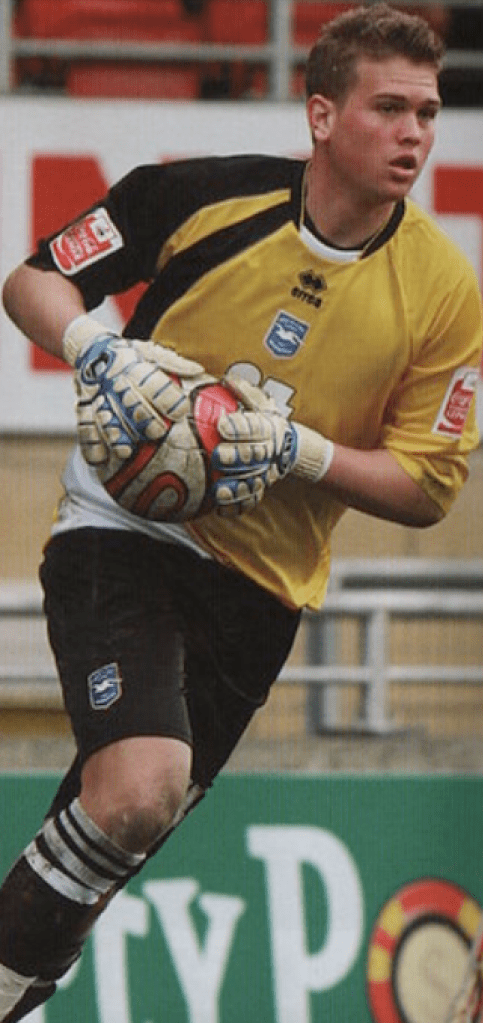
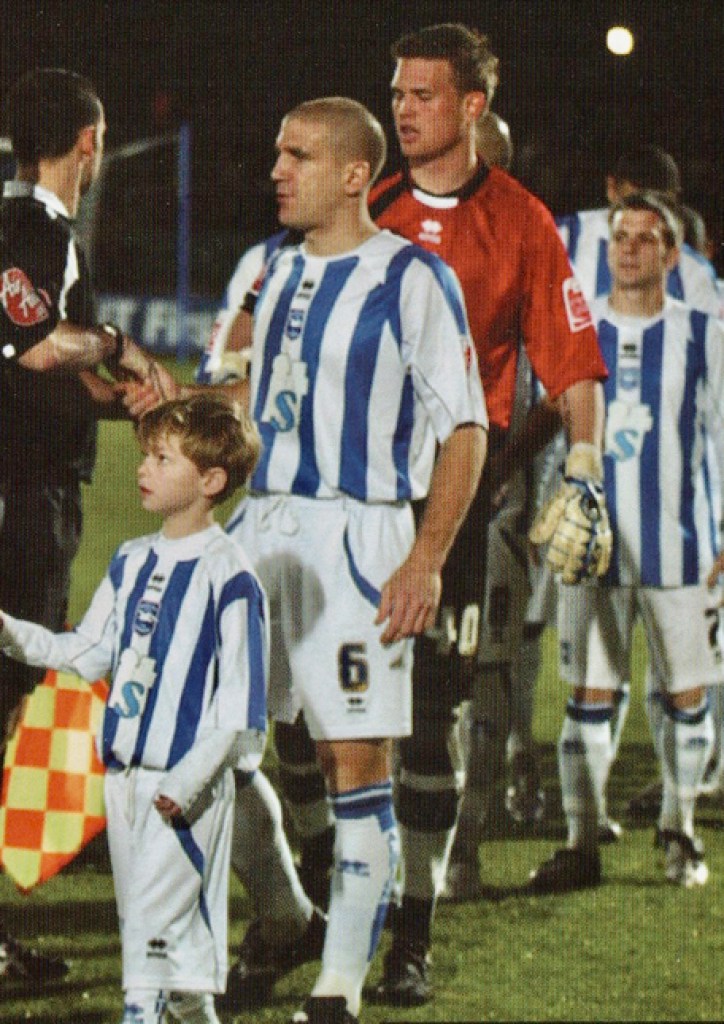
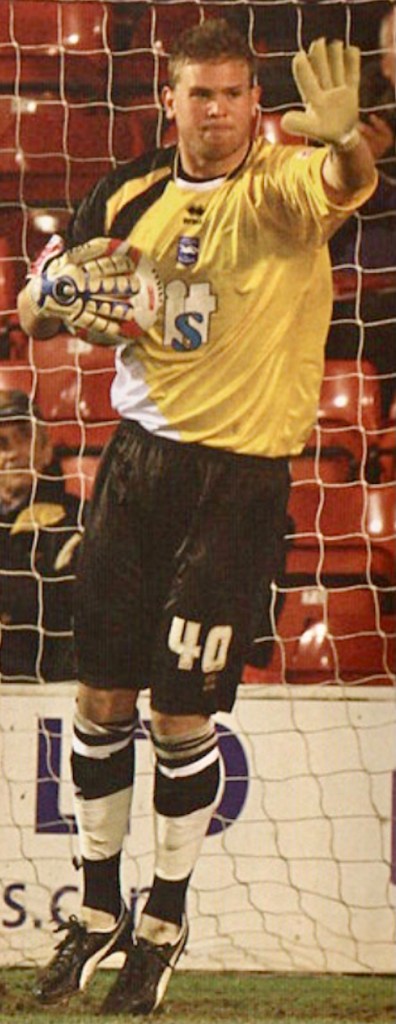
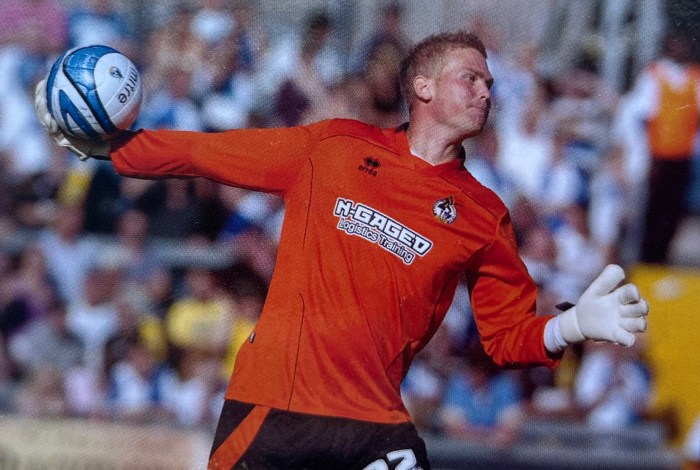
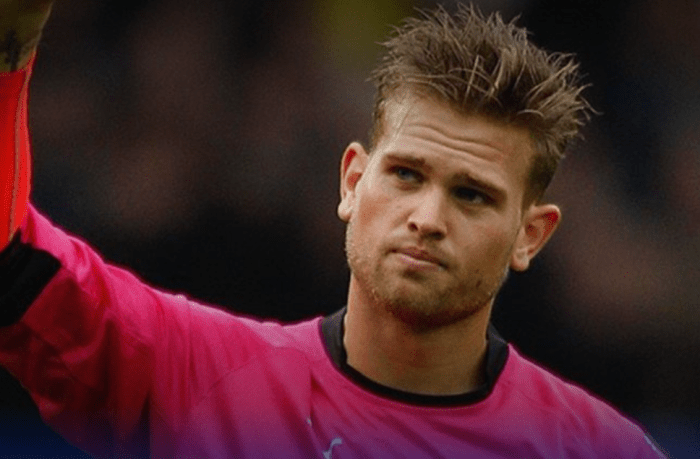
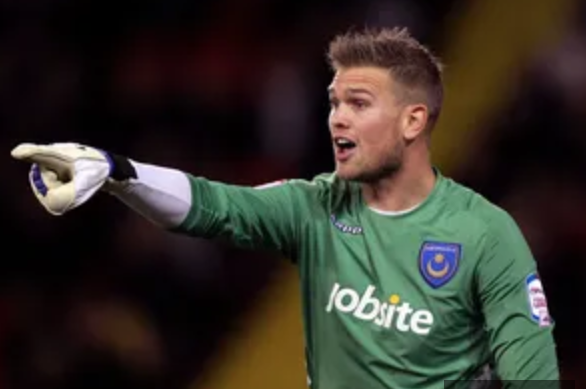
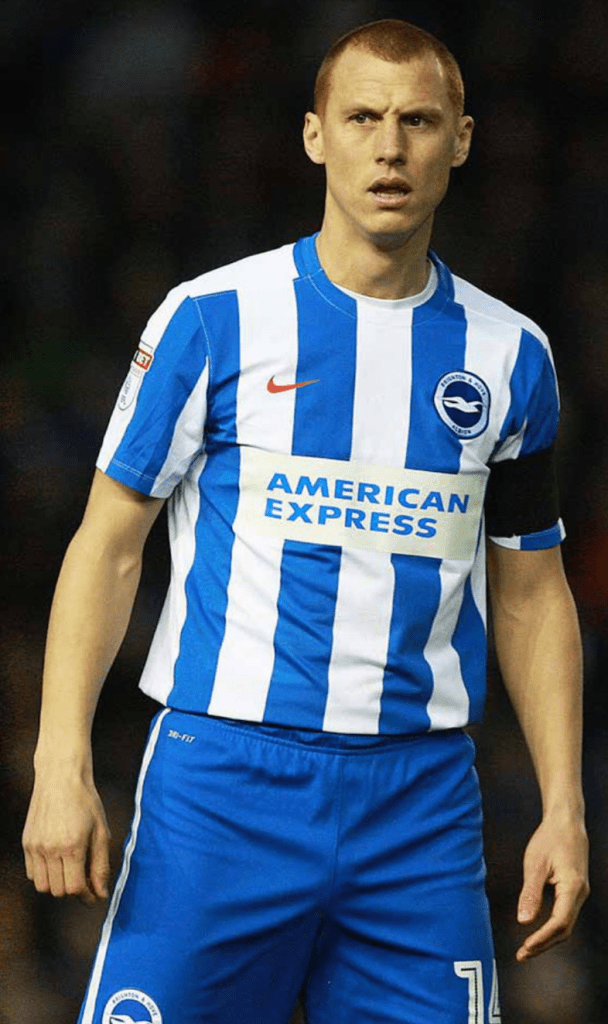

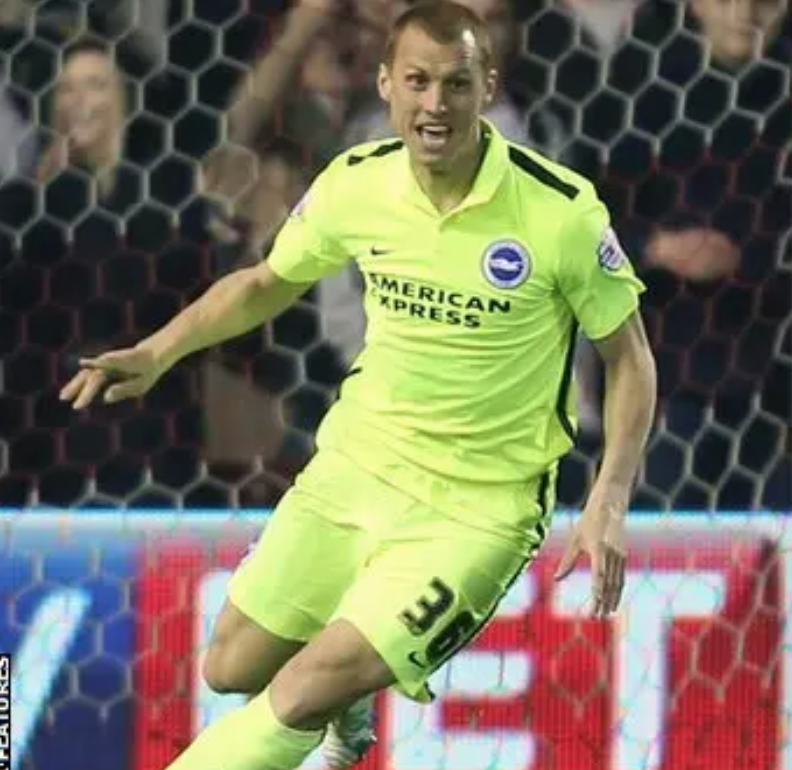
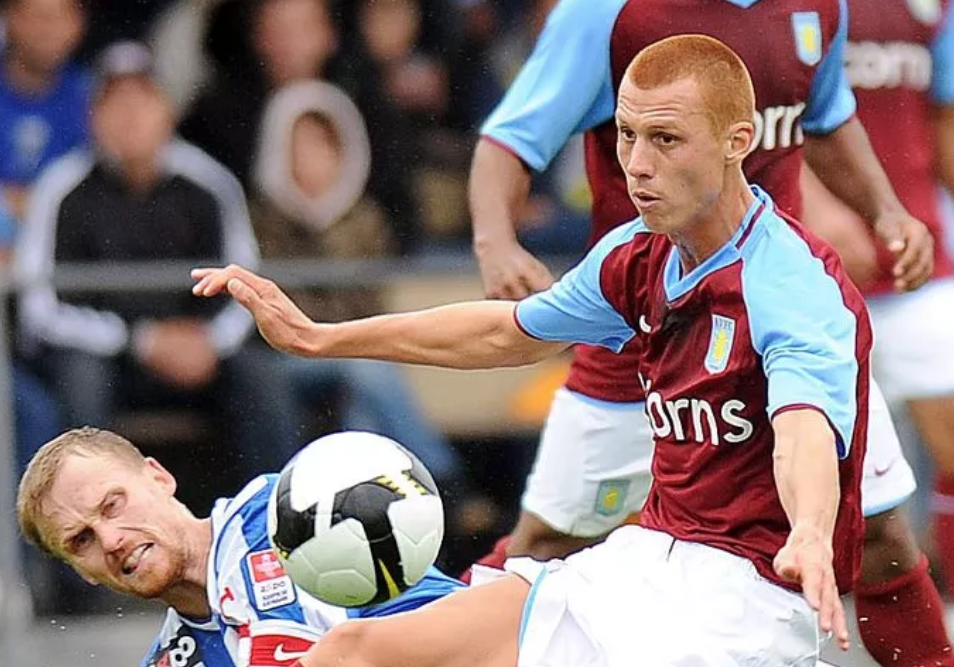

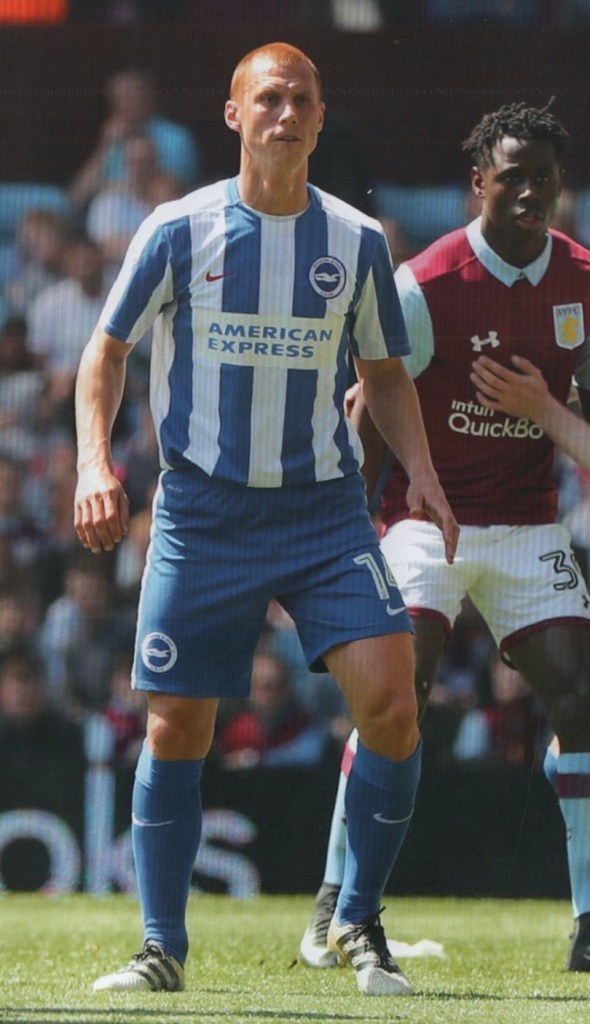


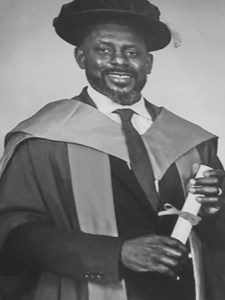


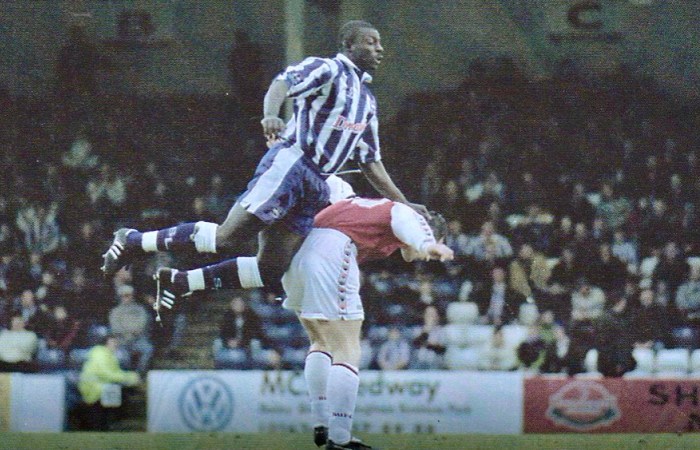
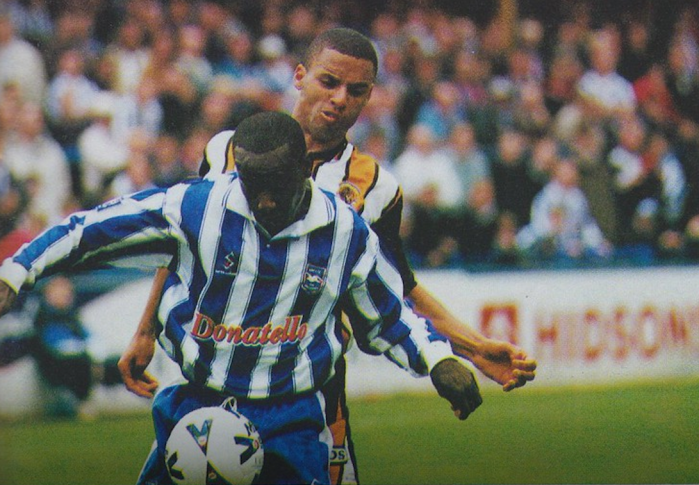



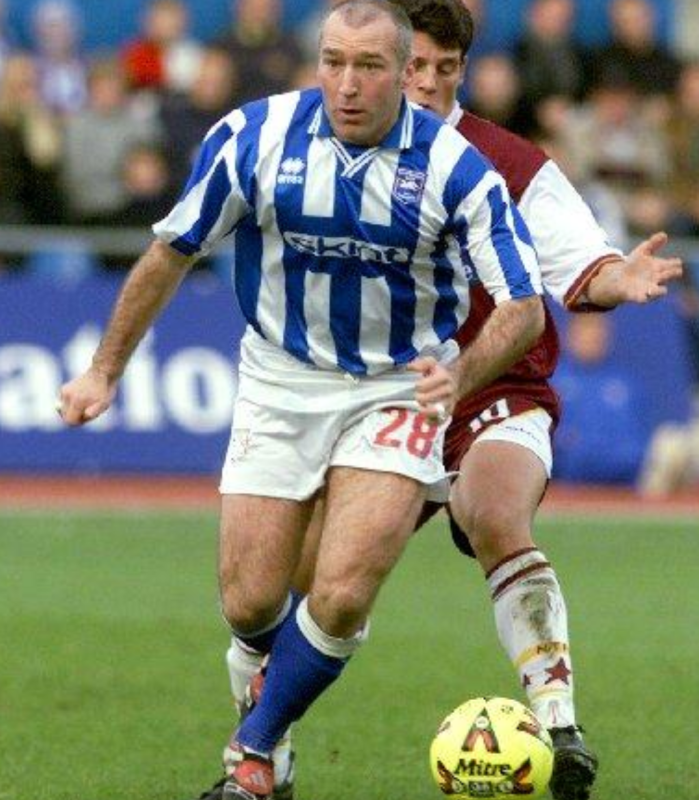


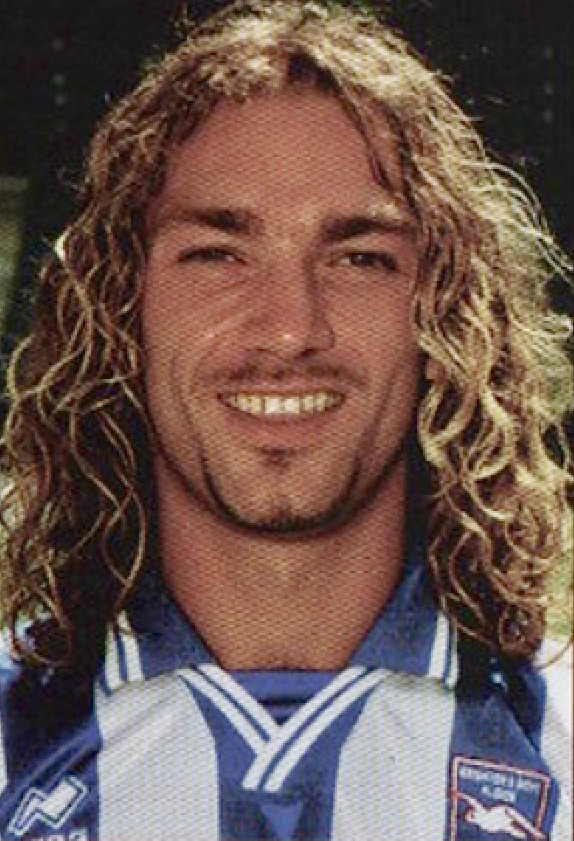

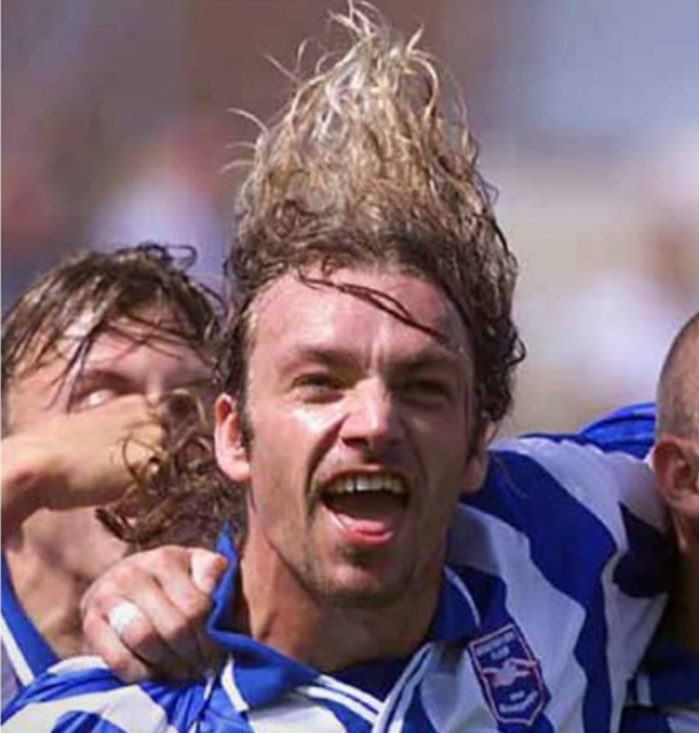
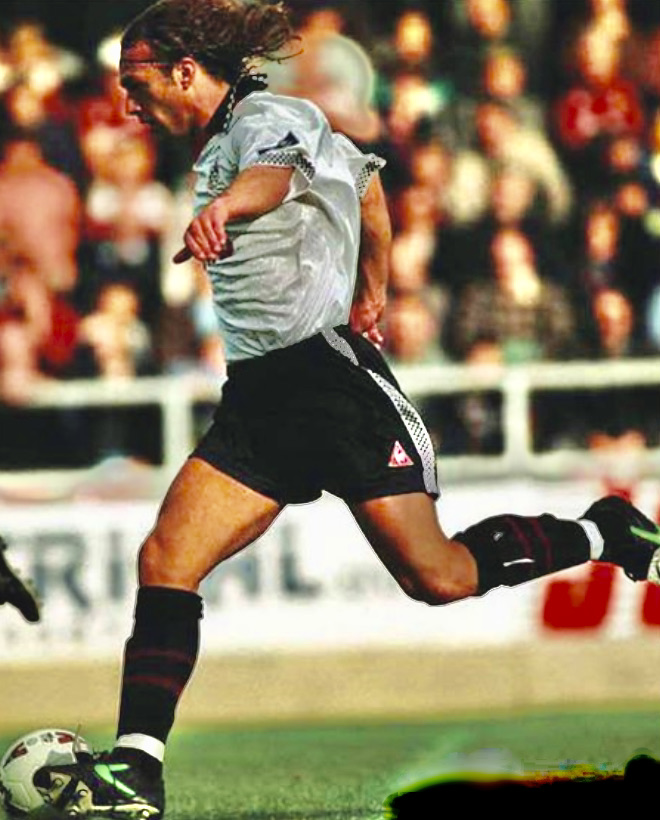


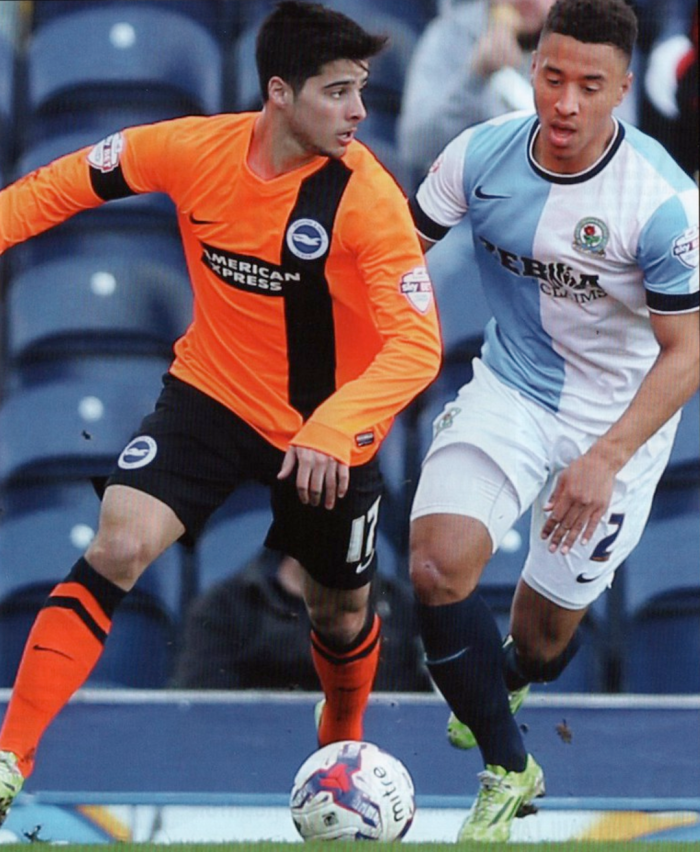


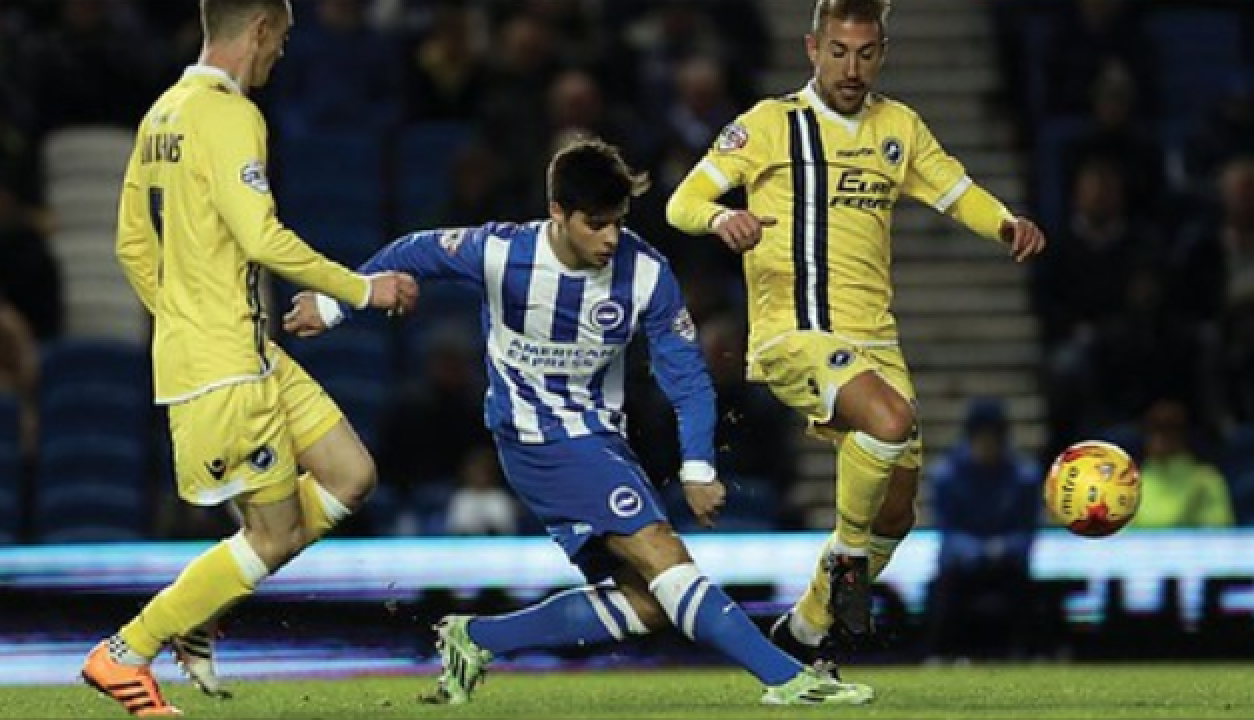


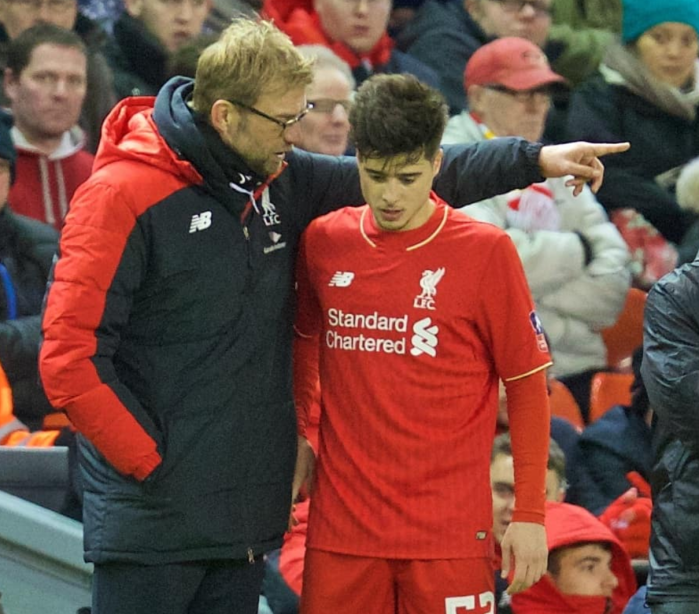




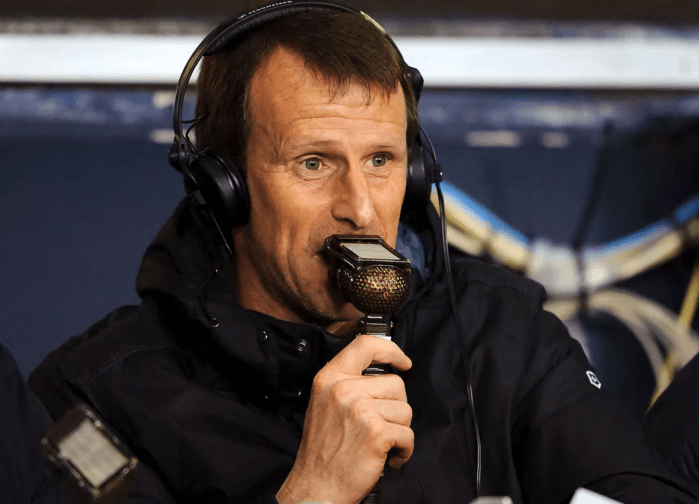


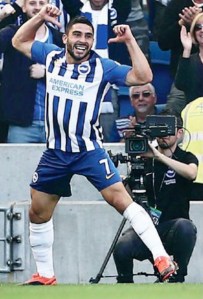

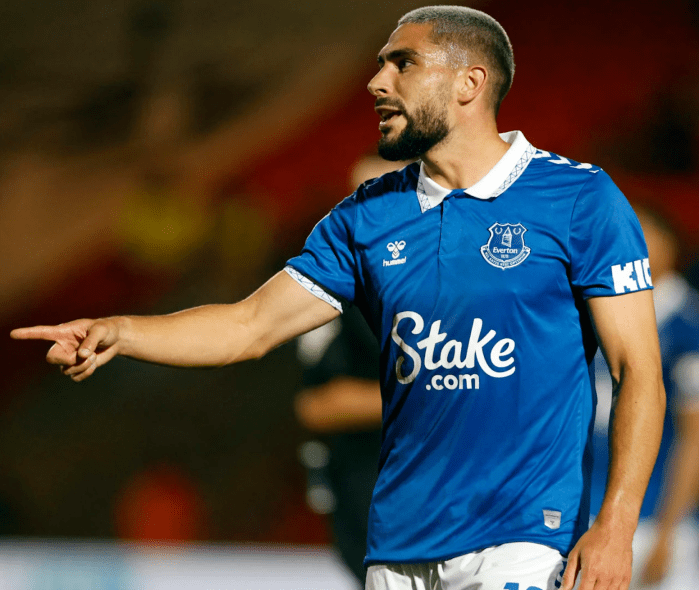


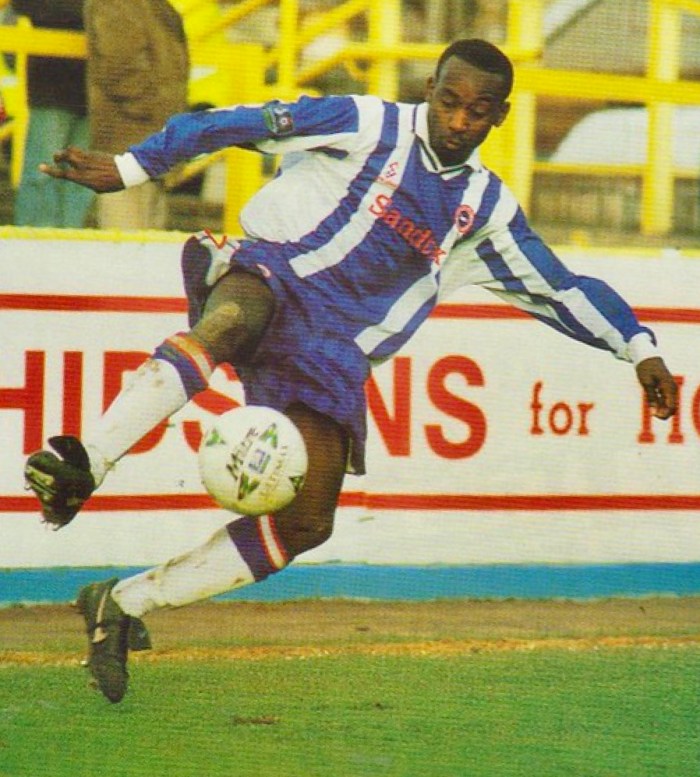


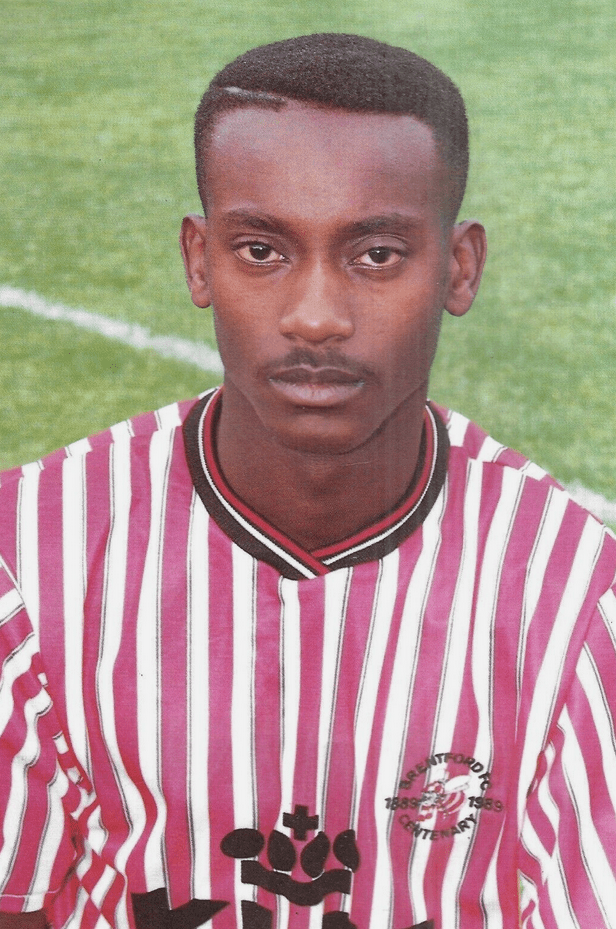




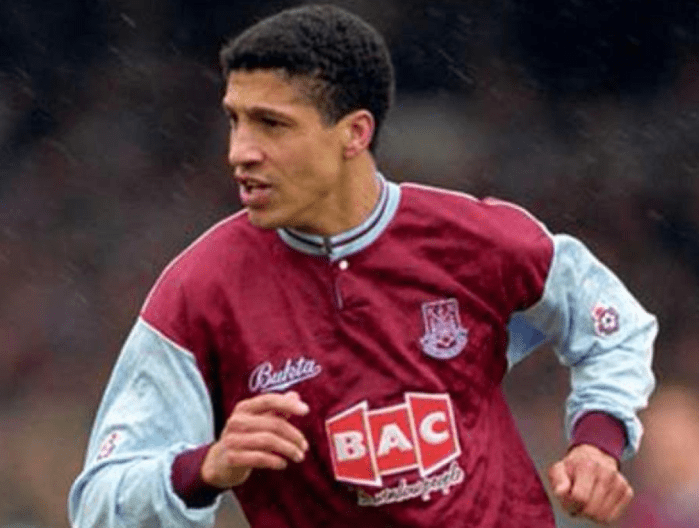

 In parallel lines