BARRY BUTLIN is one of that pantheon of players who’ve scored winning goals for the Albion against Crystal Palace.
He may sound like the alliterative title of a south Wales holiday camp, but this was a moustachioed striker who’d joined Third Division Brighton on loan from Second Division Nottingham Forest.
When former Albion boss Brian Clough couldn’t find a place for him in his Forest line-up in September 1975, previous managerial partner, Peter Taylor, going it alone at the Albion, was more than happy to add Butlin to his forward line options.
Butlin had started his career at Derby County on the periphery of Clough and Taylor’s squad at the Baseball Ground.
During his five years as a Rams player, he’d twice been out on loan to Notts County, scoring eight in 20 games in 1968-69 and another five in 10 appearances in the 1969-70 season.
While Derby won the First Division title in 1972, Butlin was sold for £50,000 to Luton Town, where he made his mark with an impressive 24 goals in 57 matches.
One of them came in a 1-1 draw at Elland Road during Clough’s ill-fated 44-day spell as Leeds manager, and, in a typically odd Clough way, in the post-match press conference he put his arm around Butlin and told the journalists: “This is who you want to write about after that wonderful goal. He deserves it.”
The following month, Butlin’s goalscoring exploits for the Hatters saw Forest boss Allan Brown take him to the City Ground for a fee of £120,000.
Imagine how he must have felt when his old Derby boss Clough arrived to take over at Forest in January 1975!
Nevertheless, the striker said all the right things publicly ahead of the manager’s first game, a third round FA Cup replay against Spurs, as recorded in Jonathan Wilson’s excellent book Brian Clough: Nobody Ever Says Thank YouThe Biography (Orion Books 2011).
“The lads all know that everybody is starting from scratch with everything to prove,” said Butlin. “Brian Clough has the ability to make an average player good and a good player great.”
Such a show of loyalty might have been understandable in the circumstances but Wilson also recalls Clough’s eccentric attitude towards players when they were injured. Butlin fractured his cheek in a training ground incident when at Derby.
“As he lay on the ground, Clough screamed at him to get up, insisting there was nothing wrong with him,” wrote Wilson. “Even after he’d been taken to hospital, Clough refused to believe anything was the matter.
“When Butlin’s wife turned up looking for her husband and mentioned an ‘accident’ to Clough, he snapped: ‘I’ll tell you when there’s been an accident’.”
Although Butlin feared the worst when Clough arrived at Forest, he wasn’t instantly discarded, finishing that season with seven goals in 33 games (plus one as a sub), while fellow forward Neil Martin netted 12 in 30 matches (plus two as a sub).
Butlin had a front row seat in this Forest line-up
But Clough clearly had other ideas about who he wanted in attack and brought in John O’Hare, who had done well for him at Derby, but less well during the ill-fated spell at Leeds, and introduced a young Tony Woodcock.
Intriguingly, that summer Martin was reunited with Taylor at Brighton and, within a matter of weeks, Butlin was also heading to the Albion, although his move was only temporary.
As it happened, Martin got off to a decent start alongside Fred Binney up front, scoring three times in the opening matches. But Taylor obviously considered Butlin offered a more potent threat; and it wasn’t long before fans saw why.
Butlin lets fly and scores the winner at Selhurst Park in 1975
In only his second game, in the third minute of Albion’s clash with Palace at Selhurst Park on 23 September 1975, Butlin got on the end of a Gerry Fell cross and hit an unstoppable shot that turned out to be the only goal of a pulsating game played in front of a crowd of 25,606 – a quite remarkable number for a third tier fixture.
“It still sticks with me, that one,” Butlin told Spencer Vignes, in his book Bloody Southerners (Biteback Publishing), which details the Clough-Taylor period at the Goldstone.
“It was the start of a cracking time down at Brighton,” said Butlin. “I only wish I could have gone on a little longer.”
Butlin soars to connect with this header
Butlin followed up that midweek winner at Palace with another goal on his home debut four days later when Chesterfield were beaten 3-0 (Peter O’Sullivan and Binney the other scorers).
Although not on the scoresheet, he also featured in two more wins (2-1 at Shrewsbury Town and 1-0 at home to Preston). However, in his absence Forest had gone through a mini slump, losing four out of five matches.
Butlin had taken his wife and children to Sussex with him, staying in the Courtlands Hotel in Hove. They all really liked the area, and the player had hopes of making the move a permanent one. Clough had other ideas.
“Brighton made me so welcome, but Forest weren’t doing very well at all,” Butlin told Vignes. “When I came to the end of my loan period, Brian got me straight back up to Forest and I had a real purple patch during which I played really well.”
In fact, he finished the season with eight goals from 38 games played as Forest finished eighth in the old Second Division.
Collector’s item
“We had this team meeting before one game and Brian said: ‘If sending you down to Brighton gives you that impetus, then I’d better start sending some more players down there!’
“I’d seen the seafront and the wonderful countryside and thought it was the prelude to us staying there as a family, but it wasn’t to be. I was disappointed to say the least.”
Born in the south Derbyshire village of Rosliston, on 9 November 1949, Butlin attended Granville County Secondary School in Woodville from 1961 to 1966, and proudly records on his LinkedIn profile that he obtained six GCEs. He was also the school football captain.
He signed on for Derby in July 1967 but the likes of Richie Barker and Frank Wignall initially, then O’Hare and Kevin Hector, were ahead of him as the Rams progressed from the old Second Division into the First, before winning the title in 1972.
Chances for Butlin were few and far between. He made just four first team appearances in five years but those loan spells at Notts County at least demonstrated there was a player in the making, able to find the back of the net.
A knee injury prevented him making an immediate impact at Luton, after Harry Haslam had signed him, but he was the top scorer as Town gained promotion to the elite in second place in 1973-74.
The Hatters assured promotion by securing a 1-1 draw at West Brom in the penultimate game of the season, and midfield player Alan West relived the moment in an interview with theleaguepaper.com.
“I remember Barry Butlin, who was magnificent in the old centre forward’s role that season, got the vital goal,” he said. “I played in midfield with Peter Anderson and Jimmy Ryan. Peter was a great player and finished that season as our second highest scorer behind Barry.”
Just before Christmas in 2014, Butlin and West were among several former players who got together for a 40th anniversary celebration dinner. Also there were John Faulkner, Gordon Hindson, Alan Garner, Jimmy Husband, John Ryan, Jimmy Ryan, Don Shanks and Ken Goodeve.
Luton history website hattersheritage.co.uk remembers Butlin as “brilliant in the air and no slouch on the ground” and mentions the shock fans felt when he was sold to Forest, particularly as Town were desperate for goals at the time.
In the 1976-77 season, Butlin once more went out on loan, this time to Reading, and the heave-ho from Forest he had long expected finally came when Peter Withe was brought in.
Butlin was sold to Peterborough United and in two seasons with the Posh he scored 14 goals in 77 matches. His teammates at London Road included former Forest colleagues Jim Barron and Peter Hindley as well as former Albion midfielder Billy McEwan.
United just missed out on promotion from the Third Division, finishing fourth in 1977-78. It was a disastrously different second season, by which time another former Albion player, Lammie Robertson had joined them – when Posh were relegated to Division Four.
Butlin’s final club was Sheffield United, as they faced their first season outside the top two divisions. Signed by his former Luton boss Harry Haslam, Butlin scored 12 times in 53 matches for the Blades, but by the end of 1980-81 season, after Martin Peters had taken over, United were relegated to the fourth tier for the first time in their history.
Butlin retired and spent three decades working as a financial adviser and mortgage manager in Sherwood, Nottingham.
He lived in Derby and between July 2000 and October 2010 was secretary and treasurer of the Derby County Former Players’ Association.
JOHN NAPIER is still coaching youngsters in America as he approaches his 76th birthday. NICK TURRELL’s In Parallel Lines blog caught up with him for a trip down memory lane. Here, he talks about getting into coaching.
A signed photo from my scrapbook
GOING right back to his days at Brighton, John Napier has always been interested in helping young footballers to develop.
“When I stopped playing, I really wanted to get into the coaching side,” he explained. “I had worked in the youth system at Brighton and in Bradford, and I just loved being around young players.”
Ken Blackburn
Testimony to that comes from two former Brighton youngsters who enjoyed the opening article in this five-part series. Ken Blackburn said via Facebook: “I was an apprentice and pro during part of his career with Brighton. I saw on a daily basis how good he was, but just as important a lovely human being and top bloke.”
And Gary Croydon added: “I was a youth team player at the time, and he often came to watch our games, offering advice.”
It was at Bradford City, where he’d been transferred from Brighton in 1972, that Napier got his first official coaching job.
Napier (left) with former Albion teammate Allan Gilliver (right) in their Bradford City playing days
After his playing days had ended, he returned to Valley Parade in November 1975, working with manager Bobby Kennedy, the former Manchester City player who had taken over from Bryan Edwards in January of that year.
A seven-game losing streak saw Kennedy sacked in February 1978, and Napier took over the hotseat. Unfortunately, his tenure was brief and unpopular. He was in charge when City were relegated from the Third Division to the Fourth.
“It only lasted a year, but I learned so much about what it takes to be in charge and making decisions,” he said.
Fascinatingly, he revealed: “One of the first things I did as a young manager at the age of 32 was to drive over to Elland Road and sit down with the great Don Revie.
“We had a great conversation about management; what a gentleman he was. I also made the trip down the motorway to meet with Brian Clough and Peter Taylor at Nottingham: another great experience.
“I was determined to hear from the best. It was important that I try to get better in all areas.”
One of his dealings in the transfer market was to secure the services of Mick Bates, who had played under Revie at Leeds. Napier agreed a £20,000 fee to sign the midfielder from Walsall, where he had been captain. Bates died aged 73 in July 2021.
The young manager wasn’t afraid to impose discipline, as the Bradford Telegraph & Argus reported on 25 September 1978: “Bradford City manager John Napier today imposed a new strict disciplinary code for his players following the recent disappointing 3-1 home defeat by lowly Newport County.
“Days off have been cancelled, training sessions will be held in the afternoon as well as in the morning, all privileges will be taken away and discipline will be ‘very strict’, said Napier.”
Sadly, it didn’t pay off and after just 34 games in charge (11 wins, five draws and 18 defeats) he was sacked and replaced by George Mulhall, the former Halifax Town manager (incidentally, Mulhall was the manager who reluctantly sold Lammie Robertson to Brighton and got Napier’s former Irish teammate Willie Irvine in exchange).
In December 1979, Napier intended to turn his back on coaching and management to start a new football-related venture in America, taking his young family to settle in San Diego.
As he explained to soccertoday.com in a January 2015 article: “My new venture was to be a successful businessman, and with the help of friends in Escondido we opened a soccer store, named The Soccer Locker. This was to be my future in the game, so I thought.
“Well, things don’t always go the way you want them to, as I found out the hard way. There was not too much interest in soccer in 1979.”
The article charts the difficulties the business underwent and how Napier contemplated packing it in and returning to England.
“It was very frustrating as a business person to spend long hours waiting for a customer to walk through the door,” he told soccertoday.com. The business was eventually liquidated in 1985, but, before then, Irish eyes started smiling when opportunity knocked.
Award-winning sportswriter and columnist for The Times-Advocate, Bob Gaines, invited Napier to write a regular column for a start-up football magazine and, having penned some pieces for the Bradford Telegraph & Argus during his time in Bradford, Napier took on the opportunity.
“This was promotion we needed, and it did help, but not a lot. We were still struggling to get by each month and walk-in customers were non-existent,” he said.
Good fortune was round the corner, though, when one of the shop’s customers invited him to start coaching a high school football team. It was way below the level he wanted to be at, but it was work.
“I was really ready to return to England and the professional game after a not very prosperous outlook in California for the first six months,” he admitted.
Nevertheless, he got to know Ron Newman, a former Portsmouth and Gillingham player, who was the head coach of the local professional side, San Diego Sockers (Napier had played for the forerunner of the Sockers – San Diego Jaws – after that franchise had replaced the Baltimore Comets).
Newman offered Napier a one-year contract as the Sockers’ youth coordinator. “Each day I would come to the office and set up events at local elementary and middle schools,” he recalled. “The players would visit and talk to the kids and do some exhibition stuff on the playgrounds and school fields. It was a lot of fun, and the players liked it.”
He also began coaching an under-23 team called the Escondido Royals, who played decent level opposition in and around Los Angeles, Orange and San Diego counties. After that, he didn’t look back.
“I got my top US soccer coaching licence many years ago and have worked for US soccer as a coaching educator in my area (southern California), getting thousands of young coaches their licence on their pathway to their future in the game,” he said. “It has been a rewarding experience.”
In another 2015 soccertoday.com article, Napier said: “I have been fortunate to see the growth of youth soccer in this country since 1979. What an incredible experience to be part of and to have helped youth soccer grow and flourish in America.
“Anybody who was around in soccer during the early eighties and was able to watch it develop to where the sport is today has to have an inner satisfaction. I know I certainly do.
“Soccer, internationally and domestically, both at the higher professional level as well as at the youth levels, has grown tremendously. In fact, I am very, very proud.”
Inducted into the CalSouth Hall of Fame in 2015
The genial Irishman told me: “I have coached many levels in my time in the USA and have seen the growth of the game take off, especially in the last 25 years or so.
“There are now more kids playing soccer than any other youth sport, such as baseball and American football. The girls’ programs especially have seen an enormous growth, the success of the national women’s team has raised the roof for girls’ soccer.
“I have been fortunate to have had some good really good players in the past and, even now, I see some former pupils in the US national teams.
“At the present, Aaron Long is playing in the national team and another, Bobby Wood, was in Germany and played for the US team.
“On the girls’ side, Catarina Macario, who plays in the present US women’s national team, and in Lyon (France) for their women’s team.
“Many others are playing in the national youth teams – boys and girls – so I am proud of my work in youth soccer. It is very rewarding to be able to give back to the game that gave me so much.”
When I interviewed Napier in the early Spring of 2022, he revealed: “I will be 76 in a few months, and I coach regularly for my club, San Diego Soccer Club Surf.
Napier still coaches at San Diego Soccer Club Surf
“My week consists of four weekday sessions of three to four hours daily and, at the weekend, I coach my teams both Saturday and Sunday.”
The weekend after our interview he was heading off to Phoenix Arizona for back-to-back games before returning home, to Monday practice again – a round trip of about 800 miles.
“As long as I have the passion and desire to enjoy the game and the energy to be involved, I will keep at the game that gave me everything,” he said.
In a blog for San Diego Soccer Club Surf, Napier details his football career and concludes: “My life journey in soccer has been amazing. I often dreamed as a young boy growing up in a far-off land of being a ‘soccer player’.
“Never did I think that I would have the career that I have had – the places I have been, representing my country, the players I had the honour to play with and against, the amazing people and wonderful coaches I have met. It has been a wonderful soccer life and still is.”
• Ever the gentleman, John ended our interview by saying: “I want to thank all the Brighton fans that may read these articles.
“It seems like yesterday when I was driving up to the Goldstone from my home on Shoreham Beach.
“They were good days, and to any of my ex-team mates out there drop me an email, I am easily found on the internet.”
BRIAN CLOUGH and Peter Taylor were shrewd operators in the transfer market but their first signing for Brighton was a flop.
Possibly panicked into making changes to a side shipping goals at an alarming rate, their spending of £20,000 on Ken Goodeve was money wasted.
The former Manchester United youth captain managed only six appearances and left the club seven months later.
In the autumn of 1973, fresh with a transfer fund previous manager Pat Saward could only have dreamt of, the former Derby County managerial duo bought Goodeve from Luton Town, where he’d struggled for games after leaving Old Trafford.
Clough and Taylor had been less than impressed with the squad they’d inherited at the Goldstone Ground – particularly after witnessing successive capitulations to Bristol Rovers (8-2) and non-league Walton & Hersham (4-0).
As they sought to shape the side with their own players, the first arrival through the door was Goodeve, who would at least have found one familiar face in the dressing room. He and Peter O’Sullivan played in the same Manchester United youth and reserve sides (see programme line-ups below).
In April 1969, they had reached the FA Youth Cup semi-finals where West Brom beat them 5-3 on aggregate, winning 3-2 at home in the first leg and 2-1 at Old Trafford, when it was reported a crowd of 20,000 were watching.
Goodeve and O’Sullivan played in the same United reserve side as the likes of Jimmy Rimmer in goal, John Fitzpatrick, Nobby Stiles and Don Givens.
In April 1970, Goodeve was one of four fringe United players – Givens, Jimmy Ryan and Peter Woods were the others – who were sold to Luton for a combined total of £35,000.
In two seasons at Kenilworth Road, Goodeve captained the Town reserve side but managed only nine appearances, plus six as a sub for the first team.
He was still only 23 when he joined the Albion. He was handed the no.6 shirt alongside Norman Gall for the away game at Tranmere Rovers on 8 December, along with fellow debutant Peter Grummitt, initially on loan from Sheffield Wednesday, in goal.
But neither new boy could halt the slump, as Albion caved in to a 4-1 defeat. Left-back George Ley didn’t play another game for the club after that game at Prenton Park.
Young Steve Piper was drafted in to play alongside Gall in the following match – a 1-0 defeat at Watford – and Goodeve was handed Eddie Spearritt’s no.4 shirt instead.
He retained his place in the side for the Boxing Day clash with Aldershot (when Burnley youngsters Harry Wilson and Ronnie Welch made their debuts) but this time in place of Ronnie Howell in midfield. Again, Albion lost 1-0.
Clough and Taylor continued to chop and change and Goodeve was dropped to the bench for the next four matches, only getting a brief look-in on the action when going on for Welch in the 2-1 home win over Rochdale on 19 January.
John Vinicombe, Albion writer for the Evening Argus, was not impressed. “The chief disappointment so far has been the failure of Ken Goodeve to recapture his Luton form. Goodeve, who started in the back four with Albion at Tranmere, has subsequently appeared in midfield and so far not made his mark,” he wrote.
Goodeve found himself playing in the reserves with a growing band of former first-teamers and, it wasn’t until 25 March that he got another sniff of first team action.
That was when he stood in at right-back for Paul Fuschillo away to Wrexham (0-1) and five days later at York City (0-3). But that was it. After five starts and one appearance as a sub, he didn’t play for the Albion again.
In the close season, he was offloaded to Watford for half the amount Albion had forked out seven months earlier.
At last, at Vicarage Road, he got plenty of playing time under his former Luton teammate, Mike Keen, who had taken over as Hornets manager.
Indeed, in only the second month of the new season, Goodeve was back at the Goldstone in the Watford side beaten 2-0 courtesy of goals by Ricky Marlowe and Welch.
Goodeve in action for Watford against Albion’s Fred Binney
Born in Manchester on 3 September 1950, Goodeve joined United on schoolboy terms in October 1965 and was signed up as an apprentice the following year. In September 1967, he signed a professional contract at Old Trafford.
By the time he departed Old Trafford in April 1970, he’d not managed to make the step up to the United first team.
At Luton, his teammates included John Moore, who’d previously been on loan with Brighton, Barry Butlin, who played five games on loan at Brighton in 1975, and Don Shanks, who was a Mike Bailey signing in 1981.
After the sparse playing time with Brighton, Goodeve played 69 consecutive games for Watford between 1974 and 1976 but a groin strain ended his professional career.
He was able to pursue a non-league career at Bedford Town for five years and was in their 1980-81 side that won the Southern League Cup.
He subsequently played for a number of non-league outfits in the same region, as detailed in this Watford FC archive and ended up as player-manager of Bedfordshire side Wootton Blue Cross between 1993 and 1997.
According to the Hatters Heritage website, Goodeve continued to play football until he was 47 before becoming customer care manager for Galliard Homes in London, commuting from Wootton every day.
JUSTIN FASHANU, renowned for an iconic televised Goal of the Season for Norwich City against Liverpool in 1979, played 20 games for Brighton in the 1985-86 season.
Those bald facts tell only a fraction of the story of the short and complex life of a bustling centre forward who burst onto the football scene as a teenager, scoring 40 goals in 103 games for the Canaries.
Several books have been written about him, acres of newspaper column inches filled covering colourful tales of what happened to the first £1m black footballer, and there is no shortage of articles across the internet. There’s even been a theatre play about his life: Justin Fashanu in Extra Time.
Here I will focus mainly on the football, and, in particular, that time at Brighton, although some context is needed to explain how a player who only three years earlier had helped England win the UEFA Under 21 Championship ended up with the then second tier Seagulls.
Fashanu’s signing for Brighton in June 1985 seemed like a major coup for manager Chris Cattlin as the Seagulls sought to return to the elite level they’d been relegated from two years previously.
Why was he so convinced Fashanu would be a hit at Brighton? In an interview with Spencer Vignes for the matchday programme, he said: “We’d put a good side together with a tight defence, an exciting midfield and a forward line that included Dean Saunders and Terry Connor.
“I knew all about Justin and I went to see him play for Notts County against Manchester City and he was simply amazing. He battered the best defender in the league at that time – Mick McCarthy – and I mean he really battered him. I thought: ‘That’s our fella!’ With those three up front, we were going to have one hell of a chance of winning promotion.”
In his programme notes for the opening game of the season, Cattlin wrote: “With the right service I expect Justin to be the best centre-forward this club has had in a very long time.”
At the end of a season when Albion missed out on promotion by finishing sixth, Frank Worthington at 36 had demanded a signing-on fee to stay a second season with the Albion – money Cattlin said wasn’t available. There was no such demand from Fashanu, who at only 24 was trying to rebuild a career that had gone off the rails.
To make his own personal assessment of a player who had already attracted plenty of negative attention, Cattlin even had the player to stay at his house for four days before signing him.
Only the previous season, Fashanu’s aggression on the pitch for Notts County had put both Albion centre backs Eric Young and Jeff Clarke in hospital. He’d previously had an altercation with Albion’s former Canaries defender Andy Rollings while playing for Norwich at the Goldstone, resulting in Rollings’ dismissal for throwing a punch at the striker.
Nottingham Forest boss Brian Clough, who’d persuaded the board of the two-times European Cup winners to part with £1m to sign the 20-year-old from Norwich in 1981, had numerous clashes with the player when he was unable to replicate his previous goalscoring form (more of which later), and, after just 15 months, he cut the club’s losses and sold him to neighbours County for only £150,000.
More crucially, though, Fashanu had sustained an injury to his left knee on New Year’s Eve 1983 inflicted courtesy of the studs of Ipswich, and later Brighton, defender Russell Osman. The wound had become infected and the medics at the time were clearly concerned. It meant insurers inserted an exclusion clause into their cover. Any claim for subsequent injury would only be covered if he’d previously played 12 consecutive League games.
After his stay chez Cattlin, a fee of £115,000 was paid to Notts County, who’d just been relegated to the old Third Division, and the manager said: “Justin had a reputation of being a bit of a problem player with his other clubs but that is all in the past.
“In my dealings with him I’ve found him to be a smashing person and the sort of player our supporters will take to.”
He told the Evening Argus that Justin was “a dedicated player who has been asleep for a couple of years”, adding “I’m sure, with us, he will bring his talents to fruition”.
Meanwhile, Fashanu told The Times: “I only took this step after a good deal of thought and prayer. I am convinced Chris Cattlin can get the very best out of me.”
He got off to a great start when scoring twice as Albion thrashed Aldershot 5-0 in a pre-season friendly at the Recreation Ground on 29 July 1985.
Stiffer competition was promised in the shape of three Goldstone friendlies in a week against First Division sides Arsenal, Liverpool and Nottingham Forest. Arsenal won 2-1 on 2 August and Liverpool 4-1 on 5 August. Two days later, Fashanu netted one of Brighton’s successful spot kicks in a 5-4 penalty shoot-out against Oxford United at the Manor Ground which saw them win the Oxfordshire Benevolent Cup.
Fashanu (front row, third from left) all smiles after Albion won a trophy in Oxfordshire
The pre-season fixtures were rounded off on 9 August when second tier Albion walloped Forest 5-2, and the matchday programme captured the mood with some delight.
“The match was a real thriller for the fans, and no-one except perhaps for Brian Clough and his team, went home unhappy,” the programme crowed. “Justin Fashanu had an outstanding game against his former teammates.”
Fashanu was involved in setting up three of Albion’s goals and of the fifth the programme recorded: “The final goal came after just about the most powerful shot seen at the Goldstone for years. Fashanu connected from 15 yards out. Segers could only parry the ball, and (Gary) O’Reilly tapped it over the line.” Tellingly, Clough declined to be interviewed after the game.
Fashanu started in the no.9 shirt and was sent off in only his third game, a 2-1 home win over Bradford City. Cattlin was quick to leap to his defence, using his programme notes to tell supporters: “I understand that the referee sent him off for dissent after committing a cautionable offence. All Justin said was ‘Surely you’re not booking me for that ref’…and if that either brings the game into disrepute or deserves any punishment at all, surely there’s something wrong in the game.
“Justin has joined us this season and is a great professional. One hundred per cent effort is appreciated by the fans and our supporters know they are getting just that. There was nothing malicious in anything he did on Saturday.
“Justin is a ‘gentle giant’. He never swears and he tries all the time…that is just the sort of player we need in the game. I would like to go firmly on record as saying his sending off was a complete injustice.”
Disciplinary action took a little longer to come into effect back then and Fashanu didn’t have to serve his suspension until the sixth game of the season.
However, it turned out he would have missed the game anyway because he’d undergone surgery.
It emerged that during pre-season training, Fashanu had taken a whack on his knee and it was six weeks and several matches later before he underwent a procedure at the Royal Sussex County Hospital. Cattlin admitted: “Mr Fearn, the club surgeon, had to work on the bone.”
In hindsight, Cattlin’s programme notes about the injury could be viewed, at best, as insensitive. “I would like to explain the problem of Justin Fashanu,” he wrote. “He jarred his knee pre-season, there is apparently a floating body there somewhere….probably a piece of black pudding or something!”
Cattlin already had Gerry Ryan out long term injured and he also lost Fashanu’s strike partner Connor to injury in those opening weeks. That absence presented an opportunity for Mick Ferguson to stake a claim and he responded with three goals in three games – until he too got injured, as did Alan Biley. In the emergency, loanee Arsenal defender Martin Keown was put up front to play alongside Saunders.
Gerry Ryan, Chris Hutchings, Fashanu and Terry Connor were all out injured
In the programme for the 19 October home game against Charlton, Cattlin was pleased to report Fashanu had resumed training and was busy building up his thigh muscles after his period of inactivity.
He finally made his comeback in an away League Cup match at Liverpool and, as Albion were sent packing 4-0, Fashanu was booked after clashing with Craig Johnston.
However, at least he was back in the no.9 shirt and, after leading the line in a home 1-1 draw against his old club Norwich, he scored his first goal for the Seagulls the following week when Brighton lost 2-1 at Shrewsbury Town.
Defending Fashanu after yet another booking in a 2-1 defeat away to Sunderland, Cattlin said: “Justin is anything but a dirty player. He is certainly strong, but if he was dirty I can assure everyone he would not be wearing the blue shirt of Brighton. I can see all sorts of trouble in the game if referees cannot differentiate between dirty play and wholehearted endeavour.”
Later the same month, Fashanu scored his second and only other league goal for Brighton, at home to Hull City on 30 November, when the Albion won 3-1 (Danny Wilson and Connor also on the scoresheet).
That match came during an 11-game unbroken run at centre forward, including an influential display in a 2-1 Boxing Day win over Portsmouth (below) which gave Albion their first league victory at Fratton Park in 62 years.
Fashanu set up Saunders for Albion’s first and, 18 minutes from time, Fashanu’s close-range shot was parried by Alan Knight only to Connor, who buried the winner.
Although the shortage of goals was bad news for him personally, it was good news for Shoreham butcher Roy Parsons who promised the striker 2lb of steak for every goal he scored for the Albion!
After missing two matches at the start of February, Fashanu returned to the side for the memorable FA Cup fifth round tie against Peterborough on a snow-covered pitch at London Road. Substitute Steve Jacobs went on for him for the second half and scored Albion’s second equaliser to take the tie to a replay, Saunders having got Albion back in the game to cancel out the home side’s lead. But it proved to be Fashanu’s last game in an Albion shirt.
The striker had to undergo further surgery on his knee although, at the time, it wasn’t made to sound career-ending. The matchday programme for the game against his brother John’s Millwall side on 22 March 1986 said merely: “Our popular striker had a minor operation this week and we hope this will finally clear up his knee problem.”
Subsequent reports had it that Fashanu’s right knee had been nearly shattered and the prognosis from the medical people was that he would have to give up the game. The player got an insurance payout but he was reluctant to give up the game and spent money in the UK and America trying to get the knee fixed.
“I had been told by doctors and surgeons in England that I’d never walk again properly – let alone play,” Fashanu told the Los Angeles Times in July 1988. “They were proposing an operation to remove the lining from the inside of my knee.”
Fashanu was born in Hackney, London, on 19 February 1961, the son of a Nigerian barrister and a Guyanese nurse. The parents split up when Fashanu and brother John were five and four. Unable to support them, their mother, Pearl, sent them to a Barnardo’s children’s home.
The boys were eventually fostered and raised by Alf and Betty Jackson in the small rural Norfolk village of Shropham, near Attleborough.
Norwich City’s youth scout Ronnie Brooks identified 14-year-old Fashanu as a prospect while visiting Norfolk schools looking for talent. He was invited to train with the club during his holidays and then signed as an apprentice.
In a 2011 article, writer Juliet Jacques recounted: “Having persuaded Fashanu to play football rather than box (he was twice an ABA junior heavyweight finalist, aged 14 and 15), Brooks spent time with him in the gym at Norwich’s training ground at Trowse, wanting him to become less one-footed and learn how to strike the ball in the air.
“Endlessly, Brooks would throw a ball over Fashanu’s shoulder, demanding that he turn, volley it against the wall with one foot and then hit it back with the other.”
That practice would pay off big time, Jacques capturing in words the moment the 18-year-old Fashanu connected so sweetly from distance to draw Norwich level, 3-3, with Liverpool at Carrow Road on 9 February 1980, and, in the days of limited football coverage on TV, featured on BBC’s Match of the Day.
“With the impudence of youth, he flicked the ball up with his right foot, turned, and volleyed it into the tiny space between Ray Clemence’s head and the post. The strike was perfect – and so was the celebration. There was a split second while the crowd, and the commentator, processed its brilliance: as the fans roared, Fashanu stood alone, one finger raised to the skies as if to announce his genius,” she wrote.
“Norwich eventually lost 5-3, but the goal overshadowed the result: it made the perfect televisual image, coming as a generation of black footballers were breaking through at England’s top level, leaving Fashanu poised to become their leading light.”
One of his teammates back then, Greg Downs, recently told The Athletic: “We took the mickey out of Justin at the time because we maintained he miscontrolled it. We swore it bounced up and hit him on the ankle, which is why he then hit it.
“With all due respect to Justin, his greatest attribute wasn’t his feet. His strength was in the air. He was a magnificent header of the ball. I think that was why it surprised everybody.
“It was a magnificent strike. You couldn’t have hit a better shot. Ray Clemence had no chance. I don’t think any other keeper anywhere would have had any chance with it. Justin just caught it sweet.
“I got on great with Justin. I remember going to his 18th birthday in Attleborough with his family. He was a nice fella.
“He was so popular at Norwich. He was also probably the first local black footballer we had. He was famous, this lad from Norfolk, he had a personality, he was eloquent. I knew his parents and they raised him with very high morals, and he was a lovely lad.”
England under 21 cap
Two months after that Liverpool game, Fashanu scored England’s only goal in a 2-1 defeat to East Germany in a 1980 UEFA under 21 championship semi-final at Bramall Lane, playing alongside future full internationals Gary Bailey, Kenny Sansom, Bryan Robson, Russell Osman, Terry Butcher, Glenn Hoddle, Garry Birtles and Gordon Cowans.
In September the same year, he went on as a substitute for Paul Goddard as England beat Norway in a friendly at The Dell, Southampton. The following month he was a starter as England were thrashed 4-0 away to Romania in a 1982 UEFA under 21 championship preliminary match but on 18 November at Portman Road he was on the scoresheet as England swept aside Switzerland 5-0 in the same competition.
He featured as a sub in a 1-0 friendly win over the Republic of Ireland at Anfield in February 1981, then was on the scoresheet as England beat Hungary 2-1 in a friendly in Keszthely.
His seventh cap came as a starter in the 0-0 draw away to Norway in September and two months later he opened the scoring for England in another 1982 UEFA under 21 championship preliminary match when England beat Hungary 2-0.
The following March he started again as England won a quarter final away leg in Poland 2-1 and was in the semi-final second leg line-up that drew 1-1 with Scotland at Maine Road, Manchester.
In the first leg of the final of that competition, played at Bramall Lane, Sheffield, on 21 September,1982, Fashanu went on for David Hodgson and scored as England beat West Germany 3-1, although he didn’t feature in the second leg away when England lost 3-2 but ran out 5-4 aggregate winners.
At that time, Fashanu was on loan at Southampton having endured a nightmare time at the City Ground under Clough. The stories of what happened are legendary and varied.
Unfortunately for Fashanu, he joined Forest as the European Cup-winning side was being broken up and there were rumours of disagreements between Clough and his sidekick Peter Taylor, who eventually quit the City Ground. Clough had some health issues at the time too.
Peter Ward, who had moved to Forest from Brighton for £500,000, sometimes played alongside Fashanu and witnessed first hand the difficulties the manager had with him. He described various incidents in some detail in Matthew Horner’s He Shot, He Scored biography.
“It must have been very hard for Fashanu; he had signed for a lot of money and he really struggled to score goals,” said Ward. “In a way, it was similar to my situation but he had the added complication of his social life and constant rumours about his sexuality.
“Cloughie found it difficult to live with Fashanu’s lifestyle and he later admitted he wished that he had treated him differently.”
Forest were £1m in debt; three directors quit because they didn’t like the terms of a guarantee for the bank overdraft, and the Nottingham public weren’t turning up in sufficient numbers to help the club break even.
“At the heart of it was Fashanu, who was effectively the physical embodiment of that £1m overdraft,” wrote Jonathan Wilson in his Brian Clough biography, Nobody Ever Says Thank You.
“Goal statistics often don’t tell the full story, but in this case his record of three league goals in 31 appearances did. He was offering little to the team and, had he not been signed, Forest’s bank balance would have been a comforting nil. By the end of his unhappy 15 months at the club his confidence was so shot he almost scored an own goal from the halfway line in a reserve team game.”
Clough blamed Fashanu’s arrival for the breakdown in his relationship with Taylor. According to Wilson: “Clough said: ‘He used to burst into tears if I said hello to him’ and ‘He had so many personal problems a platoon of agony aunts couldn’t have sorted him out.’
Wilson details incidents such as Fashanu insisting on using his own towels rather than ones provided by the club amongst a number of issues that irritated the manager.
Clough maintained that the player’s homosexuality didn’t bother him (although the manager’s use of the word ‘poof’ might suggest otherwise), instead he said: “It was just that his shiftiness, combined with an articulate image that impressed the impressionable, made it difficult for me to accept Fashanu as genuine and one of us.”
Accusations of ill discipline prompted Clough to ban the player from training. When he turned up anyway there was more trouble and the manager called in the police to remove him from the training ground.
Those circumstances led to Fashanu being loaned to Southampton where he scored three goals in nine games under Lawrie McMenemy, but they couldn’t afford to make it a permanent deal.
Eventually in December 1982, Forest cut their losses and Fashanu was transferred across the Trent to Notts County for £150,000, being signed by former Brighton winger Howard Wilkinson, who had taken over as manager at Meadow Lane that August.
At least Fashanu got his goal touch back, netting 20 in 64 matches, but they weren’t enough to prevent back-to-back relegations. It probably didn’t help his reputation that he was sent off in a derby game against Forest for retaliating to a Paul Hart tackle just 11 minutes into the second half.
After heading to America in his battle to overcome his knee problem, Fashanu failed to recapture the spark that had made him such a huge talent in his teens and early 20s.
The record books show he played for 22 clubs in seven different countries. A brief attempt to recover past glory under Lou Macari at West Ham is remembered by Dan Coker on West Ham Till I Die.
He was playing at Leyton Orient when he went public about his sexuality and he later scored 15 goals in 41 games for Torquay United. He also played in Scotland for Airdrieonians and Hearts (below).
What led to him taking his own life in a deserted lock-up garage in Shoreditch in May 1998 is well documented, such as in this footballpink.net piece written by Paul Breen.
Fashanu’s memory certainly lives on in many ways. In February 2020, a tribute to his outstanding goal against Liverpool was unveiled in the form of a 20-metre long banner produced by supporters groups Along Come Norwich and Barclay End Norwich, led by Proud Canaries: the first club-affiliated LGBT+ fan group in the country.
“Two years ago I drew a massive artwork for Norwich Pride of LGBT+ icons nominated by the community,” said banner designer David Shenton. “The most voted-for person was Justin: a man so treasured in this city, especially by the football club for his artistry as a player, and by the LGBT+ community for his courage in not hiding who he was.”
• Pictures from Albion’s matchday programmes, the Argus, and various online sources.
AN AIR of excitement swept around the crumbling terraces of the Goldstone Ground when one of the finest midfield players of his generation became Brighton’s manager.
Liam Brady had been the darling of Highbury in the 1970s, won titles in Italy with Juventus and then brought the curtain down on a glorious playing career in three years with West Ham United.
After six years watching Brighton’s fortunes fluctuate under the low profile guidance of Barry Lloyd, fans who craved a return to the glory days of Alan Mullery’s first reign had great expectations when such a well-known footballing figure as Brady arrived at the Goldstone in December 1993.
But how did it come about? Brady’s first foray into management – at Glasgow giants Celtic – had not gone well and he was unemployed having resigned in early October.
With only four wins in 26 games, Lloyd’s near-seven-year reign at the Goldstone was in its final throes as autumn turned to winter, and in early December he was said to have left “by mutual consent”.
The managerial vacancy caught the eye of former Albion favourite – and Brady’s former Irish international teammate – Gerry Ryan, who’d been forced to retire from playing and was running a pub in Haywards Heath, and he got in touch.
“He asked if I’d be interested. I saw it as another part of my learning curve as a manager and was happy to take it,” said Brady.
Ryan was promptly installed as Brady’s assistant and before long he’d persuaded Jimmy Case to return to the Seagulls at the age of 39 (he’d been playing non-league for Sittingbourne) to bring experience to the battle against relegation and lend a hand on the coaching side.
Brady takes charge at the Albion
By a strange quirk of fate, the opponents for Brady’s first game in charge, Bradford City, were managed by his former Arsenal and Eire teammate, Frank Stapleton, who the following season he recruited for a couple of games.
Unlike the effect of Brian Clough’s arrival at the Goldstone 20 years previously, the gate for the Bradford match the Saturday before Christmas was only 6,535. Albion lost 1-0 but in the next four games, played over the course of 13 days, there were two wins and two draws. Steady improvement on the pitch was helped by the introduction on loan of two exciting youngsters from Brady’s old club Arsenal – firstly Mark Flatts and then Paul Dickov.
The threat of relegation lifted and, looking back, Brady said his favourite match in charge came on 6 April 1994.
“We beat Swansea 4-1 in an evening game towards the end of my first season, when we had (Paul) Dickov on loan in a very good partnership with Kurt Nogan,” he said.
“There was a real buzz that we were going to avoid relegation. The players believed the club was going places again, as we all did.”
At the start of the following season, Brady picked up two youngsters from Arsenal’s north London neighbours, Spurs, in lively forward Junior McDougald and midfielder Jeff Minton.
Right-back Peter Smith, who assistant manager Ryan had spotted playing in a non-league charity match, was brought on board and crowned his first season by being named player of the season.
Brady also brought in the former England international Mark Chamberlain, but the balance of the side remained youthful and, with money remaining tight, a mid-table finish was not entirely unexpected.
In a matchday programme article in 2015, Brady reflected on how relegation had been avoided against the ugly backdrop of what the directors were doing to the club (selling the ground with no new home to go to) and realised subsequently that he should have left at the end of that second season.
“I became aware that Bill Archer had no intention of taking the club forward, despite his public announcements to the contrary. I could tell that the club was going nowhere.
“Archer and Bellotti were winding the club down and it wasn’t right. But it wasn’t a case of me walking away. I was living in Hove, I had grown attached to the club, the fans, and feelings were running high.”
After 100 games in charge of the Seagulls, he quit in November 1995, handing the reins to Case, who was reluctant to take on the job.
Brady’s fondness for the club remained undiminished, though, and he was subsequently involved in Dick Knight’s consortium trying to wrestle control of the club out of Archer’s hands.
It had been planned that he would return as manager but as the negotiations dragged on he was offered the opportunity to return to Arsenal as head of youth development and couldn’t turn it down.
“I had a family to think about and it was a dream job for me. Dick understood, particularly as there were no guarantees with what was happening at the time at Brighton.”
The fact he had the Arsenal job for the following 25 years meant he probably made the right decision! Even after leaving that role, Brady retained his links with Arsenal by becoming an ambassador for the Arsenal Foundation.
Brady was born into a footballing family in Dublin on 13 February 1956 – a great uncle (Frank) and older brother, Ray, were internationals, older brother Frank played for Shamrock Rovers and another brother, Pat, played for Millwall and QPR.
Brady went to St Aidan’s Catholic Boys School but left at 15 in 1971 to join Arsenal after their chief scout, Gordon Clark, had spotted him and Stapleton playing for Eire Schoolboys.
A Goal magazine article of 7 October 1972 featured boss Bertie Mee talking about the pair as future first team players – even though they were only aged just 15 and 16.
Mee said: “Brady is almost established as a regular in the reserve side. He needs building up but has the potential to become a first-team player. Stapleton has made quite an impact in his first season and, providing he maintains a steady improvement, he could also follow the path of Brady.”
It was only Brady’s second season and Clark said at first he thought he would be better suited to becoming a jockey because he was so small and frail!
He quickly changed his mind when he saw his ability with a football. “He was like a little midget, but he had so much confidence. He’s really shot up now and although he’s still not very tall, he’s strong enough to hold his own,” said Clark. “Liam’s got a very mature head on his shoulders. His maturity shows in his play.”
Brady became a professional at 17 in 1973 and made his debut in October that year as a substitute in a league game against Birmingham City. Mee used him sparingly that season and he picked up the nickname Chippy – not for any footballing prowess but for his liking of fish and chips!
Initially dovetailing with former World Cup winner Alan Ball in Arsenal’s midfield, he eventually took over as the key man in the centre of the park. He became a first team regular in 1974-75 and began to thrive when Terry Neill took over as manager with Don Howe returning to Arsenal as coach. In the second part of the decade, Brady was named the club’s player of the year three times and, in 1979, he won the prestigious Players’ Player of the Year title from the PFA.
Brady played in three successive FA Cup finals for Arsenal – in 1978,1979 and 1980 – winning the competition in the 1979 classic against Manchester United, courtesy of his driving run and pass to Graham Rix whose sublime cross from the left wing into the six-yard area allowed Alan Sunderland a simple tap-in for the winner.
Having lost to Ipswich Town the year before, it was Brady’s first trophy with the Gunners and he said: “It was just wonderful to experience being a Wembley winner. It’s something I’ll never forget.”
The opening game of the following season saw Brady line up for Arsenal at the Goldstone in Albion’s very first top level match.
There was nothing more likely to rile Arsenal than a former Spurs captain claiming beforehand what his team were going to do to the Gunners.
Arsenal promptly romped to a 4-0 win and Brady recalled: “Alan Mullery was shooting his mouth off. Brighton had arrived in the big time and were going to turn Arsenal over.
“Mullers was good at motivating players but he motivated us that day.
“We all thought it was going to be a hard game, but once we got the first goal we settled down and Brighton were in awe of us. I scored a penalty and we ran out comfortable winners.”
However, it was the start of Brady’s last season as an Arsenal player. The following May, Arsenal lost to Trevor Brooking’s headed goal for West Ham in the FA Cup Final and Arsenal also lost to Valencia in the Cup Winners’ Cup Final in a penalty shoot-out – Brady and Rix missing their spot kicks in Brussels.
Nevertheless, having played 307 games (295 starts + 12 as sub), arsenal.com recalls one of their favourite sons warmly: “Chippy had everything a midfielder could want – skill, vision, balance, strength, a powerful shot and the ability to glide past opponents at will.
“Like all great players he always had time on the ball and almost always chose the right option. On a football pitch, Brady’s brain and feet worked in perfect harmony.”
Brady moved on to Italy where he spent seven years, initially with Juventus, winning two Italian league titles and then with Sampdoria, Inter Milan and Ascoli. In his second season at Brighton, Brady had the Seagulls wearing the colours of Inter as their change kit – I still consider it to be the best the club has had.
As well as a highly successful club career, Brady won a total of 72 caps for his country. He made his Republic of Ireland debut on 30 October 1974 in a 3-0 home win over the Soviet Union and went on to win 72 caps for his country.
He retired from internationals ahead of qualification for the 1990 World Cup and, although he later made himself available for selection, manager Jack Charlton decided to choose only those who had helped Eire qualify for the finals.
Brady had returned to the UK in March 1987 to enjoy three years at West Ham in which he scored 10 goals in 119 appearances. His first somewhat ironically came against Arsenal while he reckoned his best was a 20-yarder past Peter Shilton that proved to be the winner in a league game against Derby County.
Brady explained the circumstances of his move to the Hammers in an interview with whufc.com. He nearly ended up joining Celtic instead, but he’d given his word to West Ham boss John Lyall and, because he’d retained an apartment in London, it made sense to return there.
Brady in action for West Ham at the Goldstone, faced by ex-Hammer, Alan Curbishley
In only his fourth West Ham game, he found himself up against Arsenal and was mobbed after netting the final goal in a 3-1 win at the Boleyn Ground.
“With ten minutes remaining, I won the ball on half-way before running to the edge of the 18-yard box, where I hit a low curler around David O’Leary and beyond Rhys Wilmott’s dive, into the bottom right-hand corner,” he said. “The place went wild! I certainly wasn’t going to just walk back to the centre-circle without celebrating my first goal for my new team.”
While the Hammers finished 15th that campaign, they were relegated in 1989 which brought about the departure of Lyall. Brady clearly didn’t see eye to eye with his successor, Lou Macari, but was pleased when he was replaced by Hammers legend Billy Bonds.
Brady eventually called time on his playing days in May 1990, Wolves and West Ham players lining up to give him a guard of honour as he took to the pitch for the final game of the season.
He was substitute that day but went on for Kevin Keen and rounded off his remarkable career by scoring in a 4-0 win.
“Having scored at the Boleyn Ground with my last-ever kick in professional football, I couldn’t have written a better script,” he told whufc.com.
After not making the move to Celtic as a player, his first step into management came at Celtic Park as successor to former club legend Billy McNeill in June 1991. He was the first manager not to have played for the Hoops.
It was a big step to take for a novice manager, and hindsight suggested the players he signed didn’t do him any justice. He later admitted: “I didn’t do particularly well as Celtic boss. Second place behind Rangers was seen as a failure and, even if you’ve had a good reputation as a player, it counts for little as a manager.”
Brighton (well, Hove actually) would prove to be as far from the cauldron of Glasgow as he could possibly get, but the club management game clearly didn’t suit Brady, and he didn’t take on any other senior managerial hotseats after the Seagulls.
Alongside his youth team responsibilities at Arsenal, he did assist his country’s national team between 2008 and 2010. He was assistant to Giovanni Trapattoni during his time in charge, also working alongside Brady’s former Juventus teammate Marco Tardelli.
Brady still lives in Sussex and he told whufc.com how he occasionally meets up with Billy Bonds at Plumpton Races and enjoys a round of golf with Trevor Brooking.
FULL-BACK Graham Howell spent two and a half years as a professional at Manchester City but was released without making the first team.
Eighteen months after leaving Maine Road, he was one of several new signings made by manager Pat Saward in an effort to strengthen his newly-promoted Brighton side.
Recent players-of-the-season Stewart Henderson (1969-70) and Bert Murray (1971-72) had previously occupied the right-back berth but Saward believed a change was needed at the higher level.
At only 21, Howell was certainly a younger model who’d been trying to make his way at City when they won the league in 1968 and the FA Cup in 1969. After his release, he had played 43 games for Bradford City in the Third Division, which Albion had triumphantly left in runners-up spot in the spring of 1972.
Howell unveiled to the press by Pat Saward
A fee of £18,000 – the equivalent of just over £200,000 in today’s money – prised him from Valley Parade.
“Only 18 months ago, I was released by Manchester City. I thought the bottom had fallen out of my world,” Howell told the matchday programme shortly after signing that August. “I had no hesitation in deciding to join Brighton. It meant Second Division football and was just the chance I wanted.”
He said he’d thought Brighton were “a very useful outfit” in the two games he’d played against them for Bradford (he made his debut for the Bantams in the opening day fixture at the Goldstone when Albion won 3-1 and played in the Valley Parade match on 18 March 1972 when Bradford won 2-1) and said he was determined to prove City had been wrong to let him go.
“I am looking forward to helping Brighton move forward to the First Division. It has always been my ambition to play First Division football.
“I had hoped to achieve this with Manchester City, but it was not to be.”
He pointed out: “I could see that my way forward was limited because of Tony Book, Arthur Mann and several other youngsters like Willie Donachie.
“It was a tremendous blow when I had to leave Manchester City. But I can look back on that all now believing that it was all a blessing in disguise.
“I know that it made me try much harder at Bradford City. And I intend to go on playing it hard for Brighton.
“I am very ambitious, and I want to do really well in football.”
Unfortunately for Howell, Saward struggled to find the right formula for success in the higher division, chopping and changing the line-up and bringing in too many players on short-term loans.
Howell made his debut in a 2-2 home draw against Sunderland on 26 August but, after 15 games at right-back, Saward moved him into midfield and, according to my scrapbook of the time, he became “a destroyer in the Peter Storey mould”.
John Templeman, who’d started the season in the no.2 shirt, reverted to that position as Saward shuffled his pack trying to end a losing streak that eventually extended to 13 matches.
Howell was dropped to the subs bench for the home game against Luton Town on 10 February – and Albion promptly won 2-0, their first win since 14 October the previous year!
He continued as no.12 in the following two matches (both defeats) and was restored to the side at home to Huddersfield, a game which ended in a 2-1 win for the Albion.
In the final game of the season, by which time relegation was confirmed, Howell was once again selected at right-back as Brighton drew 2-2 with Nottingham Forest.
Stern-faced Howell in the pre-season line-up photo
He retained the shirt at the start of the following season back in the third tier but as Saward’s tenure of the hotseat moved into its final days, so did Howell’s game time.
He was out of the side when Brian Clough and Peter Taylor arrived at the Goldstone at the start of November although he has a somewhat unwitting claim to fame by appearing in an oft-used photo of Clough sitting on a park bench at the Stompond Lane ground of non-league Walton & Hersham.
Howell looks rather awkward next to the centre of attention!
Albion had been drawn away to them in the FA Cup first round and the park bench was the somewhat primitive and squashed pitchside seating arrangement for the visiting manager, trainer and substitute – who that day was Howell.
In the picture, he looks rather awkward to be sharing the perch next to the man who only a few months earlier had led Derby County to the top division title. The park bench image was ideal ‘fodder’ for the newspapers, depicting as it did how far from previous glory Clough had descended.
Howell didn’t get on in that game (Albion drew it 0-0 and ignominiously lost the replay at the Goldstone 4-0) and his first action under the dynamic duo came in the infamous 8-2 defeat to Bristol Rovers.
He was sent on as a substitute for left-back George Ley and got his first start under the pair when he took over from John Templeman at right-back in the following game, a 4-1 defeat at Tranmere Rovers.
That match proved to be Ley’s last game in an Albion shirt – and when Howell replaced the former Portsmouth player away to Watford (a 1-0 defeat), it would be his own last outing for Brighton.
By Boxing Day, Clough and Taylor had brought in young midfielder Ronnie Welch and left-back Harry Wilson from Burnley, and they both made their debuts against Aldershot. Howell was an unused sub that day and he didn’t feature for the first team again.
More new faces arrived at the Goldstone as Clough and Taylor brandished chairman Mike Bamber’s chequebook with abandon: the likes of Paul Fuschillo and Billy McEwan increasing the competition for places.
Come the end of the season, Clough made no apologies for clearing out a number of players signed by his predecessor along with long-servers like Brian Powney and Norman Gall. Howell was one of twelve players released.
Howell had made 40 appearances (plus four as sub) for Brighton and he moved on to Cambridge United where he played 71 matches between 1974 and 1976.
Born in Salford on 18 February 1951, Howell grew up a fan of Manchester United and hoped to play for them. “But when City showed interest in me while I was playing for Altrincham and Sale Boys I was happy enough to go on the Maine Road apprentice staff,” he said.
After signing as a professional, Howell spent two and a half seasons playing in City’s Central League side
There were certainly plenty of positive signs for Howell to think he might make it at City.
In January 1969, their matchday programme reported how he’d been for trials for the England Youth side with Tony Towers and Ian Bowyer but was unluckily left out when the squad was selected.
Elsewhere in the programme, a mid-season report on the progress of Dave Ewing’s reserve side declared: “Players like Graham Howell, Tony Towers and Derek Jeffries made great strides.”
It explained that because of injuries to more experienced reserves, several youth team players had been promoted to turn out for the Central League side.
Although they lost eight of their opening 11 matches, they’d turned things round and the report said: “By the end of September, the policy of putting faith and responsibility on the younger players began to pay off.”
While they were bolstered by the return of experienced goalkeeper Ken Mulhearn and George Heslop, youngsters like Bowyer and Stan Bowles were contributing to a turnround in fortunes.
There’s a photo to be found on the internet (above, left) of a young Howell with Paul Hince who played a handful of games for City in 1967-68 and later reported on the side for the Manchester Evening News.
After leaving Cambridge, Howell quit the UK and continued his career in Sweden. He spent six seasons with Swedish club Västerås SK and also played for Irsta IF. He remained in Sweden after his playing career finished.
A FORMER Aston Villa captain and 1957 FA Cup winner steered Brighton to the first promotion I witnessed on my Albion journey.
Genial Irishman Pat Saward, who lived in my hometown of Shoreham during his time as Albion boss, galvanised a squad not expected to be promoted from the third tier and took them up as runners up behind his former club in 1972.
As the champagne flowed in the Goldstone Ground home dressing room, Saward took centre stage surrounded by his blue and white stripe-shirted heroes.
When the promotion tilt had looked like faltering, he’d been bold enough to make drastic changes to the side before a top of the table clash with Villa in front of the Match of the Day cameras. After a memorable 2-1 win in which Willie Irvine scored a goal later judged as the third best in the programme’s Goal of the Season competition, Saward added to his squad on transfer deadline day, bringing in Northern Ireland international Bertie Lutton from Wolves and Ken Beamish from Tranmere Rovers, described in the Official Football League Book as “stocky and packed full of explosive sprinting power, a terrific shot and great appetite for the game”.
Saward told the publication: “They were both last ditch signings and Ken made an astonishing difference. I spent only £41,000 in getting my promotion side together so we were very much Villa’s poor relations in that sense.”
The manager put the success down to: “Dogged determination to succeed from all the players. We stamped out inconsistency. I got rid of ten of the players I inherited and got together a team built on character. That’s the key quality, apart from skill of course.”
However, hindsight reveals the club wasn’t really ready for the higher division and some have suggested Saward broke up the promotion-winning squad rather too hastily. Players he brought in who were used to the level now known as the Championship struggled to gel, and the manager turned to rather too many loan signings.
A mid-season run of 13 consecutive defeats was Albion’s undoing and a glamour FA Cup tie at home to First Division Chelsea in early January 1973 gave a welcome respite from the gloom.
Ahead of the match, Saward opened his heart to Daily Mirror reporter Nigel Clarke, revealing that he couldn’t understand why the side had struggled so much.
“I wish I knew. But I’ve learned more about football these last few weeks than at any other time in my career.
“We are five points behind the next club but I must be the luckiest man in the league. There are no pressures on me,” he said, explaining that supporters were still writing to him, backing him and the team.
“When we came up from the Third Division, I was so big-headed, so confident. I thought with the right results we could go straight through to the First Division. I really did.
“There was spirit and ambition here – and there still is….that’s how this club gets you. My heart is in the place.”
Saward revealed that he had turned down two better paid jobs in the First Division to stay at Brighton after the promotion win, telling Clarke: “What I want is importance, appreciation, understanding and love…not being kicked up the backside and put under the lash.
“Adulation is false. I’ve found my oasis at Brighton and I’m wealthy the way I want to be – in feeling.”
Although the Chelsea game ended in another defeat, fortunes eventually changed the following month – but the damage had been done and Brighton went straight back down.
A defiant Saward promised to blood more youngsters like Steve Piper and Tony Towner, who’d done well when drafted in and Piper, in a matchday programme article, said of him: “Saward was more of a coach than a man-manager, very suave and sophisticated. He knew his football from his days at Coventry.”
However, when results didn’t improve on the return to third tier level, and with a new, ambitious chairman – Mike Bamber – at the helm, Saward was sacked and replaced with the legendary Brian Clough.
Albion’s hierarchy had turned to the untried Saward in the World Cup summer of 1970 after Birmingham City poached Freddie Goodwin from Brighton to replace Stan Cullis as their manager. It was second time lucky for Saward, who’d applied to succeed Archie Macaulay two years previously when Goodwin pipped him to the post.
“Give me ten years and I’ll have Brighton in the First Division,” Saward declared when appointed. Prescient words considering they made it within nine – although it came six years after he’d parted ways with the club.
There’s little doubt Saward was an innovative football man and a popular figure during the first two years of his reign.
Apart from success on the pitch in the 1971-72 season, the way he involved fans in helping him to improve the side also proved a winner.
His buy-a-player appeal was a direct attempt to involve the supporters in the affairs of their club and Saward led a sponsored walk on Brighton seafront as one of the initial events geared towards generating funds to help him compete in the transfer market.
“Too many people spend too much time shouting about how hard up their club is, and too little time fighting to improve the situation,” Saward said in an article for the April 1971 edition of Football League Review. “You never get success if you sit around. You must have courage, even audacity, and work hard for survival.”
The first funds generated provided Saward with the money to bring in experienced Bert Murray from Birmingham City, initially on loan, and then permanently. Murray would go on to be voted Player of the Year in 1971-72.
Another player who signed on loan at the same time as Murray was Preston’s Irvine, who recalled in his autobiography, Together Again, how Saward wooed him.
“Pat sold me the place with his charm and persuasive ways,” he said, describing the former male model as “extrovert, infectious and bubbly”.
He added: “Pat Saward was a gem of a manager and a pleasure to play for. He said what he thought, but never offensively; in a matter-of-fact, plain-speaking kind of way, rather than aggressively.”
Irvine continued: “Saward had the knack of making people feel important. He instilled pride and a sense of identity…..Pat loved attacking, entertaining football and worked tirelessly for the club. I would have run through that proverbial brick wall for him.”
As Brighton neared promotion, Irvine said: “Saward, with a joke or a smile, an arm around the shoulder or a bit of geeing up, knew just how to keep a dressing room happy or dispel any tension or nerves.”
Sadly, Irvine’s opinion of Saward shifted dramatically when, during the summer, the manager told him he intended to bring in a replacement – although it was three months before he eventually signed Barry Bridges from Millwall.
Saward and new signings Barry Bridges (left) and Graham Howell
Irvine was in the starting line-up at the beginning of the season and scored six times in 13 league and cup games, but, once Bridges arrived in October, his days were numbered, and, before the year was out, he was sold to Halifax Town in part exchange for Lammie Robertson.
Saward had already dispensed with the services of Albion’s other main promotion season scorer, Kit Napier, along with his former captain, John Napier.
Irvine said that once Albion were promoted, Saward changed. “He seemed to become unapproachable, or at least he did to me, and where once I could see him whenever I wanted, now I seemed to have to book an appointment two or three days in advance. We all had to.”
Teammate Peter O’Sullivan, who had repaired his relationship with Saward after some difficult early exchanges which saw the Welshman transfer-listed, also witnessed a change in the manager.
“We had one or two players who were over the hill and Pat just lost the plot. It was grim,” he told Spencer Vignes in A Few Good Men.
Albion’s tier two fortunes were picked over in some detail in a feature reporter Nick Harling compiled for Goal magazine.
“I didn’t foresee the snags and the type of league the Second Division was,” Saward told him. “It’s the hardest division of the four. Everyone is fighting either to stay in or get out.
“It’s a hell of a hard division. It’s a mixture of the First and Third. It’s good and very hard football. They don’t give you an awful lot of time to play.
“It’s a division governed by fear because to drop out of it is not good, while to get out at the top is fantastic. I didn’t believe the gap would be so different.
“Teams are so well organised and supplement their lack of ability with tremendous defensive play. It’s very hard to get results.”
While open and honest, they didn’t sound like the words of a manager very confident of finding a solution, and Saward sought to explain part of the problem when he said: “To me the most important thing is the attitude of mind. Players should have an arrogant attitude, an attitude that they’re going to do well even when the chips are down. But some types are destroyed. These are the ones who succumb and want to rely on other people.
“Here we’ve got some great boys, but I wish to God some of them had more determination.”
Bamber was resigned to relegation but nonetheless confident of where the club was heading. “There’s no doubting it – First Division here we come,” he told the magazine.
Saward added: “I haven’t lost any enthusiasm. I’ve had my hopes dampened slightly, but one overcomes that.
“This club has got to be built for the future. I want to put Brighton on the map.”
Sadly, when Albion’s poor form at the start of the 1973-74 season continued, Saward publicly admitted: “I haven’t any more answers. I am in a fog.”
Unsurprisingly, the Albion’s directors interpreted it as a loss of confidence and sacked him.
It’s front page news on the Evening Argus as Saward is sacked
Saward never managed in the English game again, although he coached in Saudi Arabia for a while.
Born in Cobh, County Cork, on 17 August 1928, Saward lived in Singapore and Malta during his childhood, before the family moved to south London.
His first club was Beckenham FC before he turned professional with Millwall in 1951. He made 118 appearances for the Lions in the next four years.
Saward was 26 when Eric Houghton signed him for Villa for £7,000 in August 1955. The legendary Joe Mercer took over as Villa manager in 1958.
Pat enjoyed a goalscoring debut with his new club, hitting the final equalising goal in a 4-4 draw with Manchester United at Villa Park on 15 October 1955. But he struggled to oust left half Vic Crowe and made only six appearances that season.
In Crowe’s absence through injury the following season, Saward became a regular, making 50 appearances.
Saward (right) descends the steps at Wembley as a FA Cup winner with Aston Villa
In total, Saward played 170 games for Villa between 1955 and 1960, most notably featuring in their FA Cup winning team in 1957. Villa beat Manchester United 2-1 in the final at Wembley Stadium in front of a crowd of 99,225, Peter McParland scoring twice to win Villa the Cup for a seventh time.
Saward made only 14 appearances as Villa were relegated from the top-flight in 1959 but he was back in harness as captain when they made a swift return as Second Division champions in the 1959-60 season.
In his final season, he made just 12 appearances, his last coming on 22 October 1960 in a second city derby, Villa beating Birmingham 6-2. The following March, he was given a free transfer and moved on to Huddersfield Town.
Saward in the stripes of Huddersfield Town
He had first been selected for the Republic of Ireland on 7 March 1954 in a World Cup qualifier in which Luxembourg were beaten 1-0, and he went on to make 18 appearances for his country, the last, on 2 September 1962, coming when he was 34: a 1-1 draw away to Iceland in Reykjavík.
He played twice against England in World Cup qualifiers in 1957, a 1-1 draw and a 5-1 defeat, when he was up against the likes of Duncan Edwards, Johnny Haynes and Stanley Matthews, and in the same competition against Scotland, in 1961, when the Irish lost 4-1, and his teammates included Johnny Giles.
After 59 appearances for the Terriers, he dropped out of the league but acquainted himself with Sussex when moving to Crawley Town.
Jimmy Hill signed him for Coventry as a player-coach in October 1963 and although he made numerous reserve team appearances, he really made his mark as a coach and was responsible for the rapid development of City’s youth team in the 1960s.
Saward (left) with assistant manager Alan Dicks and Jimmy Hill at Coventry City
Willie Carr and Dennis Mortimer were just two of several first teamers who made it under his guidance. He stepped up to first team assistant manager when his former Eire teammate, Noel Cantwell, was appointed boss in 1967.
Not long after his switch to the Goldstone, Saward picked up one of his former Sky Blues proteges, Ian Goodwin, initially on loan, and then permanently, and eventually made him Albion captain. The rugged defender’s arrival was remembered in an Argus article.
Saward was laid to rest in the same Cambridge cemetery as his brother Len, a forward who played a total of 170 games for Cambridge United between 1952 and 1958, scoring 43 times. He went on to serve the club behind the scenes in their commercial department.
Pictures from my schoolboy Albion scrapbook and various online sources.
THE FOOTBALLING fortunes of two graduates from Burnley’s famous talent academy of the 1970s took quite different paths after the legendary Brian Clough signed them for Brighton.
While left-back Harry Wilson stayed for four years and enjoyed promotion success under Alan Mullery, midfielder Ronnie Welch left the club less than a year after he’d joined, ‘used’ (together with fellow midfielder Billy McEwan) as a makeweight in the transfer of Ken Tiler to the Albion.
The early signs following Welch’s arrival on the south coast had been positive. Although he and Wilson’s debuts at home to Aldershot on Boxing Day 1973 ended in a 1-0 defeat, results gradually picked up and, at the tender age of 21, Welch even found himself captaining the Albion in the absence of skipper Norman Gall.
Clough had turned to them as he tried to sort out a side who’d experienced a series of heavy defeats (the now-infamous 8-2 home loss to Bristol Rovers; a 4-0 reverse v non-league Walton & Hersham in the FA Cup, and a 4-1 loss away to Tranmere Rovers).
The tale of how Clough turned up at Turf Moor to sign them one lunchtime, only to find the place deserted apart from groundsman Roy Oldfield, has been recounted in said groundsman’s memoirs.
A fee of £70,000 for virtually untried youngsters was quite a lot of money in those days.
Midfielder Welch took over the no.4 shirt previously worn by Eddie Spearritt, who’d started the season as the club captain, and Wilson replaced George Ley, a big-money signing from Portsmouth the season before.
Welch stood just 5’6½” tall and weighed 10st 7lb, but Evening Argus football writer John Vinicombe was suitably impressed. His match report of the 1-0 home defeat to Aldershot was unearthed by thegoldstonewrap.com, and we learned: “After a subdued first-half, Welch had a storming second half against the Shots, impressing with his energy.”
Vinicombe reckoned Welch wasn’t as extrovert as Wilson “but is no less involved in midfield and has a fine turn of speed. He made one mistake through trying to play the ball instead of hoofing it away, but this can only be described as a ‘good’ fault.”
For a while, the Albion midfield featured the two Ronnies — Welch and Ronnie Howell became Clough’s preferred pairing — although Spearritt replaced the former Swindon player for a short spell, and competition for those spots hotted up at the end of February with the arrival of fiery Scot McEwan from Blackpool.
In his 10th match in Albion’s colours, Welch scored his first goal as Brighton beat Blackburn Rovers 3-0 in front of a 12,102 Goldstone crowd on 23 February 1974 (Barry Bridges scored twice), and he was on the scoresheet again in the 3 April 1974 midweek evening home game v Cambridge United, as the visitors were dispatched 4-1 (Bridges, McEwan and Howell the other scorers).
Clough was happy to give Welch the responsibility of captaining the side in Gall’s absence, although thegoldstonewrap.com reported: “Unfortunately, the burden of being skipper at such a young age affected his form for the side.”
Nevertheless, after Clough quit the Albion in July 1974, leaving his old sidekick in sole charge, Welch was in the starting line-up for the new season.
Albion got off to a cracking start with a 1-0 win over Crystal Palace, and Welch played in the opening eight matches. But results didn’t go Taylor’s way and he shook up the midfield by introducing the experienced Ernie Machin, the former Coventry City captain, and also brought in Coventry’s Wilf Smith on loan.
Welch filled in at right-back for three matches and his last involvement in an Albion shirt was as a non-playing substitute away to Gillingham on 26 October.
Ever one for wheeler-dealing, Taylor had his eye on right-back Tiler at Chesterfield, but he had to exchange Welch and McEwan to land his man.
Welch had been born in Chesterfield on 26 September 1952, so it no doubt suited him down to the ground to move back home.
He was at Chesterfield for three years during the managerial tenure of the former Sheffield United legend Joe Shaw, but only played 24 games.
In the 1978-79 season he popped up at non-league Boston United where he played 39 matches plus four as a sub and scored four times.
It must have all seemed a long way from the heady days when he graduated from apprentice through to the Burnley first team. He featured three times for the England Youth team in February and March 1969 and Burnley awarded him a professional contract in September that year.
At the time, Burnley had a reputation for bringing through a succession of talented young players.
His breakthrough came on 30 January 1971, in a home 1-1 draw against Newcastle United, but it was to be his only appearance in the first team. There were a number of established midfield players ahead of him: the likes of Doug Collins, Mick Docherty and Martin Dobson, and later Geoff Nulty and Billy Ingham
While Welch may have ‘disappeared’ in a footballing sense, when in June 2019 a picture of him was posted by someone on a Chesterfield FC history Facebook page – the excellent Sky is Blue – a flurry of followers came forward to identify him, including his daughter and sister! It was said he now lives in the New Whittington area of Chesterfield.
MIDFIELD enforcer John Boyle was born on Christmas Day 1946 and went on to play more than 250 games for Chelsea.
Towards the end of his career, he spent two months on loan at Brighton trying to bolster the Albion’s ailing midfield in the dying days of Pat Saward’s spell as manager.
Indeed, Boyle was in that unenviable position of being at the club when the manager who brought him in was turfed out, and the man who replaced him (in this case none other than Brian Clough) swiftly dispensed with his services and sent him back to Chelsea.
By then, Boyle’s time at Chelsea was at an end and, after his 10-game Goldstone spell was also over, he went the shorter distance across London to play for Orient, before ending his playing days in America with Tampa Bay Rowdies.
Born in Motherwell, Boyle went to the same Our Lady’s High Secondary school that spawned Celtic greats Billy McNeill and Bobby Murdoch and, just around the time he turned 15, his stepbrother, who lived in Battersea, organised through a contact they had with then boss Tommy Docherty for him to go down to London for a trial.
He did enough to impress and 10 days later Chelsea sent him a letter inviting him to join their youth team, together with the train ticket from Motherwell to London.
“When I got off the train, Tommy Doc was waiting for me to take me to my digs,” Boyle told chelseafc.com in a recent interview. “I stayed in the digs that Bobby Tambling and Barry Bridges had stayed in before.”
Boyle – known to all as ‘Boylers’ – made his debut in the 1965 League Cup semi-final against Aston Villa and, at 18, it couldn’t have been much more memorable.
“I played on Monday in a Scottish youth trial and Wednesday I was playing against Aston Villa in the semi-final of the League Cup,” Boyle recounted. “After 20 odd minutes, I tackled this guy and he got injured and carried off. The crowd then booed me, he limped back on and then the crowd booed me more!
“It went to 2-0, to 2-2 and then with about 10 minutes to go I got the ball 30 yards out, rolled it forward and went crack and it went into the top corner of the net. I remember Terry Venables ran up to me and said ‘John, I am so pleased for you,’ and that was my first game. To score the winning goal in your first game was Roy of the Rovers stuff.”
He went on to become Chelsea’s youngest ever cup finalist when he was in the team that won the trophy. In those days, it was played over two legs, and, after beating Leicester City 3-2 in the home game, they drew the away leg 0-0. His teammates in the second leg were Bert Murray and the aforementioned Bridges, who he would go on to play alongside at Brighton in 1973.
The Goldstone Ground was familiar territory to him. On 18 February 1967, he was famously sent off for the visitors in a FA Cup 4th round tie when Albion held their more illustrious opponents to a 1-1 draw in front of a packed house. Chelsea went on to win the replay 4-0 and that year went all the way to the final where Boyle was part of the side who lost 2-1 to Spurs. In another fiery FA Cup tie between Brighton and Chelsea, in January 1972, Boyle was Chelsea’s substitute as they won 2-0 in a game which ended 10 a side, George Ley and Ron Harris being sent off.
When Docherty moved on from Stamford Bridge, and Dave Sexton took over as manager, Boyle’s involvement in the side was more sporadic, as he told fan Ian Morris on his Rowdies blog.
“Dave appreciated my energy and willingness, but I don’t think he really fancied me as a player. Basically, I became an odd-job man, filling in here and there, and in football it doesn’t help to get that reputation,” he said.
Although he wasn’t in the squad that beat Leeds in the 1970 FA Cup Final, he was back in the side when Chelsea beat Real Madrid over two legs in May 1971 to win the European Cup Winners’ Cup.
After Brighton’s disastrous 1972-73 season in the second tier – the general consensus is that they’d not properly been prepared for promotion and didn’t invest sufficiently in the team to have a fighting chance of staying up – the side continued to be in the doldrums as they adjusted to life back in the old Third Division.
Manager Saward was struggling to come up with the right formula and, having transferred former captain Brian Bromley to Reading, sought to boost his midfield with the experienced Boyle, who was surplus to requirements at Stamford Bridge.
With the paperwork signed on 20 September, Boyle was handed the no.8 shirt and made his debut alongside Ronnie Howell in a 0-0 draw away to Grimsby Town.
He made his home debut the following Saturday, but the Albion went down 1-0. Three days later, this time partnering Eddie Spearritt in the middle, Boyle helped Albion to a 1-0 win at Oldham Athletic.
After a 3-1 defeat away to Blackburn Rovers, at home to Halifax Town Boyle had a new midfield partner in John Templeman. But again they lost by a single goal.
With Howell back alongside him for the home game v Shrewsbury Town, Albion prevailed 2-0 in what turned out to be Saward’s last game in charge. Perhaps by way of another interesting historical note, Boyle was subbed off to be replaced by Dave Busby, who became the first black player to play for the Albion.
Caretaker boss Glen Wilson retained Boyle in midfield for the midweek 4-0 hammering of Southport and he was also in the line-up for Clough’s first game in charge, a 0-0 home draw against York City on 3 November. But the 2-2 draw away to Huddersfield Town on 10 November was his last game for the Albion.
As someone who’d gained something of a reputation as enjoying the social side of things at Chelsea, particularly with the likes of Peter Osgood, Charlie Cooke and Alan Birchenall, it maybe doesn’t come as too big a surprise to learn that Clough advised him “always buy two halves instead of a pint, or people will think you’re a drinker”.
Boyle was still only 28 when he tried his hand in Florida in February 1975, being appointed Tampa Bay Rowdies captain, and leading them to victory in the Super Bowl against Portland Timbers in August that year.
His former Chelsea teammate Derek Smethurst scored 18 goals in that inaugural season, playing up front alongside ex-West Ham striker Clyde Best, while former Crystal Palace ‘keeper Paul Hammond was in goal.
A newspaper article about Boyle’s contribution resides on tampapix.com, a hugely entertaining site featuring loads of players of yesteryear who turned out for the Rowdies.
It somewhat flamboyantly says: “‘Captain Rowdie’ John Boyle was a barrel-chested midfielder with legs as white as snow and hair as thin as a wheat crop during a summer drought. He became the role model for the club, as much because of his leadership as well as the fact that he knocked opponents ‘grass-over-tea kettle’ when they came his way.”
He retired from playing in November the same year but, two years later, he stepped in as Rowdies coach when Eddie Firmani quit. However, he had also gone into the pub business in the UK and ultimately the need to be behind the bar at Simon the Tanner in Bermondsey, with his wife Madeline, meant he had to turn his back on the sunshine state and return to London.
Unable to resist the lure of the States once more, Boyle played five matches for indoor league side Phoenix Inferno in the 1980-81 season.
In that wide-ranging interview Boyle gave to chelseafc.com earlier this year, he said: “I wouldn’t change a thing in my life, I am just grateful for what I have done. I have been blessed and one of the great things about it is 50 years later you can still talk about it! I was a lucky young man to have played when I did and meet the people I did.”
THE architect of Brighton’s humiliating 8-2 home defeat to Bristol Rovers in 1973 was none other than a player who might have been wearing Albion’s stripes if injury hadn’t struck.
Goalscoring winger Colin Dobson turned goal provider the day Rovers were rampant at the Goldstone Ground. Twenty-one months earlier he’d left the same pitch on a stretcher, not certain that he’d ever be able to play again.
Dobson had joined Brighton on loan in January 1972, making his debut in a mid-season friendly against his parent club, Huddersfield Town, on 18 January.
Ironically, his first meaningful Albion action came against Rovers when he was a substitute in a 2-2 draw at Eastville on 22 January.
Dobson was also on the bench for the home 1-0 win over Swansea City the following Saturday. He was elevated to the starting line-up away to Wrexham on 5 February, when goals from Willie Irvine and Peter O’Sullivan sealed a vital 2-1 win.
It was during his full home debut against Walsall on 12 February that his short-lived Albion career came to a sudden halt. Albion lost 2-1 and Dobson suffered an ankle fracture.
It had been expected that Albion would sign him permanently, and he told the EveningArgus that he had been offered a good deal to do so, but the injury put paid to the transfer being completed.
With Pat Saward’s side heading towards promotion with Aston Villa, the Irish manager instead went back to Wolverhampton Wanderers to sign Bertie Lutton, who had been on loan earlier in the season.
Lutton duly played his part as the Seagulls acquired the necessary points to earn promotion, while Dobson nursed an injury which at the time threatened to end his playing days.
His six-year Huddersfield career at an end, in the summer of 1972 he accepted a role as player-coach at Bristol Rovers, working under his former Sheffield Wednesday teammate, Don Megson.
Thus it was that he was part of a Rovers side who had gone 18 matches unbeaten when they showed up at the Goldstone on a cold winter’s day on the first day of December 1973 to tackle Brian Clough’s Albion in front of The Big Match television cameras.
The game was only five minutes old when Dobson played in Alan Warboys who beat Norman Gall before passing to his strike partner Bruce Bannister to open the scoring.
Seven minutes later, Dobson took Warboys’ pass and laid on a pinpoint centre for Gordon Fearnley to score with a header. The game was still six minutes short of half-time when another Dobson centre was met by Warboys to make the score 5-1 to the visitors.
John Vinicombe, Albion reporter for the Argus, declared in his summary: “To Colin Dobson, freed by Albion when a broken ankle looked like ending his career, the accolade for a thinking player.
“He masterminded the operation in unbelievably generous space. Bruce Bannister knifed through for the early, killing goals, and Alan Warboys, superbly balanced and fast on the slightly frozen pitch, looked the perfect striker, taking his four goals so cleanly.”
An incandescent Clough told the media: “I was ashamed for the town and the club that 11 players could play like that. I feel sick. We were pathetic. This side hasn’t got enough heart to fill a thimble.”
Rovers went on to win promotion to the second tier that season and Dobson eventually completed 63 league and cup games for them before retiring at the end of the 1975-76 season.
Born on 9 May 1940 in Eston, North Yorkshire, Dobson joined Sheffield Wednesday at 15, and made a name for himself with the Owls in the days when they played in the top tier of English football.
He earned a reputation as a goalscoring winger after making his debut in 1961 and scored 52 goals in 193 games over the next five years.
He was twice capped by England Under 23s: on 29 May 1963, he came on as a substitute for Alan Suddick as England beat Yugoslavia 4-2 in Belgrade. Alan Hinton scored a hat-trick for England and the other goal was a penalty by Graham Cross, then with Leicester but later a Brighton player. Future England World Cup winner George Cohen was the side’s right-back.
Four days later, with Ernie Hunt leading the line, Dobson started for England when they lost 1-0 to Romania in Bucharest.
In 1966, Dobson made the switch to second division Huddersfield for a £21,000 fee and he was Town’s top scorer in the 1967-68 season (with 14 goals) and 1968-69 (with 11).
Although full international honours eluded him, in the summer of 1968, he was selected for the Football Association Commonwealth tour of the USA, New Zealand, Malaysia and Hong Kong.
He was also part of the side Ian Greaves led to the 1969-70 Second Division title, but he only made a handful of top-flight appearances, and his last Huddersfield appearance was against Stoke City in an FA Cup fourth-round replay in January 1971.
Once his playing days were over, Dobson worked for a whole host of clubs in a coaching or scouting capacity, including Port Vale, Coventry City, Aston Villa, clubs in the Middle-East (Bahraini side West Riffa; Al Rayyan in Qatar; Kuwaiti side Al Arabi, and Oman’s Under-17s), Portugal’s Sporting Lisbon, Gillingham, Watford and Stoke, where he renewed his acquaintance with John Rudge, who he had known at Huddersfield and Bristol Rovers, who was director of football for the Potters.
It was during his time with Stoke that he discovered the future Manchester United and England goalkeeper Ben Foster, a chef playing part-time non-league football at the time.
Foster later told the Birmingham Mail: “There was a scout called Colin Dobson who worked for Stoke but was living in Warwick.
“One night he saw some floodlights, stopped off and had a watch of the game and I caught the eye. That was it. He made a note of it and came to watch me a few more times.
“I owe it all to him. Top man. Whether I’d still be working as a chef if he hadn’t spotted me, I don’t know.”
Dobson died in Middlesbrough aged 82 on 16 February 2023.
Pictures from my scrapbook. Originally sourced from the Evening Argus, Shoot! and Goal magazines.


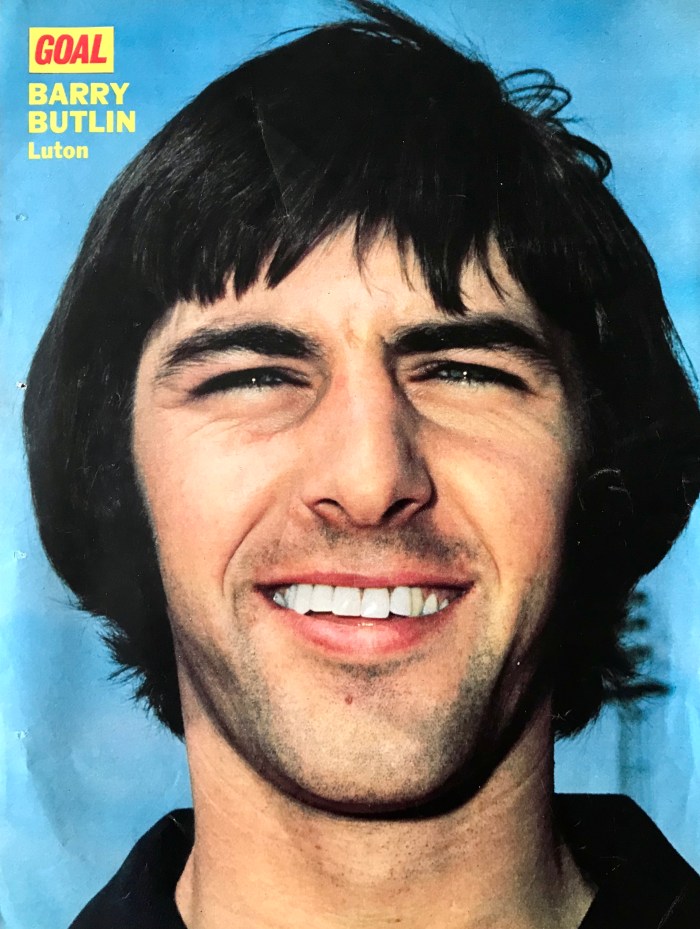
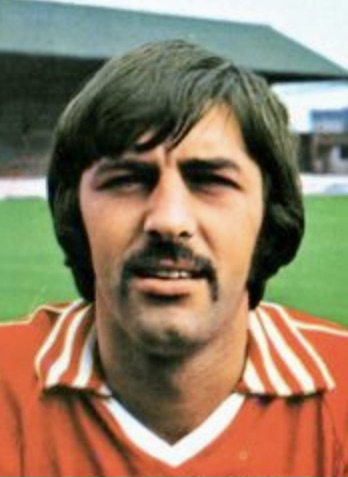


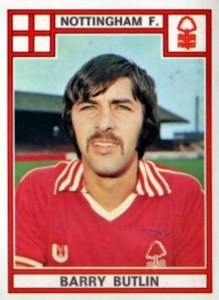
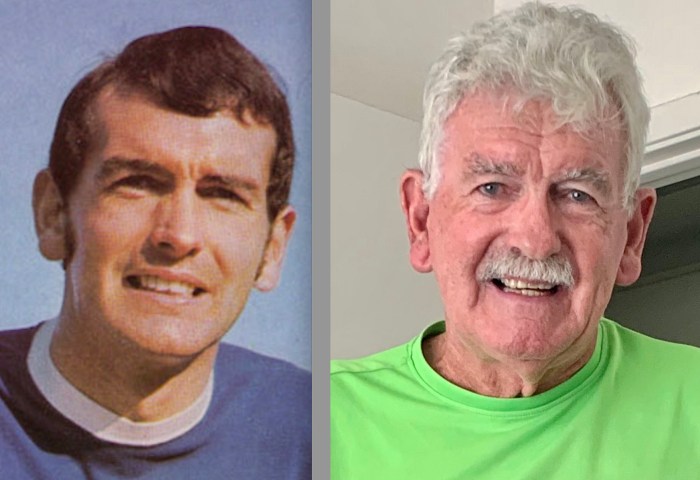
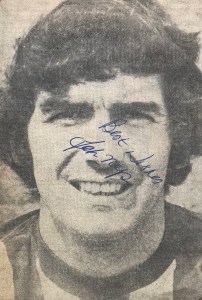


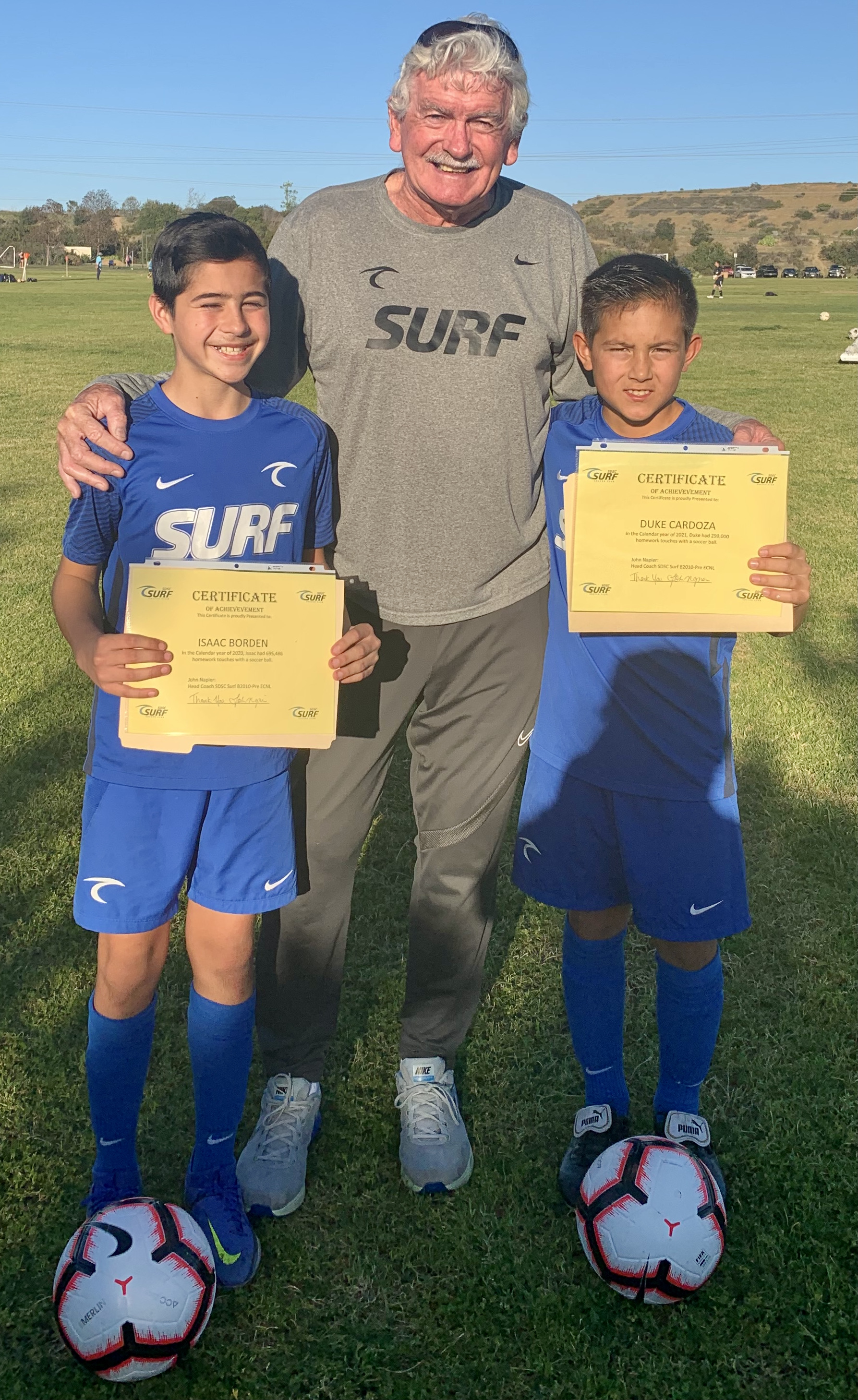

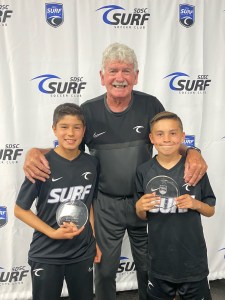
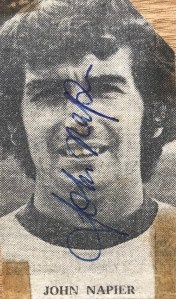



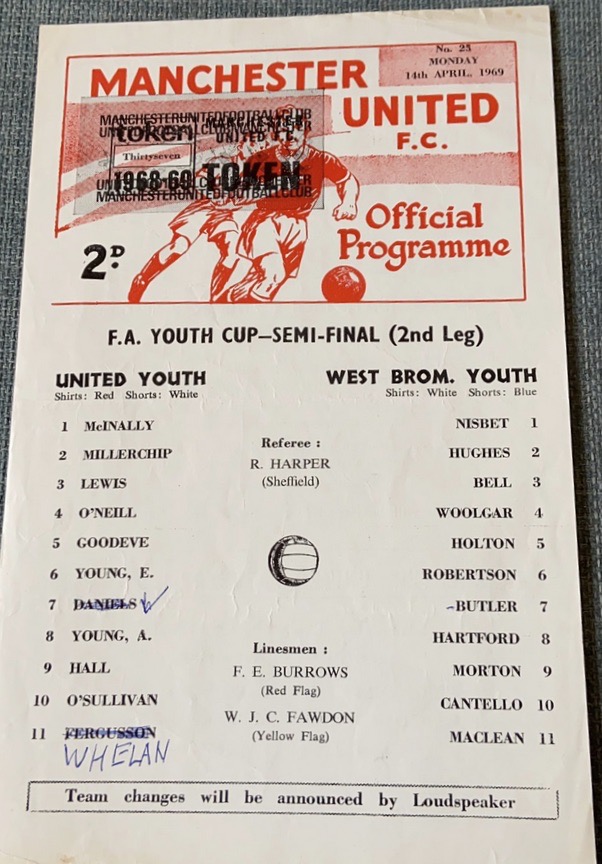


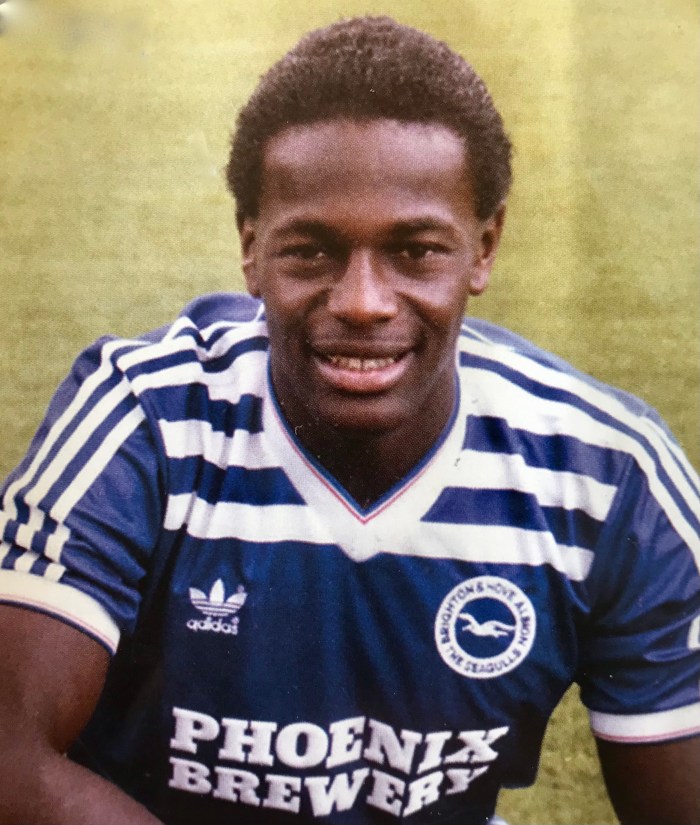


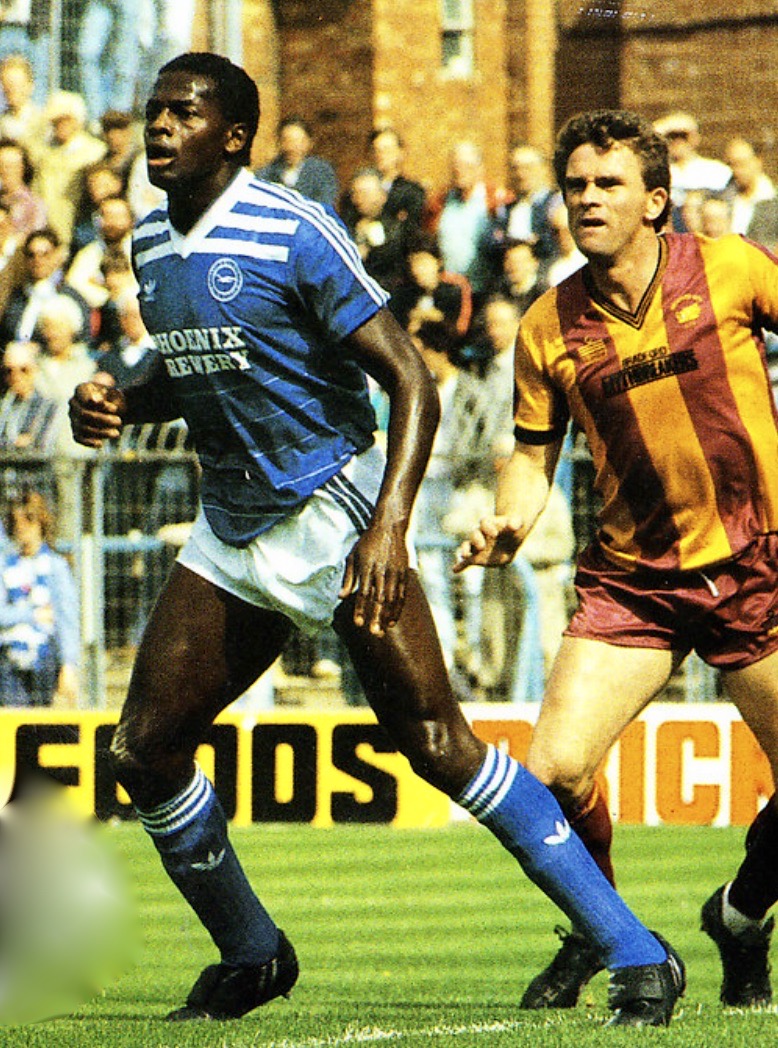

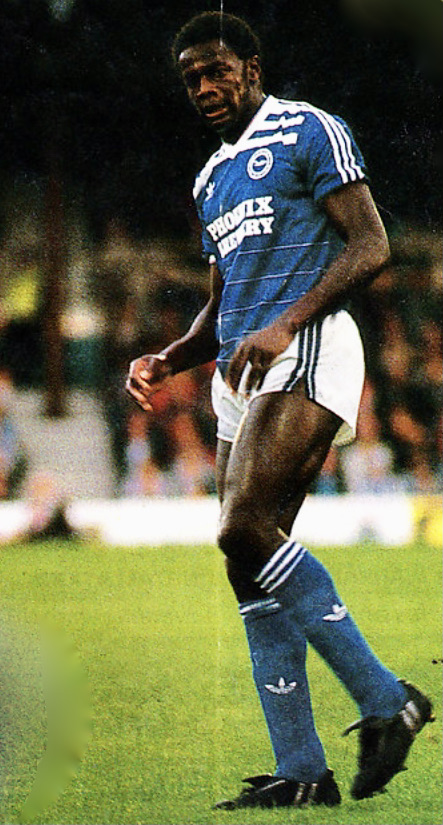

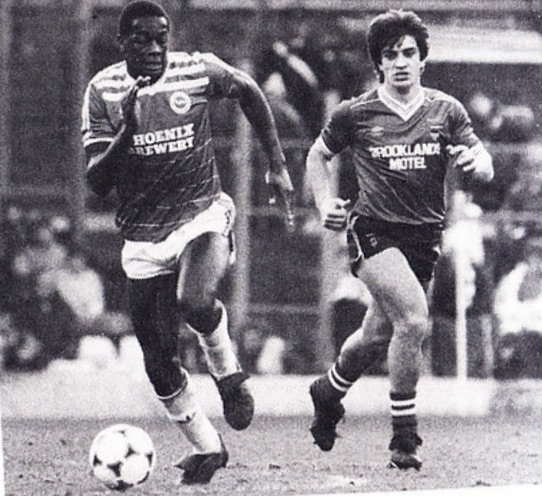
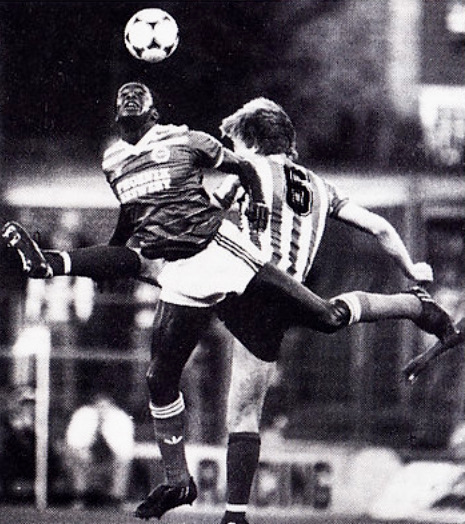


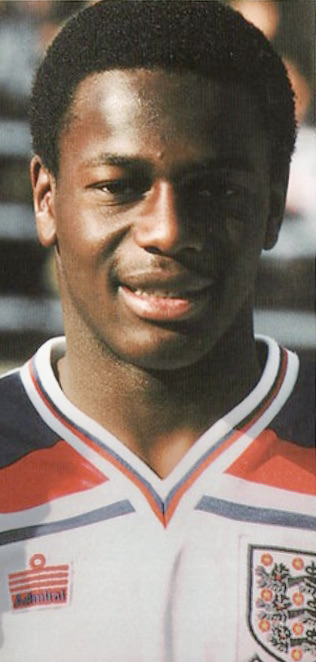


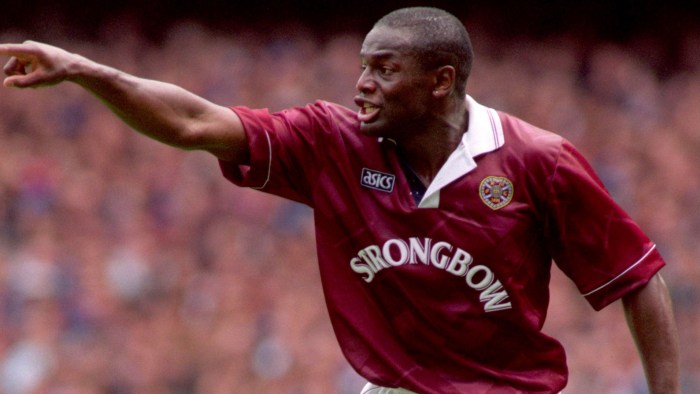


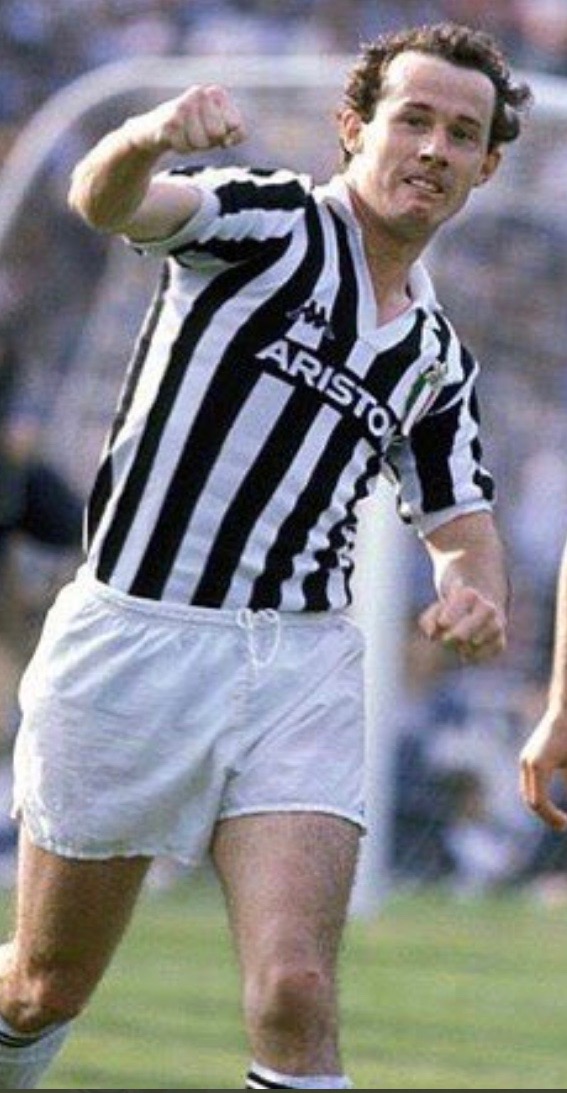
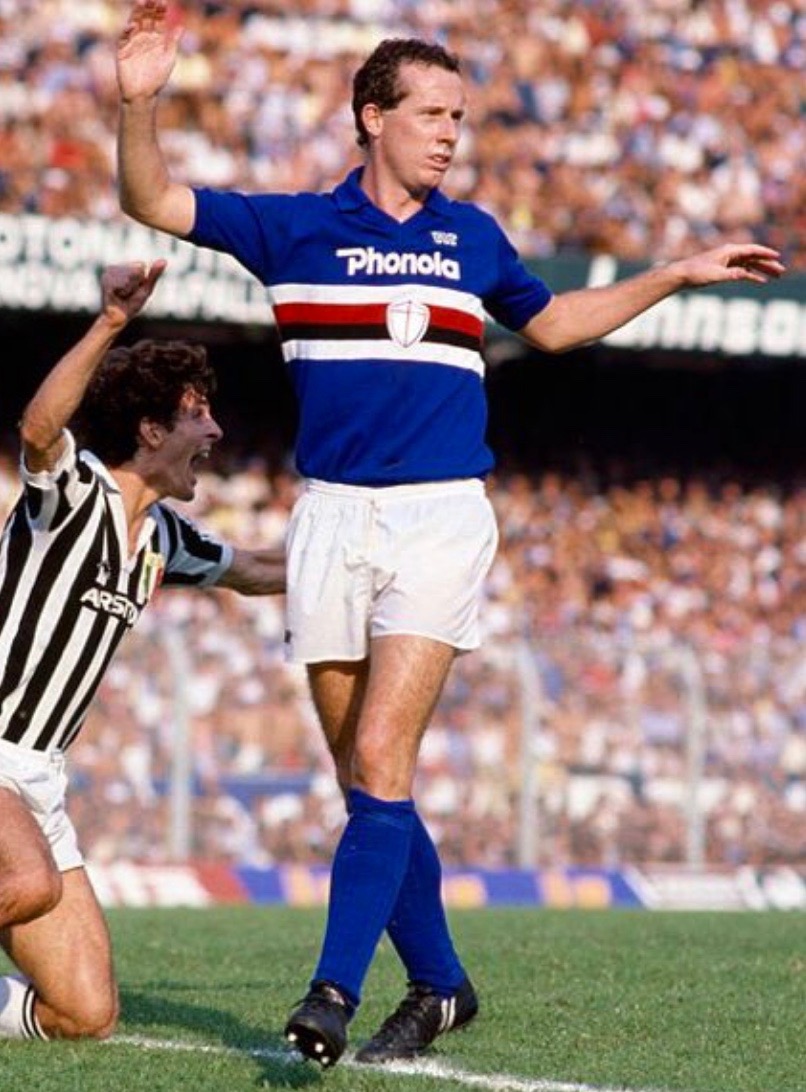


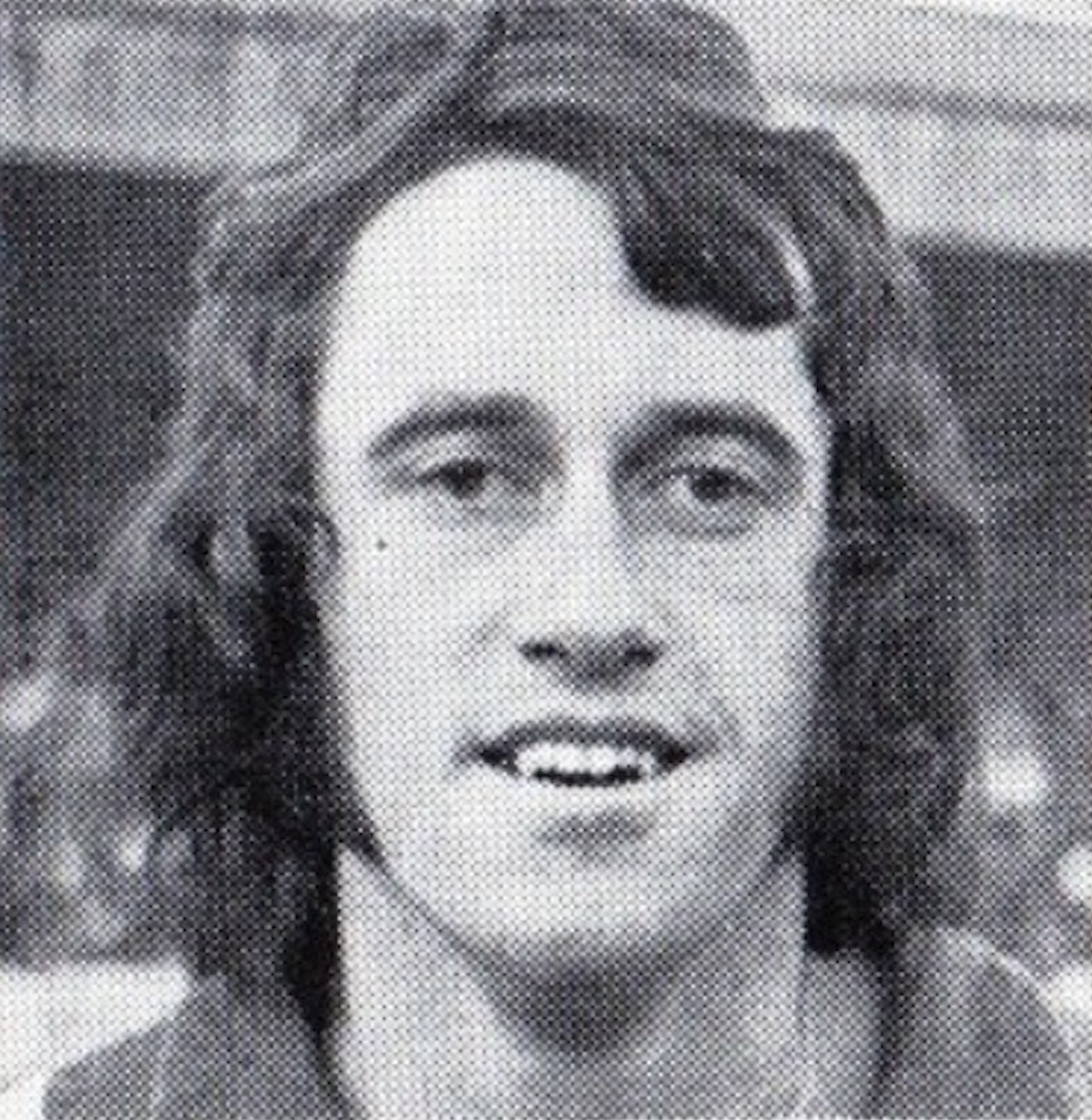


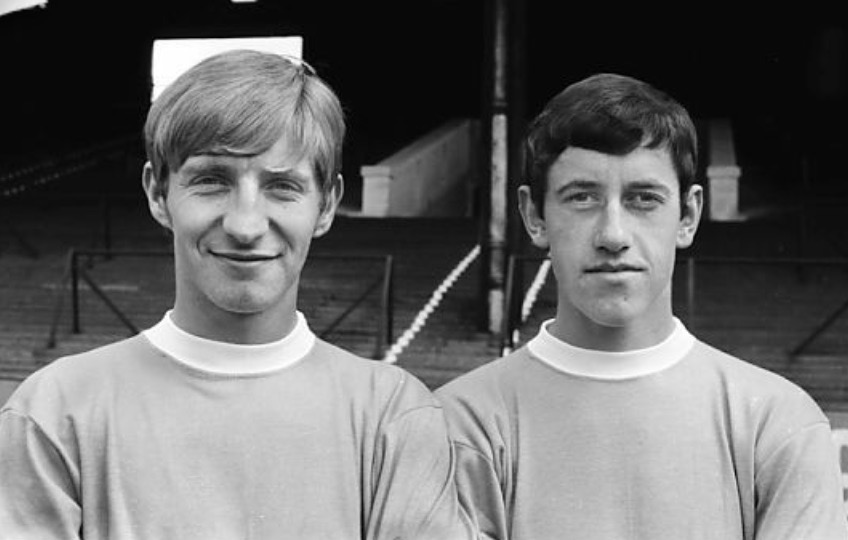


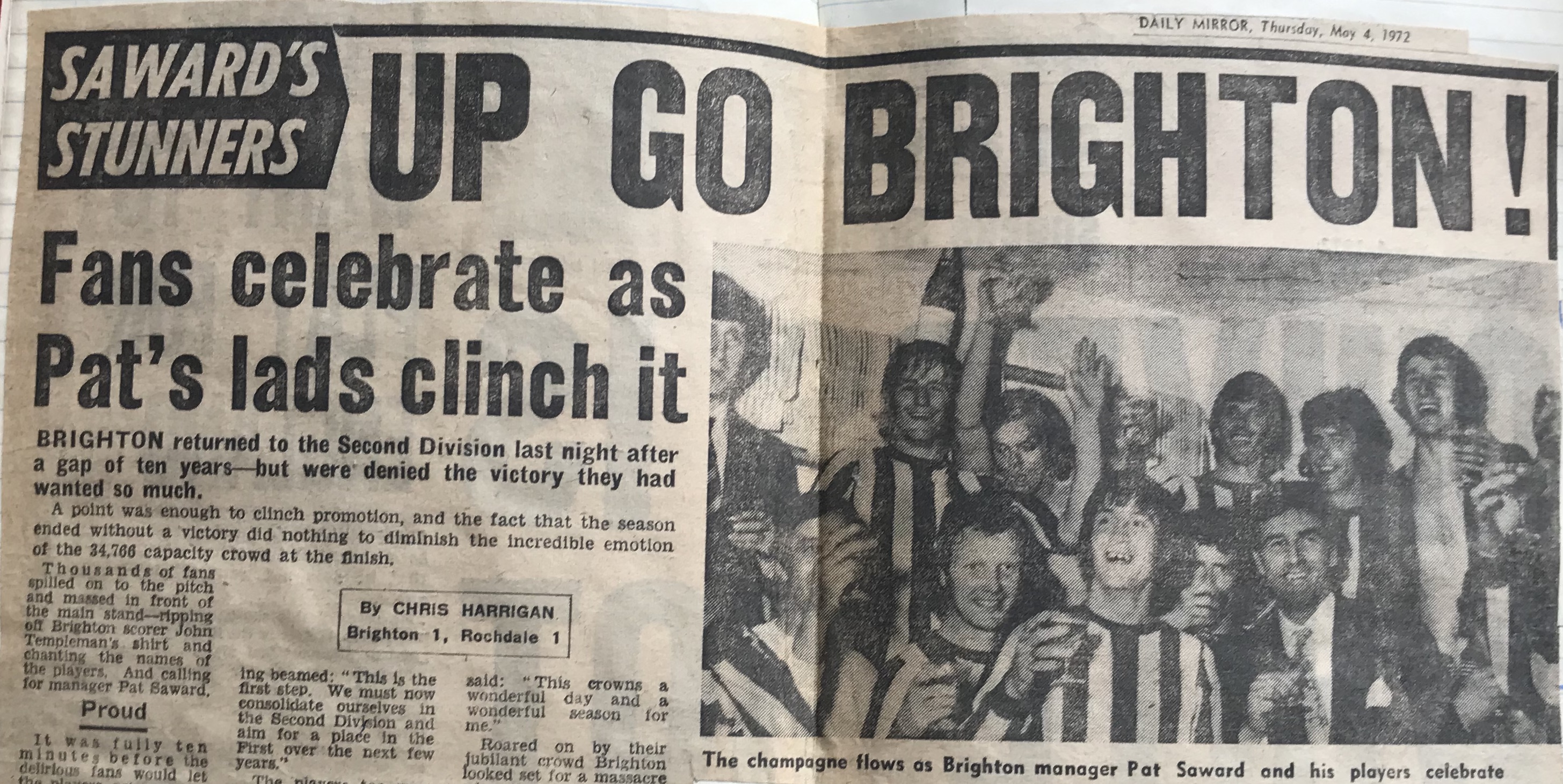
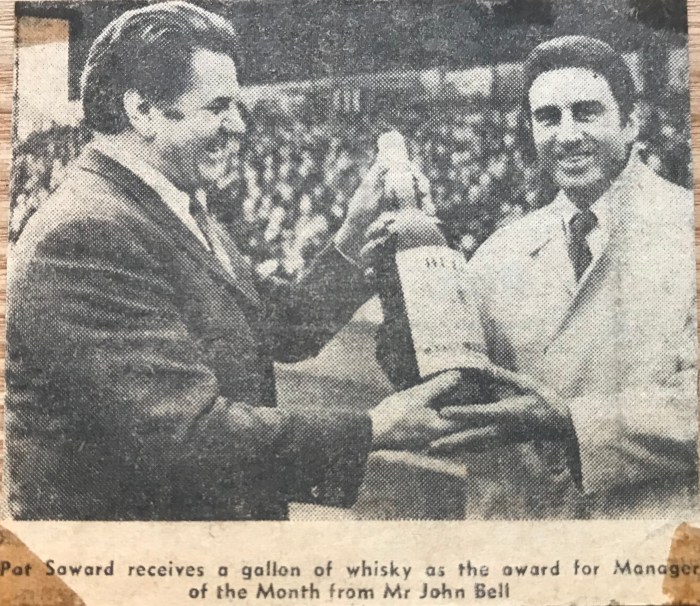


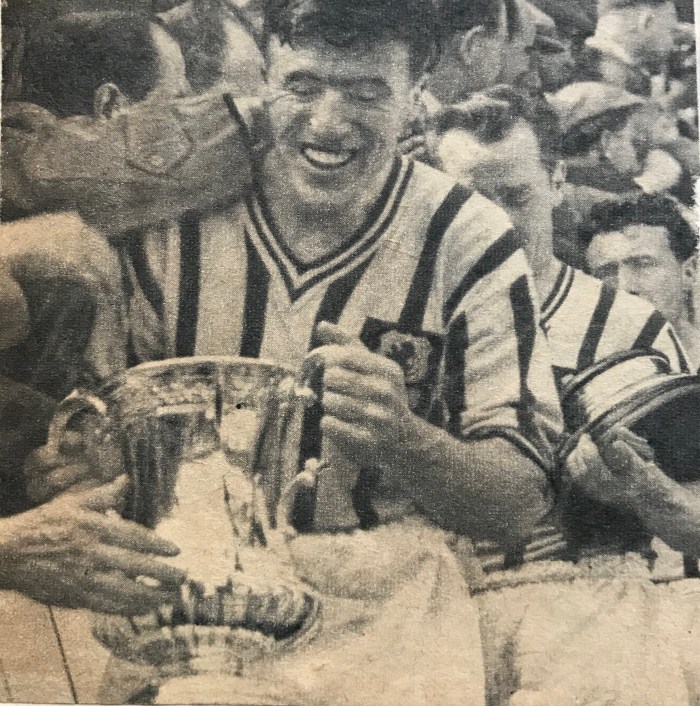

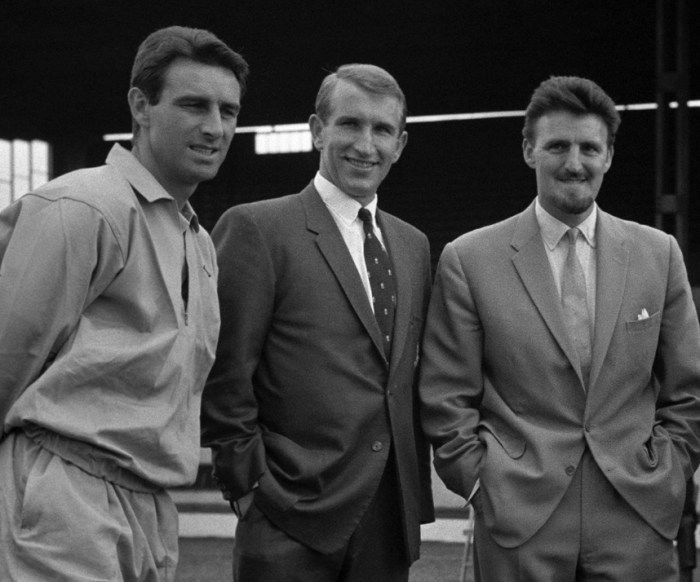
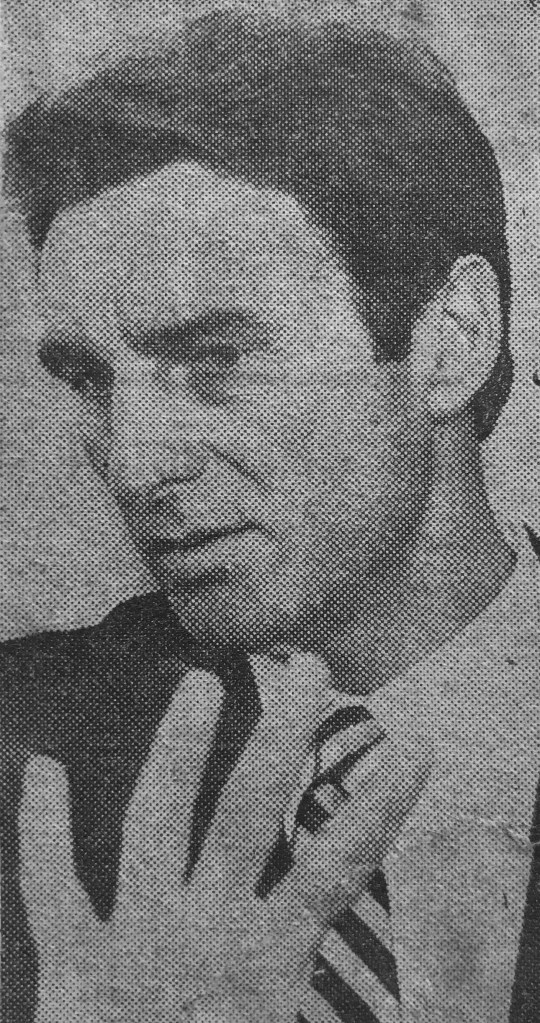
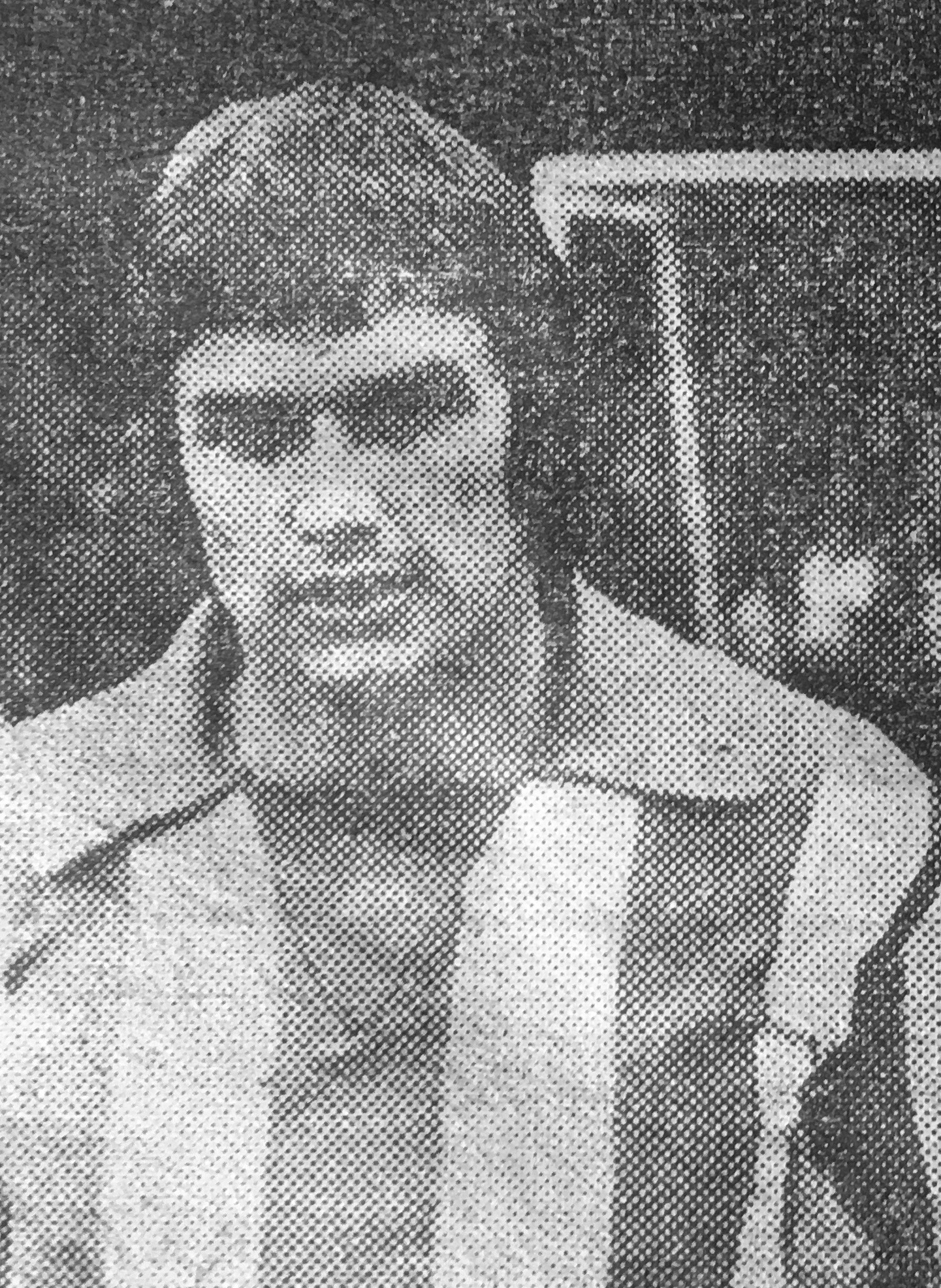 THE FOOTBALLING fortunes of two graduates from Burnley’s famous talent academy of the 1970s took quite different paths after the legendary Brian Clough signed them for Brighton.
 Welch stood just 5’6½” tall and weighed 10st 7lb, but Evening Argus football writer John Vinicombe was suitably impressed. His match report of the 1-0 home defeat to Aldershot was unearthed by thegoldstonewrap.com, and we learned: “After a subdued first-half, Welch had a storming second half against the Shots, impressing with his energy.”
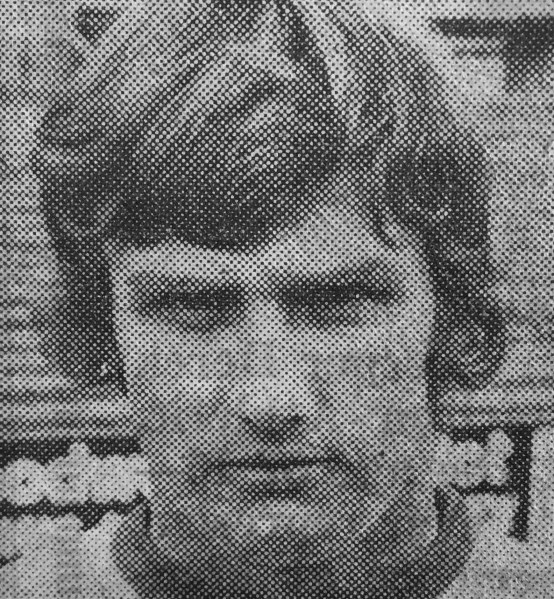 Albion got off to a cracking start with a 1-0 win over Crystal Palace, and Welch played in the opening eight matches. But results didn’t go Taylor’s way and he shook up the midfield by introducing the experienced
  He was at Chesterfield for three years during the managerial tenure of the former Sheffield United legend Joe Shaw, but only played 24 games.
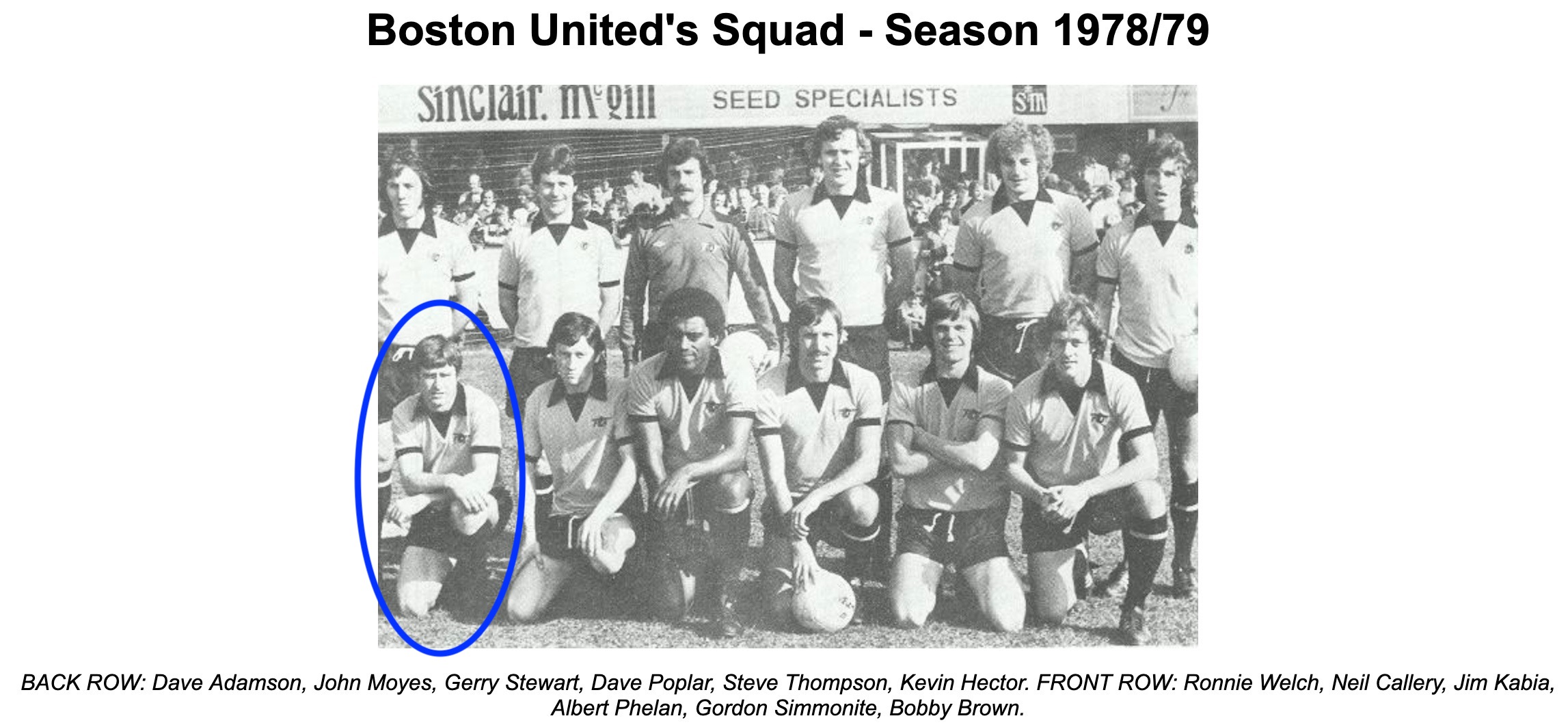 In the 1978-79 season he popped up at non-league Boston United where he played 39 matches plus four as a sub and scored four times.
 His breakthrough came on 30 January 1971, in a home 1-1 draw against Newcastle United, but it was to be his only appearance in the first team. There were a number of established midfield players ahead of him: the likes of Doug Collins, Mick Docherty and Martin Dobson, and later Geoff Nulty and Billy Ingham
 When Docherty moved on from Stamford Bridge, and Dave Sexton took over as manager, Boyle’s involvement in the side was more sporadic, as he told fan Ian Morris on his Rowdies




 In parallel lines