The moment Lee Hendrie felt ten feet tall at Brighton

SKY SPORTS pundit Lee Hendrie has reached heights and plumbed depths in a life that saw him stop off at third-tier Brighton in 2010 after 17 years with Aston Villa.

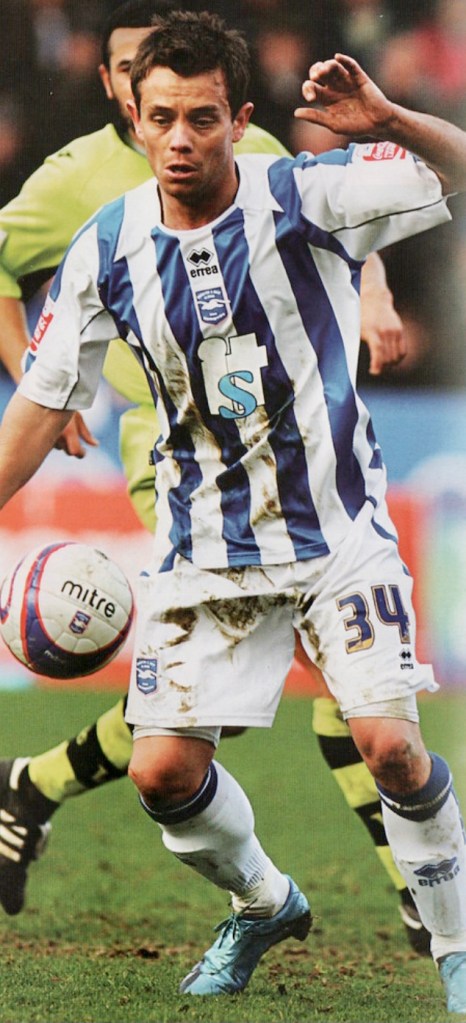
Hendrie was something of a forgotten man of football when Gus Poyet snapped him up for the Seagulls on loan from Derby County in March 2010.

Hendrie featured in eight Albion games in the last six weeks of the season: four wins, two draws and two defeats.

Turning out in League One was quite a fall for a player Glenn Hoddle selected for England, but he told the matchday programme: “The main thing is to play football. If you’re not playing then you tend to get forgotten but hopefully I can get some game time between now and the end of the season.”

And he later said to football.co.uk: “I went to Brighton to get my face back out there. Gus Poyet was brilliant. He got the lads together in a circle and said, ‘******* hell, we’ve got Lee Hendrie here’. Let me tell you, after feeling so unwanted I suddenly felt 10 feet tall.”
Hendrie made his debut as a 75th minute substitute for Sebastien Carole in a 3-0 home win over Tranmere Rovers, and he told the matchday programme: “We could have had more than three goals and I should have scored.”

But Hendrie was bubbling after his involvement and said: “Listening to the gaffer in the changing room, you can see why the lads are playing with a lot of confidence and have improved so much.

“I’ve played under a few managers, but not many, can I say, are like Gus, who is so enthusiastic and tells the players to go and enjoy themselves. There is nothing a player wants more than a gaffer telling you to enjoy your game.”

Of Albion’s midfield triumvirate of Gary Dicker, Alan Navarro and Andrew Crofts, it tended to be Dicker who was edged out by Hendrie’s arrival.

However it was in Crofts’ place that the loanee got his first start, in a 2-0 Easter Monday defeat at Hartlepool in which former Albion loanee ‘keeper Scott Flinders prevented the visitors from leaving with a point. Hendrie was subbed off on 58 minutes when Kazenga LuaLua took over.

Hendrie went on as a sub for Dicker in the following home game against Carlisle United and it was his cross that set up what looked like a late equaliser by Tommy Elphick, only for Gary Madine to nick all three points with a second for United two minutes from the end.

Hendrie started in place of Dicker away to Gillingham but gave way to the Irishman in the 79th minute and the game ended 1-1. Hendrie started once again in the 1-0 win away to Southend, but Dicker replaced him on 65 minutes.

Hendrie’s third successive start in place of Dicker came at home to Bristol Rovers, when Albion won 2-1, but once again he didn’t last the 90 minutes as Dicker took over on 74 minutes.

In the penultimate game of the season, away to MK Dons, the game finished goalless although Alex Rae and Diego Arismendi were red carded for brawling. Hendrie started and Dicker replaced him on 58 minutes.

The on-loan midfielder’s only full 90-minute appearance came in the last game of the season when Yeovil were beaten 1-0 at the Withdean Stadium; Elliott Bennett scoring the only goal of the game a minute before half-time.

The chances of a permanent deal for Hendrie looked unlikely with Poyet admitting: “We were very pleased with him and he was pleased to be here. We will wait to see if, when we start putting the squad together, there is a possibility of it happening. It’s not an easy one, because of the wages.”

Born in Solihull on 18 May 1977, football was in Hendrie’s blood: Scottish dad Paul had played for Villa’s arch rivals Birmingham City and he was playing professionally for Portland Timbers at the time his son was born. He later played for Bristol Rovers, Halifax Town and Stockport County.

For someone who became Villa through and through, Hendrie admitted to the Birmingham Mail that he had actually been at city rivals Birmingham’s school of excellence before ‘Big’ Ron Atkinson snapped him up as a teenager.

As well as his dad having played for them, his nan was a City season ticket holder and his uncle also supported them. “Villa didn’t come and scout me at the time and Blues were the first club that did. It was an opportunity for me to get myself into the pro ranks and see what it was all about. Dad said it would be good to go and have a feel for it, which I did.”

But ever since he’d scored two goals in a schools’ cup final victory for his school, Washwood Heath, against Hodge Heath at Villa Park, he had dreamed of playing for Villa.

The dream came closer when Hendrie signed on the dotted line as a 14-year-old at Villa’s Bodymoor Heath training ground, although he remembers his dad tempering his excitement.

“When we came out after I’d signed, I’d got given a load of training clobber and I thought this was it, I’d made it,” he said. “My dad said: ‘Take a step back, you, you ain’t got anywhere yet, this is the start of a long road. Just because you’ve got all the kit it doesn’t mean you’re a professional footballer and an Aston Villa player – relax yourself’.”

Hendrie and his best mate Darren Byfield, who had been strike partners in Erdington Star and Erdington & Saltley district team as kids, developed a reputation as a dynamic duo on and off the pitch, and soon became Atkinson’s ‘teacher’s pets’.

Atkinson converted Hendrie from a centre forward to left winger (even predicting he’s one day play for England in that position) and the duo continued to do well for the Villa youth team.

As it turned out, it was Atkinson’s successor, Brian Little, who ended up giving Hendrie his first team debut – although it was memorable for all the wrong reasons!

It came two days before Christmas in 1995 when he went on as a 33rd minute substitute for Mark Draper away to Queens Park Rangers. He collected a yellow card for kicking the ball away and was red carded in stoppage time; a second booking for an innocuous foul on Rufus Brevett. Into the bargain, Villa lost 1-0.

A devastated Hendrie revealed it was the opposition player-manager, Ray Wilkins, rather than Little, who put a comforting arm round him. “Someone who I’ve seen play football, a legend of the game, to come and console me and say: ‘This is football, welcome to football, these are the ups and downs you’re going to have in your career’.

“He said there’s lot of people who are talking highly of you, you’ve got a big future in the game, kid. As he got up, he tapped my shoulder and said: ‘Keep that up’.”

Few subsequent chances were given to him under Little but, when John Gregory took over, he became more established.

He would go on to make a total of 308 appearances for Villa (243 league and cup starts), scoring 32 goals, with his best performances coming in Gregory’s tenure. He wasn’t quite the same player under Graham Taylor or David O’Leary.

It was on November 18 1998 that he won his one and only England cap, sent on by Glenn Hoddle as a 77th minute substitute for Villa team-mate Paul Merson in a 2-0 win over the Czech Republic at Wembley. Two other Villa teammates, Dion Dublin and Gareth Southgate, were also part of Hoddle’s squad.

Unfortunately for Hendrie, Hoddle was sacked two months later and no subsequent England bosses called on him. “It’s a regret that I didn’t go on and make more of my England career,” he said. “It’s great that I’ve got a cap and it’s something you can’t take away from me, but I hate being classed as a one-cap wonder.”

Hendrie’s days at Villa came to an end in August 2006, his last involvement being from the bench in Martin O’Neill’s first match in charge, a 1-1 Premier League draw at Arsenal on the opening day of the 2006-07 campaign.

While Hendrie, by then 30, was excited about playing for O’Neill, the new boss had other plans and told him he was not part of them.

Initially he joined Stoke City under Tony Pulis on a season-long loan but Bryan Robson at Sheffield United outbid the Potters for his services on a permanent basis, and he signed a three-year deal at Bramall Lane at the start of the 2007-08 season.

Unfortunately, when Robson swiftly parted company with the Blades, Hendrie didn’t see eye to eye with his successor, Kevin Blackwell, who accused the player of being a money-grabber.

“Sheffield United was just the worst thing I could have done,” he told the Claret & Blue podcast.

“Kevin Blackwell was one of the worst managers I have ever, ever been under. He put the nail in the coffin for (my career).”

Blackwell sent him on loan to Leicester City, where he played nine games, and he later went to Blackpool too. United moved him on to Derby County but when he struggled for games there, he joined Brighton.

If the spell at Brighton was a temporary relief from his mounting problems, he revealed in a Guardian interview with Donald McRae that 2010 turned out to be one of the worst years of his life, and he attempted suicide on several occasions.

A property empire he had built up amassed insurmountable debts which even saw his mother’s home repossessed. He lost his own house as well, and it sent him into depression. Divorce and bankruptcy made the situation even worse.

“The football was almost over and my head was gone. I’d been trying to sell property, but the housing market crashed,” he said. “I got to the stage where I just wanted to end it all. I’d hit rock bottom.”

The ups and downs of Hendrie’s colourful life have featured in various media interviews.

The rise and fall tale was charted by the sporting.blog and Hendrie’s spoken about his troubles on Sky Sports, where he later became a pundit.

He was in tears on Harry’s Heroes: Euro Having A Laugh discussing his depression struggles with Vinnie Jones. The BBC radio programme You and Yours highlighted his plight in a March 2013 episode.

On the footballing front, a brief spell at Bradford City was followed by a host of short stopovers at Bandung (2011), Daventry Town (2011), Kidderminster Harriers (2011-12), Chasetown (2012), Redditch United (2012) and Tamworth (2012-13) before he retired as a professional.

He then played for Corby Town (2013), Highgate United (2013), Basford United (2013 – 2015), Montpellier (2016-17), Redditch United (2016), Nuneaton Griff (2019) and Highgate United (2019) on a non-professional basis.

As he tried to find a new purpose in life, alongside his media work, Hendrie set up FootieBugs, a football academy for kids aged from three to 12.

Hendrie chats on TV with Dion Dublin, a former Villa teammate

Big money signing Peake hit a trough at the Albion

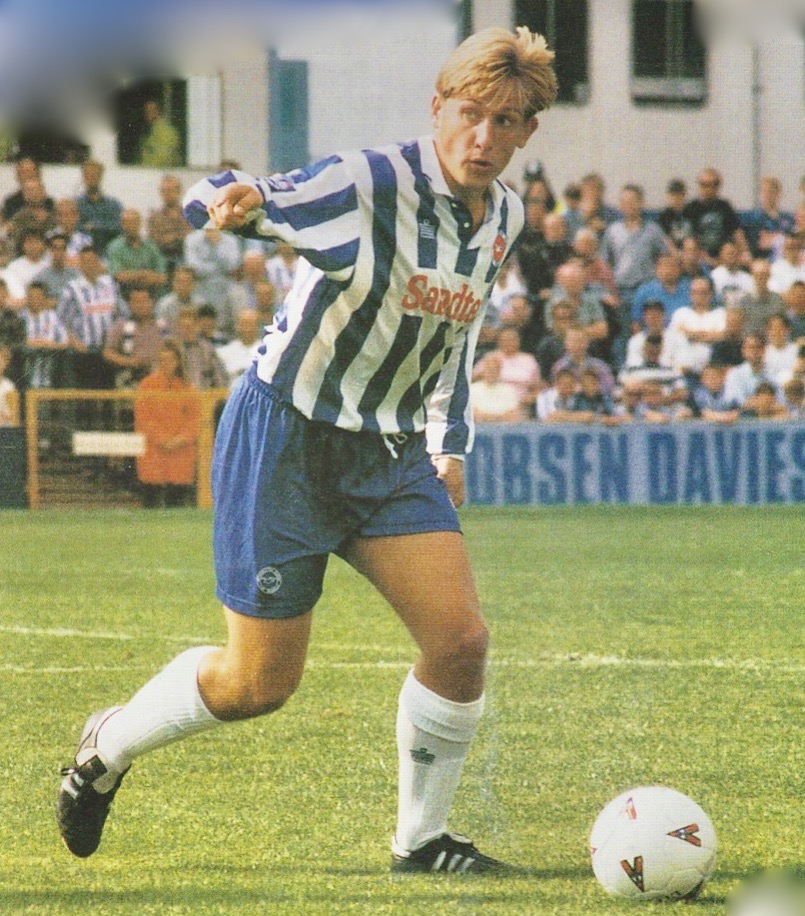
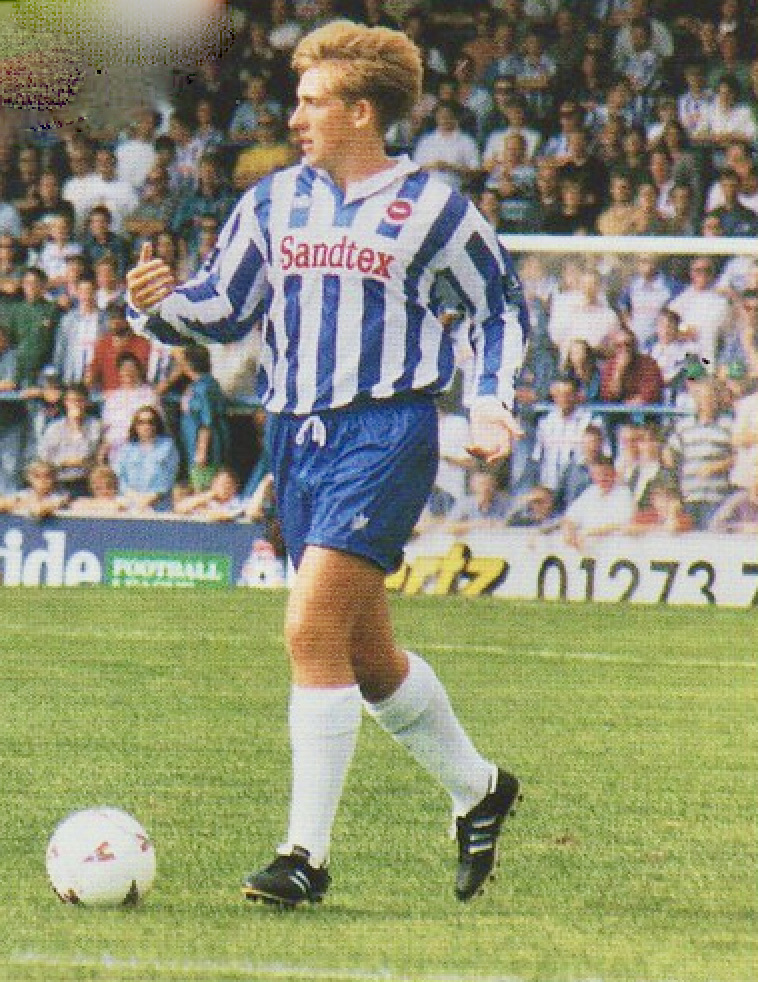
EXPENSIVE FLOP Jason Peake was a victim of the problems clouding Brighton’s very existence in the mid-1990s.

The blond-haired midfielder heralded elsewhere for his “excellent left foot” and “one of the best passers of the ball in the lower leagues” failed to live up to expectations at the Goldstone and was dubbed Jimmy Case’s “biggest blunder”.

Leicester-born Peake had played alongside Case for Halifax Town, where he’d moved after making only a handful of appearances with his hometown club.

Former Albion loanee centre half John McGrath, assisted by Frank Worthington, failed to halt the Shaymen dropping out of the league in 1993, and Peake spent a season in the Conference before reviving his league career with Rochdale. Nine goals in 103 appearances attracted suitors and it was Albion who bought him for a fee set by tribunal of £80,000 – a huge sum for a cash-strapped club.

A further £15,000 was to be paid after 20 games and another £25,000 if he got to 40 appearances. He made 35 appearances before being frozen out by Case’s successor, Steve Gritt. It was to be a familiar pattern: changes of manager often led to him moving on.

Apart from the bigger picture shenanigans going on at the Albion under the hated Archer-Bellotti regime, Peake’s personal issues centred around relocation expenses he said he was entitled to – but Bellotti refused to pay up.

According to fansnetwork.co.uk: “Peake was being forced to commute from Leicester following several broken promises by the Brighton board. Peake’s dream move turned into nothing short of a nightmare for him.”

The midfielder had trials at Northampton and Cambridge before he finally managed to get away, in October 1997, signing for First Division Bury. He rather diplomatically said: “The situation at Brighton has been well documented over the past year and just let’s say when I got there the situation was not as I’d been led to believe it would be.

“I have not been happy there for some time and the new consortium have been great in letting me get away.”

The official version in the matchday programme said: “Jason had problems in settling in the South after his move from Rochdale and the move has suited him and his family. Should Bury sell him for a fee at any time, Albion are assured of a share in any such deal.”

As ever, the season had begun with great expectations and in his matchday programme notes welcoming new signings Peake and Ian Baird, Case said: “They are both quality players and I am sure that they will be great acquisitions for the club this coming season.

“I firmly believe we now have a skilful blend of experienced and young players that can mount a serious challenge for promotion at the first attempt and I believe we will surprise many teams this season.”

Peake went straight into the side in the no.8 shirt but after he’d played 19 games on the trot Albion were anchored at the foot of the table.

After Case was sacked, Peake found himself on the bench more than in the starting line-up; local lad Kerry Mayo taking over from him.

Supporters were certainly not impressed by Peake, perhaps summed up by ‘Lenny Rider’ on North Stand Chat who said: “Huge outlay for where the club was at the time. His kinder critics would say he was disappointing, the more cynical amongst us would argue he was actually nicking a living at the Goldstone.”

New Albion chairman Dick Knight cut Albion’s losses by giving Peake a free transfer to Bury in exchange for the relocation cash dispute being dropped.

Bury boss Stan Ternent was lauded for pulling off something of a coup, and Peake told the Lancashire Telegraph: “It is a fantastic chance for me to prove myself. It has taken me a long time to get into the First Division and I don’t want to blow the opportunity.”

Sadly, those words came back to haunt him because he ended up playing just six times for the Shakers, three as a left-back and three as a sub.

To quote fansnetwork.co.uk again: “Peake’s silky skills didn’t really fit in with the kick and rush tactics of Ternent’s Bury team, and Peake found himself stranded back in the reserves.”

The following summer, a return to Rochdale, where he had first made a name for himself, looked like an ideal solution but things didn’t go well under the management team of Graham Barrow and Joe Hinnigan, who left the club at the end of the 1998-99 season.

In something of a twist of Peake’s usual fortunes when there had been a managerial change, his career began to blossom again under new boss Steve Parkin.

“The free flowing style of football on offer was much more suited to Peake’s natural style,” according to fansnetwork.co.uk. “Peake was awesome in the opening months of the 1999-2000 season and was at the heart of a side which led the table early on.”

He got amongst the goals including “a superb overhead kick from the edge of the area against old team Halifax Town, which saw him win the club’s goal of the season competition and awarded ‘Better than Pele’ status on Sky’s Soccer AM”.

Nevertheless, the season ended on a sour note, as the clarkechroniclersfootballers blog explained: “We lost two re-arranged home games against Peterborough and Northampton in April which would have secured us a play-off place. Jason featured in both games and Steve Parkin singled him out as the scapegoat accusing him of ‘going missing’. It’s always easier for a manager to castigate a player he didn’t sign but we knew there was some truth in it.”

With his contract up at the end of the season, Peake chose to move on, this time to Plymouth Argyle, at the time managed by Argyle legend Kevin Hodges.

Argyle move didn’t work out

It began well enough for him personally and, of Argyle’s 2-0 home win over Carlisle on 16 September, BBC Sport said: “Plymouth doubled their lead in the 17th minute when man of the match Jason Peake scored a superb opportunist goal.

“Peake’s initial attempt came back off visiting central defender Julian Darby and the Plymouth midfielder reacted with a brilliant dipping volley which gave keeper Luke Weaver no chance.

“Weaver denied Peake a second goal in the 80th minute, making a tremendous backward save to keep out the home player’s far post header.”

It followed him scoring four days earlier in a 4-1 defeat at Shrewsbury and was only the second win out of eight. When the next three games were lost, Hodges was replaced by Paul Sturrock, who didn’t take long to decide Peake’s future.

Before Christmas, the midfielder was dispatched to Nuneaton Borough on loan and the move was made permanent in February 2001. Although his league career was over, Peake played 54 games for Borough but was sidelined for periods with a troublesome Achilles tendon injury and he eventually retired in 2003 and became a full-time chiropodist in Leicester.

Born in Leicester on 29 September 1971, Peake played for England schoolboys and was taken on as a trainee by the Foxes.

Manager David Pleat gave him his first team debut in a 2-1 defeat at Charlton Athletic in a Full Members Cup game on 14 November 1989.

It was another year before he made his league debut in the old Division Two, as a sub in a 2-2 draw away to Oxford United.

The same month he also went on as a sub in a 1-0 home defeat to Wolves in the Full Members Cup, played in front of a paltry 4,705 crowd. Four days later he started but was subbed off against Newcastle in a game that remarkably finished 5-4 to the Foxes.

His involvement straddled the end of the Pleat regime and the caretaker manager spell of former Everton boss Gordon Lee, who, in the season Albion reached the play-off final v Notts County, managed to keep Leicester up by only two points while West Brom were relegated along with bottom club Hull City. (Lee died aged 87 in March 2022).

Across three months, Peake had three more starts (and was subbed off in two of them) plus three more games off the bench. Three days after City lost 3-0 at Brighton (goals from Mike Small, Dean Wilkins and Bryan Wade), Peake made a rare start and scored his only goal for the club in a 2-1 home win over Barnsley on 23 February 1991.

Earlier that month (on 6 February 1991), he earned an England under-19 cap when he was sent on as a sub for Aidan Newhouse as England lost 5-1 to Denmark at the Manor Ground, Oxford.

Peake’s last game for Leicester was against Newcastle United on 2 March 1991. He didn’t get a look-in under Pleat’s successor Brian Little and, in February 1992, he joined Hartlepool on loan, playing six matches and scoring once.

Why John Gregory was a hero and a Villain

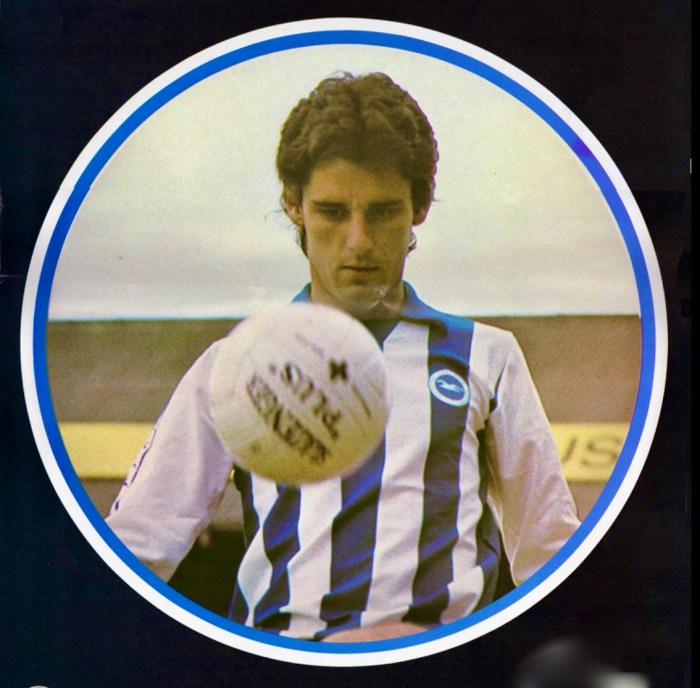
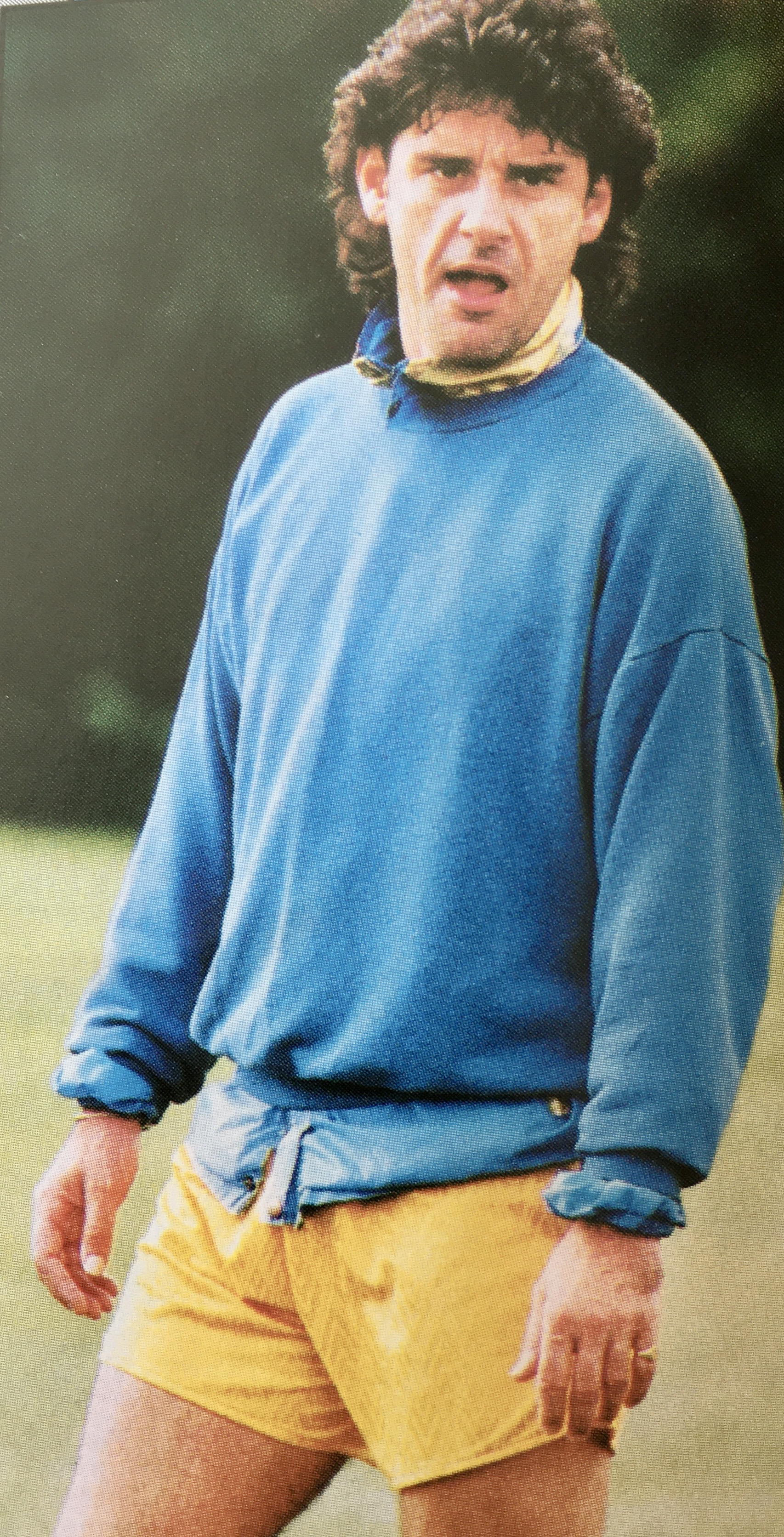
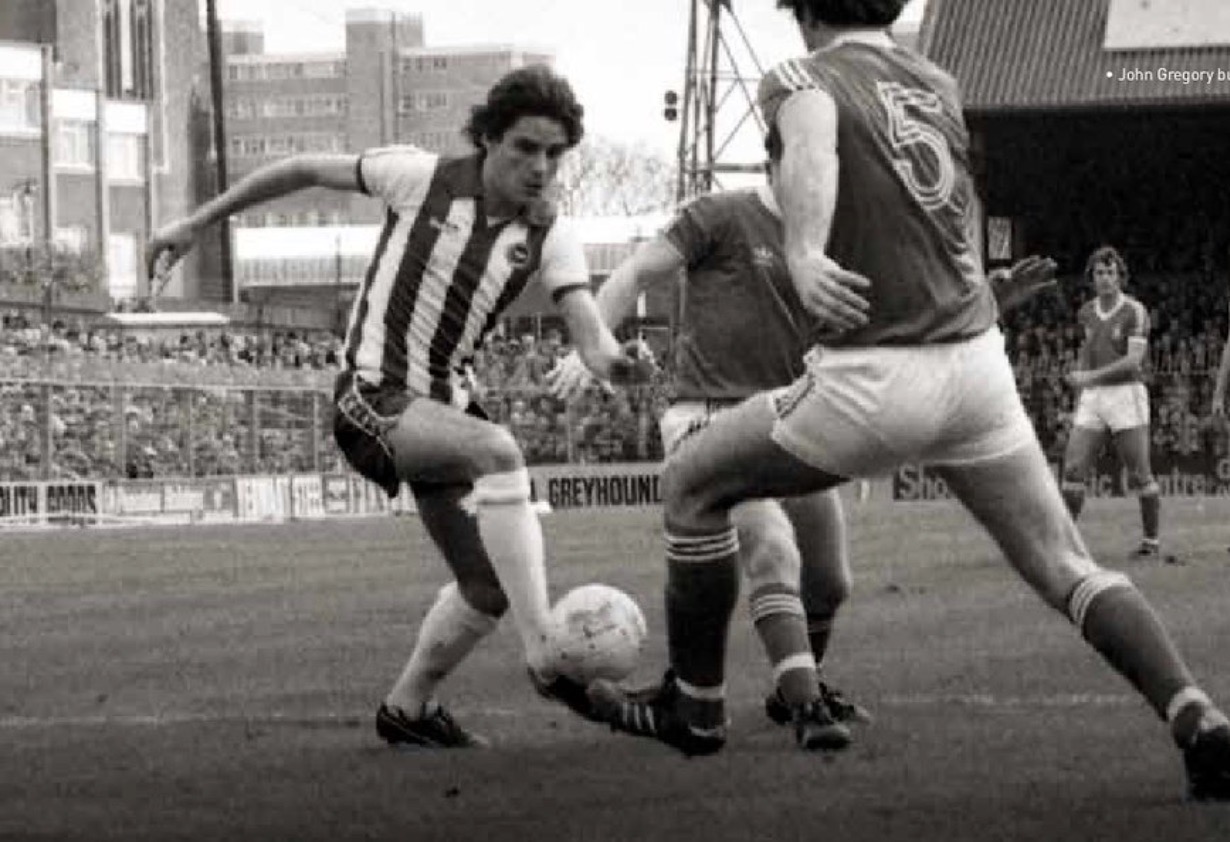
ANY Brighton player who scores twice in a win over Crystal Palace is generally revered forever. The sheen John Gregory acquired for that feat was somewhat tarnished when he was manager of Aston Villa.

Gregory’s brace in a vital 3-0 win over Palace on Easter Saturday 1981 helped ensure the Seagulls survived in the top-flight (while the Eagles were already heading for relegation).

In 1998, though, he was caught up in a wrangle over Brighton’s efforts to secure a sizeable fee for their input to the early career of Gareth Barry, who’d joined Villa while still a teenage prodigy.

Albion’s chairman Dick Knight pursued the matter through the correct football channels and eventually secured a potential seven-figure sum of compensation for the St Leonards-born player, who spent six years in Brighton’s youth ranks but refused to sign a YTS deal after Villa’s approach.

The Football League appeals tribunal met in London and ruled the Premiership side should pay Brighton £150,000 immediately, rising to a maximum £1,025,000 if he made 60 first-team appearances and was capped by England. Brighton were also to receive 15 per cent of any sell-on fee.

“It was what I had hoped for, although I hadn’t necessarily expected the tribunal to deliver it,” Knight said in his autobiography, Mad Man – From the Gutter to the Stars. “Villa certainly hadn’t; Gregory was furious and stormed out of the building.”

Gregory mockingly asserted that Knight wouldn’t have recognised the player if he’d stood on Brighton beach wearing an Albion shirt, a football under his arm and a seagull on his head.

“For a former Albion player, Gregory surprisingly seemed to take it as a personal affront,” said Knight. “His position was patronising and the behaviour of Aston Villa scandalous.”

Although Villa paid the initial instalment, they didn’t lie down and go with the ruling and ultimately Knight ended up doing a deal with Villa chairman, ‘Deadly’ Doug Ellis, for £850,000 that gave Brighton a huge cash injection in an hour of need.

Barry, of course, ended up having a stellar career, earning 53 England caps, making 653 Premier League appearances and captaining Villa during 11 years at the club.

Knight’s settlement with Ellis meant Brighton missed out on £1.8 million which they would have been entitled to when Barry was sold on to Manchester City in 2009.

But back to Gregory. He had a habit of returning to manage clubs he had previously played for. Villa was one (between February 1998 and January 2002). He also bossed QPR, who he played for after two years with the Albion, and Derby County, who he’d played for in the Third, Second and First Divisions.

His first foray into management had been at Portsmouth. He then worked as a coach under his former Villa teammate Brian Little at Leicester City (1991-1994) and Villa (1994-1996) before becoming a manager in his own right again during two years at Wycombe Wanderers.

The lure of Villa drew him back to take charge as manager at Villa Park in February 1998 when he was in charge of players such as Gareth Southgate, Paul Merson and David Ginola.

During his near four-year reign, Villa reached the 2000 FA Cup Final – they were beaten 2-0 by Chelsea – but won the UEFA Intertoto Cup in November 2001, beating Switzerland’s Basel 4-1.

Although his win percentage (43 per cent) was better at Villa than at any other club he managed, fan pressure had been building when league form slumped as the 2001-02 season went past the halfway mark and a ‘Gregory out’ banner was displayed in the crowd.

Gregory eventually bowed to the pressure and tendered his resignation, although chairman Ellis said: “John’s resignation is sad. It was most unexpected but has been amicable.”

He stepped out of the frying pan into the fire when he took charge of an ailing Derby County, who were bottom of the Premier League, and, after a winning start, he wasn’t able to keep them up.

County sacked him in March 2003 for alleged misconduct but in a protracted legal wrangle he eventually won £1m for unfair dismissal. However, the ongoing dispute meant he couldn’t take up another job and he spent much of the time as a TV pundit instead.

It was in September 2006 that he finally stepped back into a managerial role, taking over from Gary Waddock as QPR manager, and while he managed to save them from relegation from the Championship, ongoing poor form the following season led to him being sacked in October 2007.

It only emerged in 2013 that five years earlier Gregory had discovered he was suffering from prostate cancer. Nevertheless, he continued working, managing two clubs in Israel and one in Kazakhstan.

He had one other English managerial job, taking charge of Crawley Town in December 2013, although ill health brought his reign to an end after a year and former Albion striker Dean Saunders replaced him.

Two and a half years after leaving Crawley, Gregory emerged as head coach of Chennaiyin in the Indian Super League. With former Albion favourite Inigo Calderon part of his side, he led them in 2018 to a second league title win, and he was named the league’s coach of the year.

Born in Scunthorpe on 11 May 1954, Gregory was one of five sons and two daughters of a professional footballer also called John who had started his career at West Ham.

The Gregory family moved to Aldershot when young John was only two (his dad had been transferred to the Shots) but then moved to St Neots, near Huntingdon, when his father took up a job as a security guard after retiring from the game.

Young Gregory went to St Neots Junior School and his first football memories date from the age of nine, and he was selected as a striker for the Huntingdonshire County under 12 side.

He moved on to Longsands Comprehensive School and played at all age levels for Huntingdon before being selected for the Eastern Counties under 15 side in the English Schools Trophy.

Northampton Town signed him on apprentice terms at the age of 15 and he progressed to the first team having been converted to a defender and remained with the Cobblers for seven years.

It was in 1977 that Ron Saunders signed him for Villa for £65,000, which was considered quite a sum for a Fourth Division player.

Gregory famously played in every outfield position during his two years at Villa Park and he welcomed the move to newly promoted Albion because it finally gave him the chance to pin down a specific position.

Chris Cattlin had been right-back as Albion won promotion from the second tier for the first time in their history but he was coming to the end of his career and, in July 1979, the Albion paid what was at the time a record fee of £250,000 to sign Gregory to take over that position. Steve Foster joined at the same time, from Portsmouth.

“I wore every shirt at Villa,” Gregory told Shoot! magazine. “I never had an established position. I was always in the side, but there was a lot of switching around. When Alan Mullery came in for me, he made it clear he wanted me to play at right-back.”

The defender added: “I respect Alan Mullery as a manager and I like the way he thinks about the game.

“Brighton are a very attacking side. There’s nothing the boss loves more than skill. That comes first in his mind. He wants all ten outfield players to attack when they can. That attitude, more than anything else, played a big part in me coming here.”

Gregory started the first 12 games of the season but was then sidelined when he had to undergo an appendix operation.

He returned as first choice right-back in the second half of the season and had a good start to the 1980-81 campaign when he scored in the opening 2-0 home win over Wolves.

His second of the season came against his old club, a header from a pinpoint Gordon Smith cross giving Albion the lead at Villa Park against the run of play. But it was to be an unhappy return for Gregory because the home side fought back to win 4-1.

In November 1980, it looked like Gregory might leave the Goldstone in a proposed cash-plus-player swap for QPR’s Northern Ireland international David McCreery, but the player, settled with his family in Ovingdean, said he wanted to stay at the Goldstone.

“The offer Gregory received was fantastic, but he prefers to stay with us,” chairman Mike Bamber told the Evening Argus. “I regard this as a great compliment.”

The following month, he got the only goal of the game in a 1-0 Boxing Day win at Leicester but in March, with Albion desperate to collect points to avoid the drop, Mullery put Gregory into midfield. He responded with four goals in seven matches, netting in a 1-1 draw away to Man City, grabbing the aforementioned pair at Selhurst Park on Easter Saturday and the opener two days later when Leicester were beaten 2-1 at the Goldstone.

Little did he know it would be his last as a Brighton player because within weeks Mullery quit as manager and Bamber finally couldn’t resist QPR’s overtures.

“I know Alan Mullery turned down a bid but a couple of days after he resigned chairman Mike Bamber accepted QPR’s offer,” Gregory recalled in an interview with Match Weekly. “I hadn’t asked for a move so the news that I was to be allowed to go was quite a surprise.”

He added: “It was a wrench. I found it difficult to turn my back on the lads at Brighton.

“I enjoyed two years at the Goldstone Ground and made many friends, but the prospect of a new challenge at Rangers appealed to me.”

Gregory admitted he used to watch Spurs as a youngster and ironically his two favourite players were Venables and Mullery – and he ended up playing for them both.

Although he dropped down a division to play for QPR, he said: “Rangers are a First Division set up and I’m sure we’ll be back soon.”

Not only did he win promotion with Rangers in the 1983-84 season but, at the age of 29, he earned a call up to the England set-up under Bobby Robson.

He won six caps, the first three of which (right) came against Australia when they played three games (two draws and an England win) in a week in June 1983, in a side also featuring Russell Osman and Mark Barham.

Gregory retained his midfield place for the European Championship preliminary match in September when England lost 1-0 to Denmark at Wembley but he was switched to right-back for the 3-0 away win over Hungary the following month.  

His sixth and final cap came in the Home International Championship match in Wrexham in May 1984 when he was back in midfield as England succumbed to a 1-0 defeat to Wales, a game in which his QPR teammate Terry Fenwick went on as a substitute to earn the first of 20 caps for England.

Gregory continues to demonstrate his love for the game, and particularly Villa, via his Twitter account and earlier in the 2021-22 season, his 32,000 followers saw a heartfelt reaction to the sacking of Dean Smith.

“Dean Smith gave Aston Villa Football Club the kiss of life when the club was an embarrassment to Villa fans and he rekindled the love and passion and success on the field where so many others had failed hopelessly,” said Gregory.

• Pictures from the Albion matchday programme, Shoot! magazine and various online sources.

Dean Saunders raised cash for Brighton and Liverpool

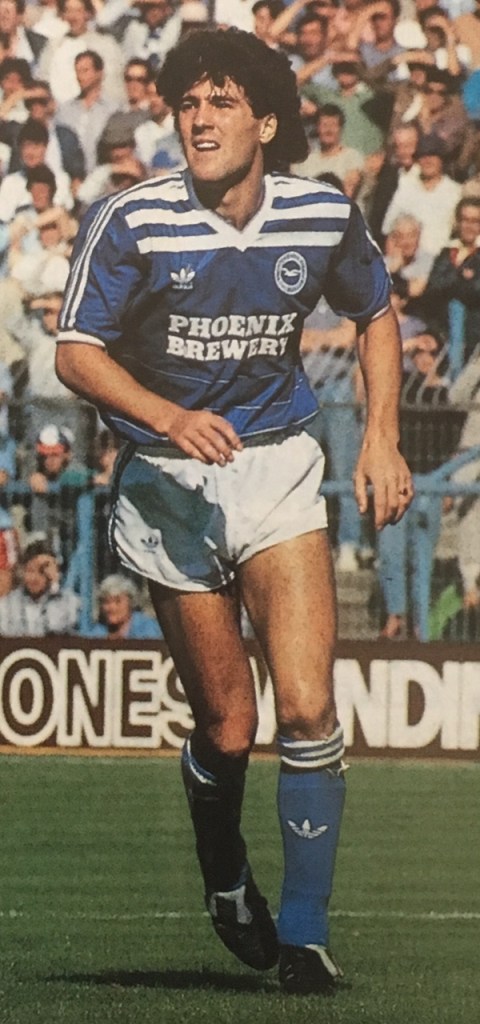
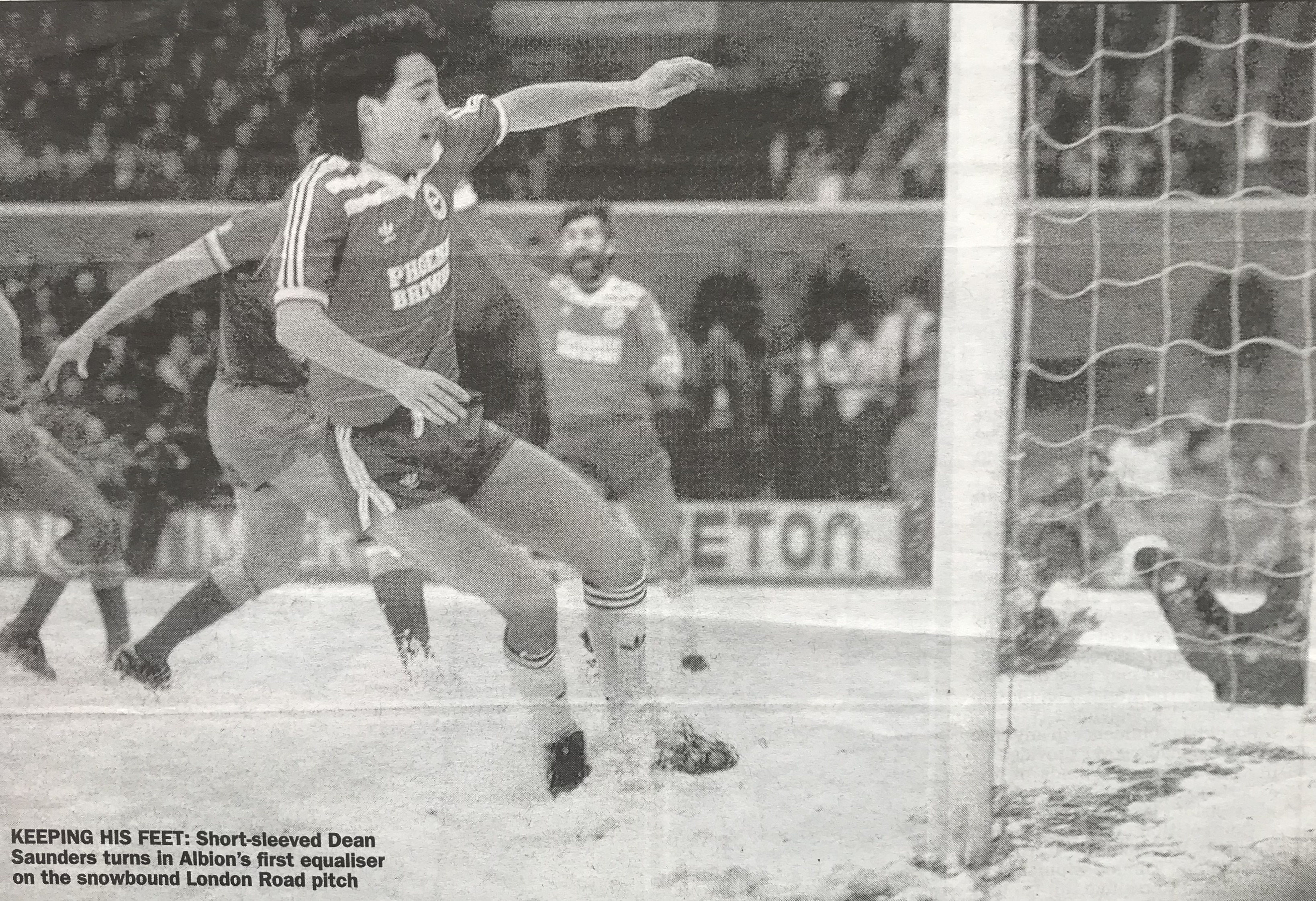
IT’S NOT often Brighton and Liverpool have had something in common but, when it came to striker Dean Saunders, they both sold him to raise money. And they weren’t alone.

In the Albion’s case, it happened in 1987 when manager Barry Lloyd was forced to cash in on the free transfer signing to raise £60,000 to go towards players’ wages.

For their part, five years later, Liverpool let the Welsh international depart Anfield for £2.3m because boss Graeme Souness wanted the money to buy a central defender.

When Saunders was remarkably transferred for £1m from the Maxwell-owned Oxford United to the Maxwell-owned Derby County, it prompted former Brighton and Liverpool defender Mark Lawrenson to quit as boss at the Manor Ground after he’d been promised there would be no transfers likely to weaken his squad.

Saunders’ long and much-travelled career began in Swansea, the place where he was born on 21 June 1964, the son of former Swansea and Liverpool wing-half Roy Saunders.

He attended GwrossydJunior School and was soon appearing in the school football team on Saturday mornings and playing minor football in the afternoons. He went on to Penlan Comprehensive in Swansea and his career began to blossom, playing in the school team at all levels under sports master Lee Jones, a former British gymanstics champion. Saunders played for the Swansea Schools representative sides at under 11, 13 and 15 levels.

“I can remember enjoying watching the Swansea players train when I was a lad,” he told Tony Norman in an Albion matchday programme article. “I was lucky because my dad was the assistant manager, so I could go to pre-season training and things like that.

“I used to kick a ball around on the sidelines and dream of playing for Swansea.” That dream turned to reality after he joined the Swans in 1980 as an apprentice (when John Toshack was the manager), turned professional in 1982, and made his debut in the 1983-84 season. He scored 12 times in 49 appearances but in his final year had a goalless four-game loan at Cardiff City.

Manager John Bond released him on a free transfer after a turbulent season in which the Swans only narrowly avoided relegation to the basement division and Chris Cattlin, who’d been impressed when he saw Saunders playing for Swansea Reserves at the Goldstone Ground, snapped him up for Brighton.

“I was amazed when the Welsh club let him go for financial reasons,” Cattlin wrote in his matchday programme notes for the opening game of the season. “He is young, quick and, if he works hard, he has a great chance.”

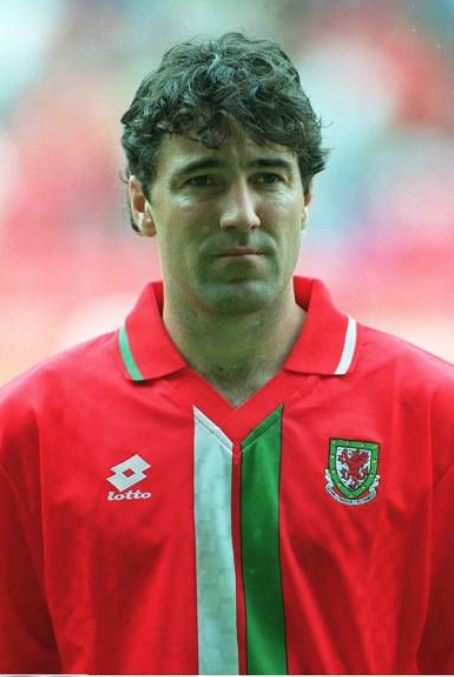
By the end of that season, Saunders had scored 19 goals in 48 league and cup games and was voted player of the season. His performances in the second tier for the Albion caught the eye of the Welsh national team manager, Mike England, and on 26 March 1986 Saunders made his full international debut for Wales as a substitute in a 1-0 win away to the Republic of Ireland. It was the first of 75 caps.

Saunders scored his first international goals when he netted twice in a 3-0 friendly win over Canada in Vancouver on 19 May 1986, after which England said: “He goes past defenders with his tremendous pace and his finishing against Canada was a revelation.

“The experience he gained at Brighton has done him the world of good. To finish top scorer in his first full season of Second Division football tells its own story.”

Saunders, who shared a house with Albion’s young Republic of Ireland international Kieran O’Regan, said being happy at home had helped him to settle down quickly.

“I liked Brighton from the day I arrived,” he said in a matchday programme article. “It reminds me of my home town of Swansea and I like living by the sea.”

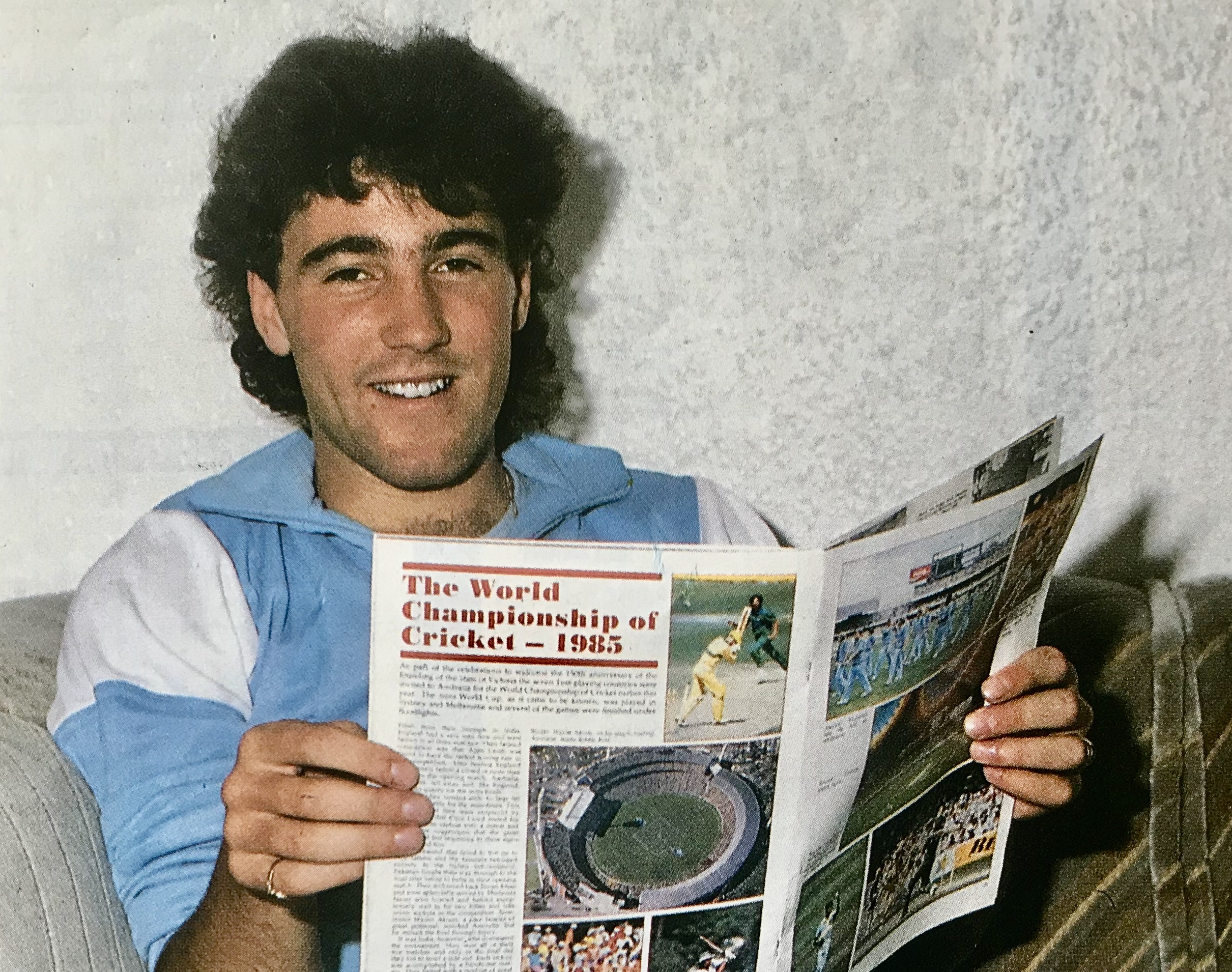
A lover of all sports, Saunders revealed how he liked to play cricket in the summer, when he turned out for Haywards Heath, and he played snooker with O’Regan and Steve Penney.

That summer, Saunders told Shoot! magazine: “I had both cartilages out of my left knee at 18 and had both Swansea and Cardiff turn me down. I’ve had my share of the downs. From the moment I joined Brighton, my career has turned for the better.”

The young striker continued: “Swansea just gave me away – despite the fact that I was top scorer in a team coming apart. Cardiff City gave me a few games but always seemed to have reasons for not playing me consistently when I was on loan there.

“So, I had every incentive to make the break from Welsh football and I joined Brighton. Brighton can go places.

“I was disappointed that we didn’t make the First Division first time around. But all the lads are convinced that we will get there next season. I’ve been given a three-year contract so there are tremendous incentives to do better.”

It didn’t work out that way, though. After only a mid-table finish, Cattlin was sacked and there were rumblings of financial issues beginning to reverberate around the corridors of the Goldstone. Alan Mullery returned as manager but had limited funds to invest in the team, and, with echoes of the Pat Saward era back in the early ‘70s, the club turned to fans for financial help to bring in players.

After Mullery’s unseemly swift departure halfway through the season, former Worthing boss Lloyd took over and fans were completely mystified as to how he could leave out Saunders in favour of Richard Tiltman, who Lloyd had plucked from local football. Since then, it has been suggested his omission was more to do with money than football ability.

There was great consternation that Albion collected only £60,000 when Lloyd sold Saunders to Oxford in early March 1987, especially as the Seagulls were fast hurtling back to a level of football they’d manage to avoid for ten years.

That was no longer a concern for Saunders who recovered the goalscoring touch he’d shown during his first season at the Goldstone Ground, scoring 33 goals in 73 games for Oxford before being sold to Derby for £1m against Lawrenson’s wishes 19 months after arriving at the Manor Ground.

Meanwhile, the goals kept flowing for Saunders as he netted 57 in 131 games for Derby. The side finished fifth in the old First Division by the end of Saunders’ first season with the Rams, and he’d contributed 14 goals. The Derby Telegraph noted: “From the moment ‘Deano’ arrived, the players were inspired and the crowd enthused. The signing also suited the post-war tradition of 5ft 8in goalscoring heroes at the Baseball Ground – Raich Carter, Bill Curry, Kevin Hector and Bobby Davison.

“Derby fans were too wise to comment on height. What mattered was Saunders’ speed, eel-like turn and persistence. He scored six in his first five games, starting with two against Wimbledon when he captured supporters’ hearts with the immediacy of a Kevin Hector. A close-in header and long-range right-footer were beautiful appetisers.”

Despite Saunders scoring 24 goals for Derby in 1990-91, the side was relegated and Saunders and teammate Mark Wright were snapped up by Liverpool. Reds paid £2.9m to take Saunders to Anfield, boss Souness believing he’d be an ideal strike partner for their established Welsh international striker, Ian Rush.

Saunders made his Liverpool debut on 17 August 1991 in a 2-1 win over Oldham Athletic (Mark Walters and defender Wright also played their first league games for Liverpool); Ray Houghton and John Barnes scored Liverpool’s goals.

Saunders scored his first goal for the Reds 10 days’ later in a 1-0 win over QPR at Anfield but a Liverpool history website reckons he struggled to adapt to Liverpool’s passing game. “He was used to Derby’s counter-attacking style, scoring many of his goals by using his exceptional pace,” it said. “Saunders wasn’t very prolific in the league with about one goal every four games but flourished in the UEFA Cup with nine goals in five matches that included a quadruple against Kuusysi Lahti.”

Saunders scored twice in Liverpool’s successful FA Cup campaign, which culminated in them lifting the trophy at Wembley after beating Sunderland.

Although he scored twice in seven games at the start of his second season at Anfield, a cashflow issue meant Souness was forced to sell him to raise funds to dip into the transfer market.

Saunders explained: “Graeme called me in one day and told me he needed a centre-half [Torben Piechnik], and that he could raise the money by selling me to Aston Villa.

“I couldn’t believe he was prepared to let me go, but he said he didn’t think my partnership with Ian Rush had worked out, and Rushy wouldn’t be the one going anywhere. That was it.” 

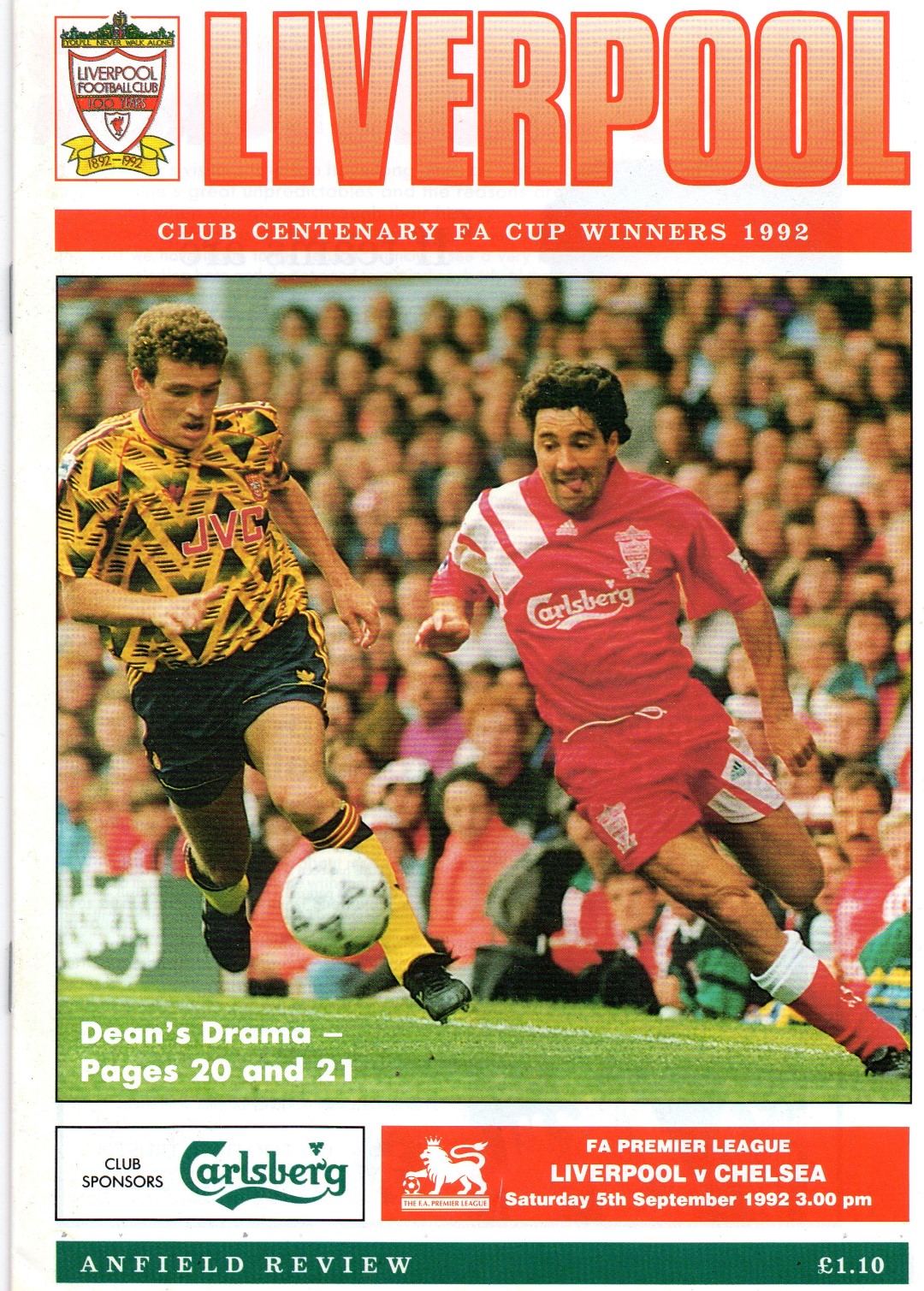
Saunders had scored 25 goals in 61 appearances for Liverpool, the last coming in a 2-1 home win over Chelsea (Jamie Redknapp scoring the other Liverpool goal) on 5 September 1992.

The Welshman had the last laugh, though, because only nine days after his departure from Liverpool he scored twice in Villa’s 4-2 victory over the Reds.

“Obviously I had a big incentive to do well today and I’m thrilled to have scored,” said Saunders. “Both my goals went through the goalkeeper’s legs.”

Signed by Ron Atkinson, Saunders spent three seasons at Villa, initially developing a formidable strike partnership with Dalian Atkinson, and then pairing up with Dwight Yorke. Saunders’ brace in the 1994 League Cup final helped beat Manchester United 3-1.

Villa history site lerwill-life.org.uk remembers him as “a spring-heeled attacker and very popular with the supporters” and adds: “Not big in size, he was very speedy and scored some spectacular goals including a 35-yard spectacular against Ipswich.”

His time at Villa Park came to an end when Brian Little took over as manager, and Saunders was reunited with his old Liverpool boss Souness in Turkey. A £2.35million fee took him to Galatasaray for the 1995-96 season and he netted 15 goals in 27 Turkish League matches.

Next stop for Saunders was back in the UK at Nottingham Forest, but the 1996-97 was an unhappy one as the manager who signed him, Frank Clark, was sacked in December after a bad run of defeats and Forest’s slide towards relegation continued under Stuart Pearce and Dave Bassett.

By the time Forest had bounced straight back up, Saunders had left the club, moving in December 1997 to second-tier Sheffield United for a year under Nigel Spackman and caretaker managers Russell Slade and Steve Thompson. United made the play-offs but lost out to Sunderland in the semi-finals. In December 1998, Saunders moved abroad again to link up with Souness a third time, at Benfica in Portugal.

The following summer, he returned to England and joined Bradford City, where his former Brighton teammate Chris Hutchings was assistant manager, then briefly manager. Saunders was a regular in his first season at Valley Parade, when the Bantams managed to narrowly avoid relegation from the Premier League, but he played only a handful of games in 2000-01, when they were relegated. Saunders retired as a player shortly before his 37th birthday and became a coach at Bradford before linking up with Souness again, this time as a coach.

He joined him at Blackburn Rovers and then Newcastle United, but when Newcastle sacked Souness early in 2006, Saunders lost his job as well.

In the following year he began taking the Certificate in Football Management course run by the University of Warwick; and this led to him being granted his UEFA Pro Licence coaching badge, a qualification that allowed him to be appointed as assistant to John Toshack with the Welsh national team. 

In October 2008, Saunders replaced Brian Little as manager of Wrexham, newly relegated to the Conference. He eventually managed to steer the north Wales outfit into the play-offs in the 2010-11 season, but they were knocked out by Luton Town and, in September 2011, Saunders was appointed manager of then Championship club Doncaster Rovers.

Unfortunately, he couldn’t save Rovers from relegation and they went back down to League One with only 36 points from their 46 League fixtures.

Having guided Rovers to second place in League One, Saunders was appointed manager of Wolverhampton Wanderers in January 2013, but he couldn’t prevent them being relegated from the Championship and he was sacked three days after relegation was confirmed courtesy of a 2-0 defeat at the hands of Gus Poyet’s Albion.

Saunders told the media after the game: “We have to get some players in who think like I’m thinking, who want to win, fresh minds, no damage done to them, no confidence issues, no ‘been here too long’ issues, no ‘I don’t know if the manager likes me’ issues. Once I get my own team on the pitch, imagine what the supporters will be like.”

Saunders, with only five wins from his 20 games in charge, didn’t get that chance and rather ruefully said of his opponents that day: “A few years ago they were bankrupt and without a stadium, but they’ve shown what is possible and, with the momentum, they have could well get into the Premier League.”

Just after Christmas 2014, Saunders was named as the interim manager of Crawley Town after the previous incumbent John Gregory stood down for health reasons.

Saunders then became manager of League One side Chesterfield on 13 May 2015 but his stay there lasted only five months.

In June 2016, Saunders was part of the BBC pundit team for their coverage of the Welsh national team’s games at Euro 2016 and made the headlines during the tournament when it was revealed that he had incurred parking charges of over £1,000 from Birmingham Airport’s short stay car park as he wasn’t expecting Wales to progress as far as they did. The charge was eventually waived by the airport who asked him to make a donation to charity instead.

His subsequent involvement in football has been as a pundit on BT Sport’s Saturday afternoon Score programme as well as on the radio with talkSPORT. He hit the headlines in 2019 when he was jailed for failing to comply with a roadside breath test but the initial punishment was quashed and changed to a suspended sentence. Via the League Managers’ Association, Saunders issued a statement in which he said: “I made a terrible error of judgment for which I have been rightly punished, and I wholeheartedly regret that it happened.”

Pictures from the Albion matchday programme and various online sources.

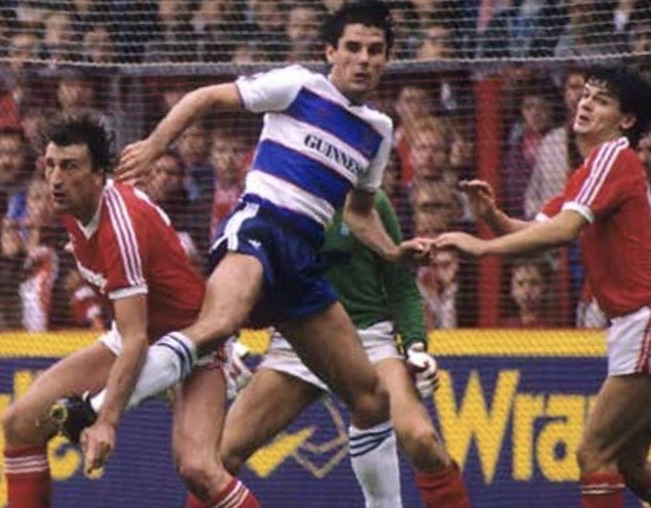
An all-too-fleeting, injury-dogged career for the late Bernie Gallacher

WELL-known names from the football world paid their respects at the funeral of tenacious left-back Bernie Gallacher.

Gallacher, who played for Aston Villa and Brighton, died in Sutton Coldfield in August 2011, aged 44, after a short illness.

Ginger-haired Gallacher was born in Johnstone, near Paisley, in Scotland, on 22 March 1967 and he played football for his school teams, St Peter’s Primary and St Aelred’s High.

His brother John played for Scotland schoolboys but Bernie missed out because he broke a leg just before a big game. Nevertheless, scouts from Leicester City and Villa had been tracking him and, at 16, he chose to join Villa, who’d won the European Cup the year before.

“Football was his life and he often played two or three games a day when we were growing up in Johnstone,” his other brother Charlie told the Paisley Daily Express. “I’ll never forget his debut for Villa because it was against Manchester United at Old Trafford and I remember thinking it didn’t get any better than that.”

It was the final game of the 1986-87 season and Villa were already heading back down to the old Division Two (now Championship). In an Albion matchday programme article, Gallacher said: “The Old Trafford match was a great occasion, but a bit unnerving in front of a cpacity crowd.

“The crowd seemed to be breathing down my neck – at that time I was used to only a couple of hundred watching the reserve side.”

The opportunity came under Graham Taylor after Gallacher successfully made it through the apprentice ranks. Taylor told the Birmingham Mail: “Bernie was reliable, wanted to do well and was never going to cause any trouble. He was a manager’s dream.

“He wanted to do his best and he wasn’t going to cause me any problems on or off the pitch.

“There are a number of players who don’t get recognised in football and Bernie was one of those. He would come out and give us a seven out of ten performance every week.

“If he’d had more confidence and belief in himself we might have seen some nine out of ten performances.”

Gallacher made a total of 72 appearances for Villa between 1985 and 1990, but former Villa teammate, Pat Heard, recalled: “Bernie became a cult hero during the 1987-88 promotion season and never gave less than 100 per cent every game.”

That season he played in all but one of Villa’s league games as they earned automatic promotion back to the top tier. But he only played 13 more top-flight games for Villa, seven of which came in the 1989-90 season when the Midlands club were runners up behind Liverpool, seven points ahead of third-placed Tottenham Hotspur. His final appearance in a Villa shirt came against Chelsea at Stamford Bridge in November 1990.

He had a brief loan spell at Blackburn Rovers and also played a couple of games for Doncaster Rovers before heading south to join Barry Lloyd’s second tier Brighton in the autumn of 1991, having been released by Villa.

Gallacher took over the left-back slot when Sussex lad Ian Chapman was injured and made his debut in a 1-0 defeat away to Blackburn on 2 November.He kept his place through to the end of what proved to be a disastrous season with Albion relegated in 23rd spot. While defending was his no.1 priority, Gallacher got on the scoresheet in a 2-1 Boxing Day defeat at Leicester.

North Stand Chat contributor, Blue Seagull, recalled: “The ball was played to him on the left touchline right in front of me; he cut inside one, went past another, and unleashed a shot from the edge of the area. Great goal!”

Gallacher took over the captain’s armband when normal skipper Gary Chivers and club captain Dean Wilkins were both unavailable, but it wasn’t the first time he had led a side. At Villa he’d captained the youth and reserve sides.

“Captaining a side is a privilege and I’ll be happy to do it until either Deano or Chivs is back,” he said.

He played 45 games for Brighton in total but his career was cut short by a bad injury. “Unfortunately, he suffered a horrendous cruciate ligament injury which all but ended a fantastic career,” his brother recalled in 2011. “We were all extremely proud of Bernie, as he really did make a name for himself at Villa Park and is still remembered fondly for his time with the club.”

He made a couple of appearances for Northampton Town after he left Brighton, but he was forced to retire from the game aged just 27. He later worked in the probation service.

Gordon Cowans, Brian Little and Steve Staunton were among the former Villa heroes who paid tribute to him at his funeral.