IT’S THE SEASON of giving and with the days coming in twelves this In Parallel Lines ‘special’ gives you a dozen players who’ve played for the Albion and post-Christmas opponents Arsenal.
A bit like an advent calendar, and with the slightest hint of Dickens’ A Christmas Carol, you’ll need to click on the link to see if the player has featured in a blog post of the past or is a blog post still to come!
Across several decades, there have been numerous connections between the clubs but with my own Brighton-watching journey beginning in 1969, I’m not looking at the likes of Irish international defender Jimmy Magill or manager Archie Macaulay because they were before my time.
Let’s start with goalkeepers. Over the years, there have been several who’ve worn the gloves at both clubs – Tony Burns, Nicky Rust or Mat Ryan for example. Younger readers will be more familiar with Ryan and, as an Australian international, he gets the nod as no.1.
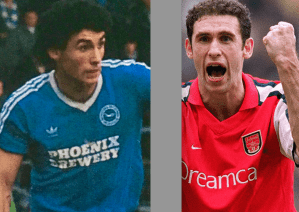
If international status gives a player the edge, it would be tempting to suggest Ben White at right-back but ahead of him I’d have to pick Martin Keown. More familiar to today’s football watchers as a TV pundit, those of us with a few more miles on the clock will remember him as a youngster spending two spells on loan with the Seagulls before he got his break with the Gunners, Aston Villa and Everton and won 43 caps for England.
Another TV and radio pundit who wore Albion’s stripes with aplomb having once been a £2m signing by Arsenal is Matthew Upson. He was Brighton’s player of the season in 2013-14.
The late Willie Young, one of that rare breed who played for Arsenal and north London rivals Spurs, comes into contention alongside him but he didn’t cover himself in glory at Brighton so I am plumping for Colin Pates. Pates first made a name for himself as Chelsea’s youngest-ever captain before becoming a reliable back-up defender during George Graham’s reign at Arsenal.
Brighton manager Barry Lloyd had been a teammate of Graham’s at Chelsea in the mid-1960s and the connection served Albion well when he agreed for Pates to join the Seagulls on loan to become part of the side that reached the 1991 play-off final at Wembley. He later rejoined the club on a permanent basis before injury forced him to retire.
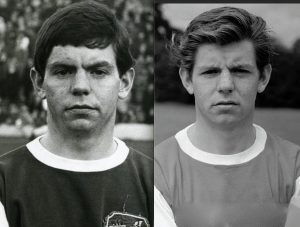
Mike Everitt might have merited inclusion at left-back but there’s really only one candidate for that position and that’s the seasoned Northern Irish international Sammy Nelson. He took over that spot at Arsenal from Bob McNab and made 339 league and cup appearances for the Gunners before losing his place to Kenny Sansom. He stayed in the top-flight, though, by joining Brighton under Mike Bailey. He had a spell as coach under Chris Cattlin before pursuing a career in the City.
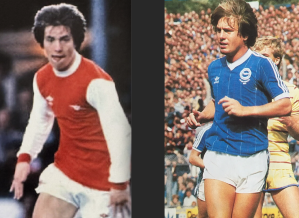
Although he played most of his career in defence, for the purposes of this piece I’m selecting Steve Gatting in midfield – a position he was equally adept at filling. Another Bailey signing from Arsenal, Gatting remained at Brighton for 10 years and after his playing days were over returned to his first club as an academy and under-23s coach.
It is tempting to bend my own rules and select Liam Brady alongside him but, of course, while the mercurial Irishman was such a fine player for Arsenal, it was only from the dugout that Brighton enjoyed his influence.
Instead, I’ll plump for Steve Sidwell who, although never making a senior appearance for Arsenal, grew up in their academy and bookended his career playing for Brighton.
Barrett? Not even close!
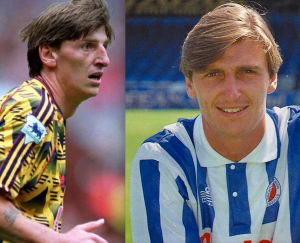
It’s out wide and in the middle of attack that the choices overwhelm although, to be honest, it is difficult to make a case for the lesser talents of Chuba Akpom, Graham Barrett or Raphael Meade over two of Mikel Arteta’s current picks – Viktor Gyökeres and Leandro Trossard (although Paul Dickov was in my thoughts).
Centre forward could have been Frank Stapleton who did his old Arsenal teammate Brady a favour by turning out twice for the Seagulls in 1994, but I’d have to settle for Danny Welbeck to lead the line. Let’s give Stapleton the no.12 shirt.
One old school indulgence would be out wide where, although Mark Flatts briefly impressed, and one day we might come to admire the talents of Amario Cozier-Duberry, perhaps there’s room for nippy winger Brian Tawse, who’d have had a field day supplying players of the quality of Gyökeres and Welbeck.
So, there you have it, the In Parallel Lines Arsenal-Brighton line-up is
Mat Ryan
Martin Keown Colin Pates Matt Upson Sammy Nelson
Steve Sidwell Steve Gatting
Brian Tawse Leandro Trossard Viktor Gyökeres
Danny Welbeck
Sub: Frank Stapleton
Thanks for reading. Enjoy the festive season and all the best for the new year. UTA!
BRIGHTON v Chelsea in the FA Cup sparks memories for supporters of my generation stretching back several decades.
Many began as Albion followers the day the then First Division side from Stamford Bridge visited the Goldstone Ground in February 1967 when a dubious refereeing decision denied Third Division Brighton a shock win.
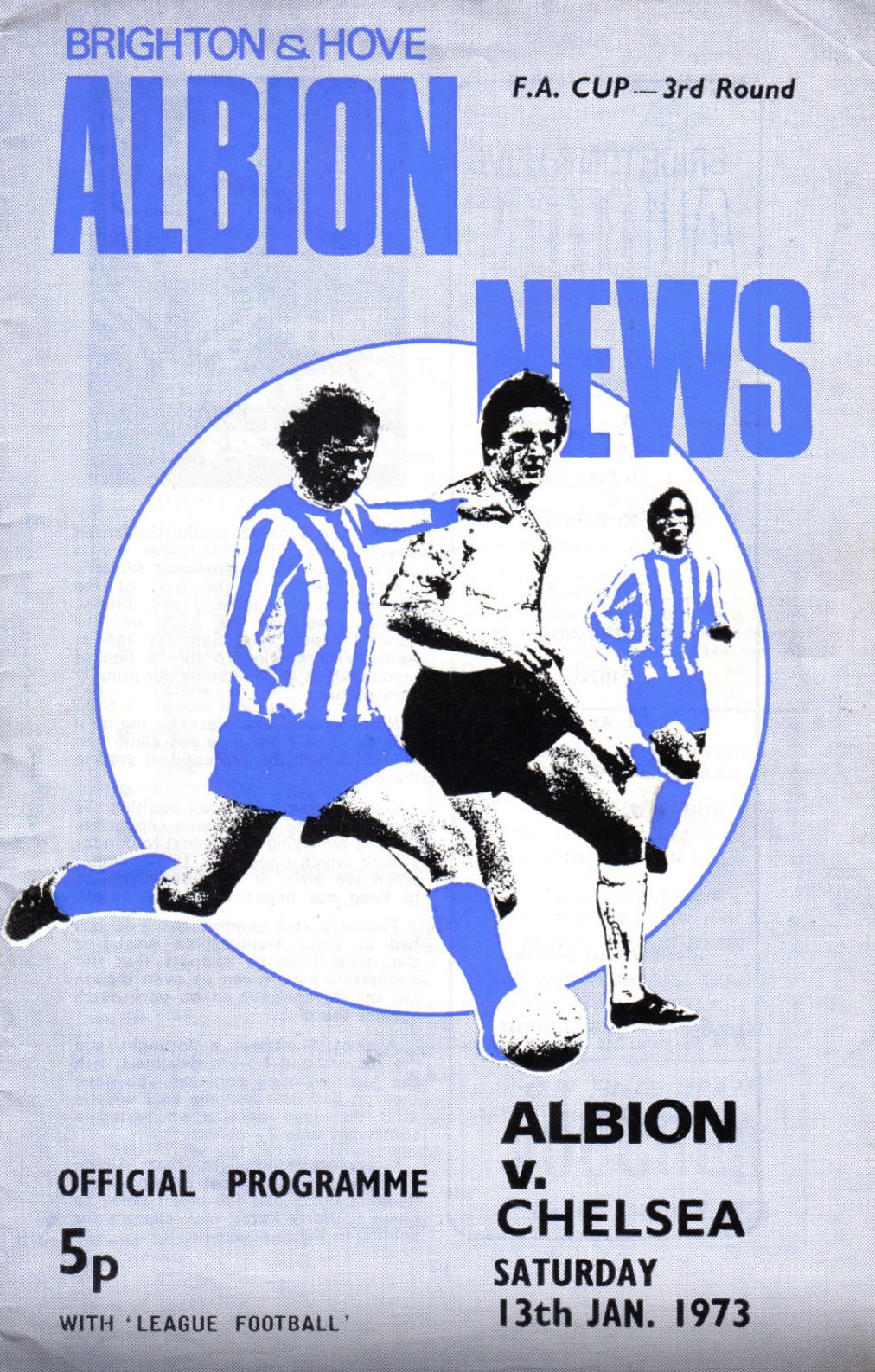
Others, me included, recall a fiery encounter in Hove six years later when Second Division strugglers Brighton were beaten 2-0 courtesy of two Peter Osgood goals in a game marred by violence on and off the pitch.
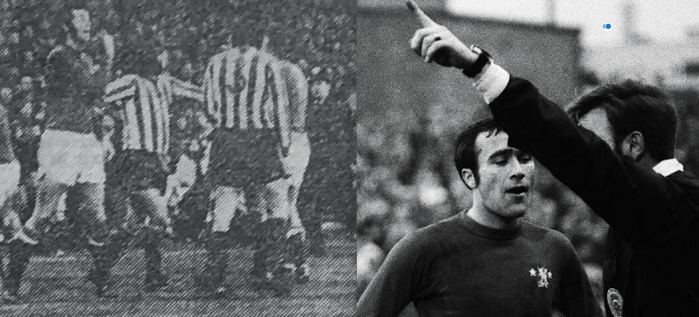
That third-round tie in January 1973 was dubbed “a day of shame” in the newspapers after two players were sent off, five were booked and crowd trouble erupted.
The chance for lower ranked teams to pitch their lesser talents against the big boys has always been at the heart of the FA Cup’s appeal.
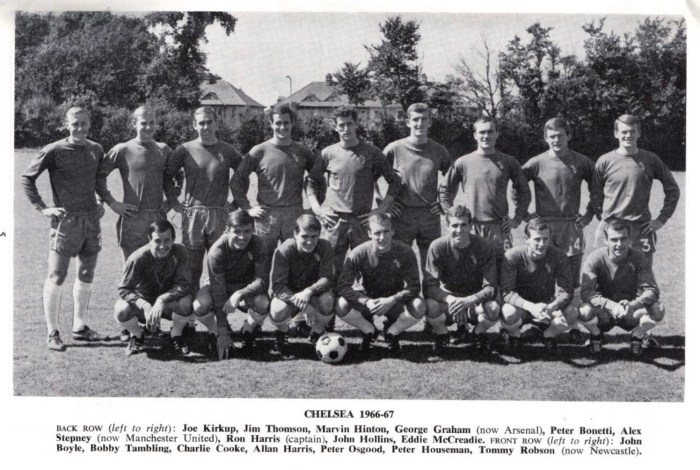
That was certainly the case when Archie Macaulay’s mid-table Albion hosted Tommy Docherty’s top 10 Chelsea on 18 February 1967. To give it musical context, Georgy Girl by The Seekers had just taken over from The Monkees’ I’m A Believer at no.1 in the pop charts!
At a time when home crowds were normally 12,000 – 13,000, a sell-out gate of 35,000 packed into the Goldstone.
Cup fever had certainly captured the imagination of the Sussex public. In the previous round, 29,208 watched Albion beat Aldershot 3-1 in a third-round replay for the chance to take on the top division Pensioners (as Chelsea were called back then).
The two clubs hadn’t met in any other competition for 34 years – back in January 1933 Brighton beat the London side 2-1 in a third round FA Cup tie.
After such a long gap, maybe it was understandable that Albion’s young captain, Dave Turner, at 22, fell off the settee at home in excitement when he saw the cup draw made on the television.
Canny Brighton decided to sell tickets for the game at a reserve home fixture against Notts County, meaning a stunning 22,229 paid to watch the second string win 1-0 in order to secure their entry to the big game.
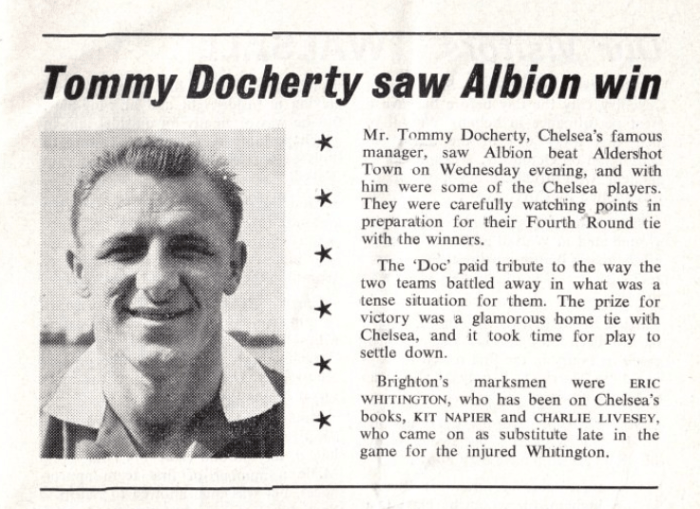
The matchday programme revealed how Docherty and several of his players had watched the Aldershot match to check out what would be in store for them.
Docherty meanwhile was very complimentary in his programme notes, declaring: “Chelsea know that we have a hard and difficult task today, and are not facing it in a complacent manner.”
He added: “We know that there is great potential for the Albion club. They have a First Division set-up at the Goldstone Ground, and First Division ideas, as well as a first-class pitch.
“The day cannot be very far away when they become one of our top clubs, and I am just one of many people in the game who will welcome their promotion to a higher class.”
However, the game was only five minutes old when Bobby Tambling gave Chelsea the lead. But before half-time, Chelsea’s John Boyle (who would several years later joined Albion on loan) was sent off for kicking Wally Gould. And just four minutes into the second half, Turner gave Albion parity.
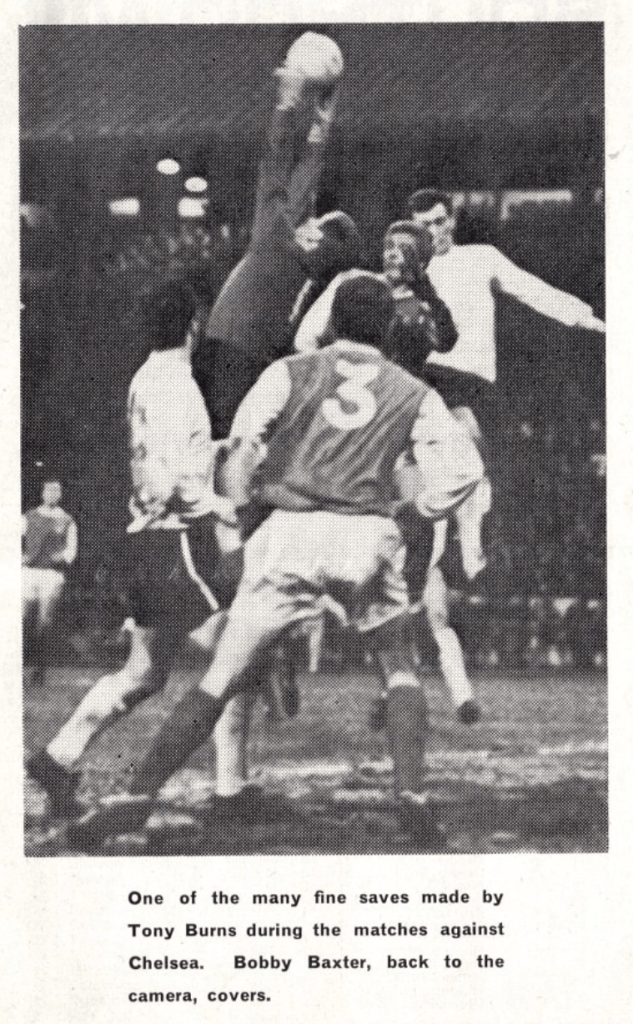
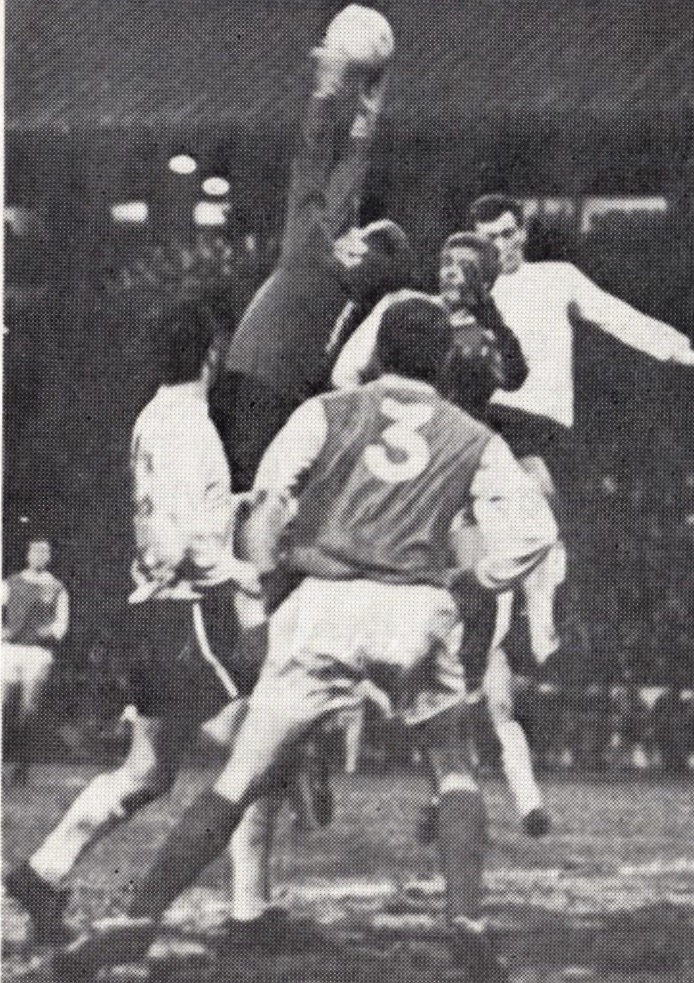
Goalkeeper Tony Burns, who had top flight experience with Arsenal, made several decent saves in the game and, with the clock ticking down, a cracking strike by winger Brian Tawse in the closing minutes of the game looked to have won it for the Third Division side.
“I smashed a volley past Peter Bonetti from 20 yards out with the score at 1-1 and thought I’d got the winner,” Tawse told Brian Fowlie of the Sunday Post in 2015. “It was a goal that could have made my career – but the referee chalked it off.”
Unfortunately, the official had spotted an infringement by Kit Napier and the ‘goal’ was disallowed.
As Brighton would discover again only too painfully in the 1983 final, these winning chances rarely happen twice, and, sure enough, in the replay at Stamford Bridge Chelsea ran out 4-0 winners in front of a massive crowd of 54,852.
Chelsea went on to reach that season’s final at Wembley only to lose 2-1 to a Spurs side that had Joe Kinnear at right-back and Alan Mullery in midfield.
Hardman Ron ‘Chopper’ Harris, their captain in 1967, was still leading the side by the time of the 13 January 1973 game and John Hollins and Tommy Baldwin also played in both. The dismissed Boyle was on the Chelsea bench in 1973. Only John Templeman (right) played in both games for Brighton.
The UK had just joined the European Economic Community (as it was then called) and You’re So Vain by Carly Simon was no.1 in the charts. Albion had moved up a division under Pat Saward having won promotion the previous May, but the side was struggling at the foot of the Second Division, unable to cope at the higher level.
Nevertheless, there were two players looking forward to the cup tie: Bert Murray and £28,000 signing Barry Bridges had both won silverware at Chelsea in the 1960s.
Barry Bridges slots home for Chelsea in a FA Cup tie v Peterborough and, pictured by the Daily Mirror’s Monte Fresco, ahead of the 1973 match against his old club.
“It’s a tremendous draw for the club and a dream draw for Bert Murray and myself who both started our careers at Chelsea,” Bridges told Goal magazine. “Personally, it will be nice to see most of the Chelsea lads again. I grew up with Peter Bonetti, Ron Harris and Ossie (Peter Osgood).”
Unfortunately the Albion game was one of several former Worthing schoolboy Bonetti missed through injury and illness in the 1972-73 season, John Phillips deputising in goal at the Goldstone.
How this young supporter recorded the team info in his scrapbook
Dave Sexton, a promotion winner with Brighton in 1958, saw his Chelsea side put the ball in Albion’s net within the first 10 seconds of the game but Bill Garner’s effort was ruled out for offside, to the bemusement of the football writers watching. As the game unfolded, not only did it end in defeat for the Albion but it attracted ugly headlines for all the wrong reasons as Harris and Brighton left back George Ley were sent off.
Ley was dismissed in the 85th minute for bringing down Baldwin from behind and then getting involved in a punch-up with England international Osgood, the scorer of Chelsea’s goals in the 17th and 60th minutes, who himself was booked for his part in the altercation.
Albion’s Eddie Spearritt had been the first to go in the book on 23 minutes (for a foul on Alan Hudson) and on 73 minutes was involved in the incident which led to Harris being sent off for the first time in his career.
Esteemed football writer Norman Giller recorded it like this: “Harris got involved in a tussle with Spearritt, and, as he pushed him, Spearritt went down holding his face as if he had been punched. The referee directed Ron to an early bath. All the bones he had kicked, and here was Harris being sent off for a playground push.”
1970 Cup winner Dave Webb went in the book for wiping out Spearritt, joining colleague Steve Kember who was cautioned for fouling Steve Piper. Albion’s Graham Howell also went into referee Peter Reeves’ notebook for taking down Baldwin.
The kicking and aggression on the pitch led to fighting on the terraces with 25 people arrested. And Leicester referee Reeves had to be given a police escort off the pitch.
Former Spurs captain-turned-journalist Danny Blanchflower, writing in the Sunday Express: declared: “This FA Cup third-round tie was as disgraceful as any match I’ve ever seen.”
In the opinion of Albion scribe John Vinicombe in the Evening Argus: “Football anarchy gripped the Goldstone during the last 20 minutes of Albion’s FA Cup tie with Chelsea.
“In the frenzy, players fought one another, hacked and kicked, and the violence tiggered an all-too-predictable chain reaction on the terraces where rival factions became one mass of writhing, mindless hooligans.”
Interestingly, Harris’ dismissal was subsequently overturned, Giller recording: “A Brighton-supporting vicar, with a pitchside view, wrote to the Football Association telling them what he had witnessed, and ‘Chopper’ was vindicated.”
Chelsea made it through to the quarter-finals of that season’s tournament before losing 2-1 to Arsenal in a replay. Arsenal lost in the semis to Sunderland, the Second Division side who stunned the football world at the time by beating Leeds United in the final.
A GOALKEEPER with film star looks signed for Brighton from Arsenal just after England lifted the World Cup.
Tony Burns had kept goal for the Gunners in 31 top-flight matches and Albion boss Archie Macaulay, who had played for Arsenal himself, went back to his old club to sign a no.1 to challenge the emerging local lad, Brian Powney.
It wasn’t difficult for Burns to settle at the Goldstone because the dressing room included Northern Irish full-back Jimmy Magill and winger Brian Tawse, familiar faces from his time in north London who’d also made the switch to Brighton.
It also wasn’t long before female fans who admired his smouldering good looks were sending in letters to the office inquiring about his eligibility!
Burns relived his career in detail in 2020 when interviewed by 17-year-old would-be journalist Jed Vine, who watches games at the Amex with his mother, and games at the Emirates with his dad.
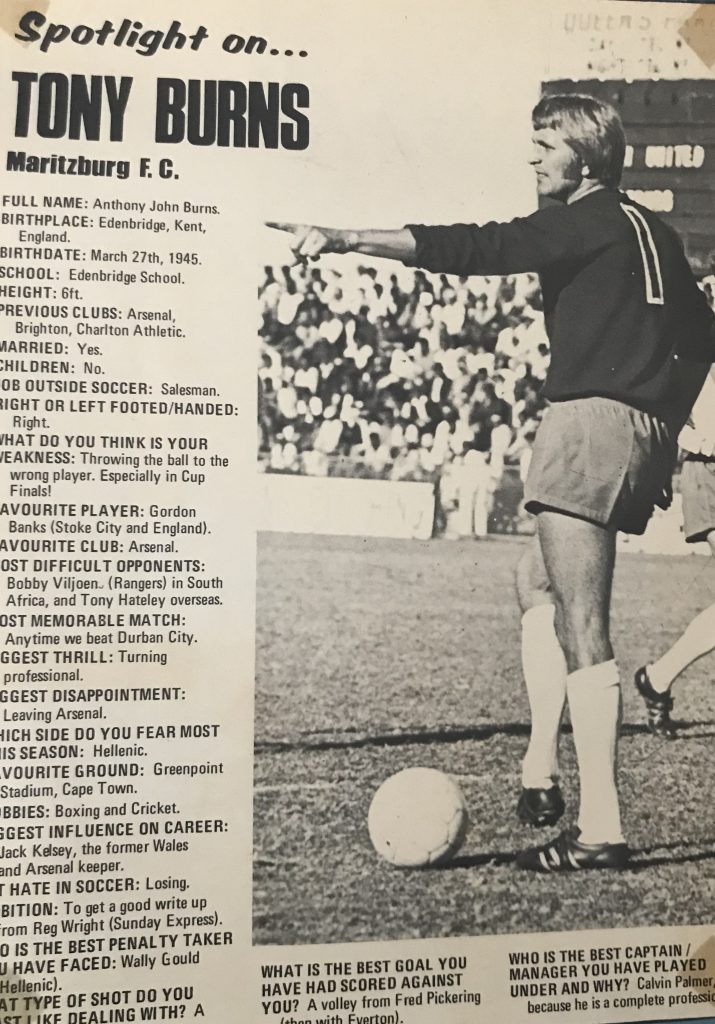
Born in Edenbridge, Kent, on 27 March 1944, Burns first showed his goalkeeping prowess during his schooldays in the town before he joined Southern League club Tonbridge (now Tonbridge Angels) who he returned to twice more and later managed three times.
He made his Southern League debut against Yiewsley (later to become Hillingdon Borough) in February 1963 and only his third game for Tonbridge was as an 18-year-old against Arsenal at Highbury.
With long term custodian Jack Kelsey retiring, Arsenal were looking around for likely successors and, liking what they saw of Burns, offered him a contract.
“In his early days at Highbury, he showed immense potential and, after benefitting from Kelsey`s coaching, made encouraging strides,” a 2020 Pitching In piece for the Southern League recalled.
Manager Billy Wright gave him his senior Arsenal debut in a friendly against Enschede in Holland in August 1963, with Magill in defence, and he got his first taste of South Africa on a five-game tour the following May when he was in goal for Arsenal’s 5-1 win over a Western Province XI and their 6-0 win over an Eastern Province XI.
But his big breakthrough came when he made his league debut in a 3-2 home win over Burnley in October 1964 (three days earlier he’d played in goal in a 7-0 friendly win over non-league Corinthian Casuals).
“I felt on top of the world. I had always wanted to play for the Gunners and here I was keeping goal for them, and on the winning side at that,” he told the Albion matchday programme. “There’s only one first match and I’ll never forget this one.”
Once he got the shirt, he had a run of 26 games (32 including friendlies) from October 1964 through to the end of March 1965.
He generally played in front of a defence featuring the likes of Don Howe, Frank McLintock and Ian Ure with John Radford and Joe Baker up front.
During the first half of the 1965-66 season, Burns appeared in seven league games and three friendlies, but his final Gunners first team appearance came on 27 December 1965 in a 4-0 defeat away to Sheffield Wednesday.
Jim Furnell was Wright’s preferred first choice, and, as the season wore on, the emerging Bob Wilson was getting the nod ahead of him as stand-in (although it wasn’t until 1968 that Wilson finally ousted Furnell).
Disappointed to leave, Burns nonetheless went in search of regular football by joining Third Division Brighton for £2,000 in July 1966.
He made his first appearance for the Albion on 17 September 1966, when he took over from the injured Powney, but Brighton went down 2-0 to Grimsby Town.
Powney returned the following week and Burns had to wait until January for his next games – two FA Cup ties against Aldershot.
Burns in action versus Chelsea
He kept his place for the big fourth round FA Cup game against First Division Chelsea at the Goldstone which finished 1-1 when his former Arsenal teammate Tawse controversially had what he thought was a cracking late winner ruled out for a foul by Kit Napier.
Unfortunately, Burns conceded four in the replay at Stamford Bridge as the superior Chelsea side made the most of home advantage to ease their way through comfortably, 4-0. That was the season they went all the way to the final only to lose 2-1 to Tottenham Hotspur, whose ranks included Alan Mullery and Joe Kinnear.
By the end of the season, Burns had played 18 matches against Powney’s 37. But Burns had the upper hand in 1967-68 featuring in 29 games compared to Powney’s 21.
He also started the 1968-69 season as first choice but his 54th and final game for the Albion was in the 2-1 home defeat to Northampton in the second round of the FA Cup on 20 December 1968.
New manager Freddie Goodwin brought in former Wolves and Aston Villa ‘keeper Geoff Sidebottom to challenge Powney and let Burns leave on a free transfer in March 1969.
He joined Charlton Athletic, where he made 10 appearances in their unsuccessful tilt at promotion, but declined what he saw as a derisory contract offer. He returned to Tonbridge briefly and in January 1971 headed off to play in South Africa, initially for Durban United, and later, Maritzburg.
In his interview with Jed, he recalls playing in an English All Stars team managed by Malcolm Allison who invited him to return to England with Crystal Palace when his contract was up.
Burns made the move in October 1973 after previous Palace no.1 (and later Albion youth coach) John Jackson had moved to Orient.
He shared goalkeeping duties with Paul Hammond, playing a total of 90 matches between the sticks for Palace over the next four years under Allison and his successor Terry Venables.
In 1977, Burns played half a dozen games on loan for Brentford before heading off to the States like a lot of ageing players did at that time.
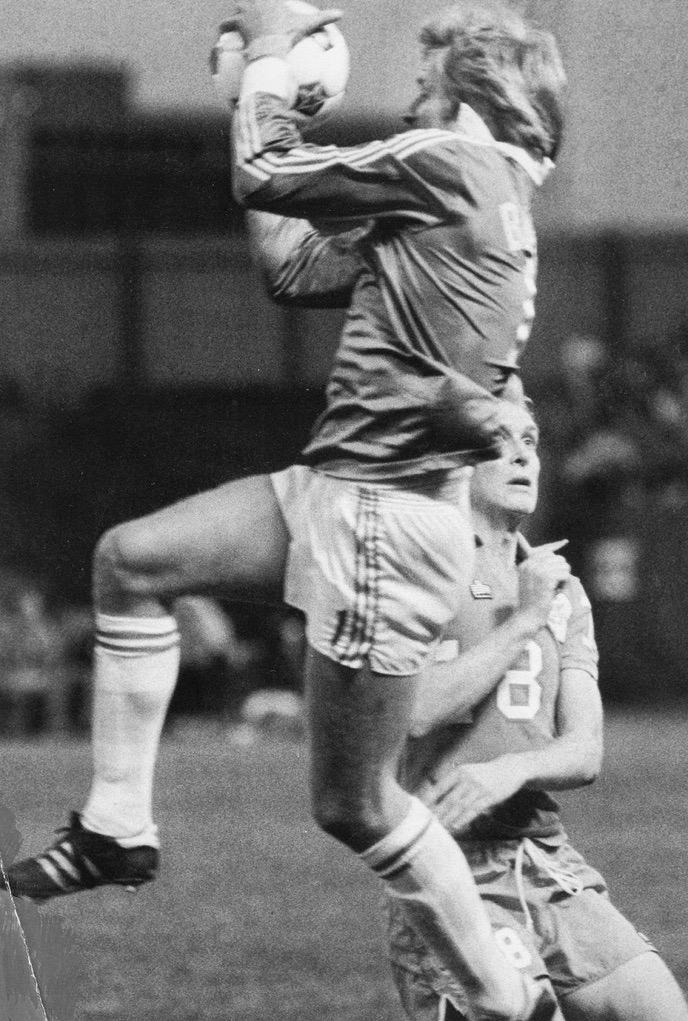
The ‘keeper played a dozen games for Memphis Rogues in the North American Football League. They were coached by former Chelsea defender and manager Eddie McCreadie although Burns had gone there to team up with former boss Allison who was sacked without a ball being kicked because he hadn’t signed enough players!
Burns played for Memphis Rogues in the USA
Among Burns’ teammates were a young Neil Smillie, who’d been struggling for games at Palace, Phil Beal, who had left Brighton the year before, John Faulkner, the one-time Leeds and Luton defender, and the flamboyant Alan Birchenall, beloved by Leicester City supporters of many generations.
Back in the UK in 1978, Burns joined Plymouth Argyle as cover for Martin Hodge, and ended his league playing days in this country appearing in 11 games in the first half of the 1978-79 season.
However, he left Home Park to rejoin Tonbridge Angels for a third time and he also played for Hastings United and Dartford.
After his playing days were over, Burns had three spells in charge of Tonbridge, from August 1980 to December 1982, August 1989 to May 1990, and in a caretaker role from November 2001 to May 2002 (by which time he was goalkeeping coach at Millwall, who he joined in 1992 under Mick McCarthy.
Burns served as goalkeeper coach under several Millwall managers. Picture: Brian Tonks.
He also spent seven years as manager of Gravesend and Northfleet (who became Ebbsfleet United) between 1982 and 1989.
But it was at Millwall where he finally found a permanent home, working under no fewer than 18 different managers, including Steve Gritt and Mark McGhee.
He was even at the helm himself for a while, working as co-caretaker manager with former Lions boss Alan McLeary after Dave Tuttle’s departure in April 2006, when Millwall’s relegation had already been confirmed.
The appointment of Nigel Spackman the following month led to Burns’ departure in July 2006, when he took up a similar role at his old club Palace, working under former Albion boss Peter Taylor coaching Julian Speroni and Scott Flinders.
Goalkeeping coach at Palace under Peter Taylor
He left Selhurst in November 2007 when Taylor lost his job, and Speroni told yourlocalguardian.co.uk: “It was sad to lose Tony Burns because we worked well with him. During last season when I wasn’t playing regular football, Tony was the one who kept me going which was very important.”
Burns moved with Taylor to Conference side Stevenage Borough but later returned to Millwall under Kenny Jackett before stepping down in 2012, when he was succeeded by Kevin Pressman.
Still, he wasn’t finished with the game, though, and at the age of 70, in the summer of 2014, he teamed up with Taylor yet again to become goalkeeping coach at Gillingham. He joined them on a part-time non-contract basis as a replacement for Carl Muggleton.
CONTACTS made as a youngster at Arsenal stood versatile Mike Everitt in good stead for the rest of his career.
He went on to play under his former Gunners teammate Dave Bowen at Northampton Town as part of one of football’s most remarkable stories and earned a place in the Cobblers’ ‘team of the century’.
Later, he joined a small enclave of former Arsenal players at Brighton. Everitt swapped Devon for Sussex in March 1968 when he moved from Plymouth Argyle for a £2,500 fee.
The man who signed him, Archie Macaulay, was a former Arsenal man himself who’d already brought three other ex-Gunners to Hove in goalkeeper Tony Burns, Irish international full-back Jimmy Magill and winger Brian Tawse.
Everitt started the new season as first choice left-back in Macaulay’s side and an uninterrupted 14-game run in the team as autumn turned to winter straddled Macaulay’s departure and the arrival of new boss Freddie Goodwin.
Everitt slotted home a penalty as Albion drew 1-1 away to Bristol Rovers on 18 January 1969 but the 3-1 home win over Crewe Alexandra the following Saturday was his last outing of the season.
Everitt, Howard Wilkinson and Dave Turner from this Albion line-up all went on to become coaches
He picked up an injury and, with Goodwin having signed his former Leeds teammate Barrie Wright from New York Generals, local lad John Templeman able to fill either full-back slot, not to mention the addition of Eddie Spearritt from Ipswich Town, Everitt couldn’t win back his place in the starting line-up.
Competition for a starting place only intensified in the summer of 1969 when Goodwin’s former Leeds teammate, Willie Bell, arrived from Leicester and was installed as the regular choice at left-back, while Stewart Henderson cemented the right-back slot to the extent he was named Player of the Season.
While Everitt deputised for Bell on a couple of occasions and filled Bobby Smith’s midfield spot for four matches, his only other involvement was as sub on a handful of occasions. He was a non-playing sub in the final game of the season (a 2-1 home defeat to Mansfield Town) and then left the club during the close season.
Born in Clacton on 16 January 1941, Everitt represented Essex Schoolboys and London Schoolboys before being taken on as an apprentice by Arsenal in 1956. He turned professional in February 1958 and, thanks to the excellent records of thearsenalhistory.com, we know that he first played in the first team in the Harry Bamford Memorial match at Eastville against a Bristol XI on 8 May 1959.
He then went on Arsenal’s end-of-season tour to Italy and Switzerland. He was an unused sub for friendlies against Juventus and Fiorentina but came on as a substitute in a 4-1 win over Lugano of Switzerland on 24 May 1959.
Everitt (circled back row) lines up for Arsenal – with (left to right trio in centre of front row), David Herd, Tommy Docherty and Jimmy Bloomfield
It wasn’t until Easter 1960 that he made his competitive first team breakthrough, but when he did it was a baptism of fire in George Swindin’s side.
He made his first team debut in front of 37,873 fans packed into Highbury on Good Friday (15 April 1960) as the Gunners beat a Johnny Haynes-led Fulham side 2-0.
Modern day players might not be able to comprehend it but Everitt also played the following day when Arsenal travelled to Birmingham City, and lost 3-0. Two days later, away to Fulham this time, Everitt was again in the starting line-up as Arsenal lost 3-0.
He kept his place for the following Saturday’s match – at home to Manchester United – and in front of 41,057 he was part of the side that beat United 5-2. Future Albion teammate Alex Dawson led the line for a United team that included Bobby Charlton and Johnny Giles.
That was the penultimate game of the season and Everitt retained his place for the final game, which ended in a 1-0 defeat to West Brom at The Hawthorns.
The 1960-61 season got off to a good start for him too as he played in the opening four matches and, into the bargain, scored Arsenal’s only goal as they beat Preston North End at home on 23 August. Unfortunately for him, a tigerish Scot called Tommy Docherty edged him out of the first team picture and in February 1961 he moved to Fourth Division Northampton Town (for a fee of £4,000) who were managed by the aforementioned Bowen.
His stay with the Cobblers spanned one of the most remarkable stories in football history as they were promoted season on season from the Fourth to the First….and then relegated all the way back down again (although Everitt had left for pastures new before they reached the basement again).
What he was part of, though, was achieving three promotions in five years. Glenn Billingham recalled that heady era in a 2017 article for thesefootballtimes.co.
In 1961-62, Everitt was a regular at wing-half and scored five goals in 41 appearances. He switched to left-back the following season and played 30 matches as Town went up as champions.
A season of consolidation in 1963-64 saw Town finish 11th in Division Two, when Everitt played 45 matches. He played in 43 games in the 1964-65 season which culminated in the historic promotion to the top-flight courtesy of finishing in runners up spot, a point behind champions Newcastle United.
Necessary investment in improving the squad was slow to materialise and Bowen initially had to rely on the same squad of players who’d got them up. Everitt was one of only five Town players who had previously played at that level.
A 5-2 defeat away to Everton in the opening fixture was perhaps a portent of what was to follow for the rest of the season. They didn’t record a win until their 14th game, at home to West Ham (when they won 2-1), but the underdogs performed heroics in their first two home matches. It must have been quite an occasion when in only the second game of the season Everitt lined up in the Northampton side to face Arsenal.
The game finished 1-1, although Everitt had to be replaced at half-time. However, he also played in the return fixture at Highbury which also finished in a 1-1 draw.
Town also drew 1-1 at home to Manchester United, stifling the attacking threat of Best, Law and Charlton, although United exacted revenge at Old Trafford where they dished out a 6-2 thrashing. Charlton got a hat-trick, Law scored a couple and John Connelly was also on the scoresheet.
Everitt made 34 appearances (plus one as sub) that season and scored two goals, one in a rare win, in the penultimate game, when the Cobblers beat Sunderland 2-1 (the Wearsiders scorer was Neil Martin, who later played for the Albion). Graham Carr (father of comedian Alan Carr) played 30 times for the Cobblers that season.
Back in the second tier, Everitt featured in 17 games but as Town plummeted straight through the division, he moved on to Plymouth Argyle in March 1967, where his former Arsenal teammate Jimmy Bloomfield had moved to from West Ham. Everitt was still only 26 when he made his debut in a 1-0 home defeat to Wolverhampton Wanderers. After 31 games for Argyle, he made the move to Brighton.
Everitt had already gained his preliminary coaching badge when still a player and after leaving Brighton in 1970 he initially moved to Plymouth City as player-manager. Within months, he seized the opportunity to move up a level when he landed the player-manager role at then Southern League Wimbledon.
In a January 2010 interview in The Guardian, it was revealed the two candidates he beat to land the position were David Pleat, who went on to manage Luton, Leicester and Spurs, and his former Albion teammate Howard Wilkinson, who won the league title with Leeds United.
Pleat recalled: “The director, Stanley Reed, went for Mike and Howard ended up at Boston United while I was eventually appointed by Nuneaton Borough in the Southern League.”
A few eyebrows were raised in 1973 when Everitt was appointed manager of newly-relegated Brentford just seven days before the start of the 1973-74 season, taking over from Frank Blunstone, who’d left to become youth team manager at Manchester United.
Greville Waterman, on a Bees fan blog, said Everitt polarised opinion, declaring: “He was undoubtedly a cheap option and received little support from the directors (now where have we heard that before) and did his best with a wafer thin squad.”
A classic example saw defender Stewart Houston sold to Manchester United for a club record £55,000 in December 1973, but the money wasn’t immediately reinvested in the squad.
Nevertheless, Waterman pointed out: “His approach did not go down well with some of his players and he brought in a number of tough bruisers. Under his management, Brentford declined rapidly, fell to the bottom of the Football League and barely escaped the need to apply for re-election.”
Legendary Brentford defender Alan Nelmes was particularly disparaging about Everitt. “He didn’t have the technical expertise that Frank had and you felt as if the club wasn’t going anywhere with him. Frank was very advanced in his thinking, ahead of his time, really, and it was a step backwards to have Mike.”
Everitt finally got some backing from the boardroom on transfer deadline day. Experienced forward Dave Simmons was brought in from Cambridge United and former Everton and Southampton defender Jimmy Gabriel from Bournemouth and a 10-match unbeaten run from mid-February to early April did enough to assure the Bees avoided bottom spot even though their finishing position of 19th was their lowest position for nearly 50 years. Crowds were hovering around only 5,000 too.
It didn’t get much better the following season and in spite of getting a vote of confidence in November 1974 from new chairman Dan Tana, Everitt only lasted a few more weeks in the hotseat.
Ironically, after a poor start to the campaign, he’d begun to turn results round and lifted the side to a mid-table position on the back of four wins and a draw in a seven-game spell between late November to mid-January, but he was sacked on 16 January and replaced with John Docherty, who’d only packed up playing for the Bees the previous summer.
Everitt’s next role came as a coach (pictured above) under his old Arsenal pal Bloomfield at Leicester City, and former winger Len Glover came up with an amusing reminiscence on lcfc.com.
Glover recalled when he was 17 playing against Everitt for Charlton Athletic against Northampton.
“He had massive thighs, and had his sleeves rolled up. In the first five minutes he had kicked me when the ball was nowhere near, and now he was our coach!
“He was just the same when he was our coach. When he started, he gathered us round at the training ground. His opening gambit was, ‘You don’t know me, and I don’t know you, but we will soon change that!’
“Then he noticed Frank Worthington who was not with the group but was with the apprentices who were crossing the ball for him to volley like they did every morning. He went, ‘Oi, get over here!’ Frank went, ‘Yeah, in a minute’. Instead of saying, ‘Over here, now!’ Everitt just went, ‘Well, hurry up then’.
“Before Everitt left we went to Leeds and we got stuffed 3-0. After the game Birch (Alan Birchenall) was doing his hair with his hair dryer. Win or lose he would always do his hair. Mike Everitt came in and said, ‘It’s a pity you’re not as good with the ball as you are with that hair dryer!’ Birch replied, ‘If I was as good with the ball as I am with the hair dryer, I wouldn’t be playing for Leicester!’”
After leaving Leicester, Everitt managed Kuwaiti side Al-Shabab when another former Arsenal teammate, George Armstrong, was manager of the Kuwaiti national side (Armstrong’s daughter, Jill, posted a picture of them in Kuwait on Twitter in 2019).
Jill Armstrong posted this picture on Twitter of her with dad George and Everitt in Kuwait
After Kuwait, Everitt managed Cairo-based Egyptian teams Al Mokawloon and Al Ahly, the club Percy Tau joined in the summer of 2021.
According to Wikipedia, Everitt had particular success at Al Mokawloon, winning the 1982-83 Egyptian Premier League title and two African Cup Winners Cups.
• Pictures from matchday programmes and online sources.
















 In parallel lines