Cattle auctioneer Kevin Bremner gave clubs a promotion prod

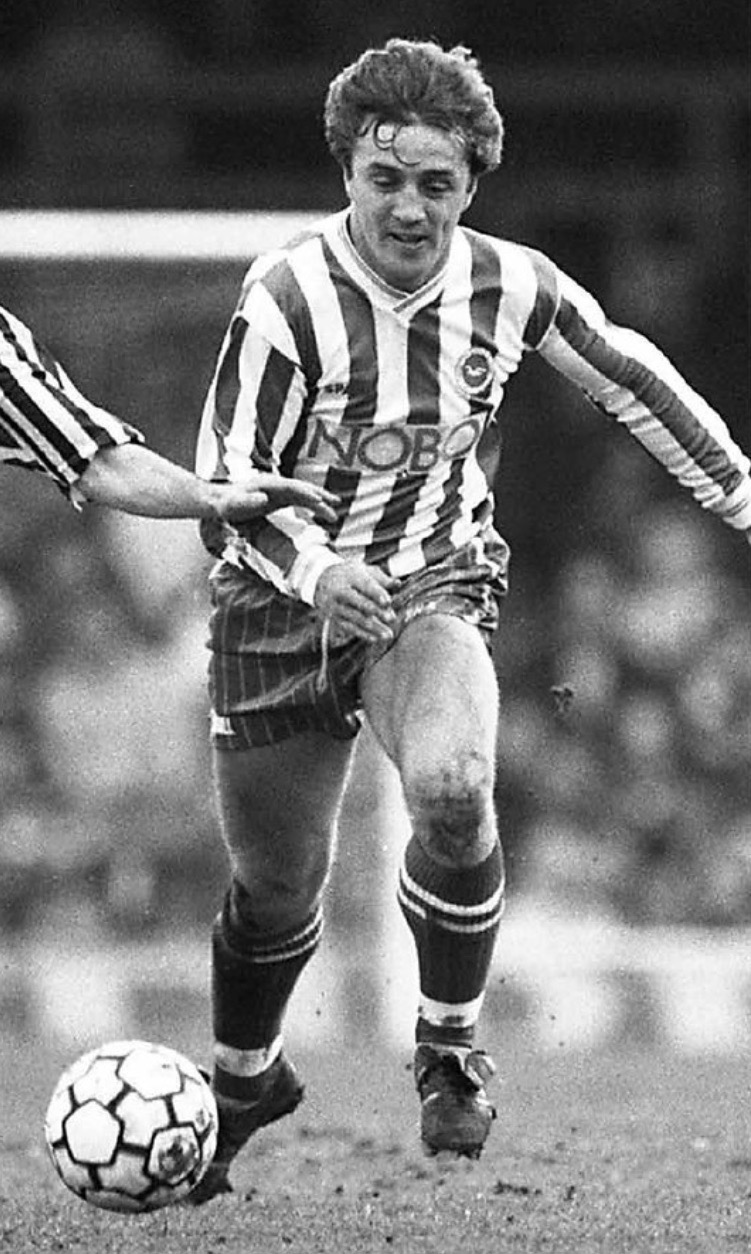
bremner-portraitAS GOALSCORING partnerships go, the pairing of Kevin Bremner and Garry Nelson was something of a masterstroke by Albion manager Barry Lloyd.
Having to readjust to life back in Division 3 after relegation in 1987 meant cashing in on some of the better players – the sale of Terry Connor, Danny Wilson and Eric Young raised over £400,000 – and replacing them with bargain buys.

At £65,000 for Bremner and £72,500 for Nelson, Lloyd showed how shrewd an operator he could be in the transfer market. When Nelson was injured and sidelined for a while, £80,000 was paid to bring in Paul Wood to play alongside Bremner.

Bremner was born on 7 October 1957 in Banff in the Scottish Highlands and worked as an auctioneer in the cattle market in his home town as well as playing Highland League football.

He didn’t make his start in the English league until the relatively late age of 23. That was with Colchester United and he made his debut in a 2-2 home draw with Barnsley in Division 3 on 11 October 1980.

He went on to make 93 consecutive appearances for Colchester in the third and fourth divisions and scored 35 goals while Bobby Roberts was in charge. All was going well until Bremner got in a dispute with the club and found himself out of the side.

Division 1 Birmingham took him on a month’s loan and, after he’d scored a goal in his four games there, Roberts’ repplacement at Colchester, former Ipswich and Northern Ireland centre half Allan Hunter, recalled him to Layer Road. However, former boss Roberts had moved on to Division 3 Wrexham, and he took Bremner on loan at the Racecourse, where he also got on the scoresheet.

“He wanted to take me on permanently but they couldn’t afford it so my next stop was Home Park, and a spell at Plymouth Argyle,” he told the Albion matchday programme. “It was touch and go whether or not I’d stay there in the long term, but once Lincoln and Millwall showed an interest I knew that I’d soon be on my way.”

He chose Millwall – “it was closer” – and joined the Lions in December 1982 for a £25,000 fee. He was one of eight new signings made by manager George Graham as Millwall were floundering at the bottom of Division 3 at the time. In a remarkable turn-round, they picked up 27 points in 12 games to escape relegation.

He was then part of the Millwall side who won promotion from Division 3 in 1984-85. In total, Bremner scored 33 goals in 87 games for the Lions. “It was a fabulous couple of years even though the side was struggling when I joined,” he said. “Playing at The Den is great – it’s wicked for away teams because the atmosphere is so strong.”

Next stop was Reading for a £35,000 fee. He spent two seasons with the Royals and enjoyed a successful partnership with lofty Trevor Senior which helped the Royals to promotion as champions from Division 3 in 1986.

I can remember going to watch Albion play Reading in November 1986 and Bremner scored twice in a 2-1 win for the Royals at Elm Park. He finished the season with 15. Albion signed him from Reading for £65,000 in July 1987.

Brem flowAfter a flying start with Brighton, in which he scored 11 goals, the league goals dried up for Bremner but strike partner Nelson couldn’t stop scoring as Albion powered their way to automatic promotion.
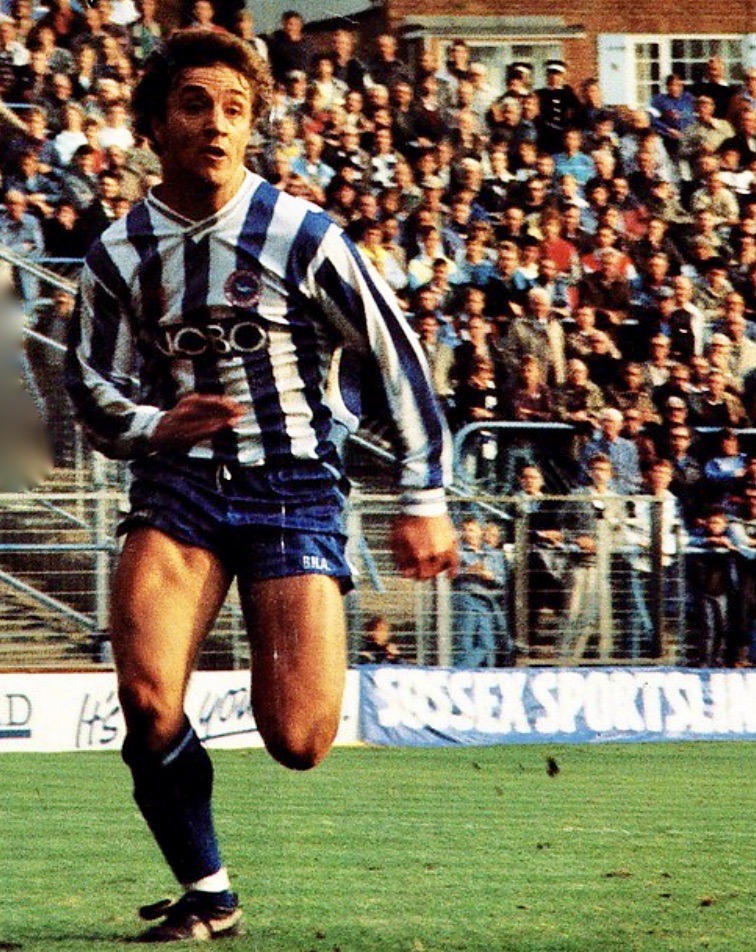
Second spot behind Sunderland was clinched via a 2-1 Goldstone win over Bristol Rovers on 7 May, Bremner finally ending his goal drought with a diving header, and Nelson, inevitably, getting the winner – his 32nd goal of the season.

What was all the more remarkable about the pairing was that it was the first season Nelson had played as an out-and-out striker.

Back in the second tier in 1988-89, Albion struggled to make an impression against better quality opponents although Bremner did score 15 goals, including a hattrick in a New Year’s Eve 4-0 mauling of Birmingham City. In September 1988, he took over the goalkeeper gloves (below) at home against West Brom when Perry Digweed was forced off with a serious groin injury.

In a matchday programme interview, Bremner said: ”I’m probably enjoying the game more than at any time before. I regret not coming into the professional game earlier but I’m delighted at the way things have turned out.

“We always thought we could do well at the Goldstone and after two years of hard work I’d like to think that we can put the club back on the map and, besides, I’d like another try in the First Division.”

The programme notes declared: “It’s his consistent scoring record that has opposing defenders on tenterhooks. His total commitment invariably creates an opportunist goal and he is a popular player with the fans.”

Brem runBremner scored 12 in the 1989-90 season, five of them coming in the space of a week at the start of the season! He was virtually ever-present but Albion struggled in the lower half of the table for most of the season. His goal in a 1-1 draw away to Blackburn in the final game of that campaign was his last for the club. In 134 games (plus three as sub), he’d scored 36 goals.

He moved on to Peterborough United in the close season as manager Lloyd had a new strike partnership up his sleeve in the shape of John Byrne and Mike Small.

After a year at Peterborough, Bremner moved back to Scotland to play for Dundee but in the spring of 1992 had a month’s loan spell at Shrewsbury Town.

Back in the far north of Scotland he had spells as player-manager with Brora Rangers and his old club Deveronvale then in 1995 he became youth team manager at Gillingham and stayed for eight years, and was then academy coach at Millwall for three years. He subsequently coached youngsters in Kent, at an academy and at an independent school.

  • Pictures show the front page of the Evening Argus following Albion’s promotion from Division 3 in 1988 with Bremner diving to score; a shot of Bremner in action against West Ham that appeared on the front of a matchday programme, a portrait from a matchday programme at the beginning of the 1989-90 season, and other action pictures from matchday programmes.

Terry Connor had an eye for goal for Leeds and Brighton

Connor action 1TERRY CONNOR is a familiar face to today’s football fans as a loyal assistant manager to Mick McCarthy.
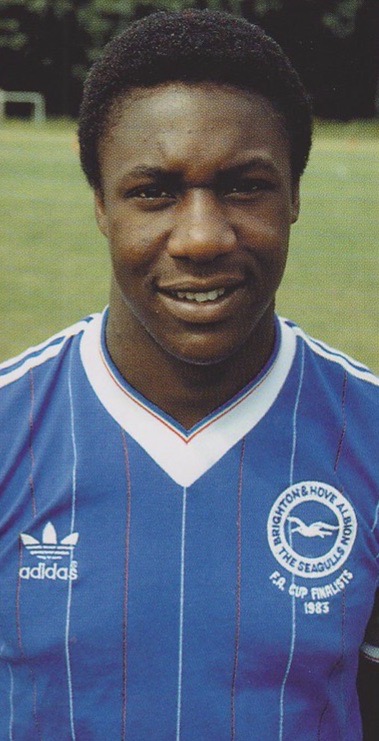
But Leeds United and Brighton fans of a certain vintage remember him as a pacy striker with an eye for goal.

His time with the Albion saw him at his most prolific with a record of almost a goal every three games (51 in 156 appearances) – form which earned him a solitary England under 21 cap as an over-age player.

Relegation-bound Brighton took the Leeds-born forward south in exchange for Andy Ritchie shortly after they had made it through to the semi-final of the 1983 FA Cup, but the new signing could take no part because he’d already played in the competition for Leeds.

If Brian Clough had allowed Peter Ward to have remained on loan to the Seagulls that spring, who knows whether Connor would have joined, but, when the former golden boy sought an extension of his loan from Nottingham Forest, which would have enabled him to continue to be part of the progress to Wembley, according to Ward in He Shot, He Scored, the eccentric Forest boss told him: ‘Son, I’ve never been to a Cup Final and neither will you’.

So the Connor-Ritchie swap went ahead and, with the rest of the team’s focus on the glory of the cup, the new arrival scored just the once in five appearances, plus two as sub, as the Seagulls forfeited the elite status they’d held for four seasons.

lpool goalConnor would have his moment of cup glory (celebration above) in the following season, though, as the TV watching nation saw him and Gerry Ryan score in a 2-0 win over Liverpool at the Goldstone; the second successive season Albion had dumped the mighty Reds out of the FA Cup.

Connor was best man when teammate Hans Kraay got married. Frank Worthington (right) was there too.

Born in Leeds on 9 November 1962, Connor went to Foxwood School on the Seacroft estate in Leeds. He burst onto the football scene at just 17, scoring the only goal of the game after going on as a sub for Paul Madeley to make his hometown club debut in November 1979 against West Brom.

connor leeds

“I got such an early break at Leeds because the club were rebuilding their side after those days when they were riding high,” Connor told Shoot! magazine. “Eddie Gray was still in the team when I came in. He was the model professional. It was terrific to have someone with his experience alongside you.”

Connor went on to make a total of 108 appearances for Leeds over four seasons, scoring 22 goals, before the by-then manager Gray did the swap deal with Ritchie.

In February 2016, voice-online.co.uk carried an interview in which Connor recalled racial abuse he received as a player.

“It was difficult for black players to thrive. I can remember going to many away games and there were bananas thrown on the pitch and `monkey’ chants from the stands,” he said.

“I remember receiving mail from Leeds fans telling me not to wear the white shirt, even though I was born and bred in Leeds. I had bullets sent to me and the police were called on a couple of occasions.”

Even so, the move to Brighton still came as a bit of a shock to him.

“‘I’d never imagined myself playing for anyone else but Leeds,” he told Shoot! at the time. “I was born and bred in the city. My parents and friends live there, and really Elland Road was a second home to me.”

Unfortunately for Connor, manager Jimmy Melia gave him the impression he was going to be forming a double spearhead with Michael Robinson. But after relegation, Robinson and several others from the halcyon days were sold, in Robinson’s case to Liverpool.

TC phoenixThe man who bought him didn’t last long either; Melia making way for Chris Cattlin in the autumn of 1983. It didn’t stop Connor making his mark in the second tier and despite having several different striking partners of varying quality, his goalscoring record was good at a time when the side itself was struggling to return to the top with the Cup Final squad being dismantled and under investment in replacements.

In his first full season, he missed only two first team games all season and was top scorer with 17 goals as Albion finished ninth in the league. His main strike partner Alan Young scored 12.

Connor got only one fewer in the 1984-85 season when the side finished sixth; the veteran Frank Worthington chipping in with eight goals in his only season with the Seagulls.

TC v Sunderland

In 1985-86 Connor had two different strike partners in Justin Fashanu and the misfiring Mick Ferguson but still managed another 16 goals, including four braces.

The disastrous relegation season of 1986-87 contained a personal high for Connor when, in November 1986, he was selected as an over-age player (at 24) for England under 21s and scored in a 1-1 draw with Yugoslavia.

He had formed a useful partnership with Dean Saunders but, as money issues loomed, Saunders was sold to Oxford and soon, after being voted player of the season, Connor also left as the Albion were relegated; Barry Lloyd being unable to halt the slide back to the third tier.

Reflecting on his time at Brighton in a matchday programme interview, Connor said: “I really enjoyed my football, playing on the south coast. We also loved the lifestyle and my eldest daughter was born there, I loved playing in the atmosphere created at the Goldstone. There was a bond with the players and their partners, with Jimmy Melia and Mike Bamber, and it was like one big happy family.”

As Lloyd was forced to sell players, Connor returned to the top flight via a £200,000 move along the coast to newly-promoted Portsmouth. A terrible run of injuries plagued his Pompey career meaning he only managed 58 appearances and scored 14 goals over the course of three seasons.

A £150,000 transfer fee saw him join then Third Division Swansea City for the 1990-91 season and although he managed 39 appearances, he scored only six times.

Next stop was Bristol City in September 1991 for £190,000 but he scored only once in 16 games for the Robins. By the summer of 1993 he dropped out of the league to play for Conference side Yeovil Town and when he retired from playing he became a coach at Swindon Town.

John Ward took Connor as a coach to three clubs he managed, Bristol Rovers and City and then Wolverhampton Wanderers, where, across the reigns of several managers, he remained for the next 13 years. He worked at youth, reserve and first team level before becoming McCarthy’s assistant in 2008. He briefly took the reigns himself after McCarthy was sacked in early 2012 but, unable to halt the team’s relegation from the Premiership, reverted to assistant under the newly-appointed Ståle Solbakken for just four games of the new season before leaving Molineux.

Within three months, he resumed his role as McCarthy’s assistant when the pair were appointed at Portman Road. When McCarthy took over as the Republic of Ireland boss in November 2018, Connor once again was his assistant and in 2020 the pair found themselves at the top Cypriot side APOEL. In early 2021, McCarthy and Connor were back in tandem at Championship side Cardiff City.

In the 2018-19 season, Connor had the chance to work with the England under 21s when the FA decided to provide placements for BAME coaches

Peter Grummitt a contender for Brighton’s best ever no.1

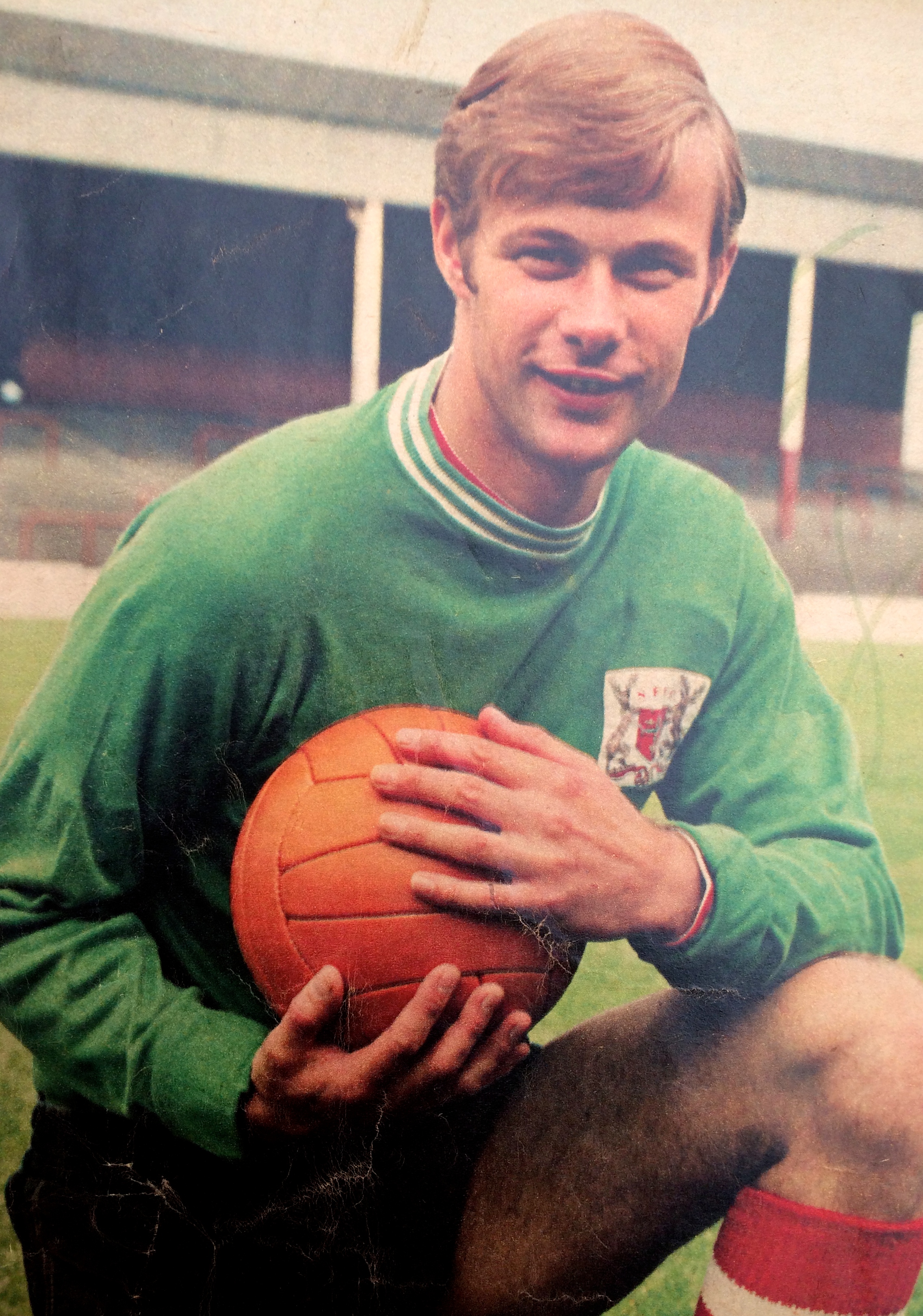
grummitt portraitONE OF the best goalkeepers I’ve ever seen play for Brighton and Hove Albion previously spent a decade with  Nottingham Forest and was an England under 23 international.

Peter Grummitt was outstanding between the sticks and racked up an impressive career total of more than 650 league and cup appearances, virtually half of them in what is now the Premiership.

Born in Bourne (the Lincolnshire market town) on 19 August 1942, he was the last line of defence for Forest between 1960 and 1969, and credited Forest reserve team coach Joe Mallett, a former Southampton stalwart as a player, as the biggest influence on his career.

GrumForestBut he also made 158 appearances for the Albion between 1974 and 1977. Signed on loan initially from Sheffield Wednesday in the wake of the famous 8-2 defeat to Bristol Rovers, he went on to be a key part of the side that was on the up in the mid ‘70s until injury cut short his career, albeit that he was in his mid 30s by then.
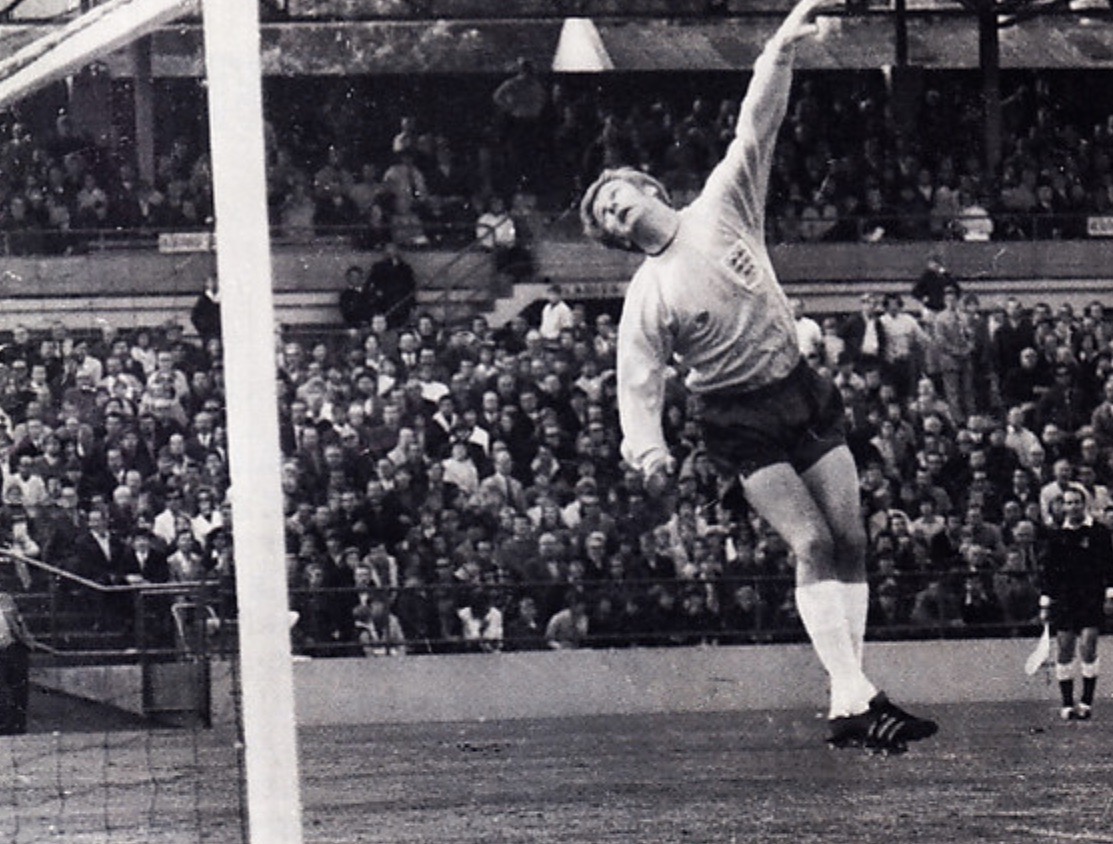
Grummitt headed south having been edged out as first choice at Wednesday, where he’d played 130 games after leaving the City Ground. He knew Brian Clough’s sidekick Peter Taylor well having played in the same Nottingham Taxis cricket team, and Taylor had called him to ask if he fancied the move.

Screenshot

“The fact Brighton were in the Third Division didn’t bother me at all, ” he said. “I knew what sort of managers they both were and I knew straight away that I wanted to go. I met Clough at a motorway service station, we had a chat, and I signed there and then.”

His arrival at the Goldstone was Clough and Taylor’s direct response to that horrendous home defeat to Rovers in front of the TV cameras.  Long-standing no.1 Brian Powney was axed and Grummitt was drafted in for the next game – but in his first match even he had to fish the ball out of his net four times as Tranmere ran out 4-1 winners.

As it turned out, Powney did reclaim the ‘keeper’s jersey when Grummitt was injured in a game against Shrewsbury in a challenge with Ricky Marlowe, who the following season became a teammate.

Looking back, though, the signing of a goalkeeper of Grummitt’s undoubted pedigree was very much the beginning of what was to become a memorable era in the club’s history.

Mrs Grummitt was pleased with the move too, as the matchday programme enlightened us. Jill said the couple had found a house in Saltdean with a sea view. “Both of us have always wanted to live by the sea,” she said.

Their mutual love of horses was also satisfied by Brighton’s closeness to Hickstead, where they were visitors to see shows. Additionally we learned: “Peter’s main interest outside football is golf. Apart from that he is really a home-bird. He’s a master at relaxing and can just switch off by settling fown for a night in front of the television.”

Handyman Grummitt had also concreted part of the garden at the house in Mannings Vale and built a stone fireplace in the lounge.

In the 1960s, he was a contemporary of Chelsea’s Peter Bonetti, and they vied for the number one spot for the England Under 23 team.

Grum EngGrummitt made his debut in a 5-2 win over the Netherlands in Rotterdam on 29 November 1961 when his teammates included future England World Cup winning captain Bobby Moore and future Brighton manager Alan Mullery.
While Bonetti reclaimed the shirt for the next seven matches, Grummitt was back between the sticks two years later when on 13 November 1963 he played in England’s 1-1 draw against Wales at Ashton Gate, Bristol. Those other West Ham World Cup winners, Martin Peters and Geoff Hurst, were in that under 23 line-up, together with Graham Cross, who would also later play for Brighton.

A fortnight later, Grummitt was again in goal when the national under-23s beat West Germany 4-1 at Anfield. But that was his last cap as Bonetti and Jim Montgomery (Sunderland) were selected ahead of him.

However, in 1971, Grummitt went on an end-of-season tour to Australia with an English FA squad that also included Barry Bridges (then of Millwall) and Dennis Mortimer (of Coventry at the time). The group played the Republic of Ireland in Dublin, drawing 1-1, before heading Down Under where they won all nine of the matches they played in various locations across a month.

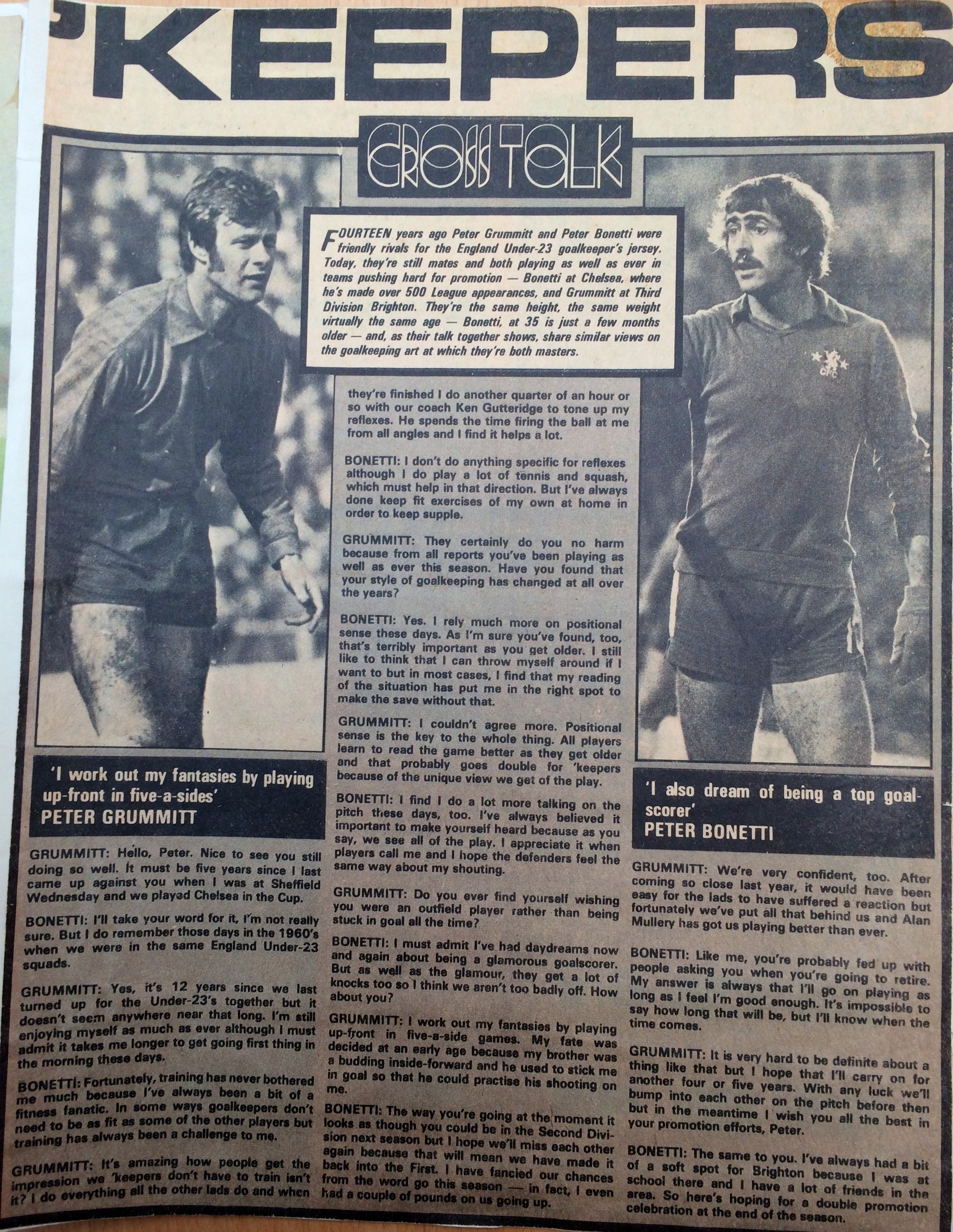
Looking back through my scrapbooks, I found a feature from Shoot! magazine in which Grummitt and Bonetti, by then both 35, exchanged views and memories.

Grummitt revealed how he ended up being a ‘keeper. “My fate was decided at an early age because my brother was a budding inside forward and he used to stick me in goal so that he could practice his shooting on me,” he told the magazine.

In the same article, Grummitt said he hoped he would be able to carry on for another four or five years. Sadly that wasn’t to be. His last game was against the same opponents he’d made his Brighton debut against, Tranmere, and he suffered a knee injury which, together with an arthritic hip, prevented him regaining full fitness and forced him to retire in December 1977.

Grummitt explained in an interview with Spencer Vignes in a 2015-16 matchday programme how his right knee completely let him down. “I’d been going down on the hard ground on my knees for years and I think it got to the point where it just couldn’t take any more,” he said. An operation he underwent involved drilling and scraping the knee to try to make it grow again.

“It did grow eventually, but it was too late for me to stay on at the club,” he said. “If I’d had nine months to recover, then maybe I’d have been okay.” He subsequently had a knee replacement.

Grummitt added: “I’d have liked another two or three years at Brighton, what with us starting to go places, but it wasn’t to be.”

On 2 May 1978, a testimonial for him took place between Albion and an Alan Mullery All Stars XI in front of a crowd of 5,615. In the match programme notes, Mullery admitted when he took over as manager he thought Grummitt might be too old to continue in the first team, but he pointed out: “Until he got his injury, he was as good a goalkeeper as there was in the country at that time.”

Describing him as “a first class goalkeeper”, Mullery praised Grummitt’s character and loyalty. “With players of Peter’s quality they are never forgotten. He has had a tremendous time here at the Goldstone and I certaiinly don’t think anyone will forget him.”

Vignes discovered in his interview how Grummitt used the proceeds from the testimonial to buy a newsagent’s shop in Queens Road, Brighton, as well as briefly managing Lewes and working as a youth coach at Worthing. He also had brief spells playing part-time for Worthing and Dover Athletic but eventually returned to the East Midlands, settling in Newark.

One small claim to fame on my part – I once played in the same team as Grummitt at Withdean Stadium.

Former Argus sports reporter Jamie Baker put together a team of Sussex sports writers for a game and, as one who reported on local football at the time, I was invited to play.

Imagine my surprise as we were getting changed before the match to discover sitting alongside us in the dressing room was Peter Grummitt, who Jamie had drafted in as a “ringer” to try to ensure at least our last line of defence was sound!

grum full

shoot keepers

Grummitt, now contending with dementia, on a visit to the City Ground, Nottingham, in May 2025