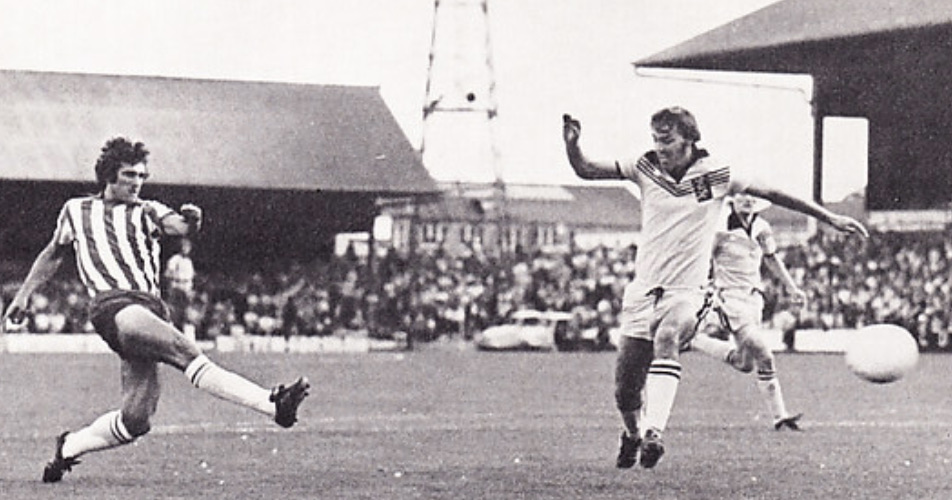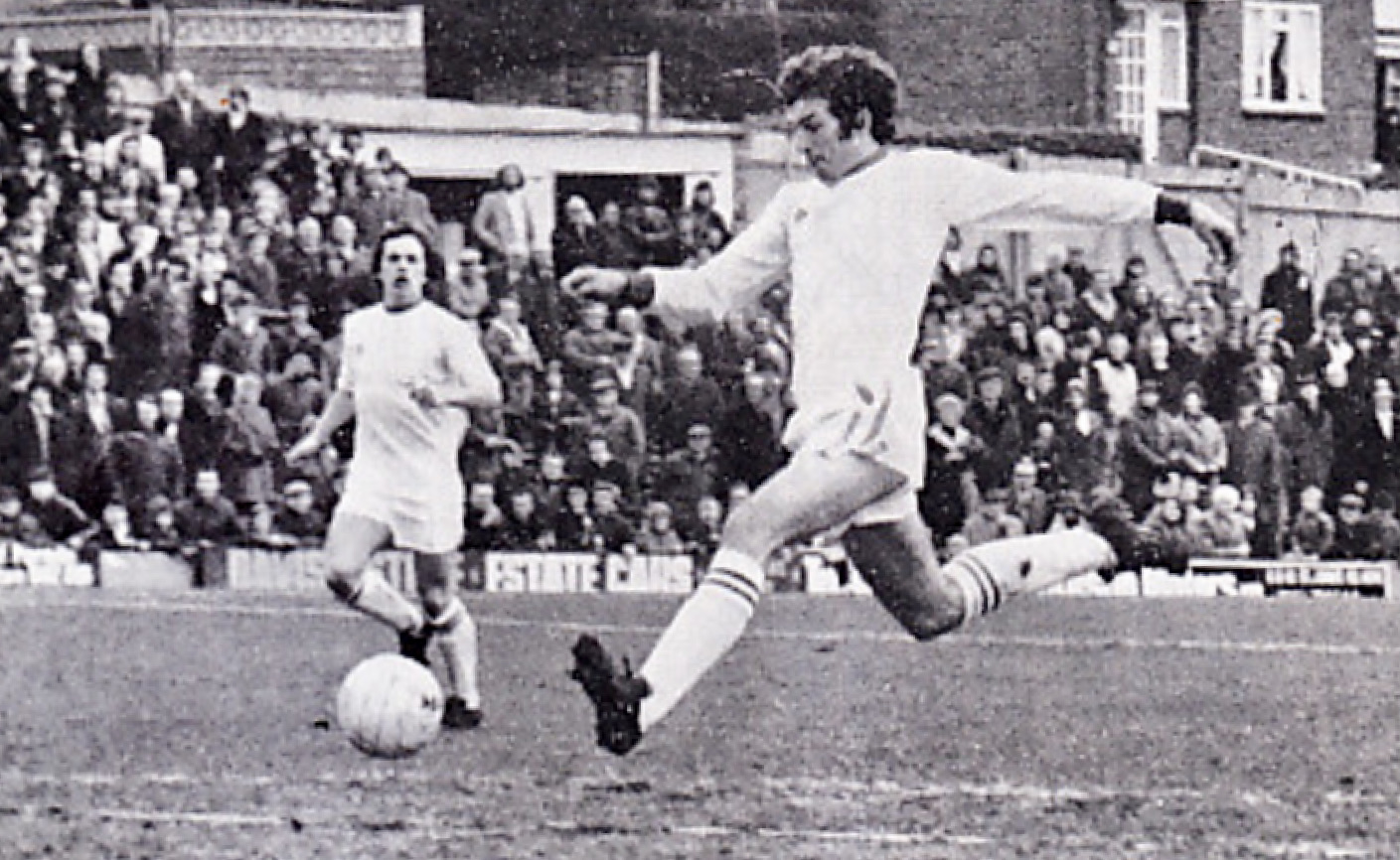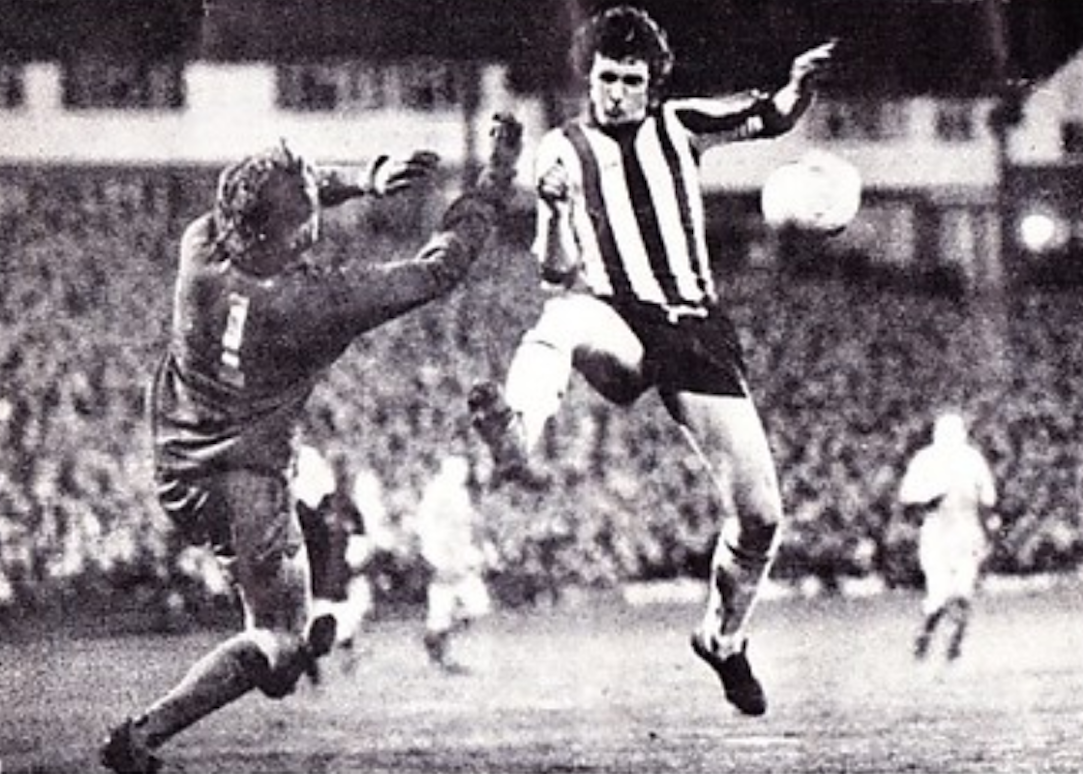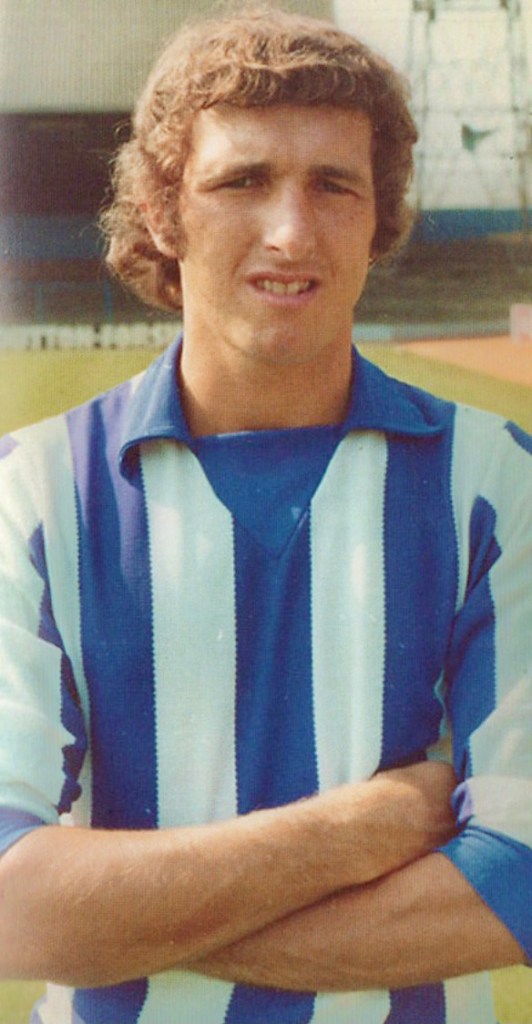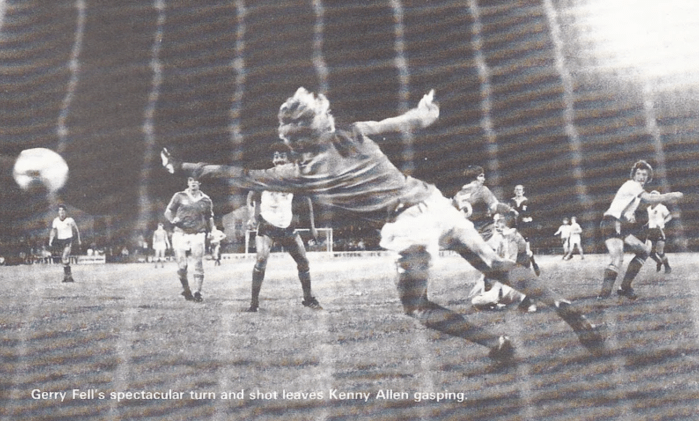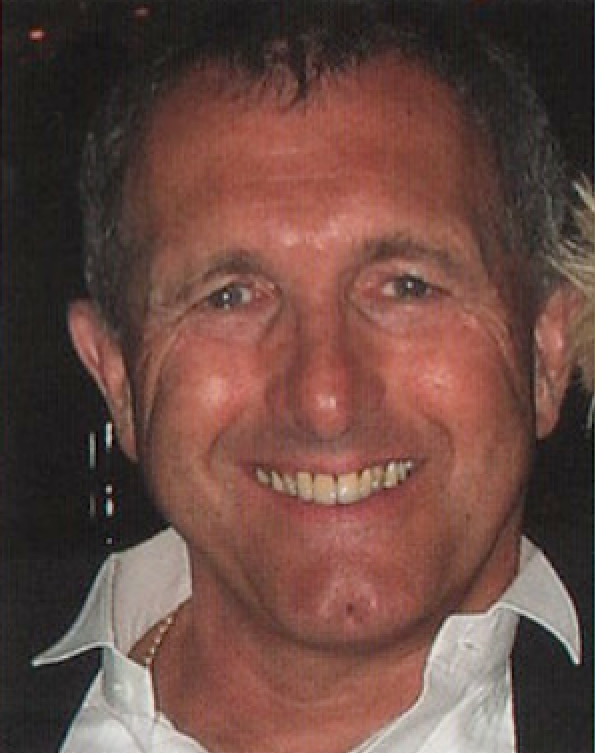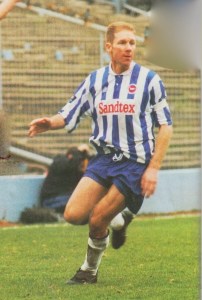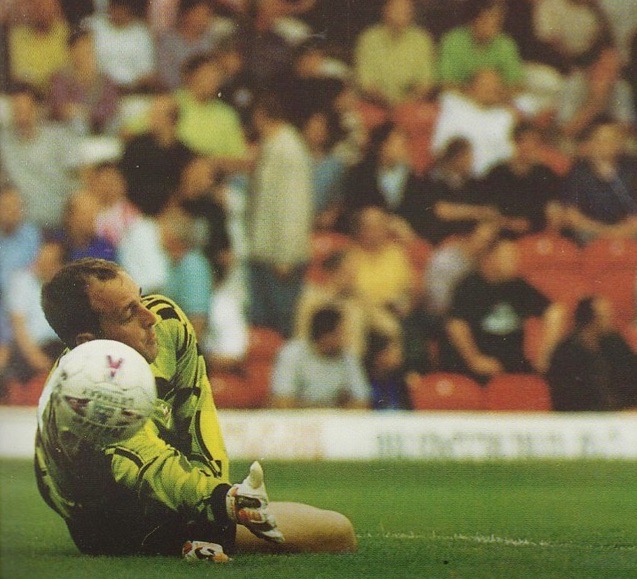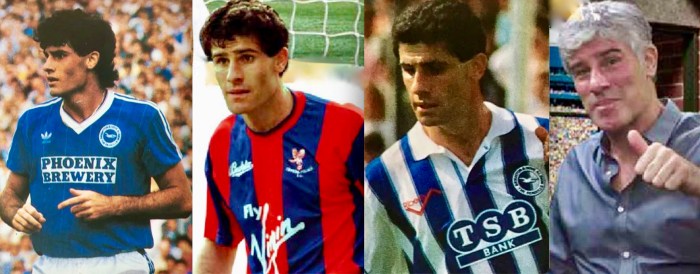
Bank clerk Fell on his speedy feet at the Albion

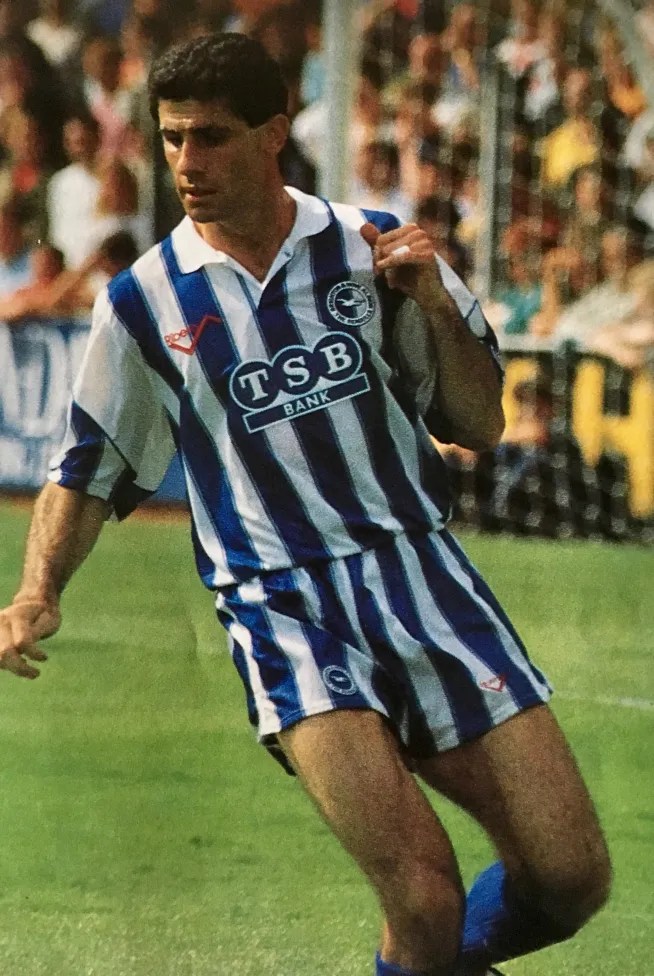
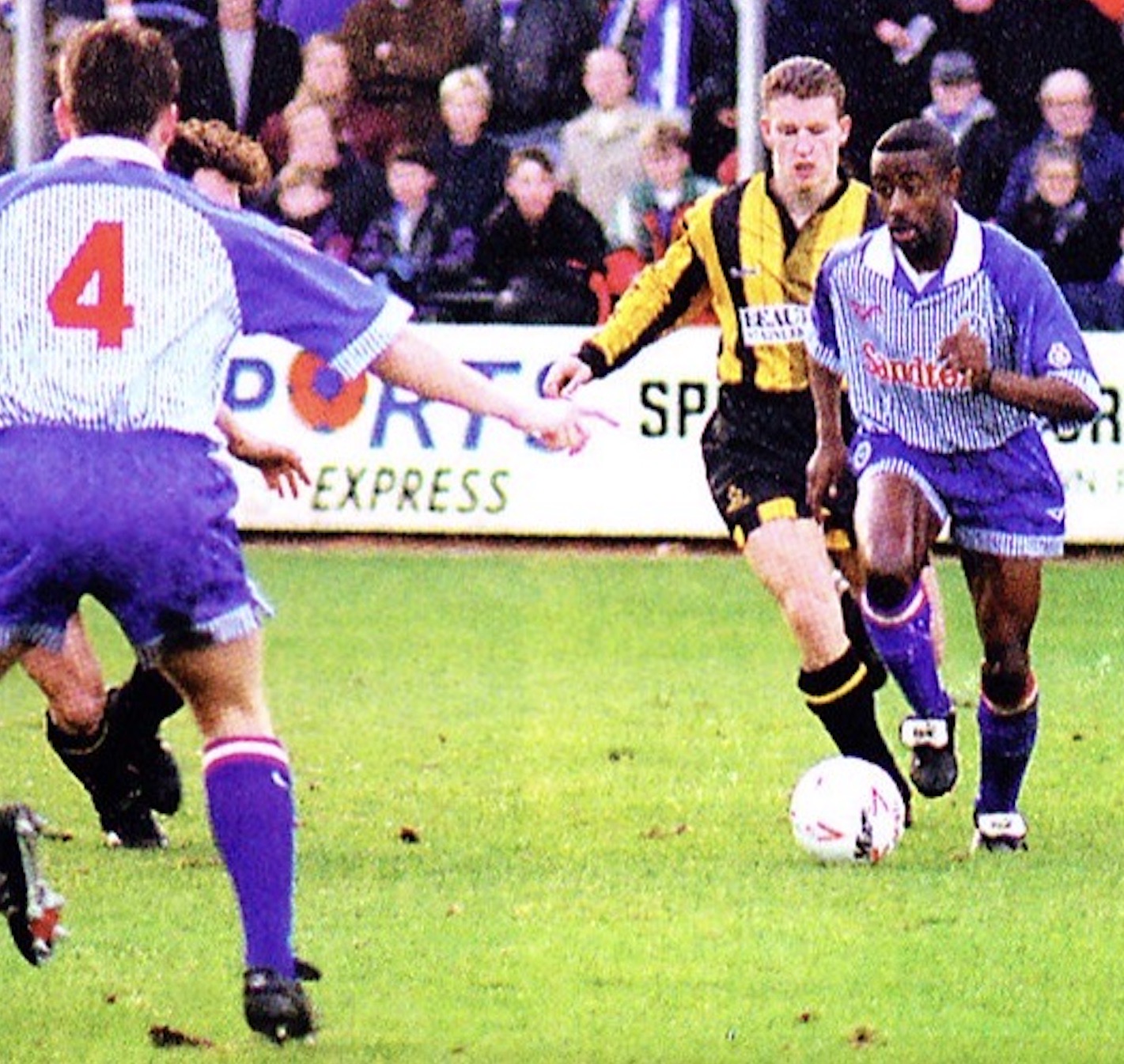
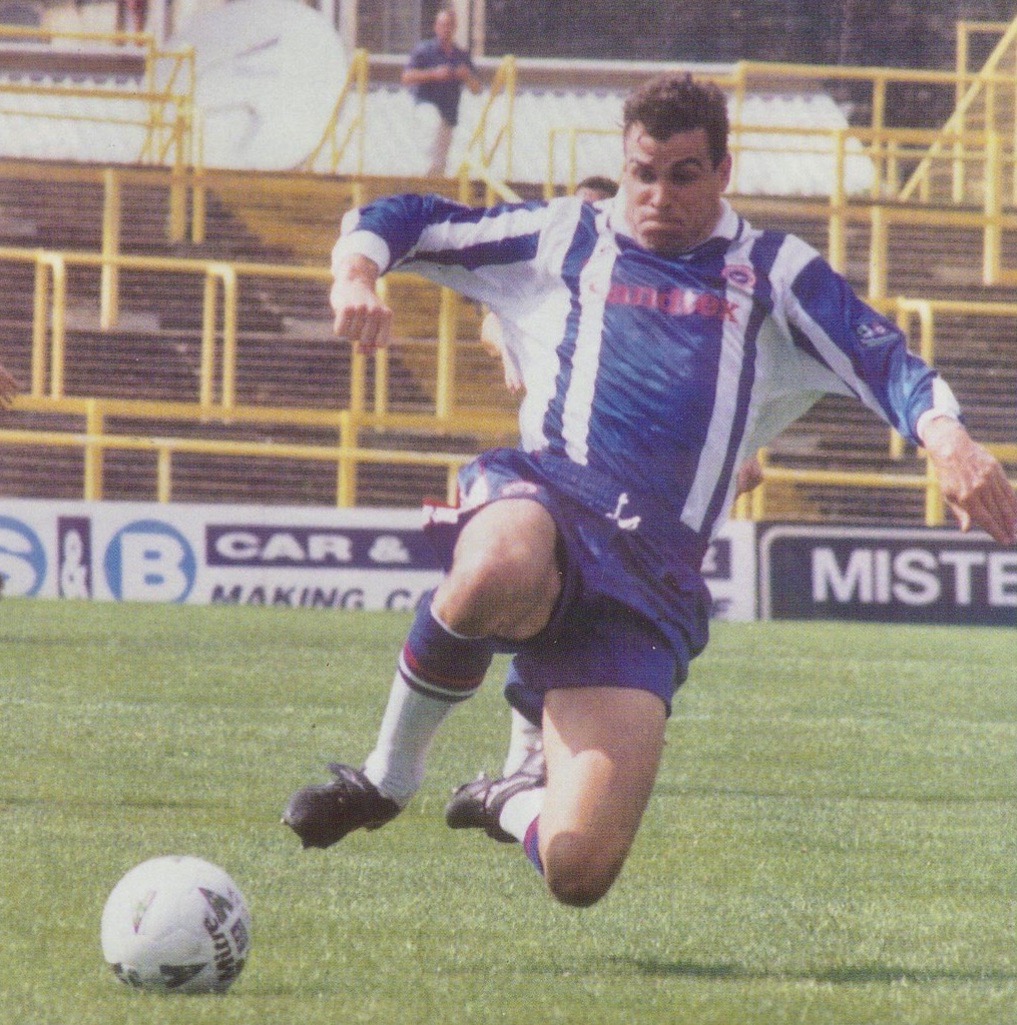
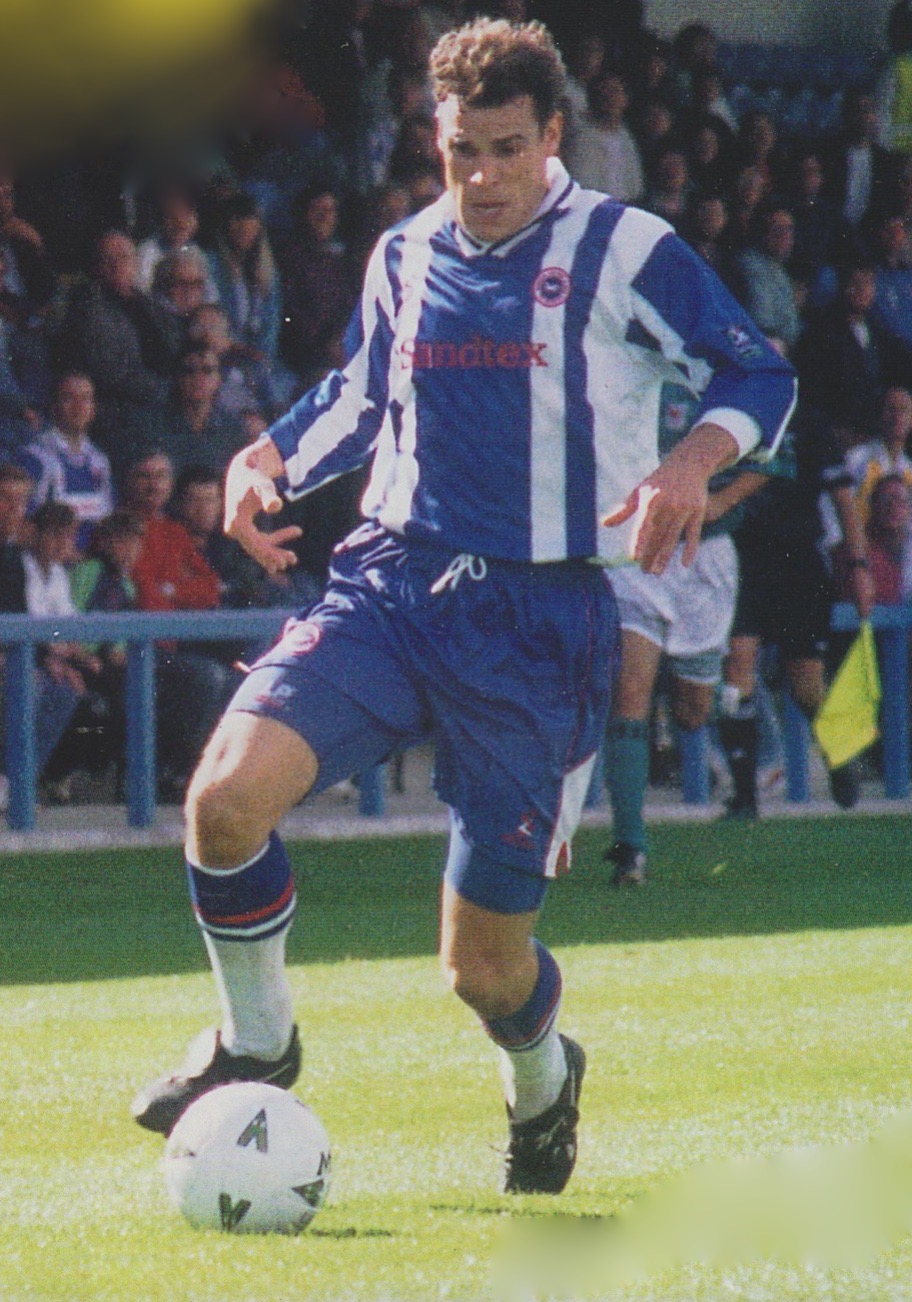
In full flight for the Albion

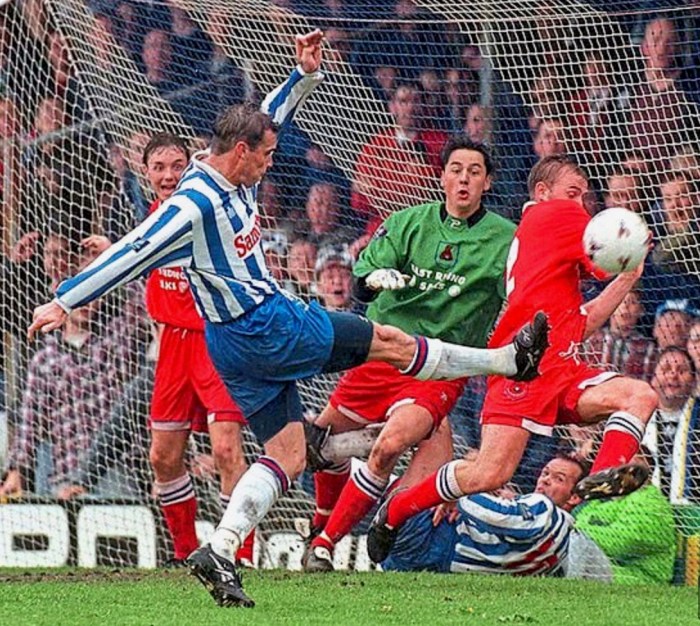
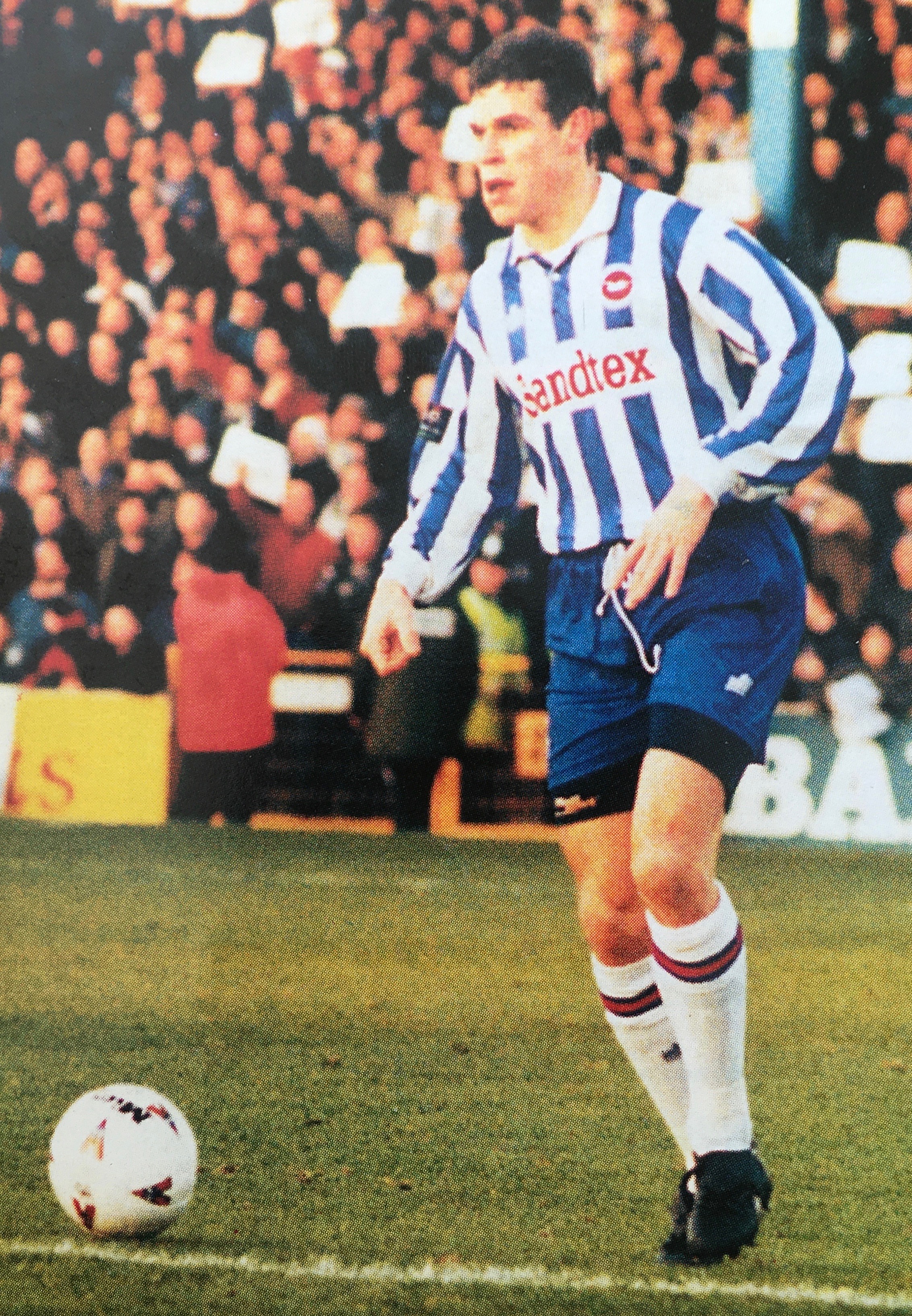
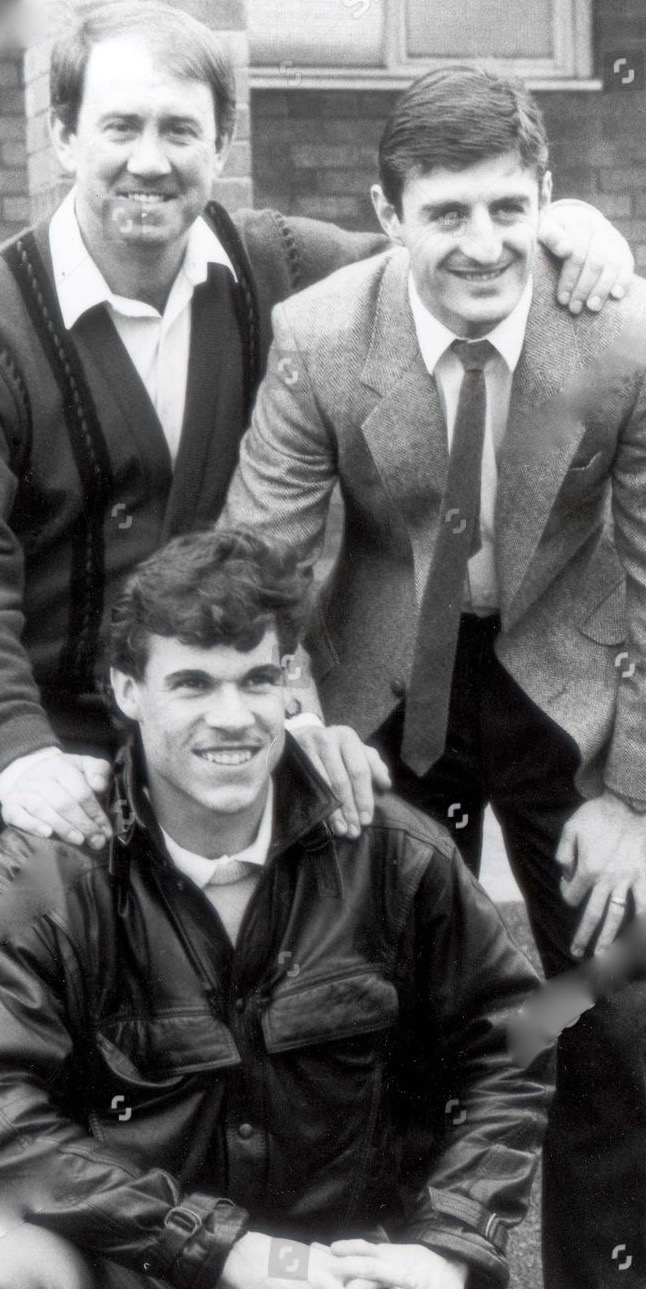
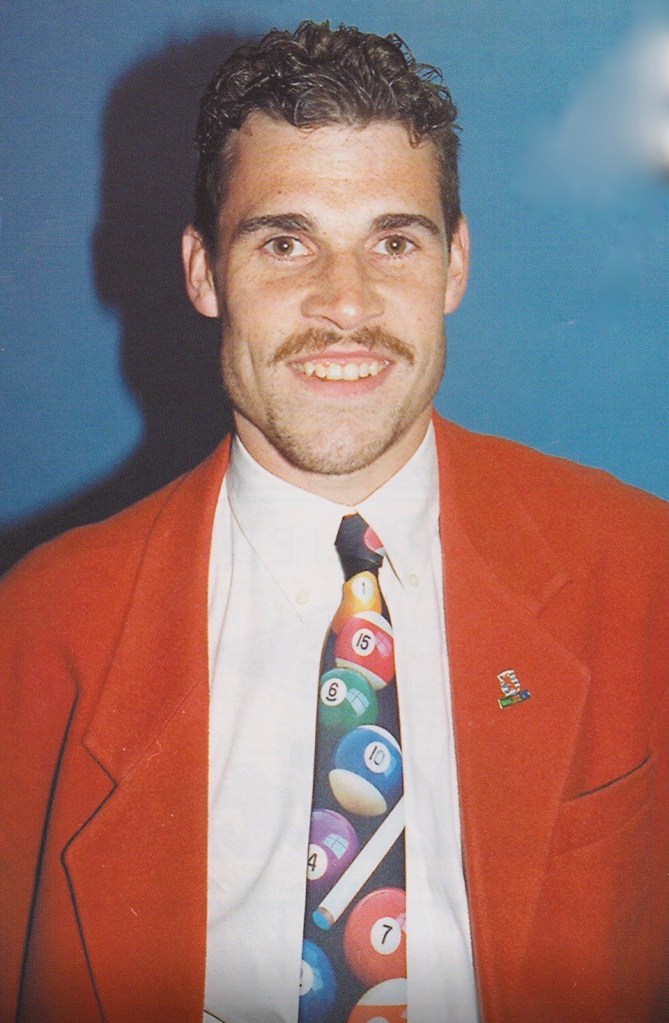
NOT TOO many professional footballers start out as bank clerks, but Gerry Fell broke that mould when he signed for Brighton.

Six-foot winger Fell had worked at the Newark branch of NatWest for five years, combining bank clerk duties with playing semi-professional football for Lincolnshire-based Stamford in the United Counties League.

In the latter part of 1973, Stamford played Long Eaton United in a FA Trophy second round qualifying match and Long Eaton’s manager, Brian Daykin, having liked what he saw, signed Fell for the Derbyshire side the following summer.

Within weeks, Daykin left Long Eaton to become no.2 to Peter Taylor at the Albion – and one of his first moves was to persuade Taylor to sign Fell. Taylor watched the player a couple of times and endorsed his assistant’s opinion.

Fell was 23 when he packed up his NatWest job to move to Sussex and turn professional.

“I loved Brighton from the moment I arrived, absolutely loved it, especially considering where I came from,” he said. “It was a totally different ball game to Newark and I loved the idea of living by the sea. It was so cosmopolitan and a massive eye-opener for me.”

In a matchday programme article, Fell told Spencer Vignes: “I was always very fit and a good trainer, so I didn’t find the training difficult at all. But obviously the step up in terms of actually playing took a bit of getting used to.

“I thought it was great because, as you can imagine, it was a stars-in-my-eyes job for me. I got into the first team within three months of arriving, so it was fantastic. I’ve never regretted any of it.”

Pointing out that he wasn’t the only member of that squad who was late to the game and from non-league (Peter Ward and Brian Horton were too), he said: “You had a few of us who’d experienced the outside world and perhaps appreciated what it meant to be a professional footballer that little bit more because of it.”

Born in Newark on 1 March 1951, Fell’s first football memory was as the mascot for Newark Central, a local team that his grandfather ran. He was educated at Magnus Grammar School in Newark where he earned a reputation for athletic achievements, gaining honours in high jump and 800 metre running.

Fell certainly hit the ground running at the Albion as a pacy goalscoring winger, netting five goals in 20 appearances in the season he arrived plus eight in 28 the following season (1975-76).

His initial first team involvement was as a non-playing sub for a 2-0 home win over Southend United on 7 December 1974 (Tommy Mason and Jim Walker the scorers), but once he’d made his debut at the end of the following month in a 2-0 win over Colchester United, he kept the shirt previously worn by Ian Mellor through to the end of the season (bar one game when Mellor replaced him).

In 1975-76, when Taylor’s much-changed side only narrowly missed out on promotion, Fell twice hit braces in 6-0 wins at the Goldstone, the first pair against Chester in September (Fred Binney 2, Peter O’Sullivan and Mellor also scorers), the other when Colchester United were dispatched by the same scoreline in January 1976 (Binney another two, Andy Rollings and Mellor also scoring).

He revelled in switching from playing in front of 200-300 people to turning out at the Goldstone where crowds could often be more than 20,000 – even for Third Division games.

“To play in front of that amount of people on that ground, well, it was a dream come true,” Fell told Vignes. “The Goldstone was a bit of a fortress at that time and the players in the team were so confident.”

Apart from that first half-season, Fell generally competed with Brighton-born Tony Towner for the no.7 shirt and Taylor’s successor Alan Mullery went with Fell for the final run-in to promotion from the third tier in the spring of 1977. He started 11 games and scored the only goal of the game as top-of-the-table Albion secured a vital 1-0 win over Port Vale in their penultimate home game.

“It wasn’t easy being on the sidelines looking on, but Gerry was a breath of fresh air,” Towner said in a matchday programme interview. “He was the opposite of me; though still a winger, he had loads of pace, though not too much skill!

“He’d knock the ball ahead of him and run past the defender to get it. I’d try to trick my way past.”

Ironically, although Brighton secured promotion by beating Sheffield Wednesday 3-2 in the last home game, the man of the match was the visitors’ Eric Potts – and his next game at the Goldstone was in Albion’s colours… as a replacement for Fell and Towner!

Having liked what he saw in that exciting encounter under the lights in front of a bumper crowd of 30,756, Mullery promptly signed Potts for £14,000 in the close season.

The diminutive winger had previously played for Wednesday at the level of today’s equivalent of the Championship and he was installed in the no.7 shirt for the first 21 games of the season.

Fell played and scored in his first start of the season (a 2-0 home win over Hull City) in September and the following game, his last start in an Albion shirt, was in a 2-2 League Cup second round replay draw at Oldham Athletic.

But Fell wasn’t done with the Seagulls just yet. He proved to be a matchwinner after going on as a 57th minute substitute for the injured Steve Piper in the last league game of September, a 3-2 night game win over Luton Town in front of a Goldstone crowd of 25,132.

The game was finely poised at 1-1 (Ward and Ron Futcher on target) when on 84 minutes Fell, unmarked at the far post, headed in a second Albion goal when Mellor flicked on a corner by Potts. Three minutes later, Fell was once again played in by Mellor and a turn-and-volley into the top corner from the edge of the box put Albion 3-1 up. There was still time for Jimmy Husband to pull one back for the Hatters, but Albion held on to take all the points.

Those goals didn’t earn him a starting place, though. On six further occasions Fell was sub (three playing, three not getting on) before Mullery traded him as a makeweight in the signing of 19-year-old powerhouse midfielder Paul Clark from Southend United.

In the three years between his first involvement with the first team as a non-playing sub at home to those future employers and his last, going on for Potts in a 1-0 defeat away to Notts County on 5 November 1977, only three other players were involved in both fixtures: Graham Winstanley, O’Sullivan and Mellor. Fell departed with the impressive record of 20 goals in 72 starts plus 19 sub appearances.

In his first season in Essex, he helped Dave Smith’s Shrimpers to promotion from Division Four when they were runners up behind Watford. Third-placed Swansea City and Brentford in fourth also went up.

The next season, while his old Albion teammates were celebrating promotion to the elite for the first time in the club’s history, Fell’s Southend finished mid-table in the third tier, although they did have the excitement of a memorable FA Cup third round encounter with mighty Liverpool: he was part of the Southend team that memorably held the European champions to a 0-0 draw in the FA Cup in January 1979 when 31,033 crowded into Roots Hall.

“It was snowy and frosty and we could’ve beaten them on the night,” United manager Smith later told the local Echo newspaper.

“Derrick (Parker) missed a sitter at the end but I remember turning to one of my coaches and saying I was glad he missed. They thought I was mad but it meant we got to go to Anfield and I’d never managed a team there before.”

How did Southend manage such a result against a full-strength Liverpool side captained by Emlyn Hughes with Ray Clemence in goal, Jimmy Case and Graeme Souness in midfield and Kenny Dalglish up front?

In the lead-up to the game, Smith said: “We couldn’t find anywhere to train so we went to the bottom of the pier. We ended up in a pub there drinking hot port and this was only a few days before the game. Maybe that’s the answer to playing so well.”

Liverpool made up for it in the replay a week later when they won 3-0 (goals from Case, Dalglish and Ray Kennedy) and Fell was subbed off on 75 minutes.

The last season of the decade would end in the disappointment of relegation, and Fell’s departure from the club, but they once again had excitement in a cup competition against higher level opposition, winning 2-1 away at Bolton Wanderers (and drawing 0-0 at home in the second leg) in the second round of the League Cup and then twice forcing draws against West Ham in the third round, before losing 5-1 in a second replay.

When it came to the FA Cup though, United were on the wrong end of a giant killing as Isthmian League Harlow Town beat them 1-0 in the second round.

Not long after joining Southend in 1977, Fell had helped them beat Torquay United 2-1 in the first round of the FA Cup and it was to Plainmoor that he headed in July 1980 on a free transfer.

That cup match was remembered in Torquay’s Into The Eighties pre-season magazine which said: “The pace and power of Gerry Fell left a painful memory with us when he helped Southend knock us out of the FA Cup here at Plainmoor three years ago. He had cost the Shrimpers £20,000 then but now he arrives on the south coast on a free transfer and has already impressed in pre-season training. Gerry certainly knows how to score.”

United supporter and programme statistician John Lovis added: “A complete forward who’s got the lot.”

Alongside big-name new arrival Bruce Rioch as a player-coach, Fell had a terrific first season scoring 17 league and cup goals, seven of them from the penalty spot.

Delighted manager Mike Green said in his matchday programme notes: “We certainly look forward to free kicks now because in Gerry Fell and Bruce Rioch we possess two of the hardest and most accurate dead ball kickers in the game.”

Although he was in the side as the 1981-82 season began under ex-Manchester United boss Frank O’Farrell’s third stint as Gulls manager, he lost his starting berth and later that season had a loan spell at York City, where a young John Byrne was finding his feet in a struggling side.

He briefly joined a mini-exodus of ex-Football League pros in Hong Kong at Happy Valley – future Brighton coach and manager Jeff Wood also played for them – but he returned to Brighton and played non-league football with Sussex County League Whitehawk, finishing the 1983-84 season as leading goalscorer with 35 goals, captaining them to the league championship and also representing the Sussex county side.

He finally hung up his boots in 1986 and was a partner for an independent financial adviser before setting up his own financial services company. He remained in Brighton until 2004 before heading back north and settling in Broom Hills, a Lincolnshire rural farming community to the north west of the city of Lincoln.

Fell died from cancer at the age of 74 in May 2025.

Fiery Ian Baird saw red in crucial last Goldstone game

FIERY Ian Baird was no stranger to yellow and red cards – in five games for Newcastle United he was booked three times!

And in Brighton’s last ever game at the Goldstone Ground, against Doncaster Rovers, Baird was sent off long before the game had even reached half time.

Something of a disciple of Joe Jordan, the tenacious centre forward who starred for Leeds United and Manchester United, Baird was his teammate at Southampton and played under the Scot at Hearts in Scotland and at Bristol City.

Baird didn’t fear incurring the wrath of supporters, happily playing for arch-rival clubs in his pursuit of goals. Indeed, on Teesside he earned a place in fans’ folklore by scoring two goals in an end-of-season clash that not only kept Middlesbrough up but prevented their noisy north-east neighbours Newcastle from getting automatic promotion to the elite (to make matters worse, they then lost a play-off semi-final to Sunderland).

Baird scored twice in that 4-1 win over United on the final day of the 1989-90 season at Ayresome Park, and earlier the same season he’d scored a winner for Leeds United against Newcastle at Elland Road.

Baird played on the south coast for both Southampton and Portsmouth before making the Albion his 10th and last English league club. He joined for £35,000 from Plymouth Argyle when the club was in turmoil off the field and floundering at the bottom of the basement division. But he went on to net 14 goals in 41 games.

He spoke about the move to Tim Ashton of the Sutton and Croydon Guardian in July 2016. “I was at Plymouth, and Jimmy Case took me on and explained all the problems to me about the likes of (David) Bellotti,” he said.

“To be honest, as a player, all you are bothered about is making sure you get your wage, and you’re not really taking any notice of what he is saying.

“I played at Brighton on many occasions, I have been there with Leeds and Middlesbrough, and it was always a favourite place of mine to go – and as soon as I got there as a player, I knew the importance of survival.”

Baird continued: “Brighton are a big club, and I could not believe what was happening. It took a strain on Jimmy, that’s for sure, and he was not the man he was normally with all the pressure.

“Then he was sacked and we were 12 points adrift at Christmas – they brought in Steve Gritt, and he brought a different kind of management.

“It got to February and March time, then all of a sudden Doncaster Rovers and Hereford were sucked into it – we had to beat Doncaster in the final (home) game.”

Sent off 11 times in his career, it was his dismissal just 18 minutes into that game in 1997 that threatened the very existence of the club – and he was captain that day!

Baird later told portsmouth.co.uk: “It was just a natural thing really. Sometimes my enthusiasm got the better of me. There were plenty of times I chinned someone or got into trouble.

“The most stupid one was when me and Darren Moore had a fight. He was playing for Doncaster and I was playing for Brighton in the last game at their old Goldstone Ground.

“He came through the back of me, there was a bit of afters and I ended up trying to give him a right hook, and there was a bit of a ruck.

“We had a bit of rough and tumble and I was just lucky he didn’t chase me up the tunnel because he’s huge!”

Thankfully, Albion famously still won that match courtesy of Stuart Storer’s memorable winner. Because red card bans were delayed for 14 days back then, Baird was able to play in what has since been recognised as the most important game in the club’s history: away to Hereford United.

As the history books record, it was Robbie Reinelt, on as a sub, who stepped into the breach to rescue a point for the Albion, enough to preserve their league status and to send the Bulls down.

In November of the following season, Baird still had six months left on his Brighton contract, but a surgeon told him he should not play pro football any more because of a troublesome knee, so he decided to retire.

But, when he had turned 35, he said: “I had a phone call from Mick Leonard (former Notts County and Chesterfield player) who played in Hong Kong, and he said they were desperate for a striker.

“I went for a month’s trial and ended up signing an 18-month deal. My knee flared up again and they offered me a coaching role, and it ended up with me managing the side.”

He added: “Then I was put in charge of the national side for the Asian Cup qualifiers and we played in Jakarta in front of 75,000 people, and then in Cambodia in front of 1,200 people – it was certainly an experience that is for sure.”

Over the 17 years of his league career, Baird commanded a total of £1.7m in transfer fees; £500,000 Boro paid Leeds being the highest.

Although born in Rotherham on 1 April 1964, the family moved first to Glasgow and then Southampton when Baird was small, his father having sailed from the south coast port when working on the Queen Mary.

The always comprehensive saintsplayers.co.uk notes the young Baird survived meningitis as a six-year-old and later came to the attention of Southampton when appearing in the same boys team, Sarisbury Sparks, as their manager Lawrie McMenemy’s son, Sean.

The excellent ozwhitelufc.net.au details how Baird’s footballing ability saw him play for Bitterne Saints, St. Mary’s College, Southampton, Southampton and Hampshire Schools, before earning England Schoolboy caps in 1978-79 alongside the likes of Trevor Steven and Mark Walters.

He was offered terms by Swindon Town but he chose to stay closer to home and Southampton took him on as an apprentice in July 1980. He turned professional in April 1982 but McMenemy’s preference for old stagers Frank Worthington and the aforementioned Jordan limited his opportunities and he made just 21 appearances for Saints, plus three as a sub, scoring five times.

He was sent out on loan a couple of times: to Cardiff City in November 1983, where he scored six goals in twelve League games, and that spell at Jack Charlton’s Newcastle in December 1984 where aside from a booking in each of his four starts and one appearance from the bench, he scored once – in a 2-1 defeat at West Brom on Boxing Day.

Taking the advice of former teammate Jordan, Baird signed for Eddie Gray at Second Division Leeds in March 1985 and undoubtedly his most successful playing years were there, in two separate spells.

He played more than 160 matches and scored 50 goals. In the 1986-87 season, Gray’s successor, Billy Bremner, made him captain. The Yorkshire Evening Post spoke of “the powerhouse striker’s fearless commitment, no-holds-barred approach and goalscoring ability”.

In the blurb introducing his autobiography Bairdy’s Gonna Get Ya! (written by Leeds fan Marc Bracha) it says “he’s best remembered for his spells at Leeds, where goals, endless running, will to win and fearless approach ensured he was adored by the fans”.

In the 1987-88 season, though, he was wooed by the prospect of playing at the higher level he had just missed out on with Leeds (they’d lost in end-of-season play-offs) and signed for Alan Ball at Portsmouth for £250,000; he later described it as “the worse move I ever made”.

The season was disrupted by injury and disciplinary problems, and he returned to Leeds the following season, being named their Player of the Year in 1989.

But when ex-Albion winger Howard Wilkinson, then manager of Leeds, signed Lee Chapman, Baird sought the move to Boro. He told Stuart Whittingham in 2013 for borobrickroad.co.uk:

“I felt a little aggrieved and basically I spat the dummy out and asked for a move.

“He (Wilkinson) said that he didn’t want me to go but I insisted and within 24 hours I was speaking to Bruce Rioch and Colin Todd and I was on my way to Middlesbrough.”

Curiously, though, when Leeds won promotion at the end of the season, Baird picked up a medal because he had played his part in the achievement.

At the end of the 1990-91 season, Baird spent two years playing for Hearts under Jordan, although a torn thigh muscle restricted the number of appearances he’d hoped to make and at the end of his deal he moved back to England and signed for Bristol City, initially under Russell Osman and then Jordan once again.

After his experience in Hong Kong, Baird returned to Hampshire to put down roots back in Southampton, and pursued business interests in vehicle sales/leasing and the sports gear industry. He also spent five years managing Eastleigh before becoming Paul Doswell’s assistant at Sutton United. He then followed him to Havant & Waterlooville in May 2019.

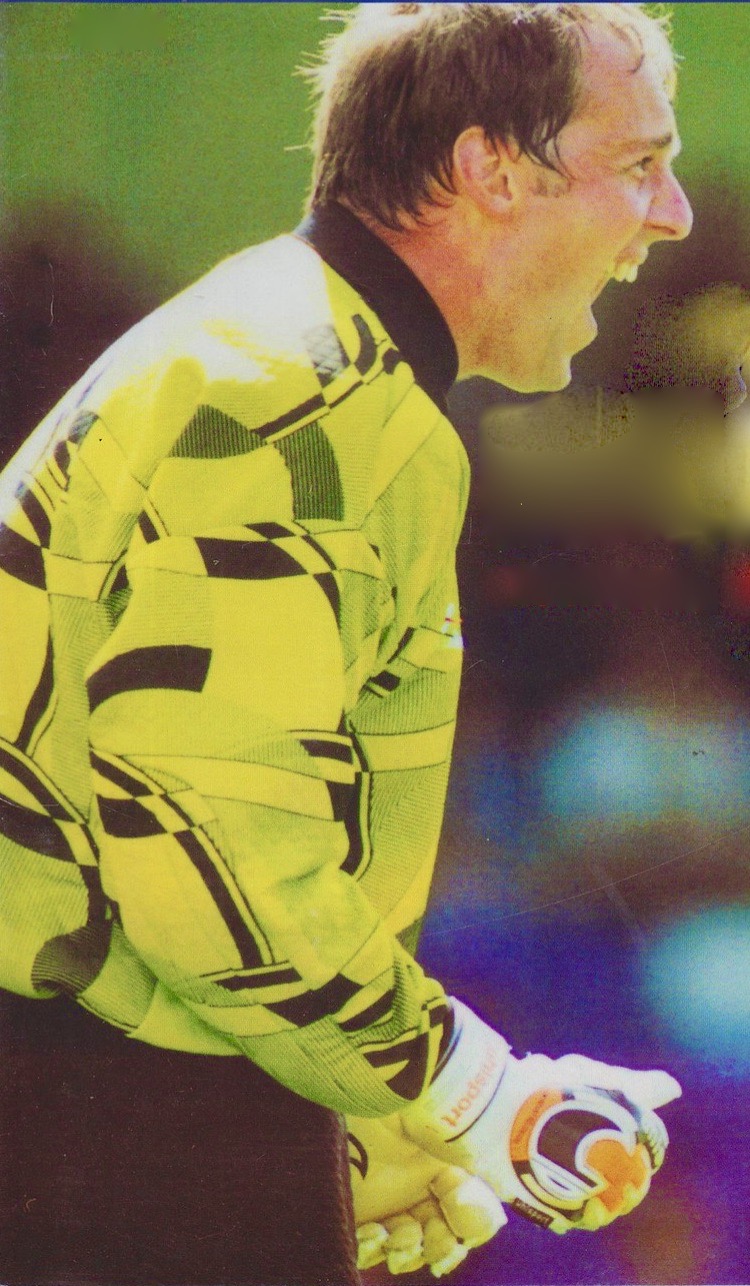
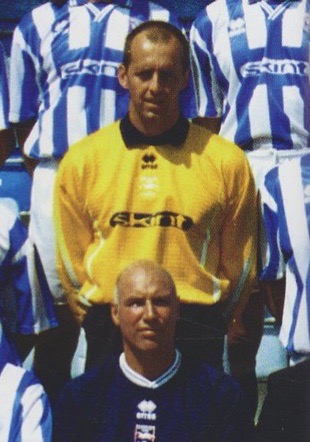
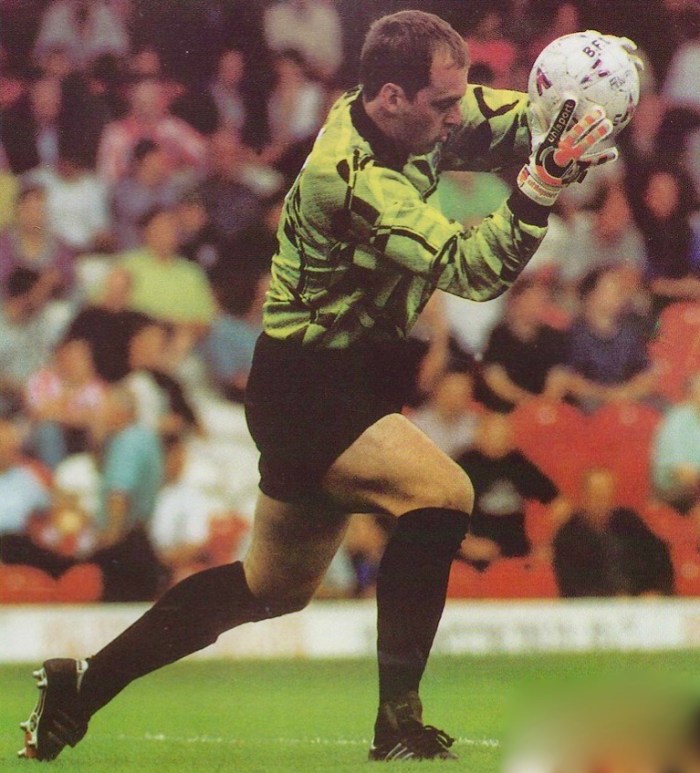
Chirpy as a Canary but Mark Walton squawked as a Seagull

A CAREER highlight saw Welshman Mark Walton keep goal for Norwich City in a FA Cup semi-final in front of 40,000 at Hillsborough but his time with the Seagulls was marred by Brighton’s boo boys.

Walton’s first action in an Albion shirt was in front of only a few Albion followers because Brian Horton signed him in the summer of 1998 when the side was playing in exile at Gillingham’s Priestfield Stadium.

Walton, who’d been part of Micky Adams’ fourth tier Fulham promotion side in 1996-97, found himself out of favour at Craven Cottage once Kevin Keegan had been installed as manager following the club’s takeover by Mohamed Al-Fayed.

Not wishing to play second fiddle to Northern Ireland international Maik Taylor, Walton moved for £20,000 to Brighton, who were a ‘keeper light after Nicky Rust’s departure to Barnet. Walton was Horton’s first choice between the sticks in the opening 16 games of the season.

“When Maik arrived, it was a matter of when I went rather than anything else,” he told fulhamfocus.com.  “I was at a stage in my career that I just wanted to play, so moving was a necessity. In retrospect, I probably should have thought harder about my decision to join Brighton.”

After he’d shipped six goals in two successive 3-1 defeats in October, young Mark Ormerod took over and kept the ‘keeper’s jersey until Horton quit to take over at Port Vale shortly into the new year.

Caretaker boss, Jeff Wood, who’d been a goalkeeper himself, reinstated Walton to the starting line-up for five matches, but he damaged a hamstring in a 3-0 defeat at Southend on 20 February and didn’t play again that season.

Walton must have been encouraged when his old boss Adams took over from Wood, and he shed a stone and a half during the summer to get back into shape. Although Ormerod started the first five games of the new season back in Brighton, Walton was then reinstated as first choice ‘keeper.

But a gaffe — wearebrighton.com recounted how Walton’s attempted clearance from a back pass cannoned into the back of Paul Watson and into the net for an own goal — as Albion succumbed 3-2 to previously winless Chester City on 18 September (despite a goalscoring debut for Danny Cullip) saw feelings running high.

Adams had the players in for an extra training session the following day and Walton was dropped for the next match. Before the month was over, he submitted a transfer request citing the stick he was receiving as his reason for wanting to go.

“It’s one of those things you cannot really do too much about,” he told The Argus. “I am not the first and I won’t be the last. Everybody hears it. It’s just general abuse from boo boys and it’s the same home and away.

“It is obviously not the best feeling in the world, but you are paid to do a job and you go out and give your best.”

The manager was clearly upset that Walton felt he had to leave because of criticism from supporters.

“I’m immensely disappointed that a boy has come in to see me and wants to leave the club because he feels he is not being given a fair crack of the whip by the fans,” Adams told The Argus. “I am disappointed it has come to this and that he feels he has got to bow to fan pressure.

“Mark is a great lad. Whichever eleven lads I put out on the pitch in the blue and white stripes, they are representing Albion and the fans have got to get behind them. They are going out to give their best for the supporters and the club.”

Support came too from part-time goalkeeping coach John Keeley, who said: “Mark looks ever so fit now and the way he has trained and looked after himself in the summer shows he wants to prove to people he is a good goalie.

“As a goalkeeper you want the crowd on your side because it gives you a certain amount of confidence, especially when you are playing at home.”

Adams showed his faith in Walton by restoring him to the starting line-up and he was rewarded for his loyalty by two shut-outs on the road as Albion drew 0-0 at Peterborough and beat Carlisle United 1-0.

The matchday programme noted of the big ‘keeper’s performance at London Road: “Walton didn’t put a foot, or should that be hand, wrong during the 90 minutes, prompting praise from supporters, who chanted his name at the final whistle.”

Adams added: “Mark was terrific. I cannot speak highly enough of him. He is a good, honest pro and he answered his critics.”

Walton collected a player of the month award for conceding only one goal in five matches during October. He kept the shirt for the rest of the season, only missing two games towards the end, and playing a total of 45 games.

But the last-day 1-0 home win over Carlisle United turned out to be his last for the Seagulls. It was reported he’d verbally agreed a new contract but just before the start of the new season he chose to move on to Cardiff, along the road from where he was born in Merthyr Tydfil on 1 June 1969.

As it turned out, the move worked out well all round because Walton helped the Bluebirds win promotion from Division Three as runners up behind the Seagulls in top spot, Adams having unearthed a more than capable replacement in Michel Kuipers.

In an interview with Dan Smith in 2018 for fulhamfocus.com, Walton explained how his footballing life began at South Wales valleys village side Georgetown Boys Club and, because he suffered from severe asthma when he was 12, he decided it would be better to play in goal than in an outfield position. He was inspired by Phil Parkes of West Ham, Jimmy Rimmer of Aston Villa and Everton’s Neville Southall.

Walton played youth team football for Swansea City but his first senior professional club was Luton Town, where he spent six months. With the experienced Les Sealey and Andy Dibble ahead of him, he wasn’t able to break through to the first team. He moved initially on loan to Colchester United, managed by Mike Walker, who’d previously kept goal for the Us after a distinguished career at Watford.

Walker gave him his debut at Layer Road as an 18-year-old in August 1987 and he went on to make a total of 56 appearances for United, having moved permanently for £17,500 in December 1987, by which time Roger Brown was in charge.

Walker, meanwhile, had moved on to take charge of Norwich’s reserve side and, on his recommendation, City signed the Welsh goalkeeper for £75,000 in 1989.

“I owe Mike Walker a debt of gratitude to this day, as he basically taught me from scratch and helped develop me into a solid keeper with a sound technique,” Walton told Ed Couzens-Lake in a 2013 article for myfootballwriter.com.

Walton spent most of his three years at Carrow Road as understudy to first choice Bryan Gunn. It was because of a serious back injury to Gunn that Walton found himself facing Sunderland in the 1992 FA Cup semi-final, when a single goal from John Byrne settled the tie.

Looking back on his time with the Canaries, Walton told Couzens-Lake: “I loved my football and I loved Norwich, and, for me, it is still ‘my club’. The camaraderie of the dressing room was fantastic – indeed, whilst I don’t miss playing one bit, I do miss the changing room banter, all the characters, bad and good, and those shared triumphs, disasters and the shared sense of humour.”

The admirable Flown From The Nest website notes Walton made 28 appearances for the first team and 114 for their reserves. He had loan spells with Wrexham and Dundee United, trials with St Johnstone and West Ham, but it was Bolton Wanderers during Bruce Rioch’s reign that he next saw first team action, playing three games for the Trotters.

After his release from Norwich, a bizarre series of circumstances which he explained to fulhamfocus.com saw him spend two years out of the game before a Fulham fan, who was a member of the Norfolk cricket club he’d been playing for, wrote to Adams and suggested he give Walton another crack at league football.

“Micky telephoned and invited me for a trial. After three weeks, I was offered a year’s contract,” he said.

When ousted by the upheaval at the Cottage, Walton went on loan to Gillingham in March 1998 but couldn’t agree terms for a permanent move and on transfer deadline day ended up back at Norwich on loan as cover for Andy Marshall.

After his stint with the Albion and initial success at Cardiff, Walton slipped down the pecking order and briefly tried his luck with a semi-professional side in Melbourne, Australia.

He returned to South Wales after retiring from playing and went on to gain a first-class sports psychology degree at Cardiff Metropolitan University, a Masters degreeand a Postgraduate Certificate in Education (PGCE) which led him to become a teacher for 10 years.

He also worked for Cricket Wales as a researcher and community coach and in January 2021 joined the cricket staff of Glamorgan.

“Cricket has always been a passion of mine,” he told his new employers’ website. “I’ve always played but that became more sporadic when I focused on football, but I always tried to sneak in the odd game here and there which was often in midweek.

“I played some league cricket in Norfolk, Essex and Wales and was able to represent Wales Minor Counties. Then about 20 years ago I fell into coaching and it’s prospered from there and I’ve coached every age group within Cricket Wales.”

• Pictures from the Albion matchday programme and online sources.

How the career of high rise Flatts came tumbling down

MARK FLATTS was destined for a glittering career after breaking into Arsenal’s first team when only eighteen.

It was the season when George Graham’s side finished in a disappointing 10th place in the league but won the League Cup and the FA Cup, beating Sheffield Wednesday in both competitions.

Flatts got seven starts plus four appearances off the bench and the following season, after he’d been troubled with a few injuries, Graham sent him out on loan to get some games under his belt.

His first loan was at Cambridge United, then in January 1994 Flatts joined forces with former Gunners legend Liam Brady at Brighton.

The former midfield maestro who’d graced the game at the highest level as a player had not long arrived at the Goldstone Ground, creating a buzz of anticipation amongst the largely disillusioned Albion faithful.

Brighton were bumping along around the foot of the third tier table when he arrived and it augured well that Brady could use his connections with his former club to secure the services of a prodigious young talent who’d already played a handful of matches in the Premier League.

He made his debut in a cracking 4-1 New Year’s Day home win over Cambridge United when Kurt Nogan scored a hat-trick and he was only on the losing side twice during his two months at the club, helping the Albion move away from the relegation zone.

Brady wrote about it in his autobiography Born To Be A Footballer, describing how “livewire” Flatts had heated up “a freezing Goldstone” on that debut day. “He’s a lovely young kid off the field but on the park there’s a strut about him. That’s exactly what we need. He’s full of tricks.”

Flatts started nine matches, came on as a sub once, and scored one of Albion’s goals in a 3-2 home win over Blackpool, but it was his skill on the ball and pace that fans enjoyed most.

After he had returned to Highbury, Brady thanked him for his contribution and said in his programme notes: “He gave the place a tremendous lift. He’s a very confident lad and he did us a real favour and hopefully he’s got something out of it as well. I think he has and I think he enjoyed his time with us.”

Flatts confirmed as much recently. Although he has kept a low profile for many years, in 2020, online from his home in Norfolk, he appeared in two podcasts talking about his career.

On the Shoot the Defence podcast in April 2020, Flatts talked admiringly of his time under Brady at Brighton – “He still had it in training” – as well as the experience of playing alongside senior pros Jimmy Case and Steve Foster at the Goldstone Ground.

“Loyal fans as well. It was a good time,” he said. “I got on well with the fans and a few of them still text me, so that’s nice. Liam Brady and Jimmy Case had seen me in a few games, said they wanted me on loan, and I went there and enjoyed it.”

Born in Islington on 14 October 1972 and brought up in Wood Green, Flatts played for Haringey Borough and Middlesex County school teams and he was playing for Enfield Rangers when he caught the eye of professional clubs.

He spent time training with Watford and West Ham, but his mum and older brother were Arsenal fans so, when they invited him to join them, it was no contest. The scout responsible for picking him up for the Gunners was the former Brighton wing-half, Steve Burtenshaw.

Flatts was one of the country’s top talented 14-year-olds who went through the FA National School of Excellence at Lilleshall before becoming a trainee at Highbury after graduating.

In the first edition of a new fans’ podcast Over and Over and Over Again on 20 August 2020, Flatts talked about how he, Andy Cole and Paul Dickov up front, Ray Parlour and Ian Selley in midfield, Scott Marshall at the back and Alan Miller in goal were all going through from youth team to reserves at the same time. “It was a good strong youth team,” he said. “Pat Rice was the youth team manager who brought us through. He was a good coach.”

Flatts signed professional in December 1990 and he progressed to the reserve side who were managed by another Arsenal legend, George Armstrong.

One particular reserve match stands out as memorable – but not because Flatts scored a goal in a 2-2 draw. Ordinarily, Flatts was accustomed to playing in front of a few hundred supporters for the second string, but on 16 February 1991 it’s reckoned more than 10,000 turned up.

The Ovenden Papers Football Combination game against Reading was originally scheduled to be an away fixture but freezing conditions meant the game was swapped to Highbury because it had undersoil heating.

The reason for the surge of interest was the match saw the return to playing of Tony Adams after his release from prison, having served half of his four-month sentence for drink driving. The amazing response of the Arsenal faithful was remembered in this football.london article in February 2018.  

Often niggled by injuries, Flatts was sidelined by one he hadn’t even been aware of, other than what felt like a small discomfort. “I got a stress fracture on my ankle and was playing on it for a month without realising,” he said.

Physio Gary Lewin arranged for him to see a Harley Street specialist and it was only after he was put through tests on a running machine that the problem was diagnosed. The injury required surgery that put him out of action for over a year.

Flatts got his first real involvement with the first team on a pre-season tour of Norway ahead of the 1992-93 season, getting on as a substitute against Stabaek and Brann Bergen. He was a non-playing sub in two subsequent pre-season friendlies away to Wolves and Peterborough.

It was back to reserve team football at the start of the season but Graham selected him to travel with the squad for an away game at Sheffield United on 19 September and he made his competitive debut as a 71st minute substitute for Anders Limpar, shortly before Ian Wright netted an equaliser for the Gunners.

His next involvement came in a third round League Cup encounter with Derby County. He was a non-playing sub in the away tie but started in Limpar’s place for the replay on 1 December 1992, when Arsenal edged it 2-1.

Flatts (right) celebrates Arsenal’s League Cup win with some familiar faces

He kept his place for the league game which followed four days later but was subbed off as Arsenal lost 1-0 at Southampton.

At one point, the Islington Gazette declared Flatts, Neil Heaney, Parlour and Dickov as the “next crop of Arsenal starlets who will take the club forward”.

As the year drew to a close, on 19 December, Flatts earned rave reviews for his showing in a 1-1 home draw against Lennie Lawrence’s Middlesbrough.

“It’s very unusual to have a quick player with a brain,” said manager Graham. “Mark has skill but he also has the application to go with it.”

Writing about how brightly Flatts shone in the game, Trevor Haylett, of the Independent, said: “He possesses an easy and deceptive running style which frequently carried him away from markers, and has a confidence that few of his colleagues shared in a desultory first 45 minutes.”

Haylett observed: “The problem for Graham is that his most productive line-up, with Merson in the ‘hole’ to distribute and ghost into scoring areas, leaves no room for Flatts, who amply justified his manager’s contention that he has a ‘very big future in the game’.”

Flatts kept his place for the following match, a goalless Boxing Day home draw against Ipswich Town, and was back on the bench away to Aston Villa three days later but came on for the second half in a game Arsenal lost 1-0.

The game he remembers most fondly came just over a fortnight later away to Manchester City at Maine Road. He sped past two players and crossed it for Paul Merson to score with a near post header that gave Arsenal a 1-0 win.

But competition for places was intense and he didn’t next get a start until 1 March against Chelsea at Stamford Bridge, another game that finished goalless.

He had to wait until May for his next involvement, as a sub in a 1-0 defeat away to Sheffield Wednesday, who his teammates would play twice in the space of five days later that month to win the FA Cup on penalties, both games having ended in draws.

With the first of those matches only four days away, Graham put out a young side to face Spurs in the last league game of the season, and Flatts was part of a side who lost the north London derby 3-1, Dickov getting the Arsenal goal.

After his loan spell at Brighton, Flatts got back into the first team picture at Arsenal towards the end of the 1993-94 season, featuring in three successive league games: as a sub in a 1-1 draw with Wimbledon and starting in a 2-1 win at Villa and a 1-1 home draw against QPR.

While he travelled to Copenhagen with the squad for the European Cup Winners’ Cup Final on 4 May 1994, he didn’t play in the Gunners’ 1-0 win.

Flatts wasn’t back in the Arsenal first team set-up until December 1994, when he had a four-game spell, starting in a 2-2 draw away to Nottingham Forest, being a non-playing sub away to Manchester City and then coming on as a sub in a 3-1 defeat at home to Leeds on 17 December and in the goalless Boxing Day home match with Aston Villa.

He came off the bench in a third round FA Cup replay defeat to Millwall on 18 January 1995 but the following month the manager who had supported his development was sacked, and the young wideman went out on loan to Bristol City.

Flatts didn’t reckon much of the man management skills of Graham’s temporary successor, Stewart Houston, but it was the manager who eventually succeeded him who showed the youngster the door.

“Bruce Rioch took over, and said: ‘No, you’re not good enough’ and that was it,” Flatts recalled. He had another short loan spell, this time at Grimsby Town, in the 1995-96 season, but when his contract was up in 1996, he was given a free transfer.

When Flatts left the famous marble halls of Highbury, all that early promise rapidly evaporated and despite a handful of trials at several clubs, his career fizzled out, the player admitting he fell out of love with the game.

Initially, he headed off to Italy to try his luck with Torino in Serie B. He said while he enjoyed his few months there, a limit on the number of foreign players who could play at any one time edged him out of the picture.

According to arseweb.com, back in the UK he had trial periods with Manchester City (September 1996) and Watford (October 1986), although the scathing Hornets fans website, Blind, Stupid and Desperate has a less than flattering summary of his efforts to impress at Vicarage Road. He was briefly at Kettering Town in December 1996, then Barnet (1997-98 pre-season) and Colchester United (1999-00 pre-season) but none of them took him on.

Former Arsenal striker Martin Hayes, manager at Ryman League Division One side Bishop’s Stortford, signed him during the 1999-00 season.

And his last appearance on a team-sheet was as an unused substitute for Queens Park Rangers in a 2000-01 pre-season 4-2 away defeat at Dr Martens League Premier Division side Crawley Town.

Flatts told host Richie Wakelin on Over and Over and Over Again that he kept on picking up niggling injuries too regularly. “With fitness concerns, I just lost interest,” he said. “I ain’t got no regrets. I loved it at Arsenal. I loved playing football. George Graham had faith in me and he gave me a go.”

He said his teenage son and daughter both play football and he has done some coaching at a local level and has considered setting up his own coaching school. He has also done some scouting work for Cambridge United and Norwich City.

Flatts looks back at his football career during a 2020 podcast

Pictures from Albion’s matchday programmes and various online sources.

Transfer makeweight Storer became all-time Seagulls hero

STUART Storer cemented his place in Brighton’s history when he scrambled home a last-gasp winner in the final ever home game at the Goldstone Ground.

When a seemingly goal-bound header from Mark Morris bounced off the south stand end’s crossbar, fortunately it fell into the path of the onrushing Storer who managed to scramble it over the line among a sea of flailing Doncaster Rovers legs.

That moment on 26 April 1997 is often brought up with Storer via media interviews or simply when bumping into Brighton fans while on his travels. The goal is featured in the pre-match video montage shown on the TV screens at the Amex, so it has been seen by various generations of fans.

“I’m proud that people hold me in so much esteem and I’m very fortunate to be part of the club’s history,” Storer told Brighton & Hove Independent in an April 2017 interview. “Younger people that I teach watch the video and take the Mickey but they’ll never kill my pride. I’m very proud of that moment.”

The goal ensured a vital three points were secured in the fight to avoid relegation from the lowest tier in the Football League. In the one remaining game the following week, Albion managed to get the point needed to stay up while simultaneously relegating Hereford United.

Those crucial matches were just two of more than 150 games Storer played for the Albion under six different managers during an extraordinarily turbulent time for the club.

It was, though, a rather curious playing career all round that saw some of the game’s biggest names – Liam Brady, Alan Ball, Howard Kendall and Ron Saunders – sign him for their clubs. And he carried on playing until he was 42.

In 2006 and 2007, he was part of Everton’s Masters’ six-a-side team in the televised tournament featuring veteran players. Storer’s teammates included the likes of Neville Southall, Adrian Heath and Alan Harper.

Storer had been at Goodison Park the last time the Toffees were the English league champions. However, he didn’t make a first team appearance, invariably being the 13th man in the days when there was only one substitute.

He’d arrived on Merseyside as a transfer makeweight in a £300,000 deal Kendall struck with Birmingham City to sign Wolverhampton-born striker Wayne Clarke – the youngest of five brothers who played league football.

Clarke’s former club, Wolves, were convinced Storer had been included in the deal simply to lower the sell-on amount they were due as part of a previous agreement.

Clarke scored five goals in 10 games – including a hat-trick in a 3-0 win over Newcastle United on Easter Monday – to help Everton win the League Championship. Storer had made only 12 appearances for City in three years so his chances of making an impact with the title-chasers were slim.

Although Storer was on Everton’s books for nine months, he never crossed the white line for the first team and went on loan to Wigan Athletic, making his debut on the opening day of the 1987-88 season in a 4-4 draw away to Notts County (Garry Birtles scored two of County’s goals).

Storer was no stranger to a 4-4 draw. He played in two for Albion in 1997 – on 8 March at home to Orient and on Boxing Day later the same year when they drew at Priestfield against Colchester United (Paul Emblen got a hat-trick for the Seagulls).

Storer started nine games for the Latics and came on as a sub three times under Ray Matthias but they didn’t have the funds for a permanent transfer. Instead, the loan was cut short and, on Christmas Eve 1987, Everton sold him to then Fourth Division Bolton Wanderers for £25,000. He scored his first goal for the Trotters four days later in a 2-1 home win over Stockport County.

He enjoyed seven seasons at Burnden Park as they progressed from the basement division to the third tier under former Liverpool and England full-back Phil Neal.

His time with the Trotters included two trips to Wembley. He was a late substitute in the Wanderers side captained by Phil Brown who beat Torquay United 4-1 in to win the Sherpa van Trophy in 1989. And he was a starter in the Wanderers side who lost the 1991 Third Division play-off final to Tranmere Rovers.

Having broken an ankle and seen Neal switch to become Steve Coppell’s assistant manager at Manchester City, Storer was sold to Exeter City in March 1993 by Neal’s successor Bruce Rioch. Storer made 177 appearances for Bolton, but Rioch’s signing of David Lee had signalled the beginning of the end of his time there.

It was former World Cup winner Ball, then boss of Exeter City, who paid £25,000 for Storer’s services. He made 75 appearances (plus two as a sub) for the Grecians, initially under Ball and then his successor, former Leeds and England left-back Terry Cooper in the 1994-95 season.

Financial problems at the Devon club led to his departure. Early negotiations with a view to a transfer to Brighton initially broke down but Brady finally managed to secure his services for £15,000 in March 1995.

Ironically, he then suffered an injury during his first day’s training with the Seagulls, delaying his first appearance until 29 April. But it was memorable as he scored in a 3-3 draw away to his former club, Birmingham.

He recalled in a March 2019 interview with Michael Walker for the Daily Mail: “I was in an untenable situation at Exeter because they were going into administration. I had to get out. It was from the frying pan into the fire.”

However, Storer said, at the time he signed, he was unaware of the tensions going on around the Albion, although he knew he was the first player signed after a transfer embargo had been lifted. Not for the first time in the club’s history, fans dipped into their pockets to help buy the player.

“I think the fans just wanted to buy a player, any player, and they chipped in,” said Storer.

Born in the village of Harborough Magna, just north of Rugby, on 16 January 1967, he was raised in the village of Dunchurch, just south of Rugby, attending its local junior school before moving on to Bilton High School, where his footballing ability was recognised with selection in the Rugby Boys and Warwickshire Boys representative sides.

Wolverhampton Wanderers scout John Jarman spotted him and he went along to Molineux during the Ian Greaves managerial reign. When a takeover at Wolves saw Jarman and Greaves depart for Mansfield Town, they took the young Storer on as a trainee at Field Mill.

He began playing for their youth side but he was given his Mansfield first team debut aged only 16 in a 4-0 win over Hartlepool.

Storer and Julian Dicks at Birmingham City

Released after only a year with the Stags, he was offered another chance to build a league career by Birmingham who he joined in July 1984, initially signing as a trainee and then becoming a professional. But after limited first team opportunities at St Andrews, Saunders’ successor, John Bond, sold him to Everton as part of the Clarke transfer.

After Storer’s crucial part in keeping Albion in the League, he remained at the club until 1999, playing a total of 152 games and being part of the side who had to spend two years playing home games at Gillingham.

He moved back to Warwickshire on the day the Seagulls played their first friendly at Withdean on 24 July 1999,signing for Southern League Premier Division side Atherstone United, but he was only there for two months before moving to Kettering Town, who were playing in the Football Conference, the tier just below the Football League.

In May 2000, Storer signed for Isthmian League Premier Division side Chesham United and spent a season with them, before moving nearer to his Midlands base and signing for Hinckley United in March 2001.

Storer was made club captain, and as he approached his late 30s, he got more involved with coaching. At the age of 40, Storer was a member of the Hinckley team that achieved their highest ever league position of fourth in the Conference North, losing in the play-off final to deny them promotion.

After eight seasons, he had made more than 300 appearances for the part-timers of Hinckley while working as a PE teacher at various colleges in Coventry.

Storer continued to play until he was 42 and since 2013 has managed Bedworth United, where he is still in charge and also runs academies for boys and girls and A Level courses. He said: “I played until I was 42 at Hinckley in the Conference and then my legs gave way and I had to do something else in football.”
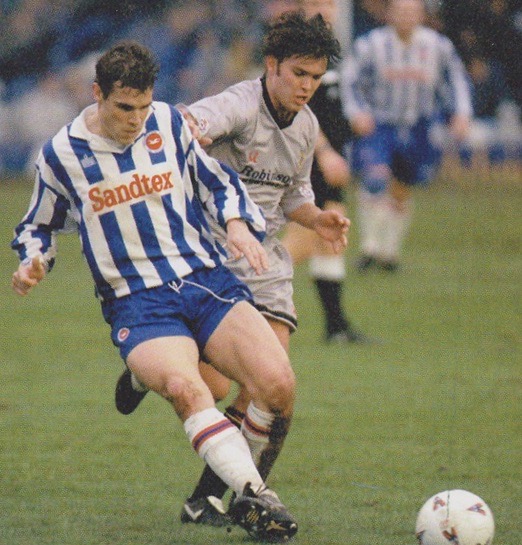
There’s a Michael Portillo style to Storer’s attire here and he admitted in a matchday programme article to having a penchant for “having a bizarre choice in clothing” as well as being an avid collector of hats.

Winger Walker a genuine crowd-pleasing entertainer

CW Nobo 91 progIN MY OPINION, one of the best wingers ever to pull on the famous blue and white stripes was Clive Walker, an evergreen player who remarkably played more than 1,000 games for eight clubs.

Although well into his 30s when he arrived at the Goldstone Ground, the balding former Chelsea and Fulham wideman was an effervescent talent with the ball at his feet.

Asked by the Argus to preview the squad ahead of the 1991 Division Two play-off final at Wembley, Brighton coach Martin Hinshelwood said of him: “Alias Phil Collins. A great character. The dressing room buzzes when he is around. He is good on the ball, a great crosser and has scored some great goals this season.”

Both Albion’s wingers for that game had Wembley experience behind them having been on opposing sides in in the 1985 League Cup Final.

Walker had missed a penalty for Sunderland as Mark Barham’s Norwich City won 1-0 and six years later, against Neil Warnock’s Notts County, Walker’s bad luck continued when a Wembley post denied him as Brighton’s dream of promotion ended in a 3-1 defeat.

Both had played big parts in Albion reaching Wembley, though: Barham levelled for the Seagulls in the first leg of the semi-final at home to Millwall and Walker got the third when the Seagulls upturned the form book and beat Bruce Rioch’s side 4-1.

Born on 26 May 1957 in Oxford, Walker joined Chelsea in 1973, made his league debut in a 1-0 defeat away to Burnley on 23 April 1977 and was a first team squad regular between December 1977 and the summer of 1984, although, in 1979, Chelsea loaned Walker to Fort Lauderdale Strikers (as pictured below) where he scored nine goals in 22 appearances.

CW Fort Laud

“Those were exciting, lively times and we loved our football. We were a bunch of young lads growing up together and, in my last couple of years there, I played with the likes of Kerry Dixon for the side who brought good times back on the pitch,” Walker told Mike Walters of the Mirror. “We were a close-knit bunch with a great sense of camaraderie, and a lot of teams these days would probably envy us in that regard.”
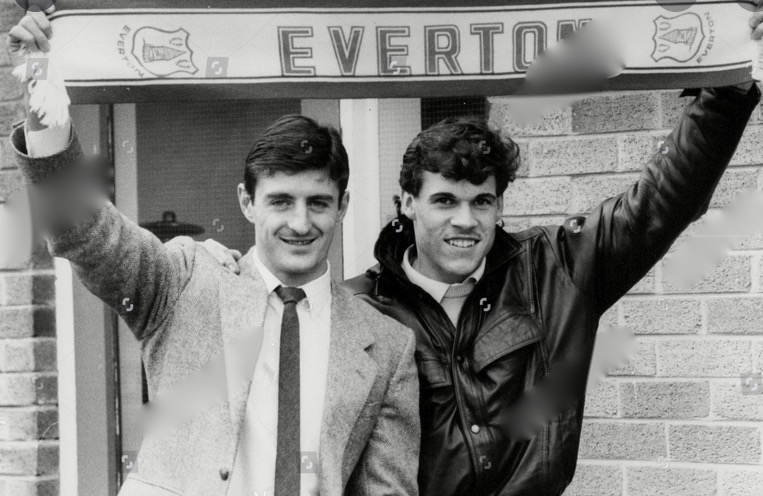
A fast winger with the knack of scoring stunning goals, Walker netted 17 in 1981-1982 and the next season, with Chelsea looking set to be relegated to Division Three, fans still remember how he scored the winner at Bolton Wanderers to maintain their status.

Details of many of his memorable moments at Chelsea are highlighted by the Sporting Heroes website.

And a Chelsea fans’ blog, Game of the People emphasised the impact he had at Stamford Bridge, pointing out: “He was left-footed, as quick as a sprinter and awkward to knock off the ball. And he could shoot! Those that liked wingers were excited by his willingness to run between players and take a pot shot at goal. Put simply, he was exciting to watch.”

In what is an otherwise interesting and informative piece about Walker in 2014, they unfortunately failed to mention his successful stint with the Seagulls.

Although he began the 1983-84 season well, he sustained a broken jaw which put him out for several weeks and, during his absence, another nippy winger – Pat Nevin – seized the opportunity to claim a first-team spot and Walker’s Stamford Bridge days were numbered.

3-2 N v Sun CWalker

Come the end of the season, he was allowed to join Sunderland (above in action v Newcastle) for a fee of £70,000. “He returned to torment Chelsea in the Football League Cup semi-final second leg, scoring twice in what was a dreadful night for the club,” Game of the People observed. “Walker was abused from the stands, too, which was especially heartbreaking for those that appreciated his efforts at the Bridge.”

After two years in the north-east, Walker returned to London in September 1985, initially via a £75,000 move to Jim Smith’s First Division (Premier League equivalent) QPR, where he played 28 games in the 1986-87 season, alongside the likes of David Seaman, Michael Robinson and John Byrne. Just 20 months later, he left on a free transfer to Third Division Fulham for whom he made 127 appearances in three years, scoring 32 goals.

His debut was certainly memorable as he scored twice in a 3-1 home win over York City. Writer Ian McCulloch remembered the occasion in an article on fulhamfc.com.

“Fulham were in the doldrums, on the brink of extinction, owned by property developers, and going nowhere fast. And then, in the midst of all the doom and gloom, appeared one of football’s all-time, genuine crowd-pleasing entertainers. Walker ran the show that night, scored twice, and generally lifted both the fans and the team.”

Walker recalled: “That game really does stand out. And in the pouring rain as well! To score two goals on your debut is very special, and I just look back at it as a fabulous memory. Very, very enjoyable.”

Walker explained that it was Ray Lewington who took him to Craven Cottage, adding: “I had a great rapport with him – of course we were both apprentices at Chelsea – and we’re still good friends today. But then other managers came in, and you couldn’t escape the feeling that the club was going backwards and that was very, very sad because I had a lovely time at Fulham and I’ve got some very fond memories of those years. I loved playing at the Cottage and on the Cottage pitch.”

Walker picked up Fulham’s 1989-90 Player of the Year award before former Fulham captain Barry Lloyd went back to his old club to secure Walker’s services for the Seagulls in the summer of 1990. Even though he was the wrong side of 30, he pulled on the no.11 shirt on his debut away to Barnsley (in a side containing his old Chelsea teammate Gary Chivers in defence) and missed only one game all season as Albion nearly made it back to the elite level.

After that Wembley disappointment and only three games into the new season, Walker suffered another blow when he sustained a serious knee ligament injury away to Barnsley which sidelined him for several weeks.

With the previous season’s goalscoring duo Mike Small and John Byrne having been sold for big money, the side struggled, and eventually ended up being relegated.

Emerging young winger John Robinson had slotted into Walker’s place in the side during his absence although it was Barham who was the odd man out when Walker was fit to return to the line-up.

Back in the third tier the following season, although the return of Steve Foster in defence was a plus point, off the field the rumblings of financial meltdown grew louder and louder. Young Robinson was sold to Charlton Athletic and only the proceeds of the sale of goalkeeper Mark Beeney to Leeds United kept the taxman at bay when there was a winding-up order threat hanging over the club.

Three cup games against Manchester United were rare highlights in that precarious season and one of my favourite Walker moments came at Old Trafford in a League Cup replay on 7 October 1992.

Having managed a 1-1 draw against United in the first game, Albion gave United quite a scare in the replay, largely through Walker giving England full-back Paul Parker a torrid time. I watched the game sat amongst United supporters and they were full of praise for the veteran winger, albeit that United edged it 1-0.

Walker’s final appearance in an Albion shirt came on 24 April 1993 when he came on as a substitute for Matthew Edwards in a 2-1 home defeat to Rotherham United. Alas, as he recounted in an interview with Spencer Vignes for the matchday programme, his time with the Albion came to a sour end.

Together with Chivers and Perry Digweed he was let go by Lloyd apparently because he said as the highest earners the club could no longer afford them. He was unceremoniously ushered out of the door with his boots in a bin bag. “That was the thank-you we got from Brighton,” he said.

When most players would be considering hanging up their boots, at the age of 36, Walker left Brighton and moved into non-league with Woking where he scored 91 goals in 210 games.

A poster called NewAdventuresinWiFi, on Sunderland’s readytogo.net fans website, recalled watching Walker play for Woking, and said: “Walker was an absolute class act when he fancied it. He was instrumental in the cup run of 96-97 when Millwall and Cambridge were dispatched and Premiership Coventry given an almighty fright.

“Also remember a Conference game against Altrincham when we put seven past them and Walker was unplayable that day…to the point the opposition full back ended up getting a straight red for a frustrated desperate two footed ‘challenge’ he attempted on Clive after yet another glorious attacking run.”

Another poster, JumpingAnaconda, remembered: “I saw him playing for Woking in a minor cup final at Vicarage Road, in the season where he won a few big games for them in their FA Cup run. He was 40 years old and he was absolutely quality, up and down the line all night. That season there was some talk of Premiership sides looking at him to come in to do a job for them. His level of fitness was incredible. He ran around like a 20-year-old. He was probably the closest we would get to another Stanley Matthews in the Premiership era in terms of a winger that kept his pace, creativity, ability to beat a man and make crosses into his 40s.”

From Woking, he had a spell as the assistant manager at Brentford under Eddie May but then went back to playing, at Cheltenham Town. Finally, after winning the FA Trophy and the League, he retired at the grand old age of 43, although he continued to turn out for Chelsea Veterans teams.
He had a brief excursion into management with Molesey but a career in the media took off and he became a regular and well-known voice with BBC London, and for Sky TV’s coverage of Conference football.

CW on Chels TVWalker has also worked for Talksport and appears regularly with former Chelsea and Spurs player Jason Cundy on Chelsea TV and radio (as above).

Pictures from a variety of sources but mainly the Albion matchday programme.

Winger Mark Barham was no stranger to Wembley

1 Barham progBRIGHTON’S wingers in the 1991 Division Two play-off final had previously been on opposing sides in a Wembley final.

Mark Barham was a winner with Norwich City as they beat Sunderland 1-0 in the 1985 League Cup Final and Clive Walker missed a penalty for the Wearsiders.

Six years on, Barham had levelled for Albion in the first leg of the semi-final at home to Millwall (more of which later) and Walker got the third when the Seagulls upturned the form book and beat Bruce Rioch’s side 4-1.

The 6-2 aggregate victory pitched the Albion against Neil Warnock’s Notts County under the shadow of the famous Twin Towers of Wembley.

Walker saw a Wembley post prevent him from scoring as Brighton’s dream of promotion was ended in a 3-1 defeat.

Folkestone-born Barham joined the Seagulls on a two-year contract after an initial trial and made his debut as a substitute for Kevin Bremner in a 1-0 home defeat to Oxford United on 30 December 1989.

He got his first start two days later in a 3-0 defeat at West Brom, who he’d played for briefly under ex-Ipswich and Arsenal midfielder Brian Talbot earlier that season.

On the second Saturday of the new decade he scored his first Albion goal in a 1-1 draw at home to Barnsley and had played 18 games by the end of the season.

Young John Robinson was beginning to get first team opportunities but Barham managed 42 appearances in 1990-91, culminating in that Wembley appearance against Notts County, although he was subbed off on 10 occasions.

That play-off first leg game against Millwall was Lloyd’s selection in Paul Camillin’s 2009 Match of My Life book (www.knowthescorebooks.com). He said: “Perry Digweed put in one of his incredibly long punts and the ball was about to bounce on the edge of the Millwall box when the centre half (David) Thompson ducked under it, I think intending to allow it to bounce through to Brian Horne in the visitors’ goal.

“But as he took his eye off the ball he also turned his back and the ball actually landed on the back of his head and squirted off right into Mark’s path. The little winger raced in and cracked the ball into the bottom corner. It really was a vital goal so close to the interval and the fans knew it.”

The goal also gave Barham much personal pleasure because he’d not seen eye-to-eye with Millwall boss Rioch when he’d been his manager at Middlesbrough.

With Robinson winning the shirt more frequently in the disastrous relegation season of 1991-92, Barham managed 25 appearances plus two as a sub but he was released at the end of the season and moved on to Shrewsbury Town.

Born on 12 July 1962, Barham’s football career began when he joined Norwich as an apprentice in 1978.

He was part of the City youth team that won the South East Counties League in 1979-80 and in the same season, at the tender age of just 17, manager John Bond gave him his first team debut. No fairytale start, though, as City lost 5-0 to Manchester United at Old Trafford.

However, he went on to make himself a regular in the City first team, making 213 appearances and scoring 25 goals for the Canaries.

Screenshot
Barham in action for England v Australia

He also won two full England caps on the 1983 tour of Australia in a side captained by Peter Shilton and also featuring Trevor Francis and Terry Butcher. Barham spoke warmly of Bond when he died in 2012 telling the local pinkun:

“When I first came up from Folkestone I had what you might call long hair. The first time he played me in a five-a-side in training he told me ‘I’m letting you play this one but if you don’t go out and get your hair cut you won’t be playing another one’.”

Barham continued: “He was my first manager, he gave me my debut at 17 and I went on to play for England so he must have done something right.

“He loved wingers but you had to adhere to certain rules. You had to play wide with your foot on the line, it was your responsibility to score goals, get crosses in and defend at the same time.”

A knee injury suffered in a match against Spurs was a major blow to Barham’s career. He ruptured cruciate ligaments in his left knee and he ended up in plaster for 14 months.

Although he remained at Carrow Road for four more seasons, Dale Gordon and Ruel Fox emerged as challengers for his place and eventually, in July 1987, Barham moved on to Huddersfield Town.

It was there that he teamed up with former Albion full back Chris Hutchings who spoke favourably about his time on the south coast with the Seagulls. Barham only played 27 games for the Terriers and, with former England striker Malcolm MacDonald replacing Steve Smith as manager, found himself released on a free transfer in 1988.

He joined Middlesbrough on an 18-month contract but as Rioch’s Middlesbrough were relegated he only played four games in eight months and was on the move again, ending up at non-league Hythe Town.

Determined he still had what it took to hold down a league career, Barham wrote to all 92 clubs. He joined Division Two West Brom and played four times for them but they didn’t keep him on.

Barham tight crop“I knew I hadn’t suddenly become a bad player and that I could succeed again,” Barham told the Albion matchday programme in March 1990. “So I wrote to all the clubs again and that’s when Barry (Lloyd) contacted me. His was only one of six replies.

“Since being here I’ve found that all Hutch said about the club and the area was right and now I want to prove myself, show that managers were wrong to ignore me and enjoy my time in Brighton in the hope that my two-year contract will be extended.”

After the disappointments elsewhere, Barham certainly got his career going again at Brighton.

He scored once in eight matches for the Shrews but his career was on the wane in 1992-93 and he had short spells in Hong Kong and played non-league with the likes of Sittingbourne, Southwick and Fakenham Town, who he managed for 20 months from April 1996.

According to Mike Davage’s excellent article Canaries Flown From The Nest in the 1998-99 club handbook, Barham joined Mulbarton in February 1998.

At a Norwich centenary dinner in 2002, Barham told Davage he’d had more than 20 operations on his knee. By the time he was interviewed by Spencer Vignes for Albion’s matchday programme in 2015, he’d had 38 operations on it!

After retiring from the game he ran a toolhire business in Norwich and according to his LinkedIn profile he’s now a business development manager with facilities management company, Mitie.

2 Barham stripesBarham 1

  • Pictures show Barham in Albion’s NOBO kit, from the Wembley play-offs programme, a portrait from a matchday programme and in a team line-up wearing the dreadful pyjama kit.

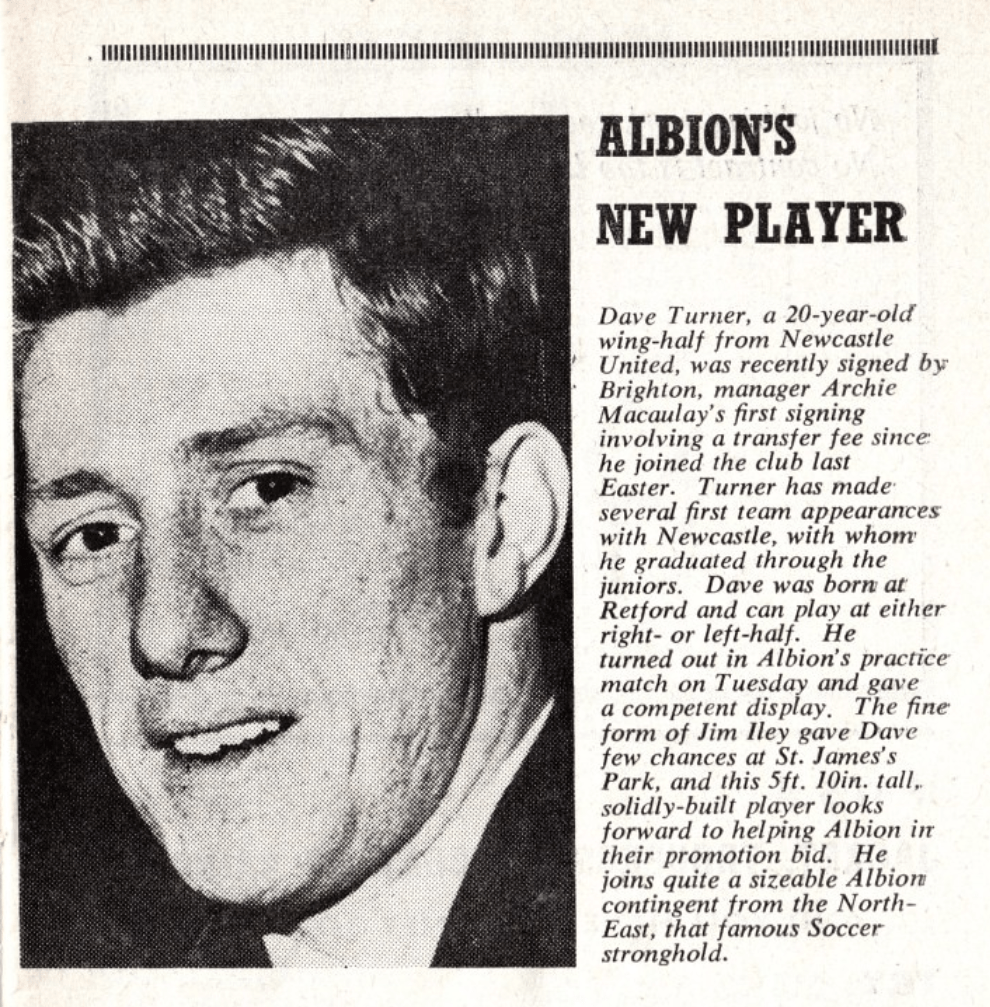
‘Unsung hero’ Dave Turner was Brighton captain at 22

3 Turner portrait

DAVE TURNER, one of Brighton & Hove Albion’s youngest ever captains in the 1960s, had already been at the Albion just over five years by the time I got to see my first game.

Over the course of eight and a half years with the club, he played 338 games, scoring 34 goals. In old-fashioned parlance, Turner was a wing half – what today would be known as a predominantly left-sided midfield player.

Born in Retford, Nottinghamshire, on 7 September 1943, as a youngster he played for Notts Boys and had two trials for England Boys before joining Second Division Newcastle United straight from school as an apprentice in 1960.

He was part of the Newcastle side which beat Wolves 2-1 in the 1962 FA Youth Cup, playing alongside Toon’s future legendary captain Bobby Moncur and long-serving Northern Irish full back David Craig.

Newcastleunited-mad.co.uk says he was “highly thought of when he helped Newcastle win the Youth Cup in 1962, but never broke into the first team”. In fact, that wasn’t quite true because he was given his first team debut in the very last game of the 1961-62 season, a 3-0 home defeat to Leeds United.

He made one more appearance for the Magpies under new manager Joe Harvey but became Archie Macaulay’s first signing for a fee when he headed to Sussex in December 1963 for the princely sum of £6,000.

Turner made his debut in a 2-0 home win over Darlington on 7 December 1963 and, in only his second season at the Goldstone Ground, he made 40 appearances and scored twice as Albion marched to the Fourth Division championship.

“That was a great season,” Turner told Goal magazine in 1970. “Bobby Smith (former Tottenham and England international) was with us then. I was very surprised he joined Brighton, but what an asset he was.

“We scored plenty of goals, the crowds flocked back, the atmosphere was great.”

The following year, Dave was appointed captain – the youngest Albion ever had.

Albion’s matchday programme introduces the new young captain

“I was surprised but very pleased,” Dave told the magazine. “There were several players older than I was, so it was a great honour to be made skipper.

“I was a bit frightened at first but after a game or two I realised that the rest of the team were backing me up, so everything was all right.”

It was only when the experienced former Preston North End skipper Nobby Lawton arrived in 1967 that Turner relinquished the job.

“He had a fine reputation and I asked to be relieved of the job, suggesting Nobby should take over,” he said.

Remarkably both Turner and Norman Gall, another player hailing from the North East, reached the milestone of their 285th Albion game at the same time.

Brighton were looking odds on for promotion under Freddie Goodwin in the 1969-70 season and it was rare for a Third Division team to get coverage in Goal, a popular national football magazine at the time.

The article began: “Dave Turner is one of the unsung heroes of Brighton. He has played nearly 300 games for the club, been involved in a Fourth Division Championship victory, and is now in the middle of another bid for glory.

“Brighton are fighting hard to get into the Second Division and the 26-year-old midfield star is a key man in their battle.

“Ever since he joined them from Newcastle in December 1963, Turner has played a vital role in the Brighton set-up.

“Stars like Rodney Marsh, Hugh Curran and Bruce Rioch, all of whom have gone on to better things, have played against (and been overshadowed by) Brighton’s non-stop wing half.

“It is Turner’s consistency which is helping Brighton in their promotion struggle. And he thinks they can do it.”

2 turner colour portrait

Turner told the magazine: “I’m pretty confident we can go up. But so can any of the top 10 at the moment. We’ve been playing well all season, but early on we just couldn’t get the right results. Everyone was getting a bit disappointed.

“Then everyone started getting stuck in a bit more – it began to pay off. We had a long undefeated run in the League after November and conceded only one goal in nine games. Even that was a penalty.

“The defence has been playing well and the whole team has been coming back and doing its share of the work. It would be nice to score a few more goals but if you don’t let any in it means you have at least one point before you start.”

Unfortunately although Brighton were top after a 2-0 win over Reading on 27 March 1970, they blew the chance of promotion with four defeats in the remaining five games and ended up fifth.

In the following two seasons under Pat Saward, Turner was hard hit by injuries and only made 19 appearances in the 1971-72 Third Division promotion campaign, appearing in his suit in the champagne-raising dressing room picture after promotion was achieved.

In its pen pictures of each of the members of the squad, the Argus said of him: “Turner never knows when he is beaten and few players have achieved greater popularity with the Goldstone crowd.”

The arrival of the cultured Brian Bromley to occupy his midfield berth meant Turner was given a free transfer in the summer of 1972 and, together with Kit Napier, he joined Ken Furphy’s Blackburn.

Turner made 25 appearances for Rovers but his injury issues returned and he was forced to retire in 1974. He followed his former boss Furphy to Bramall Lane where he was youth coach for a while. He then moved on to Aldershot before heading to Canada.

He coached at Toronto Blizzard under former Watford and Sheffield United midfielder Keith Eddy and stayed under Eddy’s successor, Bob Houghton, who was a former Brighton teammate. Houghton was at the Goldstone in 1969-70 although he didn’t feature in the first team. He famously managed Swedish side Malmo when they lost 1-0 to Nottingham Forest in the 1979 European Cup Final.

Turner stayed in Canada with Toronto Blizzard and had a season with Toronto Dinamo but he returned to the UK in 1990 and rejoined the coaching staff at Aldershot.

1 turnerleadsout
4 Turner promotion dressing room
  • Pictures from my scrapbook show Turner leading out the Albion at the Goldstone, as featured in Goal, part of a team line-up in 1969-70, a portrait from the Argus in the 1971-72 season, joining in the 1972 promotion celebrations alongside Ian Goodwin with Brian Bromley (front left) and physio Mike Yaxley.

Turner the coach: at Toronto Blizzard with Bob Houghton and some well-known English players, and at Sheffield United and Aldershot.

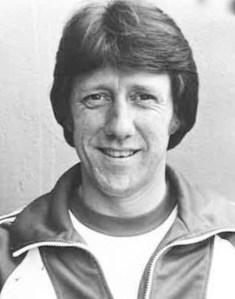
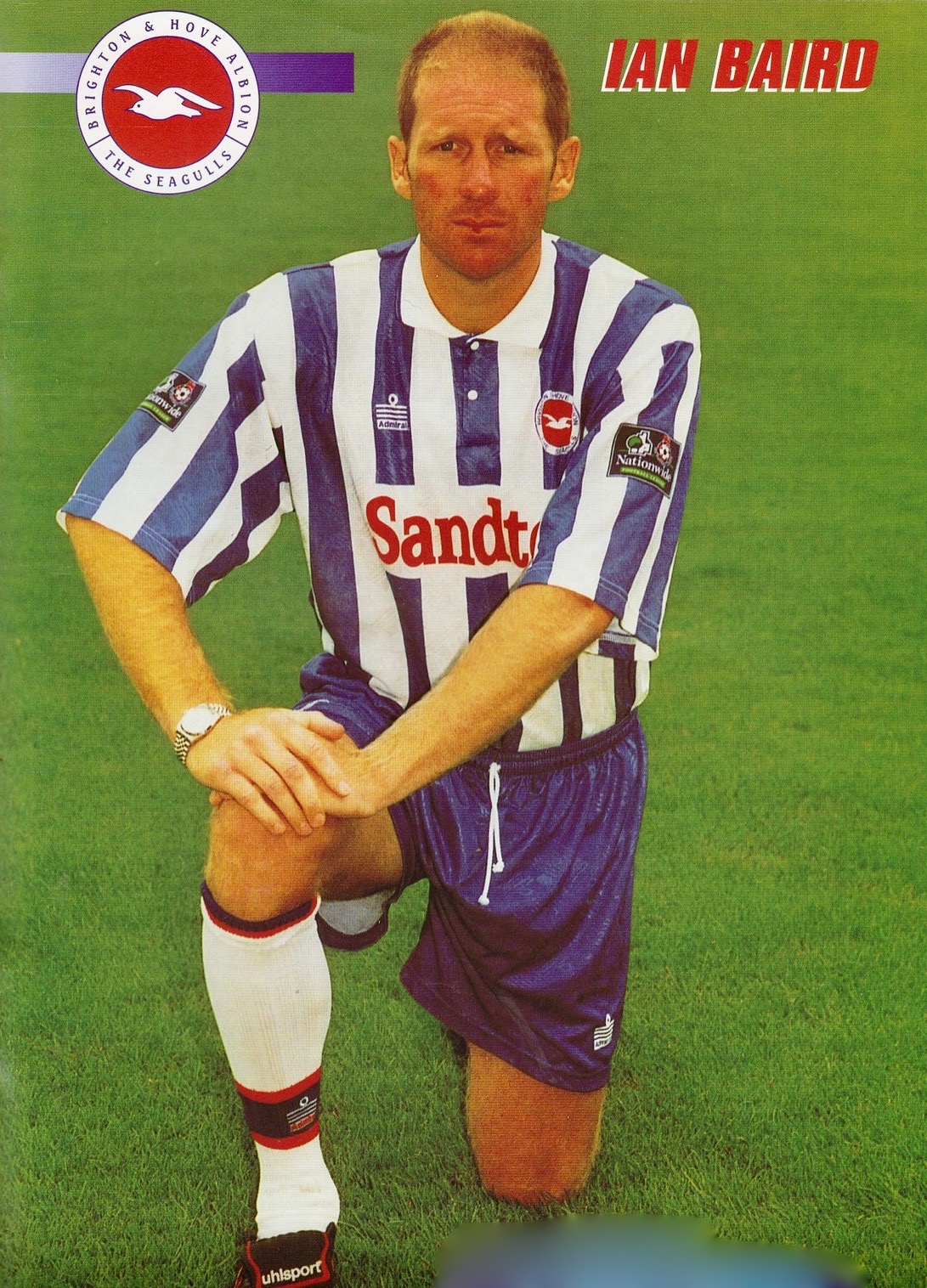
‘Yogi’ Baird knows about last game drama

A STRIKER who brought last-game-of-the-season smiles to the faces of Middlesbrough fans earned only notoriety in Brighton & Hove Albion’s final game at the Goldstone Ground.

Journeyman hard man forward Ian Baird earned his place in Teesside folklore by scoring two goals in an end-of-season clash that not only kept Boro up but prevented north east neighbours Newcastle from getting automatic promotion to the elite.

But Brighton fans witnessed Baird, captain at the time, being sent off just 18 minutes into the 1997 game against Doncaster Rovers which thankfully nonetheless ended up in victory courtesy of Stuart Storer’s memorable winner.

The dismissal meant, though, that Baird would not be able to play in what has since been recognised as the most important game in the club’s history: away to Hereford United.

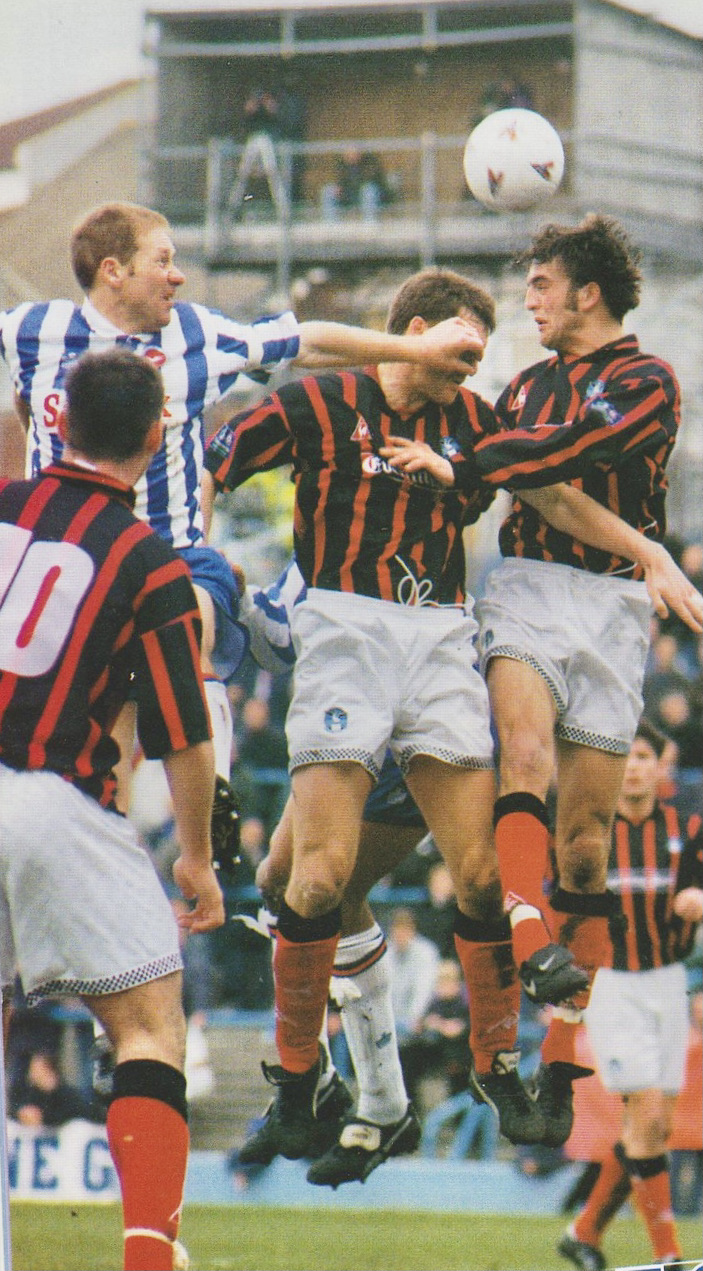
Perhaps we should not have been surprised. Baird was sent off 11 times in his career and he later told portsmouth.co.uk: “It was just a natural thing really. Sometimes my enthusiasm got the better of me. There were plenty of times I chinned someone or got into trouble.Bairdy leap

“The most stupid one was when me and Darren Moore had a fight. He was playing for Doncaster and I was playing for Brighton in the last game at their old Goldstone Ground.

“He came through the back of me, there was a bit of afters and I ended up trying to give him a right hook and there was a bit of a ruck.

“We had a bit of rough and tumble and I was just lucky he didn’t chase me up the tunnel because he’s huge!”

Screen Shot 2021-04-29 at 19.52.10To be fair, Baird had a reasonable goalscoring record at Brighton, netting 14 in 41 games following a £35,000 move from Plymouth Argyle.

Brighton was his 10th and last league club and over the 17 years of his league career he commanded a total of £1.7m in transfer fees, the £500,000 Boro paid Leeds being the highest.

At the start of the 1989-90 campaign, Baird scored the winner for Leeds against Newcastle at Elland Road and then, following his £500,000 January move to Teesside, scored twice in a 4-1 win over United on the final day of the season at Ayresome Park.

Those goals – along with a Bernie Slaven brace – helped prevent Boro going down and meant Newcastle missed out on automatic promotion (they then lost the play-off semi-final to Sunderland).

Years later Baird told chroniclelive.co.uk, ahead of the writing of his autobiography: “Yeah, I enjoyed that. That was some game, given what was at stake. And I loved playing for Boro. We had a great team eventually and Bernie Slaven and myself were a pretty decent partnership.”

Interviewed by Stuart Whittingham in 2013 for borobrickroad.co.uk, Baird explained how he moved to Boro because ex-Albion winger Howard Wilkinson, then manager of Leeds, signed Lee Chapman.

“I felt a little aggrieved and basically I spat the dummy out and asked for a move,” he said. “He (Wilkinson) said that he didn’t want me to go but I insisted and within 24 hours I was speaking to Bruce Rioch and Colin Todd and I was on my way to Middlesbrough.”

Undoubtedly his most successful playing years came at Leeds where in two spells he played more than 160 matches and scored 50 goals. In the 1986-87 season, manager Billy Bremner made him captain. The Yorkshire Evening Post spoke of “the powerhouse striker’s fearless commitment, no-holds-barred approach and goalscoring ability”.

The blurb introducing his autobiography Bairdy’s Gonna Get Ya! (written by Leeds fan Marc Bracha) says “he’s best remembered for his spells at Leeds, where goals, endless running, will to win and fearless approach ensured he was adored by the fans”.

On leaving Middlesbrough, Baird spent two years playing for Hearts in Scotland, persuaded to move north of the border by Joe Jordan, his former Southampton teammate, who was the manager there at the time.

A torn thigh muscle restricted the number of appearances he’d hoped to make and at the end of his deal he moved back to England and signed for Bristol City, initially under Russell Osman and then Jordan once again.

Baird was assistant manager at Sutton United under Paul Doswell for four and a half years between October 2014 and March 2019, and caretaker manager for a month after Doswell left. The pair were reunited as manager and assistant at Havant and Waterlooville in May 2019.

Pictures from the autobiography front cover and the Albion matchday programme.