Competition for places edged out midfielder Jamie Smith

DIMINUTIVE midfielder Jamie Smith spent 11 years at Crystal Palace, going through the youth ranks before signing as a pro, but didn’t play league football until he joined Brighton.

Russell Slade took on the 19-year-old during his brief reign in charge of the Seagulls (and signed the player again when he was in charge at Orient).

Albion picked up the discarded 5’6” Smith in the summer of 2009 and he did enough as a triallist in pre-season friendlies to be awarded a contract by the Seagulls.
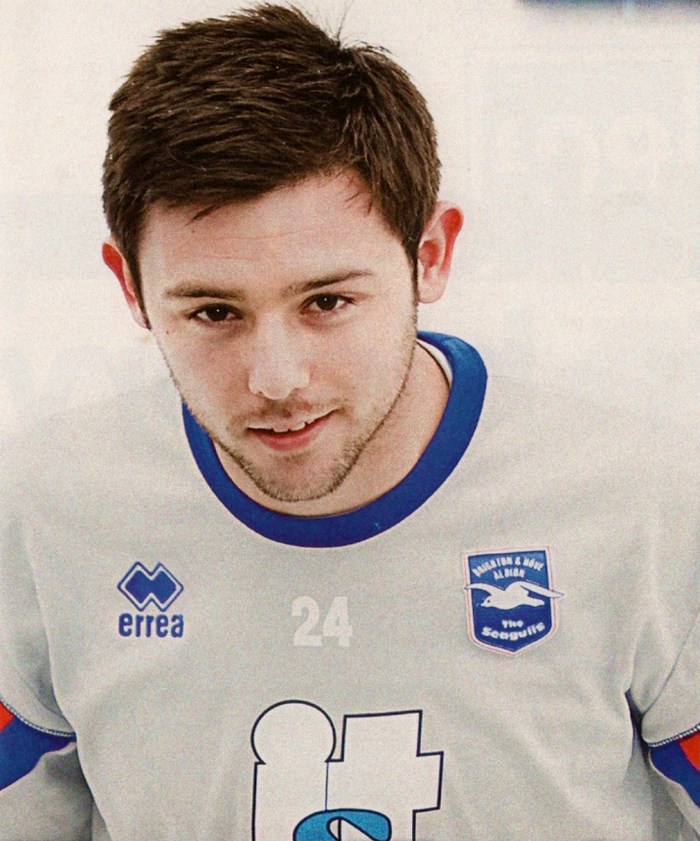
Slade said: “Jamie has done exceptionally well throughout pre-season. He’s worked hard to convince us he is worth a contract and he has the potential to be a very good player.”

His first league start was memorable for all the wrong reasons. In only the third league game of the season, he was selected in midfield away to Huddersfield Town.

But when regular no.1 ‘keeper Michel Kuipers was sent off six minutes before half time, the young midfielder was sacrificed to allow substitute goalkeeper Graeme Smith to take over between the sticks. Depleted Albion then went on to succumb to a 7-1 battering.

“I had mixed feelings really,” he told the matchday programme. “It was great to make my debut and I thought we started the game well, but the sending off changed everything and it was all downhill from then on.”

It was Smith’s only start of the whole season. He was on the subs bench on half a dozen occasions but only went on in one of them, away to Wycombe Wanderers at the end of the year.

Gus Poyet had succeeded Slade by then and with Albion coasting at 5-2 – Glenn Murray having scored four of them – Smith replaced Dean Cox in stoppage time.

During the close season, Andrew Crofts was sold to Norwich City and Cox left for Orient, but new arrivals Radostin Kishishev and Matt Sparrow provided new competition for midfield places.

But Poyet reckoned there was something about Smith and enthused about an “outstanding” performance he’d delivered in a pre-season friendly at Burgess Hill. He told the Argus: “We really like him. He could be an interesting player for the future, I’m telling you. He has got some qualities we need to use a bit better.”

After also impressing in a pre-season game against Aberdeen, Smith was in the starting line-up for the opening game of the 2010-11 season, when Albion won 2-1 at Swindon (Sparrow scored twice on his debut).

He played the following two league matches too: a 2-2 draw home to Rochdale (although Smith was sacrificed on 54 minutes after Gordon Greer was sent off for punching Anthony Elding and Adam El-Abd was sent on to play in the centre of defence).
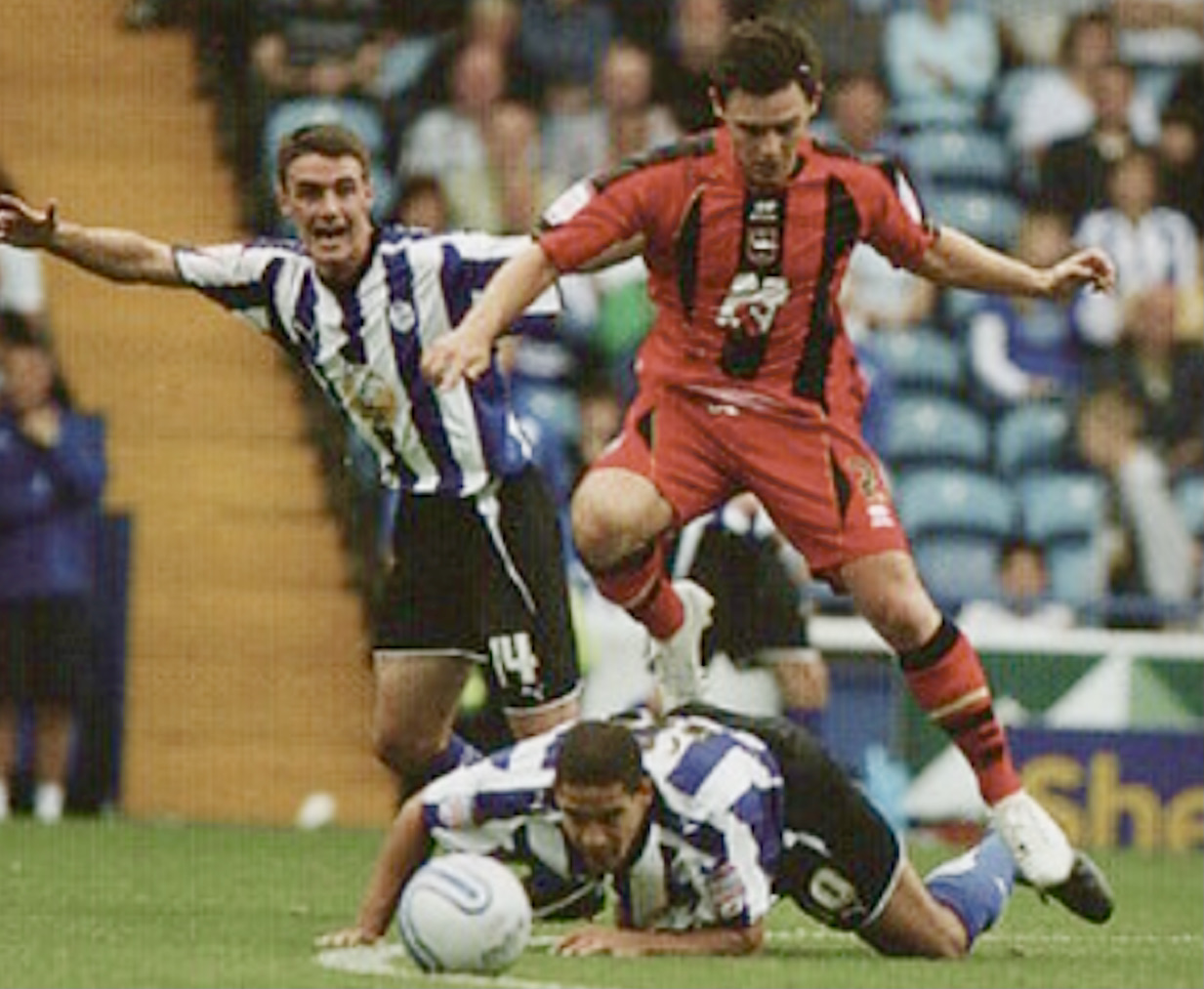
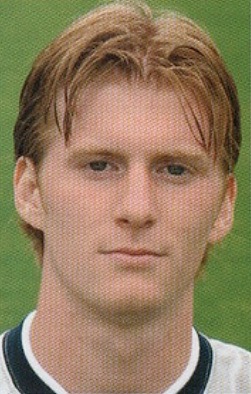
I was sat in the Leppings Lane end at Hillsborough seven days later when Smith retained his place in midfield against Sheffield Wednesday (above left).

The youngster even came closest to netting an equaliser for the Seagulls; his shot from Ashley Barnes’ cutback clipped the bar.

However, Albion then re-signed Kazenga LuaLua and Poyet reckoned Smith didn’t do enough to show he wanted it more than the explosive winger. “Because he is young, maybe he took it too nicely,” Poyet told the Argus. “I need people to react, to show me I have made a mistake or even to put me under pressure. He was just normal, not at his best to give me a headache to have to play him.”

Smith himself admitted: “When LuaLua)was playing I seemed to take it that he would be playing instead of me.

“Sometimes, when we were both on the bench, I used to think he would go on, not me, whereas I should have been doing everything I could to make sure I was involved. If I had the time again, I would have done things differently.

“I wouldn’t be one to go in and moan and stuff because there are always ups and downs in football but you can always go out every day and do your best and work hard.

“The season started really well for me, a lot better than I expected. I didn’t expect to be playing as much as I was but when that happens you just want more and I just want to be playing every week.

“Maybe when the team was doing really well, on a long unbeaten run, I was slacking off in training and things like that.”

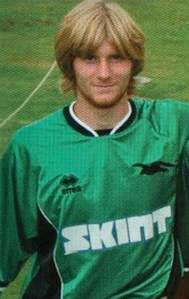
The door opened ajar again after LuaLua suffered a broken leg and Smith impressed after going on as a 53rd-minute sub away to Southampton (below, left).

Smith told Andy Naylor: “LuaLua was class. He changed games when he came on and when he started he was really good. Hopefully I can do as well, if not better, than he was doing if I get the chance.

“We are really different players. He is really explosive with pace and loads of ability. I like trying to play clever little passes and making space for myself and my team-mates.”

One such cute pass at St Mary’s let in Glenn Murray to earn the Seagulls a penalty and the longstanding Albion reporter said: “The door is ajar for Smith again after that Southampton cameo and now he has to walk through it. His Albion future depends on it.”

Smith told the matchday programme: “I feel I’ve done well in most of the games I’ve played in and want to use the Southampton game as a platform for the rest of the season.

“The manager told me after that game that he wants me to give him performances like that all the time.”

Enjoying time in the limelight, the player explained: “I love to get the ball, drive forward and create chances.

“I am slight in size and most managers from the Championship downwards want strong, athletic midfielders but our manager wants footballers, players who get the ball down and play.

“As long as I’m on the ball and doing a job for the team, then the manager will be happy.”

Smith added: “I knew that if I didn’t progress this season there’s every chance I would be let go in the summer so I’ve been using that as an incentive.

“With the way the club has been progressing on the pitch and off it, there’s no way I want to leave. I want to stay here for years to come because I’m happy at the club.”

Unfortunately, the new year wasn’t even three weeks old when an accidental collision in training saw Smith sidelined for two months.

He sustained a fractured metatarsal after colliding with teammate Jake Forster-Caskey and, with his contract due to expire at the end of the season, the outlook was bleak.

But Poyet said: “I have already had a good chat with him. I told him not to worry and that we will look after him.

“He will be out until March but it is important he doesn’t feel under pressure to rush back because of his contract situation.

“I want him to make sure his foot is properly healed first, and then I expect we will see him back to fitness before the end of the season.”

Come the end of the season, Poyet was as good as his word and gave Smith a six-month contract to prove his worth.

But he wasn’t able to capitalise on the opportunity, Poyet saying: “Jamie was a revelation at the beginning of last season before we got Kazenga (LuaLua) back.

“Then he was injured for months and we were established at the top of the table, so he didn’t get the chance to play.

“I thought I would give him the chance to prove himself but it hasn’t really happened for him.”

Albion supporter ‘The Phantom’ on an Argus report of Smith’s imminent departure from the club wrote: “Shame it hasn’t worked out for Jamie Smith as showed at times that he had what it takes to be an influential attacking midfielder.

“Way too much competition in the squad now so best that he moves on. Surprised he has not been able to pick up a club so far.”

Eventually, former boss Slade offered him a chance at Orient, but he made just the one substitute appearance for the Os before dropping out of league football with Dover Athletic.

Born in Leytonstone, East London, on 16 September 1989, Smith was on Palace’s books from the age of eight to 19 and although he progressed through the ranks he didn’t get to make a competitive first team appearance.
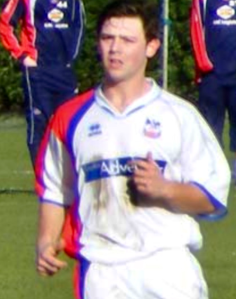
Nevertheless, Palace under 18 coach Gary Issott said: “Jamie Smith is a diminutive attacking central midfielder in the mould of Eyal Berkovic.

“He is very clever and improved after a frustrating first year. He started this season well and, up until Christmas, his form was electric.”

He was involved in pre-season friendlies ahead of the 2008-09 season and scored the winner from the penalty spot after going on as a substitute in a 4-3 win over Aldershot. (Calvin Andrew, later an Albion loanee, made his debut for Palace in the same match).

But while Smith saw several of his contemporaries make it through to competitive first team action, such an elevation remained elusive for him.

“That was disappointing but we had the likes of Nick Carle and Neil Danns in my position and it was hard to break through,” he said. 

A year below him, the likes of Victor Moses and Nathaniel Clyne did progress. Smith said: “I spoke to Neil Warnock but he said there were experienced players ahead of me and couldn’t see me breaking into the team. We agreed it would be best for me to move on.”

Smith had a spell at Doncaster Rovers but returned to Palace to keep his fitness up before joining Brighton for pre-season training, and then being taken on after a successful trial of three or four weeks.
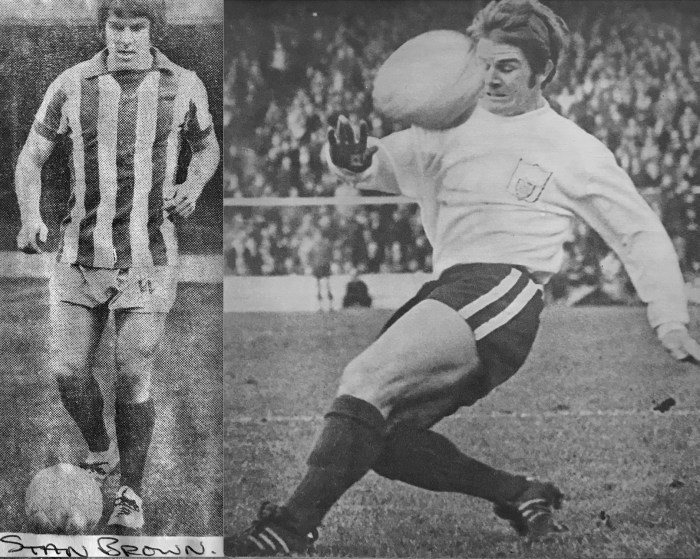
Great start, but Fulham stalwart Stan Brown couldn’t help slide

A WIN ON his debut was as good as it got in Sussex-born tenacious midfielder Stan Brown’s two months as a Brighton player.

Brown, who spent 15 years with Fulham, was one of too many loan signings manager Pat Saward turned to as he dismantled his 1972 promotion-winning side and tried in vain to get Albion to adapt to the old Second Division.

Brown had six seasons as a Fulham regular in the old First Division, two in the Second and two in the Third before his two-month loan with the Albion.

He was following in the footsteps of two of his five brothers, Irvin and Alan, who had both played briefly for Brighton several years earlier.

Stan certainly couldn’t have wished for a better start, in a side with another loanee debutant, Luton’s John Moore (in as a replacement for sold ex-skipper John Napier), for an away match at Huddersfield Town on 14 October 1972.

With only one win (ironically against Fulham) in the opening 12 league games, there was cause for optimism that a corner had been turned when the Albion earned a surprise 2-0 victory in south Yorkshire (Eddie Spearritt and Barry Bridges the scorers).

A Goal magazine picture shows Brown in action for Fulham against Albion’s Eddie Spearritt in 1969-70

“It was as if I had been playing for Albion all my life,” Brown told the matchday programme. “You see, I live at Lewes, the training ground is only four miles from my house and I have known Bert Murray and Barry Bridges for a long time.

“As for the rest of the lads, I felt I knew them too from reading about them in the Evening Argus every night. So, when it actually came to turn out for Albion at Huddersfield I knew all the players by their first names.”

Manager Saward was certainly impressed by the impact of his two new acquisitions. “The new men played a major part in our success,” he said. “It was quite remarkable really the way they slotted into the side as if they had been playing for Albion all season.

“They are, of course, experienced professionals who have been around the game a long time. But even the best professionals sometimes take time to settle into new environments and this is why the performances of these two was so outstanding.”

Injuries to regular midfielders John Templeman and Brian Bromley had provided an opening for Brown and his subsequent involvement helped the side to three successive draws. But the wheels fell off big time in his last five games as Albion lost the lot without scoring a goal.

Brown returned briefly to Craven Cottage before moving on to Colchester United while Albion’s losing streak continued through to the following February!

Although fortunes eventually improved in the final third of the season, the damage had been done and Albion dropped straight back down to the old Third Division.

Born in Lewes on 15 September 1941, Brown played for East Sussex schoolboys and captained Sussex Schools. It was in that representative side that he was spotted by Fulham, who took him on as a 16-year-old apprentice in 1957.

Older brother Irvin, a centre-half, had joined Albion’s staff in 1951 but only played three games in the 1957-58 season before moving on to greater success with Bournemouth; signed by Don Welsh, the manager who’d taken him to Brighton.

The day after Irvin left the Albion in 1958, 6’4” brother Alan signed for the club as a centre-half but was converted into a centre-forward and scored twice in eight first team games before moving on to Exeter City; signed by former Brighton teammate Glen Wilson.

Stan was undoubtedly the most successful of the three although, when he made his Fulham first team debut on 21 January 1961, it was memorable for all the wrong reasons: he was in for the injured Johnny Haynes and Fulham lost 6-1 at home to Sheffield Wednesday.

Johnny Haynes & Stan Brown

Initially a centre-forward, at 5ft 7ins he was on the small side to lead the attack, so switched to midfield – his preferred position – but he also featured in the back four.

It was in the 1962-63 season that he earned a regular place in the side and was known as a “player’s player” for his selflessness and desire to put the team before his own ambitions. He enjoyed playing in midfield alongside Haynes and Alan Mullery but was prepared to slot in anywhere if necessary.

Fulham fan Pete Grinham summed him up as “a high octane team player of the highest calibre without the individual skills of his more illustrious teammates but with the heart of a lion”.

The supporter added: “He was a very effective, tenacious tackler, and his distribution was extremely good. He did the lion’s share of the hard graft allowing others to shine.

“This selfless work for the team was not always appreciated in some fan quarters but if you could ask any player who played with him, they would commend his importance to the team.”

His loyalty to Fulham was rewarded with a testimonial game in late 1970, Fulham losing 2-0 to Chelsea at Craven Cottage watched by a crowd of 11,024.

His total of 393 appearances for Fulham, plus five as a substitute, put him in the Cottagers’ top 20 appearances’ chart. It was only when Mullery returned to the Cottage from Spurs in the summer of 1972 that Brown lost his place.

Grinham was staggered to see Brown appear at the age of 59 in a testimonial for Simon Morgan, another Fulham stalwart, who won promotion with the Albion in 2002.

The game, on 2 August 2000, saw Brown play for a Fulham veterans side against Chelsea veterans, still displaying a remarkable level of fitness.

It was that fitness that had seen his post-Fulham career continue at Colchester for five months (he played 23 matches through to the end of the 1972-73 season), then Wimbledon (1973-74) and Margate.

He continued to play at Sussex County League level for a number of years, turning out for Haywards Heath, Ringmer, Southwick and Burgess Hill, and also playing for the county representative side.

When he died aged 76 on 16 March 2017, the Argus remembered how Brown helped to nurture young talent by coaching junior football teams Lewes Bridge View and Ringmer Rovers, as well as setting up and organising the Lewes Saturday Soccer School.

Albion rookie Richard Martin became Sven goalie at City

RICHARD MARTIN could justifiably be dubbed ‘The Nearly Man’ of goalkeeping.

Once thought to have the potential to play 200 games for the Albion, he left the Seagulls having only ever warmed the first team bench.

In an unlikely turn of events, he went from back-up League One Seagulls ‘keeper to no.3 behind Kasper Schmeichel and Joe Hart at Premier League Manchester City, thanks to former England boss Sven-Goran Eriksson.

After two years at City, he went on loan to Burton Albion, then worked under Ben Roberts and Nathan Jones as back-up ‘keeper at Yeovil Town before enjoying fleeting fame on the Caribbean island of Puerto Rico.

Doubtless it wasn’t the career he expected when his teenage promise between the sticks led to him earning trials with Liverpool and Everton.

Born in Chelmsford on 1 September 1987, Martin spent part of his childhood in Liverpool but the family were living in Burgess Hill when the young goalkeeper was picked up by the Albion.

Martin was only 16 when Liverpool took him on a week-long trial and Albion manager Mark McGhee went public in the Argus on 4 February 2004, explaining why he thought the youngster should stick with the Seagulls.

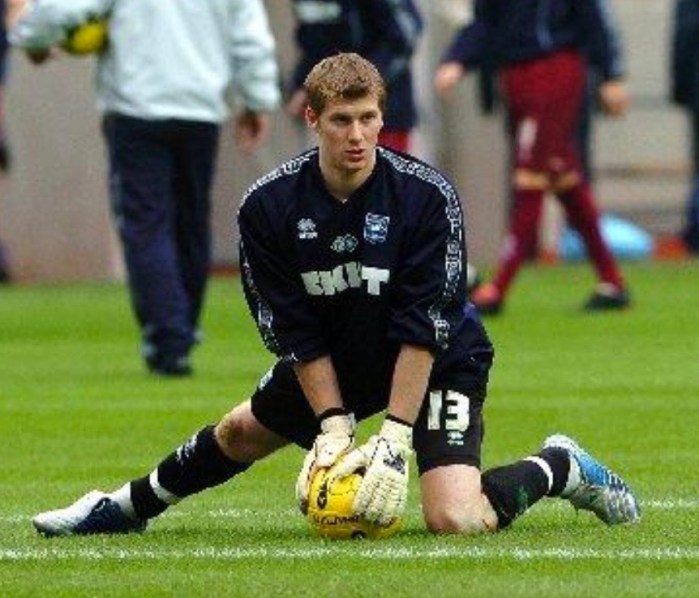
Warming up for the Albion (pictured by the Argus)

“We have put forward a reasonable argument to the boy and to his parents as to why we think he should stay here,” said McGhee. “The thing we can promise him at a club like ours, like any other young player in any other position, is that if he is good enough he will be fast-tracked into the first team or certainly onto the bench.

“If he goes to Liverpool there is no chance of that happening. At the very best he is going to spend two or three years at youth level, then at reserve level and in five years’ time he might start to make an impression in the first team squad.

“By that time, he would have played 200 games for us and be worth a lot of money and move to Liverpool under different circumstances.”

The Argus reckoned Albion could have got compensation of at least £200,000 if Martin, a Liverpool supporter, had ended up at Anfield. But Liverpool didn’t take him on, he remained an Albion scholar, progressed through the youth ranks and was awarded a two-year professional contract in the summer of 2005, before his scholarship was due to expire.

With Michel Kuipers sidelined by injury, Martin and fellow young ‘keeper John Sullivan shared opportunities to play for the first team in pre-season friendlies ahead of the 2005-06 season. Martin appeared against Le Havre, Oxford United and Bournemouth, as well as coming on as a sub in two other matches.

A sizeable Albion following went over to France to watch Albion’s 2-0 defeat to Le Havre when Martin began in goal in the absence of Michel Kuipers. The Argus reported: “Martin flew high to his right to brilliantly tip away a 12th-minute thunderbolt from Jean-Michel Lesage which was dipping and swerving towards the top corner from 25 yards.”

Goalkeeping coach John Keeley went further and told the matchday programme: “That was an absolute world-class save. I’m sure if Michel had made it people would still have been talking about it – it was that good..

“He can take big positives out of that and the other bits he had to do in the first half.”

When the season proper got under way, Martin found himself on the bench for 14 matches as Irish international Wayne Henderson, on loan from Aston Villa, was the established first choice. But then Frenchman Florent Chaigneau arrived on a year-long loan from Rennes.

In December 2005, Everton took Martin on trial and for a while there was speculation that a nice fat transfer fee from selling the youngster could be reinvested in signing a much-needed striker for the first team. But the move didn’t materialise because Everton boss David Moyes didn’t think Martin was big enough.

The Argus reported: “Martin impressed during a recent trial with the Merseyside giants but Goodison boss Moyes has decided not to sign the slimly-built 18-year-old from Burgess Hill due to his size.”

Instead of heading to Goodison, Martin went on loan to non-league Kingstonian, competition for the no.1 spot at Albion having increased with the permanent signing of Henderson from Villa.

Martin was part of the successful Albion youth side of 2006 from which six players went on to play first team football. But even at youth level he was competing with Sullivan, who eventually edged ahead of him and did manage to break through into the first team.

Competitive football game-time was considered the best option for Martin and the following season he went on a season-long loan deal to Conference South Dorchester Town. But his stay was cut short by injury. Once recovered, in the second half of the season, he joined Folkestone Invicta where he played 12 matches.

However, on his return to the Albion his contract wasn’t renewed, and he was without a club until the surprise opportunity arose at Manchester City, where the goalkeeping coach at the time was ex-Albion No. 1 Eric Steele.

Martin told the Argus: “This is completely unexpected. I’d like to think Brighton were wrong to let me go but these things happen.

“I went up to City initially just for a week to do a bit of training, because my agent knows Eric.

“(First choice Andreas) Isaksson and Joe Hart picked up injuries, they had a reserve game which I played in and then I carried on training.

“I don’t think I am in contention for the first team, I will just be in the reserves and go from there. Hopefully the month will be extended if I can keep on doing well.”

Sure enough, it was and boss Eriksson was happy to give Martin a season-long contract.

His only first-team action came on 22 May 2008 when replacing Schmeichel for the second half in an end-of-season charity match in Hong Kong against a South China Invitational XI.

Even after Steele switched allegiance to Manchester United and Eriksson had moved on, Martin had done enough to establish himself as third in line behind Hart and Schmeichel.

Mark Hughes took over as manager and Martin remained at the club working with ex-Chelsea ‘keeper Kevin Hitchcock, who Hughes had taken with him from Blackburn.

Martin was given the no.13 squad number for the 2008-09 Premier League and UEFA Cup campaign and it was an irresistible opportunity for the Argus to catch up with him ahead of Brighton’s home Carling Cup tie against City at Withdean in September 2008 when Albion sprung a big shock by winning the penalty shoot-out.

Reporter Andy Naylor discovered Martin had been philosophical, rather than disappointed, about the way things turned out with Albion. “When I look back at the situation at that time it was all about getting results and Michel (Kuipers) and Wayne (Henderson) were the two generally ahead of me,” he said. “I got a lot of good experience at Brighton and that set me in good stead for coming up to Manchester.”

Unfortunately, a knee injury Martin sustained shortly after sidelined him until the following March. Then in April, City allowed him to move temporarily to Burton Albion as cover because their first choice ‘keeper Kevin Poole was injured.

When released by City in the summer of 2009, more Albion connections provided him with his next opportunity, and finally the opportunity to play league football, at Yeovil Town.

Martin at Yeovil (picture by YTFC Digital)

In the Seagulls’ 2004 play-off winning season, Martin was a youth-teamer when Glovers assistant boss Jones was Albion’s left-back and goalkeeping coach Roberts was between the sticks.

Ahead of Brighton’s 2-2 draw at Huish Park on 10 October 2009, Martin told Brian Owen of the Argus: “I was fortunate I got the call from Yeovil in the summer and went down there for a trial. They liked what they saw. Of course, I know Nathan and Ben well and the fact they knew about me must have helped them make a decision.”

Martin was on the bench for the Albion fixture but had made his league debut shortly before as a substitute when first-choice Alex McCarthy (at the time on loan from Reading) was sent-off 20 minutes into a 2-2 draw with Stockport County. With McCarthy banned, Martin got his first start in a defeat at Southampton.

However, in total he made just three league and two cup appearances in that first half of the season and in January 2010 was loaned to Conference National bottom-placed side Grays Athletic – and within the space of a fortnight had conceded 11 goals in three matches!

Although he returned to Yeovil after a month, McCarthy’s fine form denied him any further first team action at Huish Park and he was released in July 2010. After brief spells with Havant & Waterlooville and Crawley Town, Yeovil re-signed him on 31 December 2010.

Plenty to say in goal for Puerto Rico Islanders

However, in March 2011 he had the opportunity to head to the Caribbean and play for Puerto Rico Islanders, who at the time were in the second tier of the North American Soccer League. He made his debut in May 2011 having initially been back-up ‘keeper and then signed for a second season, during which he established himself as first choice and played a total of 33 matches.

Talking on camera after the NASL player of the month award

In August 2012 he was named NASL player of the month, and he was interviewed about the experience of playing for the Islanders. There is an excellent montage feature in which the commentator purrs in this YouTube footage: “Richard Martin has the reflexes of a jungle cat.”  

Back in the UK in 2013, Martin played briefly for Whitehawk and Burgess Hill before retiring.