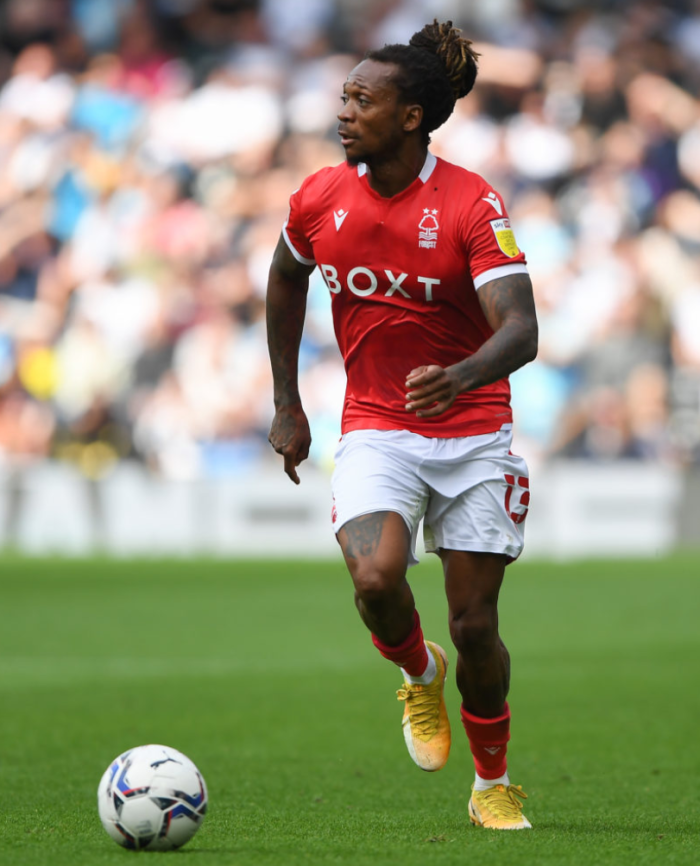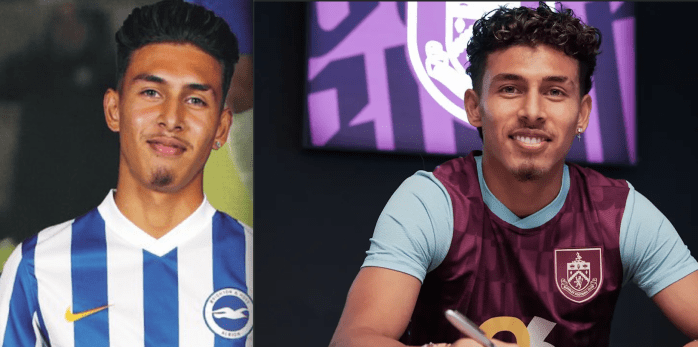
‘Model professional’ Stephen Ward loved his season at Brighton

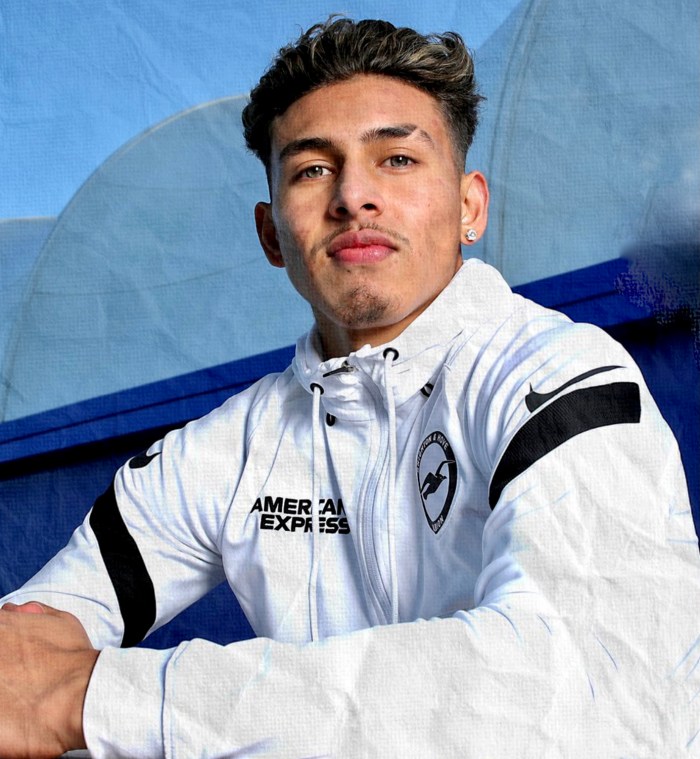
STEPHEN WARD’S view from the bench as Brighton sealed Wolves’ relegation fate at the Amex on 4 May 2013 was enough to convince him it was a place he’d like to get to know better.

Rather than drop down to the third tier with Kenny Jackett’s side, Ward switched from Molineux to the Albion to join Oscar Garcia’s promotion hopefuls.

Having won the Championship with Wolves in 2009, Republic of Ireland international left-back Ward brought ideal experience to a Brighton set-up looking to mount another tilt at promotion after missing out at the play-off semi-finals stage the season before.

The defender made 47 appearances, chipped in with four goals, and was runner-up in the player of the season awards as Albion once again fell at the play-off semi-finals hurdle.

Nonetheless, it looked like Ward would make his stay permanent – until newly-promoted Burnley stepped in and offered him a more immediate return to Premier League football.

Convinced that Brighton had clinched the deal for Ward, boss Jackett told the local press: “The clubs have agreed and now it’s down to Brighton and the player. It is a good move for him, he did well last year, they got into the top six and he was part of it. They have wanted him all along.

“All of us thank him for what he’s done and wish him all the best. He got a club reasonably quickly last season which shows the standard of the player.

“He didn’t let them down. He’s got a good reputation in the Championship and has been professional here. He had been good enough to get a good move last year and he has got a good one now.”

According to the player’s agent, if Albion’s head of football David Burke hadn’t dithered over a deal, Ward would have signed on the dotted line for the Seagulls.

But his prevarication opened the door to Sean Dyche’s Clarets and Ward headed to Turf Moor instead, returning to play at the elite level at which he’d previously made 94 appearances for Wolves between 2009 and 2012.

Ward had also played 128 times at Championship level for Wanderers having joined them aged 21 in 2007, moving over from his native Ireland, where he had spent four years with League of Ireland side Bohemians.

After making his Albion debut in a 1-0 win at Birmingham, Ward told BBC Radio Sussex: “From watching them last year and playing against them, it is a team I admire for how they play the game.

“Every footballer wants to play in a team that likes to pass the ball and keeps the ball. On the last day of the season, they played us (Wolves) off the park. It was one of the reasons I was really excited about the move.”

Although he had enjoyed success at Wolves, he had also been part of back-to-back relegations and he said: “I felt I needed a fresh start and I am thankful Brighton gave me that. I hope I can repay their faith. Hopefully I can help the team go one better than last year.”

Reflecting on his time with the Albion in a matchday programme article, Ward was complimentary about Garcia, saying: “I loved the mentality of the manager, the environment, and I learnt a lot as a result.

“He wanted to play out from the back, he wanted us to be really expansive, and that allowed me to get forward, which I really enjoyed doing.

“I learnt a lot from the manager and would speak to him about his time at Barcelona.

“I was lucky that I also had experienced players around me in defence like Matty Upson, who was great for me, and Bruno. He’s one of the best guys I’ve met in football – he was so welcoming to me and my family.”

Although principally in the side to defend, Ward also scored four times for the Seagulls, one coming in the impressive 4-1 win at Leicester and another in the crucial 2-1 win at Nottingham Forest that helped to clinch a spot in the play-offs.

“Going to Brighton was great for me; I had a fantastic year, a really enjoyable time, and I don’t have a single bad word to say about the club or the city,” he said. “I enjoyed every minute.”

After five years at Turf Moor, Ward went on to play for Stoke City (when Nathan Jones was boss), Ipswich Town and Walsall, hanging up his boots in 2022. He also made 50 appearances for Republic of Ireland, playing for the national side at the Euro 2012 and 2016 finals.

At the end of a 19-year playing career, Ward had clocked up 570 senior appearances.

Disappointed to see the player retire, Walsall manager Michael Flynn told BBC Radio WM: “He’s somebody I’d love to have worked with for a longer period. He’s a breath of fresh air. But, unfortunately, he’s at the age where he thinks his body’s had enough.

“I’ve got nothing but praise for Stephen Ward. He’s had a fantastic career and is still working hard day in, day out and he’s a model professional.

“The way he’s handled himself has been exemplary and I don’t expect anything else from someone who’s had the career he’s had because it’s been an unbelievable career.”

During the 2022-23 season, Ward was part-time assistant manager to former Wolves teammate Roger Johnson at National League North side Brackley Town.

His next steps were in football administration and he achieved a Masters degree in sports directorship through the University of East London while serving as director of football at National League side Solihull Moors. Head coach from June 2023 to January 2025 was Andrew Whing, who played more than 100 games for the Albion between 2006 and 2011.

Stepping down from the role in August 2025 to spend more time with his family, Ward said: “We shared some great moments together most notably watching our club appear at Wembley Stadium in the play-off final.”

Moors missed out on the chance to gain a first ever promotion to the Football League in May 2024, beaten in a penalty shootout by Bromley after twice coming from behind to take the game to extra time and then penalties.

Agonisingly, a week later, Moors lost on penalties again, this time in the FA Trophy final at Wembley, Gateshead edging it 5-4 after the sides were level on 2-2.

“It’s a brilliant club and a very special place to work but it’s time to step away and recharge the batteries,” said Ward. “Football is a fast-moving industry and it can be tough to find the right balance.”

An Albion promotion winner but Bong didn’t chime at Forest

IT WAS WHILE I was adding the DW Stadium, Wigan, to my list of grounds visited that I first noticed Gaetan Bong.

On the afternoon of 18 April 2015, Bong was playing AGAINST Brighton in one of 14 appearances for Wigan Athletic having moved to the UK on a short term contract from Greek side Olympiakos three months earlier.

Bong up against Inigo Calderon while playing for Wigan

Within three months, he was playing FOR Brighton, joining Chris Hughton’s side as a free agent.

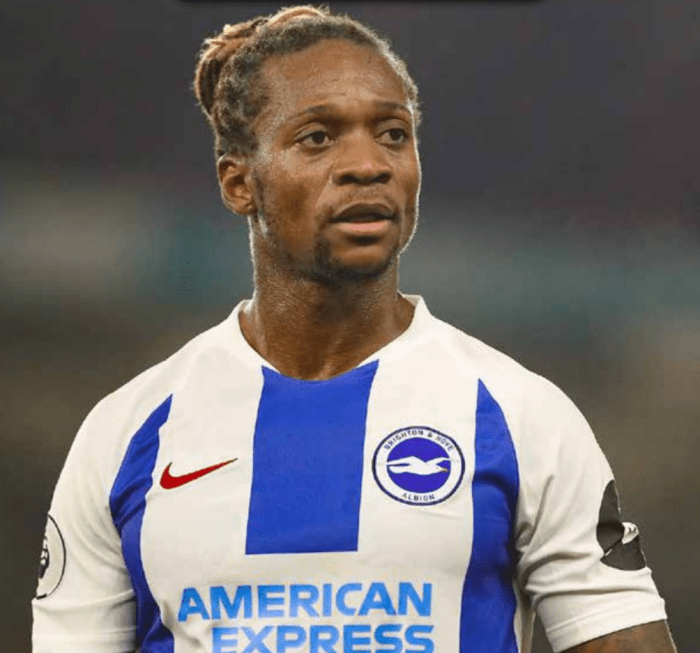
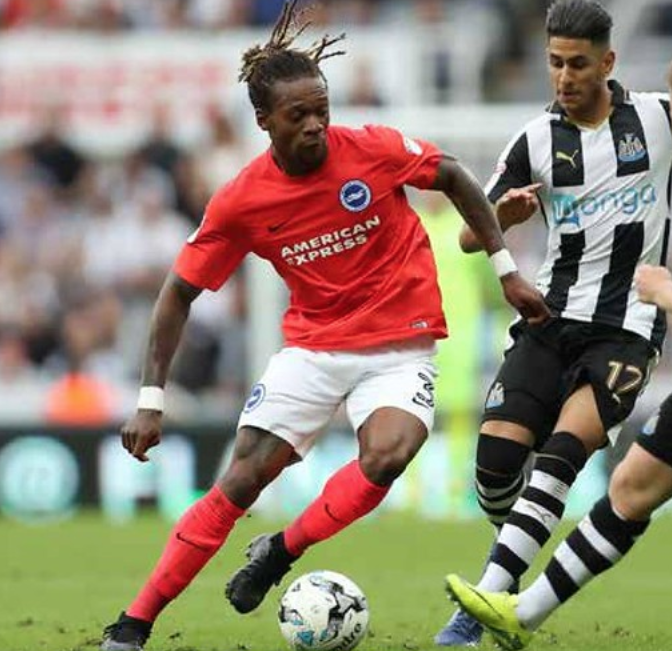
The Cameroon international, who had played top flight football in France and Greece, became a regular in the left-back berth for four seasons, including being a Championship promotion winner in 2017, playing 102 times for Brighton, including 51 games in the Premier League.

Bong was the first permanent left-back Albion had signed since the days of Marcos Painter, having had three successive seasons of season-long loan players in that position: Wayne Bridge, Stephen Ward and Joe Bennett.

“Gaetan is a player that we were aware of while he was at Olympiakos,” said Hughton, on signing the player. “He is very athletic, he is a natural left-sided player and it is important to have that balance in the squad.”

Back to that bottom-of-the-table battle in April, though, and Bong was on the left of a back four that also included a certain Harry Maguire (on loan from Hull City).

It was former player Gary Caldwell’s first match in charge after the sacking of Malky Mackay and both sides were struggling to avoid the drop from the Championship.

I probably decided to go to that game anticipating a win for Brighton because Wigan hadn’t won at home since the previous August! But, as sure as eggs is eggs when watching the Albion, Athletic finally registered another win in front of their own supporters: 2-1. It’s always the hope that kills you!

Albion played Player of the Season full-back Inigo Calderon as a makeshift right-winger that day and he got so little change out of his attempts to get past Athletic’s left-back that he was eventually subbed off.

In spite of the result that day, Albion managed to stay up while Wigan went down with Blackpool and Millwall.

Bong made his Brighton debut in the season-opener at home to Nottingham Forest (a 1-0 win courtesy of a Kazenga LuaLua goal), the club he would join four and a half years later, after he’d lost his regular place at the Albion.

Introduced to Brighton fans in the programme for that match, Bong said: “Once I had spoken to the manager and learned of the plans for the club, then I wanted to be part of this adventure.

“I could have gone elsewhere, I had offers, but I was excited by coming to Brighton. Now I just want to get playing and show the fans what I am about.”

Hughton had problems at left-back in the 2015-16 season when Bong was out for four months with a thigh injury, and back-up Liam Rosenior was also sidelined. Inigo Calderon filled in on occasion and Liam Ridgewell was signed on a short-term deal from Portland Timbers. Although Bong returned to the squad in March, the rest of the season was mainly a watching brief from the bench as Rosenior played out the season in that position.

Back as first choice the following season, a knee injury robbed him of his place for several weeks – loan signing Sebastien Pocognoli filled in – but he still played in 28 matches as the Albion finally won promotion to the Premier League.

Born on 25 April 1988 in Sackbayeme, a suburb of Cameroon’s capital Yaounde, he moved to France as a teenager to join Metz, where he rose through their youth ranks before making his professional debut at 17.

Injuries meant his progress wasn’t as rapid as it might have been but he had a successful loan spell with French second tier side Tours, and then moved to Valenciennes in 2009.

Bong won an under-21 cap for France but went on to win 16 caps for Cameroon. He was in their 2010 World Cup squad but only played in their final group game against Holland. Not entirely happy with the country’s set-up, he briefly retired from international football but returned when renowned former Dutch international Clarence Seedorf was appointed head coach in 2018. Bong even captained his country in a 1-0 friendly defeat against Brazil played at MK Dons in November 2018.

Cameroon international Bong

Bong played for Valenciennes for four years (for the first two playing under former Forest boss Philippe Montanier) and made 117 appearances.

Greek club Olympiakos took him to Athens in August 2013 and he went on to establish himself as a first-team regular, including playing in four Champions League matches and featuring in their league title winning side of 2013-14, before falling out with a new head coach.

Asked by The Athletic to sum up Bong’s attributes, his former Brighton teammate, David Stockdale said: “He comes to win a game. Nothing else. He is strong, he is athletic, he is enthusiastic.

“He is a good person to have around a squad, because he is very professional, he always does his homework before games and generally just looks after himself. He is just strong — that is the word. He is strong, reliable and does what it says on the tin.”

Stockdale added: “He had that drive; that inner drive. He was always going off to do his own work in the gym, to make sure he was properly fit all the time.

“He is one who will say what he wants to say when he feels he needs to. He does know a lot about football, he certainly knows a lot about his position and what he needs to get out of the players around him.”

The goalkeeper pointed out that Bong always had a desire to do well for the team, pointing out: “He was very much a mainstay of the side when I was at Brighton. He is a player you can rely on.”

Unfortunately, a small part of Bong’s time playing in Albion’s colours will also be remembered for an unsavoury incident when he alleged he was racially abused by West Brom’s former Burnley striker Jay Rodriguez.

Rodriguez appeared to pinch his nose after the players clashed during WBA’s 2-0 win over the Seagulls in January 2018, and Bong spoke to the referee about what he said he heard.

A subsequent FA investigation into the matter said the allegation was “not proven” and added there was “no suggestion by any party involved in this case that this was a malicious or fabricated complaint”.

Nevertheless, Bong insisted he heard Rodriguez say: “You’re black and you stink.” The striker denied what he described as a “false allegation” – he claimed he had instead said “breath fucking stinks”.

The dispute led Bong to issue a statement in which he said: “Please let me be clear: I know what I heard and I did not mishear. My conscience in raising the complaint is therefore entirely clear.

“This was my first such experience in more than three years in this country and I would never seek to bring a false charge against a fellow professional. Those who have accused me of doing that do not know me.

“Equally those who have expressed an opinion were not there on the pitch at the time and only Mr Rodriguez and I know exactly what was said and I stand by my original complaint.”

If everyone involved thought that was the end of the matter, Burnley fans had other ideas and I was at Turf Moor in April that year when the home ‘support’ disgracefully booed Bong every time he got the ball.

Albion manager Chris Hughton described their reaction as “shameful” and said of the player: “He’s an incredibly disciplined and straight individual – as honest a person as you will meet. It’s something that happened, it’s not nice at all and of course he’s big enough and strong enough to cope with it. As showed by his performance (the game finished 0-0).”

The respect Albion held for the player was best demonstrated as his time at the club was coming to an end. Bong was going to be a free agent after four years with the club but was handed a one-year extension shortly before Hughton was replaced by Graham Potter.

Chief executive Paul Barber explained to The Argus: “We all felt Gaetan had earned another contract. It is a position we felt we had an opportunity with a player we know, who is a fantastic character.

“The supporters will see what Gaetan does on the pitch — solid, consistent, strong, difficult to get around — but what they won’t know is off the pitch he is a very high-quality person, someone who is very respected and liked throughout the club. Just a decent man, supportive of the young players.

“Those sort of attributes and qualities are so valuable in a club of our size and for the coaching staff and the players. You know whether he plays 10 games, 20 games or 38 games, he is going to be fit, reliable, positive, focused, enthusiastic, consistent and decent.

“All of those things, if you were going out to recruit a left-back, you would be looking for.”

Ultimately, Potter preferred Dan Burn or Bernardo in that position and Bong moved on having made 91 starts and 11 substitute appearances, but only four appearances from the bench in the Premier League under Potter.

His final appearance for Brighton came in the disappointing 1-0 FA Cup third round home defeat to Championship side Sheffield Wednesday. Sadly, when he was subbed off in the 71st minute, there was a chorus of ironic cheers from the home crowd.

Nevertheless, Potter said of the player: “I have only worked with Gaetan for six months or so, but I do know all about the part he played in helping the club get to the Premier League and then establish itself at this level. I’m sure his contribution over the last four years will not be forgotten by our supporters.”

Somewhat bizarrely, it appears that Bong’s move to Nottingham Forest (in the Championship) wasn’t exactly welcomed by head coach Sabri Lamouchi and Nick Miller for The Athletic was brutal in his description of the player’s debut.

“Bong lasted 59 minutes against Charlton, a harrowing hour in which he lost his man for the only goal in the first half, and his eventual removal felt more like an act of mercy than a substitution.”

He didn’t even make the bench for the rest of the season and it was only when his old boss Hughton arrived at the City Ground that he got back into the Forest first team. He played 11 matches under Hughton but only seven in 2021-22 when Hughton’s successor Steve Cooper got them promotion via a play-off final win over Huddersfield Town.

Even so, Cooper was appreciative of the defender’s contributions off the pitch. “We have a good mix of old players – good role models, like Gaetan Bong,” he told The Athletic.

“He doesn’t play much but is a positive influence and I’m sure has conversations with the younger players, which I encourage. The learning players do with each other is a powerful thing.”

After hanging up his boots, Bong set up Ballers & Family Consulting Ltd, a consulting agency which, according to his LinkedIn profile, helps aspiring players to optimise their potential, families to understand the demands of professional football and football clubs to manage/avoid issues concerning certain players.

200th Andy Ritchie goal at crumbling Goldstone Ground

WHEN ANDY RITCHIE scored at the Goldstone Ground on 7 September 1996, it was a very different place to the stadium he’d graced as Player of the Year 14 years previously.

Ritchie was in his 20th season as a professional when he scored his 200th career goal for Scarborough against his former Albion teammate Jimmy Case’s Seagulls in a Nationwide Division 3 match.

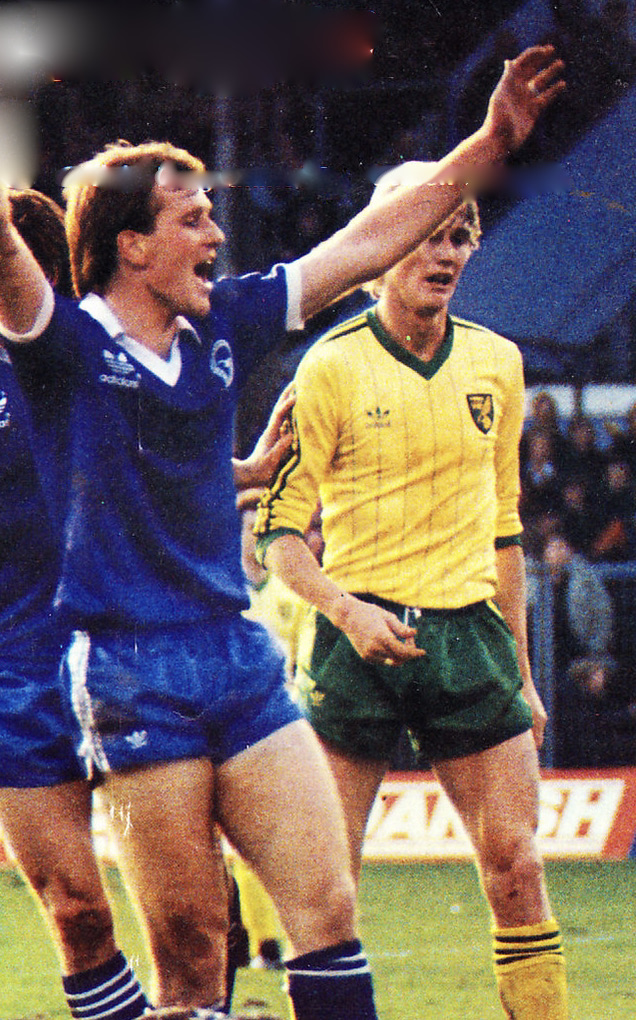
Just 4,008 hardy souls dotted around the crumbling old stadium supported the Albion that afternoon compared to the sell-out 28,800 crowd who packed in to see Ritchie’s last home match in Albion’s attack when they beat Norwich City 1-0, courtesy of a Case goal, in a quarter-final of the 1983 FA Cup.

Ritchie’s last endeavours in Albion’s colours came a week later and, ironically, were in front of 36,700 at Old Trafford on 19 March 1983 when he had a goal disallowed against the club who sold him to the Seagulls for what at the time was a record £500,000.

The curiosity of that deal was covered in my 2017 blog post about Ritchie and I’ve since discovered how a number of observers were dumbfounded by Dave Sexton’s decision to let him leave United.

That Sexton more often preferred the strike pairing of Joe Jordan and Jimmy Greenhoff baffled football writer Mike Anderson who, after Ritchie’s switch to the Albion, detailed how the departed forward’s numbers were more favourable.

“Since making his debut for United against Everton three seasons ago he has proved himself to be a more consistent marksman than the Scottish international,” wrote Anderson.

“By the end of the 1978-9 season Ritchie had scored 10 goals in only 20 full League appearances, compared with Jordan’s nine goals in 44 games. And when last season finished he had hit 13 goals in 23 full games (plus six substitute appearances), whereas Jordan had taken his tally to only 22 goals in 76 games.”

Anderson’s opinion was shared by Tony Kinsella, writing in When Saturday Comes in November 1997, he described Ritchie as “a muscular whippet of a striker with two scorching feet, a delicious first touch, and a bonce of solid granite”.

Kinsella wrote: “In four frustrating campaigns, Ritchie notched an admirable average of a goal every two games, a somewhat superior rate to his cohorts. In retrospect, I guess Ritchie was in the right place at the wrong time. He possessed more skill than Jordan and cut a more daunting physical presence than Greenhoff, but fell short of both when it came to vice versa.

“Sexton, notorious for fielding sides greyer than a Mancunian sky, had the courage to blood a teenage goalkeeper, Gary Bailey, but got cold feet when dealing with the loose cannon that was Andy Ritchie.”

A young Ritchie at Manchester United

In a lengthy chat for the Fore Four 2 podcast, Ritchie revealed how it was Steve Coppell who took him under his wing as a newcomer to the United first team and ensured he got fixed up with a pension; something Ritchie hadn’t even considered.

And his roommate at United was wandering winger Mickey Thomas, who ended up following him to Brighton and also to Leeds!

While Sexton may have had reservations about Ritchie, plenty of other managers were keen to take him from United. Tommy Docherty, who had first signed Ritchie for the Red Devils, had wanted to take him to Queen’s Park Rangers but he was sacked as Rangers’ manager before a bid was in the offing. Chelsea and Newcastle made inquiries too.

Aston Villa offered United £350,000 for him but, after attending with his dad a face-to-face meeting with the glum-faced manager Ron Saunders, they turned down the move feeling he hadn’t conveyed that he really wanted him.

Ritchie also declared: “United were my home town team and I loved it at Old Trafford.

“It had been my aim since joining the United staff to be a success in their first team. I would have got a large amount of money had I gone to Villa, but I put self-satisfaction before money. I had received a lot of encouragement from the training staff at Old Trafford and I wanted to justify their faith in me by doing well at United.

“I knew that a transfer would mean adjusting to a side playing a different style of football. I felt that I might just as well spend that time proving I was worthy of a place at United where I was part of possibly the best club in the country. Unfortunately, I found myself playing reserve team football again until Brighton came in for me.”

In a 2019 interview with the Albion website, Ritchie remembered: “We always had a good team spirit and we all used to go out together. Everyone played golf and we’d be out in the nightclubs, Bonsoir and others where you had to wipe your feet on the way out.

“Great times, absolutely fantastic. And the spirit transferred itself onto the pitch. I used to joke at Q&As that we had so many great individuals but put us together and we were crap because the social life got in the way of our football. But no, it was a fantastic club to be involved in.”

Ritchie attended a rugby-playing grammar school and played cricket and hockey for Cheshire, only turning to football at 13 or 14. He played for Manchester and Stockport Boys and scored six goals in nine games for England schoolboys under skipper Brendan Ormsby, who went on to play for Aston Villa.

In the 1983 Shoot! album, Ritchie explained: “It was while I was playing for Stockport Boys that I first realised I had a chance of a career as a professional footballer.

“I was selected for the England Under-15 side and played at Wembley Stadium. The first was against Wales. We won 4-2 and I scored a couple of goals. I then scored another when England beat France 6-1. They were great moments for me and my family.

“Appearing for England was definitely the highlight of my young career but I also enjoyed playing for Stockport and in local Sunday football.

“I played for a team called Whitehill, who were sponsored by Manchester City. It was then that I realised I could play for the Maine Road club.

“I had trials with Leeds United, Burnley and Aston Villa, but I only wanted to play for City.”

It was while playing for Stockport Boys v Manchester Boys that former United captain Johnny Carey, scouting for his old club, spotted Ritchie and made an approach.

“I went down to The Cliff (United’s training ground) and never looked back,” he said. “It didn’t take me very long to soak in the atmosphere and appreciate the tradition and name of Manchester United and, in the end, I was quite happy to sign for the Old Trafford club.”

Ritchie was 15 when he put pen to paper, and he turned professional on 5th December 1977.

Handed his first start in United’s first team shortly after his 17th birthday, he played four matches without scoring but had caught the eye of the England Youth selectors. He made four appearances under joint managers Brian Clough and Ken Burton, making his debut in a 3-1 win over France on 8 February 1978. England drew the return leg of that UEFA Youth tournament preliminary match 0-0.

He went with the England squad to Poland for the 31st UEFA Youth tournament in May 1978, played in a 1-1 draw v Turkey and a 1-0 defeat v Spain but a trapped nerve in his hip meant he sat out the 2-0 defeat to Poland that meant England didn’t qualify from their group. That squad included Terry Fenwick and Vince Hilaire, Tony Gale and Ray Ranson.

“The following year I was selected for England Youth again for the Mini World Cup in Austria. Unfortunately, I went over on my ankle in training and could not make the trip,” Ritchie recalled.

Ritchie hoped his move to Brighton might boost his chances of gaining a full England cap, but he ended up winning a solitary England under-21 cap when he was called up by the same Dave Sexton who’d sold him from United! “That really was a bit bizarre,” Ritchie later recalled.

He featured in a 2-2 draw with Poland at West Ham’s Boleyn Ground on 7 April 1982. Fellow striker Mark Hateley scored both England’s goals.

Ritchie in action for Leeds against Brighton

Ritchie’s time with Leeds was something of a mixed bag. The record books show he scored 44 times in 159 matches after he was signed by player-manager Eddie Gray. Playing in the second tier at the time, Leeds still had Gray, Peter Lorimer and David Harvey from the Revie era but Ritchie joined a mainly young side where the likes of John Sheridan, Tommy Wright and Scott Sellars were developing.

As Tony Hill observed on motforum.com: “Much of his time at Leeds was spent in dispute over his contract and for over a year he was on a weekly contract before moving to Oldham Athletic for £50,000 in August 1987.”

It was at Oldham where Ritchie really made his mark, scoring 82 goals in 217 league games (including 30 as a substitute) and helping them reach the League Cup Final and the FA Cup semi-final in 1990 and to win the old Second Division in 1991.

In 2020 the club’s official website declared: “Andy Ritchie is regarded as a club legend at Oldham Athletic and one of the greatest players to play for the club, having served Latics as a player as well as having a spell as manager.”

That goalscoring return to the Goldstone with Scarborough in early September 1996 came a year after he had joined the Seadogs as player coach on a free transfer. It was one of 17 he netted in the league from 59 starts and nine appearances from the bench.

By then a couple of months short of his 36th birthday, thankfully the Seagulls prevailed 3-2 courtesy of goals from Stuart Storer and two from Craig Maskell (the 99th and 100th of his career).

It certainly wasn’t the first time Ritchie had netted against the Seagulls. Twenty months after departing the Goldstone he scored the only goal of the game, tapping in from eight yards out, when Leeds beat the Seagulls at Elland Road.

He also scored for Oldham to knock Albion out of the FA Cup when the Latics won 2-1 in the fourth round on 27 January 1990. In a 1-1 draw at the Goldstone two months later, Ritchie missed a penalty but he made amends the following season scoring home and away against the Albion, netting twice in their 1 December 1990 6-1 thumping of the Seagulls on Oldham’s plastic pitch and scoring both when the Latics left the Goldstone 2-1 winners on 2 March.

He returned to Oldham on 21 February 1997 after Neil Warnock took him to Boundary Park as his player-assistant manager. He scored three times in 32 appearances, many of which were as a sub.

But when Warnock left to join Bury at the end of the following season, Ritchie was appointed as his successor. He managed 179 games, winning 59, drawing 45 and losing 75 with a win percentage of 32.96%.

After being sacked in 2001, he was out of work for three months before being appointed academy director at Leeds at a time when fellow ex-Man Utd player and coach Brian Kidd was head coach under Terry Venables and David O’Leary.

He found himself out of work again in 2003 when Peter Reid took charge but six months later he joined Barnsley, initially as academy manager before becoming first team coach under Paul Hart.

When Hart left Barnsley in March 2005, Ritchie was appointed caretaker manager and then landed the position permanently in two months later.

At the end of the following season, he led the club to a penalty shoot-out win over Swansea City in the League One play-off final at the Millennium Stadium, Cardiff.

But the Championship season was only four months old when Ritchie was relieved of his duties with the Tykes struggling in the relegation zone.

Four months later, he was appointed manager of League One Huddersfield Town and told the club’s website: “There’s such massive potential here.

“There is no doubt that the club is geared up for promotion to the Championship and that has to be the aim now. It’s now a case of getting the players re-motivated and once we get into the Championship, we can reassess the situation.

“I tasted promotion last season and it was a great feeling – now I want to do it again as soon as possible.”

Unfortunately, he wasn’t able to steer the Terriers to that goal and, after a 4-1 defeat against his former employers Oldham, he parted company in April 2008.

They won only 22 of his 51 games in charge although they did enjoy their best FA Cup run for 10 years which only came to an end in the fifth round when they were beaten 3-1 by a Chelsea side under Avram Grant that included Wayne Bridge and Steve Sidwell.

After all that, Ritchie returned in a watching brief to where it all began: at Old Trafford.

On matchdays, he worked as an ambassador in a hospitality lounge, and contributed to MUTV and Radio Manchester.

‘Rooster’ became pivotal to developing young players

FORMER BRIGHTON apprentice Kevin Russell enjoyed a 20-year playing career in which he scored 105 goals in 552 games but he had forgettable spells at three South Coast clubs.

As we learned in my previous blog post, England Youth international Russell scored goals for Albion’s youth team and reserves but moved on before making the first team after a falling out with manager Chris Cattlin.

He got on better with Alan Ball at Portsmouth but only played eight games in three years at Pompey.

In March 1994, he was back in the south after a £125,000 move from Burnley to AFC Bournemouth. Unfortunately, his time at Dean Court coincided with dismal form on the pitch and financial pressures off it.

Russell was signed by Tony Pulis, who, it turned out, was in the final throes of his first spell as a manager, having succeeded Harry Redknapp at Dean Court.

The side had a dreadful run of form the month after Russell joined, suffering five defeats and three draws in eight matches. It was in the last of these that Russell finally got on the scoresheet for the Cherries as they picked up a point in a 1-1 draw at Hull City (his only goal in 17 matches).

While Mark McGhee won the Division Two title with Reading and Russell’s former club Burnley won promotion via a play-off final win over Stockport County, the Cherries finished a disappointing 17th in the table.

Portsmouth-born Russell had joined a squad (above) that included a number of players with past or future Brighton connections: Gary Chivers, Mark Morris, Paul Wood, Steve Cotterill and Warren Aspinall.

Cotterill recalled in a 2023 interview with gloucestershirelive.co.uk: “I know Rooster very well. I played with him at Bournemouth and he’s a great guy and a good coach.

“I liked him when I played with him because he used to stick crosses on a sixpence for me. I remember scoring a few goals from his crosses.”

Back in 1994, Pulis was sacked early on in the new season and former player Mel Machin took over, but the Cherries had managed only one win and a draw in their first 14 matches by the time they met the Albion at the Goldstone on 2 November 1994.

The game ended in a 0-0 draw and, although they won their next game, by Christmas they’d only got nine points from 21 games. Staring down the barrel of relegation, a last ditch revival in fortunes saw the season go down in memory as ‘The Great Escape’ because Bournemouth managed to avoided the drop by two points.

Russell, who had scored twice in 18 matches, had moved on by then and according to Aspinall, in a September 2011 interview with the Bournemouth Daily Echo: “Mel wanted rid of myself and Kevin Russell.”
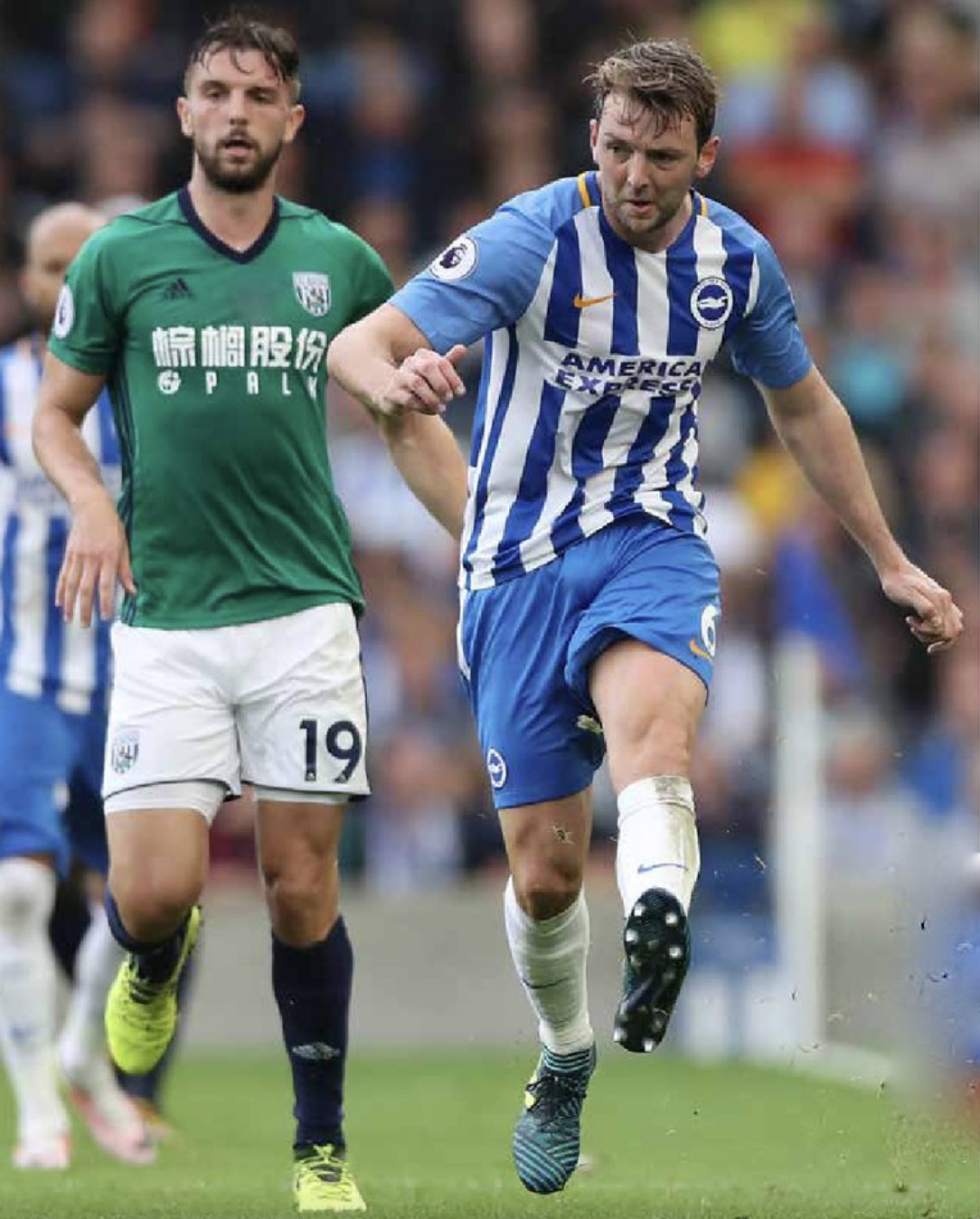
Russell, who later had a habit of scoring against the Cherries – he hit four in 10 games against them – said after a 2001 encounter between Wrexham and Bournemouth: “The club was in a bad state when I was there, but Mel Machin and Sean O’Driscoll have turned things round and you know you’re always going to have a hard game against them.

“I don’t try any harder than normal when I play against them, but because I am playing up front and not in midfield or out wide, I get more chances to score.”
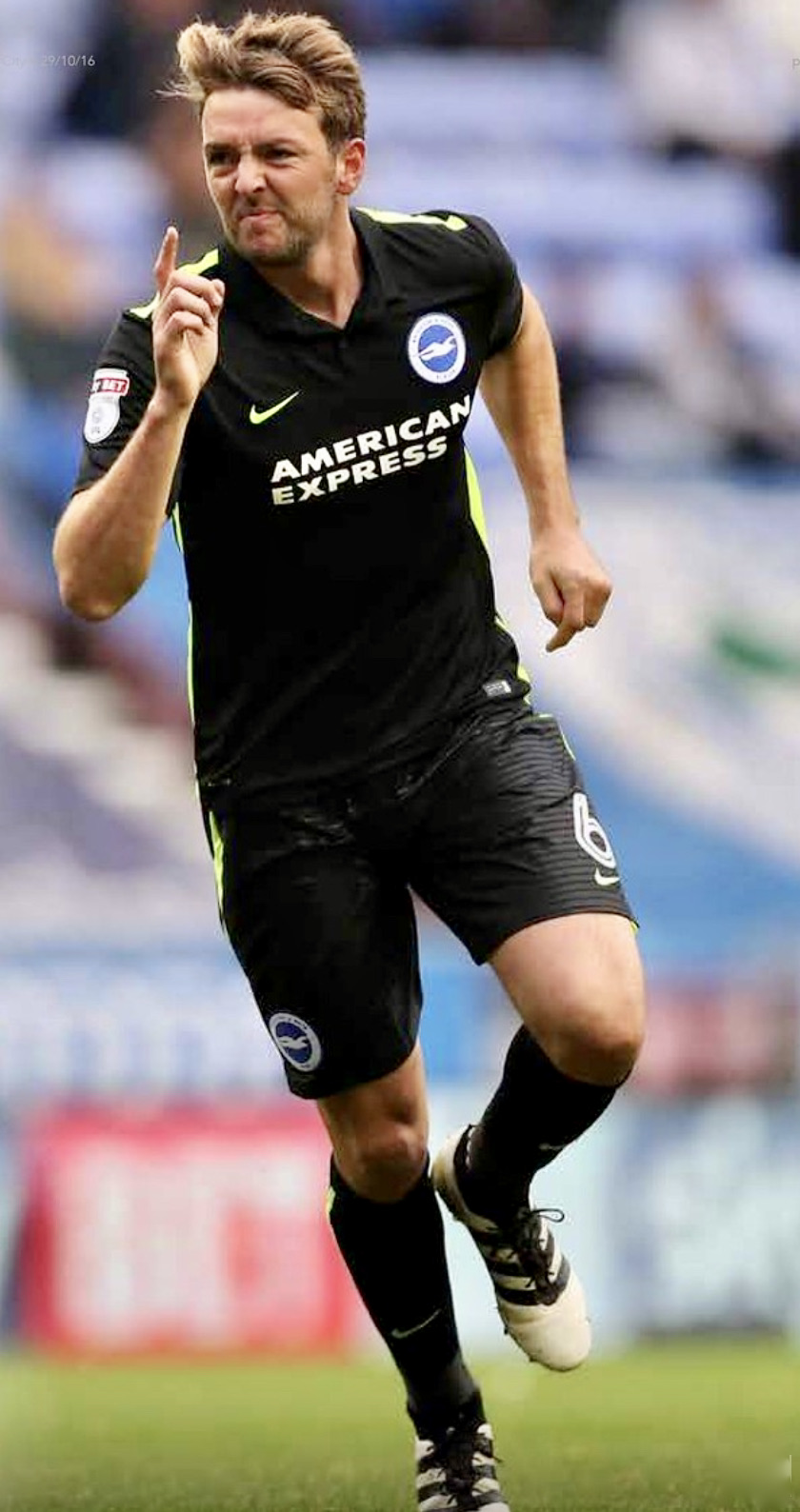
Aspinall had a couple of trial matches for the Albion before being packed off to Carlisle, while in February 1995 Russell joined First Division strugglers Notts County where he was reunited with former Leicester teammates Gary Mills and Phil Turner.

Howard Kendall was in charge at the time but County, who got through four managers that season (including Russell Slade for four months), finished bottom of the table having won only nine matches all season.

Russell then returned to his spiritual home in north Wales and, over the next seven years, played a further 240 matches for Wrexham, scoring 23 goals along the way.

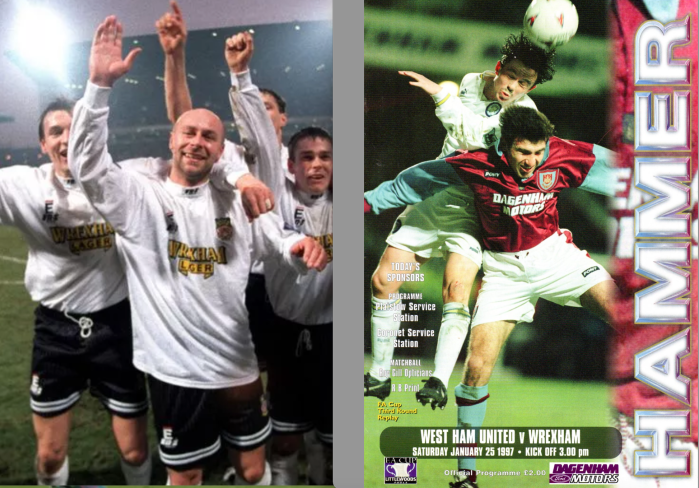
One of the most memorable was a last-minute winner at the Boleyn Ground in January 1997 as Wrexham pulled off a FA Cup giant-killing against West Ham. Having held the Hammers to a 1-1 draw at the Racecourse Ground, Russell went on as a 75th minute sub in the replay and scored a screamer in the dying seconds against a side that included Rio Ferdinand and Frank Lampard.

While the Dragons fans were elated, protesting home supporters spilled onto the pitch in anger at Harry Redknapp’s side’s performance and lowly Premier League position.

Slaven Bilic, later West Ham’s manager, was playing alongside Ferdinand and remembered the game thus: “We were struggling. We weren’t conceding a lot of goals but we couldn’t score and then Wrexham came and they scored at the end of the game, a great goal from 25 yards. After that we signed Johnny Hartson and Paul Kitson and we stayed up.”

When Russell’s playing days were over, he stayed on as a coach and worked as assistant manager under Denis Smith, taking Wrexham to promotion from the Third Division in 2002-03 and winning the LDV (English Football League) trophy in 2005.

That same year his loyalty and service to the club were rewarded with a pre-season testimonial against Manchester United – managed by his former teammate and captain Darren Ferguson’s dad!

Russell played the first 14 minutes of the match against a largely youthful United before being replaced by Ferguson. United won the game 3-1 with goals from Giuseppe Rossi, Liam Miller and Frazier Campbell and one of their subs that day was Paul McShane.

“I can’t speak highly enough of Alex for bringing his side here for me,” said Russell. “I’ve been treated to a special team with a lot of quality. I know there were a lot of young players out there, but you could see the potential they’ve got is immense.”

A crowd of nearly 6,000 watched the match and Wrexham secretary Geraint Parry said: “It just shows how well respected Kevin Russell is after his many years in the game.”

Smith and Russell were sacked in January 2007 but he went straight to Peterborough with Ferguson, who had been appointed Posh player-manager.

“We had an unbelievable time at Peterborough,” Russell told John Hutchinson. “We took them from the bottom league to the Championship in successive seasons in 2008 and 2009.”

There was a brief and unsuccessful spell for the managerial duo at Preston North End in 2010 – they were sacked four days after Christmas with Preston bottom of the Championship – but they weren’t out of work for long because they were re-appointed at Peterborough the following month.

They lost their first game back in charge though – to Brighton. Albion, on course to be league one champions under Gus Poyet that season, beat Posh 3-1: Chris Wood two and Elliott Bennett the scorers while Craig Noone made his home debut for the Seagulls.

After three years at Peterborough, Russell moved back to the Potteries to join the coaching staff at Stoke (below) and stayed for nine years! He mainly worked with the under 18s and under 21s but also helped with the first team in between managerial changes in 2018 and 2019.

In May 2023, Russell joined Cheltenham Town as assistant manager to Wade Elliott. He was in caretaker charge for two matches when Elliott was sacked four months later but didn’t want the job on a permanent basis and left the club in October 2023 when Darrell Clarke was appointed.

Robins chairman David Bloxham said: “I am extremely grateful to Kevin for all his hard work and dedication and for his willingness to step in to manage the side in an extremely difficult period between Wade leaving and Darrell’s appointment.”

Once again, Russell wasn’t out of work for long. In January 2024, he was reunited with former Stoke technical director Mark Cartwright, a former goalkeeper who played 15 matches in Brighton’s 2000-01 promotion winning side, at Huddersfield Town.

Back in the game at Huddersfield Town

He was appointed as B team manager with a glowing endorsement from Cartwright, now Town’s sporting director, who said: “Not only is Kevin a great coach, but he also has a brilliant ability to develop relationships with young players.

“He’s a lively character and he knows how to relate to individuals to get the best out of them. Whilst at Stoke City, he played the pivotal role in developing players such as Nathan Collins, Harry Souttar, Tyrese Campbell, and Josh Tymon, alongside many others.

“He’s been so successful in doing that because he has a great understanding of the qualities that senior coaching staff want to see in young players.”

Cattlin bust-up didn’t stop goalscoring ‘Rooster’ Russell

BEING LET GO by the Albion as an apprentice didn’t stop Kevin Russell from going on to enjoy a multi-club league career as a player and a coach involved in no fewer than eight play-off finals and promotions.

A talented teenager good enough to earn selection for the England Youth team, Russell didn’t progress beyond Brighton’s youth and reserve sides between 1982 and 1984.

Although he was a regular goalscorer in the junior sides, a falling out with manager Chris Cattlin saw him depart the club without earning a competitive first team call-up.

Hailing from Paulsgrove in north Portsmouth, Russell returned home and linked up with his hometown club to complete his scholarship under World Cup winner Alan Ball.

Ball also gave him his first team debut but he only had eight first team outings for Pompey. It wasn’t until he joined Fourth Division Wrexham for £10,000 that his career began to take off and he was in the Wrexham side that reached the 1989 play-off final where they lost 2-1 to Frank Clark’s Leyton Orient. In the first of two spells in north Wales, playing at centre forward, Russell scored an impressive 47 goals in 102 games.

Prolific goalscorer for Wrexham

An ever-present in the 1988-89 season, his 25 goals in a total of 60 league and cup matches was recognised by his peers when he was selected in the PFA divisional team of the year.

That caught the eye of David Pleat at Leicester City, then playing in the ‘old’ Second Division, and a fee of £175,000 took him to Filbert Street.

At Leicester he played wide right rather than in the centre but he still had a knack for scoring goals and he eventually became something of a cult hero with Foxes supporters for the goals he scored in City’s escape from second tier relegation in 1991 and in their run up to the 1992 play-off final.

However, only a month after joining Leicester he had to undergo a hernia operation that put him out of action for eight weeks. When fit, he was sent out on a month’s loan to Peterborough …and suffered a broken leg!

When ready to play again, his effort to resume match fitness saw him go on another month’s loan, to Fourth Division Cardiff City. In the meantime, Pleat was sacked and Gordon Lee took over. Russell returned as the Foxes fought to avoid relegation to the third tier.

Perhaps inevitably one of the vital goals he scored (on 6 April 1991) was against promotion-seeking Albion in a 3-0 win that helped the Foxes in the hunt to stave off the dreaded drop.

Two years later, after he had moved on to Burnley via Stoke City, Russell’s first goals for the Clarets (above) were also scored in a 3-0 win over the Seagulls.

Born in Portsmouth on 6 December 1966, the nickname Rooster was coined at an early age because his hair formed something of a quiff when he was a boy – ironically, he went prematurely bald but the name stuck.

Russell’s first appearances in Albion’s colours came in the early autumn of 1982 playing in the junior division of the South East Counties League. He was still a 15-year-old schoolboy at the time.

By the spring of 1983, while the Albion first team were edging towards the FA Cup final at Wembley, Russell had stepped up to the reserves, as the matchday programme reported after he’d been involved in a close game against an experienced West Ham second string.

“Kevin Russell is just sixteen and he doesn’t leave school until he has taken his examinations next month,” it said. “But at Upton Park he found himself playing against such experienced men as Trevor Brooking and Jimmy Neighbour.

“Many schoolboys would have given their right arm to play on the same field as Brooking and there was Kevin playing on equal terms.

“Although we lost 2-1, it should be remembered that in Kieran O’Regan, Mark Fleet, Matthew Wiltshire, Gerry McTeague, Gary Howlett, Chris Rodon and Kevin Russell we had seven players under 20, while the Hammers had Paul Allen, Paul Brush and Pat Holland, all of whom have played in European competition, as well as Neighbour and Brooking in their line-up.”

John Shepherd was in charge of the side, aided by John Jackson, who had been signed as goalkeeping cover and was helping out with coaching too.

Russell’s official arrival as an apprentice at Brighton earned a mention in the matchday programme for the home game with Chelsea on 3 September 1983 and he was one of five apprentices on the staff that autumn, together with Dave Ellis, Darron Gearing, Gary Mitchell and Mark Wakefield. Martin Lambert had stepped up to sign as a full professional that summer.

In those days, the youth team played home matches at Lancing College and were looked after by Shepherd and Mick Fogden before experienced George Petchey was brought in to oversee youth development and run the reserves.

It was while a Brighton player that Russell won the first of six England under-18 caps (five starts plus one as sub), and he scored in the first of them – a 2-2 draw with Austria on 6 September 1984 – and in his fourth game, six days later, which England lost 4-1 to Yugoslavia. His strike partner in that side was Manchester City’s Paul Moulden, later an Albion loanee.

With the likes of Terry Connor, Alan Young and Frank Worthington in the first team, and promising youngsters in the reserves, such as Lambert, Rodon and Michael Ring, it is perhaps not surprising that Russell couldn’t break through.

He did have one outing in first team company, though, in a testimonial match for Gary Williams: he scored (along with Young and Connor) in a 3-3 draw against an ex-Albion XI.

The same game saw defender Jim Heggarty appear: like Russell he also went on to play for Burnley without playing a competitive first team game for the Albion.

While on that theme, a frequent partner of Russell’s in the reserves was Ian Muir, another striker who slipped through Albion’s net and ended up scoring goals for Burnley.

After his departure from the Albion in October 1984, Russell made the most of the opportunity Portsmouth presented him to learn from the former Everton, Arsenal and Southampton midfield dynamo Ball.

“I had three years there under him which was fantastic,” Russell told Leicester City club historian John Hutchinson in March 2018. “He was brilliant as a coach and it was very educational. I got the rest of my (under-18) caps at Portsmouth.

“Alan Ball treated us well. I was playing men’s football at 18. I played a few games in the first team and we managed to get promoted into what is now the Premier League.”

Although disappointed to be advised to move on to get more games, Russell’s switch to north Wales was the launchpad for his career, and the beginning of an association with Wrexham that lasted many years.

“It was a gamble worth taking because it meant first team football,” said Russell. “Dixie McNeill was the manager. He used to be a famous striker for them. He was fantastic for me and was an old school kind of manager; a proper man’s manager. It was a good time.”

Mixed fortunes at Leicester City

After Russell’s part in keeping Leicester in the second tier in 1991, he found himself on the outside looking in when Brian Little replaced Gordon Lee as manager and to get some playing time went on a month’s loan to Hereford United and then spent a month at Lou Macari’s Stoke City.

But Little recalled him in February and in his first game back he once again found the net against a former club, scoring in a 2-2 draw with Portsmouth. He kept his place through to the play-off final at Wembley, where they faced Kenny Dalglish’s Blackburn Rovers, and lost to a “dodgy penalty” scored by ex-Leicester player Mike Newell.

“It was a very scrappy game. Both teams were under a lot of pressure and never really got into their rhythm,” said Russell. “We had worked so hard that season to get to where we did get to. The result was a big disappointment, but it was an occasion that I’ll never forget.”

A promotion winner with Stoke City

It also turned out to be his last game for Leicester because that summer he returned to third tier Stoke on a permanent basis. He is fondly remembered for his part in Stoke winning promotion in 1992-93, scoring six goals in 39 league and cup matches (plus 11 as a sub), but he moved on again, this time to Burnley.

Third-tier Burnley signed him from Stoke for £150,000 (or was it £95,000 – I’ve seen both prices quoted) in June 1993 and, although he only stayed for eight months at Turf Moor, he scored eight goals in 35 games (plus two as sub) in Jimmy Mullen’s Clarets side.

Two of those goals – his first for Burnley – were scored against the Albion. I was at Turf Moor for a midweek game on 14 September 1993 when Russell scored with only a minute on the clock and he got a tap-in on 47 minutes in a 3-0 stroll for the home side. Steve Davis got Burnley’s third.

Brighton were a very different club to the one Russell had left in 1984, though. With a win in a League Cup match their only victory in the opening eight matches, it was the beginning of the end of Barry Lloyd’s tumultuous reign in charge, against a backdrop of financial hardship and boardroom mismanagement off the pitch.

Russell’s habit of scoring against his former clubs manifested itself again two days after Christmas, when he netted in a 2-1 home win over Wrexham. He scored again five days later in a New Year’s Day 3-1 home win over Lancashire rivals Blackpool.

But he was not around to be part of the side promoted via the play-offs, having moved back south, to Bournemouth, for £125,000 in March 1994.

• Another move, a return to north Wales and a career in coaching as Russell’s story continues.

The midfield pivot in Albion’s rise to the Premier League

DALE STEPHENS spent nearly seven years at the Albion and was a pivotal cog in the club’s rise from the Championship to the Premier League.

He got his first taste of life at a big club playing alongside Adam Lallana and Dean Hammond….for Southampton!

That was back in 2011 when Saints won promotion from League One as runners up behind the Albion although he was an unused sub when Saints left Withdean on St George’s Day with all three points from a last gasp 2-1 win.

Stephens had gone on loan at St Mary’s from Oldham Athletic to cover an injury to Morgan Sneiderlin. “It was a strange one actually, there were only six or seven weeks left of the season,” he told the Albion matchday programme.

“Oldham weren’t really in any fear of going down or making the play-offs, so when Southampton came in for me, I was allowed to leave.”

The loanee played in six of the final 10 games of the season, making his debut against future employer Charlton Athletic alongside Lallana and Hammond.

“I looked at it almost as a trial period for being at a big club,” he said. “It was a chance for me to showcase myself. Playing for a club like Southampton at that level, with the players they had, was good for my experience and I really enjoyed being in a big-club environment.

“It was a good experience but just a shame that it was cut short by the season coming to an end.”

Explaining that everything was a level above what he’d previously been used to, Stephens added: “I didn’t feel out of place, though. I felt comfortable in that environment and it gave me the belief and the confidence that I could reach the next level.”

That didn’t turn out to be with Southampton, because his next club turned out to be the Addicks, where Chris Powell was building a side to try to get back into the Championship. Stephens found them to be similar to Saints, and like in his stint in Hampshire, he once again became a League One promotion-winner.

“I had a great first season there, helping the club win the League One title,” he recalled.

He then established himself as a Championship player before switching to the Albion in January 2014 when Andrew Crofts was ruled out by injury.

It was Nathan Jones, the former Albion player who had returned to assist Oscar Garcia, who recommended the move for Stephens, having seen him close-up when working as a coach at Charlton.

“Dale was one I recommended very strongly to the club and staked my reputation on, really,” he told the Argus. “When I was at Charlton, I saw Dale in probably three or four training sessions and a friendly at Welling and I knew then he could play at the highest level.”

Garcia needed little convincing and told the newspaper: “He’s a midfielder who can do everything and he does it all well. He’s got great physical capacity, a very good strike, he gets into the opposition box, and he is aggressive without the ball.”

It would be fair to say he was something of a Marmite player for many fans, often accused of being too slow and favouring a sideways pass. I’d say I wasn’t a fan at first but grew to appreciate his importance to the way the side played.

By his own admission, Stephens said: “With the sort of player I am, I’m not going to get fans on the edge of their seat. I’m not going to be a crowd pleaser, but I know my job and the levels I need to hit.”

Credit to him that his time at the club actually spanned the reigns of four different managers: Garcia; Sami Hyypia – although injuries prevented him appearing under him; Chris Hughton, who successfully paired him with Beram Kayal, and the early part of the Graham Potter era which saw him partner Dutchman Davy Pröpper.

Stephens’ arrival pretty much put the tin hat on the progress Rohan Ince had been making as a defensive midfielder with the Albion and, together with Kayal, he formed the key midfield duo as Albion sought to climb from the Championship under Chris Hughton.

A rare goal from Dale Stephens, this one away to West Ham

Once the promised land had been reached, Pröpper took over from Kayal but Stephens retained his place, proving a few doubters wrong about his ability to play at the higher level.

It was only with the emergence of Yves Bissouma as the consummate holding midfielder that Stephens found himself gradually edged out.

Born in Bolton on 12 June 1989, Stephens was football daft from an early age and although he had a try-out at Manchester City when he was 12, nothing further came of it.

After his final year at Ladybridge High School, he went onto a building site to do plastering and joinery.

But the coach of North Walkden, the local side for whom he was playing weekend football, wrote to Bury asking if they would take him on trial. After impressing in a work-out involving 28 triallists in front of youth team coach Chris Casper, he was invited back on a six-week trial basis.

Young Dale at Bury

“After two weeks, I played for the reserves and was offered a two-year scholarship,” Stephens explained. “I then became a first-year pro, making my debut as a sub against Peterborough, and never looked back. I was actually a striker when I joined but was quickly converted to a midfielder and I went on to play 12 first team games.”

Out of contract in 2008, he had the opportunity to step up a league and join Oldham Athletic. When game time was limited in his first season with them, he had loan spells with Droylsden, Hyde United and Rochdale, where he played alongside Will Buckley.

Back at Boundary Park, he became a regular for 18 months, in a side managed by former Brighton loanee striker Paul Dickov, and when Oldham visited Withdean in the 2010-11 season, a matchday programme article drew attention to him. “He is a big player for us in midfield,” wrote contributor Gavin Browne, sports editor of the Oldham Advertiser. “He has a great range of passing and has the ability to play at a higher level.”

A serious ankle ligament injury sustained when Albion beat bottom-of-the-table Yeovil 2-0 on 25 April 2014 sidelined him for 10 months but he returned to play a part in helping Hughton’s relegation-threatened side maintain their Championship status in 2015.

The promotion-deciding match at Middlesbrough in May 2016 will live long in the memory of those who saw it and witnessed referee Mike Dean’s controversial dismissal of Stephens four minutes after he’d brought the Albion back level with a narrow-angled header.

Once Brighton finally got to show what they could do amongst the elite, Stephens declared: “I was always confident of competing at this level but the more you play the more confident you become and the more belief you get.”

He ended up playing 99 Premier League games for the Seagulls out of a total of 223 appearances and perhaps as a mark of respect when he finally left the club for Burnley in September 2020, chairman Tony Bloom said: “He was key in both our promotion from the Championship and in establishing the club in the Premier League. 

“Albion fans will have great memories of Dale as a regular in the midfield in that promotion-winning campaign, and also for the way he comfortably adapted to life in the Premier League – where he has been a model of consistency.”

His last game for Brighton saw him wear the captain’s armband in a 4-0 Carabao Cup win over Portsmouth.

Things didn’t pan out as expected when he moved to Burnley. Due to injury, he was limited to 14 appearances in two seasons, and he told talkSPORTs Sunday Session programme: “It was disappointing on both sides. When I initially went there I was excited for the challenge, but for whatever reason it didn’t work for me or the football club.

“It probably sums my time up there, but I found out on Twitter, of all places, that I wouldn’t be getting a new contract.”

Stephens expected to find a new club, probably at Championship level, who would be interested in using his experience, and although he came close to joining Middlesbrough, and there was some interest from Watford and West Brom, nothing materialised.

“I’d played in the Premier League for the last five years, but I understood I hadn’t played much for two,” he told Andy Naylor of The Athletic. “I thought people would see the reasons behind it and that I’d get the opportunity to play at a club that wants to try to get promoted.”

Apart from being allowed to join in pre-season training at Brighton and spending six weeks with his former Bury captain Dave Challinor at Bury, he trained alone to keep up his fitness level, but, when he was unable to get fixed up with a club, in March 2023 he announced his retirement from playing.

Ongoing problems with the ankle injury suffered during his time at Brighton also contributed to his decision to retire.

In his interview with Naylor, he said he aimed to take the UEFA B licence course to try to become a coach, having spent time out following ankle surgery watching Sean Dyche’s managerial methods, as well as opposing bosses.

The goalscoring legend who slipped through Brighton’s net

ONES that got away always make for fascinating stories and a striker who went on to become a goalscoring legend slipped through the net at both Brighton and Burnley.

Ian Muir is hailed an all-time hero by fans of Tranmere Rovers for whom he scored 180 goals in all competitions during what many regard as the best period in Rovers’ history. If it hadn’t been for injury, he could have played in the Premier League and Europe for Leeds United.

But he’s barely remembered for the struggles he had to get games at Brighton, let alone in a month with the Clarets.

Success could have eluded himf it hadn’t been for the time he spent at Brighton alongside the legendary Frank Worthington. He was considering a move to non-league Maidstone United, but, when Worthington quit Brighton in the summer of 1985 to take his first step into management on the Wirral, he made Muir his first signing.

“Ian Muir was a fantastic forward with great touch,” Worthington told Spencer Vignes in an Albion matchday programme interview. “He did things in training you just wouldn’t believe, yet he wasn’t even making the side at Brighton under Chris (Cattlin).”

Cattlin had taken the youngster on after he had been given a free transfer by Birmingham City where he’d made just one League Cup appearance in the 1983-84 season under Ron Saunders. But competition for forward places was intense with the likes of initially Alan Young and Terry Connor, then Worthington, Mick Ferguson and later Alan Biley.

Muir’s first involvement with the Albion first team was as a non-playing substitute for the home 3-0 win over Leeds on 24 March 1984. He made his debut the following Saturday at Fratton Park in place of the injured Young and was brought down in the penalty area only 20 minutes into the game to earn Brighton a spot kick, which Danny Wilson successfully buried to put the Seagulls ahead.

Muir in his Brighton days

Connor had a chance to put Albion further ahead and, as the matchday programme reported, “Muir sliced wide as Connor made the opening” before Pompey began a devastating fight back.

Albion had been hoping to complete a fourth win in a row for the first time in six years, but it wasn’t to be, and, into the bargain, Muir couldn’t cap his debut with a goal, instead firing wide when set up by winger Steve Penney.

Unfortunately, this was the game when former Spurs and Arsenal centre back Willie Young, on loan from Norwich City, was given the runaround by Pompey centre forward Mark Hateley, and, courtesy of a second half blitz, the home side ran out 5-1 winners.

Alan Young was restored to the no.9 shirt in the next match and scored twice as Albion beat Grimsby Town 2-0 at the Goldstone, but Muir was drafted in to take Connor’s place in the away game at Shrewsbury Town.

That match ended in a 2-1 defeat, but the News of the World angled its report on an unlucky afternoon for the young forward.

“It just wasn’t Ian Muir’s day,” wrote reporter Brian Russell. “The Brighton teenager (actually he was 20) playing only his second league game could so easily have taken the limelight from Shrewsbury two-goal hero, 17-year-old Gerry Nardiello.

“Young Muir headed the ball home in the eighth minute from Jimmy Case’s corner, but it was ruled out (for a foul by centre-half Eric Young).”

Alan Young produced a powerful header from a Muir cross that Steve Ogrizovic (later of Liverpool and Coventry City fame, of course) saved brilliantly.

Russell continued: “With Brighton battling to cancel out Nardiello’s 23rd-minute opportunist goal, striker Muir suffered. His delicate chip left the ‘keeper clutching thin air, but Shrewsbury skipper Ross McLaren headed out.

“Brighton levelled it with 15 minutes to go (through Eric Young). But, five minutes later, Nardiello pounced on Chick Bates’s chested pass to beat Joe Corrigan.”

Muir was on the scoresheet when Albion’s reserve side began the 1984-85 season with a 1-0 win over reserve team boss George Petchey’s old club, Millwall. It was a very experienced team featuring Corrigan in goal, full-backs Chris Ramsey and Graham Pearce – who had both played for the Seagulls in the FA Cup Final the year before – along with Steve Gatting and Neil Smillie. Giles Stille and Alan Young were also in the line-up.

Muir had to wait until 13 October for his next first team opportunity when he was a non-playing sub as Albion went down 2-1 at Oxford United. He then got on as a sub for Connor in a 0-0 home draw with Barnsley, but the game was so dire that Cattlin very publicly forfeited a week’s wages.

After three goalless games straddling October and November 1984, Cattlin paired Muir with Worthington away to Blackburn on 10 November but still the drought couldn’t be breached, and Albion went down 2-0. The next game, Cattlin tried Ferguson and Connor as his front pair – same outcome: a 1-0 defeat at Leeds.

Muir didn’t get another chance with the Albion but in the spring of 1985 was sent out on loan to Lou Macari’s Swindon Town, where he played in three matches (and his teammates included Ramsey, who’d been released by Cattlin, and Garry Nelson, who would later become a promotion winner with the Seagulls).   

Somewhat curiously, when commenting on Muir’s departure from the club that summer, Cattlin said in the matchday programme: “I am sure Ian will get goals at whatever level he plays.”

Sure enough, Prenton Park eventually became his spiritual home and, although Tranmere struggled to stay in the fourth tier initially, Muir’s goalscoring exploits were synonymous with four years in which Rovers were promoted twice and appeared at Wembley five times. Highlights saw Muir score in the FA’s centenary celebrations in 1988 and an acrobatic and precise volley in Tranmere’s Leyland DAF Trophy victory over Bristol Rovers in 1990.

Muir and strike partner Jim Steel

He particularly began to prosper after Worthington’s successor, Johnny King, brought in tall target man Jim Steel alongside him in 1987.

Steel, who later became a police officer on Merseyside, said King, a Bill Shankly devotee, would compare him and Muir to John Toshack and Kevin Keegan. “That’s the way football was at the time,” he told the Liverpool Echo. “You looked for a little mobile player to feed off a tall striker.

“Muiry was one of the best finishers in the game at the time. If I’m honest, the intelligence of the partnership was down to Muiry, who was very good at reacting to things off me,” he said.

“I wasn’t the most technically gifted of players compared to the likes of Johnny Morrissey and Jim Harvey. But things happened around me and Muiry was very good at picking up the crumbs.”

Muir was Tranmere’s leading scorer from 1986 to 1990 and, in the 1989-90 season, he scored 35 goals in 65 games.

Such is the esteem in which Muir is held in those parts that a mural depicting him and all-time-appearances record holder Ray Matthias adorns the side of a house close to Prenton Park. A lounge at the ground is also named after him.

Born in Coventry on 5 May 1963, Muir played for the City’s schools side and Bedworth Juniors and won four England Schoolboy caps (against Wales, Scotland and two v West Germany) featuring alongside the likes of Tommy Caton, Ian Dawes, Terry Gibson and Kevin Brock.

He joined QPR as an apprentice aged 17 in 1980 and was a Hoops player for four years in total during Terry Venables’ reign as manager. In October 1982, he went on a one-month loan to Burnley. The respected all-things-Burnley writer, Tony Scholes, takes up the story.

“When Burnley played on QPR’s plastic pitch at Loftus Road in 1982 we came home with more than we’d bargained for. Two Trevor Steven goals in front at half time, we’d suffered a 3-2 defeat in the end although we managed to acquire a striker.”

Scholes pointed out how Muir had progressed into the first team squad at Loftus Road, but after a goalscoring start had fallen out of favour.

“He made a dramatic start to his first team career, scoring twice on his debut in a 5-0 thrashing of Cambridge United in April 1981,” said Scholes. “He kept his place for the one remaining game of the 1980-81 season but by the time he arrived at Turf Moor, well over a year later, he was still looking for his third game.”

It eventually came with Burnley, when he went on as a substitute in a 2-1 defeat at Charlton, replacing skipper Martin Dobson. He then started and scored Burnley’s goal in a 3-1 defeat at Leeds.

“He impressed, but the home fans never saw him and. at the end of the month, he was dispatched back to West London, his Burnley career over,” said Scholes.

Ian Muir alongside Terry Fenwick when Terry Venables managed QPR

Unable to get back into Terry Venables’ side at Loftus Road, Muir joined Birmingham and subsequently Brighton.

Finally given a platform to shine, the striker scored the majority of his 180 Tranmere goals between 1985 and 1991 and spearheaded the side that vaulted two divisions in three seasons between 1988 and 1991, before eventually being edged out by the arrival of John Aldridge.

The Liverpool Echo remembered: “It was inevitable his subtle skills and clinical finishing would make him a target for a larger club. Muir knew of Leeds’s interest as Tranmere campaigned to secure a place in the Third Division playoffs in 1990-91.

Muir told the newspaper: “Howard Wilkinson was sending scouts to watch me and coming along himself. When I went along to the ticket office before games, the Leeds scout was sometimes at the kiosk and I’d chat to him. He told me what was happening.

“Mark Proctor, who joined us from Middlesbrough the following season and worked under Wilkinson, knew about the deal and told me.”

Muir was arguably in his prime at the age of 27, but he suffered what would be a fateful knee ligament injury in a game against Chester City on 23 March 1991.

When Tranmere visited Leeds in a League Cup tie early in the following season, Muir hobbled into Elland Road on crutches. Muir recalled: “Before the game Gordon Strachan asked our midfielder, Neil McNab, where I was. Neil pointed to me standing there on crutches.

“Then Strachan said: ‘Ian is the unluckiest man in the world because we were going to sign him’. Leeds went on to win the league that season and I could have been with them, playing at the highest level playing in Europe the following season.

“I was gutted. I was so close and the injury changed everything. But that’s football. You get your ups and downs.

“I could never complain about the fantastic career I had at Tranmere and I wouldn’t swap my memories of the years at Prenton Park for anything.”

He wasn’t granted a testimonial after a decade with Rovers, but in 2020 there were moves afoot amongst their supporters to help him publish his autobiography.

Adulation has not waned and a young writer who didn’t even get to see him play wrote warmly about the striker’s achievements in this tribute.

In 1995, Muir returned to Birmingham City for a £125,000 fee but he played only twice before he suffered a groin injury. In an effort to get fit, he spent a month on loan at Darlington, and scored a goal, but his league career was over.

He went to play in Hong Kong, scoring a hat-trick on his debut for Sing Tao, and later played for Happy Valley. In June 2011, he recalled in an interview with the Liverpool Post: “The warm climate was a big help. Then the medical people found the cause of the groin problem was my spine. The pelvis wasn’t lined up properly. It could get out of joint just by lying in bed.

“One of the lads on the medical side was able to click me back into place. I have to say I have not had many problems with it since.”

Muir returned to the UK, and his native West Midlands and joined Nuneaton Borough.

“We won the league by 20 points and got into the Conference,” Muir told the Post. “We were top of the league after three months of the following season then it all went pear-shaped.”

The newspaper reported that Muir stepped down a level to Stratford Town, where his football days finished.

He did some voluntary coaching in schools and took a job in a factory for a year, and subsequently joined a friend in a business fitting out pubs and shops.

• Pictures from various online sources.

Why Shane Duffy is forever grateful to Everton

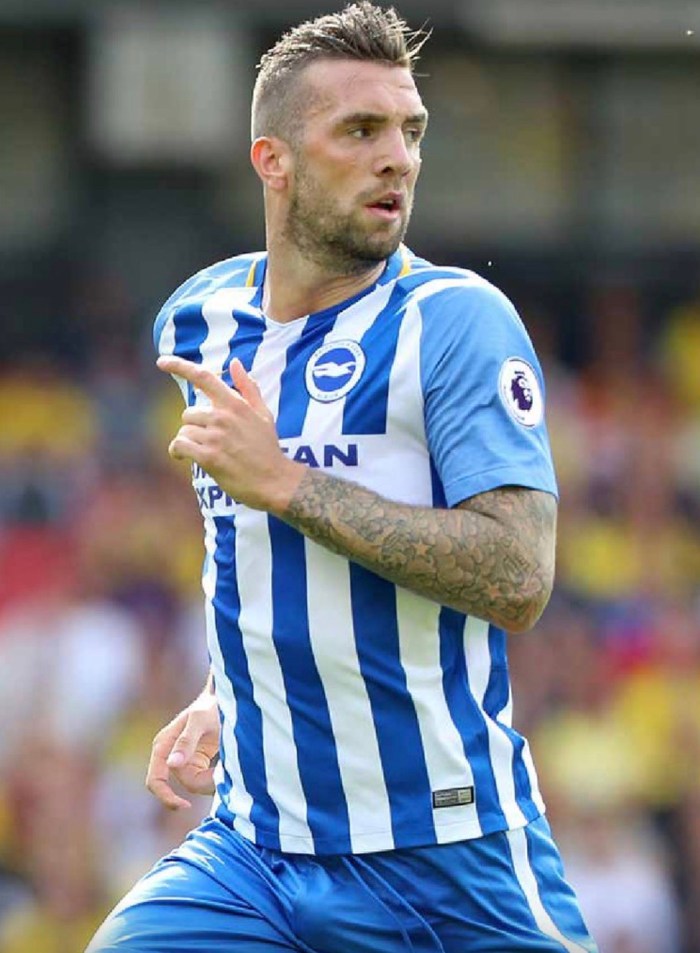
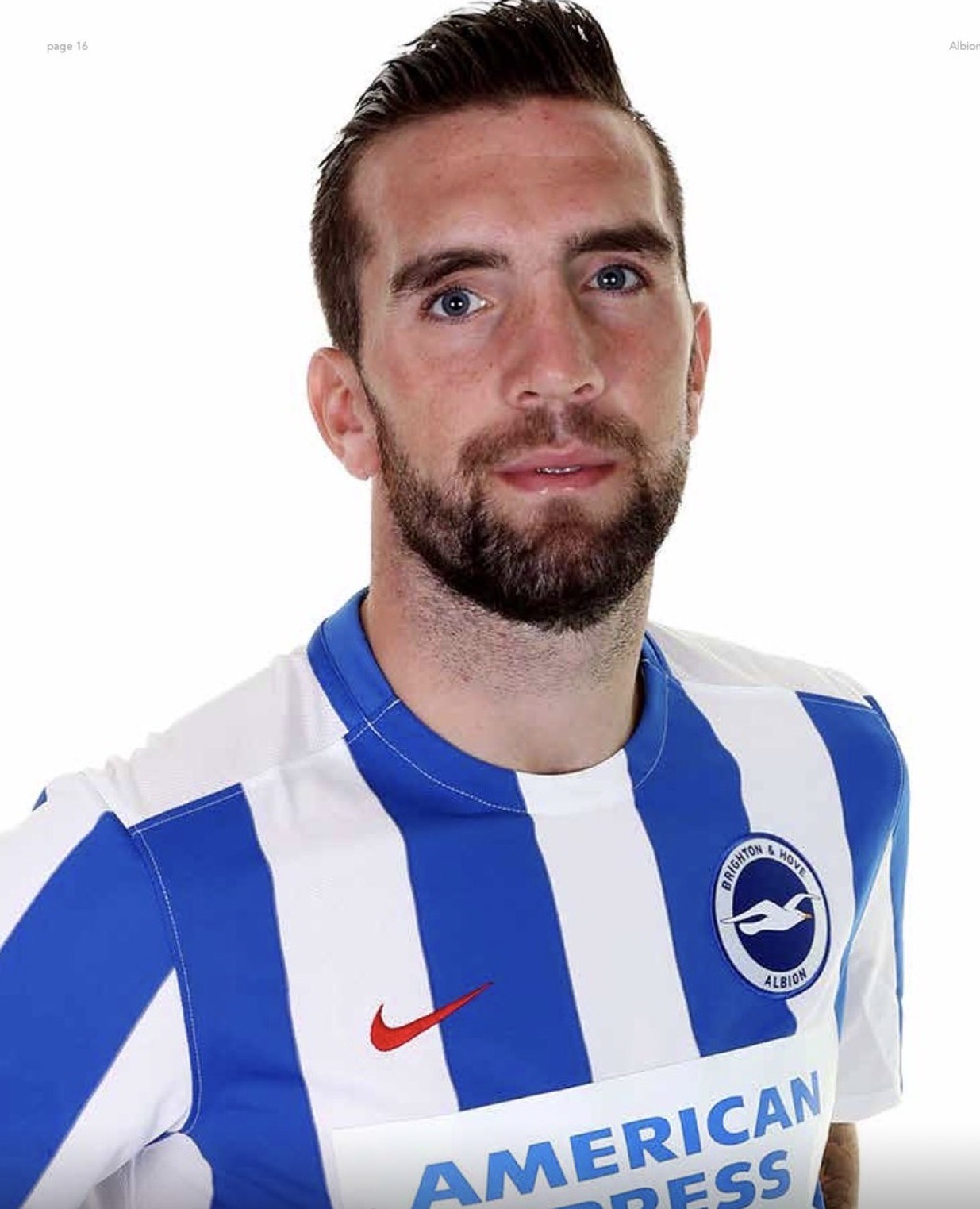
SHANE DUFFY has seized the opportunity to re-establish himself at the heart of Brighton’s defence to the obvious delight of the manager who appeared to have shunned him.

With injury sidelining Dan Burn and Covid-19 isolation protocol ruling out Joel Veltman, Duffy stepped up with a solid performance in the season-opener at Burnley, and a goalscoring return to the Amex in the 2-0 win over Watford.

“It was a fantastic header from Duffy, he’s a monster in the box,” boss Graham Potter told the BBC after the televised Watford match. “He is so big and strong to stop – it was a great goal.”

Duffy’s form has been a reminder of the solid centre-back partnership he formed with Lewis Dunk as the bedrock of Brighton’s promotion from the Championship in 2017.

Although a metatarsal injury in a 3-0 defeat at Nottingham Forest meant he missed out on the run-in, Duffy was obviously confident of being restored to the line-up when the Premier League season got under way.

“I’m looking forward to going back to Everton to see a few mates but they’re all going to be big games,” Duffy said in a matchday programme article. “I feel more ready for it than I was four or five years ago at Everton, and I deserve another crack at it, but I know I’ve got to work hard.”

While additions to the squad were to be expected as the Albion sought to stay among exalted company, the Duffy-Dunk pairing at the back didn’t look much like being broken up. Certainly not under Chris Hughton.

Happy with his mainstays at the heart of the defence, Hughton allowed Connor Goldson to leave for Glasgow Rangers and Uwe Hünemeier to return to Germany and Duffy was comfortable alongside Dunk as Albion retained their top division status. And so it remained for Albion’s two first two seasons back amongst the elite.

But when Potter replaced the popular Hughton in 2019, it soon became apparent Duffy didn’t fit the mould of the sort of ball-playing centre-back he wanted in the side.

Although he started the season under Potter, his place was gradually taken over by big money signing Adam Webster. Duffy invariably ended up warming the bench and at the start of the 2020-21 season, with Ben White preferred alongside Dunk and Webster, he jumped at the chance to go on loan to Glasgow giants Celtic, the team he’d supported as a boy.

Unfortunately, it didn’t turn out to be quite the dream move Duffy had hoped for, with criticism arrowing in from all quarters as the Republic of Ireland international underwhelmed in the centre of the Hoops defence, and Celtic could only watch as city rivals Rangers won the Scottish title.

Doubtless the irony wasn’t lost on Duffy that his first match back in a Seagulls shirt saw him up against Rangers in a pre-season friendly, when the home fans ensured he was given a ‘warm’ reception.

But let’s go back to where it all started.

Born in Derry, Northern Ireland, on 1 January 1992, Duffy was playing for Northern Ireland Under-16s against England in the Victory Shield when he caught the eye of watching Everton boss David Moyes.

Duffy had been playing for his local side, Foyle Harps, at the time and, although Arsenal took him on trial and offered him a scholarship, Everton invited him to train with them and offered him a professional contract immediately.

“Of the two clubs, I just had a good feeling about Everton; obviously it was more of a family club, and there’s also the Irish connection with the city of Liverpool, so it was easy for me to settle in,” Duffy told the matchday programme.

In his second season at Goodison Park, he made his first team debut aged just 17 in a Europa League match against AEK Athens.

“David Moyes handed me my debut and I owe him a lot because he always had belief in me, whereas I could have gone somewhere else and maybe ended up back in Ireland,” he said. “I was raw as I hadn’t been with an academy before, but he was patient with me, as were all the coaches, and I came through the youth team and reserves before I got my break in the Europa League and then later in the Premier League.”

Duffy played against Brighton when the third-tier club’s youngsters (with Dunk in defence) acquitted themselves brilliantly in the fourth round of the FA Youth Cup against Everton at the Withdean on 21 January 2010 before eventually losing 2-0. The programme pen picture said of him: “Strong in the tackle and dependable in the air, Shane is considered a ball-playing defender.”

Duffy recalled: “I’d just turned 18 and had recently broken into the Everton team in the Europa League. I do remember Dunky a little bit because we were marking each other at corners.”

A month after his visit to Withdean, Duffy decided to switch allegiance to the Republic having previously captained Northern Ireland’s Under-19s. It came just as he was selected for the full international squad to face Albania in a friendly in Tirana where he was expected to receive his first cap in the absence of captain Aaron Hughes (who later spent a season with Brighton) and Chris Baird.

Disappointed Northern Ireland boss Nigel Worthington told The Guardian: “There is a loophole where a player can walk away after a lot of time and investment has gone in. Until it is resolved, that’s where we are. Shane has represented Northern Ireland all the way through from a very early age to the Under-21s.

“I am a big admirer of Shane. I like him as a player and a lot of work has gone in with different coaches. I am disappointed with the situation as he is going to be a very good player. Shane has decided, after discussing the matter with his family, to represent the Republic. As a manager, I have got to respect that.”

Duffy, who had close family ties to Donegal in the Republic, said the decision to switch his allegiance from Northern Ireland was the right thing to do to help his international career.

Speaking to evertontv, Duffy said:“It was difficult for me to leave because of what they’ve done for me in Northern Ireland since I was young. They brought me through the ranks which gave me the chance to come to Everton.

“It was hard to leave all the coaches and all the players, but it was always a case of wanting to come to my own country. I spoke to a couple of people about it because I didn’t want to disrespect Northern Ireland, but I just had to do what was best for me and I thought it would be best for me to switch.”

Astonishingly, in his first-ever training match with the Republic, under manager Giovanni Trapattoni, he was involved in a freak collision that lacerated his liver and emergency surgery was required to save his life as he lost a huge amount of blood.

After a speedier-than-expected recovery, Duffy was soon lining up for the Republic’s Under-19s and Under-21s and he went on to make 20 appearances for the Under-21s.

In 2012 he was called up to the senior squad to replace the injured Richard Dunne but missed out on the squad for the 2012 Euros. He had to wait until June 2014 to make his full debut and it was another two years before he was next involved.

He was called up to the side who famously beat Italy in a 2016 Euros group match to qualify for the final 16 but was then sent off as the Republic bowed out 2-1 against France. Nevertheless, under Martin O’Neill, Duffy became established in the side and in March 2018 was named his country’s Player of the Year. He told the matchday programme: “When I heard the news, I was shell-shocked, but when it sunk in it gave me time to reflect on how far I’ve come in a short space of time.

“So much has happened: the Euros, failing to reach the World Cup in the play-offs, winning promotion with Brighton, playing in the Premier League.

“The manager noticed a difference in me when he brought me back into the side two years later, and that’s because I went away, played games and I worked hard. I got myself properly fit, dedicated, and I feel like I’ve benefited from that.”

Reflecting on the experiences given to him by Hughton and O’Neill, Duffy pointed out: “Chris has given me the chance to play in the Premier League where I’m developing, and Martin has given me the chance to play on the big stages and in a big tournament.

“You take little things out of each one of them and it’s coming together a bit now, and hopefully there’s more to come. I’m still a bit raw in some things I do but I’m getting better and it’s a nice feeling to go out knowing you can compete with top players and feel comfortable.”

Duffy went on to captain the Republic for the first time in a 1-1 draw against Denmark in November 2019 and retained the captaincy in Stephen Kenny’s first game in charge, in September 2020; a 1-1 draw against Bulgaria.

As an established international, Duffy has nearly 145,000 followers on Twitter.

Looking back, by his own admission, Duffy had realised his early exposure to senior football at Everton was going to be short-lived, telling the club’s website at the time: “I know I’m not ready to play in Everton’s first team yet as I’m so young but if I’m needed I’ll do my best for the team. A loan would obviously make me better and make me more mature on the pitch.”

Initially that loan came at Burnley in the Championship, but he only played one game under Eddie Howe and, in 2011-12, he had a more fruitful loan at League One Scunthorpe United, playing 19 games under Alan Knill.

An injury to Phil Jagielka prompted Everton to recall Duffy from Scunthorpe in January 2012 and a week after playing against Hartlepool he found himself going on as a substitute for Sylvain Distin against Spurs at White Hart Lane.

Spurs had Gareth Bale, Luka Modric and Emmanuel Adebayor in their line-up but Duffy said: “I refused to get overawed by the occasion. I just treated it as another football match, another opponent, and only afterwards did I take in what had happened.”

He said: “Everton are a club that will always mean a lot to me because they gave me my chance as a professional and shaped the player I am today. David Moyes was a big influence on my career; he helped me a lot.”

Duffy spent the 2013-14 season on loan at Yeovil – “another fantastic learning curve for me” – when Gary Johnson’s side were in the Championship and although Moyes’ successor Roberto Martinez offered Duffy a new contract at Everton, he was warned he would have to wait to establish himself because he was still young and inexperienced.

So, in the summer of 2014, he decided to join Paul Lambert’s Championship side Blackburn Rovers and, while a knee injury restricted his appearances in his first season at Ewood Park, he became a permanent fixture alongside Grant Hanley in 2015-16.

When Gordon Greer’s imposing reign as Brighton centre-back and captain came to an end in 2016, Hughton turned to Duffy as his replacement (Greer went back to Rovers). The fee was undisclosed but was reported in The Mirror to be £4m.

It remains unclear where Duffy’s future lays although his performances in the opening two games of the season suggest there could yet be a future for him under Potter. The manager didn’t hold back in his praise for the big Irishman, but the defender didn’t get carried away.

Duffy opened up to the media after the win at Burnley, talking about what he’d been through over the previous 12 months, but he pointedly added: “It is only one game and a lot can still happen, but as long as I am here I’ll try and help the team whether that’s on the pitch or off the pitch with the younger lads. That is what I am here to do.”

He said he had “hit rock bottom” when affected by off-field problems (for example, his father Brian died aged 53 in May 2020), but he praised the Seagulls for continuing to offer him support and he added: “I am still taking it day by day and be like an 18-year-old try and impress every day, try and improve and try and help as much as I can. I feel like if you do that you get the reward sometimes when maybe you don’t expect it.”

Duffy also spoke openly and honestly to Sky Sports as part of the build-up to the game against Watford.

Pictures from Albion’s matchday programme and online sources.

Kiwi Chris Wood took off with the Seagulls

TWO former Chelsea teammates were instrumental in enabling fledgling Kiwi international striker Chris Wood to develop his goalscoring craft with the Seagulls.

Roberto di Matteo allowed Wood to leave West Brom on loan in the 2010-11 season to add attacking options to Gus Poyet’s promotion-seeking Seagulls.

It was a temporary move that not only bolstered Division 1 Brighton’s goalscoring threat that season but also sowed the seeds of a partnership with Ashley Barnes that Burnley have profited from in the Premier League.

The pair dovetailed well with Glenn Murray (during his first spell at the Albion) and it is testimony to just how good the third-tier trio were that they all went on to score goals at the highest level.

Wood, who only scored three times in 27 games for the Baggies, scored nine in 24 matches (plus seven as sub) for the Albion, who he joined after an expected 93-day loan stint with Barnsley had been cut short.

Described by The Argus as “a fresh-faced teenager in a man’s body”, towards the end of the season, Wood told Andy Naylor: “It has been a big experience. I have been playing week in and week out. That is something I needed to do at my age.

“You don’t know if you really want to drop down that many levels, but I thought I could start scoring some goals, kick on my season and hopefully push my career up. It’s worked out very well.”

He somewhat presciently added: “I want to play in the Premier League one day, hopefully consistently.”

While that time would still be a little way off, Wood’s role in Brighton’s promotion squad earned him a League One winners’ medal and Poyet reckoned he left the south coast a much better player than the one who arrived six months previously.

“We helped him a lot,” Poyet told The Argus. “When he was here, he was one type of player and, when he went back, he was in shape, he was quicker, more mature, he scored ten (sic) goals, he did well.”

Wood went on to become something of a nemesis for Brighton, often scoring against the club for various other sides he played for on loan or on a permanent basis.

After he scored twice against the Seagulls in December 2012 while on loan at Millwall, Poyet sang his praises to the media, declaring: “He is the kind of player we would like to bring in. He’s only 21 and I feel he will be a top, top player.

“When he was with us on loan, he was a baby but now he is maturing. He’s a man now.

“He’s clinical and brave and we have played a part in helping him on his way.”

Di Matteo’s successor at West Brom, Roy Hodgson, had also sent the young striker out on loan, the shorter distance to Midlands neighbours Birmingham City, during Chris Hughton’s tenure as manager. He scored 11 in 15 games (+ 14 as a sub) for the Blues before spending the second half of the 2011-12 season at Bristol City.

Next up was Millwall for the first half of the 2012-13 season but WBA curtailed that stay because they wanted to sell him, and he joined Leicester in a permanent deal.

At Leicester, Wood was mainly involved off the substitutes’ bench as Nigel Pearson’s Foxes won the Championship in 2014, but one of his most memorable goals was a stunning long-range volley against his future employers, Burnley, in a 2-0 win at Turf Moor. “That was a nice one,” he said. “It kind of clinched Leicester’s championship. It was a ‘make or break’ game for who was going to win the league that year.”

Wood found his chances of Premier League football stymied by the arrival of Leonardo Ulloa from Brighton and after only seven substitute appearances ended the season on loan at Ipswich Town. Before Leicester’s famous title-winning season was under way, Wood had moved on to Leeds for £3m.

Wood felt he wasn’t given a fair crack of the whip at the King Power Stadium, telling the Leicester Mercury: “I was disappointed that I didn’t get more of a chance.

“I did well and felt I deserved at least an opportunity with the way I had played. That’s football at the end of the day, managers make the decisions, you have to live by them and move on.

“I think that experience has made me into a better player. It helped me to adapt and do things in a different way. It helps you prepare mentally, to understand and control.

“Not everything is going to be rosy along the way in your career. You’ll always have your ups and downs and it’s about how you deal with the downs which helps you become so much better.

“I don’t like sitting in the stands. I just wanted to get out, play football and progress my career.”

Wood scored 27 goals in Leeds’ 2016-17 Championship season under Garry Monk but, after beating Brighton 2-0 on 18 March, they fluffed their lines in the run-in, winning only one of the remaining eight matches and missing out on the top six as Brighton went up with Newcastle. To rub salt in the Yorkshire wounds, Huddersfield were promoted via the play-offs.

Wood, though, had the chance finally to make it to the elite when Burnley dangled a £15m fee to take him to Turf Moor, where he was to be reunited with Barnes.

Explaining his decision to make the move, Wood told The Times: “It had been my dream since I was a kid to play in the Premier League.

“I had spent seven years in the Championship waiting to get that break and I couldn’t guarantee that I would get another chance.”

The success of the Wood-Barnes partnership was analysed in a 2019 article by Benedict O’Neill for planetfootball.com in which Murray harked back to the 2010-11 season.

“I was the older head when they came in as two young lads,” he said. “We forged quite a formidable trio. It was good because they were just young and learning their trade – they got valuable game time and scored plenty of goals in that season.

“They’ve both gone on to have fantastic careers.”

Wood ended the 2020-21 season as Burnley’s top goalscorer with 12 goals (his fourth consecutive season in double figures) and he also collected their Player of the Season and Players’ Player of the Season accolades.

After netting a hat-trick against Wolves in April 2021, Andy Jones, for The Athletic, purred: “Unstoppable, unplayable. This was Wood at his best.

“Burnley’s big No 9 epitomised all the key components of the display, setting the tempo, pressing with energy, intensity and importantly, intent. No ball was a lost cause, no pass was going to be easy for Wolves.”

Burnley boss Sean Dyche told the Burnley Express: “His hold up play is improving all the time, his physicality is improving – he can be a real handful as well as being a talented player.

“I’ve been very impressed with him over the season for sure.”

In January 2022, Wood made a £25m move to Newcastle United but after finding his first team starts limited moved on to Nottingham Forest a year later, initially on loan until the end of the season. The move was made permanent in the summer of 2023.

He was Forest’s top scorer with 15 goals in 35 appearances in the 2023-24 season and when he scored the winner in Forest’s 3-2 win over Manchester United at Old Trafford in December 2024, his header meant he became Forest’s record Premier League scorer, overtaking Bryan Roy, by moving to 25 in the competition.

Born in Auckland, New Zealand, on 7 December 1991, Wood swiftly showed great promise in his homeland before his coach over there, Roger Wilkinson, switched to West Brom and recommended the youngster be taken on at Albion’s academy.

Wood’s English mother, Julie, had been instrumental in him taking up football rather than the oval-shaped ball game Kiwis are more accustomed to.

“I came over and they liked what they saw and offered me a scholarship,” he told the Birmingham Mail.

After he proved successful at youth team and reserve level, Wood made his West Brom first-team debut in 2009 away to Portsmouth.

In the same year, he made his international debut and, aged just 18, was in the New Zealand squad at the 2010 World Cup in South Africa. He has gone on to play nearly 60 times for his country. He also became the youngest captain of New Zealand when he led the side for the first time in November 2014.

A goal by over-age Wood against South Korea helped New Zealand secure their first ever men’s football win at an Olympic Games in Tokyo but the host nation beat them in a penalty shoot-out to deny the striker the chance of a medal.

United ‘product’ Oliver Norwood eventually fulfilled expectations

IT LOOKED LIKE the so-near-and-yet-so-far story of Oliver Norwood’s flirtation with the Premier League would end in disappointment.

Twice the former Manchester United reserve helped teams to win promotion from the second tier, only then to remain in that division when the sides he played for didn’t see him as a Premiership player.

It happened first of all with Brighton in their 2016-17 promotion under Chris Hughton.

The following campaign Norwood went on a season-long loan to Fulham and was at the heart of their midfield as they won promotion.

Fulham didn’t look to retain him, though, and for 2018-19 he was once again loaned out by Brighton; this time to Sheffield United.

Halfway through the season, they turned the loan into a permanent transfer and, after helping the Blades to win promotion, Norwood finally got his chance to show his skills in what amounted to an impressive return to the top-flight of English football.

How BBC’s Match of the Day Tweeted Norwood’s record

Born in Burnley on 12 April 1991, Norwood was only six when he first came to the attention of Manchester United, spotted playing for Fulledge Colts in his home town.

“My earliest football memory is being on trial at the Manchester United academy aged six and being totally overawed by it,” he told the Albion matchday programme. “I remember standing there at The Cliff, biting my fingernails, and the coach, Paul McGuinness, saying ‘Are you going to join in?’ After that, I was fine and it was really exciting to be part of the club’s academy.” He joined the Red Devils on schoolboy terms at seven and spent 15 years on their books, playing in the same youth teams as Paul Pogba and Jesse Lingard.

During the 2005-06 and 2006-07 seasons, Norwood made appearances for United’s under-18 team and, ultimately, he signed on as a trainee in July 2007.

He became an under-18 regular in 2007-08 and also made his debut for the United reserve side. After netting nine goals in 28 appearances for the under-18s in 2008-09, Norwood was signed as a professional.

He was a reserve team regular in 2009-10 and said he owed a lot to Ole Gunnar Solskjaer, who was in charge of United reserves at that time.

“I owe a lot to Manchester United for the experiences and education I had there,” Norwood told the matchday programme, United Review. “The club taught me not just about football but life. I was taught how to be a good person.

“Ole played a huge role in terms of my development as a footballer and a person. The lessons he taught me in the reserves have stayed with me throughout my career.

“I’ll always be grateful to Manchester United, to Ole, to (former reserves manager) Warren Joyce, for the upbringing they gave me in the game.”

Norwood got a sniff of the first team when Sir Alex Ferguson called him up to the first team squad for a Champions League match away to Wolfsburg. He travelled with the squad to Germany but didn’t get selected in the final matchday 18.

In search of a first team breakthrough, Norwood decided to gain experience on loan with lower league clubs and his first port of call was Carlisle United in September 2010. Ironically, his first match was against Brighton – a 0-0 draw at Brunton Park. Unfortunately, after just five starts and two sub appearances, he tore a thigh muscle and had to cut short his loan and return to Old Trafford for treatment.

The following season, he went out on loan again, this time to League One Scunthorpe United where Alan Knill, Chris Wilder’s no.2 at Sheffield United, was the manager.

In an interview with the aforementioned Joyce, the former reserves manager explained how it was only a change in Norwood’s diet that started to bring about the required improvements to his game.

“I got him to write down everything he ate. And I meant everything. I said, ‘We have to look at your diet and get you absolutely super fit’. I told him we couldn’t allow the ability he had to be wasted.”

Joyce told The Athletic’s Richard Sutcliffe in a 23 June 2020 article: “Once we’d sat him down (after returning from Scunthorpe) and analysed everything, he got himself really ripped. He started eating the right things and worked so hard to get into shape. He is getting the rewards from that now.”

Norwood spent the second half of the 2011-12 season in Coventry City’s unsuccessful effort to beat the drop from the Championship but, having acquired a taste for football at that level, declined the offer of a contract extension on his return to Old Trafford.

He told Talksport at the time: “I want to play every week like I was this season in the Championship. It’s been the hardest decision in my life for me to make but there comes a time when you have to be realistic.”

He opted to join newly promoted Huddersfield Town in the Championship on a three-year contract, and Sutcliffe’s article reveals Norwood was so determined to make the move that he drove down to Heathrow Airport to apprehend holiday-bound Town manager Simon Grayson to persuade him to sign him.

Nevertheless, United boss Sir Alex Ferguson had some encouraging parting words that the midfielder never forgot. “You’re not going to make it at Manchester United, but I believe one day you will play in the Premier League.”

Norwood was a permanent fixture in the Terriers’ midfield for two seasons before switching to fellow Championship outfit Reading at the beginning of the 2014-15 season.

Signed by Nigel Adkins on 21 August, 11 days later he was joined at the Madejski by Glenn Murray, on loan from Crystal Palace.

When the Royals were hammered 6-1 by Birmingham City in mid-December, Adkins was sacked and replaced by Steve Clarke. His second game in charge, on Boxing Day, saw Reading visit the Amex, with Brighton under caretaker manager Nathan Jones. Murray scored twice for the visitors, but Albion rescued a point with a 90th minute equaliser from Inigo Calderon.

Norwood completed the season having made 35 appearances plus seven as a sub and although he made the second highest number of appearances – 50 – the following season, when the Royals visited the Amex on 15 March 2016, under Brian McDermott, their third manager of that campaign, Norwood was a non-playing sub as the Royals lost 1-0 to a James Wilson goal.

The next time the two sides met (a 2-2 draw at the Madejski on 20 August), Norwood was part of Chris Hughton’s squad, having signed for the Seagulls at the start of the 2016-17 season, along with Murray and Steve Sidwell. Norwood was a 68th-minute sub for Sam Baldock.

Manager Hughton said of Norwood: “Oliver is another excellent addition to our squad.

“He has a good grounding coming from Manchester United, and has a wealth of experience playing in the Championship and at international level.

“He’s a box-to-box midfielder and an excellent passer of the ball, so he gives us extra options in midfield and adds further depth to our squad.”

Although he played for England at youth level, he also qualified for Northern Ireland, and chose that country to enable him to experience more opportunities at international level.

Norwood made his full international debut during Nigel Worthington’s time as manager, coming on as a substitute in a 2-0 friendly defeat by Montenegro in Podgorica in August 2010.

He was a regular in Worthington’s successor Michael O’Neill’s midfield when the side qualified for Euro 2016 and played in all four of the team’s matches in the finals in France.

However, having made 57 appearances for his country, he decided in August 2019 to retire from international football when only 28.

Although Norwood made 20 starts for the Albion, he was almost as often used as a substitute, making 17 appearances off the bench, as the Seagulls soared to promotion.

Norwood had a starting berth when Beram Kayal was injured and he told the matchday programme: “This has been a big opportunity for me. The gaffer brought me to the football club and obviously I’ve been desperate to get into the team and play games.

Norwood had plenty to say

“Obviously I understand how football works. When the team’s winning and doing really well you have to bide your time, but an opportunity has come my way and it’s been important for me to grab it with both hands and do all I can to stay in the team.”

It has since transpired that the midfielder was most likely distracted by off-field issues during his season with the Seagulls, as thestar.co.uk reported.

“I went to Brighton after the 2016 Euros, and it was a difficult period in my life,” said Norwood. “My wife, Abigail, was pregnant and really ill, so we were living apart. My head wasn’t fully there.”

He told The Star he only fell in love with football again when he went on loan to Fulham, and subsequently was at loggerheads with Brighton when they didn’t accede to his request for a permanent move. “They said I could leave, but then turned down bids when they came in and started asking for silly things. I don’t think clubs realise sometimes that they’re messing with people’s lives. I had plenty of arguments, saying: ‘You don’t want me here, so let me go’.”

With Dale Stephens and Kayal the preferred central midfield pairing, plus the arrival of Davy Propper for Albion’s first season back amongst the elite, Hughton had been happy to let Norwood join Fulham on a season-long loan.

Norwood made 47 appearances for Fulham in 2017-18, particularly when filling in for the injured Tom Cairney until the Scot’s return from injury towards the end of the season.

His passing accuracy and all-round contribution were favourable, as this footballwhispers.com article assessed, and he proved a vital cog in their promotion via the play-offs when they beat Aston Villa 1-0 in the play-off final.

The website football.london was surprised Fulham didn’t opt to sign him permanently. “Norwood was a key figure under Slavisa Jokanovic, seamlessly plugging the gap left by Tom Cairney as a result of his injury and can be credited with a huge role in getting the club promoted in the first place, with his tackle on Conor Hourihane in the play-off final one that will forever be remembered by Fulham fans,” wrote Phil Spencer. “His vision and incisive passing was key to Fulham’s free-flowing style of play – meaning it was a little surprising that his loan switch to west London was never made permanent.”

Fans have contrasting views about his contribution, as this collection of quotes demonstrates. Some appreciated his ‘Hollywood’ long passes, others are perhaps summed up by this Fulham fan who said: “100% effort every time he played. Honest player. Not stellar but above average.”

Fulham’s loss was Sheffield United’s gain and in wishing Norwood well in his pursuit of more playing time with the Blades, Hughton told Albion’s website: “Ollie was one of our promotion-winning team in 2016-17 and will rightly be remembered as part of that historic team which took the club to the Premier League.”

Critics of Fulham’s strategy of splashing the cash on so-called name players for what proved to be an unsuccessful bid to retain their newly-won status in the Premier League couldn’t help pointing out the irony of Norwood’s situation.

“Fulham could only wave to Norwood on their way back down after ditching him for Jean Michel Seri,” said footyanalyst.com.

The Blades were promoted as runners up behind Norwich City in a season in which Norwood played 43 league games. He told The Observer’s Paul Doyle: “Last season was a big season for me. It was the most I’ve played. I’m definitely a better player now. At everything really. My understanding of the game. Tactically, technically, what needs to be done.”

He told Doyle: “It’s taken a bit longer than I would have liked but it was a dream come true to finally make the level that everybody across the world wants to play at.”

Norwood certainly seized the opportunity to shine at the top level, playing 40 games plus one as sub in all competitions as the Blades confounded the critics by finishing in ninth place, and taking on the captain’s armband in Billy Sharp’s absence.

Pictures from various online sources and the Albion matchday programme.