Champion medal surprise for man on the mic Aspinall

THE starry-eyed teenager who made half a dozen top level appearances for eventual league champions Everton had to wait a long time for his share of that distant glory.

But Warren Aspinall was nonetheless delighted when his contribution to the Toffees achievement in 1986-87 was finally recognised with a medal more than 30 years later.

That’s happened since I last featured Aspinall in this blog, which recalled his early days at hometown club Wigan Athletic and darker days after he had ended his playing days in the blue and white stripes of the Albion (three goals in 24 starts plus 13 as sub) in the 1999-2000 season.

Aspinall is now more often heard rather than seen by Brighton supporters who listen to match commentaries on Radio Sussex, and it was commentator Johnny Cantor, who the summariser sits alongside for the regional BBC radio station’s coverage of all Albion’s games, who instigated a presentation of the belated honour.

“It was JC who pushed it forward and he kept it to himself before surprising me with the news that Everton would be making a presentation,” Aspinall told the matchday programme. “I was shocked but absolutely over the moon.”

The number of games to qualify for a winners’ medal used to be 14, or a third of the season, but the EFL in 2021 decided retrospectively to fall in line with the Premier League which awards medals to players who’ve made a minimum of five appearances.

Aspinall had been unaware of the rule change but Cantor had words in the right places and when Albion played at Goodison Park on 3 January 2023, the former player was finally presented with his medal by Graeme Sharp, one of his fellow Everton forwards back in the day who subsequently became an Everton director.

It’s probably a good job the presentation was made before the game because Albion romped to a 4-1 win that day with goals from Karou Mitoma, full debut-making Evan Ferguson, Solly March and Pascal Gross.

“The medal means the world to me and my family and it now sits proudly on my mantelpiece along with my England under 20 caps,” said Aspinall.

He earned the first of those two caps in the same month that Everton paid £125,000 to sign the 18-year-old from Wigan Athletic, although he saw out the season on loan with the Latics.

He featured in Young England’s 2-0 win over the Republic of Ireland at Elland Road, Leeds, and the following month was in the side that suffered a 4-1 defeat to Scotland at Aberdeen’s Pittodrie ground. Tottenham’s David Howells and Neil Ruddock, then of Millwall, also played in both matches, as did Millwall goalkeeper Brian Horne.

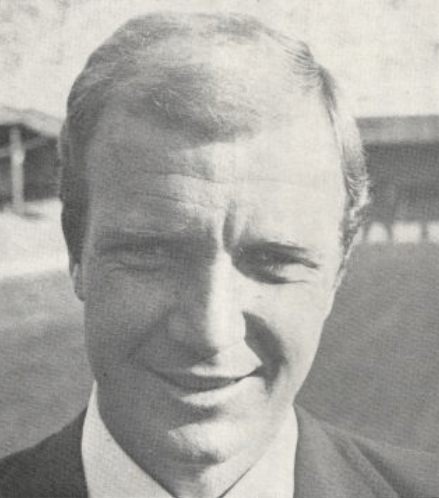
Teenager Aspinall signs for Everton’s Howard Kendall watched by Wigan boss Bryan Hamilton

On his return to Goodison Park at the end of the 1985-86 season, Aspinall was on the bench for the last league game (Kendall rested several players because it was five days before the FA Cup Final, which Everton lost 3-1 to Liverpool) and he made his debut in the 3-1 home win over West Ham when going on for two-goal Gary Lineker, who was playing his last league game for Everton before joining Barcelona.

Everton finished as league runners up that season but they went one better the following season, when competition for forward places saw manager Howard Kendall able to pick Sharp and Adrian Heath as his preferred pair, with Paul Wilkinson and Ian Marshall as alternatives. It meant Aspinall’s playing contributions came in the form of nine league and cup appearances as a substitute (he was also a non-playing sub on four occasions). Although first team chances were limited, he bagged plenty of goals for the club’s reserve side, netting 21 in 23 games.

That was enough to convince former Celtic stalwart Billy McNeill, in charge of relegation-bound Aston Villa, to splash £300,000 to take him to Villa Park – where competition for a starting spot was again daunting, with Andy Gray, Gary Shaw, Simon Stainrod and Garry Thompson all striker options.

Aspinall made his Villa debut on 21 February 1987 in a 2-2 draw at home to Liverpool and by the season’s end, while his former Everton teammates were lifting the league trophy, he was part of a Villa side that was bottom of the pile.

McNeill was duly sacked and the picture changed the following season when Aspinall was joint top-scorer as Graham Taylor’s Villa bounced straight back to the top tier as runners up behind Millwall.

“Garry Thompson and I hit it off up front and we had such a good understanding that we kept Alan McInally out of the team for a long time,” he told Villa supporter Colin Abbott. “Garry was good to play alongside because he was like a battering ram and I fed off him.”

Aspinall made his 50th and final appearance for Villa on 7 May 1988 in a 0-0 draw away to Swindon (playing left back for Villa was Bernie Gallacher and in the opposition line-up was Colin Calderwood and Kieran O’Regan).

Already warned by Taylor that he needed to improve ill discipline that had resulted in too many cautions, Aspinall got himself sent off for stamping in a pre-season friendly against St Mirren and Taylor transfer-listed him.

Happy at Pompey

England World Cup winner Alan Ball, in charge at recently relegated Portsmouth, seized the moment and took him to Fratton Park for a fee of £315,000 in August 1988, where his teammates included Mark Chamberlain and Terry Connor. In six years with Pompey, Aspinall also played under John Gregory, Frank Burrows, caretaker Tony Barton and Jim Smith.

Briefer stays followed along the coast at Bournemouth (loan and permanent), Swansea City (loan) and two seasons at Carlisle United.

Aspinall at Colchester

Keen to return to the south, Micky Adams first signed him when he had taken over as manager at Brentford and he made 48 appearances (plus three as sub) for the Bees but Aspinall then went on loan and then permanently to Colchester United for nine months before Adams brought him on loan and then permanently to the Albion in the autumn of 1999. It was a part exchange for midfielder Andy Arnott.

In only his third game, Aspinall was a delighted scorer of the only goal on his old stomping ground of Brunton Park as Albion returned to Sussex with all the points. The News of the World said: “Former Carlisle favourite Warren Aspinall seized on Billy Barr’s poor back pass to chip keeper Andy Dibble.”

In the Argus, Andy Naylor wrote: “The colourful midfielder then dashed towards the Albion supporters huddled in the seats on a drizzly day in Cumbria before sliding full-length on the greasy turf.”

Aspinall continued his celebration with a finger-on-lip gesture and an ear cupped towards the home support. He told the matchday programme: “I heard the keeper shout for the ball and anticipated the defender’s pass. I think I showed a great turn of pace for a veteran.”

In fact, Aspinall was 32 when he joined the Seagulls and he added experience to a side that went on to finish its first season back in Brighton in 11th place in the fourth tier

At the start of the following season, when he went on as a sub for Gary Hart in Brighton’s home 2-1 win over Rochdale (Bobby Zamora scored both Albion goals), it was to be his last ever appearance.

Suffering from the niggle of a piece of floating bone in his right ankle, he followed physio advice to have it removed in what was expected to be a routine operation. But while in hospital, he caught the MSRA superbug which ate away tendons and ligaments in his ankle.

“They eventually said I would never play football again as a result. I was finished,” he told The News, Portsmouth, in a graphic account of the trauma. “Yet now I needed an operation to get rid of this infection, which involved me scheduled to stay on a hospital ward for 14 days, attached to an intravenous drip while antibiotics were fed into my body.

“After 13 days, my body broke out in a rash from head to toe. It had rejected the drug. So, I had the operation once more – and it happened again. After 13 days, my body rejected it.

“For 28 days I’d been on that hospital ward, so I was then offered the chance to return home if I underwent an operation to insert two tubes into my heart, one for the intravenous drip to enter and the other to take blood out.

“That sounded good to me – apart from my heart subsequently stopping during the procedure. I died. I’m told it was for a few seconds, but I died on that operating table,’ Aspinall told The News. “But they brought me back, and I was allowed to go home to Hedge End, with a district nurse checking on me every day, even Christmas Day.

“There were two six-inch tubes hanging out of my chest, with the nurse taking blood out of one and putting the drugs into the other.

“I lived. The antibiotics killed the superbug, but my career ended there and then. I was aged 33, with nothing planned, no coaching badges. I had to go into the real world.”

The story of what happened in his post-playing days – battles against gambling and alcohol addictions – have been well documented in various media interviews, including a detailed one with the Birmingham Mail in October 2012, when he spoke openly about a near-miss suicide attempt.

He has been Cantor’s co-commentator on Albion matches for Radio Sussex since 2015.

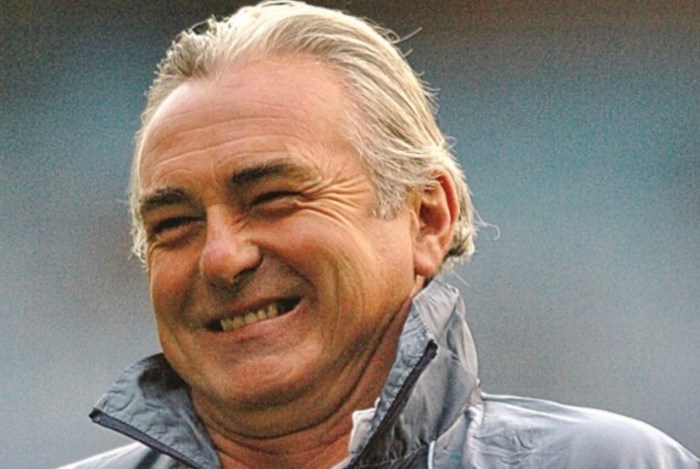
Tigana ‘disciple’ Paul Nevin the respected analytical coach

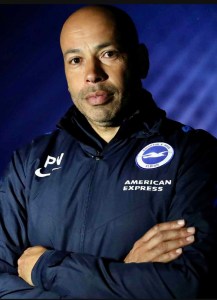
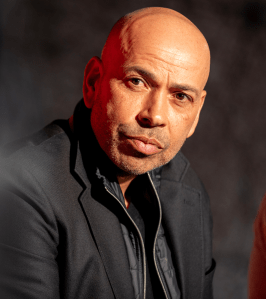
PAUL NEVIN didn’t rise to great heights as a player but he became “one of the most respected and most widely experienced coaches in the country”.

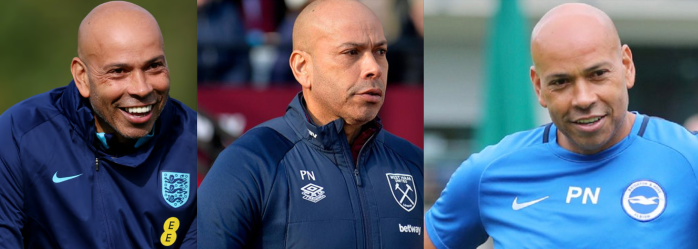
He was a Premier League coach at Brighton and West Ham, not to mention being part of Gareth Southgate’s coaching team for England.

They were just three of a broad variety of coaching jobs he has filled in different corners of the world – and, interestingly, Jean Tigana, one of the top French footballers of his generation, influenced Nevin the most (more of which, later).

All a far cry for a lad born in Lewisham, south east London, on 23 June 1969 who had a humble playing career that began at Division Two Shrewsbury Town and later involved short spells at Carlisle United and Yeovil Town.

Nevin the player

He was a former teammate of Albion’s head of football David Weir for three years when both played for the University of Evansville’s Purple Aces team in Missouri, America.

Having taken his A-levels while playing for Shrewsbury reserves, Nevin wanted a back-up career in case football didn’t work out and he took a scholarship to gain a bachelor’s degree in communications while playing for the American college team.

After gaining his degree, he returned to the UK and spent the 1991-92 season with Fourth Division Carlisle before moving south to join then Conference side Yeovil. He was there for two years but suffered a bad back injury that forced him to retire from playing when still only 24.

Nevin picked up the story in an interview with the Albion matchday programme. “While I was playing at Yeovil, I also volunteered at a children’s home and as a result I was soon offered a job as a social worker in Wandsworth, south London.”

He later explained: “That gave me the opportunity to develop a lot of skills that transcend into coaching – counselling skills, working with young people, trying to build self-esteem and motivation – which I can take into a sporting arena.”

He kept in touch with football, though, by working part-time for Fulham’s Centre of Excellence.

It was during the period when since-disgraced Mohamed Al Fayed took over Fulham, sacked Micky Adams and appointed Ray Wilkins and Kevin Keegan.

In the shake-up, Nevin worked his way up the academy system, eventually becoming youth team coach and then reserve team manager working alongside Chris Coleman. Within a year he had become full-time and by 2000 was working under Fulham boss Tigana.

“He had a major influence on my coaching career and my philosophy towards football,” said Nevin.

“The methodology of training, his highly technical approach, working with sports scientist and nutritionists, it was all new in this country and made a big impression on me.”

Together with Christian Damiano, the pair’s methods had been nurtured at the French national academy in Clairefontaine and had a profound effect on Nevin.

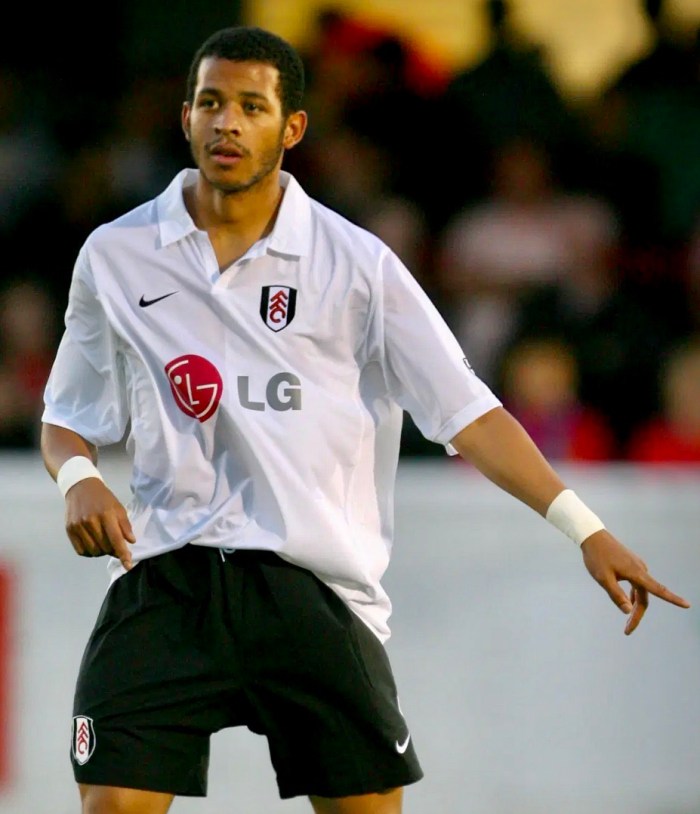
“We had a core of good young players coming through the club, the likes of Liam Rosenior, Zat Knight, Sean Davies, Zesh Rehman and Mark Hudson, who all went on the have successful careers in the game.”

In 2006, by which time he already held the Uefa Pro Licence as a coach, he moved with his wife and two children to Auckland to become manager of the New Zealand Knights, who played in the Australian A League.

That lasted a year before he moved to the Middle East and spent five years as football performance manager at the Aspire Academy in Qatar working with young players and coaches.

Chris Hughton brought him back to the UK to become first team coach at Norwich City when they were in the Premier League in the 2013-14 season.

Nevin was reunited with Chris Hughton at Brighton having worked with him at Norwich.

From Carrow Road, he then worked as head of coaching for the Premier League, a role that saw him run a diploma course to develop coaches with great potential as well as acting as a sounding board for coaches working in Premier League academies.

Nevin was reunited with Hughton at Brighton just ahead of the club’s debut season in the Premier League, replacing Simon Rusk who had stepped up temporarily from being under 21 coach when Nathan Jones left to become manager of Luton Town.

Hughton said: “Paul is an excellent coach and a good appointment for the club. I’m delighted he is on board and looking forward to working with him again.”

Asked whether his lack of high level playing experience was a hindrance to working as a Premier League coach, Nevin replied: “Coaching and playing are very different things. While I might not have played Premier League football, I am a real student of the game and have worked alongside some great coaches and managers. I have developed a healthy understanding of top-level football from a coaching perspective.”

On England duty with Gareth Southgate

When Lewis Dunk made his England debut in a 3-0 friendly win over USA at Wembley in October, 2018, Nevin was part of the coaching team supporting Gareth Southgate as part of an initiative to place black, Asian and minority ethnic coaches in all England squads. Formally known as the Elite Coach Placement programme, it was a key strand of the FA’s Pursuit of Progress strategy, designed to increase diversity in coaching roles.

However, Nevin and Southgate were already known to each other. At Fulham, he was assistant academy manager to former Crystal Palace boss Alan Smith, who had managed Southgate at Selhurst. Nevin got to know Southgate through Smith.

“I was a little unsure as to what the setup would be like, but to get the opportunity to work with Gareth Southgate, Steve Holland (the assistant manager) and the rest of the senior men’s setup was something I couldn’t turn down,” Nevin told the FA’s in-house media.

“The biggest challenge I found was that, if working inside a club, you get to work with the players and other coaches on ideas each day. You start preparing for a match at the weekend at the beginning of the week, with days to get the clarity of message through.

“But on the international stage, there’s a finite amount of time to get critical information across and to develop strong harmony across the squad. It’s a challenge that makes you acutely aware that every moment during an international camp counts.”

It wasn’t the first time that Nevin had worked for the FA, though. When he was head of coaching at the Premier League, between August 2014 and April 2016, he coached England’s under-16s who at the time included Phil Foden and Jadon Sancho.

Nevin, by then 49, said: “When I got the call, I was absolutely delighted and feel it’s a very privileged position. First and foremost, I’m very thankful to Gareth and The FA for the opportunity.”

Albion happy to see Nevin develop with England

He appreciated Brighton giving him the time to do something which was a development opportunity and added: “This is a chance to work with the best players in the country. Obviously, I see them week-to-week in the Premier League but working with them en-masse in a squad setting is going to be immense.

“Having had a brief experience of working at international youth development levels, it’s a chance to see the final product that’s coming through the system while working alongside the top coaches in the country.

“Being a part of that environment at the highest level of international football and looking at how they work and function will have the biggest impact on me. I previously had a spell working in coach development at the Premier League so I’m aware of the need to give opportunities to the quality BAME coaches out there.”

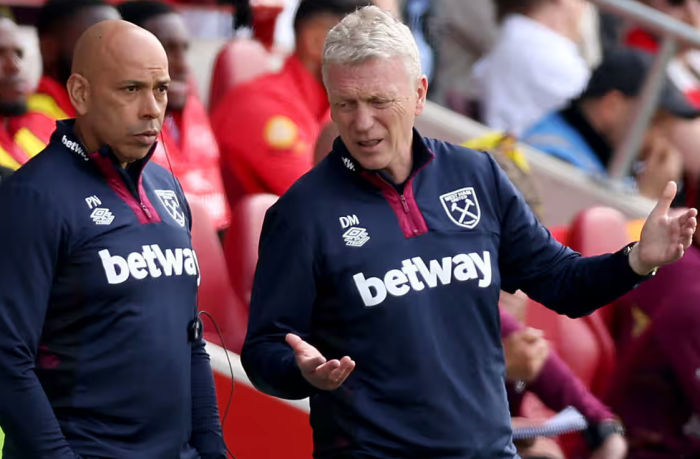
Nevin parted company with the Seagulls when Hughton was relieved of his duties at the end of the 2018-19 season but he wasn’t away from football’s top table for long because in February 2020 he joined West Ham along with former Hammers captain Kevin Nolan to work with David Moyes and his assistant Alan Irvine.

In October 2022, Malik Ouzia in The Standard wrote: “Nevin is one of the most respected and most widely experienced coaches in the country, a key lieutenant under David Moyes, as well as Gareth Southgate at England.”

According to Roshane Thomas, writing for The Athletic in December 2022, Nevin’s role at West Ham was to focus on creation and delivery in attacking set-plays and analysing opponents’ set-plays.

“I’m fluent in analysis tools so I can do my own analysis, I have done that for 20-odd years,” Nevin explained in an interview with premierleague.com.

Hammering home a point

The Hammers achieved European qualification in each of Nevin’s three seasons with them and he left shortly after they won the UEFA Europa Conference League trophy. Manager Moyes said: “Paul has played an important role for us during his time here and I would like to thank him for all his support and hard work during his time at West Ham United.
“He is highly ambitious as a coach and is keen to test himself in a new environment and we wish him well in doing so.”

Nevin said: “I’ll always look back on my time and the opportunity I had to work at West Ham with great fondness.

“In the three and a half years, we enjoyed a period of great success in West Ham’s history, culminating in the Europa Conference League win last season, which gives the club a fantastic opportunity and platform to go on to even greater levels in the future.”

From West Ham, he moved to French Ligue 1 side Strasbourg, where he worked as first-team coach under Patrick Vieira, who was appointed head coach by the club’s new owners, BlueCo, who also own Chelsea. Nevin didn’t stay on when Vieira left after one season to be replaced by former Albion player Liam Rosenior.

Last minute instructions for Cole Palmer at the 2024 Euros

Nevin had rejoined the senior England men’s team coaching staff in August 2021 and was part of Southgate’s support team through to the 2024 Euros in Germany. In August 2024, he took charge of England’s Elite League Squad on an interim basis when Ben Futcher stepped up to Under-21s manager following Lee Carsley’s temporary rise to take the full England team.

When asked whether he held ambitions to become a manager in his own right, Nevin told The Standard: “I owe it to myself and the people I’ve worked with.

“If the right opportunity came at the right time, then I need to give it a go because maybe with that nudge at the door, if I’m successful, it can allow me to bring others in and give others opportunities.”

Expanding on his experience in that premierleague.com interview, he said:“I’ve worked with young people outside of football, within social work, trying to study languages as well. When I’ve worked with French players and Spanish players – and I’m not saying I’m fluent by any means – but just a little bit of connection there, those little things help.

“I’ve worked in this game around the globe as well, so it’s not like I’ve just been at domestic level. I was a manager in the Australian League, I’ve worked in Qatar with the junior national teams. It’s just getting that variety and taking opportunities when they come.

“It may not necessarily be the thing you want at that particular moment, but if it opens an opportunity to show what you can do and to learn, then I think it’s always worth grasping that.”

And on a philosophical note about the art of coaching, he said: “A coach, first and foremost, has to have the knowledge and credibility to deliver, but you’re dealing with human beings.

“A lot of people can have the knowledge, but it’s about transmitting that, making the players feel valued and being able to develop relationships which help them reach their fullest potential.

“It’s probably that aspect, really getting into the human being that drives the performance, which is my strongest.”

Nevin returned to club football in January 2025 when he was appointed as one of two assistant managers to Mark Robins at Stoke City. He stood down from his role as interim England under-20s manager, where he was undefeated in six matches, to take the job.

Steady Eddie had plenty of strings to his bow

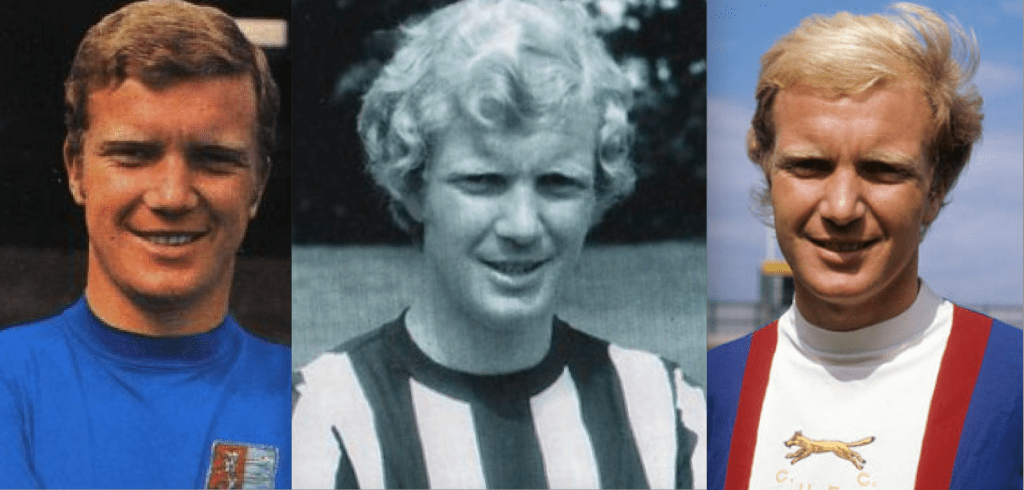
ONE TIME Albion captain and utility player Eddie Spearritt played in the top flight for Ipswich Town and Carlisle United.

He made five starts and five appearances off the bench for second tier champions Ipswich at the beginning of the 1968-69 season before joining third tier Brighton for £20,000 in January 1969.

Play anywhere Spearritt was then a permanent fixture in the Albion line-up for almost five years, making 225 appearances, before Brian Clough turfed him out at the end of the 1973-74 season.

But he found himself back amongst the elite when newly promoted Carlisle United snapped him up for their one and only season (1974-75) amongst the big boys.

Spearritt made 17 starts and six appearances as a sub for the Cumbrians but, in spite of a superb winning start when they briefly topped the division, United finished the season in bottom spot.

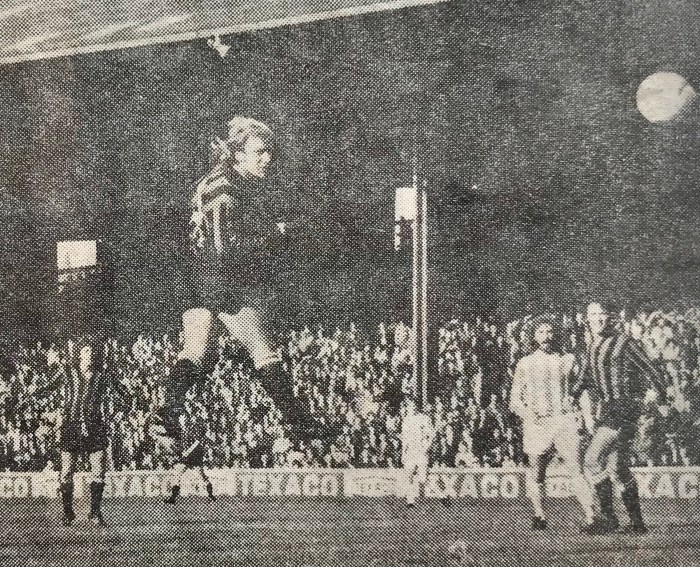
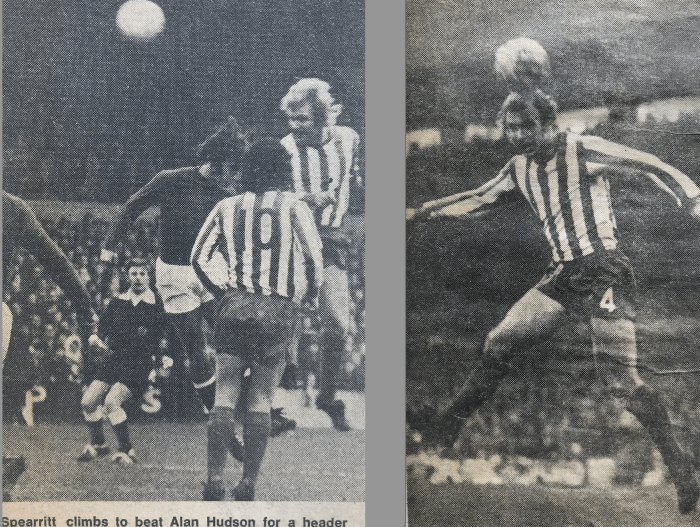
Spearritt shapes to challenge Aston Villa’s Ray Graydon

Equally comfortable playing in midfield, at full back or sweeper, Spearritt had on-off spells as Albion’s chosen penalty-taker as well as chipping in with goals from open play. He even turned his hand to goalkeeping when necessary.

Another key attribute to his game was an ability to send in long throw-ins which could sometimes be as effective as a free kick or corner. It was a skill which earned him a place in a Longest Throw competition staged by BBC’s sport show Grandstand in 1970-71, although he didn’t win it.

Born in Lowestoft on 31 January 1947, Spearritt went to Lowestoft Grammar School and on leaving school was picked up by Arsenal. But when the Gunners didn’t keep him on, he returned to East Anglia and joined Ipswich as an apprentice in August 1963.

He signed a professional contract with Town in February 1965 and, as Tim Hodge details on prideofanglia.com, he made his league debut in the 1965-66 season in a 1-0 win away to Preston in the old Division Two.

That was the season when substitutes were first introduced into the English game and the record books show that Spearritt was the first Ipswich sub to score a goal.

He went on for Irish international Danny Hegan in a match away to Derby County on 15 January 1966 and scored Ipswich’s second goal. The game finished 2-2; Gerry Baker having scored Town’s first.

Over the next three years, Spearritt made a total of 69 appearances (plus 10 as sub) for Bill McGarry’s side, scoring 14 goals along the way. Twenty of those games came in the 1967-68 season when Ipswich won the old Second Division.

A 1-0 home defeat to Spurs in October 1968 was his last for the Suffolk club and he parted company with Town shortly after McGarry left Portman Road to take over at Wolverhampton Wanderers.

A debut v Crewe (left) and slaloming through the Plymouth Argyle defence (right)

Spearritt was one of Freddie Goodwin’s first signings for Brighton – just a few weeks before my first ever Albion game. He made his debut in a 3-1 home win over Crewe Alexandra and kept the number 10 shirt to the end of the season, by which time he had scored five times, including both Albion’s goals in a 2-2 draw at home to Tranmere Rovers.

In the 1969-70 season, not only was he part of the Third Division Albion side who pushed his old manager McGarry’s First Division Wolves side all the way in a memorable third round League Cup tie, it was his header from Kit Napier’s free kick that put the Albion 2-1 ahead just before half-time.

Scottish international Hugh Curran scored twice in eight second half minutes to clinch the win for Wolves but a bumper Goldstone Ground crowd of 32,539 witnessed a terrific effort by their side.

A few weeks’ later, in a marathon FA Cup second round tie with Walsall that required three replays before the Saddlers finally prevailed 2-1, Spearritt took over in goal during the second replay when a concussed Geoff Sidebottom was stretchered off on 65 minutes. Albion hung on for a 1-1 draw.

Spearritt was a midfield regular in his first two seasons but Goodwin’s successor, Pat Saward, switched him to left back halfway through the 1970-71 season and that’s where he stayed throughout 1971-72 when Albion won promotion from the old Third Division as runners up behind Saward’s old club, Aston Villa.

It was in the first half of that season that Spearritt took a call from ex-Ipswich teammate Ray Crawford, the former England international centre forward, who had returned homesick from a short stint playing in South Africa.

He persuaded Saward to offer Crawford a trial and although he didn’t make the league side he scouted upcoming opponents, played for the reserves and subsequently ran the youth team.

Meanwhile, Spearritt was a key part of the promotion side and player-of-the-season Bert Murray generously declared the award could have gone to Eddie for his consistency that season. As it happened, Spearritt did get the award the following season, although somewhat more ignominiously considering Albion were relegated.

All smiles as Pat Saward’s side toast promotion in 1972

In the close season after promotion, Spearritt tied the knot with Penelope Biddulph, “an accomplished professional dancer,” the matchday programme told us, and they moved into a new home in Kingston-by-Sea.

Spearritt started out at left back in Division Two but after ten games was ousted by the arrival of George Ley from Portsmouth. He then switched back into midfield, but by the end of that relegation season was playing sweeper alongside Norman Gall (for nine games) and Steve Piper (for two).

He scored (pictured above), along with Barry Bridges, in a 2-0 win at Huddersfield on 14 October but the team went on a disastrous run of 16 games without a win, although Spearritt did get on the scoresheet three times, including notching two penalties.

When Albion went to that footballing outpost Carlisle on 16 December, they had lost five in a row without managing a single goal. Carlisle were 5-0 up, goalkeeper Brian Powney was carried off with a broken nose, replaced between the sticks by Murray, then Albion won a penalty.

Spearritt took up the story in a subsequent matchday programme. “I used to be the club’s penalty taker but, after I had missed an important one at Mansfield in 1970, I lost the job. Penalty-taking is really all about confidence,” he said. “After I had missed that one at Mansfield, which cost us a point, the players lost confidence in me and the job went first to John Napier and was then taken over by Murray.

“Bert would have taken the penalty at Carlisle. He has already scored two this season. But he had gone in goal and it was decided it was too risky to fetch Bert out of goal to take the penalty.

“Nobody else seemed to want to take it so I just picked the ball up and put it on the spot. We were 5-0 down by then but I thought from a morale point of view that it was extremely important that I scored. You can understand my relief when I saw the ball hit the back of the net.

“Everybody was beginning to wonder when we would score again. I suppose with the run of bad luck we have been having it was almost inevitable that we should break our goal famine from the penalty spot.”

Towards the end of the dismal run, Albion drew First Division Chelsea at home in the third round of the FA Cup. The game was won 2-0 by Chelsea but it was an ugly, violent affair – The Argus labelled it ‘Goldstone day of shame’ – in which five players were booked and each side had a player sent off.

Spearritt, the first to be booked, found himself caught up in a huge controversy which resulted in Chelsea hard man Ron Harris being sent off by Leicester referee Peter Reeves; remarkably the only time in his career he was dismissed.

The Brighton man insisted he’d been hit by the defender and Saward said in diplomatic terms after the game: “Spearritt said he was struck on the mouth and that it was not an involuntary action but a blow. From what I saw, I couldn’t understand it.”

Esteemed football writer Norman Giller subsequently recorded it like this: “Harris got involved in a tussle with Spearritt, and, as he pushed him, Spearritt went down holding his face as if he had been punched. The referee directed Ron to an early bath. All the bones he had kicked, and here was Harris being sent off for a playground push.

“A Brighton-supporting vicar, with a pitchside view, wrote to the Football Association telling them what he had witnessed, and ‘Chopper’ was vindicated.”

Whatever the truth of the matter, Spearritt told Argus Albion reporter John Vinicombe that he’d been threatened by a Chelsea player after the incident. “He spoke to me several times and made it quite clear what he had in mind.”

Albion’s Ley was sent off for bringing down Tommy Baldwin and then getting involved in an altercation with Peter Osgood, who scored both Chelsea goals. Two minutes later David Webb went into the book for a ‘blatant foul’ on Spearritt.

Albion finally returned to winning ways the following month with a 2-0 win over Luton (on 10 February), and then beat Huddersfield, Carlisle and Swindon, prompting Saward to refer to “some outstanding individual performances” and adding: “I have been particularly pleased with the way Eddie Spearritt has been playing in recent weeks.

“He has maintained a high level of consistency this season and his work in defence and in midfield has been invaluable as the side has plugged away trying to turn the tide of results.”

Saward made Spearritt Albion’s captain at the start of the 1973-74 season back in Division Three and with the return of central defender Ian Goodwin and then the emergence of Piper in the sweeping role, he was soon back in midfield.

But when Saward was sacked in October and sensationally replaced by former Derby County League title winning management duo Brian Clough and Peter Taylor, Spearritt was one of the first to have his nose put out of joint by the new arrivals.

Journalist Spencer Vignes described what happened in Bloody Southerners (Biteback Publishing, 2018), his excellent book about that era.

Clough sought out long-serving centre back Norman Gall and, because he hailed from the same part of the country (ie the north east), told him he was making him the captain. Gall told Vignes: “Suddenly I’m captain, which I was really happy about. Eddie Spearritt didn’t like it though. He’d been captain up until then. In fact, he didn’t talk to me after that. That was the beginning of the end for Eddie.”

Spearritt was part of the side who capitulated 4-0, 8-2 and 4-1 in successive games against Walton & Hersham, Bristol Rovers and Tranmere Rovers, and he was dropped for six games, along with Ley (who never played for Albion again). Clough went into the transfer market and brought in midfielder Ronnie Welch and left back Harry Wilson from Burnley.

Although Spearritt was restored to the team in mid January, and had a run of seven games — including his 200th league game for Albion — when he was subbed off in a home win over Hereford United on 10 March 1974, it was to be his last appearance in an Albion shirt.

In five years he’d played 225 games (plus seven as sub) and scored 25 goals.

Come the end of the season, Spearritt was one of 12 players released by the club in what became known as the great Clough clear-out.

Perhaps surprisingly, though, his next step was UP two divisions to play in the First Division with then newly promoted Carlisle United.

One of his teammates there was defender Graham Winstanley, who later joined the Albion. The side was captained by Chris Balderstone, who was also a top cricketer. Journeyman striker Hugh McIlmoyle played up front while John Gorman, who later played for Spurs and became Glenn Hoddle’s managerial sidekick, was also in the team.

They memorably topped the division after three games…but predictably finished bottom of the pile by the end. In his two-year stay with the Cumbrians, Spearritt played 29 times, was sub twice and scored a single goal.

He moved back south in August 1976, signed by Gerry Summers at Gillingham, and made his debut in a League Cup first round second leg tie against Aldershot, then made his league debut against Reading.

In total, he made 22 appearances in his one season at the club — one of them at the Goldstone Ground on December 29 1976, when the Albion won 2-0 on a slippery, snow-covered pitch. Spearritt scored just the once for the Gills, from the penalty spot against Rotherham United at Priestfield.

He emigrated to Australia the following summer and settled in Brisbane where he played 56 games for the Brisbane Lions between 1977 and 1980 and was their head coach in 1979. He subsequently coached Rochedale Rovers in the Brisbane Intermediate League, steering them to promotion to the Premier League in 1983.

Outside of football, he became estates manager for L’Oréal and in later years was better known as the uncle of Hannah Spearritt, once of the pop group S Club 7, who became an actress in the ITV drama Primevil.

Day of reckoning beckoned for talent spotter Mervyn

THE YOUNGEST goalkeeper to appear in a FA Cup final spent 20 months picking out future players for Brighton.

It was one of several different post-playing roles Mervyn Day filled for various clubs.

Day, who at 19 won a winners’ medal with West Ham in 1975, was Albion’s head of scouting and recruitment between November 2012 and the end of the 2013-2014 season under head of football operations David Burke.

At the time, his appointment was another indicator of the gear change taking place at the club as it built on the move to the Amex Stadium and sought to gain promotion from the Championship.

Day said in a matchday programme interview: “This club has come such a long way in such a short space of time.

“When you think of the debacle of the Goldstone, the wilderness of Gillingham, then Withdean, you only have to get a player through the front door at this wonderful stadium to have a chance of signing them.

“Hopefully, within the next year or so, the new training ground will be up and running and, when you’ve got that as well, you’ve got the perfect opportunity not only to encourage kids to sign but top quality players as well.

“If we are fortunate enough to get ourselves into the Premier League at some point, we’ll be able to attract top, top players.”

It was a case of ‘the goalkeepers union’ that led to him joining the Albion. Day explained he’d been chatting to Andy Beasley, Albion’s goalkeeping coach at the time, who had been a colleague when Day was chief scout at Elland Road. Beasley wondered if he’d like to help coach Albion’s academy goalkeepers but Burke, who he also knew, stepped in and offered something more substantial: the job of scouting and talent identification manager.

He certainly brought a wealth of experience to the task. He had previously been assistant manager to former Albion midfielder Alan Curbishley at Charlton and West Ham; manager and assistant manager at Carlisle United, a scout for Fulham and the FA (when Steve McClaren was England manager) and chief scout at Leeds until Neil Warnock took charge.

In addition to that background, in the days before full-time goalkeeper coaches, Day had worked at Southampton under David Jones, Chris Kamara at Bradford City and John Aldridge at Tranmere Rovers. Then in 1997 Everton came along and he joined Howard Kendall’s backroom team alongside Adrian Heath and Viv Busby. “I was living in Leeds at that time, so distance wasn’t an issue, but it was an interesting trip across the M62 in the winter months,” Day recalled in an October 2021 interview with efcheritagesociety.com.

Brighton made Day redundant at the end of the 2013-14 season following a reshuffle of the recruitment department amid criticism of the quality of signings brought in.

That assessment might have been rather harsh because during his time at the club there was a change in manager (Oscar Garcia taking over from Gus Poyet) and, although the season ended in play-off disappointment, the likes of former Hammer Matthew Upson (who’d played under Day when he was at West Ham) had signed permanently on a free transfer (having been on loan from Stoke City for half the previous season).

The experienced Keith Andrews and Stephen Ward also joined on season-long loan deals and played prominent roles in Garcia’s play-off reaching side.

It was under Day’s watch that the promising young goalkeeper Christian Walton was signed after a tip-off from Warren Aspinall. Aspinall told the Argus in 2015: “I went to Plymouth to do a match report. I set off early and took in a youth team game off my own back. He was outstanding, commanding his box. I reported straight back to Gus (Poyet). He told Mervyn Day. He went to see him, Mervyn liked him.”

It wasn’t the first time Day had played a role in securing a goalkeeper for the Albion. As far back as 2003 he had an influence on Ben Roberts’ arrival at the Albion. Manager Steve Coppell revealed: “He is one of three goalkeepers at Charlton and at the moment nearly all the Premiership clubs are very protective about their goalkeepers.

“I have seen him play a number of times, although I certainly haven’t seen him play recently. I spoke with Mervyn Day (Charlton coach) and he says Ben is in good form. It’s a little bit of a chance and it will certainly be a testing start for him, but he is looking forward to the challenge.”

Day was also sniffing around another future Albion ‘keeper when he was chief scout for Bristol City (between 2017 and 2019).  According to Sky Sports commentator Martin Tyler, Mat Ryan was on their radar in the summer of 2017 when he swapped Belgium for England. In an interview with Socceroos.com, Tyler reveals he was asked by City’s ‘head of recruitment’ (thought to be Day) to glean the opinions of Gary and Phil Neville (manager and coach of Valencia at the time) on Ryan and whether he’d be suitable for the English game.

“I got a text saying, ‘Can you find out from the Nevilles whether they rate Mat Ryan’,” Tyler said. “It wasn’t my opinion they were looking for – quite rightly – it was Gary and Phil’s. I was able to do that and both Gary and Phil gave Mat the thumbs up.”

After leaving Brighton, Day moved straight into a similar role with West Brom, where he worked under technical director Terry Burton and first team manager Alan Irvine, but he was only there a year before linking up with the Robins. He has since been first team domestic scout for Glasgow Rangers, although based in his home town of Chelmsford.

Day was born in Chelmsford on 26 June 1955 and educated at Kings Road Primary School, the same school that England and West Ham World Cup hero Geoff Hurst attended. He moved on to the town’s King Edward VI Grammar School and represented Essex Schools at all levels. He joined the Hammers under Ron Greenwood on a youth contract in 1971.

“On my first day as an associate schoolboy I got taken by goalkeeping coach Ernie Gregory into the little gym behind the Upton Park dressing room and he had Martin Peters, an England World Cup winner, firing shots at me,” Day later recounted. “As a 15-year-old that was incredible.

“The bond got even closer when my father died when I was 17. I was an apprentice but Ron signed me as a full pro within a very short space of time to enable me to earn a little more money to help out at home. A short while later he gave me another increase. He was almost a surrogate father to me.”

In the early part of 1971, Day played in the same England Youth side as Alan Boorn, a Coventry City apprentice Pat Saward took from his old club to the Albion in August 1971.

The goalkeeper was just 18 when he made his West Ham United debut, on 27 August 1973, in a 3-3 home draw with Ipswich Town.

He went on to play 33 matches in his first season and only missed one game in the following three.

Tony Hanna, for West Ham Till I Die, wrote: “In only his eleventh game for the Hammers he received a standing ovation from the Liverpool Kop in a 0-1 defeat that could have been a cricket score but for his fine display and, in his next visit to Anfield, he saved a penalty in a 2-2 draw.”

Day recalled: “As a kid, I had no fear, I took to playing in the first team really, really well. At West Ham, the ‘keeper always had lots to do as we were an entertaining team. We had forward-thinking centre-backs in Bobby Moore and Tommy Taylor, and then after Bobby came Kevin Lock.”

Mervyn Day in action for West Ham against Brighton at the Goldstone Ground, Hove.

In 1974, Day progressed to England’s Under-23 side. He won four caps that year and a fifth in 1975 but it was a golden era for England goalkeepers at the time and he didn’t progress to the full international side, despite being touted for a call-up.

By the time Day won that last cap, he had been voted PFA Young Player of the Year and, at 19, had become the youngest goalkeeper to appear in a FA Cup Final, keeping a clean sheet as West Ham beat Fulham 2-0 at Wembley.

Hanna continued: “At times he was performing heroics in the West Ham goal and he was fast becoming a fans favourite. Tall and agile, he was a brilliant shot stopper and he was playing like a ‘keeper well beyond his years.”

However, by the 1977-78 season Day’s form had tapered off as the Hammers were relegated. “His confidence was so bad he was eventually dropped and he only played 23 games that season,” said Hanna. “There are several theories to what triggered the loss of form, but one thing that did not help the lad was the stick he was getting from the Hammers supporters.

“In hindsight Mervyn said that he was ill prepared for such a tough run of form. The early seasons had gone so well that he had only known the good times and when the bad ones came he struggled to come to terms with the pressure.”

In 1979, West Ham smashed the world record transfer fee for a goalkeeper to bring in Phil Parkes from QPR and Day was sold to Leyton Orient, where he replaced long-standing stopper John Jackson, who later became a goalkeeper coach and youth team coach at Brighton.

Day spent four years at Brisbane Road before moving to Aston Villa as back-up ‘keeper to Nigel Spink. After a falling-out with Villa boss Graham Turner, he switched to Leeds under Eddie Gray and then Billy Bremner. During Bremner’s reign, he had the humiliation of conceding six at Stoke City at the start of the 1985-86 season and, in spite of vowing it wouldn’t happen again, let in seven in the repeat fixture the following season. Amongst his Leeds teammates that day were Andy Ritchie and Ian Baird.

Nevertheless, he ended up playing more games (268) for Leeds than any of his other clubs. He rarely missed a game up to the end of 1989-90, the season when was he was named Player of the Year and collected a Second Division championship medal.

Howard Wilkinson offered him a post as goalkeeping coach for United’s first season back in the elite, having lined up a £1m move for John Lukic from Arsenal. Day had a couple of loans spells – at Luton Town and Sheffield United in 1992 – but was otherwise back-up for Lukic, alongside his coaching duties, until Wilkinson saved Brighton’s future by signing Mark Beeney from the Seagulls.

After eight years at Elland Road, Day moved to the Cumbrian outpost of Carlisle in 1993. When he moved into the manager’s chair at Brunton Park, he not only led them to promotion from the Second Division in 1997, but they also won the (Auto Windscreens Shield) Football League Trophy. United beat Colchester 4-3 on penalties at Wembley after a goalless draw; one of the scorers being the aforementioned Warren Aspinall, later of Brighton and Radio Sussex.

Day worked under Curbishley at Charlton for eight years between 1998 and 2006, helping the club stabilise in the Premier League.

And, in December 2006, he followed Curbishley as his No.2 to West Ham, where the duo spent almost two years.

It was in 2010 that he returned to Leeds as chief scout, working under technical director Gwyn Williams. United manager Simon Grayson said at the time: “We’re restructuring the scouting department under Gwyn and Mervyn will be both producing match reports and watching our opposition and working on the recruitment of players.

“Merv’s knowledge and experience will prove important to the football club as we look to progress and develop what we are doing.”

Duffy had Burleigh pal for company on his Albion arrival

HISTORY has seen a whole string of goalkeepers play for both Newcastle United and Brighton. Dutchman Tim Krul was the most recent and others stretching back over the years – Eric Steele, Dave Beasant, and Steve Harper – have featured in this blog at various times.

My post this time, though, centres on Martin Burleigh, for many years an understudy to Northern Irish international Iam McFaul.

When stocky striker Alan Duffy travelled 350 miles from home to join Brighton in early 1970, it was with some relief that he found the familiar face of Burleigh amongst his new teammates.

How Albion’s matchday programme reported Duffy’s delight in meeting up with a familiar face

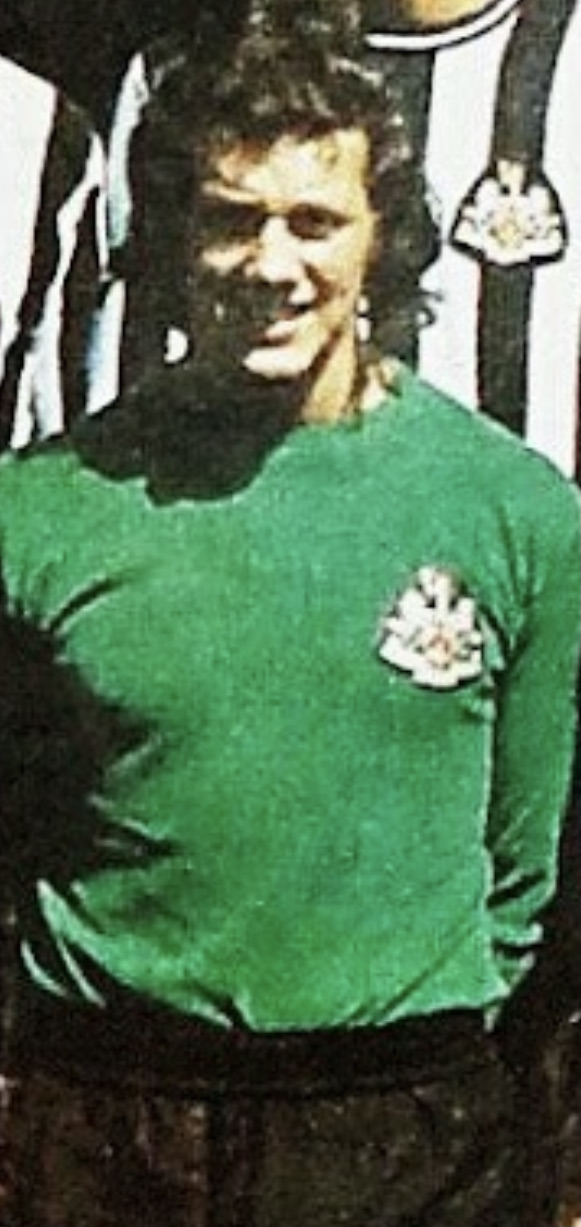
The goalkeeper, who was only 18, was on loan at the Albion at the time. The previous year he and Duffy had been in the same Newcastle United youth team.

Not only did that side do the Northern Intermediate League and cup double, 10 days before the first team won the Inter-Cities Fairs Cup, the youth team brought even more silverware to Tyneside – winning a prestigious international youth tournament at Feyenoord’s ground in Rotterdam.

Toon’s trophy-winning youth team of 1969

Unlike Albion’s new £10,000 permanent signing, though, Burleigh was to have only a short-lived stay in Sussex. Manager Freddie Goodwin had brought in the Toon no.3 ‘keeper (Iam McFaul was first choice and John Hope his deputy) as cover while Albion were reduced to only one fit goalkeeper (Brian Powney) following a serious head injury to Geoff Sidebottom in the first match of a marathon second round FA Cup tie against Walsall (it took four games to decide it; those were the days before penalty shoot-outs).

Thankfully Powney avoided injury so young Burleigh was not called into match action, and he returned to the north east still waiting to make his league debut. Indeed, he had to wait until Boxing Day 1970 for that chance. Although Toon went down 3-0 at Leeds United, opposition manager Don Revie praised the youngster, saying: “I thought he had a fine game. He had no chance with the goals. Some of the saves he made showed he has a fine future ahead of him.”

It would seem Toon boss Joe Harvey wasn’t so sure and it was more than a year before Burleigh got his next chance to shine, making his home debut in a 4-2 win over Coventry City on 8 January 1972.

Once again it was to be his only first team appearance of the season, but in the 1972-73 season he finally got a run of games when McFaul was injured. He played in 11 matches but then had the misfortune to fracture a finger in a collision with Mick Channon during a 1-1 draw at Southampton, and McFaul returned.

The Toon 1892.com website recalls Burleigh then having a struggle with weight issues and he had a public dispute with manager Harvey which saw him walk out of the club saying he was going to join the RAF. But Newcastle retained his registration and when the dust settled on the dispute he was sent on loan to Darlington before making the move permanent in October 1974 for a fee of £8,000.

He was only at Darlington for a season before switching across country to Carlisle United, where he spent two seasons.

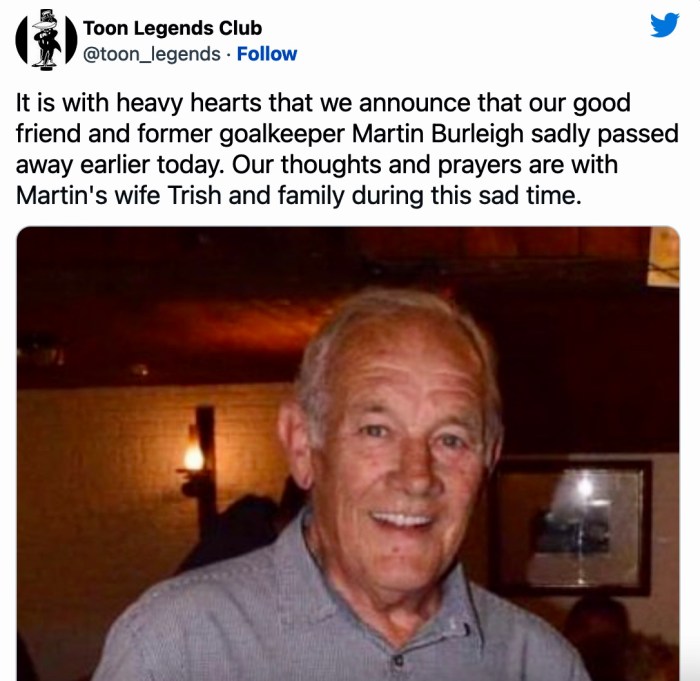
When Burleigh died at the age of 70 on 27 September 2021, Carlisle chairman Andrew Jenkins said: “Martin was a big character who was a pleasure to have around. He was tall and strong in stature and very stylish in the way he kept goal.

“We used to talk about how he very much had the manner of how the goalkeepers in Europe used to do things, with flair and a bit of theatre.

“I remember that Alan Ashman was really keen to get him signed and over here to join us. When he was speaking to the board about him, he said that the fans would be queuing along Warwick Road to watch him – he felt he was that good.”

His death was mourned by former Newcastle teammates too and several ‘Toon Legends’ remembered him at a gathering at the Tyneside Irish Centre.

Tribute on Twitter following Burleigh’s death

“Martin was a great friend and a lot of players who played alongside him at Newcastle from junior to first team level want to pay their respects to a real character,” Toon Legends official Chris Emmerson told Chronicle Live.

After his spell at Carlisle, where he also had to bide his time behind first choice Allan Ross, Burleigh returned to Fourth Division Darlington for two more seasons, during which time (in October 1978) he kept goal when the north east minnows only narrowly lost (1-0) to First Division Everton in a third round League Cup tie.

Burleigh went on to spend three seasons in goal for Hartlepool, ending his league career with a total of 222 appearances.

He then became a painter and decorator but continued playing for non-league sides in the area, appearing for Bishop Auckland, Spennymoor and Langley Park until packing up playing in 1984.

Born in Willington, County Durham, on 2 February 1951, Burleigh was playing for his hometown team at 17 when Newcastle signed him in 1968, initially as an amateur.

Kenneth Scott, in The Toon1892 Chronicles, wrote: “He displayed within the junior and reserve teams that he was more than capable between the posts and it was not long before he turned professional.”

That happened in December 1968 and before the end of the season he was in goal for the Newcastle youth team under coach Keith Burkinshaw (who later managed Spurs) when they won the international tournament in Holland, beating an Arsenal side containing the likes of Ray Kennedy, Sammy Nelson, Charlie George, Eddie Kelly, and Pat Rice.

The achievement was somewhat overshadowed by the first team’s triumph in the old Inter-Cities Fairs Cup when Toon beat Hungarian side Ujpest in the two-legged final, skipper Bobby Moncur lifting the trophy in Budapest.

Although Burleigh managed to edge out McFaul’s deputy Hope to become the no.2 at St James’s Park (Hope joined Sheffield United along with David Ford in exchange for John Tudor in 1971), the form and fitness of the Northern Irish international (who later spent three years as manager of Newcastle) always kept him on the sidelines.

• Incidentally, in line with the tradition of Albion ‘sharing’ goalkeepers over several decades, when McFaul was in the manager’s chair in January 1988 he took Albion’s long-serving Perry Digweed on a month’s loan with the Magpies. He played in their reserves but didn’t appear in the first team. The following month he went on loan to relegation-threatened Chelsea where he featured in three matches: a 3-3 draw away to Coventry City, a 0-0 home draw v Everton and a 4-4 draw at Oxford United.

Malcolm in the middle was moustachioed marksman Poskett

MALCOLM POSKETT’s goals helped Brighton to win promotion from the second tier after he’d made a terrific start to his Albion career.

Only two days after putting pen to paper in Hove, Poskett netted the equaliser in a 1-1 draw away to Hull City on 4 February 1978 and a week later he marked his home debut with a goal in Albion’s 2-1 win over Burnley.

The game at Boothferry Park was only six minutes old when the home side went ahead but Poskett levelled it up just before half-time after a Tony Towner corner was headed goalwards by Andy Rollings and the new arrival diverted it into the net.

A £60,000 signing from fourth tier Hartlepool United, Poskett had taken over the no.9 shirt from Ian Mellor, who had only been in the side for one game in the injury absence of Teddy Maybank.

Maybank’s big money signing from Fulham four months earlier had broken up the highly successful Mellor-Peter Ward partnership that earned Albion promotion from the old Third Division, and Poskett’s arrival only served to illuminate the Goldstone exit door even brighter for Mellor, who swiftly departed for Chester.

A crowd of 22,694 saw the new man’s Division Two debut on an icy Goldstone Ground pitch. Poskett once again profited from a Towner pass to score. Skipper Brian Horton scored Albion’s other goal.

It all must have felt very showbiz to the lad from Teesside, used to playing in front of 5,000 crowds in the Fourth Division, especially when prior to kick off against the Clarets, Slade, a famous chart-topping pop group of the time, recorded a single on the pitch in front of the North Stand.

While Maybank reclaimed his starting berth from Poskett for six matches, he was troubled by a knee injury and Poskett got the nod for the remaining seven games of the season as Albion chased automatic promotion, which at that time was earned by the top three sides in the division. There were no play-offs.

Poskett repaid Mullery’s faith in him with a hat-trick in a 4-0 win away to Bristol Rovers and by netting the only goal of the game in the penultimate fixture at home to Charlton Athletic in front of 31,203 fans.

What happened next has been well documented: Albion missed out on promotion when Southampton (in second) and Spurs (third) conveniently drew 0-0 in the final match of the season; Spurs edging out the Seagulls on goal difference.

Maybank had a successful cartilage operation during the summer break and was initially the preferred partner for Ward as the new season got under way.

Poskett banged in a transfer request as a mark of his frustration but, after Mullery persuaded him to withdraw it, he got his chance back in the side and made the most of opportunities that came his way.

Mullery admitted in Matthew Horner’s biography of Ward (He Shot, He Scored, Sea View Media) that he wasn’t always fair on Poskett when reverting to the Ward-Maybank partnership.

He pointed out: “Malcolm Poskett did a terrific job when we signed him. He was one of the most under-rated goalscorers – absolutely brilliant.

“He was really similar to Wardy, very sharp and very quick but a bit taller and a bit stronger.”

By the end of the season that ended in promotion to the top tier of English football for the first time, Poskett had contributed 10 goals in 24 games (plus eight sub appearances). He was the substitute in the famous 3-1 win back in his native north-east when Newcastle were beaten by the Seagulls on 5 May 1979.

Brighton struggled to find their feet in more exalted company and Poskett barely got a look-in, coming on as a sub twice and only starting three matches, the last of which was in the resounding 4-0 defeat to Arsenal in the League Cup on 13 November 1979.

He scored twice, though: netting the only goal in an away League Cup win over Northampton Town, and four days later scoring along with Peter O’Sullivan as Albion pulled back a 2-0 deficit to draw 2-2 at West Brom.

Poskett wheels away to celebrate his only top flight goal, away to West Brom

However, with the arrival of Ray Clarke from Ajax, it was clear Poskett’s chances at the Albion were going to remain limited, so he dropped back down a level to join promotion-seeking Watford under Graham Taylor. Albion goalkeeper Eric Steele had already made a similar switch in the autumn of that season shortly after a famous spat with Gary Williams at Old Trafford. Mullery also secured a £120,000 fee for Poskett, so Albion did very nicely out of the deal.

“I would have loved to stay at Brighton for the rest of my career, but it wasn’t to be,” Poskett told Spencer Vignes in a retrospective matchday programme article. “One week I was partnering Peter Ward, the next it would be Teddy with Peter. I never got a run in the team, even though I scored a couple of goals when I did play.

“At least with Watford I got the chance to start games. People called us kick and run, a long ball side, but we had a lot of talented players like Ross Jenkins, John Barnes and Nigel Callaghan.”

Poskett struck up a friendship with fellow new boy Martin Patching and both were on the scoresheet (Poskett scored twice) in a memorable 7-1 League Cup thrashing of Southampton on 2 September 1980.

Although being Watford’s top scorer with 21 goals in the 1980-81season, when the Hornets finished ninth, the following season he found himself in the reserves after a three-game barren spell.

In a Watford matchday programme article, he mused: “It’s a strange profession – one minute you’re up and the next down.

“I played in the first three league games of the season without scoring and was dropped. But I’m scoring fairly regularly in the reserve side and my chance will come if I keep on hitting the net. I’m a battler and not the type of player to give less than 100 per cent, no matter what grade of football I’m playing in.”

Watford won promotion as runners up behind close rivals Luton Town but Poskett couldn’t shift Luther Blissett or Jenkins, who were the preferred strike pairing, and Gerry Armstrong, later to join Brighton, was invariably the back-up option.

Born in Middlesbrough on 19 July 1953, Poskett went to Beechwood Junior School and then on to Brackenhoe Secondary Technical. His footballing ability in school sides eventually led to him being selected for North Riding Schools.

He was a decent all-round sportsman – a useful cricketer who played for Middlesbrough Schools, he also featured in local leagues at table tennis, and enjoyed tennis and badminton too.

But at 16 the budding sportsman started out as an apprenticeship plater at Cargofleet Steelworks, only playing football for the local Beechwood Youth Club and then South Bank in the Northern League.

His performances for South Bank caught the eye of Middlesbrough and he was taken on as a professional. But after 18 months in their reserves, manager Jack Charlton gave him a free transfer and he opted to become a plater on North Sea oil rigs to earn a wage.

He didn’t turn his back on football altogether, turning out part-time for Whitby Town in the Northern League. Scoring an incredible 98 goals over two seasons was bound to attract attention.

George Aitken, later a Watford coach and then a coach under Mullery at Brighton, was Workington manager at the time and tried to sign Poskett, but, disillusioned by his Boro experience he chose to stick with Whitby until Hartlepool manager Billy Horner convinced him he could still make it in the professional game.

For a £25 transfer fee, Horner took him on and devoted hours of extra time working on the youngster’s skills and sharpness. It paid off.

“My work rate was non-existent, but Billy Horner really worked on me and got me going,” Poskett told Shoot! magazine. “If it wasn’t for him, I don’t think I would have got anywhere – I’d still be in non-League soccer. It was so hard at first, I felt like packing it in, but he kept me at it and I’m very grateful now.”

His goalscoring at Hartlepool caught the eye of Ken Craggs when he was a coach at Fulham and when Craggs switched to become Mullery’s no.2 at the Goldstone, Poskett followed soon after, the £60,000 fee representing a tidy profit for the struggling North East minnows.

In an interview with The Argus in 2017, Poskett recalled: “Brighton was one of the best times of my life.

“I came in during the season when we just missed out on promotion and the lads were fantastic. It was a fabulous place to live as well.

“I had to come from one end of the country to the other but, once I got there, there were lads from up north, the Midlands, so it was a good mixed bunch and I felt right at home.”

After helping Watford to promotion in 1982, Poskett headed back north and played for Carlisle United for three seasons, thriving under the managership of Bob Stokoe, who’d led Sunderland to FA Cup glory in 1973.

In the penultimate game of the 1983-84 season, Poskett scored his 100th career goal – and his 101st – as Carlisle  drew 2-2 at home to Crystal Palace in front of a paltry crowd at Brunton Park of just 3,038.

Poskett subsequently had six months at Darlington, before switching to Stockport County in January 1986.

Appearances were few and far between and he went on loan to his old club Hartlepool in March the same year before moving back to Carlisle in August 1986. He finally hung up his boots at the end of the 1987-88 season.

He remained in the town and in 2017 was working as an examiner at Pirelli, the tyre manufacturer.

Pictures from Albion matchday programmes and online sources.

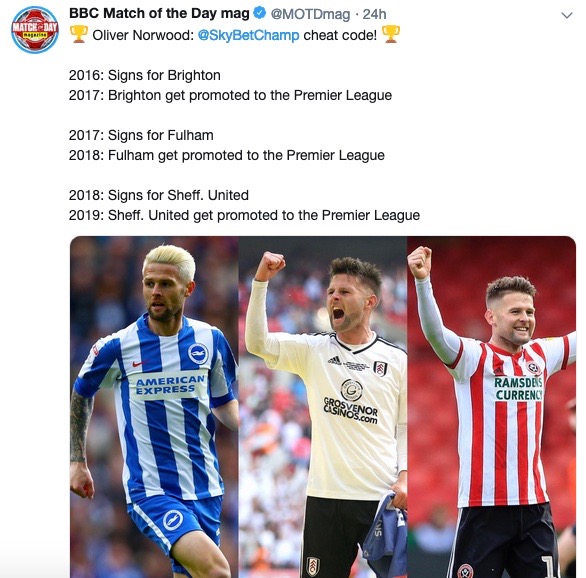
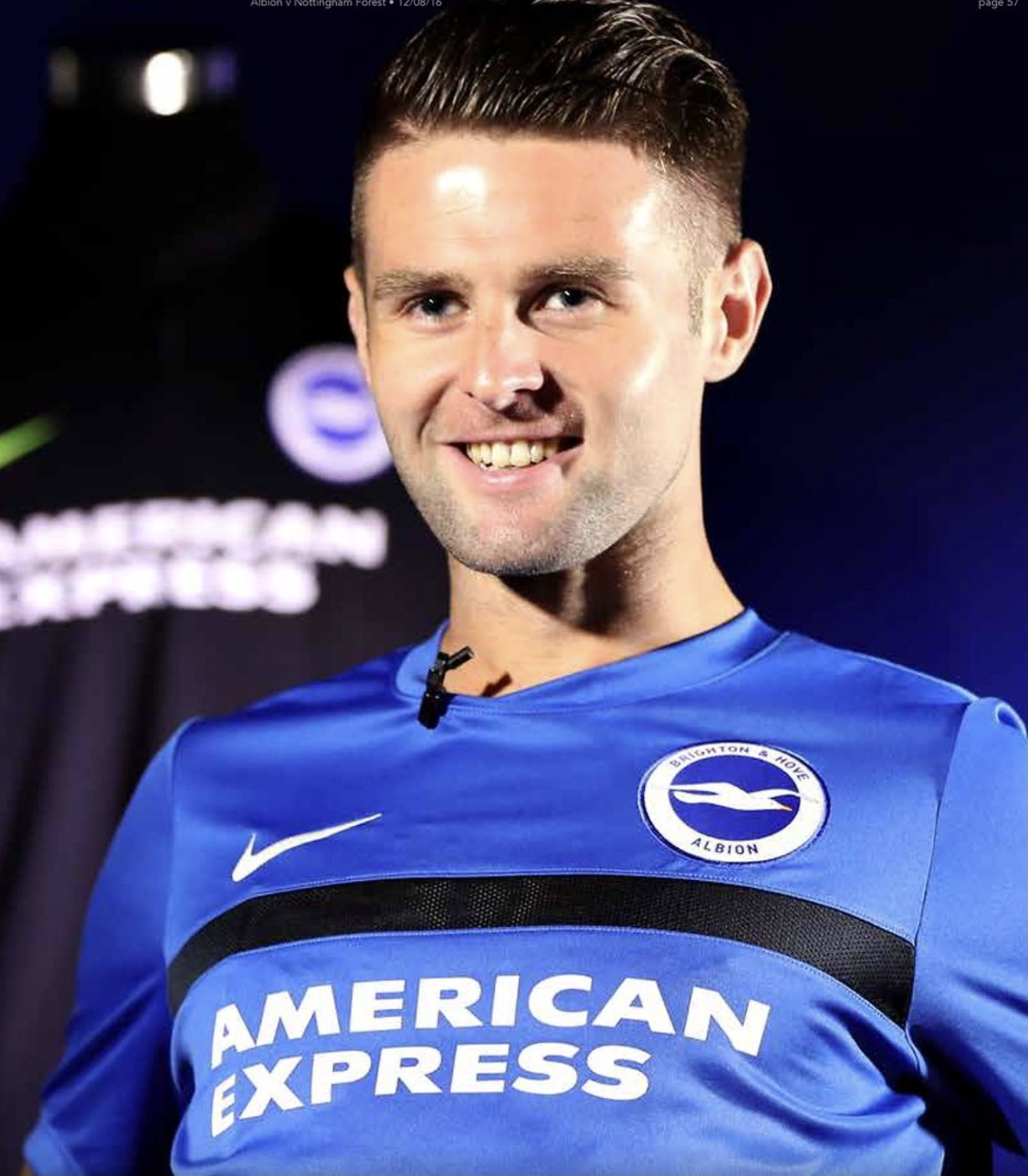
United ‘product’ Oliver Norwood eventually fulfilled expectations

IT LOOKED LIKE the so-near-and-yet-so-far story of Oliver Norwood’s flirtation with the Premier League would end in disappointment.

Twice the former Manchester United reserve helped teams to win promotion from the second tier, only then to remain in that division when the sides he played for didn’t see him as a Premiership player.

It happened first of all with Brighton in their 2016-17 promotion under Chris Hughton.

The following campaign Norwood went on a season-long loan to Fulham and was at the heart of their midfield as they won promotion.

Fulham didn’t look to retain him, though, and for 2018-19 he was once again loaned out by Brighton; this time to Sheffield United.

Halfway through the season, they turned the loan into a permanent transfer and, after helping the Blades to win promotion, Norwood finally got his chance to show his skills in what amounted to an impressive return to the top-flight of English football.

How BBC’s Match of the Day Tweeted Norwood’s record

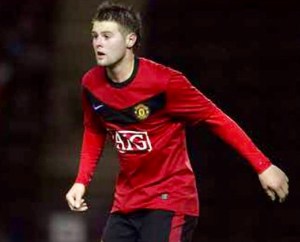
Born in Burnley on 12 April 1991, Norwood was only six when he first came to the attention of Manchester United, spotted playing for Fulledge Colts in his home town.

“My earliest football memory is being on trial at the Manchester United academy aged six and being totally overawed by it,” he told the Albion matchday programme. “I remember standing there at The Cliff, biting my fingernails, and the coach, Paul McGuinness, saying ‘Are you going to join in?’ After that, I was fine and it was really exciting to be part of the club’s academy.” He joined the Red Devils on schoolboy terms at seven and spent 15 years on their books, playing in the same youth teams as Paul Pogba and Jesse Lingard.

During the 2005-06 and 2006-07 seasons, Norwood made appearances for United’s under-18 team and, ultimately, he signed on as a trainee in July 2007.

He became an under-18 regular in 2007-08 and also made his debut for the United reserve side. After netting nine goals in 28 appearances for the under-18s in 2008-09, Norwood was signed as a professional.

He was a reserve team regular in 2009-10 and said he owed a lot to Ole Gunnar Solskjaer, who was in charge of United reserves at that time.

“I owe a lot to Manchester United for the experiences and education I had there,” Norwood told the matchday programme, United Review. “The club taught me not just about football but life. I was taught how to be a good person.

“Ole played a huge role in terms of my development as a footballer and a person. The lessons he taught me in the reserves have stayed with me throughout my career.

“I’ll always be grateful to Manchester United, to Ole, to (former reserves manager) Warren Joyce, for the upbringing they gave me in the game.”

Norwood got a sniff of the first team when Sir Alex Ferguson called him up to the first team squad for a Champions League match away to Wolfsburg. He travelled with the squad to Germany but didn’t get selected in the final matchday 18.

In search of a first team breakthrough, Norwood decided to gain experience on loan with lower league clubs and his first port of call was Carlisle United in September 2010. Ironically, his first match was against Brighton – a 0-0 draw at Brunton Park. Unfortunately, after just five starts and two sub appearances, he tore a thigh muscle and had to cut short his loan and return to Old Trafford for treatment.

The following season, he went out on loan again, this time to League One Scunthorpe United where Alan Knill, Chris Wilder’s no.2 at Sheffield United, was the manager.

In an interview with the aforementioned Joyce, the former reserves manager explained how it was only a change in Norwood’s diet that started to bring about the required improvements to his game.

“I got him to write down everything he ate. And I meant everything. I said, ‘We have to look at your diet and get you absolutely super fit’. I told him we couldn’t allow the ability he had to be wasted.”

Joyce told The Athletic’s Richard Sutcliffe in a 23 June 2020 article: “Once we’d sat him down (after returning from Scunthorpe) and analysed everything, he got himself really ripped. He started eating the right things and worked so hard to get into shape. He is getting the rewards from that now.”

Norwood spent the second half of the 2011-12 season in Coventry City’s unsuccessful effort to beat the drop from the Championship but, having acquired a taste for football at that level, declined the offer of a contract extension on his return to Old Trafford.

He told Talksport at the time: “I want to play every week like I was this season in the Championship. It’s been the hardest decision in my life for me to make but there comes a time when you have to be realistic.”

He opted to join newly promoted Huddersfield Town in the Championship on a three-year contract, and Sutcliffe’s article reveals Norwood was so determined to make the move that he drove down to Heathrow Airport to apprehend holiday-bound Town manager Simon Grayson to persuade him to sign him.

Nevertheless, United boss Sir Alex Ferguson had some encouraging parting words that the midfielder never forgot. “You’re not going to make it at Manchester United, but I believe one day you will play in the Premier League.”

Norwood was a permanent fixture in the Terriers’ midfield for two seasons before switching to fellow Championship outfit Reading at the beginning of the 2014-15 season.

Signed by Nigel Adkins on 21 August, 11 days later he was joined at the Madejski by Glenn Murray, on loan from Crystal Palace.

When the Royals were hammered 6-1 by Birmingham City in mid-December, Adkins was sacked and replaced by Steve Clarke. His second game in charge, on Boxing Day, saw Reading visit the Amex, with Brighton under caretaker manager Nathan Jones. Murray scored twice for the visitors, but Albion rescued a point with a 90th minute equaliser from Inigo Calderon.

Norwood completed the season having made 35 appearances plus seven as a sub and although he made the second highest number of appearances – 50 – the following season, when the Royals visited the Amex on 15 March 2016, under Brian McDermott, their third manager of that campaign, Norwood was a non-playing sub as the Royals lost 1-0 to a James Wilson goal.

The next time the two sides met (a 2-2 draw at the Madejski on 20 August), Norwood was part of Chris Hughton’s squad, having signed for the Seagulls at the start of the 2016-17 season, along with Murray and Steve Sidwell. Norwood was a 68th-minute sub for Sam Baldock.

Manager Hughton said of Norwood: “Oliver is another excellent addition to our squad.

“He has a good grounding coming from Manchester United, and has a wealth of experience playing in the Championship and at international level.

“He’s a box-to-box midfielder and an excellent passer of the ball, so he gives us extra options in midfield and adds further depth to our squad.”

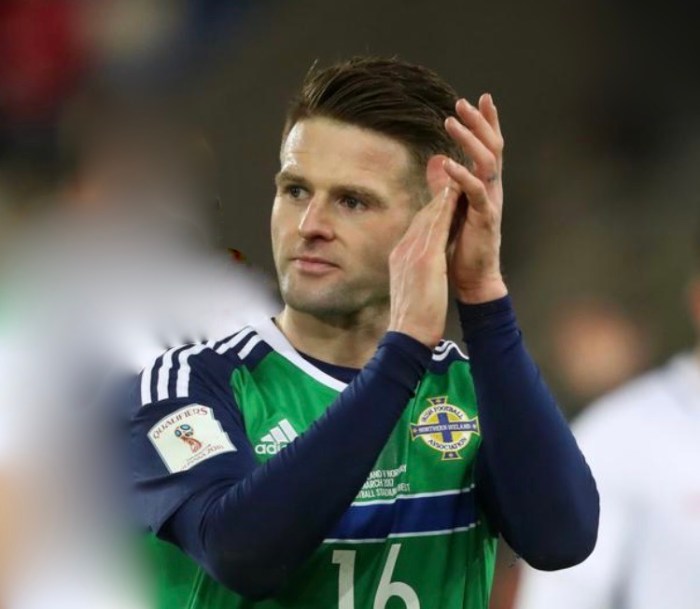
Although he played for England at youth level, he also qualified for Northern Ireland, and chose that country to enable him to experience more opportunities at international level.

Norwood made his full international debut during Nigel Worthington’s time as manager, coming on as a substitute in a 2-0 friendly defeat by Montenegro in Podgorica in August 2010.

He was a regular in Worthington’s successor Michael O’Neill’s midfield when the side qualified for Euro 2016 and played in all four of the team’s matches in the finals in France.

However, having made 57 appearances for his country, he decided in August 2019 to retire from international football when only 28.

Although Norwood made 20 starts for the Albion, he was almost as often used as a substitute, making 17 appearances off the bench, as the Seagulls soared to promotion.

Norwood had a starting berth when Beram Kayal was injured and he told the matchday programme: “This has been a big opportunity for me. The gaffer brought me to the football club and obviously I’ve been desperate to get into the team and play games.

Norwood had plenty to say

“Obviously I understand how football works. When the team’s winning and doing really well you have to bide your time, but an opportunity has come my way and it’s been important for me to grab it with both hands and do all I can to stay in the team.”

It has since transpired that the midfielder was most likely distracted by off-field issues during his season with the Seagulls, as thestar.co.uk reported.

“I went to Brighton after the 2016 Euros, and it was a difficult period in my life,” said Norwood. “My wife, Abigail, was pregnant and really ill, so we were living apart. My head wasn’t fully there.”

He told The Star he only fell in love with football again when he went on loan to Fulham, and subsequently was at loggerheads with Brighton when they didn’t accede to his request for a permanent move. “They said I could leave, but then turned down bids when they came in and started asking for silly things. I don’t think clubs realise sometimes that they’re messing with people’s lives. I had plenty of arguments, saying: ‘You don’t want me here, so let me go’.”

With Dale Stephens and Kayal the preferred central midfield pairing, plus the arrival of Davy Propper for Albion’s first season back amongst the elite, Hughton had been happy to let Norwood join Fulham on a season-long loan.

Norwood made 47 appearances for Fulham in 2017-18, particularly when filling in for the injured Tom Cairney until the Scot’s return from injury towards the end of the season.

His passing accuracy and all-round contribution were favourable, as this footballwhispers.com article assessed, and he proved a vital cog in their promotion via the play-offs when they beat Aston Villa 1-0 in the play-off final.

The website football.london was surprised Fulham didn’t opt to sign him permanently. “Norwood was a key figure under Slavisa Jokanovic, seamlessly plugging the gap left by Tom Cairney as a result of his injury and can be credited with a huge role in getting the club promoted in the first place, with his tackle on Conor Hourihane in the play-off final one that will forever be remembered by Fulham fans,” wrote Phil Spencer. “His vision and incisive passing was key to Fulham’s free-flowing style of play – meaning it was a little surprising that his loan switch to west London was never made permanent.”

Fans have contrasting views about his contribution, as this collection of quotes demonstrates. Some appreciated his ‘Hollywood’ long passes, others are perhaps summed up by this Fulham fan who said: “100% effort every time he played. Honest player. Not stellar but above average.”

Fulham’s loss was Sheffield United’s gain and in wishing Norwood well in his pursuit of more playing time with the Blades, Hughton told Albion’s website: “Ollie was one of our promotion-winning team in 2016-17 and will rightly be remembered as part of that historic team which took the club to the Premier League.”

Critics of Fulham’s strategy of splashing the cash on so-called name players for what proved to be an unsuccessful bid to retain their newly-won status in the Premier League couldn’t help pointing out the irony of Norwood’s situation.

“Fulham could only wave to Norwood on their way back down after ditching him for Jean Michel Seri,” said footyanalyst.com.

The Blades were promoted as runners up behind Norwich City in a season in which Norwood played 43 league games. He told The Observer’s Paul Doyle: “Last season was a big season for me. It was the most I’ve played. I’m definitely a better player now. At everything really. My understanding of the game. Tactically, technically, what needs to be done.”

He told Doyle: “It’s taken a bit longer than I would have liked but it was a dream come true to finally make the level that everybody across the world wants to play at.”

Norwood certainly seized the opportunity to shine at the top level, playing 40 games plus one as sub in all competitions as the Blades confounded the critics by finishing in ninth place, and taking on the captain’s armband in Billy Sharp’s absence.

Pictures from various online sources and the Albion matchday programme.

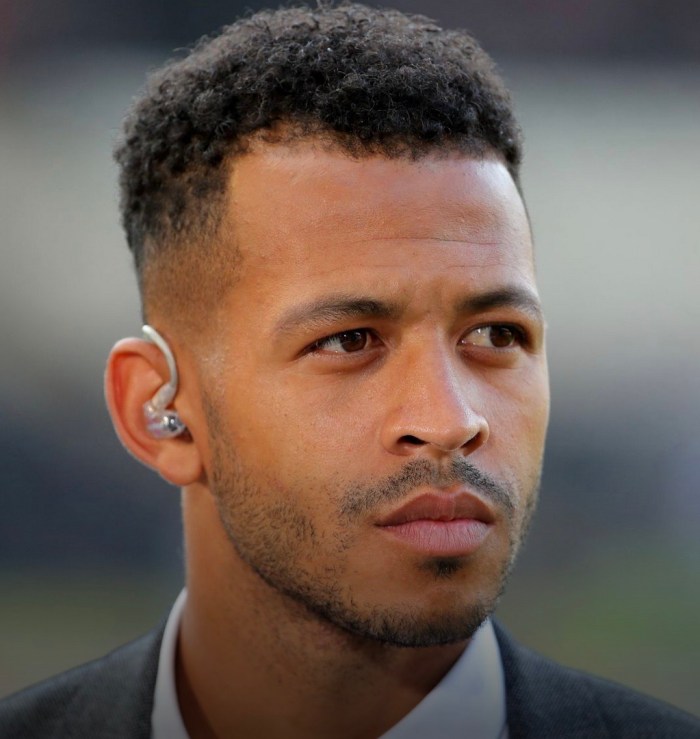
Respected Rosenior a dedicated student of the game

LIAM ROSENIOR is one of the most articulate footballers to pull on Brighton’s stripes.

He wasn’t a bad player, either, making nearly 450 appearances for seven clubs in a 17-year career, usually as a full-back.

The son of former Fulham, QPR and West Ham striker Leroy, Liam joined Albion in the summer of 2015, brought in as one of Chris Hughton’s first signings of that transfer window, and went on to make 51 appearances for the Seagulls.

Arguably his best days were behind him when Hughton signed him on a free transfer from Hull City, but he quickly endeared himself to the Albion faithful, bringing his top-level experience to a squad looking to rise to the Premier League and appreciated for his passion, best demonstrated by his chin-up gesture as the Seagulls came close but narrowly missed out on promotion.

A year later, Rosenior was part of the Albion squad which celebrated the club’s promotion to the Premier League.

Rosenior could talk a good game as well as play it so it was no surprise he was in demand as a football pundit on TV and radio, and in the final year of his playing career he wrote a weekly column for The Guardian. His views on the politics of the game and wider issues – such as racial abuse – have been sought by many news outlets.

As a student of the game, he didn’t waste time in getting his coaching badges and, when his playing career at Brighton came to a close in 2018, he was appointed to assist under 23s coach Simon Rusk, although he’d already been involved on an informal basis.

Hughton told the Argus: “Liam has played a huge part in our achievements over these few seasons. Unfortunately, over that time, he’s had a couple of injuries that kept him out for periods but at this moment he is in good shape.

“His value has not only been on the pitch but also off the pitch. He has also made a small contribution to the success of the under-23s. Because he wants eventually to be a coach and a manager, he’s had an involvement with them. That has been great for them and for us as a club.”

It seemed only a matter of time before he would step up to first team management but, in 2019, just such an opportunity was presented first by Derby County, and he left to become part of the small group supporting Phillip Cocu.

Rosenior’s contribution to the Seagulls was recognised in glowing terms by chairman Tony Bloom, who thanked him for “his superb service and consummate professionalism as both player and coach” and remarked: “Liam has become a firm favourite here at the club since he joined us from Hull City.

“He played a crucial role in our promotion to the Premier League and was an important part of the squad during our first-ever season at that level.”

Bloom continued: “Liam has made no secret of his desire to coach at first-team level, and so, while we are very sorry to see Liam leave the club, we fully understand the opportunity which is available to him and the reasoning behind why he has chosen to join Derby County.”

Rosenior told the Derby Telegraph: “I have always wanted to coach, and coach at the highest level.

“I gained my pro-licence when I had just turned 32. It is something I have always been interested in and something I have always done,” he said.

“My dad was a manager and a coach. I used to go with him to games, and to training sessions, and I think that is why at a relatively young age in terms of coaching I have got quite a lot of experience.

“I was working with soccer schools when I was 11 years old, taking sessions.”

After becoming caretaker co-manager of Derby with Wayne Rooney last November, Rosenior explained in an extended interview with The Athletic’s Dominic Fifield how he always saw becoming a manager as his destiny.

 “I’d be with my dad while he prepared his team-talk, in the dressing-room as he delivered it, and in the dug-out during the game. You see old pictures of Brian Clough on the bench with his son, Nigel. Well, it was the same with me. I’d be shouting at the players from the sidelines when I was 10. It’s always been in my blood.”

As a child, he even drew a picture of himself on the touchline as a manager. “That’s why, to me, it feels like my calling, my goal in life. And not just to be a manager, but a successful manager.

“I’ve studied for 26 years to ensure I’m the best coach I can be, to understand people as well as I possibly can. If I was injured or out of the team at Hull or Brighton, I’d annoy the stewards by watching the game from the mouth of the tunnel so I could practise making snapshot decisions from the touchline.”

Rosenior declared: “I want to show that a young black coach — and I want to do it young — can be successful in a position of authority at the very highest level.”

On 15 January 2021, Rosenior was appointed as assistant manager when Rooney was confirmed as the new Derby boss.

Born in Wandsworth on 9 July 1984, Rosenior started out in the youth team at Bristol City (another of his dad’s former clubs) and became a professional in April 2002. In 19 months at City, he made only four starts but was a sub on 24 occasions.

The most memorable of those was when he entered the action at the 2003 Football League Trophy Final in the 62nd minute, with Danny Wilson’s City a goal to the good against Carlisle in front of a 50,000 crowd at the Millennium Stadium, Cardiff. Rosenior scored a decisive second goal for the Robins in the 89th minute.

Premier League Fulham paid £55,000 to sign him in November 2003 but it was 10 months before he made his first team debut. Still only 19, he went on loan between March and May 2004 to Third Division Torquay United, a side his dad was managing, making nine starts plus one as a sub.

Rosenior’s first full season at Fulham was quite an eye-opener: an ignominious start under Chris Coleman saw him sent off on his debut (in a Carling Cup game against Boston United in September 2004), then awarded Sky Man of the Match when he made his league debut aged 20 in a 1-1 draw with Manchester United three months later. He also saw red in the last game of that season.

Rosenior made 86 appearances (plus five as a sub) for Fulham during his time there and despite signing a new four-year deal in 2006, moved on to Reading for £1.5m on August deadline day in 2007.

Rosenior signed a three-year contract with Steve Coppell’s Royals but in his final year he joined Ipswich Town on a season-long loan, making 28 starts plus three substitute appearances in what was Roy Keane’s first season in charge at Portman Road.

Released by Reading in the summer of 2010, Rosenior eventually linked up with Hull City where he spent five years, making the largest number of appearances (128 + 33 as sub) across his various different clubs.

They included starting in the 2014 FA Cup Final alongside former Albion loanee Paul McShane when Hull lost narrowly (3-2) to Arsenal at Wembley.

At the end of the following season, after City had been relegated from the Premier League, Rosenior was one of six players let go by Steve Bruce (McShane and goalkeeper Steve Harper were also released).

His experience in winning promotion from the Championship with Hull in 2013 was seen as a key ingredient in Hughton’s decision to sign him.

In May 2020, Rosenior took on another responsibility when he was appointed tothe FA’s Inclusion Advisory Board (IAB), set up in 2013 to increase diversity within the game.

After parting company from Derby in September 2022, Rosenior was not out of work long because two months later he returned to Hull City as head coach.

He was in charge for 18 months and only narrrowly missed out on the Championship play-off places in 2024, but falling short cost him his job.

Once again, though, he was not unemployed for long. In July 2024, he was appointed head coach of French Ligue 1 side Strasbourg, replacing the departing Patrick Vieira. At the end of his first season with Strasbourg, he steered them to UEFA Conference League qualification.

Among the young players in his side was Albion loanee Valentin Barco, who subsequently made the move permanent.

Injury-hit Albion among six to borrow Borrowdale

DEFENDER Gary Borrowdale couldn’t have been more aptly named for a loanee which is just as well because he found himself in that situation half a dozen times over five years.

He made a temporary switch to Brighton from QPR in March 2009 to fill the spot vacated when Albion’s regular left-back Jim McNulty suffered a shocking injury in a 4-0 home defeat to Crewe Alexandra.

While McNulty needed an operation to remove a kidney, former England under 20 international Borrowdale had the chance to resurrect his flagging career with the Seagulls.

For a player who’d clocked up 100 appearances for Crystal Palace by the time he was 21, there was the inevitable ‘noise’ about helping out the arch rivals, but Borrowdale just wanted some game time, and he was one of five debutants who pulled on Albion’s sky blue second kit for the game at Brisbane Road on 7 March 2009.

Brighton lost that match 2-1 but, under Russell Slade’s astute stewardship, Borrowdale acquitted himself well during 12 matches through to the end of the season and the Albion just managed to retain their third-tier status.

Borrowdale montage“I made my debut for Palace at 17 and played my first game in the Premiership at 18, so it was a great start and Palace will always be dear to me as a result,” Borrowdale told Spencer Vignes for a matchday programme article.

“The highlight of my career would be the promotion I had with Palace when we went from the Championship to the Premiership,” he said, referring to the play-off win over West Ham, the day before Albion beat Bristol City in their own divisional play-off.

Borrowdale returned to west London after his spell on the south coast but in March 2010 he went on loan to Charlton Athletic and the following year had temporary spells at Carlisle United and Barnet.

His league career seemed to be over when QPR released him in June 2012 and he went over to Northern Ireland to join second tier outfit Carrick Rangers.

In January 2014, he looked to have got a foothold back in the English professional game when loaned by Margate to Gillingham, but he didn’t play any first-team games and was released at the end of the season.

Former Albion boss Peter Taylor told the club’s official website: “He’s done very well, lost weight every week and looked fitter every week.

“I just don’t think he’s ready for League One football, especially considering if we have to play Saturday and Tuesday. As a result, I have decided to let him go.”

Borrowdale then linked up with Greenwich Borough, initially as a player, before becoming a coach.

Born in Worcester Park, south London, on 16 July 1985, Borrowdale came through the youth ranks at Selhurst Park and Trevor Francis handed him his debut for Crystal Palace in December 2002.

When Iain Dowie took over as manager, Borrowdale quickly became a regular in the first team. He also represented England at each of the age groups from 16 to 20, playing alongside the likes of Gary Cahill in defence.

In a 2-2 draw with the Netherlands, played at Turf Moor, Borrowdale’s teammates included fellow Palace youngster Scott Flinders in goal and future Albion player Will Hoskins.

Borrowdale won Palace’s Young Player of the Year award in 2006-07, but, when Dowie moved on to manage Coventry City, Borrowdale joined him there, a tribunal fixing the transfer fee at £650,000.

The move didn’t work out, though, and, with Dowie gone, Borrowdale was sidelined, eventually being sent out on loan to Colchester United and then QPR.

Paulo Sousa took him on loan in November 2008 and, although he didn’t feature, made the move permanent in January 2009 on a three-and-a-half-year deal. He made just 22 appearances for QPR during that time.

Borrowdale stripes

Pictures as featured in the Albion matchday programme.

Wearside hero Gary Rowell blighted by injury after leaving Sunderland

gary rowell tony normanBRIGHTON fans never got to witness the best of prolific goalscorer Gary Rowell who, to this day, Sunderland fans eulogise in the same way Albion fans still sing about Peter Ward.

He died aged 68 on 13 December 2025, exactly 50 years to the day of his first appearance for the Black Cats following a long battle with leukaemia.

Rowell has a place in Sunderland’s best all time XI selection, in 2005 he topped a Football Focus poll as Sunderland’s all-time cult hero and, in 2020, was inducted into the SAFC Hall of Fame, which he described as ‘the best night of my life’.

There is a website that details every one of the 103 goals the Seaham-born footballer scored for the Wearsiders in 297 games after making his debut as a 71st minute substitute for Mel Holden in a 1-0 Sunderland win over Oxford United at Roker Park.

Unfortunately, the free-scoring striker-turned-midfielder was struck by a knee injury which hampered the latter part of his career, including his spells with Norwich City and the Seagulls.

Having left Sunderland on a free transfer after 12 years at the club, Rowell tore ligaments in his right knee on a pre-season tour of Scandinavia with Norwich before he even managed to kick a ball in anger.

In a year at Carrow Road, he made only six appearances – four as a substitute – and scored just the once, coming off the bench to net against Aston Villa. Typical of this spell between August 1984 and July 1985, he was substituted after only 16 minutes of his reserve team debut.

The following season, a £35,000 fee took him back to the North East to play for Middlesbrough, but, at the time, they were in the middle of a financial crisis and lost their second-tier status. Rowell top-scored with 10 goals in 27 appearances – two of them against the Albion at the Goldstone in January 1986 – but Boro were relegated in second-to-last spot (Brighton finished in 11th place that season).

Brighton were not exactly flush with cash themselves in the summer of 1986 when Alan Mullery, the manager who’d previously led them from third tier to the elite, returned to the club to replace Chris Cattlin.

Mullery found a very different set-up to the one he’d left acrimoniously in the summer of 1981. With little money available to be spent on new arrivals, hard-up Albion, not for the first time, had turned to the supporters in an effort to raise transfer funds.

Money from a scheme called the Lifeline fund went towards buying goalkeeper John Keeley for £1,500 from non-league Chelmsford, Darren Hughes for £30,000 from Shrewsbury Town, and Rowell from Middlesbrough on a free transfer (the Lifeline funds being used to help with his relocation to the South Coast).

Mullery explained the Rowell signing thus in his programme notes: “I see his role with us as coming forward from midfield and adding to our power in the box.

“We know he can get goals and he is a versatile player. When we further improve the squad, we may use him a little differently.”

Rowell , who discovered Mullery had tried to sign him back in 1979 (but Sunderland hadn’t informed him), joined just after the start of the season, in time to be given a place on the bench for the away 1-1 draw with his former club Sunderland. He went on for Kieran O’Regan with 18 minutes left.

He kept the bench warm for two more matches before getting his first start in place of Northern Irish centre-forward Gerry Armstrong in a 2-2 draw away to Plymouth Argyle on 13 September.

Unfortunately, it wasn’t long before Mullery was reporting his absence from the side because of an ankle injury sustained in training.

Nevertheless, interviewed by Tony Norman in the matchday programme, Rowell, who was 29 and married with two small children, said: “I’m delighted with the move. I’ve found it to be a very friendly club and people have gone out of their way to make us feel at home. Now I want to repay the club by playing well for the team.”

The longest run of games he got in an Albion shirt came in November and December 1986 when he took over from winger Steve Penney for six matches (two wins, two draws, two defeats).

rowell BW HS

A broken toe and a troublesome hamstring made him feel injury-jinxed but, during his run back in the side, he had what Mullery described as “his best game since joining us” in a 3-0 win over Shrewsbury Town on 21 December. Six days later, the toe went again, and he didn’t play for the rest of the season.

Mullery was then controversially dismissed the following month and Rowell had to wait until the start of the following season for successor Barry Lloyd to select him.

He featured in three pre-season friendlies, all of which ended in defeats and wore the no.4 shirt in the opening two fixtures of the 1987-88 season, but those were his only first-team starts that campaign. His midfield berth was taken over by the experienced Alan Curbishley.

By October, the matchday programme reported Rowell and fellow midfielder Dale Jasper had been placed on the transfer list following long discussions with Lloyd. Curiously, it added: “However, both players are keen to stay with the club, regardless of any offers made, and will be battling hard for first team places.”

Rowell subsequently appeared seven times as a substitute for the first team, but he was largely confined to the Reserves for whom he made 20 appearances and scored once. In February 1988, he moved to Dundee on trial, but, when not taken on, moved the following month to Carlisle United.

After just seven games for the Cumbrians, he finished his professional career at Burnley, where he scored once in 19 appearances.

Born in Sunderland on 6 June 1957, Rowell grew up in the mining village of Seaham, became an apprentice at Sunderland in 1972 and two years later turned professional.

In 1976, when Sunderland were struggling in the First Division, manager Jimmy Adamson gambled on the introduction of the 19-year-old Rowell: it paid off in spades as he scored 44 goals in two and a half seasons.
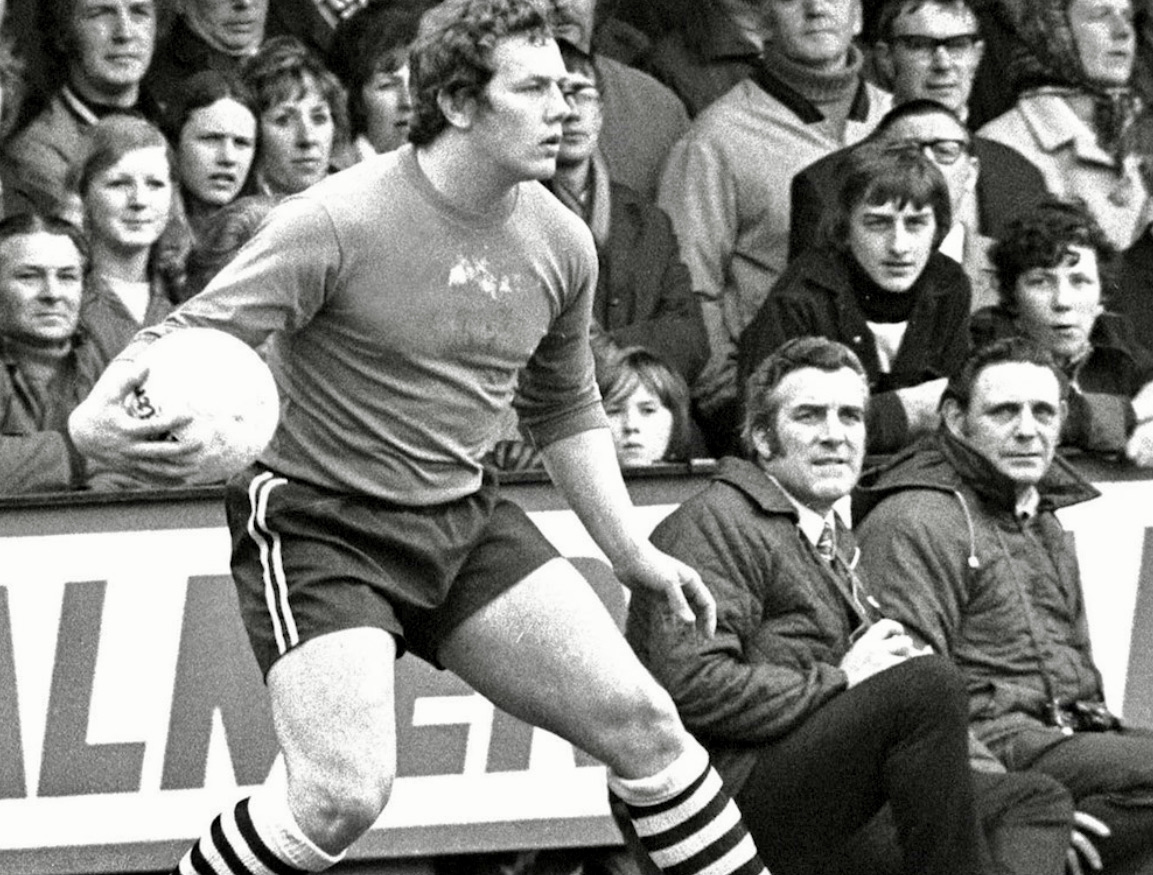
During that prolific spell, Rowell was in the squad for two end of season England Under 21 Championship preliminary matches; he went on for Laurie Cunningham in a 1-0 win over Finland in Helsinki on 26 May 1977 but wasn’t involved in a 2-1 win over Norway in Bergen six days later. This was an England side including future full internationals Peter Barnes and Peter Reid.

He was also a non-playing member of Dave Sexton’s squad that assembled at the Goldstone Ground three months later, but he had to watch as an over-age Peter Ward (22), playing on home turf, of course, scored a hat-trick in a 6-0 win over Norway. The aforementioned Curbishley was also a non-playing onlooker in that squad.

footballinprint.comUndoubtedly, the stand-out moment of Rowell’s Sunderland career came when he scored a hat-trick in a 4-1 win over arch rivals Newcastle United at St James’ Park, which he referred to in a profile article (see above).

In a vote for Sunderland’s best players of the 1970s, Rowell was described as “a lovely footballer. Though not blessed with blistering pace, he would ghost into goal-scoring positions and his finishing was deadly.” Rowell was an expert penalty taker, scoring 25 of 26 he took for Sunderland.

Some observers reckon but for injury he would surely have gone on to gain full England international honours. However, his career was severely disrupted by a serious knee injury sustained in a March 1979 game against Leyton Orient.

After a lengthy recovery, he resumed scoring goals regularly but there were doubts over his being able to maintain fitness for the duration of a whole season.

As part of a big team rebuilding exercise carried out by manager Len Ashurst in 1984, Rowell was allowed to move to Norwich.

After his playing days ended, Rowell became a financial consultant in Burnley and those loyal Sunderland supporters still got to hear their hero because, for a number of years, he was a commentator on Sunderland games for Metro Radio.

  • Pictures mainly from matchday programmes. Sunderland profile article: footballinprint.com.