The ‘Derry Pelé’ only briefly strutted his stuff at Brighton

PADDY McCourt put a dent in Brighton’s promotion hopes when he scored for managerless Barnsley at the Amex. Eight months later he joined the Albion’s renewed attempts to lift themselves out of the Championship.

The mazy dribbler from Derry lit up the evening of Tuesday 3 December 2013 when he gave the bottom-of-the-table Tykes an unlikely first-half lead.

Barnsley arrived at Falmer having just sacked manager David Flitcroft and when McCourt teased and tormented the retreating Seagulls defenders to net in the 35th minute it ended a sequence of nearly five hours without a goal.
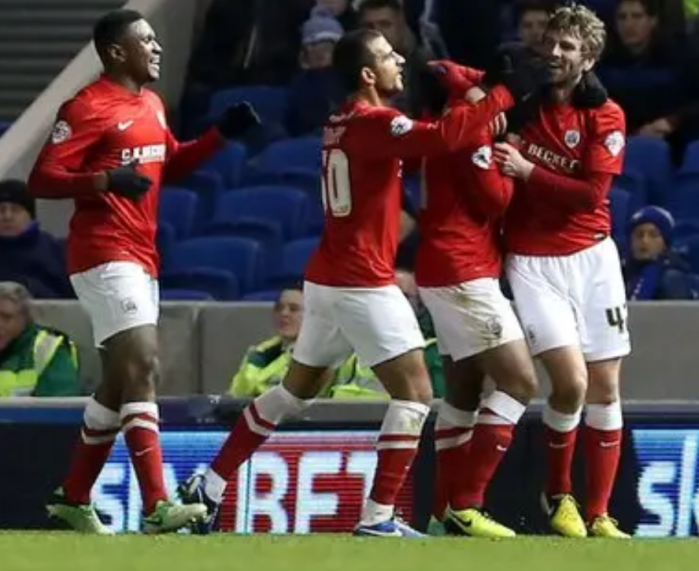
McCourt celebrates scoring for Barnsley at the Amex

Recalling what was something of a trademark finish by the bearded Irishman in a 2018 post wearebrighton.com described howMcCourt picked up a loose ball 40 yards out from goal, dribbled round Liam Bridcutt and Andrew Crofts, drifted past Matt Upson with a quick step-over, nutmegged Gordon Greer before playing a quick one-two with Worthing-born Marcus Tudgay,  then ghosted round Stephen Ward before slotting the ball into the bottom corner of the goal past Tomasz Kuszczak in Albion’s goal.

Five minutes after the restart, the visitors went further ahead through Jacob Mellis before Upson pulled a goal back with a header from a Craig Conway corner. Barnsley had on-loan goalkeeper Jack Butland to thank for ensuring they left with all three points, making notable saves from subs Will Buckley and Leroy Lita (who moved to Barnsley the following year).

While Albion went on to finish sixth under Oscar Garcia but failed to get further than the play-off semi-final for the second year running, Barnsley, who’d appointed former Albion captain Danny Wilson as Flitcroft’s successor, exited the division the wrong way, finishing in 23rd place.

Barnsley’s top scorer, Chris O’Grady, stayed in the division by signing for the Albion and a month later his former teammate, 30-year-old McCourt, released on a free transfer at the end of the season, joined him in Sussex after impressing new Seagulls boss Sami Hyypia in a trial period.
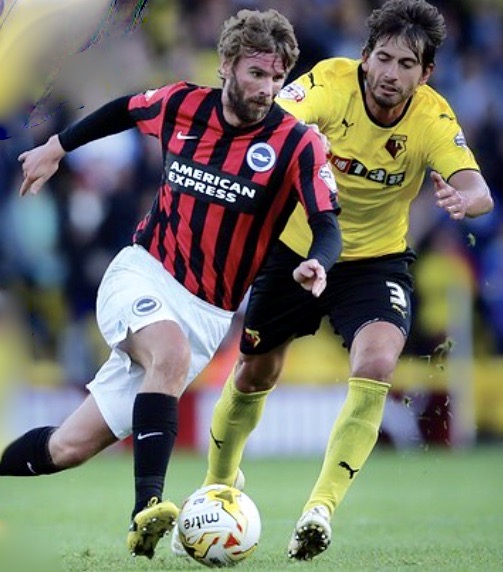
“We have seen enough of Paddy in the last week or so to know that he is a player who has quality going forward,” said Hyypia. “He is the type of player who can pick a pass and create a chance.”

That said, Hyypia only gave McCourt starts in two League Cup games (v Burton Albion and Tottenham Hotspur); his 11 other Albion appearances were all as a substitute.

When he did start, away to Burton, he set up goals for Rohan Ince and Craig Mackail-Smith in Albion’s 3-0 win and he told the matchday programme: “There’s nothing like playing games for your fitness and I’m sure that the more I play the better I will feel.”

Hyypia kept his feet on the ground, though, pointing out: “He needs to realise what he needs to do to improve and to be a very important player for the team defensively as well.”

Often described as a ‘maverick’, McCourt’s response was: “I like to get on the ball and be creative; that’s always been part of my game and something I’ve always been good at. I love taking on players, creating chances and now I just hope I can get a run in the team and show what I can do on a regular basis.”

He certainly couldn’t have been accused of lacking ambition, maintaining: “I still have aspirations to play in the Premier League and hopefully that will happen in my time here.
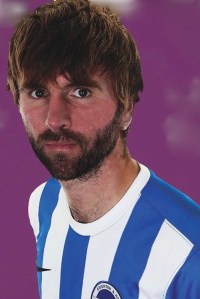
“I’ve played international football, I’ve played Champions League and Europa League football with Celtic, so the next step for me would be to play at the highest level in England – I would love that to happen.”

That international career was as strange as much of his career. There were 13 years between the first and last of 18 caps for Northern Ireland: he made his debut under Sammy McIlroy in 2002 (a 5-0 defeat against Spain) then had to wait seven years before he was selected again. That was in a 3-0 World Cup qualifier win over San Marino, when he went on as an 81st minute sub for future Albion teammate Aaron Hughes.

He scored twice in Northern Ireland’s 4-0 win over the Faroe Islands in a Euro 2012 qualifier in August 2011 (when Hughes scored his first goal for his country in his 77th appearance!).

McCourt’s second goal that day was reckoned to be one of the best ever goals seen at Windsor Park. According to the Belfast Telegraph, he “collected the ball just inside the opposition half and left three defenders in his wake with magical dribbling skills and impeccable close control before outfoxing another… then to cap it off he produced a stunning left foot chip over the bemused goalkeeper which floated into the net.”

McCourt helped manager Michael O’Neill’s side reach the Euro 2016 finals, but was not available for the finals in France because his wife Laura was seriously ill (more of which later).

“I really enjoyed it,” he told BBC Northern Ireland’s Mark Sterling in a lockdown interview in 2020. “Any time I was picked I turned up, and to be involved in the Euros qualifying campaign was fantastic.

“Everybody wants to play international football, The fans took to me straight away, were always singing my name and I hope I gave them some good memories.”

Born in Derry on 16 December 1983, McCourt’s early footballing promise was nurtured by Eunan O’Donnell, his PE teacher at Steelstown Primary School. At the club he joined as a youngster, Derry-based Foyle Harps, it was club chairman Gerry Doherty “who deserves more credit than anyone else” according to McCourt’s brother Leroy (who was his agent).

However, McCourt reckoned: “The street is where I learnt how to play football.”

In that lockdown interview with BBC’s Sterling, he said: “When I was younger there was more emphasis on players to develop themselves. We trained once a week for an hour with our clubs, when you might only get 40 or 50 touches of the ball at most, with 20 kids in a session.

“It was up to you to go out into the streets with your mates and practice your skills in small-sided games. We’d play for six or seven hours, there might only be four of you and you’d get thousands of touches.

“You were probably playing with older kids and on concrete as well, so that would improve your balance.”

Although given the moniker of the greatest Brazilian footballer of all time, McCourt’s boyhood hero was Robbie Fowler. “I’m a Liverpool and Celtic fan, and for some reason he was a player I just absolutely adored growing up,” he said.

“My memories are of seeing Fowler scoring – left foot, right foot, header – it didn’t seem to matter to him. He just had this unbelievable talent for putting the ball in the back of the net.”

McCourt’s first taste of professional football in England came at Third Division Rochdale, joining them in 2000 aged 17. But in an open and honest question and answer session in March 2018 at the Talent Development Academy Elite Soccer Coaching event, at the Magee Campus of the Ulster University, the player spoke about how youthful wrong lifestyle choices meant he blew the opportunity.

“I was nowhere near ready for it and the events that transpired in the next couple of years proved that. It’s very hard to know the situation you’re going into when you’re not prepared for it.

“I was coming from Foyle Harps, playing junior football and then going into a professional environment. It wasn’t that big of a jump in terms of what you did differently because Rochdale was a small club and you went in and trained and were home for 1pm living in digs and I didn’t drive at the time.

“You had so much spare time on your hands and as a young lad, you do daft stuff and make mistakes and I admit I made plenty. It was basic stuff like going out too much and not eating the right food.”

Although he made 94 appearances for Rochdale, around half were as a substitute and after unsuccessful trials with Motherwell and Norwich City he was eventually released in February 2005 and returned to the League of Ireland with Shamrock Rovers.

“Initially when I was at Rochdale I did quite well and broke into the first team quite early but when I came back I took stock. I made mistakes and wasn’t really living my life to be a professional footballer.

“I had six months with Shamrock Rovers where I didn’t make many changes to my lifestyle but I was doing quite well on the pitch.”

It was only when he returned to his home town and played at Derry City where things began to change under the positive influence of future Republic of Ireland manager Stephen Kenny.

“I learned what it takes to become a proper athlete because you need to live a clean lifestyle to make it as a footballer and I wish I knew back then what I know now,” he said.

“There was a bit of sports science starting to come in at Derry in terms of what to do leading up to a game, and then your recovery sessions on a Saturday morning after a game. It was tiny, basic stuff but it started to kick in then and that helped me because I was getting information I didn’t have before. It was up to yourself to buy into it and I started to buy into it a bit more and started to see the benefit.”

Between 2005 and 2008 with Derry, McCourt won an FAI Cup, three League Cups, was involved in a league runners-up spot (2005) and was part of a UEFA Cup run in 2006.

He then got the chance to join Celtic, the side he’d supported as a boy, signing for a fee of £200,000 in June 2008. Hoops boss Gordon Strachan told the Derry Daily: “Paddy is as gifted a footballer as I’ve ever seen. Some players can pass but can’t dribble. Others can dribble but can’t pass. Paddy can do both.”

It wasn’t until the 2009-10 season that he forced his way into the first team and his  first goal for the club was in a 4-0 League Cup win at Falkirk in September 2009 when he skipped past five defenders before chipping the goalkeeper.

His own favourite was his first goal at Parkhead in a 3-0 win over Hearts on 11 September 2010 which realised a lifetime ambition.

“I actually had dreams of scoring at Celtic Park,” he said. “I felt I had let that go when I had that setback at Rochdale. Self-doubt creeps in but I remember the night. It was Hearts at home and it was a very proud moment.

“It might never have happened if I hadn’t made the sacrifices I made and I have a lot of people to thank for that.”

When Aiden McGeady left Celtic for Spartak Moscow in August 2010, Celtic manager Neil Lennon challenged McCourt to step into his shoes and said: “He’s wonderful to watch. He’s beautifully balanced and he’s got great vision and great feet and that’s why we decided to get him on a longer-term contract. He’s pleased and we’re pleased.”
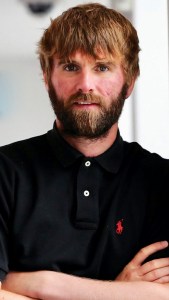
In his five years in Glasgow, McCourt scored 10 goals in 88 appearances for the Hoops although he actually only made 20 starts. He collected medals for his part in Scottish Premier League title wins in 2011-12 and 2012-13 as well as Scottish Cup wins in 2011 and 2013.

That 3-0 2013 final win over Hibernian was his last game for Celtic before he joined English Championship Barnsley, who were managed by his former Rochdale teammate David Flitcroft.

The goal against Brighton in December 2013 was one of only two he scored for the Tykes in 15 starts plus eight appearances off the bench and Barnsley fans certainly had mixed views about his contribution.

Online chat group contributor ‘Jay’ posted: “At his best he was as good as I’ve ever seen. Be nice if he can produce that sort of form consistently, even if it’s not for us. All that talent shouldn’t go to waste.”

Another, ‘JLWBigLil’ reckoned: “One of the most skilful players I’ve ever seen play for Barnsley in all my years of going down to Oakwell. Possibly the right player at the wrong time for us.”

Whereas ‘MarioKempes’ opined: “There was no doubting his ability but the other key aspects such as workrate, fitness, stamina and heart were sadly lacking from his game.”

It almost certainly didn’t help McCourt’s cause at Brighton that new boss Hyypia struggled to get to grips with the task in hand and chopped and changed the line-up. The addition of several loan players didn’t help matters either.

Frustrated Albion fans reckoned McCourt should have had a bigger involvement than his few cameos off the bench, citing his influence in helping to salvage a point away at Watford, and planting the ball on Gordon Greer’s head to score a consolation goal from his corner kick at Middlesbrough.

After Hyypia left the club before Christmas, McCourt’s last Albion appearance was as a sub in the home Boxing Day 2-2 draw with Reading (on loan Glenn Murray scored twice for the visitors; Jake Forster-Caskey and Inigo Calderon for the Albion), going on for Danny Holla.

Nathan Jones was in caretaker charge that day and the pair were subsequently reunited at Luton Town the following season.

Before then, unable to get games under Albion’s new boss Chris Hughton, McCourt dropped into League One on loan at relegation-bound Notts County.

He scored County’s winner in their 1-0 win at Colchester on 3 March 2015 but they went on an 11-game winless run after that and went down with Crawley Town and Leyton Orient.

Released by Brighton that summer, McCourt joined the League Two Hatters under John Still in July 2015 and was followed there a month later by Mackail-Smith.

After a run of three starts in September, when Town won all three matches, McCourt played in a 1-1 draw with Leyton Orient on 20 October, before being restricted to a role on the bench.

On his return to the starting line-up in January 2016, away to Mansfield, he scored his fist Luton goal after just seven minutes in a 2-0 win. He told Luton Today: “It was great, all players want to play from the start and it’s been disappointing to sit on the sidelines.

“It was very frustrating because we’d just won three or four games in a row, then I came back from an international double header, was on the bench, played in the draw against Leyton Orient and that was it, I didn’t play again.

“I don’t know why, I didn’t ask the manager and he ended up getting the sack, but it was very disappointing as I felt that although I wasn’t where I wanted to be in terms of performance, I was playing, we were winning games.”
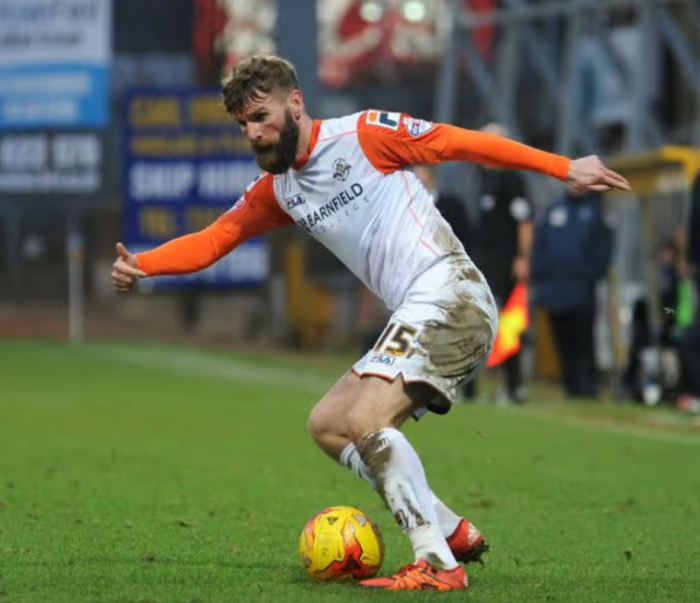
In action for Luton Town

When former Brighton coach Jones was appointed as Still’s successor, McCourt told Luton Today: “He’s a coach who wants to play football, ball from the back, get between the lines, bring a wee bit of flair and creativity back to Luton, so hopefully I can play a big part in that.”

Unfortunately, he cut short his stay at Kenilworth Road after 16 starts and nine appearances off the bench to return to Ireland because his wife Laura had to undergo treatment for a brain tumour. She recovered after a successful operation and O’Court resumed playing at Glenavon.

According to the Belfast Telegraph: “It ended up being a disappointing half-season at Mourneview Park and was followed by a move to Finn Harps, where he was able to roll back the years, not least when he ghosted past a whole host of Sligo players and dinked home the finish with his inimitable swagger.”

That was in 2018 before he retired from playing and began coaching academy players at Derry City. He later became the club’s technical director and left in January 2024 before taking up a role as assistant to manager Declan Devine at Irish Premiership side Glentoran.

Perhaps the last words should go to reporter Daniel McDonnell, who wrote in the Irish Independent: “Football is nothing without entertainers. Punters paying cash to watch a game want to see individuals capable of doing things that the ordinary player could only daydream about. McCourt could do things that top pros were unable to manage.”

While recognising McCourt’s CV might have glittered more brightly, he declared: “There are players who will retire with more medals and more money that will never garner a comparable level of affection.

“Mention McCourt’s name to those who had the pleasure of watching him in full flight and responses will be delivered with a smile.”

Outspoken Scot whose words and tactics divided opinion

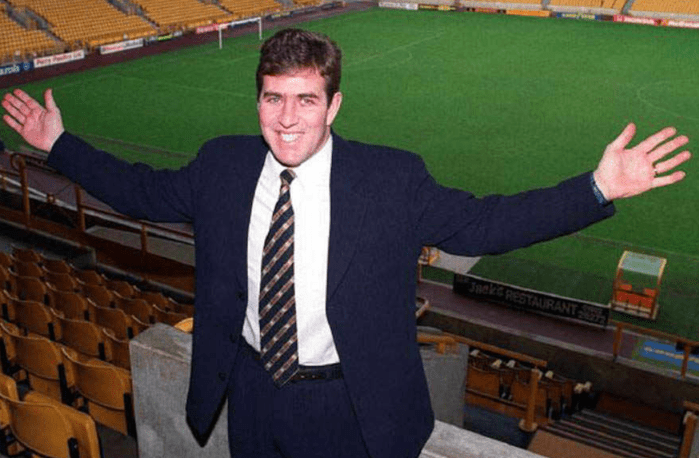
MENTION Mark McGhee to supporters of Wolverhampton Wanderers and most are less than complimentary about the Scot who won third tier promotion with Brighton in 2004.

Steering the Seagulls to that 1-0 play-off final win over Bristol City at the Millennium Stadium, Cardiff, (as I covered in my previous blog post about McGhee) emulated his feat of taking Millwall out of the same division three years previously, and certainly helped to repair a reputation sullied by his experience at Wolves.

A play-off winners’ medal at last for Mark McGhee

It also delivered much relief for a manager who’d previously only experienced play-off heartache, seeing Wolves’ hopes of returning to the Premier League dashed by a play-off semi-final defeat to Crystal Palace in 1997 and losing to Birmingham with the Lions at the same stage in 2002.

After cutting his managerial teeth at Reading and Leicester, McGhee succeeded former England boss Graham Taylor at Wolves, appointed by chairman Jonathan Hayward, the son of owner Sir Jack Hayward (the pair subsequently had a big falling out and McGhee was caught in the crossfire).

McGhee’s three years at Molineux weren’t all bad – many supporters said he certainly rated higher than the hated Glenn Hoddle – and he couldn’t be faulted for spotting genuine talent having given Irish striker Robbie Keane his Wolves debut as a 17-year-old away to Norwich. “I always believed he could be special,” he said. “Even at that age he was sensational.”

Young Mark McGhee on his arrival at Molineux

But fans of the boys in old gold disliked his managerial style of winding up forthcoming opponents with disparaging remarks. They also felt some of his signings weren’t up to it – a feeling echoed in the spat that emerged between Sir Jack and Jonathan.

“Nice man, Mark, and he had done well enough at Reading and Leicester. But he didn’t buy very well, did he? You have to ask questions about the quality of the players he brought to this club,” Sir Jack told reporter Paul Weaver in January 1999.

“We should never have let Graham Taylor go. Graham is an outstanding football manager. I’m afraid we bowed to pressure from the fans. We didn’t give him enough time. Then we gave McGhee plenty.”

For many, the final straw in the McGhee reign was when he left club legend Steve Bull on the subs bench in favour of much-derided Steve Claridge when Wolves lost the 1998 FA Cup semi-final to Arsenal.

“No turning back after that really, he’d lost it,” said ‘Bend It Like Dennison’ on molineuxmix.co.uk. “A very negative manager, prone to making stupid comments which wound opposition teams up and made us one of the most hated teams in the division,” opined ‘Nashie’ on the same platform.

“I had high hopes for McGhee and sometimes I quite liked the way he wound up the opposition with his arrogance, however, while he could talk the talk, he couldn’t quite walk the walk!” said ‘Bill McCai’.

The Scot was never afraid to speak his mind and even his former Newcastle boss, Bill McGarry (a figure well known to Wolves fans from his days as manager between 1968 and 1976) told him:  ‘Mark, you talk too much. Tone it down a bit.’

“I tried to take his advice, give nothing away in media briefings. Then, somebody would say something interesting and I wasn’t able to stop myself,” McGhee admitted in an interview with theleaguepaper.com.

On molineuxmix.co.uk, ‘stuj4z’ reckoned: “McGhee started to believe his own hype and became a parody of himself. Stupid signings were his downfall because overall I thought his tactics were ok. McGhee wasn’t the devil incarnate and did do some good things for the club.”

‘Florida Wolfey’ maintained: “McGhee was a decent manager and he certainly cared about this football club. He was unfortunate not to get us up in his first season and we never really recovered from that failure. Like all managers he made some good decisions and some decisions he’d rather have made again.”

When the axe fell, McGhee admitted to Nick Townsend of The Independent: “For that first month after I was sacked by Wolves, until I got over the initial shock, I never really opened the door. I became a recluse. I was feeling angry and frustrated.”

Townsend observed that having previously walked out on Reading and Leicester to take the Wolves’ job, “many supporters among his former clubs relished the spectacle of the assured and articulate McGhee being thrown from the steed of his own galloping ambition, his features ground in the dirt”.

“I was 100 per cent justified in leaving Reading after John Madejski gave me permission to talk to Leicester” McGhee told Townsend. “Leaving Filbert Street, a year later, was different. I knew when I walked out of there that it was, in a sense, wrong.

“I knew I’d let their chairman, Martin George, down badly, and the players I’d brought in. People thought, when Wolves dangled the bait, that was me, off and out, no hesitation, no qualms, and that’s where I got my reputation. But it wasn’t like that. It was torture.

“Two minutes before I made the decision to go, I was staying. There was pressure from all kinds of people I respected to go. Against my own conscience, I took the job.”

He added: “I read the papers and I don’t recognise myself. But, obviously, people are thinking that a guy who can up and leave Leicester after a year like that must be one kind of arrogant, callous bastard. All I can do to fix that impression is to go on from here and prove to people that’s not the way I am.”

As it turned out, he feared the football community had turned its back on him when no further managerial opportunity surfaced for nearly two years. It was only a regular punditry slot on Sky Sports that reminded people he was still around.

When he eventually got back in the game as manager of Millwall in September 2000, McGhee garnered a sympathetic ear from The Guardian football writer Roy Collins.

“I don’t think I got a bad deal,” McGhee told Collins. “I think I got exactly what I deserved. The biggest mistake I made was in underestimating the reaction of people when I walked out on Leicester. That is not to say that I regret leaving Leicester but it tarnished my reputation in such a way that Wolves’ fans never really accepted me.

“I was only fulfilling my ambition but I’ve learned that sometimes you have to think twice and maybe it would have been right for me to have said, no matter how much I want to take what I see as a bigger job, I can’t have it.”

McGhee admitted to the reporter he’d had sleepless nights and restless days wondering whether any club would forgive him, so he was grateful for the chance Millwall gave him, admitting: “This is a second chance for me and if I mess it up, I won’t get a third.”

A relieved McGhee told the Evening Standard: “To say I am very pleased to get back into the game is an understatement. I am absolutely ecstatic, but I would not have come back for any job.

“I haven’t been applying for everything that has been going because I felt the opportunity had to be one I was motivated by.

“It did not have to be the biggest club, or in the top league, but I had to really want to do it. I got a gut feeling about some jobs and I had that for Millwall.

“You get a feel for the place and I had an idea what they were about because I am a good pal of their old manager Mick McCarthy.

“In my playing career I was at Newcastle and Celtic. They have demanding, but passionate fans and I know that is the same at Millwall. It is very exciting.”

Millwall chairman Theo Paphitis admitted: “Mark was not always the front runner for the job, but got himself into the position at the interview.

“He said the right things. I believe he was sincere and I am very pleased we have him on board. He is the right person for the job.”

When there was a mutual parting of the ways in October 2003, Paphitis said: “He took over in September 2000 with the brief to get the club into the First Division that season which he duly achieved.

“We then enjoyed a very successful first season at this level, reaching the play-offs the following year. Last season was a frustrating one for the club and whilst expectations were high at the start of the current campaign, we have struggled to live up to them.”

Interestingly, when he was shown the door at Brighton, likewise there was appreciation rather than dismay at what he had brought to the club.

Powering up

“No matter where you stand on the club’s decision to part company with the former Scottish international, you can’t say he didn’t leave us without one or two golden memories, especially during his first season in charge,” the matchday programme reminded readers.

“There are more than a few supporters out there who rate what happened inside the Millennium Stadium that May day in 2004 as their top Albion moment, above Wembley 1991 and – whisper it – even 1983. Why? Well, for once, we actually won on a big stage. But there was more to it than that: thirty thousand fans invading Wales and laying siege to what is generally regarded as one of the finest stadiums in the world.”

The piece reminded supporters that in the higher division, against clubs with hugely superior resources, Albion beat the likes of Leeds United and Sunderland at humble Withdean as well as nicking unlikely wins at Leicester City, West Ham and Sheffield United.

Even in the season (2005-06) when they weren’t able to retain that hard-earned status, they managed a first win in 22 years at Selhurst Park, toppling the old rivals on their own patch with the only goal of the game scored by loanee Paul McShane.

After a fascinating 3-3 draw at Elland Road, home boss Kevin Blackwell observed that McGhee had “the hardest job in football”.

The programme pondered: “One can’t help but wonder what McGhee’s record would have been had the club been playing inside a stadium worthy of the upper echelons of the English game, with some finance to burn and facilities good enough to tempt Championship and Premier League calibre players to Sussex.” Indeed.

Irish midfield maestro’s arrival created buzz of excitement

AN AIR of excitement swept around the crumbling terraces of the Goldstone Ground when one of the finest midfield players of his generation became Brighton’s manager.

Liam Brady had been the darling of Highbury in the 1970s, won titles in Italy with Juventus and then brought the curtain down on a glorious playing career in three years with West Ham United.

After six years watching Brighton’s fortunes fluctuate under the low profile guidance of Barry Lloyd, fans who craved a return to the glory days of Alan Mullery’s first reign had great expectations when such a well-known footballing figure as Brady arrived at the Goldstone in December 1993.

But how did it come about? Brady’s first foray into management – at Glasgow giants Celtic – had not gone well and he was unemployed having resigned in early October.

With only four wins in 26 games, Lloyd’s near-seven-year reign at the Goldstone was in its final throes as autumn turned to winter, and in early December he was said to have left “by mutual consent”.

The managerial vacancy caught the eye of former Albion favourite – and Brady’s former Irish international teammate – Gerry Ryan, who’d been forced to retire from playing and was running a pub in Haywards Heath, and he got in touch.

“He asked if I’d be interested. I saw it as another part of my learning curve as a manager and was happy to take it,” said Brady.

Ryan was promptly installed as Brady’s assistant and before long he’d persuaded Jimmy Case to return to the Seagulls at the age of 39 (he’d been playing non-league for Sittingbourne) to bring experience to the battle against relegation and lend a hand on the coaching side.

Brady takes charge at the Albion

By a strange quirk of fate, the opponents for Brady’s first game in charge, Bradford City, were managed by his former Arsenal and Eire teammate, Frank Stapleton, who the following season he recruited for a couple of games.

Unlike the effect of Brian Clough’s arrival at the Goldstone 20 years previously, the gate for the Bradford match the Saturday before Christmas was only 6,535. Albion lost 1-0 but in the next four games, played over the course of 13 days, there were two wins and two draws. Steady improvement on the pitch was helped by the introduction on loan of two exciting youngsters from Brady’s old club Arsenal – firstly Mark Flatts and then Paul Dickov.

The threat of relegation lifted and, looking back, Brady said his favourite match in charge came on 6 April 1994.

“We beat Swansea 4-1 in an evening game towards the end of my first season, when we had (Paul) Dickov on loan in a very good partnership with Kurt Nogan,” he said.

“There was a real buzz that we were going to avoid relegation. The players believed the club was going places again, as we all did.”

At the start of the following season, Brady picked up two youngsters from Arsenal’s north London neighbours, Spurs, in lively forward Junior McDougald and midfielder Jeff Minton.

Right-back Peter Smith, who assistant manager Ryan had spotted playing in a non-league charity match, was brought on board and crowned his first season by being named player of the season.

Brady also brought in the former England international Mark Chamberlain, but the balance of the side remained youthful and, with money remaining tight, a mid-table finish was not entirely unexpected.

In a matchday programme article in 2015, Brady reflected on how relegation had been avoided against the ugly backdrop of what the directors were doing to the club (selling the ground with no new home to go to) and realised subsequently that he should have left at the end of that second season.

“I became aware that Bill Archer had no intention of taking the club forward, despite his public announcements to the contrary. I could tell that the club was going nowhere.

“Archer and Bellotti were winding the club down and it wasn’t right. But it wasn’t a case of me walking away. I was living in Hove, I had grown attached to the club, the fans, and feelings were running high.”

After 100 games in charge of the Seagulls, he quit in November 1995, handing the reins to Case, who was reluctant to take on the job.

Brady’s fondness for the club remained undiminished, though, and he was subsequently involved in Dick Knight’s consortium trying to wrestle control of the club out of Archer’s hands.

It had been planned that he would return as manager but as the negotiations dragged on he was offered the opportunity to return to Arsenal as head of youth development and couldn’t turn it down.

“I had a family to think about and it was a dream job for me. Dick understood, particularly as there were no guarantees with what was happening at the time at Brighton.”

The fact he had the Arsenal job for the following 25 years meant he probably made the right decision! Even after leaving that role, Brady retained his links with Arsenal by becoming an ambassador for the Arsenal Foundation.

Brady was born into a footballing family in Dublin on 13 February 1956 – a great uncle (Frank) and older brother, Ray, were internationals, older brother Frank played for Shamrock Rovers and another brother, Pat, played for Millwall and QPR.

Brady went to St Aidan’s Catholic Boys School but left at 15 in 1971 to join Arsenal after their chief scout, Gordon Clark, had spotted him and Stapleton playing for Eire Schoolboys.

A Goal magazine article of 7 October 1972 featured boss Bertie Mee talking about the pair as future first team players – even though they were only aged just 15 and 16.

Mee said: “Brady is almost established as a regular in the reserve side. He needs building up but has the potential to become a first-team player. Stapleton has made quite an impact in his first season and, providing he maintains a steady improvement, he could also follow the path of Brady.”

It was only Brady’s second season and Clark said at first he thought he would be better suited to becoming a jockey because he was so small and frail!

He quickly changed his mind when he saw his ability with a football. “He was like a little midget, but he had so much confidence. He’s really shot up now and although he’s still not very tall, he’s strong enough to hold his own,” said Clark. “Liam’s got a very mature head on his shoulders. His maturity shows in his play.”

Brady became a professional at 17 in 1973 and made his debut in October that year as a substitute in a league game against Birmingham City. Mee used him sparingly that season and he picked up the nickname Chippy – not for any footballing prowess but for his liking of fish and chips!

Initially dovetailing with former World Cup winner Alan Ball in Arsenal’s midfield, he eventually took over as the key man in the centre of the park. He became a first team regular in 1974-75 and began to thrive when Terry Neill took over as manager with Don Howe returning to Arsenal as coach. In the second part of the decade, Brady was named the club’s player of the year three times and, in 1979, he won the prestigious Players’ Player of the Year title from the PFA.

Brady played in three successive FA Cup finals for Arsenal – in 1978,1979 and 1980 – winning the competition in the 1979 classic against Manchester United, courtesy of his driving run and pass to Graham Rix whose sublime cross from the left wing into the six-yard area allowed Alan Sunderland a simple tap-in for the winner.

Having lost to Ipswich Town the year before, it was Brady’s first trophy with the Gunners and he said: “It was just wonderful to experience being a Wembley winner. It’s something I’ll never forget.”

The opening game of the following season saw Brady line up for Arsenal at the Goldstone in Albion’s very first top level match.

There was nothing more likely to rile Arsenal than a former Spurs captain claiming beforehand what his team were going to do to the Gunners.

Arsenal promptly romped to a 4-0 win and Brady recalled: “Alan Mullery was shooting his mouth off. Brighton had arrived in the big time and were going to turn Arsenal over.

“Mullers was good at motivating players but he motivated us that day.

“We all thought it was going to be a hard game, but once we got the first goal we settled down and Brighton were in awe of us. I scored a penalty and we ran out comfortable winners.”

However, it was the start of Brady’s last season as an Arsenal player. The following May, Arsenal lost to Trevor Brooking’s headed goal for West Ham in the FA Cup Final and Arsenal also lost to Valencia in the Cup Winners’ Cup Final in a penalty shoot-out – Brady and Rix missing their spot kicks in Brussels.

Nevertheless, having played 307 games (295 starts + 12 as sub), arsenal.com recalls one of their favourite sons warmly: “Chippy had everything a midfielder could want – skill, vision, balance, strength, a powerful shot and the ability to glide past opponents at will.

“Like all great players he always had time on the ball and almost always chose the right option. On a football pitch, Brady’s brain and feet worked in perfect harmony.”

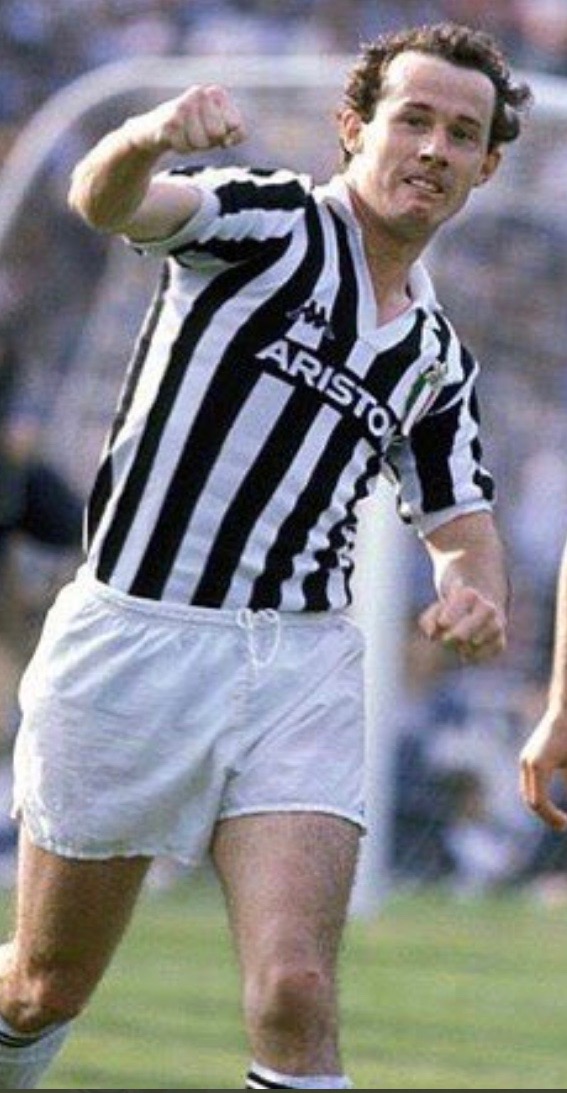
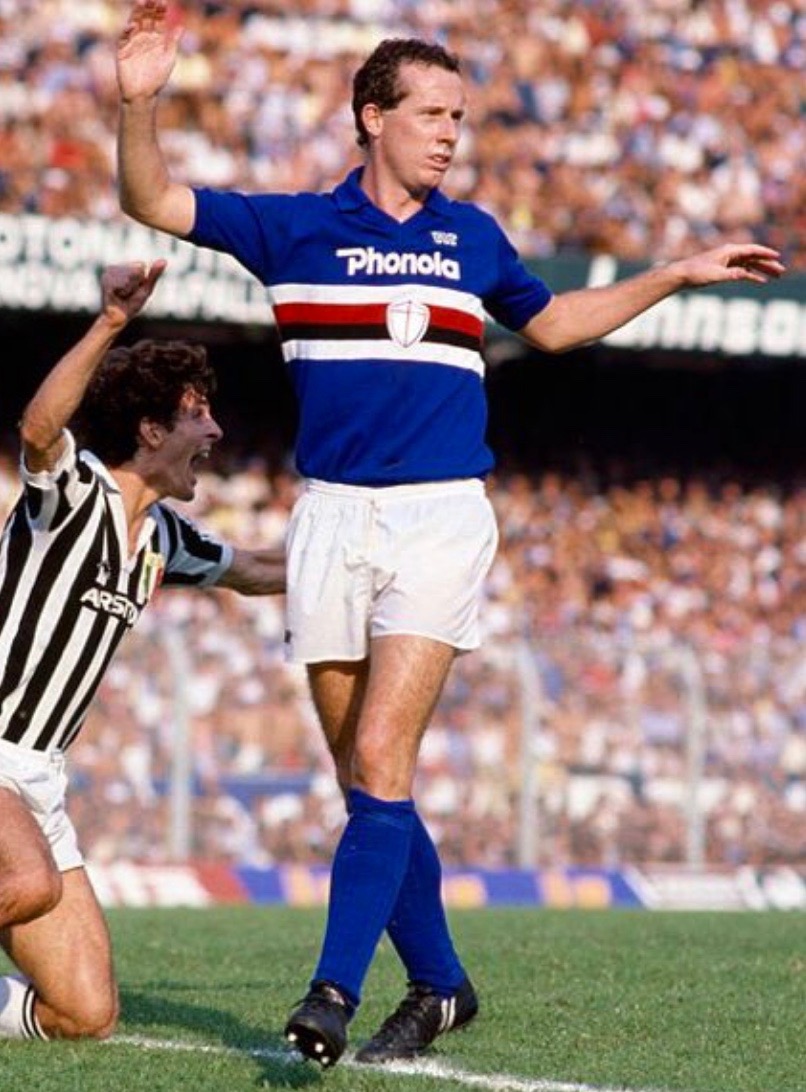
Brady moved on to Italy where he spent seven years, initially with Juventus, winning two Italian league titles and then with Sampdoria, Inter Milan and Ascoli. In his second season at Brighton, Brady had the Seagulls wearing the colours of Inter as their change kit – I still consider it to be the best the club has had.

As well as a highly successful club career, Brady won a total of 72 caps for his country. He made his Republic of Ireland debut on 30 October 1974 in a 3-0 home win over the Soviet Union and went on to win 72 caps for his country.

He retired from internationals ahead of qualification for the 1990 World Cup and, although he later made himself available for selection, manager Jack Charlton decided to choose only those who had helped Eire qualify for the finals.

Brady had returned to the UK in March 1987 to enjoy three years at West Ham in which he scored 10 goals in 119 appearances. His first somewhat ironically came against Arsenal while he reckoned his best was a 20-yarder past Peter Shilton that proved to be the winner in a league game against Derby County.

Brady explained the circumstances of his move to the Hammers in an interview with whufc.com. He nearly ended up joining Celtic instead, but he’d given his word to West Ham boss John Lyall and, because he’d retained an apartment in London, it made sense to return there.

Brady in action for West Ham at the Goldstone, faced by ex-Hammer, Alan Curbishley

In only his fourth West Ham game, he found himself up against Arsenal and was mobbed after netting the final goal in a 3-1 win at the Boleyn Ground.

“With ten minutes remaining, I won the ball on half-way before running to the edge of the 18-yard box, where I hit a low curler around David O’Leary and beyond Rhys Wilmott’s dive, into the bottom right-hand corner,” he said. “The place went wild! I certainly wasn’t going to just walk back to the centre-circle without celebrating my first goal for my new team.”

While the Hammers finished 15th that campaign, they were relegated in 1989 which brought about the departure of Lyall. Brady clearly didn’t see eye to eye with his successor, Lou Macari, but was pleased when he was replaced by Hammers legend Billy Bonds.

Brady eventually called time on his playing days in May 1990, Wolves and West Ham players lining up to give him a guard of honour as he took to the pitch for the final game of the season.

He was substitute that day but went on for Kevin Keen and rounded off his remarkable career by scoring in a 4-0 win.

“Having scored at the Boleyn Ground with my last-ever kick in professional football, I couldn’t have written a better script,” he told whufc.com.

After not making the move to Celtic as a player, his first step into management came at Celtic Park as successor to former club legend Billy McNeill in June 1991. He was the first manager not to have played for the Hoops.

It was a big step to take for a novice manager, and hindsight suggested the players he signed didn’t do him any justice. He later admitted: “I didn’t do particularly well as Celtic boss. Second place behind Rangers was seen as a failure and, even if you’ve had a good reputation as a player, it counts for little as a manager.”

Brighton (well, Hove actually) would prove to be as far from the cauldron of Glasgow as he could possibly get, but the club management game clearly didn’t suit Brady, and he didn’t take on any other senior managerial hotseats after the Seagulls.

Alongside his youth team responsibilities at Arsenal, he did assist his country’s national team between 2008 and 2010. He was assistant to Giovanni Trapattoni during his time in charge, also working alongside Brady’s former Juventus teammate Marco Tardelli.

Brady still lives in Sussex and he told whufc.com how he occasionally meets up with Billy Bonds at Plumpton Races and enjoys a round of golf with Trevor Brooking.

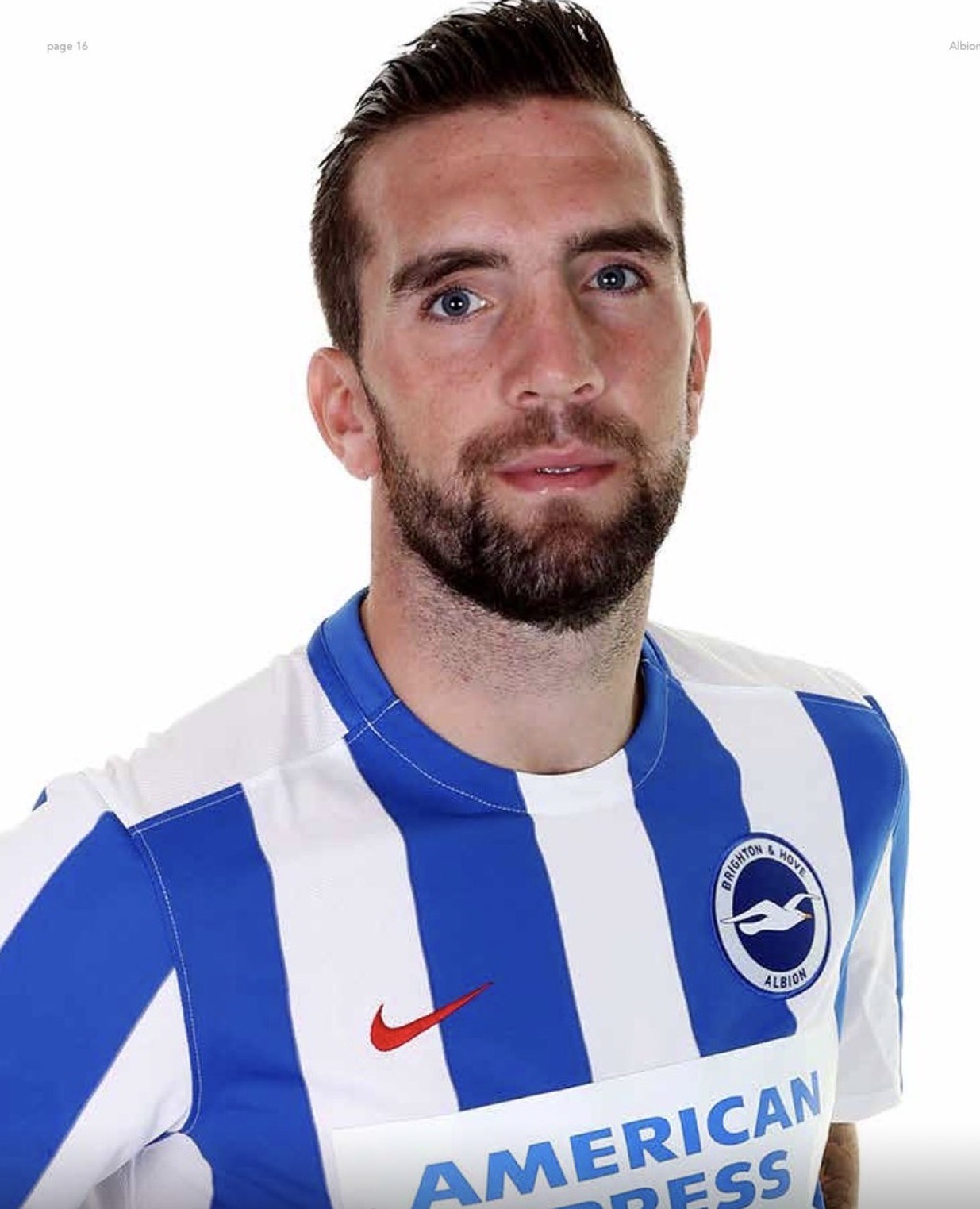
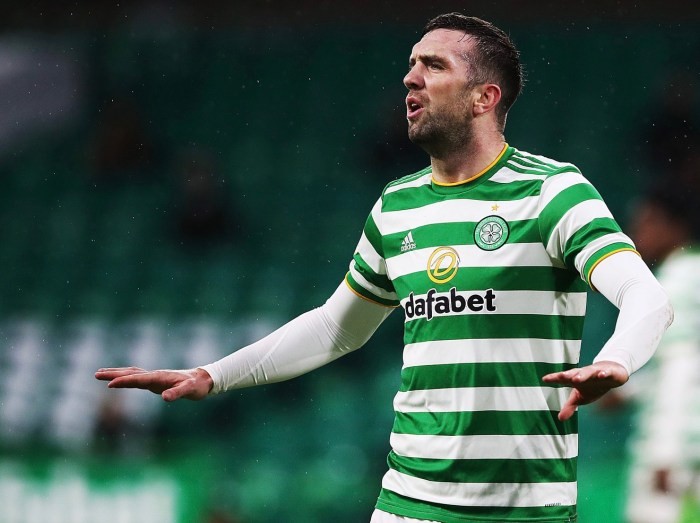
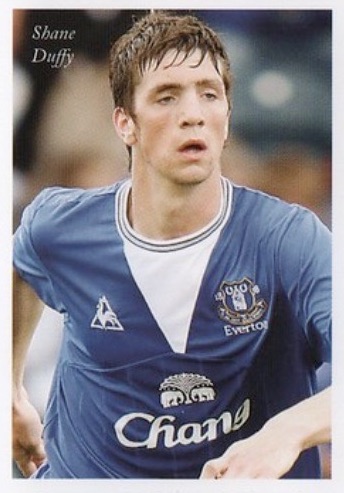
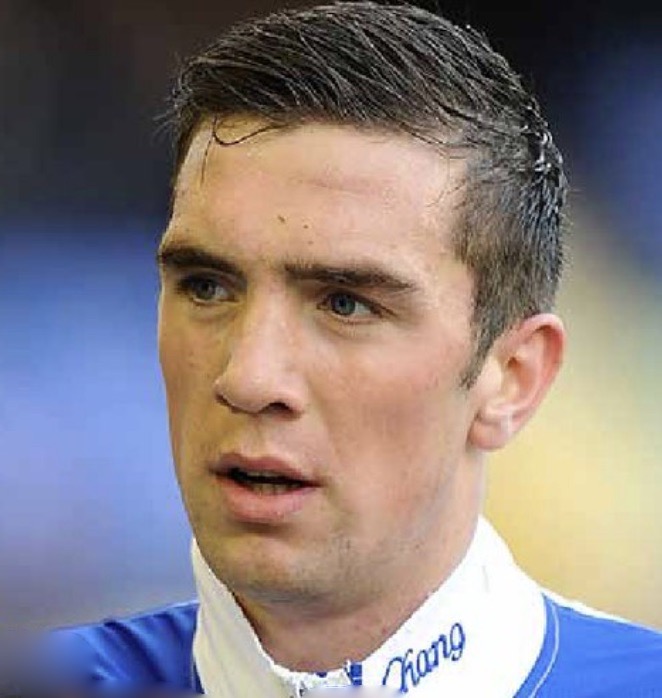
Why Shane Duffy is forever grateful to Everton

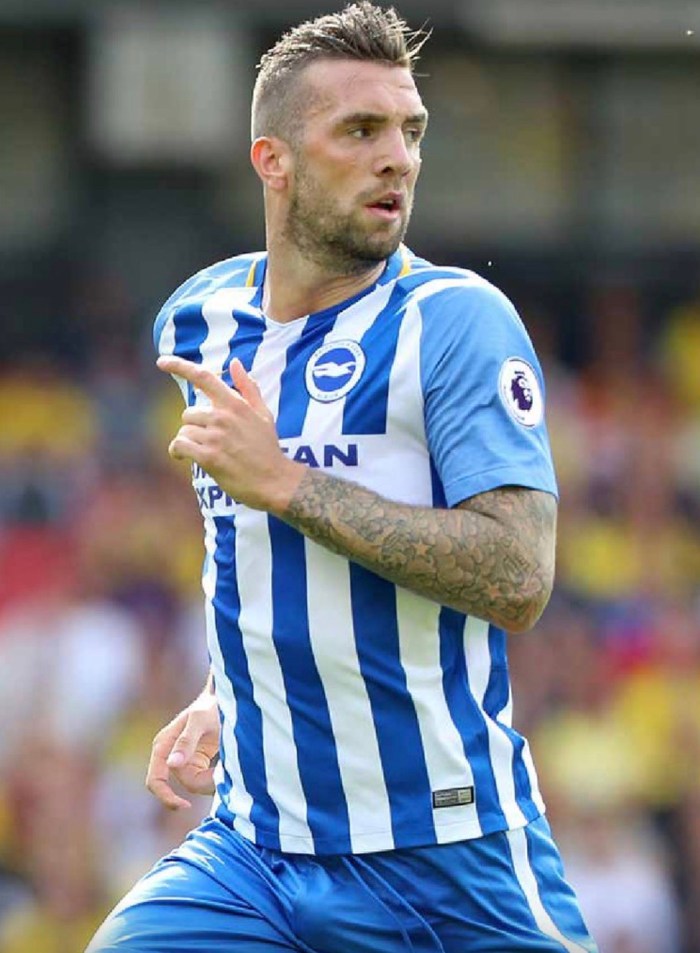
SHANE DUFFY has seized the opportunity to re-establish himself at the heart of Brighton’s defence to the obvious delight of the manager who appeared to have shunned him.

With injury sidelining Dan Burn and Covid-19 isolation protocol ruling out Joel Veltman, Duffy stepped up with a solid performance in the season-opener at Burnley, and a goalscoring return to the Amex in the 2-0 win over Watford.

“It was a fantastic header from Duffy, he’s a monster in the box,” boss Graham Potter told the BBC after the televised Watford match. “He is so big and strong to stop – it was a great goal.”

Duffy’s form has been a reminder of the solid centre-back partnership he formed with Lewis Dunk as the bedrock of Brighton’s promotion from the Championship in 2017.

Although a metatarsal injury in a 3-0 defeat at Nottingham Forest meant he missed out on the run-in, Duffy was obviously confident of being restored to the line-up when the Premier League season got under way.

“I’m looking forward to going back to Everton to see a few mates but they’re all going to be big games,” Duffy said in a matchday programme article. “I feel more ready for it than I was four or five years ago at Everton, and I deserve another crack at it, but I know I’ve got to work hard.”

While additions to the squad were to be expected as the Albion sought to stay among exalted company, the Duffy-Dunk pairing at the back didn’t look much like being broken up. Certainly not under Chris Hughton.

Happy with his mainstays at the heart of the defence, Hughton allowed Connor Goldson to leave for Glasgow Rangers and Uwe Hünemeier to return to Germany and Duffy was comfortable alongside Dunk as Albion retained their top division status. And so it remained for Albion’s two first two seasons back amongst the elite.

But when Potter replaced the popular Hughton in 2019, it soon became apparent Duffy didn’t fit the mould of the sort of ball-playing centre-back he wanted in the side.

Although he started the season under Potter, his place was gradually taken over by big money signing Adam Webster. Duffy invariably ended up warming the bench and at the start of the 2020-21 season, with Ben White preferred alongside Dunk and Webster, he jumped at the chance to go on loan to Glasgow giants Celtic, the team he’d supported as a boy.

Unfortunately, it didn’t turn out to be quite the dream move Duffy had hoped for, with criticism arrowing in from all quarters as the Republic of Ireland international underwhelmed in the centre of the Hoops defence, and Celtic could only watch as city rivals Rangers won the Scottish title.

Doubtless the irony wasn’t lost on Duffy that his first match back in a Seagulls shirt saw him up against Rangers in a pre-season friendly, when the home fans ensured he was given a ‘warm’ reception.

But let’s go back to where it all started.

Born in Derry, Northern Ireland, on 1 January 1992, Duffy was playing for Northern Ireland Under-16s against England in the Victory Shield when he caught the eye of watching Everton boss David Moyes.

Duffy had been playing for his local side, Foyle Harps, at the time and, although Arsenal took him on trial and offered him a scholarship, Everton invited him to train with them and offered him a professional contract immediately.

“Of the two clubs, I just had a good feeling about Everton; obviously it was more of a family club, and there’s also the Irish connection with the city of Liverpool, so it was easy for me to settle in,” Duffy told the matchday programme.

In his second season at Goodison Park, he made his first team debut aged just 17 in a Europa League match against AEK Athens.

“David Moyes handed me my debut and I owe him a lot because he always had belief in me, whereas I could have gone somewhere else and maybe ended up back in Ireland,” he said. “I was raw as I hadn’t been with an academy before, but he was patient with me, as were all the coaches, and I came through the youth team and reserves before I got my break in the Europa League and then later in the Premier League.”

Duffy played against Brighton when the third-tier club’s youngsters (with Dunk in defence) acquitted themselves brilliantly in the fourth round of the FA Youth Cup against Everton at the Withdean on 21 January 2010 before eventually losing 2-0. The programme pen picture said of him: “Strong in the tackle and dependable in the air, Shane is considered a ball-playing defender.”

Duffy recalled: “I’d just turned 18 and had recently broken into the Everton team in the Europa League. I do remember Dunky a little bit because we were marking each other at corners.”

A month after his visit to Withdean, Duffy decided to switch allegiance to the Republic having previously captained Northern Ireland’s Under-19s. It came just as he was selected for the full international squad to face Albania in a friendly in Tirana where he was expected to receive his first cap in the absence of captain Aaron Hughes (who later spent a season with Brighton) and Chris Baird.

Disappointed Northern Ireland boss Nigel Worthington told The Guardian: “There is a loophole where a player can walk away after a lot of time and investment has gone in. Until it is resolved, that’s where we are. Shane has represented Northern Ireland all the way through from a very early age to the Under-21s.

“I am a big admirer of Shane. I like him as a player and a lot of work has gone in with different coaches. I am disappointed with the situation as he is going to be a very good player. Shane has decided, after discussing the matter with his family, to represent the Republic. As a manager, I have got to respect that.”

Duffy, who had close family ties to Donegal in the Republic, said the decision to switch his allegiance from Northern Ireland was the right thing to do to help his international career.

Speaking to evertontv, Duffy said:“It was difficult for me to leave because of what they’ve done for me in Northern Ireland since I was young. They brought me through the ranks which gave me the chance to come to Everton.

“It was hard to leave all the coaches and all the players, but it was always a case of wanting to come to my own country. I spoke to a couple of people about it because I didn’t want to disrespect Northern Ireland, but I just had to do what was best for me and I thought it would be best for me to switch.”

Astonishingly, in his first-ever training match with the Republic, under manager Giovanni Trapattoni, he was involved in a freak collision that lacerated his liver and emergency surgery was required to save his life as he lost a huge amount of blood.

After a speedier-than-expected recovery, Duffy was soon lining up for the Republic’s Under-19s and Under-21s and he went on to make 20 appearances for the Under-21s.

In 2012 he was called up to the senior squad to replace the injured Richard Dunne but missed out on the squad for the 2012 Euros. He had to wait until June 2014 to make his full debut and it was another two years before he was next involved.

He was called up to the side who famously beat Italy in a 2016 Euros group match to qualify for the final 16 but was then sent off as the Republic bowed out 2-1 against France. Nevertheless, under Martin O’Neill, Duffy became established in the side and in March 2018 was named his country’s Player of the Year. He told the matchday programme: “When I heard the news, I was shell-shocked, but when it sunk in it gave me time to reflect on how far I’ve come in a short space of time.

“So much has happened: the Euros, failing to reach the World Cup in the play-offs, winning promotion with Brighton, playing in the Premier League.

“The manager noticed a difference in me when he brought me back into the side two years later, and that’s because I went away, played games and I worked hard. I got myself properly fit, dedicated, and I feel like I’ve benefited from that.”

Reflecting on the experiences given to him by Hughton and O’Neill, Duffy pointed out: “Chris has given me the chance to play in the Premier League where I’m developing, and Martin has given me the chance to play on the big stages and in a big tournament.

“You take little things out of each one of them and it’s coming together a bit now, and hopefully there’s more to come. I’m still a bit raw in some things I do but I’m getting better and it’s a nice feeling to go out knowing you can compete with top players and feel comfortable.”
Duffy went on to captain the Republic for the first time in a 1-1 draw against Denmark in November 2019 and retained the captaincy in Stephen Kenny’s first game in charge, in September 2020; a 1-1 draw against Bulgaria.

As an established international, Duffy has nearly 145,000 followers on Twitter.

Looking back, by his own admission, Duffy had realised his early exposure to senior football at Everton was going to be short-lived, telling the club’s website at the time: “I know I’m not ready to play in Everton’s first team yet as I’m so young but if I’m needed I’ll do my best for the team. A loan would obviously make me better and make me more mature on the pitch.”

Initially that loan came at Burnley in the Championship, but he only played one game under Eddie Howe and, in 2011-12, he had a more fruitful loan at League One Scunthorpe United, playing 19 games under Alan Knill.

An injury to Phil Jagielka prompted Everton to recall Duffy from Scunthorpe in January 2012 and a week after playing against Hartlepool he found himself going on as a substitute for Sylvain Distin against Spurs at White Hart Lane.

Spurs had Gareth Bale, Luka Modric and Emmanuel Adebayor in their line-up but Duffy said: “I refused to get overawed by the occasion. I just treated it as another football match, another opponent, and only afterwards did I take in what had happened.”

He said: “Everton are a club that will always mean a lot to me because they gave me my chance as a professional and shaped the player I am today. David Moyes was a big influence on my career; he helped me a lot.”

Duffy spent the 2013-14 season on loan at Yeovil – “another fantastic learning curve for me” – when Gary Johnson’s side were in the Championship and although Moyes’ successor Roberto Martinez offered Duffy a new contract at Everton, he was warned he would have to wait to establish himself because he was still young and inexperienced.

So, in the summer of 2014, he decided to join Paul Lambert’s Championship side Blackburn Rovers and, while a knee injury restricted his appearances in his first season at Ewood Park, he became a permanent fixture alongside Grant Hanley in 2015-16.

When Gordon Greer’s imposing reign as Brighton centre-back and captain came to an end in 2016, Hughton turned to Duffy as his replacement (Greer went back to Rovers). The fee was undisclosed but was reported in The Mirror to be £4m.

It remains unclear where Duffy’s future lays although his performances in the opening two games of the season suggest there could yet be a future for him under Potter. The manager didn’t hold back in his praise for the big Irishman, but the defender didn’t get carried away.

Duffy opened up to the media after the win at Burnley, talking about what he’d been through over the previous 12 months, but he pointedly added: “It is only one game and a lot can still happen, but as long as I am here I’ll try and help the team whether that’s on the pitch or off the pitch with the younger lads. That is what I am here to do.”

He said he had “hit rock bottom” when affected by off-field problems (for example, his father Brian died aged 53 in May 2020), but he praised the Seagulls for continuing to offer him support and he added: “I am still taking it day by day and be like an 18-year-old try and impress every day, try and improve and try and help as much as I can. I feel like if you do that you get the reward sometimes when maybe you don’t expect it.”

Duffy also spoke openly and honestly to Sky Sports as part of the build-up to the game against Watford.

Pictures from Albion’s matchday programme and online sources.

Pass ‘master’ Steven Thomson’s unhappy year with Brighton

STEVEN THOMSON didn’t enjoy his year playing for Brighton in League One and the former Crystal Palace midfielder seized an escape route to return to Scotland to see out the remainder of his long professional career.

It had been considered quite a coup when Dean Wilkins secured the signing of the Falkirk captain in January 2008. In effect a replacement for the departing Dean Hammond, Thomson was soon a victim of Wilkins’ tinkering with the formation, and over his 41 matches for the Seagulls had a conveyor belt of midfield partners, not to mention a change in manager, as Wilkins’ replacement, Micky Adams, introduced a different style – in vain – to try to galvanise the side during his second spell as boss.

Although Thomson had signed a two-and-a-half-year contract with the Seagulls, in January 2009 the disillusioned Scot headed back north of the border.

“I didn’t enjoy it there at all and was keen to try and get myself back up the road,” he admitted in an interview with the Daily Record in 2018.

Having wound down his full-time career at St Mirren, after 18 seasons as a professional, and having moved to London to begin a business career, Thomson linked up with his former Albion teammate Nicky Forster to spend a season as a part-time player with Dover Athletic, where the former Seagulls striker was manager at the time.

In an in-depth interview for the Dover Athletic website, Thomson gave a great insight into his career, revealing the lengths he went to to get a break into the professional game.

Born in Glasgow on 23 January 1978, he explained: “After playing for a local boys club I was invited to go and train with a few clubs, so, at the age of 10, I found myself training with Rangers on a Monday, Celtic on a Tuesday, Hearts on a Wednesday and Hibs on a Thursday.”

When he reached 14, he was advised to choose one club over the others and opted for Rangers. Daunted by the high numbers of youngsters all trying for the same opportunity, aged just 16 he took the bold move to head to Croydon and signed on as an apprentice with Palace.

He progressed from the youth team to be offered a pro contract at 17, worked his way through the reserves and then got some calls up to the first team subs bench when they were still in the Premier League. He also played for Scotland’s under-18 side between 1995 and 1997.

During his brief return as manager, Terry Venables gave Thomson his debut aged 19 in the 1998-99 season. Thomson wasn’t renowned for goalscoring, but Palace fans do remember a particularly sweet strike he succeeded with in a 3-0 Worthington Cup win at Leicester City in November 2000.

Leicester’s back-up goalkeeper Simon Royce, who would later join Albion on loan, was beaten from 35 yards by Thomson’s spectacular shot.

The midfielder’s 121 games spanned the spells of five managers – Venables, Steve Bruce, Trevor Francis, Steve Coppell and Dave Bassett – before he left the club at the end of the 2002-03 season. It would be fair to say he divided opinion among Eagles supporters.

On fans forum cpfc.org, ‘Hairybear’ said: “Thomson was a warrior. Very little ability but did a good job when called upon under Bruce and co. He would never let you down.”

But ‘Baron Greenback’ said: “As well as THAT goal against Leicester, he also scored great goals at home to Sunderland in the FA Cup and Wolves.”

It was the ebullient Barry Fry who took Thomson to Peterborough United, (above) where he played 75 games in two seasons before moving back to Scotland to play for Falkirk in the Scottish Premier League.

When Brighton signed him, his former Falkirk teammate and one-time Albion loanee, Graham Barrett, told the Argus what Seagulls supporters could expect.

“They are getting a fantastic professional and a really good player,” said Barrett. “We have been going really well and he has been a massive part of that.

“He is a box-to-box player, he is comfortable on the ball and he has got a bit of everything.

“He is not particularly big (5ft 8in) but he is also very good in the air for his height.”

Barrett reckoned he would be “a massive influence” if he could continue the form he’d shown in Scotland. “He is great in the dressing room as well, a real leader,” said Barrett.

Thomson made his Albion debut in a 1-1 draw at home to Huddersfield on 19 January, starting at the base of a midfield diamond with Paul Reid and David Martot out wide and Dean Cox at the top of it.

Brian Owen, of the Argus, described him as “a neat and tidy passer who only gave the ball away when trying something ambitious”.

Within a couple of months, the Argus was reporting: “It has not been easy for Thomson since his January move back to England from Falkirk.

“He has had to adjust to playing with a number of different partners and now Adam El-Abd is a long-term casualty with the medial knee ligament injury he suffered at Huddersfield.”

Although mostly recognised as a centre back, El-Abd had been one of the options tried in midfield. Thomson admitted to the newspaper: “I know I can perform better. There is more to come. I am adjusting to playing so many games. In Scotland you just play Saturday to Saturday.

“It has been a big move for my family as well. My wife (originally from London) is a lot closer to her parents now and she has got a lot of family around, which helps with our young son.”

In rather a similar vein to the Palace faithful, Brighton fans were also divided as to Thomson’s merits. ‘The Complete Badger’ declared on North Stand Chat: “The only midfielder of any class we’ve got. A real touch of quality about everything he does in my opinion. Much better than Hammond, and much better than anyone else we’ve got.”

But ‘Napper’ reckoned: “Thomson just seems to have nothing about him, not quick, no killer passes. Just seems to either waste possession or go backwards. I’ve really given him more than enough time, but facts are he just isn’t very good. I’ve been watching him closely for many games now.”

In his end-of-season summary, Andy Naylor, Albion reporter for the Argus in 2008, reckoned Hammond had been a hard act to follow, and commented: “Thomson looks a tidy player who will benefit from playing as a central midfielder in a 4-4-2, not the dreaded diamond.”

After Wilkins was shown the door, new boss Adams recognised Thomson’s leadership qualities, making him vice-captain to skipper Nicky Forster, as well as saying he was going to play him in a role further forward than he had been previously.

“I enjoyed the responsibility at Falkirk and I will be willing to help Nicky as much as I can,” Thomson told the Argus. “The manager has stressed that he wants me to try and push forward a lot more, rather than just sitting in front of the back four, and I am quite happy with that.

“I look after myself off the park, so I’m quite fit. Maybe he thinks I have got the engine to get up and down!”

However, problems mounted for Adams when Forster was ruled out by injury and, as in the previous season, Thomson found himself alongside different midfield partners, including, at one time, the flamboyant Robbie Savage, trying to recover some fitness on loan from Derby.

As the year drew to a close, it became public knowledge that Thomson was unsettled and itching to go back to Scotland, so a deal was lined up for him to join St Mirren as soon as the January transfer window opened.

He joined them on the day they played their final game at Love Street ahead of their move to Greenhill Road, and he went on to make more than 100 appearances for the Buddies.

Their fans’ abiding memory of his time there centre on a surprise 4-0 win over Celtic on 24 March 2010, when Thomson scored twice. The result so shocked the Parkhead bosses that they sacked Hoops boss Tony Mowbray.

On joining Dover in May 2012, Thomson told the club’s website: “I made the decision last year that this would be my final season as a full-time player. I have been studying for four or five years and I’m now fully qualified and have secured a job in London.

“My wife Bryony is from London anyway and she wanted to move closer to her family. I’ve been a footballer for 18 years and now it’s time to enter the real world.”

Thomson now works as a financial advisor, with a stylish looking profile on LinkedIn.

Ups and downs of medal-laden Mark McGhee’s career

MARK McGHEE saw highs and lows as Brighton & Hove Albion manager after a medal-laden playing career that took him from his native Scotland to England and also to Germany.

McGhee was in charge when the Seagulls memorably won the 2004 play-off final to gain promotion from the third tier, beating Bristol City at the Millennium Stadium, Cardiff.

Play off final boss

Keeping the Seagulls up the following season was arguably an even greater achievement considering at the time playing home games at the crowd-restricted Withdean Stadium meant the club was at a huge disadvantage compared to most clubs in the division.

With the Amex still a distant dream, relegation came at the end of the 2005-06 season, and it wasn’t long into the following season that Dick Knight wielded the axe on the Glaswegian’s time in charge.

“It was hard to sack Mark, but we had to have a change,” Knight wrote in his autobiography, Mad Man: From the Gutter to the Stars. “Everyone recognised what he had done in taking up and keeping up a team that was not that great, to be honest. Hats off to him, he had done a terrific job. And he is a very intelligent, personable guy.”

Knight took decisive action when part of the crowd became vociferous in wanting McGhee out, and the chairman also felt some of the young players drafted into the team weren’t responding to him.

He was finally toppled over lunch at Topolino’s, and Knight admitted: “It was a difficult decision. There was strong vocal opposition to McGhee, but also a large, less noisy element who were behind him.”

McGhee liked Brighton so much he made it his home despite subsequently taking on a series of other roles the length and breadth of the country.

It’s probably fair to say the Scot has never been afraid to speak his mind, which his former Newcastle boss Bill McGarry mentioned to him. McGhee recounted in an interview with theleaguepaper.com: “I was managing Wolves at the time. He said ‘Mark, you talk too much. Tone it down a bit’. I tried to take his advice, give nothing away in media briefings. Then, somebody would say something interesting and I wasn’t able to stop myself.”

It’s probably what helped him gain a place on the Sky Sports Soccer Saturday panel when he was in between management jobs.

McGhee would most likely look back on some jobs he’d perhaps have been wiser to stay away from, for example taking temporary charge of Eastbourne Borough in 2018, although his enthusiasm was undimmed as he revealed in an interview with thenonleaguefootballpaper.com.

Born in Glasgow on 20 May 1957, his father was an electrical engineer and his mother a fertility consultant at Glasgow Royal Infirmary. McGhee was on the books of Bristol City at the start of his long career but he returned to Scotland and became a part-timer with Greenock Morton while also training to be an architect.

Aforementioned manager McGarry signed him for Newcastle for a £150,000 fee on 30 December 1977 and he made his debut on 2 January 1978.

His face didn’t fit after Arthur Cox took over as boss, but Alex Ferguson took a punt on him in March 1979 and signed him for Aberdeen, and it proved to be one of many shrewd decisions the esteemed Scot would make in his career.

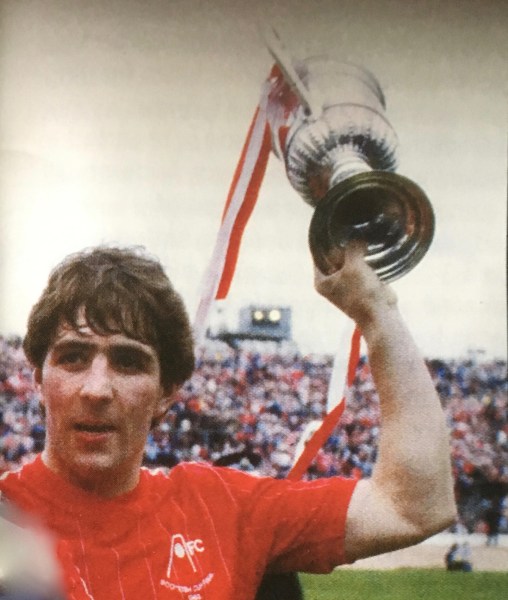
McGhee was named Scottish PFA Players’ Player of the Year in 1982, and the following year was part of the Aberdeen side who beat Real Madrid 2–1 to lift the 1983 European Cup Winners’ Cup in Gothenburg.

mcg cup

He also scored the second goal as Aberdeen defeated Hamburg 2-0 to win the UEFA Super Cup in the same year.

Asked about the best goal he scored, he said: “Probably the winning goal in my last game for Aberdeen.”

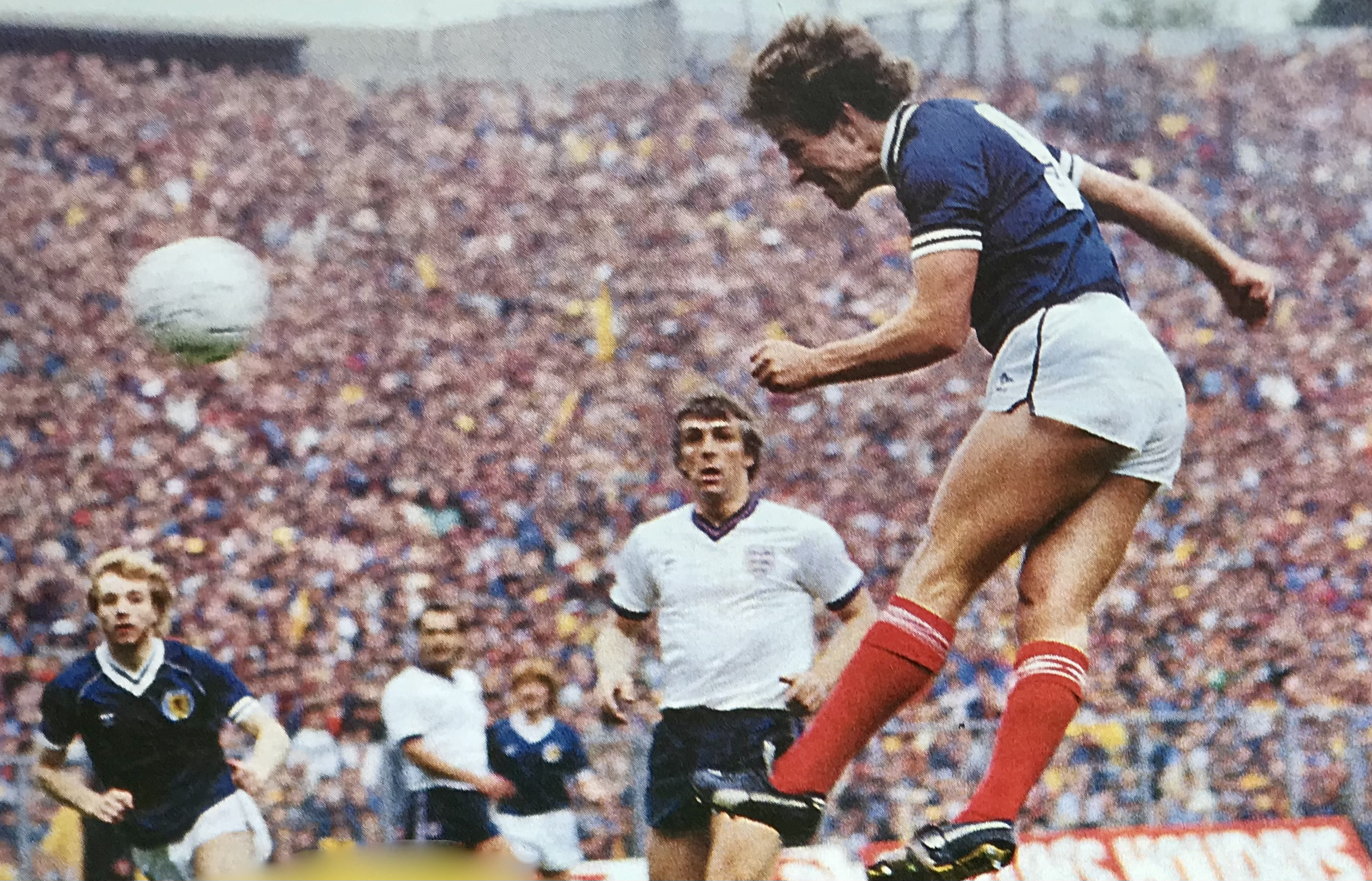
McGhee reckoned his best moment in football came on 26 May 1984 when he scored against England at Hampden Park. He headed in a cross (as pictured) from his great pal Gordon Strachan past Peter Shilton.

McG v Eng

“It put us 1-0 up but Tony Woodcock equalised to make the final score 1-1.”

It was one of four caps he won for his country. Nearly two decades later, in January 2013, Strachan appointed him as his no.2 with the Scottish national side.

M McGhee Old Football PhotosBut back to those playing days, and with two Scottish league titles and three Cup wins behind him, McGhee tried his hand at European football and spent 16 months at Hamburg. The spell was probably more of an education than a success, with injuries limiting his game time.

A £170,000 fee took him back to Scotland, to Celtic, where he had mixed fortunes during four years with the Glasgow giants. He was, though, part of the squad that won a League and Cup double in their centenary season.

After winning another Scottish Cup winners’ medal in 1989, he was on the move again, back to Newcastle.

Now with Jim Smith in charge, Newcastle paid £200,000 to take McGhee back to St James’ Park, where he formed an impressive strike partnership with the legendary Micky Quinn as Toon finished third in the old Division Two.

“We were good friends, but we didn’t blend on the pitch like Toshack and Keegan, Quinn told theleaguepaper.com. “Mark was a free spirit. He’d get the ball and drift left or right and drop deep.

“He’d turn defenders and drag them out of position. He would hold the ball up well for me to get into the box and score goals. He went where he wanted, but it worked.”

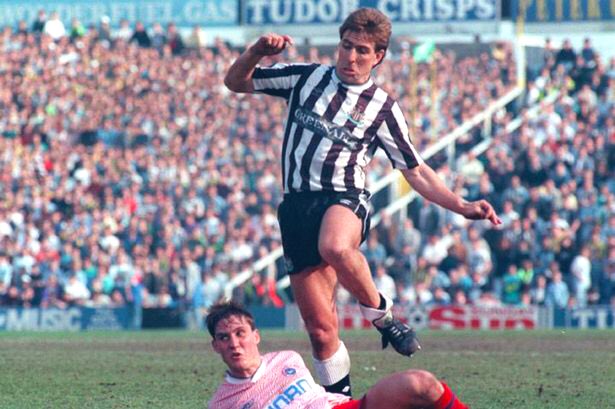
football back then McGhee

This Football Back Then picture shows McGhee in action for Newcastle against Albion’s Nicky Bissett.

His farewell performance came on 6 April 1991, not long after Ossie Ardiles had taken over as manager, and McGhee departed having scored a total of 36 goals in 115 appearances for the Magpies.

Next stop was Sweden, where he played briefly for IK Brage, but he seized the opportunity to try his hand at management by taking up the role of player-manager at Reading in the summer of 1991.

He’d been recommended for the role by his old boss Ferguson, and, after quitting playing through injury in 1993, he led the Royals to promotion from the third tier the following year.

A struggling Leicester City gave him a chance to manage in the Premier League but he was unable to keep them up and, less than a year after joining, decided to switch to Wolverhampton Wanderers, to succeed Graham Taylor.

Wolves just failed to gain promotion in 1996-97 (they lost in the play-off semi-finals) and were ninth the following campaign. Four months into the 1998-99 season, following a string of poor results, McGhee was fired.

It would be 20 months before he gained his next opportunity, this time at Millwall where he enjoyed initial success, leading them to promotion from the third tier, and then narrowly missing out on another promotion when they lost in the play-off semi-finals to Birmingham City.

McGhee apptWhen he parted company from Millwall in October 2003, he wasn’t out of work long because Brighton needed a replacement for Steve Coppell, who’d been wooed to take over at Reading (pictured above, with chairman Dick Knight, at his unveiling as Albion manager).

Those Albion fans who stuck by the team in the humble surroundings of the Withdean Stadium enjoyed some good moments during McGhee’s time as manager, in particular promotion via the play-off final in 2004.

He certainly found a formula to get the best out of certain players, as Adam Virgo, converted from defender to goalscorer, observed in that theleaguepaper.com article. “Mark is a very good communicator and very experienced,” he said. “He can make you feel ten feet tall. He’s very good at being honest, at analysing your game and telling you what you’re good at.”

After his departure from the Albion, McGhee was out of the game for nine months but got back in at Motherwell, turning them from near relegation candidates to qualifiers for European competition.

The lure of his old club, Aberdeen, proved too strong in the summer of 2009, but his tenure proved to be disastrous – and brief.

He spent the majority of 2012 as manager of Bristol Rovers, where one of the squad he inherited was former Brighton defender-turned-striker, Virgo. The following year, his old pal, Strachan, appointed him as assistant coach to the Scottish national side.

He later combined the role part-time when he returned to Motherwell but there were mixed fortunes second time round, and he left them again in early 2017. Towards the end of that year, he popped up at League Two Barnet, but the arrangement lasted only two months before he was moved to a ‘head of technical’ role, and then dismissed in March 2018.

McGhee was ‘slaughtered’ on Twitter when he took over as interim manager of National South side Eastbourne Borough in the spring of 2019, after being beaten 3-0 by Wealdstone in his first match in charge, his new side reduced to nine men after two players were sent off. Borough won just once in 11 matches.

When Albion under 23s coach Simon Rusk was appointed manager of Vanarama National League side Stockport County in January 2021, McGhee was appointed as one of his assistants.

His final managerial post was at Dundee in February 2022 when he took temporary charge of the Scottish Premiership side until the end of the season (with Rusk as his assistant), but they couldn’t avoid them being relegated, overseeing just one win in 13 matches.

McGhee finally announced his retirement from the game in September 2022 at the age of 65, telling the Sunday Post: “I won’t be pursuing any other managerial vacancies, and nor would I want to be a director of football or a head of recruitment. That’s not what I am – I’m a manager.

“I feel that players now deserve a young manager who can give them the energy I was able to when I started out. They don’t need a 65-year-old with a dodgy ankle.”

Boylers’ service appreciated both sides of the Atlantic

MIDFIELD enforcer John Boyle was born on Christmas Day 1946 and went on to play more than 250 games for Chelsea.

Towards the end of his career, he spent two months on loan at Brighton trying to bolster the Albion’s ailing midfield in the dying days of Pat Saward’s spell as manager.

Indeed, Boyle was in that unenviable position of being at the club when the manager who brought him in was turfed out, and the man who replaced him (in this case none other than Brian Clough) swiftly dispensed with his services and sent him back to Chelsea.

By then, Boyle’s time at Chelsea was at an end and, after his 10-game Goldstone spell was also over, he went the shorter distance across London to play for Orient, before ending his playing days in America with Tampa Bay Rowdies.

Born in Motherwell, Boyle went to the same Our Lady’s High Secondary school that spawned Celtic greats Billy McNeill and Bobby Murdoch and, just around the time he turned 15, his stepbrother, who lived in Battersea, organised through a contact they had with then boss Tommy Docherty for him to go down to London for a trial.

He did enough to impress and 10 days later Chelsea sent him a letter inviting him to join their youth team, together with the train ticket from Motherwell to London.

“When I got off the train, Tommy Doc was waiting for me to take me to my digs,” Boyle told chelseafc.com in a recent interview. “I stayed in the digs that Bobby Tambling and Barry Bridges had stayed in before.”

Boyle – known to all as ‘Boylers’ – made his debut in the 1965 League Cup semi-final against Aston Villa and, at 18, it couldn’t have been much more memorable.

“I played on Monday in a Scottish youth trial and Wednesday I was playing against Aston Villa in the semi-final of the League Cup,” Boyle recounted. “After 20 odd minutes, I tackled this guy and he got injured and carried off. The crowd then booed me, he limped back on and then the crowd booed me more!

“It went to 2-0, to 2-2 and then with about 10 minutes to go I got the ball 30 yards out, rolled it forward and went crack and it went into the top corner of the net. I remember Terry Venables ran up to me and said ‘John, I am so pleased for you,’ and that was my first game. To score the winning goal in your first game was Roy of the Rovers stuff.”

He went on to become Chelsea’s youngest ever cup finalist when he was in the team that won the trophy. In those days, it was played over two legs, and, after beating Leicester City 3-2 in the home game, they drew the away leg 0-0. His teammates in the second leg were Bert Murray and the aforementioned Bridges, who he would go on to play alongside at Brighton in 1973.

The Goldstone Ground was familiar territory to him. On 18 February 1967, he was famously sent off for the visitors in a FA Cup 4th round tie when Albion held their more illustrious opponents to a 1-1 draw in front of a packed house. Chelsea went on to win the replay 4-0 and that year went all the way to the final where Boyle was part of the side who lost 2-1 to Spurs. In another fiery FA Cup tie between Brighton and Chelsea, in January 1972, Boyle was Chelsea’s substitute as they won 2-0 in a game which ended 10 a side, George Ley and Ron Harris being sent off.

john boyle chels blueWhen Docherty moved on from Stamford Bridge, and Dave Sexton took over as manager, Boyle’s involvement in the side was more sporadic, as he told fan Ian Morris on his Rowdies blog.
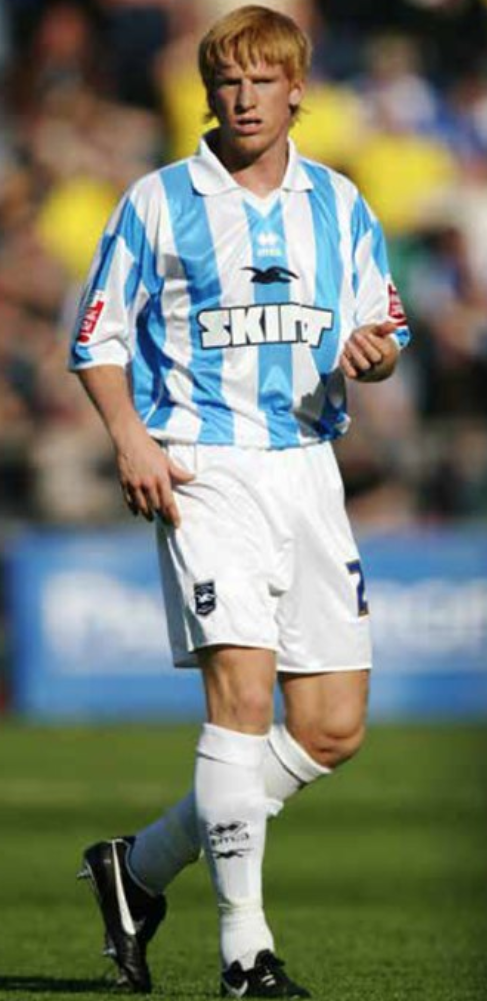
“Dave appreciated my energy and willingness, but I don’t think he really fancied me as a player. Basically, I became an odd-job man, filling in here and there, and in football it doesn’t help to get that reputation,” he said.

Although he wasn’t in the squad that beat Leeds in the 1970 FA Cup Final, he was back in the side when Chelsea beat Real Madrid over two legs in May 1971 to win the European Cup Winners’ Cup.

After Brighton’s disastrous 1972-73 season in the second tier – the general consensus is that they’d not properly been prepared for promotion and didn’t invest sufficiently in the team to have a fighting chance of staying up – the side continued to be in the doldrums as they adjusted to life back in the old Third Division.

Manager Saward was struggling to come up with the right formula and, having transferred former captain Brian Bromley to Reading, sought to boost his midfield with the experienced Boyle, who was surplus to requirements at Stamford Bridge.

With the paperwork signed on 20 September, Boyle was handed the no.8 shirt and made his debut alongside Ronnie Howell in a 0-0 draw away to Grimsby Town.

He made his home debut the following Saturday, but the Albion went down 1-0. Three days later, this time partnering Eddie Spearritt in the middle, Boyle helped Albion to a 1-0 win at Oldham Athletic.

After a 3-1 defeat away to Blackburn Rovers, at home to Halifax Town Boyle had a new midfield partner in John Templeman. But again they lost by a single goal.

With Howell back alongside him for the home game v Shrewsbury Town, Albion prevailed 2-0 in what turned out to be Saward’s last game in charge. Perhaps by way of another interesting historical note, Boyle was subbed off to be replaced by Dave Busby, who became the first black player to play for the Albion.

Caretaker boss Glen Wilson retained Boyle in midfield for the midweek 4-0 hammering of Southport and he was also in the line-up for Clough’s first game in charge, a 0-0 home draw against York City on 3 November. But the 2-2 draw away to Huddersfield Town on 10 November was his last game for the Albion.

As someone who’d gained something of a reputation as enjoying the social side of things at Chelsea, particularly with the likes of Peter Osgood, Charlie Cooke and Alan Birchenall, it maybe doesn’t come as too big a surprise to learn that Clough advised him “always buy two halves instead of a pint, or people will think you’re a drinker”.

Boyle was still only 28 when he tried his hand in Florida in February 1975, being appointed Tampa Bay Rowdies captain, and leading them to victory in the Super Bowl against Portland Timbers in August that year.

His former Chelsea teammate Derek Smethurst scored 18 goals in that inaugural season, playing up front alongside ex-West Ham striker Clyde Best, while former Crystal Palace ‘keeper Paul Hammond was in goal.

A newspaper article about Boyle’s contribution resides on tampapix.com, a hugely entertaining site featuring loads of players of yesteryear who turned out for the Rowdies.

It somewhat flamboyantly says: “‘Captain Rowdie’ John Boyle was a barrel-chested midfielder with legs as white as snow and hair as thin as a wheat crop during a summer drought.  He became the role model for the club, as much because of his leadership as well as the fact that he knocked opponents ‘grass-over-tea kettle’ when they came his way.”

He retired from playing in November the same year but, two years later, he stepped in as Rowdies coach when Eddie Firmani quit. However, he had also gone into the pub business in the UK and ultimately the need to be behind the bar at Simon the Tanner in Bermondsey, with his wife Madeline, meant he had to turn his back on the sunshine state and return to London.

Unable to resist the lure of the States once more, Boyle played five matches for indoor league side Phoenix Inferno in the 1980-81 season.

In that wide-ranging interview Boyle gave to chelseafc.com earlier this year, he said: “I wouldn’t change a thing in my life, I am just grateful for what I have done. I have been blessed and one of the great things about it is 50 years later you can still talk about it! I was a lucky young man to have played when I did and meet the people I did.”


Paul McShane wrote his name in Albion’s history in one season

McShane

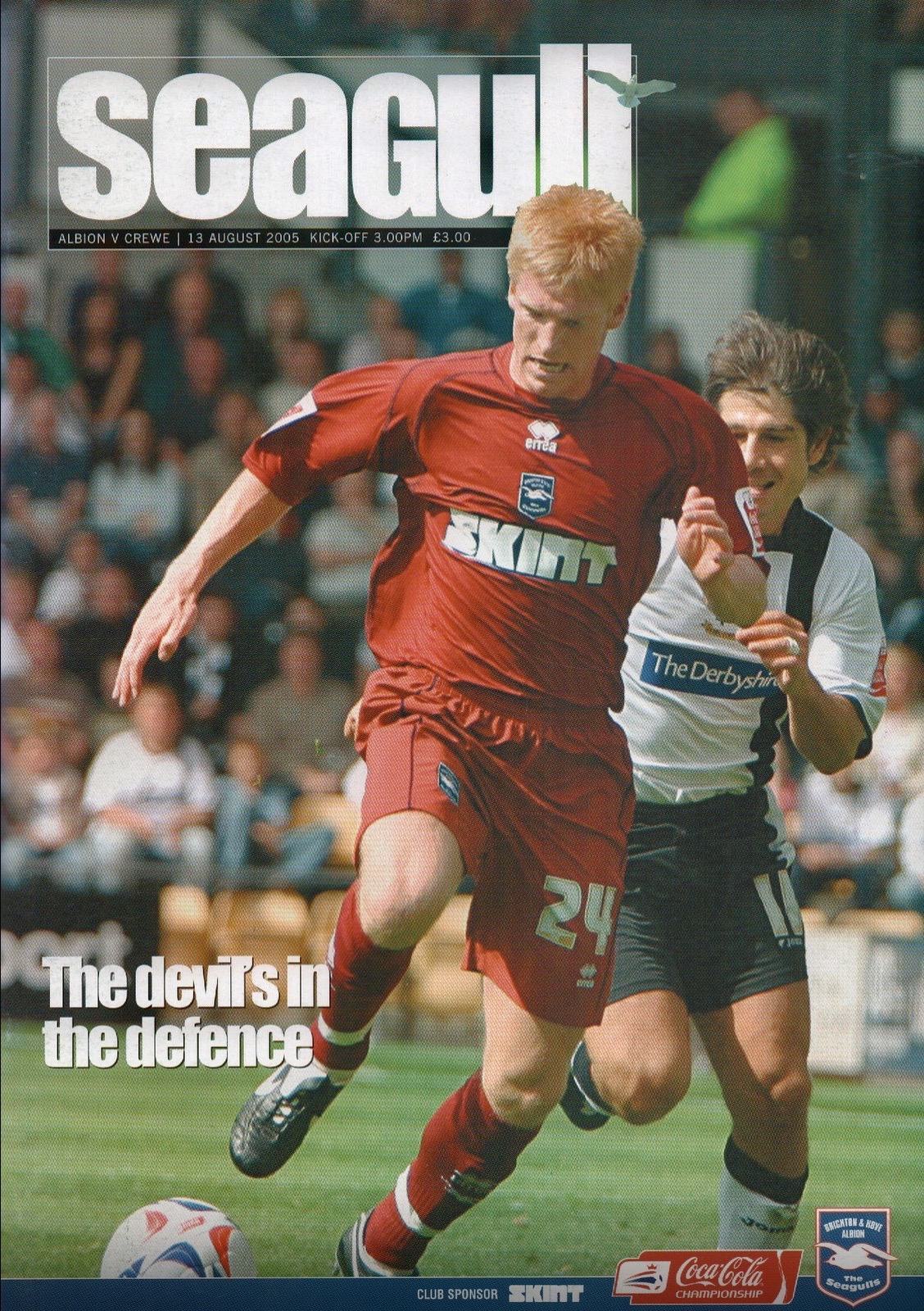
FLAME-HAIRED Irish centre back Paul McShane was a complete revelation during a season on loan to Brighton from Manchester United.

The 2005-06 season ended ingloriously for the Seagulls but McShane was imperious, given a platform to launch a career which saw him play most of it in the second tier of English football, and almost 100 times at the top level, together with earning him 33 full caps for his country.

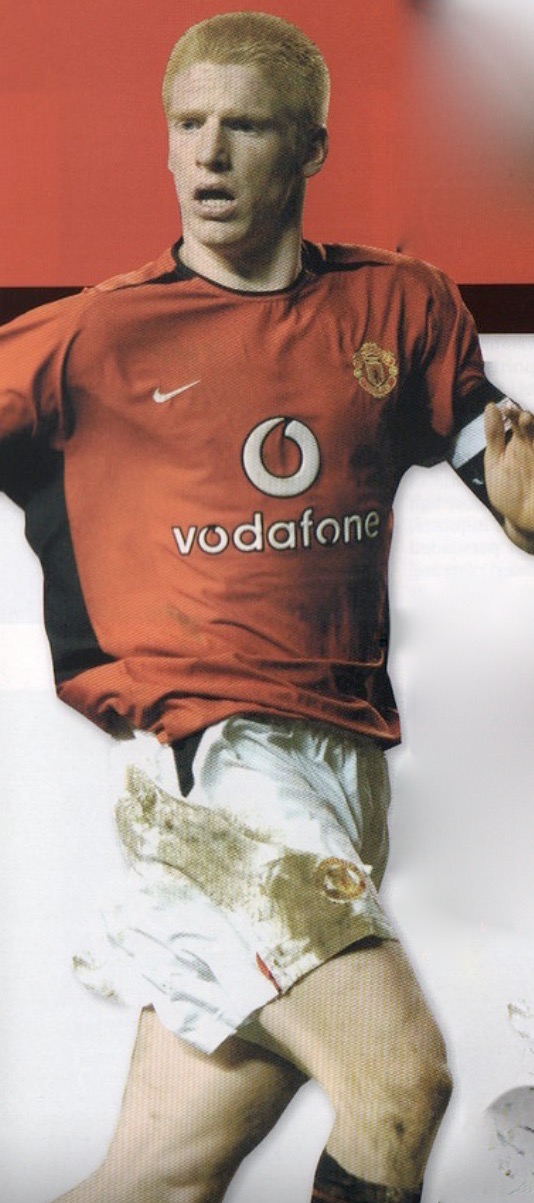
Although he was given a squad number by United, and had been selected by Sir Alex Ferguson for pre-season matches, McShane didn’t get the chance to play any proper competitive football for United’s first team.

United reserve team manager, Brian McClair, a former Celtic teammate of Albion manager, Mark McGhee, could see the benefit of giving McShane first team football at a decent level and an initial half-season loan was agreed, then, in January, it was extended to the season’s end.

Brighton were missing the long-term injured Adam Hinshelwood and although veteran Jason Dodd had been signed to add experience to the defence, his season was to be plagued by injury, so McShane was a near permanent fixture alongside Guy Butters in the centre of the back four.

The young defender shared a flat in Hove with fellow Republic of Ireland international Wayne Henderson and in an early season profile article, Butters was quick to acknowledge the quality of the youngster. “He is an excellent player. He’s only 19 but you see he’s got that Premiership quality about him,” said Butters. “He’s very confident; he likes to bring the ball down and play.”

The former Spurs and Portsmouth defender said he reminded him of Richard Gough, a former teammate at Tottenham. “He’s strong; not the tallest, but makes up for that with his great leap. Very good on the ball, quick and great in deep positions.”

McShane coverHis passion and aggression sometimes got the better of him and the only reason he wasn’t ever present was a penchant for bookings – 12 over the course of the season – which earned suspensions, and a couple of injury-induced absences. And he was missed when he wasn’t available.

After he’d picked up an ankle injury that required him to return to Old Trafford for treatment, the matchday programme put together an article extolling the merits of the young defender in which it said: “Paul’s cool reading of the game and his ability to overcome some of the most effective attacking players in the division marked him out as a fine prospect, and he proved competitive in the air and on the ground, his pace and positional sense being a real asset.”

In their end-of-season player ratings, the Argus summed up his contribution thus: “Talent and determination in abundance. Rash in the tackle at times but that is a product of his insatiable hunger. Will be sorely missed next season.”

Such was the impact of McShane’s outstanding performances over the course of the season that he was selected as the Player of the Season, the first time a loan player had ever been given the honour.

Butters was convinced it was the right choice and told the Argus: “He’s done really well for us. He’s scored some vital goals. Obviously the one away to Palace springs to mind.

“He has been solid all-round. He is very aggressive, ultra-competitive and hates losing, even in training.”

It’s perhaps inevitable that any player who scores a winning goal against arch rivals Crystal Palace earns a place in Albion folklore. McShane’s scruffy effort, which appeared to go in off his shoulder, at Selhurst Park on 18 October 2005 proved to be the only goal of an intense scrap but how it went in became irrelevant as time passed.

“Crystal Palace was a special night, because of the rivalry,” said McShane. “It was a great atmosphere and scoring that goal was brilliant.”

He scored three other goals over the season, including a crucial opener in a 2-0 win away to Millwall as the Seagulls put up a valiant, but hopeless, fight to avoid the drop, but it will always be the goal at Selhurst that fans remember most.

McShane confessed in an interview with Andy Naylor in the Argus that relegation had hurt, but the season for him had been “brilliant” and “a great experience”.

He said: “It has given me a chance to get out there and make my name in the Championship and I think I have done that well enough.

“It has given me a great opportunity to get the experience I need to take back to Manchester and hopefully give it a good crack there, because I’ve learnt so much this season.

“Brighton have been brilliant to me. They’ve treated me really well. They’ve made me feel very welcome, the fans and the people around. That has helped a lot. It has been great.”

In conclusion, he told Naylor: “The club is part of me now. You never know what will happen in the future but Brighton will always have a place in my heart.”

Perhaps rather presciently, Naylor commented: “McShane’s fierce commitment is unlikely to be seen in an Albion shirt again. If he does not make it at Manchester United, there are sure to be Championship clubs interested in signing him.”

With Rio Ferdinand and Nemanja Vidić United’s regular centre back pairing, and Wes Brown as back-up, it was always going to be a difficult ask to dislodge them, and in August 2006 McShane left Old Trafford together with goalkeeper Luke Steele as makeweights in the deal that took goalkeeper Tomasz Kuszczak to United.

mufcmcshaneMcShane and Steele had both been members of United’s winning FA Youth Cup team of 2003, a side which also included Kieran Richardson and Chris Eagles, who went on to make names for themselves in the game.
McShane, born in Wicklow on 6 January 1986, played hurling, Gaelic football, rugby and badminton (his dad, Sean, and uncle played Gaelic football for Dublin) in his early years in Ireland but eventually began to demonstrate his soccer prowess with junior clubs and was playing for St Joseph’s Boys AFC in Dublin when United snapped him up in 2002.

“I was 16 when I signed; I wasn’t going to until I went to Old Trafford with my mum and dad,” McShane said. “It was so down to earth for such a big club. I would be getting the best coaching and training, also playing with some of the best players in the world.”

He added: “Alex Ferguson has been brilliant to me and my family; a very nice man. He just cracks jokes all the time.”

After his success with United’s Youth Cup team, McShane’s first senior football came in 2004 during a brief loan spell with Walsall, where he played four games and scored once.

At Championship West Brom, McShane played 42 games in the 2006-07 season as the Baggies finished fourth and agonisingly lost to Derby County in the play-off final.

Before the new season got underway, McShane was one of 12 new signings manager Roy Keane made for Sunderland, newly-promoted to the Premier League.

He scored an own goal in only his second league game but Sunderland salvaged a 2-2 draw at Birmingham and he went on to make 21 appearances (plus one as sub) as the Black Cats finished just three points clear of the drop zone.

In the following season, McShane went on loan to Premier League new boys, Hull City, and having played 19 games for the Tigers made the move permanent the following season. The KFC Stadium would be his home for the next six years, although he was sent out on loan twice, to Barnsley in 2011 and Crystal Palace in 2012.

In the final game of the 2012-13 season, McShane scored a vital goal for Hull which guaranteed them promotion back to the Premier League, and he earned a new two-year contract from manager Steve Bruce.

However, with Curtis Davies, Alex Bruce and James Chester ahead of him, his appearances were limited, although he did get on as a substitute in Hull’s 3-2 FA Cup Final defeat to Arsenal.

McShane featured 23 times as Hull relinquished their Premier League status in 2015, and he was among six players released by the club, including Liam Rosenior, who moved to Brighton, of course, and goalkeeper Steve Harper, who’d had a short loan spell at Brighton from Newcastle.

McShane wasn’t without a club for long, and joined Reading in July 2015, with manager Steve Clarke telling the club website: “I knew that Paul’s contract with Hull City was due to expire and was always monitoring the situation. When we met up earlier in the summer for a chat I knew that Paul would be a good signing for Reading FC and I’m pleased that we managed to get the deal completed.

“As well as his obvious talents as an experienced defender who is aggressive both in the air and on the ground, I felt that he was a good character to bring into our squad.
“Paul has gained good experience at many clubs and, like Stephen Quinn, was an important part of a promotion-winning team. He has a winning mentality and it will be good for our two young central defenders, Michael Hector and Jake Cooper, to train and play alongside Paul.”

After four years at Reading, over which he played 103 games, in 2019 McShane switched to League One Rochdale.

In July 2021, McShane returned to Man Utd as player-coach for the under 23 side and made two appearances for the under 21s in the EFL Trophy as an over-age player. When he retired from playing at the end of the 2021-22 season he took up the role of professional development phase coach (covering under 18s through to under 23s).

“I’m calling it a day playing now,” he told manutd.com .”I’ve had 20 years playing and I’ve come back into the club as a player-coach in the under 23s. It’s been a great year and great experience but now it’s time to fully focus on the next stage of my career, which will be in coaching.

“It’s amazing how things work out. It’s a great way to end my career, to come back here and help the future generation with their careers. It was perfect, to be honest with you, when this role came about, and I’m grateful to the people who made it happen. I think it’s a great way to end my playing days.”

Man City legend Joe Corrigan played the clown in Brighton

1 Joe punchingBRIGHTON fans often enter into a debate about the best goalkeeper ever to play for the club.
Although he was past his best when he joined the Seagulls, former England international Joe Corrigan would certainly be a contender.

Corrigan was, quite literally, at 6’4” a giant among goalkeepers and a colossus for Manchester City at the highest level before a second tier spell with Brighton towards the end of his playing career.

He subsequently became a top goalkeeping coach and amongst the ‘keepers he worked with was another former Seagulls favourite, Tomasz Kuszczak, when at West Brom.

After taking over from Harry Dowd, Corrigan was a near permanent fixture in goal for Manchester City between 1970 and 1983, winning a European Cup Winners’ Cup medal at the end of his debut season.

But for his career coinciding with Peter Shilton and Ray Clemence, he would surely have won more than the nine England caps he accumulated.

In total Corrigan made 592 appearances for City, a club record for a goalkeeper, and he was City’s Player of the Year three times.

In 1983, at the age of 34, Corrigan was sold to American club Seattle Sounders for £30,000, but he stayed in the US only a few months, and, in September that year, returned to England with Brighton.

Unfortunately for Joe it was at that turbulent time when, although Jimmy Melia was still the manager, chairman Mike Bamber had installed Chris Cattlin as first team coach behind Melia’s back.

Within a matter of weeks of the 1983-84 season starting, Melia was fired and Cattlin took over.

Corrigan was not impressed. In his 2008 autobiography (Big Joe, The Joe Corrigan Story) he declared Cattlin “the worst manager I’d ever played under” although he described his teammates as “a terrific bunch of lads” and he seemed to enjoy a decent social life on the south coast (pictured below for the matchday programme by Tony Norman, tucking into candy floss on the pier).

corrigan candyFor instance, at the annual players Christmas ‘do’ – if the account in Jimmy Case’s autobiography is anything to go by.

Corrigan became big pals with Case during his time at Brighton and the Scouse midfield favourite recounts in Hard Case (John Blake Publishing), a time the players went out on their Christmas ‘bash’ in Brighton wearing fancy dress.

Corrigan wore white tights and a tutu and at one point stood in the middle of the road directing traffic while his teammates crossed –  beckoning cars facing a red light to go and stopping cars that were on a green light. “I am still not sure how he survived that incident without having his collar felt,” said Case.

“Joe is a big, soft lad with a heart of gold but he has a painful way of showing it.”

One of his party pieces was to catch people off guard with a short jab in the ribs or arm. One playful punch landed on physio Mike Yaxley broke two of his ribs!

Case described Joe as “a star performer on the pitch and a bloody clown off it”.

Corrigan played 36 times for the Seagulls, including performing heroics in the famous 2-0 1984 FA Cup win over Liverpool, when goals by Terry Connor and Gerry Ryan meant the Seagulls dumped the mighty reds out of the cup two years in succession (following the 2-1 win at Anfield during the 1983 run to the cup final).

IMG_5197Sadly, as revealed in Big Joe, The Joe Corrigan Story, his time with Brighton ended on a sour note and when Cattlin opted for Perry Digweed as his first choice ‘keeper for the 1984-85 season, it all turned publicly ugly.
The club fined Corrigan for speaking out of turn to the press but Corrigan successfully got the fine overturned thanks to help from the PFA.

Under a heading ‘Truth’ Cattlin wrote in his matchday programme notes: “Our club made the papers this week for the wrong reasons, when a Football League tribunal upheld an appeal by Joe Corrigan against a club fine imposed upon him recently.

“Obviously I must accept the decision of the tribunal, just as I expect my players to accept a referee’s decision on the field. However, my dispute with Joe was not about his right to say anything to the press, but simply about what he said.

“At this club I don’t mind players speaking to the press in a responsible manner. I must though reiterate that I don’t want them slagging the staff, fellow players, fellow managers or the club.”

As it became clear he would never play for Brighton again, he went out on loan to Stoke City and Norwich but then back in Brighton Reserves sustained an injury to his neck that ended his career.

Corrigan retired from playing and initially helped to run a haulage business back in Manchester. But the lure of goalkeeping drew him into coaching at a number of clubs: City, Barnsley, Bradford, Tranmere and Stoke all on a part-time basis. Most notably, though, he spent 10 years at Liverpool, until the arrival of Rafa Benitez, then had spells at Celtic, Middlesbrough and West Brom.

The seeds for that part of his career were sown at Brighton, courtesy of John Jackson, the former Crystal Palace goalkeeper, who used to coach the Albion ‘keepers once a week.

Corrigan told the Manchester City matchday programme on 29 September 2018: “I got talking to him and it inspired me to look into doing something similar. So it was down to Brighton indirectly that I moved into the next phase of my career.”

When at 60 in 2009 he brought down the curtain on a 42-year career in the game, Tony Mowbray, manager of West Brom at the time, told the Birmingham Mail’s Chris Lepkowski: “Joe has been a pleasure to work with. His knowledge and experience have been a big help to me and I’ll be sorry to see him go.

“He’s a great character, a true gentleman and everyone at the club wishes him a long and happy retirement.”

Corrigan told the Mail: “Everyone says you know when the time is right to retire – and I feel this is mine.

“I’ve had just over four great years at this club and want to say a massive thank you to the Albion fans, who have always been very supportive of me and made me feel really welcome.

“The staff and players – particularly the keepers – have also been a pleasure to work with.

“Ironically, my final home game here will be against Liverpool, a club where I spent ten happy years, and we went to City two weeks ago, which obviously is always a special occasion for me.”

In the 2025 New Year’s honours list, Corrigan received an MBE for services to charitable fundraising.

2 Joe diving3 Joe shouting4 JC w GR SG EY

  • Pictures from my scrapbook show Corrigan punching clear of Chelsea’s David Webb, diving headlong to deny Chelsea’s Keith Weller, letting his teammates know his thoughts, and in an Albion squad line-up alongside Eric Young and behind Gerry Ryan and Steve Gatting.

J Cor sept 18

  • Joe pictured in the Man City matchday programme in September 2018.


Corrigan in 2025