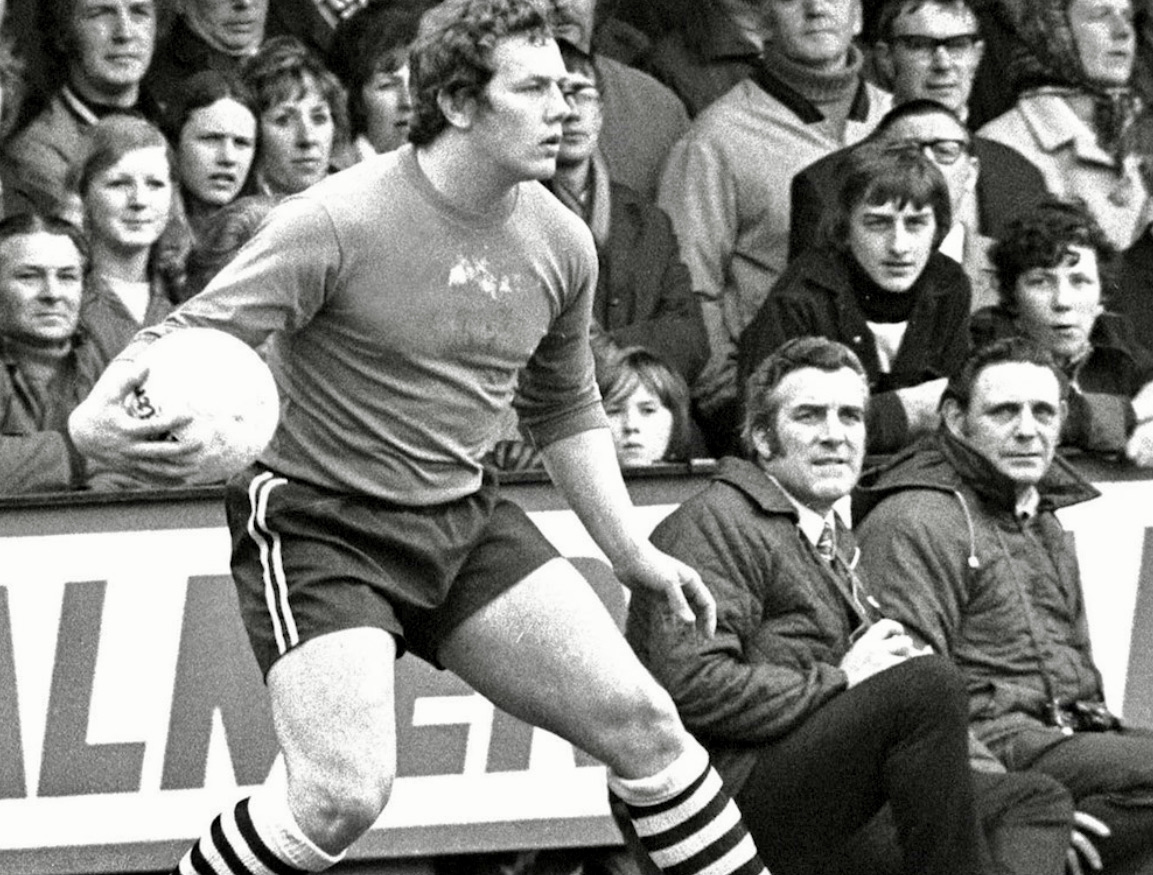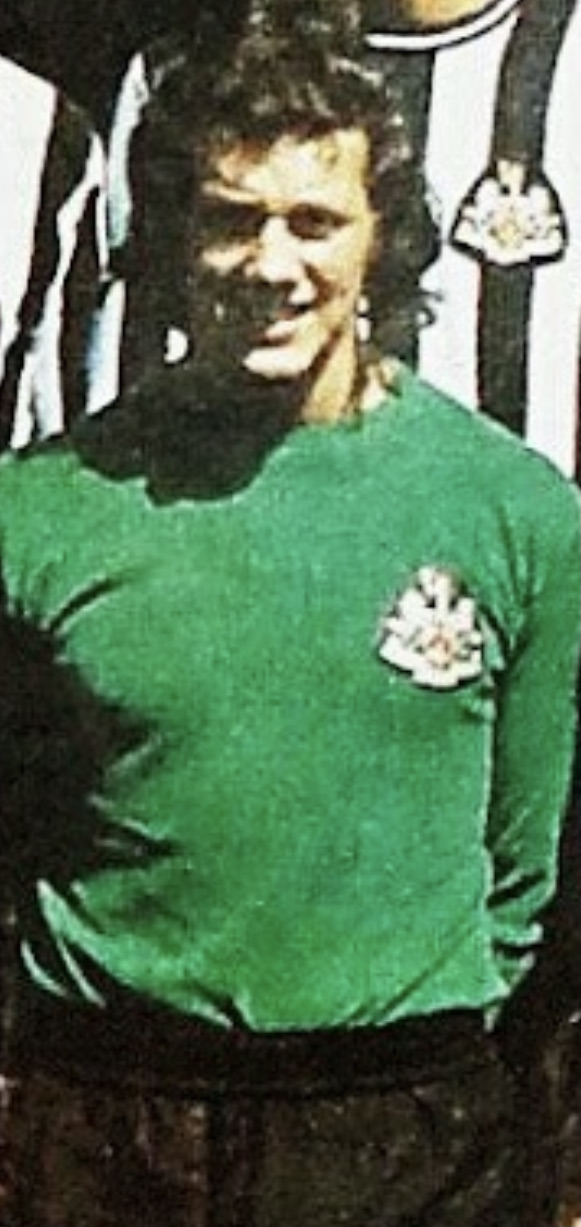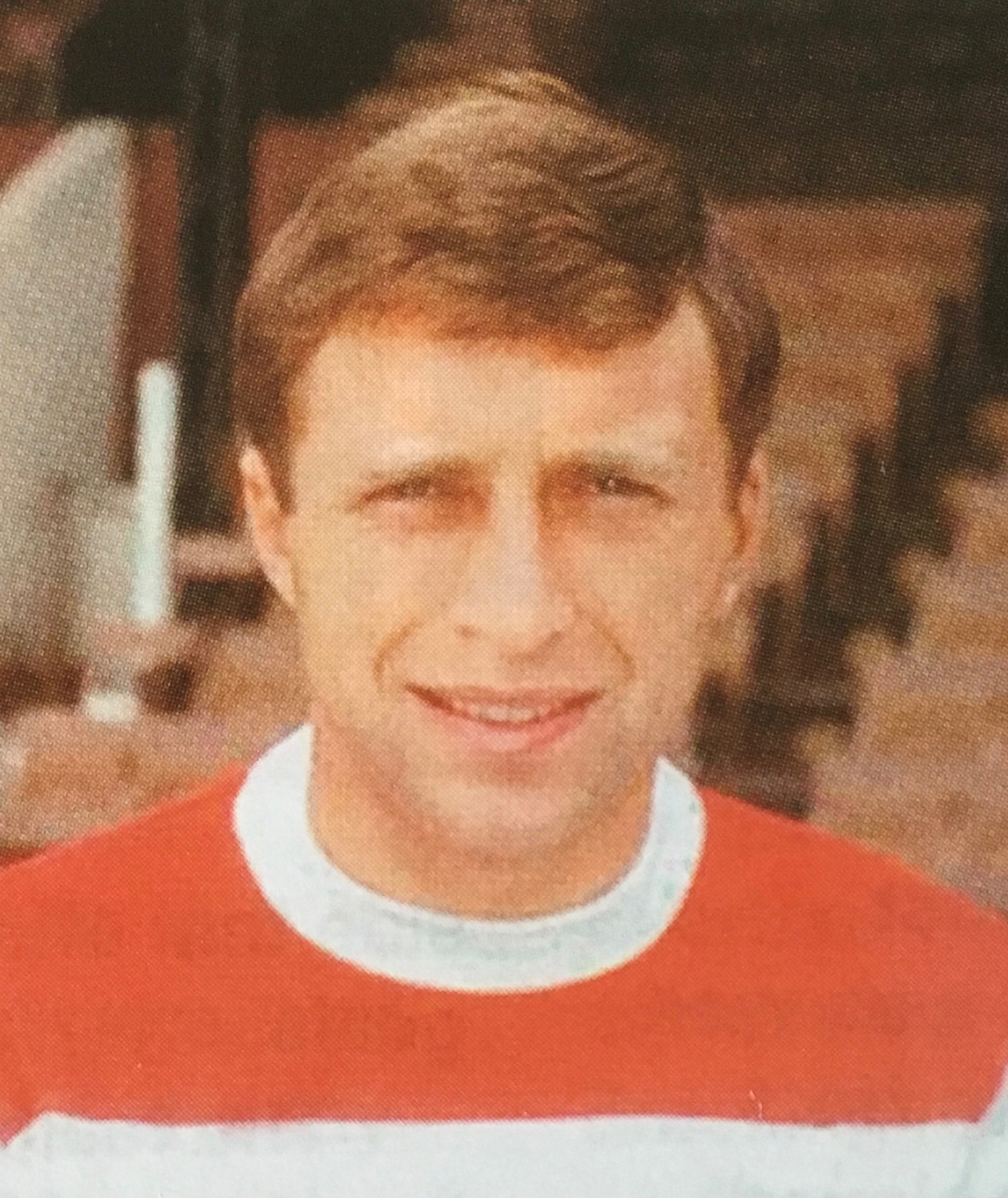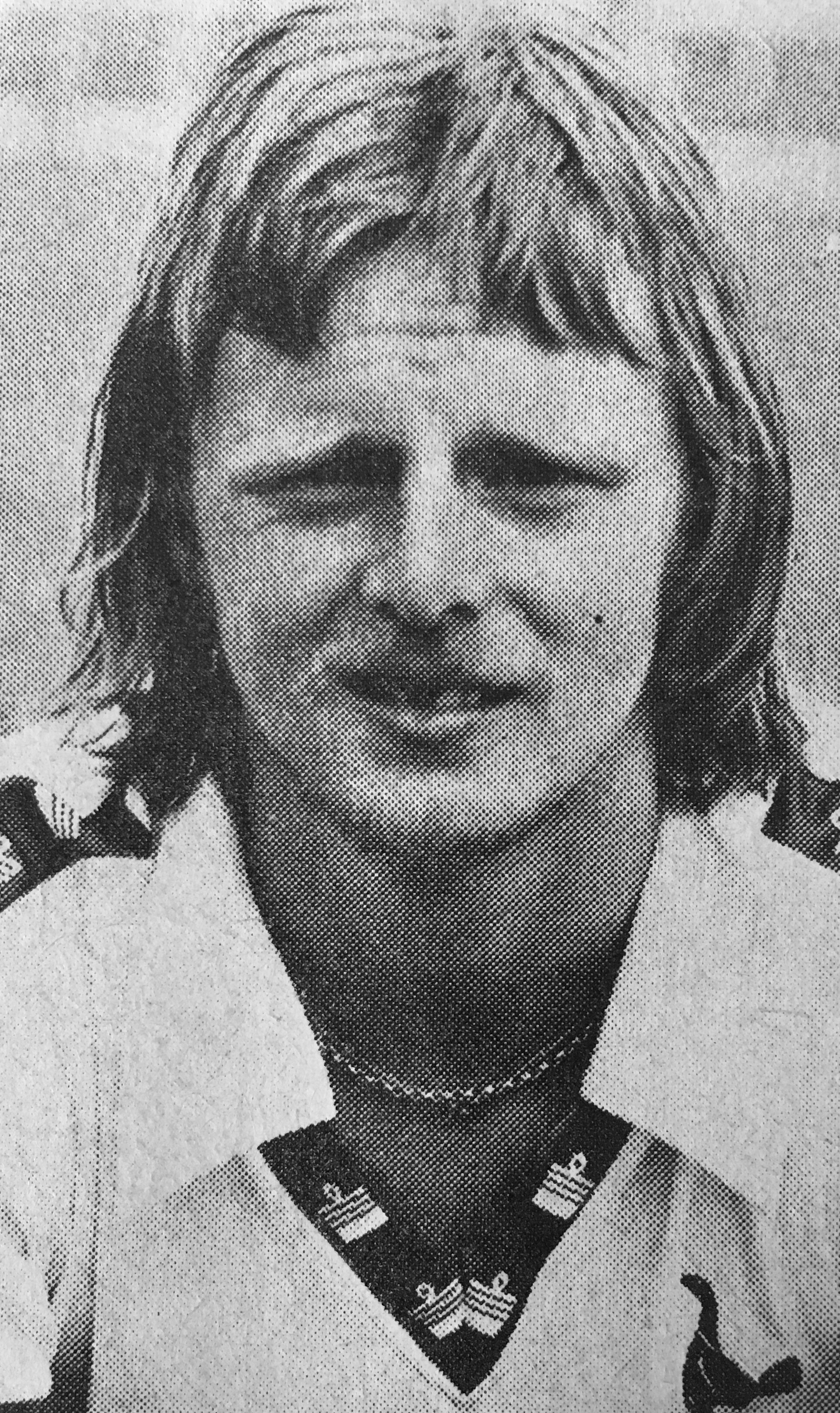
Duffy had Burleigh pal for company on his Albion arrival

HISTORY has seen a whole string of goalkeepers play for both Newcastle United and Brighton. Dutchman Tim Krul was the most recent and others stretching back over the years – Eric Steele, Dave Beasant, and Steve Harper – have featured in this blog at various times.

My post this time, though, centres on Martin Burleigh, for many years an understudy to Northern Irish international Iam McFaul.

When stocky striker Alan Duffy travelled 350 miles from home to join Brighton in early 1970, it was with some relief that he found the familiar face of Burleigh amongst his new teammates.

How Albion’s matchday programme reported Duffy’s delight in meeting up with a familiar face

The goalkeeper, who was only 18, was on loan at the Albion at the time. The previous year he and Duffy had been in the same Newcastle United youth team.

Not only did that side do the Northern Intermediate League and cup double, 10 days before the first team won the Inter-Cities Fairs Cup, the youth team brought even more silverware to Tyneside – winning a prestigious international youth tournament at Feyenoord’s ground in Rotterdam.

Toon’s trophy-winning youth team of 1969

Unlike Albion’s new £10,000 permanent signing, though, Burleigh was to have only a short-lived stay in Sussex. Manager Freddie Goodwin had brought in the Toon no.3 ‘keeper (Iam McFaul was first choice and John Hope his deputy) as cover while Albion were reduced to only one fit goalkeeper (Brian Powney) following a serious head injury to Geoff Sidebottom in the first match of a marathon second round FA Cup tie against Walsall (it took four games to decide it; those were the days before penalty shoot-outs).

Thankfully Powney avoided injury so young Burleigh was not called into match action, and he returned to the north east still waiting to make his league debut. Indeed, he had to wait until Boxing Day 1970 for that chance. Although Toon went down 3-0 at Leeds United, opposition manager Don Revie praised the youngster, saying: “I thought he had a fine game. He had no chance with the goals. Some of the saves he made showed he has a fine future ahead of him.”

It would seem Toon boss Joe Harvey wasn’t so sure and it was more than a year before Burleigh got his next chance to shine, making his home debut in a 4-2 win over Coventry City on 8 January 1972.

Once again it was to be his only first team appearance of the season, but in the 1972-73 season he finally got a run of games when McFaul was injured. He played in 11 matches but then had the misfortune to fracture a finger in a collision with Mick Channon during a 1-1 draw at Southampton, and McFaul returned.

The Toon 1892.com website recalls Burleigh then having a struggle with weight issues and he had a public dispute with manager Harvey which saw him walk out of the club saying he was going to join the RAF. But Newcastle retained his registration and when the dust settled on the dispute he was sent on loan to Darlington before making the move permanent in October 1974 for a fee of £8,000.

He was only at Darlington for a season before switching across country to Carlisle United, where he spent two seasons.

When Burleigh died at the age of 70 on 27 September 2021, Carlisle chairman Andrew Jenkins said: “Martin was a big character who was a pleasure to have around. He was tall and strong in stature and very stylish in the way he kept goal.

“We used to talk about how he very much had the manner of how the goalkeepers in Europe used to do things, with flair and a bit of theatre.

“I remember that Alan Ashman was really keen to get him signed and over here to join us. When he was speaking to the board about him, he said that the fans would be queuing along Warwick Road to watch him – he felt he was that good.”

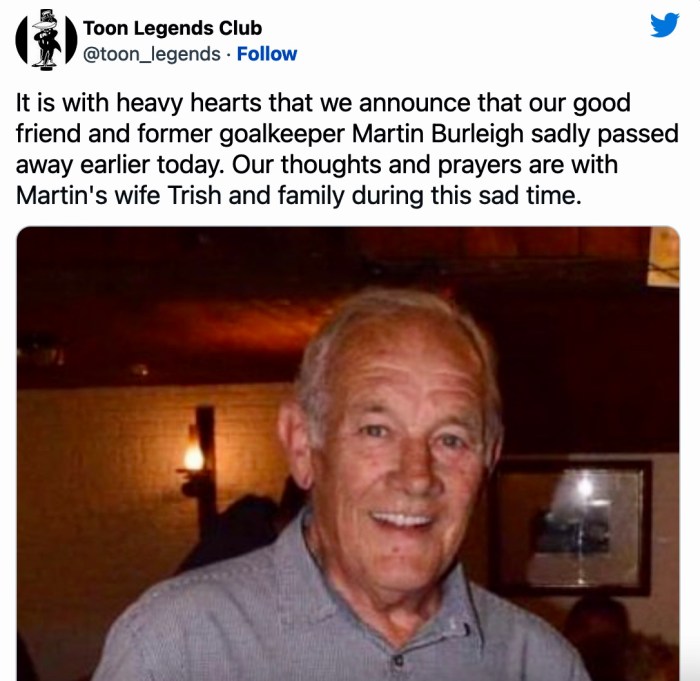
His death was mourned by former Newcastle teammates too and several ‘Toon Legends’ remembered him at a gathering at the Tyneside Irish Centre.

Tribute on Twitter following Burleigh’s death

“Martin was a great friend and a lot of players who played alongside him at Newcastle from junior to first team level want to pay their respects to a real character,” Toon Legends official Chris Emmerson told Chronicle Live.

After his spell at Carlisle, where he also had to bide his time behind first choice Allan Ross, Burleigh returned to Fourth Division Darlington for two more seasons, during which time (in October 1978) he kept goal when the north east minnows only narrowly lost (1-0) to First Division Everton in a third round League Cup tie.

Burleigh went on to spend three seasons in goal for Hartlepool, ending his league career with a total of 222 appearances.

He then became a painter and decorator but continued playing for non-league sides in the area, appearing for Bishop Auckland, Spennymoor and Langley Park until packing up playing in 1984.

Born in Willington, County Durham, on 2 February 1951, Burleigh was playing for his hometown team at 17 when Newcastle signed him in 1968, initially as an amateur.

Kenneth Scott, in The Toon1892 Chronicles, wrote: “He displayed within the junior and reserve teams that he was more than capable between the posts and it was not long before he turned professional.”

That happened in December 1968 and before the end of the season he was in goal for the Newcastle youth team under coach Keith Burkinshaw (who later managed Spurs) when they won the international tournament in Holland, beating an Arsenal side containing the likes of Ray Kennedy, Sammy Nelson, Charlie George, Eddie Kelly, and Pat Rice.

The achievement was somewhat overshadowed by the first team’s triumph in the old Inter-Cities Fairs Cup when Toon beat Hungarian side Ujpest in the two-legged final, skipper Bobby Moncur lifting the trophy in Budapest.

Although Burleigh managed to edge out McFaul’s deputy Hope to become the no.2 at St James’s Park (Hope joined Sheffield United along with David Ford in exchange for John Tudor in 1971), the form and fitness of the Northern Irish international (who later spent three years as manager of Newcastle) always kept him on the sidelines.

• Incidentally, in line with the tradition of Albion ‘sharing’ goalkeepers over several decades, when McFaul was in the manager’s chair in January 1988 he took Albion’s long-serving Perry Digweed on a month’s loan with the Magpies. He played in their reserves but didn’t appear in the first team. The following month he went on loan to relegation-threatened Chelsea where he featured in three matches: a 3-3 draw away to Coventry City, a 0-0 home draw v Everton and a 4-4 draw at Oxford United.

Mike Bailey took the Seagulls to their highest-ever finish

ONE OF the all-time greats of Wolverhampton Wanderers led Brighton & Hove Albion to their highest-ever finish in football.

Midfield general Mike Bailey played for Wolves for 11 seasons between 1965 and 1976, leading the team to promotion from the Second Division in 1966-67, helping them to top-flight positions of fourth and fifth in 1971 and 1973, getting to the final of the UEFA Cup in 1972, and lifting the League Cup at Wembley in 1974.

MB WWFCLgeCupMike Bailey holds aloft the League Cup after Wolves beat Manchester City 2-1 at Wembley.

It was perhaps a hard act to follow Alan Mullery as manager of Brighton, particularly as the former Spurs and Fulham captain had led the club from Third Division obscurity to the pinnacle of English football within three years.

But Bailey had just got Charlton Athletic promoted from the Third Division and in the 1981-82 season led Albion to a 13th place finish, a record which was only threatened in 2017-18 by Chris Hughton’s side, who eventually ended up 15th.

Unfortunately, although Bailey’s team was relatively successful, the style of play he adopted to achieve that position was a turn-off to the fans who deserted the Albion in their hundreds and thousands.

Eventually, chairman Mike Bamber felt he had to address the slump in support by sacking Bailey in December 1982. “He’s a smashing bloke, I’m sorry to see him go, but it had to be done,” said Bamber. There are plenty – in particular Bailey! – who feel he acted a little too hastily.

Bailey shared his feelings in an interview he gave to the News of the World’s Reg Drury in the run-up to the 1983 FA Cup Final.

Mike Bailey talks to the News of the World; his often frank programme notes; his assistant, John Collins, a former Luton Town player.

“It seems that my team has been relegated from the First Division while Jimmy Melia’s team has reached the Cup Final,” he began.

Wanting to put the record straight having been hurt by some of the media coverage he’d seen since his departure, he explained: “I found the previous manager Alan Mullery had left me with a good squad, but, naturally I built on it and imposed my own style of play.”

Bailey resented accusations that his style had been dull and boring football, pointing out: “Nobody said that midway through last season when we were sixth and there was talk of Europe.

“We were organised and disciplined and getting results. John Collins, a great coach, was on the same wavelength as me. We wanted to lay the foundations of lasting success, just like Bill Shankly and Bob Paisley did at Liverpool.

“The only problem was that winning 1-0 and 2-0 didn’t satisfy everybody. I tried to change things too soon – that was a mistake.

“When I left, we were 18th with more than a point a game. I’ve never known a team go down when fifth from bottom.”

It was clear from the outset of Bailey’s reign that he didn’t suffer fools gladly and there were numerous clashes with players, notably Steve Foster, Michael Robinson and Neil McNab, the displaced Gordon Smith and Mickey Thomas, a Bailey signing who repeatedly went missing because his wife didn’t like it in the south.

Bailey would vent his feelings quite overtly in his matchday programme notes; he was not afraid to hit out at referees, the football authorities and the media, as well as trying to explain his decisions to supporters, urging them to get behind the team rather than criticise.

Happier times as Mike Bailey becomes Albion manager and signs Tony Grealish to replace outgoing stalwart midfielder and skipper, Brian Horton.

Attempting to shine a light on the comings and goings associated with his arrival, he explained: “The moves we have been making are designed to provide Brighton with a better football team and one that can consolidate its position in the First Division, rather than struggle, such as in the last two seasons.”

By Christmas, the team were comfortably in the top half of the table and in an interview with the Argus, Bailey said: “I must admit that as a player and captain of Wolves I was a bit of a bastard, slagging others off, and that sort of thing. But being a manager, one sees everything in a different light. I am still trying to learn as a manager, especially now that I am with a First Division club.”

Three months later, shortly after he had appeared at a fans forum at the Brighton Centre, he very pointedly said: “It is my job to select the team and to try to win matches.

“People are quite entitled to their opinion, but I am paid to get results for Brighton and that is my first priority.

“Building a successful team is a long-term business and I have recently spoken to many top people in the professional game who admire what we are doing here at Brighton and just how far we have come in a short space of time.

“We know we still have a long way to go, but we are all working towards a successful future.”

As he assessed his first season, he said: “Many good things have come out of our season. Our early results were encouraging and we quickly became an organised and efficient side. The lads got into their rhythm quickly and it was a nice ‘plus’ to get into a high league position so early on.”

He had special words of praise for Gary Stevens and said: “Although the youngest member of our first team squad, Gary is a perfect example to his fellow professionals. Whatever we ask of him he will always do his best, he is completely dedicated and sets a fine example to his fellow players.”

Meanwhile, in his own end of season summary, Argus Albion reporter John Vinicombe maintained: “It is Bailey’s chief regret that he changed his playing policy in response to public, and possibly private, pressure with the result that Albion finished the latter part of the season in most disappointing fashion.

“Accusations that Albion were the principal bores of the First Division at home were heaped on Bailey’s head, and, while he is a man not given to altering his mind for no good reason, certain instructions were issued to placate the rising tide of criticisms.”

Vinicombe recorded that the average home gate for 1981-82 was 18,241, fully 6,500 fewer than had supported the side during their first season amongst the elite.

“The Goldstone regulars, who are not typical of First Division crowds (but neither is the ground) grew restless at a series of frustrating home draws, and finally turned on their own players,” he said.

At the beginning of the following season, off-field matters brought disruption to the playing side. Arsenal’s former FA Cup winner Charlie George had trained with the Seagulls during pre-season and senior players Foster, Robinson and McNab publicly voiced their disappointment that the money wasn’t found to bring such a player on board permanently.

McNab in particular accused the club of lacking ambition and efforts were made to send him out on loan. Similarly, Robinson was lined up for a swap deal with Sunderland’s Stan Cummins, but it fell through.

Meanwhile, Albion couldn’t buy a win away from home and suffered two 5-0 defeats (against Luton and West Brom) and a 4-0 spanking at Nottingham Forest – all in September. Then, four defeats on the spin in November, going into December, finally cost Bailey his job. Perhaps the writing was on the wall when, in his final programme contribution, he blamed the run of poor results on bad luck and admitted: “I feel we are somehow in a rut.”

It would be fair to say Bailey the player enjoyed more success than Bailey the manager. So, where did it all begin?

Born on 27 February 1942 in Wisbech, Cambridgeshire, he went to the same school in Gorleston, Norfolk, as the former Arsenal centre back Peter Simpson. His career began with non-league Gorleston before Charlton Athletic snapped him up in 1958 and he spent eight years at The Valley.

M Bailey charltonDuring his time there, he was capped twice by England as manager Alf Ramsey explored options for his 1966 World Cup squad. Just a week after making his fifth appearance for England under 23s, Bailey, aged 22, was called up to make his full debut in a friendly against the USA on 27 May 1964.

He had broken into the under 23s only three months earlier, making his debut in a 3-2 win over Scotland at St James’ Park, Newcastle, on 5 February 1964.He retained his place against France, Hungary, Israel and Turkey, games in which his teammates included Graham Cross, Mullery and Martin Chivers.

England ran out 10-0 winners in New York with Roger Hunt scoring four, Fred Pickering three, Terry Paine two, and Bobby Charlton the other.

Eight of that England side made it to the 1966 World Cup squad two years later but a broken leg put paid to Bailey’s chances of joining them, even though he got one more chance to impress Ramsey.

Six months after the win in New York, he was in the England team who beat Wales 2-1 at Wembley in the Home Championship. Frank Wignall, who would later spend a season with Bailey at Wolves, scored both England’s goals. Many years later, Wignall was playing for Burton Albion when a certain Peter Ward began to shine!

In 1965, Bailey broke his leg in a FA Cup tie against Middlesbrough and that was at a time when such injuries could be career-threatening.

“I was worried that may have been it,” Bailey recalled in his autobiography, The Valley Wanderer: The Mike Bailey Story (published in November 2015). “In the end, I was out for six months. My leg got stronger and I never had problems with it again, so it was a blessing in disguise in that respect.

“Charlton had these (steep) terraces. I’d go up to them every day, I was getting fitter and fitter. But it was too late to get in the 1966 World Cup side – Alf Ramsey had got his team in place.”

 Bailey missed out on the 1966 England World Cup squad but he won Football League representative honours and enjoyed success as captain of Wolves.

During his time with the England under 23s, Bailey had become friends with Wolves’ Ernie Hunt (the striker who later played for Coventry City) and Hunt persuaded him to move to the Black Country club.

Thus began an association which saw him play a total of 436 games for Wolves over 11 seasons, leading a side with solid defenders like John McAlle, Francis Munro and Derek Parkin, combined with exciting players like forwards Derek Dougan and John Richards, plus winger Dave Wagstaffe.

However, when coach Sammy Chung stepped up to take over as manager, he selected Kenny Hibbitt ahead of Bailey so the former skipper chose to end his playing days in America, with the Minnesota Kicks, who were managed by the former Brighton boss Freddie Goodwin.

Nevertheless, Bailey’s contribution to the team famous for their old gold kit saw him inducted into the Wolves Hall of Fame in 2010.

On his return to the UK, Bailey became manager of Hereford United, then he returned to The Valley as manager of Charlton and, immediately after getting them promoted to the third tier, took over at Brighton in the summer of 1981.

A somewhat extraordinary stat I discovered about Bailey’s management career in England through managerstats.co.uk was that he managed each of those three clubs for just 65 games. At Hereford, his record was W 32, D 11, L 22; at Charlton W 21, D 17, L 27; at Brighton, W 20 D 17, L 28.

In 1984, he moved to Greece to manage OFI Crete, and he later worked as reserve team coach at Portsmouth. Later still, he did some scouting work for Wolves.

Pictures from various sources: Goal and Shoot! magazines; the Evening Argus, the News of the World, and the Albion matchday programme.

Spanish TV star Michael Robinson followed in dad’s footsteps to play for Brighton

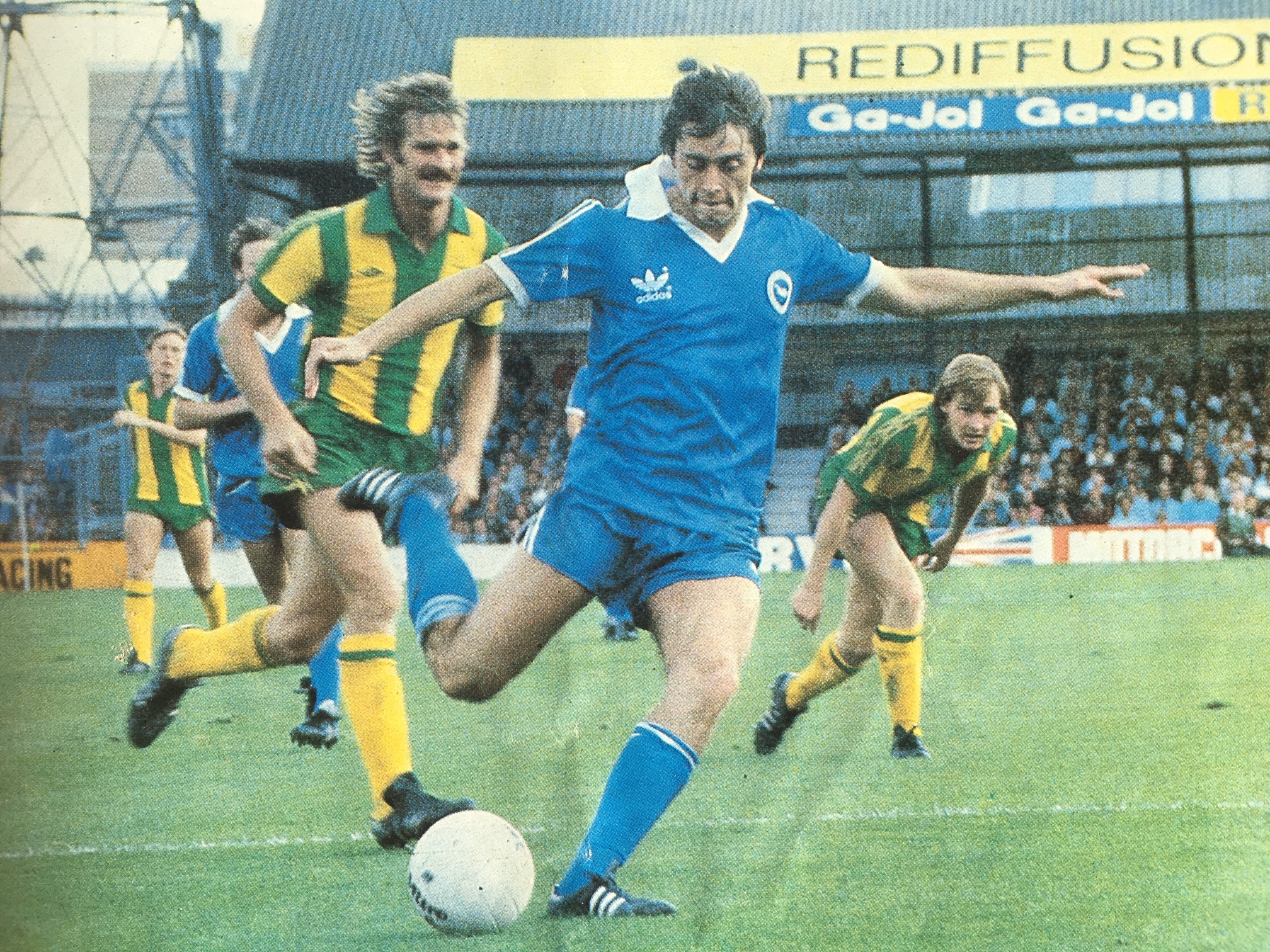
Robinson v WBA

WHEN Michael Robinson died of cancer aged 61 on 28 April 2020, warm tributes were paid in many quarters to the former Brighton, Liverpool and Republic of Ireland international who became a big TV celebrity in Spain.

“We have lost a very special guy, a lovely person and someone I’m proud to have known both on and off the pitch,” his former teammate Gordon Smith told Spencer Vignes. “He was one of the boys, one of the good guys.”

It seemed like half a world away since Robinson had charged towards Gary Bailey’s goal in the dying moments of the 1983 FA Cup Final only inexplicably to pass up the opportunity of scoring a Wembley winner to lay the ball off to Smith.

“With Michael bursting forward and having turned the United defence inside out, I was genuinely expecting him to shoot and had put myself in a position to pick up any possible rebound,” Smith recounted. “Instead he squared it to me and we all know what happened next.”

Robinson’s next two competitive matches also took place at Wembley:

  • He once again led the line for Brighton when the Seagulls were crushed 4-0 by Manchester United in the cup final replay on 26 May. It turned out to be his last game for the Albion.
  • Three months later he was in the Liverpool side who lost 2-0 to United in the FA Charity Shield season-opening fixture between league champions and FA Cup winners, following his £200,000 move from relegated Brighton.

It was hardly surprising Robinson didn’t hang around at the Goldstone: the Seagulls had given him a platform to resurrect a career that had stalled at Manchester City, but the striker had several disputes with the club and the newspapers were always full of stories linking him with moves to other clubs.

robbo livPerhaps it was surprising, though, that champions Liverpool were the ones to snap him up, particularly as Ian Rush and Kenny Dalglish were in tandem as first choice strikers.

But at the start of the 1983-84 season, Joe Fagan’s Liverpool had several trophies in their sights and Robinson scored 12 times in 42 appearances as the Merseyside club claimed a treble of the First Division title, the League Cup, and the European Cup.

It took him a while to settle at the Reds because by his own admission he was in awe of the players around him but advice from Fagan to play without the metal supports he’d worn in his boots for six years previously (to protect swollen arches) paid off.

“It made a hell of a difference,” he said. “I felt a lot sharper and so much lighter on my feet.” In the first game without them, Robinson scored twice in a European game at Anfield, then he got one in a Milk Cup tie versus Brentford and scored a hat-trick in a 3-0 league win at West Ham.

robbo semi hatNevertheless, asked many years later to describe his proudest moment in football, he maintained: “Scoring the winning goal in the FA Cup semi-final that meant that a bunch of mates at Brighton were going to Wembley in 1983.”

One of two sons born to Leicester publican Arthur Robinson on 12 July 1958, Michael followed in his father’s footsteps in playing for Brighton. Arthur played for the club during the Second World War when in the army, and also played for Leyton Orient.

When he was four, Robinson moved to Blackpool where his parents took over the running of a hotel in the popular seaside resort. The young Robinson first played football on Blackpool beach with his brother.

After leaving Thames Primary School, it was at Palatine High School that he first got involved in organised football, and, before long, he caught the eye of the local selectors and represented Blackpool Schools at under 15 level, even though he was only 13.

Amongst his teammates at that level was George Berry, who ironically was Robinson’s opponent at centre half in his first Albion match, against Wolverhampton Wanderers.

The young Robinson also played for Sunday side Waterloo Wanderers in Blackpool and when still only 13 he was invited for trials at Chelsea, by assistant manager Ron Suart, who had played for and managed Blackpool.

Although he was asked to sign schoolboy forms, Robinson’s dad thought it was too far from home. Coventry, Blackpool, Preston and Blackburn were also keen and the North West clubs had the edge because he wouldn’t have to leave home.

Eventually he chose Preston and on his 16th birthday signed as an apprentice. At the time, Mark Lawrenson was also there, training with the youngsters, and Gary Williams was already on the books.

After two years as an apprentice, he signed professional and began to push for a first team place with the Lillywhites. With former World Cup winner Nobby Stiles in charge, in 1978-79, Robinson scored 13 goals in 36 matches, was chosen Preston fans’ Player of the Year and his form attracted several bigger clubs.

In a deal which shocked the football world at the time, the flamboyant Malcolm Allison paid an astonishing £756,000 to take him to Manchester City. It was a remarkable sum for a relatively unproven striker.

The move didn’t work out and after scoring only eight times in 30 appearances for City, Robinson later admitted: “I’d never kicked a ball in the First Division and the fee was terrifying. If I had cost around £200,000 – a price that at that time was realistic for me – I would have been hailed as a young striker with bags of promise.”

It was Brighton manager Alan Mullery, desperate to bolster his squad as Albion approached their second season amongst the elite, who capitalised on the situation.

“I received the go ahead to make some major signings in the summer of 1980,” Mullery said in his autobiography. Mullery, had the support of vice-chairman Harry Bloom – current chairman Tony Bloom’s grandfather – even though chairman Mike Bamber was keener to invest in the ground.

“I could see he’d lost confidence at City and I made a point of praising him every chance I got,” said Mullery. “I asked him to lead the line like an old-fashioned centre forward and he did the job very well.”

Robinson told the matchday programme: “When Brighton came in for me, I needed to think about the move…12 months earlier I had made the biggest decision of my life and I didn’t want to be wrong again.”

In Matthew Horner’s authorised biography of Peter Ward, He shot, he scored, Mullery told him: “When I signed Michael Robinson it was because I thought Ward was struggling in the First Division and that Robinson could help take the pressure off him. Robinson was big, strong, and powerful and he ended up scoring 22 goals for us in his first season.”

The first of those goals came in his fourth game, a 3-1 league cup win over Tranmere Rovers, and after that, as a permanent fixture in the no.9 shirt, the goals flowed.

With five goals already to his name, Robinson earned a call up to the Republic of Ireland squad. Although born in Leicester, his mother was third generation Irish and took out Irish citizenship so that her son could qualify for an Irish passport. It was also established that his grandparents hailed from Cork.

He made his international debut on 28 October 1980 against France. It was a 1982 World Cup qualifier and the Irish lost 2-0 in front of 44,800 in the famous Parc des Princes stadium.

Nevertheless, the following month he scored for his country in a 6-0 thrashing of Cyprus at Lansdowne Road, Dublin, when the other scorers were Gerry Daly (2), Albion teammate Tony Grealish, Frank Stapleton – and Chris Hughton!

In April 1982, Robinson, Grealish and Gerry Ryan were all involved in Eire’s 2-0 defeat to Algeria, played in front of 100,000 partisan fans, and for a few moments on the return flight weren’t sure they were going to make it home. The Air Algeria jet developed undercarriage problems and had to abort take-off. Robinson told the Argus: “I thought we were all going to end up as pieces of toast. But the pilot did his stuff and we later changed to another aircraft.”

Although not a prolific goalscorer for Ireland, he went on to collect 24 caps, mostly won when Eoin Hand was manager. He only appeared twice after Jack Charlton took charge.

But back to the closing months of the 1980-81 season…while only a late surge of decent results kept Albion in the division, Robinson’s eye for goal and his never-say-die, wholehearted approach earned him the Player of the Season award.

As goal no.20 went in to secure a 1-1 draw at home to Stoke City on 21 March, Sydney Spicer in the Sunday Express began his report: “Big Mike Robinson must be worth his weight in gold to Brighton.”

However, the close season brought the shock departure of Mullery after his falling out with the board over the sale of Mark Lawrenson and the arrival of the defensively-minded Mike Bailey.

Bailey had barely got his feet under the table before Robinson was submitting a written transfer request, only to withdraw it almost immediately.

He said he wanted a move because he was homesick, but after talks with chairman Bamber, he was offered an incredible 10-year contract to stay, and said the club had “fallen over themselves to help me”.

Bamber told the Argus: “I have had a very satisfactory talk with Robinson and now everybody’s contracts have been sorted out. It has not been easy to persuade him to stay.”

Even though Bailey led the Seagulls to their highest-ever finish of 13th, it was at the expense of entertainment and perhaps it was no surprise that Robinson’s goal return for the season was just 11 from 39 games (plus one as sub).

The 1982-83 season had barely got underway when unrest in the club came to the surface. Steve Foster thought he deserved more money having been to the World Cup with England and Robinson questioned the club’s ambition after chairman Bamber refused to sanction the acquisition of Charlie George, the former Arsenal, Derby and Southampton maverick, who had been on trial pre-season.

Indeed, Robinson went so far as to accuse the club of “settling for mediocrity” and couldn’t believe manager Bailey was working without a contract. Bamber voiced his disgust at Robinson, claiming it was really all about money.

The club tried to do a deal whereby Robinson would be sold to Sunderland, with Stan Cummins coming in the opposite direction, but it fell through.

Foster and Robinson were temporarily left out of the side until they settled their differences, returning after a three-game exile. But within four months it was the manager who paid the price when he was replaced in December 1982 by Jimmy Melia and George Aitken.

Exactly how much influence the managerial pair had on the team is a matter of conjecture because it became a fairly open secret that the real power was being wielded by Foster and Robinson.

On the pitch, the return of the prodigal son in the shape of Peter Ward on loan from Nottingham Forest had boosted crowd morale but didn’t really make a difference to the inexorable slide towards the bottom of the league table.

Ward scored a famous winner as Manchester United were beaten 1-0 at the Goldstone a month before Bailey’s departure, but he only managed two more in a total of 20 games and Brian Clough wouldn’t let him stay on loan until the end of the season.

Albion variously tried Gerry Ryan, Andy Ritchie and, after his replacement from Leeds, Terry Connor, to partner Robinson in attack. But Connor was cup-tied and Ryan bedevilled by injuries, so invariably Smith was moved up from midfield.

Robinson would finish the season with just 10 goals to his name from 45 games (plus one as sub) – not a great ratio considering his past prowess.

The fearless striker also found himself lucky to be available for the famous FA Cup fifth round tie at Liverpool after an FA Commission found him guilty of headbutting Watford goalkeeper Steve Sherwood in a New Year’s Day game at the Goldstone.

The referee hadn’t seen it at the time but video evidence of the incident was used and the blazer brigade punished him with a one-match ban and a £250 fine. Robinson claimed it had been an accident…but it was one that left Sherwood needing five stitches. The ban only came into effect the day after the Liverpool tie, and he missed a home league game against Stoke City instead.

In the run-up to the FA Cup semi-final with Sheffield Wednesday, Robinson was reported to be suffering with a migraine although he told Brian Scovell it was more to do with tension, worrying about the possibility of losing the upcoming tie.

Nevertheless, he told the Daily Mail reporter: “When I was with Preston, I suffered a depressed fracture of the skull and have had headaches ever since. This week it’s been worse with the extra worry about the semi-final.”

Manager Melia, meanwhile was relieved to know Robinson would be OK and almost as a precursor to what happened told John Vinicombe of the Evening Argus: “Robbo is a very important member of our team and he’s the man who can win it for us.

“It is Robbo who helps finish off our style of attacking football and I know he’ll do the business for us on the day.”

Reports of the semi-final were splashed across all of the Sunday papers, but I’ll quote the Sunday Express. Under the headline MELIA’S MARVELS, reporter Alan Hoby described the key moment of the game.

“In a stunning 77th minute breakaway, Case slipped a beauty forward to the long-striding Gordon Smith whose shot was blocked by Bob Bolder.

“Out flashed the ball to Smith again and this time the cultured Scot crossed for Mike Robinson to rap it in off a Wednesday defender.”

Other accounts noted that defender Mel Sterland had made a vain attempt to stop the ball with his hand, but the shot had too much power.

When mayhem exploded at the final whistle, a beaming Robinson appeared on the pitch wearing a crumpled brown hat thrown from the crowd to acknowledge the ecstatic Albion supporters.

In one of many previews of the Final, Robinson was interviewed by Shoot! magazine and sought to psyche out United by saying all the pressure was on them.

“That leaves us to stride out from that tunnel with a smile and a determination to make everyone proud of us,” he said.

“Nobody seems to give us a prayer. They all seem glad that ‘little’ Brighton has reached the Final, but only, I suspect, because they expect to see us taken apart by United.”

Everyone knows what happened next and quite why the normally-confident Robinson didn’t take on his golden opportunity to win the game for Brighton in extra time remains a mystery.

However, as mentioned earlier, within months ‘little’ Brighton was a former club and Robinson had taken to a much bigger stage. This is Anfield reflected on his short time at Anfield as “a golden opportunity for him” and recalls that it turned out to be “the best and most successful season of his career”.

RobFozBWHe had yet more Wembley heartache during a two-year spell with Queen’s Park Rangers, being part of their losing line-up in the 3-0 league cup defeat to Oxford United in 1986.

The move which would lay the foundations for what has become a glorious career on TV arose in January 1987 when Robinson moved to Spain to play for Osasuna, scoring 12 times in 59 appearances before retiring through injury aged 31.

Robinson completely embraced the Spanish way of life, learned the language sufficiently to be an analyst for a Spanish TV station’s coverage of the 1990 World Cup, and took Spanish citizenship.

His on-screen work grew and the stardom Robinson achieved on Spanish TV attracted some of the heavyweight English newspapers to head out to Spain to find out how he had managed it.

For instance, Elizabeth Nash interviewed him for The Independent in 1997 and discovered how he had sold his house in Windsor and settled in Madrid.

Meanwhile, in a truly remarkable interview Spanish-based journalist Sid Lowe did with Robinson for The Guardian in 2004, we learned how that FA Cup semi-final goal was his proudest moment in football and that Steve Foster was his best friend in football.

In June 2017, his TV programme marked the 25th anniversary of Barcelona’s first European Cup win at Wembley, with some very studious analysis. On Informe Robinson (‘Robinson Report), he said: “Wembley was a turning point in the history of football. Cruyff gave the ball back to football.”

Neil McNab: Brighton fans ‘worst crowd I’ve played for’

FIERY SCOT Neil McNab left Brighton for a sizeable loss on their initial outlay and went on to be voted Manchester City’s Player of the Year twice.

No stranger to brushes with the football authorities, McNab joined Brighton in the second half of their first-ever season in the top flight.

In his autobiography, manager Alan Mullery said: “Neil McNab was a Scottish whippet, a fierce competitor in midfield who never stopped running or competing.

“I bought him halfway through the season from Bolton Wanderers and he gave us the extra edge we needed.”

The player to give way at the time was Republic of Ireland international Gerry Ryan, and it would be fair to say the football writers were impressed by the tenacious Scot’s early impact.

After watching a 5-1 drubbing against Southampton from the subs bench, McNab made his debut at home to West Brom in a game that finished goalless. “McNab showed some touches of class in his home debut but scarcely as much as the home crowd expected from their £230,000 capture,” said Harold Palmer in the Sunday Express.

The News of the World’s Peter Jarman was slightly more effusive and described it as “impressive” and John Vinicombe in the Evening Argus said: “McNab, on his home debut, impressed with his industry and general involvement.”

Of his second game, a 1-1 draw away to Leeds, the Sunday People’s Keith Ray observed: “McNab looked light years from the off-key young man that Bolton sold. His prompting coupled nicely with Lawrenson’s hard work, and Ward had two chances to hit the target before he made the vital strike.”

A demonstration of his appetite came in the next game, another 1-1 draw, at home to Coventry, when he ran 25 yards to stop Peter O’Sullivan from taking a corner that he fancied for himself. He whipped the ball in and Ray Clarke thumped a header past Jim Blyth in the Coventry goal.

Gordon Smith, another Albion player who moved to Manchester City, remembered McNab’s quick wit in his autobiography, And Smith Did Score.

When it looked like Brighton were heading for relegation, Mullery, in fear of losing his job, famously threatened the players that he’d run them down in his car if that happened.

Smith recounted how the players were huddled round trying not to laugh at the astonishing outburst. “I almost fell off my chair when Neil leant over and whispered, ‘If he loses his job, he’ll no’ have a f****** car!’”

It was no laughing matter for player or club, though, when the tenacious McNab was suspended for four matches for pushing a referee. In the following season, he was up before the FA again after a skirmish with World Cup winner Alan Ball at the end of a 5-a-side tournament at the Brighton Centre.

Charged with bringing the game into disrepute, Ball was fined £100 but McNab was given a £250 fine and a two-game ban.

Manager Mike Bailey was clearly relieved and told the Daily Mail’s Brian Scovell: “Neil was expecting more but the last instance was entirely different. It was on the field of play when he touched the referee.

“We got a fair hearing. We’re not complaining. Both were guilty but the crimes were different as Neil’s part was unfortunately physical while Ball’s was verbal.”

McNab had the third highest number of appearances (44 plus two as sub) in the 1981-82 season, which saw Brighton’s highest ever finish of 13th, and all four of the goals he scored were from the penalty spot.

However, the safety-first style of play adopted by Bailey created a disconnect between players and fans. In the final home game of the season (a 1-0 defeat to Ipswich), McNab was substituted in the 62nd minute and the crowd booed him off.

The often-obtuse Vinicombe reported in the Argus: “When McNab was withdrawn, 30 minutes from time, his gestures to the crowd were capable of only one interpretation.” In the Daily Mail, McNab told Brian Scovell: “They are the worst crowd I’ve played for. When you do something good on the ball they don’t clap and if you make a mistake they give you stick.”

Worse was to follow after the row at the beginning of the 1982-83 season when Steve Foster and Michael Robinson slapped in transfer requests in protest at chairman Bamber refusing to sanction the acquisition of Charlie George, the former Arsenal, Derby and Southampton maverick, who had been on trial pre-season.

In what was supposed to have been a clear-the-air meeting, McNab let his feelings be known in no uncertain terms.

McNab still had five of six years left on his contract. They tried to offload him on loan to Newcastle, but the midfielder refused to budge. Instead, he made a bitter personal attack on the chairman, accusing him of picking the team, and slapped in his own transfer request.

McNab blasted: “The club is petty and small-minded, and players are treated disgracefully.” McNab made it clear he didn’t see his future at the club and after a few months eventually went to Leeds for a six-game spell and also to Portsmouth.

That came after Bailey had been sacked and his replacements, Jimmy Melia and George Aitken, gave the team a big shake-up, dropping McNab and adopting a more adventurous approach (which ultimately led to relegation).

Although completely out of the first team picture from early December 1982 onwards, McNab was to play one last game nearly five months later.

With Melia struggling to field a team because of injuries and suspensions, McNab got the nod for an away game at Notts County on 30 April 1983.

But he was unable to join in the FA Cup run to Wembley because he had been cup tied during his spell at Leeds. The 1-0 defeat to County was the Scot’s last ever Seagulls appearance.

Relegation led to the release of some of the high earners, and while Robinson and Gary Stevens were sold for sizeable fees, McNab was sold to Manchester City – who had been relegated with Albion – for just £35,000.

Born on 4 June 1957 in Greenock, McNab went to the town’s Highlanders Academy and he was in his primary school team at the age of eight. By the time he was 10, he was playing for the Greenock and District Under 12 representative side.

He moved on to Mount Secondary School, playing for the school team at all age groups, and at 14 was selected for the Scotland Schools side.

He played against England at Ibrox Park, against Ireland at Stranraer, and even travelled to Frankfurt to play against West Germany. All the attention alerted various scouts but he had already signed schoolboy forms for his local club, Greenock Morton.

He actually left school before he was 15 to join Morton as a professional and when he made his first team debut aged 15 in September 1972 he was the youngest outfield player ever to play in the Scottish League. McNab ended that season having played 11 matches and appeared a a sub on three occasions.

McNab SpursHe made 14 appearances for them before being snapped up for £40,000 by Tottenham Hotspur in 1974 and made his first team debut for Spurs while still only 16. A former teammate at that time, Andy Keeley said in a recent interview: “I’ll never forget how he played in a friendly match; first team v reserves. He controlled the game from start to finish. He was outstanding. He had a very good career but I never understood how he didn’t become a superstar.”
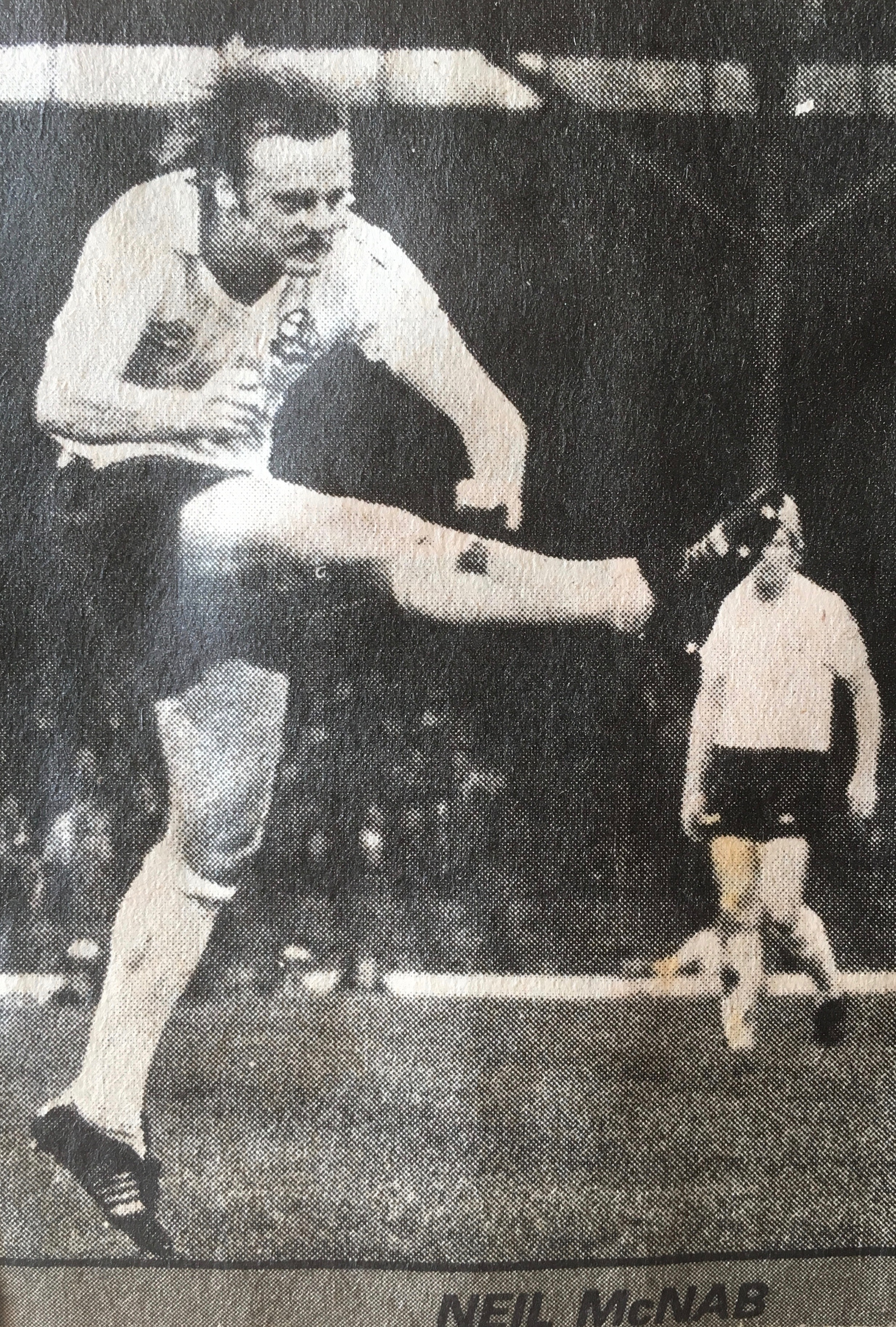
In four years at White Hart Lane, McNab played 72 matches and was selected by Scotland at under 15, under-18 and under-21 level, but never made it to the full Scotland team.

McNab - BoltonIn November 1978, Bolton Wanderers paid £250,000 for him but after only 35 appearances for the Trotters, in February 1980, Mullery signed him for Brighton.

When the former Scotland and Celtic captain Billy McNeill captured McNab’s signature in the summer of 1983, he began what would be a long association with Manchester City and he turned out to be a bargain buy considering in 1986-87 and 1988-89 he was voted City’s Player of the Year.

“Combative and always willing to stick a boot in, McNab was a key figure in City’s drive to promotion on more than one occasion,” was how manchestercity-mad.co.uk described him, while mancity.com, looking back at past players of the year, said: “Like a fine wine, got better as time went on.”

McNab w HartfordAcknowledging his initial signing failed to excite the City faithful, it added: “McNab developed into a skilful, combative midfielder who became a huge crowd favourite. Not unlike Asa Hartford (pictured above with McNab), McNab was a schemer who could pick a pass and kept the team’s tempo ticking over.”

McNab scored 19 goals in 261 league and cup games (plus five as sub) for City  but when Mel Machin’s successors at Maine Road (caretaker Tony Book and Howard Kendall) discarded him, he continued his playing career at Tranmere Rovers who paid £125,000 to take the 33-year-old to Prenton Park.

The combative midfielder added nous, steel and no little skill to the Rovers midfield, ending his first season in Birkenhead with two appearances at Wembley including the Leyland Daf Cup victory over Bristol Rovers,” said the Liverpool Echo.

He played 105 games for Tranmere, scoring six goals, and was part of the squad that secured promotion to English’s football’s second tier. He also earned the dubious distinction of being the first and thus far only Tranmere player to be sent off in a European game – a 2-1 win over Cosenza in the Anglo-Italian Cup.McNab HS

Determined to carry on playing, McNab had an 11-game loan spell at Huddersfield Town, returned to his native Scotland to turn out for Ayr United, appeared briefly for Darlington, played 13 games in Northern Ireland for Derry City, went non-league with Witton Albion (12 games) before finally calling it a day with Long Island Rough Riders in the States.

In 1994, he returned to Maine Road as youth team coach, when his old Albion teammate, Brian Horton, was City manager, and kept the position even when the aforementioned Alan Ball replaced Horton. But eventually he lost his job during another managerial upheaval in 1997 and took up a similar position at Portsmouth, once again working with Ball.

In October 2002, he finally landed a managerial position when he took the helm of League Two Exeter City. The reign was shortlived, though, and with only six wins in 26 matches (eight draws, 12 defeats) he was relieved of his duties.

McNab’s twin sons, Neil junior and Joe, who were born in Brighton, followed in their dad’s footsteps and were part of the young age group sides at Man City and Portsmouth. But after struggling to make the breakthrough, they moved to Wilmington, North Carolina, and have played for various sides in America.

Neil senior followed them to the States and in 2008 became director of coaching at Chiefs Futbol Club in Atlanta, Georgia, with Neil junior the club’s executive director.

In August 2017, it was reported Neil senior had suffered a severe stroke which left him fighting for his life.

On 2 March 2018, a message was sent via freelance writer Spencer Vignes to say that McNab had finally managed to return home after five months in hospital and in rehabilitation. “He has made tremendous progress, but still has a long way to go,” his son said.