
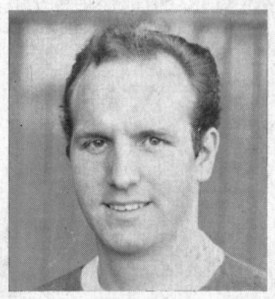
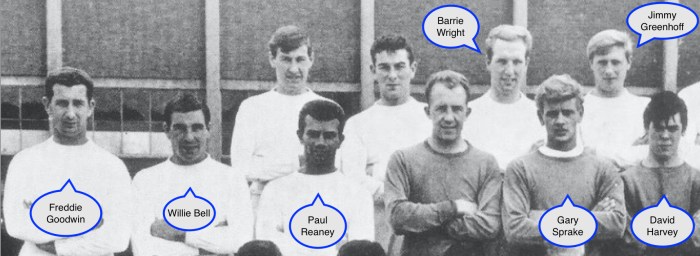
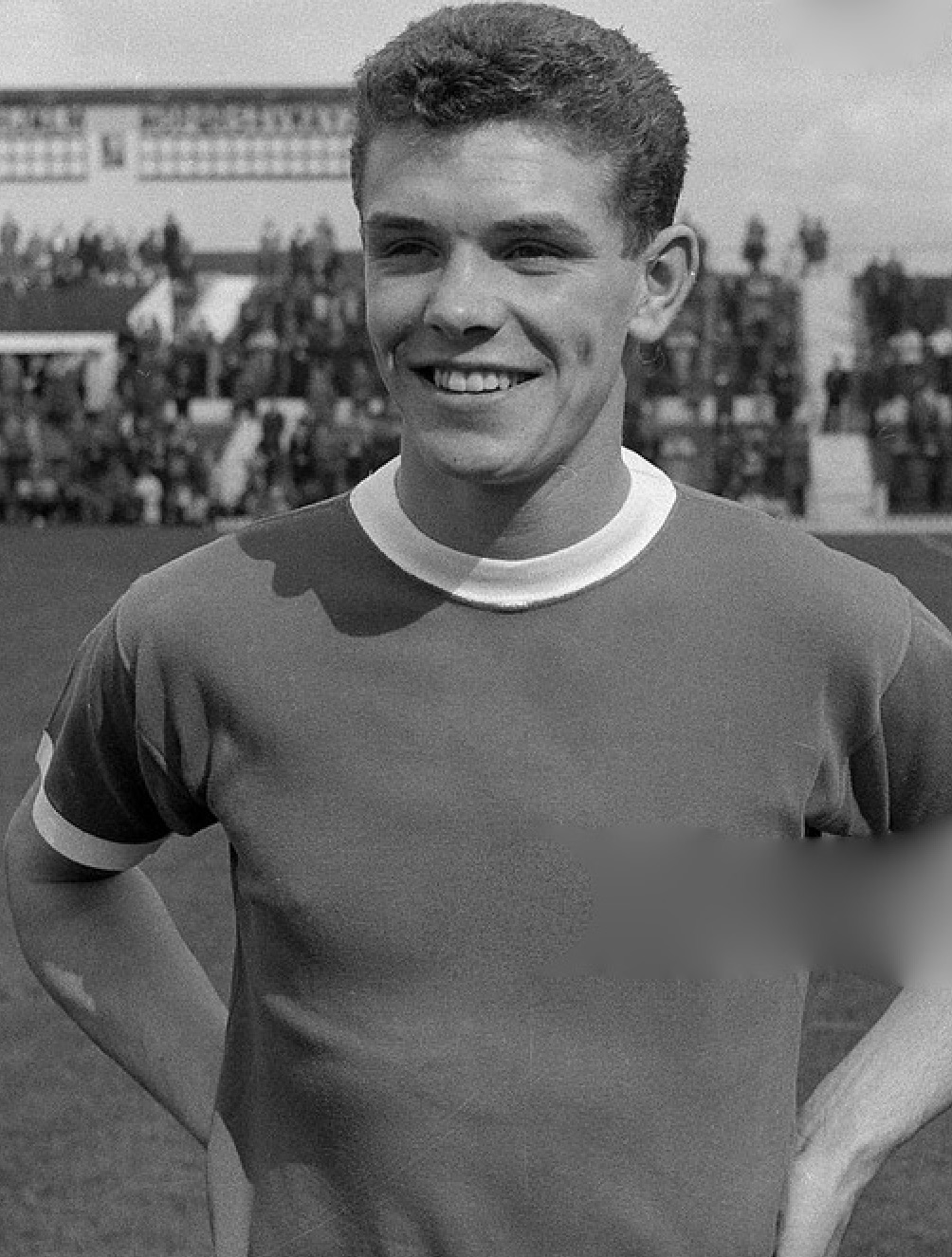
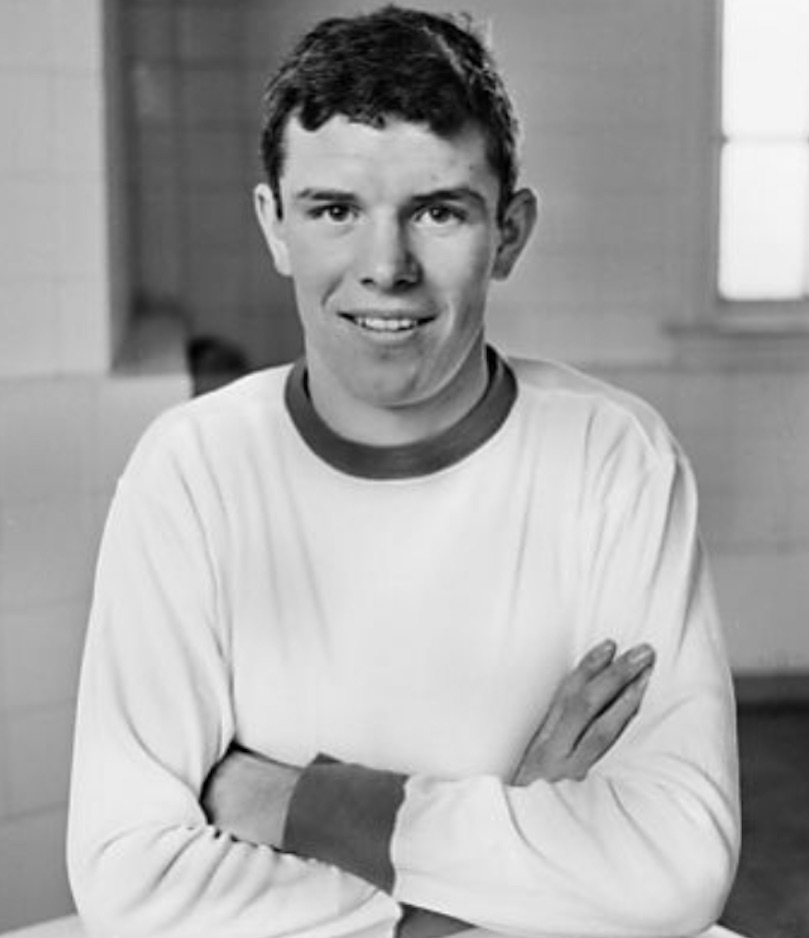
BARRIE WRIGHT (not to be confused with the deep-voiced crooner with a similar-sounding name) was a former Leeds United playing colleague of Freddie Goodwin who followed him to Brighton via America.
Despite showing plenty of early promise, including captaining the England Schools side, Bradford-born Wright played more games for Goodwin’s New York Generals than he did in English league football.
Goodwin signed Wright and goalkeeper Geoff Sidebottom together for the Albion on 31 December 1968, a matter of weeks after he’d succeeded Archie Macaulay as Brighton manager.
The Albion programme in those days eschewed full-scale profiles and simply noted of the new arrival that he “can play on either flank in defence”.
His first Brighton appearance was as a substitute for Charlie Livesey in a 1-1 draw away to Plymouth Argyle on 4 January. He took over Mike Everitt’s left-back slot for the following two games, also both 1-1 draws, at home to Stockport County and away to Bristol Rovers.

But he tweaked his groin in the game against Rovers and missed six matches.
He was restored to left-back for a home goalless draw with Plymouth Argyle on 5 March, and played in the following two games.
One was the 4-0 hammering of Southport at the Goldstone, which was only my second Albion game (having watched them beat Walsall 3-0 three weeks earlier).
The plentiful goalscoring – notably two in each match by Alex Dawson – had me hooked!).
Wright kept the shirt for a 2-1 away win at Shrewsbury, but was then dropped to the bench for the next game, a 2-0 defeat at Oldham, when John Templeman took over at left-back and Stewart Henderson won back the no.2 shirt.
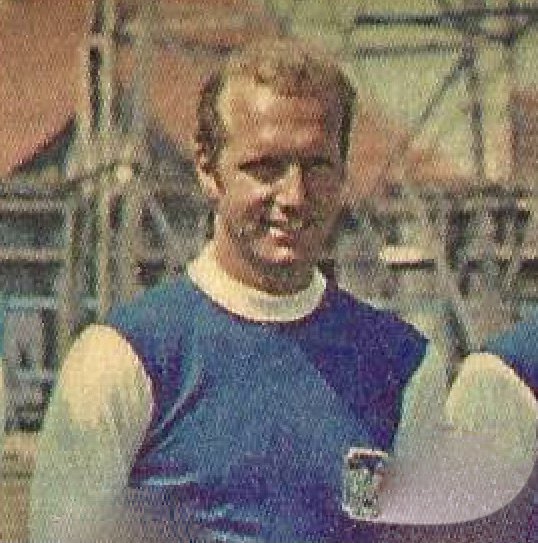

The Yorkshireman didn’t play another game that season although the matchday programme finally got round to telling us more about the player in a short profile item for the home game against Barrow, when I saw Albion score another four goals to secure a comfortable 4-1 win (Dawson again scored twice, the others from Kit Napier and Dave Armstrong).
“Barrie rates Albion as the happiest club he has known, and has quickly settled down in Sussex,” the programme told us.
We also learned he had been a keen angler and was a member of the Bradford Anglers Association, “finding this the perfect relaxation from soccer”.
A useful batsman and medium-fast bowler too, he had added golf to his sporting repertoire when in America and was regularly to be found on a course with Sidebottom.
But back to the football, and Goodwin, having steadied the ship with a number of his own signings, saw Albion finish the 1968-69 season in a comfortable mid-table position.
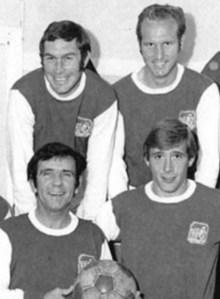
An alarm Bell would have rung for Wright that summer though – in the shape of experienced Scottish international left-back Willie Bell. Goodwin signed their former Leeds teammate from Leicester City as a player-coach; Wright had understudied Bell at Elland Road.
However, it was Everitt who stepped in for the only two games Bell missed all season, and Wright’s involvement was confined to one substitute appearance in a 2-0 defeat away to Doncaster Rovers, and three games in November and December deputising for Dave Turner in midfield.
The 0-0 draw at home to Orient on 13 December proved to be his last outing for the Albion.
In September 1970, Wright went on loan to Hartlepool United but when he wasn’t able to earn a regular place, decided to quit league football at the age of 25 to become a warehouseman.
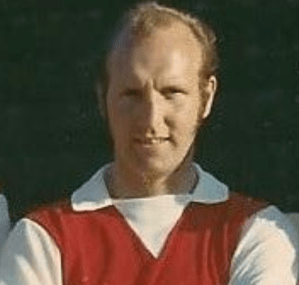
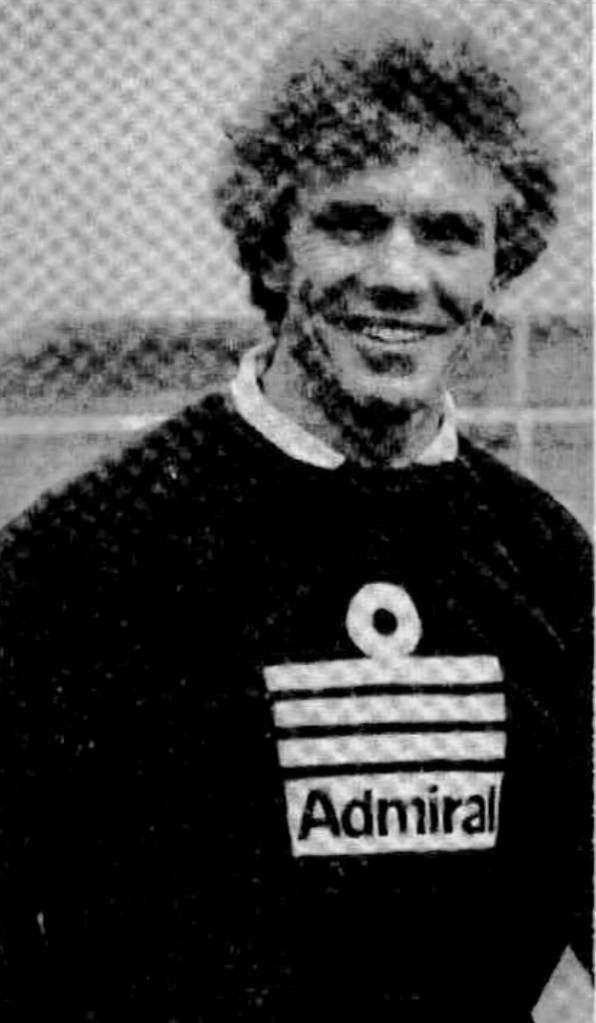
He carried on playing in non-league, though, and appeared in the Northern Premier League with Bradford Park Avenue (right) and Gainsborough Trinity and spent some time with Thackley of the Yorkshire League.
Born in Bradford on 6 November 1945, Wright was one of eleven children – nine of them boys (one brother, Ken, played for Bradford City). Barrie earned selection for Yorkshire Boys and went on to captain the England Schools side on seven occasions in 1960-61.

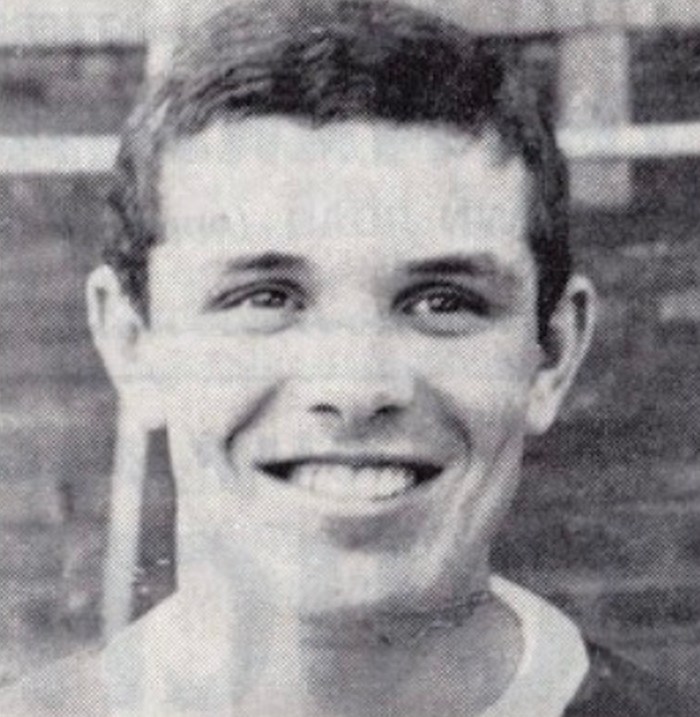
He was taken on by Leeds as a teenager, turning professional in 1962 at the age of 17.
mightyleeds.co.uk described Wright as “a defender of rich potential” who first caught the eye in a pre-season friendly against Leicester City, alongside the legendary John Charles.
The Yorkshire Post’s Richard Ulyatt spoke of Wright’s “excellent form” and said he “looked to have the necessary technique”, while accepting that conclusions from “half-speed friendlies … must be taken with reservations”.
Wright spent four seasons at Leeds and was captain of United’s Central League side. He did make a total of eight first team appearances, though. mightyleeds.co.uk discovered this wonderful description of Wright’s league debut for Leeds at home to Preston on 13 April 1963, when he deputised for veteran Grenville Hair at left-back.
Leeds won 4-1, and the aforementioned Ulyatt reported: “For a time Preston tried to probe for a weakness on the Leeds left, where Barrie Wright, 17, was playing his first game as a senior.
“A better forward line might have found him a bit uncertain and occasionally inclined to commit himself too soon to a sliding tackle, but any judge of a footballer would recognise that here was a great talent.
“His first contact with the game came after about ten minutes when he delicately headed a pass to Albert Johanneson with the artistry of a basketball player. Soon afterwards he tried to pass the ball 20 yards along the touchline edge from a foot inside the field and failed by inches: that was football. In recent years I have seen only (Jimmy) Armfield, (Alf) Ramsey, (Tony) Allen and (Johnny) Carey do it better.”
He kept his place for two more games: two days later in a 2-1 away win over Charlton Athletic on 15 April (Easter Monday) and a 4-1 home win against the same side the following day!
In the 1963-64 season, when Leeds went on to become Division Two champions, he replaced Paul Reaney in a 2-0 win away to Leyton Orient on 23 November 1963.
Phil Brown in the Evening Post reported: “It was most encouraging to see another youngster, Wright, in the side for the first time this season, respond so well to the occasion.
“He was sharper and sounder than on any of his previous three outings, and that against the fleet and strong Musgrove, and hard trying inside-left Elwood.”
However, it was another two months before he got another chance. On 1 February 1964, he took over at left-back in a 1-1 home draw against Cardiff City. On that occasion the Post’s Brown was less complimentary.
“I was most disappointed with young Wright at left-back,” he wrote. “He grew progressively worse, probably through increasing nervousness.”
Nevertheless, Wright was selected in the England Youth team squad for the 17th UEFA Youth Tournament in the Netherlands in March and April 1964.
England won it and Wright appeared in two of their five matches, both won 4-0: against Portugal in Den Haag on 3 April and against Spain two days later in Amsterdam.
His teammates in those matches included Everton’s Howard Kendall as captain, John Hollins (Chelsea), Harry Redknapp and John Sissons (West Ham), Peter Knowles (Wolves), David Sadler (Man Utd) and Don Rogers (Swindon).
Rather like in the modern era, fringe players tended to get a run-out in the League Cup and Wright made two appearances in the competition in 1964-65, taking over from Reaney in the second round 3-2 win over Huddersfield Town on 23 September, and the third round tie on 14 October when United lost 3-2 at home to eventual semi-finalists Aston Villa.
Wright’s final Leeds first team appearance came once again in the League Cup, when he took Norman Hunter’s no.6 shirt in a much-changed side who lost 4-2 at home to eventual winners West Brom in the third round on 13 October 1965. (West Brom won the two-legged final 5-3 on aggregate against a West Ham side that included Dennis Burnett).
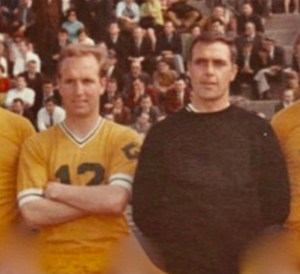
With first team opportunities so rare, Wright eventually left Elland Road in 1966 to try his luck with Goodwin’s New York Generals, joining fellow Brits Sidebottom and Barry Mahy, who had followed Goodwin to the States from Scunthorpe.
The Generals’ most famous player was Cesar Luis Menotti, who later coached Argentina to a World Cup triumph in 1978.
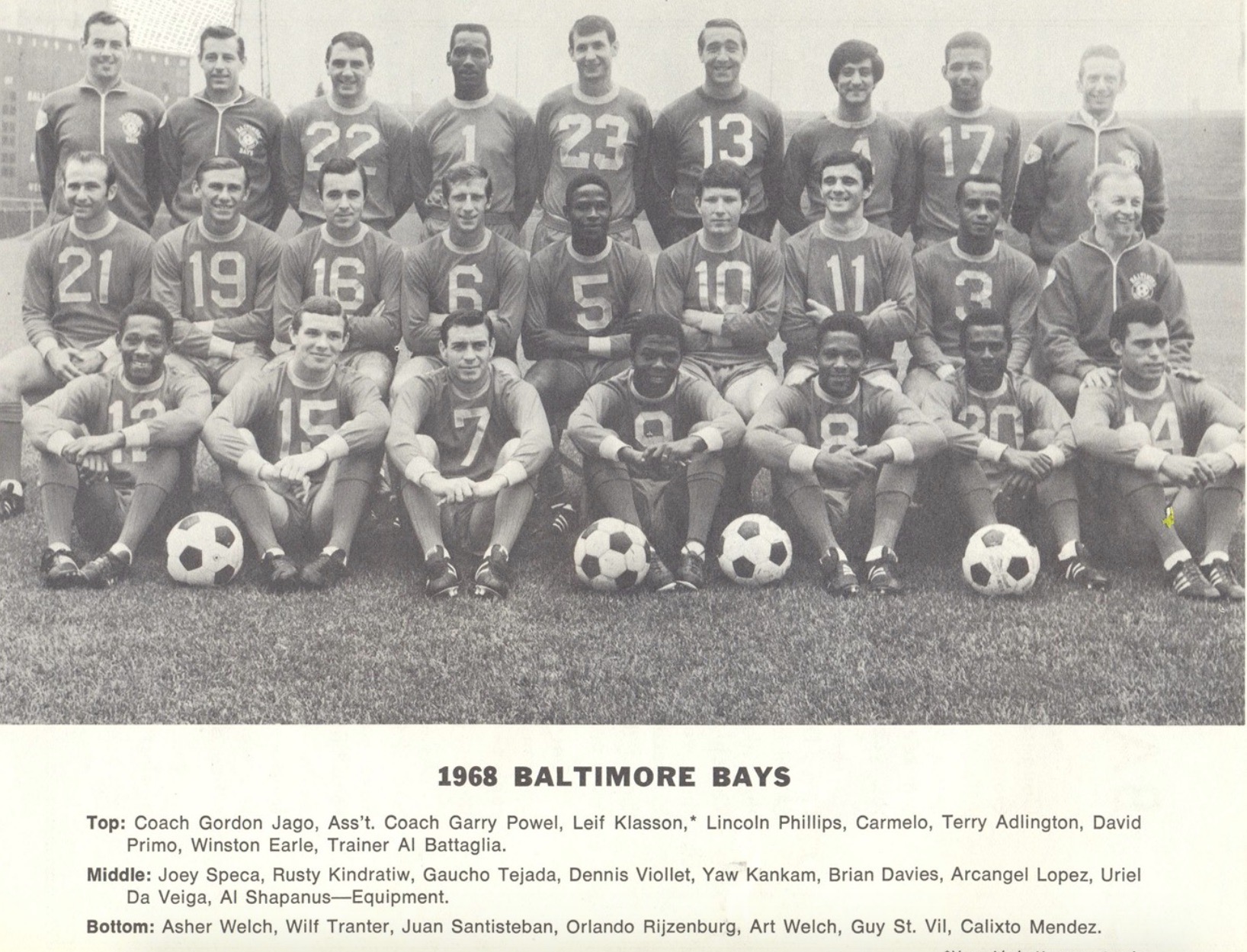
nasljerseys.com records that Wright wore the no.12 shirt and played 26 matches in 1967 and 32 games in 1968.
Wright died aged 78 in November 2023.





 In parallel lines