Teenage debutant ‘keeper Forster forever just a back-up

A GOALKEEPER who held a ‘youngest ever’ record for 58 years played second fiddle between the sticks for Charlton Athletic and Brighton.

Derek Forster had started out at Sunderland and was only FIFTEEN when he played in goal in front of a 45,000 Roker Park crowd in the opening game of the 1964-65 season.

The youngster let in three – but so did his opposite number, Gordon Banks, the England international who was in goal for opponents Leicester City.

“Derek’s a wonderful prospect. From what I could see, he didn’t make a single mistake,” said Banks after the game.

Forster had played in front of an even bigger crowd a few months’ earlier when 95,000 at Wembley saw him keep goal for England Schools against West Germany.

But those early tests of nerves were of little consequence because Forster’s career didn’t pan out quite as he might have wanted.

Sunderland’s first choice ‘keeper, Jim Montgomery, was one of the country’s top goalkeepers, best known for a match-winning double-save for the Wearsiders in the 1973 FA Cup Final at Wembley when second tier Sunderland beat high-flying Leeds United 1-0.

Montgomery remained largely injury-free – and made a record 627 appearances for Sunderland – meaning over the course of eight years the 5’9” Forster only got to play 30 league and cup games for the Mackems.

It was only after that amazing FA Cup win in 1973 that Forster finally left his home in the north-east and tried his luck in London. He joined third tier Charlton who were managed by Theo Foley, a former Eire international teammate of his old Sunderland playing colleague, Charlie Hurley.

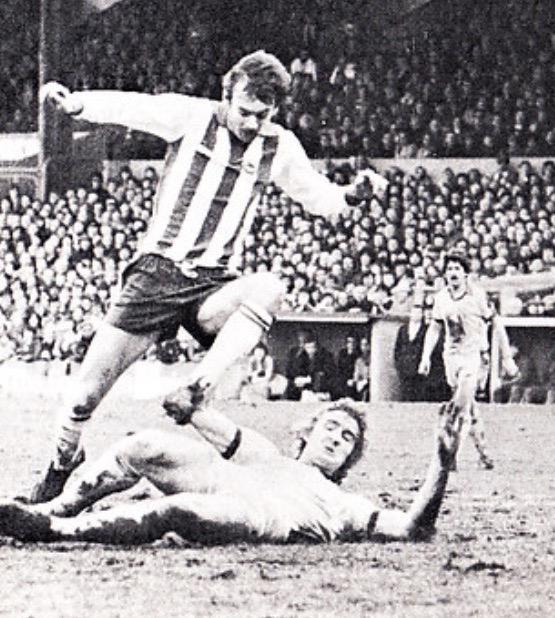
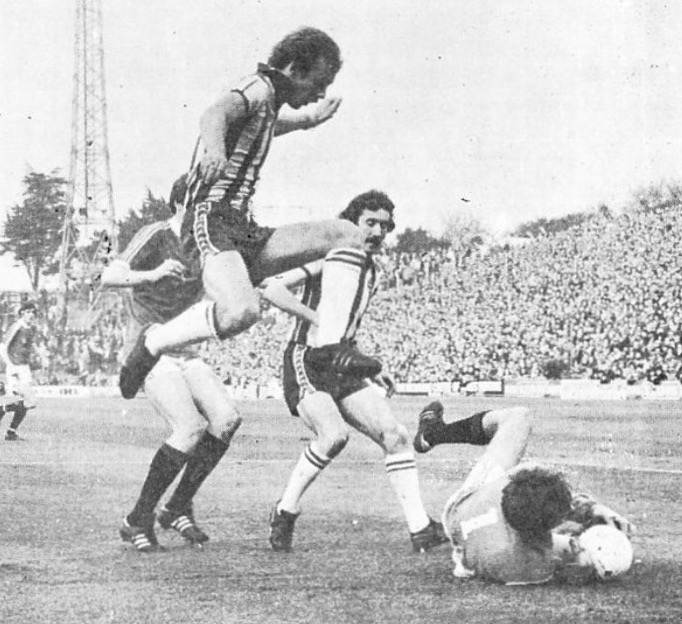
Forster was soon in action for the Addicks, ironically playing against Brighton twice within 18 days at the Goldstone (they won 2-1 in the League Cup and in the League). Below left in a collision with Lammie Robertson.
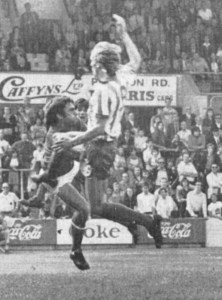
But he was not able to dislodge the experienced John Dunn permanently from the no.1 spot and was limited to nine appearances. He moved during the close season to the Albion, where Brian Clough and Peter Taylor had dispensed with the services of long-serving Brian Powney as part of a 13-player clear-out.

Forster actually joined Albion on the very day that it was announced Taylor was staying at Brighton to take sole charge after his managerial mate Clough quit to join Leeds United.

At the Goldstone, though, Forster found the holder of the no.1 jersey, Peter Grummitt, was another in the same ilk as Montgomery. Grummitt, who’d been one of the pair’s first signings not long after they’d arrived at the Goldstone in the autumn of 1973, had played more than 350 games at the highest level for Nottingham Forest and won three caps for England’s under 23 side, where he vied for the goalkeeper position with Chelsea’s Peter Bonetti.

Arguably one of the best Albion goalkeepers ever, it was perhaps no surprise Grummitt’s form restricted Forster to only three appearances. Ironically, when Forster did get his first team break, he conceded six in his first match.

In spite of pre-season optimism from Taylor, Albion had only three wins on the board from their first 13 games, and when the side went to Fellows Park, Walsall, on 1 October, Forster was like a sitting duck as the Saddlers thumped Albion 6-0. Grummitt was back between the sticks for the following five matches.

No stranger to strong disciplinary measures when he deemed it right, in October Taylor made six first teamers who’d lost 3-2 at Grimsby the previous evening play for the reserves at home to Millwall the following day.

Forster was the last line  of defence in that experienced line-up, and made some important stops on three occasions, but still conceded three. However, the involvement of the first team contingent saw Albion win 5-3: Ian Mellor scoring all five Brighton goals.

Three weeks later, after player-manager Bobby Charlton’s visiting Preston North End side won 4-0 at the Goldstone, Forster stepped in for Grummitt for the second time – and once again was on the losing side: 2-1 at Gillingham.

His one and only winning experience in an Albion shirt came the following week at Prenton Park when Albion beat Tranmere Rovers 2-1. In front of just 2,134 supporters, that win proved to be Forster’s third and last first team appearance.

Taylor obviously wasn’t wholly convinced by his back-up ‘keeper that autumn because he took a look in the reserves at triallist Jim Inger, from assistant manager Brian Daykin’s old club, Long Eaton.

Nevertheless, Forster remained the back-up ‘keeper, a role he continued throughout the 1975-76 season without being called on for the first team because Grummitt was ever-present. The disillusioned Forster departed, admitting he was “cheesed off at Brighton”.

In fact, he quit the professional game, returned to the north-east and played local league football while taking on a job at Washington Leisure Centre (run by Sunderland city council’s leisure department), where he worked for 30 years.

He was in the news in 2010 when it was revealed that three years earlier he had lost the sight in his left eye through cancer.

“It changes your whole life,” he told the Northern Echo. “You either jump off the bridge or you tell yourself to get on with it.

“It makes you realise that it doesn’t matter how hard you train, or how careful you are about what you eat, it’s someone else who’s calling the shots.”

Forster, who retired from the city council, added: “We presumed that we’d do all sorts when we retired and then I realised that I mightn’t even have got that far.

“Now we don’t presume anything. I’ve changed a lot; if that tumour had spread I was a goner. Now every day is a Sunday.” Forster fought on for a few more years before he died aged 75 on 2 May 2024.

Born in the Walker suburb of Newcastle on 19 February 1949, Forster went to Manor Park School in the east end of the city: actor Jimmy Nail and Sunderland and England footballer Dennis Tueart were other alumni.

As a promising centre forward, Forster had trials with the city’s under-11s. “One of the goalies didn’t turn up, so they asked me to play there,” Forster recalled.

“I’d honestly never kept goal in my life, not even in the back street, but I had a blinder. Caught every ball. After that, I never played anywhere else.”

The young Forster’s prowess earned him selection for the England Schools side on nine occasions, in a squad that included future stars Trevor Brooking, Colin Todd,  Colin Suggett and Joe Royle.

Sixty years on, it seems extraordinary to discover crowds of 95,000 would fill Wembley to watch the cream of England’s schoolboys, but vintage black and white film footage available on YouTube confirms it.

The all-things-Sunderland website rokerreport.sbnation.comisa detailed source of how Forster made history, and it is certainly a rather curious tale.

Initially signed as an amateur by Sunderland, he was then taken on as an apprentice but for two weeks of the 1964-65 pre-season month he’d been on a family holiday in Blackpool.

He’d trained for just a week and had never seen his new teammates play competitively. Then regular goalkeeper Montgomery sustained a hairline fracture of his left arm in training.

The opening game of the season – Sunderland’s first game back in the top flight after winning promotion – was only a matter of days away and they were without a manager because Alan Brown had left in acrimonious circumstances to take charge of Sheffield Wednesday.

Brown was temporarily replaced by a ‘selection committee’ of club officials and team captain Charlie Hurley.

The assumption was that the 20-year-old reserve goalkeeper, Derek Kirby, would deputise for Montgomery but, instead, they turned to Forster, who’d had that experience of playing in front of a huge crowd at Wembley.

After being called into club secretary George Crow’s office on the Thursday morning to be told he’d be starting, he said: “This is the greatest moment of my life. I had no idea that I would get my chance so soon, even after Monty’s unfortunate injury.

“I only hope I will justify the confidence shown in me and don’t let anyone down.

“I expect I shall be a little bit nervous, but it will be wonderful – and inspiring – playing behind Charlie Hurley and company.”
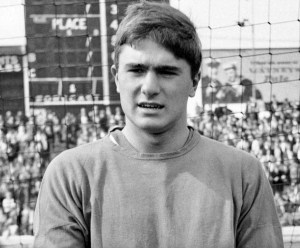
Even though he let in three, not only did he have the praise of Banks ringing in his ears, but his captain Hurley said: “A great game. If he goes on like this, he’ll have an exceptional future.”

The following Monday’s Echo said the young ‘keeper had “the agility of a panther” and was “bursting at the seams with talent”.

While The Journal’s Alf Greenley reported: “The crowd were with him to a man, even, I suspect, the not inconsiderable contingent of Leicester followers who had made the trip and the reception accorded to him when he turned out was only exceeded by that at the end.

“It was a truly remarkable performance for one so young.

“He handled the ball in the swirling wind with the confidence of a veteran, positioned well and stood up to the onslaught of the Leicester forwards like one far in advance of his years.”

Forster was just 15 years and 185 days old on the day of the match and he remained the youngest-ever top-flight footballer until 18 September 2022 when Arsenal’s Ethan Nwaneri rewrote the record books coming off the bench in the 89th minute of the Gunners’ 3-0 win at Brentford yesterday. He was aged just 15 years and 181 days.

It remains to be seen what sort of future Nwaneri might have in the game. For Forster, although he played the next few games, Montgomery returned and the teenager was left to hold a watching brief although he was still young enough to play a key role in Sunderland’s successful youth team of the mid-1960s.

In 1965, Sunderland lost the two-legged FA Youth Cup semi-final 5-0 to Everton for whom two goals in the Goodison first leg 4-0 win were scored by Jimmy Husband, who’d been a schoolmate of Forster’s in Newcastle.

Sunderland lost the 1966 final 5-3 on aggregate to Arsenal (who included Pat Rice and Sammy Nelson), when Forster’s teammates included the future Cup Final side captain Bobby Kerr, Billy Hughes, Suggett and Todd, who went on to win the league with Derby County and play for England.
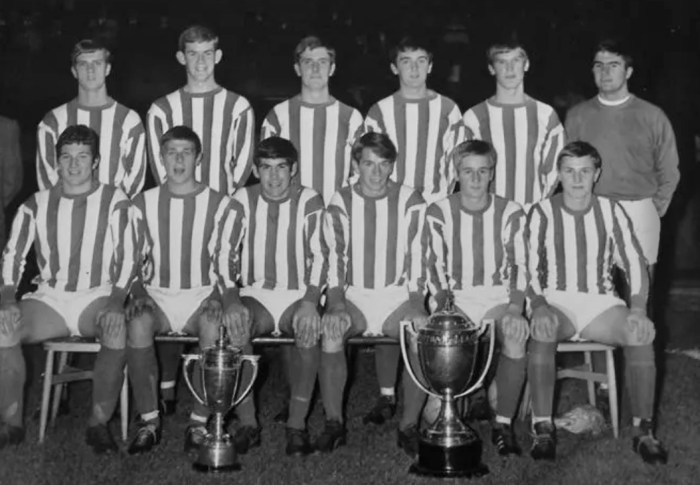
Forster was still the last line of defence when the Wearsiders (above) finally won the trophy in 1967, a 2-0 aggregate scoreline seeing off a Birmingham City side that had future England international Bob Latchford at centre forward.

Less than 48 hours after the game, Forster, Hughes and Suggett travelled to North America as part of a squad selected by manager Ian McColl to represent the club in the United Soccer Association, where they played seven matches under the guise of the Vancouver Royal Canadians.

Retrospectively, Forster regretted not moving on sooner from Sunderland. But he told the Northern Echo: “Sunderland were one of the top youth clubs and they were very good to me. I should have left much earlier, seen the signs, but in those days players were genuinely loyal.

“You didn’t just ask to leave as soon as you were dropped. I decided to stay. It was my mistake. Monty never got injured again for five years, though I tried hard to kick him in training. He was an exceptional goalkeeper.”

Forster likened his situation to Newcastle’s Shay Given and Steve Harper. “Both very good goalkeepers, but maybe one a bit better than the other.”

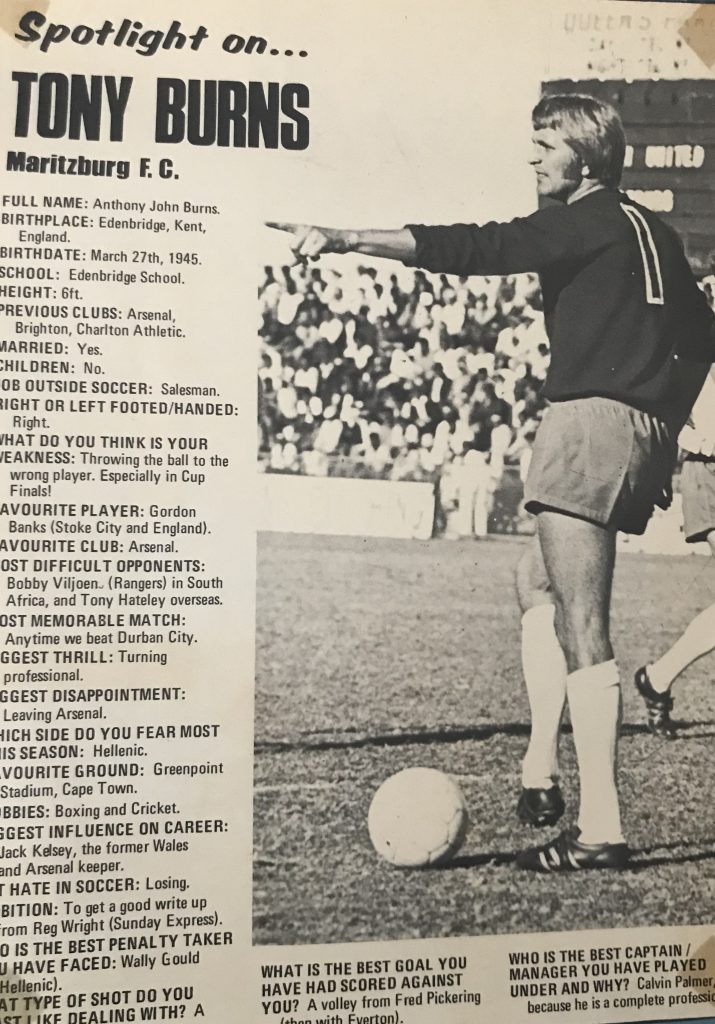
Tony Burns handled the art of goalkeeping for decades

A GOALKEEPER with film star looks signed for Brighton from Arsenal just after England lifted the World Cup.

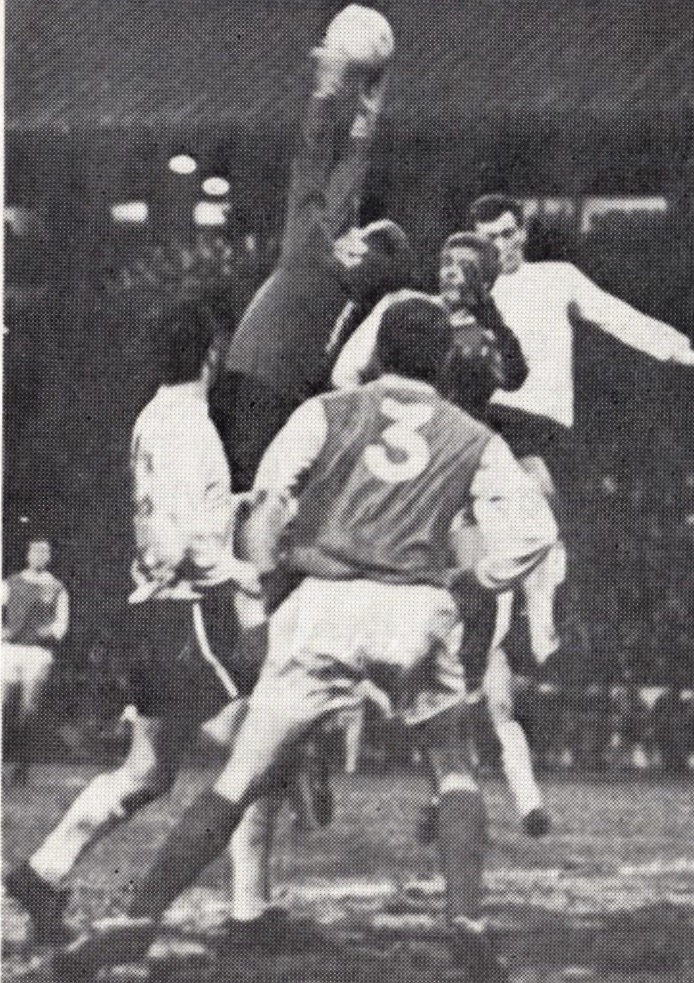
Tony Burns had kept goal for the Gunners in 31 top-flight matches and Albion boss Archie Macaulay, who had played for Arsenal himself, went back to his old club to sign a no.1 to challenge the emerging local lad, Brian Powney.

It wasn’t difficult for Burns to settle at the Goldstone because the dressing room included Northern Irish full-back Jimmy Magill and winger Brian Tawse, familiar faces from his time in north London who’d also made the switch to Brighton.

It also wasn’t long before female fans who admired his smouldering good looks were sending in letters to the office inquiring about his eligibility!

Burns relived his career in detail in 2020 when interviewed by 17-year-old would-be journalist Jed Vine, who watches games at the Amex with his mother, and games at the Emirates with his dad.

Born in Edenbridge, Kent, on 27 March 1944, Burns first showed his goalkeeping prowess during his schooldays in the town before he joined Southern League club Tonbridge (now Tonbridge Angels) who he returned to twice more and later managed three times.

He made his Southern League debut against Yiewsley (later to become Hillingdon Borough) in February 1963 and only his third game for Tonbridge was as an 18-year-old against Arsenal at Highbury.

With long term custodian Jack Kelsey retiring, Arsenal were looking around for likely successors and, liking what they saw of Burns, offered him a contract.

“In his early days at Highbury, he showed immense potential and, after benefitting from Kelsey`s coaching, made encouraging strides,” a 2020 Pitching In piece for the Southern League recalled.

Manager Billy Wright gave him his senior Arsenal debut in a friendly against Enschede in Holland in August 1963, with Magill in defence, and he got his first taste of South Africa on a five-game tour the following May when he was in goal for Arsenal’s 5-1 win over a Western Province XI and their 6-0 win over an Eastern Province XI.

But his big breakthrough came when he made his league debut in a 3-2 home win over Burnley in October 1964 (three days earlier he’d played in goal in a 7-0 friendly win over non-league Corinthian Casuals).

“I felt on top of the world. I had always wanted to play for the Gunners and here I was keeping goal for them, and on the winning side at that,” he told the Albion matchday programme. “There’s only one first match and I’ll never forget this one.”

Once he got the shirt, he had a run of 26 games (32 including friendlies) from October 1964 through to the end of March 1965.

He generally played in front of a defence featuring the likes of Don Howe, Frank McLintock and Ian Ure with John Radford and Joe Baker up front.

During the first half of the 1965-66 season, Burns appeared in seven league games and three friendlies, but his final Gunners first team appearance came on 27 December 1965 in a 4-0 defeat away to Sheffield Wednesday.

Jim Furnell was Wright’s preferred first choice, and, as the season wore on, the emerging Bob Wilson was getting the nod ahead of him as stand-in (although it wasn’t until 1968 that Wilson finally ousted Furnell).

Disappointed to leave, Burns nonetheless went in search of regular football by joining Third Division Brighton for £2,000 in July 1966.

He made his first appearance for the Albion on 17 September 1966, when he took over from the injured Powney, but Brighton went down 2-0 to Grimsby Town.

Powney returned the following week and Burns had to wait until January for his next games – two FA Cup ties against Aldershot.

Burns in action versus Chelsea

He kept his place for the big fourth round FA Cup game against First Division Chelsea at the Goldstone which finished 1-1 when his former Arsenal teammate Tawse controversially had what he thought was a cracking late winner ruled out for a foul by Kit Napier.

Unfortunately, Burns conceded four in the replay at Stamford Bridge as the superior Chelsea side made the most of home advantage to ease their way through comfortably, 4-0. That was the season they went all the way to the final only to lose 2-1 to Tottenham Hotspur, whose ranks included Alan Mullery and Joe Kinnear.

By the end of the season, Burns had played 18 matches against Powney’s 37. But Burns had the upper hand in 1967-68 featuring in 29 games compared to Powney’s 21.

He also started the 1968-69 season as first choice but his 54th and final game for the Albion was in the 2-1 home defeat to Northampton in the second round of the FA Cup on 20 December 1968.

New manager Freddie Goodwin brought in former Wolves and Aston Villa ‘keeper Geoff Sidebottom to challenge Powney and let Burns leave on a free transfer in March 1969.

He joined Charlton Athletic, where he made 10 appearances in their unsuccessful tilt at promotion, but declined what he saw as a derisory contract offer. He returned to Tonbridge briefly and in January 1971 headed off to play in South Africa, initially for Durban United, and later, Maritzburg.

In his interview with Jed, he recalls playing in an English All Stars team managed by Malcolm Allison who invited him to return to England with Crystal Palace when his contract was up.

Burns made the move in October 1973 after previous Palace no.1 (and later Albion youth coach) John Jackson had moved to Orient.

He shared goalkeeping duties with Paul Hammond, playing a total of 90 matches between the sticks for Palace over the next four years under Allison and his successor Terry Venables.

In 1977, Burns played half a dozen games on loan for Brentford before heading off to the States like a lot of ageing players did at that time.

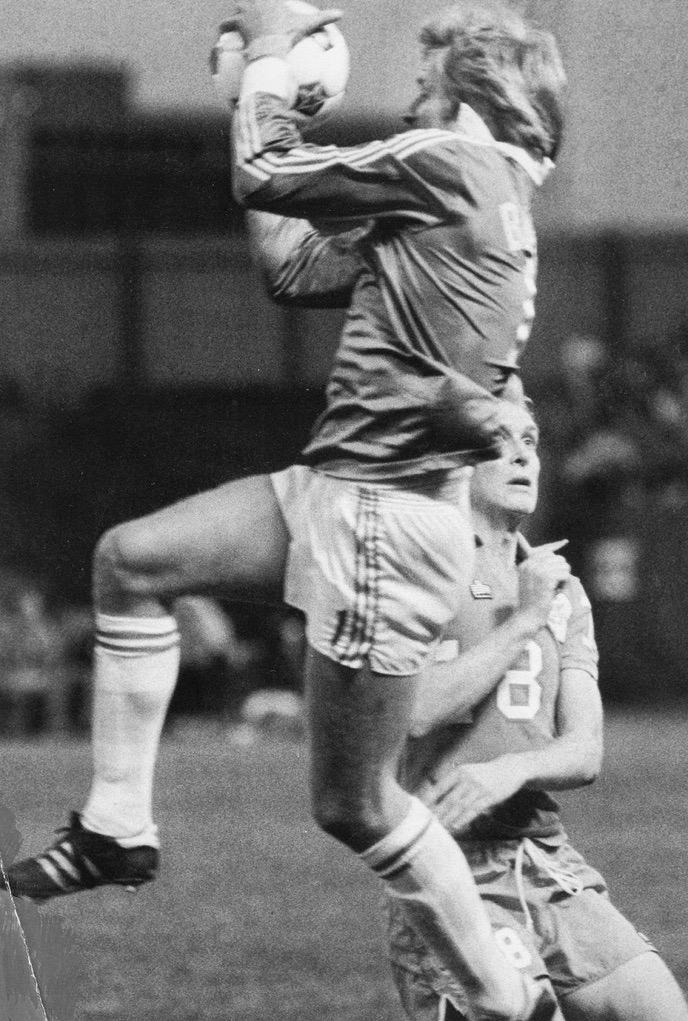
The ‘keeper played a dozen games for Memphis Rogues in the North American Football League. They were coached by former Chelsea defender and manager Eddie McCreadie although Burns had gone there to team up with former boss Allison who was sacked without a ball being kicked because he hadn’t signed enough players!

Burns played for Memphis Rogues in the USA

Among Burns’ teammates were a young Neil Smillie, who’d been struggling for games at Palace, Phil Beal, who had left Brighton the year before, John Faulkner, the one-time Leeds and Luton defender, and the flamboyant Alan Birchenall, beloved by Leicester City supporters of many generations.

Back in the UK in 1978, Burns joined Plymouth Argyle as cover for Martin Hodge, and ended his league playing days in this country appearing in 11 games in the first half of the 1978-79 season.

However, he left Home Park to rejoin Tonbridge Angels for a third time and he also played for Hastings United and Dartford.

After his playing days were over, Burns had three spells in charge of Tonbridge, from August 1980 to December 1982, August 1989 to May 1990, and in a caretaker role from November 2001 to May 2002 (by which time he was goalkeeping coach at Millwall, who he joined in 1992 under Mick McCarthy.

Burns served as goalkeeper coach under several Millwall managers.
Picture: Brian Tonks.

He also spent seven years as manager of Gravesend and Northfleet (who became Ebbsfleet United) between 1982 and 1989.

But it was at Millwall where he finally found a permanent home, working under no fewer than 18 different managers, including Steve Gritt and Mark McGhee.

He was even at the helm himself for a while, working as co-caretaker manager with former Lions boss Alan McLeary after Dave Tuttle’s departure in April 2006, when Millwall’s relegation had already been confirmed.

The appointment of Nigel Spackman the following month led to Burns’ departure in July 2006, when he took up a similar role at his old club Palace, working under former Albion boss Peter Taylor coaching Julian Speroni and Scott Flinders.

Goalkeeping coach at Palace under Peter Taylor

He left Selhurst in November 2007 when Taylor lost his job, and Speroni told yourlocalguardian.co.uk: “It was sad to lose Tony Burns because we worked well with him. During last season when I wasn’t playing regular football, Tony was the one who kept me going which was very important.”

Burns moved with Taylor to Conference side Stevenage Borough but later returned to Millwall under Kenny Jackett before stepping down in 2012, when he was succeeded by Kevin Pressman.

Still, he wasn’t finished with the game, though, and at the age of 70, in the summer of 2014, he teamed up with Taylor yet again to become goalkeeping coach at Gillingham. He joined them on a part-time non-contract basis as a replacement for Carl Muggleton.

The Harry Hotspur youngster who went west

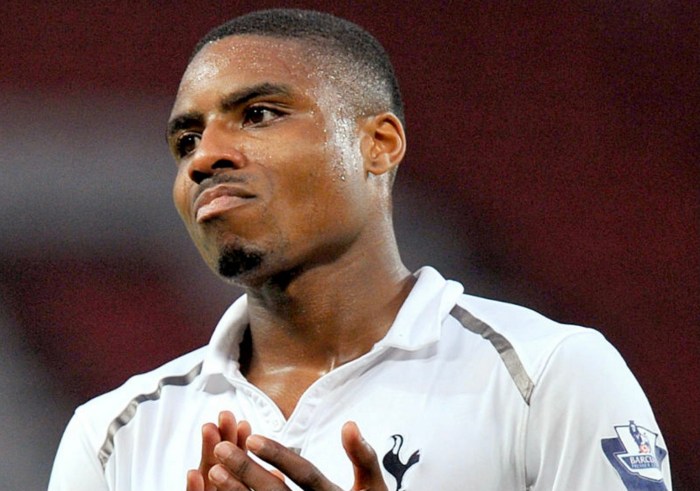
MULTIPLE loans away from parent club Tottenham Hotspur didn’t succeed in laying a path to a top level football career for striker Jonathan Obika.

One of the last such arrangements saw the young forward spend three months with the Seagulls in the 2013-14 season.

Nathan Jones, no.2 to Brighton head coach Oscar Garcia, had seen what Obika could do when the young striker had been under him as a coach on loan at Yeovil and Charlton Athletic.

Unfortunately, his impact with the Seagulls was underwhelming even though he scored on his first (and, ultimately, only) full start in a 3-1 win away to Port Vale in the fourth round of the FA Cup.

Obika salutes his one and only goal for Brighton

Albion’s other goals that day, from Rohan Ince and Solly March, were also their first for the club – generating the statistic that it was the first Albion game in 110 years in which three players had scored their first goal in the same league or cup match.

It had been an amazing goalscoring performance for Spurs reserves that prompted Albion to make a move for Obika as cover for first choice Leonardo Ulloa, especially with Craig Mackail-Smith and Will Hoskins sidelined by injury and Ashley Barnes on the brink of a move to Burnley.

The Argus reported that Obika had previously been a target but a move had been put on ice because he’d been injured. His return to fitness saw him net a double hat-trick in a friendly for Tottenham against Charlton’s under-21s, watched by Jones.

“The report coming back on him after the game was one word – lethal!” former Seagulls goalkeeper Ben Roberts, then on the coaching staff at Charlton, told the Argus.

“Like Nathan, I worked with Jon at Yeovil and then at Charlton and he’s a really good pro,” said Roberts. “He is guaranteed to score goals. He is a real predator around the box.

Obika in action for Yeovil

“I’ve been waiting for his career to really kick off. When he came to us at Charlton it took him a couple of weeks to get up to speed. But he was brilliant for us. The end of the season came too soon for us.

“He is a great signing for Brighton and he will suit the way they play.”

However, Garcia also brought in Spaniard David Rodriguez at the same time and Obika found himself down the pecking order, especially when Manchester United loanee Jesse Lingard was added to the forward options.

The Vale cup game aside, Obika made just seven appearances as a substitute but didn’t add to the lone goal and was eventually recalled by Spurs and sent out on loan to Charlton again until the end of the season.

Nevertheless, Garcia said: “He came in to give us forward cover and, while he may not have played as much as he would have liked, he has been a great professional and a pleasure to work with.”

Obika’s long association with Tottenham finally came to an end in September that year when he headed west to League One Swindon Town, where he played for three years, scoring 28 times in 108 games for the Robins.

In 2017, he switched to Town’s rivals Oxford United on a two-year deal before then trying his luck in Scotland, playing in the Scottish Premier League for St Mirren.

On the expiry of that contract, Obika moved to League One Morecambe and, in January 2022, found himself back in the news ahead of this year’s FA Cup third round when Morecambe travelled to North London to take on the club who nurtured his early career for 13 years.

Although Morecambe took a shock first half lead against Spurs through defender Antony O’Connor, it wasn’t a fairytale ending as the Premier League side eventually won the tie 3-1 with three goals in the last 16 minutes of the game.

Obika had to watch from the bench until the 58th minute when he replaced Jonah Ayunga – a Brighton reserve player between 2016 and 2018 – with Morecambe still clinging on to their slim lead.

Born in Enfield on 12 September 1990, of Nigerian parents, Obika grew up in Edmonton and it was while playing football for his primary school, St Paul’s & All Hallows, that he was scouted by Tottenham.

“I lived five minutes from the stadium, so I used to walk to training as a 10, 11-year-old,” he said. “That was my only focus back then.” He later attended Bishop Stopford School in Enfield and left with seven GCSEs.

Originally a left winger, Spurs’ under 18s coach Alex Inglethorpe was responsible for moving him to play as a central striker and in the 2007-08 season he was top scorer for the Spurs academy side.

Those goals caught the attention of first team boss Harry Redknapp and he signed his first professional contract at 18, while a second-year trainee in the academy, and earned a call-up to the first team squad.

Wearing the number 80, he made his debut off the bench in a UEFA Cup game in Holland against NEC Nijmegen on 28 November 2008. A few weeks later, he made his first senior start in front of the White Hart Lane faithful, playing against Shakhtar Donetsk in the same competition.

“I didn’t know I was starting at the beginning of the game, there were a few injuries so a lot of the youth team players trained that week and we were in the squad,” Obika remembered.

When announcing the team, Redknapp actually read out his name as John Utaka, his former player at Portsmouth, amid much hilarity. “That broke the ice,” said Obika. “I was less nervous after that. I was more relaxed and actually ended up having a good game. To play at the Lane, having grown up down the road, was a great feeling and I had all my family and friends there that night.”

Along with Inglethorpe, the coaches who most influenced his development at Spurs were John McDermott and, when he progressed to the reserves, Tim Sherwood, Les Ferdinand and former Albion full-back Chris Ramsey.

Obika and fellow Spurs youngster Andros Townsend were sent out on loan to Yeovil – it was the first of four loan spells there for Obika – as recalled by Jones in an interview with coachesvoice.com: “A host of other clubs wanted them, but I think Harry saw two young kids who wanted to play, and he saw something in us as a coaching team.

“Townsend clearly had huge drive and ambition, and Obika scored the goals that kept us in League One that season – so we will always be thankful to Harry for that.”

Obika recalled: “While I was at Yeovil, Nathan Jones was my coach and I built up a good relationship with him. He would stay behind with me while I did extra shooting: he didn’t need to, I could have done it with other teammates, but he wanted to be there and help me progress and I really appreciated that. He is a good man. He also took me to Charlton for a loan spell and, of course, to Brighton.”

Obika also had loan stints at Millwall, Crystal Palace, Peterborough and Swindon although in the 2012-13 season he did manage to get two more games for the Spurs first team, featuring in the League Cup and the FA Cup.

He went on as a 75th minute substitute for Clint Dempsey when André Villas-Boas’ Spurs side beat Carlisle United 3-0 in the League Cup in September 2012, and was a 59th-minute substitute for Gylfi Sigurdsson when Leeds dumped Spurs out of the FA Cup 2-1 in a fourth round tie at Elland Road in January 2013.

Nicky Forster was the definition of a goalscoring thoroughbred

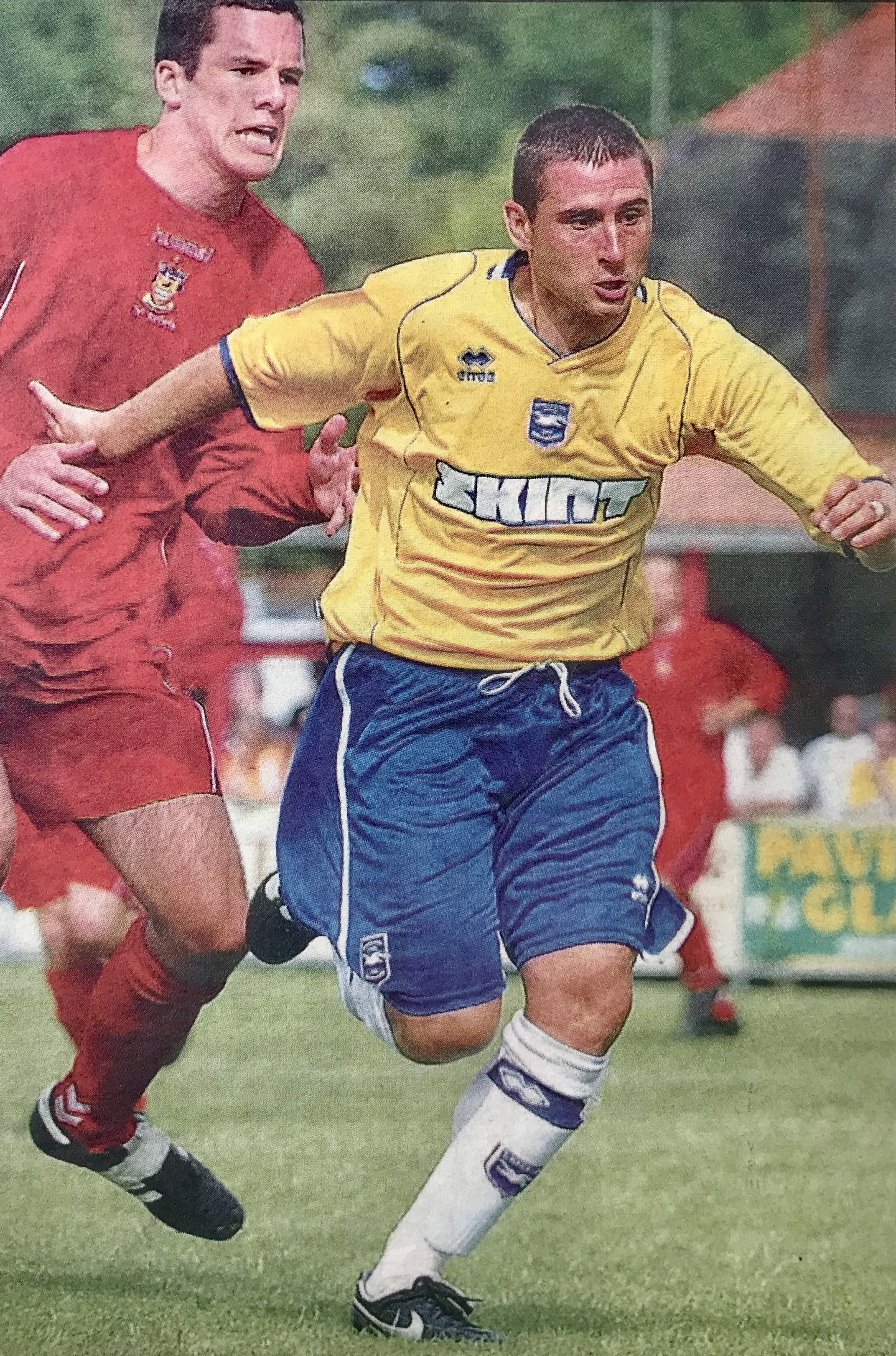
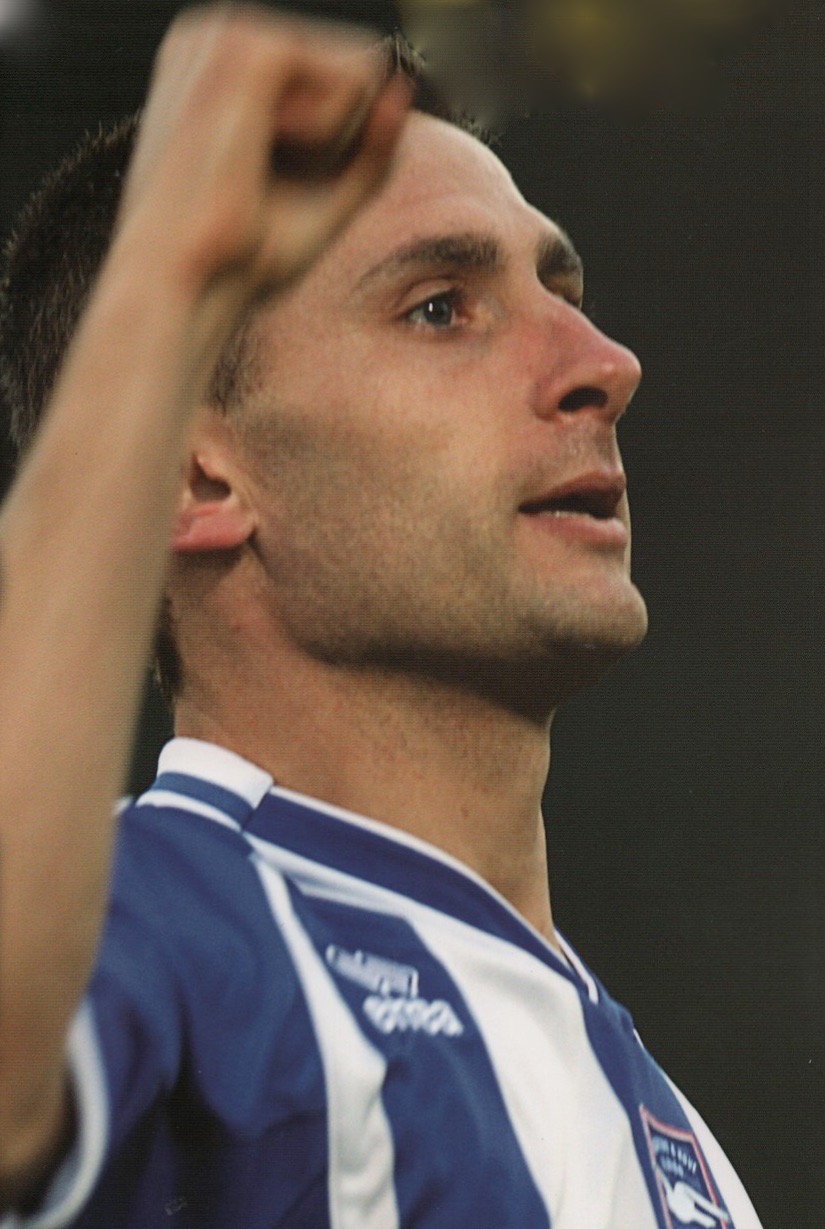
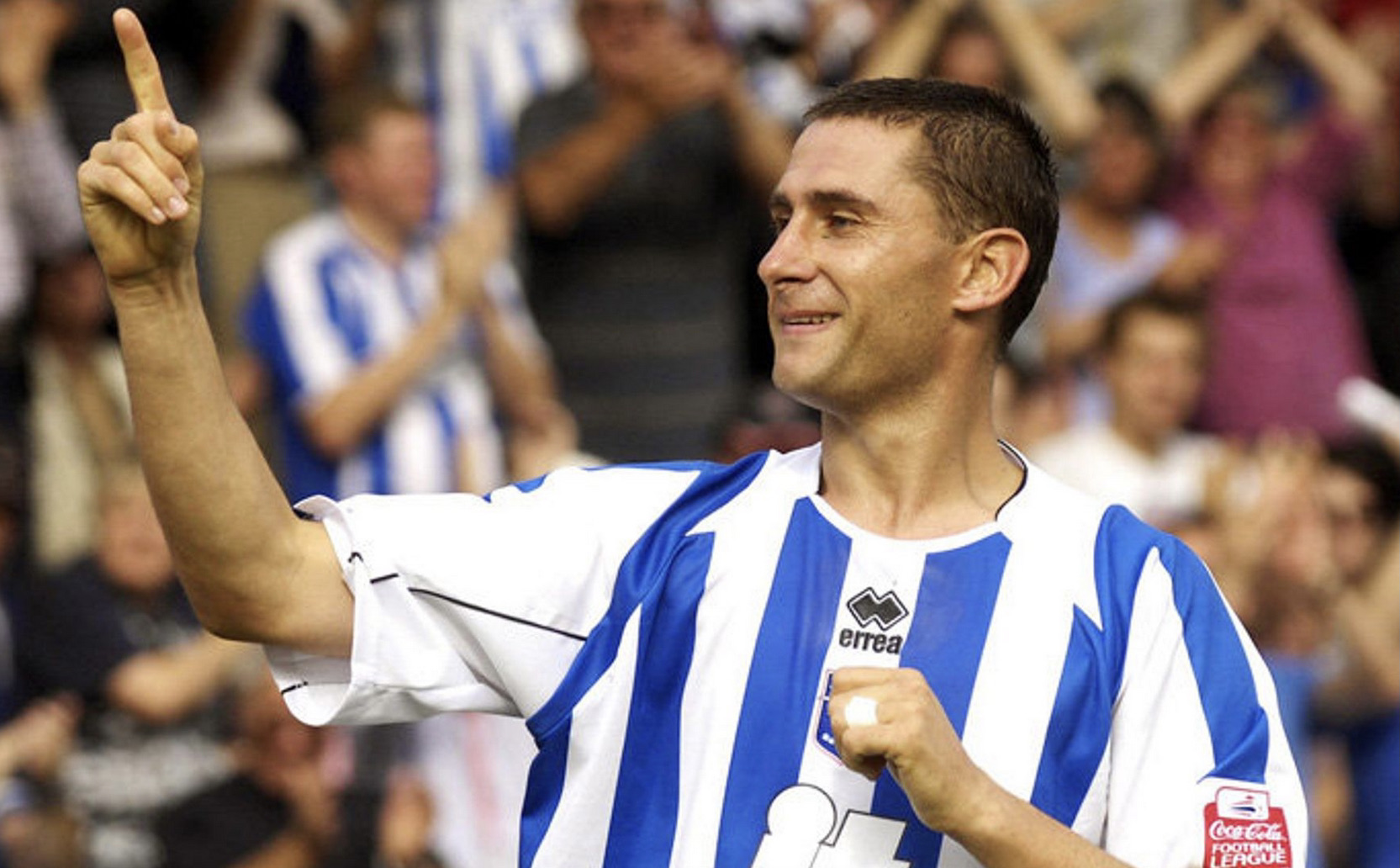
NICKY FORSTER played for and managed Brentford as well as captaining Brighton and scoring a vital relegation-saving goal into the bargain.

The Surrey-born striker, who played alongside David Beckham for England under-21s, scored more than 200 goals in 700 games and it always seemed a shame that his time with the Seagulls didn’t come sooner in his career.

He built a reputation for finding the back of the net at first club Gillingham and was prolific in his first spell with the Bees but he viewed his six years leading the line for Reading as his most successful time in the game.

Forster plundered 67 goals in 179 games (plus 35 as a sub) in six years with the Royals, mostly playing under Alan Pardew and Steve Coppell, but he left for pastures new before they reached the Premier League.

A free transfer took him to Ipswich Town, where Joe Royle’s side were competing in the Championship, and, although Forster top-scored for the Tractor Boys, his total of seven typified a rather lacklustre campaign. One of those goals came against Brighton on Easter Saturday when the relegation-bound Seagulls pulled off a shock 2-1 win courtesy of goals from on-loan Gifton Noel-Williams and young Joel Lynch.

Forster scored in each of the three remaining games that season but they were his last for Town because he moved to link up with his former Reading teammate, Phil Parkinson, at Hull City, who paid £250,000 for the striker’s services. Forster scored six times for City as the side battled to retain their tier two status. Albion tried to sign Forster in January, but Parkinson’s successor Phil Brown wanted to keep him, and they rejected Albion’s £100,000 bid.

Albion finally got their man for £25,000 less in the summer that year, and, in a side largely made up of promising youngsters, in Forster they gained more than just an experienced striker.

Brighton fans were given an idea of what to expect from the new signing when his former Reading teammate Bas Savage told the Argus: “I played a few games with him in the first team and he will definitely bring goals. He is proven wherever he has been.

“He is also a very intelligent player. He makes good runs, works hard, has got very good pace and he can finish, so he will be an asset to Brighton, especially in League One. I think he will really shine.

“He will fit in easily to the dressing room as well. He was a joker at Reading, very funny and a good, bubbly character to have around.”

Savage added: “He was one of the top strikers at Reading and I learnt off all of them.

“I was a young boy at the time and, whoever it is that plays, Alex Revell, Nathan (Elder), Gatts (Joe Gatting), I can see them working well with Fozzy.

“It will be good to link up with him again and hopefully show our stuff together. I know Fozzy’s strengths and I will be looking to help him along in the same way that he can help me along. He brings experience to the team.”

Emerging defender Tommy Elphick was certainly appreciative of the new arrival. “Apart from in games, he brings a competitive edge to training,” he said. “In my eyes he is a bit of a legend really, the model pro on and off the pitch.”

When interviewed by Mike Ward for the matchday programme later that season, Forster declared: “I really am enjoying it here at Brighton. I like being on the training ground and I enjoy playing.

“I am now getting old in football terms, but I have got as much enthusiasm and energy for the game now as I had when I started. I feel that I am a better player now and I am enjoying my football as much as ever.”
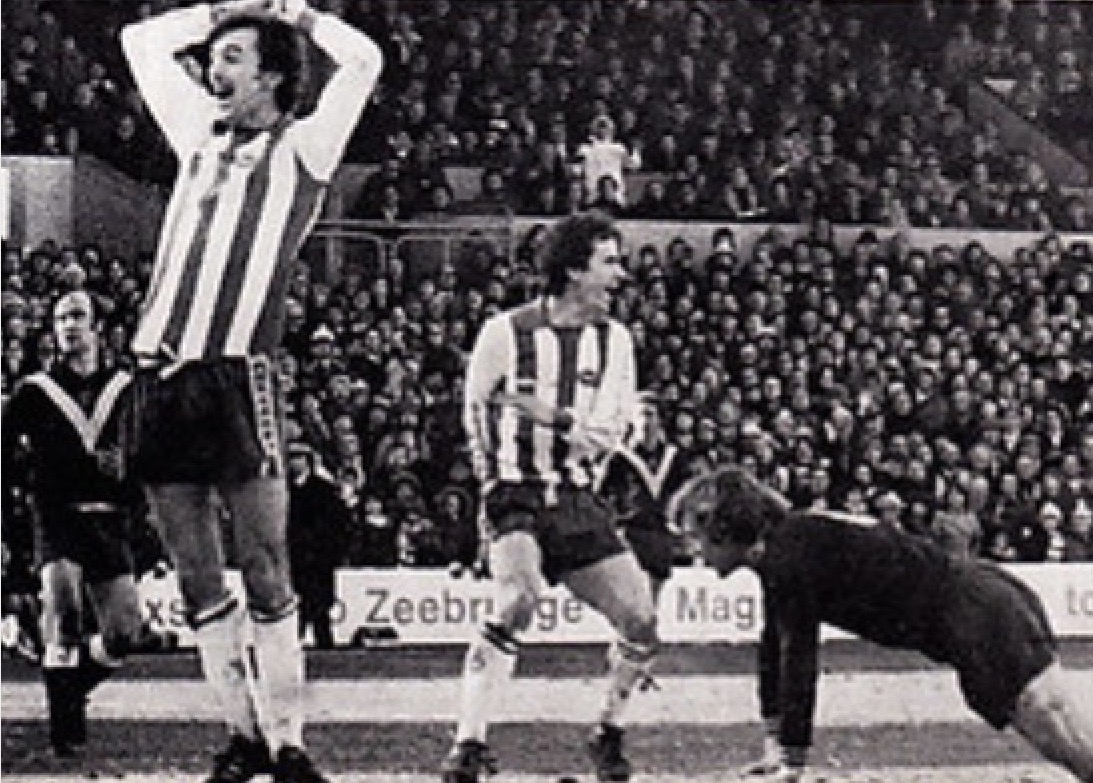
Sure enough, with 19 goals in 48 appearances in the 2007-08 season, there was no question Forster proved a great addition to Dean Wilkins’ squad, and he took over as captain when Dean Hammond left the club under a cloud.

In the second half of the season, after Glenn Murray was signed from Rochdale for £300,000, manager Wilkins declared to the Argus: “I think we have got one of the best strike pairs in the division, one of the most threatening.

“When we have got possession and play with a bit of quality they are a really potent pair. If you have got a pair that score 20 goals a season you would expect to be quite successful.”

Unfortunately, seventh place in League One (seven points off the play-off places) was not quite successful enough for chairman Dick Knight, who turned to former boss Micky Adams to steer Albion’s fortunes in the 2008-09 season (a furious Wilkins declining the offer of continuing as first team coach).

While Forster got off to a great start under Adams, scoring a last-minute goal to seal a 2-1 win for the Seagulls in the season-opener at Crewe Alexandra, the Albion’s fortunes gradually unravelled as Adams chopped and changed the side with what, on reflection, were too many loan signings.

For a while, things didn’t look too clever after Russell Slade had been parachuted in to try to stave off the threat of relegation.

At a time when the new boss could really have done with Forster and Murray firing on all cylinders, both were sidelined with injuries. Forster missed eight matches with what was thought might be an anterior cruciate ligament injury in his knee.

Thankfully another former Brentford striker, Lloyd Owusu, stepped into the breach to score some vital goals, together with loan signing Calvin Andrew and the rejuvenated Gary Hart.

Nevertheless, going into the last game of the season, at home to Stockport County at Withdean, Albion still needed to win to avoid the relegation trapdoor.

When Hart left the action early and his replacement Andrew had to be withdrawn at half-time with what turned out to be a bad ACL injury, Slade had no option but to turn to the by-no-means-fit Forster to enter the fray from the bench for a crucial second half.

Fortunately, after County ‘keeper Conrad Logan could only parry a shot from Gary Dicker, Forster was on hand to stab in the only goal of the game from six yards, sparking massive celebrations.

Forster later conceded in an Argus interview: “It wasn’t quite right but I got through the game and the goal was a gift. I didn’t have to be particularly mobile to score it.

“I dosed up on tablets and rehabbed and was really determined to be involved in that game. Thankfully it worked out for me and for Brighton. But I wasn’t 100 per cent. I still had that niggling feeling.”

In a subsequent exploratory operation, it turned out that torn cartilage had been Forster’s problem and he underwent surgery during the close season, somewhat ironically the procedure being delayed a little while because the surgeon involved was operating on Andrew!

“When they took me down to the anaesthetist’s room, there was a guy in there before me,” said Forster. “I had to wait ten or 15 minutes and they said it was an ACL reconstruction going on. I didn’t realise it was Calvin.”

Tony Bloom took over from Dick Knight as Albion chairman that summer and, when the new season got under way, Slade had decided to give the captain’s armband to defender Adam Virgo (Forster remained club captain).

The opening part of the season went horribly wrong and, with only three wins in their first 15 matches, Slade was replaced by effervescent Uruguayan Gus Poyet.

By the end of January, Forster had scored 15 times in 27 matches (plus three as sub), but the beginning of the end of his time with the Albion was nigh when a contractual dispute went public.

The player, by then 36, wanted to know whether he was going to be offered a contract the following season, but that commitment wasn’t forthcoming. Forster aired his dissatisfaction in the media and Poyet left him out of the side.

Forster subsequently clarified his position in a statement on the club website, saying: “I have thoroughly enjoyed my playing years with Brighton and genuinely hoped – and still do – that I would remain at Brighton until the end of my playing days, hopefully with the opportunity to take up a training role.

“The decision to delay the offering of contracts makes life very difficult, particularly for players of my age. I have always been totally committed to Brighton and will continue to be so.”

While the air was cleared, and he was restored to the line-up for a 1-1 draw away to Leeds, that turned out to be his last start for the Albion. Only a matter of weeks later he was sent out on loan to Charlton Athletic until the end of the season, once again linking up with former teammate Parkinson.

Nevertheless, his 51 goals across two and a half seasons at the club were the best measure of his contribution and he was later a more than interested onlooker of Brighton’s fortunes when his stepson, Jake Forster-Caskey forced his way into Poyet’s Championship side.

Born in Caterham, Surrey, on 8 September 1973, Forster was comparatively late into the game, staying on at school to take A-levels.

But he had a lucky break when he played for non-league Horley Town against Gillingham in a friendly. “It was a real right-place-at-the-right-time scenario,” he told Ward in another Albion matchday programme interview.

Gillingham offered him the chance to become a professional and after impressive displays for their youth and reserve sides, he duly signed professional terms in May 1992 when Damien Richardson was in the manager’s chair.

The Gills sent him out on loan to Southern League Margate and Hythe Town. Forster’s career stats are comprehensively recorded by the Margate history website, even though he only played one game for them, when he scored with a clever lob after three minutes of his debut.

Back with the Gills, Forster made his first team debut in September 1992, going on as sub in a 4-1 home win over Wrexham. He went on to establish himself in the side under former Charlton striker Mike Flanagan in the 1993-94 season, top scoring with 18 goals. It was an achievement which prompted Brentford to pay a fee of £320,000 to take him to Griffin Park in June 1994.

The 1994-95 season is firmly etched in the annals of Brentford’s history because David Webb’s side were denied promotion to the elite when a one-off organisational blip meant the fledgling Premier League only took one promoted side from the division below – and the Bees finished second!  

Forster had proved a major hit at his new club alongside strike partner Robert Taylor, with the pair netting 47 goals between them (Forster got 26 of them). But automatic promotion was denied when Brentford “choked” in the last month of the season and their agony was compounded when they lost on penalties to Neil Warnock’s Huddersfield in the play-off semi-finals.

For Forster personally, however, his goalscoring prowess brought him to the attention of the international selectors and in June 1995 he earned four England under 21 caps at the Toulon tournament in France, making his debut in a 2-0 defeat against Brazil in a team featuring future full internationals Beckham and Phil Neville.

Forster scored England’s only goal in his third match for Ray Harford’s side, as they beat Angola. He also played in the 2-0 win over Malaysia and in the semi-final against France, when they lost 2-0.

The Bees failed to follow up their near miss the following season, finishing 15th and, although at one point there was talk of Crystal Palace preparing a £2m bid for Forster’s services, it came to nothing. The striker damaged knee ligaments in October 1995 and managed to find the net just the eight times by the season’s end.

It promised to be a different story in 1996-97, though. With Carl Asaba and Marcus Bent supplementing the Forster and Taylor strikeforce, Brentford got off to a flyer and topped what is now the Championship courtesy of an 11-match unbeaten run at the start of the season.

However, the bcfctalk blog was incredulous at what happened next. “We were coasting at the top of the league when the quite staggering decision was taken in January to sell Nicky Forster to arch-nemesis Birmingham City for a mere £700,000.

“He was never replaced, the prolific Carl Asaba was mysteriously shifted out wide to the left wing and the remaining 17 league matches produced a mere 18 points. We failed to score in ten of our last fourteen games and won only once at home after Christmas.”

Forster’s desire to progress his career didn’t play out well with the supporters of Brentford or Gillingham.

“I get booed every time I go there,” he told Brighton’s matchday programme. “It’s sad because I feel I did well for both clubs. And what they paid for me wasn’t a huge amount, so value-for-money wise I feel I did very well for them. It’s not something I worry greatly about, but I do think it’s time they learnt to forgive and forget.

“I don’t think they can really begrudge a player wanting to move on and better himself, better his career. Sometime fans can be a bit fickle!”

While Forster hoped to establish himself at Birmingham, he struggled to get a starting berth in a side managed by former Blues playing legend Trevor Francis. Paul Furlong and Peter Ndlovu were preferred up front, and later Dele Adebola. Forster invariably had to be content with involvement of the bench. Indeed, 46 of his 75 Blues appearances were as a substitute and, when he left for Reading in June 1999, he’d got just 12 goals to his name.

That all changed once he’d made the switch to the Madejski Stadium. The goals flowed (in 2002-03 there were two hat-tricks included in his season’s tally of 17) and in his six seasons with the Royals he notched 67 goals in 214 appearances (35 of which were as a sub).

His form tailed off in his final season with Reading and he began to look elsewhere because he wanted a longer contract than the club were prepared to offer.

Nevertheless, he respected manager Coppell and, when later in his career he took over as boss at Brentford, he said: “I was with Steve Coppell at Reading and I like his manner and demeanour. He is not a ranter and raver. I just like the way he goes about his business.

“He is quite a subdued guy when he speaks, but he speaks a lot of sense. When he talked to me, whether I liked it or not, I couldn’t really argue because it made a lot of sense.”

When Forster returned to Griffin Park as a player at the start of the 2010-11 season, he reflected: “The club holds many happy memories for me. Both the club and I have moved on over the years but I still have the hunger and the mobility to give a good account of myself.”

Manager Andy Scott added: “His goalscoring is a major attraction as that is an area where we have struggled to compete with other teams.

“His ambitions match those of the management team. He is a very dedicated footballer who will add experience, competition and, more importantly, goals to the team.”

Sadly, it didn’t pan out well with Forster only making 12 starts and scoring once. After a topsy turvy six months, Scott and his assistant Terry Bullivant were dismissed and Forster took over as caretaker boss, assisted by Mark Warburton.

When the Bees collected 14 points from six games, the temporary stint was extended until the end of the season.

Remarkably during his brief tenure, Forster took charge of Brentford at Wembley for the final of the Johnstone’s Paint Trophy, which they lost 1-0 to Carlisle United.

Brentford centre back Leon Legge said later: “Growing up, Wembley was always a sacred ground that not many people get to play at. I wanted to win so bad but it was just a shame we came second-best, especially against Carlisle, who we’d played just over a week earlier and beaten 2-1. Everything went for them that day.

“I know the gaffer at the time [Nicky Forster] made a few changes and I don’t think many agreed with it – for example, Marcus Bean didn’t play when he’d been such a good player leading up to that game. I think that made a difference.

“I still remember looking at the crowd of 40,000 and to play in such a sacred ground in front of that many fans, whether we won or lost, it was a good experience.”

Despite leading Brentford to a mid-table finish, Forster was told he was not in the running for the job on a permanent basis, and Uwe Rösler was appointed instead.

Nonetheless, Forster decided management was his next step and announced an end to his playing days.

“I have had a fantastic career, but the time has come to cross over into management,” he said.

“I’ve scored 200 goals in 700 games and haven’t got anything left to achieve as a player, so I want to concentrate on management.”

The eloquent Forster popped up on Sky Sports, covering Football League matches, and also brought his boots back out to play for Sussex County League side Lingfield.

Then, in September 2011, Forster was appointed player-manager of Blue Square Bet South club Dover Athletic, whose chairman Jim Parmenter said: “Nicky has had an impressive playing career at some big clubs and did very well during his time as manager at Brentford.

“As well as having both UEFA ‘A’ and ‘B’ licences, he is also a great man manager and motivator. Nicky is totally enthused by the prospect of managing the club and we look forward to a very successful future.”

Among his signings were former Brighton teammates Steven Thomson and young goalkeeper Mitch Walker.

Forster said: “I am delighted get Thommo down here at Crabble, especially as his signature was being chased by a number of other clubs both in our league and above. He is an experienced professional who is still hungry for success.”

Sadly, after a run of five successive defeats, his time in charge at Dover was brought to an end in January 2013 when he was replaced by the club’s former manager Chris Kinnear.

Two years later, Forster gave management another go taking charge of Conference South side Staines Town. But he quit after a year, telling getsurrey.co.uk: “I enjoyed every moment even though we had some low times, but it’s a learning experience and I left on good terms with the chairman and the fans who were great to me.”

In September 2016, Forster set up his own gym – The Spot Wellness Centre – in Godstone. As well as running that, he is now self employed and, on LinkedIn, describes himself as a goal setting coach and keynote speaker.

• Pictures from the Argus, Albion’s matchday programme and online sources.

Malcolm in the middle was moustachioed marksman Poskett

MALCOLM POSKETT’s goals helped Brighton to win promotion from the second tier after he’d made a terrific start to his Albion career.

Only two days after putting pen to paper in Hove, Poskett netted the equaliser in a 1-1 draw away to Hull City on 4 February 1978 and a week later he marked his home debut with a goal in Albion’s 2-1 win over Burnley.

The game at Boothferry Park was only six minutes old when the home side went ahead but Poskett levelled it up just before half-time after a Tony Towner corner was headed goalwards by Andy Rollings and the new arrival diverted it into the net.

A £60,000 signing from fourth tier Hartlepool United, Poskett had taken over the no.9 shirt from Ian Mellor, who had only been in the side for one game in the injury absence of Teddy Maybank.

Maybank’s big money signing from Fulham four months earlier had broken up the highly successful Mellor-Peter Ward partnership that earned Albion promotion from the old Third Division, and Poskett’s arrival only served to illuminate the Goldstone exit door even brighter for Mellor, who swiftly departed for Chester.

A crowd of 22,694 saw the new man’s Division Two debut on an icy Goldstone Ground pitch. Poskett once again profited from a Towner pass to score. Skipper Brian Horton scored Albion’s other goal.

It all must have felt very showbiz to the lad from Teesside, used to playing in front of 5,000 crowds in the Fourth Division, especially when prior to kick off against the Clarets, Slade, a famous chart-topping pop group of the time, recorded a single on the pitch in front of the North Stand.

While Maybank reclaimed his starting berth from Poskett for six matches, he was troubled by a knee injury and Poskett got the nod for the remaining seven games of the season as Albion chased automatic promotion, which at that time was earned by the top three sides in the division. There were no play-offs.

Poskett repaid Mullery’s faith in him with a hat-trick in a 4-0 win away to Bristol Rovers and by netting the only goal of the game in the penultimate fixture at home to Charlton Athletic in front of 31,203 fans.

What happened next has been well documented: Albion missed out on promotion when Southampton (in second) and Spurs (third) conveniently drew 0-0 in the final match of the season; Spurs edging out the Seagulls on goal difference.

Maybank had a successful cartilage operation during the summer break and was initially the preferred partner for Ward as the new season got under way.

Poskett banged in a transfer request as a mark of his frustration but, after Mullery persuaded him to withdraw it, he got his chance back in the side and made the most of opportunities that came his way.

Mullery admitted in Matthew Horner’s biography of Ward (He Shot, He Scored, Sea View Media) that he wasn’t always fair on Poskett when reverting to the Ward-Maybank partnership.

He pointed out: “Malcolm Poskett did a terrific job when we signed him. He was one of the most under-rated goalscorers – absolutely brilliant.

“He was really similar to Wardy, very sharp and very quick but a bit taller and a bit stronger.”

By the end of the season that ended in promotion to the top tier of English football for the first time, Poskett had contributed 10 goals in 24 games (plus eight sub appearances). He was the substitute in the famous 3-1 win back in his native north-east when Newcastle were beaten by the Seagulls on 5 May 1979.

Brighton struggled to find their feet in more exalted company and Poskett barely got a look-in, coming on as a sub twice and only starting three matches, the last of which was in the resounding 4-0 defeat to Arsenal in the League Cup on 13 November 1979.

He scored twice, though: netting the only goal in an away League Cup win over Northampton Town, and four days later scoring along with Peter O’Sullivan as Albion pulled back a 2-0 deficit to draw 2-2 at West Brom.

Poskett wheels away to celebrate his only top flight goal, away to West Brom

However, with the arrival of Ray Clarke from Ajax, it was clear Poskett’s chances at the Albion were going to remain limited, so he dropped back down a level to join promotion-seeking Watford under Graham Taylor. Albion goalkeeper Eric Steele had already made a similar switch in the autumn of that season shortly after a famous spat with Gary Williams at Old Trafford. Mullery also secured a £120,000 fee for Poskett, so Albion did very nicely out of the deal.

“I would have loved to stay at Brighton for the rest of my career, but it wasn’t to be,” Poskett told Spencer Vignes in a retrospective matchday programme article. “One week I was partnering Peter Ward, the next it would be Teddy with Peter. I never got a run in the team, even though I scored a couple of goals when I did play.

“At least with Watford I got the chance to start games. People called us kick and run, a long ball side, but we had a lot of talented players like Ross Jenkins, John Barnes and Nigel Callaghan.”
Poskett struck up a friendship with fellow new boy Martin Patching and both were on the scoresheet (Poskett scored twice) in a memorable 7-1 League Cup thrashing of Southampton on 2 September 1980.

Although being Watford’s top scorer with 21 goals in the 1980-81season, when the Hornets finished ninth, the following season he found himself in the reserves after a three-game barren spell.

In a Watford matchday programme article, he mused: “It’s a strange profession – one minute you’re up and the next down.

“I played in the first three league games of the season without scoring and was dropped. But I’m scoring fairly regularly in the reserve side and my chance will come if I keep on hitting the net. I’m a battler and not the type of player to give less than 100 per cent, no matter what grade of football I’m playing in.”

Watford won promotion as runners up behind close rivals Luton Town but Poskett couldn’t shift Luther Blissett or Jenkins, who were the preferred strike pairing, and Gerry Armstrong, later to join Brighton, was invariably the back-up option.

Born in Middlesbrough on 19 July 1953, Poskett went to Beechwood Junior School and then on to Brackenhoe Secondary Technical. His footballing ability in school sides eventually led to him being selected for North Riding Schools.

He was a decent all-round sportsman – a useful cricketer who played for Middlesbrough Schools, he also featured in local leagues at table tennis, and enjoyed tennis and badminton too.

But at 16 the budding sportsman started out as an apprenticeship plater at Cargofleet Steelworks, only playing football for the local Beechwood Youth Club and then South Bank in the Northern League.

His performances for South Bank caught the eye of Middlesbrough and he was taken on as a professional. But after 18 months in their reserves, manager Jack Charlton gave him a free transfer and he opted to become a plater on North Sea oil rigs to earn a wage.

He didn’t turn his back on football altogether, turning out part-time for Whitby Town in the Northern League. Scoring an incredible 98 goals over two seasons was bound to attract attention.

George Aitken, later a Watford coach and then a coach under Mullery at Brighton, was Workington manager at the time and tried to sign Poskett, but, disillusioned by his Boro experience he chose to stick with Whitby until Hartlepool manager Billy Horner convinced him he could still make it in the professional game.

For a £25 transfer fee, Horner took him on and devoted hours of extra time working on the youngster’s skills and sharpness. It paid off.

“My work rate was non-existent, but Billy Horner really worked on me and got me going,” Poskett told Shoot! magazine. “If it wasn’t for him, I don’t think I would have got anywhere – I’d still be in non-League soccer. It was so hard at first, I felt like packing it in, but he kept me at it and I’m very grateful now.”

His goalscoring at Hartlepool caught the eye of Ken Craggs when he was a coach at Fulham and when Craggs switched to become Mullery’s no.2 at the Goldstone, Poskett followed soon after, the £60,000 fee representing a tidy profit for the struggling North East minnows.

In an interview with The Argus in 2017, Poskett recalled: “Brighton was one of the best times of my life.

“I came in during the season when we just missed out on promotion and the lads were fantastic. It was a fabulous place to live as well.

“I had to come from one end of the country to the other but, once I got there, there were lads from up north, the Midlands, so it was a good mixed bunch and I felt right at home.”

After helping Watford to promotion in 1982, Poskett headed back north and played for Carlisle United for three seasons, thriving under the managership of Bob Stokoe, who’d led Sunderland to FA Cup glory in 1973.

In the penultimate game of the 1983-84 season, Poskett scored his 100th career goal – and his 101st – as Carlisle  drew 2-2 at home to Crystal Palace in front of a paltry crowd at Brunton Park of just 3,038.

Poskett subsequently had six months at Darlington, before switching to Stockport County in January 1986.

Appearances were few and far between and he went on loan to his old club Hartlepool in March the same year before moving back to Carlisle in August 1986. He finally hung up his boots at the end of the 1987-88 season.

He remained in the town and in 2017 was working as an examiner at Pirelli, the tyre manufacturer.

Pictures from Albion matchday programmes and online sources.

‘Rolls’ Royce was surprise Christmas presence at QPR

IN THE DAYS before wall-to-wall media coverage of all things football, I can remember turning up at Loftus Road to watch a Boxing Day match between QPR and Brighton and wondering who on earth was in goal for the Albion.

It was in the Second Division days when Michel Kuipers was an almost permanent fixture between the sticks for the Seagulls (he’d played 46 consecutive games). But, on 26 December 2001, there was a stranger behind Danny Cullip and Simon Morgan.

He was certainly a stranger to the players, who’d only met him a few hours before kick-off, but, thankfully, he was well known to manager Peter Taylor.

It turned out, Kuipers had pulled a thigh muscle in the previous Saturday’s 2-2 draw at home to Chesterfield and, rather than chance rookie Will Packham, Taylor opted for an experienced ‘keeper who he’d signed twice before.

Taylor had hastily gone back to his previous employer, Leicester City, on Christmas Eve, to sign Simon Royce on loan to cover the period Kuipers was indisposed.

Royce did well to keep a clean sheet in what finished a 0-0 draw, having not had a chance to train with his new teammates.

It transpired Royce had only met them a few hours earlier, at Reigate, en route to Shepherd’s Bush, as the Argus reported, having spent Christmas Day with his family at his Essex home.

Royce managed to pull off decent saves in each half of the encounter at Loftus Road, stopping a goalbound Danny Shittu header in the first half and dealing with a 20-yard shot from crowd favourite Doudou in the second.

Albion’s Paul Watson hit the bar with one of his trademark free-kicks early in the second half while Cullip went close to breaking the deadlock from a Watson corner, only for his header to be cleared off the line by Karl Connolly.

Taylor knew what he was getting with Royce having signed him for both Southend United and the Foxes, where, under Taylor’s successor, Dave Bassett, the ‘keeper had slipped down the pecking order following a bout of laryngitis.

“I had been second choice all season at Leicester, but the way Dave Bassett works, if you are ill or injured he changes it and you have to work your way back,” Royce told the Argus. “I did so well last year, but, when you don’t play, you get forgotten just as quickly.”

He added: “I had been ill a couple of weeks before, so I had lost my place on the bench at Leicester.

“I’d not really played much reserve team football for three or four weeks, so when Peter asked me if I fancied playing a few games I jumped at the chance. It’s nice to keep yourself match fit.”

Royce admitted knowing the manager certainly helped him to drop down two divisions for the chance to play, but the main reason was to get some games under his belt.

“Dropping down a couple of divisions doesn’t bother me at all,” he said. “It’s still a decent standard and Brighton are flying high.

“There are some very good teams in the Second Division, like QPR and Blackpool, so it’s not a problem. I’ve played in the Second Division before with Southend and I quite enjoyed it.

“This is a perfect opportunity for me to get some games in and let people know I am still around.”

Royce was delighted to start his spell with a clean sheet – but that was as good as it got because he conceded 13 goals in the other five matches he played.

Three days after his debut, he let in two but saved a penalty in a 2-2 draw at Blackpool. Albion’s 10-game unbeaten away league record shuddered to a halt in a 3-0 defeat at Wigan, during which Royce needed treatment after being clattered by a Latics striker.

Physio Malcolm Stuart tends to the clattered Royce at Wigan

When Royce finally got to make his Withdean debut, against Cambridge United, he spoiled the occasion with a gaffe, pushing a long-range shot from Paul Wanless into the path of Luke Guttridge for an easy tap-in. Thankfully a Bobby Zamora hat-trick meant the Seagulls prevailed 4-3.

Royce’s penultimate game was a 2-1 win away to Chesterfield but three days later he bowed out in ignominy as Albion were thumped 4-0 by Steve Coppell’s Brentford in a live ITV Digital match, Ivar Ingimarsson and Steve Sidwell scoring two of the Bees goals.

Born in Forest Gate, London, on 9 September 1971, Royce began his football career with non-League Heybridge Swifts while working as a painter and decorator. At the age of 20, a £35,000 fee took him to Southend, signed by former Chelsea defender David Webb, who was managing the Shrimpers back then.

He made his debut for Southend in a 3-1 home win over Grimsby Town in March 1992.

In seven seasons at Roots Hall, Royce made 169 appearances in Divisions One and Two, a couple of them under Taylor, before getting a move to Premier League Charlton Athletic on a Bosman free transfer.

Addicks boss Alan Curbishley briefly promoted him from third to first choice when Andy Petterson was loaned out to Portsmouth and Sasa Ilic lost form. He kept four clean sheets in a row in eight Premier League matches in the 1998-99 season, but injury issues then sidelined him. He didn’t feature at all in the 1999-00 season and, with the arrival of Dean Kiely at The Valley, decided to link up again with Taylor at Leicester, again moving on a Bosman ‘free’.

“I couldn’t have asked for a better move,” Royce told the Daily Gazette. “I played under Peter at Southend and I can’t wait to work with him again because he’s a great coach.

“He had a hard time at Roots Hall, but Peter has matured into an excellent manager in recent years, picking up valuable experience with both the England under-21 side and Gillingham.

“I owe Peter a lot. He knew I was out of contract at Charlton this summer, but he promised me that he would take me to whatever club he was at this year.

“At the time we spoke, Peter was still with Gillingham and I’d have been happy to play for him there in the First Division. But Peter got the Leicester job and he has remained true to his word and brought me on board.”

Initially an understudy to Tim Flowers, Royce had a run of 19 Premier League matches in the second half of the 2000-01 season, keeping clean sheets on seven occasions.

David Lacey, the renowned football writer for The Guardian, even hinted at international recognition for him, after newly installed England manager Sven-Goran Eriksson had been to watch Ipswich Town beat Leicester 2-0 at Portman Road.

“Eriksson was here primarily to run an eye over Richard Wright, Ipswich’s once capped goalkeeper, although, since Wright had so little to do, he must have gone away more impressed by Simon Royce, whose saves kept alive Leicester’s hopes of a point,” wrote Lacey. “Royce, back in the Leicester side because of another injury to Tim Flowers, showed excellent agility and anticipation in keeping out headers from Alun Armstrong and Matt Holland as Ipswich increasingly dominated the match.”

Taylor told the journalist: “Simon Royce’s goalkeeping was the only positive thing to come out of our own performance.”

Any hopes Royce had of taking over the no.1 shirt permanently at Leicester were dashed when Taylor paid £2.5m to install Ian Walker as his first choice ‘keeper.

After his loan spell at Brighton, he went on a similar arrangement to Manchester City later that same season, although he didn’t play any first team games.

The following season he went on loan to QPR, where he featured 17 times.

On his release from Leicester, he moved back to Charlton on a two-year contract, but made only one Premier League appearance in 2003-04.

He was quite literally a loan Ranger in 2004-05, initially playing a couple of games for Luton Town and then returning to QPR, making 13 appearances in their Championship side.

He made a permanent move to Loftus Road in 2005 and, in an away game at Stoke City, was in the news when caught up in a crowd invasion, although manager Ian Holloway said his ‘keeper was fine: “Simon Royce is a big lad and he can look after himself.”

Royce recounted the incident in an interview for brentfordfc.com. “We’d won the game 2-1. I always kept a towel and a water bottle by my left-hand post, so I bent down to pick them up and felt someone jump on my back.

“At first, I assumed it was a team-mate because we’d won the game, but then I looked down and saw a pair of trainers and felt a blow to the back of my head. It was a Stoke supporter who’d run on to the pitch, shouting ‘I’m going to do you, Roycey!’

“I had my hand on the post so managed to pick him up and throw him in the net. After that the stewards rushed on and we had more supporters on the pitch – it was complete mayhem. The fan in question was sentenced to four months in prison for assault.”

Royce managed to hold down a regular starting berth for the first time in several years during his time in west London, playing 32 games in 2005-06 and 22 in 2006-07.

However, he was back on the loan circuit, briefly, when in April 2007 he moved to League One Gillingham to play in their last three games of the season.

During the summer break, he signed for the Kent club on a permanent basis. He featured in 36 matches in the 2007-08 season, and was named Supporters’ Player of the Year, although the Gills were relegated.

When Royce penned a new one-year deal in the summer of 2008, manager Mark Stimson told the club website: “I’m delighted with Simon’s decision.  He’s going to be a vital player for us next season and one that we will need to help get this club back to where we want to be.”

He was first-choice ‘keeper throughout the 2008-09 season, making 49 appearances as Gills were promoted back to League One via the League Two play-off final at Wembley. Royce, by then 38, said keeping a clean sheet as Gillingham beat Shrewsbury Town 1-0 was one of his career highlights. Former Seagulls Albert Jarrett and Mark McCammon were on the Gillingham subs bench that day.

Unfortunately, in December 2009, Royce sustained several injuries in a car accident.

Stimson told BBC Radio Kent: “His knee is in a bad way and he has a bad neck. He’s going to be out for a couple of weeks. He’s had a scan on his knee, we should get the results of that this week.

“He’s also had X-rays on his neck. I’m praying it’s just a couple of weeks because he’s a big player for us. Until we get the scan results we have to wait and see. He’s been a big part of it. He’ll be missed.”

As it turned out, Royce never regained the no.1 spot from Alan Julian, who’d stepped in to replace him, and he left Gillingham at the end of the season to take up a goalkeeper coaching job at Brentford, during which time former Albion no.2 David Button was among the goalkeepers he helped to develop.

Royce eventually left Griffin Park in the summer of 2018 after eight seasons with the Bees.In thanking him for his contribution, Phil Giles, Brentford’s co-director of football, told the club website: “He leaves behind a fantastic legacy, having developed some top goalkeepers during his time here, including Simon Moore, David Button, Dan Bentley, Jack Bonham and Luke Daniels.”

He returned to Gillingham as goalkeeper coach for the 2019-20 season, working with Bonham once again, and on 28 September 2019, at the age of 48, suddenly found himself on the substitute’s bench for Gills’ away game against Oxford United when reserve goalkeeper Joe Walsh suffered an injury just before kick-off. His previous involvement in a competitive match had been more than eight years earlier, for Brentford, in a 4-1 defeat to Dagenham & Redbridge.

Royce remained on the bench as Oxford won 3-0 and, at the season’s end, he left Priestfield as part of a Covid-related cost-cutting measure.

Pictures from various online sources.

Andrew Crofts just couldn’t stay away from the Seagulls

ANDREW Crofts is one of that rare breed of player who had three separate spells at Brighton, although the latter time was only as player-coach with the under-23s.

The Welsh international midfielder returned to the Seagulls after only a month as player-coach at Yeovil Town when Liam Rosenior left the Albion to move to Derby County.

His signing as an over-age player as well as a coach was explained by technical director Dan Ashworth, who hailed the “innovative step” and told the club website: “The thinking behind the playing role is to have someone of his experience out there on the pitch alongside our younger players, and to impart that crucial knowledge he has gained from his time in the game.

“To have that experience out on the field, in the pressure situation of a game, will be of enormous benefit to our young players and have a positive impact on their collective and individual development.”

Crofts first joined the club in the summer of 2009 during Russell Slade’s managerial reign and, when Gus Poyet took over the managerial chair, he appointed Crofts as captain for his first game in charge.

The midfielder repaid the faith in that televised away game at St Mary’s on 15 November by scoring in Albion’s memorable 3-1 win. Crofts retained the armband through to the end of the season and his form had caught the attention of Championship side Norwich City.

Crofts made the switch to Carrow Road and played 44 games as Paul Lambert’s outfit won promotion to the Premier League in runners up spot.

In the top-flight, though, Crofts was no longer a mainstay of the midfield, starting just 15 matches in 2011-12, and coming off the bench on 10 occasions.

“Towards the end of the season I was in and out,” he told the Albion matchday programme in 2019. “Paul then went to Aston Villa and when the chance came up to return to the Albion I jumped at it.”

“It felt like coming home and I wanted to replicate what we had done with Norwich. It was a completely different club compared to the one I’d left, with the Amex Stadium and plans for the new training ground.”

Poyet wasted no time in seizing the chance to re-sign him, telling the club website: “When we knew about the possibility to bring him back we worked very hard to do that.

“I am delighted to have him back. He is going to be a very important player.

“He is coming back to a club that he knows and he was happy to come back – that shows his commitment,” said Poyet. “He leads by example and we want players like that on the pitch.”

Unfortunately, that season his playing time was limited by two long-term spells out injured, and the following season it got worse. After sustaining a serious cruciate knee ligament injury in January 2014, he was sidelined by an almost identical injury again in October 2014.

When the player suffered the first injury in an away game at Birmingham, Poyet’s successor, Oscar Garcia, said: “He will be a big loss and I feel sorry for Crofty. He has been excellent and has been a key player.”

Crofts battled over many months to regain fitness only to suffer a partial tear of his anterior cruciate ligament and a tear to the meniscus in a match against Watford in October 2014, putting paid to any involvement in the rest of the 2014-15 season.

Head coach Sami Hyypia told the club website: “We are all devastated for Crofty. He is an important member of our squad and worked incredibly hard to get back to full fitness after last season’s knee injury.

“Crofty is a very strong character and he will continue to receive the best possible care and treatment from our medical staff throughout his rehabilitation.”

Unfortunately for him, by the time he was fit again, another new manager was in place and Dale Stephens and Beram Kayal were firmly established as Chris Hughton’s preferred midfield pairing. So, in March 2016, Albion loaned him back to his first club, Gillingham, until the end of the season.

On leaving the Seagulls that summer, he moved to Charlton Athletic under his former Albion boss Slade, on a one-year contract, and made a total of 54 appearances for the Addicks.

Although born in Chatham, Kent, Crofts qualified to play for Wales because his grandfather hailed from the principality. He earned a total of 29 caps, spread over 13 seasons, initially under John Toshack, most coming under Gary Speed, before making his final appearance against Panama in November 2017, in Chris Coleman’s last game as Wales manager.

Crofts v Rooney in a Wales v England match
Welsh international

Crofts was on Chelsea’s books from the age of 10 to 15, going through the ranks with John Terry, with whom he shared digs. One of his coaches was ex-Albion and Chelsea defender Gary Chivers. After being released by Chelsea, he linked up with Gillingham as a trainee and worked his way through the youth and reserve sides, making a surprise first team debut against Watford in May 2001 when only 16.

It wasn’t until 2004 and 2005 that he became a first team regular. His first Gills goal was scored in the Championship clash at the Withdean Stadium on Boxing Day 2004 when the Seagulls won 2-1.

Crofts eventually took over the captaincy at Gillingham but, after the side were relegated to League One, manager Mark Stimson believed the role was too much of a burden on the player. After more than 200 appearances for the Gills, he was made available for transfer and, in 2008-09, went out on loan to Peterborough United and then Conference side Wrexham under former Albion striker Dean Saunders.

When he joined Albion on a free transfer in June 2009, boss Slade said: “He’s an international player so that’s not bad for a start. He’s got good pedigree and was an important player for a good Gillingham team at the time.

“He can sit in for you defensively or he can get forward. He has got a good work ethic and I’m pleased to get him.”

Towards the end of his league playing days, Crofts had spells at Scunthorpe United in 2017-18 then Newport County for the 2018-19 season, playing under his former Gillingham teammate Michael Flynn, who he played alongside at Priestfield between 2005 and 2007,

Flynn made his old pal captain and said: “He’s a gentleman and he’s somebody I trust a lot. So signing him was really a no-brainer.

“Andrew coming in is a massive signing for the club. He’s the ultimate professional and he’s in fantastic condition.”

Crofts himself said: “I played with Michael Flynn at Gillingham and he was a winner. I loved playing with him and I can’t wait to play for him now with him being my gaffer.”

Unfortunately, injury issues restricted Crofts to just 12 appearances for Newport and he was released at the end of the season.

On leaving County, Crofts moved to Yeovil Town as player-coach with manager Darren Sarll saying: “To bring a player of Andrew’s experience into the club at this time is a great coup.

“He still has a thirst and hunger for playing and winning promotions and it’s refreshing to be part of the very early stages of his coaching career.

“He’ll be a valuable asset to the squad both as a player and in terms of passing on his experience and knowledge to the younger members of the squad.”

But then the opening arose with the Albion and he didn’t hesitate to return. When Graham Potter left the Albion, Crofts temporarily took on the head coach position and was retained as a first team coach under Roberto De Zerbi and his successor, Fabian Hurzeler.

• In an interview with Andy Naylor of The Athletic in December 2020, Crofts talked at length about his career, his coaching ambitions and some of the big names he played alongside.

John Humphrey – unsung hero of 1997 great escape

John Humphrey in Wolves colours

ONE OF the unsung heroes of Albion’s last-gasp survival feat in 1997 knew a thing or two about playing for clubs in precarious circumstances.

John Humphrey’s first club was Wolverhampton Wanderers during a bleak period in their history: they dropped into the basement division under the controversial ownership of the Bhatti brothers.

The right-back later played ‘home’ games for Charlton Athletic at Selhurst Park and Upton Park when the football authorities deemed The Valley unfit to stage matches.

And he ended his professional playing days turning out for Brighton in ‘home’ games at Gillingham’s Priestfield Stadium (as pictured above).

Humphrey came to Brighton’s rescue in the autumn of his career.

With Albion’s very existence under threat as 1996 turned to 1997, Albion handed the managerial reins to Steve Gritt, and former Charlton teammate Humphrey was his first signing: a free transfer from Gillingham, who were playing in the division above.

Humphrey was 36 at the time with nearly 650 professional matches behind him, including a good many in the top-flight with Wolves, Charlton and Crystal Palace. Indeed, he was Charlton’s player of the year in 1988, 1989 and 1990.

After four matches on the bench, Humphrey replaced Peter Smith at right back and played in Albion’s last 11 games of that 1996-97 season, only ending up on the losing side three times. wearebrighton.com said his impact made him “a seriously underrated piece of the Great Escape jigsaw”.

“Steve wanted me because I was experienced, could get the players organised and was able to talk them through matches,” Humphrey told the Argus. “He knew I was steady, reliable and dependable, that nine games out of ten I’d play pretty well and that I would give 100 per cent.

“It was a lot of pressure but I’d been through a few promotions (three) and relegations (six) with Wolves, Charlton and Crystal Palace.” He continued: “The stressful situations I had gone through with those other clubs had given me experience of how to try and keep a season alive.

“I could do a job for Brighton and I felt I did that and the team turned out to be good enough to hang on. It was one of the biggest achievements of my career.”

Humphrey remembered the pressure going into the Hereford match was “horrible” because of the media focus but he added: “It might have been going out of the frying pan of Gillingham into the fire at Albion but I’m glad I made the jump.”

Unfortunately, then chief executive David Bellotti tried to renege on a deal Gritt had agreed verbally with Humphrey that he’d get a new one-year contract if Albion stayed up.

“When I was told I was being released, I thought it was a pretty poor show. But Steve, to his credit, then fought my corner and I stayed on.”

With the Goldstone sold, and Albion forced to play ‘home’ games at Gillingham,  Humphrey retained his place in the side and played in 13 matches but, along with other senior players, such as Craig Maskell, Paul McDonald, Denny Mundee and Ian Baird, he was let go to save money on wages.

Humphrey accepted the package he was offered, called time on his long professional career, and dropped into the non-league scene, playing initially for Chesham, then Carshalton, Dulwich Hamlet and Walton and Hersham.

He got a break into a new career as a teacher at Whitgift School in Croydon courtesy of former Albion defender, Colin Pates, who’d played with Humphrey at Charlton.

“I knew Colin from Charlton when we roomed together,” Humphrey told the Argus. “I was aware he was at the school and he said he needed help for after-school sessions and asked me to come along. So I did and the football took off at the school and I got involved in other sports like rugby and basketball and got a full-time job there.”

After leaving Whitgift School, Humphrey became head of football at Highgate School in north London.

Born in Paddington, west London on 31 January 1961, Humphrey was picked up by Wolves after he played against their junior team for a North London club called Bourne Hall.

He recounted how events unfolded in an interview with wolvesheroes.com: initially signing schoolboy forms, then progressing to coaching in school holidays, before earning an apprenticeship.

He signed as a professional in 1979 and made his first-team debut in the old top- flight in a 3-0 Easter Monday win at Southampton in 1980. His second game ended in a 3-0 defeat to Brighton.

They came under John Barnwell and, by the time Humphrey left the club in 1985, he’d served under three other managers; the last being former Manchester United boss Tommy Docherty.

Although the side was relegated in 1981-82, Humphrey embarked on what was a 78-game unbroken spell in the side. He was ever-present when they were promoted in 1982-83.

“I loved my time at Wolves,” he told wolvesheroes.com. “I only left because we went down again in 1984-85 and I didn’t fancy playing in the Third Division. Charlton came in for me and they took John Pender from Wolves a few weeks later as well.”

Wolves under the Bhatti brothers were in freefall and a lack of investment in the side saw them suffer three consecutive relegations – in 1984, 1985 and 1986 – ending up in the old Fourth Division for the first time in the club’s history.

Humphrey joined an Addicks side newly-promoted to the elite and, although Lennie Lawrence’s side often struggled to retain their status, they remained in the top-flight until 1990, and many supporters thought the right-back was good enough for international selection.

On charltonlife.com in September 2012, Queensland Addick recalled his impressive level of fitness, and said: “The number of times he ran the right wing at great pace during a game was quite incredible.”

By the time he left Charlton in August 1990, he’d played 231 games and it was said his £400,000 transfer to top-flight Crystal Palace was linked to the fact that at the time Charlton were playing home matches at Selhurst Park.

In a five-year stay at Selhurst, Humphrey played 192 games (plus 10 as sub). Known principally for his defending, Humphrey was delighted to mark his 150th appearance for Palace with a 35-yard equaliser for the Eagles against his old club, Wolves, in a 1993 1-1 home draw.

Between December 1993 and May 1994, while Palace were winning promotion from the second tier under Alan Smith, Humphrey was out on a six-month loan at Reading, playing nine games for Mark McGhee’s Second Division side.

He then returned to second-tier Charlton on a free transfer for the 1995-96 season, playing in 36 matches, after Alan Curbishley had taken sole charge.

Next stop was Gillingham, for the first part of the 1996-97 season, but he confessed he didn’t see eye to eye with manager Tony Pulis, so he was happy to answer the call from Gritt to aid basement Brighton’s cause.

Kish and caps invaluable experience in promotion season

WHEN RADOSTIN Kishishev signed for the Albion in the summer of 2010, they acquired the services of an experienced international footballer to help in their push for promotion from the third tier.

That ‘Kish’ was 35 at the time might have been a concern but the nous he brought to the side more than compensated for the inevitability that his best years were behind him.

As manager Gus Poyet told the Argus: “He is an excellent professional and has kept himself in superb shape throughout his career.

“His quality is obvious, there is no doubt about that, but we had to be sure about his fitness. But he has proved that age is no barrier.

“That experience and quality will bring a lot to the team and will also help our younger players in their development.”

With 88 caps for Bulgaria to his credit (he was in his country’s Euro ’96 squad for the tournament in England, then played in the 1998 World Cup in France and was involved up to 2009), Kishishev had seen Premier League action with Charlton Athletic, mainly as a right-back, as well as playing for Leicester City and Leeds United, when Poyet was assistant manager to Dennis Wise.

Kishishev expressed his gratitude to Poyet for rescuing his English football career at Brighton. “I thought I was going to retire after moving back to Bulgaria,” he said. “I thought I would stay there and finish my career.

“I am very pleased with the way things have worked out and I really appreciate the chance I have been given to play for Brighton.”

In a matchday programme article, he said: “My desire for football is still so strong. As a footballer you should keep plying for as long as you can because you are a long time retired.”

However, in the autumn of 2010, Kishishev was indicating his stay on the south coast would only be for the one season because of the wear and tear he was feeling.

After being part of the side in season-defining away wins 3-0 at Peterborough and 4-0 at his old club Charlton, he told the Argus: “It is becoming harder and harder every year. My legs are getting tired and painful so it’s difficult to continue playing.”

Nonetheless, Kishishev was heavily involved throughout the season, starting a total of 25 games and coming on as a substitute in 11 others.

He missed a couple of months of action when allowed compassionate leave to return to Bulgaria, but Poyet was glad to welcome him back in March 2011 to bring a steadying influence to the final run-in.

For instance, after coming on as a sub when Albion eventually overcame Carlisle 4-3, Poyet said: “Kish came on and understood the game better than anyone else on the pitch.

“He knew where the danger was, how to pass it, when to make a foul. That is down to experience and quality, so I’m pleased to have him back.”

Kishishev was released in May 2011 and he returned to Bulgaria to play one last season with the club where it all began for him 20 years earlier: Chernomorets Burgas.

He started 16 League games for them, came on as a substitute in three more, and played his final game on 19 May 2012 in a 1-1 home draw with Locomotiv Sofia.

The background to his compassionate leave became public a few months later when in October 2012 his wife died of cervical cancer aged just 38. She had first been diagnosed with the illness while Kishishev was in the UK playing for the Albion.

Born in the Black Sea coastal city of Burgas on 30 July 1974, Kishishev also made 75 appearances for the city’s Neftochimik side and although he subsequently moved to Turkey to play for Bursapor, after only 20 games in six months there he returned to Bulgaria in January 1998 to join Litex Lovech, who he helped to win two league titles (1998 and 1999).

The bulk of his English career was spent in the top flight with Charlton under Alan Curbishley, and on a return visit to The Valley in 2017, Kishishev told the Charlton website: “It was always good when we beat the best teams. Arsenal; we beat them 1-0 on New Year’s Day and I think Graham Stuart scored. Chelsea; we beat them in their first year of Roman Abramovich on Boxing Day. 

“I have great memories of games first of all, and then the crowd. The warmness they gave me all the time is one of the first things I remember. 

“When I look back, I was one of Curbs’ favourite players. He always picked me and believed in my skills and ability, and I was so glad to have been part of that great team.”

Towards the end of his Charlton days, he joined Leeds United on loan and Leeds fan site ozwhitelufc.net details Kishishev’s career and explains his popularity at Elland Road, where he made 10 appearances as they unsuccessfully battled against relegation from the Championship.

When released by the Addicks in June 2007, he chose to join Leicester City on a two-year contract, with boss Martin Allen telling the BBC: “I watched him play against Belarus recently. I wanted to check he still had energy and enthusiasm – and he played well.

“I’m delighted that he has agreed to come here. He gives us some steel in the centre of midfield.”

Unfortunately, the move came during the reign of Milan Mandaric as chairman and managers came and went with alarming regularity. Allen was replaced by Gary Megson, but he only lasted nine games, and then Ian Holloway took over.

Just four months after signing for the Foxes, and having made only six starts plus five appearances as a sub, Kishishev headed back on loan to Leeds.  He told the Leeds website: “I signed a two-year at Leicester and the start wasn’t very good, for the team and myself as well.

“Life changes all the time and I’ve got another spell here and I hope it will be for longer. Once I knew that Gus and Dennis wanted me to come, I agreed 100 per cent.

“I’m happy and I hope I can play some part for Leeds and keep the same standards.”

Just six days after he signed, Poyet quit Leeds to become first team coach at Tottenham and five days after his three-month loan came to an end, Wise moved on to become a director at Newcastle.

Kishishev made only seven appearances in that second spell and it seemed his time in England was over when he chose to move back to Bulgaria and rejoin Litex Lovech.

That was until he was reunited with Poyet once more at Brighton. He was already studying for his UEFA A coaching licence at that time and he has since managed and coached in Bulgaria.

Jesse Lingard took steps to stardom at Brighton

MANCHESTER United youngster Jesse Lingard scored four goals in 17 appearances for Brighton in their 2013-14 Championship season.

As well as helping the Seagulls to reach the play-offs, the move proved a useful development step for Lingard, who later become a regular at United and played for England at the 2018 World Cup.

Former United boss Jose Mourinho spoke about the value of the experience in an interview with manutd.com ahead of a Brighton v Man Utd Premier League game in May 2018.

Although Sir Alex Ferguson involved him in the first team squad a couple of times in the 2011-12 season, his real senior football education began during a three-month loan to Leicester City (he was sent with Michael Keane) in November 2012.

And, although Lingard went on United’s pre-season tour Down Under in the summer of 2013, he joined Birmingham City on loan in September 2013.

He scored a total of six goals in 13 games for the Blues, including a debut four goals at home to Sheffield Wednesday.

Birmingham hoped to keep Lingard

They’d been hoping to re-sign him for the rest of the season but Albion nipped in at the end of February 2014 and he headed south to join Oscar Garcia’s promotion-chasing side until the end of the season.

Garcia told the club website: “We are delighted we have finally secured Jesse until the end of the season. He is one of the most exciting young English players and has already created a lot of interest following his successful loan spell at Birmingham.

“We worked hard to secure a talent who has already shown that he can play at Championship level, and I am very pleased to have added Jesse to our striking options.

“He has an excellent pedigree, having come through the academy at Old Trafford, and there is no doubt that he has a lot of talent and ability. I am really looking forward to working with him.”

Lingard got on the scoresheet in the 4-1 away win at already-crowned champions Leicester City, and four days later also found the net in a 3-0 win over Charlton.

In the third minute of added on time at home to Yeovil Town, Lingard added to Kazenga LuaLua’s opener to secure a 2-0 win in the last home league fixture.

He then scored Albion’s goal in the play-off first leg at home to Derby, but, with Albion losing the game 2-1, they were always on the back foot going into the second leg when County ran riot against the injury-ravaged Seagulls to win 4-1.

Lingard went back to United and got his first competitive first team start under Louis van Gaal in the season-opener against Swansea at Old Trafford, but the occasion was marred by him having to go off with a knee injury after only 24 minutes – and United lost 2-1.

The injury set his career back six months and, on his recovery, Lingard was sent out on loan again in February 2015 when former United assistant manager Steve McLaren took him to Derby County.

Back at Old Trafford the following season, he got his first United goal in November 2015 when United beat West Brom 2-0, and he began to establish himself, making a total of 40 appearances by the season’s end.

In fact, that season ended on a particularly high note for Lingard when he came off the bench to score the winning goal for United in the 2016 FA Cup Final against Crystal Palace.

The 2017-18 season saw him involved even more, when he made 48 appearances, and, even through managerial upheaval, he continued to be a regular member of the United first-team squad.

Born in Warrington on 15 December 1992, Lingard went to the town’s William Beaumont Community High School and was on United’s books from the age of seven.

He progressed through the different age groups but, as a slow developer physically, was still playing at under 16s level when he was 18.

Nevertheless, as a youth player at Manchester United, he helped them to win the FA Youth Cup in 2010-11.

An extended feature on Lingard’s development appeared in the matchday programme for Albion’s game at Old Trafford in November 2017.

One of the coaches involved in his development, academy advisor Tony Whelan, said: “Jesse has had to be patient throughout his career. As a younger player, he was physically under-developed so he had to play a younger age group. That wasn’t easy, but he had the patience, intelligence and trust in the coaching staff to know that those decisions were made in his best interests, that we knew at some point he was going to grow. At some point, all that ability would be able to come out.

“He’s got a wonderful mindset, so his ability to come on and make an impact on the game is down to the fact he’s resilient, he has a wonderful mentality, and he is a great observer of the game. That comes out all the time in the way he deals with things. And on top of that, he has his excellent technical ability.”

Whelan added: “He’s only of slight build, so he’s developed great technical ability, good passing, dribbling, he’s a really good mover – very fluid, a wonderful mover – and he’s athletic without looking that athletic.”

The coach said: “You don’t get in our first-team squad without being a very accomplished player. He’s also playing for the national team fairly regularly. That’s testimony to Jesse’s abilities as an all-round footballer now.”

Lingard was 23 when he made his full England debut, at Wembley against Malta, on 8 October 2016, and he went on to become part of the England squad that reached the World Cup semi-finals in 2018.

He scored his first England goal in a 1-0 win away to the Netherlands in March 2018, and has since scored three more times in 24 matches; against Panama at the World Cup, against the USA at Wembley in November 2018 and three days later also at home against Croatia.

He’d already appeared on the international stage earlier in his career, playing three times for England under 17s in 2008 and scoring twice in 11 games for the under 21s between 2013 and 2015.

Coach Whelan summed up Lingard thus: “From the day he first walked into this football club at seven years of age, he always had a smile on his face. He’s always loved playing, always loved the game, always had wonderful enthusiasm, and in some ways he’s inspired the coaches with his love of the game and love of the ball.

“You never had to ask him to work hard, he was always running around, always energetic, always mischievous, and those are the qualities he brought.”

In an interview with the Albion matchday programme for Brighton’s home game with United in 2017-18, Lingard reflected on his loan spell with the Seagulls and said: “I wanted to go to the club because I knew they were a good club with a great stadium and great fans – it was the perfect club to go on loan to.”

He added: “The stadium, the staff, the fans, you could see the ambition of the club. I always knew that the club would make it into the Premier League. It was heading in that direction for a couple of seasons.”

The 2019-20 season saw a marked decline in Lingard’s fortunes with his starts for United under double figures, and most of his involvement coming off the bench. He also lost his place in the England squad.

It was revealed a business venture had performed badly and, sadly, trying to cope with personal issues involving his family impacted Lingard’s form and demeanour.

After United boss Ole Gunnar Solskjaer challenged him publicly over his declining performances, he decided to talk about the problems publicly.

After the curtain came down on the season, Lingard told his 6.6 million Instagram followers: “This season has been difficult for so many reasons. I lost who I was as a player and person, but I never wanted to give up.

“I knew who I really was on and off the pitch and knew that having been there before I could get there again.”

“This meant working harder than I’d ever done before and trusting in those around me that they knew how to best help me achieve that.

“I know the fans have been frustrated but in all this time my love for this club and everyone connected to it has never left me.”

“This team, this club is my family and I will continue to keep working harder than ever to help this team achieve its goals.”

However, with several new faces arriving at Old Trafford prior to the start of the 2020-21 season, football’s rumour mill was busy suggesting Solskaer was looking to offload Lingard.

In January 2021, Lingard joined West Ham on a half-season loan and the change of scene seemed to give his career a boost. He scored twice on his debut in a 3-1 win over Aston Villa and finished the season with nine goals in 16 appearances for the Hammers.

He returned to Man Utd for the 2021-22 season, playing in 22 league and cup games but only scoring twice.

When his contract wasn’t renewed at Old Trafford, in the summer of 2022, Lingard signed a one-year deal with newly promoted Nottingham Forest on a reported £200,000 a week.