Glorious home debut as good as it got for Abdul Razak

city action 2A MAN-OF-THE-MATCH home debut was as good as it got when Abdul Razak joined Albion on loan from Manchester City in February 2012.

Already being mentioned as a possible successor to Yaya Toure, there were high hopes for the Ivorian 19-year-old.

He joined originally on a three-month loan with fellow City youngster Gai Assulin (pictured together below), who came on as a substitute for Razak when manager Gus Poyet gave him his debut in a goalless draw away to Hull City.

assulin and razak

With regular midfielder Gary Dicker sidelined through injury, Poyet needed reinforcements in the middle of the park and the promising City youngster looked like he might be a great solution.

He’d already had a month’s loan at Portsmouth earlier the same season, and he was the stand-out performer when the Seagulls beat Ipswich Town 3-0 at the Amex on 25 February 2012.

Two goals from Ashley Barnes and one from Craig Mackail-Smith sealed the win, Brian Owen in the Argus, writing: “Victory extended their unbeaten league run to nine games and was largely inspired by Abdul Razak, who was superb in midfield on his home debut.”

Poyet was concerned about the level of fitness of the City pair, but after that game at Hull told the Argus: “Abdul was better than in training, because of the space, the way he attacks and the ability he has got and strength. He has been missing playing 90 minutes.

“He is stronger than he looks. He can hold the ball, do a trick, have a shot. He is good passing the ball, we just need to make him play the way we play, especially without the ball.”

When signing for the Seagulls, Razak told the official club website: “I like to pass the ball and that’s why I decided to come to Brighton.

“I had a few options, but I chose Brighton because I like the way that they play football. I have seen some of the games and the way Brighton play is different, so I have got to adapt to that. I have spoken to the manager and he is going to give me plenty of information and we will take it from there.”

Unfortunately for him, the more experienced Dicker returned from injury quicker than expected and, after just four starts and two appearances off the bench, the displaced Razak cut short his loan and returned to Manchester.

Wearebrighton.com recently said Razak admitted some while later in a TV interview that he fell out with Poyet, prompting his early departure from the south coast.

There was a similar story when he went on loan to Charlton Athletic later the same year. He joined at the end of September, ostensibly on a three-month deal, but went back to City after a month having made only two first team appearances.

A year later, Razak signed for Russian side Anzhi Makhachkala on a season-long loan deal with the aim of it becoming a permanent arrangement, which it did within a month. He left City having made three starts and seven substitute appearances for the first team.

The following January, Razak moved back to the UK on a short-term contract with West Ham, but he didn’t make an appearance for the first team and left in April.

“It didn’t work at West Ham due to Sam Allardyce, as I like to play football and that’s not his style,” Razak told Will Unwin, in an extended interview in March 2017. “Then my work permit expired, so I had to wait for another one. The Home Office take a long time to reply, so then I was without a club. So I ended up four months without a club.”

Eventually, he moved to Greece and played a handful of games for Crete outfit OFI in 2014-15, and, in the same season, tried his luck back in England when former City legend Paul Dickov gave him a short-term contract with League One Doncaster Rovers, for whom he played nine matches.

After taking advice from Swedish international and former City colleague John Guidetti, Razak started to rebuild his career in Sweden with AFC United in Eskilstuna and, after a dozen games, he was picked up on a three-year deal by leading Swedish club IFK Gothenburg. But in 2018, he moved on again; this time to Uppsala-based IK Sirius.

Born on 11 November 1992 in Bouake, in the south west African country of Ivory Coast, Razak was a youth team player on the books of Crystal Palace initially but joined Manchester City’s elite development squad in July 2010.

Within seven months, he had made his first team debut when manager Roberto Mancini sent him on as a substitute for David Silva in the final minute of a Premier League game against West Brom on 5 February 2011.

city action 1Five days later, he came on as an 80th minute sub for Yaya Toure, and then had a starting spot on 21 September in a League Cup game against Birmingham City. He next appeared in the same competition’s second round, against Wolverhampton Wanderers.

The midfielder played one league game in that 2011-12 season, when City dramatically won the title, beating QPR 3-2 with that Sergio Aguerro goal right at the end of the last game of the season.

In the following season’s curtain-raiser, the FA Community Shield, played at Villa Park, Razak was an unused substitute in City’s 3-2 win over Chelsea.

He has played five times for his country; twice in 2012 and three times in 2013.


Injury-hit Albion among six to borrow Borrowdale

DEFENDER Gary Borrowdale couldn’t have been more aptly named for a loanee which is just as well because he found himself in that situation half a dozen times over five years.

He made a temporary switch to Brighton from QPR in March 2009 to fill the spot vacated when Albion’s regular left-back Jim McNulty suffered a shocking injury in a 4-0 home defeat to Crewe Alexandra.

While McNulty needed an operation to remove a kidney, former England under 20 international Borrowdale had the chance to resurrect his flagging career with the Seagulls.

For a player who’d clocked up 100 appearances for Crystal Palace by the time he was 21, there was the inevitable ‘noise’ about helping out the arch rivals, but Borrowdale just wanted some game time, and he was one of five debutants who pulled on Albion’s sky blue second kit for the game at Brisbane Road on 7 March 2009.

Brighton lost that match 2-1 but, under Russell Slade’s astute stewardship, Borrowdale acquitted himself well during 12 matches through to the end of the season and the Albion just managed to retain their third-tier status.

Borrowdale montage“I made my debut for Palace at 17 and played my first game in the Premiership at 18, so it was a great start and Palace will always be dear to me as a result,” Borrowdale told Spencer Vignes for a matchday programme article.

“The highlight of my career would be the promotion I had with Palace when we went from the Championship to the Premiership,” he said, referring to the play-off win over West Ham, the day before Albion beat Bristol City in their own divisional play-off.

Borrowdale returned to west London after his spell on the south coast but in March 2010 he went on loan to Charlton Athletic and the following year had temporary spells at Carlisle United and Barnet.

His league career seemed to be over when QPR released him in June 2012 and he went over to Northern Ireland to join second tier outfit Carrick Rangers.

In January 2014, he looked to have got a foothold back in the English professional game when loaned by Margate to Gillingham, but he didn’t play any first-team games and was released at the end of the season.

Former Albion boss Peter Taylor told the club’s official website: “He’s done very well, lost weight every week and looked fitter every week.

“I just don’t think he’s ready for League One football, especially considering if we have to play Saturday and Tuesday. As a result, I have decided to let him go.”

Borrowdale then linked up with Greenwich Borough, initially as a player, before becoming a coach.

Born in Worcester Park, south London, on 16 July 1985, Borrowdale came through the youth ranks at Selhurst Park and Trevor Francis handed him his debut for Crystal Palace in December 2002.

When Iain Dowie took over as manager, Borrowdale quickly became a regular in the first team. He also represented England at each of the age groups from 16 to 20, playing alongside the likes of Gary Cahill in defence.

In a 2-2 draw with the Netherlands, played at Turf Moor, Borrowdale’s teammates included fellow Palace youngster Scott Flinders in goal and future Albion player Will Hoskins.

Borrowdale won Palace’s Young Player of the Year award in 2006-07, but, when Dowie moved on to manage Coventry City, Borrowdale joined him there, a tribunal fixing the transfer fee at £650,000.

The move didn’t work out, though, and, with Dowie gone, Borrowdale was sidelined, eventually being sent out on loan to Colchester United and then QPR.

Paulo Sousa took him on loan in November 2008 and, although he didn’t feature, made the move permanent in January 2009 on a three-and-a-half-year deal. He made just 22 appearances for QPR during that time.

Borrowdale stripes

Pictures as featured in the Albion matchday programme.

Halford’s timely role in helping Albion avoid the drop

TIME was of the essence when utility player Greg Halford agreed to make a temporary move to Brighton.

He penned a deal to join the Seagulls temporarily at Nottingham Forest’s training ground at 12.30pm and then got in his car to drive to Brighton for 6pm in time to be involved in the squad for that evening’s game at the Amex against Wigan Athletic.

It was 4 November 2014 and he was Sami Hyypia’s sixth loan signing – even though only five were eligible to play in any matchday squad (emergency loan goalkeeper Ali Al-Habsi only played one game).

Regular centre backs Gordon Greer and Lewis Dunk were perilously close to suspension and deputy Aaron Hughes was sidelined with an ankle injury, so Hyypia moved to bring in an experienced back-up.

Albion hadn’t registered a win in the previous 11 league matches but the 29-year-old Halford proved to be a lucky charm as the side finally reacquainted themselves with the taste of victory. Fellow loanee Gary Gardner got the only goal of the game and Halford made an appearance off the bench towards the end of the game.

“I wasn’t really expecting to get any game time. I thought I’d just be in and around the lads, to get a feel for how everything works,” he told the club programme. “But I’m glad I got a few minutes at the end.”

Halford explained how he’d agreed to join the Seagulls because he’d been frozen out at Forest after Stuart Pearce took over as manager.

The player said he was familiar with the south coast having previously played for Portsmouth.

Asked what he could bring to the side, he added: “I can add a bit of height, I can score goals and obviously I can defend, which is my main attribute. I’m here to help the team and manager in any way I can.”

It wasn’t long before he was helping out a different manager as the side’s run of poor form brought a premature end to Hyypia’s brief time in charge.

Halford, though, hung around at the Amex, his loan extended by Hyypia’s successor, Chris Hughton, and he had made 14 starts and five substitute appearances by the season’s end, when the Seagulls narrowly escaped the drop back to the third tier.

Born on 8 December 1984 in Chelmsford, Essex, Halford began his professional career at nearby Colchester United. I well remember a Chelmsford-based work colleague telling me about this talented young footballer who’d been head and shoulders the best player in a local schoolboy football team his son had played for.

That player was Halford, who progressed from Colchester’s youth team and made his first team debut in April 2003. Loan spells at non-league Aylesbury Town and Braintree Town were part of his development, but he eventually made his mark at Colchester and was named in the PFA League One team of the year in 2005-06.

Played mainly at right-back, Halford’s speciality was his ability to deliver searching long throws which led to a good proportion of goals for Colchester.

After playing more than 150 games in five years for the Us, Halford wanted to prove himself at the highest level. He got a move to Premier League Reading in January 2007 but he couldn’t make the breakthrough there and ended up switching to Sunderland, signed by Roy Keane.

Just six months later, Sunderland made him available on loan and he joined Championship side Charlton until the end of the season. Then he spent the whole of the 2008-09 season on loan to Sheffield United, featuring in 49 of their 56 games that season.

His personal highlight was scoring the only goal of the game as United beat Preston to reach the 2008-09 play-off final.

Unfortunately, United lost the final 1-0 to Burnley, and that summer Halford was on the move again, this time to newly-promoted Wolverhampton Wanderers. Although he featured in 20 games, a regular starting berth eluded him and, in October 2010, he joined Championship side Portsmouth. Initially on loan, he eventually joined Pompey on a permanent basis but relegation to the third tier brought with it the need to trim budgets and in July 2012, they offloaded Halford to Nottingham Forest.

GH ForestUnder Billy Davies, Halford was generally deployed as a striker but when Pearce took over at the City Ground, he didn’t get close to the first team. On his return from Brighton at the end of the 2014-15 season, he was released by Forest and joined Rotherham United on a free transfer.

Manager Steve Evans appointed him captain but, after a winless run of five games, he was deposed and only played one more game for the Millers before joining Birmingham City on loan.

GH CardThat spell was also brief and although he returned to Rotherham and played 15 games for them in the 2016-17 season, he then joined Cardiff City and made 33 appearances in two seasons for Neil Warnock’s side.

Without a club for six months, in February 2019, he joined Scottish Premiership side Aberdeen as defensive cover but only made two appearances.

The multi-million pound striker who scored on his Albion debut

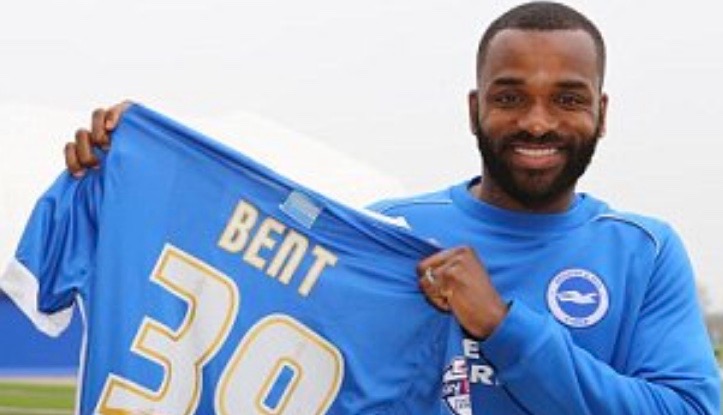
STRIKER Darren Bent spent the last month of 2014 with Championship-struggling Brighton as the hapless Sami Hyypia tried to bring a halt to a dismal run of form.

Unable to command a regular starting spot at Aston Villa, Bent made an encouraging enough start, scoring on his debut against Fulham.

But the game ended in a 2-1 defeat and his only other goal came at Molineux two days before the axe fell on Hyypia’s time in the hotseat as Albion drew 1-1 with Wolves.

Bent told BBC Radio Sussex he’d reached “boiling point” in his frustration at the lack of starts under Paul Lambert at Villa. Previous boss Gerard Houllier had smashed Villa’s transfer fee record to take Bent from Sunderland for an initial £18m in January 2011, but, after Lambert became manager in 2012, he made just 13 Premier League appearances.

albion D BentAt the time he headed to the Amex, Bent had scored 184 goals in 464 career appearances, not to mention scoring four while winning 13 caps for England.

“I hope he will score plenty of goals for us during his time with us,” Hyypia had told the club website. “His record speaks for itself. He is a top-class striker with more than 100 Premier League goals with Charlton, Spurs, Sunderland and Aston Villa.

“Three years ago, he was a regular in the England squad under Fabio Capello; there is no doubting his ability to score goals.

“He also wants to play regular games and that is evident in his willingness to step down from the Premier League to the Championship.”

Bent told the matchday programme: “It doesn’t bother me that I’ve had to drop down a division to play football. Anyone who knows me knows that all I care about is football.

“It has never been about money or anything like that. It has always been about playing football. I’m always at my happiest when I’m playing.”

At least Bent found some familiar faces in the Albion dressing room in fellow Villa loanees Joe Bennett and Gary Gardner and former Fulham teammates David Stockdale and Aaron Hughes.

“Brighton felt like the perfect place to come and play football, especially for someone like Sami Hyypia, who I’ve played against many times over the years,” Bent added. “As a manager, I think he is the right man. He is the kind of guy I want to play for.”

Bent goalBent returned to Villa after playing in five games and although new boss Chris Hughton indicated a willingness to bring him back, the striker was soon on his way to Derby County for the remainder of the season.

He scored 12 in 17 games for Steve McLaren’s Rams and subsequently joined them on a permanent basis in the summer of 2015. After two seasons in the Championship with Derby, scoring 14 in 67 matches, a hamstring injury sidelined him for the start of the 2017-18 season and in January 2018 he went on loan to Championship strugglers Burton Albion.

Having been without a club since released by Derby in the summer of 2018, he announced his retirement at 35 in July 2019.

Since then, he has joined the football pundit circuit, although not everyone is convinced he’s making that good a job of it!

pundit D BentNevertheless, Talksport and Sky Sports are happy to give him a platform and, in an interview with Metro, he suggested what might be the most difficult aspect of it. “I played with some of these guys and regard them as friends so, when they have had a bad game, will I be able to dig them out? It’s finding the line between being objective and respectfully constructive.”

Only in January 2020, Bent could be found arguing the case for Lewis Dunk to be recalled by England. The former striker is also active on Twitter with @DarrenBent attracting just short of 492,000 followers.

Born in Tooting, south London, on 6 February 1984, Bent was probably destined to be a footballer because his dad Mervyn had been on the books of Wimbledon and Brentford as a youngster.

The family moved to Cambridgeshire when the young Bent was only 10 and his early football career was nurtured at Godmanchester Rovers.

Ipswich Town picked him up as a 14-year-old and nurtured him through their youth ranks until he eventually made it to the first team in November 2001.

In four seasons with Ipswich, he scored 56 goals in 141 appearances before then Premier League Charlton Athletic paid a fee of £2.5m to take him to The Valley.

After two successful seasons in which he bagged 37 goals in 79 games for the Valiants, he made another big money move, this time to North London to join Spurs.

It was in June 2007 they paid a club record £16.5m and he scored 25 in 79 games for them before a similar fee saw him move to Sunderland, then in the Premier League, in the summer of 2009.

After 18 months in the North East, Bent put in for a transfer and Aston Villa paid £24m to sign him on a four-and-a-half year contract. He marked his debut with the only goal of the game in a win over Manchester City.

In his second season with Villa, Bent took on the captaincy for a while but managerial changes meant his face didn’t always fit and he spent the whole of the 2013-14 season on loan to Fulham, where he scored six in 30 matches.

Goalkeeper John Phillips – the ‘unenviable understudy’

JOHN PHILLIPS was a Welsh international goalkeeper who played for Chelsea and Aston Villa before becoming a back-up at Brighton under Alan Mullery.

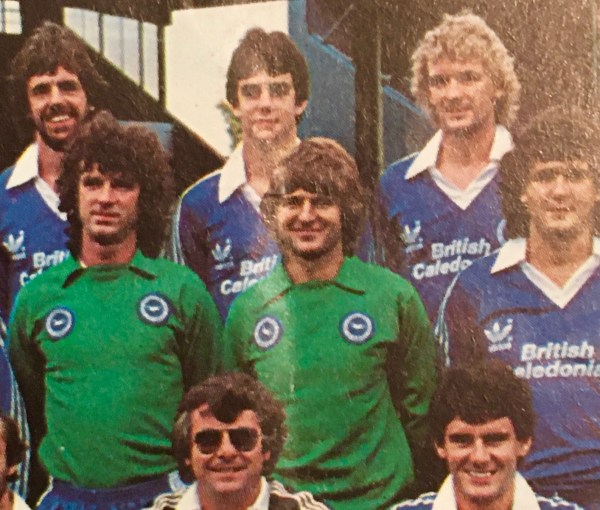
A £15,000 fee took him to the Goldstone Ground as no.2 to Graham Moseley in 1980 and, possibly the most interesting thing about his time at Brighton was his appearance in the centre of the pre-season team photo (see below) alongside Moseley in which both ‘keepers rather oddly wore green jerseys sporting two Seagulls badges!

JP 2 badge colourPreviously an understudy to the legendary Chelsea goalkeeper Peter Bonetti, Phillips did have occasional first team spells at Stamford Bridge, including playing in earlier rounds of the successful European Cup Winners’ Cup campaign of 1970-71.

When he died aged 65 on 31 March 2017, the Chelsea website paid a warm tribute to his contribution.

JP prog notes

At Brighton he featured 19 times for the reserves but only played one first team game. That came in front of a bumper festive season Goldstone crowd of 27,387 on 27 December 1980 (as seen above on my amended programme teamsheet) as the Seagulls beat traditional rivals Crystal Palace 3-2; a brace from Michael Robinson and Peter O’Sullivan with the Albion goals.

IMG_6433The following month, it looked like he might get a second game after Mullery publicly blamed first-choice Moseley for the side losing six points, and told the Argus Phillips would come in for the next match unless he could sign another ‘keeper.

Mullery promptly went back to his old club, Fulham, and splashed out £150,000 on unknown youngster Perry Digweed – pushing Phillips further down the pecking order.

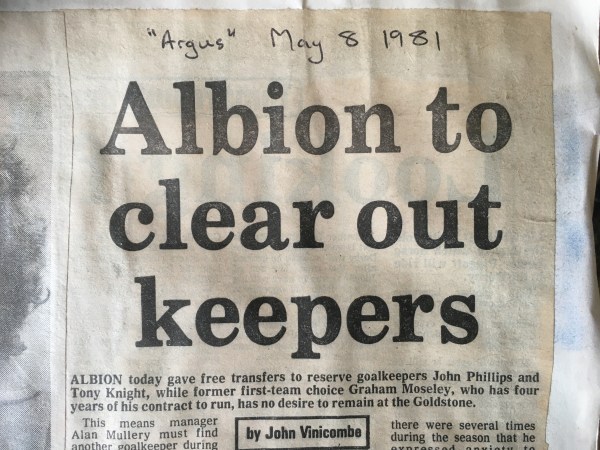
IMG_6431At the end of the season, Phillips and Tony Knight, a young ‘keeper who didn’t progress to the first team, were released on free transfers. It was also reported that Moseley was on his way, but Mullery’s shock departure that summer gave him a stay of execution.

Disgruntled Mullery swapped managerial seats with Mike Bailey, who’d just led Charlton Athletic to promotion from the old Third Division,

Phillips was one of his first signings. However, he only played two games for Charlton, so he was to endure another frustrating spell of being the understudy.

Contributor Richard J on charltonlife.com remembered how Phillips replaced first choice Nicky Johns in the first away game of the 1981-82 season – a 3-0 defeat at Luton Town.

“Nicky returned for the next game and Phillips’s only other game was away at Leicester. Unfortunately, we lost that game as well, 3-1.”

But Richard continued: “I work with Tony Lange who took over from the Welsh international as Charlton’s number two keeper. He felt that John was a big influence on his career.

“Apparently, Phillips was exceptionally good at distribution and this was one of the reasons he had played so much for Chelsea and Tony credits him as a big influence on that part of his game.”

He moved from Charlton to Crystal Palace but he didn’t feature for their first team at all. He then tried his luck in Hong Kong, with See Bee.

Born in Shrewsbury on 7 July 1951, Phillips went to the Grange School in Shrewsbury and, because both his father and grandfather played league football for Shrewsbury Town, it was no surprise when he also signed for Town. He made his debut in 1968 at the age of 17.

A big influence on him was the former Manchester United and Northern Ireland goalkeeper, Harry Gregg, who was manager at Gay Meadow between 1968 and 1972.

In an early edition of Goal magazine, Gregg said: “He’s the finest goalkeeping prospect I have seen. He seems to have every asset in the book and his temperament really stands out.”

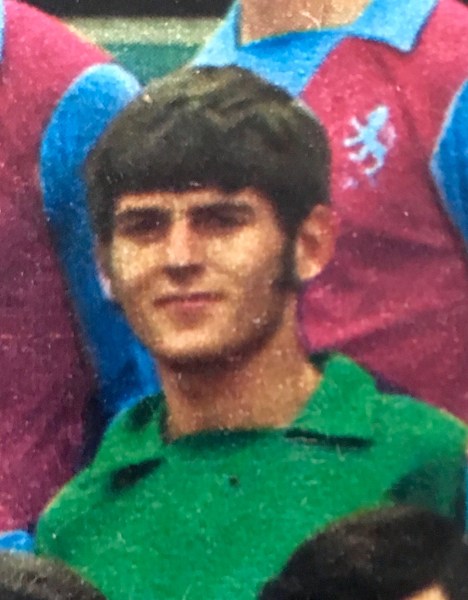
J Phil VillaPhillips played 51 times for the Shrews before being bought in 1969 by Tommy Docherty, the former Chelsea boss who’d taken over as Aston Villa manager.

After only 15 games for Villa, in August 1970, Chelsea paid a fee of £25,000 to take Phillips to Stamford Bridge.

The regular back-up ‘keeper, Tommy Hughes, who went on to have a loan spell at Brighton in the 1972-73 season, was out injured with a broken leg at the time and Chelsea needed someone to deputise for Bonetti, who only two months earlier had been criticised when having to take over in goal from ill Gordon Banks as England lost 3-2 to West Germany in the 1970 World Cup quarter final in Mexico.

Phillips stayed with Chelsea for 10 years and played a total of 149 games for the club. He managed 23 league and cup games during the 1972-73 season owing to Bonetti’s absence through injury and illness.

In October 1973, Goal ran a series called The Understudies and featured the rivalry between Phillips and Bonetti. Bonetti said of him: “John is a first-class ‘keeper and has pushed me more than anyone. It’s nice to know you have to play well to keep your place.”

Phillips told the magazine’s David Wright: “We are rivals, yes, but friends as well.”

It was only in the 1974-75 season that Phillips had an extended run of games as the no.1.

Although kind things were said of him when he died, not all recollections were favourable. The footballnetwork.net, for instance, said: “Phillips always conceded a lot of goals. Is this because he was awful or his defence and midfield were woeful? I suspect that it was a bit of both. Phillips did assist Chelsea in reaching the 1971 European Cup Winners Cup final, but he conceded seven at mediocre Wolverhampton as Chelsea sloped off into a long decline.

“Funnily enough, he shared goalkeeping duties for Wales with one Gary Sprake, a notoriously erratic Leeds goalie, as the late Peter Houseman could have testified!

“Obviously in the early seventies, while the Welsh rugby team had an embarrassment of riches, there was no such luxury in the goalkeeping department.”

Although English by birth, Phillips played for Wales at a time when qualification to play for countries beyond the one in which a player was born was extended to include the homeland of their parents or grandparents. He won four caps in 1973-74, making his debut in a 3-0 defeat to England in front of 38,000 at Wembley on 15 May 1973.

A none-too-flattering recollection can be found in a book charting the history of Welsh international football. Red Dragons – The Story of Welsh Football says: “Sadly a nervy performance by Chelsea goalkeeper John Phillips was responsible for a grim 0-2 defeat at home to England in May 1974.”

Bonetti saw off many pretenders to his throne, but Phillips went closer than anyone to taking his place, according to gameofthepeople.com, which described him as “the unenviable understudy” in an article charting his Blues career.

In the summer of 1975, Chelsea had been relegated and Bonetti given a free transfer, so Phillips was expected to start the new season as first choice ‘keeper.

But he fractured his right leg in training and badly damaged knee ligaments, opening the door for Steve Sherwood to take over between the sticks.

In the 1979-80 season, Phillips was loaned to Crewe Alexandra. Even there, he only played six times for the league side, having to be content with 23 games for their reserves.


  • Pictures mainly sourced from Goal magazine or Shoot! Also the Argus and matchday programme.

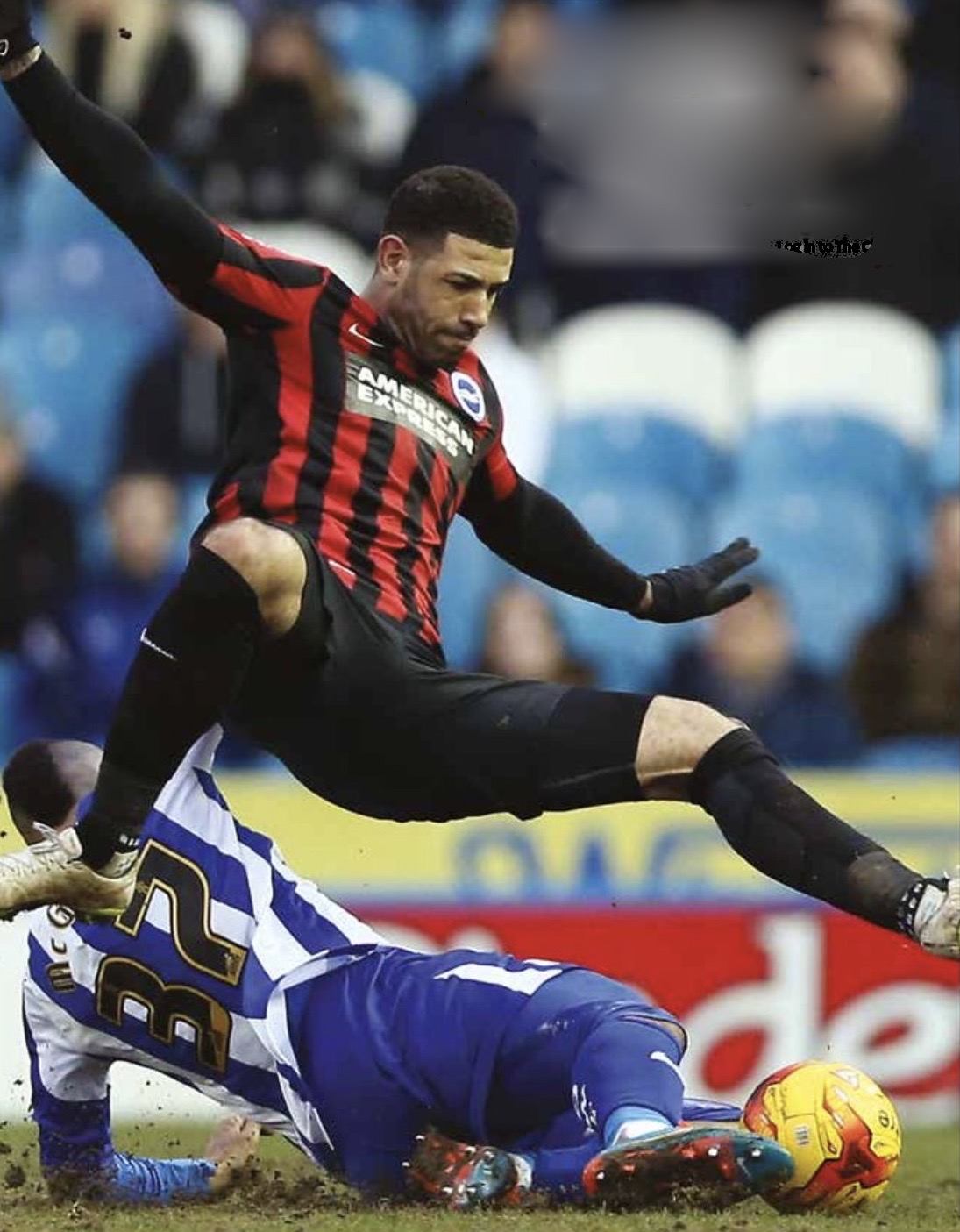
Goal-shy journeyman striker Leon Best drew derision

FOR SOMEONE purporting to be a striker, Leon Best fired blanks at a good many of the clubs he played for.

Such was his time at Brighton where he failed to get on the scoresheet in 13 games (six as a starter, seven as a substitute).

When he featured for AFC Bournemouth in the third tier, he fared slightly better. He managed three goals in 14 starts plus three as a substitute when on loan from Premier League Southampton during the 2006-07 season.

The somewhat derogatory phrase ‘journeyman’ was tailor-made for the likes of Best, who appeared for 13 different league clubs, failing to score for five of them and only registering double figure tallies at three.

Brighton supporters, on the whole, are normally supportive of anyone who appears for their team, but feelings boiled over at Best’s apparent lack of desire when pulling on the Seagulls stripes.

He was part of the struggling 2014-15 side which narrowly avoided the drop from the Championship, and I recall him being booed when he came on as a substitute at the Amex. On reflection, of course, such derision was unlikely to improve his demeanour.

The keyboard warriors of North Stand Chat weren’t slow to vent their anger, with one correspondent suggesting: “We’ve not seen much in the way of desire, endeavour, hunger or appetite from someone you would hope feels he has something to prove.”

Chris Hughton had not long been in the manager’s chair when he was casting around for players to help Albion climb away from the foot of the table.

Perhaps not unreasonably, he turned to a player who’d scored goals for him in the Premier League during his time at Newcastle United.

Hughton told the Argus: “I know Leon very well, having signed him during my time at Newcastle and I am delighted to have him here.

Screen Shot 2021-06-10 at 14.55.50“He is a strong, physical presence, he knows the Championship and knows the position we are in. We wanted new faces, to freshen up the squad, and Leon will add competition alongside our existing strikers.

“I signed him previously at Newcastle. I know he can be a very good player and he did very well for me both in the Championship and Premier League. He also had a very good spell with Newcastle after I left the club.”

Best scored 10 in 46 games for the Magpies but, at his next club, Blackburn Rovers, he managed only two in 16, hence them sending him out on loan.

While Best had scored five in 16 playing on loan at Sheffield Wednesday in 2013-14, he scored a big fat zero in 20 games for Derby County earlier in the 2014-15 season so perhaps expectations should not have been high when he arrived at Brighton on 20 January 2015.

Nevertheless, Hughton told Brian Owen: “I am very pleased he is here. He gives us another attacking option and I hope he can produce the same form he did for me when we worked together at Newcastle.” In short, he didn’t.

Born in Nottingham on 19 September 1986, his first steps into the professional game came with his local side Notts County. When international recognition came calling, he chose to represent his mother’s birth country, the Republic of Ireland, and was capped at under 17, under 19 and under 21 levels before gaining seven full caps in 2009-10.

Southampton snapped up Best in 2004 and gave him his league debut aged 18, ironically against his future employer, Newcastle.

But opportunities were limited with the Saints and over the course of three years on their books they loaned him out to QPR, Sheffield Wednesday, Bournemouth and Yeovil Town.

In 2007, Best transferred to then Championship side Coventry City for £650,000 and arguably his most successful goalscoring spell came during his time there, as he netted 23 goals in 104 appearances over three seasons.

It prompted Hughton to spend £1.5m of Mike Ashley’s money to take Best to Tyneside on 1 February 2010.

Maybe the warning bells should have been sounding in those first few months on Tyneside when he didn’t register a goal in 13 Championship appearances and fell behind Andy Carroll and Peter Lovenkrands in the pecking order.

Although he managed a couple of goals in pre-season matches, the early part of the 2010-11 season was marred by a cruciate knee ligament injury. Nevertheless, when he returned to action in the January, he did it in some style, bagging a hat-trick in a 5-0 win over West Ham. He got a further three goals before injury ruled him out once again.

3490663In the following season, he went 12 games without scoring but in the summer of 2012, Blackburn Rovers paid £3m to take him to Ewood Park – only for him to pick up an anterior cruciate knee injury one month into the season, ruling him out of action for six months.

The temporary move to Brighton was one of three loans away from Blackburn before they finally released him by mutual consent in July 2015.

It wasn’t until November 2015 he managed to find another club, pitching up for six months at Championship side Rotherham United. When he couldn’t agree terms on a new deal with the Millers, he instead moved to Ipswich Town, ostensibly as a replacement for Daryl Murphy.

He made six starts and six appearances as a substitute without scoring and, by January 2017, manager Mick McCarthy had lost patience with him and declared he wouldn’t play another game for the club.

Released by Town in the summer of 2017, Best managed to secure a two-month deal with Charlton Athletic in November 2017 but he sustained a knee injury on New Year’s Day 2018 and hasn’t played since.

‘Bright prospect’ James Wilson faded after great start

JW v WolvesGREAT things were expected of James Wilson after he scored two goals on his Manchester United debut.

Caretaker manager Ryan Giggs gave the 18-year-old the opportunity to prove himself at first-team level in a home game against Hull City in 2014 and he was instantly repaid.

Wilson UtdA few months later, Wilson signed a four-year contract, with new manager Louis van Gaal describing him as “one of the brightest young English prospects”.

But that early promise evaporated as injury problems and the emergence of the talented Marcus Rashford overshadowed his progress.

“I wanted to get out of my comfort zone on loan at Brighton and while I was there Rashford came through,” Wilson told ESPN. “I came back and never really got that chance again. Injuries were a big thing.”

The Biddulph-born striker eventually severed ties with Old Trafford in the summer of 2019 having first joined United in 2002 aged only seven.

In the season after his impressive debut against Hull, he made a further 17 appearances for United and scored two more, but he appeared in only one Premier League game and one League Cup game in 2015-16, and didn’t feature for United’s first team again.

JW England u21Wilson represented England at under 16, under 19, under 20 and under 21 levels but a career in England’s top-flight proved elusive and he is now playing for Scottish Premiership side Aberdeen.

One of several loan spells Wilson had away from United saw him join Brighton’s ultimately unsuccessful bid for promotion from the Championship in November 2015.

Although he showed glimpses of real quality, and scored five goals, he often seemed to be fatigued and ended up making just 12 starts plus 15 more from the bench.

Perhaps, rather unfortunately, he is best remembered for being caught by the TV cameras vomiting on the pitch immediately before a game against Wolves on New Year’s Day.

Wilson’s start for the Seagulls was impressive enough: a goal on his full debut in a 3-2 win over Charlton Athletic. “I remember picking the ball up on the edge of the D and just drove at the centre backs. They backed off, I managed to get my shot away and it went through their ‘keeper’s legs,” he said in a subsequent Albion matchday programme.

He followed that one with the opener in a 2-2 draw away to Derby County.

Tomer Hemed and Sam Baldock were more often than not manager Chris Hughton’s preferred selection up front although Wilson rewarded Hughton’s decision to give him his first start for two months in place of Hemed in a home game against Reading on 15 March. He scored the only goal of the game and Albion edged into second place as the promotion race hotted up.

JW scores v DerbyHe also scored (above) in the fifth minute of added on time to secure Albion a point in their penultimate league game at home to Derby, but when runners-up spot eluded the Seagulls courtesy of the last-game 1-1 draw at Middlesbrough, and when Albion failed to overcome Sheffield Wednesday in the Championship play-offs, Wilson returned to Old Trafford.

At the start of the following season, he was on his travels again, this time to Derby, but his season-long loan ended prematurely in October 2016 when he sustained an anterior cruciate ligament knee injury that sidelined him for months.

While he eventually returned to action in United’s under 23 side, he didn’t get a first team chance under Jose Mourinho and instead spent the second half of the 2017-18 season on loan to Sheffield United where he scored once in nine appearances.

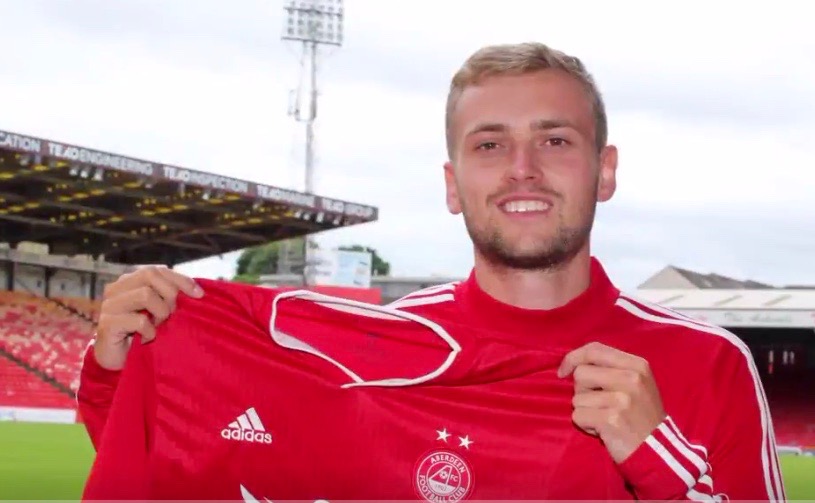
He spent the whole of the 2018-19 season on loan at Aberdeen, scoring four goals in 32 games and then signed for them permanently in the summer of 2019, aiming to reignite his career. But having not scored in 16 games in the latter part of 2019, he was allowed to return to the Manchester area, signing on 31 January 2020 for League Two Salford City.

James Wilson Aberdeen

Big Chiv’s Brighton cameo at the end of an illustrious career

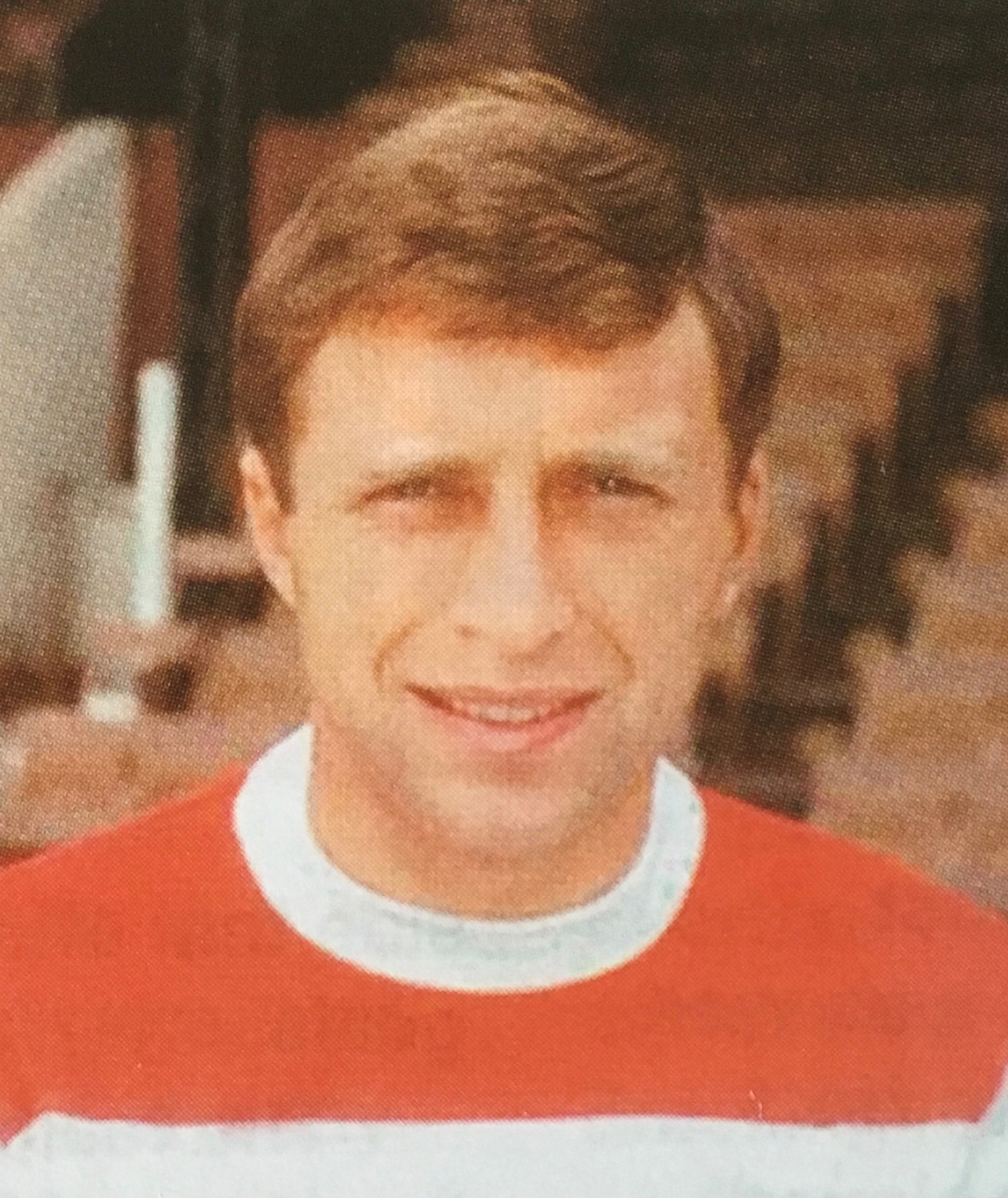
FORMER England international Martin Chivers rose majestically to head home a goal in a 3-3 draw between Leyton Orient and Brighton & Hove Albion.

It was textbook Chivers – a replica of so many similar goals he’d scored for Spurs and England during his glory days – and it put Albion 2-1 up. It turned out to be his one and only goal for the Albion.

It came in one of just five games he played for the Seagulls as his illustrious playing career drew to a close. In Teddy Maybank’s absence through suspension just as Brighton inched closer to promotion to the elite for the first time ever, Chivers – once one of this country’s top centre forwards – was an ideal stand-in.

The game at Brisbane Road on 7 April 1979 saw former Spurs League Cup winning teammates Chivers and Ralph Coates on opposing sides and, a 3-3 thriller was a cracking match for ITV’s The Big Match to have chosen for showing the following Sunday afternoon.

A month later Albion would travel to St James’s Park, Newcastle and clinch that dream promotion.

John Vinicombe, faithful chronicler of Albion’s fortunes for the Evening Argus, declared: “Make no mistake, Albion are First Division bound after that tremendous match at Orient.”

Mike Calvin in the Sunday Mirror, said: “Chivers’ bullet like header became an instant candidate for ITV’s goal of the season.”

While Ian Jarrett in The Sun said: “Martin Chivers’ 32nd minute goal came straight out of the former England striker’s scrapbook. ‘It was a dream goal. I’d like to have it on tape so that I could watch it being played back again and again,’ Chivers told him.

In the days when strikers invariably hunted in pairs, Chivers had previously starred for Tottenham Hotspur alongside the late Scot, Alan Gilzean, as Spurs put silverware in the White Hart Lane trophy cabinet in three successive seasons.

The team captain during that successful period was Alan Mullery and after the midfielder had hung up his boots and taken charge of the Seagulls, he turned to his old teammate in his hour of need.

With regular striker Maybank facing a two-match suspension, Mullery bought the 34-year-old Chivers for £15,000 from Norwich City just before transfer deadline day in March 1979 and he made his debut in a home 0-0 draw against Notts County on 31 March.

Chiv v CharltonEven a crocked Chivers (by his own admission, a troublesome Achilles tendon restricted his fitness) could do a job for the Albion in an emergency, the young manager believed.

“I took a bit of a chance on him, but he was terrific for us,” Mullery recalled in a retrospective matchday programme article. “He was a proven goalscorer and helped us both on and off the pitch.”

Chivers explained exactly how it came about in his autobiography, Big Chiv – My Goals in Life, which he discussed in an interview with the Argus in 2009.

Maybank returned to the side for the successful promotion run-in and, during the summer, Chivers had an operation on his Achilles. The new season, amongst the elite for the first time, was 13 games old before Chivers saw action for the Seagulls.

He appeared as a substitute in a 2-1 defeat away to Coventry City on 20 October, and the national media singled him out for mention.

“When Chivers came on for Ward 11 minutes after the break, the game at last came to life. From then on, Brighton were more decisive in attack and played with more confidence,” said the Daily Telegraph.

Sunday Express reporter William Pierce added: “Martin Chivers went on as a substitute for the out-of-touch Peter Ward and the ex-England striker twice might have scored.”

That contribution earned Chivers a starting place at Maybank’s expense in the next game, a 4-2 home defeat to his old club Norwich, and he stayed up top, this time partnering Maybank, in a 0-0 home draw with Arsenal in the fourth round of the League Cup.

But that was the last time he appeared in the first team. Mullery turned instead to another former Spur, Ray Clarke, and he and Ward were the preferred front pairing for the rest of the season.

Chivers remained with the club, appearing regularly in the Reserves through to the end of the season, and doing some scouting work, but his top-flight career was finally over.

But let’s take a look back at what had gone before. It was an impressive rise to fame.

Born in Southampton on 27 April 1945, Chivers was a pupil at the city’s Taunton’s Grammar School and wrote to his local club asking for a trial. His prowess as a goalscorer grew rapidly.

chiv SaintAfter playing regularly for Southampton’s youth side, his breakthrough came in September 1962 when just 17. He made his first-team debut against Charlton Athletic and signed as a full-time professional in the same week. He became a first-team regular the following season.

In February 1964, Chivers and future teammate Mullery were called up (along with future Albion goalkeeper Peter Grummitt) by Alf Ramsey as Reserves for the England under 23 side for a 3-2 win over Scotland, played in front of 34,932 fans at St James’s Park, Newcastle.

Two months later, at Stade Robert Diochon in Rouen, shortly before his 19th birthday, Chivers made a goalscoring debut for the Under 23s when coming on as a substitute for Geoff Hurst as England drew 2-2 with France.

It was the start of a record-breaking Under 23 career; in four years he appeared 17 times.

Southampton skipper Terry Paine, who was part of England’s 1966 World Cup winning squad, played alongside Chivers as he developed. “The potential was always there, especially when he made the Southampton first team. But the one thing he may have lacked was determination,” he told Goal magazine.

On Saints’ promotion to the top division in 1966, Bates supplemented his attacking options with the addition of established international Ron Davies from Norwich.

Davies and Chivers proved a twin threat to opponents but Chivers was somewhat overshadowed by the Welshman, and Paine said: “They just weren’t compatible. It didn’t work having two big blokes up there together. Chivers was playing second fiddle. He was no match for Ron in the air, there was never any doubt about that.”

It eventually led to Chivers putting in a transfer request in December 1967 and, a month later, having scored 106 goals in 190 appearances for Southampton, he was transferred to Tottenham for £80,000 with winger Frank Saul, an FA Cup winner with Spurs in 1967, a £45,000 makeweight going in the opposite direction.

Saints fans had a new hero in the emerging Mike Channon and inevitably comparisons were drawn between the two. “Martin had more finesse on the ball when he was Mike’s age, without punching his weight,” said Southampton boss Ted Bates. “Mike, however, has more drive and desire, a ruthless approach which Martin never had.”

Indeed, even in the early days at Spurs, fans failed to see why Spurs had shelled out what at the time was the biggest ever transfer fee in the country for the striker, with the legendary Jimmy Greaves and Scot Alan Gilzean the preferred front pairing.

It didn’t help matters when he was sidelined for months by a serious knee injury, although Bates felt the spell out actually proved to be a turning point in his career.

“During that long spell out of action I think he must have taken a good, long look at the game and examined himself thoroughly,” said Bates. “The result is that he now uses the full range of his talents.”

Bates believed he lacked belief in his own power and seemed reluctant to use his size to his advantage. “We were always trying to get Martin to use his physique properly,” said Bates. “He knew he had to be more aggressive, but in those days a big, strong centre-half could swallow him.”

It looked as though Chivers was going to be an expensive flop and, in an interview with Ray Bradley for Goal magazine, he admitted he’d been through a crisis at Spurs and his career had been at a crossroads.

“It was a hell of a frustrating time for me,” he said. “No matter how hard I tried I just couldn’t strike form. I suppose I was really battling to regain confidence again after injury.

“The fans, disgruntled with the form we had been showing, were gunning for me and finally they got their way when I was dropped.

“Things looked black for me but I was determined to fight my way back into the side. The turning point for me, I think, came in a reserve game against Northampton at the end of the season.”

Reserve team manager, Eddie Baily, took him aside and had a private chat, telling him the only way he’d get back his confidence was to fight for it on the pitch.

“He instilled in me that I must be more aggressive, that I must put myself about more if I was to win back my first team place,” said Chivers. “That little pep talk seemed to do the trick. It was a wet pitch and I really gave it all I had and ended up by scoring five goals.

“His words of encouragement after the match made me realise that it was up to myself if I wanted to succeed.”

With Greaves having departed the club for West Ham, once Chivers was back in the first team he did well up against Jack Charlton and Norman Hunter of Leeds, and he began to recapture his form. A good start to the 1970-71 season saw everything start to slot into place.

“I’ve always liked scoring goals,” he said. “Ever since I was a boy I liked to see the ball hit the back of the net.”

After scoring twice to help Spurs beat Aston Villa in the 1971 League Cup Final, Chivers said: “I feel fabulous. That’s the only way to describe how I feel after scoring two goals in my first-ever appearance at Wembley.

“Spurs are back on the glory trail and those two goals have really sealed my comeback this season.”

In a series of Goal articles about Chivers in November 1971, writer Warwick Jordan declared: “There have been few more exciting centre forwards to grace the game and there is little reason to dispute the claim that the Tottenham striker could become one of the best ever,”

A whole raft of top division players and managers were happy to put on record their admiration for the centre-forward. Everton boss Harry Catterick described him as “the new John Charles” and claimed: “Chivers has emerged this year as the most talented centre-forward in Britain.”

Leeds manager Don Revie was a big admirer, saying: “Chivers is a better player than Geoff Hurst. The comparison is appropriate as both men possess a high degree of skill not normally found in strikers of their heavy build.

“It’s hard to choose between them, but I consider Chivers has the slight edge as he does not rely so much on the men around him. He has the ability to take the ball through on his own and create chances out of nothing.”

Manchester City team boss Malcolm Allison said: “This boy is the best all-round centre-forward in Britain. He’s big, strong, skilful and exciting. A tremendous player who will always get goals.”

Stoke midfielder Mike Bernard told the magazine: “Chivers has got guts, skill, aggression, ball control and tremendous determination. You can’t fault the guy.”

Teak-tough centre back John McGrath, who once had a brief spell on loan to the Albion from Southampton, added: “That bad injury has helped to make him a much more determined player. When your career is in the balance it gives you a greater determination to succeed. Chivers has come back to the game a different player.

“He’s a much more physical player now. A more confident player than he was before. He’s developed more character.

“People don’t realise how fast he is. He’s got a sort of loping run, a bit ungainly. But it’s deceptive because he is gathering speed all the time.”

Despite gaining that record number of England under 23 caps, it wasn’t until early 1971 that he got his chance on the full international stage. His reinvigorated Spurs form led to him making his full England debut away to Malta on 3 February 1971, when England gained a 1-0 win under the captaincy of his Spurs teammate Mullery.

He scored his first goal for England two months later in a 3-0 win against Greece at Wembley.

It was said Chivers really arrived as an international star after a powerful two-goal performance in a 3-1 win over Scotland at Wembley on 22 May 1971.

“This has been the greatest day of my life,” said Chivers, after that win. “I didn’t know I was playing until lunchtime on the same day. I was determined to show I was worth my place.

“I know a lot depended on my display in that game. I know I could have jeopardised my international future if I had not grabbed the opportunity.”

Afterwards, though, he declared: “Now I feel I have established myself as an England player.”

Fellow England striker Francis Lee told Goal’s Jordan: “He’s a football manager’s dream. At his present rate of progress, he could become the greatest centre-forward this country has seen.

“His tremendous potential blossomed during that game in Switzerland (scored in a 3-2 win in Basle, 13 October 1971) where his performance made the difference between victory and possible defeat.

“But his finest game for England so far was the one against Scotland. Today he is the hottest soccer property in the game. He’s going to be a big winner for England.”

In total, he scored 13 times in 22 starts plus two appearances from the subs bench, but, in less than three years, Chivers’ England career was over.

He never played for his country again after being subbed off in the crucial game that meant England wouldn’t qualify for the 1974 World Cup – a 1-1 draw with Poland at Wembley in 1973.

In eight years at Spurs, Chivers scored 174 goals in 367 games, his greatest success coming between 1970 and 1973, when he scored more than 20 goals in successive seasons, and was a key part of the side that won the 1971 and 1973 League Cups, finished third in the league in 1971, and picked up the 1972 UEFA Cup.

He had two seasons in Switzerland, playing for Servette, before returning to the English game with Norwich in 1979-80, before the move to Brighton.

On leaving Brighton, he went initially to Southern League Dorchester Town as player-manager, then Norwegian side Vard and finished playing 10 games for Barnet in 1982-83.

It was a phenomenal scoring record to notch 255 goals in 546 appearances.

After he’d finished playing, Chivers became a hotelier in Hertfordshire (during which time I got to speak to him in a professional capacity, helping to promote my client’s involvement in his business) and for several years he was a matchday host at White Hart Lane.

Chivers died at the age of 80 on 7 January 2025.

Pictures from a variety of sources, especially Goal and Shoot magazines and matchday programmes.


Mike Bailey took the Seagulls to their highest-ever finish

ONE OF the all-time greats of Wolverhampton Wanderers led Brighton & Hove Albion to their highest-ever finish in football.

Midfield general Mike Bailey played for Wolves for 11 seasons between 1965 and 1976, leading the team to promotion from the Second Division in 1966-67, helping them to top-flight positions of fourth and fifth in 1971 and 1973, getting to the final of the UEFA Cup in 1972, and lifting the League Cup at Wembley in 1974.

MB WWFCLgeCupMike Bailey holds aloft the League Cup after Wolves beat Manchester City 2-1 at Wembley.

It was perhaps a hard act to follow Alan Mullery as manager of Brighton, particularly as the former Spurs and Fulham captain had led the club from Third Division obscurity to the pinnacle of English football within three years.

But Bailey had just got Charlton Athletic promoted from the Third Division and in the 1981-82 season led Albion to a 13th place finish, a record which was only threatened in 2017-18 by Chris Hughton’s side, who eventually ended up 15th.

Unfortunately, although Bailey’s team was relatively successful, the style of play he adopted to achieve that position was a turn-off to the fans who deserted the Albion in their hundreds and thousands.

Eventually, chairman Mike Bamber felt he had to address the slump in support by sacking Bailey in December 1982. “He’s a smashing bloke, I’m sorry to see him go, but it had to be done,” said Bamber. There are plenty – in particular Bailey! – who feel he acted a little too hastily.

Bailey shared his feelings in an interview he gave to the News of the World’s Reg Drury in the run-up to the 1983 FA Cup Final.

Mike Bailey talks to the News of the World; his often frank programme notes; his assistant, John Collins, a former Luton Town player.

“It seems that my team has been relegated from the First Division while Jimmy Melia’s team has reached the Cup Final,” he began.

Wanting to put the record straight having been hurt by some of the media coverage he’d seen since his departure, he explained: “I found the previous manager Alan Mullery had left me with a good squad, but, naturally I built on it and imposed my own style of play.”

Bailey resented accusations that his style had been dull and boring football, pointing out: “Nobody said that midway through last season when we were sixth and there was talk of Europe.

“We were organised and disciplined and getting results. John Collins, a great coach, was on the same wavelength as me. We wanted to lay the foundations of lasting success, just like Bill Shankly and Bob Paisley did at Liverpool.

“The only problem was that winning 1-0 and 2-0 didn’t satisfy everybody. I tried to change things too soon – that was a mistake.

“When I left, we were 18th with more than a point a game. I’ve never known a team go down when fifth from bottom.”

It was clear from the outset of Bailey’s reign that he didn’t suffer fools gladly and there were numerous clashes with players, notably Steve Foster, Michael Robinson and Neil McNab, the displaced Gordon Smith and Mickey Thomas, a Bailey signing who repeatedly went missing because his wife didn’t like it in the south.

Bailey would vent his feelings quite overtly in his matchday programme notes; he was not afraid to hit out at referees, the football authorities and the media, as well as trying to explain his decisions to supporters, urging them to get behind the team rather than criticise.

Happier times as Mike Bailey becomes Albion manager and signs Tony Grealish to replace outgoing stalwart midfielder and skipper, Brian Horton.

Attempting to shine a light on the comings and goings associated with his arrival, he explained: “The moves we have been making are designed to provide Brighton with a better football team and one that can consolidate its position in the First Division, rather than struggle, such as in the last two seasons.”

By Christmas, the team were comfortably in the top half of the table and in an interview with the Argus, Bailey said: “I must admit that as a player and captain of Wolves I was a bit of a bastard, slagging others off, and that sort of thing. But being a manager, one sees everything in a different light. I am still trying to learn as a manager, especially now that I am with a First Division club.”

Three months later, shortly after he had appeared at a fans forum at the Brighton Centre, he very pointedly said: “It is my job to select the team and to try to win matches.

“People are quite entitled to their opinion, but I am paid to get results for Brighton and that is my first priority.

“Building a successful team is a long-term business and I have recently spoken to many top people in the professional game who admire what we are doing here at Brighton and just how far we have come in a short space of time.

“We know we still have a long way to go, but we are all working towards a successful future.”

As he assessed his first season, he said: “Many good things have come out of our season. Our early results were encouraging and we quickly became an organised and efficient side. The lads got into their rhythm quickly and it was a nice ‘plus’ to get into a high league position so early on.”

He had special words of praise for Gary Stevens and said: “Although the youngest member of our first team squad, Gary is a perfect example to his fellow professionals. Whatever we ask of him he will always do his best, he is completely dedicated and sets a fine example to his fellow players.”

Meanwhile, in his own end of season summary, Argus Albion reporter John Vinicombe maintained: “It is Bailey’s chief regret that he changed his playing policy in response to public, and possibly private, pressure with the result that Albion finished the latter part of the season in most disappointing fashion.

“Accusations that Albion were the principal bores of the First Division at home were heaped on Bailey’s head, and, while he is a man not given to altering his mind for no good reason, certain instructions were issued to placate the rising tide of criticisms.”

Vinicombe recorded that the average home gate for 1981-82 was 18,241, fully 6,500 fewer than had supported the side during their first season amongst the elite.

“The Goldstone regulars, who are not typical of First Division crowds (but neither is the ground) grew restless at a series of frustrating home draws, and finally turned on their own players,” he said.

At the beginning of the following season, off-field matters brought disruption to the playing side. Arsenal’s former FA Cup winner Charlie George had trained with the Seagulls during pre-season and senior players Foster, Robinson and McNab publicly voiced their disappointment that the money wasn’t found to bring such a player on board permanently.

McNab in particular accused the club of lacking ambition and efforts were made to send him out on loan. Similarly, Robinson was lined up for a swap deal with Sunderland’s Stan Cummins, but it fell through.

Meanwhile, Albion couldn’t buy a win away from home and suffered two 5-0 defeats (against Luton and West Brom) and a 4-0 spanking at Nottingham Forest – all in September. Then, four defeats on the spin in November, going into December, finally cost Bailey his job. Perhaps the writing was on the wall when, in his final programme contribution, he blamed the run of poor results on bad luck and admitted: “I feel we are somehow in a rut.”

It would be fair to say Bailey the player enjoyed more success than Bailey the manager. So, where did it all begin?

Born on 27 February 1942 in Wisbech, Cambridgeshire, he went to the same school in Gorleston, Norfolk, as the former Arsenal centre back Peter Simpson. His career began with non-league Gorleston before Charlton Athletic snapped him up in 1958 and he spent eight years at The Valley.

M Bailey charltonDuring his time there, he was capped twice by England as manager Alf Ramsey explored options for his 1966 World Cup squad. Just a week after making his fifth appearance for England under 23s, Bailey, aged 22, was called up to make his full debut in a friendly against the USA on 27 May 1964.

He had broken into the under 23s only three months earlier, making his debut in a 3-2 win over Scotland at St James’ Park, Newcastle, on 5 February 1964.He retained his place against France, Hungary, Israel and Turkey, games in which his teammates included Graham Cross, Mullery and Martin Chivers.

England ran out 10-0 winners in New York with Roger Hunt scoring four, Fred Pickering three, Terry Paine two, and Bobby Charlton the other.

Eight of that England side made it to the 1966 World Cup squad two years later but a broken leg put paid to Bailey’s chances of joining them, even though he got one more chance to impress Ramsey.

Six months after the win in New York, he was in the England team who beat Wales 2-1 at Wembley in the Home Championship. Frank Wignall, who would later spend a season with Bailey at Wolves, scored both England’s goals. Many years later, Wignall was playing for Burton Albion when a certain Peter Ward began to shine!

In 1965, Bailey broke his leg in a FA Cup tie against Middlesbrough and that was at a time when such injuries could be career-threatening.

“I was worried that may have been it,” Bailey recalled in his autobiography, The Valley Wanderer: The Mike Bailey Story (published in November 2015). “In the end, I was out for six months. My leg got stronger and I never had problems with it again, so it was a blessing in disguise in that respect.

“Charlton had these (steep) terraces. I’d go up to them every day, I was getting fitter and fitter. But it was too late to get in the 1966 World Cup side – Alf Ramsey had got his team in place.”

 Bailey missed out on the 1966 England World Cup squad but he won Football League representative honours and enjoyed success as captain of Wolves.

During his time with the England under 23s, Bailey had become friends with Wolves’ Ernie Hunt (the striker who later played for Coventry City) and Hunt persuaded him to move to the Black Country club.

Thus began an association which saw him play a total of 436 games for Wolves over 11 seasons, leading a side with solid defenders like John McAlle, Francis Munro and Derek Parkin, combined with exciting players like forwards Derek Dougan and John Richards, plus winger Dave Wagstaffe.

However, when coach Sammy Chung stepped up to take over as manager, he selected Kenny Hibbitt ahead of Bailey so the former skipper chose to end his playing days in America, with the Minnesota Kicks, who were managed by the former Brighton boss Freddie Goodwin.

Nevertheless, Bailey’s contribution to the team famous for their old gold kit saw him inducted into the Wolves Hall of Fame in 2010.

On his return to the UK, Bailey became manager of Hereford United, then he returned to The Valley as manager of Charlton and, immediately after getting them promoted to the third tier, took over at Brighton in the summer of 1981.

A somewhat extraordinary stat I discovered about Bailey’s management career in England through managerstats.co.uk was that he managed each of those three clubs for just 65 games. At Hereford, his record was W 32, D 11, L 22; at Charlton W 21, D 17, L 27; at Brighton, W 20 D 17, L 28.

In 1984, he moved to Greece to manage OFI Crete, and he later worked as reserve team coach at Portsmouth. Later still, he did some scouting work for Wolves.

Pictures from various sources: Goal and Shoot! magazines; the Evening Argus, the News of the World, and the Albion matchday programme.

Steve Gatting’s three Brighton Wembley dates after missing out with Arsenal

1 MAIN gat sees GS goal.jpgSTEVE Gatting played at Wembley three times for Brighton having twice been denied the opportunity by Arsenal.

After being left out of Arsenal’s FA Cup Final sides in both 1979 and 1980 he finally got to step out onto the hallowed turf twice in the space of five days in 1983.

And his appearance in Brighton’s 3-1 defeat to Notts County in the 1991 play-off final at the famous old stadium was also his last in an Albion shirt after 10 years at the club.

In Match Weekly’s 1983 Cup Final preview edition, Gatting revealed his heartache at missing out with Arsenal in 1979. “I expected to be at least substitute after playing in five of the games leading up to Wembley, including the semi-final,” he said. “I was desperately sick when I didn’t get a chance. Although I really wanted the lads to do well, I couldn’t help feeling pangs of regret as the cup was paraded around the ground.”

Born on 29 May 1959 in Park Royal, London, two years after his famous brother Mike, the former Middlesex and England cricket captain, Steve was no mean batsman himself.

Instead of joining the ground staff at Middlesex County Cricket Club, though, Gatting shone at football with Middlesex and London Schoolboys teams and became an associate schoolboy with Arsenal before joining as an apprentice in July 1975. Terry Neill signed him as a professional at the age of 17 and a year later he made his First Division debut against Southampton at Highbury.

Gatting made 76 appearances for Arsenal over three seasons, his most memorable being the 1979 FA Cup semi-final against Wolves at Villa Park. He said his biggest disappointment was missing out on the May 1980 European Cup Winners Cup Final against Valencia in Brussels.

In his youth career, Gatting played in the centre of the back four but Arsenal generally played him in midfield, where competition for places was fierce with the likes of Liam Brady and Graham Rix. He admitted after joining Brighton: “When they bought Brian Talbot from Ipswich, I sensed I was on my way out.”

It was rumoured Albion would take Gatting as part of a swap deal that would see Mark Lawrenson join Arsenal but, of course, Lawrenson went to Liverpool instead. Albion were still interested in Gatting, though, and in September 1981 new manager Mike Bailey met him and his displaced colleague Sammy Nelson at Gatwick Airport and agreed terms to buy the pair of them; £200,000 the fee for the young Gatting.

Albion offered Gatting the chance of regular first team football and, although the expectation was for him to occupy a midfield spot, he quickly stepped in alongside Steve Foster in the back four and completed 45 appearances that season.

Aside from a rare couple of spells back in midfield, he remained a defender for the rest of his career, often slotting in at left back – apart from when he played right-back in the Cup Final replay.

Gatting had a terrific game alongside Gary Stevens in the 2-2 drawn first game against Man United, but Jimmy Melia unwisely chose to play the left-footed Gatting in place of injured Chris Ramsey (he should have put Stevens there) and the back line was noticeably unbalanced as they went down 4-0.

The Paul Camillin / Stewart Weir book Albion The first 100 years said: “Played out of position at right-back in the replay, he endured an uncomfortable evening in an unfamiliar role.”

Even so, interviewed three years later in the Albion matchday programme, Gatting spoke fondly about his memories of the whole occasion.

“The helicopter flight to Wembley was a new experience. We flew over the stadium and saw all our fans below,” he said. “That was a great moment. We landed and drove to the ground and went straight out onto the pitch to get a taste of the atmosphere. I met my brother Mike out there and to be honest he was more nervous than me!

“The greatest part of the whole day was walking out of the tunnel and seeing all the fans and being deafened by the cheering. That is an ambition every footballer has, to play in the Cup Final at Wembley. It was a dream come true for us and I think it lifted our game.”

Gatting had made only eight first team appearances in the 1984-85 season before, in November 1984, he sustained a serious pelvic injury which threatened his career. After five months, it was decided the only solution was a bone graft to the pelvis.

He had to remain motionless in hospital for a month and then rest on his couch when he was allowed home.

His wife Joy told Tony Norman in March 1986: “I felt sorry for Steve. He’s usually such an active person but suddenly he just had to sit there. It must have been very difficult. But Steve never got into self-pity. He stayed very positive and I respected him for that.”

Norman reported: “It was a long hard road for Steve. He started taking long walks in July, to build up strength and that progressed into jogging, light training and finally full training. He made his comeback game in the Reserves on 26 October.

Gatting told the interviewer: “When you are playing regularly, you tend to take things for granted. But when something like a serious injury comes along, it makes you realise how lucky you are to be fit and playing the game you enjoy so much. When you’re sitting on the sidelines week in week out it brings it home to you.”

The injury restricted him to only 17 appearances in the 1985-86 season but he was restored fully to the side in 1986-87 when financial issues clouded Alan Mullery’s return to the manager’s chair and successor Barry Lloyd couldn’t stop the inexorable slide to relegation from the second tier.

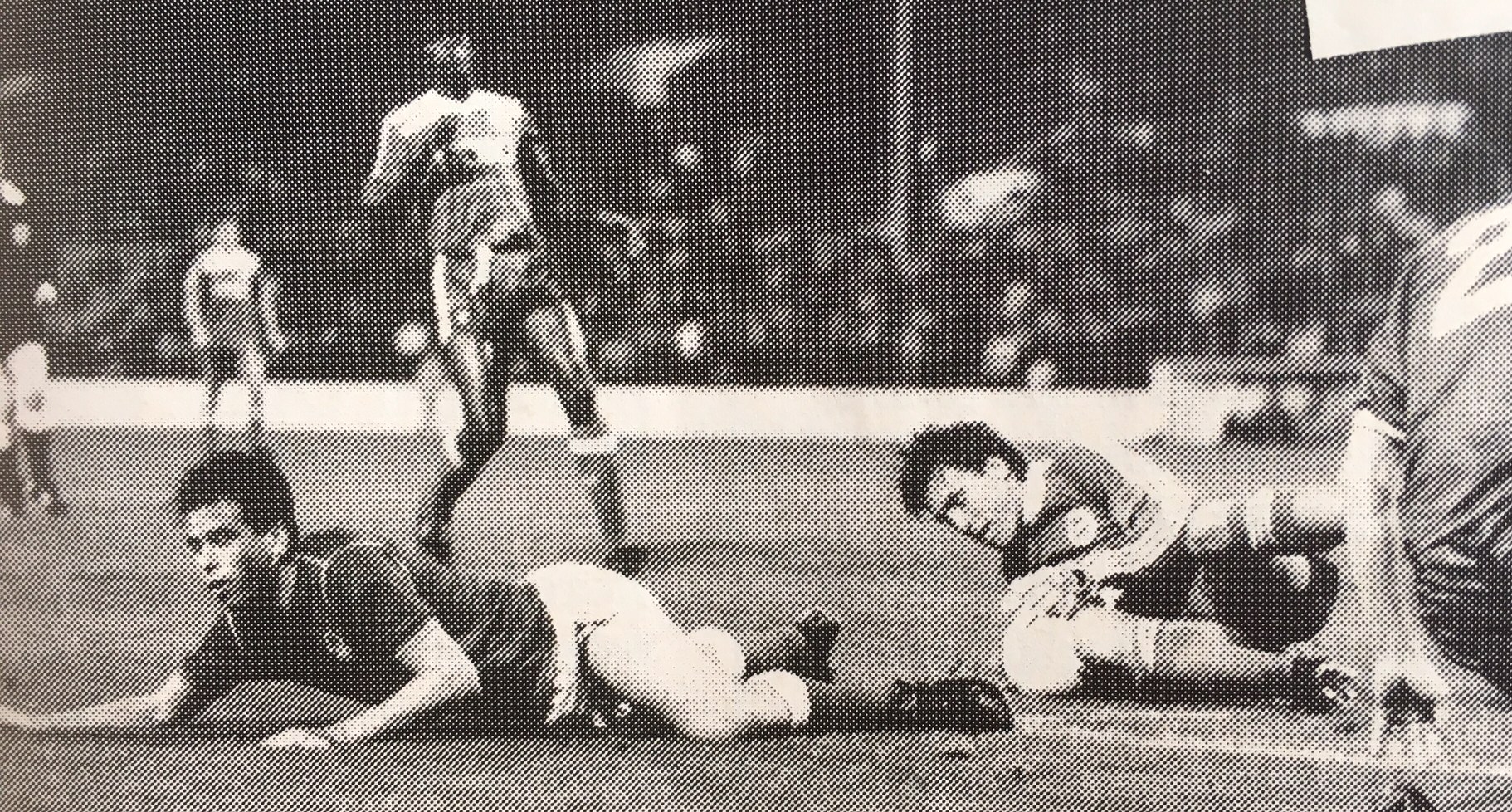
In a League Cup game replay away against First Division leaders Nottingham Forest, Gatting had to take over in goal when Perry Digweed  was forced off with a broken cheekbone. Gatting completed 45 appearances that season and said: “Dropping into the Third Division was far worse than going out of the First.

'keeper Gatt - webb on ground

Makeshift ‘keeper Gatting claims the ball with Nottingham Forest’s Neil Webb grounded

“All the players at the time felt they were good enough to stay up, but it didn’t happen and we gave a lot of silly goals away.

“The whole club was unsettled, too, but things became better again. Getting back into the Second Division was a boost for everybody.”

Gatting was ever-present in the 1987-88 promotion-winning campaign, even though in July 1987 Lloyd had given him a free transfer! The defender had other ideas and managed to play his way back into contention to such an extent that he ended up the season as captain, taking over from Doug Rougvie.

“It was nice to know I was wanted, particularly after relegation the year before,” he said.

Having made his 200th league appearance for the Albion against Chester on 12 December 1987, it was no surprise he viewed with some relish a FA Cup tie against his old club.

“Quite honestly, as a Third Division club, we don’t expect to go all the way, but I think we have the ability to scrape a result against Arsenal,” he said. “It gives me the opportunity to renew old friendships with Kenny Sansom, David O’Leary, Graham Rix and Paul Davis who were all members of the Arsenal staff when I was there.”

Albion pushed the Gunners all the way in front of a packed house and Garry Nelson rifled a memorable goal, but Arsenal prevailed 2-1.

Evening Argus Albion reporter John Vinicombe profiled Gatting warmly in a piece produced for a pre-season supplement ahead of the 1989-90 season, headlined “ice-cool Gatt”.

He described Gatting as “surely one of the most laid-back of individuals, whose natural personality is quiet and reserved”.

The report continued: “He shuns being the centre of attention, but the fact that he stays cool, even in nerve-wracking situations, is an important consideration when assessing leadership qualities.

“Leadership runs in the family, and many would say that older brother Mike was unlucky to lose the captaincy of England’s cricket team.”

On another occasion, Gatting said of his brother: “I’m proud of what Mike has achieved and I keep up to date with the latest news and enjoy watching the highlights on TV.

“We are close, we always have been, but the funny thing is I hardly ever go to see Mike play. When I do go, he never seems to make runs. So I think it’s best to stay at home and watch the Tests on TV.”

As mentioned previously, Steve was a good batsman in his own right and played for Middlesex Second XI. In Sussex, he enjoyed a summer tour with Brighton Brunswick as well as making runs for Preston Nomads.

Vincombe wrote: “Gatting occupies a special niche in the affections of Albion regulars. They see in him a thoroughly decent and well-behaved person whose standards on and off the field are high. Albion have been good to him and Gatting, after not a few periods of uncertainty, has been good for Albion.”

Gatting for his part said: “I’ve seen a lot of changes since arriving here, and I’ve played under five managers who have all had different ideas.”

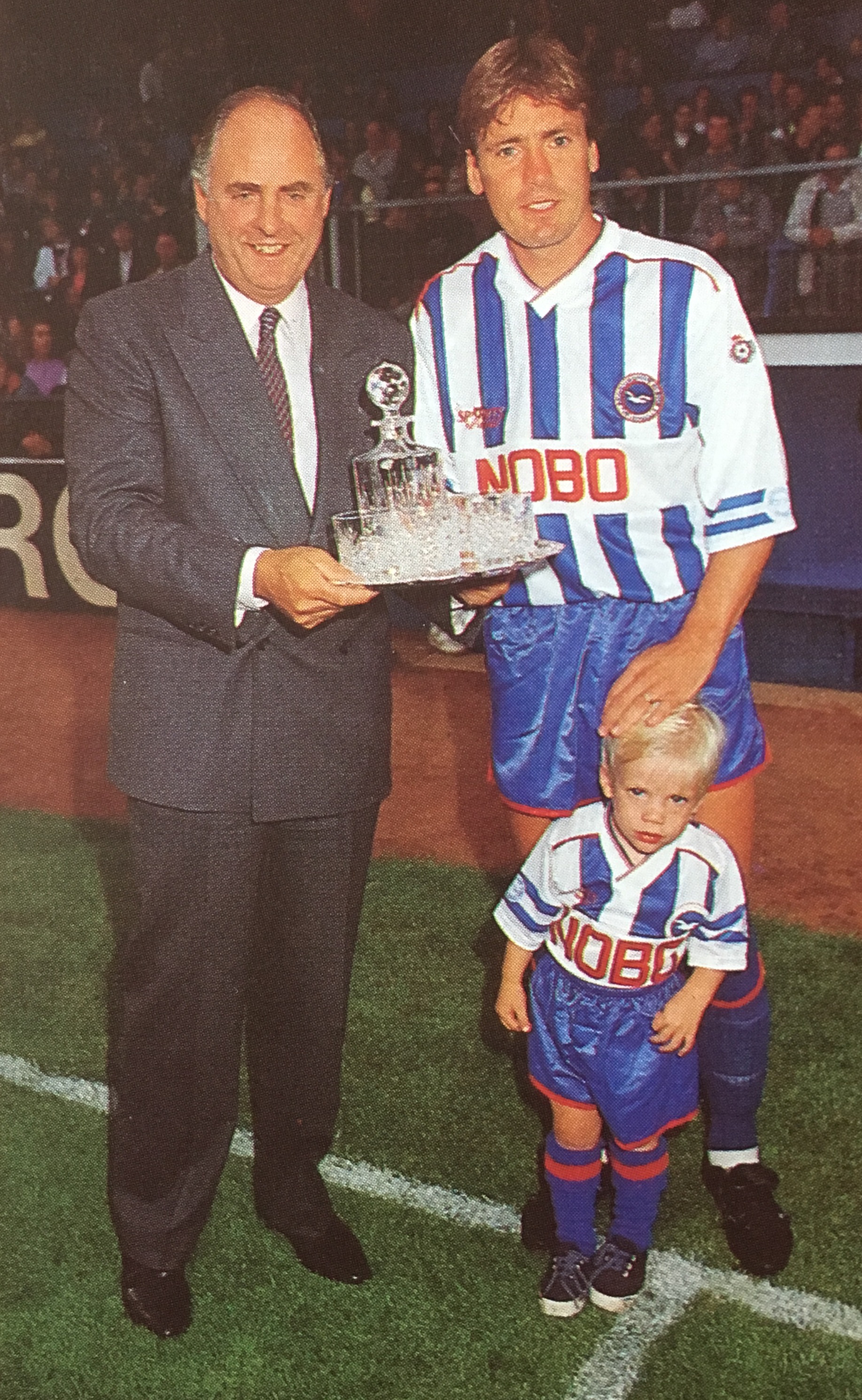
testimonialA cut glass decanter and glasses from chairman Dudley Sizen at Gatting’s testimonial

He was granted a testimonial for his long service and a curtain-raiser to his 10th season with the club saw Albion draw 2-2 with Arsenal in front of a crowd of 5,517. The Gunners included their recent big money signings David Seaman, Andy Linighan and Anders Limpar.

Injury niggles continued to plague him towards the end of his 10 years at the club but he worked his way back into the side in 1990-91, slotting in at left-back and culminating in that 1991 play-off final against Notts County at Wembley.

Long after all the other members of the Brighton 1983 Cup Final side had departed, Gatting was still pulling on the stripes, and, but for those injuries, he would surely have made many more appearances than the 366 + three as sub (21 goals) that stand as his record.

Given another free transfer in 1991, he departed for Second Division Charlton Athletic along with Garry Nelson, linking up with former Albion teammate Alan Curbishley who at the time was joint manager with Steve Gritt.

Charlton only narrowly missed out on a play-off place while Albion were relegated!

By the end of the following season, when Gatting retired, he had played a total of 64 games for the Addicks.

He then turned his attention to coaching and spent seven years at independent school Christ’s Hospital, Horsham, before returning to Arsenal in 2007 to work as an academy coach. Gatting was working as Arsenal’s under-23s coach until May 2018 when he and his assistant Carl Laraman were suspended after accusations of bullying were made against them, and neither returned to their roles.

Gatting subsequently joined League Two Stevenage as assistant coach under Dino Maamria just before Christmas 2018 but he left the Hertfordshire club shortly before the end of the 2018-19 season.

• There have not been many father-son combos during my time watching Albion (Gerry and Darragh Ryan were the first that spring to mind) but it must have given Steve great pride to see his son Joe make it through the youth ranks at Brighton and go on to play for the first team. He made 44 appearances and I recall an away game at Carrow Road when Steve and Uncle Mike were both watching the youngster in Albion’s forward line. Eventually, after he left the Seagulls in 2008, he turned to cricket and was good enough to play at county level for Sussex and Hampshire.