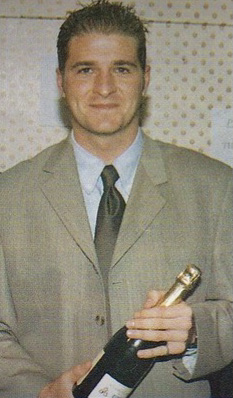
Andy Arnott’s United dream dashed by injury

A PLAYER who was on the brink of signing for Man Utd for £100,000 ended up playing for the Albion in exile.

But for an untimely hernia injury, Andy Arnott would have been an Alex Ferguson signing at Old Trafford.

As it turned out, the moment passed and the opportunity didn’t arise again. He later made 28 appearances for the Seagulls during the 1998-99 season when home games were played at Gillingham’s Priestfield Stadium.

It was a ground Arnott was familiar with. Born in nearby Chatham on 18 October 1973, he joined Gillingham as a trainee and had only served one year of his apprenticeship when he was taken on as a professional.

Manager Damien Richardson gave him his debut for the Fourth Division club only four games into the 1991-92 season when he was just 17.

It couldn’t have gone better because he scored the Gills’ opening goal in a 2-0 home win over Scarborough.

This was a Gillingham side that included summer signing Paul Clark, who had been part of Alan Mullery’s successful Brighton side in the late 1970s, and Mike Trusson, who’d won promotion from the Third Division with the Seagulls under Barry Lloyd. A young Richard Carpenter was also breaking through.

Arnott scored three goals in 23 appearances by the season’s end although one goal and two appearances against Aldershot were later expunged from the records because the Shots were expelled from the league.

Nonetheless, the youngster’s emergence hadn’t gone unnoticed higher up the football pyramid and the offer of the chance to join United came along, ostensibly so that he could feature in their youth team’s involvement in the end-of-season Blue Star youth tournament in Zurich.

This was the era of the famous ‘Class of 92’ and Arnott found himself playing alongside David Beckham, Paul Scholes and Nicky Butt.

“After impressing during his spell with United, Ferguson made a £100,000 offer to Gillingham which was turned down by the then manager Damien Richardson,” Albion’s matchday programme noted.

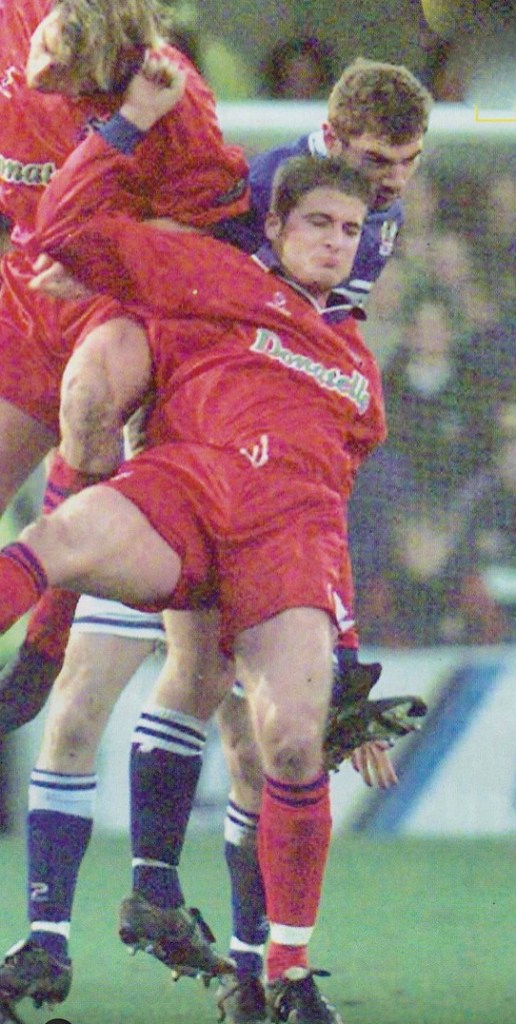
In action for Gillingham against Albion’s Nicky Bissett

The player then suffered a hernia injury that put him out of the game for a year, putting paid to any further interest from United.

“I was gutted at the time, but it was a case of just getting on with returning to fitness and playing football,” Arnott said.

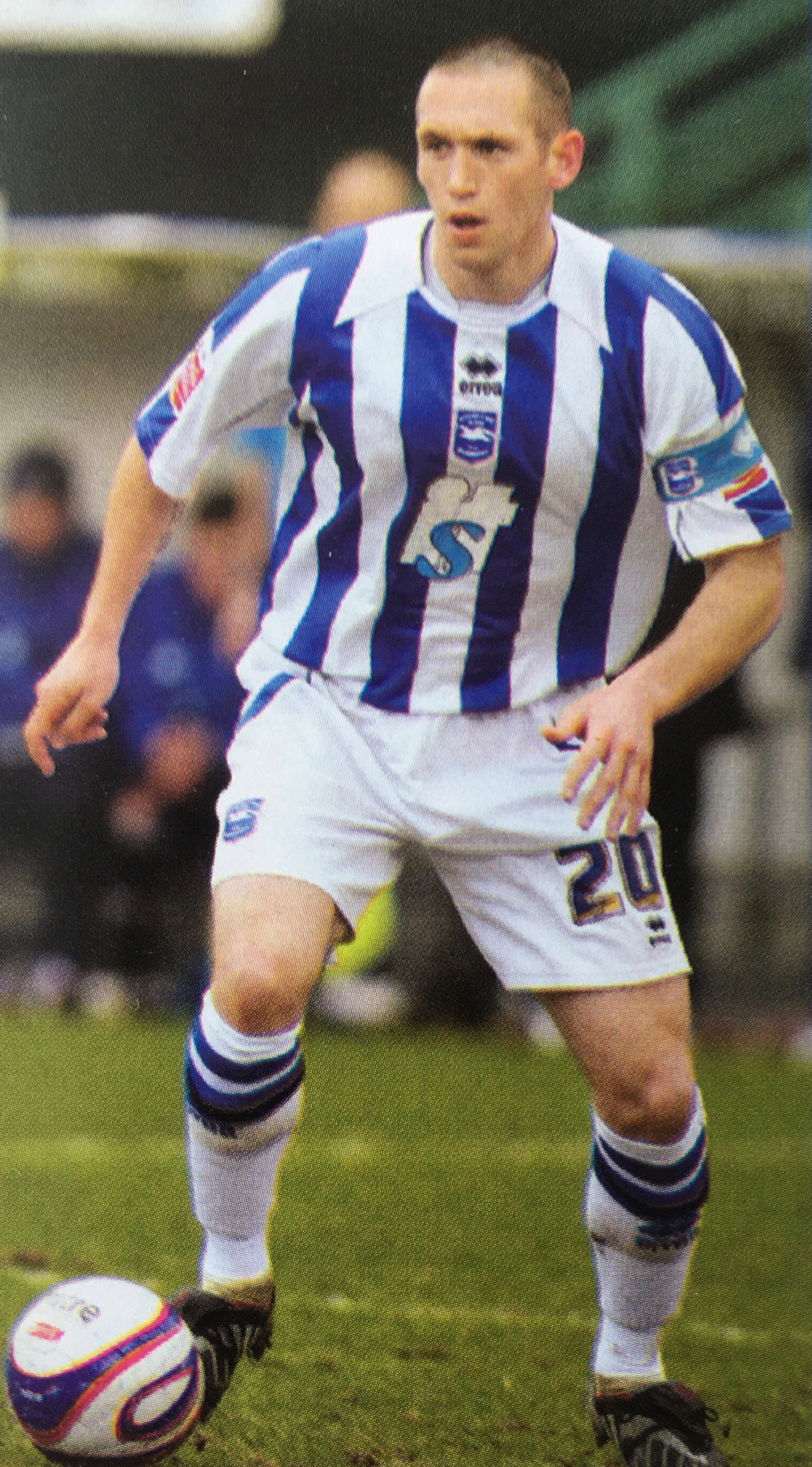
Back at Gillingham, he played 50 matches and scored 12 goals but then, in January 1996, got a £15,000 move to Leyton Orient. He spent a season and a half with the Os under manager Pat Holland and played in every position to help out the team, including goalkeeper in one emergency.

Arnott played under Micky Adams at Fulham

In the summer of 1997, after Fulham’s promotion from Division Three under Micky Adams, Arnott moved to Craven Cottage for an undisclosed fee (thought to be £25,000).

Within a few months, Mohammed Al Fayed took over the club and sacked Adams.

“All of a sudden Fulham went from being an ordinary Second Division outfit to a multi-million pound club,” he said. “I felt sorry for Micky as he had done a fantastic job, but he did foresee what was coming and sorted out long term contracts for most of the players.”

The new management duo of Ray Wilkins and Kevin Keegan brought in their own players and Arnott found himself confined to the reserves with the likes of Mark Walton, winger Paul Brooker, and forward Darren Freeman.

He scored twice for Fulham Reserves in a 3-0 win over Albion’s reserve side on 21 October 1998, and that persuaded Brian Horton to take him on.

“A few clubs had shown an interest around that time, but Brighton were the first that I spoke to and I liked what I was hearing so I signed straight away,” he said.

Horton signed him by the end of the same month for £10,000, plus another appearance-related £10,000, and said in the matchday programme he was “absolutely tremendous” on his debut. It came in a 1-0 win in pouring rain at Barnet when Charlton loanee defender Emeka Ifejagwa scored the only goal of the game on his debut. “He (Arnott) and Jeff Minton forged a good partnership and I am looking for that to flourish,” said Horton.
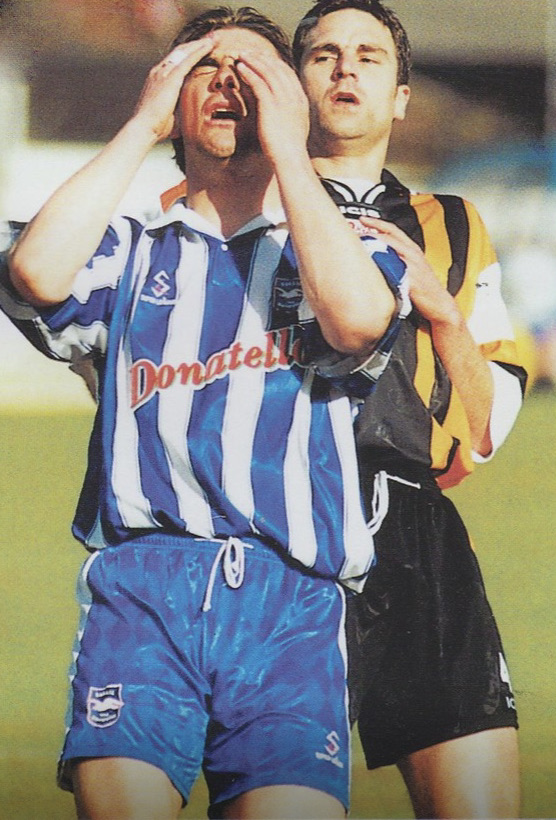
In his player-by-player commentary of performances, programme columnist Paul Camillin said: “Brilliant debut. He showed a good array of passing skills and he might have the bite we’ve been lacking.”

It was the wrong kind of bite he displayed in only his fourth game, though, when he was shown a red card in the 55th minute of Albion’s 2-0 win at Horton’s old club Hull City.

Defender Ross Johnson also went for an early bath for a second bookable offence but Albion’s nine men hung on for 35 minutes to complete their fourth successive away League win: the best such run for 62 years!

There’s little doubt Arnott’s arrival coincided with an upturn in the side’s form and in the matchday programme he took time to praise Albion’s loyal followers. “It is a fantastic advantage to have the number of away supporters we do,” he said. “It makes you want to play that little bit more to give them something back. They are absolutely magnificent.”

Arnott and Jamie Moralee

In the absence of Gary Hobson and Ian Culverhouse, Arnott was given the captain’s armband although that discipline was a bit questionable at times. He saw red for a second time, after Jeff Wood had taken over from Horton, for a second bookable offence at home to his old club Orient – Os captain Dean Smith (manager of relegation-threatened Leicester) also went for a second yellow – although Wood and Orient boss Tommy Taylor both slammed referee Rob Styles for his officiating.
Man of the Match

Wood declared: “Too many officials want to stamp their authority on the game early and flash cards like they are going out of fashion.”

Although Arnott saw out the season in the starting line-up, when his old boss Adams took over from Wood, by the time the new season got under way back in Brighton, Adams had signed Paul Rogers and Charlie Oatway as his preferred midfield pair.

By the end of September, Arnott had been snapped up by Second Division Colchester United; initially on loan and then permanently when their new boss Steve Whitton completed a direct swap that saw Warren Aspinall join the Seagulls.

However, Arnott made only four starts plus eight appearances off the bench in that first season and his time with United was blighted by a long-standing groin injury.

“The whole thing has been an absolute nightmare. I have been struggling with the injury for 14 months and despite loads of rest, two operations and four cortisone injections, the problem is as bad as ever,” he told Colchester’s Daily Gazette in January 2001.

“I was really struggling just before Christmas and I visited the specialist who told me I’m pretty near to exhausting my options.

“When it’s at its worst the injury is unbearable, especially when I turn or attempt to hit a long ball.

“I’m still only 27 with what should be many years left in the game.”

Unfortunately, though, he was forced to call time on his professional playing career and dropped into non-league initially with then-Conference side Stevenage, then Dover Athletic, where he was captain, Welling United and Ashford Town.

After his playing days were over, he settled in Rochester and became a project manager for Dryspace Structures while retaining his football links as a coach for Ebbsfleet United’s under 16 team.
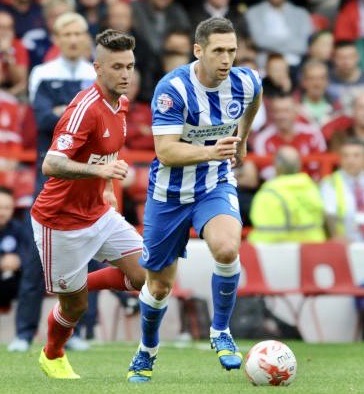
Andrew Crofts just couldn’t stay away from the Seagulls

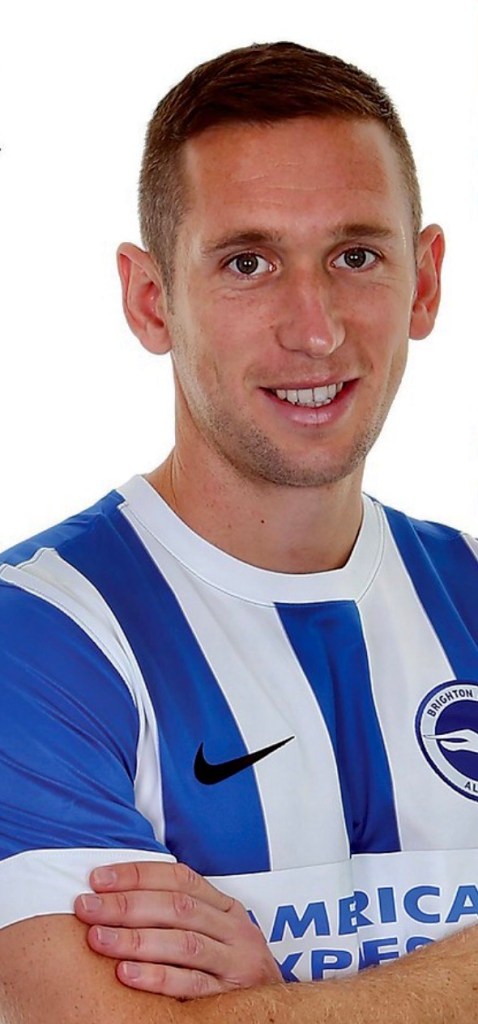
ANDREW Crofts is one of that rare breed of player who had three separate spells at Brighton, although the latter time was only as player-coach with the under-23s.

The Welsh international midfielder returned to the Seagulls after only a month as player-coach at Yeovil Town when Liam Rosenior left the Albion to move to Derby County.

His signing as an over-age player as well as a coach was explained by technical director Dan Ashworth, who hailed the “innovative step” and told the club website: “The thinking behind the playing role is to have someone of his experience out there on the pitch alongside our younger players, and to impart that crucial knowledge he has gained from his time in the game.

“To have that experience out on the field, in the pressure situation of a game, will be of enormous benefit to our young players and have a positive impact on their collective and individual development.”

Crofts first joined the club in the summer of 2009 during Russell Slade’s managerial reign and, when Gus Poyet took over the managerial chair, he appointed Crofts as captain for his first game in charge.

The midfielder repaid the faith in that televised away game at St Mary’s on 15 November by scoring in Albion’s memorable 3-1 win. Crofts retained the armband through to the end of the season and his form had caught the attention of Championship side Norwich City.

Crofts made the switch to Carrow Road and played 44 games as Paul Lambert’s outfit won promotion to the Premier League in runners up spot.

In the top-flight, though, Crofts was no longer a mainstay of the midfield, starting just 15 matches in 2011-12, and coming off the bench on 10 occasions.

“Towards the end of the season I was in and out,” he told the Albion matchday programme in 2019. “Paul then went to Aston Villa and when the chance came up to return to the Albion I jumped at it.”

“It felt like coming home and I wanted to replicate what we had done with Norwich. It was a completely different club compared to the one I’d left, with the Amex Stadium and plans for the new training ground.”

Poyet wasted no time in seizing the chance to re-sign him, telling the club website: “When we knew about the possibility to bring him back we worked very hard to do that.

“I am delighted to have him back. He is going to be a very important player.

“He is coming back to a club that he knows and he was happy to come back – that shows his commitment,” said Poyet. “He leads by example and we want players like that on the pitch.”

Unfortunately, that season his playing time was limited by two long-term spells out injured, and the following season it got worse. After sustaining a serious cruciate knee ligament injury in January 2014, he was sidelined by an almost identical injury again in October 2014.

When the player suffered the first injury in an away game at Birmingham, Poyet’s successor, Oscar Garcia, said: “He will be a big loss and I feel sorry for Crofty. He has been excellent and has been a key player.”

Crofts battled over many months to regain fitness only to suffer a partial tear of his anterior cruciate ligament and a tear to the meniscus in a match against Watford in October 2014, putting paid to any involvement in the rest of the 2014-15 season.

Head coach Sami Hyypia told the club website: “We are all devastated for Crofty. He is an important member of our squad and worked incredibly hard to get back to full fitness after last season’s knee injury.

“Crofty is a very strong character and he will continue to receive the best possible care and treatment from our medical staff throughout his rehabilitation.”

Unfortunately for him, by the time he was fit again, another new manager was in place and Dale Stephens and Beram Kayal were firmly established as Chris Hughton’s preferred midfield pairing. So, in March 2016, Albion loaned him back to his first club, Gillingham, until the end of the season.

On leaving the Seagulls that summer, he moved to Charlton Athletic under his former Albion boss Slade, on a one-year contract, and made a total of 54 appearances for the Addicks.

Although born in Chatham, Kent, Crofts qualified to play for Wales because his grandfather hailed from the principality. He earned a total of 29 caps, spread over 13 seasons, initially under John Toshack, most coming under Gary Speed, before making his final appearance against Panama in November 2017, in Chris Coleman’s last game as Wales manager.

Crofts v Rooney in a Wales v England match
Welsh international

Crofts was on Chelsea’s books from the age of 10 to 15, going through the ranks with John Terry, with whom he shared digs. One of his coaches was ex-Albion and Chelsea defender Gary Chivers. After being released by Chelsea, he linked up with Gillingham as a trainee and worked his way through the youth and reserve sides, making a surprise first team debut against Watford in May 2001 when only 16.

It wasn’t until 2004 and 2005 that he became a first team regular. His first Gills goal was scored in the Championship clash at the Withdean Stadium on Boxing Day 2004 when the Seagulls won 2-1.

Crofts eventually took over the captaincy at Gillingham but, after the side were relegated to League One, manager Mark Stimson believed the role was too much of a burden on the player. After more than 200 appearances for the Gills, he was made available for transfer and, in 2008-09, went out on loan to Peterborough United and then Conference side Wrexham under former Albion striker Dean Saunders.

When he joined Albion on a free transfer in June 2009, boss Slade said: “He’s an international player so that’s not bad for a start. He’s got good pedigree and was an important player for a good Gillingham team at the time.

“He can sit in for you defensively or he can get forward. He has got a good work ethic and I’m pleased to get him.”

Towards the end of his league playing days, Crofts had spells at Scunthorpe United in 2017-18 then Newport County for the 2018-19 season, playing under his former Gillingham teammate Michael Flynn, who he played alongside at Priestfield between 2005 and 2007,

Flynn made his old pal captain and said: “He’s a gentleman and he’s somebody I trust a lot. So signing him was really a no-brainer.

“Andrew coming in is a massive signing for the club. He’s the ultimate professional and he’s in fantastic condition.”

Crofts himself said: “I played with Michael Flynn at Gillingham and he was a winner. I loved playing with him and I can’t wait to play for him now with him being my gaffer.”

Unfortunately, injury issues restricted Crofts to just 12 appearances for Newport and he was released at the end of the season.

On leaving County, Crofts moved to Yeovil Town as player-coach with manager Darren Sarll saying: “To bring a player of Andrew’s experience into the club at this time is a great coup.

“He still has a thirst and hunger for playing and winning promotions and it’s refreshing to be part of the very early stages of his coaching career.

“He’ll be a valuable asset to the squad both as a player and in terms of passing on his experience and knowledge to the younger members of the squad.”

But then the opening arose with the Albion and he didn’t hesitate to return. When Graham Potter left the Albion, Crofts temporarily took on the head coach position and was retained as a first team coach under Roberto De Zerbi and his successor, Fabian Hurzeler.

• In an interview with Andy Naylor of The Athletic in December 2020, Crofts talked at length about his career, his coaching ambitions and some of the big names he played alongside.