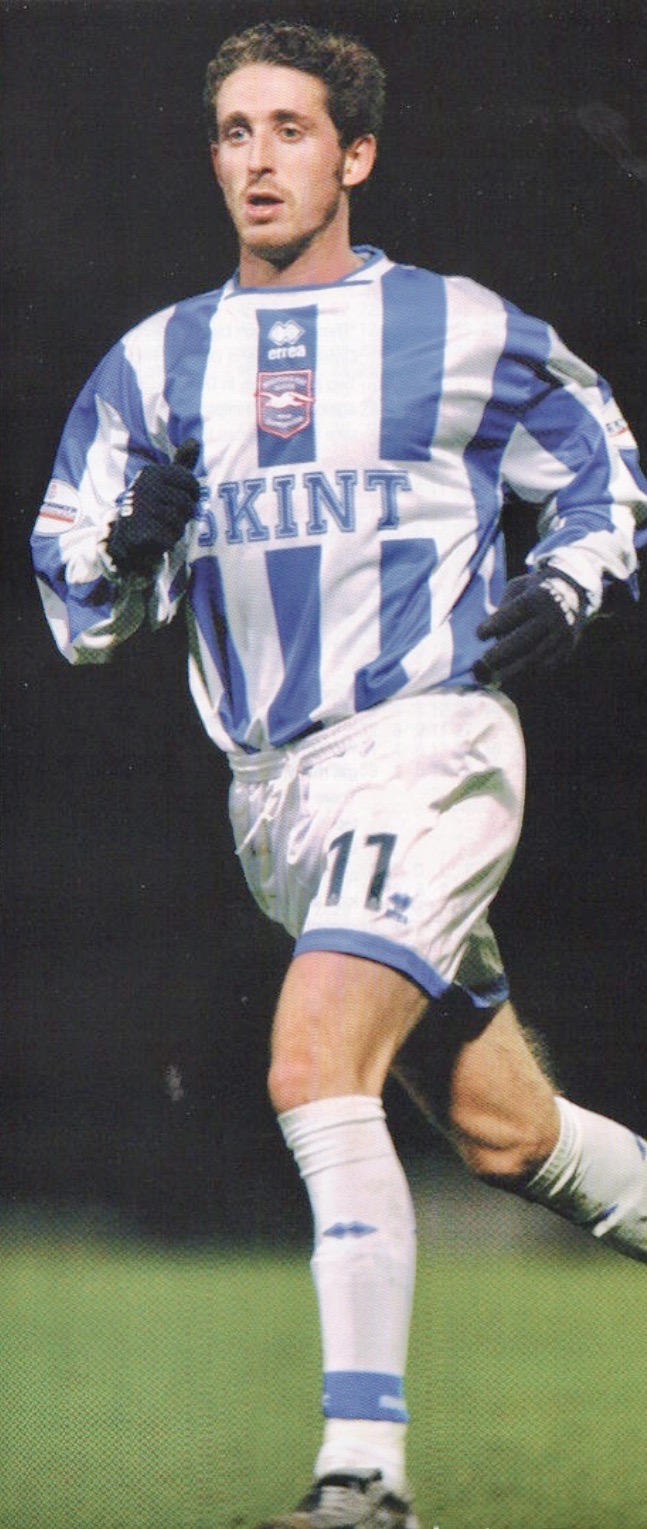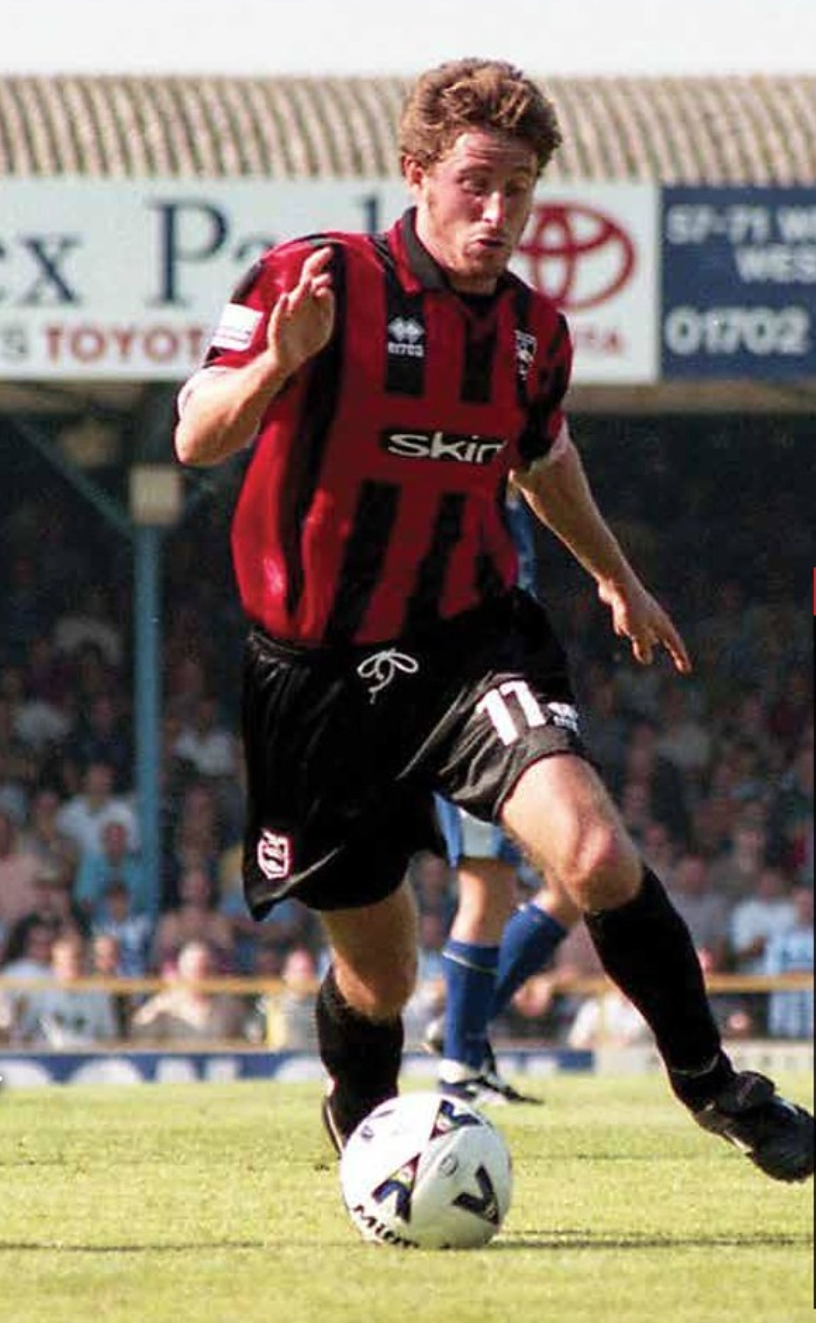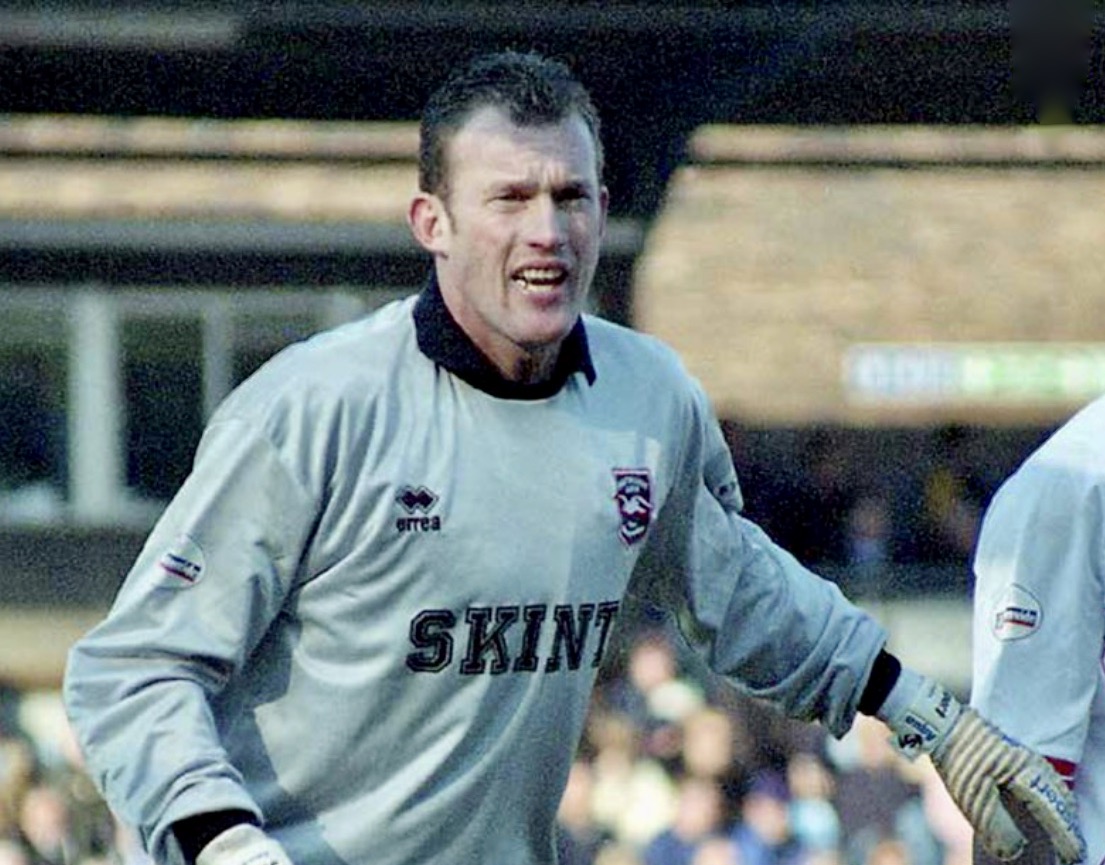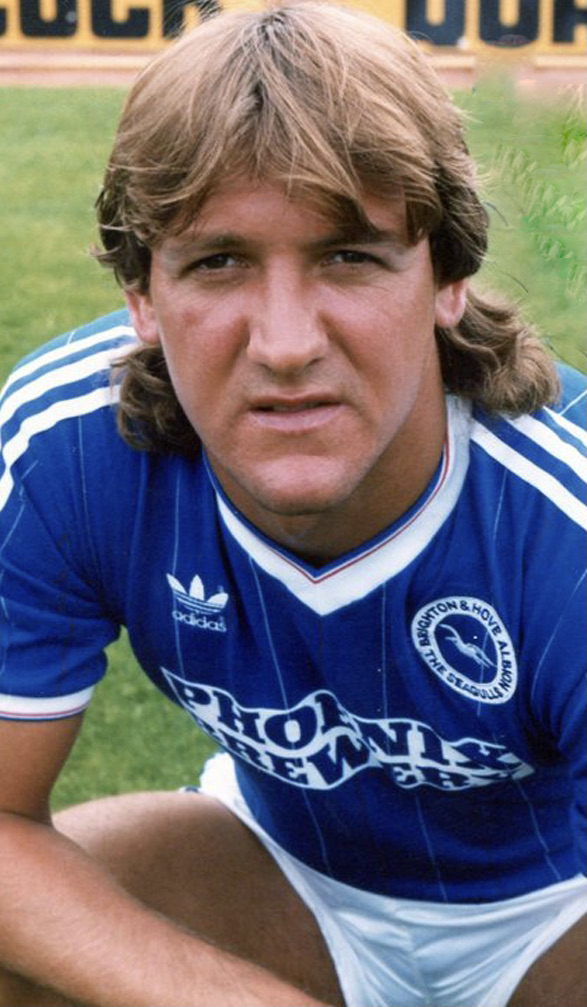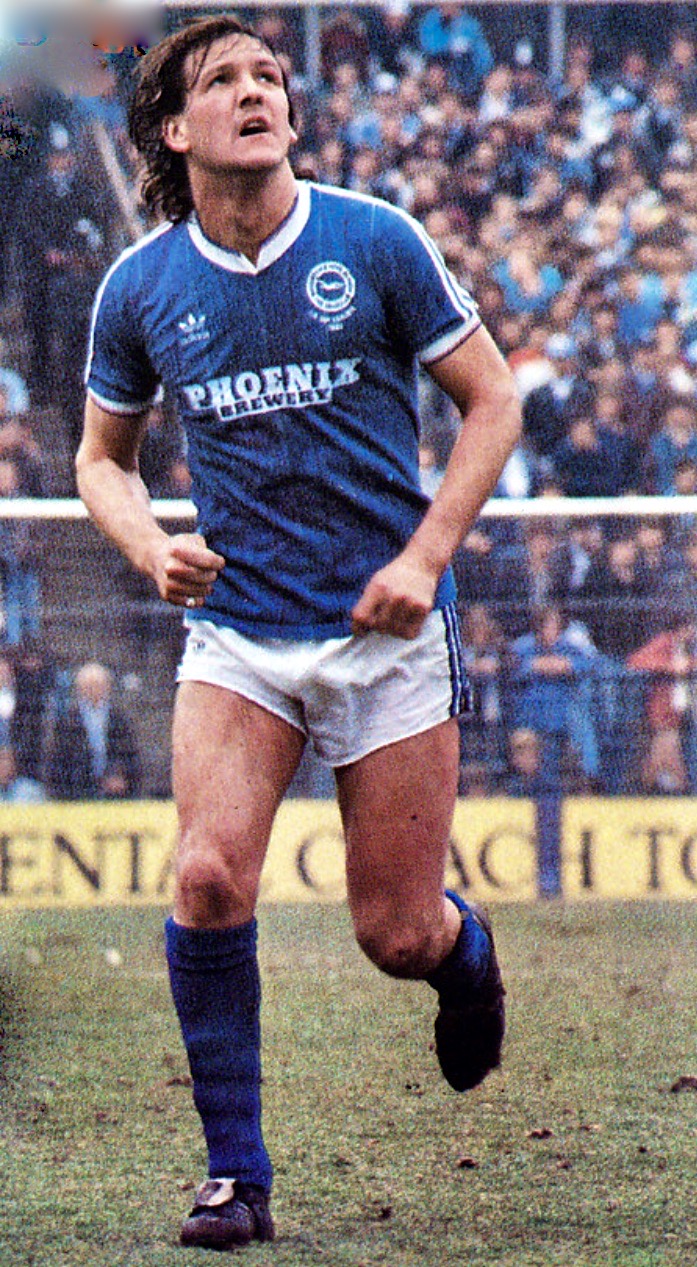
Pacy Paul Brooker an in-and-out talent on the wing

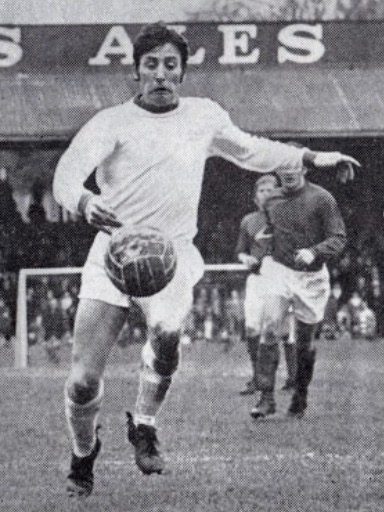
PAUL BROOKER, a winger at one time mentioned in the same breath as Ryan Giggs, played more games for Brighton – 147 – than any of his other clubs but only managed a Premier League cameo with Leicester City.

Brooker certainly had the capacity to excite fans but there could be frustration in equal measure and, although he won back-to-back promotions with the Albion, his career didn’t come close to the achievements of the great Manchester United winger.

The national football fanzine, When Saturday Comes, ran a superb piece about Brooker in April 2002, in which Adam Powley talked about his “conspicuous talent” and maintained: “Brook­er was in­deed very good, blessed with real pace and an ability to keep con­trol while run­ning at full pelt.”

Born in Hammersmith on 25 November 1976, Brooker was with Chelsea as a schoolboy but it was Fulham who picked him up and gave him his professional opening.

Ian Branfoot handed him his first team debut –  in a 0-0 draw away to Bury on 14 October 1995 – and he was part of Micky Adams’ promotion-winning Fulham side of 1997.

Amazingly, he made just 18 starts for Fulham, but came off the bench 54 times. Across those 72 appearances, he scored six goals. He was eventually frozen out in the Kevin Keegan era, playing his last first team game in September 1998, and then spent time on loan at Stevenage, where he played eight games.

In February 2000, he joined his former Fulham boss, Adams, on loan at Brighton and, after a 15-game spell, he joined Albion permanently for a £25,000 fee.

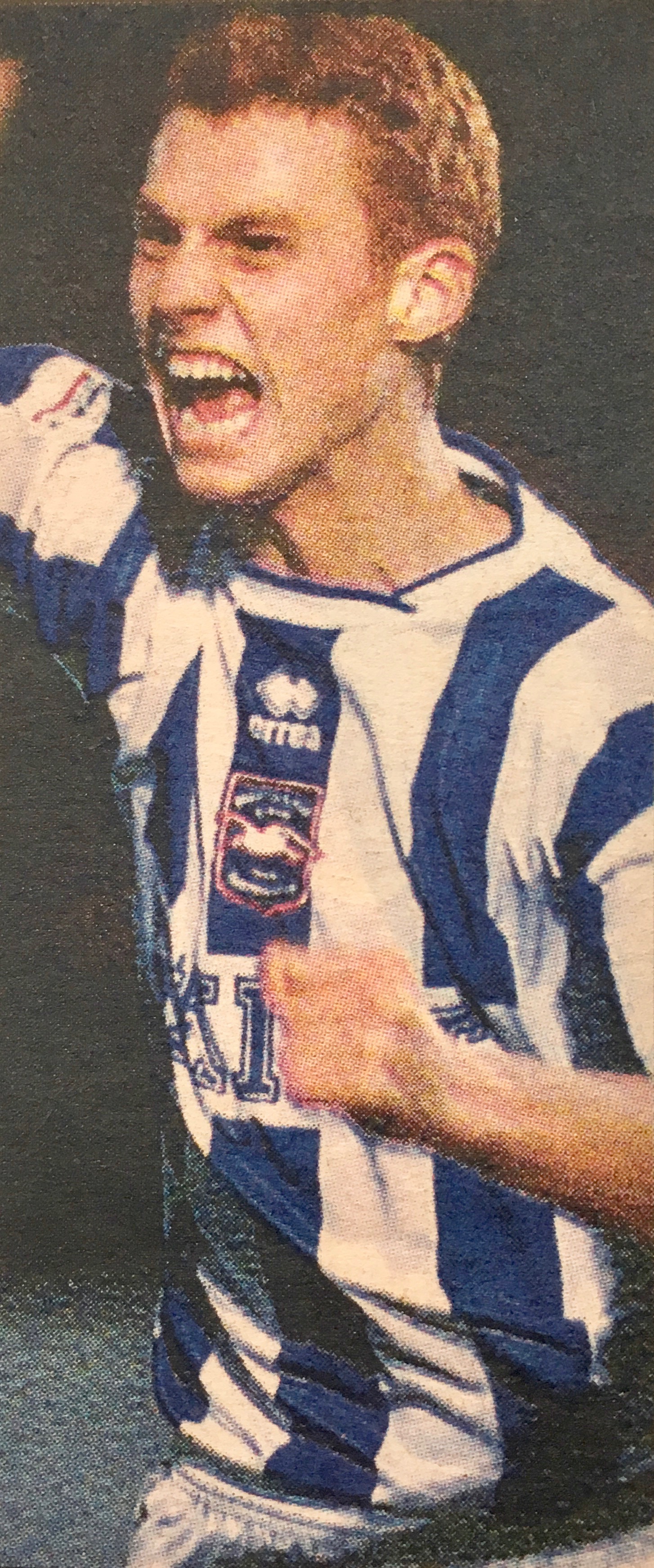
Screen Shot 2021-05-20 at 20.29.32Brooker scored after only three minutes in a 2-0 win away to Plymouth Argyle on 14 April 2001 (celebrating above) which secured promotion for the Seagulls, and he was a regular on the wing that season, making a total of 41 appearances. He remained a key member of Albion’s third tier promotion-winning squad in 2001-02, Argus reporter Andy Naylor summing up his contribution thus: “Most wingers have an inconsistent streak and ‘Bozzy’ is no exception, but he is a matchwinner on his day.

“Quick and an elusive runner with the ball, he hit scoring form as well towards the end of the campaign with three goals in eight games. The First Division should suit his style.”

Brooker also featured in Steve Coppell’s 2002-03 side – I remember seeing him score in a 2-1 away win at the Madjeski Stadium – but as Brighton exited the second tier at the wrong end in 2003, so Brooker ended his association with the club.

Coppell had hoped he would stay, telling The Argus: “We obviously want to keep him at the club. I think he is a terrific asset. He has still got a lot to add to his game and improve but he makes us that little bit different.

“He is hard to tie down. Teams cannot afford to leave him and yet they don’t really want to assign somebody to him.”

For his part, Brooker told Howard Griggs of The Argus in an April 2011 interview: “I absolutely loved my time at Brighton; it was the best three years of my career.

“By nature I am a Chelsea fan but I always look out for Brighton and so do a lot of my family and friends.”

A free transfer move to Leicester City, once again working under Adams, finally gave Brooker a Premier League platform to display his talent but his chances were limited and he ended up starting just two League Cup games as well as getting on as a substitute in three League games and a FA Cup match.

With his top tier opportunities limited, he elected to play under Coppell again and joined Championship side Reading on loan. He made 11 appearances in 2004 before joining the Royals permanently in July 2004.

After just one season at Reading, when he played 34 games, Martin Allen signed him on a free transfer for Brentford.

He had two seasons with the Bees but his time at Griffin Park came to an end shortly after the start of the 2007-08 season.

“When Terry Butcher came in, I think he’d made his mind up about me before he’d even seen me play,” Brooker told fulhamfc.com. “We just didn’t see eye to eye about things, and that was the end of it for me there.”

A Brentford blog, the entertaining BFC Talk, spoke about Brooker in a July 2015 piece. “Paul Brooker was another who flattered to deceive and throughout his career never did justice to his vast ability,” it said.

“He scored a goal of sheer brilliance after running the length of the pitch at Swindon, but on other days he appeared to be lethargic, disinterested and peripheral to the action.

“He did not take criticism well, either from fans, or indeed, his manager, Terry Butcher, and reacted badly before having his contract cancelled.” Although Brooker started taking his coaching badges, he admitted to the Fulham website: “I’ve not really kicked a football since I left Brentford; I lost a lot of my passion and love for the game.

“I’ve set up a carpet cleaning business with a friend just for something to do and that’s going quite well. I’m enjoying doing something different from football.”

Brooker played non-league for Chertsey Town in 2008-09 although he did have a short spell back training at the Albion, during Adams’ brief return as manager.

He also turned out for Havant & Waterlooville and Dorking Wanderers. After his playing days ended, he took up after school sports coaching in the Kingston, Twickenham and Hounslow areas.red Brooker

Pictures from the matchday programme; Simon Dack in the Argus, and the Reading website.

Spanish TV star Michael Robinson followed in dad’s footsteps to play for Brighton

Robinson v WBA

WHEN Michael Robinson died of cancer aged 61 on 28 April 2020, warm tributes were paid in many quarters to the former Brighton, Liverpool and Republic of Ireland international who became a big TV celebrity in Spain.

“We have lost a very special guy, a lovely person and someone I’m proud to have known both on and off the pitch,” his former teammate Gordon Smith told Spencer Vignes. “He was one of the boys, one of the good guys.”

It seemed like half a world away since Robinson had charged towards Gary Bailey’s goal in the dying moments of the 1983 FA Cup Final only inexplicably to pass up the opportunity of scoring a Wembley winner to lay the ball off to Smith.

“With Michael bursting forward and having turned the United defence inside out, I was genuinely expecting him to shoot and had put myself in a position to pick up any possible rebound,” Smith recounted. “Instead he squared it to me and we all know what happened next.”

Robinson’s next two competitive matches also took place at Wembley:

  • He once again led the line for Brighton when the Seagulls were crushed 4-0 by Manchester United in the cup final replay on 26 May. It turned out to be his last game for the Albion.
  • Three months later he was in the Liverpool side who lost 2-0 to United in the FA Charity Shield season-opening fixture between league champions and FA Cup winners, following his £200,000 move from relegated Brighton.

It was hardly surprising Robinson didn’t hang around at the Goldstone: the Seagulls had given him a platform to resurrect a career that had stalled at Manchester City, but the striker had several disputes with the club and the newspapers were always full of stories linking him with moves to other clubs.

robbo livPerhaps it was surprising, though, that champions Liverpool were the ones to snap him up, particularly as Ian Rush and Kenny Dalglish were in tandem as first choice strikers.

But at the start of the 1983-84 season, Joe Fagan’s Liverpool had several trophies in their sights and Robinson scored 12 times in 42 appearances as the Merseyside club claimed a treble of the First Division title, the League Cup, and the European Cup.

It took him a while to settle at the Reds because by his own admission he was in awe of the players around him but advice from Fagan to play without the metal supports he’d worn in his boots for six years previously (to protect swollen arches) paid off.

“It made a hell of a difference,” he said. “I felt a lot sharper and so much lighter on my feet.” In the first game without them, Robinson scored twice in a European game at Anfield, then he got one in a Milk Cup tie versus Brentford and scored a hat-trick in a 3-0 league win at West Ham.

robbo semi hatNevertheless, asked many years later to describe his proudest moment in football, he maintained: “Scoring the winning goal in the FA Cup semi-final that meant that a bunch of mates at Brighton were going to Wembley in 1983.”

One of two sons born to Leicester publican Arthur Robinson on 12 July 1958, Michael followed in his father’s footsteps in playing for Brighton. Arthur played for the club during the Second World War when in the army, and also played for Leyton Orient.

When he was four, Robinson moved to Blackpool where his parents took over the running of a hotel in the popular seaside resort. The young Robinson first played football on Blackpool beach with his brother.

After leaving Thames Primary School, it was at Palatine High School that he first got involved in organised football, and, before long, he caught the eye of the local selectors and represented Blackpool Schools at under 15 level, even though he was only 13.

Amongst his teammates at that level was George Berry, who ironically was Robinson’s opponent at centre half in his first Albion match, against Wolverhampton Wanderers.

The young Robinson also played for Sunday side Waterloo Wanderers in Blackpool and when still only 13 he was invited for trials at Chelsea, by assistant manager Ron Suart, who had played for and managed Blackpool.

Although he was asked to sign schoolboy forms, Robinson’s dad thought it was too far from home. Coventry, Blackpool, Preston and Blackburn were also keen and the North West clubs had the edge because he wouldn’t have to leave home.

Eventually he chose Preston and on his 16th birthday signed as an apprentice. At the time, Mark Lawrenson was also there, training with the youngsters, and Gary Williams was already on the books.

After two years as an apprentice, he signed professional and began to push for a first team place with the Lillywhites. With former World Cup winner Nobby Stiles in charge, in 1978-79, Robinson scored 13 goals in 36 matches, was chosen Preston fans’ Player of the Year and his form attracted several bigger clubs.

In a deal which shocked the football world at the time, the flamboyant Malcolm Allison paid an astonishing £756,000 to take him to Manchester City. It was a remarkable sum for a relatively unproven striker.

The move didn’t work out and after scoring only eight times in 30 appearances for City, Robinson later admitted: “I’d never kicked a ball in the First Division and the fee was terrifying. If I had cost around £200,000 – a price that at that time was realistic for me – I would have been hailed as a young striker with bags of promise.”

It was Brighton manager Alan Mullery, desperate to bolster his squad as Albion approached their second season amongst the elite, who capitalised on the situation.

“I received the go ahead to make some major signings in the summer of 1980,” Mullery said in his autobiography. Mullery, had the support of vice-chairman Harry Bloom – current chairman Tony Bloom’s grandfather – even though chairman Mike Bamber was keener to invest in the ground.

“I could see he’d lost confidence at City and I made a point of praising him every chance I got,” said Mullery. “I asked him to lead the line like an old-fashioned centre forward and he did the job very well.”

Robinson told the matchday programme: “When Brighton came in for me, I needed to think about the move…12 months earlier I had made the biggest decision of my life and I didn’t want to be wrong again.”

In Matthew Horner’s authorised biography of Peter Ward, He shot, he scored, Mullery told him: “When I signed Michael Robinson it was because I thought Ward was struggling in the First Division and that Robinson could help take the pressure off him. Robinson was big, strong, and powerful and he ended up scoring 22 goals for us in his first season.”

The first of those goals came in his fourth game, a 3-1 league cup win over Tranmere Rovers, and after that, as a permanent fixture in the no.9 shirt, the goals flowed.

With five goals already to his name, Robinson earned a call up to the Republic of Ireland squad. Although born in Leicester, his mother was third generation Irish and took out Irish citizenship so that her son could qualify for an Irish passport. It was also established that his grandparents hailed from Cork.

He made his international debut on 28 October 1980 against France. It was a 1982 World Cup qualifier and the Irish lost 2-0 in front of 44,800 in the famous Parc des Princes stadium.

Nevertheless, the following month he scored for his country in a 6-0 thrashing of Cyprus at Lansdowne Road, Dublin, when the other scorers were Gerry Daly (2), Albion teammate Tony Grealish, Frank Stapleton – and Chris Hughton!

In April 1982, Robinson, Grealish and Gerry Ryan were all involved in Eire’s 2-0 defeat to Algeria, played in front of 100,000 partisan fans, and for a few moments on the return flight weren’t sure they were going to make it home. The Air Algeria jet developed undercarriage problems and had to abort take-off. Robinson told the Argus: “I thought we were all going to end up as pieces of toast. But the pilot did his stuff and we later changed to another aircraft.”

Although not a prolific goalscorer for Ireland, he went on to collect 24 caps, mostly won when Eoin Hand was manager. He only appeared twice after Jack Charlton took charge.

But back to the closing months of the 1980-81 season…while only a late surge of decent results kept Albion in the division, Robinson’s eye for goal and his never-say-die, wholehearted approach earned him the Player of the Season award.

As goal no.20 went in to secure a 1-1 draw at home to Stoke City on 21 March, Sydney Spicer in the Sunday Express began his report: “Big Mike Robinson must be worth his weight in gold to Brighton.”

However, the close season brought the shock departure of Mullery after his falling out with the board over the sale of Mark Lawrenson and the arrival of the defensively-minded Mike Bailey.

Bailey had barely got his feet under the table before Robinson was submitting a written transfer request, only to withdraw it almost immediately.

He said he wanted a move because he was homesick, but after talks with chairman Bamber, he was offered an incredible 10-year contract to stay, and said the club had “fallen over themselves to help me”.

Bamber told the Argus: “I have had a very satisfactory talk with Robinson and now everybody’s contracts have been sorted out. It has not been easy to persuade him to stay.”

Even though Bailey led the Seagulls to their highest-ever finish of 13th, it was at the expense of entertainment and perhaps it was no surprise that Robinson’s goal return for the season was just 11 from 39 games (plus one as sub).

The 1982-83 season had barely got underway when unrest in the club came to the surface. Steve Foster thought he deserved more money having been to the World Cup with England and Robinson questioned the club’s ambition after chairman Bamber refused to sanction the acquisition of Charlie George, the former Arsenal, Derby and Southampton maverick, who had been on trial pre-season.

Indeed, Robinson went so far as to accuse the club of “settling for mediocrity” and couldn’t believe manager Bailey was working without a contract. Bamber voiced his disgust at Robinson, claiming it was really all about money.

The club tried to do a deal whereby Robinson would be sold to Sunderland, with Stan Cummins coming in the opposite direction, but it fell through.

Foster and Robinson were temporarily left out of the side until they settled their differences, returning after a three-game exile. But within four months it was the manager who paid the price when he was replaced in December 1982 by Jimmy Melia and George Aitken.

Exactly how much influence the managerial pair had on the team is a matter of conjecture because it became a fairly open secret that the real power was being wielded by Foster and Robinson.

On the pitch, the return of the prodigal son in the shape of Peter Ward on loan from Nottingham Forest had boosted crowd morale but didn’t really make a difference to the inexorable slide towards the bottom of the league table.

Ward scored a famous winner as Manchester United were beaten 1-0 at the Goldstone a month before Bailey’s departure, but he only managed two more in a total of 20 games and Brian Clough wouldn’t let him stay on loan until the end of the season.

Albion variously tried Gerry Ryan, Andy Ritchie and, after his replacement from Leeds, Terry Connor, to partner Robinson in attack. But Connor was cup-tied and Ryan bedevilled by injuries, so invariably Smith was moved up from midfield.

Robinson would finish the season with just 10 goals to his name from 45 games (plus one as sub) – not a great ratio considering his past prowess.

The fearless striker also found himself lucky to be available for the famous FA Cup fifth round tie at Liverpool after an FA Commission found him guilty of headbutting Watford goalkeeper Steve Sherwood in a New Year’s Day game at the Goldstone.

The referee hadn’t seen it at the time but video evidence of the incident was used and the blazer brigade punished him with a one-match ban and a £250 fine. Robinson claimed it had been an accident…but it was one that left Sherwood needing five stitches. The ban only came into effect the day after the Liverpool tie, and he missed a home league game against Stoke City instead.

In the run-up to the FA Cup semi-final with Sheffield Wednesday, Robinson was reported to be suffering with a migraine although he told Brian Scovell it was more to do with tension, worrying about the possibility of losing the upcoming tie.

Nevertheless, he told the Daily Mail reporter: “When I was with Preston, I suffered a depressed fracture of the skull and have had headaches ever since. This week it’s been worse with the extra worry about the semi-final.”

Manager Melia, meanwhile was relieved to know Robinson would be OK and almost as a precursor to what happened told John Vinicombe of the Evening Argus: “Robbo is a very important member of our team and he’s the man who can win it for us.

“It is Robbo who helps finish off our style of attacking football and I know he’ll do the business for us on the day.”

Reports of the semi-final were splashed across all of the Sunday papers, but I’ll quote the Sunday Express. Under the headline MELIA’S MARVELS, reporter Alan Hoby described the key moment of the game.

“In a stunning 77th minute breakaway, Case slipped a beauty forward to the long-striding Gordon Smith whose shot was blocked by Bob Bolder.

“Out flashed the ball to Smith again and this time the cultured Scot crossed for Mike Robinson to rap it in off a Wednesday defender.”

Other accounts noted that defender Mel Sterland had made a vain attempt to stop the ball with his hand, but the shot had too much power.

When mayhem exploded at the final whistle, a beaming Robinson appeared on the pitch wearing a crumpled brown hat thrown from the crowd to acknowledge the ecstatic Albion supporters.

In one of many previews of the Final, Robinson was interviewed by Shoot! magazine and sought to psyche out United by saying all the pressure was on them.

“That leaves us to stride out from that tunnel with a smile and a determination to make everyone proud of us,” he said.

“Nobody seems to give us a prayer. They all seem glad that ‘little’ Brighton has reached the Final, but only, I suspect, because they expect to see us taken apart by United.”

Everyone knows what happened next and quite why the normally-confident Robinson didn’t take on his golden opportunity to win the game for Brighton in extra time remains a mystery.

However, as mentioned earlier, within months ‘little’ Brighton was a former club and Robinson had taken to a much bigger stage. This is Anfield reflected on his short time at Anfield as “a golden opportunity for him” and recalls that it turned out to be “the best and most successful season of his career”.

RobFozBWHe had yet more Wembley heartache during a two-year spell with Queen’s Park Rangers, being part of their losing line-up in the 3-0 league cup defeat to Oxford United in 1986.

The move which would lay the foundations for what has become a glorious career on TV arose in January 1987 when Robinson moved to Spain to play for Osasuna, scoring 12 times in 59 appearances before retiring through injury aged 31.

Robinson completely embraced the Spanish way of life, learned the language sufficiently to be an analyst for a Spanish TV station’s coverage of the 1990 World Cup, and took Spanish citizenship.

His on-screen work grew and the stardom Robinson achieved on Spanish TV attracted some of the heavyweight English newspapers to head out to Spain to find out how he had managed it.

For instance, Elizabeth Nash interviewed him for The Independent in 1997 and discovered how he had sold his house in Windsor and settled in Madrid.

Meanwhile, in a truly remarkable interview Spanish-based journalist Sid Lowe did with Robinson for The Guardian in 2004, we learned how that FA Cup semi-final goal was his proudest moment in football and that Steve Foster was his best friend in football.

In June 2017, his TV programme marked the 25th anniversary of Barcelona’s first European Cup win at Wembley, with some very studious analysis. On Informe Robinson (‘Robinson Report), he said: “Wembley was a turning point in the history of football. Cruyff gave the ball back to football.”

Cup Final hero Dave Beasant was Brighton’s oldest player

Beasant BHA

THE FIRST goalkeeper to save a penalty in an FA Cup Final – and the first to captain his team in the historic end of season finale – played between the sticks for Brighton at the ripe old age of 44.

Admittedly Dave Beasant is better known for his years playing for Wimbledon, during which time he laid down those FA Cup milestones in the 1988 final against Liverpool.

Nicknamed Lurch after the butler in The Addams family, Beasant’s heroics to keep out John Aldridge’s spot kick and preserve the 1-0 lead given to the humble south west London club by Lawrie Sanchez, led to the giant goalkeeper lifting the cup.

It also turned out to be the last ever game he played for Wimbledon. A month after that Wembley triumph, Newcastle paid £750,000 for his services – a transfer fee record for a goalkeeper at that time.

Not a bad return on Wimbledon’s £1,000 investment ten years earlier after he had impressed Dario Gradi playing for Edgware Town against the Dons in a pre-season friendly.

Beasant made his league debut against Blackpool in January 1979, and, remarkably, between August 1981 and the end of that 1987-88 season, made 304 consecutive league appearances for the Dons as they rose through the leagues.

When Newcastle sold Paul Gascoigne to Spurs for £2.2 million, they decided to splash £750,000 of it on the big Wimbledon goalkeeper.

Sadly, it was not money well spent. Beasant’s spell on Tyneside lasted just five months and certainly didn’t match the fairytale ending at Wimbledon.

Newcastle struggled at the foot of the table in 1988-89, and were relegated, but before the trapdoor opened Beasant had already departed after just 20 appearances.

He moved back to London in January 1989 to join Chelsea, where he played 193 times, initially under Ian Porterfield, until falling out of favour in 1992.

It was towards the end of 1989 that Beasant won two England caps, playing against Italy and Yugoslavia, and an injury to David Seaman saw Beasant selected for Bobby Robson’s 1990 England World Cup squad, although he didn’t play.

When Glenn Hoddle took over at Stamford Bridge, Beasant was relegated to number three ‘keeper behind Dmitri Kharine and Kevin Hitchcock, so he went out on loan for brief spells at Grimsby Town (six games) and Wolves (four games) before securing a £300,000 move to Southampton in 1993 to succeed Tim Flowers as their no.1.

He played 105 times for Saints but several managerial changes saw his fortunes fluctuate and, in 1997, he once again found himself third choice – this time behind Maik Taylor and Paul Jones – and he was on the move again.

By this time he was 38, but retirement was still not on his agenda. After joining on loan initially, Beasant moved permanently to Nottingham Forest in November 1997 and played 139 games in four years.

It was back to the south coast again in 2001, when Portsmouth needed a goalie following the death in a road accident of their regular ‘keeper, Aaron Flahavan. Beasant played 27 times for Pompey.

Emergency loan spells then followed successively at Tottenham, Bradford City and Wigan Athletic, although he didn’t play any first team games for any of them.

It was from Wigan, just a few weeks before his 44th birthday in 2003, that he once again headed south, this time to join Brighton’s brave but ultimately unsuccessful attempt under Steve Coppell to stave off relegation from Division One.

With Michel Kuipers out of the side with a thigh injury and loan replacement, Ben Roberts, suffering from ‘flu, Beasant was drafted in.

In the Bradford City v Brighton programme in February 2003, Colin Benson wrote almost poetically about the legendary goalkeeper.

Beasant landsc“The unmistakeable figure of Dave Beasant stood tall under the Brighton crossbar at the Bescot Stadium a fortnight ago marking his debut for his 11th club at 43 years of age by brilliantly saving from Leitao’s shot on the rebound after beating out an effort from Corica,” he wrote. “Unfortunately he could not crown the day with a match winning clean sheet for Walsall pinched a 1-0 victory but it amply demonstrated that after 20 years between the posts he has lost none of his technique or resilience.”

In a 2018 interview with Spencer Vignes, Beasant said: “Stevie Coppell gave me a bell. I think you’d lost 12 straight games. I remember looking at the table thinking ‘They’re going down’. But there was also something about it that I quite liked. It was a challenge.”

Beasant said that morale was good despite the league position, and he added: “Wherever I go, I can add something on the field and off it. And that’s what happened. We clicked really well together.”

He played 16 games through to the end of the season and although ultimately the bid to stay up was not successful, no blame could be laid at Beasant’s door for lack of effort.

Never was it more evident than in the final game of the season away to Grimsby. With the score 2-2 and all hope virtually extinct, Beasant was still giving his all when other players’ heads had dropped.

I chatted briefly to Beasant at the club’s end of season dinner and remarked how I had been impressed by his never-say-die attitude right to the very end of that game, even though it was a lost cause.

Obviously the consummate professional, he said to me that however unlikely a win would be, you had to continue to play in the hope things might change round.

What a pro and exactly the sort of attitude that meant Beasant endeared himself to the Albion faithful. In a prophetic assessment after the Grimsby game, he told the Argus:

“You feel for those fans because they have been superb. They are gearing themselves for next season already and hopefully the players can set the same target as the fans and, obviously, that is to bounce straight back.”

Beasant cemented his place in the record books as Albion’s oldest-ever player while Albion, of course, went on and did just as he thought they might on that glorious day at the Millennium Stadium in Cardiff.

Although Coppell offered Beasant the chance to stay on with the Seagulls, he didn’t want to drop down to the third tier and instead took up Chris Coleman’s offer to become a player-coach at Fulham. He was proud to say that on his 45th birthday he was on the bench when Fulham played Chelsea.

Beasant remained on the Fulham coaching staff after Coleman’s departure under his old Wimbledon teammate Lawrie Sanchez (he had already worked with Sanchez in his previous role as Northern Ireland manager). But when Sanchez was fired, Beasant went too.

He subsequently worked for his son, Sam, at Stevenage, and at the age of 55 was famously registered as part of the squad for the 2015 play-off final, even though he didn’t play.

Between 2015 and 2018, Beasant was goalkeeping coach at Reading.

Promotion-winner Keith Dublin delivered £240,000 profit

BRIGHTON & Hove Albion’s promotion from the old Third Division in 1987-88 earned two of the squad places in that season’s PFA representative team; one quite naturally was top goalscorer Garry Nelson, the other was defender Keith Dublin.

Also in the same XI was Fulham’s Leroy Rosenior, father of latter day Albion utility man, Liam.

Dublin was an ever-present during that successful Seagulls campaign having joined in August 1987 from Chelsea, where he had played 50 league games (plus one as a sub) between 1983 and 1987.

Born in High Wycombe on 29 January 1966, Dublin became an apprentice at Stamford Bridge in July 1982 and signed professional 15 months later.

When regular left back Joey Jones was injured, he made his first team debut in a 3-1 home win over Barnsley. It was the penultimate game of the 1983-84 season, and the last at home as John Neal’s team won the Second Division Championship.

Dublin also caught the eye of the England selectors and played six times for the under-19 team.

At the time, Dublin, or Dubbers as he was known, was one of the few black players emerging at Chelsea, following after Paul Canoville and Keith Jones.

Canoville wrote in his autobiography with Rick Glanvill, Black and Blue: How Racism, Drugs and Cancer Almost Destroyed Me (Headline Publishing Group, 2012), about some atrocious treatment they all received – and not just from the terraces!

“When Jonah and then Dubbers made the step up, they no longer trained with the reserves but with the first team,” said Canoville. “That made three black faces and, on more than one occasion, there were altercations with one player who obviously had a problem with black men.

“It was always dealt with properly, but, as if the colour wasn’t an issue. Of course it was. Back then, casual, institutional racism was displayed at almost every level of the club – not so much that you would quit over it or kick up a rumpus, but enough to make you feel different and an outsider most of the time.”

Canoville added: “Dubbers was strong, athletic and fast. But as soon as either of them made a mistake, the crowd was on to them, slagging them off. There wasn’t the same open racist abuse I received, but still the tolerance threshold was low, as much in the coaching staff as the crowd.”

Dublin played 28 games in the top division for Chelsea during the 1986-87 season, but with competition for the left back spot hotting up in the shape of future England international Tony Dorigo and Clive Wilson, he decided to move on.

“John Hollins couldn’t guarantee me regular first team football at Chelsea so I’m looking forward to an enjoyable and successful season with Brighton,” he said.

Brighton manager Barry Lloyd snapped up Dublin for £35,000, and what an investment because he was ever-present at left back in the promotion season. In fact for the latter part of that season, three of the back four were ex-Chelsea defenders: Gary Chivers at right back, Robert Isaac centre back, and Dublin at left back.

When introducing Dublin in the Albion matchday programme, an article pointed out how five years previously Dublin had been cleaning Chris Hutchings‘ boots at Chelsea – and now he was taking over his no.3 shirt. Hutchings had been moved forward to play in midfield, although four months later he left the club to join Huddersfield Town.

On signing for the Albion, Dublin said: “I’m not worried about dropping two divisions because I don’t believe Brighton will be in this division for long. It’s an easy club to settle down with because I know so many former Chelsea players.” He pointed out he had known Isaac since the age of 12 or 13 when they both played in the same district schools team.

Dublin used to travel down daily to training with Chivers and although defending was their first priority they had a friendly rivalry over who could score the most goals. Dublin chipped in with five in that first season but Chivers regularly went up for corners so won the little private wager in the following two seasons.

The promotion was a great experience for Dublin who said in an interview in the matchday programme: “There’s never been anything like it for me obviously, and it’s going to be a long time before anything can top the day we clinched second place. It might never happen.

“Probably the best thing was getting a few goals along the way as well because that had never happened to me before.”

As young Ian Chapman gradually made the left back berth his own, Dublin switched inside to centre back.

Dublin welcomed the competition for his place from Chapman, explaining: “I think it’s good when you’ve got someone chasing your place, snapping at you all the time to get in the first team.

“Ian’s been quite a good mate of mine since I arrived and you have to always remember that being dropped or selected ahead of someone else is what football is all about.

“It keeps me on my toes, and if you can have six or seven players in the team in the same situation then that’s the best thing possible at any club.

“Ian’s facing the same scene now as I was experiencing at Chelsea.”

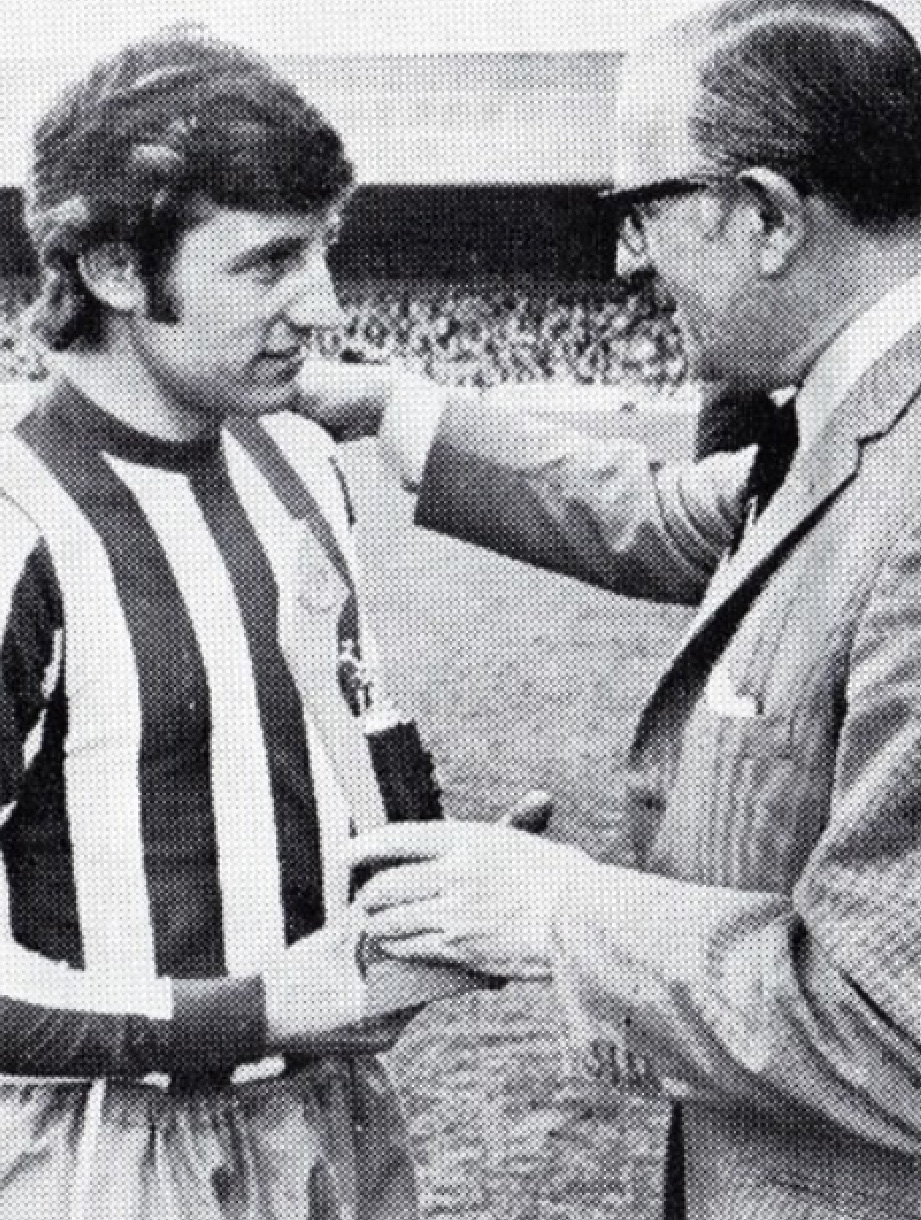
Dub leapIt was not unusual to see Dublin selected as man of the match and several programmes featured pictures of the obligatory post-match presentation by the sponsor to the nattily-dressed defender. Dublin admitted in another profile piece that clothes and shopping were hobbies.
Meanwhile, on the pitch in 1989-90, his consistent performances at the heart of the defence earned him the Albion player of the season accolade.

After 132 appearances in three seasons with Brighton, Brighton cashed in on Dublin’s prowess by picking up a £275,000 fee from Watford in the summer of 1990.

With goalkeeper John Keeley departing for Oldham for £238,000 at around the same time, fans feared another frustrating season was ahead. But they were in for a surprise.

While Dublin joined a side that would struggle, at first under former Chelsea striker Colin Lee, then ex-Tottenham legend, Steve Perryman, Brighton surprised the critics and ended the season at Wembley.

Indeed Watford finished fourth from bottom of what was then Division 2, while Brighton sneaked into sixth place with that memorable last game win over Ipswich Town, beat Millwall over two legs in the play-off semi-final and then went down 3-1 to Neil Warnock’s Notts County in the play-off final.

The following year, with future England goalkeeper David James emerging, Watford turned around a disappointing first half to the season and eventually finished 10th.

Dublin was an integral part of Watford’s defence for four years, making 168 appearances, although it appears not all Watford supporters appreciated him.

The amusing Watford fans’ website, Blind Stupid and Desperate recalled this among other memories: “The fondness with which Keith Dublin is remembered, the way that fans still tell tall tales of remarkable own goals, insanely cavalier defending and sporadic heroism with broad smiles and genuine affection, demonstrates that perfection isn’t the be-all and end-all for supporters.”

At the end of the 1993-94 season, which had been a struggle against relegation from the First Division under manager Glenn Roeder, Watford did a swap-deal which saw striker Tommy Mooney (yes, the same Mooney who famously missed the Swindon shoot-out penalty against Brighton in 2004) and midfielder Derek Payne join from Southend United and Dublin going in the opposite direction. He spent five years at Roots Hall and amassed a further 179 games.

He subsequently moved to Colchester United, but only played a couple of games, and ended his career in non-league, initially with Farnborough Town and then Carshalton Athletic.

In an Argus article in 2010, they discovered Dublin was busy in ‘retirement’ running soccer camps at home and abroad, and according to wfc.net, Dublin worked in a family property management business after his footballing days were over.

Footnote: Perhaps Dublin set a trend for Albion left backs named after Irish places, with the double whammy Kerry Mayo following in his wake some years later!

1 Dublin1a Dublin portrait2 Dublin header3 Dublin Argus cut4 Dub mom5 dub another mom

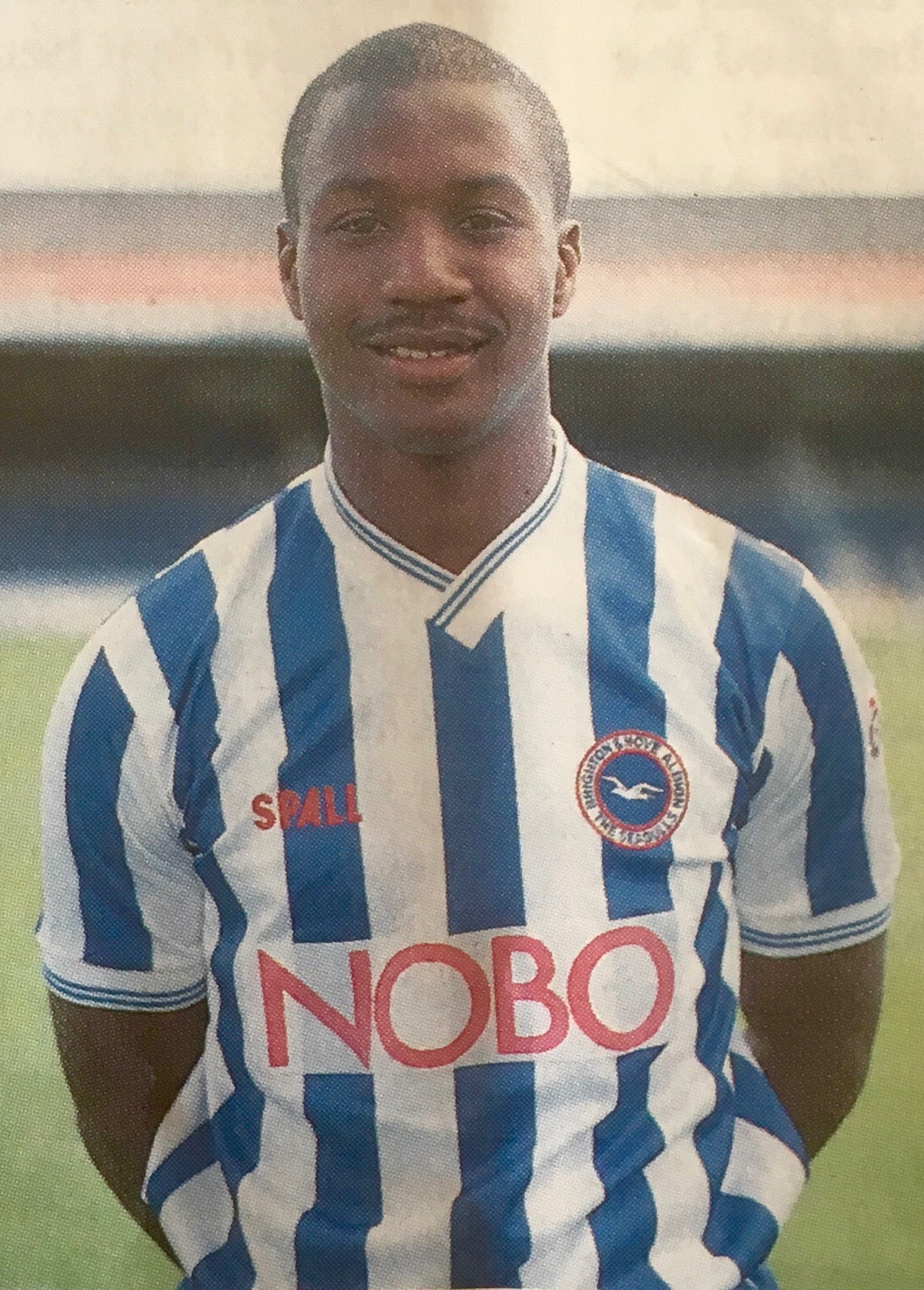
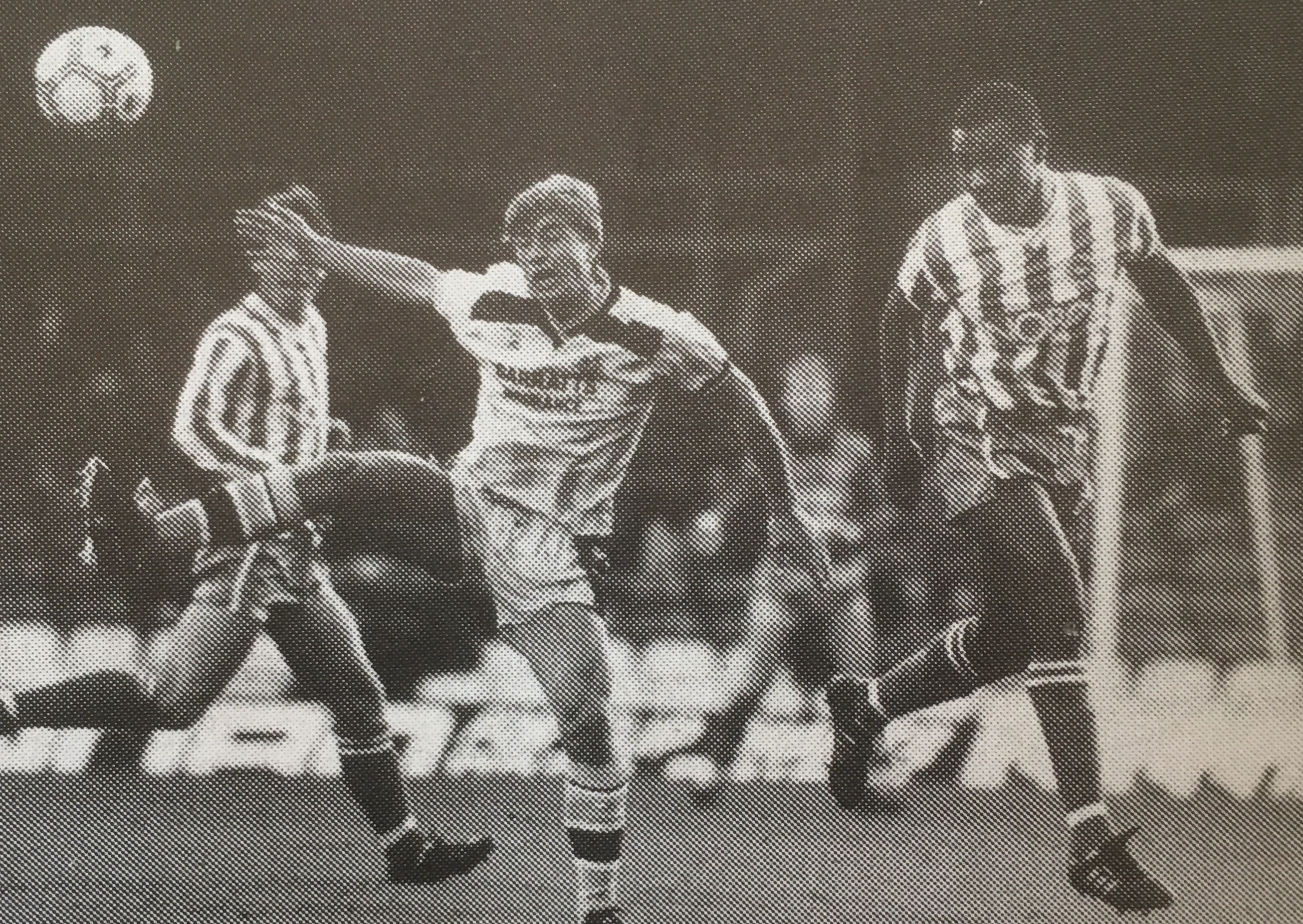
• Pictures from my scrapbook show portraits of Dublin that appeared in the matchday programme; action shots (one from the programme and one from the Argus) and a couple of man of the match presentations

Twelve goals in 26 games for Scottish striker Alan Young

GARY LINEKER’S former strike partner at Leicester City had a good goals to appearances ratio for Brighton & Hove Albion.

Sadly, Scotsman Alan Young only managed 26 appearances in his one season (1983-84) with the Albion, although his 12 goals meant he finished second top goalscorer behind Terry Connor.

His brief Brighton career got off to a great start with a memorable debut goal, an overhead kick to net against Chelsea at the Goldstone. Young twice scored braces for the Seagulls but his season was injury-hit and, with manager Chris Cattlin bringing in his old pal Frank Worthington for the 1984-85 season, Young was sold to Notts County.

In more recent times, Young courted controversy as a radio pundit sharing his opinions about Leicester, and in 2014 BBC Radio Leicester dropped him from his role supporting commentator Ian Stringer.

alanyoung6 2

Back in September 2013, Young was berated online for his criticism of winger Anthony Knockaert. Foxello, on ja606.co.uk, wrote: “If there’s one thing that annoys me more than just about anything else at this football club, it is that grumpy, nasty egotist Alan Young and his never-ending agenda against certain members of the football club.”

The correspondent bemoaned: “Knocky is now the butt of every joke, and the object of every jibe Young throws out…. It’s almost as if he doesn’t want us to have skilful players who occasionally misplace a pass due to their advanced vision, and just have hoofers and cloggers like in his day.”

So let’s take a look back at ‘his day’. Born in Kirkcaldy on 26 October 1955, Young was football-daft and showed sufficient promise to earn Scottish schoolboy international honours.

His boyhood favourite team was Raith Rovers, whose star player at the time was Ian Porterfield, who famously scored the winning goal when Second Division Sunderland beat Leeds in the 1973 FA Cup Final.

Surprisingly overlooked by Scottish professional clubs, Young also experienced early disappointment in England when Nottingham Forest rejected him. “Nottingham Forert didn’t want me and I left there thinking I was no good,” he told Shoot! magazine.

Nonetheless, when he was playing as an unattached player for Scotland Schoolboys against England at Old Trafford, Oldham Athletic scout Colin McDonald, a former Burnley and England international goalkeeper, noted his promise and persuaded the young forward to head south of the border to begin his professional career.

In five years at Boundary Park he scored 30 goals in 122 games, and, to a large extent, learned his trade from old pro Andy Lochhead, a prolific goalscorer in his day for Burnley, Leicester and Aston Villa.

In the 1978-79 season, Young netted a hat-trick against Leicester which caught the eye of fellow Scot and former Rangers boss, Jock Wallace, who had taken over at Filbert Street and was building a team with his fellow countrymen at its core.

When Young joined Leicester, and played alongside his boyhood pal Martin Henderson, it began a love affair with Leicester that endures to this day.

In three years at Leicester, Young scored 26 times in 104 games, eventually forming a partnership with the emerging Lineker. TV’s favourite football frontman was generous enough to pen the foreword to Young’s 2013 autobiography, Youn9y (written in conjunction with Simon Kimber and published by the historypress.co.uk) and said of him: “He was an old-fashioned, aggressive centre forward. He possessed, though, a delicate touch and finesse that belied his big target man status – the perfect partner for a nippy little goalhanger trying to make a name for himself.”

Screenshot
Leicester strike partner for Gary Lineker

Young scored on his full debut for City in a league cup game v Rotherham and followed it up with two on his league debut at home to Watford.

The only time Young was sent off while playing for Leicester was, ironically, at the Goldstone Ground in 1981, at Easter, which was the second of four games at the end of the season that Albion won to stay in the top division.

Young was dismissed for two bookable offences, the first for clattering into goalkeeper Graham Moseley and the other a clash with Steve Foster, although, in his autobiography, he says Foster play-acted a knee injury, which the referee bought. Foster even teased him about it when he joined the Seagulls two years later. In that Easter 1981 fixture, Young’s teammate Kevin McDonald was also sent off, Brighton won 2-1 – and Leicester ended up being relegated together with Norwich and bottom-placed Crystal Palace.

Back in the old Second Division, Young did his cartilage in a game on QPR’s plastic pitch which he says was the beginning of the end of his career, because his knee was never the same afterwards (years later he had a knee replacement).

He also had the disappointment of losing to Spurs in the 1982 FA Cup semi final, although he maintains if a certain Chris Hughton had been sent off for two fouls on Lineker, it might all have been a different story.

Before the next season kicked off, Jock Wallace, the manager he idolised, decided to move back to Scotland to manage Motherwell and his successor at Filbert Street, Gordon Milne, swiftly chose to pair the emerging Alan Smith up front with Lineker, signalling the exit for Young.

Managerial upheaval was to become a familiar cause of Young’s departures in the years that followed, too. But I am getting ahead of myself.

Ian Porterfield, his footballing hero from yesteryear, had taken over as manager at Fourth Division Sheffield United and, although he didn’t really want to drop down the leagues, the Blades were a big club so Young moved to Bramall Lane.

A year later, though, after Brighton’s relegation from the elite in 1983, striker Michael Robinson was sold to Liverpool so there was a centre forward vacancy – and manager Jimmy Melia chose Young to fill it.

The fee was either £140,000 or £150,000 depending on which account you believe, but Young was happy because he pocketed a £20,000 signing on fee (four times what he had received only a year earlier when moving to Sheffield).

His first involvement with the squad was on a close-season tour of the Balearic Islands (with associated eye-opening tales recalled by thegoldstonewrap.com) but he also picked up an injury that was to dog his season on the south coast.

While Young had a lot of time for Melia, when Cattlin took over it was a different story and, in his book, there are plenty of colourful expletives used to describe exactly what he thought! He also castigates physio Mike Yaxley – “the most useless physio I have ever worked with” – although he says the team spirit was very good…seemingly fuelled by long post-training ‘sessions’ in Woody’s wine bar.

A youngHe said: “The football was very enjoyable there and never more so than when Jimmy Case and I were playing together; I loved playing with Jimmy.”

For a short time in that 1983-84 season, Albion had three Youngs in their squad, none of whom were related. Along with Young the forward, there were centre backs Eric Young and on-loan Willie Young.

When Cattlin decided to bring in his old Huddersfield teammate Worthington the following season, Young was on his way, this time to Notts County. The manager who signed him was the former Liverpool and Nottingham Forest defender Larry Lloyd, but his tenure in the managerial chair was very short so, once again, Young found himself playing for a manager who hadn’t chosen him.

In two years at Meadow Lane, Young scored 12 in 43 games for County. He moved on to Rochdale where the Leeds legend Eddie Gray was in charge, but injury took its toll and he only scored twice in 28 games in the 1986-87 season before retiring at 31. He had scored a career total of 89 goals in 349 appearances.

While there were a few non-league appearances, he eventually landed a job back at Notts County in the early days of community football schemes. He made a success of the job, obtained his coaching qualifications and eventually they combined the community scheme with the centre of excellence.

Brighton fans will be interested to know that among the young lads who emerged during Young’s time there were Will Hoskins and Leon Best. The star player, though, was Jermaine Pennant.

Young has fond memories of Neil Warnock’s time as County manager, because of his interest in the work being done at grassroots level. However, the mood changed when Sam Allardyce took over.

Allardyce initially cut Young’s salary and then showed him the door. “I can’t and I never will forgive Sam Allardyce,” he said.

Away from football, Young has had a tempestuous love life – read the book to gather the detail – and has three sons and a daughter. While he also had spells working for Chesterfield and Leeds, he dropped out of the game and then had a very dark period dominated by heavy drinking in isolation, including a time living alone in a caravan on the banks of Loch Lomond.

Eventually a return to England and his break into radio punditry brought him back from the brink.

In 2013, his autobiography Youn9y was published, the sleeve notes describing the story of “a talented, brave striker who played at the highest level of the domestic game but also experienced human misery at its lowest once his playing career was over”.

The notes add: “Youngy doesn’t just recount the good times of his playing career; he also offers valuable insight and moments of perception and understanding of some of the darkest days of his life.”

After four years as match summariser, in 2014 BBC Radio Leicester dispensed with his services and replaced him with another former Fox, Gerry Taggart.

However, Young still gives his opinions about Leicester on the community radio station Hermitage FM.

Pictures show a shot of Alan on Brighton seafront from an Albion matchday programme; the front cover of his autobiography; other matchday programme action shots, and in the Hermitage FM radio studio from Twitter.

Key building blocks for Steve Sidwell’s Premiership future

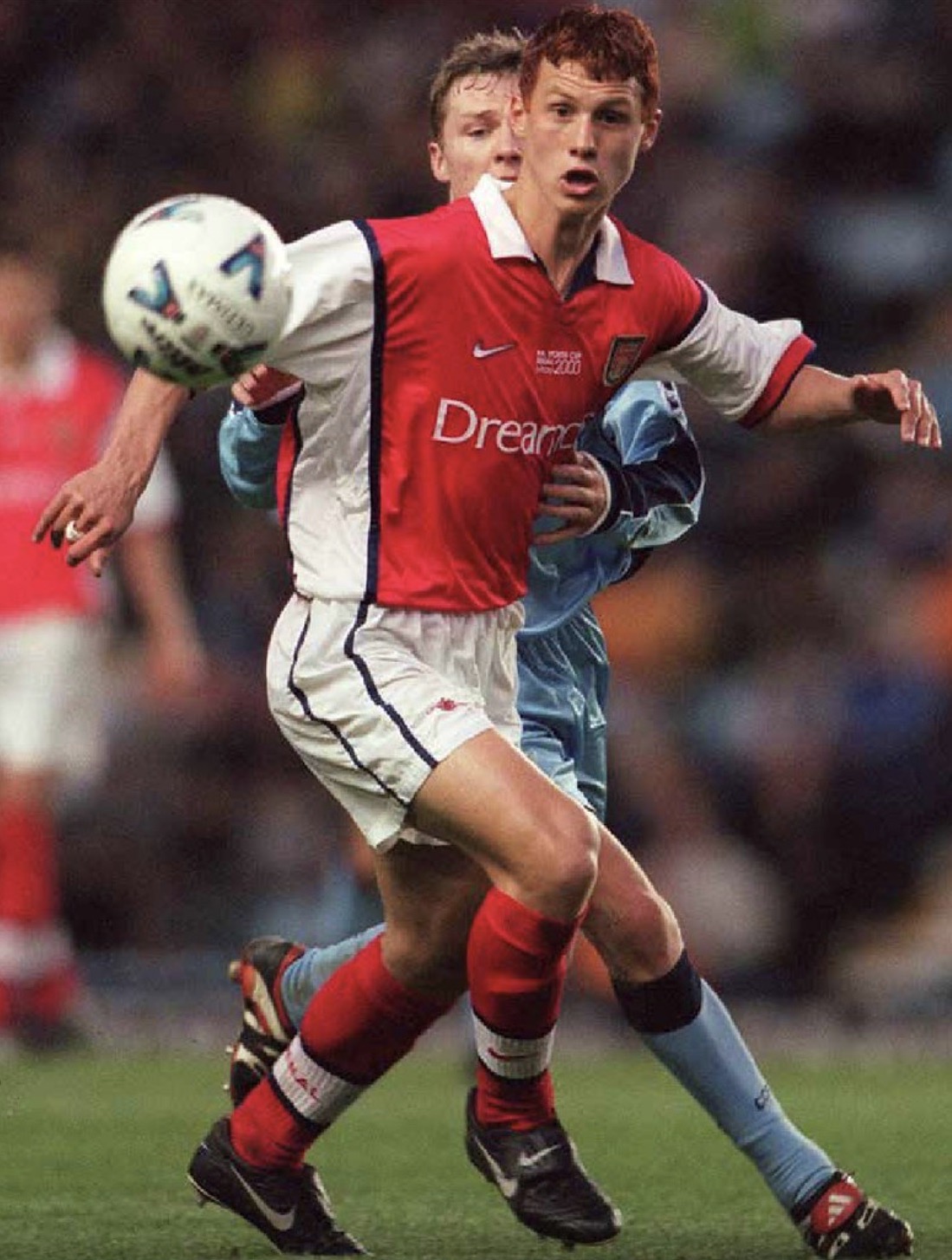
seagull-sidWHEN a flame-haired midfield player called Steve Sidwell joined the Albion on loan from Arsenal in 2002, it wasn’t the first – or last – time he would link up with manager Steve Coppell.
Coppell had organised a similar arrangement the season before when he was in charge at Second Division Brentford, and Sidwell played 30 times for the Bees.

When Coppell acquired his services for the bottom-of-the-second-tier Seagulls, it was instantly apparent that here was a talent destined to perform on a much bigger stage. In a 12-game spell, he scored five goals. They were the building blocks of a career that saw him go on to play in the Premiership for 11 seasons, and against Huddersfield in early 2017 made his 500th career appearance.

So many things are easy in hindsight but presumably if Albion had already been playing at a new stadium at Falmer, Sidwell may have stuck with the Albion rather than moving on to Reading where the Madejski Stadium was already a reality.

In the Royals matchday programme for the Reading v Albion Championship clash in 2005-06, cover boy Siddy was interviewed at great length and recalled his time with Brighton with fondness.

“It was the first time I had played at this level – before then I had been in Arsenal’s youth team and on loan at Brentford in the Second Division – so I was grateful for that opportunity,” he said. “The best description of my time there would be ‘short but sweet’.

“The fans at Brighton were fantastic, especially away from home,” he continued. “”At the time we were bottom of the league and battling against relegation, but they still turned up every week and always backed us.”

Sidwell recounted how it was during that time that he forged his long term friendship with Bobby Zamora and he also spoke of how he played in the same Colliers Wood Sunday football team as fellow midfielder Alexis Nicolas.

Eleven months after Sidwell went to Reading, Coppell made the same choice and enjoyed the best of Sidwell as his scintillating partnership with James Harper in the centre of midfield helped to take Reading out of the Championship and into the Premiership.

Let’s just go back to the 2002-03 season, though, and recall the impact Sidwell made in Brighton’s valiant effort to defy the relegation odds.

A disastrous run of 12 defeats in the first part of the season had dumped Albion at the foot of the table and manager Martin Hinshelwood had been replaced by Coppell, who rung the changes and started turning round the fortunes on the pitch.

Sidwell came in from Arsenal and scored the first of his five goals in a 2-2 draw away to Preston. He scored the only goal of the game in a Boxing Day win at Norwich and two days later scored both the goals in a 2-2 home draw with Burnley (celebrating in this Argus picture below).

Siddy youthfulOne of my favourite memories came at Highfield Road, Coventry, on January 11 2003 when Albion probably deserved to win but had to settle for a point in a 0-0 draw. Before the kick off, Albion fans were chanting his name during the warm-up, urging him to stay, because there had been speculation linking him with moves to other clubs.

Sidwell’s performance that day was acknowledged by no less an authority than the Scotland midfield maestro Gary McAllister, who was player-manager of Coventry at the time.

McAllister told the press after the game: “I was very impressed with Brighton. They passed it well. The front two were always a threat to us, joined by Steve Sidwell creating in the middle of the park and the two guys wide.

“Brighton were as good a side as we have seen at Highfield Road this season.”
Two days later, the Argus was reporting on the clubs interested in signing the promising youngster, including Stoke and Reading. Coppell told them: “What will be will be. I personally think the level of his performance will almost demand Arsenal not letting him go because he has done so well.

“Alternatively, they are going to move him on and take what money they can now. There will, I’m sure, be a lot of people in for him.

“He just wants to play football. I think the more we take these kind of decisions off his shoulders and just let him turn up and play then we are going to get the best out of him.”

siddy arseSidwell, who was out of contract at Arsenal at the end of the season, said: “Stoke put a bid into Arsenal. I went up there and it’s a great set-up and a fantastic club but we will see what happens.”

Interesting then, that the Potters did eventually get their man several years later.

However, in 2003 Reading was his destination and he spent four and a half years with them, helping them to win  promotion from the Championship and playing in their debut Premier League season.

In July 2007, at the end of his contract, Sidwell moved on a free transfer to Chelsea, the team he’d supported as a boy. “People think that because I was with Arsenal from the age of nine to 20 that I support them, but I’ve always been Chelsea. I was born in Tooting, my mum and dad are from Tooting Bec and Balham, so I was born into a Chelsea-supporting family,” he said in an Albion matchday programme article.

So, he said it was a “no-brainer” to go there. “I was joining a club that had won back-to-back titles under a manager who was a breath of fresh air in the game and I’d be playing and training with some of the best players in the world.”

Screen Shot 2021-04-23 at 07.31.27

The wealth of talent meant competition for places at Stamford Bridge restricted Sidwell’s game time, although he did clock up 25 games for the Blues. With the benefit of hindsight, he said: “It was the right move, it just came at the wrong time. I was only 24 so it came too soon. I’d only had one season of Premier LEague football under my belt and wasn’t quite ready for such a big jump from Reading.

“Maybe if I’d gone to Newcastle or West Ham (they’d both been interested) for a couple of years and played really well there, then I would have been better equipped but, like I said, when Chelsea comes knocking you don’t turn the opportunity down.”

He added that off-field issues, such as Mourinho leaving in the September to be replaced by Avram Grant, caused unrest amongst the players. But he added: “In hindsight, I wished I’d stayed another six months because Luiz Felipe Scolari came in and you never know what might have happened then.”

However, in the summer of 2008, in search of more regular playing time, he moved on to Aston Villa on a three-year deal. His time at Villa Park was often interrupted by injury and he made 64 appearances in two and a half years before Mark Hughes ended up signing him twice – for Fulham and Stoke City.

In 2011, Sidwell returned to London and scored 17 goals in 115 appearances over three and a half years, before leaving Craven Cottage when Fulham were relegated from the Premiership in 2014. “I went there on the back of their Europa League run and they were still riding the crest of a wave,” he said in an Albion matchday programme article.  He reckoned he played the best football of his career there and said: “In my first year we finished eighth in the Premier League.

“When I first went there, our home record was phenomenal. It didn’t matter who came to the Cottage, we always thought we would get the win. In the season we got relegated, it was surprising how quickly that mentality had changed.”

siddystokeHughes took him on a free transfer to Stoke but he managed only 13 appearances so jumped at the chance once again to link up with his old pal Zamora to join Albion on loan in early 2016 to supplement their efforts to get promoted from the Championship.

Although the form of Beram Kayal and Dale Stephens meant he struggled to nail down a regular spot, he was a great option to bring off the bench and memorably got the last-gasp winner in a televised away match at Nottingham Forest. “When I was getting taped up, I said to the bench I was going to score, it was just fate,” he said. “I managed to pop up with the goal, and it was a great feeling to see the ball hit the back of the net and you could see from the celebrations what it meant to us all.”Screen Shot 2021-04-04 at 17.19.48

I was in the away end that evening and despite a persistent Nottingham drizzle making the post-match walk back to my hotel pretty unpleasant, I dried off in the company of some other Albion followers in the hotel bar and reflected on a great skin-of-the-teeth win.

As we know, Siddy signed permanently in the summer of 2016, and has had a lot more game time this season. I was also fortunate to be at Ashton Gate on Bonfire Night that year when he scored that magnificent long range effort from inside the centre circle.

Footnote: I didn’t have to join in the last line of the Stevie Sidwell song….because I’m already in possession of similarly-coloured locks. We gingers have to stick together!

sidwell-reading

Pictures show the young Sidwell in Brighton’s away kit in 2002-03, as he appeared in the Coventry programme, and a portrait from Reading’s programme for the 10 December 2005 game v Brighton.

Chelsea starlet Barry Bridges a Brighton record signing

5-bridges-in-stripesENGLAND international Barry Bridges was once Brighton & Hove Albion’s record signing for the princely sum of £28,000.
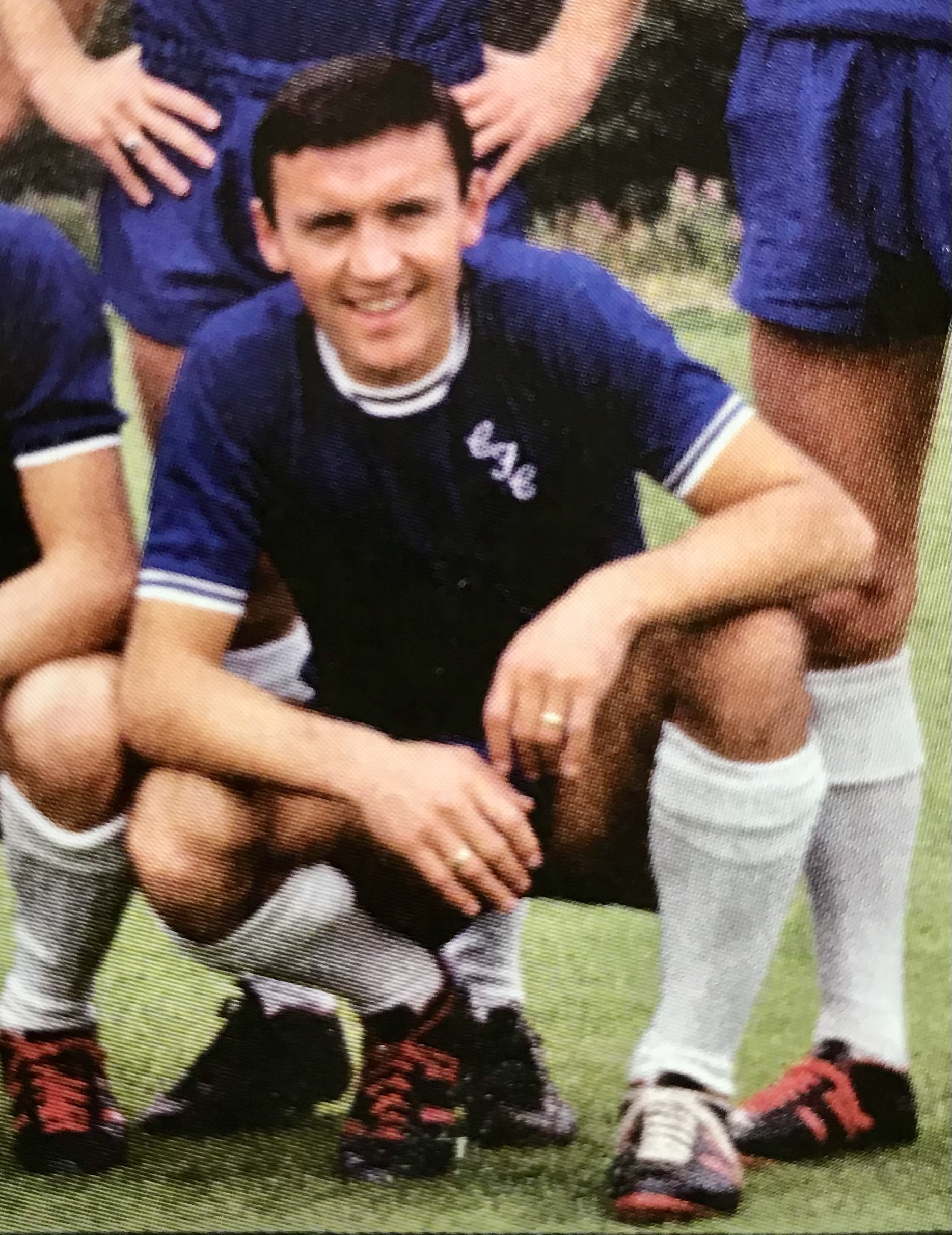
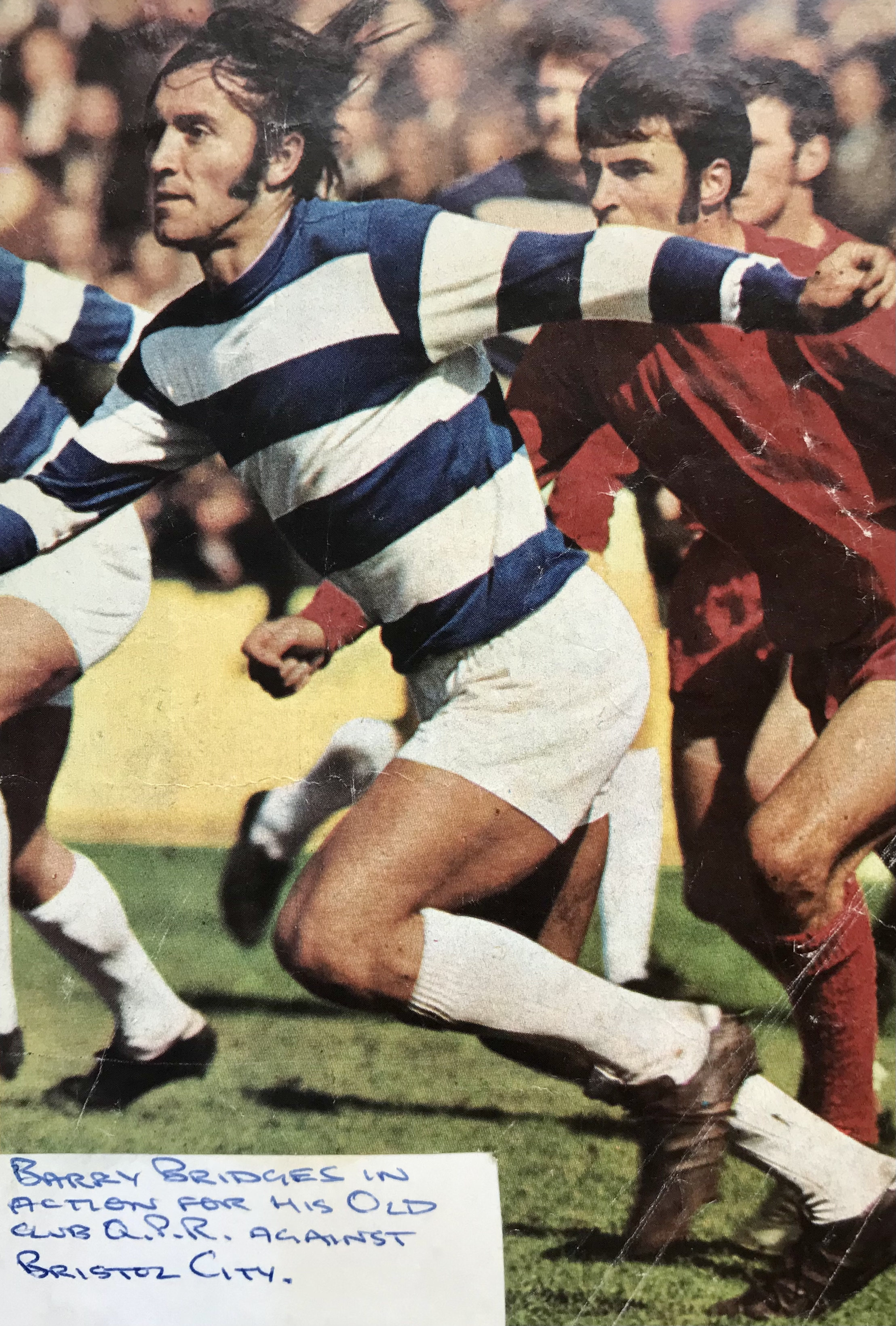
Much of his career ran in parallel with Bert Murray. Both young stars at Chelsea in the early to mid-60s, they were transferred to Birmingham City in 1966 and joined the Albion in the early 1970s.

Norfolk-born Bridges had come to the attention of Chelsea while playing for local side Norwich & Norfolk Boys and had a dream debut in 1959 at just 17, scoring in a local derby against West Ham. It was in the 1961-62 season that he established himself in the Chelsea first team, Jimmy Greaves having been transferred to AC Milan.

In what turned out to be  superb 1964-65 season for him and the club, he scored 27 goals in 42 appearances for Chelsea and collected a League Cup winners’ medal when they beat Leicester City 3-2 over two legs.

It was in May 1966 when Tommy Docherty started breaking up his squad and Bridges left Chelsea for Birmingham having scored 93 goals in 205 league appearances for the London club.

Bridges went one better than Murray and earned full England international honours. Four caps in fact. He was just a few days short of his 24th birthday when he made his debut in a 2-2 draw with Scotland at Wembley in April 1965.

bb-england-w-sir-a

Bridges pictured with Sir Alf Ramsey, Jack Charlton and Nobby Stiles while on England international duty.

He kept the no.9 shirt in the next two games, played in May, a 1-0 win over Hungary at Wembley and was the scorer of England’s goal in a 1-1 draw away to Yugoslavia. His fourth and final game was in a 3-2 friendly defeat against Austria in October 1965. Injury prevented him staking a claim for a place in the 1966 World Cup squad.

In 1971, Bridges went on an end-of-season tour to Australia with an English FA squad that also included Peter Grummitt (then of Sheffield Wednesday) and Dennis Mortimer (of Coventry at the time). The squad went to Dublin first to celebrate the 50th anniversary of the FA of Ireland, drawing 1-1 with the Republic, before heading Down Under where they won all nine of the matches they played in various locations across a month.

BridgesChels

Birmingham paid a then club record fee of £55,000 to acquire Bridges and in two seasons in the West Midlands he scored 46 goals in 104 outings.

Interviewed by bcfc.com in 2014, Bridges said: “What persuaded me to join Birmingham more than anything was the chairman, Clifford Coombs. He was a great guy and wanted to put the club back on its feet. He told me that I was going to be his first signing and he really wanted me to join.”

In his first season he helped Blues to a League Cup semi-final – ironically against Queens Park Rangers – the club he would move to next.

In August 1968, a £50,000 deal saw him move to Loftus Road, where he was part of a strong forward line playing alongside Frank Clarke and the flamboyant Rodney Marsh with his old Chelsea teammate Terry Venables pulling the strings in midfield.

Unfortunately the campaign ended in relegation from the old First Division but in 1969-70 he linked up well alongside Marsh and Clarke and scored 24 goals in all competitions.

Bridges QPR

QPR decided to cash in on him and sold him to Millwall in 1970 and in 1972 he was part of a Millwall side who only narrowly missed promotion to the top division. The Lions were already celebrating promotion on the pitch at The Den when news came through that in fact promotion rivals Birmingham had beaten Sheffield Wednesday to go up, contrary to a rumour that had been circulating in the ground that they’d been losing.

“The four supporters who had been chairing me on their shoulders dropped me. Everyone was stunned, and we had to troop off the pitch all bitterly disappointed and choked,” said Bridges. “I desperately wanted to play First Division football again and so did the rest of the lads. We were all sick.”

When Pat Saward signed him for Brighton in September 1972, it was evident from the start that this was a player who had played at the highest level.

Unfortunately, although Bridges could easily cope at that level, others either didn’t step up or the new players didn’t gel – arguably Saward made too many changes – but, whatever the reason, Brighton couldn’t stop losing and were left floundering at the foot of the table.

Bridges made his debut in a 1-1 draw away to Aston Villa but it was another four matches before he got his first goal, ironically against his old club Millwall, in a 3-1 defeat at home.

Bridges seldom had the same partner up front, early on playing with Willie Irvine, on other occasions with Ken Beamish and later with Lammie Robertson after Saward brought him in from Halifax in exchange for Irvine.

My abiding impression of him was that he appeared to be too good for the rest of the team. His speed of thought was often way ahead of the rest so he would put passes into areas where he would expect a teammate to be, only to be disappointed that they hadn’t read it, so he was made to look wasteful.

One of the few moments of pleasure for Bridges in what was otherwise a season of doom and gloom was the prospect of a FA Cup third round tie against Chelsea at the Goldstone in January 1973. Bridges was in great demand for pre-match interviews in view of his past association with the London club.

“It’s a tremendous draw for the club and a dream draw for Bert Murray and myself who both started our careers at Chelsea,” Bridges told Goal magazine. “Personally it will be nice to see most of the Chelsea lads again. I grew up with Peter Bonetti, Ron Harris and Ossie (Peter Osgood).”

Bridges hoped a good performance in the Cup would help to reinvigorate the lacklustre league form and said: “It’s a crying shame that we’re struggling because the facilities here are second to none. Obviously we need to start getting results now before it’s too late. A win against Chelsea could be just the boost we need to get out of trouble in the league.”

As it turned out, not only did the game end in defeat (2-0) for the Albion but it drew national headlines for all the wrong reasons – ‘day of shame’ for example – as Harris and Brighton left back George Ley were sent off, five were booked and the mood on the pitch led to fighting on the terraces with 25 people arrested.

However, Albion’s fortunes did eventually improve – although it was without Bridges, who in the final few games of the season was restricted to appearances off the bench.

Back in the third division, Bridges was restored to the starting line-up and scored in the opening game in a 1-1 draw at Rochdale.

He was part of the team Brian Clough and Peter Taylor inherited in October and, after they secured their first win courtesy of Pat Hilton’s goal in a 1-0 win away to Walsall, Bridges told the press: “I did more running about in this game than I had in the previous 10 matches.

“I’m 32 now, but with this chap geeing me up I reckon I can go on playing for several more years. We were a bit on edge before the game and the first thing he told us was to relax. Afterwards he told us he was pleased with the effort we showed and we can work from here and go places.

“Though I was sorry to see Pat Saward go – he was a great coach – I think Brian’s got what it takes to make us a good side. He’s just what the club have been waiting for.”

But three games later, as one of the team humiliated in a 4-0 home FA Cup defeat to Walton & Hersham at the end of November, Bridges was unceremoniously dropped and didn’t play again for the first team until February.

Although he then had a run in the team, scoring six times in a 17-game spell, he was among twelve players Clough and Taylor offloaded at the end of the season.

That brought down the curtain on his league career but he continued playing – initially in South Africa with Johannesburg side Highlands Park and then in Ireland – where when player-manager of St Patrick’s Athletic he also gave game time to another former Brighton striker, Neil Martin. He also managed Sligo Rovers before returning to his native Norfolk to manage non league sides Kings Lynn and Dereham Town.

In 2013, the QPR programme caught up with him to discover he was living in Norwich close to where he was brought up, and still getting along to watch matches.

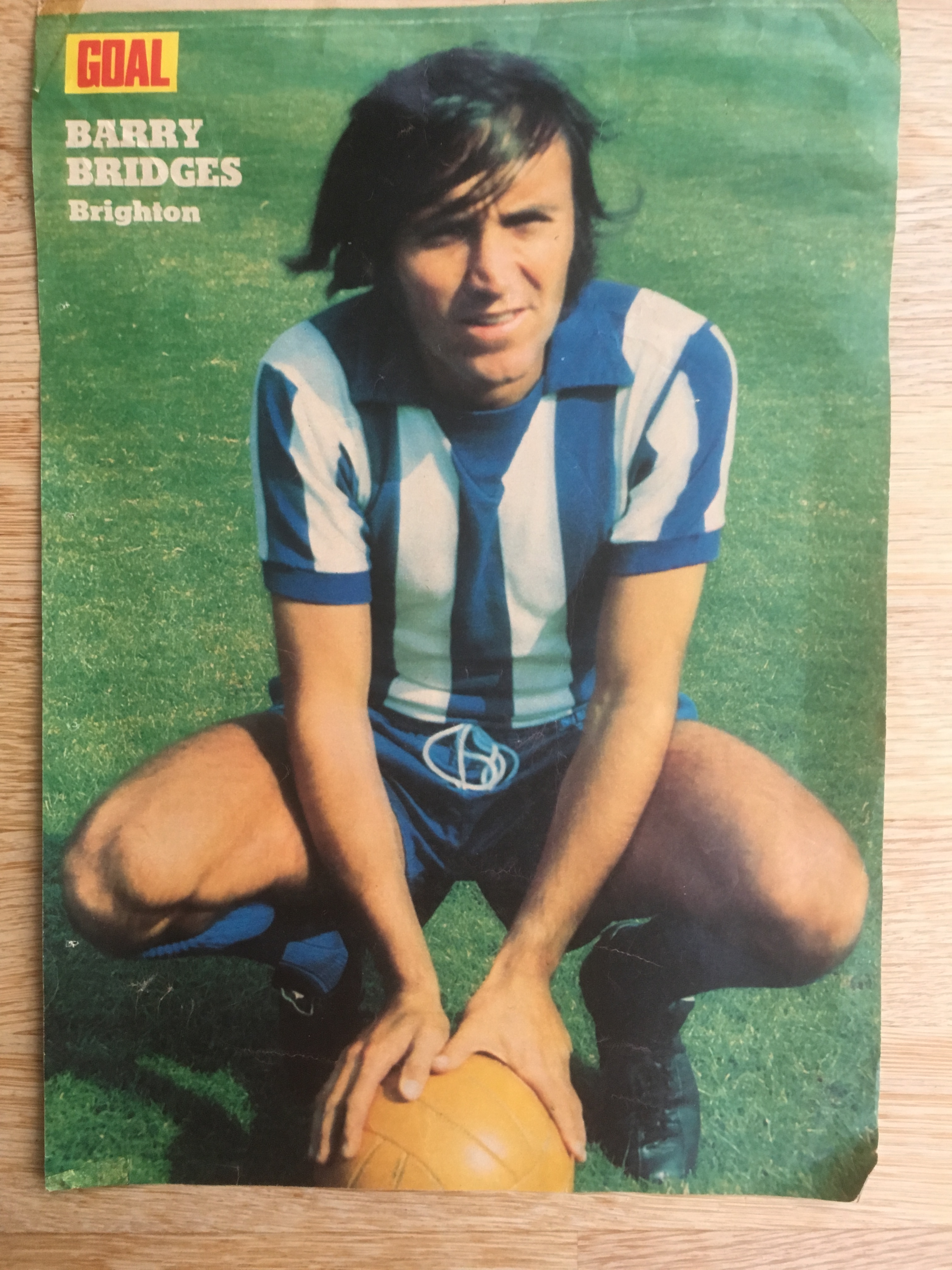
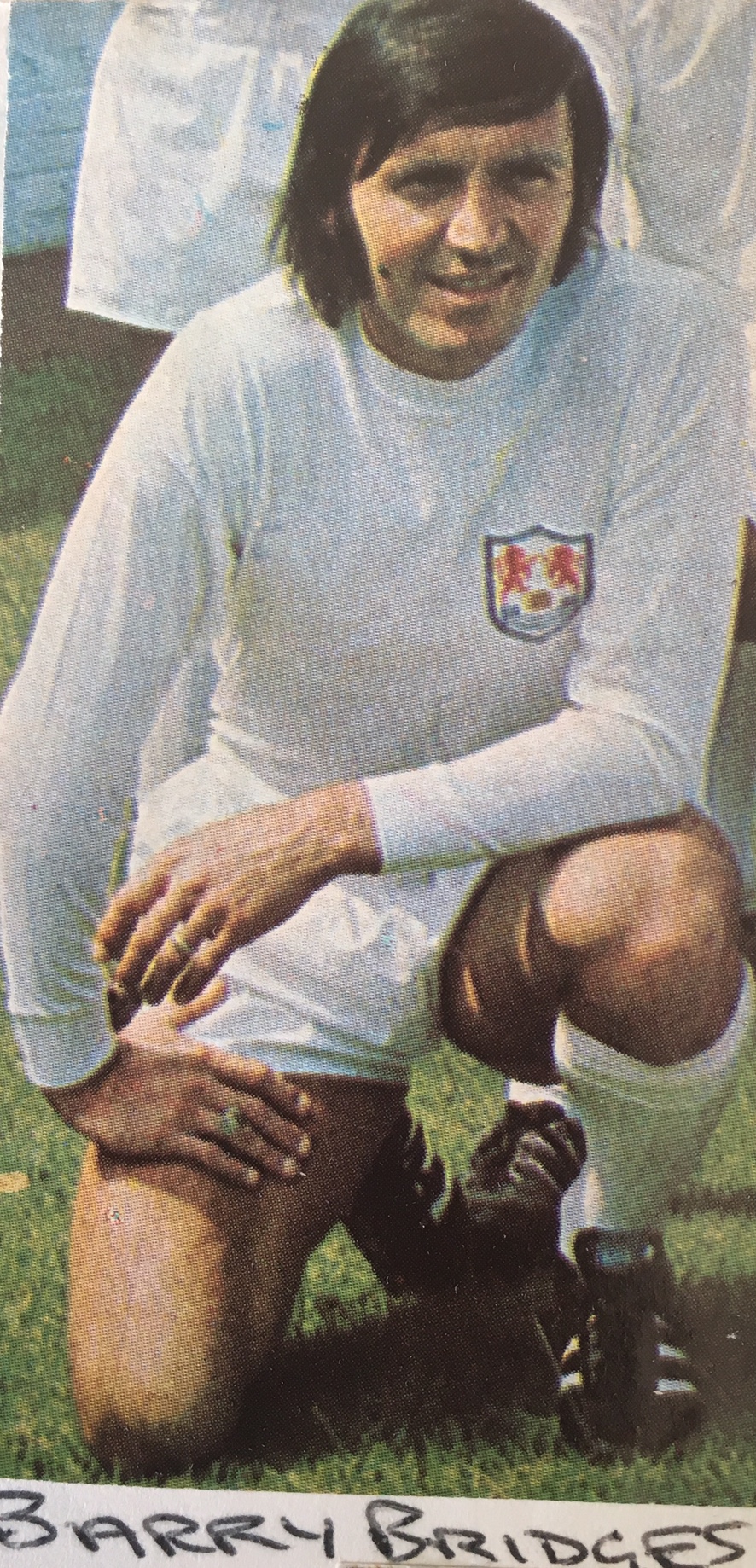
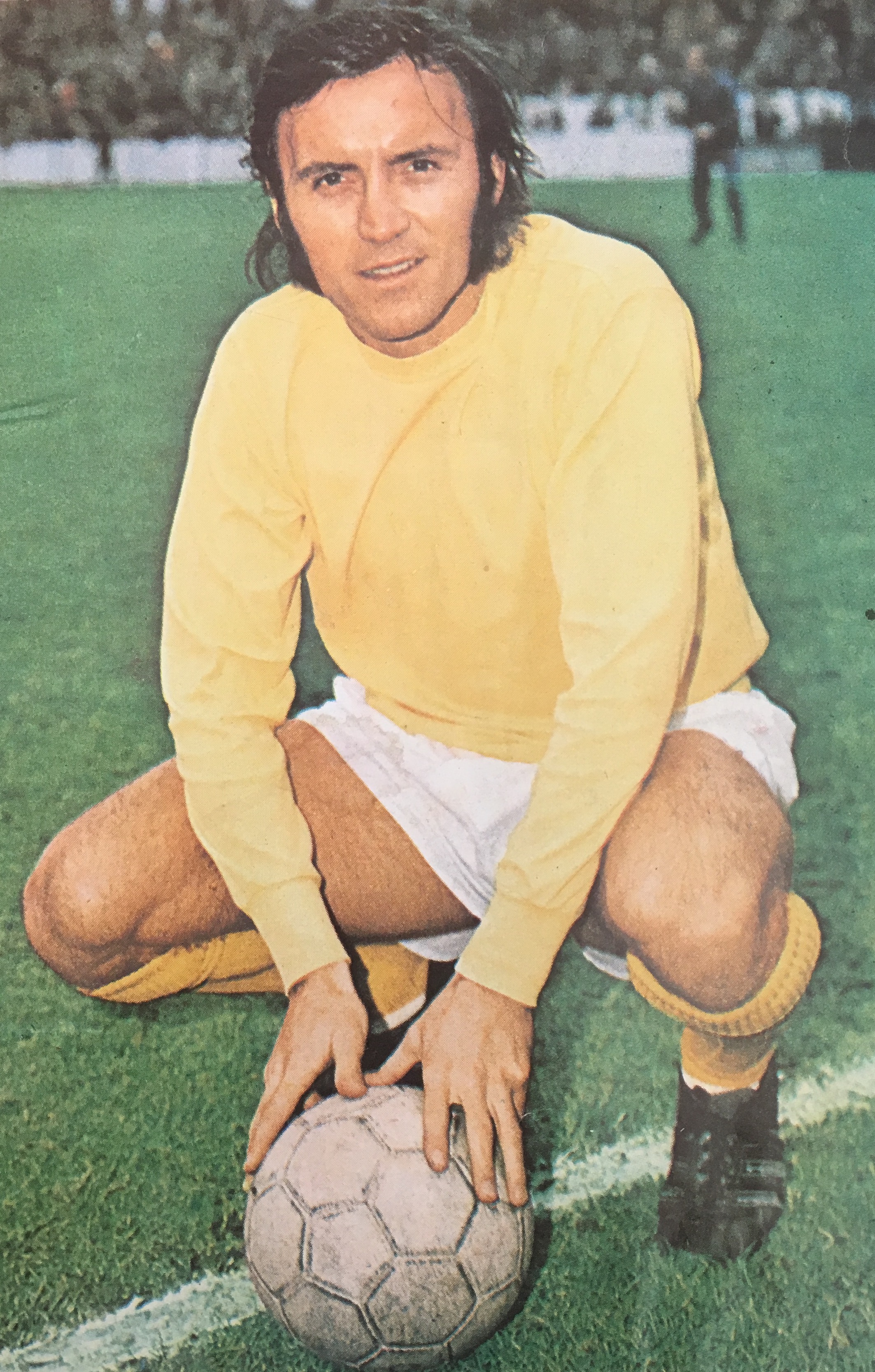
1-england-bridges2-chelsea-bridges4-bridges-in-hoopsB Bridges Btn GOALBarry Bridges (Lions)Barry Bridges (Millwall yellow)

  • Pictures from my scrapbook show Barry in his England and Chelsea days, in Millwall’s white and change yellow shirts, in QPR’s familiar hoops, and in the Albion stripes.

Cup winner Bert Murray: Brighton’s People’s Player

5-bert-v-villaON HOLIDAY in Jersey in 2016 my eyes were drawn to a picture on a display in St Helier’s Fort Regent entertainment complex.
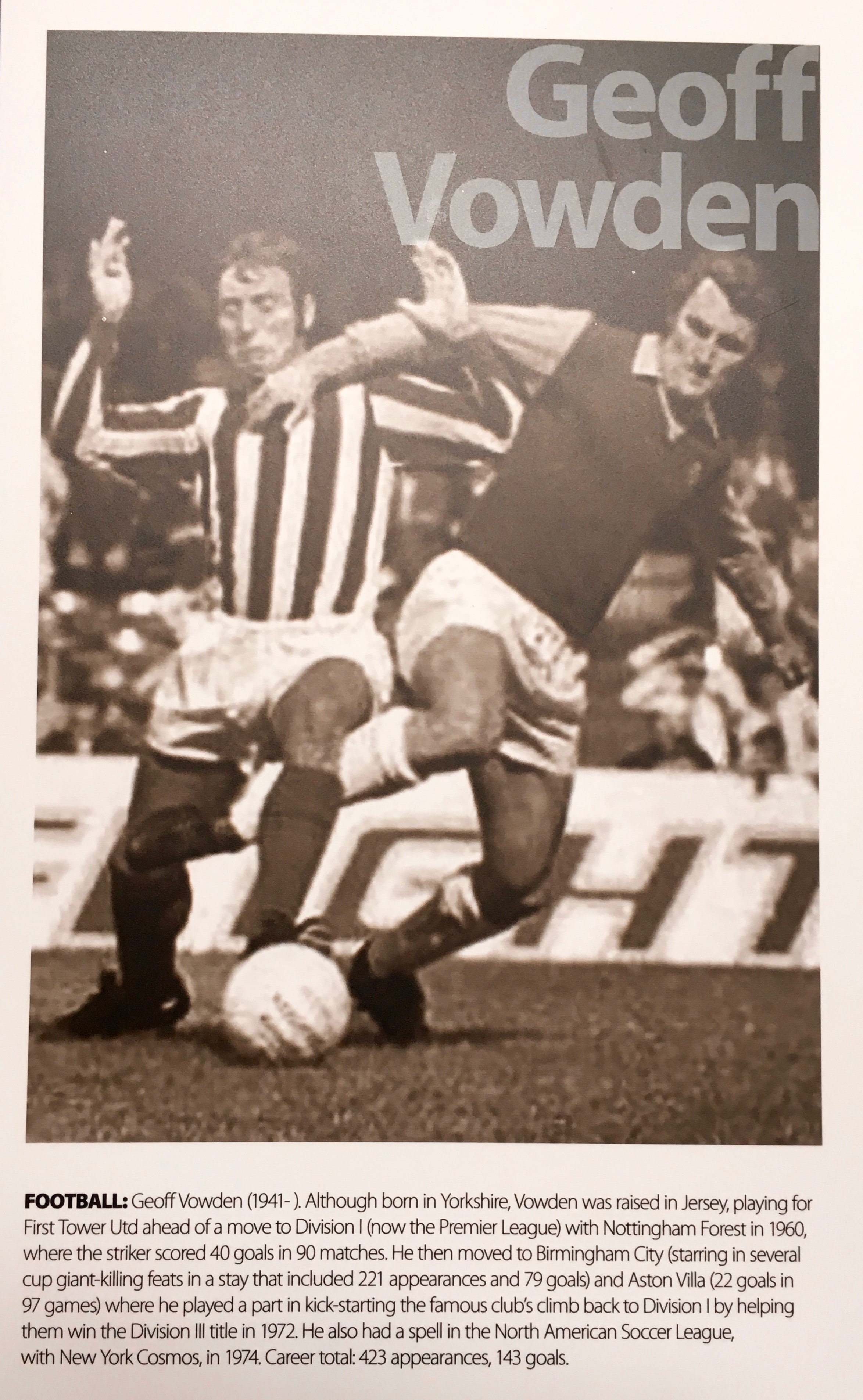
“That’s Bert Murray,” I declared to my bemused wife, and, let’s face it, who would have thought Brighton & Hove Albion’s combative former Chelsea and Birmingham City winger would still be on a public display 45 years after the picture was taken?

The display featured sports stars from Jersey who had gone on to make a name for themselves – and, ironically, the picture in which Bert appeared (below) was about Geoff Vowden (born in Barnsley but raised in Jersey), then with Aston Villa, but a player who had been a teammate during Murray’s five years at St Andrew’s.

1-jersey-posterVersatile Murray – mainly a winger but equally adept at right back – wrote himself into the Albion’s history books when he was bought from Birmingham with funds raised by fans.

But let’s go back to the beginning. Born in Hoxton, London, on 22 September 1942 Murray started his football career with Chelsea in 1958 and scored in the first leg of their 1960 FA Youth Cup Final win against Preston as part of a team which spawned many future star players, such as Peter Bonetti, Terry Venables and Bobby Tambling.

Bert made his Chelsea first team debut in 1961 and in 1963 was part of the squad that won promotion from Division 2. His form for Chelsea attracted the England selectors and in the 1964-65 season he played in six of England under 23s’ seven games, scoring on his debut.

That was on 25 November 1964 in a 5-0 romp over Romania at Coventry’s old Highfield Road ground when Alan Ball, Mick Jones, Alan Hinton and Martin Chivers also scored.

Sadly for Bert, that was the only win he experienced as an England player: in the remaining games there were four 0-0 draws and a 1-0 defeat to West Germany. Other big name players who were part of the same team included Nobby Stiles, Norman Hunter and George Armstrong

Murray’s final international was in front of 70,000 fans in Austria on 2 June 1965 when his Chelsea colleague Bonetti had taken over in goal from Gordon West and Ball, who, like Stiles would become part of the following year’s England World Cup winning team, was sent off.

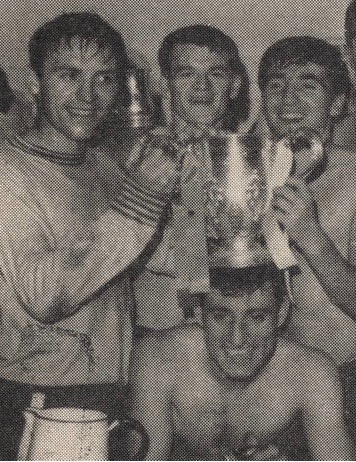
2-1965-lge-cup-winnersAt least at club level in 1965 Murray won some silverware (above image discovered on The Shed End Chelsea fans website), playing alongside Bonetti, Venables, Eddie McCreadie, Barry Bridges and John Boyle as Tommy Docherty’s Chelsea won the League Cup in April via a narrow 3-2 aggregate win over Leicester.
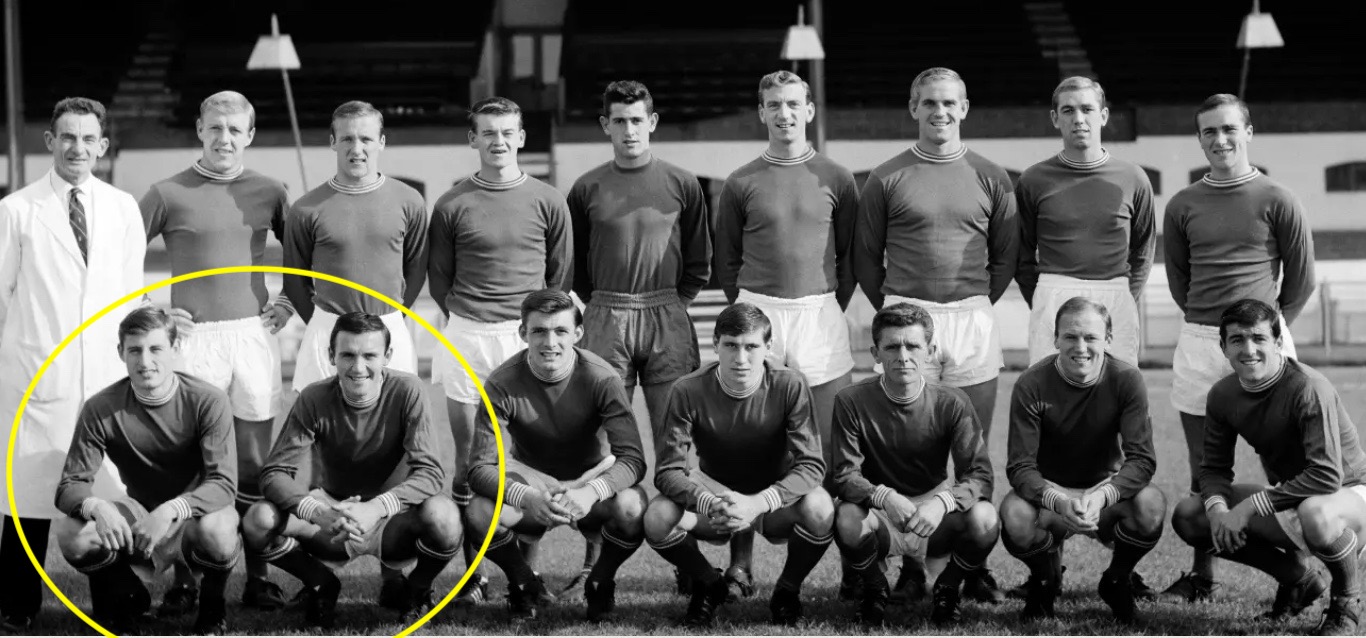
Murray + Bridges ChelseaMurray and Bridges alongside each other in a 1963-64 Chelsea team picture.
In the same season, Chelsea were top of Division One for nearly the whole season, and were looking good for the domestic treble but lost 2-0 to Liverpool in the FA Cup semi-final.

The young team started to show signs of strain and slipped to third in the league. Murray and Bridges were amongst a group of eight players who defied a curfew when the team were staying in Blackpool prior to a game against Burnley and the manager sent them home. The team Docherty put out capitulated 6-2.

According to ‘Bluebeard’ on theshedend.com the following nearly-but-not-quite season – fifth in the league, beaten FA Cup semi-finalists again and Fairs Cup semi-finalists – led to Docherty breaking up the team and selling Murray, Venables, Bridges and George Graham.

So, in 1966, having scored 44 goals in 183 games, Murray was transferred to Birmingham for £25,000 and Bridges went too, as Birmingham’s new wealthy owner, Clifford Coombs, splashed the cash for manager Stan Cullis.

3-brumbertThe pair were part of the side which in successive seasons got to the semi-final of the League Cup (in 1967) and FA Cup (in 1968) only to lose on both occasions. Because these things are important in the Midlands, joysandsorrows.co.uk remembers Murray as part of the 1968 Blues side who beat rivals Villa home and away. In five years, he played 132 games scoring 22 goals.

murray brum

It was the Blues former Brighton manager Freddie Goodwin who loaned him to his old club in early 1971. The loan became a permanent move thanks to £10,000 raised through innovative manager Pat Saward’s famous Buy-a-Player scheme which saw fans respond to the club’s lack of cash to bring in new players by coming up with sponsored walks and suchlike to raise the necessary money to enable Saward to bring in new faces. Thus Murray was swiftly dubbed the People’s Player.

4-bertwillie1971Saward brought in Willie Irvine on loan from Preston at the same time and the pair combined well on 10 March 1971 (pictured above by the Evening Argus before the game) as high-flying Fulham were beaten 3-2. In Irvine’s 2005 book with Dave Thomas, Together Again, he recalls how the pair hit it off and began a friendship that endures.

Murray was an influential right winger who made and scored goals and he became a reliable penalty taker too, notably keeping a cool head from 12 yards in the 12-game unbeaten run in 1972 which culminated in promotion as runners up behind Aston Villa.

In the famous game televised by BBC’s Match of the Day at home to Villa in April 1972, Saward moved Murray to right back to replace previously ever-present Stewart Henderson. It wasn’t completely alien to him, though, because he’d slotted into that role on occasion at Birmingham.

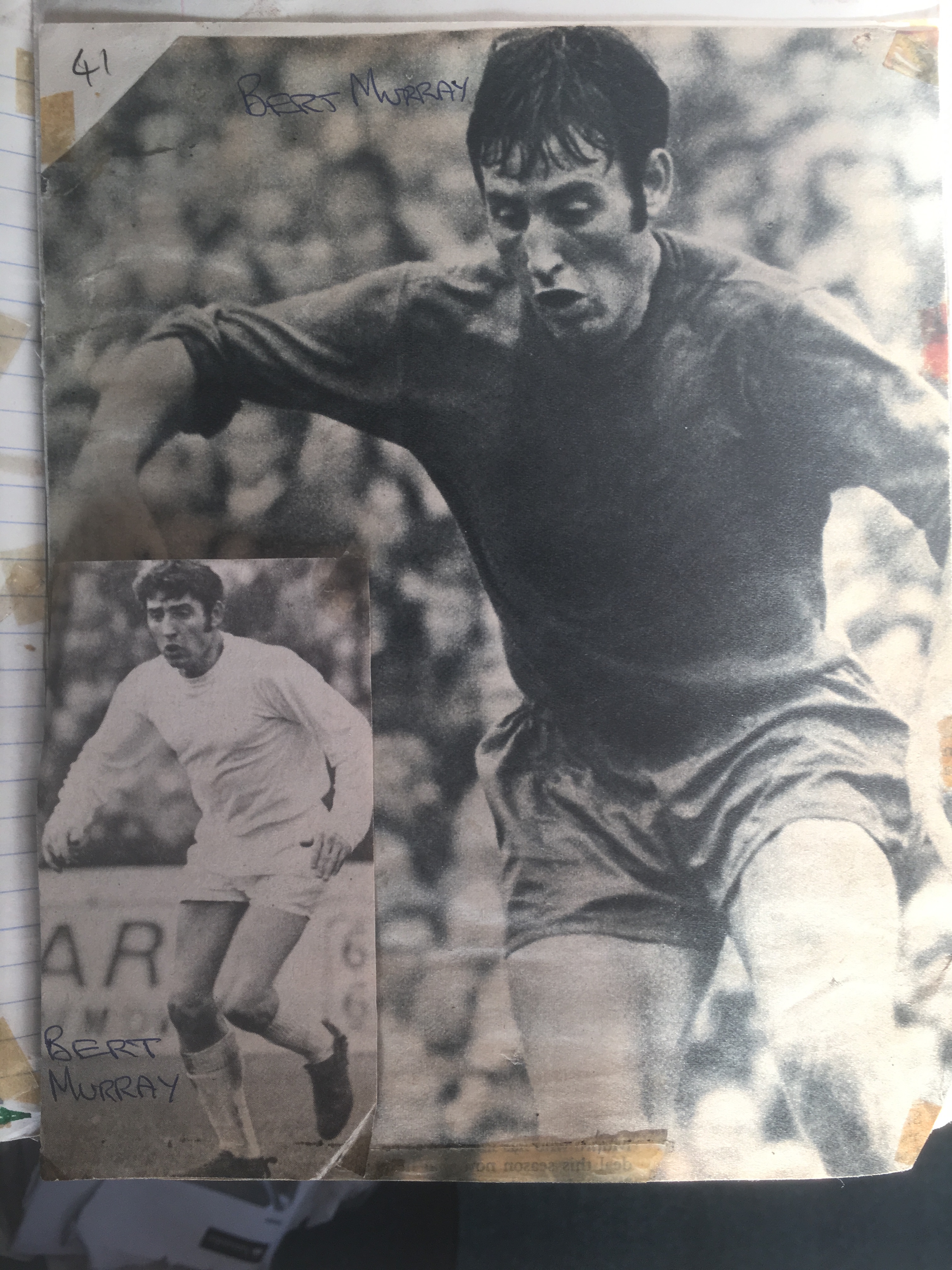
The photographers were busy during that tightly-fought 2-1 win against Villa and several different shots of Bert’s tussle with Villa’s talented winger Willie Anderson appeared in the newspapers and magazines following the game (see pic at top of article).

While others might have been grabbing the bulk of the goals and the headlines, Murray’s consistent performances earned him the player of the season award (below, receiving the award from chairman Tom Whiting).

murray poy

The newly-promoted side struggled badly and Saward chopped and changed the line-up, bringing in a host of new faces – including Bert’s old Chelsea colleague Bridges – as he tried in vain to find the right formula to keep the Albion up. But Murray was one of the few who kept his place at the higher level, mainly back in midfield. He took over the captaincy from Ian Goodwin and contributed nine goals in 39 appearances.

Although eventually the side clicked in the final third of the season, the damage had been done early on and the recovery wasn’t enough to avoid an immediate return to Division 3.

Murray wrote in the matchday programme: “The last two months have been amazing and although I say it myself I beleive that we have played some really good football recently. I also believe we deserve a better fate.”

He added: “We must hope we have learned our lessons well for next season.” Murray appeared in the front row of the 1973-74 team line-up but his time on the south coast was drawing to a close – along with manager Saward. Murray was involved in only two games as a substitute in October and after a total of 102 games and 25 goals he moved on to Peterborough United, initially on loan and then signing permanently.

It was Noel Cantwell, the man Saward had served as assistant manager at Coventry City, who signed Murray for Posh. “He needed a right midfielder,” Murray said in a 2012 interview with the Argus. “I went up there and had four wonderful years. I still see some of the lads now.”

Saward, with his own days at the Goldstone numbered and, without naming any names, wrote some cryptic programme notes for the 13 October home game against Halifax. “In deciding that a player can leave a club, the manager must consider the player’s contribution to the club and decide whether he fits into his plans for the future,” he wrote.

“When a manager decides it is time for the player and club to part he is not necessarily governed solely by the ability of the player but he has to look at his squad as a whole and assess whether there are younger players with longer futures waiting their chance to come through.

“A governing factor must be that the strongest possible team should be fielded at all times and the manager must decide when other players should take over from established favourites.”

In the programme for the 24 October game with Southport – by which time Saward himself had been sacked – there was a brief paragraph under the headline ‘Bert Murray Leaves’.

At 31, Bert still had plenty of football left in him and he went on to make 123 appearances for Posh, scoring another 10 goals, before retiring and going into the pub trade, in Market Deeping, nine miles north of Peterborough.

Many have been the occasions Albion fans following the team at London Road have taken a detour to pop in to see Bert and chat over old times over a pint.

In 2013, when he had his 70th birthday, The Society of Independent Brewers did an article about his 20 years running Everards pub The Bull in Market Deeping with his wife Eileen. They had also spent 17 years at two other pubs in the town, The Winning Post and The White Horse.

“Everards have been good and seem happy with what we are doing here. So if they are happy, Eileen and I plan to keep on going for a few more years yet as we really enjoy running the pub,” he said.

In September 2013, Bert returned to Stamford Bridge for a 50th anniversary reunion with the Chelsea ‘class of ‘63’ – chatting over old times over dinner with Terry Venables, John Hollins, Peter Bonetti, Barry Bridges, Ken Shellito and Bobby Tambling.

Pictures from my scrapbook , the internet and the Albion matchday programme.

Below, the Goal magazine feature ‘The Girl Behind The Man’

Barry Lloyd’s turbulent time as Brighton boss

Screen Shot 2021-05-05 at 09.51.14

HISTORY may have judged Barry Lloyd’s reign as Brighton manager unfairly: while bleak times cloud the memory, the former Fulham captain did chalk up some successes.

For instance, it’s worth remembering he put together two of the most entertaining strike partnerships in Albion’s history.

However, when managers start getting involved in the boardroom, it’s probably not going to end well and that certainly proved to be the case after Lloyd was handed the role of managing director.

Frankly, there is probably not enough space in one blog post to cover the various off-the-field shenanigans that were an ugly backdrop to the Lloyd era.

From an outsider’s perspective, it appeared he was the unfortunate public figure put up to deal with a huge amount of flak generated by others wielding power in the background.

Inheriting the hotseat at a time of financial turmoil, from a distance it could be said he did well to win promotion as well as coming mighty close to restoring the elite status lost in 1983.

But fans who had seen huge success under high profile bosses were not best pleased to see their club’s fortunes put in the hands of someone who had previously only managed outside of the league.

Let’s look first at Lloyd’s playing career because, from early on, he was obviously a shrewd observer who made contacts he would be able to call on in later years.

Born in Hillingdon on 19 February 1949, Barry’s early footballing ability was rewarded with selection for the Middlesex and South of England schoolboy sides. He was signed up by Chelsea and was in their 1964-65 youth team alongside former Albion right-back Stewart Henderson in defence and future England international and Chelsea legend Peter Osgood up front.

In an extended interview with Fulham’s club historian, Dennis Turner, Lloyd recalled: “I chose Chelsea because under Tommy Docherty’s management they were an exciting team, with the likes of Osgood, Charlie Cooke and Bobby Tambling.”

Former Albion player Dave Sexton was the reserve-team manager – “a really nice man and terrific coach” – and Lloyd says in his four years at Stamford Bridge he learned a lot.

He made his debut in the top flight in April 1967 aged just 18, but competition for places was tough and, after only 10 first team appearances, in January 1969 he moved to neighbours Fulham with their centre half John Dempsey moving in the opposite direction.

lloyd-fulham-goal

Fulham were struggling for survival in the old Second Division having been relegated from the top flight and the man who signed him, Bill Dodgin, was their fourth manager in a year.

They dropped down into the old Third Division but as part of his rebuilding, Dodgin made Lloyd captain in succession to the legendary Johnny Haynes, who was coming to the end of his career.

Lloyd is pictured below getting in a header against the Albion at the Goldstone, watched by John Napier (left) and Stewart Henderson. The packed East Terrace never looked like that by the time Lloyd was sitting in the Albion manager’s chair.

Lloyd at Goldstone

Fulham regained their tier two status in 1971 when they went up from Division III as champions. Manager Dodgin was sent packing in the summer of 1972, though, and Alec Stock took over, famously bringing in a number of top name players nearing the end of their careers – notably one Alan Mullery, along with Bobby Moore.

Lloyd remained part of the set-up but when Fulham surprised everyone by reaching the FA Cup Final against West Ham in 1975, he had to be content with what in those days was the single substitute’s berth on the bench, and didn’t get on.

Nonetheless, he chalked up 290 games for Fulham, before having brief spells at Hereford and Brentford (where Dodgin was the manager) and ending his playing days with Houston Hurricanes in the United States.

“I lived in Texas for a year. The league was never going to last but I learnt a lot about how the game can be promoted. They were very good at that over there,” he said in a matchday programme article. “Everyone was made to feel part of the club. It was an interesting experience; I’ve never regretted going.”

During his brief time at Hereford, Lloyd had an eye to the future and took his full coaching badge at Lilleshall, which wasn’t far away.

After his time in America came to an end, he got his first managerial experience with Yeovil Town (then a non-league club) and then headed to Sussex where he took Worthing from the Second Division of the old Isthmian League to runners-up in the Premier Division.

It was in 1986 when he got the call from Mullery to become reserve and youth team manager at the Albion. Dodgin was also on the staff.

lloyd desk

In January 1987, Mullery was unceremoniously dumped and Lloyd came out of the shadows to take charge. Perhaps what fans didn’t know at the time was that the day after Mullery left, Lloyd was summoned to a meeting with chairman Bryan Bedson and told to “get rid of everyone” because the club was going bust.

Against that backdrop, it was 15 games before the side managed to register a win under Lloyd and, unsurprisingly,  Albion were relegated. Some of the mainstays of the side, like Danny Wilson, Eric Young and Terry Connor were sold. Fortunately, Lloyd was able to re-invest part of the proceeds from those sales in some buys who gelled together to form a promotion-winning team.

Screen Shot 2021-05-03 at 20.37.12He returned to former club Chelsea to secure the signing of centre back Doug Rougvie who was made captain and he paired left winger Garry Nelson, a £72,500 signing from Plymouth, with tenacious Scot Kevin Bremner, from Reading, to lead the line. Nelson in particular was a revelation, scoring 32 goals and voted player of the season.

Lloyd reckoned the backbone of the side were two other shrewd signings: Alan Curbishley and Gary Chivers. “Alan was a very level-headed guy, an excellent passer and really disciplined,” he told Spencer Vignes in a matchday programme article. “Chivers was exactly the same, and a real joker at the same time. But there were a lot of great individuals in that side.”

The following two seasons saw Albion maintain their status with lower half finishes but, with the Goldstone Ground crumbling and debts mounting, there was little investment in the team and Lloyd had to use all his contacts to try to find some gems.

One was former England international winger Mark Barham, another was a former Soviet international, Sergei Gotsmanov, a real crowd-pleaser obviously capable of playing at a higher level (as was proved when he opted to join Southampton the following season).

Then, in 1990-91, he rescued two forwards languishing with also-ran clubs in Europe and together John Byrne and Mike Small were superb in attack as Brighton made it to the play-off final at Wembley only to lose 3-1 to Neil Warnock’s Notts County.

No-one had been expecting Brighton to get a tilt at promotion, particularly as the season had once again begun with big money departures of players like Keith Dublin and John Keeley.

But with Byrne and Small on fire and former Fulham and Chelsea winger Clive Walker added to the squad they clawed their way into contention and famously clinched the play-off spot on the last game of the season, courtesy of Dean Wilkins’ curling free kick past Ipswich Town’s Phil Parkes.

Another crucial signing that season was thanks to one of Lloyd’s old Chelsea teammates, George Graham. The Arsenal boss loaned cultured central defender Colin Pates to the Seagulls and he proved a mainstay in the final third of the season. Pates would later sign permanently.

Even though they were clearly beaten by the better side on the day, looking back now, I don’t think anyone could have realised what bad news it was for Albion not to win the final against County.

Starved of the funds promotion would have delivered, Lloyd was forced to sell star performers Small and Byrne and, 11 months after appearing at Wembley, Albion were relegated back to the third tier.

Lloyd had tried to repeat his previous successful European scouting mission with two former league players, but the hapless Mark Farrington turned out to be one of the worst buys ever, managing to score one solitary goal while former Arsenal youngster Raphael Meade fared slightly better but only just got into double figures.

Mark Gall, a £45,000 signing from Maidstone, arrived towards the end of October and ended up top goalscorer and was player of the season, but his 14 goals were still not enough to spare the team from the drop.

In the following season, the very survival of the club was under serious threat with the taxman chasing an unpaid bill. Lloyd rescued the club at the 11th hour by managing to secure a £350,000 fee for goalkeeper Mark Beeney (bought two years earlier from Maidstone for £25,000), former Albion winger Howard Wilkinson buying him for League Champions Leeds United.

With the financial issues continuing in the background, a run of only two wins in 18 league games in the first half of the 1993-94 season eventually brought the Lloyd era to an end – the axe wielded by chief executive David Bellotti, who had arrived only a month earlier.

Fans who were euphoric to see Lloyd go might well have felt differently if they’d known what would eventually transpire, but that’s a story for another day.

The record books show Lloyd made a total profit of £1.2m in his seven years at the helm and he certainly knew his way around the transfer market, particularly in Europe, when it was a lot less fashionable than it is today.

Another of his discoveries was Dean Wilkins, playing for FC Zwolle in Holland, and in 2007 – 14 years after he had left the Albion – Lloyd returned as chief scout during Wilkins’ reign as first team manager.

Also part of the set-up then was director of football Martin Hinshelwood, who had been Lloyd’s assistant during his time in the dugout. Lloyd later returned to the club to assist in the recruitment department but retired in 2021.

He died aged 75 on 28 September 2024 and players in the Chelsea v Brighton game that afternoon wore black armbands in tribute to him.

Lloyd in 2022

When Chris Cattlin rocked up to play for and manage Brighton

1-cat-in-goalIT MUST BE difficult for today’s reader to imagine a player with the opportunity to sign for either Coventry City or Chelsea choosing the Sky Blues over the London giants.

But in 1968, when the choice faced Huddersfield Town’s Cattlin, he moved to Highfield Road because the following day they were playing a star-studded Manchester United side and, as the full-back who’d be marking the legendary George Best, he couldn’t resist pitting his ability against the Irish wizard.

It was one of several career insights Cattlin revealed in an excellent interview by Doug Thomson in the Huddersfield Examiner in June 2013.

Huddersfield were happy to collect a £70,000 transfer fee when Coventry bid for Cattlin, but he told the Examiner: “Chelsea also came in for me and I was due to speak to them in the afternoon after talking to Coventry in the morning.

“City were playing Manchester United the next day and the manager, Noel Cantwell, told me I would definitely be in the team.

“I knew that if I could say I’d played against George Best, Denis Law and Bobby Charlton, I could die a happy man, so I never got as far as Stamford Bridge!

“I signed for £65 a week when the man in the street was probably getting £20, so to be paid like that for playing football made me more than happy!”

As it turned out, Cattlin marked Best out of the game and his new team won 2-0 with goals from Ernie Machin (who later left the Albion at the same time Cattlin arrived at the Goldstone) and Maurice Setters, against his old team.

Cattlin went on to play more than 250 league and cup games for Coventry, (then in the equivalent of today’s Premier League), before moving to Brighton in 1976, where his playing career finished, but he returned as manager between 1983 and 1986.

Going back to the beginning, though, Cattlin was born in Milnrow, Lancashire, on 25 June 1946, the son of a rugby league player, Bob, and his early school days were spent at Milnrow Parish School. He moved on to Ashton-under-Lyne Technical College (Geoff Hurst was three years his senior there) and then took a job in textile engineering.

In the meantime, he trained and played for Burnley’s youth team but he struggled with the 40-mile round trip travelling from his home. A Huddersfield Town scout, Harry Hooper, had spotted his potential and he was offered a professional contract with the Terriers in the summer of 1964 which allowed him to carry on working two days a week at the textiles factory.

“I went across to Leeds Road, and just fell in love with the place. It was far from luxurious, but there was just a feel about the ground and the people there,” he recalled.

Maybe it was also a feeling that Huddersfield knew a thing or two about decent left backs. Cattlin took over from Bob McNab, who later made a name for himself at Arsenal, and played four games for England, and McNab had replaced England World Cup winner Ray Wilson, who Town transferred to Everton.

Cattlin was signed by Eddie Boot only for the manager to resign the day after, following a 2-1 home defeat by Plymouth. Boot’s successor was Tom Johnston and he insisted on Cattlin becoming a full-time pro, which caused a degree of angst with Cattlin’s concerned parents, but he went for it and didn’t look back.

It was emerging coach Ian Greaves, a former Manchester United player (who later took Town to the top flight as manager), who was to have a lasting effect on Cattlin. “Ian lived in Shaw, the next village to Milnrow, and he’d give me a lift to Leeds Road each day, in the days before the M62, on that winding old road over the moors,” he explained.

“He was a great coach and later manager, and a superb motivator, just a football man through and through.”

Cattlin made his debut in a 3-1 home win over Derby on the final day of the 1964-65 Division 2 (now Championship) campaign but didn’t fully establish himself in the side until the 1966-67 campaign.

In total, he played 70 times for Huddersfield and, for a while, he was playing for the town’s football team while dad Bob was playing for its rugby league side. “My dad played for Huddersfield at rugby league, I played for Huddersfield Town at football. I think we’re the only father and son to have done that,” he said.

After that 1968 transfer to Coventry, Cattlin became a firm favourite at Highfield Road and although he didn’t quite emulate Wilson and McNab, he did play twice for England Under 23s. He made his debut on 2 October 1968 in a 3-1 win over Wales at Wrexham in a side that also included Peter Shilton in goal, West Ham’s Billy Bonds and John Sissons and Everton’s Howard Kendall and John Hurst.

Six weeks later he won his other cap in a 2-2 draw with the Netherlands at Birmingham’s St Andrews ground, when Arsenal’s John Radford and Hurst were the scorers. Cattlin also represented the Football League v the Scottish Football League.

Cattlin was part of the only Coventry side ever to qualify for Europe (in 1970-71) and remembered relative success, only eventually getting knocked out by a Bayern Munich side that included the likes of Franz Beckenbauer and Gerd Muller.

On another occasion, in a tour match, he played in a 2-2 daw against Santos of Brazil, with Pele in their team, in front of an 80,000 crowd. “Pitting your wits against those kinds of players was a fantastic education,” he said.

When manager Gordon Milne decided to give Cattlin a free transfer after nine years and 239 matches for Coventry, fans organised a petition to keep him at Highfield Road.

But there was no turning back and Peter Taylor signed him for Brighton – along with another experienced defender, Graham Cross (from Leicester City) – a short time before quitting the club to rejoin Brian Clough at Nottingham Forest.

CC76

It was Alan Mullery’s good fortune to inherit a squad that would take Division 3 by storm to earn promotion and Cattlin was able to contribute in both full back positions although mainly at left back, having the edge on Harry Wilson.

With the arrival of Gary Williams from Preston, Cattlin switched to the right and vied with Ken Tiler for the shirt, regaining the upper hand for the final two thirds of the season which ended with promotion from the old Division 2 in 1978.

“That Brighton promotion team – what a fantastic set of lads, with no little ability,” he said. “They could all play and were great characters. I was a very lucky lad to come along at the end of my career and join a dressing room like that.”

Although he made just one appearance (in the disastrous 4-0 League Cup defeat at Arsenal) during the 1979-80 season, he notched up a total of 114 games for Brighton.

And he obviously liked the place so much that once his playing days were over he opened a rock shop on Brighton seafront, as well as investing in property. However, three years after quitting as a player, he returned to the Goldstone as a coach, appointed in the summer of 1983 by chairman Mike Bamber to assist manager Jimmy Melia – without Melia’s knowledge!

It all got rather messy with Melia and Cattlin clearly not getting on and talk of a takeover rumbling on in the background.

By the middle of October, Melia quit and Cattlin took over as manager, with another well known former left back, Sammy Nelson, elevated from reserve team manager to assistant manager.

Cattlin then began to shape his own squad and among notable signings who served Albion well were Steve Penney, Danny Wilson and Dean Saunders while there were some memorable cup games, including beating Liverpool in what I believe was the first FA Cup tie – other than finals – to be shown live on TV.

One of TV’s pundits of today, Martin Keown, was another Cattlin signing, joining on loan from Arsenal and beginning with Brighton what was a memorable career with the Gunners, Aston Villa, Everton and England.

Cattlin admitted in 2010: “I had to sell a lot of the popular, best players for financial reasons and bring other ones in to keep the show on the road and make it interesting for the crowd. That was my job.” The likes of Steve Foster (to Aston Villa), Jimmy Case (to Southampton), Tony Grealish (to West Brom) and Gordon Smith (to Manchester City) were all sold by Cattlin.

In 1984, Cattlin certainly found an entertainer when he brought to the Albion a former teammate from his days at Leeds Road, the mercurial Frank Worthington, who moved along the south coast from Southampton.

By that time, Worthington wasn’t too mobile but he’d lost none of his skill and flamboyance and Cattlin told his 2013 interviewer: “He did a good job for me.

“Frank wasn’t only a great player, but a great bloke as well, a dedicated trainer and a great bloke to have around a club.”

Catt dog
Barking up the wrong tree? Cattlin couldn’t quite restore Albion to the elite when he returned as manager

Cattlin stayed in the manager’s chair until April 1986, overseeing finishes of ninth, sixth and 11th in the second tier, although he clearly felt the writing was on the wall as far as his job was concerned when the Albion board wouldn’t give him £6,500 to sign the experienced defender Jeff Clarke from Newcastle, as Cattlin explained at the Albion Roar live show in December 2018 (skip to 28 minutes in).

Distractions and changes in the boardroom were an uncomfortable backdrop to much of his time in charge and it was evident that the fans didn’t perceive Cattlin to be to blame for the failure to finish higher.

When he was sacked, there were protests from supporters, a 2,000-signature petition calling for his reinstatement and Cattlin himself addressed a 200-strong rally in Hove.

But it was all to no avail. His former boss, Mullery, returned and Cattlin went back to his non-football business interests.

In a 2010 interview in the matchday programme, Cattlin said: “I think I deserved another season at least to get them back into what is now the Premiership.

“If it had gone wonky then they wouldn’t have had to fire me – I’d have gone myself. Nevertheless, to play, coach and manage Brighton and Hove Albion made me a very proud man. But I wish I could have put them back where I felt they belonged.”

  • Pictures show (top) Chris Cattlin pictured in Goal magazine in Coventry’s sky blue; in an Evening Argus shot alongside new manager Alan Mullery and fellow close season signing Graham Cross; how the Albion programme headed his managerial notes.

Cattlin pictured in 2010