
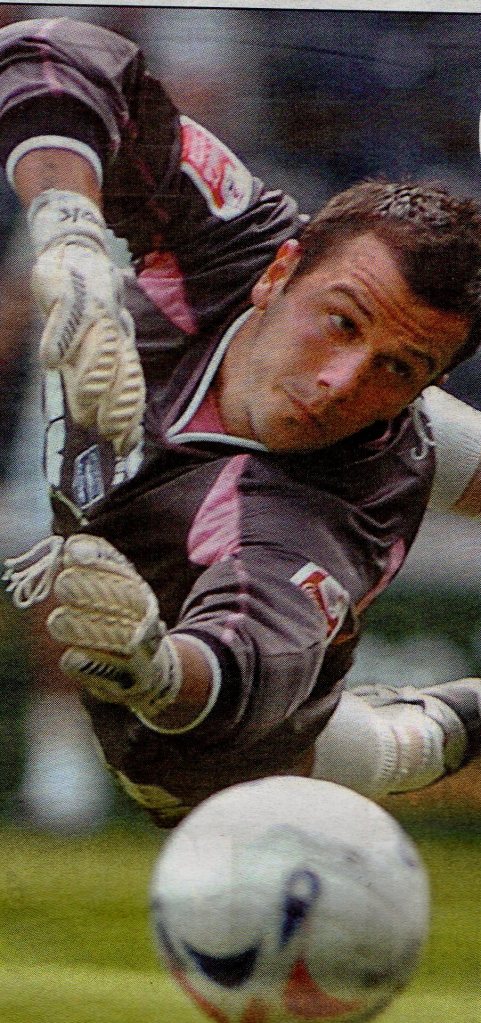
DISGRUNTLED former Albion goalkeeper Wayne Henderson helped Grimsby Town keep their place in the Football League.
The Republic of Ireland international stopper, forced away from Brighton by a section of voluble supporters, was on loan to the Mariners in 2009 as they desperately tried to avoid the drop.
Although there were Grimsby grumbles on his debut, Henderson’s mission was a success, Town avoiding the drop by four points. But it was only a stay of execution because they finally fell out of the league for the first time in 100 years in 2010.
By then, Henderson was back at parent club Preston North End, who had bought him from the Seagulls for £150,000 on deadline day in January 2007.
He managed only 10 appearances for the Lancashire club – his last game coming in the final match of the 2009-10 season – and in March 2011, when only 27, he was forced to quit the game after two years plagued with spinal injuries.
Much had been expected of the young Irishman at Brighton after an initial loan spell from Aston Villa, where he had been coached by former Seagulls ‘keeper Eric Steele. He made his Albion debut away to Derby County, together with fellow countryman Paul McShane (on loan from Manchester United), in the opening game of the 2004-05 season.
Manager Mark McGhee said the youngster hadn’t put a foot wrong. “His kicking really took the pressure off us,” he said. “He was composed and took a couple of crosses towards the end which also helped relieve the pressure.”
McGhee had first hoped to sign Henderson in January 2005 to help solve a goalkeeping crisis created by a serious shoulder muscle injury to Michel Kuipers in a home match against Nottingham Forest.
Youngster Chris May, son of former Albion defender Larry May, had come off the bench to replace Kuipers in the match but McGhee didn’t see him as experienced enough in the battle to stay in the Championship. The previous season’s first choice ‘keeper, Ben Roberts, was a long-term absentee with a back injury, so McGhee had few options.
The Seagulls hoped a contractual hitch relating to Henderson’s previous loan spell at Notts County could be resolved in time to enable him to make his debut for the Albion at Elland Road. But it couldn’t and Brighton turned to Blackburn’s David Yelldell instead. That was the game where the loan goalkeeper famously wore a bright pink goalkeeper jersey and predictably suffered abuse from the Leeds crowd.
Although Clarke Carlisle put Leeds ahead just before half time, Yelldell had the last laugh when defender Guy Butters prodded home an equaliser in the 81st minute.
When McGhee didn’t see Yelldell as a long-term option, he turned to one-time Arsenal ‘keeper Rami Shabaan, who hadn’t played a competitive game for two years, but he let in 13 goals in six games. The manager brought in Southampton’s Alan Blayney, and he was between the posts for the last seven games of the season when Albion just managed to cling on to their tier two status.
McGhee finally managed to bring in Henderson ahead of the new season and, perhaps mindful of the goalkeeping headache he’d had the previous season, found he suddenly had an embarrassment of riches in that department.
Promising youngster Richard Martin appeared as a back-up on the bench, as did season-long French loanee Florent Chaigneau. In September, Southampton’s Blayney also returned for another loan spell and eventually took over the gloves when Henderson’s three-month loan from Villa came to an end.
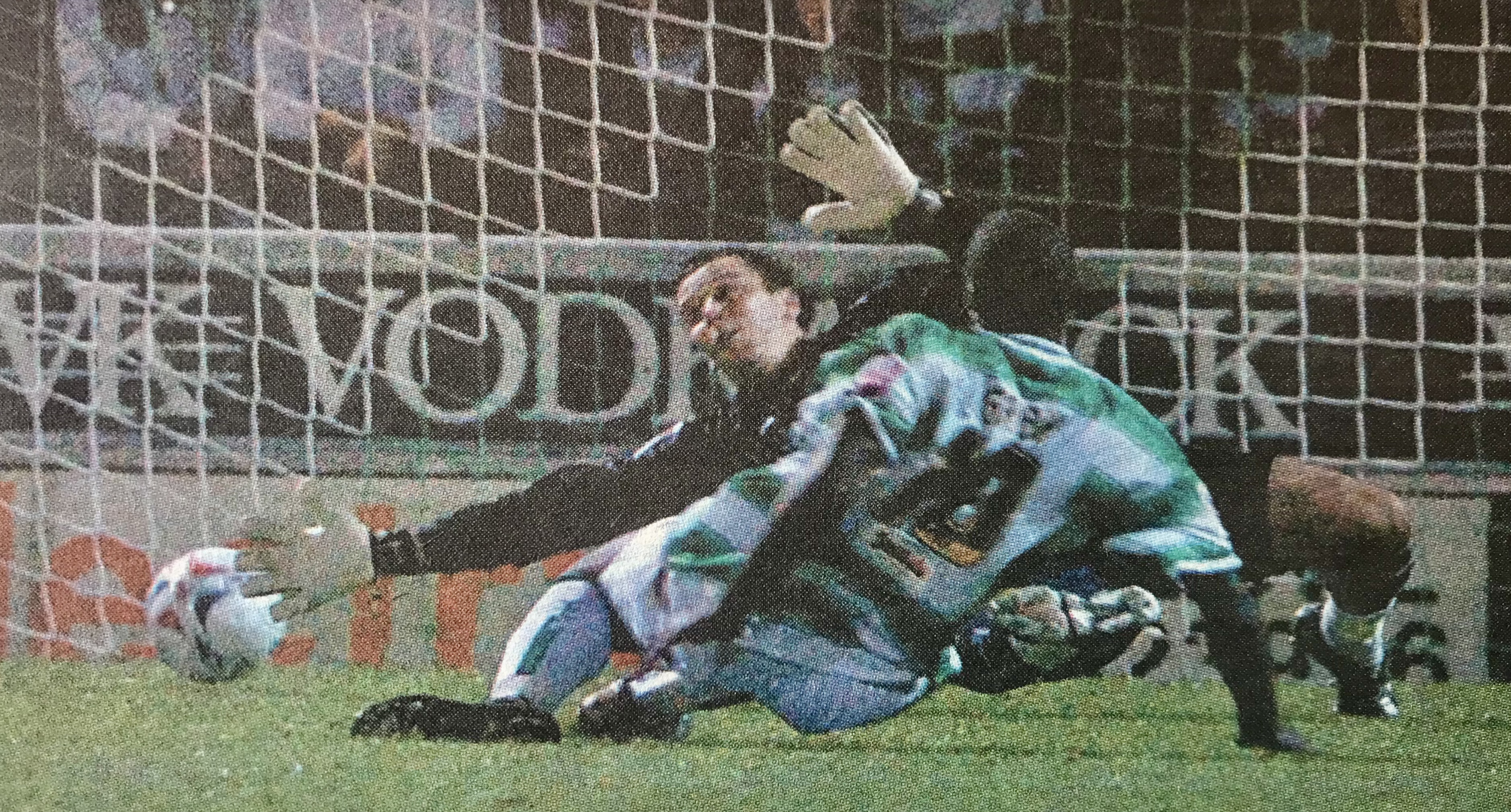


Intriguingly, Henderson’s penultimate game on loan was a 1-1 draw with Ipswich at the Withdean when another Villa loanee, Stefan Postma was in goal for the visitors.
It had been Henderson’s understanding that a permanent move would follow soon after he’d featured in a 1-1 draw at home to Wolves on 1 November. But a two-month on-off saga began which, according to McGhee and chairman Dick Knight, was largely down to demands made by Henderson’s agent.
Albion agreed a fee with Villa of £20,000, plus £15,000 if he helped avoid relegation from the Championship. He didn’t.
The Argus sought the opinion of former Albion no. 1 Steele who felt Henderson had a chance to make a name for himself with the Seagulls.
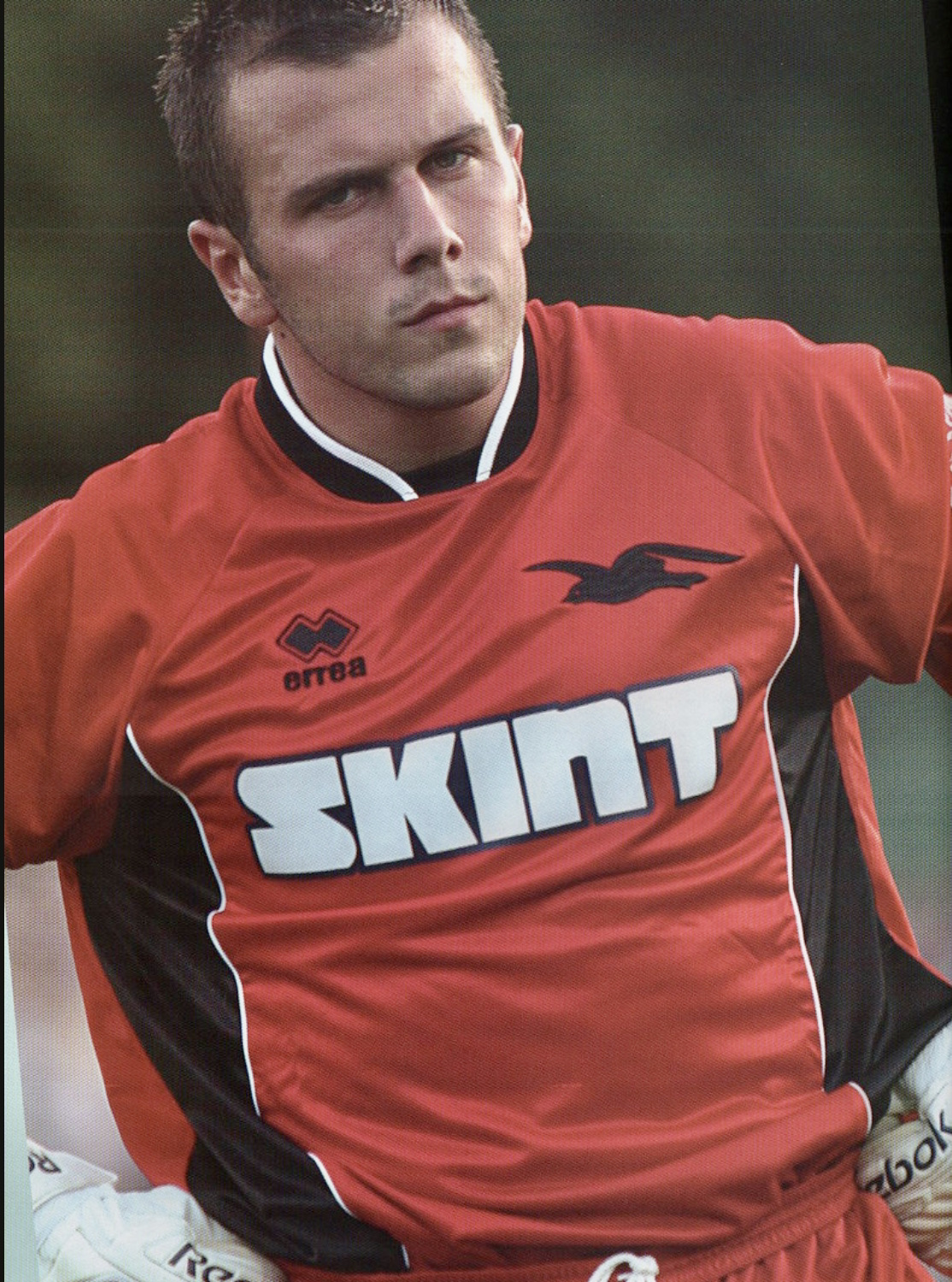
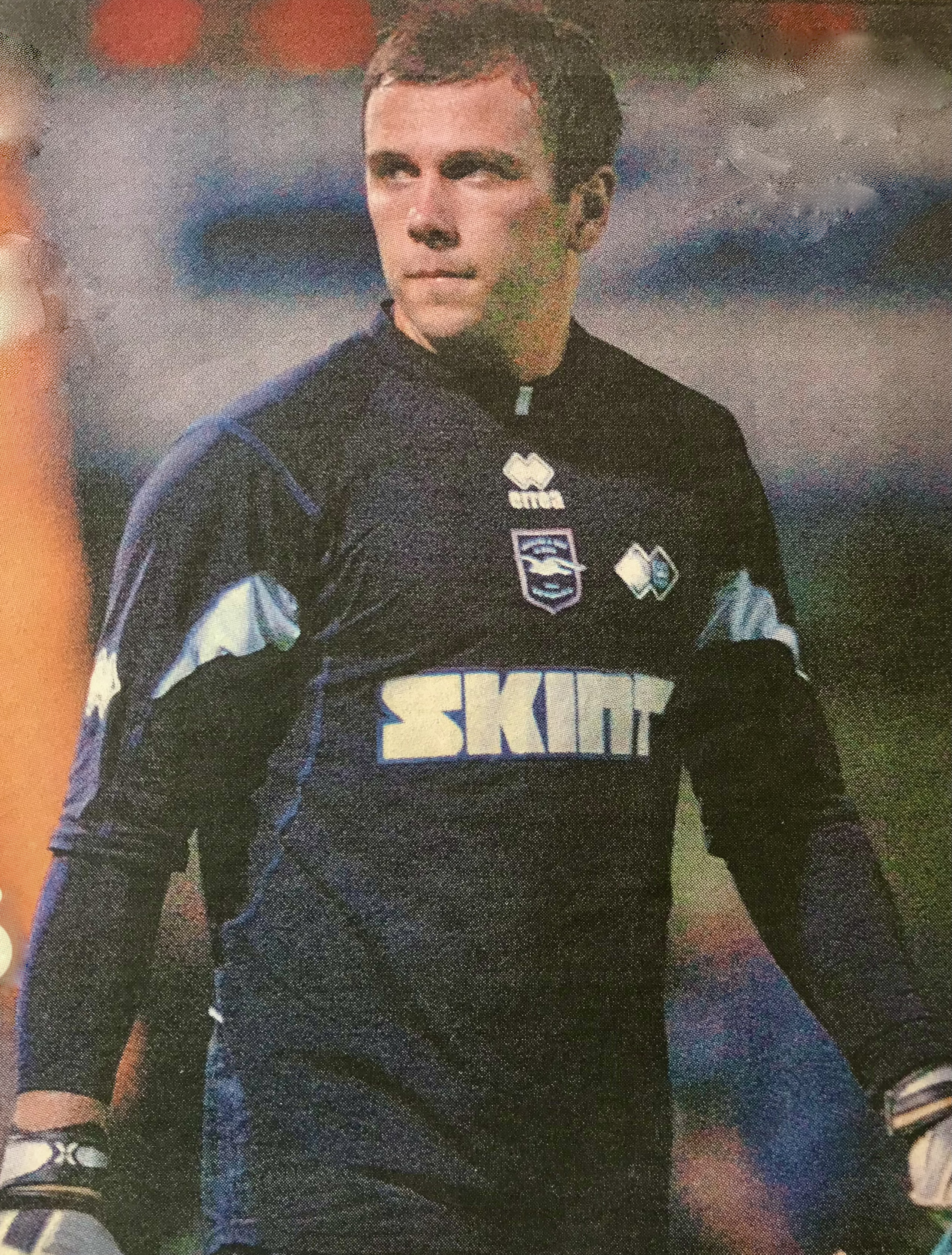
“With Thomas Sorensen as the no. 1 and Stuart Taylor bought in from Arsenal, Wayne’s route in terms of playing first team football was always going to be limited,” Steele told the paper. “Our problem is that we only need one goalkeeper to play in one position and it’s just been a question of what level he would make his mark.
“He’s 22 now and he really had to be looking to move on and I wish him all the best. I’ve worked with him now for four and a half years and always thought he would make a good living from the game.
“I think that’s summed up by the fact that Brighton are going to pay a small fee and we’ll also get sell-ons. He’s the same height, he’s got the same build and he has got the same attributes as Shay Given (Newcastle and Republic of Ireland). And he just needs the chance to go and play.
“He’s been away at Wycombe and been away at Notts County, who would have signed him had they had the money. He’s done it in the Second Division and the First, now he’s got the chance to do it in the Championship.”
Even if supporters of the club he’d just joined had doubts about his merits, the Republic of Ireland selectors were confident enough to give him a first senior call up in February 2006, and he made his full international debut on 1 March 2006, as a second half substitute in a 3–0 win over Sweden.
After the Albion had forfeited their tier two status that season, and the omitted Kuipers had been transfer-listed after falling out with McGhee, Henderson opened his heart to the Argus.
“Michel is liked by the fans and hopefully one day I will get the respect of the fans I feel I deserve,” he told Andy Naylor. “Michel has that because he has been at the club for a long time. I have mixed feelings about him being on the transfer list because it’s good to have someone with his reputation at the club pushing me, but sadly he fell out with the manager.
“Hopefully, I can prove the fans who are criticising me wrong but if they are set in their ways there is nothing I can do about that. It’s a shame if that is the way they feel but I couldn’t care less. I am not going to worry about it.
“I know myself how well I have done, and I am an international player because of that.”

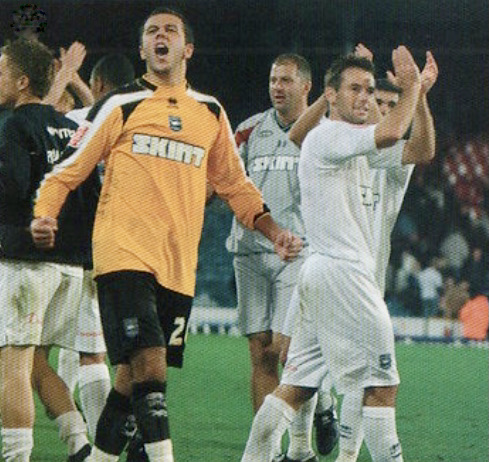
Although he started the new season as first choice ‘keeper, three defeats on the spin saw McGhee sacked and Kuipers back in the starting line-up.
New boss Dean Wilkins restored the Irishman to the team in October which was enough to convince Eire manager Steve Staunton, a former Aston Villa colleague, to put him into a Euro 2008 qualifier against the Czech Republic, when first choice Shay Given and back-up Paddy Kenny were unavailable.
“I knew Stan from Villa, yes, but I like to think I’m being picked on merit not just because he knows what I’m capable of,” said Henderson. “I’ve got a long way to go in all aspects but being at Brighton and playing first-team football means I’m developing under pressure and getting a chance to show Stan (Staunton) what I can do.”
The Irish drew 1-1 and, having been to Dublin to watch the match, Albion goalkeeping coach John Keeley believed Henderson could be Albion’s ‘keeper for 10 years.
“I’m so pleased for Wayne. It proves what a good goalkeeper he is,” said Keeley. “He has taken some stick but people should appreciate him.”
The coach praised his handling at Lansdowne Road, the way he had made himself available for back-passes from his full-backs, and his composure. Highlighting a fine one-handed save he made to deny Milan Baros, Keeley said: “The save that he made just before half-time was world class.”
He added:“I honestly believe that Wayne is a better ‘keeper than Paddy Kenny. His all-round game is more suited to international football.”

Keeley reckoned: “He’s 22 and we’ve got a world-class player. With Wayne being so young we’ve got a goalkeeper now for the next ten years. That’s the way I look at it.”
The following month, Henderson even made the headlines when he wasn’t playing! Injury ruled him out of Albion’s side to face Bradford City at Valley Parade on 4 November and he decided to watch from the seats behind the goal.
When Dean Bowditch scored an 89th-minute winner for the Seagulls, the exuberant ‘keeper jumped over the hoardings – and was promptly escorted out of the ground by a steward!
“It was over-zealous stewarding,” he said afterwards. “Alex Revell made the goal and he was celebrating right in front of where I was sitting in the front row of the stand.
“The natural thing was to go and celebrate within him but one of the Bradford stewards – who knew I was one of the non-playing squad members – took exception to my celebration.
“I think he was a Bradford supporter and perhaps he thought I was trying to rub his nose in it – but I wasn’t. I was just pumped up to see the lads score a last-minute winner.
“The next thing I was being grabbed by a steward and then I was marched out of the ground where the police took my name and address, but I think they saw the funny side of it.”
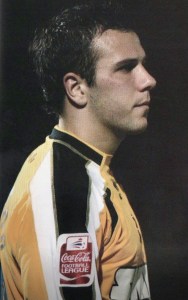
Henderson wasn’t laughing a few weeks later. He’d returned from injury but the side was on a losing streak in December. Away to Bournemouth on New Year’s Day, it looked like Albion might come away with a point but in stoppage time the ‘keeper lost his footing and gifted the Cherries a win, and a section of Brighton supporters booed him off the pitch.
After a 3-0 defeat to West Ham in the FA Cup third round, the Seagulls entertained Millwall at Withdean and a mix-up between Henderson and Joel Lynch led to the visitors winning by the only goal of the game.
Manager Dean Wilkins dropped him and it was the last time he played for the club. The barracking had got to him to the extent he had submitted a second transfer request of the season and, referring to the fans who’d got on his back, he told the Argus: “They love their football as much as anyone else but the way they reacted was pathetic really.”
After securing a deadline day move to Preston, he said: “It was disappointing the way it finished. I was devastated at being left out of the team. The mistake I made against Bournemouth could have happened to anybody and the Millwall game was a mistake by someone else that caught me out.”
Now free to air his feelings about the series of events, he said: “A lot of fans have certain opinions of players. For me the whole experience at Brighton was more like the X Factor.
“It just seemed to be a personality contest and I couldn’t enjoy my football.”
He continued: “I’ve never felt welcome at the club, except by the coaching staff and the players. The coaching staff have been magnificent, and I wish them all the best, because, if anyone is going to get anything out of the kids, it is Dean (Wilkins) and Dean (White), so I hope they are given a fair crack of the whip.
“Outside of them and the lads, a handful of fans have backed me lately and I really respect that but there were an awful lot of fans who didn’t and other people at the club who, for some reason, made it more difficult than it should have been.”
Within the tight confines of the small capacity Withdean Stadium, perhaps it was always going to be a tall order for Henderson to supplant crowd favourite Kuipers.
The ‘former Dutch marine – chef’ Kuipers, as he was serenaded by the singing section, had endeared himself to the Albion crowd after Micky Adams brought the previously unknown shot-stopper to the club in 2000. Subsequent managers brought in their own alternatives but Kuipers, always a reliable shot-stopper, had a habit of bouncing back.
If Henderson was perturbed by unfavourable crowd opinion at Brighton, it seems there was similar mood music when he made his debut for Grimsby.
Manager Mike Newell brought him in along with three other loan players (Joe Widdowson, Peter Sweeney and Barry Conlon) and, in 14 games he played through to the end of the season, five wins and three draws were enough to give them a finish four points above the relegation trapdoor (Chester City and Luton Town went out of the league).
The excellent Cod Almighty fans website observed some fans booed and jeered Henderson on his home debut because the gale force wind kept blowing his goal kicks into touch.
Pete Green, on the same website, later wrote: “These temporary Mariners have played an enormous part in preserving the club’s status in the Football League – even as repeated mistakes by experienced, longer-term Town players such as Phil Barnes and Tom Newey continued to jeopardise it. Henderson has already gone back to Preston, and we stand no chance of signing him permanently.”
While the other three loan players did sign permanently, Newell brought in another Irish international goalkeeper in Nick Colgan the following season.
Born in Dublin on 16 September 1983, Henderson followed in the goalkeeping footsteps of his father and brothers. Dad Paddy played for Shamrock Rovers; brothers Dave and Stephen played in the League of Ireland. Even his nephew, Stephen, was a goalkeeper – most notably for Portsmouth, Charlton and Nottingham Forest after also going through the youth ranks at Villa.
Wayne played for the same Cherry Orchard club in his home city that also spawned the likes of Mark Yeates, Dave Langan, Andy Reid and Stephen Quinn.
John Gregory was in charge at Villa Park when Henderson joined Aston Villa in July 2001. A year later, he was in goal when Villa won the FA Youth Cup (below), beating Everton – with Wayne Rooney playing up front – 4-2 on aggregate over two legs. Also in the Villa side that day was Liam Ridgewell, who later had a brief loan spell at Brighton, and Peter Whittingham, who went on to play more than 500 professional games and died in tragic circumstances aged just 35.
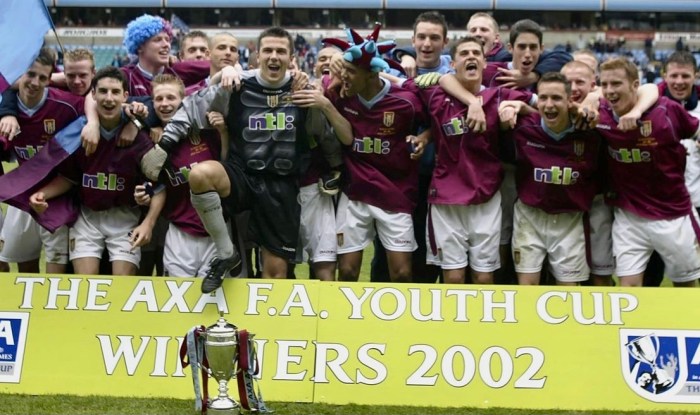
Although Henderson was chosen on Villa’s first team bench occasionally, he didn’t play any competitive fixtures for the first team. Those opportunities came via loans.
After a month at non-league Tamworth in the spring of 2004, he spent a month on loan at Second Division Wycombe Wanderers under Tony Adams towards the end of the 2003-04 season, when their last place finish meant they were relegated to the newly formed League Two.
The following season he joined Notts County, another of the clubs who’d been relegated with Wycombe, and had two loan spells, three months under Gary Mills and then a month under his successor, caretaker boss Ian Richardson.

Paul Simpson signed Henderson for Preston but when injuries forced him to retire at just 27, he told skysports.com: “I’ve decided to actually step out of football and give my body time to heal for once.
“It is exciting for me though because I’m looking to go into a completely different environment from playing but stay within football at the same time.
“I’ve been trying to get back fit for a few years now with injections and operations, but I’ve decided that rest is the way forward for it now.
“I’ve not signed anything yet, but there are a good few options for me to choose from, which I am really excited about.”
Henderson, who married 2010 Apprentice winner Liz Locke, now works as a licensed intermediary for agency YMU, who, among plenty of other elite footballers, represent Albion’s Evan Ferguson and Andrew Moran.


 In parallel lines