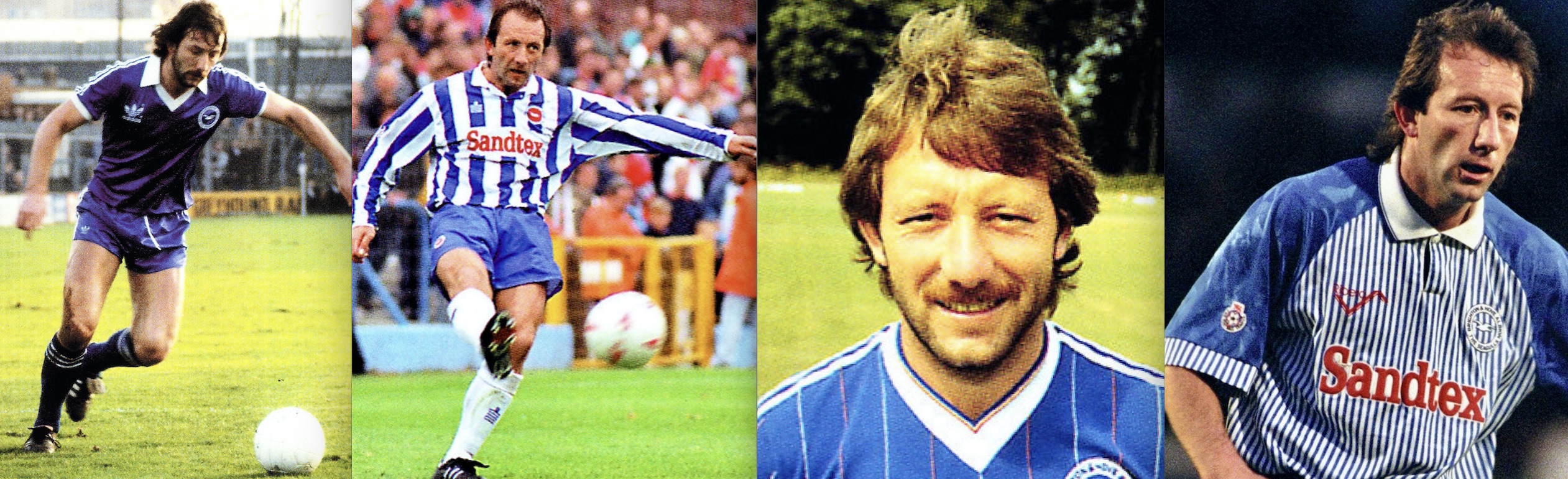
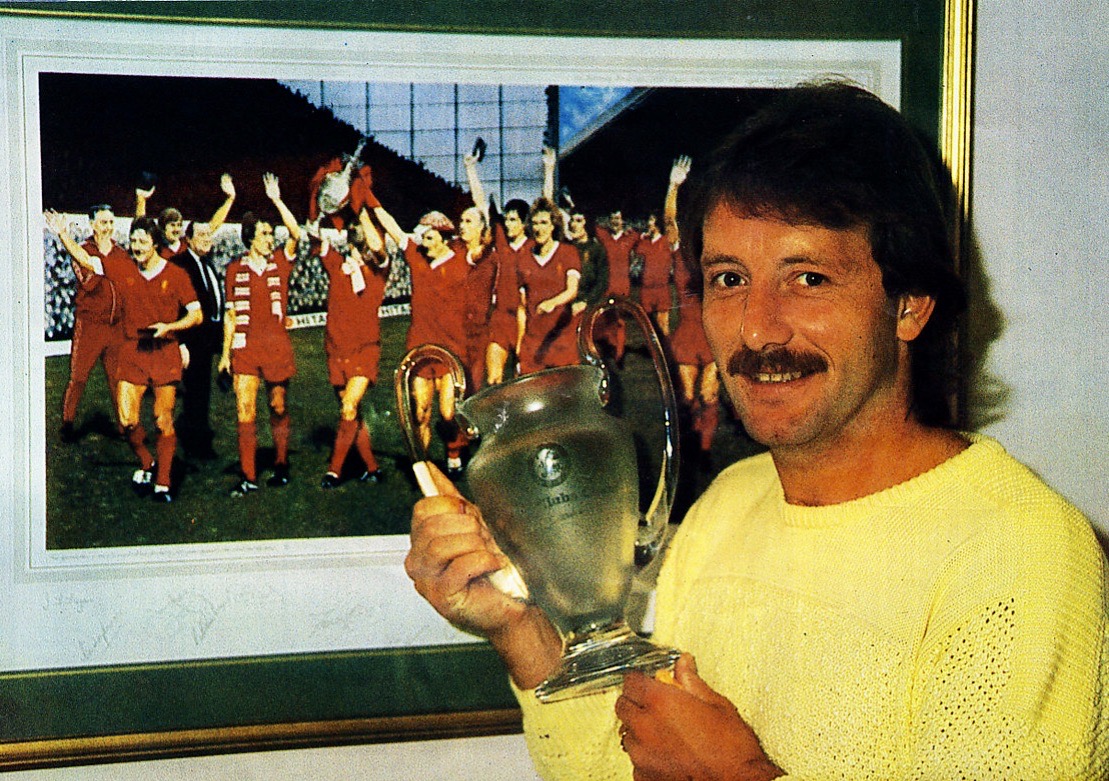
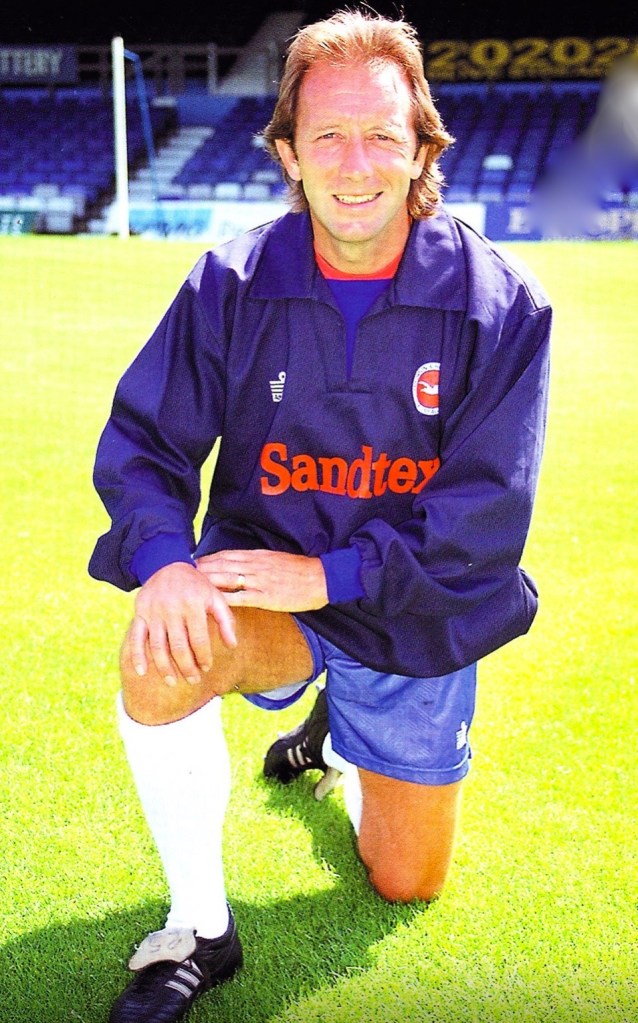
Liverpudlian Melia etched a never-to-be-forgotten place in Brighton’s history

IT WAS the stuff of dreams when Liverpool born and bred Jimmy Melia saw his underdog Seagulls side beat the mighty Merseyside giants en route to Brighton’s one and only FA Cup Final appearance.

In fact, it wasn’t the first time Melia had taken a side to Anfield to play in the competition. On 2 January 1971, as player-manager of lowly Aldershot, he returned to the ground where he’d been an inside forward under Bill Shankly and gave them a scare in the third round, the Fourth Division side only losing 1-0.

Even Liverpool’s wideman, Steve Heighway, admitted: “I suppose we were lucky to win. It was a frosty day and the ball was playing quite a few tricks. I don’t think we were in any danger of losing. But Aldershot were playing well that day. They could have sneaked a draw.”

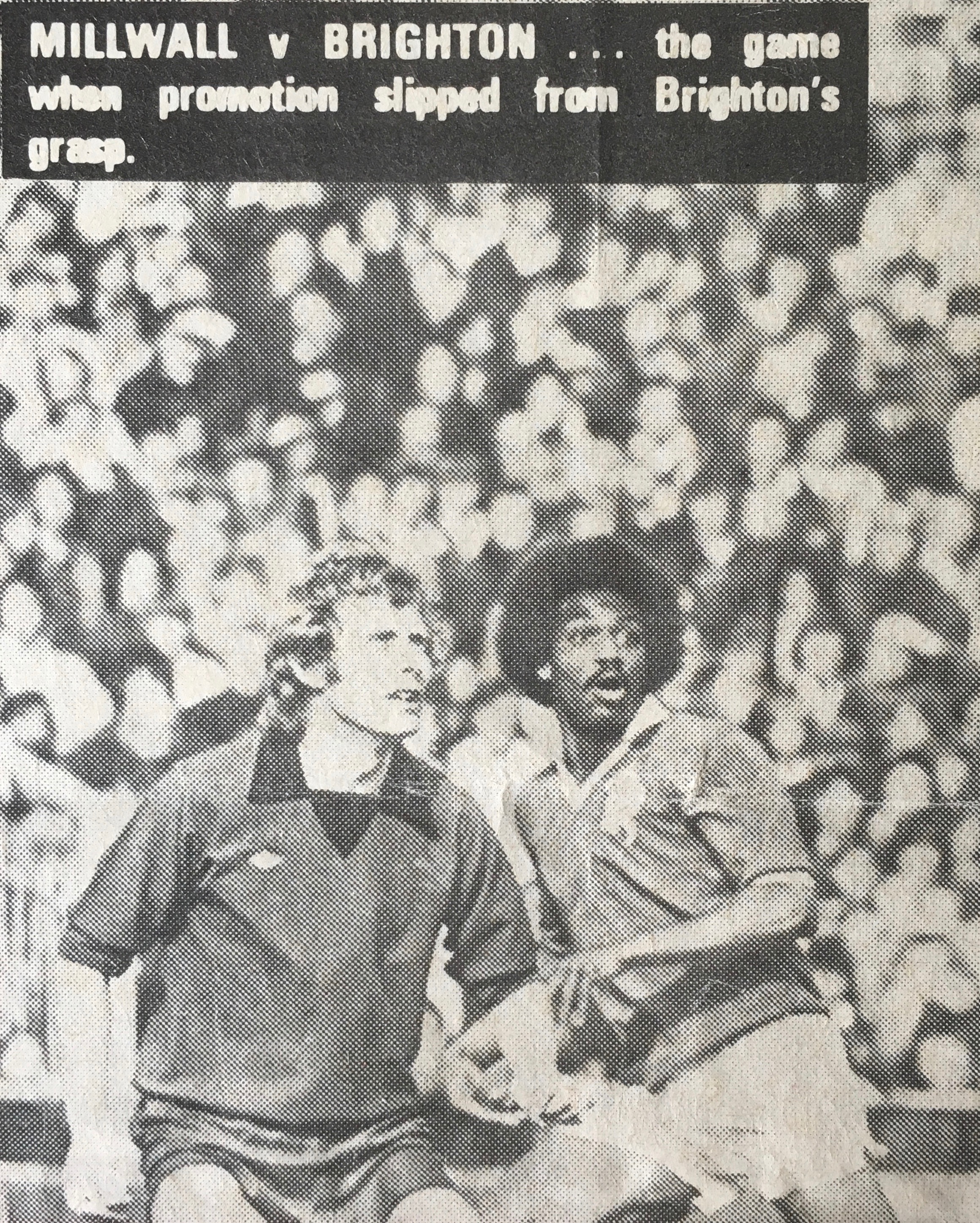
How satisfying, then, to return in 1983 and pilot Albion’s unlikely 2-1 win, with a winning goal courtesy of that other former Anfield favourite, Jimmy Case.

In the run-up to the game, Melia, raised in Liverpool’s Scotland Road, told the Daily Mail: “I’ve got 11 brothers and sisters in the Liverpool area and they’ll all want to be there.”

He clearly didn’t fear the game, pointing out that Brighton had been the last team to win at Anfield, and telling the Argus: “It is a great tie for us. When I was manager at Aldershot we lost 1-0 to them and I think we will do better this time. Remember, the Cup is full of all sorts of upsets. It wouldn’t be the Cup otherwise.”

After the famous victory, Melia told Alex Montgomery of The Sun: “I’ve been involved in some great Liverpool victories but this is without doubt the greatest win.

“The great thing about it is that we didn’t just nick a win. We deserved what we got. A lot of people said that if we attacked them we would just set ourselves up for a hiding. That is not the way it worked out.”

It emerged after the game that John Manning, an old footballing friend of Melia’s, had been key to plotting the victory. Former Crewe, Bolton and Tranmere striker Manning, Albion’s scout in the north at the time, gave the players a pre-match rundown on what to expect.

“Best team talk we’ve ever had,” defender Gary Stevens told the Daily Mail. “Liverpool played exactly the way he said they would and he was even right about which side (Phil) Neal would send his penalty (which went wide of goalkeeper Perry Digweed’s post).”

Born in Liverpool on 1 November 1937, Melia attended the city’s St Anthony’s School and didn’t play his first organised football match until the age of 11. He quickly demonstrated a talent for the game and after shining for the school side was picked to play for Liverpool Boys.

At 14, he was selected for England Schoolboys but a broken collarbone meant he was unable to play. A year later, though, after captaining Liverpool Boys, he got another chance with the national schoolboy side, making his debut against Eire in a team that included Bobby Charlton and Wilf McGuinness.

Liverpool offered him a place on the groundstaff as soon as he left school and, at the age of 17, he was taken on as a professional by former Brighton manager Don Welsh, who took over as Liverpool boss in 1951. Ahead of a Brighton v Portsmouth game in 1983, Melia mentioned his closeness to their manager at the time, Bobby Campbell.

“We virtually grew up together in the same street in Liverpool and we both signed for Liverpool as youngsters on the same day,” he wrote in his matchday programme notes. “We literally have a lifelong friendship.”

Melia scored on his Liverpool debut against Nottingham Forest in a 5-2 win when the famous Billy Liddell scored a hat-trick, and he was making a name for himself at a national level too. Melia scored twice for the England Youth side as they romped home 9-2 winners over Denmark at Home Park, Plymouth, on 1 October 1955. The following month he was on target again as England beat the Netherlands 3-1 at Carrow Road, Norwich.

Between the 1955-56 and 1963-64 seasons, Melia played 287 games for Liverpool, scoring 78 goals. It might have been more but for the fact he had to do National Service although the consolation was that he got to play in the British Army side with the likes of Duncan Edwards, Bobby Charlton, Dave Mackay, Peter Swan, Cliff Jones and Alan Hodgkinson.

One of his Liverpool goals came in a home game against Brighton on 10 October 1959. Phil Taylor’s Liverpool were 2-1 down to the Albion that Saturday afternoon and, in the 85th minute, Melia stepped up to take a penalty…and missed. Nevertheless, he atoned for the mistake by slotting home a last-gasp equaliser. A month later, Shankly took over as manager.

In a series of profiles of the leading Liverpool players of the era, journalist Ivan Ponting said: “Jimmy Melia was the principal midfield ideas man as Liverpool rose from the second tier in 1961-62 and he was capped twice in 1963 ahead of sparkling creatively in the opening half of the Reds’ first title campaign under Bill Shankly.”

In only the second game of Alf Ramsey’s reign as England manager, he selected Melia to play for the national side in a 2-1 defeat to Scotland at Wembley on 6 April 1963.

Then on 5 June 1963, in Basle, he was one of the goalscorers in the side that hammered Switzerland 8-1; Bobby Charlton scored a hat-trick but remarkably Jimmy Greaves didn’t get on the scoresheet.

Although he didn’t win another full cap, he was in a FA squad Ramsey took to Gibraltar in May 1965 when the Rock’s representative XI were soundly beaten 7-1 on 22 May and 6-0 the following day.

In the 1963-64 season, when Melia was sidelined by a minor ankle injury, Shankly reshuffled his line-up, moved centre-forward Ian St John into a more deep lying role and put Alf Arrowsmith up top. The change worked so well that Melia never did regain his regular place in the team.

“It was a stunning blow and a surprise to the balding Merseysider whose flair, industry and intelligence had been so productive, with his through-passing an exquisite speciality, even if some fans disliked what they saw as over-elaboration on the ball,” Ponting wrote for Back Pass magazine.

Melia was sold to Wolves for a then record fee of £48,000 in March 1964, but because he had played a certain number of games for Liverpool earlier in the season, was awarded a medal when the Reds were crowned champions.

It was the legendary Stan Cullis who had taken him to Molineux and, Melia told Charlie Bamforth for wolvesheroes.com, it was with the intention of him subsequently moving into a coaching role. But, when Cullis was sacked before the end of the year, his replacement, Andy Beattie, swiftly dispensed with Melia’s services, offloading him to Southampton in December 1964 for £30,000.

At The Dell, Melia (pictured below in Saints’ famous stripes) joined forces with the likes of Terry Paine and Martin Chivers and, in 1965, helped Ted Bates’ side to promotion to the top division.

Melia Saints

He was an ever present in the side during their first top division campaign, notable as a provider of crosses for Ron Davies and Chivers.

Eventually, the emerging Mike Channon took his place and, in 1968, after making 152 Saints appearances, on the strength of a recommendation from his old boss Cullis (by then manager of Birmingham), Aldershot paid £9,000 for him to become player-coach. The following April he became player-manager.

When he was sacked in January 1972, having made 134 league appearances for the Shots, he moved back to the north west as player-manager of lowly Crewe Alexandra but finally hung up his boots in May that year to concentrate on the manager’s job.

As a lowly league manager, Melia seldom came to the wider public’s attention, but when the opportunity arose, he was quick to seize it. Before another FA Cup third round match, this time against Huddersfield, he told Goal magazine any success he’d had as a manager could be put down to the influence of Shankly and his managers at Wolves and Southampton, Cullis and Bates.

“I was lucky,” said Jimmy. “You can’t help but learn from men such as these and I consider myself very fortunate to have served under them.”

In his first season as manager of Crewe Alexandra, his inexperienced team finished bottom and had to seek re-election to the league (in those days relegation was not automatic).

“I believe some of the youngsters we have here are destined for great futures. But perhaps you need a little more than just skill and enthusiasm to be successful,” he told Goal in July 1973.

Melia was clearly scarred by his treatment at Crewe. He told Ian Jarrett of The Sun: “We finished in the bottom four and were in danger of getting kicked out of the league so I spent days ringing around all my mates to get the votes to save us at the annual (league) meeting.

“I succeeded and went away feeling pretty happy until a phone call from the chairman warned me that I had only narrowly survived a vote of confidence.

“The following September I was made manager of the month but the club called an extraordinary meeting, got rid of the chairman, and soon after that I was out on my ear.

“The experience taught me a lesson.”

In 1975, Melia had three months as manager of Southport, before ending the same year coaching in the Middle East.

He then moved to the USA and linked up with a former Wolves teammate Laurie Calloway to become his assistant coach at NSL side Southern California Lazers. In 1979, Melia moved to Ohio to become coach of Cleveland Cobras.

A window back into the English game opened in April 1980 when Brighton boss Alan Mullery appointed him as the club’s chief scout.

Looking back now, it seems a tad ironic that Albion chairman Mike Bamber was all for sacking him and other members of Mullery’s backroom staff in the summer of 1981 to save money. Mullery refused – and subsequently left the club himself.

Melia retained his position under Mullery’s successor, Mike Bailey, who, despite taking the Albion to their highest ever finishing position (13th) in 1982, failed to win over fans with a style of football that saw them stay away in their thousands.

A concerned Bamber finally brought down the curtain on the Bailey era in December 1982, handing the first team managerial reins on a caretaker basis jointly to Melia and loyal backroom ‘boy’ George Aitken (himself a former manager who, like Melia, had been a player under Shankly during his time at Workington).

From the outset, it was Melia who put himself forward to handle interviews with the press, TV and radio, and, as the club progressed in the FA Cup, so the spotlight began to shine brighter on the Liverpudlian, especially with that tie at Anfield.

Inevitably, the question kept arising as to whether Melia would land the manager’s job on a permanent basis and, in one of many interviews, he somewhat tellingly said: “I’d love the job and, if we stay up, that will improve my chances. But I’m not going to attempt to survive by playing boring, safety-first football.”

In a comment that was something of an oxymoron, Melia told Paul Weaver of the News of the World: “I don’t want to say anything against my predecessor, Mike Bailey, but I wouldn’t have paid money to watch Brighton in the first half of the season.”
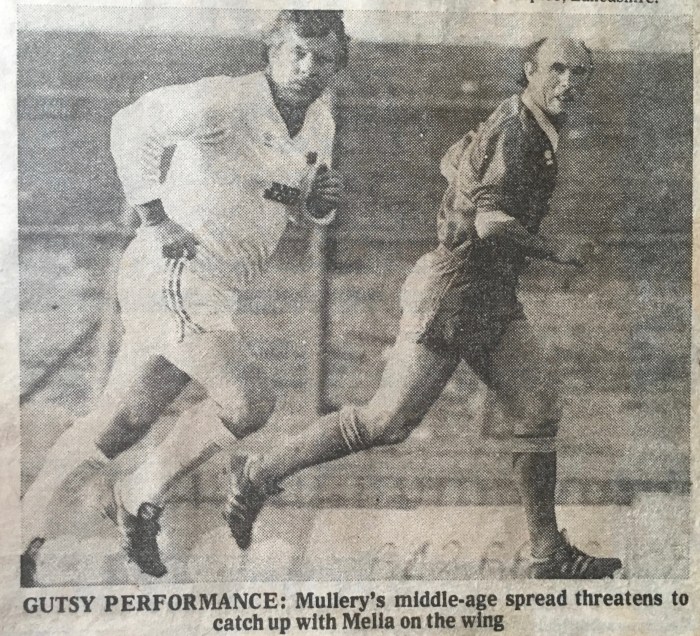
mullers + meia

Perhaps not surprising, then, that in a veterans’ charity match played at Selhurst Park just before the semi-final, Bailey refused a request to be photographed with Melia, albeit he was happy to pose alongside Mullery.

By then, Melia had indeed finally been given the manager’s role on a permanent basis (once Norwich had been defeated in the quarter final). On 16 March 1983, Bamber took him out to lunch at a Hove hotel to break the news.

In a front-page splash on the Argus, Melia said: “This is the happiest day of my life. It is a dream to be manager of a First Division club with also the possibility of taking them to Wembley.

“I am just pleased the chairman has given me the opportunity, and I hope to stay at the club for the next 20 years.” It would, of course, turn out to be closer to 20 weeks!

As excitement built in the run-up to the Cup Final, Bamber told Argus reporter Phil Mills: “Jimmy knows the game from A to Z but what I particularly like is that he’s always bubbling. He’s lively and looks on the positive side of things – even when we lose.

“The Jimmy Melia story is a fairy tale – three months ago he was our chief scout. Now he’s leading the Albion to Wembley for the FA Cup Final.

“You couldn’t get a better fairy tale than that.”

There’s no doubting Melia milked the moment, but who could blame him?

He told Ian Jarrett in The Sun: “I must make this situation count because I might never be involved in anything like it again.

“I have felt like the President of the United States in the past couple of weeks. Everyone has wanted to shake my hand and cars have beeped me in the street. It’s heaven to be in this position and I think everyone in the club should make the most of it.”

The Daily Mail even went as far as describing the opposing managers for the 1983 final as “Liberace meets Max Wall”, rather playing on the fact United’s Ron Atkinson had a penchant for bling and the follicly-challenged Melia bore something of a resemblance to the comedian and actor renowned for a silly walk. John  Roberts wrote: “Little Jim has given his usual 110 per cent in the discos, a chest-revealing Tom Jones shirt, black leather trousers, white dancing shoes and glamourous girlfriend offsetting a glistening dome that is just made for the Seagulls.”

The writer continued: “Brighton’s progress to Wembley for the first time in their history has made a relegation season tolerable and enabled the 46-year-old Melia to recapture a measure of the prestige he enjoyed as a player.

“As a nimble, intelligent inside forward he won Second and First Division championship medals with Liverpool and played for England. Some of his friends consider that he suffered to a degree for being a home-produced player rather than a fashionable big-money signing.”

Roberts even quoted comedian Jimmy Tarbuck, a boyhood friend of Melia’s, who said: “To use an old showbusiness saying, Jimmy’s been there and back.”

Who knows what might have happened had Albion actually won that Cup Final?

Melia will forever be associated with taking the club to what was then a globally-watched event and raising their profile to heights never previously achieved.

The cold, hard reality, though, was that Brighton’s brief stay among the elite of English football was over. Melia’s open, expansive style of play had been punished in the league, resulting in relegation and a loss of status that took 33 years to restore.

Melia had designs on boosting his coaching staff in the summer of 1983 with the introduction of the aforementioned Calloway, but Bamber had other ideas and, without consulting his manager, instead installed former Albion defender Chris Cattlin as first team coach.

From the outset, it was evident the two were not going to see eye to eye and it wasn’t long into the new season before it emerged publicly that Cattlin was actually picking the team.

Eventually Melia couldn’t continue with what was clearly an untenable position and resigned, but, in a rather tawdry denouement, appeared being carried shoulder-high on the north stand terrace at the next home game amid cries of ‘Bamber out, Melia in’.

At the time, there were rumblings of an Albion takeover from businessman Jeffrey Kruger and Bamber described Melia as “a disgrace” and claimed he had been operating as a mole for Kruger.

Nothing came of the takeover and the dust had not long settled on the end of Melia’s Albion association when he moved to Portugal and spent three years as boss of Belenenses, taking them to a top five finish.

Former Argus Albion reporter John Vinicombe reflected on Melia’s career in a wistful piece for the newspaper in 2001, and recalled: “Back in England Jimmy had a brief spell in charge at Stockport, then it was time to move on to Kuwait and Dubai, San Francisco, San Jose and Dallas.”

He subsequently settled in Dallas and became technical director for Liverpool’s academy in Texas.

Pictures from various sources including the Argus, The Sun, The News of the World, Shoot! and Goal magazines and the matchday programme.


Left back Harry Wilson “something of a fire-eater”

BRIGHTON boss Brian Clough turned up at Burnley to capture the signings of two of their fringe first team players – and ended up having pie and chips with the groundsman!

When Clough arrived at Turf Moor, he found manager Jimmy Adamson, chairman Bob Lord and secretary Albert Maddox were nowhere in sight, it being lunchtime.

In their absence, as recounted to respected writer Dave Thomas, groundsman Roy Oldfield made the famous visitor a cup of tea, popped to a nearby chippy to get them both pie and chips and chatted all things football until the office re-opened after lunch.

Although Clough hadn’t got quite what he expected on arrival, his journey did bear fruit. In exchange for £70,000, he secured the services of left-back Harry Wilson, a 20-year-old who had made 12 appearances for the Clarets, and midfielder Ronnie Welch, 21, who had played one game.

At the time, Clough was desperately trying to bring in new recruits to a beleaguered Brighton side that he and sidekick Peter Taylor had taken on in October 1973, a period covered in detail in a recent book, Bloody Southerners, by author and journalist Spencer Vignes.

The man who only the season before had led unfashionable Derby County to the First Division Championship, couldn’t quite believe what he had inherited at Third Division Albion.

The players seemed bewildered by what the new celebrity boss expected of them.

Heavy defeats – 4-0 to non-league Walton and Hersham in the FA Cup; 8-2 at home to Bristol Rovers and 4-1 away to Tranmere Rovers in the league – reflected the disarray.

Clough and Taylor weren’t slow in pointing the finger. Their only solution was to find replacements – and quickly.

Former Manchester United reserve Ken Goodeve was first to arrive, from Luton Town, although he failed to impress and made only a handful of appearances before joining Watford at the end of the season.

Goalkeeper Brian Powney was axed in favour of former England under 23 international, Peter Grummitt, initially on loan from Sheffield Wednesday.

Experienced left-back George Ley never played for the Albion again after the defeat at Tranmere, while utility man and former captain, Eddie Spearritt, also lost his place (although he eventually forced his way back into the side briefly).

Lammie Robertson, who knew the pair from his early days at Burnley, was asked to introduce them to their new teammates in the dressing room before an away game at Watford (they’d not been signed in time to play).

Robertson told Spencer Vignes in a matchday programme interview how Wilson was sporting a rather loud checked suit at the time and, in his own inimitable style, Clough boomed out: “Flipping hell, I never want to see that suit again.”

Needless to say the players laughed out loud, only for Clough to say: “What the hell are you all laughing at? They’ll be in the team next week.” And sure enough, they were.

Wilson and Welch made their debuts against Aldershot in a home game on Boxing Day when a crowd of 14,769 saw Albion slump to their fifth successive defeat, although at least the deficit this time was only 1-0.

A win finally came in the next game, a 1-0 success at home to Plymouth Argyle – Ken Beamish scoring the solitary goal.

In a 2010 matchday programme article, Wilson said: “I really didn’t want to go to Brighton. No disrespect but I loved it up at Burnley.

“The people there had been so friendly and helpful when I arrived from the North East so it broke my heart to leave. That said, I thoroughly enjoyed my time at Brighton and met some fantastic people, so, looking back now, I’m glad that Jimmy Adamson let me go.”

In the Evening Argus, reporter John Vinicombe purred about the impact of the new recruits from Burnley, saying Wilson “is looking something of a fire-eater. He has a rare zest for the game and relishes the close, physical contact that is synonymous with his position.

“He knows how to destroy and create, and does both in a manner befitting a five-year background at the academy of fine footballing arts (editor’s note: at the time, Burnley had a reputation for producing highly-talented young players).

“His colleague from Turf Moor, Ronnie Welch, is not so completely extrovert, but is no less involved in midfield, and has a fine turn of speed. He made one mistake through trying to play the ball instead of hoofing it away, but this can only be described as a ‘good’ fault.”

Further signings followed and the ship was steadied. Wilson kept the no.3 shirt through to the end of the season. But Welch made only 36 appearances for Albion before Taylor, by then under his own steam, traded in him and fellow midfielder Billy McEwan as a makeweight in the transfer that brought full-back Ken Tiler to the Goldstone from Chesterfield.

Wilson, meanwhile, became a mainstay in Albion’s left-back spot for three years, including being ever-present in the 1975-76 season.

5 HW action v MillwallEver-present Wilson in action against Millwall at The Den

Suited for England!

Born in Hetton-le-Hole, near Durham, on 29 November 1953, Wilson played for Durham County Schools and made four appearances for England schoolboys (under 15s) in the 1968-69 season. He was taken on as an apprentice at Burnley before signing professional forms in December 1970.

In 1971, he earned an England Youth cap going on as a sub for Coventry’s Alan Dugdale in a 3-2 defeat against Spain in Pamplona. Don Shanks also played in that game.

He made his first-team debut at home to Chelsea on 26 April 1971 and the last of his 12 appearances for the Clarets was on 3 April 1972: away to Sunderland.

Young apprentice Wilson with experienced pros John Angus and Colin Waldron

He was part of Alan Mullery’s Third Division promotion-winning squad in 1976-77, although he was restricted to 22 appearances. The arrival of the experienced Chris Cattlin meant he was no longer first choice left-back, although in several games they both played – the versatile Cattlin being equally at home as right-back.

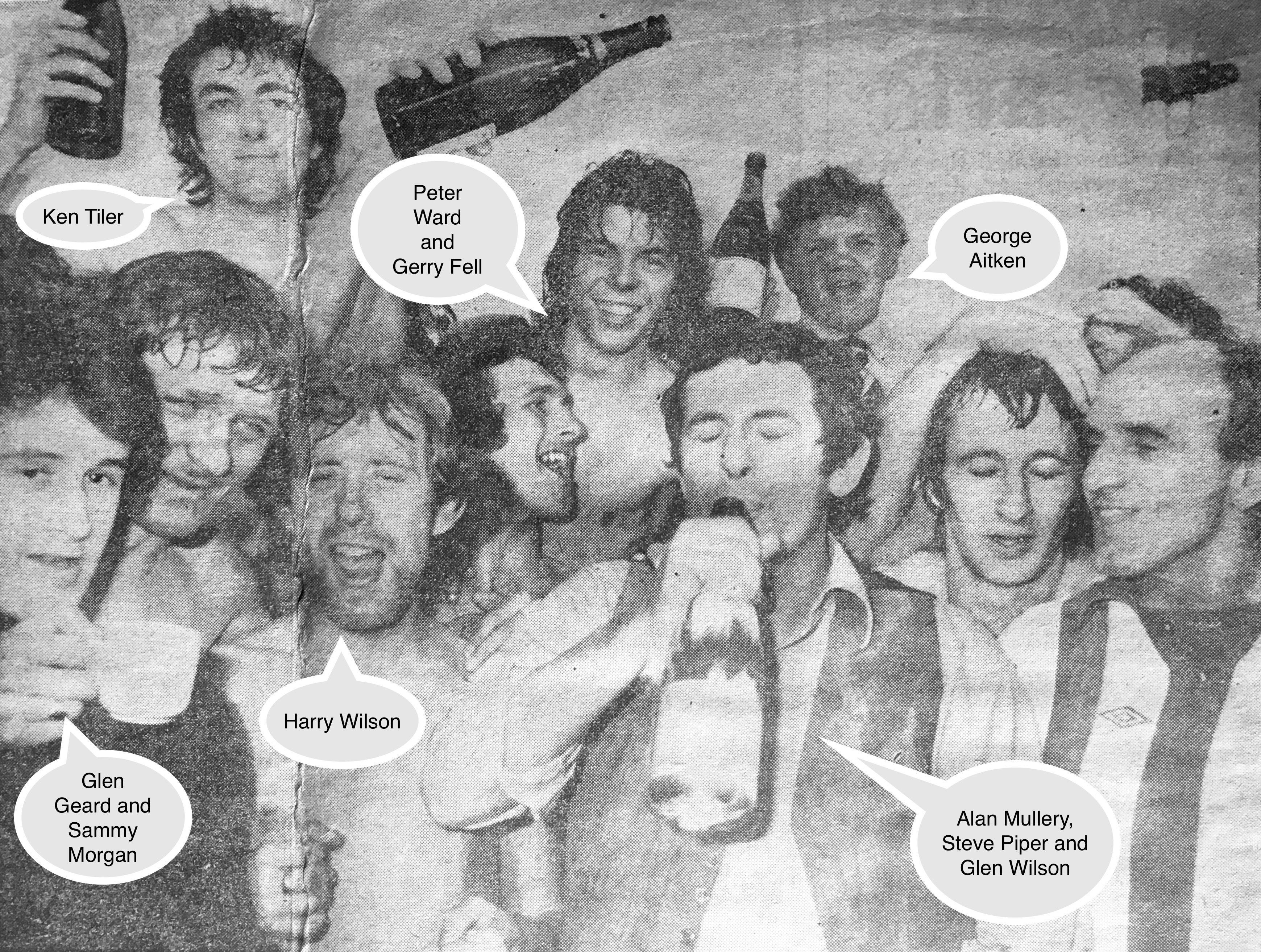
6 HW promotionA bare-chested Wilson was pictured (above) in the Albion dressing room alongside Mullery enjoying the celebratory champagne after promotion was clinched courtesy of a 3-2 win over Sheffield Wednesday on 3 May 1977. But that game was his Goldstone swansong.

He’d made a total of 146 appearances for the Albion – as well as chipping in with four goals – but when Mullery signed Mark Lawrenson and Gary Williams from Preston that summer, Wilson went in the opposite direction along with Graham Cross.

Only six months after arriving at Preston, Wilson was badly injured in a road accident after his car skidded on black ice and collided with a transit van. He suffered a punctured lung and damage to his knees. Doctors told him he wouldn’t play again, but he proved them wrong and ended up spending three years at Preston, playing 42 games.

“I suppose I was lucky to be alive,” he said in an Albion matchday programme article. “I lost a couple of yards of pace, but then again I ws never exactly the quickest of players.”

With his best days behind him, he moved back to his native north-east in 1980 to play for Darlington, making 85 appearances in three years.

He stayed in the north east in 1983, switching to Hartlepool for a season, but only played 16 times for them before dropping out of the league to play for Crook Town.

According to The Football League Paper, Wilson stayed in the game as manager of Seaham Red Star and, in 1988-89, Whitby Town.

He then worked as a community officer for Sunderland before joining the coaching staff at Burnley in the 1990s.

When Chris Waddle took over as manager, Wilson was sacked but he took the club to an industrial tribunal, which found in his favour.

He later worked for his long-term friend, Stan Ternent, at Bury, and as a monitor for the Football League, a job that saw him checking that the right procedures were being followed by the youth development set-ups of clubs in the north-west.

Wilson was in the news in 2007 when Ternent appeared at Lancaster Crown Court accused of assaulting Wilson’s son, Greg, on the steps of Burnley Cricket Club (a venue familiar to visiting supporters as a popular watering hole before games at the neighbouring football ground).

Greg Wilson required hospital treatment for a deep cut above his left eyebrow and needed nine stitches in his forehead.

Ternent said he had accidentally clashed heads, denied causing actually bodily harm, and was cleared by a jury.

4 HW colour laugh w WardWilson in an Albion line-up alongside Peter Ward

Wilson pictured in 2010

Mis-firing Mick Ferguson couldn’t repeat goalscoring prowess for Everton or Brighton

MICK FERGUSON was a prolific goalscorer for Coventry City but the goals dried up in spells with Everton and Brighton & Hove Albion.

Ferguson’s arrival at the Goldstone in the early autumn of 1984 was certainly not amid a great fanfare. The Albion, under new chairman Bryan Bedson, were wrestling with debt and, to bring in some much-needed funds, sold striker Alan Young to Notts County for £50,000 and full-back Mark Jones to Birmingham for £30,000.

Needing a cut-price replacement for Young, and with Ferguson unwanted at Birmingham having been responsible for getting them relegated (see below), he came to the Goldstone as part of the deal that took Jones to St Andrews.

In modern-day football, loan players don’t generally play against their parent clubs but, amazingly, at the end of the previous season, Ferguson was allowed to play against Birmingham while on loan at his old club Coventry, and ended up scoring a goal that kept the Sky Blues in the top division but sent Birmingham down.

It was such an unusual saga that as recently as May 2017, the Guardian revisited the tale, catching up with Ferguson to explain the circumstances.

As the article explains, shortly before the player’s 30th birthday, manager Ron Saunders offloaded him to Brighton, where the manager was Ferguson’s former Coventry teammate, Chris Cattlin. Just to prolong Saunders’ agony, Ferguson made his Seagulls debut in a 2-0 home win… over Birmingham! This time he didn’t score. And, for Brighton, that state of affairs existed for several months.

I remember his second game quite vividly. It was a midweek league cup tie away to Fourth Division Aldershot and I went to the game with my pal Colin Snowball, who at that time was living in nearby Bagshot. There wasn’t anything subtle about Albion’s tactics that night. Goalkeeper Graham Moseley would kick the ball long for Ferguson to get on the end of it.

But, as the striker tried to lay it off, all he succeeded in doing was heading it into touch – repeatedly. The new signing did not impress! Despite their superior status in the league, Albion succumbed 3-0 in what was a pretty humiliating exit. Ferguson was remarkably selected for the following Saturday’s game, an away defeat to Oxford, after which he was omitted for four games. Cattlin gave him another chance with a four-game spell but still the dismal form continued and he didn’t get another look-in for four months.

Freelance journalist Spencer Vignes did a retrospective article about Ferguson for the Albion matchday programme and discovered the striker didn’t have a high opinion of his former playing colleague. “Several of the players just didn’t get along with him, and I was one of them,” he said. “His man-management skills  left a lot to be desired. As a manager you need to have the players on-side. Chris certainly didn’t have us on-side.”

Ferguson admitted to being frustrated by Cattlin chopping and changing the side and said there were times he turned out when only 80 per cent fit, which didn’t do justice to himself, the team or the supporters. “My ankles weren’t great and towards the end I did struggle with my back, but I felt when I was fit I could certainly do a good job.”

The striker felt with the ability in the squad at the time they should have achieved more but pointed the finger at Cattlin for it not happening. “Some people aren’t cut out for management and I don’t think Chris was. It doesn’t surprise me that he never worked as a manager again.”

The history books (many thanks to Tim Carder and Roger Harris) recall him as the goalscorer in a 1-1 draw away to Portsmouth on 6 April 1986 but, having been to that game too, I seem to recall it was a rather desperate claim for what looked more like an own goal by Noel Blake.

The start of the following season saw the arrival of former £1m striker Justin Fashanu from Notts County and Dean Saunders, a free transfer from Swansea City, so Ferguson’s prospects of a starting place looked bleak.

However, the 1985-86 season was not very old before Cattlin had a striker crisis on his hands. Gerry Ryan was out long-term with the horrific leg break from which he never recovered, Terry Connor and summer signing Fashanu were also sidelined with injury and a big man was needed to play alongside Alan Biley.

Cattlin had little choice but to bring back the previously mis-firing Ferguson, and to everyone’s surprise and delight his goal touch returned, albeit briefly.

“I was virtually forced into the team through injury,” Ferguson admitted in a matchday programme interview. “But, fortunately, things turned out quite well. It was nice to get a goal against Blackburn in my first match back. That seemed to pave the way.”

The programme article had tried to give some perspective to the dismal form when he had first arrived. It said: “Mick’s confidence was affected by his loss of form, but he never lost an inner belief that he would pull himself out of the bad patch. And what a difference the goals make. He has shown great character this season and did a marvellous job for the team while Justin Fashanu was out with injury.”

Ferguson himself said: “It took us quite a while to settle down. We were in a flat at first and I was having a lot of problems, one way and the other, so it wasn’t an easy time.”

Eventually Ferguson, his wife and two daughters settled into a house in Hove, and the striker admitted: “When you’re having a bad time there is a tendency to bring your problems home. It’s unfair on your family. I didn’t notice at the time, but, looking back, I think I probably was a little snappy with my wife and children.

“I think you can reach the stage where you really start to wonder, but I always knew I could score goals for Brighton. I’ve scored goals everywhere else I’ve played. It was just a question of time and waiting for the right break.”

Indeed, Ferguson scored in three successive matches in September 1985, prompting Cattlin to give him a special mention in his programme notes for the league cup game at home to Bradford City. “The form of Mick Ferguson is bound to improve even more with the confidence he is gaining through his three goals in three games,” wrote the manager. “His header against Wimbledon was a true indication of his ability; it was of the highest class.”

The renewed confidence saw him add another consecutive pair the following month – before on-loan Martin Keown took over the no.9 shirt and demonstrated he could score goals as well as defend!

Sadly, the revival in Ferguson’s fortunes were not to last. When Fashanu was fit again, Ferguson was dropped and only stepped in a couple more times. His goal in a 4-3 home win over Huddersfield on 16 November was the last he scored for the club.

Apart from a lone outing in January, in a 3-0 defeat at Sheffield United, Ferguson was on the outside looking in until, to everyone’s astonishment, after a five-week absence from first team action, he was selected by Cattlin to lead the line in a FA Cup Sixth Round tie against First Division Southampton on 8 March 1986.

Ferg action Shilts Bond CaseFerguson, sandwiched between Kevin Bond and Jimmy Case, is foiled by Southampton goalkeeper Peter Shilton in what turned out to be the striker’s final Brighton game.

A crowd of 25,069 packed into the Goldstone – when the average attendance at the time often dipped below 10,000 – but it ended in a disappointing 2-0 defeat and the manager admitted he had made a mistake with his selection. It turned out to be Ferguson’s last game for the club.

Just over three weeks later, he moved to fourth-tier Colchester United – whose manager Cyril Lea was promptly sacked!

United’s reserve team manager, Mike Walker (who would later manage Everton) took over the first team as caretaker and, as the team went on an unbeaten run of eight games, Ferguson scored seven times, the first of which came in a 4-0 win over Leyton Orient on 8 April.

The following season he played 19 games and scored four times before leaving on 7 November 1986 to join non-league Wealdstone.

It was quite a fall from the heady days of the early Seventies.

Born in Newcastle on 3 October 1954, Ferguson was picked up by Coventry City’s youth scheme in 1970 and, although he made his debut in 1975, shortly after the sale of Scotland international Colin Stein, it wasn’t until the start of the 1976-77 season that he became a Highfield Road regular.

In tandem with Ian Wallace (who was later a strike partner of Peter Ward’s at Nottingham Forest), he really started to attract attention, as the Coventry Telegraph recounted when describing him as a “truly great goalscorer”.

The article reckoned he was strongly tipped for international honours at one point but injury and loss of form affected him over the next two seasons. Forest, Villa and Ipswich were all supposedly keen to sign him, with Brian Clough agreeing a £500,000 deal, then pulling out.

However, in the summer of 1981, he finally left City having scored 57 goals in 141 games (plus eight sub appearances) all in the top flight when Everton paid £280,000 for him. Ferguson scored six times in his first eight games – but the goals dried up after that and he was gone within less than a year having made only made 10 appearances (plus two as a sub).

In 2007, David Prentice, in the Liverpool Echo, sought out Ferguson for an explanation of his less than happy time on Merseyside.

Manager Howard Kendall initially loaned him to Birmingham City, before making the deal permanent, but injury disrupted his chances at St Andrews, hence the loan move back to Coventry.

After retiring from playing in 1987, Ferguson stayed in the game working in community development roles for Sunderland – for 10 years, until he fell out with manager Peter Reid – Newcastle United and Leeds United, where he was head of Football in the Community.

Pictures from Albion matchday programes and, via YouTube, from Coventry City’s Sky Blues TV.

Desk job at Leeds in later life

The never forgotten miss by FA Cup Final scorer Gordon Smith

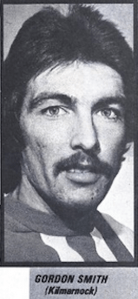
3 and smith must score“NEVER in my wildest dreams – or should that be nightmares? – did I think that, more than 20 years later, that miss in front of goal would still be getting replayed on television and mentioned in the media wherever I go.”

The words could only have been said by one man and they appear in the autobiography…And Smith Did Score (Black and White Publishing, 2005).

Gordon Smith’s football career included being a treble trophy winner with Glasgow giants Rangers, top scorer of the season for Manchester City, and becoming chief executive of the Scottish FA.

But it is what happened in the final seconds of extra time in the 1983 FA Cup Final that he is most remembered for.

Gordon Duffield Smith was born in Kilwinning (20 miles south of Glasgow) on 29 December 1954 and followed in his grandfather Mattha’s footsteps in becoming a pro footballer.

He was at Kilmarnock for five years, scoring 36 goals in 161 appearances, during which time he earned international honours with Scotland’s under-23 side, twice starting and three times going on as a substitute.

“It’s always a tremendous thrill to be selected in a squad for my country,” Smith said in a 1976  Shoot / Goal! magazine article. “It’s great to think Mr (Willie) Ormond considers me good enough for selection. I always do my very best for Scotland. I don’t need any further incentive other than pulling on that dark blue jersey.”

The item was highly complimentary of the player, saying: “The Kilmarnock dazzler is a player of poise and balance. He is one of the swiftest in Scotland and is certainly one of the most gifted. He has the talent to show the ball to the full-back then leave him helpless with astonishing acceleration.

“Smith can make and take goals. Some of his scores have been in the ‘unbelievable’ category. The flash down the wing, the cut-in, the race along the bye-line and then, with the ‘keeper expecting the cut-back, the explosive shot to finish the move in grandstand fashion – the ball zipping between the ‘keeper and the near post.”

In 1977, having joined Rangers for a fee of £65,000, he also collected an under-21 cap as an overage player, in a 1-0 defeat to Wales, but he was never selected for the full international side.

In his first season at Rangers, they won the domestic treble and he scored 27 goals from midfield. To cap it off he scored the winning goal in the 1978 Scottish League Cup Final against Celtic.

Alan Mullery paid £400,000 to take him to Brighton in 1980, and talked about the deal in his autobiography. “Sadly, Gordon Smith is remembered as the man who missed the last-minute chance to win the FA Cup in 1983,” said Mullers. “That’s a shame because he was one of the best players I ever worked with. He reminded me of Trevor Brooking. A midfield player with silky skills who could read the game perfectly.”

Smith played 38 games in his first season at Brighton and scored 10 goals. “I couldn’t ask for more than that,” said Mullery. But when Mullery quit the club in the summer of 1981, the rest of Smith’s time at the Goldstone could at best be described as turbulent.

He didn’t get on with Mullery’s replacement, Mike Bailey, or his assistant John Collins, mainly because of their more defensive style of play. In March 1982, the Argus reported Smith was pondering his future having been left out of the side, with Gerry Ryan and Giles Stille being selected ahead of him.

“I am just wondering what is happening now that I’m not even travelling with the team. I don’t know what my standing is at all,” he told reporter John Vinicombe.

Bailey accused some players of lacking commitment following a 4-1 reverse at Notts County, and Smith was dropped for the following game.

Smith voiced his displeasure at being made a scapegoat and told the Argus: “It seems that every time we lose, I get dropped. Then I read the manager’s remarks about lack of commitment. What other inference can I draw?

“He asked me to play defensively at Notts and I don’t think I let him or the team down. Throughout my career, I have never shown any lack of effort.”

In the 1981-82 season, Smith played 27 matches plus four as sub. He started 15 of the first 16 games of the 1982-83 season but, as Bailey and Collins tried to find the right formula, he lost his place to summer signing Neil Smillie and decided to take the opportunity to return to Rangers on loan.

He only played three matches, but one of them happened to be a League Cup Final defeat against Celtic at Hampden Park!

Almost as soon as Bailey and Collins had left, on Smith’s return to the south coast Jimmy Melia restored him to the first team, hence his subsequent involvement in the 1983 FA Cup Final.

“I had said I would never kick another ball for Brighton, but that was because I had been told there was no place for me as a regular first team player,” Smith said in the run-up to the big game.

“The change of manager altered that and obviously now I am looking forward to playing at Wembley within six months of taking part at Hampden Park. I just hope the result is different.”

Interestingly, the Express said: “The Wembley stage may just suit Smith’s style of game; he’s a studious player with a capacity to drift past people and quite capable of producing telling passes from the bye-line.”

It didn’t help Brighton’s striker options that Brian Clough had refused to allow Peter Ward’s loan from Nottingham Forest to continue until the end of the season, nor that Melia had organised a deal that saw striker Andy Ritchie swap places with Leeds United’s Terry Connor – who was already cup-tied, thus ineligible to play cup games for the Seagulls.

But, in an amazingly prescient pre-match comment, Melia said: “Gordon can be a matchwinner in his own right…he can play a very key part in this final.”

As the title of Smith’s autobiography reflects, the Scot silenced Manchester United followers the world over by opening the scoring for Brighton on that memorable May afternoon in 1983.

In only the 13th minute of the game, young midfield player Gary Howlett found Smith with a delightful chipped diagonal pass over United centre back Kevin Moran and Smith arched a header past Gary Bailey to put the Seagulls in dreamland (below, Smith celebrates the goal with Michael Robinson).

After United had taken the lead, and Gary Stevens had equalised for Brighton, the game went into extra time and the stage was set for one of the most talked about moments in the club’s history.

Interestingly, United ‘keeper Bailey believes Smith has been given a raw deal over the years.

He told the Argus: “It was not the best save I ever made and not the greatest ever seen in English football, but it was a decent one because of my reaction after I’d blocked it.

“I managed to keep my eyes open to make sure I got to the loose ball before Gordon. Often in those 50-50 situations your eyes close and the forward just taps it in but I watched and reacted quickly that time. I want to take credit for it because it came at such a vital time.

“Gordon has taken a lot of stick for what happened, and it was a crucial moment in Brighton’s history, but he shouldn’t get the blame. It is not justified at all. He didn’t score, but he didn’t miss the target.”

On the 25th anniversary of the 1983 final, Argus reporter Andy Naylor interviewed Smith at The Grand Hotel, Brighton, and asked if he ever got sick and tired of being asked about the incident.

“Not really. In life, you have to be able to get over things and deal with them,” Smith explained. “If you become famous for something you don’t do, a lot of people throw it in your face and take the mickey out of you, so you have to show a bit of character and I think I’ve done that.

“I am able to handle it and talk about it and I have no problem at all in taking full responsibility.

“I should have scored. I would love to have scored. I am sorry for the fans, my teammates, the management, everybody who suffered as a result. I suffered greatly too because I’m a perfectionist and I always wanted to be at my best. Everybody else’s disappointment can’t match my own.

“You just have to live with it. There are two choices, either hide away or come out and deal with it. I have put it into perspective. I swapped shirts with Alan Davies after the game. He got a winner’s medal and I didn’t. He’s dead now. He committed suicide. So winning didn’t change his life for the better.”

And, with the benefit of hindsight, would he have done anything differently? “I would have delayed my shot,” said Smith. “I thought Gary would come to me to shut me down. That is why I took a touch and hit it early, hard and low to his side, which meant he would never have got down to it. I scored a few goals in my time like that.

“For some strange reason, I don’t know why, Gary decided to dive. He dived the wrong way and it stuck in his legs. If I had delayed my shot for another split second, he was going down and I would have just chipped it over him.”

To personalise the situation just for a few short moments: Smith’s parents were travelling back to Sussex on the same coach as me that day, and I’ll never forget what happened. We had all gradually drifted back to our seats on the coach and there was understandably an excited hubbub of chatter mixed with the disappointment of seeing Brighton come so close and yet so far from winning the fabled trophy. As Gordon’s parents boarded the coach, an almighty silence descended. You could hear a pin drop. No-one quite knew what to say.

Of course, no-one would have known it at the time, but less than a year later, Smith was no longer with the club.

The new season back in the second tier of English football was barely a couple of months old before manager Melia was on his way, succeeded by Chris Cattlin, the former player who had been drafted in as coach by the chairman, Mike Bamber.

G Smith cover

Smith fell out with Cattlin and was ostracised for five months – ordered to train with the youth team and banned from anything to do with the first team and reserve team.

Looking back many years later, Smith told journalist Spencer Vignes: “He (Cattlin) told me one day that I wasn’t passionate about football and I just found that unacceptable…and I told him so.He just misread me totally.”

During that time, I can remember travelling by coach to Brighton’s FA Cup tie at Watford on 18 February 1984 and, as we were headed along the motorway, Smith was sitting in the front seat of a minibus of fans heading in the same direction.

Nine months earlier, he had scored – and missed – for the Seagulls at Wembley, and, here he was, reduced to a minibus passenger travelling to watch his pals because the club wouldn’t allow him to use any of their official transport.

His first team exile was suddenly lifted unexpectedly for just one more game, and he scored in a 3-0 away win at Derby County on 17 March 1984. But, within days, he was sold to then second-tier Manchester City for just £45,000.

A tad ironically for an ex-Rangers player, it was legendary Celtic captain Billy McNeill who took him to Maine Road. He made his debut in a home game against Cardiff City on 24 March 1984.

Thirty-eight of his 46 appearances for City came in the 1984-85 season, when he was top scorer with 14 goals.

Smith recalls the details of his spell at the club in the autobiography but, in short, he fell out with McNeill and made his last appearance for City on 4 November 1985, at home to Sunderland. He eventually moved to nearby Oldham Athletic, where he played nine games.

In 1987, he had the chance to play for Austrian side Admira Wacker, where he featured in 38 games, and the following season he switched to FC Basel in Switzerland, playing 25 games.

Eventually, in 1988, he returned to Scotland and finished his playing career at Stirling Albion.

Smith subsequently became an agent, representing the likes of Paul Lambert and Kenny Miller, but relinquished that work when he was appointed the chief executive of the Scottish FA, a job he held for three years. He was later director of football at Rangers during the 2011-12 season.

In June 2018, the Daily Record reported Smith’s daughter Libby had given birth to a baby boy and she’d taken on board her dad’s suggestion to call him Edson Thunder after the legendary Pele!!

Irish international pals brought wing wonder Steve Penney to Brighton

BRIGHTON & Hove Albion can thank former Middlesbrough goalkeeper Jim Platt for landing one of the most exciting players ever to play for the Seagulls.

Platt was the Teesside club’s man between the sticks for 12 years. During his call-ups on international duty with Northern Ireland, he struck up a friendship with Arsenal defender Sammy Nelson, who joined Brighton towards the end of his career.

When Platt took over as manager of Ballymena United, he quickly recognised that a talented teenage winger at his disposal –  Steve Penney – could make a career for himself in England.

Platt tipped the wink to his old pal Nelson, newly-appointed as Albon’s assistant manager to Chris Cattlin at the time, and the youngster was invited for a trial.

Penney was put up in a house near the Goldstone recently vacated by the sacked Jimmy Melia. His housemate was another young triallist: Ian Wright! Penney was taken on while Wright was released. Whatever happened to him?!

Penney’s Albion story is told in fine detail by journalist Spencer Vignes who devotes 12 pages of his excellent book A Few Good Men (Breedon Books) to a player who, for the record, played 148 games (plus 14 as sub) in eight years with Brighton.

Unfortunately, that rather low figure tells its own story, a succession of injuries robbing him of probably twice as many games as you might have expected him to have played over that length of time.

“He was, in short, a breath of fresh air, a flying winger whose close control and devastating pace left opponents and spectators alike lost for words,” said Vignes.

Among former teammates who voiced their appreciation of Penney, full back Graham Pearce told Vignes: “I always thought of Steve as a bright young winger, very naturally talented, who had all the attributes you need in that position, especially pace.”

Born in Ballymena on 6 January 1964, the son of a teacher and a nurse, although he played football at primary school, he went to what he described himself as “a fairly posh grammar school” where rugby was the preferred sport for boys, and he was a scrum half.

He got the chance to play football in the Boys Brigade, where Nigel Worthington, who later managed Northern Ireland, also played.

“I had to choose between rugby and football and when I decided to join Ballymena United, the school were so furious they suspended me,” he told interviewer Dave Beckett in a matchday programme feature.

“Playing for my home town was excellent, although I had the chance to join Linfield who were one of the best teams in the country.

“I guested for them in Holland a couple of times so I knew they were interested and that’s where I expect I’d have ended up if I hadn’t moved abroad.”

Instead, Platt alerted Nelson and, bearing in mind Albion’s high profile having only recently played against Manchester United in the Cup Final, Penney didn’t take much persuading.

Beckett recounted: “Penney, at 19 years old, made his debut in a 3-1 defeat by Barnsley but was soon a hot favourite on the terraces. Even in his opening match he set up the goal goal for Alan Young, and John Vinicombe wrote in the Evening Argus: ‘The eye for an opening that Penney unquestionably has will serve Albion well. The Goldstone are going to like him’.”

It wasn’t long before he was playing to a much bigger gallery when he was part of the Albion side who toppled Liverpool in the FA Cup (for the second season running), winning 2-0 in front of a live television audience.

Penney tormented the experienced Liverpool left-back Alan Kennedy and his perfectly-flighted pass over the top of the Liverpool defence played in Terry Connor to score the decisive second goal.

His first goal came in a 3-0 win at Derby County in March 1984 and such was his impact in that first season that he was voted runner-up to Jimmy Case as player of the season.

Away from football, Penney was a decent golfer, his regular companions on the golf course being Dean Saunders, Chris Hutchings, Steve Gatting and former Albion favourite Peter O’Sullivan.

During the winter, he loved nothing more than playing snooker at a club in Hove, especially taking on Saunders and competing for a trophy awarded each week to the winner.

So, life was sweet for the young Irishman and it got even better when his form with Brighton led to full international honours.

SP w Irish shirt

At the time of writing, he remains the highest-capped Albion player, all of his 17 caps for Northern Ireland being won while with the Seagulls.

After making his debut on 16 October 1984 in a 3-0 friendly win over Israel in Belfast, he was a regular for four years, playing his last game on 21 December 1988 in a 4-0 defeat to Spain in a World Cup qualifying match. He scored twice for his country, in a 1-1 draw with Israel on 18 February 1987 and in a 3-0 win over Malta on 21 May 1988.

The highlight of his international career was playing for Northern Ireland at the 1986 Mexico World Cup.

“The whole experience of going to the World Cup was something I’ll never forget,” he said three months later, in a matchday programme interview.

“Six weeks away from home is a long time, but the spirit in the squad was very good and I wouldn’t have missed it for the world.”

Steve had been in the side that qualified for that World Cup by drawing 0-0 against England at Wembley. “We only needed a draw to get to Mexico and we got it,” he said.

“(Manager) Billy Bingham had been a right winger and obviously appreciated what I could do, which was a source of great strength to me. He’d been part of the team that had played in the World Cup in Sweden in 1958, a lovely man who was very good at getting the best out of his players and encouraged me no end, something I’ll always be grateful to him for.”

Unfortunately, Steve’s World Cup came to a juddering halt after Spain’s hard man Emilio Butragueno went over the top in a tackle and did his ankle in only the second group game.

On his return to Brighton, Penney found himself sufficiently impressed by Cattlin’s successor, Alan Mullery, that he was persuaded to sign a new, three-year contract.

However, it wasn’t long afterwards that Penney started having problems with his left knee and, although he played through the pain barrier, in a game against Derby County in March 1987 a bad tackle damaged his ankle ligaments, sidelining him for the rest of the season.

Barry Lloyd had succeeded Mullery and Penney was in the team at the start of the next season but, after only two games, found himself back on the treatment table after a chip of bone was found floating in a knee.

That kept him out for an agonising seven months before he was able to return to the side in March 1988 to play a crucial part in the final 11 games, scoring three times as the Seagulls earned promotion in second place behind Sunderland.

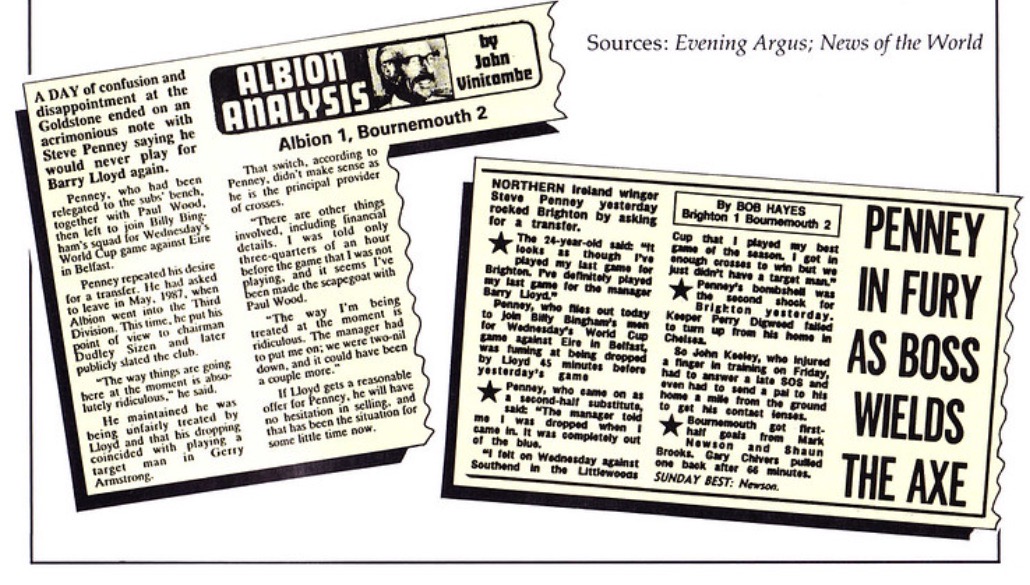
Penney told Vignes: “At that time, playing for Barry was great. The two of us were getting on even though I always thought there was something not quite right between us. To be honest, he had to play me because I strengthened the team and made a difference.”

Halfway through the 1988-89 season, Crystal Palace tried to sign Penney but weren’t prepared to meet Albion’s £175,000 asking price. And then his left knee went again.

Vignes tells the whole gory story in detail, which I won’t repeat here, but, suffice to say, the wrong treatment by one doctor had to be put right by a Harley Street expert.

Penney rowManager Lloyd and Penney also fell out, principally over Penney putting country before club. “He’d play for them, then come back injured. That didn’t please me,” said Lloyd. “It was a crying shame. He just wanted to play but was so plagued with injuries it was beyond belief.”

The split came in 1991 when Lloyd clearly thought the player’s level of fitness didn’t merit a new contract. Interest was shown in him by Heart of Midlothian, managed by Joe Jordan, and Charlton Athletic, where the joint manager was his ex-Albion teammate Alan Curbishley.

Having played a couple of trial games for Hearts, he plumped for them but suffered a groin strain early on and only played 14 games all season.

A 15th game would have triggered the award of another one-year deal – and it quickly became apparent that it wasn’t going to happen. Freed at the end of the season, he signed for Burnley, newly-promoted from the old Fourth Division, in August 1992. Continue reading “Irish international pals brought wing wonder Steve Penney to Brighton”

Kieran O’Regan came close to dramatic FA Cup semi-final debut

OREGANWHEN just 19, unbeknown to thousands of expectant Brighton fans, Kieran O’Regan was on the brink of making a sensational debut for the Seagulls in the FA Cup semi-final.

The versatile Irishman, who went on to play nearly 100 games for the Albion, and more than 200 for Huddersfield Town, was nearly drafted into Brighton’s back line for that momentous occasion against Sheffield Wednesday in front of a packed house at Highbury on 16 April 1983.

Only captain Steve Foster’s bravery and sterling work by the club’s medics prevented the youngster having to step in at the last minute.

The potential drama only came to light in the post-match analysis by Evening Argus reporter, John Vinicombe, who recounted: “On the morning of the tie, (Jimmy) Melia had problems that were wisely confined only to those with a need to know.

“A crisis arose when Steve Foster’s right elbow started to swell and hurt. A streptococcal infection was diagnosed, extremely painful, and dangerous.

“To not only get him fit to play, but counter the possibility of blood poisoning, he was pumped full of antibiotics, the elbow encased in plaster and, just before kick-off, a painkilling jab administered.

“Had it been a run-of-the-mill game, Foster would not have played, but to go into a semi-final without the lynchpin was unthinkable.

“If there had been no alternative, then Kieran O’Regan, who has yet to make his debut, would have been drafted in from the sub’s bench.”

As it was, O’Regan remained on the bench throughout the game; Michael Robinson’s winner in the 2-1 victory meaning manager Melia didn’t need to introduce the youngster on such a momentous occasion.

When he eventually made his first team debut a few weeks later, it was in a less pressurised situation, although only then with special dispensation from the Football League.

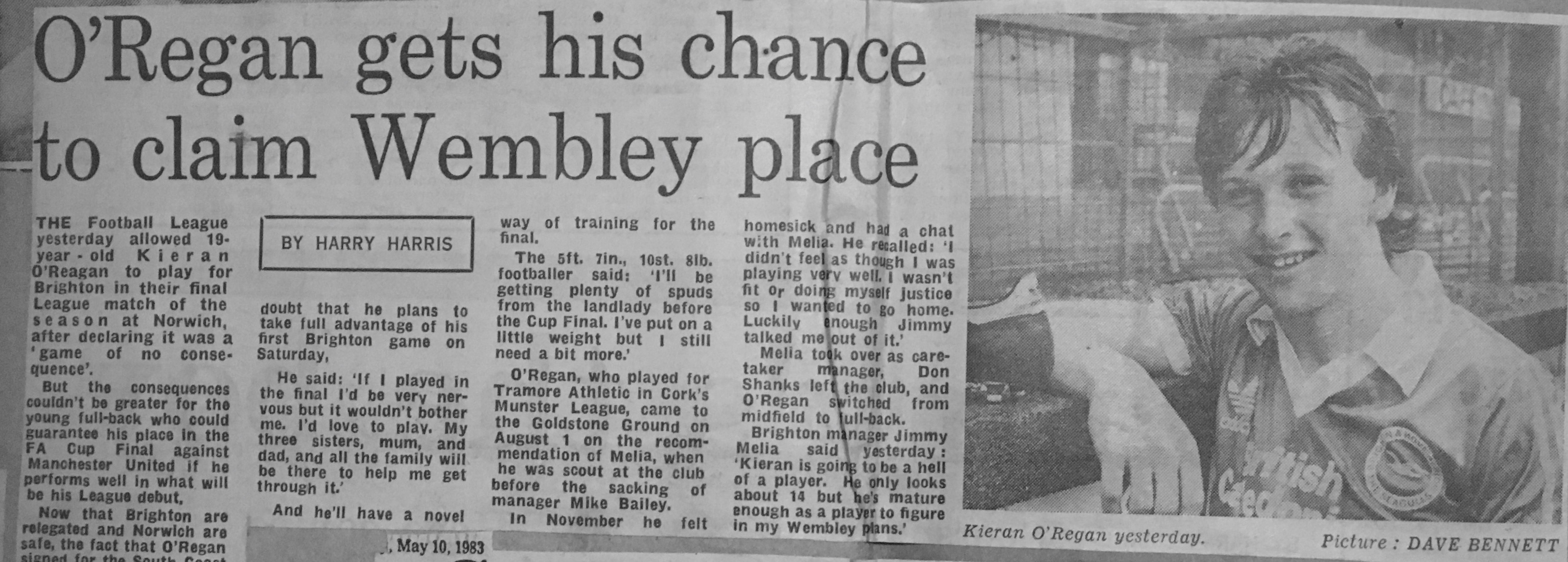
Melia was down to the bare bones because of injuries and suspensions so the youngster was needed, but he had not been signed as a pro before the deadline. The way the authorities saw it was, because Albion were already relegated and Norwich were safe, it was “a game of no consequence” and O’Regan got the green light to play.

cup cutting

Veteran football reporter Harry Harris interviewed the youngster and built a story (above) around the possibility that if he did well he might be in with a shout of a place in the Cup Final against Manchester United.

Ever the one for an eye to publicity, manager Melia kept those thoughts alive by saying: “Kieran is going to be a hell of a player. He only looks about 14 but he’s mature enough as a player to figure in my Wembley plans.”

KOR portIn the event, forward Gerry Ryan got the nod for the one substitute’s place on the day, and rather ironically had to come on and play right-back in place of the crocked Chris Ramsey.

Melia was certainly a big fan of O’Regan. In the summer of 1982, as Albion’s chief scout, he had recommended the youngster to manager Mike Bailey after seeing him go on as a second half substitute for the Republic of Ireland youth team against Welsh Schools and score two goals.

Born in Cork on 9 November 1963, O’Regan attended a secondary school noted for its prowess at Gaelic football but he was determined to pursue a soccer career instead. He had been playing for Tramore Athletic in County Cork’s Munster League when he got his call-up to the national youth team.

Brighton invited him over to England for a trial. “I’d gone to Brighton on a one week trial; that became two, then I was asked to stay for three months. That came and went, and I never went back,” he said.

He had come close to packing it all in because he was homesick, but the presence of fellow Irishmen Gary Howlett and Ryan helped him adapt, and the silver-tongued Melia managed to talk him round.

“I didn’t feel as though I was playing very well,” he told the Mirror’s Harris. “I wasn’t fit or doing myself justice so I wanted to go home. Luckily enough, Jimmy talked me out of it.”

When Melia took over as caretaker manager, he swiftly dispensed with the services of Bailey’s pick at right-back, Don Shanks, promoted Ramsey to the first-team and then converted O’Regan from a midfield player to a right-back to become Ramsey’s understudy.

On the eve of that Norwich game, Melia told the Argus: “I must bring on the youngsters because they are the long-term future of the club.

“They are a smashing bunch of lads and I would like to play some more of them at Norwich. But with the Cup Final coming up, I can’t for obvious reasons.”

In fact, he picked young striker Chris Rodon on the bench and he got on in place of Gordon Smith, but it was the one and only time he saw first team action.

In respect of O’Regan, though, Melia stuck to his word, and the youngster filled the right-back berth from the off at the start of the new season back in the second tier, keeping his place even after his mentor’s sacking.

Melia’s successor, Chris Cattlin, also gave him some games in midfield, and, by the season’s end, he’d played 33 games plus once as sub. He also notched his first goal, in a 2-1 defeat away to Sheffield Wednesday.

However, his biggest disappointment that season was when he and Howlett were both dropped for the televised FA Cup game against Liverpool at the Goldstone. He told Spencer Vignes in an interview published in a matchday programme of February 2005: “We’d thrashed Oldham at home 4-0 and played Carlisle away on an icy pitch and won 2-1, and me and Gary had played in both.

“The Liverpool game was on a Sunday so we all came in for training on the Saturday to find out what the team was. And Gary and I weren’t in it. We’d been dropped.

“Instead we were off to Highbury that afternoon to play for the reserves. That’s still probably the low point of my career. I really wanted to play. Cattlin said he was going for experience, and you can’t really fault him because the lads went out and beat Liverpool 2-0. But I was still gutted.”

Making the grade with Brighton caught the eye of the Republic of Ireland selectors and O’Regan was called up to play for his country on four occasions.

He made his debut in November 1983 in an 8-0 thrashing of Malta in Dublin, when Mark Lawrenson and future Albion manager Liam Brady each scored twice.

Against Poland, the following May, also at Dalymount Park, Dublin, O’Regan featured in a 0-0 draw, and three months later, same venue, same scoreline, against Mexico. His fourth and final cap came as a sub against Spain, in May 1985, which also ended goalless.

Meanwhile, his Albion game time in the 1984-85 season was a lot more restricted and, apart from a mid-season 10-game spell in midfield, he was on the sidelines, especially when a promising young defender called Martin Keown arrived on loan from Arsenal.

Vignes observed in that 2005 interview: “His ability to play at either right-back or midfield meant that when the likes of Chris Hutchings, Danny Wilson or Jimmy Case were unavailable, Albion always had a reliable deputy to call on.”

There was yet more benchwarming to be endured during the 1985-86 season but on Alan Mullery’s return to the manager’s chair, he found himself back in the first team on a more regular basis.

Indeed, he played under five managers in five years with Brighton, and told Vignes that Mullery was the best to work with. “He was great with everyone, but especially the young lads.”

By contrast he didn’t get on with Barry Lloyd who kept O’Regan in the dark when interest was shown in him by Swindon Town, where his former rival for the right-back spot, Ramsey, was assistant manager to Lou Macari.

In the end, in 1987, he did make the move to the County Ground having made 80 starts for the Albion, plus 19 substitute appearances.

After just a year at Swindon, he was on his way again, this time to join Huddersfield Town where the manager was Eoin Hand, who had been the Ireland manager when he won his four international caps.

O’Regan spent six seasons with Town, playing over 200 games in midfield, and it was an association which would reap its benefits after his playing days were over.

He spent two seasons at West Brom under former Spurs boss Keith Burkinshaw (and latterly Alan Buckley) but returned to West Yorkshire in 1995 as captain of Halifax Town, going on to become joint manager with George Mulhall for 18 months and then taking on the role alone in August 1998.

His tenure lasted less than a season and when the axe fell in April 1999, he turned his back on football and became warehouse manager at Brighouse Textiles, run by Halifax’s former chairman, and subsequently became a carpet salesman at a shop in Huddersfield.

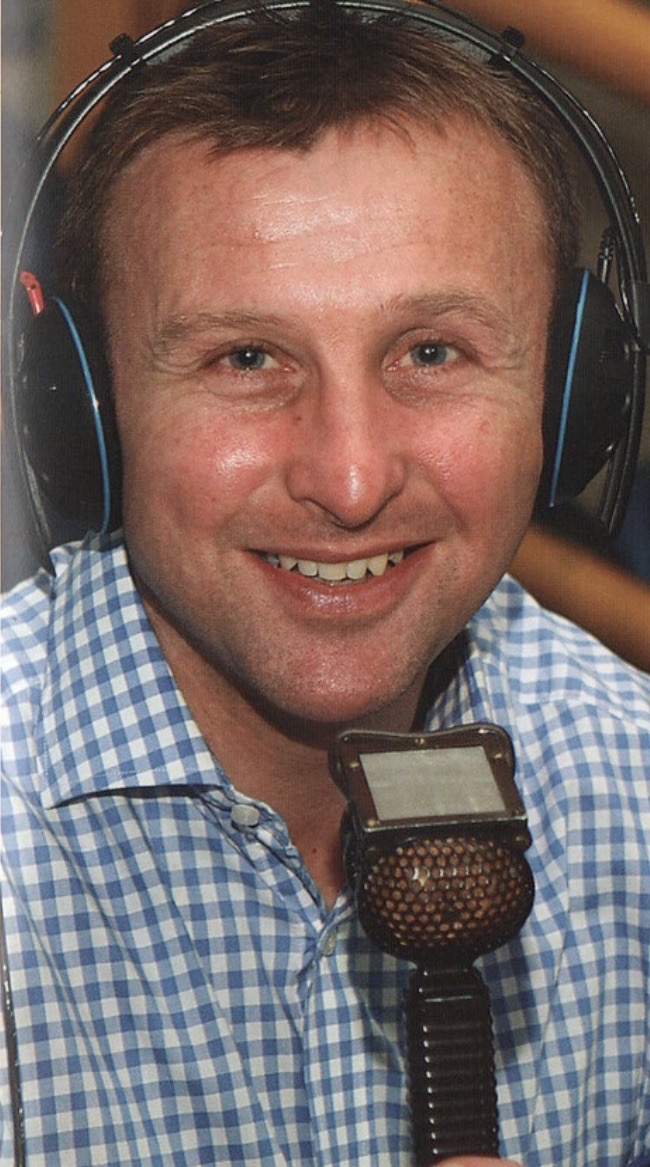
O'Regan mikeHowever, in 2001, he was offered the chance to be the expert summariser on Huddersfield games for BBC Radio Leeds, and he lined up alongside commentator Paul Ogden for the next 15 years, before hanging up the microphone in May 2016.

Pictures from the Albion matchday programme and my scrapbook.

Goals dried up at Brighton for Pompey favourite Alan Biley

1 150th goal v Leeds (1-1)ALAN BILEY was a fans favourite at all six English league clubs he played for but the prolific goalscoring that made his name at Cambridge United and Portsmouth wasn’t replicated at Everton or Brighton.

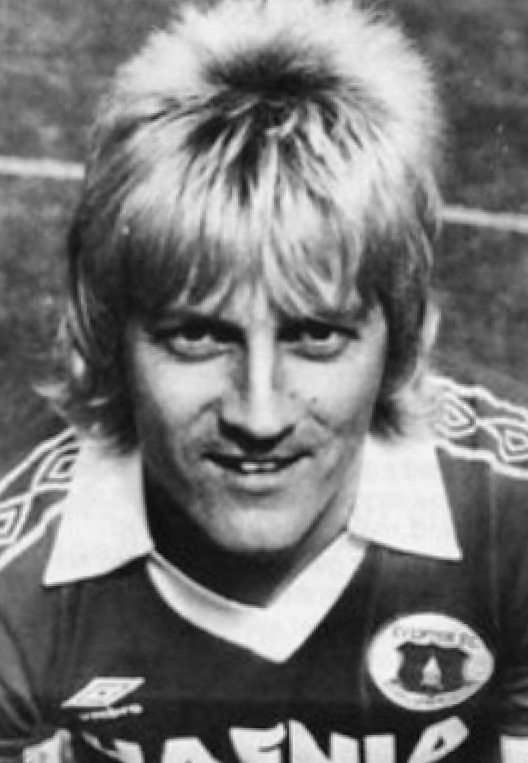
His spiky, long blond hair reflected his devotion to singer Rod Stewart and, on the pitch, the way he wore his football shirt outside his shorts, clutched the cuffs, and saluted a goal with a raised forefinger was a tribute to Scottish footballing legend Denis Law, another of his heroes, .

Biley was quite the hero at Portsmouth, with a goalscoring record of more than a goal every other game, having been signed by Bobby Campbell in 1982.

But when he fell out of favour with Campbell’s successor, Alan Ball, Brighton’s Chris Cattlin stepped in and paid £50,000 to take the striker along the coast in March 1985.

Within a month of the move, he was back at Fratton Park in Albion’s colours for an Easter Saturday south coast derby when honours were even in a 1-1 draw.

Biley had made his Seagulls debut as a substitute for Frank Worthington in a 0-0 draw away to Barnsley, then got his first start the following game (another goalless draw, at home to Oxford) and kept his place to the end of the season.

The first of four goals during that spell came in a 2-0 win at home to Oldham, and the goal he scored in a 1-1 home draw with Leeds on 20 April was his 150th in league football (top picture).  Although Albion finished with three wins, it wasn’t enough to reach the promotion places, and they finished sixth.

Biley made a great start to the 1985-86 campaign, scoring against First Division Nottingham Forest in a remarkable 5-1 pre-season friendly win, and then in the opening league fixture, a 2-2 home draw with Grimsby Town.

However, competition for places in Albion’s forward line had intensified. In addition to Terry Connor, £1m man Justin Fashanu arrived together with Dean Saunders, on a free transfer from Swansea, (Saunders went on to be named player of the season).

With the much-derided Mick Ferguson also managing a brief purple patch of scoring, it meant Biley struggled to hold down a regular spot, making 24 starts plus three appearances as a sub, and only managing to add three more goals to that season’s opener.

Cattlin’s dismissal as boss, to be replaced by the returning Alan Mullery, also spelled the end of Biley’s time at the club. He initially went back to Cambridge on loan, then tried his luck with New York Express in the States, had a spell in Greece before ending up in Ireland, playing for Waterford who were managed by his old Everton teammate, Andy King. He ended up back at Cambridge on a non-contract basis in November 1988 and made three more appearances for United before hanging up his boots.

But let’s go back to the beginning. Born in Leighton Buzzard on 26 February 1957, Biley was spotted by nearby Luton Town at the tender age of 10 and signed schoolboy forms aged 12. He was then offered an apprenticeship and professional forms as he worked his way through the different levels. But financial issues hit the club and when their chief scout left to link up with Cambridge, he recommended Biley to manager Ron Atkinson, and in 1975 he made the move to Fourth Division United.

Biley netted a total of 82 in 185 games as United rose from the Fourth Division to the Second between 1975 and 1979, when his eye for goal caught the attention of First Division Derby County, who paid £450,000 for his services.

Biley continued to find the net regularly in the top flight, scoring nine in 18 games for the Rams, but he couldn’t prevent them from being relegated. He stuck with them in the 1980-81 season and scored 10 playing in the second tier but was sidelined through injury for several months.

He recounted recently how he fell out with manager Colin Addison and there was talk of him being sold to West Brom, where his old boss Atkinson had moved, but instead, in July 1981, he became new Everton manager Howard Kendall’s first signing for a £300,000 fee. Everton fans who go back that far refer to the Magnificent Seven – because that’s how many players Kendall signed in a short space of time.

Biley EVEBiley was an instant hit, scoring on his Everton debut as Birmingham City were beaten 3-1. He scored again in his next game away to Leeds, but things quickly started to go wrong for him, as he explained in great detail to Everton fan website bluekipper.com.

“I was always appreciative of the Evertonians’ footballing knowledge and the support and gusto, particularly through the tough times,” said Biley. “They were very loyal through the tough times, and they are a different class.

“I would like to think they took to me but my only big regret was that I wasn’t there long enough to enjoy them.”

By October, Kendall had dropped his new signing and Biley was mystified.

“Years later, as I look back at it, I wasn’t Howard Kendall’s cup of tea. Whatever that was, I can’t put my finger on it because history tells you what I was and what I did and where I played, and he had a different opinion of that.

“I would have loved him to have had the faith in me he had in lots of other players.”

Eventually his lack of involvement in first team action saw him go out on loan to struggling Stoke City and in eight games he helped them to retain their status in the top division, but hopes of a permanent move fell through.

Instead he departed Goodison Park with just 18 appearances (plus three as sub) and three goals to his name and dropped down to the Third Division with Portsmouth.

The Pompey faithful had already had a taste of what they could expect when, at Christmas 1977, as a 20-year-old playing for Cambridge, Biley had scored twice for table-topping Cambridge at Fratton Park.

And, sure enough, when paired up front with Billy Rafferty, he became an instant hit and the duo scored 40 between them as Pompey won promotion. Biley’s performances earned him a place in the PFA select XI that included Gillingham’s Steve Bruce and Micky Adams, Portsmouth colleague Neil Webb and Kerry Dixon, then of Reading.

The following season saw Biley gain a new strike partner in the shape of Mark Hateley, who would go on to earn England international recognition. However, a series of 10 home defeats put paid to their promotion hopes and Campbell was sacked on the coach on the way back from the season’s penultimate game at Derby. In the final game of the season, with Alan Ball in temporary charge, Biley hit a hat-trick in a 5-0 demolition of Swansea.

Ball was installed as manager and Biley was very much a part of the side that began the 1984-85 season. He played in 22 games and came off the bench twice, scoring a total of 13 goals before Ball mysteriously sold him to Brighton in March.

Biley’s heart never left Fratton Park, though, and in 2015 he told Neil Allen, the author of a book Played Up Pompey: “Pompey was – and still is – my club.

“Pompey was a three-year box in time and if I could possibly open that box again and recover moments, a day even, then I would die happy. I fell in love with the club and it has never gone away.”

Biley has revelled in many opportunities to reminisce about his playing days, attending numerous reunions and enjoying all the memories.

In June 2017, he got together with other former players to talk about his goalscoring days at Cambridge and in October 2017, broadcaster and Albion fan Peter Brackley helped a number of former Pompey players, including Biley, recall a famous occasion when a fan ran on the pitch dressed as Santa Claus and, after the disruption, Biley scored two late goals to win a dramatic cup tie against Oxford.

But in all my research for this piece, I could find no loving references to his time with the Albion, although five years ago the excellent thegoldstonewrap.com brought together some footage of some of his best moments.

After his playing days were over, he moved back to his Bedfordshire roots and got involved in non-league football with various sides in and around the Home Counties, alongside running his own gym in Biggleswade.

  • Pictures from the Albion programme / Evening Argus and various online sources.

Winger Neil Smillie was a Wembley winner eventually

NS v MU Wemb

AN UNSUNG hero of Brighton’s 1983 FA Cup Final side, winger Neil Smillie, had the distinction of being the first ever apprentice the legendary Malcolm Allison signed for Crystal Palace.

Big Mal had enjoyed league and FA Cup success at Manchester City as Joe Mercer’s sidekick but he swept into Palace in the early 70s as a boss in his own right, courting publicity with his flamboyant fedora hat and giant cigar.

Smillie admitted: “I was going to West Ham but Allison persuaded me to take a look at Palace.

“The place was so alive and vibrant under him that I went there instead.”

Born in Barnsley on 19 July 1958, Neil followed in the footsteps of his dad, Ron, a former professional who played for Barnsley and Lincoln.

After joining Palace in 1974, Smillie turned professional a year later and was on Palace’s books for seven years, although he had three loan spells away from Selhurst.

In 1977, he went briefly to Brentford, who he ultimately would have a long association with later in his career.

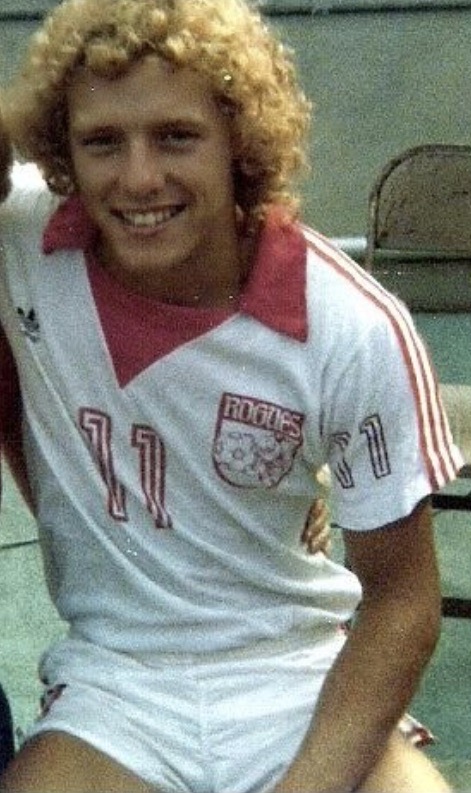
Smillie MemphisThe following two years, he went to play in America for Memphis Rogues (pictured left) where his teammates were players from the English game winding down their careers: the likes of former Albion players Tony Burns and Phil Beal, ex-Chelsea, Leicester and Palace striker Alan Birchenall and former Chelsea winger Charlie Cooke; the side being managed by former Chelsea defender Eddie McCreadie.

At the end of the 1981-82 season, Smillie was denied a pay rise by Palace so he decided to quit and wrote letters to clubs in the top two divisions in England asking for a job!

Brighton had managed to offload the troublesome Mickey Thomas to Stoke City so had a need for a left winger. They were the first to come up with an offer, and with full back Gary Williams surplus to requirements since the arrival of experienced defender Sammy Nelson, Brighton offered him in exchange for Smillie.

The bubble-haired winger gratefully accepted the switch to the Seagulls. While he made the starting line-up for the opening game of the new season, a heavy (5-0) defeat away at West Brom in the next game then saw him dropped and sidelined for months.

It was only once ultra-cautious manager Mike Bailey had left that Smillie got back in contention, and only then – in January 1983 – through someone else’s misfortune.

He said: “I was out in the cold and only got my break when Giles Stille was injured during the Cup game against Newcastle United.”

Smillie seized his opportunity and remained in the side for the rest of the season, culminating in the two Wembley FA Cup Final matches against Manchester United.

Back in the second tier following Brighton’s relegation, Smillie played 28 games plus once as a sub but following new manager Chris Cattlin’s signing of Northern Irish winger Steve Penney, there was competition in the wide areas.

Throughout the 1984-85 campaign, Smillie was more often than not a substitute rather than a starter. He did manage a seven-game run of appearances in the late autumn and began the final three games of the season, but the last game, a 1-0 home win over Sheffield United, proved to be his farewell.

Smillie revealed in a 2003 interview with Spencer Vignes that he’d discovered Manchester City had been keen to take him on loan but Cattlin hadn’t sanctioned it, even though he wasn’t selecting him.

“Chris had turned them down, saying I was a good player and he needed me. Yet he wasn’t even playing me! I just couldn’t believe he’d done it,” he said. Although he and his family were settled in Sussex, he realised he had to move.

Several eyebrows were raised when Cattlin managed to secure a £100,000 fee from Watford for Smillie’s services in the summer of 1985. The winger joined Graham Taylor’s beaten FA Cup finalists but he failed to establish himself in the side and made just 16 first team appearances in a season with the Hornets.

In the summer of 1986, he moved on to Reading for two years and, in 1988, after his disappointment with Brighton, Smillie was finally a winner at Wembley, scoring and setting up two goals as Reading beat Luton 4-1 in the Simod Cup Final.

The Hatters were led by former Albion captain Steve Foster and another of Smillie’s former teammates, Danny Wilson, was in their midfield. Mick Harford scored the opening goal for Luton, but Smillie’s pass allowed Michael Gilkes to bundle home an equaliser.

Smillie then won a spot kick converted by Stuart Beavon, and, in the second half, Mick Tait swept home another Smillie assist. Smillie then rounded off a great afternoon by scoring himself. It was hailed as one of the best days in Reading’s history, witnessed by over 45,000 loyal Royals fans.

Nevertheless, Smillie didn’t hang around and instead joined Brentford, where his former Palace teammate Phil Holder was assisting the manager at the time, Steve Perryman.NS Bees

Nick Bruzon interviewed Smillie in depth for a Where are they now? feature on the Brentford FC website in July 2010.

“Representing Brentford over three different decades, initially on loan in 1977 and then for five years from 1988 to 1993, Neil Smillie combined raw pace with ceaseless energy to make him one of the most popular players to patrol the New Road touchline,” said Bruzon. “Whilst with Brentford he experienced promotion, relegation and play off heartbreak, scoring 18 goals in 185 games.”

Smillie said: “I’ve got to say, the five years I spent at Brentford (and I was 30 when I signed) I thoroughly enjoyed.

“I’d reached a point in my career where I felt comfortable in terms of what I could give on the pitch. I’d always been a hard worker and I got the feeling that the supporters appreciated someone who worked hard.”

In the 1992-93 season, he played alongside Chris Hughton, who, like Smillie, was winding down his playing career.

“I loved taking people on and I loved getting crosses in for people to score so that just seemed to fit in nicely at the time with the team that we had,” he said. “I played my part as well as others who played theirs in getting the ball to me. We all did our bit and for me it was a great part of my career.”

On leaving Brentford, Smillie became a player-coach at Gillingham when his old Palace teammate Mike Flanagan was the manager. When Flanagan was sacked, Smillie took over the managerial reigns on a caretaker basis while the club tried to stabilise during financial troubles.

Smillie told Bruzon: “We were in a fairly precarious position and ended up in a decent position. So there was some enjoyment to it but the situation at a club without any money and struggling was difficult.”

Some names familiar to Brighton fans were at Gillingham at the time. Smillie played up front with Nicky Forster. Paul Watson was in defence and Richard Carpenter in midfield.

His three-month reign came to an end when Gillingham appointed Tony Pulis as the new manager and former Palace manager Alan Smith took Smillie to Wycombe Wanderers to look after their youth team.

When Smith left, Smillie was caretaker manager until former Albion full back John Gregory got the managerial post. Smillie then became Gregory’s successor in the hot seat for a year.

When the inevitable sack came, Smillie stepped outside of day to day running of football to become sports marketing manager for Nike in the UK. His role was to identify emerging talent for Nike to associate themselves with, and, as a result he stayed in touch with the game.

Among the players he signed to Nike were Theo Walcott, Darren Bent, Gabby Agbonlahor, James Milner, Tom Huddlestone, Danny Welbeck and Johnny Evans.

Pictures show (top) Smillie in action on the cover of the Albion programme; walking his dog; in Match magazine, on the cover of Shoot! being tackled by Liverpool’s Sammy Lee; a Simod Cup winner with Reading.

Liverpool legend Jimmy Case became a Seagulls favourite too

Case 4 imagesJIMMY Case remains one of my all-time favourite Albion players.

Several of the best moments I can recall as an Albion supporter involve Case: the 1983 FA Cup semi-final belter against Sheffield Wednesday at sunny Highbury perhaps the most memorable.

The biggest disappointment was that Albion let him go so easily.

Younger readers may only remember his unhappy stint as manager when the misdirected club was in turmoil, and he ended up holding the reins when Liam Brady just couldn’t take any more.

But rather than remember him as the man who took Brighton down to Division 3 in 1996, I remember the class act who arrived at the Goldstone in 1981 with a trophy cabinet the envy of many a footballer.

Although Brighton lost the sublime Mark Lawrenson to Liverpool as part of the deal that saw Case move to Brighton, they gained a player who had already got three European Cup winners’ medals, four Division 1 (Premiership equivalent) winners’ medals plus one each for winning the UEFA Cup, European Super Cup and the League Cup.

Case, born in Liverpool on 18 May 1954, was one of four children David and Dorothy Case raised in a council house in the city’s Allerton district.

He learned how to handle himself on a football field playing in a tough dockers’ team but Liverpool picked him up from the local non-league club, South Liverpool. By then, Case had left school and was training to be an electrician.

He carried on those studies but after two years on Liverpool’s staff he made his first team debut in April 1975 in a 3-1 win over QPR.

He scored his first goal in a 3-2 home win over Spurs at the beginning of the following season and, in what must have seemed a dream start, completed his first full season as part of a championship winning team, as well as scoring in the two-legged UEFA Cup Final win over FC Bruges.

Case EuropeThe triumphs and trophies kept coming with Case enjoying the ride but by 1980-81 he was beginning to be edged out by Sammy Lee, and manager Bob Paisley didn’t look kindly on some of the off-field escapades Case was involved in with fellow midfielder Ray Kennedy.

Paisley said: “He had lost his appetite for the game in his last year at Anfield. It’s a hard stint working the right flank in our team and Jimmy had stopped getting forward and was looking to play early passes from deep positions. I think his legs had become tired.”

The move to Brighton might never have happened if Alan Mullery had got his way because he had already done a deal with Ron Atkinson to sell Lawrenson to Manchester United in exchange for two of their players.

But when chairman Mike Bamber pulled rank and forced through the Liverpool deal he had negotiated, Mullery quit and Case arrived on a five-year contract to find a new manager in charge in Mike Bailey.

It felt to me that Brighton were stepping up to a whole new level bringing in someone of Case’s stature, and so it proved.

In his first season at the Goldstone, Albion recorded their highest-ever finish among the elite – 13th.

I recollect heading to Upton Park for the opening game of the season to see Case make his debut against West Ham and Albion earned a 1-1 draw despite having Gerry Ryan sent off.

Case found himself in trouble with referees on way too many occasions that season. Although he came to the club with a hard man image, amazingly he had never previously been suspended for accumulating bookings.

But by December he had to sit out a two game ban, and when his bookings total reached eight by March, he missed another three games.

Case told John Vinicombe of the Evening Argus: “I am a face, and there is nothing I can do about that. I am known, and that might explain some of the things that have happened to me on the pitch.

“The last thing I wanted on coming to Brighton was to get suspended. Brighton didn’t give me a contract to miss games.”

For anyone who has not yet read it, Case’s autobiography, Hard Case (John Blake Publishing) is well worth a read, detailing through writer Andrew Smart a fascinating career.

Disappointingly, it has a few factual errors that doubtless the distance of time brought about. Nevertheless, Case says: “I enjoyed every minute of my time with Brighton.”

Particularly pleasing for him was to score with a thumping header past Bruce Grobelaar in a 3-3 draw with Liverpool at the Goldstone, and to be on the right end of Albion’s 1-0 win at Anfield that season.

Case enjoyed life off the field as well and admits in his book: “The inhabitants of Brighton and Hove were just a little more sophisticated than the Allerton of the 1970s and I was introduced to the many and varied attractions of decent food and fine wine. It was an education I really appreciated.”

His second season was to end in relegation, but, more famously, with Brighton’s one and only appearance in an FA Cup final. Case scored goals in the fourth, fifth and sixth rounds, as well as the semi-final.

The newspapers had a field day when Case’s winner for Brighton in the fifth round of the Cup at Anfield denied his old boss Bob Paisley the chance to wipe the board with trophies that season.

It seemed every national and local newspaper headline revolved around the likeable Scouser: ‘It’s Case for Champagne’, ‘Jimmy sets out his case’, ‘Old boy Case kills off Liverpool hopes’, ‘Amazing Case’, ‘Killer Case’, ‘Case packs a super Cup punch’, ‘Case for Cup win’.

The Daily Mirror made him their footballer of the month for February on the back of that goal with reporter Harry Miller declaring: “No single act did more to capture the imagination of the public than midfielder Case’s dramatic 71st minute winner on Sunday, February 20.”

Case himself had mixed emotions about it all, saying: “I had ten fantastic years at a remarkable club. That’s something that goes deep down.”

He also revealed how a good friend of his had been out of the country at the time of the game and sent him a postcard with only two words as its message: ‘You bastard’.

When he scored the only goal of the game in the quarter final win over Norwich, the headlines continued: ‘Case of bubbly’, ‘The odd Case of hero and villain’, ‘Seagulls have landed with champagne Jim’.

That belting free kick in the Highbury sunshine set Albion on their way to the 2-1 win over Sheffield Wednesday, earning a first ever  – and only – place in the FA Cup final.

He was no stranger to Wembley, of course, having previously scored Liverpool’s goal in the 1978 2-1 defeat to Manchester United, but unfortunately he didn’t repeat his earlier goalscoring feats in the 1983 final.

He played a key part in Albion’s brave effort to earn a draw against Man U and then had the agony of returning home that Saturday evening to discover his mother, who had been a visitor, had died in her sleep at the age of just 63.

It was to Case’s immense credit that he took his place in the side for the replay just five days later.

While relegation brought the inevitable break-up of the team, with Gary Stevens and Michael Robinson departing before the new season began, Case publicly declared his intention to stay and try to get the team back up to the elite.

However, once fellow Scouser Jimmy Melia had been replaced by Chris Cattlin, there was probably only going to be one outcome and eventually Case was sold to Southampton for £30,000 in March 1985.

For him, it was a great move because he was returning to the top division again. It turned out that he was Lawrie McMenemy’s last signing for Saints, but, on this occasion, the change of manager was to cement his place in the side. Chris Nicholl made him the club captain the following season.

In 1985-86, Saints reached the semi-final of the FA Cup (beating Brighton 2-0 in the quarter-final!) losing 2-0 to Liverpool after extra time. If Saints had won, Case would have been the first player to appear in three FA Cup finals with different clubs.

Over his six years at The Dell, Case played alongside Glenn Cockerill and Barry Horne and helped to bring on the careers of youngsters such as Matt Le Tissier, Alan Shearer and Jason Dodd.

But when Ian Branfoot took over as manager in June 1991, he dispensed with Case’s services within a matter of days and transferred him to Bournemouth, who were managed by Harry Redknapp.

After 40 league games for Bournemouth in 1991-92, he moved to Halifax Town managed by former Saint and, one-time Albion loanee, John McGrath, who was being assisted by another ex-Albion man, Frank Worthington.

But Case only played there for six months, moving on to Wrexham, where he helped them gain promotion from the 3rd Division at the end of the 1992-93 season.

He then turned out for non-league side Sittingbourne until, at the ripe old age of 39, Liam Brady brought him back to Brighton in December 1993, as a player/coach. It was during that spell that he played in his 600th league game, the club chief executive David Bellotti presenting him with a silver salver on reaching that milestone

As a mark of the esteem in which Case was held, a testimonial game for him at the Goldstone Ground on 17 October 1994 had to be delayed 10 minutes because so many people wanted to get in to pay tribute. The capacity of the grand old ground was much reduced by then but still 15,645 packed in to see Case’s old club Liverpool do him the honour of providing the opposition.

Albion featured Matt Le Tissier in their line-up and even Ryan and Brady made substitute appearances as Liverpool emerged 2-1. The result, of course, was immaterial, and an emotional Case said afterwards: “I can’t thank the supporters enough. This was the only game I’ve ever been nervous about. I’ve never really asked for anything from the game, I just wanted everyone to enjoy it.

“It’s all been quite embarrassing really. I like to go to parties, I just don’t like them being my own.”

After his unhappy time as Albion manager, Case later managed non-league Bashley but is more often seen and heard these days on the after dinner speaking circuit or on regional football programmes. He also contributes to Southampton’s in-house radio station “The Saint”.

In July 2007, he once again donned a Brighton shirt, playing a cameo role alongside other past heroes in a brief curtain-raiser to Kerry Mayo’s testimonial game against Reading.

Sammy Nelson’s glittering career came to an end at Brighton

2 Sam NelsonEXPERIENCED Northern Irish international full-back Sammy Nelson was an Arsenal legend who joined Brighton towards the end of his career.

The last four of his 51 international caps came while with the Seagulls. One was a 4-0 defeat to England at Wembley when Albion teammate Steve Foster made his England debut, another was a substitute appearance at the 1982 World Cup against Spain. His last appearance for his country came in a 2-2 draw with Austria at that tournament.

nels NI colLeading up to that competition, Nelson had played a significant part in helping Albion to what remained their highest ever finish in the football pyramid – thirteenth place – until the 2022-23 season.

A lot of fans didn’t like manager Mike Bailey’s style of play, but, with some degree of resonance to Chris Hughton’s philosophy, he built his side on a solid defence and preferred experience over youth.

Nelson was a key player in that defence after ousting long-serving Gary Williams a third of the way into the 1981-82 season.

He played alongside his former Arsenal teammate Steve Gatting, who Bailey had signed for £200,000 as a replacement for Mark Lawrenson (the famous departure to Liverpool having been the trigger for Alan Mullery to quit as manager).

Nelson had made only one substitute appearance for Arsenal in the previous season but he enjoyed a bumper testimonial game when a crowd of 20,000 turned up at Highbury for a game against Celtic.

Bailey declared on paying £35,000 for a 32-year-old player who had made 339 league and cup games for the Gunners: “The signing of Sammy Nelson has now given me the sort of squad I feel we need to compete with the best in the division.

“Sammy is a fine player and a very good professional but, like everyone else, he will have to compete for a team place.”

He did indeed have to wait for his chance, largely because he had a foot strain at the time of signing. But the chance came in a league cup second leg game at home to Huddersfield at The Goldstone.

Williams was restored for the following two league games but Nelson got the nod for a third round league cup game away game at Barnsley (which ended in a 4-1 defeat) and kept the shirt for all but two games through to the end of the season, making 32 appearances in total.

After only seven games, he gave an interestingly candid interview to the Argus. He admitted he was struggling with the daily commute from his home in Brookmans Park in Hertfordshire, being that it necessitated a 6am wake up.

“Towards the end of a week, it is only natural to start feeling tired at that sort of routine when, instead, I should be fresh for the coming game,” he said.

In the same interview, Nelson went on to take a bit of a swipe at a small section of the Albion following. “They expect the championship to come overnight. Some of them, instead of getting behind the team, have begun to get abusive, even vindictive,” he maintained. “I would have expected a little more loyalty from the crowd, but I must stress that I am only talking about a small section.”

It must have given Nelson some pleasure in April 1982 to be on the winning side as Albion beat Arsenal 2-1 in the top flight for the first time in nine attempts since gaining promotion in 1979.

Especially as former boss Terry Neill was up in arms about a challenge Nelson had made that went unpunished. The News of the World declared: “Arsenal boss Terry Neill last night blames former Highbury hero Sammy Nelson for his team’s defeat.

“Neill claimed the Brighton fullback should have been booked for bringing down Raphael Meade as the striker closed in for a goal which would have sewn up the match for the Gunners.”

Nelson was born in Belfast on April Fools Day 1949 and joined Arsenal on his 17th birthday in 1966, just as all eyes in England were focused on the World Cup.

His first silverware came as a member of Arsenal’s FA Youth Cup winning side that year, when they beat Sunderland 5-3 over two legs.

At that time he was a left winger but coach Don Howe converted him to a full back. The established first choice left back was Bob McNab and in the famous 1970-71 Double winning side, Nelson only got to play four games.

In fact he understudied McNab for the best part of five years, until the former Huddersfield man left the Gunners in 1975. Then Nelson made the position his own, with fellow Irish international Pat Rice on the opposite flank.

Nelson was almost ever present for five seasons and was part of the Arsenal team which reached three successive FA Cup Finals: 1978, 1979 and 1980, picking up a winners’ medal in the 1979 win over Manchester United. The Arsenal 1-2-3 that day were all Ulstermen: Pat Jennings, Rice and Nelson.

I particularly like this story from Arsenal fan Paul Reynolds, published on untold-arsenal.com: “In 1980 I took on a paper round and one of the houses I delivered newspapers to was where the Arsenal left-back Sammy Nelson lived. I didn’t see him often because I delivered the papers very early, but I’ll never forget the morning of the Arsenal v West Ham final.

“At about 10am I got a phone call from the paper shop owner to tell me that Sammy had popped in the night before and dropped off two tickets to give to the lad who delivered his papers. I was thrilled to bits and my girlfriend and I rushed off to Wembley and just about made it in time for kick-off – we didn’t care that we had to stand right at the back.

“Although, sadly, we lost the game 1-0 I’ll never forget that generous and thoughtful gesture by my former Arsenal hero and will always be grateful to have been supporting the club during an era when the players genuinely had a connection with the supporters and cared enough to go out of their way ahead of a massively important game to help a fan like me. Arsenal ‘til I die.”

arsenal.com remembers Nelson as one of their top 50 players, describing him as “a funny and endearing individual, the Ulsterman was held in genuine affection by team-mates and supporters alike”.

It also recalls the time he dropped his shorts and bared his backside to the North Bank – which earned him a fortnight’s ban by the FA. It was his response to scoring an equaliser after he’d earlier been barracked for scoring an own goal in a league game against Coventry.

The website adds: “A fine strike in a League Cup trouncing of Leeds United in 1979 was the pinnacle of his goalscoring feats, but Nelson was always willing to venture into enemy territory. At the back his obdurate tackling and bravery was complemented by a sure touch on the ball.”

Arsenal’s signing of Kenny Sansom spelled the beginning of the end of Nelson’s time at Highbury and he moved to Albion in September 1981.

Although he started the 1982-83 season in the Albion first team, he picked up an injury and retired at the end of the season having played a total of 45 games for the Seagulls.

On retirement he initially became Albion’s reserve team manager and then first team coach when Chris Cattlin took over as manager from Jimmy Melia. But he left after only one season and took up a City consultant job in life assurance and pensions.

Funnily enough, as a regular commuter to London myself at that time, I’d frequently see Sammy joining the train at Hove in the mornings and then relaxing in the buffet car on the return journey in the evenings.

He told the Independent in a ‘where are they now?’ feature in March 1994: “It’s funny, I never saw myself being part of the rat race but now I find myself standing on the platform in the right place for ‘my’ seat, just like everyone else.”

Pictures from my scrapbook and matchday programmes

A Goal magazine action shot of Nelson in Arsenal’s colours and the full-back in action for the Albion at the Goldstone, pictured in the matchday programme.

Also pictured: Nelson in full flight against Southampton; with young Gary Stevens captured by the Argus singing In Brighton at Busby’s disco in Kings Road; making the headlines in the News of the World; in action against Wolves.