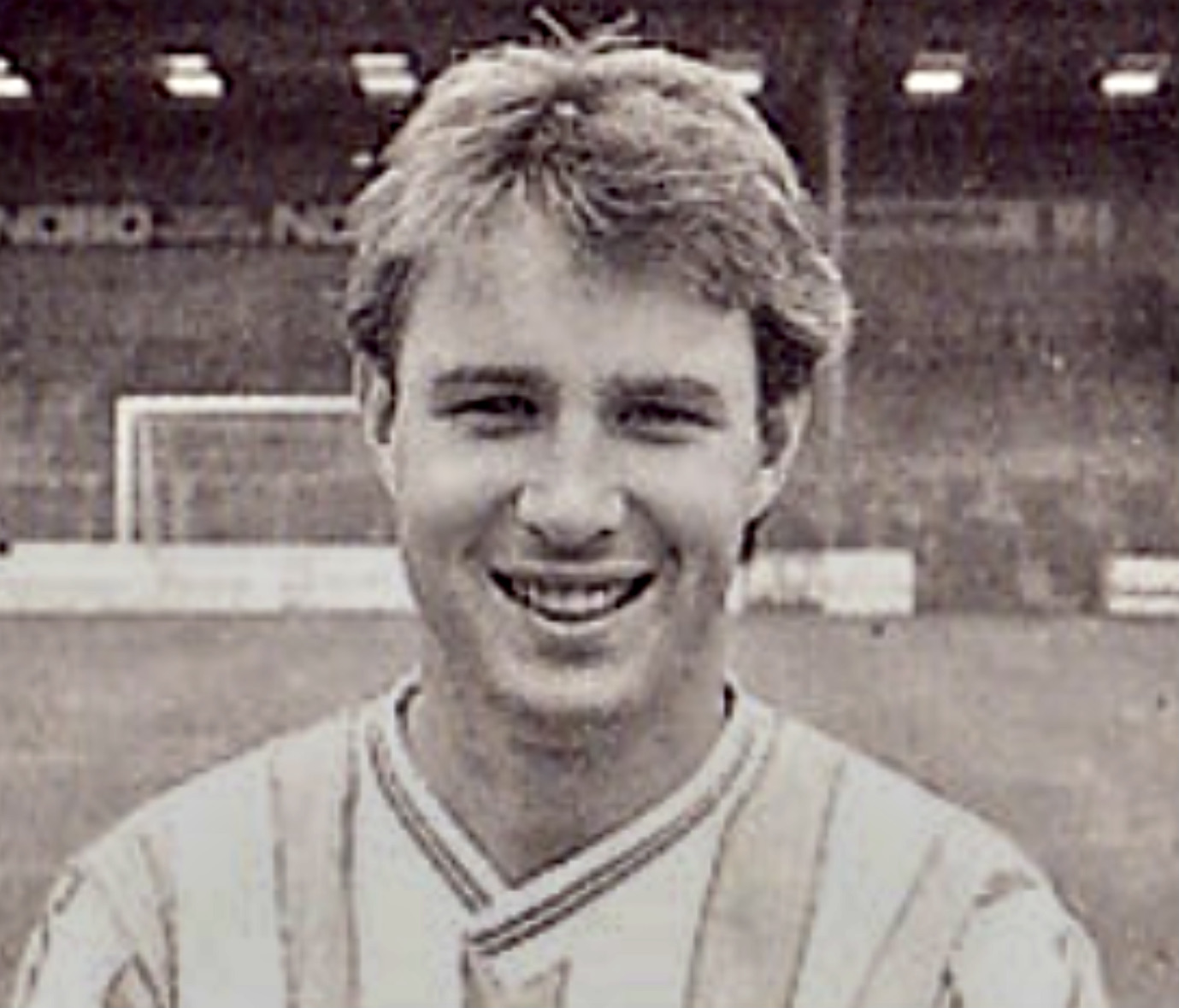
The goals that stood out for O’Reilly before a career in broadcasting

DEFENDER-turned-broadcaster Gary O’Reilly’s first ever league goal was scored for Brighton against Crystal Palace, a club he later scored for in a FA Cup final before rejoining the Seagulls.

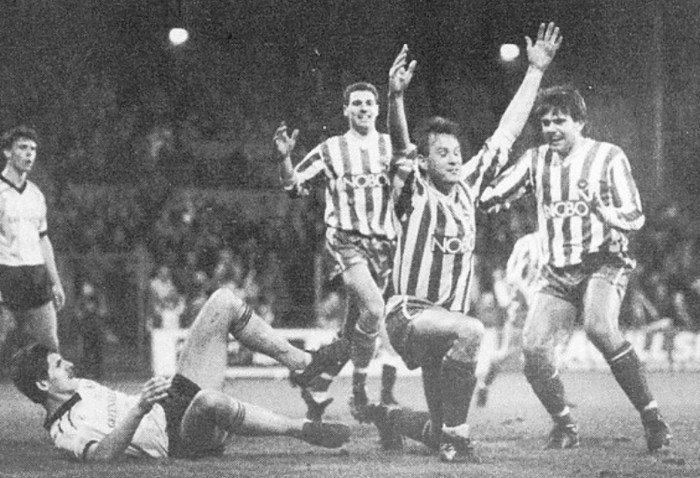
That goal came in only his fourth Albion game, on 15 September 1984, after a £45,000 move from Spurs and was enough to ensure a 1-0 win in front of a 15,044 Goldstone Ground crowd against an Eagles side who had just installed Steve Coppell as manager.
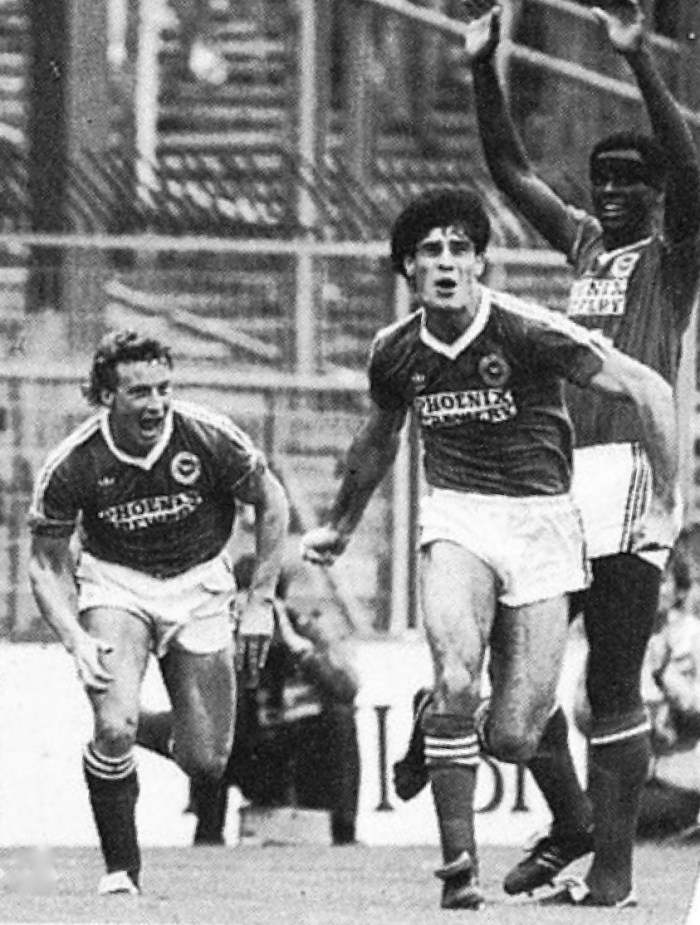
Danny Wilson and Eric Young celebrate O’Reilly’s first Albion goal, against Crystal Palace

Although O’Reilly had collected a UEFA Cup-winners’ medal that May as a non-playing squad member of the Tottenham side that beat Anderlecht 4-3 on penalties (after the two-legged final ended 2-2), opportunities were few and far between at White Hart Lane.

He still had two years of his contract remaining, but O’Reilly requested a transfer and Chris Cattlin snapped him up. Cattlin later admitted: “I watched him eight times before signing him, and six times with Tottenham Reserves he had stinkers. But I thought then he had great potential.”

In a 2001 interview with the Argus, O’Reilly said: “It was a gamble and I took a cut in pay. Spurs had an embarrassment of riches as far as talent was concerned. Spurs were only giving me about 15 games a season and at Brighton I played regularly in a strong side.

“Brighton included the likes of Chris Hutchings, Jimmy Case, Eric Young, Neil Smillie, Danny Wilson, Joe Corrigan, Steve Penney, Terry Connor, Steve Gatting and Frank Worthington and apologies to anyone I’ve forgotten.
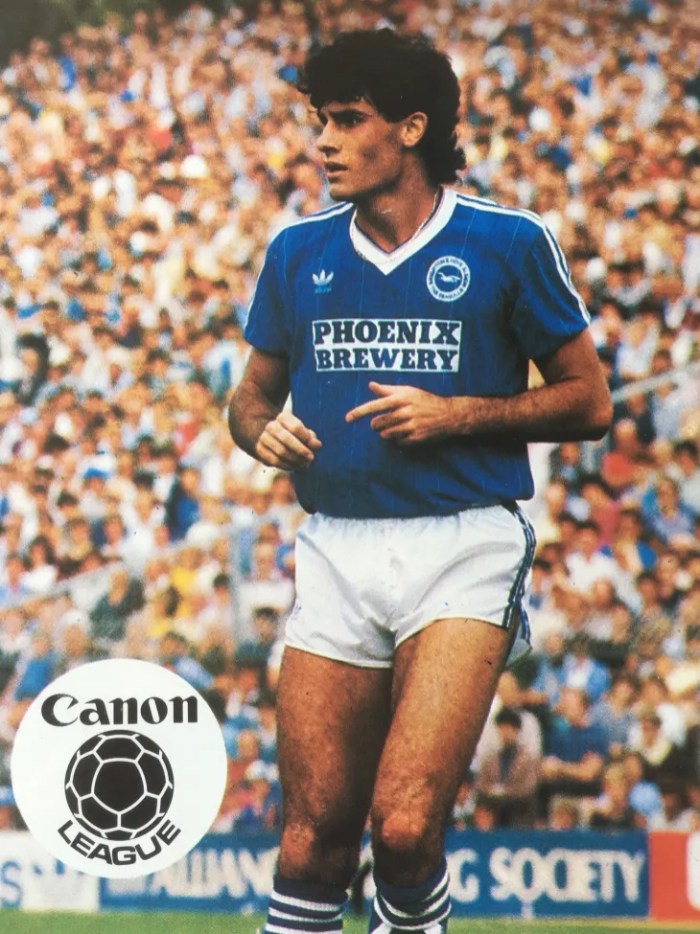
“Jimmy had so much experience and Danny was such a driving force who led by example. Frank Worthington? I had this cliched image of him regarding his socialising but I had that vision shattered.

“He was 36 but was so professional, with a desire to win. He was open with his encouragement, free with his advice and a great rock ‘n’ roll fan! I used to make sure he gave me a lift home from training because we both liked loud rock music.”

If O’Reilly was confident the blend between old-stagers and talented youngsters would be enough to win promotion back to the elite, his hopes were shattered when Case was sold to Southampton in March 1985.

“We sold Jimmy Case in the March and I nearly took the door off the hinges in Cattlin’s office,” he recalled in a matchday programme article. “I asked him what the hell he was doing selling Jimmy! Were we serious about getting promoted? Were we serious about getting into the play-offs?

“Jimmy went to Southampton and they had success with him in their team in the First Division. It was no surprise. How many European Cup medals does Jimmy have that say ‘wiinner’? That’s what Jimmy brought to the team here and he was a massive loss when he went.”

Indeed, Albion ended up just a couple of points shy of the promotion places.

O’Reilly and Young (who also later played for Palace) became an almost permanent centre-back pairing in that 1984-85 season, although, in its fledgling stages, Cattlin admitted he played Graham Pearce in between them “to allow the central defensive pair to learn their trade and settle down into a partnership”.

O’Reilly recalled: “We had a good defence (which equalled the fewest-goals-conceded record of 34) and when we clicked up front we would win 4-0, 5-0. We played good football, through midfield, with pace, power and discipline. I learned so much. It was a brilliant time.”

The following season saw Albion finish in mid-table and Cattlin was relieved of his duties before the final game. There had been a consolation of sorts that they reached the quarter-finals of the FA Cup when a Jimmy Case-led Southampton (with Peter Shilton in goal) saw off the Seagulls 2-0 in front of a bumper 25,069 crowd (most attendances that season struggled to reach 10,000).

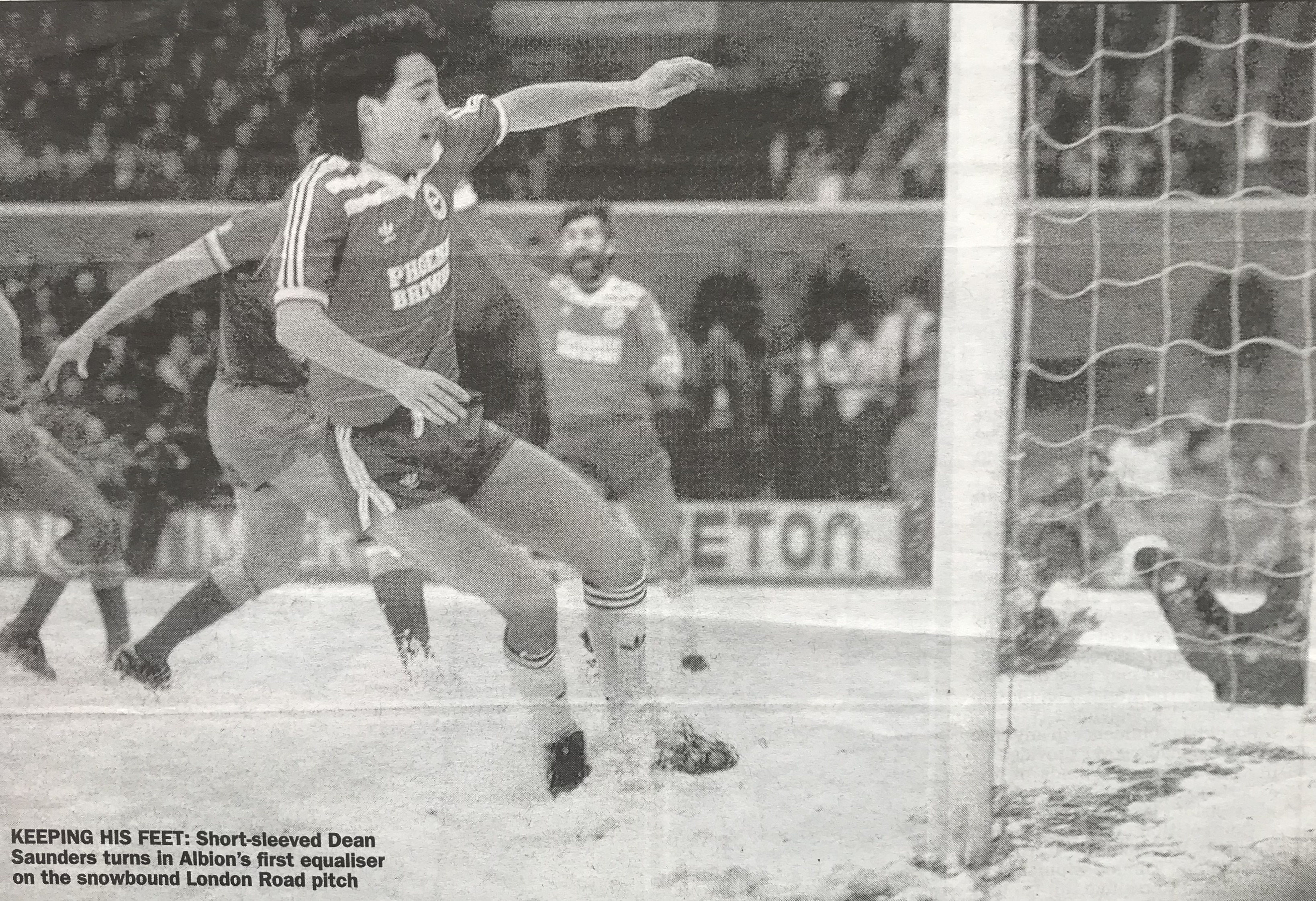
Before that March match, O’Reilly thought he’d scored two more against Palace but his efforts in the New Year’s Day encounter at the Goldstone were ruled out. Nonetheless Dean Saunders and a Danny Wilson penalty secured a 2-0 win for the Seagulls.readcrystalpalace.com says that game is “mainly remembered by Palace fans for a scandalous dive by Terry Connor which earned Brighton a penalty”.
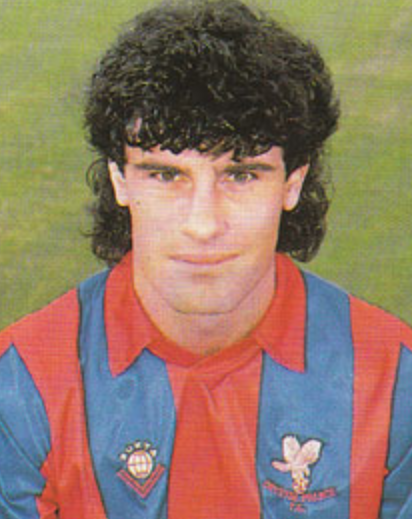
Nonetheless, maybe O’Reilly had caught Coppell’s eye because, in January 1987, Cattlin’s successor Alan Mullery said Palace were in for him and Albion needed the money – £40,000 – to pay the whole club’s wage bill for the next month.

Mullery had ridden on the crest of a wave during his previous five years with the club but on his return found it much-changed. Attendances at the Goldstone were often below 10,000 and, from the word go, Mullery had been instructed to offload high-earners to stem the outflow of cash.

“The playing squad was cut back to the minimum and I had no room to manoeuvre,” he wrote in his autobiography.

Although he’d played 92 games for the Seagulls, O’Reilly had missed several matches in the first half of the season with a troublesome hamstring strain and by Christmas the side were struggling near the bottom of the table.

He said: “Mullery, who was always very honest, said there was no pressure to leave but that if I didn’t go there wouldn’t be enough money to pay the wages.”

Within days of his move to Selhurst Park, O’Reilly was followed out of the exit by a shell-shocked Mullery, who said: “Of course the cuts had left the team struggling but I could have pulled things round if the board had trusted and believed in me. Instead, I’d been stitched up.”

For his part, O’Reilly said: “I went, not so the wages could be paid, but as a career move and it proved the right one.

“Palace got promotion (in 1989) and made it to the FA Cup final (1990) and I scored in the semis against Liverpool and the final against Manchester United.”

None of the much-hyped enmity between Brighton and Palace affected O’Reilly’s switch to Croydon. “I didn’t have any issues with anybody and neither did they with me,” he said in a matchday programme interview. “I didn’t feel any animosity. I was welcomed and we got on really well. The fans realised I didn’t go to Palace to hate, I went to Palace to win.

“I’d played against them a number of times and Steve (Coppell) wanted to develop the squad and make me part of it.”

O’Reilly told Spencer Vignes: “There were the beginnings of a seriously decent side there. Ian Wright and Mark Bright were just coming through, Andy Gray was already there and John Salako, Gareth Southgate in the youth team – a lot of good talent.”

And of Coppell, he said: “Steve had the hunger and drive that made you want to win. That attitude was reflected in the players he acquired.”
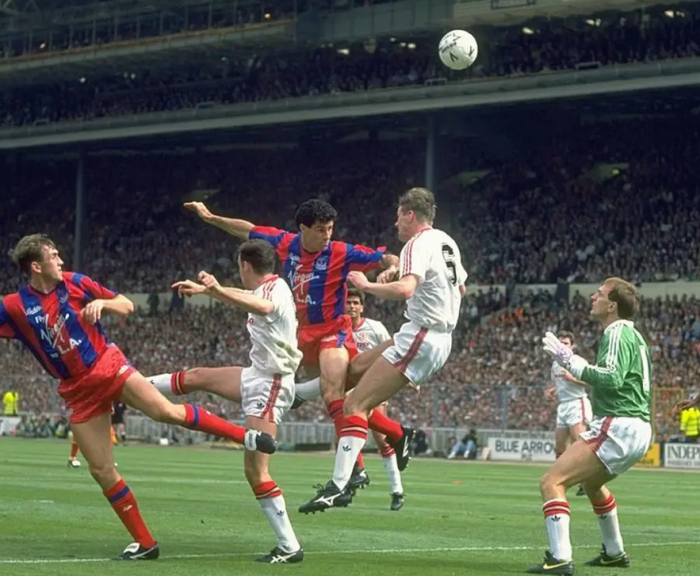
O’Reilly rises to head home for Palace against Manchester United in the FA Cup final

Scoring that goal against United in the 1990 FA Cup Final helped O’Reilly fulfil a childhood dream although ultimately there was the disappointment of United equalising (making it 3-3) through Mark Hughes in extra time and going on to win the replay.

“The FA Cup goal was a set play which was no surprise because we worked hard at set plays,” he recalled. It was from Phil Barber’s free-kick on the right that O’Reilly put Palace ahead after 18 minutes, his header looping over goalkeeper Jim Leighton.

United recovered to lead 2-1 before sub Ian Wright, only six weeks after breaking his leg, went on to score twice, in the 72nd minute and again at the start of extra-time before Hughes’ equaliser seven minutes from the end.
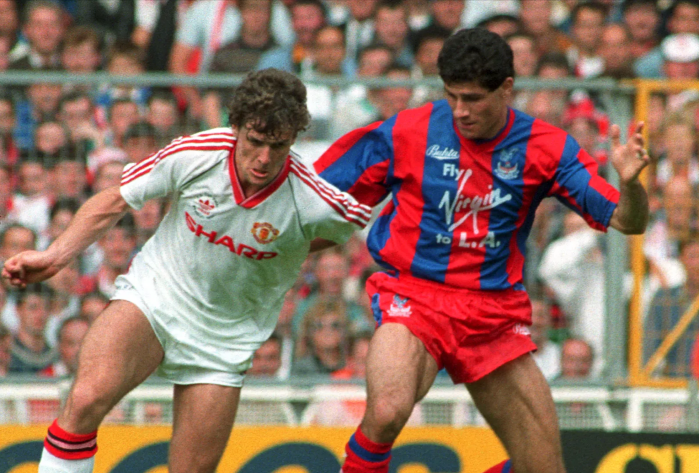
O’Reilly challenges Man United’s late-goal Wembley saviour Mark Hughes

O’Reilly played 79 times over three and a half seasons at Selhurst Park but the aforementioned Young and Andy Thorn were the regular centre-back pairing in 1990-91 when Palace finished third in the top division and also won the Full Members’ Cup. O’Reilly went out on loan to Birmingham City, although he only played once.

In the summer of 1991, aged 30, he returned to a Brighton side under Barry Lloyd who’d lost the second-tier play-off final to Notts County and once again had to sell players to balance the books. And in that Argus interview he recalled: “Again I took a pay cut, but I had no worries about coming back. I wasn’t concerned about any element of forgiveness although there were a few who would voice their opinion of my former club, which wasn’t very intelligent.”
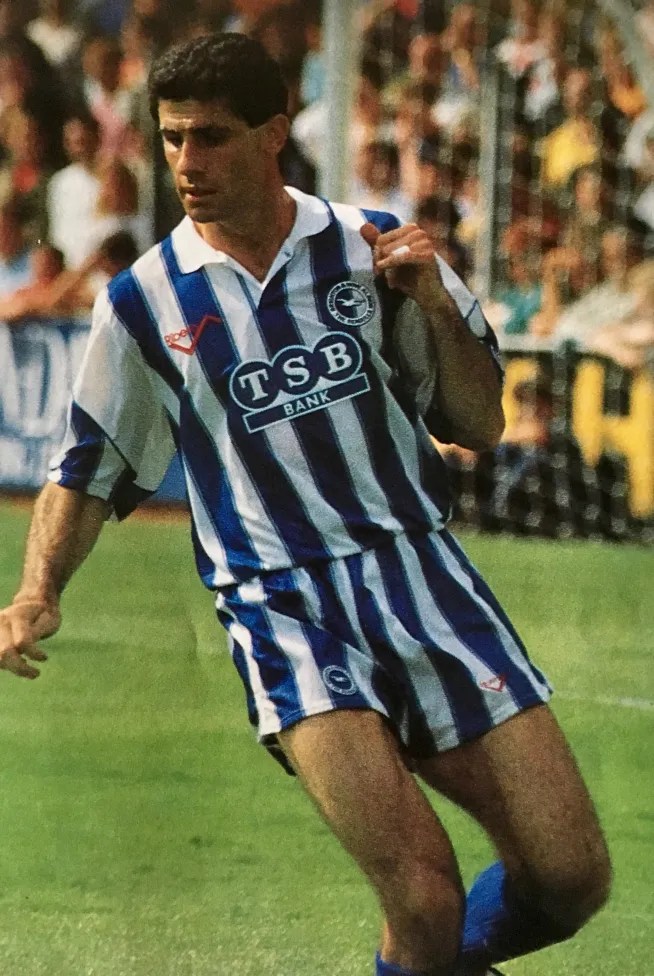
He made 31 appearances in the 1991-92 season but played his last game on 29 February 1992 sustaining an injury to his right knee against Southend at the Goldstone which ended his career. Albion were subsequently relegated back to the third tier and after a series of unsuccessful knee operations, O’Reilly was forced to retire from the game in April 1993.

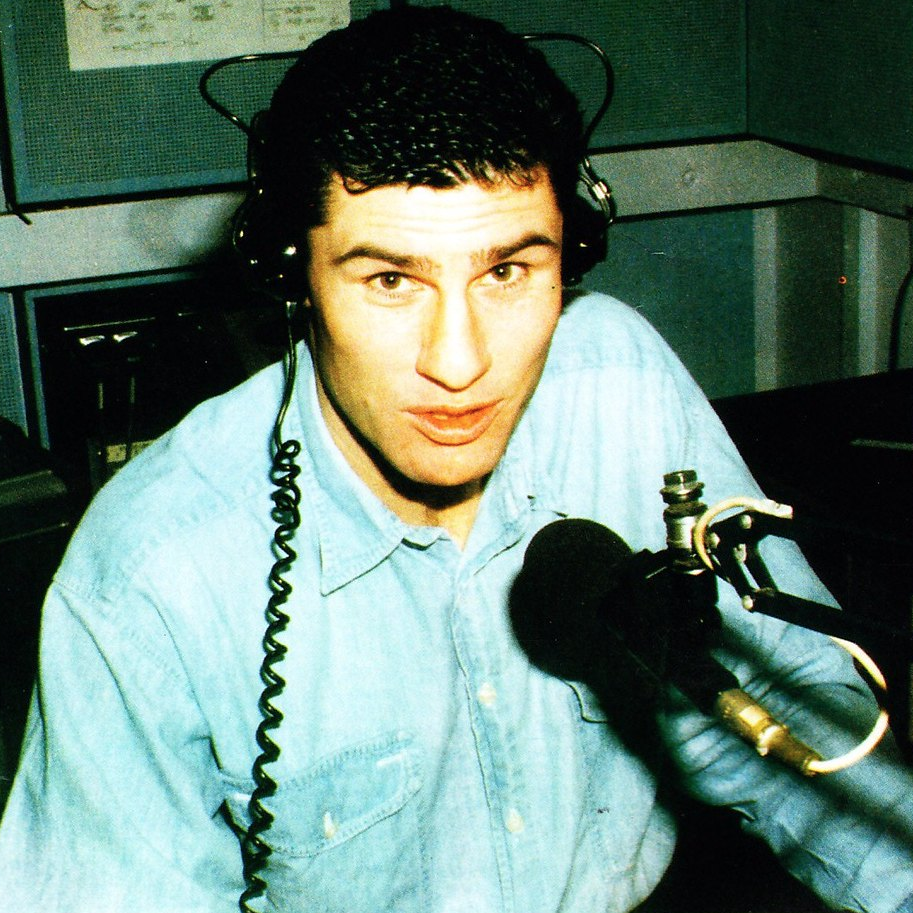
He didn’t let the grass grow under his feet, though. While he was still hopeful of regaining his fitness, he joined BBC Radio Sussex to do analysis on Albion games. It wasn’t his first experience at the mic either. When he was not playing at Palace, he sat alongside Jonathan Pearce and did summarising for Capital Radio.

“Doing this work has kept me involved with the game,” he said. “It is much better to concentrate when watching as a reporter. I find that when I just go along as a spectator my mind wanders and that really is frustrating. Broadcasting really must be the next best thing to playing.”

Born in Isleworth on 21 March 1961, O’Reilly grew up in Essex: his parents, Gerry and Mary, having moved to Harlow. His education began at Latton Green Primary School in Harlow and he moved on to Latton Bush Comprehensive, where he stayed on to take his A levels.

Throughout those schooldays he was a promising central defender and he started to make a name for himself with the Essex Boys team. As a schoolboy, he played for both England and the Republic of Ireland because his father was from Dublin and his mother English. He played for the England under-19 schoolboys’ side for two years.

Earlier in his teens, Arsenal wanted him on associate schoolboy forms, but it was Spurs who snapped him up at the age of 13 and during his last two years at school he played as an amateur at Tottenham. His youth team-mates at White Hart Lane included Kerry Dixon and Micky Hazard.

O’Reilly had the offer of a sports scholarship at Columbia University but he decided to sign for Spurs as a professional in the summer of 1979.

His debut aged 19 was on Boxing Day 1980 as a half-time substitute for Chris Hughton in a remarkable 4-4 draw with high-flying Southampton at White Hart Lane. Among a total of 45 first-team appearances in five seasons at Tottenham were games in the Charity Shield at Wembley in 1982 against Liverpool (Spurs lost 1-0) and a quarter-final victory in the UEFA Cup over German giants Bayern Munich.

It was the arrival of Gary Stevens from Albion shortly after the 1983 FA Cup Final that began to signal the end of his time at White Hart Lane, together with the emergence of Danny Thomas.

After hanging up his boots, O’Reilly scouted for Bruce Rioch when he was boss at Bolton Wanderers and spent nine years identifying talent for kit supplier Adidas.

Alongside that, he began a successful broadcasting career which saw him on screen for Meridian, Sky Sports, BBC, Premier League Productions, NBC, Fox Sports and ESPN.

His broadcasting work also extended to India, ART Prime in Dubai and Trans World International’s Premier League international feed.

After marrying in Arundel Cathedral, O’Reilly first lived in Crawley, from where he commuted to Croydon during the Palace years, and later moved to Hove. He subsequently moved to New York where, since 2017, he co-hosts a weekly podcast Playing With Science with Neil deGrasse Tyson for media company StarTalk, exploring fascinating topics linking sport and science.

Anyone unsure in which camp O’Reilly’s heart belongs, he answered diplomatically in a matchday programme interview: “Spurs. It’s always been them, ever since I was six. And I learned so much about the game just by being involved there, especially through (former Spurs captain) Steve Perryman.

“He was always such a believer in doing things the right way. He gave time to any young players. There was none of that “Do you know who I am son?’ None of it at all.”
Wembley hero Liam Dickinson’s nomadic football journey

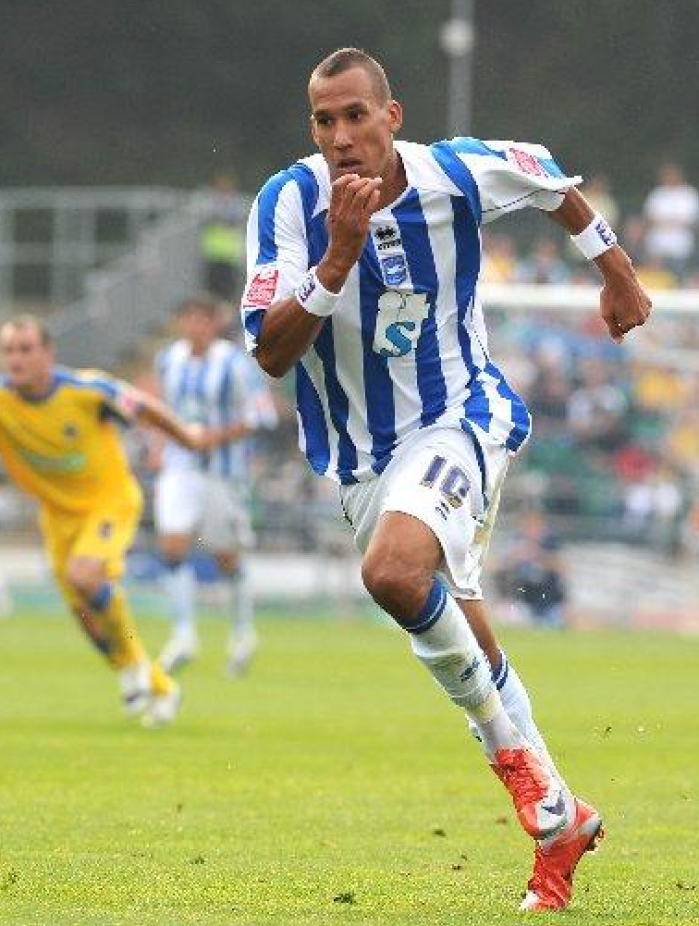
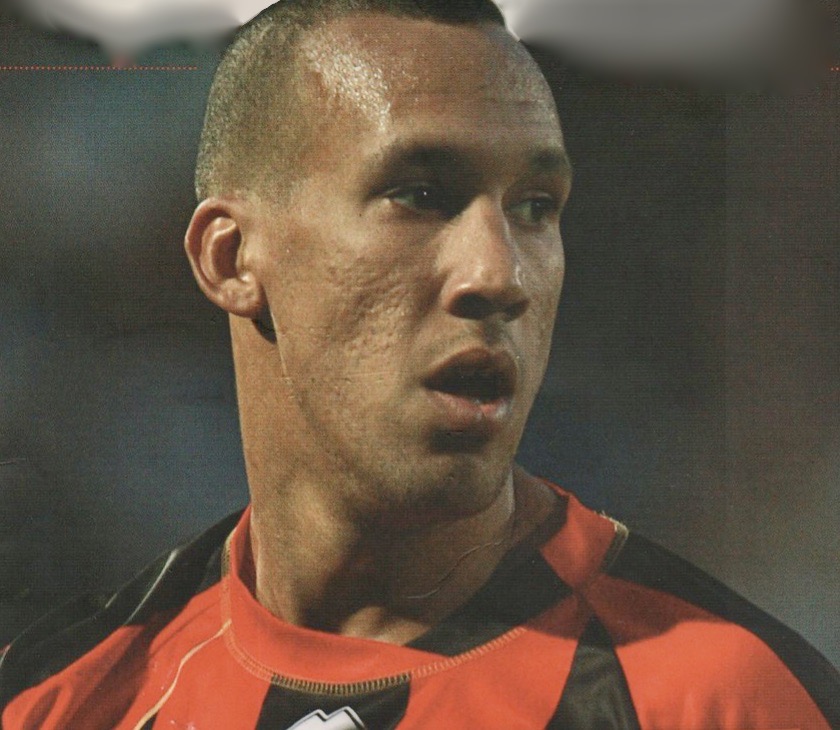
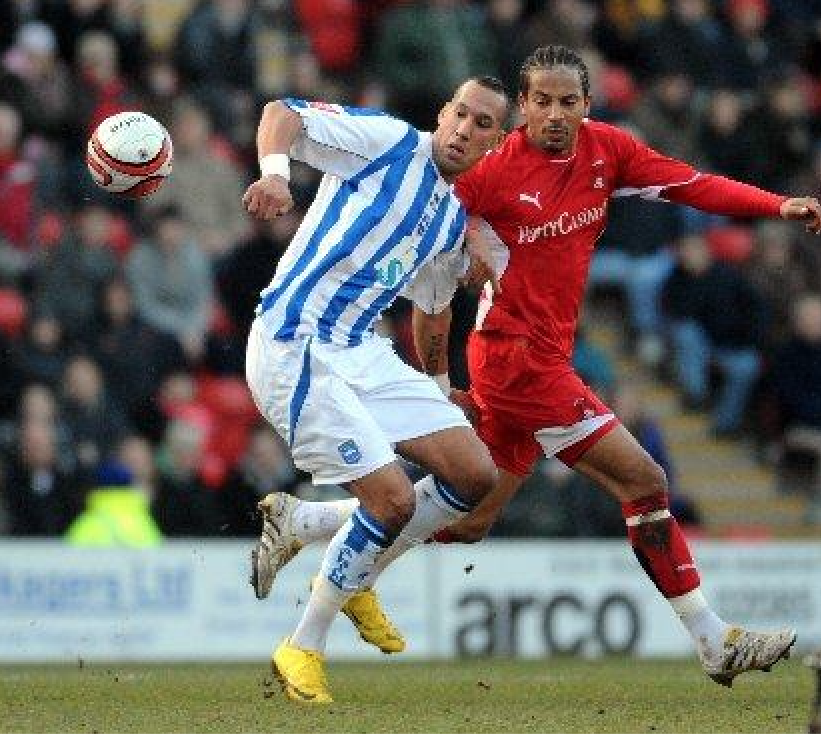
HE’D SCORED a decisive play-off final goal at Wembley for Stockport County but a subsequent £750,000 move to Derby County didn’t work out for Liam Dickinson and Brighton signed him for £300,000 only a year after the Rams had shelled out that big money.

Dickinson didn’t even get a game for the Rams, instead being sent out on loan to Huddersfield Town, Blackpool (where he’d begun his career in their school of excellence) and Leeds United.  He was a player who didn’t stay in the same place for long; in total he featured for 23 different clubs.

Like many before and since, changes of manager were often the cause of him moving on. At Derby, for instance, he was signed by Paul Jewell, recalled from his loan at Blackpool by caretaker manager Chris Hutchings and eventually let go by Nigel Clough.

It had been intended he’d join Leeds in January 2009 but the necessary paperwork didn’t arrive until 14 minutes after the deadline! Further discussions led to a revised deal, but the move was called off because he was injured. He eventually joined up with United in the second week of March and although he scored in a behind-closed-doors friendly against Sheffield United (1-1), he didn’t get on the scoresheet in eight League One games (four starts, four as a sub) under Simon Grayson.

His first start was in a 3-2 win at Crewe and he managed three successive starts, in a 2-2 draw at Leyton Orient, a 1-0 win over old club Stockport and a 1-0 defeat at Leicester but he was not involved in the end-of-season play-offs when Leeds (with Casper Ankergren in goal) lost out to Millwall in the semi-finals.

An enclave of former Stockport teammates – James Tunnicliffe, Jim McNulty, Gary Dicker and Craig Davies – helped Dickinson to choose Brighton as his next club

After Brighton boss Russell Slade welcomed the 6’4” forward to Withdean on a three-year contract, he told the club website: “He brings something different to the table. His goalscoring record is very good and he has a good goals-per-game ratio, and like one or two of the other signings I have made this summer, he is hungry to get his career back on track. I’m sure there is a lot more to come from him.”
He scored in his third and fourth games for the Albion, but both came in defeats against former clubs: the first in a 7-1 capitulation to Huddersfield and the next in a 4-2 defeat to Stockport.

He was on the scoresheet in the home 3-3 draw against Hartlepool (Nicky Forster scored Albion’s other two goals) that spelled the end of Slade’s tenure as manager. But it is what happened two days later that many will remember him for.

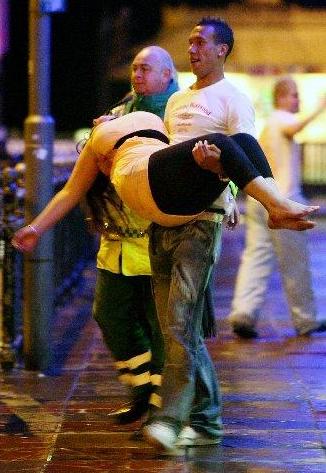
Unluckily for him, he was pictured carrying a seemingly comatosed young woman in his arms in the middle of Brighton at 1am. The Sun newspaper was covering a renowned student pub crawl ritual at the time and didn’t realise who they’d snapped.

Eagle-eyed Albion supporters did, though, and, after discussion about the incident on fans’ forum North Stand Chat, The Argus picked up the story, running an article headlined ‘Samaritan Brighton and Hove striker scores an own goal’.

For his part, Dickinson told reporter Ben Parsons how he was on his way home after a meal out in the city when he helped a girl to a car waiting to pick her up.

He said it was simply a coincidence that he was helping the girl when the photos were taken, adding: “I saw two girls holding another girl up. She collapsed in front of us. Her mum or her auntie picked her up in a car. I picked the girl up and put her in the car.

“I didn’t want to just leave her. Anybody else would have done the same thing.”
Albion said they would deal with the matter internally. Dickinson was omitted from the squad for the following game, a 4-4 FA Cup draw with Wycombe Wanderers with caretaker manager Martin Hinshelwood in charge, but he was back in the fold for Gus Poyet’s first game as Slade’s replacement.

In the televised away game at Southampton, he went on as a sub for Forster in Albion’s 3-1 win at St Mary’s. Dan Harding, Dean Hammond and Adam Lallana were in the Saints side.

Dickinson got occasional starts under Poyet but more often than not was sent on as a sub to replace either Glenn Murray or Forster.

Given a start in the FA Cup second round win over Rushden and Diamonds, he scored twice, in the third and 86th minutes, as Albion edged the tie 3-2. He was preferred to Murray in a Boxing Day clash with Leyton Orient that finished goalless but, perhaps to prove a point, two days later the restored Murray hit four at Wycombe in a 5-2 Seagulls win.

Dickinson was back on familiar territory at Edgeley Park in January 2010, but only got a half an hour run-out as a sub against his old club (replacing another former County man in Dicker) as the game finished 1-1, Andrew Crofts salvaging a point with a 90th minute equaliser.

In a 1-1 draw at Leyton Orient, Dickinson started the game and, when he was denied a penalty, incandescent Poyet was sent from the dug-out for protesting.

“If you ask anyone, they will tell you it was a penalty and a red card,” Poyet maintained afterwards. “The referee is 10 yards away and he doesn’t give it. You’ve got a chance to score a penalty and it’s 2-0. It’s a different game.”

Dickinson took to the field against another of his former clubs in Huddersfield wearing distinctive ‘banana yellow’ boots. “I don’t like dull, boring colours. I like to brighten the pitch up a bit. I’ve had a bit of stick off the lads,” he told The Argus.

The striker, who’d scored six goals in 13 games for the Terriers while on loan, didn’t manage to get on the scoresheet and was replaced by Murray as the game petered out to a 0-0 draw.

At that stage, Dickinson was deputising for Forster who was out of favour with Poyet over a contract dispute.

As the Uruguayan began to bring in his own selections, such as on-loan Kazenga LuaLua, Dickinson chose to go on loan to Championship strugglers Peterborough United, who were managed by his former Stockport boss Jim Gannon. Dickinson scored three in nine games for Posh. On his return to Brighton, he was sold to Barnsley, who were in the Championship at the time, for reportedly half the fee paid out for him just a year earlier.

Tykes boss Mark Robins declared: “He is different to the strikers we have here already and will give us something else up front.

“He is only 24 and still has room for improvement. He has a decent scoring record both in the Championship and in the lower leagues.

“Liam fits in to what we are trying to do here both in terms of on the pitch and within our budget.”

But he made just one start, in a League Cup match, and three sub appearances in the league for Barnsley when his old Derby caretaker manager, Hutchings, took him on loan to Walsall. He didn’t find the net in seven League One games.

Next stop, from January to the end of the season, was Rochdale, the side against which he had scored that 2008 League Two play-off final winner.

But a goalless run of 14 games (seven starts and seven off the bench) prompted this comment from AtThePeake on fansnetwork.co.uk in 2021: “In terms of expectation versus reality, few signings can have disappointed Rochdale fans quite like the loan signing of Liam Dickinson in January 2011.”

The supporter wrote: “Dale were looking for someone to become the fulcrum of an attack that included Chris O’Grady drifting in from the left and the emerging Matt Done playing as a second striker.

“Having seen first-hand the threat Dickinson could be with his aerial prowess, strength and touch in front of goal, Dale fans were reasonably excited that the answer to their striker problem had been found, but it quickly became apparent that the struggles with Derby and Barnsley had affected Dickinson’s confidence.

“During his spell, Dickinson was all too easy to defend against, struggled to hold the ball up and lacked any cutting edge when it came to finishing the chances he did manage to fashion for himself.”

A projected move to Plymouth Argyle was called off after just eight days, with personal reasons being cited, but the nomadic striker’s next stop was League Two Southend United under Paul Sturrock, where he netted 12 goals in 37 matches (33 starts plus four as a sub).

Dickinson scored a dozen times for Southend United

Not for the first time, he found himself in the headlines for the wrong reason when he and two others were reprimanded for a breach of club discipline over an unspecified incident at a hotel the evening before a match at Morecambe.

A broken ankle brought a premature end to his season with the Shrimpers, and it proved problematic in trying to continue his league career elsewhere.

He trained with Port Vale but even his agent Phil Sproson was quoted as saying: “Liam will admit he has been no choirboy in the past.

“He has had quite a few clubs and that’s probably because he has been no angel.

“He is loud and vocal and has had too many nights out over the years – but he has matured.

“He realises he will have to change and toe the line because he has a darker side that has dragged him down in the past.”

As it turned out, he was eventually out for a year because his broken ankle didn’t heal properly. He played two pre-season friendlies for Vale in 2013 but manager Micky Adams didn’t take him on because of ongoing problems with the ankle.

Born in Salford on 4 October 1985, Dickinson was originally a centre-half when he was on the youth books of Blackpool, Bolton and Blackburn. He stepped away from professional football at 16 and studied to be a graphic artist but continued to play in non-league sides. He appeared for Irlam, Swinton, Trafford and Woodley Sports before he was taken on as a pro by Stockport in 2005 after a successful trial.

He scored on his County debut, only five minutes after going on as a 71st-minute sub against Cheltenham Town at Edgeley Park. In three years under Jim Gannon, he hit 33 goals in 94 appearances.

The 2007-08 season was his most prolific term as a league player, netting 21 times from 32 starts and six games from the bench. It also earned him Stockport’s Player of the Year award.

It was to Stockport, then in the Conference North league, that he returned in 2013, but he only managed one goal in 13 games before returning to the non-league arena.

Between 2014 and 2019, he turned out for Stalybridge Celtic, Guiseley, Bradford Park Avenue, FC United of Manchester and finally Droylsden before calling it a day.

In an online chat with Stockport County Live towards the end of the Covid lockdown, in August 2020, Dickinson opened up about his mental health, admitting he’d been through a period when he was suffering with depression.

Post playing, he told his interviewer, he was working installing signage for a print company.

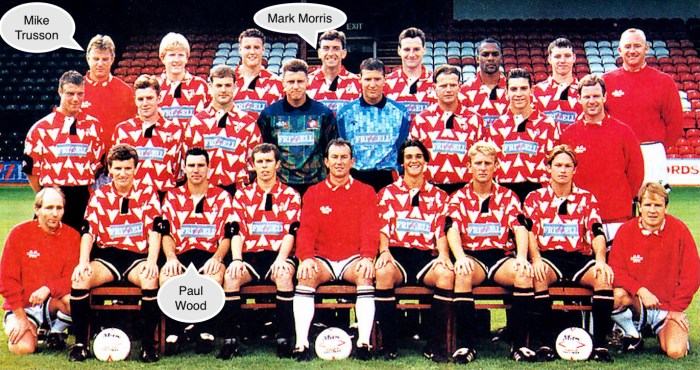
A lifetime in football for Mike Trusson the enforcer

MIKE TRUSSON has spent a lifetime in football since Plymouth Argyle spotted his raw teenage talent, took him on as an apprentice and gave him his professional debut at 17.

After playing more than 400 matches over 15 years, he became prominent in football marketing, coaching and scouting, often in association with his good friend Tony Pulis, who he played alongside at Gillingham after leaving the Albion.

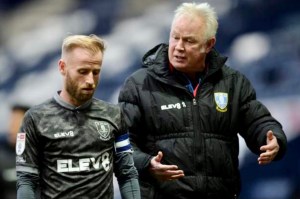
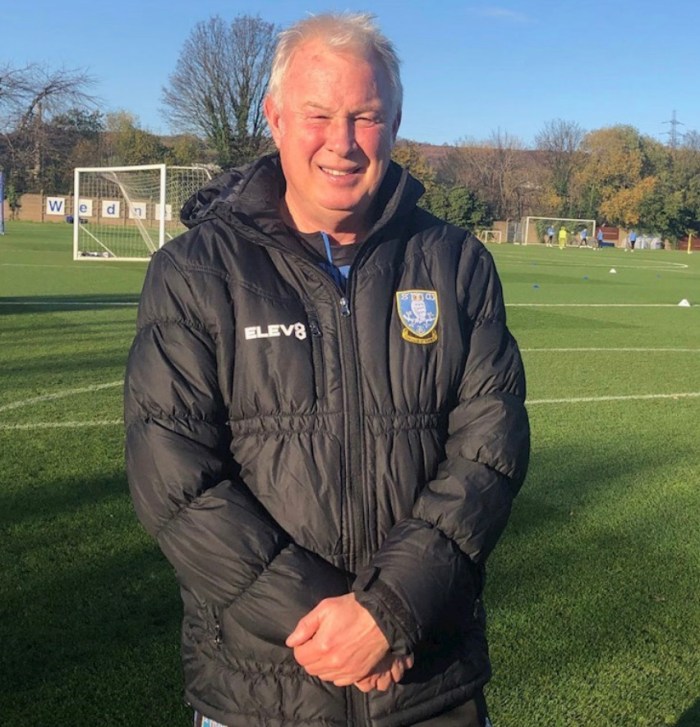
As recently as late 2020 he was assistant manager to Pulis for an ill-fated brief spell at Sheffield Wednesday.

Much fonder memories of his time in the steel city were forged when he was twice Player of the Year at Sheffield United.

In an exclusive interview with the In Parallel Lines blog, Trusson told Nick Turrell about his time with the Seagulls, his first coaching job at AFC Bournemouth and the formative years of his career.

A goalscoring home debut for Mike Trusson

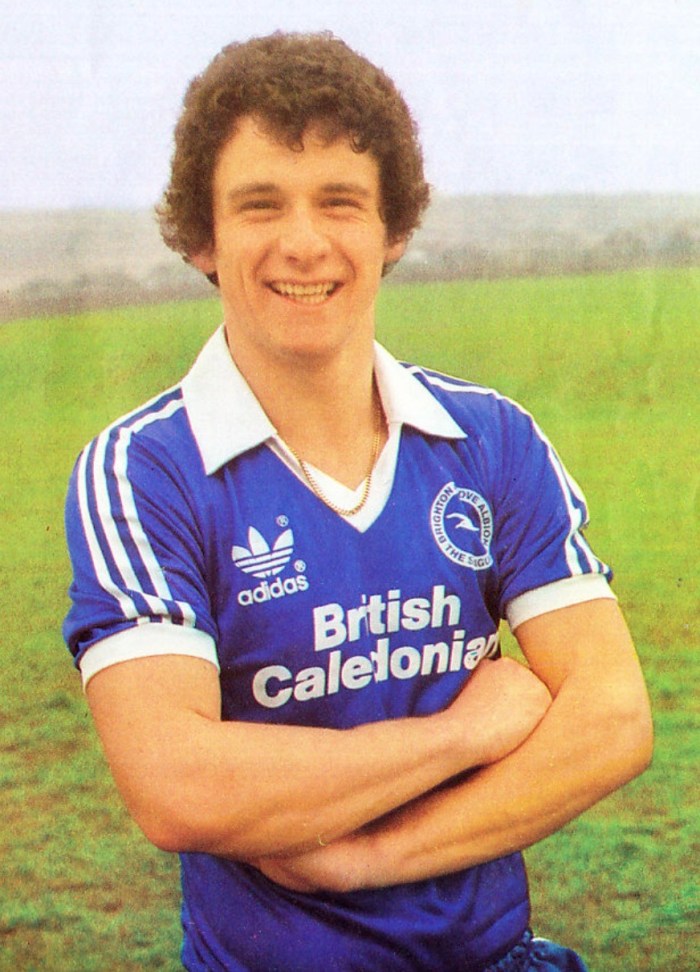
A MOVE TO SUSSEX in the summer of 1987 ticked all the right boxes for Mike Trusson.

An experienced midfielder with more than 300 games under his belt already, he welcomed the opportunity to be part of the rebuilding job Barry Lloyd was undertaking at the Goldstone following the club’s relegation back to the third tier. He was one of seven new signings.

The move also brought him a whole lot closer to his family in Somerset than south Yorkshire, where he’d lived and played for seven years.

And it gave him the chance to earn more money.

The only problem was he had a dodgy left knee – it was an injury that prevented him making his first team debut for the Seagulls for four months, and it troubled him throughout his first season.

Frequent leaping to head the ball had resulted in a torn patella knee tendon that had needed surgery during the latter days of the player’s time at Rotherham United, where for two years his manager had been the legendary former Leeds and England defender Norman Hunter.

Prior to the injury, Blackburn Rovers had bid £200,000 to sign him, but nothing came of it and a contractual dispute with the Millers (who were not keen to give him what he said he was entitled to because of the injury) led to him being given a free transfer (Hunter subsequently signed former Albion midfielder Tony Grealish).

Trusson fancied a move south to be nearer his folks and had written to several clubs, Albion included, who he thought might be interested in his services (these were the days before agents).

Although Millwall and Gillingham had shown an interest, it was a call from Martin Hinshelwood, Lloyd’s no.2, that saw Trusson head to Sussex for an interview where he met the management pair, chairman Dudley Sizen and director Greg Stanley.

Trusson looks back on the encounter with amusement because not only did they agree to take him on but they offered him more money than he was asking for because they said he’d need it in view of the North-South disparity in property prices.

“Brighton was a big club. Only four years earlier they’d been in the Cup Final and some of those players from that time were still at the club,” he said. “From my point of view, it was a big career move. It ticked all the boxes.”

Initially Trusson shared a club house in East Preston with fellow new signings Kevin Bremner, Garry Nelson and Doug Rougvie before moving his wife and daughter down and settling in Angmering, close to the training ground (Albion trained at Worthing Rugby Club’s ground at the time).

Before he could think about playing, though, he had to get fit. Scar tissue after the operation on his knee had left him in a lot of pain, and although he passed his medical, the pain persisted.

New physio Mark Leather told him straight that he wouldn’t be able to train, let alone play, with the leg in the condition it was. It had shrunk in size due to muscle wastage so his first two months at the Albion were spent building it back up and regaining match fitness in the reserves.

In the meantime, former full-back Chris Hutchings was keeping the no.8 shirt warm until he finally got a move to Huddersfield that autumn.

Trusson recalled: “I was aware there was a rebuilding process going on. It was a very different group to ones I’d experienced at other clubs. A lot of the lads travelled down from London so there was not much socialising.”

There was certainly lots of competition for places during his time at the club. Sometimes Dale Jasper would get the nod over him and he could see Lloyd preferred the ball-playing types like Alan Curbishley and Dean Wilkins, and later Robert Codner and Adrian Owers.

“I thought if I was going to play, I had to change,” Trusson reflected. “I became more of a midfield enforcer and left it to the better players to play.”

As such, he was surprised yet delighted to score on his home debut, albeit, more than 30 years on, he doesn’t remember much about it.

For the record, it was on 12 December 1987, in front of a rather paltry 6,995 Goldstone Ground crowd, that Trusson scored the only goal of the game against Chester City as Albion extended an unbeaten run to 15 matches. (Chester’s side included former Albion Cup Final midfielder Gary Howlett, who was on loan from Bournemouth).

In that injury-affected first season, he played 18 games plus seven as sub. He had been on the subs bench for three games as the season drew to an exciting climax, but he was not involved in the deciding game when Bristol Rovers were beaten 2-1 at the Goldstone.

Teaming up with Garry Nelson against Arsenal in the FA Cup

When the 1988-89 season got under way, Trusson was on the bench for the first two league games and he got a start in a 1-0 defeat away to Southend in the League Cup. After the side suffered eight defeats on the trot, Trusson was back in the starting line-up for the home game v Leeds on 1 October and Albion chalked up their first win of the season (1-0).

Unsurprisingly, Trusson kept his place for the next clutch of games, although Curbishley returned and kept the shirt for an extended run.

It wasn’t until the new year that he won back a starting place but then he had his best run of games, keeping the shirt through to the middle of April.

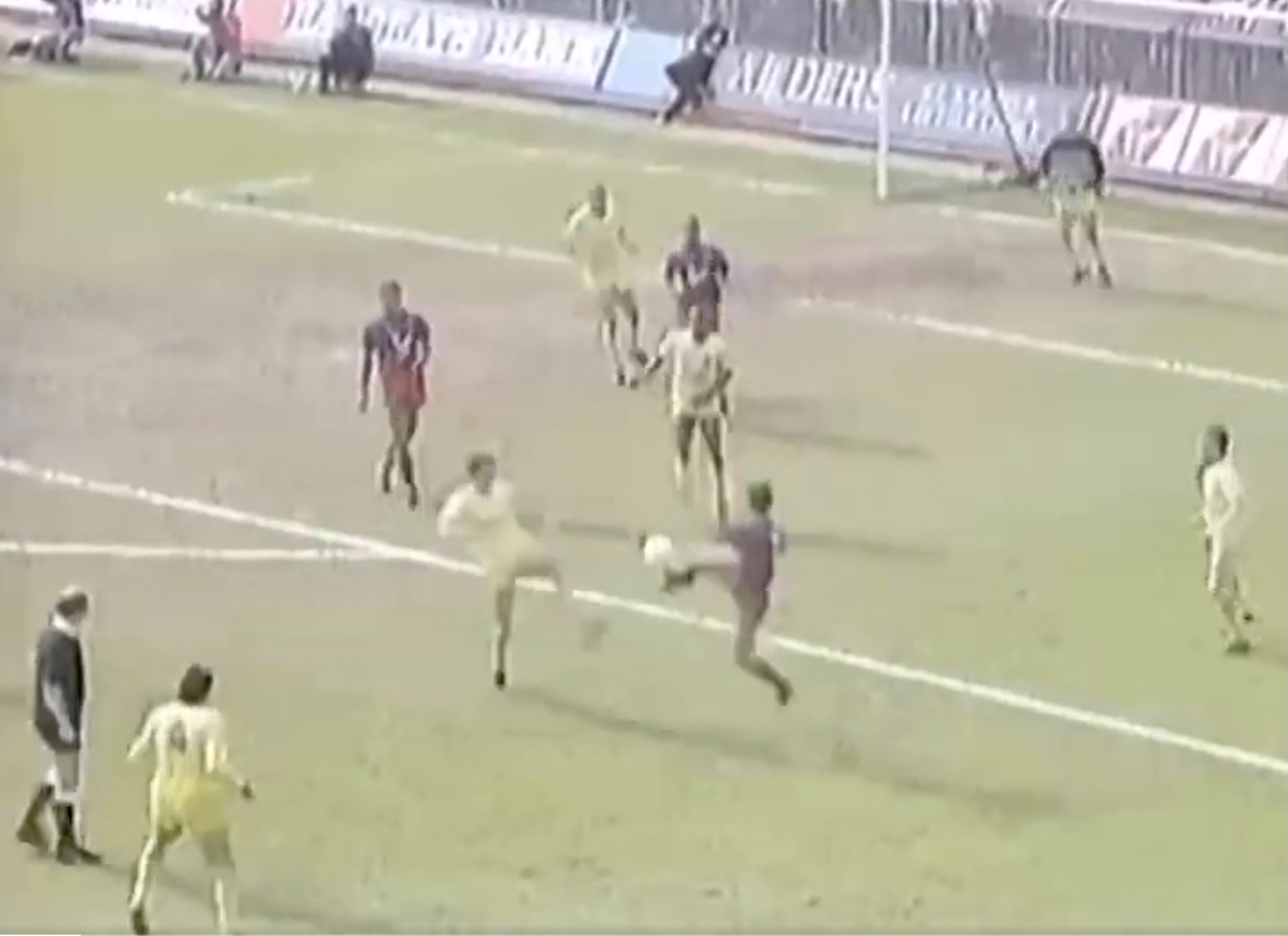
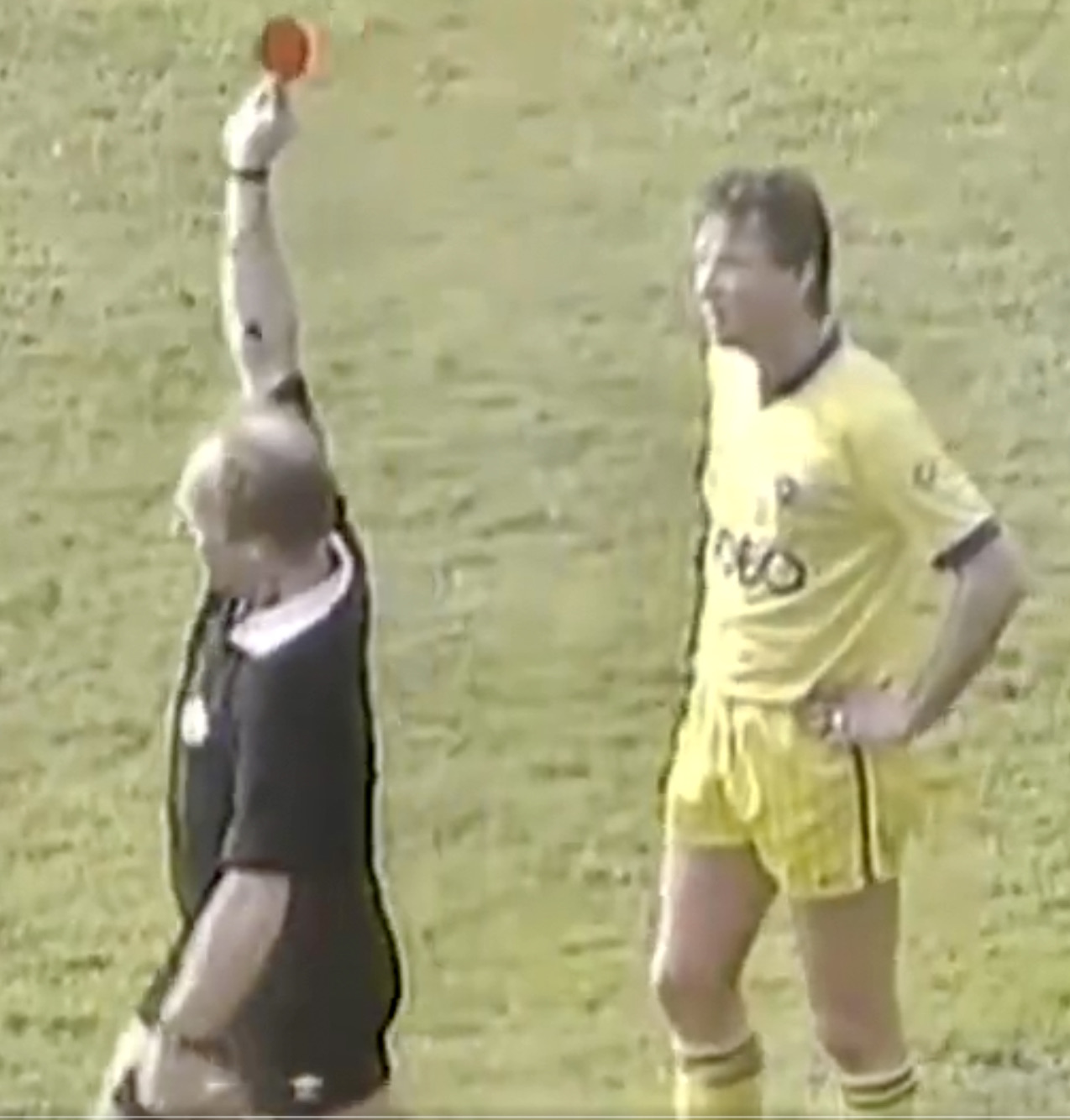
The previous month he was sent off (above) in the extraordinary match at Selhurst Park which saw referee Kelvin Morton award five penalties in the space of 27 minutes, as well as wielding five yellow cards and Trusson’s red. Four of the penalties went to Palace – they missed three – but they went on to win 2-1 against the ten men. Manager Lloyd said: “I don’t think I’ve ever been involved in such a crazy game – we could have lost 6-1 but were unfortunate not to gain a point.”

Looking back, Trusson reckoned: “I was always conscious I wasn’t Barry’s type of player.” With a gentle but respectful sense of understatement, he said: “He was not the most communicative person I have met in my life!”

In essence, perhaps not surprisingly, Trusson would seek an explanation as to why he wasn’t playing when he thought he deserved to, but it wasn’t always forthcoming. He recalled that defender Gary Chivers, who he was reunited with at Bournemouth and who he stays in touch with, used to call Lloyd ‘Harold’ after the silent movie star!

Nevertheless, he said: “Tactically Barry was a good manager. When he did talk, he talked a lot of sense.”

It was during his time at Brighton that Trusson started running end-of-season soccer schools for youngsters. He was honest enough to admit they gave him an opportunity to earn a bit of extra money to put towards a holiday rather than laying the foundations for his future career as a coach.

That was still a little way off when, at 29, he left the Albion in September 1989 having played 37 games. By then, Curbishley, Codner and Wilkins were firmly ensconced as the preferred midfield trio, and he wanted to get some regular football. Cardiff wanted him but his family were settled in West Sussex so he opted for Gillingham, which was driveable, although he stayed in a clubhouse the night before matches.

It was at Priestfield where he began to establish a close friendship with Tony Pulis, who was winding down his playing career and was similarly commuting to north Kent (from Bournemouth).

“We had always kicked each other to bits when we played against each other but often ended up having a drink and a chat afterwards, and got on,” said Trusson. “We were also keen golfers, and both talkers; we had our views (even if we didn’t always agree) and the friendship developed.”

This is a good point to go back to the beginning because it was his early appreciation of the art of coaching that would ultimately become the foundation for what followed later.

Born in Northolt on 26 May 1959, Trusson had trials with Chelsea as a schoolboy but a bout of ‘flu put the kibosh on any progress. It also wasn’t helped by the family relocating to Somerset, not a renowned hotbed for nurturing football talent.

The young Trusson went to Wadham Comprehensive School in Crewkerne and his hopes for another crack at professional football were given a huge boost when a Plymouth Argyle vice-president, who was involved with the local youth football side he played for, organised for him to have a trial at Home Park.

Argyle liked what they saw and offered him an apprenticeship, and the excellent greensonscreen.co.uk website details his career in the West Country.

It was Trusson’s good fortune that former England goalkeeper Tony Waiters – a coach ahead of his time – was Argyle boss and he gave him a first team debut aged just 17 in October 1976.

Waiters was a great believer in giving youngsters their chance to shine at an early age; he’d already worked for the FA as a regional coach, for Liverpool’s youth development programme, and been manager of the England Youth team, before being appointed Argyle manager. He later went on to manage the Canadian national team at the 1986 World Cup.

Waiters and his assistant Keith Blunt, who later took charge of the Spurs youth team in the 1980s (and was technical director at the English National Football School at Lilleshall between 1991 and 1998) together with Bobby Howe, the former West Ham and Bournemouth defender, completely opened Trusson’s eyes to what could be achieved through good coaching.

“They were in the vanguard of English coaching in the mid to late ‘70s,” he said. “I joined Plymouth as a kid having never been coached. Growing up in Somerset, we just used to play games.

“From when I was 15 to 17, they taught me so much, talking me through so many aspects of the game, and coaching me to understand why I was doing certain things on the pitch, giving advice about things like timing and angled runs.”

In an Albion matchday programme interview, Trusson told reporter Dave Beckett: “They kept us in a youth hostel and looked after us really well, even providing us with carefully planned individual weight and fitness programmes.

“Certainly you couldn’t fault them on their ideas. Out of the 20 apprentices I knew brought on by the scheme, 17 made the grade as pros. That’s an astonishingly high return by anybody’s standards.”

Although Argyle were relegated in his first season, Trusson kept his place under Waiters’ successors in the hotseat: Mike Kelly, Lennie Lawrence and Malcolm Allison. Bobby Saxton was in charge by the time he left Plymouth in the summer of 1980 to join then Third Division Sheffield United.

He was signed by Harry Haslam but, halfway through a season which it was hoped would see Blades among the promotion contenders, things went horribly wrong when Haslam moved ‘upstairs’ and former World Cup winner Martin Peters took over the running of the team. United were relegated to the fourth tier for the first time in their history.

Peters and Haslam quit the club and former Sunderland FA Cup Final matchwinner Ian Porterfield, who had just won the Division Three title with Rotherham, took charge.

Player of the Year at Sheffield United

Blades bounced straight back as champions, losing only four games all season, and Trusson was their Player of the Year. He earned the accolade the following season as well, when they finished 11th in Division Three.

The side’s prolific goalscorer at that time, Keith Edwards, a former teammate who now works as a co-commentator covering Blades matches for Radio Sheffield recently told the city’s daily paper The Star: “He was such a likeable character in the dressing room.

“I had a great understanding with him. He was a great team man, good for the dressing room and could play in a lot of positions. Every now and then he got himself up front with me and he worked his heart out.

“He looked after you as a player, he could be a tough lad. We played Altrincham one week and he got sent off for whacking someone that had done me a previous week. He was handy.

“And he was such a good character to have in the team.”

After three years at Bramall Lane, and 126 appearances, (not to mention scoring 31 goals), he was then swapped for Paul Stanicliffe and, instead of involvement in a promotion bid, found himself in a relegation fight at Rotherham United.

Trusson enjoyed his time with the Millers under George Kerr and over four years he played 124 games and chipped in with 19 goals. It was a regime change, and the aforementioned injury, that saw life at Millmoor turn sour.

A brief spell playing for Sing Tao in Hong Kong followed the end of his time with Gillingham and on his return to the UK his pal Pulis, who had taken over as Bournemouth manager from Harry Redknapp, invited him to become youth team coach at Dean Court.

Linking up with former Gillingham teammate Tony Pulis at Bournemouth

“I loved it and, when David Kemp moved on, I got the opportunity to coach the first team,” he said.

“We were very young and we were struggling to avoid relegation,” he recalled. “We kept them up and it was great experience. We both learned so much and we spent a lot of time together.”

When Pulis was sacked, Trusson was staggered to be offered the job as his replacement but turned it down out of loyalty to his friend.

The pair have since worked together at various clubs. For example, he was a senior scout at Stoke City and head of recruitment at West Brom.

“I’ve worked for him as a scout at pretty much every club he’s been at,” said Trusson, who cites trust, respect and judgement as the attributes Pulis saw in him.

Trusson was also once marketing manager for football-themed restaurant Football, Football in London – he managed to woo Sean Bean, the actor who is a well-known Blades fanatic, to the opening – and he had a marketing job for the PFA.

He runs his own online soccer coaching scheme and was working as a European scout for Celtic when, in an unexpected return to football’s frontline in November 2020, he was appointed assistant manager of Sheffield Wednesday.

Assistant manager at Wednesday

Pulis replaced Garry Monk at Hillsborough and turned to Trusson as his no.2. In that interview with The Star, Edwards said: “He’s a great lad. I was slightly surprised to see him get the job at Wednesday, but it was completely understandable.

“He’s a clever bloke, knows his football and has stayed in the game all this time, which is to his credit. His experience of scouting, coaching and having played in several different positions makes him a massive asset to any football club, I’d say.”

Edwards recalled how his former teammate had an eye for coaching from a young age. “He was always keen to get into that, he always wanted to lend a hand to the coaches,” he said.

“Some players would get off as quickly as they could to their families or whatever they were doing with their time. He wasn’t like that, he bought into the club thing. Some players were always around the place and he was like that, very understanding and willing to help out.

“I had massive fall-outs with the odd person, you know how it is, but I never saw Truss like that. He was always so calm and understanding of other people’s opinion. That’s how and why he’s stayed in the game throughout all this time. That either comes naturally to you or it doesn’t.

“I remember he always had a way of talking to people, whether that’s players or fans or board members or coaches. That’s stuck with him today.”

Putney printer Pearce went to Wembley with the Albion

HE took a circuitous route back to his hometown club but full-back Graham Pearce eventually made it to Brentford’s first team after Brighton had resurrected his career and given him a chance to play at the top level of the English game.

Pearce was first on Brentford’s books as a teenager between 1971 and 1976, but he didn’t make it as a pro with the Bees and, after also being turned down by QPR, he went non-league, initially with Hillingdon Borough for three years and then Barnet.

When Pearce lined up for Barnet in a FA Cup third round tie on 2 January 1982, it must have been beyond his wildest dreams to imagine just over a year later he’d be playing in that competition’s final at Wembley.

But the steady, assured performances 21-year-old Pearce put in as Alliance Premier League Barnet held Brighton 0-0 before losing 3-1 in a replay at the Goldstone impressed the watching Albion boss Mike Bailey sufficiently to sign him up for the Seagulls.

Although he was itching to join, he had to serve a week’s notice with the Putney printer where he had a full-time job because they weren’t in a position to release him sooner.

Just over a year later, when injuries depleted Jimmy Melia’s cup hopefuls the closer they got to a dream Wembley date, Pearce seized his chance to put his own name in print. Circumstances fell just right for him, but it might not have happened if the experienced left-back Sammy Nelson hadn’t been sidelined.

A packed East Terrace at the Goldstone the backdrop as Pearce faces Newcastle in the FA Cup

Pearce played in the third round 1-1 Goldstone draw with Newcastle – one of six games he played in January 1983 – but he missed the 4-0 demolition of Manchester City in the fourth round and didn’t feature again until 22 March when he was sub for the 2-2 home draw with Liverpool.

Because versatile Gary Stevens was more than capable of playing alongside Steve Foster, normal centre back partner Steve Gatting was preferred at left-back for 14 matches from the end of January.

But when right-back Chris Ramsey was suspended for the semi-final against Sheffield Wednesday, Stevens took his spot, Gatting returned to the middle and Pearce slotted in at left-back.

Because Foster was suspended for the final against Man Utd, Stevens paired up with Gatting in the middle and Pearce retained his place.

Even when Foster returned for the replay, Pearce kept his place because Ramsey had been crocked in the first match and wasn’t fit to play (Melia making the mistake of putting left-footed Gatting at right-back instead of Stevens).

In a pre-match interview with the Daily Mail, Pearce said: “There’s money to be made from appearing at Wembley but the thrill for me is just being there – a player from non-League who thought his chance of playing league football had gone.”

Pearce retained the no.3 shirt at the start of the 1983-84 season back in the second tier but, when Chris Cattlin took over from Melia, he made it clear he wanted someone with more experience in that position.

In his matchday programme notes he wrote: “With Kieran (O’Regan), Eric Young and Graham Pearce all playing together, we have three players who haven’t been long out of non-League football.

“Normally these players would have been blooded slowly into the side, instead of being plunged in the deep end. They have done well and shown the right attitude, but when we play against aggressive sides away from home, some of their inexperience has been exposed.”

Until a suitable replacement could be found, Pearce remained in the side and even poked home his first Albion goal in a 4-3 win away to Cambridge United on 29 October 1983.

But four weeks later, after a 2-2 draw at home to Shrewsbury Town, Cattlin was typically forthright in his next programme notes, declaring: “I was unhappy with our defence and our failings in this department cost us the game.”

Pearce and fellow full-back Ramsey were promptly dropped; the left-back berth going to new signing Chris Hutchings from Chelsea.

Cattlin had high praise for his new recruit as he said: “Chris Hutchings is an enthusiastic, strong and determined defender and has a lot to offer, he’s also a fine footballer.”

After 18 consecutive games, Pearce found himself out of the side for the rest of the season.

It’s interesting to note that the reserve side for the 1 May 1984 fixture at home to Southampton featured five players (Pearce, Ramsey, Gary Howlett, Gerry Ryan and Neil Smillie) who’d been in the FA Cup Final squad a year earlier.

The new season was almost three months’ old before Pearce was seen in the first team again, and, ironically, the opponent was once again Shrewsbury.

The game at the Goldstone finished a goalless draw and, with Hutchings having been switched to right-back, Pearce got a run in the side extending to 19 matches.

Unluckily for him, he was then left out of the side in favour of Martin Keown, who Cattlin managed to bring in on loan from Arsenal, and the future England international quickly proved his calibre.

Pearce made one further appearance, in a 2-1 defeat at Middlesbrough, before the end of the season but in the 1985-86 season he finally cemented his place in the side and played a total of 41 matches.

Three days after Christmas 1985, he scored a rare goal as the Seagulls beat Leeds 3-2 at Elland Road. Ian Baird – later to play for the Albion in the old Fourth Division – missed a penalty but scored one of Leeds’ goals and Pearce clinched the winner on a pitch rutted by a rugby league game played on it only two days earlier.

The matchday programme described the goal thus: “Pearce played a one-two with (Steve) Jacobs and found himself with only Mervyn Day to beat and Leeds screaming for offside. The trusty left foot of the Londoner lobbed goalwards, Day was stranded, and Pearce had scored his first goal in 26 months to give Albion another three valuable points.”

Not such a memorable game came in a 3-0 defeat away to Norwich City on 5 April 1986. The full-back went into the referee’s notebook for a foul on future Albion winger Mark Barham, who was substituted shortly afterwards. Albion had a great chance to pull a goal back when Pearce was through one-on-one with Chris Woods, but the England ‘keeper saved his effort comfortably. Then, eight minutes from time, Pearce fouled Wayne Biggins in the penalty area and Welsh international David Williams buried City’s third from the penalty spot.

Pearce played in Albion’s final game of the season, a 2-0 defeat at Hull City under George Petchey, following Cattlin’s sacking, and it turned out to be his last match in a Brighton shirt.

The returning Alan Mullery explained in his programme notes for the opening game of the new season that he released Jacobs and Pearce because “I felt we had too many defenders”.

Pearce switched to Third Division Gillingham under Keith Peacock and played a total of 48 matches as the Gills narrowly missed out on promotion when losing a play-off final replay against Lou Macari’s Swindon Town in 1987.

Following a disappointing second season with the Gills, when they finished mid-table, Pearce returned to hometown club Brentford where he played 14 times (+ 8 as sub) in Steve Perryman’s 1988-89 side. One of his teammates was fellow former Albion cup star Smillie.

Pearce joined up with Peacock again for Maidstone United’s debut season (1989-90) in the Fourth Division, which culminated in a play-off semi-final defeat at the hands of a Cambridge United side featuring Dion Dublin up front.

The following season, under Phil Holder, Pearce was back at Brentford as first team and reserve coach. He subsequently had spells as player-manager with Isthmian League clubs Enfield and Molesey. He later became a PE teacher at Homefield Preparatory School in Sutton.

Born in Hammersmith on 8 July 1959, Pearce was one of seven children (five boys, two girls) and attended Grove Park Primary School, where he was captain of their under-9 football side. He went on to play for the Middlesex County side and Middlesex Wanderers before his stop-start professional career began.

• Pictures from my scrapbook and matchday programmes.

Dean Saunders raised cash for Brighton and Liverpool

IT’S NOT often Brighton and Liverpool have had something in common but, when it came to striker Dean Saunders, they both sold him to raise money. And they weren’t alone.

In the Albion’s case, it happened in 1987 when manager Barry Lloyd was forced to cash in on the free transfer signing to raise £60,000 to go towards players’ wages.

For their part, five years later, Liverpool let the Welsh international depart Anfield for £2.3m because boss Graeme Souness wanted the money to buy a central defender.

When Saunders was remarkably transferred for £1m from the Maxwell-owned Oxford United to the Maxwell-owned Derby County, it prompted former Brighton and Liverpool defender Mark Lawrenson to quit as boss at the Manor Ground after he’d been promised there would be no transfers likely to weaken his squad.

Saunders’ long and much-travelled career began in Swansea, the place where he was born on 21 June 1964, the son of former Swansea and Liverpool wing-half Roy Saunders.

He attended GwrossydJunior School and was soon appearing in the school football team on Saturday mornings and playing minor football in the afternoons. He went on to Penlan Comprehensive in Swansea and his career began to blossom, playing in the school team at all levels under sports master Lee Jones, a former British gymanstics champion. Saunders played for the Swansea Schools representative sides at under 11, 13 and 15 levels.

“I can remember enjoying watching the Swansea players train when I was a lad,” he told Tony Norman in an Albion matchday programme article. “I was lucky because my dad was the assistant manager, so I could go to pre-season training and things like that.

“I used to kick a ball around on the sidelines and dream of playing for Swansea.” That dream turned to reality after he joined the Swans in 1980 as an apprentice (when John Toshack was the manager), turned professional in 1982, and made his debut in the 1983-84 season. He scored 12 times in 49 appearances but in his final year had a goalless four-game loan at Cardiff City.

Manager John Bond released him on a free transfer after a turbulent season in which the Swans only narrowly avoided relegation to the basement division and Chris Cattlin, who’d been impressed when he saw Saunders playing for Swansea Reserves at the Goldstone Ground, snapped him up for Brighton.

“I was amazed when the Welsh club let him go for financial reasons,” Cattlin wrote in his matchday programme notes for the opening game of the season. “He is young, quick and, if he works hard, he has a great chance.”

By the end of that season, Saunders had scored 19 goals in 48 league and cup games and was voted player of the season. His performances in the second tier for the Albion caught the eye of the Welsh national team manager, Mike England, and on 26 March 1986 Saunders made his full international debut for Wales as a substitute in a 1-0 win away to the Republic of Ireland. It was the first of 75 caps.

Saunders scored his first international goals when he netted twice in a 3-0 friendly win over Canada in Vancouver on 19 May 1986, after which England said: “He goes past defenders with his tremendous pace and his finishing against Canada was a revelation.

“The experience he gained at Brighton has done him the world of good. To finish top scorer in his first full season of Second Division football tells its own story.”

Saunders, who shared a house with Albion’s young Republic of Ireland international Kieran O’Regan, said being happy at home had helped him to settle down quickly.

“I liked Brighton from the day I arrived,” he said in a matchday programme article. “It reminds me of my home town of Swansea and I like living by the sea.”

A lover of all sports, Saunders revealed how he liked to play cricket in the summer, when he turned out for Haywards Heath, and he played snooker with O’Regan and Steve Penney.

That summer, Saunders told Shoot! magazine: “I had both cartilages out of my left knee at 18 and had both Swansea and Cardiff turn me down. I’ve had my share of the downs. From the moment I joined Brighton, my career has turned for the better.”

The young striker continued: “Swansea just gave me away – despite the fact that I was top scorer in a team coming apart. Cardiff City gave me a few games but always seemed to have reasons for not playing me consistently when I was on loan there.

“So, I had every incentive to make the break from Welsh football and I joined Brighton. Brighton can go places.

“I was disappointed that we didn’t make the First Division first time around. But all the lads are convinced that we will get there next season. I’ve been given a three-year contract so there are tremendous incentives to do better.”

It didn’t work out that way, though. After only a mid-table finish, Cattlin was sacked and there were rumblings of financial issues beginning to reverberate around the corridors of the Goldstone. Alan Mullery returned as manager but had limited funds to invest in the team, and, with echoes of the Pat Saward era back in the early ‘70s, the club turned to fans for financial help to bring in players.

After Mullery’s unseemly swift departure halfway through the season, former Worthing boss Lloyd took over and fans were completely mystified as to how he could leave out Saunders in favour of Richard Tiltman, who Lloyd had plucked from local football. Since then, it has been suggested his omission was more to do with money than football ability.

There was great consternation that Albion collected only £60,000 when Lloyd sold Saunders to Oxford in early March 1987, especially as the Seagulls were fast hurtling back to a level of football they’d manage to avoid for ten years.

That was no longer a concern for Saunders who recovered the goalscoring touch he’d shown during his first season at the Goldstone Ground, scoring 33 goals in 73 games for Oxford before being sold to Derby for £1m against Lawrenson’s wishes 19 months after arriving at the Manor Ground.

Meanwhile, the goals kept flowing for Saunders as he netted 57 in 131 games for Derby. The side finished fifth in the old First Division by the end of Saunders’ first season with the Rams, and he’d contributed 14 goals. The Derby Telegraph noted: “From the moment ‘Deano’ arrived, the players were inspired and the crowd enthused. The signing also suited the post-war tradition of 5ft 8in goalscoring heroes at the Baseball Ground – Raich Carter, Bill Curry, Kevin Hector and Bobby Davison.

“Derby fans were too wise to comment on height. What mattered was Saunders’ speed, eel-like turn and persistence. He scored six in his first five games, starting with two against Wimbledon when he captured supporters’ hearts with the immediacy of a Kevin Hector. A close-in header and long-range right-footer were beautiful appetisers.”

Despite Saunders scoring 24 goals for Derby in 1990-91, the side was relegated and Saunders and teammate Mark Wright were snapped up by Liverpool. Reds paid £2.9m to take Saunders to Anfield, boss Souness believing he’d be an ideal strike partner for their established Welsh international striker, Ian Rush.

Saunders made his Liverpool debut on 17 August 1991 in a 2-1 win over Oldham Athletic (Mark Walters and defender Wright also played their first league games for Liverpool); Ray Houghton and John Barnes scored Liverpool’s goals.

Saunders scored his first goal for the Reds 10 days’ later in a 1-0 win over QPR at Anfield but a Liverpool history website reckons he struggled to adapt to Liverpool’s passing game. “He was used to Derby’s counter-attacking style, scoring many of his goals by using his exceptional pace,” it said. “Saunders wasn’t very prolific in the league with about one goal every four games but flourished in the UEFA Cup with nine goals in five matches that included a quadruple against Kuusysi Lahti.”

Saunders scored twice in Liverpool’s successful FA Cup campaign, which culminated in them lifting the trophy at Wembley after beating Sunderland.

Although he scored twice in seven games at the start of his second season at Anfield, a cashflow issue meant Souness was forced to sell him to raise funds to dip into the transfer market.

Saunders explained: “Graeme called me in one day and told me he needed a centre-half [Torben Piechnik], and that he could raise the money by selling me to Aston Villa.

“I couldn’t believe he was prepared to let me go, but he said he didn’t think my partnership with Ian Rush had worked out, and Rushy wouldn’t be the one going anywhere. That was it.” 

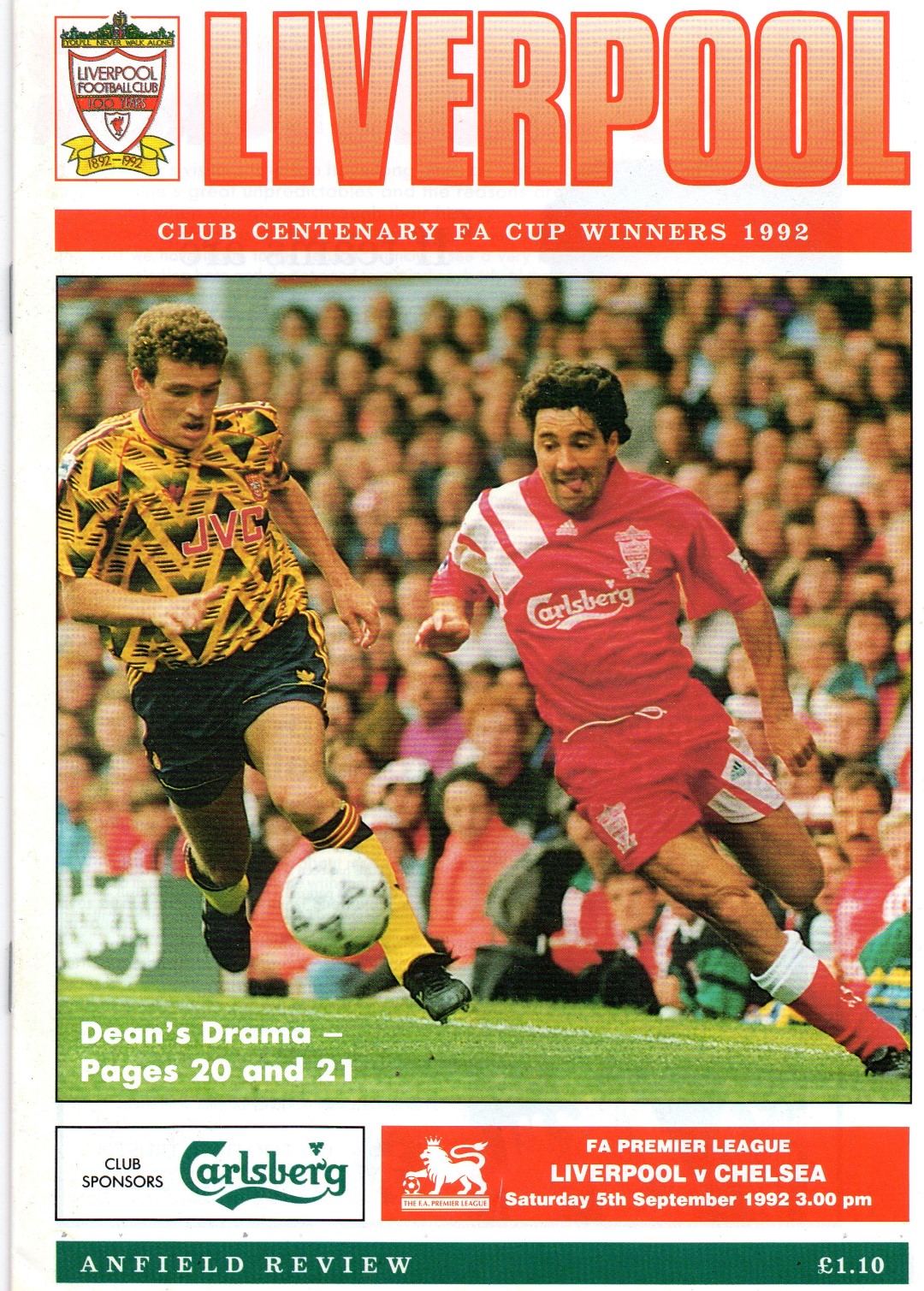
Saunders had scored 25 goals in 61 appearances for Liverpool, the last coming in a 2-1 home win over Chelsea (Jamie Redknapp scoring the other Liverpool goal) on 5 September 1992.

The Welshman had the last laugh, though, because only nine days after his departure from Liverpool he scored twice in Villa’s 4-2 victory over the Reds.

“Obviously I had a big incentive to do well today and I’m thrilled to have scored,” said Saunders. “Both my goals went through the goalkeeper’s legs.”

Signed by Ron Atkinson, Saunders spent three seasons at Villa, initially developing a formidable strike partnership with Dalian Atkinson, and then pairing up with Dwight Yorke. Saunders’ brace in the 1994 League Cup final helped beat Manchester United 3-1.

Villa history site lerwill-life.org.uk remembers him as “a spring-heeled attacker and very popular with the supporters” and adds: “Not big in size, he was very speedy and scored some spectacular goals including a 35-yard spectacular against Ipswich.”

His time at Villa Park came to an end when Brian Little took over as manager, and Saunders was reunited with his old Liverpool boss Souness in Turkey. A £2.35million fee took him to Galatasaray for the 1995-96 season and he netted 15 goals in 27 Turkish League matches.

Next stop for Saunders was back in the UK at Nottingham Forest, but the 1996-97 was an unhappy one as the manager who signed him, Frank Clark, was sacked in December after a bad run of defeats and Forest’s slide towards relegation continued under Stuart Pearce and Dave Bassett.

By the time Forest had bounced straight back up, Saunders had left the club, moving in December 1997 to second-tier Sheffield United for a year under Nigel Spackman and caretaker managers Russell Slade and Steve Thompson. United made the play-offs but lost out to Sunderland in the semi-finals. In December 1998, Saunders moved abroad again to link up with Souness a third time, at Benfica in Portugal.

The following summer, he returned to England and joined Bradford City, where his former Brighton teammate Chris Hutchings was assistant manager, then briefly manager. Saunders was a regular in his first season at Valley Parade, when the Bantams managed to narrowly avoid relegation from the Premier League, but he played only a handful of games in 2000-01, when they were relegated. Saunders retired as a player shortly before his 37th birthday and became a coach at Bradford before linking up with Souness again, this time as a coach.

He joined him at Blackburn Rovers and then Newcastle United, but when Newcastle sacked Souness early in 2006, Saunders lost his job as well.

In the following year he began taking the Certificate in Football Management course run by the University of Warwick; and this led to him being granted his UEFA Pro Licence coaching badge, a qualification that allowed him to be appointed as assistant to John Toshack with the Welsh national team. 

In October 2008, Saunders replaced Brian Little as manager of Wrexham, newly relegated to the Conference. He eventually managed to steer the north Wales outfit into the play-offs in the 2010-11 season, but they were knocked out by Luton Town and, in September 2011, Saunders was appointed manager of then Championship club Doncaster Rovers.

Unfortunately, he couldn’t save Rovers from relegation and they went back down to League One with only 36 points from their 46 League fixtures.

Having guided Rovers to second place in League One, Saunders was appointed manager of Wolverhampton Wanderers in January 2013, but he couldn’t prevent them being relegated from the Championship and he was sacked three days after relegation was confirmed courtesy of a 2-0 defeat at the hands of Gus Poyet’s Albion.

Saunders told the media after the game: “We have to get some players in who think like I’m thinking, who want to win, fresh minds, no damage done to them, no confidence issues, no ‘been here too long’ issues, no ‘I don’t know if the manager likes me’ issues. Once I get my own team on the pitch, imagine what the supporters will be like.”

Saunders, with only five wins from his 20 games in charge, didn’t get that chance and rather ruefully said of his opponents that day: “A few years ago they were bankrupt and without a stadium, but they’ve shown what is possible and, with the momentum, they have could well get into the Premier League.”

Just after Christmas 2014, Saunders was named as the interim manager of Crawley Town after the previous incumbent John Gregory stood down for health reasons.

Saunders then became manager of League One side Chesterfield on 13 May 2015 but his stay there lasted only five months.

In June 2016, Saunders was part of the BBC pundit team for their coverage of the Welsh national team’s games at Euro 2016 and made the headlines during the tournament when it was revealed that he had incurred parking charges of over £1,000 from Birmingham Airport’s short stay car park as he wasn’t expecting Wales to progress as far as they did. The charge was eventually waived by the airport who asked him to make a donation to charity instead.

His subsequent involvement in football has been as a pundit on BT Sport’s Saturday afternoon Score programme as well as on the radio with talkSPORT. He hit the headlines in 2019 when he was jailed for failing to comply with a roadside breath test but the initial punishment was quashed and changed to a suspended sentence. Via the League Managers’ Association, Saunders issued a statement in which he said: “I made a terrible error of judgment for which I have been rightly punished, and I wholeheartedly regret that it happened.”

Pictures from the Albion matchday programme and various online sources.

It was chirpy Chiv of the Cherries after six years with the Seagulls

THESE DAYS Gary Chivers is a familiar face around the hospitality lounges at Brighton’s Amex Stadium and Chelsea’s Stamford Bridge, the two clubs where he spent most of his playing days.

His association with Chelsea goes back to the tender age of 10, when he joined their academy, and he went on to play in their first team for five years. After six years with Brighton, he played out the final two years of his 16-year career at AFC Bournemouth under fledgling boss Tony Pulis. Among his teammates were Mark Morris, Warren Aspinall, Paul Wood and Steve Cotterill, all of whom also played for the Seagulls.

Born in Stockwell, London, on 15 May 1960, Chivers started supporting Chelsea at the age of eight, and, like many future professionals, got a foothold in the game at Stepney-based development club Senrab.

He told journalist Nick Szczepanik in a 2018 Backpass magazine article (below): “My brother had been training with Chelsea and my dad took me along when I was ten, and I went into their academy about two years before I should have.”

Chiv in BackpassAlthough initially a midfielder, coach Ken Shellito turned him into a defender and Chivers’ versatility in defence meant he could play centrally or in either full-back berth. Among his early contemporaries were John Bumstead, Colin Pates and Micky Fillery: Pates would later join him at Brighton.

With Chelsea already relegated, Chivers made his first team debut on 21 April 1979, aged 18, as he recounted in a December 2017 interview on the Chelsea website. Irish legend Danny Blanchflower was the manager who handed him his debut, at Stamford Bridge against Middlesbrough, which finished in a 2-1 win in front of just 12,007.

Chivers did enough to keep his place for the last four games of the season, and he told Szczepanik how in one he had to mark Arsenal’s Malcolm Macdonald and another Manchester United’s Joe Jordan.

In the second tier the following season, an injury to first choice right-back Gary Locke gave Chivers a chance to establish himself under new manager Geoff Hurst, and he retained the shirt for much of the season.

In total he made 148 appearances for Chelsea, scoring four goals, one of which was voted runner-up in Match of the Day’s Goal of the Season competition in 1980-81.

He got on the end of a Clive Walker cross following a delightful flowing move as top-of-the-table Newcastle were beaten 6-0 by second-placed Chelsea.

Chivers deputised at left-back for the injured Chris Hutchings towards the end of the 1982-83 season, by which time John Neal had taken over as manager. Chelsea were at a low ebb and only a point from a goalless draw against Middlesbrough on 14 May 1983 saved from them from relegation to the old Third Division. Neal overhauled the playing staff, and Chivers was amongst the casualities.

Explaining how he didn’t see eye to eye with Neal, he added: “I didn’t want to go, but you have to play games.”

He briefly switched to relegated Swansea City, under John Toshack, but only stayed six months as managers came and went in rapid succession. Seeking a move back to London, he joined QPR under Terry Venables – “the best manager I ever played for” – where he played alongside John Byrne, another player he’d be reunited with at the Albion.

At the end of his contract, he moved on to Watford during the uncomfortable spell when former Wimbledon boss Dave Bassett was in charge, but he got the feeling he didn’t fit in. Brighton boss Barry Lloyd, himself a former Chelsea player, agreed a £40,000 fee with the Hornets as Chivers dropped down a division to third-tier Albion, where he linked up with some familiar ex-Chelsea faces in Doug Rougvie, Robert Isaac and Keith Dublin.

He explained to Szczepanik: “I decided to go to Brighton because I had a look at their fixtures and I even asked for a promotion bonus because I was so confident they would go up.”

The confidence was well-placed because promotion was duly gained, and Chivers went on to become part of the furniture for the next six years, including playing in the play-off final at Wembley in 1990-91.

An incident that led to a Notts County goal still rankles with Chivers. “At 0-0, I played the ball off Tommy Johnson for a goal kick and David Elleray, the referee, gave a corner that they scored from. I saw him a few years ago and went over to set the facts straight. He said: ‘You’re not still going on about that from 20 years ago?’ and I said: ‘Too right I am!’ I walked away from him because it was winding me up, but it was because of how much it would have meant to the club.

“We would have gone on from there if we had got into the First Division but instead we ended up having to sell Mike Small and Budgie (John Byrne) and we went down at the end of the next season.”

Albion played a  benefit match for Chivers against Crystal Palace just before the start of the 1992-93 season and Chivers left the club in 1993, not because he wanted to, but because players on “decent money” had to go.

His enthusiasm for the club continues to this day, bantering with supporters in corporate hospitality and the Albion club website carried an article about the former defender’s divided loyalties when the Albion entertained Chelsea on New Year’s Day.


  • Pictures mainly from the club programme.

Goalscorer Craig Maskell among Town’s top 100 crowd favourites

Screenshot

CRAIG MASKELL had a decent near 1 in 3 goalscoring record for Brighton & Hove Albion but he’s possibly best remembered for a shot that didn’t go in.

When Maskell’s curling effort in the relegation decider at Hereford United on 3 May 1997 struck the post rather than going in, fortunately Robbie Reinelt was on hand to slot home the rebound to earn Albion the draw that ensured they stayed in the league.

Born Craig Dell Maskell on 10 April 1968 in Aldershot, perhaps it was his destiny to play for Southampton! (for younger readers, The Dell used to be Southampton’s home ground).

Indeed, Maskell started his professional career at Southampton, signing pro forms just after his 18th birthday. But he appeared in only six league games for the Saints before joining Huddersfield Town in May 1988 for a £20,000 fee.

His new teammates included former Seagulls Chris Hutchings and Kieran O’Regan and the goals really flowed for him in the 1988-89 season when he scored 28 times in 46 games.

Arguably his most memorable match came in the 1989-90 season when he scored four in a 5-1 win at Cardiff City, thus becoming only the third player in Huddersfield’s history to score four in an away match.

By the end of that season, he’d scored an impressive 43 goals in 87 games for Town and, at the time of Huddersfield’s centennial in 2006, Maskell’s prolific goalscoring for them led to his inclusion in The Fans’ Favourites, a book listing their top 100 Town players.

That prolific scoring record earned him a £250,000 move to Third Division Reading. He scored in a season-opening 3-1 win at Exeter City and had 10 goals by the season’s end as the Royals completed a mid-table finish under player-manager Mark McGhee, who later became Brighton boss.

With John Madejski settling in as the new owner, and McGhee finding his feet in the managerial chair, the 1991-92 season saw Reading finish 12th. Maskell ended up top scorer with 16 goals in 35 appearances (plus five as sub), three of them coming in a 4-2 win away to Darlington.

In the summer of 1992, player-manager Glenn Hoddle paid £250,000 to take Maskell to second tier Swindon Town (where he had previously spent a month on loan in 1987).

It was to prove a memorable season for the Robins as they won promotion to the top tier for the first time in their history, via a 4-3 play-off victory over Leicester City. Maskell was leading scorer with 23 goals in a side captained by central defender Colin Calderwood, later Chris Hughton’s assistant manager at Brighton.

Maskell made his Robins debut on the opening day of the 1992-93 season, in a 1-0 win over Sunderland, and scored his first goal in a 2-2 draw at Wolves in late August. He went on to net eight times in the opening ten games of the season before suffering a mini goal drought between December and April.

Nevertheless, Maskell bagged two in a 6-4 win at Birmingham before scoring in both legs of the play-off semi-final against Tranmere Rovers. He then scored Town’s second at Wembley, thumping a left-footed drive off the post and into the net.

Although he started the first two matches amongst the elite, he then struggled to get game time in the Premier League, often warming the bench as Jan Age Fjortoft,  Andy Mutch and Keith Scott started ahead of him.

He scored twice in a 3-3 draw at Sheffield Wednesday on 29 December 1993, but he left the club in February 1994, returning to former club Southampton for a £250,000 fee.

However, Saints already had a fair bit of striking talent in their ranks and once again he found his opportunities limited, this time by the likes of Matt Le Tissier, Neil Shipperley and Gordon Watson. As a result, he only managed 17 Premier League starts.

He had a five-game loan spell at Bristol City but then joined Brighton on 1 March 1996, making his debut the following day against Brentford. He didn’t have to wait long for his first Albion goal, scoring against Oxford United on 12 March and then hit two four days later at home to Hull City.

The off-field shenanigans at Brighton were a big distraction at the time but on the pitch Maskell managed to score a total of 20 goals in 69 games, crucially netting 14 of them in 37 games during that make-or-break 1996-97 season.

After 17 games the following season, he was one of five senior players whose contracts were terminated early, in December 1997, as the cash-strapped Seagulls in exile at Gillingham were forced to make drastic cuts to survive. Maskell had a brief spell playing for Happy Valley in Hong Kong before linking up with Leyton Orient for 18 months.

It is recorded in a number of places that Maskell decided to quit the professional game while walking off the turf at Wembley having played as a substitute in the Orient team beaten by Scunthorpe United in the Nationwide League third division play-off final.

“I turned to one of my team-mates and said: ‘That’s enough’,” Maskell said. “I’d spent too much time away from my family and too little time on the pitch at Orient.”

He had scored just twice in 23 games for the O’s, however, he continued playing at non-league level for several years, turning out for Hampton & Richmond Borough, Aylesbury United and Staines Town, as well as being coach and assistant manager to Steve Cordery.

In an article in The Times on 16 November 2000, just prior to a FA Cup first round tie between Hampton & Richmond Borough and Barnet, Maskell talked about what he had learned from the various managers he’d played under.

“I look to Glenn Hoddle for his ability to create flair in attack and Lawrie McMenemy because he was so good at man-management.

“Most of my ideas on defensive organisation I learnt from Dave Merrington, who was youth-team coach at Southampton. He was fantastic. You just have to look at the players he found for the club, not just myself but Matt Le Tissier, Alan Shearer, the Wallaces and another dozen or so less well-known players who had good careers.”

Irish international pals brought wing wonder Steve Penney to Brighton

BRIGHTON & Hove Albion can thank former Middlesbrough goalkeeper Jim Platt for landing one of the most exciting players ever to play for the Seagulls.

Platt was the Teesside club’s man between the sticks for 12 years. During his call-ups on international duty with Northern Ireland, he struck up a friendship with Arsenal defender Sammy Nelson, who joined Brighton towards the end of his career.

When Platt took over as manager of Ballymena United, he quickly recognised that a talented teenage winger at his disposal –  Steve Penney – could make a career for himself in England.

Platt tipped the wink to his old pal Nelson, newly-appointed as Albon’s assistant manager to Chris Cattlin at the time, and the youngster was invited for a trial.

Penney was put up in a house near the Goldstone recently vacated by the sacked Jimmy Melia. His housemate was another young triallist: Ian Wright! Penney was taken on while Wright was released. Whatever happened to him?!

Penney’s Albion story is told in fine detail by journalist Spencer Vignes who devotes 12 pages of his excellent book A Few Good Men (Breedon Books) to a player who, for the record, played 148 games (plus 14 as sub) in eight years with Brighton.

Unfortunately, that rather low figure tells its own story, a succession of injuries robbing him of probably twice as many games as you might have expected him to have played over that length of time.

“He was, in short, a breath of fresh air, a flying winger whose close control and devastating pace left opponents and spectators alike lost for words,” said Vignes.

Among former teammates who voiced their appreciation of Penney, full back Graham Pearce told Vignes: “I always thought of Steve as a bright young winger, very naturally talented, who had all the attributes you need in that position, especially pace.”

Born in Ballymena on 6 January 1964, the son of a teacher and a nurse, although he played football at primary school, he went to what he described himself as “a fairly posh grammar school” where rugby was the preferred sport for boys, and he was a scrum half.

He got the chance to play football in the Boys Brigade, where Nigel Worthington, who later managed Northern Ireland, also played.

“I had to choose between rugby and football and when I decided to join Ballymena United, the school were so furious they suspended me,” he told interviewer Dave Beckett in a matchday programme feature.

“Playing for my home town was excellent, although I had the chance to join Linfield who were one of the best teams in the country.

“I guested for them in Holland a couple of times so I knew they were interested and that’s where I expect I’d have ended up if I hadn’t moved abroad.”

Instead, Platt alerted Nelson and, bearing in mind Albion’s high profile having only recently played against Manchester United in the Cup Final, Penney didn’t take much persuading.

Beckett recounted: “Penney, at 19 years old, made his debut in a 3-1 defeat by Barnsley but was soon a hot favourite on the terraces. Even in his opening match he set up the goal goal for Alan Young, and John Vinicombe wrote in the Evening Argus: ‘The eye for an opening that Penney unquestionably has will serve Albion well. The Goldstone are going to like him’.”

It wasn’t long before he was playing to a much bigger gallery when he was part of the Albion side who toppled Liverpool in the FA Cup (for the second season running), winning 2-0 in front of a live television audience.

Penney tormented the experienced Liverpool left-back Alan Kennedy and his perfectly-flighted pass over the top of the Liverpool defence played in Terry Connor to score the decisive second goal.

His first goal came in a 3-0 win at Derby County in March 1984 and such was his impact in that first season that he was voted runner-up to Jimmy Case as player of the season.

Away from football, Penney was a decent golfer, his regular companions on the golf course being Dean Saunders, Chris Hutchings, Steve Gatting and former Albion favourite Peter O’Sullivan.

During the winter, he loved nothing more than playing snooker at a club in Hove, especially taking on Saunders and competing for a trophy awarded each week to the winner.

So, life was sweet for the young Irishman and it got even better when his form with Brighton led to full international honours.

SP w Irish shirt

At the time of writing, he remains the highest-capped Albion player, all of his 17 caps for Northern Ireland being won while with the Seagulls.

After making his debut on 16 October 1984 in a 3-0 friendly win over Israel in Belfast, he was a regular for four years, playing his last game on 21 December 1988 in a 4-0 defeat to Spain in a World Cup qualifying match. He scored twice for his country, in a 1-1 draw with Israel on 18 February 1987 and in a 3-0 win over Malta on 21 May 1988.

The highlight of his international career was playing for Northern Ireland at the 1986 Mexico World Cup.

“The whole experience of going to the World Cup was something I’ll never forget,” he said three months later, in a matchday programme interview.

“Six weeks away from home is a long time, but the spirit in the squad was very good and I wouldn’t have missed it for the world.”

Steve had been in the side that qualified for that World Cup by drawing 0-0 against England at Wembley. “We only needed a draw to get to Mexico and we got it,” he said.

“(Manager) Billy Bingham had been a right winger and obviously appreciated what I could do, which was a source of great strength to me. He’d been part of the team that had played in the World Cup in Sweden in 1958, a lovely man who was very good at getting the best out of his players and encouraged me no end, something I’ll always be grateful to him for.”

Unfortunately, Steve’s World Cup came to a juddering halt after Spain’s hard man Emilio Butragueno went over the top in a tackle and did his ankle in only the second group game.

On his return to Brighton, Penney found himself sufficiently impressed by Cattlin’s successor, Alan Mullery, that he was persuaded to sign a new, three-year contract.

However, it wasn’t long afterwards that Penney started having problems with his left knee and, although he played through the pain barrier, in a game against Derby County in March 1987 a bad tackle damaged his ankle ligaments, sidelining him for the rest of the season.

Barry Lloyd had succeeded Mullery and Penney was in the team at the start of the next season but, after only two games, found himself back on the treatment table after a chip of bone was found floating in a knee.

That kept him out for an agonising seven months before he was able to return to the side in March 1988 to play a crucial part in the final 11 games, scoring three times as the Seagulls earned promotion in second place behind Sunderland.

Penney told Vignes: “At that time, playing for Barry was great. The two of us were getting on even though I always thought there was something not quite right between us. To be honest, he had to play me because I strengthened the team and made a difference.”

Halfway through the 1988-89 season, Crystal Palace tried to sign Penney but weren’t prepared to meet Albion’s £175,000 asking price. And then his left knee went again.

Vignes tells the whole gory story in detail, which I won’t repeat here, but, suffice to say, the wrong treatment by one doctor had to be put right by a Harley Street expert.

Penney rowManager Lloyd and Penney also fell out, principally over Penney putting country before club. “He’d play for them, then come back injured. That didn’t please me,” said Lloyd. “It was a crying shame. He just wanted to play but was so plagued with injuries it was beyond belief.”

The split came in 1991 when Lloyd clearly thought the player’s level of fitness didn’t merit a new contract. Interest was shown in him by Heart of Midlothian, managed by Joe Jordan, and Charlton Athletic, where the joint manager was his ex-Albion teammate Alan Curbishley.

Having played a couple of trial games for Hearts, he plumped for them but suffered a groin strain early on and only played 14 games all season.

A 15th game would have triggered the award of another one-year deal – and it quickly became apparent that it wasn’t going to happen. Freed at the end of the season, he signed for Burnley, newly-promoted from the old Fourth Division, in August 1992. Continue reading “Irish international pals brought wing wonder Steve Penney to Brighton”

Kieran O’Regan came close to dramatic FA Cup semi-final debut

OREGANWHEN just 19, unbeknown to thousands of expectant Brighton fans, Kieran O’Regan was on the brink of making a sensational debut for the Seagulls in the FA Cup semi-final.
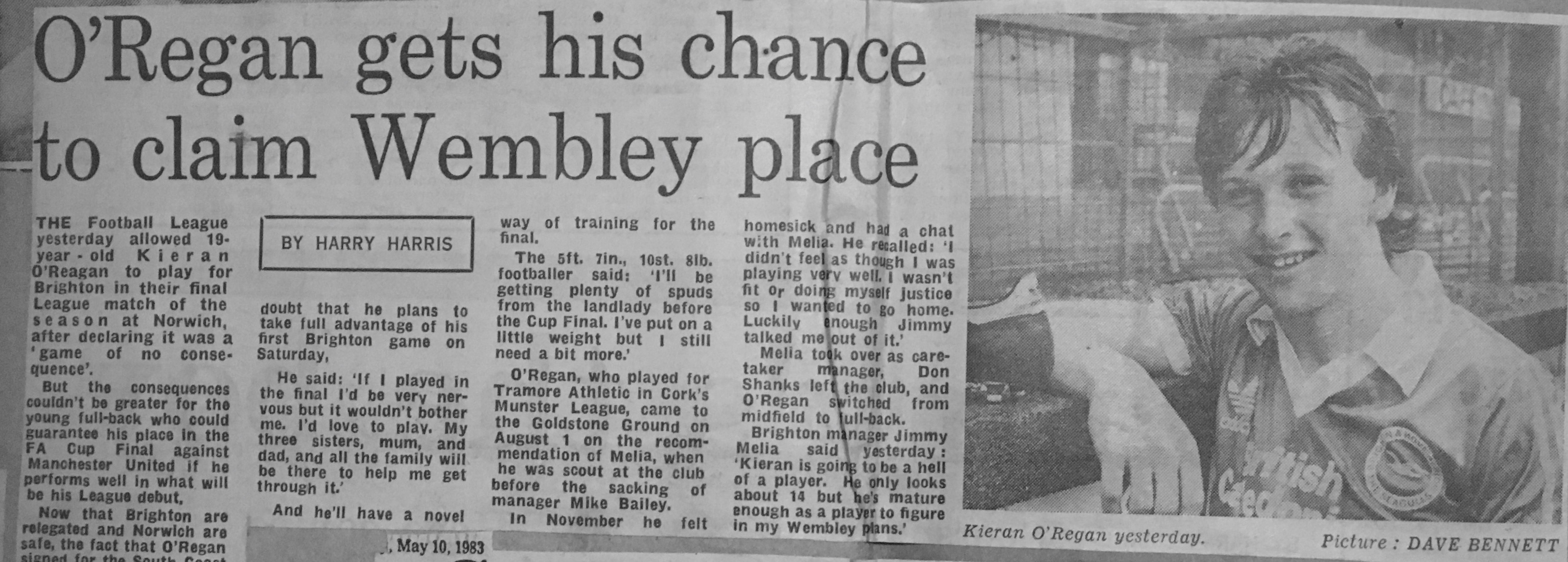
The versatile Irishman, who went on to play nearly 100 games for the Albion, and more than 200 for Huddersfield Town, was nearly drafted into Brighton’s back line for that momentous occasion against Sheffield Wednesday in front of a packed house at Highbury on 16 April 1983.

Only captain Steve Foster’s bravery and sterling work by the club’s medics prevented the youngster having to step in at the last minute.

The potential drama only came to light in the post-match analysis by Evening Argus reporter, John Vinicombe, who recounted: “On the morning of the tie, (Jimmy) Melia had problems that were wisely confined only to those with a need to know.

“A crisis arose when Steve Foster’s right elbow started to swell and hurt. A streptococcal infection was diagnosed, extremely painful, and dangerous.

“To not only get him fit to play, but counter the possibility of blood poisoning, he was pumped full of antibiotics, the elbow encased in plaster and, just before kick-off, a painkilling jab administered.

“Had it been a run-of-the-mill game, Foster would not have played, but to go into a semi-final without the lynchpin was unthinkable.

“If there had been no alternative, then Kieran O’Regan, who has yet to make his debut, would have been drafted in from the sub’s bench.”

As it was, O’Regan remained on the bench throughout the game; Michael Robinson’s winner in the 2-1 victory meaning manager Melia didn’t need to introduce the youngster on such a momentous occasion.

When he eventually made his first team debut a few weeks later, it was in a less pressurised situation, although only then with special dispensation from the Football League.

Melia was down to the bare bones because of injuries and suspensions so the youngster was needed, but he had not been signed as a pro before the deadline. The way the authorities saw it was, because Albion were already relegated and Norwich were safe, it was “a game of no consequence” and O’Regan got the green light to play.

cup cutting

Veteran football reporter Harry Harris interviewed the youngster and built a story (above) around the possibility that if he did well he might be in with a shout of a place in the Cup Final against Manchester United.

Ever the one for an eye to publicity, manager Melia kept those thoughts alive by saying: “Kieran is going to be a hell of a player. He only looks about 14 but he’s mature enough as a player to figure in my Wembley plans.”

KOR portIn the event, forward Gerry Ryan got the nod for the one substitute’s place on the day, and rather ironically had to come on and play right-back in place of the crocked Chris Ramsey.

Melia was certainly a big fan of O’Regan. In the summer of 1982, as Albion’s chief scout, he had recommended the youngster to manager Mike Bailey after seeing him go on as a second half substitute for the Republic of Ireland youth team against Welsh Schools and score two goals.

Born in Cork on 9 November 1963, O’Regan attended a secondary school noted for its prowess at Gaelic football but he was determined to pursue a soccer career instead. He had been playing for Tramore Athletic in County Cork’s Munster League when he got his call-up to the national youth team.

Brighton invited him over to England for a trial. “I’d gone to Brighton on a one week trial; that became two, then I was asked to stay for three months. That came and went, and I never went back,” he said.

He had come close to packing it all in because he was homesick, but the presence of fellow Irishmen Gary Howlett and Ryan helped him adapt, and the silver-tongued Melia managed to talk him round.

“I didn’t feel as though I was playing very well,” he told the Mirror’s Harris. “I wasn’t fit or doing myself justice so I wanted to go home. Luckily enough, Jimmy talked me out of it.”

When Melia took over as caretaker manager, he swiftly dispensed with the services of Bailey’s pick at right-back, Don Shanks, promoted Ramsey to the first-team and then converted O’Regan from a midfield player to a right-back to become Ramsey’s understudy.

On the eve of that Norwich game, Melia told the Argus: “I must bring on the youngsters because they are the long-term future of the club.

“They are a smashing bunch of lads and I would like to play some more of them at Norwich. But with the Cup Final coming up, I can’t for obvious reasons.”

In fact, he picked young striker Chris Rodon on the bench and he got on in place of Gordon Smith, but it was the one and only time he saw first team action.

In respect of O’Regan, though, Melia stuck to his word, and the youngster filled the right-back berth from the off at the start of the new season back in the second tier, keeping his place even after his mentor’s sacking.

Melia’s successor, Chris Cattlin, also gave him some games in midfield, and, by the season’s end, he’d played 33 games plus once as sub. He also notched his first goal, in a 2-1 defeat away to Sheffield Wednesday.

However, his biggest disappointment that season was when he and Howlett were both dropped for the televised FA Cup game against Liverpool at the Goldstone. He told Spencer Vignes in an interview published in a matchday programme of February 2005: “We’d thrashed Oldham at home 4-0 and played Carlisle away on an icy pitch and won 2-1, and me and Gary had played in both.

“The Liverpool game was on a Sunday so we all came in for training on the Saturday to find out what the team was. And Gary and I weren’t in it. We’d been dropped.

“Instead we were off to Highbury that afternoon to play for the reserves. That’s still probably the low point of my career. I really wanted to play. Cattlin said he was going for experience, and you can’t really fault him because the lads went out and beat Liverpool 2-0. But I was still gutted.”

Making the grade with Brighton caught the eye of the Republic of Ireland selectors and O’Regan was called up to play for his country on four occasions.
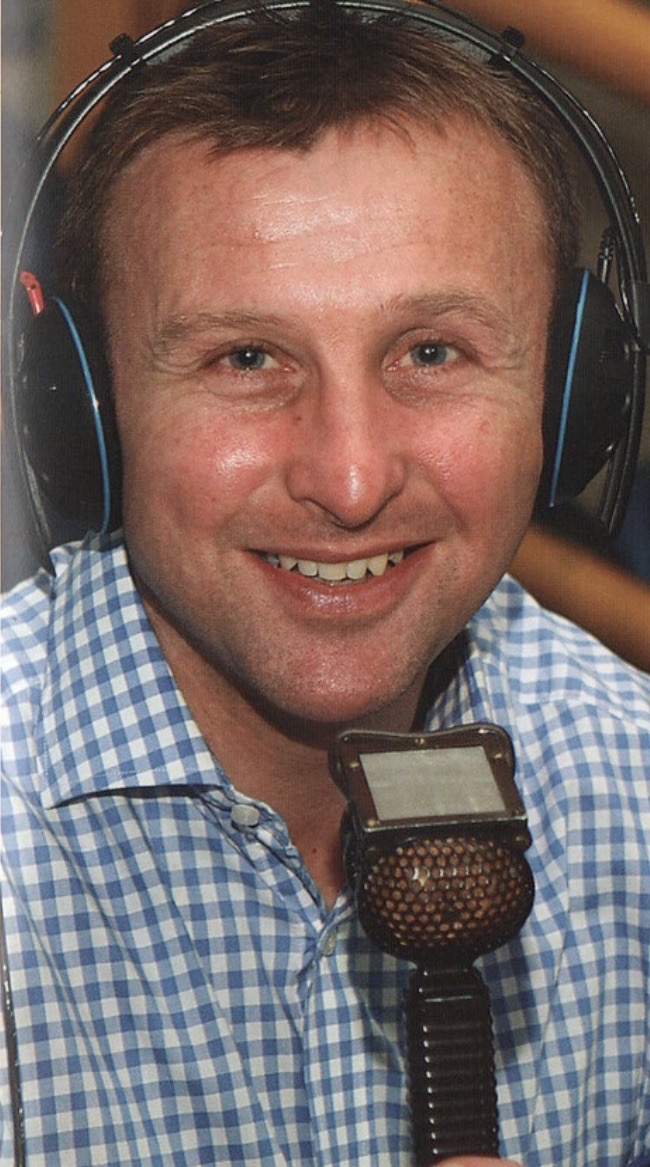
He made his debut in November 1983 in an 8-0 thrashing of Malta in Dublin, when Mark Lawrenson and future Albion manager Liam Brady each scored twice.

Against Poland, the following May, also at Dalymount Park, Dublin, O’Regan featured in a 0-0 draw, and three months later, same venue, same scoreline, against Mexico. His fourth and final cap came as a sub against Spain, in May 1985, which also ended goalless.

Meanwhile, his Albion game time in the 1984-85 season was a lot more restricted and, apart from a mid-season 10-game spell in midfield, he was on the sidelines, especially when a promising young defender called Martin Keown arrived on loan from Arsenal.

Vignes observed in that 2005 interview: “His ability to play at either right-back or midfield meant that when the likes of Chris Hutchings, Danny Wilson or Jimmy Case were unavailable, Albion always had a reliable deputy to call on.”

There was yet more benchwarming to be endured during the 1985-86 season but on Alan Mullery’s return to the manager’s chair, he found himself back in the first team on a more regular basis.

Indeed, he played under five managers in five years with Brighton, and told Vignes that Mullery was the best to work with. “He was great with everyone, but especially the young lads.”

By contrast he didn’t get on with Barry Lloyd who kept O’Regan in the dark when interest was shown in him by Swindon Town, where his former rival for the right-back spot, Ramsey, was assistant manager to Lou Macari.

In the end, in 1987, he did make the move to the County Ground having made 80 starts for the Albion, plus 19 substitute appearances.

After just a year at Swindon, he was on his way again, this time to join Huddersfield Town where the manager was Eoin Hand, who had been the Ireland manager when he won his four international caps.

O’Regan spent six seasons with Town, playing over 200 games in midfield, and it was an association which would reap its benefits after his playing days were over.

He spent two seasons at West Brom under former Spurs boss Keith Burkinshaw (and latterly Alan Buckley) but returned to West Yorkshire in 1995 as captain of Halifax Town, going on to become joint manager with George Mulhall for 18 months and then taking on the role alone in August 1998.

His tenure lasted less than a season and when the axe fell in April 1999, he turned his back on football and became warehouse manager at Brighouse Textiles, run by Halifax’s former chairman, and subsequently became a carpet salesman at a shop in Huddersfield.

O'Regan mikeHowever, in 2001, he was offered the chance to be the expert summariser on Huddersfield games for BBC Radio Leeds, and he lined up alongside commentator Paul Ogden for the next 15 years, before hanging up the microphone in May 2016.

Pictures from the Albion matchday programme and my scrapbook.

Promotion-winner Keith Dublin delivered £240,000 profit

BRIGHTON & Hove Albion’s promotion from the old Third Division in 1987-88 earned two of the squad places in that season’s PFA representative team; one quite naturally was top goalscorer Garry Nelson, the other was defender Keith Dublin.

Also in the same XI was Fulham’s Leroy Rosenior, father of latter day Albion utility man, Liam.

Dublin was an ever-present during that successful Seagulls campaign having joined in August 1987 from Chelsea, where he had played 50 league games (plus one as a sub) between 1983 and 1987.

Born in High Wycombe on 29 January 1966, Dublin became an apprentice at Stamford Bridge in July 1982 and signed professional 15 months later.

When regular left back Joey Jones was injured, he made his first team debut in a 3-1 home win over Barnsley. It was the penultimate game of the 1983-84 season, and the last at home as John Neal’s team won the Second Division Championship.

Dublin also caught the eye of the England selectors and played six times for the under-19 team.

At the time, Dublin, or Dubbers as he was known, was one of the few black players emerging at Chelsea, following after Paul Canoville and Keith Jones.

Canoville wrote in his autobiography with Rick Glanvill, Black and Blue: How Racism, Drugs and Cancer Almost Destroyed Me (Headline Publishing Group, 2012), about some atrocious treatment they all received – and not just from the terraces!

“When Jonah and then Dubbers made the step up, they no longer trained with the reserves but with the first team,” said Canoville. “That made three black faces and, on more than one occasion, there were altercations with one player who obviously had a problem with black men.

“It was always dealt with properly, but, as if the colour wasn’t an issue. Of course it was. Back then, casual, institutional racism was displayed at almost every level of the club – not so much that you would quit over it or kick up a rumpus, but enough to make you feel different and an outsider most of the time.”

Canoville added: “Dubbers was strong, athletic and fast. But as soon as either of them made a mistake, the crowd was on to them, slagging them off. There wasn’t the same open racist abuse I received, but still the tolerance threshold was low, as much in the coaching staff as the crowd.”

Dublin played 28 games in the top division for Chelsea during the 1986-87 season, but with competition for the left back spot hotting up in the shape of future England international Tony Dorigo and Clive Wilson, he decided to move on.

“John Hollins couldn’t guarantee me regular first team football at Chelsea so I’m looking forward to an enjoyable and successful season with Brighton,” he said.

Brighton manager Barry Lloyd snapped up Dublin for £35,000, and what an investment because he was ever-present at left back in the promotion season. In fact for the latter part of that season, three of the back four were ex-Chelsea defenders: Gary Chivers at right back, Robert Isaac centre back, and Dublin at left back.

When introducing Dublin in the Albion matchday programme, an article pointed out how five years previously Dublin had been cleaning Chris Hutchings‘ boots at Chelsea – and now he was taking over his no.3 shirt. Hutchings had been moved forward to play in midfield, although four months later he left the club to join Huddersfield Town.

On signing for the Albion, Dublin said: “I’m not worried about dropping two divisions because I don’t believe Brighton will be in this division for long. It’s an easy club to settle down with because I know so many former Chelsea players.” He pointed out he had known Isaac since the age of 12 or 13 when they both played in the same district schools team.

Dublin used to travel down daily to training with Chivers and although defending was their first priority they had a friendly rivalry over who could score the most goals. Dublin chipped in with five in that first season but Chivers regularly went up for corners so won the little private wager in the following two seasons.

The promotion was a great experience for Dublin who said in an interview in the matchday programme: “There’s never been anything like it for me obviously, and it’s going to be a long time before anything can top the day we clinched second place. It might never happen.

“Probably the best thing was getting a few goals along the way as well because that had never happened to me before.”

As young Ian Chapman gradually made the left back berth his own, Dublin switched inside to centre back.

Dublin welcomed the competition for his place from Chapman, explaining: “I think it’s good when you’ve got someone chasing your place, snapping at you all the time to get in the first team.

“Ian’s been quite a good mate of mine since I arrived and you have to always remember that being dropped or selected ahead of someone else is what football is all about.

“It keeps me on my toes, and if you can have six or seven players in the team in the same situation then that’s the best thing possible at any club.

“Ian’s facing the same scene now as I was experiencing at Chelsea.”

Dub leapIt was not unusual to see Dublin selected as man of the match and several programmes featured pictures of the obligatory post-match presentation by the sponsor to the nattily-dressed defender. Dublin admitted in another profile piece that clothes and shopping were hobbies.
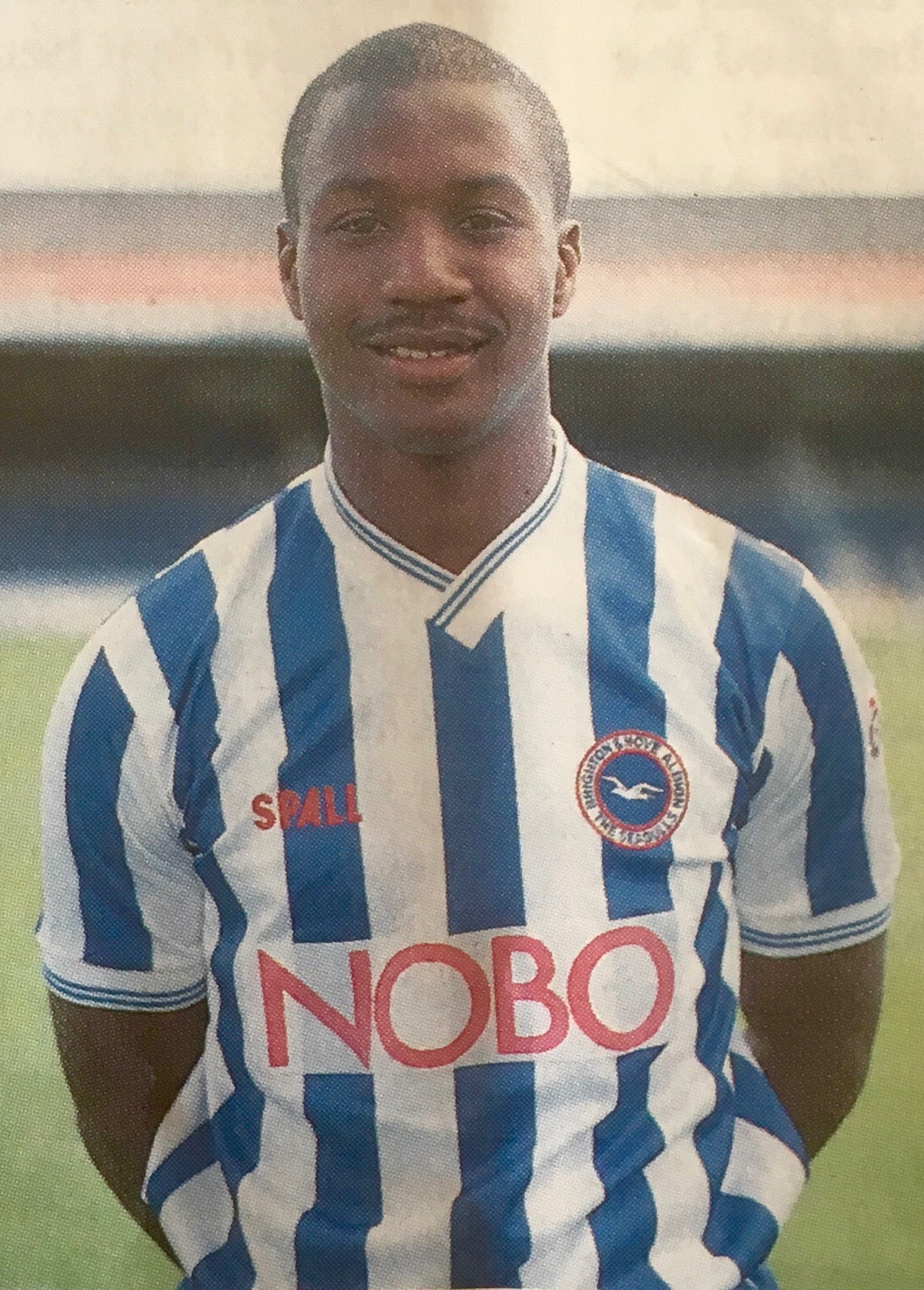
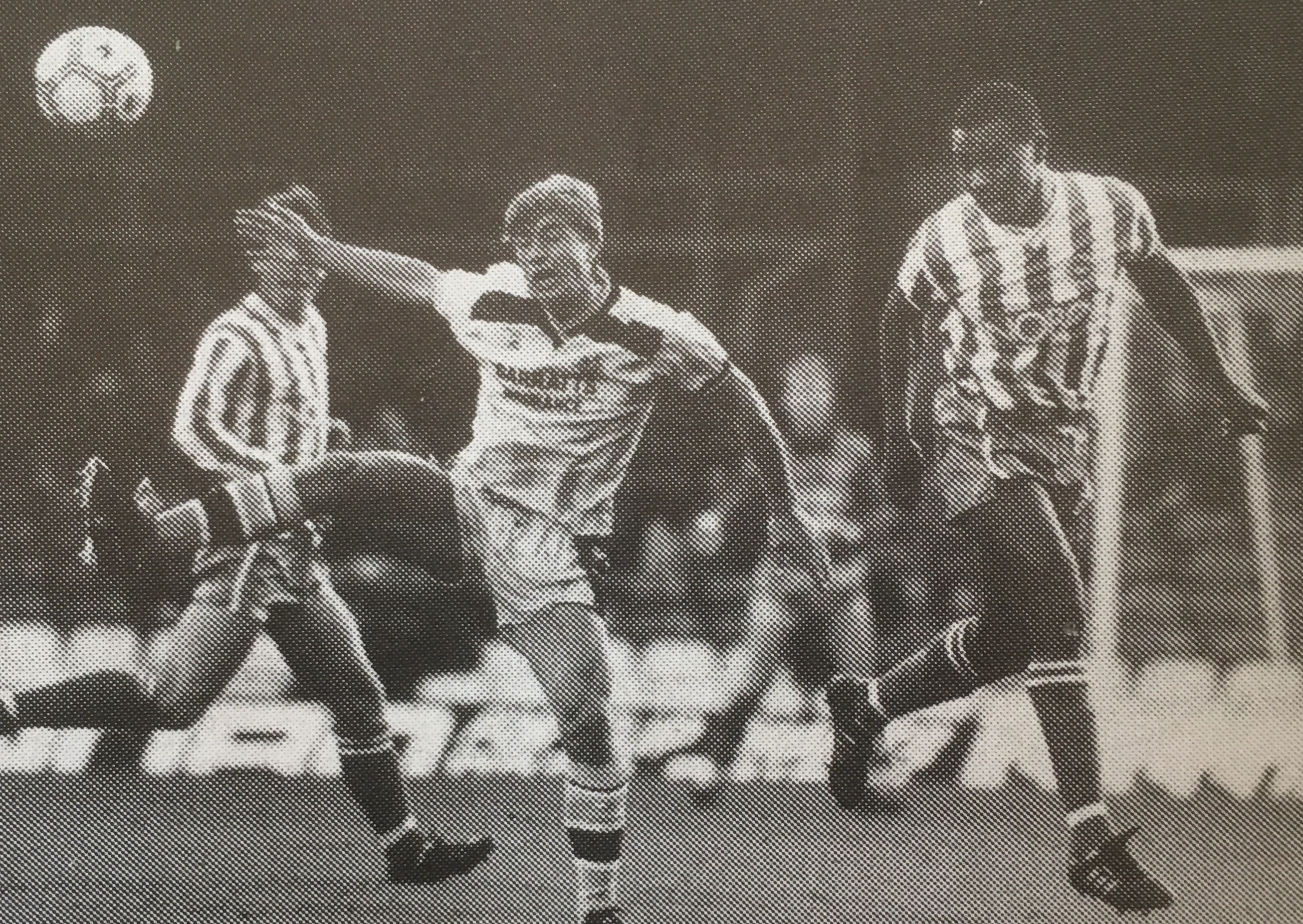
Meanwhile, on the pitch in 1989-90, his consistent performances at the heart of the defence earned him the Albion player of the season accolade.

After 132 appearances in three seasons with Brighton, Brighton cashed in on Dublin’s prowess by picking up a £275,000 fee from Watford in the summer of 1990.

With goalkeeper John Keeley departing for Oldham for £238,000 at around the same time, fans feared another frustrating season was ahead. But they were in for a surprise.

While Dublin joined a side that would struggle, at first under former Chelsea striker Colin Lee, then ex-Tottenham legend, Steve Perryman, Brighton surprised the critics and ended the season at Wembley.

Indeed Watford finished fourth from bottom of what was then Division 2, while Brighton sneaked into sixth place with that memorable last game win over Ipswich Town, beat Millwall over two legs in the play-off semi-final and then went down 3-1 to Neil Warnock’s Notts County in the play-off final.

The following year, with future England goalkeeper David James emerging, Watford turned around a disappointing first half to the season and eventually finished 10th.

Dublin was an integral part of Watford’s defence for four years, making 168 appearances, although it appears not all Watford supporters appreciated him.

The amusing Watford fans’ website, Blind Stupid and Desperate recalled this among other memories: “The fondness with which Keith Dublin is remembered, the way that fans still tell tall tales of remarkable own goals, insanely cavalier defending and sporadic heroism with broad smiles and genuine affection, demonstrates that perfection isn’t the be-all and end-all for supporters.”

At the end of the 1993-94 season, which had been a struggle against relegation from the First Division under manager Glenn Roeder, Watford did a swap-deal which saw striker Tommy Mooney (yes, the same Mooney who famously missed the Swindon shoot-out penalty against Brighton in 2004) and midfielder Derek Payne join from Southend United and Dublin going in the opposite direction. He spent five years at Roots Hall and amassed a further 179 games.

He subsequently moved to Colchester United, but only played a couple of games, and ended his career in non-league, initially with Farnborough Town and then Carshalton Athletic.

In an Argus article in 2010, they discovered Dublin was busy in ‘retirement’ running soccer camps at home and abroad, and according to wfc.net, Dublin worked in a family property management business after his footballing days were over.

Footnote: Perhaps Dublin set a trend for Albion left backs named after Irish places, with the double whammy Kerry Mayo following in his wake some years later!

1 Dublin1a Dublin portrait2 Dublin header3 Dublin Argus cut4 Dub mom5 dub another mom

• Pictures from my scrapbook show portraits of Dublin that appeared in the matchday programme; action shots (one from the programme and one from the Argus) and a couple of man of the match presentations