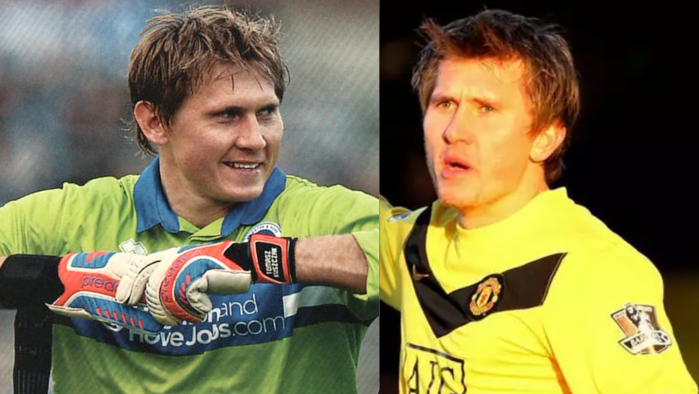
Pole in goal Tom experienced Cup highs and lows

THERE’S plenty of FA Cup history between Brighton and Manchester United and a goalkeeper who played for both has his own memories of the competition – not all of them good!

Although Tomasz Kuszczak played 32 league games for United, as a back-up at Old Trafford rather than first choice, he often found himself called upon in cup matches (eight FA Cup, 10 League Cup – including collecting a winners’ medal in 2010 – and 11 European games).
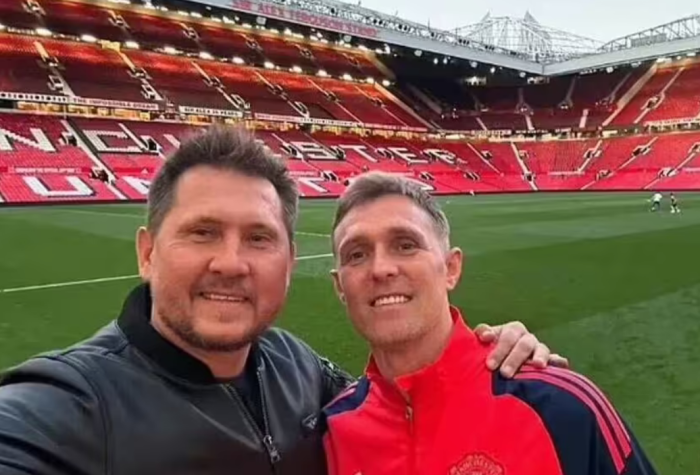
In April 2025, Kuszczak paid a return visit to Old Trafford to watch United’s 0-0 draw with Man City and snapped some selfies watching from the stands and (above) on the pitch with former teammate Darren Fletcher, now in temporary charge at United following the dismissal of Ruben Amorim.

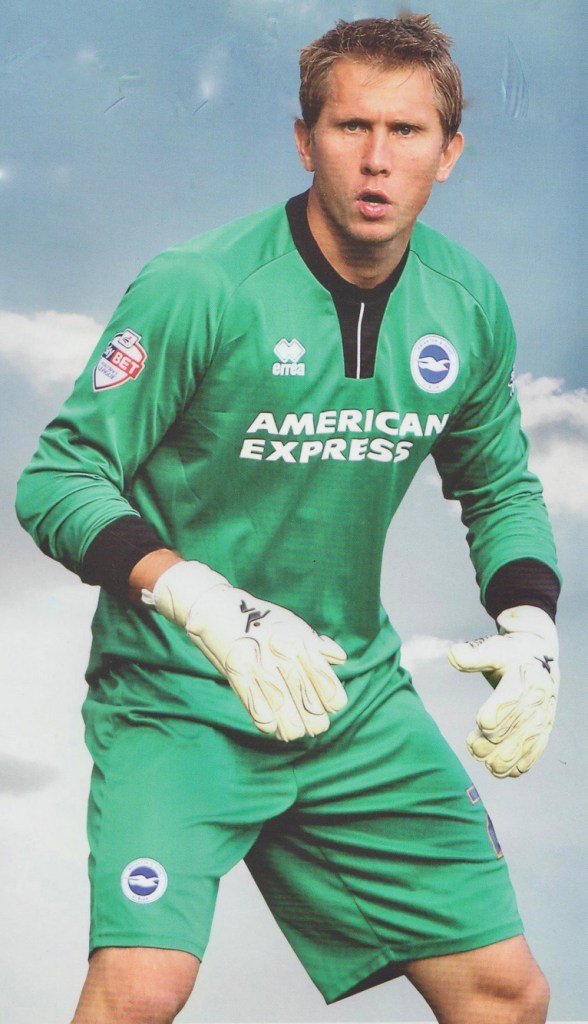
At Brighton, where Kuszczak was the first choice for two seasons, he found the goalkeeping duties reversed for FA Cup ties and he gave way to either Casper Ankergren or Peter Brezovan.

Signing the Polish international for Gus Poyet’s Championship Brighton side was something of a coup and the boss told the club website: “There were clubs in England and abroad interested in Tomasz, but it says a lot for the ambition of this club that he wanted to sign for Brighton.”

Poyet later told The Argus: “When we had the chance, we got him. You don’t have too many chances sometimes to sign this sort of player, so it was very important.”

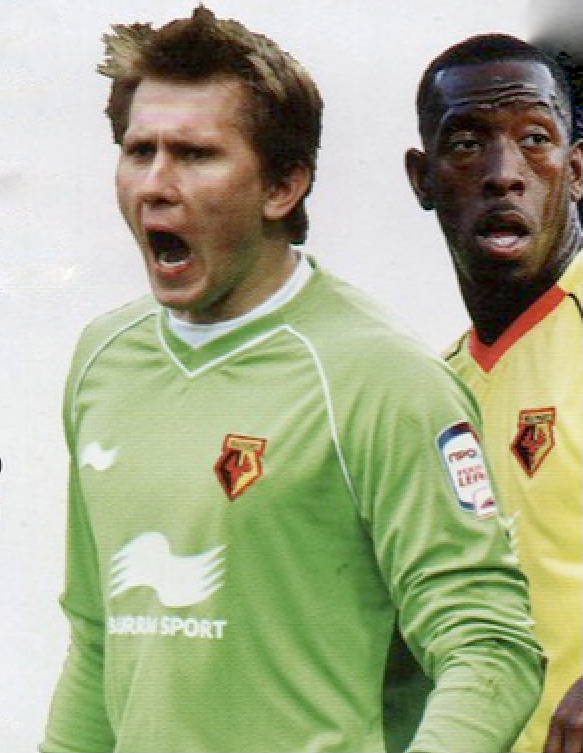
Kuszczak said one of the reasons he chose to join the Seagulls was because of what he’d seen when playing against them the previous season, while on loan at Watford.
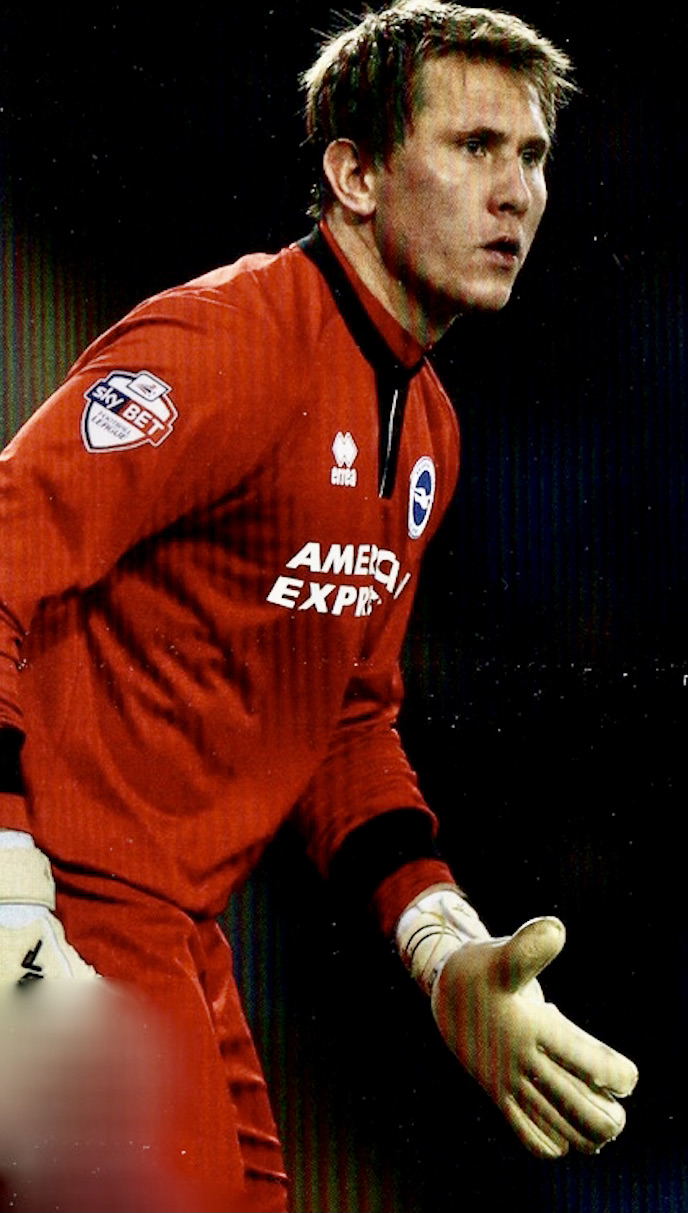
“I was very impressed with the way the team played – it was totally different to the rest of the Championship and more like what I was used to at Manchester United.

“This team likes to pass the ball, they like to create, they are attractive to watch. The way Brighton play is the future of football.

“I had other clubs who wanted to sign me but my heart told me that this was the right choice.”

Kuszczak continued: “I have played Premier League football for eight years, with West Bromwich Albion and Manchester United, and I believe the structure is in place here to join them.

“The manager and coaching staff, the team, stadium, crowds, through to the plans for the new training ground, everything is geared up for playing at the highest level and I could sense that ambition to be a top club straight away.
“The Premier League is where I want to be again and I believe I can get there with Brighton. This club is heading in only one direction, and I want to play my part in helping us get there.”

During his time at Manchester United, five of Kuszczak’s eight FA Cup appearances were in the 2007 competition when United reached the final – although first choice Edwin van der Sar took over between the sticks for that game, when Chelsea won it 1-0.

The 2008 competition certainly wasn’t one Kuszczak remembered fondly. In a quarter-final against Portsmouth at Old Trafford on 8 March 2008, he went on as a sub for the injured van der Sar at half-time, but 30 minutes later was handed a straight red card for fouling Milan Baros.

Rio Ferdinand took over in goal but failed to save Sulley Muntari’s penalty, the only goal of the game.

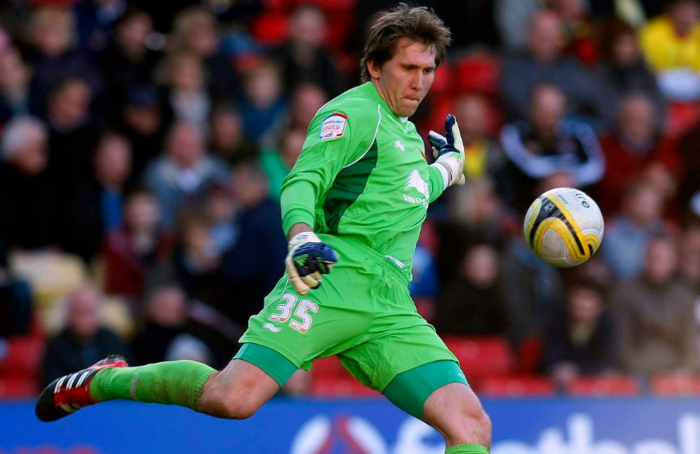
In 2010, Kuszczak was in goal when League One Leeds United, with Ankergren in goal, pulled off a shock third round win at Old Trafford – United’s first exit at that stage of the competition since 1984 (the year they went into it as holders after beating Brighton in a replay in 1983).
Jermaine Beckford’s 19th minute goal clinched it for the Yorkshire side against a United who had Danny Welbeck playing up front alongside Dimitar Berbatov and Wayne Rooney.

There was some consolation the following month when United won the League Cup at Wembley, beating Aston Villa 2-1. James Milner opened the scoring from the penalty spot for Villa, sending Kuszczak the wrong way. But goals from Michael Owen and substitute Rooney clinched it for United.

The following year, Kuszczak was again in goal for United’s FA Cup third round tie at home to arch rivals Liverpool which United edged with an early goal by Ryan Giggs. Liverpool captain Steve Gerrard was sent off just past the half-hour mark for a two-footed tackle on Michael Carrick.

But Anders Lindegaard was chosen ahead of Kuszczak as United marched to the semi-finals, where they were beaten 1-0 by Manchester City. In the fifth round, United only narrowly overcame Crawley Town, who had former Albion ‘keeper Michel Kuipers in goal.

By the time the 2011-12 season came round, Kuszczak had slipped down the list of United custodians, with David de Gea first choice, and Lindegaard and Ben Amos also ahead of him.

In February 2012, Kuszczak was loaned to Championship side Watford, where he made 13 appearances, including that third-to-last game of the season at the Amex, which finished 2-2. Former Seagulls promotion-winner Chris Iwelumo was in Sean Dyche’s Hornets side that day when goals from Troy Deeney and Sean Murray (penalty) put the visitors ahead at half-time and second half replies from Inigo Calderon and Will Buckley, against his former club, ensured a share of the points.

It was on Kuszczak’s release from United in June 2012 that he moved to Brighton.

Born in Krosno Odrzańskie in western Poland on 20 March 1982, the son of a Polish army colonel, Kuszczak grew up in Wroclaw, the city on the River Odra whose Tarczyński Arena was a host stadium for the 2012 Euros.

When he was 11, Kuszczak fancied himself as a striker but soon realised he wasn’t quick enough.

“I was always taller than everyone else, a bit like my father and brother, and I loved climbing, jumping from trees, taking a risk, so the position of goalkeeper seemed idea to me,” he said in a matchday programme interview.

“My father and brother would take shots at me, hard shots as well, and I enjoyed trying to stop them.”

He began his career with one of his country’s top teams, Śląsk Wrocław, and a year after earning his first pay packet at the age of 16 crossed over the border to Germany to play for KFC Uerdingen 05 and Hertha Berlin.

Although he made 87 appearances for the Berlin side’s reserves, he was unable to dislodge ex-Palace ‘keeper Gabor Kiraly and Christian Fiedler to claim a first team spot.

He was capped at under 16, under 18 and under 21 level (14 caps) by Poland and, while never first choice ‘keeper for the senior international side, he made his debut in 2003, in a 4-0 win over Malta, and played 11 times for his country, the last time in 2012. He initially took over from Liverpool keeper Jerzy Dudek but, invariably, Artur Boruc and Wojciech Szczesny were picked ahead of him.

He moved to the UK in 2004 when Gary Megson signed him for West Brom. He was reserve ‘keeper behind Russell Hoult in his first season at The Hawthorns but managed 28 league appearances when competing for the gloves with the often-injured Chris Kirkland in his second season.

In one of those appearances, against Wigan Athletic in January 2005, he pulled off a spectacular save to deny Jason Roberts which was subsequently voted Save of the Season by Match of the Day viewers.

Four months later he went on for an injured Hoult at Old Trafford after only 19 minutes and he recalled: “I had a fantastic game, saving everything that came my way and we ended up drawing 1-1. It was a game which ultimately got me my move to United.”
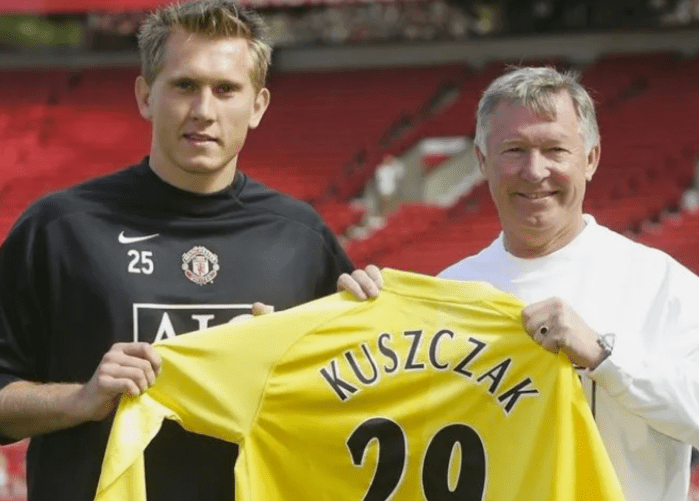
Sir Alex Ferguson captured Kuszczak from West Brom

In a somewhat complicated transfer deal, Man U signed Kuszczak in the summer of 2006 in exchange for United’s former Albion loanee, Paul McShane, and young goalkeeper Luke Steele, but the first year of the arrangement was on a loan basis. In five seasons at United, he played a total of 61 games.

After he retired from playing Kuszczak completed a degree in sports journalism and he had already shown his writing ability during his time with the Seagulls, compiling a piece for The Footballers’ Football Column in December 2013 which appeared in the Daily Mail.

Perhaps he also showed his true colours regarding dropping down into the Championship when he wrote: “I miss the Premier League a lot. The idea around moving to Brighton was to get more games and put myself on the market.”
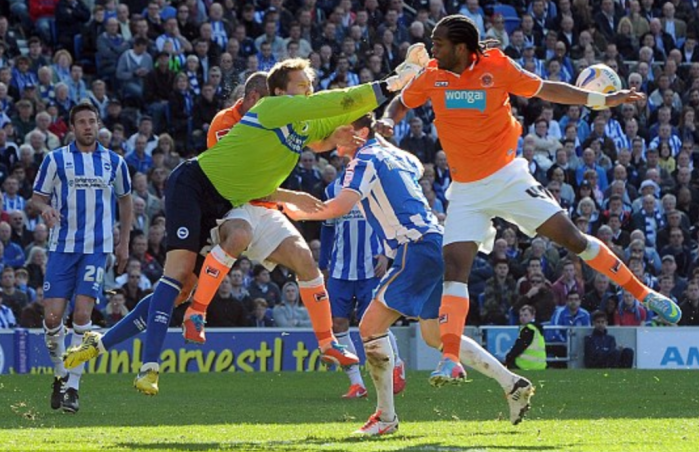
Kuszczak in the thick of it for Brighton against Blackpool

Although he added: “This move was all about giving me the opportunity of playing in the Premier League in the future. I would love to go with Brighton – that’s the aim. We’re ambitious and want promotion.

“It may sound arrogant but my place is in the Premier League. I came to England with West Bromwich Albion and enjoyed my time there, as I did at United. I want to be back in business in front of great crowds.

“I want my friends to be watching me on TV every week and have a chance of challenging the best in the world.”

Kuszczak certainly addressed the issue of more playing time during his two seasons with the Albion, completing 89 appearances across the two successive play-off promotion campaigns, initially under Poyet and then Oscar Garcia.

But within days of Garcia’s resignation after the play-off semi-final defeat to Derby, it was announced Kuszczak was being released.

There were a number of unsubstantiated and colourful reasons as to why he wasn’t retained by Brighton, but Andy Naylor in The Argus said neither Garcia nor his replacement, Sami Hyypia rated his ability with his feet or his distribution skills.

For around six months, Kuszczak was unable to find a new club but then Kenny Jackett took him to Wolverhampton Wanderers where he played 13 games deputising for the injured Carl Ikeme.

Midlands rivals Birmingham City swooped to sign him in the summer of 2015. Even though Harry Redknapp signed Brighton’s David Stockdale as first choice ‘keeper at St Andrew’s in 2017, Kuszczak found himself back in the first team after Steve Cotterill arrived as manager.

He spent four years at St Andrews, finally leaving in 2019 having made 89 appearances for the Blues.

After hanging up his gloves, he returned to Poland and started up his own construction company building houses and apartments.

He also completed his journalism studies and obtained his UEFA A coaching licence. He coached the Polish national team goalkeepers for six months between September 2023 and March 2024.
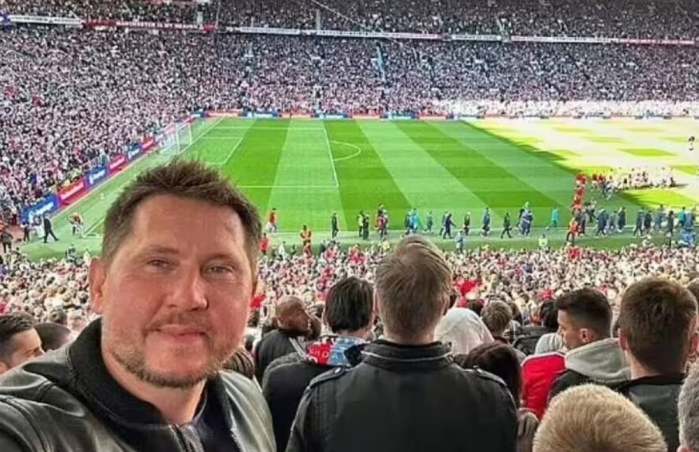
Kuszczak took a selfie as he watched from the Old Trafford stands in April 2025

Melton took Micky at his word – and saw red 

MIDFIELDER Steve Melton took manager Micky Adams at his word in a notorious pre-season friendly – and ended up being sent off after putting in a waist-high tackle on an opponent.

Adams subbed off a riled Richard Carpenter against Longford Town in July 2001 with instructions to former Nottingham Forest trainee Melton “to give the lad who was booting our players up in the air a taste of his own medicine. Make sure he knows you are around.”

Melton duly put in a flying lunge on Longford midfielder Alan Reynolds that saw him receive an automatic red card and the fall-out from the challenge sparked an almighty punch-up which ended up with Albion’s Charlie Oatway and opponent Alan Murphy also being sent off after an altercation.

That particular battle then led to an even bigger scrap involving coaches and even the Longford chairman who took a punch in the face from one of his own players!

The so-called pre-season “friendly” – later dubbed the Battle of Longford – was abandoned with only 44 minutes on the clock by inexperienced ref Dermot Tone, who had only stepped in to officiate because senior Irish referees were at a seminar.

For Melton, it was all a far cry from making your Premier League debut two years earlier in front of 25,353 fans at the City Ground, Nottingham, in Ron Atkinson’s last-ever game as a manager. Melton was pitched in for already-relegated Forest for an East Midlands derby against Leicester and they went down in style (Blackburn and Charlton also went down), scraping a 1-0 win against the Foxes.

Born in Lincoln on 3 October 1978, Melton first linked up with Forest when he was just 11, playing at the centre of excellence. He signed full time at 16, a matter of days after finishing his GCSEs. He progressed through the youth team and reserves and it was during that time that he first worked with Adams, who’d been assistant manager to Dave Bassett before Atkinson’s arrival. 

Before he got close to the Forest first team, 18-year-old Melton and another trainee had experienced competitive football in Finland where Bassett had sent them to play for Sami Hyypiä’s old club MyPa on a three-month loan.

“He sent us out there to toughen us up. It also got us used to playing in a proper men’s league so that we learnt to value the prize of the three points and the standing within the first team,” he explained in a matchday programme interview.

That experience followed by his Forest first team debut didn’t have the outcome he wanted and after only three games under Atkinson’s successor, David Platt, he picked up an injury and couldn’t force his way back into the first team picture.

In February 2000, he switched 50 miles west to third tier Stoke City and admitted: “It seemed a good move as I didn’t have to travel too far. 

“It was a chance for me to play for a decent-sized club that were going strong in the cup and in the league. It was either that or play reserve team games for the rest of the year at Forest and wait for a break that I didn’t think was going to come.”

As it turned out, it was mainly a watching role, making only seven appearances as a substitute. He was a non-playing bench warmer alongside Chris Iwelumo (who did get on) when City won the Football League (Auto Windscreens Shield) Trophy at Wembley, beating Bristol City 2-1.

Stoke’s new Icelandic consortium hinted that they wanted to keep him on but in the absence of a contract offer, rather than risk uncertainty, he took up Adams’ offer to join fourth-tier Albion. 

A complimentary caption in the club match day programme

On a trial in the Emerald Isle the year before the Longford incident, Melton did enough across the week of the tour to earn a one-year contract. He had a long wait before getting a start but after 11 introductions as a substitute he finally made his full debut in February 2001, stepping in for Carpenter at Torquay after the regular midfield starter pulled out with an injured ankle. 

After playing his part in Albion’s first win (1-0 courtesy of Bobby Zamora) at Torquay for 36 years, Melton told The Argus: “I’m enjoying it here. I’ve settled in with the lads and I share a house with some of them.” 

On playing for Adams, he said: “I think Micky is going to be a really good manager. I enjoy working with him. A lot of the lads do. 

“Hopefully he will take Brighton up. He’s had a taste of managing at a higher level at Forest and I think he has the potential to do it again.” 

Melton’s outlook brightened the following month and he got starts in nine of the season’s remaining 15 matches as Adams led the Seagulls to promotion as champions. 

At home to his future employer Hull City, Melton made his home debut and scored his first goal for the club in a 3-0 win (Paul Watson and substitute Phil Stant also scored).

Reflecting on his involvement, he said: “It’s difficult to break in when the team keep winning every week, and they go unbeaten for 12 or 13 games, maybe drop a point but then go off on another run.

“It’s frustrating because you’re not playing, but you can’t really have too much of a case when the team is sat at the top of the league.”

Come the end of the season, he had done enough to be offered a two-year extension to his contract. As it turned out, the 2001-02 season followed much the same pattern as his first in terms of more appearances off the bench than starts.

He was on the scoresheet twice in the LDV Vans Trophy, scoring an extra time golden goal in a 2-1 home win over Wycombe Wanderers but was then inadvertently the fall guy in a 2-1 quarter-final defeat at Cambridge United.

Having given Albion a 36th-minute lead, latching on to Dirk Lehmann’s lay-off to fire a low right-footer past Lionel Perez from just outside the penalty area, he lost possession to Dave Kitson, who ran away to equalise, and then, four minutes into extra time, a shot by Armand One that was going wide took a wicked deflection off Melton’s shoulder to send United through to the next round.

A happier outing came when he made a rare start and scored as promotion-chasing Albion beat table-toppers Reading at the Withdean in February 2002. Peter Taylor’s Seagulls triumphed 3-1 on a rain-lashed night under the lights (Zamora and Junior Lewis also scored).

Goalscorers Melton and Zamora after a memorable win over Reading

“It was pleasing to start,” Melton told The Argus. “You have got to be patient and I have waited a good few months. 

“I have been on the outside for the last few weeks. Hopefully I can stay on the inside now. 

“Playing against the League leaders is a different matter completely from the LDV appearances that I made earlier in the season. 

“You can only do as well as you can when you are chosen to play and hopefully I did that. Once you have been given the shirt you have to try and keep it.” 

Melton’s goal was only the second league goal of his career and his first for 11 months. 

Taylor reckoned it was the best home performance since he took over from Adams the previous autumn and Albion won eight (and drew five) of the following 14 games to go on and clinch the third-tier title with the also-promoted Royals six points behind.

Melton scored Albion’s first goal of the 2002-03 season when he started in the 3-1 win at Burnley under his third Brighton manager, Martin Hinshelwood (Zamora and Paul Brooker also scored; Hinshelwood’s 18-year-old nephew Adam made his debut). 

Unfortunately, Melton tweaked a hamstring in the process and had to be subbed off. He only made nine more appearances (six starts plus three off the bench) as Hinshelwood’s short reign in charge ended with 10 league defeats in a row.

Incoming boss Steve Coppell brought in the likes of free agent Simon Rodger and Arsenal loanee Steve Sidwell and Melton found himself surplus to requirements.

It was in October 2002 that he moved to Hull on loan shortly after Peter Taylor had replaced Jan Molby as manager with the club about to move out of Boothferry Park and into the Kingston Communications Stadium.

Tiger Melton

Melton made 19 starts plus six appearances off the bench as the Tigers finished 13th in the old Third Division.

According to the website oncloudseven.com: “Despite his promise and Taylor’s persistence, Melton’s career at City was not a success and he showed only brief flashes of good form. Melton is, however, forever enshrined in the City record books because in December 2002 he scored the first ever goal at the KC Stadium against Sunderland, for the honour of lifting the Raich Carter Trophy.”

He found himself only on the fringes the following season and he had moved on to Boston United under Steve Evans by the time Taylor steered Hull to promotion as divisional runners up.

A recurring back injury restricted his playing time at Boston and during 2005-06 he was sent out on loan to Conference National side Tamworth. On his release from Boston in the summer of 2006, he switched to Southern League Premier King’s Lynn FC for two seasons.

Melton at Boston

In September 2008, he rejoined Boston with manager Tommy Taylor telling the club’s website: “Steve has great quality on the ball and that’s what we have been missing in the midfield area. 

Hopefully he will add another dimension to our team.”

But he was released at the end of the season and joined Lincoln United of the Northern Premier League Division One East, alongside his former Boston and King’s Lynn teammate Matt O’Halloran. After spells with Lincoln Moorlands Railway, Grantham Town and Worksop Town, he wound up his playing days back at Lincoln United.

In the meantime, his first job outside of football was in sales for mobile comms company Vodacom. He spent nearly seven years with the now defunct energy advice and installation company the Mark Group and since 2019 has worked for building services certification business The National Association of Professional Inspectors and Testers, where he is now commercial and compliance director.

McGhee provided Albion platform for playmaker Mark Yeates

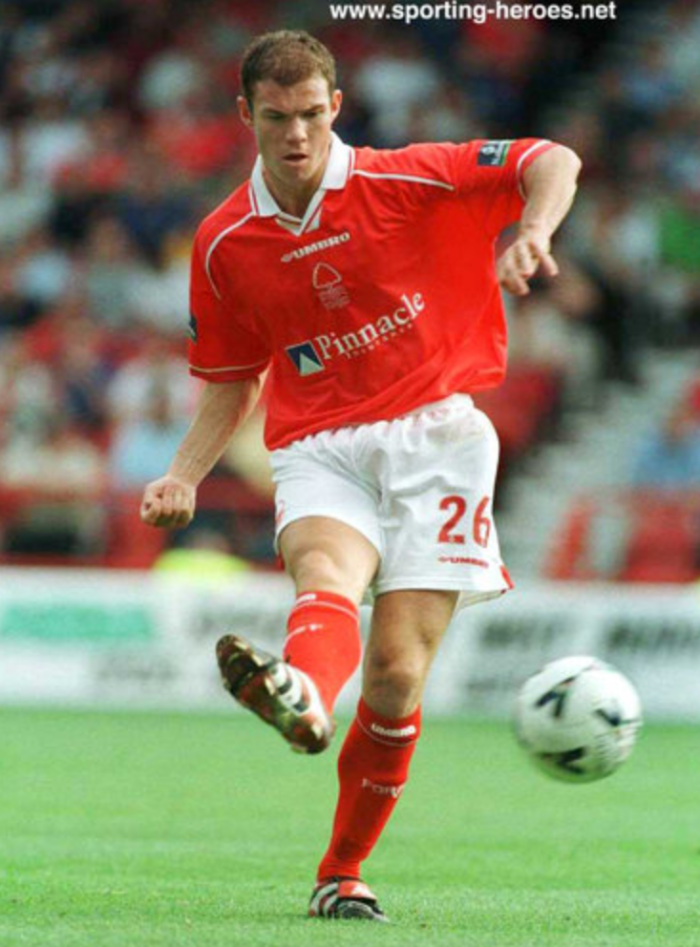
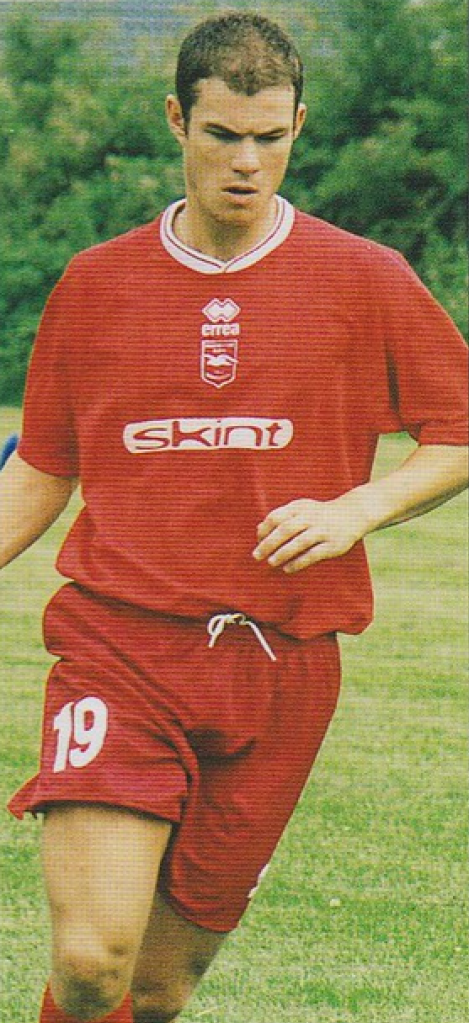
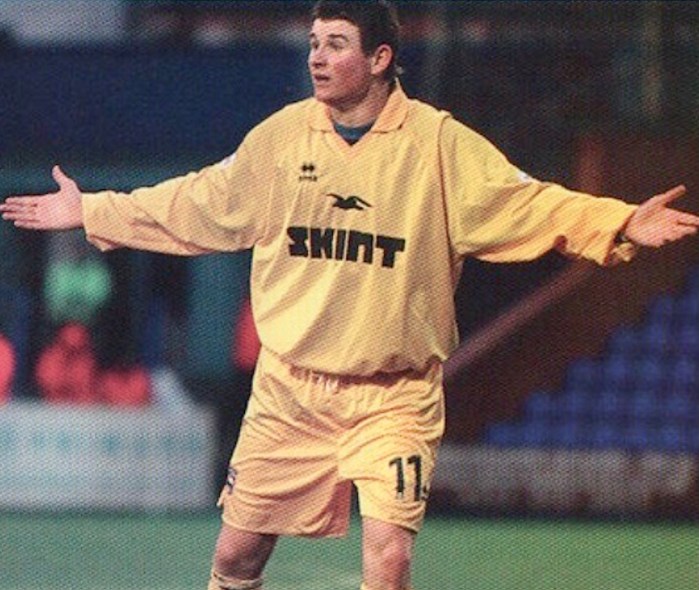
TRICKY playmaker Mark Yeates spent five years as a Tottenham Hotspur player but it was with Brighton that he played his first competitive football.

Yeates looked like a useful loan signing when he joined new manager Mark McGhee’s Albion squad in November 2003. He drew plenty of admirers and featured in 10 games over two months.

It wasn’t long before McGhee was talking about the possibility of signing him on a permanent basis, but Spurs had other ideas. He eventually had to leave north London to pursue his career but he ultimately made nearly 500 professional appearances.

Eighteen-year-old Yeates arrived on the south coast shortly after Zesh Rehman had also signed on loan (from Fulham), Albion having lost midfield duo Charlie Oatway and Simon Rodger to injuries.

The diminutive Irishman made his debut in McGhee’s first match in charge: a 4-1 defeat to Sheffield United at Withdean.

The matchday programme’s assessment was thus: “The second half was better. Mark Yeates moved into the centre of midfield and so had an opportunity to show what he can do. He could beat players, look up, and try a perceptive through ball. Wide on the left in the first half, he’d been exposed and given the ball away too often.”

On the day England won the Rugby World Cup, Yeates was one of six Albion players booked as the Seagulls beat Notts County 2-1 at Meadow Lane; an eventful game which saw Adam El-Abd make his league debut, Leon Knight score twice and John Piercy sent off for two bookable offences.

After only his third game, Yeates was off on international duty, playing for the Republic of Ireland under 19s away to France.

It was in early December that McGhee spoke about wanting to take Yeates on a permanent basis, telling the club’s website: “I’ve said already that I knew before he came here what a good player he is and I imagined he would do well in this team, and he has done that.”

McGhee told the Argus: “He has a kind of Gaelic confidence. Robbie Keane had it and Mark is similar in that respect.

“His character is perfect really for the way he plays. It goes with the ability and flair.”

Yeates hailed from the same Tallaght district of Dublin as Keane – a player McGhee knew well having given him his English football debut at 17 when manager of Wolves.

After extending his stay at the Albion to a second month, Yeates told the Argus: “Before I came here I had never really played in the centre of midfield. I usually play up front off a big man.

Yeates takes control watched by Adam Hinshelwood

“The gaffer tried me up front in the first half at QPR (in the LDV Vans Trophy) but we didn’t get the ball into mine and Leon’s feet, and with two little men you are not going to get much joy.

“At Tottenham we play with wingbacks and two holding midfielders and I am allowed a free role.

“I have to be a bit more disciplined here. Sometimes I can go running about a bit, it’s just up to the lads to call me back in to help out.”

Yeates appreciated the opportunity Albion had given him to taste senior football, telling the newspaper: “It’s great for me just to be getting first team football, plus the reason I am staying here is because they are a good bunch down here.”

He observed: “It’s a lot more fast and furious because everyone is playing for their living. You have to give a bit more and get more out of yourself which you probably wouldn’t get in a reserve game.

“In reserve football, players are going through the motions. It’s just a matter of playing a game.”

After he’d played his final game on loan, a 0-0 home draw with Oldham Athletic, the matchday programme observed: “Yeates showed some neat touches and was Albion’s most creative outlet once again.”

When Albion struggled to beat Barnsley 1-0 in the FA Cup, the matchday programme noted: “The passing abilities of Mark Yeates, and his desire to get into the penalty area, were sorely missed.”

Back at Spurs, Yeates had to wait until the very last game of the season to make his Premier League debut. He’d previously been an unused substitute when Glenn Hoddle’s Tottenham were thrashed 5-1 by Middlesbrough at the end of the 2002-03 season.

But in May 2004, David Pleat selected him to start in a side also featuring Ledley King, Jamie Redknapp, Christian Ziege, Jermain Defoe and Robbie Keane.

The fixture at Molineux ended in a 2-0 win for the visitors and Yeates helped Spurs take the lead against the run of play, laying on a cross for Keane to score against his former club. Defoe netted a second to seal the win.

Born in Tallaght on 11 January 1985, Yeates was the eldest son of former Shelbourne, Shamrock Rovers, Athlone Town and Kilkenny City striker Stephen Yeates, who died aged just 38 following a tragic accident, just as Mark was making his way through the youth ranks at Spurs.

The young Yeates first played competitive football with Greenhills Boys, a club who his grandfather and father had been involved with, and then moved on to Cherry Orchard, a Dublin side renowned for producing a number of players who went on to have successful professional careers.

In an extended interview with Lennon Branagan for superhotspur.com, Yeates recalled how Tottenham scout Terry Arber did a two-day coaching course at Cherry Orchard, after which he, Willo Flood (later to play for Manchester City and Dundee United) and Stephen Quinn (who went on to play for Sheffield United) were invited to London for a trial with Spurs.

Yeates was only 15 but he was taken on and had to up sticks from home and move into digs in London.

“As a skilful dribbler who was regularly a source of assists and goals in the youth set-up, Yeates quickly demonstrated to the coaching staff at Tottenham that he possessed the raw materials required to graduate to the next level,” wrote Paul Dollery in an October 2021 article for the42.ie.

Sadly, his progress through the youth ranks was interrupted by the shock news of his father’s death in an accident. Yeates told Dollery how it could have all gone the wrong way, but he thankfully remained focused.

“It was really tough, but you’d ask yourself what else you could do if you didn’t keep going – go home to your estate in Tallaght, drink cans every weekend and get roped into whatever else? 

“I could have done that, or I could look at the three-year contract that was on the table at Tottenham and get my head down to go after that.

“It was hard, but a bit of willpower and the desire to be a footballer – which I had since I started kicking a ball – got me through it.”

In his interview with Branagan, Yeates said: “I started to train with the first team at a decent age and really being involved quite a bit as well as being a regular with the reserves group with Colin Calderwood and Chris Hughton at the time.

“I’ve just got so many unbelievable things to say when I look back now and I can only say so many good things about Spurs because it sort of built me and gave me so much.”

It was in January 2005 when Yeates next appeared for the Spurs first team, Martin Jol sending him on as a sub in the third round FA Cup tie against Brighton at White Hart Lane when Tottenham edged it 2-1.

The following week he once again replaced Pedro Mendes as a sub when a star-studded Chelsea side won 2-0 on their way to winning their first Premier League title under Jose Mourinho. He also got on in the next game, as Spurs crashed 3-0 at Crystal Palace,

While he could have continued to bide his time at Spurs, he preferred to go out on loan again to get some games under his belt. He played four times for League One Swindon Town and then had a season-long loan at Colchester United, helping them to promotion from League One in 2005-06 in a squad which included Greg Halford and Chris Iwelumo.

Further loan spells followed at Hull City and Leicester City but, in the summer of 2007, he joined Colchester on a permanent deal.

Yeates scored 21 goals in 81 games for United drawing him to the attention of future England manager Gareth Southgate who took him to Middlesbrough (who had just been relegated from the Premier League) for a £500,000 fee.

On signing a three-year deal, Yeates said: “This is massive for me. There was interest from other clubs but there was only one thing on my mind once my agent told me Middlesbrough had been in touch.

“This club belongs in the Premier League, the fans deserve to be there and I can’t wait to play in front of them. It’s a Premiership club in my mind – all you have to do is look around the facilities, the training ground, the stadium, everything is spot on.”

Yeates reckoned his versatility would suit Boro. “I can play on the right or the left,” he said. “I played a full season’s Championship football on the right for Colchester, while I played most of last season on the left. But then, in probably eight of the last 10 games, I played behind the front two.

“For a winger, I think my goals record is quite good,” he added. “I got 14 last season and nine by Christmas the season before I got injured.

“I like to get on the ball and take on defenders. The number one job of being a wide man is creating chances and I certainly like to do that, but scoring goals isn’t a bad habit to have either. I promise the fans I’ll give 110 per cent. I’m hungry to prove that I deserve to be here.”

Fine words but it didn’t pan out well for him because Southgate was sacked in October 2009 and his successor Gordon Strachan shunned the Irishman. By January 2010, Yeates was on the move again, this time to Sheffield United.

Blades boss Kevin Blackwell told the club’s website: “He’s a player we have looked at before, I’ve had my eye on him for a year or two but we couldn’t agree terms with Colchester. I’m delighted to finally get my man, although I was surprised that Boro would let him go.”

Yeates was reunited with Stephen Quinn and another former Albion loanee, Darius Henderson, was up front for the Blades. Yeates reckoned he had his best ever spell playing under Blackwell’s successor, Gary Speed.

“He was just an unbelievable man and, going back to when I was at Tottenham as a young lad, he was the prime example of the player you should aspire to be like,” he said. “He had faith in me.”

Unfortunately, when Speed left to manage Wales, former Albion boss Micky Adams took charge and the pair didn’t see eye to eye, as he explained to watfordlegends.com.

“I was at Sheffield United and it was the season when we went from the Championship to League One. Micky Adams was the manager and we weren’t getting on. In the summer Micky was sacked and Danny Wilson came in as manager.

“I trained for the full pre-season with the club, but I was aware that there were a couple of clubs keeping an eye on my situation throughout the summer. It was Blackpool and Watford who put in offers for me, and I spoke with both clubs, but when I met Dychey (Sean Dyche) I decided to sign for Watford.

“I still had a house in Loughton so overall it was a good opportunity to get back down south, and everything that Sean said to me on the phone really appealed to me.”

Yeates was at Watford for two seasons, initially under Dyche and then Gianfranco Zola, but his contract wasn’t renewed in the summer of 2013 and he decided to link up once again with his former Colchester and Hull boss, Phil Parkinson, at League One Bradford City.

He was one of the goalscorers for Bradford when they completed a massive upset by beating Premier League table toppers Chelsea 4-2 at Stamford Bridge in the fourth round of the 2015 FA Cup.

However, released that summer, he switched across the Pennines to join Oldham Athletic and six months later was on the move again, this time to Blackpool.

“Since leaving Hull it’s been a bit up and down,” he told Branagan. “I was on a short term deal at Oldham which went alright before then deciding to go to Blackpool because of a longer contract which was put in front of me which I don’t regret, as I’ve been living around the St Annes area now for five years and my children have grown up here and are at school and it’s a great area to raise a family in.”

His final league club as a player was Notts County, who he joined on a short-term deal in January 2017, and he appeared in 11 games plus three as a substitute as new manager Kevin Nolan’s side turned what at one point looked like relegation from the league into a 16th place finish (although two years later County lost the league status they’d held for 157 years).

After playing non-league for Eastleigh, in 2019 Yeates moved closer to home and signed for AFC Fylde. In September 2021, he became an academy coach at Fleetwood Town, although he continued to keep his hand in as a player at Bamber Bridge.

Reflecting on the player’s career, Dollery wrote: “With a ball at his feet, Yeates was one of the most technically accomplished Irish players of his generation, cut from the same cloth as the likes of (Wes) Hoolahan and Andy Reid.

“That such a claim isn’t backed up by international achievements can perhaps be partly explained by his own admission that he didn’t marry his talent with a devotion to other aspects of the game that were beginning to play a more prominent role in the life of a professional footballer.

“If fitness coaches scheduled a gym session, Yeates felt his time would be better spent by staying on the training pitch to perfect his free kicks. A predilection for crisps, fizzy drinks and nights out didn’t aid his cause either.”

Yeates recognised he could have done things differently and said: “The reality was that I didn’t live like a saint.

“Everyone who knows me would know that that’s just not my personality. I’ve always been a fella who likes a bit of craic; just a normal Irish lad from an estate who happened to love playing football.”

• Pictures from the Albion matchday programme and various online sources.

Great strike rate at Brighton but journeyman Benjamin had 29 clubs!

T Benj BTNSELDOM in his remarkable 29-club career did Trevor Benjamin enjoy such a successful spell as the 10 games he spent on loan at Brighton.

The bustling striker who had thrived under Micky Adams at Leicester City the season before scored five times for Mark McGhee’s promotion-chasing side in 2004.

McGhee was keen to keep him through to the end of the season but because of the timing of the three-month deal he wouldn’t have been eligible to play in the play-offs.

As a result, he went back to Leicester and McGhee brought in Chris Iwelumo instead, and, with a goalscoring debut in an away win at Chesterfield, there was no looking back.

Born on 8 February 1979 in Kettering, Benjamin was brought up in Wellingborough, Northants, and, having done well for Wellingborough Colts, was picked up by Kettering Town, playing for their youth team and reserves.

Cambridge United took him on as a trainee and he made his first team debut aged only 16 against Gillingham and went on to score 46 goals in 146 appearances.

Such a scoring record caught the eye of Leicester boss Peter Taylor and, on 12 July 2000, Benjamin joined the Foxes for a fee of £1.3 million.

However, he managed only a single goal in the 2000-01 season and the following season was sent out on loan to Crystal Palace, Norwich City and West Bromwich Albion.

He returned to Leicester for the whole of the 2002-03 season, including playing against the Albion at Withdean.

He said in a matchday programme article for that season’s return match against Brighton on 19 April 2003: “Brighton are a very similar team to ourselves. They have got a good work ethic and never give up.

“I came on as a substitute for the last 10 minutes when we played against them at the Withdean Stadium just before Christmas and that was a tough night.

TBenj Lei action“The conditions were terrible and both sides had to work hard to beat the elements. But I think our quality shone through on the night.” (Leicester won 1-0).

The following season, Benjamin was back on his travels, initially to Gillingham, then Rushden & Diamonds and, in January 2004, to Brighton.

Benjamin’s first Brighton goal came after just 12 minutes of Albion’s home game against Plymouth Argyle, who were then top of the league table. Leon Knight added a second goal before a jubilant celebration in front of the Sky cameras and Albion prevailed 2-1.

He followed that up by netting Albion’s goal in a 1-1 draw away to Wycombe Wanderers, and was again on the scoresheet in the 2-1 away defeat to Grimsby Town.

A 3-0 home win over AFC Bournemouth saw Benjamin score the second of Albion’s three goals at Withdean. When Tranmere Rovers were dispatched by the same score, he once again scored the second goal.

Back at Leicester, when Craig Levein was installed as boss, he cancelled Benjamin’s contract in January 2005. Benjamin initially dropped down a couple of divisions to play for Northampton but, three months later, his old Leicester boss, Adams, took him to Championship side Coventry City. He helped to set up both goals on his debut for the Sky Blues as they beat Reading 2-1.

In Coventry’s matchday programme for their home game against Brighton on 2 April 2005, he talked about how he had been settling in and the efforts he’d been making to try to improve his game.

“I’ve been training quite hard with Alan Cork on my finishing since I got here and he’s great to work with. He’s trying to get me to focus on what I am best at and hopefully when the games start again the practice will pay off.”

Benjamin’s arrival at Coventry may have seen him make a leap of two divisions but he was by no means unfamiliar with football at that level having played with Leicester for five years in both the Premiership and the Championship.

David Antill wrote: ‘During his time with the Foxes he was loaned out to no fewer than seven clubs before eventually signing permanently with Northampton Town but he is delighted to be back in a league he enjoys playing, for a manager he believes can get the best out of him.

“I’ve always believed in my own ability and thought I could play at this level and it was great to be given the chance to return to this league with Coventry,” said Benjamin. “My confidence never really slipped – I never had a doubt about coming here and being able to deliver the goods.

“I know what Micky Adams is all about and he knows what I’m all about so I enjoy working with him. What he’s brought here is exactly what he brought to Leicester and that’s what brought him success there. He’s a hard-working manager and he wants exactly the same thing from all of his players and I think he’s getting that.”

After scoring only once for the Sky Blues, in the summer of 2005 the burly forward linked up with Peterborough United, where he signed a three-year deal. However, he was loaned out several times, appearing for Watford, Swindon Town, Boston United and Walsall.

There was some stability and a return to goalscoring when he moved to Hereford United. He scored 10 in 34 games for the Bulls but was released in May 2008 and ended up drifting across the non-league scene for the next four years, popping up at no fewer than 13 different clubs.

It was all a far cry from the heady days of 2001 and 2002 when he briefly reached the international arena.

He went on as a substitute for Howard Wilkinson’s England under 21s as they beat Mexico 3-0 in a friendly at Filbert Street on 24 May 2001. Because he hadn’t played in a competitive fixture, he was then able to swap allegiances and played two matches for the full Jamaica international side in 2002.

Irish defender Stephen Ward surprised Albion supporters

SWARDWHEN Wolverhampton Wanderers slipped into the third tier, they urgently needed to loan out some of their higher-paid players – hence, in August 2013, the arrival at Brighton of left-back Stephen Ward.

Most Seagulls supporters were not sure of his attributes having had the pleasure the previous season of watching the imperious Wayne Bridge shine in that position while on loan from Manchester City.

However, Albion fans were delighted to be proved wrong after Ward helped to shore up a defence that had leaked seven goals in the first eight days of the season. The Irish international defender went on to make a total of 47 appearances and was runner-up to Matt Upson as Albion’s 2013-14 player of the year.

Ward also chipped in with four goals, including the tide-turning equaliser at Nottingham Forest on the final day of the season.

Forest equaliser

Although injury-hit Albion failed to get past Derby County in the play-off semi-finals, it was thought Ward would sign permanently for the Seagulls that summer. But Burnley stepped in, offering Wolves and the defender more money, not to mention the more immediate chance of Premier League football.

Ward’s agent, Scott Fisher, later told the Argus that dithering or perhaps a bit of brinkmanship by then head of recruitment David Burke had scuppered the deal.

“We really tried our best to make Stephen Ward a permanent Brighton player. Had they done their business earlier this wouldn’t have happened,” he said.

Ward spoke more about the circumstances in an interview with the Argus in April 2016.

Previously, as the season drew to a close, Ward told the Argus: “If I’m going to move on, I don’t see why this wouldn’t be one of the better options for me. I’ve been here for a year; I’ve really enjoyed it.

SW Argus

“I couldn’t say one bad thing about the club. The crowd we get, the stadium we have is phenomenal, probably the best in the Championship, and with the new training ground the club is on a real up and a real high.

“If I was to move on from Wolves, Brighton would definitely be high on the list. It’s not in my hands, it’s going to be in other people’s hands to discuss the future, but it has been a great move for me. I’ve really enjoyed it. It’s a really good club and one people should be privileged to play for.”

Ward went on to spend five years at Turf Moor, making 110 appearances, but only featured 11 times in the 2018-19 season, and manager Sean Dyche told punditarena.com: “He (Ward) has been brilliant for us, absolutely brilliant, he’s done a fantastic job.”

SW BurnPerhaps it was no surprise that former Albion coach Nathan Jones stepped in to sign the experienced defender for Stoke City, where he’d taken on an often-perilous managerial hotseat.

Jones said: “He’s had a fantastic career, the only downside for him is his age, because he isn’t what we normally go for.

“But I feel we need to add certain things to the changing room and the environment and Stephen brings those.

“He’s a wonderful player, a great character, very experienced. He’s been promoted – won the Championship twice. He’s an Irish international, I worked with him, he’s technically very, very good so he ticks every box. It’s just the aging process is the only drawback.

“With Stephen, he’s a specialist in what we need and he will provide vital competition and good strength in that area.”

Unfortunately Ward couldn’t claim a regular starting place and in December 2019 picked up a calf injury which sidelined him for four months. Having made only 17 appearances for City, in August 2020 he switched to League One Ipswich Town on a free transfer.

After playing 29 games for them in the 2020-21 season, the club announced on 5 May 2021 he would be released at the end of the season (one more appearance would have triggered a 12-month extension to his contract).

Born in Dublin on 20 August 1985, Ward grew up in Portmarnock and, as a schoolboy, played football for Home Farm and Portmarnock before joining League of Ireland side Bohemians.

He attributed his eventual success in making it as a player to staying in Ireland when he was younger and continuing to live at home rather than going to play at a UK club’s academy.

In an excellent lengthy interview with the Irish Independent, he said: “I had a few trials – Leicester a couple of times, I went to Aston Villa a lot and Hibs for some reason – nothing worked out and I signed for Bohs. And the most important thing for me then was living at home and having my family around me.

“It does depend on the academy, but you are in a bubble from a young age. You train in a certain way, everything is done for you; I know you get your jobs, but not that many now, and sometimes there is a mentality that once you are in an academy, you’ve made it. I was 17 and played in a league where players were playing for their mortgages and to put food on the table.”

Originally a forward, he scored 26 goals in 93 appearances, and, having been looked at by Sunderland boss Mick McCarthy and deemed not quite ready, McCarthy kept tabs on him when he took over at Wolves.

“I signed for Wolves as a striker,” Ward told the Irish Independent. “I was not a typical number nine, scoring 20 or 30 a season, but an old-fashioned centre-forward running round, closing down.

“We signed a couple of strikers – Sylvan Ebanks-Blake and Chris Iwelumo – and I knew if I was going to play consistently it was probably not as a centre-forward. So, I went to left-wing for a bit.

“I played at left-back at Norwich for 30 minutes or so when we went down to nine men. We scraped a draw and afterwards Mick said, ‘You could make a career playing there.’ I thought, ‘Yeah, whatever’. Next season, three games in, and new left-back George Elokobi suffers an awful injury, the window was shut and Mick had no one else . . .”

On the international stage, Ward played through the age levels for the Republic of Ireland and had a dream full international debut in May 2011 as he scored in a 5-0 win over Northern Ireland.

He went on to play 50 times for his country before announcing his retirement from international football in March 2019.

Brighton briefly on the trail of the ‘loansome’ Sam Vokes

‘LOANSOME’ Sam Vokes joined Brighton temporarily on the eve of transfer deadline day in January 2012.

He was 22 at the time and had already had five loan spells away from Molineux since joining Wolverhampton Wanderers in the summer of 2008. Vokes told BBC Sussex: “I need to settle down in my career and it’s a fantastic chance for me to come here and play some football.

“It’s a matter of playing games and, as a striker, scoring goals.”

Vokes had been troubled by injury and had found it difficult to establish himself in the Wolves side. The season before, he had been out on loan at Bristol City, Sheffield United and Norwich, and earlier in the 2011-12 season had scored two goals in nine appearances on loan at Burnley.

Eddie Howe, who’d managed Vokes during his first spell at Bournemouth, had taken him to Turf Moor to partner Jay Rodriguez. But when his deal with Burnley expired in mid-January, Albion boss Gus Poyet stepped in and persuaded him to join the Seagulls.

Vokes was invited to the Amex to watch the side’s FA Cup fourth round tie against Newcastle and, two days after the 1-0 win, put pen to the loan deal.

7188430“I don’t want to sit around – I love playing,” said Vokes. “Brighton have a great way of playing football that is different to a lot of teams in the Championship.”
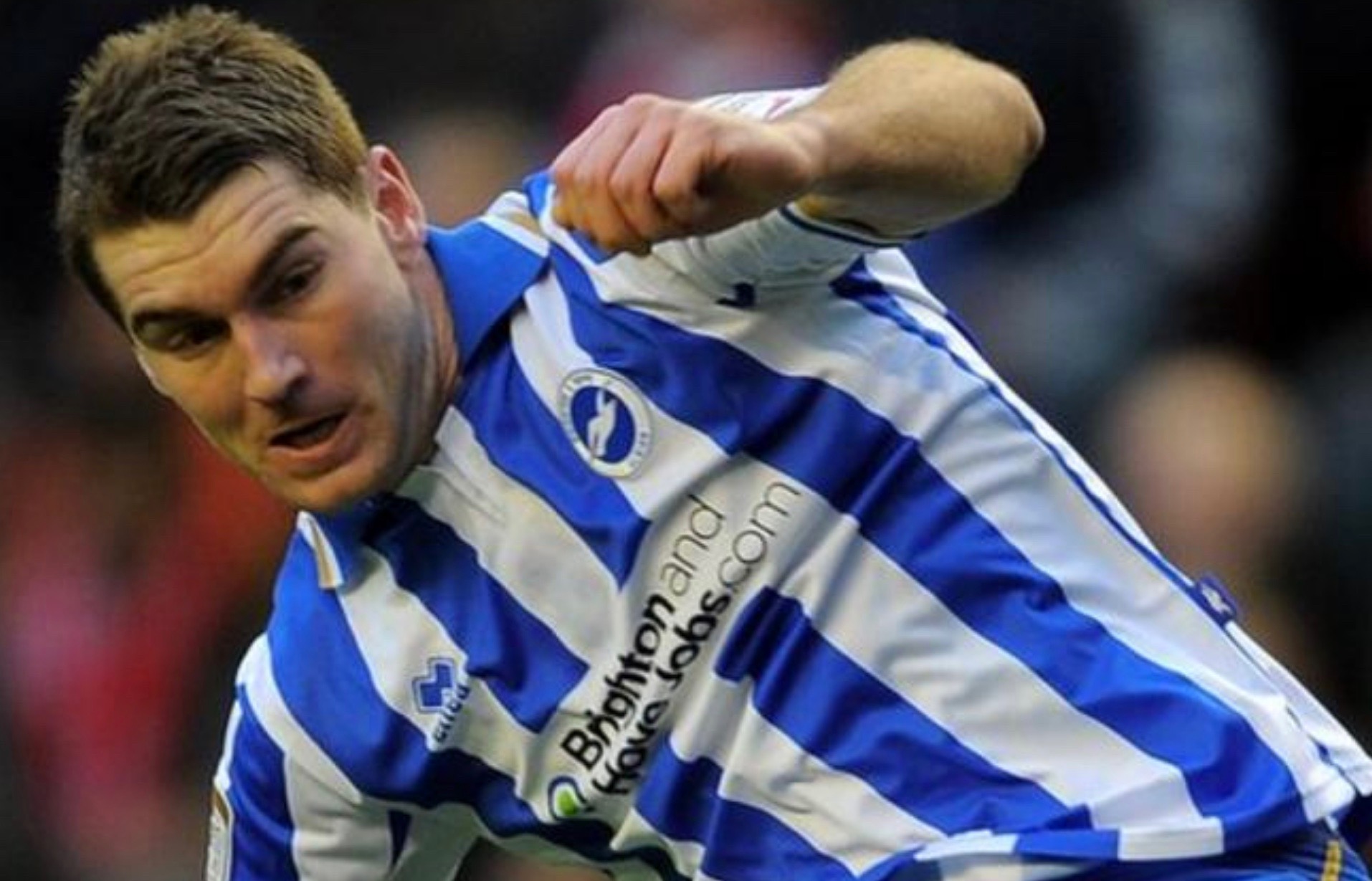
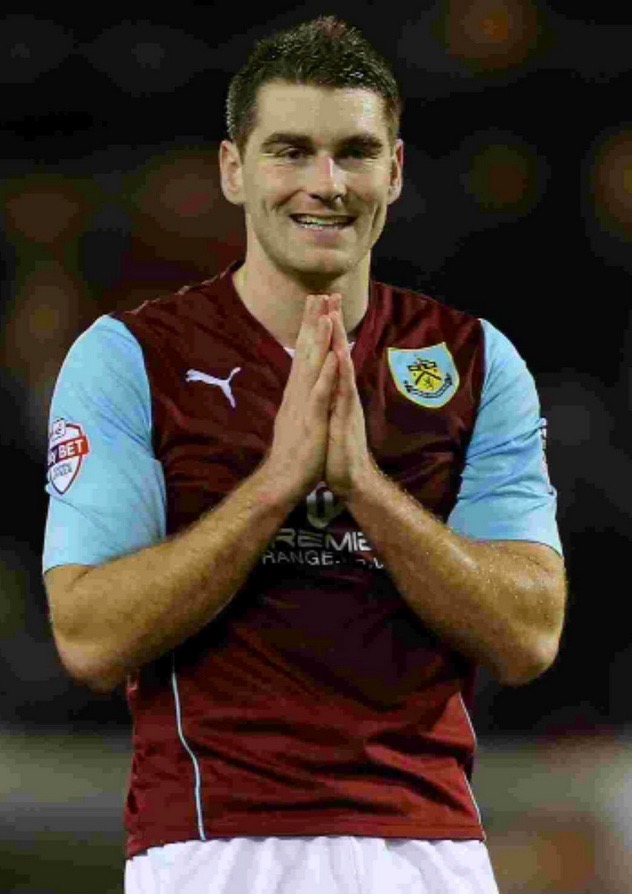
The young striker told the Albion matchday programme: “I’m a southern boy. I know the area well, and I know what football means to people down here.

“It’s been difficult for me to settle anywhere, moving from place to place on loan, but now I just want to play football. I love the game. I need to play, it’s all I want to do.

“I would like to stay and if all goes well we will see what happens in the summer, but my main aim at the moment is to start playing football again and scoring goals.”

Poyet told the media: “Sam was one of the players we’ve been following for a long time but it’s been difficult to get him.

“The idea was to bring someone who will give us that presence and strength in the air that we don’t have.

“We’ve got the time to explain how we play, and what he needs to do for us. The quicker he adapts, the easier for us. I’m delighted to have him and I hope it works for him.

“He’s been trying to find that place that he can stay for a few years.”

As it turned out, Vokes struggled to dislodge incumbent strikers Ashley Barnes and Craig Mackail-Smith, and he made just seven starts plus five substitute appearances.

SV- BHA stripes

Although he scored on his full home debut in a 2-2 draw v Millwall, he only got two more goals, a last-minute equaliser in another 2-2 draw, at home to Cardiff City, and Albion’s lone strike in a 1-1 draw away to Nottingham Forest.

In July 2012, it was reported Wolves were demanding £500,000 for the player’s signature on a permanent basis, and that Brighton and Burnley were both keen to sign him.

Vokes burnley

Howe had always been keen to get the player back to Burnley and, although officially undisclosed, it’s believed a £350,000 fee took him to Turf Moor where he finally settled down and, over the next seven years, scored 62 goals in 258 appearances.

Born in Southampton on 21 October 1989, Vokes was brought up in Lymington and was a Southampton fan at an early age. He even had a trial with them when he was just 10 but wasn’t taken on.

It was when he was playing football for local sides in the New Forest that he was spotted by Bournemouth and joined them in 2005. He was only 17 when he made his first team debut in December 2006 (in a 2-0 win over Nottingham Forest) and although he scored 12 goals in the 2007-08 season, the Cherries were relegated from League One.

Vokes WolvesWolves stepped in to sign him that May and he came off the bench in the opening game of the following season to score an equaliser in a 2-2 draw at Plymouth Argyle. However, Chris Iwelumo and Sylvan Ebanks-Blake were the main men scoring goals as Wolves won the Championship that year, and Vokes’ involvement was mainly off the bench.

With his parent club in the Premier League, Vokes was loaned out to League One Leeds United on a three-month deal, although he only scored once in eight games. One of those matches was against the Albion at Withdean and Vokes recalled picking up his first footballing scar when an Adam El-Abd elbow caught him in the face.

Once Vokes finally settled down at Burnley after his various loan moves, it can’t have helped his cause when the man who signed him quit Turf Moor to return to Bournemouth.

Indeed, when Sean Dyche replaced Howe, his go-to centre forward at first was Charlie Austin, but when Austin was sold Vokes got more of a chance to show his worth alongside Danny Ings.

The partnership that began to evolve surprised Burnley fans who’d wondered whether Vokes was only ever destined to be a bit-part player.

“Everyone was concerned to be honest,” said Tony Scholes on uptheclarets.com. “We’d seen some potential in Ings but there wasn’t much confidence that Vokes could become a regular, goalscoring striker at Championship level.

Burnley Football Club_1st Team head Shots_30/7/15He went on: “Our shortage of strikers was highlighted by the fact that he played the full 90 minutes in all of the first 26 league games that season, but he wasn’t just filling in. He was turning in some outstanding performances, linking up really well with Ings and both were scoring goals aplenty.”
Unfortunately, a cruciate knee injury sidelined him for a lengthy spell and Burnley bought Ashley Barnes from Brighton as they sought to bolster their forward options.

A fit Vokes eventually reclaimed his place and formed a useful partnership with big money signing Andre Gray when Barnes himself was also hit by a cruciate injury.

In the early part of last season, Vokes often found himself on the bench, with Barnes and Chris Wood starting ahead of him, and, in January, he decided to drop back down to the Championship, joining Nathan Jones’ new regime at Stoke City, with former England international Peter Crouch going in the opposite direction.

As is often the way these days, the fee was ‘undisclosed’ but was rumoured to be in the order of £7m, and Stoke offered Vokes a three-and-a-half-year contract.

His popularity at Burnley was reflected in a thoughtful parting message thanking the club and the Clarets fans, in which he said: “You made the club a ‘home’ for myself and all my family and for that I’m eternally grateful.”

He added: “It’s been an incredible journey that we’ve been on over the past seven years, with promotions, relegation, survival and even European football through the Europa League.

“There have been so many highlights and every step along the way has been a joy, but now I am looking forward to a new challenge.”

Dyche, meanwhile, told the Stoke Sentinel: “Sam has been an absolutely fantastic servant, not just as a player but as a person.

“There was a bit of frustration that he hasn’t played as much as he’d like and this presents a fresh challenge, so, with all that factored in, it became a win-win deal.

“We feel we’ve got a good deal financially for the business and Sam has got a fresh chance somewhere different.”

Since July 2021, Vokes has been leading the line for League One Wycombe Wanderers.

Vokes Wales

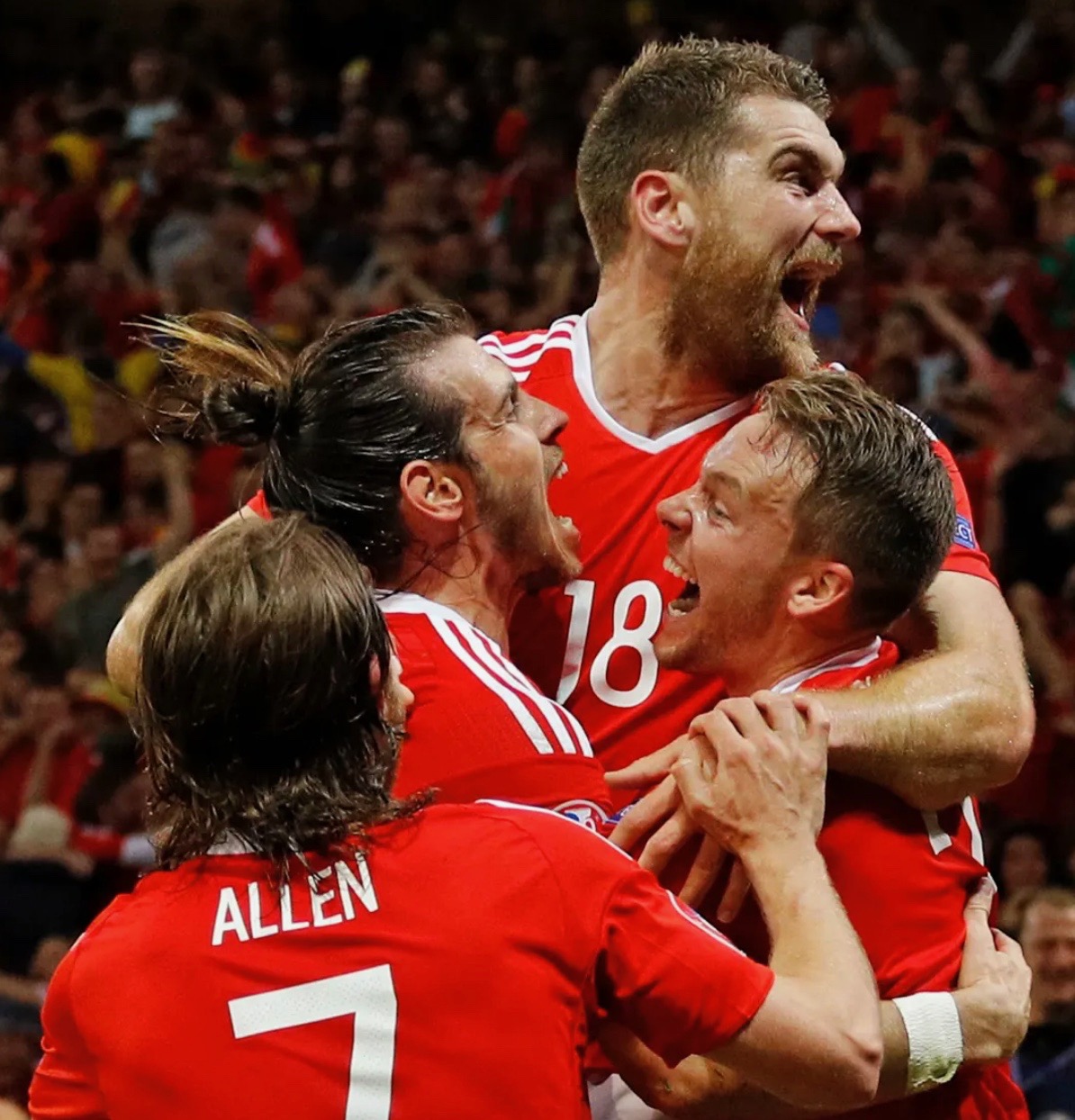
Vokes may have been born and brought up in England but, thanks to having a grandfather born in Colwyn Bay, he became eligible to play for Wales and has earned more than 60 caps since making his debut in 2008, including their most recent game against Belarus.

A stand-out moment for his adopted country came during the Euro 2016 tournament when he came on as a substitute and (pictured above) sealed Wales’ 3-1 win over Belgium with an 85th-minute goal to reach the semi-finals.

  • Pictures from various online sources.