
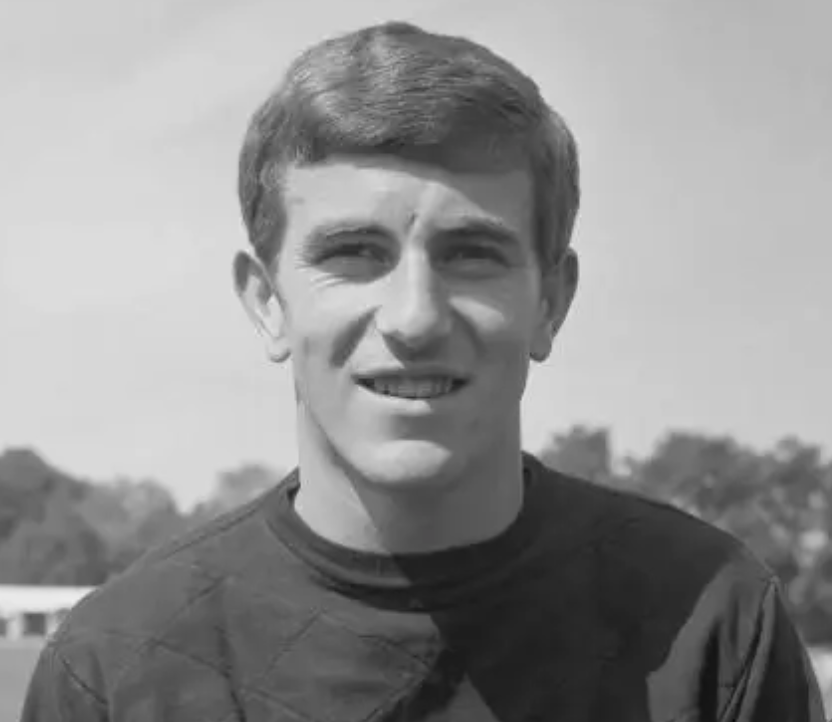
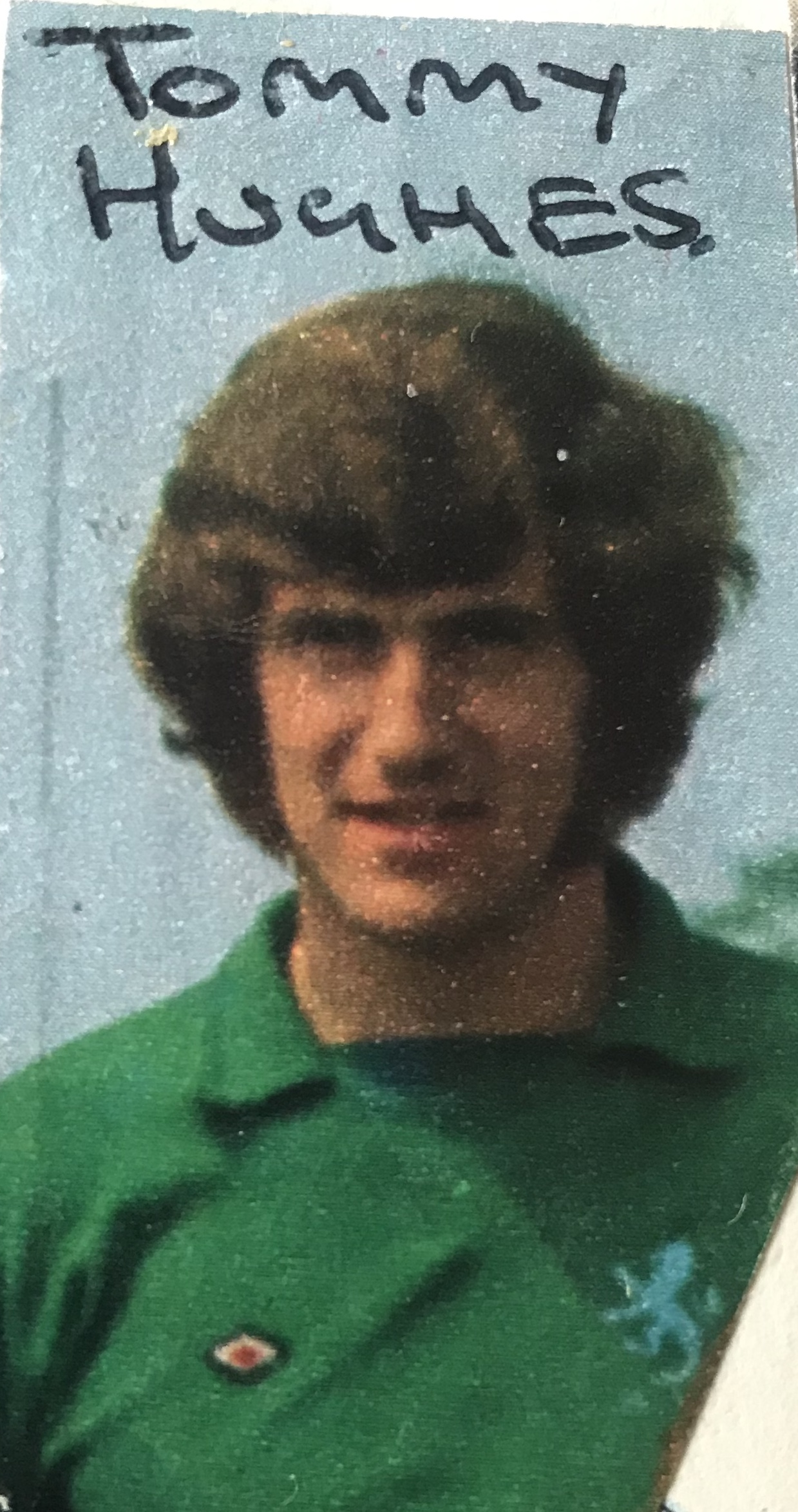

BRIGHTON were in a sorry state floundering at the bottom of the old Second Division when manager Pat Saward turned to a former Aston Villa teammate to borrow his back-up goalkeeper.
Albion had gone on a horrendous run of 14 consecutive defeats between November and February in the 1972-73 season and Saward decided to take regular custodian Brian Powney out of the firing line.
Inexperienced reserve goalkeeper Alan Dovey had twice conceded four goals (in defeats at Preston and Sunderland) during that awful run and between him and Powney they’d conceded 37 goals.
After seeing Albion succumb 3-1 at home to Villa and 5-1 at Fulham, Saward had a word with Vic Crowe, a former Villa teammate who by then was in the manager’s chair at Villa Park, and got him to agree a loan move for Tommy Hughes.

Hughes, who had spent years in Peter Bonetti’s shadow at Chelsea, arrived on the south coast to try to stem the tide and help Brighton get back on the winning trail.
His first run-out for the Albion came in a home friendly against then First Division Stoke City – both sides had been knocked out of the previous round of the FA Cup. Saward also gave a debut to 17-year-old Tony Towner although, unfortunately, Albion were once again on the losing side, 2-0. Nevertheless, the Albion matchday programme said Hughes “had a storming game”.
The losing streak finally came to an end the following Saturday when Hughes made his league debut at home to Luton Town. As well as the change in goal, Saward stuck with Towner on the wing and put another teenager, Pat Hilton, up front alongside Ken Beamish who scored both Albion goals in a 2-0 win.
Unsurprisingly, Hughes kept the shirt for two more league matches, a 3-1 defeat at Bristol City and a 2-0 reverse at Hull City.
Sandwiched between those games, he appeared in a Friday night friendly against visiting Moscow Spartak on 23 February which Albion won 1-0; captain Ian Goodwin scoring the only goal of the game.
Saward wanted to sign Hughes permanently but the powers-that-be couldn’t come up with the required fee and Powney resumed his place. Although Albion put up a bit of a fight, only losing two of the remaining 11 games, winning five and drawing four, the damage had already been done over the winter and they were relegated along with Huddersfield Town.

Hughes, meanwhile, returned to Villa Park but was soon on the move to a permanent home, where he stayed for many years.
Transferred to Hereford United in August 1973 for £15,000, he became something of a club legend and stayed in the area apart from one brief return to Scotland.
As the official club website noted: “He was an immediate success at Hereford and won the Player of the Year award in his first season and repeated the feat five seasons later.”
Manager Colin Addison brought him in when David Icke, the conspiracy theorist and former BBC sports broadcaster, was forced to retire through injury and regular no.1 Fred Potter was also sidelined.
Hughes made 240 appearances over nine seasons with The Bulls, and was in their Third Division championship-winning side of 1975-76. He later became Hereford’s caretaker manager during the 1982-83 season.
In 2006, he demonstrated his prowess at golf when he became the Herefordshire County Senior Champion. Posting a gross score of 72 at the Sapey course, the local newspaper said he had “produced a championship winning round in tricky conditions”. It added: “The course was beautifully manicured but many competitiors struggled to cope with the extra run and bounce off fairways baked hard after weeks of relentless sunshine.”
Born in Dalmuir, West Dunbartonshire, on 11 July 1947, Hughes started out with Scottish Second Division side Clydebank before Tommy Docherty signed him for Chelsea in 1966.
Only ever an understudy to Bonetti, he played two league games in each of 1966-67 and 1967-68, once in 1968-69 and six times in 1969-70.

His competitive debut came on 19 November 1966, when he was only 19, in a 1-1 Stamford Bridge draw against Sheffield United.
The following month he shipped six as Chelsea were thumped 6-1 at Sheffield Wednesday on New Year’s Eve.
In 1968, he was in the Chelsea side that won 5-3 at Southampton and 2-1 at Sheffield United.
In the six games he played between January and April 1970, he conceded 15 goals which included five goals in front of 57,221 at home to Leeds and five to Everton (who went on to win the First Division title) when 57,828 packed in to Goodison Park. Everton were 2-0 up (through Howard Kendall and Alan Ball) within five minutes of the start!
During his time at Chelsea, he was twice selected to play for the Scotland under 23 side. He made his debut on 3 December 1969 in a 4-0 win over France.
The following March he was between the sticks when the England under 23s beat the Scots 3-1 at Roker Park (his Chelsea teammate Peter Osgood scored twice, Brian Kidd the other) but the game was abandoned on 62 minutes when a snowstorm made it impossible to play the full 90 minutes.

His last game for Chelsea came the following month, on 15 April 1970, when Burnley beat the London side 3–1 at Turf Moor.
After Hughes broke his leg in a pre-season friendly in Holland, manager Dave Sexton brought in John Phillips from Villa to understudy Bonetti and, the following May, the displaced Hughes moved in the opposite direction, for £12,500. Phillips would later spend the 1980-81 season as Albion’s back-up goalkeeper under Alan Mullery.
Hughes might have thought he had finally claimed a no.1 spot of his own in a Villa side that had just been relegated to the third tier. He made his Third Division debut at home to Plymouth Argyle on 14 August.
But he only played 16 games under Vic Crowe before losing his place to Jim Cumbes, who had signed from West Brom. Cumbes was one of those rare breeds of sportsmen who also played county cricket for Lancashire, Surrey, Worcestershire and Warwickshire.
Hughes’ 23rd and last game for Villa saw him make a horrible blunder in a first round FA Cup match at Fourth Division Southend United in November 1971. He dropped a free kick at the feet of Bill Garner (who later moved to Chelsea) who set up Billy Best to score the only goal of the game for the Shrimpers.
The ‘keeper’s long run as Hereford’s first choice came to an end in the 1977-78 season, when new signing Peter Mellor, once of Burnley and Fulham, took over the gloves.
Hughes decided to return to Scotland and signed a one-month contract with Dundee United. He contemplated moving his family back up north permanently, but they wanted to return to Hereford, which they did.
“The club and the fans welcomed him back with open arms and Tommy remained at Edgar Street until he finally hung up his boots in 1982,” said the club website. “Tommy never lost his love for Hereford and jumped at the chance of having spells as commercial manager and even as caretaker manager when the financial situation at Edgar Street was fraught.”
As it turned out, he was to make one final appearance at Edgar Street in the 1983-84 Radio Wyvern Cup Final. He had attended as a spectator but turned out for Worcester City after their ‘keeper Paul Hayward dislocated a finger in the pre-match warm up.
Hughes had a spell as manager of Trowbridge Town but his home remained in Hereford where he ran his own successful carpet-cleaning business for many years.


 ALAN BILEY was a fans favourite at all six English league clubs he played for but the prolific goalscoring that made his name at Cambridge United and Portsmouth wasn’t replicated at Everton or Brighton.

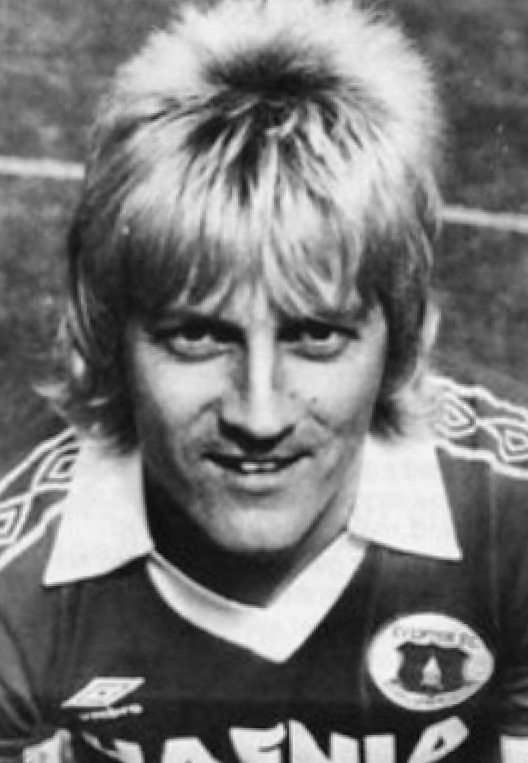 Biley was an instant hit, scoring on his Everton debut as Birmingham City were beaten 3-1. He scored again in his next game away to Leeds, but things quickly started to go wrong for him, as


 In parallel lines