‘Super’ Mark – ‘The Fridge’– didn’t always stay cool

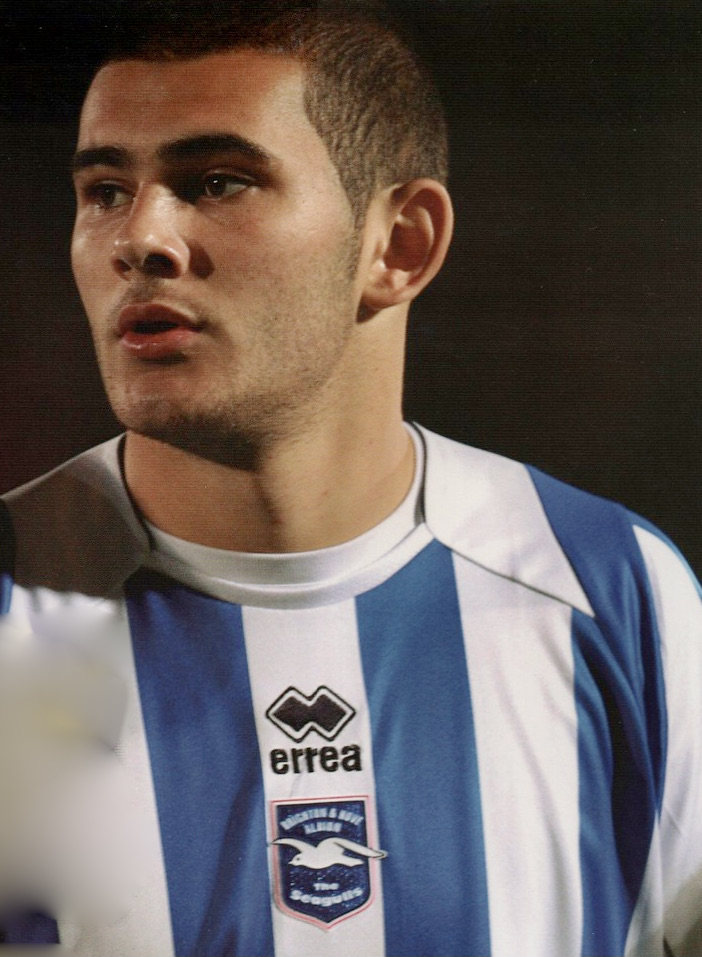
MUCH-MALIGNED Mark McCammon was not afraid to stand his ground, answer his critics directly and to challenge injustice when he felt aggrieved.

Fans of Brentford, Brighton and Millwall voiced some strident – nay, downright offensive – opinions of his ability as a footballer.

Remarkably, the Barnet-born striker played in a FA Cup final and Europe for the Lions before Mark McGhee signed him a second time – for Brighton – having previously taken him to Millwall from the Bees on transfer deadline day in 2003.
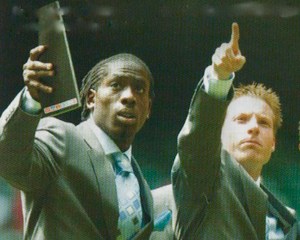
McCammon and Neil Harris at the 2004 FA Cup Final in Cardiff

When his suitability to contribute to the Seagulls’ flagging cause in the Championship was called into question in a post-match radio phone-in, McCammon took umbrage and called the show himself to argue the toss with presenter Ian Hart.

Also, in what was something of a landmark case, McCammon took a subsequent employer, Gillingham FC, to courtand won a claim that he had been racially victimised.

It certainly wasn’t uncommon for McCammon to be at odds with the people running whichever club he was playing for.

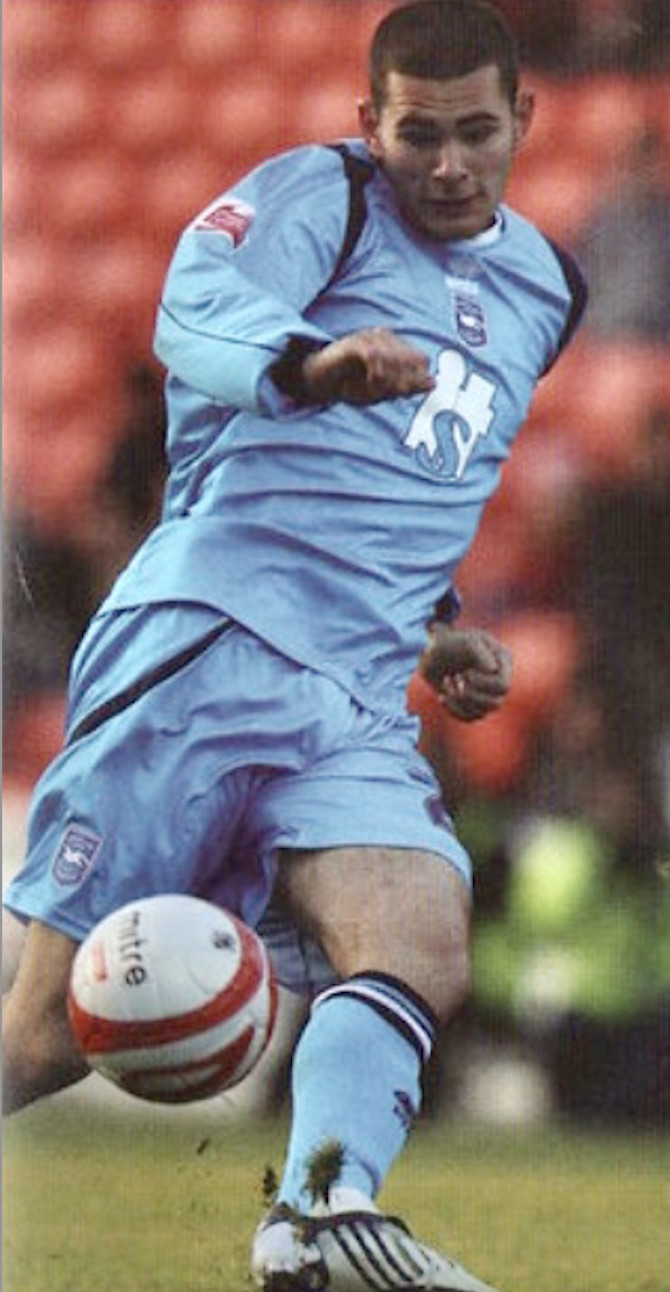
He first joined the Seagulls on loan when he was out of favour and on the transfer list at Millwall.

He made his debut in a 1-0 home defeat to Stoke City in December 2004 and said: “I just want to get back playing and enjoying my football again.

“I have been in and out at Millwall and my fitness has dipped a little bit because I haven’t played. I’m happy to be playing under Mark again and I want to show what I can do.”

Although he didn’t get on the scoresheet in five matches, when McGhee made it a permanent move in February 2005 he told BBC Southern Counties Radio: “Not everyone understands the contribution Mark makes. We have become a much more effective team with him in the squad.”

McGhee was a great believer in the ‘one big one, one little one’ striking line-up, and was sure McCammon’s presence would help pint-sized Leon Knight to score goals.

Because of what followed, it is easy to forget McCammon scored three goals in his first two home games after signing on a permanent basis.

He scored a brace and won the man of the match award in a 3-2 defeat to Derby County and he got 10-man Albion’s second in a surprise 2-1 win over promotion-chasing Sunderland (Richard Carpenter scored the other, and Rami Shabaan made his debut in goal).

The Argus enjoyed building up the visit of McCammon’s old side Millwall to the Withdean, interviewing the player and the manager, who we learned called his new signing ‘The Fridge’.

McGhee urged McCammon to stay cool if he managed to score against his old club, but it was fellow striker Gary Hart who got the only goal of the game, in the 89th minute.

Ahead of the game, McCammon told the newspaper: “It would mean a lot to me to score the winning goal against them. I wasn’t given a chance there, but I’ve got a fresh start here. I’ve got a lot to prove.”

In the following game, he was subbed off at half-time in a 2-0 defeat at Stoke when he gave away a penalty. He underwent blood tests and McGhee said: “Mark is seeing a specialist to find out why he was feeling lethargic. It wasn’t the back injury he suffered against Millwall, he was just feeling ill and weak.”

That game was the first of a run of six defeats and Albion only won once in 11 matches – form which saw them avoid relegation by a single point.

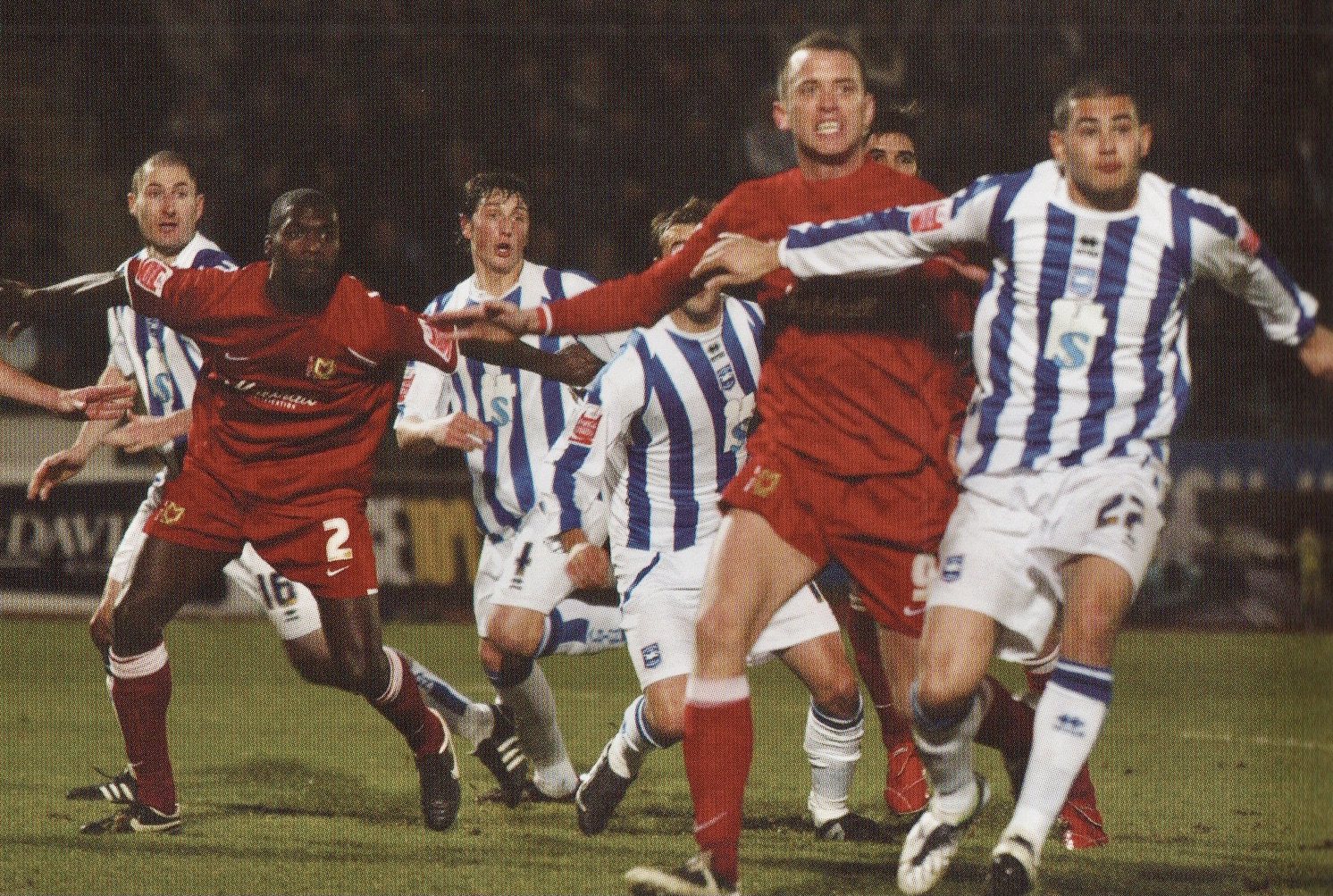
One of several infamous McCammon incidents occurred following the Seagulls’ 1-1 draw at Turf Moor on 16 April.

After a lucklustre first half display when Albion went in 1-0 down, McGhee ripped into the team at half-time and McCammon and fellow striker Chris McPhee were told they weren’t holding the ball up well enough.

According to an account in the Daily Telegraph, McCammon argued back in a fiery exchange with the boss, claiming a lack of service from midfield was the issue. He didn’t reappear for the second half, being replaced by fired-up teenager Jake Robinson and Albion managed to salvage a point courtesy of an equaliser from Dean Hammond.

A delighted McGhee said of Robinson: “We say when people get their chance they have to take it and I thought he took it absolutely brilliantly. He was different class.”

But McGhee’s ire with McCammon hadn’t cooled at the final whistle – he ordered him off the team bus and told him to return south in the kit-carrying vehicle instead.

Not fancying a tight squeeze alongside sweaty shirts, shorts and socks, McCammon chose to return by train.

“After the match I told him I didn’t want him travelling back on the team bus with the rest of us and that he was to return home with two other members of staff in another club vehicle,” McGhee told Sky Sports News.

McCammon apologised to McGhee afterwards but any subsequent first team opportunities were few and far between after that.

At the start of the 2005-06 season, he managed a recall for a Carling Cup match away to Shrewsbury Town and pleased his manager by scoring a goal and laying one on for Robinson, even though the Albion went down 3-2.

“I thought Mark was much better. That type of performance is what we expect of him and it’s what he can do,” said McGhee. “Now he’s got to reproduce that in the Championship.

“He set his standard tonight in terms of his effort and the simple way he played the game. He didn’t complicate things; he laid it off, held it up, laid it off, then got in the box; he won a lot of headers; took a lot of stick and kept going. He got a goal, made a goal and I thought he was terrific.”

But McGhee, with other forward options in the shape of Colin Kazim-Richards, Robinson, Knight and Gary Hart only called on McCammon for three starts and five sub appearances.

“He (McGhee) asked me to go out on loan to a lower league team and I think I’m better than that,” said McCammon when, incensed by criticism of him on the BBC Southern Counties Radio post-match phone-in after a game in February, called in and took issue with show host Hart.

“I went on trial at Watford and I got called back to train for no apparent reason. I think I was hard done by there, a bit unlucky. I’m back but I’m not in the squad but I don’t think I’ve been given a long enough chance.”

Once again suggesting the team’s issue was service through to the front players, he responded to Hart’s personal criticism of him saying: “When you kick a ball in professional football you can tell me whether I’m good enough for this standard.

“You don’t know anything about me. What you said is very disrespectful.

“I’ve been out since the beginning of the season with ankle and knee injuries. I had surgery on both. I came back and made three first-team starts but it takes about seven or eight games to get your rhythm back. I think it’s a bad comment you have made.”

The striker also took aim at the Withdean faithful, claiming: “All we hear is supporters whingeing.

“If they get behind the team it will give the players an extra boost. All the first team players at Brighton listen to the radio and they hear the supporters being 100 per cent negative.
“It’s a team game, it’s not about individuals. The supporters need to get behind the team a bit more.”

If the player didn’t think much of the fans, it would be an understatement to say they were none too impressed by the player.

Amongst a veritable litany of abuse from Albion supporters, this from ‘The Full Harris’ on North Stand Chat encapsulated the opinions of many.

“Mark McCammon is the worst player to have played for us in this division … he just simply doesn’t have a clue. He is unfit, he doesn’t know where he is meant to be running, he can’t shoot. For a man of his size, he is pathetic in the air.

“He is clumsy, he has the touch and control of a Sunday league centre half, he is about as prolific as an impotent monk, he is an embarrassment, he is a disgrace, he is lazy and, personally, I object in the extreme to my paying his wages when I believe many of the crowd around me could do a better job and they would do it for free.”

Long before Dominic Cummings referred to his erstwhile boss, Boris Johnson as “a shopping trolley smashing from one side of the aisle to the other”, supporters voiced something similar of McCammon. The song went like this:

Super, super Mark
Super, super Mark
Super, super Mark
Supermarket Trolley.

Perhaps it was no surprise that McCammon was allowed to leave Albion on loan, linking up with League One Bristol City, where he scored four goals in 11 appearances.

He didn’t play another game for the Albion and, in the summer of 2006, joined Doncaster Rovers after impressing boss Dave Penney on trial.

Although born in Barnet on 7 August 1978, McCammon qualified to play for Barbados through his mother and he won five caps for the Caribbean country. He scored on his debut against Antigua and Barbuda in a 3-1 win in September 2006 and two days later hit a hat-trick when Barbados beat Anguilla 7-1.

Two years later he returned to international action for two World Cup qualifiers against the United States. Barbados lost 8-0 in California and 1-0 in Bridgetown.

McCammon was with QPR as a teenager but it was Cambridge United who took him on as a YTS and he joined Cambridge City on loan at 19 to gain experience.

He played just six games for United between 1997 and March 1999 but was signed by Premier League Charlton, managed by Alan Curbishley.

After relegation to the old First Division, McCammon played five times for the Addicks as they won the title with a squad that included John Robinson, Steve Brown and Paul Kitson on loan from West Ham. McCammon also spent time on loan at Swindon Town in January 2000.

That summer, McCammon left The Valley to sign for Second Division Brentford for a fee said to be £100,000. He scored six times in 33 appearances in his first season at Griffin Park. He scored 10 in a total of 75 appearances for the Bees but it seems their supporters were also unconvinced about his merits.

Stan Webb, on the excellent BFCTalk website, said: “Mark McCammon was yet another misfit who cost a significant fee. Despite looking every inch a footballer, he signally failed to deliver.

“He is best remembered for his cataclysmic miss from a free header at Loftus Road which might have changed our recent history had he scored, as he surely should have done.

“And yet for all the criticism he faced, he eventually became a sort of anti-hero as fans recognised that he was always giving everything he had and appreciated his efforts even though he was just not up to scratch.”

By contrast, McCammon’s time in south Yorkshire was relatively successful, although if he felt he was dogged by bad luck, in November 2006 he had a headed goal away to Brentford chalked off after the ref didn’t notice the ball went through a hole in the back of the net. Thankfully Donny still won 1‑0.

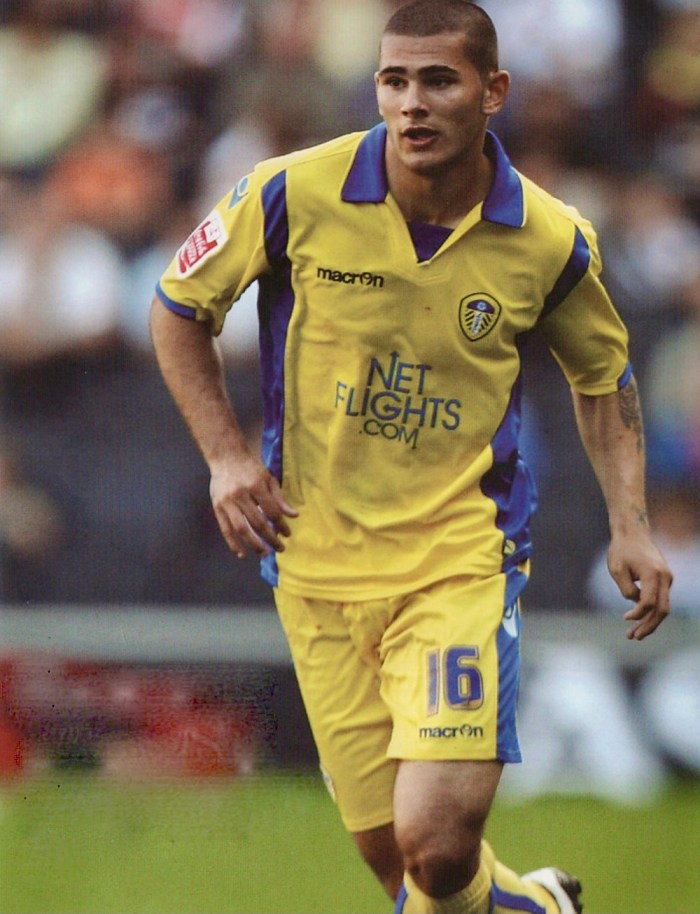
Across two seasons, he scored 13 goals in 70 matches for the south Yorkshire side and went on as a 71st minute sub for Richie Wellens in the 2008 League One play-off final at Wembley when Donny beat Leeds United 1-0. Leeds had Casper Ankergren in goal and Bradley Johnson in their line-up.

However, McCammon chose to head south that summer and signed a three-year contract with recently relegated League Two Gillingham.

He scored five goals in 35 matches in his first season at Priestfield but 2009-10, when the Gills were back in League One, was a different story.

By February 2010, a lack of starts saw him seek a loan to get some match fitness. Gills boss Mark Stimson told BBC Radio Kent: “Going out on loan will be good for him and the club. He needs games and if he comes back fit in four weeks that would be great.”

He added: “We want him sharp and scoring goals then he could come back because we might need someone like him. Last season he stepped in and put in a good shift.

“At the moment he’s frustrated, like all the other boys who are not playing. He didn’t want to drop down to League Two. Now he’s seriously thinking about it because it might get his career back on track.”

McCammon joined Bradford City for a month, playing four games, before returning to the Gills. But the following season, when Andy Hessenthaler had returned as manager, saw the final dismantling of McCammon’s league playing career.

The club dismissed him in 2011 for alleged misconduct but he didn’t go quietly and took them to an employment tribunal claiming he had been unfairly sacked and ‘racially victimised’. He won £68,000 in compensation and Gillingham and chairman Paul Scally were subsequently each fined £75,000 by the FA “for failing to act in the best interests of the game and bringing the game into disrepute”.

Furious Scally appealed the fines, which were set by an independent regulatory commission, saying they were “manifestly excessive, totally disproportionate and completely unjust” and, although the board reduced the club’s fine to £50,000, the sanction against Scally was upheld.

McCammon told the original hearing in Ashford, Kent, that he and other black players at the club were treated differently from white players. For example, he said, he was ordered to attend the ground amid ‘treacherous’ snowy driving conditions or be fined, while some white players were told they were not required.

The club tried to “frustrate him out” by refusing to pay private medical bills for injury treatment, while a white teammate had been flown to Dubai for treatment at the club’s expense, he claimed.

McCammon, who, on £2,500 a week, was the club’s highest-paid player, was also told not to blog while others were permitted to, he said. During an injury spell, he had to stay behind at the club for four hours longer than other injured and non-injured players, he claimed.

The tribunal heard he was dismissed after a disciplinary hearing following a confrontation in which he accused club officials of being “racially intolerant” regarding the decision to order him in during the heavy snow.

The tribunal found in McCammon’s favour and his solicitor, Sim Owalabi, said it was believed to be the first time a footballer had successfully brought before an employment tribunal a case of race victimisation against a professional football club.

After all the legal to-ing and fro-ing, the player himself, by then aged 35, said: “It was traumatising and it sort of sabotaged my career in the football world, my progress.

“I had football clubs after me and that just deteriorated. It’s very, very unfortunate.”

He dropped down to Conference level with Braintree Town in October 2011 and later played for Lincoln City, on loan and then on a permanent basis, when they were in the same division.

Bradley Johnson always liked a pop from long range

Bradley Johnson scores on his debut v Leicester (photo Simon Dack)

THE COCA-COLA Kid’s cousin was an instant hit when he joined seventh-from-bottom Brighton on loan from second-placed League One rivals Leeds United in October 2008.

Bradley Johnson, who’d heard about the Seagulls from his relative Colin Kazim-Richards, scored twice on his debut as the Seagulls turned round a 2-0 half-time deficit to beat Leicester City 3-2.

“I hadn’t played for two months and Micky (Adams) asked if I was fit and I admitted I wasn’t match fit, but he said he would throw me in anyway,” Johnson recounted.

“The two goals I scored gave me great confidence as a player, but the win helped everyone,” he said. “On the night, the fans were immense and the result gave us all a good boost.”

In an Argus interview in March 2021, Johnson recalled: “I was a young boy from Leeds coming into a struggling team against a team who were flying so it was a bit daunting for me.

“I didn’t know what to expect but, as debuts go, I don’t think it could have gone any better.

“Anyone who knows me knows I like a shot and I’ve always had that since a young age. Some don’t go where planned but thankfully on that night they did.”

Albion had failed to score in their three previous games, against Hereford, Peterborough and Hartlepool, and soon found themselves 2-0 down to City courtesy of two Matty Fryatt goals.

Adams hauled off a somewhat better known loanee – the ineffective Robbie Savage – at half-time, along with wideman Kevin McLeod, and the changes galvanised the Albion in the second half.

Right-back Andrew Whing reckoned the withdrawal of Savage might have helped Johnson to shine. “Maybe he’d felt a bit in Robbie’s shadow up until that point,” he told Spencer Vignes. “But he really stepped up in the second half and scored twice, one of them an unbelievable strike. We needed a spark and that was it.

“Bradley deserved a lot of credit that night. He’d come to us from Leeds and he just took responsibility, scored twice and got us back into it. He really made an impression.”

After Johnson’s pair of long range strikes past David Martin in the Leicester goal, City defender Jack Hobbs sealed a memorable comeback for the Seagulls when he diverted Joe Anyinsah’s cross past his own ‘keeper.

It was a tad ironic that Johnson should have scored against Leicester too because at the start of that year he came very close to signing for them but couldn’t agree terms and ended up at Leeds instead.

Five days after his impressive Albion debut, Johnson was on the scoresheet again as Adams’ side beat Millwall 4-1 at the Withdean Stadium (Glenn Murray, two, and Dean Cox, the other scorers).

Kazim-Richards, whose £250,000 transfer from Bury to Brighton had been paid for via fan Aaron Berry winning a competition organised by the soft drink giant, had already moved on to Fenerbahçe in Turkey via Sheffield United by the time Johnson arrived in Sussex.

But he said: “My cousin Colin had played there so I knew Brighton and I knew a few lads, and that it was a good place to be. But it was Micky that really sold the place to me and I just wanted to play. That is all I wanted to do; I didn’t look at the side’s league position. I just wanted to be a part of what Micky spoke about and help the club beat relegation.”

Unfortunately, the mini revival in the autumn of 2008 didn’t continue although Johnson was on the winning side again when, in his 10th and last game for the Albion, two Nicky Forster goals earned a 2-0 win at Swindon Town, spoiling Danny Wilson’s first game in charge of the Robins (Peter Brezovan was in goal for Town).

By then, Johnson, who’d lost his place at Leeds following an injury, had scored four times for the Albion (some records show he scored twice in a 4-2 home defeat to MK Dons, others that the second Brighton goal was netted by Stuart Fleetwood).

Somewhat gallingly, Johnson was next seen at Withdean less than three weeks into the new year – back in the fold with Leeds as they took all three points in a 2-0 win on 17 January 2009.

“When I was out on loan, Leeds were struggling and when I went back Gary McAllister got the sack. Simon Grayson came in and I didn’t know where my future lay, but Grayson told me I had a part to play and it was down to me to train hard and prove myself,” he said.

“He was true to his word, and I kept my head down, then I ended up coming back to Brighton and played against them for Leeds. It was a bit surreal to be in the away dressing room, but that is football.”

Johnson became a regular at Elland Road for the next two years and was part of the Leeds side who won promotion to the Championship in 2010, as well as earning headlines in memorable FA Cup ties against Premier League opposition.

In particular, in a third round replay against Arsenal at Elland Road in January 2011, Johnson scored a spectacular goal for the home side although they lost the tie 3-1.

Having spent five years on Arsenal’s books as a promising youngster, it was a bittersweet moment for Johnson who said afterwards: “It was a goal I’m not going to forget. I’m an Arsenal fan myself and so are all my family.”

On the transfer list at the time because he couldn’t agree a new deal with Leeds, he eventually got the chance he craved to play in the Premier League that summer when he moved to newly promoted Norwich City, where his teammates included Elliott Bennett and Andrew Crofts.

It was Canaries boss Paul Lambert who sold the club to him at the time but he also sang the praises of his successor, Chris Hughton.

Johnson joined the Canaries

“Hughton did come in with a different style of play,” he told pinkun.com. “He was very tactical. He was mindful that we were playing in the Premier League against good players whereas Paul Lambert wouldn’t care, if we were playing Manchester United, he’d say ‘if they score two, we’ll score three’.

“Different approaches, different ideas and different philosophies. People weren’t happy with the way he played but we finished 11th. I can only speak for myself, but I really enjoyed my time there and Chris is a great manager.”

He added: “Credit to him when he got the sack because he stuck by his morals and got Brighton promoted.”

After three seasons in the Premier League, the 2014–15 Championship season was one of Johnson’s most successful seasons with the Canaries: he became vice-captain to Russell Martin, appeared in 44 of the 46 league matches (including one appearance as a sub) and scored 15 goals.

He was voted fans’ Player of the Year and was part of the side that won the play-off final 2-0 against Middlesbrough to ensure City won back their Premier League place.

However, unable to get a place in Alex Neil’s side back among the elite, he switched to Derby County for £6m in September 2015.

That was the start of seven more seasons in the Championship: after 140 appearances over four years with the Rams, he moved on a free transfer to Blackburn Rovers, where he made 86 appearances over three seasons.

He eventually left Ewood Park at the end of the 2021-22 season and in the summer of 2022 joined MK Dons on a free transfer.

Johnson scored both goals as MK Dons turned round a disappointing start to the season by beating Port Vale 2-1 in their fourth match.

Johnson interviewed after scoring twice for MK Dons

Born in Hackney on 28 April 1987, Johnson was on Arsenal’s books from 1997 to 2002 but was released aged 15.

“Like any kid, being released from a club was horrible and I didn’t really feel like going back on a round of trials with other professional clubs, so instead I just played locally in Leyton.

He went to Ryman Premier side Waltham Forest but when he was 17 was invited for a trial at Cambridge United. He signed on a non-contract basis for eight months and was then offered a professional contract.

Johnson attracted suitors when playing for Northampton Town

But Northampton Town had been tracking him. “They made me a counter-offer which I accepted and that is where my career began,” he said.

That was in May 2005, and after he had been out on loan to gain experience at Gravesend & Northfleet and Stevenage Borough, he became a regular starter under Stuart Gray and his performances attracted scouts from clubs further up the league.

When that aforementioned move to Leicester fell through in January 2008, a few days later Leeds stepped in and paid a £250,000 fee for him.

He played in the same Leeds side as Casper Ankergren that lost the 2008 League One play-off final 1-0 to Doncaster, but picked up a back injury in pre season that led to him being sidelined. Although he returned to fitness, the side was doing well in his absence which meant he was unable to force his way back in. And then the chance to play competitive football was presented by the Albion.

History-maker Joel Lynch went to Town after Brighton breakthrough

SUSSEX lad Joel Lynch made Brighton & Hove Albion history when he was made first team captain aged just 19 and 186 days.

The ‘youngest-ever Albion captain’ honour was a measure of the maturity the defender had displayed in Dean Wilkins’ young line-up in April 2007, even if it was a temporary appointment in the absence of the rested Guy Butters and the injured Dean Hammond.

“I wasn’t even captain of my school team,” Lynch told Argus reporter Andy Naylor. “I am 19 years old and it is a great honour. I am grateful to the gaffer for having so much faith in me and it will be good for my confidence.”

Unfortunately, the experience against Doncaster Rovers at Withdean was marred when Lynch missed a clearance, the player he was supposed to be marking, Graeme Lee, scored and Rovers went on to win 2-0.

It was a minor blip at the beginning of a career which saw Lynch become a consistent Championship defender for more than a decade after emerging from Brighton’s youth ranks in the ‘noughties’.

Born on 3 October 1987 in Eastbourne, Lynch made his way through the age group sides with the Albion, often alongside another local youngster who went on to have a good career, Tommy Elphick.

“We played all the way through the youth teams together since the age of about ten,” Lynch told Naylor of the Argus. “Both of our games really changed and we really grew up when we went to Bognor on loan. We did really well there for Bognor and ourselves.”

 Lynch pictured in the Argus alongside Tommy Elphick when they were together as under 14s in 2001, and still together a couple of years later.

As well as being part of the Brighton team which reached the quarter finals of the FA Youth Cup in 2006, the year couldn’t have begun better for Lynch when Wilkins’ predecessor, Mark McGhee, handed him his first team debut in a narrow 2-1 defeat away to Southampton on 2 January 2006.

He went on to play 16 times that season, and also registered his first goal for the club, which is a fond memory for me and my son, Rhys. It came on Easter Saturday 2006, and we made a last-minute decision on the day to travel up to Ipswich to watch the game.

Although Albion were destined to relinquish their Championship status, they had a new-found confidence in their play thanks to the belated arrival of much-needed hold-up centre forward, Gifton Noel-Williams (on loan from Burnley).

He’d scored on his debut in a home draw against Luton and got an assist by laying on a goal for Paul Reid in a 2-0 win at Millwall two weeks before.

At Portman Road, always a favourite away ground, Albion, wearing the stylish all-burgundy away strip, opened the scoring when Noel-Williams buried a cross from Colin Kazim-Richards.

To add to the unexpected delight, teenage defender Lynch made sure our trip was a memorable one. Ipswich failed to clear a corner properly and when Reid returned the ball to the penalty area, Kazim-Richards jumped simultaneously with ‘keeper Shane Supple and the ball broke for Lynch (above left) to prod it in.

Albion, never wanting to make life too easy for themselves or their fans, allowed Ipswich to pull a goal back when Alan Lee flicked on from former Seagull Darren Currie’s cross for substitute Nicky Forster – a future £75,000 signing for Albion – to score. But thankfully it was too late for Ipswich to salvage anything from the game.

It was all to turn pear-shaped on the Easter Monday at home to Sheffield Wednesday, but for a couple of days at least the Great Escape still seemed a possibility.

In December 2006, the matchday programme devoted a two-page article to Lynch’s progress in the first team, pointing out how he had begun at left-back, stepped in as a left-sided centre-back – his more natural position – and even played right-back in the 8-0 thrashing of Northwich Victoria in the FA Cup.

Lynch spoke of the experience he had gained playing alongside the veteran defender Guy Butters, telling the programme: “I learned a lot from him, Guy’s had a great career and he is still playing great football. Hopefully I will just slot in there when the time comes and, in the meantime, I will play wherever the manager wants me to play and hopefully stay in the team. I’ve still got a lot of years ahead of me to make the centre-half slot my own.”

Lynch confessed being handed the no.5 shirt at the start of the season had given him a massive boost. “So far, I have really enjoyed this season. I have had my ups and downs and missed a few games due to my performances,” he said. “There have been things that I have had to sort out within my game, but I think I have resolved them now and I am slowly regaining my confidence and my performances have been improving week by week since I regained my place in the team.

“I feel more confident and my self-belief has improved a lot. I want to keep improving and I think that I can help the team in a big way.”

Lynch said a lot of the younger players had been inspired by Bobby Zamora’s elevation to Premiership football and added: “Hopefully a few years down the line we all will be playing at a higher level with Brighton in a new stadium.”

Interviewed by the Argus on the eve of the 2006-07 season, Lynch said: “Last season was a season to just keep on progressing and doing well.

“This season is one where I really want to push on. I want to play a major part in getting the club promoted and express myself more so maybe more clubs are interested in me or I get called up for England.”

Pretty bold stuff from a 19-year-old player still aiming to establish himself, but, having been awarded a three-year contract, he certainly wasn’t short of confidence. “I’ve got to do something really big or something big should happen,” he continued.

“We’ll take it one game at a time but you’ve got to aim for promotion. You can’t aim for anything else.”

Lynch certainly made his mark across the League One season, playing in a total of 44 league and cup games.

The following season was only a matter of a few weeks old when Lynch was sidelined by a hairline fracture in his left leg and ligament damage when twisting to clear in a game against Millwall. Then when he returned sooner than expected, he suffered a hamstring problem.

Perhaps if Albion’s move to the Amex had come sooner, Lynch might have stuck around, but he clearly felt he needed to be playing at a higher level than the Seagulls could attain at the time and, in September 2008, having made 88 first-team appearances, forced through a loan move to Nottingham Forest, with various extensions taking the loan through to the end of the season.

In July 2009, the deal eventually became permanent, with Forest paying a £200,000 fee and offering Lynch a three-year contract. Albion obtained midfielder Matt Thornhill on a six-month loan from Forest as part of the arrangement.

The young defender initially found it difficult to break through as a regular at Forest, with most of his appearances coming as a stand-in left-back.

It was in the 2011-12 season that he began to get games in his preferred position, at first playing alongside Wes Morgan and then, after Morgan’s transfer to Leicester, pairing with Luke Chambers.

In November 2011, writer Peter Blackburn waxed lyrical about Lynch’s form at Forest via the seatpitch.co.uk platform, describing him as “a tough-tackling, committed, classy and agile defender”.

Blackburn added: “Capable of reading the game, nipping in front of the attacker to steal the ball and hold his own in the air, Lynch also seems to possess the sort of driven cross-field ball out of defence not seen on the fair shores of the Trent since prodigal son, Michael Dawson so entertained the crowd.”

No doubt it would have delighted Lynch that he scored a last-gasp equaliser for Forest at the Amex in March 2012.

Four months later, he rejected a new deal at Forest to become a fifth new signing made by Simon Grayson at Huddersfield Town, and in August the same year he got onto the international stage – not for England, though, but Wales. He qualified for Wales because his father came from Barry in South Wales, and he made his debut as a substitute in a friendly against Bosnia and Herzogovina.

HuddExam LynchLynch made 22 appearances in his first season with the Terriers; nine more the following season, and 35 in 2014-15. In January 2015, Lynch was winner of the Examiner Huddersfield Town Player of the Month award, with writer Doug Thomson saying: “He scored a stunning goal to help clinch a welcome 3-1 win over Watford. But Lynch, who stung the Hornets with an overhead kick, also excelled in the centre of defence.

“And the former Brighton and Hove Albion and Nottingham Forest man played a key role when Town finally ended their long wait for an away win, and kept a clean sheet to boot, at Wigan Athletic.

“Calm and composed both on the ground and in the air, the 27-year-old brings plenty of experience to the backline. Lynch also works well alongside skipper Mark Hudson.”

lynch qprAfter making 40 appearances for Town in 2015-16, he departed Yorkshire for London and signed a three-year deal with Championship side Queens Park Rangers.
The fee was undisclosed but was believed to be something of the order of £1.2 million and the QPR manager at the time, Jimmy Floyd Hasselbaink told bbc.co.uk: “He offers us something a little bit different. He’s left-sided, which will give us better balance, and has that ability to bring the ball out from the back.”

Hamstring and foot injuries hampered opportunities to show his worth to the Loftus Road faithful, a frustrating situation he talked about in January 2018, but he has since become a regular at the heart of the Rs’ defence.

Perhaps with an eye to the future, Lynch has a profile on the professional networking site LinkedIn.

Pictures sourced from The Argus (Simon Dack / Liz Finlayson), matchday programmes, Huddersfield Examiner and QPR websites.


Booed on his Burnley debut, Gifton Noel-Williams was the centre forward Brighton craved

GNW DackFOR ALMOST the whole of Championship seasons 2004-05 and 2005-06, Albion manager Mark McGhee spoke about how the side desperately needed an old-fashioned hold-up centre forward.
In the first season, he converted defender Adam Virgo to the role with some degree of success, but after Virgo’s summer 2005 departure to Celtic, the problem returned, in spite of the occasional promise of the inexperienced Colin Kazim-Richards.

It wasn’t until March 2006 that McGhee finally landed his man in the shape of 6’ 3” Gifton Noel-Williams, on loan to the end of the season from Burnley.

The omens were good when he made his debut against Luton on 25 March because he had scored on his debut for both Burnley and previous club Stoke City. Sure enough, he did it again, netting with a brave diving header from an Adam Hinshelwood cross after 18 minutes.

It demonstrated only too emphatically what Albion had been missing for so long.

Unfortunately a glaring miss by midfielder Dean Hammond saw the chance to go 2-0 up squandered and Luton went straight back down the other end and equalised when ‘keeper Wayne Henderson could only parry Warren Feeney’s shot and the rebound went into the open net off on-loan defender Paul McShane running back.

Luton were destined to join Albion and Leeds as the fall-guys from the division but they hung on that afternoon on a quagmire of a pitch to earn a point.

GNW BHAGary Hart came close to nicking it for the Albion with a volley that struck a post but the points were shared, which was no good for either side.
McGhee was philosophical after the game, recognising it would “take something astonishing” for Albion to stay up with only six games remaining. It would. They didn’t.

Nevertheless, before the inevitable happened, Noel-Williams scored again  – on Easter Saturday 2006.

Brittle old Ipswich, with Joe Royle in charge, stood in the way of Albion notching some desperately needed points, but somehow I just fancied their chances that day and I made a late decision only on the morning of the match to travel up to Ipswich with my son Rhys.

Wearing the all-burgundy away strip, Albion had a new-found confidence in their play thanks to the arrival of Noel-Williams, who, after scoring against Luton, had got an assist by laying on a goal for Paul Reid in a 2-0 win at Millwall two weeks before.

McGhee made an interesting choice in playing Hart at right back rather than Reid, who slotted in ahead instead. The decision was justified when Hart’s strong challenge on Alan Lee midway inside the Albion half enabled Hammond to release Kazim-Richards down the right.

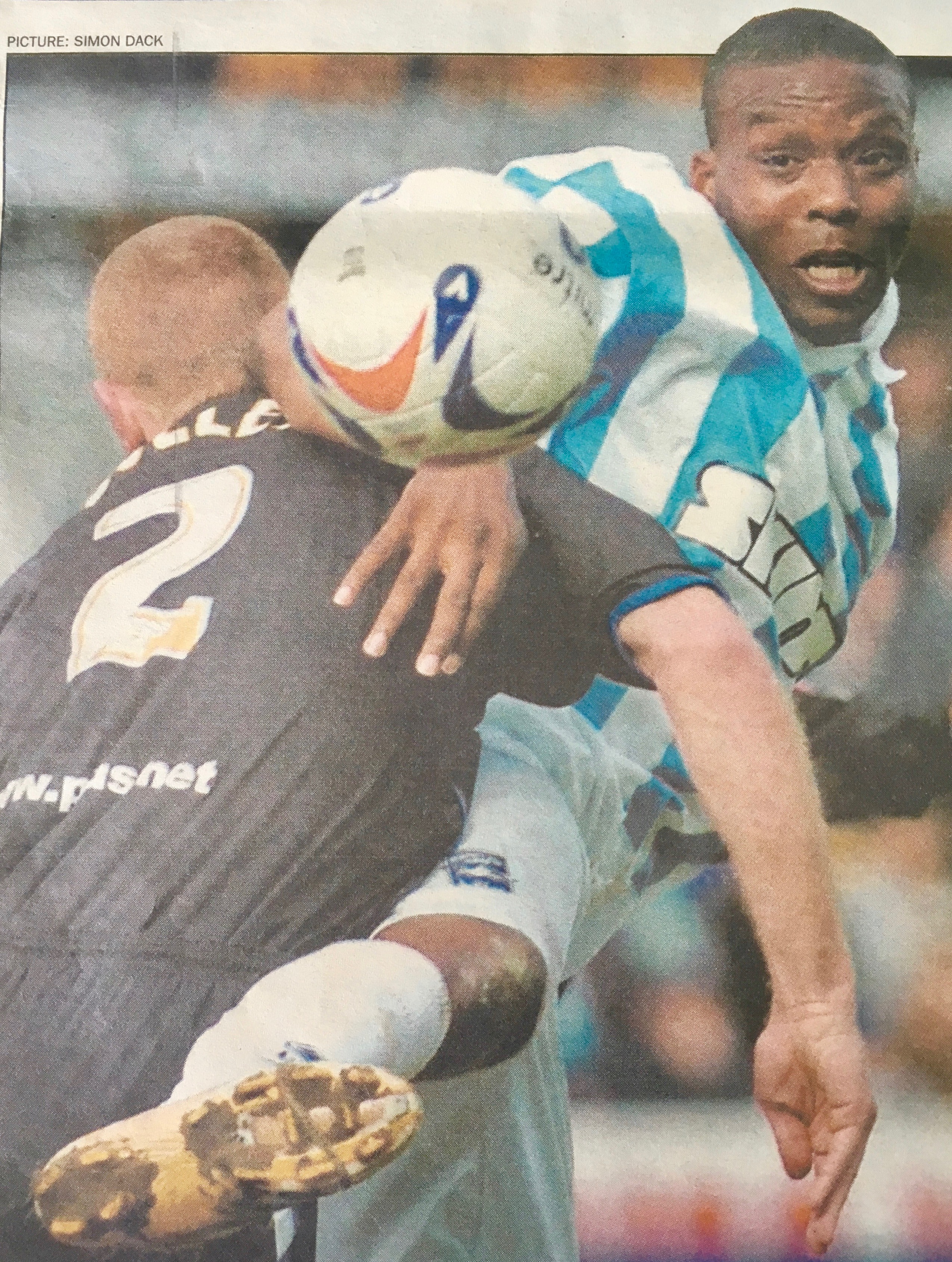
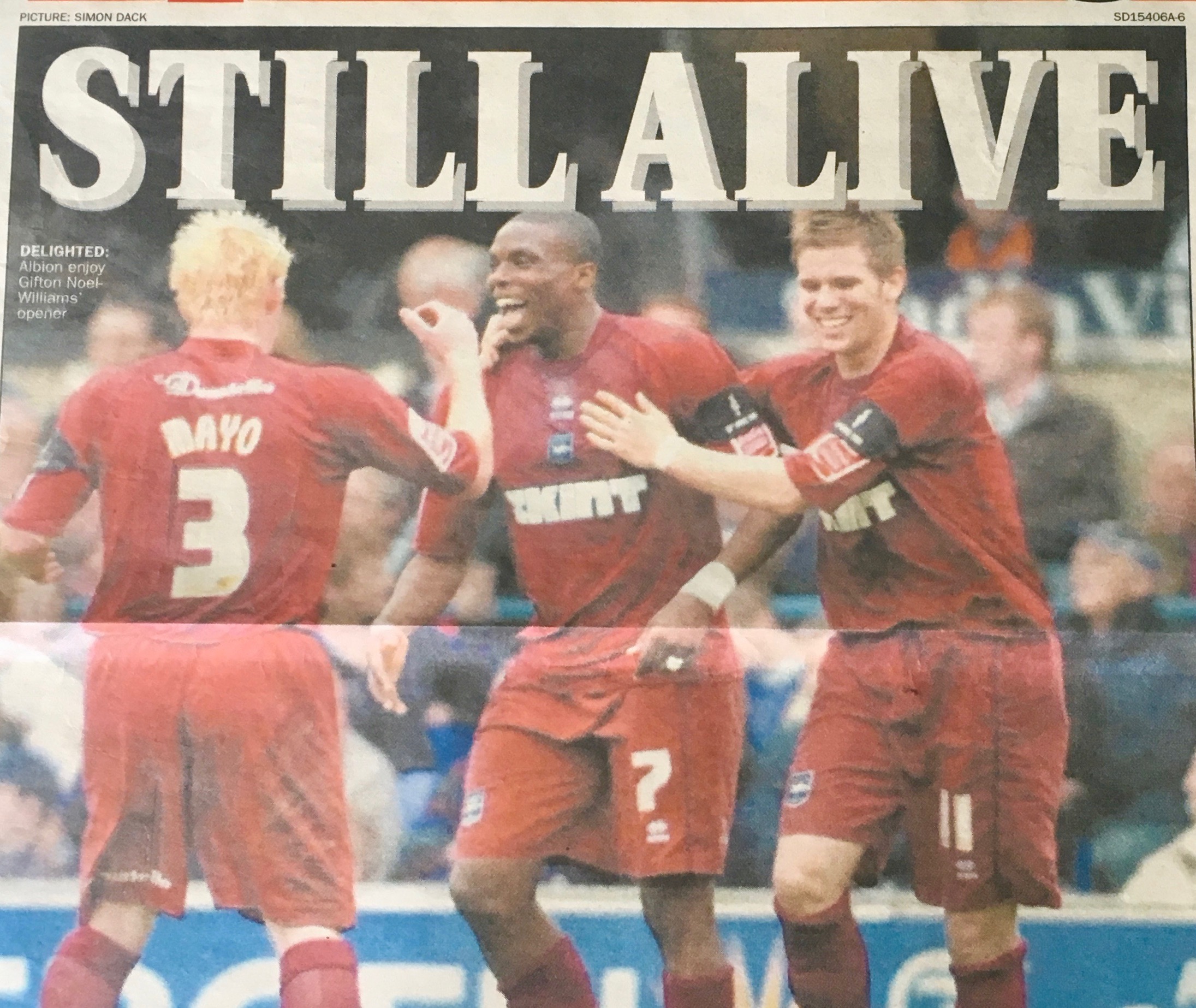
He crossed into the left back area, where the lurking Noel-Williams seemed to have acres of space to turn on the cross and drive the ball home from ten yards. Photographer Simon Dack captured the goal celebration for the front page of the Sports Argus (below).

GNW IpsIf that delight was not enough, teenage defender Joel Lynch made sure our trip was a memorable one by scoring his first-ever goal for the club.
Albion, never wanting to make life too easy for themselves or their fans, allowed Ipswich to pull a goal back when Lee flicked on from former Seagull Darren Currie’s cross for substitute Nicky Forster – a future £75,000 signing for Albion – to score. But thankfully it was too late for Ipswich to salvage anything from the game.

It was all to turn pear-shaped on the Easter Monday at home to Sheffield Wednesday, but for a couple of days at least the Great Escape still seemed a possibility.

Nevertheless, Noel-Williams seemed to enjoy his brief time with the Seagulls, telling Andy Naylor in The Argus: “I like the way the team plays football. They play my type of football.

“It is not only in the air for me to flick it on, they get the ball on the deck and want to knock it about a bit as well. That suits me, that’s what I like.

“The manager hasn’t asked me to be tearing around the pitch, he’s asked me just to use my movement and get into the channels when I have to. I appreciate that, so I’m enjoying my football, and, when I’m enjoying my football, I think I’m not a bad player.”

The downside of not having played regularly at Burnley was a lack of match fitness, and he admitted: “I play all right for maybe the first hour and then that’s it, my legs are gone.”

Certainly a fascinating character, Noel-Williams was still only 26 when he pitched up at the Albion, and was already a father of six children.
But how did he end up at Brighton?

An article on the excellent Burnley supporters website,claretsmad.co.uk, gives a great insight into the background. Published in June 2013, Tony Scholes wrote: “There was heavy criticism of his signing and he was booed by his own fans during his league debut for us at Crewe on the opening day of the 2005-06 season.

“He was one of Steve Cotterill’s five summer signings during that 2005 summer, and the plan was to partner him up front with his old Stoke City team mate Ade Akinbiyi, a partnership people were quick to say hadn’t worked when they had played together for Stoke.”

Scholes continued: “He must have wondered what he’d come to when he was roundly booed in that first match of the season at Crewe. He scored our equaliser, then hit the woodwork in the last minute which would have earned us a point.”

A week later, he missed a penalty against Coventry, and, even though he scored in a home draw against Derby, the poor start to the season saw Cotterill tinker with the line-up, and he lost his place.

He was then a peripheral figure and, just before the end of the loan window in March, Cotterill, who had once been on loan to Brighton himself, loaned him to struggling Albion.

Burnley fans thought they had seen the last of him but, despite being placed on the transfer list, and missing the club’s pre-season trip to Italy, he was still a Burnley player when the season began.

Then, remarkably, he went from zero to hero during the space of a few days in September. When he came on as a substitute against Colchester, yet again he was met by a chorus of boos from the Burnley faithful.

Scholes said: “The booing that greeted him was shameful. How he could go on and play in those circumstances is hard to believe, but he did and by the end of the game he’d turned those boos to cheers. We lost, but he’d played well.

“Three days later we went 2-0 down against Barnsley and he was brought on to replace the injured Alan Mahon. This was without doubt Gifton’s night. He never turned in a better performance for Burnley, and after Jon Harley pulled one back to give us hope, he scored a hat trick as we ran out 4-2 winners.”

Taken off the transfer list, over the next couple of months he became one of the most influential players in the side as Burnley climbed to third in the table.

Sadly, it didn’t last. The team and player’s form dipped from November.

“As the results went against us, the rumblings of discontent about him were being heard in the stands again,” said Scholes.

Meanwhile, Akinbiyi returned to the club which further reduced the chances of his former strike partner getting games. As the January transfer window came to a close, Noel-Williams was sold to Real Murcia in Spain for £50,000.

“Burnley fans will remember him as a player who struggled with pace and movement, a player who didn’t score enough goals, and a player they just loved to criticise,” said Scholes.

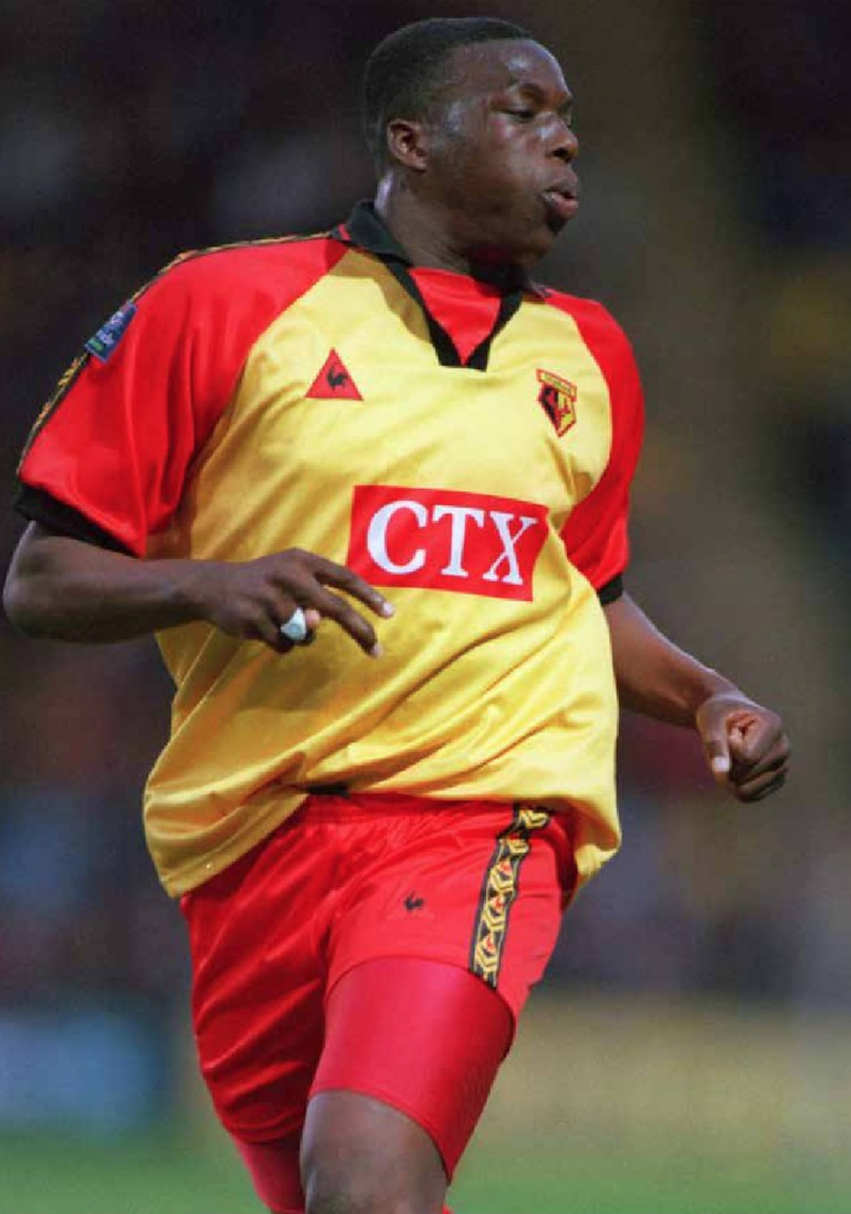
How different it all was from the early promise he had shown when blooded in the Watford first team at the tender age of 16.

Born in Islington on 21 January 1980 to Jamaican parents, the young Noel-Williams played for district and county representative sides and Carl Dixon, a coach at his local Sunday side Apex Arvensdale, recommended him to Watford.

When he played in a national cup final fo Islington and Camden at Highbury, he scored a hat-trick in front of the Sky Sports TV cameras and Arsenal, Spurs and Chelsea all took an interest in him but he stuck with Watfod, and it paid off when, in 1996, Kenny Jackett gave him his first team debut at just 16.

A serious knee injury sustained in a tackle by Sunderland’s Paul Butler in 1999 put him out of the game for the best part of 18 months and he subsequently developed rheumatoid arthritis in both knees.

In an interview with itv.com on 4 April 2016, the striker revealed how he might never have had a career at all if it hadn’t been for former Watford chairman Elton John.

GNW WatHe was told he would have to give up the game, but Watford’s pop icon chairman was living in America at the time and saw an article about a drug that could save his career. He contacted Graham Taylor and they paid for him to get the necessary treatment.
The injury and illness came just as Noel-Williams had received a call-up to the England Under-21 squad. At 18, he had been playing in junior England teams alongside Michael Owen and Michael Bridges.

Noel-Williams told interviewer Will Unwin: “Even though I had rheumatoid arthritis I was still able to play at Championship level and abroad.”

After seven years and 33 goals in 169 appearances for Watford, Noel-Williams signed for Stoke City; Tony Pulis taking him on a Bosman free transfer in 2003.

Across two seasons, he scored 23 goals in 88 games for The Potters banishing all thoughts that he wasn’t fit to play.

Then, in 2005, he joined Burnley because he was encouraged to by his former Stoke teammate, Akinbiyi (another striker who had impressed on loan from Norwich to Brighton earlier in his career, when he scored four times in seven games).

As an aside, Akinbiyi had distinctly mixed fortunes throughout his career and after he completed a £600,000 move to Burnley was sent off on his debut within two minutes for head butting Sunderland’s George McCartney!

But back to Noel-Williams, who told itv.com: “I did not want to go to Burnley, to be honest. What happened was that Tony Pulis left Stoke at the end of the season, he went to Plymouth – so as he was leaving and a new manager coming in, I didn’t want to stay at Stoke.

“Ade Akinbiyi was at Burnley at the time and he was with me at Stoke so he kept phoning me, saying ‘come to Burnley, they want us to play up front together’, so that’s why I went to Burnley, but then six months later Ade left to go to Sheffield United, so my time at Burnley crashed a little bit and that’s why I didn’t stay there for so long.”

Noel-Williams said he didn’t really see eye-to-eye with Cotterill, which hastened his departure to Spain.

The Spanish lifestyle suited him but his game time was restricted mainly to substitute appearances and when Real Murcia were promoted he was told he would not be guaranteed a place.

So he switched to Elche, where he said he enjoyed his football but they didn’t pay him for a year because of financial issues. He ended up having to take action via FIFA to get the money he was owed, and left after just one season.

His old Watford mentor, Jackett, gave him a short-term contract with Millwall, but he played just the one game whilst Tresor Kandol and Neil Harris were unavailable. On 5th November 2008, he signed for Yeovil Town on a month’s loan.

He played eight times for Yeovil, the last coming on the Saturday before Christmas. But 2009 saw him once again without a club and on 8th January it was confirmed that he was signing a two-year deal with American USL club Austin Aztex, a club managed by former Burnley boss Adrian Heath.

He was released at the end of the 2009 season and signed for American fourth-tier side DFW Tornados (based in Dallas).

After he packed up playing in 2010, he became a coach at the Brentwood Christian School in Austin, Texas.

He returned to the UK and linked up with his former Watford teammate Allan Smart at Daventry Town and subsequently had various coaching and managing roles with non-league sides – Northwood, Burnham and Codicote. In November 2017, he was sacked after Hertfordshire-based Codicote, who play in the 10th tier of English football, lost 12 of their first 14 league matches.

1 GN-W Argus2 GN-W Argus main3 G N-W PA (watford)

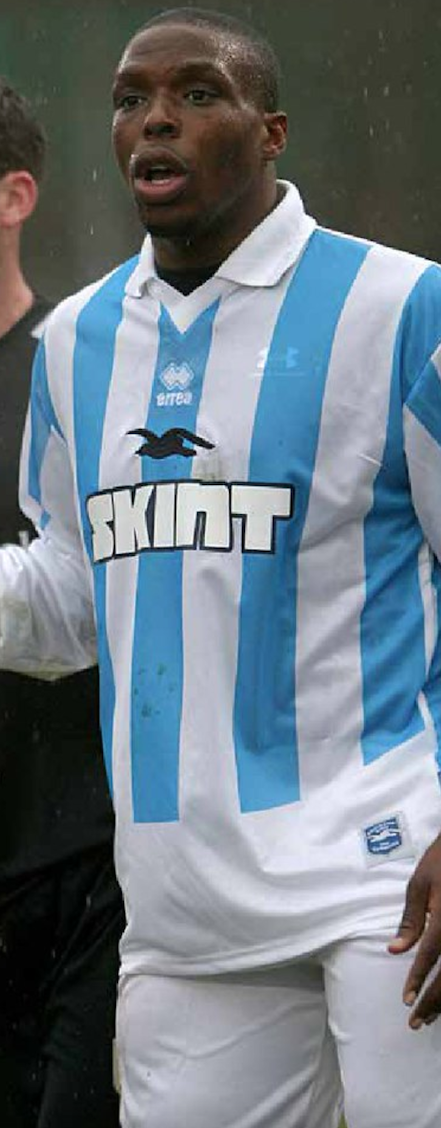
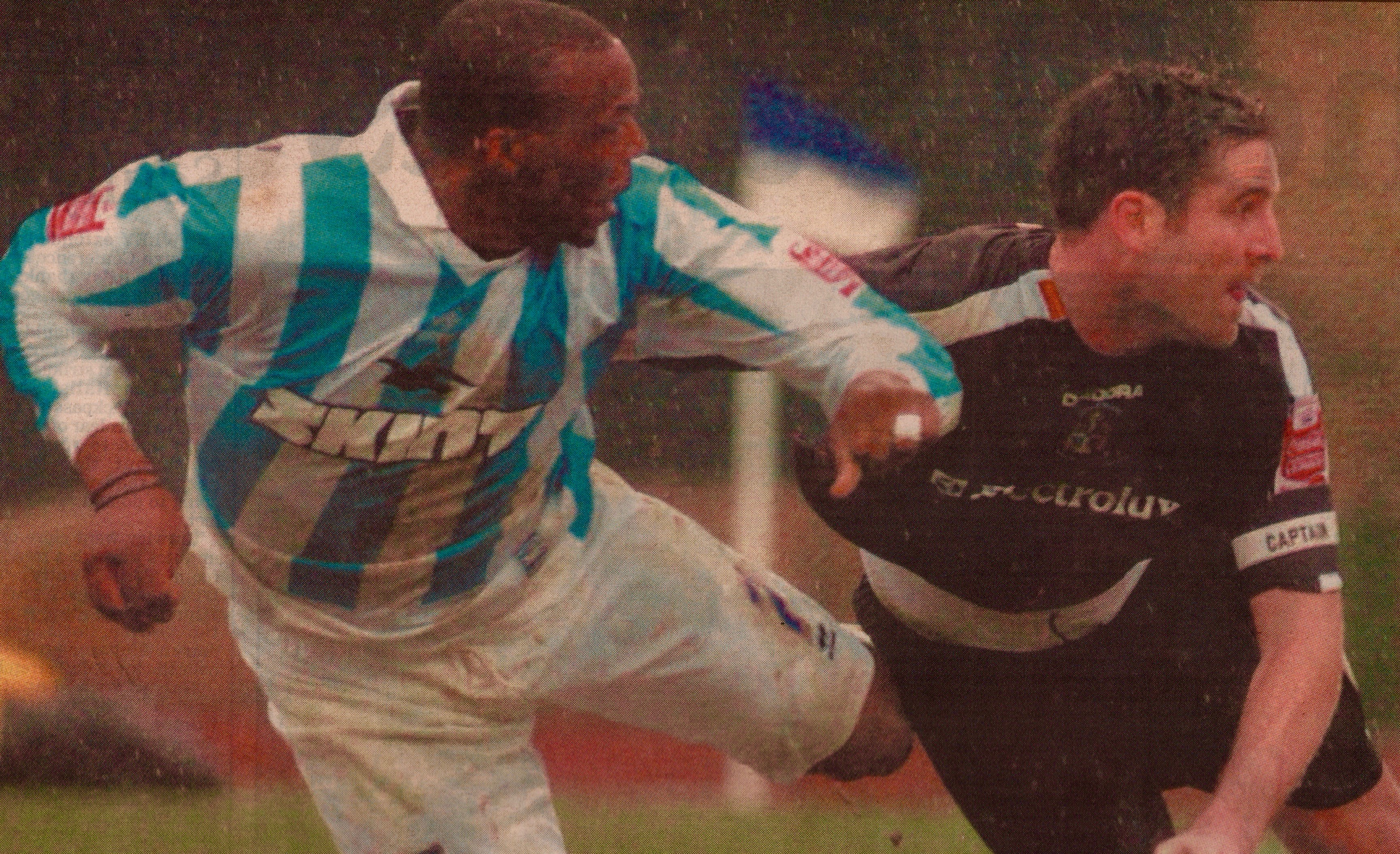
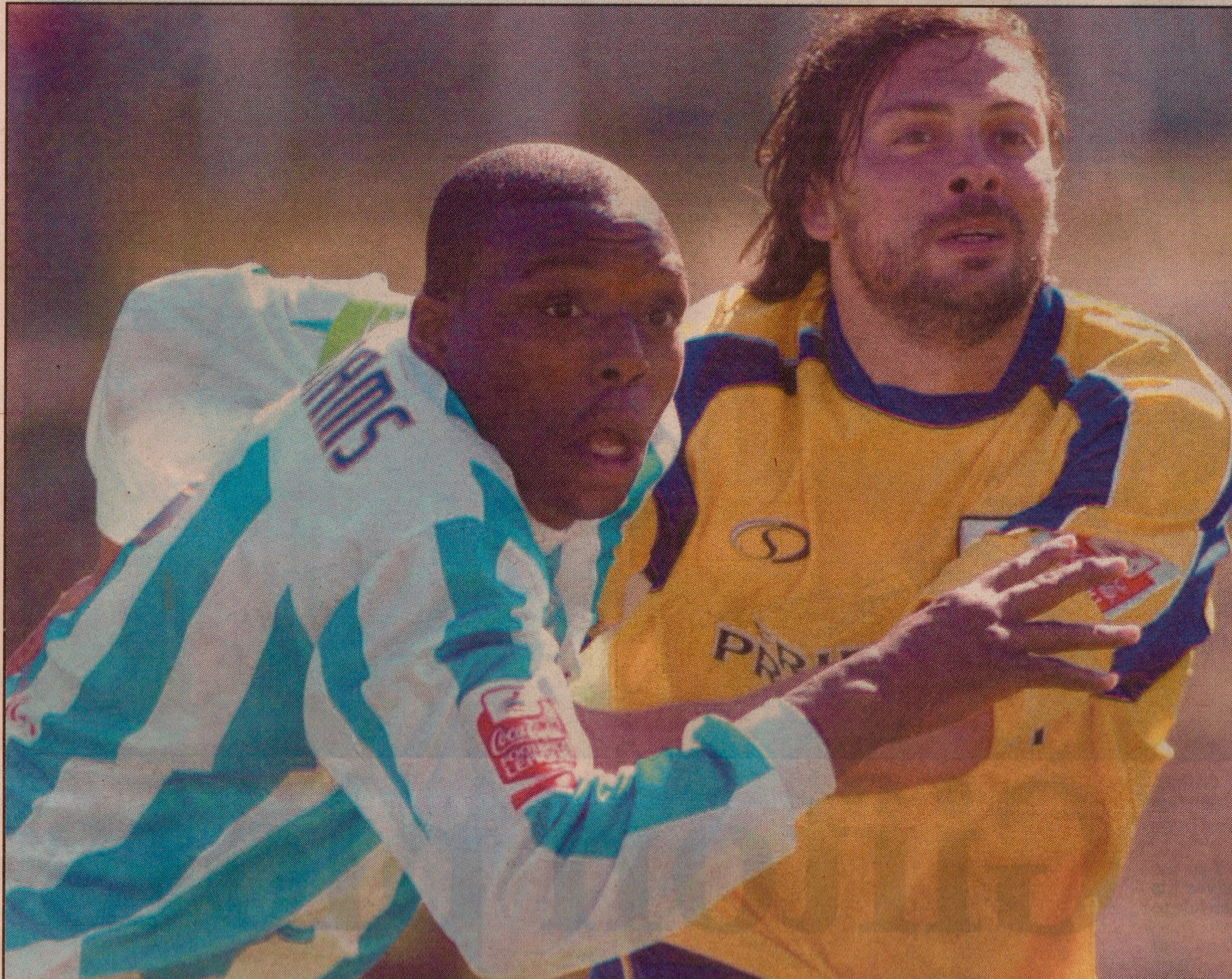
Pictures published by The Argus show THAT diving header to score on his Albion debut, and a study in determination to get to the ball. Also a Press Association image of a youthful Gifton in Watford colours.