
 WHEN a flame-haired midfield player called Steve Sidwell joined the Albion on loan from Arsenal in 2002, it wasn’t the first – or last – time he would link up with manager Steve Coppell.
Coppell had organised a similar arrangement the season before when he was in charge at Second Division Brentford, and Sidwell played 30 times for the Bees.
When Coppell acquired his services for the bottom-of-the-second-tier Seagulls, it was instantly apparent that here was a talent destined to perform on a much bigger stage. In a 12-game spell, he scored five goals. They were the building blocks of a career that saw him go on to play in the Premiership for 11 seasons, and against Huddersfield in early 2017 made his 500th career appearance.
So many things are easy in hindsight but presumably if Albion had already been playing at a new stadium at Falmer, Sidwell may have stuck with the Albion rather than moving on to Reading where the Madejski Stadium was already a reality.
In the Royals matchday programme for the Reading v Albion Championship clash in 2005-06, cover boy Siddy was interviewed at great length and recalled his time with Brighton with fondness.
“It was the first time I had played at this level – before then I had been in Arsenal’s youth team and on loan at Brentford in the Second Division – so I was grateful for that opportunity,” he said. “The best description of my time there would be ‘short but sweet’.
“The fans at Brighton were fantastic, especially away from home,” he continued. “”At the time we were bottom of the league and battling against relegation, but they still turned up every week and always backed us.”
Sidwell recounted how it was during that time that he forged his long term friendship with Bobby Zamora and he also spoke of how he played in the same Colliers Wood Sunday football team as fellow midfielder Alexis Nicolas.
Eleven months after Sidwell went to Reading, Coppell made the same choice and enjoyed the best of Sidwell as his scintillating partnership with James Harper in the centre of midfield helped to take Reading out of the Championship and into the Premiership.
Let’s just go back to the 2002-03 season, though, and recall the impact Sidwell made in Brighton’s valiant effort to defy the relegation odds.
A disastrous run of 12 defeats in the first part of the season had dumped Albion at the foot of the table and manager Martin Hinshelwood had been replaced by Coppell, who rung the changes and started turning round the fortunes on the pitch.
Sidwell came in from Arsenal and scored the first of his five goals in a 2-2 draw away to Preston. He scored the only goal of the game in a Boxing Day win at Norwich and two days later scored both the goals in a 2-2 home draw with Burnley (celebrating in this Argus picture below).
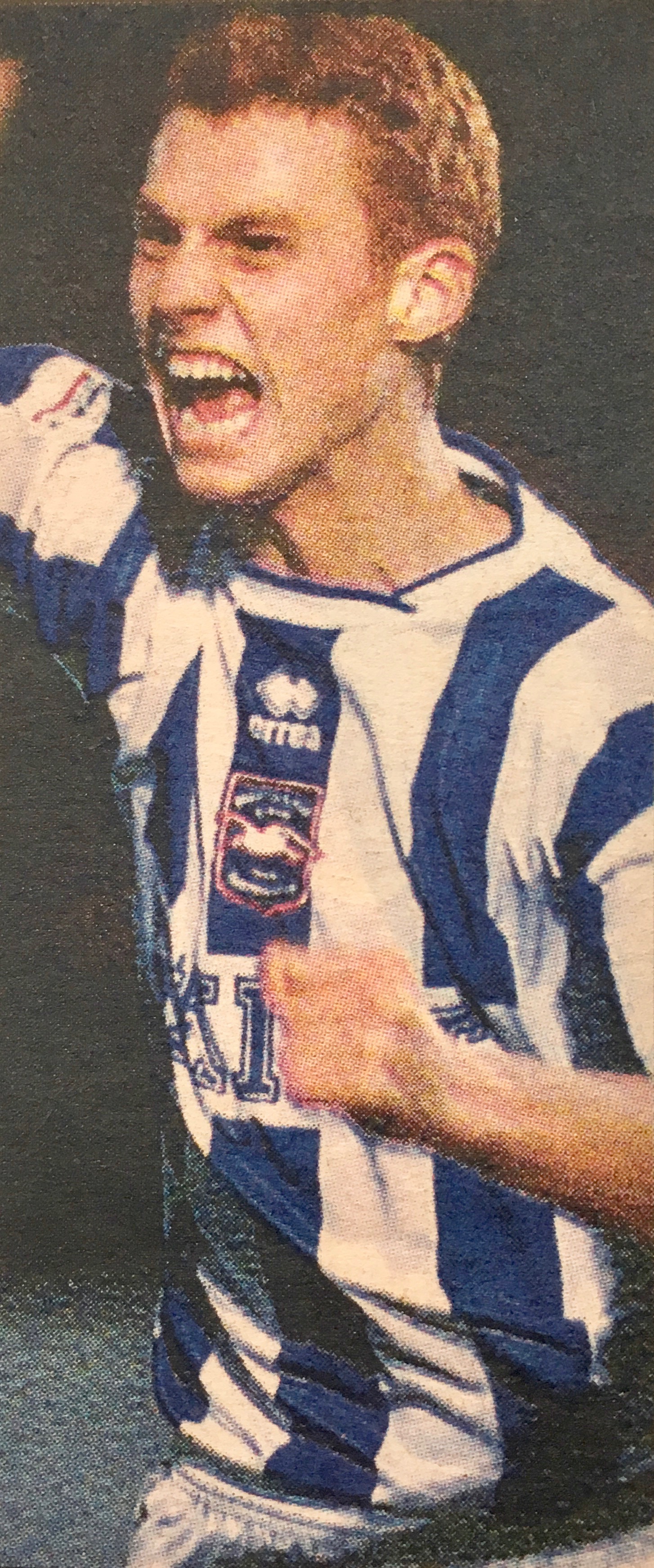 One of my favourite memories came at Highfield Road, Coventry, on January 11 2003 when Albion probably deserved to win but had to settle for a point in a 0-0 draw. Before the kick off, Albion fans were chanting his name during the warm-up, urging him to stay, because there had been speculation linking him with moves to other clubs.
Sidwell’s performance that day was acknowledged by no less an authority than the Scotland midfield maestro Gary McAllister, who was player-manager of Coventry at the time.
McAllister told the press after the game: “I was very impressed with Brighton. They passed it well. The front two were always a threat to us, joined by Steve Sidwell creating in the middle of the park and the two guys wide.
 “Brighton were as good a side as we have seen at Highfield Road this season.”
Two days later, the Argus was reporting on the clubs interested in signing the promising youngster, including Stoke and Reading. Coppell told them: “What will be will be. I personally think the level of his performance will almost demand Arsenal not letting him go because he has done so well.
“Alternatively, they are going to move him on and take what money they can now. There will, I’m sure, be a lot of people in for him.
“He just wants to play football. I think the more we take these kind of decisions off his shoulders and just let him turn up and play then we are going to get the best out of him.”
 Sidwell, who was out of contract at Arsenal at the end of the season, said: “Stoke put a bid into Arsenal. I went up there and it’s a great set-up and a fantastic club but we will see what happens.”
Interesting then, that the Potters did eventually get their man several years later.
However, in 2003 Reading was his destination and he spent four and a half years with them, helping them to win promotion from the Championship and playing in their debut Premier League season.
In July 2007, at the end of his contract, Sidwell moved on a free transfer to Chelsea, the team he’d supported as a boy. “People think that because I was with Arsenal from the age of nine to 20 that I support them, but I’ve always been Chelsea. I was born in Tooting, my mum and dad are from Tooting Bec and Balham, so I was born into a Chelsea-supporting family,” he said in an Albion matchday programme article.
So, he said it was a “no-brainer” to go there. “I was joining a club that had won back-to-back titles under a manager who was a breath of fresh air in the game and I’d be playing and training with some of the best players in the world.”

The wealth of talent meant competition for places at Stamford Bridge restricted Sidwell’s game time, although he did clock up 25 games for the Blues. With the benefit of hindsight, he said: “It was the right move, it just came at the wrong time. I was only 24 so it came too soon. I’d only had one season of Premier LEague football under my belt and wasn’t quite ready for such a big jump from Reading.
“Maybe if I’d gone to Newcastle or West Ham (they’d both been interested) for a couple of years and played really well there, then I would have been better equipped but, like I said, when Chelsea comes knocking you don’t turn the opportunity down.”
He added that off-field issues, such as Mourinho leaving in the September to be replaced by Avram Grant, caused unrest amongst the players. But he added: “In hindsight, I wished I’d stayed another six months because Luiz Felipe Scolari came in and you never know what might have happened then.”
However, in the summer of 2008, in search of more regular playing time, he moved on to Aston Villa on a three-year deal. His time at Villa Park was often interrupted by injury and he made 64 appearances in two and a half years before Mark Hughes ended up signing him twice – for Fulham and Stoke City.
In 2011, Sidwell returned to London and scored 17 goals in 115 appearances over three and a half years, before leaving Craven Cottage when Fulham were relegated from the Premiership in 2014. “I went there on the back of their Europa League run and they were still riding the crest of a wave,” he said in an Albion matchday programme article. He reckoned he played the best football of his career there and said: “In my first year we finished eighth in the Premier League.
“When I first went there, our home record was phenomenal. It didn’t matter who came to the Cottage, we always thought we would get the win. In the season we got relegated, it was surprising how quickly that mentality had changed.”
 Hughes took him on a free transfer to Stoke but he managed only 13 appearances so jumped at the chance once again to link up with his old pal Zamora to join Albion on loan in early 2016 to supplement their efforts to get promoted from the Championship.
Although the form of Beram Kayal and Dale Stephens meant he struggled to nail down a regular spot, he was a great option to bring off the bench and memorably got the last-gasp winner in a televised away match at Nottingham Forest. “When I was getting taped up, I said to the bench I was going to score, it was just fate,” he said. “I managed to pop up with the goal, and it was a great feeling to see the ball hit the back of the net and you could see from the celebrations what it meant to us all.”
I was in the away end that evening and despite a persistent Nottingham drizzle making the post-match walk back to my hotel pretty unpleasant, I dried off in the company of some other Albion followers in the hotel bar and reflected on a great skin-of-the-teeth win.
As we know, Siddy signed permanently in the summer of 2016, and has had a lot more game time this season. I was also fortunate to be at Ashton Gate on Bonfire Night that year when he scored that magnificent long range effort from inside the centre circle.
Footnote: I didn’t have to join in the last line of the Stevie Sidwell song….because I’m already in possession of similarly-coloured locks. We gingers have to stick together!

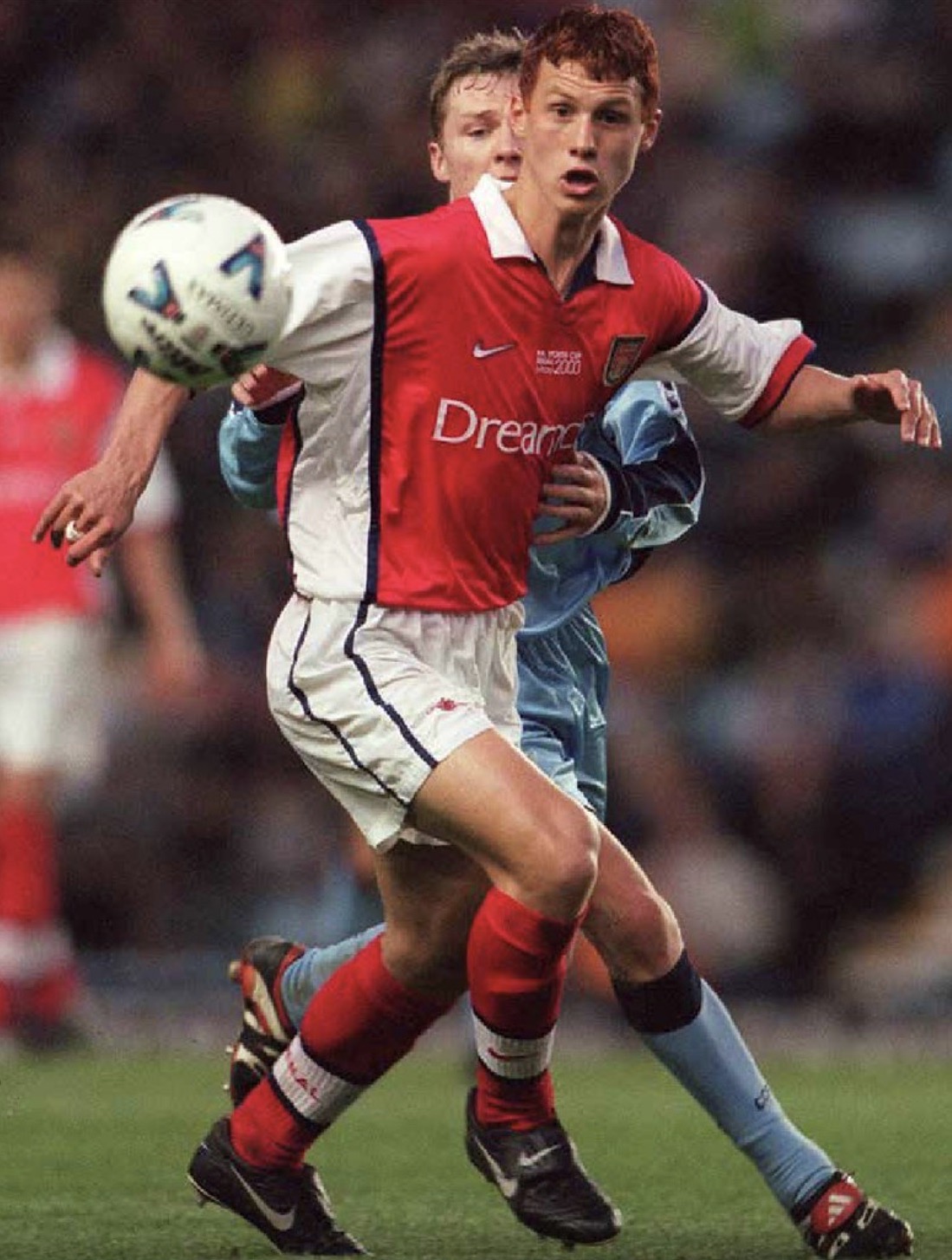
Pictures show the young Sidwell in Brighton’s away kit in 2002-03, as he appeared in the Coventry programme, and a portrait from Reading’s programme for the 10 December 2005 game v Brighton.


 After only three games in the old First Division for Brighton, Digweed was called up to the England under 21 squad, although Leeds’ John Lukic and Blackpool’s Iain Hesford were chosen to play ahead of him.
 In one of many matchday programme profiles, Digweed talked about his love of looking round the Kings Road, Chelsea, clothes shops on his way back home from training. He also liked his golf and told the matchday programme in August 1991: “I try and play as much as I can and get quite a few invitations to pro-am events along with other footballers and celebrities.”


 In parallel lines