Button rarely pressed into action with the Albion

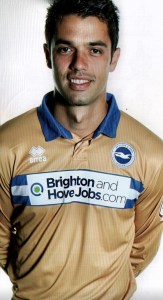
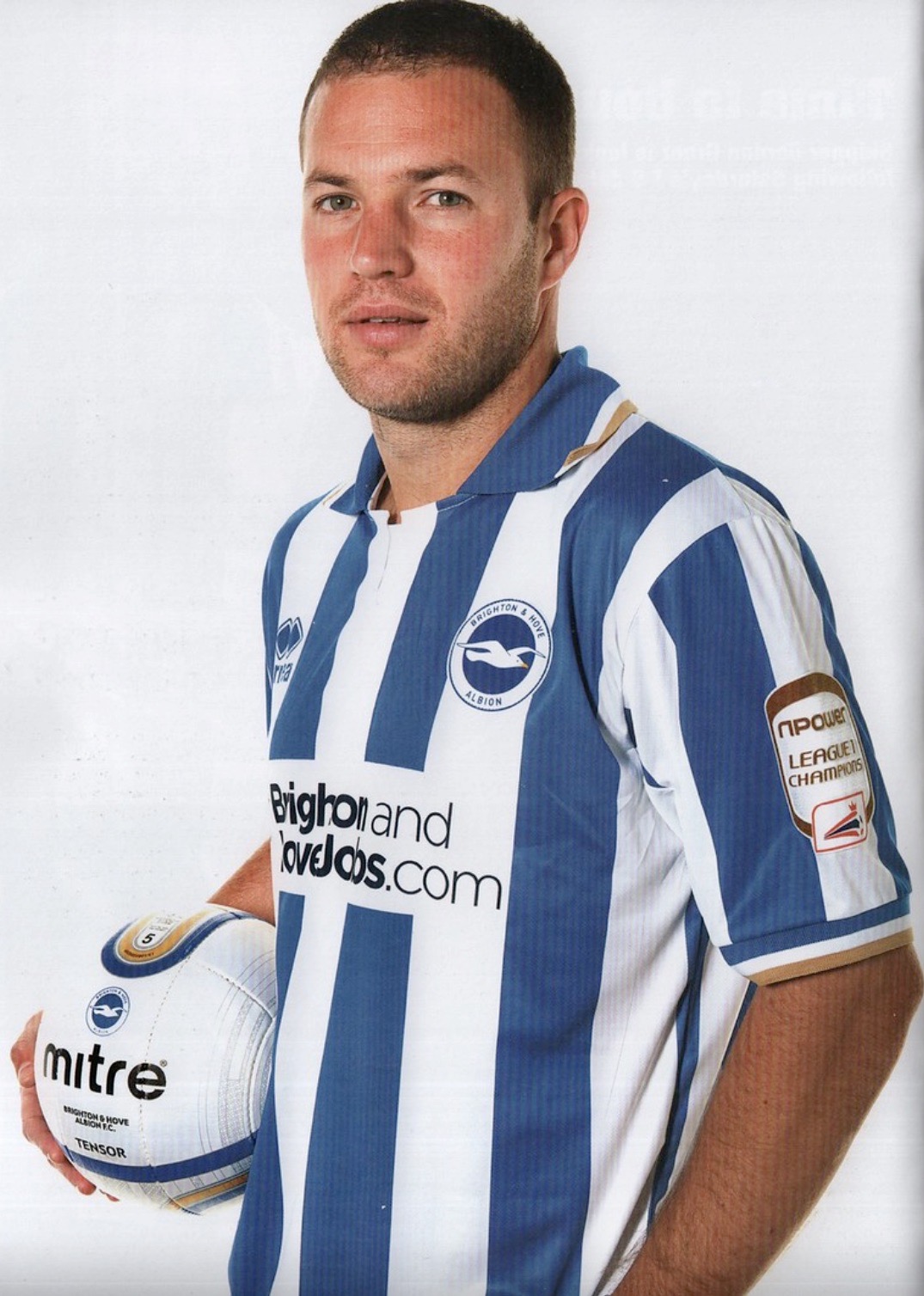
JOURNEYMAN goalkeeper David Button has travelled the length and breadth of the country in pursuit of playing time, his three years at Brentford being a rare settled spell in which he played 141 games.

Normally only a loanee or a back-up ‘keeper at a multitude of clubs, he had a season and a half as Fulham’s first choice but at Brighton between 2018 and 2020 he only made 10 first team starts.
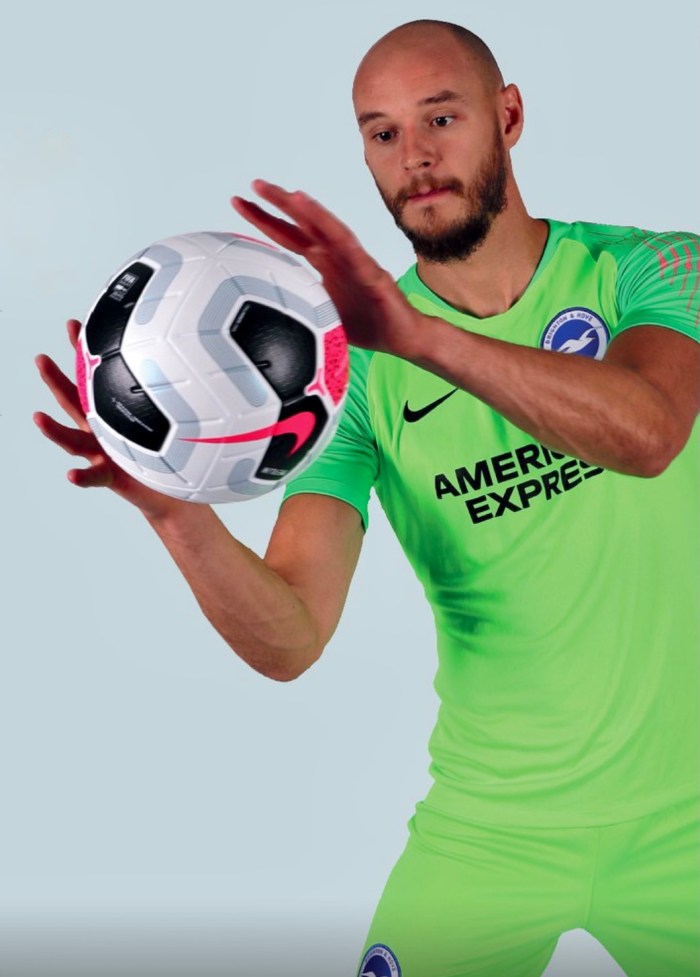
Button was 29 when he signed for the Albion and he stepped into the boots vacated by Tim Krul, the previous back-up ‘keeper, who had moved on to Norwich City. With both upcoming goalkeepers Christian Walton and Robert Sanchez out on loan, boss Chris Hughton wanted a third senior ‘keeper.
Largely a watching brief

“He has a wealth of experience, having made over 300 appearances during his career so far, and I’m sure he will work well with Maty Ryan and Jason Steele,” said Hughton.

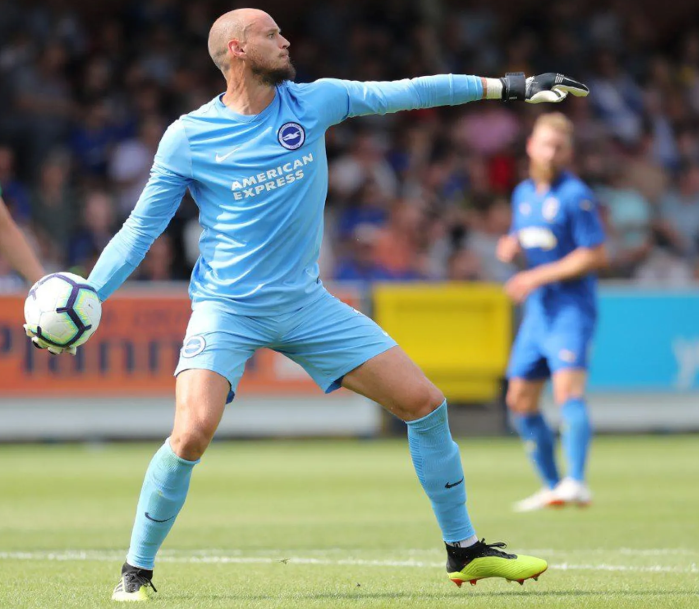
Button made his debut in a pre-season 2-1 friendly defeat against AFC Wimbledon, and realised from the outset that Ryan was going to be ahead of him.

“I’m not coming in blind to the situation, but I want to impress and be ready for the chance in the side – there has to be healthy competition wherever you are as a player and hopefully I can provide that for him,” he said. 

“There could be a chance for me and Jason in January if Maty goes away to the Asia Cup with Australia, so we’ll both be working hard to ensure we’re ready for that if the opportunity arises. 

“I know he’s very well thought of but at the same time you have to back yourself and work hard every day and do as well as you can.”

Indicating what might be expected of him, he said: “I’m confident with the ball at my feet – it’s a slightly different style to Fulham and we are allowed to go a bit more direct here and it’s something I feel I’m good at. 

“I think it’s a bit less risky – we play when we can and keep it when we can – the risk factor involved in playing it out of defence is less for me here though.”

Button certainly found a familiar face at training: goalkeeper coach Ben Roberts had previously worked with him at Charlton Athletic, and he said of him: “He has got a great reputation within the game and everyone he’s worked with speaks highly of him. I genuinely believe he’s one of the best at what he does.”

Button’s first competitive action for the Seagulls came in the fourth game of the season, a 1-0 home League Cup defeat to Southampton. He had to wait until December, when Ryan was away playing for Australia, to play in the Premier League.

In Premier League action v Everton

He kept a clean sheet in the first of them, a 1-0 home win over Everton, when he made a handful of saves, including turning a Richarlison effort onto a post.

“Although he’s a very experienced goalkeeper, it’s never easy when you’re coming in at this stage of the season and following Maty Ryan, who’s done so well for us,” Hughton said. “It wasn’t an easy decision because I’ve got two goalkeepers who are really pushing. But probably his experience managed to get him the nod (over Steele).

“It’s great for him to come into this first game and, not only be on a winning team, but also a clean sheet and that will do him the world of good.”

But that was as good as it got; Albion drew 2-2 at West Ham on New Year’s Day and lost to Liverpool (1-0) at the Amex and Man Utd (2-1) at Old Trafford. A 3-1 third round FA Cup win at Bournemouth saw then no.3 Jason Steele given a chance between the sticks.

On Ryan’s return, Button was back to the bench although he kept goal twice in Albion’s run to the semi-finals of the FA Cup: Button in the fourth round win over West Brom and in the fifth round win over Derby County. Hughton went with Ryan for the quarter final at Millwall and the semi v Man City.

When Graham Potter succeeded Hughton, Button spoke about the changes the goalkeepers then had to embrace. “We are now doing more work with our feet,” he told the matchday programme. “There is more onus on us to be better with the ball and to be comfortable with it.”

The opportunity to put it into practice was even less than previously for Button, though: he played just two League Cup matches in 2019-20 (Bristol Rovers and Aston Villa and one FA Cup tie (v Sheffield Wednesday).

At the start of the 2020-21 season, the ‘keeper swapped one Albion for another and signed for newly-promoted West Brom.

“I have ambitions of playing and helping the team as much as possible but I obviously understand that Sam (Johnstone) has got them promoted last season so he will start the season,” said Button.

“It’s up to me to push him and show the manager what I can do and take my chances when I get them. Hopefully there’ll be things I can bring to the squad certainly. I’m quite calm and comfortable with my feet too and commanding in my box so I’d say they’re my main strengths.”

However, Button played just one Premier League game in that first season plus three cup matches.

There was slightly more involvement in 2021-22 when the experienced stopper made 11 appearances in all competitions, including playing the final five Championship games and keeping consecutive clean sheets in the last three matches, against Coventry City, Reading and Barnsley.

When Button swapped West Brom for League One Reading in August 2023, one Baggies supporter wasn’t sorry to see the back of him. “’It is definitely the right move to offload David Button, he has been the worst goalkeeper I have ever seen at Albion,” said fan Matt Smith on footballleagueworld.co.uk.

“We’ve had some pretty decent goalies since I’ve been going, however Button was absolutely atrocious over a significant period of time too. How on earth did we spend £1m on him?

“How Steve Bruce gave him a two-year contract at the end of the 2021-22 season is beyond me. He’s so bad honestly. He can’t catch a bloody cold. He’s awful.”

Born in Stevenage on 27 February 1989, Button was with local club Stevenage Borough in their centre of excellence and acknowledged the input of the Coaching FX goalkeeping school in his early development.

“Keith Fenwick was my first coach: his first-class and very enjoyable sessions definitely helped to develop my love of being a keeper,” he said.

Button moved from youth academy to professional at Spurs

An England schoolboy and youth international, Button moved on to Tottenham’s youth academy in 2003, signed a scholarship deal two years later and then earned a four-year professional contract in December 2007. However, he only had eight minutes of first team action for Spurs – as a substitute for Carlo Cudicini in a League Cup match – and was loaned out 13 times.

Over his four years as a Spurs pro, he had two spells each at Crewe Alexandra and non-League Grays Athletic, plus stints at Rochdale, Bournemouth, Luton, Dagenham & Redbridge, Shrewsbury Town, Plymouth Argyle, Leyton Orient, Doncaster and Barnsley.

In the 2009-10 season, he notched up a total of 36 League Two appearances (10 for Crewe and 26 for Shrewsbury) and 30 in League One the following season, when with Peter Reid’s Plymouth, where he kept Romain Larrieu out of the team for much of the campaign.

When he eventually left Spurs permanently, he didn’t travel too far, joining Chris Powell’s Charlton in the Championship for £500,000. Powell preferred Ben Hamer in goal, though, and Button was restricted to a handful of appearances before moving on to Brentford.

In an interview with getwestlondon, Button said: “It was a little bit of a frustrating time for me at Charlton. I would like to think I would have been given a chance a bit sooner there. It was a difficult year but it helped build my character.”

When Brentford sold Simon Moore to Cardiff, manager Uwe Rösler took Button to Griffin Park declaring: “We decided David was the perfect choice for us. He is at the right age and he is very hungry to make the number one spot his own.

“As soon as Simon left, David was our first choice. David will face strong competition for the goalkeeper spot from Jack Bonham and Richard Lee, when Richard is fit again.

“We have been strong there (in the goalkeeping positions) over the past two seasons and are even stronger this year.

“Goalkeeper is a crucial position and David is a very good player.”

For once, fortune fell favourably for Button and he ended up first choice as the Bees won promotion from League One at the end of his first season and reached the play-off semi-finals at the end of his second season.

The Brentford fans website bcfctalk was full of praise for the stopper, saying: “He was very much our first point of attack as well as our last line of defence and his quick and accurate distribution played a massive part on our overall style of play and freedom of expression.”

The website added: “He sometimes failed to deal effectively with crosses and he could also use his physique better as he is an enormous man, but he was utterly reliable and often quite brilliant and he won us numerous points with some incredible saves.”

Ahead of the 2015-16 season, at a pre-season training camp in Portugal, Button spoke about all of the club’s ‘keepers being put through their paces by goalkeeping coach Simon Royce, a one-time Albion loanee ‘keeper, and how he wanted to maintain his run of form.

“I need to find that level of consistency now for me,” he said. “I feel like I had quite a few good games last season but there were a few where I wanted to do better. I am aiming to keep my standards high in every minute of every game this season.”

He remained first choice in 2015-16, making 47 appearances, but talks on a new contract broke down. He came in for a bit of a backlash on social media when he decided to move on to west London rivals Fulham instead but he told getwestlondon: “It’s football. Probably in their eyes it’d have been nicer for me to move on to a different club. It is what it is.

“Hopefully they remember the good times and what I did for the club. I’ve got a great respect for the fans and for the way they treated me while I was there.

Fulham custodian

“I had a great three years at Brentford but felt it was time for a change and the opportunity to come here arose and it was something that interested me.”

Button had the support of manager Slavisa Jokanovic at Fulham but gradually lost the backing of the supporters to the extent he was jeered at Craven Cottage.

Supporter Dan Smith did a detailed analysis of where he thought things went wrong on fulhamfocus.com. “Having narrowly missed out on promotion in the playoffs, Button signed off his Brentford career as a good keeper at this level and someone highly regarded by the Bees faithful,” wrote Smith. “His shot stopping one of the best in the league with a very strong ‘long’ kick.”

Button kept a clean sheet on the opening day of the 2016-17 season and Smith said: “He looked decisive, confident and capable. But something happened gradually as the season developed.”

He maintained the ‘keeper’s form slowly deteriorated and blamed the way he was being managed rather than the player himself. “He looks very uncomfortable with the ball at his feet and isn’t helped by the lack of movement from the deeper players making it very difficult for him to pick someone out,” wrote Smith. “Mistake after mistake giving the ball away clearly damaged his confidence because mistakes in possession led to poor keeping errors, letting in shots he should be saving and would have saved at Brentford.”

Interestingly, with echoes of what Roberto De Zerbi has said of Steele and Bart Verbruggen, Jokanovic did blame himself rather than Button, saying he trusted the ‘keeper and had full confidence in him.

“It’s my responsibility sometimes. I put my keepers in some sort of trouble. We play a bit different and I want to start playing from the keeper.

“It’s more simple to kick the ball to the strikers as it’d give him more opportunity to be comfortable in the goal.

“He has all my confidence. Sometimes, when he makes a mistake it’s partly my responsibility as well.”

Nevertheless, eventually Button lost his starting spot to Marcus Bettinelli.
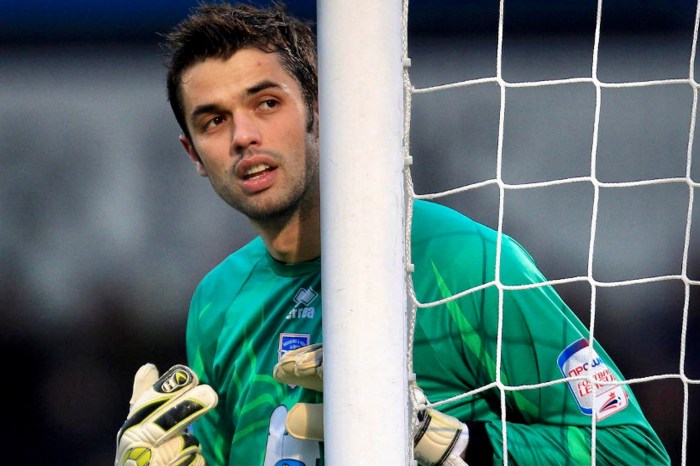
Big-time beckoned for Bratislava-born Brezovan

LANKY Slovakian stopper Peter Brezovan, who saved penalties on his Albion and Swindon Town debuts, once came close to a dream move to Everton.

The Merseyside outfit had him on a five-day trial with a view to signing him on a permanent basis from Swindon.

“It was very rewarding just to train alongside Tim Howard and face all these international players,” he said. “It was an experience I’ll never forget.”

Former Man Utd ‘keeper Howard was Everton’s no.1 in 2007 and, having released Richard Wright that summer, manager David Moyes had only new signing Stefan Wessels and the little-used Iain Turner as back-up ‘keepers. Everton’s goalkeeper coach was the former England international Chris Woods.

While Everton didn’t follow up their interest in Brezovan with an offer (three years later they did sign a Slovakian goalkeeper, Jan Mucha), it sounded like Swindon rather over-egged their expectations of a big payday.

Robins stopper

The Wiltshire Gazette and Herald reckoned a £300,000 eve of deadline day offer from Wolverhampton Wanderers had been rejected, saying: “Town will be asking for a substantial amount more.”

The newspaper added: “If the price is right, Town are ready to cash in on their number two keeper.” And manager at the time, Paul Sturrock reportedly told the Mirror: “If I was offered something like £2m, Brez would be an Everton player.”

The Toffees had originally taken an interest in Brezovan and invited him for a trial when he made an eye-catching start in English football in 2006. Not only did he save two penalties in his first game for Swindon, he conceded only five goals as Town won six of their opening seven matches and won the PFA Player of the Month award for September. Unluckily, a badly broken arm put him out of the game for nine months but Everton revived their invitation when Brezovan was fit again.

It probably didn’t help the ‘keeper’s progress at Swindon that successive managers came and went during his time at the club. It was Dennis Wise who signed him on a year’s loan from Czech side 1.FC Brno shortly after he’d taken over as Swindon manager, assisted by his former Chelsea teammate Gus Poyet, but by October the pair (along with goalkeeper coach Andy Beasley, who later spent a year at Brighton) left Wiltshire to take over at Leeds United.

County Ground caretaker managers David Tuttle and Ady Williams were followed by Sturrock for a year; David Byrne twice held the fort temporarily and Maurice Malpas was in charge for 11 months in 2008. When he left in November that year, Danny Wilson arrived the following month.

Born on 9 December 1979 in Bratislava, Brezovan’s first football memories were playing at right-back. In a matchday programme article, he explained: “In the first game of the season our ‘keeper got injured, so the biggest kid had to go in goal – and I’ve been there ever since. I’ve always been tall so looked upon to go in goal but, unlike a lot of kids, I enjoyed it.”

Brezovan spent his youth career at the city’s MŠK Iskra Petržalka and also played for Devin in the city before spending two years in the Czech Republic with FC Slovan Břeclav and HFK Olomouc. He then spent four years at FC Brno in South Moravia, although it was while he was on loan back in Bratislava, playing for FK Inter Bratislava, that he was spotted by Swindon and subsequently made the move to England.

In spite of his spectacular start for the Robins, when he couldn’t speak a word of English, it would be fair to say Swindon have mixed memories of his time at the County Ground, chronicled in detail on swindon-town-fc.co.uk. After former Albion captain Wilson released him at the end of the 2008-09 season, he was without a club for six months.

He had an unsuccessful trial at Crewe Alexandra in October 2009 but Poyet, not long after succeeding Russell Slade as Albion boss, signed him for a month at the beginning of December to cover a mini goalkeeper crisis he inherited.

Regular no.1 Michel Kuipers was injured and Slade’s misfit summer signing Graeme Smith had conceded 11 goals in three defeats and one win.

Handed his debut on a drizzly, grey December afternoon at Exeter (I know, because I was there, getting wet on the uncovered terrace behind the goal!), Brezovan went from zero to hero, according to writer Richie Morris, after upending  former Albion loanee Stuart Fleetwood in the penalty area and then impressively saving Marcus Stewart’s spot kick.

“The former Slovakian under 21 international pulled off a string of comfortable, but reassuring saves,” wrote Morris. “True, he did nearly gift the home side a goal with a wayward clearance, but, considering how long he has been out of first team football, he can be happy with a solid performance.”

A somewhat modest Brezovan attributed his penalty save to goalkeeper coach Tony Godden’s homework. “He told me where Marcus Stewart puts his penalties and I dived the right way but it was a great feeling to help the team to victory,” he said.

Penalty-saver!

On another occasion, Brezovan expanded on his technique with penalties, telling the matchday programme: “It’s mainly instinct on the day. You get the stats guys who help you with your preparation – they will tell you where certain players tend to put the ball but sometimes you just have to go with how you feel in that moment and go for it.

“I don’t get the lads to take penalties at me after training either – I hate doing that. It’s all about how you are on the day.”

Brezovan’s arrival signalled the departure of the hapless Smith who ended his six-month nightmare in English football by returning to Scotland, moving on a free transfer to Hibernian. And the Slovakian’s short-term arrangement ultimately extended into a four-and-a-half-year spell as a Brighton player.

There were occasions when he was tempted to move on for more regular game time, but he confessed to loving the area and stayed put even though first team opportunities were few and far between.

In that first season, fans’ favourite Kuipers, not for the first time, found his place under threat because of the 6’6” Brezovan’s form. But a blunder by the new man in a game at home to Wycombe prompted Poyet to bring back the former Dutch marine (chef) at the start of the new year.

Kuipers had an eight-game run in the starting line-up but then broke a finger. Brezovan, having had his contract extended, seized his chance and kept his place through to the end of the season.

Brezovan told the matchday programme: “We are good friends, we train well together, and so I really feel for him. We don’t feel like rivals at all in that respect but I know that while I am in the team I will be giving my all to make sure I maintain my place.”

It paid off because Poyet offered him a two-year contract at the end of the season, saying: “Peter has earned his new contract. Initially he came to play and help us out but I expected he would prove he was worth a longer deal and he has done that.

“He has been a very important part of our turnaround since Christmas and now his challenge is to make the position his own for next season and beyond.”

And the ‘keeper told the Argus: “Together with my girlfriend, I’ve really settled here. I think that Brighton is the nicest city in England and we’re really happy here.

“I owe a lot to the manager because he brought me to the club and I’m glad he wants me to stay. That’s why it was so easy to sign the deal. The manager will no doubt bring in more good players in the summer so it’s going to be an exciting season.”

He was right about the excitement because Albion went on to win the League One championship title; what he might not have anticipated was that because he was nursing a wrist injury on the eve of the season opener against his old club Swindon, Poyet moved quickly to sign another ‘keeper who he’d worked with at a previous club: Casper Ankergren.

The Dane, released by Leeds, instantly became first choice ‘keeper and Brezovan spent most of the season watching from the bench, making just seven starts in the FA Cup (the first and second round matches both went to replays). Close to the end of the season he went on as a sub for the injured Ankergren in the 18th minute of the 25 April league game at Colchester United, making important saves from Ian Henderson and David Mooney as the Albion salvaged a point in a 1-1 draw.

Brezovan was also in goal for the penultimate game of the season, and the last ever played at the Withdean, when Huddersfield won 3-2. A defensive gaffe by Inigo Calderon, who left Brezovan stranded by chesting the ball down inside the area, let in Benik Afobe to put Town 2-1 ahead; sub Matt Sparrow equalised for the Seagulls and, although Brezovan twice made excellent saves to deny defender Jamie McCombe, sub Danny Ward scored a last-minute winner.

Brezovan resumed his place on the bench as 2011-12 got under way with Ankergren once again Poyet’s first choice no.1, although, after he’d shipped 13 goals in eight games in the autumn, the manager brought experienced Newcastle custodian Steve Harper on loan for five games.

Brezovan preferred to see the positive side of it, though, telling the matchday programme: “That was a good experience for all the goalkeepers. He is a vastly experienced ‘keeper and we have learned from his time here.”

After Albion went through a four-game losing streak in December, Brezovan got the call to take over from Ankergren in the new year match at home to Southampton when an injury-hit Albion sprung a surprise, winning 3-0 with a memorable brace from midfielder Sparrow.

It was only after the game that Poyet revealed how his plan to change ‘keepers nearly didn’t come to fruition. “For the last week Peter has been waiting for his wife to have a baby, every day,” Poyet told the Argus. “I needed to wait until 1.30 to tell him he was playing. The baby was due three or four days ago, so we were all thinking ‘come on girl, go on’!”

Later the same month, Brezovan was hailed a hero when he saved a crucial spot-kick in a penalty shoot-out in a third round FA Cup replay at Wrexham and he told Brian Owen of the Argus: “I enjoyed it. The pressure is all on the strikers at penalties because they can just mess it up. You have nothing to lose, you are practically without pressure.

“I knew one player and where he goes and I saved his penalty so we could have a laugh in the end.”

Nevertheless, Poyet was obviously still unsure about the goalkeeping situation. He let third choice Michael Poke go on loan to Bristol Rovers but brought in Columbian David Gonzalez, who’d been with Man City for two years, to put pressure on Brezovan and Ankergren.

“The gaffer wanted to bring in another keeper. You have to face it, with Casper, and keep working to keep our positions,” said Brezovan.“I’ve got another year. If you want to stay at a club for a long time, you have to play. You can’t be just like a useless second or third choice. This is my opportunity and I am going to do everything to stay in goal.”

He did indeed stay in goal but on two occasions let in six! The first drubbing was handed out by Liverpool in the fifth round of the FA Cup at Anfield (with Albion famously conceding three own goals in a 6-1 defeat).

After Brezovan shipped another six against West Ham at the Boleyn Ground, Poyet had seen enough. The patient Gonzalez replaced Brezovan in goal for the following game, one of six changes to the side that capitulated to the Hammers.

Come the new season, Brezovan and Ankergren had even more of a challenge on their hands when experienced Polish international and former Manchester United ‘keeper Tomasz Kuszczak arrived at the Amex.

It pushed Brezovan down the pecking order to third choice ‘keeper and he played only once all season, in a 2-1 win at Huddersfield when Kuszczak had a finger infection that ruled him out and Ankergren picked up an injury in training two days before the game.

Brezovan stayed at the club as no.3 ‘keeper for the 2013-14 season and once again injuries to the first and second choices in Oscar Garcia’s side presented him with a rare opportunity. He ended up playing eight games, four in the league and four in the FA Cup.

He made his first appearance for 13 months in the 7 December 3-1 win at home to Leicester after Kuszczak pulled out in the warm-up with a stomach muscle strain, with Ankergren already sidelined with a wrist injury. In an interview with the Argus, on his 34th birthday, Brezovan spoke openly about possibly moving on to get more games.

“It’s hard because Brighton is a beautiful place and I love the people around here. It’s not easy to go.

“If there was an offer from the same level, I would probably try it. Going to a lower division, getting injured and then to be there on the bench is risky.”

And of his sudden chance back in the Albion goal, he reflected: “That’s football. Things can happen quickly and it’s beautiful. It shows how everyone is important. When you don’t play for a long time, even in training, you start to think it’s hard to motivate yourself.

“That’s why you need good lads around you. I love the guys here. They always help you to be motivated. When you play and your contract is running out you need to find that motivation.”

His appearance in the fifth round FA Cup replay defeat (1-2) at Hull City on 24 February turned out to be his last first team game and he was released at the end of his contract that summer having featured 62 times for the Seagulls.

He trained with Oxford United during pre-season and at the start of the next season joined Portsmouth for a month as cover for Paul Jones. On transfer deadline day, he signed a one-year contract with Tranmere Rovers.

Although he played seven games for Rovers, he lost his place to regular ‘keeper Owain Fon Williams. He had a loan stint at Southport in early 2015 but at the end of the season, following Rovers’ relegation from League Two, he was released.

Interviewed by the Argus in December 2015, Brezovan had returned to Brno in the Czech Republic, quit football and turned to publishing music online.

“I lost a little bit of motivation,” he said. “The football wasn’t going anywhere and I’d had enough. I’m focusing on this now.”

Tall Tunnicliffe’s tilt at the top fell short and he quit at 24

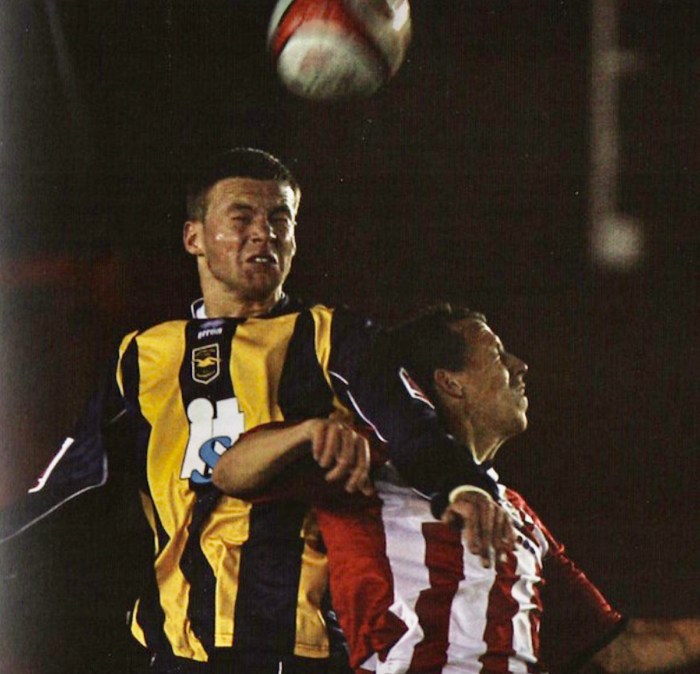
ONE-TIME Liverpool triallist James Tunnicliffe quit playing football at 24.

When he was only 16, a £750,000 move from Stockport County to the ‘mighty’ Reds was on the cards.

But Liverpool’s then boss, Rafa Benitez, gave the young hopeful the thumbs down and his subsequent short playing career petered out in the lower leagues.

Tunnicliffe – a Russell Slade signing for Brighton in June 2009 – was at the heart of League One Albion’s defence for Gus Poyet’s first game as Seagulls manager.

But there was plenty of competition in that area of the team and, before long, the 6ft 4in centre half struggled to hold down a place. Initially Adam Virgo, Tommy Elphick, Jake Wright and Adam El-Abd were all competing in that position and, although Wright moved on, Gordon Greer – instantly appointed captain – and homegrown Lewis Dunk steamed ahead of him in the pecking order.

Slade had signed him on a three-year deal, declaring at the time: “He’s 20 and one or two other clubs were looking at the situation higher up, Championship clubs.

“We’ve kept everything quiet and gone about the business in the right manner and we’ve got our man.”

Slade told the Argus: “He has got huge potential. He’s a decent athlete for his size, handles the ball very well and hopefully will be a threat for us in the box. There’s lots more to come from him. He’s a really good, positive signing.”

Midfielder Gary Dicker, a former Stockport teammate who made the same move, added: “He’s a good tall, strong athlete and a good player.”

The player himself admitted it was a good word put in by another former Stockport teammate, Jim McNulty, that influenced his move.

“We’re good friends and used to live a couple of doors apart in Manchester and travelled into training together at Stockport,” he told the matchday programme. “He absolutely loves it here and that helped sway my decision to come.”

Albion watcher Andy Naylor had a mainly favourable first impression although he was less sure about the tactic of using the central defender to launch long throws. In an Argus comment piece, Naylor wrote: “He looks composed, comfortable in possession and has good pace for one so tall. The jury is out, though, on just how much Albion should try to exploit Tunnicliffe’s long throw.

“It has more of a loop than Rory Delap’s torpedo-like delivery and has caused opposing defences few problems so far. Albion would arguably be better served exploiting Tunnicliffe’s 6ft 4ins frame in the goalmouth for set pieces.

“His throw remains a potentially useful weapon, for example during the closing stages of the game if the Seagulls are chasing an equaliser, but it should perhaps be used more sparingly.”

Somewhat ironically, while not starting the first four games of the season, he made his first league start at home to his old club Stockport – when Albion were on the wrong end of a 4-2 scoreline.

Tunnicliffe scored the first goal of his career in a 1-1 draw at Bristol Rovers in September 2009 after captain Adam Virgo had been sent off. He said: “I am doing everything I can to keep my shirt. I don’t want to lose that and hopefully I can contribute a few more goals this season as well.”

His performance alongside Elphick drew the admiration of Richie Morris, who wrote in the matchday programme: “Tunnicliffe not only bulleted his first goal for the club with a well taken header, but diverted a Carl Rogan shot over and cleared what looked like a late winner off the line.”

Tunnicliffe scored again – this time just a consolation goal – in a 4-1 defeat at Norwich that was Poyet’s fourth game in charge. But he was cast aside after playing in the FA Cup against Torquay at the turn of the new year and, before long, was sent out on loan to MK Dons.

Any hoped-for restoration to the first team on his return was dashed when at the start of the following season he was shipped out on a season-long loan to Bristol Rovers. Eventually, with a year still left on his contract, he agreed an early end to his Seagulls deal and joined Wycombe Wanderers in the summer of 2011.

Despite it all, he told seagulls.co.uk: “It’s been frustrating for me over the last 18 months but I loved being here and I haven’t got a bad word to say about the club. I made a lot of good friends and I’m sure the team will have a very good season in the Championship.

“I’m a bit disappointed with how it worked out but I’m now focusing on working hard over the summer to try and secure first-team football with Wycombe.

“I’ve watched Wycombe a lot and I know plenty about the manager, Gary Waddock, who looks to play good football, so it’s an attractive club for me to move to.

“I’ve done a lot of thinking about what is going to be best for me and Wycombe is a good club, recently promoted to League One and on the up, so it’s hopefully going to be a good move for me.

“I’m now excited about a new challenge and I feel like I’ve got a lot of things to prove to myself and the other clubs. I want to show that I am a good player.”

Waddock pointed out: “James is a talented young centre-back with experience of playing at this level.

“He’s a footballing defender who can play out from the back. A lot of clubs were interested in him.”

And Tunnicliffe told the Bucks Free Press: “I’m more than just a defender who kicks it, I like to pass it at the right time. I’m looking forward to being in the team next year and doing well in League One.”

Born in Denton, Manchester, on 17 January 1989, Tunnicliffe went to a particularly sporty school, Audenshaw High in Manchester, and, as well as playing a lot of football, he was also good at golf and cricket as well as being a decent 100-metres hurdler.

It was at Stockport’s school of excellence that he honed his football skills: his grandad, John Bishop, was the club’s kitman at the time, and later a masseuse.

In October 2005 the young Tunnicliffe was sent on a two-week trial to European Champions Liverpool and the pound signs were already beginning to form in the eyes of his parent club: a £750,000 deal was said to have been agreed for the youngster.

Unfortunately, Benitez was unable to watch the 16-year-old because he was away with the first team for a Champions League match with Anderlecht.

Tunnicliffe was handed an extra week with the Reds to give Benitez the chance to cast his eye over the youngster, but he but did not do enough to convince the Spaniard and the proposed deal collapsed.

He returned to the League Two Hatters where manager Chris Turner reckoned the youngster’s time at Anfield had helped to develop their promising player.

“It has been a fantastic experience for him and I’m sure it’ll benefit both the player and Stockport County,” he said. “He trains with our first team at the moment and doesn’t look out of place at the age of 16 so you can imagine how highly we regard him.”

As predicted by Turner, Tunnicliffe made his first team debut as a substitute in a 2-0 defeat at Notts County and he went on to make 50 appearances for them. He also had a brief loan spell with Northwich Victoria in 2007 and, perhaps bitten by his Liverpool experience, turned down the offer of a move to Southampton because he felt he would be better served staying put.

If the move from Brighton to Wycombe was an opportunity for a fresh start, he couldn’t have wished for a better start, scoring on his debut in a 1-1 draw against Scunthorpe.

But after beginning as a regular, he was dropped after a 3-1 Johnstone’s Paint Trophy defeat at home to Cheltenham Town in October and only made a handful of appearances after that.

His final Wanderers game was in a 6-0 tonking by Huddersfield at Adams Park in January 2012, after which he was dropped in favour of youngster Anthony Stewart.

The following month he joined League Two side Crewe Alexandra on a 30-day loan, citing homesickness as a reason for wanting away from Wycombe.

Injury curtailed his spell at Gresty Road and in the summer of 2012 he rejoined Stockport, who by then were playing in the Conference National. The following year he made eleven appearances on loan for Stalybridge Celtic before returning to County.

He took the decision to retire from football aged just 24 and, on his LinkedIn profile, says: “The experiences I endured in my eight-year professional career, filled with some highs and many lows, were a catalyst that inspired me to step into the football intermediary world.”

Indeed, he cropped up as a ‘representative’ for former teammate Glenn Murray when he was involved in negotiations with Brighton over a new contract.

Tunnicliffe says of himself: “I am a people’s person and my current role enables me to advise, support, empower and challenge clients, whilst providing opportunities where they can excel and get the best out of their abilities.

“In addition, the role has provided a platform to grow a worldwide network and converse with people from various organisations and backgrounds.”

He says that in September 2022 he enrolled onto the Masters In Sports Directorship programme at Manchester Metropolitan University.

“This course has presented me with an opportunity to enhance my self-awareness and existing knowledge, whilst developing areas of deficiency.

“I am embracing this academic challenge and look forward to learning more about the commercial and business functions of a sporting organisation over the remaining duration of the course.”

Benno’s quick route to the top after ‘fantastic’ Albion chapter

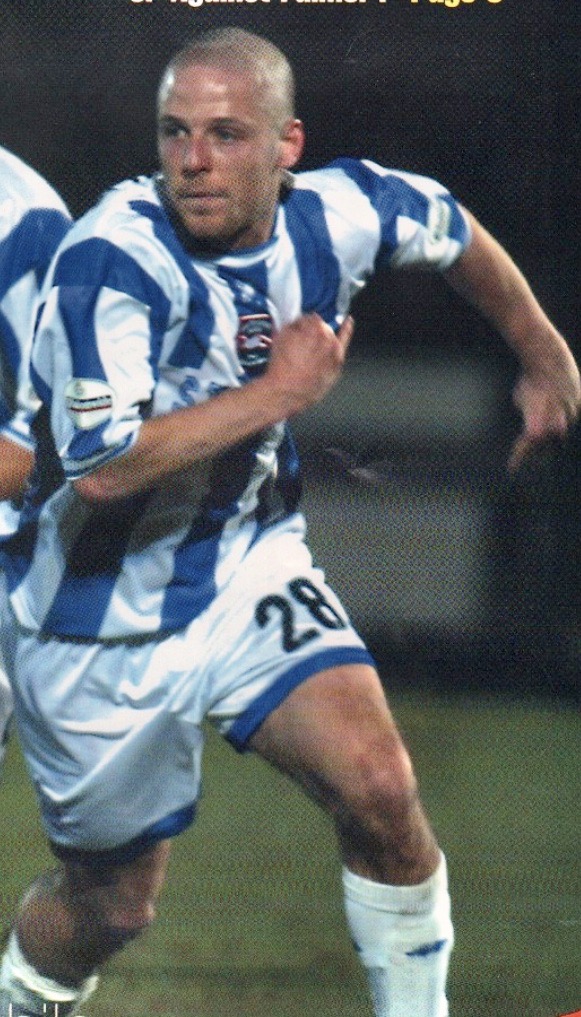
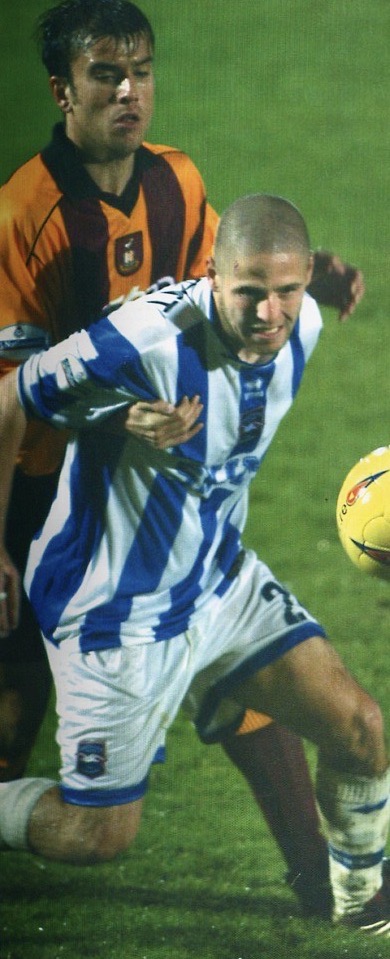
SEVENTEEN GOALS in 100 appearances don’t tell the whole story of Elliott Bennett’s two seasons as a Brighton player.

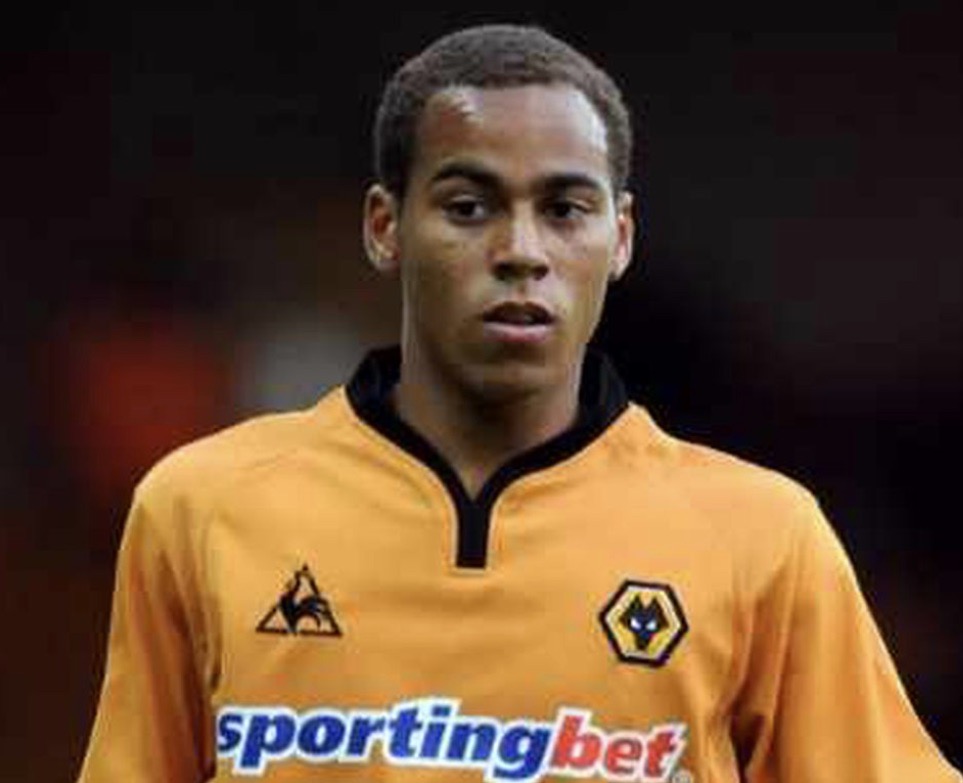
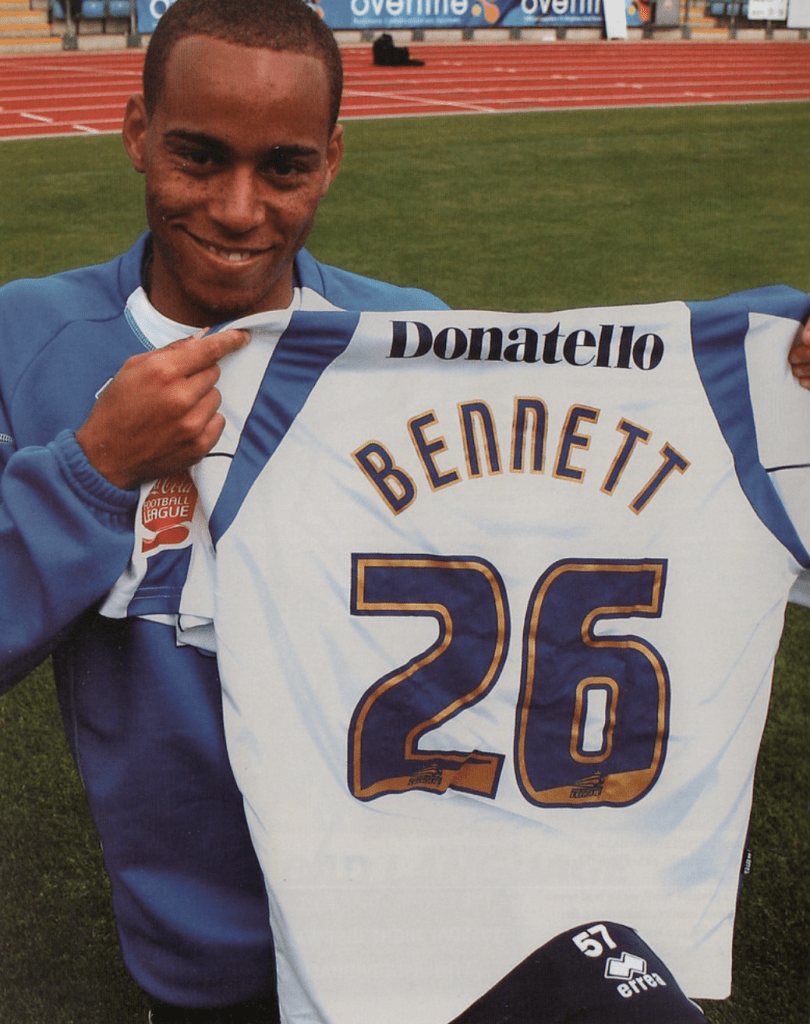
Russell Slade signed him in August 2009 from Wolverhampton Wanderers for £200,000, but it was under the guidance of Gus Poyet that he flourished and was a stand-out performer when Albion won promotion from League One in 2011.

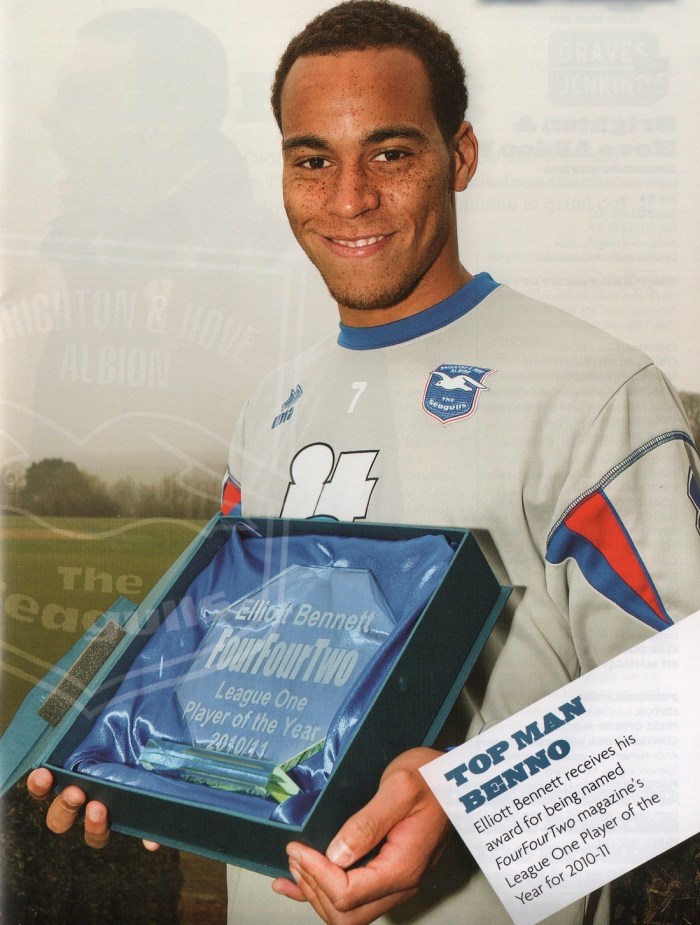
Not only was he chosen by his fellow professionals in the PFA League One team of the year (along with teammates Gordon Greer and Inigo Calderon), he was Four Four Two magazine’s League One Player of the Year.

Always diplomatic in interviews about personal achievements, typically he said: “If you win awards, it’s nice personally but you have to remember you can’t win them without your teammates. If I’m setting up goals, then it means our strikers are on their game as well as they’re getting on the end of my crosses.”

In a matchday programme feature, he added: “These individual awards really are not possible unless you have a good team around you, so this award is really on behalf of the whole squad and coaching staff.”

Bennett acknowledged the impact Poyet made on improving him as a player. “Gus has given me different roles to play throughout the season. I’m a lot more aware as a player as a result and I’m better with the ball now. There’s still lots for me to work on, but the gaffer has really brought my game on. I definitely owe him a lot.”

In another matchday programme article, he once again paid tribute to Poyet, his assistant Mauricio Taricco and coach Charlie Oatway. “I feel like I’m improving all the time and I owe so much to the coaching staff: the gaffer and Tano, while Charlie has got my head right. I used to beat myself up if I gave the ball away but Charlie has stamped that out of me. Technically, all three have helped me and I’ve also been playing in the middle a bit more, which has added another string to my bow.”

Bennett continued: “While I’m known for being a winger, my link-up play has also improved this season, which has really pleased me. I’m now more involved and it’s important that I keep on learning. The gaffer will always pull me to one side if he sees something that can help improve me – which he does with everyone – and then it’s a case of trying to replicate that on a match day.

“When you’ve got a gaffer who’s played the game at the highest level, you can only learn from him – and if you didn’t listen you’d be pretty stupid.

“I’ll play anywhere for the good of the team – I’ve even played right-back this season, but I must admit that I do prefer playing in a more advanced role where I can create things for the team. Whether that’s right wing, the left wing or even behind the strikers I don’t mind. I just love being involved.”

Bennett’s impact wasn’t confined to games, either. He and Liam Bridcutt used to visit Westdean Primary School, near Withdean, where they listened to youngsters reading. His wife, Kelly, worked for the club too.

Aware they had a hit property on their books, Albion awarded Bennett a new three-and-a-half-year deal in November 2010, when Poyet told the club website: “Elliott has been a good pro and has earned this new contract.

“He has shown he is capable of playing in a number of positions, he enjoys playing our style of football and I think he will continue to get better as a player.”

For his part, Bennett said: “Gus is a big factor for me. I will always be grateful to Russell Slade for signing me, but the current gaffer has brought his own style of play.

“I have really taken to the club ever since I arrived from Wolves last summer. I feel I have grown up as a person and developed as a player.”

Unfortunately for Brighton, Bennett’s superb contribution drew plenty of admirers and, when Norwich City offered £1.9million to give him the chance of Premier League football, the lure was too great to resist for player and club.

While his promoted teammates looked forward to Championship football in the brand new Amex Stadium, Bennett joined Paul Lambert’s Canaries to test his talent at the highest level.

Bennett told HITC Sport’s Alfie Potts Harmer: “Brighton was a fantastic part of my life and a fantastic chapter of my career, I loved every minute of it.

“When we won the title there, League One was full of teams who are now flying, you look at Southampton, Bournemouth and Huddersfield, it was a strong League One that year, and we played some fantastic stuff.

“The stadium coincided with promotion and I’d just signed a new contract. I think I would have stayed there for many years had it not been a Premier League move, but I don’t regret moving to Norwich. When an opportunity like that comes you have to take it as a player. You don’t know if it will come again.”

Lambert was delighted to land the youngster having previously had a bid to sign him in January that year rejected. “He is a young and exciting player with plenty of pace,” Lambert told the Norwich website. “He can play in a wide position or in behind the forwards, he’s a quick lad and he’s got a winning mentality.

“He played his full part in what Brighton achieved last season and that desire to succeed will stand him in good stead here.”

Bennett declared: “It’s an unbelievable opportunity for me to fight for a place in a team which will be playing in the Premier League.

“I like the mentality at Norwich City that has seen them get back-to-back promotions and I’m grateful to Paul Lambert for giving me the chance to be part of what’s happening at the club.

“I didn’t make it through at Wolves, which was my home-town club, and Brighton gave me the opportunity and I’m grateful for that.

“Now I’m just really excited about the chance to try to help Norwich in the Premier League.”

Bennett certainly seized the opportunity and in his first season was delighted to score the winning goal in Norwich’s 2-1 win over Spurs at White Hart Lane. He’d played 57 games in the Premier League when his career suffered a major hiatus. In the first home game of the 2013-14 season, against Everton, he sustained a cruciate injury which ruled him out of all but the last game of that campaign, as City were relegated.

Frustrated by the lack of starts at Norwich as they began life back in the Championship, Bennett was happy to return to the Seagulls on loan as Sami Hyypia tried various permutations to get some wins on the board.

Bennett received a warm reception from the Seagulls supporters as he stepped out at the Amex for a home game against Wigan Athletic on 4 November and helped the side to their first win in eight matches.

Unfortunately, the upturn in fortunes was all too brief and, although Bennett’s loan was extended by a second month, six winless games saw Hyypia exit the hotseat. “I had nothing but respect for him,” Bennett later told The Athletic. “He gave me an opportunity, after a big injury, to get out and play some football. He didn’t have to bring me back. I was thankful for that. Unfortunately, it didn’t work out.”

Bennett’s final appearance came in the memorable 2-0 win over Fulham under caretaker manager Nathan Jones.

He returned to Norwich just as Alex Neil was taking over from Neil Adams as manager and was part of the squad who won promotion back to the Premier League via a play-off win over Middlesbrough.

But back in the elite, first team opportunities were limited and during the first part of the 2015-16 season Bennett went out on loan again, this time to Bristol City, where Steve Cotterill was the manager.

Bennett made 14 appearances for the Robins but soon after his deal expired in January 2016, a £250,000 fee saw him move permanently to Blackburn Rovers, where, from the start of the 2019-20 season, he became club captain, and he continued to be a well-respected part of Tony Mowbray’s set-up.

Bennett has certainly endeared himself to the Rovers supporters and has even been hailed as a modern-day ‘Mr Blackburn’ by website roverschat.com, who lauded his contribution to the club.

“Elliott Bennett’s evergreen positivity, fan interactions, and trademark fist pump were key in improving the culture at Rovers, as the dark, grey clouds over Ewood Park that had called it home since 2011 ever so slowly began to dissipate.

“His leadership has been a key contribution, as even when he is not playing for Rovers, he still is managing to inspire others to become the best version of themselves.”

One of those times spent out of the side came when Bennett tested positive for Covid-19 in May 2020 although the player said he didn’t feel unwell, and typically was thinking of others when interviewed about it.

“There seems to have been a lot of hysteria about footballers returning to training, but it’s not a big deal at all,” he said. “It’s the people who are seriously ill in hospital that we need to worry about, not footballers who are fit and healthy, and who aren’t showing any signs of being unwell.”

The popular Bennett is an active participant on social media and has 76,000 followers on Twitter.

In the summer of 2021, he moved to League One Shrewsbury Town, just 15 miles from Telford where he was born on 18 December 1988,

Bennett first showed his talent playing for local Telford team Hadley Juniors. Wolves scouts Les Green and Tony Lacey spotted him and invited him to train with the club’s under sevens and under eights. Remarkable as it sounds, he was offered a contract at the age of nine! “From then I just worked my way up through the age groups,” he told wolves.co.uk in a January 2019 article.

“The coaching was fantastic, the level of care we got was outstanding and we had the chance to travel the world. We got to go to Holland, we went to Japan, and it was a fantastic experience for me. Going to Japan and winning the under-12 World Cup was probably one of my favourite memories I have from the playing side of the academy.”

At Thomas Telford School, Bennett captained the school team as they won the county cup five years in a row. He was also a talented 200m runner who represented Shropshire at sprinting.

After leaving school to go on a scholarship at Wolves, he signed professional in 2007.

“The biggest moment for me was being given my professional contract,” he said. “I always dreamt of one day being able to pull on that gold and black shirt and play at Molineux, and thankfully I did.”

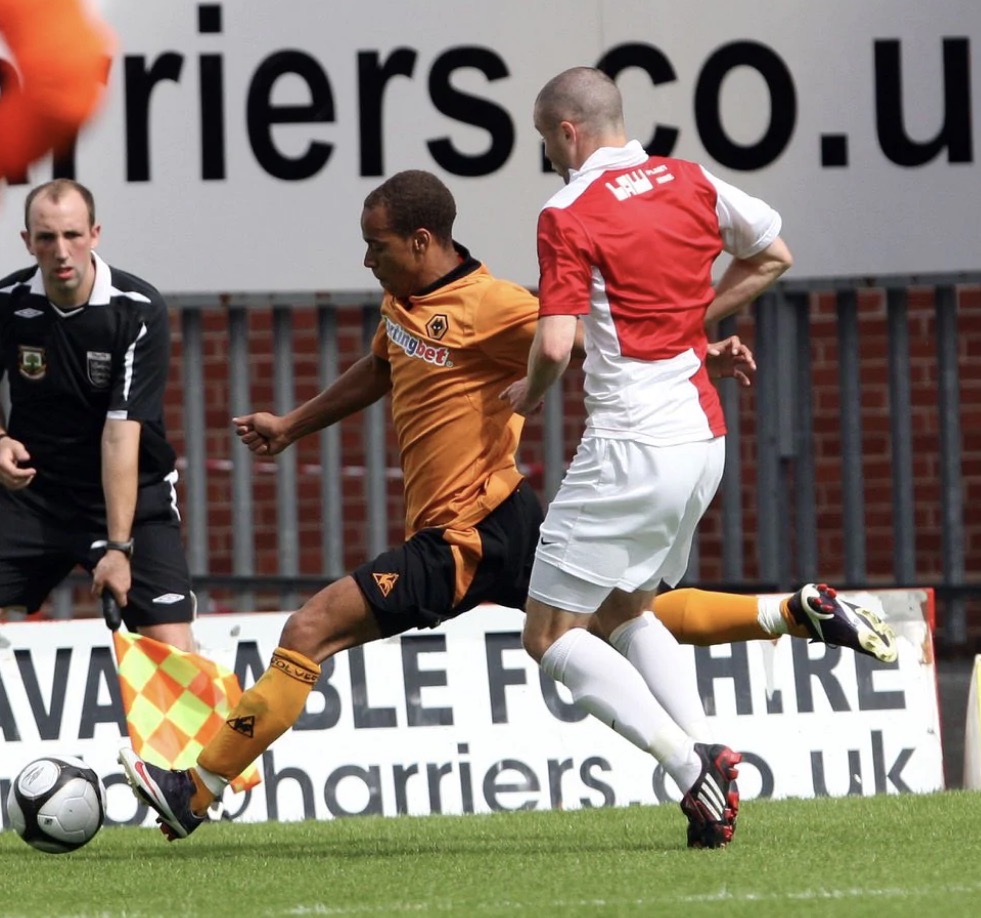
He got a taste of first team action in pre-season matches, scoring after only five minutes in a 3-2 win at Hereford United, and in 2007-2008 he made two appearances for the first team in the League Cup.

Mick McCarthy gave him his first competitive start in a 2-1 win over Bradford City on 15 August 2007 but he was replaced by Stephen Ward at half-time, and on 28 August was in the Wolves side humbled 3-1 after extra time by lowly Morecambe.

Although he was involved with the first team squad for some league matches, he didn’t get any game time, but gained experience going out on loan, initially playing 11 games at League One Crewe Alexandra, and later featuring in 19 League Two games for Bury.

He spent the whole of 2008-09 on loan with Bury, scoring three goals in 52 matches.

It must have been quite a wrench for Bennett to contemplate moving away from the club he’d been associated with for 14 years, but it was a former Brighton striker, the then Wolves assistant manager Terry Connor, who persuaded him to spread his wings and move to the Albion, as he revealed in a Football the Albion and Me interview.

He explained that he’d still got two years left on his contract at Wolves and being very much “a home person” he’d not considered leaving home in Telford, 20 minutes away from Wolverhampton.

“I remember Terry pulling me into his office and saying ‘Look, I went to Brighton in a similar position to yourself, you’ve got to go out and forge your own career. Become a man, become a person, don’t be Elliott Bennett from the academy at Wolves. You’re Elliott Bennett the professional footballer, create your own path.’

“And from that conversation I thought ‘You have to take the shackles off and go and try something different’ and you can’t really get a much better place to live than Brighton, as I later found out. It turned out to be the best decision I have made since I started playing.”

The week before he signed, he went to watch Albion away at Huddersfield…..and saw his new employer thrashed 7-1. Luckily, he’d made up his mind to join before the game!

“I was a guest of Tony Bloom,” he said. “I had a good chat with him before the game and he told me the vision. He told me where he wanted to take the club. I was blown away to be honest. I couldn’t wait to get started.”

Pictures from Albion matchday programmes and various online sources.

‘Sleekly skilful’ Dale Jasper remembered with a smile

FORMER teammates expressed fond memories and a sense of shock when Dale Jasper died in January 2020 aged only 56.

A product of Chelsea’s youth system in the 1980s, he made it through to the first team but moved to Brighton to get more playing time.

Although he succeeded – playing a total of 52 matches plus eight as a sub under Alan Mullery and Barry Lloyd between 1986 and 1988 – he had to move on again, this time to Crewe Alexandra, to establish a regular starting berth.

It was certainly no mean achievement, though, to have on his CV that he won promotion with all three clubs.

In Ivan Ponting’s obituary for Back Pass magazine, Jasper was described as “a sleekly skilful midfielder-cum-central defender”.

Born in Croydon on 14 January 1964, Jasper was an associate schoolboy with Chelsea from the tender age of 10.

He progressed to the youth ranks and turned professional at Stamford Bridge in January 1982. Manager John Neal gave him his first team break against Cardiff City in March 1984, and Chelsea fans remember him for his involvement in some eye-catching matches.

One involved a 4-4 League Cup quarter final against Sheffield Wednesday but in the semi-final v Sunderland he conceded two penalties.

Although part of the squad Neal steered to promotion from the second tier in 1983-84, the form of his friend Colin Pates, who later had two spells with Brighton himself, and Joe McLaughlin, meant first team chances were few and far between.

Nevertheless, former Chelsea star Pat Nevin remembered Jasper’s involvement in a warm tribute on chelseafc.com.

“Dale was about as much fun as you could find wrapped up in one person,” said Nevin. “He had a brilliant personality in the dressing room at Stamford Bridge and was always up for a surreal laugh with all of us, particularly when he was with his great friends Colin Pates and John Bumstead.”

When Neal’s replacement, John Hollins, failed to offer Jasper the first team game-time he craved, he took the chance to join Brighton in May 1986, and enthused about the move in an interview with Albion matchday programme contributor, Tony Norman.

“I signed on the Monday and three days later I flew out to Hong Kong with the team, so it wasn’t a bad week, was it? We played an exhibition match over there. I was a bit disappointed when a goal I scored was disallowed, but I was smiling by the end of the game, because we won 3-1.

“We were away for about a week and it was a very good way for me to meet the rest of the p!ayers and get to know them. It all seemed a bit unreal, because it had all come out of the blue, but it was very enjoyable.”

Unfortunately for him, the manager who signed him for Brighton – Mullery – was unable to recapture the midas touch he’d previously enjoyed at the club.

Jasper started the first 13 games of the 1986-87 season but only three wins were chalked up and Mullery was shown the exit door shortly into the new year.

Jasper played 16 games plus one as a sub under new boss Lloyd but, after the side were relegated back to the third tier, he found it difficult to cement a regular place in the starting line-up.

Apart from a 10-game stint of starts between November and January, he spent most of the 1987-88 season on the subs bench, with Alan Curbishley and Mike Trusson preferred and, for the promotion run-in, Lloyd turned to Adrian Owers. instead.

Although Jasper scored in successive matches in February (one after coming on as a sub in a 2-2 home draw with Chesterfield), his final appearance in an Albion shirt was in a 5-1 defeat at home to Notts County in a Sherpa Van Trophy regional semi-final on 9 March 1988.

Jasper’s well-known sense of humour was evident in his answers for a profile feature in the Albion matchday programme. Perhaps reflecting his lack of first team game time, he said his ambition was “to win the Sussex Senior Cup” and said his favourite actress was teammate Perry Digweed!

Interestingly, he listed (former Chelsea coach) Dario Gradi as one of the main influences on his career, and it was to Gradi’s Crewe side that he moved on leaving the Albion in July 1988.

At the Alex, he made more than 100 appearances in four years, including being involved in their 1989 promotion from the fourth tier. He later played non-league for Crawley Town and Kingstonian.

After his playing career came to an end, he worked in the building trade.

Shocked to learn of Jasper’s death on 30 January 2020, former Albion teammate John Keeley told the Argus: “Dale was really well liked by everyone. He had some real talent and was a top, top lad.”

Injury-plagued Alan Navarro’s loyalties taken as Red

Nav v Suarez

A FORMER midfield partner of Steven Gerrard scored a memorable winner for the Seagulls at Elland Road, but it was a rare highlight in a promising career dogged by injuries.

Alan Navarro trained alongside Gerrard and played with him for Liverpool Reserves. While one went on to become a Liverpool legend and captain his country, the other had to forge a career mainly in the lower leagues.

Navarro talked to the Liverpool Echo about his former illustrious teammate when he prepared to return to Anfield with Brighton a decade after leaving the Merseyside giants.

“I came through as a full-back but then they decided to try me in midfield and I played with Steven a few times,” said Navarro. “It was a good thing but also a bad thing because you knew that you were going to be competing for a place with Steven.

“I trained with him every day for a few seasons….he was always head and shoulders above everyone else. His football, his brain, his pace, his strength, the way he tackles, everything about him was brilliant. He was the player you wanted to be.”

Navarro was talking in a preview to the FA Cup 5th round tie which saw Liverpool steamroller the Seagulls 6-1, courtesy of three own goals (two for Liam Bridcutt, one for Lewis Dunk).

Apart from the disastrous result, Navarro also picked up a booking on his return to Anfield. It was the second time the Liverpudlian had played against the side who nurtured him: he was also in the Albion side who lost 2-1 to the Reds in a League Cup game at the Amex in September 2011.

Nav stripesThe Scouser joined the Seagulls on a free transfer from MK Dons in the summer of 2009, and manager Russell Slade told the Argus: “Alan likes to get on the ball. He is the passer, the one that links you up and tries to make you play. He’s impressed us.”

After picking up an injury early on, he found it difficult to get back in the side until Gus Poyet arrived, and, with his ability to pick a pass for teammates to benefit from, slotted in well.

A cruciate ligament injury in his right knee, suffered in a League Cup game against Northampton Town at the beginning of the 2010-11 season, ruled him out for the season.

Having previously suffered a similar injury in his other knee eight years earlier, he knew what to expect, which he described to Andy Naylor in the Argus.

He later recalled how he feared it might have been the end of his career, but, after proving his fitness to Poyet, he went on to play 39 games for the Albion in the 2011-12 season – finally getting the chance to perform at a level he always felt he was capable of.

Navarro had previously had to contend with life in the bottom two tiers, but he enjoyed a new lease of life playing in the Championship, as he talked about in the Argus.

He played a total of 85 games for the Albion between 2009 and 2012 and only ever scored one goal. But what a memorable one!

Nav Leeds celeb

It came in the 90th minute of a Championship game at Elland Road on 11 February 2012, when his final touch after good work from Liam Bridcutt proved to be the winner as the Seagulls prevailed 2-1.

Craig Mackail-Smith (pictured above celebrating with Navarro and Craig Noone) had opened the scoring for the Seagulls but Luciano Becchio equalised and, just as it appeared the game would finish in a draw, up popped unlikely scorer Navarro.

Born in Liverpool on 31 May 1981, Navarro’s home was in Venmore Street, close to Anfield. “Funnily enough I was a Blue when I was younger,” he told the Albion matchday programme. “My family were Evertonians and a couple of cousins really drilled the club into me from an early age. But when I was 10 or 11, we moved to a house right next to Anfield and I fell in love with Liverpool.

“I loved watching John Barnes, Ronnie Whelan and then Robbie Fowler, even though he was not that much older than me. My mum still lives there, six doors away from The Kop.”

He joined the Reds in 1996, signed professional in 2000, and was a regular in the Reserves. He also had occasional travels with the first team, for example to Russia, Porto and Rome, as well as Chelsea, Newcastle and Sunderland for league games.

“It was strange going from fan to playing for the club, but an unbelievable experience,” he said. “From growing up on the club’s doorstep, I was in the youth team, then playing for the reserves and travelling with the first team to some big games.”

player_navarroIn the 1999-2000 season, Liverpool Reserves won the Premier Reserve League title with Navarro and Layton Maxwell pulling the strings in midfield.

Navarro only made it onto the first team substitutes’ bench twice but got his first taste of competitive action on loan at League One Crewe Alexandra.

He also went on loan to nearby Tranmere Rovers, whose manager, Dave Watson, told the Liverpool Echo: “Alan is a good quality player who has been in Liverpool’s reserves for a while now.

“I have seen him play several times and so have my assistant, Ray Mathias, and our chief scout, Dave Philpotts. (Anfield coach) Sammy Lee speaks very highly of the lad’s work at Liverpool and he’s certainly worth a look.”

After impressing on loan, Navarro made a permanent switch to Rovers in January 2002, signing a three-and-a-half-year contract. “It was difficult to leave because I love the club and a big part of my heart will always be there, but I needed to get my career up and running. I cherish my time there; I was taught the game by the best.”

Things didn’t go according to plan at Tranmere where he suffered a cruciate knee ligament injury and he went out on loan to Chester City and Macclesfield Town.

Navarro moved on from Tranmere in the summer of 2005, initially linking up with Conference National side Accrington Stanley for a month before Macclesfield boss Brian Horton secured his services on a permanent basis. Horton told the club website: “I’m delighted Alan has joined the team. I think he’s going to fit in extremely well.

“We had him here last season and couldn’t quite come to an agreement with Tranmere to sign him, so he went back there and we missed him badly.

“It was no coincidence that his departure came at the time when our form dipped so we’ve been keeping an eye on him for a long time and we’re delighted to have him.”

After his experience at Tranmere made him contemplate quitting the game altogether, it was Horton’s successor at Macclesfield, former Liverpool midfielder Paul Ince, who helped to reignite his passion for football.

“When he came to Macclesfield, he got me wanting to play football again,” he told the matchday programme. “He gave me the spark that helped me fall back in love with the game, and he took me from Macclesfield to MK Dons, where we had a lot of success.

“He remembered me from Liverpool, while his assistant Ray Mathias had me at Tranmere and knew me really well. It just clicked. I knew what Paul wanted from me and vice-versa.”

In August 2007, Navarro followed Ince to MK Dons, where he made 89 appearances over two seasons.

After his three years with the Seagulls, and following a season in which he played 33 matches, it was a little surprising that he was released in the summer of 2012, although supporter Alan Wares told thewashbag.com: “He will be remembered as a player who never gave less than 100 per cent every time he pulled on the shirt.

“It’s a shame to see such a quality player leave, but it shows how far Brighton have come as a club that Gus Poyet feels he can afford to release him.”

How ironic that his debut for new club Swindon should come in the League Cup against Brighton in August 2012 – Navarro scored twice and made the other in a 3-0 win!

However, that was pretty much as good as it got in his spell with the Robins. His Town career comprised only 15 starts plus five as a substitute, and a subsequent knee injury brought his career to an end.

The luck of the Irish eluded striker Graham Barrett

GRAHAM Barrett did his level best to impress when new boss Steve Coppell took charge for the first time at Withdean.

The on-loan Arsenal forward put in an inviting cross from the right wing for Gary Hart to score midway through the first half of the 19 October 2002 game against Sheffield United.

Barrett himself then got on the end of a precision pass from Bobby Zamora out wide on the left to put Albion 2-0 up in the 34th minute.

Unfortunately, the young forward’s contribution was overshadowed by events at the other end of the pitch in the second half. Firstly, the Blades hit back through Michael Brown and then substitute Carl Asaba equalised.

Referee Phil Prosser became the villain of the peace by awarding United two penalties in the final four minutes of the game, both converted by Asaba.

The first was given when Prosser reckoned goalkeeper Michel Kuipers had brought down Asaba in the box; the second when Adam Virgo pushed over Wayne Allison in the penalty area.

“Albion fans were so incensed by Prosser’s first penalty decision that several hundred left their seats in the south stand to protest from the running track,” The Argus reported. “Police and stewards gathered in front of them to prevent the threat of a pitch invasion.”

Even Albion-supporting MP Ivor Caplin got in on the act, subsequently calling for an FA inquiry into Prosser’s “totally inept” display. Needless to say, that went nowhere.

Barrett, meanwhile, was far less impressive the following Saturday when he and his temporary teammates were thrashed 5-0 by Crystal Palace at Selhurst Park.

He started 20 games for the Albion in that season, as well as making 10 substitute appearances – but that single strike against Sheffield United was his only goal.

g barrett stripesBorn in Dublin on 6 October 1981, Barrett was one of several Irish youngsters who began their football careers with Arsenal having been spotted by ex-Albion boss, and fellow Irishman, Liam Brady, playing in an Ireland U15s game against England at Blackburn.

Brady had become Arsenal’s head of youth development and academy director after his spell at Brighton. Barrett agreed professional terms with Arsenal in 1998 and went on to captain their FA Youth Cup winning team of 2000.

He earned a call-up to the Republic of Ireland’s under 21 team and went on to play 24 times at that level, scoring five goals. Between 2002 and 2004, he stepped up to the full Eire side and scored twice in six matches.

Barrett managed to break through to the first team squad at Arsenal in December 1999 and made his debut as a substitute for Thierry Henry in a 3-0 win over Leicester City. The following month, again as a substitute, he appeared in a 4-1 win over Sunderland, and he also played in a league cup match.

“I was around the first team for a good four or five months, travelled a lot with them and got to train every day with them, played a little bit,” Barrett told the42.ie, in an April 2018 interview.

Facing stiff competition for a first team place, Barrett was sent out on loan to gain playing time at a lower level. He went to Bristol Rovers but only managed one game before being struck down with glandular fever, causing him to be out of the game for six months.

When he’d recovered, he went on loan to Crewe Alexandra and Colchester United who had wanted him back for the 2002-03 season, but he opted to join Brighton instead.

With little chance of dislodging the likes of Bergkamp, Henry, Wiltord and Suker at Arsenal, Barrett was given a free transfer by Arsenal in May 2003 and opted to join Coventry City on a three-year contract.

graham barrettAlthough he made 32 league starts plus 23 as a sub, ex-Albion boss Micky Adams made it plain he didn’t fit into his plans. He went to spend the last year of his contract on loan at Livingston in Scotland but after only six games suffered a season-ending knee injury.

He subsequently stayed in Scotland and played for Falkirk and St Johnstone before returning to Ireland to play for Shamrock Rovers, who his dad, Gary, had played for in the Eighties under Johnny Giles.

Barrett is now a director of football agency Platinum One, representing the interests of young players.

Goalkeeper John Phillips – the ‘unenviable understudy’

JOHN PHILLIPS was a Welsh international goalkeeper who played for Chelsea and Aston Villa before becoming a back-up at Brighton under Alan Mullery.

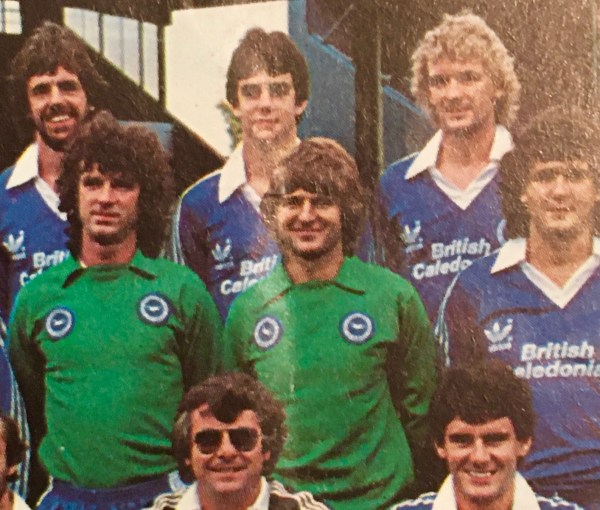
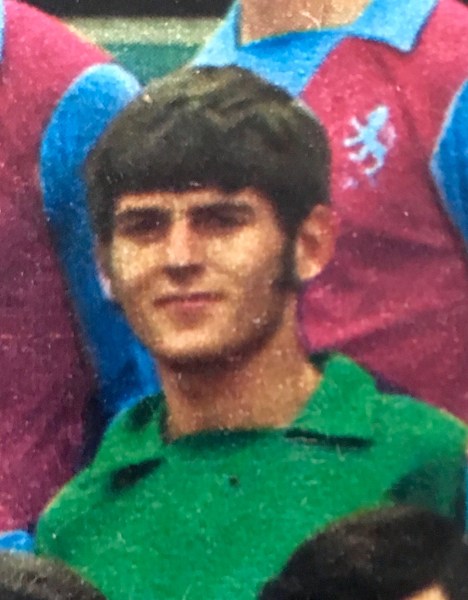
A £15,000 fee took him to the Goldstone Ground as no.2 to Graham Moseley in 1980 and, possibly the most interesting thing about his time at Brighton was his appearance in the centre of the pre-season team photo (see below) alongside Moseley in which both ‘keepers rather oddly wore green jerseys sporting two Seagulls badges!

JP 2 badge colourPreviously an understudy to the legendary Chelsea goalkeeper Peter Bonetti, Phillips did have occasional first team spells at Stamford Bridge, including playing in earlier rounds of the successful European Cup Winners’ Cup campaign of 1970-71.

When he died aged 65 on 31 March 2017, the Chelsea website paid a warm tribute to his contribution.

JP prog notes

At Brighton he featured 19 times for the reserves but only played one first team game. That came in front of a bumper festive season Goldstone crowd of 27,387 on 27 December 1980 (as seen above on my amended programme teamsheet) as the Seagulls beat traditional rivals Crystal Palace 3-2; a brace from Michael Robinson and Peter O’Sullivan with the Albion goals.

IMG_6433The following month, it looked like he might get a second game after Mullery publicly blamed first-choice Moseley for the side losing six points, and told the Argus Phillips would come in for the next match unless he could sign another ‘keeper.

Mullery promptly went back to his old club, Fulham, and splashed out £150,000 on unknown youngster Perry Digweed – pushing Phillips further down the pecking order.

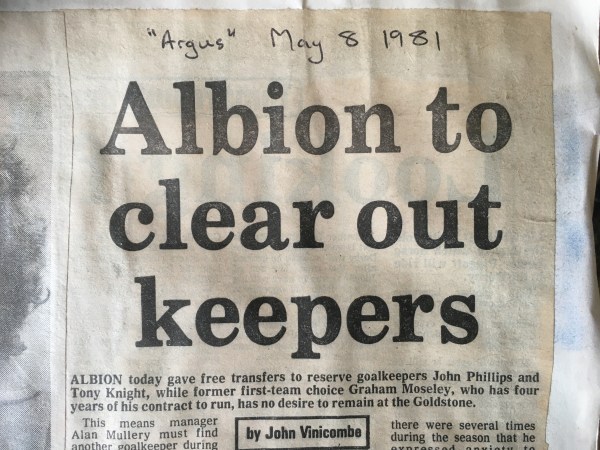
IMG_6431At the end of the season, Phillips and Tony Knight, a young ‘keeper who didn’t progress to the first team, were released on free transfers. It was also reported that Moseley was on his way, but Mullery’s shock departure that summer gave him a stay of execution.

Disgruntled Mullery swapped managerial seats with Mike Bailey, who’d just led Charlton Athletic to promotion from the old Third Division,

Phillips was one of his first signings. However, he only played two games for Charlton, so he was to endure another frustrating spell of being the understudy.

Contributor Richard J on charltonlife.com remembered how Phillips replaced first choice Nicky Johns in the first away game of the 1981-82 season – a 3-0 defeat at Luton Town.

“Nicky returned for the next game and Phillips’s only other game was away at Leicester. Unfortunately, we lost that game as well, 3-1.”

But Richard continued: “I work with Tony Lange who took over from the Welsh international as Charlton’s number two keeper. He felt that John was a big influence on his career.

“Apparently, Phillips was exceptionally good at distribution and this was one of the reasons he had played so much for Chelsea and Tony credits him as a big influence on that part of his game.”

He moved from Charlton to Crystal Palace but he didn’t feature for their first team at all. He then tried his luck in Hong Kong, with See Bee.

Born in Shrewsbury on 7 July 1951, Phillips went to the Grange School in Shrewsbury and, because both his father and grandfather played league football for Shrewsbury Town, it was no surprise when he also signed for Town. He made his debut in 1968 at the age of 17.

A big influence on him was the former Manchester United and Northern Ireland goalkeeper, Harry Gregg, who was manager at Gay Meadow between 1968 and 1972.

In an early edition of Goal magazine, Gregg said: “He’s the finest goalkeeping prospect I have seen. He seems to have every asset in the book and his temperament really stands out.”

J Phil VillaPhillips played 51 times for the Shrews before being bought in 1969 by Tommy Docherty, the former Chelsea boss who’d taken over as Aston Villa manager.

After only 15 games for Villa, in August 1970, Chelsea paid a fee of £25,000 to take Phillips to Stamford Bridge.

The regular back-up ‘keeper, Tommy Hughes, who went on to have a loan spell at Brighton in the 1972-73 season, was out injured with a broken leg at the time and Chelsea needed someone to deputise for Bonetti, who only two months earlier had been criticised when having to take over in goal from ill Gordon Banks as England lost 3-2 to West Germany in the 1970 World Cup quarter final in Mexico.

Phillips stayed with Chelsea for 10 years and played a total of 149 games for the club. He managed 23 league and cup games during the 1972-73 season owing to Bonetti’s absence through injury and illness.

In October 1973, Goal ran a series called The Understudies and featured the rivalry between Phillips and Bonetti. Bonetti said of him: “John is a first-class ‘keeper and has pushed me more than anyone. It’s nice to know you have to play well to keep your place.”
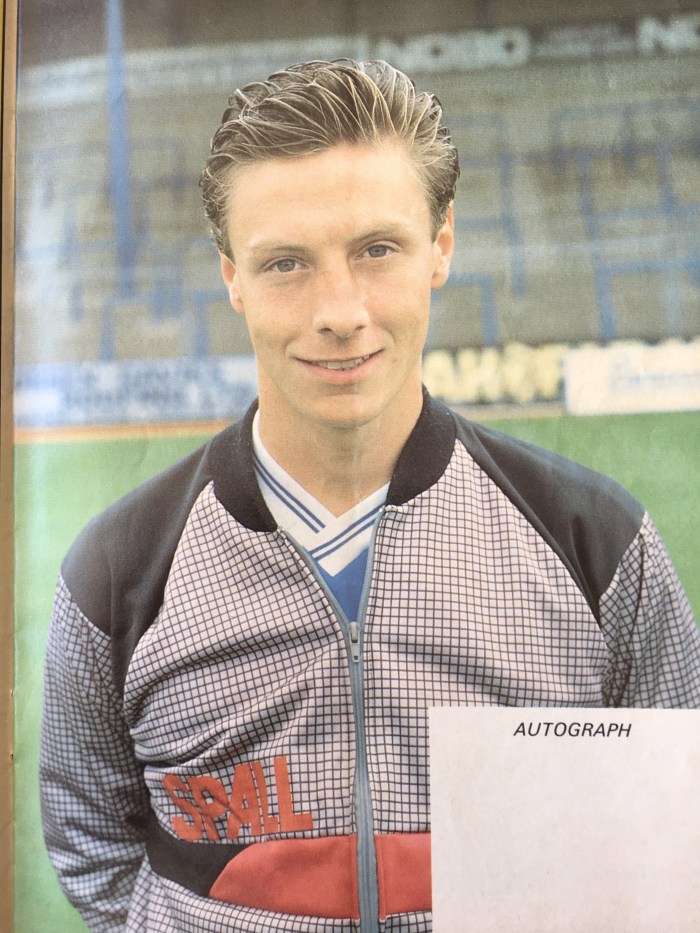
Phillips told the magazine’s David Wright: “We are rivals, yes, but friends as well.”

It was only in the 1974-75 season that Phillips had an extended run of games as the no.1.

Although kind things were said of him when he died, not all recollections were favourable. The footballnetwork.net, for instance, said: “Phillips always conceded a lot of goals. Is this because he was awful or his defence and midfield were woeful? I suspect that it was a bit of both. Phillips did assist Chelsea in reaching the 1971 European Cup Winners Cup final, but he conceded seven at mediocre Wolverhampton as Chelsea sloped off into a long decline.

“Funnily enough, he shared goalkeeping duties for Wales with one Gary Sprake, a notoriously erratic Leeds goalie, as the late Peter Houseman could have testified!

“Obviously in the early seventies, while the Welsh rugby team had an embarrassment of riches, there was no such luxury in the goalkeeping department.”

Although English by birth, Phillips played for Wales at a time when qualification to play for countries beyond the one in which a player was born was extended to include the homeland of their parents or grandparents. He won four caps in 1973-74, making his debut in a 3-0 defeat to England in front of 38,000 at Wembley on 15 May 1973.

A none-too-flattering recollection can be found in a book charting the history of Welsh international football. Red Dragons – The Story of Welsh Football says: “Sadly a nervy performance by Chelsea goalkeeper John Phillips was responsible for a grim 0-2 defeat at home to England in May 1974.”

Bonetti saw off many pretenders to his throne, but Phillips went closer than anyone to taking his place, according to gameofthepeople.com, which described him as “the unenviable understudy” in an article charting his Blues career.

In the summer of 1975, Chelsea had been relegated and Bonetti given a free transfer, so Phillips was expected to start the new season as first choice ‘keeper.

But he fractured his right leg in training and badly damaged knee ligaments, opening the door for Steve Sherwood to take over between the sticks.

In the 1979-80 season, Phillips was loaned to Crewe Alexandra. Even there, he only played six times for the league side, having to be content with 23 games for their reserves.


  • Pictures mainly sourced from Goal magazine or Shoot! Also the Argus and matchday programme.

Illness put paid to John Piercy’s promising career

A FIVE-YEAR professional football career bookended by 3-1 results against Crewe Alexandra almost certainly wouldn’t have been the path John Piercy would have chosen for himself.

One saw him make a promising debut for Tottenham Hotspur on 13 October 1999, subbed off to a terrific ovation from a 25,000 crowd at White Hart Lane on 74 minutes as they progressed in a League Cup game against the lower league opposition.

The other was a League One defeat for Brighton & Hove Albion at humble Withdean Stadium on 6 November 2004, subbed off ignominiously only 12 minutes into the second half with many in the crowd of 6,163 unaware that the hereditary bowel disease afflicting him was putting paid to his hopes of a football career.

Born in Forest Gate, east London, on 18 September 1979, Spurs first spotted Piercy as a stand-out 12-year-old, talented enough to represent England Schoolboys.

He became a trainee with Spurs at the age of 16 and signed as a professional in July 1998.

It was George Graham who gave him his first team debut for Spurs in that game against Crewe, starting him up front alongside Chris Armstrong in a side that featured future Brighton player and assistant manager Mauricio Taricco in defence.

The Spurs goals were scored by Oyvind Leonhardsen, David Ginola and Tim Sherwood, but spursodyssey.com was full of praise for the young Piercy.

“One young man who will remember this night more than most is 20-year-old debutant John Piercy, who won the home fans’ hearts with two terrific efforts on goal, and an eye-catching performance all round,” it said. They even went as far as to suggest he might be ‘the new Ginola’.

The performance was good enough to earn him a place on the bench for the following Saturday’s Premier League game away to Derby County and he was called into action in the second half to replace Armstrong as Spurs won 1-0.

He made two more league appearances that season and an excellent Spurs archive website said of him: “The solidly built East Londoner had the ability to lead the line and to make chances for his team-mates, by going wide and taking people on.

“Some work was needed on his first touch and his pace, but he was strong, direct and knew where the goal was.  Preferred to play wide on the left of midfield, but was deployed at full back in the reserves to good effect.”

Chris Hughton was the Spurs reserve team manager at the time and said of Piercy: “John is able to adapt well to different roles which is why we’ve played him at full-back in pre-season when we’ve been stretched in those areas.  But I’d say his best position is definitely right or left of midfield.”

On 4 April 1999, he started for England under 20s against the USA in the World Youth Championships in Nigeria, but was subbed off in a game England lost 1-0. His teammates that day included future full international Ashley Cole, and the side was managed by former Albion full-back Chris Ramsey.

john piercyFrustrated by the lack of first team opportunities at Spurs, Piercy, by then based in Eastbourne, opted to join Brighton in September 2002 during Martin Hinshelwood’s brief reign as manager.


Hinshelwood told the BBC: “He’s a player who can play in a variety of positions. That will give us plenty of options.”

A first team breakthrough at Brighton was slow to happen, however, with Hinshelwood’s successor, Steve Coppell, opting for experience in the ultimately unsuccessful battle to avoid relegation from the second tier. Piercy top-scored for the reserves that season, netting 13 goals from midfield.

However, shortly after Mark McGhee’s appointment, he did get some game time and in December 2003 also registered his first league goal in a 1-0 win at home to Wrexham.

Later the same month, he went one better playing up front in place of the suspended Leon Knight and scored twice in a resounding 4-0 home win over Wycombe Wanderers.

More often than not, though, he was brought on as a substitute rather than starting games. He made just eight league starts and in six of them was subbed off.

His other appearances (16) were all from the bench and that was the role he found himself in at the 2004 play-off final at the Millennium Stadium in Cardiff, although his contribution was certainly effective.

Piercy replaced Nathan Jones in the 77th minute. “He (McGhee) made a change with just over 10 minutes left and we went on to win the game, so no one is going to complain, are they?” Jones told walesonline.co.uk.

Reports also recorded how Brighton threatened Steve Phillips’ goal moments after Piercy replaced Jones, Iwelumo glancing the substitute’s cross wide of the far post.

Sadly for Piercy, while he showed promise on the football pitch, he began to suffer the horribly debilitating effects of colitis, as he described in an interview with the Argus.

He praised the support he got from McGhee and reserve team boss Dean White but it reached a point where it was evident the illness was simply sapping too much energy from him to continue a full-time professional football career.

That defeat at home to Crewe proved to be his last game for the Albion and he announced his retirement aged 25 shortly afterwards.

“He knows his capabilties and I know his capabilities,” said McGhee in a matchday programme article. “He’s a player that could easily cope with the standard of the Championship but this illness has just affected him in a way that he just can’t get fit enough to do himself justice.”

Chairman Dick Knight added: “It is a great shame that such a skilful player, with such tremendous natural ability, has seen his career curtailed in such a cruel way. All at the club are devastated for him to be hanging up his boots at the relatively young age of 25.”

Piercy subsequently regained sufficient fitness to play a season with non-league Eastbourne Borough and then took up a coaching role with the club.

Nowadays he is a sports coach at Ocklynge Junior School in Eastbourne where he teaches youngsters football and PE, and is also a coach at CACL Sports in the town.

Piercy Ocklynge Sch

One-goal striker Craig Davies a Seagulls flop

THE PHRASE ‘journeyman striker’ sits perfectly with Welsh international Craig Davies who, despite success later in his career, fired blanks for Wolverhampton Wanderers and Brighton.

To use that rather amusing, though well-worn phrase, he couldn’t hit a cow’s arse with a banjo during his time with the Seagulls.

He arrived on the south coast in January 2009 during Micky Adams’ second, unsuccessful, spell in Albion’s managerial chair.

Oldham Athletic received a reported £150,000 for his signature and, in 23 games for Brighton, he managed just the one goal – on his debut!

That strike came at Withdean – the opening goal in what ended up a 4-2 defeat to Peterborough United (for whom a certain Craig Mackail-Smith equalised).

When a 4-0 home thrashing by Crewe Alexandra meant it had been six games on the trot without a win, Adams was fired by Dick Knight at a Little Chef on the A23. He’d managed just seven wins in 34 matches, and ‘fireman’ Russell Slade arrived just in time to rescue the Seagulls from the League One relegation trapdoor.

Many different striker permutations were tried that season, with main men Nicky Forster and Glenn Murray sidelined by injury, and Albion’s survival was largely due to the goals of loan arrival Lloyd Owusu. Davies huffed and puffed but simply couldn’t make a meaningful connection when the goal beckoned.

Typical of the fans’ eye view was this observation by wearebrighton.com: “That Adams actually paid money for Craig Davies remains one of the more startling moments of his reign of terror.

“Rarely has a Brighton player enraged the Seagulls support like Davies, a man who mixed incompetence – such as the ability to put the ball over the bar when faced with an open goal three yards away – with a complete lack of effort.”

There had been such promise on his arrival, with chairman Dick Knight telling the matchday programme: “Craig is an exciting player with loads of potential, he is lightning-quick and his direct approach can be a nightmare for defenders. This is a major career move for him and he has every chance to be a crucial part of our future.”

Davies himself clearly thought he’d finally found a place to further his career, saying: “I’ve had a few ups and downs through my career but hopefully now I can get settled at Brighton and start knocking in the goals here.

“The gaffer seems to have a bit of faith in me so hopefully I can repay that by putting in some performances and getting a few goals.”

Albion cut their losses on Davies and loaned him to Yeovil Town (he didn’t score in four games for them, either) and then Adams re-signed him, this time for League Two Port Vale, where he finally managed to find the back of the net again.

In the summer of 2010, Davies came to a mutual agreement to end his Brighton nightmare and he joined League Two Chesterfield, from where his career began an amazing upward trajectory.

Born in Burton-upon-Trent on 9 January 1986, Davies began his career as a schoolboy at Shrewsbury Town, but did his apprenticeship at Manchester City. In August 2004, he moved on to League Two Oxford United, where he made his league debut the same month in a 1-0 win at Notts County.

In two seasons with Oxford, managed by former Ipswich and Arsenal midfielder Brian Talbot, he scored eight times in 55 appearances. In the summer of 2005, he made his debut for Wales (qualifying because he had a Welsh grandfather) as a substitute in a 0-0 draw v Slovenia. Reports linked him with a move to Premier League Charlton Athletic, but nothing came of it and instead, in January 2006, he moved to Italy to join Hellas Verona for a £85,000 fee.

It proved to be too big a step for someone who was then only 20, and he referred to feelings of homesickness in an interview with the BBC.

Remarkably, Davies hit the headlines in May 2006, when in the sixth of seven games he played for the Wales under-21 side (which featured Gareth Bale, Andrew Crofts and Arron Davies) he scored a hat-trick in a 5-1 win over Estonia, and it earned him a recall to the full international side.

Wales under-21 manager Brian Flynn told the BBC: “Craig has sometimes been frustrating to watch, but he has skill and we will help him, and them all, to flourish.”

Davies hoped the international goals would attract a club to rescue him from Italy. “I have found it very hard to settle in Italy,” he told the BBC. “Verona want me to come back and have a year on loan somewhere and then they will look at the situation again when I have a bit more experience.”

It was Wolves, then in the Championship, who offered him a lifeline back in the UK and he moved to Molineux on loan, playing 23 games, mainly in the first half of the 2006-07 season.

The only goals he scored for Wolves both came in a FA Cup tie against Oldham Athletic who, ironically, turned out to be his next club. He joined them for an undisclosed fee from Hellas in June 2007.

Davies netted 13 times for a League One Latics side in 2007-08 but, after a 10-game barren spell the following season, he was sent on loan to Stockport County where he scored six times in 13 games, including bagging a hat-trick against Bristol Rovers, and scoring a penalty against Albion as County won 2-0.

When Adams rescued Davies from his Seagulls horror spell, he was rewarded with seven goals in 24 matches for League Two Port Vale between January 2010 and the end of the season.

Chesterfield stepped in to sign him on a one-year deal for the 2010-11 season – and he was promptly sent off in his first competitive game for the Spireites!

Things did get much better, though, and he ended the season with 25 goals to his name, Chesterfield were promoted, and Davies was chosen in the divisional PFA select team for the season.

Such success drew attention from other clubs and he opted to join Championship side Barnsley under Keith Hill. He struggled to find the net in the opening nine matches but eventually finished the season with 11 goals in 42 appearances.

In September 2012, Davies scored FOUR goals in the space of 19 minutes in a 5-0 demolition of Birmingham City at St Andrews and, with nine goals in 22 appearances to his name in the first half of the 2012-13 season, Bolton Wanderers came forward with a £300,000 bid to take him to the Reebok Stadium.

He scored four goals in 18 Championship games for Wanderers but another of his barren spells struck in the opening half of the following season. Wanderers loaned him to League One Preston and he got a goal on his debut as well as a hat-trick in a 6-1 thrashing of Carlisle United. North End reached the play-offs, and Davies made his way back to Bolton having scored five in 15 games.

Hamstring injury issues plagued him in 2014-15 and manager Neil Lennon released him at the end of the season.

He didn’t have far to travel for his next port of call when newly-relegated Wigan Athletic offered him a two-year contract. He only scored twice in 30 appearances, but Wigan won promotion as League One champions.

With just one goal in 14 Championship games in the first part of the 2016-17 season, Davies was on the move again, this time linking up with League One Scunthorpe United until the end of the season. Cue another barren spell: no goals in 21 games.

The 2017-18 season saw Davies return to his old club, Oldham Athletic, and despite scoring 14 goals in 44 appearances, could not prevent the club being relegated to League Two. Davies had strong views about the ownership of the club as he departed for Mansfield Town.

He signed a two-year deal with the Stags, but injury curtailed his involvement in 2018-19.

C Davies Wales