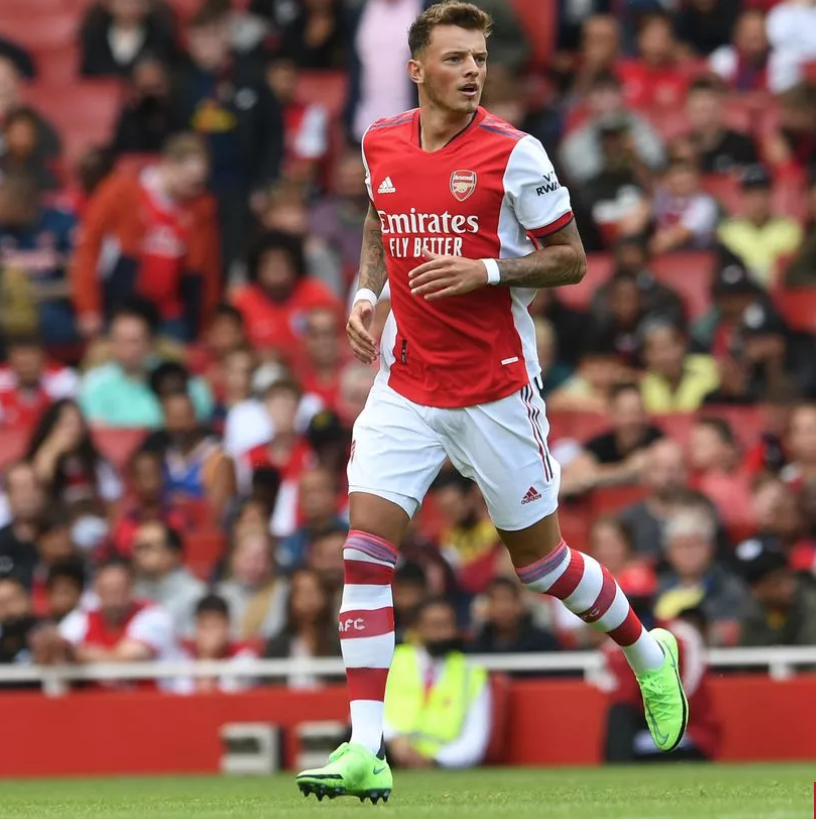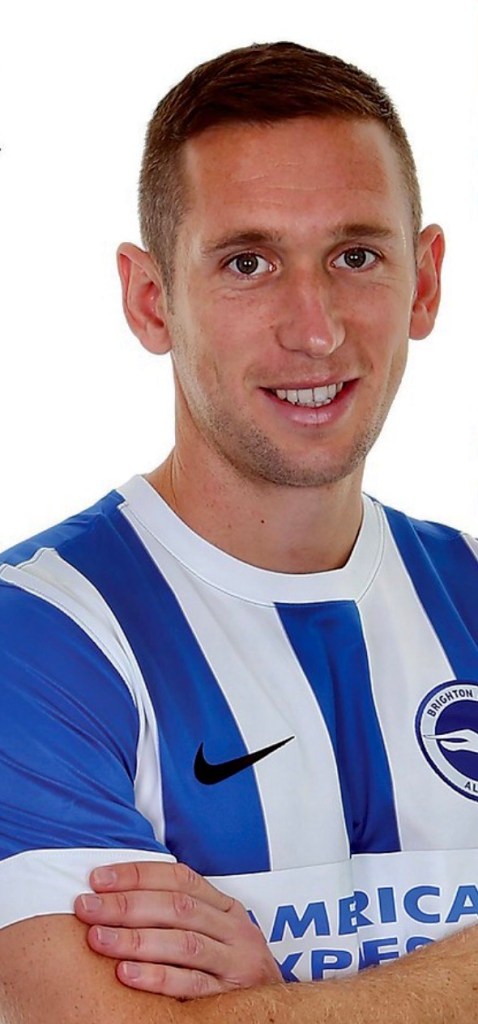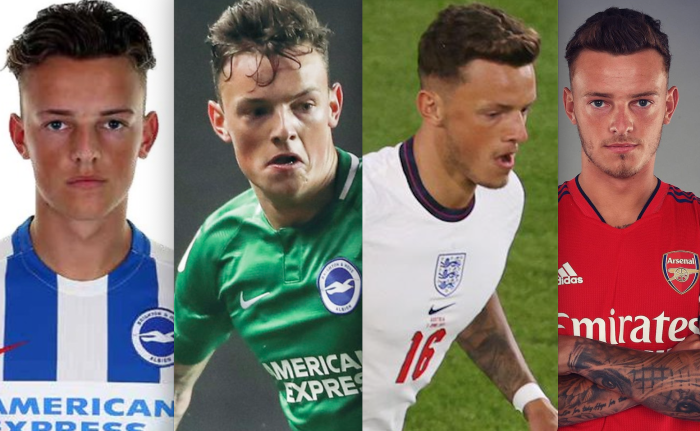
Albion nurtured the rise of cultured defender Ben White

BEN WHITE must be one of the best and most successful examples of the way present-day Brighton have evolved.

Picked up for nothing as a teenager after being discarded by Southampton, White’s development was carefully managed in house and on loan at different levels before he broke into the first team, became one of an elite few Albion players to play for England, and was then sold to Arsenal for £50million.

Critics will, of course, say if such talent had been retained the club might now have been punching even higher in the football pyramid.

But, as that veteran Albion watcher Andy Naylor reminded us recently, “hopes and dreams are different from expectations”.

Denied the level of financial clout of, say, nine or 10 clubs in the same division, Albion, as Naylor says “will always be fighting to defy the odds.”

The sale of White was great business for the club – and it didn’t harm their progress. As one who loves a parallel, the season after Mark Lawrenson was sold to Liverpool in 1981, Brighton went on to achieve their highest ever finish (13th) in the top division.
Forty years later, the same – in fact, even better – outcome followed White’s transfer to the Gunners; Albion finished in a highest ever place of ninth under Graham Potter.

And, as if to rub it in, White was in the Arsenal side that lost 2-1 at home to the Seagulls on 9 April 2022 (Enock Mwepu and future Gunner Leandro Trossard the Brighton goalscorers). It was Brighton’s first win in eight games and the win helped to dent Arsenal’s hopes of a top-four finish.

Born in Poole, Dorset, on 8 October 1997, White was in and out of hospital during early childhood owing to an immune disorder that left him with regular bouts of appendicitis, according to an April 2024 Daily Mail article by Sami Mokbel.

He eventually had his appendix removed aged seven but it didn’t stand in the way of his love of playing football from a young age.

“My parents (Barry and Carole) aren’t football fans at all, so they didn’t push me into it,” he told arsenal.com. “But they saw how much I loved it, and they did everything they could to help me. 

“I don’t know how I got into it really in the first place, probably just through being with mates, playing in the park or the garden.  I can’t remember why, I don’t think there was a particular moment that set me off in football, but I remember loving it from the first time I ever kicked a ball.”
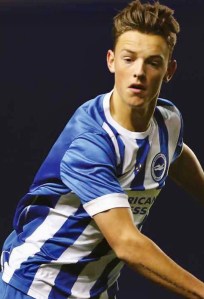
He enjoyed other sports too – tennis, hockey and cricket – but it was his football ability that saw him picked up by Southampton’s academy at the age of eight. He played in age group teams through to the age of 16 as a midfielder, but Saints didn’t offer him a scholarship because of concerns over his lack of strength.

Others obviously saw something, though, because he had trials at Leicester and Bristol City before opting to join Brighton. 

“It’s not nice hearing that someone doesn’t want you, but you’ve got to believe in yourself and remember it’s only someone’s opinion that may be right, or may be wrong,” he said.

Albion’s then head of academy player recruitment Mark Anderson spotted White during a trial at the David Beckham Soccer Dome in Greenwich. He played a game on trial against Brentford, and was then taken on, playing as a central defender, on youth terms working under academy boss John Morling and under-23s coach Simon Rusk.

Interviewed by The Athletic in November 2020, Morling explained how White’s pathway to Brighton’s first team was carefully planned and nurtured from the moment the club decided to give him a chance.

“He was technically good, passed the ball well,” said Morling. “He was a good, athletic shape. You knew he had a lot more development from a physical perspective.

“He had growing issues at one point. He was out for a long time. When people grow, they can have problems in their heels, knees or back. He had some back issues.”

White featured regularly for Brighton’s under-18s and under-23s under Rusk, and Morling pointed out: “He was a good learner, a nice personality, a way about him. He worked hard, did lots of extras in his under-18 year, under-23 year. He’d be very modest, but he’d be honest in his opinion of how he played if he didn’t play well. That’s how he is.”

Morling added: “His make-up, personality and modesty comes from his parents and his upbringing. That’s how he is and that is a big positive for young players to learn from.

“You’ve not made it until you’ve made it and the really top players always strive for more on the pitch. They always want to be better and, in their eyes, they’ve never made it. Ben shows that.”

At Brighton, he certainly had a shining example to look up to and he admitted how Lewis Dunk took him under his wing. “When I started at Brighton my goal was to play alongside him,” he said. “He was there from a young age as well, he was just a normal guy, English as well, down to earth, same position and we got on well.

“From him it was more a case of watching what he did every day. He was an example for me to follow. He was someone you look up to and see him training every day. I knew I needed to be at that level.”
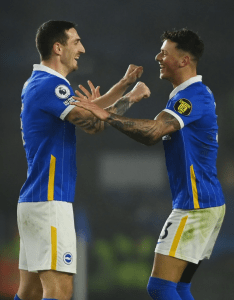
Lewis Dunk provided a great example for White to follow

White was still only 18 when Chris Hughton gave him his first team debut in the League Cup in August 2016, a 4-0 home win over Colchester United, and he played in the next round, a 4-2 win over Oxford United. He was also an unused sub for league games.

“He is the type of boy you can’t dislike,” Hughton told Mail Sport. “The type of boy you want to see do well. A quiet lad. Very unassuming.”

Hughton said there was never a question mark about his ability, only what would be his best position – centre-back, right-back or defensive midfield. “Because he was a ball player we knew he would be capable of playing in other positions. At the time we didn’t feel he was a domineering centre-back.”

When he looked back on his first team bow, White said in a matchday programme interview: “There weren’t many people who could play because of the injuries at centre-half but I was still surprised (to be chosen) and hopefully I took my chance to impress.

“I learned a lot about concentration; you can’t afford to switch off in the first team because you’ll get punished otherwise.

“I’ve tried to take that back into the under-23s and hopefully I can implement that with them now. Learning off players like Dunky was great, they’re really good people to learn from.”

White had begun to be involved in the first team that pre-season, joining the squad for training in Tenerife and featuring in friendlies against Crawley Town, Fulham and Lazio.

Ahead of him in his position at the time were Dunk, Shane Duffy, Connor Goldson and Uwe Hunemeier, so it was always going to be a gradual transition to the senior group.

“Obviously I’d love to get involved with the first team again, as that gave me a taste of what I want to do on a regular basis,” he said.

But there were three loans – in League Two, League One and the Championship – before he became a first team regular.
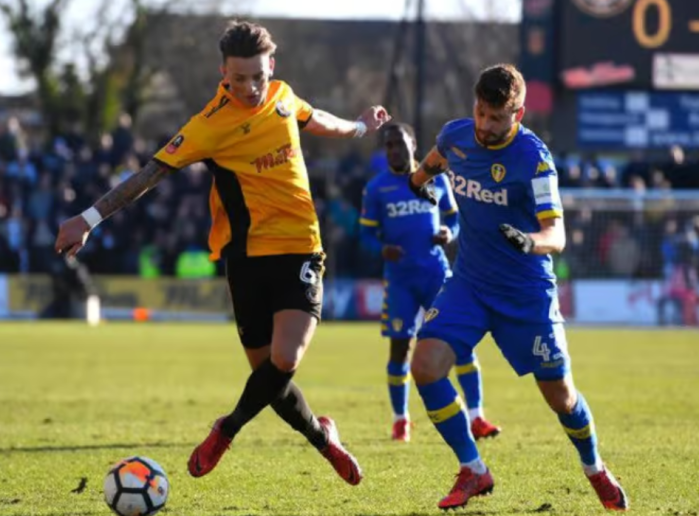
Gaining experience with Newport County

First stop was South Wales, and Morling recalled how Albion gave Newport County specific instructions as to how they could improve him: he needed to work on his aerial ability and show more personality in and around training.

Brighton-born managerial veteran Lennie Lawrence was supporting team manager Mike Flynn and Morling observed: “He did really well. They really liked him and they played a big part in his development, no question.”

White played 51 games across four competitions, which included memorable tests in the FA Cup when the League Two side beat Leeds 2-1 at home in round three (it avenged a 5-1 defeat in the League Cup earlier in the season when White’s ability to carry the ball out from defence caught the eye of Leeds’ then sporting director, Victor Orta).

Leeds tried to persuade White to move to Elland Road that January but he decided to stay put and once again impressed when the Welsh side held Spurs to a 1-1 draw (Harry Kane equalised with eight minutes to go) in the fourth round before losing the replay 2-0 at Wembley (Spurs’ temporary home ground at the time).

Flynn later reflected: “I knew he was going to be a bright star just by watching him day-in, day-out. When he goes and puts in the performances he did against the likes of Leeds and Tottenham, then you start realising how good he can be.

“He was outstanding. I described him as a Rolls Royce. He moved as eloquently as a footballer can. He was quicker than he looks, he read the game exceptionally well for somebody of that age, and he was a great lad all-round. His attitude was first class.

“For me, my biggest concern was whether he could handle the physicality of League Two. But he played against the ex-Brighton captain Adam El-Abd [when Newport faced Wycombe Wanderers] and there was a 50:50 in the corner. Ben’s gone straight through him, come out with the ball and hit a 60-yard diag.”

Somewhat presciently, Flynn added: “I think he’ll play at the top level and I think he’ll represent England.”

The player’s agent, Alex Levack told The Athletic: “Going out on loan to Newport, that was the time when he pretty much turned from boy, or young man, to a proper man; players fighting for win bonuses, it was the real world, but he seems to transition easily, doesn’t get ruffled, kind of like he is on the pitch. He takes everything on board, sometimes doesn’t say much, but he understands it. He’s smarter than he might make out.”

White’s impressive season for County earned him the South Wales Argus Player of the Year Award and, on his return to Brighton, he signed a contract extension. With Goldson and Hunemeier having moved on, White had some involvement with Albion’s first team squad in the first half of the 2018-19 season although Leon Balogun was back-up to Dunk and Duffy and the youngster had only one unused sub appearance (away to Burnley).

Morling had worked in Peterborough United’s academy before joining Brighton, and Rusk had played for Posh, so perhaps it wasn’t too surprising that White’s next step was to Cambridgeshire in January 2019, where the ebullient former manager Barry Fry was director of football.

White made 15 appearances in League One for Peterborough, initially under Steve Evans and then Darren Ferguson, as they just missed out on the play-offs by a single point and one place, but Fry said: “He was magnificent, different class.

“He was far better than our standard when he played for us. Very cool, a lovely lad off the pitch, a diamond, very dedicated, great in the community but, most of all, a proper player.”

Those experiences certainly had an impact on White, who said: “Playing for points in the lower leagues and winning games is an amazing feeling, simply because the boys don’t get paid as much, so the three points and a bonus is really important to them. The players really put a shift in as a result.

“It was a good learning experience because I came up against all different kinds of strikers, with different qualities, and I had to battle and fight, which I wouldn’t say is my strongest attribute.

“I enjoyed the experience; it was very different to anything I’d been used to, but I found that as I went up the divisions it suited my game more. Saying that, the further up you go you’re going to get punished if you make a mistake.”
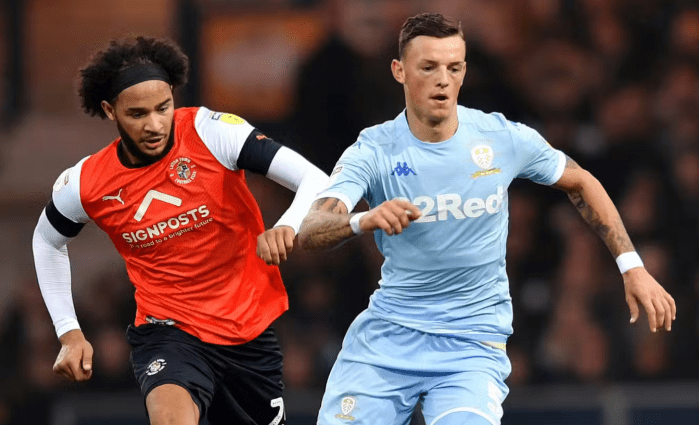
White playing for Leeds up against one-time Albion loanee Izzy Brown

Leeds’ Orta was determined to take White to Elland Road and, with Pontus Jansson having moved on to Brentford, quirky team boss Marcelo Bielsa gave his blessing to the youngster joining on a season-long loan in July 2019.

White played all 46 games as Leeds won the Championship title and he said later of Bielsa: “I learned so much from him; his coaching was all about details, the minor things like how the ball spins when you pass it, how you’re passing it, why you’re passing it. I learnt a great deal from him.”

Leeds teammate Luke Ayling was suitably impressed by the loanee, saying: “Top, top quality. He showed mental strength to come in here as a lad that nobody knew about and step into Pontus’ shoes and hit the ground running. A real, real quality player with a strong mentality. The sky’s the limit for him.”

The Yorkshire Evening Post was similarly impressed, naming him their Player of the Season and reporter Lee Sobot declaring: “White has the world at his feet and the centre-back has shown skills not befitting a typical centre-back during his forays forward and the occasional stint in the holding midfield role.”

Fellow Leeds writer Graham Smyth said: “He handled the division’s physicality, its relentless fixture schedule and the weighty expectation that is sewn into the fabric of a Leeds United shirt. He wore it brilliantly.”

Leeds were determined to land White permanently and put in three significant bids, one believed to be of £25million, all of which Brighton rejected. His agent told The Athletic: “They (Brighton) said he was coming back here to play. A lot of clubs would say that and maybe not follow through with it. But the manager said it, Dan Ashworth (technical director) said it, the chairman (Tony Bloom) said it, and it’s been proven correct.”
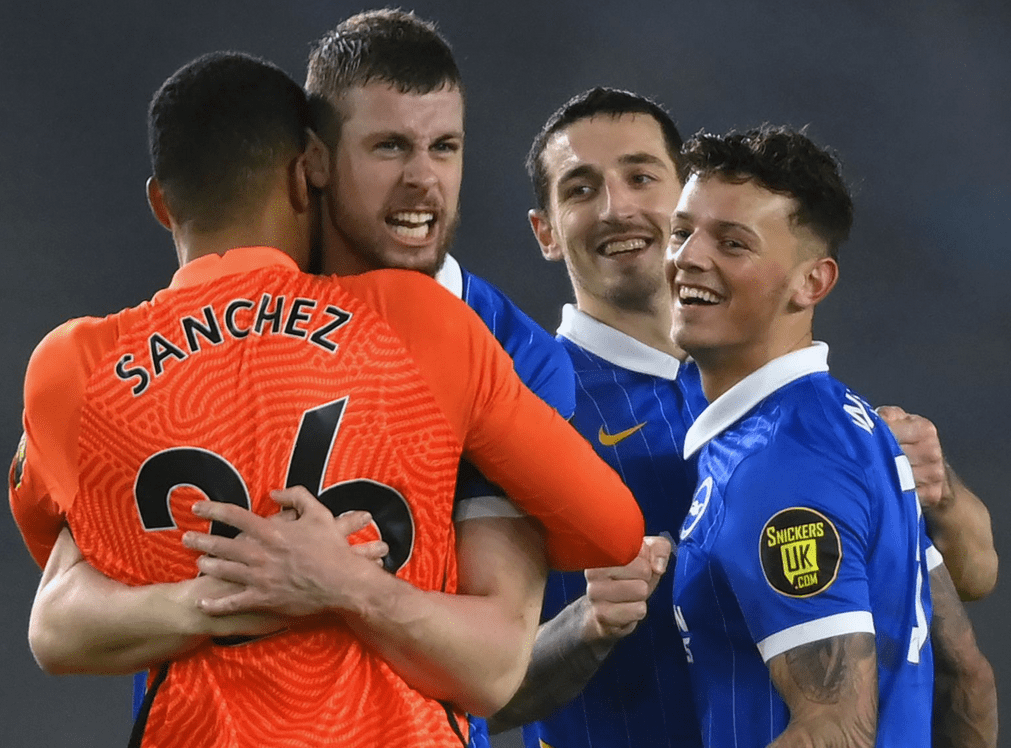
With his feet firmly ensconced as part of Albion’s first team set-up, White said: “The way the boys train and how they’re living, everything about them is at the next level. The training has been great. I’m continuing to learn under the gaffer (Potter) here and it’s great to have Dunky as my captain as well.
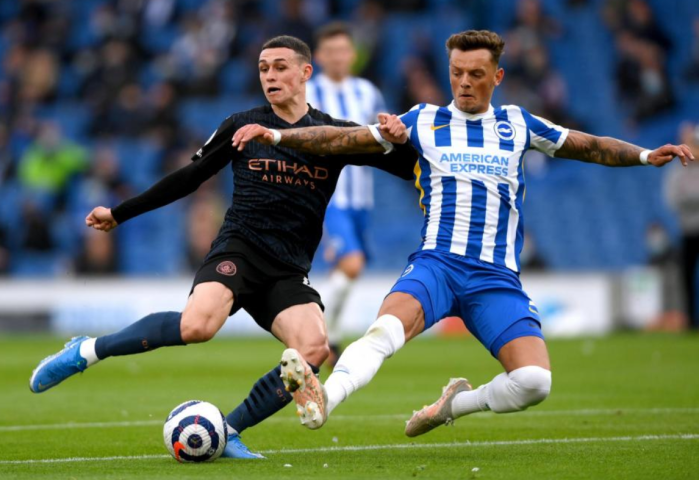
White blocks a Phil Foden shot

“He’s phenomenal, isn’t he? He’s done it at every level and has continued to progress and be the star man every season. He’s pure quality to train alongside. He rarely has a poor session and you can see the difference in him compared to when I was last here. He’s grown up a lot, taken charge of everyone and looks like a real captain.”

From a fans’ perspective, it was just a pity that the majority of White’s Albion matches were played behind closed doors because of the Covid pandemic.

In a March 2021 interview with Sky Sports, Potter said: “He’s got a lot of attributes that I think are really exciting for us. As a modern centre-back, he’s got a lot of things that are really interesting.”

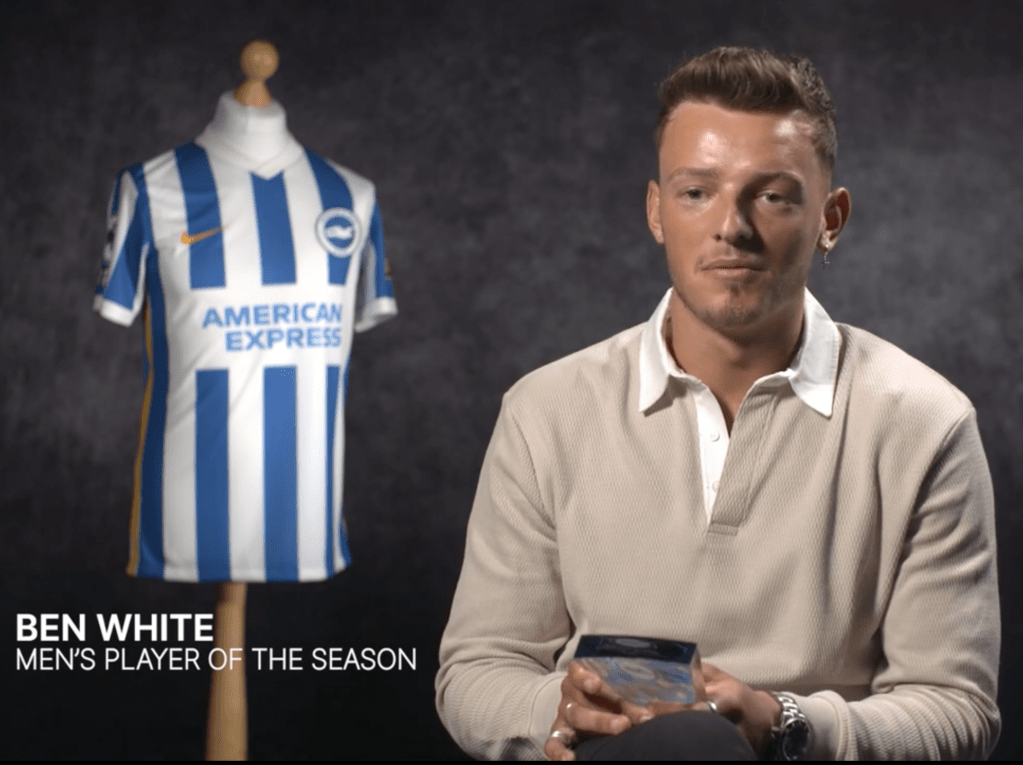
Such was his form across 39 league and cup games that he was named Seagulls’ Player of the Season, and on 2 June 2021, White made his England debut, going on as a 71st minute sub for Jack Grealish in England’s 1-0 pre-European Championship Finals warm-up friendly win against Austria at The Riverside Stadium, Middlesbrough. He became only the fifth Brighton player to play for England.

Four days later, he added his second cap when he started for England at the same stadium in a 1-0 win over Romania. On two other occasions that month, he was twice an unused sub (v Croatia and the Czech Republic at Wembley).

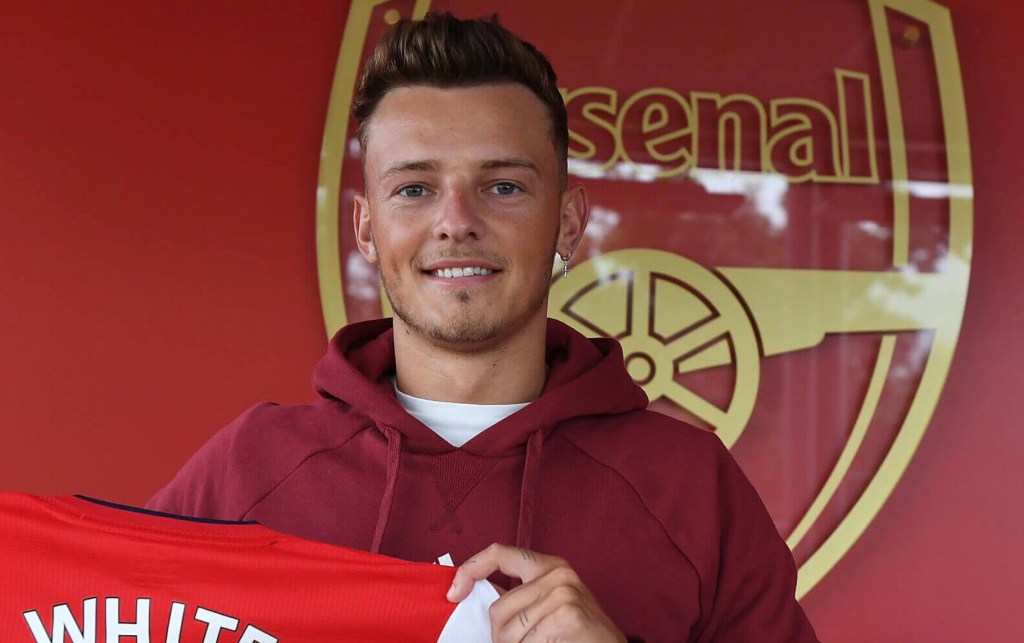
That recognition inevitably had big clubs circling: Chelsea, Tottenham and Liverpool enquired about his availability, but it was Arsenal who were prepared to meet Albion’s £50million asking price.

Arsenal manager Mikel Arteta said: “Ben was a top target for us and it’s great that we’ve completed his signing. Ben has been educated with two very good clubs, Brighton and Leeds, in recent seasons.
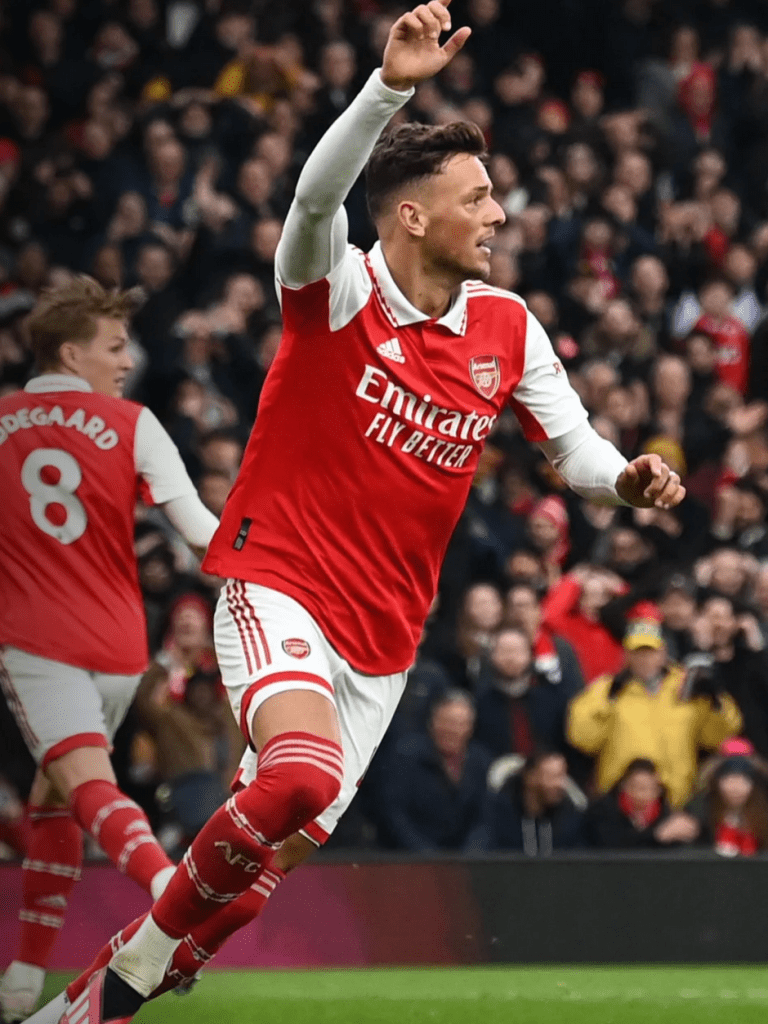
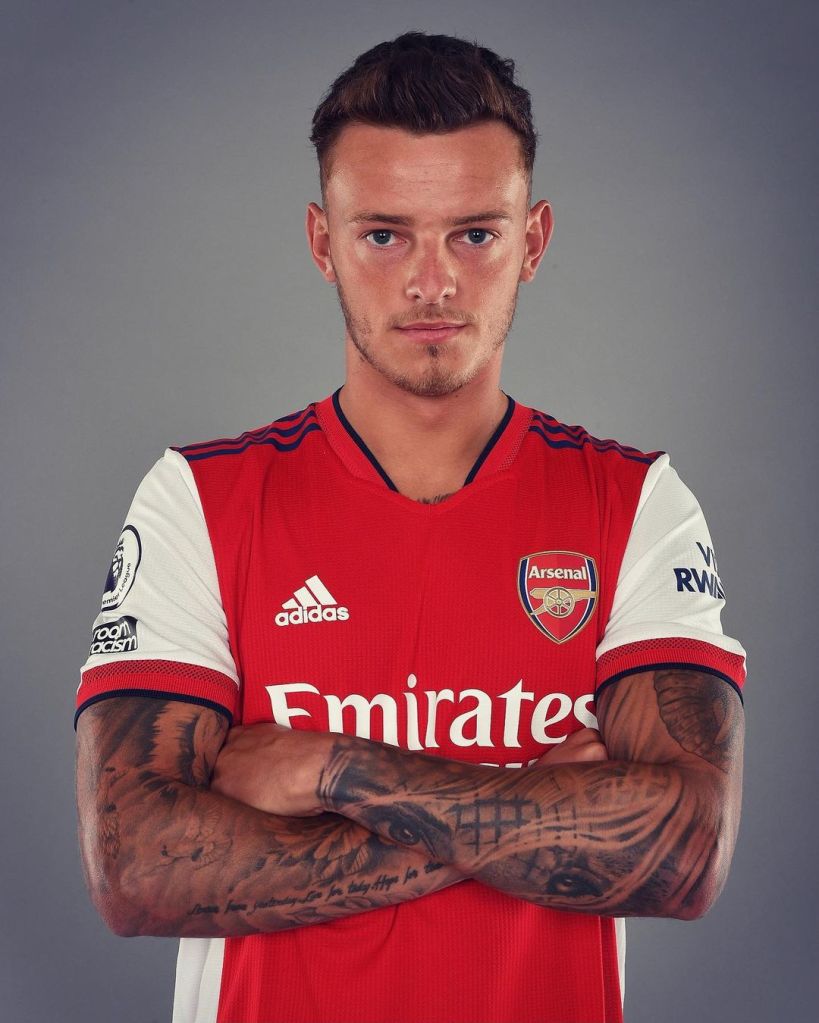
“He has benefitted well from two very good coaching set-ups and has shown with both Brighton and on loan with Leeds what a strong talent he is.

“Ben is an intelligent defender who is very comfortable with the ball at his feet and his style fits perfectly with us. And of course, he is still young, so his age and profile fits with what we are building here. We are all looking forward to Ben being central to our future long-term plans.”

A sanguine Potter told Sky Sports: “It’s part of the process for us growing as a club and a team.

“Obviously Ben played a lot of minutes for us last year and was a key player but the finances involved meant it was a really good option for us as a club to improve, to keep growing, and we need to then use the money wisely to develop the team further.

“I’m happy for Ben, of course, happy for the club. I’m proud of everybody in the academy and everybody that has helped his journey outside of Brighton, because he’s had some loan opportunities as well which have developed him. It’s a great story for us.”
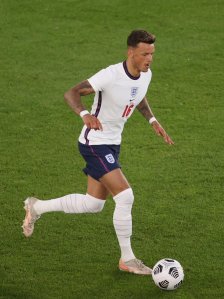
White on his England debut

White won two more England caps in March 2022, playing in a 2-1 win over Switzerland at Wembley and featuring in the first half of a 3-0 win over Cote d’Ivoire.

What happened subsequently to his international career has been written and spoken about on multiple occasions, much of it from unattributed sources, while the player himself has always maintained a dignified silence.

Suffice to say here, he was an unused sub for two games at the 2022 World Cup in Qatar and left the squad early for personal reasons which certain sources say related to a falling-out with Gareth Southgate’s no.2, Steve Holland (although Southgate denied it).

It’s apparent reading various articles about White that he’s one of those players (Bobby Zamora was another) who switch right off from football after they’ve stopped training or playing.

In an Arsenal matchday programme, White said: “My profession just happens to also be a lot of people’s hobby. They look forward to every Saturday to watch the game and that’s great. But for me it’s about being on the pitches every day, trying to constantly be the best you can be. That’s the bit I really love.

“I never used to watch football much anyway. If it was on when I was a kid, after five minutes I’d get bored of it and go outside to play football. I didn’t really watch it, I’d much rather do it. Even now, I don’t watch football really.

“I watch my own clips and my own footage to help me improve but I wouldn’t watch a game for fun.”

White explained: “When I come into the training ground, it’s all about football – 100 per cent focus. Then when I leave, I switch off from it. I know some players are just about football 24/7 but for me, I wouldn’t be able to do that. I wouldn’t be able to give everything if I did that.
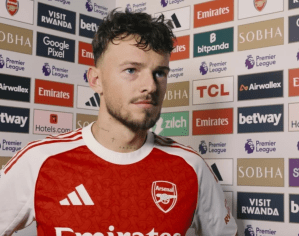
“I think it’s a good balance for me to switch off and leave it at the training ground.”

Now in his fifth season with the Gunners, he made 134 league and cup appearances in his first three seasons, but a knee injury limited his involvement to 26 matches in 2024-25 and he’s made only a handful of starts in 2025-26 with Riccardo Calafiori or Jurrien Timber often ahead of him in the right-back berth.

Nonetheless, when Arteta was questioned about White at the turn of the year, he said: “I’ve said it many times about how I feel about Ben and not [just] what he’s done in the last few weeks, but what he’s done for us in the last few years.

“He’s shown that in various contexts that he’s a player that’s going to give absolutely everything for the team, that he’s always there, he’s someone you can count on in any circumstances.”

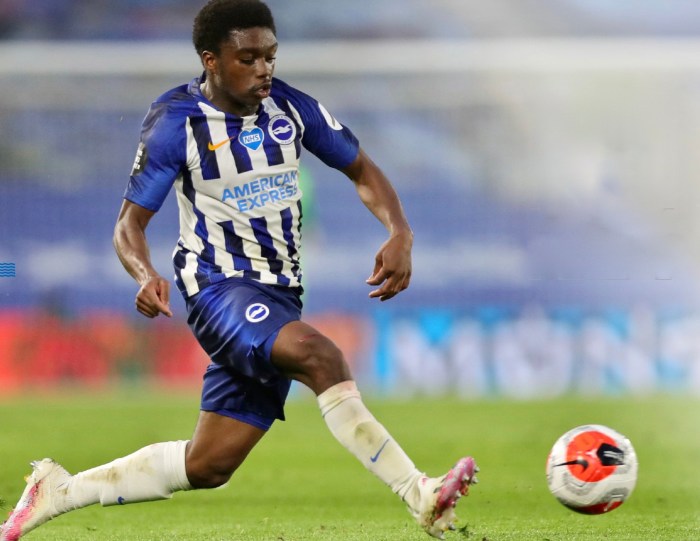
Pacy Tariq Lamptey smiled on through, despite injury woes

SPEEDY Tariq Lamptey missed too many games through injury in five and a half years at Brighton.

Like many quick players, Lamptey would excite fans when he sped past opponents with ease to create chances for others or score himself. Sadly, that electric pace came at a price.

Shortly after the pint-sized, fleet-footed full-back first broke through at Chelsea under Frank Lampard, he joined Brighton for £3m on January transfer deadline day in 2020.

Brighton were able to offer him more first team chances but lengthy spells on the treatment table meant he only made 122 appearances for the club and 49 of those were as a sub.

The 2024-25 season was another when his involvement was limited to only 14 starts plus six as a sub, although he scored two Premier League goals, netting the opener in a 2-2 draw at Leicester and burying an impressive late equaliser to salvage a point in another 2-2 draw, at Aston Villa. He also scored in the 3-2 League Cup defeat at home to Liverpool.

Throughout the season, there was speculation linking him to moves elsewhere so it came as something of a surprise in the summer of 2025 when it was announced that he had signed a new one-year deal.

However, it transpired that was just a device to secure a fee because he moved on anyway, joining Fiorentina in Italy on August transfer deadline day. Officially the sum involved was undisclosed although media reports put it at £6m.

There was no acrimony surrounding his departure; indeed, head coach Fabian Hurzeler said: “He’s been a valued player throughout his time, but more than that he is a brilliant professional and person.

“This is a good opportunity for him to play both Serie A and European football. On behalf of everyone at the club I’d like to wish him all the very best for the future.”

Sadly, after only a handful of weeks into life at his new club, Lamptey was struck by another devastating injury blow in the 22nd minute of Fiorentina’s 2-1 Serie A defeat at home to Como on 21 September.

He tore the anterior cruciate ligament in his left knee and faced a long period of recovery after successful reconstruction surgery.

Lamptey had been at Chelsea for 12 years and had just broken into their first team when he joined the Seagulls in the Covid-hit season. It meant he didn’t make his first start for the Seagulls until June 2020, in a behind-closed-doors 0-0 draw at Leicester.

By the autumn, Lamptey’s form for Brighton was catching the eye of various suitors and earned him a call-up to the England under 21 squad.

He was an unused sub for young England’s 6-0 win over Kosovo on 4 September that year but four days later started in their 2-1 win over Austria; Aaron Ramsdale, Mark Guehi and Jude Bellingham were in the same line-up.

Injury ruled him out of two matches the following month but he returned to the starting XI for England’s 3-1 win over Andorra at Molineux. He was again an unused sub four days later when England beat Albania 5-0 at the same stadium.

Wayne Rooney was reported as saying Lamptey was a player Man United should sign while Bayern Munich, Seville and Atletico Madrid were also said to be watching him.

Amidst it all, head coach Graham Potter said: “We have been delighted with Tariq. It is great to see a young player like him come in and grasp the opportunity. He fits in really well with our club and our team.”

Sadly, Lamptey then suffered a hamstring injury at Fulham in December 2020. It sidelined him until October the following year.

Unsurprisingly, on his return, he said: “I’m grateful to be back on the pitch, playing football and playing well. I’d like to be involved in every game, but it’s up to what the gaffer decides, so I just have to keep training well. Whenever the team call upon me, I’m ready to help.”

Grounded, polite and popular with teammates, Lamptey said in a matchday programme interview: “I love football and have a smile on my face because I enjoy playing. Of course, there are things that you sacrifice for it, but you know why you’re doing it.

“When you’re on the pitch and you have great moments, you remember the times there was sacrifice and you enjoy the moment – that’s what you play for.

“You’re going to go through battles and tough times in football, but that’s all part of it. You know what you’re getting yourself into, so you just have to make sure you believe in yourself, keep working hard and things will turn out right.”

Born in Hillingdon to Ghanaian parents on 30 September 2000, he played locally for Larkspur Rovers before joining the Chelsea academy aged just seven. Lamptey’s progress through the age groups reached a peak when he was part of the Chelsea youth team that won the FA Youth Cup in 2018 (beating Arsenal 7-1 over two legs), alongside the likes of Guehi, Reece James, Conor Gallagher, Billy Gilmour and Callum Hudson-Odoi.

That development at Chelsea also led to him earning selection for England age group sides. He made a total of 18 appearances for the under 18, 19 and 20 sides.

Lampard and Lamptey

His progression to the Chelsea first team saw Frank Lampard give him his Chelsea debut as sub for Fikayo Tomori in a Premier League game away to Arsenal, when he helped Chelsea turn round a goal deficit to win 2-1 on 29 December 2019.

He made two more sub appearances in FA Cup wins the following month: a home debut when he went on in the 76th minute of the 2-0 win over Nottingham Forest and he played most of the second half of the 2-1 win at Hull City. But at the end of that month, he joined Brighton.

If it seemed like a surprise move at the time, Albion’s then technical director, Dan Ashworth, pointed out: “We’ve been tracking Tariq for a while and I knew him from my England days, coming through the youth systems, where they spoke very, very highly of him.

“It’s an opportunity for us to bring in a young, exciting and talented player. He has terrific pace and is technically good. He can play as a full-back, a wing-back and has also played some of his time as an advanced midfield player. He brings some real energy and hunger to the squad and I hope he’ll be here for a number of years.”

For his part, Lamptey told the matchday programme: “It was a really tough decision to leave. I’d been with the club since the age of seven and had seen it all the way through to the under 23s and this season with the first team.

“It was a proud moment for me to make my debut but I felt like it was the right time to start a new chapter and come to this brilliant club.”

After welcoming Lamptey back after his first long injury absence, Potter said: “He’s just an amazing person, an amazing young lad. If you speak to anybody here (at Brighton), they just say the same, which is everyone loves him.

“When you have that feeling for someone, of course you want everything to go well for him and he’s had a really tough time. He’s a human being, so you’re going to be frustrated and you’re going to be disappointed and you’re going to be sad and you’re going to be angry — all of those things.

“But how he’s conducted himself, how he’s acted, how he’s got on with his work is just inspirational to everybody. His resilience, his mental strength, his capacity to deal with adversity is incredible, and I think that’s credit to him and his family.

“He’s been fantastic around the place and I think he will use it as a way to strengthen and a way to grow and a way to improve — that’s how Tariq is.”

In a subsequent interview, Potter added: “Tariq needs to be threatening the opposition defenders as much as he can. Some games you can do that from right-back, some games from left-back, sometimes from right wing-back, and sometimes you can be a little bit higher.

“The fact that he’s so open-minded and so ready to help the team makes it easy for me. It’s just finding the right solution for him.”

Albion’s European season of 2023-24 once again saw injury deprive Lamptey of greater involvement (14 starts and 10 as a sub) although coach Roberto De Zerbi was grateful to exploit his versatility when called upon, using him as right-back, left-back and winger.

Lamptey played a key part in the 2-2 comeback draw away to Marseille in the October Europa League group match when filling in for injured Pervis Estupinan at left-back. He capped an influential second-half performance by winning the late penalty from which Joao Pedro equalised.

De Zerbi told The Athletic: “He is a unique player. His attitude and behaviour are incredible. It is to Tariq’s credit that we achieved first place in the Europa League. The penalty in Marseille was for his attitude and passion to create the penalty, to find the one-on-one.

“I would like to improve him in pass control and I would like him cleaner in technique. His characteristic is speed, his energy. When Tariq starts (to run) and is attacking, you have to follow him or you will be left 40 metres behind.”

The admiration was certainly mutual, with Lamptey telling 3 Sports: “He’s an amazing coach; tactically, he makes you look at football from a different point of view.

“You try to add as much to your game as possible, and the way he saw the game was different. We played some fantastic football, so I really enjoyed my time with him. I just try to use the experiences he gave me to add to my game and make me a better player.”

Having collecting those two England under 21 caps after the move to Brighton, and with several contenders ahead of him in the pecking order for the full international side, Lamptey opted to play for his parents’ country at full international level.

It was perhaps not a surprise because through his own charitable foundation he supports youth in Ghana, donating football kit and other sports equipment to the country’s schools and other organisations.

It was the warmth of the people he met while in the country doing his charity work that helped him to decide to play for Ghana, although he said his upbringing in a Ghanaian household was also a factor.

He finally decided to play for the Black Stars after visiting the Cape Coast Stadium to watch Ghana beat Madagascar 3-0. He made his debut for Ghana in September 2022, going on as a sub in a friendly 3-0 defeat against Brazil, and went on to play twice for the country at the Qatar World Cup.

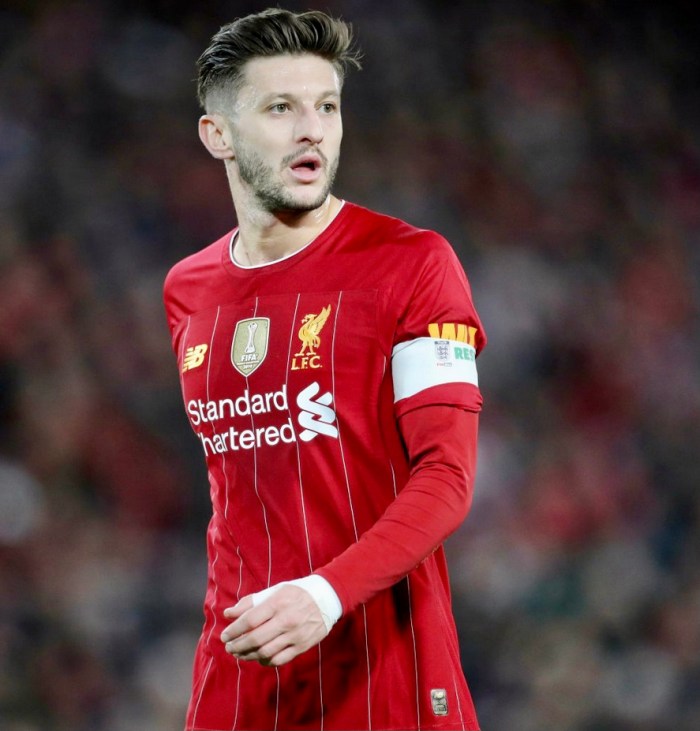
Class act Lallana helped lift Albion to a new level

IT WAS SOMETHING of a coup when multiple trophy winner and England international Adam Lallana joined Brighton from Liverpool in 2020.

His best years might have been behind him, but Lallana’s football intelligence and astute movement were a joy to watch and were, perhaps, a sign that once-humble Albion were getting serious about challenging for the top spots in the Premier League. The club twice achieved top 10 finishes during his four years at the Amex.

As much as anything, Lallana observed in an early interview that his new side would improve with a bit more belief. “That comes with time, with the development of players and with confidence,” he explained. “The more times we play well, the more we’ll get that belief and with that we’ll score more goals and get more wins, but we need to be a little bit patient. Empires aren’t built in a day.”

One of Lallana’s trademarks, as observed in an early profile on Liverpool’s website, was “turning markers inside-out with impulsive twists or burrowing through swathes of players with fine close-control”.

The player said: “Pace isn’t a huge part of my game, but playing the percentages, mathematically, if you can add an extra yard of pace or a couple of percentage points to your game, then that’s massive nowadays.

“I still do a lot of work in the gym to improve my pace, power and strength to try to get that little bit more explosive power to my game. I’m always working to improve.”

Players used to performing at the highest level week in week out don’t suffer fools gladly and it was no surprise to learn that Lallana had a few fallings out in his early days at Brighton, for example with Neal Maupay.

Younger players certainly enjoyed the experience of learning from someone who had played at the very top, for example, Columbian international Steven Alzate, who said: “On and off the pitch he is a leader and when he’s got the ball at his feet he can really show people what he can do. Training with him is an honour; he’s a great guy.”

Those leadership qualities were drawn on by both Graham Potter and Roberto De Zerbi, even though the ageing player’s minutes on the pitch had to be managed carefully.

Lallana even stepped up to support coach Andrew Crofts with first team training in between the reigns of the two managers.

Towards the end of his time at Brighton, Lallana went off in international breaks to work with Lee Carsley preparing the England under 21s ahead of matches.

Born in St Albans on 10 May 1988, Lallana’s family moved to the Ilford area of Bournemouth when he was five and he went to the local Corpus Christi School and St Peter’s Catholic School.

If the surname doesn’t sound Anglo Saxon, that’s because he has Spanish roots: his grandad was from Madrid.

From kicking a ball around with his young pals, Lallana began to harness his footballing talent at the AFC Bournemouth centre of excellence. Southampton paid a £3,000 fee to take him into their own junior ranks when he was just 12 years old. They made subsequent payments totalling £15,000 as he progressed to scholarship and full professional levels.

Lallana was grateful for the quality of the Southampton academy set-up and in particular referenced George Prost, his under-17 coach, as someone who instilled a lot of the attributes that helped to develop his career.

Lallana was in the same Saints youth team as Theo Walcott and Leon Best (Gareth Bale was only on the bench!) that lost the 2005 FA Youth Cup final to Ipswich Town. He was also in the side that lost in the semi-final to Liverpool the following year.

The same year, he made his first team debut in a 5-2 League Cup win over Yeovil Town. Saints loaned him back to Bournemouth in 2007, when he played three games, but he returned to Southampton, then in League One, and was part of their back-to-back promotion-winning side that went from League One to the Premier League.

Having helped Southampton under captain Dean Hammond to the League One runners up spot – behind Brighton – in the 2010-11 season, he was a key member of the side that gained promotion from the Championship in second spot behind Reading (Brighton finished 10th). Over the course of eight years with Southampton, he made 235 appearances, scoring 48 goals.

In the Premier League, Lallana was made Saints captain and he admitted he struggled at first. But the arrival of Mauricio Pochettini had a positive influence on him, as he explained in a matchday programme interview. “He had a big part in moulding me into the player I am today – he took me to that next level.

“When he came to the club he could see that I had pressure on my shoulders, that I wasn’t playing freely – and we just spoke about it and he talked it out of me. By the end of the season and the next season, I was playing the best football of my life I think and a big credit goes to him for that.

“He could see I was a talented player and probably wasn’t playing to my best, but he knew it was because I wasn’t playing freely. We had lots of conversations and him knowing that and speaking to me about it was amazing because instantly it was like a balloon that just popped – immediately it took the pressures off. That was one of many things he did for me at Southampton.”

Lallana said Pochettino also helped him to become fitter and introduced him to the art of pressing. “My love of winning the ball back – that came under Mauricio.”

It was Brendan Rodgers who signed Lallana for Liverpool for £25m after the 2014 World Cup in Brazil where he had been a member of the England squad that finished bottom of its group. Lallana had made his England debut the previous November in a 2-0 friendly defeat v Chile.

In the red of Liverpool

Ten of his 34 caps for England were won in 2016 when he was voted by supporters as the country’s player of the year.  By then 28, he scored his first international goal in a last-gasp win over Slovakia in September and two months later netted again against Scotland and Spain at Wembley.

Taking instructions from England boss Gareth Southgate

“This award is a huge honour,” Lallana told The FA.com. “The last three winners were Rooney (2015), Rooney (2014) and Steven Gerrard (2012) so that just goes to show what a great achievement this is.”

By then, Rodgers had been replaced by Jurgen Klopp under whom Lallana blossomed and developed (they were also close neighbours in Formby) as together they went on to win the Premier League title and the Champions League.

In a 2022 documentary about Klopp, made by The Anfield Wrap, Lallana said: “He has the X factor doesn’t he? It’s as simple as that. The amazing ability he has to motivate players. If he’s left you out for 10, 11, 12 games you’re a bit down but somehow with him, you’ve still got so much respect for him even though you aren’t happy.

“I don’t know how he does it but he just has the ability to get you motivated because of who he is, so you’re fighting for the team and for him and that’s the art. It just shows how good he is at being a manager.”

According to thisisanfield.com: “2015-16 was arguably Lallana’s best, as he started 38 games and helped push Liverpool on to the League Cup and Europa League finals.

“One of his finest performances in red came in the Europa League semi-final against Villarreal. With Liverpool trailing 1-0 from the first leg in Spain, an emotionally charged Anfield were put at ease when an early own goal drew them level.

“From then on, Lallana was brilliant for Liverpool in an attacking line-up also featuring Roberto Firmino, Philippe Coutinho and Daniel Sturridge. The latter got the second goal after 63 minutes, but it was Lallana who sealed the game and sent the Reds through to the final, with a composed flick into the net.”

Summing up the Liverpool mindset, Lallana said in a matchday programme interview: “At Liverpool, where the expectations are so high, it was all about just dealing with those pressures.

“We had to forget about what the supporters want, the trophies that are expected, and just believe in what we as a team believed in – and that was playing high-intensity football and being motivated in every game to fight for each other.”

In another interview, this time with the Liverpool Echo, he said: “Playing six years with the intensity of that club takes over your life.”

Nonetheless, when he finally left Anfield for the Albion, he said: “I’m desperate for a new challenge and I’m desperate to play a bit more.

“I still feel like I’ve got plenty more football ahead of me and I’m thoroughly excited by this next challenge and what that will bring.”

A sign of the respect Liverpool fans still had for Lallana was demonstrated at the end of Albion’s 2-2 draw at Anfield in October 2022. As fans sang his name, Lallana tapped his chest and clapped every stand before walking down the tunnel.

Lallana helped lift Brighton to a new level

Reds supporter Aaron Cutler wrote on social media: “Pleased Lallana got a deserved (and delayed) ovation. Easy to forget how integral he was at the start of Klopp’s reign. While injuries limited his game time towards the end he clearly remained an influential presence within the squad. Could have done with him today!”

Of course, during his time with Brighton, Lallana was able to see at close quarters the emergence of Alexis Mac Allister, and he was full of praise in an interview with Graham Hunter:

“What a special player and special person,” he said. “He’s a player that is so pure with how he plays. The way he lends the football, uses others, there’s no selfishness in the way he plays.

“It was so special watching him during the World Cup, not playing to begin with then getting used and proving himself. Then playing so well that there’s no way he doesn’t play, by the end Messi is looking for him.”

Speaking of Mac Allister’s “footballing intelligence” Lallana said: “OK he’s not the quickest or strongest, but so smart. Knows that the football is faster than anyone, Alexis is of that ilk.

“He had to battle tough moments here at the beginning. He’s a very introverted, shy guy.”

With an eye to a likely future in the game as a coach, Lallana enjoyed a great relationship with De Zerbi and told BBC Radio Sussex: “I feel like we’ve helped each other an awful lot in the two years and I’m extremely grateful for how he’s managed me.

“At times I can’t train every day and my body probably lets me down, but he’s been so supportive of me and he’s managed me differently to most other players, probably because of the history I’ve had with injuries and the age I’m at. I know as a footballer that doesn’t often happen.

“Our relationship goes beyond player and coach, he’s like an older brother to me.”

When Lallana decided to leave Brighton at the end of the 2023-24 season and return to Southampton, he had made 64 starts for the Seagulls plus 40 appearances off the bench.

Albion had finished 16th and ninth under Potter then sixth and eleventh under De Zerbi.

In an extended interview with The Athletic, Lallana said: “What has happened is everything I thought was possible. I wouldn’t have said in my first interview we are going to be in Europe in three years, but that is the genius of Tony Bloom (owner-chairman) and Dan Ashworth (former technical director).”

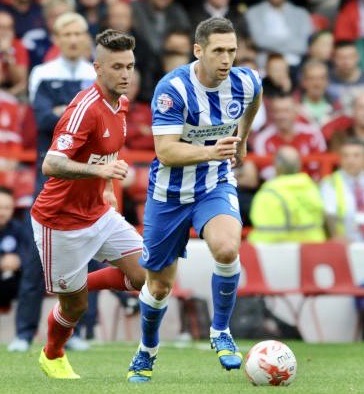
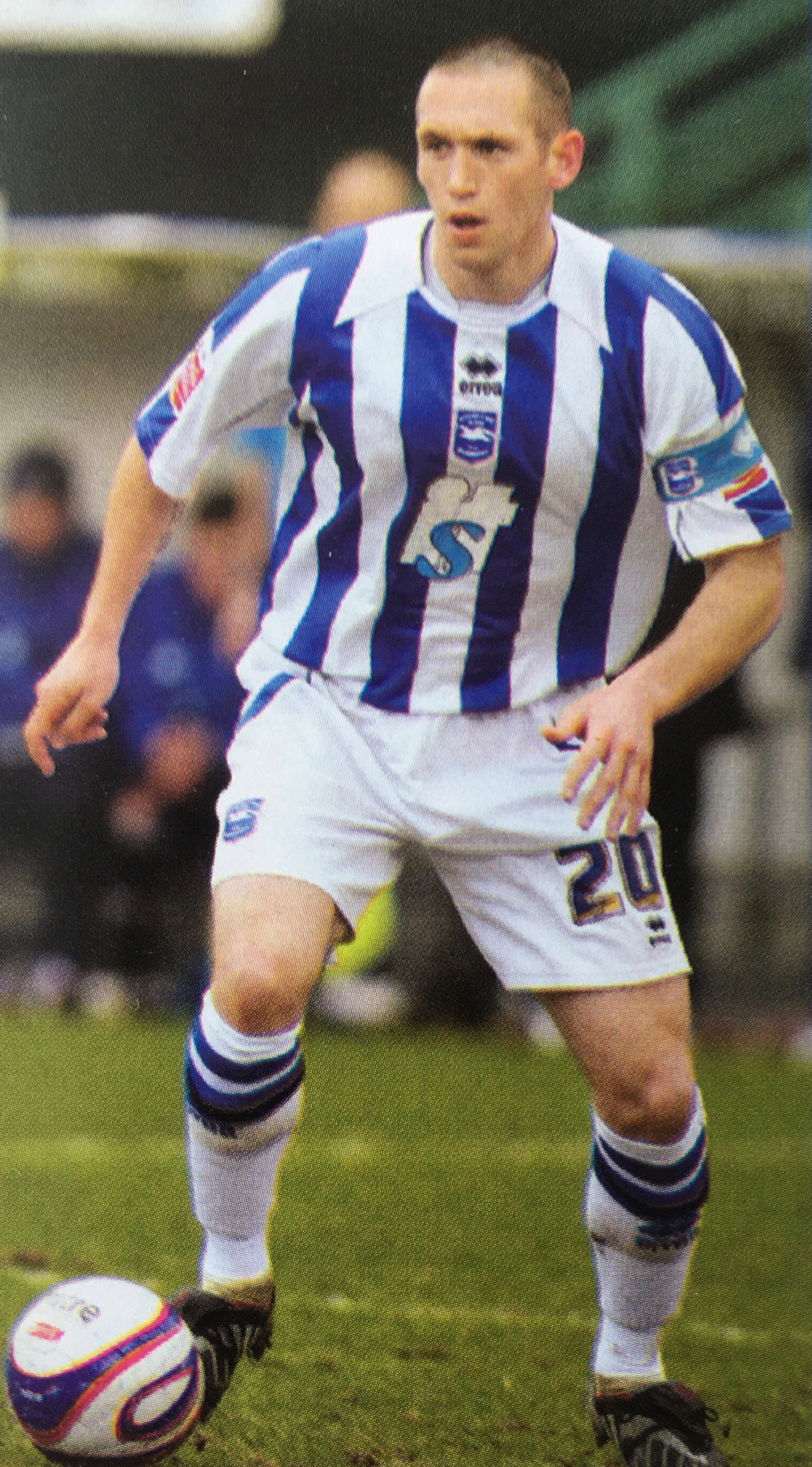
Andrew Crofts just couldn’t stay away from the Seagulls

ANDREW Crofts is one of that rare breed of player who had three separate spells at Brighton, although the latter time was only as player-coach with the under-23s.

The Welsh international midfielder returned to the Seagulls after only a month as player-coach at Yeovil Town when Liam Rosenior left the Albion to move to Derby County.

His signing as an over-age player as well as a coach was explained by technical director Dan Ashworth, who hailed the “innovative step” and told the club website: “The thinking behind the playing role is to have someone of his experience out there on the pitch alongside our younger players, and to impart that crucial knowledge he has gained from his time in the game.

“To have that experience out on the field, in the pressure situation of a game, will be of enormous benefit to our young players and have a positive impact on their collective and individual development.”

Crofts first joined the club in the summer of 2009 during Russell Slade’s managerial reign and, when Gus Poyet took over the managerial chair, he appointed Crofts as captain for his first game in charge.

The midfielder repaid the faith in that televised away game at St Mary’s on 15 November by scoring in Albion’s memorable 3-1 win. Crofts retained the armband through to the end of the season and his form had caught the attention of Championship side Norwich City.

Crofts made the switch to Carrow Road and played 44 games as Paul Lambert’s outfit won promotion to the Premier League in runners up spot.

In the top-flight, though, Crofts was no longer a mainstay of the midfield, starting just 15 matches in 2011-12, and coming off the bench on 10 occasions.

“Towards the end of the season I was in and out,” he told the Albion matchday programme in 2019. “Paul then went to Aston Villa and when the chance came up to return to the Albion I jumped at it.”

“It felt like coming home and I wanted to replicate what we had done with Norwich. It was a completely different club compared to the one I’d left, with the Amex Stadium and plans for the new training ground.”

Poyet wasted no time in seizing the chance to re-sign him, telling the club website: “When we knew about the possibility to bring him back we worked very hard to do that.

“I am delighted to have him back. He is going to be a very important player.

“He is coming back to a club that he knows and he was happy to come back – that shows his commitment,” said Poyet. “He leads by example and we want players like that on the pitch.”

Unfortunately, that season his playing time was limited by two long-term spells out injured, and the following season it got worse. After sustaining a serious cruciate knee ligament injury in January 2014, he was sidelined by an almost identical injury again in October 2014.

When the player suffered the first injury in an away game at Birmingham, Poyet’s successor, Oscar Garcia, said: “He will be a big loss and I feel sorry for Crofty. He has been excellent and has been a key player.”

Crofts battled over many months to regain fitness only to suffer a partial tear of his anterior cruciate ligament and a tear to the meniscus in a match against Watford in October 2014, putting paid to any involvement in the rest of the 2014-15 season.

Head coach Sami Hyypia told the club website: “We are all devastated for Crofty. He is an important member of our squad and worked incredibly hard to get back to full fitness after last season’s knee injury.

“Crofty is a very strong character and he will continue to receive the best possible care and treatment from our medical staff throughout his rehabilitation.”

Unfortunately for him, by the time he was fit again, another new manager was in place and Dale Stephens and Beram Kayal were firmly established as Chris Hughton’s preferred midfield pairing. So, in March 2016, Albion loaned him back to his first club, Gillingham, until the end of the season.

On leaving the Seagulls that summer, he moved to Charlton Athletic under his former Albion boss Slade, on a one-year contract, and made a total of 54 appearances for the Addicks.

Although born in Chatham, Kent, Crofts qualified to play for Wales because his grandfather hailed from the principality. He earned a total of 29 caps, spread over 13 seasons, initially under John Toshack, most coming under Gary Speed, before making his final appearance against Panama in November 2017, in Chris Coleman’s last game as Wales manager.

Crofts v Rooney in a Wales v England match
Welsh international

Crofts was on Chelsea’s books from the age of 10 to 15, going through the ranks with John Terry, with whom he shared digs. One of his coaches was ex-Albion and Chelsea defender Gary Chivers. After being released by Chelsea, he linked up with Gillingham as a trainee and worked his way through the youth and reserve sides, making a surprise first team debut against Watford in May 2001 when only 16.

It wasn’t until 2004 and 2005 that he became a first team regular. His first Gills goal was scored in the Championship clash at the Withdean Stadium on Boxing Day 2004 when the Seagulls won 2-1.

Crofts eventually took over the captaincy at Gillingham but, after the side were relegated to League One, manager Mark Stimson believed the role was too much of a burden on the player. After more than 200 appearances for the Gills, he was made available for transfer and, in 2008-09, went out on loan to Peterborough United and then Conference side Wrexham under former Albion striker Dean Saunders.

When he joined Albion on a free transfer in June 2009, boss Slade said: “He’s an international player so that’s not bad for a start. He’s got good pedigree and was an important player for a good Gillingham team at the time.

“He can sit in for you defensively or he can get forward. He has got a good work ethic and I’m pleased to get him.”

Towards the end of his league playing days, Crofts had spells at Scunthorpe United in 2017-18 then Newport County for the 2018-19 season, playing under his former Gillingham teammate Michael Flynn, who he played alongside at Priestfield between 2005 and 2007,

Flynn made his old pal captain and said: “He’s a gentleman and he’s somebody I trust a lot. So signing him was really a no-brainer.

“Andrew coming in is a massive signing for the club. He’s the ultimate professional and he’s in fantastic condition.”

Crofts himself said: “I played with Michael Flynn at Gillingham and he was a winner. I loved playing with him and I can’t wait to play for him now with him being my gaffer.”

Unfortunately, injury issues restricted Crofts to just 12 appearances for Newport and he was released at the end of the season.

On leaving County, Crofts moved to Yeovil Town as player-coach with manager Darren Sarll saying: “To bring a player of Andrew’s experience into the club at this time is a great coup.

“He still has a thirst and hunger for playing and winning promotions and it’s refreshing to be part of the very early stages of his coaching career.

“He’ll be a valuable asset to the squad both as a player and in terms of passing on his experience and knowledge to the younger members of the squad.”

But then the opening arose with the Albion and he didn’t hesitate to return. When Graham Potter left the Albion, Crofts temporarily took on the head coach position and was retained as a first team coach under Roberto De Zerbi and his successor, Fabian Hurzeler.

• In an interview with Andy Naylor of The Athletic in December 2020, Crofts talked at length about his career, his coaching ambitions and some of the big names he played alongside.