ONE OF West Ham’s less well-known ‘Boys of ‘86’ tried to boost his stuttering career on a month’s loan with the Seagulls.
Hammers fans still laud the achievements of John Lyall’s title-chasing side of the 1985-86 season because they finished third, the club’s highest-ever position in the top division.
The form of twin strikers Frank McAvennie (26 goals) and Tony Cottee (20) meant chances were few and far between for Greg Campbell, a youngster trying to get a break into the first team.
However, by virtue of one start and two substitute appearances early on in that famous season, Campbell can claim a place amongst the ‘Boys of 86’ whose achievements have since been captured in a book and in a video.
The group of ex-players, that included George Parris who later played for Brighton, regularly get back together for social occasions to raise funds for various charities.
It was in the season following West Ham’s close finish behind champions Liverpool and runners up Everton that Campbell sought to get some first team football at Brighton.
In his matchday programme notes, manager Barry Lloyd said: “He is a young player who has learned the game at West Ham and I believe he has something to offer as a conventional target man.”
Unfortunately for him he joined a club that was sliding inexorably towards relegation from the second tier, Lloyd having taken over as boss the previous month after the controversial sacking of Alan Mullery only six months into his return to the scene of past glories.
When Campbell joined, Lloyd had presided over five straight defeats in which 10 goals were conceded and Albion had dropped to second from bottom in the table.
The manager shook things up for the visit to West Brom on 28 February, dropping goalkeeper John Keeley, Darren Hughes and Terry Connor and putting Campbell, who had made his debut in the Reserves against Norwich, on the substitute’s bench (in the days of only one sub).
A dour 0-0 draw was ground out to earn a much-needed point but Campbell didn’t get on. He led the line for the reserves in a midweek 2-0 defeat at home to Fulham and had to wait until the following Saturday to make his first team debut.
Then, he was sent on as a substitute for Steve Penney in the home game against Derby County but to no avail as Albion succumbed to a 1-0 defeat. It was Dean Saunders’ last game for Brighton; shortly afterwards he was sold to Oxford United for just £60,000 (four years later, Liverpool bought him for nearly £3m).
Four days later, Campbell scored for the reserves in a 4-1 defeat at Swindon Town, but it still wasn’t enough to gain a starting spot. Away to Barnsley the following Saturday, once again Campbell found himself on the bench, the restored Connor and ex-Worthing striker Richard Tiltman preferred up top. Tiltman scored but once again Albion were on the losing side, going down 3-1.
When Ipswich Town visited the Goldstone on 21 March, only 8,393 turned up (700 down on the previous home game) and the increasingly frustrated faithful saw the Albion lose again, 2-1.
Campbell once more only got on as a substitute, replacing right-back Kevan Brown, and that was his last involvement in a Seagulls shirt.
Born in Portsmouth on 13 July 1965, Campbell had footballing footsteps to follow into: his dad Bobby Campbell (a great friend of Jimmy Melia’s) played for Liverpool and Portsmouth, coached Arsenal and QPR, and was manager of Fulham, Pompey and Chelsea.
Campbell and George Parris line up for West Ham’s youth team
After progressing through West Ham’s youth and apprentice ranks, the young Campbell was given his first team debut by Lyall, up front alongside Cottee and Bobby Barnes in a 3-1 home win over Coventry on 4 September 1984.
He made his second start just four days later, in a 2-0 home victory over Watford, but a broken jaw put paid to his involvement in that game.
The injury meant he had a long wait before he was next on first team duty, making a return as a substitute in a 1-0 home defeat to Luton Town on 24 August 1985.
He appeared from the bench again two days later in a 2-0 defeat at Manchester United before making his only start of the aforementioned 1985-86 campaign in a 1-1 draw at Southampton.
He started alongside McAvennie but was replaced by Cottee and that appearance at The Dell on 3 September 1985 was Campbell’s last in the Hammers first team.
After he was released by West Ham, he tried his luck in Holland, playing 15 games for Sparta Rotterdam in the 1987-88 season, during Hans van der Zee’s reign as manager.
On his return from Holland in November 1988, Campbell joined Plymouth Argyle where the former West Ham defender and Norwich City manager, Ken Brown (see picture below), was in charge.
As the excellent greensonscreen.co.uk website records, Campbell’s first match was against his dad’s Chelsea side in the Simod Cup at Stamford Bridge.
It wasn’t a happy return to English football, though, because Chelsea ran out 6-2 winners.
Nevertheless, he celebrated his Argyle league debut two weeks later with a goal in a 3-0 home win over Oldham Athletic.
Campbell spent 18 months with the Devon side and scored six times in 24 starts plus 15 games as a sub.
He moved on to Division Four Northampton Town, where former Cobblers stalwart Theo Foley had returned as manager.
Campbell (circled) lines up for Northampton Town
Campbell teamed up with former West Ham teammate Barnes, who went on to become a respected administrator for the PFA for more than 20 years.
Campbell scored seven goals in 47 appearances for the Cobblers before retiring from the game at the age of 27 in 1992.
TRICKY playmaker Mark Yeates spent five years as a Tottenham Hotspur player but it was with Brighton that he played his first competitive football.
Yeates looked like a useful loan signing when he joined new manager Mark McGhee’s Albion squad in November 2003. He drew plenty of admirers and featured in 10 games over two months.
It wasn’t long before McGhee was talking about the possibility of signing him on a permanent basis, but Spurs had other ideas. He eventually had to leave north London to pursue his career but he ultimately made nearly 500 professional appearances.
Eighteen-year-old Yeates arrived on the south coast shortly after Zesh Rehman had also signed on loan (from Fulham), Albion having lost midfield duo Charlie Oatway and Simon Rodger to injuries.
The diminutive Irishman made his debut in McGhee’s first match in charge: a 4-1 defeat to Sheffield United at Withdean.
The matchday programme’s assessment was thus: “The second half was better. Mark Yeates moved into the centre of midfield and so had an opportunity to show what he can do. He could beat players, look up, and try a perceptive through ball. Wide on the left in the first half, he’d been exposed and given the ball away too often.”
On the day England won the Rugby World Cup, Yeates was one of six Albion players booked as the Seagulls beat Notts County 2-1 at Meadow Lane; an eventful game which saw Adam El-Abd make his league debut, Leon Knight score twice and John Piercy sent off for two bookable offences.
After only his third game, Yeates was off on international duty, playing for the Republic of Ireland under 19s away to France.
It was in early December that McGhee spoke about wanting to take Yeates on a permanent basis, telling the club’s website: “I’ve said already that I knew before he came here what a good player he is and I imagined he would do well in this team, and he has done that.”
McGhee told the Argus: “He has a kind of Gaelic confidence. Robbie Keane had it and Mark is similar in that respect.
“His character is perfect really for the way he plays. It goes with the ability and flair.”
Yeates hailed from the same Tallaght district of Dublin as Keane – a player McGhee knew well having given him his English football debut at 17 when manager of Wolves.
After extending his stay at the Albion to a second month, Yeates told the Argus: “Before I came here I had never really played in the centre of midfield. I usually play up front off a big man.
Yeates takes control watched by Adam Hinshelwood
“The gaffer tried me up front in the first half at QPR (in the LDV Vans Trophy) but we didn’t get the ball into mine and Leon’s feet, and with two little men you are not going to get much joy.
“At Tottenham we play with wingbacks and two holding midfielders and I am allowed a free role.
“I have to be a bit more disciplined here. Sometimes I can go running about a bit, it’s just up to the lads to call me back in to help out.”
Yeates appreciated the opportunity Albion had given him to taste senior football, telling the newspaper: “It’s great for me just to be getting first team football, plus the reason I am staying here is because they are a good bunch down here.”
He observed: “It’s a lot more fast and furious because everyone is playing for their living. You have to give a bit more and get more out of yourself which you probably wouldn’t get in a reserve game.
“In reserve football, players are going through the motions. It’s just a matter of playing a game.”
After he’d played his final game on loan, a 0-0 home draw with Oldham Athletic, the matchday programme observed: “Yeates showed some neat touches and was Albion’s most creative outlet once again.”
When Albion struggled to beat Barnsley 1-0 in the FA Cup, the matchday programme noted: “The passing abilities of Mark Yeates, and his desire to get into the penalty area, were sorely missed.”
Back at Spurs, Yeates had to wait until the very last game of the season to make his Premier League debut. He’d previously been an unused substitute when Glenn Hoddle’s Tottenham were thrashed 5-1 by Middlesbrough at the end of the 2002-03 season.
But in May 2004, David Pleat selected him to start in a side also featuring Ledley King, Jamie Redknapp, Christian Ziege, Jermain Defoe and Robbie Keane.
The fixture at Molineux ended in a 2-0 win for the visitors and Yeates helped Spurs take the lead against the run of play, laying on a cross for Keane to score against his former club. Defoe netted a second to seal the win.
Born in Tallaght on 11 January 1985, Yeates was the eldest son of former Shelbourne, Shamrock Rovers, Athlone Town and Kilkenny City striker Stephen Yeates, who died aged just 38 following a tragic accident, just as Mark was making his way through the youth ranks at Spurs.
The young Yeates first played competitive football with Greenhills Boys, a club who his grandfather and father had been involved with, and then moved on to Cherry Orchard, a Dublin side renowned for producing a number of players who went on to have successful professional careers.
In an extended interview with Lennon Branagan for superhotspur.com, Yeates recalled how Tottenham scout Terry Arber did a two-day coaching course at Cherry Orchard, after which he, Willo Flood (later to play for Manchester City and Dundee United) and Stephen Quinn (who went on to play for Sheffield United) were invited to London for a trial with Spurs.
Yeates was only 15 but he was taken on and had to up sticks from home and move into digs in London.
“As a skilful dribbler who was regularly a source of assists and goals in the youth set-up, Yeates quickly demonstrated to the coaching staff at Tottenham that he possessed the raw materials required to graduate to the next level,” wrote Paul Dollery in an October 2021 article for the42.ie.
Sadly, his progress through the youth ranks was interrupted by the shock news of his father’s death in an accident. Yeates told Dollery how it could have all gone the wrong way, but he thankfully remained focused.
“It was really tough, but you’d ask yourself what else you could do if you didn’t keep going – go home to your estate in Tallaght, drink cans every weekend and get roped into whatever else?
“I could have done that, or I could look at the three-year contract that was on the table at Tottenham and get my head down to go after that.
“It was hard, but a bit of willpower and the desire to be a footballer – which I had since I started kicking a ball – got me through it.”
In his interview with Branagan, Yeates said: “I started to train with the first team at a decent age and really being involved quite a bit as well as being a regular with the reserves group with Colin Calderwood and Chris Hughton at the time.
“I’ve just got so many unbelievable things to say when I look back now and I can only say so many good things about Spurs because it sort of built me and gave me so much.”
It was in January 2005 when Yeates next appeared for the Spurs first team, Martin Jol sending him on as a sub in the third round FA Cup tie against Brighton at White Hart Lane when Tottenham edged it 2-1.
The following week he once again replaced Pedro Mendes as a sub when a star-studded Chelsea side won 2-0 on their way to winning their first Premier League title under Jose Mourinho. He also got on in the next game, as Spurs crashed 3-0 at Crystal Palace,
While he could have continued to bide his time at Spurs, he preferred to go out on loan again to get some games under his belt. He played four times for League One Swindon Town and then had a season-long loan at Colchester United, helping them to promotion from League One in 2005-06 in a squad which included Greg Halford and Chris Iwelumo.
Further loan spells followed at Hull City and Leicester City but, in the summer of 2007, he joined Colchester on a permanent deal.
Yeates scored 21 goals in 81 games for United drawing him to the attention of future England manager Gareth Southgate who took him to Middlesbrough (who had just been relegated from the Premier League) for a £500,000 fee.
On signing a three-year deal, Yeates said: “This is massive for me. There was interest from other clubs but there was only one thing on my mind once my agent told me Middlesbrough had been in touch.
“This club belongs in the Premier League, the fans deserve to be there and I can’t wait to play in front of them. It’s a Premiership club in my mind – all you have to do is look around the facilities, the training ground, the stadium, everything is spot on.”
Yeates reckoned his versatility would suit Boro. “I can play on the right or the left,” he said. “I played a full season’s Championship football on the right for Colchester, while I played most of last season on the left. But then, in probably eight of the last 10 games, I played behind the front two.
“For a winger, I think my goals record is quite good,” he added. “I got 14 last season and nine by Christmas the season before I got injured.
“I like to get on the ball and take on defenders. The number one job of being a wide man is creating chances and I certainly like to do that, but scoring goals isn’t a bad habit to have either. I promise the fans I’ll give 110 per cent. I’m hungry to prove that I deserve to be here.”
Fine words but it didn’t pan out well for him because Southgate was sacked in October 2009 and his successor Gordon Strachan shunned the Irishman. By January 2010, Yeates was on the move again, this time to Sheffield United.
Blades boss Kevin Blackwell told the club’s website: “He’s a player we have looked at before, I’ve had my eye on him for a year or two but we couldn’t agree terms with Colchester. I’m delighted to finally get my man, although I was surprised that Boro would let him go.”
Yeates was reunited with Stephen Quinn and another former Albion loanee, Darius Henderson, was up front for the Blades. Yeates reckoned he had his best ever spell playing under Blackwell’s successor, Gary Speed.
“He was just an unbelievable man and, going back to when I was at Tottenham as a young lad, he was the prime example of the player you should aspire to be like,” he said. “He had faith in me.”
Unfortunately, when Speed left to manage Wales, former Albion boss Micky Adams took charge and the pair didn’t see eye to eye, as he explained to watfordlegends.com.
“I was at Sheffield United and it was the season when we went from the Championship to League One. Micky Adams was the manager and we weren’t getting on. In the summer Micky was sacked and Danny Wilson came in as manager.
“I trained for the full pre-season with the club, but I was aware that there were a couple of clubs keeping an eye on my situation throughout the summer. It was Blackpool and Watford who put in offers for me, and I spoke with both clubs, but when I met Dychey (Sean Dyche) I decided to sign for Watford.
“I still had a house in Loughton so overall it was a good opportunity to get back down south, and everything that Sean said to me on the phone really appealed to me.”
Yeates was at Watford for two seasons, initially under Dyche and then Gianfranco Zola, but his contract wasn’t renewed in the summer of 2013 and he decided to link up once again with his former Colchester and Hull boss, Phil Parkinson, at League One Bradford City.
He was one of the goalscorers for Bradford when they completed a massive upset by beating Premier League table toppers Chelsea 4-2 at Stamford Bridge in the fourth round of the 2015 FA Cup.
However, released that summer, he switched across the Pennines to join Oldham Athletic and six months later was on the move again, this time to Blackpool.
“Since leaving Hull it’s been a bit up and down,” he told Branagan. “I was on a short term deal at Oldham which went alright before then deciding to go to Blackpool because of a longer contract which was put in front of me which I don’t regret, as I’ve been living around the St Annes area now for five years and my children have grown up here and are at school and it’s a great area to raise a family in.”
His final league club as a player was Notts County, who he joined on a short-term deal in January 2017, and he appeared in 11 games plus three as a substitute as new manager Kevin Nolan’s side turned what at one point looked like relegation from the league into a 16th place finish (although two years later County lost the league status they’d held for 157 years).
After playing non-league for Eastleigh, in 2019 Yeates moved closer to home and signed for AFC Fylde. In September 2021, he became an academy coach at Fleetwood Town, although he continued to keep his hand in as a player at Bamber Bridge.
Reflecting on the player’s career, Dollery wrote: “With a ball at his feet, Yeates was one of the most technically accomplished Irish players of his generation, cut from the same cloth as the likes of (Wes) Hoolahan and Andy Reid.
“That such a claim isn’t backed up by international achievements can perhaps be partly explained by his own admission that he didn’t marry his talent with a devotion to other aspects of the game that were beginning to play a more prominent role in the life of a professional footballer.
“If fitness coaches scheduled a gym session, Yeates felt his time would be better spent by staying on the training pitch to perfect his free kicks. A predilection for crisps, fizzy drinks and nights out didn’t aid his cause either.”
Yeates recognised he could have done things differently and said: “The reality was that I didn’t live like a saint.
“Everyone who knows me would know that that’s just not my personality. I’ve always been a fella who likes a bit of craic; just a normal Irish lad from an estate who happened to love playing football.”
• Pictures from the Albion matchday programme and various online sources.
JUSTIN FASHANU, renowned for an iconic televised Goal of the Season for Norwich City against Liverpool in 1979, played 20 games for Brighton in the 1985-86 season.
Those bald facts tell only a fraction of the story of the short and complex life of a bustling centre forward who burst onto the football scene as a teenager, scoring 40 goals in 103 games for the Canaries.
Several books have been written about him, acres of newspaper column inches filled covering colourful tales of what happened to the first £1m black footballer, and there is no shortage of articles across the internet. There’s even been a theatre play about his life: Justin Fashanu in Extra Time.
Here I will focus mainly on the football, and, in particular, that time at Brighton, although some context is needed to explain how a player who only three years earlier had helped England win the UEFA Under 21 Championship ended up with the then second tier Seagulls.
Fashanu’s signing for Brighton in June 1985 seemed like a major coup for manager Chris Cattlin as the Seagulls sought to return to the elite level they’d been relegated from two years previously.
Why was he so convinced Fashanu would be a hit at Brighton? In an interview with Spencer Vignes for the matchday programme, he said: “We’d put a good side together with a tight defence, an exciting midfield and a forward line that included Dean Saunders and Terry Connor.
“I knew all about Justin and I went to see him play for Notts County against Manchester City and he was simply amazing. He battered the best defender in the league at that time – Mick McCarthy – and I mean he really battered him. I thought: ‘That’s our fella!’ With those three up front, we were going to have one hell of a chance of winning promotion.”
In his programme notes for the opening game of the season, Cattlin wrote: “With the right service I expect Justin to be the best centre-forward this club has had in a very long time.”
At the end of a season when Albion missed out on promotion by finishing sixth, Frank Worthington at 36 had demanded a signing-on fee to stay a second season with the Albion – money Cattlin said wasn’t available. There was no such demand from Fashanu, who at only 24 was trying to rebuild a career that had gone off the rails.
To make his own personal assessment of a player who had already attracted plenty of negative attention, Cattlin even had the player to stay at his house for four days before signing him.
Only the previous season, Fashanu’s aggression on the pitch for Notts County had put both Albion centre backs Eric Young and Jeff Clarke in hospital. He’d previously had an altercation with Albion’s former Canaries defender Andy Rollings while playing for Norwich at the Goldstone, resulting in Rollings’ dismissal for throwing a punch at the striker.
Nottingham Forest boss Brian Clough, who’d persuaded the board of the two-times European Cup winners to part with £1m to sign the 20-year-old from Norwich in 1981, had numerous clashes with the player when he was unable to replicate his previous goalscoring form (more of which later), and, after just 15 months, he cut the club’s losses and sold him to neighbours County for only £150,000.
More crucially, though, Fashanu had sustained an injury to his left knee on New Year’s Eve 1983 inflicted courtesy of the studs of Ipswich, and later Brighton, defender Russell Osman. The wound had become infected and the medics at the time were clearly concerned. It meant insurers inserted an exclusion clause into their cover. Any claim for subsequent injury would only be covered if he’d previously played 12 consecutive League games.
After his stay chez Cattlin, a fee of £115,000 was paid to Notts County, who’d just been relegated to the old Third Division, and the manager said: “Justin had a reputation of being a bit of a problem player with his other clubs but that is all in the past.
“In my dealings with him I’ve found him to be a smashing person and the sort of player our supporters will take to.”
He told the Evening Argus that Justin was “a dedicated player who has been asleep for a couple of years”, adding “I’m sure, with us, he will bring his talents to fruition”.
Meanwhile, Fashanu told The Times: “I only took this step after a good deal of thought and prayer. I am convinced Chris Cattlin can get the very best out of me.”
He got off to a great start when scoring twice as Albion thrashed Aldershot 5-0 in a pre-season friendly at the Recreation Ground on 29 July 1985.
Stiffer competition was promised in the shape of three Goldstone friendlies in a week against First Division sides Arsenal, Liverpool and Nottingham Forest. Arsenal won 2-1 on 2 August and Liverpool 4-1 on 5 August. Two days later, Fashanu netted one of Brighton’s successful spot kicks in a 5-4 penalty shoot-out against Oxford United at the Manor Ground which saw them win the Oxfordshire Benevolent Cup.
Fashanu (front row, third from left) all smiles after Albion won a trophy in Oxfordshire
The pre-season fixtures were rounded off on 9 August when second tier Albion walloped Forest 5-2, and the matchday programme captured the mood with some delight.
“The match was a real thriller for the fans, and no-one except perhaps for Brian Clough and his team, went home unhappy,” the programme crowed. “Justin Fashanu had an outstanding game against his former teammates.”
Fashanu was involved in setting up three of Albion’s goals and of the fifth the programme recorded: “The final goal came after just about the most powerful shot seen at the Goldstone for years. Fashanu connected from 15 yards out. Segers could only parry the ball, and (Gary) O’Reilly tapped it over the line.” Tellingly, Clough declined to be interviewed after the game.
Fashanu started in the no.9 shirt and was sent off in only his third game, a 2-1 home win over Bradford City. Cattlin was quick to leap to his defence, using his programme notes to tell supporters: “I understand that the referee sent him off for dissent after committing a cautionable offence. All Justin said was ‘Surely you’re not booking me for that ref’…and if that either brings the game into disrepute or deserves any punishment at all, surely there’s something wrong in the game.
“Justin has joined us this season and is a great professional. One hundred per cent effort is appreciated by the fans and our supporters know they are getting just that. There was nothing malicious in anything he did on Saturday.
“Justin is a ‘gentle giant’. He never swears and he tries all the time…that is just the sort of player we need in the game. I would like to go firmly on record as saying his sending off was a complete injustice.”
Disciplinary action took a little longer to come into effect back then and Fashanu didn’t have to serve his suspension until the sixth game of the season.
However, it turned out he would have missed the game anyway because he’d undergone surgery.
It emerged that during pre-season training, Fashanu had taken a whack on his knee and it was six weeks and several matches later before he underwent a procedure at the Royal Sussex County Hospital. Cattlin admitted: “Mr Fearn, the club surgeon, had to work on the bone.”
In hindsight, Cattlin’s programme notes about the injury could be viewed, at best, as insensitive. “I would like to explain the problem of Justin Fashanu,” he wrote. “He jarred his knee pre-season, there is apparently a floating body there somewhere….probably a piece of black pudding or something!”
Cattlin already had Gerry Ryan out long term injured and he also lost Fashanu’s strike partner Connor to injury in those opening weeks. That absence presented an opportunity for Mick Ferguson to stake a claim and he responded with three goals in three games – until he too got injured, as did Alan Biley. In the emergency, loanee Arsenal defender Martin Keown was put up front to play alongside Saunders.
Gerry Ryan, Chris Hutchings, Fashanu and Terry Connor were all out injured
In the programme for the 19 October home game against Charlton, Cattlin was pleased to report Fashanu had resumed training and was busy building up his thigh muscles after his period of inactivity.
He finally made his comeback in an away League Cup match at Liverpool and, as Albion were sent packing 4-0, Fashanu was booked after clashing with Craig Johnston.
However, at least he was back in the no.9 shirt and, after leading the line in a home 1-1 draw against his old club Norwich, he scored his first goal for the Seagulls the following week when Brighton lost 2-1 at Shrewsbury Town.
Defending Fashanu after yet another booking in a 2-1 defeat away to Sunderland, Cattlin said: “Justin is anything but a dirty player. He is certainly strong, but if he was dirty I can assure everyone he would not be wearing the blue shirt of Brighton. I can see all sorts of trouble in the game if referees cannot differentiate between dirty play and wholehearted endeavour.”
Later the same month, Fashanu scored his second and only other league goal for Brighton, at home to Hull City on 30 November, when the Albion won 3-1 (Danny Wilson and Connor also on the scoresheet).
That match came during an 11-game unbroken run at centre forward, including an influential display in a 2-1 Boxing Day win over Portsmouth (below) which gave Albion their first league victory at Fratton Park in 62 years.
Fashanu set up Saunders for Albion’s first and, 18 minutes from time, Fashanu’s close-range shot was parried by Alan Knight only to Connor, who buried the winner.
Although the shortage of goals was bad news for him personally, it was good news for Shoreham butcher Roy Parsons who promised the striker 2lb of steak for every goal he scored for the Albion!
After missing two matches at the start of February, Fashanu returned to the side for the memorable FA Cup fifth round tie against Peterborough on a snow-covered pitch at London Road. Substitute Steve Jacobs went on for him for the second half and scored Albion’s second equaliser to take the tie to a replay, Saunders having got Albion back in the game to cancel out the home side’s lead. But it proved to be Fashanu’s last game in an Albion shirt.
The striker had to undergo further surgery on his knee although, at the time, it wasn’t made to sound career-ending. The matchday programme for the game against his brother John’s Millwall side on 22 March 1986 said merely: “Our popular striker had a minor operation this week and we hope this will finally clear up his knee problem.”
Subsequent reports had it that Fashanu’s right knee had been nearly shattered and the prognosis from the medical people was that he would have to give up the game. The player got an insurance payout but he was reluctant to give up the game and spent money in the UK and America trying to get the knee fixed.
“I had been told by doctors and surgeons in England that I’d never walk again properly – let alone play,” Fashanu told the Los Angeles Times in July 1988. “They were proposing an operation to remove the lining from the inside of my knee.”
Fashanu was born in Hackney, London, on 19 February 1961, the son of a Nigerian barrister and a Guyanese nurse. The parents split up when Fashanu and brother John were five and four. Unable to support them, their mother, Pearl, sent them to a Barnardo’s children’s home.
The boys were eventually fostered and raised by Alf and Betty Jackson in the small rural Norfolk village of Shropham, near Attleborough.
Norwich City’s youth scout Ronnie Brooks identified 14-year-old Fashanu as a prospect while visiting Norfolk schools looking for talent. He was invited to train with the club during his holidays and then signed as an apprentice.
In a 2011 article, writer Juliet Jacques recounted: “Having persuaded Fashanu to play football rather than box (he was twice an ABA junior heavyweight finalist, aged 14 and 15), Brooks spent time with him in the gym at Norwich’s training ground at Trowse, wanting him to become less one-footed and learn how to strike the ball in the air.
“Endlessly, Brooks would throw a ball over Fashanu’s shoulder, demanding that he turn, volley it against the wall with one foot and then hit it back with the other.”
That practice would pay off big time, Jacques capturing in words the moment the 18-year-old Fashanu connected so sweetly from distance to draw Norwich level, 3-3, with Liverpool at Carrow Road on 9 February 1980, and, in the days of limited football coverage on TV, featured on BBC’s Match of the Day.
“With the impudence of youth, he flicked the ball up with his right foot, turned, and volleyed it into the tiny space between Ray Clemence’s head and the post. The strike was perfect – and so was the celebration. There was a split second while the crowd, and the commentator, processed its brilliance: as the fans roared, Fashanu stood alone, one finger raised to the skies as if to announce his genius,” she wrote.
“Norwich eventually lost 5-3, but the goal overshadowed the result: it made the perfect televisual image, coming as a generation of black footballers were breaking through at England’s top level, leaving Fashanu poised to become their leading light.”
One of his teammates back then, Greg Downs, recently told The Athletic: “We took the mickey out of Justin at the time because we maintained he miscontrolled it. We swore it bounced up and hit him on the ankle, which is why he then hit it.
“With all due respect to Justin, his greatest attribute wasn’t his feet. His strength was in the air. He was a magnificent header of the ball. I think that was why it surprised everybody.
“It was a magnificent strike. You couldn’t have hit a better shot. Ray Clemence had no chance. I don’t think any other keeper anywhere would have had any chance with it. Justin just caught it sweet.
“I got on great with Justin. I remember going to his 18th birthday in Attleborough with his family. He was a nice fella.
“He was so popular at Norwich. He was also probably the first local black footballer we had. He was famous, this lad from Norfolk, he had a personality, he was eloquent. I knew his parents and they raised him with very high morals, and he was a lovely lad.”
England under 21 cap
Two months after that Liverpool game, Fashanu scored England’s only goal in a 2-1 defeat to East Germany in a 1980 UEFA under 21 championship semi-final at Bramall Lane, playing alongside future full internationals Gary Bailey, Kenny Sansom, Bryan Robson, Russell Osman, Terry Butcher, Glenn Hoddle, Garry Birtles and Gordon Cowans.
In September the same year, he went on as a substitute for Paul Goddard as England beat Norway in a friendly at The Dell, Southampton. The following month he was a starter as England were thrashed 4-0 away to Romania in a 1982 UEFA under 21 championship preliminary match but on 18 November at Portman Road he was on the scoresheet as England swept aside Switzerland 5-0 in the same competition.
He featured as a sub in a 1-0 friendly win over the Republic of Ireland at Anfield in February 1981, then was on the scoresheet as England beat Hungary 2-1 in a friendly in Keszthely.
His seventh cap came as a starter in the 0-0 draw away to Norway in September and two months later he opened the scoring for England in another 1982 UEFA under 21 championship preliminary match when England beat Hungary 2-0.
The following March he started again as England won a quarter final away leg in Poland 2-1 and was in the semi-final second leg line-up that drew 1-1 with Scotland at Maine Road, Manchester.
In the first leg of the final of that competition, played at Bramall Lane, Sheffield, on 21 September,1982, Fashanu went on for David Hodgson and scored as England beat West Germany 3-1, although he didn’t feature in the second leg away when England lost 3-2 but ran out 5-4 aggregate winners.
At that time, Fashanu was on loan at Southampton having endured a nightmare time at the City Ground under Clough. The stories of what happened are legendary and varied.
Unfortunately for Fashanu, he joined Forest as the European Cup-winning side was being broken up and there were rumours of disagreements between Clough and his sidekick Peter Taylor, who eventually quit the City Ground. Clough had some health issues at the time too.
Peter Ward, who had moved to Forest from Brighton for £500,000, sometimes played alongside Fashanu and witnessed first hand the difficulties the manager had with him. He described various incidents in some detail in Matthew Horner’s He Shot, He Scored biography.
“It must have been very hard for Fashanu; he had signed for a lot of money and he really struggled to score goals,” said Ward. “In a way, it was similar to my situation but he had the added complication of his social life and constant rumours about his sexuality.
“Cloughie found it difficult to live with Fashanu’s lifestyle and he later admitted he wished that he had treated him differently.”
Forest were £1m in debt; three directors quit because they didn’t like the terms of a guarantee for the bank overdraft, and the Nottingham public weren’t turning up in sufficient numbers to help the club break even.
“At the heart of it was Fashanu, who was effectively the physical embodiment of that £1m overdraft,” wrote Jonathan Wilson in his Brian Clough biography, Nobody Ever Says Thank You.
“Goal statistics often don’t tell the full story, but in this case his record of three league goals in 31 appearances did. He was offering little to the team and, had he not been signed, Forest’s bank balance would have been a comforting nil. By the end of his unhappy 15 months at the club his confidence was so shot he almost scored an own goal from the halfway line in a reserve team game.”
Clough blamed Fashanu’s arrival for the breakdown in his relationship with Taylor. According to Wilson: “Clough said: ‘He used to burst into tears if I said hello to him’ and ‘He had so many personal problems a platoon of agony aunts couldn’t have sorted him out.’
Wilson details incidents such as Fashanu insisting on using his own towels rather than ones provided by the club amongst a number of issues that irritated the manager.
Clough maintained that the player’s homosexuality didn’t bother him (although the manager’s use of the word ‘poof’ might suggest otherwise), instead he said: “It was just that his shiftiness, combined with an articulate image that impressed the impressionable, made it difficult for me to accept Fashanu as genuine and one of us.”
Accusations of ill discipline prompted Clough to ban the player from training. When he turned up anyway there was more trouble and the manager called in the police to remove him from the training ground.
Those circumstances led to Fashanu being loaned to Southampton where he scored three goals in nine games under Lawrie McMenemy, but they couldn’t afford to make it a permanent deal.
Eventually in December 1982, Forest cut their losses and Fashanu was transferred across the Trent to Notts County for £150,000, being signed by former Brighton winger Howard Wilkinson, who had taken over as manager at Meadow Lane that August.
At least Fashanu got his goal touch back, netting 20 in 64 matches, but they weren’t enough to prevent back-to-back relegations. It probably didn’t help his reputation that he was sent off in a derby game against Forest for retaliating to a Paul Hart tackle just 11 minutes into the second half.
After heading to America in his battle to overcome his knee problem, Fashanu failed to recapture the spark that had made him such a huge talent in his teens and early 20s.
The record books show he played for 22 clubs in seven different countries. A brief attempt to recover past glory under Lou Macari at West Ham is remembered by Dan Coker on West Ham Till I Die.
He was playing at Leyton Orient when he went public about his sexuality and he later scored 15 goals in 41 games for Torquay United. He also played in Scotland for Airdrieonians and Hearts (below).
What led to him taking his own life in a deserted lock-up garage in Shoreditch in May 1998 is well documented, such as in this footballpink.net piece written by Paul Breen.
Fashanu’s memory certainly lives on in many ways. In February 2020, a tribute to his outstanding goal against Liverpool was unveiled in the form of a 20-metre long banner produced by supporters groups Along Come Norwich and Barclay End Norwich, led by Proud Canaries: the first club-affiliated LGBT+ fan group in the country.
“Two years ago I drew a massive artwork for Norwich Pride of LGBT+ icons nominated by the community,” said banner designer David Shenton. “The most voted-for person was Justin: a man so treasured in this city, especially by the football club for his artistry as a player, and by the LGBT+ community for his courage in not hiding who he was.”
• Pictures from Albion’s matchday programmes, the Argus, and various online sources.
ONES that got away always make for fascinating stories and a striker who went on to become a goalscoring legend slipped through the net at both Brighton and Burnley.
Ian Muir is hailed an all-time hero by fans of Tranmere Rovers for whom he scored 180 goals in all competitions during what many regard as the best period in Rovers’ history. If it hadn’t been for injury, he could have played in the Premier League and Europe for Leeds United.
But he’s barely remembered for the struggles he had to get games at Brighton, let alone in a month with the Clarets.
Success could have eluded himf it hadn’t been for the time he spent at Brighton alongside the legendary Frank Worthington. He was considering a move to non-league Maidstone United, but, when Worthington quit Brighton in the summer of 1985 to take his first step into management on the Wirral, he made Muir his first signing.
“Ian Muir was a fantastic forward with great touch,” Worthington told Spencer Vignes in an Albion matchday programme interview. “He did things in training you just wouldn’t believe, yet he wasn’t even making the side at Brighton under Chris (Cattlin).”
Cattlin had taken the youngster on after he had been given a free transfer by Birmingham City where he’d made just one League Cup appearance in the 1983-84 season under Ron Saunders. But competition for forward places was intense with the likes of initially Alan Young and Terry Connor, then Worthington, Mick Ferguson and later Alan Biley.
Muir’s first involvement with the Albion first team was as a non-playing substitute for the home 3-0 win over Leeds on 24 March 1984. He made his debut the following Saturday at Fratton Park in place of the injured Young and was brought down in the penalty area only 20 minutes into the game to earn Brighton a spot kick, which Danny Wilson successfully buried to put the Seagulls ahead.
Muir in his Brighton days
Connor had a chance to put Albion further ahead and, as the matchday programme reported, “Muir sliced wide as Connor made the opening” before Pompey began a devastating fight back.
Albion had been hoping to complete a fourth win in a row for the first time in six years, but it wasn’t to be, and, into the bargain, Muir couldn’t cap his debut with a goal, instead firing wide when set up by winger Steve Penney.
Unfortunately, this was the game when former Spurs and Arsenal centre back Willie Young, on loan from Norwich City, was given the runaround by Pompey centre forward Mark Hateley, and, courtesy of a second half blitz, the home side ran out 5-1 winners.
Alan Young was restored to the no.9 shirt in the next match and scored twice as Albion beat Grimsby Town 2-0 at the Goldstone, but Muir was drafted in to take Connor’s place in the away game at Shrewsbury Town.
That match ended in a 2-1 defeat, but the News of the World angled its report on an unlucky afternoon for the young forward.
“It just wasn’t Ian Muir’s day,” wrote reporter Brian Russell. “The Brighton teenager (actually he was 20) playing only his second league game could so easily have taken the limelight from Shrewsbury two-goal hero, 17-year-old Gerry Nardiello.
“Young Muir headed the ball home in the eighth minute from Jimmy Case’s corner, but it was ruled out (for a foul by centre-half Eric Young).”
Alan Young produced a powerful header from a Muir cross that Steve Ogrizovic (later of Liverpool and Coventry City fame, of course) saved brilliantly.
Russell continued: “With Brighton battling to cancel out Nardiello’s 23rd-minute opportunist goal, striker Muir suffered. His delicate chip left the ‘keeper clutching thin air, but Shrewsbury skipper Ross McLaren headed out.
“Brighton levelled it with 15 minutes to go (through Eric Young). But, five minutes later, Nardiello pounced on Chick Bates’s chested pass to beat Joe Corrigan.”
Muir was on the scoresheet when Albion’s reserve side began the 1984-85 season with a 1-0 win over reserve team boss George Petchey’s old club, Millwall. It was a very experienced team featuring Corrigan in goal, full-backs Chris Ramsey and Graham Pearce – who had both played for the Seagulls in the FA Cup Final the year before – along with Steve Gatting and Neil Smillie. Giles Stille and Alan Young were also in the line-up.
Muir had to wait until 13 October for his next first team opportunity when he was a non-playing sub as Albion went down 2-1 at Oxford United. He then got on as a sub for Connor in a 0-0 home draw with Barnsley, but the game was so dire that Cattlin very publicly forfeited a week’s wages.
After three goalless games straddling October and November 1984, Cattlin paired Muir with Worthington away to Blackburn on 10 November but still the drought couldn’t be breached, and Albion went down 2-0. The next game, Cattlin tried Ferguson and Connor as his front pair – same outcome: a 1-0 defeat at Leeds.
Muir didn’t get another chance with the Albion but in the spring of 1985 was sent out on loan to Lou Macari’s Swindon Town, where he played in three matches (and his teammates included Ramsey, who’d been released by Cattlin, and Garry Nelson, who would later become a promotion winner with the Seagulls).
Somewhat curiously, when commenting on Muir’s departure from the club that summer, Cattlin said in the matchday programme: “I am sure Ian will get goals at whatever level he plays.”
Sure enough, Prenton Park eventually became his spiritual home and, although Tranmere struggled to stay in the fourth tier initially, Muir’s goalscoring exploits were synonymous with four years in which Rovers were promoted twice and appeared at Wembley five times. Highlights saw Muir score in the FA’s centenary celebrations in 1988 and an acrobatic and precise volley in Tranmere’s Leyland DAF Trophy victory over Bristol Rovers in 1990.
Muir and strike partner Jim Steel
He particularly began to prosper after Worthington’s successor, Johnny King, brought in tall target man Jim Steel alongside him in 1987.
Steel, who later became a police officer on Merseyside, said King, a Bill Shankly devotee, would compare him and Muir to John Toshack and Kevin Keegan. “That’s the way football was at the time,” he told the Liverpool Echo. “You looked for a little mobile player to feed off a tall striker.
“Muiry was one of the best finishers in the game at the time. If I’m honest, the intelligence of the partnership was down to Muiry, who was very good at reacting to things off me,” he said.
“I wasn’t the most technically gifted of players compared to the likes of Johnny Morrissey and Jim Harvey. But things happened around me and Muiry was very good at picking up the crumbs.”
Muir was Tranmere’s leading scorer from 1986 to 1990 and, in the 1989-90 season, he scored 35 goals in 65 games.
Born in Coventry on 5 May 1963, Muir played for the City’s schools side and Bedworth Juniors and won four England Schoolboy caps (against Wales, Scotland and two v West Germany) featuring alongside the likes of Tommy Caton, Ian Dawes, Terry Gibson and Kevin Brock.
He joined QPR as an apprentice aged 17 in 1980 and was a Hoops player for four years in total during Terry Venables’ reign as manager. In October 1982, he went on a one-month loan to Burnley. The respected all-things-Burnley writer, Tony Scholes, takes up the story.
“When Burnley played on QPR’s plastic pitch at Loftus Road in 1982 we came home with more than we’d bargained for. Two Trevor Steven goals in front at half time, we’d suffered a 3-2 defeat in the end although we managed to acquire a striker.”
Scholes pointed out how Muir had progressed into the first team squad at Loftus Road, but after a goalscoring start had fallen out of favour.
“He made a dramatic start to his first team career, scoring twice on his debut in a 5-0 thrashing of Cambridge United in April 1981,” said Scholes. “He kept his place for the one remaining game of the 1980-81 season but by the time he arrived at Turf Moor, well over a year later, he was still looking for his third game.”
It eventually came with Burnley, when he went on as a substitute in a 2-1 defeat at Charlton, replacing skipper Martin Dobson. He then started and scored Burnley’s goal in a 3-1 defeat at Leeds.
“He impressed, but the home fans never saw him and. at the end of the month, he was dispatched back to West London, his Burnley career over,” said Scholes.
Ian Muir alongside Terry Fenwick when Terry Venables managed QPR
Unable to get back into Terry Venables’ side at Loftus Road, Muir joined Birmingham and subsequently Brighton.
Finally given a platform to shine, the striker scored the majority of his 180 Tranmere goals between 1985 and 1991 and spearheaded the side that vaulted two divisions in three seasons between 1988 and 1991, before eventually being edged out by the arrival of John Aldridge.
The Liverpool Echo remembered: “It was inevitable his subtle skills and clinical finishing would make him a target for a larger club. Muir knew of Leeds’s interest as Tranmere campaigned to secure a place in the Third Division playoffs in 1990-91.
Muir told the newspaper: “Howard Wilkinson was sending scouts to watch me and coming along himself. When I went along to the ticket office before games, the Leeds scout was sometimes at the kiosk and I’d chat to him. He told me what was happening.
“Mark Proctor, who joined us from Middlesbrough the following season and worked under Wilkinson, knew about the deal and told me.”
Muir was arguably in his prime at the age of 27, but he suffered what would be a fateful knee ligament injury in a game against Chester City on 23 March 1991.
When Tranmere visited Leeds in a League Cup tie early in the following season, Muir hobbled into Elland Road on crutches. Muir recalled: “Before the game Gordon Strachan asked our midfielder, Neil McNab, where I was. Neil pointed to me standing there on crutches.
“Then Strachan said: ‘Ian is the unluckiest man in the world because we were going to sign him’. Leeds went on to win the league that season and I could have been with them, playing at the highest level playing in Europe the following season.
“I was gutted. I was so close and the injury changed everything. But that’s football. You get your ups and downs.
“I could never complain about the fantastic career I had at Tranmere and I wouldn’t swap my memories of the years at Prenton Park for anything.”
He wasn’t granted a testimonial after a decade with Rovers, but in 2020 there were moves afoot amongst their supporters to help him publish his autobiography.
Adulation has not waned and a young writer who didn’t even get to see him play wrote warmly about the striker’s achievements in this tribute.
In 1995, Muir returned to Birmingham City for a £125,000 feebut he played only twice before he suffered a groin injury. In an effort to get fit, he spent a month on loan at Darlington, and scored a goal, but his league career was over.
He went to play in Hong Kong, scoring a hat-trick on his debut for Sing Tao, and later played for Happy Valley. In June 2011, he recalled in an interview with the Liverpool Post: “The warm climate was a big help. Then the medical people found the cause of the groin problem was my spine. The pelvis wasn’t lined up properly. It could get out of joint just by lying in bed.
“One of the lads on the medical side was able to click me back into place. I have to say I have not had many problems with it since.”
Muir returned to the UK, and his native West Midlands and joined Nuneaton Borough.
“We won the league by 20 points and got into the Conference,” Muir told the Post. “We were top of the league after three months of the following season then it all went pear-shaped.”
The newspaper reported that Muir stepped down a level to Stratford Town, where his football days finished.
He did some voluntary coaching in schools and took a job in a factory for a year, and subsequently joined a friend in a business fitting out pubs and shops.
A JOURNEYMAN striker who fired blanks for Brighton and Sheffield United only found very occasional purple patches of goalscoring in a 12-club, 17-year career.
Billy Paynter didn’t manage a single goal in 10 games on loan for Gus Poyet’s Seagulls and carried with him from parent club Leeds United the somewhat unkind epithet ‘Barn door Billy’ for his proverbial inability to hit one with a banjo.
A subsequent half-season loan spell at Sheffield United under Nigel Clough yielded a similar zero in the goals scored column.
A journey around the message boards on supporter websites uncovers some brutal and unflattering comments about Paynter’s contribution for their team and yet it was a career that yielded 131 goals in 529 games – one in four.
And it all began promisingly under the guidance of former Albion captain and manager, Brian Horton.
Born in the Norris Green area of Liverpool on 13 July 1984, Paynter joined Port Vale’s academy at the tender age of 10 and turned professional soon after his 16th birthday.
Horton gave Paynter his first team debut when he was only 16 years and 294 days old on 3 May 2001 as a 61st-minute substitute at home to Walsall.
It was 10 months before he made a start, although he got a few more sub appearances, and Vale supporters had to wait until the start of the 2002-03 season for his first goal, after he’d replaced injured crowd favourite Steve McPhee in a home game against Wrexham.
Eventually, Paynter got into his stride and his popularity with the fans saw him voted Player of the Year in 2004-05.
His 34 goals in 158 games for Vale caught the eye of another former Albion manager, Peter Taylor, at then-Championship side Hull City.
Signed initially on loan, a fee of £150,000 took him on a permanent two-and-a-half-year contract to the KC Stadium in January 2006.
The following month Paynter turned out as a right-sided midfield player for a Football League Under-21 team (selected and managed by Taylor) in a game against an Italian Serie B side at the KC Stadium.
Taylor also experimented with him in the same position for Hull but, having scored only three times in 23 matches, Paynter was on the move again after only eight months.
He switched to Southend United, also in the Championship, for £200,000 in August 2006 and somewhat ironically, his only goal for the Shrimpers was scored against Brighton in a 3-2 League Cup win at Roots Hall in September 2006.
A lack of goals and a hamstring injury meant his stay in Essex was cut short and for the second half of the 2006-07 season he went on loan to League One Bradford City, where he managed four goals in 15 matches, including one on his debut.
On August deadline day in 2007, Paynter’s next move saw Paul Sturrock sign him for Swindon Town. Within a month he had netted a hat-trick against Bournemouth and added two more in a 5-0 win over Gillingham the following month.
It wasn’t all plain sailing for him, though, and after a two-month goal drought which had seen him lose his place, he told BBC Radio Swindon: “You can try and do too much and get caught up with it, but if you relax and get on with your game, I think it will come naturally.”
Paired with Simon Cox initially, Paynter got amongst the goals in support of the main man. But he stepped up a gear after Cox was sold to West Brom in the summer of 2009. His new strike partner was a young Charlie Austin and the pair enjoyed a rich seam of goalscoring form in the 2009-10 season under former Albion captain Danny Wilson.
Paynter had a spell where he scored 15 goals in 17 games and ended the season with 29 goals in 52 matches, his best goals-to-games ratio in a season. Swindon’s captain that season was none other than Gordon Greer, who remains a close friend of Paynter.
Four of Paynter’s goals had been scored against Leeds and, in the summer of 2010, he moved to Elland Road on a Bosman free transfer, with Wilson admitting to BBC Radio Wiltshire: “Anybody who scores nearly 30 goals in a season will be wanted by bigger clubs than us.”
Leeds boss Simon Grayson said: “He has matured as a player over the last couple of years and he had a fantastic season last season. He works ever so hard, holds the ball up well and he has proved he knows where the back of the net is.
“When we knew he was available we were desperate to get him. We feel he will be a good acquisition for the club, and I am delighted to have got him.”
Unfortunately, his time at Leeds didn’t start well when he picked up a shin stress fracture in a pre-season match in Slovakia, leading to him missing the start of the season.
It wasn’t until the second week of October that he was able to make his Leeds debut and starts were rare as Luciano Becchio and Davide Somma were Grayson’s preferred selection up front. Paynter didn’t register his first goal for Leeds until the following March, in a 2-1 win at Preston. It was his only goal in 23 matches that season.
As the 2011-12 season got under way, Grayson had added Mikael Forssell to his striking options and the manager encouraged Paynter to talk to other clubs, with Sheffield United and Brighton discussed as possible destinations.
Paynter preferred to stay and try to stake a claim for a place but, having only played once as a sub in the opening game of the season, he decided to make a three-month loan switch to Brighton at the end of October 2011.
On 29th October 2011, he made his Brighton debut as a 67th-minute substitute for Matt Sparrow in a 0-0 draw away to Birmingham City.
The first of his six starts came on 1 November in a 0-1 defeat at Watford. He came off the bench a further three times and, without troubling the scorers, returned to Elland Road in January.
Back at Leeds he had to wait until April before he was selected by new manager Neil Warnock for a home game against Peterborough United. Paynter scored twice in a 4-1 win and, when replaced by substitute Becchio in the final minute, left the field to a standing ovation. But he picked up an Achilles injury in the following game away to Blackpool and was made available for transfer at the end of the season.
Paynter earned a place in a planetfootball.com poll listing 13 of Leeds’ “worst and weirdest signings under Ken Bates” although he was good-humoured enough to acknowledge it in a 2018 Under the Cosh podcast.
“I’ve always said there’s some players that will be remembered for being good, there’s some players that will be remembered for being sh*te,” he said. “No one remembers the OK players. Take the positives out of a bad situation, in that way I will be remembered!”
It was former Brighton striker Dean Saunders who was responsible for Paynter’s next move, picking him up on a free transfer for League One Doncaster Rovers on 13 August 2012.
While Saunders left the Keep Moat Stadium in January 2013 to join Wolves, Paynter played his part in Rovers winning promotion back to the Championship under Brian Flynn, top-scoring with 15 goals as Rovers returned to the second tier as champions.
An anonymous Donny fan recalled: “He had some good games for us and made the pass from the missed penalty at Brentford that enabled (James) Coppinger to score and win us promotion. He is best played in the box. He causes all sorts of problems. He is a tough guy and takes no prisoners. I liked him but I would say League One is his limit.”
A familiar face in the shape of Brian Horton arrived as assistant manager to new Donny manager Paul Dickov (Flynn had been promoted to director of football) in the summer of 2013.
It must have given Paynter some satisfaction on 27 August 2013 when he scored in a League Cup tie at home to Leeds, although the visitors ran out 3-1 winners. However, that was his only goal and, after managing only one start and 11 appearances off the bench, up to Christmas, he was sent on loan to League One Sheffield United for the second half of the 2013-14 season.
An exiled Blades fan living in Leeds, ‘Blader’ said: “I am uninspired and don’t see this is a great signing. I’ve seen him play many a time and never seen him perform notably and he is a laughing stock in Leeds for how badly he performed.”
A blunt Blade
He made his debut as a sub against Notts County on 11 January 2014 but spent much of the time on the sub’s bench as manager Nigel Clough preferred to play with ‘a false 9’. Paynter made just six starts and came off the bench seven times but no goals were forthcoming. United finished seventh, one place off the play-off places, seven points adrift of sixth-placed Peterborough United.
Paynter was only a spectator as United remarkably reached the semi-final of the FA Cup, losing 5-3 at Wembley to Hull City, Jamie Murphy, later to play for Brighton, among the Blades scorers. A young Harry Maguire at the back for the Blades was named the League One player of the year.
The last three seasons of his playing career saw Paynter drop into League Two and he joined Carlisle United on the same day as former Albion midfielder Gary Dicker.
However, the season wasn’t even a month old when Graham Kavanagh lost his job as manager. His successor Keith Curle steered them to a fifth from bottom finish.
Paynter’s involvement was limited to 12 starts plus eight appearances off the bench and he and Dicker clashed with Curle when they sought PFA guidance after they were fined for allegedly failing to attend training sessions.
In the close season, Paynter headed 90 miles east to Hartlepool United, who’d just avoided dropping out of the league after finishing four points above Cheltenham Town.
The goal touch returned as Paynter top scored with 15 goals in 35 appearances as Hartlepool finished in 16th place courtesy of a decent run of wins in the spring under new boss Craig Hignett.
The managerial door revolved once more at Victoria Park the following season but Hignett’s successor Dave Jones (the former Southampton and Sheffield Wednesday boss) couldn’t prevent Hartlepool from heading out of the league, controversially parting company with the club with two games to go following an on-screen rant by United’s best known fan, Jeff Stelling.
Club captain Paynter, who had openly questioned Jones’ tactics in the local press, joined forces with fitness coach Stuart Parnaby to assist caretaker Matthew Bates for the final two fixtures.
It was one of those footballing fates moments that they needed a miracle against Paynter’s old club Doncaster in the final match and it was given a big build-up in the Mirror.
“Although we lost at Cheltenham last weekend, the lads had a lot more fight in them. I can understand it when players lose confidence or belief, but you can’t drop out of the Football League after 100 years without a fight,” he said.
“It’s one of those strange coincidences that we need to beat my old club to stand a chance of survival. I really enjoyed my time at Doncaster, and I’ll never forget that day we were promoted to the Championship, but I hope the supporters understand my loyalty is with Hartlepool now.”
Hartlepool hitman
Although Hartlepool won 2-1, they had been relying on other results going their way and Newport’s 2-1 win over Notts County 2-1 meant they stayed up and the North East side lost their league status. Having contributed just four goals in 26 matches, Paynter left the club.
While he attempted a brief extension to his playing career, training at non-league AFC Fylde, Southport and Warrington Town, he retired from playing in November 2017 and turned to coaching. He joined Everton’s academy in February 2018 before returning to his first club, Port Vale as professional development phase lead coach in October 2020.
On rejoining, he said: “It’s a joy to be back where it all started. Coming through PVFC’s Centre of Excellence from the age of 10, I know what the DNA of Port Vale is and what sort of players we should be producing.”
Pictures from various online sources and the Albion matchday programme.
JOURNEYMAN goalkeeper Paul Crichton played 540 games in a 22-year career and, even at the age of 39, found himself on the Brighton subs bench ready to be called on in an emergency.
As things turned out, the former Burnley custodian’s time with the Seagulls remained in a coaching capacity, helping to develop youngster John Sullivan and improve no.1 Michel Kuipers.
However, he was registered as a player and when either Kuipers or Sullivan were unavailable, Crichton answered the call as stand-by ‘keeper, as well as making an appearance as a sub in a pre-season friendly.
Much of Crichton’s career was as a back-up no.1 but he stepped up as a coach, working with the likes of Rob Green and Fraser Forster, and obtained a UEFA A licence in outfield and goalkeeper coaching.
Crichton arrived at Withdean in July 2007 after previous goalkeeping coach John Keeley moved along the coast to take up a similar role with Portsmouth.
Manager Dean Wilkins told the club website: “Paul has impressive coaching qualifications and we have already seen him in action on the training ground.
“He also has a huge amount of experience from over 20 years playing professional football.”
No. 1 Kuipers certainly appreciated the influence the coach had on his game. He told an Albion matchday programme: “Paul approaches things from a different angle. He has given me extra information and a different opinion on how I can get the best out of myself.
“His input has improved me as a goalkeeper and my performances on the pitch have improved. We’ve worked on me playing more as a kind of sweeper, letting the defence sit a little higher up the pitch. It helps the defenders out as they don’t have to worry as much about the space behind them and allows them to go tighter on the strikers and gives them a better opportunity to win the ball or defend against strikers.”
Kuipers said he also felt more confident leaving his goal to claim crosses, and with his kicking. “It’s an aspect I feel has improved,” he said. “Paul and I have practised it on an almost daily basis in training, and the more I am doing it, the better I am getting at it.”
Sullivan was also grateful for Crichton’s input, telling the matchday programme: “Paul’s brought some great new ideas into the club – he’sa very, very good coach. Paul is not long retired so he’s well aware of how the modern game has changed so much for ‘keepers.”
Crichton remained in post until February 2009 when the lure of returning to Norwich City, one of his former clubs, four and a half years after leaving the club as a player, was too great and he went back to East Anglia, even though he had started to put down roots in Sussex.
“We’d just started to get settled in Eastbourne,” he told pinkun.com. “The manager, Micky Adams, and the backroom staff have been fantastic and I’m sad to leave. But I had three great years here, ending in the Championship winning season.
“I didn’t play many games, but I just wanted to return – it’s a great place.”
Adams told the Argus: “I am very disappointed to lose Paul. He was a hard-working and highly-valued member of the backroom staff and he has done a fantastic job with all the goalkeepers at the club.
“I have no doubt he is going to be one of the top goalkeeping coaches in years to come but, after he expressed a desire to go back to Norwich for both footballing and family reasons, it was not right for us to stand in his way.”
Crichton had been understudy to the aforementioned Green during his time as a player at Carrow Road, and boss Bryan Gunn (a former City goalkeeper himself) told the pinkun.com: “We want someone to continue to develop not only the first team goalkeepers but those in the academy and I know he’s looking forward to putting a development programme in place, which is important as we’ve had a good record in this position in recent years.”
Crichton had first moved to City on a two-year contract in June 2001, signed for £150,000 by former Burnley coach Nigel Worthington, who’d taken charge of the Canaries.
At Turf Moor, Crichton had been one of Stan Ternent’s first signings after he took over as manager from Chris Waddle in 1998. He made his debut on 8 August 1998 in a 2-1 win at home to Bristol Rovers and was a regular in their third-tier side, helping them to promotion in 2000.
Clarets fans have mixed opinions of his attributes, if a 2019 discussion on uptheclarets.com is anything to go by. For example, ‘jdrobbo’ said: “Used to be a big fan of his. Thought his kicking was excellent for a keeper at that level. Occasionally left stranded off his line. A key player in our 2000 promotion side, but not good enough for the next level up.”
‘ClaretTony’ reckoned: “A master of a goalkeeper at not being where he should be. Never known a goalkeeper out of position so much.”
Although ‘Lord Beamish’ said: “A key part of the last Burnley team to play in the third tier. He’ll always be fondly remembered by this Claret fan.”
Born in Pontefract, Yorkshire, on 3 October 1968, Crichton began his career with Nottingham Forest, turning professional in 1986. But with Hans Segers and Steve Sutton ahead of him, he didn’t break into the first team at the City Ground and went out on loan to six different league clubs to get games, making his debut across the Trent at Notts County.
Eventually he moved on permanently, in 1988, initially spending two years with Peterborough United, then three years with Doncaster Rovers.
Alan Buckley signed him on a free transfer for Grimsby Town, where he played the most games (133) for any of the clubs he represented. Mariners Memories on Facebook, noted: “Crichton was a good shot stopper…..he was made the Supporters Player of the Season in 1994”.
In September 1996, he followed Buckley to West Bromwich Albion for £250,000.
It was during his time at West Brom that he had two loan spells with Burnley in 1998 before joining them permanently for £100,000 in November that year.
His playing career following his departure from Carrow Road took him to eight different clubs, Gillingham and Cambridge United among them, together with some non-league outfits. During a brief and controversial spell at York City, when he was alleged to have clashed with supporters, he coached a young David Stockdale. He moved to the Albion from King’s Lynn.
His subsequent return to Carrow Road was briefer than expected when Paul Lambert took over from Gunn and brought in his own goalkeeping coach.
In March 2010, Crichton became goalkeeping coach at Northampton Town but, in the summer of 2010, he linked up with Danny Wilson at Sheffield United, where he was also registered as a player to provide emergency cover. He spent two seasons at Bramall Lane before becoming part of Simon Grayson’s management team at Huddersfield Town.
After two years with the Terriers, he switched to Blackpool and spent just over a year working as goalkeeper coach and interim assistant manager alongside Jose Riga.
After leaving the Hoops in early 2016, his next port of call was Swindon Town, to work under Luke Williams, Brighton’s former under-21s manager, but he left after only a couple of months to move to America.
He had several short spells coaching with different clubs in Florida before becoming assistant head coach at The Miami FC in January 2020, when head coach was Kenny Dalglish’s son, Paul.
He became goalkeeper and interim assistant coach for North American professional women’s team the Washington Spirit during the 2021 and 2022 seasons, helping lead goalkeeper Aubrey Kingsbury to the 2021 NWSL Goalkeeper of the Year award and guiding the club to the 2021 NWSL Championship.
Then in April 2023 he switched in a similar role to Florida based women’s team Orlando Pride.
LIAM ROSENIOR is one of the most articulate footballers to pull on Brighton’s stripes.
He wasn’t a bad player, either, making nearly 450 appearances for seven clubs in a 17-year career, usually as a full-back.
The son of former Fulham, QPR and West Ham striker Leroy, Liam joined Albion in the summer of 2015, brought in as one of Chris Hughton’s first signings of that transfer window, and went on to make 51 appearances for the Seagulls.
Arguably his best days were behind him when Hughton signed him on a free transfer from Hull City, but he quickly endeared himself to the Albion faithful, bringing his top-level experience to a squad looking to rise to the Premier League and appreciated for his passion, best demonstrated by his chin-up gesture as the Seagulls came close but narrowly missed out on promotion.
A year later, Rosenior was part of the Albion squad which celebrated the club’s promotion to the Premier League.
Rosenior could talk a good game as well as play it so it was no surprise he was in demand as a football pundit on TV and radio, and in the final year of his playing career he wrote a weekly column for The Guardian. His views on the politics of the game and wider issues – such as racial abuse – have been sought by many news outlets.
Rosenior flanked by Darren Bent and Keith Andrews, both of whom also played for the Albion
As a student of the game, he didn’t waste time in getting his coaching badges and, when his playing career at Brighton came to a close in 2018, he was appointed to assist under 23s coach Simon Rusk, although he’d already been involved on an informal basis.
Hughton told the Argus: “Liam has played a huge part in our achievements over these few seasons. Unfortunately, over that time, he’s had a couple of injuries that kept him out for periods but at this moment he is in good shape.
“His value has not only been on the pitch but also off the pitch. He has also made a small contribution to the success of the under-23s. Because he wants eventually to be a coach and a manager, he’s had an involvement with them. That has been great for them and for us as a club.”
It seemed only a matter of time before he would step up to first team management but, in 2019, just such an opportunity was presented first by Derby County, and he left to become part of the small group supporting Phillip Cocu.
Rosenior’s contribution to the Seagulls was recognised in glowing terms by chairman Tony Bloom, who thanked him for “his superb service and consummate professionalism as both player and coach” and remarked: “Liam has become a firm favourite here at the club since he joined us from Hull City.
“He played a crucial role in our promotion to the Premier League and was an important part of the squad during our first-ever season at that level.”
Bloom continued: “Liam has made no secret of his desire to coach at first-team level, and so, while we are very sorry to see Liam leave the club, we fully understand the opportunity which is available to him and the reasoning behind why he has chosen to join Derby County.”
Rosenior told the Derby Telegraph: “I have always wanted to coach, and coach at the highest level.
“I gained my pro-licence when I had just turned 32. It is something I have always been interested in and something I have always done,” he said.
“My dad was a manager and a coach. I used to go with him to games, and to training sessions, and I think that is why at a relatively young age in terms of coaching I have got quite a lot of experience.
“I was working with soccer schools when I was 11 years old, taking sessions.”
After becoming caretaker co-manager of Derby with Wayne Rooney last November, Rosenior explained in an extended interview with The Athletic’s Dominic Fifield how he always saw becoming a manager as his destiny.
“I’d be with my dad while he prepared his team-talk, in the dressing-room as he delivered it, and in the dug-out during the game. You see old pictures of Brian Clough on the bench with his son, Nigel. Well, it was the same with me. I’d be shouting at the players from the sidelines when I was 10. It’s always been in my blood.”
As a child, he even drew a picture of himself on the touchline as a manager. “That’s why, to me, it feels like my calling, my goal in life. And not just to be a manager, but a successful manager.
“I’ve studied for 26 years to ensure I’m the best coach I can be, to understand people as well as I possibly can. If I was injured or out of the team at Hull or Brighton, I’d annoy the stewards by watching the game from the mouth of the tunnel so I could practise making snapshot decisions from the touchline.”
Rosenior declared: “I want to show that a young black coach — and I want to do it young — can be successful in a position of authority at the very highest level.”
On 15 January 2021, Rosenior was appointed as assistant manager when Rooney was confirmed as the new Derby boss.
Born in Wandsworth on 9 July 1984, Rosenior started out in the youth team at Bristol City (another of his dad’s former clubs) and became a professional in April 2002. In 19 months at City, he made only four starts but was a sub on 24 occasions.
The most memorable of those was when he entered the action at the 2003 Football League Trophy Final in the 62nd minute, with Danny Wilson’s City a goal to the good against Carlisle in front of a 50,000 crowd at the Millennium Stadium, Cardiff. Rosenior scored a decisive second goal for the Robins in the 89th minute.
Premier League Fulham paid £55,000 to sign him in November 2003 but it was 10 months before he made his first team debut. Still only 19, he went on loan between March and May 2004 to Third Division Torquay United, a side his dad was managing, making nine starts plus one as a sub.
Rosenior’s first full season at Fulham was quite an eye-opener: an ignominious start under Chris Coleman saw him sent off on his debut (in a Carling Cup game against Boston United in September 2004), then awarded Sky Man of the Match when he made his league debut aged 20 in a 1-1 draw with Manchester United three months later. He also saw red in the last game of that season.
Rosenior made 86 appearances (plus five as a sub) for Fulham during his time there and despite signing a new four-year deal in 2006, moved on to Reading for £1.5m on August deadline day in 2007.
Rosenior signed a three-year contract with Steve Coppell’s Royals but in his final year he joined Ipswich Town on a season-long loan, making 28 starts plus three substitute appearances in what was Roy Keane’s first season in charge at Portman Road.
Released by Reading in the summer of 2010, Rosenior eventually linked up with Hull City where he spent five years, making the largest number of appearances (128 + 33 as sub) across his various different clubs.
They included starting in the 2014 FA Cup Final alongside former Albion loanee Paul McShane when Hull lost narrowly (3-2) to Arsenal at Wembley.
Rosenior in action in the 2014 FA Cup Final
At the end of the following season, after City had been relegated from the Premier League, Rosenior was one of six players let go by Steve Bruce (McShane and goalkeeper Steve Harper were also released).
His experience in winning promotion from the Championship with Hull in 2013 was seen as a key ingredient in Hughton’s decision to sign him.
In May 2020, Rosenior took on another responsibility when he was appointed tothe FA’s Inclusion Advisory Board (IAB), set up in 2013 to increase diversity within the game.
After parting company from Derby in September 2022, Rosenior was not out of work long because two months later he returned to Hull City as head coach.
He was in charge for 18 months and only narrrowly missed out on the Championship play-off places in 2024, but falling short cost him his job.
Once again, though, he was not unemployed for long. In July 2024, he was appointed head coach of French Ligue 1 side Strasbourg, replacing the departing Patrick Vieira. At the end of his first season with Strasbourg, he steered them to UEFA Conference League qualification.
Among the young players in his side was Albion loanee Valentin Barco, who subsequently made the move permanent.
Steve Foster challenges Spurs’ Steve Archibald at White Hart Lane
LEGEND is overused far too much in football circles but, in some circumstances, it is justified. That applies to Steve Foster.
He played 800 games in a 21-year career which included nine years with Brighton in two separate spells.
His performances in the top-flight for Brighton led him to play for England at the 1982 World Cup and he lifted the League Cup in 1988 as the captain of Luton Town.
He might have enjoyed a longer spell at Aston Villa if the European Cup-winning manager who signed him hadn’t been unceremoniously dumped by ‘Deadly’ Doug Ellis.
Foster became – and, to older fans, still is – synonymous with Brighton & Hove Albion, and football followers the world over could readily identify the captain with the white headband.
In several interviews over the years, he has explained how the distinctive headpiece was actually a piece of padded white towel designed to protect a forehead split open in collisions with centre forwards Andy Gray and Justin Fashanu.
I wonder if physio Mike Yaxley’s wife Sharon, who made up the dressing before every game, realised at the time the key role she played in helping to make Foster one of the most identifiable characters in football.
Foster’s illustrious career is warmly documented in Spencer Vignes’ excellent 2007 book A Few Good Men (Breedon Books Publishing), featuring an interview with the player himself and those who played with him.
For example, Gerry Ryan told Vignes: “Fozzie was a huge player with a huge personality, a real leader and deceptively quick for a big man.
“When he played against the best, like Ian Rush and Kenny Dalglish, he was the best. People talk about giving 100 per cent, but Fozzie gave 150 per cent in everything he did, and I mean off the field as well.”
Gordon Smith added: “He was a fantastic person, great fun and a terrific centre half.”
Vignes himself observed: “Steve’s willingness to put his neck on the line for the cause earned him hero status among the fans, together with the complete respect of the dressing room.”
Unsurprisingly, Foster pulls no punches in describing the various characters and events surrounding his colourful career, for instance describing Chris Cattlin as “definitely the wrong man. I told him the truth and what I thought of him.” And, of predecessor Jimmy Melia: “When Jimmy took over it was more like a circus than a football club.”
Foster said the two biggest influences on his career were Frank Burrows, the manager of his first club, Portsmouth, who taught him about balance as the key to strength on the pitch, and Brian Horton, the dynamic midfield driving force he succeeded as Albion captain.
“He shouted and screamed for 90 minutes to help us get results, and to keep everyone on their toes,” said Foster. “If he made a mistake, 10 other people would shout and scream at him, and he would take it. When I was captain at Brighton, and my other clubs, that’s how I tried to be.”
Such a recognisable figure as Albion’s centre-half
Fortunately, sufficient archive film footage remains for fans of different generations to see what a dominant force Foster was at the heart of Brighton’s defence, while I retain plenty of now-yellowing cuttings from the numerous columns of newsprint he filled during his pomp.
Born on 24 September 1957 in Portsmouth, Foster went to St Swithin’s Junior School before moving on to St John’s College. A centre-forward in the early days, he played for the Portsmouth Schools under-12s side but it was Southampton who took him on as an associate schoolboy.
He played in the same youth team as Steve Williams and Nick Holmes, who both went on to have long careers.
But Saints boss Lawrie McMenemy let Foster go at 16, urging him to go elsewhere and prove him wrong. After Foster won his first England cap, McMenemy sent him a congratulatory telegram. “That was class, nothing but class,” Foster told Vignes.
Southampton’s loss was Portsmouth’s gain, courtesy of a tip off from local schoolteacher Harry Bourne to Pompey youth team coach Ray Crawford (who’d previously held a similar role under Pat Saward at Brighton). Bourne ran the Portsmouth and Hampshire schools teams.
Crawford describes in his excellent autobiography Curse of the Jungle Boy (PB Publishing 2007) how he called at the family’s house in Gladys Avenue, Portsmouth, but Foster’s mother was at a works disco at the local Allders store. Wasting no time, he immediately went in pursuit and, against a backdrop of deafening music and flashing lights, shouted above the din that they were interested in signing her son.
Foster called the club the following day and he was invited to play in a youth team game for Portsmouth – against Southampton! “I scored twice because I was playing as a centre-forward then, and they ended up offering me an apprenticeship on £5 per week which was my entry into the professional game,” said Foster.
Reg Tyrell, a respected former chief scout from Crawford’s time at Ipswich, watched the young striker in a youth team training game and declared: “That no.9, he’s no centre-forward but he’d make a good number 5.” A few weeks’ later, manager Ron Tindall’s successor, Ian St John (later Saint and Greavsie TV show partner of Jimmy Greaves), gave Foster his debut as a centre half!
Foster played more than 100 games during Pompey’s slide down through the divisions, and, at 21, had developed something of a fiery reputation. But Brighton boss Alan Mullery saw him as “big and brave, strong in the tackle and good in the air” providing “much-needed stability at the back” as the Seagulls began their first adventure into the top-flight of English football in 1979. He was signed for £150,000.
A couple of disciplinary issues in the early days of the new season looked like proving the doubters right to have warned Mullery off signing him, but an injury to first choice centre back Andy Rollings forced the manager to backtrack on a temporary ban he’d handed out. Foster made the most of his reprieve and never looked back.
By the end of a season in which the side grew collectively Foster was named Player of the Year and he earned international recognition, gaining an England under 21 cap as a substitute for Terry Butcher in a 1-0 defeat against East Germany in Jena on 23 April 1980 (Peter Ward was playing up front).
While the 1980-81 season saw Albion struggle and flirt with relegation, Foster’s tussles with some of the top strikers in the game saw his reputation grow, and he even chipped in with a vital goal in the final home game of the season against Leeds.
When Horton and Mullery departed at the end of that season, Foster took over the captaincy under new boss Mike Bailey, and, even though fans didn’t much like the way Bailey set up his side, Foster thrived with the emphasis on defence first.
England boss Ron Greenwood, who lived in Hove, was in the process of shaping his squad for the 1992 World Cup in Spain and, with injuries affecting some of the other centre backs in contention, Foster was given a chance to prove himself.
I can remember travelling to Wembley on 23 February 1982 to watch him make his debut against Northern Ireland, a game England won 4-0 courtesy of goals from Ray Wilkins, Kevin Keegan, Bryan Robson and Glenn Hoddle.
I had been to the stadium 10 years before to watch another Albion player – Willie Irvine – make his international comeback in a 1-0 win for the Irish, but it was something special – and rare – to see a Brighton player line up for England.
To break through to the senior team in a World Cup year was a notable achievement, although, by his own admission, he accepted his good fortune directly correlated to injuries ruling out other players.
Although the record books show Foster earned three caps, in fact he represented the country four times that year.
A month after his debut against Northern Ireland, on 23 March, Foster played for an England XI in Bilbao against Athletic Bilbao. The game finished 1-1 with Keegan scoring for England. It didn’t qualify for a cap because it was a testimonial match for retiring Bilbao player Txetxu Rojo, but Greenwood used the fixture to familiarise the players with what was the venue for England’s opening round matches at the World Cup.
Foster also featured in a 2-0 friendly win over the Netherlands (goals by Tony Woodcock and Graham Rix) on 25 May as Greenwood continued to assess his options.
Foster (circled) in Ron Greenwood’s 1982 World Cup squad
When it was clear neither Alvin Martin nor Dave Watson would be fit for the tournament in Spain, Foster was selected as back-up to first choice centre back pairing Terry Butcher and Phil Thompson. Ahead of the third group match, Greenwood didn’t want to risk a ban for the already-booked Butcher, so Foster played alongside Thompson and England won 1-0 against Kuwait; Trevor Francis getting the England goal.
When England didn’t progress past the second phase, Greenwood’s spell as boss came to an end and he was replaced by Bobby Robson who, for his first game in charge, partnered Russell Osman with Butcher – both having played under him at Ipswich Town.
Foster didn’t play for England again.
Much has been written already about the 1982-83 season and Albion’s path to the FA Cup Final. Foster demonstrated real heroism in the semi-final at Highbury, playing through the pain of a septic elbow, and, memorably, towards the end of the game, launched into an overhead kick to clear a goal-bound shot to safety (pictured above).
History records Foster being suspended for the Cup Final – a well-documented appeal to the High Court against a two-game ban for accumulated bookings couldn’t get the decision reversed – but, as is often the case in football, his misfortune presented a golden opportunity for stand-in Gary Stevens who capped a man-of-the-match performance with the equalising goal. What he did that day persuaded Spurs to sign him.
Foster, of course, eventually got his Wembley chance in the replay but with a rampant Manchester United running out easy 4-0 winners, their fans also rather cruelly derided the Albion skipper with the chant I can still hear ringing around Wembley that evening: “Stevie Foster, Stevie Foster, what a difference you have made!”
In truth the whole defence lacked balance in the replay because manager Melia had elected to fill the right-back berth vacated by injury to Chris Ramsey with the left-footed Steve Gatting. He figured Stevens couldn’t be moved from the centre where he had performed so well on the Saturday, but it was a mistake, especially as Stevens had often played right back previously.
The relegation that went in tandem with Albion’s Wembley loss sparked the beginning of a big clear-out of the best players. First to go was Stevens, closely followed by Michael Robinson.
It wasn’t until the following March that Foster followed them through the exit, although, according to Foster, he might have gone sooner – even though he didn’t want to leave; a point he made clear in an interview with Match Weekly shortly after he signed for Villa for £150,000.
“I never wanted to move,” he said. “I had nearly seven years of my contract to run at Brighton and would have quite happily played out my career there. It’s a great little club.
“But economies dictated otherwise and, although manager Chris Cattlin wanted to keep me, he was under pressure to sell me and help ease the club’s financial problems.
“It was a wrench to leave Brighton because the club has treated me tremendously well and I’ve had some great times there – not least the FA Cup run last season.”
Cattlin had a slightly different take about the transaction in his matchday programme notes. “I feel that Steve Foster has been a fine player during his four-and-a-half years at the Goldstone, but I felt that the time was right and the offer good enough to let him go,” he said.
“I hope the move will benefit both Steve and the club. I hope it rejuvenates his career because he has been unlucky with injuries this season. It gives me breathing space for Eric Young to develop and it will also allow me to strengthen other positions if necessary.”
In a rather oblique reference to the need to get rid of high-earning players, Cattlin added in another matchday programme article: “Certain players have left Brighton in moves which I feel are important for our future. Salaries and bonuses of individual players are confidential and obviously I cannot disclose details, but the moves I have made I am certain are right.”
He added: “I can’t explain all the matters that have been considered but I will once again emphasise that we are building for the future and every move I make in the transfer market is being made with this in mind.”
Foster revealed that Villa boss Tony Barton, a former coach at Foster’s first club, Portsmouth, had tried to sign him twice before, but the clubs hadn’t been able to agree on a fee. Eventually, the transfer saw defender Mark Jones (who’d made seven top-flight appearances for Villa that season) move in the opposite direction, in addition to a £150,000 fee.
Barton wanted Foster to tighten up a leaky defence, to fill the position previously occupied by former European Cup winning centre-half Ken McNaught, who had moved to West Brom.
The relatively inexperienced Brendan Ormsby had been playing alongside McNaught’s former partner, Allan Evans, and the signing of Foster put his nose well and truly out of joint. “It’s obvious that I’m just going to be used as cover for Steve Foster or Allan Evans now and so it’s probably in my best interests to try and find another club,” he told Match Weekly.
As it turned out, it was Barton who was ousted; Ormsby stayed, and new manager Graham Turner decreed it would be Foster who was the odd one out. But I jump ahead too soon.
Foster’s arrival at Villa Park as featured on a matchday programme cover
A picture of Foster being introduced to the Villa faithful appeared on the front cover of the programme for the 17 March home game against Nottingham Forest although he didn’t make his Villa debut until 14 April 1984, away to Leicester City, which ended in a 2-0 defeat.
Foster made seven appearances by the end of the season and he got on the scoresheet in only his third game, netting together with future Albion player Dennis Mortimer, in a 2-1 win over Watford on 21 April.
Villa finished the season in 10th place but it wasn’t good enough for the erratic chairman Ellis. Suddenly Foster found the man who signed him had been sacked, and the side Barton had led to European Cup success was gradually dismantled.
To the astonishment of the Villa faithful, Barton was succeeded by former Shrewsbury Town boss Turner.
Foster played 10 games under the new boss, and scored twice, once in a 4-2 win over Chelsea on 15 September and then again the following Saturday in a 3-3 draw away to Watford.
He’d started the season alongside Evans but Turner then offered a way back to Ormsby. While Foster played a couple of games alongside Ormsby, Turner preferred Evans and Ormsby together, making the new man surplus to requirements.
His last game for Villa was away to Everton on 13 October and the following month he was sold to Luton for £70,000 – less than half the fee Villa had paid for him eight months earlier. Foster simply put it down to his face not fitting with the new man.
It was a completely different story with Luton boss David Pleat and Foster’s time at Kenilworth Road coincided with the club’s most successful period in their history, even though Pleat left to manage Spurs.
Alongside representing his country, Foster said the best moment of his career was captaining the Hatters as they won the League Cup (then sponsored by Littlewoods) at Wembley in 1988 with a 3-2 win over Arsenal, his former Brighton teammate Danny Wilson scoring one of their goals (Brian Stein got the other two).
They reached the final of the same competition the following year too, but on that occasion lost 3-1 to Nottingham Forest. By then Foster was assistant manager to Ray Harford, and it looked like he was on a path to become a boss in his own right.
But that summer, when his old Albion captain, Horton, who had taken over from Mark Lawrenson as the manager of Oxford United, asked him to join him as a player at the Manor Ground, he was unable to resist and a new chapter in his career began.
It meant a drop down a division but Foster accepted the challenge and went on to play more than 100 games for United, many being quite a struggle as the side fought for survival at the foot of the second tier.
In the autumn of 1991, injury sidelined Foster from the U’s team and he believed it could have been the end of his career.
However, when the following summer he was contemplating whether or not to retire, he gave Brighton boss Barry Lloyd a call and asked if he could keep his fitness going by joining in pre-season training with the Seagulls.
Lloyd could see that the former skipper was still able to perform and, although the club was in a downward spiral, Foster seized the opportunity to extend his career and help out his old side.
Another veteran of that side, Clive Walker, told Vignes for A Few Good Men: “Fozzie might not have been so mobile then but his positional sense was absolutely brilliant, as was his ability in the air.”
Foster said: “Funnily enough during that second period I played probably some of my best football. I had to because of the position the club was in. There was no money so you had to pull out all the stops.”
Foster continued to play after Lloyd had departed, and he vented his anger publicly about the off-field shenanigans new boss Liam Brady was having to operate under.
Foster eventually called it a day at the end of the 1995-96 season, saddened at the club’s plight. He was granted a testimonial match against Sheffield Wednesday, played as a pre-season friendly in July 1996. Throughout Foster’s career he had continued to live in Hove and he retains his affection for the Albion to this day.
During his second spell at the club, Foster was the PFA rep and he had to deal with the heartbreak of telling the parents of a young player (Billly Logan) that an ankle injury was going to end his career. The youngster got just £1,500 compensation.
As a result, after his own playing days were over, Foster set up an insurance business (Pro-Secure) which continues to this day, making sure players are properly covered and get suitably recompensed if things don’t turn out as they’d hoped.
Although Foster hasn’t always been popular with the Albion’s hierarchy (courtesy of suggested involvement in potential takeovers), his association with the club hasn’t dimmed and Seagulls fans of two generations took him to their hearts for his on-field performances and leadership spanning a total of 332 games.
• Pictures from my scrapbook, the Albion matchday programme over several seasons, and some online sources.
BRIGHTON’S football history will record Sam Baldock as part of the squad who earned the club promotion back to the top division after a 34-year absence.
Baldock and Oliver Norwood famously crowd surfed on a train from Falmer to Brighton, held aloft by jubilant supporters celebrating after the April 2017 win at home to Wigan Athletic.
It was one of the many joyous scenes that will live long in the memory banks of Brighton fans following that momentous occasion.
In the cold light of day, though, it’s probably fair to say Baldock divided opinion about his contribution to the cause. Manager Chris Hughton described him as “a great professional and a good character in the dressing room” but, whether because of injuries or lack of opportunity, the diminutive striker never quite made it at the top level his brother George would go on to reach with Sheffield United.
Baldock was certainly a hard-working player but perhaps he didn’t deliver goals consistently enough to warrant the ‘super’ status attributed to him by some of Albion’s more vocal supporters. Injuries seemed to take their toll on a player whose most successful spells have generally been at third tier level.
West Ham United, under Sam Allardyce, gave Baldock a platform to take his lower-league goalscoring prowess to a higher level when they began the 2011-12 season in the Championship. But, after a bright start, he disappointed and eventually only stayed for one year of a four-year deal.
Although he was popular with fans, he clearly didn’t float Allardyce’s boat. West Ham fans are astute observers of the game and one of the best summaries I’ve read about Baldock’s contribution was in a piece on westhamworld.co.uk.
“Baldock is a short, pacey, centre forward. He has an eye for goal, which is great but, he doesn’t have the strength or power like other players we have like (Carlton) Cole or (Ricardo) Vaz Te,” the author of the article wrote.
“In a world where it appears the 4-4-2 system is dying very quickly, especially at the top level, it causes problems for Baldock, who seems to be a player who likes to feed off the other striker who can hold the ball up and thread a pass through for him to run onto.
“He is your ideal little man in the big man and little man 4-4-2 but, with the formation not being used very often and, especially under Allardyce, we don’t see it much at all.”
Born in Buckingham on 15 March 1989, Baldock went to the town’s The Royal Latin School (where his mum was the deputy head) and, at 16, joined Wimbledon’s youth system at the time they relocated to Milton Keynes. He signed on as a trainee in 2004 (pictured below signing a contract with MK Dons owner Pete Winkelman) and after impressing in FA Youth Cup games earned call-ups to the first team squad.
Former Albion captain, Danny Wilson, gave Baldock his first-team debut at 16 as a late substitute against Colchester United in a 2-1 Football League Trophy defeat on 20 December 2005.
He didn’t feature again until the 2006-07 season, by which time Martin Allen had taken over as manager. One of only two Football League Trophy games he was involved in included a 4-1 defeat against Brighton.
It was when Paul Ince became manager that Baldock got a few more chances at first-team level and he got to appear at Wembley as a substitute in March 2008 when MK Dons beat Grimsby Town to win the Football League Trophy (otherwise known as the Johnstone’s Paint ‘Pot’).
However, it was when Roberto di Matteo took over from Ince in the 2008-09 season that Baldock finally became a Dons regular, netting 13 goals in 44 appearances and catching the eye of the international selectors.
In September 2009, he was selected for the England under 20 squad which took part in the World Youth Championship in Egypt – a squad which interestingly also included goalkeeper Jason Steele, later a back-up ‘keeper at Brighton, and future full England internationals Danny Rose and Kieran Trippier.
Baldock played in the opening 1-0 defeat against Uruguay, went on as a substitute in the following game, a 4-0 defeat to Ghana, and again in the final game, a 1-1 draw with Uzbekistan. England finished bottom of their group and were eliminated.
Baldock didn’t get selected again but, having scored a total of 43 goals in 124 appearances for MK Dons, he became Allardyce’s seventh summer signing for West Ham in August 2011.
He couldn’t have asked for a better start when he scored five times in his first six games for the Hammers. Unfortunately, as has been the case throughout his career, he picked up an injury that sidelined him, and, in his absence, Nicky Maynard and the aforementioned Vaz Te became first choices in the forward line.
The Hammers decided to cut their losses after just one year of his deal and he was sold to Bristol City for £1.1m. His 10 goals in 34 games were insufficient to keep the Robins in the Championship but back at League One level, the goals flowed once more.
Baldock was the Robins captain under Steve Cotterill and scored 26 in 54 games in the 2013-14 season (neatly compiled on YouTube), earning him the League One Golden Boot. That prompted Brighton to snap him up on 27 August 2014, signing for an undisclosed fee (thought to be £2m) on a four-year deal until June 2018.
Signed as part of the regime under head of football David Burke, Baldock, 25, joined the squad assembled under new manager Sami Hyypia, who told the club website: “Sam was one of our key summer attacking targets and I’m delighted we have now completed the transfer.
“He’s a predator, instinctive in front of goal and his career goal record is excellent. He’s played and scored goals at this level, and we are confident he can be a major threat for us going forward.”
As it turned out, Baldock scored only four goals in each of his first two seasons but contributed 12 in the Seagulls’ promotion-winning campaign of 2016-17.
It was enough to earn him a new deal, and he told the club website: “As soon as the club made noises that they wanted to extend my contract it was always in my head that this is where I want to be.
“Last season was probably the pinnacle of my career, and I hope now we can establish ourselves in the Premier League and continue to improve together.”
Hyypia’s successor, Hughton, added: “We are delighted that Sam has agreed a new deal with us. He has been a key member of the squad since he arrived at the club and this new contract is recognition of his contribution over the last couple of seasons.”
However, Hughton ultimately gave him very few chances in the Premier League and, after playing only five games in the 2017-18 season, he was sold to Championship side Reading.
Royals boss Paul Clement told the Reading website: “I’m very happy that Sam has joined us here at Reading, having pursued his signature throughout the summer.
“I always felt he was the right striker for us to bring to this club in terms of his age, his experience and his quality.”
Although he penned a three-year deal with the Royals, his initial season at the Madejski was blighted by injury and, having scored just five in 23 games, and seemingly not in new manager Jose Gomes’ plans, there were reports during the recent close season that he would be invited to look for a move elsewhere.
On 17 August 2021, Baldock signed a short-term deal with Derby County to cover the injury absence of former Brighton striker Colin Kazim-Richards. When that contract came to an end in February 2022, Baldock joined League One Oxford United until the end of the season, and in May 2022 was given a two-year contract by manager Karl Robinson, another of his former managers at MK Dons.
“I walked through the door back in February and it felt like the right place straight away,” the boyhood U’s fan told oufc.co.uk. “The badge has always had a special place in mine and my family’s hearts ever since it was the first club we watched live at the Manor.
“Having previously worked under the gaffer I knew I wanted to play for him again – he got the best out of me earlier in my career and I hope that can happen again.”
THERE WAS no shortage of tributes paid to Gerry Ryan when the former Albion winger died at the age of 68 on 15 October 2023.
Fellow Irish international Liam Brady, who appointed Ryan as his assistant when he took charge of the Seagulls in 1996, said: “Gerry was a wonderful team-mate. He was a very quick winger, very brave, and he took people on.
“We had some great games together and then we ended up on opposite sides, for Brighton and Arsenal, in the old First Division.”
Although Ryan and Brady’s time in charge happened during a turbulent time off the pitch, Brady pointed out: “We did a pretty good job in what were, of course, difficult circumstances, and I could see then just what Brighton meant to him – he was in love with the club so much.
“Off the pitch, Gerry was just a really nice guy. He was affable, unassuming and got on with everyone he came in contact with.”
That sentiment was echoed by teammate Gordon Smith who told the Albion website: “Gerry was always fired up to play.
“He was not always first choice, but he was still a very good player. He had this ability to be able to turn games around because he was quick and he could score goals.
“He was so reliable – he could fit into any position with his levels of fitness, ability and positional play.
“We were a very close group; we socialised a lot, we played golf, went to the races and Gerry was a key part of that – he was a really good laugh.”
Turlough O’Connor, another former team-mate, from his early days playing for Bohemians in Dublin, told the Irish Independent: “He was the most easygoing guy you’d ever meet, very laidback and always in a happy mood, and a very good footballer as well.
“He was comfortable both left and right, very good on the ball, and very quick, which helped. A very good crosser, he went by people, and was always a threat. He helped so many times laying on goals for me.”
Ryan was one of the most likeable Albion players for a huge number of fans, and I was one of them.
A versatile trier who was good enough to represent the Republic of Ireland on 18 occasions, the wholehearted Ryan might not make it into the all-time best Brighton XI but, if it was judged on affability, his name would be first on the team sheet.
A cruel twist of fate saw his career ended in a tackle made by his Irish teammate (and former Albion boss) Chris Hughton’s brother, Henry. Typically, Ryan bore no grudges, as stressed by former Argus Albion reporter John Vinicombe in an article published in May 1986 when the genial Irishman finally accepted that his career was over.
Describing “the immense dignity and true manliness that Ryan displayed in refusing to condemn or indeed utter any harsh word against the player responsible,” he added: “Where others have sued and raged, slandered, cursed and threatened, Ryan said nothing.”
It was 2 April 1985 when his career was ended by that Hughton tackle in a 1-1 draw with Crystal Palace at Selhurst Park.
“Never in his life has he shirked a tackle and the one that ended his career so unfortunately at Crystal Palace was typical of many he faced in his career,” said Alan Mullery, the manager who signed him for the Seagulls.
“As a person, he is a lovely and typical Irish personality,” Mullery said in the programme for the player’s testimonial game against Spurs at the Goldstone on 8 August 1986. “I can honestly say that I have never met a player who dislikes him or has a bad word to say about him. I will remember Gerry Ryan as being a special player and one of football’s nice people.”
Mullery also referred to a Sunday lunch he and his family had with Ryan and his wife at the time he signed. “When Gerry ordered roast beef and chips I must have known then that I had a very special sort of player. At the time, I was a little dubious but afterwards I had no regrets.”
Mullery had been over in Dublin watching Albion’s Mark Lawrenson playing for the Republic of Ireland and Derby’s Ryan was playing in the same side. He had been having talks about moving to Stoke City but Mullers persuaded him to join Brighton instead, and, in a strange quirk of fate, he made his debut in a 2-2 draw away to Stoke.
After they’d become teammates, Lawrenson was among those players appreciative of Ryan’s “mercurial” qualities. He said in a matchday programme: “He wasn’t the most confident of players but he had loads of ability. For a wide player, he would come in and get goals for you.”
A week after joining the Seagulls, Ryan became an instant hit with Albion fans when he scored on his home debut in a 5-1 win over Preston. He notched a total of nine goals in 34 appearances in that first season and went on to score 39 in a total of 199 games.
Born in Dublin on 4 October 1955, Ryan was one of eight children. His early education was at the local convent in Walkinstown, a suburb to the south of Dublin where the family lived. At the age of eight he moved on to Drimnagh Castle School (it covered primary and secondary age groups).
At that stage, he was playing Gaelic football and hurling, at which he was capped at under-15 level by Dublin Schools. He didn’t play competitive football until he was 16 when he was introduced to a Dublin football club called Rangers AFC. He played alongside Kevin Moran, who later played for Manchester United, and Pat Byrne, who later played for Leicester City. Byrne and Ryan also played together for Bohemians, the oldest football club in Dublin.
Ryan joined the Dublin Corporation as a clerical officer on leaving school and played for Bohs as an amateur initially before becoming a part-timer on professional terms. By 18, Ryan was a first-team regular and, after collecting a League of Ireland Championship medal, was watched by Manchester United boss Tommy Docherty.
Docherty didn’t pounce then but, after Ryan had stayed four years with Bohemians, the ebullient Scot eventually returned to take him to England as his first signing for Derby County for a fee of £55,000.
The newly-appointed Docherty was determined to shake-up the club and while long-serving goalkeeper Colin Boulton was discarded along with striker Kevin Hector, Ryan, Scottish internationals Bruce Rioch and Don Masson, and Terry Curran and Steve Buckley were all introduced.
“One minute you were the blue-eyed boy, the next he wouldn’t even talk to you,” he said. Ryan made a hamstring injury worse by playing when Docherty insisted he was fit enough, and ended up sidelined for three months. “He didn’t like me then! That’s the way he was, he would turn on you, and he turned on me.”
Within a year, Docherty accepted Brighton’s £80,000 offer for Ryan and, as he was weighing up whether to choose the Seagulls or Stoke City, Ryan consulted the legendary Republic of Ireland and ex-Leeds midfielder Johnny Giles to ask his opinion.
“Gilesy said ‘Stoke have been in and out of the First Division forever but there is something going on down at Brighton. They get great crowds and it’s a beautiful place.’ I went to Brighton that weekend and absolutely loved it,” Ryan told Owen.
It was on 25 September 1978 winger Ryan arrived, prompting the departure of popular local lad Tony Towner after eight years at the Albion.
Five months before Ryan arrived at the Goldstone, he made his international debut, featuring for the first time in April 1978 in a 4-2 win over Turkey at Lansdowne Road. He only scored once for the Republic, but it was a cracking overhead kick in a 3-1 defeat against West Germany.
He was one of four regular Eire internationals playing for Albion at the time: Lawrenson, Tony Grealish and Michael Robinson the others.
His final appearance for his country came in a 0-0 draw against Mexico at Dalymount Park in 1984.
Ryan was part of some all-time history-making moments during his time with the Albion – scoring at St James’s Park in the 3-1 win over Newcastle on 5 May 1979 to clinch promotion to the top division for the first time, and burying the only goal of the game as unfancied Albion beat Brian Clough’s European champions Nottingham Forest, who’d previously not lost at home for two and a half years.
My personal favourite came on 29 December 1979 at the Goldstone when he ran virtually the entire length of a boggy, bobbly pitch to score past Joe Corrigan in the goal at the South Stand end to top off a 4-1 win over Manchester City. Ryan himself reckoned it was “the best goal I ever scored” as he recounted in a May 2020 BBC Sussex Sport interview with Johnny Cantor.
It was one of the most superb individual goals I saw scored and, when he was trying to recuperate from the horrific leg break which ultimately ended his career, I wrote to him in hospital to say what a special memory it held for me.
I was delighted to receive a grateful reply from him, and he has held a special place in my Albion memory bank ever since.
There were other stand-out occasions, two of which came against Liverpool:
in February 1983 at Anfield when he opened the scoring in Albion’s memorable 2-1 FA Cup triumph en route to the final, and, in the following season, at the Goldstone when he and Terry Connor were on target in Second Division Albion’s 2-0 win over the Reds in the same competition, the first-ever live FA Cup match (other than finals) to be shown (previously any television coverage of FA Cup ties was only ever recorded highlights).
If the modern-day reader can’t quite put the feat in perspective, it is worth pointing out that Liverpool, managed by Joe Fagan, went on to win the League Cup, the League title and the European Cup that season.
Danny Wilson hadn’t long since joined the Albion and, in an interview with the Seagull matchday programme in 2003, he recalled: “That has to be my favourite memory from all my time at the Goldstone. Back then, Liverpool were just awesome, and to beat them like we did was virtually unheard of.”
Ryan’s involvement in the 1983 Cup run was hampered by a hamstring injury which meant he missed out on the semi-final. But, in the days of only one substitute, he was on the bench for the final and, when the injured Chris Ramsey couldn’t continue, Ryan went on at Wembley and did a typically thorough job at right-back.
Following Albion’s relegation, as the big-name players departed the Goldstone, Ryan’s versatility and play-anywhere attitude came to the fore and, in his last two seasons with the club he was often selected as a centre-forward, although he was not a prolific goalscorer from that position.
After he was forced to quit playing, Ryan took what was then quite a familiar route for ex-players and became a pub licensee, running the Witch Inn at Lindfield, near Haywards Heath. Ryan and goalkeeper Graham Moseley, who he’d known from his days at Derby, were neighbours in Haywards Heath.
However, when another of his former Republic of Ireland teammates, Liam Brady, was appointed Albion manager in 1994, it was an inspired choice for him to appoint Ryan as his assistant.
When that all-too-brief managerial spell came to a messy close, Ryan returned to his pub, and then moved back to the family home in Walkinstown. Ryan’s son Darragh played 11 games for the Albion in the late 1990s.
Sadly, in August 2007, Ryan suffered a stroke, and three years later he was diagnosed with kidney cancer. On his death, his family paid tribute to the care he was given by the staff of Our Lady’s Hospice, Harold’s Cross and to the staff of Lisheen Nursing Home, Dr Brenda Griffin, the Beacon Renal Unit, Tallaght, and Tallaght Hospital Renal Unit “for the excellent care given to Gerry over the past number of years”.
Pictures from a variety of sources but mainly from my scrapbook, the matchday programme and The Argus.


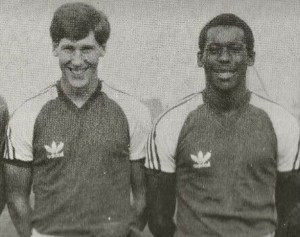
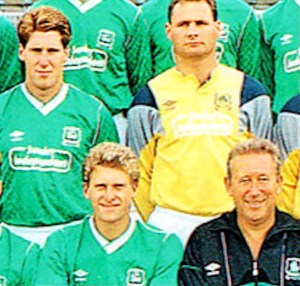

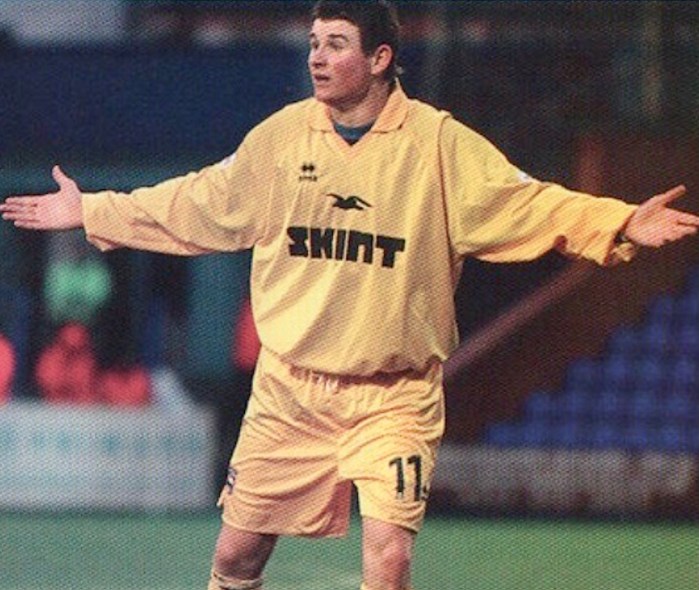
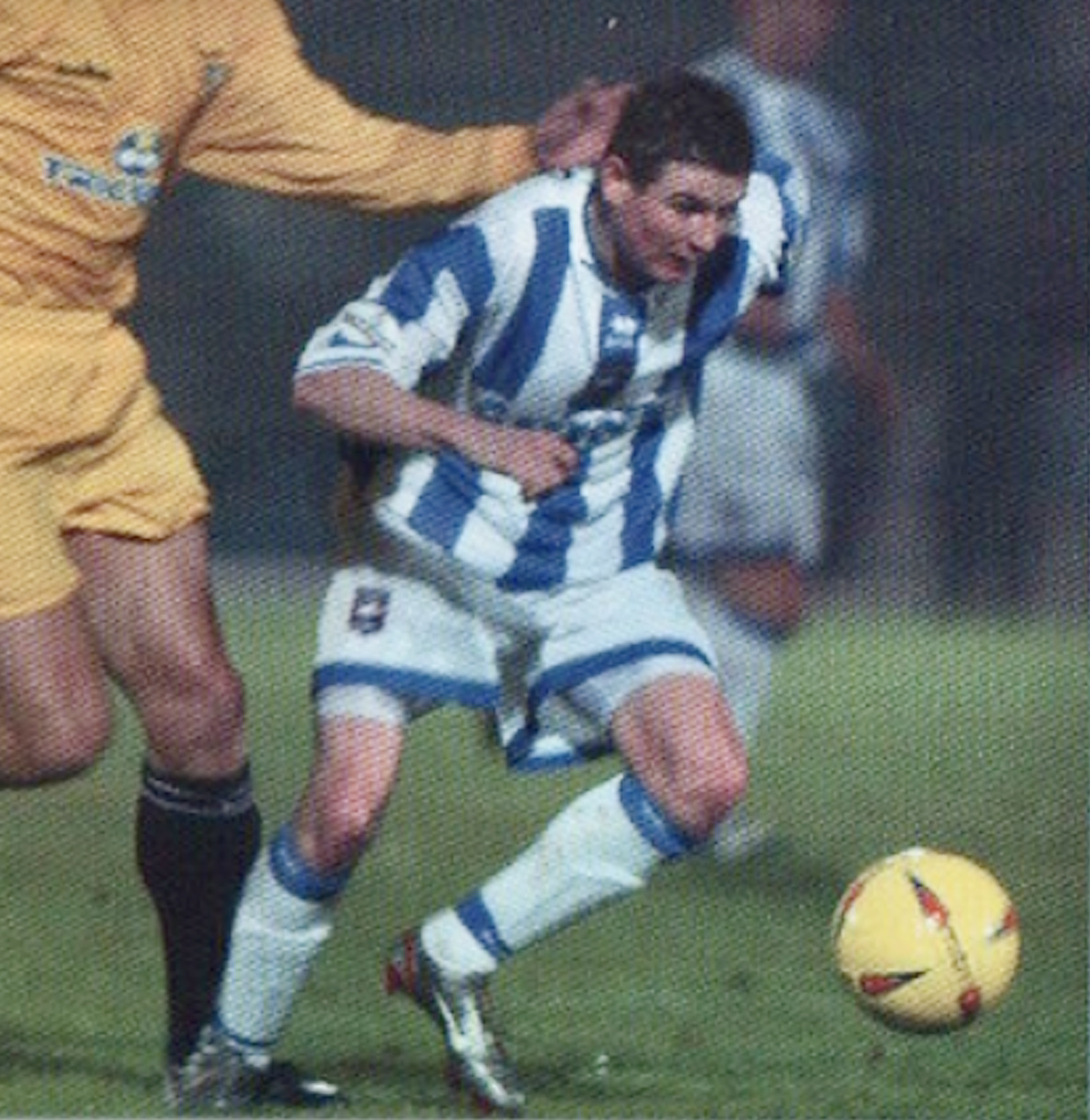
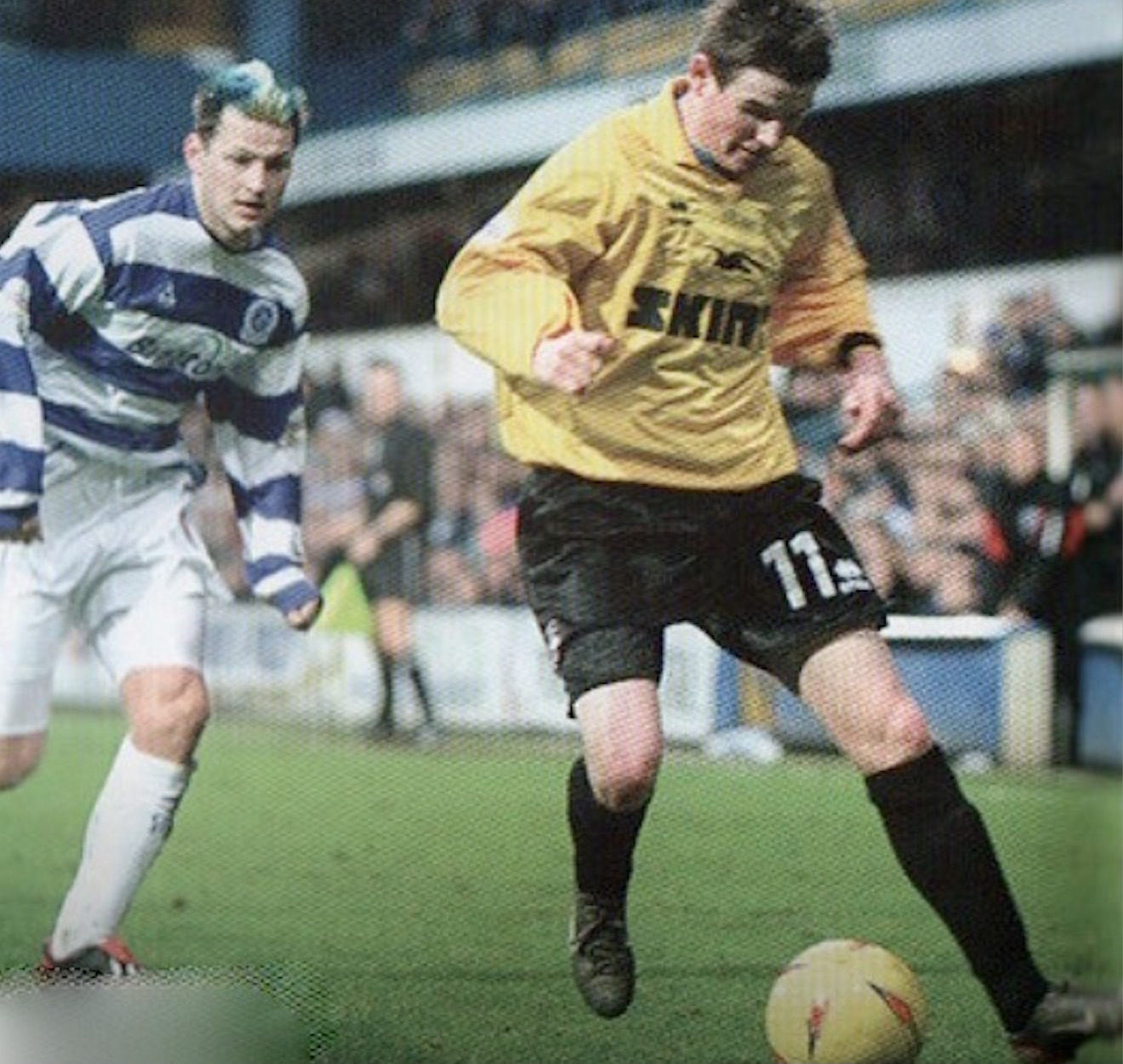
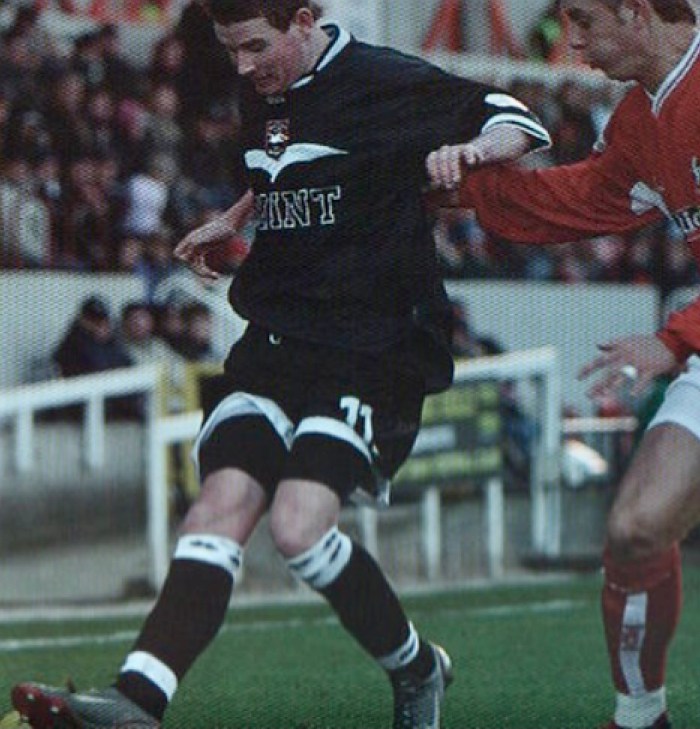

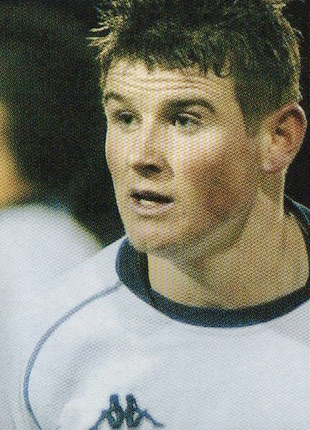

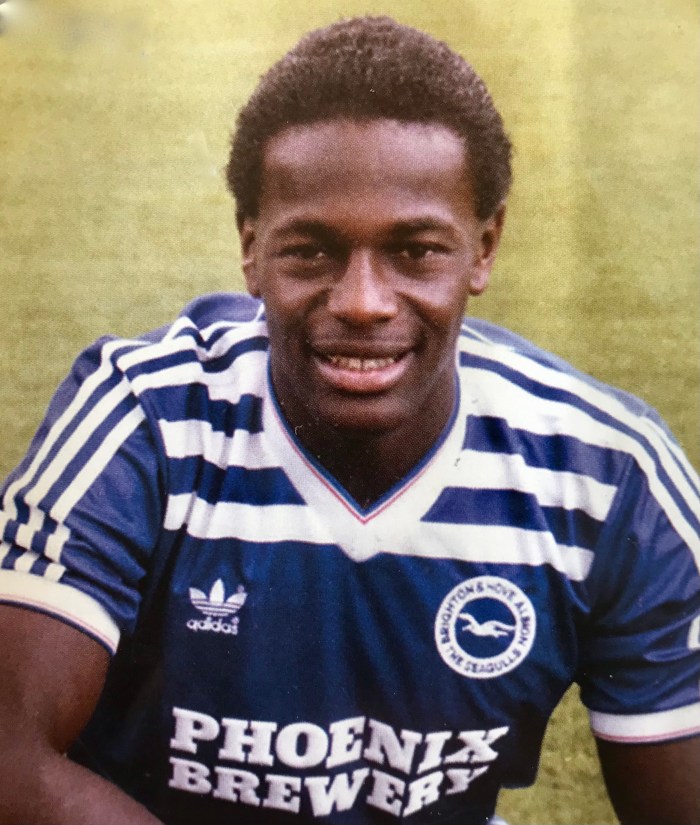


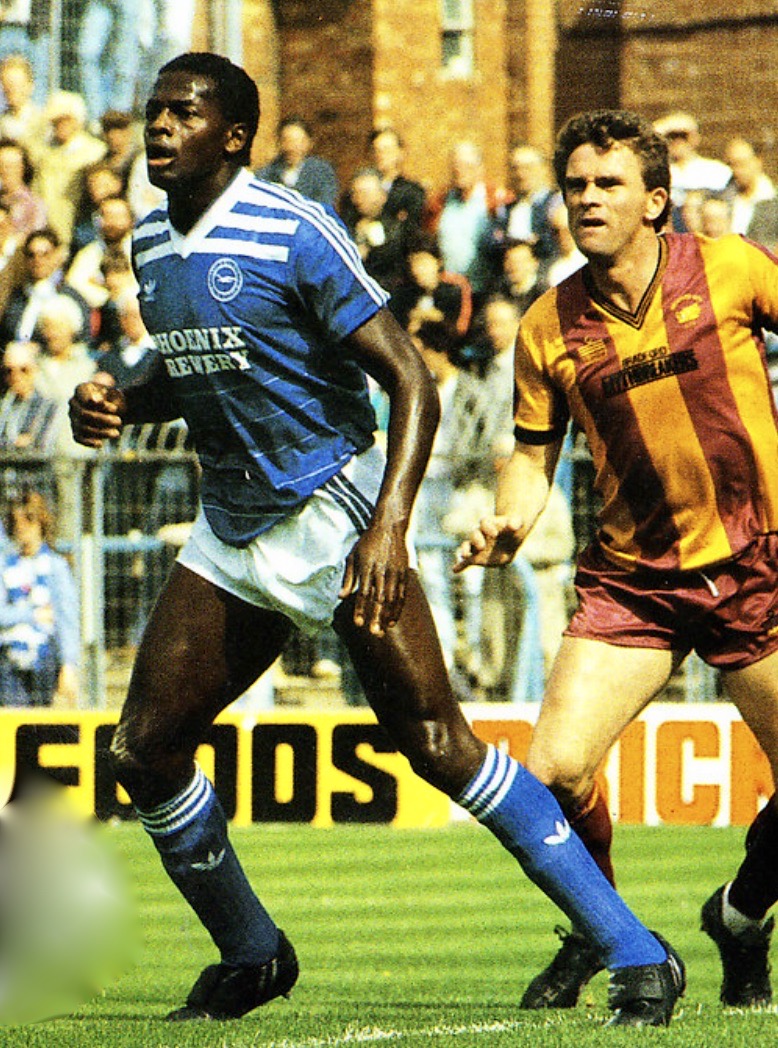

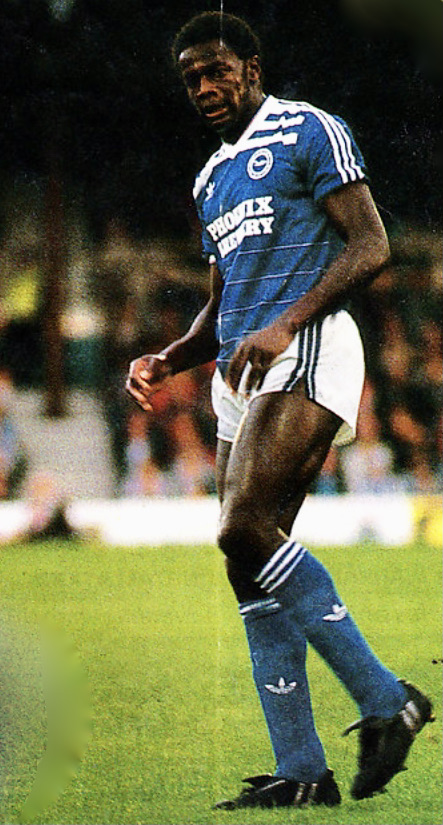

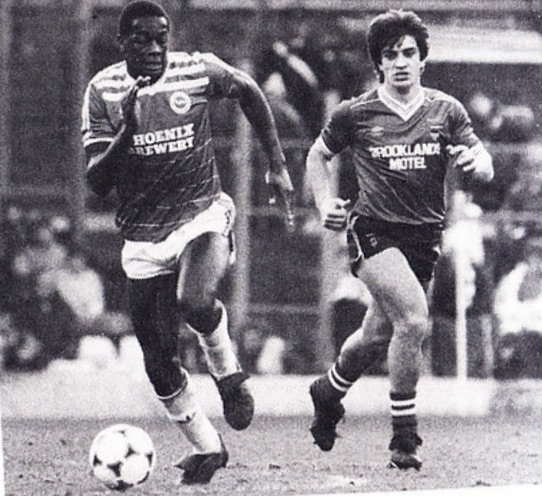
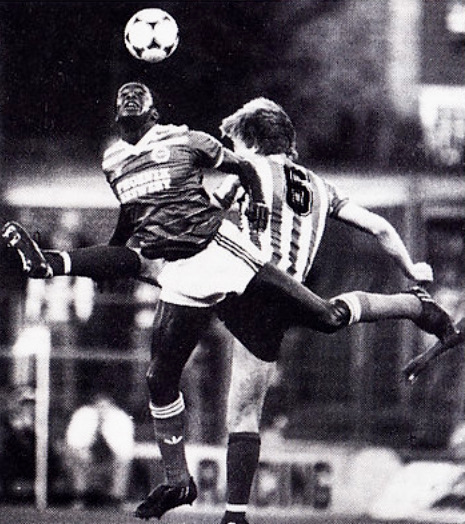


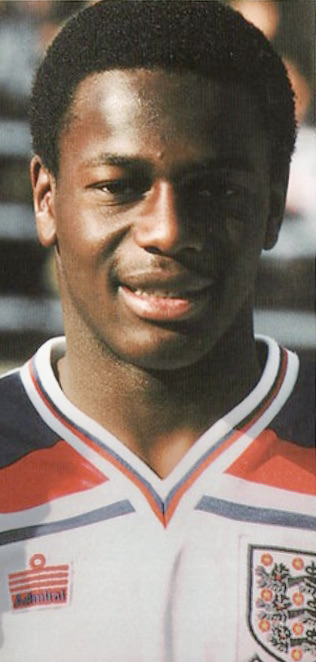


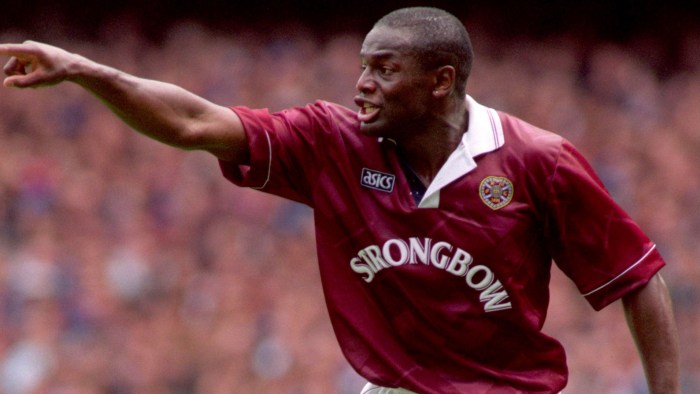


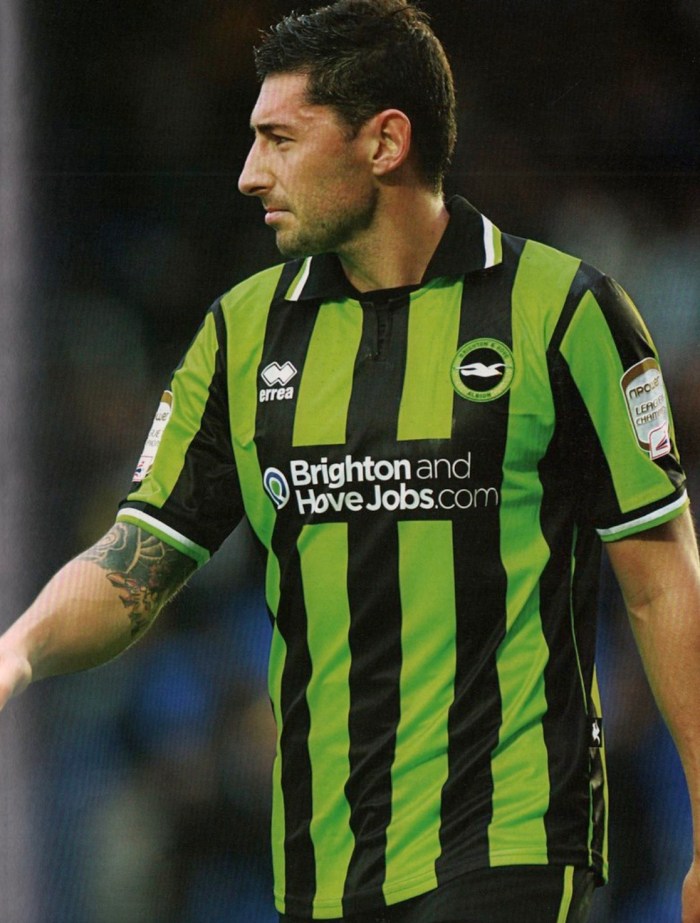
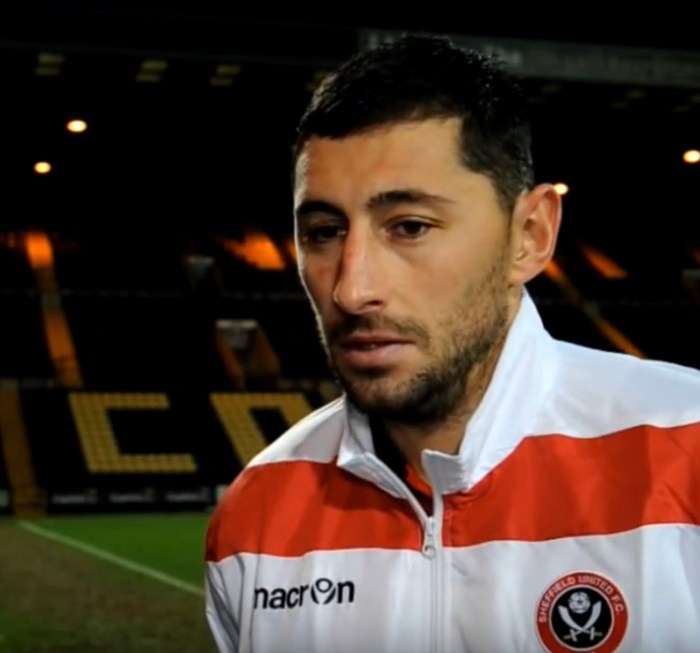



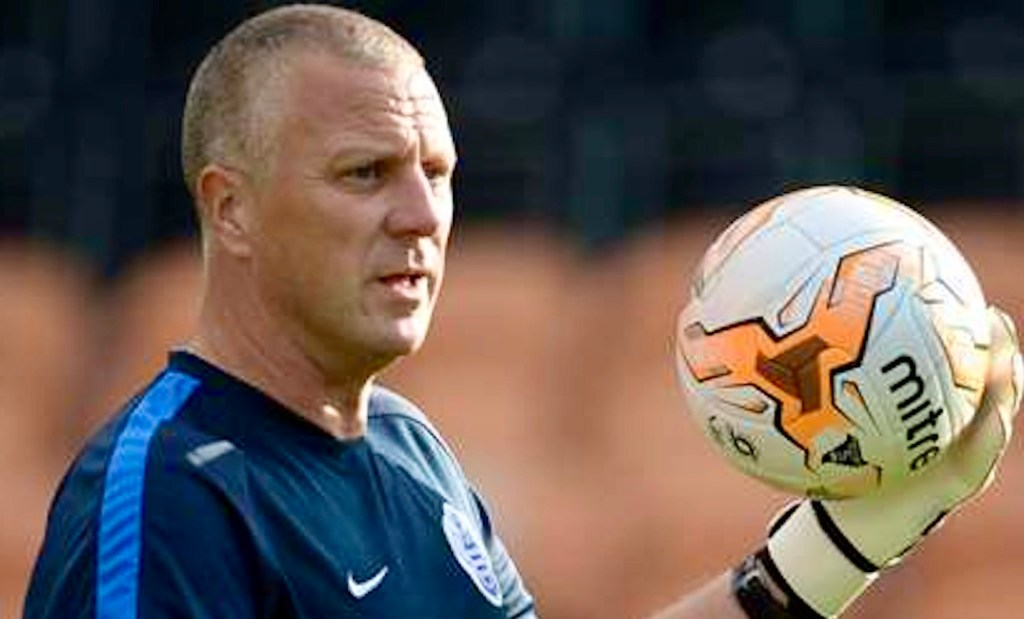
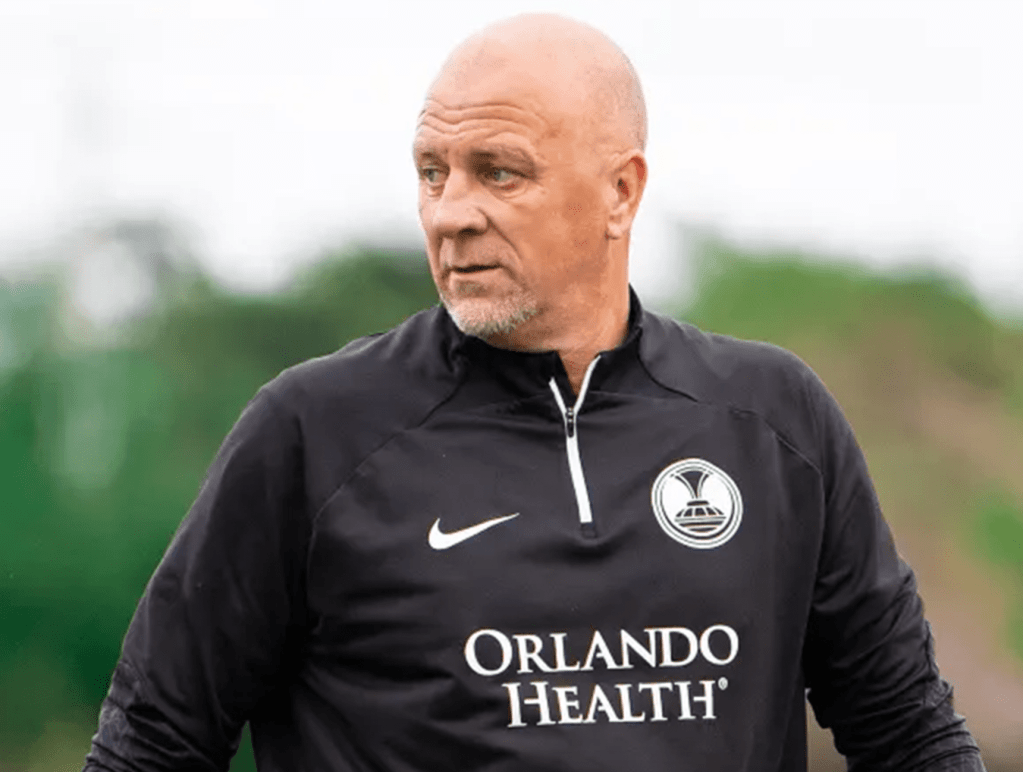


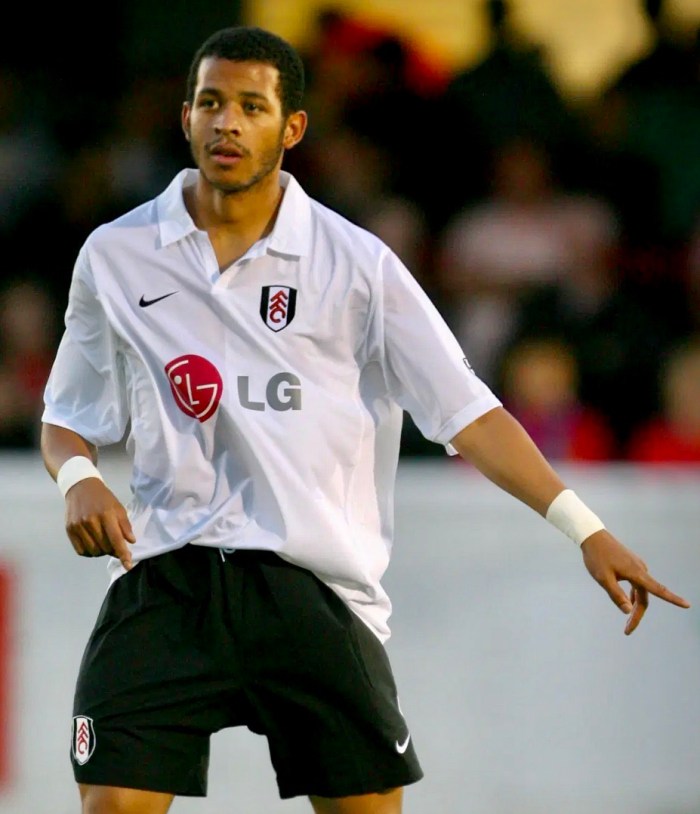

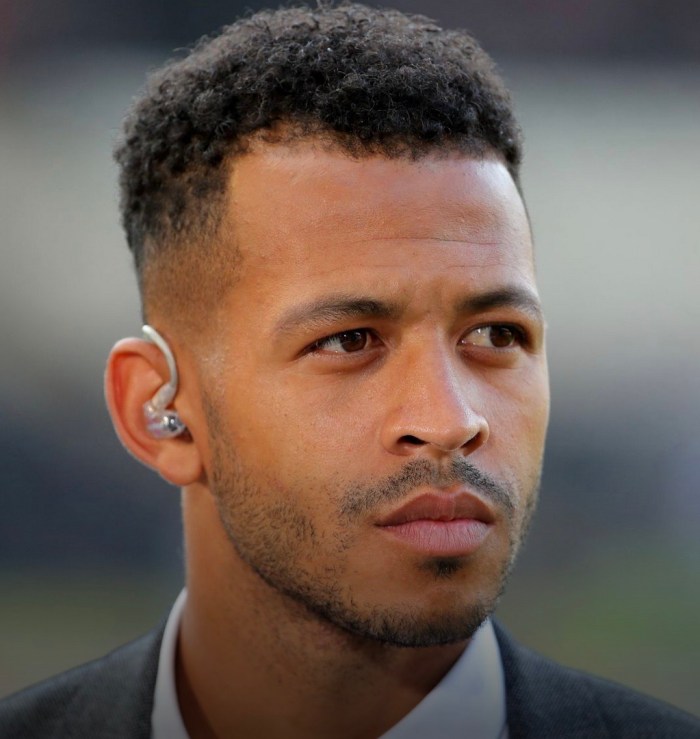
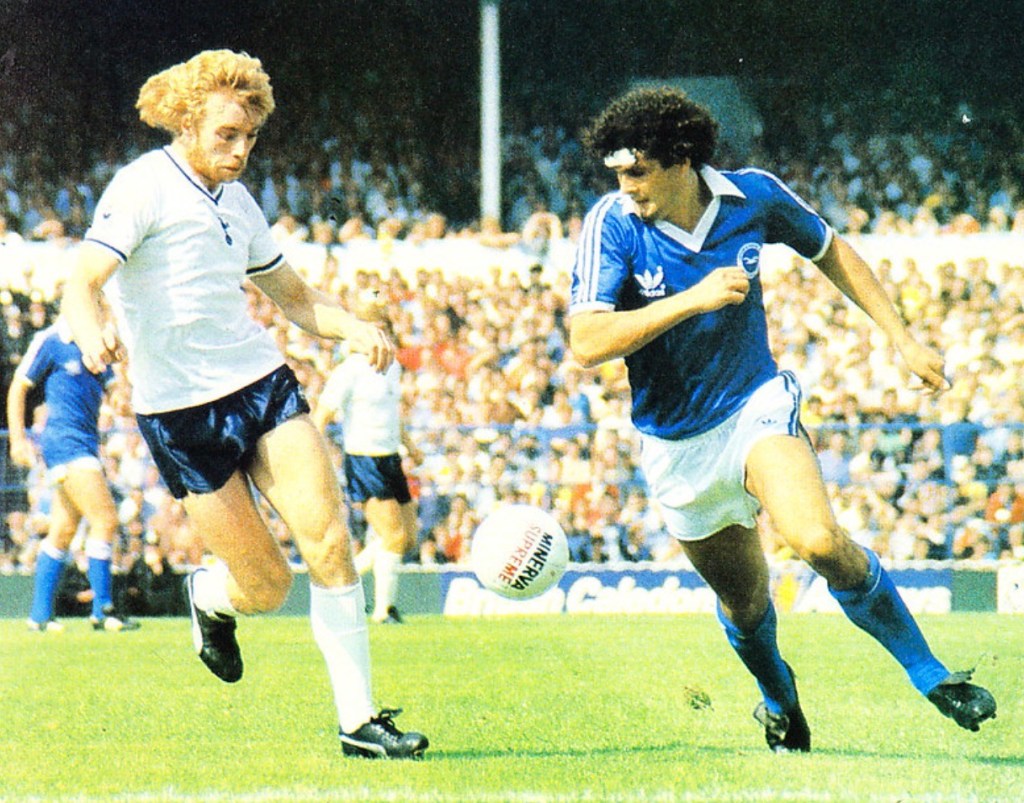
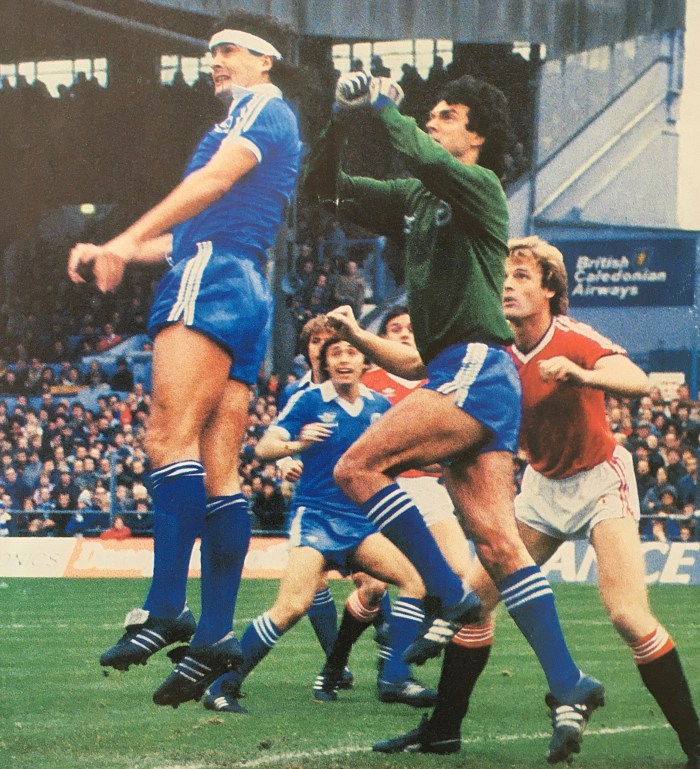
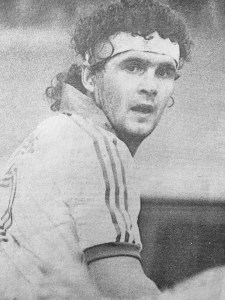


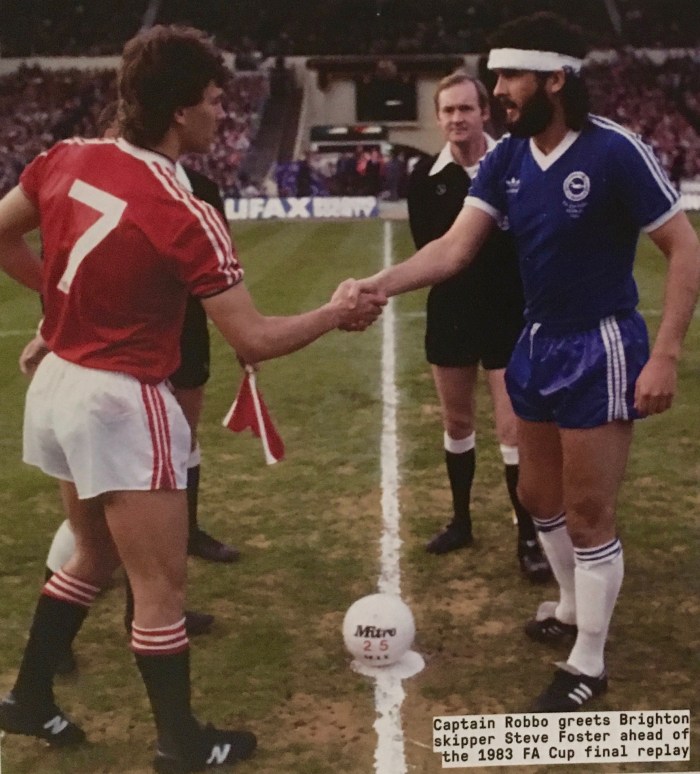
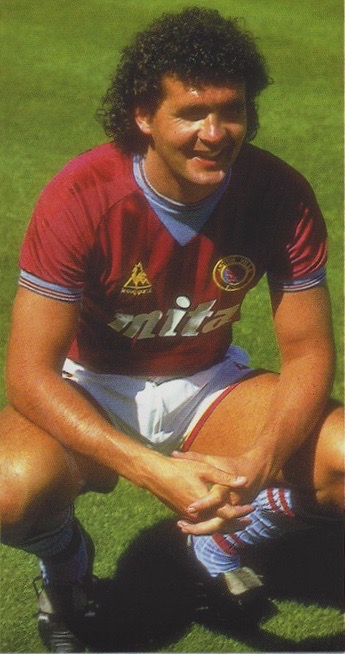
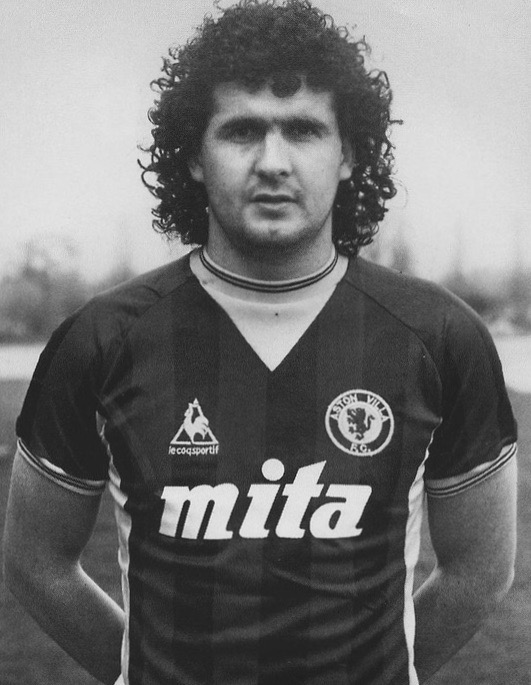


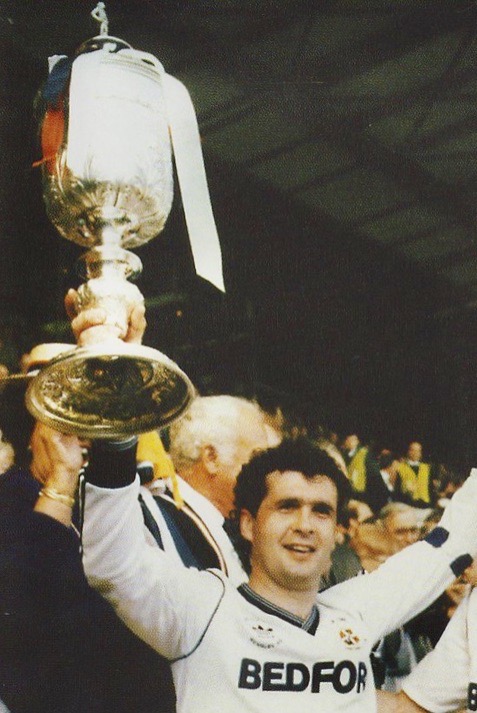
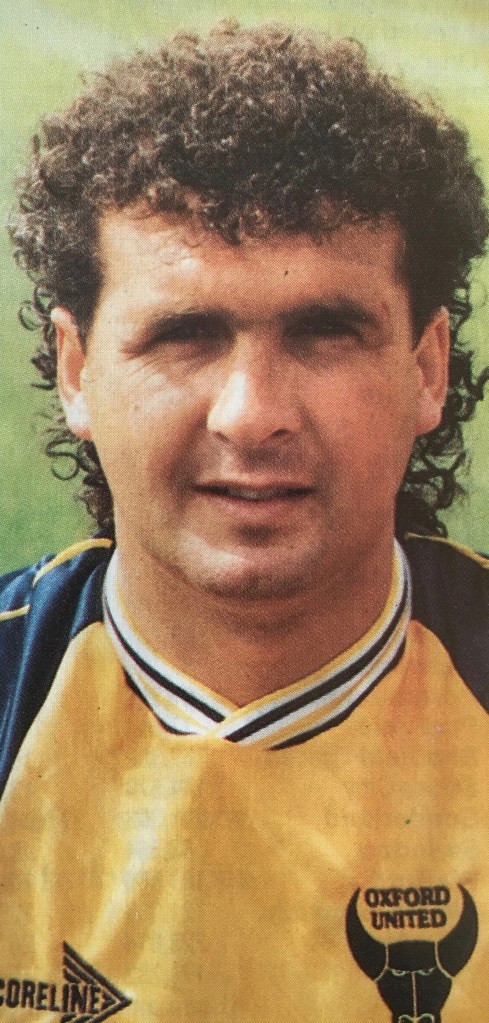


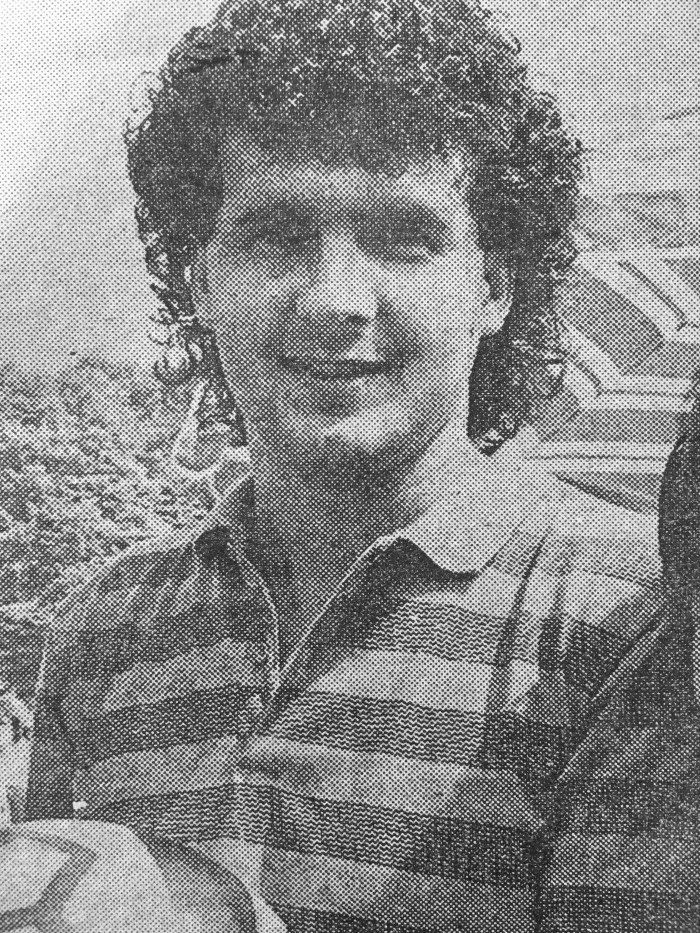

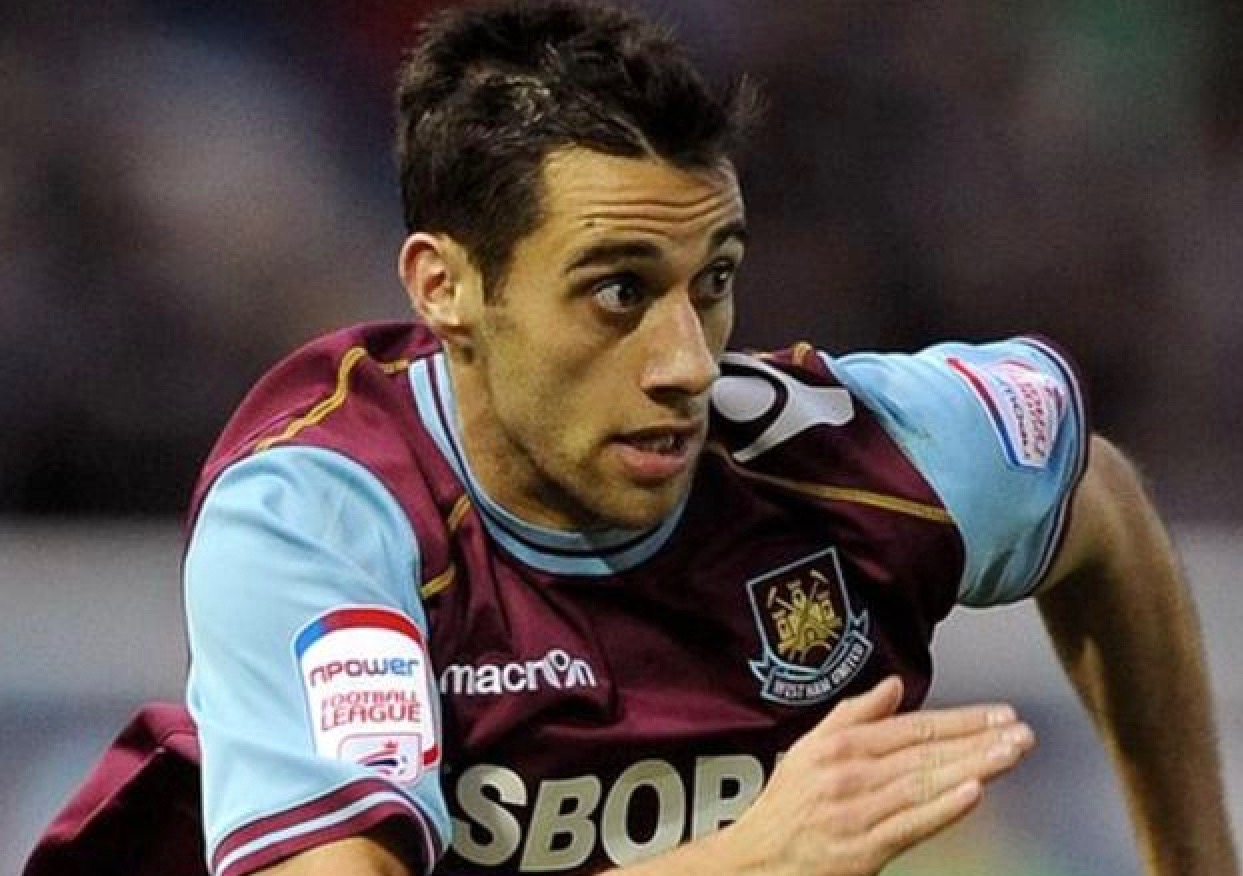 West Ham United, under Sam Allardyce, gave Baldock a platform to take his lower-league goalscoring prowess to a higher level when they began the 2011-12 season in the Championship. But, after a bright start, he disappointed and eventually only stayed for one year of a four-year deal.
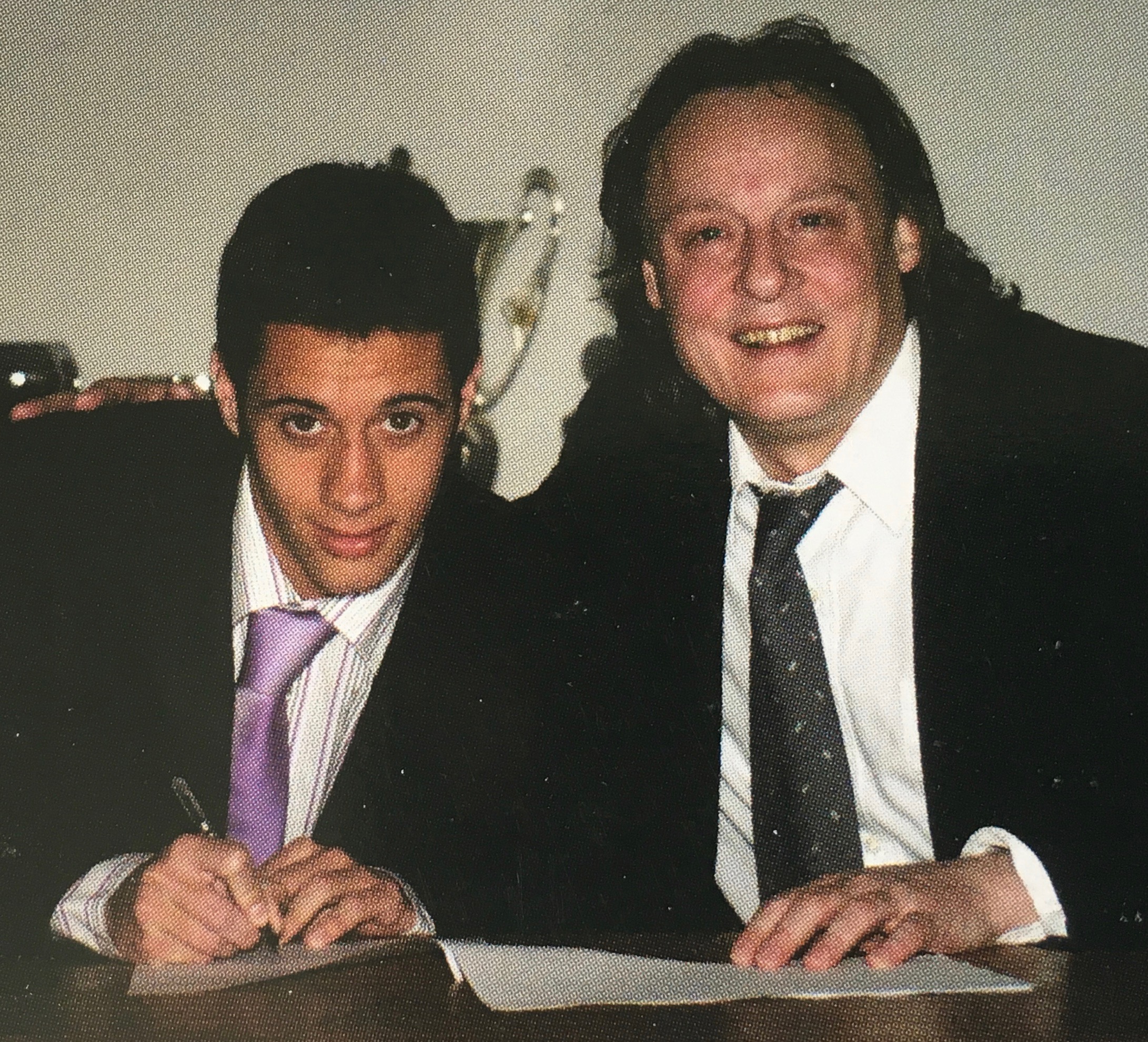 Former Albion captain,

 He couldn’t have asked for a better start when he scored five times in his first six games for the Hammers. Unfortunately, as has been the case throughout his career, he picked up an injury that sidelined him, and, in his absence, Nicky Maynard and the aforementioned Vaz Te became first choices in the forward line.


 Royals boss Paul Clement told the

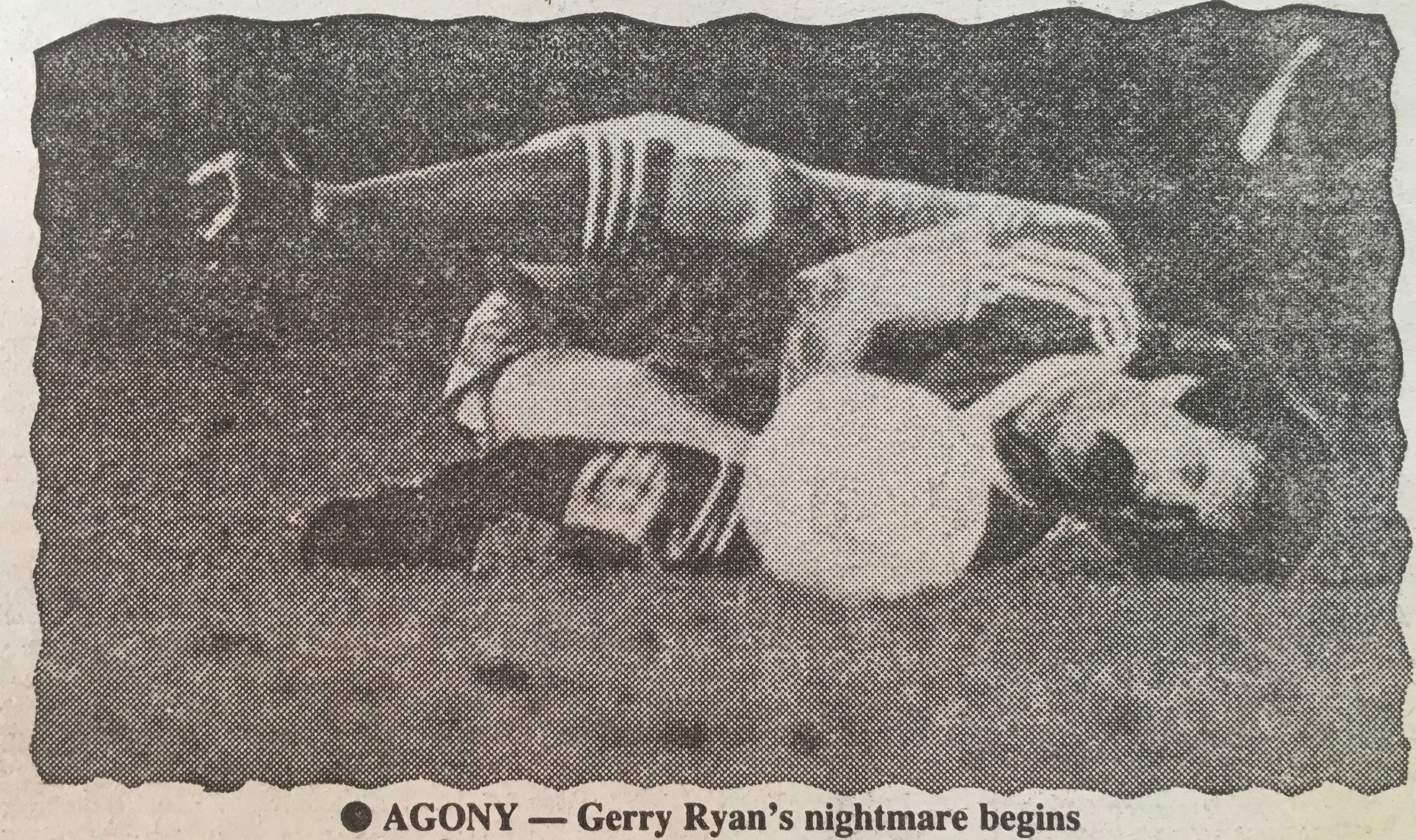


 A week after joining the Seagulls, Ryan became an instant hit with Albion fans when he scored on his home debut in a 5-1 win over Preston. He notched a total of nine goals in 34 appearances in that first season and went on to score 39 in a total of 199 games.


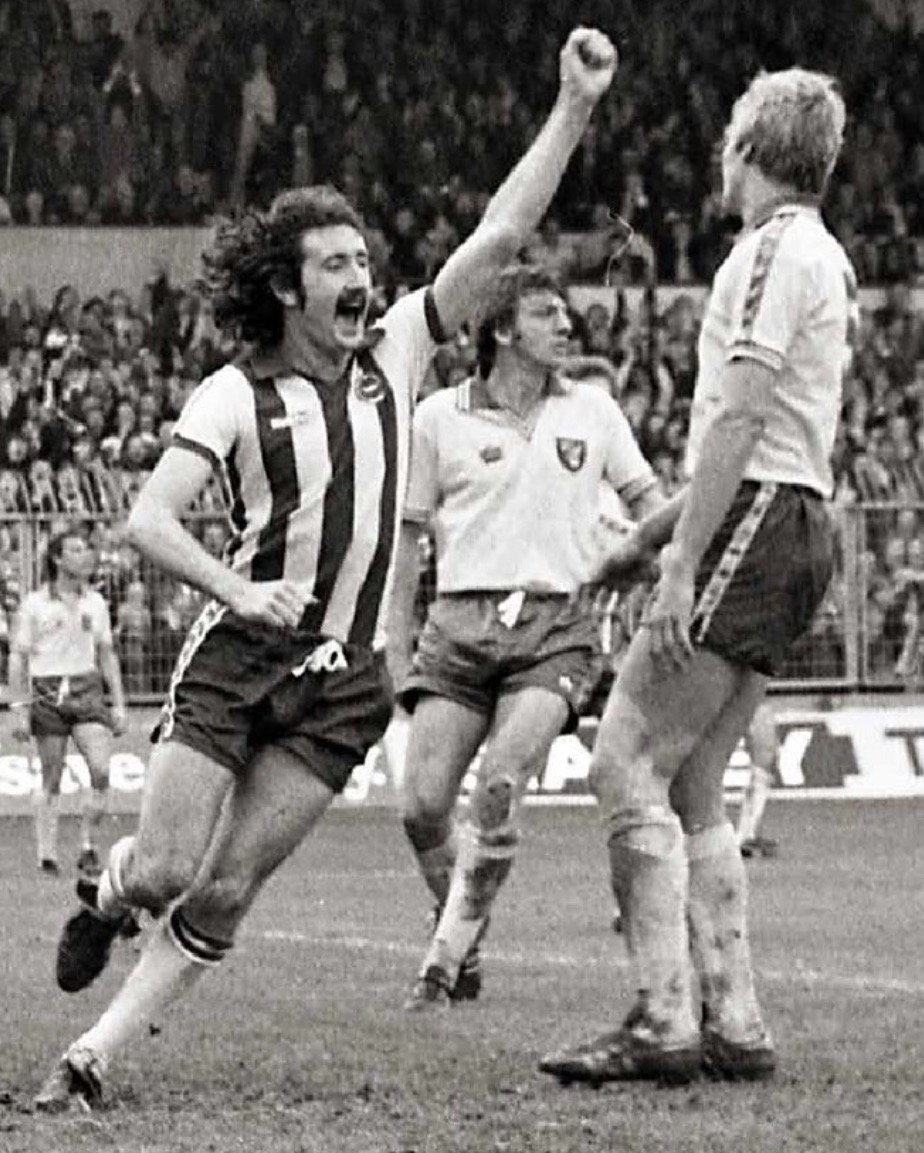 My personal favourite came on 29 December 1979 at the Goldstone when he ran virtually the entire length of a boggy, bobbly pitch to score past


 In parallel lines