Melton took Micky at his word – and saw red 

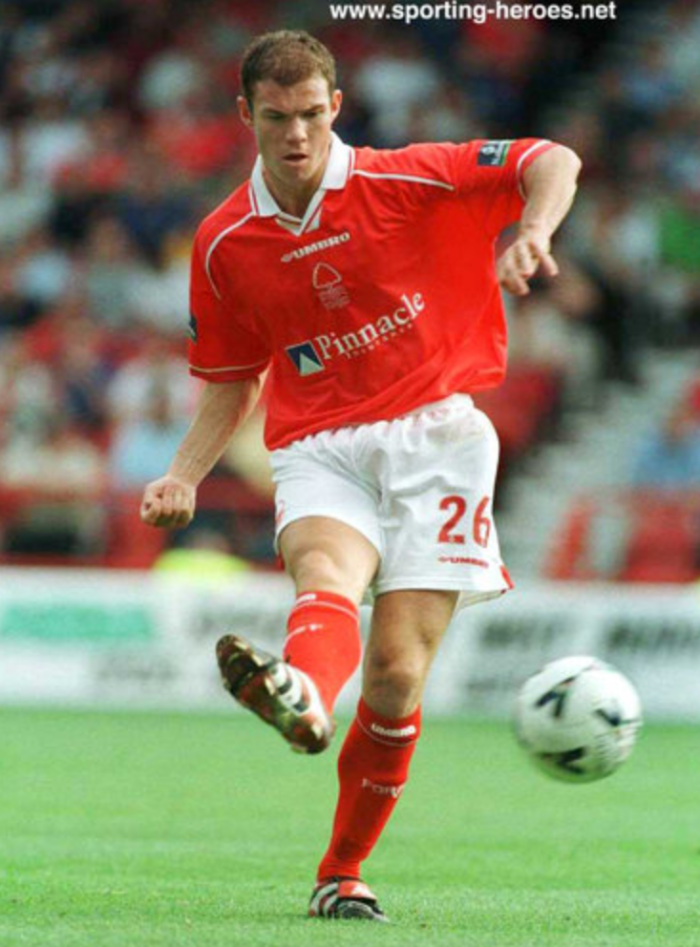
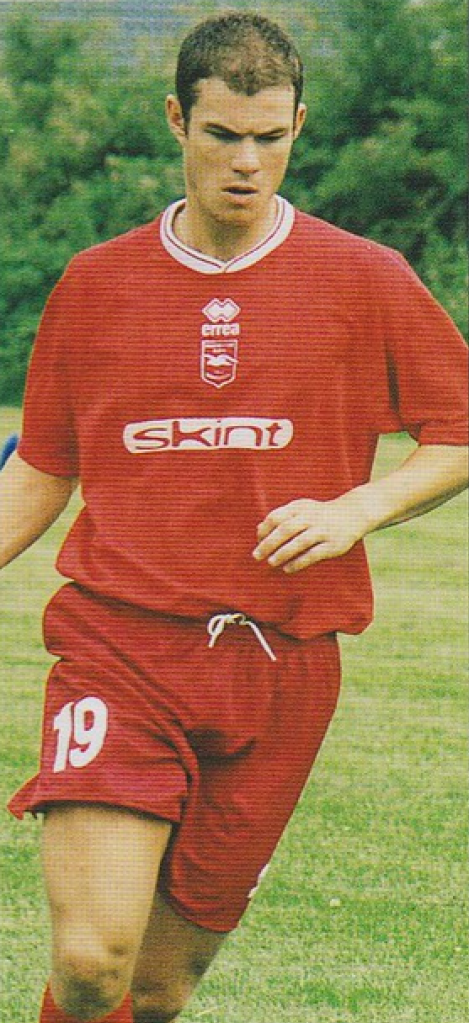
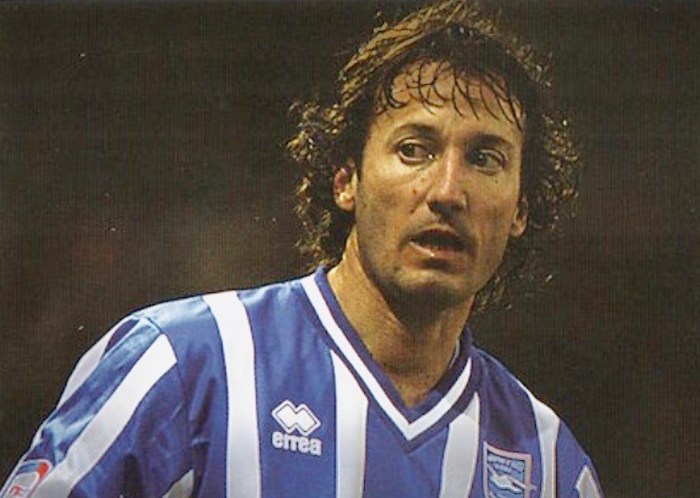
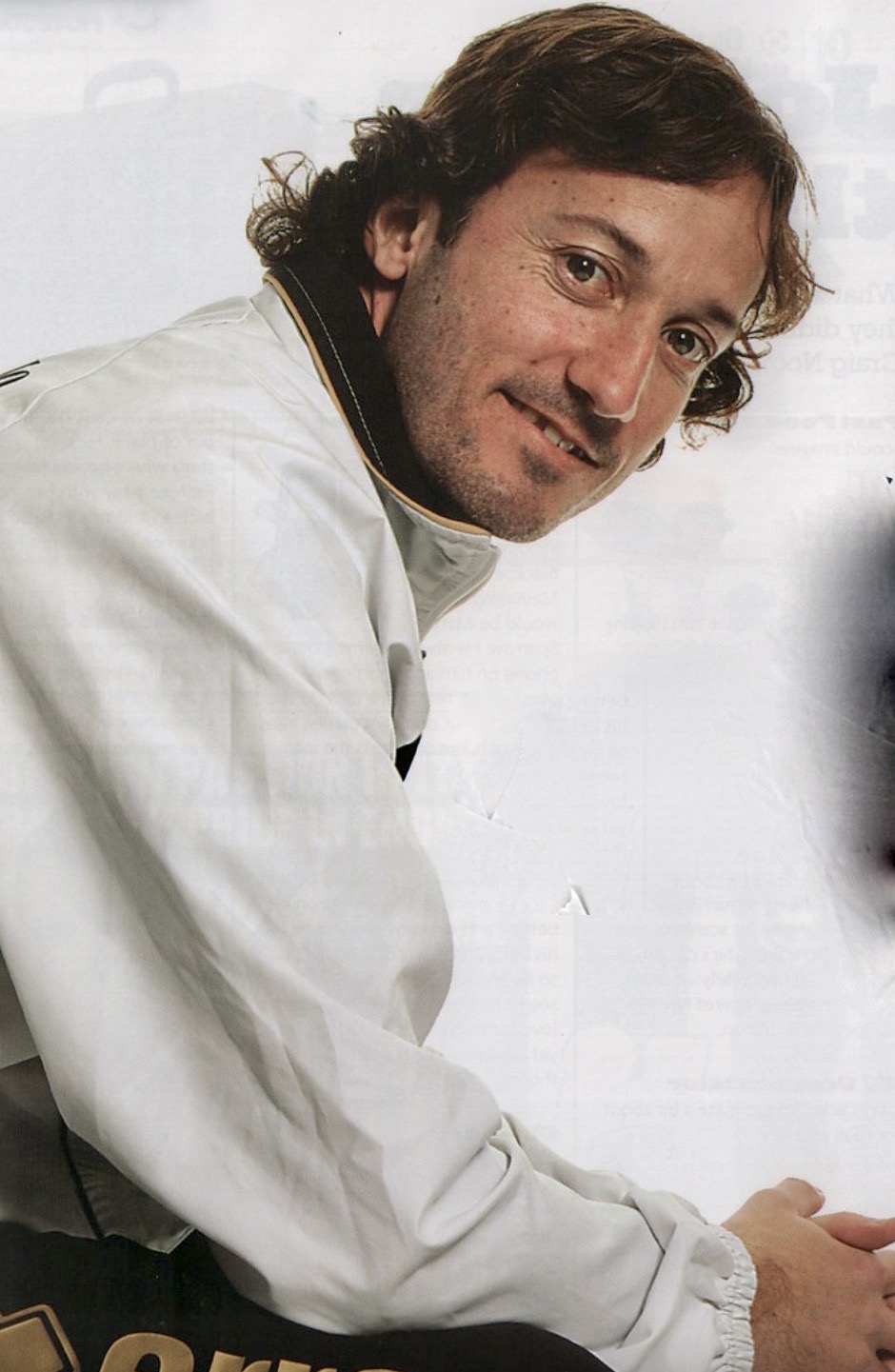
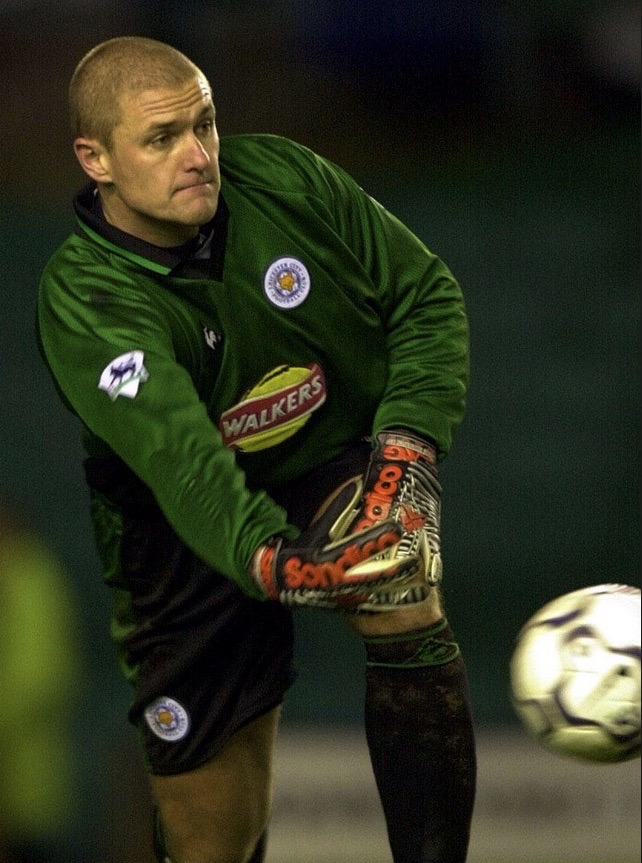
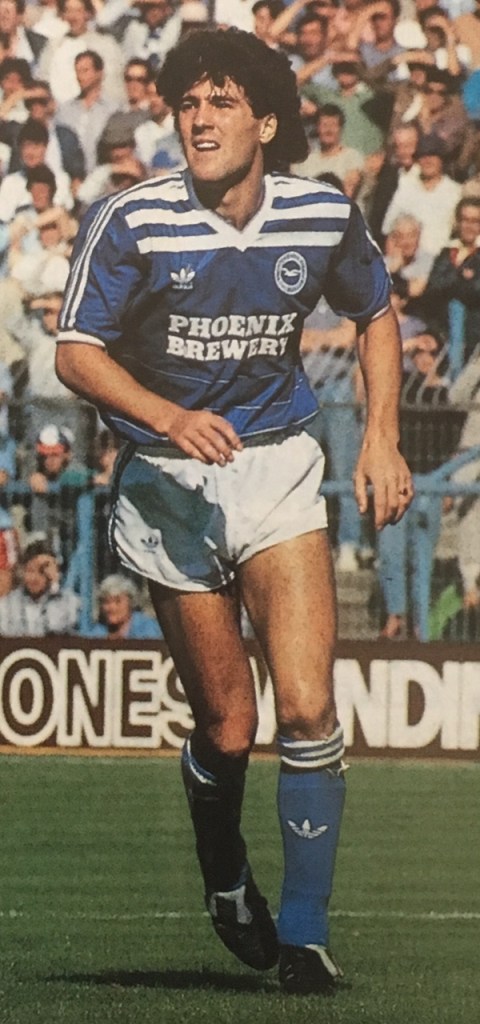
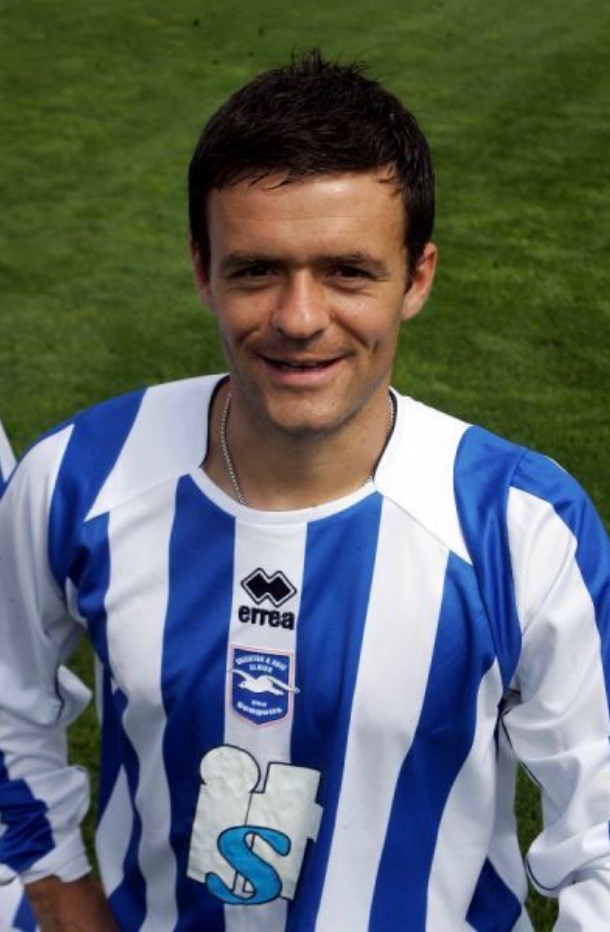
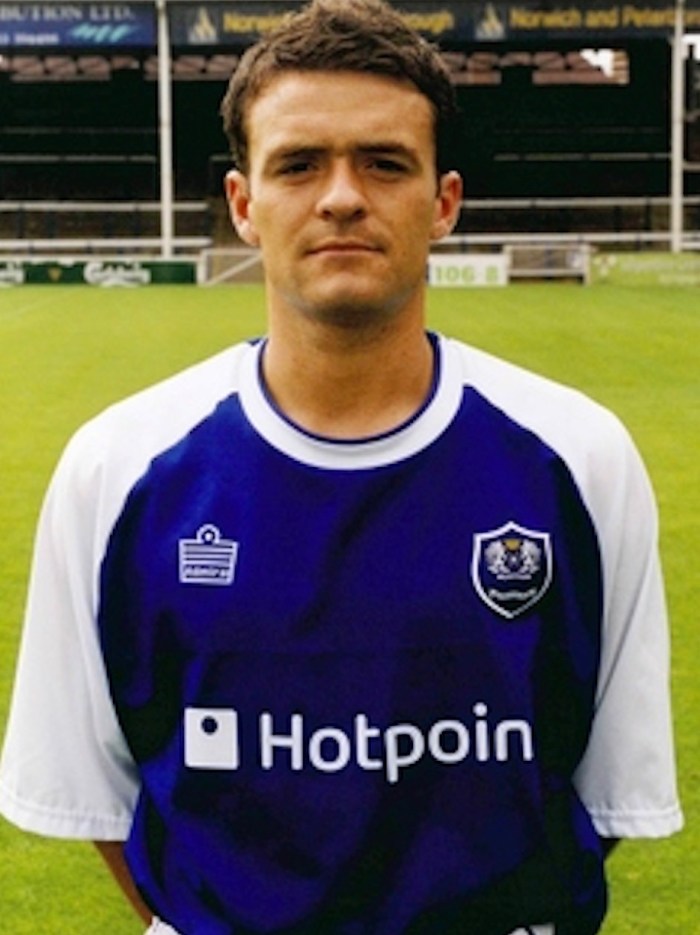
MIDFIELDER Steve Melton took manager Micky Adams at his word in a notorious pre-season friendly – and ended up being sent off after putting in a waist-high tackle on an opponent.

Adams subbed off a riled Richard Carpenter against Longford Town in July 2001 with instructions to former Nottingham Forest trainee Melton “to give the lad who was booting our players up in the air a taste of his own medicine. Make sure he knows you are around.”

Melton duly put in a flying lunge on Longford midfielder Alan Reynolds that saw him receive an automatic red card and the fall-out from the challenge sparked an almighty punch-up which ended up with Albion’s Charlie Oatway and opponent Alan Murphy also being sent off after an altercation.

That particular battle then led to an even bigger scrap involving coaches and even the Longford chairman who took a punch in the face from one of his own players!

The so-called pre-season “friendly” – later dubbed the Battle of Longford – was abandoned with only 44 minutes on the clock by inexperienced ref Dermot Tone, who had only stepped in to officiate because senior Irish referees were at a seminar.

For Melton, it was all a far cry from making your Premier League debut two years earlier in front of 25,353 fans at the City Ground, Nottingham, in Ron Atkinson’s last-ever game as a manager. Melton was pitched in for already-relegated Forest for an East Midlands derby against Leicester and they went down in style (Blackburn and Charlton also went down), scraping a 1-0 win against the Foxes.

Born in Lincoln on 3 October 1978, Melton first linked up with Forest when he was just 11, playing at the centre of excellence. He signed full time at 16, a matter of days after finishing his GCSEs. He progressed through the youth team and reserves and it was during that time that he first worked with Adams, who’d been assistant manager to Dave Bassett before Atkinson’s arrival. 

Before he got close to the Forest first team, 18-year-old Melton and another trainee had experienced competitive football in Finland where Bassett had sent them to play for Sami Hyypiä’s old club MyPa on a three-month loan.

“He sent us out there to toughen us up. It also got us used to playing in a proper men’s league so that we learnt to value the prize of the three points and the standing within the first team,” he explained in a matchday programme interview.

That experience followed by his Forest first team debut didn’t have the outcome he wanted and after only three games under Atkinson’s successor, David Platt, he picked up an injury and couldn’t force his way back into the first team picture.

In February 2000, he switched 50 miles west to third tier Stoke City and admitted: “It seemed a good move as I didn’t have to travel too far. 

“It was a chance for me to play for a decent-sized club that were going strong in the cup and in the league. It was either that or play reserve team games for the rest of the year at Forest and wait for a break that I didn’t think was going to come.”

As it turned out, it was mainly a watching role, making only seven appearances as a substitute. He was a non-playing bench warmer alongside Chris Iwelumo (who did get on) when City won the Football League (Auto Windscreens Shield) Trophy at Wembley, beating Bristol City 2-1.

Stoke’s new Icelandic consortium hinted that they wanted to keep him on but in the absence of a contract offer, rather than risk uncertainty, he took up Adams’ offer to join fourth-tier Albion. 

A complimentary caption in the club match day programme

On a trial in the Emerald Isle the year before the Longford incident, Melton did enough across the week of the tour to earn a one-year contract. He had a long wait before getting a start but after 11 introductions as a substitute he finally made his full debut in February 2001, stepping in for Carpenter at Torquay after the regular midfield starter pulled out with an injured ankle. 

After playing his part in Albion’s first win (1-0 courtesy of Bobby Zamora) at Torquay for 36 years, Melton told The Argus: “I’m enjoying it here. I’ve settled in with the lads and I share a house with some of them.” 

On playing for Adams, he said: “I think Micky is going to be a really good manager. I enjoy working with him. A lot of the lads do. 

“Hopefully he will take Brighton up. He’s had a taste of managing at a higher level at Forest and I think he has the potential to do it again.” 

Melton’s outlook brightened the following month and he got starts in nine of the season’s remaining 15 matches as Adams led the Seagulls to promotion as champions. 

At home to his future employer Hull City, Melton made his home debut and scored his first goal for the club in a 3-0 win (Paul Watson and substitute Phil Stant also scored).

Reflecting on his involvement, he said: “It’s difficult to break in when the team keep winning every week, and they go unbeaten for 12 or 13 games, maybe drop a point but then go off on another run.

“It’s frustrating because you’re not playing, but you can’t really have too much of a case when the team is sat at the top of the league.”

Come the end of the season, he had done enough to be offered a two-year extension to his contract. As it turned out, the 2001-02 season followed much the same pattern as his first in terms of more appearances off the bench than starts.

He was on the scoresheet twice in the LDV Vans Trophy, scoring an extra time golden goal in a 2-1 home win over Wycombe Wanderers but was then inadvertently the fall guy in a 2-1 quarter-final defeat at Cambridge United.

Having given Albion a 36th-minute lead, latching on to Dirk Lehmann’s lay-off to fire a low right-footer past Lionel Perez from just outside the penalty area, he lost possession to Dave Kitson, who ran away to equalise, and then, four minutes into extra time, a shot by Armand One that was going wide took a wicked deflection off Melton’s shoulder to send United through to the next round.

A happier outing came when he made a rare start and scored as promotion-chasing Albion beat table-toppers Reading at the Withdean in February 2002. Peter Taylor’s Seagulls triumphed 3-1 on a rain-lashed night under the lights (Zamora and Junior Lewis also scored).

Goalscorers Melton and Zamora after a memorable win over Reading

“It was pleasing to start,” Melton told The Argus. “You have got to be patient and I have waited a good few months. 

“I have been on the outside for the last few weeks. Hopefully I can stay on the inside now. 

“Playing against the League leaders is a different matter completely from the LDV appearances that I made earlier in the season. 

“You can only do as well as you can when you are chosen to play and hopefully I did that. Once you have been given the shirt you have to try and keep it.” 

Melton’s goal was only the second league goal of his career and his first for 11 months. 

Taylor reckoned it was the best home performance since he took over from Adams the previous autumn and Albion won eight (and drew five) of the following 14 games to go on and clinch the third-tier title with the also-promoted Royals six points behind.

Melton scored Albion’s first goal of the 2002-03 season when he started in the 3-1 win at Burnley under his third Brighton manager, Martin Hinshelwood (Zamora and Paul Brooker also scored; Hinshelwood’s 18-year-old nephew Adam made his debut). 

Unfortunately, Melton tweaked a hamstring in the process and had to be subbed off. He only made nine more appearances (six starts plus three off the bench) as Hinshelwood’s short reign in charge ended with 10 league defeats in a row.

Incoming boss Steve Coppell brought in the likes of free agent Simon Rodger and Arsenal loanee Steve Sidwell and Melton found himself surplus to requirements.

It was in October 2002 that he moved to Hull on loan shortly after Peter Taylor had replaced Jan Molby as manager with the club about to move out of Boothferry Park and into the Kingston Communications Stadium.

Tiger Melton

Melton made 19 starts plus six appearances off the bench as the Tigers finished 13th in the old Third Division.

According to the website oncloudseven.com: “Despite his promise and Taylor’s persistence, Melton’s career at City was not a success and he showed only brief flashes of good form. Melton is, however, forever enshrined in the City record books because in December 2002 he scored the first ever goal at the KC Stadium against Sunderland, for the honour of lifting the Raich Carter Trophy.”

He found himself only on the fringes the following season and he had moved on to Boston United under Steve Evans by the time Taylor steered Hull to promotion as divisional runners up.

A recurring back injury restricted his playing time at Boston and during 2005-06 he was sent out on loan to Conference National side Tamworth. On his release from Boston in the summer of 2006, he switched to Southern League Premier King’s Lynn FC for two seasons.

Melton at Boston

In September 2008, he rejoined Boston with manager Tommy Taylor telling the club’s website: “Steve has great quality on the ball and that’s what we have been missing in the midfield area. 

Hopefully he will add another dimension to our team.”

But he was released at the end of the season and joined Lincoln United of the Northern Premier League Division One East, alongside his former Boston and King’s Lynn teammate Matt O’Halloran. After spells with Lincoln Moorlands Railway, Grantham Town and Worksop Town, he wound up his playing days back at Lincoln United.

In the meantime, his first job outside of football was in sales for mobile comms company Vodacom. He spent nearly seven years with the now defunct energy advice and installation company the Mark Group and since 2019 has worked for building services certification business The National Association of Professional Inspectors and Testers, where he is now commercial and compliance director.

When the ball hits the goal it’s not Shearer or Cole it’s Zamora!

EVERY NOW AND AGAIN as a football supporter a truly special player stands out well above the rest you’ve watched. Bobby Zamora was most definitely in that category.

As the new year dawns on what will be my 55th year supporting Brighton & Hove Albion, it is perhaps fitting to spend a little time remembering just how good Zamora was for the Seagulls before his outstanding ability to score goals was taken to higher levels: Tottenham Hotspur, West Ham, Fulham and ultimately, and, quite deservedly, England.

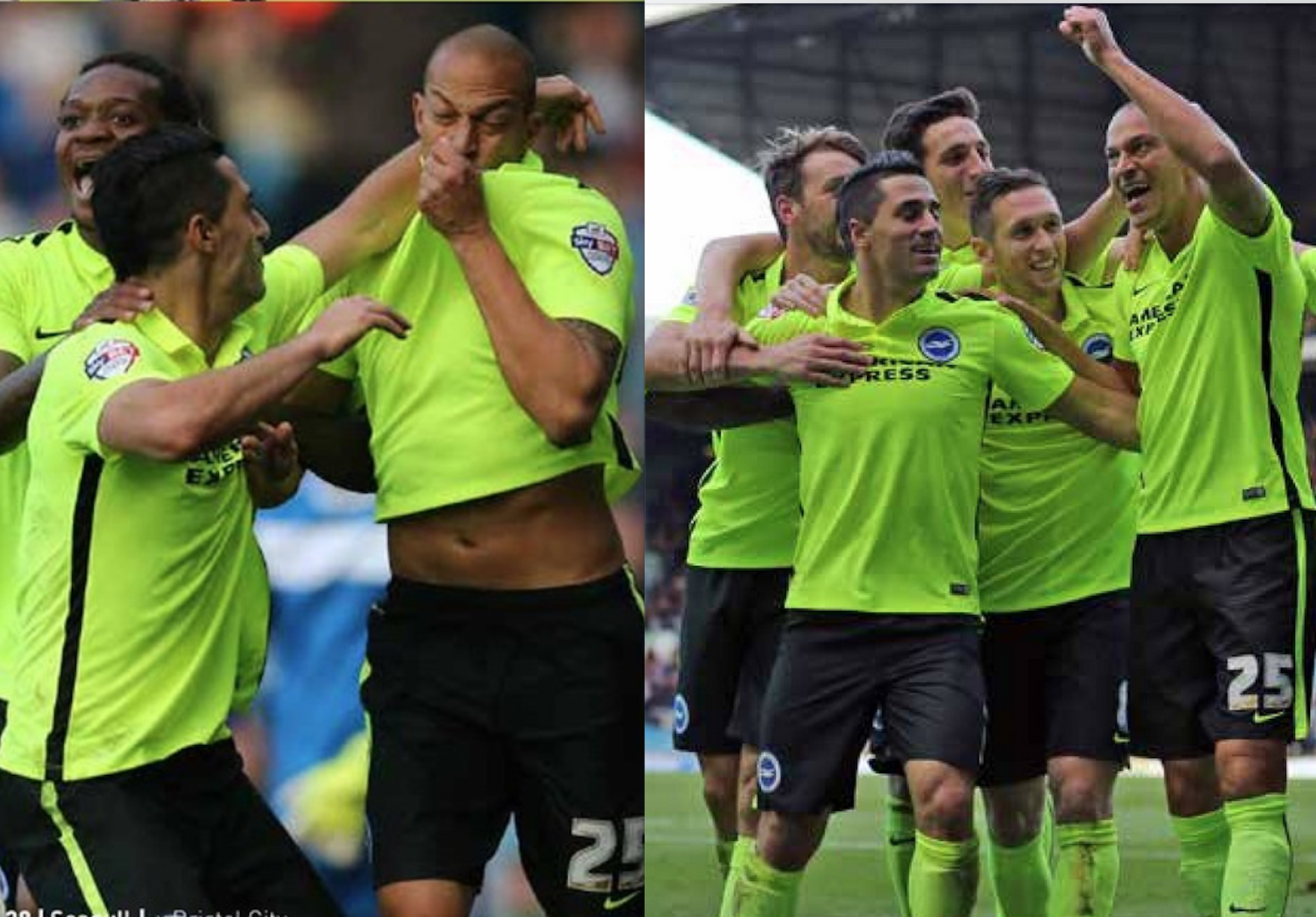
That he came back to the Albion from QPR as his career began to ebb was nothing short of a bonus­ – and, while I’m not a big gambler, I was delighted to get a modest return from the bookies when my punt on him being the last goalscorer came good after he had gone on as a sub at Elland Road on 15 October 2015 and chipped the winner (below) to register his first goal since rejoining!

“That goal was definitely the highlight of my season,” Zamora told interviewer Adam Virgo in a Seagulls World interview. “It was my first goal since coming back and to score the winner so late in the game was unbelievable. It was a special moment for me, and it settled the nerves knowing that we’d got the three points.”

Just four days later, Zamora repeated the feat going on as a 76th-minute substitute for Tomer Hemed at home to Bristol City and beating goalkeeper Frank Fielding with a low shot from 15 yards out. Albion won 2-1; Sam Baldock having levelled things up against his former club after Derrick Williams opened the scoring for City.

Unfortunately, Zamora managed just five more in that second spell. He made 10 starts plus 16 as a sub in Chris Hughton’s side but he was struggling with a hip injury.

It eventually caught up with him and prevented him from contributing further to Albion’s aim of promotion back to the elite; his last game being as a sub in a 0-0 draw at home to Sheffield Wednesday on 8 March 2016. “If I was fit, I would have scored some goals and we’d have been promoted automatically,” he told the UndrThe Cosh podcast (pictured above).

Thankfully another returning striker in the shape of Glenn Murray completed that task the following season and went on to cement his own place in Albion’s history: his 111 goals in 287 appearances putting him second in the list of Brighton’s all-time top goalscorers.

Golden goalscorers: Zamora + Murray

Each of the different eras I’ve watched the Albion has thrown up truly memorable players who have generated their own air of excitement and anticipation because of the goals they scored.

The first one for me was Alex Dawson, who netted seven in the first five games I watched in 1969. Then along came Willie Irvine whose goalscoring in third tier Albion’s promotion-winning season of 1972 earned him an unexpected recall to the Northern Ireland side – and an appearance (that I went to watch) in a 1-0 win against England at Wembley.

Next, of course, was the truly outstanding Peter Ward, who jinked his way past defenders with apparent ease and scored goals for fun, his 36 goals in 1976-77 smashing a decades-old record. Like Zamora, he came back to the scene of past glories (albeit only on loan) and scored a magnificent winner against the team he supported as a boy, Manchester United.

Garry Nelson, with 32 goals, and Kevin Bremner were a superb front pair in another third tier promotion-winning line-up in 1988 while, in 1990-91, Mike Small and John Byrne combined brilliantly to take the Seagulls within a hair’s breadth of a return to the big time.

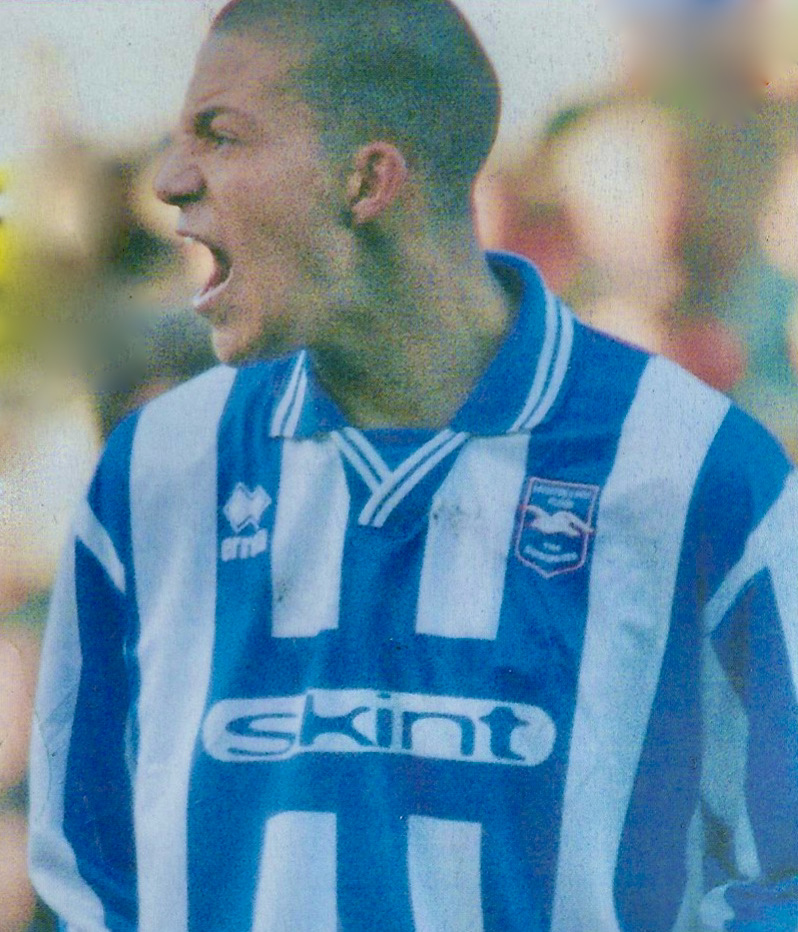
The arrival of a beanpole of a kid with an eye for goal in Zamora completely transformed Albion’s fortunes under Micky Adams and he was the talisman in back-to-back promotions following years in the doldrums.

Zamora’s Albion story is pretty well known but let’s remind ourselves of how it all began.

Depending on whose account you believe more, it was either Dick Knight or Adams who had the foresight to bring Zamora to the Withdean.

Adams said: “The first time I saw him he came onto the training ground; he looked like a kid. But he was tall and gangly with a useful left foot; there was potential there.”

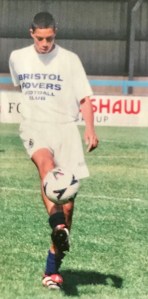
In fact, Zamora might never have arrived in Sussex if Albion had been successful in securing a permanent deal for on-loan Lorenzo Pinamonte. When Brentford outbid Brighton for the services of the Bristol City loanee, Albion turned their attention to Zamora (left), a Bristol Rovers player who was only getting sub appearances under Ian Holloway but had scored eight goals in six games on loan at nearby non-league Bath City.

“He was six foot one and we knew he had a very good first touch and could hold the ball up well, the type of player we wanted,” Knight recounted in his autobiography Mad Man: From The Gutter to the Stars (Vision Sports Publishing, 2013).

Zamora duly arrived on loan and scored six in six matches (including a hat-trick in a 7-1 away win at Chester). He scored an equaliser and was named Man of the Match on his debut v Plymouth and by the end of February was Player of the Month.

Hat-trick ball at Chester

While Knight and Adams wanted him to stay, he insisted on returning to Rovers where he thought he might force his way into Holloway’s starting line-up. But it was back only to the bench as Nathan Ellington, Jason Roberts and Jamie Cureton were ahead of him in the pecking order.

As preparations began for the new season, Albion offered £60,000 for Zamora but Rovers chairman Geoff Dunford wanted £250,000. An incredulous Knight said he wouldn’t go higher than £100,000 and couldn’t believe they could demand such a figure for someone who hadn’t actually started a first team game.

Zamora had Rovers’ youth team coach Phil Bater to thank for forcing through the move. He accompanied the shy youngster into a meeting with Holloway, who tried to say he’d get some games if he stayed. Bater reckoned the youngster was being strung along and argued Zamora’s cause saying he stood more chance of playing if Rovers let him join the Albion.

After some brinkmanship from each club’s respective chairmen, with Knight threatening to walk away from the deal, it finally went through two days before the start of the season, although Albion’s chairman reluctantly agreed to a 30 per cent sell-on clause for the player.

Zamora instantly became one of the top earners on £2,000 a week with a goal bonus built in.

“It was an absolute coup that we had finally secured this player,” said Knight. “I could only see good things in him, could only see that he would be a huge asset to us.

“Football is all a matter of opinions. There is little science to it. For me, Zamora was the best signing I ever made.”

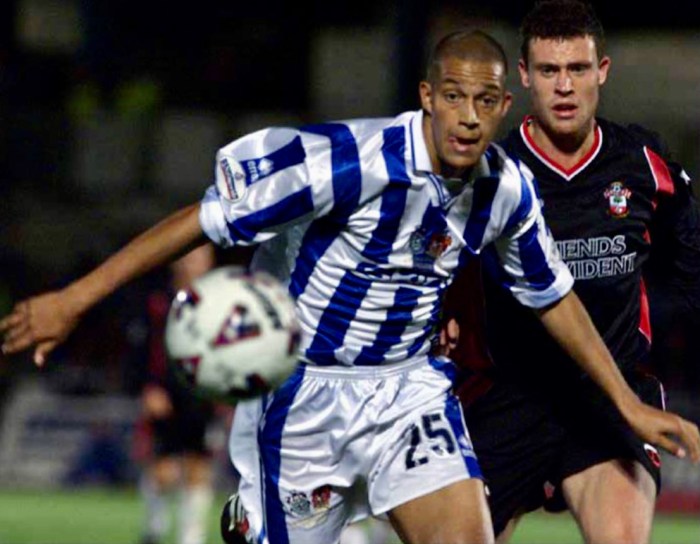
Zamora has eyes on the ball closely watched by a young Wayne Bridge for Southampton

Not only did Zamora manage to score 31 goals as Albion won promotion from the basement division, he went one better when they went straight to the top of the third tier the following season, netting 32 times in 46 matches.

A significant number of those goals came courtesy of Zamora’s excellent understanding with left-footed right-back Paul Watson, of whom he said: “He created a lot of goals for me with those quick free kicks. He didn’t put a foot wrong too often and was very underrated. He never got the credit his hard work deserved.”

Expanding on it in another interview, he said: “Whenever Watto got the ball I knew precisely where I needed to run to and he knew where to deliver it. It was such a great connection: Watto has an absolutely wonderful left foot and it made my job as a striker so much easier when you get deliveries like that.”

Declaring that even in the Premiership he hadn’t come across anybody with a better left foot, he added: “I was very lucky to have played in the same team as him; he created numerous goals for me; not only with his deliveries but with his intelligent play as well.”

Watson had arrived at the club with Charlie Oatway and was part of a cluster of players who had served under Adams at Brentford and Fulham. When Adams and assistant Bob Booker steered Albion to promotion as fourth tier champions, Zamora was player of the season and he and Danny Cullip were named in the PFA divisional XI.

Not long into the following season, the lure of taking over as manager at a Premier League club saw Adams quit Brighton, initially to become Dave Bassett’s no.2 at Leicester City, but with the promise of succeeding him.

“While I thought I had a shot at another promotion, it wasn’t a certainty,” Adams explained. “I knew I had put together a team of winners, and I knew I had a goalscorer in Bobby Zamora, but football’s fickle finger of fate could have disrupted that at any time.”

His successor, Peter Taylor, knew how fortunate he was to inherit an experienced squad, and said: “Of course the greatest asset we had was Bobby Zamora. Having him meant that we could play a front two at home and away from home we could play him on his own and he would still get us a goal out of nothing. He was an incredible player and miles too good for that level.”

And Zamora wasn’t only a star on the pitch, as Knight spoke about in his autobiography. “When he was at his zenith at Brighton, the requests we got for him to visit schools, hospitals and go to prize-givings far outweighed all the other players together, but he was always amenable. He was never starry, never refused. I couldn’t speak more highly of Bobby Zamora as a person.”

Knight recounted in his book how, after a 1-0 win at Peterborough, when Zamora missed a penalty but also scored the only goal of the game, Albion’s promotion to the second tier was confirmed and in his own inimitable way Posh boss Barry Fry said to Brighton’s star striker: “You’re a fucking great player and you’ll play for England one day, I’m fucking sure of it.”

Zamora was still only 21 when Tottenham signed him from relegated Brighton in July 2003. He left the south coast having scored a total of 83 goals in 136 appearances but in his last season in the stripes he netted just 14 as the Seagulls battled unsuccessfully to retain their tier two status.

Unfortunately, he missed eleven matches with a dislocated shoulder and, had former Premier League striker Paul Kitson been fit to play alongside him (he managed only seven starts plus three off the bench), the season may well have had a different outcome.

Everton’s Bill Kenwright had offered £3m for Zamora during the season but their manager Walter Smith seemed less convinced and, with Kevin Campbell and Wayne Rooney likely to be ahead of him, Zamora stayed in Sussex.

But chairman Dick Knight promised not to stand in his way if an opportunity was presented at the end of the season and that came from Tottenham. Manager Glenn Hoddle and assistant Chris Hughton had been to see Zamora in action at the Withdean on a number of occasions.

Spurs chairman Daniel Levy played hardball over the deal. Eventually, Knight settled on a £1.5m fee but, because of the original sell-on clause, £450,000 was due to Bristol Rovers.

Hoddle told The Guardian: “He has got good pace and great movement on and off the ball. No disrespect to Brighton, they have got a good team down there, but we have got players here who can make the most of his movement.”

The player’s agent Phil Smith told the newspaper: “The fee for Bobby is £1.5m which is a decent price in today’s market for a Second Division striker.

“It has been a long time coming for Bobby but he is delighted to be going into the Premiership. It has always been an ambition.”

Disappointed Albion manager Steve Coppell observed: “It is a big move for Bobby and nobody really expected we could hang onto him for much longer. But it has blown a big hole in any plans I had. I don’t have a better option than playing with Bobby Zamora up front.”

When he arrived at Spurs, one of the senior pros who took him under his wing was none other than Gus Poyet.

“As a young guy coming into the team, he was one of the senior pros who would always talk to me and encourage me,” Zamora told the matchday programme. “He didn’t have to do that, but he went out of his way to do so and you could see he had coaching qualities. He would often point things out on the pitch that you’d pick up on, and when he spoke, you’d listen.

“He wasn’t starting every game either, so in training I did more things with him than maybe the rest. I really got on well with him.”

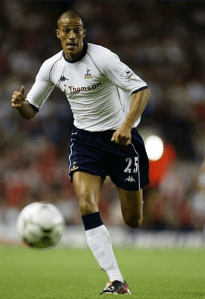
As it turned out, Zamora made only 18 appearances for Spurs (11 as a substitute) and only scored once – ironically a single goal that knocked West Ham out of the Carling Cup in October 2003.

In January 2004, Spurs chose to use him as a makeweight in taking Jermain Defoe from the Boleyn Ground to White Hart Lane.

Phlegmatic Zamora didn’t look on it as a failure but embraced the “learning curve” of training alongside the likes of Poyet, Robbie Keane, Darren Anderton and Jamie Redknapp.

“I came away a better player and with more experience,” he said. “Glenn Hoddle had signed me and then he got sacked not long afterwards. David Pleat took charge and we didn’t really see eye-to-eye, but the lads and the club were brilliant and I learned so much from my time there.

“I took a chance by stepping back down to the Championship with West Ham – but it was the opportunity of playing regular football again that was the pull for me.”

Stadium lure too distant for promotion winner Peter Taylor

PETER TAYLOR steered Albion to promotion from the third tier in 2002 – a feat his namesake as Brighton boss fell short of achieving back in 1976.

The younger Taylor, who played for and managed arch rivals Crystal Palace, had quite an extraordinary managerial career – from taking charge of the England international side, when he appointed David Beckham as captain, to taking the reins at Isthmian League side Maldon & Tiptree at the age of 69.

He took the helm at third-placed third-tier Brighton in October 2001 after being sacked by Premier League Leicester City – who had created the Albion vacancy by recruiting manager Micky Adams to work as no.2 to newly-appointed Dave Bassett.

Starting at the Albion

Taylor revealed that it was on Adams’ advice that he accepted Albion’s offer. “Micky said they were a close bunch, a confident group and happy with each other,” Taylor told The Guardian. “My job now is to carry on the good work he has started.”

In dropping down two divisions Taylor returned to the level of a previous success, when he guided Gillingham to the First Division via (via a play-off final win over Wigan Athletic). In less than two years he went from the Second Division to the Premiership – managed England for one game along the way – and back again.

“I’ve not lost any self-belief after what happened at Leicester,” said Taylor. “I don’t feel I have anything to prove. Leicester is in the past now as far as I am concerned. I am not worried about the level I am managing at. Brighton has fantastic potential, particularly in size of support, and it is my job now to fulfil it.”

Albion press officer Paul Camillin wrote in the matchday programme: “Micky’s replacement is a man whose coaching ability is unquestionable. Here is a man who not so long ago was taking England training sessions under the gaze of Sven Goran Eriksson,”

Taylor’s knowledge of the game spanned all four divisions and beyond and Camillin pointed out: “He was the overwhelming choice of the board of directors.”

Indeed, chairman Dick Knight said: “Peter Taylor’s management experience at both Nationwide and higher levels of football make him ideal for the Albion.

“He quickly identified with the ambition and potential here and I’m very pleased he has chosen to join us.”

Top scorer Bobby Zamora was also delighted, telling The Guardian: “When I heard the list of who was being put forward, Peter Taylor was the name that stood out. He has proven his ability and has got an obvious wealth of experience.”

In young Zamora, Taylor inherited a magnificent key to unlock defences. One player he did bring in who also made a difference was a lanky goalscoring midfielder called Junior Lewis (remarkably Taylor also signed him for four of his other clubs – Dover, Hull, Gillingham and Leicester) and his contribution certainly helped to cement the title.

Working alongside Bob Booker

“Junior did exactly what he had done for me at Gillingham, which is make the team play more football,” Taylor told Nick Szczepanik.  “He wasn’t easy on the eye, but he was always available to get the ball from defenders and got it to the strikers and was very useful.”

While Taylor’s eight months as manager of Brighton culminated in promotion, he was never really credited with the success because many said he achieved it with Adams’ team.

“Micky had done the hard work because he signed all the squad before I got there, and they had done well so the last thing I was going to do was to change too much,” Taylor told Szczepanik, in an interview for the club website. “He had built a team with a great spirit.

“You could see why we went on to win the division because the squad was full of incredible characters – not just experienced professionals but good professionals who were desperate to do well for the club.”

Citing the experience and ability of Danny Cullip, he made special reference to “the greatest asset” Zamora, saying: “He was an incredible player and miles too good for that level.

Simon Morgan was another one. What a great defender – and yet he could hardly train because he had two bad knees. Whenever he played, he was such a good organiser at the back that we were always solid.”

Unfortunately, Taylor didn’t help to endear himself to Albion’s public when he quit within days of the victory parade along the seafront, but deep down not too many people could blame him considering the limitations prevailing at the time.

“People will think I was stupid to leave the club after we won the league but I think everyone understands the reasons, which were because of the budget I thought I’d need to keep them up and the new stadium not being as close as Dick promised in my interview,” Taylor explained.

“Some people assumed I must have a new job lined up, maybe at Palace, but no, I didn’t. My plans had been to win promotion at Brighton, move into the new stadium with a big budget and then try eventually to get them to the Premier League.”

Nevertheless, Knight said: “It’s a great shame that Peter has chosen to resign. He has done a terrific job for the club in leading the Albion to the Second Division title, and it’s sad that he doesn’t wish to continue.”

The captain at the time, Paul Rogers told The Argus: “It’s a big shock to me and I’m sure it will be a big shock to the other lads as well. He’s done really well here. Since he came in the lads took to him straight away.

“He is a good coach. His sessions were a lot more technical than we were used to and he’s improved some of the players during his time at the club.”

Six months after he left Brighton, Taylor took over at Hull City, who were about to move into the 25,000 all-seater KC Stadium and in four years he guided them from the bottom tier of football through to the Championship.

I recall a visit to the KC when Albion’s travelling supporters taunted him with a ‘Should have stayed with a big club’ chant, to which he responded by opening wide his arms to point out the plush new surroundings he was working in.

Born in Rochford, Essex, on 3 January 1953, Taylor was a Spurs supporter from an early age and had an unsuccessful trial with them – including playing in a South East Counties league match.

Looking back in an interview with superhotspur.com, he recalled that he didn’t perform well in his trial match at Cheshunt because he was up against Steve Perryman (who later became a close friend) and Graeme Souness in the Tottenham midfield.

Taylor also had an unsuccessful trial with Crystal Palace, so it was somewhat ironic that both clubs who rejected him as a youngster ended up paying handsome fees to sign him.

Taylor had first drawn attention while playing for South-East Essex Schools and Canvey Island but it was nearby Southend United who took him on as an apprentice in 1969.

The winger turned professional with the Shrimpers in January 1971 and scored 12 goals in 75 league matches for the Essex side.

It was the flamboyant Malcolm Allison who signed him for Palace in October 1973, paying a £110,000 fee. Allison told the player he had been trying to sign him for some time, including when he was in charge at Manchester City.

“He made me feel like a million dollars and I couldn’t thank anyone more than I would thank Malcolm for the career that I have had,” said Taylor. “He knew his stuff and he was an exciting coach, far ahead of his time, but the most important thing for me was that he made me feel that I was the best player in the world.”

Taylor went on to be Palace’s player of the season, although they were relegated to the third tier.

His time at Selhurst Park was his most successful as a player, he reckoned, and he scored 33 goals in 122 league games for the Eagles. But his notable performances when Palace made it through to the semi-finals of the FA Cup in 1976 led to Keith Burkinshaw signing him for Spurs for £400,000.

“I was desperate to play for Tottenham, because they were the team that I supported, so it was a wonderful move for me,” said Taylor.

Earlier that year, he had made his debut for England while playing in the third tier of English football, going on as a substitute in the second half of a Welsh FA centenary celebration match at the Racecourse Ground, Wrexham, and scoring the winner in a 2-1 victory.

He was the first Third Division player to be capped since Johnny Byrne in 1961, and also the first player to score while making his debut as a substitute. He went on to win four caps.

Two months later, against the same opponent, but at Ninian Park, Cardiff, in the Home International Championship, he scored again – this time the only goal of the game as Don Revie’s England won 1-0.

Taylor’s third cap came in the 2-1 defeat to Scotland at Hampden Park on 15 May 1976. And he went on as an 83rd minute sub for Kevin Keegan as England beat Team America 3-1 in America’s Bicentennial Tournament. Bobby Moore was Team America’s captain and the great Pelé was playing up front.

Although he scored 31 times in 123 league matches for Spurs, he was hampered by a pelvic injury during his time at White Hart Lane but superhotspur.com writer Lennon Branagan said: “A player with a real eye for goal, Peter Taylor was a really fine all-round winger, who also had good defensive qualities to his game.

“He was a very important player during his second season at Spurs, as he helped them to win promotion from the old Second Division, following their relegation to that division during the previous season.”

Taylor moved on from Spurs after four years when Burkinshaw couldn’t guarantee him a starting spot, leaving for £150,000 to join second tier Leyton Orient, where Jimmy Bloomfield was manager.

He scored 11 goals in 56 league games for the Os and had four games on loan for Joe Royle’s Oldham Athletic in January 1983. He then went non-league with Maidstone, apart from a brief spell back in the league, that he didn’t enjoy, playing under Gerry Francis at Exeter City.

Having returned to Maidstone to carry on playing, he eventually got his first managerial job at Dartford in 1986 as a player-manager.

He moved on to Enfield in a similar role, telling superhotspur.com: “I thoroughly enjoyed it, and I was learning all the time about coaching players, and then Steve Perryman asked me to be his assistant at Watford in 1991, and I had two fantastic years there of coaching and learning. So that was the start of my managerial career.”

His first league manager’s job then followed at his old club Southend, between 1993 and 1995, but he quit having not been able to raise them above mid-table in League One. Curiously, his next outpost was non-league Dover Athletic but he left when his former Spurs teammate Glenn Hoddle invited him to coach the England under 21 team.

A successful spell in which he presided over 11 wins, three draws and only one defeat came to an abrupt end when Taylor was controversially relieved of his duties by the FA and replaced by former Albion winger Howard Wilkinson.

Gillingham offered him a return to club management and, with Guy Butters at the back and the aforementioned Junior Lewis in midfield, he steered the Kent club to that play-off win, taking them into the top half of English league football for the first time in their history.

That achievement prompted Leicester to poach him and he got off to a great start with the Foxes, even earning a Premier League manager of the month award in September 2000.

It was during his time at Leicester that he rode to England’s rescue two months later by taking caretaker charge of the England national side for a friendly against Italy in Turin. England lost 1-0 but the game is remembered for Taylor handing the captain’s armband to Beckham for the first time. He also included six players still young enough for the under 21s: Gareth Barry, Jamie Carragher, Kieron Dyer, Rio Ferdinand, Emile Heskey and Derby’s Seth Johnson (it was his only full cap).

Describing it as the proudest moment of his long career, Taylor told Branagan: “I never dreamt that opportunity would happen to me. I knew that it was only going to be for one game, but it’s on my memory bank, and no one will ever change that.” 

Back at Leicester, it all went pear-shaped towards the end of the season and when City were beaten 5-0 at home by newly promoted Bolton Wanderers in the new season opener, and then recorded a further four defeats, two draws with a solitary victory, Taylor was sacked.

He combined his job at Hull with once again coaching the England under 21 side between 2004 and 2006, and early into his reign called up Albion’s Dan Harding and Adam Hinshelwood (Jack Hinshelwood’s dad) for a home game v Wales and an away fixture in Azerbaijan. Harding started both matches and Hinshelwood was an unused sub.

Taylor oversaw nine wins, two draws and five defeats, selecting players such as James Milner, Darren Bent and Liam Ridgewell.

After promotion success with Albion and Hull, where he spent three and a half years, in the summer of 2006 Palace, in the Championship, stumped up £300,000 in compensation to take the Tigers boss back to Selhurst Park to succeed Iain Dowie.

Telling the BBC it had to be “something special” for him to leave Hull, Taylor added: “When I got the call from Simon (Jordan) there was no doubt in my mind that I wanted to be at Selhurst Park.”

Talking to cpfc.co.uk some years later, he said: “I was very confident as a manager. Very confident. I felt as though I would succeed.

“I didn’t look at my reputation too much. I looked at: ‘How can I get these into the top division?’ Even if I was worried about the reputation I had, I still would have taken the job.”

On the Palace bench with Kit Symons

After a promising start, results went awry and Palace finished the season in mid-table. When the Eagles managed only two wins in their first 10 games of the 2007-08 season, Taylor was sacked and replaced with Neil Warnock.

Undeterred, he stepped outside of the league for his next position, taking charge of then Conference team Stevenage Borough – recruiting Junior Lewis as his first signing!

Lewis followed him into his next job as well, this time as first team coach at Wycombe Wanderers, where Taylor succeeded Paul Lambert in May 2008. Taylor’s promotion-winning knack once more came to the fore when the Chairboys won promotion from League Two.

However, a poor start to life in League One cost him his job and Wycombe owner Steve Hayes told BBC Three Counties Radio: “We started the season reasonably well, but truthfully, six points from 33 is very worrying.

“We need a change. [Peter’s] body language in the last few weeks has not been great and he doesn’t seem to be as happy as he was last year.”

Taylor was approaching his fifth month out of the game when, in mid-February 2010, League Two Bradford City gave him a short-term deal to replace Stuart McCall. Once again, loyal Lewis joined him.

Hoping his stay at Valley Parade would ultimately be longer, he told the Yorkshire Post: “I remember what happened at Hull when I went in there (in 2002) with the club sitting 18th in the bottom division.

“We went on to enjoy a lot of success and I see similar potential here at Bradford. Certainly if we can go on a run then there is a potential of putting bums on seats.

“I still believe we can do something this year. But if that does not prove to be the case, then definitely next year.”

Taylor signed a contract extension and stuck at it even when he was offered the chance to become no.2 to Alan Pardew at Premier League Newcastle United at the beginning of January 2011.

“It’s flattering to be offered the position to work alongside Alan Pardew,” Taylor told BBC Radio Leeds. “I wasn’t comfortable leaving Bradford earlier than I need to, I know what the game is about, I can easily get the sack in a month’s time, I understand that, but I don’t really feel I want to leave at this particular time.”

Saying Bradford had “really switched me on”, he added: “I’ve always had a special feeling about the club, and I’ve still got that feeling.” Six weeks later he left City by mutual consent.

In the summer that year, Taylor headed to the Middle East and spent 15 months in charge of the Bahrain national side, leading them to success in the 2011 Arab Games in Doha when they beat Jordan 1-0. He was sacked in October 2012 after Bahrain lost 6-2 to the United Arab Emirates in a friendly.

The following summer, he was given a short-term contract to take charge of England’s under 20s at the Under 20 World Cup in Turkey. Hopes may have been high after a 3-0 win over Uruguay in a warm-up match but England were eliminated at the group stage after only managing to draw against Iraq and Chile and then losing to Egypt. The England side included the likes of Sam Johnstone, Jamal Lascelles, John Stones, Eric Dier, Conor Coady, James Ward-Prowse, Ross Barkley and Harry Kane.

Taylor found himself back in club football that autumn when Gillingham welcomed him back on an interim basis after they’d sacked Martin Allen. Handed a longer term deal a month later, he stayed with the League One Gills until halfway through the next season when, after only six wins in 23 matches, he was sacked on New Year’s Eve.

Another posting abroad was to follow in May 2015 when he was appointed head coach of Indian Super League side Kerala Blasters, taking over from former England goalkeeper David James.

But his time in India was brief. Despite winning five of six pre-season friendlies and the opening league fixture, the Blasters lost four and drew two of the next six matches and Taylor became the league’s first managerial sacking in October that year.

The New Zealand national side recruited Taylor to work with the country’s UK-based players in 2016-17 and a third spell at Gillingham followed in May 2017. He was named director of football at Priestfield where Adrian Pennock was head coach and he was briefly interim head coach when Pennock lost his job in September 2017.

That turned out to be his last job in league football. He joined National League Dagenham & Redbridge in June 2018 and spent 18 months in charge, leaving the club after a spell of nine defeats in 11 games.

Welling United, in the sixth tier of English football, appointed Taylor manager in September 2021 but with only six wins in 25 matches he left in March the following year. His final job was at Isthmian League Maldon & Tiptree, from December 2022 to August 2023.

Confrontation was seldom far away in Micky Adams’ career

THE FIRST player ever to be sent off in a Premier League game managed Brighton twice.

Fiery Micky Adams saw red playing for Southampton when he decked England international midfielder Ray Wilkins.

“People asked me why I did it. I said I didn’t like him, but I didn’t really know him,” Adams recalls in his autobiography, My Life in Football (Biteback Publishing, 2017).

It was only the second game of the 1992-93 season and Adams was dismissed as Saints lost 3-1 at Queens Park Rangers.

Adams blamed the fact boss Ian Branfoot had played him in midfield that day, where he was never comfortable.

“He (Wilkins) was probably running rings around me. I turned around and thumped him. I was fined two weeks’ wages and hit with a three-match ban.”

It wasn’t the only time he would have cause not to like Wilkins either. The former Chelsea, Manchester United and England midfielder replaced Adams as boss of Fulham when Mohammed Al-Fayed took over.

His previously harmonious relationship with Ray’s younger brother, Dean, turned frosty too. When Adams first took charge at the Albion, he considered youth team boss Dean “one of my best mates”. But the two fell out when Seagulls chairman Dick Knight decided to bring Adams back to the club in 2008 to replace Wilkins, who’d taken over from Mark McGhee as manager.

“He thought I had stitched him up,” said Adams. “I told him that I wanted him to stay. We talked it through and, at the end of the meeting, we seemed to have agreed on the way forward.

“I thought I’d reassured him enough for him to believe he should stay on. But he declined the invitation. He obviously wasn’t happy and attacked me verbally. I did have to remind him about the hypocrisy of a member of the Wilkins family having a dig at me, particularly when his older brother had taken my first job at Fulham.

“We don’t speak now which is a regret because he was a good mate and one of the few people I felt I could talk to and confide in.”

With the benefit of hindsight, Adams also regretted returning to manage the Seagulls a second time considering his stock among Brighton supporters had been high having led them to promotion from the fourth tier in 2001. The side that won promotion to the second tier in 2002 was also regarded as Adams’ team, even though he had left for Leicester City by the time the Albion went up under Peter Taylor.

Adams first took charge of the Seagulls when home games were still being played at Gillingham’s Priestfield Stadium.  Jeff Wood’s short reign was brought to an end after he’d failed to galvanise the side following Brian Horton’s decision to quit to return to the north. Horton took over at Port Vale, where Adams himself would subsequently become manager for two separate stints.

Back in 1999, though, Adams had been at Nottingham Forest before accepting Knight’s offer to take charge of the Albion. He’d originally gone to Nottingham to work as no.2 to Dave Bassett but Ron Atkinson had been brought in to replace Bassett and Adams was switched to reserve team manager.

The Albion job gave him the opportunity to return to front line management, a role he had enjoyed at Fulham and Brentford before regime changes had brought about his departure from both clubs.

On taking the Albion reins, Adams said: “For too long now this club has, for one reason and another, had major problems. The one thing that has remained positive is the faith the supporters have shown in their club.

“The club has to turn around eventually and I want to be the man that helps to turn it around.”

The man who appointed him, Knight, said: “Micky is a formidable character with a proven track record. He knows what it takes to get a club promoted from this division. But, more than that, Micky shares our vision of the future and wants to be part of it. That is why I have offered him a four-year contract and he has agreed to that commitment.”

Not long after taking over the Albion hotseat, he was happy to say goodbye to the stadium he’d previously known as home when a Gillingham player in the ‘80s and it was a revamped squad he assembled for the Albion’s return to Brighton, albeit within the confines of the restricted capacity Withdean Stadium.

Darren Freeman and Aidan Newhouse, two players who’d played for Adams at Fulham, scored five of the six goals that buried Mansfield Town in the new season opener at the ‘Theatre of Trees’.

Considering he was only too happy to be photographed supporting the campaign to build the new stadium at Falmer, it’s disappointing to read in his autobiography what he really thought about it.

“My mates and I nicknamed it ‘Falmer – my arse’ although I never said this to Dick’s face,” he said. “There was always so much talk and we never felt like it was going to get done.”

The turning point in his first full season in charge was the arrival of Bobby Zamora on loan from Bristol Rovers. “The first time I saw him he came onto the training ground; he looked like a kid. But he was tall and gangly with a useful left foot; there was potential there.”

Interestingly, considering Adams makes a point of saying he usually ignored directors who tried to get involved on the playing side, he took up Knight’s suggestion that the side should switch to a 4-4-2 formation – and the Albion promptly won 7-1 at Chester with Zamora scoring a hat-trick!

After a so-so first season back in Brighton, not long into the next season Adams was forced to replace his no.2, Alan Cork, with Bob Booker because Cork was offered the manager’s job at Cardiff City, at the time owned by his former Wimbledon chairman, Sam Hammam. Adams reckoned Booker’s appointment was one of the best decisions he ever made.

Surrounded by players who had served him well at Fulham and Brentford, together with the additions of Zamora, Michel Kuipers and Paul Rogers, Adams and Booker steered Albion to promotion as champions. Zamora was player of the season and he and Danny Cullip were named in the PFA divisional XI.

Not long into the new season, the lure of taking over as manager at a Premier League club saw Adams quit Brighton, initially to become Bassett’s no.2 at Leicester City, but with the promise of succeeding him.

“While I thought I had a shot at another promotion, it wasn’t a certainty,” Adams explained. “I knew I had put together a team of winners, and I knew I had a goalscorer in Bobby Zamora, but football’s fickle finger of fate could have disrupted that at any time.”

He admitted in the autobiography: “Had I been in charge at the age of 55, rather than 40, then I perhaps would have taken a different decision.”

While Albion enjoyed promotion under Taylor, what followed at Leicester for Adams was a lot more than he’d bargained for and, to his dismay, he is still associated with the ugly shenanigans surrounding the club’s mid-season trip to La Manga, to which he devotes a whole chapter of his book, aiming to set the record straight.

On the pitch, he experienced relegation and promotion with the Foxes and he doesn’t hold back from lashing out about ‘moaner’ Martin Keown, “one of the worst signings of my career”. Eventually, he’d had enough, and walked away from the club with 18 months left on his contract.

After a break in the Dordogne area of France, staying with at his sister-in-law and her husband’s vineyard, he looked for a way back into the game. He was interviewed for the job of managing MK Dons but was put off by a Brighton-style new-ground-in-the-future scenario. Then Peter Reid, a former Southampton teammate, was sacked by Coventry City. He put his name forward and took charge of a Championship side full of experienced players like Steve Staunton and Tim Sherwood.

The side’s fortunes were further boosted by the arrival of Dennis Wise, but, in an all-too-familiar scenario Adams had encountered elsewhere, the chairman who appointed him (Mike McGinnity) was replaced by Geoffrey Robinson. It wasn’t long before it was obvious the relationship was only going to end one way. As Adams tells it, Robinson was influenced by lifelong Sky Blues fan Richard Keys, the TV presenter, and it was pretty much on his say-so that Adams became an ex-City manager after two years in the job.

With an ex-wife and three children to support as well as his partner Claire, Adams couldn’t afford to be out of work for long and fortunately his next opportunity came courtesy of Geraint Williams, boss of newly promoted Colchester United, who took him on as his no.2.

However, it only got to the turn of the year before he was out of work once again, although, from what he describes, he wasn’t enjoying his time with the U’s anyway because Williams kept him at arm’s length when it came to tactics and team selection.

He was amongst the ranks of the unemployed once again when Albion chairman Knight gave him a call, but, with the benefit of hindsight, he said: “Going back turned out to be one of the biggest mistakes of my life.”

Adams blamed the backdrop of “the power struggle” between Knight and Tony Bloom on the lack of success during his second stint in the hotseat, and he reckons it was Bloom who “demanded my head on a platter”. The fateful meeting with Knight, when a parting of the ways was agreed, famously took place in the Little Chef on the A23 near Hickstead.

Looking back, Adams conceded he bowed to pressure from Knight to make certain signings – namely Jim McNulty, Jason Jarrett and Craig Davies in January 2009 – who didn’t work out. He reflected: “I shouldn’t have taken the job in the first place. I’d let my heart rule my head but, in fairness, I didn’t have any other offers coming through and it seemed like a good idea at the time.

“I wouldn’t ever say he (Knight) let me down, but he had his idea about players. I did listen to him, and maybe that’s where I went wrong.”

He added: “Going back to a club where success had been achieved before felt good, yet, the second time around, the same spark wasn’t there no matter how hard I tried.”

Born in Sheffield on 8 November 1961, Micky was the second son of four children. It might be argued his penchant for lashing out could have stemmed from seeing his father hitting his mother, which he chose to spoke about at his father’s funeral. Adams is obviously not sure if he did the right thing but he felt the record should be straight.

The Adams family were always Blades rather than Wednesdayites and, at 15, young Micky was in the youth set-up at Bramall Lane having made progress with Sunday league side Hackenthorpe Throstles.

While he thought he had done well under youth coach John Short during (former Brighton player) Jimmy Sirrel’s reign as first team manager, Sirrel’s successor, Harry Haslam, replaced Short and, not long afterwards, Adams was released.

However, Short moved to Gillingham and invited the young left winger to join the Gills. Adams linked up with a group of promising youngsters that included Steve Bruce.

In September 1979, he had a call-up to John Cartwright’s England Youth side, going on as a sub in a 1-1 draw with West Germany, and starting on the left wing away to Poland (0-1), Hungary (0-2) and Czechoslovakia (1-2) alongside the likes of Colin Pates, Paul Allen, Gary Mabbutt, Paul Walsh and Terry Gibson.

Adams honed his craft under the tutelage of a tough Northern Irishman Bill ‘Buster’ Collins and began to catch the attention of first team manager Gerry Summers and his assistant Alan Hodgkinson, who had played 675 games in goal for Sheffield United.

He made his debut aged just 17 against Rotherham United but didn’t properly break through until Summers and Hodgkinson were replaced by Keith Peacock (remember him, he was the first ever substitute in English football, in 1965, when he went on for Charlton Athletic against John Napier’s Bolton Wanderers) and Paul Taylor.

“Keith saw me as a full-back and that was probably the turning point of my career,” Adams recalled.

Once Adams and Bruce became regulars for the Gills, scouts from bigger clubs began to circle and at one point it looked like Spurs were about to sign Adams. That was until he came up against the aforementioned Peter Taylor, who was playing on the wing for Orient at the time (having previously played for Crystal Palace, Spurs and England).

“He nutmegged me three times in front of the main stand and, to cut a long story short, that was the end of that. Gillingham never heard from Spurs again,” Adams remembered.

Even so, Adams did get a move to play in the top division when Bobby Gould signed him for Coventry City. Managerial upheaval didn’t help his cause at Highfield Road and when John Sillett preferred Greg Downs at left-back, Adams dropped down a division to sign for Billy Bremner’s Leeds United (pictured below right with the legendary Scot).

“He had such a big influence on my career and life that I wouldn’t have swapped it for the world,” said Adams. But life at Elland Road changed with the arrival of Howard Wilkinson, and Adams found himself carpeted by the new boss after admitting punching physio Alan Sutton for making what an injured Adams considered an unreasonable demand to perform an exercise routine even though he was in plaster at the time.

Nevertheless, Adams admits he learned a great deal in terms of coaching from Wilkinson, especially when an improvement in results came about through repetitive fine-tuning on the training pitch.

“It is the one aspect of coaching that is extremely effective, if delivered properly,” said Adams. “I learnt this from Howard and took this lesson with me throughout my coaching and managerial career.”

However, Adams didn’t fit into Wilkinson’s plans for Leeds and he was transferred to Southampton, managed by former Aston Villa, Saints and Northern Ireland international Chris Nicholl. Adams joined Saints in the same week as Neil ‘Razor’ Ruddock and the pair were quickly summoned by Nicholl to explain the large size of the hotel bills they racked up.

Adams moved his family from Wakefield to Warsash and he went on to enjoy what he reflected on as “the best few years of my playing career”. He was at the club when a young Alan Shearer marked his debut by scoring a hat-trick and the “biggest fish in the pond at the Dell” was Jimmy Case.

Adams described the appointment of Branfoot in place of the sacked Nicholl as a watershed moment in his own career. “Overall he was decent to me and I found his methods good,” he said. And he pointed out: “I was getting older, I’d started my coaching badges and I already had one eye on my future.”

Adams recalled an incident during a two-week residential course at Lilleshall, after he had just completed his coaching badge, when he dislocated his shoulder trying to kick Neil Smillie.

“I was left-back and he was right-wing, and he took the piss out of me for 15 minutes. The fuse came out and I decided to boot him up in the air,” Adams recounted. “The only problem was that I missed. I fell over and managed to dislocate my shoulder hitting the ground. It was the worst pain I’ve ever had.”

If life was sweet at Southampton under Branfoot, that all changed when he was replaced by Alan Ball and the returning Lawrie McMenemy. Adams and other older players were left out of the side. Simon Charlton and Francis Benali were preferred at left-back. Eventually Adams went on a month’s loan to Stoke City, at the time managed by former Saints striker Joe Jordan, assisted by Asa Hartford.

On his return to Southampton, and by then 33, Adams was given a free transfer.

Former boss Branfoot came to his rescue, inviting him to move to League Two Fulham as a player-coach in charge of the reserve team. Branfoot also signed Alan Cork and he and Adams began a longstanding friendship that manifested itself in becoming a management pair at various clubs.

On the pitch, Branfoot struggled to galvanise Fulham and, with the team second from bottom of the league, he was sacked – and Adams replaced him. He kept Fulham up by improving fitness levels and introducing more of a passing game.

But he knew big changes were needed if they were going to improve and he gave free transfers to 17 players, despite clashing with Jimmy Hill, who had different ideas.

An admirer of what Tony Pulis was doing at Gillingham, Adams signed three of their players: Paul Watson, Richard Carpenter and Darren Freeman. He also got in goalkeeper Mark Walton and centre back Danny Cullip. Simon Morgan was one of the few who wasn’t let go, and Paul Brooker emerged as a skilful winger. All would later play under him at Brighton.

Promotion was secured and Adams was named divisional Manager of the Year but after all the celebrations had died down Mohamed Al-Fayed bought the club and things changed dramatically.

“The club was in a state of flux as it tried desperately to come to terms with its new status as a billionaire’s plaything,” Adams acerbically observed. “From having nothing, we had everything.”

Before too long, in spite of being given a new five-year contract, Adams was out of the Craven Cottage door, replaced by Wilkins and Kevin Keegan.

But he wasn’t out of work for long because Branfoot’s former deputy, Len Walker, introduced him to the chairman of Swansea City, who were on the brink of relieving Jan Molby of his duties as manager.

Various promises were made regarding funds that would be made available to him but when they were not forthcoming he realised something was not right and he quit, leaving Cork, the deputy he’d taken with him, to take over.

By his own admission, if he hadn’t been sitting on the £140,000 pay-off he’d received from Fulham, he probably would have stayed. As it was, he was out of work once again…..until he had a ‘phone call from David Webb, the former Chelsea and Southampton defender who was the owner of Brentford, but in the process of trying to sell the club.

His brief was to keep the side in the league and to make it attractive to potential purchasers. It was at Griffin Park that he first met up with the aforementioned Bob Booker, who was managing the under 18s at the time. “He is one of the most loyal and trustworthy friends I have ever known,” said Adams. “He would do anything for you.”

However, although he signed the likes of Cullip and Watson from Fulham, he wasn’t able to stop the Bees from being relegated. During the close season, former Palace chairman Ron Noades bought the club and announced he was also taking over as manager.

Once again, Adams was out of a job but his next step saw him appointed as no.2 to Dave Bassett at Nottingham Forest.

Which brings us almost full circle in the Adams career story, but not quite.

After the debacle of his second stint in charge of Brighton, he was twice manager at Port Vale, each spell straddling what turned out to be a disastrous period in charge of his family’s favourite club, Sheffield United.

It was Adams who gave a league debut to Harry Maguire during his time at Bramall Lane, but the side were relegated from the Championship on his watch, and he was sacked.

Adams took charge of 249 games as Vale boss but quit after a run of six defeats saying he’d fallen out of love with the game.

It didn’t prevent him having another go at it, though. He went to bottom of the league Tranmere Rovers and admitted in his book: “It was arrogance to think I could turn round a club that had been relegated twice in two seasons.”

In short, he couldn’t and he ended up leaving two games before the end of what was their third successive relegation.

“It was a really poor end to a career that had started so promisingly at Fulham,” he said.

Tano incurred the wrath of plenty during Spurs playing days

GUS POYET’s loyal deputy, Mauricio Taricco, once labelled ‘The Premiership’s most hated footballer’, had a late and unexpected swansong to his playing career with Brighton.

It came six years after the Argentinian full-back thought his playing days were over when he sustained a bad injury on his debut for West Ham, having switched across London from Tottenham Hotspur, where he played alongside Poyet.

Taricco was no stranger to a red card during his days playing at the top level and he was also sent for an early bath in his comeback game when the Seagulls beat Woking on penalties in the FA Cup.

Some of Taricco’s actions drew fierce cricitism when he was at White Hart Lane, for instance the BBC’s chief football writer, Phil McNulty, wrote an excoriating piece which he began: “Taricco may have a modicum of limited talent, but he hides it brilliantly behind a selection of all that is sneaky and cynical in football.”

Spitting, diving and feigning injury were among the accusations levelled at Taricco, and he left Everton’s Thomas Gravesen nursing a shin wound that required 30 stitches.

After two sendings off in three games in 2002, McNulty said the Argentine was “swiftly becoming the Premiership’s most hated footballer” and concluded: “Taricco is a scar on the Premiership and on a club with a name for a certain style – and (Glenn) Hoddle must operate to remove it.”

Strong stuff but the BBC man was not alone in his scathing criticism; Leicester boss Dave Bassett was incensed when Taricco feigned injury to try to get Foxes’ Andy Impey sent off at White Hart Lane. “That man should be done away with,” said Bassett. “He is a disgrace to the game.”

After Taricco had been sent off at Old Trafford, and then again following “a wild lunge” on Graeme Le Saux in a match against Chelsea at Stamford Bridge, Hoddle stood up for the Argentine defender, saying he’d been harshly criticised and that the reaction was disproportionate.

“I’m not saying that there haven’t been times this season that he’s done some silly things, and he admits that, but the two sendings off, in my eyes, have not been warranted,” said Hoddle. “The press have gone OTT on it.”

Not everyone viewed him harshly. Jonas Ahrell, of sports internet company Sportal, said: “A string of assured performances, along with great control, touch and distribution, has shown him to be a shrewd purchase by Spurs boss George Graham, who knows a thing or two about defenders.”

He explained how his nickname Tano is Argentine for Italian – his father was from Sardinia – and he described the defender as “articulate, impeccably-mannered and an all-round lovely bloke”.

Born in Buenos Aires on 10 March 1973, Taricco grew up playing football in the capital’s streets and he would eventually follow in the footsteps of Argentina’s famous World Cup stars Ossie Ardiles and Ricky Villa to White Hart Lane.

It was John Lyall who was instrumental in his arrival on European soil. Taricco had been playing for home city club Argentinos Juniors for only a year when Ipswich Town boss Lyall and experienced scout Charlie Woods were in South America on the hunt for new talent. Their main target was Uruguayan midfielder Adrián Paz, but they took a chance on 21-year-old Taricco too for whom a £175,000 fee was paid.

“You often see two players coming over together to help each other with a new culture and a new way of life but it proved to be me who stayed,” Taricco recalled in an Albion matchday programme article. “Although I was playing in the top league in my homeland, it was always an ambition to play in Europe.

“I think that Adrian leaving after a few months helped me. I was now more isolated, but it helped me to stand on my own two feet. I had to understand the language and mix with people.”

While Taricco quickly made his debut in the League Cup against Bolton Wanderers, he mainly had to be content with reserve team football initially until a change of management – from Lyall to George Burley – and relegation from the Premier League eventually worked in his favour.

Taricco made 167 starts for Town and although defending was his priority, he also scored half a dozen goals – memorably in a 2-0 League Cup win over Manchester United in 1997 and a 3-0 league win against Crystal Palace in 1998 which followed a solo run from inside his own half.

In a March 2020 interview with the East Anglian Daily Times, Taricco looked back fondly on his days at Portman Road, telling Richard Woodall: “I have great memories of being an Ipswich player – in particular the derby games against Norwich. I always knew what that game meant for the fans and for everybody involved with the club. Winning the derby, oh my god, it was a nice feeling.”

Woodall said fans remembered him as a big game player; for example, following a pre-match presentation of his Supporters’ Player of the Year award in 1997, he went on to score in that evening’s 2-0 win against Norwich. The Argentinian described the award at the time as the “greatest honour of my career”.

His cult status among Tractor Boys fans was best described by Csaba Abrahall in a piece for When Saturday Comes and, when he was sold to Spurs for £1.75m in November 1998, there was widespread outcry amongst the faithful.

Taricco became the first signing of Graham’s reign as manager at White Hart Lane, although he was injured at the time, causing a delay before he could make his debut.

“It was always my ambition to move to the Premier League, although I still left Ipswich with a heavy heart,” he said. “I was George Graham’s first signing, but I didn’t see that as an extra pressure – I knew Spurs had been watching me for a while, so I just got on with my football and I coped with the step up – I was a regular for much of my time at the club.
“At Ipswich, we lost in the play-offs and I was absolutely devastated because my dream had gone, that’s why I was so determined to make the most of the opportunity to play at the top level.”

Taricco maintained: “I think the fans at Ipswich and Tottenham liked me because they could relate to me. I’m like a fan when I’m playing. I want to win. When fans get a penalty, even if their player has dived, they jump for joy. I was the same and I’m on the pitch! I didn’t care about other players, fans, clubs. I was playing for my team and nothing else mattered.

“I always got stuck in. You don’t have to be big but you have to have the will to do it. Sometimes you give it, sometimes you take it, that’s football.

“Saying that, there were things I only learnt when I came here. For instance, when you see a 50-50 tackle here and someone gets hurt you just say ‘both players were committed’ and you carry on. In Argentina, there would be a red card and a fight breaking out. So, I learnt that I could get away with things here. If a bad tackle’s coming in and I knew a player was not going to get booked, I had to ‘manage’ things.”

Off the field, there were several managerial changes during his time at the Lane but Taricco learned most from Hoddle. “He was a very technical type of manager, as he was a player, and it was of prime importance to him to have his teams playing a particular type of football,” he said. 

“I really appreciated this as someone who always wanted to play the ball on the ground, think forward and create lots of goal-scoring opportunities.  He was a really positive manager and I can take a lot from my days working under him.”

The other important take from his time there was getting to know Poyet well (after the midfielder’s move from Chelsea in 2001) and developing a strong bond of friendship that would last through appointments at Albion and several other clubs.

Taricco’s time at Spurs came to an end in 2004 after 149 games (plus seven as a sub) when French manager Jacques Santini told him he was not part of his plans. He missed the start of the season through injury and then suspension and was allowed to join West Ham on a free transfer. It’s now quite well known that he sustained a bad injury on his Hammers debut against Millwall and voluntarily tore up his contract.

He moved to Sardinia with his wife and children, managed a property portfolio by day and kept himself fit turning out for his local team.

The idyll lasted five years before his old friend Poyet asked if he’d be interested in becoming his no.2 at Brighton. “Gus is a person I respect both as a man and for his football brain,” he said. “When he asked if I wanted to join him, I said ‘yes’ straight away – I was willing to swap everything I had for Brighton and it’s been a great decision.”

While the plan was always for him to use his knowledge and experience on the training ground and in the dugout, on 18 August 2010 there was a hint of a comeback when he suddenly played 45 minutes for Albion reserves in a 0-0 draw with Gillingham at Culver Road, Lancing. By then he was 37.

The matchday programme observed how he “turned in a cultured display, likewise one feisty challenge that has become a hallmark of an illustrious career”.

The assistant manager himself said: “It was a normal match and nothing more – there was not a lot of thinking behind my decision to play.

“West Ham v Millwall was my last professional game, although I played amateur league (for Castiadas) and regional league football (for Villasimius) in Sardinia right up until last November when I arrived at Brighton.

“But I’m not thinking about coming back to play, I’m just thinking about getting myself as fit as I can.”

However, he added: “If something happens with the team regarding an injury crisis or suspension and I can get fit enough and powerful enough to cope with League One, then who knows?

“I will now try to push myself more and try to get involved in training more often, when I can. If I can mix it up and do my own specific programme to get my sharpness and explosive power back, then I’m sure I will.”

Sure enough, three months later, Taricco stepped into first team action in the FA Cup, playing against Woking on 16 November 2010, although his involvement ended prematurely when he was sent off for two yellow cards – the second one for dissent.

He also played in the next round when it took two games to see off FC United and he finally made his 350th senior appearance after a six-year absence from playing professionally.

“I love playing football, so it’s nice to play, although I feel like I need a bit more power in my legs,” he said. “If I can get that bit more power for the first four or five yards I’ll be happier, but I am 37 years old.

“Any game could be your last, so you have got to make the most of every opportunity. Every player needs to give his all because that’s what you need to make it to the top. That goes for training as well as matches and it’s the way I’ve always approached the game of football.”

He didn’t expect to play regularly, though, and said: “I still see myself as part of the coaching staff rather than the playing staff. I’m there if we need to rest players or if somebody is recovering from an injury, because it is a very long and intense season.

“It is nice to play, don’t get me wrong, and I have enjoyed training with the team, but there are players with better legs than me in the squad.”

By the end of the season in which Albion won promotion to the Championship, he’d started five games and been sub twice, but he was still not done with playing.

The following season, Poyet called on his assistant’s playing experience on nine occasions (plus three as a sub) although Taricco was never far from the headlines for the wrong reasons.

Taricco looks back in anger after seeing red at St Mary’s

I can remember watching at St Mary’s as Taricco so hotly disputed a controversial penalty award by Peter Walton when Lewis Dunk downed Jose Fonte, quite clearly outside the box, that his protests gained him a straight red card.

Taricco also didn’t cover himself in glory at the Madejski Stadium on Boxing Day when lively wideman Jobi McAnuff gave him a torrid time and got two goals in a 3-0 win.

He featured in a six-game spell spanning December and early January but the surprise New Year 3-0 home win over Saints, when young Grant Hall replaced him in the 54th minute, turned out to be his last appearance as a player.

After his departure from the Seagulls with Poyet following the defeat to Palace in the 2013 Championship play-offs, Taricco followed his friend to Sunderland, AEK Athens, Real Betis, Shanghai Shenhua and FC Bordeaux.

He told the East Anglian Daily Times: “When I choose who to work with, I want to know that they are a decent human being, and Gus Poyet is certainly that. This quality is not always easy to find in football.

“Both of us come from similar cultures and we think about football the same way. As well as wanting to win, we both want to put our players in situations where they will flourish. Both of us feel that sometimes as players, our managers didn’t necessarily give us that chance.”

In October 2020, Taricco told the EADT: “Not being a coach now means I’ve had the time to think a lot, and I’m currently learning about world finance, how the world’s monetary system works, and why poverty still exists, so quite big topics!”

But he added: “When the phone goes and the right opportunity comes along, I’ll be ready to be assistant manager again!”

• Pictures from online sources and matchday programmes.

‘Rolls’ Royce was surprise Christmas presence at QPR

IN THE DAYS before wall-to-wall media coverage of all things football, I can remember turning up at Loftus Road to watch a Boxing Day match between QPR and Brighton and wondering who on earth was in goal for the Albion.

It was in the Second Division days when Michel Kuipers was an almost permanent fixture between the sticks for the Seagulls (he’d played 46 consecutive games). But, on 26 December 2001, there was a stranger behind Danny Cullip and Simon Morgan.

He was certainly a stranger to the players, who’d only met him a few hours before kick-off, but, thankfully, he was well known to manager Peter Taylor.

It turned out, Kuipers had pulled a thigh muscle in the previous Saturday’s 2-2 draw at home to Chesterfield and, rather than chance rookie Will Packham, Taylor opted for an experienced ‘keeper who he’d signed twice before.

Taylor had hastily gone back to his previous employer, Leicester City, on Christmas Eve, to sign Simon Royce on loan to cover the period Kuipers was indisposed.

Royce did well to keep a clean sheet in what finished a 0-0 draw, having not had a chance to train with his new teammates.

It transpired Royce had only met them a few hours earlier, at Reigate, en route to Shepherd’s Bush, as the Argus reported, having spent Christmas Day with his family at his Essex home.

Royce managed to pull off decent saves in each half of the encounter at Loftus Road, stopping a goalbound Danny Shittu header in the first half and dealing with a 20-yard shot from crowd favourite Doudou in the second.

Albion’s Paul Watson hit the bar with one of his trademark free-kicks early in the second half while Cullip went close to breaking the deadlock from a Watson corner, only for his header to be cleared off the line by Karl Connolly.

Taylor knew what he was getting with Royce having signed him for both Southend United and the Foxes, where, under Taylor’s successor, Dave Bassett, the ‘keeper had slipped down the pecking order following a bout of laryngitis.

“I had been second choice all season at Leicester, but the way Dave Bassett works, if you are ill or injured he changes it and you have to work your way back,” Royce told the Argus. “I did so well last year, but, when you don’t play, you get forgotten just as quickly.”

He added: “I had been ill a couple of weeks before, so I had lost my place on the bench at Leicester.

“I’d not really played much reserve team football for three or four weeks, so when Peter asked me if I fancied playing a few games I jumped at the chance. It’s nice to keep yourself match fit.”

Royce admitted knowing the manager certainly helped him to drop down two divisions for the chance to play, but the main reason was to get some games under his belt.

“Dropping down a couple of divisions doesn’t bother me at all,” he said. “It’s still a decent standard and Brighton are flying high.
“There are some very good teams in the Second Division, like QPR and Blackpool, so it’s not a problem. I’ve played in the Second Division before with Southend and I quite enjoyed it.

“This is a perfect opportunity for me to get some games in and let people know I am still around.”

Royce was delighted to start his spell with a clean sheet – but that was as good as it got because he conceded 13 goals in the other five matches he played.

Three days after his debut, he let in two but saved a penalty in a 2-2 draw at Blackpool. Albion’s 10-game unbeaten away league record shuddered to a halt in a 3-0 defeat at Wigan, during which Royce needed treatment after being clattered by a Latics striker.

Physio Malcolm Stuart tends to the clattered Royce at Wigan

When Royce finally got to make his Withdean debut, against Cambridge United, he spoiled the occasion with a gaffe, pushing a long-range shot from Paul Wanless into the path of Luke Guttridge for an easy tap-in. Thankfully a Bobby Zamora hat-trick meant the Seagulls prevailed 4-3.

Royce’s penultimate game was a 2-1 win away to Chesterfield but three days later he bowed out in ignominy as Albion were thumped 4-0 by Steve Coppell’s Brentford in a live ITV Digital match, Ivar Ingimarsson and Steve Sidwell scoring two of the Bees goals.

Born in Forest Gate, London, on 9 September 1971, Royce began his football career with non-League Heybridge Swifts while working as a painter and decorator. At the age of 20, a £35,000 fee took him to Southend, signed by former Chelsea defender David Webb, who was managing the Shrimpers back then.

He made his debut for Southend in a 3-1 home win over Grimsby Town in March 1992.

In seven seasons at Roots Hall, Royce made 169 appearances in Divisions One and Two, a couple of them under Taylor, before getting a move to Premier League Charlton Athletic on a Bosman free transfer.

Addicks boss Alan Curbishley briefly promoted him from third to first choice when Andy Petterson was loaned out to Portsmouth and Sasa Ilic lost form. He kept four clean sheets in a row in eight Premier League matches in the 1998-99 season, but injury issues then sidelined him. He didn’t feature at all in the 1999-00 season and, with the arrival of Dean Kiely at The Valley, decided to link up again with Taylor at Leicester, again moving on a Bosman ‘free’.

“I couldn’t have asked for a better move,” Royce told the Daily Gazette. “I played under Peter at Southend and I can’t wait to work with him again because he’s a great coach.

“He had a hard time at Roots Hall, but Peter has matured into an excellent manager in recent years, picking up valuable experience with both the England under-21 side and Gillingham.

“I owe Peter a lot. He knew I was out of contract at Charlton this summer, but he promised me that he would take me to whatever club he was at this year.

“At the time we spoke, Peter was still with Gillingham and I’d have been happy to play for him there in the First Division. But Peter got the Leicester job and he has remained true to his word and brought me on board.”

Initially an understudy to Tim Flowers, Royce had a run of 19 Premier League matches in the second half of the 2000-01 season, keeping clean sheets on seven occasions.

David Lacey, the renowned football writer for The Guardian, even hinted at international recognition for him, after newly installed England manager Sven-Goran Eriksson had been to watch Ipswich Town beat Leicester 2-0 at Portman Road.

“Eriksson was here primarily to run an eye over Richard Wright, Ipswich’s once capped goalkeeper, although, since Wright had so little to do, he must have gone away more impressed by Simon Royce, whose saves kept alive Leicester’s hopes of a point,” wrote Lacey. “Royce, back in the Leicester side because of another injury to Tim Flowers, showed excellent agility and anticipation in keeping out headers from Alun Armstrong and Matt Holland as Ipswich increasingly dominated the match.”

Taylor told the journalist: “Simon Royce’s goalkeeping was the only positive thing to come out of our own performance.”

Any hopes Royce had of taking over the no.1 shirt permanently at Leicester were dashed when Taylor paid £2.5m to install Ian Walker as his first choice ‘keeper.

After his loan spell at Brighton, he went on a similar arrangement to Manchester City later that same season, although he didn’t play any first team games.

The following season he went on loan to QPR, where he featured 17 times.

On his release from Leicester, he moved back to Charlton on a two-year contract, but made only one Premier League appearance in 2003-04.

He was quite literally a loan Ranger in 2004-05, initially playing a couple of games for Luton Town and then returning to QPR, making 13 appearances in their Championship side.

He made a permanent move to Loftus Road in 2005 and, in an away game at Stoke City, was in the news when caught up in a crowd invasion, although manager Ian Holloway said his ‘keeper was fine: “Simon Royce is a big lad and he can look after himself.”

Royce recounted the incident in an interview for brentfordfc.com. “We’d won the game 2-1. I always kept a towel and a water bottle by my left-hand post, so I bent down to pick them up and felt someone jump on my back.

“At first, I assumed it was a team-mate because we’d won the game, but then I looked down and saw a pair of trainers and felt a blow to the back of my head. It was a Stoke supporter who’d run on to the pitch, shouting ‘I’m going to do you, Roycey!’

“I had my hand on the post so managed to pick him up and throw him in the net. After that the stewards rushed on and we had more supporters on the pitch – it was complete mayhem. The fan in question was sentenced to four months in prison for assault.”

Royce managed to hold down a regular starting berth for the first time in several years during his time in west London, playing 32 games in 2005-06 and 22 in 2006-07.

However, he was back on the loan circuit, briefly, when in April 2007 he moved to League One Gillingham to play in their last three games of the season.

During the summer break, he signed for the Kent club on a permanent basis. He featured in 36 matches in the 2007-08 season, and was named Supporters’ Player of the Year, although the Gills were relegated.

When Royce penned a new one-year deal in the summer of 2008, manager Mark Stimson told the club website: “I’m delighted with Simon’s decision.  He’s going to be a vital player for us next season and one that we will need to help get this club back to where we want to be.”

He was first-choice ‘keeper throughout the 2008-09 season, making 49 appearances as Gills were promoted back to League One via the League Two play-off final at Wembley. Royce, by then 38, said keeping a clean sheet as Gillingham beat Shrewsbury Town 1-0 was one of his career highlights. Former Seagulls Albert Jarrett and Mark McCammon were on the Gillingham subs bench that day.

Unfortunately, in December 2009, Royce sustained several injuries in a car accident.

Stimson told BBC Radio Kent: “His knee is in a bad way and he has a bad neck. He’s going to be out for a couple of weeks. He’s had a scan on his knee, we should get the results of that this week.

“He’s also had X-rays on his neck. I’m praying it’s just a couple of weeks because he’s a big player for us. Until we get the scan results we have to wait and see. He’s been a big part of it. He’ll be missed.”

As it turned out, Royce never regained the no.1 spot from Alan Julian, who’d stepped in to replace him, and he left Gillingham at the end of the season to take up a goalkeeper coaching job at Brentford, during which time former Albion no.2 David Button was among the goalkeepers he helped to develop.

Royce eventually left Griffin Park in the summer of 2018 after eight seasons with the Bees.In thanking him for his contribution, Phil Giles, Brentford’s co-director of football, told the club website: “He leaves behind a fantastic legacy, having developed some top goalkeepers during his time here, including Simon Moore, David Button, Dan Bentley, Jack Bonham and Luke Daniels.”

He returned to Gillingham as goalkeeper coach for the 2019-20 season, working with Bonham once again, and on 28 September 2019, at the age of 48, suddenly found himself on the substitute’s bench for Gills’ away game against Oxford United when reserve goalkeeper Joe Walsh suffered an injury just before kick-off. His previous involvement in a competitive match had been more than eight years earlier, for Brentford, in a 4-1 defeat to Dagenham & Redbridge.

Royce remained on the bench as Oxford won 3-0 and, at the season’s end, he left Priestfield as part of a Covid-related cost-cutting measure.

Pictures from various online sources.

Dean Saunders raised cash for Brighton and Liverpool

IT’S NOT often Brighton and Liverpool have had something in common but, when it came to striker Dean Saunders, they both sold him to raise money. And they weren’t alone.

In the Albion’s case, it happened in 1987 when manager Barry Lloyd was forced to cash in on the free transfer signing to raise £60,000 to go towards players’ wages.

For their part, five years later, Liverpool let the Welsh international depart Anfield for £2.3m because boss Graeme Souness wanted the money to buy a central defender.

When Saunders was remarkably transferred for £1m from the Maxwell-owned Oxford United to the Maxwell-owned Derby County, it prompted former Brighton and Liverpool defender Mark Lawrenson to quit as boss at the Manor Ground after he’d been promised there would be no transfers likely to weaken his squad.

Saunders’ long and much-travelled career began in Swansea, the place where he was born on 21 June 1964, the son of former Swansea and Liverpool wing-half Roy Saunders.

He attended GwrossydJunior School and was soon appearing in the school football team on Saturday mornings and playing minor football in the afternoons. He went on to Penlan Comprehensive in Swansea and his career began to blossom, playing in the school team at all levels under sports master Lee Jones, a former British gymanstics champion. Saunders played for the Swansea Schools representative sides at under 11, 13 and 15 levels.

“I can remember enjoying watching the Swansea players train when I was a lad,” he told Tony Norman in an Albion matchday programme article. “I was lucky because my dad was the assistant manager, so I could go to pre-season training and things like that.

“I used to kick a ball around on the sidelines and dream of playing for Swansea.” That dream turned to reality after he joined the Swans in 1980 as an apprentice (when John Toshack was the manager), turned professional in 1982, and made his debut in the 1983-84 season. He scored 12 times in 49 appearances but in his final year had a goalless four-game loan at Cardiff City.

Manager John Bond released him on a free transfer after a turbulent season in which the Swans only narrowly avoided relegation to the basement division and Chris Cattlin, who’d been impressed when he saw Saunders playing for Swansea Reserves at the Goldstone Ground, snapped him up for Brighton.

“I was amazed when the Welsh club let him go for financial reasons,” Cattlin wrote in his matchday programme notes for the opening game of the season. “He is young, quick and, if he works hard, he has a great chance.”

By the end of that season, Saunders had scored 19 goals in 48 league and cup games and was voted player of the season. His performances in the second tier for the Albion caught the eye of the Welsh national team manager, Mike England, and on 26 March 1986 Saunders made his full international debut for Wales as a substitute in a 1-0 win away to the Republic of Ireland. It was the first of 75 caps.

Saunders scored his first international goals when he netted twice in a 3-0 friendly win over Canada in Vancouver on 19 May 1986, after which England said: “He goes past defenders with his tremendous pace and his finishing against Canada was a revelation.

“The experience he gained at Brighton has done him the world of good. To finish top scorer in his first full season of Second Division football tells its own story.”

Saunders, who shared a house with Albion’s young Republic of Ireland international Kieran O’Regan, said being happy at home had helped him to settle down quickly.

“I liked Brighton from the day I arrived,” he said in a matchday programme article. “It reminds me of my home town of Swansea and I like living by the sea.”

A lover of all sports, Saunders revealed how he liked to play cricket in the summer, when he turned out for Haywards Heath, and he played snooker with O’Regan and Steve Penney.

That summer, Saunders told Shoot! magazine: “I had both cartilages out of my left knee at 18 and had both Swansea and Cardiff turn me down. I’ve had my share of the downs. From the moment I joined Brighton, my career has turned for the better.”

The young striker continued: “Swansea just gave me away – despite the fact that I was top scorer in a team coming apart. Cardiff City gave me a few games but always seemed to have reasons for not playing me consistently when I was on loan there.

“So, I had every incentive to make the break from Welsh football and I joined Brighton. Brighton can go places.

“I was disappointed that we didn’t make the First Division first time around. But all the lads are convinced that we will get there next season. I’ve been given a three-year contract so there are tremendous incentives to do better.”

It didn’t work out that way, though. After only a mid-table finish, Cattlin was sacked and there were rumblings of financial issues beginning to reverberate around the corridors of the Goldstone. Alan Mullery returned as manager but had limited funds to invest in the team, and, with echoes of the Pat Saward era back in the early ‘70s, the club turned to fans for financial help to bring in players.

After Mullery’s unseemly swift departure halfway through the season, former Worthing boss Lloyd took over and fans were completely mystified as to how he could leave out Saunders in favour of Richard Tiltman, who Lloyd had plucked from local football. Since then, it has been suggested his omission was more to do with money than football ability.

There was great consternation that Albion collected only £60,000 when Lloyd sold Saunders to Oxford in early March 1987, especially as the Seagulls were fast hurtling back to a level of football they’d manage to avoid for ten years.

That was no longer a concern for Saunders who recovered the goalscoring touch he’d shown during his first season at the Goldstone Ground, scoring 33 goals in 73 games for Oxford before being sold to Derby for £1m against Lawrenson’s wishes 19 months after arriving at the Manor Ground.

Meanwhile, the goals kept flowing for Saunders as he netted 57 in 131 games for Derby. The side finished fifth in the old First Division by the end of Saunders’ first season with the Rams, and he’d contributed 14 goals. The Derby Telegraph noted: “From the moment ‘Deano’ arrived, the players were inspired and the crowd enthused. The signing also suited the post-war tradition of 5ft 8in goalscoring heroes at the Baseball Ground – Raich Carter, Bill Curry, Kevin Hector and Bobby Davison.

“Derby fans were too wise to comment on height. What mattered was Saunders’ speed, eel-like turn and persistence. He scored six in his first five games, starting with two against Wimbledon when he captured supporters’ hearts with the immediacy of a Kevin Hector. A close-in header and long-range right-footer were beautiful appetisers.”

Despite Saunders scoring 24 goals for Derby in 1990-91, the side was relegated and Saunders and teammate Mark Wright were snapped up by Liverpool. Reds paid £2.9m to take Saunders to Anfield, boss Souness believing he’d be an ideal strike partner for their established Welsh international striker, Ian Rush.

Saunders made his Liverpool debut on 17 August 1991 in a 2-1 win over Oldham Athletic (Mark Walters and defender Wright also played their first league games for Liverpool); Ray Houghton and John Barnes scored Liverpool’s goals.

Saunders scored his first goal for the Reds 10 days’ later in a 1-0 win over QPR at Anfield but a Liverpool history website reckons he struggled to adapt to Liverpool’s passing game. “He was used to Derby’s counter-attacking style, scoring many of his goals by using his exceptional pace,” it said. “Saunders wasn’t very prolific in the league with about one goal every four games but flourished in the UEFA Cup with nine goals in five matches that included a quadruple against Kuusysi Lahti.”
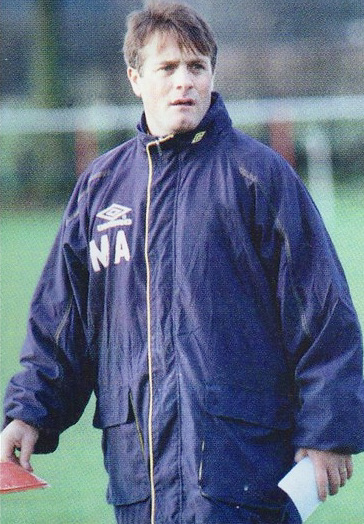
Saunders scored twice in Liverpool’s successful FA Cup campaign, which culminated in them lifting the trophy at Wembley after beating Sunderland.

Although he scored twice in seven games at the start of his second season at Anfield, a cashflow issue meant Souness was forced to sell him to raise funds to dip into the transfer market.

Saunders explained: “Graeme called me in one day and told me he needed a centre-half [Torben Piechnik], and that he could raise the money by selling me to Aston Villa.

“I couldn’t believe he was prepared to let me go, but he said he didn’t think my partnership with Ian Rush had worked out, and Rushy wouldn’t be the one going anywhere. That was it.” 

Saunders had scored 25 goals in 61 appearances for Liverpool, the last coming in a 2-1 home win over Chelsea (Jamie Redknapp scoring the other Liverpool goal) on 5 September 1992.

The Welshman had the last laugh, though, because only nine days after his departure from Liverpool he scored twice in Villa’s 4-2 victory over the Reds.

“Obviously I had a big incentive to do well today and I’m thrilled to have scored,” said Saunders. “Both my goals went through the goalkeeper’s legs.”

Signed by Ron Atkinson, Saunders spent three seasons at Villa, initially developing a formidable strike partnership with Dalian Atkinson, and then pairing up with Dwight Yorke. Saunders’ brace in the 1994 League Cup final helped beat Manchester United 3-1.

Villa history site lerwill-life.org.uk remembers him as “a spring-heeled attacker and very popular with the supporters” and adds: “Not big in size, he was very speedy and scored some spectacular goals including a 35-yard spectacular against Ipswich.”

His time at Villa Park came to an end when Brian Little took over as manager, and Saunders was reunited with his old Liverpool boss Souness in Turkey. A £2.35million fee took him to Galatasaray for the 1995-96 season and he netted 15 goals in 27 Turkish League matches.

Next stop for Saunders was back in the UK at Nottingham Forest, but the 1996-97 was an unhappy one as the manager who signed him, Frank Clark, was sacked in December after a bad run of defeats and Forest’s slide towards relegation continued under Stuart Pearce and Dave Bassett.

By the time Forest had bounced straight back up, Saunders had left the club, moving in December 1997 to second-tier Sheffield United for a year under Nigel Spackman and caretaker managers Russell Slade and Steve Thompson. United made the play-offs but lost out to Sunderland in the semi-finals. In December 1998, Saunders moved abroad again to link up with Souness a third time, at Benfica in Portugal.

The following summer, he returned to England and joined Bradford City, where his former Brighton teammate Chris Hutchings was assistant manager, then briefly manager. Saunders was a regular in his first season at Valley Parade, when the Bantams managed to narrowly avoid relegation from the Premier League, but he played only a handful of games in 2000-01, when they were relegated. Saunders retired as a player shortly before his 37th birthday and became a coach at Bradford before linking up with Souness again, this time as a coach.

He joined him at Blackburn Rovers and then Newcastle United, but when Newcastle sacked Souness early in 2006, Saunders lost his job as well.

In the following year he began taking the Certificate in Football Management course run by the University of Warwick; and this led to him being granted his UEFA Pro Licence coaching badge, a qualification that allowed him to be appointed as assistant to John Toshack with the Welsh national team. 

In October 2008, Saunders replaced Brian Little as manager of Wrexham, newly relegated to the Conference. He eventually managed to steer the north Wales outfit into the play-offs in the 2010-11 season, but they were knocked out by Luton Town and, in September 2011, Saunders was appointed manager of then Championship club Doncaster Rovers.

Unfortunately, he couldn’t save Rovers from relegation and they went back down to League One with only 36 points from their 46 League fixtures.

Having guided Rovers to second place in League One, Saunders was appointed manager of Wolverhampton Wanderers in January 2013, but he couldn’t prevent them being relegated from the Championship and he was sacked three days after relegation was confirmed courtesy of a 2-0 defeat at the hands of Gus Poyet’s Albion.

Saunders told the media after the game: “We have to get some players in who think like I’m thinking, who want to win, fresh minds, no damage done to them, no confidence issues, no ‘been here too long’ issues, no ‘I don’t know if the manager likes me’ issues. Once I get my own team on the pitch, imagine what the supporters will be like.”

Saunders, with only five wins from his 20 games in charge, didn’t get that chance and rather ruefully said of his opponents that day: “A few years ago they were bankrupt and without a stadium, but they’ve shown what is possible and, with the momentum, they have could well get into the Premier League.”

Just after Christmas 2014, Saunders was named as the interim manager of Crawley Town after the previous incumbent John Gregory stood down for health reasons.

Saunders then became manager of League One side Chesterfield on 13 May 2015 but his stay there lasted only five months.

In June 2016, Saunders was part of the BBC pundit team for their coverage of the Welsh national team’s games at Euro 2016 and made the headlines during the tournament when it was revealed that he had incurred parking charges of over £1,000 from Birmingham Airport’s short stay car park as he wasn’t expecting Wales to progress as far as they did. The charge was eventually waived by the airport who asked him to make a donation to charity instead.

His subsequent involvement in football has been as a pundit on BT Sport’s Saturday afternoon Score programme as well as on the radio with talkSPORT. He hit the headlines in 2019 when he was jailed for failing to comply with a roadside breath test but the initial punishment was quashed and changed to a suspended sentence. Via the League Managers’ Association, Saunders issued a statement in which he said: “I made a terrible error of judgment for which I have been rightly punished, and I wholeheartedly regret that it happened.”

Pictures from the Albion matchday programme and various online sources.

Pass ‘master’ Steven Thomson’s unhappy year with Brighton

STEVEN THOMSON didn’t enjoy his year playing for Brighton in League One and the former Crystal Palace midfielder seized an escape route to return to Scotland to see out the remainder of his long professional career.

It had been considered quite a coup when Dean Wilkins secured the signing of the Falkirk captain in January 2008. In effect a replacement for the departing Dean Hammond, Thomson was soon a victim of Wilkins’ tinkering with the formation, and over his 41 matches for the Seagulls had a conveyor belt of midfield partners, not to mention a change in manager, as Wilkins’ replacement, Micky Adams, introduced a different style – in vain – to try to galvanise the side during his second spell as boss.

Although Thomson had signed a two-and-a-half-year contract with the Seagulls, in January 2009 the disillusioned Scot headed back north of the border.

“I didn’t enjoy it there at all and was keen to try and get myself back up the road,” he admitted in an interview with the Daily Record in 2018.

Having wound down his full-time career at St Mirren, after 18 seasons as a professional, and having moved to London to begin a business career, Thomson linked up with his former Albion teammate Nicky Forster to spend a season as a part-time player with Dover Athletic, where the former Seagulls striker was manager at the time.

In an in-depth interview for the Dover Athletic website, Thomson gave a great insight into his career, revealing the lengths he went to to get a break into the professional game.

Born in Glasgow on 23 January 1978, he explained: “After playing for a local boys club I was invited to go and train with a few clubs, so, at the age of 10, I found myself training with Rangers on a Monday, Celtic on a Tuesday, Hearts on a Wednesday and Hibs on a Thursday.”

When he reached 14, he was advised to choose one club over the others and opted for Rangers. Daunted by the high numbers of youngsters all trying for the same opportunity, aged just 16 he took the bold move to head to Croydon and signed on as an apprentice with Palace.

He progressed from the youth team to be offered a pro contract at 17, worked his way through the reserves and then got some calls up to the first team subs bench when they were still in the Premier League. He also played for Scotland’s under-18 side between 1995 and 1997.

During his brief return as manager, Terry Venables gave Thomson his debut aged 19 in the 1998-99 season. Thomson wasn’t renowned for goalscoring, but Palace fans do remember a particularly sweet strike he succeeded with in a 3-0 Worthington Cup win at Leicester City in November 2000.

Leicester’s back-up goalkeeper Simon Royce, who would later join Albion on loan, was beaten from 35 yards by Thomson’s spectacular shot.

The midfielder’s 121 games spanned the spells of five managers – Venables, Steve Bruce, Trevor Francis, Steve Coppell and Dave Bassett – before he left the club at the end of the 2002-03 season. It would be fair to say he divided opinion among Eagles supporters.

On fans forum cpfc.org, ‘Hairybear’ said: “Thomson was a warrior. Very little ability but did a good job when called upon under Bruce and co. He would never let you down.”

But ‘Baron Greenback’ said: “As well as THAT goal against Leicester, he also scored great goals at home to Sunderland in the FA Cup and Wolves.”

It was the ebullient Barry Fry who took Thomson to Peterborough United, (above) where he played 75 games in two seasons before moving back to Scotland to play for Falkirk in the Scottish Premier League.

When Brighton signed him, his former Falkirk teammate and one-time Albion loanee, Graham Barrett, told the Argus what Seagulls supporters could expect.

“They are getting a fantastic professional and a really good player,” said Barrett. “We have been going really well and he has been a massive part of that.

“He is a box-to-box player, he is comfortable on the ball and he has got a bit of everything.

“He is not particularly big (5ft 8in) but he is also very good in the air for his height.”

Barrett reckoned he would be “a massive influence” if he could continue the form he’d shown in Scotland. “He is great in the dressing room as well, a real leader,” said Barrett.

Thomson made his Albion debut in a 1-1 draw at home to Huddersfield on 19 January, starting at the base of a midfield diamond with Paul Reid and David Martot out wide and Dean Cox at the top of it.

Brian Owen, of the Argus, described him as “a neat and tidy passer who only gave the ball away when trying something ambitious”.

Within a couple of months, the Argus was reporting: “It has not been easy for Thomson since his January move back to England from Falkirk.

“He has had to adjust to playing with a number of different partners and now Adam El-Abd is a long-term casualty with the medial knee ligament injury he suffered at Huddersfield.”

Although mostly recognised as a centre back, El-Abd had been one of the options tried in midfield. Thomson admitted to the newspaper: “I know I can perform better. There is more to come. I am adjusting to playing so many games. In Scotland you just play Saturday to Saturday.

“It has been a big move for my family as well. My wife (originally from London) is a lot closer to her parents now and she has got a lot of family around, which helps with our young son.”

In rather a similar vein to the Palace faithful, Brighton fans were also divided as to Thomson’s merits. ‘The Complete Badger’ declared on North Stand Chat: “The only midfielder of any class we’ve got. A real touch of quality about everything he does in my opinion. Much better than Hammond, and much better than anyone else we’ve got.”

But ‘Napper’ reckoned: “Thomson just seems to have nothing about him, not quick, no killer passes. Just seems to either waste possession or go backwards. I’ve really given him more than enough time, but facts are he just isn’t very good. I’ve been watching him closely for many games now.”

In his end-of-season summary, Andy Naylor, Albion reporter for the Argus in 2008, reckoned Hammond had been a hard act to follow, and commented: “Thomson looks a tidy player who will benefit from playing as a central midfielder in a 4-4-2, not the dreaded diamond.”

After Wilkins was shown the door, new boss Adams recognised Thomson’s leadership qualities, making him vice-captain to skipper Nicky Forster, as well as saying he was going to play him in a role further forward than he had been previously.

“I enjoyed the responsibility at Falkirk and I will be willing to help Nicky as much as I can,” Thomson told the Argus. “The manager has stressed that he wants me to try and push forward a lot more, rather than just sitting in front of the back four, and I am quite happy with that.

“I look after myself off the park, so I’m quite fit. Maybe he thinks I have got the engine to get up and down!”

However, problems mounted for Adams when Forster was ruled out by injury and, as in the previous season, Thomson found himself alongside different midfield partners, including, at one time, the flamboyant Robbie Savage, trying to recover some fitness on loan from Derby.

As the year drew to a close, it became public knowledge that Thomson was unsettled and itching to go back to Scotland, so a deal was lined up for him to join St Mirren as soon as the January transfer window opened.

He joined them on the day they played their final game at Love Street ahead of their move to Greenhill Road, and he went on to make more than 100 appearances for the Buddies.

Their fans’ abiding memory of his time there centre on a surprise 4-0 win over Celtic on 24 March 2010, when Thomson scored twice. The result so shocked the Parkhead bosses that they sacked Hoops boss Tony Mowbray.

On joining Dover in May 2012, Thomson told the club’s website: “I made the decision last year that this would be my final season as a full-time player. I have been studying for four or five years and I’m now fully qualified and have secured a job in London.

“My wife Bryony is from London anyway and she wanted to move closer to her family. I’ve been a footballer for 18 years and now it’s time to enter the real world.”

Thomson now works as a financial advisor, with a stylish looking profile on LinkedIn.

It was chirpy Chiv of the Cherries after six years with the Seagulls

THESE DAYS Gary Chivers is a familiar face around the hospitality lounges at Brighton’s Amex Stadium and Chelsea’s Stamford Bridge, the two clubs where he spent most of his playing days.

His association with Chelsea goes back to the tender age of 10, when he joined their academy, and he went on to play in their first team for five years. After six years with Brighton, he played out the final two years of his 16-year career at AFC Bournemouth under fledgling boss Tony Pulis. Among his teammates were Mark Morris, Warren Aspinall, Paul Wood and Steve Cotterill, all of whom also played for the Seagulls.

Born in Stockwell, London, on 15 May 1960, Chivers started supporting Chelsea at the age of eight, and, like many future professionals, got a foothold in the game at Stepney-based development club Senrab.

He told journalist Nick Szczepanik in a 2018 Backpass magazine article (below): “My brother had been training with Chelsea and my dad took me along when I was ten, and I went into their academy about two years before I should have.”

Chiv in BackpassAlthough initially a midfielder, coach Ken Shellito turned him into a defender and Chivers’ versatility in defence meant he could play centrally or in either full-back berth. Among his early contemporaries were John Bumstead, Colin Pates and Micky Fillery: Pates would later join him at Brighton.

With Chelsea already relegated, Chivers made his first team debut on 21 April 1979, aged 18, as he recounted in a December 2017 interview on the Chelsea website. Irish legend Danny Blanchflower was the manager who handed him his debut, at Stamford Bridge against Middlesbrough, which finished in a 2-1 win in front of just 12,007.

Chivers did enough to keep his place for the last four games of the season, and he told Szczepanik how in one he had to mark Arsenal’s Malcolm Macdonald and another Manchester United’s Joe Jordan.

In the second tier the following season, an injury to first choice right-back Gary Locke gave Chivers a chance to establish himself under new manager Geoff Hurst, and he retained the shirt for much of the season.

In total he made 148 appearances for Chelsea, scoring four goals, one of which was voted runner-up in Match of the Day’s Goal of the Season competition in 1980-81.

He got on the end of a Clive Walker cross following a delightful flowing move as top-of-the-table Newcastle were beaten 6-0 by second-placed Chelsea.

Chivers deputised at left-back for the injured Chris Hutchings towards the end of the 1982-83 season, by which time John Neal had taken over as manager. Chelsea were at a low ebb and only a point from a goalless draw against Middlesbrough on 14 May 1983 saved from them from relegation to the old Third Division. Neal overhauled the playing staff, and Chivers was amongst the casualities.

Explaining how he didn’t see eye to eye with Neal, he added: “I didn’t want to go, but you have to play games.”

He briefly switched to relegated Swansea City, under John Toshack, but only stayed six months as managers came and went in rapid succession. Seeking a move back to London, he joined QPR under Terry Venables – “the best manager I ever played for” – where he played alongside John Byrne, another player he’d be reunited with at the Albion.

At the end of his contract, he moved on to Watford during the uncomfortable spell when former Wimbledon boss Dave Bassett was in charge, but he got the feeling he didn’t fit in. Brighton boss Barry Lloyd, himself a former Chelsea player, agreed a £40,000 fee with the Hornets as Chivers dropped down a division to third-tier Albion, where he linked up with some familiar ex-Chelsea faces in Doug Rougvie, Robert Isaac and Keith Dublin.

He explained to Szczepanik: “I decided to go to Brighton because I had a look at their fixtures and I even asked for a promotion bonus because I was so confident they would go up.”

The confidence was well-placed because promotion was duly gained, and Chivers went on to become part of the furniture for the next six years, including playing in the play-off final at Wembley in 1990-91.

An incident that led to a Notts County goal still rankles with Chivers. “At 0-0, I played the ball off Tommy Johnson for a goal kick and David Elleray, the referee, gave a corner that they scored from. I saw him a few years ago and went over to set the facts straight. He said: ‘You’re not still going on about that from 20 years ago?’ and I said: ‘Too right I am!’ I walked away from him because it was winding me up, but it was because of how much it would have meant to the club.

“We would have gone on from there if we had got into the First Division but instead we ended up having to sell Mike Small and Budgie (John Byrne) and we went down at the end of the next season.”

Albion played a  benefit match for Chivers against Crystal Palace just before the start of the 1992-93 season and Chivers left the club in 1993, not because he wanted to, but because players on “decent money” had to go.

His enthusiasm for the club continues to this day, bantering with supporters in corporate hospitality and the Albion club website carried an article about the former defender’s divided loyalties when the Albion entertained Chelsea on New Year’s Day.


  • Pictures mainly from the club programme.

City cult hero Paul Dickov never forgot his Seagulls goals

A POCKET dynamo of a striker who became a Manchester City cult hero never forgot the goalscoring platform a short spell with Brighton provided him.

Paul Dickov is fondly remembered by the City faithful, particularly for his equalising goal (above) in the fifth minute of added on time in the League Two play-off final at Wembley in 1999 (City famously went on to win the penalty shoot-out in which Guy Butters missed a vital spot-kick for Gillingham).

The diminutive Dickov had wowed Brighton fans during the dark days of the 1993-94 season when Barry Lloyd’s replacement as manager, legendary Liam Brady, had secured the striker’s services on loan from his old club Arsenal.

Dickov had managed to break through to the Arsenal first team under George Graham in the latter stages of the 1992-93 season.  But his chances were limited by the manager’s preference for the more experienced Ian Wright and Kevin Campbell.Dickov south stand

Earlier in the 1993-94 season, the young forward left Highbury for a 15-game spell with League One Luton Town, but only managed one goal.

His goalscoring fortunes changed when Brady persuaded his former employers to let Dickov join the struggling Seagulls, who, at the time, were fighting to avoid relegation from League Two.

Dickov Sandtex

The tenacious Dickov relished the opportunity and scored on his debut in a 2-0 home win over Plymouth Argyle on 30 March 1994. It was the first of five goals in eight games to help Brighton avoid the drop. (Pictured below, Dickov scores from close range against Fulham).

“I had a great time there. I loved every minute of it, and it has stuck with me,” Dickov told the Argus some years later. “I’ve always looked out for Brighton since then and I want them to do well.”

Born in Livingston, Scotland, on 1 November 1972, Dickov came to the attention of the Gunners while playing for Scotland at the 1989 FIFA Under-16 World Championship.

Having shown his goalscoring potential in Arsenal’s reserve side, Dickov got his first team opportunity when Graham rested players ahead of the FA Cup Final (in which they beat Sheffield Wednesday after a replay).

Dickov made his Arsenal debut against Southampton on 20 March 1993, and he went on to score against Crystal Palace and Tottenham Hotspur at the end of the season.

Over the following three seasons, although on the fringes of the first team, he was competing against the likes of Dennis Bergkamp, Wright and John Hartson and he was restricted to just 17 appearances in which he scored once.

Despite the disappointment of not quite making it at Arsenal, he is still fondly remembered there, with their history recording: “He never gave anything less than his all in an Arsenal shirt and, despite question marks over his height, Dickov compensated for his 5’5” frame with heart and endeavour.

“He was quick, skilful and scurried around up front causing problems for defenders.”

On 23 August 1996, City paid £1m to take him to Maine Road.

Over six seasons with the club, he was involved in two promotions and two relegations, which saw him play in three different divisions.

For all their success in more recent times, that memorable play-off at Wembley in 1999 was still being talked about 20 years later.

In 2000, Dickov won his first full international cap for Scotland and he earned 10 caps between then and 2004.

By then, he had moved on from City to try to keep Dave Bassett’s Leicester City in the top division. He joined the Foxes in February 2002, and, although he scored four goals as Leicester valiantly tried to maintain their Premiership status, they were not enough to prevent them being relegated to the Championship.

When former Albion boss Micky Adams took over the following season, Dickov thrived up front, netting a career-high 20 goals as Leicester won an instant return to the top-flight, finishing second behind champions Portsmouth.

Dickov scored 13 goals in the Premier League the following season but once again the Foxes were relegated. Even so, Dickov almost had a dream final game of the season against the team who had first give him his chance in the English game.

Arsenal were unbeaten throughout the season going into the Highbury finale but Dickov gave Leicester a shock headed lead before Thierry Henry and Patrick Vieira turned the game back in the Gunners’ favour to earn them the ‘Invincibles’ crown for their achievement.

That season at Leicester was also blighted by a shocking series of events during a training camp in La Manga, Spain, when Dickov and teammates Keith Gillespie and Frank Sinclair were falsely accused of sexual assault.

PD BlackburnAt the season’s end, Dickov took up an option on his contract which allowed him to leave for a top-flight club and Graeme Souness signed him for Blackburn Rovers. It was not long before Mark Hughes took over and Dickov scored 10 goals in 35 games. Craig Bellamy was Rovers’ main man up front the following season and Dickov’s Premier League appearances were confined to 17 games plus four as a sub.
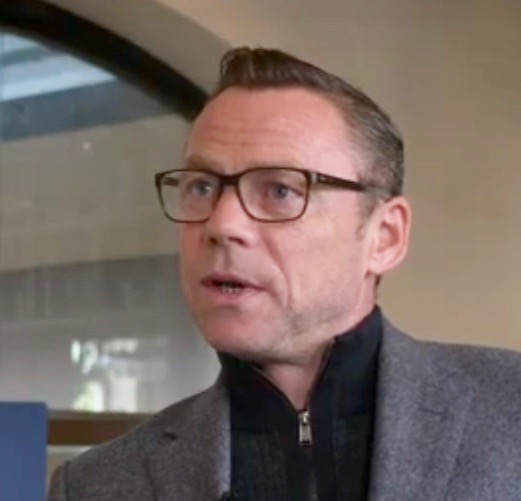
With his contract at an end, he rejoined Manchester City for the 2006-07 season but his time there was dogged by a series of injuries and he ended up having loan spells at Crystal Palace and Blackpool before returning to Leicester in 2008.

During that spell, when City were in League One, he was mainly back-up to Matty Fryatt and Steve Howard, but managed a further 20 appearances and scored two goals to help the club to promotion back to the Championship.

Eventually, he ended up going out on loan, this time to Derby County to help them out in an injury crisis. His Leicester contract was terminated in February 2010 and he took up a short-term deal to the end of the season with League One Leeds United, who ended the season earning promotion to the Championship.

Dickov’s next move, though, was into management. He initially joined Oldham Athletic as player-manager, before packing up playing in May 2011.

In Dickov’s first game as manager, a young Dale Stephens scored both goals as the Latics beat Tranmere Rovers 2-1. The highlight of his tenure at Oldham was leading the Latics to a shock 3-2 win over Liverpool in the FA Cup fourth round in January 2013, but he resigned a few weeks later because of the side’s poor league form.

Three months later, he took over at Doncaster Rovers, with former Albion captain and manager Brian Horton as his assistant.

Since leaving Rovers in September 2015, Dickov has been on the football speakers circuit and is also a frequent eloquent contributor as a pundit.

pundit Dickov2019