Knock-out stories of Mark ‘The Fizz’ Leather

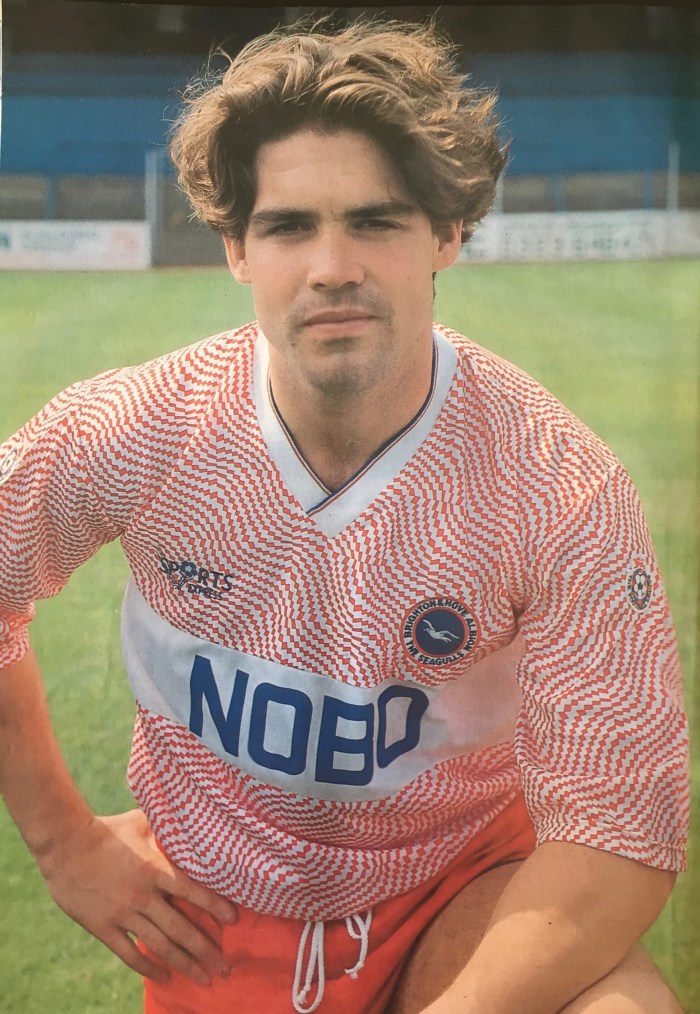
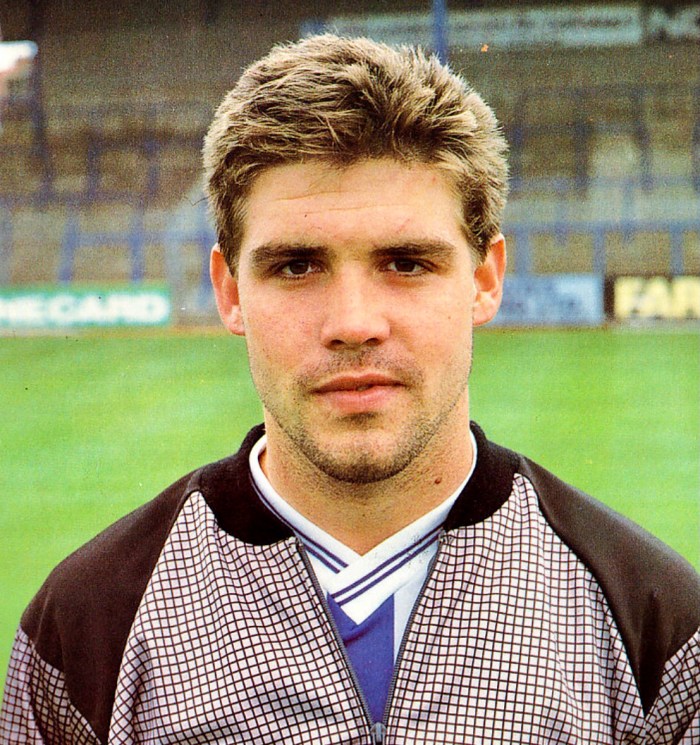
MARK LEATHER spent six years as the first team physiotherapist at Anfield having previously been Brighton’s physio in the early days of Barry Lloyd’s reign as manager.

Leather tended the injured when Albion were promoted from the old Third Division in 1987-88 and half of the 1988-89 tier two campaign before moving back to his native north west.

Roy Evans added Leather’s specialist knowledge to the backroom team at Anfield in 1994 but the physio was controversially sacked by his successor Gerard Houllier following a row over the then teenage striker Michael Owen’s fitness.

A sign of the way Leather expected to work with managers came in an interview for Albion’s matchday programme. “Barry Lloyd will respect the decision if I say a player needs more time to get back to fitness,” he told interviewer Dave Beckett. “From that point of view, he is sadly in the minority.

“If it was different, I wouldn’t hang around, but it still amazes me that some clubs don’t realise that if we all stick to what we know things will run more smoothly.”

Leather, who’d spent three years studying for a diploma, and gained experience in the National Health Service, added: “We’re getting away from the old ‘bucket-and-sponge’ image.”

Ahead of his arrival at the Goldstone, Leather had combined his studies with helping out Exeter City, Leek Town, Port Vale and Sheffield Wednesday. And during the Commonwealth Games in Edinburgh in 1986, Leather provided specialist medical support for the weightlifters and wrestlers.

He revealed a funny story against himself in a matchday programme article. Asked to reveal his ‘most embarrassing moment’ he said: “During the Port Vale and Scunthorpe match in 1985, when Port Vale scored, I jumped up out of the bench hitting my head on the dugout roof and needed smelling salts and a cold sponge.”

Perhaps predictably nicknamed ‘The Fizz’, Leather sought to give an insight to his role in his matchday programme interview. “I try to be friends with all of the lads and the management too, but sometimes you really do have to sit on the fence,” he said.

“There’s pressure sometimes from both sides to say a player’s ready to return, but you have to stand back from the situation and give a professional opinion.”

The Albion gave him a regular slot in the matchday programme which he used to give readers updates on the progress of injured players, and in recent times he has become a regular source for the media seeking expert comments on football injuries.

Leather now has his own physiotherapy business and back in the day at Brighton he and his physiotherapist wife Lucy ran a sports injury clinic for the general public two evenings a week.

Born in Bolton on 24 June 1961, Leather left the Seagulls halfway through the 1988-89 season to return to more a familiar part of the country and took a job in the NHS in Chorley, Lancashire.

Leather had been an ardent Bolton Wanderers fan from an early age and his all-time favourite player was Frank Worthington, who had played for the Seagulls during the 1984-85 season.

When Evans stepped up to take charge of Liverpool, Leather was one of his first appointments (along with goalkeeping coach Joe Corrigan, whose playing career had ended with the Seagulls).

Leather and Corrigan together in Liverpool backroom team

An insight into Evans’ decision-making was given in the book Men In White Suits, by Simon Hughes. “With Mark Leather’s arrival, there was an end to the running repair jobs carried out by a succession of unqualified coaches mid game,” he wrote.

“Regularly injured players had long been treated with suspicion at Liverpool. (Bill) Shankly maintained his side were the fittest in the league, with pre-season geared towards building stamina and therefore preventing muscle tears.

“It was a difficult theory to argue against. Liverpool won the 1965-66 title using just 14 players all season. Anyone who suffered an injury was almost bullied into feeling better. ‘Otherwise you really were persona non grata,’ Alan Hansen said.

“Leather’s recruitment meant that (Ronnie) Moran could focus on drilling the first team in the Liverpool way rather than writing what Evans describes as ‘little scribbles’ on an old ledger, charting training patterns.”

Endorsements to Leather’s attributes appear on his website from the likes of Robbie Fowler and Jamie Redknapp, who is quoted as saying: “Mark Leather has been brilliant with me. He has kept me going and it’s because of him really that I’m back to full fitness as soon as I am.”

In 1999 media reports said Houllier was facing “a furious players’ backlash after his escalating row with Liverpool physio Mark Leather took a dramatic twist”.

Leather was left in the UK when Liverpool went to Oslo for pre-season games, a move which was said to be causing disquiet in the dressing room.

Leather clashed with Houllier over the condition of injured Michael Owen

“Leather is one of the game’s top physios and he was publicly praised by Robbie Fowler after helping the striker make a miraculous recovery from a cruciate knee ligament injury last season,” said one report in the Scottish Daily Record. “Other stars, including Michael Owen and skipper Jamie Redknapp, are known to have a close bond with the medic.”

Houllier was angry at the length of time it was taking for Owen to return to full training after a hamstring injury and sent him to a specialist in Germany for a course of treatment.

In 2013, when Owen’s many injuries finally forced him to his retire from the game, he recalled bad decisions in the past that ultimately affected his career.

“I was compromised because I played too much too soon as a youngster at Liverpool. In my opinion, had I been managed differently I would have been at my best for longer as opposed to being a better player,” he said in The Mirror.

“I basically run on two hamstrings on my right leg and three on the other. I lost a third of the power.

“If I hadn’t, 90 per cent of the other injuries wouldn’t have happened and I would have been the all-time leading scorer for England.”

The Mirror article continued: “If there was a defining moment in his career, then it was a snapped hamstring when his then-manager Houllier ignored the advice of his physio and insisted Owen be brought back from injury quickly because he needed his goal threat so desperately.

“The French coach fell out so badly with the physio, Mark Leather, he forced him out, but Houllier later admitted to the mistake, which Owen believes led to the moment that changed his career – on a cold March evening at Elland Road, Leeds, in 1999. ‘My hamstring snapped in two and it was at that point that my ability to perform unimpeded was finished,’ said Owen.

Leather wasn’t finished with football, however, and he moved to his beloved Bolton Wanderers as Sam Allardyce’s physio for a year, before joining former Trotter Peter Reid at the Stadium of Light.

“From a personal point of view, I’ve had the privilege of working with two guys I used to support from the terraces at Burnden,” Leather told the Bolton News ahead of a match between Bolton and the Black Cats in September 2001. “There’s only one team I’ve ever supported and leaving them last year was purely a professional decision,” he said. “Financially and from a facility point of view, it was the right move for me, but I’ll never stop supporting the Wanderers.”

Leather spent four years (2000-2004) as the head physio at Sunderland straddling the managerial reigns of Reid, Howard Wilkinson and Mick McCarthy.

It certainly wasn’t all plain sailing for Leather on Wearside, as the Republic of Ireland winger Kevin Kilbane, now a TV pundit on the BBC, mentioned in his autobiography (Killa: The Autobiography of Kevin Kilbane; Aurum Press Ltd, 2014).

The player was determined to play for his country but the physio obviously didn’t feel he should because he was still trying to recover from an ankle injury.

Leather had already put him through some tough routines to test the strength of his ankle and when they were then on opposing sides in a two-a-side hockey match, Leather caught Kilbane on the tender joint with his hockey stick.

“After a few times and much pain, I finally snapped, and I gave him a left hook and decked him, leaving him with a fat lip and a very surprised look on his face,” Kilbane admitted.

Although he told the assistant manager Bobby Saxton what had happened, nothing more was done about it. Kilbane said: “I later apologised to Mark Leather but was disappointed he didn’t reciprocate. Things were never right between us after that, although we didn’t let it interfere with our professional relationship.”

After Sunderland, Leather switched sports and took on a similar position with Wigan Warriors rugby league side before moving into the world of academia. He spent seven years at Edge Hill University as a senior lecturer in sports therapy and programme leader for the Football Rehabilitation MSc course.

In October 2006,Leather joined Chester City as club physio, with City chairman Stephen Vaughan declaring: “He is a fully qualified physio and has a wealth of experience at Premier League level, so it’s something of a coup to bring him to the Deva Stadium.”

In 2013, he returned to Bolton, spending three years as Head of Sports Performance.

He had also set up his own physiotherapy business in 2008 and, since 2016, has been a senior lecturer and course leader for the Football Science and Rehabilitation MSc course at the University of Central Lancashire.

• Pictures from the Albion matchday programme and various online sources.
Isaac’s long, long wait for an Albion win

IT seems extraordinary to think Robert Isaac had to wait FOURTEEN MONTHS to experience a win as a Brighton player after joining the club from Chelsea.

The young defender who had realised every schoolboy’s dream by playing for the team he’d always supported left a disgruntled dressing room at Stamford Bridge only to join a side sliding inexorably toward the relegation trapdoor of what is now the Championship.

“I must admit it was a bit depressing at first because we just couldn’t do anything right,” Isaac told Dave Beckett in an Albion matchday programme article. “We just had no luck at all; if we had I think we might well have survived in Division Two.”

Isaac also appears to have gone out of the frying pan into the fire. Telling thegoldstonewrap.com how he’d left Chelsea because the management was losing support of the players and he wanted regular first team football, he added: “When I joined Brighton in February 1987 they were in freefall. The dressing room was even more at odds with the manager than at Chelsea.

Barry Lloyd dropped Dean Saunders, our only hope of surviving the drop. I found Barry rather rude. He’d blank me in the corridor and make me train on my own.”

The young defender made his Seagulls debut on 21 February 1987 in a 2-1 defeat at home to Oldham Athletic and featured in four draws and five defeats by the season’s dismal end.

Back at what was for so long Albion’s normal level of third tier football, Lloyd’s side did begin to pick up points – but Isaac wasn’t involved because of a groin strain and a troublesome hernia injury that sidelined him for months.

“I had stomach trouble quite a lot but no-one could put their finger on the problem until I saw a specialist in Harley Street,” he explained.

“After the operation, I was out of action for the best part of six months and at times I didn’t think I would get back to full fitness. I had around 40 internal stitches and even when I began playing again they would stretch and pull and I felt sick after games.”

It wasn’t until March 1988, with Albion in sixth spot, that Lloyd shook things up, initially drafting Isaac in at right-back in place of Kevan Brown, and then selecting him to replace suspended captain – and Isaac’s former Chelsea teammate – Doug Rougvie at centre back alongside Steve Gatting.

Isaac also stepped in when Rougvie missed a couple of games with a ‘flu virus and, although a win in Seagulls’ colours continued to elude him in his first three games back in the side (a defeat and two draws), he kept the no.5 shirt ahead of the rugged Scot. That elusive win finally came in a 2-1 away win at Notts County on 4 April.

Five wins and a draw followed and the successful run-in saw promotion gained as divisional runners-up behind Sunderland. Isaac was one of three former Chelsea players in that back four, with Gary Chivers (who’d arrived from Watford) at right-back and Keith Dublin at left-back.

Dublin had played for England under 19s with Isaac three years earlier. They both played four games in Dave Sexton’s side at the Toulon Tournament in the south of France in 1985 (England beat Cameroon 1-0 and Mexico 2-0, lost 2-0 to the USSR and succumbed 3-1 to France in the final at the Stade Mayol in Toulon).

Sadly, the subsequent fortunes of the two players went in opposite directions: Dublin went on to become such a success with the Seagulls that he was the 1989-90 Player of the Year and was sold to Watford for £275,000; the injury-beset Isaac had to quit the game after only 33 matches in a Brighton shirt.

After Albion bounced back to the second tier, the defender played in the first 11 matches of the 1988-89 season – eight of which were defeats – but his appearance in a 1-0 defeat away to Leicester turned out to be his last as an Albion player.

“I got injured at Leicester,” he recalled. “I didn’t feel it until the next day and then it really hit me. My knee just blew up. Come Monday morning I couldn’t even walk.”

He required an operation to repair the patella tendon in his left knee and, as he sought to regain fitness, spent a fortnight at the National Rehabilitation Centre at Lilleshall.

Meanwhile, Lloyd signed experienced central defender Larry May (whose own playing career would be ended by injury later that season) and, subsequently, Nicky Bissett.

A programme item in the 1989-90 season reminded supporters that Isaac was still around, although he hadn’t played at all throughout 1989.

Looking ahead to 1990, Isaac said: “I just hope I have a better year. I’d like to think that I deserve it after all the frustrations of the last few years with two major operations.”

Sadly, it didn’t happen and in August 1990, he was forced to quit football. After retiring, he worked as a chauffeur for the Maktoums, the ruling family in Dubai, before running his own vehicle business.

Born in Hackney on 30 November 1965, Isaac was Chelsea through and through from an early age.

“We lived in Chelsea and my great grandfather went to the first ever match at Stamford Bridge,” he told thegoldstonewrap.com. “My family have been going to matches home and away since. I went to see Chelsea play Stoke in the (1972) League Cup Final aged six.”

Isaac went on to join the club as a junior, made his reserve team debut at the tender age of 15 and was named Chelsea’s young player of the year in 1984.

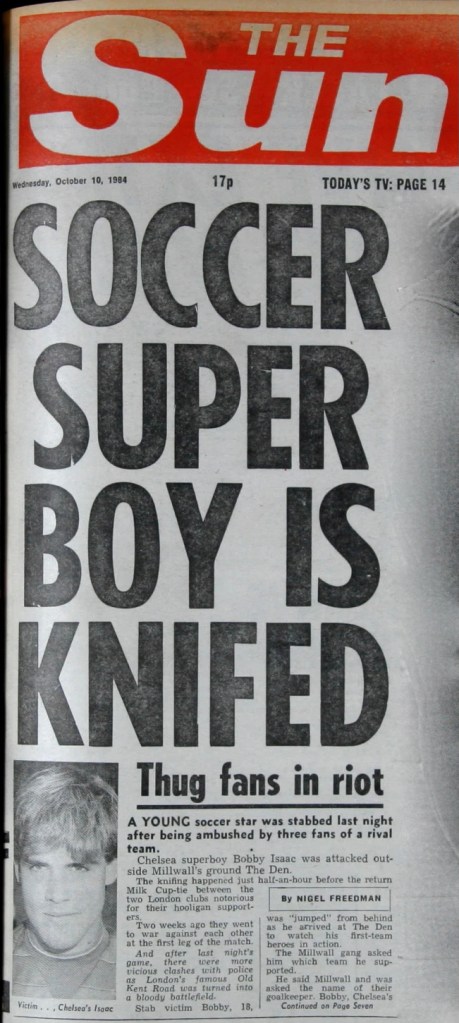
It was on 9 October 1984 that his promising career could have been snuffed out before it had even begun: it’s a horrifying tale, told the following day on the front page of The Sun, and covered in detail by that1980sportsblog.

Three knife-wielding Millwall thugs slashed his back from his shoulder to the base of his spine in a dark alley near the south London club’s notorious old stadium, The Den.

Isaac needed 55 stitches to repair the damage and only the thickness of a leather coat he was wearing prevented the wound being potentially life-threatening.

Remarkably, later the same season, in March, he had recovered well enough to make his Chelsea first team debut in a 3-1 win at Watford, although Eddie Niedzwiecki, a Chelsea coach who later worked with Mark Hughes for Wales and at several clubs, told Kelvin Barker’s Celery! Representing Chelsea in the 1980s: “He was a young, up-and-coming apprentice at the time and luckily he managed to pull through, although he never really recovered from it.”

In the 1985-86 season, Isaac played two league cup games for Chelsea and three times in the league. The following season saw him get a mini-run in the side, playing four consecutive league games in November, but his fifth match – a 4-0 home defeat by Wimbledon in which Rougvie was sent off in the first 10 minutes for headbutting John Fashanu – proved to be his last.

The website sporting-heroes.net said of him: “A steady, reliable centre-half and occasional full-back, Robert did little wrong during his time in the Chelsea first-team, but was unfortunate to play for the club at a time when Colin Pates, Joe McLaughlin and, a little later, Steve Wicks, were all demonstrating their considerable talents at the heart of the defence.”

Isaac asked for a transfer after a disagreement with manager John Hollins and his assistant Ernie Walley, and that led to his transfer to Brighton for a £50,000 fee.

‘Talent in his boots and balance sheets in his briefcase’

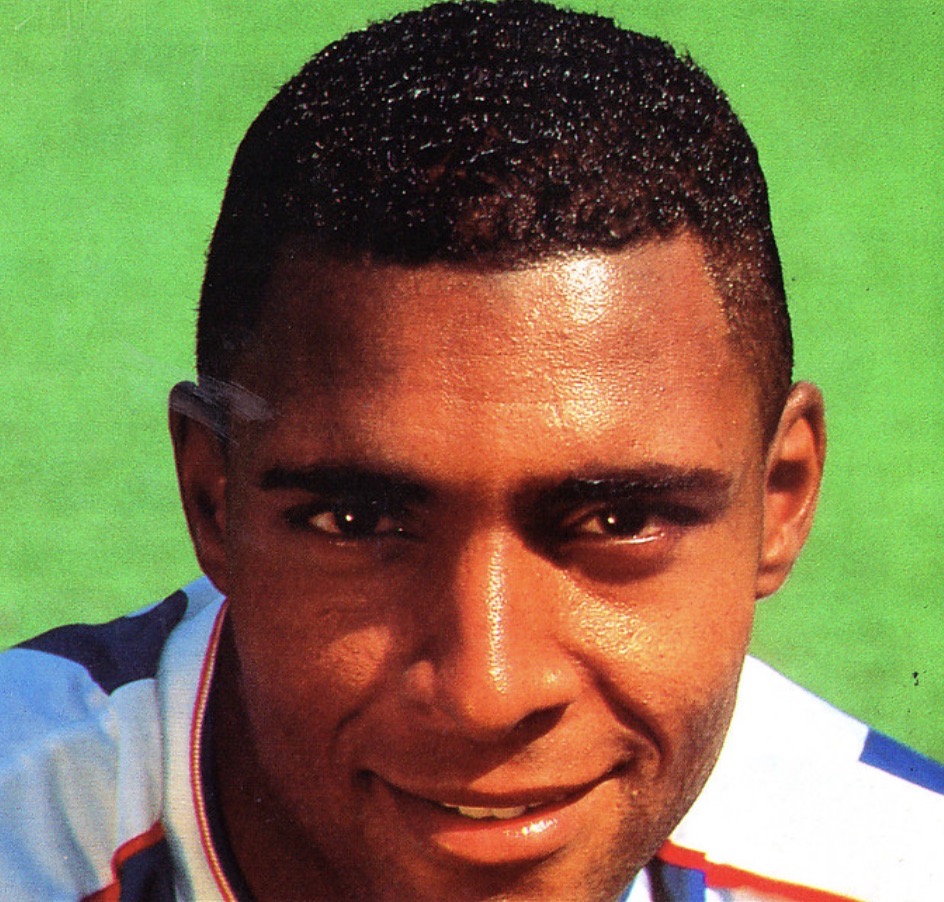
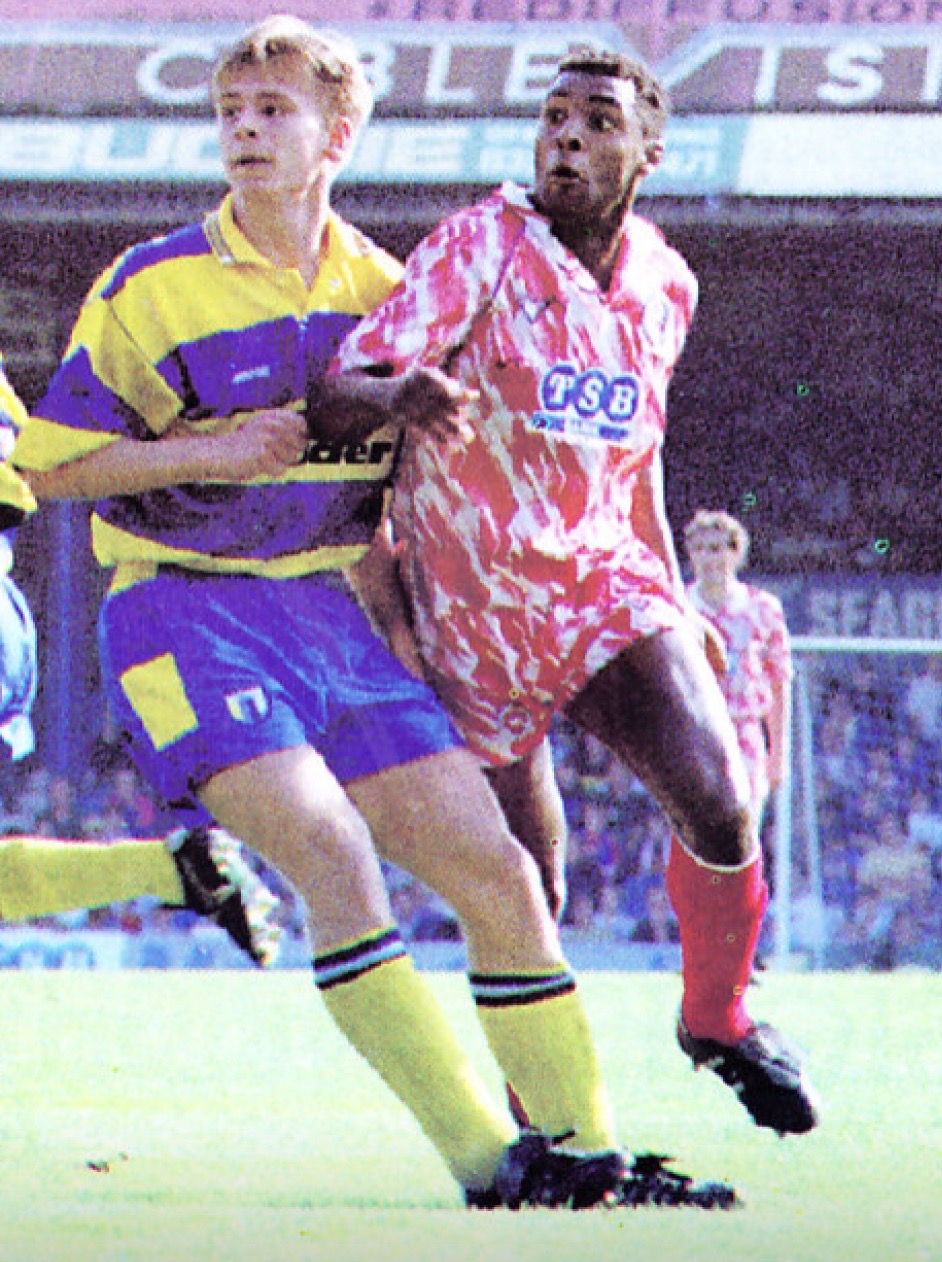
ROBERT CODNER, Brighton’s first black captain in the early ‘90s, was an enigma for plenty of managers throughout his playing days but, by his own admission, the much-maligned Barry Lloyd got the best out of him.

A dynamic midfielder with a terrific shot in his locker, Codner made way more appearances for the Albion than any other club he went to and his attachment to the Seagulls continued into the modern era when he was Solly March’s agent.

Of Lloyd, he told Albion’s matchday programme: “Barry Lloyd was good for me and I don’t think he gets the acknowledgement he deserves as he steered the club through some difficult times. I know I had my moments on and off the pitch, but he always stood by me and backed me all the way.”

Born in Walthamstow on 23 January 1965, nearby Tottenham Hotspur were Codner’s first club and, although he featured in their youth team alongside future first-teamers Ian Crook, Mark Bowen and Tony Parks, he didn’t take the next step with them.

“It is very difficult to come through at White Hart Lane, they always seemed keener to go and buy someone than risk a youngster,” Codner told Shoot! magazine.

And in a matchday programme interview with Dave Beckett, he said: “At 18, Tottenham told me that they wouldn’t put me on a professional contract, so I ended up at Leicester under Gordon Milne for about 18 months.

“I never managed to make a break into the first team which I thought I deserved, and that’s why I left in the end.”

In a slightly different telling of the story, he said: “At the end of my contract he (Milne) didn’t offer me another one which was a bitter disappointment. I felt let down and was disillusioned with the game.”

After a spell working on a building site, he tried to get fixed up with Luton Town but their manager, David Pleat, urged him to get experience playing non-League football while they kept tabs on him.

“That’s why I joined Dagenham for four or five months, but I didn’t particularly like it there, so when Barnet offered me a good deal and Luton said they couldn’t top it, I switched clubs,” he said.

His form for Barnet brought him selection for the England semi-professional side; Wimbledon showed some interest but in a pre-season game in August 1988, as a triallist for Millwall, he played against the Albion.

Brighton boss Lloyd was sufficiently impressed that he was prepared to fork out what at the time seemed like an amazing sum of £115,000 for a non-league player to give him another chance to make it as a professional. (Only a matter of days previously, Lloyd paid the same sum to secure the services of centre back Nicky Bissett from Barnet).

The ebullient Barry Fry, Barnet manager at the time, said: “Codner is a super athlete with two good feet, pace and an ability to score goals.”

The conundrum at the time was that away from football Codner had begun to pursue a successful career in the City, having turned the tables on a would-be finance salesman suggesting he could do a better job.

The salesman’s employers agreed and Codner was suddenly thrust into the world of advising on unit trusts, pensions, mortgages and insurance.

It prompted a description of him in that Shoot! article as the ‘City whizz-kid with talent in his boots and balance sheets in his briefcase’.

In an interview with John Vinicombe in the Argus, Codner denied he was not utterly dedicated to playing.

“That is not so,” he said. “I’m more dedicated because I choose to play. I always believed I would get a second chance after what happened at Leicester, and Brighton have given me that chance.

“Players have to look ahead, and, ten years from now, I want to be comfortably off.

“Of course, I’m ambitious. I want to be a millionaire as a footballer and be a millionaire financial consultant too.

“I’m lucky because I don’t have football as the be all and end all, I play because that’s what I enjoy doing.”

He added: “People may ridicule me sometimes for carrying on in business as well, but a lot of footballers end up on the scrapheap; I’m determined not to be one of them.

“Having been given a second bite of the cherry, I’ll make sure I don’t end up with nothing.”

His time with the Seagulls was certainly not a smooth ride, however, and even the club’s own mouthpiece – ie the matchday programme – said: “His time at the Goldstone has not been without controversy. Earlier this season he failed to report on time for the game at West Bromwich Albion.

“At the beginning of the season the manager said he was hoping that Robert would be one of those players who, having benefited from the experience of more than a season in the league, would play a prominent part in the club’s performances this campaign. However, he is still striving to reach a high level of consistency and his name has now been circulated to other clubs as being available for transfer.”

A retrospective article in a subsequent matchday programme also didn’t spare the midfielder’s feelings. “Codner made an immediate impact and went on to score some brilliant goals, but his relationship with the supporters, like his form, eventually blew hot and cold.

“Several clubs were interested in Codner during his time with the Albion, including West Ham, who were reported to have bid £500,000 for the player in 1991.”

Codner was almost a permanent fixture in the no.10 shirt as Albion reached the 1990-91 end-of-season play-offs with the chance to return to the top tier. He scored in both the home and away semi-final legs against Millwall as the Seagulls guaranteed a place in the Wembley final v Notts County with a 6-2 aggregate win.

After the disappointment of losing 3-1 to Neil Warnock’s County, Codner said: “We’d put in so much to get to the final and unfortunately we didn’t really turn up when it mattered most. We had phenomenal support that day at Wembley but it just didn’t happen for us.”

Albion began to implode financially and were relegated at the end of the next season. Codner was still a mainstay of the midfield, though, making more appearances than any other player, and it was a spot he shared with Mark Beeney and Gary Chivers in the 1992-93 campaign.

Perhaps it was fitting that both Codner and Bissett should be the scorers in the first game after Lloyd parted company with the Albion (Martin Hinshelwood was in temporary charge). Bissett’s 89th-minute goal salvaged a point in a 2-2 draw at Hartlepool on 11 December 1993 but Albion supporter The Groundhog remembered Codner’s 54th-minute goal for the Seagulls thus: “You can’t not love a guy who, at Hartlepool’s Victoria Ground in 1993, while the away fans were shielding themselves from freezing sideways daggers of rain blowing in off the North Sea onto the exposed corner terrace, unleashes a 35-yard thunderbolt thwang-er-wang-er-wanging off the underside of the bar to score. You just can’t.”

While Codner appeared in new manager Liam Brady’s first game in charge, a 1-0 defeat at home to Bradford City, his off-field demons caught up with him when he had to serve three weeks in Lewes Prison for driving offences.

Codner was restored to the side towards the end of January and retained his place through to the end of the season.

A subsequent matchday programme noted: “He emerged from prison a more focused player, but, after an alleged bust-up with (Liam) Brady, was dropped in early 1995 and then released at the end of the season.”

Although Codner had been a regular under Brady in the first half of the 1994-95 season, he didn’t play for the first team again after being part of the side thrashed 4-0 at Crewe Alexandra on 14 January. Brady maintained in his programme notes: “The attitude on the day was not what we were looking for and that’s what contributed largely to losing as badly as we did.”

After finally leaving the Albion with more than 260 appearances for the club under his belt, Codner popped up at a multitude of clubs subsequently (Wikipedia lists 17 he was associated with), playing a handful of games for Reading, Peterborough and Southend United, and having a slightly longer spell back at Barnet in the 1996-97 season.

Codner now operates his own Epsom-based football agency, RC Ballers Ltd.

Irish international pals brought wing wonder Steve Penney to Brighton

BRIGHTON & Hove Albion can thank former Middlesbrough goalkeeper Jim Platt for landing one of the most exciting players ever to play for the Seagulls.

Platt was the Teesside club’s man between the sticks for 12 years. During his call-ups on international duty with Northern Ireland, he struck up a friendship with Arsenal defender Sammy Nelson, who joined Brighton towards the end of his career.

When Platt took over as manager of Ballymena United, he quickly recognised that a talented teenage winger at his disposal –  Steve Penney – could make a career for himself in England.

Platt tipped the wink to his old pal Nelson, newly-appointed as Albon’s assistant manager to Chris Cattlin at the time, and the youngster was invited for a trial.

Penney was put up in a house near the Goldstone recently vacated by the sacked Jimmy Melia. His housemate was another young triallist: Ian Wright! Penney was taken on while Wright was released. Whatever happened to him?!

Penney’s Albion story is told in fine detail by journalist Spencer Vignes who devotes 12 pages of his excellent book A Few Good Men (Breedon Books) to a player who, for the record, played 148 games (plus 14 as sub) in eight years with Brighton.

Unfortunately, that rather low figure tells its own story, a succession of injuries robbing him of probably twice as many games as you might have expected him to have played over that length of time.

“He was, in short, a breath of fresh air, a flying winger whose close control and devastating pace left opponents and spectators alike lost for words,” said Vignes.

Among former teammates who voiced their appreciation of Penney, full back Graham Pearce told Vignes: “I always thought of Steve as a bright young winger, very naturally talented, who had all the attributes you need in that position, especially pace.”

Born in Ballymena on 6 January 1964, the son of a teacher and a nurse, although he played football at primary school, he went to what he described himself as “a fairly posh grammar school” where rugby was the preferred sport for boys, and he was a scrum half.

He got the chance to play football in the Boys Brigade, where Nigel Worthington, who later managed Northern Ireland, also played.

“I had to choose between rugby and football and when I decided to join Ballymena United, the school were so furious they suspended me,” he told interviewer Dave Beckett in a matchday programme feature.

“Playing for my home town was excellent, although I had the chance to join Linfield who were one of the best teams in the country.

“I guested for them in Holland a couple of times so I knew they were interested and that’s where I expect I’d have ended up if I hadn’t moved abroad.”

Instead, Platt alerted Nelson and, bearing in mind Albion’s high profile having only recently played against Manchester United in the Cup Final, Penney didn’t take much persuading.

Beckett recounted: “Penney, at 19 years old, made his debut in a 3-1 defeat by Barnsley but was soon a hot favourite on the terraces. Even in his opening match he set up the goal goal for Alan Young, and John Vinicombe wrote in the Evening Argus: ‘The eye for an opening that Penney unquestionably has will serve Albion well. The Goldstone are going to like him’.”

It wasn’t long before he was playing to a much bigger gallery when he was part of the Albion side who toppled Liverpool in the FA Cup (for the second season running), winning 2-0 in front of a live television audience.

Penney tormented the experienced Liverpool left-back Alan Kennedy and his perfectly-flighted pass over the top of the Liverpool defence played in Terry Connor to score the decisive second goal.

His first goal came in a 3-0 win at Derby County in March 1984 and such was his impact in that first season that he was voted runner-up to Jimmy Case as player of the season.

Away from football, Penney was a decent golfer, his regular companions on the golf course being Dean Saunders, Chris Hutchings, Steve Gatting and former Albion favourite Peter O’Sullivan.

During the winter, he loved nothing more than playing snooker at a club in Hove, especially taking on Saunders and competing for a trophy awarded each week to the winner.

So, life was sweet for the young Irishman and it got even better when his form with Brighton led to full international honours.

SP w Irish shirt

At the time of writing, he remains the highest-capped Albion player, all of his 17 caps for Northern Ireland being won while with the Seagulls.

After making his debut on 16 October 1984 in a 3-0 friendly win over Israel in Belfast, he was a regular for four years, playing his last game on 21 December 1988 in a 4-0 defeat to Spain in a World Cup qualifying match. He scored twice for his country, in a 1-1 draw with Israel on 18 February 1987 and in a 3-0 win over Malta on 21 May 1988.

The highlight of his international career was playing for Northern Ireland at the 1986 Mexico World Cup.

“The whole experience of going to the World Cup was something I’ll never forget,” he said three months later, in a matchday programme interview.

“Six weeks away from home is a long time, but the spirit in the squad was very good and I wouldn’t have missed it for the world.”

Steve had been in the side that qualified for that World Cup by drawing 0-0 against England at Wembley. “We only needed a draw to get to Mexico and we got it,” he said.

“(Manager) Billy Bingham had been a right winger and obviously appreciated what I could do, which was a source of great strength to me. He’d been part of the team that had played in the World Cup in Sweden in 1958, a lovely man who was very good at getting the best out of his players and encouraged me no end, something I’ll always be grateful to him for.”

Unfortunately, Steve’s World Cup came to a juddering halt after Spain’s hard man Emilio Butragueno went over the top in a tackle and did his ankle in only the second group game.

On his return to Brighton, Penney found himself sufficiently impressed by Cattlin’s successor, Alan Mullery, that he was persuaded to sign a new, three-year contract.

However, it wasn’t long afterwards that Penney started having problems with his left knee and, although he played through the pain barrier, in a game against Derby County in March 1987 a bad tackle damaged his ankle ligaments, sidelining him for the rest of the season.

Barry Lloyd had succeeded Mullery and Penney was in the team at the start of the next season but, after only two games, found himself back on the treatment table after a chip of bone was found floating in a knee.

That kept him out for an agonising seven months before he was able to return to the side in March 1988 to play a crucial part in the final 11 games, scoring three times as the Seagulls earned promotion in second place behind Sunderland.

Penney told Vignes: “At that time, playing for Barry was great. The two of us were getting on even though I always thought there was something not quite right between us. To be honest, he had to play me because I strengthened the team and made a difference.”

Halfway through the 1988-89 season, Crystal Palace tried to sign Penney but weren’t prepared to meet Albion’s £175,000 asking price. And then his left knee went again.

Vignes tells the whole gory story in detail, which I won’t repeat here, but, suffice to say, the wrong treatment by one doctor had to be put right by a Harley Street expert.

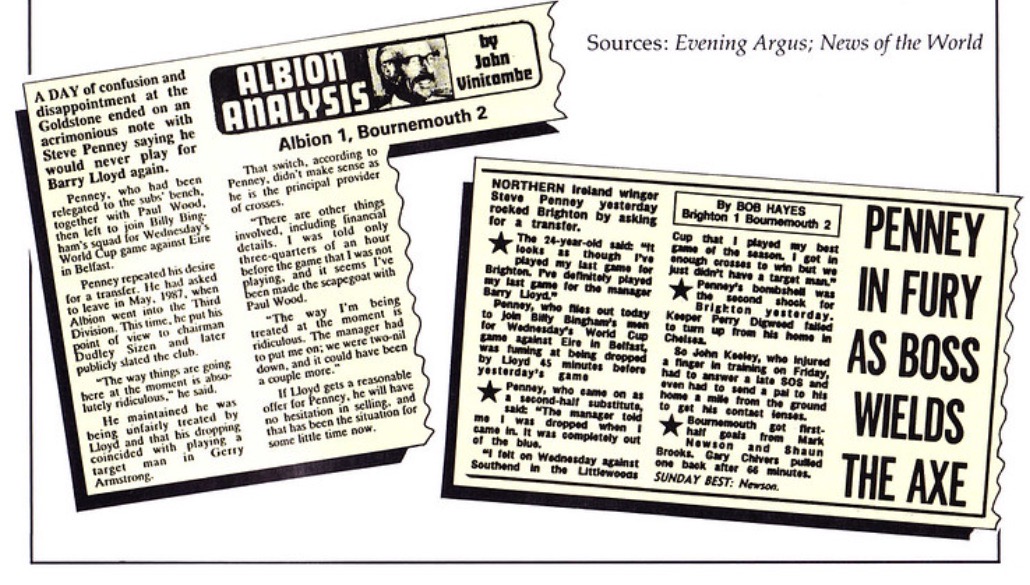
Penney rowManager Lloyd and Penney also fell out, principally over Penney putting country before club. “He’d play for them, then come back injured. That didn’t please me,” said Lloyd. “It was a crying shame. He just wanted to play but was so plagued with injuries it was beyond belief.”

The split came in 1991 when Lloyd clearly thought the player’s level of fitness didn’t merit a new contract. Interest was shown in him by Heart of Midlothian, managed by Joe Jordan, and Charlton Athletic, where the joint manager was his ex-Albion teammate Alan Curbishley.

Having played a couple of trial games for Hearts, he plumped for them but suffered a groin strain early on and only played 14 games all season.

A 15th game would have triggered the award of another one-year deal – and it quickly became apparent that it wasn’t going to happen. Freed at the end of the season, he signed for Burnley, newly-promoted from the old Fourth Division, in August 1992. Continue reading “Irish international pals brought wing wonder Steve Penney to Brighton”

Midfielder Alan Curbishley helped Seagulls to promotion

Screenshot

ALAN Curbishley completed a hat-trick of promotions with new clubs when he was part of Brighton’s successful third tier side in 1988.

He’d previously been promoted after switching from West Ham to Birmingham City and also when moving from Aston Villa to Charlton Athletic.

Curbishley was what you might call West Ham through and through.

Born at Forest Gate on 8 November 1957, within a mile of West Ham station, he was one of five children (elder brother Bill famously promoted and managed The Who and Led Zeppelin and was producer of the films Tommy and Quadrophenia).

Curbishley first played in Brighton at under 11 level, in a Newham Boys side against Brighton Boys at Longhill School, in May 1967. He was later capped for England Boys aged 15 and after joining the Hammers straight from school played for England Youth.

Curbishley won nine England Youth caps under Ken Burton, scoring on his debut in a 1-1 draw against Poland in Las Palmas on 21 January 1975 when England went on to win the Atlantic Cup. Among his teammates were future England captain Bryan Robson, Peter Barnes and Keith Bertschin.

He vied for a starting berth with Mark Nightingale (Palace, Bournemouth, Norwich, Peterborough), making six starts and three appearances off the bench. His last appearance was in a 1-0 win over Wales in Cardiff on 11 February 1976, playing alongside Glenn Hoddle and Gary Owen.

Almost a year earlier, on 29 March 1975, he had made his first team Hammers debut at the tender age of 17, lining up in midfield alongside Trevor Brooking and Graham Paddon in a 1-0 home defeat against Chelsea. Mervyn Day was in goal for West Ham and guarding the opposition net was John Phillips.

At the time, Curbishley was the youngest to play in the senior team although that record was subsequently eclipsed by Paul Allen.

A contemporary of Geoff Pike, Paul Brush and Alvin Martin, they were all in the West Ham youth team defeated 5-1 on aggregate by Ipswich in the 1975 FA Youth Cup Final.

In a midfield dominated by Brooking, Paddon and Pat Holland, and later Alan Devonshire and Pike, Curbishley found first team chances limited, although in 1977-78 he made 36 appearances.

After 85 matches for the Hammers, in 1979 he moved to Birmingham for £275,000. Manager Jim Smith used the proceeds of the £1m transfer of Trevor Francis to Nottingham Forest to buy Curbishley, Frank Worthington, Colin Todd and Archie Gemmill. Curbishley was still only 21 when he made his debut for the Blues on 18 August 1979 in a 4-3 defeat at home to Fulham and he went on to be ever present for Birmingham in that 1979-80 season.

Curbishley earned his one and only England Under 21 cap in a 5-0 thrashing of Switzerland at Portman Road when Justin Fashanu was among the scorers. He had hopes of going to the 1982 World Cup with England, having broken into the England B squad but fractured a kneecap sliding into a tackle with Albion’s Brian Horton. “I missed the rest of the season and the start of the next, and the World Cup squad which I might have broken into otherwise,” he said. “It was the worst disappointment I’ve ever faced.”

He was on the front cover of the matchday programme for a game I went to watch at St Andrew’s on 27 March 1982 when he played for Ron Saunders’ Blues in a 1-0 win over Brighton. But financial issues meant the side was broken up and, the following year, after a total of 155 games, he committed what today seems to be viewed as a cardinal sin by signing for Villa for £100,000, ironically making his debut against Birmingham in a 1-0 win on 4 April 1983.

“I had high hopes of success there with them just having won the European Cup,” he told Dave Beckett in an Albion matchday programme article. “It was soon obvious though that Tony Barton was under pressure from the moment he took over and all the players thought it was just a matter of time before he was sacked.

“He got a raw deal. That season we finished ninth in the league, got to the semis of the League Cup and were knocked out of the UEFA Cup in the last minute on the away goals rule. Villa have never been near that form since, but Tony Barton’s face didn’t fit and he was soon on his way along with all the men he signed.”

After only 36 appearances, scoring once, Curbishley returned to London, dropping back down to the 2nd division, to begin what would be a long association with Charlton Athletic, punctuated only by his spell at Brighton.

Amazingly, although homeless at the time and playing at Selhurst Park, Charlton won promotion back to the 1st Division. Unfortunately Curbishley sustained an achilles tendon injury and only played 10 games in the 1986-87 season.

“I knew I had an achilles injury but the operation was delayed until a week before the start of the new season and consequently I wasn’t fit again until December,” he said. “The manager bought two new midfield players, which I understood, but when I was fit again I couldn’t get back into the side.

“It became apparent that I wouldn’t get much of a chance unless something drastic happened so I’m pleased to have a fresh start.”

After 13 seasons playing in the top two divisions, he left Charlton having scored six times in 63 games and dropped down to the Third to join the Albion for £32,500.

He made his debut in a goalless draw at Chesterfield on 22 August 1987 in front of a crowd of just 2,286.

After the departure of Jimmy Case in 1985, the centre of Albion’s midfield had been crying out for someone who could put their foot on the ball and pass it, and Curbishley stepped neatly into that role, scoring six goals – mostly penalties – in 34 appearances as Brighton won promotion.

“Alan was a very level-headed guy, an excellent passer and really disciplined,” Albion boss Barry Lloyd told Spencer Vignes in a matchday programme article.

In total, over three years on the south coast, Curbishley played 127 games (plus five as sub)  – making his 400th league appearance during the 1988-89 season – and scored 15 goals.

curbs penThe Albion matchday programme featured Curbishley when the Seagulls hosted the Hammers for a Barclays League Division 2 game on 16 September 1989. Describing his time with the East London club, he said: “It was a brilliant set up although I was definitely a bit headstrong in my early days.

“I didn’t really grow up until I moved to St Andrew’s and that’s where I had my best playing days.”

Lou Macari’s side in 1989 included Curbishley’s old pal Alvin Martin and future Albion manager Liam Brady but the Seagulls ran out 3-0 winners (goals from Kevin Bremner, Robert Codner and Garry Nelson).

In 1990, Curbishley began his coaching career, returning to Charlton initially as player-coach under Lennie Lawrence. When Lawrence left in 1991, Charlton made the somewhat unusual decision to appoint joint managers: Curbishley and Steve Gritt (who would later be at the helm when Albion narrowly escaped dropping out of the league).

Curbishley’s first signings for Charlton were former Albion teammates Nelson and Steve Gatting and he later plundered young winger John Robinson from the Seagulls. After four years, Curbishley took sole charge at The Valley and led Charlton to some of the most successful times in their history.

Considering their resources, Curbishley turned Charlton into a steady top flight club and model of stability, consistently securing a mid-table finish.

Sean Cole in The Bleacher Report described him as “one of the most promising managerial talents of the new millennium” and in 2006, in the wake of Sven-Goran Eriksson’s departure as England manager, Curbs had ‘tea and biscuits’ with then chief executive Brian Barwick – but Steve McLaren got the job instead.

In December 2006, Curbishley landed what surely would have been considered his dream job – manager of West Ham.

It was quite a reunion of old pals when Brighton visited Upton Park for one of his first games in charge, in the third round of the FA Cup in January 2007. Albion boss Dean Wilkins and coach Ian Chapman had both been teammates while physiotherapist Malcolm Stuart was still wielding the magic spray.

In front of 32,874, Hammers ran out fairly comfortable 3-0 winners with Mark Noble scoring his first senior West Ham goal and Carlos Tevez a real handful up front. These were the respective line-ups:

West Ham: Carroll, Dailly, Ferdinand (Spector 45), Gabbidon, McCartney, Benayoun, Mullins, Noble, Boa Morte (Newton 73), Cole (Bobby Zamora 68), Tevez.
Subs not used: Green, Sheringham. Goals: Noble 49, Cole 58, Mullins 90.

Brighton: Wayne Henderson, Joe O’Cearuill, Joel Lynch, Guy Butters, Kerry Mayo, Tommy Fraser (Gary Hart 51), Adam El-Abd, Dean Hammond, Alexandre Frutos (Sam Rents 67), Alex Revell (Joe Gatting 84), Jake Robinson. Subs not used: Michel Kuipers, Richard Carpenter.

Fans’ website westhamtillidie recalled: “Perhaps Curbs’ greatest legacy at the club was the £7m signing of his former Charlton protégé Scott Parker, who went on to win the Hammer of the Year prize three times and pick up a Football Writers’ Player of the Year Award during his time at the club.”

Sadly, though it was to all end in tears and Curbishley quit in protest at the then Icelandic owners’ failure to consult him over the sale of defenders Anton Ferdinand and George McCartney.

In what must have been a tough heart-v-head decision, he resorted to a legal resolution of the situation and eventually won a case for constructive dismissal, eventually receiving £2.2m in compensation. But it was the last manager’s job he had.

“It took me a year to sort out my problem at West Ham,” he told The Independent. “And then, after that, I was perhaps a little too picky. I was told by other senior managers ‘don’t be out too long’ but I was waiting for a job that I thought was the job for me.”

Job vacancies came and went, Curbishley’s name was generally on all the shortlists, but he never again made it through to the manager’s chair. There was a brief moment at Fulham when he was technical director assisting Rene Meulensteen but when Meulensteen was swiftly axed, new manager Felix Magath brought in his own people.

He rejoined the Fulham coaching staff in March 2015 and took charge of training in November 2015 when Kit Symons was relieved of his managerial duties but Stuart Gray took charge of the team before Slavisa Jokanovic was appointed.

In 2016, Curbishley brought out a book, Game Changers: Inside English Football: From the Boardroom to the Bootroom (published by HarperSport) and was a regular pundit on the Football on 5 programme covering Football League games.

Further reading

https://www.westhamtillidie.com/posts/2014/11/07/preview-aston-villa

http://bleacherreport.com/articles/1415997-the-curious-case-of-alan-curbishley-footballs-forgotten-man

https://www.whufc.com/club/history/managers/alan-curbishley#C1vPoA9yPR1kYluJ.99

  • Pictures show westhamtillidie’s image of Curbishley in West Ham colours; the midfielder on the front of a Birmingham matchday programme 1982; in Villa’s colours from a Match Weekly annual, an Argus shot of Curbs scoring a penalty for Brighton against Man City, and other images from the Albion match programme.