

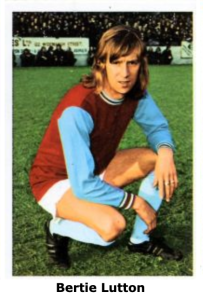
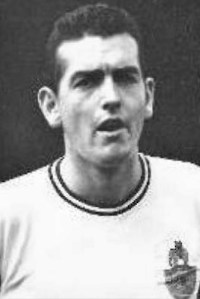
BERTIE LUTTON has a place in the West Ham history books even though he only made 13 appearances.
He was the first Hammer ever to play for Northern Ireland, winning four caps in 1973 (more on these later).
Lutton, frozen out at second tier Brighton less than a year after signing from Wolverhampton Wanderers, stepped back up a level to join Ron Greenwood’s side.
Although he had played at the elite level for Wolves, having been unable to hold down a regular first team spot at Molineux, he joined Pat Saward’s promotion-chasing Brighton in the 1971-72 season.
Lutton played his part in helping Albion go up from the old Third Division as runners up behind Aston Villa in the spring of 1972, as described in my 2016 blog post about his contribution.
But, when Brighton struggled to cope with the higher grade football, Saward questioned the commitment and attitude of certain players and Lutton was put on the transfer list.
It was certainly something of a surprise when, unable to get a start in a second tier side, he went on loan to First Division West Ham.
Lutton did well enough to secure a full-time switch to Upton Park. Almost a year to the day of his arrival at the Goldstone, he was London-bound and the shrewd Saward turned a £10,000 profit on the player.
The enigmatic Irishman made his Hammers First Division debut in a 1-0 away win against Norwich City on 10 February 1973, alongside the likes of Bobby Moore, Billy Bonds and Trevor Brooking, in front of a crowd of 32,597.
Bryan ‘Pop’ Robson scored the only goal of the game and finished the season as the club and League top goalscorer with 28 goals from 46 games. Lutton didn’t reappear until April when he went on as a sub in a 1-1 draw at home to Leeds and a 4-3 Good Friday win over Southampton at the Boleyn Ground (when George Herrington captured the action picture below of him).

Reviving his scoring feat for Brighton at Bournemouth a year previously, given a start on Easter Saturday, Lutton scored his only goal for the Hammers in a 1-1 draw away to Derby County. He then played in the last two games of the season, a 0-0 draw at Birmingham City, and a 2-1 defeat at home to Arsenal. West Ham finished the season in sixth place, though, which was the highest league position they’d achieved under Greenwood.

Those league appearances earned Lutton a recall to the Northern Ireland squad and manager Terry Neill sent him on as a second half sub for Bryan Hamilton in a World Cup qualifier against Cyprus on 8 May 1973.
The game was played in front of a paltry 6,090 at Fulham’s Craven Cottage because of the troubles in Northern Ireland at the time. The Irish were already 3-0 up at half time and that’s how it finished: Sammy Morgan (later to play for Brighton) scored one and Man Utd’s Trevor Anderson hit two.
Eight days later, Lutton went on for goalscorer Anderson in Glasgow as the Irish succumbed to a 2-1 defeat to Scotland in the Home International tournament.
Three days after that, he saw action again when he once again replaced Ipswich Town’s Hamilton, who’d scored the only goal of the game as the Irish beat Wales 1-0 at Everton’s Goodison Park. Only 4,946 watched that one.
Back with West Ham at the start of the 1973-74 season and Lutton was in the starting line-up for home defeats to Newcastle United (2-1) and QPR (3-2) and was a sub in a 3-1 defeat away to Manchester United.
He started a 1-0 home defeat to Burnley, but was subbed off, as the Hammers’ torrid first half of the season continued. Previously imperious captain Bobby Moore was dropped and the side were bottom of the table at Christmas.
Lutton only re-appeared in the starting line-up in January when, in a FA Cup third round replay away to Third Division Hereford United, West Ham embarrassingly lost 2-1.
He retained his place three days later when, although the Hammers were missing Moore, Brooking, Kevin Lock, John McDowell and Robson, they made amends by beating Man Utd 2-1 at Upton Park. Billy Bonds and Pat Holland scored for the home side, Sammy McIlroy for United.
A week later, Lutton played his last Hammers match when appearing as a sub in a 1-1 draw at Newcastle United.
It came two months after he had made his last appearance for his country. That was in another World Cup qualifier, on 14 November 1973, when the Irish earned a 1-1 draw against Portugal in Lisbon. He played in midfield alongside Tommy Jackson and captain Dave Clements behind George Best, Anderson and Morgan up front.
Lutton had made his Northern Ireland debut three years earlier when his Wolves teammate Derek Dougan led the line in a 1-0 Home International defeat against Scotland in Belfast.

Three days later, on 21 April 1970, he played the first half against England at Wembley when Best scored but the hosts won 3-1 (Lutton was replaced by sub John Cowan for the second half).
That was the game in which Bobby Charlton won his 100th England cap (and was made captain for the occasion) and his Man Utd teammate Brian Kidd made his debut. Ralph Coates also won his first England cap. Charlton, Martin Peters and Geoff Hurst scored the English goals.
Born in Banbridge, County Down, on 13 July 1950, Lutton’s brief footballing career began with his hometown club, Banbridge Town, and it’s reported just £50 exchanged hands to take him to Wolves in 1967.
At a time when Wolves were blessed with some outstanding players like Dougan, Hugh Curran, Dave Wagstaffe, Jim McCalliog and Mike Bailey, the young Irishman managed just 25 matches for Wolves between 1967 and 1971.
Although he may have only had a brief spell in the limelight, he seems to have had a penchant for earning a place in footballing history.
His one and only First Division goal for Wolves was also the club’s 2000th goal in that league to be scored at Molineux.
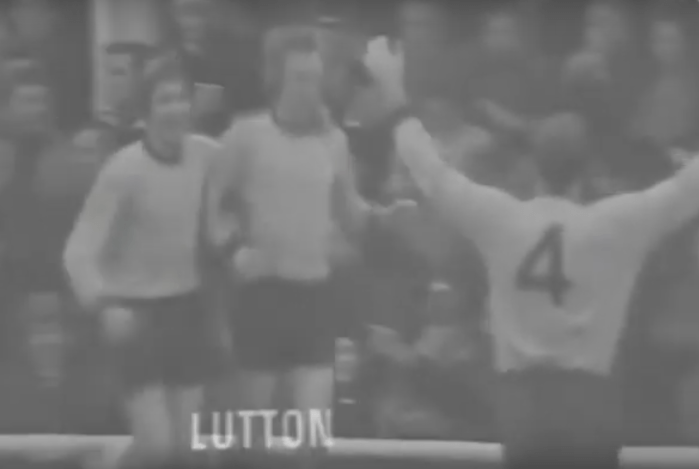
Arsenal were the visitors on 15 November 1969 and Lutton seized on a fortunate deflection off the aforementioned Terry Neill to net in the 47th minute past the Gunners’ back-up ‘keeper Geoff Barnett. The home side won 2-0 with Scottish international Curran scoring the second just two minutes after Lutton’s opener.
Not listed in the matchday programme line-up, Lutton played instead of the injured Mike O’Grady in the no.8 shirt (players didn’t wear a squad number shirt in those days).
The game was featured on Match of the Day with the legendary Kenneth Wolstenholme commentating and the rather grainy black and white coverage of the game can still be found on the internet wolvescompletehistory.co.uk/arsenal-h-1969-70/.
Lutton only made one start and one sub appearance in the 1970-71 season but was a regular in the Wolves reserve side in which the emerging John Richards was banging in the goals.
The pair were room-mates as teenagers with Wolves and were reunited after 37 years by the wolvesheroes.com website.
They hadn’t seen each other since 12 May 1973 at Goodison Park when Lutton was an unused sub for Northern Ireland in a Home International against England and Richards was playing up front for the English alongside two-goal Martin Chivers. (England won the game 2-1).
Lutton has popped up on the Wolves history site on several occasions over the years, often when he has returned from his home in Australia to the Black Country to see his son, Lee, who still lives in the area.
Brighton fans had first seen Lutton back in September 1969 when he played for them in a memorable third round League Cup match in front of a packed Goldstone Ground.
Two years later Saward, quite the specialist at using the loan market, acquired Bertie’s services on a temporary basis between September and November, 1971.
He made his debut in a 2-0 defeat at Aston Villa and scored twice in seven games (in a 2-2 draw at Torquay United and a 3-1 home win over Bristol Rovers) before returning to his parent club.

Then, on 9 March 1972, with the clock ticking down to what in those days was the 5pm transfer deadline, Saward completed a double transfer swoop, securing Lutton’s permanent signing for £5,000 together with Ken Beamish from Tranmere for £25,000 (plus the surplus-to-requirements Alan Duffy).
A delighted Saward declared to Argus reporter John Vinicombe: “Bertie can do a job for us anywhere. This can’t be bad for us. At 21 and with two caps for Ireland he has a future and played very well for us while on loan.
“He can play right or left, up the middle, or midfield and Beamish can fit into a number of positions.”
It’s likely that versatility counted against him and, in the days of only one substitute, he was more often than not a sub, being able to go on in a variety of positions.
He was on the bench when Brighton began the 1972-73 season in the second tier and went on in three games. He then got four successive starts before going back to the bench.
Albion were finding life tough at the higher level and although Saward switched things around and brought in new faces, results went from bad to worse.
Lutton started three games in December which all ended in defeat and the 3-0 Boxing Day reverse at Oxford United turned out to be his last appearance for the Albion.
It fell in the middle of a spell of 12 successive defeats during which only five goals were scored. Saward couldn’t put his finger on the reason for the slump but Lutton found himself one of three put on the transfer list.
The West Ham move must have seemed ideal but sadly it was all over after just 13 games. Injury forced him to quit the professional game and he had a brief spell playing non-league for Horsham before emigrating to Australia.
There he played semi-professional football in the Australian Soccer League for a number of years before settling in Melbourne where he worked for the paint giant Dulux.


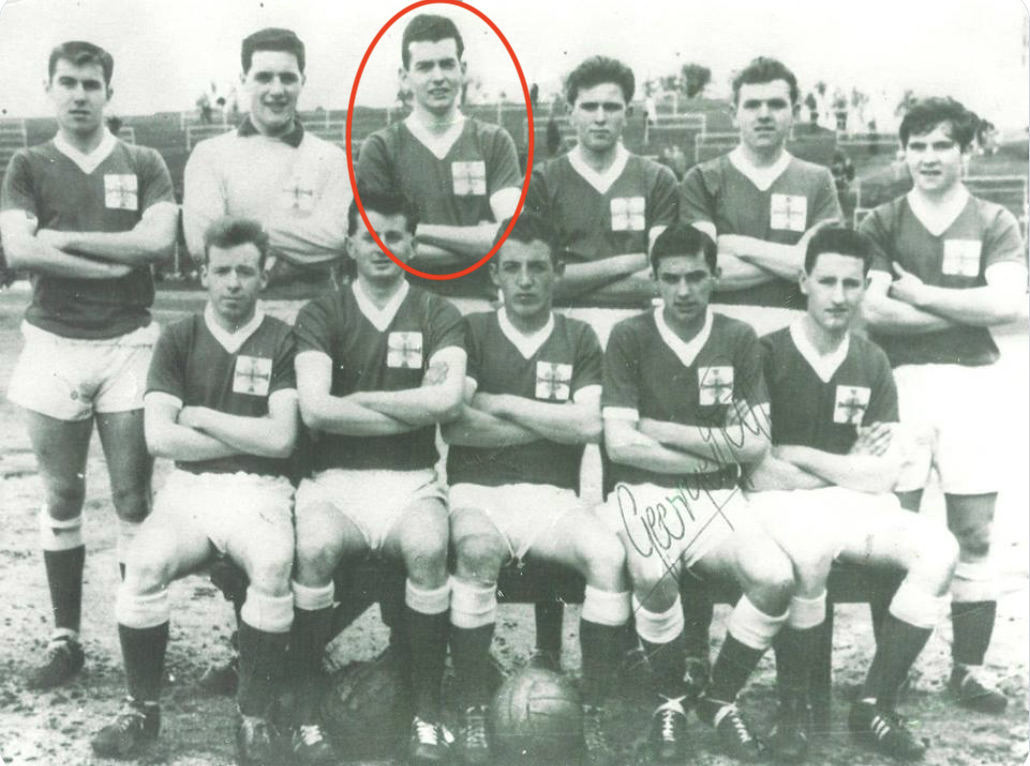

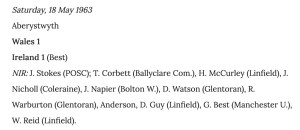



 In parallel lines