Sparks flew in Brighton v Chelsea FA Cup clashes

BRIGHTON v Chelsea in the FA Cup sparks memories for supporters of my generation stretching back several decades.

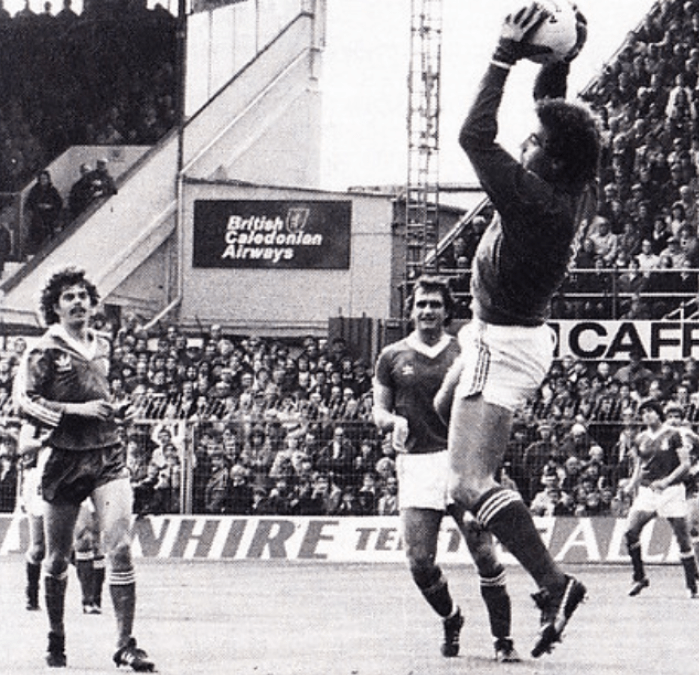
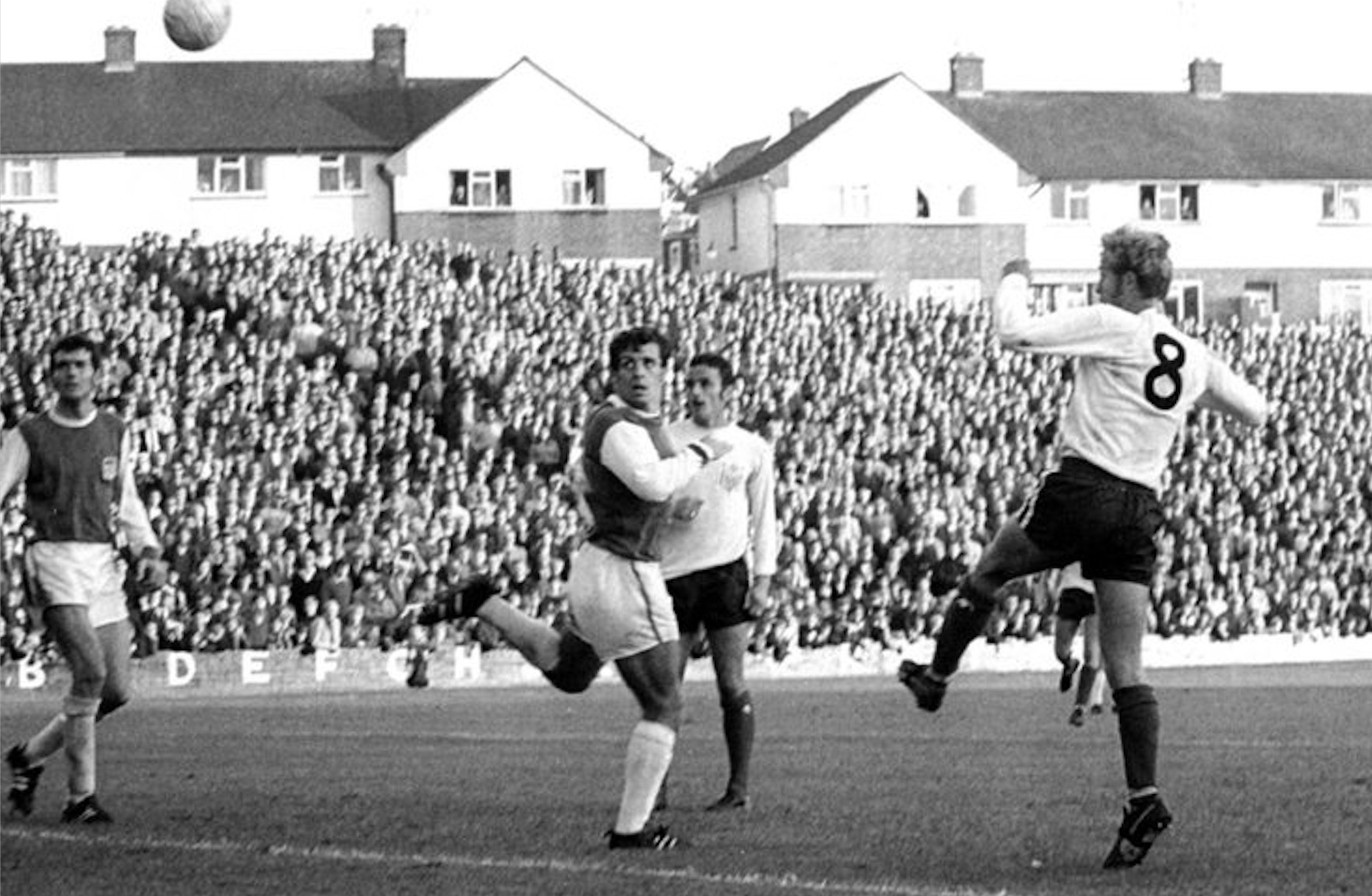
Many began as Albion followers the day the then First Division side from Stamford Bridge visited the Goldstone Ground in February 1967 when a dubious refereeing decision denied Third Division Brighton a shock win.

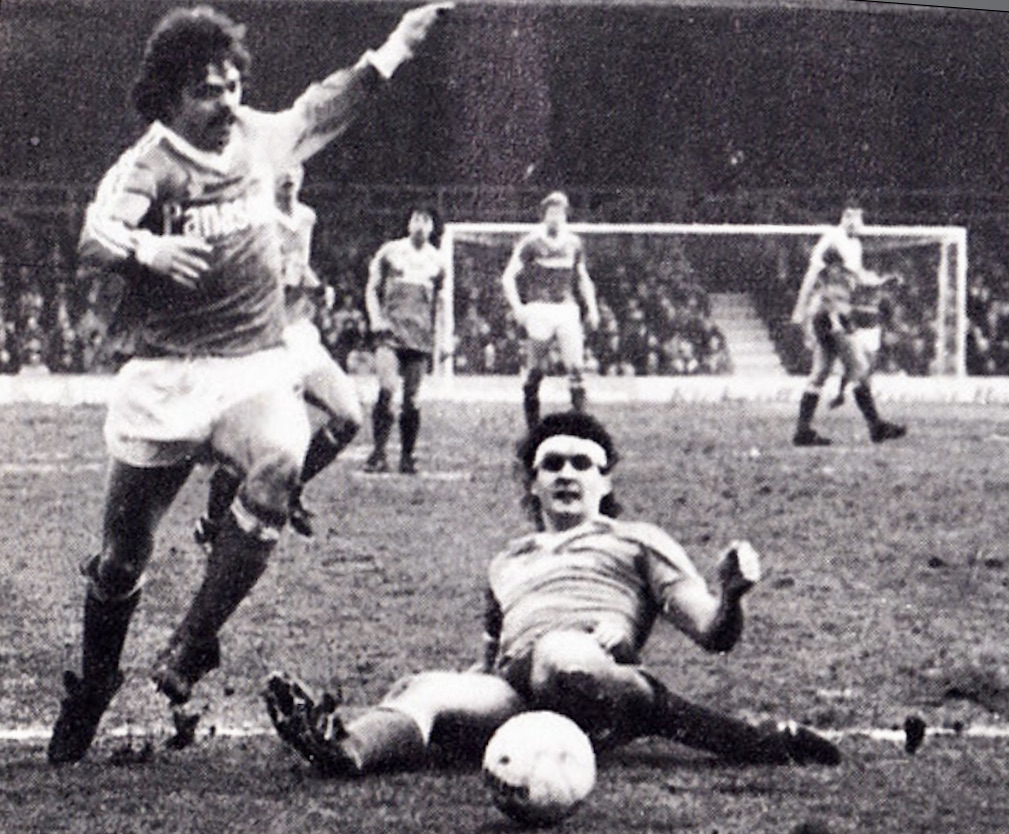
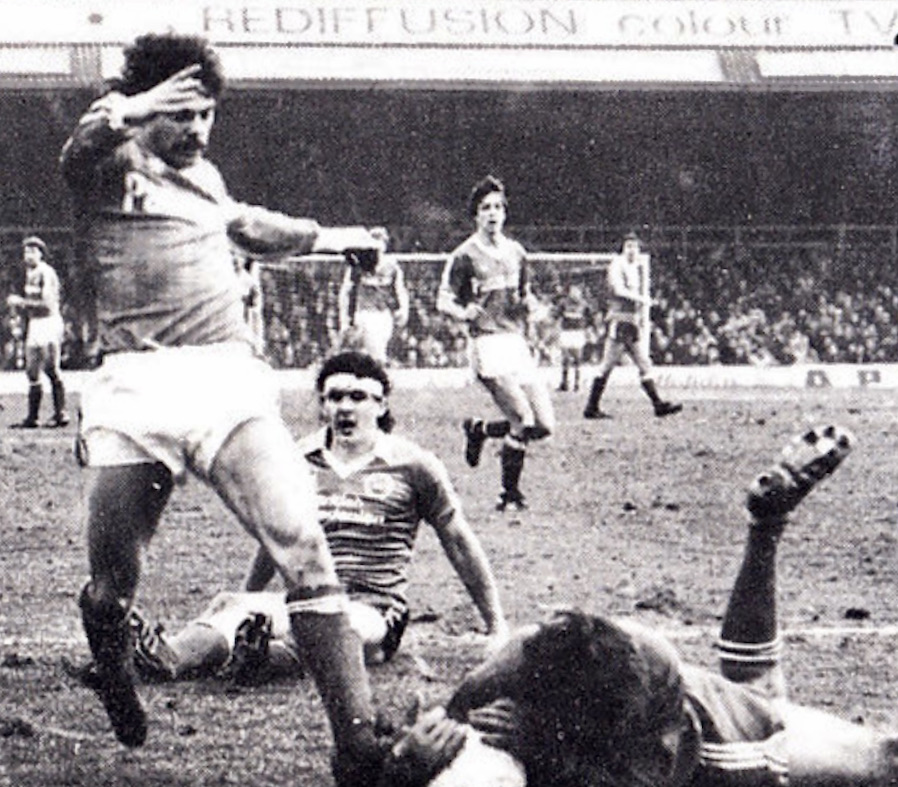
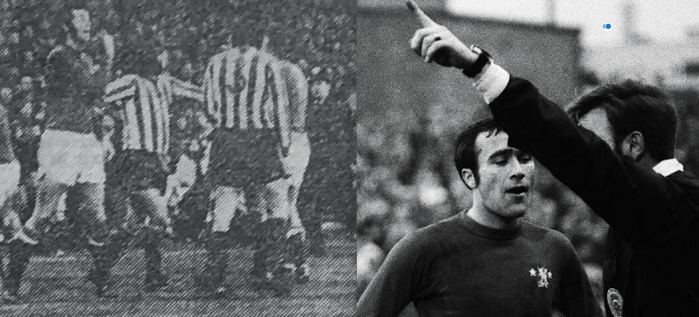
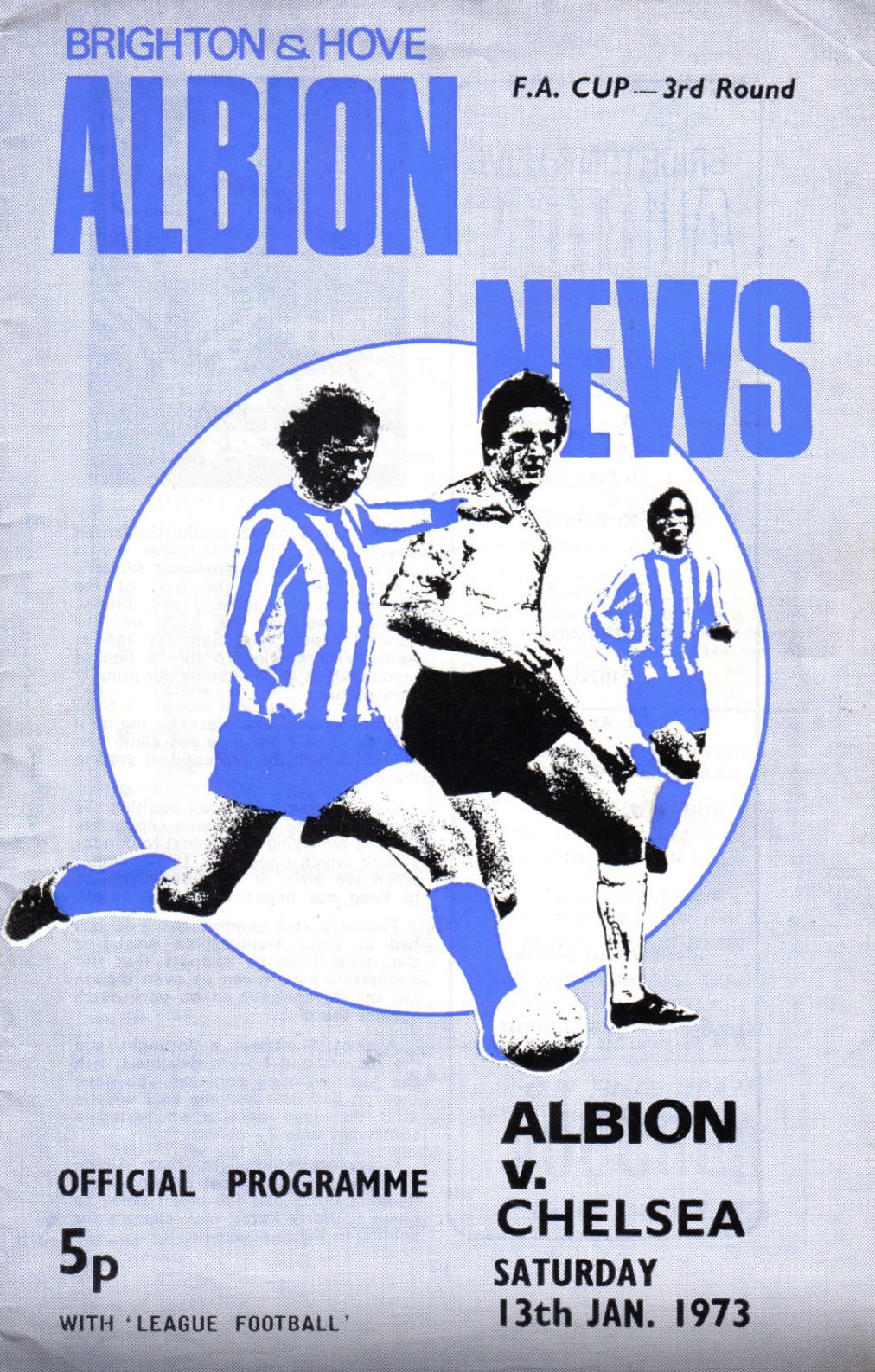
Others, me included, recall a fiery encounter in Hove six years later when Second Division strugglers Brighton were beaten 2-0 courtesy of two Peter Osgood goals in a game marred by violence on and off the pitch.

That third-round tie in January 1973 was dubbed “a day of shame” in the newspapers after two players were sent off, five were booked and crowd trouble erupted.

The chance for lower ranked teams to pitch their lesser talents against the big boys has always been at the heart of the FA Cup’s appeal.

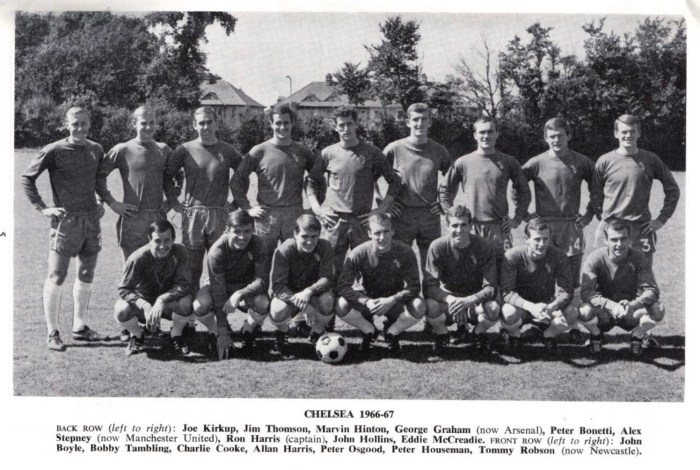
That was certainly the case when Archie Macaulay’s mid-table Albion hosted Tommy Docherty’s top 10 Chelsea on 18 February 1967. To give it musical context, Georgy Girl by The Seekers had just taken over from The Monkees’ I’m A Believer at no.1 in the pop charts!

At a time when home crowds were normally 12,000 – 13,000, a sell-out gate of 35,000 packed into the Goldstone.

Cup fever had certainly captured the imagination of the Sussex public. In the previous round, 29,208 watched Albion beat Aldershot 3-1 in a third-round replay for the chance to take on the top division Pensioners (as Chelsea were called back then).

The two clubs hadn’t met in any other competition for 34 years – back in January 1933 Brighton beat the London side 2-1 in a third round FA Cup tie.

After such a long gap, maybe it was understandable that Albion’s young captain, Dave Turner, at 22, fell off the settee at home in excitement when he saw the cup draw made on the television.

Canny Brighton decided to sell tickets for the game at a reserve home fixture against Notts County, meaning a stunning 22,229 paid to watch the second string win 1-0 in order to secure their entry to the big game.

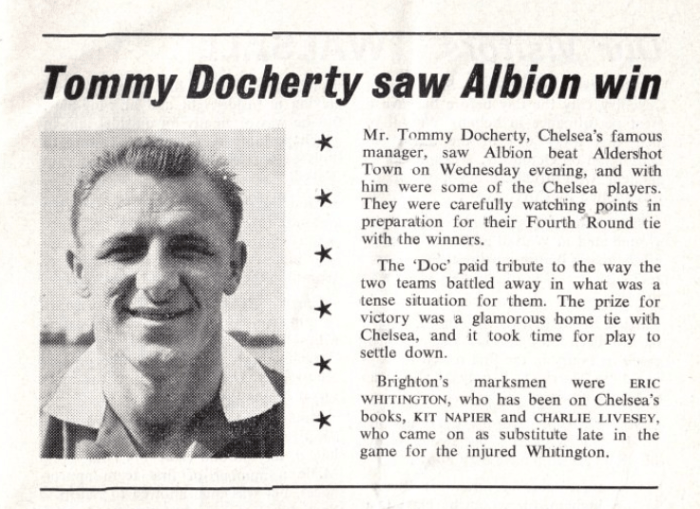
The matchday programme revealed how Docherty and several of his players had watched the Aldershot match to check out what would be in store for them.

Docherty meanwhile was very complimentary in his programme notes, declaring: “Chelsea know that we have a hard and difficult task today, and are not facing it in a complacent manner.”

He added: “We know that there is great potential for the Albion club. They have a First Division set-up at the Goldstone Ground, and First Division ideas, as well as a first-class pitch.

“The day cannot be very far away when they become one of our top clubs, and I am just one of many people in the game who will welcome their promotion to a higher class.”

However, the game was only five minutes old when Bobby Tambling gave Chelsea the lead. But before half-time, Chelsea’s John Boyle (who would several years later joined Albion on loan) was sent off for kicking Wally Gould. And just four minutes into the second half, Turner gave Albion parity.

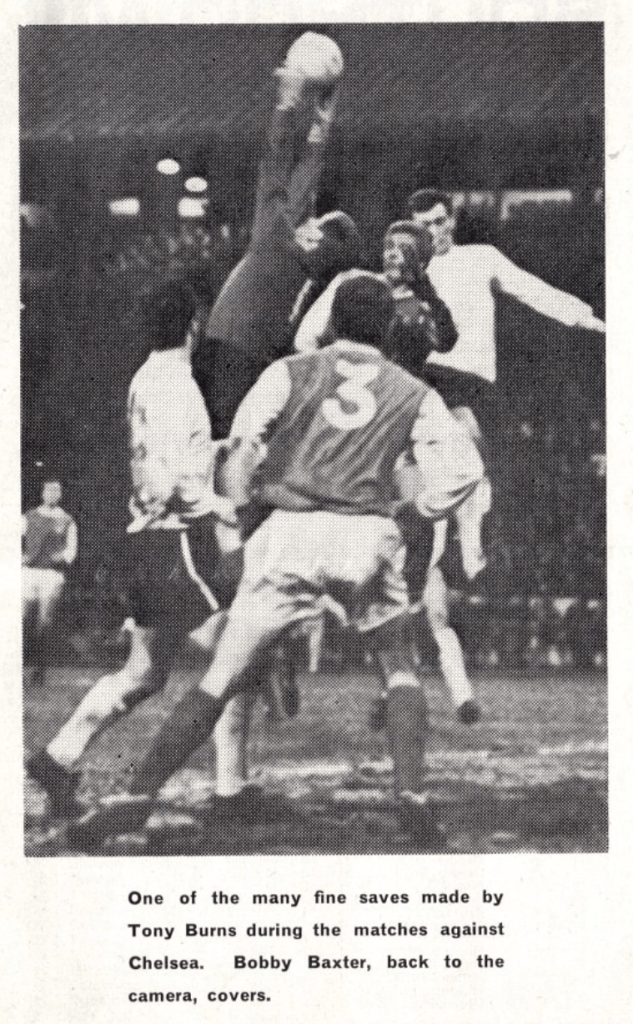
Goalkeeper Tony Burns, who had top flight experience with Arsenal, made several decent saves in the game and, with the clock ticking down, a cracking strike by winger Brian Tawse in the closing minutes of the game looked to have won it for the Third Division side.

“I smashed a volley past Peter Bonetti from 20 yards out with the score at 1-1 and thought I’d got the winner,” Tawse told Brian Fowlie of the Sunday Post in 2015. “It was a goal that could have made my career – but the referee chalked it off.”

Unfortunately, the official had spotted an infringement by Kit Napier and the ‘goal’ was disallowed.

As Brighton would discover again only too painfully in the 1983 final, these winning chances rarely happen twice, and, sure enough, in the replay at Stamford Bridge Chelsea ran out 4-0 winners in front of a massive crowd of 54,852.

Chelsea went on to reach that season’s final at Wembley only to lose 2-1 to a Spurs side that had Joe Kinnear at right-back and Alan Mullery in midfield.

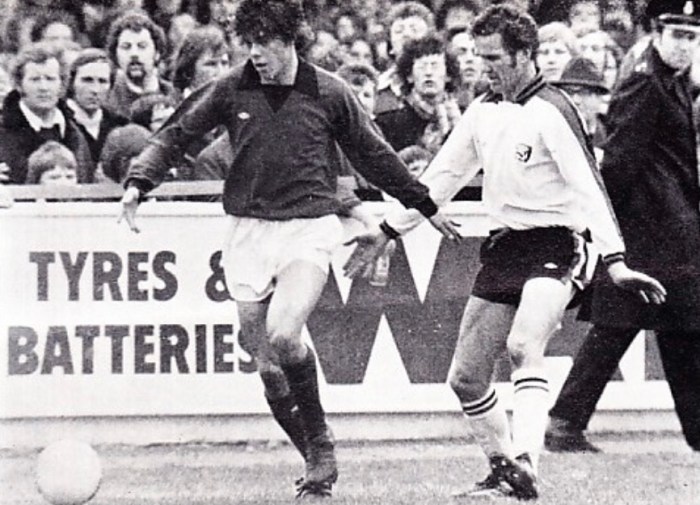
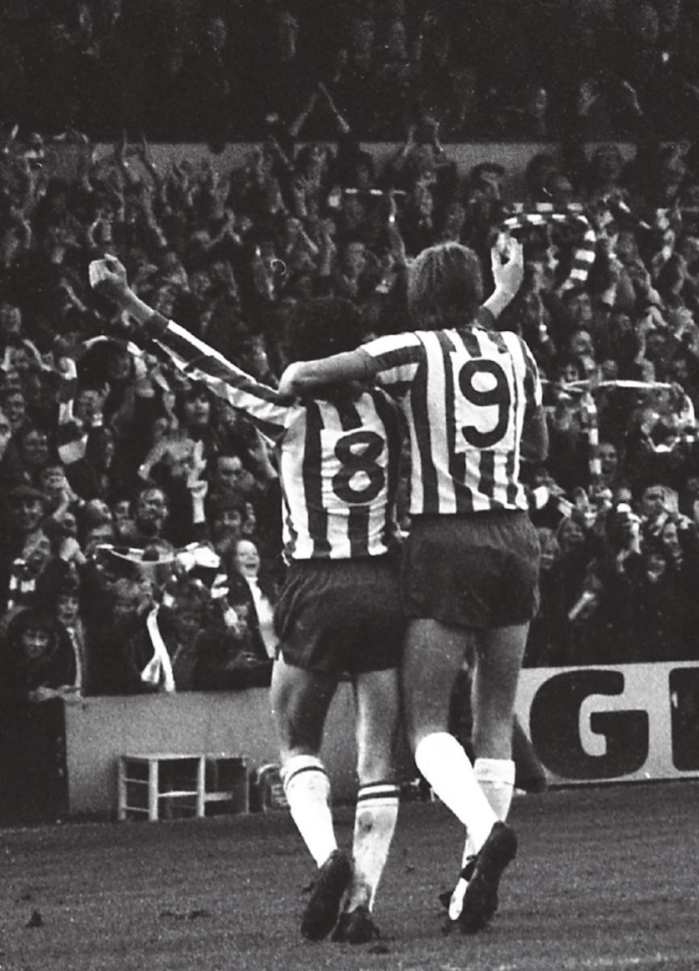
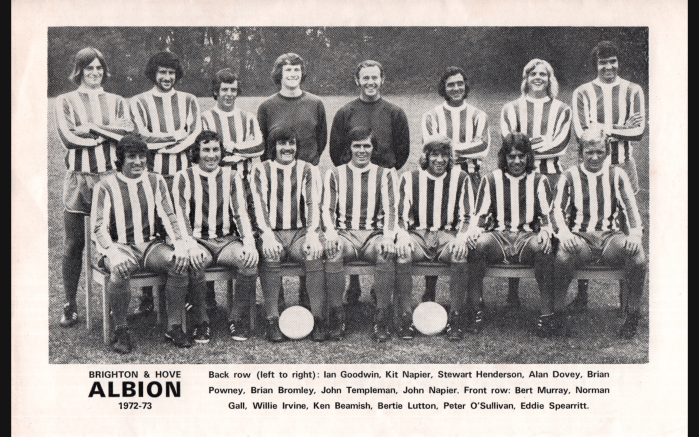
Hardman Ron ‘Chopper’ Harris, their captain in 1967, was still leading the side by the time of the 13 January 1973 game and John Hollins and Tommy Baldwin also played in both. The dismissed Boyle was on the Chelsea bench in 1973. Only John Templeman (right) played in both games for Brighton.

The UK had just joined the European Economic Community (as it was then called) and You’re So Vain by Carly Simon was no.1 in the charts. Albion had moved up a division under Pat Saward having won promotion the previous May, but the side was struggling at the foot of the Second Division, unable to cope at the higher level.

Nevertheless, there were two players looking forward to the cup tie: Bert Murray and £28,000 signing Barry Bridges had both won silverware at Chelsea in the 1960s.

Barry Bridges slots home for Chelsea in a FA Cup tie v Peterborough and, pictured by the Daily Mirror’s Monte Fresco, ahead of the 1973 match against his old club.

“It’s a tremendous draw for the club and a dream draw for Bert Murray and myself who both started our careers at Chelsea,” Bridges told Goal magazine. “Personally, it will be nice to see most of the Chelsea lads again. I grew up with Peter Bonetti, Ron Harris and Ossie (Peter Osgood).”

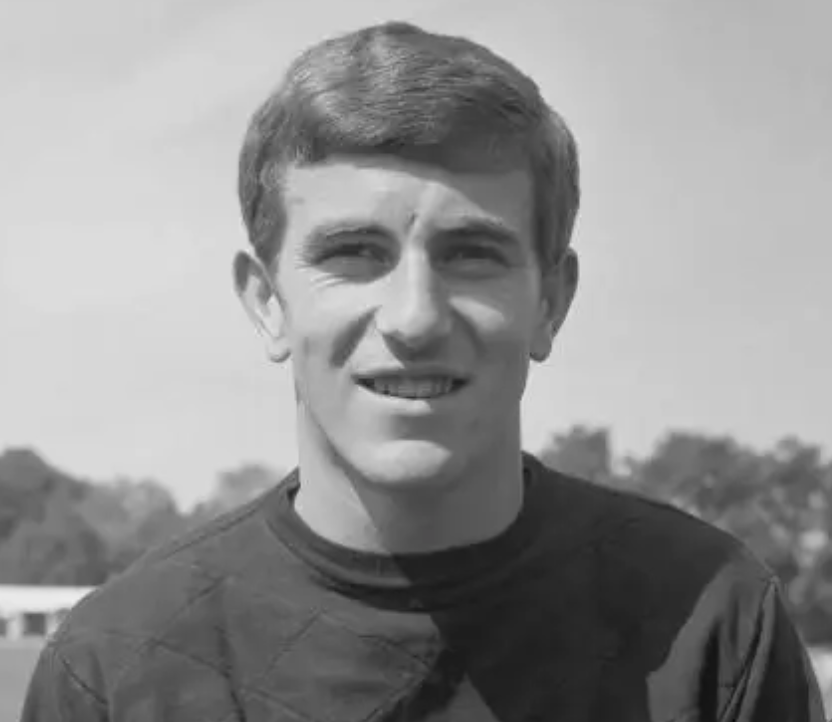
Unfortunately the Albion game was one of several former Worthing schoolboy Bonetti missed through injury and illness in the 1972-73 season, John Phillips deputising in goal at the Goldstone.

How this young supporter recorded the team info in his scrapbook

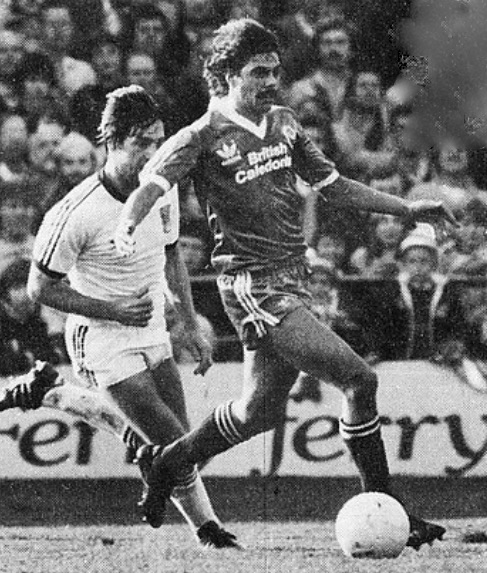
Dave Sexton, a promotion winner with Brighton in 1958, saw his Chelsea side put the ball in Albion’s net within the first 10 seconds of the game but Bill Garner’s effort was ruled out for offside, to the bemusement of the football writers watching. As the game unfolded, not only did it end in defeat for the Albion but it attracted ugly headlines for all the wrong reasons as Harris and Brighton left back George Ley were sent off.

Ley was dismissed in the 85th minute for bringing down Baldwin from behind and then getting involved in a punch-up with England international Osgood, the scorer of Chelsea’s goals in the 17th and 60th minutes, who himself was booked for his part in the altercation.

Albion’s Eddie Spearritt had been the first to go in the book on 23 minutes (for a foul on Alan Hudson) and on 73 minutes was involved in the incident which led to Harris being sent off for the first time in his career.

Esteemed football writer Norman Giller recorded it like this: “Harris got involved in a tussle with Spearritt, and, as he pushed him, Spearritt went down holding his face as if he had been punched. The referee directed Ron to an early bath. All the bones he had kicked, and here was Harris being sent off for a playground push.”

1970 Cup winner Dave Webb went in the book for wiping out Spearritt, joining colleague Steve Kember who was cautioned for fouling Steve Piper. Albion’s Graham Howell also went into referee Peter Reeves’ notebook for taking down Baldwin.

The kicking and aggression on the pitch led to fighting on the terraces with 25 people arrested. And Leicester referee Reeves had to be given a police escort off the pitch.

Former Spurs captain-turned-journalist Danny Blanchflower, writing in the Sunday Express: declared: “This FA Cup third-round tie was as disgraceful as any match I’ve ever seen.”

In the opinion of Albion scribe John Vinicombe in the Evening Argus: “Football anarchy gripped the Goldstone during the last 20 minutes of Albion’s FA Cup tie with Chelsea.

“In the frenzy, players fought one another, hacked and kicked, and the violence tiggered an all-too-predictable chain reaction on the terraces where rival factions became one mass of writhing, mindless hooligans.”

Interestingly, Harris’ dismissal was subsequently overturned, Giller recording: “A Brighton-supporting vicar, with a pitchside view, wrote to the Football Association telling them what he had witnessed, and ‘Chopper’ was vindicated.”

Chelsea made it through to the quarter-finals of that season’s tournament before losing 2-1 to Arsenal in a replay. Arsenal lost in the semis to Sunderland, the Second Division side who stunned the football world at the time by beating Leeds United in the final.
Villa’s Tommy Hughes helped stop rock-bottom Brighton rot

BRIGHTON were in a sorry state floundering at the bottom of the old Second Division when manager Pat Saward turned to a former Aston Villa teammate to borrow his back-up goalkeeper.

Albion had gone on a horrendous run of 14 consecutive defeats between November and February in the 1972-73 season and Saward decided to take regular custodian Brian Powney out of the firing line.

Inexperienced reserve goalkeeper Alan Dovey had twice conceded four goals (in defeats at Preston and Sunderland) during that awful run and between him and Powney they’d conceded 37 goals.

After seeing Albion succumb 3-1 at home to Villa and 5-1 at Fulham, Saward had a word with Vic Crowe, a former Villa teammate who by then was in the manager’s chair at Villa Park, and got him to agree a loan move for Tommy Hughes.

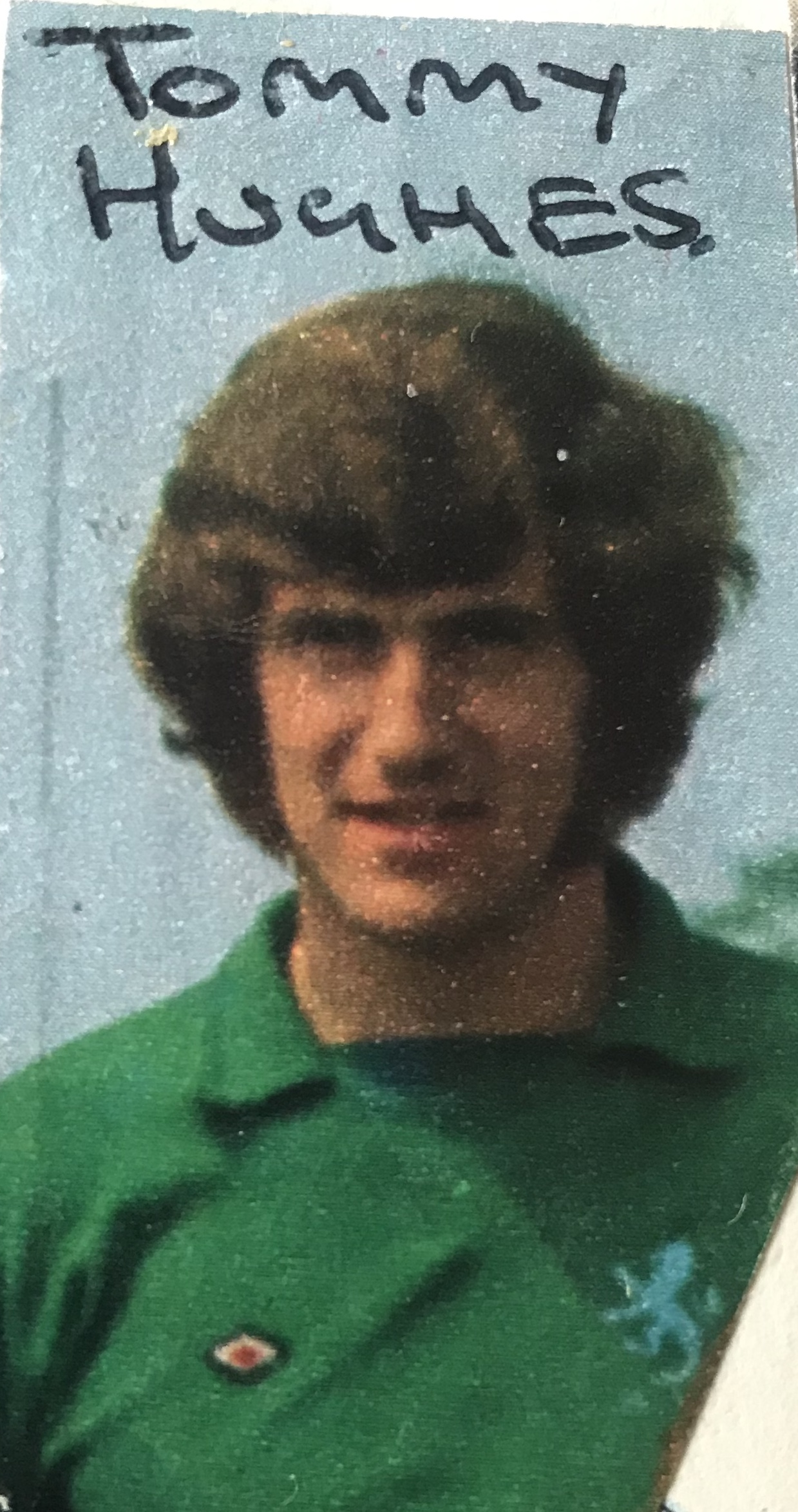
Hughes, who had spent years in Peter Bonetti’s shadow at Chelsea, arrived on the south coast to try to stem the tide and help Brighton get back on the winning trail.

His first run-out for the Albion came in a home friendly against then First Division Stoke City – both sides had been knocked out of the previous round of the FA Cup. Saward also gave a debut to 17-year-old Tony Towner although, unfortunately, Albion were once again on the losing side, 2-0. Nevertheless, the Albion matchday programme said Hughes “had a storming game”.

The losing streak finally came to an end the following Saturday when Hughes made his league debut at home to Luton Town. As well as the change in goal, Saward stuck with Towner on the wing and put another teenager, Pat Hilton, up front alongside Ken Beamish who scored both Albion goals in a 2-0 win.

Unsurprisingly, Hughes kept the shirt for two more league matches, a 3-1 defeat at Bristol City and a 2-0 reverse at Hull City.

Sandwiched between those games, he appeared in a Friday night friendly against visiting Moscow Spartak on 23 February which Albion won 1-0; captain Ian Goodwin scoring the only goal of the game.

Saward wanted to sign Hughes permanently but the powers-that-be couldn’t come up with the required fee and Powney resumed his place. Although Albion put up a bit of a fight, only losing two of the remaining 11 games, winning five and drawing four, the damage had already been done over the winter and they were relegated along with Huddersfield Town.

Hughes at Hereford

Hughes, meanwhile, returned to Villa Park but was soon on the move to a permanent home, where he stayed for many years.

Transferred to Hereford United in August 1973 for £15,000, he became something of a club legend and stayed in the area apart from one brief return to Scotland.

As the official club website noted: “He was an immediate success at Hereford and won the Player of the Year award in his first season and repeated the feat five seasons later.”

Manager Colin Addison brought him in when David Icke, the conspiracy theorist and former BBC sports broadcaster, was forced to retire through injury and regular no.1 Fred Potter was also sidelined.

Hughes made 240 appearances over nine seasons with The Bulls, and was in their Third Division championship-winning side of 1975-76. He later became Hereford’s caretaker manager during the 1982-83 season.

In 2006, he demonstrated his prowess at golf when he became the Herefordshire County Senior Champion. Posting a gross score of 72 at the Sapey course, the local newspaper said he had “produced a championship winning round in tricky conditions”. It added: “The course was beautifully manicured but many competitiors struggled to cope with the extra run and bounce off fairways baked hard after weeks of relentless sunshine.”

Born in Dalmuir, West Dunbartonshire, on 11 July 1947, Hughes started out with Scottish Second Division side Clydebank before Tommy Docherty signed him for Chelsea in 1966.

Only ever an understudy to Bonetti, he played two league games in each of 1966-67 and 1967-68, once in 1968-69 and six times in 1969-70.

His competitive debut came on 19 November 1966, when he was only 19, in a 1-1 Stamford Bridge draw against Sheffield United.

The following month he shipped six as Chelsea were thumped 6-1 at Sheffield Wednesday on New Year’s Eve.

In 1968, he was in the Chelsea side that won 5-3 at Southampton and 2-1 at Sheffield United.

In the six games he played between January and April 1970, he conceded 15 goals which included five goals in front of 57,221 at home to Leeds and five to Everton (who went on to win the First Division title) when 57,828 packed in to Goodison Park. Everton were 2-0 up (through Howard Kendall and Alan Ball) within five minutes of the start!

During his time at Chelsea, he was twice selected to play for the Scotland under 23 side. He made his debut on 3 December 1969 in a 4-0 win over France.

The following March he was between the sticks when the England under 23s beat the Scots 3-1 at Roker Park (his Chelsea teammate Peter Osgood scored twice, Brian Kidd the other) but the game was abandoned on 62 minutes when a snowstorm made it impossible to play the full 90 minutes.

His last game for Chelsea came the following month, on 15 April 1970, when Burnley beat the London side 3–1 at Turf Moor.

After Hughes broke his leg in a pre-season friendly in Holland, manager Dave Sexton brought in John Phillips from Villa to understudy Bonetti and, the following May, the displaced Hughes moved in the opposite direction, for £12,500. Phillips would later spend the 1980-81 season as Albion’s back-up goalkeeper under Alan Mullery.

Hughes might have thought he had finally claimed a no.1 spot of his own in a Villa side that had just been relegated to the third tier. He made his Third Division debut at home to Plymouth Argyle on 14 August.

But he only played 16 games under Vic Crowe before losing his place to Jim Cumbes, who had signed from West Brom. Cumbes was one of those rare breeds of sportsmen who also played county cricket for Lancashire, Surrey, Worcestershire and Warwickshire.

Hughes’ 23rd and last game for Villa saw him make a horrible blunder in a first round FA Cup match at Fourth Division Southend United in November 1971. He dropped a free kick at the feet of Bill Garner (who later moved to Chelsea) who set up Billy Best to score the only goal of the game for the Shrimpers.

The ‘keeper’s long run as Hereford’s first choice came to an end in the 1977-78 season, when new signing Peter Mellor, once of Burnley and Fulham, took over the gloves.

Hughes decided to return to Scotland and signed a one-month contract with Dundee United. He contemplated moving his family back up north permanently, but they wanted to return to Hereford, which they did.

“The club and the fans welcomed him back with open arms and Tommy remained at Edgar Street until he finally hung up his boots in 1982,” said the club website. “Tommy never lost his love for Hereford and jumped at the chance of having spells as commercial manager and even as caretaker manager when the financial situation at Edgar Street was fraught.”

As it turned out, he was to make one final appearance at Edgar Street in the 1983-84 Radio Wyvern Cup Final. He had attended as a spectator but turned out for Worcester City after their ‘keeper Paul Hayward dislocated a finger in the pre-match warm up.

Hughes had a spell as manager of Trowbridge Town but his home remained in Hereford where he ran his own successful carpet-cleaning business for many years.

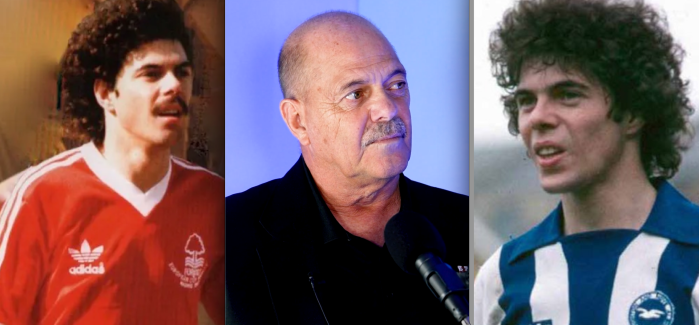
200th Andy Ritchie goal at crumbling Goldstone Ground

WHEN ANDY RITCHIE scored at the Goldstone Ground on 7 September 1996, it was a very different place to the stadium he’d graced as Player of the Year 14 years previously.

Ritchie was in his 20th season as a professional when he scored his 200th career goal for Scarborough against his former Albion teammate Jimmy Case’s Seagulls in a Nationwide Division 3 match.

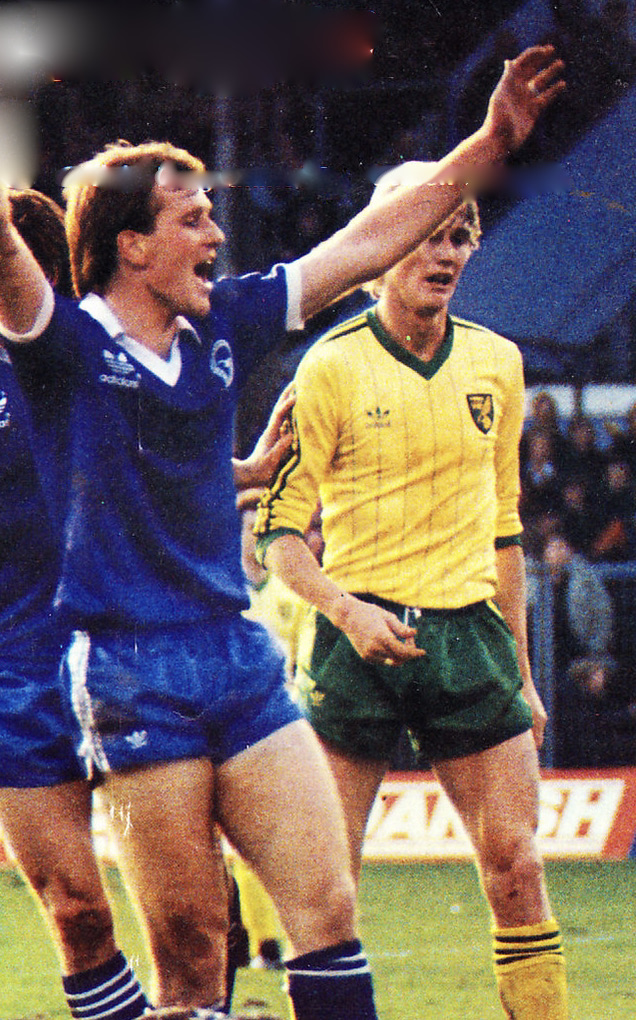
Just 4,008 hardy souls dotted around the crumbling old stadium supported the Albion that afternoon compared to the sell-out 28,800 crowd who packed in to see Ritchie’s last home match in Albion’s attack when they beat Norwich City 1-0, courtesy of a Case goal, in a quarter-final of the 1983 FA Cup.

Ritchie’s last endeavours in Albion’s colours came a week later and, ironically, were in front of 36,700 at Old Trafford on 19 March 1983 when he had a goal disallowed against the club who sold him to the Seagulls for what at the time was a record £500,000.

The curiosity of that deal was covered in my 2017 blog post about Ritchie and I’ve since discovered how a number of observers were dumbfounded by Dave Sexton’s decision to let him leave United.

That Sexton more often preferred the strike pairing of Joe Jordan and Jimmy Greenhoff baffled football writer Mike Anderson who, after Ritchie’s switch to the Albion, detailed how the departed forward’s numbers were more favourable.

“Since making his debut for United against Everton three seasons ago he has proved himself to be a more consistent marksman than the Scottish international,” wrote Anderson.

“By the end of the 1978-9 season Ritchie had scored 10 goals in only 20 full League appearances, compared with Jordan’s nine goals in 44 games. And when last season finished he had hit 13 goals in 23 full games (plus six substitute appearances), whereas Jordan had taken his tally to only 22 goals in 76 games.”

Anderson’s opinion was shared by Tony Kinsella, writing in When Saturday Comes in November 1997, he described Ritchie as “a muscular whippet of a striker with two scorching feet, a delicious first touch, and a bonce of solid granite”.

Kinsella wrote: “In four frustrating campaigns, Ritchie notched an admirable average of a goal every two games, a somewhat superior rate to his cohorts. In retrospect, I guess Ritchie was in the right place at the wrong time. He possessed more skill than Jordan and cut a more daunting physical presence than Greenhoff, but fell short of both when it came to vice versa.

“Sexton, notorious for fielding sides greyer than a Mancunian sky, had the courage to blood a teenage goalkeeper, Gary Bailey, but got cold feet when dealing with the loose cannon that was Andy Ritchie.”

A young Ritchie at Manchester United

In a lengthy chat for the Fore Four 2 podcast, Ritchie revealed how it was Steve Coppell who took him under his wing as a newcomer to the United first team and ensured he got fixed up with a pension; something Ritchie hadn’t even considered.

And his roommate at United was wandering winger Mickey Thomas, who ended up following him to Brighton and also to Leeds!

While Sexton may have had reservations about Ritchie, plenty of other managers were keen to take him from United. Tommy Docherty, who had first signed Ritchie for the Red Devils, had wanted to take him to Queen’s Park Rangers but he was sacked as Rangers’ manager before a bid was in the offing. Chelsea and Newcastle made inquiries too.

Aston Villa offered United £350,000 for him but, after attending with his dad a face-to-face meeting with the glum-faced manager Ron Saunders, they turned down the move feeling he hadn’t conveyed that he really wanted him.

Ritchie also declared: “United were my home town team and I loved it at Old Trafford.

“It had been my aim since joining the United staff to be a success in their first team. I would have got a large amount of money had I gone to Villa, but I put self-satisfaction before money. I had received a lot of encouragement from the training staff at Old Trafford and I wanted to justify their faith in me by doing well at United.

“I knew that a transfer would mean adjusting to a side playing a different style of football. I felt that I might just as well spend that time proving I was worthy of a place at United where I was part of possibly the best club in the country. Unfortunately, I found myself playing reserve team football again until Brighton came in for me.”

In a 2019 interview with the Albion website, Ritchie remembered: “We always had a good team spirit and we all used to go out together. Everyone played golf and we’d be out in the nightclubs, Bonsoir and others where you had to wipe your feet on the way out.

“Great times, absolutely fantastic. And the spirit transferred itself onto the pitch. I used to joke at Q&As that we had so many great individuals but put us together and we were crap because the social life got in the way of our football. But no, it was a fantastic club to be involved in.”

Ritchie attended a rugby-playing grammar school and played cricket and hockey for Cheshire, only turning to football at 13 or 14. He played for Manchester and Stockport Boys and scored six goals in nine games for England schoolboys under skipper Brendan Ormsby, who went on to play for Aston Villa.

In the 1983 Shoot! album, Ritchie explained: “It was while I was playing for Stockport Boys that I first realised I had a chance of a career as a professional footballer.

“I was selected for the England Under-15 side and played at Wembley Stadium. The first was against Wales. We won 4-2 and I scored a couple of goals. I then scored another when England beat France 6-1. They were great moments for me and my family.

“Appearing for England was definitely the highlight of my young career but I also enjoyed playing for Stockport and in local Sunday football.

“I played for a team called Whitehill, who were sponsored by Manchester City. It was then that I realised I could play for the Maine Road club.

“I had trials with Leeds United, Burnley and Aston Villa, but I only wanted to play for City.”

It was while playing for Stockport Boys v Manchester Boys that former United captain Johnny Carey, scouting for his old club, spotted Ritchie and made an approach.

“I went down to The Cliff (United’s training ground) and never looked back,” he said. “It didn’t take me very long to soak in the atmosphere and appreciate the tradition and name of Manchester United and, in the end, I was quite happy to sign for the Old Trafford club.”

Ritchie was 15 when he put pen to paper, and he turned professional on 5th December 1977.

Handed his first start in United’s first team shortly after his 17th birthday, he played four matches without scoring but had caught the eye of the England Youth selectors. He made four appearances under joint managers Brian Clough and Ken Burton, making his debut in a 3-1 win over France on 8 February 1978. England drew the return leg of that UEFA Youth tournament preliminary match 0-0.

He went with the England squad to Poland for the 31st UEFA Youth tournament in May 1978, played in a 1-1 draw v Turkey and a 1-0 defeat v Spain but a trapped nerve in his hip meant he sat out the 2-0 defeat to Poland that meant England didn’t qualify from their group. That squad included Terry Fenwick and Vince Hilaire, Tony Gale and Ray Ranson.

“The following year I was selected for England Youth again for the Mini World Cup in Austria. Unfortunately, I went over on my ankle in training and could not make the trip,” Ritchie recalled.

Ritchie hoped his move to Brighton might boost his chances of gaining a full England cap, but he ended up winning a solitary England under-21 cap when he was called up by the same Dave Sexton who’d sold him from United! “That really was a bit bizarre,” Ritchie later recalled.

He featured in a 2-2 draw with Poland at West Ham’s Boleyn Ground on 7 April 1982. Fellow striker Mark Hateley scored both England’s goals.

Ritchie in action for Leeds against Brighton

Ritchie’s time with Leeds was something of a mixed bag. The record books show he scored 44 times in 159 matches after he was signed by player-manager Eddie Gray. Playing in the second tier at the time, Leeds still had Gray, Peter Lorimer and David Harvey from the Revie era but Ritchie joined a mainly young side where the likes of John Sheridan, Tommy Wright and Scott Sellars were developing.

As Tony Hill observed on motforum.com: “Much of his time at Leeds was spent in dispute over his contract and for over a year he was on a weekly contract before moving to Oldham Athletic for £50,000 in August 1987.”

It was at Oldham where Ritchie really made his mark, scoring 82 goals in 217 league games (including 30 as a substitute) and helping them reach the League Cup Final and the FA Cup semi-final in 1990 and to win the old Second Division in 1991.

In 2020 the club’s official website declared: “Andy Ritchie is regarded as a club legend at Oldham Athletic and one of the greatest players to play for the club, having served Latics as a player as well as having a spell as manager.”

That goalscoring return to the Goldstone with Scarborough in early September 1996 came a year after he had joined the Seadogs as player coach on a free transfer. It was one of 17 he netted in the league from 59 starts and nine appearances from the bench.

By then a couple of months short of his 36th birthday, thankfully the Seagulls prevailed 3-2 courtesy of goals from Stuart Storer and two from Craig Maskell (the 99th and 100th of his career).

It certainly wasn’t the first time Ritchie had netted against the Seagulls. Twenty months after departing the Goldstone he scored the only goal of the game, tapping in from eight yards out, when Leeds beat the Seagulls at Elland Road.

He also scored for Oldham to knock Albion out of the FA Cup when the Latics won 2-1 in the fourth round on 27 January 1990. In a 1-1 draw at the Goldstone two months later, Ritchie missed a penalty but he made amends the following season scoring home and away against the Albion, netting twice in their 1 December 1990 6-1 thumping of the Seagulls on Oldham’s plastic pitch and scoring both when the Latics left the Goldstone 2-1 winners on 2 March.

He returned to Oldham on 21 February 1997 after Neil Warnock took him to Boundary Park as his player-assistant manager. He scored three times in 32 appearances, many of which were as a sub.

But when Warnock left to join Bury at the end of the following season, Ritchie was appointed as his successor. He managed 179 games, winning 59, drawing 45 and losing 75 with a win percentage of 32.96%.

After being sacked in 2001, he was out of work for three months before being appointed academy director at Leeds at a time when fellow ex-Man Utd player and coach Brian Kidd was head coach under Terry Venables and David O’Leary.

He found himself out of work again in 2003 when Peter Reid took charge but six months later he joined Barnsley, initially as academy manager before becoming first team coach under Paul Hart.

When Hart left Barnsley in March 2005, Ritchie was appointed caretaker manager and then landed the position permanently in two months later.

At the end of the following season, he led the club to a penalty shoot-out win over Swansea City in the League One play-off final at the Millennium Stadium, Cardiff.

But the Championship season was only four months old when Ritchie was relieved of his duties with the Tykes struggling in the relegation zone.

Four months later, he was appointed manager of League One Huddersfield Town and told the club’s website: “There’s such massive potential here.

“There is no doubt that the club is geared up for promotion to the Championship and that has to be the aim now. It’s now a case of getting the players re-motivated and once we get into the Championship, we can reassess the situation.

“I tasted promotion last season and it was a great feeling – now I want to do it again as soon as possible.”

Unfortunately, he wasn’t able to steer the Terriers to that goal and, after a 4-1 defeat against his former employers Oldham, he parted company in April 2008.

They won only 22 of his 51 games in charge although they did enjoy their best FA Cup run for 10 years which only came to an end in the fifth round when they were beaten 3-1 by a Chelsea side under Avram Grant that included Wayne Bridge and Steve Sidwell.

After all that, Ritchie returned in a watching brief to where it all began: at Old Trafford.

On matchdays, he worked as an ambassador in a hospitality lounge, and contributed to MUTV and Radio Manchester.

Back-up ‘keeper Alan Dovey’s limited chances to shine

THE LIFE of a back-up ‘keeper can be pretty soul destroying, with first team opportunities often few and far between.

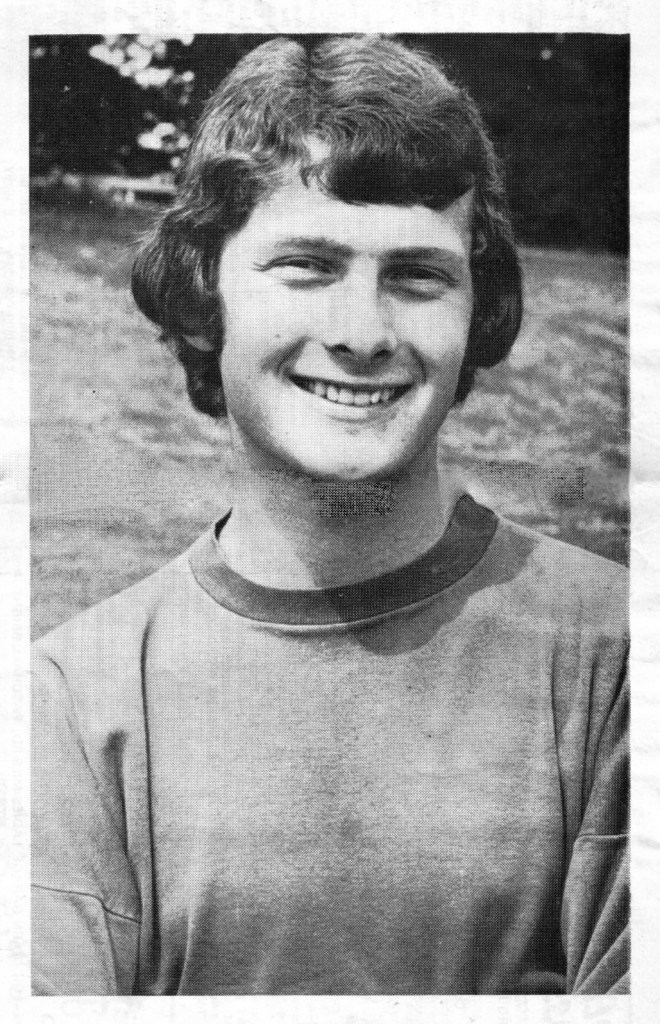
Such was the lot of former Chelsea youngster Alan Dovey, who was deputy to longstanding no.1 Brian Powney at the start of the 1970s, and only played eight first team matches for Brighton in two years.

Dovey initially joined on loan in March 1971. Powney’s rival for the no.1 shirt at the start of the season had been the experienced Geoff Sidebottom but he had been forced to retire because of a head injury.

Saward subsequently brought in Ian Seymour from Fulham on a temporary basis when Powney was out for three games, but Chelsea boss Dave Sexton, who’d previously played for the Albion, did his old side a favour by lending them youth team goalie Dovey until the end of the season.

He had to wait until the last two games before getting his chance to shine, making his debut in a 3-1 win away to Bristol Rovers and then appearing in the season’s finale at Wrexham, which ended in a 1-1 draw.

The loan became a permanent transfer that summer, Albion securing the young ‘keeper’s services for £1,000.

He played three times in Albion’s 1971-72 promotion season, and manager Pat Saward appeared content with the youngster, telling Goal magazine “It’s hard having to leave him out again, but what can you do. Chelsea manager Dave Sexton did us a great favour when he let Alan go for £1,000.”

His first game of the season was at Carrow Road, Norwich, when Albion were knocked out in the second round of the League Cup 2-0.

However, under the headline ‘Dovey’s daring display’ the matchday programme declared: “Despite the 2-0 defeat, the former Chelsea goalkeeper had a fine game and thrilled spectators with some daring saves. He had been nursing an injury and this was an in-at-the-deep-end experience but he came through it with great credit.”

It was more than three months before he got his next first team outing, but he once again earned rave notices for his performance in a 2-1 win away to York City, earning Albion’s Man of the Match accolade from Evening Argus reporter John Vinicombe.

The following matchday programme reported: “It was ‘all go’ for Alan. He had to race out of his goal in one York raid and was booked for an infringement, and also had numerous adventures in keeping out shots, centres and breaking up penalty box scrambles.”

Dovey was only ever back-up to Brian Powney

Saward didn’t next call on Dovey until 15 March, a 1-0 home defeat to Oldham Athletic which temporarily put the brakes on Albion’s bid for automatic promotion. Remarkably, that game against Oldham (which also saw a debut as substitute from new signing Ken Beamish) was the first time Dovey had played in front of the Goldstone faithful.

When Albion entertained Exeter City in the first round of the League Cup on 16 August 1972, the crowd may have been 6,500 down on the attendance for the season opener against Bristol City four days earlier but the game presented Dovey with another chance to show what he could do. (The game also saw the return of former captain John Napier to the centre of defence, although he was most likely being ‘shop windowed’ with a view to a transfer).

It is interesting to read an Exeter-angled summary of the game, which declared: “There was no denying that the first half belonged to City, and they deservedly led after 22 minutes with Fred Binney’s goal. There were a few moments early on when the back four and reserve goalkeeper Alan Dovey were little more than strangers in the night. 

“Eventually the pattern knitted together and Dovey gained confidence to make two fine saves in the last 20 minutes from Binney (who two years later joined the Albion in exchange for John Templeman and Lammie Robertson) and Dick Plumb – shots that could so easily have caused a shock defeat.”

Albion eventually prevailed thanks to goals from Willie Irvine and Beamish.

The two league matches Dovey featured in that season were not games he’d look back on fondly. Away to Preston North End on 25 November, Albion’s rookie ‘keeper conceded four when he deputised for ‘flu-hit Powney.

It was the same scoreline at Sunderland, who hadn’t won in 11 games, but who went on to reach that season’s FA Cup Final in which they famously beat Leeds United 1-0.

The Wearsiders hadn’t won at home since September but Brighton went to Roker Park having lost their previous nine matches and, according to the Sunderland Echo, “The winning margin could well have been doubled…. they applied themselves to the task of mastering Brighton’s strong-arm tactics and taking them apart.”

Sunderland took the lead in the ninth minute. Joe Bolton’s hammered left-foot shot struck Dovey in the face, knocking him over, and Billy Hughes pounced on the rebound to drive home a low shot.

Dennis Tueart added a second in the 45th minute and Brighton found the going tougher still in the second half.

After surviving a goalmouth scramble, Sunderland got their third goal in the 58th minute. A free-kick against George Ley for pushing Tueart was taken by Bobby Kerr, whose well-placed drive to the near post was brilliantly headed into goal by Hughes.

Hughes twice came close to completing a hat-trick but it was Bolton who hit what the Echo described as the goal of the game: “a right-foot drive, of such power that Dovey had no chance”.

Struggling to come up with a solution to the disastrous run, Saward went public and started to point the finger at players who he reckoned weren’t cutting it.

Dovey was transfer-listed along with veteran defender Norman Gall and Bertie Lutton. Lutton got a surprise move to West Ham but Gall stayed put and Dovey was released at the end of the season without playing another game.

Born in Stepney on 18 July 1952, Dovey grew up in Chadwell St Mary in Essex and played for Thurrock Boys before joining Chelsea straight from school in 1968 after writing to them to ask for a trial.

He became a youth team regular as well as playing a handful of games for the reserves. On 18 January 1969, he was in goal for a Chelsea side (which also included future first teamer and England international Alan Hudson) when they beat Brighton 5-2 in a South East Counties League youth team fixture.

It was always going to be difficult for Dovey to progress at Stamford Bridge because Worthing-born Peter Bonetti was an almost permanent fixture in Chelsea’s first team and he was understudied initially by Scotland under-23 international Tommy Hughes (who later played three games for the Albion on loan from Aston Villa in 1973) and then future Welsh international John Phillips, who was briefly Graham Moseley’s back-up during Albion’s second season (1980-81) in the First Division.

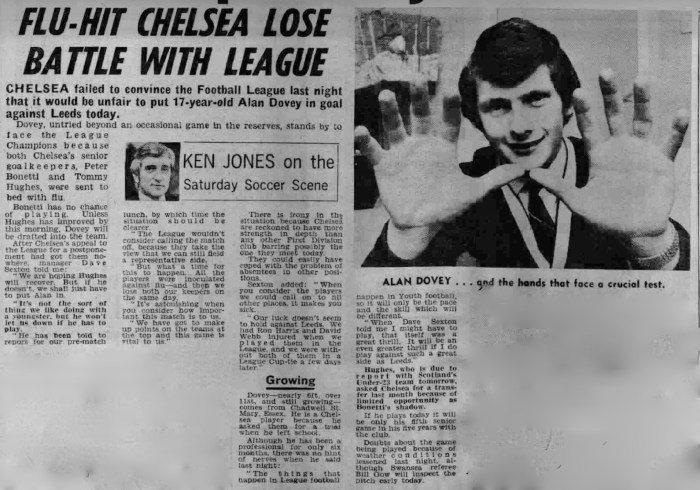
However, Dovey made national newspaper headlines when he came close to making a first team appearance on 10 January 1970.

Both Bonetti and Hughes went down with ‘flu ahead of a key match between third-placed Chelsea and Leeds United, who were in second place. Chelsea tried to get the game postponed but the Football League wouldn’t hear of it.

The Daily Mirror reported: “Chelsea failed to convince the Football League last night that it would be unfair to put 17-year-old Alan Dovey in goal against Leeds today.

“Dovey, untried beyond an occasional game in the reserves, stands by to face the League Champions.”

Veteran football reporter Ken Jones wrote: “Bonetti has no chance of playing. Unless Hughes has improved by this morning, Dovey will be drafted into the team.”

Chelsea boss Sexton told Jones: “We are hoping Hughes will recover. But if he doesn’t, we shall just have to put Alan in.

“It’s not the sort of thing we like doing with a youngster, but he won’t let us down if he has to play.”

Jones noted that although Dovey had only been a professional for six months, he didn’t display any nerves when interviewed.

“The things that happen in League football happen in youth football,” Dovey told him, “so it will only be the pace and the skill which will be different.

“When Dave Sexton told me I might have to play, that itself was a great thrill. It will be an even greater thrill if I do play against such a great side as Leeds.”

As it turned out, Hughes was adjudged fit after all, although he might have regretted it. In what was only his fifth senior game in five years at the club, he shipped five goals as United won 5-2 in front of a Stamford Bridge crowd of 57,221.

In August that year, Dovey was once again on standby to step up to the first team squad when Hughes suffered a broken leg. But Sexton went into the transfer market instead and bought Phillips from Aston Villa.

The Goldstone Wrap in 2014 noted Dovey stepped away from full-time football after the Albion let him go to pursue a career in insurance. Nevertheless, he played part-time for various Sussex clubs.

Notably he was at Southwick, along with former Albion teammate Paul Flood, at the same time as Ralf Rangnick, later to take temporary charge of Manchester United, was on their books.

Dovey also played for Worthing for three seasons, in their double promotion-winning squad of the early ‘80s, until, in April 1984, manager Barry Lloyd publicly criticised him, telling the Argus: “Alan has done exceptionally well for us over the past three years, but he’s not really aggressive enough in this premier division.”

Isaac’s long, long wait for an Albion win

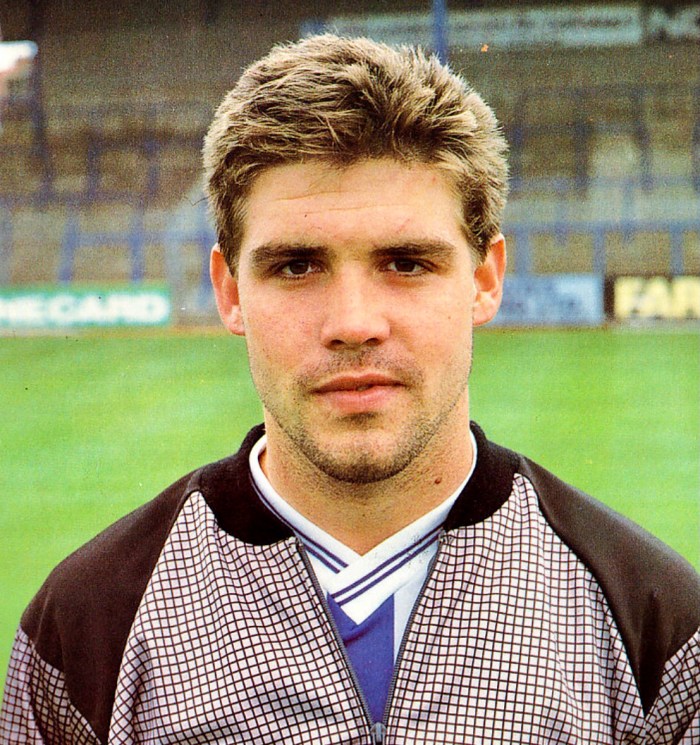
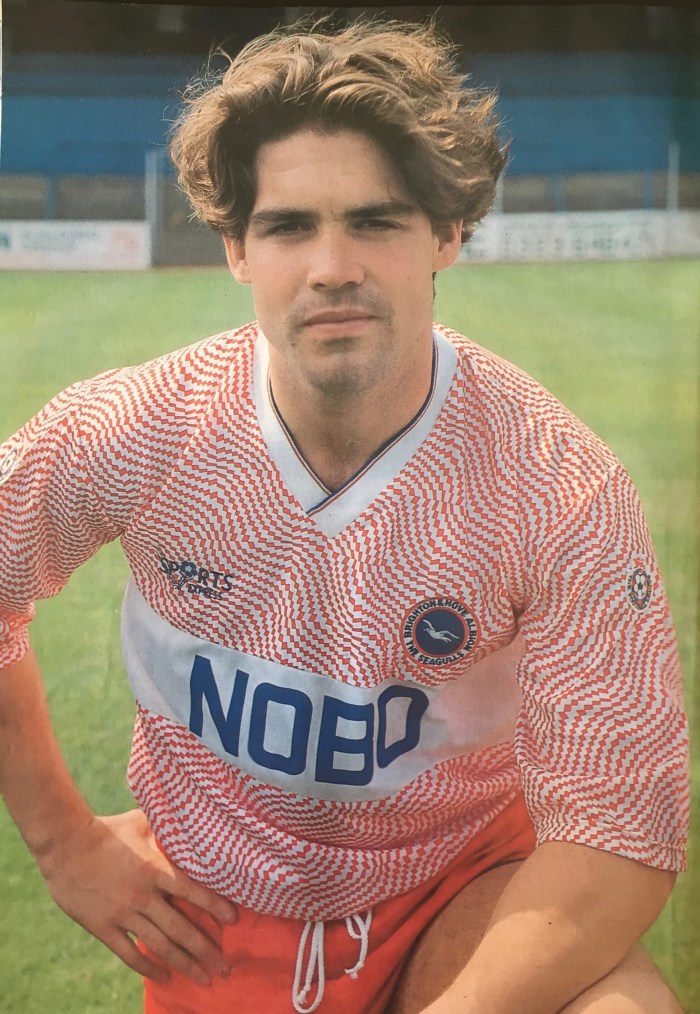
IT seems extraordinary to think Robert Isaac had to wait FOURTEEN MONTHS to experience a win as a Brighton player after joining the club from Chelsea.

The young defender who had realised every schoolboy’s dream by playing for the team he’d always supported left a disgruntled dressing room at Stamford Bridge only to join a side sliding inexorably toward the relegation trapdoor of what is now the Championship.

“I must admit it was a bit depressing at first because we just couldn’t do anything right,” Isaac told Dave Beckett in an Albion matchday programme article. “We just had no luck at all; if we had I think we might well have survived in Division Two.”

Isaac also appears to have gone out of the frying pan into the fire. Telling thegoldstonewrap.com how he’d left Chelsea because the management was losing support of the players and he wanted regular first team football, he added: “When I joined Brighton in February 1987 they were in freefall. The dressing room was even more at odds with the manager than at Chelsea.

Barry Lloyd dropped Dean Saunders, our only hope of surviving the drop. I found Barry rather rude. He’d blank me in the corridor and make me train on my own.”

The young defender made his Seagulls debut on 21 February 1987 in a 2-1 defeat at home to Oldham Athletic and featured in four draws and five defeats by the season’s dismal end.

Back at what was for so long Albion’s normal level of third tier football, Lloyd’s side did begin to pick up points – but Isaac wasn’t involved because of a groin strain and a troublesome hernia injury that sidelined him for months.

“I had stomach trouble quite a lot but no-one could put their finger on the problem until I saw a specialist in Harley Street,” he explained.

“After the operation, I was out of action for the best part of six months and at times I didn’t think I would get back to full fitness. I had around 40 internal stitches and even when I began playing again they would stretch and pull and I felt sick after games.”

It wasn’t until March 1988, with Albion in sixth spot, that Lloyd shook things up, initially drafting Isaac in at right-back in place of Kevan Brown, and then selecting him to replace suspended captain – and Isaac’s former Chelsea teammate – Doug Rougvie at centre back alongside Steve Gatting.

Isaac also stepped in when Rougvie missed a couple of games with a ‘flu virus and, although a win in Seagulls’ colours continued to elude him in his first three games back in the side (a defeat and two draws), he kept the no.5 shirt ahead of the rugged Scot. That elusive win finally came in a 2-1 away win at Notts County on 4 April.

Five wins and a draw followed and the successful run-in saw promotion gained as divisional runners-up behind Sunderland. Isaac was one of three former Chelsea players in that back four, with Gary Chivers (who’d arrived from Watford) at right-back and Keith Dublin at left-back.

Dublin had played for England under 19s with Isaac three years earlier. They both played four games in Dave Sexton’s side at the Toulon Tournament in the south of France in 1985 (England beat Cameroon 1-0 and Mexico 2-0, lost 2-0 to the USSR and succumbed 3-1 to France in the final at the Stade Mayol in Toulon).

Sadly, the subsequent fortunes of the two players went in opposite directions: Dublin went on to become such a success with the Seagulls that he was the 1989-90 Player of the Year and was sold to Watford for £275,000; the injury-beset Isaac had to quit the game after only 33 matches in a Brighton shirt.

After Albion bounced back to the second tier, the defender played in the first 11 matches of the 1988-89 season – eight of which were defeats – but his appearance in a 1-0 defeat away to Leicester turned out to be his last as an Albion player.

“I got injured at Leicester,” he recalled. “I didn’t feel it until the next day and then it really hit me. My knee just blew up. Come Monday morning I couldn’t even walk.”

He required an operation to repair the patella tendon in his left knee and, as he sought to regain fitness, spent a fortnight at the National Rehabilitation Centre at Lilleshall.

Meanwhile, Lloyd signed experienced central defender Larry May (whose own playing career would be ended by injury later that season) and, subsequently, Nicky Bissett.

A programme item in the 1989-90 season reminded supporters that Isaac was still around, although he hadn’t played at all throughout 1989.

Looking ahead to 1990, Isaac said: “I just hope I have a better year. I’d like to think that I deserve it after all the frustrations of the last few years with two major operations.”

Sadly, it didn’t happen and in August 1990, he was forced to quit football. After retiring, he worked as a chauffeur for the Maktoums, the ruling family in Dubai, before running his own vehicle business.

Born in Hackney on 30 November 1965, Isaac was Chelsea through and through from an early age.

“We lived in Chelsea and my great grandfather went to the first ever match at Stamford Bridge,” he told thegoldstonewrap.com. “My family have been going to matches home and away since. I went to see Chelsea play Stoke in the (1972) League Cup Final aged six.”

Isaac went on to join the club as a junior, made his reserve team debut at the tender age of 15 and was named Chelsea’s young player of the year in 1984.

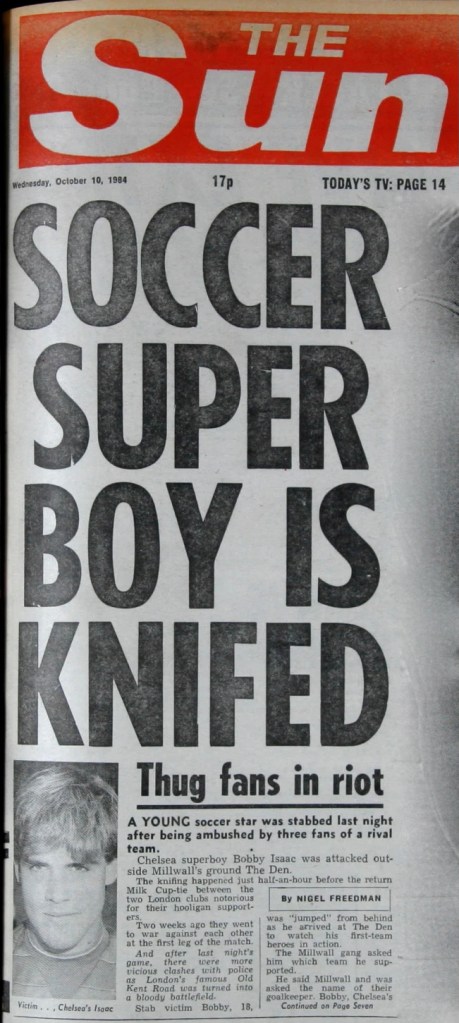
It was on 9 October 1984 that his promising career could have been snuffed out before it had even begun: it’s a horrifying tale, told the following day on the front page of The Sun, and covered in detail by that1980sportsblog.

Three knife-wielding Millwall thugs slashed his back from his shoulder to the base of his spine in a dark alley near the south London club’s notorious old stadium, The Den.

Isaac needed 55 stitches to repair the damage and only the thickness of a leather coat he was wearing prevented the wound being potentially life-threatening.

Remarkably, later the same season, in March, he had recovered well enough to make his Chelsea first team debut in a 3-1 win at Watford, although Eddie Niedzwiecki, a Chelsea coach who later worked with Mark Hughes for Wales and at several clubs, told Kelvin Barker’s Celery! Representing Chelsea in the 1980s: “He was a young, up-and-coming apprentice at the time and luckily he managed to pull through, although he never really recovered from it.”

In the 1985-86 season, Isaac played two league cup games for Chelsea and three times in the league. The following season saw him get a mini-run in the side, playing four consecutive league games in November, but his fifth match – a 4-0 home defeat by Wimbledon in which Rougvie was sent off in the first 10 minutes for headbutting John Fashanu – proved to be his last.

The website sporting-heroes.net said of him: “A steady, reliable centre-half and occasional full-back, Robert did little wrong during his time in the Chelsea first-team, but was unfortunate to play for the club at a time when Colin Pates, Joe McLaughlin and, a little later, Steve Wicks, were all demonstrating their considerable talents at the heart of the defence.”

Isaac asked for a transfer after a disagreement with manager John Hollins and his assistant Ernie Walley, and that led to his transfer to Brighton for a £50,000 fee.

Boylers’ service appreciated both sides of the Atlantic

MIDFIELD enforcer John Boyle was born on Christmas Day 1946 and went on to play more than 250 games for Chelsea.

Towards the end of his career, he spent two months on loan at Brighton trying to bolster the Albion’s ailing midfield in the dying days of Pat Saward’s spell as manager.

Indeed, Boyle was in that unenviable position of being at the club when the manager who brought him in was turfed out, and the man who replaced him (in this case none other than Brian Clough) swiftly dispensed with his services and sent him back to Chelsea.

By then, Boyle’s time at Chelsea was at an end and, after his 10-game Goldstone spell was also over, he went the shorter distance across London to play for Orient, before ending his playing days in America with Tampa Bay Rowdies.

Born in Motherwell, Boyle went to the same Our Lady’s High Secondary school that spawned Celtic greats Billy McNeill and Bobby Murdoch and, just around the time he turned 15, his stepbrother, who lived in Battersea, organised through a contact they had with then boss Tommy Docherty for him to go down to London for a trial.

He did enough to impress and 10 days later Chelsea sent him a letter inviting him to join their youth team, together with the train ticket from Motherwell to London.

“When I got off the train, Tommy Doc was waiting for me to take me to my digs,” Boyle told chelseafc.com in a recent interview. “I stayed in the digs that Bobby Tambling and Barry Bridges had stayed in before.”

Boyle – known to all as ‘Boylers’ – made his debut in the 1965 League Cup semi-final against Aston Villa and, at 18, it couldn’t have been much more memorable.

“I played on Monday in a Scottish youth trial and Wednesday I was playing against Aston Villa in the semi-final of the League Cup,” Boyle recounted. “After 20 odd minutes, I tackled this guy and he got injured and carried off. The crowd then booed me, he limped back on and then the crowd booed me more!

“It went to 2-0, to 2-2 and then with about 10 minutes to go I got the ball 30 yards out, rolled it forward and went crack and it went into the top corner of the net. I remember Terry Venables ran up to me and said ‘John, I am so pleased for you,’ and that was my first game. To score the winning goal in your first game was Roy of the Rovers stuff.”

He went on to become Chelsea’s youngest ever cup finalist when he was in the team that won the trophy. In those days, it was played over two legs, and, after beating Leicester City 3-2 in the home game, they drew the away leg 0-0. His teammates in the second leg were Bert Murray and the aforementioned Bridges, who he would go on to play alongside at Brighton in 1973.

The Goldstone Ground was familiar territory to him. On 18 February 1967, he was famously sent off for the visitors in a FA Cup 4th round tie when Albion held their more illustrious opponents to a 1-1 draw in front of a packed house. Chelsea went on to win the replay 4-0 and that year went all the way to the final where Boyle was part of the side who lost 2-1 to Spurs. In another fiery FA Cup tie between Brighton and Chelsea, in January 1972, Boyle was Chelsea’s substitute as they won 2-0 in a game which ended 10 a side, George Ley and Ron Harris being sent off.

john boyle chels blueWhen Docherty moved on from Stamford Bridge, and Dave Sexton took over as manager, Boyle’s involvement in the side was more sporadic, as he told fan Ian Morris on his Rowdies blog.
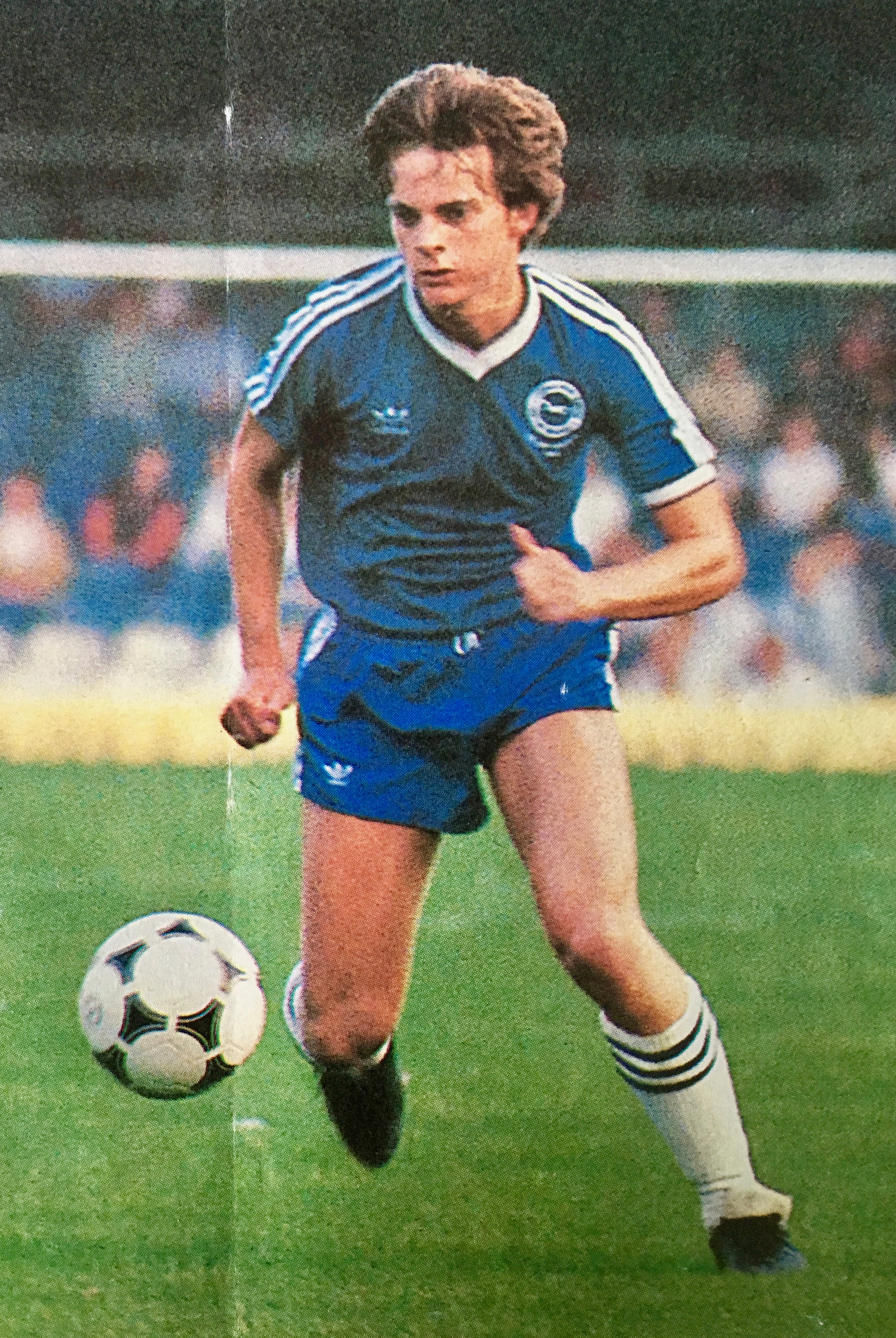
“Dave appreciated my energy and willingness, but I don’t think he really fancied me as a player. Basically, I became an odd-job man, filling in here and there, and in football it doesn’t help to get that reputation,” he said.

Although he wasn’t in the squad that beat Leeds in the 1970 FA Cup Final, he was back in the side when Chelsea beat Real Madrid over two legs in May 1971 to win the European Cup Winners’ Cup.

After Brighton’s disastrous 1972-73 season in the second tier – the general consensus is that they’d not properly been prepared for promotion and didn’t invest sufficiently in the team to have a fighting chance of staying up – the side continued to be in the doldrums as they adjusted to life back in the old Third Division.

Manager Saward was struggling to come up with the right formula and, having transferred former captain Brian Bromley to Reading, sought to boost his midfield with the experienced Boyle, who was surplus to requirements at Stamford Bridge.

With the paperwork signed on 20 September, Boyle was handed the no.8 shirt and made his debut alongside Ronnie Howell in a 0-0 draw away to Grimsby Town.

He made his home debut the following Saturday, but the Albion went down 1-0. Three days later, this time partnering Eddie Spearritt in the middle, Boyle helped Albion to a 1-0 win at Oldham Athletic.

After a 3-1 defeat away to Blackburn Rovers, at home to Halifax Town Boyle had a new midfield partner in John Templeman. But again they lost by a single goal.

With Howell back alongside him for the home game v Shrewsbury Town, Albion prevailed 2-0 in what turned out to be Saward’s last game in charge. Perhaps by way of another interesting historical note, Boyle was subbed off to be replaced by Dave Busby, who became the first black player to play for the Albion.

Caretaker boss Glen Wilson retained Boyle in midfield for the midweek 4-0 hammering of Southport and he was also in the line-up for Clough’s first game in charge, a 0-0 home draw against York City on 3 November. But the 2-2 draw away to Huddersfield Town on 10 November was his last game for the Albion.

As someone who’d gained something of a reputation as enjoying the social side of things at Chelsea, particularly with the likes of Peter Osgood, Charlie Cooke and Alan Birchenall, it maybe doesn’t come as too big a surprise to learn that Clough advised him “always buy two halves instead of a pint, or people will think you’re a drinker”.

Boyle was still only 28 when he tried his hand in Florida in February 1975, being appointed Tampa Bay Rowdies captain, and leading them to victory in the Super Bowl against Portland Timbers in August that year.

His former Chelsea teammate Derek Smethurst scored 18 goals in that inaugural season, playing up front alongside ex-West Ham striker Clyde Best, while former Crystal Palace ‘keeper Paul Hammond was in goal.

A newspaper article about Boyle’s contribution resides on tampapix.com, a hugely entertaining site featuring loads of players of yesteryear who turned out for the Rowdies.

It somewhat flamboyantly says: “‘Captain Rowdie’ John Boyle was a barrel-chested midfielder with legs as white as snow and hair as thin as a wheat crop during a summer drought.  He became the role model for the club, as much because of his leadership as well as the fact that he knocked opponents ‘grass-over-tea kettle’ when they came his way.”

He retired from playing in November the same year but, two years later, he stepped in as Rowdies coach when Eddie Firmani quit. However, he had also gone into the pub business in the UK and ultimately the need to be behind the bar at Simon the Tanner in Bermondsey, with his wife Madeline, meant he had to turn his back on the sunshine state and return to London.

Unable to resist the lure of the States once more, Boyle played five matches for indoor league side Phoenix Inferno in the 1980-81 season.

In that wide-ranging interview Boyle gave to chelseafc.com earlier this year, he said: “I wouldn’t change a thing in my life, I am just grateful for what I have done. I have been blessed and one of the great things about it is 50 years later you can still talk about it! I was a lucky young man to have played when I did and meet the people I did.”


Cup Final was highlight for Irish rookie Gary Howlett

HowlettGARY HOWLETT is probably the least well remembered player of Brighton’s 1983 FA Cup Final side.
There were plenty of other characters, goalscorers and headline makers to detract from the contribution of a quiet lad from Dublin who almost sneaked into the side under the radar.

That Wembley appearance was only his 11th senior appearance in the Albion first team. Can you imagine?

And as the history books now tell us, he actually only made 26 more appearances for the Seagulls before being transferred to Bournemouth.

Born in Dublin on 2 April 1963, Howlett’s football career began at the famous Dublin-based Home Farm club, which produced dozens of footballers who went on to make names for themselves in England and Ireland; players like Paddy Mulligan, Mick Martin and Ronnie Whelan.

Howlett followed suit and had Manchester United and Coventry City keen to sign him. He chose Coventry because manager Gordon Milne made him feel more welcome. Unfortunately, just when he thought he had the chance of a first team breakthrough, Milne was sacked and his replacement Dave Sexton let him go as part of a cost-cutting measure that saw a dozen players leave the club.

In May 1982, he was back home in Dublin watching the FA Cup Final between Spurs and QPR on TV. Not in his wildest dreams did he imagine just a year later he would be playing in what was then a showpiece occasion watched by a worldwide audience.

Coventry’s youth team manager, John Sillett, had tipped off Mike Bailey about Howlett’s availability and the Albion took him on. Howlett was soon involved in first team training and believed he was on the verge of making the team away at Coventry, of all places, in early December 1982. But Bailey was sacked and it wasn’t until the beginning of March that Howlett finally made the step up.

He was a non-playing substitute for successive away games against Swansea City and West Ham and then, on 22 March 1983, newly-appointed manager Jimmy Melia gave him his first start, at home to Liverpool. And what a debut! The youngster scored as the Seagulls held the league leaders to a 2-2 draw.

With fellow Irishman Gerry Ryan sidelined by injury, Howlett kept his place in the team for a couple more games, sat out two, and then returned to the starting line-up.

Because Ryan was not 100 per cent fit, it was Howlett who got the nod for the FA Cup semi final match against Sheffield Wednesday. He then retained his place for the remaining six league games before being picked for the Cup Final itself.

That momentous match on 23 May 1983 was only 13 minutes old when the young Dubliner made a telling contribution to the game.

It was his chipped diagonal pass over Manchester United centre back Kevin Moran that found Gordon Smith, who arched a header past Gary Bailey to put the Seagulls in dreamland.

Howlett told the press after the match: “I saw Gordon at the back of the goal and just dipped it over Moran.

“I was dying to do something good out there and when the goal came I couldn’t believe it.”

Howlett told the Argus he wasn’t overawed by the occasion but had felt nervous when the national anthem was played.

“Until then all the lads were laughing and joking. It was a great atmosphere beforehand – very relaxed,” he said.

With Albion snatching a replay, Howlett, aged just 20, got to play on the hallowed turf a second time five days later, thus getting the sort of opportunity that eludes the vast majority of players throughout their entire careers.

He was subbed off on 74 minutes (Ryan replacing him) but the game was dead and buried by then anyway.

For Gary Stevens, that Cup Final was the stepping stone to a glittering career. Unfortunately for Howlett, it was the pinnacle and his career never subsequently reached such heights.

Interestingly, in a matchday programme interview with Spencer Vignes in 2004, Howlett reflected that he should have worked harder to ensure he built on that early success.

“Gary Stevens was only a year older than me. After the cup final, he knuckled down and said ‘I want more of this’. I just thought it was going to happen naturally. I didn’t realise I was going to have to work at it.

“That’s the difference between the likes of me and the real pros, people like Roy Keane. Nothing will get in their way.”

Only five years after those two appearances at Wembley, Howlett was turning out in front of 2,500 crowds at York City’s Bootham Crescent.

There had been one brief bright spot, though, and that came when he represented his country.

On 3 June 1984, he earned a full international cap as a 55th minute substitute in a 1-0 win against China.

That Republic of Ireland team also included Brighton teammates Tony Grealish and Ryan. Mick McCarthy was in central defence and the side was captained by Frank Stapleton.

In the season leading up to that, Howlett managed just 17 appearances, plus two as sub, and in the first part of the 1984-85 season he appeared just six times.

In December 1984, Melia’s replacement, Chris Cattlin, sold Howlett for £15,000 to the then Division 3 Bournemouth, where Harry Redknapp was the manager.

Among his teammates at Dean Court were future multi-club manager Tony Pulis and the much-travelled striker Steve Claridge.

Howlett spent four years with the Cherries, making 60 appearances, although he said he was never the same player after damaging his knee ligaments. In his final year, he was sent out on loan to Aldershot and Chester City. At Aldershot, former Seagull Michael Ring was among his temporary teammates.

Howlett at Aldershot

In January 1988, he made a permanent move to York City, and in three years playing in Division Four with the Minstermen, Howlett played a total of 119 games and contributed 13 goals.

He left them in 1991 and went back to Ireland to play for Shelbourne. He also played for Crusaders and was on the coaching staff of Bohemian FC.

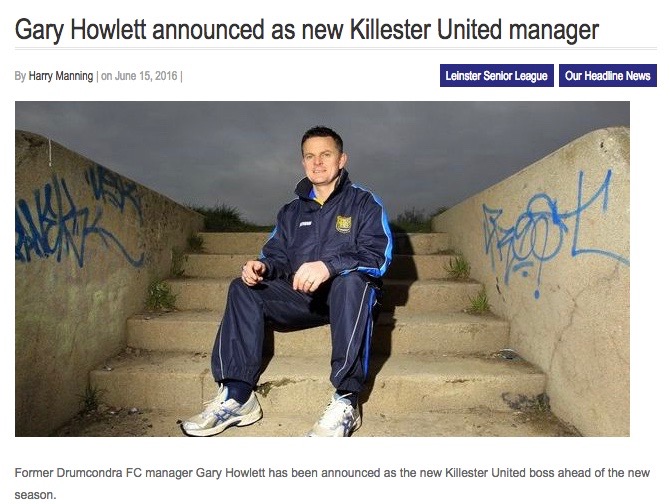
Howlett spent nine seasons as manager of Drumcondra in the Leinster Senior League, before switching to their rivals Killester United in 2016.

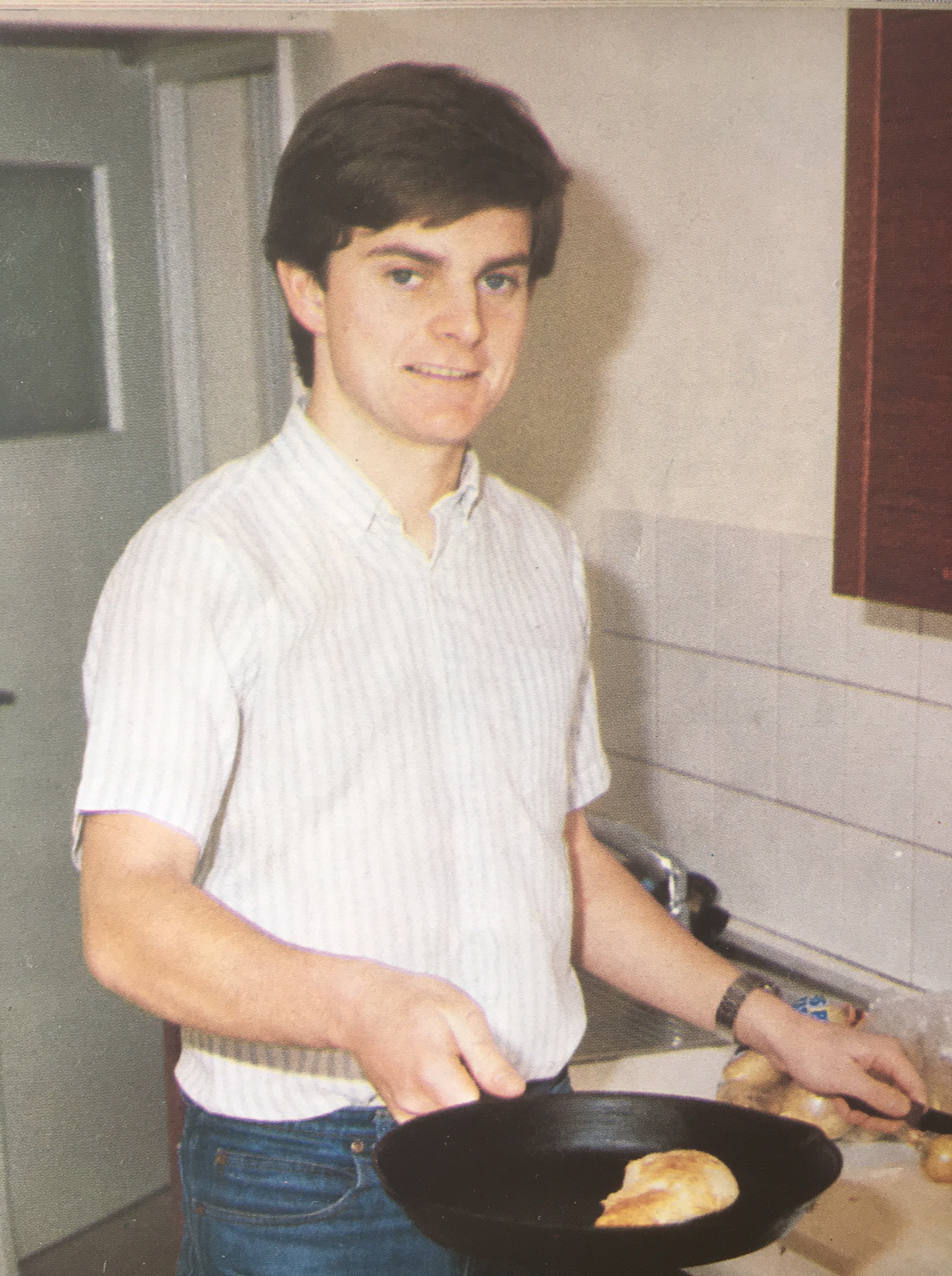
1 howlett2 howlett prog cover3 Howlett cooks by Tony Norman4 howlett now

  • Pictures show Gary Howlett’s entry in the Cup Final programme, on a matchday programme cover, Tony Norman’s shot of him cooking at home and a screen grab of him following a recent managerial appointment. Also, a montage of other headlines and action pictures.

Barry Lloyd’s turbulent time as Brighton boss

Screen Shot 2021-05-05 at 09.51.14

HISTORY may have judged Barry Lloyd’s reign as Brighton manager unfairly: while bleak times cloud the memory, the former Fulham captain did chalk up some successes.

For instance, it’s worth remembering he put together two of the most entertaining strike partnerships in Albion’s history.

However, when managers start getting involved in the boardroom, it’s probably not going to end well and that certainly proved to be the case after Lloyd was handed the role of managing director.

Frankly, there is probably not enough space in one blog post to cover the various off-the-field shenanigans that were an ugly backdrop to the Lloyd era.

From an outsider’s perspective, it appeared he was the unfortunate public figure put up to deal with a huge amount of flak generated by others wielding power in the background.

Inheriting the hotseat at a time of financial turmoil, from a distance it could be said he did well to win promotion as well as coming mighty close to restoring the elite status lost in 1983.

But fans who had seen huge success under high profile bosses were not best pleased to see their club’s fortunes put in the hands of someone who had previously only managed outside of the league.

Let’s look first at Lloyd’s playing career because, from early on, he was obviously a shrewd observer who made contacts he would be able to call on in later years.

Born in Hillingdon on 19 February 1949, Barry’s early footballing ability was rewarded with selection for the Middlesex and South of England schoolboy sides. He was signed up by Chelsea and was in their 1964-65 youth team alongside former Albion right-back Stewart Henderson in defence and future England international and Chelsea legend Peter Osgood up front.

In an extended interview with Fulham’s club historian, Dennis Turner, Lloyd recalled: “I chose Chelsea because under Tommy Docherty’s management they were an exciting team, with the likes of Osgood, Charlie Cooke and Bobby Tambling.”

Former Albion player Dave Sexton was the reserve-team manager – “a really nice man and terrific coach” – and Lloyd says in his four years at Stamford Bridge he learned a lot.

He made his debut in the top flight in April 1967 aged just 18, but competition for places was tough and, after only 10 first team appearances, in January 1969 he moved to neighbours Fulham with their centre half John Dempsey moving in the opposite direction.

lloyd-fulham-goal

Fulham were struggling for survival in the old Second Division having been relegated from the top flight and the man who signed him, Bill Dodgin, was their fourth manager in a year.

They dropped down into the old Third Division but as part of his rebuilding, Dodgin made Lloyd captain in succession to the legendary Johnny Haynes, who was coming to the end of his career.

Lloyd is pictured below getting in a header against the Albion at the Goldstone, watched by John Napier (left) and Stewart Henderson. The packed East Terrace never looked like that by the time Lloyd was sitting in the Albion manager’s chair.

Lloyd at Goldstone

Fulham regained their tier two status in 1971 when they went up from Division III as champions. Manager Dodgin was sent packing in the summer of 1972, though, and Alec Stock took over, famously bringing in a number of top name players nearing the end of their careers – notably one Alan Mullery, along with Bobby Moore.

Lloyd remained part of the set-up but when Fulham surprised everyone by reaching the FA Cup Final against West Ham in 1975, he had to be content with what in those days was the single substitute’s berth on the bench, and didn’t get on.

Nonetheless, he chalked up 290 games for Fulham, before having brief spells at Hereford and Brentford (where Dodgin was the manager) and ending his playing days with Houston Hurricanes in the United States.

“I lived in Texas for a year. The league was never going to last but I learnt a lot about how the game can be promoted. They were very good at that over there,” he said in a matchday programme article. “Everyone was made to feel part of the club. It was an interesting experience; I’ve never regretted going.”

During his brief time at Hereford, Lloyd had an eye to the future and took his full coaching badge at Lilleshall, which wasn’t far away.

After his time in America came to an end, he got his first managerial experience with Yeovil Town (then a non-league club) and then headed to Sussex where he took Worthing from the Second Division of the old Isthmian League to runners-up in the Premier Division.

It was in 1986 when he got the call from Mullery to become reserve and youth team manager at the Albion. Dodgin was also on the staff.

lloyd desk

In January 1987, Mullery was unceremoniously dumped and Lloyd came out of the shadows to take charge. Perhaps what fans didn’t know at the time was that the day after Mullery left, Lloyd was summoned to a meeting with chairman Bryan Bedson and told to “get rid of everyone” because the club was going bust.

Against that backdrop, it was 15 games before the side managed to register a win under Lloyd and, unsurprisingly,  Albion were relegated. Some of the mainstays of the side, like Danny Wilson, Eric Young and Terry Connor were sold. Fortunately, Lloyd was able to re-invest part of the proceeds from those sales in some buys who gelled together to form a promotion-winning team.

Screen Shot 2021-05-03 at 20.37.12He returned to former club Chelsea to secure the signing of centre back Doug Rougvie who was made captain and he paired left winger Garry Nelson, a £72,500 signing from Plymouth, with tenacious Scot Kevin Bremner, from Reading, to lead the line. Nelson in particular was a revelation, scoring 32 goals and voted player of the season.

Lloyd reckoned the backbone of the side were two other shrewd signings: Alan Curbishley and Gary Chivers. “Alan was a very level-headed guy, an excellent passer and really disciplined,” he told Spencer Vignes in a matchday programme article. “Chivers was exactly the same, and a real joker at the same time. But there were a lot of great individuals in that side.”

The following two seasons saw Albion maintain their status with lower half finishes but, with the Goldstone Ground crumbling and debts mounting, there was little investment in the team and Lloyd had to use all his contacts to try to find some gems.

One was former England international winger Mark Barham, another was a former Soviet international, Sergei Gotsmanov, a real crowd-pleaser obviously capable of playing at a higher level (as was proved when he opted to join Southampton the following season).

Then, in 1990-91, he rescued two forwards languishing with also-ran clubs in Europe and together John Byrne and Mike Small were superb in attack as Brighton made it to the play-off final at Wembley only to lose 3-1 to Neil Warnock’s Notts County.

No-one had been expecting Brighton to get a tilt at promotion, particularly as the season had once again begun with big money departures of players like Keith Dublin and John Keeley.

But with Byrne and Small on fire and former Fulham and Chelsea winger Clive Walker added to the squad they clawed their way into contention and famously clinched the play-off spot on the last game of the season, courtesy of Dean Wilkins’ curling free kick past Ipswich Town’s Phil Parkes.

Another crucial signing that season was thanks to one of Lloyd’s old Chelsea teammates, George Graham. The Arsenal boss loaned cultured central defender Colin Pates to the Seagulls and he proved a mainstay in the final third of the season. Pates would later sign permanently.

Even though they were clearly beaten by the better side on the day, looking back now, I don’t think anyone could have realised what bad news it was for Albion not to win the final against County.

Starved of the funds promotion would have delivered, Lloyd was forced to sell star performers Small and Byrne and, 11 months after appearing at Wembley, Albion were relegated back to the third tier.

Lloyd had tried to repeat his previous successful European scouting mission with two former league players, but the hapless Mark Farrington turned out to be one of the worst buys ever, managing to score one solitary goal while former Arsenal youngster Raphael Meade fared slightly better but only just got into double figures.

Mark Gall, a £45,000 signing from Maidstone, arrived towards the end of October and ended up top goalscorer and was player of the season, but his 14 goals were still not enough to spare the team from the drop.

In the following season, the very survival of the club was under serious threat with the taxman chasing an unpaid bill. Lloyd rescued the club at the 11th hour by managing to secure a £350,000 fee for goalkeeper Mark Beeney (bought two years earlier from Maidstone for £25,000), former Albion winger Howard Wilkinson buying him for League Champions Leeds United.

With the financial issues continuing in the background, a run of only two wins in 18 league games in the first half of the 1993-94 season eventually brought the Lloyd era to an end – the axe wielded by chief executive David Bellotti, who had arrived only a month earlier.

Fans who were euphoric to see Lloyd go might well have felt differently if they’d known what would eventually transpire, but that’s a story for another day.

The record books show Lloyd made a total profit of £1.2m in his seven years at the helm and he certainly knew his way around the transfer market, particularly in Europe, when it was a lot less fashionable than it is today.

Another of his discoveries was Dean Wilkins, playing for FC Zwolle in Holland, and in 2007 – 14 years after he had left the Albion – Lloyd returned as chief scout during Wilkins’ reign as first team manager.

Also part of the set-up then was director of football Martin Hinshelwood, who had been Lloyd’s assistant during his time in the dugout. Lloyd later returned to the club to assist in the recruitment department but retired in 2021.

He died aged 75 on 28 September 2024 and players in the Chelsea v Brighton game that afternoon wore black armbands in tribute to him.

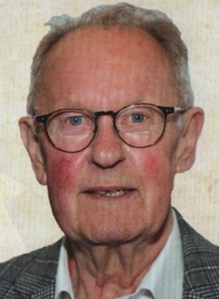
Lloyd in 2022