

IT ALMOST certainly wouldn’t have occurred to the loyal few Albion fans who followed the basement division Seagulls in exile in 1998-99 that one of the men in stripes would go on to make a difference to the lives of hundreds of footballers.
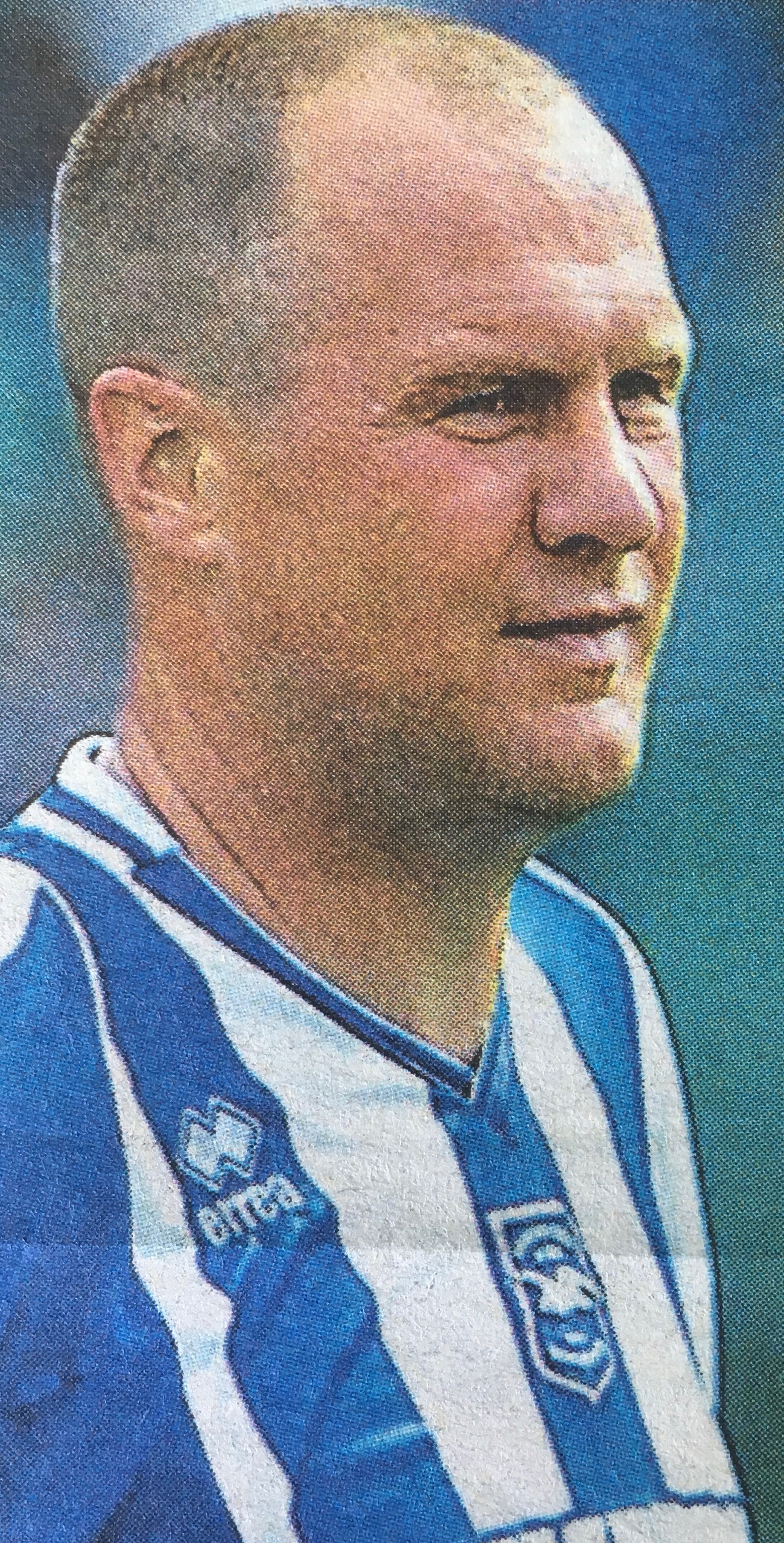
Brighton was the eighth and last league club Michael Bennett played for over the course of 12 years in which he discovered all the highs and lows that footballers can experience.
Since packing up playing, those personal insights helped him to begin a journey that led him to help huge numbers to cope with the game’s often-unseen stresses and strains.
Bennett became a psychotherapist, gained a degree and led the setting up of a counselling and mental health and wellbeing support network for the Professional Footballers’ Association, where he worked for 15 years, latterly as director of player wellbeing. In that role, he was frequently a media spokesman for the PFA.
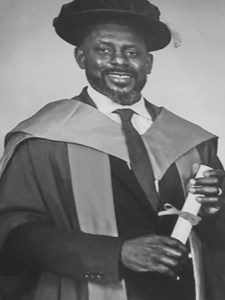
Now running his own counselling business it’s all a far cry from the days when his league playing career ended filling a variety of positions in Brian Horton’s fourth-tier Brighton team, playing home games in exile at Gillingham. In one game, he was racially abused by a Swansea City fan who ran onto the pitch to confront him (more of which, later).
It was quite a fall from career highlights that saw him play for England at under-20 level alongside the likes of Matt Le Tissier, David Batty, Neil Ruddock and Tim Sherwood, make his debut at 17 in the top division for Charlton Athletic alongside John Humphrey, Colin Pates and Steve Gritt, and feature for Brentford (with Chris Hughton and Neil Smillie) when the Bees played second-tier football for the first time in 38 years.

While Addicks fans remember Bennett fondly, Bees supporters are a lot less generous and mainly recall a training ground incident in which the player broke a teammate’s jaw with a single punch.
The internet can be – and is – many things and unfortunately for people like Dr Bennett, such past incidents are still recorded for all to read about.
Thankfully, all the excellent work he has achieved in the health and wellbeing field is also documented and, in October 2021, Andy Naylor of The Athletic did an in-depth piece which examined his journey in detail.
“The story of his rise to prominence as a leader in his field is inspirational, a demonstration that with application, determination and drive you can build a career in the game that extends well beyond playing football,” wrote Naylor.
Bennett eschewed a coaching career (even though he passed his UEFA B licence) and at college, while studying Maths and English, was urged to take up counselling. As Naylor reported: “By 2004, Bennett had his degree in it and the following year he set up his own company, Unique Sports Counselling.”
Three years later, he joined the PFA as southern region education adviser aiming to get players to prepare for life after football. He also invited attendees to his workshops to speak to him privately about emotional issues – and he discovered there were plenty who took up the offer.
Eventually he persuaded then PFA chairman Gordon Taylor of the need for a designated wellbeing department dealing with the welfare of players.
In 2015, Sam Wallace of The Independent interviewed Bennett for an article about troubles ex-Arsenal and England full-back Kenny Sansom was facing. He discovered the year before the PFA had requests for support from 197 of its members.
“That is some caseload for Bennett, a man who talks in the careful, measured tones of someone used to dealing with problems that must seem intractable,” wrote Wallace. “Last year, the PFA established a 24-hour telephone helpline for members. Safe to say, it is not underused.”
The problem, Bennett told Wallace, is that the elite-level game prepares footballers physically but not emotionally. “What we realise is players often don’t get asked how they are. They get asked about football. When they get asked about their emotions, they tend to open up.”
After a 2017 presentation by Bennett to first and second-year scholars at Norwich City, Canaries’ assistant head of education and welfare Mike Macias told Press Association Sport: “When they see it and hear it coming from someone like Mickey, who has been there, done it and bought the T-shirt, they will think: ‘This impacts me and there is someone there to help me’.”
When Bennett left the PFA earlier in 2025, he said: “I am proud of the work we have done within the department which has grown into a vital and impactful part of the PFA’s mission, ensuring that wellbeing remains at the heart of everything we do.”
Among dozens of messages of thanks for his contribution left on his LinkedIn account was one from former Albion and West Ham midfielder George Parris, who wrote: “A great stint Dr Bennett, thanks for all your help, support and encouragement not just to myself, but loads of other people along the way during your time at the PFA.”
Born to Jamaican parents in Camberwell on 27 July 1969, Bennett was raised in a block of flats near Millwall’s old ground, The Den, and it was only when he was spotted by Charlton playing Sunday League football that thoughts of a professional career in the game arose.
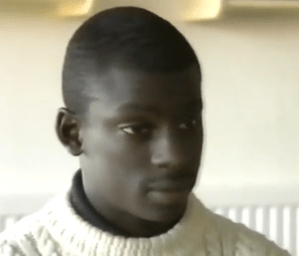
He went straight into the Addicks academy at 16 and made his debut in Charlton’s first team a year later. In his interview for The Athletic, he said: “You move from a youth team changing room to a first-team changing room. People don’t talk about that transition but that, for me, was pressure. I’ve gone from having jokes and banter with the boys in the youth team to the first team.
“The pressure intensifies. You put it on yourself more than anything else, because you don’t want to let anyone down.”
He continued: “The first well-being issues came when I signed for Charlton. I went from parks football, having fun, to going into a pressurised environment where results are key and you know if you have one or two bad games there’s somebody behind you waiting to take your spot.
“So, the pressure for me was constant. I wasn’t able to deal with that, I didn’t know who to talk to about it. I’d already formed my personality going into the game. I’m a very talkative person and I like to talk about stuff. There wasn’t anyone to do that with.”

On top of the various issues he was facing as a young player, he then ruptured his anterior cruciate ligament and crushed the cartilage in his knee against QPR in December 1988 which sidelined him for nine months. By his own admission, when he eventually returned to action he was not the same player, concerned over whether the injury would happen again.
On the fans forum Charlton Life: ‘Amos on the wing’ wrote: “One of the good guys Mickey Bennett. Good player, but was never quite the same player after his bad injury against OPR in 1988.”
Another poster, Leroy Ambrose, said: “One of my favourite players from the ‘Sellout’ era (ed: Charlton played ‘home’ games at Selhurst Park at the time). Good bloke – my mate was a mascot back when he was playing and he and his parents were thrilled at how nice he was, and how much time he took with them during the pre-match kickabout and after the game.”
And Ormiston_Addick added: “Started brilliantly for us, great pace and drive but never the same player after doing his knee. Great little period in 88-89 with our ‘Black Magic’ front line of Bennett – Leaburn – Williams – Mortimer.”
‘Home’ continued to be Selhurst Park between 1990 and 1992 after Bennett switched to then top division Wimbledon, who rented Palace’s stadium because their own Plough Lane wasn’t up to scratch for the top division. But Bennett was never a regular for the Dons and he and Detzi Kruszynski were used as makeweights in the transfer of Dean Holdsworth from Brentford to Wimbledon.
He joined just as Brentford began playing second tier football for the first time since 1954 but the elevation didn’t last long. They were relegated in bottom place come May 1993 although Bennett was a fixture in the side, playing a total of 43 league and cup matches plus six as a sub, and scoring four goals.
The Brentford fans forum bfctalk declared: “Despite losing Chris Hughton in December to a career ending injury, no real replacement was signed until March by which time the rot had well and truly set in. Mickey Bennett flattered to deceive and was a one game in four merchant, Detzi Kruszynski had an aversion to training and hard work.”
In another post, the forum said Bennett had “started out like a house on fire as a direct and goal hungry right winger and we thought we had discovered a new star, but he too flattered to deceive”.
It was what happened in November 1993 that many Bees fans of a certain vintage remember. Bennett had his contract terminated by manager David Webb after breaking transfer-listed teammate Joe Allon’s jaw in three places with one punch in a training ground incident.
But the PFA backed Bennett’s version of the incident and took Brentford to a Football League commission of appeal which decided the player should be reinstated. However, Bennett knew his position in the Griffin Park dressing room was untenable, and he was released by mutual consent.
The incident was back in the spotlight five years later when the media was pondering what fate awaited John Hartson for his infamous West Ham training ground kick in the head of teammate Eyal Berkovich.
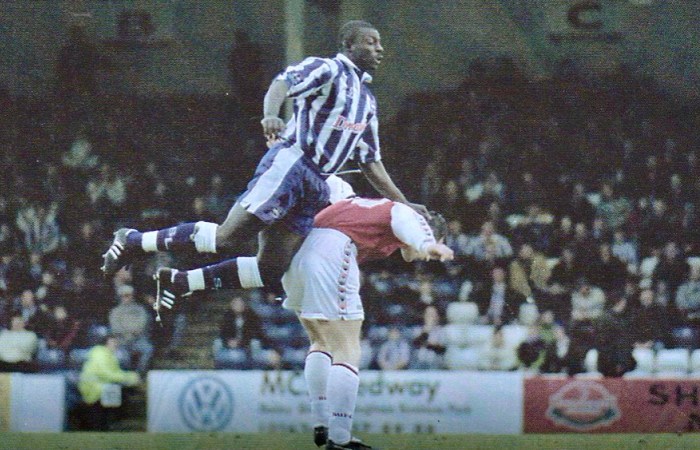
Bennett, by then playing for Brighton, told a reporter: “Obviously you can’t do that sort of thing to a teammate and I would prefer to leave that memory where it belongs – in the past.”
He added: “You have to get on with life, and I have no complaints. What happened between me and Joe Allon was little more than handbags at six paces – that’s why the PFA got involved and stood my corner.”
Bennett also said: “What happened to me at Brentford was way back. Right now, I’ve got other things on my mind, like trying to score my first goal of the season for Brighton.”
However, when an enterprising journalist caught up with Allon, he said: “Mickey broke my jaw in three places with a single punch in an unprovoked attack. There had been no history of ill-feeling between us and something inside him must have snapped.
“He just flipped, I collected a punch on the chops and got carted off to hospital, where they operated on me and wired up my jaw. I was in hospital for about 10 days and out of football for three months.
“The funny thing is that Mickey was supposed to be a born-again Christian, and I couldn’t work out how such a religious bloke could just clock one of his teammates.”
For all Bennett’s desire to steer clear of headlines for the wrong reason, it was while playing for Brighton away at Swansea City on 5 February 1999 that he was in the spotlight again when he was racially abused by a home supporter who ran onto the pitch.
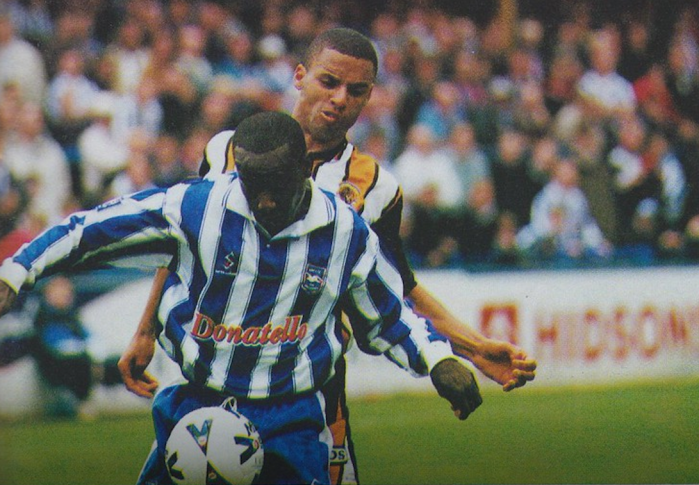
“I was shocked by it,” he told Naylor of The Athletic in 2021. “I knew it was bad because I couldn’t function in the game after that, my head had gone.
“The police came to me and asked what I wanted to do. For a split second I remember thinking, ‘I just want to get on the bus and go home’. The other side of me thought, ‘If I don’t do something, that person could do something to another player’.”
The case went to court and the 29-year-old assailant, who admitted racially abusing Bennett and invading the pitch, was sent to prison for a year and banned from watching in a football league ground for three years.
The player told The Argus: “All of a sudden, I turned around and saw this fan running towards me. He was coming closer and closer.
“I remember thinking to myself should I just take a punch or what do I do? Then a steward and one of their players jumped in front of him when he was about a foot away from me and hauled him off.
“For five minutes I was a bit shaky. He could have done anything to me.
“After that I just got on with the game and tried to cancel it out, but when the police came to me after the game to take a statement it brought it all back again.”
By the time of that match, Jeff Wood had succeeded Horton, the manager who’d taken on Bennett after he’d impressed enough on trial in pre-season games against Lewes and Crawley to be awarded a one-year contract.
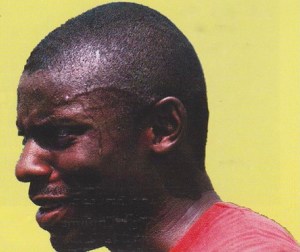
The matchday programme introduced him as “a versatile right sided player who can operate at anywhere down the right side or in the centre of midfield”.
He started off in central midfield alongside Jeff Minton and later was used as a central defender. That autumn, he clocked up his 150th League appearance in a 2-0 defeat to Cardiff City, where he’d spent the opening three months of the 1996-97 season. Having left Brentford, he’d gone back to Charlton briefly before barely featuring in the 1995-96 season at Millwall. On leaving south Wales, he spent a year at non-league Cambridge City, and at Christmas 1997 returned to the league at Orient under Tommy Taylor.
Before facing the Os in a first round FA Cup tie in 1998, Bennett told The Argus: “I knew Tommy Taylor from my time at Charlton and I figured in one game away to Exeter, then four or five more as a sub before I was eased out.
“I’ve got another chance to face them now because I missed the league game away with a groin injury. It’s a nice tie, but I’ve got nothing to prove to Tommy or anyone else.” (Albion lost 4-2).

Bennett found himself playing for a third Albion manager when Wood’s brief and unsuccessful reign at the Albion helm was brought to an end and, although he featured under Micky Adams, he was one of eight players released at the end of the season.
His league career at an end, he continued to play at non-league level for Canvey Island and in the 2003-04 season was part of a Canvey Island squad that also included former Brighton players Junior McDougald, Peter Smith, and the aforementioned Minton.
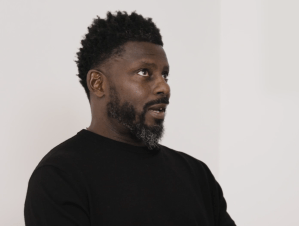
Meanwhile, he transitioned into a mental health and wellbeing counsellor, saying: “I identified the value of offering to the side of the game that rarely grabs the headlines but is just as affecting to the people it helps.”
On his LinkedIn profile, he points out: “Playing at all levels of the football league has provided me with an invaluable knowledge of the inner workings and operational structure of football in this country, experience that I have endeavoured to apply for the benefit of my fellow pros since my retirement.”


 Brighton were up against it going into the game and had taken veteran

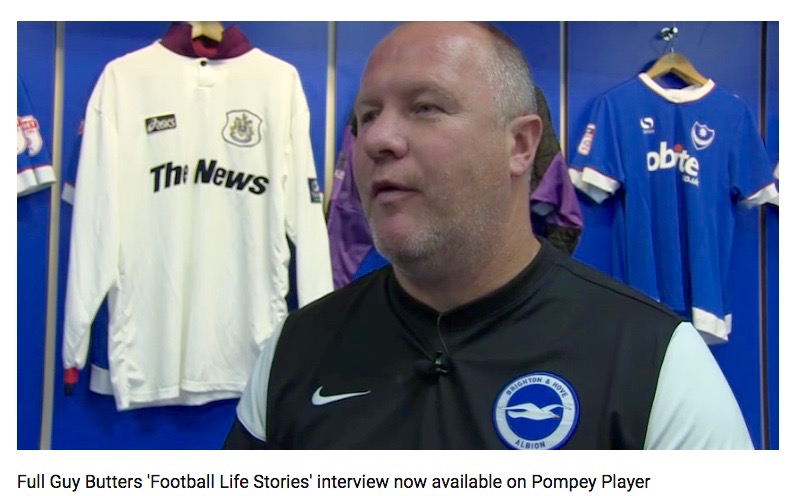
 The 2002-03 season was already under way by the time Butters joined Albion on a free transfer and, in the September, he was doing his own personal pre-season workout programme in a bid to get fit.
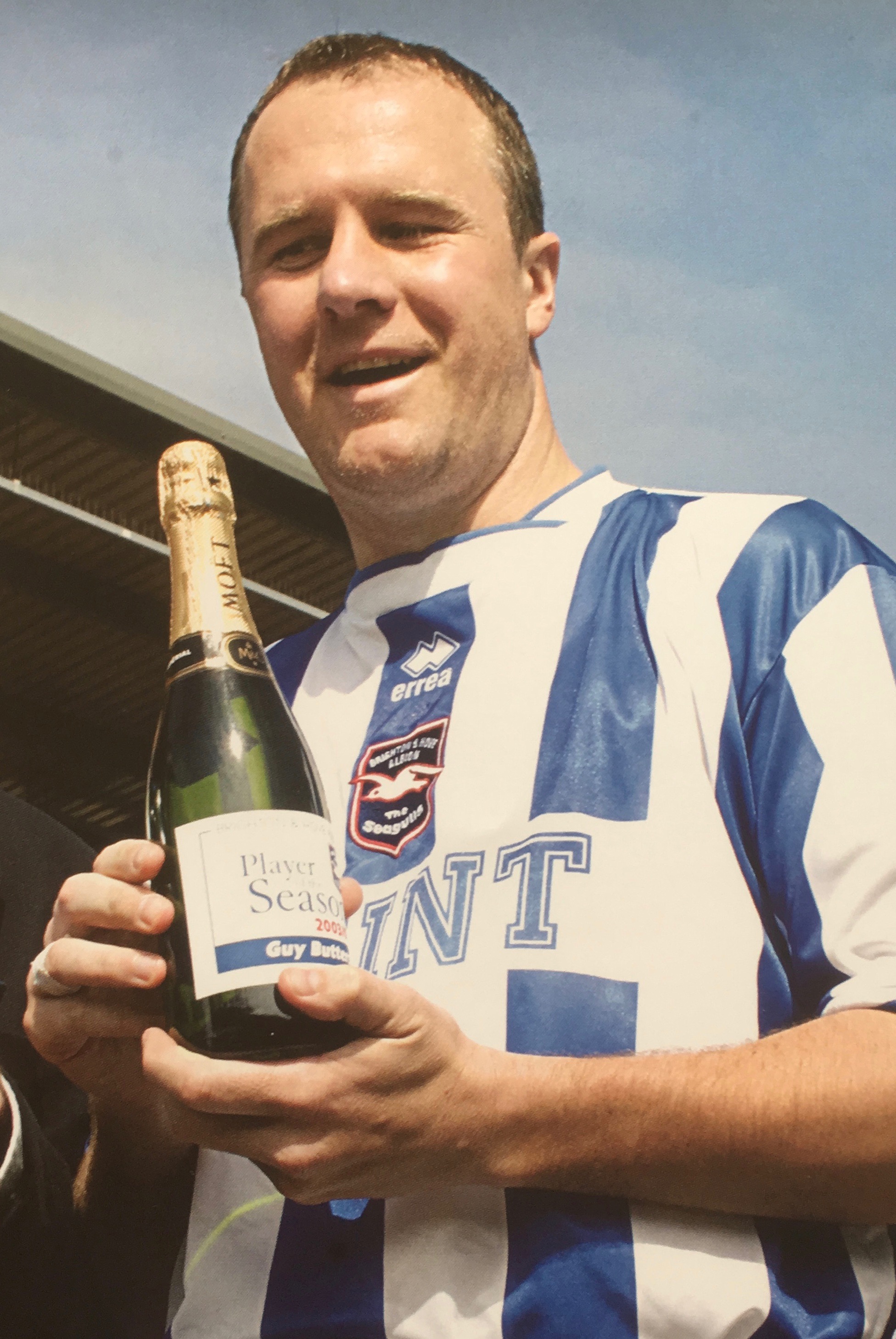 • 2004 Player of the Season pictured by Bennett Dean.


 “I missed out on pre-season last year through injury. The gaffer was amazed I played as many games as I did.
 In parallel lines