‘Model professional’ Stephen Ward loved his season at Brighton

STEPHEN WARD’S view from the bench as Brighton sealed Wolves’ relegation fate at the Amex on 4 May 2013 was enough to convince him it was a place he’d like to get to know better.

Rather than drop down to the third tier with Kenny Jackett’s side, Ward switched from Molineux to the Albion to join Oscar Garcia’s promotion hopefuls.

Having won the Championship with Wolves in 2009, Republic of Ireland international left-back Ward brought ideal experience to a Brighton set-up looking to mount another tilt at promotion after missing out at the play-off semi-finals stage the season before.

The defender made 47 appearances, chipped in with four goals, and was runner-up in the player of the season awards as Albion once again fell at the play-off semi-finals hurdle.

Nonetheless, it looked like Ward would make his stay permanent – until newly-promoted Burnley stepped in and offered him a more immediate return to Premier League football.

Convinced that Brighton had clinched the deal for Ward, boss Jackett told the local press: “The clubs have agreed and now it’s down to Brighton and the player. It is a good move for him, he did well last year, they got into the top six and he was part of it. They have wanted him all along.

“All of us thank him for what he’s done and wish him all the best. He got a club reasonably quickly last season which shows the standard of the player.

“He didn’t let them down. He’s got a good reputation in the Championship and has been professional here. He had been good enough to get a good move last year and he has got a good one now.”

According to the player’s agent, if Albion’s head of football David Burke hadn’t dithered over a deal, Ward would have signed on the dotted line for the Seagulls.

But his prevarication opened the door to Sean Dyche’s Clarets and Ward headed to Turf Moor instead, returning to play at the elite level at which he’d previously made 94 appearances for Wolves between 2009 and 2012.

Ward had also played 128 times at Championship level for Wanderers having joined them aged 21 in 2007, moving over from his native Ireland, where he had spent four years with League of Ireland side Bohemians.

After making his Albion debut in a 1-0 win at Birmingham, Ward told BBC Radio Sussex: “From watching them last year and playing against them, it is a team I admire for how they play the game.

“Every footballer wants to play in a team that likes to pass the ball and keeps the ball. On the last day of the season, they played us (Wolves) off the park. It was one of the reasons I was really excited about the move.”

Although he had enjoyed success at Wolves, he had also been part of back-to-back relegations and he said: “I felt I needed a fresh start and I am thankful Brighton gave me that. I hope I can repay their faith. Hopefully I can help the team go one better than last year.”

Reflecting on his time with the Albion in a matchday programme article, Ward was complimentary about Garcia, saying: “I loved the mentality of the manager, the environment, and I learnt a lot as a result.

“He wanted to play out from the back, he wanted us to be really expansive, and that allowed me to get forward, which I really enjoyed doing.

“I learnt a lot from the manager and would speak to him about his time at Barcelona.

“I was lucky that I also had experienced players around me in defence like Matty Upson, who was great for me, and Bruno. He’s one of the best guys I’ve met in football – he was so welcoming to me and my family.”

Although principally in the side to defend, Ward also scored four times for the Seagulls, one coming in the impressive 4-1 win at Leicester and another in the crucial 2-1 win at Nottingham Forest that helped to clinch a spot in the play-offs.

“Going to Brighton was great for me; I had a fantastic year, a really enjoyable time, and I don’t have a single bad word to say about the club or the city,” he said. “I enjoyed every minute.”

After five years at Turf Moor, Ward went on to play for Stoke City (when Nathan Jones was boss), Ipswich Town and Walsall, hanging up his boots in 2022. He also made 50 appearances for Republic of Ireland, playing for the national side at the Euro 2012 and 2016 finals.

At the end of a 19-year playing career, Ward had clocked up 570 senior appearances.

Disappointed to see the player retire, Walsall manager Michael Flynn told BBC Radio WM: “He’s somebody I’d love to have worked with for a longer period. He’s a breath of fresh air. But, unfortunately, he’s at the age where he thinks his body’s had enough.

“I’ve got nothing but praise for Stephen Ward. He’s had a fantastic career and is still working hard day in, day out and he’s a model professional.

“The way he’s handled himself has been exemplary and I don’t expect anything else from someone who’s had the career he’s had because it’s been an unbelievable career.”

During the 2022-23 season, Ward was part-time assistant manager to former Wolves teammate Roger Johnson at National League North side Brackley Town.

His next steps were in football administration and he achieved a Masters degree in sports directorship through the University of East London while serving as director of football at National League side Solihull Moors. Head coach from June 2023 to January 2025 was Andrew Whing, who played more than 100 games for the Albion between 2006 and 2011.

Stepping down from the role in August 2025 to spend more time with his family, Ward said: “We shared some great moments together most notably watching our club appear at Wembley Stadium in the play-off final.”

Moors missed out on the chance to gain a first ever promotion to the Football League in May 2024, beaten in a penalty shootout by Bromley after twice coming from behind to take the game to extra time and then penalties.

Agonisingly, a week later, Moors lost on penalties again, this time in the FA Trophy final at Wembley, Gateshead edging it 5-4 after the sides were level on 2-2.

“It’s a brilliant club and a very special place to work but it’s time to step away and recharge the batteries,” said Ward. “Football is a fast-moving industry and it can be tough to find the right balance.”

‘Radio’ Poyet talked himself out of Brighton and Athens jobs

GUS POYET’S penchant for speaking out cost him his job at Brighton and AEK Athens.

“There is a reason they nicknamed Poyet ‘Radio’: always on, always talking, especially when it comes to football,” wrote Sid Lowe, in The Guardian.

While the exact reasons for his departure from the Albion in 2013 were never made public, there was speculation that it revolved around him talking openly about his desire to move on moments after the Seagulls had lost a Championship play-off match against arch rivals Crystal Palace.

“I’ve not been in this situation before but I don’t like it,” Poyet said after the game. “It’s changed my view completely about everything I was prepared for, so we’ll see now. I have always said that all the time we keep improving I am going to be at this club and the day we hit the roof, I’m not. Is there something more?

“Right now I don’t know, so I need to make sure I know there is, because if not I am not going to stay forever.”

Poyet was suspended by the club three days later, along with the assistant manager Mauricio Taricco and first-team coach Charlie Oatway, with them only saying they were launching an internal inquiry.

Andy Naylor in the Argus of 17 May 2013 reckoned the suspensions related to “numerous alleged breaches of contracts” pointing out: “Poyet refused to deal with the retained list, announced by the club earlier in the day.

“He told the squad at a meeting at The Amex on Tuesday he would not be involving himself with players’ contracts, because they were not his decisions and he might not be the manager next season.

“Players leaving and staying at the end of their contracts were dealt with instead by chairman Tony Bloom and head of football David Burke.”

At the time, Poyet’s name was being mentioned as a potential successor to David Moyes at Everton, and Martin Jol’s position at Fulham was not thought to be secure.

In the Argus, Naylor wrote: “During his post-match press conference he demanded assurances from Bloom he would have enough money to continue improving the team after their promotion near-miss.

“Those remarks are not, however, thought to be instrumental in the action taken by the club. Poyet’s relationship with Bloom and other senior figures has deteriorated in recent weeks.

“The Uruguayan almost joined Reading in March and his decision to stay only papered over the cracks.”

Naylor observed that Poyet’s previously “wide-ranging powers” had been reined in since the appointment the previous year of chief executive Paul Barber, who was on the board at Spurs when Poyet lost his job as assistant to Juande Ramos.

“It became an open secret within the Amex that Poyet would leave at the end of the season, irrespective of how Albion fared in the play-offs,” he said.

The following month Poyet claimed he was sacked while live on air doing punditry for the BBC although the club maintained he knew full well that he wouldn’t be returning to the job he had been doing for three and a half years.

Announcing his sacking on the club website, a statement read: “This followed his suspension, an investigation, and a subsequent formal disciplinary process. In line with the club’s own procedures, and UK employment law.”

Wind on the clock three years to April 2016 and, after only five months in charge of AEK Athens, Poyet was labelled “immoral” by the Greek club’s owner, Dimitris Melissanidis for telling the Greek media he would be leaving the club at the end of the season. Sounds familiar?

A Reuters report of 20 April 2016 maintained: “Speaking to the media on Tuesday, a day ahead of AEK’s Greek Cup semi-final second leg match against Atromitos, Poyet further angered the club by revealing details of a private meeting he had held with Melissanidis.

“What he did was unacceptable, it was not the appropriate time to unsettle the team just hours before the semi-final,” Melissanidis told reporters.

“AEK has never leaked any information from any of our meetings with him and for him to talk to the press about the contents of our meeting is immoral.”

Local media reported Poyet had been fired and would not be in the dugout for the match against Atromitos.

“AEK was informed of Gus Poyet’s decision that he will not stay with the club after the summer on Tuesday evening,” the club said.

“The important thing for AEK at the moment is the crucial semi-final with Atromitos, all of the other issues will be seen to after the match.”

After losing his job at Sunderland seven months previously, Poyet took over from Traianos Dellas in Athens in October 2015 on a deal until the end of the season, with the option to renew for another two years. Taricco and Oatway joined with him.

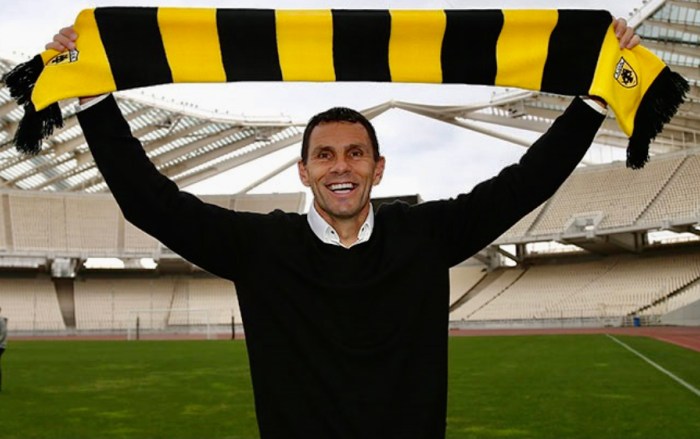
All smiles as Poyet arrives at AEK as manager

At the time of his appointment Poyet said: “I know that I have come to a huge club and I’ve been astonished by the reception that I have received.

“Our goal is to play to win every game, starting with the derby against Panathinaikos on Sunday (it finished 0-0), and maintain contact with the top positions.”

The ‘Yellows’ picked up a string of impressive results under Poyet but speculation about his future was never far away. In December 2015 he was linked to the managerial vacancy at Swansea City (following the departure of Garry Monk), prompting AEK to make a public declaration.

“We have not been approached by Swansea, there is no need for us to be approached and no propositions have been made from Swansea,” said a club spokesman. “Mr Poyet is happy at the club and will be our manager at least until the end of the season.”

AEK ended the regular season in second behind champions Olympiakos, although points were deducted for crowd trouble and they eventually finished third.

On his personal website, Poyet records that he led AEK Athens to the semi-finals of the Greek Cup and they won the three biggest derbies in the country against Panathinaikos, PAOK and Olympiakos over a month and a half. After he left, they went on to win the Greek Cup.

A month after his departure from Athens, Poyet was installed as head coach at Spanish La Liga side Real Betis, from Seville, on a two-year contract.

He subsequently managed in China, France and Chile but returned to Greece in February 2022 as the head coach of the country’s national team.

At one point it looked like he might return to Greece before then. It seemed all had been forgiven when, in September 2019, word had it that Poyet was lined up to return to AEK as the successor to the departed Miguel Cardoso.

However, agonasport.com said: “All of the signs seemed to be pointing towards Poyet returning to AEK as manager, but reports have now revealed that negotiations have reached a dead end. AEK are not willing to match the Uruguayan’s financial demands.”

Day of reckoning beckoned for talent spotter Mervyn

THE YOUNGEST goalkeeper to appear in a FA Cup final spent 20 months picking out future players for Brighton.

It was one of several different post-playing roles Mervyn Day filled for various clubs.

Day, who at 19 won a winners’ medal with West Ham in 1975, was Albion’s head of scouting and recruitment between November 2012 and the end of the 2013-2014 season under head of football operations David Burke.

At the time, his appointment was another indicator of the gear change taking place at the club as it built on the move to the Amex Stadium and sought to gain promotion from the Championship.

Day said in a matchday programme interview: “This club has come such a long way in such a short space of time.

“When you think of the debacle of the Goldstone, the wilderness of Gillingham, then Withdean, you only have to get a player through the front door at this wonderful stadium to have a chance of signing them.

“Hopefully, within the next year or so, the new training ground will be up and running and, when you’ve got that as well, you’ve got the perfect opportunity not only to encourage kids to sign but top quality players as well.

“If we are fortunate enough to get ourselves into the Premier League at some point, we’ll be able to attract top, top players.”

It was a case of ‘the goalkeepers union’ that led to him joining the Albion. Day explained he’d been chatting to Andy Beasley, Albion’s goalkeeping coach at the time, who had been a colleague when Day was chief scout at Elland Road. Beasley wondered if he’d like to help coach Albion’s academy goalkeepers but Burke, who he also knew, stepped in and offered something more substantial: the job of scouting and talent identification manager.

He certainly brought a wealth of experience to the task. He had previously been assistant manager to former Albion midfielder Alan Curbishley at Charlton and West Ham; manager and assistant manager at Carlisle United, a scout for Fulham and the FA (when Steve McClaren was England manager) and chief scout at Leeds until Neil Warnock took charge.

In addition to that background, in the days before full-time goalkeeper coaches, Day had worked at Southampton under David Jones, Chris Kamara at Bradford City and John Aldridge at Tranmere Rovers. Then in 1997 Everton came along and he joined Howard Kendall’s backroom team alongside Adrian Heath and Viv Busby. “I was living in Leeds at that time, so distance wasn’t an issue, but it was an interesting trip across the M62 in the winter months,” Day recalled in an October 2021 interview with efcheritagesociety.com.

Brighton made Day redundant at the end of the 2013-14 season following a reshuffle of the recruitment department amid criticism of the quality of signings brought in.

That assessment might have been rather harsh because during his time at the club there was a change in manager (Oscar Garcia taking over from Gus Poyet) and, although the season ended in play-off disappointment, the likes of former Hammer Matthew Upson (who’d played under Day when he was at West Ham) had signed permanently on a free transfer (having been on loan from Stoke City for half the previous season).

The experienced Keith Andrews and Stephen Ward also joined on season-long loan deals and played prominent roles in Garcia’s play-off reaching side.

It was under Day’s watch that the promising young goalkeeper Christian Walton was signed after a tip-off from Warren Aspinall. Aspinall told the Argus in 2015: “I went to Plymouth to do a match report. I set off early and took in a youth team game off my own back. He was outstanding, commanding his box. I reported straight back to Gus (Poyet). He told Mervyn Day. He went to see him, Mervyn liked him.”

It wasn’t the first time Day had played a role in securing a goalkeeper for the Albion. As far back as 2003 he had an influence on Ben Roberts’ arrival at the Albion. Manager Steve Coppell revealed: “He is one of three goalkeepers at Charlton and at the moment nearly all the Premiership clubs are very protective about their goalkeepers.

“I have seen him play a number of times, although I certainly haven’t seen him play recently. I spoke with Mervyn Day (Charlton coach) and he says Ben is in good form. It’s a little bit of a chance and it will certainly be a testing start for him, but he is looking forward to the challenge.”

Day was also sniffing around another future Albion ‘keeper when he was chief scout for Bristol City (between 2017 and 2019).  According to Sky Sports commentator Martin Tyler, Mat Ryan was on their radar in the summer of 2017 when he swapped Belgium for England. In an interview with Socceroos.com, Tyler reveals he was asked by City’s ‘head of recruitment’ (thought to be Day) to glean the opinions of Gary and Phil Neville (manager and coach of Valencia at the time) on Ryan and whether he’d be suitable for the English game.

“I got a text saying, ‘Can you find out from the Nevilles whether they rate Mat Ryan’,” Tyler said. “It wasn’t my opinion they were looking for – quite rightly – it was Gary and Phil’s. I was able to do that and both Gary and Phil gave Mat the thumbs up.”

After leaving Brighton, Day moved straight into a similar role with West Brom, where he worked under technical director Terry Burton and first team manager Alan Irvine, but he was only there a year before linking up with the Robins. He has since been first team domestic scout for Glasgow Rangers, although based in his home town of Chelmsford.

Day was born in Chelmsford on 26 June 1955 and educated at Kings Road Primary School, the same school that England and West Ham World Cup hero Geoff Hurst attended. He moved on to the town’s King Edward VI Grammar School and represented Essex Schools at all levels. He joined the Hammers under Ron Greenwood on a youth contract in 1971.

“On my first day as an associate schoolboy I got taken by goalkeeping coach Ernie Gregory into the little gym behind the Upton Park dressing room and he had Martin Peters, an England World Cup winner, firing shots at me,” Day later recounted. “As a 15-year-old that was incredible.

“The bond got even closer when my father died when I was 17. I was an apprentice but Ron signed me as a full pro within a very short space of time to enable me to earn a little more money to help out at home. A short while later he gave me another increase. He was almost a surrogate father to me.”

In the early part of 1971, Day played in the same England Youth side as Alan Boorn, a Coventry City apprentice Pat Saward took from his old club to the Albion in August 1971.

The goalkeeper was just 18 when he made his West Ham United debut, on 27 August 1973, in a 3-3 home draw with Ipswich Town.

He went on to play 33 matches in his first season and only missed one game in the following three.

Tony Hanna, for West Ham Till I Die, wrote: “In only his eleventh game for the Hammers he received a standing ovation from the Liverpool Kop in a 0-1 defeat that could have been a cricket score but for his fine display and, in his next visit to Anfield, he saved a penalty in a 2-2 draw.”

Day recalled: “As a kid, I had no fear, I took to playing in the first team really, really well. At West Ham, the ‘keeper always had lots to do as we were an entertaining team. We had forward-thinking centre-backs in Bobby Moore and Tommy Taylor, and then after Bobby came Kevin Lock.”

Mervyn Day in action for West Ham against Brighton at the Goldstone Ground, Hove.

In 1974, Day progressed to England’s Under-23 side. He won four caps that year and a fifth in 1975 but it was a golden era for England goalkeepers at the time and he didn’t progress to the full international side, despite being touted for a call-up.

By the time Day won that last cap, he had been voted PFA Young Player of the Year and, at 19, had become the youngest goalkeeper to appear in a FA Cup Final, keeping a clean sheet as West Ham beat Fulham 2-0 at Wembley.

Hanna continued: “At times he was performing heroics in the West Ham goal and he was fast becoming a fans favourite. Tall and agile, he was a brilliant shot stopper and he was playing like a ‘keeper well beyond his years.”

However, by the 1977-78 season Day’s form had tapered off as the Hammers were relegated. “His confidence was so bad he was eventually dropped and he only played 23 games that season,” said Hanna. “There are several theories to what triggered the loss of form, but one thing that did not help the lad was the stick he was getting from the Hammers supporters.

“In hindsight Mervyn said that he was ill prepared for such a tough run of form. The early seasons had gone so well that he had only known the good times and when the bad ones came he struggled to come to terms with the pressure.”

In 1979, West Ham smashed the world record transfer fee for a goalkeeper to bring in Phil Parkes from QPR and Day was sold to Leyton Orient, where he replaced long-standing stopper John Jackson, who later became a goalkeeper coach and youth team coach at Brighton.

Day spent four years at Brisbane Road before moving to Aston Villa as back-up ‘keeper to Nigel Spink. After a falling-out with Villa boss Graham Turner, he switched to Leeds under Eddie Gray and then Billy Bremner. During Bremner’s reign, he had the humiliation of conceding six at Stoke City at the start of the 1985-86 season and, in spite of vowing it wouldn’t happen again, let in seven in the repeat fixture the following season. Amongst his Leeds teammates that day were Andy Ritchie and Ian Baird.

Nevertheless, he ended up playing more games (268) for Leeds than any of his other clubs. He rarely missed a game up to the end of 1989-90, the season when was he was named Player of the Year and collected a Second Division championship medal.

Howard Wilkinson offered him a post as goalkeeping coach for United’s first season back in the elite, having lined up a £1m move for John Lukic from Arsenal. Day had a couple of loans spells – at Luton Town and Sheffield United in 1992 – but was otherwise back-up for Lukic, alongside his coaching duties, until Wilkinson saved Brighton’s future by signing Mark Beeney from the Seagulls.

After eight years at Elland Road, Day moved to the Cumbrian outpost of Carlisle in 1993. When he moved into the manager’s chair at Brunton Park, he not only led them to promotion from the Second Division in 1997, but they also won the (Auto Windscreens Shield) Football League Trophy. United beat Colchester 4-3 on penalties at Wembley after a goalless draw; one of the scorers being the aforementioned Warren Aspinall, later of Brighton and Radio Sussex.

Day worked under Curbishley at Charlton for eight years between 1998 and 2006, helping the club stabilise in the Premier League.

And, in December 2006, he followed Curbishley as his No.2 to West Ham, where the duo spent almost two years.

It was in 2010 that he returned to Leeds as chief scout, working under technical director Gwyn Williams. United manager Simon Grayson said at the time: “We’re restructuring the scouting department under Gwyn and Mervyn will be both producing match reports and watching our opposition and working on the recruitment of players.

“Merv’s knowledge and experience will prove important to the football club as we look to progress and develop what we are doing.”

Let down by ‘little’ Sammy, ‘big’ Sami struggled from the start…

HINDSIGHT is a wonderful thing but few would disagree that Sami Hyypia’s reign as Albion manager was doomed almost from the start.

Inexperienced boss Hyypia had barely got his feet under the table at the Amex before former Liverpool assistant manager, Sammy Lee, pulled the rug from under his proposed new regime.

Hyypia, not unreasonably, had thought the former no.2 to Rafa Benitez would bring vital experience to his backroom team because the Albion position was only the former Reds central defender’s second managerial job.

Lee, despite accepting the position on 27 June 2014, decided two days later to reject the deal because he’d agreed to become Ronald Koeman’s deputy at Southampton instead.

Hyypia had only been in post three weeks, so, it would be fair to say, Lee’s decision must have been a hammer blow – especially as his first choice for no.2 said ‘no’ too! Jan Moritze Lichte, who’d been at Bayer Leverkusen when Hyypia made his managerial bow – which lasted only nine months – had already declined to join him in the UK for “personal reasons”.

Thus, Hyypia had to rely on two of previous boss Oscar Garcia’s coaching staff, Nathan Jones and Joaquin Gomez, to assist on the coaching side, although his fellow countryman, Antti Niemi, did accept the offer to become goalkeeping coach.

On the playing side, there had been a large turnover of personnel in the wake of Garcia’s departure – and, it emerged, the players coming in weren’t being signed by Hyypia but were the picks of head of football operations, David Burke.

It was always going to be a tough ask to replace Leonardo Ulloa up front – and journeyman Chris O’Grady certainly didn’t provide an answer.

There was a sense of excitement when Hyypia’s Liverpool links saw the arrival on loan of Joao Teixeira, but the number of players only at the club on a temporary basis should have been something of a wake-up call.

The permanent signing of one-time West Ham forward Sam Baldock looked like a sound investment – he’d hit the net regularly enough at Bristol City in the division below – but he found goals hard to come by at the higher level.

As if to highlight the player upheaval and shaky managerial team foundations, Albion lost the first two games of the season, single goal defeats at home to Sheffield Wednesday and away to Birmingham City.

If a 2-0 win away to Leeds United followed by a 2-1 home win over Bolton suggested a corner had been turned, Albion then went on an 11-game winless run.

If he hadn’t been aware beforehand, Hyypia would have quickly realised the calibre of player Burke provided him with fell way short of what was required if the side were going to repeat the previous two seasons’ achievement of finishing in the play-off positions.

Not only was there a lack of consistency in personnel on the pitch, those who were selected appeared to be confused as to exactly how Hyypia wanted them to play.

Andy Naylor tried to analyse Hyypia’s philosophy early on in the season, reporting: “We have already seen 4-1-2-3, 4-1-2-2-1, 4-4-1-1. Hyypia is combining Southern European technical accomplishment in possession and mobility with a more Northern European tempo and directness.

“The width is provided by advanced full-backs, the chances for a narrower strike force by the players who like to operate, in modern coaching speak, ‘between the lines’, exploiting pockets of space in the area dividing the opposition defence and midfield.”

The theory might well have been sound but the practice was found wanting.

Having won only one game in 18 matches, and after only six months in charge, Hyypia resigned shortly before Christmas.

At his last home game in charge – a 1-0 defeat to Millwall – the Albion faithful demonstrated they’d had enough, calling for him to go and, in the North Stand, unfurling a banner making that message loud and clear.

Hyypia himself admitted the atmosphere had been tough to handle but, in an interview with the Argus, had vowed to turn things round.

It was an unseemly end for someone who as a player had been rated one of the best defenders ever to pull on a Liverpool shirt. But Hyypia was by no means alone in not being able to continue the prowess he’d shown on the playing side into management.

Liverpoolway.co.uk charts the player’s career succinctly; a Gerard Houllier signing in 1999, over the course of a decade he collected winners medals across several competitions: the Champions League, the FA Cup (twice), the UEFA Cup, the UEFA Super Cup (twice), the League Cup (twice) and the Charity Shield.

Born on 7 October 1973 in Porvoo, Finland, Hyypia’s football career blossomed with now dissolved Kuusankosken Kumu before switching to MyPa, where he stayed four years, helping them to win the Finnish Cup in 1992 and 1995. He moved to Holland to play for Willem II for four years where for a time his defensive partner was Jaap Staam, who subsequently played for Manchester United. Liverpool signed Hyypia for £2.6m in 1999, ironically following up a tip from a TV cameraman!

After being capped 27 times by Finland under 21s, he earned his first full cap in 1992 and, with 105 caps for Finland, he is second only to Jari Litmanen as his country’s highest capped player.

After his Liverpool playing days came to an end, Hyypia went to play in the Bundesliga for Bayer Leverkusen and two years later joined the club’s coaching staff.

In a rather unusual arrangement, Hyypia and former under19s coach Sascha Lewandoski jointly replaced Robin Dutt as head coach but Hyypia took sole charge in June 2013. He was sacked in April 2014.

After his brief time in charge of Brighton, it was another eight months before he found another head coach role, this time taking charge of FC Zurich in August 2015. But with the club heading for relegation in May 2016, he was sacked.

The Finn has yet to re-appear in the dugout, although he has pulled on his boots again to play for a Liverpool Legends side. It remains to be seen whether he’ll give coaching or management another go, although he told BT Sport in February 2019: “I will coach and manage again one day but not yet. I get some enquiries quite regularly, but nothing has yet been that interesting I would jump into it.”

He added: “I wouldn’t change any decision to go so quickly into coaching. A lot of people said I made a mistake going into it so early, but I learned a lot.

“You learn a lot more from the bad moments than the good moments. Those years when things were not going my way, I learned so much and I am much better and more ready now.”

Irish defender Stephen Ward surprised Albion supporters

SWARDWHEN Wolverhampton Wanderers slipped into the third tier, they urgently needed to loan out some of their higher-paid players – hence, in August 2013, the arrival at Brighton of left-back Stephen Ward.

Most Seagulls supporters were not sure of his attributes having had the pleasure the previous season of watching the imperious Wayne Bridge shine in that position while on loan from Manchester City.

However, Albion fans were delighted to be proved wrong after Ward helped to shore up a defence that had leaked seven goals in the first eight days of the season. The Irish international defender went on to make a total of 47 appearances and was runner-up to Matt Upson as Albion’s 2013-14 player of the year.

Ward also chipped in with four goals, including the tide-turning equaliser at Nottingham Forest on the final day of the season.

Forest equaliser

Although injury-hit Albion failed to get past Derby County in the play-off semi-finals, it was thought Ward would sign permanently for the Seagulls that summer. But Burnley stepped in, offering Wolves and the defender more money, not to mention the more immediate chance of Premier League football.

Ward’s agent, Scott Fisher, later told the Argus that dithering or perhaps a bit of brinkmanship by then head of recruitment David Burke had scuppered the deal.

“We really tried our best to make Stephen Ward a permanent Brighton player. Had they done their business earlier this wouldn’t have happened,” he said.

Ward spoke more about the circumstances in an interview with the Argus in April 2016.

Previously, as the season drew to a close, Ward told the Argus: “If I’m going to move on, I don’t see why this wouldn’t be one of the better options for me. I’ve been here for a year; I’ve really enjoyed it.

SW Argus

“I couldn’t say one bad thing about the club. The crowd we get, the stadium we have is phenomenal, probably the best in the Championship, and with the new training ground the club is on a real up and a real high.

“If I was to move on from Wolves, Brighton would definitely be high on the list. It’s not in my hands, it’s going to be in other people’s hands to discuss the future, but it has been a great move for me. I’ve really enjoyed it. It’s a really good club and one people should be privileged to play for.”

Ward went on to spend five years at Turf Moor, making 110 appearances, but only featured 11 times in the 2018-19 season, and manager Sean Dyche told punditarena.com: “He (Ward) has been brilliant for us, absolutely brilliant, he’s done a fantastic job.”

SW BurnPerhaps it was no surprise that former Albion coach Nathan Jones stepped in to sign the experienced defender for Stoke City, where he’d taken on an often-perilous managerial hotseat.

Jones said: “He’s had a fantastic career, the only downside for him is his age, because he isn’t what we normally go for.

“But I feel we need to add certain things to the changing room and the environment and Stephen brings those.

“He’s a wonderful player, a great character, very experienced. He’s been promoted – won the Championship twice. He’s an Irish international, I worked with him, he’s technically very, very good so he ticks every box. It’s just the aging process is the only drawback.

“With Stephen, he’s a specialist in what we need and he will provide vital competition and good strength in that area.”

Unfortunately Ward couldn’t claim a regular starting place and in December 2019 picked up a calf injury which sidelined him for four months. Having made only 17 appearances for City, in August 2020 he switched to League One Ipswich Town on a free transfer.

After playing 29 games for them in the 2020-21 season, the club announced on 5 May 2021 he would be released at the end of the season (one more appearance would have triggered a 12-month extension to his contract).

Born in Dublin on 20 August 1985, Ward grew up in Portmarnock and, as a schoolboy, played football for Home Farm and Portmarnock before joining League of Ireland side Bohemians.

He attributed his eventual success in making it as a player to staying in Ireland when he was younger and continuing to live at home rather than going to play at a UK club’s academy.

In an excellent lengthy interview with the Irish Independent, he said: “I had a few trials – Leicester a couple of times, I went to Aston Villa a lot and Hibs for some reason – nothing worked out and I signed for Bohs. And the most important thing for me then was living at home and having my family around me.

“It does depend on the academy, but you are in a bubble from a young age. You train in a certain way, everything is done for you; I know you get your jobs, but not that many now, and sometimes there is a mentality that once you are in an academy, you’ve made it. I was 17 and played in a league where players were playing for their mortgages and to put food on the table.”

Originally a forward, he scored 26 goals in 93 appearances, and, having been looked at by Sunderland boss Mick McCarthy and deemed not quite ready, McCarthy kept tabs on him when he took over at Wolves.

“I signed for Wolves as a striker,” Ward told the Irish Independent. “I was not a typical number nine, scoring 20 or 30 a season, but an old-fashioned centre-forward running round, closing down.

“We signed a couple of strikers – Sylvan Ebanks-Blake and Chris Iwelumo – and I knew if I was going to play consistently it was probably not as a centre-forward. So, I went to left-wing for a bit.

“I played at left-back at Norwich for 30 minutes or so when we went down to nine men. We scraped a draw and afterwards Mick said, ‘You could make a career playing there.’ I thought, ‘Yeah, whatever’. Next season, three games in, and new left-back George Elokobi suffers an awful injury, the window was shut and Mick had no one else . . .”

On the international stage, Ward played through the age levels for the Republic of Ireland and had a dream full international debut in May 2011 as he scored in a 5-0 win over Northern Ireland.

He went on to play 50 times for his country before announcing his retirement from international football in March 2019.

Promotion-winner Sam Baldock part of Albion’s history

BRIGHTON’S football history will record Sam Baldock as part of the squad who earned the club promotion back to the top division after a 34-year absence.

Baldock and Oliver Norwood famously crowd surfed on a train from Falmer to Brighton, held aloft by jubilant supporters celebrating after the April 2017 win at home to Wigan Athletic.

It was one of the many joyous scenes that will live long in the memory banks of Brighton fans following that momentous occasion.

In the cold light of day, though, it’s probably fair to say Baldock divided opinion about his contribution to the cause. Manager Chris Hughton described him as “a great professional and a good character in the dressing room” but, whether because of injuries or lack of opportunity, the diminutive striker never quite made it at the top level his brother George would go on to reach with Sheffield United.

Baldock was certainly a hard-working player but perhaps he didn’t deliver goals consistently enough to warrant the ‘super’ status attributed to him by some of Albion’s more vocal supporters. Injuries seemed to take their toll on a player whose most successful spells have generally been at third tier level.

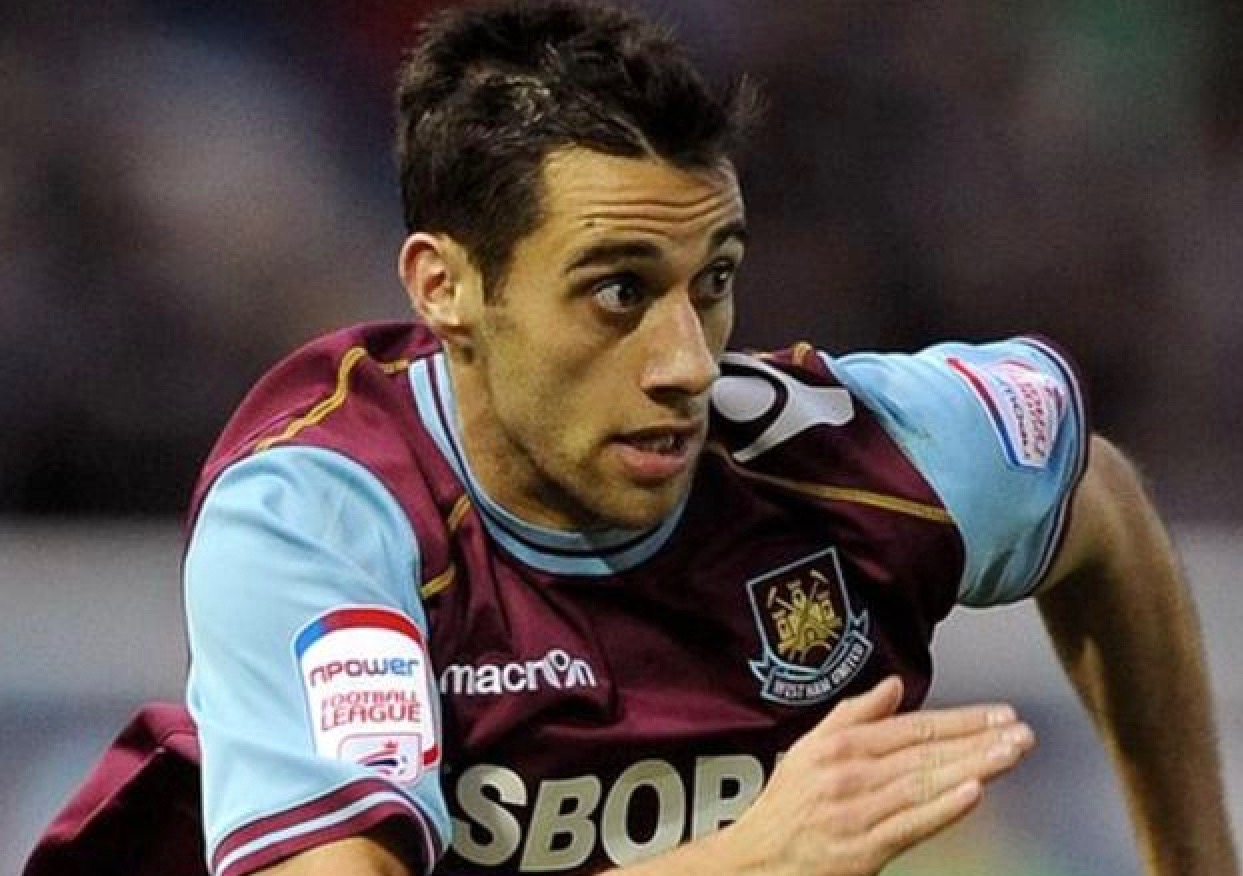
SB WHUWest Ham United, under Sam Allardyce, gave Baldock a platform to take his lower-league goalscoring prowess to a higher level when they began the 2011-12 season in the Championship. But, after a bright start, he disappointed and eventually only stayed for one year of a four-year deal.
Although he was popular with fans, he clearly didn’t float Allardyce’s boat. West Ham fans are astute observers of the game and one of the best summaries I’ve read about Baldock’s contribution was in a piece on westhamworld.co.uk.

“Baldock is a short, pacey, centre forward. He has an eye for goal, which is great but, he doesn’t have the strength or power like other players we have like (Carlton) Cole or (Ricardo) Vaz Te,” the author of the article wrote.

“In a world where it appears the 4-4-2 system is dying very quickly, especially at the top level, it causes problems for Baldock, who seems to be a player who likes to feed off the other striker who can hold the ball up and thread a pass through for him to run onto.

“He is your ideal little man in the big man and little man 4-4-2 but, with the formation not being used very often and, especially under Allardyce, we don’t see it much at all.”

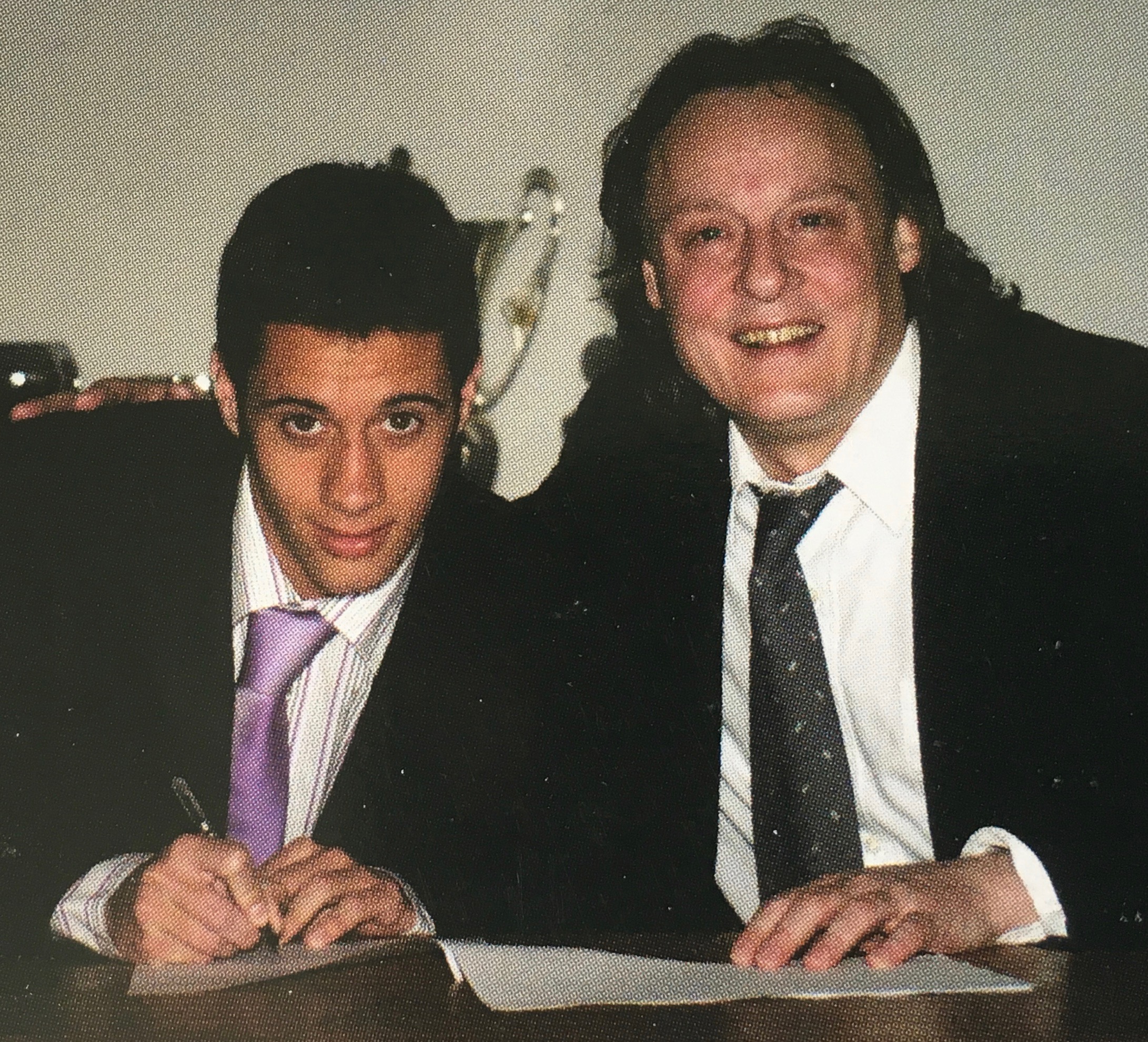
Born in Buckingham on 15 March 1989, Baldock went to the town’s The Royal Latin School (where his mum was the deputy head) and, at 16, joined Wimbledon’s youth system at the time they relocated to Milton Keynes. He signed on as a trainee in 2004 (pictured below signing a contract with MK Dons owner Pete Winkelman)  and after impressing in FA Youth Cup games earned call-ups to the first team squad.

IMG_5904Former Albion captain, Danny Wilson, gave Baldock his first-team debut at 16 as a late substitute against Colchester United in a 2-1 Football League Trophy defeat on 20 December 2005.

He didn’t feature again until the 2006-07 season, by which time Martin Allen had taken over as manager. One of only two Football League Trophy games he was involved in included a 4-1 defeat against Brighton.

It was when Paul Ince became manager that Baldock got a few more chances at first-team level and he got to appear at Wembley as a substitute in March 2008 when MK Dons beat Grimsby Town to win the Football League Trophy (otherwise known as the Johnstone’s Paint ‘Pot’).

However, it was when Roberto di Matteo took over from Ince in the 2008-09 season that Baldock finally became a Dons regular, netting 13 goals in 44 appearances and catching the eye of the international selectors.

In September 2009, he was selected for the England under 20 squad which took part in the World Youth Championship in Egypt – a squad which interestingly also included goalkeeper Jason Steele, later a back-up ‘keeper at Brighton, and future full England internationals Danny Rose and Kieran Trippier.

Baldock played in the opening 1-0 defeat against Uruguay, went on as a substitute in the following game, a 4-0 defeat to Ghana, and again in the final game, a 1-1 draw with Uzbekistan. England finished bottom of their group and were eliminated.

Baldock didn’t get selected again but, having scored a total of 43 goals in 124 appearances for MK Dons, he became Allardyce’s seventh summer signing for West Ham in August 2011.

SB WHU coloursHe couldn’t have asked for a better start when he scored five times in his first six games for the Hammers. Unfortunately, as has been the case throughout his career, he picked up an injury that sidelined him, and, in his absence, Nicky Maynard and the aforementioned Vaz Te became first choices in the forward line.

The Hammers decided to cut their losses after just one year of his deal and he was sold to Bristol City for £1.1m. His 10 goals in 34 games were insufficient to keep the Robins in the Championship but back at League One level, the goals flowed once more.

Baldock was the Robins captain under Steve Cotterill and scored 26 in 54 games in the 2013-14 season (neatly compiled on YouTube), earning him the League One Golden Boot. That prompted Brighton to snap him up on 27 August 2014, signing for an undisclosed fee (thought to be £2m) on a four-year deal until June 2018.

Signed as part of the regime under head of football David Burke, Baldock, 25, joined the squad assembled under new manager Sami Hyypia, who told the club website: “Sam was one of our key summer attacking targets and I’m delighted we have now completed the transfer.

“He’s a predator, instinctive in front of goal and his career goal record is excellent. He’s played and scored goals at this level, and we are confident he can be a major threat for us going forward.”

As it turned out, Baldock scored only four goals in each of his first two seasons but contributed 12 in the Seagulls’ promotion-winning campaign of 2016-17.

It was enough to earn him a new deal, and he told the club website: “As soon as the club made noises that they wanted to extend my contract it was always in my head that this is where I want to be.

“Last season was probably the pinnacle of my career, and I hope now we can establish ourselves in the Premier League and continue to improve together.”

Hyypia’s successor, Hughton, added: “We are delighted that Sam has agreed a new deal with us. He has been a key member of the squad since he arrived at the club and this new contract is recognition of his contribution over the last couple of seasons.”

However, Hughton ultimately gave him very few chances in the Premier League and, after playing only five games in the 2017-18 season, he was sold to Championship side Reading.

Baldock-ReadingRoyals boss Paul Clement told the Reading website: “I’m very happy that Sam has joined us here at Reading, having pursued his signature throughout the summer.

“I always felt he was the right striker for us to bring to this club in terms of his age, his experience and his quality.”

Although he penned a three-year deal with the Royals, his initial season at the Madejski was blighted by injury and, having scored just five in 23 games, and seemingly not in new manager Jose Gomes’ plans, there were reports during the recent close season that he would be invited to look for a move elsewhere.

On 17 August 2021, Baldock signed a short-term deal with Derby County to cover the injury absence of former Brighton striker Colin Kazim-Richards. When that contract came to an end in February 2022, Baldock joined League One Oxford United until the end of the season, and in May 2022 was given a two-year contract by manager Karl Robinson, another of his former managers at MK Dons.

“I walked through the door back in February and it felt like the right place straight away,” the boyhood U’s fan told oufc.co.uk. “The badge has always had a special place in mine and my family’s hearts ever since it was the first club we watched live at the Manor.

“Having previously worked under the gaffer I knew I wanted to play for him again – he got the best out of me earlier in my career and I hope that can happen again.”

  • Pictures from various online sources.