
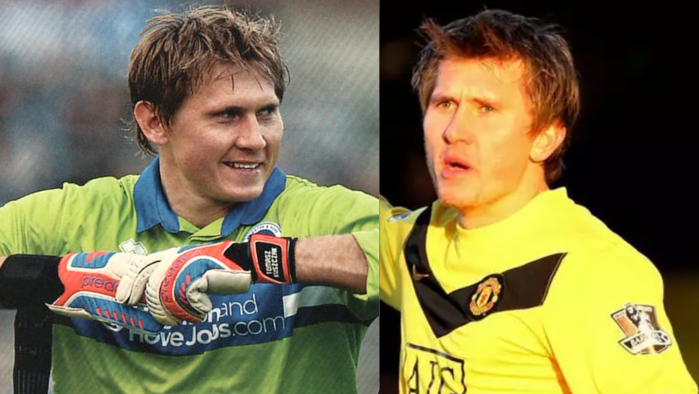
THERE’S plenty of FA Cup history between Brighton and Manchester United and a goalkeeper who played for both has his own memories of the competition – not all of them good!
Although Tomasz Kuszczak played 32 league games for United, as a back-up at Old Trafford rather than first choice, he often found himself called upon in cup matches (eight FA Cup, 10 League Cup – including collecting a winners’ medal in 2010 – and 11 European games).
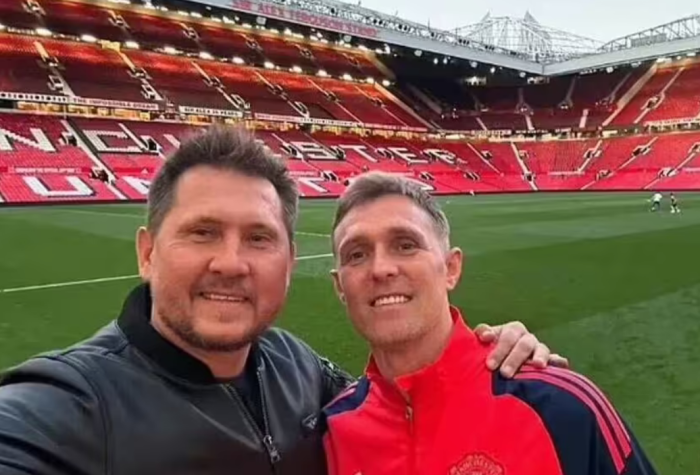
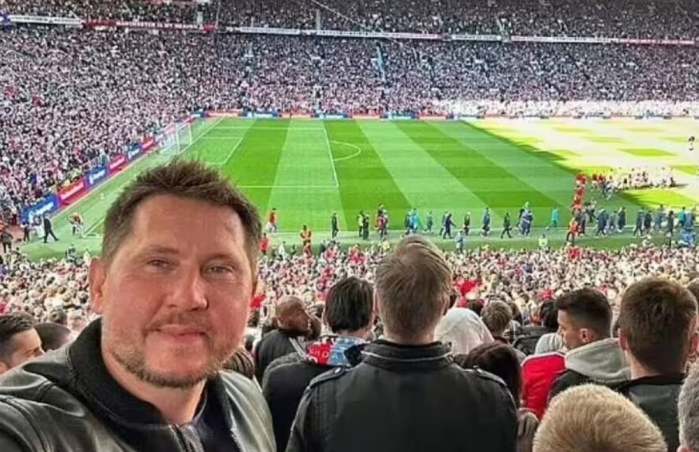
In April 2025, Kuszczak paid a return visit to Old Trafford to watch United’s 0-0 draw with Man City and snapped some selfies watching from the stands and (above) on the pitch with former teammate Darren Fletcher, now in temporary charge at United following the dismissal of Ruben Amorim.
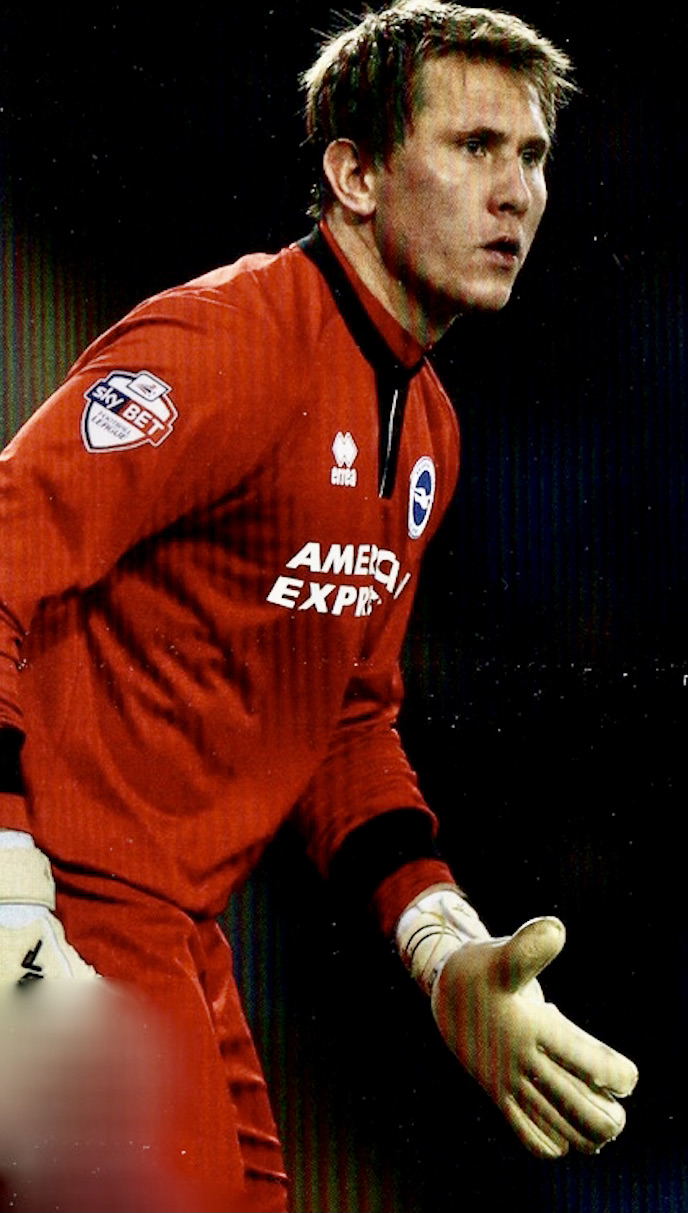
At Brighton, where Kuszczak was the first choice for two seasons, he found the goalkeeping duties reversed for FA Cup ties and he gave way to either Casper Ankergren or Peter Brezovan.
Signing the Polish international for Gus Poyet’s Championship Brighton side was something of a coup and the boss told the club website: “There were clubs in England and abroad interested in Tomasz, but it says a lot for the ambition of this club that he wanted to sign for Brighton.”
Poyet later told The Argus: “When we had the chance, we got him. You don’t have too many chances sometimes to sign this sort of player, so it was very important.”
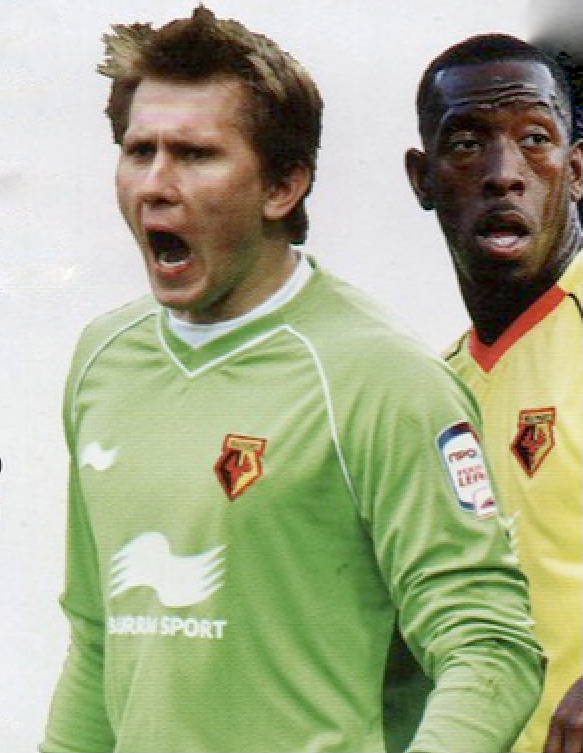
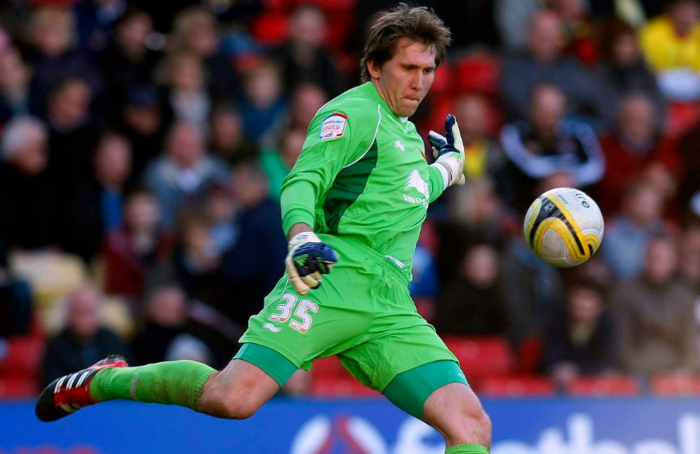
Kuszczak said one of the reasons he chose to join the Seagulls was because of what he’d seen when playing against them the previous season, while on loan at Watford.
“I was very impressed with the way the team played – it was totally different to the rest of the Championship and more like what I was used to at Manchester United.
“This team likes to pass the ball, they like to create, they are attractive to watch. The way Brighton play is the future of football.
“I had other clubs who wanted to sign me but my heart told me that this was the right choice.”
Kuszczak continued: “I have played Premier League football for eight years, with West Bromwich Albion and Manchester United, and I believe the structure is in place here to join them.
“The manager and coaching staff, the team, stadium, crowds, through to the plans for the new training ground, everything is geared up for playing at the highest level and I could sense that ambition to be a top club straight away.
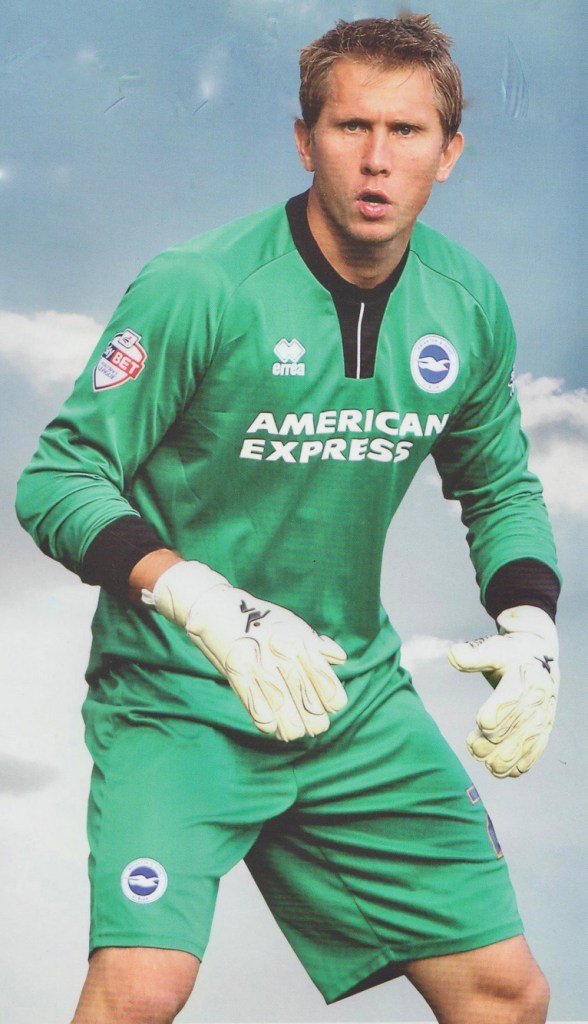
“The Premier League is where I want to be again and I believe I can get there with Brighton. This club is heading in only one direction, and I want to play my part in helping us get there.”
During his time at Manchester United, five of Kuszczak’s eight FA Cup appearances were in the 2007 competition when United reached the final – although first choice Edwin van der Sar took over between the sticks for that game, when Chelsea won it 1-0.
The 2008 competition certainly wasn’t one Kuszczak remembered fondly. In a quarter-final against Portsmouth at Old Trafford on 8 March 2008, he went on as a sub for the injured van der Sar at half-time, but 30 minutes later was handed a straight red card for fouling Milan Baros.
Rio Ferdinand took over in goal but failed to save Sulley Muntari’s penalty, the only goal of the game.
In 2010, Kuszczak was in goal when League One Leeds United, with Ankergren in goal, pulled off a shock third round win at Old Trafford – United’s first exit at that stage of the competition since 1984 (the year they went into it as holders after beating Brighton in a replay in 1983).
Jermaine Beckford’s 19th minute goal clinched it for the Yorkshire side against a United who had Danny Welbeck playing up front alongside Dimitar Berbatov and Wayne Rooney.
There was some consolation the following month when United won the League Cup at Wembley, beating Aston Villa 2-1. James Milner opened the scoring from the penalty spot for Villa, sending Kuszczak the wrong way. But goals from Michael Owen and substitute Rooney clinched it for United.
The following year, Kuszczak was again in goal for United’s FA Cup third round tie at home to arch rivals Liverpool which United edged with an early goal by Ryan Giggs. Liverpool captain Steve Gerrard was sent off just past the half-hour mark for a two-footed tackle on Michael Carrick.
But Anders Lindegaard was chosen ahead of Kuszczak as United marched to the semi-finals, where they were beaten 1-0 by Manchester City. In the fifth round, United only narrowly overcame Crawley Town, who had former Albion ‘keeper Michel Kuipers in goal.
By the time the 2011-12 season came round, Kuszczak had slipped down the list of United custodians, with David de Gea first choice, and Lindegaard and Ben Amos also ahead of him.
In February 2012, Kuszczak was loaned to Championship side Watford, where he made 13 appearances, including that third-to-last game of the season at the Amex, which finished 2-2. Former Seagulls promotion-winner Chris Iwelumo was in Sean Dyche’s Hornets side that day when goals from Troy Deeney and Sean Murray (penalty) put the visitors ahead at half-time and second half replies from Inigo Calderon and Will Buckley, against his former club, ensured a share of the points.
It was on Kuszczak’s release from United in June 2012 that he moved to Brighton.
Born in Krosno Odrzańskie in western Poland on 20 March 1982, the son of a Polish army colonel, Kuszczak grew up in Wroclaw, the city on the River Odra whose Tarczyński Arena was a host stadium for the 2012 Euros.
When he was 11, Kuszczak fancied himself as a striker but soon realised he wasn’t quick enough.
“I was always taller than everyone else, a bit like my father and brother, and I loved climbing, jumping from trees, taking a risk, so the position of goalkeeper seemed idea to me,” he said in a matchday programme interview.
“My father and brother would take shots at me, hard shots as well, and I enjoyed trying to stop them.”
He began his career with one of his country’s top teams, Śląsk Wrocław, and a year after earning his first pay packet at the age of 16 crossed over the border to Germany to play for KFC Uerdingen 05 and Hertha Berlin.
Although he made 87 appearances for the Berlin side’s reserves, he was unable to dislodge ex-Palace ‘keeper Gabor Kiraly and Christian Fiedler to claim a first team spot.
He was capped at under 16, under 18 and under 21 level (14 caps) by Poland and, while never first choice ‘keeper for the senior international side, he made his debut in 2003, in a 4-0 win over Malta, and played 11 times for his country, the last time in 2012. He initially took over from Liverpool keeper Jerzy Dudek but, invariably, Artur Boruc and Wojciech Szczesny were picked ahead of him.
He moved to the UK in 2004 when Gary Megson signed him for West Brom. He was reserve ‘keeper behind Russell Hoult in his first season at The Hawthorns but managed 28 league appearances when competing for the gloves with the often-injured Chris Kirkland in his second season.
In one of those appearances, against Wigan Athletic in January 2005, he pulled off a spectacular save to deny Jason Roberts which was subsequently voted Save of the Season by Match of the Day viewers.
Four months later he went on for an injured Hoult at Old Trafford after only 19 minutes and he recalled: “I had a fantastic game, saving everything that came my way and we ended up drawing 1-1. It was a game which ultimately got me my move to United.”
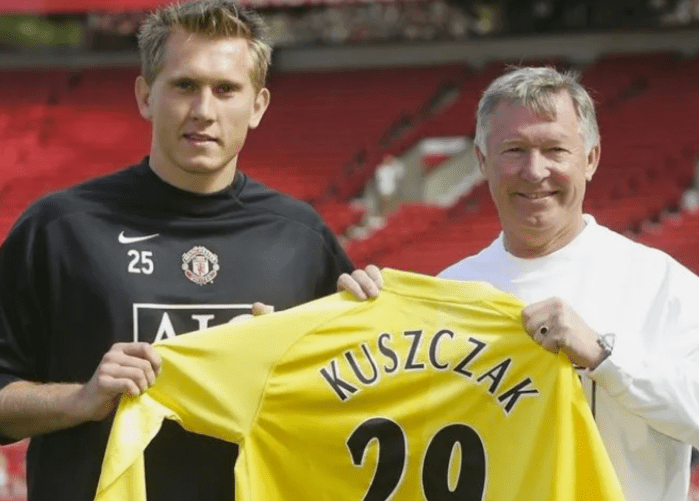
In a somewhat complicated transfer deal, Man U signed Kuszczak in the summer of 2006 in exchange for United’s former Albion loanee, Paul McShane, and young goalkeeper Luke Steele, but the first year of the arrangement was on a loan basis. In five seasons at United, he played a total of 61 games.
After he retired from playing Kuszczak completed a degree in sports journalism and he had already shown his writing ability during his time with the Seagulls, compiling a piece for The Footballers’ Football Column in December 2013 which appeared in the Daily Mail.
Perhaps he also showed his true colours regarding dropping down into the Championship when he wrote: “I miss the Premier League a lot. The idea around moving to Brighton was to get more games and put myself on the market.”
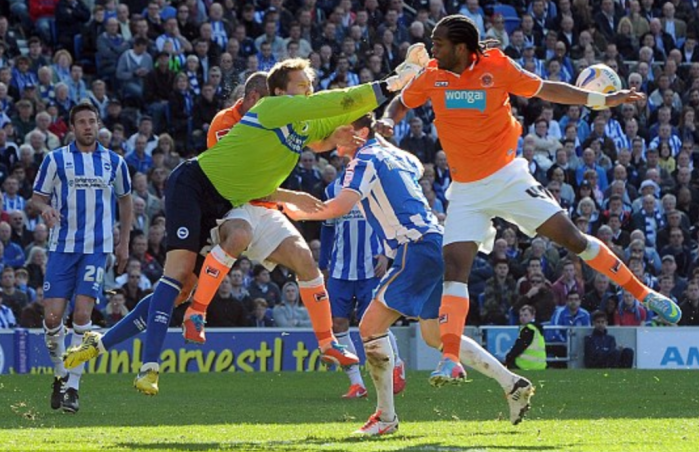
Although he added: “This move was all about giving me the opportunity of playing in the Premier League in the future. I would love to go with Brighton – that’s the aim. We’re ambitious and want promotion.
“It may sound arrogant but my place is in the Premier League. I came to England with West Bromwich Albion and enjoyed my time there, as I did at United. I want to be back in business in front of great crowds.
“I want my friends to be watching me on TV every week and have a chance of challenging the best in the world.”

Kuszczak certainly addressed the issue of more playing time during his two seasons with the Albion, completing 89 appearances across the two successive play-off promotion campaigns, initially under Poyet and then Oscar Garcia.
But within days of Garcia’s resignation after the play-off semi-final defeat to Derby, it was announced Kuszczak was being released.
There were a number of unsubstantiated and colourful reasons as to why he wasn’t retained by Brighton, but Andy Naylor in The Argus said neither Garcia nor his replacement, Sami Hyypia rated his ability with his feet or his distribution skills.
For around six months, Kuszczak was unable to find a new club but then Kenny Jackett took him to Wolverhampton Wanderers where he played 13 games deputising for the injured Carl Ikeme.
Midlands rivals Birmingham City swooped to sign him in the summer of 2015. Even though Harry Redknapp signed Brighton’s David Stockdale as first choice ‘keeper at St Andrew’s in 2017, Kuszczak found himself back in the first team after Steve Cotterill arrived as manager.
He spent four years at St Andrews, finally leaving in 2019 having made 89 appearances for the Blues.
After hanging up his gloves, he returned to Poland and started up his own construction company building houses and apartments.
He also completed his journalism studies and obtained his UEFA A coaching licence. He coached the Polish national team goalkeepers for six months between September 2023 and March 2024.
 Steele was between the posts as the Seagulls won 3-1 at St James’ Park to win promotion to the elite for the first time in their history, a particularly sweet moment considering Newcastle had discarded him early on in his career.




 In parallel lines