Top goalscorer Fred Binney ousted by one of the best

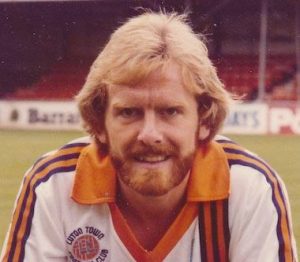
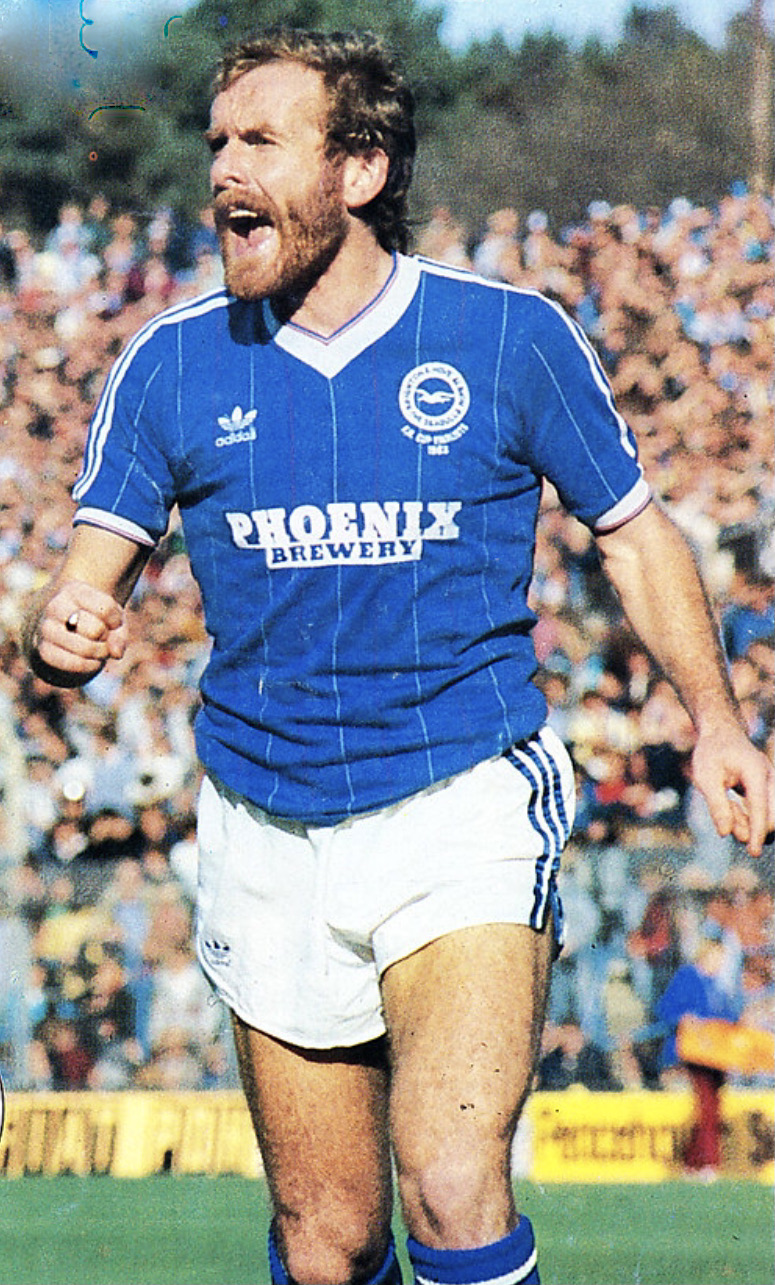
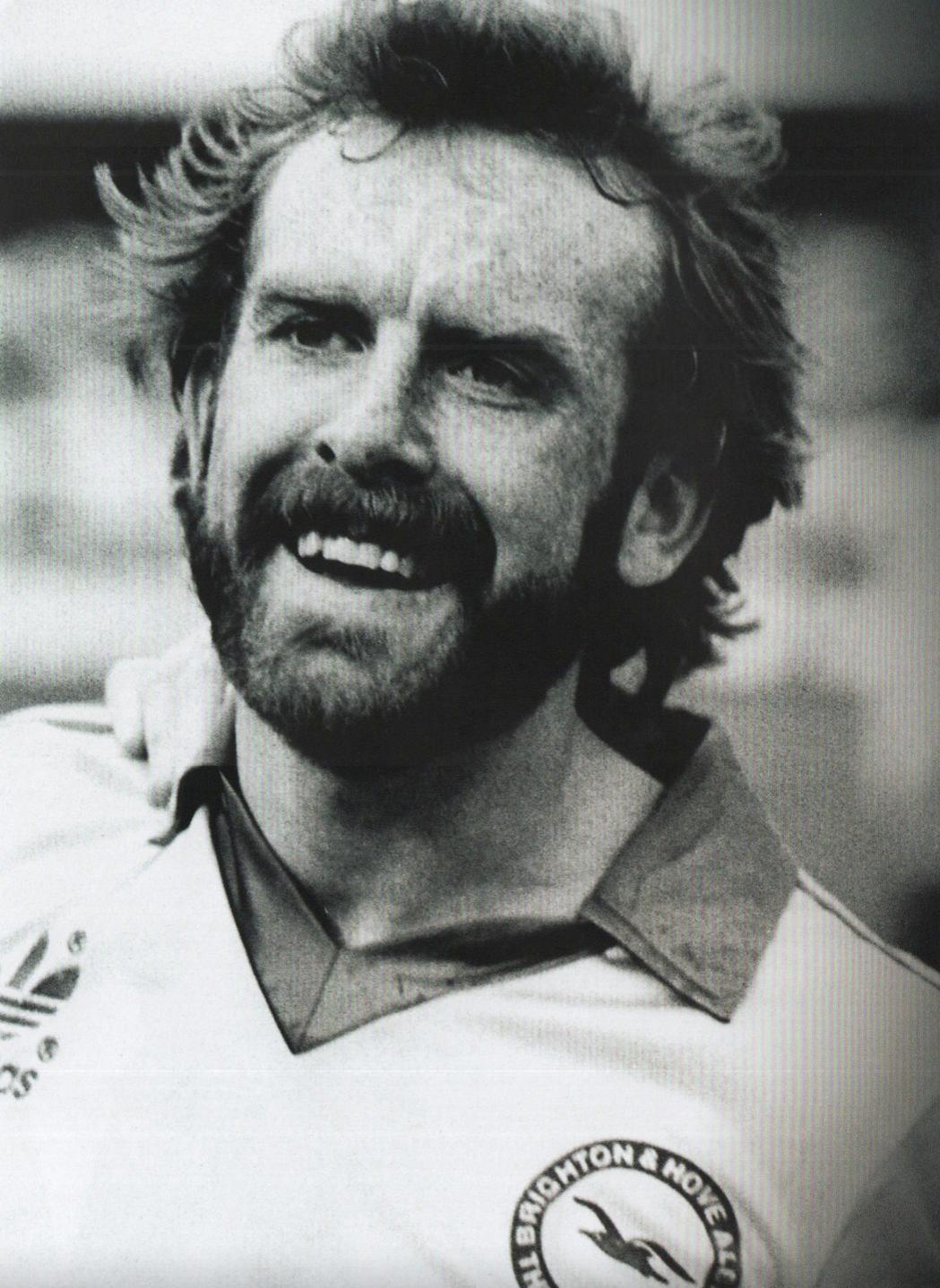
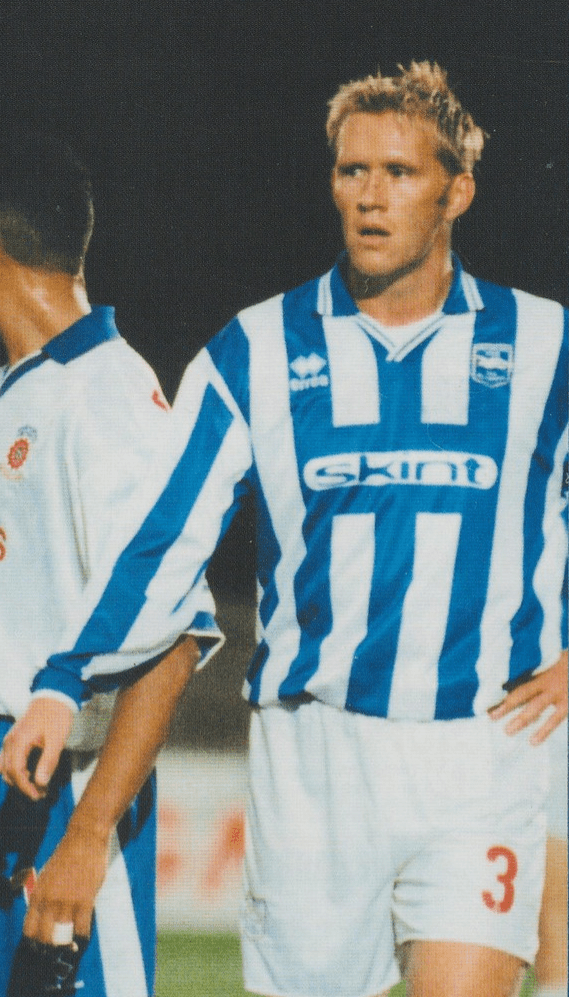
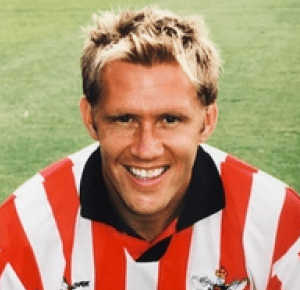
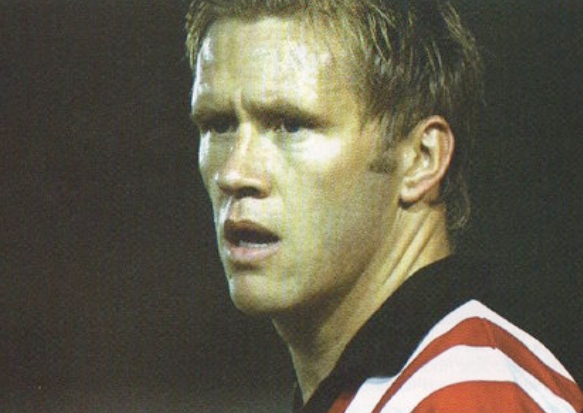
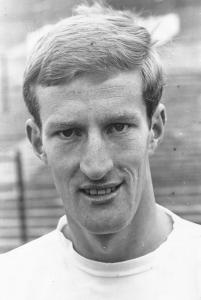
DEVONIAN FRED BINNEY was a prolific goalscorer for Brighton but the emergence of one of the club’s all-time great players brought a premature end to his stay in Sussex.

Binney was not afraid to put a head or boot in where it hurt and black and white action photographs in matchday programmes from the 1974-75 and 1975-76 seasons and in the Evening Argus invariably featured goalmouth action involving the moustachioed or bearded Binney.

I particularly remember a shot of him continuing to play wearing a bloodied head bandage after he’d cut himself but played on in a home game against Hereford United, a club he later played for and coached.

The ‘old school’ centre forward was signed by Brian Clough and Peter Taylor from Exeter City at the end of the 1973-74 season in exchange for Lammie Robertson and John Templeman plus £25,000.

Taylor had sought the opinion of David Pleat, later a manager of Luton, Tottenham and Leicester, who had played alongside Binney for the Grecians.
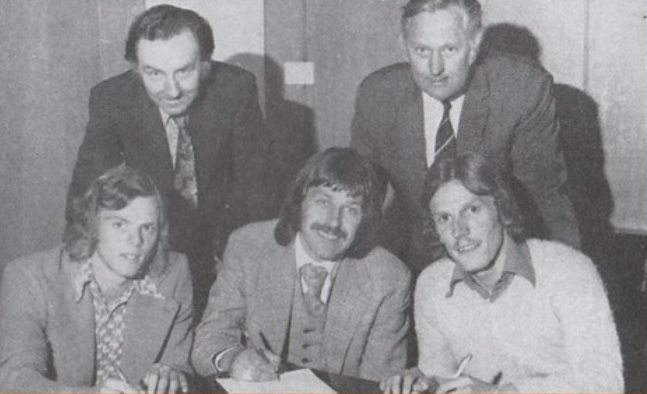
Mike Bamber and Peter Taylor capture Fred Binney’s signature with John Templeman and Lammie Robertson going to Exeter in exchange

Pleat recalls in the Summer 2025 edition of Backpass magazine: “I told him that he was a clinical finisher, very sharp, had an eye for goal but tended to be caught offside too often.”

Incidentally, Templeman, a Sussex lad who had been an Albion player for eight years, didn’t want to leave but, as he told Spencer Vignes in his book Bloody Southerners (Biteback Publishing 2018), Taylor told him he’d never play league football again if he didn’t agree to the move.

Binney’s arrival came as the former league title-winning duo set about clearing out most of the squad they inherited from Pat Saward as they sought to rebuild. Around the same time, a triple signing from Norwich City saw Ian Mellor, Andy Rollings and Steve Govier arrive.

Clough clearly didn’t fancy the forwards Saward had signed and, as well as using Robertson as a makeweight also let go two previous record signings in Ken Beamish and Barry Bridges.

Binney hadn’t managed to kick a ball in anger for Clough before the outspoken boss left to manage Leeds, but sidekick Taylor felt he owed it to chairman Mike Bamber to stay, and took on the job alone (bringing in ex-Long Eaton manager Brian Daykin as his no.2).

Binney making a splash at the Goldstone

Taylor also recruited Ricky Marlowe, a youngster who’d been a reserve at their old club, Derby County, to play up front with Binney, along with several other new arrivals with past Rams connections, such as Jim Walker and Tommy Mason.

It was not really surprising they thought Binney could do a job for Brighton because in 1972-73 he had scored 28 league goals for Exeter, making him the season’s joint-top goal scorer in the entire Football League (along with West Ham’s Bryan Robson). And in 1973-74, he was voted the PFA Division Four Player of the Year and Exeter City Player of the Year after he’d scored another 30 league and cup goals.
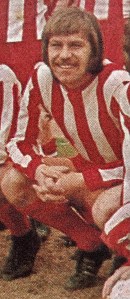
It was said the Grecians had already turned down an offer from Swindon Town before he made the move to Sussex.

With so many new arrivals at the Goldstone, perhaps, not surprisingly, consistency was hard to find in the 1974-75 campaign and Binney didn’t come close to repeating that scoring form with only 13 goals to his name as Albion finished a disappointing 19th in the table.

That all changed in 1975-76 – Albion’s 75th anniversary season – and Binney was on fire, netting 23 goals as Albion narrowly missed out on promotion. Taylor still couldn’t resist chopping and changing Binney’s strike partners. He started out with new arrival Neil Martin, an experienced Scottish international, then had Nottingham Forest loanee Barry Butlin.

When craggy Northern Irish international Sammy Morgan arrived from Aston Villa, it looked like Taylor had finally found his ideal pair, although it took Morgan six matches before he struck a rich vein of form.

Meanwhile a young reserve who’d been blooded in a friendly against First Division Ipswich Town on Friday 13th February 1976 began to find himself included in the first team picture.

He’d been a non-playing substitute three times before a big top-of-the-table clash away to leaders Hereford on 27 March, which BBC’s Match of the Day had chosen to cover.

In the pre-match team meeting, manager Taylor announced that Binney wouldn’t be playing and that Peter Ward would take his place.

“Fred Binney was nice, a great fella; there was no friction between us and I didn’t really have time to think about how he was feeling,” Ward said in Matthew Horner’s 2009 book about him (He Shot, He Scored, Sea View Media).

Just 50 seconds into the game, Ward scored, the game finished 1-1 – but Ward didn’t look back and went on to become one of the club’s greatest ever players.

Binney wasn’t quite finished but it was the beginning of the end. Ward scored again in his second match as Binney’s replacement (another 1-1 draw, at Rotherham) but after a 2-1 defeat at Chesterfield, Binney was restored to the starting line-up in place of Morgan and opened the scoring in a 3-0 home win over Port Vale (Ward and Mellor also scored).

Sadly, it was Albion’s last win of the season. They lost 3-1 away to promotion rivals Millwall and drew the last three games resulting in them finishing fourth, three points off the promotion spots.

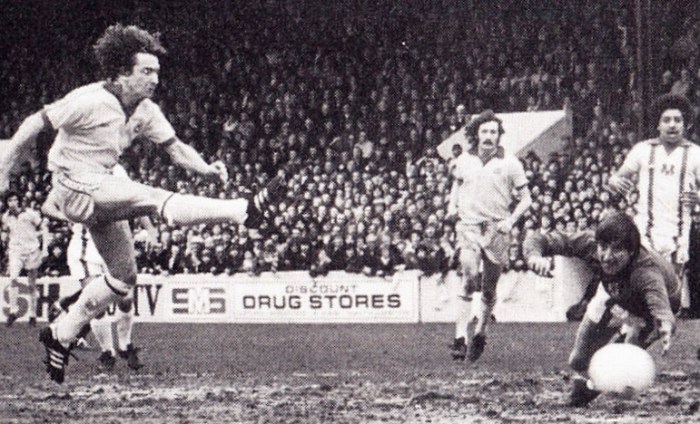
Binney gets a shot away at The Den – and later had to make his own way home!

Binney scored a consolation goal in that game at The Den but ended up having to make his own way home when fuming Taylor ordered the team coach driver to leave without him!

Ward recounted the story in Horner’s book: “Pete Taylor had just had a real go at us in the changing rooms and we were all sitting in silence on the coach, wanting to get home as soon as we could.

“Fred was the only one still not on the bus because he was standing around talking to someone. Pete wouldn’t wait and said to the bus driver, ‘F••• him. Leave him. Let’s go’. It wasn’t the sort of place at which you’d want to be left but, luckily for Fred, he got a lift from some fans and managed to get back to Brighton before the coach.”

In his review of the season for the Argus, John Vinicombe wrote: “Few forwards in the division could match Fred Binney for converting half chances into goals,” although he observed that only eight of his goals were scored away from the Goldstone. “Away from home, Binney did not fit into the tactical plan. He looked lost,” wrote Vinicombe.

While the team missed out on promotion because of those draws, young Ward enhanced his credentials by scoring the equaliser in each of them, taking his tally to six goals in eight games.

Taylor decided to team up with Clough once again, at Nottingham Forest, and disappointed chairman Mike Bamber turned to former Spurs captain Alan Mullery who had thought he was going to take charge of Fulham after retiring from playing but was spurned in favour of Bobby Campbell.

As he assessed the strengths and weaknesses of his squad in pre-season training, Mullery quickly took a liking to Ward and gave Binney short shrift when he tried to persuade him that picking the youngster instead of him would get him the sack.

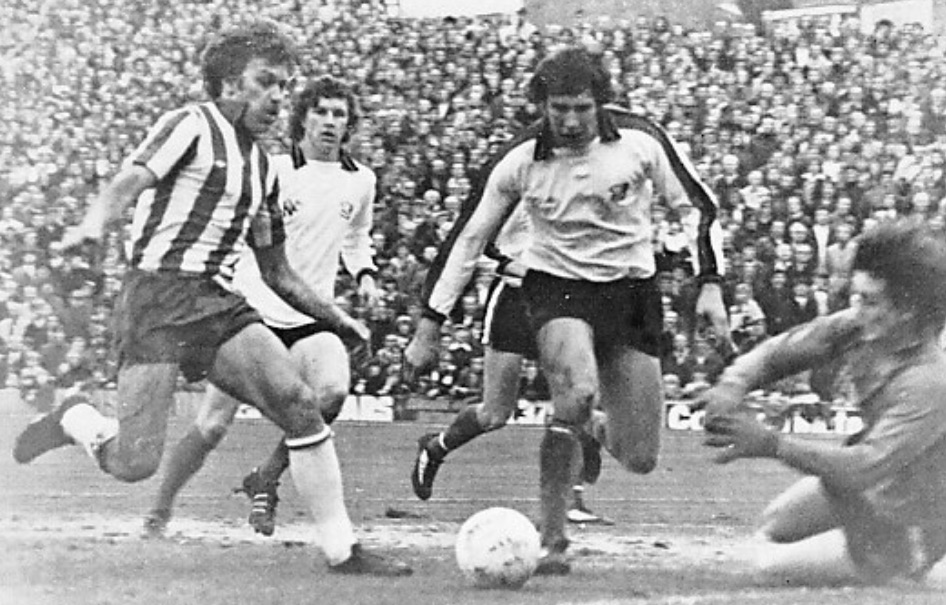
Even so Binney started the first ten games of the 1976-77 season, and scored four goals, but he was subbed off in favour of Gerry Fell on 50 minutes of the September home game v York City when the score was 2-2 and suddenly the floodgates opened with Albion scoring five without reply in front of the Match of the Day cameras. Binney didn’t play another game for the first team.

In the days of only one substitute, invariably it was his old strike partner Morgan who got the seat on the bench. In his autobiography, Mullery wrongly recollects that he sold Binney to Exeter within two months. While there were plenty of rumours of Binney moving on, with Torquay, Reading, Crystal Palace and Gillingham all keen to sign him, he spent the rest of the season turning out for Albion reserves.

“One of the best goalscorers in the lower divisions and popular with the Albion supporters, Binney was perhaps the biggest victim of Ward’s stunning introduction to league football,” Horner observed, noting that in 15 games in which they played together, that Vale game was the only match when they both scored.

Binney left Brighton having scored an impressive 35 goals in 70 matches and, as was often the case at that time, a chance to play in America would prove to be a blessing for him.

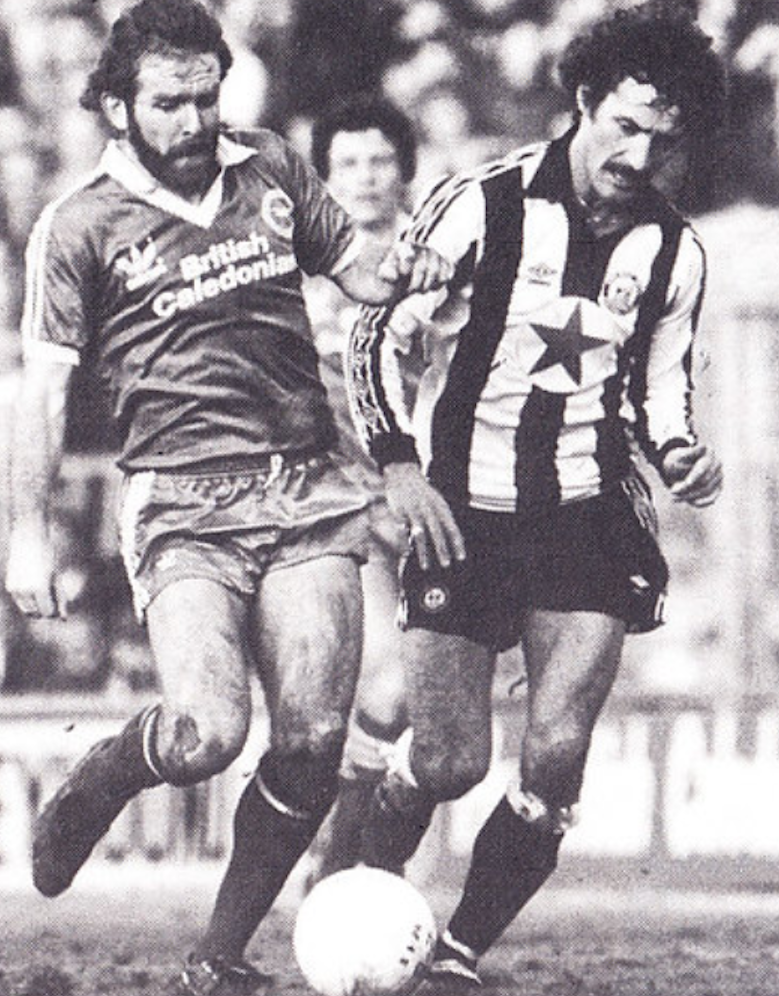
Binney up against Welsh international Mike England, left for Albion v Cardiff, right for St Louis Stars

He joined Missouri-based St. Louis Stars in the North American Soccer League, who had John Jackson in goal and former Spurs player Ray Evans in defence along with ex-Albion defender Dennis Burnett and ex-Palace and Liverpool full-back Peter Wall.

In a side managed by ex-Palace and Orient player John Sewell, Binney kept up his impressive scoring record by bagging nine goals in 18 appearances. Fellow striker Barry Salvage, who’d played for the likes of Fulham, QPR, Brentford and Millwall, only scored once in 25 games.

Born in Plymouth on 12 August 1946, it was to his hometown club that he moved on his return to the UK from America.

Binney had been raised in the Barbican area of Plymouth and I am grateful to Ian De-Lar of Vital Argyle for filling in details of his early playing career.

He was a prolific goalscorer in junior football whilst playing for CM Department juniors and was signed by South Western League side Launceston.

While starting work as an apprentice at Devonport Dockyard, he also played for John Conway in the Devon Wednesday League, where he was spotted by Torquay United scout Don Mills.

Torquay took him on as an amateur before he signed a professional contract in October 1966. Although he made his first team debut in September 1967, he was mainly a reserve team player and went on loan to Exeter City in February 1969 before joining them on a permanent basis in March 1970 for £4,000.

He’d scored 11 goals in 24 starts for the Gulls but in view of his future success Torbay Weekly reporter Dave Thomas declared: “If there was a ‘One That Got Away’ story from that era, it was surely Fred Binney.

“The bustling, irrepressible Plymothian was snapped up by United as a teenager, but despite hitting the net at will in the reserves, he could never convince (manager Frank) O’Farrell that he was the real deal.”

It was during the brief managerial reign of former goalkeeper Mike Kelly that Binney joined Argyle in October 1977 and although he scored nine in 18 matches, he wasn’t able to hold down a regular starting spot.

But when the wily former Crystal Palace and Manchester City manager Malcolm Allison returned to Home Park as manager, Binney’s fortunes turned round and, in the 1978-79 season, he scored a total of 28 goals, was the team’s leading goalscorer and ‘Player of the Year’.

In Allison’s first away match, on 21 March 1978, he was rewarded for giving Binney his first senior game for 10 weeks when the predatory striker scored twice in a 5-1 win at Fratton Park. Also on the scoresheet was 18-year-old substitute Mike Trusson, who replaced the injured Steve Perrin. Pompey’s consolation was scored by Binney’s former Albion teammate Steve Piper, on as a sub for the home side.

Binney’s goal-every-other-game ratio at Argyle saw him net a total of 42 goals in 81 games – 40 while Allison was his manager. That Argyle squad had Tony Burns as back-up goalkeeper to Martin Hodge.

Great Pilgrim

Those goals helped to earn Binney 20th place in a list of the top 25 ‘Greatest Pilgrims’ voted for in July 2019.
But Allison’s successor, the former Argyle player Bobby Saxton, had different ideas and sold Binney to Hereford United for £37,000 in October 1979.

He scored six times in 27 appearances for the Bulls before moving into coaching, at first becoming assistant manager to Hereford boss Frank Lord. When Lord left in 1982 to manage the Malaysia national team, Binney went too.

He returned to England in 1985 to become assistant manager to Colin Appleton at his old club Exeter. When Appleton was sacked in December 1987, Binney went with him, taking up a role as recreation officer at Plymouth University. He subsequently became president and coach of its football club, and retired in 2013.

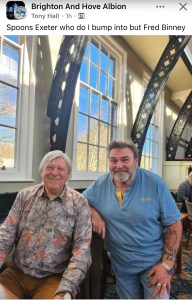
Albion fan Tony Hall posted this picture on Facebook of a chance pub encounter with Binney in 2025

That year, Binney’s son Adam was in touch with the excellent The Goldstone Wrap blog, saying of his dad: “He is not really interested in being lauded and doesn’t look for any kind of adoration. He doesn’t really like the attention, but he does love Brighton & Hove Albion and remembers his time there fondly.”

• In the Backpass article (left), Pleat recalls how, during his time as Leicester manager, Binney was his West Country talent scout. He also tells how Binney and his wife Lesley ran a cream tea shop in Modbury, Devon, for many years and how the former striker enjoyed travelling the length and breadth of the country’s canals on his own longboat, Escargot.

Well-loved Grealish went down with the Albions and City

TENACIOUS Tony Grealish earned plenty of plaudits in a 20-year professional career spanning almost 600 matches and etched his name in the record books along the way.

Thought to be the only person to play in two different sports at Wembley Stadium, Grealish was also the first Brighton & Hove Albion player to captain his country.

On the ball for Brighton

One statistic less favourably remembered is that he was relegated from the top level of English football with three different clubs: Brighton, West Bromwich Albion and Manchester City.

The London-born Republic of Ireland international was first relegated in the same year that he led the Seagulls out at Wembley for the 1983 FA Cup Final.

He was also part of the Throstles squad who went down in last place in 1986. And it was two relegations in a row after switching to an ailing Sky Blues side that went on to relinquish their top flight status in 1987.

When Grealish signed for Brighton from Luton Town for £100,000 in July 1981, it was a time of significant change. After only just avoiding relegation the season before, manager Alan Mullery had quit over a disagreement with chairman Mike Bamber and four key players left the club: John Gregory, Mark Lawrenson, Peter O’Sullivan and captain Brian Horton.

Grealish had quite a tall order taking over in midfield from ex-skipper Horton, who replaced him at Kenilworth Road, but Gordon Smith, another Albion teammate who later played for City, said:

“He did it with style – he was excellent. He was a very hard working player, he could tackle, but he was also classy with it – he could always pick out a pass.”

Part of the deal that saw Liverpool acquire Lawrenson saw the experienced Jimmy Case move to Brighton and he also appreciated what Grealish brought to the side. “Tony was so, so reliable. Playing with him in midfield, you knew that if the going got tough, he would be shoulder to shoulder alongside you.

“He would go in where it hurt, a tough lad, but he was not just a worker, he could play a bit as well and his enthusiasm for the game rubbed off on everyone in that changing room.”

Grealish and Case together with Mullery signing Neil McNab proved to be quite a formidable midfield trio and together they helped Mike Bailey’s side to jostle for top half of the table positions during the 1981-82 season before falling away to finish in 13th place – a record that remained in place until 2022!

Wembley gesture

Reaching the FA Cup final in 1983 under Jimmy Melia and George Aitken provided a personal highlight for Grealish when he captained the Seagulls in the absence of suspended regular skipper Steve Foster, memorably wearing the defender’s trademark white headband as a mini-protest at his exclusion.

Grealish’s departure to West Brom in March 1984 was part of the ongoing break-up of the former top level squad, Melia’s successor Chris Cattlin being tasked with trimming the wage bill to bring it into line with second tier football.

Three and a half years later, Grealish had just turned 30 when Jimmy Frizzell signed him for City in October 1986 for a modest £20,000 fee, re-uniting him with McNab.

It was only a short-term deal, though, and he continued to live in Sutton Coldfield, a commute of 90 miles each way! “We haven’t bought a place because I only signed until the end of the season,” he explained. “We’ll see what happens first.”

Frizzell had previously been assistant manager to Billy McNeill but took over the reins when the former Celtic captain, frustrated by City’s parlous financial circumstances, left for Aston Villa in September 1986.

City of the mid-1980s were a very different proposition to the modern day version: they were more than £4m in the red and struggling with crippling debt repayments after an ill-advised spending spree in the late 70s and early 80s.

“The first thing I was told when I joined and went to discuss money was that they were so skint they would sell their goalposts if they could,” a Grealish contemporary, centre-back Mick McCarthy, told Chris Bevan for BBC Sport in a 2013 article looking back at that period.

Frizzell felt the relatively youthful City needed some experienced old heads to steady the ship and Grealish joined from West Brom in the same week John Gidman joined on a free transfer from city rivals Manchester United. Both made their Maine Road debuts for bottom-of-the-league City against United in a 1-1 draw on 26 October 1986.

It was the 118th meeting between the two sides, but the first to be broadcast live on TV.

Injury-hit United took the lead through a Frank Stapleton header that crept past the diving Perry Suckling and inside the post, but McCarthy equalised with a header from a cross by McNab.

Under fire United boss Ron Atkinson only had one more game in charge of the Reds; after a 4-1 League Cup defeat by Southampton, he was sacked.

United’s plight was nothing compared to City, though. They didn’t win away throughout the whole season and, in spite of the additions of forwards Paul Stewart and Imre Varadi, scored a meagre 36 goals in 42 games.

Youngster Paul Moulden, having been a prolific goalscorer in City’s FA Youth Cup-winning side of 1986, briefly offered hope when scoring four goals in four games in November but then picked up an injury.

Frizzell blooded several other members of that youth side including Paul Lake, David White and Ian Brightwell but City were relegated. Grealish’s last game for them was in a 0-0 home draw against Newcastle in March, City’s first point in a month. They only won twice in the remaining 10 games and were relegated…along with McNeill’s Villa!

Grealish only made 15 appearances in that 1986-87 season and was an unused sub on two other occasions. He made 11 league starts, one in the FA Cup (a 1-0 defeat v Man U) and three in the Full Members Cup. He also played in City’s reserve side on 14 occasions (stats courtesy of the Gary James archive).

Born in Paddington, west London on 21 September 1956, Grealish played underage for St Agnes Gaelic football club in Cricklewood – alongside brother Brian – and represented London at various underage levels.

That special 1983 Wembley moment meant Grealish achieved the unusual claim to fame as reportedly the only person to play soccer and Gaelic football at the iconic stadium. He’d previously played there in the early ’70s for London’s Minors against New York in what at the time was an annual Whit weekend tournament.

“For a group of London lads, playing at Wembley Stadium was magnificent,” said Éamonn Whelan, a teammate of Grealish’s for St Agnes and London.

Ireland was certainly in his blood even if he wasn’t born there: his father, Packie, was from Athenry in Galway, and although his mother, Nora, was born in London, both her parents came from Limerick.

No surprise then, that Grealish represented Eire with some distinction, winning 45 caps between 1976 and 1985, and It was during Alan Kelly’s brief reign in charge, in 1980, that Grealish was first made Eire skipper – in a 2-0 win over Switzerland at Lansdowne Road, Dublin.

Brighton’s Lawrenson and Gerry Ryan were teammates that day, as was Chris Hughton.

One of the goalscorers that day, Don Givens, said of Grealish: “He gave so much effort that he wasn’t going to accept anything less from his teammates.

“Tony was a 100 per cent tough little midfield player, and a great character off the pitch.”

Former Ireland manager Eoin Hand chose Grealish as Eire captain for the 1984 European qualifying campaign, when Ireland ended in third place behind Spain and Holland.

In his book, First Hand My Life and Irish Football, Hand said Grealish was “more Irish than the Irish themselves”.

“With his dynamic, combative style in the midfield engine room, Tony, with his tousled hair and Viking beard, was the kind of guy you were happy to go into battle alongside,” he said.

Grealish on the international stage with the Republic of Ireland

“He was a natural leader, and although known for his ceaseless industry, he was no mere artisan. Grealish could play as well and conjure up the odd goal from deep positions.”

Previous manager Johnny Giles had given Grealish his Ireland debut at the age of 19, in a friendly against Norway at Dalymount Park, Dublin on 24 March 1976.

Grealish, unusually, started at full back as Ireland won 3-0 thanks to goals from Liam Brady, Jimmy Holmes and a penalty from Mickey Walsh.

“Tony was very good for me when we played together in midfield because he was a ball winning all action player, and we had a good understanding,” said Brady, who later became Brighton’s manager.

“Around the Ireland dressing room, he was very enthusiastic, determined and very motivating – he liked to motivate everyone around him,” he told the Irish World in 2013.  “He’d be up for every match.”

Brady added: “We had a strong friendship, and I haven’t met anyone who played with him who wasn’t a friend of Tony Grealish’s.

“He was a super man, and a super bloke. He made the atmosphere better wherever he was.”

Grealish took his first steps to becoming a professional footballer aged 15 in 1972 when he joined Leyton Orient as an apprentice. Manager George Petchey took him on as a professional in 1974 and he was the club’s player of the year at the end of the 1975-76 season.

In 1977-78, Orient reached an FA Cup semi-final at Stamford Bridge, where they lost 3-0 to  Arsenal, although the aforementioned Liam Brady mentioned: “He man-to-man marked me that day and put me out of the game. Luckily some of our other players performed despite the fact that I didn’t.”

One of the last of his 171 appearances for Orient was in the April 1979 3-3 draw with promotion-chasing Brighton in front of The Big Match cameras (John Jackson was in goal for the Os and Martin Chivers scored his only goal for Brighton).

Grealish transferred to David Pleat’s Luton Town in the summer of 1979 for a fee of £150,000, racking up 78 Division Two appearances over two seasons before joining Brighton.

In total, Grealish played 116 games plus five as a sub for Brighton, and his last game for the Seagulls ironically saw him score in a 1-1 home draw with Manchester City.

Having known what he could bring to a side, it was Giles, when manager of West Bromwich Albion, who took Grealish to the Hawthorns in March 1984 for £75,000.

Reunited with Johnny Giles at West Brom

In one and a half seasons with the Baggies, Grealish made 65 appearances before that move to City.

He spent a brief period with Salgueiros in Portugal before former Leeds hard man Norman Hunter signed him for Rotherham United in August 1987. He made 110 appearances over three seasons, going down with them in 1987-88 and helping them to bounce straight back by winning the Fourth Division title the next year under another former Albion midfield player, Billy McEwan.

His last league club was Walsall during Kenny Hibbitt’s managerial reign before he continued playing at various non-league clubs in the Midlands: Bromsgove Rovers, Moor Green, Halesowen Harriers, Sutton Coldfield and Evesham United.

He returned to Bromsgrove Rovers as player-manager before calling it a day, and then worked in the scrap metal business. He died of cancer aged 56 in April 2013.

An obituary in Albion’s matchday programme saw tributes paid by several former teammates. Gary Stevens, who memorably scored Albion’s equaliser in the 2-2 Cup Final draw against Man Utd, said: “Off the field, Tony was the life and soul of the party.

“When he was with us, he was always laughing, joking and just enjoying life. Yet on the pitch he always gave 100 per cent, was tenacious in the tackle and he had a tremendous will to win.”

Ex-skipper Foster added: “Tony was a lovely man off the pitch and a passionate footballer on it. He was a fantastic midfielder.”

Seething Knight dumped O’Callaghan for telling him how to run the Albion

CORK-BORN George O’Callaghan had something of a yo-yo footballing career after bursting onto the professional scene as a talented teenager.

Eyed by Arsenal and Spurs when he was in his formative years at Port Vale (then in the Championship), he turned to drink when ex-Albion captain and manager Brian Horton dropped him from the Vale first team.

Although the tall midfielder worked his way back into contention, he returned home to Ireland to rebuild his career before making several other attempts to succeed in the English game.

Over the course of five years, he was an influential cog in Cork’s League of Ireland side, the highlight coming with a championship win in 2005 when he scored eleven goals from midfield and was voted League Player of the Season.

He survived meningitis in 2006 just a handful of months before another Championship side, Ipswich Town, gave him another opportunity to make it in England but he struggled to hold down a place at Portman Road.

After only 13 appearances, the Tractor Boys were prepared to offload him to third tier Brighton. A deal was agreed in August 2007 but he made the move on loan rather than permanently because he still thought he could make it in Suffolk.

By then 28, the player brought experience and creativity to Dean Wilkins’ largely young side, slotting in effectively in the centre of Albion’s midfield alongside Dean Hammond, making 16 starts and one appearance off the bench.

But his Irish gift of the gab brought it all to a messy end. He publicly criticised chairman Dick Knight’s handling of contract negotiations in an explosive article in The Argus and didn’t play for the Seagulls again.

The Irishman told reporter Andy Naylor he thought the team was in danger of falling apart because chairman Knight had been too slow to sort out contracts and loans.

Knight countered: “We have given him the chance to shine and show his talents. It’s not George O’Callaghan’s business to tell the club what we should be doing.”

The midfielder spoke out after Albion capitulated 3-0 at Millwall on Boxing Day. He told Naylor: “There are a lot of lads who are very important to this team that don’t know if they are coming or going and I think it’s about time the club got a grip on it and sorted it out, because it has dragged on for too long and I feel it is starting to affect the players.

“I just don’t think it is right and it’s something the club needs to look at. It used to happen at Cork City when I was there and we lost a lot of good players. We lost Kevin Doyle and Shane Long for peanuts over contracts not being sorted out early and quickly.

“It makes you angry as a player. I can cope with it, because I am a lot older than the other lads, but the young lads are really upset and it’s not right.”

O’Callaghan’s version of events the club would have wanted to keep to themselves plainly differed from Knight’s while Wilkins was stuck in the middle.

“I know the manager tries his best behind the scenes,” said O’Callaghan. “He is fantastic. I think he works with a very small budget. It must be more frustrating for him, because he has built a team and it could easily fall apart now.

No holding back where O’Callaghan was concerned

“Things should have been sorted out a lot quicker. It has been a big thing in the squad in the last few weeks. I’ve mentioned it and the club need to sort it out now.”

The Irishman said he had encountered something similar at Ipswich the previous season, pointing out players just needed to know where they stood.

“I don’t want to stay and then see our best lads go, like Hammo,” he reasoned. “If we want to make that push for the play-offs and get back into the Championship it needs to be sorted.”

Knight was in no mood to take that sort of broadside from a loan player and told the reporter: “The team’s performance was absolutely woeful. I think certain players should be looking at themselves before trying to deflect criticism elsewhere. I thought it was a disgrace.

“George O’Callaghan is totally out of order. I would suggest he is trying to deflect attention away from his own performance, which was frankly poor, and he wasn’t the only one.

“Young players within the club are dealt with contract wise as and when the time is right.”

Knight maintained that he’d already agreed with Ipswich that both O’Callaghan and fellow Town loanee Matt Richards could extend their loans until the end of the season but neither player wanted to commit to it until they’d explored other options.

Unsurprisingly, O’Callaghan’s stay with the Seagulls came to an abrupt end and he returned to Portman Road.

Sidestepping the spat with Knight, O’Callaghan reckoned his return to Ipswich was his decision, telling The Argus: “I enjoyed playing regularly at Brighton but I spoke with the gaffer and decided it is right to try again at Ipswich and try to get first team action.

“They are a good bunch of lads at Brighton and I enjoyed playing with them so I hope things work out for them.”

When a month later there was no look-in happening with the Tractor Boys, he returned to Ireland once again to play for his old club, Cork City. It was part of a familiar pattern.

Deadline day signings David Martot and George O’Callaghan

O’Callaghan had joined the Albion on loan (the same day David Martot signed a similar arrangement from Le Havre) on August transfer deadline day having rejected a permanent move earlier that month (the clubs had agreed a £60,000 deal plus £15,000 based on appearances).

The player said at the time: “It would be a shame to leave Ipswich because the supporters have been brilliant to me, even though they never saw enough of me, and all the lads are fantastic, but I need to be playing regular football.”

Town manager Jim Magilton praised O’Callaghan’s ability and attitude and empathised with his frustration at not getting a run in the side. He said: “I don’t want to lose George but I wouldn’t stand in his way. He has been great since he has been here. He is very popular in the dressing room and he has done very well.

Tractor Boy O’Callaghan

“But he is 28 years of age and needs to be playing games. I have been there, so totally understand how frustrating it can be. We will do anything we can to help him.

“I have absolutely no problems with George. He has been top class since he came here. His attitude is first-class in training and in games.”

O’Callaghan had impressed Knight in a reserves match when Ipswich beat the Seagulls’ second string.

When O’Callaghan finally agreed the temporary move, Albion also wanted his Town teammate Richards on loan, but he too prevaricated, only to change his mind the following month. It was the first of three loan spells with the Albion. Brighton also wanted a third Ipswich player, injury-prone Dean Bowditch, who had briefly been on loan the previous season, and he eventually returned for a month in 2008.

Born in Cork on 5 September 1979, O’Callaghan left Ireland as a teenager to pursue his football dream and in a March 2020 podcast with the Irish Examiner, he talked about his early days at Port Vale when he was regarded as one of the hottest properties in football.

“Arsenal came in for me when I was 18,” he said. “I was waiting outside the manager John Rudge’s office and Pat Rice, who was Arsene Wenge’s assistant at the time, came out and said: ‘George, we can’t get you this time, we’ll get you next time,’.”

When the youngster protested to Rudge, he was told Arsenal had only offered £1m for him and Vale wanted £2m. O’Callaghan continued to progress in Vale’s Championship team but when Rudge was replaced by Horton, he was demoted back to the youth team.

In another podcast, A Footballer’s Life, O’Callaghan admitted to Graham Cummins that he turned to drink as his promising career stalled. “You’re responsible for your own actions so it’s ultimately your own fault. But nobody looked out for me or had my back at the club. Nobody caught me and said, ‘George, what’s going on, you’re not yourself’.

“Those days, the clubs didn’t care, it was old school, you were put out to do the job and if you didn’t you were replaced.

“You never asked anyone for help in those days. I kind of went into meltdown. Everything unravelled, I didn’t know what I was doing.”

When he eventually got back in the first team picture, he said Arsenal’s north London rivals Spurs then showed an interest in him. “David Pleat tried to sign me for Tottenham. But Brian Horton said: ‘You’re doing really well,’ and offered me a two-year deal and doubled my money.”

He asked Rudge’s opinion about the situation and when told he should stay at Vale because he’d struggle to get games for Spurs, he stayed put. “I took his advice and signed the contract. Within about 14 months I was finished, sent home.

“It was a massive mistake, a big, big mistake. I was too comfortable in the situation I was in. I probably didn’t have the guts to go ahead with it. I loved playing for Port Vale but I should have pushed for Arsenal and Tottenham. And then you can always go out on loan if it doesn’t work out.”

One of O’Callaghan’s early matches for Albion was against his old club and unsurprisingly he was a natural interviewee before the game. “It is a very special club to me because I started off my career there when I was only 15,” he told The Argus.

The Irishman scored four goals in 22 league starts plus 12 sub appearances for Vale and felt he probably had a point to prove coming up against them (Albion won 1-0 with a goal from Alex Revell).

“I never showed Port Vale fans what I can do,” he said. “I took a few wrong roads when I was a kid and it has taken me a while to get back to where I am now.

“It will be nice to put on a good performance and show them what they have missed; the player I have turned into. I never fulfilled my potential there.

“I started off doing well there as a kid but I didn’t really have the right guidance and it all went pear-shaped. As soon as John Rudge left as manager and Brian Horton came in, my chances were limited. I think that is where it all went wrong.

“Obviously, I wasn’t his type of footballer. People said he was a good footballer, but he wanted physical lads.

“Maybe at the time I wasn’t physical enough and he didn’t fancy me. I don’t blame him in any way because at the end of the day it is all down to yourself and how you look after yourself.”

He added: “I had so many knocks there that it took the fire out of me. I had to go back to Cork to get that fire back into me and build my career again.

“It was a big learning curve in my life. I lost my career in English football for a while and had to battle hard to get back.”

The player’s topsy-turvy career continued back at Cork City before he had another go in England, spending eight months at Tranmere Rovers. Once again he returned to Ireland, this time to play for Dundalk, but the lure of the English game beckoned again.

O’Callaghan linked up with Yeovil Town in the summer of 2009 and played in three pre-season friendlies. In the opening months of the season, he made 15 appearances (including six from the bench) but found it difficult to break into the team past the partnership of Jean-Paul Kalala and Shaun MacDonald.

Next stop, in December that year, was Waterford but before long he was back at Cork City once again. Brentford took him on a two-week trial but nothing came of it and instead he went to then Conference side Cambridge United but didn’t feature.

The wandering Irishman at one point tied his luck with Brunei side Duli Pengiran Muda Mahkota but he got into trouble for failing to bow to the Crown Prince.

His old Brighton and Ipswich teammate Nicky Forster took him on at Dover Athletic but he only played once for the Conference South team, and he announced his retirement on Christmas Eve 2012.

He briefly managed Sabah in the Malaysia Premier League in 2014 but he struggled to deal with El Hadji Diouf and was sacked in January 2015 when he started missing training sessions.

Four years after playing what he thought was his last game, he turned out for junior Cork club Rockmount.

After packing up playing, O’Callaghan became an agent and spent a year as a business development manager for William Hill. He was a general manager for gym chain Anytime Fitness for two years and later co-founded agency TEN Sports Management.

Cattlin bust-up didn’t stop goalscoring ‘Rooster’ Russell

BEING LET GO by the Albion as an apprentice didn’t stop Kevin Russell from going on to enjoy a multi-club league career as a player and a coach involved in no fewer than eight play-off finals and promotions.

A talented teenager good enough to earn selection for the England Youth team, Russell didn’t progress beyond Brighton’s youth and reserve sides between 1982 and 1984.

Although he was a regular goalscorer in the junior sides, a falling out with manager Chris Cattlin saw him depart the club without earning a competitive first team call-up.

Hailing from Paulsgrove in north Portsmouth, Russell returned home and linked up with his hometown club to complete his scholarship under World Cup winner Alan Ball.

Ball also gave him his first team debut but he only had eight first team outings for Pompey. It wasn’t until he joined Fourth Division Wrexham for £10,000 that his career began to take off and he was in the Wrexham side that reached the 1989 play-off final where they lost 2-1 to Frank Clark’s Leyton Orient. In the first of two spells in north Wales, playing at centre forward, Russell scored an impressive 47 goals in 102 games.

Prolific goalscorer for Wrexham

An ever-present in the 1988-89 season, his 25 goals in a total of 60 league and cup matches was recognised by his peers when he was selected in the PFA divisional team of the year.

That caught the eye of David Pleat at Leicester City, then playing in the ‘old’ Second Division, and a fee of £175,000 took him to Filbert Street.

At Leicester he played wide right rather than in the centre but he still had a knack for scoring goals and he eventually became something of a cult hero with Foxes supporters for the goals he scored in City’s escape from second tier relegation in 1991 and in their run up to the 1992 play-off final.

However, only a month after joining Leicester he had to undergo a hernia operation that put him out of action for eight weeks. When fit, he was sent out on a month’s loan to Peterborough …and suffered a broken leg!

When ready to play again, his effort to resume match fitness saw him go on another month’s loan, to Fourth Division Cardiff City. In the meantime, Pleat was sacked and Gordon Lee took over. Russell returned as the Foxes fought to avoid relegation to the third tier.

Perhaps inevitably one of the vital goals he scored (on 6 April 1991) was against promotion-seeking Albion in a 3-0 win that helped the Foxes in the hunt to stave off the dreaded drop.

Two years later, after he had moved on to Burnley via Stoke City, Russell’s first goals for the Clarets (above) were also scored in a 3-0 win over the Seagulls.

Born in Portsmouth on 6 December 1966, the nickname Rooster was coined at an early age because his hair formed something of a quiff when he was a boy – ironically, he went prematurely bald but the name stuck.

Russell’s first appearances in Albion’s colours came in the early autumn of 1982 playing in the junior division of the South East Counties League. He was still a 15-year-old schoolboy at the time.

By the spring of 1983, while the Albion first team were edging towards the FA Cup final at Wembley, Russell had stepped up to the reserves, as the matchday programme reported after he’d been involved in a close game against an experienced West Ham second string.

“Kevin Russell is just sixteen and he doesn’t leave school until he has taken his examinations next month,” it said. “But at Upton Park he found himself playing against such experienced men as Trevor Brooking and Jimmy Neighbour.

“Many schoolboys would have given their right arm to play on the same field as Brooking and there was Kevin playing on equal terms.

“Although we lost 2-1, it should be remembered that in Kieran O’Regan, Mark Fleet, Matthew Wiltshire, Gerry McTeague, Gary Howlett, Chris Rodon and Kevin Russell we had seven players under 20, while the Hammers had Paul Allen, Paul Brush and Pat Holland, all of whom have played in European competition, as well as Neighbour and Brooking in their line-up.”

John Shepherd was in charge of the side, aided by John Jackson, who had been signed as goalkeeping cover and was helping out with coaching too.

Russell’s official arrival as an apprentice at Brighton earned a mention in the matchday programme for the home game with Chelsea on 3 September 1983 and he was one of five apprentices on the staff that autumn, together with Dave Ellis, Darron Gearing, Gary Mitchell and Mark Wakefield. Martin Lambert had stepped up to sign as a full professional that summer.

In those days, the youth team played home matches at Lancing College and were looked after by Shepherd and Mick Fogden before experienced George Petchey was brought in to oversee youth development and run the reserves.

It was while a Brighton player that Russell won the first of six England under-18 caps (five starts plus one as sub), and he scored in the first of them – a 2-2 draw with Austria on 6 September 1984 – and in his fourth game, six days later, which England lost 4-1 to Yugoslavia. His strike partner in that side was Manchester City’s Paul Moulden, later an Albion loanee.

With the likes of Terry Connor, Alan Young and Frank Worthington in the first team, and promising youngsters in the reserves, such as Lambert, Rodon and Michael Ring, it is perhaps not surprising that Russell couldn’t break through.

He did have one outing in first team company, though, in a testimonial match for Gary Williams: he scored (along with Young and Connor) in a 3-3 draw against an ex-Albion XI.

The same game saw defender Jim Heggarty appear: like Russell he also went on to play for Burnley without playing a competitive first team game for the Albion.

While on that theme, a frequent partner of Russell’s in the reserves was Ian Muir, another striker who slipped through Albion’s net and ended up scoring goals for Burnley.

After his departure from the Albion in October 1984, Russell made the most of the opportunity Portsmouth presented him to learn from the former Everton, Arsenal and Southampton midfield dynamo Ball.

“I had three years there under him which was fantastic,” Russell told Leicester City club historian John Hutchinson in March 2018. “He was brilliant as a coach and it was very educational. I got the rest of my (under-18) caps at Portsmouth.

“Alan Ball treated us well. I was playing men’s football at 18. I played a few games in the first team and we managed to get promoted into what is now the Premier League.”

Although disappointed to be advised to move on to get more games, Russell’s switch to north Wales was the launchpad for his career, and the beginning of an association with Wrexham that lasted many years.

“It was a gamble worth taking because it meant first team football,” said Russell. “Dixie McNeill was the manager. He used to be a famous striker for them. He was fantastic for me and was an old school kind of manager; a proper man’s manager. It was a good time.”

Mixed fortunes at Leicester City

After Russell’s part in keeping Leicester in the second tier in 1991, he found himself on the outside looking in when Brian Little replaced Gordon Lee as manager and to get some playing time went on a month’s loan to Hereford United and then spent a month at Lou Macari’s Stoke City.

But Little recalled him in February and in his first game back he once again found the net against a former club, scoring in a 2-2 draw with Portsmouth. He kept his place through to the play-off final at Wembley, where they faced Kenny Dalglish’s Blackburn Rovers, and lost to a “dodgy penalty” scored by ex-Leicester player Mike Newell.

“It was a very scrappy game. Both teams were under a lot of pressure and never really got into their rhythm,” said Russell. “We had worked so hard that season to get to where we did get to. The result was a big disappointment, but it was an occasion that I’ll never forget.”

A promotion winner with Stoke City

It also turned out to be his last game for Leicester because that summer he returned to third tier Stoke on a permanent basis. He is fondly remembered for his part in Stoke winning promotion in 1992-93, scoring six goals in 39 league and cup matches (plus 11 as a sub), but he moved on again, this time to Burnley.

Third-tier Burnley signed him from Stoke for £150,000 (or was it £95,000 – I’ve seen both prices quoted) in June 1993 and, although he only stayed for eight months at Turf Moor, he scored eight goals in 35 games (plus two as sub) in Jimmy Mullen’s Clarets side.

Two of those goals – his first for Burnley – were scored against the Albion. I was at Turf Moor for a midweek game on 14 September 1993 when Russell scored with only a minute on the clock and he got a tap-in on 47 minutes in a 3-0 stroll for the home side. Steve Davis got Burnley’s third.

Brighton were a very different club to the one Russell had left in 1984, though. With a win in a League Cup match their only victory in the opening eight matches, it was the beginning of the end of Barry Lloyd’s tumultuous reign in charge, against a backdrop of financial hardship and boardroom mismanagement off the pitch.

Russell’s habit of scoring against his former clubs manifested itself again two days after Christmas, when he netted in a 2-1 home win over Wrexham. He scored again five days later in a New Year’s Day 3-1 home win over Lancashire rivals Blackpool.

But he was not around to be part of the side promoted via the play-offs, having moved back south, to Bournemouth, for £125,000 in March 1994.

• Another move, a return to north Wales and a career in coaching as Russell’s story continues.

Calderwood’s switch to promotion rivals backfired

Hughton’s not so loyal assistant

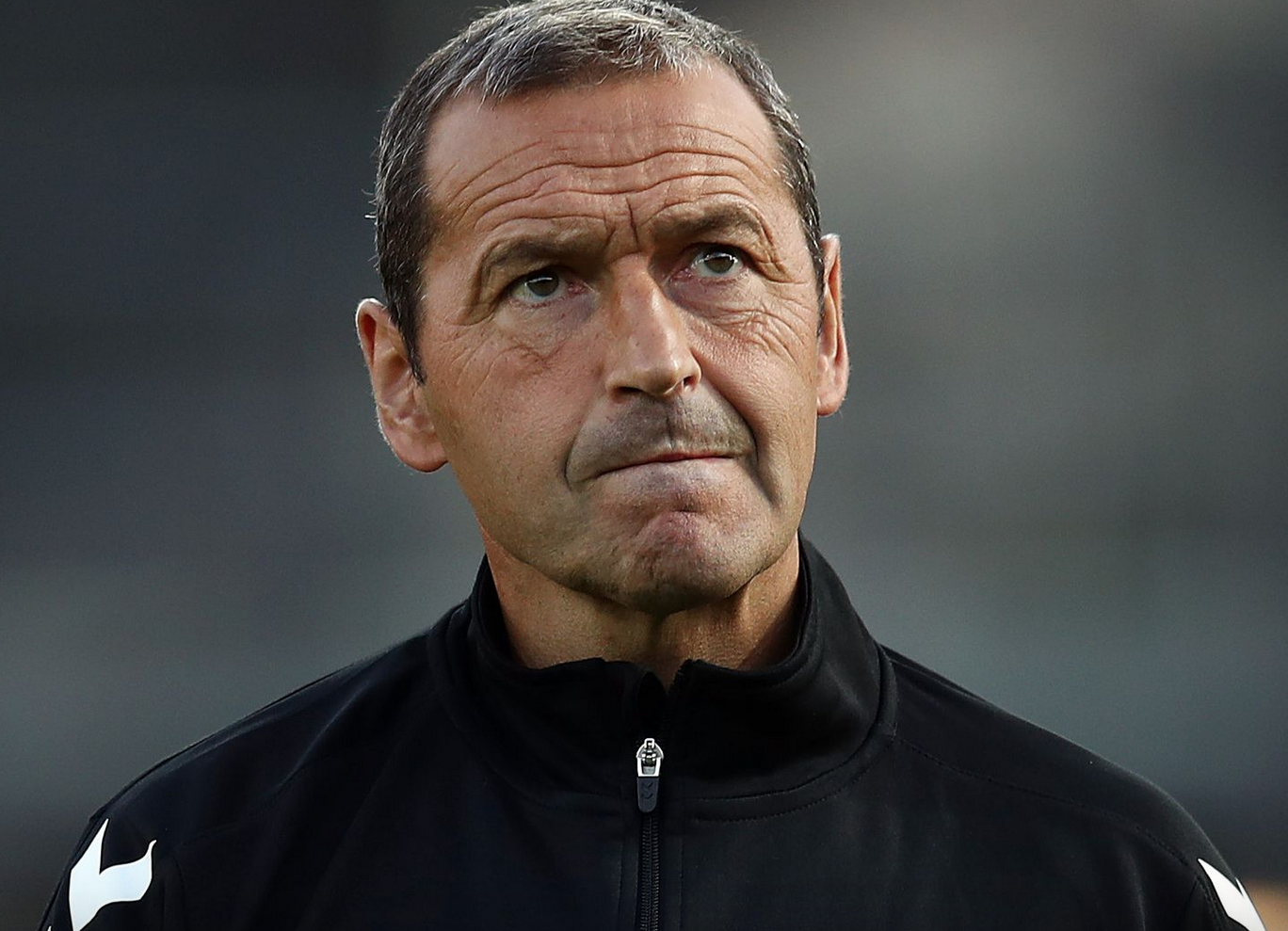
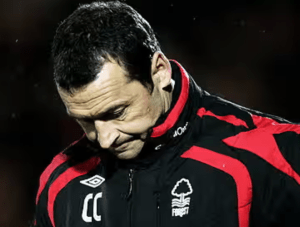
SCOTTISH international Colin Calderwood played for and managed Nottingham Forest in a lengthy playing and managerial career that has spanned a host of clubs across the country.

His 21 months as assistant manager to Chris Hughton at Brighton came to an abrupt end that drew harsh criticism at the time but thankfully didn’t hinder Albion’s upward trajectory.

Calderwood worked under Hughton at three other clubs: Newcastle United, Birmingham City and Norwich City.

The pair first met on the same A licence coaching badge course and Hughton was later a coach at Tottenham when Calderwood was a player. He then played a part in Calderwood becoming reserve team coach at White Hart Lane after his playing days were over.

Calderwood went on to become a manager in his own right at League Two Northampton Town, where he got them promotion at the end of his second season (in 2006).

Two and a half years as boss at Forest followed, during which he got them promoted from League One to the Championship. In 2007-08, his Foest side took four points off the Albion, winning 2-0 at Withdean but being held to a goalless draw at home.

Forest were promoted in second place behind champions Swansea City (Albion finished seventh) but Calderwood was sacked just before Christmas in 2008 with the side struggling in the Championship relegation zone.

When Hughton succeeded Sami Hyypiä at the start of 2015, it wasn’t long before he turned to trusted ‘lieutenant’ Calderwood to help Albion’s cause.

The no.2 had first worked with him at Newcastle in 2009 when, after relegation from the Premier League, the pair led the Magpies back to the elite as Championship champions in 2010.

Hibernian in Edinburgh lured him to try a third spell as a no.1 but, after just 13 months in charge, and only securing 12 wins from 49 matches, he was sacked. He was not out of work for long, moving later the same month to Birmingham to become Hughton’s assistant at the Championship side, where another of Hughton’s backroom team, Paul Trollope, was first team coach.

When Hughton left for Premier League Norwich in June 2012, Calderwood, Trollope and chief scout Ewan Chester (who also later joined him at Brighton) all decamped to Carrow Road. City dispensed with their services in April 2014.

Having helped steer Albion to the Championship promotion near-miss of 2015-16 (when they suffered the agonising play-off semi-finals defeat to Sheffield Wednesday), the Seagulls were well geared up to go one better the following season.

So it came as something of a shock when Calderwood quit in November 2016 to become assistant manager to Steve Bruce at promotion rivals Aston Villa.

Hughton was said to be “very disappointed” and “very surprised” by his assistant’s departure, “particularly at this stage of the season”. Albion watcher Andy Naylor reckoned that amounted to a “withering condemnation” from the normally placid manager.

In an excoriating article for the Argus, Naylor wrote: “He clearly feels let down – and he is entitled to feel that way. Is there any justification for treating Hughton the way he has?”

It emerged that the move gave Calderwood a much shorter daily commuting distance from his home in Northampton, but, even so, Naylor reckoned Hughton deserved better.

Thankfully, there was a ready-made replacement in the wings because Trollope had just lost his job at Cardiff City.

Naylor wrote: “Trollope is in the right place at the right moment to bring his promotion-winning mentality as both a player and manager into the camp. Let’s hope he demonstrates more loyalty than Calderwood.”

Perhaps it was the supreme irony that as Albion marched to promotion from the Championship the following spring, the side Calderwood had moved to only finished in 13th place – although the last-game draw at Villa stymied Albion’s chances of going up as champions.

Nevertheless, there were no bitter recriminations on Calderwood’s part. “Chris did a terrific job turning around the shape and the balance of the team,” he recalled in an interview with the Argus in January 2021.

Ahead of his subsequent club Blackpool’s visit to the Amex for a fourth round FA Cup tie (Albion won 2-1), the former assistant boss said: “We found, as I’ve found at most clubs I’ve been at, there’s a core group of players that have an appetite and an ability level that can give you a chance of success.

“When it falls into place, it is really nice to watch and it is very heart-warming and you feel justified in what you preach and practice.

“A lot of the time you are determined by the quality of the person and the player within the club. We found some really good people down there.”

Born on 20 January 1965 in Stranraer, Calderwood didn’t play professionally in Scotland, instead joining Mansfield Town as a 17-year-old in 1982.

He realised in hindsight that he learned a lot from Town’s manager at the time, the experienced Ian Greaves, and he went on to play over 100 matches for the Stags before Swindon Town boss Lou Macari signed him for £27,500 in 1985.

“Ian and Lou were the ones that built the foundations of my career,” he told the Albion matchday programme.

The centre back spent eight seasons at the County Ground and is recognised as a Swindon legend having featured in 412 matches (plus two as a sub).

At only 21, he was made club captain and, despite a difficult start, led Town to back-to-back promotions as they won the Division Four title in 1986 and overcame Gillingham in a Division Three play-off final replay in 1987.

Promotion winner with Swindon Town

Calderwood was said to be “a rock at the heart of the defence” and eventually led Town to their first promotion to the top-flight, after beating Sunderland in the play-off final at Wembley in 1990. But Swindon were demoted due an irregular payments scandal in which Calderwood was implicated: he was arrested just four weeks before the Wembley match but released the same day without charge.
Calderwood missed five months of the 1990-91 season following a horror tackle by Wolves legend Steve Bull but he returned stronger than ever and was ever present when, under Glenn Hoddle, Swindon were promoted at the end of the 1992-1993 season, beating Leicester 4-3 in the play-off final.

But instead of featuring for Swindon in the Premiership, Town’s former manager Ossie Ardiles took him to Tottenham for a fee of £1.25 million.

Playing in the top division for Spurs earned him international recognition. He made his Scotland debut aged 30 in a Euro 1996 qualifier against Russia and was a regular under Craig Brown, winning 36 caps in four years, including playing at the 1998 World Cup.

According to Spurs fan website mehstg.com (My Eyes Have Seen The Glory), Calderwood was “a solid defender, who could tackle and was good in the air, but lacked the pace and distribution skills to be a top class centre half.

“Calderwood gave Spurs a tough presence in the middle of the back four they had been missing for some time and showed that Ardiles’ judgement had been sound.”

After 198 appearances for Spurs (more than 150 in the Premier League), he left White Hart Lane in March 1999 when a £230,000 move saw him join Aston Villa under John Gregory. A year later, he switched to David Platt’s second tier Forest for £70,000.

He had only been at Forest a month when, ironically at Birmingham’s St Andrews ground, Calderwood, by then 35, suffered an injury that would ultimately force him to retire.

Forest goalkeeper Dave Beasant had already been injured in a clash with City’s Jon McCarthy earlier in the game but recovered. Calderwood wasn’t so fortunate. He ended up being stretchered off after a collision with the same player. He had fractured his leg and dislocated his ankle, causing ligament damage.

The injury overshadowed Forest’s 1-0 win and it meant he played only a handful of games at the City Ground. He later had a brief spell on loan at neighbours Notts County before calling it a day.

Calderwood initially returned to Spurs as reserve team manager before leaving for Northampton in October 2003. Spurs director of football and caretaker manager, David Pleat, said: “Colin leaves us with our very best wishes. He’s had two-and-a-half years here as a coach which I’m sure has been valuable experience.

“Colin is young, he has energy, ideas and, most importantly, ambition. This could be a terrific apprenticeship for him and everyone at the club wishes him well in his new role.”

Fast forward 15 years, and after he left Villa along with Steve Bruce in October 2018, two months later he was back in the game at League Two strugglers Cambridge United. He was given an initial 18-month contract and a year later he was given a two-year extension on his deal.

However, after a 4-0 home defeat to Salford City in January 2020 which meant Cambridge had taken only one point from their previous six games, he was sacked.

In October that year he was taken on at Blackpool as part of Neil Critchley’s managerial team and was part of the set-up that saw the Tangerines win a place in the Championship in 2021.

In June 2021 Calderwood returned to his old club Northampton as assistant manager to Jon Brady, and he told the League Two club’s website: “I have learned a lot in the years since I was last at the club and hopefully I can put all of that experience to good use.

“The situation here is similar to the situation I arrived in at Blackpool in working with a talented young manager.
“I have spoken with Jon Brady a number of times, that relationship will build quickly and I am really looking forward to working with him and the rest of the coaching staff.”

The Cobblers finished fourth in League Two and made it through to the division’s play-off semi-finals where they lost 3-1 on aggregate to Calderwood’s first club, Mansfield.

They made up for it in 2022-23 when they earned automatic promotion in third place behind Leyton Orient and Stevenage.

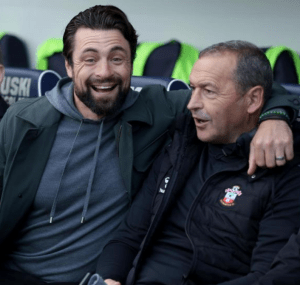
Nevertheless, in October 2023, Calderwood returned to Championship level as part of Russell Martin’s backroom team at Southampton.

Teaming up with Russell Martin

“First and foremost, he’s a brilliant human being. I really trust him and know him very well,” Martin told the Daily Echo

“We worked together at Norwich many moons ago when he was the assistant manager. I used to moan all the time to him and he had a brilliant way of being able to deal with that.

“He just has a great relationship with the players, and he’s a coach throughout my career who I’ve stayed in real constant contact with and discussed football.

“We’ve spoken a lot even when he’s not worked with me. I tried to get him at my two previous clubs and it couldn’t quite happen for various reasons.

“He’s been a manager, an assistant manager, he’s helped some young managers recently get promoted in Neil Critchley and Jon Brady, and added huge experience and value to them.”

Utility man Jamie Campbell a magnet for frustration

JAMIE CAMPBELL played in the top flight for Luton Town and later filled the left-back berth in the opening months of the season when Albion returned to Brighton after two years in exile at Gillingham.

However, by the time Albion won promotion from the fourth tier in May 2000, Campbell was on the outside looking in, Kerry Mayo having taken his place, and he was given a free transfer halfway through his two-year contract.

Campbell had been one of numerous new arrivals brought in by Micky Adams ahead of the 1999-2000 season having been given a free transfer by newly promoted Cambridge United where he had only missed one match in two years.

Although Albion famously beat Mansfield Town 6-0 in the season opener at the Withdean Stadium, subsequent form had some pondering whether it had been a flash in the pan.

Campbell, the only ever-present defender after eight games (three wins, two draws, three defeats), reassured supporters when he told the Argus: “At Cambridge we had some terrible hiccups at the start of the season. It was a new team, the same as Micky has put together here, and it does take time to gel.

“It’s early days yet. There are a lot of points to be played for and it’s a long old season. It’s far too early to start panicking. Let’s give it until Christmas, see where we are, and take it from there.”

In truth, there were few highlights for Campbell to enjoy in his time with the Seagulls. He put through his own net in only his fourth league outing, heading past the recalled Mark Walton at Darlington when filling in at centre back, although Gary Hart subsequently levelled it up.

He did score (left) in the right end to bag the only goal of the game in a Withdean win over Hartlepool on 6 November 1999, but the following month, when Albion were up against it with several players injured, ill or suspended, Campbell got himself sent off after only 25 minutes in a 2-0 defeat at Swansea City prompting Adams to drop him and relegate him to the reserves.

Campbell was shown the red card by Premiership referee Dermot Gallagher after twice sliding in recklessly on Jason Price in the space of just over a minute. He was Albion’s sixth player to be suspended that season.

“Campbell’s stupidity couldn’t have come at a worse time as a flu-ravaged squad had a hard enough task against the eventual Division Three champions without having to play for over an hour with 10 men,” recalled wearebrighton.com.

Campbell clears from Orient’s Martin Ling

Boss Adams, who had already fined Darren Freeman for a red card at Plymouth, told the Argus: “The boy will be disciplined. They’ve got to learn. In wet conditions like that, good defenders stay on their feet, it’s as simple as that.

“Obviously it’s a worry because with small squads in the third division you can’t afford too many sendings-off.”

Having lost his place, things then got worse for Campbell in February of the new century when he had to undergo a hernia operation, dashing any hopes he might have had of winning back a starting place. With Mayo and new arrival Nathan Jones vying for the left back spot, Campbell became surplus to requirements.

He moved on to Exeter City where he was almost ever-present in the 2000-01 season under Noel Blake and was named the Grecians’ player of the year.

Not long into his first season at St James’s Park, he was interviewed by the local paper and compared the situation at City to his experience with Brighton, because Blake, like his former Leeds teammate Adams, had assembled a new squad of players.

“You’ve got to quickly get to know everyone’s strengths and weaknesses so you can gel as a team,” he said. “He (Blake) has got standards and he wants people to believe in them.

“The boss runs things very professionally, he thrives on running the club like a First Division or even a Premiership club.

“And the good thing with the boss is that he admits he is still learning and his door is always free for us to knock on.”

On his return to the Withdean in the red and white stripes of Exeter three days before Christmas 2000 (above), Campbell’s penchant for own goals once again came to the fore when he deflected a Gary Hart effort that was going wide past the City ‘keeper to contribute to a 2-0 win for the Seagulls.

Not long into the 2001-02 season, Blake was replaced by former City player John Cornforth and, although Campbell played 20 games for the Grecians that season, he switched to Conference side Stevenage Borough in March 2002, where he linked up with former Albion players Simon Wormull and Andy Arnott.

The website boroguide.co.uk seems to be singularly underwhelmed by the Wayne Turner signing declaring: “It was perhaps indicative of the poor form that we found ourselves in that Campbell was often a beacon of mediocrity.

“In defence or midfield, the utility player often had little impact; frustration becoming a buzz word when describing JC’s performances.

“So, it was only natural therefore, that he ended up at Woking. Like many other former Boro’ players who didn’t live up to expectations, all roads lead to Kingfield.”

That move took place in February 2003, and he moved on again a year later, to Havant & Waterlooville where he stayed until July 2005, when he retired from playing.

Born in Birmingham on 21 October 1972, he was a trainee at Luton before signing professional in July 1991. He broke through under David Pleat in the 1991-92 season when Town were relegated from the top flight after 10 seasons at that level.

Young Hatter Campbell

 Campbell made four starts plus nine appearances off the bench as the Hatters lost their place amongst the elite. Pleat’s squad also included a young Kurt Nogan and combative midfielder Chris Kamara.

On other occasions Campbell was part of Town line-ups that included one-game Albion loanee goalkeeper Juergen Sommer and Arsenal loanee striker Paul Dickov. The excellent Hatters Heritage website said of him: “Jamie was regarded as a utility man at Kenilworth Road with his versatility meaning that he was used mainly as a substitute, which sadly ensured that he could never claim a permanent position in the Hatters side.” Somewhat ignominiously, the fans podcast We Are Luton Town named the defender in their worst-ever Hatters XI.

When he found first team opportunities were limited at Kenilworth Road, Campbell went on loan to Mansfield Town and Cambridge United and left Luton in July 1995 to sign for Barnet.

During two seasons at Underhill, Campbell featured in 67 league matches (and scored five goals) before moving back to Cambridge on a permanent basis in August 1997.

While playing for the Us, Campbell put the ball in the wrong net but ended up on the winning side in a memorable second round second leg League Cup match in 1998.

Roy McFarland’s basement league United side knocked out Premier League Sheffield Wednesday 2-1 on aggregate, having nicked a 1-0 win at Hillsborough in the first leg.

Campbell for Cambridge tries to block a cross by Albion’s Paul Armstrong

Fan Matt Ramsay recalled: “Jamie Campbell’s freak headed 20-yard own goal summarised the cruel nature the sport can possess as it handed the big guns the initiative.

“Yet just as supporters began to embrace the familiar underdog emotion of consoling each other with the knowledge that at least it was a valiant effort, the magic moment arrived.

“Just as football is cruel when it goes against you, the success brings delirium. As Trevor Benjamin thumped home a right wing freekick to put United back into the lead, and as the final whistle fifteen minutes later heralded a major cup upset, there was proof that there is reward for the eternal hope that all fans of all clubs require.”

When the ball hits the goal it’s not Shearer or Cole it’s Zamora!

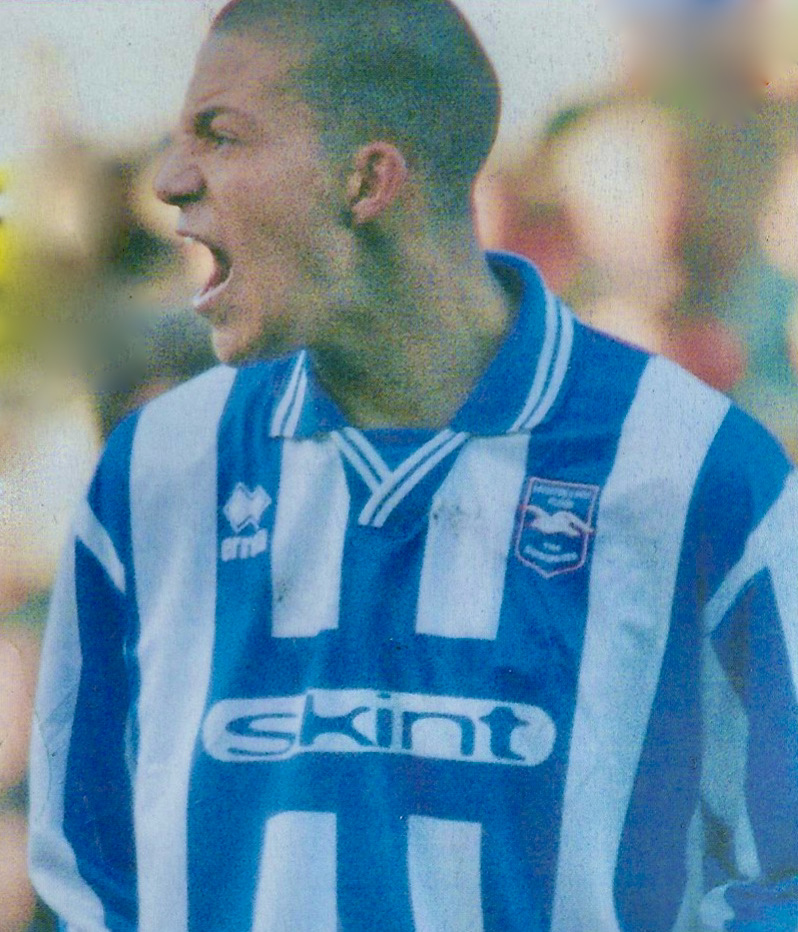
EVERY NOW AND AGAIN as a football supporter a truly special player stands out well above the rest you’ve watched. Bobby Zamora was most definitely in that category.

As the new year dawns on what will be my 55th year supporting Brighton & Hove Albion, it is perhaps fitting to spend a little time remembering just how good Zamora was for the Seagulls before his outstanding ability to score goals was taken to higher levels: Tottenham Hotspur, West Ham, Fulham and ultimately, and, quite deservedly, England.

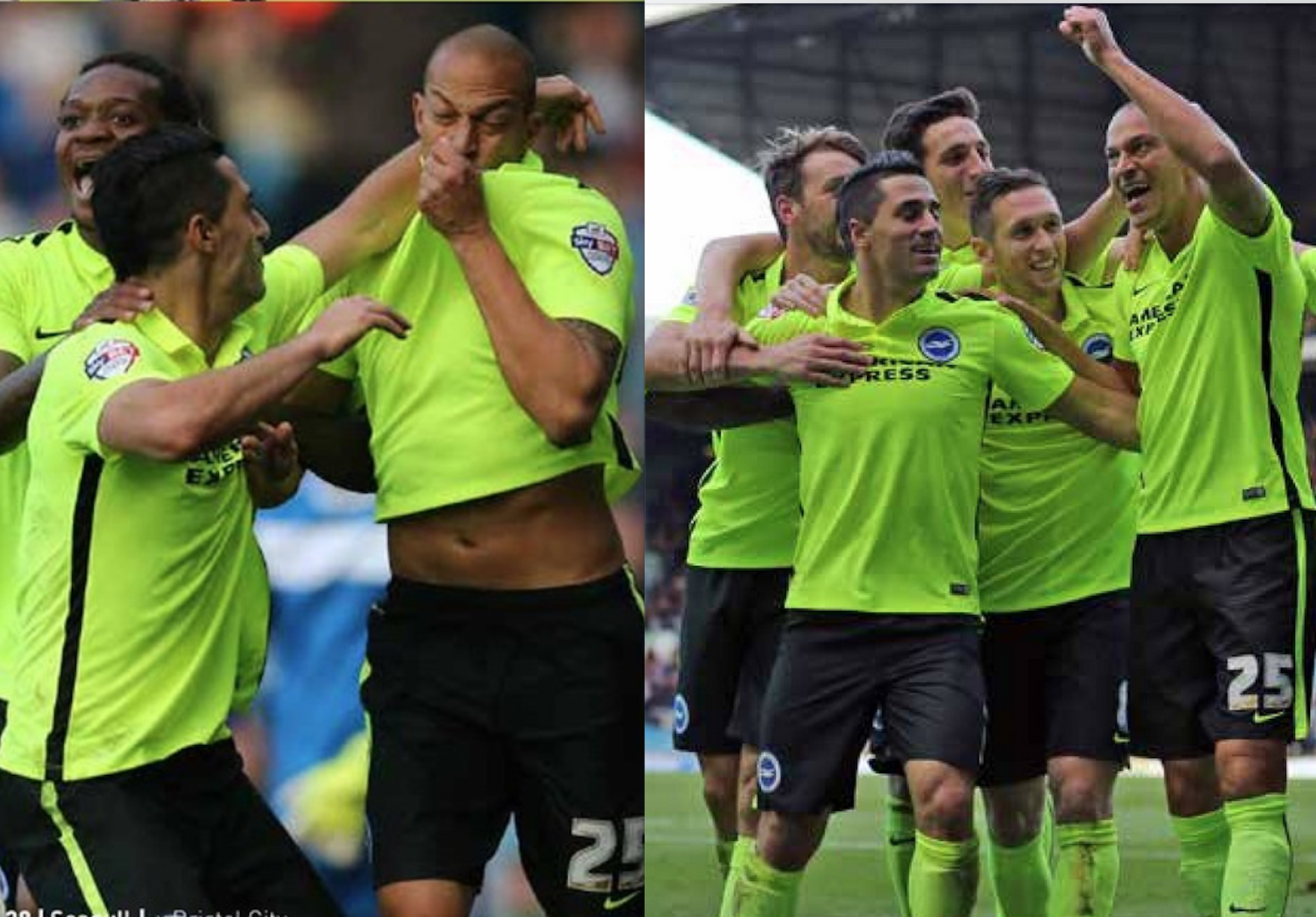
That he came back to the Albion from QPR as his career began to ebb was nothing short of a bonus­ – and, while I’m not a big gambler, I was delighted to get a modest return from the bookies when my punt on him being the last goalscorer came good after he had gone on as a sub at Elland Road on 15 October 2015 and chipped the winner (below) to register his first goal since rejoining!

“That goal was definitely the highlight of my season,” Zamora told interviewer Adam Virgo in a Seagulls World interview. “It was my first goal since coming back and to score the winner so late in the game was unbelievable. It was a special moment for me, and it settled the nerves knowing that we’d got the three points.”

Just four days later, Zamora repeated the feat going on as a 76th-minute substitute for Tomer Hemed at home to Bristol City and beating goalkeeper Frank Fielding with a low shot from 15 yards out. Albion won 2-1; Sam Baldock having levelled things up against his former club after Derrick Williams opened the scoring for City.

Unfortunately, Zamora managed just five more in that second spell. He made 10 starts plus 16 as a sub in Chris Hughton’s side but he was struggling with a hip injury.

It eventually caught up with him and prevented him from contributing further to Albion’s aim of promotion back to the elite; his last game being as a sub in a 0-0 draw at home to Sheffield Wednesday on 8 March 2016. “If I was fit, I would have scored some goals and we’d have been promoted automatically,” he told the UndrThe Cosh podcast (pictured above).

Thankfully another returning striker in the shape of Glenn Murray completed that task the following season and went on to cement his own place in Albion’s history: his 111 goals in 287 appearances putting him second in the list of Brighton’s all-time top goalscorers.

Golden goalscorers: Zamora + Murray

Each of the different eras I’ve watched the Albion has thrown up truly memorable players who have generated their own air of excitement and anticipation because of the goals they scored.

The first one for me was Alex Dawson, who netted seven in the first five games I watched in 1969. Then along came Willie Irvine whose goalscoring in third tier Albion’s promotion-winning season of 1972 earned him an unexpected recall to the Northern Ireland side – and an appearance (that I went to watch) in a 1-0 win against England at Wembley.

Next, of course, was the truly outstanding Peter Ward, who jinked his way past defenders with apparent ease and scored goals for fun, his 36 goals in 1976-77 smashing a decades-old record. Like Zamora, he came back to the scene of past glories (albeit only on loan) and scored a magnificent winner against the team he supported as a boy, Manchester United.

Garry Nelson, with 32 goals, and Kevin Bremner were a superb front pair in another third tier promotion-winning line-up in 1988 while, in 1990-91, Mike Small and John Byrne combined brilliantly to take the Seagulls within a hair’s breadth of a return to the big time.

The arrival of a beanpole of a kid with an eye for goal in Zamora completely transformed Albion’s fortunes under Micky Adams and he was the talisman in back-to-back promotions following years in the doldrums.

Zamora’s Albion story is pretty well known but let’s remind ourselves of how it all began.

Depending on whose account you believe more, it was either Dick Knight or Adams who had the foresight to bring Zamora to the Withdean.

Adams said: “The first time I saw him he came onto the training ground; he looked like a kid. But he was tall and gangly with a useful left foot; there was potential there.”

In fact, Zamora might never have arrived in Sussex if Albion had been successful in securing a permanent deal for on-loan Lorenzo Pinamonte. When Brentford outbid Brighton for the services of the Bristol City loanee, Albion turned their attention to Zamora (left), a Bristol Rovers player who was only getting sub appearances under Ian Holloway but had scored eight goals in six games on loan at nearby non-league Bath City.

“He was six foot one and we knew he had a very good first touch and could hold the ball up well, the type of player we wanted,” Knight recounted in his autobiography Mad Man: From The Gutter to the Stars (Vision Sports Publishing, 2013).

Zamora duly arrived on loan and scored six in six matches (including a hat-trick in a 7-1 away win at Chester). He scored an equaliser and was named Man of the Match on his debut v Plymouth and by the end of February was Player of the Month.

Hat-trick ball at Chester

While Knight and Adams wanted him to stay, he insisted on returning to Rovers where he thought he might force his way into Holloway’s starting line-up. But it was back only to the bench as Nathan Ellington, Jason Roberts and Jamie Cureton were ahead of him in the pecking order.

As preparations began for the new season, Albion offered £60,000 for Zamora but Rovers chairman Geoff Dunford wanted £250,000. An incredulous Knight said he wouldn’t go higher than £100,000 and couldn’t believe they could demand such a figure for someone who hadn’t actually started a first team game.

Zamora had Rovers’ youth team coach Phil Bater to thank for forcing through the move. He accompanied the shy youngster into a meeting with Holloway, who tried to say he’d get some games if he stayed. Bater reckoned the youngster was being strung along and argued Zamora’s cause saying he stood more chance of playing if Rovers let him join the Albion.

After some brinkmanship from each club’s respective chairmen, with Knight threatening to walk away from the deal, it finally went through two days before the start of the season, although Albion’s chairman reluctantly agreed to a 30 per cent sell-on clause for the player.

Zamora instantly became one of the top earners on £2,000 a week with a goal bonus built in.

“It was an absolute coup that we had finally secured this player,” said Knight. “I could only see good things in him, could only see that he would be a huge asset to us.

“Football is all a matter of opinions. There is little science to it. For me, Zamora was the best signing I ever made.”

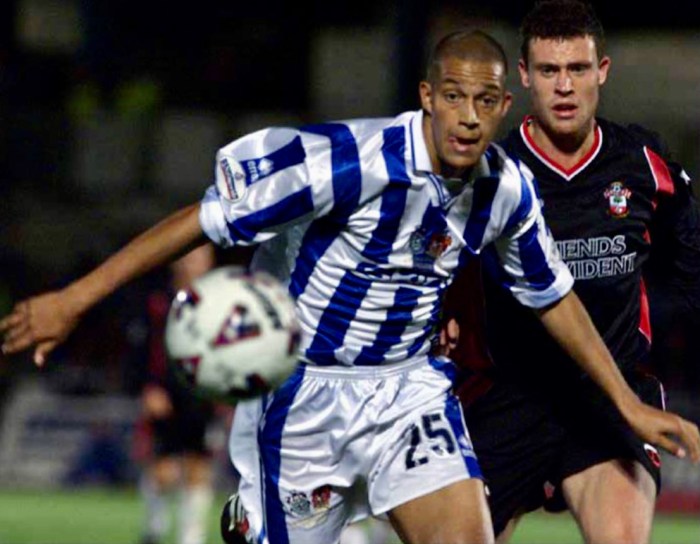
Zamora has eyes on the ball closely watched by a young Wayne Bridge for Southampton

Not only did Zamora manage to score 31 goals as Albion won promotion from the basement division, he went one better when they went straight to the top of the third tier the following season, netting 32 times in 46 matches.

A significant number of those goals came courtesy of Zamora’s excellent understanding with left-footed right-back Paul Watson, of whom he said: “He created a lot of goals for me with those quick free kicks. He didn’t put a foot wrong too often and was very underrated. He never got the credit his hard work deserved.”

Expanding on it in another interview, he said: “Whenever Watto got the ball I knew precisely where I needed to run to and he knew where to deliver it. It was such a great connection: Watto has an absolutely wonderful left foot and it made my job as a striker so much easier when you get deliveries like that.”

Declaring that even in the Premiership he hadn’t come across anybody with a better left foot, he added: “I was very lucky to have played in the same team as him; he created numerous goals for me; not only with his deliveries but with his intelligent play as well.”

Watson had arrived at the club with Charlie Oatway and was part of a cluster of players who had served under Adams at Brentford and Fulham. When Adams and assistant Bob Booker steered Albion to promotion as fourth tier champions, Zamora was player of the season and he and Danny Cullip were named in the PFA divisional XI.

Not long into the following season, the lure of taking over as manager at a Premier League club saw Adams quit Brighton, initially to become Dave Bassett’s no.2 at Leicester City, but with the promise of succeeding him.

“While I thought I had a shot at another promotion, it wasn’t a certainty,” Adams explained. “I knew I had put together a team of winners, and I knew I had a goalscorer in Bobby Zamora, but football’s fickle finger of fate could have disrupted that at any time.”

His successor, Peter Taylor, knew how fortunate he was to inherit an experienced squad, and said: “Of course the greatest asset we had was Bobby Zamora. Having him meant that we could play a front two at home and away from home we could play him on his own and he would still get us a goal out of nothing. He was an incredible player and miles too good for that level.”

And Zamora wasn’t only a star on the pitch, as Knight spoke about in his autobiography. “When he was at his zenith at Brighton, the requests we got for him to visit schools, hospitals and go to prize-givings far outweighed all the other players together, but he was always amenable. He was never starry, never refused. I couldn’t speak more highly of Bobby Zamora as a person.”

Knight recounted in his book how, after a 1-0 win at Peterborough, when Zamora missed a penalty but also scored the only goal of the game, Albion’s promotion to the second tier was confirmed and in his own inimitable way Posh boss Barry Fry said to Brighton’s star striker: “You’re a fucking great player and you’ll play for England one day, I’m fucking sure of it.”

Zamora was still only 21 when Tottenham signed him from relegated Brighton in July 2003. He left the south coast having scored a total of 83 goals in 136 appearances but in his last season in the stripes he netted just 14 as the Seagulls battled unsuccessfully to retain their tier two status.

Unfortunately, he missed eleven matches with a dislocated shoulder and, had former Premier League striker Paul Kitson been fit to play alongside him (he managed only seven starts plus three off the bench), the season may well have had a different outcome.

Everton’s Bill Kenwright had offered £3m for Zamora during the season but their manager Walter Smith seemed less convinced and, with Kevin Campbell and Wayne Rooney likely to be ahead of him, Zamora stayed in Sussex.

But chairman Dick Knight promised not to stand in his way if an opportunity was presented at the end of the season and that came from Tottenham. Manager Glenn Hoddle and assistant Chris Hughton had been to see Zamora in action at the Withdean on a number of occasions.

Spurs chairman Daniel Levy played hardball over the deal. Eventually, Knight settled on a £1.5m fee but, because of the original sell-on clause, £450,000 was due to Bristol Rovers.

Hoddle told The Guardian: “He has got good pace and great movement on and off the ball. No disrespect to Brighton, they have got a good team down there, but we have got players here who can make the most of his movement.”

The player’s agent Phil Smith told the newspaper: “The fee for Bobby is £1.5m which is a decent price in today’s market for a Second Division striker.

“It has been a long time coming for Bobby but he is delighted to be going into the Premiership. It has always been an ambition.”

Disappointed Albion manager Steve Coppell observed: “It is a big move for Bobby and nobody really expected we could hang onto him for much longer. But it has blown a big hole in any plans I had. I don’t have a better option than playing with Bobby Zamora up front.”

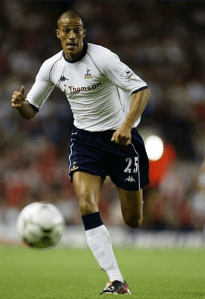
When he arrived at Spurs, one of the senior pros who took him under his wing was none other than Gus Poyet.

“As a young guy coming into the team, he was one of the senior pros who would always talk to me and encourage me,” Zamora told the matchday programme. “He didn’t have to do that, but he went out of his way to do so and you could see he had coaching qualities. He would often point things out on the pitch that you’d pick up on, and when he spoke, you’d listen.

“He wasn’t starting every game either, so in training I did more things with him than maybe the rest. I really got on well with him.”

As it turned out, Zamora made only 18 appearances for Spurs (11 as a substitute) and only scored once – ironically a single goal that knocked West Ham out of the Carling Cup in October 2003.

In January 2004, Spurs chose to use him as a makeweight in taking Jermain Defoe from the Boleyn Ground to White Hart Lane.

Phlegmatic Zamora didn’t look on it as a failure but embraced the “learning curve” of training alongside the likes of Poyet, Robbie Keane, Darren Anderton and Jamie Redknapp.

“I came away a better player and with more experience,” he said. “Glenn Hoddle had signed me and then he got sacked not long afterwards. David Pleat took charge and we didn’t really see eye-to-eye, but the lads and the club were brilliant and I learned so much from my time there.

“I took a chance by stepping back down to the Championship with West Ham – but it was the opportunity of playing regular football again that was the pull for me.”

Top Hatter Moore a temporary plug in Albion’s leaky defence

LUTON TOWN legend John Moore had a 32-year association with the Hatters as a player, coach and manager. He had a less remarkable one month’s loan in the stripes of Brighton.

As manager Pat Saward rather too rapidly dismantled Albion’s 1972 promotion-winning side, the experienced Moore was one of several old hands brought in to try to help Albion adapt to the old Second Division.

Saward was light on numbers in a defence which had conceded 23 goals in 12 games, and he had just parted company with former skipper John Napier, while injury-prone Ian Goodwin was in hospital having a knee cartilage operation. The side had only won once in the league in 12 starts.

But the arrival of Moore, together with Lewes-based Stan Brown from Fulham, gave the side an unexpected fillip and the Albion earned a surprise 2-0 victory away to Huddersfield Town (Eddie Spearritt and Barry Bridges the scorers) on 14 October 1972.

Saward was certainly impressed by the impact of his two new acquisitions. “The new men played a major part in our success,” he said. “It was quite remarkable really the way they slotted into the side as if they had been playing for Albion all season. John did exceptionally well in his role as sweeper.

“They are, of course, experienced professionals who have been around the game a long time. But even the best professionals sometimes take time to settle into new environments and this is why the performances of these two was so outstanding.”

Unfortunately, it was the only win of Moore’s brief stay. Albion drew the next three games and his final outing came in a 3-0 defeat at Millwall. That loss at The Den was the first of 12 consecutive league defeats.

Ironically, Albion only returned to winning ways when Moore was in opposition, lining up in the Luton side that lost 2-1 at the Goldstone on 10 February 1973. Ken Beamish scored both Albion goals, while future Albion signings Don Shanks and Barry Butlin were playing for the opponents that day.

Moore subsequently moved on to Northampton Town, where future Albion player John Gregory was beginning to make his way in the game, but the Scot ended his playing days after only 14 appearances.

Born on 21 December 1943 in the village of Harthill (halfway between Glasgow and Edinburgh), Moore played initially for local side North Motherwell Athletic. In 1962, he joined Scottish League side Motherwell on a part-time basis, while also working in a factory.

He was a centre-forward when he initially went to Fir Park but in the only three games he played he started twice in midfield and once in defence. Given a free transfer in May 1965, a Luton scout in Scotland pointed him in the direction of then manager George Martin.

In a 2011 interview with Matthew Parsfield, for the Talk of the Town blog, he recalled: “George Martin flew up to Scotland to sign me. I remember sitting down with him in my living room with my family, and, it sounds far-fetched nowadays, but there were no contract negotiations and no haggling at all.

“He said ‘What do you want?’ He was actually talking about a signing-on fee, but I just said ‘I want an opportunity.’ He certainly gave me that.”

One particular long-standing fan, Mick Ogden, remembered Moore’s arrival with affection. Writing on the Hatters Heritage website, he recalled him turning up at a supporters’ club gathering in the company of manager Martin in May 1965.

“Despite the fact that he had travelled down from Glasgow that day, John spent the whole evening with us, firstly playing billiards against our members and then later we sat around listening to John talking about his life and obvious love of football,” wrote Mick.

“He told us he had signed from Motherwell and how he sat for many hours during the week talking football with his father, who was a Rangers fan. Apparently, these chats would often carry on until the early hours of the next day. John clearly had a great love and affection for his father.”

Another fan who remembered the player from his early Luton-watching days, ‘Mad Hatter’, said: “Moore wasn’t like other defenders; slender in physique compared to those he played alongside, he was more than a match for most of the opponents he came up against.

“Whilst on the books of the Hatters, Moore made 274 league appearances and more than played his part in helping Luton Town climb from Division 4 to Division 2.”

John Moore in action for Luton against West Ham’s Geoff Hurst

Indeed as well as under Martin, Moore also featured under Alan Brown, Alec Stock and Harry Haslam.

After his playing days were over, he spent time as manager of non-league Dunstable Town but when David Pleat took over as Luton manager, he took Moore back to the club as a coach.

After Pleat had moved on to take the hot seat at Spurs, Moore stepped up to become manager.

It was the 1986-87 season in the top-flight and Moore led the Hatters to a club-best seventh-place finish. But it appears he didn’t enjoy the limelight of such a position and he stepped down, handing over the reins to Ray Harford, assisted by Steve Foster. Luton went on to win the League Cup (then known as the Littlewoods Cup) beating Arsenal 3-2, with another ex-Albion skipper, Danny Wilson, one of the goalscorers.

When former player Jim Ryan took over as manager, Moore returned to the club as a coach for a third stint and stayed in that role under Pleat again, Terry Westley, Lennie Lawrence, Ricky Hill, Mick Harford, Joe Kinnear and Mike Newell until he reached the age of 60 in 2003 and chose to retire.

In the interview with Parsfield, he gave an insight into his approach. “When I became youth coach I always treated the boys like adults.

“I wasn’t interested in making them successful youth players, the only way to make a living is to become a first team player.

“I told them they had to work harder than the first team, because those older guys down the corridor aren’t going to just give you their first team place and their luxury lifestyle, you’ve got to work for it.”

He added: “Nobody’s career flows in a straight line, careers bob and weave, and players need the attitude of ‘When it gets hard, I don’t give in’. It’s when someone has the talent but not the attitude, that’s what frustrates you the most.”

On leaving Luton, Moore got involved in schools coaching in Bedford. But at Kenilworth Road, there is a permanent reminder of the player courtesy of The John Moore Lounge.

John ‘Stonewall’ Jackson a loyal George Petchey disciple

NOT TO BE confused with the founder and first manager of Brighton & Hove Albion, that man’s namesake, John Jackson, was a coach at the Goldstone in the ‘80s and the ‘90s.

Less well known was that he could have been in goal for Albion for the 1983 FA Cup Final. Rather like Steve Foster, back-up ‘keeper Perry Digweed was serving a suspension when the game against Manchester United came round.

Digweed had been sent off in a reserve match in early May 1983 and was banned for the final and the replay. So, if anything had happened to first choice Graham Moseley – and let’s face it, he had been known to have off-field mishaps at other times during his Albion career – the man between the sticks at Wembley could well have been Jackson.

Jackson had signed on emergency Combination forms in February 1983 and played for the Reserves in a 1-1 draw at home to Luton when Moseley and youth team ‘keeper Martin Hyde were both injured. He stayed on and helped coach the youth team alongside John Shepherd and with Moseley fully fit was not needed for first team duty (in those days, there were no substitute goalkeepers on the bench).
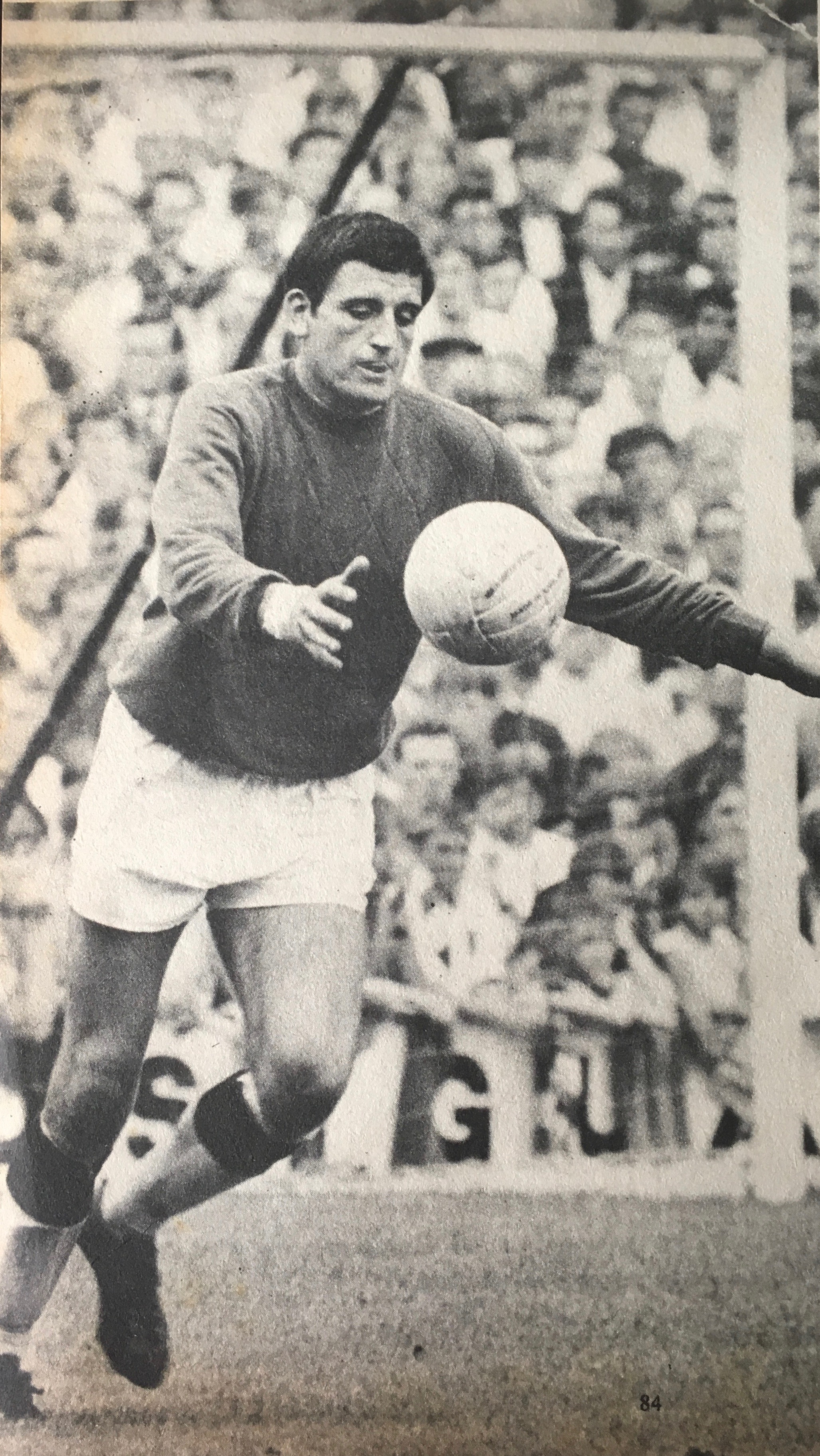
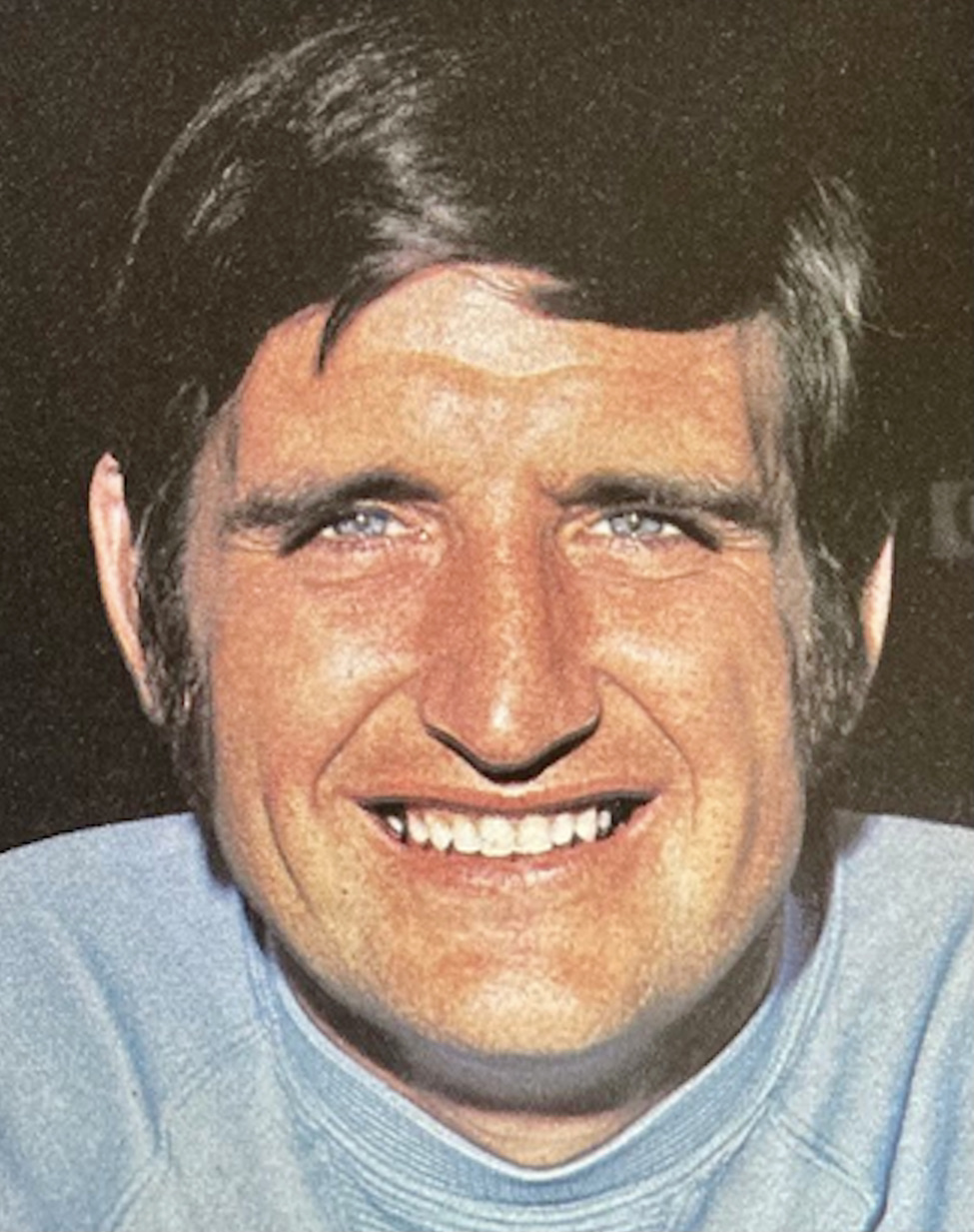
Jackson, who died aged 80 four days after Christmas 2022, had spent the earlier part of the 1982-83 season at Hereford United, who had just finished bottom of the Fourth Division. He had appeared in six matches at the end of a 19-year career. bullsnews.blogspot.com reveals that Jackson was the oldest league player to turn out for United. He was six days past his 40th birthday when he played against Darlington on 11 September 1982.

It was all a far cry from the days when he was Crystal Palace’s first choice goalkeeper for eight seasons. He subsequently followed his former Palace coach George Petchey to Orient (where he played in the same side as Albion’s 1983 FA Cup Final captain Tony Grealish) and Millwall.

It seemed wherever Petchey went, Jackson was sure to go too. When Petchey was Chris Cattlin’s assistant manager at Brighton, he brought in Jackson to coach the Albion goalkeepers once a week. It was certainly a job close to home for Jackson, who lived in Hangleton with his wife and three daughters.

In an interview with Football Weekly News in 1979, Jackson said: “Petchey was coach at Palace, and manager of Orient, when I was with them, therefore I felt it was right to join the devil you know than the one you don’t know! I find George a straightforward and honest man to work with.”

When Petchey returned to the Albion in January 1994, as part of Liam Brady’s backroom team, it wasn’t long before Jackson was added to the staff to help his mentor develop young players.

And after Brady’s departure and Petchey’s elevation to become Jimmy Case’s assistant, Jackson took over running the youth team.

Jackson remained in post throughout the managerial upheavals of Case’s departure, the Steve Gritt reign, and the arrival of Brian Horton. But he left at the end of the 1997-98 season when Horton brought in Martin Hinshelwood as director of youth and former captain Dean Wilkins as youth team coach.

Born in Hammersmith on 5 September 1942, Jackson went to St Clement Danes School and spent time with Brentford as a junior. But it was Palace who swooped to sign him up, as Jackson explained in a 2019 cpfc.co.uk interview.

“Arthur Rowe spotted me playing for a London grammar school against an FA youth XI made up of players from other London teams and he got in touch with my teacher, and from that conversation I ended up having a couple of games with the Palace reserve side aged 18. Then, when I joined full-time, I eventually took the opportunity with both hands, literally!”

Jackson was often described as the best goalkeeper England never had. While he was unfortunate not to earn a full international cap, he played seven times for England Youth between February and May 1961, his teammates including the likes of Bert Murray, Ron Harris, Francis Lee and David Pleat.

He signed as a trainee at Palace in March 1962, and in the 1964-65 season initially shared the ‘keeper’s jersey with Welsh international Tony Millington (whose younger brother Grenville was briefly back-up ‘keeper to Brian Powney at Brighton).

Once Jackson established himself as first choice, he kept the shirt for the next eight seasons. At one stage, he played 222 consecutive games for Palace.

On the where-are-they-now.co.uk website, contributor Martin Wiseman said: “He was definitely one of the best goalkeepers I ever saw as Palace were pretty terrible most of the time and often he was the only thing that kept us in the game. When we played one of the bigger teams, the game was often just a succession of John Jackson saves. Brilliant player.”

Indeed, he was nicknamed ‘Stonewall’ Jackson (after the famous American Civil War Confederate general). Of his mentor Petchey, he said: “He used to work me hard but the harder you worked at your game the more you learned and the better you would become. He made me a more confident player.”

Unluckily for Jackson, it was an era when England were blessed with a string of fine goalkeepers. Apart from Gordon Banks, there was Gordon West (Blackpool and Everton), Jim Montgomery (Sunderland), Peter Bonetti (Chelsea) and, at under 23 level, Peter Grummitt was preferred.

The closest Jackson came to senior international recognition came on 17 March 1971 when he kept goal for a Football League XI that beat a Scottish League XI 1-0 at Hampden Park. Ralph Coates scored the only goal of the game and the English line up included World Cup winners Bobby Moore and Geoff Hurst. Playing in defence alongside Moore were Paul Reaney (Leeds), Roy McFarland (Derby) and Derek Parkin (Wolves).

Jackson’s reign between the sticks for Palace came to an end when flamboyant Malcolm Allison took over as manager. Palace fans were not happy. In the book We All Follow The Palace edited by Tony Matthews (Eagle Eye 1993), Keith Brody wrote: “When Jacko left us, it marked the end of an era, culturally as well as football-wise.

“It is oddly fitting that he was swept away with the same disrespect that has come to symbolise the generation that replaced his ilk. Even though we have plenty to thank Big Mal for, his treatment of our hero means it should always be done through clenched teeth.

“It would have been offensive if a loyal, but crap, goalkeeper had been replaced by Paul Hammond and Tony Burns, but to do it to Jacko was unthinkable.

“Watching the ineffective Hammond for three long years after the joys of Jackson was almost unbearable. Every game was spent pondering on the value of what we’d given away.”

It was on 16 October 1973 that Jackson followed his former coach Petchey to Orient for £25,000 (Gerry Queen, Phil Hoadley, Bill Roffey and David Payne were other ex-Palace players who made that switch) and at Bloomfield Road he went on to attract a whole new band of admirers. Indeed, in Tony McDonald’s book Orient in the 70s, Jackson is described as “Orient’s greatest ever goalkeeper”.

Palace did give Jackson a testimonial match, however, and on 11 December 1973, a Selhurst Park crowd of 11,628 turned out for a match opponents Chelsea won 3-1.

Orient were a second tier side throughout Jackson’s time at the club, during which they had some unsuccessful tilts at promotion but enjoyed some exciting FA Cup runs, including making it to the semi-final in 1978 before losing 3-0 to Arsenal.

Their run to the semis included a memorable fifth round replay win over Chelsea, with Jackson pulling off a superb save to deny Clive Walker an equaliser as Orient clung on to a 2-1 lead courtesy of two Peter Kitchen goals.

Jackson had taken over from Ray Goddard as Orient’s no.1 and it must have been a very happy Christmas for him when promotion contenders Orient beat Palace 3-0 at home on Boxing Day 1973 in front of a bumper crowd of 20,611.

Come the end of the season, they missed out on promotion by a single point to Carlisle United after failing to beat Aston Villa (it was 1-1) in front of another huge crowd of 29,766, and the LWT cameras for The Big Match.  Days earlier Villa had lost 2-0 at Carlisle for whom Graham ‘Tot’ Winstanley proved an able deputy for suspended captain Bill Green.

Another memorable game filmed for The Big Match saw Jackson concede three on 7 April 1979 when Albion were on their way to promotion from the Second Division. Orient took the lead at Brisbane Road but Brighton equalised thus: “Paul Clark cracked in a seemingly unstoppable shot, miraculously John Jackson parried the effort but only to Peter Sayer, and (pictured above) the little Welshman slammed the ball joyfully into the home goal,” the matchday programme recorded. The game eventually finished 3-3, Albion’s other goals coming from Martin Chivers (his only one for Brighton) and Clark.

Three years earlier, Orient were finalists in the rather curious Anglo-Scottish Cup tournament of that time: 16 English teams and eight Scottish sides played a mix of group stage games and two-legged knockout matches.

Orient topped their group above Norwich, Chelsea and Fulham; they beat Aberdeen 2-0 on aggregate in the quarter finals and Partick Thistle 4-2 in the semis. They eventually lost out 5-1 on aggregate to Nottingham Forest, but it was Brian Clough’s first piece of silverware as Forest manager, and he said in his biography: “Those who said it was a nothing trophy were absolutely crackers. We’d won something, and it made all the difference.”

In common with many other English players at the time, Jackson tried his luck in the United States and in 1977 played for St Louis Stars, returning in 1978 when they became Californian Surf. His head coach was John Sewell, who’d been a playing colleague at Crystal Palace and Orient. Ironically, his predecessor at St Louis was Bill Glazier, the former Coventry City ‘keeper, who’d also been his predecessor at Palace.

It was the arrival of former West Ham ‘keeper Mervyn Day at Brisbane Road that signalled the end of Jackson’s time in Leyton and, in August 1979, Petchey, who’d taken over from Gordon Jago as boss at Millwall, signed him for £7,500.

“I have been in the game too long to end it in the reserves and decided that if I was to finish playing, it would be in the first team,” Jackson told Football Weekly News.

The then Third Division Lions went on to win the league. Jackson played a total of 53 matches for them that season and he was chosen by his fellow professionals in the 1979-80 PFA team of the year. (Former Brighton winger Tony Towner played 50 games for Millwall that campaign and scored 13 goals)

After two years with Millwall, by a curious turn of events, Bobby Robson signed him for the previous season’s First Division runners up Ipswich Town as a back-up to Paul Cooper.

His one league appearance for Ipswich was in a top-of-the-table clash against Manchester United, with Ipswich needing to win to stay in with a chance of winning the League Championship. And they did, 2-1, with John Wark scoring both and John Gidman replying for United.

The game was played in front of a 25,763 crowd at Portman Road and Jackson was given a standing ovation at the end after he’d pulled off three important saves. Robson was quoted in the Guardian as saying: “We have paid him a year’s salary to make those saves, but it was worth it!”

However, while Ipswich finished the season five points ahead of United, they were once again runners up, finishing four points behind champions Liverpool.

Even a second placed finish was enough to convince the English FA to give Robson the job of replacing Ron Greenwood as England manager after the country’s unbeaten exit from the World Cup in Spain.

While Jackson might have thought his playing days were over, they weren’t quite. Frank Lord signed him for Fourth Division Hereford United. Lord wasn’t long in the job, though, and he was succeeded by the Bulls’ long-serving former ‘keeper Tommy Hughes, who had played on loan for Brighton in 1973.

Jackson’s move into goalkeeper coaching at Brighton under Cattlin was to prove a career-defining moment for another top goalkeeper of that era: former Manchester City custodian Joe Corrigan.

“I got talking to him and it inspired me to look into doing something similar,” Corrigan told the Manchester City matchday programme on 29 September 2018. “So, it was down to Brighton indirectly that I moved into the next phase of my career.”

Corrigan had been signed by Jimmy Melia and was coming to the end of his illustrious playing career. He fell out with Melia’s successor, Cattlin, and went on loan to Stoke City, but eventually was forced to quit after being injured in an Albion reserve match.

He went on to become goalkeeper coach at Liverpool for 10 years, and also worked at Stockport, West Brom and Hull.

Jackson took a variety of different jobs outside of football – fitting blinds, working for a golf magazine, selling golf equipment and as a courier for Lewes Council. During his second spell back at the Albion, amongst the youngsters he took through was goalkeeper Will Packham.

Jackson signed him on as a YTS trainee after he left Blatchington Mill School in Hove, and he spent nine years on the club’s books.

Big money signing Peake hit a trough at the Albion

EXPENSIVE FLOP Jason Peake was a victim of the problems clouding Brighton’s very existence in the mid-1990s.

The blond-haired midfielder heralded elsewhere for his “excellent left foot” and “one of the best passers of the ball in the lower leagues” failed to live up to expectations at the Goldstone and was dubbed Jimmy Case’s “biggest blunder”.

Leicester-born Peake had played alongside Case for Halifax Town, where he’d moved after making only a handful of appearances with his hometown club.

Former Albion loanee centre half John McGrath, assisted by Frank Worthington, failed to halt the Shaymen dropping out of the league in 1993, and Peake spent a season in the Conference before reviving his league career with Rochdale. Nine goals in 103 appearances attracted suitors and it was Albion who bought him for a fee set by tribunal of £80,000 – a huge sum for a cash-strapped club.

A further £15,000 was to be paid after 20 games and another £25,000 if he got to 40 appearances. He made 35 appearances before being frozen out by Case’s successor, Steve Gritt. It was to be a familiar pattern: changes of manager often led to him moving on.

Apart from the bigger picture shenanigans going on at the Albion under the hated Archer-Bellotti regime, Peake’s personal issues centred around relocation expenses he said he was entitled to – but Bellotti refused to pay up.

According to fansnetwork.co.uk: “Peake was being forced to commute from Leicester following several broken promises by the Brighton board. Peake’s dream move turned into nothing short of a nightmare for him.”

The midfielder had trials at Northampton and Cambridge before he finally managed to get away, in October 1997, signing for First Division Bury. He rather diplomatically said: “The situation at Brighton has been well documented over the past year and just let’s say when I got there the situation was not as I’d been led to believe it would be.

“I have not been happy there for some time and the new consortium have been great in letting me get away.”

The official version in the matchday programme said: “Jason had problems in settling in the South after his move from Rochdale and the move has suited him and his family. Should Bury sell him for a fee at any time, Albion are assured of a share in any such deal.”

As ever, the season had begun with great expectations and in his matchday programme notes welcoming new signings Peake and Ian Baird, Case said: “They are both quality players and I am sure that they will be great acquisitions for the club this coming season.

“I firmly believe we now have a skilful blend of experienced and young players that can mount a serious challenge for promotion at the first attempt and I believe we will surprise many teams this season.”

Peake went straight into the side in the no.8 shirt but after he’d played 19 games on the trot Albion were anchored at the foot of the table.

After Case was sacked, Peake found himself on the bench more than in the starting line-up; local lad Kerry Mayo taking over from him.

Supporters were certainly not impressed by Peake, perhaps summed up by ‘Lenny Rider’ on North Stand Chat who said: “Huge outlay for where the club was at the time. His kinder critics would say he was disappointing, the more cynical amongst us would argue he was actually nicking a living at the Goldstone.”

New Albion chairman Dick Knight cut Albion’s losses by giving Peake a free transfer to Bury in exchange for the relocation cash dispute being dropped.

Bury boss Stan Ternent was lauded for pulling off something of a coup, and Peake told the Lancashire Telegraph: “It is a fantastic chance for me to prove myself. It has taken me a long time to get into the First Division and I don’t want to blow the opportunity.”

Sadly, those words came back to haunt him because he ended up playing just six times for the Shakers, three as a left-back and three as a sub.

To quote fansnetwork.co.uk again: “Peake’s silky skills didn’t really fit in with the kick and rush tactics of Ternent’s Bury team, and Peake found himself stranded back in the reserves.”

The following summer, a return to Rochdale, where he had first made a name for himself, looked like an ideal solution but things didn’t go well under the management team of Graham Barrow and Joe Hinnigan, who left the club at the end of the 1998-99 season.

In something of a twist of Peake’s usual fortunes when there had been a managerial change, his career began to blossom again under new boss Steve Parkin.

“The free flowing style of football on offer was much more suited to Peake’s natural style,” according to fansnetwork.co.uk. “Peake was awesome in the opening months of the 1999-2000 season and was at the heart of a side which led the table early on.”

He got amongst the goals including “a superb overhead kick from the edge of the area against old team Halifax Town, which saw him win the club’s goal of the season competition and awarded ‘Better than Pele’ status on Sky’s Soccer AM”.

Nevertheless, the season ended on a sour note, as the clarkechroniclersfootballers blog explained: “We lost two re-arranged home games against Peterborough and Northampton in April which would have secured us a play-off place. Jason featured in both games and Steve Parkin singled him out as the scapegoat accusing him of ‘going missing’. It’s always easier for a manager to castigate a player he didn’t sign but we knew there was some truth in it.”

With his contract up at the end of the season, Peake chose to move on, this time to Plymouth Argyle, at the time managed by Argyle legend Kevin Hodges.

Argyle move didn’t work out

It began well enough for him personally and, of Argyle’s 2-0 home win over Carlisle on 16 September, BBC Sport said: “Plymouth doubled their lead in the 17th minute when man of the match Jason Peake scored a superb opportunist goal.

“Peake’s initial attempt came back off visiting central defender Julian Darby and the Plymouth midfielder reacted with a brilliant dipping volley which gave keeper Luke Weaver no chance.

“Weaver denied Peake a second goal in the 80th minute, making a tremendous backward save to keep out the home player’s far post header.”

It followed him scoring four days earlier in a 4-1 defeat at Shrewsbury and was only the second win out of eight. When the next three games were lost, Hodges was replaced by Paul Sturrock, who didn’t take long to decide Peake’s future.

Before Christmas, the midfielder was dispatched to Nuneaton Borough on loan and the move was made permanent in February 2001. Although his league career was over, Peake played 54 games for Borough but was sidelined for periods with a troublesome Achilles tendon injury and he eventually retired in 2003 and became a full-time chiropodist in Leicester.

Born in Leicester on 29 September 1971, Peake played for England schoolboys and was taken on as a trainee by the Foxes.

Manager David Pleat gave him his first team debut in a 2-1 defeat at Charlton Athletic in a Full Members Cup game on 14 November 1989.

It was another year before he made his league debut in the old Division Two, as a sub in a 2-2 draw away to Oxford United.

The same month he also went on as a sub in a 1-0 home defeat to Wolves in the Full Members Cup, played in front of a paltry 4,705 crowd. Four days later he started but was subbed off against Newcastle in a game that remarkably finished 5-4 to the Foxes.

His involvement straddled the end of the Pleat regime and the caretaker manager spell of former Everton boss Gordon Lee, who, in the season Albion reached the play-off final v Notts County, managed to keep Leicester up by only two points while West Brom were relegated along with bottom club Hull City. (Lee died aged 87 in March 2022).

Across three months, Peake had three more starts (and was subbed off in two of them) plus three more games off the bench. Three days after City lost 3-0 at Brighton (goals from Mike Small, Dean Wilkins and Bryan Wade), Peake made a rare start and scored his only goal for the club in a 2-1 home win over Barnsley on 23 February 1991.

Earlier that month (on 6 February 1991), he earned an England under-19 cap when he was sent on as a sub for Aidan Newhouse as England lost 5-1 to Denmark at the Manor Ground, Oxford.

Peake’s last game for Leicester was against Newcastle United on 2 March 1991. He didn’t get a look-in under Pleat’s successor Brian Little and, in February 1992, he joined Hartlepool on loan, playing six matches and scoring once.