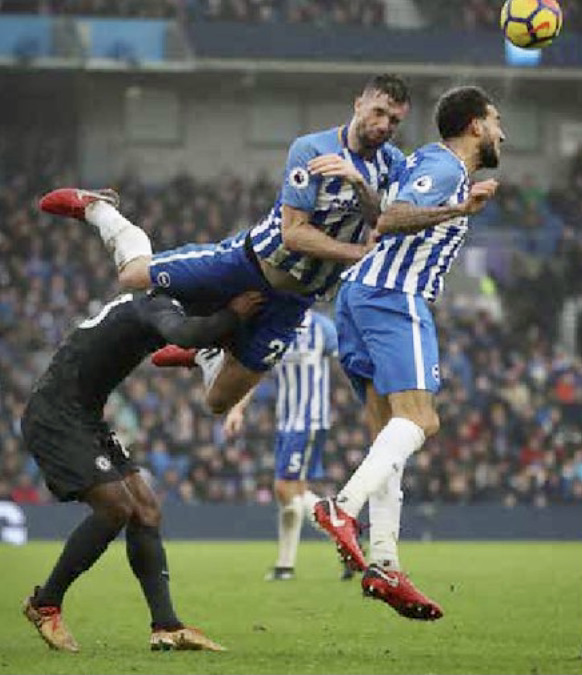
Tommy Elphick’s cherry picking ride to coaching

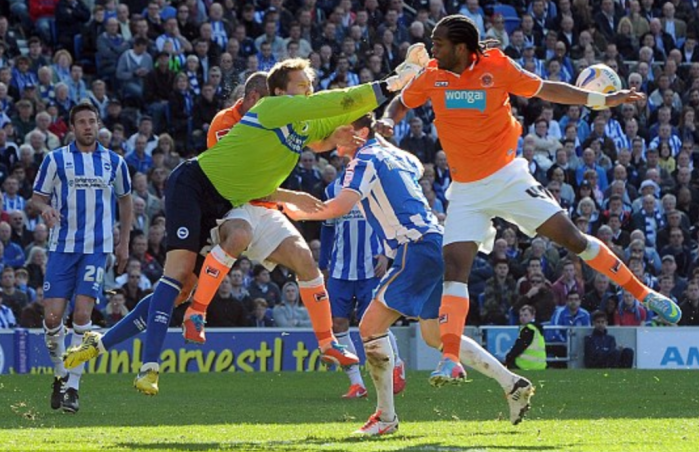
MEADOW LANE, Nottingham, is probably not one of Tommy Elphick’s favourite grounds. When he left the pitch on a stretcher in the 53rd minute on 7 May 2011, it was a great opportunity for the youngster who replaced him – Lewis Dunk – but for Elphick it was a turning point in a fledgling, promising career with his hometown club.

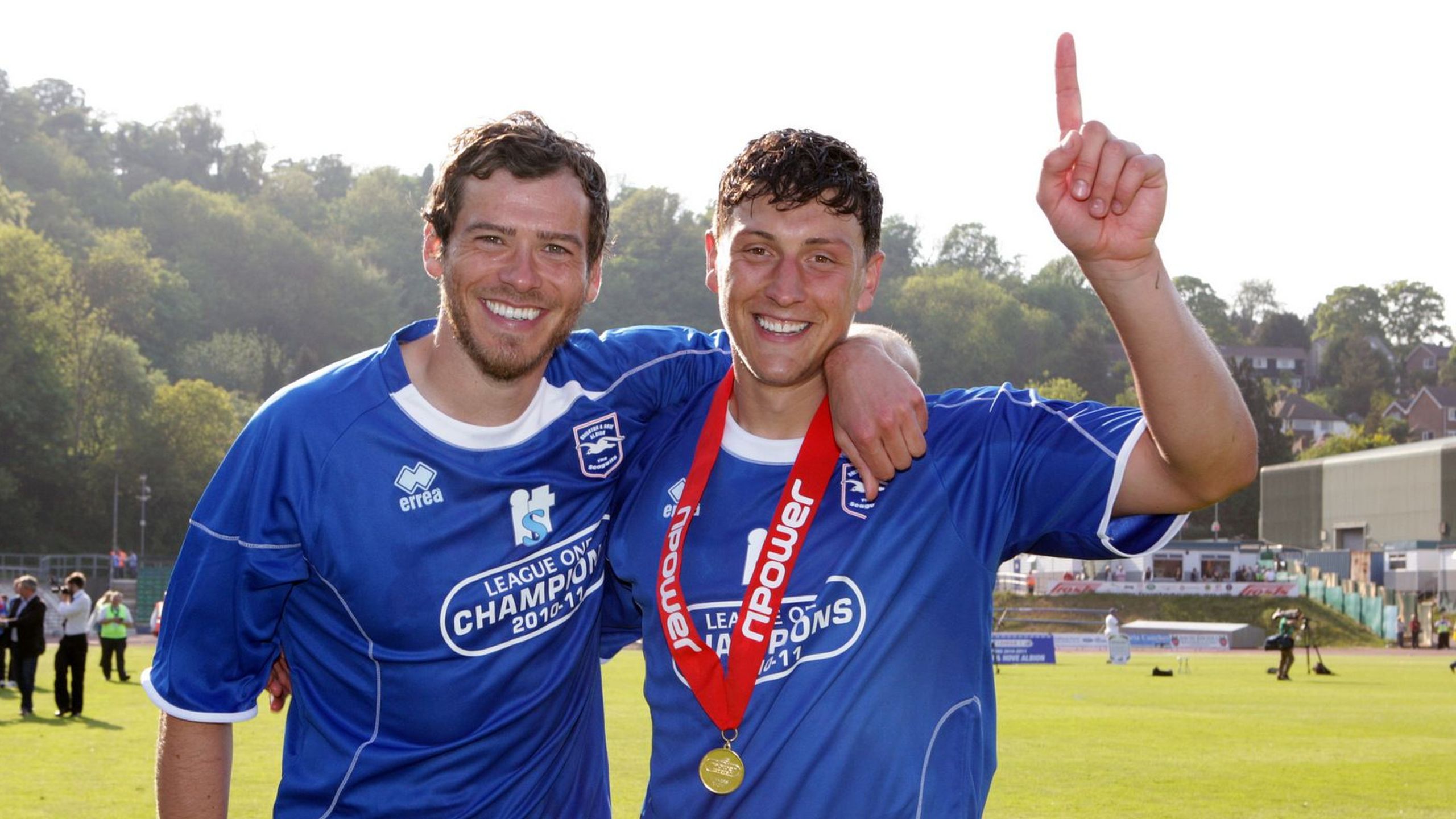
League One champions Brighton drew 1-1 with Notts County that day but, as they looked forward to playing Championship football in the shiny new American Express Community Stadium at Falmer, Elphick was sidelined for the whole of the following season with a ruptured Achilles tendon injury.

Unsurprisingly, others made the most of his absence. Although he briefly returned to first team action in a pre-season friendly v Lewes in August 2012, the level of competition by then made him realise he would need to move elsewhere to get back in the groove.

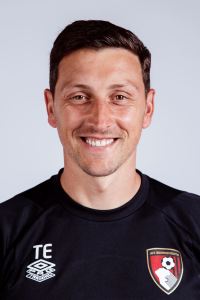
That’s when he began an association with AFC Bournemouth that continues now as first team coach, retained by the club in spite of the man who appointed him (Gary O’Neil) being replaced as manager.

As a player, Elphick took a step back to make a stride forward, dropping down a division to join the Cherries and ended up reaching the ‘promised land’ of the Premier League before the Albion.

“To say it worked out well for me was an understatement,” Elphick told Nick Szczepanik in an Albion website interview in 2020. Little wonder he is hailed as “the most successful captain in the history of AFC Bournemouth” having led them to promotions from League One in 2013 and the Championship in 2015, when he was ever-present and named Cherries supporters’ player of the season.

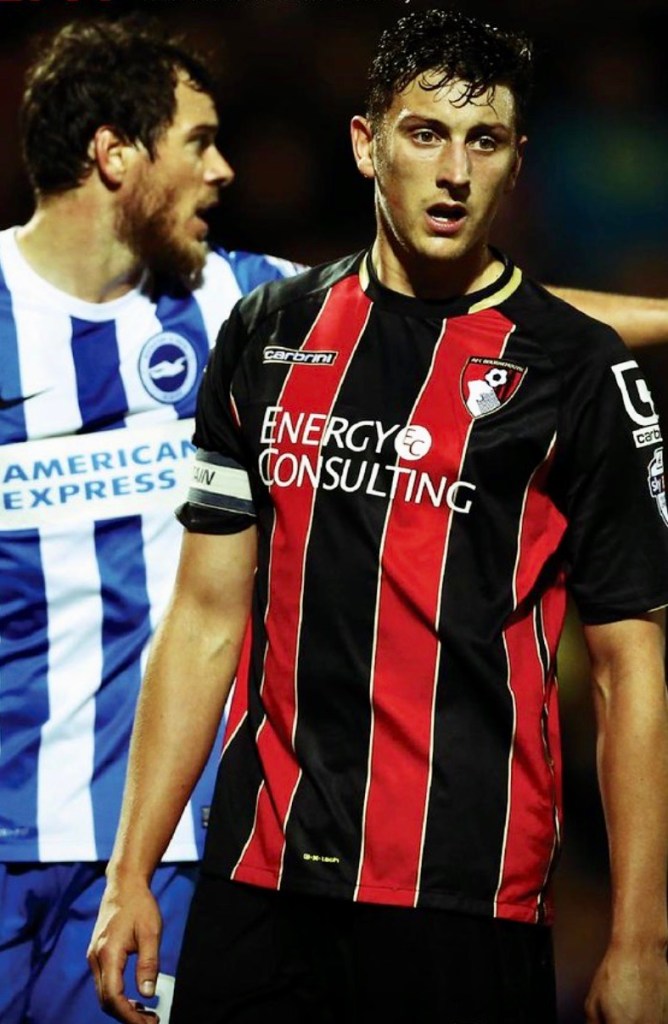
En route to that achievement, he finally got to play at the Amex – on 1 January 2014 – but it was in the red and black stripes of the Cherries in a 1-1 Championship draw.

At the Amex in Bournemouth’s red and black stripes

Interviewed in that game’s matchday programme, he admitted: “I’m buzzing for it. I was the first Brighton player contracted to play at the Amex but obviously my Achilles injury conspired against me and I never got the opportunity.

“Having been with the club since a kid, as we went through all the struggles the dream was always to run out at the new stadium at Falmer. It was disappointing that it never happened for me.”

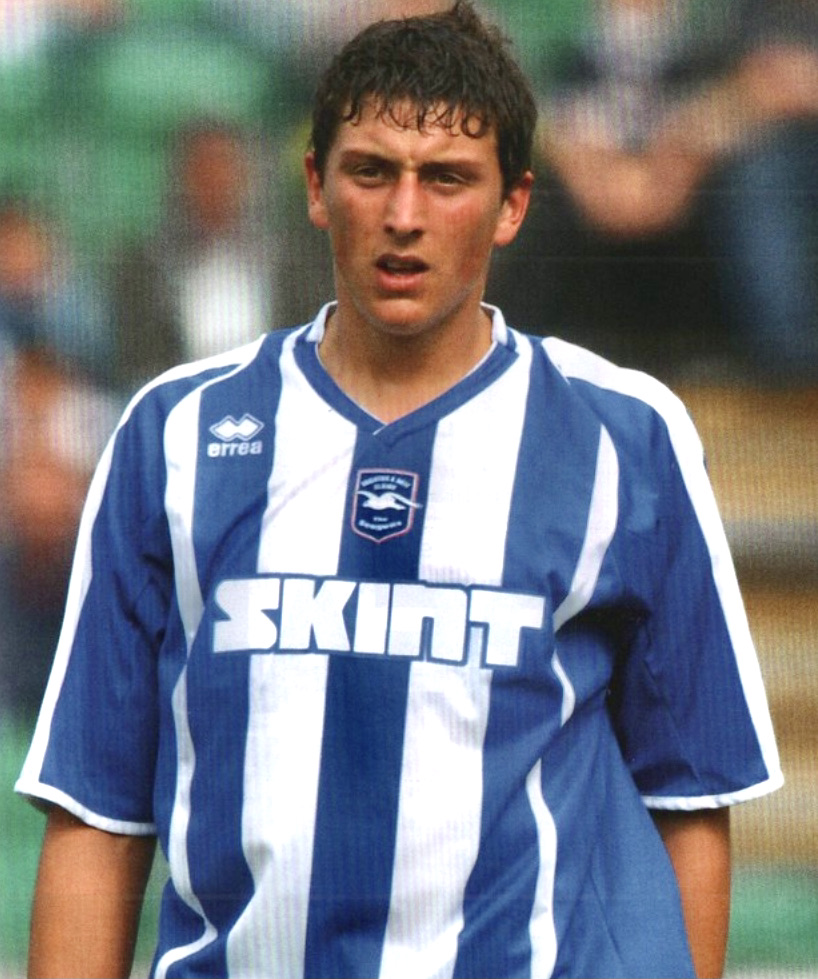
Born in Brighton on 7 September 1987, Elphick played locally for Woodingdean FC before linking up with the Albion academy at the age of 11 after impressing head of youth Martin Hinshelwood.

In his early days with Brighton, he came under the influence of Vic Bragg who he described as “a very astute tactician” whose “coaching drills were excellent and kept us on our toes”.

In a matchday programme article, he said of Bragg: “While he has a heart of gold and is genuinely a nice guy, you didn’t want to cross him on a bad day – but if he did have a word in your ear, it was always constructive.”

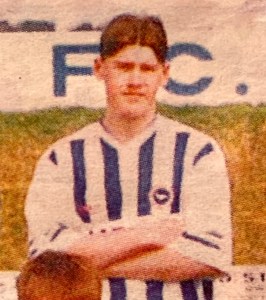
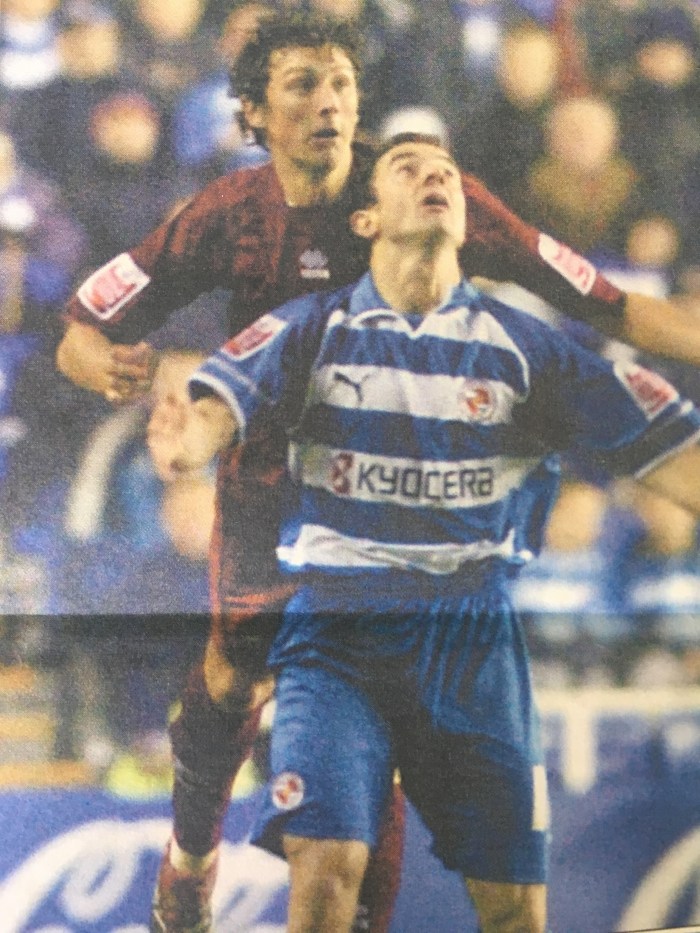
It was under Mark McGhee that Elphick made his first team debut (above) in December 2005, going on as a 73rd minute sub away to Reading in a 5-1 mauling after his older brother Gary had earlier been sent off on his full debut.

“I’m Brighton born and bred, I was a fan at Withdean before I played, and even remember doing a bucket collection on the touchline at Priestfield (when Albion were in exiled at Gillingham) in a bid to raise money for some new jumpers for us youth-team players.

“To then go on and make my debut, having come through the system under Dean Wilkins, well it doesn’t get any better than that.

“That was the highlight for me; being one of seven players from the youth-team set-up to make it to the first team.”

Gary didn’t play for the Seagulls again and Tommy had to wait until April 2007 to make his first start, by which time his old youth team coach Wilkins was in charge of the first team. That game also ended in a defeat, 2-0 to Doncaster, and it was only the following season that he established himself as a starter, initially playing alongside Guy Butters and Joel Lynch and later Adam El Abd and Gordon Greer.

A personal highlight was winning the Player of the Season accolade at the end of his first full season (2007-08), and he went on to captain the side on many occasions, as well as being part of the team that won the League One title.

“Brighton are the club who gave me my chance in the game, who shaped me as a footballer and a person,” he said.

As well as McGhee and Wilkins, Elphick’s 182 Seagulls appearances also spread across the reigns of Micky Adams, Russell Slade and Gus Poyet.

The changes introduced by Poyet really struck home with Elphick, who told Spencer Vignes: “From day one there was absolute clarity in terms of what he expected from us, with a few simple rules to start with, which he built on week by week.

“We were in the lower reaches of the table and flirting with relegation, so for him to come in and demand that we play the way he saw the game was unbelievable really.

“A lot of managers would’ve tried to tighten the ship and play a more basic brand of football, but his football was based around possession.

“The style he produced, the football we played and what we went on to do for the next two or three years was phenomenal.”

But Elphick appreciated others too, saying: “I had such a good grounding as a kid and I’m so lucky to have played under some great managers and coaches.”

As a pointer to how things have panned out, he said: “I definitely want to stay in the game, coach, and hopefully manage one day.”

Reflecting on the League One title-winning campaign, Elphick told Szczepanik: “I relished the way we played in that season. I was brought up to play that way in the youth teams under Vic Bragg, Martin Hinshelwood and Dean Wilkins, who all wanted the game played in the right way.

“We lost our way a little after Dean left and we didn’t really have any style until Gus Poyet came to the club and revolutionised it. It was something I was enjoying until I got that injury. But if I hadn’t been injured, would I have ended up at Bournemouth?”

Elphick had signed a new contract with Albion when the move to Bournemouth in League One came up. “In theory it was a step down, but for me it was important to get back playing again,” he said.

The 2011-12 season had been a wipe-out as far as he was concerned because an infection and a repeat of the initial injury ruled out any chance of a swift comeback. He was operated on in Finland by the same surgeon (Professor Sakari Orava) who had performed similar surgery on David Beckham.

It was fully 16 months between the initial injury and playing 45 minutes of a pre-season friendly at Lewes in July 2012. “The idea had been to go out on loan and there were four or five different options, but Bournemouth were looking to have a right go at getting promoted and when I went down to meet the manager, Paul Groves, and the chairman, I was taken by the plans they had for the club,” said Elphick.

“Paul’s assistant, Shaun Brooks, was quite close to Dean Wilkins, and used to come and watch the Brighton youth team, so there was a connection there. Unfortunately, it didn’t quite work out for Paul and Shaun but that led to Eddie Howe coming back to the club.”

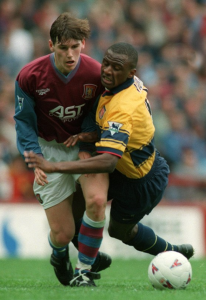
After making 145 appearances for Bournemouth, in 2016 Elphick moved on to Aston Villa, who he had scored against for Brighton at Villa Park in a 3-2 FA Cup defeat three years earlier (below left).

In the summer of 2016, Villa, under Roberto di Matteo, had just been relegated to the Championship and wanted Elphick as their captain as they aimed to bounce straight back to the Premier League.

He was di Matteo’s first signing as Villa manager – and he can thank a very understanding wife that the move went through smoothly.

Elphick cut short his honeymoon to get cracking with his new club, telling the Birmingham Mail: “As soon as I heard about Villa’s interest it’s something that turned my head straight away.

“To be able to come here and represent such a great club with such great history is going to be a real honour for me.”

However, it wasn’t long before Steve Bruce took over from di Matteo and he preferred a different centre-back pairing, meaning Elphick spent most of the second half of the season on the subs bench. I recollect him going on for Villa in the last game of the season when Albion hoped to clinch the Championship title only to concede a late equaliser when a shot from Jack Grealish squirmed through David Stockdale’s grasp.

On loan at Hull City

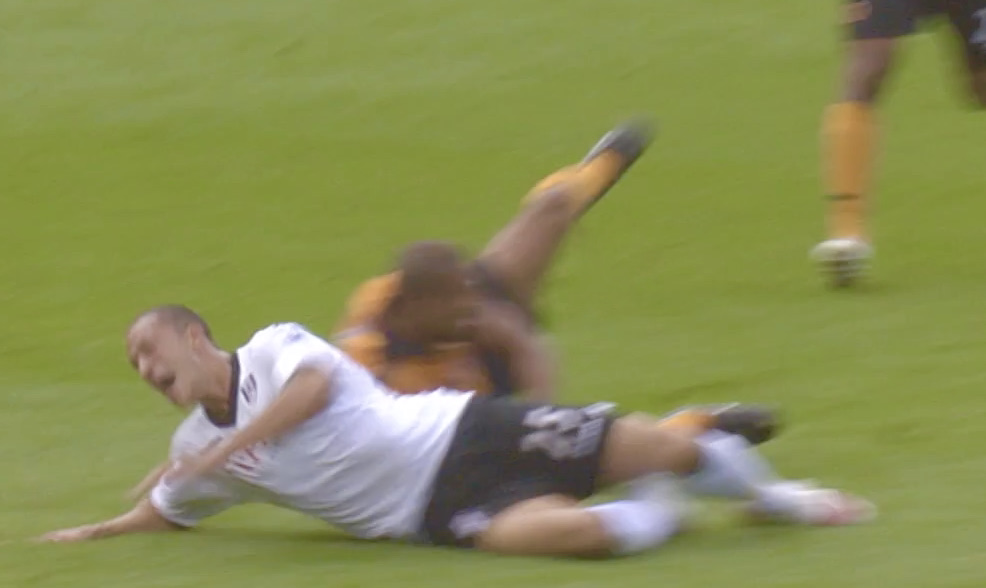
In January of the following year, Elphick went out on loan to Reading for half a season (but only played four games) and he began the first half of the 2018-19 season on loan at Hull City, playing 18 games under Nigel Adkins.

Because of injuries to others, he was recalled to Villa at the start of 2019 by Bruce’s replacement Dean Smith. He played 14 matches but was not involved in the end-of-season play-off final when they finally earned promotion back to the Premier League (beating Derby County 2-1).

Interviewed by the Birmingham Mail about his three years at Villa, Elphick replied: “Tough, unbelievable, disappointing, anger – I had every emotion but I wouldn’t change it for the world because it’s created who I am now.

“What I saw and experienced at Villa was mental, good and bad. A big club brings different pressures and different pitfalls and you have to experience that to know what you could be dealt with further down the line.

“It was really troubled and there was poison in the brickworks to start with. Steve Bruce did the most unbelievable job at weeding that out and bringing it all together.

A challenging time at Villa

“He wasn’t a manager I particularly took a shine to in the way he coached or managed but he taught me a lot about how to bring people together and how to create a group.

“I experienced working under Roberto di Matteo, a Champions League-winning manager, and Steve Bruce, one of the most successful managers in the Championship. Dean Smith was a bit of a trailblazer and did some powerful stuff.”

After two injury-ravaged seasons at Huddersfield Town, when he managed just 14 games for the Terriers, Elphick quit playing to embark on a coaching career that always seemed to be his destination.

He reckoned it was that long spell out injured while at Brighton that helped his move into coaching because he had time to watch and understand football in a way that wouldn’t have happened if he’d been playing every weekend.

He returned to Bournemouth as coach of their development squad, explaining to premierleague.com: “I was delighted to work alongside Shaun Cooper with the 21s. I was very, very lucky to work with such an outstanding coach, and I learned so much. That period also opened my eyes to the time and effort required to do this job properly.  

“In truth, academy football probably had a lifespan for me, but it was an invaluable year.” 

When Parker lost his job in the wake of a 9-0 humbling by Liverpool, Cooper and Elphick were promoted to work alongside new boss Gary O’Neil.

“There are benefits and negatives to being thrust into that situation,” admitted Elphick. “I would love to have spent more time coaching, experimenting, and finding out who I really am on the grass before going into such a high-pressure situation, but it was an opportunity which had to be grabbed with both hands.”

Elphick told Adrian Clarke: “At the outset, none of us had coached at Premier League level before, but we went in, took the handbrake off and went for it. Thankfully, the three us had a nice blend.”  

Elphick absorbed plenty from O’Neil’s way of working and observed: “Premier League football is such a high-level now that as a coach, if you’re put on the spot you need to be able to answer questions or offer advice on all aspects of the game. My intention is to become as well-rounded as possible.” 

After helping Andoni Iraola settle in as new head coach, Elphick has relished his supporting role although he confessed: “I’ve always wanted to manage, and down the line I’d like to put my principles and ideas into practice. It’s an itch I will need to scratch, but there is no rush.  

“Right now, I just feel so lucky to have experienced contrasting styles in O’Neil and Iraola, and I have learned an incredible amount from both men. I really resonate with Andoni, and the way he wants his team to play with emotion, and he places a lot of emphasis on spirit. 

“What I have learned so far is that to be a successful coach you firstly need strong beliefs. Then, you must deliver your messages with consistency and confidence, and of course be authentic, true to yourself.”

Managerial turnover played havoc with goalscorer Bent’s career

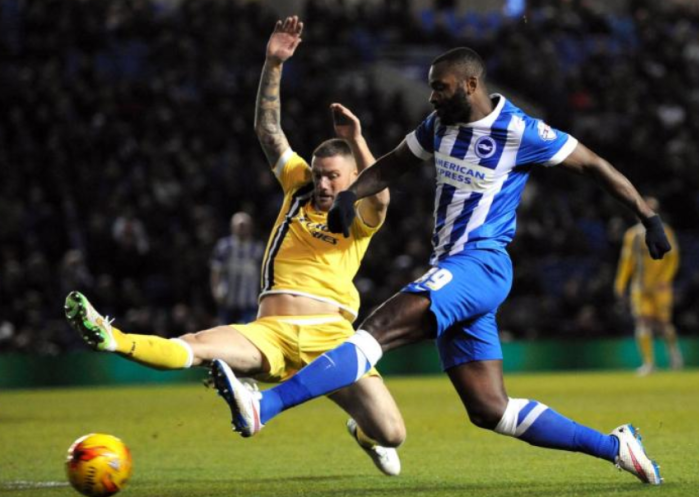
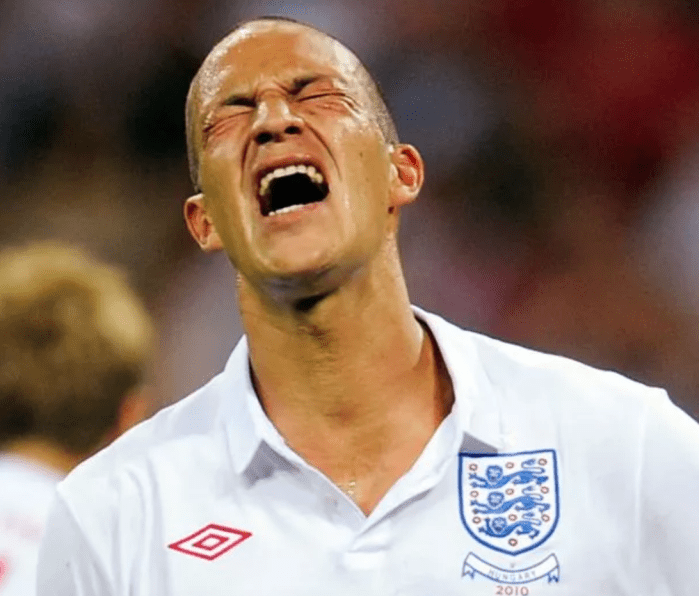
FORMER England striker Darren Bent, who now shares his opinion of the game with listeners to talkSPORT, was still only 30 when he pulled on the stripes of Brighton, one of nine clubs he represented in the Premier League and Championship.

He couldn’t have got off to a better start when he scored on his debut at the Amex, netting against one of his former clubs, Fulham. Unfortunately, the visitors turned the game on its head and won 2-1.

Timing is everything in football and perhaps if Bent had joined the Albion in happier circumstances, there may have been a better story to tell. The Seagulls were about the ditch the manager who brought him to the club – an all-too-familiar scenario Bent encountered on many occasions throughout an 18-year playing career.

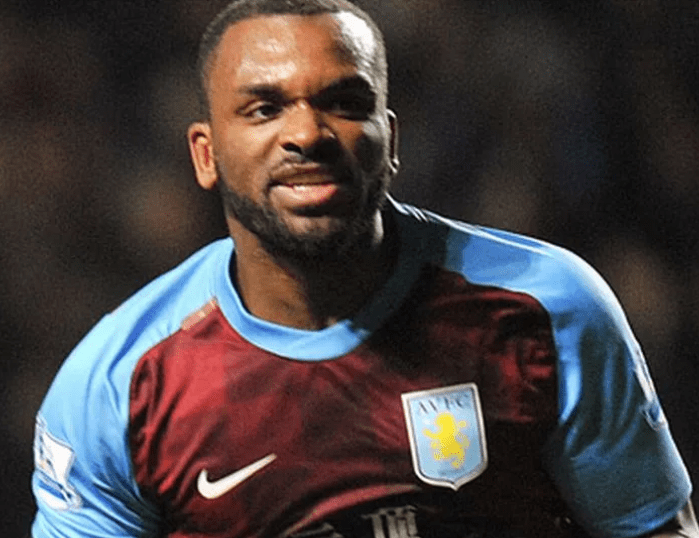
At Spurs he played under three different managers – he later described it as “the worst two years of my career” – and his temporary move from Aston Villa to Brighton came about because he’d been frozen out by Paul Lambert even though Gerard Houllier had smashed Villa’s transfer fee record to sign Bent from Sunderland for £18m in January 2011.

Bent arrived at the Amex in November 2014 with 184 goals in 464 career appearances behind him, and only three years earlier had won the last of 13 caps for England, for whom he scored four goals.

“His record speaks for itself,” said Albion boss Sami Hyypia. “He is a top-class striker with more than 100 Premier League goals with Charlton, Spurs, Sunderland and Aston Villa. I hope he will score plenty of goals for us during his time with us.

“There is no doubting his ability to score goals. He also wants to play regular games and that is evident in his willingness to step down from the Premier League to the Championship.”

The player himself told the matchday programme: “Anyone who knows me knows that all I care about is football.

“It has never been about money or anything like that. It has always been about playing football. I’m always at my happiest when I’m playing.”

Bent added: “Brighton felt like the perfect place to come and play football, especially for someone like Sami Hyypia, who I’ve played against many times over the years.

“As a manager, I think he is the right man. He is the kind of guy I want to play for.”

It was a generous assessment in the circumstances because Brighton had managed only two wins in 16 matches before Bent’s arrival.

The experienced striker’s second goal for the Albion looked like it might have earned the beleaguered coach a reprieve from the inevitable. He scored in the 10th minute away at Wolves, stooping to head Inigo Calderon’s first-time cross past goalkeeper Carl Ikeme. It was a lead that lasted until the 88th-minute but was cancelled out by a Danny Batth equaliser after Albion had played 30 second half minutes with 10 men following a red card shown to Bruno. Brighton parted company with the big Finn shortly afterwards.

Bent played one more game, under caretaker Nathan Jones, when Albion fought back from 2-0 down (both scored by on-loan Glenn Murray against his old club) to earn a home draw against Reading, but he was forced off injured after less than half an hour and the knock kept him out of the next game at Fulham, when Brighton won 2-0.

Hyypia’s replacement, Chris Hughton, spoke at his first press conference of trying to keep the player, but Bent had the chance to join a side at the opposite end of the Championship and he moved to promotion-seeking Derby County instead, scoring 12 times in 13 starts as the Rams missed out on a play-off spot by one point.

Released by Villa at the end of the season, he subsequently joined the Rams on a permanent basis in the summer of 2015. He saw even more managerial churn at Pride Park – Paul Clement and Darren Wassall in 2015-16 and three – Nigel Pearson, Steve McLaren and Gary Rowett – in 2016-17. Across the two seasons in the Championship, Bent scored 14 in 67 matches, but a hamstring injury sidelined him for the start of the 2017-18 season.

In January 2018 he went on loan to Championship strugglers Burton Albion under Nigel Clough where he scored twice in 14 appearances (nine starts + five off the bench) including netting the equaliser against his old club Sunderland when Burton’s 2-1 win relegated the Black Cats to the third tier of English football for only the second time in the club’s history. Burton also went down.

Released by Derby in the summer of 2018, he announced his retirement at 35 in July 2019.

Funny that he should end his career at Derby County because it was against them that he scored his first competitive goal for Tottenham in a 4–0 home victory in August 2007.

Bent had previously scored 37 goals in 79 matches over two seasons at Premier League Charlton Athletic before making what at the time was a record £16.5m move to White Hart Lane, where Dutch boss Martin Jol greeted him enthusiastically.

On target for Spurs

Although he already had Robbie Keane, Dimitar Berbatov, Jermain Defoe and Mido as forward options, Jol said of the new signing: “Darren’s strength is his stamina. Normally players will make runs three or four times in 45 minutes, he will do it all the time and if you manage to play balls behind the defence, he will be there.

“He has pace, he links play well and can see a pass – he can exploit the space and play as well.”

What happened subsequently is covered superbly in a 2019 article by Jack Beresford on Planet Football, but, to fast forward a little, Jol was shown the White Hart Lane exit and his replacement, Spaniard Juande Ramos (assisted by Gus Poyet) was a lot less enamoured by the big money signing.

Indeed, Beresford writes: “Bent later recalled how Tottenham became ‘a horrible place to be’ under Ramos, who regularly lambasted players over a lack of professionalism in regards to training and nutrition, demoting several senior figures to the reserves.”

Although Bent struggled to cement a regular starting spot in his first season at White Hart Lane, he was Spurs’ top scorer at the end of the 2008-09 campaign with 17 goals.

While things initially looked good under Bent’s third Spurs boss, Harry Redknapp, the manager’s decision to publicly humiliate the striker eventually brought an unhappy spell to an end.

Bent missed a golden chance to score in a match against Portsmouth and Redknapp told reporters after the game: “You will never get a better chance to win a match than that. My missus could have scored that one.

“Bent did not only have part of the goal to aim for, but he had the entire net – and he put it wide. Unbelievable. I was just so frustrated.”
Bent put in a transfer request and said: “No one goes out to deliberately miss. When you miss a chance and your manager comes out and supports you rather than criticises you, it’s a big help.”

Ironically, circumstances meant Bent went on to make 12 more appearances for Tottenham, scoring five times and his 12 league goals made him the club’s top scorer.

Although Redknapp said Bent had a future at the club, he signed Peter Crouch and Beresford reported Bent later said: “I didn’t feel Redknapp wanted me there. It’s massive to have the support of your manager and that’s not been the case for the last two years.

“My career stood still at Tottenham. There’s a lot of politics going on there. I scored a lot of goals, but it was the hardest two years of my life.”

In those two years, he scored 25 goals in 79 games for Tottenham, but 36 of those appearances had been as a substitute.

Born in Tooting, south London, on 6 February 1984, Bent seemed always destined to be a footballer because his dad Mervyn had been on the books of Wimbledon and Brentford as a youngster.

The family moved to Cambridgeshire when the young Bent was only 10 and his early football career was nurtured at Godmanchester Rovers.

Ipswich Town picked him up as a 14-year-old and nurtured him through their youth ranks until he signed his first professional deal on 2 July 2001. George Burley gave him his debut five months later as a sub in a 3-1 UEFA Cup win away to Helsingborgs IF.

He scored twice in seven league and cup appearances that first season but the Tractor Boys were relegated from the top flight. Burley was soon replaced, temporarily by Tony Mowbray, then Joe Royle, under whom he cemented a regular starting berth in the second tier over the next three seasons.

By the time he left Ipswich in 2005, he’d scored 56 goals in 141 appearances. Former Brighton midfielder Alan Curbishley was at the helm of the Addicks when they paid a fee of £2.5m to take him to The Valley.

He scored five goals in Charlton’s first four league games (including two in the opening day 3-1 win over future employer Sunderland), finished his first season with 22 league and cup goals and was named Charlton’s Player of the Year.

Bent top scored again the following season, with 15, but under three different managers – Iain Dowie, Les Reed and Alan Pardew – they were relegated to the Championship along with Watford and Sheffield United.

As described earlier, Spurs presented the opportunity for him to continue playing in the Premier League, and he continued playing at that level when Sunderland bought him for £16.5million in the summer of 2009. Demonstrating the knack he had at several clubs, he scored on his debut, giving the Black Cats a 1-0 win at Bolton.

Bent went on to score 24 league goals for the Black Cats in his debut season at the club – and you can only imagine how delighted he was (pictured below) to net two in a 3-1 win over Spurs at the Stadium of Light!

The first came after just 34 seconds of the game on 3 April 2010, and a 29th-minute penalty gave him his 23rd goal of the season, although incredibly Bent also saw two other penalties saved by Spurs ‘keeper Heurelho Gomes. He had also missed a penalty in the reverse fixture at White Hart Lane the previous November, when Spurs won 2-0.

He obviously wasn’t the most reliable from 12 yards: I witnessed a Bent penalty miss myself back in 2003 when he’d gone on as a sub for Ipswich against Brighton at Portman Road. With the score at 1-1, Richard Carpenter’s foul on Chris Makin gave Bent the chance to restore the home side’s advantage from the spot. But he blasted the ball over without goalkeeper Dave Beasant needing to make a save. Tony Rougier then put Albion ahead but a Martin Reuser thunderbolt evened it up.

Bent’s 18-month stay with Steve Bruce’s Sunderland proved to be his most prolific goalscoring spell in football, netting 38 goals in just 52 appearances.

In the first half of the 2010-11 season, his partner up front was young Manchester United loanee Danny Welbeck, but in the January 2011 transfer window Bent was on the move again, this time to Villa.

Once again, he got off to a great start for a new club, marking his debut with the only goal of the game in a win over Manchester City. It was the first of nine goals in 16 league appearances which put him joint top scorer with Ashley Young, even though he’d only arrived at the club in January.

After health issues forced Houllier to step down as Villa boss, Alex McLeish took over for what was a tumultuous and under-performing season when relegation was only avoided by two points, although Bent was top scorer with 10.

McLeish’s successor Lambert not only took the captaincy off Bent, he also froze him out, only selecting him for 13 Premier League appearances. If he thought it was difficult enough to have three different managers in three seasons at Villa, when he spent the whole of the 2013-14 season on loan to Fulham, they had three different managers in one season!

Bent’s old Spurs boss Jol was in charge as the campaign got under way but, with only two wins in 14, he was replaced by former Man Utd no.2 René Meulensteen in December before Felix Magath took over in February. All the upheaval saw Fulham relegated with a team that included David Stockdale, Steve Sidwell, Aaron Hughes and Dan Burn. Bent scored six in 14 starts + 15 sub appearances.

If Bent was used to managerial change at club level, it wasn’t much better with the England national team: he played under three different managers in five years!

He had previously earned selection for his country at under 15, 16, 19 and 21 levels – he scored nine in 14 matches for the under-21s – and he was first called up to the full squad by Sven-Goran Eriksson shortly after he’d made the move from Ipswich to Charlton, although he didn’t play in a 4-1 defeat to Denmark.

“Making my Premiership debut for a new club, scoring my first brace in the Premiership and then to get the England call-up on the back of that was just a dream come true,” he told the FA website.

It was another six months before he made his full England debut, in a 2-1 win over Uruguay but he didn’t do enough to stake a claim for a place in the World Cup squad.

His next cap came as an 80th minute substitute for Joe Cole in the 3-2 defeat to Croatia in November 2007 that cost Steve McLaren his job when England failed to qualify for the Euro 2008 tournament.

By the time he made his second start for England, on 14 November 2009, Fabio Capello was in charge. England lost 1-0 in a friendly to Brazil in Qatar when Bent’s teammates included Matthew Upson, Wayne Bridge and James Milner.

“Bent was struggling to make an impact as he attempted to convince Capello of his worth, not helped by a lack of service that rendered his task almost impossible,” reported the BBC’s Phil McNulty. “He had one opportunity, but could not direct a header on target from Milner’s cross.”

He didn’t make the cut for the 2010 World Cup squad but in September was back in the fold and scored his first England goal after going on as a 70th minute sub for Jermain Defoe as England beat Switzerland 3-1 in Basle.

By now at Villa, it was the first of three goals in three games (he also netted against Denmark and Wales) after which he told the Birmingham Mail: “I’d love to be No 9 for as long as possible, there are a lot of top strikers about but Fabio keeps picking me and hopefully I can keep producing the goods.

“Even when the goals weren’t going in, I always believed I was good enough to score at this level and hopefully it’s showing now. I’m finally getting my chance and getting a good run in the side. I’m delighted with it.

“It has been years since my first chance and it’s certainly been a long, long wait but it’s finally come.”

He started the 2-2 Euro 2012 qualifier with Montenegro in October 2011 and the following month was in the side that beat World Cup holders Spain 1-0 at Wembley; it was his header from Milner’s cross that rebounded off a post for Frank Lampard to nod in.

Three days later, he played what turned out to be his – and Capello’s – last game for England as a 70th minute sub for Bobby Zamora when England beat Sweden 1-0 at Wembley.

Yet another man was at the helm when it came to selection for the Euro 2012 tournament and Roy Hodgson didn’t reckon Bent had recovered sufficiently from an injury to merit inclusion.

For all the highs and lows of a lengthy playing career, nothing came close to what he suffered in front of a nation of TV quiz viewers: he scored only three points over two rounds of Celebrity Mastermind and admitted to talkSPORT listeners: “Honestly? It was probably the worst experience of my life!”

He explained: “As a footballer you get nervous before games, when you take a penalty in front of thousands of people, when you join a new club, but when you’re sitting in that chair opposite John Humphrys, it’s pitch black in there and all you can see is him, his eyes looking at you and he’s asking you questions and you just go blank.”

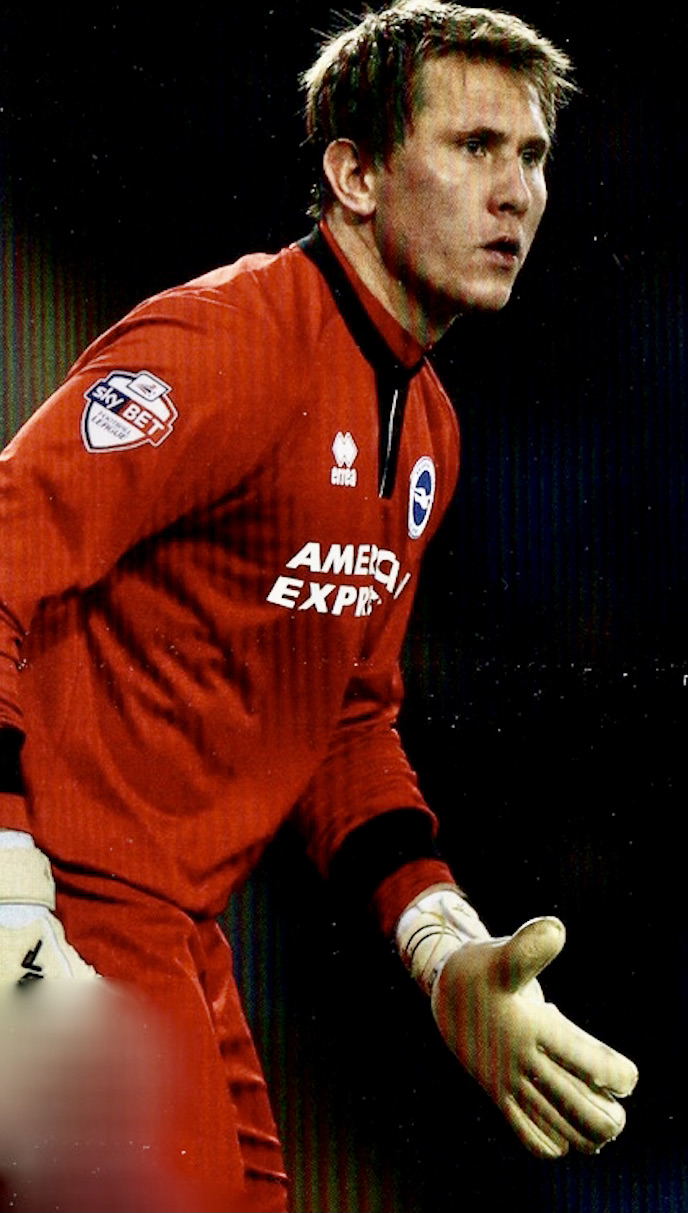
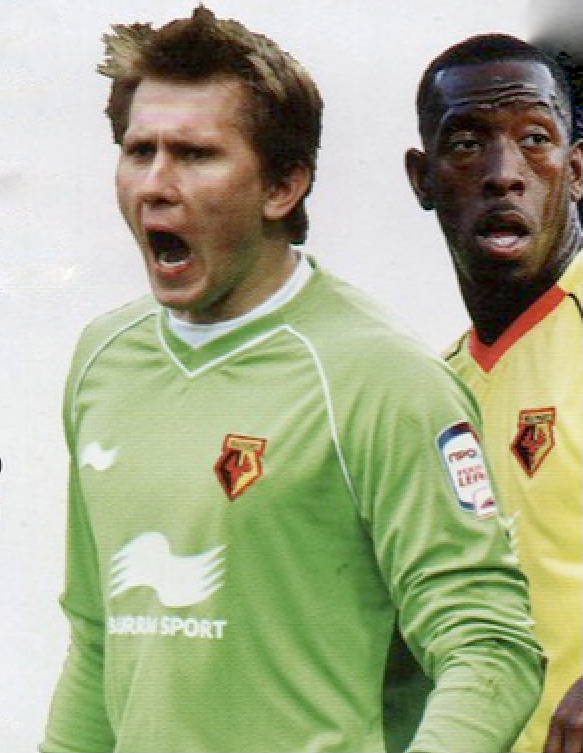
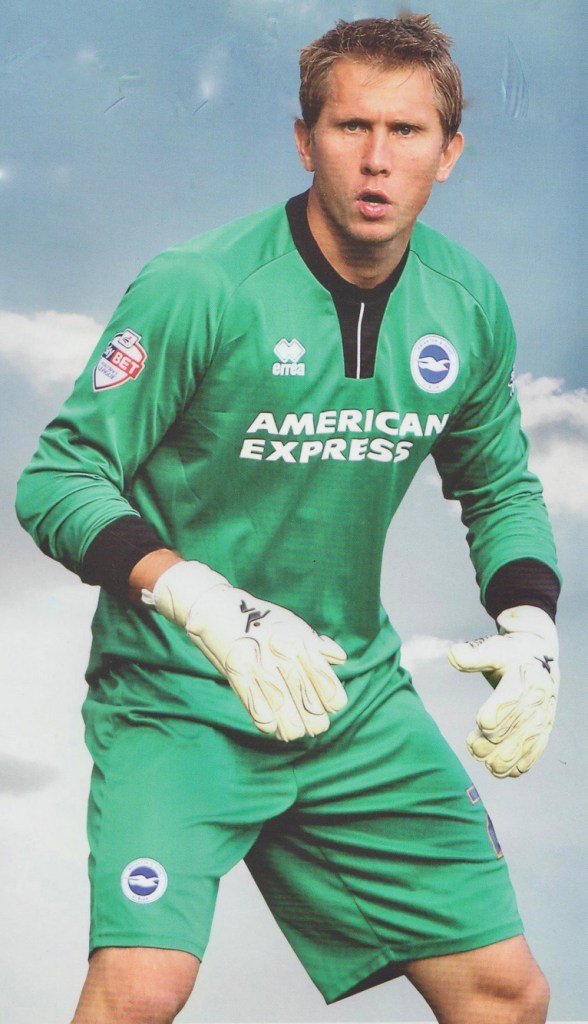
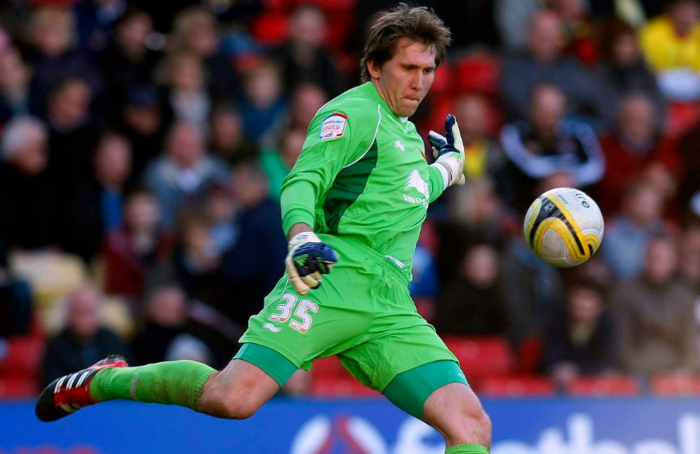
‘One of the world’s best’ coached Albion’s goalkeepers

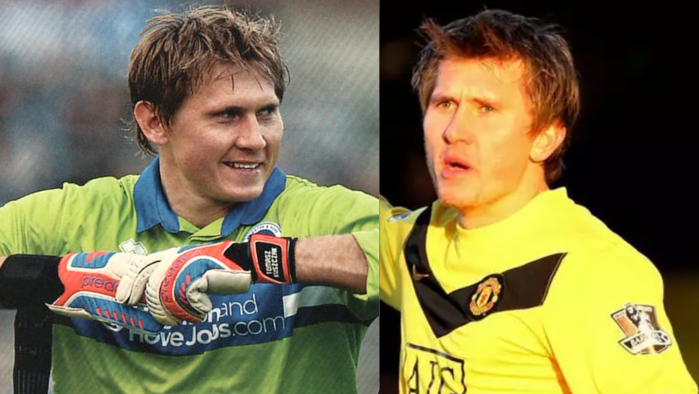
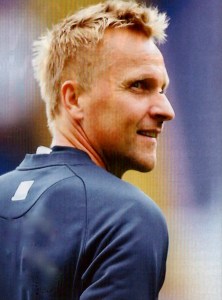
‘I’VE STARTED so I’ll Finnish’ could have summed up Antti Niemi’s season coaching Brighton’s goalkeepers.

Even though the fellow countryman who appointed the former Southampton and Fulham ‘keeper left in ignominy less than halfway through the 2014-15 season, Niemi stuck it out to the end before returning to his native Finland.

Niemi joined Albion in the summer of 2014 as part of the new backroom team put together by former Liverpool and Finland international Sami Hyypia.

“This wasn’t planned and, when Sami called me, I was working in Finland for a few years with two different clubs on a part-time basis,” he told the matchday programme. “It was a surprise.”

Seeing it as a “great opportunity” he added: “I thought about it for a couple of days, but it was not a difficult decision to make in the end. I’m obviously already familiar with the south coast.

Niemi enjoyed Albion coaching environment

“If you look at the surroundings at the training ground and the stadium, it’s a fantastic place to work each day. I seriously love the job.”

At Brighton, Niemi was responsible for the form of newly-arrived David Stockdale, emerging youngster Christian Walton and back-up ‘keeper Casper Ankergren.

Stockdale admitted it was the presence of Niemi — a former team-mate at Craven Cottage — as goalkeeping coach that was a big reason in his making the move to Sussex (as well as a chat with Bobby Zamora).

“Antti looked after me at Fulham when I first went in as a young keeper,” he said. “I know what he is about, what his training is like and what kind of person he is.”

Niemi was also the reason fellow countryman and Finland international Niki Mäenpää joined the Seagulls, although their paths ultimately didn’t cross on the training ground in Sussex because Niemi decided to return home for family reasons.

Mäenpää had been coached by Niemi back in Finland and he was first linked with the Albion when Hyypia was appointed. Although a move from Dutch second division club VVV-Venlo didn’t go through then, it eventually happened in the summer of 2015.

“Seeing as his contract is ending, he is looking forward to a new adventure and Antti has explained to him about Brighton and everything,” the player’s agent, Richinel Bryson, told The Argus.

Born on 31 May 1972 in Oulu, the northern Finnish city where there is no darkness during summer nights, Niemi remembered going to school when the temperature was 42°C one winter.

He completed compulsory military service in his homeland, explaining in a 2003 interview with The Guardian that he found life tough for much of his 11 months at a sports military school.

“I didn’t realise this at the time but, if I wasn’t in football, I would probably be in the army,” he told reporter Joe Brodkin. “I’m very patriotic. It was fun and it’s something I would have considered, although I’m too old now.

“In some ways it’s similar to what we have in the dressing room: being together and having fun, giving stick and taking stick. In the army it was a similar situation. We had something like 20 footballers in there and it was fun. Not at the time but looking back.”

Niemi began his football journey with local side Oulun Luistinseura before moving on to Rauman Pallo and then to the country’s biggest club, HJK Helsinki, where he eventually became first choice ‘keeper and made 101 appearances over four years.

He then swapped from Finland’s capital to Denmark’s fortuitously because the Finland FA president at the time had played in Denmark as a goalkeeper and FC Copenhagen asked him for a name.

“He mentioned me and everything happened in two days,” Niemi recalled in an interview with fulhamfc.com. “I was inconsistent in my first six months in Denmark but did well in my first full season.

“I learned that Rangers had sent a scout to watch someone on the pitch when we played in a league cup semi-final; it was one of those games where I just saved everything and we won. That 90 minutes made them choose to sign me, so it was all about luck really.”

That was luck he would come to rue, subsequently, though, because he had actually agreed to sign for Gordon Strachan at then Premier League Coventry City. Rangers stepped in at the last minute to clinch his signature in 1997 but it was a period of his career that would prove to be frustrating.

Andy Goram was first choice ‘keeper and Theo Snelders was also ahead of him.

He did win the Scottish League Cup (beating St Johnstone 2-1 in 1998) but he only played in one Old Firm game and that ended in a 5-1 defeat, so he didn’t have happy memories of his time at Ibrox where Walter Smith’s successor, Dick Advocaat, was unconvinced of the Finn’s ability under pressure and suggested he needed to move on to prove himself.

Highly regarded at Heart of Midlothian

He switched from Glasgow to Edinburgh to join Hearts for £350,000 in December 1999, manager Jim Jefferies telling The Herald: “Niemi is a fine keeper and is very highly regarded by everyone.”

Niemi reflected: “They were the third best team in the country behind Celtic and Rangers, but I said to myself that sometimes you have to take a step backwards to go forward.

“That was maybe the best decision that I ever made; it felt a bit of a downgrade at the time, but I wasn’t playing and I knew it would be good for me in the long run.”

In two-and-a-half years at Hearts, he became first choice and made a name for himself as a penalty stopper.

The keeper said of himself in a 2021 interview with the Edinburgh Evening News: “The biggest strength I had in my game was quick hands and quick reactions.”

Looking back on his 106 appearances for the Jam Tarts, he revealed: “Hearts have always been THE club for me.”

In an interview with CoffeeFriend.co.uk, he said: “Don’t get me wrong. I was very lucky to play in the English Premier League with Southampton and Fulham but there was something romantic about the place.

“I went there from Rangers where I was second or third keeper and suddenly got the chance to be No.1 and be a big part of the team.

“We finished third, had some European football, memorable derbies. I hope it doesn’t sound cocky but I really can’t remember too many games I let the team down.

“I loved my time there and it’s definitely one of those places I miss now and then.”

Saint Antti

It was Strachan who persuaded Niemi, by then 30, to try his luck in the Premier League at Southampton.

“My decision to move was purely on a football basis,” he said. “I hardly get any more money than I did in Scotland. I was there for five years and for two and half years I was playing regularly. Sometimes I felt I was playing against the same teams and the same players the whole time.”

Saints paid a fee of £2m to secure his services and he made his debut against Charlton Athletic, where he had spent a month on loan before his move to Hearts.

Strachan quickly installed Niemi as his preferred ‘keeper over Paul Jones and at the end of his first season with the Saints he appeared in the FA Cup final against Arsenal at the Millennium Stadium, Cardiff – a game which I watched with my friend Andrew Setten, sitting in front of Geoff Hurst in the best seats in the house!

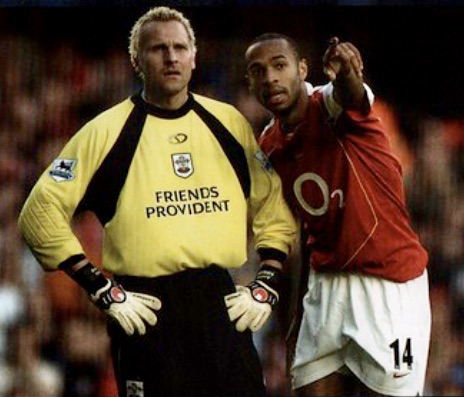
Arsenal’s Thierry Henry points things out to Niemi

With Arsenal retaining a 1-0 first half lead, Niemi unfortunately tore a calf muscle midway through the second half and, when replaced by Jones, became the first goalkeeper to be substituted in a FA Cup final.

In spite of losing to that solitary goal, Niemi didn’t want to miss the lap of appreciation and took a ride on a team-mate’s shoulders as they trooped around the stadium.

A series of injuries and a couple of operations limited him to 28 Premier League games in each of the next two seasons but in the opinion of goalkeeping coach David Coles (who once played on loan for Brighton), he was among the world’s top five ’keepers and he was the Saints player of the year in 2003-04.

“The Premiership has been every bit as good as I expected and even more,” Niemi said in that Guardian interview. “Everywhere you go it’s a full stadium and the pitches are perfect. It’s a fantastic league.

“I was making some good saves in Scottish football but the spotlight in the Premiership is so much bigger. There are so many cameras and every single game and situation is highlighted, so it’s easier to shine.”

Niemi’s reputation was certainly enhanced after he kept 17 clean sheets in his first two top flight seasons under Strachan at St Mary’s.

But he was also part of the Southampton side that was relegated in 2005, bringing to an end 27 years in English football’s top tier.

“The longer the season went on, the worse the results got and the more it started to affect the dressing room,” he told hampshirelive. “But overall, I can only look into the mirror and blame myself.

“My first two seasons at Saints were great, but during the third one, I just couldn’t get up to that standard any more. It was average at best.”

Niemi saw influential team-mates leave without being properly replaced and he said: “I remember looking around myself at the beginning of the campaign and thinking ‘things here aren’t as well as they should be’. The team had weakened and the contrast was huge.”

After the relegation, Niemi said: “I felt ashamed, simple as. It just felt embarrassing as hell.”

He stayed half a season after Saints playing in the Championship but returned to the Premier League in January 2006 when he moved to Fulham under Chris Coleman.

“Living in London was a big attraction.,” he told fulhamfc.com. “My wife was delighted to get a chance to move to West London and, as I’d played against them many times, I knew that it was a nice club too.”

Niemi switched to Craven Cottage in January 2006

A hamstring injury limited him to nine appearances in those first few months at Craven Cottage but he established himself as first choice the following season and went on to make 63 appearances before a wrist injury led to him calling it a day at the start of the 2008-09 season.

However, at the age of 37, he was persuaded to come out of retirement and followed his former Saints coach Coles to south coast rivals Portsmouth as back-up to first choice David James.

He left Pompey in March 2010 having earned around £450,000 over the course of eight months without having made an appearance, the Daily Mirror reported.

The newspaper said the Finn earned £14,000 a week during his time at Fratton Park and played just twice for the reserves and spent one Premier League match on the subs’ bench.

Having won 67 caps playing in goal for Finland, Niemi became his country’s goalkeeping coach from 2010 as well as working with the Finnish FA in developing the quality of goalkeeper coaching in the country. Alongside those responsibilities, he slotted in club goalkeeper coaching in various locations – including back at his old club HJK Helsinki, at another Finnish side, FC Honka, and the season at Brighton.

Joaquin Gómez, a coach he first met during that season with the Albion, subsequently called on his services at Finnish side HIFK in 2021.

Gómez, originally an academy coach with the Seagulls, stayed on as part of the first team management set-up having worked under Hyypia’s successor, Oscar Garcia., but then left to become head of tactical analysis at Derby County before teaming up with Nathan Jones at Luton Town, and then Stoke City.

In May 2019, on Niemi’s recommendation, he also started coaching Finland’s under 21 team. After leaving Stoke, he was assistant manager at Spanish Second Division side FC Cartagena, assistant coach at Finland’s SJK Seinäjoki and spent a season at Al-Qadsiah in Saudi Arabia.

On persuading Niemi to join him at HIFK, Gómez said: “He’s an outstanding goalkeeping coach and will now also assist me in other areas.

“Antti is the best Finnish goalkeeper of all time, and he has done great work in coaching after his retirement from playing. At HIFK he’ll have a more versatile role than previously, as he’ll be working more with outfield players as well.”

In the summer of 2024, Gómez persuaded Niemi to join him at Greek Super League club Volos and the Finn spoke to Tribalfootball.com about those days spent in Lancing.

“I have seen a lot of passionate people in my lifetime in football but this guy is something else; he has dedicated his life to football. 

“He moved from Spain (to England) without knowing any English, he just wanted to work in English football. He was working as a waiter, he was cleaning the toilets at Brighton, he was coaching kids and eventually somebody saw that this guy is really passionate and he can coach so he got in the first team.”

Niemi continued: “He called me in the summer, he said I had a few days to decide. He is very temperamental; he is very passionate and I am the boring, steady guy who always tells him to calm down! You need that sort of personality; you don’t need a similar sort of personality as you need to balance each other out 

“He offered me the job to be the assistant manager which is different as I have always been a goalkeeping coach and I still am with the Finnish national team but I took it as a challenge, as an adventure. It is going to be a learning curve for me and I am really enjoying it so far.” 

Unfortunately, Gómez was sacked after only five league matches and his next appointment, in January 2025, was as the new coach of Indonesian Liga 1 club Borneo Samarinda.

Dislodged ‘keeper Ryan offered curious reprieve with Gunners

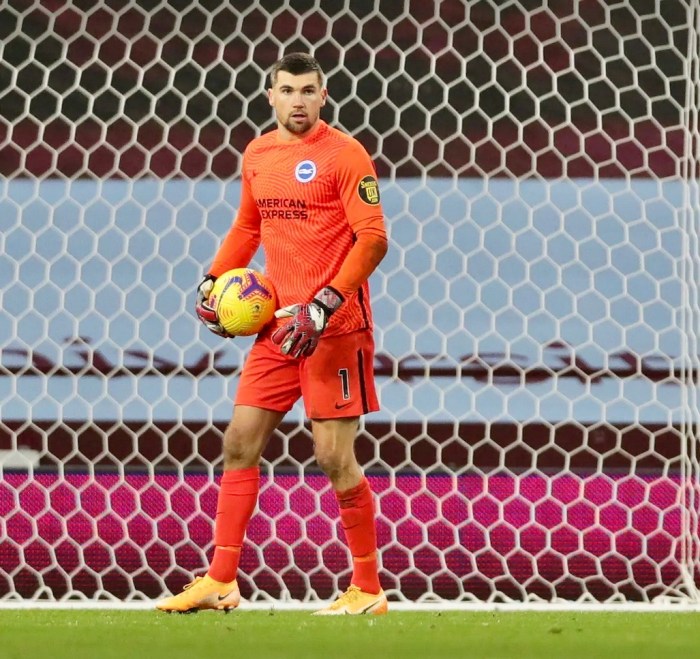
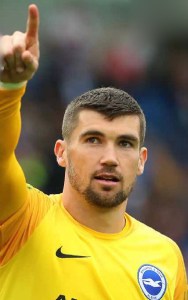
FEW FOOTBALL observers would have imagined an out of favour Brighton goalkeeper would get a move to Arsenal but that’s exactly what happened to Mat Ryan.

The Aussie no.1, Albion’s first choice goalkeeper for their first three seasons in the Premier League, surprisingly joined the Gunners having lost his Seagulls place to young Spaniard Robert Sanchez.

“We know Mat very well through his performances with Brighton in recent seasons and he brings additional quality to our squad,” Arsenal coach Mikel Arteta told the club’s website. “Mat has very good Premier League experience and has played over 100 times in the league, which is something that will benefit us greatly on and off the pitch.”

Technical director Edu added: “Mat is an experienced goalkeeper, a proven talent in the Premier League and has also played many internationals for Australia.

“Mat will further strengthen our squad with his experience and knowledge of playing at the highest level.”

The goalkeeper himself, a self-confessed boyhood Arsenal fan, relished the opportunity but found himself under fire from Brighton fans when he told Optus Sport: “I had in my mind a little bit of a plan that I wanted to play a couple of seasons at Brighton and try and do well and hopefully be bought by a bigger club and keep progressing in my career.

In action for the Gunners

“Perhaps it didn’t work out in the way of playing two, three seasons and then being bought for a fee as no.1 and going and playing.

“But one way or another I’ve obviously ended up in a massive step up from Brighton and to another level of football.”

For someone who had always previously endeared himself to the Albion faithful, memorably running the length of the pitch to join teammates in goal celebrations and after games handing out bits of his kit to supporters, it struck a discordant note.

When Ryan learned how his comments had angered some Brighton supporters, he took to Instagram to address them.

“I want to apologise to anyone who has felt I’ve been disrespectful towards the club. This was not and never will be my intention.

“I recognise how people could have interpreted that through those comments and, moving forward, I’ll be sure to pay extra attention as to how I refer to the club to not have the same outcome.

Albion’s no.1

“The club will always have a special place in my heart. I’ve got nothing but fond memories and wish all the best to you all for the remainder of the season and I’ll always continue to support the club because of our experiences together.”

Those experiences began ahead of Albion’s first season (2017-18) playing in the Premier League. Previous no.1 David Stockdale had chosen to move to Birmingham City, who were offering him a longer-term deal than Brighton, so the coast was clear for Ryan, already an established Australian international, to become Chris Hughton’s first choice goalkeeper.

Hughton himself admitted in an interview with the Argus that Ryan’s arrival had more to do with goalkeeping coach Ben Roberts. “He is the one who went to see him play, watched hours and hours of video.

“I didn’t see him live. Ben just thought he was a player at the right age, really enthusiastic. He’s different, not as big as some of the other keepers, but very athletic and really hungry to do well.

“I certainly watched a lot of him on video. We also, of course, have recommendations from our scouts but Ben is the one who looked at him and recommended him. You have to have faith in your staff.”

For his part, Ryan appreciated the work Roberts put in on the training ground. “Ben has a real knack of getting his goalkeepers in the best physical and mental shape in order to be best prepared for the opposition that we’re facing,” he told the matchday programme.

Signed from La Liga’s Valencia for a then club record transfer fee of £5 million, he played all 38 league games in his first season under Hughton, only missed four because of international commitments in 2018-19 and all league games in Graham Potter’s first season in charge.

In an early matchday programme interview, he spoke about how he had learned about life in the Premier League from fellow Aussie ‘keeper Mark Schwarzer (“a big hero of mine”) and, when on international duty, from former Aston Villa and Man Utd ‘keeper Mark Bosnich.

Ryan more often than not proved a reliable stopper for the Albion and he twice won Australia’s PFA Player of the Year award.

“At this level, you’ve got to be consistent,” he said. “Every day you’ve got to work hard on every aspect of your game and I’ve tried to do that.

“I try to contribute to the team as much as possible and it’s that constant challenge that you’ve got to try and live up to and, I guess, is what separates good players from great players – remaining consistent and sustaining those very high levels.”

And according to wearebrighton.com: “At his best throughout the 2017-18 and 2018-19 seasons, he was one of the most dependable number ones in the Premier League whose performances did more than most to keep Brighton in the top flight.”

He was sorry to see Hughton sacked – “Brought the club success it could only dream of and will always be someone I have the highest respect for” – but was happy to adapt to Potter’s more possession-based style in which the goalkeeper needed to be comfortable with the ball at his feet.

“It’s important we adapt to the new style so the system works as effectively as possible,” he said. “In the modern game you have to be able to adapt anyway, so each day I’m working hard and doing what’s being asked of me.”

The beginning of the end of his time at the Albion came when, out of the blue, young Sanchez was chosen to keep goal in a 2-1 defeat at Spurs after the Seagulls had managed only one win in the first six matches of the 2020-21 season.

Although restored to the starting line-up for the following five matches, following a 3-0 defeat at Leicester, Ryan was summoned by Potter and told Sanchez would be given an extended run in the side and that, assuming he wanted a no.1 berth, he would be better looking for a new club.

The conversation staggered Ryan and, ever a willing interviewee, told The World Game he was surprised and shocked but added: “Knowing where I stand now, from what was communicated to me, perhaps it might be better that we do go our separate ways.

“However, until that opportunity comes – and it’s a good project – then, as far as I’m concerned, I’m a Brighton player and I’m here to fight for my spot.”

Taking the opposite stance to the one Sanchez subsequently took when Jason Steele ousted him as no.1, Ryan vowed to continue to work hard.

“I still feel like I’ve got a lot to contribute and I’ll be trying to convince the manager I’m the best man for the job,” he said.

“I feel the experience I’ve picked up over the last three years in England shows I’ve got plenty to give to any club that wants to acquire my services.

“I think I’ve proved that through my performances.”

It was never particularly clear why Ryan eventually fell out of favour, although he ventured some ideas in an exclusive interview with Andy Naylor for The Athletic in March 2022.

He remembered at the start of the 2020-21 season noting there had been rumours around Albion being interested in signing Emiliano Martinez (who eventually went from Arsenal to Aston Villa) and when his (Ryan’s) agent tried to ask the club about it no one answered his call.

He was also heading into his fourth season of a five-year contract, but his agent wasn’t getting any response as to whether there would be a renewal.

“Thinking back, after all that has happened, maybe that was a sign,” Ryan told Naylor. “At the time, I wasn’t thinking anything of it, but when I think back now, maybe these were little signs.”

The loan move to Arsenal might have been brief – he had a won one, drew one, lost one record in three games – but his commitment to the cause was appreciated.

In a game against Fulham, a minute before the final whistle, Ryan went up for a corner and got his head on the ball to keep it live in the Fulham box before Eddie Nketiah equalised a few seconds later.

“I picked him because he totally deserves to play, he trains like a beast, he’s got the right attitude and he needed a game,” Arteta told Arsenal.com. “It was a great header.”

It led to him being chosen ahead of Bernd Leno for the 2 May trip to Newcastle which Arsenal won 2-0.

Although Arteta made all the right noises about signing him on a permanent basis, it turned out they wanted an English goalkeeper and they signed Aaron Ramsdale instead.

While awaiting news of where his next move would be, Ryan told Fox Sports Australia: “I’ve learnt so much in my experiences (at Arsenal) so far, all that’s being with a club like that, the resources, the personnel, the quality on the pitch, the enormity of the club on a global aspect… it was so cool to be a part of.

“It was a great experience and I was really proud of how I did and really content with how I did, and I showed that I have the capability to play at a level like that. I look forward to seeing what that little period now means for me moving forward.”

It was clear there would be no return to the Albion no.1 spot but warm words were issued when his summer departure to Real Sociedad was announced.

Potter declared: “He’s a great guy, top professional and as someone who wants to be playing regularly at senior level he goes to Real Sociedad with our very best wishes. 

“He’s been a pleasure to work with, he will be fondly remembered by everyone and always welcome back at the club.”

Unfortunately for Ryan, a knee cartilage injury suffered in pre-season put a hold on him mounting a challenge to Sociedad’s well-established Alex Remiro, and he had limited chances to shine back in Spain.

Nonetheless, his confidence remained high and he told Naylor in The Athletic article: “I’m a very good goalkeeper – a world-class goalkeeper. Since I left Brighton, I feel the level I’ve played at in the games I’ve played in has been quite high.

“Don’t get me wrong, every time the team list goes up and I see I’m not playing, it’s a blow – a kick in the guts – but I try using it as motivation to keep pushing on. I won’t stop until I see my name there more regularly.”

Born on 8 April 1992 in Plumpton, New South Wales, as a teenager Ryan played for semi-professional sides Marconi Stallions and Blacktown City before turning pro with Central Coast Mariners in 2010, where he was given his pro debut by Graham Arnold, later his head coach at international level.

In the course of his three years with the Mariners, he picked up various league accolades for his performances and earned his first international recognition when selected for Australia’s under 23s in 2011. He stepped up as a full international the following year making his debut in a 1-1 draw with North Korea and played all three matches in the 2014 World Cup in Brazil before winning the AFC Asian Cup with the Socceroos in 2015. He went on to play for his country at the 2018 and 2022 World Cup final tournaments and, at the time of writing, had 95 caps to his name.

Aussie international stopper

It was in 2013 that he moved to Europe and was signed by Belgian Pro League side Club Brugge, where he made more than 100 appearances over two years and was in the side that won the Belgian Cup in 2015 when Anderlecht were beaten 2-1 in Brussels. Ryan was the league’s goalkeeper of the year in 2014 and 2015.

An unhappy spell at Valencia followed where he managed only 21 appearances in two years, as the club got through five different managers. He spent the second half of the 2016-17 season back in Belgium, on loan to Genk, where he played 24 matches.

It would be fair to say Ryan has endured mixed fortunes since leaving Brighton. He managed only nine games for Sociedad before switching to FC Copenhagen but he only made six Danish Superliga starts and appeared in five cup matches while in Denmark.

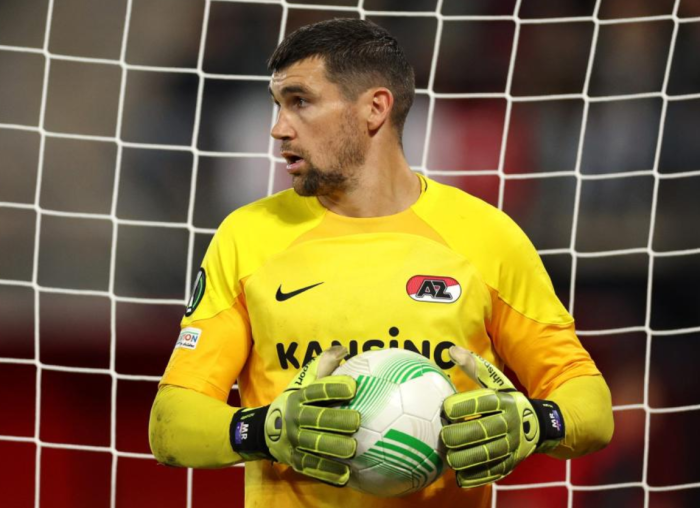
AZ Alkmaar in the Netherlands were able to offer him a return to being a regular no.1, though, and in 18 months he played 64 matches for the Eredivisie side, including 15 Europa Conference League games.

At the end of the 2023-24 season, he failed to agree a new deal with the club and the Dutch newspaper De Telegraaf reported that he ‘lost his game of poker’ with AZ’s sporting director Max Huberts, the club walking away from negotiations due to his wage demands.

As a free agent, Ryan joined Albion’s 2023-24 Europa League opponents AS Roma on a one-year contract as back-up to Serbian first choice ‘keeper, Belgian-born Serbian international Mile Svilar.

“If they get the Brighton version of Mathew Ryan, Roma will have a very safe pair of hands waiting in the wings,” reckoned Eliot Ben-Ner, writing for The Football Hub.

However, Ryan’s reign in Rome lasted only six months and in January 2025 he moved for a reported fee of £676,000 to French Ligue 1 side Lens on a six-month deal.

An Albion promotion winner but Bong didn’t chime at Forest

IT WAS WHILE I was adding the DW Stadium, Wigan, to my list of grounds visited that I first noticed Gaetan Bong.

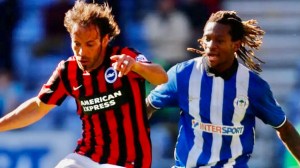
On the afternoon of 18 April 2015, Bong was playing AGAINST Brighton in one of 14 appearances for Wigan Athletic having moved to the UK on a short term contract from Greek side Olympiakos three months earlier.

Bong up against Inigo Calderon while playing for Wigan

Within three months, he was playing FOR Brighton, joining Chris Hughton’s side as a free agent.

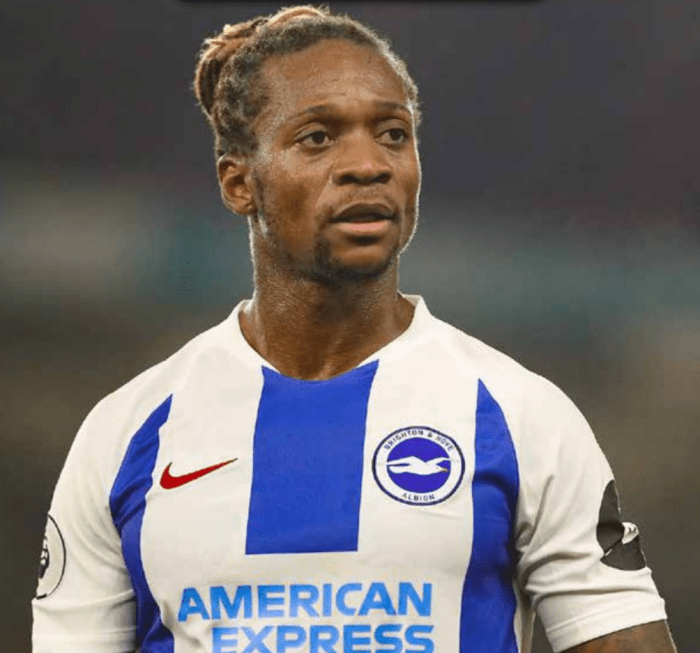
The Cameroon international, who had played top flight football in France and Greece, became a regular in the left-back berth for four seasons, including being a Championship promotion winner in 2017, playing 102 times for Brighton, including 51 games in the Premier League.

Bong was the first permanent left-back Albion had signed since the days of Marcos Painter, having had three successive seasons of season-long loan players in that position: Wayne Bridge, Stephen Ward and Joe Bennett.

“Gaetan is a player that we were aware of while he was at Olympiakos,” said Hughton, on signing the player. “He is very athletic, he is a natural left-sided player and it is important to have that balance in the squad.”

Back to that bottom-of-the-table battle in April, though, and Bong was on the left of a back four that also included a certain Harry Maguire (on loan from Hull City).

It was former player Gary Caldwell’s first match in charge after the sacking of Malky Mackay and both sides were struggling to avoid the drop from the Championship.

I probably decided to go to that game anticipating a win for Brighton because Wigan hadn’t won at home since the previous August! But, as sure as eggs is eggs when watching the Albion, Athletic finally registered another win in front of their own supporters: 2-1. It’s always the hope that kills you!

Albion played Player of the Season full-back Inigo Calderon as a makeshift right-winger that day and he got so little change out of his attempts to get past Athletic’s left-back that he was eventually subbed off.

In spite of the result that day, Albion managed to stay up while Wigan went down with Blackpool and Millwall.

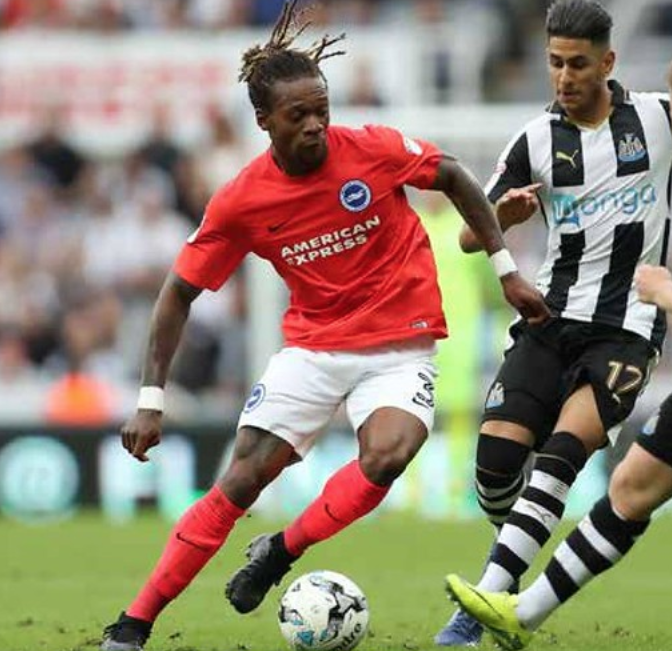
Bong made his Brighton debut in the season-opener at home to Nottingham Forest (a 1-0 win courtesy of a Kazenga LuaLua goal), the club he would join four and a half years later, after he’d lost his regular place at the Albion.

Introduced to Brighton fans in the programme for that match, Bong said: “Once I had spoken to the manager and learned of the plans for the club, then I wanted to be part of this adventure.

“I could have gone elsewhere, I had offers, but I was excited by coming to Brighton. Now I just want to get playing and show the fans what I am about.”

Hughton had problems at left-back in the 2015-16 season when Bong was out for four months with a thigh injury, and back-up Liam Rosenior was also sidelined. Inigo Calderon filled in on occasion and Liam Ridgewell was signed on a short-term deal from Portland Timbers. Although Bong returned to the squad in March, the rest of the season was mainly a watching brief from the bench as Rosenior played out the season in that position.

Back as first choice the following season, a knee injury robbed him of his place for several weeks – loan signing Sebastien Pocognoli filled in – but he still played in 28 matches as the Albion finally won promotion to the Premier League.

Born on 25 April 1988 in Sackbayeme, a suburb of Cameroon’s capital Yaounde, he moved to France as a teenager to join Metz, where he rose through their youth ranks before making his professional debut at 17.

Injuries meant his progress wasn’t as rapid as it might have been but he had a successful loan spell with French second tier side Tours, and then moved to Valenciennes in 2009.

Bong won an under-21 cap for France but went on to win 16 caps for Cameroon. He was in their 2010 World Cup squad but only played in their final group game against Holland. Not entirely happy with the country’s set-up, he briefly retired from international football but returned when renowned former Dutch international Clarence Seedorf was appointed head coach in 2018. Bong even captained his country in a 1-0 friendly defeat against Brazil played at MK Dons in November 2018.

Cameroon international Bong

Bong played for Valenciennes for four years (for the first two playing under former Forest boss Philippe Montanier) and made 117 appearances.

Greek club Olympiakos took him to Athens in August 2013 and he went on to establish himself as a first-team regular, including playing in four Champions League matches and featuring in their league title winning side of 2013-14, before falling out with a new head coach.

Asked by The Athletic to sum up Bong’s attributes, his former Brighton teammate, David Stockdale said: “He comes to win a game. Nothing else. He is strong, he is athletic, he is enthusiastic.

“He is a good person to have around a squad, because he is very professional, he always does his homework before games and generally just looks after himself. He is just strong — that is the word. He is strong, reliable and does what it says on the tin.”

Stockdale added: “He had that drive; that inner drive. He was always going off to do his own work in the gym, to make sure he was properly fit all the time.

“He is one who will say what he wants to say when he feels he needs to. He does know a lot about football, he certainly knows a lot about his position and what he needs to get out of the players around him.”

The goalkeeper pointed out that Bong always had a desire to do well for the team, pointing out: “He was very much a mainstay of the side when I was at Brighton. He is a player you can rely on.”

Unfortunately, a small part of Bong’s time playing in Albion’s colours will also be remembered for an unsavoury incident when he alleged he was racially abused by West Brom’s former Burnley striker Jay Rodriguez.

Rodriguez appeared to pinch his nose after the players clashed during WBA’s 2-0 win over the Seagulls in January 2018, and Bong spoke to the referee about what he said he heard.

A subsequent FA investigation into the matter said the allegation was “not proven” and added there was “no suggestion by any party involved in this case that this was a malicious or fabricated complaint”.

Nevertheless, Bong insisted he heard Rodriguez say: “You’re black and you stink.” The striker denied what he described as a “false allegation” – he claimed he had instead said “breath fucking stinks”.

The dispute led Bong to issue a statement in which he said: “Please let me be clear: I know what I heard and I did not mishear. My conscience in raising the complaint is therefore entirely clear.

“This was my first such experience in more than three years in this country and I would never seek to bring a false charge against a fellow professional. Those who have accused me of doing that do not know me.

“Equally those who have expressed an opinion were not there on the pitch at the time and only Mr Rodriguez and I know exactly what was said and I stand by my original complaint.”

If everyone involved thought that was the end of the matter, Burnley fans had other ideas and I was at Turf Moor in April that year when the home ‘support’ disgracefully booed Bong every time he got the ball.

Albion manager Chris Hughton described their reaction as “shameful” and said of the player: “He’s an incredibly disciplined and straight individual – as honest a person as you will meet. It’s something that happened, it’s not nice at all and of course he’s big enough and strong enough to cope with it. As showed by his performance (the game finished 0-0).”

The respect Albion held for the player was best demonstrated as his time at the club was coming to an end. Bong was going to be a free agent after four years with the club but was handed a one-year extension shortly before Hughton was replaced by Graham Potter.

Chief executive Paul Barber explained to The Argus: “We all felt Gaetan had earned another contract. It is a position we felt we had an opportunity with a player we know, who is a fantastic character.

“The supporters will see what Gaetan does on the pitch — solid, consistent, strong, difficult to get around — but what they won’t know is off the pitch he is a very high-quality person, someone who is very respected and liked throughout the club. Just a decent man, supportive of the young players.

“Those sort of attributes and qualities are so valuable in a club of our size and for the coaching staff and the players. You know whether he plays 10 games, 20 games or 38 games, he is going to be fit, reliable, positive, focused, enthusiastic, consistent and decent.

“All of those things, if you were going out to recruit a left-back, you would be looking for.”

Ultimately, Potter preferred Dan Burn or Bernardo in that position and Bong moved on having made 91 starts and 11 substitute appearances, but only four appearances from the bench in the Premier League under Potter.

His final appearance for Brighton came in the disappointing 1-0 FA Cup third round home defeat to Championship side Sheffield Wednesday. Sadly, when he was subbed off in the 71st minute, there was a chorus of ironic cheers from the home crowd.

Nevertheless, Potter said of the player: “I have only worked with Gaetan for six months or so, but I do know all about the part he played in helping the club get to the Premier League and then establish itself at this level. I’m sure his contribution over the last four years will not be forgotten by our supporters.”

Somewhat bizarrely, it appears that Bong’s move to Nottingham Forest (in the Championship) wasn’t exactly welcomed by head coach Sabri Lamouchi and Nick Miller for The Athletic was brutal in his description of the player’s debut.

“Bong lasted 59 minutes against Charlton, a harrowing hour in which he lost his man for the only goal in the first half, and his eventual removal felt more like an act of mercy than a substitution.”

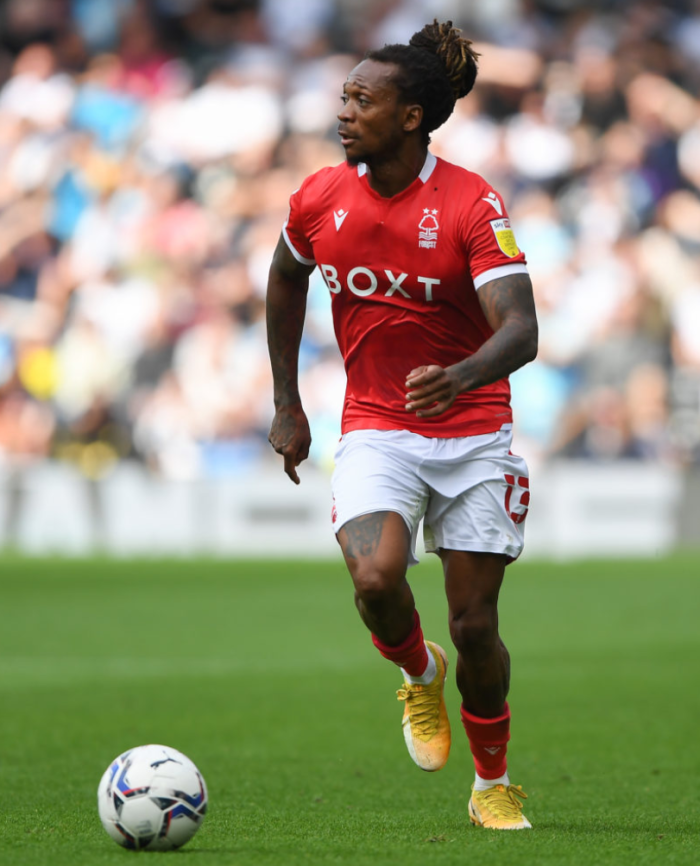
He didn’t even make the bench for the rest of the season and it was only when his old boss Hughton arrived at the City Ground that he got back into the Forest first team. He played 11 matches under Hughton but only seven in 2021-22 when Hughton’s successor Steve Cooper got them promotion via a play-off final win over Huddersfield Town.

Even so, Cooper was appreciative of the defender’s contributions off the pitch. “We have a good mix of old players – good role models, like Gaetan Bong,” he told The Athletic.

“He doesn’t play much but is a positive influence and I’m sure has conversations with the younger players, which I encourage. The learning players do with each other is a powerful thing.”

After hanging up his boots, Bong set up Ballers & Family Consulting Ltd, a consulting agency which, according to his LinkedIn profile, helps aspiring players to optimise their potential, families to understand the demands of professional football and football clubs to manage/avoid issues concerning certain players.

Zamora’s wait for England while dad’s Trinidad came knocking

TEN DAYS after Barry Fry’s prediction about Bobby Zamora playing for England, he made his debut for the country’s under 21 side.

It was 16 April 2002 and the Brighton striker went on as a sub for Leeds’ Alan Smith in a 1-0 friendly defeat v Portugal at Stoke’s Britannia Stadium. Paul Konchesky, a fellow graduate of the East London boys’ team Senrab, was left-back that day.

While plenty of observers expected Zamora eventually to step up to the full England side, he had to wait until he was 30 to make his first (and only) start at that level, and not before being wooed to switch allegiance and play for Trinidad and Tobago.

That happened in 2005, when the Caribbean country’s Dutch coach, Leo Beenhakker, wanted him to play in a World Cup qualifier against Guatemala. Zamora told the News of the World: “Trinidad is my dad’s country and to play in the finals would be a dream but West Ham are more important.

“I am only thinking about the club at the moment and do not want to be distracted from that. The club mean everything to me and if I can help us have a good season that is all that matters.”

After an injury-hit 2007-08 season, though, West Ham sold him to Fulham in the summer of 2008. The following year it was reported Zamora and his old Senrab teammate Jloyd Samuel had both obtained Trinidad & Tobago passports in time to play in a 2010 World Cup qualifier.

Injury prevented Zamora from getting involved but Samuel did play twice for the Soca Warriors even though he had won seven England under 21 caps. (Samuel tragically died in a road accident aged 37 in 2018).

Zamora top-scored with 19 goals in Fulham’s memorable 2009-10 season under Roy Hodgson. The south London side finished 12th in the Premier League and made it through to the final of the Europa League (the first season of the revamped competition previously known as the UEFA Cup).

Zamora had been a fitness doubt before the game against Athletico Madrid in the People’s Park Stadium in Hamburg and he had to give way to Clint Dempsey 10 minutes into the second half.

The game went into extra time with the score 1-1 after 90 minutes and agonisingly Fulham succumbed to an extra time winner scored by Diego Forlan. Sergio Aguero, later of Man City fame, beat defender Aaron Hughes and crossed for Forlan to flick the ball home four minutes from the end.

Nevertheless, Zamora’s goalscoring form had caught the attention of England manager Fabio Capello and his deputy Franco Baldini who were keen to call him up for the 2010 World Cup.

Sadly, those hopes were dashed by an achilles injury, and Zamora conceded: “I told Fabio that I was struggling and I knew that, had I gone, I wouldn’t have done myself or England justice.”

The player told The Independent: “It’s been an up and down season because it’s been so good on the pitch and I’ve scored some important goals. To now pick up this injury has kicked me in the teeth.

“It’s come during the last couple of weeks and when there was the possibility of going to the World Cup with England. That’s football, it’s a cruel game.”

He added: “The World Cup’s a massive tournament. It’s not about myself, it’s about England.

“Capello wished me all the best, hoped that I get fit and would be available next season.”

True to his word, Zamora was one of five uncapped players included in Capello’s squad immediately after the disappointment in South Africa.

One of the first people to contact him was former West Ham teammate, Teddy Sheringham, who he said he learnt so much from. “I got a long text message from Teddy. He said I might be nervous beforehand but that I deserved this opportunity, and he said once I’d taken part in my first training session, I would realise that I deserved to be there. He was spot on; after that I did not look out of place and I embraced being part of the squad.”

The call up came in something of a crazy week for Zamora because only days earlier his wife gave birth to twin girls, Gisele and Siena.

“The twins were born last Monday, they came out (of hospital) on Friday, then I had a match on Saturday, was back home for one day and then I was away with England, so I have not seen them as much as I wanted to, but I am sure I will find some time when I get back home,” he said.

“The twins are a massive part of my life now, and with getting the call-up to play for your country is a massive honour. I am lost for words. I am extremely proud to be called up to play for my country.”

Capello sent him on as a second half substitute for Frank Lampard to play up front alongside Wayne Rooney in England’s 2-1 friendly win over Hungary at Wembley on 11 August 2010.

Having made that breakthrough, the day after he signed a new four-year contract with Fulham he agonisingly suffered another setback when he broke a leg (above) and sustained ankle ligament damage during a 2-1 win over Wolves. He was sidelined for five months.

Capello didn’t consign him to history, though, and called him up again in May 2011 (his teammate David Stockdale was in the same squad) to face Switzerland in a Euro 2012 qualifier. But neither were involved in the disappointing 2-2 Wembley draw.

His first start for England finally came six months later in a 1-0 home win over Sweden, the first time in 43 years that England had beaten the Scandinavian country. Zamora’s close friend (and another former Senrab graduate) John Terry was England captain and joining the striker in making first starts were right-back Kyle Walker and Everton’s Jack Rodwell.

Richard Williams in The Guardian clearly felt sorry for the debutant centre forward, though, writing: “Poor Bobby Zamora. Offered the opportunity to score England’s 2,000th goal on Tuesday night, a perennially unfortunate footballer was forced instead to stand and watch as Stewart Downing’s cross glanced off the side of Gareth Barry’s head and then off Daniel Majstorovic’s forehead before evading Andreas Isaksson’s dive as it looped inside the post for the most anticlimactic of own goals.”

Reporting on the narrow victory over the Swedes, Williams added: “Whichever side the ball went, Zamora made sure he was available. A double exchange of passes with Walcott in the 17th minute put Zamora in on goal, but after Isaksson blocked his first effort the follow-up was poked past the post from five yards.

“Any centre forward will ultimately be judged by the goals he scores rather than his total of assists, and Zamora spurned a wonderful chance in the 65th minute when Downing scampered down the left once more before pulling the ball back at precisely the right pace and angle for the striker to meet it with a first‑time connection. Jonas Olsson, however, flew in to deflect the shot for a corner.”

Zamora was subbed off in the 70th minute to be replaced by Darren Bent and the Guardian sports writer concluded: “England – and Zamora in particular – really should have inflicted greater punishment on such humdrum opposition.”

Bent had also replaced Zamora in his first start for England under 21s. That came in February 2003 in a 1-0 defeat to Italy in Carrara.

A month before his move to Spurs, he also started England’s 3-2 friendly win over Serbia and Montenegro at Hull’s Kingston Communications Stadium, on that occasion being replaced by Darren Ambrose. (His future Fulham and Albion teammate Steve Sidwell was in midfield that day).

Eight days later, in a UEFA under 21 championship preliminary match, he went on as a sub for Shola Ameobi as England beat Slovakia at the Stadium of Light, Sunderland.

Zamora showed England quality at an early age

After that under 21s debut against Portugal, he was selected in the squad for the UEFA under 21 championship finals in Switzerland. On 20 May 2002, David Platt sent him on as a sub for Gareth Barry in a 2-1 defeat to Italy in Basle.

Two days later, in the third group match, again a sub, he replaced Jermain Defoe as England lost 3-1 to Portugal and were eliminated from the competition.

On two other occasions Zamora was an unused sub but he didn’t add to his six caps. And, after

Capello quit the England job in February 2012, Zamora didn’t play for the full England side again.

• Ahead of Albion’s new year clash with West Ham, find out why Zamora’s move to the Boleyn Ground was so ideal in the next instalment.

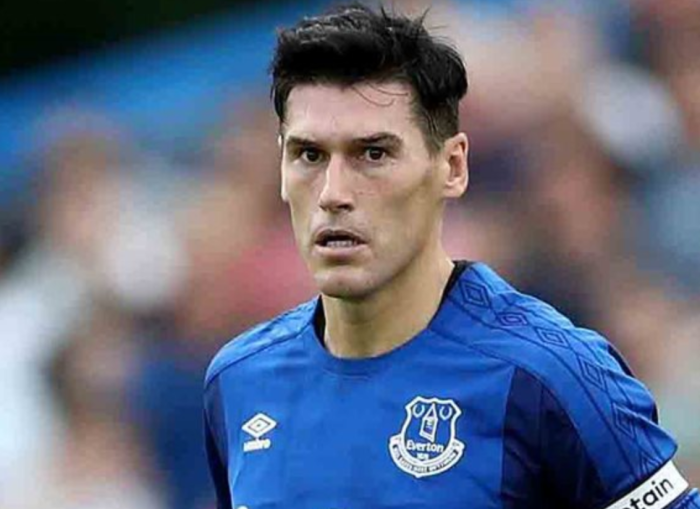
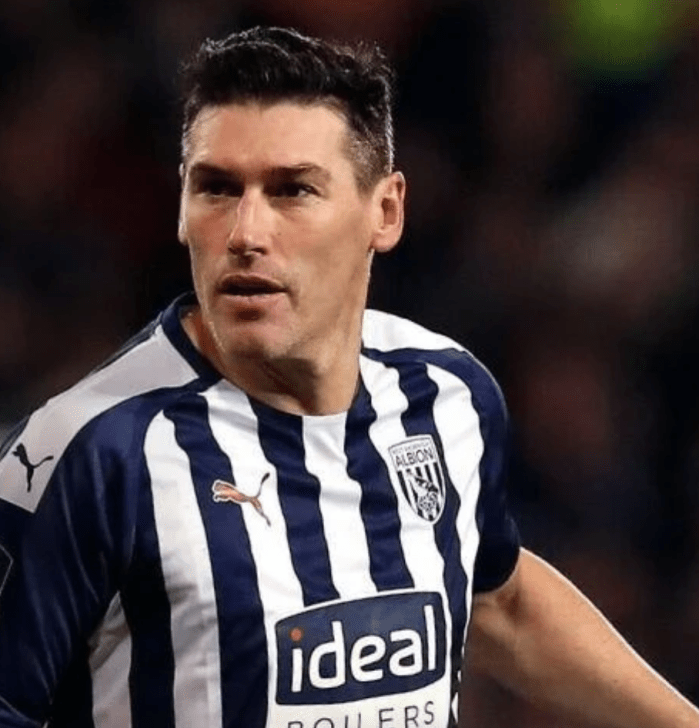
It was tough for Gardner to grow in Sami’s barren patch

A GARY GARDNER goal ended a winless Albion run of 12 league matches under Sami Hyypia in the autumn of 2014.

Just 54 seconds of the game against Wigan Athletic on 4 November had passed when the Aston Villa loanee netted for the Albion.

He got on the end of a Sam Baldock cross to give the Albion an early lead which they managed to hold onto for the entire match, in spite of several close shaves as the former Premier League opponents tried to salvage a point.

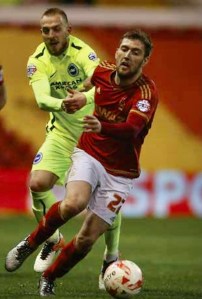
Gardner in action for Forest with Albion’s Jiri Skalak

The game also saw the return of Elliott Bennett, on loan from Norwich City, a first match (as sub for Bennett) for Greg Halford, on loan from Nottingham Forest, and a home debut in goal for teenage stopper Christian Walton.

It wasn’t the first time Gardner had scored at the Amex, though. That had come three years earlier, on his professional debut, when on loan at Coventry City a game which saw Albion beat the Sky Blues 2-1.

Gardner was no stranger to loans away from parent club Villa: he’d already been to Coventry and Sheffield Wednesday, and after Brighton he had temporary moves to Nottingham Forest, Barnsley and Birmingham City.

Indeed by the time Albion took on Forest at the Amex on 7 February 2015, Gardner was on the opposing side as the visitors gave new boss Dougie Freeman a winning start, edging it 3-2.

Gardner’s early development had encountered major setbacks caused by two cruciate knee ligament injuries.

Although he had made his Premier League debut for Villa in the 2011-12 season, the 15 starts and five sub appearances he made for Brighton was the first real regular run of football he’d enjoyed – and he was still only 22 at the time.

He scored again for Albion only four days after that Wigan winner, when the Seagulls were held 1-1 by Blackburn Rovers at the Amex. But with the brief Hyypia reign having come to an end, his appearance in the home Boxing Day 2-2 draw against Reading was his last in a Brighton shirt.

Inigo Calderon salvaged a point with a last-minute equaliser against a Royals side who had gone 2-0 up in 26 minutes courtesy of goals from on loan striker Glenn Murray!

Gardner had been Albion’s tenth new signing of the summer back in August, following in the footsteps of Villa teammate Joe Bennett, who’d joined on a season-long loan a week earlier.

“Gary is a quality midfielder who we have been aware of for some time,” said Hyypia, who explained the club was keen to have more options in that area of the side, especially with Dale Stephens out with a long-term injury.

“More importantly, given the considerable demands of the Championship, I want to be able to rotate the squad,” he said.

“Gary has had a tough couple of seasons due to injury, but he showed during a spell with Sheffield Wednesday last season that he is over those problems. We hope this loan spell will benefit everyone: Gary, us and Aston Villa.

“He is the type of midfielder who is active and mobile, but very importantly he has real quality on the ball – and is also capable of producing things from set pieces.”

Another midfield slot opened up during his time with the Albion when fellow midfielder Andrew Crofts suffered a cruciate injury against Watford.

“I am absolutely gutted for him. Having gone through exactly the same injury as him, with the two cruciate operations, I know exactly how he is feeling,” he said. “I know he will come through this.

“He is a strong guy, a model pro and he’ll be extra determined to get back playing for the club.”

Born in Solihull on 29 June 1992, Gardner was one of six brothers, and in a programme article he said the football-daft family had divided loyalties between Villa and Birmingham.

Just as well, because both Gary and eldest brother Craig ended up with the Blues having started off at Villa. Craig made 80 league and cup appearances for Villa, but later played for Sunderland, West Brom and Birmingham, where he became technical director after his playing days ended.

Gary was on Villa’s books from the age of seven and progressed all through the ranks until Alex McLeish gave him his first team debut as a substitute in a 3-1 win away to Chelsea. He made a total of five starts and 11 appearances off the bench in that 2011-12 season.

But it wasn’t until Villa were back in the Championship in the 2016-17 season that he had his longest run of games for his parent club, making 19 starts and eight appearances off the bench.

That squad, led by former Albion centre-back Tommy Elphick, thwarted already-promoted Albion’s hopes of winning the title in the final games of the season at Villa Park when a late, speculative long-range Jack Grealish shot squirmed through David Stockdale’s grasp to gain Villa a draw.

Gardner was a non-playing sub that day and when he fell down the pecking order in 2017-18, he spent the season at Barnsley.

Gardner followed his brother to Birmingham City

After spending the entire 2018-19 season on loan at Birmingham, he then made the switch permanently (in a swap with Spaniard Jota) and has been there since.

In July 2021 he signed a new deal to extend his stay at St Andrews until June 2024.

Gardner earned international recognition at various levels and made his England under 21 debut as a substitute in a 4-1 win over Israel at Barnsley on 5 September 2011 and the following month replaced Ross Barkley as England won 2-1 in Norway.

A month later he scored twice in a 5-0 win over Iceland after going on as a sub for Jason Lowe at Colchester. Four days on, his involvement was once again off the bench when young England were beaten 2-1 by Belgium in Mons.

His last appearance was against the same opponents the following February when England exacted revenge at the Riverside Stadium, Middlesbrough. In a 4-0 win, Henri Lansbury scored twice before Gardner replaced him.

His contemporaries in the side at that time included the likes of Jack Butland, Jordan Henderson and Alex Oxlade-Chamberlain.

Fans warmed to ‘indestructible’ Goldson after own goal start

CONNOR GOLDSON’S dad Winston must have had mixed emotions when his son scored the only goal of the game at the Amex on New Year’s Day 2016.

The avid Wolverhampton Wanderers fan in him would have been delighted to see his side leave the south coast with three valuable Championship points.

Unfortunately, Wolverhampton-born Connor was playing for Brighton that day – just his second game in the blue and white stripes.

What made it worse was that the defender had been on Wanderers’ books for five years as a young boy but was released when he was only 13.

Goldson must have been mortified when, in the 32nd-minute of that first game of 2016, he inadvertently diverted Jordan Graham’s cross past David Stockdale in the home goal.

Sure, injury-hit Albion had chances to restore parity or even win, but 11th-placed Wolves hung on to the lead and Chris Hughton’s luckless Seagulls saw a winless run extend to six games.

Albion also lost the next two matches but got back on track with a 1-0 win at Blackburn on 16 January and then pushed hard for an automatic promotion slot.

For Goldson, that fixture marked the start of a run of games alongside Lewis Dunk, and his first goal for the club came in a 2-1 away win at Birmingham City on 5 April, when he glanced in a Jiri Skalak set-piece delivery.

Goldson celebrates his goal at Birmingham with Beram Kayal and Lewis Dunk

He found the net again a fortnight later with a towering header from a corner as the Seagulls crushed QPR 4-0 at the Amex to edge closer to the top two (Burnley and Middlesbrough) with three games to go.

The centre-back partnership was only broken up when Dunk was shown a red card in the penultimate game, a 1-1 draw at Derby, and suspended for the final game of the ordinary league season.

Goldson was alongside returning skipper Gordon Greer for the crucial away game at Middlesbrough on 7 May when the 1-1 draw meant Boro, equal on 89 points, pipped the Albion to automatic promotion by virtue of having scored two more goals.

With Albion forced to endure the play-offs, Goldson’s involvement in the Seagulls’ bid to overcome Sheffield Wednesday cruelly came to a premature end when the centre-back was forced off injured before half-time in the first leg at Hillsborough, and Albion eventually succumbed 2-0.

The injury prevented Goldson being involved in the second leg when Dunk scored but Wednesday somehow managed a 1-1 draw to thwart Albion’s progress.

If that was a blow, it was the least of the troubles the defender would have to overcome the following season.

Frustrating though it was that Brighton brought in Shane Duffy to partner Dunk in the centre of defence, Goldson’s brief spell back in the side in early 2017 came to a juddering halt when a routine scan discovered a heart defect that required surgery.

Then it wasn’t just his football career that was under threat, but his life was in danger if urgent action wasn’t taken to operate on the swollen aorta the tests uncovered.

It has since emerged that Winston suffered a heart attack aged only 35 and Goldson’s grandfather had died of a heart problem.

The required “preventative surgery” took place at the Royal Brompton Hospital, Chelsea, leaving him with a scar down the middle of his chest. His best friend in football and former Shrewsbury teammate, Jon Taylor, told The Athletic: “He thought the worst about not playing again. He was struggling. When I saw him in the hospital it was horrible.”

Taylor was among several former Shrews people Scottish football writer Jordan Campbell spoke to for an extended article about Goldson published by The Athletic in March 2021.

“I made a T-shirt for him before a game which said ‘Stay Strong Con’. That gave him a little bit of a boost but he’s got a great family around him,” said Taylor, who is now at Doncaster. “When he had the op, and he knew he could play again, his mentality was, ‘How quickly can I get back?’. Even as young lads at Wolves we knew his mindset was second to none.”

Campbell reported how once Goldson had come to terms with the situation, he was determined to get back playing regularly, and just 15 weeks after the operation he took part in a pre-season friendly match in Austria. In a changed second half team, he lined up alongside Uwe Hünemeier against Fortuna Dusseldorf.

Physio Chris Skitt, who’d nurtured Goldson through physical issues when he was developing at Shrewsbury, said: “If I talk to kids and they say, ‘What does it take to be a professional footballer?’, I use Connor as the example.”

With a surname that lent itself so readily to the Spandau Ballet classic Gold, the “indestructible” line in the lyrics was a natural for Albion’s singing fans to pick up on.

But at the end of August 2017, on transfer deadline day, it looked certain Goldson would continue his rehabilitation into league football with a season-long loan move to Ipswich Town.

He was manager Mick McCarthy’s main target, but Albion pulled the plug on the deal at the last minute because of the collapse of a separate deal for centre-back cover they’d hoped to complete.

Goldson played in League Cup matches against Barnet and AFC Bournemouth but it wasn’t until December that he finally got his chance to feature in Albion’s debut Premier League season – and he turned in a Man of the Match performance as the Seagulls beat Watford 1-0 at the Amex.

He played in three games in January: FA Cup matches against Crystal Palace and Middlesbrough (2-1 and 1-0 wins), and the 4-0 home defeat to a rampant Chelsea.

Goldson and Duffy in action v Chelsea

As Albion progressed to the fifth round of the FA Cup, Goldson once again got a start, alongside Hünemeier, as Albion beat Coventry City 3-1 at the Amex.

His last league game in an Albion shirt was as a 71st-minute substitute for Duffy in a 4-0 reverse away to Liverpool on the final day of the season.

During the close season, Goldson seized on the chance to play for his boyhood hero Steven Gerrard, who had just been appointed manager of Glasgow Rangers. Gerrard drove all the way to Brighton for face-to-face talks with Goldson and explained how he saw him as a cornerstone of the rebuilding job at Rangers.

The often magnanimous Hughton was not going to stand in his way and said on the club website: “Connor has done extremely well for the club in the three years he has been here, but he wants to play regular senior football, and at this stage we cannot give him that guarantee.

“He has been a great professional and a pleasure to work with – and he has shown a great mental strength to come through a very tough time after he underwent crucial heart surgery just over a year ago.”

Determined to seize the opportunity presented to him in Glasgow, Goldson remarkably played in 151 of 159 games Rangers took part in over the next three years; when he made his 150th appearance, it was the quickest any player had reached that landmark in the club’s history.

After Gerrard departed Rangers to take on the manager’s job at Aston Villa, Goldson indicated he wanted to make a move himself, although, at the time of writing, he remains in Glasgow.

Born on 18 December 1992, Goldson grew up on the same Wolverhampton estate as future Wanderers players Leon Clarke and Carl Ikeme.

As the son of a Wolves-mad dad, it was probably not surprising that his early footballing promise was nurtured with Wanderers. The family lived only a 10-minute car ride from Molineux.

“I was with Wolves from the age of eight until I was 13,” Goldson recalled in an Albion matchday programme article, explaining that he was in the same group as Jack Price and Ethan Ebanks-Landell, who both made it through to the first team.

“I was a striker until I was about 10 or 11, simply because I was the biggest and the quickest, but I was then converted into a centre-half,” he said. “When I got to under 14 level, the manager stopped playing me and so my dad and I made the decision to leave for Shrewsbury – and it was the best thing that could have happened to me.”

Shrewsbury fast-tracked Goldson through the groups and he was training with the first team by the time he was 16. He signed professional forms at 17 and made his first team debut the following year.

“I owe Shrewsbury a lot, both the first-team management and the coaches who brought me through,” he said.

In The Athletic feature, Skitt described in detail how Goldson went through a difficult physical development phase which in effect involved “putting him back together”.

The physio was responsible for resetting his body and created a specific programme comprised of core work, gym sessions and remedial work to counter the loss of power growth spurts were causing.

“We even tried to get him boxing to improve his footwork because of his canal boat shoes. He is a size 14 and they are absolutely honking,” said Skitt.

After successfully rebuilding his body, Goldson played 18 games at the start of the 2013-14 season under Graham Turner but only 11 were as a starter, so he went on a two-month loan to Cheltenham.

His loan was extended but he was recalled after first team coach and reserve team manager Mike Jackson (the chap who has taken over as caretaker Burnley manager following Sean Dyche’s sacking) was put in charge at Shrewsbury until the end of the season following Turner’s resignation. Goldson played every minute of the last 21 league games.

Shrews were relegated but the following season, under Micky Mellon, with Jackson as coach, Goldson was a key player as they bounced straight back: he won the club’s Player of the Year and Players’ Player of the Year awards and was named in the PFA Team of the Year.

Such recognition led to Brighton signing him, doubtless with half an eye on his replacing Greer, who was edging towards the end of his playing days with the Seagulls.

It was a while before Goldson got his chance and Greer admitted in The Athletic feature that the new boy’s frustration spilled over into a set-to with the skipper in training.

“Training finished and we went into the dressing room to find that the lads had laid out two sets of boxing gloves for a laugh with the Rocky music playing,” said Greer. “As soon it was over, though, it was done, as I liked Connor.”

And to show the hatchet had been well and truly buried, Goldson revealed that after he’d taken the captain’s place in the side, behind the scenes Greer had offered him encouragement and advice. “He’s been very helpful and supportive at the same time,” he said. “There are plenty of people who wouldn’t be like that, so I can’t speak highly enough of him.”

Goldson had to wait until 15 December 2015 to make his Albion debut, when he went on as a substitute for the injured Hünemeier against Middlesbrough. Unfortunately, the visitors emphatically ended Albion’s 21-game unbeaten run, winning 3-0.

That game was watched from the stands by Jose Mourinho, who’d just been deposed as Chelsea boss, catching up on the progress of his former Real Madrid colleague and Boro manager Aitor Karanka.

For the new young centre-back, the rise to playing in the Championship was all a learning experience, and he said: “I’ve been working with Colin Calderwood a lot, even after training, and as a former centre-back himself, he has put on a lot of good drills.”

Little did he know at the time there would be far greater challenges ahead.

Casper Ankergren – the ‘Great Dane’ between the sticks

DANISH goalkeeper Casper Ankergren earned the League One player of the month award four times – twice with Leeds United and twice with Brighton.

When the Yorkshire club dumped him after he’d played 143 games for them, Gus Poyet, his former assistant manager at Elland Road, gave him the chance to revive his English football career. He spent seven years as a player at Brighton and between 2017 and 2021 assisted Ben Roberts with coaching Albion’s goalkeepers.

The Dane was only truly Albion no.1 for a season and a half, and fans were often divided about his capabilities. But his ability with the ball at his feet suited the way Poyet wanted the Albion to play, and as a coach chimes perfectly with the expectations placed on today’s Albion goalkeepers.

“He really is key to the way we pass it out from the back,” observed ‘Murraymint’ on North Stand Chat, noting his ball playing and vision for a pass as “excellent”.

Ankergren himself explained in a podcast on the club website in 2020: “I was always quite comfortable with the ball at my feet, probably because I played outfield as a kid.

“At Leeds I wasn’t supposed to play it to the centre backs but under Gus you had to play it short; he would go mental if you didn’t. That was his philosophy. I’ve always been a big fan of possession-based football.”

On the eve of the 2010-11 season, Poyet’s goalkeeping options were narrowed when first-choice Peter Brezovan was nursing a wrist injury and he wasn’t happy to start the campaign with either of the inexperienced understudies, Michael Poke or Mitch Walker.

Poyet told the club’s official website: “Goalkeeper is a key position in the team, and with Brezovan injured, we wanted to bring some experience to that position.

“Casper brings that experience and has played at this level and higher. I have worked with him at Leeds United, and know exactly what he is capable of, he also knows what it takes to get promoted from League One.”

Ankergren hadn’t even had time to get to know his new teammates when he made his Albion debut in a 2-1 win in the season-opener away to Swindon Town the day after signing.

Unfortunately, he didn’t cover himself in glory on his home debut when a mistimed punch helped Rochdale to get a last-gasp equaliser in a 2-2 draw at Withdean.

The ’keeper admitted he later hid himself away in his Jury’s Inn hotel feeling dreadful about the mistake. “I was devastated, but that’s football. As a keeper you can do well for 90 minutes but if you cock up in the 91st minute that’s all people remember you for,” he said in a matchday programme article. “It’s part of the game as a goalkeeper and you have to accept it.”

He certainly made up for it to the extent that he won the first of two nPower League One Player of the Month awards that season for his displays the following month, when he only conceded once in five matches as Albion secured 13 out of 15 points.

Ankergren won the award again in March 2011 when the Seagulls won eight matches out of eight – with six clean sheets for Ankergren – to consolidate their gallop towards the League One title.

In April 2011, Ankergren, speaking at the PFA awards in London, said: “He [Gus] was asking us to be perfect and although there’s no such thing in football, we were close, the way we did it, the way we played – he’s very, very pleased. He couldn’t ask for much more, I think.

“At the beginning of the season I had a chat with him and he said he thought a top six finish would be possible. But no, we finished first – an amazing season.”

The promotion with Brighton was more personally satisfying for Ankergren because he was involved from the beginning to the end of the season.

“I played a lot of games for Leeds last season when we went up but I didn’t play the last eight or nine games and that was a big blow for me,” he said. “I’ve played every game in the league this season and obviously it’s great, that’s what you want to do as a footballer; you want to play every game and win and achieve something.”

He was in goal for the memorable first Amex league fixture against Doncaster and kept the shirt for the first 15 games of the 2011-12 Championship season. But after a seven-game winless run, Steve Harper came in on loan from Newcastle United.

When Harper returned to the North East, he got back in the side for seven more matches, but after four successive defeats in December, Poyet rang the changes for the New Year’s Day match at home to Southampton. Brezovan started in Albion’s surprise 3-0 win and stayed in goal through to the end of the season.

Fan Bradley Stratton later observed: “Brighton’s return to the Championship at the Amex highlighted the need for another change in goal. Ankergren and Brezovan, whilst competent in League One, were regularly found out at the higher level.

“They inspired little confidence in fans, and there was no doubt Poyet would use the summer window in 2012 to bring in a new man who could galvanise the Albion back line and restore confidence to a defence that had conceded six goals at both West Ham and Liverpool that year.”

After Tomasz Kuszczak arrived to become the senior goalkeeper, Ankergren’s first team action in 2012-13 was limited to four starts plus one as a sub.

Two of those were in the FA Cup against Premier League opposition. The third round FA Cup win over Newcastle United was his first appearance in the first team for 13 months and he said: “Although I have not been playing for the first team, I’ve always trained as hard as ever because you never know what’s round the corner and you want to push the other keepers hard, so I was ready. It’s still hard to be thrown straight back into action because you need to play regularly to get into the rhythm of things, but I was pretty happy with my performance against Newcastle.”

And there was nothing he could do to prevent Theo Walcott’s late deflected winner as Arsenal won the fourth round tie 3-2 at the Amex, when Leo Ulloa scored on his debut.

As if to emphasise his point about memorable howlers, one of his two league games that season was at Nottingham Forest, when he fumbled a last-minute equaliser at the City Ground, allowing Henri Lansbury’s long-range effort to earn the home side a point in a 2-2 draw.

Poyet was quick to sympathise with the goalkeeper and said: “To begin with I thought the shot must have taken a deflection but when I’ve seen it again I nearly killed myself!

“When you are a keeper you pay the price and Casper has done that today. He was having a very, very good game, making two or three good saves, coming for crosses and kicking very well. And in training he will save 1,000 shots like that, but we wanted him to save it today.

“Goalkeeper is a terrible position to play but we lose together and we win together – at least we got a point.”

In Oscar Garcia’s only season in charge, Ankergren played only two first team matches but he was kept on under Sami Hyypia and, with the arrival of David Stockdale and the emergence of youngster Christian Walton limiting his likely involvement even further, he made just the one appearance in the 2014-15 season, in Albion’s 4-2 League Cup win away to Swindon Town.

He confessed on the podcast that he struggled to get his head round the situation and contemplated quitting the game but was talked out of it by goalkeeping coach Andy Beasley.

With the arrival of Niki Maenpaa as back-up to Stockdale, Ankergren could have been forgiven for thinking his chances of ever playing first team football again had gone, but in a bizarre set of circumstances during a FA Cup tie at Lincoln City on 28 January 2017, Ankergren had to come off the bench in the 56th minute when Maenpaa went off injured.

The Finn had injured his shoulder in the melee that resulted after Glenn Murray had committed a foul in the penalty area and the first thing Ankergren had to do was to face the resultant penalty, which was scored.

Five minutes later he was picking the ball out of the back of the net again after inexperienced Chelsea loanee Fikayo Tomori had skewed a shot past the beleaguered ‘keeper. To rub salt in the wound, Albion lost 3-1, enabling City to reach the last 16 of the competition for the first time in their 115-year history. The consolation for Albion, of course, was that they were able to concentrate on the league, and they went on finally to win promotion to the elite level they’d left in 1983.

That promotion signalled the end of Ankergren’s playing days but the start of a career as a goalkeeping coach which he admitted in the podcast he’s enjoying immensely.

Born in the Danish coastal seaport of Køge on 9 November 1979, Ankergren played football with his mates from an early age on a pitch close to his home. He also played handball in the winter – it’s a big sport in Denmark – and it got to the point where he had to decide which one to pursue seriously because his parents said he couldn’t do both. He chose football because he enjoyed it a bit more, although he reckoned the hand-eye coordination involved in handball was an asset as he pursued his career as a goalkeeper.

When he started out playing organised football with Solrød FC, he switched from centre half to midfielder to striker and only went in goal when their keeper got injured.

He was only 12 when he was signed by his hometown’s local professional club, HB Køge. Before he became a full professional, he worked for a pizzeria delivering pizzas and at an after-school club. After leaving school, he continued his education at college for a further two years because he wanted to be a policeman if football didn’t work out.

But having broken into the Køge first team, he caught the attention of Brondby, who were probably the biggest club in Denmark at the time.

He joined them in May 2000 and started full-time the following January. “It was a big, big step for me,” he told the podcast. “I didn’t really enjoy it at first. It was a bigger step than I expected it to be.”

Their first-choice keeper, Morgens Krogh, had won Euro ‘92 with the national team so it was tough to compete with him. But the youngster made his debut when Krogh was injured and eventually took the no.1 spot. As well as winning one championship, he topped it by winning the league and cup double in 2005-06.

Ankergren also gained experience playing in the Europa League against teams like Locomotiv Moscow, Espanol and Palermo.

Shortly after he signed a new three-year contract with Brondby, unbeknown to him they signed Stephan Andersen from Charlton Athletic, and Ankergren wasn’t assured he’d still be first choice. “I’d had enough and wanted to try something different so while I was away with the national team (the B side) in Asia, I got a call from my agent saying Leeds were interested.”
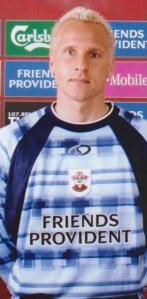
Ankergren just missed out on a full international cap, although he was on the bench for games against Luxembourg and the Czech Repubic. He did win a handful of under 21 caps, and he said: “I’ve represented my country at various junior levels and remember making my under 16 debut against England. On the other side that days was Wes Brown and Michael Owen – you could tell both would have successful careers. Owen looked something special and he scored against me in a 4-1 defeat. I didn’t have my best game.”
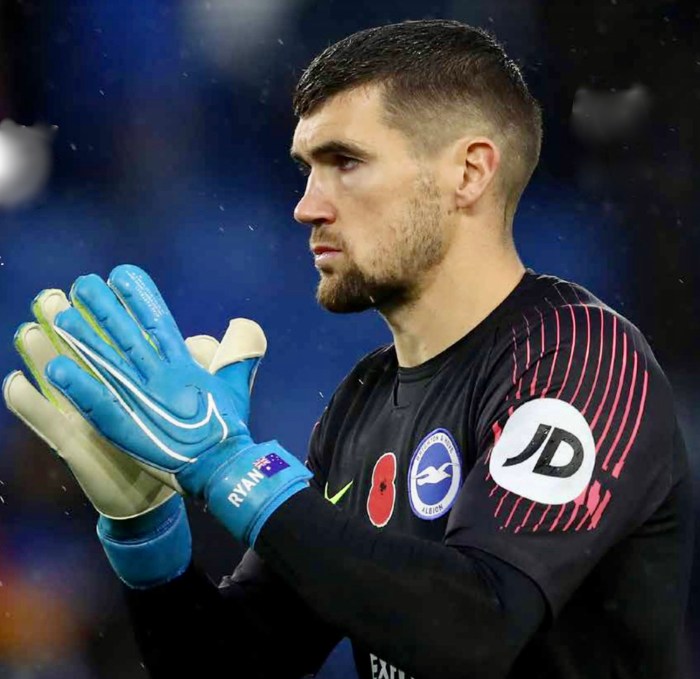
Ankergren joined Leeds on loan initially, making his debut aged 27 in a 2-1 home win over Crystal Palace on 19 February 2007. Although it panned out to be one of the most turbulent times in the club’s history, Ankergren found life at Leeds more relaxed under Dennis Wise and Poyet than he had in Denmark.

His 14 games at the bottom of the Championship couldn’t halt the slide towards relegation which was confirmed emphatically with a points deduction when the club went into administration.

“I saved a couple of penalties early on, which won over the fans, including an important one against fellow strugglers Luton,” he said. He denied Dean Morgan from 12 yards with only four minutes left of a tense afternoon, and he told a supporter’s blog: “There were a few minutes, plus stoppage time to go against Luton so I had to stay focused as they were down there with us, so the win was vital.

“I had also saved a penalty away at Cardiff City but unfortunately we still lost the game.”

After signing on permanently, Ankergren was first choice as Leeds acclimatised to third tier football in 2007-08. He made 54 appearances in all competitions and, having conceded only one goal in five league games in September 2007, won his first League One Player of the Month award.

It wasn’t always plain sailing at Elland Road, though, and he was sad to see Poyet depart to become assistant manager to Juande Ramos at Spurs in November 2007, followed early in the new year by Wise, who became director of football at Newcastle.

“Gus was really, really respected up in Leeds. It was a big loss when he went to Tottenham – we really missed him, but I kept in touch after he left,” said Ankergren.

“I liked his style. If you do well, he’ll let you know – but if you don’t do well, he’ll also let you know. There’s none of this going behind your back; he’ll say it to your face, which is what I like.”

He also felt a sense of loss with Wise’s departure. “It was a massive disappointment for me personally,” he said. “Wisey is a good man, he had given me the chance to play in England and I will always be grateful to him.”

In March 2008, the goalkeeper faced an “improper conduct” charge brought by the FA for allegedly throwing a missile into the crowd at the County Ground, Swindon. He was fined £750 but not banned.

Gary McAllister was installed as manager and steered the club to the end of season play-offs against Doncaster Rovers and, despite some important saves by Ankergren, they lost. “I don’t know why but we never turned up at Wembley,” said Ankergren. “It was a strange feeling which let me flat, and it took a long time to get over that. We came so near, yet so far.”

Ankergren admitted to sheridan-dictates.com that he did not particularly enjoy the 2008-09 season. “It appeared that McAllister didn’t know his best team. I was in the side one week then the next he would pick Dave Lucas. Goalkeepers need games to stay sharp and focused and the thought of being dropped played on me and I did not perform to the standards I expected from myself.

“McAllister had been an outstanding midfielder but he was a League One manager with a League One squad. I think he expected too much from a group who didn’t have the ability that he had been blessed with as a player.

“The atmosphere was not great around the club and I thought that McAllister made some very strange decisions.

“Although I did not have any real issues with the manager, I have to be honest and say that I was not too disappointed when he was sacked and Simon Grayson was brought in.”

Grayson’s reign started on Boxing Day 2008 and he put Ankergren back into his team to play Leicester City. Leeds had fallen into mid-table but turned things around to earn a place in the play offs against Millwall who won the two-legged semi-final.

“Looking back, could we handle the favourites tag?” Ankergren asked. “It was another horrible feeling, but we were all determined to come back for pre-season training and go one better.”

However, although Lucas had left the club, Ankergren faced new competition in Shane Higgs and Grayson went with him at the start of the 2009-10 season.

But when Higgs was injured at MK Dons on 26 September 2009, Ankergren appeared as a substitute and eventually won his place back, even though United brought in Frank Fielding and David Martin as loan goalkeepers, and he had the feeling Grayson didn’t really rate him.

Ankergren re-established himself with a string of impressive performances and clean sheets and was the last line of defence in a memorable 1-0 FA Cup third round win for Leeds at Old Trafford in January 2010, including pulling off a terrific save to deny Danny Welbeck.

He was also in goal against Spurs in the next round when it took a replay at Elland Road before the north London club finally won through.

However, the beginning of the end of his time at Elland Road came when he made a mistake in a 2-0 home defeat against Millwall on 22 March 2010, and he didn’t return to the side for the remaining nine games as they went on to win promotion to the Championship as runners up behind Norwich City.

“I remember sitting with Paul Dickov in the dressing room having a beer and reflecting on what we had achieved,” Ankergren told sheridan-dictates.com. “We went over to the Centenary Pavilion for the end of season dinner and on to a nightclub, It was a great night but deep down I knew that I had played my last game for the club as my contract was up.”

Ironically, his replacement at Leeds was fellow Dane, Kasper Schmeichel, son of Ankergren’s goalkeeping idol, Peter, who also played for Brondby before going on to achieve fame at Manchester United.

Ankergren’s 11-year association with the Seagulls came to an end in September 2021 when he returned to his home country as head goalkeeping coach at Brondby.

Pictures from various online sources, matchday programmes and the Argus