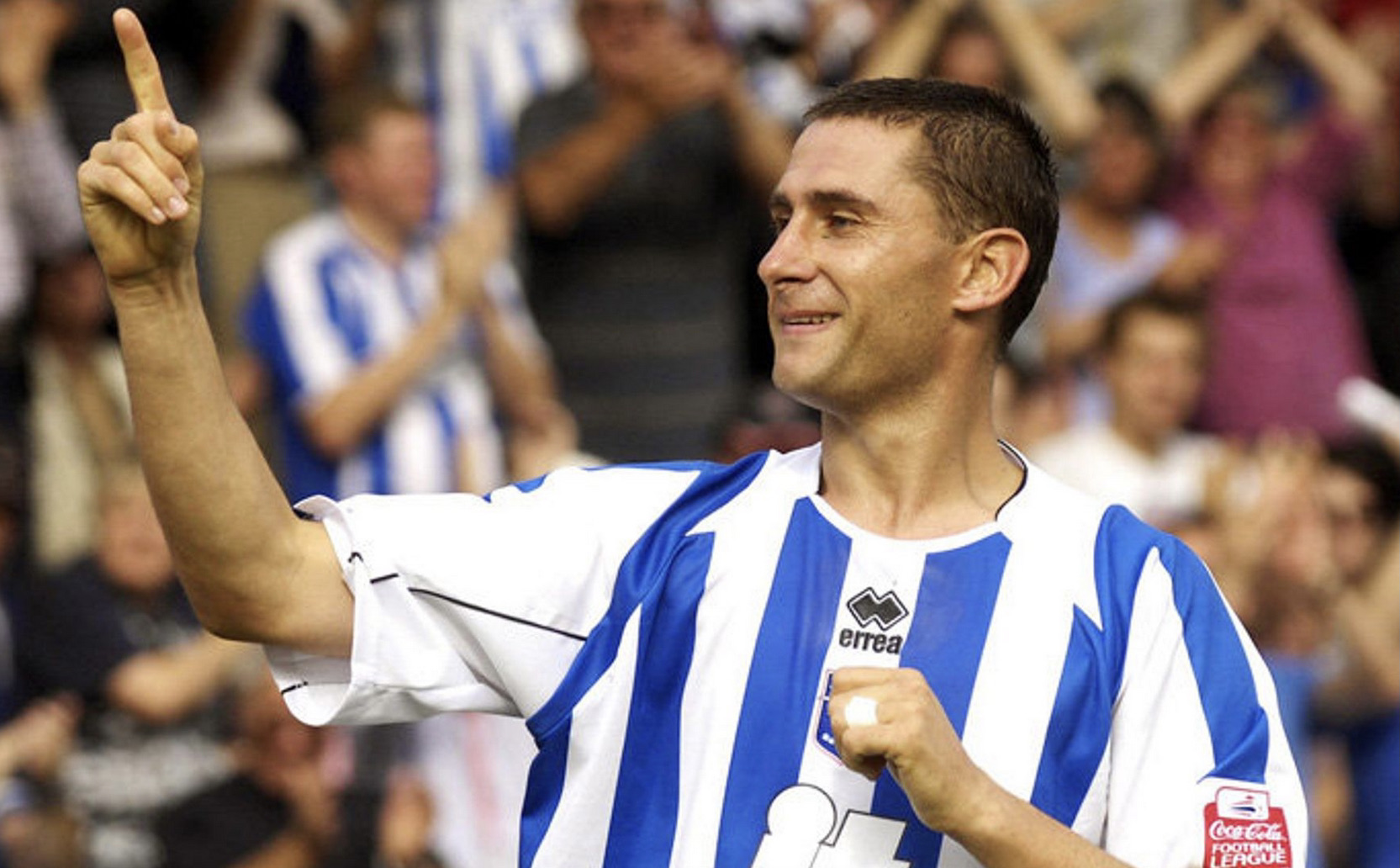
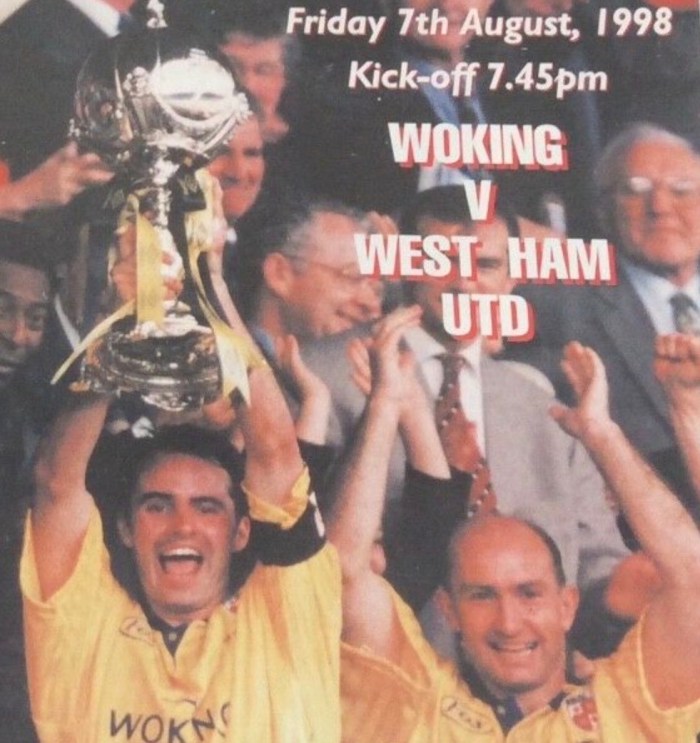
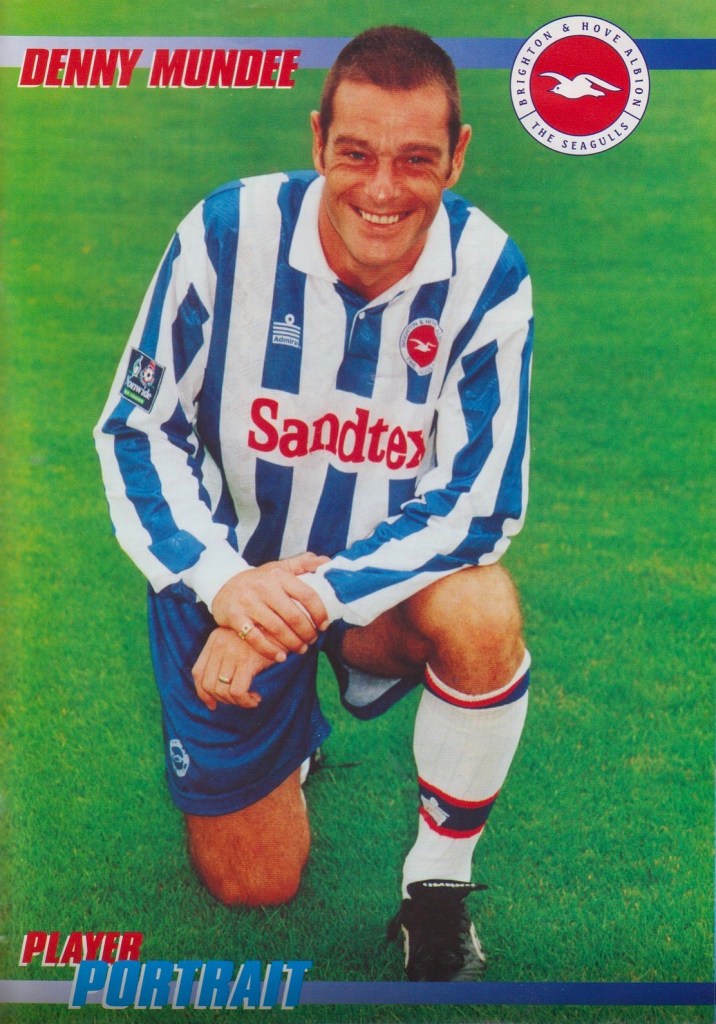
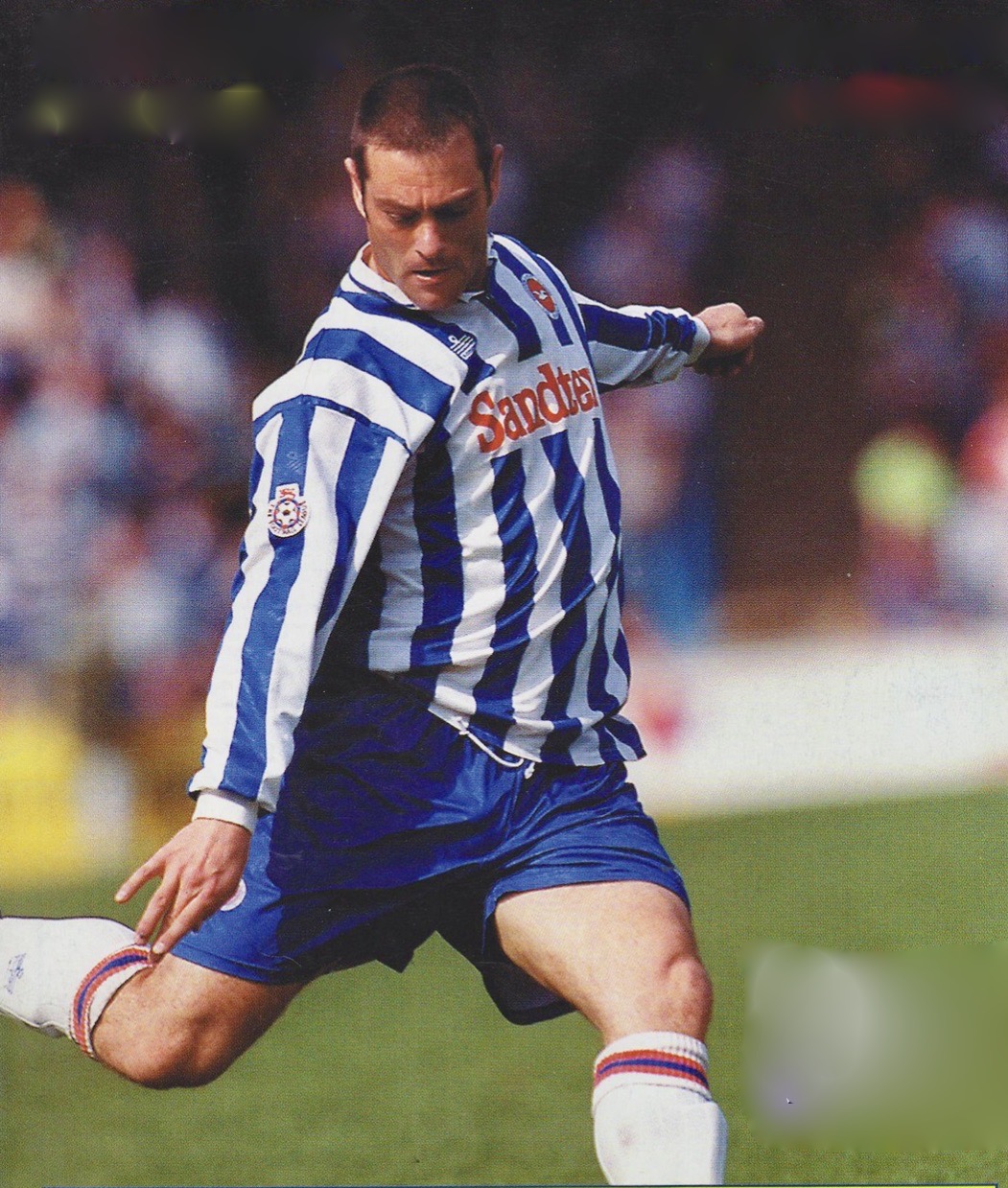
Bees and Seagulls milestones on Michael Bennett’s wellbeing journey

IT ALMOST certainly wouldn’t have occurred to the loyal few Albion fans who followed the basement division Seagulls in exile in 1998-99 that one of the men in stripes would go on to make a difference to the lives of hundreds of footballers.

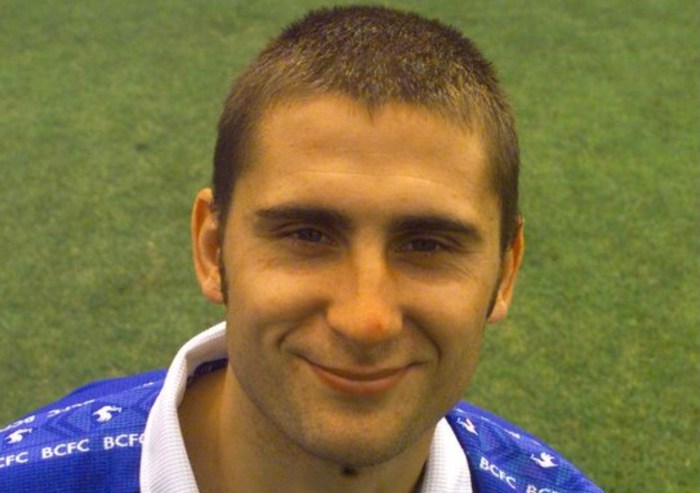
Brighton was the eighth and last league club Michael Bennett played for over the course of 12 years in which he discovered all the highs and lows that footballers can experience.

Since packing up playing, those personal insights helped him to begin a journey that led him to help huge numbers to cope with the game’s often-unseen stresses and strains.

Bennett became a psychotherapist, gained a degree and led the setting up of a counselling and mental health and wellbeing support network for the Professional Footballers’ Association, where he worked for 15 years, latterly as director of player wellbeing. In that role, he was frequently a media spokesman for the PFA.
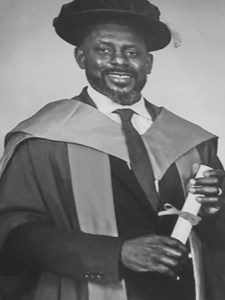
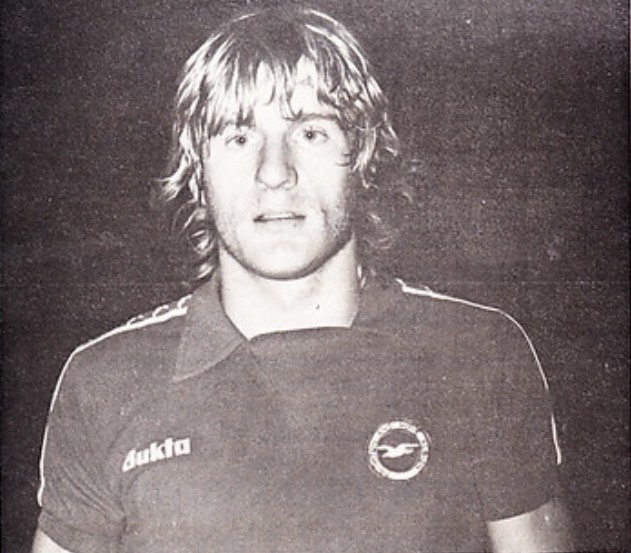
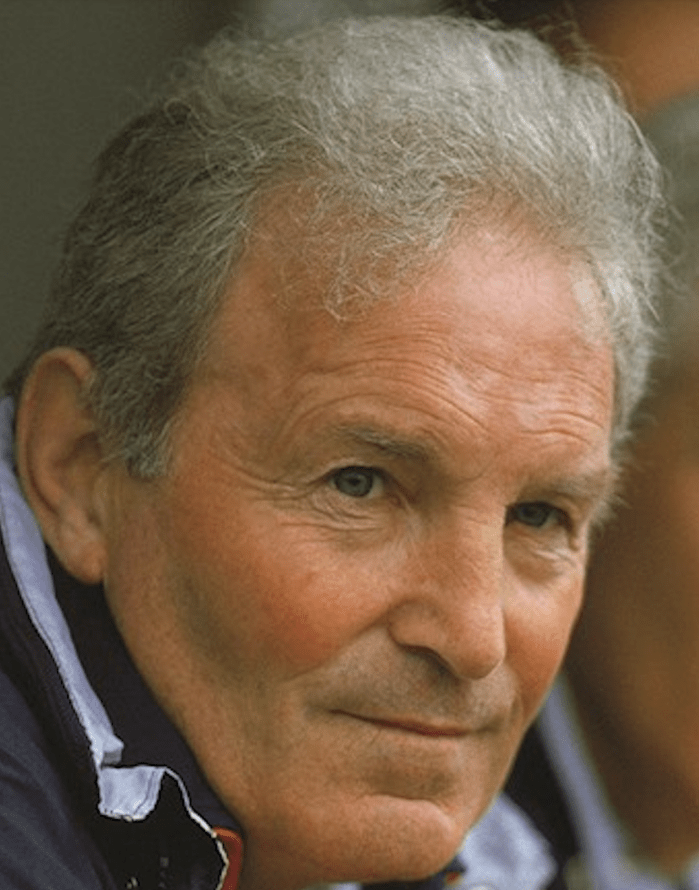
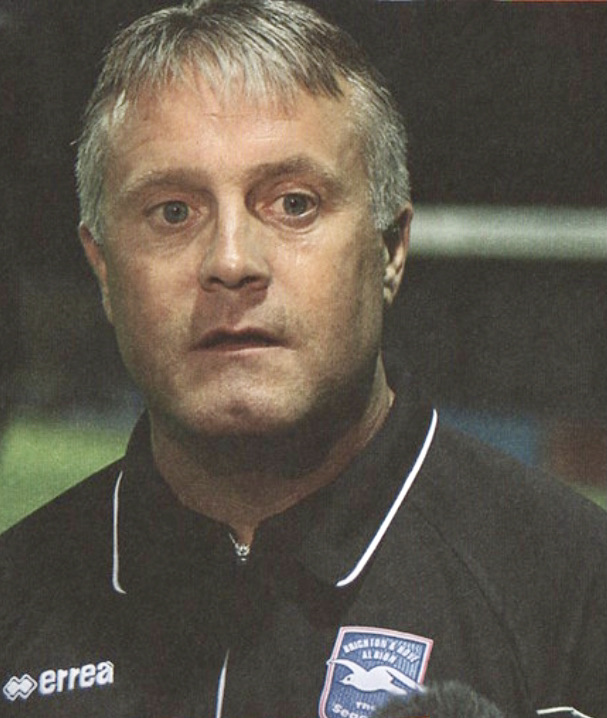
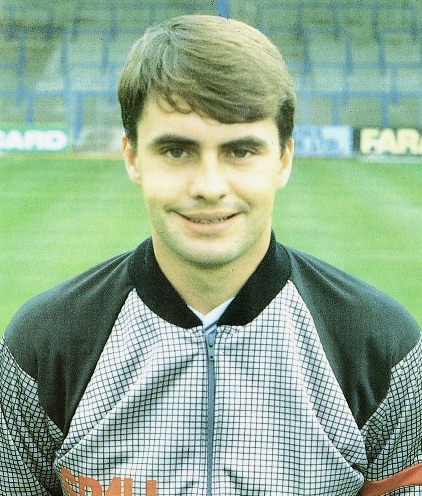
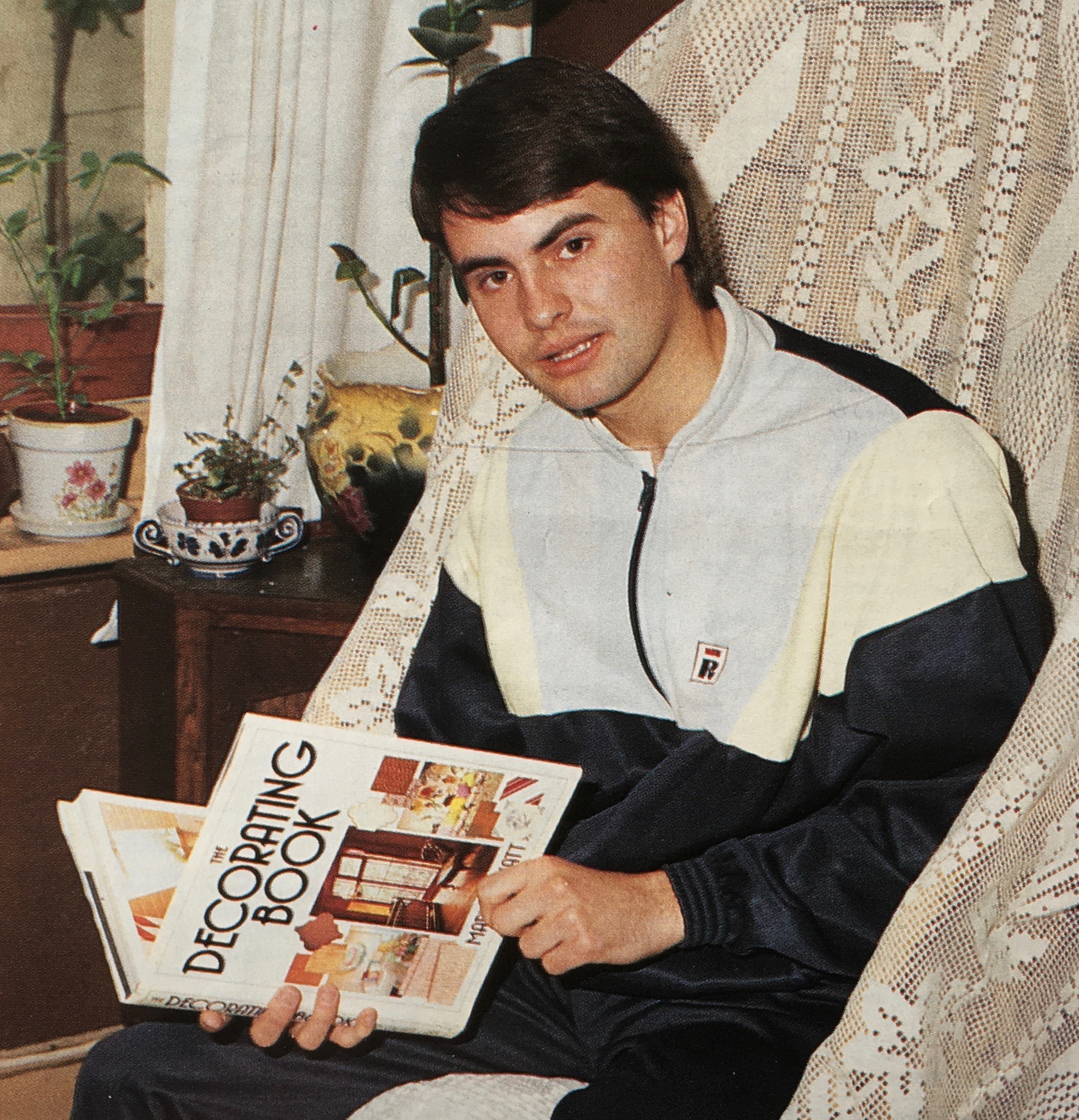
Dr Michael Bennett

Now running his own counselling business it’s all a far cry from the days when his league playing career ended filling a variety of positions in Brian Horton’s fourth-tier Brighton team, playing home games in exile at Gillingham. In one game, he was racially abused by a Swansea City fan who ran onto the pitch to confront him (more of which, later).

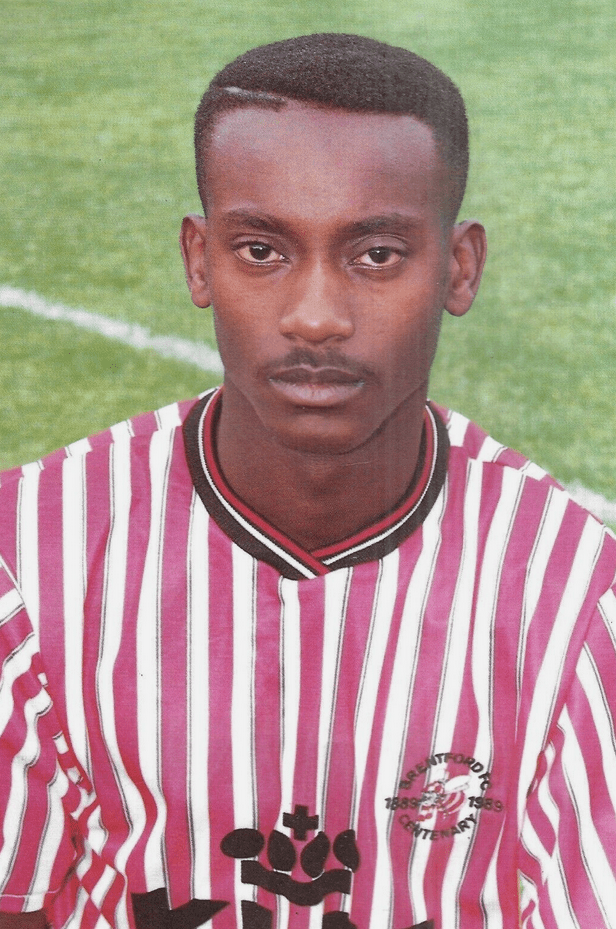
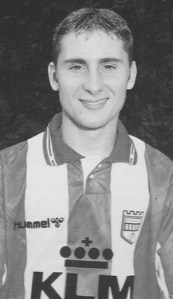
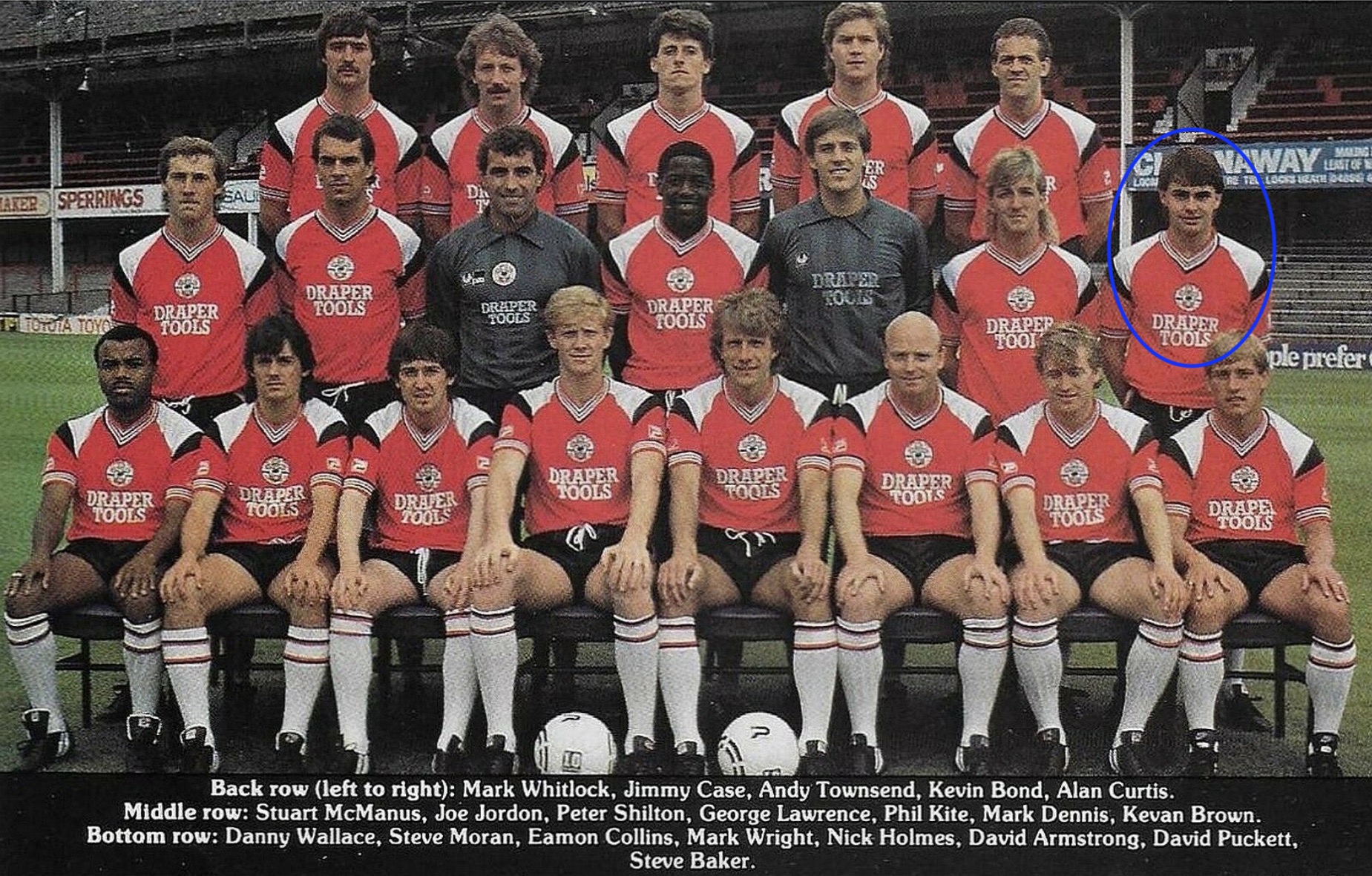
It was quite a fall from career highlights that saw him play for England at under-20 level alongside the likes of Matt Le Tissier, David Batty, Neil Ruddock and Tim Sherwood, make his debut at 17 in the top division for Charlton Athletic alongside John Humphrey, Colin Pates and Steve Gritt, and feature for Brentford (with Chris Hughton and Neil Smillie) when the Bees played second-tier football for the first time in 38 years.

While Addicks fans remember Bennett fondly, Bees supporters are a lot less generous and mainly recall a training ground incident in which the player broke a teammate’s jaw with a single punch.

The internet can be – and is – many things and unfortunately for people like Dr Bennett, such past incidents are still recorded for all to read about.

Thankfully, all the excellent work he has achieved in the health and wellbeing field is also documented and, in October 2021, Andy Naylor of The Athletic did an in-depth piece which examined his journey in detail.

“The story of his rise to prominence as a leader in his field is inspirational, a demonstration that with application, determination and drive you can build a career in the game that extends well beyond playing football,” wrote Naylor.

Bennett eschewed a coaching career (even though he passed his UEFA B licence) and at college, while studying Maths and English, was urged to take up counselling. As Naylor reported: “By 2004, Bennett had his degree in it and the following year he set up his own company, Unique Sports Counselling.”

Three years later, he joined the PFA as southern region education adviser aiming to get players to prepare for life after football. He also invited attendees to his workshops to speak to him privately about emotional issues – and he discovered there were plenty who took up the offer.

Eventually he persuaded then PFA chairman Gordon Taylor of the need for a designated wellbeing department dealing with the welfare of players.

In 2015, Sam Wallace of The Independent interviewed Bennett for an article about troubles ex-Arsenal and England full-back Kenny Sansom was facing. He discovered the year before the PFA had requests for support from 197 of its members.

“That is some caseload for Bennett, a man who talks in the careful, measured tones of someone used to dealing with problems that must seem intractable,” wrote Wallace. “Last year, the PFA established a 24-hour telephone helpline for members. Safe to say, it is not underused.”

The problem, Bennett told Wallace, is that the elite-level game prepares footballers physically but not emotionally. “What we realise is players often don’t get asked how they are. They get asked about football. When they get asked about their emotions, they tend to open up.”

After a 2017 presentation by Bennett to first and second-year scholars at Norwich City, Canaries’ assistant head of education and welfare Mike Macias told Press Association Sport: “When they see it and hear it coming from someone like Mickey, who has been there, done it and bought the T-shirt, they will think: ‘This impacts me and there is someone there to help me’.”

When Bennett left the PFA earlier in 2025, he said: “I am proud of the work we have done within the department which has grown into a vital and impactful part of the PFA’s mission, ensuring that wellbeing remains at the heart of everything we do.”

Among dozens of messages of thanks for his contribution left on his LinkedIn account was one from former Albion and West Ham midfielder George Parris, who wrote: “A great stint Dr Bennett, thanks for all your help, support and encouragement not just to myself, but loads of other people along the way during your time at the PFA.”

Born to Jamaican parents in Camberwell on 27 July 1969, Bennett was raised in a block of flats near Millwall’s old ground, The Den, and it was only when he was spotted by Charlton playing Sunday League football that thoughts of a professional career in the game arose.
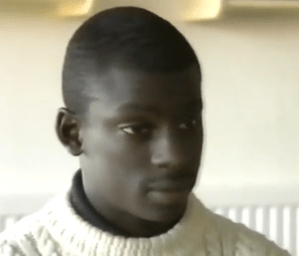
Young Mickey at Charlton

He went straight into the Addicks academy at 16 and made his debut in Charlton’s first team a year later. In his interview for The Athletic, he said: “You move from a youth team changing room to a first-team changing room. People don’t talk about that transition but that, for me, was pressure. I’ve gone from having jokes and banter with the boys in the youth team to the first team.

“The pressure intensifies. You put it on yourself more than anything else, because you don’t want to let anyone down.”

He continued: “The first well-being issues came when I signed for Charlton. I went from parks football, having fun, to going into a pressurised environment where results are key and you know if you have one or two bad games there’s somebody behind you waiting to take your spot.

“So, the pressure for me was constant. I wasn’t able to deal with that, I didn’t know who to talk to about it. I’d already formed my personality going into the game. I’m a very talkative person and I like to talk about stuff. There wasn’t anyone to do that with.”

Addicks action

On top of the various issues he was facing as a young player, he then ruptured his anterior cruciate ligament and crushed the cartilage in his knee against QPR in December 1988 which sidelined him for nine months. By his own admission, when he eventually returned to action he was not the same player, concerned over whether the injury would happen again.

On the fans forum Charlton Life: ‘Amos on the wing’ wrote: “One of the good guys Mickey Bennett. Good player, but was never quite the same player after his bad injury against OPR in 1988.”

Another poster, Leroy Ambrose, said: “One of my favourite players from the ‘Sellout’ era (ed: Charlton played ‘home’ games at Selhurst Park at the time). Good bloke – my mate was a mascot back when he was playing and he and his parents were thrilled at how nice he was, and how much time he took with them during the pre-match kickabout and after the game.”

And Ormiston_Addick added: “Started brilliantly for us, great pace and drive but never the same player after doing his knee. Great little period in 88-89 with our ‘Black Magic’ front line of Bennett – Leaburn – Williams – Mortimer.”

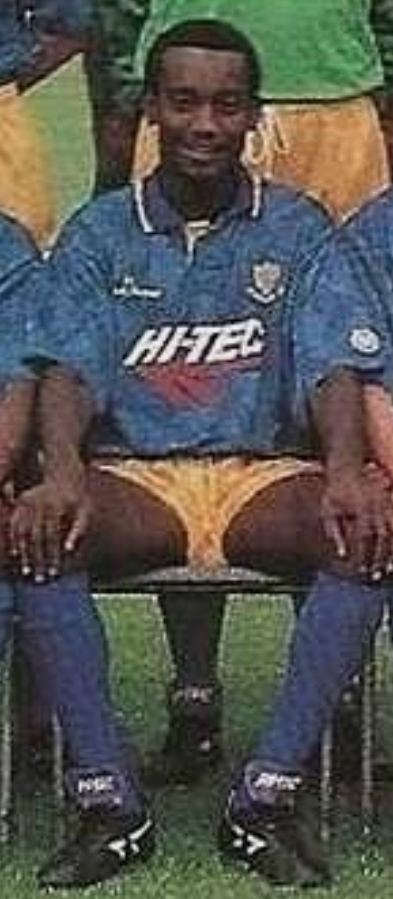
‘Home’ continued to be Selhurst Park between 1990 and 1992 after Bennett switched to then top division Wimbledon, who rented Palace’s stadium because their own Plough Lane wasn’t up to scratch for the top division. But Bennett was never a regular for the Dons and he and Detzi Kruszynski were used as makeweights in the transfer of Dean Holdsworth from Brentford to Wimbledon.

He joined just as Brentford began playing second tier football for the first time since 1954 but the elevation didn’t last long. They were relegated in bottom place come May 1993 although Bennett was a fixture in the side, playing a total of 43 league and cup matches plus six as a sub, and scoring four goals.

The Brentford fans forum bfctalk declared: “Despite losing Chris Hughton in December to a career ending injury, no real replacement was signed until March by which time the rot had well and truly set in. Mickey Bennett flattered to deceive and was a one game in four merchant, Detzi Kruszynski had an aversion to training and hard work.”

In another post, the forum said Bennett had “started out like a house on fire as a direct and goal hungry right winger and we thought we had discovered a new star, but he too flattered to deceive”.

It was what happened in November 1993 that many Bees fans of a certain vintage remember. Bennett had his contract terminated by manager David Webb after breaking transfer-listed teammate Joe Allon’s jaw in three places with one punch in a training ground incident.

But the PFA backed Bennett’s version of the incident and took Brentford to a Football League commission of appeal which decided the player should be reinstated. However, Bennett knew his position in the Griffin Park dressing room was untenable, and he was released by mutual consent.

The incident was back in the spotlight five years later when the media was pondering what fate awaited John Hartson for his infamous West Ham training ground kick in the head of teammate Eyal Berkovich.
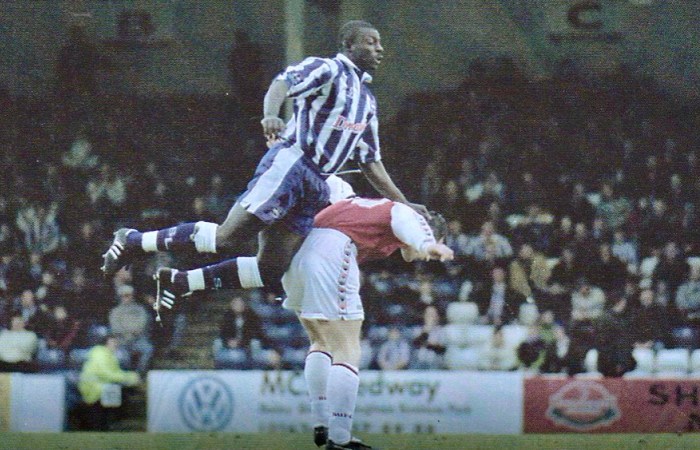
Rising high for the Albion

Bennett, by then playing for Brighton, told a reporter: “Obviously you can’t do that sort of thing to a teammate and I would prefer to leave that memory where it belongs – in the past.”
He added: “You have to get on with life, and I have no complaints. What happened between me and Joe Allon was little more than handbags at six paces – that’s why the PFA got involved and stood my corner.”

Bennett also said: “What happened to me at Brentford was way back. Right now, I’ve got other things on my mind, like trying to score my first goal of the season for Brighton.”

However, when an enterprising journalist caught up with Allon, he said: “Mickey broke my jaw in three places with a single punch in an unprovoked attack. There had been no history of ill-feeling between us and something inside him must have snapped.

“He just flipped, I collected a punch on the chops and got carted off to hospital, where they operated on me and wired up my jaw. I was in hospital for about 10 days and out of football for three months.

“The funny thing is that Mickey was supposed to be a born-again Christian, and I couldn’t work out how such a religious bloke could just clock one of his teammates.”

For all Bennett’s desire to steer clear of headlines for the wrong reason, it was while playing for Brighton away at Swansea City on 5 February 1999 that he was in the spotlight again when he was racially abused by a home supporter who ran onto the pitch.
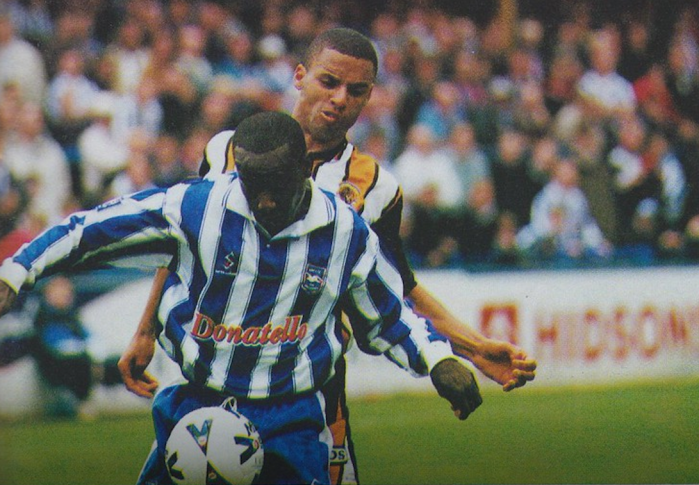
“I was shocked by it,” he told Naylor of The Athletic in 2021. “I knew it was bad because I couldn’t function in the game after that, my head had gone.

“The police came to me and asked what I wanted to do. For a split second I remember thinking, ‘I just want to get on the bus and go home’. The other side of me thought, ‘If I don’t do something, that person could do something to another player’.”

The case went to court and the 29-year-old assailant, who admitted racially abusing Bennett and invading the pitch, was sent to prison for a year and banned from watching in a football league ground for three years.

The player told The Argus: “All of a sudden, I turned around and saw this fan running towards me. He was coming closer and closer.

“I remember thinking to myself should I just take a punch or what do I do? Then a steward and one of their players jumped in front of him when he was about a foot away from me and hauled him off.

“For five minutes I was a bit shaky. He could have done anything to me.

“After that I just got on with the game and tried to cancel it out, but when the police came to me after the game to take a statement it brought it all back again.”

By the time of that match, Jeff Wood had succeeded Horton, the manager who’d taken on Bennett after he’d impressed enough on trial in pre-season games against Lewes and Crawley to be awarded a one-year contract.
Introduced in match programme

The matchday programme introduced him as “a versatile right sided player who can operate at anywhere down the right side or in the centre of midfield”.

He started off in central midfield alongside Jeff Minton and later was used as a central defender. That autumn, he clocked up his 150th League appearance in a 2-0 defeat to Cardiff City, where he’d spent the opening three months of the 1996-97 season. Having left Brentford, he’d gone back to Charlton briefly before barely featuring in the 1995-96 season at Millwall. On leaving south Wales, he spent a year at non-league Cambridge City, and at Christmas 1997 returned to the league at Orient under Tommy Taylor.

Before facing the Os in a first round FA Cup tie in 1998, Bennett told The Argus: “I knew Tommy Taylor from my time at Charlton and I figured in one game away to Exeter, then four or five more as a sub before I was eased out.

“I’ve got another chance to face them now because I missed the league game away with a groin injury. It’s a nice tie, but I’ve got nothing to prove to Tommy or anyone else.” (Albion lost 4-2).

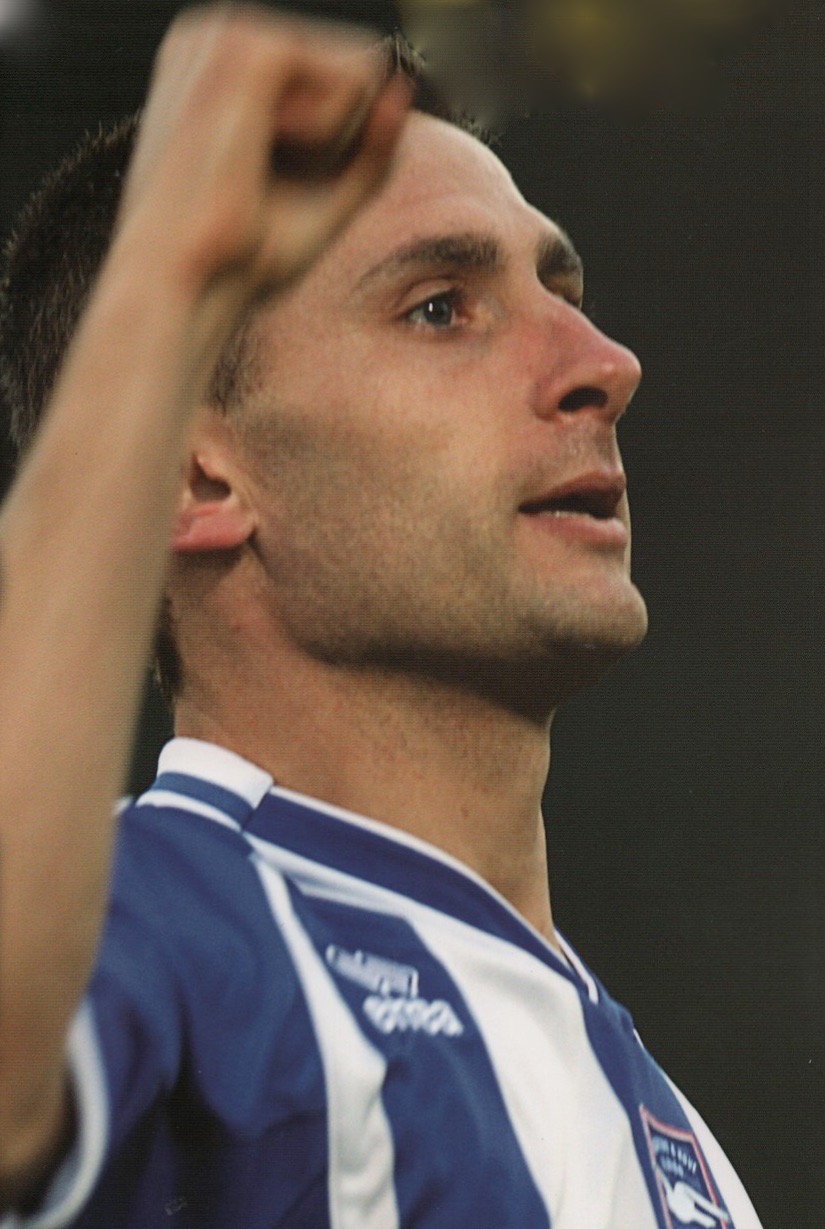
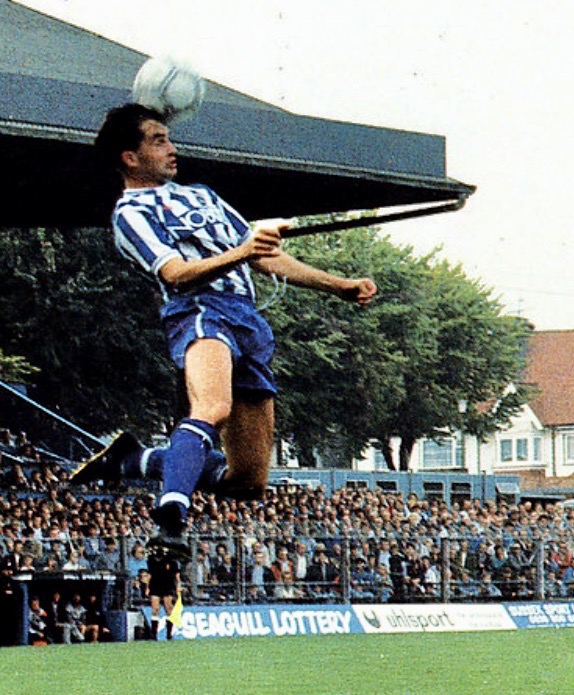
Bennett in Albion’s change kit in the 1998-99 season

Bennett found himself playing for a third Albion manager when Wood’s brief and unsuccessful reign at the Albion helm was brought to an end and, although he featured under Micky Adams, he was one of eight players released at the end of the season.

His league career at an end, he continued to play at non-league level for Canvey Island and in the 2003-04 season was part of a Canvey Island squad that also included former Brighton players Junior McDougald, Peter Smith, and the aforementioned Minton.

Meanwhile, he transitioned into a mental health and wellbeing counsellor, saying: “I identified the value of offering to the side of the game that rarely grabs the headlines but is just as affecting to the people it helps.”

On his LinkedIn profile, he points out: “Playing at all levels of the football league has provided me with an invaluable knowledge of the inner workings and operational structure of football in this country, experience that I have endeavoured to apply for the benefit of my fellow pros since my retirement.”

Crunching tackler ‘Tank’ Clark: a legend at two seaside clubs

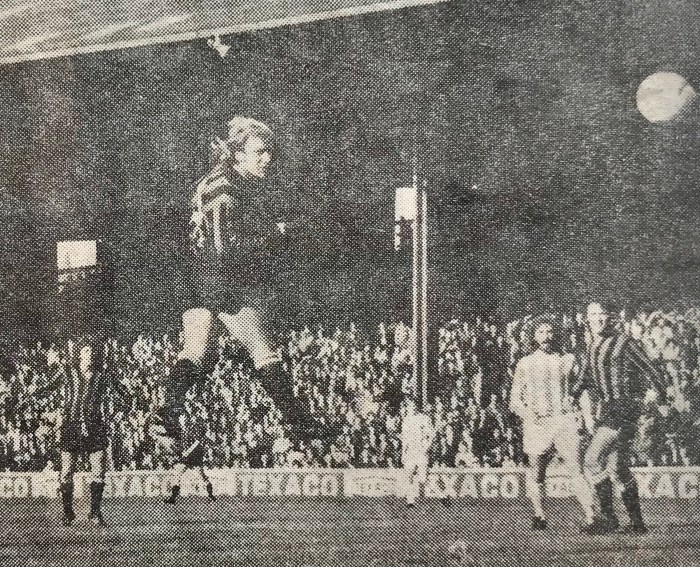
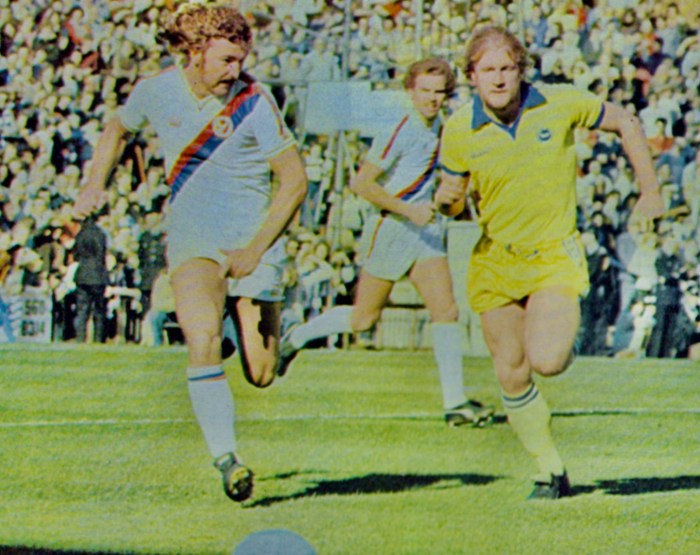
VIKING lookalike Paul Clark made a lasting impression on plenty of players with robust tackling which earned him ‘legend’ status among fans of Brighton and Southend United.

Described in one programme article as “the big bustling blond with the biting tackle”, Clark was given the nickname ‘Tank’ for his no-nonsense approach. A Southend fan lauded “his crunching tackles and never say die attitude”.

Clark himself reflected: “Wherever you go the supporters tend to like someone who is wholehearted and when it came to 50-50 challenges, or even sometimes 60-40, I didn’t shy away from too many, and the supporters just took to it.”

In Albion yellow against Palace

Giving further insight to his approach, he said: “You can go right up to the line – as long as you don’t step over it, then you’re OK.

“I used to pick up a booking during the first five or 10 minutes, then I knew I had to behave myself for the rest of the game. Despite the reputation I had, I was never sent off in over 500 games.”

A trademark strike at home to West Ham

Former teammate Mark Lawrenson said of him: “You would hate to have to play against him because quite often he would cut you in two. With him and ‘Nobby’ (Brian Horton) in the side, we definitely didn’t take any prisoners. One to rely on.”

A former England schoolboy international, it was said of the player in a matchday programme:

“Paul is the first to admit that skill is not his prime asset but there is no doubt as to the strength of his tackle. He is a real competitor and is also deceptively fast, being one of the best sprinters on the Goldstone staff.”

Born in south Benfleet, Essex, on 14 September 1958, Clark went to Wickford Junior School where he played for the school football team and the district primary schools’ side. When he moved on to Beauchamp Comprehensive, selection for his school team led to him playing for the Basildon Schools’ FA XI.

Clark as an England schoolboy

This in turn led to him being selected to play for England Schools at under 15 level, featuring against Scotland, Ireland, Wales, West Germany and France before going on a tour of Australia with the same age group. Contemporaries included future full time professionals Mark Higgins, Ray Deakin, Kevin Mabbutt and Kenny Sansom.

Clark left school at 16 before taking his O levels when Fourth Division Southend offered him an apprenticeship. He made his first team debut shortly before his 18th birthday in a 2-1 win over Watford.

Two months later, he won the first of six England Youth caps. He made his debut in the November 1976 mini ‘World Cup’ tournament in Monaco against Spain and West Germany alongside future full England internationals Chris Woods, Ricky Hill and Sammy Lee.

The following March, he played in England’s UEFA Youth tournament preliminary match against Wales when they won 1-0 at The Hawthorns. Sansom was also in that side. And he featured in all three group matches at the tournament that May (England beat Belgium 1-0, drew 0-0 with Iceland and 1-1 with Greece). Teammates included Russell Osman and Vince Hilaire.

Clark was only a third of the way into his second season at Southend when Alan Mullery sought to beef up his newly-promoted Brighton side in the autumn of 1977, and, in a part exchange deal involving Gerry Fell moving to Roots Hall, Clark arrived at the Goldstone. He made his debut for the Seagulls in a goalless draw at White Hart Lane on 19 November 1977 in front of a crowd of 48,613. And he came close to crowning it with a goal but for an outstanding save by Spurs ‘keeper Barry Daines.

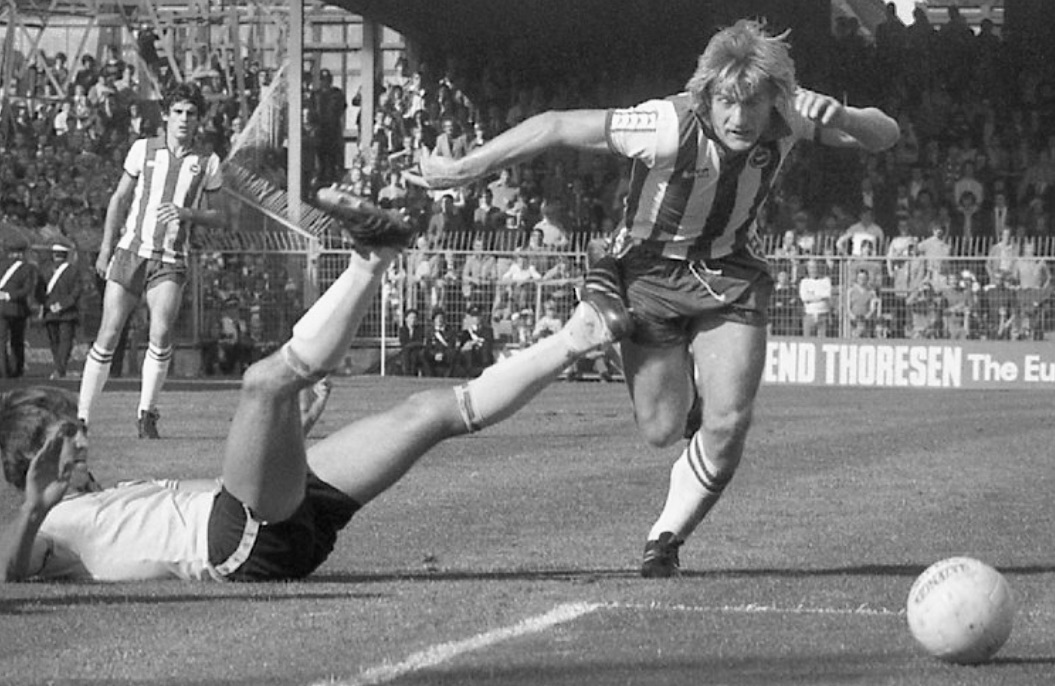
In full flight, as captured by photographer George Erringshaw

When Spurs visited the Goldstone later that season, Clark put in a man of the match performance and scored a memorable opener, following a solo run. A subsequent matchday programme article was suitably poetic about it.

“It showed all the qualities looked for in a player: determination, speed, skill and most of all the ability to finish….if any goal was singled out, Paul’s was certainly one to treasure.”

Albion went on to beat Spurs 3-1, although the game was remembered more because it was interrupted twice when the crowd spilled onto the pitch.

After only 12 minutes, referee Alan Turvey took the players off for 13 minutes while the pitch was cleared of Albion fans who’d sought safety on the pitch from fighting Spurs’ hooligan fans.

In the 74th minute, with Spurs 3-1 down and defender Don McAllister sent-off, their fans rushed the pitch to try to get the game abandoned. But police stopped the invasion getting out of hand and the game continued after another four-minute delay.

Clark’s goal on 16 minutes had been cancelled out six minutes later when Chris Jones seized on a bad goal kick by Eric Steele but defender Graham Winstanley made it 2-1 just before half-time.

Albion’s third goal was surrounded in controversy. Sub Eric Potts claimed the final touch but Spurs argued bitterly that Malcolm Poskett was offside.

Clark remembered the game vividly when interviewed many years later by Spencer Vignes for the matchday programme. The tenacious midfielder put in an early crunching tackle on Glenn Hoddle and after the game the watching ex-Spurs’ manager Bill Nicholson told him: “Well done. You won that game in the first five minutes when you nailed Hoddle.”

Said Clark: “I was 19 at the time so to get a pat on the back from him was much appreciated.”

It was one of three goals Clark scored in his 26 appearances that season (nine in 93 overall for Albion) but he wasn’t always guaranteed a starting berth and in five years at the club had a number of long spells stuck in the reserves.

Midfield enforcer or emergency defender were his primary roles but Clark was capable of unleashing unstoppable shots from distance and among those nine goals he scored were some memorable strikes.

For instance, as Albion closed in on promotion in the spring of 1979, at home to Charlton Athletic, Clark opened the scoring with a scorching 25-yard left foot volley in the 11th minute. Albion went on to win 2-0.

The following month, Clark demonstrated his versatility at St James’ Park on 3 May 1979 when Albion beat Newcastle 3-1 to win promotion to football’s elite level for the first time. Clark played in the back four alongside Andy Rollings because Mark Lawrenson was out injured with a broken arm.

Celebrating promotion with Peter O’Sullivan and Malcolm Poskett

“Not many people can say they played in a side that got Brighton up to the top flight,” said Clark. “It’s something I’m still immensely proud of.”

Once they were there, Clark missed the opening two matches (defeats at home to Arsenal and away to Aston Villa) and had an ignominious start to life at the higher level when he conceded a penalty within three minutes of going on as a sub for Rollings away to Manchester City on 25 August 1979.

Some observers thought Clark had played the ball rather than foul Ray Ranson but referee Pat Partridge thought otherwise and Michael Robinson stepped up to score his first goal for City from the resultant penalty. It put the home side 3-1 up: Teddy Maybank had equalised Paul Power’s opener but Mike Channon added a second before half-time.

Partridge subsequently evened up the penalty awards but Brian Horton blazed his spot kick wide of the post with Joe Corrigan not needing to make a save. Peter Ward did net a second for the Seagulls but they left Maine Road pointless.

Ahead of Albion’s fourth attempt to get league points on the board, Clark played his part in beating his future employer Cambridge United 2-0 in a second round League Cup match.

Three days later, he was on the scoresheet together with Ward and Horton as Albion celebrated their first win at the higher level, beating Bolton Wanderers 3-1 at the Goldstone.

It was Clark’s neat one-two with Ward that produced the opening goal and on 22 minutes, Maybank teed the ball up for Clark, who “belting in from the edge of the box, gave it everything and his shot kept low and sped very fast past (‘Jim’) McDonagh’s right hand,” said Evening Argus reporter John Vinicombe.

Gerry Ryan replaced Clark late in the game and after 12 starts, when he was subbed off three times, and four appearances off the bench, his season was over, and it wasn’t even Christmas.

A colour photo of a typical Clark tackle (on QPR’s Dave Clement) adorned the front cover of that season’s matchday programmes throughout but he didn’t start another game after a 4-0 League Cup defeat at Arsenal on 13 November.

Programme cover shot

He was sub for the following two games; the memorable 1-0 win at Nottingham Forest and a 1-1 draw at Middlesbrough, but Mullery had signed the experienced Peter Suddaby to play alongside Steve Foster, releasing Lawrenson to demonstrate his considerable repertoire of skills in midfield alongside skipper Horton and Peter O’Sullivan.

Young Giles Stille also began to press for a place and later in the season, Neil McNab was added to the midfield options, leaving Clark well down the pecking order in the reserves. Portsmouth wanted him but he rejected a move along the coast, although he had a brief loan spell at Reading, where he played a couple of games.

But Clark wasn’t finished yet in Albion’s colours and, remarkably, just over a year after his last first team appearance, with the Seagulls struggling in 20th spot in the division, he made a comeback in a 1-0 home win over Aston Villa on 20 December 1980.

Albion had succumbed 4-3 to Everton at Goodison Park in the previous match and Mullery told the Argus: “We badly needed some steel in the side and I think Clark can do that sort of job.”

Under the headline ‘The forgotten man returns’ Argus reporter Vinicombe said Mullery hadn’t changed his opinion that Clark was not a First Division class player, but nevertheless reckoned: “Paul’s attitude is right and I know he’ll go out and do a good job for me.”

For his part, Vinicombe opined: “The strength of Clark’s game is a daunting physical presence. His tackling is second to none in the club and Mullery believes he will respond to the challenge.”

Clark kept the shirt for another nine matches (plus one as a sub), deputising for Horton towards the end of his run, but his last first team game was in a 3-1 defeat at Norwich at the end of February.

Clark remained on the books throughout Mike Bailey’s first season in charge (1981-82) but, with Jimmy Case, Tony Grealish and McNab ahead of him, didn’t make a first team appearance and left on a free transfer at the end of it.

Back to Southend

He returned to Southend where he stayed for nine years and was player-manager on two occasions. Fans website shrimperzone.com moderator ‘Yorkshire Blue’ summed up his contribution to their cause thus: “In the top five all-time list for appearances, an inspiration in four promotions, one of the toughest tacklers of all-time and a man whose commitment for his home-town club could never be doubted.”

Clark was still only 27 when he had his first spell as manager, in caretaker charge after Dave Webb had quit following a bust-up with the club chairman, and he managed to steer United to promotion back to the third tier.

When Webb’s successor Dick Bate lasted only eight games of the new season, Clark was back at the helm, in turn becoming the youngest manager in the league.

His first hurdle ended in a League Cup giant killing over top flight Derby County (who included his old teammate John Gregory) when the Us had another former Albion teammate, Eric Steele, in goal.

A Roy McDonough penalty past England goalkeeper Peter Shilton at Roots Hall settled the two-legged tie (the second leg was goalless at the Baseball Ground) which the writer described as “arguably their biggest ever cup shock”.

In the league, player-manager Clark guided Southend to a safe 17th place but it went pear-shaped the following season. Clark only played 16 games, Southend were relegated, and Webb returning midway through the season as general manager.

Back-to-back promotions in 1989-90 and 1990-91 proved to be a more than satisfactory swansong to his Southend career, and in the first of those he found himself forming an effective defensive partnership with on-loan Guy Butters in the second half of the season.

In 1990-91, he missed only six games all season as the Shrimpers earned promotion to the second tier for the first time in their history, and he had a testimonial game against Arsenal.

But, after a total of 358 games for Southend, he left Roots Hall to join Gillingham on a free transfer.

Over three seasons, he played 90 league games, and was caretaker manager in 1992, before retiring at the end of the 1993-94 season. Gillingham’s top goalscorer with 18 that season was a young Nicky Forster and other Albion connections in that squad included Mike Trusson, Paul Watson, Neil Smillie, Andy Arnott and Richard Carpenter.

After Gillingham, Clark played non-league for Chelmsford City but left to become assistant manager to Tommy Taylor at Cambridge United. In 1996 he followed Taylor in a similar role to Leyton Orient.

Southend fans hadn’t heard the last of him, though – quite literally. He became a co-commentator on Southend games for BBC Radio Essex.

In the 2009-10 season, Clark was temporarily assistant manager to Joe Dunne at Colchester United.

Football’s Ansah to making the game look dramatic

FICTIONAL football gained an unlikely champion in Andy Ansah.

The journeyman striker eventually mixed it with the game’s elite players as he built a new career in the world of football make-believe for TV and film.

His own exploits on the field were in less esteemed company, including stints playing in the lower leagues for Brighton, Brentford and Southend United.

Not too many Brighton fans will remember him, though, because his 25 appearances in the blue and white stripes coincided with the two seasons when home matches were played 90 miles from home in Gillingham.

With crowd numbers low and finances tight as a consequence, Albion were in no position to splash the cash in the autumn of 1997; indeed John Humphrey, Craig Maskell, Paul McDonald, Denny Mundee and Ian Baird, five of the squad who had kept the Seagulls in the league by the skin of their teeth only six months earlier, were let go in an effort to trim the wage bill.

It was in that climate that Ansah, who had dropped out of league football at the time, was picked up by Steve Gritt.

It only transpired in an interview Ansah gave to the Express in December 2011 that he came clean to the Albion about a kidney condition (nephrotic syndrome) he had suffered from since teenage years but had kept hidden at previous clubs.

It could at times make his body swell so much he could hardly walk and he would need hospital treatment to bring it under control.

He told the newspaper he had gone to extraordinary lengths to hide the illness from managers, coaches and fellow players for fear that it would mean the end of his career. When he felt poorly, he would wear tracksuit bottoms on the training ground to hide the swelling, and then feign illness.

At Brighton, however, the condition did not stop him being involved, although the majority of his appearances were as a substitute.

Apart from a start in a 5-0 mauling at the hands of Walsall in the Auto Windscreens Shield on 6 January 1998, he had made three Third Division appearances going on as a sub and was unused on seven occasions before his fortunes changed.

Although he missed a decent chance after going on as a sub in a 2-0 defeat at Rochdale, he made amends when Gritt gave him his first League start away to Exeter City, curving the ball beyond Ashley Bayes from Stuart Storer’s flick-on.

Sadly, a rogue refereeing decision helped the home side to a 2-1 win, and, with Albion floundering in second-to-bottom spot in the division, Gritt was sacked the following day.

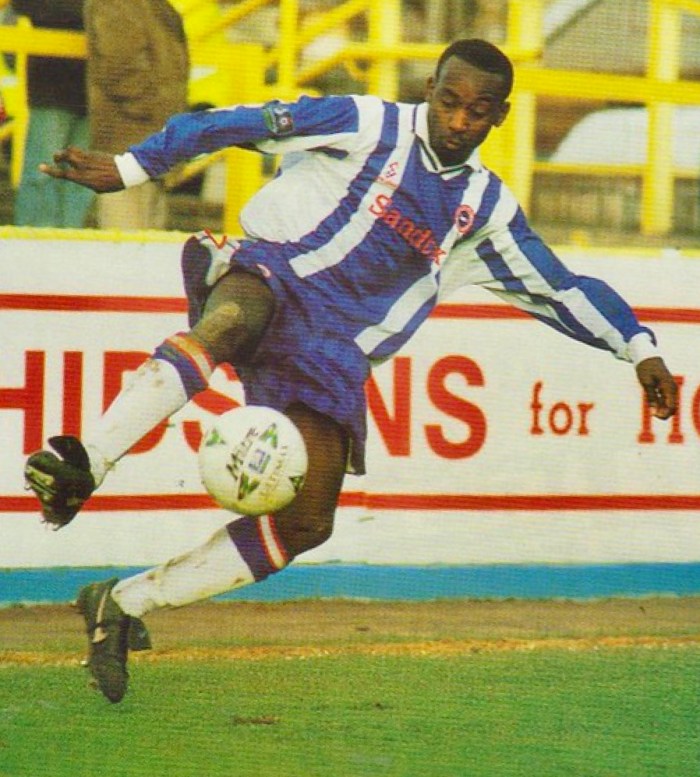
Andy Ansah on the ball for the Albion

Ansah retained his place for new manager Brian Horton’s first match – and he was on the scoresheet again. This time, his goal and a brace from Kerry Mayo gave the Seagulls a 3-2 win over Chester – the side’s first taste of victory in 10 matches!

“The emergency partnership of Stuart Storer and Andy Ansah has provided fresh movement and impetus up front, while wingers John Westcott and Steve Barnes saw far more of the ball on Saturday than they have been accustomed to,” reported The Argus.

Albion finished the season 23rd of 24 teams but thankfully 15 points ahead of Doncaster Rovers in last place.

Ansah scored again in the last ‘home’ game of the season – a 2-2 draw with Horton’s old side Hull City (who finished 22nd) – but, like a lot of players, he was out of contract at the end of the season.

Horton wanted to bring in his own players but, as it turned out, Ansah was offered a new one-year deal, with The Argus saying “Horton hasn’t been able to find a better replacement at the right price, so Ansah has been given a second chance”.

The manager explained: “He did well, but I was bringing new faces in. I’ve had a good look around and Andy is as good as what we could get. He can score goals and he can play in different positions.”

Ansah lines up for the Seagulls in exile

For his part, Ansah told the newspaper:Technically I was given a free, but I knew I would be speaking to the gaffer again before pre-season.

“There was still a chance that I was going to get a contract and I’m very pleased that I have. I think Brighton are going to do things this season.”

Although Albion avoided flirting with relegation for the first time in three seasons, their 17th finishing spot was hardly cause to put the flags out, and Ansah made only two starts. He went on as a sub on nine occasions and was an unused sub on nine others.

Horton left mid-season to return to the north, assistant Jeff Wood struggled in a brief spell as no.1, and Micky Adams only arrived to take charge towards the very end. Ansah was one of nine players out of contract and released at the end of the season (the others were Derek Allan, Michael Bennett, Tony Browne, Lee Doherty, Danny Mills, Darragh Ryan, Peter Smith, Storer, Terry Streeter and Paul Sturgess).

While the Albion prepared to return to Brighton to play at the Withdean athletics stadium, Ansah embarked on a career that attracted a hell of a lot more viewers than had seen him perform at the Priestfield Stadium.

Brentford fan Nick Bruzon has told Andy’s remarkable story on a few occasions and his ‘last word’ blog goes into plenty of detail about it.

In summary, though, after leaving Brighton, Ansah worked as an actor for six seasons on the Sky TV football soap Dream Team, appearing for fictional Harchester United.

He recruited two other former Albion players for Harchester: Peter Smith and Junior McDougald. As one of the older players, early on he was asked the best way to shoot certain scenes and within a year he was the producer.

His ability to choreograph football scenes then led him to Hollywood as a consultant on Goal!, a US film trilogy about a Mexican immigrant who gets to play in the English Premiership.

He even got to spend a day working with his all-time hero Pele in Brazil. “He was an unbelievable guy, a real gentleman,” Ansah told the Southend Echo in a 2008 interview with John Geoghegan.

“Because of my footballing background, I can talk to the players and the crew and translate between the two.

“It’s my job to make sure the footballers feel relaxed and do what they do normally in front of a camera.

“Film has always been a big love of mine, ever since school. And with football, to a degree, you are on stage entertaining. So, there are a lot of similarities between the two.”

He choreographed the whole of the Mike Bassett: England Manager film (starring Ricky Tomlinson) and worked on three series of Wayne Rooney’s Street Striker.

As co-presenter of the Sky 1 programme, Ansah scouted the UK for talent, and took to Rooney 100 talented young footballers who he had to whittle down to win the Street Striker crown.

It was with encouragement from contacts in Hollywood that he put his work on a more commercial footing. He set up his own consultancy, Soccer on Screen, and among many football-based advertisements helped Guy Ritchie direct a Nike commercial for the 2010 World Cup. He has also advised EA Sports, makers of the Fifa video games.

Born in Lewisham, south east London, on 19 March 1969, Ansah was a promising winger during his school days and was playing at county level when he started to attract the attention of clubs.

Way before the days of organised academies, he was picked up by Charlton Athletic aged 11 and stayed with them until he was 16. When he turned 17, he signed as a professional at Crystal Palace.

Ansah told Bruzon: “Because I had been in the system from such a young age, I kind of got a bit complacent and a little bit fed up of football.

“When I left Palace, Steve Coppell said to me: ‘I’m not sure if you really want to play football so I’m going to release you.’

After a six-month break from the game, he joined non-league Dorking stayed out of the game for about six months and then joined Dorking, where Dave Goodwin, who had originally scouted him for Charlton, was working.

When he scored 14 goals in three months for Dorking, Brentford, Fulham and Reading all offered him a contract but he chose the Bees because assistant manager Phil Holder promised to pick him up and take him to play for the reserve team, which he was managing.

Ansah scored twice on his first start for Brentford in a 3-2 defeat at Bolton but only made eight appearances after falling out with manager Steve Perryman.

In a reserves match between Brentford and Southend, Ansah scored and caught the attention of Shrimpers boss David Webb, who eventually took him to Roots Hall.

Over the course of six years, he scored 38 goals in 180 appearances for Southend and, as well as Holder, reckoned Webb had been the biggest influence on his career.

“David gave me a licence to express myself,” Ansah told Bruzon. “He would say, ‘I don’t care what the outcome is, just go out there and express yourself.’ It really did work!”

Ansah was part of the United side that earned promotion to Division One (now the Championship) and was later named Southend’s 13th most popular player of all time.

“That in itself is a massive achievement,” he said. “It’s good to know that the fans enjoyed what I was doing when I was there. It’s always nice, to get that sort of feedback.”

Perhaps unsurprisingly, when Webb took charge at Brentford, Ansah ended up following him, albeit on loan, scoring just the once (ironically against Brighton in a 2-1 Bees win on 26 November 1994) in four games and again the following season, when he scored once in six appearances.

But Ansah told Bruzon that he didn’t do himself justice because he wasn’t properly fit at that time and, if he had taken medical advice, he probably should have retired because of a knee injury.

“I was fighting to get myself back fit again,” he said. “My first game back I got a cut on my head within 15 minutes and then got it stitched up. I got man of the match but never could regain full fitness. At that stage, the surgeon told me I’d never be fully fit again with my knee.”

He played a couple of games at each of Peterborough, Gillingham and Leyton Orient before dropping out of the league with Hayes, Bromley and Heybridge Swifts.

Ansah’s son Zac spent 10 years with Arsenal’s academy. He moved on to Charlton Athletic when they were in the Championship but didn’t break through and had loan spells with League Two sides Plymouth Argyle and Newport County (playing a total of 26 matches) before moving into non-league football.

Steady Eddie had plenty of strings to his bow

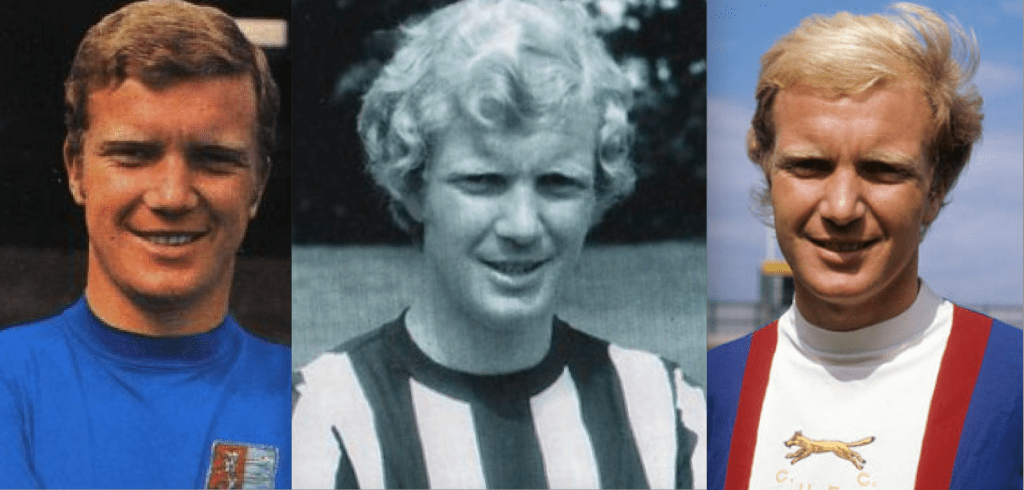
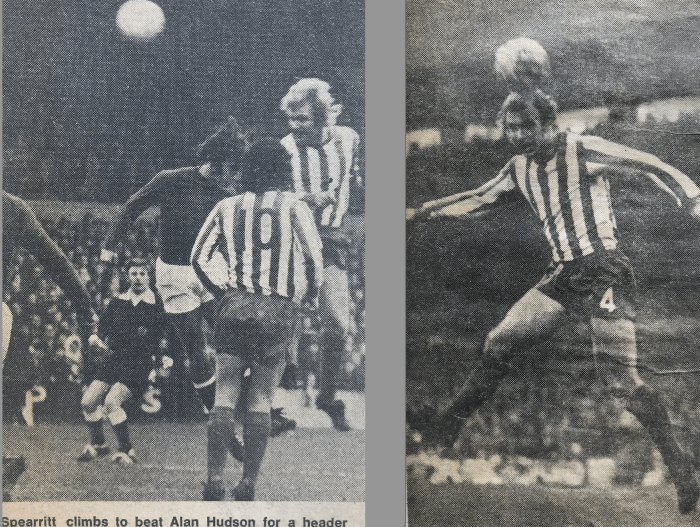
ONE TIME Albion captain and utility player Eddie Spearritt played in the top flight for Ipswich Town and Carlisle United.

He made five starts and five appearances off the bench for second tier champions Ipswich at the beginning of the 1968-69 season before joining third tier Brighton for £20,000 in January 1969.

Play anywhere Spearritt was then a permanent fixture in the Albion line-up for almost five years, making 225 appearances, before Brian Clough turfed him out at the end of the 1973-74 season.

But he found himself back amongst the elite when newly promoted Carlisle United snapped him up for their one and only season (1974-75) amongst the big boys.

Spearritt made 17 starts and six appearances as a sub for the Cumbrians but, in spite of a superb winning start when they briefly topped the division, United finished the season in bottom spot.

Spearritt shapes to challenge Aston Villa’s Ray Graydon

Equally comfortable playing in midfield, at full back or sweeper, Spearritt had on-off spells as Albion’s chosen penalty-taker as well as chipping in with goals from open play. He even turned his hand to goalkeeping when necessary.

Another key attribute to his game was an ability to send in long throw-ins which could sometimes be as effective as a free kick or corner. It was a skill which earned him a place in a Longest Throw competition staged by BBC’s sport show Grandstand in 1970-71, although he didn’t win it.

Born in Lowestoft on 31 January 1947, Spearritt went to Lowestoft Grammar School and on leaving school was picked up by Arsenal. But when the Gunners didn’t keep him on, he returned to East Anglia and joined Ipswich as an apprentice in August 1963.

He signed a professional contract with Town in February 1965 and, as Tim Hodge details on prideofanglia.com, he made his league debut in the 1965-66 season in a 1-0 win away to Preston in the old Division Two.

That was the season when substitutes were first introduced into the English game and the record books show that Spearritt was the first Ipswich sub to score a goal.

He went on for Irish international Danny Hegan in a match away to Derby County on 15 January 1966 and scored Ipswich’s second goal. The game finished 2-2; Gerry Baker having scored Town’s first.

Over the next three years, Spearritt made a total of 69 appearances (plus 10 as sub) for Bill McGarry’s side, scoring 14 goals along the way. Twenty of those games came in the 1967-68 season when Ipswich won the old Second Division.

A 1-0 home defeat to Spurs in October 1968 was his last for the Suffolk club and he parted company with Town shortly after McGarry left Portman Road to take over at Wolverhampton Wanderers.

A debut v Crewe (left) and slaloming through the Plymouth Argyle defence (right)

Spearritt was one of Freddie Goodwin’s first signings for Brighton – just a few weeks before my first ever Albion game. He made his debut in a 3-1 home win over Crewe Alexandra and kept the number 10 shirt to the end of the season, by which time he had scored five times, including both Albion’s goals in a 2-2 draw at home to Tranmere Rovers.

In the 1969-70 season, not only was he part of the Third Division Albion side who pushed his old manager McGarry’s First Division Wolves side all the way in a memorable third round League Cup tie, it was his header from Kit Napier’s free kick that put the Albion 2-1 ahead just before half-time.

Scottish international Hugh Curran scored twice in eight second half minutes to clinch the win for Wolves but a bumper Goldstone Ground crowd of 32,539 witnessed a terrific effort by their side.

A few weeks’ later, in a marathon FA Cup second round tie with Walsall that required three replays before the Saddlers finally prevailed 2-1, Spearritt took over in goal during the second replay when a concussed Geoff Sidebottom was stretchered off on 65 minutes. Albion hung on for a 1-1 draw.

Spearritt was a midfield regular in his first two seasons but Goodwin’s successor, Pat Saward, switched him to left back halfway through the 1970-71 season and that’s where he stayed throughout 1971-72 when Albion won promotion from the old Third Division as runners up behind Saward’s old club, Aston Villa.

It was in the first half of that season that Spearritt took a call from ex-Ipswich teammate Ray Crawford, the former England international centre forward, who had returned homesick from a short stint playing in South Africa.

He persuaded Saward to offer Crawford a trial and although he didn’t make the league side he scouted upcoming opponents, played for the reserves and subsequently ran the youth team.

Meanwhile, Spearritt was a key part of the promotion side and player-of-the-season Bert Murray generously declared the award could have gone to Eddie for his consistency that season. As it happened, Spearritt did get the award the following season, although somewhat more ignominiously considering Albion were relegated.

All smiles as Pat Saward’s side toast promotion in 1972

In the close season after promotion, Spearritt tied the knot with Penelope Biddulph, “an accomplished professional dancer,” the matchday programme told us, and they moved into a new home in Kingston-by-Sea.

Spearritt started out at left back in Division Two but after ten games was ousted by the arrival of George Ley from Portsmouth. He then switched back into midfield, but by the end of that relegation season was playing sweeper alongside Norman Gall (for nine games) and Steve Piper (for two).

He scored (pictured above), along with Barry Bridges, in a 2-0 win at Huddersfield on 14 October but the team went on a disastrous run of 16 games without a win, although Spearritt did get on the scoresheet three times, including notching two penalties.

When Albion went to that footballing outpost Carlisle on 16 December, they had lost five in a row without managing a single goal. Carlisle were 5-0 up, goalkeeper Brian Powney was carried off with a broken nose, replaced between the sticks by Murray, then Albion won a penalty.

Spearritt took up the story in a subsequent matchday programme. “I used to be the club’s penalty taker but, after I had missed an important one at Mansfield in 1970, I lost the job. Penalty-taking is really all about confidence,” he said. “After I had missed that one at Mansfield, which cost us a point, the players lost confidence in me and the job went first to John Napier and was then taken over by Murray.

“Bert would have taken the penalty at Carlisle. He has already scored two this season. But he had gone in goal and it was decided it was too risky to fetch Bert out of goal to take the penalty.

“Nobody else seemed to want to take it so I just picked the ball up and put it on the spot. We were 5-0 down by then but I thought from a morale point of view that it was extremely important that I scored. You can understand my relief when I saw the ball hit the back of the net.

“Everybody was beginning to wonder when we would score again. I suppose with the run of bad luck we have been having it was almost inevitable that we should break our goal famine from the penalty spot.”

Towards the end of the dismal run, Albion drew First Division Chelsea at home in the third round of the FA Cup. The game was won 2-0 by Chelsea but it was an ugly, violent affair – The Argus labelled it ‘Goldstone day of shame’ – in which five players were booked and each side had a player sent off.

Spearritt, the first to be booked, found himself caught up in a huge controversy which resulted in Chelsea hard man Ron Harris being sent off by Leicester referee Peter Reeves; remarkably the only time in his career he was dismissed.

The Brighton man insisted he’d been hit by the defender and Saward said in diplomatic terms after the game: “Spearritt said he was struck on the mouth and that it was not an involuntary action but a blow. From what I saw, I couldn’t understand it.”

Esteemed football writer Norman Giller subsequently recorded it like this: “Harris got involved in a tussle with Spearritt, and, as he pushed him, Spearritt went down holding his face as if he had been punched. The referee directed Ron to an early bath. All the bones he had kicked, and here was Harris being sent off for a playground push.

“A Brighton-supporting vicar, with a pitchside view, wrote to the Football Association telling them what he had witnessed, and ‘Chopper’ was vindicated.”

Whatever the truth of the matter, Spearritt told Argus Albion reporter John Vinicombe that he’d been threatened by a Chelsea player after the incident. “He spoke to me several times and made it quite clear what he had in mind.”

Albion’s Ley was sent off for bringing down Tommy Baldwin and then getting involved in an altercation with Peter Osgood, who scored both Chelsea goals. Two minutes later David Webb went into the book for a ‘blatant foul’ on Spearritt.

Albion finally returned to winning ways the following month with a 2-0 win over Luton (on 10 February), and then beat Huddersfield, Carlisle and Swindon, prompting Saward to refer to “some outstanding individual performances” and adding: “I have been particularly pleased with the way Eddie Spearritt has been playing in recent weeks.

“He has maintained a high level of consistency this season and his work in defence and in midfield has been invaluable as the side has plugged away trying to turn the tide of results.”

Saward made Spearritt Albion’s captain at the start of the 1973-74 season back in Division Three and with the return of central defender Ian Goodwin and then the emergence of Piper in the sweeping role, he was soon back in midfield.

But when Saward was sacked in October and sensationally replaced by former Derby County League title winning management duo Brian Clough and Peter Taylor, Spearritt was one of the first to have his nose put out of joint by the new arrivals.

Journalist Spencer Vignes described what happened in Bloody Southerners (Biteback Publishing, 2018), his excellent book about that era.

Clough sought out long-serving centre back Norman Gall and, because he hailed from the same part of the country (ie the north east), told him he was making him the captain. Gall told Vignes: “Suddenly I’m captain, which I was really happy about. Eddie Spearritt didn’t like it though. He’d been captain up until then. In fact, he didn’t talk to me after that. That was the beginning of the end for Eddie.”

Spearritt was part of the side who capitulated 4-0, 8-2 and 4-1 in successive games against Walton & Hersham, Bristol Rovers and Tranmere Rovers, and he was dropped for six games, along with Ley (who never played for Albion again). Clough went into the transfer market and brought in midfielder Ronnie Welch and left back Harry Wilson from Burnley.

Although Spearritt was restored to the team in mid January, and had a run of seven games — including his 200th league game for Albion — when he was subbed off in a home win over Hereford United on 10 March 1974, it was to be his last appearance in an Albion shirt.

In five years he’d played 225 games (plus seven as sub) and scored 25 goals.

Come the end of the season, Spearritt was one of 12 players released by the club in what became known as the great Clough clear-out.

Perhaps surprisingly, though, his next step was UP two divisions to play in the First Division with then newly promoted Carlisle United.

One of his teammates there was defender Graham Winstanley, who later joined the Albion. The side was captained by Chris Balderstone, who was also a top cricketer. Journeyman striker Hugh McIlmoyle played up front while John Gorman, who later played for Spurs and became Glenn Hoddle’s managerial sidekick, was also in the team.

They memorably topped the division after three games…but predictably finished bottom of the pile by the end. In his two-year stay with the Cumbrians, Spearritt played 29 times, was sub twice and scored a single goal.

He moved back south in August 1976, signed by Gerry Summers at Gillingham, and made his debut in a League Cup first round second leg tie against Aldershot, then made his league debut against Reading.

In total, he made 22 appearances in his one season at the club — one of them at the Goldstone Ground on December 29 1976, when the Albion won 2-0 on a slippery, snow-covered pitch. Spearritt scored just the once for the Gills, from the penalty spot against Rotherham United at Priestfield.

He emigrated to Australia the following summer and settled in Brisbane where he played 56 games for the Brisbane Lions between 1977 and 1980 and was their head coach in 1979. He subsequently coached Rochedale Rovers in the Brisbane Intermediate League, steering them to promotion to the Premier League in 1983.

Outside of football, he became estates manager for L’Oréal and in later years was better known as the uncle of Hannah Spearritt, once of the pop group S Club 7, who became an actress in the ITV drama Primevil.

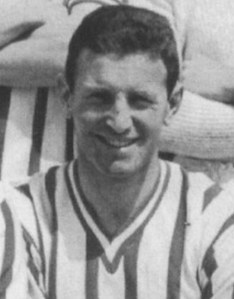
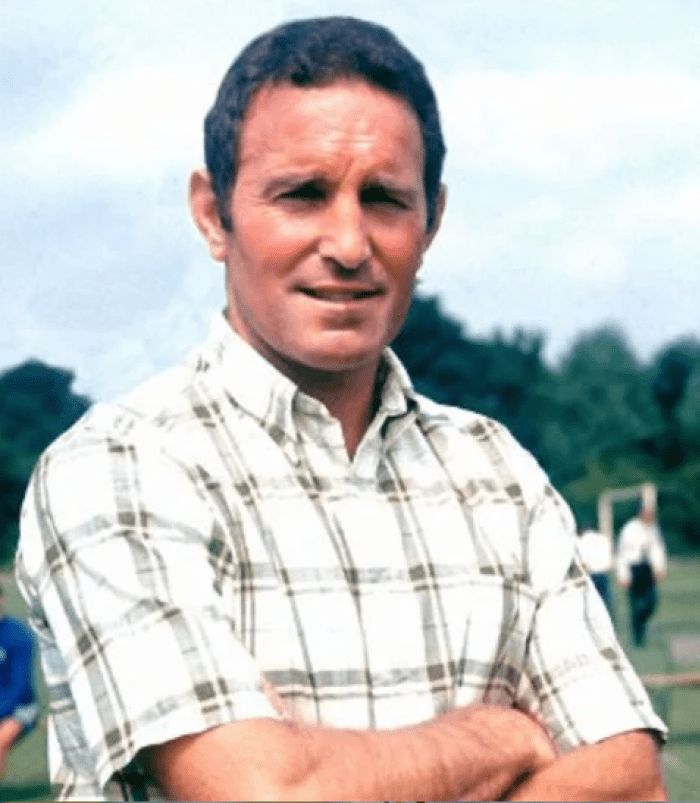
‘One of the most influential and progressive coaches of his generation’

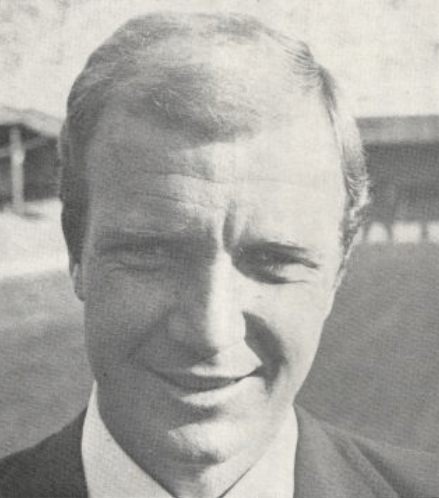
ALTHOUGH I wasn’t even born when Dave Sexton was winning promotion with Brighton, I remember him well as a respected coach and manager.

The record books and plenty of articles have revealed Sexton scored 28 goals in 53 appearances for Brighton before injury curtailed his playing career.

As a manager, he took both Manchester United and Queens Park Rangers to runners-up spot in the equivalent of today’s Premier League and won the FA Cup and European Cup Winners’ Cup with Chelsea.

On top of those achievements, he was the manager of England’s under 21 international side when they won the European Championship in 1982 and 1984, and worked with the full international squad under Ron Greenwood, Bobby Robson, Terry Venables, Glenn Hoddle, Kevin Keegan and Sven-Göran Eriksson.

Sexton coached under several England managers

On his death aged 82 on 25 November 2012, Albion chief executive Paul Barber said: “I know Dave was an extremely popular player during his days at the Goldstone Ground and, as a friend and colleague during my time working at the FA, I can tell you that he was held in equally high esteem.

“He was a football man through and through. I enjoyed listening to many of Dave’s football stories and tales during our numerous hotel stays with the England teams and what always came through was his great love and passion for the game.

“Dave was a true gentleman and a thoroughly nice man.”

Former West Ham and England international, Sir Trevor Brooking, who worked as the FA’s director of football development, said: “Anyone who was ever coached by Dave would be able to tell you what a good man he was, but not only that, what a great coach in particular he was.

“In the last 30-40 years Dave’s name was up there with any of the top coaches we have produced in England – the likes of Terry Venables, Don Howe and Ron Greenwood. His coaching was revered.”

Keith Weller, a £100,000 signing by Sexton for Chelsea in 1970, said: “I had heard all about Dave’s coaching ability before I joined Chelsea and now I know that everything said about his knowledge of the game is true. He has certainly made a tremendous difference to me.”

And the late Peter Bonetti, a goalkeeper under Sexton at Chelsea, said: “He was fantastic, I’ve got nothing but praise for him.”

One-time England captain Gerry Francis, who played for Sexton at QPR and Coventry City, said: “Dave was quite a quiet man. You wouldn’t want to rub him up the wrong way given his boxing family ties, but you wanted to play for him.

“Dave was very much ahead of his time as a manager. He went to Europe on so many occasions to watch the Dutch and the Germans at the time, who were into rotation, and he brought that into our team at QPR, where a full-back would push on and someone would fill in.

“He was always very forward-thinking – a very adaptable manager.”

Guardian writer Gavin McOwan described Sexton as “the antithesis of the outspoken, larger-than-life football manager. A modest and cerebral man, he was one of the most influential and progressive coaches of his generation and brought tremendous success to the two London clubs he managed.”

Born in Islington on 6 April 1930, the son of middleweight boxing champion Archie Sexton, his secondary school days were spent at St Ignatius College in Enfield and he had a trial with West Ham at 15. But, like his dad, he was a boxer of some distinction himself, earning a regional champion title while on National Service.

Sexton played 77 games for West Ham

However, it was football to which he was drawn and, after starting out in non-league with Newmarket Town and Chelmsford City, he joined Luton Town in 1952 and a year later he returned to West Ham, where he stayed for three seasons.

In 77 league and FA Cup games for the Hammers, he scored 29 goals, including hat-tricks against Rotherham and Plymouth.

It was during his time at West Ham that he began his interest in coaching alongside a remarkable group of players who all went on to become successful coaches and managers.

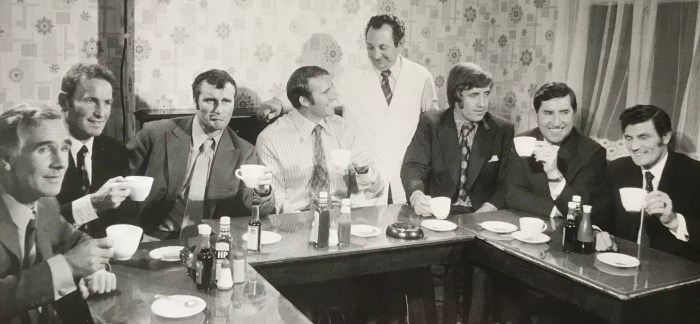
He, Malcolm Allison, Noel Cantwell, John Bond, Frank O’Farrell, Jimmy Andrews and Malcolm Musgrove used to spend hours discussing tactics in Cassettari’s Cafe near the Boleyn ground. A picture of a 1971 reunion of their get-togethers featured on the back page of the Winter 2024 edition of Back Pass, the superb retro football magazine.

One of the game’s most respected managers, Alec Stock, signed Sexton for Orient but he had only been there for 15 months (scoring four goals in 24 league appearances) before moving to Brighton (after Stock had left the Os to take over at Roma).

Albion manager Billy Lane bought him for £2,000 in October 1957, taking over Denis Foreman’s inside-left position. Sexton repaid Lane’s faith by scoring 20 goals in 26 league and cup appearances in 1957-58 as Brighton won the old Third Division (South) title. But a knee injury sustained at Port Vale four games from the end of the season meant he missed the promotion run-in. Adrian Thorne took over and famously scored five in the Goldstone game against Watford that clinched promotion.

Nevertheless, as he told Andy Heryet in a matchday programme article: “The Championship medal was the only one that I won in my playing career, so it was definitely the high point.

Sexton in Albion’s stripes

“All the players got on well, but a lot of what we achieved stemmed from the manager’s approach. It was a real eye-opener for me. We were a free-scoring, very attacking side and I just seemed to fit in right away and got quite a few goals. It was a joy to play with the guys that were there and I thoroughly enjoyed those two years.”

Because of the ongoing problems with his knee, he left Brighton and dropped two divisions to play for Crystal Palace, but he was only able to play a dozen games before his knee finally gave out.

“I suffered with my knee throughout my playing career,” said Sexton. “In only my second league game for Luton I went into a tackle and tore the ligaments in my right knee.

Knee trouble curtailed his Palace playing days

“I also had to have a cartilage removed. The same knee went again when I was at Palace. We were playing away at Northampton, and I went up with the goalkeeper for a cross and landed awkwardly, my leg buckling underneath me, and that sort of finished it off.”

In anticipation of having to retire from playing, he had begun taking coaching courses at Lilleshall during the summer months. Fellow students there included Tommy Docherty and Bertie Mee, both of whom gave him coaching roles after he’d been forced to quit playing.

Docherty stepped forward first having just taken over as Chelsea manager in 1961, appointing Sexton an assistant coach in February 1962. “I didn’t have anything else in mind – I couldn’t play football any more – so I jumped at the chance,” said Sexton. “It was a wonderful bit of luck for me as it meant that my first job was coaching some brilliant players like Terry Venables.”

The Blues won promotion back to the top flight in Sexton’s first full season and he stayed at Stamford Bridge until January 1965, when he was presented with his first chance to be a manager in his own right by his former club Orient.

Frustrated by being unable to shift them from bottom spot of the old Second Division, Sexton quit after 11 months at Brisbane Road and moved on to Fulham to coach under Vic Buckingham, who later gave Johan Cruyff his debut at Ajax and also managed Barcelona.

Perhaps surprisingly, Sexton declared in 1993 that the thing he was most proud of in his career was the six months he spent at Fulham in 1965. “Fulham were bottom of the First Division. Vic Buckingham was the manager. He had George Cohen, Johnny Haynes . . . Bobby Robson was the captain. Allan Clarke came. Good players, but they were bottom of the table, with 13 games to go.

“I did exactly the same things I’d been doing at Orient. And we won nine of those games, drew two and lost two – and stayed up. It proved to me that you can recover any situation, if the spirit is there.”

When Arsenal physiotherapist Mee succeeded Billy Wright as Gunners manager in 1966, he turned to Sexton to join him as first-team coach. In his one full season there, Arsenal finished seventh in the league and top scorer was George Graham, a player the Gunners had brought in from Chelsea as part of a swap deal with Tommy Baldwin.

When the ebullient Docherty parted company with Chelsea in October 1967, Sexton returned to Stamford Bridge in the manager’s chair and enjoyed a seven-year stay which included those two cup wins.

In a detailed appreciation of him on chelseafc.com, they remembered: “Uniquely, for the time, Sexton brought science and philosophy to football: he read French poetry, watched foreign football endlessly and introduced film footage to coaching sessions.”

In those days Chelsea’s side had a blend of maverick talent in the likes of centre forward Peter Osgood and, later, skilful midfielder Alan Hudson. No-nonsense, tough tackling Ron “Chopper” Harris and Scottish full-back Eddie McCreadie were in defence.

As Guardian writer McOwan said: “Sexton was embraced by players and supporters for advocating a mixture of neat passing and attacking flair backed up with steely ball-winners.”

I was taken as a young lad to watch the 1970 FA Cup Final at Wembley when Sexton’s Chelsea drew 2-2 with Leeds United on a dreadful pitch where the Horse of the Year Show had taken place only a few days earlier.

Chelsea had finished third in the league – two points behind Leeds – and while I was disappointed not to see the trophy raised at Wembley (no penalty deciders in those days), the Londoners went on to lift it after an ill-tempered replay at Old Trafford watched by 28 million people on television.

Sexton added to the Stamford Bridge trophy cabinet the following season when Chelsea won the European Cup Winners’ Cup final against Real Madrid, again after a replay.

But when they reached the League Cup final the following season, they lost to Stoke City and it was said Sexton began to lose patience with the playboy lifestyle of people like Osgood and Hudson, who he eventually sold.

The financial drain of stadium redevelopment, and the fact that the replacements for the stars he sold failed to shine, eventually brought about his departure from the club in October 1974 after a bad start to the 1974-75 season.

Sexton wasn’t out of work for long after parting company with Chelsea

He was not out of work for long, though, because 13 days after he left Chelsea he succeeded Gordon Jago at Loftus Road and took charge of a QPR side that had some exciting talent of its own in the shape of Gerry Francis and Stan Bowles.

Although the aforementioned Venables had just left QPR to work under Sexton’s old Hammers teammate Allison at Crystal Palace, Sexton brought in 29-year-old Don Masson from Notts County and he quickly impressed with his range of passing, and would go on to be selected for Scotland. Arsenal’s former Double-winning captain Frank McLintock was already in defence and Sexton added two of his former Chelsea players in John Hollins and David Webb.

Sexton said of them: “The easiest team I ever had to manage because they were already mature . . . very responsible, very receptive, full of good characters and good skills. They were coming to the end of their careers, but they were still keen.”

Sexton was a student of Rinus Michels and so-called Dutch ‘total football’ – a fluid, technical system in which all outfield players could switch positions quickly to maximise space on the field.

Loft For Words columnist ‘Roller’ said: “Dave Sexton was decades ahead of his time as a coach. At every possible opportunity he would go and watch matches in Europe returning with new ideas to put into practice with his ever willing players at QPR giving rise to a team that would have graced the Dutch league that he so admired.

“He managed to infuse the skill and technique that is a hallmark of the Dutch game into the work ethic and determination that typified the best English teams of those times.

“QPR’s passing and movement was unparalleled in the English league and wouldn’t been seen again until foreign coaches started to permeate into English football.”

His second season at QPR (1975-76) was the most successful in that club’s history and they were only pipped to the league title by Liverpool (by one point) on the last day of the season (Man Utd were third).

Agonisingly Rangers were a point ahead of the Merseysiders after the Hoops completed their 42-game programme but had to wait 10 days for Liverpool to play their remaining fixture against Wolves who were in the lead with 15 minutes left but then conceded three, enabling Liverpool to clinch the title.

Married to Thea, the couple had four children – Ann, David, Michael and Chris ­– and throughout his time working in London the family home remained in Hove, to where he’d moved in 1958. They only upped sticks and moved to the north when Sexton landed the Man Utd job in October 1977.

He once again found himself replacing Docherty, who had been sacked after his affair with the wife of the club’s physiotherapist had been made public.

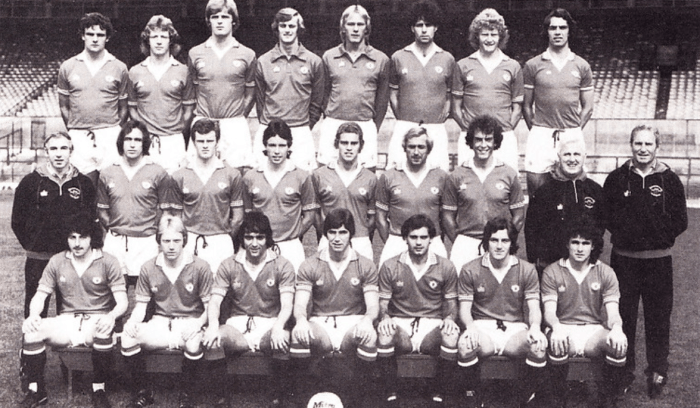
Sexton (far right) and the Manchester United squad

It was said by comparison to the outspoken Docherty, Sexton’s measured, quiet approach didn’t fit well with such a high profile club which then, as now, was constantly under the media spotlight.

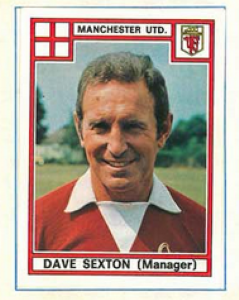
The press dubbed him ‘Whispering Dave’ and although some signings, like Ray Wilkins, Gordon McQueen and Joe Jordan, were successful, he was ridiculed for buying striker Garry Birtles for £1.25m from Nottingham Forest: it took Birtles 11 months to score his first league goal for United.

Sexton took charge of 201 games across four years (with a 40 per cent win ratio) and he steered United to runners-up spot in the equivalent of the Premier League, two points behind champions Liverpool, in the 1979-80 season. United were also runners-up in the 1979 FA Cup final, losing 3-2 to a Liam Brady-inspired Arsenal.

As he said in a subsequent interview: “I really enjoyed my time at United. You are treated like a god up there and the support is fantastic. I had mixed success but it’s something that I wouldn’t have missed for the world.

“It’s tough at the top however and while other clubs would have been quite happy in finishing runners-up, it wasn’t enough for Man Utd. That’s the name of the game and I bear no grudges over it at all.”

As it happens, Sexton’s successor Ron Atkinson only managed to take United to third in the league (although they won the FA Cup twice) and it was another seven seasons before they were runners-up again under Alex Ferguson’s stewardship.

But back in 1981, United’s loss was Coventry’s gain and their delight at his appointment was conveyed in an excellent detailed profile by Rob Mason in 2019.

The new Coventry boss saw City beat United 2-1 in his first game in charge

“By the time the name of Dave Sexton was being put on the door of the manager’s office at Highfield Road the gaffer was in his fifties and a highly regarded figure within the game,” wrote Mason. “That sprang from the style of pass and move football he liked to play. His was a cultured approach to the game and Coventry supporters could look forward to seeing some attractive football.”

One of the happy quirks of football saw his old employer take on his new one on the opening day of the 1981-82 season – and the Sky Blues won 2-1! They won by a single goal at Old Trafford that season too, but overall away form was disappointing and in spite of a strong finish (seven wins, four draws and one defeat) they finished 14th – a modest two-place improvement on the previous season.

On a limited budget, Sexton struggled to get a largely young squad to make too much progress but he did recruit former England captain Gerry Francis, who’d been his captain during heady days at QPR, and he was a good influence on the youngsters.

Sexton’s second season in charge began well but ended nearly disastrously with a run of defeats leaving them flirting with relegation, together with Brighton. One of his last league games as City manager was in the visitors’ dugout at the Goldstone. Albion beat the Sky Blues 1-0 courtesy of a Terry Connor goal on St George’s Day 1983 – but it was Sexton’s side who escaped the drop by a point. Albion didn’t.

Coventry’s narrow escape from relegation cost Sexton his job (although he remained living in Kenilworth, Warwickshire) and it proved to be his last as a club manager, although he was involved as a coach when Ron Atkinson’s Aston Villa finished runners up in the first season (1992-93) of the Premier League – behind Ferguson’s United, who won their first title since 1967.

Villa beat United at home and nicked a point at Old Trafford and ahead of the drawn game Richard Williams of The Independent dropped in on a Villa training session to interview Sexton.

Sexton was happy to be working with the youth team, the young pros and the first team. “Mostly I’ve been concerned with movement, up front and in midfield. Instead of the traditional long ball up to the front men, approaching the goal in not such straight lines,” he explained.

The quiet Sexton had a valid retort to the reporter’s surprise that he should be working in the same set-up as the flamboyant Atkinson. “It’s like most stereotypes,” he said. “They’re never quite as they seem to be. Ron’s got a flamboyant image, but actually he’s an idealist, from a football point of view.

“He’s got a vision, which might not come across from the stereotype he’s got. I suppose it’s the same with me. I’m meant to be serious, which I am, but I like a bit of fun, too. And, obviously, the thing we’ve got in common is a love of football.”

Relieved to be more in the background than having to be the front man, Sexton told Williams: “The reason I’m in the game in the first place is that I love football and working with footballers, trying to improve them individually and as a team.

“So, to shed the responsibility of speaking to the press and the directors and talking about contracts, it’s a weight off your shoulders. Now I’m having all the fun without any of the hassle.”

Atkinson had invited his United predecessor to join him at Villa after he had retired from his job as the FA’s technical director of the School of Excellence at Lilleshall, and coach of the England under 21 team.

It had been 10 years since Bobby Robson had appointed him as assistant manager to the England team (Sexton had coached Robson at Fulham). He had previously been involved coaching England under 21s alongside his club commitments since 1977 leading the side to back-to-back European titles in 1982 and 1984. The 1982 side, who beat West Germany 5-4 on aggregate over two legs, included Justin Fashanu and Sammy Lee, and in a quarter final v Poland he had selected Albion’s Andy Ritchie, somewhat ironically considering he had sold him to the Seagulls when manager at United.

In April 1983, Albion’s Gary Stevens played for Sexton’s under 21s in a European Championship qualifier at Newcastle’s St James’ Park, which was won 1-0. The following year, Stevens, by then with Spurs, was in the side that met Spain in the final, featuring in the first of the two legs, a 1-0 away win in Seville. Somewhat confusingly, his Everton namesake featured in the second leg, a 2-0 win at Bramall Lane. England won 3-0 on aggregate. Winger Mark Chamberlain, later an Albion player, also played in the first leg.

After the Robson era, Sexton worked with successive England managers: Venables, Hoddle and Keegan. When Eriksson became England manager in 2001, he invited Sexton to run a team of scouts who would compile a database and video library of opposition players – a strategy Sexton had pioneered three decades previously.

Viewed as one of English football’s great thinkers, Sexton had a book, Tackle Soccer, published in 1977 but away from football he had a love of art and poetry and completed an Open University degree in philosophy, literature, art and architecture. He was awarded an OBE for services to football in 2005.

Sexton was always a welcome guest at Brighton and here receives a reminder of past glories from Dick Knight

Confrontation was seldom far away in Micky Adams’ career

THE FIRST player ever to be sent off in a Premier League game managed Brighton twice.

Fiery Micky Adams saw red playing for Southampton when he decked England international midfielder Ray Wilkins.

“People asked me why I did it. I said I didn’t like him, but I didn’t really know him,” Adams recalls in his autobiography, My Life in Football (Biteback Publishing, 2017).

It was only the second game of the 1992-93 season and Adams was dismissed as Saints lost 3-1 at Queens Park Rangers.

Adams blamed the fact boss Ian Branfoot had played him in midfield that day, where he was never comfortable.

“He (Wilkins) was probably running rings around me. I turned around and thumped him. I was fined two weeks’ wages and hit with a three-match ban.”

It wasn’t the only time he would have cause not to like Wilkins either. The former Chelsea, Manchester United and England midfielder replaced Adams as boss of Fulham when Mohammed Al-Fayed took over.

His previously harmonious relationship with Ray’s younger brother, Dean, turned frosty too. When Adams first took charge at the Albion, he considered youth team boss Dean “one of my best mates”. But the two fell out when Seagulls chairman Dick Knight decided to bring Adams back to the club in 2008 to replace Wilkins, who’d taken over from Mark McGhee as manager.

“He thought I had stitched him up,” said Adams. “I told him that I wanted him to stay. We talked it through and, at the end of the meeting, we seemed to have agreed on the way forward.

“I thought I’d reassured him enough for him to believe he should stay on. But he declined the invitation. He obviously wasn’t happy and attacked me verbally. I did have to remind him about the hypocrisy of a member of the Wilkins family having a dig at me, particularly when his older brother had taken my first job at Fulham.

“We don’t speak now which is a regret because he was a good mate and one of the few people I felt I could talk to and confide in.”

With the benefit of hindsight, Adams also regretted returning to manage the Seagulls a second time considering his stock among Brighton supporters had been high having led them to promotion from the fourth tier in 2001. The side that won promotion to the second tier in 2002 was also regarded as Adams’ team, even though he had left for Leicester City by the time the Albion went up under Peter Taylor.

Adams first took charge of the Seagulls when home games were still being played at Gillingham’s Priestfield Stadium.  Jeff Wood’s short reign was brought to an end after he’d failed to galvanise the side following Brian Horton’s decision to quit to return to the north. Horton took over at Port Vale, where Adams himself would subsequently become manager for two separate stints.

Back in 1999, though, Adams had been at Nottingham Forest before accepting Knight’s offer to take charge of the Albion. He’d originally gone to Nottingham to work as no.2 to Dave Bassett but Ron Atkinson had been brought in to replace Bassett and Adams was switched to reserve team manager.

The Albion job gave him the opportunity to return to front line management, a role he had enjoyed at Fulham and Brentford before regime changes had brought about his departure from both clubs.

On taking the Albion reins, Adams said: “For too long now this club has, for one reason and another, had major problems. The one thing that has remained positive is the faith the supporters have shown in their club.

“The club has to turn around eventually and I want to be the man that helps to turn it around.”

The man who appointed him, Knight, said: “Micky is a formidable character with a proven track record. He knows what it takes to get a club promoted from this division. But, more than that, Micky shares our vision of the future and wants to be part of it. That is why I have offered him a four-year contract and he has agreed to that commitment.”

Not long after taking over the Albion hotseat, he was happy to say goodbye to the stadium he’d previously known as home when a Gillingham player in the ‘80s and it was a revamped squad he assembled for the Albion’s return to Brighton, albeit within the confines of the restricted capacity Withdean Stadium.

Darren Freeman and Aidan Newhouse, two players who’d played for Adams at Fulham, scored five of the six goals that buried Mansfield Town in the new season opener at the ‘Theatre of Trees’.

Considering he was only too happy to be photographed supporting the campaign to build the new stadium at Falmer, it’s disappointing to read in his autobiography what he really thought about it.

“My mates and I nicknamed it ‘Falmer – my arse’ although I never said this to Dick’s face,” he said. “There was always so much talk and we never felt like it was going to get done.”

The turning point in his first full season in charge was the arrival of Bobby Zamora on loan from Bristol Rovers. “The first time I saw him he came onto the training ground; he looked like a kid. But he was tall and gangly with a useful left foot; there was potential there.”

Interestingly, considering Adams makes a point of saying he usually ignored directors who tried to get involved on the playing side, he took up Knight’s suggestion that the side should switch to a 4-4-2 formation – and the Albion promptly won 7-1 at Chester with Zamora scoring a hat-trick!

After a so-so first season back in Brighton, not long into the next season Adams was forced to replace his no.2, Alan Cork, with Bob Booker because Cork was offered the manager’s job at Cardiff City, at the time owned by his former Wimbledon chairman, Sam Hammam. Adams reckoned Booker’s appointment was one of the best decisions he ever made.

Surrounded by players who had served him well at Fulham and Brentford, together with the additions of Zamora, Michel Kuipers and Paul Rogers, Adams and Booker steered Albion to promotion as champions. Zamora was player of the season and he and Danny Cullip were named in the PFA divisional XI.

Not long into the new season, the lure of taking over as manager at a Premier League club saw Adams quit Brighton, initially to become Bassett’s no.2 at Leicester City, but with the promise of succeeding him.

“While I thought I had a shot at another promotion, it wasn’t a certainty,” Adams explained. “I knew I had put together a team of winners, and I knew I had a goalscorer in Bobby Zamora, but football’s fickle finger of fate could have disrupted that at any time.”

He admitted in the autobiography: “Had I been in charge at the age of 55, rather than 40, then I perhaps would have taken a different decision.”

While Albion enjoyed promotion under Taylor, what followed at Leicester for Adams was a lot more than he’d bargained for and, to his dismay, he is still associated with the ugly shenanigans surrounding the club’s mid-season trip to La Manga, to which he devotes a whole chapter of his book, aiming to set the record straight.

On the pitch, he experienced relegation and promotion with the Foxes and he doesn’t hold back from lashing out about ‘moaner’ Martin Keown, “one of the worst signings of my career”. Eventually, he’d had enough, and walked away from the club with 18 months left on his contract.

After a break in the Dordogne area of France, staying with at his sister-in-law and her husband’s vineyard, he looked for a way back into the game. He was interviewed for the job of managing MK Dons but was put off by a Brighton-style new-ground-in-the-future scenario. Then Peter Reid, a former Southampton teammate, was sacked by Coventry City. He put his name forward and took charge of a Championship side full of experienced players like Steve Staunton and Tim Sherwood.

The side’s fortunes were further boosted by the arrival of Dennis Wise, but, in an all-too-familiar scenario Adams had encountered elsewhere, the chairman who appointed him (Mike McGinnity) was replaced by Geoffrey Robinson. It wasn’t long before it was obvious the relationship was only going to end one way. As Adams tells it, Robinson was influenced by lifelong Sky Blues fan Richard Keys, the TV presenter, and it was pretty much on his say-so that Adams became an ex-City manager after two years in the job.

With an ex-wife and three children to support as well as his partner Claire, Adams couldn’t afford to be out of work for long and fortunately his next opportunity came courtesy of Geraint Williams, boss of newly promoted Colchester United, who took him on as his no.2.

However, it only got to the turn of the year before he was out of work once again, although, from what he describes, he wasn’t enjoying his time with the U’s anyway because Williams kept him at arm’s length when it came to tactics and team selection.

He was amongst the ranks of the unemployed once again when Albion chairman Knight gave him a call, but, with the benefit of hindsight, he said: “Going back turned out to be one of the biggest mistakes of my life.”

Adams blamed the backdrop of “the power struggle” between Knight and Tony Bloom on the lack of success during his second stint in the hotseat, and he reckons it was Bloom who “demanded my head on a platter”. The fateful meeting with Knight, when a parting of the ways was agreed, famously took place in the Little Chef on the A23 near Hickstead.

Looking back, Adams conceded he bowed to pressure from Knight to make certain signings – namely Jim McNulty, Jason Jarrett and Craig Davies in January 2009 – who didn’t work out. He reflected: “I shouldn’t have taken the job in the first place. I’d let my heart rule my head but, in fairness, I didn’t have any other offers coming through and it seemed like a good idea at the time.

“I wouldn’t ever say he (Knight) let me down, but he had his idea about players. I did listen to him, and maybe that’s where I went wrong.”

He added: “Going back to a club where success had been achieved before felt good, yet, the second time around, the same spark wasn’t there no matter how hard I tried.”

Born in Sheffield on 8 November 1961, Micky was the second son of four children. It might be argued his penchant for lashing out could have stemmed from seeing his father hitting his mother, which he chose to spoke about at his father’s funeral. Adams is obviously not sure if he did the right thing but he felt the record should be straight.

The Adams family were always Blades rather than Wednesdayites and, at 15, young Micky was in the youth set-up at Bramall Lane having made progress with Sunday league side Hackenthorpe Throstles.

While he thought he had done well under youth coach John Short during (former Brighton player) Jimmy Sirrel’s reign as first team manager, Sirrel’s successor, Harry Haslam, replaced Short and, not long afterwards, Adams was released.

However, Short moved to Gillingham and invited the young left winger to join the Gills. Adams linked up with a group of promising youngsters that included Steve Bruce.

In September 1979, he had a call-up to John Cartwright’s England Youth side, going on as a sub in a 1-1 draw with West Germany, and starting on the left wing away to Poland (0-1), Hungary (0-2) and Czechoslovakia (1-2) alongside the likes of Colin Pates, Paul Allen, Gary Mabbutt, Paul Walsh and Terry Gibson.

Adams honed his craft under the tutelage of a tough Northern Irishman Bill ‘Buster’ Collins and began to catch the attention of first team manager Gerry Summers and his assistant Alan Hodgkinson, who had played 675 games in goal for Sheffield United.

He made his debut aged just 17 against Rotherham United but didn’t properly break through until Summers and Hodgkinson were replaced by Keith Peacock (remember him, he was the first ever substitute in English football, in 1965, when he went on for Charlton Athletic against John Napier’s Bolton Wanderers) and Paul Taylor.

“Keith saw me as a full-back and that was probably the turning point of my career,” Adams recalled.

Once Adams and Bruce became regulars for the Gills, scouts from bigger clubs began to circle and at one point it looked like Spurs were about to sign Adams. That was until he came up against the aforementioned Peter Taylor, who was playing on the wing for Orient at the time (having previously played for Crystal Palace, Spurs and England).

“He nutmegged me three times in front of the main stand and, to cut a long story short, that was the end of that. Gillingham never heard from Spurs again,” Adams remembered.

Even so, Adams did get a move to play in the top division when Bobby Gould signed him for Coventry City. Managerial upheaval didn’t help his cause at Highfield Road and when John Sillett preferred Greg Downs at left-back, Adams dropped down a division to sign for Billy Bremner’s Leeds United (pictured below right with the legendary Scot).

“He had such a big influence on my career and life that I wouldn’t have swapped it for the world,” said Adams. But life at Elland Road changed with the arrival of Howard Wilkinson, and Adams found himself carpeted by the new boss after admitting punching physio Alan Sutton for making what an injured Adams considered an unreasonable demand to perform an exercise routine even though he was in plaster at the time.

Nevertheless, Adams admits he learned a great deal in terms of coaching from Wilkinson, especially when an improvement in results came about through repetitive fine-tuning on the training pitch.

“It is the one aspect of coaching that is extremely effective, if delivered properly,” said Adams. “I learnt this from Howard and took this lesson with me throughout my coaching and managerial career.”

However, Adams didn’t fit into Wilkinson’s plans for Leeds and he was transferred to Southampton, managed by former Aston Villa, Saints and Northern Ireland international Chris Nicholl. Adams joined Saints in the same week as Neil ‘Razor’ Ruddock and the pair were quickly summoned by Nicholl to explain the large size of the hotel bills they racked up.

Adams moved his family from Wakefield to Warsash and he went on to enjoy what he reflected on as “the best few years of my playing career”. He was at the club when a young Alan Shearer marked his debut by scoring a hat-trick and the “biggest fish in the pond at the Dell” was Jimmy Case.

Adams described the appointment of Branfoot in place of the sacked Nicholl as a watershed moment in his own career. “Overall he was decent to me and I found his methods good,” he said. And he pointed out: “I was getting older, I’d started my coaching badges and I already had one eye on my future.”

Adams recalled an incident during a two-week residential course at Lilleshall, after he had just completed his coaching badge, when he dislocated his shoulder trying to kick Neil Smillie.

“I was left-back and he was right-wing, and he took the piss out of me for 15 minutes. The fuse came out and I decided to boot him up in the air,” Adams recounted. “The only problem was that I missed. I fell over and managed to dislocate my shoulder hitting the ground. It was the worst pain I’ve ever had.”

If life was sweet at Southampton under Branfoot, that all changed when he was replaced by Alan Ball and the returning Lawrie McMenemy. Adams and other older players were left out of the side. Simon Charlton and Francis Benali were preferred at left-back. Eventually Adams went on a month’s loan to Stoke City, at the time managed by former Saints striker Joe Jordan, assisted by Asa Hartford.

On his return to Southampton, and by then 33, Adams was given a free transfer.

Former boss Branfoot came to his rescue, inviting him to move to League Two Fulham as a player-coach in charge of the reserve team. Branfoot also signed Alan Cork and he and Adams began a longstanding friendship that manifested itself in becoming a management pair at various clubs.

On the pitch, Branfoot struggled to galvanise Fulham and, with the team second from bottom of the league, he was sacked – and Adams replaced him. He kept Fulham up by improving fitness levels and introducing more of a passing game.

But he knew big changes were needed if they were going to improve and he gave free transfers to 17 players, despite clashing with Jimmy Hill, who had different ideas.

An admirer of what Tony Pulis was doing at Gillingham, Adams signed three of their players: Paul Watson, Richard Carpenter and Darren Freeman. He also got in goalkeeper Mark Walton and centre back Danny Cullip. Simon Morgan was one of the few who wasn’t let go, and Paul Brooker emerged as a skilful winger. All would later play under him at Brighton.

Promotion was secured and Adams was named divisional Manager of the Year but after all the celebrations had died down Mohamed Al-Fayed bought the club and things changed dramatically.

“The club was in a state of flux as it tried desperately to come to terms with its new status as a billionaire’s plaything,” Adams acerbically observed. “From having nothing, we had everything.”

Before too long, in spite of being given a new five-year contract, Adams was out of the Craven Cottage door, replaced by Wilkins and Kevin Keegan.

But he wasn’t out of work for long because Branfoot’s former deputy, Len Walker, introduced him to the chairman of Swansea City, who were on the brink of relieving Jan Molby of his duties as manager.

Various promises were made regarding funds that would be made available to him but when they were not forthcoming he realised something was not right and he quit, leaving Cork, the deputy he’d taken with him, to take over.

By his own admission, if he hadn’t been sitting on the £140,000 pay-off he’d received from Fulham, he probably would have stayed. As it was, he was out of work once again…..until he had a ‘phone call from David Webb, the former Chelsea and Southampton defender who was the owner of Brentford, but in the process of trying to sell the club.

His brief was to keep the side in the league and to make it attractive to potential purchasers. It was at Griffin Park that he first met up with the aforementioned Bob Booker, who was managing the under 18s at the time. “He is one of the most loyal and trustworthy friends I have ever known,” said Adams. “He would do anything for you.”

However, although he signed the likes of Cullip and Watson from Fulham, he wasn’t able to stop the Bees from being relegated. During the close season, former Palace chairman Ron Noades bought the club and announced he was also taking over as manager.

Once again, Adams was out of a job but his next step saw him appointed as no.2 to Dave Bassett at Nottingham Forest.

Which brings us almost full circle in the Adams career story, but not quite.

After the debacle of his second stint in charge of Brighton, he was twice manager at Port Vale, each spell straddling what turned out to be a disastrous period in charge of his family’s favourite club, Sheffield United.

It was Adams who gave a league debut to Harry Maguire during his time at Bramall Lane, but the side were relegated from the Championship on his watch, and he was sacked.

Adams took charge of 249 games as Vale boss but quit after a run of six defeats saying he’d fallen out of love with the game.

It didn’t prevent him having another go at it, though. He went to bottom of the league Tranmere Rovers and admitted in his book: “It was arrogance to think I could turn round a club that had been relegated twice in two seasons.”

In short, he couldn’t and he ended up leaving two games before the end of what was their third successive relegation.

“It was a really poor end to a career that had started so promisingly at Fulham,” he said.

Nicky Forster was the definition of a goalscoring thoroughbred

NICKY FORSTER played for and managed Brentford as well as captaining Brighton and scoring a vital relegation-saving goal into the bargain.

The Surrey-born striker, who played alongside David Beckham for England under-21s, scored more than 200 goals in 700 games and it always seemed a shame that his time with the Seagulls didn’t come sooner in his career.

He built a reputation for finding the back of the net at first club Gillingham and was prolific in his first spell with the Bees but he viewed his six years leading the line for Reading as his most successful time in the game.

Forster plundered 67 goals in 179 games (plus 35 as a sub) in six years with the Royals, mostly playing under Alan Pardew and Steve Coppell, but he left for pastures new before they reached the Premier League.

A free transfer took him to Ipswich Town, where Joe Royle’s side were competing in the Championship, and, although Forster top-scored for the Tractor Boys, his total of seven typified a rather lacklustre campaign. One of those goals came against Brighton on Easter Saturday when the relegation-bound Seagulls pulled off a shock 2-1 win courtesy of goals from on-loan Gifton Noel-Williams and young Joel Lynch.

Forster scored in each of the three remaining games that season but they were his last for Town because he moved to link up with his former Reading teammate, Phil Parkinson, at Hull City, who paid £250,000 for the striker’s services. Forster scored six times for City as the side battled to retain their tier two status. Albion tried to sign Forster in January, but Parkinson’s successor Phil Brown wanted to keep him, and they rejected Albion’s £100,000 bid.

Albion finally got their man for £25,000 less in the summer that year, and, in a side largely made up of promising youngsters, in Forster they gained more than just an experienced striker.

Brighton fans were given an idea of what to expect from the new signing when his former Reading teammate Bas Savage told the Argus: “I played a few games with him in the first team and he will definitely bring goals. He is proven wherever he has been.

“He is also a very intelligent player. He makes good runs, works hard, has got very good pace and he can finish, so he will be an asset to Brighton, especially in League One. I think he will really shine.

“He will fit in easily to the dressing room as well. He was a joker at Reading, very funny and a good, bubbly character to have around.”

Savage added: “He was one of the top strikers at Reading and I learnt off all of them.

“I was a young boy at the time and, whoever it is that plays, Alex Revell, Nathan (Elder), Gatts (Joe Gatting), I can see them working well with Fozzy.

“It will be good to link up with him again and hopefully show our stuff together. I know Fozzy’s strengths and I will be looking to help him along in the same way that he can help me along. He brings experience to the team.”

Emerging defender Tommy Elphick was certainly appreciative of the new arrival. “Apart from in games, he brings a competitive edge to training,” he said. “In my eyes he is a bit of a legend really, the model pro on and off the pitch.”

When interviewed by Mike Ward for the matchday programme later that season, Forster declared: “I really am enjoying it here at Brighton. I like being on the training ground and I enjoy playing.

“I am now getting old in football terms, but I have got as much enthusiasm and energy for the game now as I had when I started. I feel that I am a better player now and I am enjoying my football as much as ever.”

Sure enough, with 19 goals in 48 appearances in the 2007-08 season, there was no question Forster proved a great addition to Dean Wilkins’ squad, and he took over as captain when Dean Hammond left the club under a cloud.

In the second half of the season, after Glenn Murray was signed from Rochdale for £300,000, manager Wilkins declared to the Argus: “I think we have got one of the best strike pairs in the division, one of the most threatening.

“When we have got possession and play with a bit of quality they are a really potent pair. If you have got a pair that score 20 goals a season you would expect to be quite successful.”

Unfortunately, seventh place in League One (seven points off the play-off places) was not quite successful enough for chairman Dick Knight, who turned to former boss Micky Adams to steer Albion’s fortunes in the 2008-09 season (a furious Wilkins declining the offer of continuing as first team coach).

While Forster got off to a great start under Adams, scoring a last-minute goal to seal a 2-1 win for the Seagulls in the season-opener at Crewe Alexandra, the Albion’s fortunes gradually unravelled as Adams chopped and changed the side with what, on reflection, were too many loan signings.

For a while, things didn’t look too clever after Russell Slade had been parachuted in to try to stave off the threat of relegation.

At a time when the new boss could really have done with Forster and Murray firing on all cylinders, both were sidelined with injuries. Forster missed eight matches with what was thought might be an anterior cruciate ligament injury in his knee.

Thankfully another former Brentford striker, Lloyd Owusu, stepped into the breach to score some vital goals, together with loan signing Calvin Andrew and the rejuvenated Gary Hart.

Nevertheless, going into the last game of the season, at home to Stockport County at Withdean, Albion still needed to win to avoid the relegation trapdoor.

When Hart left the action early and his replacement Andrew had to be withdrawn at half-time with what turned out to be a bad ACL injury, Slade had no option but to turn to the by-no-means-fit Forster to enter the fray from the bench for a crucial second half.

Fortunately, after County ‘keeper Conrad Logan could only parry a shot from Gary Dicker, Forster was on hand to stab in the only goal of the game from six yards, sparking massive celebrations.

Forster later conceded in an Argus interview: “It wasn’t quite right but I got through the game and the goal was a gift. I didn’t have to be particularly mobile to score it.

“I dosed up on tablets and rehabbed and was really determined to be involved in that game. Thankfully it worked out for me and for Brighton. But I wasn’t 100 per cent. I still had that niggling feeling.”

In a subsequent exploratory operation, it turned out that torn cartilage had been Forster’s problem and he underwent surgery during the close season, somewhat ironically the procedure being delayed a little while because the surgeon involved was operating on Andrew!

“When they took me down to the anaesthetist’s room, there was a guy in there before me,” said Forster. “I had to wait ten or 15 minutes and they said it was an ACL reconstruction going on. I didn’t realise it was Calvin.”

Tony Bloom took over from Dick Knight as Albion chairman that summer and, when the new season got under way, Slade had decided to give the captain’s armband to defender Adam Virgo (Forster remained club captain).

The opening part of the season went horribly wrong and, with only three wins in their first 15 matches, Slade was replaced by effervescent Uruguayan Gus Poyet.

By the end of January, Forster had scored 15 times in 27 matches (plus three as sub), but the beginning of the end of his time with the Albion was nigh when a contractual dispute went public.

The player, by then 36, wanted to know whether he was going to be offered a contract the following season, but that commitment wasn’t forthcoming. Forster aired his dissatisfaction in the media and Poyet left him out of the side.

Forster subsequently clarified his position in a statement on the club website, saying: “I have thoroughly enjoyed my playing years with Brighton and genuinely hoped – and still do – that I would remain at Brighton until the end of my playing days, hopefully with the opportunity to take up a training role.

“The decision to delay the offering of contracts makes life very difficult, particularly for players of my age. I have always been totally committed to Brighton and will continue to be so.”

While the air was cleared, and he was restored to the line-up for a 1-1 draw away to Leeds, that turned out to be his last start for the Albion. Only a matter of weeks later he was sent out on loan to Charlton Athletic until the end of the season, once again linking up with former teammate Parkinson.

Nevertheless, his 51 goals across two and a half seasons at the club were the best measure of his contribution and he was later a more than interested onlooker of Brighton’s fortunes when his stepson, Jake Forster-Caskey forced his way into Poyet’s Championship side.

Born in Caterham, Surrey, on 8 September 1973, Forster was comparatively late into the game, staying on at school to take A-levels.

But he had a lucky break when he played for non-league Horley Town against Gillingham in a friendly. “It was a real right-place-at-the-right-time scenario,” he told Ward in another Albion matchday programme interview.

Gillingham offered him the chance to become a professional and after impressive displays for their youth and reserve sides, he duly signed professional terms in May 1992 when Damien Richardson was in the manager’s chair.

The Gills sent him out on loan to Southern League Margate and Hythe Town. Forster’s career stats are comprehensively recorded by the Margate history website, even though he only played one game for them, when he scored with a clever lob after three minutes of his debut.

Back with the Gills, Forster made his first team debut in September 1992, going on as sub in a 4-1 home win over Wrexham. He went on to establish himself in the side under former Charlton striker Mike Flanagan in the 1993-94 season, top scoring with 18 goals. It was an achievement which prompted Brentford to pay a fee of £320,000 to take him to Griffin Park in June 1994.

The 1994-95 season is firmly etched in the annals of Brentford’s history because David Webb’s side were denied promotion to the elite when a one-off organisational blip meant the fledgling Premier League only took one promoted side from the division below – and the Bees finished second!  

Forster had proved a major hit at his new club alongside strike partner Robert Taylor, with the pair netting 47 goals between them (Forster got 26 of them). But automatic promotion was denied when Brentford “choked” in the last month of the season and their agony was compounded when they lost on penalties to Neil Warnock’s Huddersfield in the play-off semi-finals.

For Forster personally, however, his goalscoring prowess brought him to the attention of the international selectors and in June 1995 he earned four England under 21 caps at the Toulon tournament in France, making his debut in a 2-0 defeat against Brazil in a team featuring future full internationals Beckham and Phil Neville.

Forster scored England’s only goal in his third match for Ray Harford’s side, as they beat Angola. He also played in the 2-0 win over Malaysia and in the semi-final against France, when they lost 2-0.

The Bees failed to follow up their near miss the following season, finishing 15th and, although at one point there was talk of Crystal Palace preparing a £2m bid for Forster’s services, it came to nothing. The striker damaged knee ligaments in October 1995 and managed to find the net just the eight times by the season’s end.

It promised to be a different story in 1996-97, though. With Carl Asaba and Marcus Bent supplementing the Forster and Taylor strikeforce, Brentford got off to a flyer and topped what is now the Championship courtesy of an 11-match unbeaten run at the start of the season.

However, the bcfctalk blog was incredulous at what happened next. “We were coasting at the top of the league when the quite staggering decision was taken in January to sell Nicky Forster to arch-nemesis Birmingham City for a mere £700,000.

“He was never replaced, the prolific Carl Asaba was mysteriously shifted out wide to the left wing and the remaining 17 league matches produced a mere 18 points. We failed to score in ten of our last fourteen games and won only once at home after Christmas.”

Forster’s desire to progress his career didn’t play out well with the supporters of Brentford or Gillingham.

“I get booed every time I go there,” he told Brighton’s matchday programme. “It’s sad because I feel I did well for both clubs. And what they paid for me wasn’t a huge amount, so value-for-money wise I feel I did very well for them. It’s not something I worry greatly about, but I do think it’s time they learnt to forgive and forget.

“I don’t think they can really begrudge a player wanting to move on and better himself, better his career. Sometime fans can be a bit fickle!”

While Forster hoped to establish himself at Birmingham, he struggled to get a starting berth in a side managed by former Blues playing legend Trevor Francis. Paul Furlong and Peter Ndlovu were preferred up front, and later Dele Adebola. Forster invariably had to be content with involvement of the bench. Indeed, 46 of his 75 Blues appearances were as a substitute and, when he left for Reading in June 1999, he’d got just 12 goals to his name.

That all changed once he’d made the switch to the Madejski Stadium. The goals flowed (in 2002-03 there were two hat-tricks included in his season’s tally of 17) and in his six seasons with the Royals he notched 67 goals in 214 appearances (35 of which were as a sub).

His form tailed off in his final season with Reading and he began to look elsewhere because he wanted a longer contract than the club were prepared to offer.

Nevertheless, he respected manager Coppell and, when later in his career he took over as boss at Brentford, he said: “I was with Steve Coppell at Reading and I like his manner and demeanour. He is not a ranter and raver. I just like the way he goes about his business.

“He is quite a subdued guy when he speaks, but he speaks a lot of sense. When he talked to me, whether I liked it or not, I couldn’t really argue because it made a lot of sense.”

When Forster returned to Griffin Park as a player at the start of the 2010-11 season, he reflected: “The club holds many happy memories for me. Both the club and I have moved on over the years but I still have the hunger and the mobility to give a good account of myself.”

Manager Andy Scott added: “His goalscoring is a major attraction as that is an area where we have struggled to compete with other teams.

“His ambitions match those of the management team. He is a very dedicated footballer who will add experience, competition and, more importantly, goals to the team.”

Sadly, it didn’t pan out well with Forster only making 12 starts and scoring once. After a topsy turvy six months, Scott and his assistant Terry Bullivant were dismissed and Forster took over as caretaker boss, assisted by Mark Warburton.

When the Bees collected 14 points from six games, the temporary stint was extended until the end of the season.

Remarkably during his brief tenure, Forster took charge of Brentford at Wembley for the final of the Johnstone’s Paint Trophy, which they lost 1-0 to Carlisle United.

Brentford centre back Leon Legge said later: “Growing up, Wembley was always a sacred ground that not many people get to play at. I wanted to win so bad but it was just a shame we came second-best, especially against Carlisle, who we’d played just over a week earlier and beaten 2-1. Everything went for them that day.

“I know the gaffer at the time [Nicky Forster] made a few changes and I don’t think many agreed with it – for example, Marcus Bean didn’t play when he’d been such a good player leading up to that game. I think that made a difference.

“I still remember looking at the crowd of 40,000 and to play in such a sacred ground in front of that many fans, whether we won or lost, it was a good experience.”

Despite leading Brentford to a mid-table finish, Forster was told he was not in the running for the job on a permanent basis, and Uwe Rösler was appointed instead.

Nonetheless, Forster decided management was his next step and announced an end to his playing days.

“I have had a fantastic career, but the time has come to cross over into management,” he said.

“I’ve scored 200 goals in 700 games and haven’t got anything left to achieve as a player, so I want to concentrate on management.”
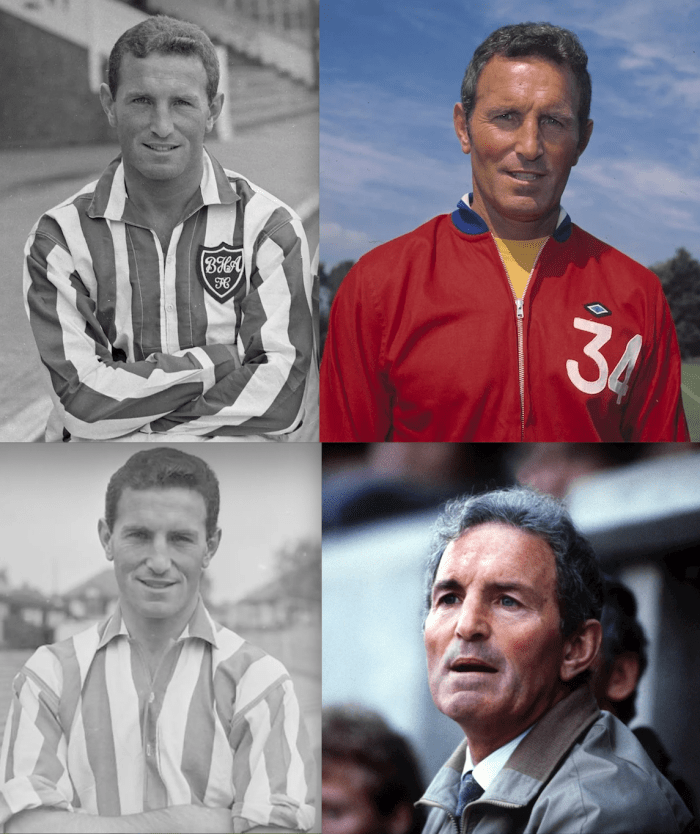
The eloquent Forster popped up on Sky Sports, covering Football League matches, and also brought his boots back out to play for Sussex County League side Lingfield.

Then, in September 2011, Forster was appointed player-manager of Blue Square Bet South club Dover Athletic, whose chairman Jim Parmenter said: “Nicky has had an impressive playing career at some big clubs and did very well during his time as manager at Brentford.

“As well as having both UEFA ‘A’ and ‘B’ licences, he is also a great man manager and motivator. Nicky is totally enthused by the prospect of managing the club and we look forward to a very successful future.”

Among his signings were former Brighton teammates Steven Thomson and young goalkeeper Mitch Walker.

Forster said: “I am delighted get Thommo down here at Crabble, especially as his signature was being chased by a number of other clubs both in our league and above. He is an experienced professional who is still hungry for success.”

Sadly, after a run of five successive defeats, his time in charge at Dover was brought to an end in January 2013 when he was replaced by the club’s former manager Chris Kinnear.

Two years later, Forster gave management another go taking charge of Conference South side Staines Town. But he quit after a year, telling getsurrey.co.uk: “I enjoyed every moment even though we had some low times, but it’s a learning experience and I left on good terms with the chairman and the fans who were great to me.”

In September 2016, Forster set up his own gym – The Spot Wellness Centre – in Godstone. As well as running that, he is now self employed and, on LinkedIn, describes himself as a goal setting coach and keynote speaker.

• Pictures from the Argus, Albion’s matchday programme and online sources.

‘Rolls’ Royce was surprise Christmas presence at QPR

IN THE DAYS before wall-to-wall media coverage of all things football, I can remember turning up at Loftus Road to watch a Boxing Day match between QPR and Brighton and wondering who on earth was in goal for the Albion.

It was in the Second Division days when Michel Kuipers was an almost permanent fixture between the sticks for the Seagulls (he’d played 46 consecutive games). But, on 26 December 2001, there was a stranger behind Danny Cullip and Simon Morgan.

He was certainly a stranger to the players, who’d only met him a few hours before kick-off, but, thankfully, he was well known to manager Peter Taylor.

It turned out, Kuipers had pulled a thigh muscle in the previous Saturday’s 2-2 draw at home to Chesterfield and, rather than chance rookie Will Packham, Taylor opted for an experienced ‘keeper who he’d signed twice before.

Taylor had hastily gone back to his previous employer, Leicester City, on Christmas Eve, to sign Simon Royce on loan to cover the period Kuipers was indisposed.

Royce did well to keep a clean sheet in what finished a 0-0 draw, having not had a chance to train with his new teammates.

It transpired Royce had only met them a few hours earlier, at Reigate, en route to Shepherd’s Bush, as the Argus reported, having spent Christmas Day with his family at his Essex home.

Royce managed to pull off decent saves in each half of the encounter at Loftus Road, stopping a goalbound Danny Shittu header in the first half and dealing with a 20-yard shot from crowd favourite Doudou in the second.

Albion’s Paul Watson hit the bar with one of his trademark free-kicks early in the second half while Cullip went close to breaking the deadlock from a Watson corner, only for his header to be cleared off the line by Karl Connolly.

Taylor knew what he was getting with Royce having signed him for both Southend United and the Foxes, where, under Taylor’s successor, Dave Bassett, the ‘keeper had slipped down the pecking order following a bout of laryngitis.

“I had been second choice all season at Leicester, but the way Dave Bassett works, if you are ill or injured he changes it and you have to work your way back,” Royce told the Argus. “I did so well last year, but, when you don’t play, you get forgotten just as quickly.”

He added: “I had been ill a couple of weeks before, so I had lost my place on the bench at Leicester.

“I’d not really played much reserve team football for three or four weeks, so when Peter asked me if I fancied playing a few games I jumped at the chance. It’s nice to keep yourself match fit.”

Royce admitted knowing the manager certainly helped him to drop down two divisions for the chance to play, but the main reason was to get some games under his belt.

“Dropping down a couple of divisions doesn’t bother me at all,” he said. “It’s still a decent standard and Brighton are flying high.

“There are some very good teams in the Second Division, like QPR and Blackpool, so it’s not a problem. I’ve played in the Second Division before with Southend and I quite enjoyed it.

“This is a perfect opportunity for me to get some games in and let people know I am still around.”

Royce was delighted to start his spell with a clean sheet – but that was as good as it got because he conceded 13 goals in the other five matches he played.

Three days after his debut, he let in two but saved a penalty in a 2-2 draw at Blackpool. Albion’s 10-game unbeaten away league record shuddered to a halt in a 3-0 defeat at Wigan, during which Royce needed treatment after being clattered by a Latics striker.

Physio Malcolm Stuart tends to the clattered Royce at Wigan

When Royce finally got to make his Withdean debut, against Cambridge United, he spoiled the occasion with a gaffe, pushing a long-range shot from Paul Wanless into the path of Luke Guttridge for an easy tap-in. Thankfully a Bobby Zamora hat-trick meant the Seagulls prevailed 4-3.

Royce’s penultimate game was a 2-1 win away to Chesterfield but three days later he bowed out in ignominy as Albion were thumped 4-0 by Steve Coppell’s Brentford in a live ITV Digital match, Ivar Ingimarsson and Steve Sidwell scoring two of the Bees goals.

Born in Forest Gate, London, on 9 September 1971, Royce began his football career with non-League Heybridge Swifts while working as a painter and decorator. At the age of 20, a £35,000 fee took him to Southend, signed by former Chelsea defender David Webb, who was managing the Shrimpers back then.

He made his debut for Southend in a 3-1 home win over Grimsby Town in March 1992.

In seven seasons at Roots Hall, Royce made 169 appearances in Divisions One and Two, a couple of them under Taylor, before getting a move to Premier League Charlton Athletic on a Bosman free transfer.

Addicks boss Alan Curbishley briefly promoted him from third to first choice when Andy Petterson was loaned out to Portsmouth and Sasa Ilic lost form. He kept four clean sheets in a row in eight Premier League matches in the 1998-99 season, but injury issues then sidelined him. He didn’t feature at all in the 1999-00 season and, with the arrival of Dean Kiely at The Valley, decided to link up again with Taylor at Leicester, again moving on a Bosman ‘free’.

“I couldn’t have asked for a better move,” Royce told the Daily Gazette. “I played under Peter at Southend and I can’t wait to work with him again because he’s a great coach.

“He had a hard time at Roots Hall, but Peter has matured into an excellent manager in recent years, picking up valuable experience with both the England under-21 side and Gillingham.

“I owe Peter a lot. He knew I was out of contract at Charlton this summer, but he promised me that he would take me to whatever club he was at this year.

“At the time we spoke, Peter was still with Gillingham and I’d have been happy to play for him there in the First Division. But Peter got the Leicester job and he has remained true to his word and brought me on board.”

Initially an understudy to Tim Flowers, Royce had a run of 19 Premier League matches in the second half of the 2000-01 season, keeping clean sheets on seven occasions.

David Lacey, the renowned football writer for The Guardian, even hinted at international recognition for him, after newly installed England manager Sven-Goran Eriksson had been to watch Ipswich Town beat Leicester 2-0 at Portman Road.

“Eriksson was here primarily to run an eye over Richard Wright, Ipswich’s once capped goalkeeper, although, since Wright had so little to do, he must have gone away more impressed by Simon Royce, whose saves kept alive Leicester’s hopes of a point,” wrote Lacey. “Royce, back in the Leicester side because of another injury to Tim Flowers, showed excellent agility and anticipation in keeping out headers from Alun Armstrong and Matt Holland as Ipswich increasingly dominated the match.”

Taylor told the journalist: “Simon Royce’s goalkeeping was the only positive thing to come out of our own performance.”

Any hopes Royce had of taking over the no.1 shirt permanently at Leicester were dashed when Taylor paid £2.5m to install Ian Walker as his first choice ‘keeper.

After his loan spell at Brighton, he went on a similar arrangement to Manchester City later that same season, although he didn’t play any first team games.

The following season he went on loan to QPR, where he featured 17 times.

On his release from Leicester, he moved back to Charlton on a two-year contract, but made only one Premier League appearance in 2003-04.

He was quite literally a loan Ranger in 2004-05, initially playing a couple of games for Luton Town and then returning to QPR, making 13 appearances in their Championship side.

He made a permanent move to Loftus Road in 2005 and, in an away game at Stoke City, was in the news when caught up in a crowd invasion, although manager Ian Holloway said his ‘keeper was fine: “Simon Royce is a big lad and he can look after himself.”

Royce recounted the incident in an interview for brentfordfc.com. “We’d won the game 2-1. I always kept a towel and a water bottle by my left-hand post, so I bent down to pick them up and felt someone jump on my back.

“At first, I assumed it was a team-mate because we’d won the game, but then I looked down and saw a pair of trainers and felt a blow to the back of my head. It was a Stoke supporter who’d run on to the pitch, shouting ‘I’m going to do you, Roycey!’

“I had my hand on the post so managed to pick him up and throw him in the net. After that the stewards rushed on and we had more supporters on the pitch – it was complete mayhem. The fan in question was sentenced to four months in prison for assault.”

Royce managed to hold down a regular starting berth for the first time in several years during his time in west London, playing 32 games in 2005-06 and 22 in 2006-07.

However, he was back on the loan circuit, briefly, when in April 2007 he moved to League One Gillingham to play in their last three games of the season.

During the summer break, he signed for the Kent club on a permanent basis. He featured in 36 matches in the 2007-08 season, and was named Supporters’ Player of the Year, although the Gills were relegated.

When Royce penned a new one-year deal in the summer of 2008, manager Mark Stimson told the club website: “I’m delighted with Simon’s decision.  He’s going to be a vital player for us next season and one that we will need to help get this club back to where we want to be.”

He was first-choice ‘keeper throughout the 2008-09 season, making 49 appearances as Gills were promoted back to League One via the League Two play-off final at Wembley. Royce, by then 38, said keeping a clean sheet as Gillingham beat Shrewsbury Town 1-0 was one of his career highlights. Former Seagulls Albert Jarrett and Mark McCammon were on the Gillingham subs bench that day.

Unfortunately, in December 2009, Royce sustained several injuries in a car accident.

Stimson told BBC Radio Kent: “His knee is in a bad way and he has a bad neck. He’s going to be out for a couple of weeks. He’s had a scan on his knee, we should get the results of that this week.

“He’s also had X-rays on his neck. I’m praying it’s just a couple of weeks because he’s a big player for us. Until we get the scan results we have to wait and see. He’s been a big part of it. He’ll be missed.”

As it turned out, Royce never regained the no.1 spot from Alan Julian, who’d stepped in to replace him, and he left Gillingham at the end of the season to take up a goalkeeper coaching job at Brentford, during which time former Albion no.2 David Button was among the goalkeepers he helped to develop.

Royce eventually left Griffin Park in the summer of 2018 after eight seasons with the Bees.In thanking him for his contribution, Phil Giles, Brentford’s co-director of football, told the club website: “He leaves behind a fantastic legacy, having developed some top goalkeepers during his time here, including Simon Moore, David Button, Dan Bentley, Jack Bonham and Luke Daniels.”

He returned to Gillingham as goalkeeper coach for the 2019-20 season, working with Bonham once again, and on 28 September 2019, at the age of 48, suddenly found himself on the substitute’s bench for Gills’ away game against Oxford United when reserve goalkeeper Joe Walsh suffered an injury just before kick-off. His previous involvement in a competitive match had been more than eight years earlier, for Brentford, in a 4-1 defeat to Dagenham & Redbridge.

Royce remained on the bench as Oxford won 3-0 and, at the season’s end, he left Priestfield as part of a Covid-related cost-cutting measure.

Pictures from various online sources.

Cards came up trumps for ex-Saints full-back Kevan Brown

FULL-BACK Kevan Brown made more than 120 appearances for Southampton reserves during three years as a young professional but it took a move east along the coast to Brighton to play league football.

Brown arrived at the Goldstone Ground for a fee of £7,500 shortly after Barry Lloyd had taken over from Alan Mullery early in 1987.

Lloyd preferred the youngster from Andover as right-back to the ageing Les Berry, who’d joined on a free transfer the previous summer.

The club put Brown into digs in Hove (run by Val and Dave Tillson) with another young player who had moved away from home, former Everton youngster Darren Hughes.

In a programme profile feature, Brown said Hughes had been a big help in him settling into his new surroundings. “He has been showing me around the area and we’ve become good friends,” he said. “I’m glad I wasn’t put in a hotel on my own.”

Unfortunately, Brown was only on the winning side twice in the 15 matches he played that season and Albion were relegated from the second tier in rock bottom place.

Brown was a permanent fixture in the no.2 shirt for 46 league and cup matches in the 1987-88 season until the arrival of experienced defender Gary Chivers from Watford.

With promotion in sight, while Lloyd dropped the experienced captain Doug Rougvie in favour of the relatively untried Robert Isaac in the centre of defence, he saw Chivers rather than Brown as the better option at right-back.

Chivers went straight into the side for the promotion run-in and the 2-1 home win against Walsall on 12 March 1988 was the last time Brown appeared that season.

He played in the opening two games of the following season but Chivers on the right and Keith Dublin on the left were Lloyd’s preferred full-back pairing, and Brown found himself on the outside looking in.

Born on 2 January 1966, Brown was an associate schoolboy with Southampton at the age of 13, following in the footsteps of his father Peter, who had played for Saints in the late 1950s.

Brown said in an Albion profile feature that his father and Saints youth development officer Bob Higgins had been the biggest influences on his career, although Higgins later drew opprobrium.

Lawrie McMenemy awarded Brown a professional contract but neither he nor his successor Chris Nicholl elevated the young full-back to the first team, although he did get to play against Manchester United in Trinidad and Tobago while on tour with Southampton.

Having had his fill of reserve team football at Saints, rather than repeat the experience at Brighton, he moved on to Aldershot in the autumn of 1988.

He spent four years there and made quite a few more appearances than the 175 that the record books show: the 1991-92 season records having been expunged  after the club went out of business.

Aldershot found themselves in a worse financial situation than the Albion were to suffer later that decade and the club was finally wound up owing £1.2m on 25 March 1992.

Five days earlier, Brown played in a match – alongside future Albion hero Robbie Reinelt – that was the last game Aldershot would play.

Although his next career move saw him drop out of the league, he enjoyed huge success in terms of silverware and recognition.

He joined Geoff Chapple’s Woking in the Football Conference and captained The Cards to three FA Trophy wins – in 1994, 1995 and 1997 – with veteran former Albion winger Clive Walker the side’s talisman.

In addition to leading his team up the steps at Wembley to lift the silverware, Brown’s performances with Woking earned him international recognition with the England semi-professional ‘C’ side.

He made his debut in a 1-0 win over Wales at Huish Park, Yeovil, on 28 February 1995. He made three more appearances that year: away to Netherlands (0-0) on 11 April, home on 19 May (played in St Albans) against the Highland League (3-4), then away to Gibraltar (3-2) on 31 May.

His fifth and final appearance was on 2 April the following year as England beat the Netherlands 3-1 at the Nene Park home of Rushden & Diamonds.

Brown’s loyalty to Woking – he made more than 350 appearances across six years – was rewarded with a testimonial game at home to West Ham United in August 1998.

More than 5,500 turned out at the Kingfield Stadium to see the Hammers edge it 2-1 with goals from Frank Lampard and Steve Lomas. Rio Ferdinand limped off early in the match and Ian Wright played up front for West Ham.

The game took place five months after Brown had moved on from Woking to Yeovil Town.

Chapple’s former assistant, Colin Lippiatt, had taken charge at Huish Park in January that year, having joined three months earlier as a coach under Graham Roberts.

One of his first moves was to sign Brown and teammate Steve Thompson (who ended up staying with The Glovers for ten years). Brown stayed for two years, making a total of 88 appearances, latterly playing under Thompson when he took over as caretaker manager following Lippiatt’s departure.

The arrival of former Chelsea defender David Webb as manager in March 2000 spelled the end of Brown’s time at Yeovil and he returned to Woking to play a further 25 games as they battled against relegation from the Conference in the 2000-2001 season.

Playing part-time had enabled Brown to pursue a teaching career and in April 2007 he was appointed director of sport at independent co-educational St Francis School in Pewsey, Wiltshire.

Brown’s devotion to the club who set him on the road remains undimmed and on his Twitter account @KevanBrown05 he declares himself a Saints season ticket holder.

The spot kick highs and lows of penalty king Denny Mundee


SPOT KICK specialist Denny Mundee played for the Seagulls during the dark days when they nearly dropped out of the league having enjoyed better times with Bournemouth and Brentford.

His older brother, Brian, also played for the Cherries and another brother, Barry, was forced to quit football at 18 because of injury. It was a case of third time lucky when young Denny finally broke through into league football. Previous attempts to make it, at QPR and Swindon, had got nowhere.

Born Dennis William John Mundee in Swindon on 10 October 1968, Denny first showed his footballing talent at his local primary school (Liden), as a contemporary wrote some years later on the Brentford fans forum, Griffin Park Grapevine.

The poster, called ‘SmiffyInSpain’ said: “Went to primary school with Denny in Swindon and he was a class act then. Went to separate secondary schools, but still kept in contact with him as an opponent at school level football.

“Of all the players of the same age, Denny stood out by far. Of all the penalties he took against me, he never missed.”

Indeed, Mundee was noted for his success rate from the 12-yard spot, taking on the penalty taker duties at whichever side he played for.

The young Mundee was first offered an apprenticeship at Third Division Bournemouth but decided to join First Division QPR as a junior, where he spent a year.

Released in the summer of 1986, he joined home town team Swindon for a season, but again failed to make the grade. It took a drop down to Southern League Premier side Salisbury before things began to click. Scoring 20 goals in 34 appearances brought him back to the attention of Bournemouth, who snapped him up in March 1988.

Although he made his Bournemouth debut towards the end of the 1988-89 season, he had loan spells with Weymouth, Yeovil Town and Torquay United before establishing himself with the Cherries.

It was in 1991-92 that he laid claim to a regular place, and, as right-back, made 41 league appearances that season.

His winning spot-kick in a 4-3 penalty shoot-out decider in the third round of the FA Cup against Newcastle United in January 1992 earned Mundee hero status in a Cherries’ Legends Gallery put together by BBC Dorset.

United, managed at the time by Argentine legend Ossie Ardiles, were floundering at the bottom of the old Second Division, while Harry Redknapp’s Third Division Cherries had already held the Magpies 0-0 at Dean Court before taking the tie to penalties after the replay at St James’ Park had ended 2-2 on 90 minutes.

However, by the end of the following season, Mundee had become something of a utility player, slotting in to various positions, and, in August 1993, he chose to leave the south coast club on a free transfer.

In just over five years, he had started 93 games for the Cherries and come on as a sub in another 29 games.

Former Chelsea and QPR defender David Webb had taken over as manager at Brentford and Mundee was among his first signings.

Bees fans remember him being signed as a full back but, on being ‘thrown up top’, he was a revelation and finished his first season at Griffin Park with 11 goals.

Perhaps ironically, Brentford, in 16th, finished a point and a place above Bournemouth that 1993-94 season. Mundee scored 11 times, including a memorable hat-trick in a 4-3 defeat at home to Bristol Rovers.

DMHSSix of his goals that season came in a run of four consecutive games between 27 November and 27 December, four of them penalties.

Mundee found himself part of a side that featured the free-scoring Nicky Forster in attack alongside Robert Taylor.

Described as “whole-hearted” and “a crowd pleaser”, Mundee earned something of a reputation for a shuffle, or a twiddle, he would deploy to get past opponents. ‘Brickie Chap’ on griffinpark.org said of him: “A player that always tried his best. Not the most gifted we have ever had down here but deffo one for providing quality entertainment.”

Unfortunately for a player normally so reliable from 12 yards, it was a penalty he failed to convert that Brentford fans have never really got over.

Mundee’s miss in a 1995 Division Two play-off match against Neil Warnock’s Huddersfield came in what was apparently the first-ever televised penalty shoot-out featured on Sky.

It was all the more galling because Mundee had scored twice from the spot past Town’s Steve Francis the previous season but, on this occasion, he blew the chance to put Brentford two goals ahead when he was outguessed by the ‘keeper. When Jamie Bates missed too, Brentford’s season was over.

Any other year, as runners-up, Brentford would have been promoted automatically, but, because of a reorganisation of the Premier League that year, only the top team went up automatically, hence their participation in the play-offs.

Mundee’s erstwhile primary school teammate wrote: “I watched the Huddersfield match in ‘95 and I would have put my mortgage on him netting like he did for Bournemouth at Newcastle a few years earlier.”

mundeeIn two years with the Bees, Mundee made 73 starts plus 25 appearances as a sub but, when his old Bournemouth teammate Jimmy Case took over the Albion’s managerial reins from Liam Brady, he and another ex-Cherry, Mark Morris, headed to the Goldstone Ground to try to help the Seagulls’ cause.

With the poisonous off-field developments at the club an ugly backdrop to the playing side, neither could do anything to halt Albion’s slide into the bottom tier.

Things went from bad to worse and on 1 February 1997, bottom of the league Brighton drew 1-1 at Mansfield Town, Mundee scoring for the Seagulls with a follow-up after his initial penalty was parried. Albion were nine points adrift and relegation from the league was looking virtually certain.

However, as we all now know, the drop was averted courtesy of that nail-biting draw at Hereford.

Although Mundee remained on the books for the following season, in December 1997 he, Morris, Craig Maskell, Paul McDonald and John Humphrey were all released to save money.

Mundee had played 58 games plus four as sub for the Albion, chipping in with eight goals.

Also burdened by ankle and back injuries, it spelled the end of his professional career although he did manage a handful of games with various non-league outfits.

Ten years ago, a cousin of Denny’s confirmed that he had moved to Throop, a village on the outskirts of Bournemouth, and was working for the same plastering business as brother Brian.