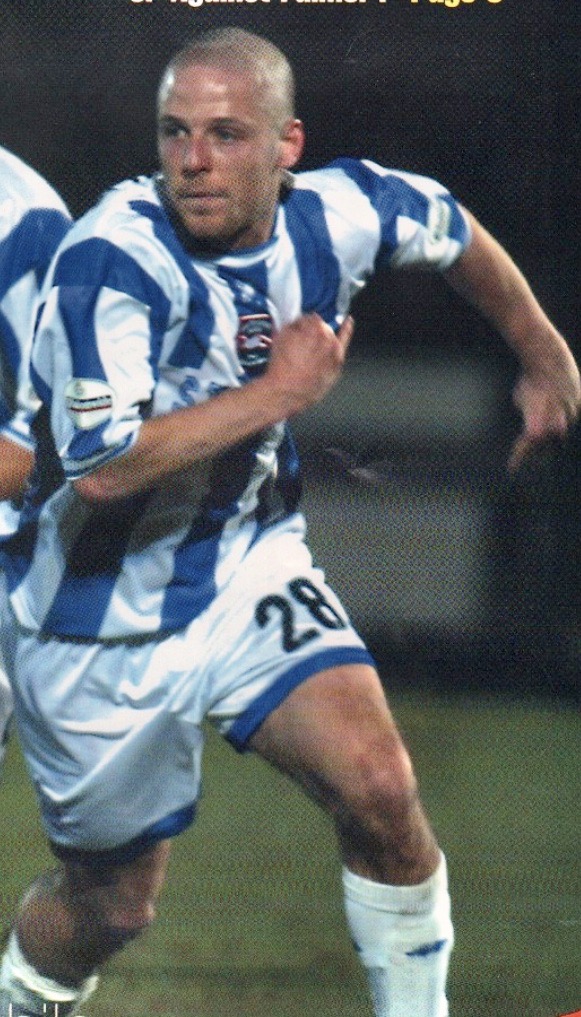
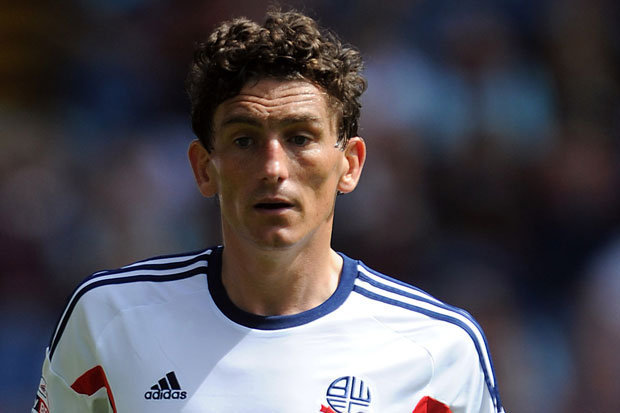
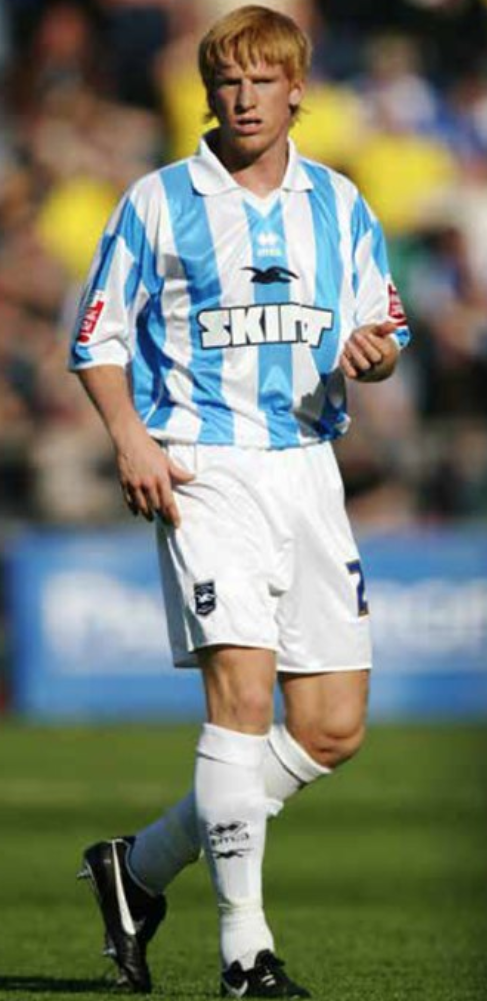
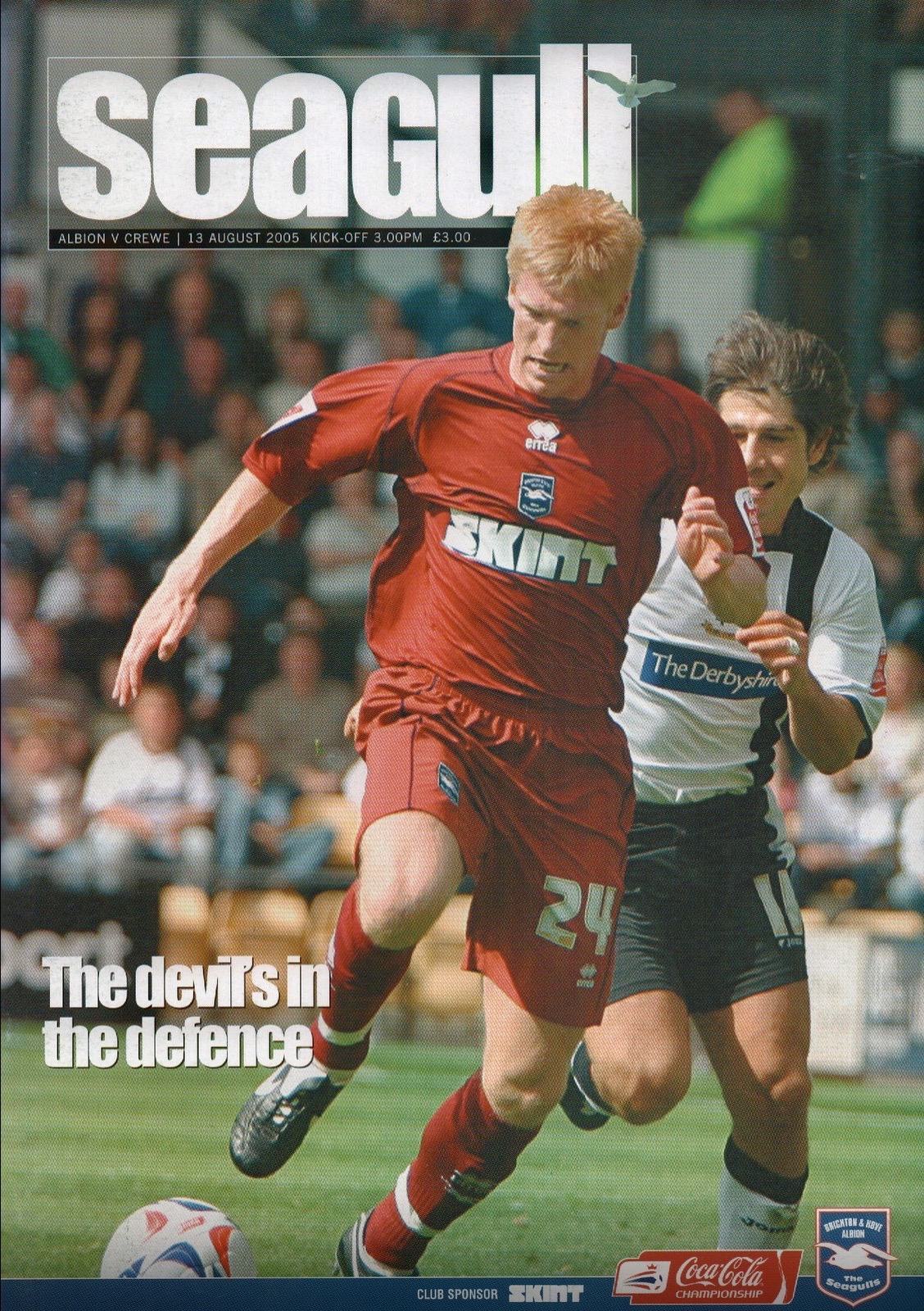
Ince ‘disciple’ Keith Andrews helped Albion to play-offs

ONE OF BRIGHTON’S more successful season-long loan signings spent six years at Wolverhampton Wanderers having arrived as a 15-year-old from Dublin.

Keith Andrews signed on at Molineux on the same day as another Irish youngster, Robbie Keane, although he didn’t hit quite the same heights as the prolific goalscorer.

Nonetheless, Andrews eventually represented his country on no fewer than 35 occasions – not a bad achievement considering he had to wait until he was 28 before winning his first cap.

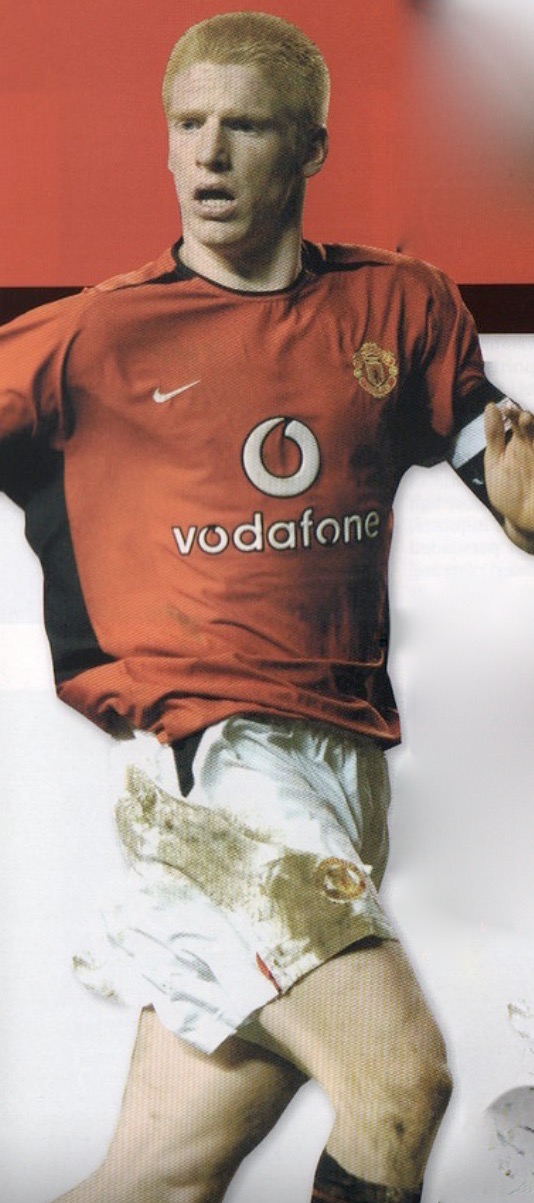
The self-styled ‘Guvnor’ Paul Ince, who Andrews had first encountered at Wolves, ultimately took the Irishman’s career onto a different level, initially when manager at MK Dons and then with Blackburn Rovers in the Premier League.
“I picked up so much from him, although probably a whole lot more when he managed me later on and I wasn’t in direct competition for a place in the team,” he said.

“I needn’t have been concerned when he came to MK, because he made me feel like a million dollars from the first conversation we had on the phone.

“He pretty much based the team around me, let me lead the dressing room like he had at Wolves, and I think that working relationship was mutually beneficial for both of us.

“He coached me and nurtured me and gave me some of his pearls of wisdom, and ultimately gave me the confidence to go and show I could become the player he felt I could become.
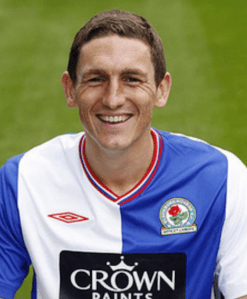
“Offers started coming in for me, but Incey asked me to stay, and said that if he got a job in the Premier League, he would take me with him.

“That happened with Blackburn, and I know he had to fight to get me there as the club weren’t keen on bringing in a player from League One.

“But he wanted me there, he knew what I was like and how he could trust me, and I would like to think that even though unfortunately Incey wasn’t there anywhere near as long as he would have liked, I vindicated his decision and desire to get me there.”

However, it was from Bolton Wanderers that Andrews joined the Seagulls for the 2013-14 season and he played a pivotal role – literally – taking over from the initially-injured, then transfer-seeking Liam Bridcutt as Albion’s defensive midfielder.

I covered head coach Oscar Garcia’s view of his signing in a previous blog post about the player in January 2019. Andrews featured in 35 matches for the Seagulls and scored once as Garcia steered Albion to a second successive tilt at the Championship play-offs, only for the team to lose out to Derby County in the two-legged semi-final.

Burnden Aces, a Wanderers fans website, interviewed Albion fan Chris Field to ask his opinion of Andrews and his summary was “good” but inconsistent.

Field couldn’t understand why neither Bolton nor Blackburn fans had rated the Irishman, saying:

“He’s come into our midfield and held it together fantastically well. We needed a bit more Premier League/Championship experience in our midfield and he’s fitted that bill superbly.

“Possibly he wasn’t used in the right way with Dougie Freedman’s style of football. In our free-flowing passing game, he’s fantastic in the holding role. A change of scenery has done him good.”

When Garcia quit the club after the play-offs defeat, it also marked the end of Andrews’ time with the Seagulls, although he later expressed his gratitude for the time he spent at the club.
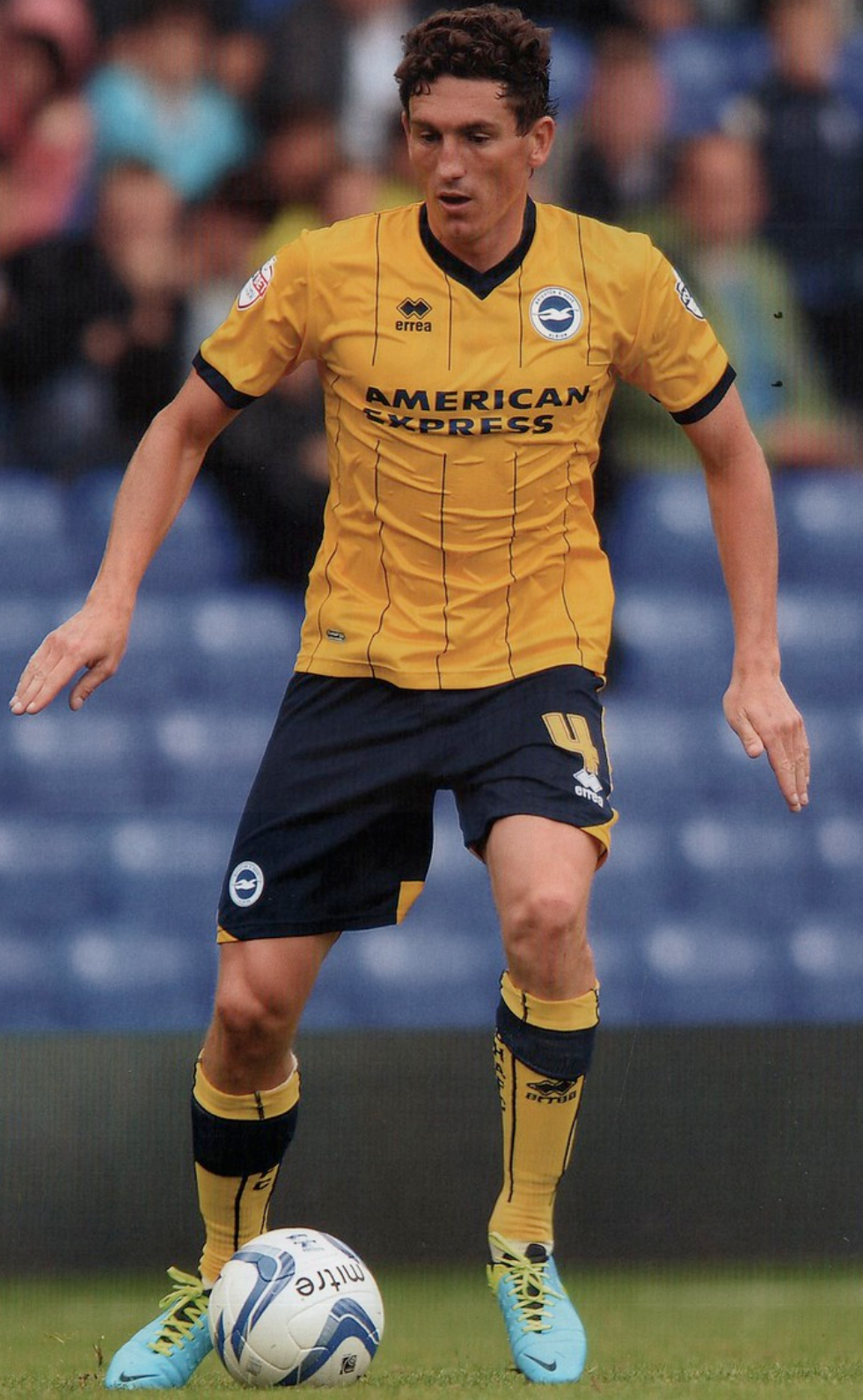
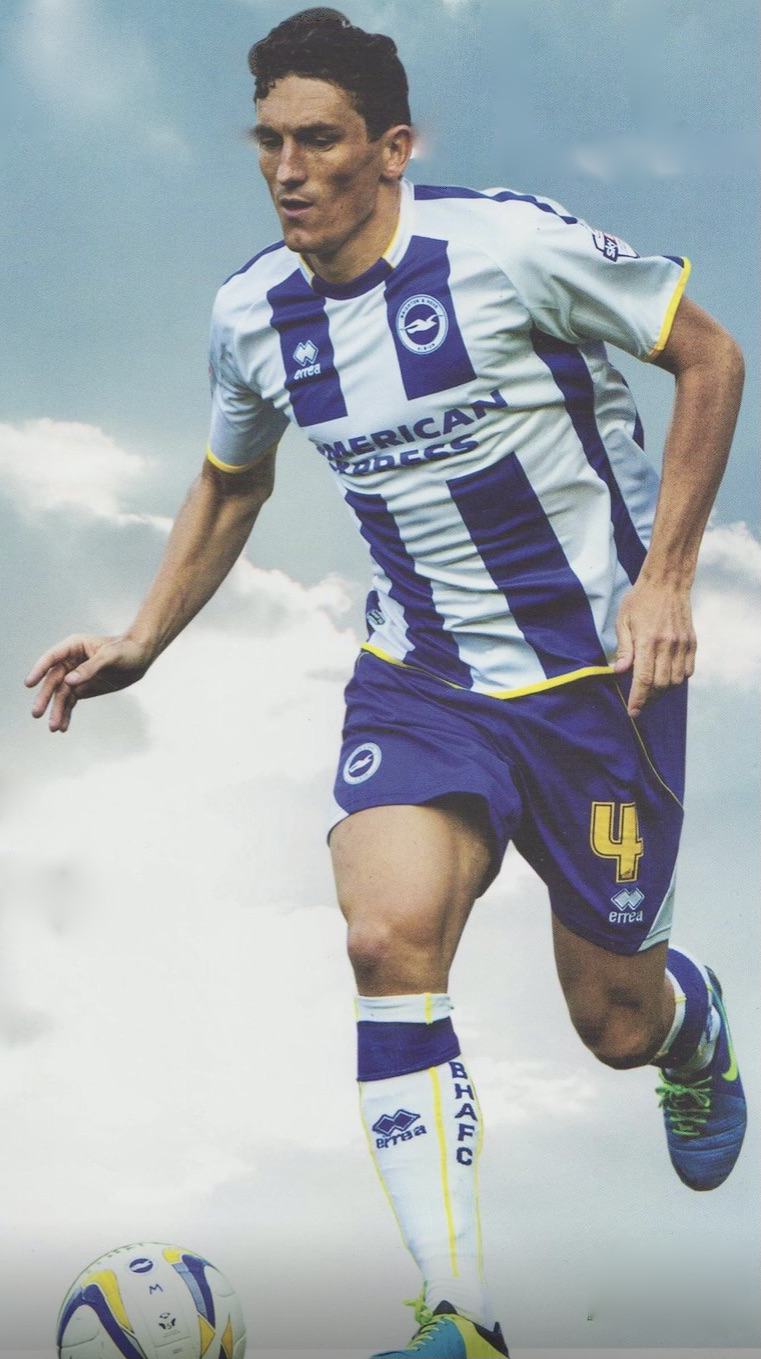
“Although I was only at the Amex for one season, I have a lot of affection for the club as I think they try to do things in the right manner for the club to evolve with real sustainability for years to come,” he wrote in a Sky Sports blog.

“There are good people involved behind the scenes there, none more so than in the academy. Last season I worked closely with the academy manager John Morling and the development coach Ian Buckman as I was in the middle of my UEFA ‘A’ Licence, and they couldn’t have done any more to help me.

“It was a great experience to work with them as they prepared weekly and monthly schedules with the rest of the coaches and sports scientists to ensure the young lads had the best chance of developing their games, both technically and physically.”

He added: “I was amazed at the schedule a 14-year-old at the club had and a little envious to be honest as it certainly wasn’t like that in my day!”

Born in Dublin on 13 September 1980, Andrews went to Ardscoil Ris secondary school in Dublin and his football reputation grew in the schoolboys sides of Stella Maris and Elm Mount.

“Most young players are playing at quite a high level in Ireland,” Andrews told the Wolves website. “I played in the DDSL – the Dublin District Schoolboy League – and trials at English clubs became quite frequent for a lot of us.

“I must have gone on trial to about 10 or 12 clubs and then you just have to start narrowing it down to who you like, who likes you. I then started to visit Wolves more frequently and just got a good feeling about it.

“I felt very at home in Wolverhampton, I was very well looked after from the moment that I went over as an under-14 at the time. I had a few contract offers from different clubs, but Wolves just felt right and I felt the club would offer me the best chance of playing first-team football at a high level.”

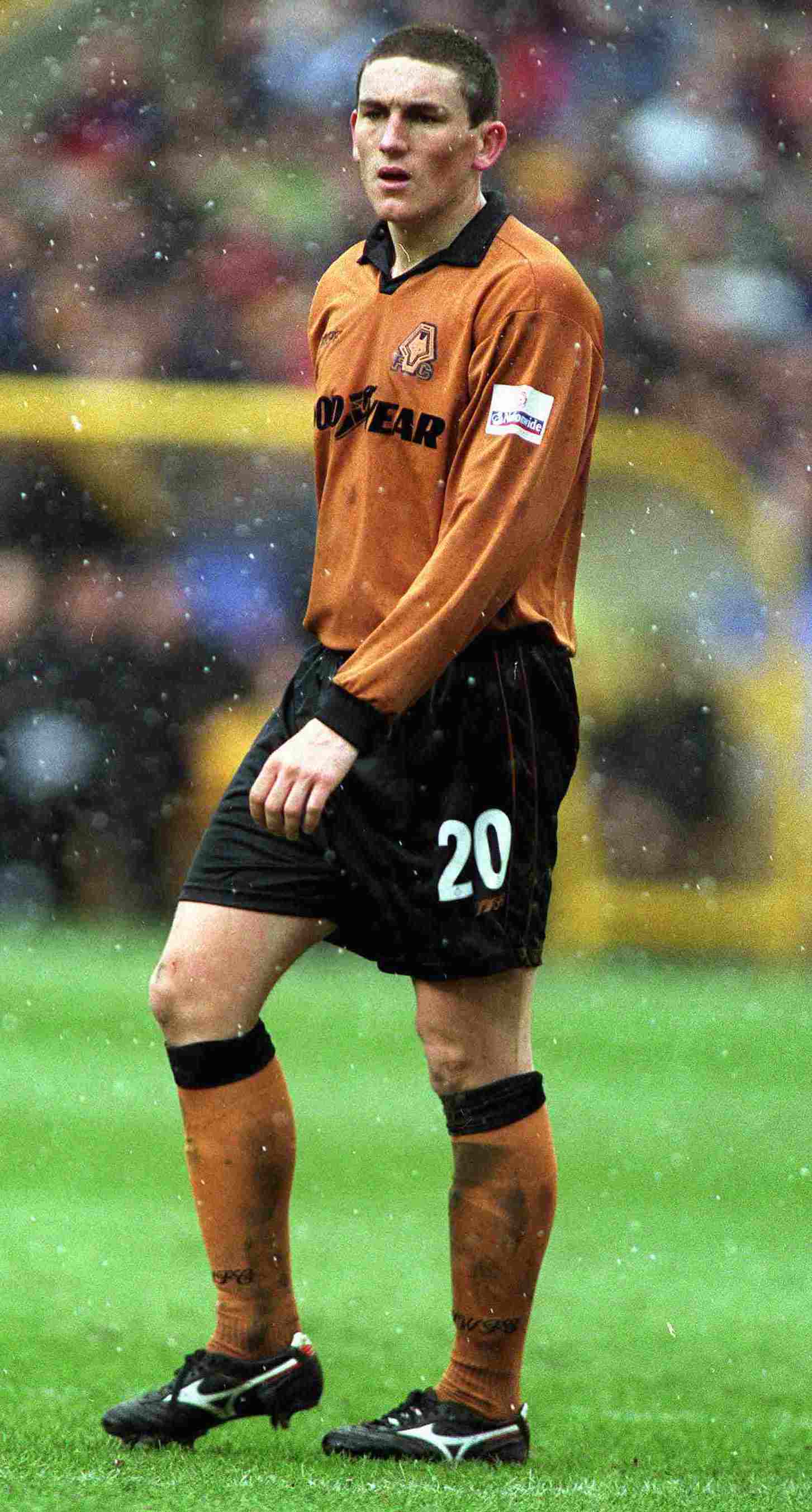
Andrews reflected that he probably started out too young although he said: “I relished playing football full-time and I enjoyed the environment that I went into. I enjoyed living in Wolverhampton, I enjoyed the family I was living with; they looked after me.

“There were some tough times, some teary phone calls home, and you go through some really difficult moments, but that was all part of the journey of building your character and trying to forge a career in the professional game, which isn’t easy.”

He went through the Wolves academy alongside the likes of Keane, Matt Murray, Joleon Lescott and Lee Naylor and said it was a “proper apprenticeship” adding: “The structure must have been in a good place. It was a well-run football club with the Hayward family in charge of it.”

Appreciating the values that were drilled into him from an early age, he said the academy was where he learned how to approach the game and how to do things the right way. He then progressed under youth team coach Terry Connor before turning professional in September 1997.

He made his first team debut under Colin Lee as a substitute on 18 March 2000 in a 2-1 win at Swindon. He also went on in a 2-0 home win over Crewe but, when further openings didn’t follow, he went on loan to Oxford and scored the winner on his full league debut away at Swansea.

Under Lee’s successor, Dave Jones, in the last game of the 2000-01 season, he was Wolves’ youngest ever captain aged 21 in a 1-1 draw at home to QPR.

“I looked around the dressing room and saw some really experienced players, players whose boots I had cleaned as an apprentice, and so to be chosen as captain was a huge day in my career,” says Andrews. “The game was fairly forgetful but certainly not for me!”

Managers came and went, some giving Andrews a chance, others sending him out on loan. In 2005, after just 24 starts for Wolves, plus no fewer than 47 appearances as a sub, he moved on to Hull City, where injury blighted his only season with them.
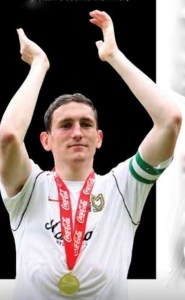
Promotion winner at MK Dons

He then had a two-year spell with Milton Keynes Dons, where he had a productive midfield partnership with Alan Navarro, and he assumed the captaincy of Ince’s side.

In his second season, the Dons won promotion to League One; Andrews scoring the goal which secured the success. He also scored in the club’s 2-0 win over Grimsby Town in the Football League Trophy at Wembley.

Andrews was chosen in the PFA Team of the Year, won the League Two player of the Year Award and was listed 38th of FourFourTwo magazine’s top 50 Football League players.

It was in September 2008 that he followed old boss Ince to Blackburn Rovers. He stayed for three years although during his time at Ewood Park he was subjected to barracking from a small section of supporters.

Some fans didn’t believe he merited a starting berth but injuries meant he got a chance and made 37 appearances in his first season at the club, scoring four goals in Rovers’ battle for survival.

Under Sam Allardyce, an approach from Fulham to sign him in 2009 was rebuffed and he was rewarded with a new four-year deal instead. In March 2011, an Andy Cryer exclusive in the Lancashire Telegraph said Allardyce’s successor Steve Kean backed the player and still saw him as a key member of his first team squad even though the player had been sidelined by a groin injury for five months.

The player’s agent, Will Salthouse, told Cryer: “Keith loves the club. He has a contract for two more years at the club and he wants to stay. Keith is not looking to go anywhere.

“There has been interest from other clubs but Keith has not even spoken to them. The club have said they want him to stay and I can dismiss the rumours that he will be leaving.”

Nonetheless, at the start of the following season, Andrews joined Championship side Ipswich Town on a half-season loan.

Instead of moving to Suffolk permanently, on deadline day in January 2012 he joined Wolves’ Black Country rivals West Brom, under Roy Hodgson, on a six-month deal.

Into the bargain, Andrews, making his debut for West Brom, scored the fourth goal in a 5-1 rout of their neighbours that sealed the fate of Mick McCarthy’s reign in charge at Molineux.

“I joined Wolves at the age of 15 and, having then lived in the Midlands for a few years, I knew all about this derby,” Andrews told the Express & Star.

“I was a fan who had been to games and to different derbies like Celtic against Rangers, and I was well aware of games which had more significance growing up even playing schoolboy football and Gaelic football as well.

“Once I had been in Wolverhampton for a while it was made pretty clear to me that Wolves against Albion was a big deal.

“Sometimes people try to throw derbies and rivalries at you at certain clubs when they don’t really exist but Wolves and Albion is proper, it’s fierce.

“At Wolves everyone would be telling you much they hated the Baggies and how important those two games of the season were – so yes, I was well aware of it!”

Although personally delighted to score, Andrews said: “I also had a lot of friends on the Wolves team that day – Ireland team-mates – and my overriding emotion as I walked off the pitch as I looked at Mick and Terry Connor was sadness.

“I knew where Wolves were in the league, the pressure they were under, and what might happen after such a result.

“I knew Terry from the help he had given me when I was at Wolves, and while I didn’t know Mick personally, he is someone I have always looked up to and have the utmost respect for with what he has achieved in the game.

“Wolves at the time were struggling, and that was something that carried on after the decision was made for Mick to leave.”

On the expiry of his Baggies contract, Andrews joined newly relegated Bolton on a free transfer, and, although he made 26 Championship appearances, he struggled with an achilles problem and then a thigh injury which eventually required surgery.

It was Bolton’s signing of Jay Spearing from Liverpool at the start of the 2013-14 season that made him surplus to requirements for the Trotters and opened the door to him joining the Seagulls.

A year later, Andrews joined Watford on loan while Brighton struggled under Sami Hyypia but after half a season returned to MK Dons where he eventually began coaching.

He later appeared frequently on Sky Sports as a pundit and became a coach to the Republic of Ireland side under Stephen Kenny. In December 2023, he was appointed a first team coach at Sheffield United following the return of Chris Wilder to Bramall Lane.
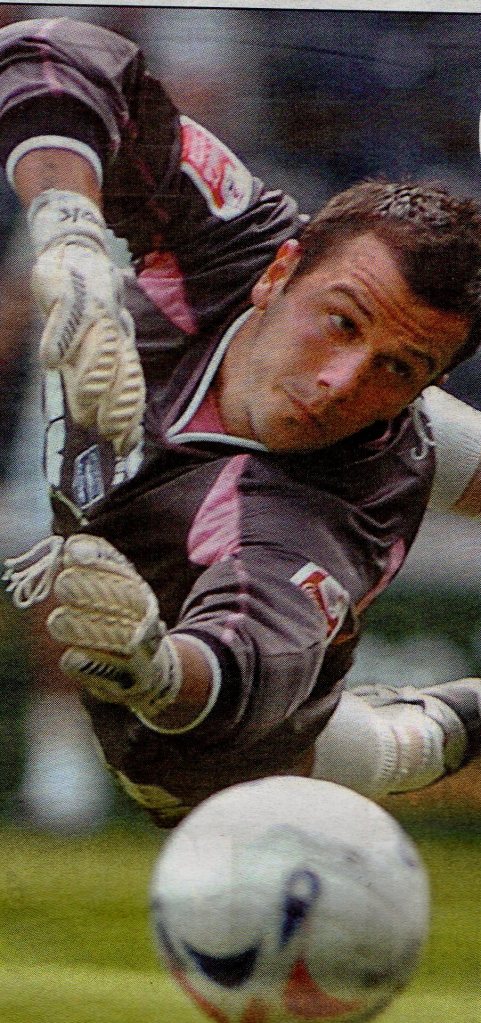
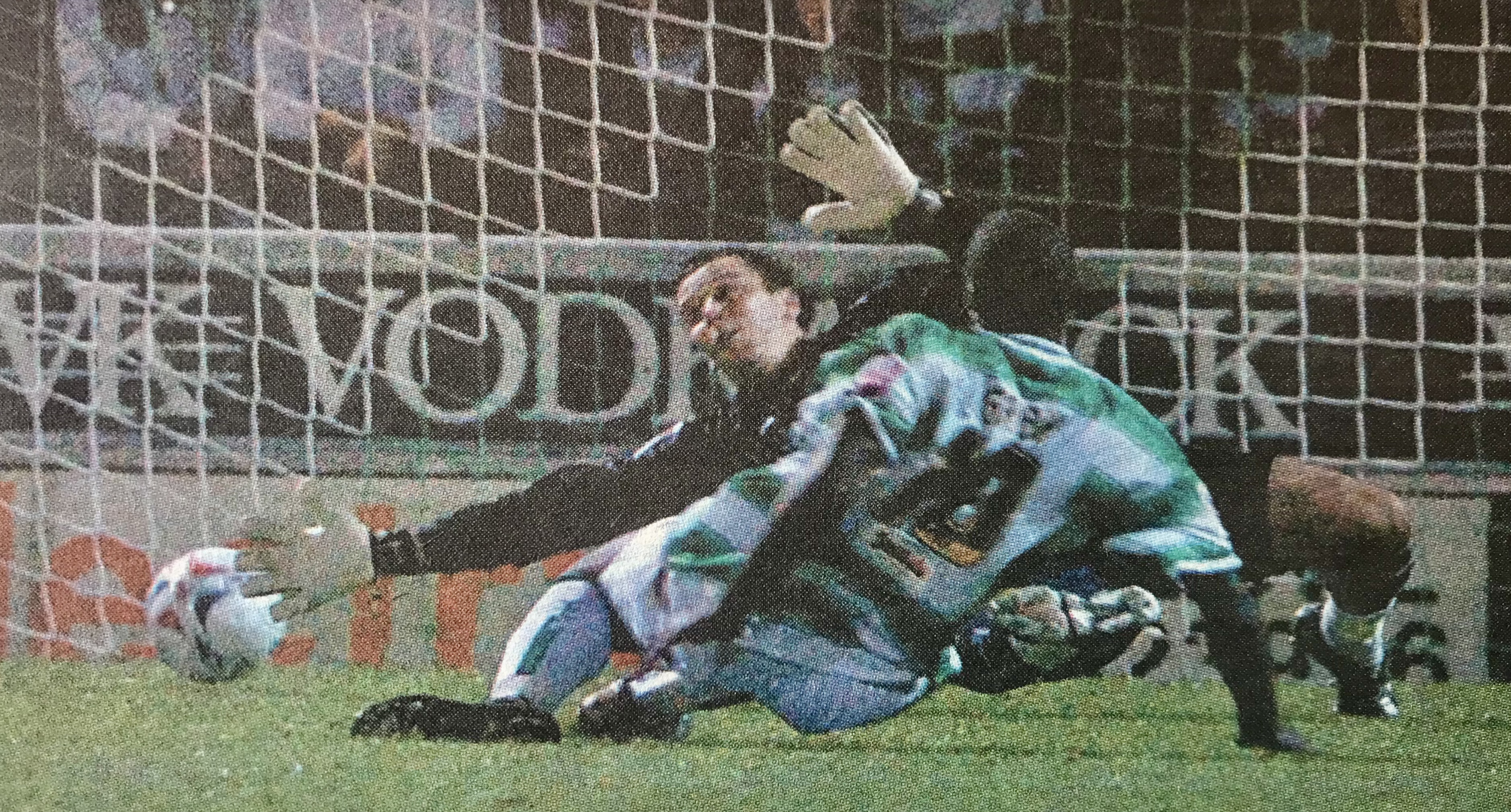
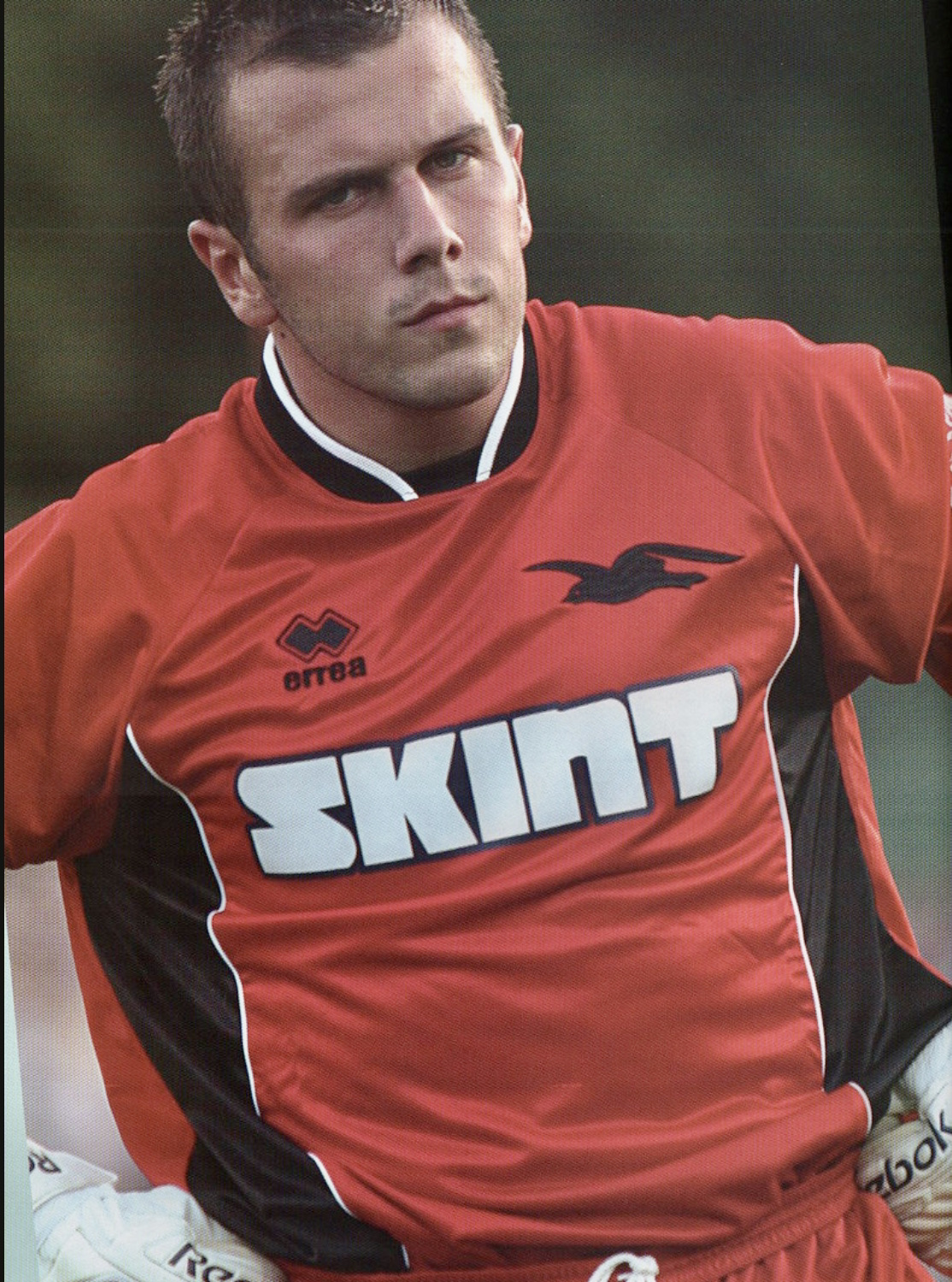
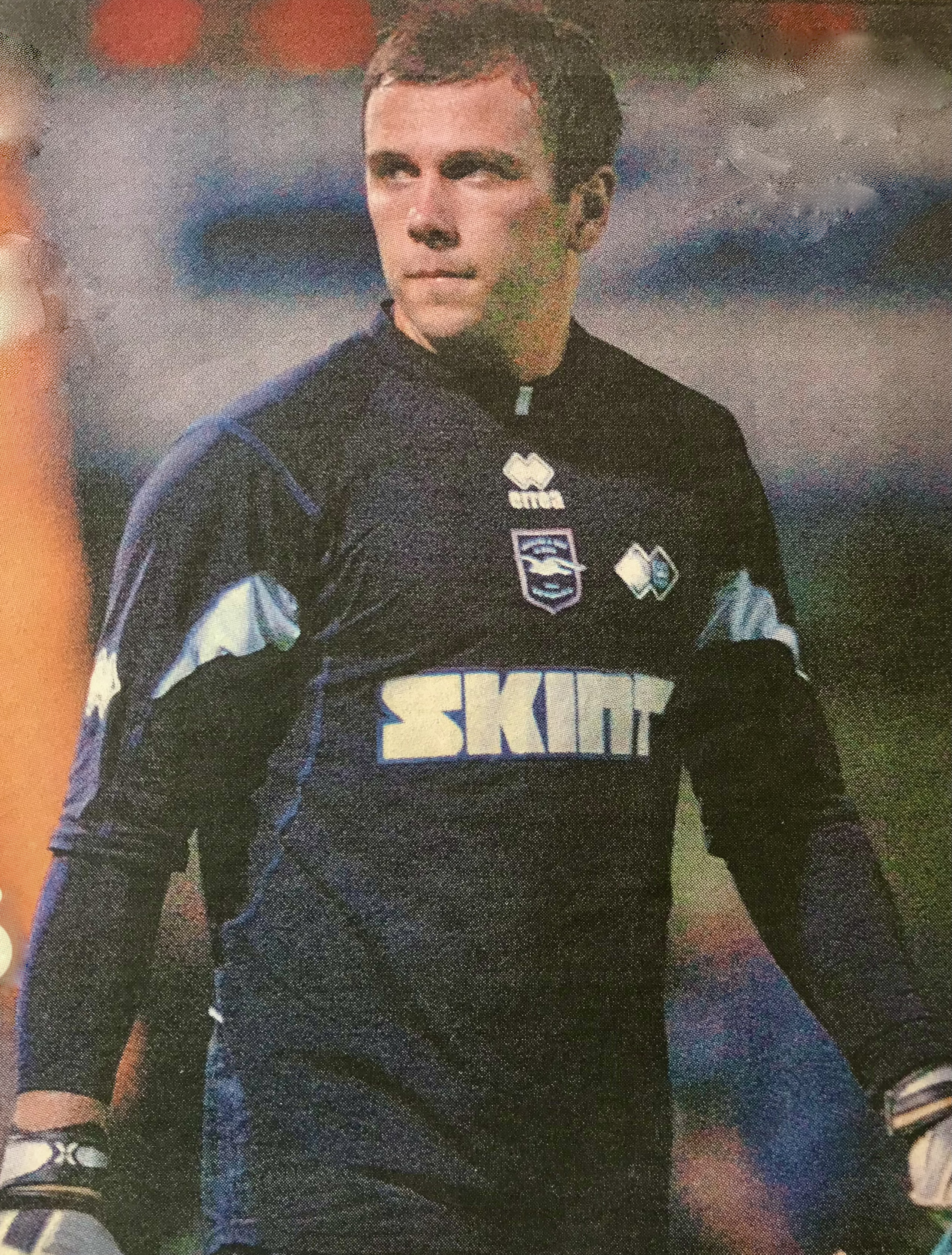
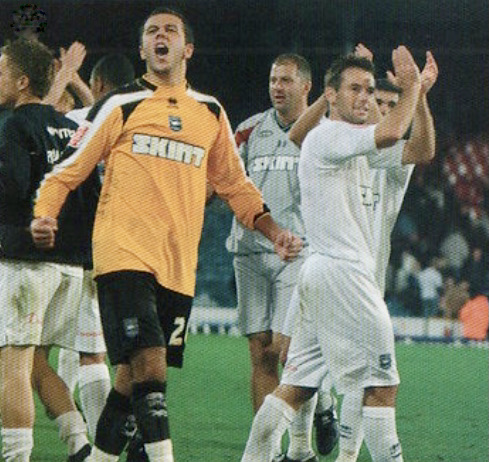
Boo boys saw off international ‘keeper Wayne Henderson

DISGRUNTLED former Albion goalkeeper Wayne Henderson helped Grimsby Town keep their place in the Football League.

The Republic of Ireland international stopper, forced away from Brighton by a section of voluble supporters, was on loan to the Mariners in 2009 as they desperately tried to avoid the drop.

Although there were Grimsby grumbles on his debut, Henderson’s mission was a success, Town avoiding the drop by four points. But it was only a stay of execution because they finally fell out of the league for the first time in 100 years in 2010.

By then, Henderson was back at parent club Preston North End, who had bought him from the Seagulls for £150,000 on deadline day in January 2007.

He managed only 10 appearances for the Lancashire club – his last game coming in the final match of the 2009-10 season – and in March 2011, when only 27, he was forced to quit the game after two years plagued with spinal injuries.

Much had been expected of the young Irishman at Brighton after an initial loan spell from Aston Villa, where he had been coached by former Seagulls ‘keeper Eric Steele. He made his Albion debut away to Derby County, together with fellow countryman Paul McShane (on loan from Manchester United), in the opening game of the 2004-05 season.

Manager Mark McGhee said the youngster hadn’t put a foot wrong. “His kicking really took the pressure off us,” he said. “He was composed and took a couple of crosses towards the end which also helped relieve the pressure.”

McGhee had first hoped to sign Henderson in January 2005 to help solve a goalkeeping crisis created by a serious shoulder muscle injury to Michel Kuipers in a home match against Nottingham Forest.

Youngster Chris May, son of former Albion defender Larry May, had come off the bench to replace Kuipers in the match but McGhee didn’t see him as experienced enough in the battle to stay in the Championship. The previous season’s first choice ‘keeper, Ben Roberts, was a long-term absentee with a back injury, so McGhee had few options.

The Seagulls hoped a contractual hitch relating to Henderson’s previous loan spell at Notts County could be resolved in time to enable him to make his debut for the Albion at Elland Road. But it couldn’t and Brighton turned to Blackburn’s David Yelldell instead. That was the game where the loan goalkeeper famously wore a bright pink goalkeeper jersey and predictably suffered abuse from the Leeds crowd.

Although Clarke Carlisle put Leeds ahead just before half time, Yelldell had the last laugh when defender Guy Butters prodded home an equaliser in the 81st minute.

When McGhee didn’t see Yelldell as a long-term option, he turned to one-time Arsenal ‘keeper Rami Shabaan, who hadn’t played a competitive game for two years, but he let in 13 goals in six games. The manager brought in Southampton’s Alan Blayney, and he was between the posts for the last seven games of the season when Albion just managed to cling on to their tier two status.

McGhee finally managed to bring in Henderson ahead of the new season and, perhaps mindful of the goalkeeping headache he’d had the previous season, found he suddenly had an embarrassment of riches in that department.

Promising youngster Richard Martin appeared as a back-up on the bench, as did season-long French loanee Florent Chaigneau. In September, Southampton’s Blayney also returned for another loan spell and eventually took over the gloves when Henderson’s three-month loan from Villa came to an end.

Intriguingly, Henderson’s penultimate game on loan was a 1-1 draw with Ipswich at the Withdean when another Villa loanee, Stefan Postma was in goal for the visitors.

It had been Henderson’s understanding that a permanent move would follow soon after he’d featured in a 1-1 draw at home to Wolves on 1 November. But a two-month on-off saga began which, according to McGhee and chairman Dick Knight, was largely down to demands made by Henderson’s agent.

Albion agreed a fee with Villa of £20,000, plus £15,000 if he helped avoid relegation from the Championship. He didn’t.

The Argus sought the opinion of former Albion no. 1 Steele who felt Henderson had a chance to make a name for himself with the Seagulls.

“With Thomas Sorensen as the no. 1 and Stuart Taylor bought in from Arsenal, Wayne’s route in terms of playing first team football was always going to be limited,” Steele told the paper. “Our problem is that we only need one goalkeeper to play in one position and it’s just been a question of what level he would make his mark.

“He’s 22 now and he really had to be looking to move on and I wish him all the best. I’ve worked with him now for four and a half years and always thought he would make a good living from the game.

“I think that’s summed up by the fact that Brighton are going to pay a small fee and we’ll also get sell-ons. He’s the same height, he’s got the same build and he has got the same attributes as Shay Given (Newcastle and Republic of Ireland). And he just needs the chance to go and play.

“He’s been away at Wycombe and been away at Notts County, who would have signed him had they had the money. He’s done it in the Second Division and the First, now he’s got the chance to do it in the Championship.”

Even if supporters of the club he’d just joined had doubts about his merits, the Republic of Ireland selectors were confident enough to give him a first senior call up in February 2006, and he made his full international debut on 1 March 2006, as a second half substitute in a 3–0 win over Sweden.

After the Albion had forfeited their tier two status that season, and the omitted Kuipers had been transfer-listed after falling out with McGhee, Henderson opened his heart to the Argus.

“Michel is liked by the fans and hopefully one day I will get the respect of the fans I feel I deserve,” he told Andy Naylor. “Michel has that because he has been at the club for a long time. I have mixed feelings about him being on the transfer list because it’s good to have someone with his reputation at the club pushing me, but sadly he fell out with the manager.

“Hopefully, I can prove the fans who are criticising me wrong but if they are set in their ways there is nothing I can do about that. It’s a shame if that is the way they feel but I couldn’t care less. I am not going to worry about it.

“I know myself how well I have done, and I am an international player because of that.”

Although he started the new season as first choice ‘keeper, three defeats on the spin saw McGhee sacked and Kuipers back in the starting line-up.

New boss Dean Wilkins restored the Irishman to the team in October which was enough to convince Eire manager Steve Staunton, a former Aston Villa colleague, to put him into a Euro 2008 qualifier against the Czech Republic, when first choice Shay Given and back-up Paddy Kenny were unavailable.

“I knew Stan from Villa, yes, but I like to think I’m being picked on merit not just because he knows what I’m capable of,” said Henderson. “I’ve got a long way to go in all aspects but being at Brighton and playing first-team football means I’m developing under pressure and getting a chance to show Stan (Staunton) what I can do.”

The Irish drew 1-1 and, having been to Dublin to watch the match, Albion goalkeeping coach John Keeley believed Henderson could be Albion’s ‘keeper for 10 years.

“I’m so pleased for Wayne. It proves what a good goalkeeper he is,” said Keeley. “He has taken some stick but people should appreciate him.”

The coach praised his handling at Lansdowne Road, the way he had made himself available for back-passes from his full-backs, and his composure. Highlighting a fine one-handed save he made to deny Milan Baros, Keeley said: “The save that he made just before half-time was world class.”

He added:“I honestly believe that Wayne is a better ‘keeper than Paddy Kenny. His all-round game is more suited to international football.”

Henderson makes his Eire debut, replacing Shay Given

Keeley reckoned: “He’s 22 and we’ve got a world-class player. With Wayne being so young we’ve got a goalkeeper now for the next ten years. That’s the way I look at it.”

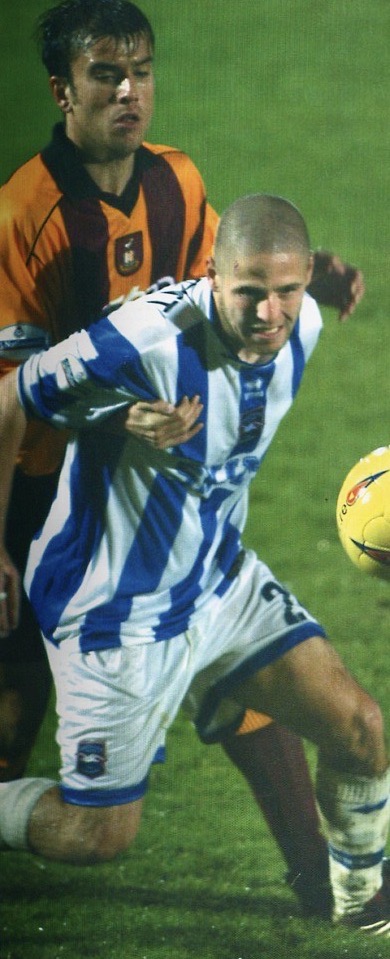
The following month, Henderson even made the headlines when he wasn’t playing! Injury ruled him out of Albion’s side to face Bradford City at Valley Parade on 4 November and he decided to watch from the seats behind the goal.

When Dean Bowditch scored an 89th-minute winner for the Seagulls, the exuberant ‘keeper jumped over the hoardings – and was promptly escorted out of the ground by a steward!

“It was over-zealous stewarding,” he said afterwards. “Alex Revell made the goal and he was celebrating right in front of where I was sitting in the front row of the stand.

“The natural thing was to go and celebrate within him but one of the Bradford stewards – who knew I was one of the non-playing squad members – took exception to my celebration.

“I think he was a Bradford supporter and perhaps he thought I was trying to rub his nose in it – but I wasn’t. I was just pumped up to see the lads score a last-minute winner.

“The next thing I was being grabbed by a steward and then I was marched out of the ground where the police took my name and address, but I think they saw the funny side of it.”

Henderson wasn’t laughing a few weeks later. He’d returned from injury but the side was on a losing streak in December. Away to Bournemouth on New Year’s Day, it looked like Albion might come away with a point but in stoppage time the ‘keeper lost his footing and gifted the Cherries a win, and a section of Brighton supporters booed him off the pitch.

After a 3-0 defeat to West Ham in the FA Cup third round, the Seagulls entertained Millwall at Withdean and a mix-up between Henderson and Joel Lynch led to the visitors winning by the only goal of the game.

Manager Dean Wilkins dropped him and it was the last time he played for the club. The barracking had got to him to the extent he had submitted a second transfer request of the season and, referring to the fans who’d got on his back, he told the Argus: “They love their football as much as anyone else but the way they reacted was pathetic really.”

After securing a deadline day move to Preston, he said: “It was disappointing the way it finished. I was devastated at being left out of the team. The mistake I made against Bournemouth could have happened to anybody and the Millwall game was a mistake by someone else that caught me out.”

Now free to air his feelings about the series of events, he said: “A lot of fans have certain opinions of players. For me the whole experience at Brighton was more like the X Factor.

“It just seemed to be a personality contest and I couldn’t enjoy my football.”

He continued: “I’ve never felt welcome at the club, except by the coaching staff and the players. The coaching staff have been magnificent, and I wish them all the best, because, if anyone is going to get anything out of the kids, it is Dean (Wilkins) and Dean (White), so I hope they are given a fair crack of the whip.

“Outside of them and the lads, a handful of fans have backed me lately and I really respect that but there were an awful lot of fans who didn’t and other people at the club who, for some reason, made it more difficult than it should have been.”

Within the tight confines of the small capacity Withdean Stadium, perhaps it was always going to be a tall order for Henderson to supplant crowd favourite Kuipers.

The ‘former Dutch marine – chef’ Kuipers, as he was serenaded by the singing section, had endeared himself to the Albion crowd after Micky Adams brought the previously unknown shot-stopper to the club in 2000. Subsequent managers brought in their own alternatives but Kuipers, always a reliable shot-stopper, had a habit of bouncing back.

If Henderson was perturbed by unfavourable crowd opinion at Brighton, it seems there was similar mood music when he made his debut for Grimsby.

Manager Mike Newell brought him in along with three other loan players (Joe Widdowson, Peter Sweeney and Barry Conlon) and, in 14 games he played through to the end of the season, five wins and three draws were enough to give them a finish four points above the relegation trapdoor (Chester City and Luton Town went out of the league).

The excellent Cod Almighty fans website observed some fans booed and jeered Henderson on his home debut because the gale force wind kept blowing his goal kicks into touch.

Pete Green, on the same website, later wrote: “These temporary Mariners have played an enormous part in preserving the club’s status in the Football League – even as repeated mistakes by experienced, longer-term Town players such as Phil Barnes and Tom Newey continued to jeopardise it. Henderson has already gone back to Preston, and we stand no chance of signing him permanently.”

While the other three loan players did sign permanently, Newell brought in another Irish international goalkeeper in Nick Colgan the following season.

Born in Dublin on 16 September 1983, Henderson followed in the goalkeeping footsteps of his father and brothers. Dad Paddy played for Shamrock Rovers; brothers Dave and Stephen played in the League of Ireland. Even his nephew, Stephen, was a goalkeeper – most notably for Portsmouth, Charlton and Nottingham Forest after also going through the youth ranks at Villa.

Wayne played for the same Cherry Orchard club in his home city that also spawned the likes of Mark Yeates, Dave Langan, Andy Reid and Stephen Quinn.

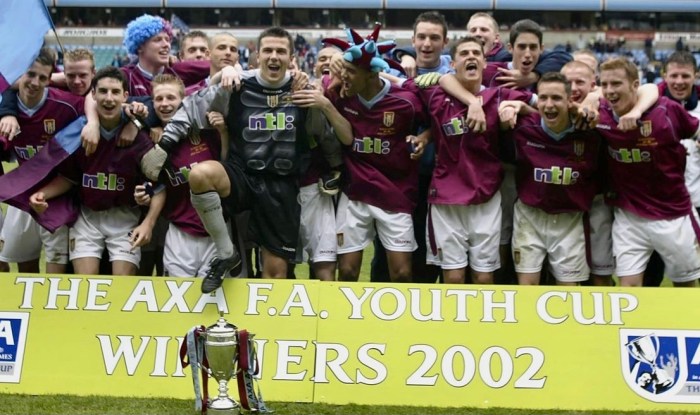
John Gregory was in charge at Villa Park when Henderson joined Aston Villa in July 2001. A year later, he was in goal when Villa won the FA Youth Cup (below), beating Everton – with Wayne Rooney playing up front – 4-2 on aggregate over two legs. Also in the Villa side that day was Liam Ridgewell, who later had a brief loan spell at Brighton, and Peter Whittingham, who went on to play more than 500 professional games and died in tragic circumstances aged just 35.

Joy for Henderson as Aston Villa win the 2002 FA Youth Cup

Although Henderson was chosen on Villa’s first team bench occasionally, he didn’t play any competitive fixtures for the first team. Those opportunities came via loans.

After a month at non-league Tamworth in the spring of 2004, he spent a month on loan at Second Division Wycombe Wanderers under Tony Adams towards the end of the 2003-04 season, when their last place finish meant they were relegated to the newly formed League Two.

The following season he joined Notts County, another of the clubs who’d been relegated with Wycombe, and had two loan spells, three months under Gary Mills and then a month under his successor, caretaker boss Ian Richardson.

Paul Simpson signed Henderson for Preston but when injuries forced him to retire at just 27, he told skysports.com: “I’ve decided to actually step out of football and give my body time to heal for once.

“It is exciting for me though because I’m looking to go into a completely different environment from playing but stay within football at the same time.

“I’ve been trying to get back fit for a few years now with injections and operations, but I’ve decided that rest is the way forward for it now.

“I’ve not signed anything yet, but there are a good few options for me to choose from, which I am really excited about.”

Henderson, who married 2010 Apprentice winner Liz Locke, now works as a licensed intermediary for agency YMU, who, among plenty of other elite footballers, represent Albion’s Evan Ferguson and Andrew Moran.

Irish midfield maestro’s arrival created buzz of excitement

AN AIR of excitement swept around the crumbling terraces of the Goldstone Ground when one of the finest midfield players of his generation became Brighton’s manager.

Liam Brady had been the darling of Highbury in the 1970s, won titles in Italy with Juventus and then brought the curtain down on a glorious playing career in three years with West Ham United.

After six years watching Brighton’s fortunes fluctuate under the low profile guidance of Barry Lloyd, fans who craved a return to the glory days of Alan Mullery’s first reign had great expectations when such a well-known footballing figure as Brady arrived at the Goldstone in December 1993.

But how did it come about? Brady’s first foray into management – at Glasgow giants Celtic – had not gone well and he was unemployed having resigned in early October.

With only four wins in 26 games, Lloyd’s near-seven-year reign at the Goldstone was in its final throes as autumn turned to winter, and in early December he was said to have left “by mutual consent”.

The managerial vacancy caught the eye of former Albion favourite – and Brady’s former Irish international teammate – Gerry Ryan, who’d been forced to retire from playing and was running a pub in Haywards Heath, and he got in touch.

“He asked if I’d be interested. I saw it as another part of my learning curve as a manager and was happy to take it,” said Brady.

Ryan was promptly installed as Brady’s assistant and before long he’d persuaded Jimmy Case to return to the Seagulls at the age of 39 (he’d been playing non-league for Sittingbourne) to bring experience to the battle against relegation and lend a hand on the coaching side.

Brady takes charge at the Albion

By a strange quirk of fate, the opponents for Brady’s first game in charge, Bradford City, were managed by his former Arsenal and Eire teammate, Frank Stapleton, who the following season he recruited for a couple of games.

Unlike the effect of Brian Clough’s arrival at the Goldstone 20 years previously, the gate for the Bradford match the Saturday before Christmas was only 6,535. Albion lost 1-0 but in the next four games, played over the course of 13 days, there were two wins and two draws. Steady improvement on the pitch was helped by the introduction on loan of two exciting youngsters from Brady’s old club Arsenal – firstly Mark Flatts and then Paul Dickov.

The threat of relegation lifted and, looking back, Brady said his favourite match in charge came on 6 April 1994.

“We beat Swansea 4-1 in an evening game towards the end of my first season, when we had (Paul) Dickov on loan in a very good partnership with Kurt Nogan,” he said.

“There was a real buzz that we were going to avoid relegation. The players believed the club was going places again, as we all did.”

At the start of the following season, Brady picked up two youngsters from Arsenal’s north London neighbours, Spurs, in lively forward Junior McDougald and midfielder Jeff Minton.

Right-back Peter Smith, who assistant manager Ryan had spotted playing in a non-league charity match, was brought on board and crowned his first season by being named player of the season.

Brady also brought in the former England international Mark Chamberlain, but the balance of the side remained youthful and, with money remaining tight, a mid-table finish was not entirely unexpected.

In a matchday programme article in 2015, Brady reflected on how relegation had been avoided against the ugly backdrop of what the directors were doing to the club (selling the ground with no new home to go to) and realised subsequently that he should have left at the end of that second season.

“I became aware that Bill Archer had no intention of taking the club forward, despite his public announcements to the contrary. I could tell that the club was going nowhere.

“Archer and Bellotti were winding the club down and it wasn’t right. But it wasn’t a case of me walking away. I was living in Hove, I had grown attached to the club, the fans, and feelings were running high.”

After 100 games in charge of the Seagulls, he quit in November 1995, handing the reins to Case, who was reluctant to take on the job.

Brady’s fondness for the club remained undiminished, though, and he was subsequently involved in Dick Knight’s consortium trying to wrestle control of the club out of Archer’s hands.

It had been planned that he would return as manager but as the negotiations dragged on he was offered the opportunity to return to Arsenal as head of youth development and couldn’t turn it down.

“I had a family to think about and it was a dream job for me. Dick understood, particularly as there were no guarantees with what was happening at the time at Brighton.”

The fact he had the Arsenal job for the following 25 years meant he probably made the right decision! Even after leaving that role, Brady retained his links with Arsenal by becoming an ambassador for the Arsenal Foundation.

Brady was born into a footballing family in Dublin on 13 February 1956 – a great uncle (Frank) and older brother, Ray, were internationals, older brother Frank played for Shamrock Rovers and another brother, Pat, played for Millwall and QPR.

Brady went to St Aidan’s Catholic Boys School but left at 15 in 1971 to join Arsenal after their chief scout, Gordon Clark, had spotted him and Stapleton playing for Eire Schoolboys.

A Goal magazine article of 7 October 1972 featured boss Bertie Mee talking about the pair as future first team players – even though they were only aged just 15 and 16.

Mee said: “Brady is almost established as a regular in the reserve side. He needs building up but has the potential to become a first-team player. Stapleton has made quite an impact in his first season and, providing he maintains a steady improvement, he could also follow the path of Brady.”

It was only Brady’s second season and Clark said at first he thought he would be better suited to becoming a jockey because he was so small and frail!

He quickly changed his mind when he saw his ability with a football. “He was like a little midget, but he had so much confidence. He’s really shot up now and although he’s still not very tall, he’s strong enough to hold his own,” said Clark. “Liam’s got a very mature head on his shoulders. His maturity shows in his play.”

Brady became a professional at 17 in 1973 and made his debut in October that year as a substitute in a league game against Birmingham City. Mee used him sparingly that season and he picked up the nickname Chippy – not for any footballing prowess but for his liking of fish and chips!

Initially dovetailing with former World Cup winner Alan Ball in Arsenal’s midfield, he eventually took over as the key man in the centre of the park. He became a first team regular in 1974-75 and began to thrive when Terry Neill took over as manager with Don Howe returning to Arsenal as coach. In the second part of the decade, Brady was named the club’s player of the year three times and, in 1979, he won the prestigious Players’ Player of the Year title from the PFA.

Brady played in three successive FA Cup finals for Arsenal – in 1978,1979 and 1980 – winning the competition in the 1979 classic against Manchester United, courtesy of his driving run and pass to Graham Rix whose sublime cross from the left wing into the six-yard area allowed Alan Sunderland a simple tap-in for the winner.

Having lost to Ipswich Town the year before, it was Brady’s first trophy with the Gunners and he said: “It was just wonderful to experience being a Wembley winner. It’s something I’ll never forget.”

The opening game of the following season saw Brady line up for Arsenal at the Goldstone in Albion’s very first top level match.

There was nothing more likely to rile Arsenal than a former Spurs captain claiming beforehand what his team were going to do to the Gunners.

Arsenal promptly romped to a 4-0 win and Brady recalled: “Alan Mullery was shooting his mouth off. Brighton had arrived in the big time and were going to turn Arsenal over.

“Mullers was good at motivating players but he motivated us that day.

“We all thought it was going to be a hard game, but once we got the first goal we settled down and Brighton were in awe of us. I scored a penalty and we ran out comfortable winners.”

However, it was the start of Brady’s last season as an Arsenal player. The following May, Arsenal lost to Trevor Brooking’s headed goal for West Ham in the FA Cup Final and Arsenal also lost to Valencia in the Cup Winners’ Cup Final in a penalty shoot-out – Brady and Rix missing their spot kicks in Brussels.

Nevertheless, having played 307 games (295 starts + 12 as sub), arsenal.com recalls one of their favourite sons warmly: “Chippy had everything a midfielder could want – skill, vision, balance, strength, a powerful shot and the ability to glide past opponents at will.

“Like all great players he always had time on the ball and almost always chose the right option. On a football pitch, Brady’s brain and feet worked in perfect harmony.”

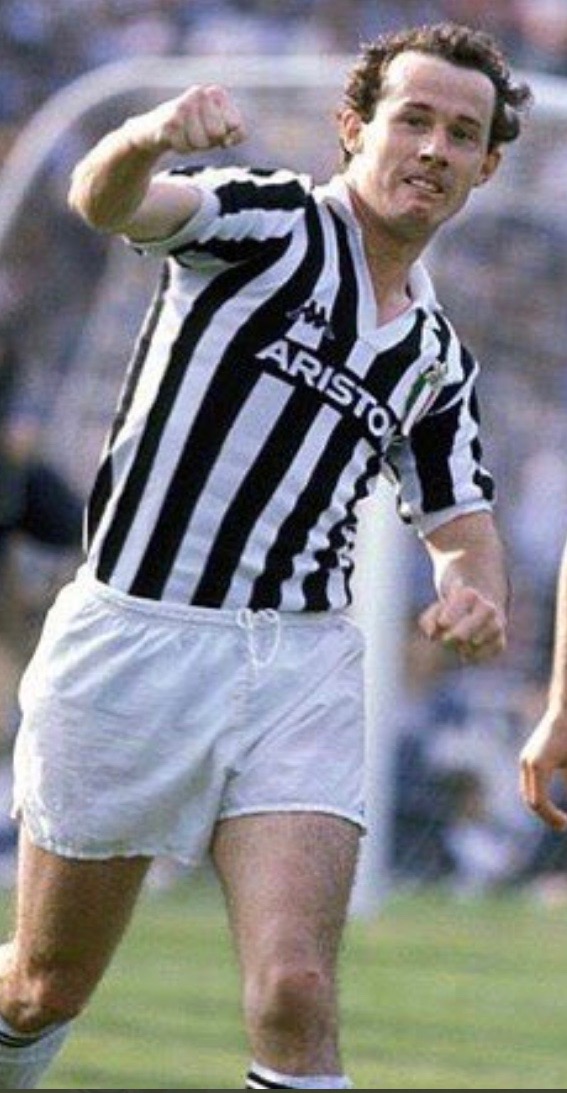
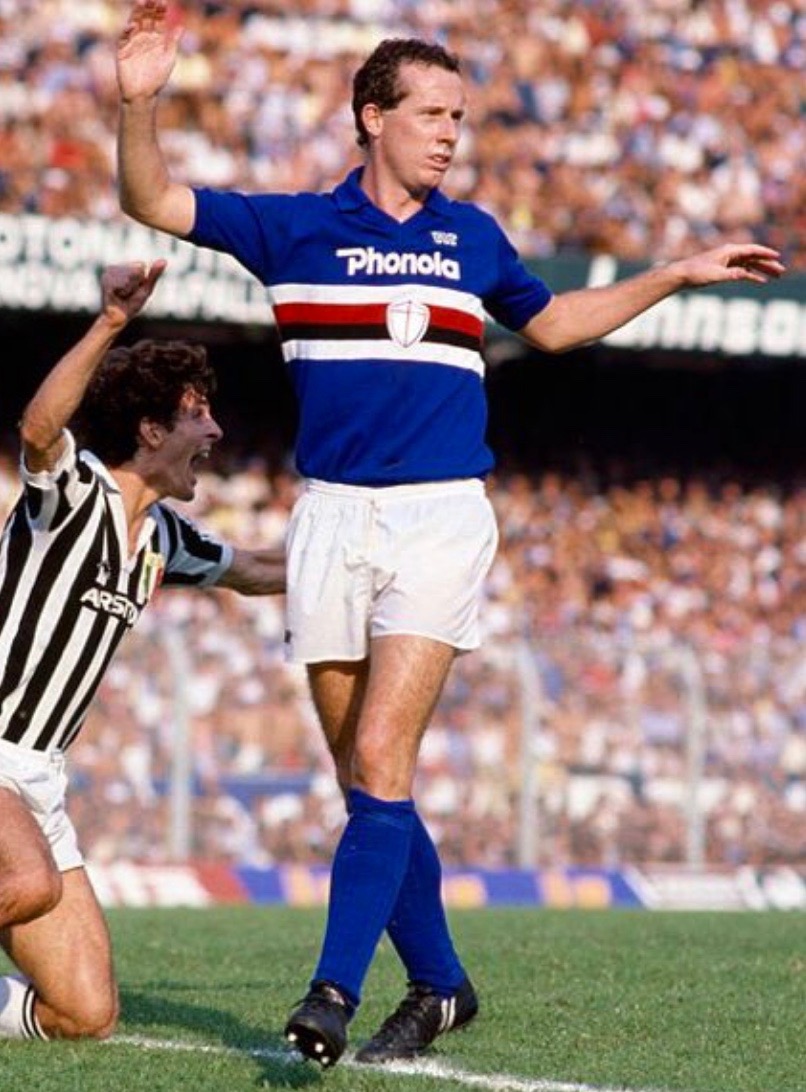
Brady moved on to Italy where he spent seven years, initially with Juventus, winning two Italian league titles and then with Sampdoria, Inter Milan and Ascoli. In his second season at Brighton, Brady had the Seagulls wearing the colours of Inter as their change kit – I still consider it to be the best the club has had.

As well as a highly successful club career, Brady won a total of 72 caps for his country. He made his Republic of Ireland debut on 30 October 1974 in a 3-0 home win over the Soviet Union and went on to win 72 caps for his country.

He retired from internationals ahead of qualification for the 1990 World Cup and, although he later made himself available for selection, manager Jack Charlton decided to choose only those who had helped Eire qualify for the finals.

Brady had returned to the UK in March 1987 to enjoy three years at West Ham in which he scored 10 goals in 119 appearances. His first somewhat ironically came against Arsenal while he reckoned his best was a 20-yarder past Peter Shilton that proved to be the winner in a league game against Derby County.

Brady explained the circumstances of his move to the Hammers in an interview with whufc.com. He nearly ended up joining Celtic instead, but he’d given his word to West Ham boss John Lyall and, because he’d retained an apartment in London, it made sense to return there.

Brady in action for West Ham at the Goldstone, faced by ex-Hammer, Alan Curbishley

In only his fourth West Ham game, he found himself up against Arsenal and was mobbed after netting the final goal in a 3-1 win at the Boleyn Ground.

“With ten minutes remaining, I won the ball on half-way before running to the edge of the 18-yard box, where I hit a low curler around David O’Leary and beyond Rhys Wilmott’s dive, into the bottom right-hand corner,” he said. “The place went wild! I certainly wasn’t going to just walk back to the centre-circle without celebrating my first goal for my new team.”

While the Hammers finished 15th that campaign, they were relegated in 1989 which brought about the departure of Lyall. Brady clearly didn’t see eye to eye with his successor, Lou Macari, but was pleased when he was replaced by Hammers legend Billy Bonds.

Brady eventually called time on his playing days in May 1990, Wolves and West Ham players lining up to give him a guard of honour as he took to the pitch for the final game of the season.

He was substitute that day but went on for Kevin Keen and rounded off his remarkable career by scoring in a 4-0 win.

“Having scored at the Boleyn Ground with my last-ever kick in professional football, I couldn’t have written a better script,” he told whufc.com.

After not making the move to Celtic as a player, his first step into management came at Celtic Park as successor to former club legend Billy McNeill in June 1991. He was the first manager not to have played for the Hoops.

It was a big step to take for a novice manager, and hindsight suggested the players he signed didn’t do him any justice. He later admitted: “I didn’t do particularly well as Celtic boss. Second place behind Rangers was seen as a failure and, even if you’ve had a good reputation as a player, it counts for little as a manager.”

Brighton (well, Hove actually) would prove to be as far from the cauldron of Glasgow as he could possibly get, but the club management game clearly didn’t suit Brady, and he didn’t take on any other senior managerial hotseats after the Seagulls.

Alongside his youth team responsibilities at Arsenal, he did assist his country’s national team between 2008 and 2010. He was assistant to Giovanni Trapattoni during his time in charge, also working alongside Brady’s former Juventus teammate Marco Tardelli.

Brady still lives in Sussex and he told whufc.com how he occasionally meets up with Billy Bonds at Plumpton Races and enjoys a round of golf with Trevor Brooking.

Boss weighed into ex Spurs teammate Joe Kinnear

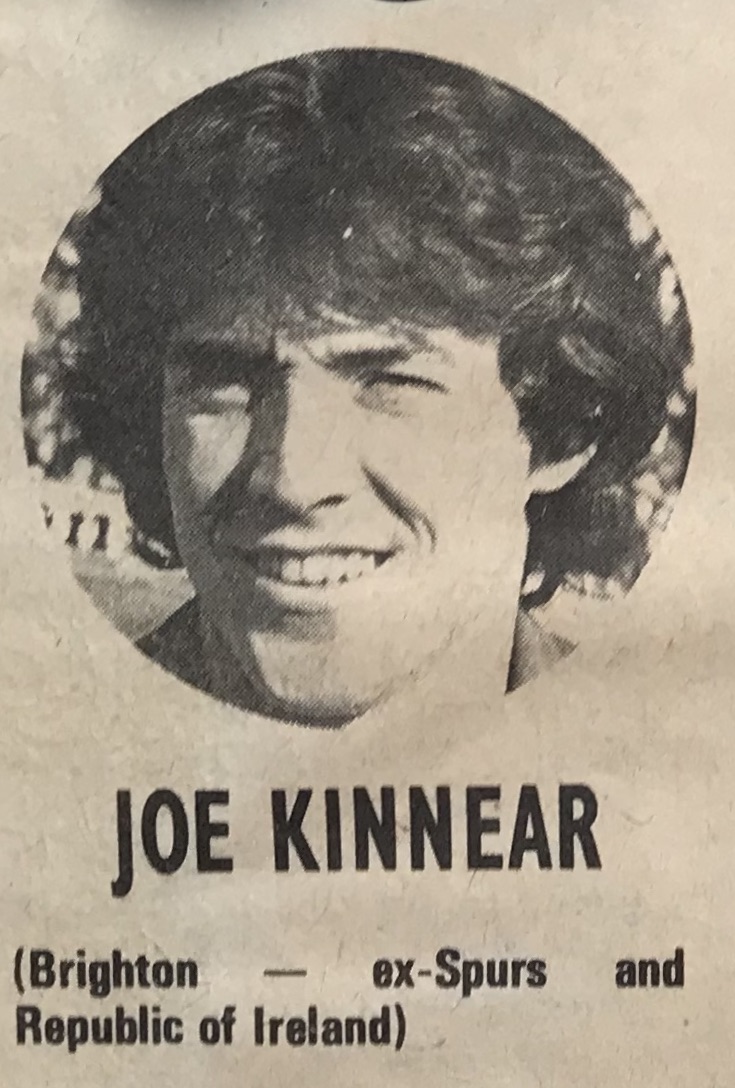
JOE KINNEAR was no stranger to expletive-filled rants so we can only imagine how he reacted when his former Tottenham Hotspur teammate Alan Mullery told him he was a stone overweight and shouldn’t expect any special treatment at Brighton.

The right-back who’d won silverware alongside the former Spurs skipper ended up leaving the Goldstone acrimoniously after his former colleague took over as Albion boss.

Having made 258 appearances in 10 years at White Hart Lane, Kinnear only played 18 games for Brighton after being signed by Mullery’s predecessor, Peter Taylor in August 1975.

He’d followed fellow former Spurs defender Phil Beal to third-tier Brighton, both having been eased out of the door as Tottenham’s new boss Terry Neill re-shaped the award-winning squad built up by the legendary Bill Nicholson and his faithful assistant, Eddie Baily.

Back when Taylor and Brian Clough were turning round the fortunes of Derby County, they had acquired the services of former Spurs hardman Dave Mackay, a friend of Kinnear’s, so he was no stranger to turning to experienced old pros.

“I left Tottenham because although I was good enough to hold down a regular first team place, manager Terry Neill didn’t think so,” Kinnear told Shoot! magazine. “I’m 28-years-of-age and have plenty of soccer at senior level left in me. Brighton have the potential to become as big-time as Spurs once were.”

Three days after signing, the Irishman made his Albion debut at right-back in a 1-0 home defeat to Cardiff City and, while he played in the following game too, previous regular right-back Ken Tiler was restored to the line-up for the next three months.

Nevertheless, his lack of involvement at Brighton didn’t stop the Republic of Ireland selecting him and he made what was his last and 26th appearance for his country as an 83rd minute substitute for Tony Dunne in a 4-0 win over Turkey at Dalymount Park, Dublin, on 29 October (Don Givens scored all four).

Kinnear was on Brighton’s bench a few times in the days of only one substitute, and he managed four consecutive starts in December, but he had to bide his time for his next starting spot, which only came when a bad injury in mid-March brought an end to Tiler’s involvement in Albion’s promotion push.

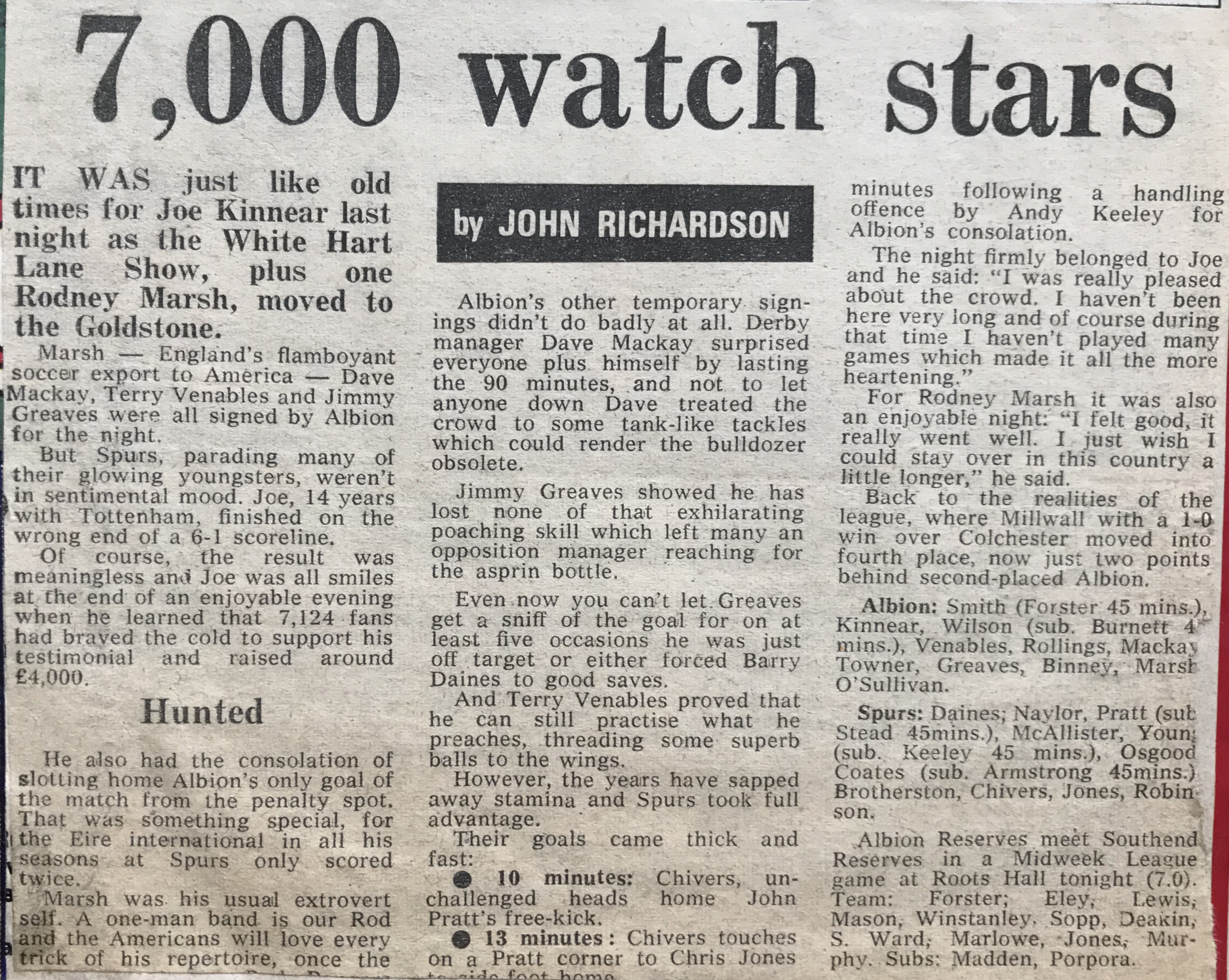
It was timely because on 23 March a testimonial match for him against Spurs took place at the Goldstone. It had been part of the arrangement made when he signed, and the Albion XI who took to the field in front of 7,124 fans included Kinnear’s old teammates Terry Venables, Mackay and Jimmy Greaves, along with guest star Rodney Marsh.

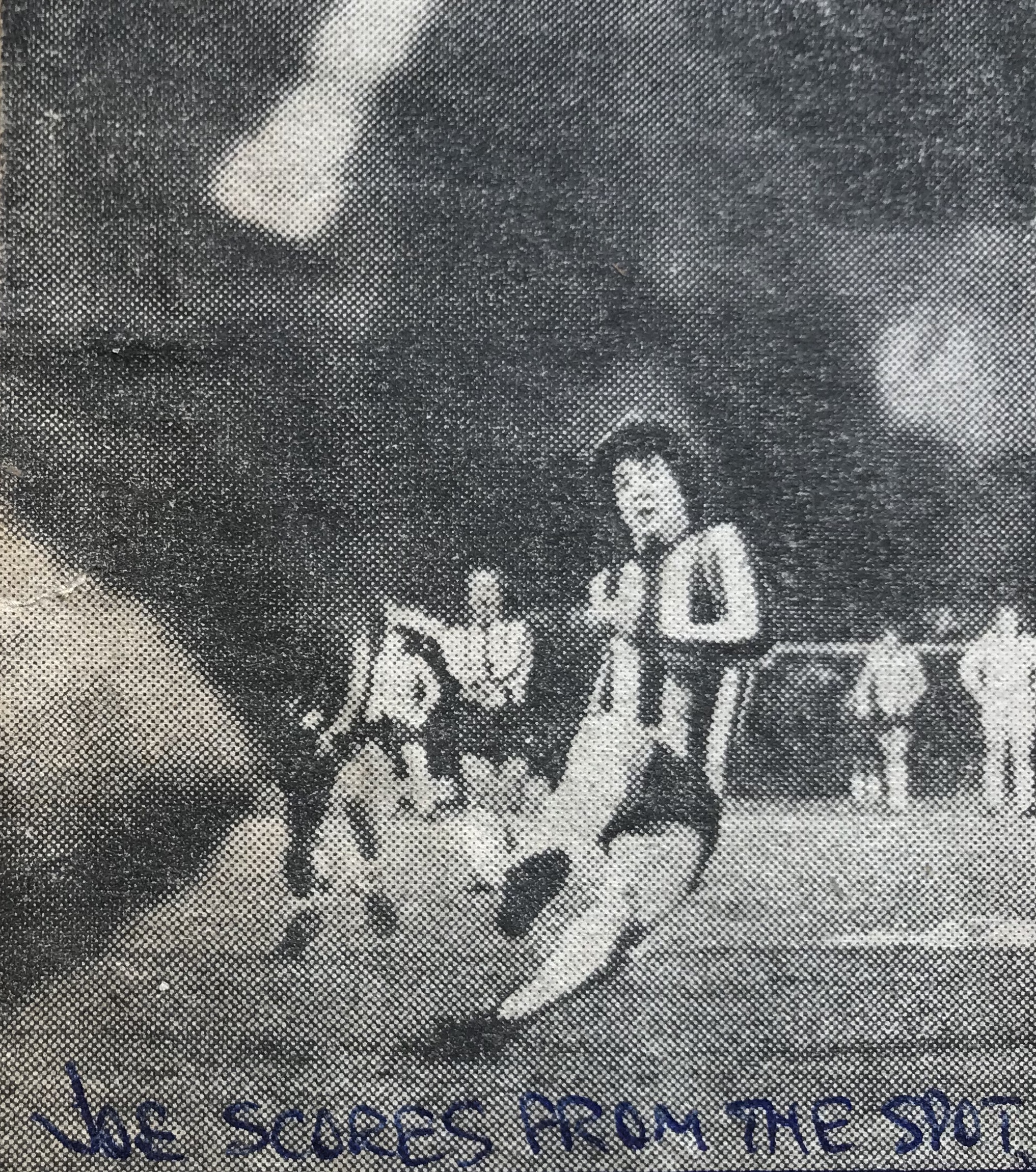
Spurs were in no mood for sentiment, though, and ran out 6-1 winners, with Kinnear scoring a consolation for Albion from the penalty spot.

As Albion’s promotion bid unravelled, Kinnear played in 10 league matches, only three of which were won. Although he was successful with another penalty, this time against Chesterfield, the Spireites won 2-1 with two penalties of their own.

Fingers were pointed at Kinnear for a gaffe in a decisive Easter game at promotion rivals Millwall which Albion ended up losing 3-1.

In his end-of-season summary, the Evening Argus Albion watcher John Vinicombe pointedly considered it was the injury ruling out Tiler that had been a key turning point in the failure to gain a promotion spot.

Kinnear himself suffered a serious knee injury in the penultimate game of the season, a 1-1 home draw against Gillingham, capping a dismal afternoon in which he also had a penalty saved. His departure on a stretcher on 19 April 1976 was his last appearance in an Albion shirt, other than being pictured kneeling on the end of the front row in the August pre-season team photo.

What happened next was covered in some detail in a 2013 blog post on thegoldstonewrap.com. In short, Mullery had arrived as manager following Taylor’s decision to quit and link up again with Clough, who’d taken over at Nottingham Forest.

Mullery was unimpressed by his former teammate’s level of fitness and attitude and called him out in front of the squad. Peter Ward, the new kid on the block at that point, thought it was the wrong approach and, in Matthew Horner’s book He Shot, He Scored, said: “It seemed that Mullery and Kinnear didn’t get on very well.”

Contractually, Albion still owed Kinnear money but it was evident he wasn’t going to feature while Mullery was in charge and a settlement had to be reached. Eventually Kinnear moved on to become player-manager of non-league Woodford Town, beginning a career in coaching and management that ultimately took him back to the top level of the game, albeit frequently attracting headlines for some extraordinary and controversial behaviour.

But let’s stick with Kinnear the player for the moment. Born in Kimmage, Dublin, on 27 December 1946, he moved to Watford at the age of seven. After leaving school, he became an apprentice machine minder in a print works and played amateur football for St Albans City. It was there he was spotted by the aforementioned Baily, who invited him to join Spurs’ pre-season training. He initially signed as an amateur in 1963, turning professional two years later.

His breakthrough season was 1966-67. He made his debut for the Republic of Ireland on 22 February 1967 in a 2-1 defeat to Turkey and won a regular place in the Spurs side when Phil Beal was sidelined with a broken arm. Kinnear performed well in Beal’s absence and he ended it as a member of the side which beat Chelsea 2-1 in the 1967 FA Cup Final.

“I was 20 when we played in the 1967 FA Cup Final and I got Man of the Match, so it was a great start for me,” Kinnear told tottenhamhotspur.com.

All was going well until January 1969 when in a home game against Leeds United he broke his right leg in two places, and he was out of the side for a long while.

Kinnear’s misfortune provided an opportunity for emerging youngster Ray Evans, as this Spurs archive website recalls: “When he got his chance through an injury to regular right back Joe Kinnear, Evans took over in that position and provided a threat with fast, over-lapping runs along with a notable fierce shot that chipped in with a few goals for the club.  Strong in the tackle and quick to recover his position, his height also helped him when teams tried to play diagonal passes in behind him.”

Evans had long spells in the side, especially in the 1973-74 season when Kinnear barely got a look-in, but the Irishman battled for his place and was first-choice right-back in Spurs’ League Cup winning sides of 1971 and 1973, and the UEFA Cup winning line-up in 1972.

The revered Nicholson had encouraged Kinnear to become a coach once his playing days were over, but he struggled to get a foot on the ladder in the UK. Ex-Derby boss Mackay, with whom he used to go to Walthamstow dogs after training, took him on as his assistant in the United Arab Emirates and Malaysia, then later at Doncaster Rovers after Kinnear had spent time in India and Nepal.

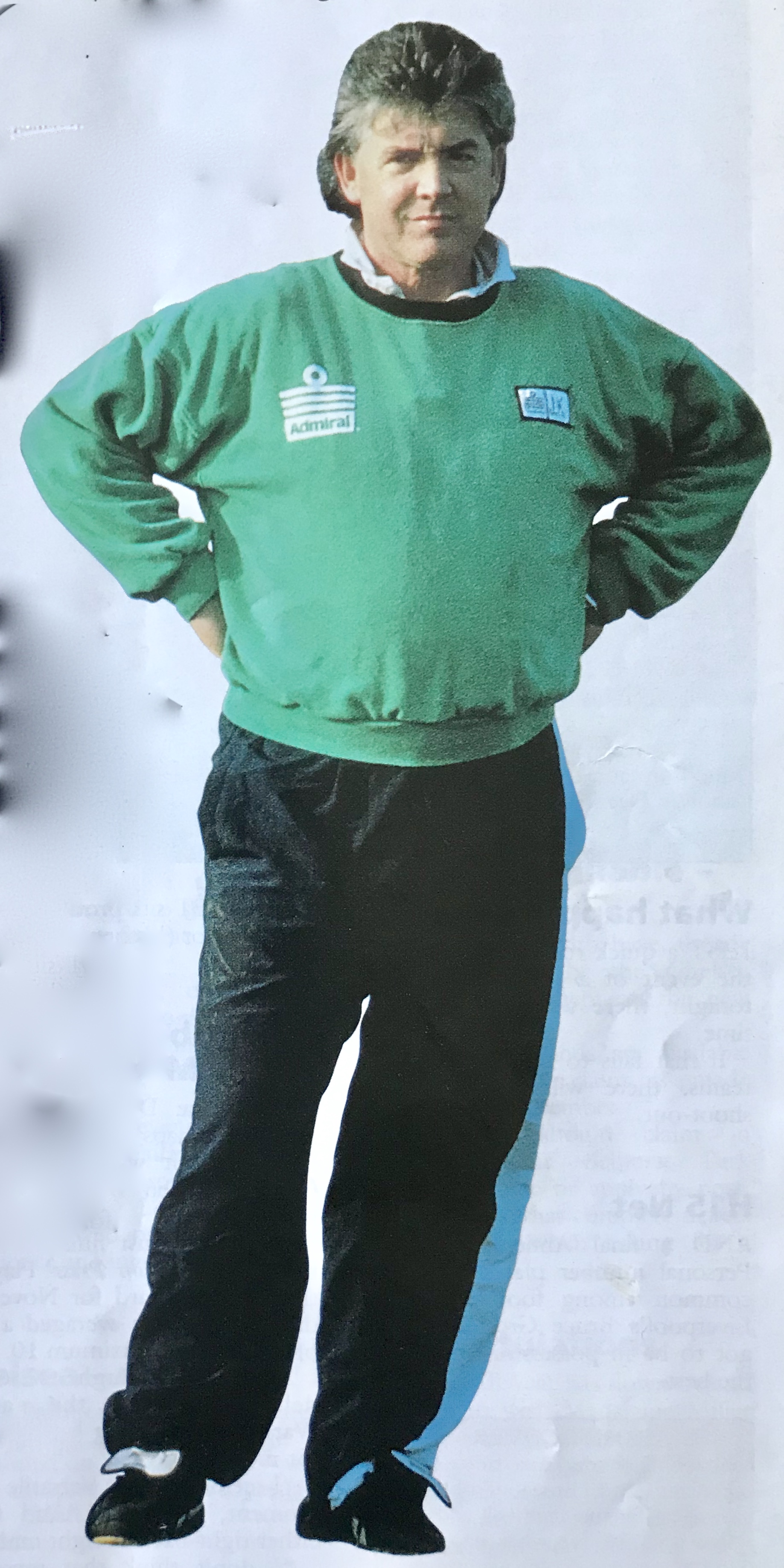
Eventually, in 1992, he got his chance at Wimbledon, defying the purists with a brand of football that saw them finish in sixth place in 1993-94 – and Kinnear won the League Managers’ Association Manager of the Year award.

Over seven years, The Dons played 364 games under him, winning 130, drawing 109 and losing 125. Despite not even playing at their own ground – they played home matches at Selhurst Park – Wimbledon continued to defy the critics with their resilience in the Premier League and progress in the cups but in 1999 Kinnear stood down as manager after suffering a minor heart attack.

He later enjoyed success in two years (2001-03) at Luton Town and had colourful spells as manager of Nottingham Forest (2004) and manager (2008-09) then director of football (2013-14) at Newcastle United.

Acres of newsprint and plenty of clips on YouTube record some extraordinary behaviour following his appointment by Mike Ashley at Newcastle. Perhaps one of the best summaries is on planetfootball.com, with reporter Benedict O’Neill saying: “Mike Ashley’s mismanagement of Newcastle has been a long-term affair with many bizarre decisions, but his appointment of the long-forgotten Joe Kinnear — twice! — may just be the strangest of all.”

Kinnear, who was diagnosed with dementia in 2015, died aged 77 on 7 April 2024.

Pictures from my personal scrapbook, matchday programmes and various online sources.

The luck of the Irish eluded striker Graham Barrett

GRAHAM Barrett did his level best to impress when new boss Steve Coppell took charge for the first time at Withdean.

The on-loan Arsenal forward put in an inviting cross from the right wing for Gary Hart to score midway through the first half of the 19 October 2002 game against Sheffield United.

Barrett himself then got on the end of a precision pass from Bobby Zamora out wide on the left to put Albion 2-0 up in the 34th minute.

Unfortunately, the young forward’s contribution was overshadowed by events at the other end of the pitch in the second half. Firstly, the Blades hit back through Michael Brown and then substitute Carl Asaba equalised.

Referee Phil Prosser became the villain of the peace by awarding United two penalties in the final four minutes of the game, both converted by Asaba.

The first was given when Prosser reckoned goalkeeper Michel Kuipers had brought down Asaba in the box; the second when Adam Virgo pushed over Wayne Allison in the penalty area.

“Albion fans were so incensed by Prosser’s first penalty decision that several hundred left their seats in the south stand to protest from the running track,” The Argus reported. “Police and stewards gathered in front of them to prevent the threat of a pitch invasion.”

Even Albion-supporting MP Ivor Caplin got in on the act, subsequently calling for an FA inquiry into Prosser’s “totally inept” display. Needless to say, that went nowhere.

Barrett, meanwhile, was far less impressive the following Saturday when he and his temporary teammates were thrashed 5-0 by Crystal Palace at Selhurst Park.

He started 20 games for the Albion in that season, as well as making 10 substitute appearances – but that single strike against Sheffield United was his only goal.

g barrett stripesBorn in Dublin on 6 October 1981, Barrett was one of several Irish youngsters who began their football careers with Arsenal having been spotted by ex-Albion boss, and fellow Irishman, Liam Brady, playing in an Ireland U15s game against England at Blackburn.

Brady had become Arsenal’s head of youth development and academy director after his spell at Brighton. Barrett agreed professional terms with Arsenal in 1998 and went on to captain their FA Youth Cup winning team of 2000.

He earned a call-up to the Republic of Ireland’s under 21 team and went on to play 24 times at that level, scoring five goals. Between 2002 and 2004, he stepped up to the full Eire side and scored twice in six matches.

Barrett managed to break through to the first team squad at Arsenal in December 1999 and made his debut as a substitute for Thierry Henry in a 3-0 win over Leicester City. The following month, again as a substitute, he appeared in a 4-1 win over Sunderland, and he also played in a league cup match.

“I was around the first team for a good four or five months, travelled a lot with them and got to train every day with them, played a little bit,” Barrett told the42.ie, in an April 2018 interview.

Facing stiff competition for a first team place, Barrett was sent out on loan to gain playing time at a lower level. He went to Bristol Rovers but only managed one game before being struck down with glandular fever, causing him to be out of the game for six months.

When he’d recovered, he went on loan to Crewe Alexandra and Colchester United who had wanted him back for the 2002-03 season, but he opted to join Brighton instead.

With little chance of dislodging the likes of Bergkamp, Henry, Wiltord and Suker at Arsenal, Barrett was given a free transfer by Arsenal in May 2003 and opted to join Coventry City on a three-year contract.

graham barrettAlthough he made 32 league starts plus 23 as a sub, ex-Albion boss Micky Adams made it plain he didn’t fit into his plans. He went to spend the last year of his contract on loan at Livingston in Scotland but after only six games suffered a season-ending knee injury.

He subsequently stayed in Scotland and played for Falkirk and St Johnstone before returning to Ireland to play for Shamrock Rovers, who his dad, Gary, had played for in the Eighties under Johnny Giles.

Barrett is now a director of football agency Platinum One, representing the interests of young players.

Irish defender Stephen Ward surprised Albion supporters

SWARDWHEN Wolverhampton Wanderers slipped into the third tier, they urgently needed to loan out some of their higher-paid players – hence, in August 2013, the arrival at Brighton of left-back Stephen Ward.

Most Seagulls supporters were not sure of his attributes having had the pleasure the previous season of watching the imperious Wayne Bridge shine in that position while on loan from Manchester City.

However, Albion fans were delighted to be proved wrong after Ward helped to shore up a defence that had leaked seven goals in the first eight days of the season. The Irish international defender went on to make a total of 47 appearances and was runner-up to Matt Upson as Albion’s 2013-14 player of the year.

Ward also chipped in with four goals, including the tide-turning equaliser at Nottingham Forest on the final day of the season.

Forest equaliser

Although injury-hit Albion failed to get past Derby County in the play-off semi-finals, it was thought Ward would sign permanently for the Seagulls that summer. But Burnley stepped in, offering Wolves and the defender more money, not to mention the more immediate chance of Premier League football.

Ward’s agent, Scott Fisher, later told the Argus that dithering or perhaps a bit of brinkmanship by then head of recruitment David Burke had scuppered the deal.

“We really tried our best to make Stephen Ward a permanent Brighton player. Had they done their business earlier this wouldn’t have happened,” he said.

Ward spoke more about the circumstances in an interview with the Argus in April 2016.

Previously, as the season drew to a close, Ward told the Argus: “If I’m going to move on, I don’t see why this wouldn’t be one of the better options for me. I’ve been here for a year; I’ve really enjoyed it.

SW Argus

“I couldn’t say one bad thing about the club. The crowd we get, the stadium we have is phenomenal, probably the best in the Championship, and with the new training ground the club is on a real up and a real high.

“If I was to move on from Wolves, Brighton would definitely be high on the list. It’s not in my hands, it’s going to be in other people’s hands to discuss the future, but it has been a great move for me. I’ve really enjoyed it. It’s a really good club and one people should be privileged to play for.”

Ward went on to spend five years at Turf Moor, making 110 appearances, but only featured 11 times in the 2018-19 season, and manager Sean Dyche told punditarena.com: “He (Ward) has been brilliant for us, absolutely brilliant, he’s done a fantastic job.”

SW BurnPerhaps it was no surprise that former Albion coach Nathan Jones stepped in to sign the experienced defender for Stoke City, where he’d taken on an often-perilous managerial hotseat.

Jones said: “He’s had a fantastic career, the only downside for him is his age, because he isn’t what we normally go for.

“But I feel we need to add certain things to the changing room and the environment and Stephen brings those.

“He’s a wonderful player, a great character, very experienced. He’s been promoted – won the Championship twice. He’s an Irish international, I worked with him, he’s technically very, very good so he ticks every box. It’s just the aging process is the only drawback.

“With Stephen, he’s a specialist in what we need and he will provide vital competition and good strength in that area.”

Unfortunately Ward couldn’t claim a regular starting place and in December 2019 picked up a calf injury which sidelined him for four months. Having made only 17 appearances for City, in August 2020 he switched to League One Ipswich Town on a free transfer.

After playing 29 games for them in the 2020-21 season, the club announced on 5 May 2021 he would be released at the end of the season (one more appearance would have triggered a 12-month extension to his contract).

Born in Dublin on 20 August 1985, Ward grew up in Portmarnock and, as a schoolboy, played football for Home Farm and Portmarnock before joining League of Ireland side Bohemians.

He attributed his eventual success in making it as a player to staying in Ireland when he was younger and continuing to live at home rather than going to play at a UK club’s academy.

In an excellent lengthy interview with the Irish Independent, he said: “I had a few trials – Leicester a couple of times, I went to Aston Villa a lot and Hibs for some reason – nothing worked out and I signed for Bohs. And the most important thing for me then was living at home and having my family around me.

“It does depend on the academy, but you are in a bubble from a young age. You train in a certain way, everything is done for you; I know you get your jobs, but not that many now, and sometimes there is a mentality that once you are in an academy, you’ve made it. I was 17 and played in a league where players were playing for their mortgages and to put food on the table.”

Originally a forward, he scored 26 goals in 93 appearances, and, having been looked at by Sunderland boss Mick McCarthy and deemed not quite ready, McCarthy kept tabs on him when he took over at Wolves.

“I signed for Wolves as a striker,” Ward told the Irish Independent. “I was not a typical number nine, scoring 20 or 30 a season, but an old-fashioned centre-forward running round, closing down.

“We signed a couple of strikers – Sylvan Ebanks-Blake and Chris Iwelumo – and I knew if I was going to play consistently it was probably not as a centre-forward. So, I went to left-wing for a bit.

“I played at left-back at Norwich for 30 minutes or so when we went down to nine men. We scraped a draw and afterwards Mick said, ‘You could make a career playing there.’ I thought, ‘Yeah, whatever’. Next season, three games in, and new left-back George Elokobi suffers an awful injury, the window was shut and Mick had no one else . . .”

On the international stage, Ward played through the age levels for the Republic of Ireland and had a dream full international debut in May 2011 as he scored in a 5-0 win over Northern Ireland.

He went on to play 50 times for his country before announcing his retirement from international football in March 2019.

Gerry Ryan – ‘a special player and one of football’s nice people’

THERE WAS no shortage of tributes paid to Gerry Ryan when the former Albion winger died at the age of 68 on 15 October 2023.

Fellow Irish international Liam Brady, who appointed Ryan as his assistant when he took charge of the Seagulls in 1996, said: “Gerry was a wonderful team-mate. He was a very quick winger, very brave, and he took people on.

“We had some great games together and then we ended up on opposite sides, for Brighton and Arsenal, in the old First Division.”

Although Ryan and Brady’s time in charge happened during a turbulent time off the pitch, Brady pointed out: “We did a pretty good job in what were, of course, difficult circumstances, and I could see then just what Brighton meant to him – he was in love with the club so much.

“Off the pitch, Gerry was just a really nice guy. He was affable, unassuming and got on with everyone he came in contact with.”

That sentiment was echoed by teammate Gordon Smith who told the Albion website: “Gerry was always fired up to play.

“He was not always first choice, but he was still a very good player. He had this ability to be able to turn games around because he was quick and he could score goals.

“He was so reliable – he could fit into any position with his levels of fitness, ability and positional play.

“We were a very close group; we socialised a lot, we played golf, went to the races and Gerry was a key part of that – he was a really good laugh.”

Turlough O’Connor, another former team-mate, from his early days playing for Bohemians in Dublin, told the Irish Independent: “He was the most easygoing guy you’d ever meet, very laidback and always in a happy mood, and a very good footballer as well.

“He was comfortable both left and right, very good on the ball, and very quick, which helped. A very good crosser, he went by people, and was always a threat. He helped so many times laying on goals for me.”

Ryan was one of the most likeable Albion players for a huge number of fans, and I was one of them.

A versatile trier who was good enough to represent the Republic of Ireland on 18 occasions, the wholehearted Ryan might not make it into the all-time best Brighton XI but, if it was judged on affability, his name would be first on the team sheet.

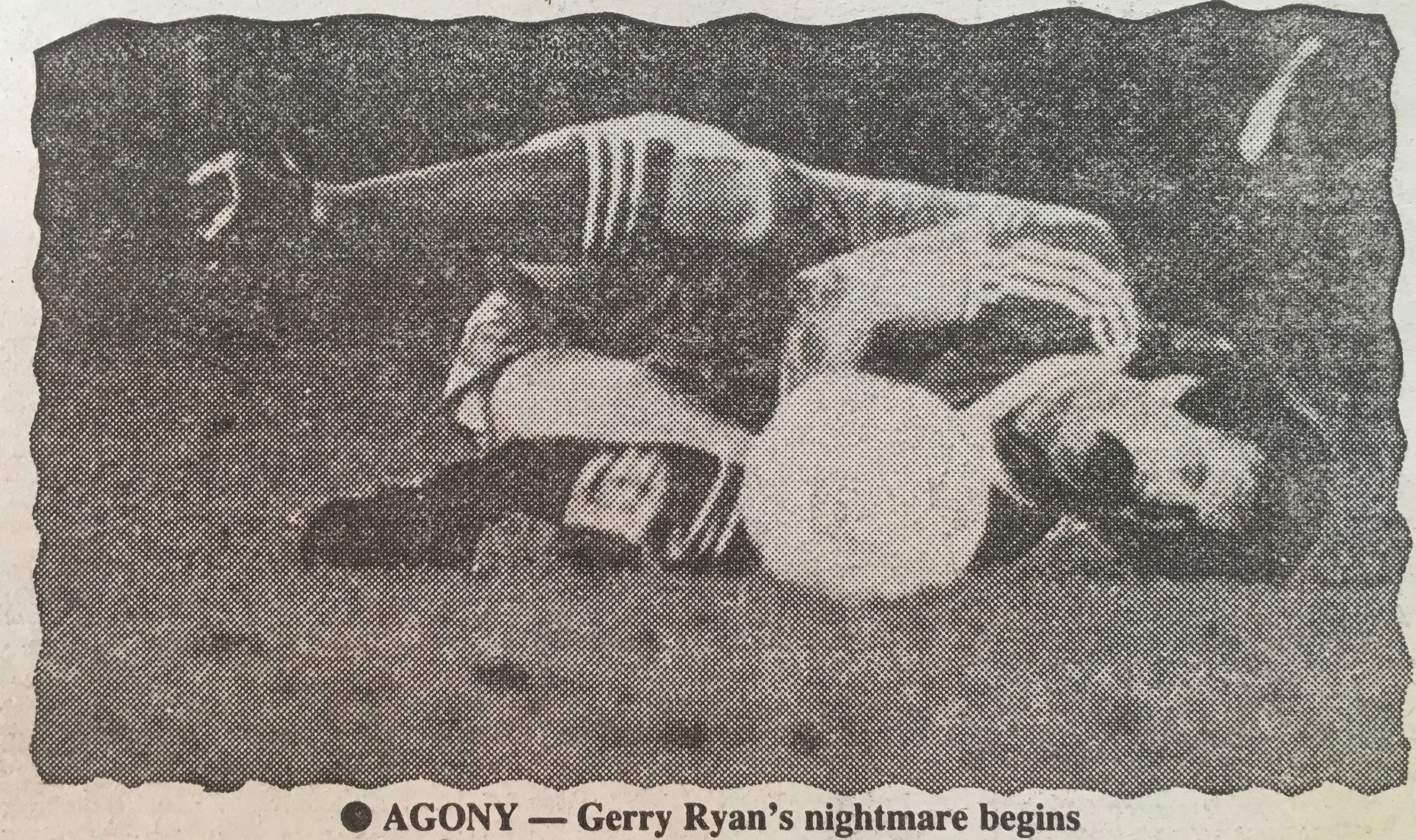
A cruel twist of fate saw his career ended in a tackle made by his Irish teammate (and former Albion boss) Chris Hughton’s brother, Henry. Typically, Ryan bore no grudges, as stressed by former Argus Albion reporter John Vinicombe in an article published in May 1986 when the genial Irishman finally accepted that his career was over.

Describing “the immense dignity and true manliness that Ryan displayed in refusing to condemn or indeed utter any harsh word against the player responsible,” he added: “Where others have sued and raged, slandered, cursed and threatened, Ryan said nothing.”

GR leg break

It was 2 April 1985 when his career was ended by that Hughton tackle in a 1-1 draw with Crystal Palace at Selhurst Park.

“Never in his life has he shirked a tackle and the one that ended his career so unfortunately at Crystal Palace was typical of many he faced in his career,” said Alan Mullery, the manager who signed him for the Seagulls.

“As a person, he is a lovely and typical Irish personality,” Mullery said in the programme for the player’s testimonial game against Spurs at the Goldstone on 8 August 1986. “I can honestly say that I have never met a player who dislikes him or has a bad word to say about him. I will remember Gerry Ryan as being a special player and one of football’s nice people.”

Mullery also referred to a Sunday lunch he and his family had with Ryan and his wife at the time he signed. “When Gerry ordered roast beef and chips I must have known then that I had a very special sort of player. At the time, I was a little dubious but afterwards I had no regrets.”

Mullery had been over in Dublin watching Albion’s Mark Lawrenson playing for the Republic of Ireland and Derby’s Ryan was playing in the same side. He had been having talks about moving to Stoke City but Mullers persuaded him to join Brighton instead, and, in a strange quirk of fate, he made his debut in a 2-2 draw away to Stoke.

After they’d become teammates, Lawrenson was among those players appreciative of Ryan’s “mercurial” qualities. He said in a matchday programme: “He wasn’t the most confident of players but he had loads of ability. For a wide player, he would come in and get goals for you.”

GR capsA week after joining the Seagulls, Ryan became an instant hit with Albion fans when he scored on his home debut in a 5-1 win over Preston. He notched a total of nine goals in 34 appearances in that first season and went on to score 39 in a total of 199 games.

Born in Dublin on 4 October 1955, Ryan was one of eight children. His early education was at the local convent in Walkinstown, a suburb to the south of Dublin where the family lived. At the age of eight he moved on to Drimnagh Castle School (it covered primary and secondary age groups).

At that stage, he was playing Gaelic football and hurling, at which he was capped at under-15 level by Dublin Schools. He didn’t play competitive football until he was 16 when he was introduced to a Dublin football club called Rangers AFC. He played alongside Kevin Moran, who later played for Manchester United, and Pat Byrne, who later played for Leicester City. Byrne and Ryan also played together for Bohemians, the oldest football club in Dublin.

Ryan joined the Dublin Corporation as a clerical officer on leaving school and played for Bohs as an amateur initially before becoming a part-timer on professional terms. By 18, Ryan was a first-team regular and, after collecting a League of Ireland Championship medal, was watched by Manchester United boss Tommy Docherty.

Docherty didn’t pounce then but, after Ryan had stayed four years with Bohemians, the ebullient Scot eventually returned to take him to England as his first signing for Derby County for a fee of £55,000.

The newly-appointed Docherty was determined to shake-up the club and while long-serving goalkeeper Colin Boulton was discarded along with striker Kevin Hector, Ryan, Scottish internationals Bruce Rioch and Don Masson, and Terry Curran and Steve Buckley were all introduced.

Ram Ryan

Ryan spoke about the way Docherty’s attitude towards him changed in an interview with Brian Owen of The Argus in 2016.

“One minute you were the blue-eyed boy, the next he wouldn’t even talk to you,” he said. Ryan made a hamstring injury worse by playing when Docherty insisted he was fit enough, and ended up sidelined for three months. “He didn’t like me then! That’s the way he was, he would turn on you, and he turned on me.”

Within a year, Docherty accepted Brighton’s £80,000 offer for Ryan and, as he was weighing up whether to choose the Seagulls or Stoke City, Ryan consulted the legendary Republic of Ireland and ex-Leeds midfielder Johnny Giles to ask his opinion.

“Gilesy said ‘Stoke have been in and out of the First Division forever but there is something going on down at Brighton. They get great crowds and it’s a beautiful place.’ I went to Brighton that weekend and absolutely loved it,” Ryan told Owen.

It was on 25 September 1978 winger Ryan arrived, prompting the departure of popular local lad Tony Towner after eight years at the Albion.

Five months before Ryan arrived at the Goldstone, he made his international debut, featuring for the first time in April 1978 in a 4-2 win over Turkey at Lansdowne Road. He only scored once for the Republic, but it was a cracking overhead kick in a 3-1 defeat against West Germany.

Ryan Eire

He was one of four regular Eire internationals playing for Albion at the time: Lawrenson, Tony Grealish and Michael Robinson the others.

His final appearance for his country came in a 0-0 draw against Mexico at Dalymount Park in 1984.

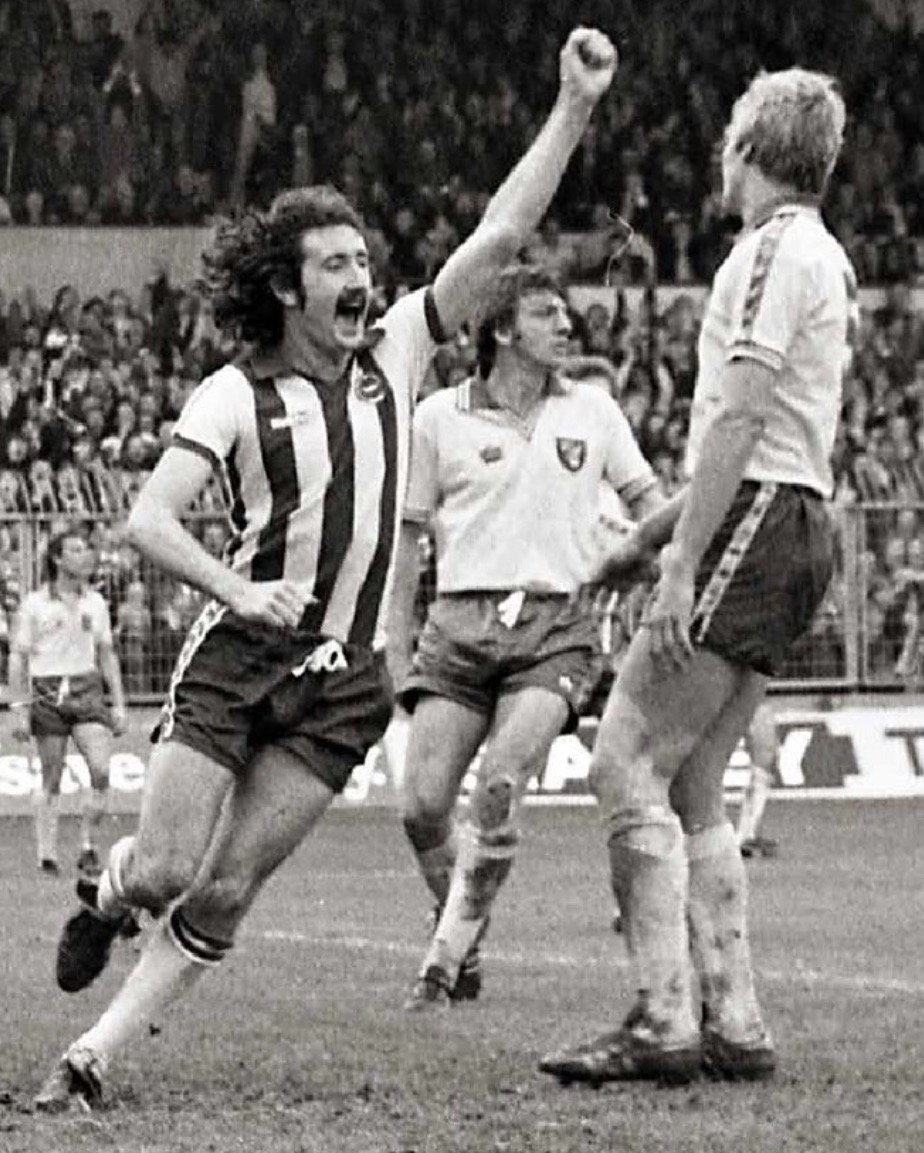
Ryan was part of some all-time history-making moments during his time with the Albion – scoring at St James’s Park in the 3-1 win over Newcastle on 5 May 1979 to clinch promotion to the top division for the first time, and burying the only goal of the game as unfancied Albion beat Brian Clough’s European champions Nottingham Forest, who’d previously not lost at home for two and a half years.

Ryan scoresMy personal favourite came on 29 December 1979 at the Goldstone when he ran virtually the entire length of a boggy, bobbly pitch to score past Joe Corrigan in the goal at the South Stand end to top off a 4-1 win over Manchester City. Ryan himself reckoned it was “the best goal I ever scored” as he recounted in a May 2020 BBC Sussex Sport interview with Johnny Cantor.

It was one of the most superb individual goals I saw scored and, when he was trying to recuperate from the horrific leg break which ultimately ended his career, I wrote to him in hospital to say what a special memory it held for me.

I was delighted to receive a grateful reply from him, and he has held a special place in my Albion memory bank ever since.

There were other stand-out occasions, two of which came against Liverpool:

in February 1983 at Anfield when he opened the scoring in Albion’s memorable 2-1 FA Cup triumph en route to the final, and, in the following season, at the Goldstone when he and Terry Connor were on target in Second Division Albion’s 2-0 win over the Reds in the same competition, the first-ever live FA Cup match (other than finals) to be shown (previously any television coverage of FA Cup ties was only ever recorded highlights).

If the modern-day reader can’t quite put the feat in perspective, it is worth pointing out that Liverpool, managed by Joe Fagan, went on to win the League Cup, the League title and the European Cup that season.

Danny Wilson hadn’t long since joined the Albion and, in an interview with the Seagull matchday programme in 2003, he recalled: “That has to be my favourite memory from all my time at the Goldstone. Back then, Liverpool were just awesome, and to beat them like we did was virtually unheard of.”

Ryan’s involvement in the 1983 Cup run was hampered by a hamstring injury which meant he missed out on the semi-final. But, in the days of only one substitute, he was on the bench for the final and, when the injured Chris Ramsey couldn’t continue, Ryan went on at Wembley and did a typically thorough job at right-back.

GR prog snow

Following Albion’s relegation, as the big-name players departed the Goldstone, Ryan’s versatility and play-anywhere attitude came to the fore and, in his last two seasons with the club he was often selected as a centre-forward, although he was not a prolific goalscorer from that position.

After he was forced to quit playing, Ryan took what was then quite a familiar route for ex-players and became a pub licensee, running the Witch Inn at Lindfield, near Haywards Heath. Ryan and goalkeeper Graham Moseley, who he’d known from his days at Derby, were neighbours in Haywards Heath.

GR pots

However, when another of his former Republic of Ireland teammates, Liam Brady, was appointed Albion manager in 1994, it was an inspired choice for him to appoint Ryan as his assistant.

When that all-too-brief managerial spell came to a messy close, Ryan returned to his pub, and then moved back to the family home in Walkinstown. Ryan’s son Darragh played 11 games for the Albion in the late 1990s.

Sadly, in August 2007, Ryan suffered a stroke, and three years later he was diagnosed with kidney cancer. On his death, his family paid tribute to the care he was given by the staff of Our Lady’s Hospice, Harold’s Cross and to the staff of Lisheen Nursing Home, Dr Brenda Griffin, the Beacon Renal Unit, Tallaght, and Tallaght Hospital Renal Unit “for the excellent care given to Gerry over the past number of years”.

Pictures from a variety of sources but mainly from my scrapbook, the matchday programme and The Argus.

‘Dynamic and energetic’ international Keith Andrews wanted longer Brighton stay

15486REPUBLIC of Ireland international midfielder Keith Andrews was something of a revelation during a season-long loan at Brighton & Hove Albion.

Now plying his trade as a pundit for Sky Sports, Andrews had previously played for the other Albion as well – West Bromwich – although his stay there was even briefer than his time with the Seagulls.

With the looming expectation that back-to-back Player of the Season Liam Bridcutt would shortly follow old boss Gus Poyet to Sunderland (which eventually happened in January 2014), Brighton turned to Andrews to cover the defensive midfield slot in 2013-14.

Arriving at the Amex in August 2013 just short of his 33rd birthday on a season-long loan from Bolton Wanderers, Andrews was not at all happy with the way the Trotters ‘disposed’ of him, telling bbc.co.uk: “Nobody really had the decency to even phone me as I was leaving.

“I think I deserve a little bit more respect than that, I suppose. I always felt I’d done things well at that club, been very professional and treated people like I like to be treated.

“To end on that note was a bit sour but you can’t be surprised by anything in football.”

Even if Seagulls supporters viewed his signing as somewhat underwhelming, Andrews himself was delighted and excited, saying: “If it wasn’t the right move, I certainly wouldn’t have gone and I didn’t feel any pressure to leave.

“It was a move that genuinely excited me. To come to a club that plays in the fashion and style that Brighton do was something that really appealed to me.

“I have still got a huge appetite for the game and I feel I can have a big impact here. I have come into a squad that has a wealth of experience and ability that will make me be the player I know I can be.”

And boss Oscar Garcia sought to dispel any doubts, telling bbc.co.uk: “He is a player with experience at the top level of the English game and international football – including World Cups and European Championships.

“Keith is a player who I know will enjoy the way we like to play. He is a dynamic and energetic player.”

It wasn’t long before supporters began to be pleasantly surprised by Andrews’ contribution on the pitch, and off it the new signing also began to show his aptitude for handling the media.

As early as September 2013, Andrews was speaking eloquently about his teammates, for example telling BBC Radio Sussex his views about striker Leonardo Ulloa.

“He is a handful and has got a bit of everything,” he said. “He is a big player for us at the moment as he is really leading the line on his own. He allows us to bring other players, such as Bucko [Will Buckley] and Ashley Barnes, into play.

“He is very effective and I’ve seen first hand in training how strong he is and what a handful he is to deal with. I have only been here a few weeks but I have been very impressed by the mix we have got in the dressing room. We’ve got experience, youth, foreign, English and Irish.

“It is a good atmosphere and if we hold onto what we have got I am more than confident we can have a very successful season.”

As the months progressed, Andrews became an established part of the side which Garcia ultimately led to the play-offs. In December 2013, Andrews made use of the platform offered by the Daily Mail’s Footballers’ Football Column to expand on his enjoyment of his time at the Amex.

“The club made a big impression on me when I played against them for Bolton last season, in terms of their style of football and their new stadium, and when they came in for me it was a very easy decision in footballing terms,” he said. “It’s not an easy decision, moving 250 miles away from your home in the north-west, but Brighton made it very clear they wanted me and Bolton made it clear they didn’t.

“It came out of the blue, but I felt it was a chance to be a part of something really exciting.”

Garcia’s decision to quit after the failure to get past Derby County in the play-off semi-finals was the catalyst for a number of changes in the playing personnel, although Andrews hankered to make his move to Sussex permanent having been involved in 37 appearances since his temporary move.

keith ands v sheff wedHe registered one goal during that time, an 89th minute equaliser at home to Sheffield Wednesday in October.

In a May 2014 interview with the Bolton News, he said: “It would be something I’d be interested in. When the people are so good to you and make you feel so welcome, the fans have been fantastic, it’s a one-club town.

“No-one supports anyone else and the attendances are something that I haven’t experienced in football for a long, long time. We’ve got the best attendances in the whole league although other clubs in the league are supposedly bigger.

“It’s a club I would like to stay involved in but contract-wise I’m contracted to a different club next season, I’m only here on loan. These things are not always in your hands and you can’t always dictate where you go and how your career pans out.

“But I would certainly like to stay on at Brighton into the future because I have thoroughly enjoyed it this year.”

The midfielder also reflected positively on his time at the Amex in a blog post for Sky Sports, pointing out: “Although I was only at the Amex for one season I have a lot of affection for the club as I think they try to do things in the right manner for the club to evolve with real sustainability for years to come.

“There are good people involved behind the scenes there, none more so than in the academy. Last season I worked closely with the academy manager John Morling and the development coach Ian Buckman as I was in the middle of my UEFA ‘A’ licence and they couldn’t have done any more to help me.

“It was a great experience to work with them as they prepared weekly and monthly schedules with the rest of the coaches and sports scientists to ensure the young lads had the best chance of developing their games, both technically and physically.

“I was amazed at the schedule a 14-year-old at the club had and a little envious to be honest as it certainly wasn’t like that in my day!”

Born in Dublin on 13 September 1980, Andrews came through the ranks of Drumcondra side Stella Maris before being picked up as a junior by Wolverhampton Wanderers, where he stayed for six years.

He made his first team debut on 18 March 2000 in a 2-1 win at Swindon and at 21 was Wolves’ youngest ever captain in a game against QPR, but he was sent out on loan on three separate occasions, playing briefly for Oxford United, Stoke City and Walsall.

After 72 appearances for the Molineux side, in 2005 he moved on to Hull City, where injury blighted his only season with them He then had a two-year spell with Milton Keynes Dons, where he had a productive midfield partnership with Alan Navarro, and he assumed the captaincy of Paul Ince’s side.

His second season was a huge success as the Dons won promotion to League One; Andrews scoring the goal which secured the success. He also scored in the club’s 2-0 win over Grimsby Town in the Football League Trophy at Wembley.

Andrews was chosen in the PFA Team of the Year, won the League Two player of the Year Award and was listed 38th of FourFourTwo magazine’s top 50 Football League players.

The Irishman followed his old Dons boss Ince to Premier League Blackburn Rovers in September 2008 and, two months later, at the comparatively late age of 28, made it onto the international scene with Ireland, making his debut as a substitute in a 3-2 friendly defeat against Poland.

It was the first of 35 international caps. He was involved in Ireland’s 2010 World Cup qualifying campaign and although the country was winless at the 2012 European Championship in Poland and Ukraine, Andrews was named FAI Player of the Year for 2012.

Meanwhile, Andrews’ third season at Blackburn (2010-11) had been curtailed by injury, restricting him to just five Premier League appearances, and in August 2011 he went on a half-season loan to Ipswich Town.

A permanent switch looked on the cards but on deadline day of the January 2012 transfer window he ended up joining West Brom on a six-month deal. After 14 Premier League appearances for the Baggies, his contract came to an end and his next port of call was newly-relegated Bolton Wanderers, who he joined on a three-year contract in the summer of 2012.

Owen Coyle was the manager at that time but his tenure came to an abrupt end in October that year. Although Andrews played 25 times under his successor, Dougie Freedman, the following season he was edged out by the signing from Liverpool of Jay Spearing.

After his loan season with Brighton, Andrews had a similar arrangement at Watford but he didn’t enjoy the same success there and ended up curtailing the deal and going back to MK Dons on loan for the latter part of the season.

When the curtain came down on his playing career at the end of the 2014-15 season, he’d completed 413 career appearances and scored 49 goals.

He became first team coach at MK Dons and harboured ambitions of becoming manager when Karl Robinson departed, but he was overlooked and began working as a coach with the junior Irish international teams, and turned to punditry with Sky Sports.

ipanews_045350c2-6dc7-4ca9-82e8-cb2036cb6b94_1

Goal machine Frank Stapleton ended his playing days in a Brighton shirt

stapleton stretch

FRANK STAPLETON hit the heights as a goalscorer for Arsenal and Manchester United but his prize-winning playing days came to an end in a Brighton & Hove Albion shirt.

Stapleton was the scorer of the first top flight goal at the Goldstone Ground – unfortunately, it was the opener in Arsenal’s 4-0 win in 1979! He was also one of the Manchester United scorers in the 1983 FA Cup Final against Brighton, having moved to Old Trafford two years earlier (above, however, he just fails to connect for Arsenal against Brighton with Steve Foster and Gary Williams looking on).

His two appearances for Brighton came in 1995 when his old pal Liam Brady brought him in to try to improve the front line of an ailing side.

Born in Dublin on 10 July 1956, the promising young Stapleton was rejected by United as a teenager but the Gunners reaped the benefit of that decision by snapping him up at the tender age of 15 on chief scout Gordon Clark’s recommendation.

Arsenal’s confidence in the prospects for the promising young Irish duo were reflected in a Goal magazine article of 7 October 1972 in which boss Bertie Mee talked about them as future first team players. At the time, they were still part of the club’s junior ranks, aged just 15 and 16.

goal cutting

Mee said: “Brady is almost established as a regular in the reserve side. He needs building up but has the potential to become a first-team player. Stapleton has made quite an impact in his first season and, providing he maintains a steady improvement, he could also follow the path of Brady.”

It was only Brady’s second season and Clark, the Arsenal chief scout who unearthed him, said, at first, he thought he would be better suited to becoming a jockey because he was so small and frail!

He quickly changed his mind when he saw his ability with a football. “He was like a little midget but he had so much confidence. He’s really shot up now and although he’s still not very tall, he’s strong enough to hold his own,” said Clark.

Stapleton, at 15, joined Arsenal in the summer of 1972 and quickly developed a reputation as a goalscorer, netting 11 goals in seven games.

“Frank is tall and very good in the air,” said Clark. “He seems to get up and hang for the ball. He is also very good on the floor and reads the game intelligently for a youngster.”

As expected, Stapleton progressed to the first team and made his debut in 1975 against Stoke City. He initially formed an impressive partnership with England striker Malcolm Macdonald and in three successive seasons was Arsenal’s leading goalscorer.

Such prowess brought him to the attention of the Republic of Ireland international selectors and player-manager Johnny Giles gave him his full debut aged just 20 in 1976 against Turkey in Ankara.

It was the first of a total of 71 caps for his country, during which time he became their captain and scorer of 20 goals. He led Eire when they famously beat England 1-0 at the Euro 1988 finals in Germany. Although he was part of the 1990 World Cup squad – alongside former Albion boss, Chris Hughton –  he was by then behind Niall Quinn, John Aldridge and Tony Cascarino in the pecking order.

Stapleton was part of Arsenal’s three successive FA Cup final teams (1978, 1979, 1980), scoring against United in Arsenal’s 3-2 win in 1979.

When the Gunners sold Brady to Juventus in 1980, Stapleton started to question the club’s ambition and, the following year, on expiry of his contract, decided he would move on himself.

He had scored 108 goals in 300 appearances for Arsenal – some strike rate! – and it wasn’t a popular move to join a major rival in the same division, but he wasn’t the first or last player to have done so.

In the Sixties, United had taken David Herd from the marble halls of Highbury to lead their line and, of course, in more recent times, United signed Alexis Sanchez.

stapleton utd

When Robin van Persie made the same transfer switch from Arsenal to Manchester United in 2012, the Daily Mail took Stapleton back 30 years to talk about the circumstances of his own move.

Stapleton was Ron Atkinson’s first major signing for United and in his first season was partnered up front with Garry Birtles. Stapleton was the leading scorer for United in that first season, with 13 goals in 41 league games.

Subsequently, his main strike partner was the Northern Ireland international, Norman Whiteside.

img_4637

Stapleton scored United’s first goal, a 55th minute equaliser, in the 2-2 Cup Final draw against Brighton: one of 19 he notched during the 1982-83 season in which he played in 59 of United’s 60 games.

By the end of the following season, Stapleton’s regular strike partner was Mark Hughes and he scored in the 1985 FA Cup semi-final against Liverpool to set up yet another Wembley appearance, this time collecting his third winners’ medal when Whiteside’s winner beat Everton.

Despite a good start to the following season, with Stapleton once again amongst the goals, poor league form eventually cost Atkinson his job and his successor, Alex Ferguson, began rebuilding the side.

After six years at United, Stapleton, by then 30, was amongst those to be let go, and he was sold to Ajax of Amsterdam, lured by the fact they were managed by Johan Cruyff. But the move failed to live up to expectations, as detailed by the42.ie, and he ended up having a spell on loan at Anderlecht.

It was the first of a series of moves which didn’t really work out for him, although in the 1988-89 season he found himself playing in France alongside fellow Irish international – and future Brighton striker – John Byrne for Le Havre.

stapleton 4 derby

Derby County offered him a platform back in the UK game and he featured 10 times for them in 1987-88 and, after his stint in France came to an end, he spent two seasons with Blackburn Rovers.

He played once for lowly Aldershot and five times for Huddersfield Town before landing a player-manager’s post with Bradford City. In three years at Valley Parade, he made 68 appearances before the axe fell, and he answered Brady’s call for help at the Goldstone Ground.

The brilliant The Goldstone Wrap detailed his brief involvement in a March 2015 post, explaining how he featured as a substitute in a 0-0 draw at home to Bournemouth and started in a 3-0 defeat away to Cardiff City.

It was a final swansong for his playing career, as he looked to get back into coaching or management. He had two stints working under his former United teammate Ray Wilkins: at QPR and, in 2014, with the Jordan national side.

Stapleton spent eight months in 1996 as the first head coach of American Major Soccer League side New England Revolution, of Massachusetts.

His last appointment in the English game was briefly as a specialist striker coach at Bolton Wanderers, appointed during Sam Allardyce’s reign, in 2003-04.

Nowadays, Stapleton is more likely to be found talking about his illustrious career, his availability for bookings listed by football-speakers.com.

Paul McShane wrote his name in Albion’s history in one season

McShane

FLAME-HAIRED Irish centre back Paul McShane was a complete revelation during a season on loan to Brighton from Manchester United.

The 2005-06 season ended ingloriously for the Seagulls but McShane was imperious, given a platform to launch a career which saw him play most of it in the second tier of English football, and almost 100 times at the top level, together with earning him 33 full caps for his country.

Although he was given a squad number by United, and had been selected by Sir Alex Ferguson for pre-season matches, McShane didn’t get the chance to play any proper competitive football for United’s first team.

United reserve team manager, Brian McClair, a former Celtic teammate of Albion manager, Mark McGhee, could see the benefit of giving McShane first team football at a decent level and an initial half-season loan was agreed, then, in January, it was extended to the season’s end.

Brighton were missing the long-term injured Adam Hinshelwood and although veteran Jason Dodd had been signed to add experience to the defence, his season was to be plagued by injury, so McShane was a near permanent fixture alongside Guy Butters in the centre of the back four.

The young defender shared a flat in Hove with fellow Republic of Ireland international Wayne Henderson and in an early season profile article, Butters was quick to acknowledge the quality of the youngster. “He is an excellent player. He’s only 19 but you see he’s got that Premiership quality about him,” said Butters. “He’s very confident; he likes to bring the ball down and play.”

The former Spurs and Portsmouth defender said he reminded him of Richard Gough, a former teammate at Tottenham. “He’s strong; not the tallest, but makes up for that with his great leap. Very good on the ball, quick and great in deep positions.”

McShane coverHis passion and aggression sometimes got the better of him and the only reason he wasn’t ever present was a penchant for bookings – 12 over the course of the season – which earned suspensions, and a couple of injury-induced absences. And he was missed when he wasn’t available.

After he’d picked up an ankle injury that required him to return to Old Trafford for treatment, the matchday programme put together an article extolling the merits of the young defender in which it said: “Paul’s cool reading of the game and his ability to overcome some of the most effective attacking players in the division marked him out as a fine prospect, and he proved competitive in the air and on the ground, his pace and positional sense being a real asset.”

In their end-of-season player ratings, the Argus summed up his contribution thus: “Talent and determination in abundance. Rash in the tackle at times but that is a product of his insatiable hunger. Will be sorely missed next season.”

Such was the impact of McShane’s outstanding performances over the course of the season that he was selected as the Player of the Season, the first time a loan player had ever been given the honour.

Butters was convinced it was the right choice and told the Argus: “He’s done really well for us. He’s scored some vital goals. Obviously the one away to Palace springs to mind.

“He has been solid all-round. He is very aggressive, ultra-competitive and hates losing, even in training.”

It’s perhaps inevitable that any player who scores a winning goal against arch rivals Crystal Palace earns a place in Albion folklore. McShane’s scruffy effort, which appeared to go in off his shoulder, at Selhurst Park on 18 October 2005 proved to be the only goal of an intense scrap but how it went in became irrelevant as time passed.

“Crystal Palace was a special night, because of the rivalry,” said McShane. “It was a great atmosphere and scoring that goal was brilliant.”
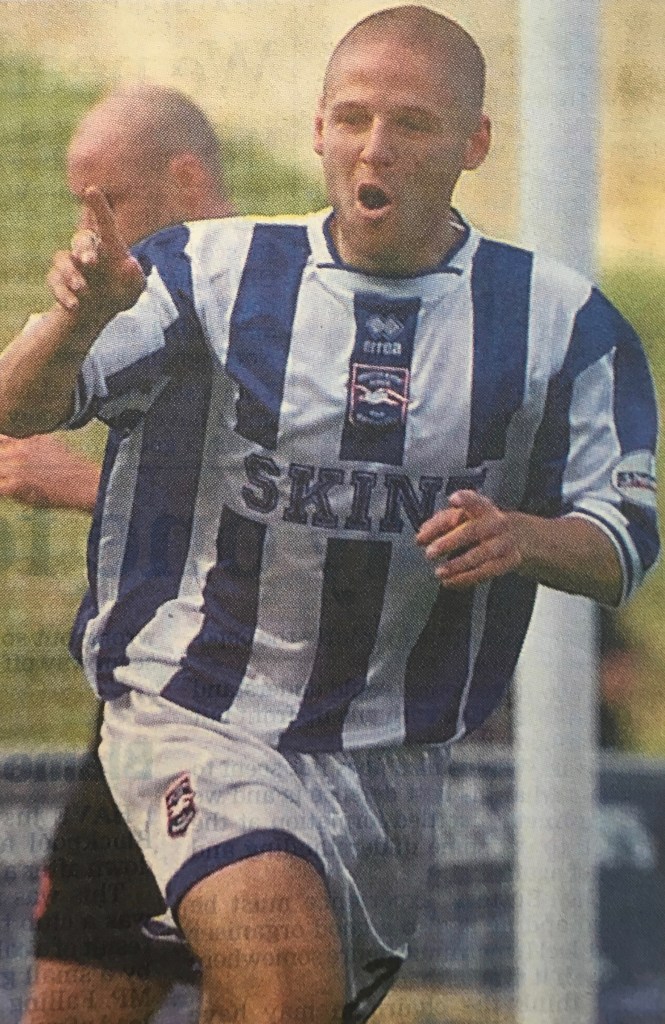
He scored three other goals over the season, including a crucial opener in a 2-0 win away to Millwall as the Seagulls put up a valiant, but hopeless, fight to avoid the drop, but it will always be the goal at Selhurst that fans remember most.

McShane confessed in an interview with Andy Naylor in the Argus that relegation had hurt, but the season for him had been “brilliant” and “a great experience”.

He said: “It has given me a chance to get out there and make my name in the Championship and I think I have done that well enough.

“It has given me a great opportunity to get the experience I need to take back to Manchester and hopefully give it a good crack there, because I’ve learnt so much this season.

“Brighton have been brilliant to me. They’ve treated me really well. They’ve made me feel very welcome, the fans and the people around. That has helped a lot. It has been great.”

In conclusion, he told Naylor: “The club is part of me now. You never know what will happen in the future but Brighton will always have a place in my heart.”

Perhaps rather presciently, Naylor commented: “McShane’s fierce commitment is unlikely to be seen in an Albion shirt again. If he does not make it at Manchester United, there are sure to be Championship clubs interested in signing him.”

With Rio Ferdinand and Nemanja Vidić United’s regular centre back pairing, and Wes Brown as back-up, it was always going to be a difficult ask to dislodge them, and in August 2006 McShane left Old Trafford together with goalkeeper Luke Steele as makeweights in the deal that took goalkeeper Tomasz Kuszczak to United.

mufcmcshaneMcShane and Steele had both been members of United’s winning FA Youth Cup team of 2003, a side which also included Kieran Richardson and Chris Eagles, who went on to make names for themselves in the game.

McShane, born in Wicklow on 6 January 1986, played hurling, Gaelic football, rugby and badminton (his dad, Sean, and uncle played Gaelic football for Dublin) in his early years in Ireland but eventually began to demonstrate his soccer prowess with junior clubs and was playing for St Joseph’s Boys AFC in Dublin when United snapped him up in 2002.

“I was 16 when I signed; I wasn’t going to until I went to Old Trafford with my mum and dad,” McShane said. “It was so down to earth for such a big club. I would be getting the best coaching and training, also playing with some of the best players in the world.”

He added: “Alex Ferguson has been brilliant to me and my family; a very nice man. He just cracks jokes all the time.”

After his success with United’s Youth Cup team, McShane’s first senior football came in 2004 during a brief loan spell with Walsall, where he played four games and scored once.

At Championship West Brom, McShane played 42 games in the 2006-07 season as the Baggies finished fourth and agonisingly lost to Derby County in the play-off final.

Before the new season got underway, McShane was one of 12 new signings manager Roy Keane made for Sunderland, newly-promoted to the Premier League.

He scored an own goal in only his second league game but Sunderland salvaged a 2-2 draw at Birmingham and he went on to make 21 appearances (plus one as sub) as the Black Cats finished just three points clear of the drop zone.

In the following season, McShane went on loan to Premier League new boys, Hull City, and having played 19 games for the Tigers made the move permanent the following season. The KFC Stadium would be his home for the next six years, although he was sent out on loan twice, to Barnsley in 2011 and Crystal Palace in 2012.

In the final game of the 2012-13 season, McShane scored a vital goal for Hull which guaranteed them promotion back to the Premier League, and he earned a new two-year contract from manager Steve Bruce.

However, with Curtis Davies, Alex Bruce and James Chester ahead of him, his appearances were limited, although he did get on as a substitute in Hull’s 3-2 FA Cup Final defeat to Arsenal.

McShane featured 23 times as Hull relinquished their Premier League status in 2015, and he was among six players released by the club, including Liam Rosenior, who moved to Brighton, of course, and goalkeeper Steve Harper, who’d had a short loan spell at Brighton from Newcastle.

McShane wasn’t without a club for long, and joined Reading in July 2015, with manager Steve Clarke telling the club website: “I knew that Paul’s contract with Hull City was due to expire and was always monitoring the situation. When we met up earlier in the summer for a chat I knew that Paul would be a good signing for Reading FC and I’m pleased that we managed to get the deal completed.

“As well as his obvious talents as an experienced defender who is aggressive both in the air and on the ground, I felt that he was a good character to bring into our squad.
“Paul has gained good experience at many clubs and, like Stephen Quinn, was an important part of a promotion-winning team. He has a winning mentality and it will be good for our two young central defenders, Michael Hector and Jake Cooper, to train and play alongside Paul.”

After four years at Reading, over which he played 103 games, in 2019 McShane switched to League One Rochdale.

In July 2021, McShane returned to Man Utd as player-coach for the under 23 side and made two appearances for the under 21s in the EFL Trophy as an over-age player. When he retired from playing at the end of the 2021-22 season he took up the role of professional development phase coach (covering under 18s through to under 23s).

“I’m calling it a day playing now,” he told manutd.com .”I’ve had 20 years playing and I’ve come back into the club as a player-coach in the under 23s. It’s been a great year and great experience but now it’s time to fully focus on the next stage of my career, which will be in coaching.

“It’s amazing how things work out. It’s a great way to end my career, to come back here and help the future generation with their careers. It was perfect, to be honest with you, when this role came about, and I’m grateful to the people who made it happen. I think it’s a great way to end my playing days.”