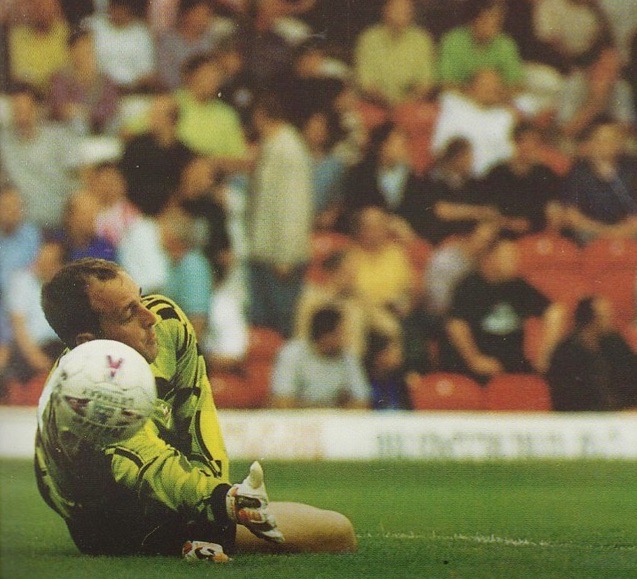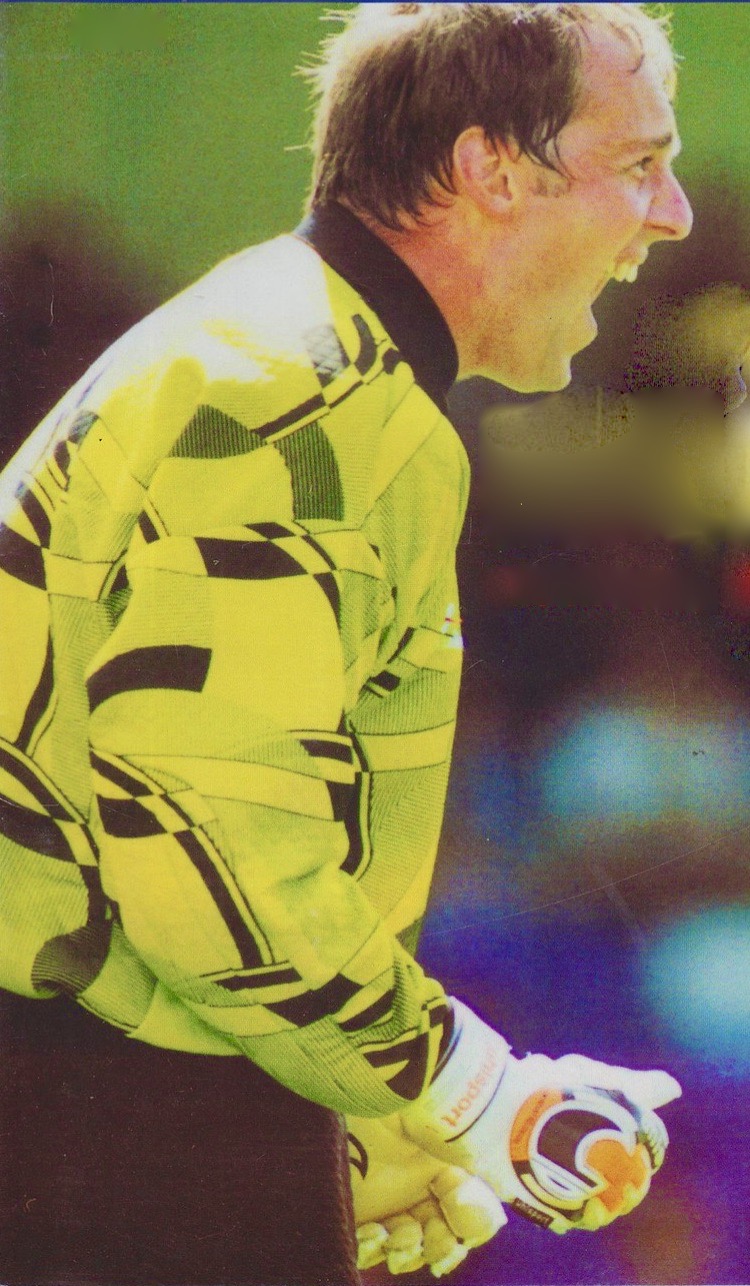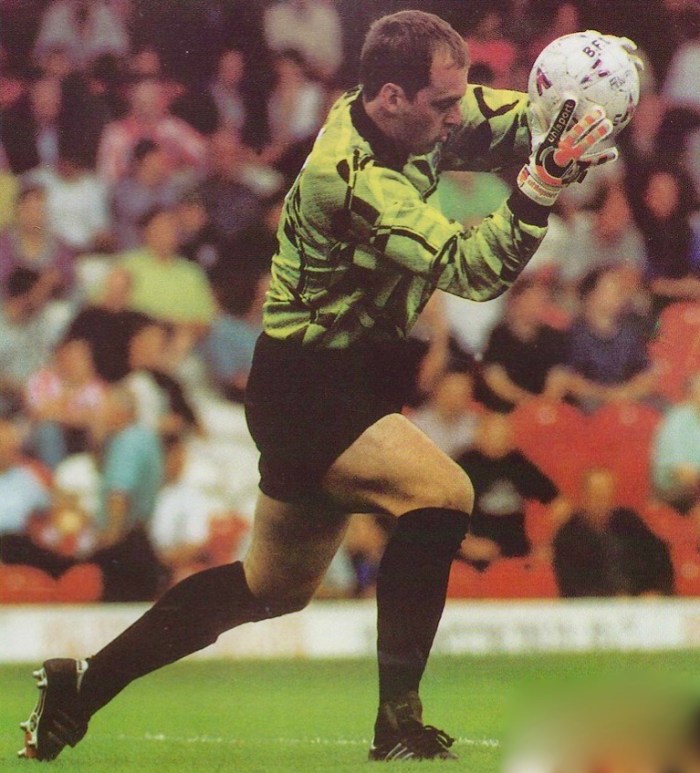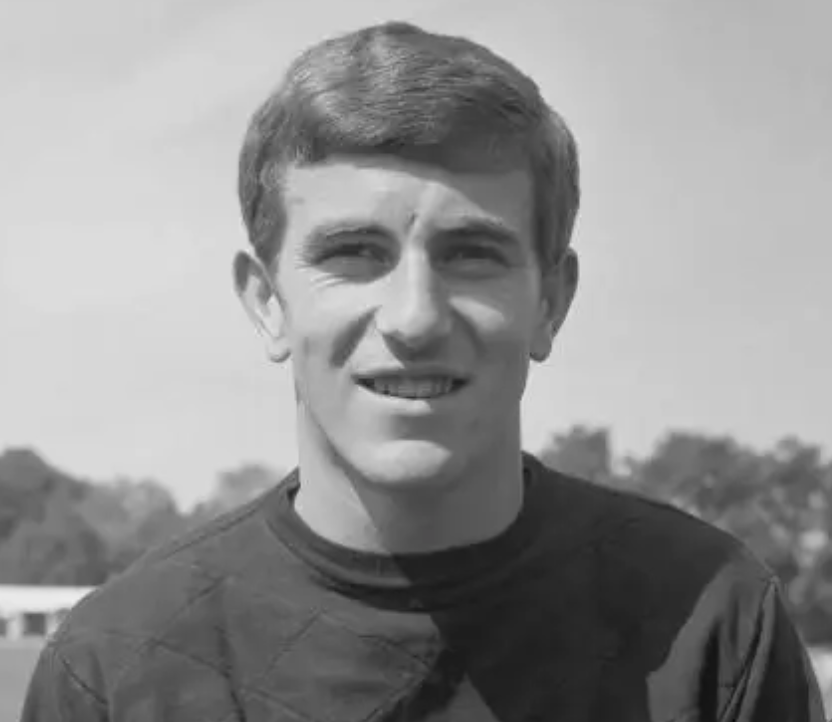
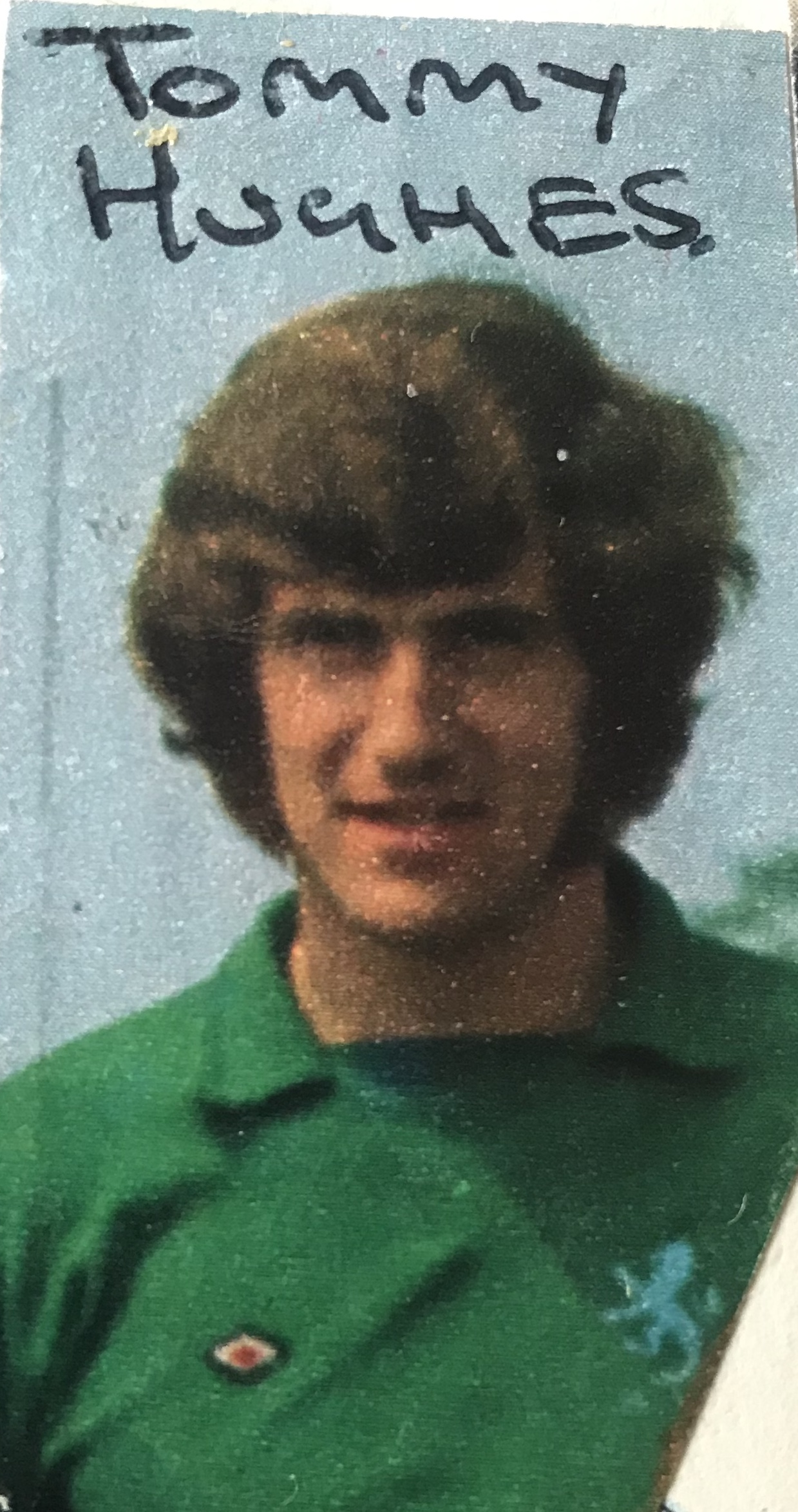
Villa’s Tommy Hughes helped stop rock-bottom Brighton rot

BRIGHTON were in a sorry state floundering at the bottom of the old Second Division when manager Pat Saward turned to a former Aston Villa teammate to borrow his back-up goalkeeper.

Albion had gone on a horrendous run of 14 consecutive defeats between November and February in the 1972-73 season and Saward decided to take regular custodian Brian Powney out of the firing line.

Inexperienced reserve goalkeeper Alan Dovey had twice conceded four goals (in defeats at Preston and Sunderland) during that awful run and between him and Powney they’d conceded 37 goals.

After seeing Albion succumb 3-1 at home to Villa and 5-1 at Fulham, Saward had a word with Vic Crowe, a former Villa teammate who by then was in the manager’s chair at Villa Park, and got him to agree a loan move for Tommy Hughes.

Hughes, who had spent years in Peter Bonetti’s shadow at Chelsea, arrived on the south coast to try to stem the tide and help Brighton get back on the winning trail.

His first run-out for the Albion came in a home friendly against then First Division Stoke City – both sides had been knocked out of the previous round of the FA Cup. Saward also gave a debut to 17-year-old Tony Towner although, unfortunately, Albion were once again on the losing side, 2-0. Nevertheless, the Albion matchday programme said Hughes “had a storming game”.

The losing streak finally came to an end the following Saturday when Hughes made his league debut at home to Luton Town. As well as the change in goal, Saward stuck with Towner on the wing and put another teenager, Pat Hilton, up front alongside Ken Beamish who scored both Albion goals in a 2-0 win.

Unsurprisingly, Hughes kept the shirt for two more league matches, a 3-1 defeat at Bristol City and a 2-0 reverse at Hull City.

Sandwiched between those games, he appeared in a Friday night friendly against visiting Moscow Spartak on 23 February which Albion won 1-0; captain Ian Goodwin scoring the only goal of the game.

Saward wanted to sign Hughes permanently but the powers-that-be couldn’t come up with the required fee and Powney resumed his place. Although Albion put up a bit of a fight, only losing two of the remaining 11 games, winning five and drawing four, the damage had already been done over the winter and they were relegated along with Huddersfield Town.

Hughes at Hereford

Hughes, meanwhile, returned to Villa Park but was soon on the move to a permanent home, where he stayed for many years.

Transferred to Hereford United in August 1973 for £15,000, he became something of a club legend and stayed in the area apart from one brief return to Scotland.

As the official club website noted: “He was an immediate success at Hereford and won the Player of the Year award in his first season and repeated the feat five seasons later.”

Manager Colin Addison brought him in when David Icke, the conspiracy theorist and former BBC sports broadcaster, was forced to retire through injury and regular no.1 Fred Potter was also sidelined.

Hughes made 240 appearances over nine seasons with The Bulls, and was in their Third Division championship-winning side of 1975-76. He later became Hereford’s caretaker manager during the 1982-83 season.

In 2006, he demonstrated his prowess at golf when he became the Herefordshire County Senior Champion. Posting a gross score of 72 at the Sapey course, the local newspaper said he had “produced a championship winning round in tricky conditions”. It added: “The course was beautifully manicured but many competitiors struggled to cope with the extra run and bounce off fairways baked hard after weeks of relentless sunshine.”

Born in Dalmuir, West Dunbartonshire, on 11 July 1947, Hughes started out with Scottish Second Division side Clydebank before Tommy Docherty signed him for Chelsea in 1966.

Only ever an understudy to Bonetti, he played two league games in each of 1966-67 and 1967-68, once in 1968-69 and six times in 1969-70.

His competitive debut came on 19 November 1966, when he was only 19, in a 1-1 Stamford Bridge draw against Sheffield United.

The following month he shipped six as Chelsea were thumped 6-1 at Sheffield Wednesday on New Year’s Eve.

In 1968, he was in the Chelsea side that won 5-3 at Southampton and 2-1 at Sheffield United.

In the six games he played between January and April 1970, he conceded 15 goals which included five goals in front of 57,221 at home to Leeds and five to Everton (who went on to win the First Division title) when 57,828 packed in to Goodison Park. Everton were 2-0 up (through Howard Kendall and Alan Ball) within five minutes of the start!

During his time at Chelsea, he was twice selected to play for the Scotland under 23 side. He made his debut on 3 December 1969 in a 4-0 win over France.

The following March he was between the sticks when the England under 23s beat the Scots 3-1 at Roker Park (his Chelsea teammate Peter Osgood scored twice, Brian Kidd the other) but the game was abandoned on 62 minutes when a snowstorm made it impossible to play the full 90 minutes.

His last game for Chelsea came the following month, on 15 April 1970, when Burnley beat the London side 3–1 at Turf Moor.

After Hughes broke his leg in a pre-season friendly in Holland, manager Dave Sexton brought in John Phillips from Villa to understudy Bonetti and, the following May, the displaced Hughes moved in the opposite direction, for £12,500. Phillips would later spend the 1980-81 season as Albion’s back-up goalkeeper under Alan Mullery.

Hughes might have thought he had finally claimed a no.1 spot of his own in a Villa side that had just been relegated to the third tier. He made his Third Division debut at home to Plymouth Argyle on 14 August.

But he only played 16 games under Vic Crowe before losing his place to Jim Cumbes, who had signed from West Brom. Cumbes was one of those rare breeds of sportsmen who also played county cricket for Lancashire, Surrey, Worcestershire and Warwickshire.

Hughes’ 23rd and last game for Villa saw him make a horrible blunder in a first round FA Cup match at Fourth Division Southend United in November 1971. He dropped a free kick at the feet of Bill Garner (who later moved to Chelsea) who set up Billy Best to score the only goal of the game for the Shrimpers.

The ‘keeper’s long run as Hereford’s first choice came to an end in the 1977-78 season, when new signing Peter Mellor, once of Burnley and Fulham, took over the gloves.

Hughes decided to return to Scotland and signed a one-month contract with Dundee United. He contemplated moving his family back up north permanently, but they wanted to return to Hereford, which they did.

“The club and the fans welcomed him back with open arms and Tommy remained at Edgar Street until he finally hung up his boots in 1982,” said the club website. “Tommy never lost his love for Hereford and jumped at the chance of having spells as commercial manager and even as caretaker manager when the financial situation at Edgar Street was fraught.”

As it turned out, he was to make one final appearance at Edgar Street in the 1983-84 Radio Wyvern Cup Final. He had attended as a spectator but turned out for Worcester City after their ‘keeper Paul Hayward dislocated a finger in the pre-match warm up.

Hughes had a spell as manager of Trowbridge Town but his home remained in Hereford where he ran his own successful carpet-cleaning business for many years.

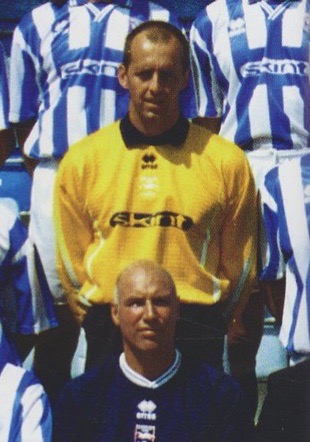
Chirpy as a Canary but Mark Walton squawked as a Seagull

A CAREER highlight saw Welshman Mark Walton keep goal for Norwich City in a FA Cup semi-final in front of 40,000 at Hillsborough but his time with the Seagulls was marred by Brighton’s boo boys.

Walton’s first action in an Albion shirt was in front of only a few Albion followers because Brian Horton signed him in the summer of 1998 when the side was playing in exile at Gillingham’s Priestfield Stadium.

Walton, who’d been part of Micky Adams’ fourth tier Fulham promotion side in 1996-97, found himself out of favour at Craven Cottage once Kevin Keegan had been installed as manager following the club’s takeover by Mohamed Al-Fayed.

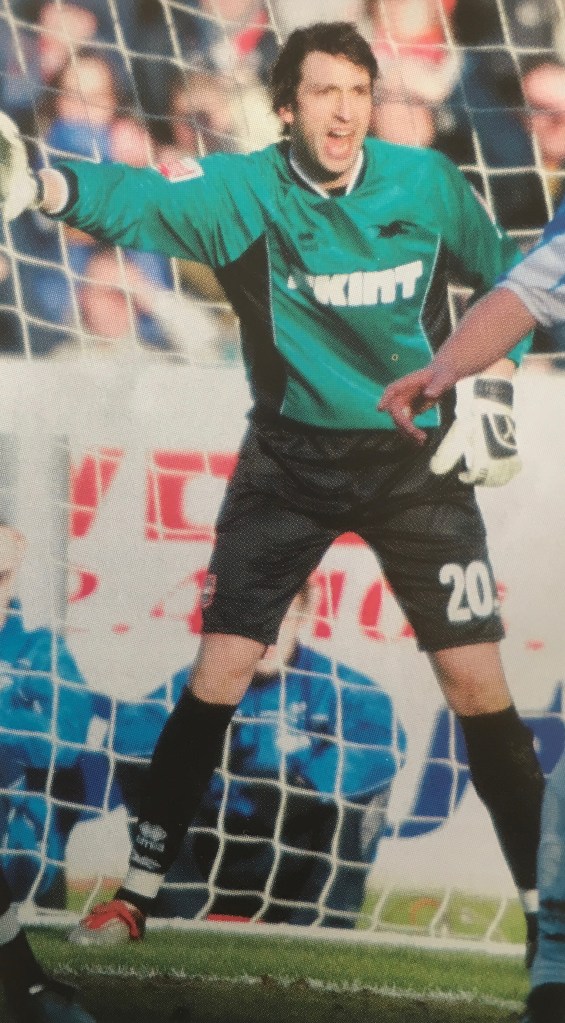
Not wishing to play second fiddle to Northern Ireland international Maik Taylor, Walton moved for £20,000 to Brighton, who were a ‘keeper light after Nicky Rust’s departure to Barnet. Walton was Horton’s first choice between the sticks in the opening 16 games of the season.

“When Maik arrived, it was a matter of when I went rather than anything else,” he told fulhamfocus.com.  “I was at a stage in my career that I just wanted to play, so moving was a necessity. In retrospect, I probably should have thought harder about my decision to join Brighton.”

After he’d shipped six goals in two successive 3-1 defeats in October, young Mark Ormerod took over and kept the ‘keeper’s jersey until Horton quit to take over at Port Vale shortly into the new year.

Caretaker boss, Jeff Wood, who’d been a goalkeeper himself, reinstated Walton to the starting line-up for five matches, but he damaged a hamstring in a 3-0 defeat at Southend on 20 February and didn’t play again that season.

Walton must have been encouraged when his old boss Adams took over from Wood, and he shed a stone and a half during the summer to get back into shape. Although Ormerod started the first five games of the new season back in Brighton, Walton was then reinstated as first choice ‘keeper.

But a gaffe — wearebrighton.com recounted how Walton’s attempted clearance from a back pass cannoned into the back of Paul Watson and into the net for an own goal — as Albion succumbed 3-2 to previously winless Chester City on 18 September (despite a goalscoring debut for Danny Cullip) saw feelings running high.

Adams had the players in for an extra training session the following day and Walton was dropped for the next match. Before the month was over, he submitted a transfer request citing the stick he was receiving as his reason for wanting to go.

“It’s one of those things you cannot really do too much about,” he told The Argus. “I am not the first and I won’t be the last. Everybody hears it. It’s just general abuse from boo boys and it’s the same home and away.

“It is obviously not the best feeling in the world, but you are paid to do a job and you go out and give your best.”

The manager was clearly upset that Walton felt he had to leave because of criticism from supporters.

“I’m immensely disappointed that a boy has come in to see me and wants to leave the club because he feels he is not being given a fair crack of the whip by the fans,” Adams told The Argus. “I am disappointed it has come to this and that he feels he has got to bow to fan pressure.

“Mark is a great lad. Whichever eleven lads I put out on the pitch in the blue and white stripes, they are representing Albion and the fans have got to get behind them. They are going out to give their best for the supporters and the club.”

Support came too from part-time goalkeeping coach John Keeley, who said: “Mark looks ever so fit now and the way he has trained and looked after himself in the summer shows he wants to prove to people he is a good goalie.

“As a goalkeeper you want the crowd on your side because it gives you a certain amount of confidence, especially when you are playing at home.”

Adams showed his faith in Walton by restoring him to the starting line-up and he was rewarded for his loyalty by two shut-outs on the road as Albion drew 0-0 at Peterborough and beat Carlisle United 1-0.

The matchday programme noted of the big ‘keeper’s performance at London Road: “Walton didn’t put a foot, or should that be hand, wrong during the 90 minutes, prompting praise from supporters, who chanted his name at the final whistle.”

Adams added: “Mark was terrific. I cannot speak highly enough of him. He is a good, honest pro and he answered his critics.”

Walton collected a player of the month award for conceding only one goal in five matches during October. He kept the shirt for the rest of the season, only missing two games towards the end, and playing a total of 45 games.

But the last-day 1-0 home win over Carlisle United turned out to be his last for the Seagulls. It was reported he’d verbally agreed a new contract but just before the start of the new season he chose to move on to Cardiff, along the road from where he was born in Merthyr Tydfil on 1 June 1969.

As it turned out, the move worked out well all round because Walton helped the Bluebirds win promotion from Division Three as runners up behind the Seagulls in top spot, Adams having unearthed a more than capable replacement in Michel Kuipers.

In an interview with Dan Smith in 2018 for fulhamfocus.com, Walton explained how his footballing life began at South Wales valleys village side Georgetown Boys Club and, because he suffered from severe asthma when he was 12, he decided it would be better to play in goal than in an outfield position. He was inspired by Phil Parkes of West Ham, Jimmy Rimmer of Aston Villa and Everton’s Neville Southall.

Walton played youth team football for Swansea City but his first senior professional club was Luton Town, where he spent six months. With the experienced Les Sealey and Andy Dibble ahead of him, he wasn’t able to break through to the first team. He moved initially on loan to Colchester United, managed by Mike Walker, who’d previously kept goal for the Us after a distinguished career at Watford.

Walker gave him his debut at Layer Road as an 18-year-old in August 1987 and he went on to make a total of 56 appearances for United, having moved permanently for £17,500 in December 1987, by which time Roger Brown was in charge.

Walker, meanwhile, had moved on to take charge of Norwich’s reserve side and, on his recommendation, City signed the Welsh goalkeeper for £75,000 in 1989.

“I owe Mike Walker a debt of gratitude to this day, as he basically taught me from scratch and helped develop me into a solid keeper with a sound technique,” Walton told Ed Couzens-Lake in a 2013 article for myfootballwriter.com.

Walton spent most of his three years at Carrow Road as understudy to first choice Bryan Gunn. It was because of a serious back injury to Gunn that Walton found himself facing Sunderland in the 1992 FA Cup semi-final, when a single goal from John Byrne settled the tie.

Looking back on his time with the Canaries, Walton told Couzens-Lake: “I loved my football and I loved Norwich, and, for me, it is still ‘my club’. The camaraderie of the dressing room was fantastic – indeed, whilst I don’t miss playing one bit, I do miss the changing room banter, all the characters, bad and good, and those shared triumphs, disasters and the shared sense of humour.”

The admirable Flown From The Nest website notes Walton made 28 appearances for the first team and 114 for their reserves. He had loan spells with Wrexham and Dundee United, trials with St Johnstone and West Ham, but it was Bolton Wanderers during Bruce Rioch’s reign that he next saw first team action, playing three games for the Trotters.

After his release from Norwich, a bizarre series of circumstances which he explained to fulhamfocus.com saw him spend two years out of the game before a Fulham fan, who was a member of the Norfolk cricket club he’d been playing for, wrote to Adams and suggested he give Walton another crack at league football.

“Micky telephoned and invited me for a trial. After three weeks, I was offered a year’s contract,” he said.

When ousted by the upheaval at the Cottage, Walton went on loan to Gillingham in March 1998 but couldn’t agree terms for a permanent move and on transfer deadline day ended up back at Norwich on loan as cover for Andy Marshall.

After his stint with the Albion and initial success at Cardiff, Walton slipped down the pecking order and briefly tried his luck with a semi-professional side in Melbourne, Australia.

He returned to South Wales after retiring from playing and went on to gain a first-class sports psychology degree at Cardiff Metropolitan University, a Masters degreeand a Postgraduate Certificate in Education (PGCE) which led him to become a teacher for 10 years.

He also worked for Cricket Wales as a researcher and community coach and in January 2021 joined the cricket staff of Glamorgan.

“Cricket has always been a passion of mine,” he told his new employers’ website. “I’ve always played but that became more sporadic when I focused on football, but I always tried to sneak in the odd game here and there which was often in midweek.

“I played some league cricket in Norfolk, Essex and Wales and was able to represent Wales Minor Counties. Then about 20 years ago I fell into coaching and it’s prospered from there and I’ve coached every age group within Cricket Wales.”

• Pictures from the Albion matchday programme and online sources.

Cattlin wasn’t backed to buy ex-City defender Jeff Clarke for £6,500

HARD-UP Albion wanted to sign dominant centre-back Jeff Clarke in 1984 but, unable to meet Newcastle United’s modest asking price, they were forced to walk away from a deal.

Clarke, who began his career at Manchester City, had plenty of experience to bring to a young Brighton side having played more than 300 games for north-east giants Sunderland and the Magpies.

At the start of the 1984-85 season, Clarke found himself on the outside looking in at St James’ Park, following the arrival of the legendary Jack Charlton as manager.

Although Arthur Cox had led them to promotion to the old First Division, he quit during the close season because he didn’t feel the club’s owners were investing enough in the playing side (some things never change!).

Former England World Cup winner Charlton, whose uncle ‘Wor’ Jackie Milburn was a Newcastle legend, took the hot seat and his preferred centre back pairing at the start of the season was John Anderson and Glenn Roeder.

Down on the south coast, Brighton boss Chris Cattlin was keen to bring some experience to the spine of the team he was rebuilding, and he took Clarke on loan to play alongside the emerging Eric Young, as well as introducing his old Huddersfield teammate Frank Worthington up front.

Clarke and Worthington made their debuts in an opening day 3-0 win at Carlisle United on 25 August (Danny Wilson, Terry Connor and Steve Penney the goalscorers).

The on-loan defender couldn’t have had a more eventful home debut three days later, in an ill-tempered evening game at home to Larry Lloyd’s Notts County, who had Justin Fashanu playing up front.

A clash between Fashanu and Clarke saw the defender come off worse, a back injury forcing him to be substituted with only 36 minutes gone (replaced by sub Neil Smillie).

In a game which saw seven players booked, fellow central defender Young joined him in hospital having been concussed by a stray Fashanu elbow. In the days before multiple substitutes, the Seagulls were forced to play the second half with only ten men, but nevertheless ran out 2-1 winners. Steve Jacobs opened the scoring on 22 minutes, Fashanu equalised on 55 but Worthington marked his home debut with the winner in the 67th minute. (The following June, Fashanu joined the Albion for a fee of £115,000).

jeff clarke BWClarke had sustained a fracture to a bone in his back but he was fit enought to return to the side on 22 September, in a 1-0 defeat away to Oldham Athletic, and was then on the winning side in the following two games: a 3-1 first leg Milk Cup win over Aldershot and a 2-0 home win over Fulham.

Unfortunately, that proved to be his last game for the Seagulls. Cattlin wanted to sign him permanently and Newcastle wanted just £6,500 for Clarke but the Albion board wouldn’t sanction the fee, as Cattlin explained at the Albion Roar live show in December 2018 (skip to 28 minutes in), which he believes signalled the beginning of the end of his time at the club.

In his matchday programme notes at the time, Cattlin said: “With the current cash crisis at the club, I could not finalise what I think is a very important deal in the long-term for this club. Clarke is a fine professional who, in many ways, reminds me of Peter Withe in his outstanding professionalism and leadership qualities.”

That sounds like he felt the captaincy of the side wasn’t in the right hands, and later in the same notes he explained how he had taken the job of skipper from Jimmy Case (“he needs to get his own game back to what we know he is capable of”) and given the role to Danny Wilson (“his leadership qualities on the park have become self evident”).

Born 18 January 1954 in the West Yorkshire mining town of Hemsworth, near Wakefield, Clarke was a Sheffield Wednesday fan as a boy and admired Owls central defender Vic Mobley.

However, it was on the other side of the Pennines that he made his breakthrough as a professional, with Manchester City.

Manager Tony Book handed Clarke his debut in a 4-0 home win over West Ham United on 17 August 1974 but he only played 15 games for the Maine Road outfit, his last game coming in a 2-1 home defeat to Carlisle United on 19 March 1975.

Clarke moved to Sunderland as a makeweight in the deal which saw the Sunderland and England international centre back Dave Watson move to City in the summer of 1975.

J Clarke Sund BW

The move to Roker Park finally saw his career take off and in seven years he made 213 appearances for the Wearsiders, many as captain (as seen in team photo above), including helping them to promotion to the top flight in 1976.

The excellent MatchDayMemories.com unearthed a Shoot/Goal profile of Clarke which revealed he had earned schoolboy under 18 international honours, his favourite food was peanut butter sandwiches and Brian Kidd, then of Arsenal, had been his most difficult opponent.

In 1982, at the age of 28, he switched to north east rivals Newcastle United on a free transfer, and stayed with the Magpies for five years.

When his two-month loan on the south coast wasn’t made permanent, he had other loan spells in Turkey and at Darlington but then returned to Newcastle and was restored to the first team, and featured in a New Year’s Day win over Sunderland in which future Albion winger Clive Walker was an opponent.

When Charlton quit as boss on the eve of the 1985-86 season, it signalled better fortunes for Clarke and under Willie McFaul he became a regular alongside Roeder, racking up 45 appearances and chipping in with three goals. The following season he played only seven games and hung up his boots in 1987.

Clarke stayed at St James’ Park in a coaching capacity after his playing days were over but simultaneously he took a degree in physiotherapy at the University of Salford, graduating in 1996.

He later became physio at former club Sunderland before moving to Leeds United in 2001. Made redundant at Elland Road in 2003, he moved to Dundee United in November the same year and has been the first team physio ever since.

Former Gunner Raphael Meade a damp squib for the Seagulls

Meade best

ISLINGTON-born Raphael Meade joined Arsenal as a schoolboy and made it through the ranks to play more than 50 times for the Gunners.

A rather eclectic career saw him play in Portugal, Spain, Scotland, Denmark, Hong Kong and back in England.

Brighton boss Barry Lloyd had something of a penchant for picking up players from these shores who’d rather lost their way playing abroad and, while forwards Mike Small and John Byrne would count as great successes of that genre, Meade was largely a disappointment.

He played 40 times and scored 12 goals in the 1991-92 season, but the Albion were relegated to the third tier, so it was memorable for all the wrong reasons.

Born on 22 November 1962, Meade was on the Gunners’ books from June 1977 to the summer of 1985.

The superb thegoldstonewrap.com unearthed the Arsenal annual for 1981 in its research; it said of the young Meade: “He’s got a hell of a lot of pace and is fantastically brave in the box. He’s got all the makings of a top player. However, he’s another one who has got to work on his control like Brian McDermott with tighter controls and lay-offs. But with his type of pace he will always be a threat.”

The reality was that with the likes of initially Alan Sunderland and John Hawley ahead of him in the pecking order, then Tony Woodcock and Lee Chapman, followed by the arrival of Charlie Nicholas and former Ipswich striker Paul Mariner, his first team chances at Highbury were restricted.

While he was prolific in the Reserves (24 goals in 27 league games in 1983-84), his first team appearances over four years were somewhat sporadic.

Manager Terry Neill handed him his debut in a 3-0 UEFA Cup away win against Panathinaikos on 16 September 1981 and he scored a spectacular goal with his very first kick! His league debut came a month later – and he scored again, netting the only goal in a 1-0 win at home to Manchester City. The 1981-82 season saw the majority of his first team involvement: he played a total of 22 games, scoring five times.

A cartilage injury sidelined him for a large part of the 1982-83 season but when he did return in February 1983 he scored twice against Brighton in a 3-1 win.

CN + RM braces v SpursThe following season, Meade scored a hat-trick in the 3-1 win over Watford, which began Don Howe’s tenure as Arsenal manager, and he also earned a special place in Gunners’ fans hearts when scoring twice (pictured celebrating above with Charlie Nicholas, who also got two) in Arsenal’s 4-2 victory over arch-rivals Spurs on Boxing Day 1983.

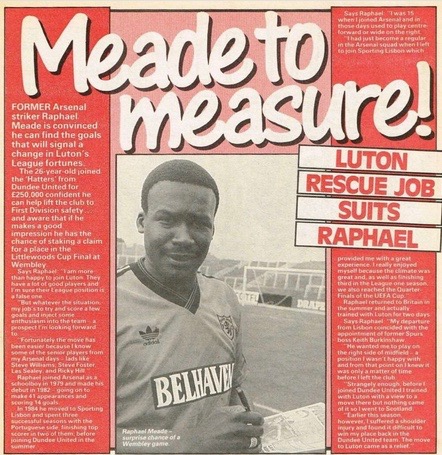
Unfortunately, they were sporadic highlights and, in the summer of 1985, he was sold to Sporting Lisbon.

“Sporting Lisbon provided me with a great experience. I really enjoyed myself because the climate was great and, as well as finishing third in the league one season, we also reached the quarter finals of the UEFA Cup,” Meade said in a Shoot/Goal article.

He said it was the arrival of former Spurs boss Keith Burkinshaw that precipitated the end of his time in Portugal because he wanted him to play in an unfamiliar right midfield role.

Thus he was loaned to Spanish side Real Betis towards the end of his three-year contract, and, on his return, was transferred to Dundee United where he made 16 starts, plus six substitute appearances, scoring seven goals.

However, United boss Jim McLean made public his dissatisfaction with the striker and questioned his fitness. Meade hit back saying he was fit but being played out of position on the wing.

Subsequently a shoulder injury saw him sidelined and unable to regain his place and he joined a struggling Luton Town side for a £250,000 fee.

luton moveBut after only four games for the Hatters he was on his way again, this time to Odense BK in Denmark.
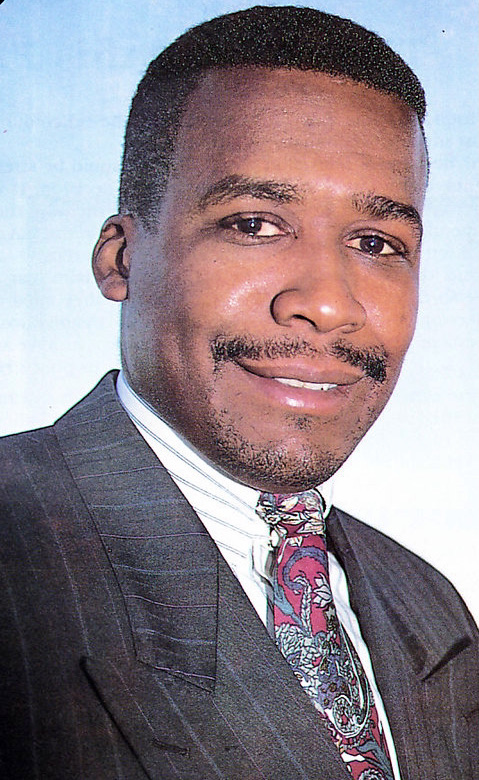
During two years on their books, he had loan spells back in the UK, playing once for Ipswich Town and five times for Plymouth Argyle.

As the 1991-92 season got under way, cash-strapped Brighton were forced to sell the previous season’s successful strike duo of Small (to West Ham) and Byrne (to Sunderland).

Byrne’s departure didn’t happen until October, and it was while playing alongside the popular Republic of Ireland international that Meade scored his first goal for the Seagulls, in a 3-1 home win over Port Vale.

He had found himself in the right place at the right time in only the fourth game of the season when an injury sidelined Bryan Wade, who had started the first three games alongside Byrne. smart Meade

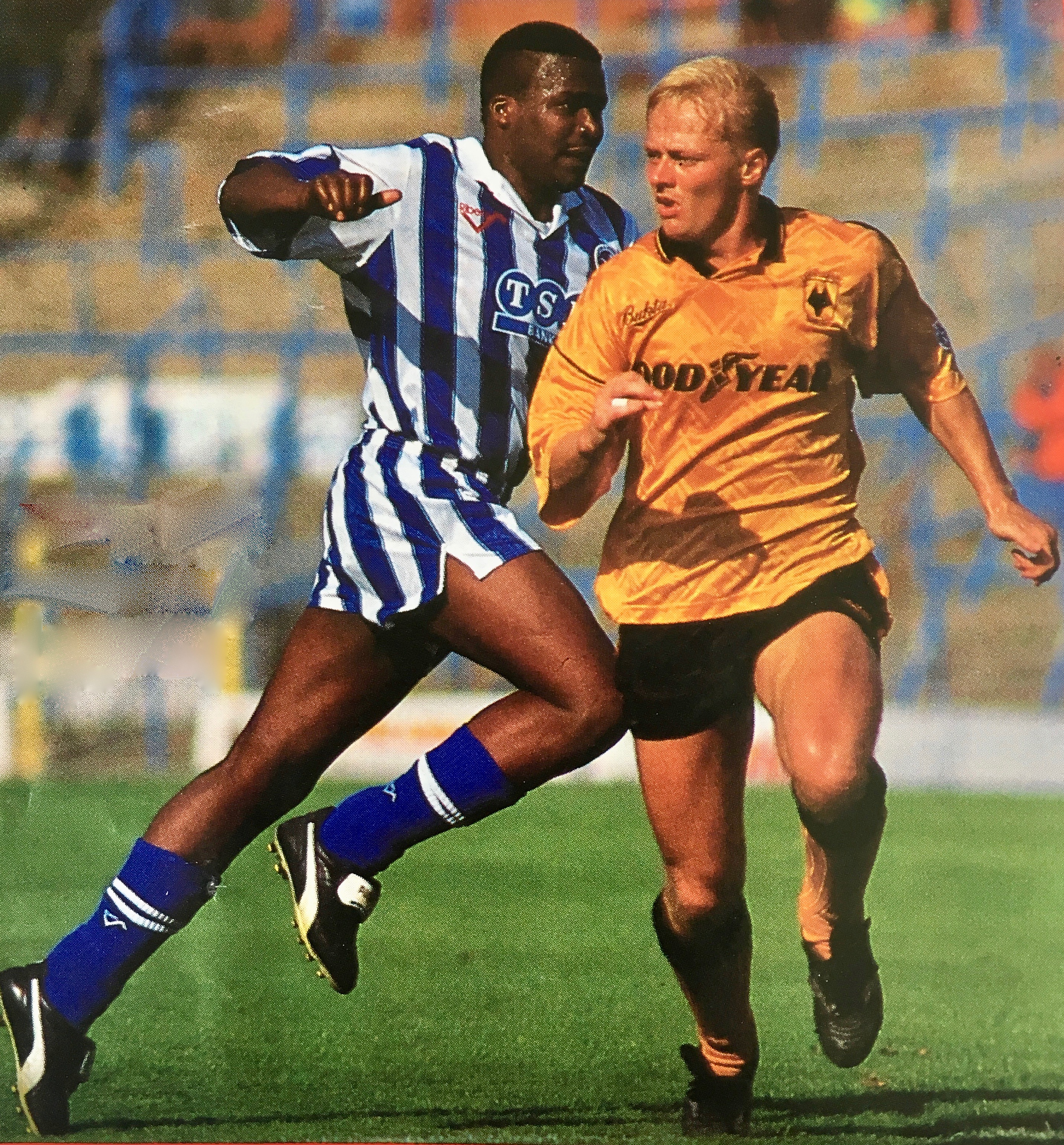
Lloyd had watched the former Arsenal striker score in a 2-0 win for the reserves against Fulham and pitched him in against Wolves – a 3-3 thriller in which Mark Barham, Gary O’Reilly and John Robinson netted for the Albion.

“Ideally, I needed one or two games to get match fit but it was great to get the chance in the first team and I wasn’t going to waste it,” said Meade.

Meade in action with another former Gunner, and ex-Albion defender, Steve Gatting (in Charlton’s colours), and a man of the match award for a brace against Grimsby Town.

After Byrne’s departure to the north east, there was seldom a regular strike partner for Meade. The busy and bustling Mark Gall, signed from non-league Maidstone United for £45,000, managed 14 goals but was some way short of Byrne or Small’s quality. And another of Lloyd’s overseas ‘finds’- Mark Farrington from Feyenoord – was an almighty flop.

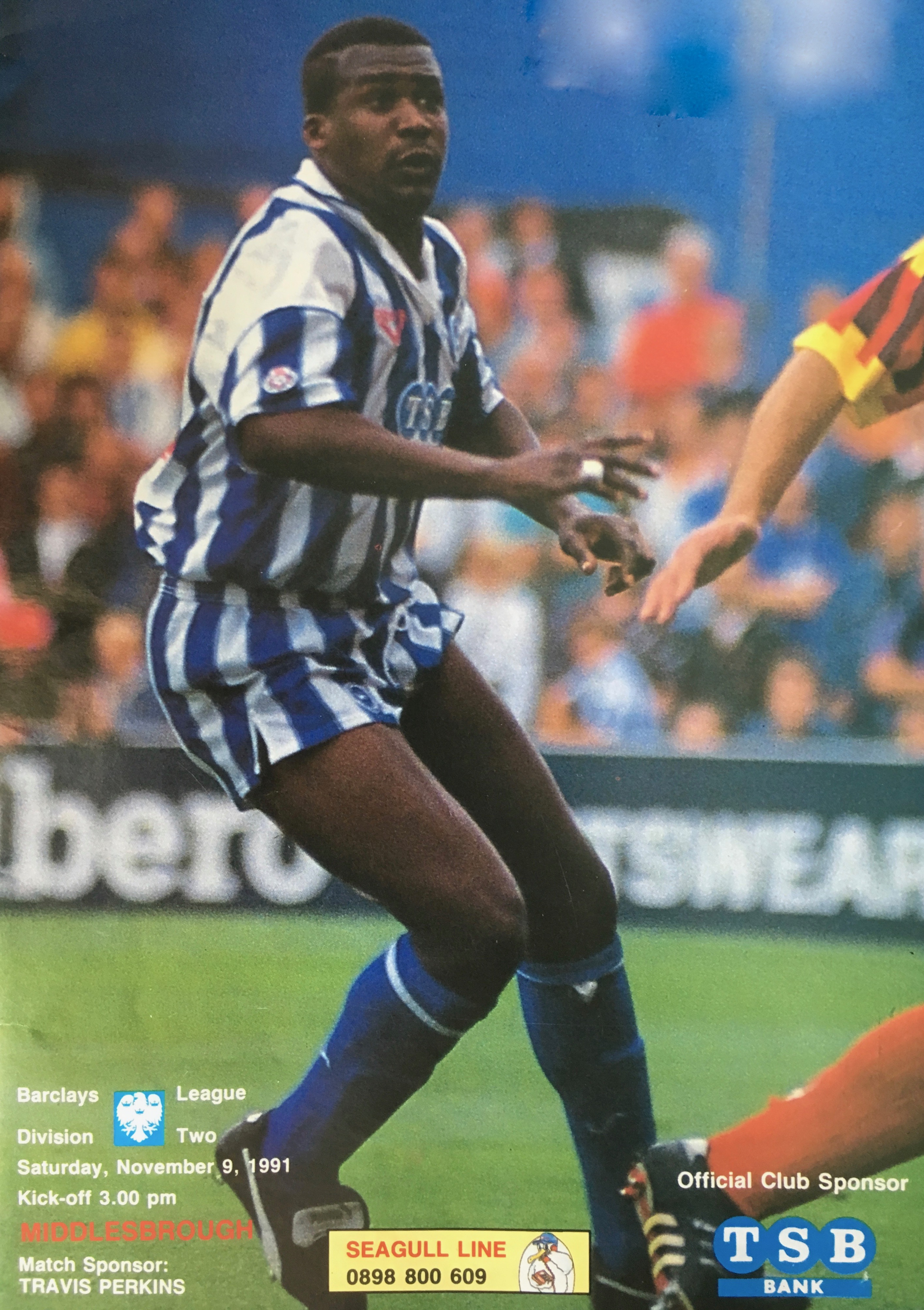
Meade cover boy

Meade popped up with the occasional goal and one of those rare glimmers of light in an otherwise dark season came in a game I went to see at Vicarage Road on 31 March 1992.

Although Albion were ultimately headed back to Division 3, a brief respite from that tumble came against the Hornets courtesy of a howler by David ‘Calamity’ James in their goal. James came to the edge of his area to collect a routine-looking through ball, spilled it rather than gathering it cleanly and Meade was on hand to pick up the loose ball, round the stranded ‘keeper and slot what turned out to be the only goal of the game.

Meade scored twice more before the season’s end but Albion lost four of the final six games and were relegated along with Port Vale and Plymouth. Meade elected to leave the club and head for Hong Kong.

After a season with Sea Bee, he returned to England and rejoined Brighton but only featured in three games. He moved on to Crawley Town in 1995-96, where he ended his playing days.

Pictures from various sources including the matchday programme, Shoot/Goal, and online.

Rami’s route from Rome’s Olympic arena to Albion’s ‘Theatre of Trees’ – and then the World Cup!

IN ALBION’S 2004-05 Championship season, both regular goalkeepers, Michel Kuipers and Ben Roberts, were injured.

A rookie American ‘keeper, David Yeldell, was signed on loan from Blackburn Rovers but didn’t inspire confidence and was discarded after just three games.

Instead, Albion manager Mark McGhee turned to Rami Shaaban, a Swedish-born goalkeeper with a Finnish mother and Egyptian father who hadn’t played a competitive match for two years!

However, that game had been for Arsenal in the Champions League in the 70,000-capacity Olympic Stadium in Rome!

Now, here he was on 19 February 2005 lining up for Albion in front of 6,647 at Withdean – The Theatre of Trees – against eventual champions Sunderland.

It proved to be an eventful debut, which I watched with my 10-year-old daughter, Holly (during her brief flirtation with wondering why her Dad was obsessed with this football lark). Albion played more than an hour of the game with only 10 men, Adam Virgo being sent off by referee Dermot Gallagher for two yellow cards.

Shaaban, Albion’s fourth different goalkeeper in the space of five games, did not have that much to do but he made an instinctive stop to keep out a cross from Dean Whitehead, fisted away a Sean Thornton effort and did well to hold Julio Arca’s shot from 15 yards.

He told The Argus afterwards: “It’s a great start. I’ve always been lucky with my first games at new clubs.

“At Arsenal, I had a clean sheet. That was in the Champions League, so it was a bit different, but you have to start somewhere and I’m very pleased to get 90 minutes of competitive football.

“I was more nervous playing here than for Arsenal, because before I went to Arsenal I was match fit. Here I had not played competitive football for two years, so this was a big milestone for me.”

albion action

Against all the odds, Albion won the game 2-1 with Albion’s goals coming from a deflected Richard Carpenter shot and a rare Mark McCammon header from a corner.

Born on 30 June 1975 in Solna, Stockholm, Shaaban’s professional football career began with the local Saltsjöbadens IF who he played for 39 times in 1994-95. Then, while studying at university in Cairo, he played for Zamalek and Ittihad Osman.

After university, he spent four years in Chile, between 1997 and 2001, playing initially for Coquimbo Unido and then Deportes Temuco.

Good performances there alerted his hometown club Djurgårdens, of Sweden’s first division, and it was while he was playing there that Arsenal snapped him up.

But his good fortune was to run out quite quickly. Originally drafted in by Arsenal as a possible successor to David Seaman, he suffered a freak training ground accident on Christmas Eve 2002 that left him with a broken leg.

It took him a year to recover and during that time the Gunners signed Jens Lehmann who went on to establish himself as Arsenal’s no.1.

Shaaban did play five games for Arsenal – three Premier League games and two in the Champions League – but he never did make it back to play for Arsenal competitively again after his injury.

However, he did warm the bench in the latter part of the famous Arsenal ‘Invincibles’ season (2003-04), because regular back-up ‘keeper Stuart Taylor had picked up an injury.

In January 2004, Shabaan was loaned to West Ham for a month, but didn’t play for the first team, and then at the season’s end he was released.

Immediately before joining Brighton, he had been training back in Sweden with Djurgårdens, but he was recommended to McGhee by former Wolves goalkeeper coach Hans Segers who had moved to Spurs where Shaaban had recently had a trial.

After spending two weeks training with the Albion, the ‘keeper impressed McGhee, who told the matchday programme: “He’s done well. There’s no doubt about it, he’s a good goalkeeper. We have to now consider what we do with him. We’re going to need two goalkeepers that can play in the team between now and the end of the season.”

Shaaban kept goal for the Albion for six games one of which, on 12 March 2005, saw him harshly penalised in a 5-1 defeat away to Plymouth Argyle, which I attended with my son, Rhys.

Of course, as fans, we would say it, wouldn’t we, but it was never a 5-1 game, and that was largely down to an unbelievable performance by referee Phil Crossley.

Albion, wearing yellow, started brightly enough and soon had the ball in the net. Admittedly the action was at the far end from us, but we couldn’t see anything wrong with the goal (I think the ref ruled out Guy Butters’ header because he claimed the ball from Carpenter’s free kick curled out over the line before the cross came into him).

It was the first of several injustices meted out to the Albion that afternoon by Crossley. Plymouth took a lead as early as the ninth minute when Nick Chadwick finished off a neat one-two with Dexter Blackstock, who, ironically, manager McGhee had tried to sign on loan from Southampton earlier that season.

Our hopes were raised, though, when Charlie Oatway, on his 200th League appearance for the Seagulls, scored with a deflected header from another Carpenter free-kick.

Unfortunately, it wasn’t long before Plymouth were back in front when Crossley failed to spot Adam Hinshelwood being pushed as he went to head the ball. Instead he saw the ball hit the young centre half’s hand and awarded a penalty which Paul Wotton converted.

Then, though, came an almost unbelievable bit of nitpicking by a linesman which led to Plymouth scoring again!

Goalkeepers often go right to the edge of their penalty area before drop-kicking a clearance up field and, just as Shaaban did so, the lino flagged to claim he had taken it out of the area.

Crossley was obliged to award a free kick right on the edge of the penalty area and Wotton duly dispatched a thunderbolt into the net. It was as good as a penalty.

close-up shout

Although 3-1 down, it still looked like Albion were in with a chance, but Plymouth got a fourth on 36 minutes when David Norris evaded several despairing tackles before slotting past Shaaban.

To make matters worse, shortly into the restart Carpenter was consumed by red mist when Chadwick stopped him taking a quick free kick and, having pushed the guy in the chest, was sent off for the first time in his career.

So, 4-1 down and with only ten men, a difficult task just got harder: Plymouth continued to plug away and with just seconds remaining, substitute Scott Taylor rounded the hapless Shaaban to notch a fifth.

In the post-match interviews, McGhee described Chippy’s dismissal as “an absolute joke” and the refereeing as “shambolic”. And of the decision which led to Plymouth’s third, he said: “We see goalkeepers kicking at the edge of the box week in and week out and never in my career have I seen a linesman so sharp to put his flag up.”

Unfortunately for Shaaban, in his short time with the Albion he had conceded 13 goals, so McGhee turned to another loanee ‘keeper, Alan Blayney, from Southampton, who took over between the sticks for the remaining seven games of the season, when four draws and a win saw Albion do just enough to avoid the drop.

Shaaban remained on the bench and, at the end of the season, Albion decided not to take him on long-term. A year later he was called up to the Sweden squad for the 2006 World Cup!!

After his release from Brighton he had a trial with Dundee United but played only once, and also went on trial at Bristol City, but wasn’t taken on. Instead he went to Frederikstad in Norway, where he spent two years, and then joined Stockholm-based Hammarby, where he managed 26 appearances.

Those games led to him being selected for Sweden’s 2006 World Cup squad, although he had never previously been involved with the national side. In fact, in 2006 (and 2007) he was named Swedish goalkeeper of the year.

He made his debut as a half-time substitute in a warm up game with Finland and he played in his country’s 2006 World Cup opener, a 0-0 draw against Trinidad and Tobago, in place of injured first choice Andreas Isaksson.

He also played four Euro 2008 qualifying games for the Swedes, in which he kept a vital clean sheet in a 2-0 win over a Spain side which included the likes of Fernando Torres, Cesc Fabregas and David Villa and was also a member of their final stage squad.

Earlier in his career Shaaban could have chosen to play for Finland but decided to represent Sweden because, at that time Finland had two strong national team goalkeepers in Antii Niemi (later Albion’s goalkeeping coach) and Jussi Jääskeläinen, a Premier League ‘keeper for Bolton for many years.

After retiring from the game, Shabaan set up his own Swedish-based company, Rami Fresh, supplying Egypt-grown fruit and vegetables. The Sun did an article about him on 5 July 2023.


Photos from Albion matchday programme.