Albion’s lifeline for the boy from Baghdad who turned down Spurs

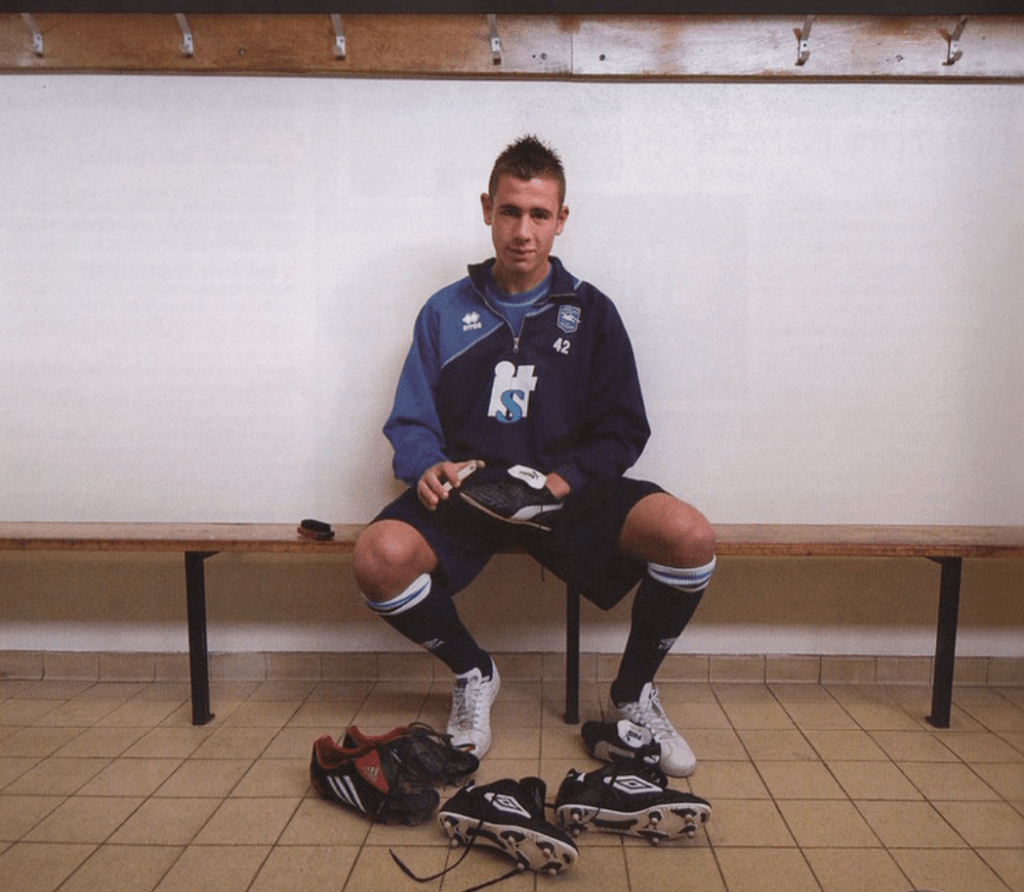
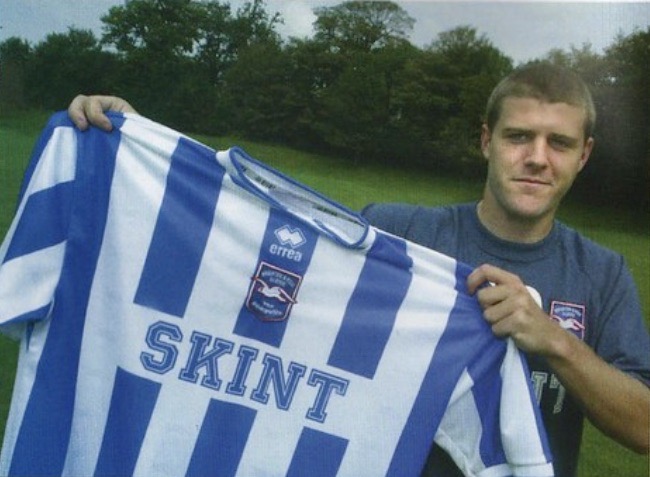
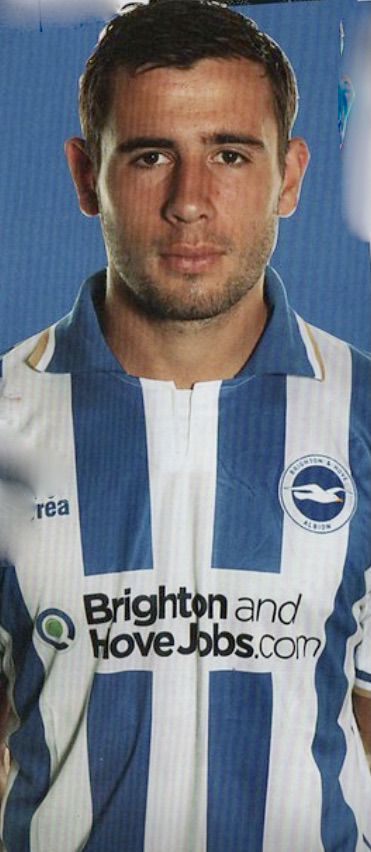
BAGHDAD-BORN Yaser Kasim went through the youth ranks at Tottenham Hotspur but rejected a professional contract at White Hart Lane and tried to build a career at Brighton instead.

Although it didn’t work out at the Albion, he subsequently thrived at Swindon Town where his former Seagulls’ development squad coach Luke Williams had become assistant manager.

“He is one of the best coaches I have worked with. This guy is at another level,” he said.

Kasim joined the Spurs academy at the age of 11 in June 2003 and progressed to become a full-time scholar at 16. He was in the club’s youth team in the 2009 FA Youth Cup (they lost 3-1 to north London neighbours Arsenal in the quarter-finals) alongside Andros Townsend, Steven Caulker and Jonathan Obika.

“When the time came to sign pro forms at Tottenham, I decided to go on my own and turned it down,” Kasim told Tom Hopkinson of the Sunday People.

“From that decision it was ­difficult to get another club ­because everyone knows how ­powerful Spurs are and I couldn’t sort the compensation out for all those years I’d trained with them.”

Kasim in action for Albion Reserves v Eastbourne Borough. Pic: Simon Dack

A contractual impasse left Kasim in limbo and he was forced to train on his own until former Spurs teammates Gus Poyet and Mauricio Taricco, having taken over as manager and no.2 at Brighton, stepped in.

The pair managed to resolve the dispute between player and club and in October 2010 offered him a short-term deal with the Seagulls. Kasim later told the Argus: “They sorted something out for me and I love the football here, because they play good football, and the players are great, so everything is good except for playing more games…I’ll work hard for that.”

He was talking after he had been handed his Albion debut in the final game of the 2010-11 season, a 1-1 draw away to Notts County, with the Seagulls already having been crowned League One champions.

Kasim played for 70 minutes in midfield alongside Liam Bridcutt, Matt Sparrow and Elliott Bennett before being substituted, with Poyet saying: “The pitch didn’t help him. He is a technical player. We are trying to work on the other side of his game, the toughness and his defensive work. I think he has got a great future.

“He was very good on the ball, confident and strong. As soon as the game became more 50-50 it wasn’t good for him or us but opponents are going to try to make it a war against us.”

The Uruguayan added: “We are offering him the chance to stay with us. He is thinking about it and we’ll probably have a few more words.

“He knows where he stands. We’ve been honest with him, it’s up to him.

“It’s complicated because I don’t know if it will be easy for him to step up and start playing for the first team in the Championship, but we are offering him the chance to be there or thereabouts.”

As it turned out, he was a regular in Luke Williams’ development squad but only made the first team bench on three occasions, getting on (pictured above) just the once, as a sub for Alan Navarro, in the 66th minute of an inexperienced Albion’s 1-1 FA Cup draw at home to then non-league Wrexham on 7 January 2012.

Kasim managed to collect a booking during his brief time on the pitch in a game that saw young Ben Sampayo given his debut and Grant Hall his first start (he’d previously been a sub five days earlier against Southampton). Anton Rodgers, son of Brendan, was sent on at the same time as Kasim entered the fray. Kasim was an unused sub in the replay when Albion only advanced courtesy of a penalty shoot-out, edging it 5-4 after the game ended 1-1.

Come the summer of 2012 and Kasim went on a six-month loan to then Conference Premier League Luton Town, with Hatters boss Paul Buckle telling the club’s website: “Yaser can do a variety of jobs. He can be a box-to-box man and also play in a defensive midfield role.

“It’s great we have been able to capture someone of his calibre for six months. I have no doubt that he will prosper with us.”

The player made five starts plus six appearances off the bench and scored once, in a 2-1 win at Tamworth (the other scorer was Stuart Fleetwood, who’d been on loan at the Albion in the 2008-09 season).

In the second half of the season, Kasim played five games for Conference National League Macclesfield Town.
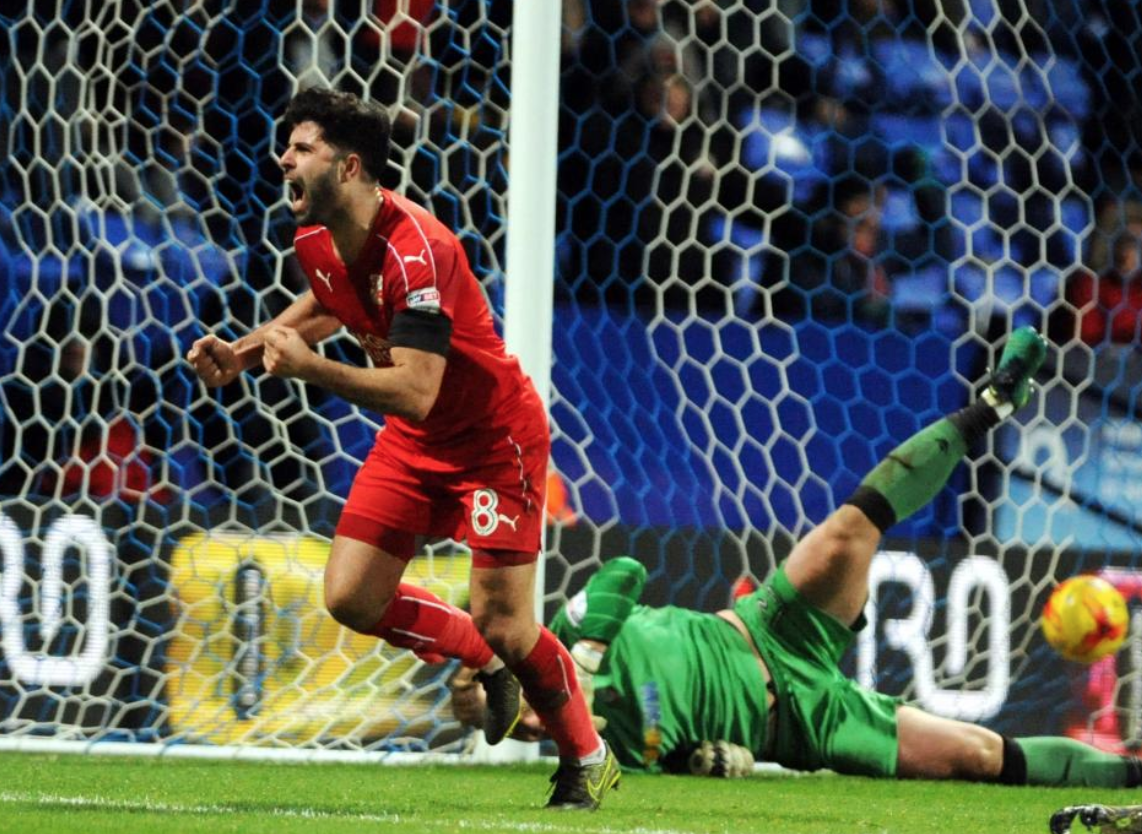
Released by Brighton in May 2013, Kasim went on trial to League One Swindon and signed a three-year deal after spending a week at the Robins’ pre-season training camp in Portugal. Manager Mark Cooper paired him in midfield with Massimo Luongo and he played 45 times in his first season.

Reliable Robin

Perhaps it was inevitable that Kasim managed to get on the scoresheet against Brighton in August 2014 when Swindon lost 4-2 (after extra time) at home to Sami Hyypia’s Albion in the second round of the League Cup (future Town midfielder Rohan Ince scored a belter for the Seagulls, Adrian Colunga edged Albion ahead in the 95th minute. Kasim equalised before two late penalties scored by Jake Forster-Caskey put Albion through).

Kasim ended up having four seasons at the County Ground, was part of the side that made it to the League One play-off final in 2015, when they lost 4-0 to Preston, and it was reported at one point that Premier League Swansea City and West Ham were interested in signing him.

Nothing came of that, though, and his final campaign with the Robins saw him dogged by groin and hip injuries as Town were relegated to the bottom tier.

Mentor Williams was Town’s head coach by then and, after being forced to drop Kasim in February 2017 and replace him with the aforementioned Ince, opened up to the Swindon Advertiser.

Reckoning Kasim was not showing enough of a physical side to his game, Williams said: “I have known Yaser a long time and he is an incredibly talented player but, for one reason or another, I don’t think he is performing to anywhere near his best and at the moment, he needs to come out of the team.

“Players fall out of form because of a combination of things, sometimes off the pitch as well.

I wish I could find the reason and try to make everything okay for Yaser because he is a very important player and has given a fantastic service to us.

“He is somebody that I think a lot of personally so I would love for him to be in top form.

“I think Yaser in top form is as good a player as you’ll see at this level for sure, unfortunately he doesn’t seem to be able to quite find it.”

The coach added: “He came here and I think, certainly for the first two seasons, he was absolutely fantastic and last season, there was far more good from Yaser than bad. This year, he hasn’t been able to recapture that.”

Born in the Karrada district of Baghdad on 10 May 1991, three months after the end of the Gulf War, Kasim’s passion for football began at a young age on the streets of Baghdad.

“I lived in Iraq until I was six years old,” he told the-afc.com. “I don’t know how young I was when I started to play, but before I left we used to play a lot of football on the streets.

“It is a very sunny and hot climate so we used to play on the streets and there were a lot of people playing 20 a-side sometimes on the tarmac and there were a few rolled ankles and a few chipped toe nails, but I loved it and we used to be outside all day.”

The family left Iraq because Kasim’s father saw a decline in his business as a used car parts salesman. They spent a year in Jordan before moving to England, and eventually settling in north west London.

“I started playing after school every day and then I started to go to football clubs and a coach at one of my sports centres took me to Fulham,” he said. He had only been at Fulham a few months before switching to Spurs.

Explaining why he turned down the offer of a professional contract at Tottenham, Kasim had concerns about the way players were being cared for. He said: “There was a lot of competition; I don’t mind competition as the more the competition, when growing up especially, the better it is, but they were bringing in players without plans on how to look after them and I felt they weren’t doing things right by the players so I saw that my opportunities would be limited and I thought this was not for me.”

It was during his time at Brighton that he was approached to join up with the Iraq national side, at the time coached by Wolfgang Sidka. He won 21 caps over a number of years, although he had a somewhat chequered relationship with the representative side.
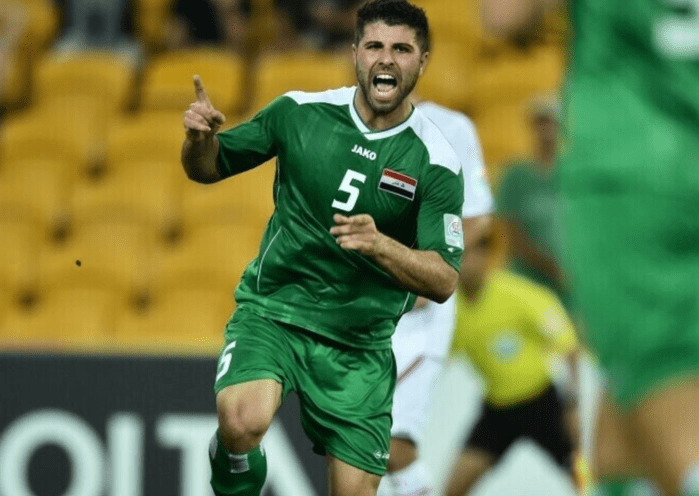
In international action for Iraq

He made his debut in March 2014 featuring in a 3-1 win over China, was hero-worshipped after a series of influential performances in the 2015 Asian Cup (scoring a key winning goal in their opener against Jordan and netting a penalty in the quarter-final shootout against Iran), but went AWOL during the country’s preparations for the 2016 Rio Olympics (he was called up as one of three coverage players for the tournament but he left the training camp in Spain and never returned).

He also turned down national team call ups under coaches Radhi Shanaishel and Basim Qasim then, after saying he’d retired from the national set-up, returned and went on as a sub in a 4-1 win over Saudi Arabia in 2018 – the most high-profile match to be staged in Iraq for years and Kasim’s first international match on Iraqi soil (previously ‘home’ matches were played at empty grounds across the world).

“Just having that real home feeling is very special,” Kasim told Mark Lomas in a post-match interview for Arab News.

“When you compare it to playing in Dubai, or playing in Malaysia, the difference is just ridiculous. Even when it’s an important game, it is just not the same as it being in Iraq. It elevates you to another level – really, it’s amazing being out there on the pitch. I really do hope we get to play our home games here going forward.
“I truly hope that FIFA sees this game and realises that these fans deserve to watch their team play in Iraq.”

Kasim added: “I have always said that the Iraqi fans are the best in the world — they are crazy for football and for the players.

“I appreciate them so much and I’m humbled when they shout my name. When I come back to Iraq, I get to meet a lot of people every day and you just get such a good vibe.”

By the time of that interview, Kasim had moved on to League One Northampton Town but he told Thomas: “It is just really good that someone like me, who left Iraq at a young age, is able to come back and reconnect with my heritage. It brings out something within you as a man, a bit of maturity and cultural understanding. It goes some way to helping you feel more complete as a person.

“This occasion, obviously, will always give me happy memories of Basra. It kind of trumps everything else I’ve experienced in Iraq. Being around the people and these sorts of occasions, it really helps the country move forward. You realise that officials are stepping up and doing things right. I’m hoping this is just the beginning.”

After Kasim left the Cobblers in January 2019, he had brief spells with Örebro SK in Sweden, and Erbil and Zakho in Iraq (when Dick Advocaat was briefly Iraq manager, Kasim was recalled for the 2021 FIFA Arab Cup after he’d impressed playing for Zakho).

Ahead of the 2022-23 season, Kasim was a trialist for Notts County in a pre-season 1-1 draw with   Boston United (National League County were managed by the aforementioned Luke Williams) but his next club was National League South Welling United, where he played 11 matches.

On signing him, manager Warren Feeney said: “He’s a fantastic player. We’re very lucky to get him and we’re absolutely delighted. He’s a player who can open teams up, he’s a great player who’s played at a great level and is an international so he has great pedigree. He’s hungry and we’re delighted to have him.”

After only three months, he moved on to National League North Gloucester City but after only one game headed back to the south east and linked up with Football’s Next Star winner (and one-time Brighton teammate) Ben Greenhalgh, who was assistant manager at Margate, of the Isthmian Premier League. Kasim played 13 matches for Margate and the following season linked up with another former Brighton colleague, coach Mark Beard, who was in charge of National League South Eastbourne Borough.

He played 17 matches for Boro before returning to Margate where after 12 more games he decided to retire from playing at the age of 33.

In May 2024, Kasim wrote a lengthy piece on the medium.com platform entitled The Illusion of Time and Space: A Footballer’s Perspective in which he explained: “The most beautiful part of playing the game has been the ability to create the illusion of time and space on the pitch. This involves making complex decisions and movements appear effortless, allowing a player to control the game seamlessly.”

As to what he’s doing now, his LinkedIn profile says he’s aiming to develop a career in investment management. Also, as the holder of a UEFA B licence, he’s a part-time coach for Crystal Palace’s academy, working with different age groups.

That’s the way Cookie crumbled for Hastings-born defender

WHEN IT comes to home-grown talent, Brighton have had particular success with central defenders.

Lewis Dunk is the prime example, staying with the club from humble beginnings through to Europe. Others had to move on to make the most of their careers.

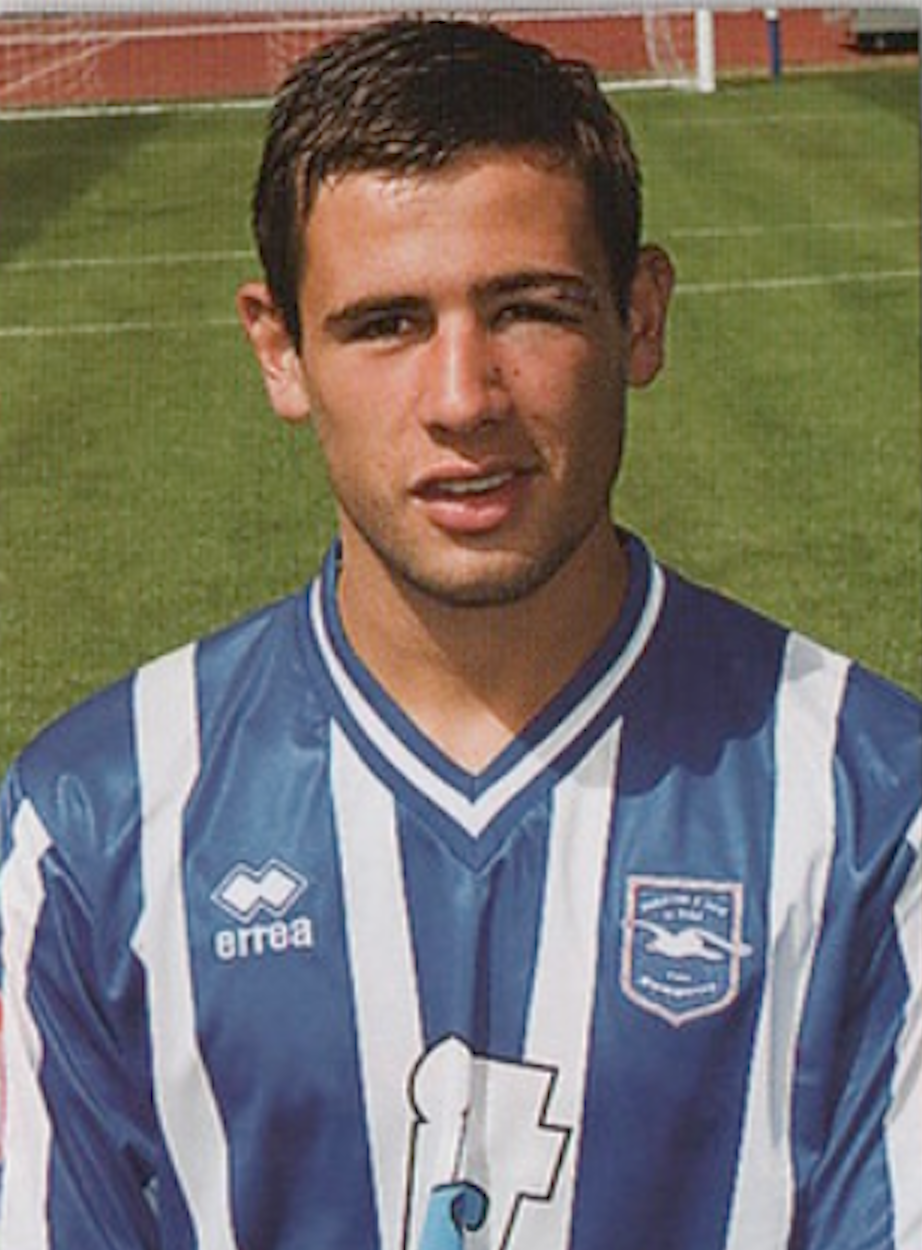
For example, Steve Cook joined the club aged nine and made it through the different age levels into Albion’s first team. But to get regular football, he moved along the coast to Bournemouth.

If moving from Championship Brighton to League One Bournemouth seemed like a backward step in 2012, two promotions later saw him laughing on the other side of his face when the Cherries made it to the Premier League (in 2015) a season before the Seagulls.

Cook spent 10 years with the Cherries, making more than 350 appearances (168 of them in the Premier League), and after the departure of fellow ex-Albion defender Tommy Elphick, he took over as their captain.

Cook first got a taste of the big time in 2008, when he was a second year scholar on £60 a week, aged just 17. He was sent on by Micky Adams as an 85th-minute substitute in the famous League Cup game against Manchester City that League One Albion won on penalties.

Two months later, he once again replaced right-back Andrew Whing, this time in a FA Cup first round replay defeat to Hartlepool United, and picked up a booking into the bargain.

Boot cleaning duties for young Steve Cook

To gain more experience, in December that year, Cook went west to spend six weeks with Conference South Havant & Waterlooville. On his return, he once again had a first team look-in, going on as a 77th-minute sub for Calvin Andrew in the Johnstone’s Paint Trophy southern final defeat at Luton Town that marked the end of the second coming of Adams.

Before the appointment of Russell Slade, Cook went on for the second half as a sub for injury-plagued sub Adam Hinshelwood (who’d been an 18th-minute sub for Elphick) in a 4-0 home defeat against Crewe Alexandra.

Slade marked his arrival by bringing in plenty of old hands in what eventually proved to be a successful skin-of-the-teeth survival battle against relegation. Cook didn’t get another chance in the first team until some time after Gus Poyet had taken charge.

His development continued on loan with the likes of Eastleigh and Eastbourne Borough and in November 2010 he moved away from home to join former league club Mansfield Town on a three-month loan.

“Mansfield play very different to Eastbourne but it’s more like playing for Brighton where they like to keep the ball and play out from the back, which you don’t get in the Conference very often,” he told the matchday programme. “I see it as a great opportunity to prove myself and try to earn another contract at Brighton.”

He added: “Playing Conference football helped me grow up, physically and mentally, so by the time I returned I felt I was ready to challenge for a first team place.”

Cook up against Suarez

After a handful of non-playing appearances on the first team subs bench, when he did get his first ever start, it could not have been a bigger match: Liverpool at home in the third round of the Carling Cup with Luis Suarez, Dirk Kuyt and Craig Bellamy in the opposition forward line.

“It was a real confidence boost knowing the manager had faith putting me into the side for such a big game, but I really enjoyed the experience and got a great deal out of it,” he said.

“While I had a good pre-season, I’ve not played a lot of games since then. It was one in two months before the Liverpool game, but I’d been working hard in training and got my reward.”

Cook only found out 90 minutes before kick-off that he would be taking the place of fellow academy graduate Dunk, with both Elphick and Adam El-Abd out injured.

“It was a real baptism of fire though because for the first 20 minutes Liverpool were brilliant. Suarez, Bellamy, they were all excellent going forward, the pace of them as a team was unbelievable and in that opening spell I think we were in awe of them.”

Cook thought his involvement that night would lead to more chances, but he said: “Later that month we had Ipswich away, Dunky was suspended but instead of playing me, Gus put Romain Vincelot – a midfielder – in alongside Gordon Greer. From that point on, my mind was made up; I knew I had to look elsewhere if I wanted to kick on in my career.”

That autumn, Cook initially joined Bournemouth on loan, featuring in eight games, but he was recalled by the Seagulls when a shortage of defenders meant he was needed for a crucial New Year game at home to table-topping Southampton.

Having lost four games on the bounce, the odds were stacked against a positive result, but Albion remarkably won the game 3-0 (two cracking goals from Matt Sparrow and another from Jake Forster-Caskey).

Nevertheless, within 24 hours of the game ending, Cook finally took the tough decision to leave the Albion permanently. The fee was a reported £150,000.

He told the matchday programme: “I have loved my time at Brighton but this is a chance to play regular football and I can’t turn that down. It was nice to go out on such a high – not many players get that chance.”

Cook reckoned he might have got the odd game or two if he’d stayed at Brighton but he didn’t rate his chances of becoming a regular when everyone was fit. “I could play close to 30 games for Bournemouth and that is massive for a young footballer,” he said.

In a later interview, he said: “It was always going to be a tough decision to leave the Albion as I had been at the club since the age of nine.

“I had a decision to make: do I stay and fight for my place, despite being a fair way down the pecking order, or do I leave and try to continue my career elsewhere?

“It wasn’t easy because I was leaving a club on the rise; the Amex is one of the best stadiums in the country, the team was establishing itself in the Championship and there was a new training ground on the way.

“But having been at Bournemouth on loan, I could also see a hugely ambitious club and a talented squad which I believed was going places.

“So, I decided to leave and it’s been the best decision I could ever have made. I’ve moved away from my parents, so have grown up off the pitch, while on it I’ve been playing regularly and have really enjoyed my football.”

Much of that time he partnered Elphick in the middle of the Cherries defence and it wasn’t long before the pair were emulating the Albion’s achievement of promotion from League One.

“Tommy arrived a year after me but of course I told him about the club, the town and knew it would be a good move for him as it was for me,” he said. “We’d obviously played alongside each other before, had known each other a long time, and so we soon built up a good partnership.

“He had those leadership qualities he displayed at Brighton and was soon made captain. We had a terrific three years together and remain good friends off the pitch.”

In a subsequent Albion matchday programme, when he was once again visiting with the Cherries, he said: “Lovely stadiums and training facilities are great, but only if you’re playing in them and I can now look back on nearly 300 appearances for Bournemouth, where I’ve had some fantastic moments, played regularly in the Premier League and really developed my game. It’s a move that couldn’t have gone better.”

Although Cook held his own in the Premier League, he admitted the transition from the Championship was hard. “The gulf with the Championship is huge,” he said. “The intensity and pressure, in particular, are massive and the first six months were a real learning curve.

“Once I’d adapted and dealt with the expectations placed on me, I could relax and start to enjoy myself.”

Born in Hastings on 19 April 1991, Cook joined the Albion as a schoolboy following a six-week trial under the auspices of Martin Hinshelwood, the head of the youth set-up at the time.

“Initially, I was only training Tuesday evenings in the Eastbourne centre of excellence but, when I reached 13, we were training twice a week with a game on the Sunday,” he recalled.

“I remember I had a choice to make: Hastings Town, my local team, or Brighton and obviously I was swayed by the facilities, the coaching and being associated with a professional club.”

After Bournemouth lost their top tier status in 2020, Cook captained the side through to the Championship play-off semi-finals in 2021 where they were beaten by eventual winners Brentford.

There was plenty of emotion when Cook finally left the club in January 2022 with manager Scott Parker saying: “I know too well what someone like Steve Cook has done for this football club and the journey he has been on with the club. He has been paramount and done everything, really. I wish him all the best.”

And in an open letter to the club’s fans, Cook wrote: “I’ve been lucky enough to captain the team in League One, the Championship and Premier League and writing this just fills me with immense pride.

“The time has come for me take the next step in my career but I will never forget the staff that helped me improve as a player and person.

“The players that I shared a dressing room with and, and most importantly, the fans that supported and cheered for all those games.

“The journey that we have had is one that will never be beaten, and the relationship we had was undeniably strong. Thanks for everything.”

Upon signing for Nottingham Forest, Cook declared: “You can see the progress the club is making and I’m excited for the new challenge. 

“I thought it was the perfect time in my career to make this move to hopefully come and contribute and help get this club back to where it wants to be.

“The history of the club speaks for itself and I know how passionate the fans are. I’ve played at the City Ground in the past and it’s always been electric.”

Manager Steve Cooper said: “Steve is a fantastic player and brings a good level of experience, both in the Championship and the level above.

“He’s played in a team that has won a lot of games and I think that that’s important. We want our group to be young and hungry along with players of experience that can drive the team forward and that’s what we’re building.”

Having been part of the Forest side promoted to the Premier League in May 2022, his involvement back in the elite division was restricted to 12 games and he was omitted from Forest’s 25-man Premier League squad for the second half of the 2022-23 season.

In the summer of 2023, he switched to Queens Park Rangers in the Championship, telling the club’s website: “Playing football is the most important thing for me but I also pride myself on being a good character around the group.”

He went on: “My time in the Championship has been quite successful, and that success is something I want to bring here. 

“I don’t want my career to peter out, I still really want to be successful and to contest. I still have aims and targets I want to achieve and I’m hoping that the success I’ve had in my career so far continues so that I can help push QPR forward.” 

Ups and downs of medal-laden Mark McGhee’s career

MARK McGHEE saw highs and lows as Brighton & Hove Albion manager after a medal-laden playing career that took him from his native Scotland to England and also to Germany.

McGhee was in charge when the Seagulls memorably won the 2004 play-off final to gain promotion from the third tier, beating Bristol City at the Millennium Stadium, Cardiff.

Play off final boss

Keeping the Seagulls up the following season was arguably an even greater achievement considering at the time playing home games at the crowd-restricted Withdean Stadium meant the club was at a huge disadvantage compared to most clubs in the division.

With the Amex still a distant dream, relegation came at the end of the 2005-06 season, and it wasn’t long into the following season that Dick Knight wielded the axe on the Glaswegian’s time in charge.

“It was hard to sack Mark, but we had to have a change,” Knight wrote in his autobiography, Mad Man: From the Gutter to the Stars. “Everyone recognised what he had done in taking up and keeping up a team that was not that great, to be honest. Hats off to him, he had done a terrific job. And he is a very intelligent, personable guy.”

Knight took decisive action when part of the crowd became vociferous in wanting McGhee out, and the chairman also felt some of the young players drafted into the team weren’t responding to him.

He was finally toppled over lunch at Topolino’s, and Knight admitted: “It was a difficult decision. There was strong vocal opposition to McGhee, but also a large, less noisy element who were behind him.”

McGhee liked Brighton so much he made it his home despite subsequently taking on a series of other roles the length and breadth of the country.

It’s probably fair to say the Scot has never been afraid to speak his mind, which his former Newcastle boss Bill McGarry mentioned to him. McGhee recounted in an interview with theleaguepaper.com: “I was managing Wolves at the time. He said ‘Mark, you talk too much. Tone it down a bit’. I tried to take his advice, give nothing away in media briefings. Then, somebody would say something interesting and I wasn’t able to stop myself.”

It’s probably what helped him gain a place on the Sky Sports Soccer Saturday panel when he was in between management jobs.

McGhee would most likely look back on some jobs he’d perhaps have been wiser to stay away from, for example taking temporary charge of Eastbourne Borough in 2018, although his enthusiasm was undimmed as he revealed in an interview with thenonleaguefootballpaper.com.

Born in Glasgow on 20 May 1957, his father was an electrical engineer and his mother a fertility consultant at Glasgow Royal Infirmary. McGhee was on the books of Bristol City at the start of his long career but he returned to Scotland and became a part-timer with Greenock Morton while also training to be an architect.

Aforementioned manager McGarry signed him for Newcastle for a £150,000 fee on 30 December 1977 and he made his debut on 2 January 1978.

His face didn’t fit after Arthur Cox took over as boss, but Alex Ferguson took a punt on him in March 1979 and signed him for Aberdeen, and it proved to be one of many shrewd decisions the esteemed Scot would make in his career.

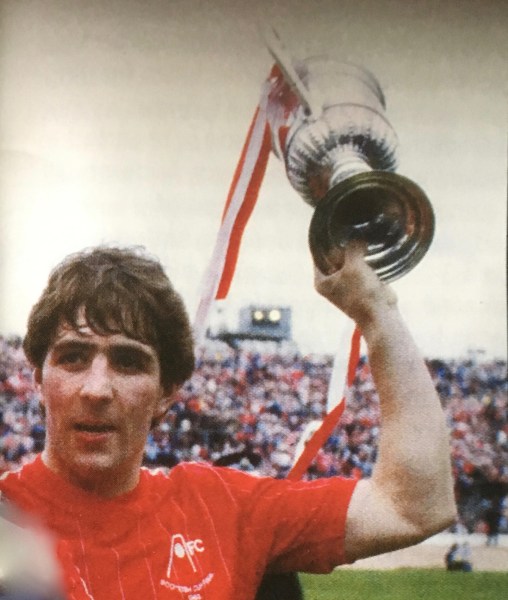
McGhee was named Scottish PFA Players’ Player of the Year in 1982, and the following year was part of the Aberdeen side who beat Real Madrid 2–1 to lift the 1983 European Cup Winners’ Cup in Gothenburg.

mcg cup

He also scored the second goal as Aberdeen defeated Hamburg 2-0 to win the UEFA Super Cup in the same year.

Asked about the best goal he scored, he said: “Probably the winning goal in my last game for Aberdeen.”

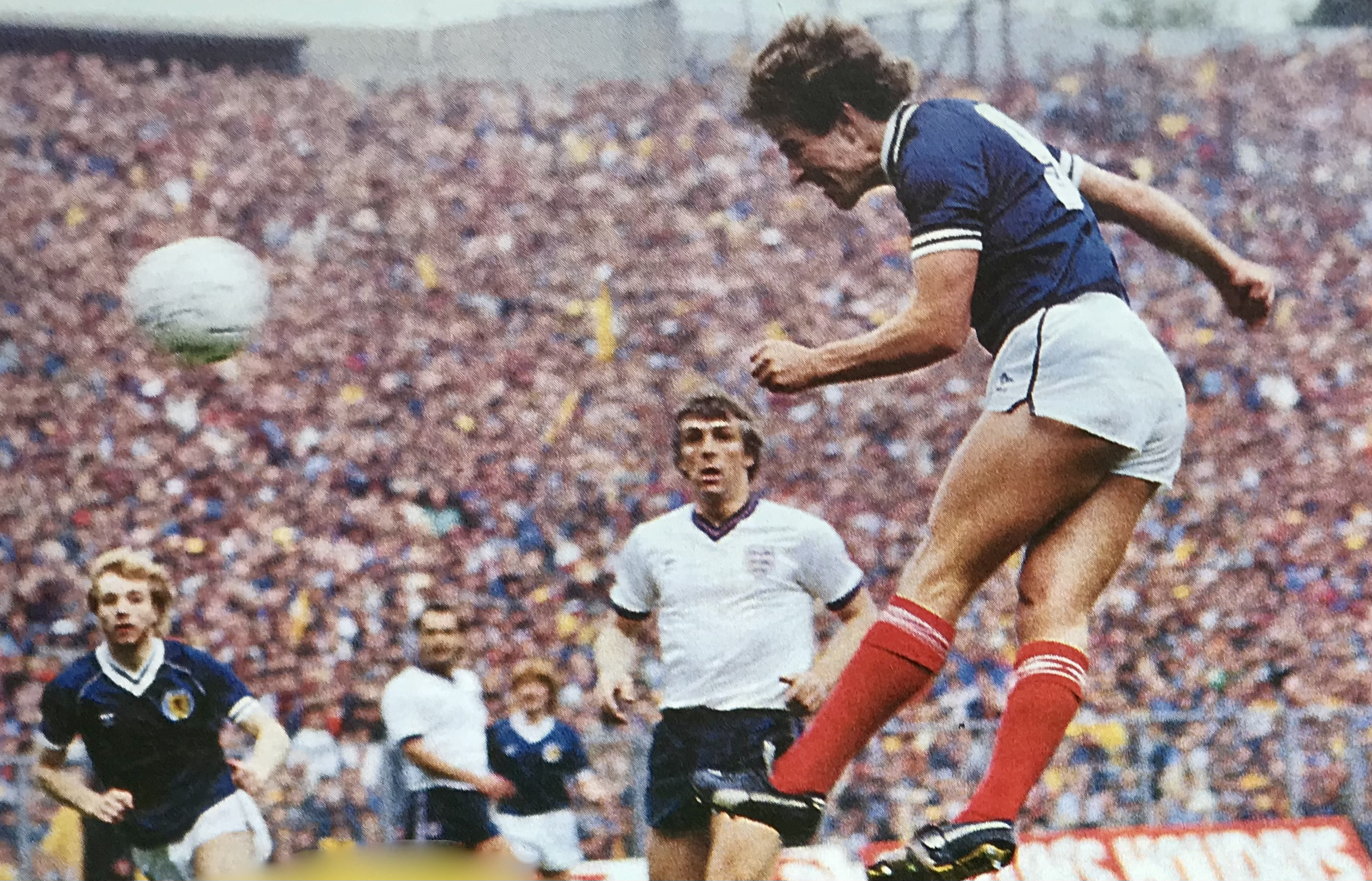
McGhee reckoned his best moment in football came on 26 May 1984 when he scored against England at Hampden Park. He headed in a cross (as pictured) from his great pal Gordon Strachan past Peter Shilton.

McG v Eng

“It put us 1-0 up but Tony Woodcock equalised to make the final score 1-1.”

It was one of four caps he won for his country. Nearly two decades later, in January 2013, Strachan appointed him as his no.2 with the Scottish national side.

M McGhee Old Football PhotosBut back to those playing days, and with two Scottish league titles and three Cup wins behind him, McGhee tried his hand at European football and spent 16 months at Hamburg. The spell was probably more of an education than a success, with injuries limiting his game time.

A £170,000 fee took him back to Scotland, to Celtic, where he had mixed fortunes during four years with the Glasgow giants. He was, though, part of the squad that won a League and Cup double in their centenary season.

After winning another Scottish Cup winners’ medal in 1989, he was on the move again, back to Newcastle.

Now with Jim Smith in charge, Newcastle paid £200,000 to take McGhee back to St James’ Park, where he formed an impressive strike partnership with the legendary Micky Quinn as Toon finished third in the old Division Two.

“We were good friends, but we didn’t blend on the pitch like Toshack and Keegan, Quinn told theleaguepaper.com. “Mark was a free spirit. He’d get the ball and drift left or right and drop deep.

“He’d turn defenders and drag them out of position. He would hold the ball up well for me to get into the box and score goals. He went where he wanted, but it worked.”

football back then McGhee

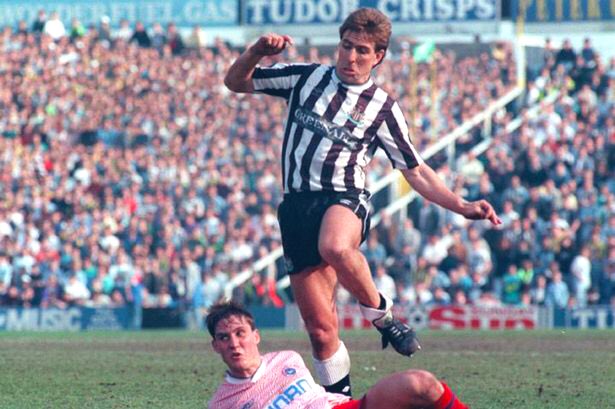
This Football Back Then picture shows McGhee in action for Newcastle against Albion’s Nicky Bissett.

His farewell performance came on 6 April 1991, not long after Ossie Ardiles had taken over as manager, and McGhee departed having scored a total of 36 goals in 115 appearances for the Magpies.

Next stop was Sweden, where he played briefly for IK Brage, but he seized the opportunity to try his hand at management by taking up the role of player-manager at Reading in the summer of 1991.

He’d been recommended for the role by his old boss Ferguson, and, after quitting playing through injury in 1993, he led the Royals to promotion from the third tier the following year.

A struggling Leicester City gave him a chance to manage in the Premier League but he was unable to keep them up and, less than a year after joining, decided to switch to Wolverhampton Wanderers, to succeed Graham Taylor.

Wolves just failed to gain promotion in 1996-97 (they lost in the play-off semi-finals) and were ninth the following campaign. Four months into the 1998-99 season, following a string of poor results, McGhee was fired.

It would be 20 months before he gained his next opportunity, this time at Millwall where he enjoyed initial success, leading them to promotion from the third tier, and then narrowly missing out on another promotion when they lost in the play-off semi-finals to Birmingham City.

McGhee apptWhen he parted company from Millwall in October 2003, he wasn’t out of work long because Brighton needed a replacement for Steve Coppell, who’d been wooed to take over at Reading (pictured above, with chairman Dick Knight, at his unveiling as Albion manager).

Those Albion fans who stuck by the team in the humble surroundings of the Withdean Stadium enjoyed some good moments during McGhee’s time as manager, in particular promotion via the play-off final in 2004.

He certainly found a formula to get the best out of certain players, as Adam Virgo, converted from defender to goalscorer, observed in that theleaguepaper.com article. “Mark is a very good communicator and very experienced,” he said. “He can make you feel ten feet tall. He’s very good at being honest, at analysing your game and telling you what you’re good at.”

After his departure from the Albion, McGhee was out of the game for nine months but got back in at Motherwell, turning them from near relegation candidates to qualifiers for European competition.

The lure of his old club, Aberdeen, proved too strong in the summer of 2009, but his tenure proved to be disastrous – and brief.

He spent the majority of 2012 as manager of Bristol Rovers, where one of the squad he inherited was former Brighton defender-turned-striker, Virgo. The following year, his old pal, Strachan, appointed him as assistant coach to the Scottish national side.

He later combined the role part-time when he returned to Motherwell but there were mixed fortunes second time round, and he left them again in early 2017. Towards the end of that year, he popped up at League Two Barnet, but the arrangement lasted only two months before he was moved to a ‘head of technical’ role, and then dismissed in March 2018.

McGhee was ‘slaughtered’ on Twitter when he took over as interim manager of National South side Eastbourne Borough in the spring of 2019, after being beaten 3-0 by Wealdstone in his first match in charge, his new side reduced to nine men after two players were sent off. Borough won just once in 11 matches.

When Albion under 23s coach Simon Rusk was appointed manager of Vanarama National League side Stockport County in January 2021, McGhee was appointed as one of his assistants.

His final managerial post was at Dundee in February 2022 when he took temporary charge of the Scottish Premiership side until the end of the season (with Rusk as his assistant), but they couldn’t avoid them being relegated, overseeing just one win in 13 matches.

McGhee finally announced his retirement from the game in September 2022 at the age of 65, telling the Sunday Post: “I won’t be pursuing any other managerial vacancies, and nor would I want to be a director of football or a head of recruitment. That’s not what I am – I’m a manager.

“I feel that players now deserve a young manager who can give them the energy I was able to when I started out. They don’t need a 65-year-old with a dodgy ankle.”

Illness put paid to John Piercy’s promising career

A FIVE-YEAR professional football career bookended by 3-1 results against Crewe Alexandra almost certainly wouldn’t have been the path John Piercy would have chosen for himself.

One saw him make a promising debut for Tottenham Hotspur on 13 October 1999, subbed off to a terrific ovation from a 25,000 crowd at White Hart Lane on 74 minutes as they progressed in a League Cup game against the lower league opposition.

The other was a League One defeat for Brighton & Hove Albion at humble Withdean Stadium on 6 November 2004, subbed off ignominiously only 12 minutes into the second half with many in the crowd of 6,163 unaware that the hereditary bowel disease afflicting him was putting paid to his hopes of a football career.

Born in Forest Gate, east London, on 18 September 1979, Spurs first spotted Piercy as a stand-out 12-year-old, talented enough to represent England Schoolboys.

He became a trainee with Spurs at the age of 16 and signed as a professional in July 1998.

It was George Graham who gave him his first team debut for Spurs in that game against Crewe, starting him up front alongside Chris Armstrong in a side that featured future Brighton player and assistant manager Mauricio Taricco in defence.

The Spurs goals were scored by Oyvind Leonhardsen, David Ginola and Tim Sherwood, but spursodyssey.com was full of praise for the young Piercy.

“One young man who will remember this night more than most is 20-year-old debutant John Piercy, who won the home fans’ hearts with two terrific efforts on goal, and an eye-catching performance all round,” it said. They even went as far as to suggest he might be ‘the new Ginola’.

The performance was good enough to earn him a place on the bench for the following Saturday’s Premier League game away to Derby County and he was called into action in the second half to replace Armstrong as Spurs won 1-0.

He made two more league appearances that season and an excellent Spurs archive website said of him: “The solidly built East Londoner had the ability to lead the line and to make chances for his team-mates, by going wide and taking people on.

“Some work was needed on his first touch and his pace, but he was strong, direct and knew where the goal was.  Preferred to play wide on the left of midfield, but was deployed at full back in the reserves to good effect.”

Chris Hughton was the Spurs reserve team manager at the time and said of Piercy: “John is able to adapt well to different roles which is why we’ve played him at full-back in pre-season when we’ve been stretched in those areas.  But I’d say his best position is definitely right or left of midfield.”

On 4 April 1999, he started for England under 20s against the USA in the World Youth Championships in Nigeria, but was subbed off in a game England lost 1-0. His teammates that day included future full international Ashley Cole, and the side was managed by former Albion full-back Chris Ramsey.

john piercyFrustrated by the lack of first team opportunities at Spurs, Piercy, by then based in Eastbourne, opted to join Brighton in September 2002 during Martin Hinshelwood’s brief reign as manager.

Hinshelwood told the BBC: “He’s a player who can play in a variety of positions. That will give us plenty of options.”

A first team breakthrough at Brighton was slow to happen, however, with Hinshelwood’s successor, Steve Coppell, opting for experience in the ultimately unsuccessful battle to avoid relegation from the second tier. Piercy top-scored for the reserves that season, netting 13 goals from midfield.

However, shortly after Mark McGhee’s appointment, he did get some game time and in December 2003 also registered his first league goal in a 1-0 win at home to Wrexham.

Later the same month, he went one better playing up front in place of the suspended Leon Knight and scored twice in a resounding 4-0 home win over Wycombe Wanderers.

More often than not, though, he was brought on as a substitute rather than starting games. He made just eight league starts and in six of them was subbed off.

His other appearances (16) were all from the bench and that was the role he found himself in at the 2004 play-off final at the Millennium Stadium in Cardiff, although his contribution was certainly effective.

Piercy replaced Nathan Jones in the 77th minute. “He (McGhee) made a change with just over 10 minutes left and we went on to win the game, so no one is going to complain, are they?” Jones told walesonline.co.uk.

Reports also recorded how Brighton threatened Steve Phillips’ goal moments after Piercy replaced Jones, Iwelumo glancing the substitute’s cross wide of the far post.

Sadly for Piercy, while he showed promise on the football pitch, he began to suffer the horribly debilitating effects of colitis, as he described in an interview with the Argus.

He praised the support he got from McGhee and reserve team boss Dean White but it reached a point where it was evident the illness was simply sapping too much energy from him to continue a full-time professional football career.

That defeat at home to Crewe proved to be his last game for the Albion and he announced his retirement aged 25 shortly afterwards.

“He knows his capabilties and I know his capabilities,” said McGhee in a matchday programme article. “He’s a player that could easily cope with the standard of the Championship but this illness has just affected him in a way that he just can’t get fit enough to do himself justice.”

Chairman Dick Knight added: “It is a great shame that such a skilful player, with such tremendous natural ability, has seen his career curtailed in such a cruel way. All at the club are devastated for him to be hanging up his boots at the relatively young age of 25.”

Piercy subsequently regained sufficient fitness to play a season with non-league Eastbourne Borough and then took up a coaching role with the club.

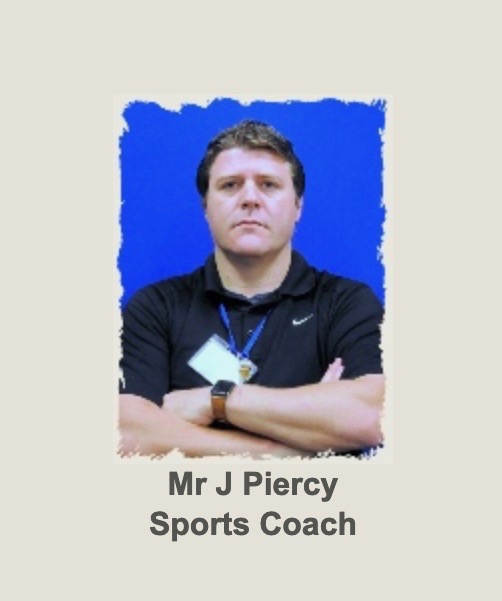
Nowadays he is a sports coach at Ocklynge Junior School in Eastbourne where he teaches youngsters football and PE, and is also a coach at CACL Sports in the town.

Piercy Ocklynge Sch