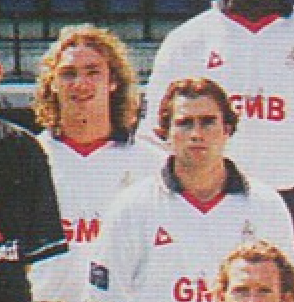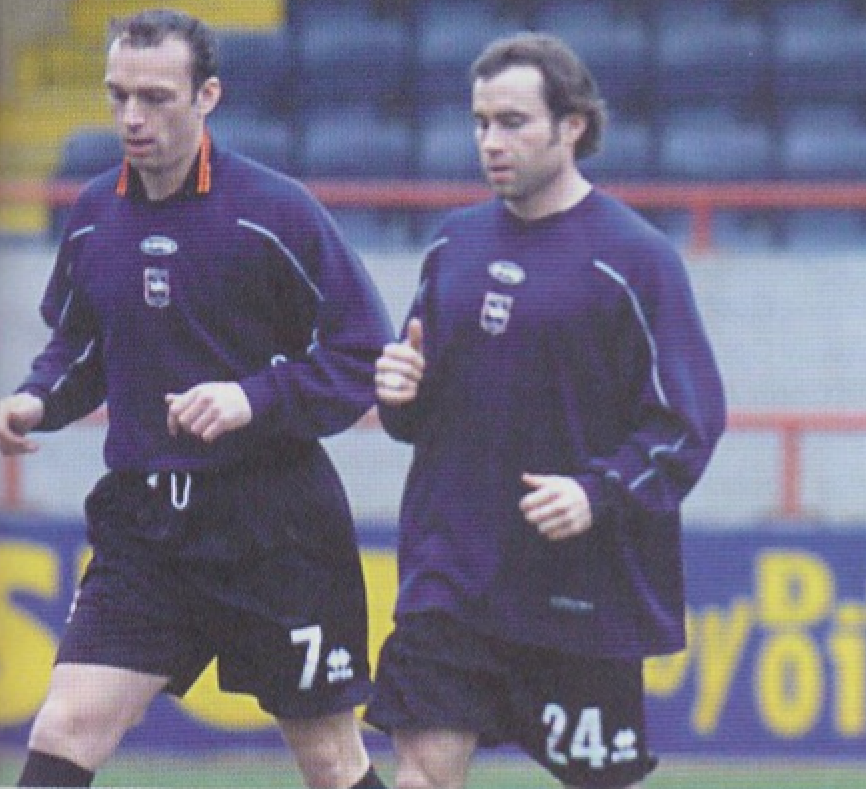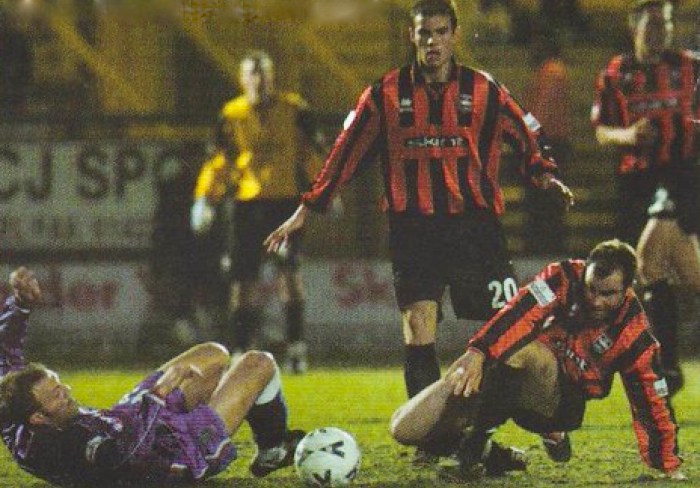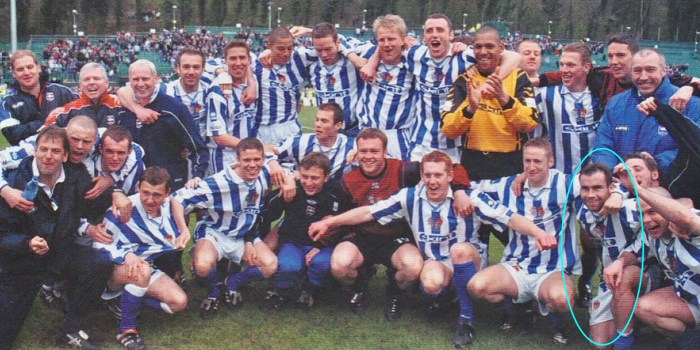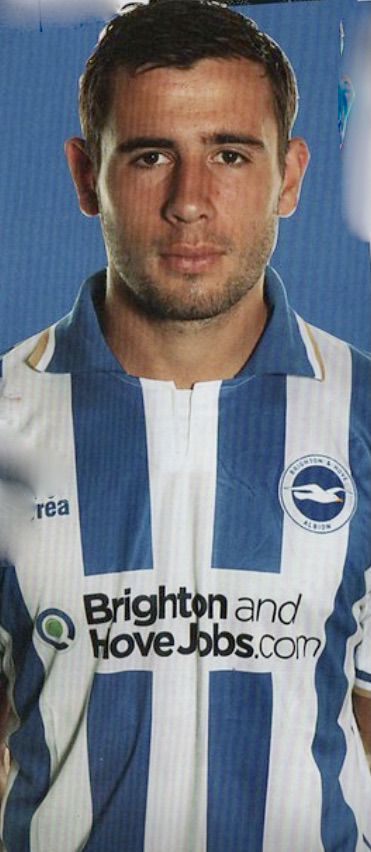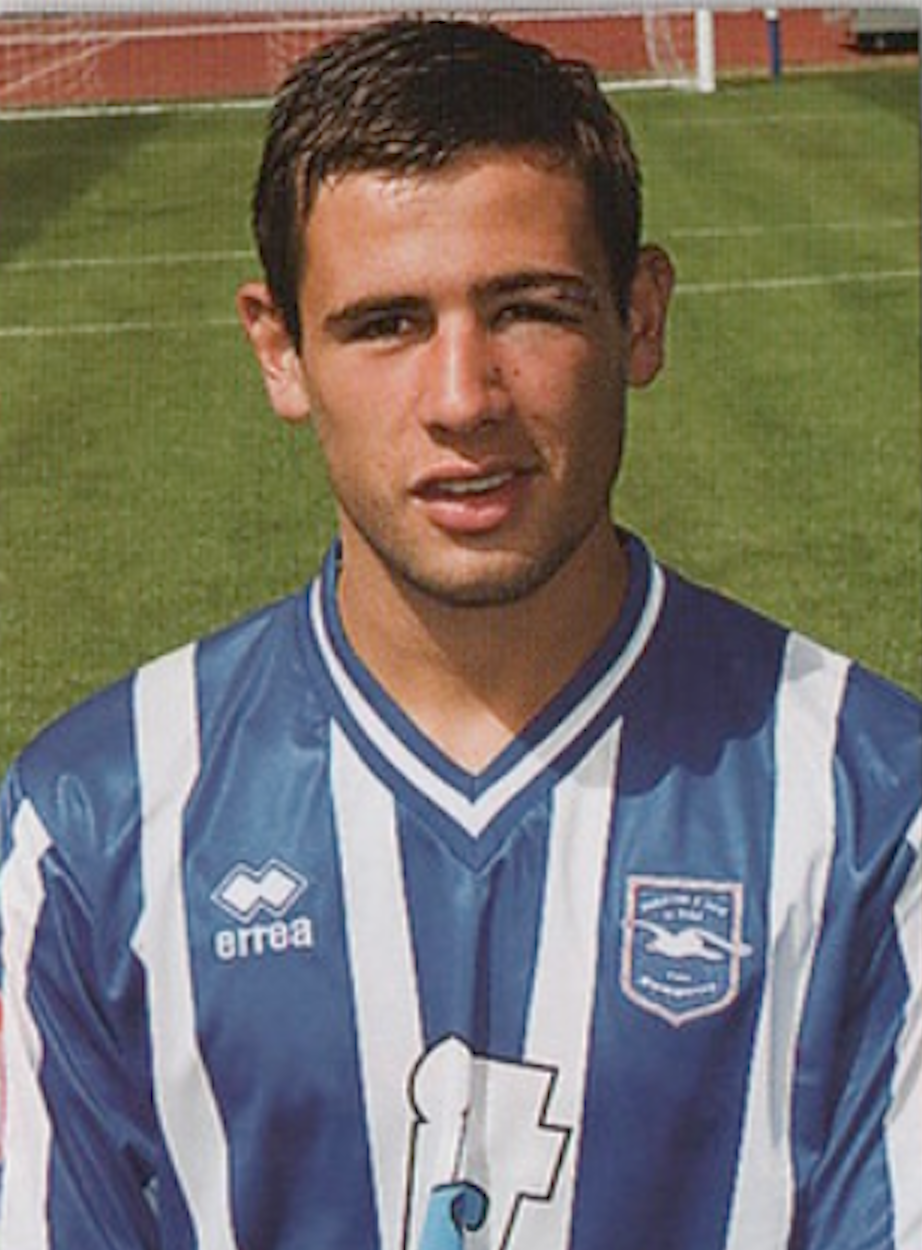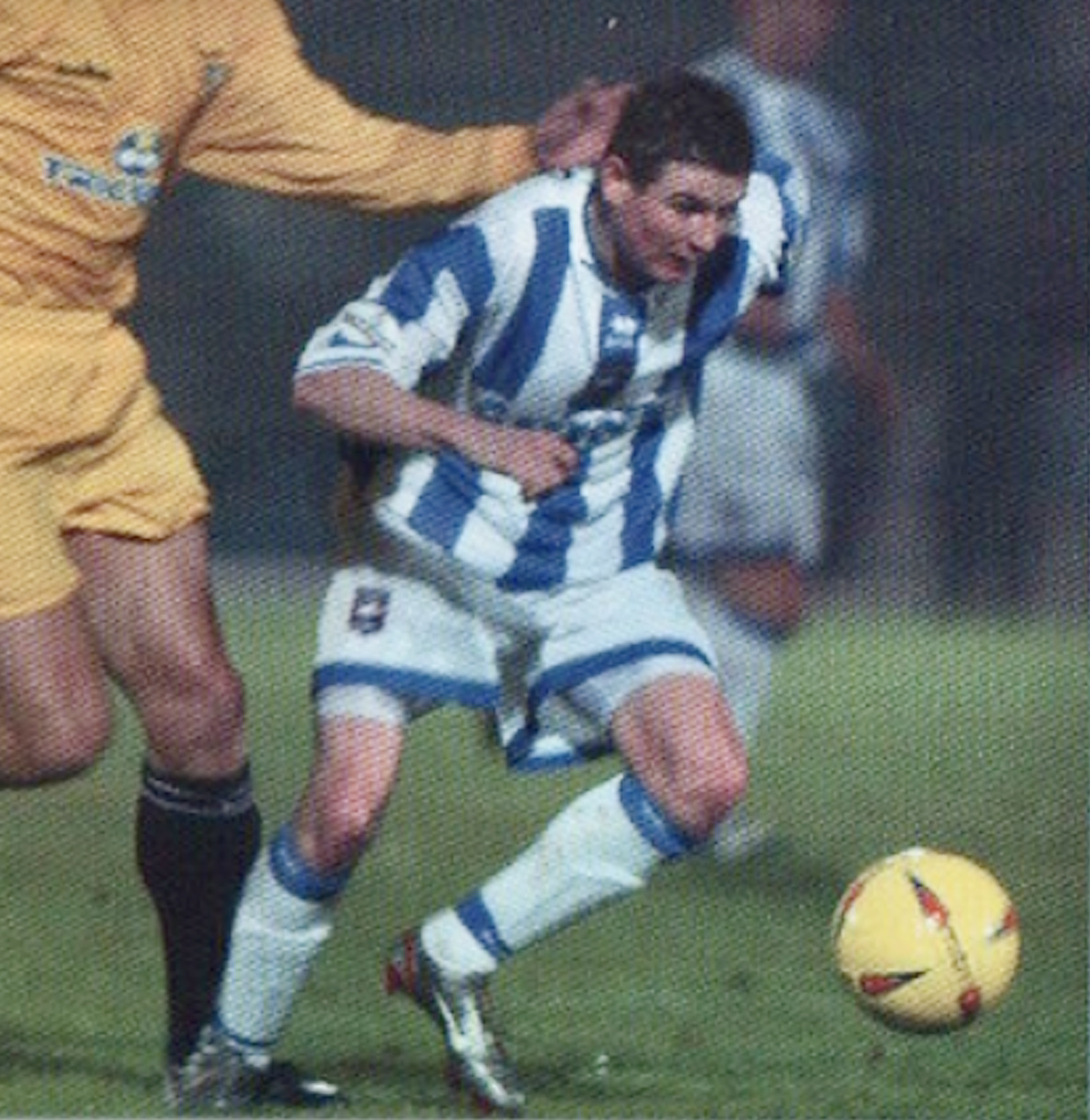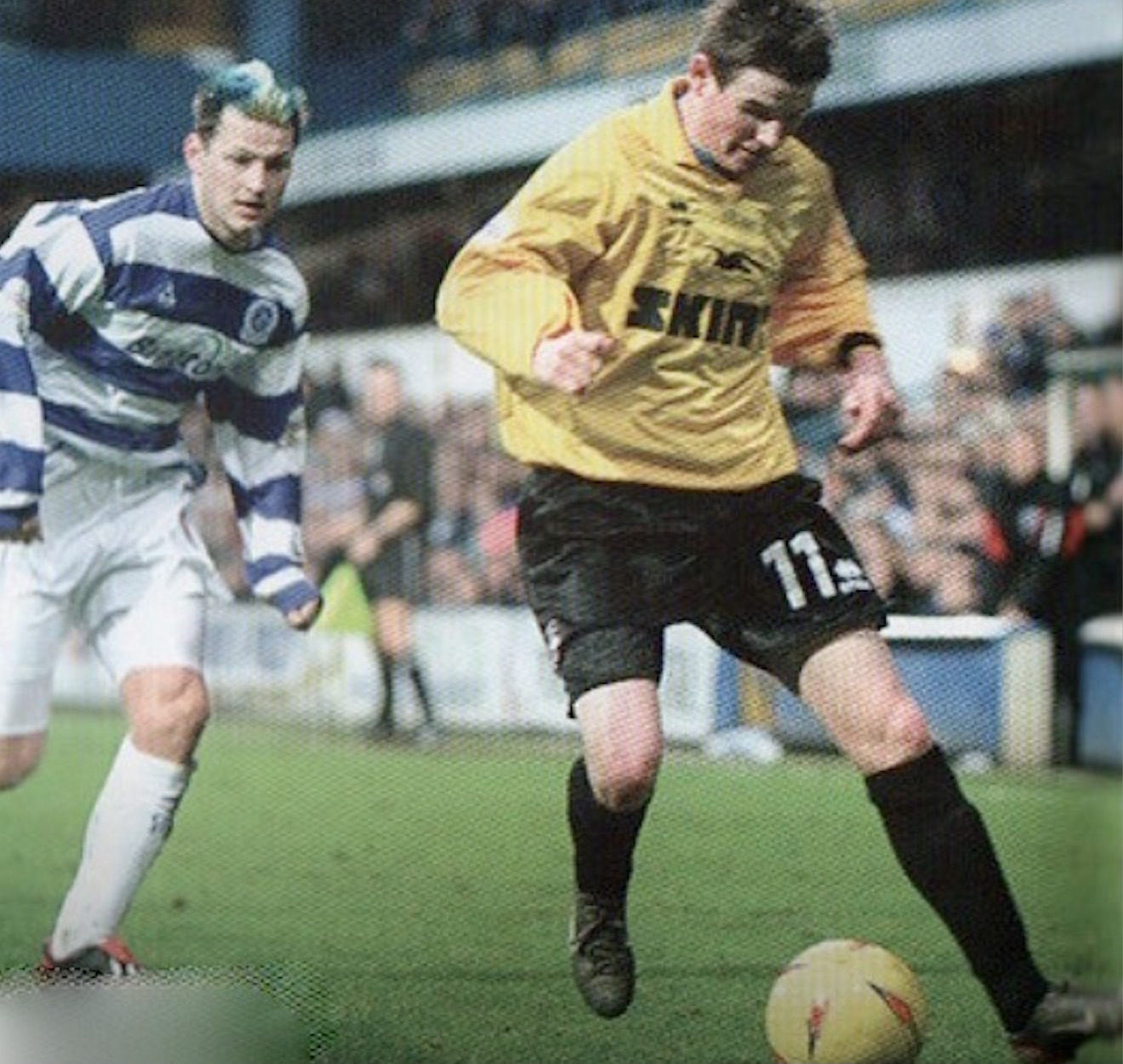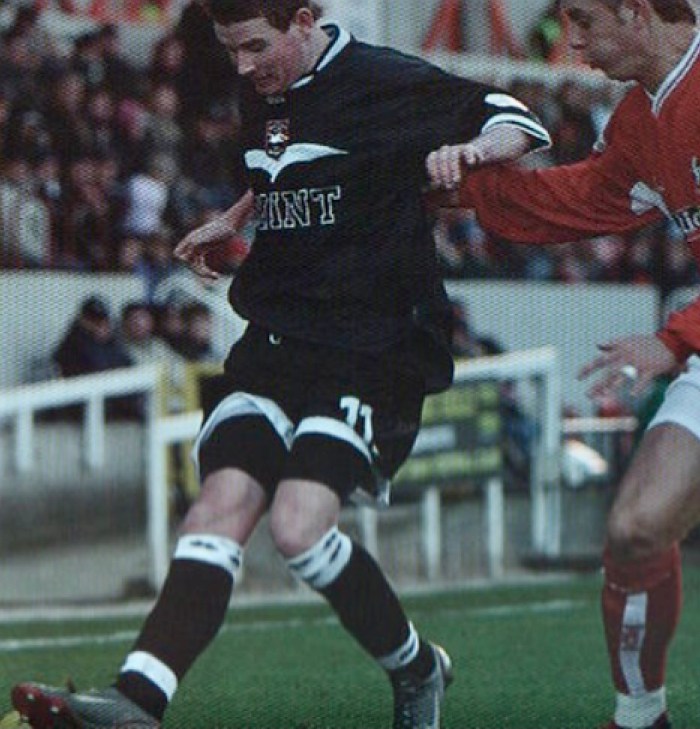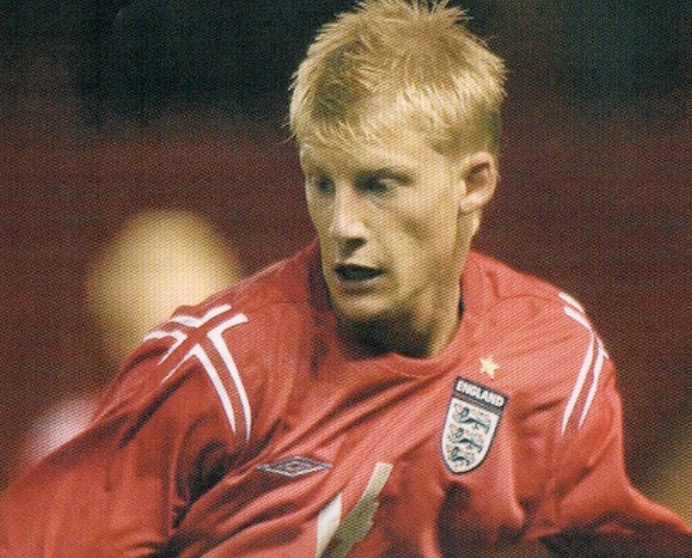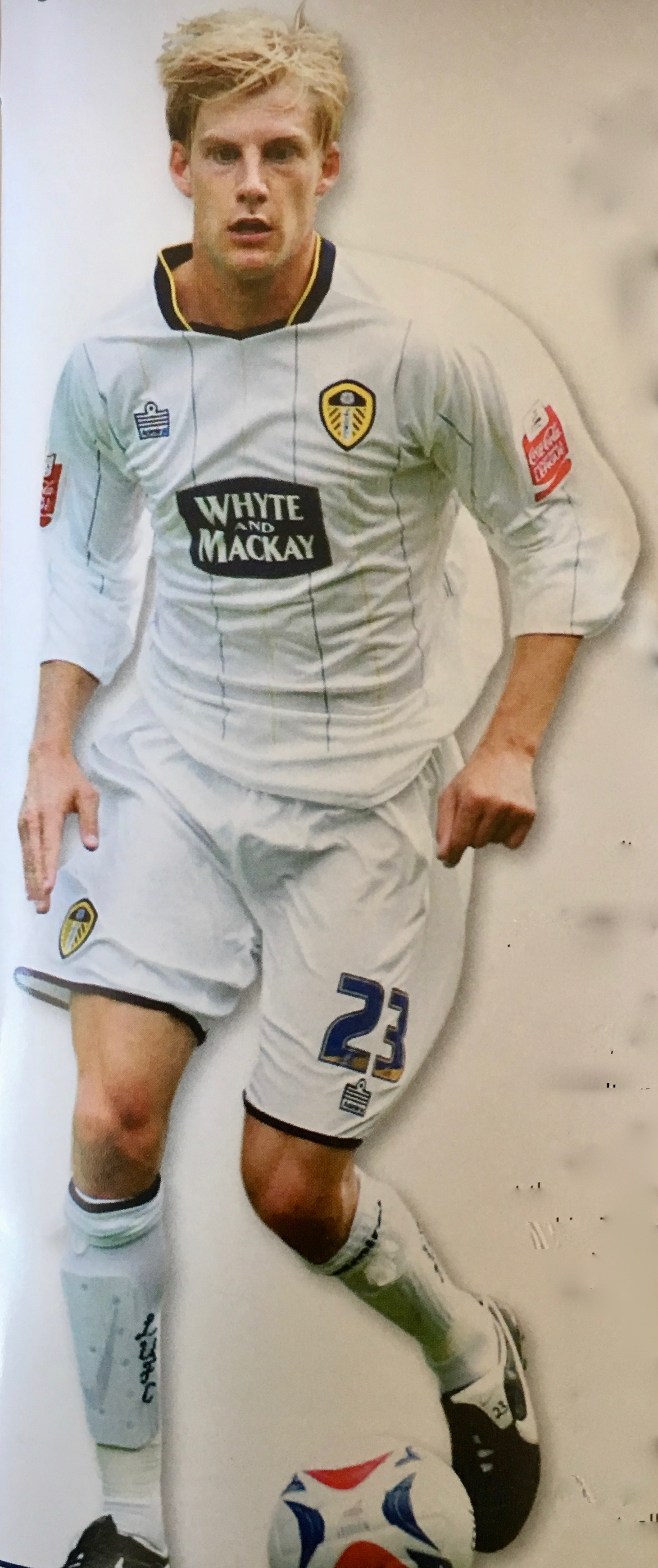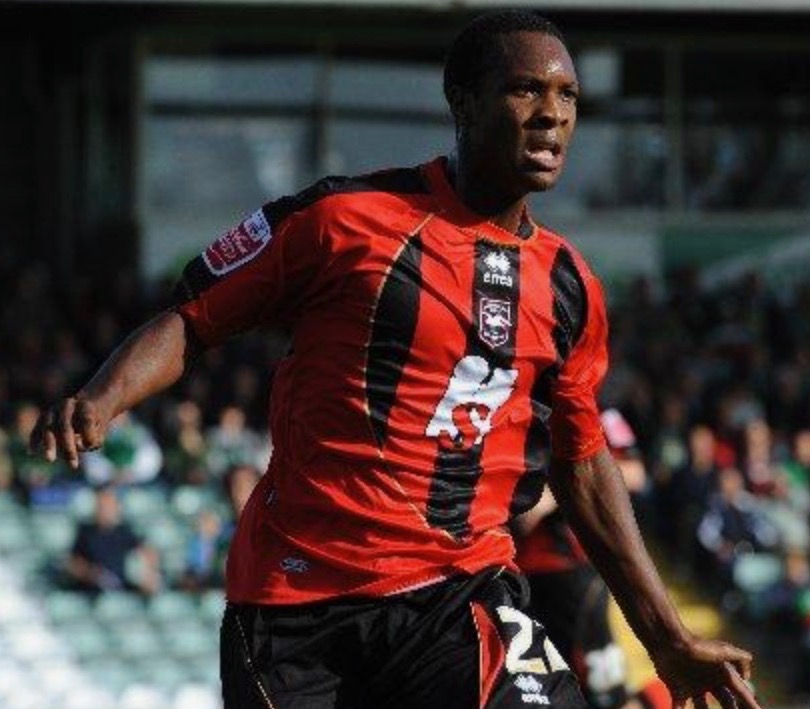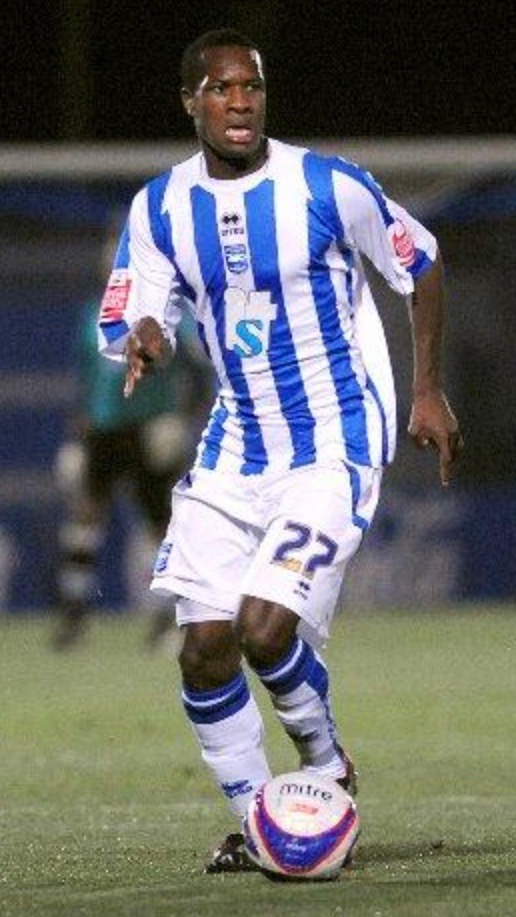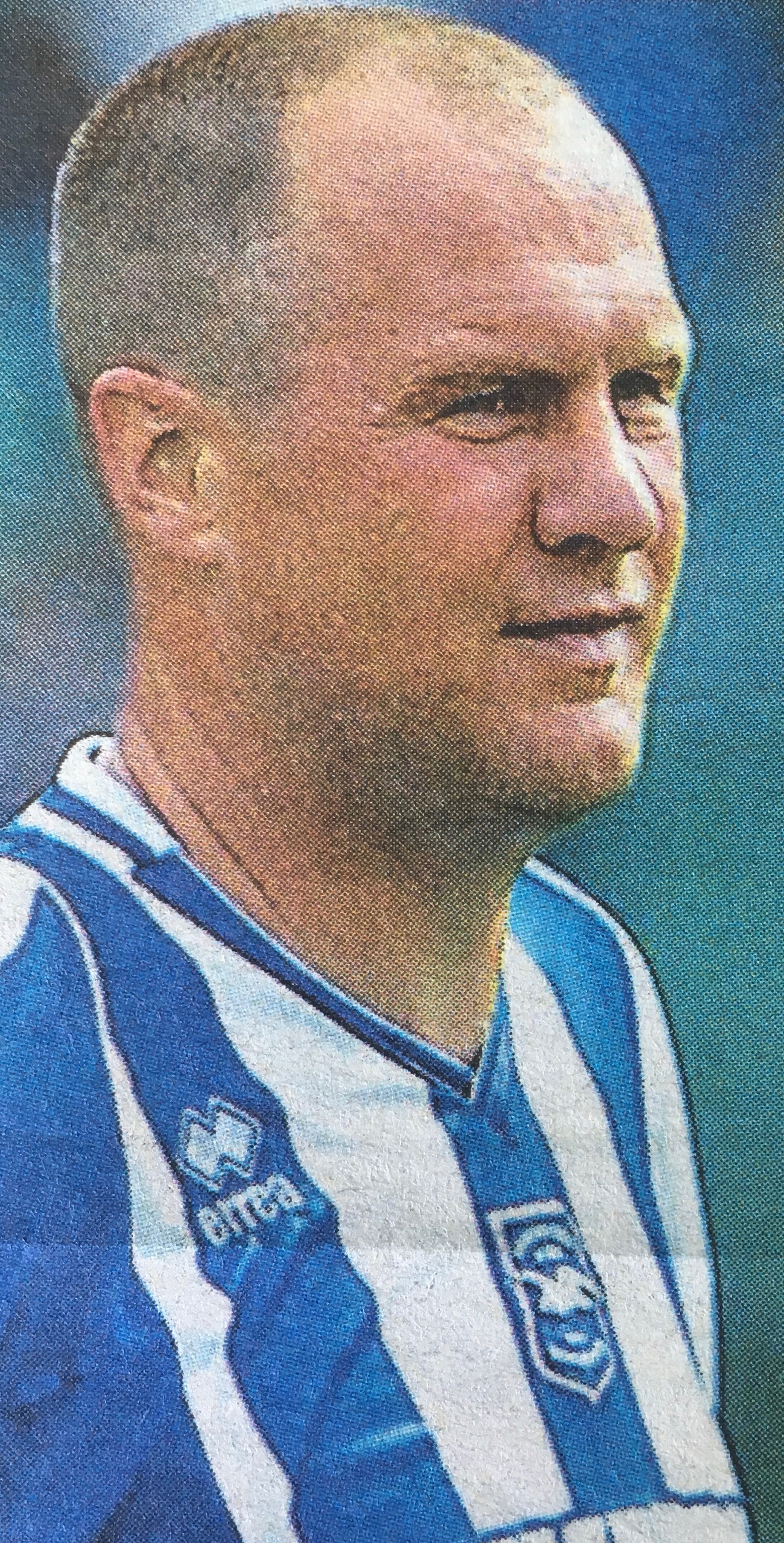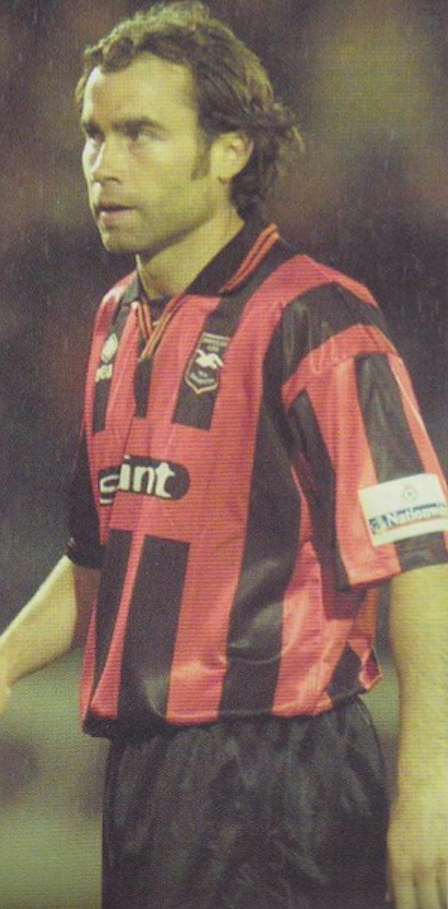
That’s the way Cookie crumbled for Hastings-born defender

WHEN IT comes to home-grown talent, Brighton have had particular success with central defenders.

Lewis Dunk is the prime example, staying with the club from humble beginnings through to Europe. Others had to move on to make the most of their careers.

For example, Steve Cook joined the club aged nine and made it through the different age levels into Albion’s first team. But to get regular football, he moved along the coast to Bournemouth.

If moving from Championship Brighton to League One Bournemouth seemed like a backward step in 2012, two promotions later saw him laughing on the other side of his face when the Cherries made it to the Premier League (in 2015) a season before the Seagulls.

Cook spent 10 years with the Cherries, making more than 350 appearances (168 of them in the Premier League), and after the departure of fellow ex-Albion defender Tommy Elphick, he took over as their captain.

Cook first got a taste of the big time in 2008, when he was a second year scholar on £60 a week, aged just 17. He was sent on by Micky Adams as an 85th-minute substitute in the famous League Cup game against Manchester City that League One Albion won on penalties.

Two months later, he once again replaced right-back Andrew Whing, this time in a FA Cup first round replay defeat to Hartlepool United, and picked up a booking into the bargain.

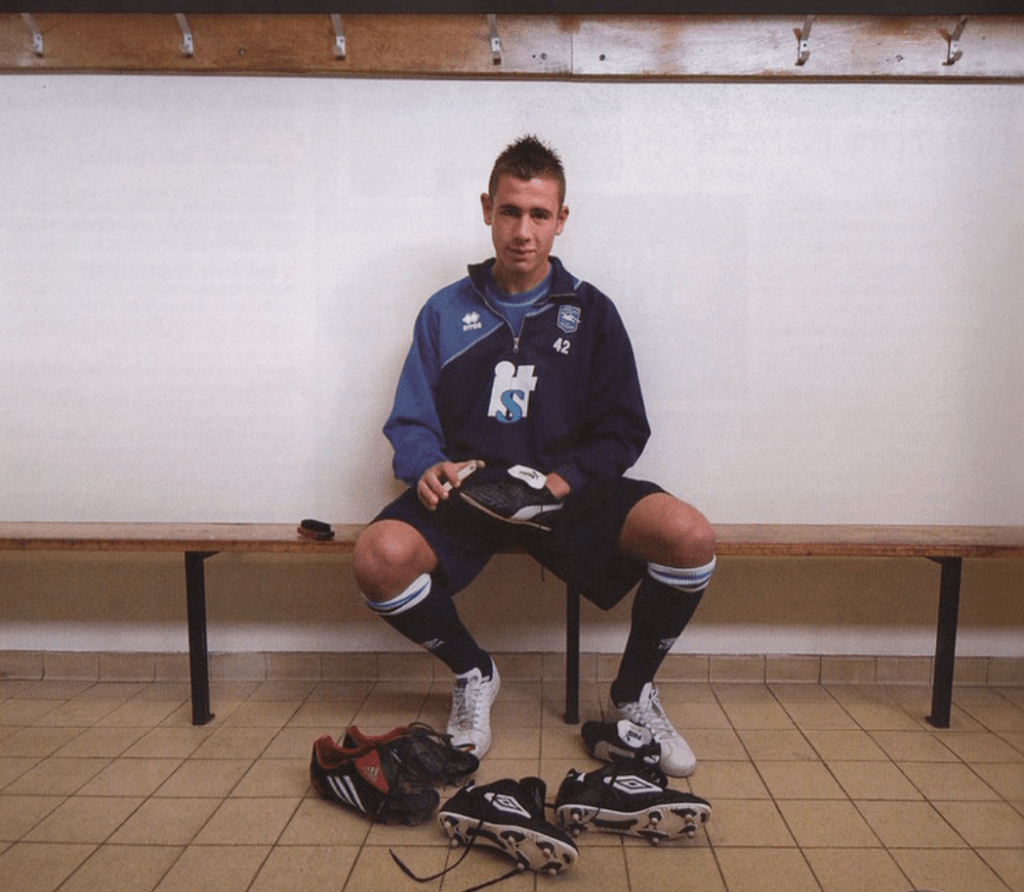
Boot cleaning duties for young Steve Cook

To gain more experience, in December that year, Cook went west to spend six weeks with Conference South Havant & Waterlooville. On his return, he once again had a first team look-in, going on as a 77th-minute sub for Calvin Andrew in the Johnstone’s Paint Trophy southern final defeat at Luton Town that marked the end of the second coming of Adams.

Before the appointment of Russell Slade, Cook went on for the second half as a sub for injury-plagued sub Adam Hinshelwood (who’d been an 18th-minute sub for Elphick) in a 4-0 home defeat against Crewe Alexandra.

Slade marked his arrival by bringing in plenty of old hands in what eventually proved to be a successful skin-of-the-teeth survival battle against relegation. Cook didn’t get another chance in the first team until some time after Gus Poyet had taken charge.

His development continued on loan with the likes of Eastleigh and Eastbourne Borough and in November 2010 he moved away from home to join former league club Mansfield Town on a three-month loan.

“Mansfield play very different to Eastbourne but it’s more like playing for Brighton where they like to keep the ball and play out from the back, which you don’t get in the Conference very often,” he told the matchday programme. “I see it as a great opportunity to prove myself and try to earn another contract at Brighton.”

He added: “Playing Conference football helped me grow up, physically and mentally, so by the time I returned I felt I was ready to challenge for a first team place.”

Cook up against Suarez

After a handful of non-playing appearances on the first team subs bench, when he did get his first ever start, it could not have been a bigger match: Liverpool at home in the third round of the Carling Cup with Luis Suarez, Dirk Kuyt and Craig Bellamy in the opposition forward line.

“It was a real confidence boost knowing the manager had faith putting me into the side for such a big game, but I really enjoyed the experience and got a great deal out of it,” he said.

“While I had a good pre-season, I’ve not played a lot of games since then. It was one in two months before the Liverpool game, but I’d been working hard in training and got my reward.”

Cook only found out 90 minutes before kick-off that he would be taking the place of fellow academy graduate Dunk, with both Elphick and Adam El-Abd out injured.

“It was a real baptism of fire though because for the first 20 minutes Liverpool were brilliant. Suarez, Bellamy, they were all excellent going forward, the pace of them as a team was unbelievable and in that opening spell I think we were in awe of them.”

Cook thought his involvement that night would lead to more chances, but he said: “Later that month we had Ipswich away, Dunky was suspended but instead of playing me, Gus put Romain Vincelot – a midfielder – in alongside Gordon Greer. From that point on, my mind was made up; I knew I had to look elsewhere if I wanted to kick on in my career.”

That autumn, Cook initially joined Bournemouth on loan, featuring in eight games, but he was recalled by the Seagulls when a shortage of defenders meant he was needed for a crucial New Year game at home to table-topping Southampton.

Having lost four games on the bounce, the odds were stacked against a positive result, but Albion remarkably won the game 3-0 (two cracking goals from Matt Sparrow and another from Jake Forster-Caskey).

Nevertheless, within 24 hours of the game ending, Cook finally took the tough decision to leave the Albion permanently. The fee was a reported £150,000.

He told the matchday programme: “I have loved my time at Brighton but this is a chance to play regular football and I can’t turn that down. It was nice to go out on such a high – not many players get that chance.”

Cook reckoned he might have got the odd game or two if he’d stayed at Brighton but he didn’t rate his chances of becoming a regular when everyone was fit. “I could play close to 30 games for Bournemouth and that is massive for a young footballer,” he said.

In a later interview, he said: “It was always going to be a tough decision to leave the Albion as I had been at the club since the age of nine.

“I had a decision to make: do I stay and fight for my place, despite being a fair way down the pecking order, or do I leave and try to continue my career elsewhere?

“It wasn’t easy because I was leaving a club on the rise; the Amex is one of the best stadiums in the country, the team was establishing itself in the Championship and there was a new training ground on the way.

“But having been at Bournemouth on loan, I could also see a hugely ambitious club and a talented squad which I believed was going places.

“So, I decided to leave and it’s been the best decision I could ever have made. I’ve moved away from my parents, so have grown up off the pitch, while on it I’ve been playing regularly and have really enjoyed my football.”

Much of that time he partnered Elphick in the middle of the Cherries defence and it wasn’t long before the pair were emulating the Albion’s achievement of promotion from League One.

“Tommy arrived a year after me but of course I told him about the club, the town and knew it would be a good move for him as it was for me,” he said. “We’d obviously played alongside each other before, had known each other a long time, and so we soon built up a good partnership.

“He had those leadership qualities he displayed at Brighton and was soon made captain. We had a terrific three years together and remain good friends off the pitch.”

In a subsequent Albion matchday programme, when he was once again visiting with the Cherries, he said: “Lovely stadiums and training facilities are great, but only if you’re playing in them and I can now look back on nearly 300 appearances for Bournemouth, where I’ve had some fantastic moments, played regularly in the Premier League and really developed my game. It’s a move that couldn’t have gone better.”

Although Cook held his own in the Premier League, he admitted the transition from the Championship was hard. “The gulf with the Championship is huge,” he said. “The intensity and pressure, in particular, are massive and the first six months were a real learning curve.

“Once I’d adapted and dealt with the expectations placed on me, I could relax and start to enjoy myself.”

Born in Hastings on 19 April 1991, Cook joined the Albion as a schoolboy following a six-week trial under the auspices of Martin Hinshelwood, the head of the youth set-up at the time.

“Initially, I was only training Tuesday evenings in the Eastbourne centre of excellence but, when I reached 13, we were training twice a week with a game on the Sunday,” he recalled.

“I remember I had a choice to make: Hastings Town, my local team, or Brighton and obviously I was swayed by the facilities, the coaching and being associated with a professional club.”

After Bournemouth lost their top tier status in 2020, Cook captained the side through to the Championship play-off semi-finals in 2021 where they were beaten by eventual winners Brentford.

There was plenty of emotion when Cook finally left the club in January 2022 with manager Scott Parker saying: “I know too well what someone like Steve Cook has done for this football club and the journey he has been on with the club. He has been paramount and done everything, really. I wish him all the best.”

And in an open letter to the club’s fans, Cook wrote: “I’ve been lucky enough to captain the team in League One, the Championship and Premier League and writing this just fills me with immense pride.

“The time has come for me take the next step in my career but I will never forget the staff that helped me improve as a player and person.

“The players that I shared a dressing room with and, and most importantly, the fans that supported and cheered for all those games.

“The journey that we have had is one that will never be beaten, and the relationship we had was undeniably strong. Thanks for everything.”

Upon signing for Nottingham Forest, Cook declared: “You can see the progress the club is making and I’m excited for the new challenge. 

“I thought it was the perfect time in my career to make this move to hopefully come and contribute and help get this club back to where it wants to be.

“The history of the club speaks for itself and I know how passionate the fans are. I’ve played at the City Ground in the past and it’s always been electric.”

Manager Steve Cooper said: “Steve is a fantastic player and brings a good level of experience, both in the Championship and the level above.

“He’s played in a team that has won a lot of games and I think that that’s important. We want our group to be young and hungry along with players of experience that can drive the team forward and that’s what we’re building.”

Having been part of the Forest side promoted to the Premier League in May 2022, his involvement back in the elite division was restricted to 12 games and he was omitted from Forest’s 25-man Premier League squad for the second half of the 2022-23 season.

In the summer of 2023, he switched to Queens Park Rangers in the Championship, telling the club’s website: “Playing football is the most important thing for me but I also pride myself on being a good character around the group.”

He went on: “My time in the Championship has been quite successful, and that success is something I want to bring here. 

“I don’t want my career to peter out, I still really want to be successful and to contest. I still have aims and targets I want to achieve and I’m hoping that the success I’ve had in my career so far continues so that I can help push QPR forward.” 

Fiery Ian Baird saw red in crucial last Goldstone game

FIERY Ian Baird was no stranger to yellow and red cards – in five games for Newcastle United he was booked three times!

And in Brighton’s last ever game at the Goldstone Ground, against Doncaster Rovers, Baird was sent off long before the game had even reached half time.

Something of a disciple of Joe Jordan, the tenacious centre forward who starred for Leeds United and Manchester United, Baird was his teammate at Southampton and played under the Scot at Hearts in Scotland and at Bristol City.

Baird didn’t fear incurring the wrath of supporters, happily playing for arch-rival clubs in his pursuit of goals. Indeed, on Teesside he earned a place in fans’ folklore by scoring two goals in an end-of-season clash that not only kept Middlesbrough up but prevented their noisy north-east neighbours Newcastle from getting automatic promotion to the elite (to make matters worse, they then lost a play-off semi-final to Sunderland).

Baird scored twice in that 4-1 win over United on the final day of the 1989-90 season at Ayresome Park, and earlier the same season he’d scored a winner for Leeds United against Newcastle at Elland Road.

Baird played on the south coast for both Southampton and Portsmouth before making the Albion his 10th and last English league club. He joined for £35,000 from Plymouth Argyle when the club was in turmoil off the field and floundering at the bottom of the basement division. But he went on to net 14 goals in 41 games.

He spoke about the move to Tim Ashton of the Sutton and Croydon Guardian in July 2016. “I was at Plymouth, and Jimmy Case took me on and explained all the problems to me about the likes of (David) Bellotti,” he said.

“To be honest, as a player, all you are bothered about is making sure you get your wage, and you’re not really taking any notice of what he is saying.

“I played at Brighton on many occasions, I have been there with Leeds and Middlesbrough, and it was always a favourite place of mine to go – and as soon as I got there as a player, I knew the importance of survival.”

Baird continued: “Brighton are a big club, and I could not believe what was happening. It took a strain on Jimmy, that’s for sure, and he was not the man he was normally with all the pressure.

“Then he was sacked and we were 12 points adrift at Christmas – they brought in Steve Gritt, and he brought a different kind of management.

“It got to February and March time, then all of a sudden Doncaster Rovers and Hereford were sucked into it – we had to beat Doncaster in the final (home) game.”

Sent off 11 times in his career, it was his dismissal just 18 minutes into that game in 1997 that threatened the very existence of the club – and he was captain that day!

Baird later told portsmouth.co.uk: “It was just a natural thing really. Sometimes my enthusiasm got the better of me. There were plenty of times I chinned someone or got into trouble.

“The most stupid one was when me and Darren Moore had a fight. He was playing for Doncaster and I was playing for Brighton in the last game at their old Goldstone Ground.

“He came through the back of me, there was a bit of afters and I ended up trying to give him a right hook, and there was a bit of a ruck.

“We had a bit of rough and tumble and I was just lucky he didn’t chase me up the tunnel because he’s huge!”

Thankfully, Albion famously still won that match courtesy of Stuart Storer’s memorable winner. Because red card bans were delayed for 14 days back then, Baird was able to play in what has since been recognised as the most important game in the club’s history: away to Hereford United.

As the history books record, it was Robbie Reinelt, on as a sub, who stepped into the breach to rescue a point for the Albion, enough to preserve their league status and to send the Bulls down.

In November of the following season, Baird still had six months left on his Brighton contract, but a surgeon told him he should not play pro football any more because of a troublesome knee, so he decided to retire.

But, when he had turned 35, he said: “I had a phone call from Mick Leonard (former Notts County and Chesterfield player) who played in Hong Kong, and he said they were desperate for a striker.

“I went for a month’s trial and ended up signing an 18-month deal. My knee flared up again and they offered me a coaching role, and it ended up with me managing the side.”

He added: “Then I was put in charge of the national side for the Asian Cup qualifiers and we played in Jakarta in front of 75,000 people, and then in Cambodia in front of 1,200 people – it was certainly an experience that is for sure.”

Over the 17 years of his league career, Baird commanded a total of £1.7m in transfer fees; £500,000 Boro paid Leeds being the highest.

Although born in Rotherham on 1 April 1964, the family moved first to Glasgow and then Southampton when Baird was small, his father having sailed from the south coast port when working on the Queen Mary.

The always comprehensive saintsplayers.co.uk notes the young Baird survived meningitis as a six-year-old and later came to the attention of Southampton when appearing in the same boys team, Sarisbury Sparks, as their manager Lawrie McMenemy’s son, Sean.

The excellent ozwhitelufc.net.au details how Baird’s footballing ability saw him play for Bitterne Saints, St. Mary’s College, Southampton, Southampton and Hampshire Schools, before earning England Schoolboy caps in 1978-79 alongside the likes of Trevor Steven and Mark Walters.

He was offered terms by Swindon Town but he chose to stay closer to home and Southampton took him on as an apprentice in July 1980. He turned professional in April 1982 but McMenemy’s preference for old stagers Frank Worthington and the aforementioned Jordan limited his opportunities and he made just 21 appearances for Saints, plus three as a sub, scoring five times.

He was sent out on loan a couple of times: to Cardiff City in November 1983, where he scored six goals in twelve League games, and that spell at Jack Charlton’s Newcastle in December 1984 where aside from a booking in each of his four starts and one appearance from the bench, he scored once – in a 2-1 defeat at West Brom on Boxing Day.

Taking the advice of former teammate Jordan, Baird signed for Eddie Gray at Second Division Leeds in March 1985 and undoubtedly his most successful playing years were there, in two separate spells.

He played more than 160 matches and scored 50 goals. In the 1986-87 season, Gray’s successor, Billy Bremner, made him captain. The Yorkshire Evening Post spoke of “the powerhouse striker’s fearless commitment, no-holds-barred approach and goalscoring ability”.

In the blurb introducing his autobiography Bairdy’s Gonna Get Ya! (written by Leeds fan Marc Bracha) it says “he’s best remembered for his spells at Leeds, where goals, endless running, will to win and fearless approach ensured he was adored by the fans”.

In the 1987-88 season, though, he was wooed by the prospect of playing at the higher level he had just missed out on with Leeds (they’d lost in end-of-season play-offs) and signed for Alan Ball at Portsmouth for £250,000; he later described it as “the worse move I ever made”.

The season was disrupted by injury and disciplinary problems, and he returned to Leeds the following season, being named their Player of the Year in 1989.

But when ex-Albion winger Howard Wilkinson, then manager of Leeds, signed Lee Chapman, Baird sought the move to Boro. He told Stuart Whittingham in 2013 for borobrickroad.co.uk:

“I felt a little aggrieved and basically I spat the dummy out and asked for a move.

“He (Wilkinson) said that he didn’t want me to go but I insisted and within 24 hours I was speaking to Bruce Rioch and Colin Todd and I was on my way to Middlesbrough.”

Curiously, though, when Leeds won promotion at the end of the season, Baird picked up a medal because he had played his part in the achievement.

At the end of the 1990-91 season, Baird spent two years playing for Hearts under Jordan, although a torn thigh muscle restricted the number of appearances he’d hoped to make and at the end of his deal he moved back to England and signed for Bristol City, initially under Russell Osman and then Jordan once again.

After his experience in Hong Kong, Baird returned to Hampshire to put down roots back in Southampton, and pursued business interests in vehicle sales/leasing and the sports gear industry. He also spent five years managing Eastleigh before becoming Paul Doswell’s assistant at Sutton United. He then followed him to Havant & Waterlooville in May 2019.

McGhee provided Albion platform for playmaker Mark Yeates

TRICKY playmaker Mark Yeates spent five years as a Tottenham Hotspur player but it was with Brighton that he played his first competitive football.

Yeates looked like a useful loan signing when he joined new manager Mark McGhee’s Albion squad in November 2003. He drew plenty of admirers and featured in 10 games over two months.

It wasn’t long before McGhee was talking about the possibility of signing him on a permanent basis, but Spurs had other ideas. He eventually had to leave north London to pursue his career but he ultimately made nearly 500 professional appearances.

Eighteen-year-old Yeates arrived on the south coast shortly after Zesh Rehman had also signed on loan (from Fulham), Albion having lost midfield duo Charlie Oatway and Simon Rodger to injuries.

The diminutive Irishman made his debut in McGhee’s first match in charge: a 4-1 defeat to Sheffield United at Withdean.

The matchday programme’s assessment was thus: “The second half was better. Mark Yeates moved into the centre of midfield and so had an opportunity to show what he can do. He could beat players, look up, and try a perceptive through ball. Wide on the left in the first half, he’d been exposed and given the ball away too often.”

On the day England won the Rugby World Cup, Yeates was one of six Albion players booked as the Seagulls beat Notts County 2-1 at Meadow Lane; an eventful game which saw Adam El-Abd make his league debut, Leon Knight score twice and John Piercy sent off for two bookable offences.

After only his third game, Yeates was off on international duty, playing for the Republic of Ireland under 19s away to France.

It was in early December that McGhee spoke about wanting to take Yeates on a permanent basis, telling the club’s website: “I’ve said already that I knew before he came here what a good player he is and I imagined he would do well in this team, and he has done that.”

McGhee told the Argus: “He has a kind of Gaelic confidence. Robbie Keane had it and Mark is similar in that respect.

“His character is perfect really for the way he plays. It goes with the ability and flair.”

Yeates hailed from the same Tallaght district of Dublin as Keane – a player McGhee knew well having given him his English football debut at 17 when manager of Wolves.

After extending his stay at the Albion to a second month, Yeates told the Argus: “Before I came here I had never really played in the centre of midfield. I usually play up front off a big man.

Yeates takes control watched by Adam Hinshelwood

“The gaffer tried me up front in the first half at QPR (in the LDV Vans Trophy) but we didn’t get the ball into mine and Leon’s feet, and with two little men you are not going to get much joy.

“At Tottenham we play with wingbacks and two holding midfielders and I am allowed a free role.

“I have to be a bit more disciplined here. Sometimes I can go running about a bit, it’s just up to the lads to call me back in to help out.”

Yeates appreciated the opportunity Albion had given him to taste senior football, telling the newspaper: “It’s great for me just to be getting first team football, plus the reason I am staying here is because they are a good bunch down here.”

He observed: “It’s a lot more fast and furious because everyone is playing for their living. You have to give a bit more and get more out of yourself which you probably wouldn’t get in a reserve game.

“In reserve football, players are going through the motions. It’s just a matter of playing a game.”

After he’d played his final game on loan, a 0-0 home draw with Oldham Athletic, the matchday programme observed: “Yeates showed some neat touches and was Albion’s most creative outlet once again.”

When Albion struggled to beat Barnsley 1-0 in the FA Cup, the matchday programme noted: “The passing abilities of Mark Yeates, and his desire to get into the penalty area, were sorely missed.”

Back at Spurs, Yeates had to wait until the very last game of the season to make his Premier League debut. He’d previously been an unused substitute when Glenn Hoddle’s Tottenham were thrashed 5-1 by Middlesbrough at the end of the 2002-03 season.

But in May 2004, David Pleat selected him to start in a side also featuring Ledley King, Jamie Redknapp, Christian Ziege, Jermain Defoe and Robbie Keane.

The fixture at Molineux ended in a 2-0 win for the visitors and Yeates helped Spurs take the lead against the run of play, laying on a cross for Keane to score against his former club. Defoe netted a second to seal the win.

Born in Tallaght on 11 January 1985, Yeates was the eldest son of former Shelbourne, Shamrock Rovers, Athlone Town and Kilkenny City striker Stephen Yeates, who died aged just 38 following a tragic accident, just as Mark was making his way through the youth ranks at Spurs.

The young Yeates first played competitive football with Greenhills Boys, a club who his grandfather and father had been involved with, and then moved on to Cherry Orchard, a Dublin side renowned for producing a number of players who went on to have successful professional careers.

In an extended interview with Lennon Branagan for superhotspur.com, Yeates recalled how Tottenham scout Terry Arber did a two-day coaching course at Cherry Orchard, after which he, Willo Flood (later to play for Manchester City and Dundee United) and Stephen Quinn (who went on to play for Sheffield United) were invited to London for a trial with Spurs.

Yeates was only 15 but he was taken on and had to up sticks from home and move into digs in London.

“As a skilful dribbler who was regularly a source of assists and goals in the youth set-up, Yeates quickly demonstrated to the coaching staff at Tottenham that he possessed the raw materials required to graduate to the next level,” wrote Paul Dollery in an October 2021 article for the42.ie.

Sadly, his progress through the youth ranks was interrupted by the shock news of his father’s death in an accident. Yeates told Dollery how it could have all gone the wrong way, but he thankfully remained focused.

“It was really tough, but you’d ask yourself what else you could do if you didn’t keep going – go home to your estate in Tallaght, drink cans every weekend and get roped into whatever else? 

“I could have done that, or I could look at the three-year contract that was on the table at Tottenham and get my head down to go after that.

“It was hard, but a bit of willpower and the desire to be a footballer – which I had since I started kicking a ball – got me through it.”

In his interview with Branagan, Yeates said: “I started to train with the first team at a decent age and really being involved quite a bit as well as being a regular with the reserves group with Colin Calderwood and Chris Hughton at the time.

“I’ve just got so many unbelievable things to say when I look back now and I can only say so many good things about Spurs because it sort of built me and gave me so much.”

It was in January 2005 when Yeates next appeared for the Spurs first team, Martin Jol sending him on as a sub in the third round FA Cup tie against Brighton at White Hart Lane when Tottenham edged it 2-1.

The following week he once again replaced Pedro Mendes as a sub when a star-studded Chelsea side won 2-0 on their way to winning their first Premier League title under Jose Mourinho. He also got on in the next game, as Spurs crashed 3-0 at Crystal Palace,

While he could have continued to bide his time at Spurs, he preferred to go out on loan again to get some games under his belt. He played four times for League One Swindon Town and then had a season-long loan at Colchester United, helping them to promotion from League One in 2005-06 in a squad which included Greg Halford and Chris Iwelumo.

Further loan spells followed at Hull City and Leicester City but, in the summer of 2007, he joined Colchester on a permanent deal.

Yeates scored 21 goals in 81 games for United drawing him to the attention of future England manager Gareth Southgate who took him to Middlesbrough (who had just been relegated from the Premier League) for a £500,000 fee.

On signing a three-year deal, Yeates said: “This is massive for me. There was interest from other clubs but there was only one thing on my mind once my agent told me Middlesbrough had been in touch.

“This club belongs in the Premier League, the fans deserve to be there and I can’t wait to play in front of them. It’s a Premiership club in my mind – all you have to do is look around the facilities, the training ground, the stadium, everything is spot on.”

Yeates reckoned his versatility would suit Boro. “I can play on the right or the left,” he said. “I played a full season’s Championship football on the right for Colchester, while I played most of last season on the left. But then, in probably eight of the last 10 games, I played behind the front two.

“For a winger, I think my goals record is quite good,” he added. “I got 14 last season and nine by Christmas the season before I got injured.

“I like to get on the ball and take on defenders. The number one job of being a wide man is creating chances and I certainly like to do that, but scoring goals isn’t a bad habit to have either. I promise the fans I’ll give 110 per cent. I’m hungry to prove that I deserve to be here.”

Fine words but it didn’t pan out well for him because Southgate was sacked in October 2009 and his successor Gordon Strachan shunned the Irishman. By January 2010, Yeates was on the move again, this time to Sheffield United.

Blades boss Kevin Blackwell told the club’s website: “He’s a player we have looked at before, I’ve had my eye on him for a year or two but we couldn’t agree terms with Colchester. I’m delighted to finally get my man, although I was surprised that Boro would let him go.”

Yeates was reunited with Stephen Quinn and another former Albion loanee, Darius Henderson, was up front for the Blades. Yeates reckoned he had his best ever spell playing under Blackwell’s successor, Gary Speed.

“He was just an unbelievable man and, going back to when I was at Tottenham as a young lad, he was the prime example of the player you should aspire to be like,” he said. “He had faith in me.”

Unfortunately, when Speed left to manage Wales, former Albion boss Micky Adams took charge and the pair didn’t see eye to eye, as he explained to watfordlegends.com.

“I was at Sheffield United and it was the season when we went from the Championship to League One. Micky Adams was the manager and we weren’t getting on. In the summer Micky was sacked and Danny Wilson came in as manager.

“I trained for the full pre-season with the club, but I was aware that there were a couple of clubs keeping an eye on my situation throughout the summer. It was Blackpool and Watford who put in offers for me, and I spoke with both clubs, but when I met Dychey (Sean Dyche) I decided to sign for Watford.

“I still had a house in Loughton so overall it was a good opportunity to get back down south, and everything that Sean said to me on the phone really appealed to me.”

Yeates was at Watford for two seasons, initially under Dyche and then Gianfranco Zola, but his contract wasn’t renewed in the summer of 2013 and he decided to link up once again with his former Colchester and Hull boss, Phil Parkinson, at League One Bradford City.

He was one of the goalscorers for Bradford when they completed a massive upset by beating Premier League table toppers Chelsea 4-2 at Stamford Bridge in the fourth round of the 2015 FA Cup.

However, released that summer, he switched across the Pennines to join Oldham Athletic and six months later was on the move again, this time to Blackpool.

“Since leaving Hull it’s been a bit up and down,” he told Branagan. “I was on a short term deal at Oldham which went alright before then deciding to go to Blackpool because of a longer contract which was put in front of me which I don’t regret, as I’ve been living around the St Annes area now for five years and my children have grown up here and are at school and it’s a great area to raise a family in.”

His final league club as a player was Notts County, who he joined on a short-term deal in January 2017, and he appeared in 11 games plus three as a substitute as new manager Kevin Nolan’s side turned what at one point looked like relegation from the league into a 16th place finish (although two years later County lost the league status they’d held for 157 years).

After playing non-league for Eastleigh, in 2019 Yeates moved closer to home and signed for AFC Fylde. In September 2021, he became an academy coach at Fleetwood Town, although he continued to keep his hand in as a player at Bamber Bridge.

Reflecting on the player’s career, Dollery wrote: “With a ball at his feet, Yeates was one of the most technically accomplished Irish players of his generation, cut from the same cloth as the likes of (Wes) Hoolahan and Andy Reid.

“That such a claim isn’t backed up by international achievements can perhaps be partly explained by his own admission that he didn’t marry his talent with a devotion to other aspects of the game that were beginning to play a more prominent role in the life of a professional footballer.

“If fitness coaches scheduled a gym session, Yeates felt his time would be better spent by staying on the training pitch to perfect his free kicks. A predilection for crisps, fizzy drinks and nights out didn’t aid his cause either.”

Yeates recognised he could have done things differently and said: “The reality was that I didn’t live like a saint.

“Everyone who knows me would know that that’s just not my personality. I’ve always been a fella who likes a bit of craic; just a normal Irish lad from an estate who happened to love playing football.”

• Pictures from the Albion matchday programme and various online sources.

Why Saint Dan riled the Albion

DAN HARDING was promoted twice with Southampton and once with the Seagulls and later cut short his career because of family tragedy.

Personally, I’m not sure he really need to be cast as ‘public enemy no.1’ because of the way he left Brighton.

With the benefit of hindsight, it was really no surprise that he chose to turn his back on playing at Withdean in favour of Elland Road, Leeds.

OK, the stringing-out of the contract negotiations, and public slanging match that accompanied them, didn’t help matters.

But football careers are short and the Amex was a long way off becoming a reality when Harding decided to opt for pastures new.

“I really enjoyed my time at Brighton but you can’t compare the size of the two clubs or the facilities,” he told the Leeds matchday programme at the time. “It has been like going from one world to another.”

Ironically, it seems his success on the pitch with Brighton, which led to him gaining international recognition, might well have been the unsettling influence.

Former Albion boss Peter Taylor selected him for England under-21s as the 2004-05 season got underway. He made his England debut as a substitute for Micah Richards in a 3-1 win over Ukraine at the Riverside Stadium, Middlesbrough, on 17 August 2004. Future full internationals James Milner and Darren Bent were in the same squad.

He started the 8 October 2004 match against Wales at Ewood Park, Blackburn: a 2-0 win courtesy of goals from Milner and Bent. He also started the game four days later when the under 21s drew 0-0 away to Azerbaijan in Baku. His last cap came the following month in a 1-0 defeat away to Spain when he was replaced by Ben Watson. Future Albion loanee Liam Ridgewell was also a substitute in that game.

It was this platform that sowed the seeds of discord, according to former chairman Dick Knight’s take on the circumstances surrounding Harding’s acrimonious departure from the Albion.

In his autobiography Mad Man: From the Gutter to the Stars, Knight reckoned it was while on international duty that Harding was “egged on by his agent about his value after talking to players with bigger clubs, on bigger wages”.

Knight went on: “Early on, I offered him a sizeable contract renewal but he sat on it. He kept saying he wanted to stay, but I don’t think he had any intention of doing so.

“Because he was under 24, we were entitled to compensation. Shaun Harvey, the Leeds chief executive – who became CEO of the Football League in July 2013 – tested me with a couple of paltry sums before finally offering £250,000, which I rejected.”

DH Leeds action 2Via the Football League tribunal system, Knight managed to get the figure up to £850,000, part achievement-based, and with a 20 per cent sell-on clause.

All in all, not a bad return for a player who came through the Albion’s youth and reserve ranks after being spotted at 15 playing for Hove Park Colts.

Born in Gloucester on 23 December 1983, the young Harding loved kicking a football from the moment he could walk and enjoyed watching his dad, Kevan, turn out for the Army team.

The family was posted to Brighton, and Harding was taken to the Goldstone Ground by his mum, Linda. One of his earliest memories was on 23 September 1992 seeing a 17-year-old David Beckham make his Manchester United debut as a substitute for Andrei Kanchelskis in a League Cup tie that finished 1-1.

Harding joined the Albion initially on schoolboy terms for a year and was then taken on as a YTS trainee, progressing through the juniors and reserves before eventually making his first team debut on 17 August 2002, during Martin Hinshelwood’s brief reign, as a substitute for Shaun Wilkinson in a 2-0 home defeat to Norwich City.

After Hinshelwood was replaced by Steve Coppell, and Harding sustained a back injury, the youngster played no further part in the first team picture that season, but he was awarded a new contract in April 2003.

In the first part of the 2003-04 season, Harding was a regular on the bench, but, on 21 February 2004, Coppell’s successor, Mark McGhee, gave him his full debut in place of the suspended Kerry Mayo in a 3-0 win over Bournemouth.

Dan Harding

Harding kept his place through to the end of the season, making a total of 23 appearances, including being part of the side that lifted the divisional play-off trophy at the Millennium Stadium, Cardiff, as the Seagulls beat Bristol City 1-0.

“In hindsight, it was a very lucky time for me. I broke into a team that was winning games and was promoted,” he told the Daily Echo. “Looking back now, I don’t think I appreciated at the time what a big achievement it was.”

Sent off in only the second game of the following season for two bookable offences, it wasn’t long before his contract discussions were aired publicly, with McGhee telling the Argus in October: “It’s starting to really frustrate me.

“Dan keeps telling us and saying publicly he wants to sign but we cannot tie his agent down to have a meeting with us. He has to be honest with us.”

Harding in turn denied he was being difficult, telling the Argus that talks were ongoing.

The off-field issues certainly seemed to be troubling Harding and McGhee publicly blamed the defender for a 2-0 defeat at Millwall in December. He was also outmuscled by Stoke City’s Ade Akinbiyi in a game at Withdean, leading to a late winner for the visitors. Across the season, McGhee dropped him on four occasions because of such inconsistency.

When he won his place back in February, he told the Argus: “I had to prove not only to the gaffer but to the other players and the fans that I want that position back.

“That’s where I prefer to play. I like to call that my position. I don’t mind playing on the left hand side of midfield or centre midfield, but I do love playing at left-back.

“Hopefully I can reproduce the same sort of form and keep my confidence up. Everyone wants to be playing, so when you are left out it’s a bit of a kick in the teeth. It’s not nice, but you have to pick yourself up and try to get back into the team.”

DH leeds action 1However, the Brighton contract offer was declined and on 7 June that summer, Harding put pen to paper on a deal with Leeds, whose fans were no doubt delighted to read that he used to follow their fortunes when he was a youngster.

“When I lived in Germany, they showed quite a lot of Leeds games on telly and, in a strange way, I kind of ended up supporting them because it was the only football I really got to see out there,” he said.

His dad later took him to a Leeds FA Cup match v Wolves, and he added: “I have to admit I have been a closet Leeds fan. Obviously, I didn’t shout about it when I was playing for Brighton and it’s kind of strange now that this move has happened.”

If Harding doubted the size of the task at Elland Road, he’d only have had to read the comments of manager Kevin Blackwell, often Neil Warnock’s no.2, who was the Leeds manager at the time.

In an article about Harding in the club programme, Blackwell said: “It has been a big transition for him. No disrespect to Brighton, but coming from the scaffolding at Withdean to Elland Road was a big step-up for Dan. He was nervous in the first couple of games, but he has started to settle down.”

He talked about how he needed to cement his place at United, and added: “If he does succeed here, all the doors will be open to him. I have no doubt that once he develops certain aspects of his game and his self-confidence, he will go a long way because he is a real athlete with a great left foot.”

Brighton fans vented their displeasure at how things had turned out every time Harding touched the ball when Leeds entertained the Seagulls on 12 September 2005; a game which finished 3-3. The fact two of Albion’s goals came from crosses on Harding’s flank prompted Blackwell to drop him for the following match.

After only seven games, Harding picked up an injury and, over the course of the season, played just 21 matches for United. In August 2006, the Yorkshire club used the full-back as a makeweight in a deal which took future Albion loanee Ian Westlake from Ipswich to Leeds.

He was a regular at Portman Road for a couple of seasons but, in his third season, manager Jim Magilton deemed him surplus to requirements and sent him out on loan to Southend United. I recall going to a match at Roots Hall and seeing him have an outstanding game against Brighton.

Later the same season, with Ipswich bobbing along in mid-table, Harding seized the chance to join Steve Coppell’s promotion-chasing Reading, and he played in their play-offs defeat to Burnley.

When Roy Keane took over at Ipswich in 2009, Harding was sold to Southampton; manager Alan Pardew’s first signing for the Saints. Harding’s former Albion youth coach, Dean Wilkins, was part of Pardew’s coaching team.

Harding reflected in an interview with the Southern Daily Echo that what followed were the happiest three years of his career, in which he played 121 games and chipped in with five goals.

In 2010-11, he was named in the PFA League One team of the year along with teammates Kelvin Davies, Jose Fonte, Adam Lallana and Alex Oxlade-Chamberlain.

In the harsh and fickle world of football, Brighton fans relished Brighton’s 3-0 win over Southampton at the Amex on 2 January 2012 when Albion winger Will Buckley gave Harding such a torrid time that, to compound his humiliation, the former Brighton player was subbed off by boss Nigel Adkins with five minutes of the first half still to play.

Although part of the Saints side that won promotion back to the Premier League that May, Harding didn’t get the chance to play at the top level because Adkins moved him on to Nottingham Forest.

Harding talked in detail to the Echo’s Paul McNamara about life at Forest, which he found an unstable place, especially when Sean O’Driscoll, the manager who signed him, was sacked.

Although he played some games under that legendary left-back Stuart Pearce, when he took over, Harding eventually went on loan to Millwall, but wasn’t able to help them stave off relegation from the Championship.

He reveals in his interview with McNamara how disillusioned he became with the amount of dishonesty in football and, coupled with his pregnant wife losing two of the triplets she was expecting, he put family before football and, at the age of only 31, dropped down four divisions to play non-league with Eastleigh.

He talked about the tough decisions he’d had to make in an interview before a FA Cup tie Eastleigh played against Bolton Wanderers.

In 2016, Harding joined Whitehawk as a player, then became part of the coaching set-up, and was briefly caretaker manager before the appointment of Steve King.

Sprinter’s boys took different tracks after starting Gunners

A GUNNER from the age of nine gained valuable first team experience with the Seagulls but ultimately fell short of reaching the same heights as his brother.

Commonwealth Games gold-medal winning sprinter Wendy Hoyte saw sons Justin and Gavin climb through the academy and reserve ranks at Arsenal.

Justin played 68 first-team games for the Gunners and went on to make a name for himself in the North East, but younger brother Gavin only played four first-team games for Arsenal and had to set his sights lower to pursue a professional career.

The younger Hoyte spent most of the 2009-10 season as a Brighton player and, although only 19 at the time, got a rough ride from Seagulls supporters who expected more from someone who’d played at the top level of the game.

Initially signed on loan in October 2009 by Russell Slade to cover for the injured regular right-back Andrew Whing, Hoyte was handed his debut against Slade’s former club Yeovil Town at Huish Park.

“I am delighted to know the club wants me,” the youngster told The Argus. “They have got a lot of games this month and I just want to get out there and play.”

As it turned out, Hoyte outlasted Slade at the Withdean, and his temporary transfer was extended when Gus Poyet took over as manager.

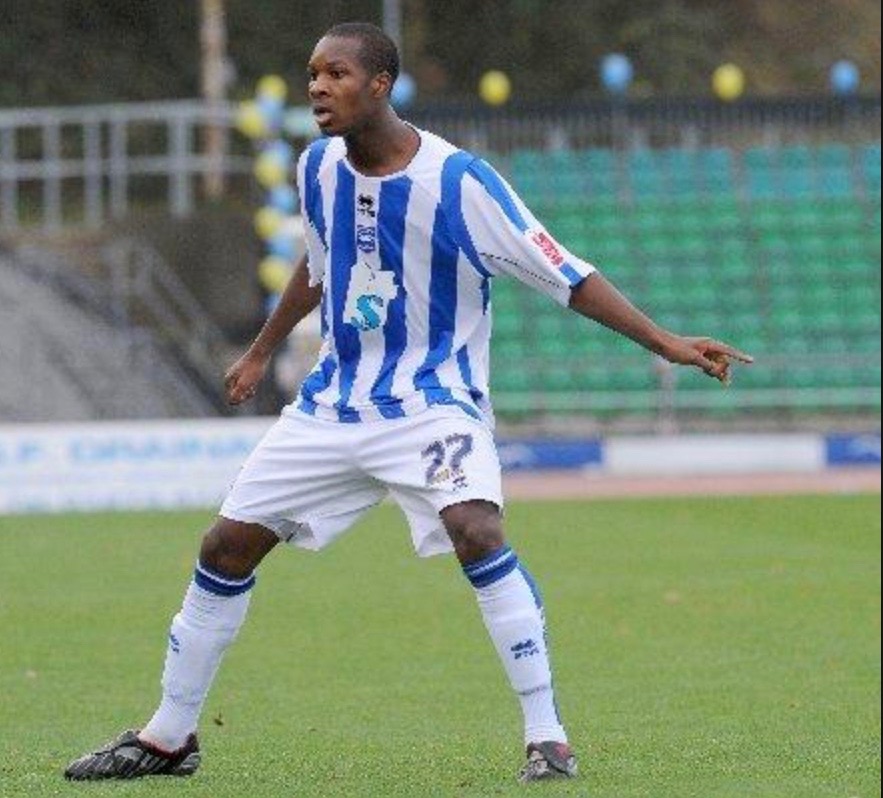
The young full-back in the no.27 shirt gained a good amount of game time until Poyet unearthed Inigo Calderon in January 2010.

Even then, Poyet was happy to retain the services of the Arsenal youngster, telling the Argus: “We explained to Gavin before asking Arsenal that there was probably a player coming.

“Arsenal knew that as well, so nothing has been hidden. Everyone knows where they stand.

“We are working on different aspects of the game with Gavin, because he has got something which is very difficult to find sometimes in football, the speed to recover.

“When you have that ability, you don’t need to go to ground, because you are quicker than most players.

“He is young and there is plenty to come. We want to help him become a Premier League player or top Championship player.”

G Hoyte stripes

Hoyte got another chance to prove himself when Calderon picked up a nasty hip injury in April, bringing his total number of Albion games over the season to 21.

When it looked like the popular Spaniard was going to move to Southampton instead of accepting a contract offer from the Seagulls, Argus reporter Andy Naylor ventured: “Gavin Hoyte’s encouraging conclusion to the campaign suggests he might even be capable of rising to the occasion if he returns on loan from Arsenal.”

It didn’t come to that, though, and, over the next two years, he dropped down another division with loan spells at Lincoln City and AFC Wimbledon.

When he realised there was little hope of him ever getting close to the Arsenal first team, he left for Dagenham and Redbridge, having spoken to Arsenal goalkeeping coach Tony Roberts, who’d played for the Daggers himself.

Born in Leytonstone on 6 June 1990, Hoyte followed in his brother’s footsteps to Arsenal and progressed to the point of being appointed the under 18 team captain in the 2006-07 season when he was still only 16.

“I am very vocal during games, although I wouldn’t quite say that I was a Tony Adams, but that’s the sort of captaining style I try to emulate,” Hoyte told the Arsenal matchday programme. “I have captained at schoolboy level and in particular in tournaments and so I do have some experience, but I did not expect to be captain of the under 18s so early.”

Hoyte captained Arsenal’s under 18s when he was only 16

Hoyte was also capped at England under 17, under 18, under 19 and under 20 levels. In the 2009 UEFA under 19 championships, he played in two qualifiers in the space of four days when England beat Slovakia 4-1 and Scotland 2-1; his teammates including current Albion no.3 Jason Steele in goal, and future full international Kieran Trippier.

He was part of the squad who took part in the finals in Ukraine, starting twice and coming on as a substitute three times as England finished runners up to the hosts. The side was managed by Brian Eastick, who’d been an Albion coach during the Mike Bailey era.

Hoyte’s one game for the under 20s came as a substitute in a 1-1 draw away to Uzbekistan on 2 October 2009, when a fellow substitute was Sam Baldock. Two non-playing subs in that game were Jonathan Obika and Gary Gardner, who both had spells on loan with the Seagulls.

Hoyte looked back on his Arsenal time in an interview with Will Unwin for planetfootball.com and said: “When you’re there you always think you’re going to make it – I was pretty confident.

“I had my older brother there as well, so that helped a lot, seeing how he progressed.

“That was a big thing for me, seeing him play every week, watching him, thinking, ‘I want to try and get to where he is’.”

Hoyte was an unused substitute for several first team games before making his debut in a 6-0 League Cup win over Sheffield United, and starting in the next two rounds, against Wigan and Burnley. His Arsenal career only seemed to be heading in one direction.

“Just to play at the Emirates was massive, coming out to a big crowd,” he told Unwin. “There were a lot of young boys in the team so that helped me with confidence and eased it.

“But there were a lot of players in front of me, so I didn’t think about playing in the Premier League. It was always in the back of my mind, but I wasn’t thinking I was going to play immediately.”

But 11 days after the second of those League Cup appearances, Hoyte was handed his Premier League debut, after William Gallas had been stripped of the club captaincy for criticising team-mates amid a poor run of only one win in four games.

G Hoyte v Man City

Up against Robinho of Manchester City, he was taken off after an hour of a 3-0 defeat, and it would prove to be both the start and end of his top-flight career.

Hoyte didn’t recall getting much feedback after the game, although it wasn’t long before he was awarded a new contract. He made his fourth appearance for the club in a League Cup quarter-final defeat to Burnley at the start of December – but he didn’t play for Arsenal again.

He was sent out on loan to Championship side Watford for the second half of the 2008-09 season, featuring in 10 matches, and he eventually left Arsenal in 2012 when his contract expired.

After two seasons in League Two with Dagenham, he spent the 2014-15 season with League One Gillingham, featuring in 35 matches. He dropped down to League Two with Barnet, ended up at National League Eastleigh until the end of the 2017-18 season before returning to Dagenham in 2018-19.

It proved to be a frustrating season for him under the managership of former Albion boss Peter Taylor, but, reunited with former manager John Still at Maidstone United, he has been a regular at right-back in 2019-20 and scored just the third goal of his career against Dulwich Hamlet in December.

Along with his brother, the younger Hoyte has enjoyed the opportunity to play international football with Trinidad and Tobago, as he told socawarriors.net, and spent 20 minutes on the same pitch as Lionel Messi in a friendly as Argentina warmed up for the 2014 World Cup.

Injury curtailed Saints stalwart Jason Dodd’s Albion swansong

INJURY deprived Albion of the services of the experienced former Southampton captain Jason Dodd throughout the 2005-06 season.

After completing 499 games for Saints, Dodd had originally intended to retire at the end of the 2004-05 season having been sidelined by boss Harry Redknapp to such an extent that he’d gone out on loan to Plymouth Argyle.

However, Brighton were missing the long-term injured Adam Hinshelwood and manager Mark McGhee gave the 34-year-old Dodd a season-long deal at the Albion.

Dodd slotted in at right-back for the opening five fixtures of the season but then had to have surgery on a troublesome ankle injury which put him out of action for two months.

He returned to first team action at the end of November but was then struck by a mystery back injury that was severely debilitating, as he told The Argus.

“They cannot really pinpoint what the problem is and it isn’t just not being able to train,” he told the paper. “I am in constant pain 24-seven so, from my point of view, it’s not just at work it’s when I go home. I can’t pick the kids up or go for a walk with the dog.”

Dodd col HSUnfortunately, he managed just two more games in a season when Albion finished bottom of the Championship table. One fond memory I have of his contribution to Albion’s cause came in a game at QPR in March 2006.

The game was memorable for the sending off just after half time of Rangers’ skipper and long-serving striker Kevin Gallen for punching Paul McShane. Sadly, Albion only managed to take a point when they really needed three, but it was their first away point for nine games, so it was a triumph of sorts.

QPR full back Marcus Bignot put a deep Gary Hart cross through his own net under pressure from substitute Joe Gatting to equalise Gareth Ainsworth’s early header for Rangers.

The tricky Ainsworth gave Adam El-Abd, playing in an unfamiliar left back role, such a torrid time that McGhee switched the fullbacks with half-an-hour played and put Adam Hinshelwood there instead. Shortly after half time, McGhee switched it again and Dodd replaced El-Abd.

In the 40 minutes, or so, he was on the pitch he showed what we had missed by providing an outlet for some neat passing, and hardly ever gave the ball away.

Born in Bath on 2 November 1970, Dodd began his distinguished career by signing for his home town club, non-league Bath City. In 1989, Southampton paid £15,000 to take the 18-year-old to The Dell.

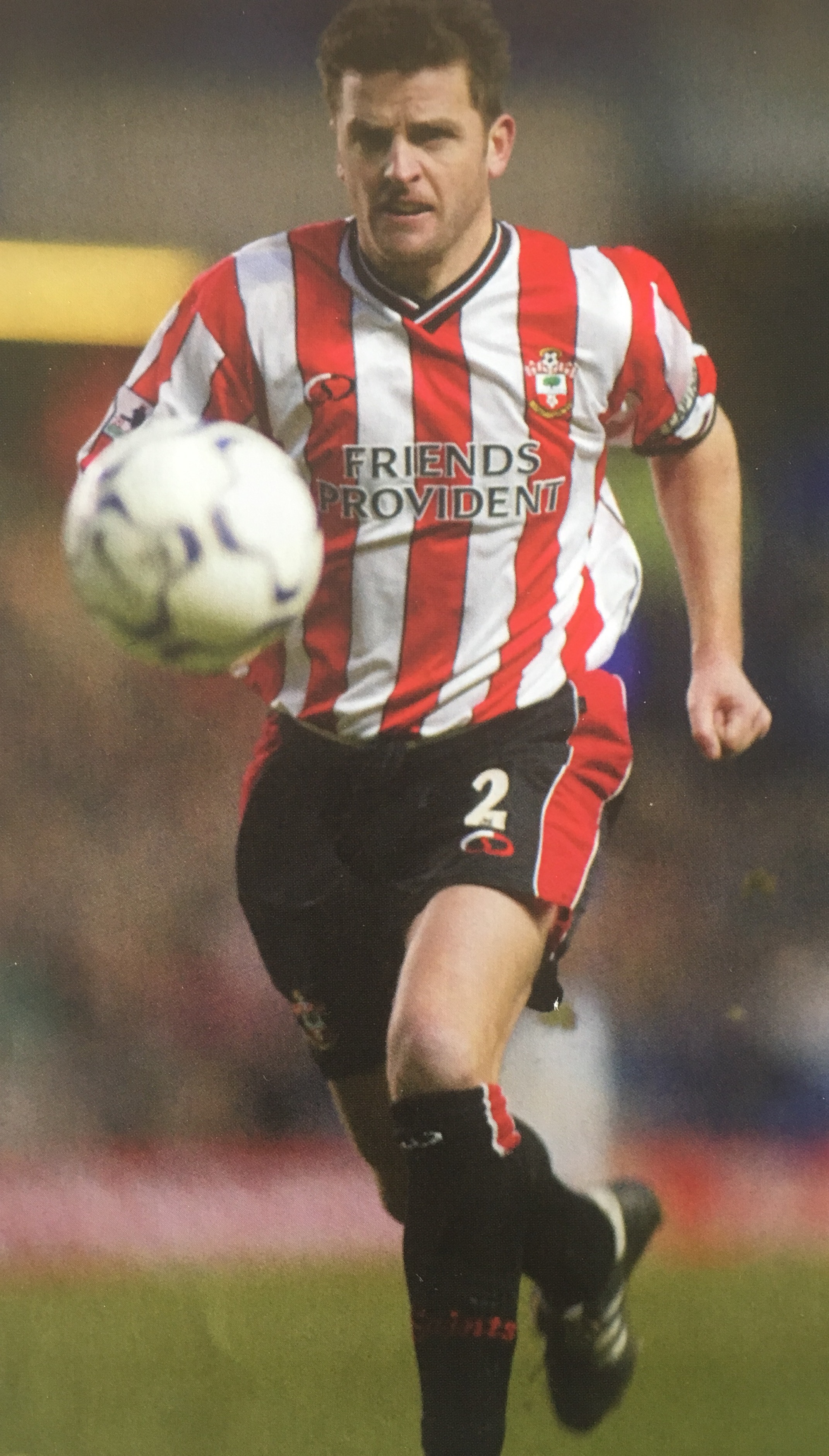
Jason Dodd (Southampton)

He certainly couldn’t have got off to a better start, making his first team debut at home to Liverpool, marking England international John Barnes.

Londonsaints.com was fulsome in its praise for the impact he made, declaring: “Not only did he completely snuff out the efforts of the England winger but found enough time to supply a perfect cross for Paul Rideout’s opening goal in a momentous 4-1 win.”

From that encouraging beginning, he went on to establish himself as Saints’ regular right back, playing under nine different managers and captaining the side. Dodd remained a fixture in a team that more often than not found itself fighting for survival in the top flight.

Between 1990 and 1991, he won eight England under-21 caps, making his debut in a 1-0 defeat to Poland at White Hart Lane on 16 October 1990 and playing his last game against the same opponent, away in Pila, on 11 November 1991, when England lost 2-1, their goal being scored by Paul Kitson, who later played for Brighton.

In his fifth under 21 game, Dodd was sent off as England trounced Mexico 6-0, when, as well as a goal for Kitson, Alan Shearer scored a hat-trick (including two penalties).

Although Dodd had been involved in earlier rounds of the FA Cup in 2003, injury meant he missed out on the final, when Saints lost to Arsenal.

At the end of his injury-plagued season with Brighton, Dodd joined his former Saints teammate Francis Benali as a coach at non-league Eastleigh before stepping into the manager’s role for seven months.

The lure of his old club was too great, though, and, in the summer of 2007, he became first team coach at Southampton under George Burley. He was briefly caretaker manager before leaving Saints in July 2008, had a short tenure as caretaker manager at Aldershot in the autumn of 2009, and then returned once again to Southampton as a development coach and under 18s coach at St Mary’s.

During his five years with the Saints youth academy, working with former teammate Paul Williams, together they brought through the likes of Luke Shaw, Callum Chambers and James Ward-Prowse.

But they were controversially let go in May 2014 – some reports said it was because they didn’t spend enough time with the younger age groups.

Shaw took to Twitter when news of their dismissal was announced saying he was “gutted” for them.

Dodd obviously keeps a close eye on the progress of the young players he was once responsible for and, when Manchester United boss Jose Mourinho subbed Shaw at half-time during United’s 2-0 FA Cup win over Brighton in 2018, the BBC sought Dodd’s opinion. He admitted a tough love approach was the way to get the best out of him.

“He does make you pull your hair out at times. You have to try different things to get the best out of him,” said Dodd. ”I think they have tried everything and they have not got through to him to get him out on the pitch and perform.

“Luke is one of those players where you have to keep on, you have to keep pushing him and he needs to be challenged.

“I was constantly on him. He likes it. He needs more of a cuddle, and then give him a little dig,” Dodd added.

The Saints stalwart is frequently asked his views on current happenings, but his day job is as head of football in the PE department of independent school, Winchester College. He has a few other sidelines on the go, as he told the Daily Echo earlier this year.

Fluctuating fortunes for Guy Butters after beginning alongside Spurs stars

GUY BUTTERS saw plenty of highs and lows in a 20-year playing career that started with great promise at Tottenham Hotspur and included six years at Brighton, where he still works.

Butts coaches for Albion in the Community, he’s scouted players, hosted hospitality lounges and still turns out to play in charity matches, not to mention sharing a constant flow of corny jokes with his 3,700+ followers on Twitter!

Promotion via the play-offs at Cardiff in 2004 and being chosen as player of the season would be up there in terms of highs with Brighton.

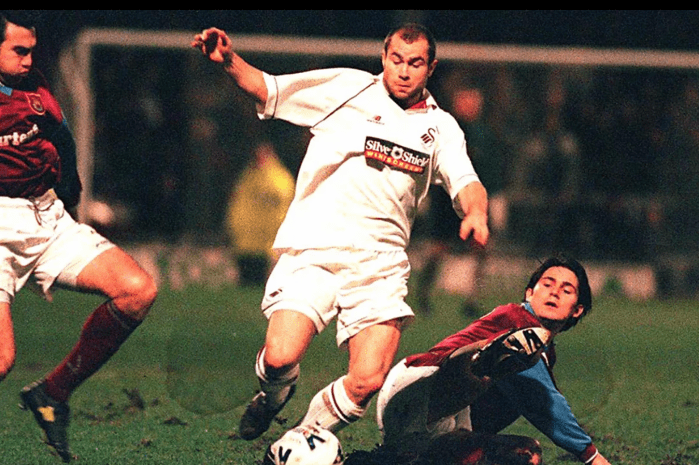
My personal favourite came on 13 November 2004, when Butters scored the only goal of the game as Albion committed daylight robbery in front of 29,514 packed into West Ham’s Boleyn Ground.

BZ GBBrighton were up against it going into the game and had taken veteran Steve Claridge on for a month to help them out of a striker crisis. Hammers threw everything at the Albion that afternoon but somehow the Seagulls kept the ball out and, on 68 minutes, Butts, up for a Richard Carpenter free kick, got his head on the end of it to send the ball into the back of the net in front of the Seagull faithful.

Even after versatile Adam Virgo and Hammers’ Haydn Mullins were sent off for a scrap on 74 minutes, and West Ham bought on substitute Bobby Zamora, the scoreline remained 1-0 to the Albion.

A couple of months later, it was obviously a special day for Butters when, on 8 January 2005, he was given the captain’s armband to lead the Albion in their third round FA Cup tie against Spurs at White Hart Lane.

  • A programme portrait and skipper for the day in the FA Cup at White Hart Lane.

The matchday programme recalled how Butters “was very much the discovery of the 1988-89 season when manager Terry Venables lifted the tough tackling former Spurs trainee from our reserves to the first team to play alongside Gary Mabbutt and Chris Fairclough in a back three.

“Guy was also in there alongside such names as Paul Gascoigne, Chris Hughton, Chris Waddle, Paul Walsh, Terry Fenwick, Paul Stewart, (former Brighton Cup Final hero) Gary Stevens and Paul Allen. And he kept his regular place the following season when Gary Lineker was added to the squad.”

Born on 30 October 1969 in Hillingdon, he made his debut shortly after his 19th birthday in a League Cup game against Blackburn, and suffered the agony of scoring an own goal. But on his full league debut as a sub against Wimbledon on 12 November 1988, he made amends with a goal in the right end.

“We won that one 3-2 but it’s probably better remembered by Spurs fans as the game in which Gary Stevens was injured following a tackle by Vinnie Jones,” Butters told the Spurs programme.

“I’ve got great memories of my time at Tottenham but, looking back, I recall spending much of my time trying to avoid Gazza who was always up to something! But it was the players around me that I will never forget – I was in there with men who had appeared in World Cups, and that’s my abiding memory.”

The year after his Spurs debut, Butters also earned international honours. In June 1989, he was involved in three England under 21 tournament matches in Espoirs de Toulon matches.

He started in the 3-2 defeat to Bulgaria on 5 June, and was replaced by substitute Neil Ruddock. Two days later, he came on as a sub for Dean Yates in England’s 6-1 thrashing of Senegal in Sainte Mazime. Two days after that, he came on as a sub for Ruddock, as the under 21s drew 0-0 with the Republic of Ireland in Six-Fours-les-Plages.

Of that side, Carlton Palmer, David Batty and David Hirst went on to gain full England caps, but those three games were Butters’ only representative appearances.

After limited game time at Spurs in the 1989-90 season, Butters went out on loan to Fourth Division Southend United, scoring three times in 16 games.

Steve Sedgley, Fenwick and Gudni Bergsson were all ahead of him as potential partners for Mabbutt so, on 28 September 1990, he was transferred to Portsmouth for a fee of £375,000, having made a total of 35 league appearances for Tottenham.

At Pompey, he played at the back alongside Kit Symons and colleagues included Mark Chamberlain on the wing and Warren Aspinall up front, together with his ex-Spurs teammate Paul Walsh, now better known as a Sky Sports pundit.

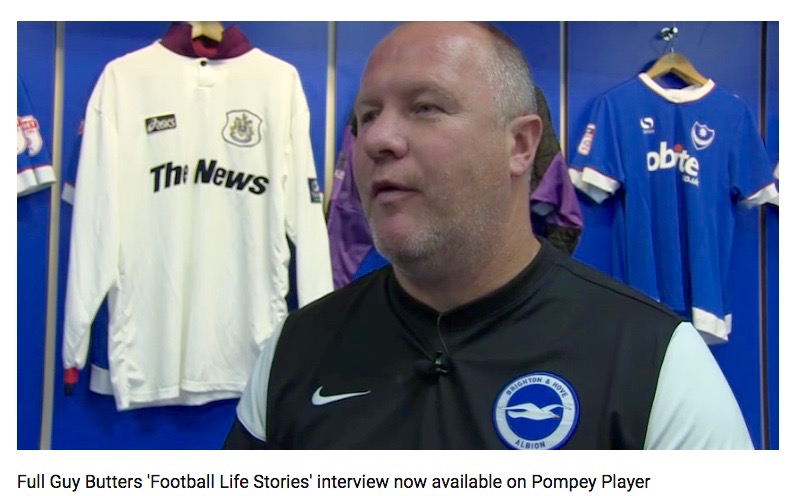
But there were mixed fortunes for Butters at Pompey, which he spoke about in a November 2016 interview for the Portsmouth website. He was there six years and enjoyed some good times when Jim Smith was manager.

guy butters YouTube

He had a brief spell on loan with Oxford United in 1994 and he eventually realised his time at Fratton Park was up when a regime change saw the arrival of Terry Venables, who was the Spurs boss when he was sold to Portsmouth.

Tony Pulis signed him for Gillingham for £225,000 on 18 October 1996 and, in six years at Priestfield, one game in particular stands out for the unfortunate pivotal moment Butters played in it.

It was 30 May 1999, the Football League Second Division play-off final to determine the third and final team to gain promotion and Gillingham were up against Manchester City, remarkably, at that time, struggling to get out of the third tier of English football.

Goals from Carl Asaba and Bob Taylor on 81 and 87 minutes looked to have given Pulis’ side victory. But Kevin Horlock had pulled one back for Joe Royle’s City and, as normal time expired, former Albion loanee Paul Dickov equalised for City in the fifth minute of added on time to level the scores at 2-2.

With no further scoring in extra time, it went to penalties. City scored three of their first four; Gills had scored only one of their three. So, the pressure was on Butters, the fourth penalty taker, to bury it to keep the Gills in it.

When Butters stepped up and hit it low to ‘keeper Nicky Weaver’s left…. it was within the 20-year-old’s reach, and he pushed it away. Cue wild celebrations as City won the shoot-out 3-1.

“Missing that penalty was one of the worst moments of my life but you have to move on and I am not afraid to have another go,” Butters told interviewer Alex Crook in an article for the 2004 Division Two play-off final match programme. “At the time, I just wanted the ground to swallow me up but nobody blamed me because it was just one of those things.”

Consolation for Butters came the following year when Gillingham returned to Wembley and on that occasion won 3-2 in extra-time against Wigan Athletic. As with Pompey, Butters had six years in total with the Kent club and played 159 league games before being released in the summer of 2002.

IMG_6010The 2002-03 season was already under way by the time Butters joined Albion on a free transfer and, in the September, he was doing his own personal pre-season workout programme in a bid to get fit.

“When I first came here I had to do a lot of extra work with Dean White,” Butters told Brian Owen, of the Argus. “It was a case of trying to cram a lot of stuff into a little space of time. I wasn’t really getting too much time to recover after it.”

The managerial change from Martin Hinshelwood to Steve Coppell didn’t do Butters any favours either. Virgo and Butters were the centre back pairing for Coppell’s first match – a 4-2 home defeat to Bristol City – and both were then discarded into the wilderness.  Virgo went on loan to Exeter and, after Coppell brought in Dean Blackwell to play alongside Danny Cullip, Butters was sent out on loan to Barnet.

But when injury meant Blackwell’s career was over, the door opened again for Butters and he seized the opportunity to such an extent that as Albion won promotion back to the second tier via the play-offs, he was voted player of the season.

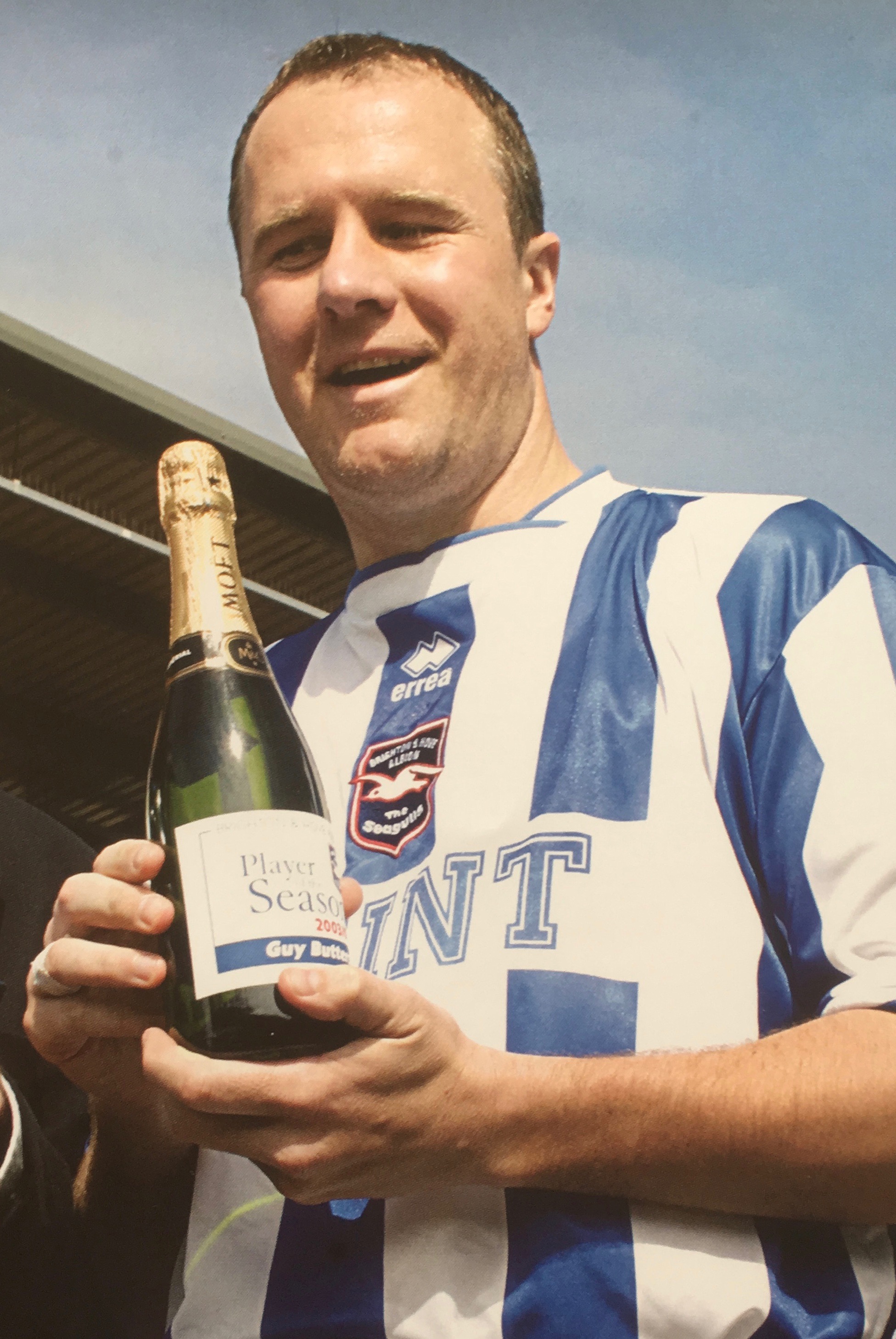
GB potseas by Bennett Dean• 2004 Player of the Season pictured by Bennett Dean.

In fact, it was the arrival of Mark McGhee to succeed Coppell that was very much a turning point in Butters’ career because he had previously been considering hanging up his boots.

In Match of My Life (www.knowthescorebooks.com), he said: “Mark was a real breath of fresh air as manager. Straight away he helped me with a special diet and fitness programme aimed at improving my general match fitness, but, more importantly, helping me work towards prolonging my professional football career.

“He was the first manager to do that and under his guidance I began to thrive and really enjoy my football again.”

As the Argus previewed the 2004-05 season with a special publication, they declared: “Buoyed by a great run of form in last season’s run-in and looking in good shape in training, Butters is ready for another stab at the second tier of English football.”

And Butters said: “This year I did a bit in the summer when I was on holiday and the gaffer put us through our paces so I’m sure that when the season starts I’ll be pretty match fit.

“It’s a big step up but, if we can get a few results away from home, not too many of those big teams are going to fancy coming to Withdean.”

  • The Argus spots a lighter refreshing moment!
  • Butters and Cullip were opponents when the Seagulls won at Sheffield United, another moment captured by the Argus.

Three years later, at the age of 37, Butters was still with the Seagulls and looking forward to what would ultimately turn out to be his last in the stripes.

“I thoroughly enjoyed it last year,” Butters told Andy Naylor. “It is probably one of the most enjoyable seasons I’ve had.

IMG_6014“I missed out on pre-season last year through injury. The gaffer was amazed I played as many games as I did.

“I cannot see why, with a decent pre-season under my belt and, as long as I look after myself, that I cannot do the same again.

“I just want to go on playing as long as I can and along the way enhance my CV with coaching badges.”

Manager Dean Wilkins finally released Butters at the end of the 2007-08 season, during which he had been sent off for the first time in his career.

He’d played a total of 187 games for the Seagulls and carried on playing with Havant & Waterlooville briefly plus a seven-game spell on loan at Lewes before trying his hand at management with Winchester City and Eastleigh.

Guy + Nick

  • I got the chance to meet Guy when he kindly presented an award at an event I was involved in organising: what a great bloke!