STEELE is a familiar name in an Albion goalkeeper’s shirt. In the current set-up, there’s Jason. Back in the 1970s there was Eric. And very briefly, in the early 1980s, there was Simon.
After three years as an Everton youth player, Simon Steele joined the Albion a few weeks after they’d lost to Manchester United in the 1983 FA Cup Final.
When the Albion went on a pre-season tour in Majorca, the new arrival suddenly found himself keeping goal for the Seagulls in a match against the mighty Real Madrid.
“It may well only have been the City of Palma Tournament, a four-team pre-season competition, but Steele will never forget that evening on August 18, 1983,” The Argus reported in a 2004 article.
By then 40 and with 14 years behind him as a detective with Sussex Police, Steele recalled: “I had joined Brighton just after the FA Cup final. I had done a bit of pre-season training and then we went out to Majorca for this tournament.
“I was really surprised to be selected for the game. I think Perry thought we would get a good hiding and threw an injury.”
A crowd of more than 20,000 watched the game and Steele told the newspaper: “They had a good side with plenty of internationals. We had quite a bit of support so the atmosphere was really good, especially considering it was a pre-season game with not a lot resting on it. There were a lot of Brits out there who came to support us and we were playing for personal pride.
“I just remember them scoring in injury time. Santillana turned on a sixpence and put the ball in the bottom corner from eight or ten yards out.
“Other than that we held them at bay. Although I had quite a bit to do, I dealt with it comfortably. I never felt under any great pressure and it was gutting when the goal went in.”
Indeed, The Argus said the match report of the time raved about Steele’s performance, in particular picking out “one breathtaking stop” from Camacho, who had played for Spain at the 1982 World Cup.
Steele retained his place when Albion beat Hungarian side Vasas Diosgyori 3-2 in the tournament’s third place play-off, with goals from Steve Gatting, Tony Grealish and a Terry Connor penalty.
However, although Steele reckoned he had done enough to earn a place when the action proper began, he was to be disappointed.
“I did play well and it catapulted me on to the fringes of the first team,” he told The Argus. “I really thought I would start the season, then I got a call the day before the season started and Jimmy Melia said he would start with Moseley in the first game at Oldham.
“It was a bolt out of the blue because I thought I had played well in pre-season.”
Thankfully, he didn’t have long to wait for his chance, though. Two days later, with Moseley injured and Digweed suspended, the youngster made his League debut in a 3-2 defeat against Leeds at Elland Road.
Simon Steele keeping goal for the Albion at Elland Road
Grealish gave the Seagulls the lead before, as the matchday programme highlighted, Steele came out well to make saves at the feet of Andy Ritchie and John Sheridan.
He also “saved brilliantly” from George McCluskey but was beaten by an equaliser from Andy Watson and a Frank Gray penalty.
Connor levelled the match, rising high to head home against his old club, but, agonisingly, a last-minute 25-yard right-footed shot from Sheridan left Steele helpless and gave Leeds the win.
Melia turned to the more experienced Digweed for the next match, at home to Chelsea, and within a matter of days, former England international Joe Corrigan arrived to dominate the goalkeeper pecking order – and Steele’s brief Albion career was over.
He went on loan to fourth tier Blackpool and Melia explained in his matchday programme notes: “With the surfeit of goalkeepers at present at the Goldstone, his opportunities are limited and I felt that he could get some valuable experience in the league with Blackpool which will stand him in good stead.
“He is only nineteen and I think he has a great future; we feel that a loan spell will sharpen up his game, but it certainly doesn’t mean he has left the Goldstone permanently.”
Steele played three games for the Tangerines and the following spring went on loan to third tier strugglers Scunthorpe United, where he featured five times.
The Iron, managed by ex-Leeds and England striker Allan Clarke, actually wanted to keep him but Steele said he was not happy with the terms being offered and reckoned he would be better off getting a job and playing part-time football instead.
Born in Southport on 29 February 1964, Steele went to Ainsdale High School in the seaside town between 1975 and 1979. He joined Everton at the same time as Shaun Teale (according to the website efcstatto.com), who later won the League Cup with Aston Villa.
Despite his best efforts in goal for Everton’s youth side in the 1982 FA Youth Cup, they lost 2-0 to Villa in the third round. The Liverpool Echo report of the game noted: “Paul Kerr picked up a free kick rebound and seemed certain to score until Steele denied him with a spectacular save. But the Midlanders went ahead after 41 minutes when winger Obi beat Steele with a powerful swerving shot from 25 yards.”
It added: “After Mark Walters had struck the face of the Everton bar, Kerr chipped the advancing Simon Steele with devastating accuracy to notch Villa’s second in the 83rd minute.”
After turning his back on the chance to play lower league football with Scunthorpe, Steele turned out for a variety of Sussex non-league sides – Worthing, Bognor, Pagham, Peacehaven, Whitehawk and Withdean – and became a detective constable with Sussex Police in October 1990.
He was in the news in 2019 when, in his role as secretary of the Sussex Police Federation, he spoke out about the lack of investment in detectives in the county.
Speaking up on behalf of police colleagues
He said victims of crime weren’t getting the service they should have done because of a lack of sufficient detectives in the force.
“It used to be easy to fill the detective roles,” he said. “Now officers don’t want to go into the department for whatever reason, down to the workloads that they’re carrying, the pressures, the hours that they’re working, and a lot of them are pretty close to breaking point.”
MY FIRST memory of watching James Milner play was at Withdean Stadium when he was on loan to Swindon Town from Leeds United.
Even then, as a seventeen-year-old, he had something about him – but I certainly didn’t imagine I would be watching him playing in the Premier League and Europe for Brighton 20 years later!
Young Milner tackles Brighton’s Kerry Mayo
That League One game on 6 September 2003 finished 2-2. Sam Parkin scored twice for Town and Albion’s goals came from Gary Hart and a penalty from on-loan Darius Henderson.
The Albion matchday programme subsequently recorded: “Kerry Mayo had a fine match, mainly subduing the impressive teenager James Milner.” (although, as the picture suggests, he wasn’t afraid to launch himself into a tackle).
Swindon’s manager Andy King had persuaded his old Everton teammate, Peter Reid (in charge of Leeds at the time) to loan Milner to the Robins for a month. In just six matches, the young winger scored twice.
“The boy is a terrific talent and everyone has been able to see the skills he has and I have no doubt he will go on to perform in the Premiership,” King told Sky Sports.
Milner already had two goals to his name for his parent club having scored twice in the Premier League in 2002-03 while still only 16.
On Boxing Day 2002, ten days short of his 17th birthday, he became the youngest player to score in the elite division, with a goal in a 2–1 win at Sunderland (the record had been set a couple of months earlier by Wayne Rooney for Everton and was subsequently taken by James Vaughan, also for the Toffees).
Milner had gone on as a 36th-minute sub for Alan Smith, a player he had admired when a boy growing up in Leeds. Terry Venables, Leeds manager at the time, said: “It’s not just a case of him simply coming through and helping out because every day he is getting better and better.”
Milner scored again three days later after going on as a 31st minute sub for Harry Kewell as Leeds beat Chelsea 2-0 at Elland Road.
“Picking up Mark Viduka’s pass in first-half injury time, Milner beat his man before thumping a right-foot shot low into the net with Blues keeper Ed de Goey powerless to stop him,” said the BBC report of the match.
“I am very pleased with him,” said Venables. “He is growing in this group and he has taken advantage of every day’s training to show what he can do.
“He has two good feet, he is courageous and everyone likes him a lot. He also is not only a nice, solid, good, well-mannered boy, he is a very talented player.
“It’s early days for the boy. At the moment he has not achieved anything and he is the first to admit that.
“But I think a lot of people are confident about his development. We have just got to take it easy.”
Wind on the clock more than two decades and Albion are now enjoying the benefit of Milner’s vast experience gained winning trophies galore for two of the country’s top clubs and playing for his country.
Born in Wortley, Leeds, on 4 January 1986, Milner broke through with Leeds United before joining Newcastle United at 18 and having loan and permanent spells at Aston Villa.
Milner went on to make more than 200 league and cup appearances for Manchester City and more than 300 for Liverpool as well as earning 61 full England caps and a record 46 at under 21 level.
Against Wolves on 22 January 2024, 38-year-old Milner overtook Ryan Giggs to go second outright on the Premier League’s all-time appearance list when he played in his 633rd top-flight match, 20 short of record holder Gareth Barry.
“I’ve had some luck,” Milner told TNT Sports. “I’ve worked hard and you have to enjoy it to put the work in every day. I’ve hopefully got a few more games in me.”
Milner’s free transfer move to Liverpool from Manchester City in the summer of 2015 proved an inspiration that brought him even more medals than he had won with the Sky Blues.
Over eight seasons, he made 332 appearances, scored 26 goals and lifted seven trophies along the way.
“He’s a role model,” said manager Jürgen Klopp. “Nothing we have achieved in the last few years would have happened without James Milner, it’s as easy as that.
“Whether he was on the pitch or not, he’s set standards in a way not a lot of people can set standards, and it educated all of us.”
In a heartfelt tribute to the player, Klopp added: “From the first moment for me, he was a super-important player reference point.
“When you have a meeting and you look at Millie’s eyes and he’s not shaking his head, you know you’re on the right way. Nothing would have happened here without Millie because he kept it always going.
“From the player who was super-angry when he didn’t play, to the player when he did play, the way he pushed the whole dressing room before a game is absolutely second to none.”
For his part, Milner enjoyed a good relationship with Klopp, apart from once during a half-time flashpoint when the manager lost it, as Milner revealed to The High Performance Podcast.
“We had one moment where he was sharing his thoughts and I was sharing mine and I remember him smashing his hands on down the table and shouting, ‘Will you shut the f**k up!’ But Jurgen was brilliant, we had a great relationship and we were great off the pitch.”
It was Klopp’s predecessor, Brendan Rodgers, who persuaded Milner to make the journey along the M62, and he said at the time he signed him: “He had won the Premier League, he had won cups. His whole ambition was to win the Champions League and he felt that he would have a better opportunity to win it at Liverpool.”
Rodgers revealed that when Liverpool were trying to persuade him to sign, his wife Charlotte spent time chatting to Mrs Milner while he spent time with her husband!
“His actual football talent has probably gone under the radar because he’s played around some outstanding talents, but this is a guy who works tirelessly at his game,” said Rodgers.
“He’s in here at 7.45am making sure he’s prepared for his training, getting all of his food supplements and getting everything correct before training – he’s in two-and-a-half hours before he trains and then does his work, gives his maximum.
“He prepares himself like an elite player should. He’s also got big character and a big mentality.”
Rodgers was effusive in his praise of the new signing even before a ball had been kicked in anger after he scored the winner in a 2-1 pre-season victory over Brisbane Roar. Playing in the central role he preferred, he also provided a pass for Adam Lallana’s 27th-minute equaliser.
Former Liverpool teammates Adam Lallana and James Milner reunited at Brighton
“James Milner is a class act,” he told reporters. “We had to work very hard to get him in but I think we’ll see over the course of the season how important he is for us.
“He’s a wonderful personality and a top class footballer. When you see him play in his favourite position, you see all these qualities come out.”
Milner in action for Liverpool against Brighton during a lockdown match
Rodgers departed Anfield not long after Milner’s arrival but the player grew in stature under Klopp and, although it wasn’t his favourite position, he spent much of 2016-17, filling in at left-back.
That season he made 40 appearances – 36 in the Premier League – as Liverpool qualified for the Champions League. They made it all the way to the final, only to lose to Real Madrid in Kyiv. But they made amends the following season and returned from Madrid with Liverpool’s sixth European Cup.
Milner went on as a second-half substitute in the Estadio Metropolitano in the 2-0 win over Tottenham Hotspur. “It will be nice going to Melwood seeing No.6 there,” he said. “Liverpool has a great history and when I signed for the club, I was desperate to add trophies as this club expects to win trophies and it has an amazing history – but we want to create our own history.”
Not only did they add the UEFA Super Cup and FIFA Club World Cup, Milner made 22 appearances as Liverpool clinched the Premier League title in 2019-20 with 99 points.
In 2021-22, Milner scored the first in Liverpool’s 11-10 penalty shoot-out win in Liverpool’s Carabao Cup defeat of Chelsea at Wembley, having gone on as an 80th minute sub, and he repeated the feat (as a 74th-minute sub) when the teams were also goalless at the end of the Emirates FA Cup final three months later. Liverpool won that 6-5 on penalties.
In his final season at Anfield, Milner featured 43 times and moved up to third spot on the Premier League’s all-time appearances list.
“I’m Leeds through and through and always have been and always will be – but I never probably thought that another club would get into me as much as Liverpool has,” said Milner.
The player he followed from Anfield to the Amex, Lallana, told the BBC exactly what Milner brings to a squad, especially in setting an example to younger players.
“He helps the management team in so many ways with the experience he’s built up,” said Lallana. “He knows what it takes to win. He knows what sacrifices need to be made.
“I’m not sure how he got the boring James Milner label, but he couldn’t be further away from that. He’s one of the loudest in the dressing room for sure. Full of life. Full of banter. But he’s definitely old school.”
Lallana added: “Those basics are always there and they’ll never change. I think that’s what’s made him who he is and given him his success. Those values that he’ll always live by. He taught me how to be a better professional and a better role model.”
It all began at Westbrook Lane Primary School in Horsforth and the secondary Horsforth School. He played local amateur football with Rawdon whose coach Graeme Coulson had first noticed Milner as a nine-year-old.
“I first came across him when I was refereeing a junior match involving Westbrook under nines at Horsforth,” Coulson told the Craven Herald and Pioneer. “He was so outstanding then that I asked some of the Horsforth parents who he was.
“I noted his name and it was one not to be forgotten. He was an outstanding talent scoring lots of goals but he was also very strong.”
Horsforth School spokeswoman Fran Morris said: “He was a first class student and he did really well at his GCSEs (he got eleven).
“He was very sporty at school and he won the PE prize which was handed out just before we broke up.
“He was the most wonderful young man and he was very popular, so we wish him all the best in his career. I am very sure he will do well and we are all proud of him at the school.”
Let alone his football ability, the young Milner also played cricket for Yorkshire Schools and excelled as an athlete: he was Leeds Schools’ cross-country champion for three successive years and district 100 metres champion for successive years.
Milner was a season ticket holder at Elland Road along with his parents Peter and Lesley before becoming a ball boy. He joined the Leeds United Academy after being spotted playing for Westbrook in Horsforth.
The sporty youngster was forced to decide between cricket and football, explaining in one interview: “I played for Yorkshire at the ages of 10 and 11 as a wicketkeeper-batsman. It was something I enjoyed but you get to a stage where you have to make a choice.
“I stopped playing cricket at 16 when I moved full time to the Leeds United Academy. They couldn’t take the risk of me getting injured, having my foot broken by a yorker or something like that.
“A couple of months later I made my Leeds debut. I still can’t take the risk for the same reason, but as soon as I retire from football, I’ll look forward to taking up cricket again.”
He completed his formal education at sports college Boston Spa School, which works in partnership with Leeds United, and, as soon as he left school, he was taken on as a trainee.
As he worked his way through United’s youth ranks, he also played for England at under-15 and under-17 levels.
Milner in action for the Albion against Everton at Goodison Park
EVERY NOW AND AGAIN as a football supporter a truly special player stands out well above the rest you’ve watched. Bobby Zamora was most definitely in that category.
As the new year dawns on what will be my 55th year supporting Brighton & Hove Albion, it is perhaps fitting to spend a little time remembering just how good Zamora was for the Seagulls before his outstanding ability to score goals was taken to higher levels: Tottenham Hotspur, West Ham, Fulham and ultimately, and, quite deservedly, England.
That he came back to the Albion from QPR as his career began to ebb was nothing short of a bonus – and, while I’m not a big gambler, I was delighted to get a modest return from the bookies when my punt on him being the last goalscorer came good after he had gone on as a sub at Elland Road on 15 October 2015 and chipped the winner (below) to register his first goal since rejoining!
“That goal was definitely the highlight of my season,” Zamora told interviewer Adam Virgo in a Seagulls World interview. “It was my first goal since coming back and to score the winner so late in the game was unbelievable. It was a special moment for me, and it settled the nerves knowing that we’d got the three points.”
Just four days later, Zamora repeated the feat going on as a 76th-minute substitute for Tomer Hemed at home to Bristol City and beating goalkeeper Frank Fielding with a low shot from 15 yards out. Albion won 2-1; Sam Baldock having levelled things up against his former club after Derrick Williams opened the scoring for City.
Unfortunately, Zamora managed just five more in that second spell. He made 10 starts plus 16 as a sub in Chris Hughton’s side but he was struggling with a hip injury.
It eventually caught up with him and prevented him from contributing further to Albion’s aim of promotion back to the elite; his last game being as a sub in a 0-0 draw at home to Sheffield Wednesday on 8 March 2016. “If I was fit, I would have scored some goals and we’d have been promoted automatically,” he told the UndrThe Cosh podcast (pictured above).
Thankfully another returning striker in the shape of Glenn Murray completed that task the following season and went on to cement his own place in Albion’s history: his 111 goals in 287 appearances putting him second in the list of Brighton’s all-time top goalscorers.
Golden goalscorers: Zamora + Murray
Each of the different eras I’ve watched the Albion has thrown up truly memorable players who have generated their own air of excitement and anticipation because of the goals they scored.
The first one for me was Alex Dawson, who netted seven in the first five games I watched in 1969. Then along came Willie Irvine whose goalscoring in third tier Albion’s promotion-winning season of 1972 earned him an unexpected recall to the Northern Ireland side – and an appearance (that I went to watch) in a 1-0 win against England at Wembley.
Next, of course, was the truly outstanding Peter Ward, who jinked his way past defenders with apparent ease and scored goals for fun, his 36 goals in 1976-77 smashing a decades-old record. Like Zamora, he came back to the scene of past glories (albeit only on loan) and scored a magnificent winner against the team he supported as a boy, Manchester United.
Garry Nelson, with 32 goals, and Kevin Bremner were a superb front pair in another third tier promotion-winning line-up in 1988 while, in 1990-91, Mike Small and John Byrne combined brilliantly to take the Seagulls within a hair’s breadth of a return to the big time.
The arrival of a beanpole of a kid with an eye for goal in Zamora completely transformed Albion’s fortunes under Micky Adams and he was the talisman in back-to-back promotions following years in the doldrums.
Zamora’s Albion story is pretty well known but let’s remind ourselves of how it all began.
Depending on whose account you believe more, it was either Dick Knight or Adams who had the foresight to bring Zamora to the Withdean.
Adams said: “The first time I saw him he came onto the training ground; he looked like a kid. But he was tall and gangly with a useful left foot; there was potential there.”
In fact, Zamora might never have arrived in Sussex if Albion had been successful in securing a permanent deal for on-loan Lorenzo Pinamonte. When Brentford outbid Brighton for the services of the Bristol City loanee, Albion turned their attention to Zamora (left), a Bristol Rovers player who was only getting sub appearances under Ian Holloway but had scored eight goals in six games on loan at nearby non-league Bath City.
“He was six foot one and we knew he had a very good first touch and could hold the ball up well, the type of player we wanted,” Knight recounted in his autobiography Mad Man: From The Gutter to the Stars (Vision Sports Publishing, 2013).
Zamora duly arrived on loan and scored six in six matches (including a hat-trick in a 7-1 away win at Chester). He scored an equaliser and was named Man of the Match on his debut v Plymouth and by the end of February was Player of the Month.
Hat-trick ball at Chester
While Knight and Adams wanted him to stay, he insisted on returning to Rovers where he thought he might force his way into Holloway’s starting line-up. But it was back only to the bench as Nathan Ellington, Jason Roberts and Jamie Cureton were ahead of him in the pecking order.
As preparations began for the new season, Albion offered £60,000 for Zamora but Rovers chairman Geoff Dunford wanted £250,000. An incredulous Knight said he wouldn’t go higher than £100,000 and couldn’t believe they could demand such a figure for someone who hadn’t actually started a first team game.
Zamora had Rovers’ youth team coach Phil Bater to thank for forcing through the move. He accompanied the shy youngster into a meeting with Holloway, who tried to say he’d get some games if he stayed. Bater reckoned the youngster was being strung along and argued Zamora’s cause saying he stood more chance of playing if Rovers let him join the Albion.
After some brinkmanship from each club’s respective chairmen, with Knight threatening to walk away from the deal, it finally went through two days before the start of the season, although Albion’s chairman reluctantly agreed to a 30 per cent sell-on clause for the player.
Zamora instantly became one of the top earners on £2,000 a week with a goal bonus built in.
“It was an absolute coup that we had finally secured this player,” said Knight. “I could only see good things in him, could only see that he would be a huge asset to us.
“Football is all a matter of opinions. There is little science to it. For me, Zamora was the best signing I ever made.”
Zamora has eyes on the ball closely watched by a young Wayne Bridge for Southampton
Not only did Zamora manage to score 31 goals as Albion won promotion from the basement division, he went one better when they went straight to the top of the third tier the following season, netting 32 times in 46 matches.
A significant number of those goals came courtesy of Zamora’s excellent understanding with left-footed right-back Paul Watson, of whom he said: “He created a lot of goals for me with those quick free kicks. He didn’t put a foot wrong too often and was very underrated. He never got the credit his hard work deserved.”
Expanding on it in another interview, he said: “Whenever Watto got the ball I knew precisely where I needed to run to and he knew where to deliver it. It was such a great connection: Watto has an absolutely wonderful left foot and it made my job as a striker so much easier when you get deliveries like that.”
Declaring that even in the Premiership he hadn’t come across anybody with a better left foot, he added: “I was very lucky to have played in the same team as him; he created numerous goals for me; not only with his deliveries but with his intelligent play as well.”
Watson had arrived at the club with Charlie Oatway and was part of a cluster of players who had served under Adams at Brentford and Fulham. When Adams and assistant Bob Booker steered Albion to promotion as fourth tier champions, Zamora was player of the season and he and Danny Cullip were named in the PFA divisional XI.
Not long into the following season, the lure of taking over as manager at a Premier League club saw Adams quit Brighton, initially to become Dave Bassett’s no.2 at Leicester City, but with the promise of succeeding him.
“While I thought I had a shot at another promotion, it wasn’t a certainty,” Adams explained. “I knew I had put together a team of winners, and I knew I had a goalscorer in Bobby Zamora, but football’s fickle finger of fate could have disrupted that at any time.”
His successor, Peter Taylor, knew how fortunate he was to inherit an experienced squad, and said: “Of course the greatest asset we had was Bobby Zamora. Having him meant that we could play a front two at home and away from home we could play him on his own and he would still get us a goal out of nothing. He was an incredible player and miles too good for that level.”
And Zamora wasn’t only a star on the pitch, as Knight spoke about in his autobiography. “When he was at his zenith at Brighton, the requests we got for him to visit schools, hospitals and go to prize-givings far outweighed all the other players together, but he was always amenable. He was never starry, never refused. I couldn’t speak more highly of Bobby Zamora as a person.”
Knight recounted in his book how, after a 1-0 win at Peterborough, when Zamora missed a penalty but also scored the only goal of the game, Albion’s promotion to the second tier was confirmed and in his own inimitable way Posh boss Barry Fry said to Brighton’s star striker: “You’re a fucking great player and you’ll play for England one day, I’m fucking sure of it.”
Zamora was still only 21 when Tottenham signed him from relegated Brighton in July 2003. He left the south coast having scored a total of 83 goals in 136 appearances but in his last season in the stripes he netted just 14 as the Seagulls battled unsuccessfully to retain their tier two status.
Unfortunately, he missed eleven matches with a dislocated shoulder and, had former Premier League striker Paul Kitson been fit to play alongside him (he managed only seven starts plus three off the bench), the season may well have had a different outcome.
Everton’s Bill Kenwright had offered £3m for Zamora during the season but their manager Walter Smith seemed less convinced and, with Kevin Campbell and Wayne Rooney likely to be ahead of him, Zamora stayed in Sussex.
But chairman Dick Knight promised not to stand in his way if an opportunity was presented at the end of the season and that came from Tottenham. Manager Glenn Hoddle and assistant Chris Hughton had been to see Zamora in action at the Withdean on a number of occasions.
Spurs chairman Daniel Levy played hardball over the deal. Eventually, Knight settled on a £1.5m fee but, because of the original sell-on clause, £450,000 was due to Bristol Rovers.
Hoddle told The Guardian: “He has got good pace and great movement on and off the ball. No disrespect to Brighton, they have got a good team down there, but we have got players here who can make the most of his movement.”
The player’s agent Phil Smith told the newspaper: “The fee for Bobby is £1.5m which is a decent price in today’s market for a Second Division striker.
“It has been a long time coming for Bobby but he is delighted to be going into the Premiership. It has always been an ambition.”
Disappointed Albion manager Steve Coppell observed: “It is a big move for Bobby and nobody really expected we could hang onto him for much longer. But it has blown a big hole in any plans I had. I don’t have a better option than playing with Bobby Zamora up front.”
When he arrived at Spurs, one of the senior pros who took him under his wing was none other than Gus Poyet.
“As a young guy coming into the team, he was one of the senior pros who would always talk to me and encourage me,” Zamora told the matchday programme. “He didn’t have to do that, but he went out of his way to do so and you could see he had coaching qualities. He would often point things out on the pitch that you’d pick up on, and when he spoke, you’d listen.
“He wasn’t starting every game either, so in training I did more things with him than maybe the rest. I really got on well with him.”
As it turned out, Zamora made only 18 appearances for Spurs (11 as a substitute) and only scored once – ironically a single goal that knocked West Ham out of the Carling Cup in October 2003.
In January 2004, Spurs chose to use him as a makeweight in taking Jermain Defoe from the Boleyn Ground to White Hart Lane.
Phlegmatic Zamora didn’t look on it as a failure but embraced the “learning curve” of training alongside the likes of Poyet, Robbie Keane, Darren Anderton and Jamie Redknapp.
“I came away a better player and with more experience,” he said. “Glenn Hoddle had signed me and then he got sacked not long afterwards. David Pleat took charge and we didn’t really see eye-to-eye, but the lads and the club were brilliant and I learned so much from my time there.
“I took a chance by stepping back down to the Championship with West Ham – but it was the opportunity of playing regular football again that was the pull for me.”
FIERY Ian Baird was no stranger to yellow and red cards – in five games for Newcastle United he was booked three times!
And in Brighton’s last ever game at the Goldstone Ground, against Doncaster Rovers, Baird was sent off long before the game had even reached half time.
Something of a disciple of Joe Jordan, the tenacious centre forward who starred for Leeds United and Manchester United, Baird was his teammate at Southampton and played under the Scot at Hearts in Scotland and at Bristol City.
Baird didn’t fear incurring the wrath of supporters, happily playing for arch-rival clubs in his pursuit of goals. Indeed, on Teesside he earned a place in fans’ folklore by scoring two goals in an end-of-season clash that not only kept Middlesbrough up but prevented their noisy north-east neighbours Newcastle from getting automatic promotion to the elite (to make matters worse, they then lost a play-off semi-final to Sunderland).
Baird scored twice in that 4-1 win over United on the final day of the 1989-90 season at Ayresome Park, and earlier the same season he’d scored a winner for Leeds United against Newcastle at Elland Road.
Baird played on the south coast for both Southampton and Portsmouth before making the Albion his 10th and last English league club. He joined for £35,000 from Plymouth Argyle when the club was in turmoil off the field and floundering at the bottom of the basement division. But he went on to net 14 goals in 41 games.
“To be honest, as a player, all you are bothered about is making sure you get your wage, and you’re not really taking any notice of what he is saying.
“I played at Brighton on many occasions, I have been there with Leeds and Middlesbrough, and it was always a favourite place of mine to go – and as soon as I got there as a player, I knew the importance of survival.”
Baird continued: “Brighton are a big club, and I could not believe what was happening. It took a strain on Jimmy, that’s for sure, and he was not the man he was normally with all the pressure.
“Then he was sacked and we were 12 points adrift at Christmas – they brought in Steve Gritt, and he brought a different kind of management.
“It got to February and March time, then all of a sudden Doncaster Rovers and Hereford were sucked into it – we had to beat Doncaster in the final (home) game.”
Sent off 11 times in his career, it was his dismissal just 18 minutes into that game in 1997 that threatened the very existence of the club – and he was captain that day!
Baird later told portsmouth.co.uk: “It was just a natural thing really. Sometimes my enthusiasm got the better of me. There were plenty of times I chinned someone or got into trouble.
“The most stupid one was when me and Darren Moore had a fight. He was playing for Doncaster and I was playing for Brighton in the last game at their old Goldstone Ground.
“He came through the back of me, there was a bit of afters and I ended up trying to give him a right hook, and there was a bit of a ruck.
“We had a bit of rough and tumble and I was just lucky he didn’t chase me up the tunnel because he’s huge!”
Thankfully, Albion famously still won that match courtesy of Stuart Storer’s memorable winner. Because red card bans were delayed for 14 days back then, Baird was able to play in what has since been recognised as the most important game in the club’s history: away to Hereford United.
As the history books record, it was Robbie Reinelt, on as a sub, who stepped into the breach to rescue a point for the Albion, enough to preserve their league status and to send the Bulls down.
In November of the following season, Baird still had six months left on his Brighton contract, but a surgeon told him he should not play pro football any more because of a troublesome knee, so he decided to retire.
But, when he had turned 35, he said: “I had a phone call from Mick Leonard (former Notts County and Chesterfield player) who played in Hong Kong, and he said they were desperate for a striker.
“I went for a month’s trial and ended up signing an 18-month deal. My knee flared up again and they offered me a coaching role, and it ended up with me managing the side.”
He added: “Then I was put in charge of the national side for the Asian Cup qualifiers and we played in Jakarta in front of 75,000 people, and then in Cambodia in front of 1,200 people – it was certainly an experience that is for sure.”
Over the 17 years of his league career, Baird commanded a total of £1.7m in transfer fees; £500,000 Boro paid Leeds being the highest.
Although born in Rotherham on 1 April 1964, the family moved first to Glasgow and then Southampton when Baird was small, his father having sailed from the south coast port when working on the Queen Mary.
The always comprehensive saintsplayers.co.uknotes the young Baird survived meningitis as a six-year-old and later came to the attention of Southampton when appearing in the same boys team, Sarisbury Sparks, as their manager Lawrie McMenemy’s son, Sean.
The excellent ozwhitelufc.net.au details how Baird’s footballing ability saw him play for Bitterne Saints, St. Mary’s College, Southampton, Southampton and Hampshire Schools, before earning England Schoolboy caps in 1978-79 alongside the likes of Trevor Steven and Mark Walters.
He was offered terms by Swindon Town but he chose to stay closer to home and Southampton took him on as an apprentice in July 1980. He turned professional in April 1982 but McMenemy’s preference for old stagers Frank Worthington and the aforementioned Jordan limited his opportunities and he made just 21 appearances for Saints, plus three as a sub, scoring five times.
He was sent out on loan a couple of times: to Cardiff City in November 1983, where he scored six goals in twelve League games, and that spell at Jack Charlton’s Newcastle in December 1984 where aside from a booking in each of his four starts and one appearance from the bench, he scored once – in a 2-1 defeat at West Brom on Boxing Day.
Taking the advice of former teammate Jordan, Baird signed for Eddie Gray at Second Division Leeds in March 1985 and undoubtedly his most successful playing years were there, in two separate spells.
He played more than 160 matches and scored 50 goals. In the 1986-87 season, Gray’s successor, Billy Bremner, made him captain. The Yorkshire Evening Post spoke of “the powerhouse striker’s fearless commitment, no-holds-barred approach and goalscoring ability”.
In the blurb introducing his autobiography Bairdy’s Gonna Get Ya! (written by Leeds fan Marc Bracha) it says “he’s best remembered for his spells at Leeds, where goals, endless running, will to win and fearless approach ensured he was adored by the fans”.
In the 1987-88 season, though, he was wooed by the prospect of playing at the higher level he had just missed out on with Leeds (they’d lost in end-of-season play-offs) and signed for Alan Ball at Portsmouth for £250,000; he later described it as “the worse move I ever made”.
The season was disrupted by injury and disciplinary problems, and he returned to Leeds the following season, being named their Player of the Year in 1989.
But when ex-Albion winger Howard Wilkinson, then manager of Leeds, signed Lee Chapman, Baird sought the move to Boro. He told Stuart Whittingham in 2013 for borobrickroad.co.uk:
“I felt a little aggrieved and basically I spat the dummy out and asked for a move.
“He (Wilkinson) said that he didn’t want me to go but I insisted and within 24 hours I was speaking to Bruce Rioch and Colin Todd and I was on my way to Middlesbrough.”
Curiously, though, when Leeds won promotion at the end of the season, Baird picked up a medal because he had played his part in the achievement.
At the end of the 1990-91 season, Baird spent two years playing for Hearts under Jordan, although a torn thigh muscle restricted the number of appearances he’d hoped to make and at the end of his deal he moved back to England and signed for Bristol City, initially under Russell Osman and then Jordan once again.
After his experience in Hong Kong, Baird returned to Hampshire to put down roots back in Southampton, and pursued business interests in vehicle sales/leasing and the sports gear industry. He also spent five years managing Eastleigh before becoming Paul Doswell’s assistant at Sutton United. He then followed him to Havant & Waterlooville in May 2019.
JOHN NAPIER is still coaching youngsters in America as he approaches his 76th birthday. NICK TURRELL’s In Parallel Lines blog caught up with him for a trip down memory lane. Here, he talks about getting into coaching.
A signed photo from my scrapbook
GOING right back to his days at Brighton, John Napier has always been interested in helping young footballers to develop.
“When I stopped playing, I really wanted to get into the coaching side,” he explained. “I had worked in the youth system at Brighton and in Bradford, and I just loved being around young players.”
Ken Blackburn
Testimony to that comes from two former Brighton youngsters who enjoyed the opening article in this five-part series. Ken Blackburn said via Facebook: “I was an apprentice and pro during part of his career with Brighton. I saw on a daily basis how good he was, but just as important a lovely human being and top bloke.”
And Gary Croydon added: “I was a youth team player at the time, and he often came to watch our games, offering advice.”
It was at Bradford City, where he’d been transferred from Brighton in 1972, that Napier got his first official coaching job.
Napier (left) with former Albion teammate Allan Gilliver (right) in their Bradford City playing days
After his playing days had ended, he returned to Valley Parade in November 1975, working with manager Bobby Kennedy, the former Manchester City player who had taken over from Bryan Edwards in January of that year.
A seven-game losing streak saw Kennedy sacked in February 1978, and Napier took over the hotseat. Unfortunately, his tenure was brief and unpopular. He was in charge when City were relegated from the Third Division to the Fourth.
“It only lasted a year, but I learned so much about what it takes to be in charge and making decisions,” he said.
Fascinatingly, he revealed: “One of the first things I did as a young manager at the age of 32 was to drive over to Elland Road and sit down with the great Don Revie.
“We had a great conversation about management; what a gentleman he was. I also made the trip down the motorway to meet with Brian Clough and Peter Taylor at Nottingham: another great experience.
“I was determined to hear from the best. It was important that I try to get better in all areas.”
One of his dealings in the transfer market was to secure the services of Mick Bates, who had played under Revie at Leeds. Napier agreed a £20,000 fee to sign the midfielder from Walsall, where he had been captain. Bates died aged 73 in July 2021.
The young manager wasn’t afraid to impose discipline, as the Bradford Telegraph & Argus reported on 25 September 1978: “Bradford City manager John Napier today imposed a new strict disciplinary code for his players following the recent disappointing 3-1 home defeat by lowly Newport County.
“Days off have been cancelled, training sessions will be held in the afternoon as well as in the morning, all privileges will be taken away and discipline will be ‘very strict’, said Napier.”
Sadly, it didn’t pay off and after just 34 games in charge (11 wins, five draws and 18 defeats) he was sacked and replaced by George Mulhall, the former Halifax Town manager (incidentally, Mulhall was the manager who reluctantly sold Lammie Robertson to Brighton and got Napier’s former Irish teammate Willie Irvine in exchange).
In December 1979, Napier intended to turn his back on coaching and management to start a new football-related venture in America, taking his young family to settle in San Diego.
As he explained to soccertoday.com in a January 2015 article: “My new venture was to be a successful businessman, and with the help of friends in Escondido we opened a soccer store, named The Soccer Locker. This was to be my future in the game, so I thought.
“Well, things don’t always go the way you want them to, as I found out the hard way. There was not too much interest in soccer in 1979.”
The article charts the difficulties the business underwent and how Napier contemplated packing it in and returning to England.
“It was very frustrating as a business person to spend long hours waiting for a customer to walk through the door,” he told soccertoday.com. The business was eventually liquidated in 1985, but, before then, Irish eyes started smiling when opportunity knocked.
Award-winning sportswriter and columnist for The Times-Advocate, Bob Gaines, invited Napier to write a regular column for a start-up football magazine and, having penned some pieces for the Bradford Telegraph & Argus during his time in Bradford, Napier took on the opportunity.
“This was promotion we needed, and it did help, but not a lot. We were still struggling to get by each month and walk-in customers were non-existent,” he said.
Good fortune was round the corner, though, when one of the shop’s customers invited him to start coaching a high school football team. It was way below the level he wanted to be at, but it was work.
“I was really ready to return to England and the professional game after a not very prosperous outlook in California for the first six months,” he admitted.
Nevertheless, he got to know Ron Newman, a former Portsmouth and Gillingham player, who was the head coach of the local professional side, San Diego Sockers (Napier had played for the forerunner of the Sockers – San Diego Jaws – after that franchise had replaced the Baltimore Comets).
Newman offered Napier a one-year contract as the Sockers’ youth coordinator. “Each day I would come to the office and set up events at local elementary and middle schools,” he recalled. “The players would visit and talk to the kids and do some exhibition stuff on the playgrounds and school fields. It was a lot of fun, and the players liked it.”
He also began coaching an under-23 team called the Escondido Royals, who played decent level opposition in and around Los Angeles, Orange and San Diego counties. After that, he didn’t look back.
“I got my top US soccer coaching licence many years ago and have worked for US soccer as a coaching educator in my area (southern California), getting thousands of young coaches their licence on their pathway to their future in the game,” he said. “It has been a rewarding experience.”
In another 2015 soccertoday.com article, Napier said: “I have been fortunate to see the growth of youth soccer in this country since 1979. What an incredible experience to be part of and to have helped youth soccer grow and flourish in America.
“Anybody who was around in soccer during the early eighties and was able to watch it develop to where the sport is today has to have an inner satisfaction. I know I certainly do.
“Soccer, internationally and domestically, both at the higher professional level as well as at the youth levels, has grown tremendously. In fact, I am very, very proud.”
Inducted into the CalSouth Hall of Fame in 2015
The genial Irishman told me: “I have coached many levels in my time in the USA and have seen the growth of the game take off, especially in the last 25 years or so.
“There are now more kids playing soccer than any other youth sport, such as baseball and American football. The girls’ programs especially have seen an enormous growth, the success of the national women’s team has raised the roof for girls’ soccer.
“I have been fortunate to have had some good really good players in the past and, even now, I see some former pupils in the US national teams.
“At the present, Aaron Long is playing in the national team and another, Bobby Wood, was in Germany and played for the US team.
“On the girls’ side, Catarina Macario, who plays in the present US women’s national team, and in Lyon (France) for their women’s team.
“Many others are playing in the national youth teams – boys and girls – so I am proud of my work in youth soccer. It is very rewarding to be able to give back to the game that gave me so much.”
When I interviewed Napier in the early Spring of 2022, he revealed: “I will be 76 in a few months, and I coach regularly for my club, San Diego Soccer Club Surf.
Napier still coaches at San Diego Soccer Club Surf
“My week consists of four weekday sessions of three to four hours daily and, at the weekend, I coach my teams both Saturday and Sunday.”
The weekend after our interview he was heading off to Phoenix Arizona for back-to-back games before returning home, to Monday practice again – a round trip of about 800 miles.
“As long as I have the passion and desire to enjoy the game and the energy to be involved, I will keep at the game that gave me everything,” he said.
In a blog for San Diego Soccer Club Surf, Napier details his football career and concludes: “My life journey in soccer has been amazing. I often dreamed as a young boy growing up in a far-off land of being a ‘soccer player’.
“Never did I think that I would have the career that I have had – the places I have been, representing my country, the players I had the honour to play with and against, the amazing people and wonderful coaches I have met. It has been a wonderful soccer life and still is.”
• Ever the gentleman, John ended our interview by saying: “I want to thank all the Brighton fans that may read these articles.
“It seems like yesterday when I was driving up to the Goldstone from my home on Shoreham Beach.
“They were good days, and to any of my ex-team mates out there drop me an email, I am easily found on the internet.”
DIMINUITIVE winger Sébastien Carole has a double entry in the history of Brighton and Hove Albion.
Not only was he the first Frenchman to play for the club, he was also the first to play under three completely separate contracts for Brighton’s first team.
As well as three different spells with the Seagulls (2005-06, 2009 and 2010), he spent two years at Leeds United where his son is now in their under 18 side.
Ironically Carole scored his first goal for Albion against Leeds, but his first Brighton manager, Mark McGhee, thought the player’s ability should have yielded far more goals.
“He’s got to get more goals,” McGhee told the Argus in November 2005. “He’s a great finisher, a great ball striker and he can manipulate the ball.
“He is going to get himself in scoring positions, because he makes space for himself when he comes inside, and in training he scores.”
That goal against Leeds came in a memorable 3-3 draw at Elland Road on 10 September 2005 but Carole’s only other goal that season came in a rare victory, 2-1, over Hull City on 16 December (Charlie Oatway got the other).
An eleven-game winless run from January to the end of March, in which only four points were picked up, pretty much sealed Albion’s fate and the promise of Carole on one wing and fellow Frenchman Alexandre Frutos on the other didn’t live up to expectations. Albion lost their Championship status with only seven wins across the whole campaign.
To cap it off, a disappointed McGhee saw Carole exercise a clause in his contract that meant he could leave Brighton on a free transfer if they were relegated.
“We gave Seb the opportunity to come here and be part of the team,” McGhee told the Argus. “Regardless of that clause, the decent thing for him to do would have been to stay, at least at the start of the season.”
Seagulls chairman Dick Knight explained the clause had to be inserted into Carole’s contract to ensure he’d join from Monaco in the first place.
“If that clause hadn’t gone in then Seb’s wages over the two years would have been higher and the signing-on fee would have been more, so it was a no-brainer,” he said. “We fought hard to keep him, but the agent has persuaded Seb to go.”
The winger chose to move to Leeds, beginning the first of several occasions he’d link up with manager Kevin Blackwell. But Blackwell was sacked after only three months and his eventual replacement, Dennis Wise, told the Frenchman he wouldn’t be part of his plans.
“I had a think about it, had a chat with my wife and I said that I would stay and fight for my place,” said Carole. “I had signed for three years and I wanted to prove I could be a good player for Leeds.
“That summer, Leeds were relegated, and I could have gone back to France and joined Le Havre but I chose to stay and fight for my place. Then, by a twist of fate, the left winger got injured, I got on, played well and after that Dennis Wise told me he didn’t want me to go.”
Wise’s assistant at Leeds was of course Gus Poyet – and the winger’s relationship with the Uruguayan would later be of use back on the south coast.
Unfortunately, when Wise left Leeds for Newcastle, replacement Gary McAllister wanted to bring in his own players so once again Carole found himself sidelined, and there was a mutual agreement to cancel his contract.
He was without a club for a few months although his old boss Blackwell, by now at Sheffield United, invited him to train with them and he played a few games for their reserve side, and he spent a short while training with Bradford City.
However, in December 2008 and January 2009 he linked up with League Two Darlington, where he played seven matches. “It was not far from where I was living and I needed some games for fitness,” he said. “I signed a monthly contract and left a week before I came back to Brighton on trial.”
Micky Adams, back at Brighton for what turned out to be an unsuccessful second spell, tried all sorts of permutations to try to turn round a string of disappointing results and the invitation extended to the Frenchman was one of the last avenues he explored before the Albion parted company with him.
He scored twice and created two more in a practice match against the youth team as Adams ran the rule over him at a trial. “He’s not somebody I’ve worked with before, but everyone at the club speaks highly of him so we will take a look,” said the manager.
The early signs for Carole under Adams were good: he went on as a 56th-minute substitute for Chris Birchall at home to Hartlepool on 2 February, putting in a cross for Nicky Forster to convert.
Sections of the Withdean faithful voiced their disapproval of Adams’ choice of change, but the manager was typically forthright in his response, telling the Argus: “We can all sit in the stands sometimes and play football manager.
“I decided Seb Carole would give us an impetus. That was no reflection on what Chris Birchall had done. I can’t be worried about what the fans are thinking. I’ve got to do what I think is best and stand there and be as brave as I can be.
“Seb travels well with the ball, delivered a couple of great crosses and put one on a plate for Fozzie.”
It wasn’t long before Adams was on his way and although Carole liked what he heard from incoming boss Russell Slade, the new man preferred Dean Cox as his wide option.
Carole told Brian Owen of the Argus: “I love the way he talks. He’s got so much passion and he has tried to do something different.
“He wants us to play a bit of football at times when it’s possible because obviously the pitch doesn’t allow you to play that much. We can see something has happened since he came here.”
However, Carole’s part in ‘the great escape’ was somewhat peripheral, making only five starts plus seven appearances off the bench.
He later said: “Micky Adams signed me and I think I did well under him, then he left and Russell Slade came and I wasn’t really in his plans.
“I wasn’t really involved in the team. I was on the bench most of the time and I didn’t understand why, because I thought I could bring something to the club.
“I was a little bit upset about the whole situation. I didn’t get the chance to do well in that second spell.”
Released by the Albion in June 2009, Carole was attracted by the prospect of playing under the legendary John Barnes at Tranmere Rovers and signed a short-term deal at the start of the 2009-10 season.
However, once again managerial upheaval would be Carole’s downfall. Rovers won only three of their first 14 matches and Barnes was shown the Prenton Park door.
“I was disappointed when he was sacked,” Carole told the Argus. “When I went there we had a long chat about how he wanted to play and I signed because of him, because I knew what he was like as a player and would play the way I like.
“I think it was a little bit unfair and a little bit early for him to be sacked, because he didn’t get the finance to make the signings he wanted.
“I definitely think if he had stayed then I would have stayed longer. When they put the physio (Les Parry) in charge, I just felt it wasn’t that good for me.”
The third coming of Carole at the Albion, on a week-to-week deal, was as a direct result of his having played under Poyet at Leeds, the winger telling the Argus: “He knew what to tell me in a certain way to get the best out of me. That is what he was good at when he was at Leeds.
“He was only the assistant manager to Dennis Wise but, more than anyone else, he was talking to the players in the right way and players were listening to him.
“He brings you confidence and you trust him and he will bring a togetherness to Brighton, which is important to get the team back on track.
“He is exactly the same as when he was at Leeds. He is really relaxed and wants to play a certain system. Obviously, that will take time. I think what he is trying to put in place here will bring the club back to where it deserves to be.”
Poyet was equally positive about taking on the Frenchman. “I know Seb better than anyone,” he said. “Seb’s a winger, not just right or left. People say he’s right-footed but he did a terrific job for us at Leeds on the left.
“We’ve been playing without a natural left-sided winger. People look at Dean Cox out there but I see him a bit more inside. I don’t think we have another player like Seb.
“People will compare him to Elliott (Bennett) but he’s a different type of player. Elliott is more direct, more about speed, more going past people with his speed. Seb is about checking in and out and dummies, taking players out of position with his skills. We don’t have that player. That’s why he is coming in.”
It was six weeks before he got his first start and he fancied his chances of getting a longer deal, especially when a hamstring injury forced Kazenga LuaLua to return to Newcastle.
“With Kaz injured for the rest of the season, I think I have got a massive chance now,” he said. “It’s up to me and how I perform.
“I was pleased to be back in the starting eleven. You always get frustrated when you are not playing but I trust Gus and I know exactly what he wants.
“I kept my head down and kept working hard and knew I would get another chance.”
His best run in the side saw him feature in four games on the trot: a 2-0 win at Oldham, a 3-0 home win over Tranmere, a 2-2 draw at home to Southampton and a 2-0 defeat at Hartlepool.
Carole certainly felt pumped up for the game against Rovers, reckoning he had a point to prove to Parry. “He didn’t play me at all. I want revenge and to show him,” he told the Argus before the match. “If I could score and just kill them I’d be happy.”
Carole didn’t score but he did put in an inviting cross that Andrew Crofts seized on to score a second goal for the Albion on the half hour. Glenn Murray had opened the scoring in the seventh minute and debutant Ashley Barnes went on as a sub to score the third.
Dropped after the Hartlepool defeat in favour of on-loan Lee Hendrie, Carole was a non-playing substitute for four matches and, although he played in the season’s finale, a 1-0 win at home to Yeovil, that was his last game in an Albion shirt.
Born in Cergy-Pontoise, a suburb of Paris, on 8 September 1982, Carole’s first memories of football were as a five-year-old having a kickabout with his dad, Jean-Claude, who had played for Paris Saint Germain’s academy but whose career didn’t take off because of an accident.
Carole went to La Fiaule school in Vaureal from the age of three to 10 where he played football every Wednesday. Apart from football, he also had an aptitude for maths. He went on to La Bussie and joined Monaco at the age of 14. He progressed through the ranks before eventually playing 11 times for the first team, including once in the Champions League.
Carole was 21 when he first came to the UK in January 2004, joining Alan Pardew’s West Ham on loan at the same time that Bobby Zamora joined the Hammers from Tottenham Hotspur.
But the young Frenchman only made one substitute appearance, going on in the 87th minute for Jobi McAnuff as the Hammers beat Crewe Alexandra 4-2 at the Boleyn Ground on 17 March.
The following season he was sent on loan to French Ligue 2 side Châteauroux where he scored once in 11 matches.
It was truly the long and the short of it when in August 2005 Albion announced the joint signing of 5’7” Carole and 6’5” Florent Chaigneau, a French goalkeeper on loan from Stade Rennes. Describing them as “exciting additions to the squad”, Albion chairman Knight said: “The fact that we have been able to attract these young players who have already represented France at various levels, is a measure of the progress we are making at this club. We will give them the stage to make their names in England.”
Carole made his debut in the third game of the season, rather ironically once again Crewe Alexandra were the opponents, in a 2-2 home draw, and Chaigneau played his first match 10 days later as Albion bowed out of the League Cup 3-2 away to Shrewsbury Town. While Carole established himself in the side, Chaigneau only made two more appearances.
Although Carole played for France through the age groups up to 19, in 2010 he played three games for Martinique, the Caribbean island side, in the Didgicel Cup.
After failing to get the hoped-for longer contract at Brighton, Carole spent the 2010-11 season with French Ligue 1 team OGC Nice. He subsequently returned to the UK and spent six months at League One strugglers Bury, managed by his old boss Blackwell, but was released having made just five substitute appearances. He then proceeded to drift around various non-league sides in Yorkshire.
He later set up his own football school, which he ran for a year, and has since been an agent (C & S Football Management). His son Keenan is currently playing for the Leeds under 18 team.
LIAM BRIDCUTT won back-to-back Player of the Season awards at Brighton and later went on to captain Leeds United.
The diminutive midfielder was a stand-out defensive midfielder who Seagulls supporters took to their hearts.
He was pivotal to the new style of play Gus Poyet introduced, sitting in front of the back four, and comfortably acting as the conduit for the side’s highly effective passing game.
Having been brought through as a youngster at Stamford Bridge, he had witnessed close up the role Claude Makelele executed so efficiently for Chelsea, and, when his former Stamford Bridge colleague Poyet gave him an initial five-month contract at Brighton, he seized the chance.
“Chelsea made me the player I am today and they gave me the best of everything in terms of facilities and training with some of the biggest names in football,” he said shortly after signing for the Albion.
“My favourite player was Dennis Wise. I always wanted to be like him in that central midfield role. Then, as I got older, the team changed and it was Makele who I watched. Chelsea wanted more of a Makele player out of me.”
With so many star names ahead of him, it was inevitable Bridcutt would have to look elsewhere to progress. Initially he went on loan to Watford, managed by Brendan Rodgers, who he’d played under for Chelsea’s youth side and reserves.
“I played in some really big games, jumping from reserve football – full of kids and not that physical – into games where players are literally fighting for their careers,” he said.
“My first game was against Doncaster, where I was named Man of the Match, and then it was Spurs in the quarter-finals of the Carling Cup. I was up against Jermaine Jenas and Jamie O’Hara. I loved the adrenalin and pushing myself against all these players.”
It meant he didn’t fancy returning to reserve football and went out on loan again, playing more than 20 games for Stockport County in League One – including being sent off playing against the Seagulls! “It was another good learning curve for me,” he said.
When released by Chelsea, he had trials at Crystal Palace, Wycombe Wanderers and Dagenham and Redbridge – without success – but Chelsea let him return to train with them for three weeks and, during that time, Ray Wilkins suggested him to Poyet, who gave him an initial five-month contract to show what he could do.
After his debut against Orient, he told the matchday programme: “The manager has been saying to me that he needs a player in there who can control the game, break things up and play. I aim to prove I am that player.”
Mission accomplished, Bridcutt earned a two-year deal and he told the Argus: “It was one of my goals when I first signed here, to get a longer deal, and I’ve done that.
“I have been rewarded for my hard work. All I’ve got to do now is settle down and think about my future and look forward to next season.
“There was no hesitation from me really. I want to be here as long as I can. I can see what Gus has done here is brilliant. It’s a big club on the way up, so I was more than happy to sign.”
Bridcutt helped Albion win League One and is particularly remembered for a stunning long-range volley at Withdean on 5 March 2011 that proved to be the winner in a 4-3 win over Carlisle United. He was also on the scoresheet when Albion twice came from behind against Dagenham and Redbridge and eventually won another 4-3 thriller to clinch promotion back to the second tier.
Comfortably taking the step up in class in his stride, Bridcutt was pivotal to Albion reaching the Championship play-offs, but, after Poyet’s departure, rumours began to swirl that the young midfielder would follow him to the north east.
It didn’t happen immediately but, after handing in a transfer request, he finally made the move in January 2014 after featuring in 151 games for the Seagulls.
Given the opportunity to reflect on that time, Bridcutt admitted to the excellent podcast Football, the Albion and Me that he should never have left but, at the time, he didn’t feel the Albion did enough to persuade him to stay when Premier League and Championship clubs were sniffing around.
“Because they had so many good offers, they didn’t try to keep me,” he said. “I didn’t want to leave the club. I was very much happy there. But at the time I had other offers. The club knew about this and were back and forth with other clubs and turned down lots of offers.
“All I wanted was to be rewarded for the time I had given to the club,” he said, maintaining that, regardless of Poyet going, he wanted to part of the club’s long term goal of getting to the Premier League.
Scotland cap
In March 2013, Bridcutt’s consistent Albion form earned him a call-up to the Scotland international squad. Newly appointed manager Gordon Strachan gave him his first cap against Serbia, although the 2-0 defeat ended the Scots’ hopes of qualifying for the 2014 World Cup, and Bridcutt collected a booking in the 77th minute.
It wasn’t until three years later, during his spell at Leeds, that Bridcutt earned his second and only other cap. It came when he was a second half substitute in a 1-0 win over Denmark and some observers considered Bridcutt lucky not to see red for a robust tackle in the game at Hampden Park.
Although born in Reading, on 8 May 1989, he qualified to play for Scotland through his Edinburgh-born grandfather.
In July 2021, Bridcutt gave an illuminating and excoriating insight into his move and time on Wearside to a Sunderland podcast.
He recalled how on the day he signed for the club Poyet called him at midnight informing him he’d be playing the next day in the Tyne-Wear derby game and, before putting the phone down, said: “You better not be shit because I’ve pushed hard to get you here!”
Thankfully, Bridcutt had an outstanding debut in place of the injured Lee Cattermole in a 3-0 win for the Black Cats over their arch rivals.
Poyet purred: “Liam Bridcutt knows the defensive midfielder role I want us to play perfectly. So I was not worried.
If there’s one person that knows the role better than anyone else in the world, it is Liam and the best thing for him is that we won, we kept a clean sheet and he got through 90 minutes having not played all month.”
Poyet was rarely shy in singing Bridcutt’s praises, once telling the Mail: “If I was coach of Real (Madrid) I would take him because he deserves to go to the highest level.
“As a holding midfielder, there is no better player in the division. The best thing about Liam is that he understands me to an incredible level. The way he understands what I want from him is spectacular.”
However, Bridcutt reckoned a lot of players Poyet inherited at Sunderland were scared to play the sort of football Albion’s players had readily embraced and he also questioned their professionalism, saying: “It was almost like he (Poyet) was fighting a losing battle because there was literally lads out every other night and you could see that in our performances. We were terrible.”
Supporters piled on the pressure too and, although Bridcutt reckoned he could cope with the barbs, someone like Marcos Alonso responded badly to the stick but proved he was a decent player after he moved to Chelsea.
After keeping Sunderland in the Premier League against the odds, Poyet signed a new two-year contract in May 2014 but was sacked the following March. His successor, Dick Advocaat, froze Bridcutt out and, eventually, in November 2015, Steve Evans took him on loan at Leeds United.
In the early part of 2016, ahead of playing against Brighton at the Amex, Bridcutt confessed he’d be open to a return to the south coast. He told the Argus: “It was probably my best period in football. That was my opportunity to properly showcase what I could do and I had brilliant times there.
“I know the place well and I’d call it home. My first child was born there and it’s where my family started. It’s where my career really started and it’s a club where, if there was the right opportunity to go back at some stage, I definitely would.
“Even when I first joined, the club always had direction. There was always a plan. Nothing happened by accident. They hit a bit of a rocky patch after losing Gus (Poyet) but, like most clubs, it happens. They seem to have got their stability back. I’m happy to see that.”
As it was, Bridcutt stayed at Elland Road until the end of the season and, after Garry Monk’s appointment as manager, he was signed on a permanent basis in August 2016. A month later he was appointed Leeds captain, taking over the role from Sol Bamba.
A delighted Bridcutt said: “It’s a real honour, the manager has shown great faith in me by giving me the captaincy.
“It puts a little bit more pressure on me but that’s something I like. I’ve always been a player that’s thrived under pressure, and I think that’s the way to get the best out of me.”
Unfortunately a broken foot saw Bridcutt miss a large part of the season and the managerial revolving door at Leeds saw Monk replaced in the summer of 2017 by Thomas Christiansen.
After 53 games for United, Bridcutt also found himself heading for the exit, joining Mark Warburton’s Nottingham Forest on a three-year deal for a fee thought to be around £1m.
Former Forest favourite Garry Birtles was suitably impressed by the new signing, telling the Nottingham Post: “He’s 28 so you’d think he will hit his peak for Forest, having signed a three-year deal.
“He was Leeds United’s captain last season as they finished in seventh place in the Championship. I saw him play for Leeds and, I have to say, he was very impressive. He’s got that creative ability, and his all-round game was good.”
While Bridcutt played plenty of games under Warburton, when another managerial change saw the arrival of Aitor Karanka, his game time dried up.
Bridcutt spent the first part of the 2019-20 season on loan at League One Bolton Wanderers, where he was made captain by boss Keith Hill, and was reunited with former Albion and Sunderland teammate Will Buckley.
But after his recall to Forest in January 2020 he was then dispatched on loan to Lincoln City for the remainder of the season.
It wasn’t long before Bridcutt was captaining the Imps and in August 2020 he joined them on a permanent basis after his Forest contract expired.
Injury sidelined Bridcutt from Colin Appleton’s side as Lincoln beat Sunderland over a two-legged League One play-off semi-final in May 2021 but Bridcutt skippered the Imps as they narrowly lost 2-1 to Blackpool in the final at Wembley.
Ahead of the Sunderland clash, Lincoln fan Gary Hutchinson, of The Stacey West Lincoln fan website, told SB Nation Roker Report: “I love Bridcutt. He is the pivot around which our entire side function. Playing in the four role he picks the ball deep, protects the back four and is always willing to add to an attack. There are options in the middle of the park – Jorge Grant usually deputises there and Max Sanders who recently signed from Brighton is the long-term heir-apparent for Bridcutt.”
Released by Lincoln at the end of the 2021-22 season, Bridcutt, aged 33, was eventually reunited with Appleton at Blackpool; his signing on a one-year contract for the Championship side announced on 30 September 2022.
“I’m excited to be here and working with the manager again,” Bridcutt told the Blackpool website. “He was brilliant for me over the last two years – he put a lot of trust and faith in me.
“We’ve got a good understanding in terms of what he wants from his teams and his players day-to-day. I get that and it’s how I work and how I’ve always worked. He knows what I’m like and what he can get out of me.”
Appleton added: “We know the quality and the experience he’s got – at Premier League and Championship level – and he’s a fantastic character who will also bring a lot of things off the pitch as well. His addition will be a real plus.”
DANISH goalkeeper Casper Ankergren earned the League One player of the month award four times – twice with Leeds United and twice with Brighton.
When the Yorkshire club dumped him after he’d played 143 games for them, Gus Poyet, his former assistant manager at Elland Road, gave him the chance to revive his English football career. He spent seven years as a player at Brighton and between 2017 and 2021 assisted Ben Roberts with coaching Albion’s goalkeepers.
The Dane was only truly Albion no.1 for a season and a half, and fans were often divided about his capabilities. But his ability with the ball at his feet suited the way Poyet wanted the Albion to play, and as a coach chimes perfectly with the expectations placed on today’s Albion goalkeepers.
“He really is key to the way we pass it out from the back,” observed ‘Murraymint’ on North Stand Chat, noting his ball playing and vision for a pass as “excellent”.
Ankergren himself explained in a podcast on the club website in 2020: “I was always quite comfortable with the ball at my feet, probably because I played outfield as a kid.
“At Leeds I wasn’t supposed to play it to the centre backs but under Gus you had to play it short; he would go mental if you didn’t. That was his philosophy. I’ve always been a big fan of possession-based football.”
On the eve of the 2010-11 season, Poyet’s goalkeeping options were narrowed when first-choice Peter Brezovan was nursing a wrist injury and he wasn’t happy to start the campaign with either of the inexperienced understudies, Michael Poke or Mitch Walker.
Poyet told the club’s official website: “Goalkeeper is a key position in the team, and with Brezovan injured, we wanted to bring some experience to that position.
“Casper brings that experience and has played at this level and higher. I have worked with him at Leeds United, and know exactly what he is capable of, he also knows what it takes to get promoted from League One.”
Ankergren hadn’t even had time to get to know his new teammates when he made his Albion debut in a 2-1 win in the season-opener away to Swindon Town the day after signing.
Unfortunately, he didn’t cover himself in glory on his home debut when a mistimed punch helped Rochdale to get a last-gasp equaliser in a 2-2 draw at Withdean.
The ’keeper admitted he later hid himself away in his Jury’s Inn hotel feeling dreadful about the mistake. “I was devastated, but that’s football. As a keeper you can do well for 90 minutes but if you cock up in the 91st minute that’s all people remember you for,” he said in a matchday programme article. “It’s part of the game as a goalkeeper and you have to accept it.”
He certainly made up for it to the extent that he won the first of two nPower League One Player of the Month awards that season for his displays the following month, when he only conceded once in five matches as Albion secured 13 out of 15 points.
Ankergren won the award again in March 2011 when the Seagulls won eight matches out of eight – with six clean sheets for Ankergren – to consolidate their gallop towards the League One title.
In April 2011, Ankergren, speaking at the PFA awards in London, said: “He [Gus] was asking us to be perfect and although there’s no such thing in football, we were close, the way we did it, the way we played – he’s very, very pleased. He couldn’t ask for much more, I think.
“At the beginning of the season I had a chat with him and he said he thought a top six finish would be possible. But no, we finished first – an amazing season.”
The promotion with Brighton was more personally satisfying for Ankergren because he was involved from the beginning to the end of the season.
“I played a lot of games for Leeds last season when we went up but I didn’t play the last eight or nine games and that was a big blow for me,” he said. “I’ve played every game in the league this season and obviously it’s great, that’s what you want to do as a footballer; you want to play every game and win and achieve something.”
He was in goal for the memorable first Amex league fixture against Doncaster and kept the shirt for the first 15 games of the 2011-12 Championship season. But after a seven-game winless run, Steve Harper came in on loan from Newcastle United.
When Harper returned to the North East, he got back in the side for seven more matches, but after four successive defeats in December, Poyet rang the changes for the New Year’s Day match at home to Southampton. Brezovan started in Albion’s surprise 3-0 win and stayed in goal through to the end of the season.
Fan Bradley Stratton later observed: “Brighton’s return to the Championship at the Amex highlighted the need for another change in goal. Ankergren and Brezovan, whilst competent in League One, were regularly found out at the higher level.
“They inspired little confidence in fans, and there was no doubt Poyet would use the summer window in 2012 to bring in a new man who could galvanise the Albion back line and restore confidence to a defence that had conceded six goals at both West Ham and Liverpool that year.”
After Tomasz Kuszczak arrived to become the senior goalkeeper, Ankergren’s first team action in 2012-13 was limited to four starts plus one as a sub.
Two of those were in the FA Cup against Premier League opposition. The third round FA Cup win over Newcastle United was his first appearance in the first team for 13 months and he said: “Although I have not been playing for the first team, I’ve always trained as hard as ever because you never know what’s round the corner and you want to push the other keepers hard, so I was ready. It’s still hard to be thrown straight back into action because you need to play regularly to get into the rhythm of things, but I was pretty happy with my performance against Newcastle.”
And there was nothing he could do to prevent Theo Walcott’s late deflected winner as Arsenal won the fourth round tie 3-2 at the Amex, when Leo Ulloa scored on his debut.
As if to emphasise his point about memorable howlers, one of his two league games that season was at Nottingham Forest, when he fumbled a last-minute equaliser at the City Ground, allowing Henri Lansbury’s long-range effort to earn the home side a point in a 2-2 draw.
Poyet was quick to sympathise with the goalkeeper and said: “To begin with I thought the shot must have taken a deflection but when I’ve seen it again I nearly killed myself!
“When you are a keeper you pay the price and Casper has done that today. He was having a very, very good game, making two or three good saves, coming for crosses and kicking very well. And in training he will save 1,000 shots like that, but we wanted him to save it today.
“Goalkeeper is a terrible position to play but we lose together and we win together – at least we got a point.”
In Oscar Garcia’s only season in charge, Ankergren played only two first team matches but he was kept on under Sami Hyypia and, with the arrival of David Stockdale and the emergence of youngster Christian Walton limiting his likely involvement even further, he made just the one appearance in the 2014-15 season, in Albion’s 4-2 League Cup win away to Swindon Town.
He confessed on the podcast that he struggled to get his head round the situation and contemplated quitting the game but was talked out of it by goalkeeping coach Andy Beasley.
With the arrival of Niki Maenpaa as back-up to Stockdale, Ankergren could have been forgiven for thinking his chances of ever playing first team football again had gone, but in a bizarre set of circumstances during a FA Cup tie at Lincoln City on 28 January 2017, Ankergren had to come off the bench in the 56th minute when Maenpaa went off injured.
The Finn had injured his shoulder in the melee that resulted after Glenn Murray had committed a foul in the penalty area and the first thing Ankergren had to do was to face the resultant penalty, which was scored.
Five minutes later he was picking the ball out of the back of the net again after inexperienced Chelsea loanee Fikayo Tomori had skewed a shot past the beleaguered ‘keeper. To rub salt in the wound, Albion lost 3-1, enabling City to reach the last 16 of the competition for the first time in their 115-year history. The consolation for Albion, of course, was that they were able to concentrate on the league, and they went on finally to win promotion to the elite level they’d left in 1983.
That promotion signalled the end of Ankergren’s playing days but the start of a career as a goalkeeping coach which he admitted in the podcast he’s enjoying immensely.
Born in the Danish coastal seaport of Køge on 9 November 1979, Ankergren played football with his mates from an early age on a pitch close to his home. He also played handball in the winter – it’s a big sport in Denmark – and it got to the point where he had to decide which one to pursue seriously because his parents said he couldn’t do both. He chose football because he enjoyed it a bit more, although he reckoned the hand-eye coordination involved in handball was an asset as he pursued his career as a goalkeeper.
When he started out playing organised football with Solrød FC, he switched from centre half to midfielder to striker and only went in goal when their keeper got injured.
He was only 12 when he was signed by his hometown’s local professional club, HB Køge. Before he became a full professional, he worked for a pizzeria delivering pizzas and at an after-school club. After leaving school, he continued his education at college for a further two years because he wanted to be a policeman if football didn’t work out.
But having broken into the Køge first team, he caught the attention of Brondby, who were probably the biggest club in Denmark at the time.
He joined them in May 2000 and started full-time the following January. “It was a big, big step for me,” he told the podcast. “I didn’t really enjoy it at first. It was a bigger step than I expected it to be.”
Their first-choice keeper, Morgens Krogh, had won Euro ‘92 with the national team so it was tough to compete with him. But the youngster made his debut when Krogh was injured and eventually took the no.1 spot. As well as winning one championship, he topped it by winning the league and cup double in 2005-06.
Ankergren also gained experience playing in the Europa League against teams like Locomotiv Moscow, Espanol and Palermo.
Shortly after he signed a new three-year contract with Brondby, unbeknown to him they signed Stephan Andersen from Charlton Athletic, and Ankergren wasn’t assured he’d still be first choice. “I’d had enough and wanted to try something different so while I was away with the national team (the B side) in Asia, I got a call from my agent saying Leeds were interested.”
Ankergren just missed out on a full international cap, although he was on the bench for games against Luxembourg and the Czech Repubic. He did win a handful of under 21 caps, and he said: “I’ve represented my country at various junior levels and remember making my under 16 debut against England. On the other side that days was Wes Brown and Michael Owen – you could tell both would have successful careers. Owen looked something special and he scored against me in a 4-1 defeat. I didn’t have my best game.”
Ankergren joined Leeds on loan initially, making his debut aged 27 in a 2-1 home win over Crystal Palace on 19 February 2007. Although it panned out to be one of the most turbulent times in the club’s history, Ankergren found life at Leeds more relaxed under Dennis Wise and Poyet than he had in Denmark.
His 14 games at the bottom of the Championship couldn’t halt the slide towards relegation which was confirmed emphatically with a points deduction when the club went into administration.
“I saved a couple of penalties early on, which won over the fans, including an important one against fellow strugglers Luton,” he said. He denied Dean Morgan from 12 yards with only four minutes left of a tense afternoon, and he told a supporter’s blog: “There were a few minutes, plus stoppage time to go against Luton so I had to stay focused as they were down there with us, so the win was vital.
“I had also saved a penalty away at Cardiff City but unfortunately we still lost the game.”
After signing on permanently, Ankergren was first choice as Leeds acclimatised to third tier football in 2007-08. He made 54 appearances in all competitions and, having conceded only one goal in five league games in September 2007, won his first League One Player of the Month award.
It wasn’t always plain sailing at Elland Road, though, and he was sad to see Poyet depart to become assistant manager to Juande Ramos at Spurs in November 2007, followed early in the new year by Wise, who became director of football at Newcastle.
“Gus was really, really respected up in Leeds. It was a big loss when he went to Tottenham – we really missed him, but I kept in touch after he left,” said Ankergren.
“I liked his style. If you do well, he’ll let you know – but if you don’t do well, he’ll also let you know. There’s none of this going behind your back; he’ll say it to your face, which is what I like.”
He also felt a sense of loss with Wise’s departure. “It was a massive disappointment for me personally,” he said. “Wisey is a good man, he had given me the chance to play in England and I will always be grateful to him.”
In March 2008, the goalkeeper faced an “improper conduct” charge brought by the FA for allegedly throwing a missile into the crowd at the County Ground, Swindon. He was fined £750 but not banned.
Gary McAllister was installed as manager and steered the club to the end of season play-offs against Doncaster Rovers and, despite some important saves by Ankergren, they lost. “I don’t know why but we never turned up at Wembley,” said Ankergren. “It was a strange feeling which let me flat, and it took a long time to get over that. We came so near, yet so far.”
Ankergren admitted to sheridan-dictates.com that he did not particularly enjoy the 2008-09 season. “It appeared that McAllister didn’t know his best team. I was in the side one week then the next he would pick Dave Lucas. Goalkeepers need games to stay sharp and focused and the thought of being dropped played on me and I did not perform to the standards I expected from myself.
“McAllister had been an outstanding midfielder but he was a League One manager with a League One squad. I think he expected too much from a group who didn’t have the ability that he had been blessed with as a player.
“The atmosphere was not great around the club and I thought that McAllister made some very strange decisions.
“Although I did not have any real issues with the manager, I have to be honest and say that I was not too disappointed when he was sacked and Simon Grayson was brought in.”
Grayson’s reign started on Boxing Day 2008 and he put Ankergren back into his team to play Leicester City. Leeds had fallen into mid-table but turned things around to earn a place in the play offs against Millwall who won the two-legged semi-final.
“Looking back, could we handle the favourites tag?” Ankergren asked. “It was another horrible feeling, but we were all determined to come back for pre-season training and go one better.”
However, although Lucas had left the club, Ankergren faced new competition in Shane Higgs and Grayson went with him at the start of the 2009-10 season.
But when Higgs was injured at MK Dons on 26 September 2009, Ankergren appeared as a substitute and eventually won his place back, even though United brought in Frank Fielding and David Martin as loan goalkeepers, and he had the feeling Grayson didn’t really rate him.
Ankergren re-established himself with a string of impressive performances and clean sheets andwas the last line of defence in a memorable 1-0 FA Cup third round win for Leeds at Old Trafford in January 2010, including pulling off a terrific save to deny Danny Welbeck.
He was also in goal against Spurs in the next round when it took a replay at Elland Road before the north London club finally won through.
However, the beginning of the end of his time at Elland Road came when he made a mistake in a 2-0 home defeat against Millwall on 22 March 2010, and he didn’t return to the side for the remaining nine games as they went on to win promotion to the Championship as runners up behind Norwich City.
“I remember sitting with Paul Dickov in the dressing room having a beer and reflecting on what we had achieved,” Ankergren told sheridan-dictates.com. “We went over to the Centenary Pavilion for the end of season dinner and on to a nightclub, It was a great night but deep down I knew that I had played my last game for the club as my contract was up.”
Ironically, his replacement at Leeds was fellow Dane, Kasper Schmeichel, son of Ankergren’s goalkeeping idol, Peter, who also played for Brondby before going on to achieve fame at Manchester United.
Ankergren’s 11-year association with the Seagulls came to an end in September 2021 when he returned to his home country as head goalkeeping coach at Brondby.
Pictures from various online sources, matchday programmes and the Argus
A JOURNEYMAN striker who fired blanks for Brighton and Sheffield United only found very occasional purple patches of goalscoring in a 12-club, 17-year career.
Billy Paynter didn’t manage a single goal in 10 games on loan for Gus Poyet’s Seagulls and carried with him from parent club Leeds United the somewhat unkind epithet ‘Barn door Billy’ for his proverbial inability to hit one with a banjo.
A subsequent half-season loan spell at Sheffield United under Nigel Clough yielded a similar zero in the goals scored column.
A journey around the message boards on supporter websites uncovers some brutal and unflattering comments about Paynter’s contribution for their team and yet it was a career that yielded 131 goals in 529 games – one in four.
And it all began promisingly under the guidance of former Albion captain and manager, Brian Horton.
Born in the Norris Green area of Liverpool on 13 July 1984, Paynter joined Port Vale’s academy at the tender age of 10 and turned professional soon after his 16th birthday.
Horton gave Paynter his first team debut when he was only 16 years and 294 days old on 3 May 2001 as a 61st-minute substitute at home to Walsall.
It was 10 months before he made a start, although he got a few more sub appearances, and Vale supporters had to wait until the start of the 2002-03 season for his first goal, after he’d replaced injured crowd favourite Steve McPhee in a home game against Wrexham.
Eventually, Paynter got into his stride and his popularity with the fans saw him voted Player of the Year in 2004-05.
His 34 goals in 158 games for Vale caught the eye of another former Albion manager, Peter Taylor, at then-Championship side Hull City.
Signed initially on loan, a fee of £150,000 took him on a permanent two-and-a-half-year contract to the KC Stadium in January 2006.
The following month Paynter turned out as a right-sided midfield player for a Football League Under-21 team (selected and managed by Taylor) in a game against an Italian Serie B side at the KC Stadium.
Taylor also experimented with him in the same position for Hull but, having scored only three times in 23 matches, Paynter was on the move again after only eight months.
He switched to Southend United, also in the Championship, for £200,000 in August 2006 and somewhat ironically, his only goal for the Shrimpers was scored against Brighton in a 3-2 League Cup win at Roots Hall in September 2006.
A lack of goals and a hamstring injury meant his stay in Essex was cut short and for the second half of the 2006-07 season he went on loan to League One Bradford City, where he managed four goals in 15 matches, including one on his debut.
On August deadline day in 2007, Paynter’s next move saw Paul Sturrock sign him for Swindon Town. Within a month he had netted a hat-trick against Bournemouth and added two more in a 5-0 win over Gillingham the following month.
It wasn’t all plain sailing for him, though, and after a two-month goal drought which had seen him lose his place, he told BBC Radio Swindon: “You can try and do too much and get caught up with it, but if you relax and get on with your game, I think it will come naturally.”
Paired with Simon Cox initially, Paynter got amongst the goals in support of the main man. But he stepped up a gear after Cox was sold to West Brom in the summer of 2009. His new strike partner was a young Charlie Austin and the pair enjoyed a rich seam of goalscoring form in the 2009-10 season under former Albion captain Danny Wilson.
Paynter had a spell where he scored 15 goals in 17 games and ended the season with 29 goals in 52 matches, his best goals-to-games ratio in a season. Swindon’s captain that season was none other than Gordon Greer, who remains a close friend of Paynter.
Four of Paynter’s goals had been scored against Leeds and, in the summer of 2010, he moved to Elland Road on a Bosman free transfer, with Wilson admitting to BBC Radio Wiltshire: “Anybody who scores nearly 30 goals in a season will be wanted by bigger clubs than us.”
Leeds boss Simon Grayson said: “He has matured as a player over the last couple of years and he had a fantastic season last season. He works ever so hard, holds the ball up well and he has proved he knows where the back of the net is.
“When we knew he was available we were desperate to get him. We feel he will be a good acquisition for the club, and I am delighted to have got him.”
Unfortunately, his time at Leeds didn’t start well when he picked up a shin stress fracture in a pre-season match in Slovakia, leading to him missing the start of the season.
It wasn’t until the second week of October that he was able to make his Leeds debut and starts were rare as Luciano Becchio and Davide Somma were Grayson’s preferred selection up front. Paynter didn’t register his first goal for Leeds until the following March, in a 2-1 win at Preston. It was his only goal in 23 matches that season.
As the 2011-12 season got under way, Grayson had added Mikael Forssell to his striking options and the manager encouraged Paynter to talk to other clubs, with Sheffield United and Brighton discussed as possible destinations.
Paynter preferred to stay and try to stake a claim for a place but, having only played once as a sub in the opening game of the season, he decided to make a three-month loan switch to Brighton at the end of October 2011.
On 29th October 2011, he made his Brighton debut as a 67th-minute substitute for Matt Sparrow in a 0-0 draw away to Birmingham City.
The first of his six starts came on 1 November in a 0-1 defeat at Watford. He came off the bench a further three times and, without troubling the scorers, returned to Elland Road in January.
Back at Leeds he had to wait until April before he was selected by new manager Neil Warnock for a home game against Peterborough United. Paynter scored twice in a 4-1 win and, when replaced by substitute Becchio in the final minute, left the field to a standing ovation. But he picked up an Achilles injury in the following game away to Blackpool and was made available for transfer at the end of the season.
Paynter earned a place in a planetfootball.com poll listing 13 of Leeds’ “worst and weirdest signings under Ken Bates” although he was good-humoured enough to acknowledge it in a 2018 Under the Cosh podcast.
“I’ve always said there’s some players that will be remembered for being good, there’s some players that will be remembered for being sh*te,” he said. “No one remembers the OK players. Take the positives out of a bad situation, in that way I will be remembered!”
It was former Brighton striker Dean Saunders who was responsible for Paynter’s next move, picking him up on a free transfer for League One Doncaster Rovers on 13 August 2012.
While Saunders left the Keep Moat Stadium in January 2013 to join Wolves, Paynter played his part in Rovers winning promotion back to the Championship under Brian Flynn, top-scoring with 15 goals as Rovers returned to the second tier as champions.
An anonymous Donny fan recalled: “He had some good games for us and made the pass from the missed penalty at Brentford that enabled (James) Coppinger to score and win us promotion. He is best played in the box. He causes all sorts of problems. He is a tough guy and takes no prisoners. I liked him but I would say League One is his limit.”
A familiar face in the shape of Brian Horton arrived as assistant manager to new Donny manager Paul Dickov (Flynn had been promoted to director of football) in the summer of 2013.
It must have given Paynter some satisfaction on 27 August 2013 when he scored in a League Cup tie at home to Leeds, although the visitors ran out 3-1 winners. However, that was his only goal and, after managing only one start and 11 appearances off the bench, up to Christmas, he was sent on loan to League One Sheffield United for the second half of the 2013-14 season.
An exiled Blades fan living in Leeds, ‘Blader’ said: “I am uninspired and don’t see this is a great signing. I’ve seen him play many a time and never seen him perform notably and he is a laughing stock in Leeds for how badly he performed.”
A blunt Blade
He made his debut as a sub against Notts County on 11 January 2014 but spent much of the time on the sub’s bench as manager Nigel Clough preferred to play with ‘a false 9’. Paynter made just six starts and came off the bench seven times but no goals were forthcoming. United finished seventh, one place off the play-off places, seven points adrift of sixth-placed Peterborough United.
Paynter was only a spectator as United remarkably reached the semi-final of the FA Cup, losing 5-3 at Wembley to Hull City, Jamie Murphy, later to play for Brighton, among the Blades scorers. A young Harry Maguire at the back for the Blades was named the League One player of the year.
The last three seasons of his playing career saw Paynter drop into League Two and he joined Carlisle United on the same day as former Albion midfielder Gary Dicker.
However, the season wasn’t even a month old when Graham Kavanagh lost his job as manager. His successor Keith Curle steered them to a fifth from bottom finish.
Paynter’s involvement was limited to 12 starts plus eight appearances off the bench and he and Dicker clashed with Curle when they sought PFA guidance after they were fined for allegedly failing to attend training sessions.
In the close season, Paynter headed 90 miles east to Hartlepool United, who’d just avoided dropping out of the league after finishing four points above Cheltenham Town.
The goal touch returned as Paynter top scored with 15 goals in 35 appearances as Hartlepool finished in 16th place courtesy of a decent run of wins in the spring under new boss Craig Hignett.
The managerial door revolved once more at Victoria Park the following season but Hignett’s successor Dave Jones (the former Southampton and Sheffield Wednesday boss) couldn’t prevent Hartlepool from heading out of the league, controversially parting company with the club with two games to go following an on-screen rant by United’s best known fan, Jeff Stelling.
Club captain Paynter, who had openly questioned Jones’ tactics in the local press, joined forces with fitness coach Stuart Parnaby to assist caretaker Matthew Bates for the final two fixtures.
It was one of those footballing fates moments that they needed a miracle against Paynter’s old club Doncaster in the final match and it was given a big build-up in the Mirror.
“Although we lost at Cheltenham last weekend, the lads had a lot more fight in them. I can understand it when players lose confidence or belief, but you can’t drop out of the Football League after 100 years without a fight,” he said.
“It’s one of those strange coincidences that we need to beat my old club to stand a chance of survival. I really enjoyed my time at Doncaster, and I’ll never forget that day we were promoted to the Championship, but I hope the supporters understand my loyalty is with Hartlepool now.”
Hartlepool hitman
Although Hartlepool won 2-1, they had been relying on other results going their way and Newport’s 2-1 win over Notts County 2-1 meant they stayed up and the North East side lost their league status. Having contributed just four goals in 26 matches, Paynter left the club.
While he attempted a brief extension to his playing career, training at non-league AFC Fylde, Southport and Warrington Town, he retired from playing in November 2017 and turned to coaching. He joined Everton’s academy in February 2018 before returning to his first club, Port Vale as professional development phase lead coach in October 2020.
On rejoining, he said: “It’s a joy to be back where it all started. Coming through PVFC’s Centre of Excellence from the age of 10, I know what the DNA of Port Vale is and what sort of players we should be producing.”
Pictures from various online sources and the Albion matchday programme.
MARK BEENEY has coached young goalkeepers at Chelsea for nearly 20 years, but Brighton fans who saw him play remember his most important ever save.
The proceeds from his sale to Leeds United for £350,000 on 20 April 1993 quite literally saved the Albion from being wound up by the Inland Revenue.
Beeney had played 55 league and cup games in the Albion goal that season (missing only one because of a suspension) and he didn’t have much say in what happened next, as he remembered in an interview with the Argus in 2001.
“Albion were at Plymouth and the night before the game manager Barry Lloyd told me that he had given Leeds permission to talk to me and that he wanted me to negotiate a deal otherwise the club were history,” he said.
“I didn’t really have much choice because if I’d have turned down the chance I’d have been unemployed anyway with the financial situation at Albion.”
Howard Wilkinson, the former Albion winger who had led Leeds to the old Division One title the previous season, had been looking for a ‘keeper to compete with the ageing John Lukic, and Beeney fitted the bill….as well as footing the bill for Brighton where the taxman was concerned.
The move was certainly an upheaval in terms of geographical location but it presented Beeney with the chance to leap from third tier football into the Premier League.
It didn’t quite pan out as he might have hoped – most of his action was for Leeds’ reserve side! – but over the course of six years he played 49 games in the Premiership and 68 first team games in total for the Elland Road outfit.
Born in Pembury, near Tunbridge Wells, on 30 December 1967, Beeney went to St Francis Primary School in Maidstone then to St Simon Stock, a Catholic secondary school.
He first came to the attention of talent spotters when playing for Ringlestone Colts, a successful Maidstone junior side, and he was invited to join Gillingham, Kent’s only professional side at the time, as an associate schoolboy.
He made sufficient progress to be taken on as an apprentice by the Gills and turned professional in August 1985. He only played two first team games, though, and was given a free transfer by manager Keith Peacock.
Beeney, circled, when with the Maidstone United squad who won promotion to the league
He joined Maidstone United in January 1987 and, although they were in the GM Vauxhall Conference at the time, he helped them to gain promotion to the Football League in 1989.
His form for Maidstone led to international recognition when he played as a second half substitute for the England C (semi-professional) side in a 1-1 draw away to Italy on 29 January 1989. The game at Stadio Alberto Picco in La Spezia saw Fabrizio Ravanelli, a Champions League winner with Juventus seven years later, score the Italians’ goal.
Back at Maidstone, it wasn’t the best news for Beeney when Peacock arrived as manager. He ended up going on loan to Aldershot, where he played seven games. On his return, Maidstone’s goalkeeping coach Joe Sullivan recommended him to Brighton boss Barry Lloyd and the Seagulls paid a £25,000 fee to take him to the Goldstone in March 1991 as back-up to Perry Digweed.
Wheeler-dealer Lloyd had sold John Keeley to Oldham Athletic for £238,000 a year before – not a bad return for a player who cost £1,500 – and with the inexperienced Brian McKenna not really a meaningful challenger for Digweed’s place, Beeney was ideally suited to the Seagulls.
However, he had a rather ignominious start when, on 20 April 1991, Albion lost 3-0 at home to Oxford United but he kept a clean sheet second time around when he was between the sticks for a 1-0 win at Hull City before Digweed returned to star in the end-of-season excitement that culminated in a trip to Wembley for the play-off final.
Beeney’s third senior Albion appearance couldn’t have come in stranger circumstances, and I was at close quarters to witness it. I was a guest in the directors’ box at The Den, Millwall, on the evening of 4 September and tracksuited Beeney was sat a couple of rows behind me, having travelled but not been included in what in those days was a 13-man squad.
During the warm-up, Digweed suddenly pulled up with an injury and, after physio Malcolm Stuart attended to him, it was evident he wouldn’t be able to take part in the game. But the referee was poised to start the match, so the ‘keeper’s jersey was handed to Gary Chivers to go between the posts to avoid delaying the kick-off.
A discussion between the managers and the officials gave the green light to allow Albion to replace Digweed with a recognised ‘keeper and, although he hadn’t been due to be involved, Beeney was summoned from the stand to enter the fray as an emergency substitute.
Eight minutes of play had elapsed by the time he’d managed to leg it down to the changing room and get himself ready for action. John Crumplin, who had started the game in Chivers’ right-back slot instead of being on the bench, was forced to come off without having broken into a sweat, and a relieved Chivers resumed his more traditional defensive position.
Into the bargain, the eventful evening saw the Seagulls come away with a 2-1 win – their second successive victory at The Den, having won 2-1 there in the second leg of the play-off semi-finals four months earlier.
Digweed’s injury meant Beeney then had his first extended run in the side, playing in 30 of the following 31 league and cup games (loan American goalkeeper Juergen Sommer deputising in a 0-0 away draw at Cambridge United) before Digweed was finally restored to the no.1 spot in early February. Only five of the remaining 16 games were won and Albion were relegated back to the third tier.
When the new season got under way, Beeney had stepped up to become first choice ‘keeper, and, when interviewed in a matchday programme article, said: “I came as second string ‘keeper as I knew Perry was the number one but I have always wanted to establish myself and this season I have had my chance.”
As referred to earlier, his final Albion appearance came away to Plymouth on 17 April, and Beeney left the club having featured in 87 games plus that one as sub. He told the Argus he retained great affection for the Seagulls. “I remember it as a friendly club even though they didn’t have much to be cheerful about with the taxman trying to shut them down and the players were wondering whether they would get paid.
“There was a good spirit in the dressing room with experienced types like Fozzie (Steve Foster) and Johnny Byrne around the place who had seen it all before.
“I spent the least time there but it is the one former club that makes me most welcome. I appreciate that.”
With Beeney transferred, Digweed returned for the final three games of the season, but the 3-2 home win over Chester turned out to be his last game for the club, and Albion began the following season with 18-year-old Nicky Rust as their first-team ‘keeper.
Because Beeney’s transfer had gone through outside of the window, Leeds gained special dispensation from the FA and their opponents, Coventry City, to allow him to make his debut in the final game of the 1992-93 season, there being nothing of consequence at stake with both sides comfortably sitting in mid-table.
Beeney conceded three in the game at Highfield Road but the game finished 3-3, diminutive Rod Wallace a hat-trick hero, rescuing a point for Leeds with goals in the 87th and 90th minutes to add to his first half strike.
In his first full season at Elland Road, Beeney shared the no.1 spot with Lukic, but the former Arsenal stopper had the upper hand in the following two seasons.
And just when Beeney thought he would make the breakthrough, Leeds signed Nigel Martyn from Crystal Palace to take over from Lukic.
Beeney told the Argus: “I thought I was going to be no. 1 and Paul Evans no. 2 in 1996 and both Paul and I were told a deal with Nigel was not going through. A couple of days later he had joined. I was disappointed. But I decided to buckle down as we were happy at the club and in the North with my family. I ended up playing more than 400 reserves games, I was hardly ever injured, and it was frustrating.”
Beeney handles ouotside the box at Old Trafford and is sent off
One time when he did get a start, against Manchester United at Old Trafford, on 14 April 1996, he was sent off after 16 minutes! Wilkinson never picked a sub keeper, so defender Lucas Radebe had to go in goal.
The excellent Leeds archive website ozwhitelufc.net.au remembers Beeney as: “A big keeper, his meticulous planning left him well prepared as he keenly watched videos of potential penalty-takers. He proved a capable deputy for John Lukic, taking over from him when his form dipped. His contract was extended in June 1996 for a further two years, but he had to retire due to injuries sustained in a reserve game at Stoke City when he ruptured an Achilles tendon in March 1999.”
In fact, he ruptured it twice in the space of eight months, he told the Argus, and he quit playing professionally after taking the advice of Leeds’ boss at the time, David O’Leary, whose own career had ended with a similar injury.
“The medical people said the Achilles would not hold up to what was needed at the level I was at,” he said. “I sought a second opinion afterwards and was told the Achilles was strong but it’s so short it doesn’t give me the spring I need to play at the top.”
Beeney set up an executive chauffeur business – Victoria Beckham was among his clients – but a former playing colleague at Aldershot, Steve Wignall, had taken over as manager at Doncaster Rovers, and offered him a return to playing.
“I just wanted somewhere to train,” Beeney told the Argus. “He (Steve) said they needed cover as a goalkeeper so I might as well sign on. I played four reserve games and was substitute for the first team.”
Eventually, after eight years living in Yorkshire, Beeney moved the family back to Kent so sons Mitchell and Jordan could be nearer their grandparents. He linked up with Dover Athletic as a back-up ‘keeper and played in a couple of pre-season friendlies but was mainly standby to first choice Paul Hyde.
In October 2001, he switched to Sittingbourne as manager, and also began working two days a week with the young goalkeepers at Chelsea (under 21s, under 17s and under 16s).
He left Sittingbourne in 2004 when the role at Chelsea was made a permanent position, and he’s been coaching the Premier League club’s reserve and academy ‘keepers ever since, although he did work with the first team ‘keepers temporarily when Jose Mourinho was in charge in 2007.
Beeney the goalkeeping coach pictured in 2010
Both his sons went through the Chelsea academy as goalkeepers. Mitchell was at Chelsea from 2007 until 2018. He came close to first-team action as a non-playing substitute for a home 1-1 draw with Liverpool in May 2015, which he spoke about in an interview with the42.ie and he did get to play league football out on loan at Newport County and Crawley Town. When he finally left Chelsea, he moved to Ireland to play for Sligo Rovers and returned to the UK in 2019 to join Hartlepool United.
Younger son Jordan left Chelsea in 2014 after seven years and joined Charlton Athletic where he spent four years before being given a free transfer.
Pictures from Albion matchday programmes and online sources.

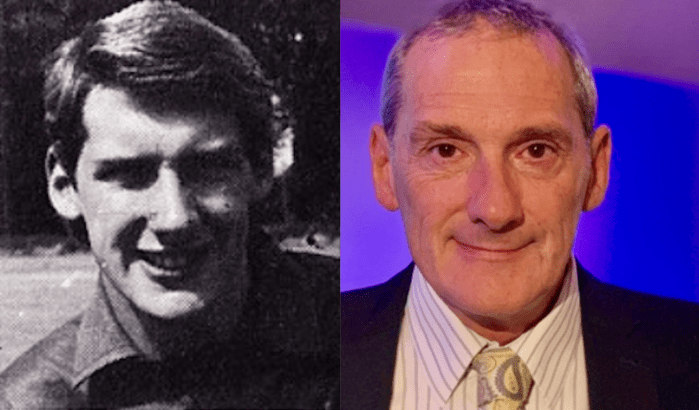


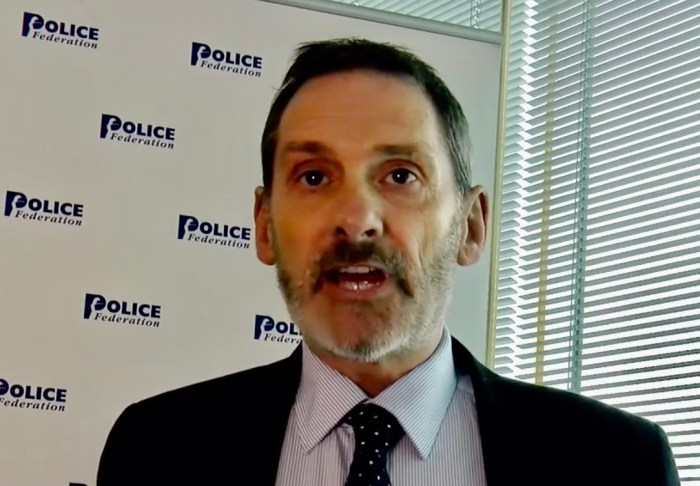

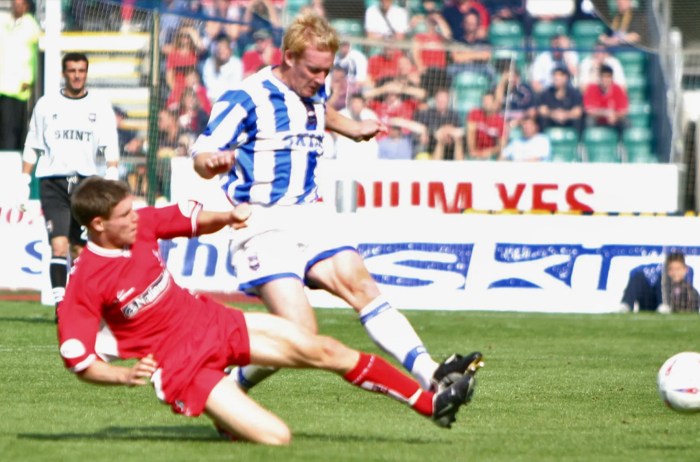
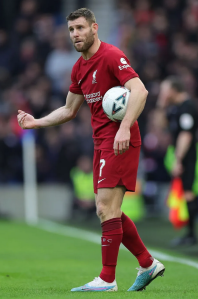


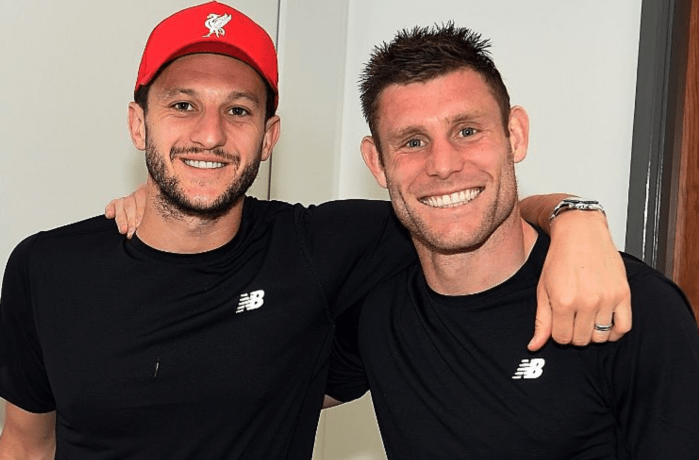

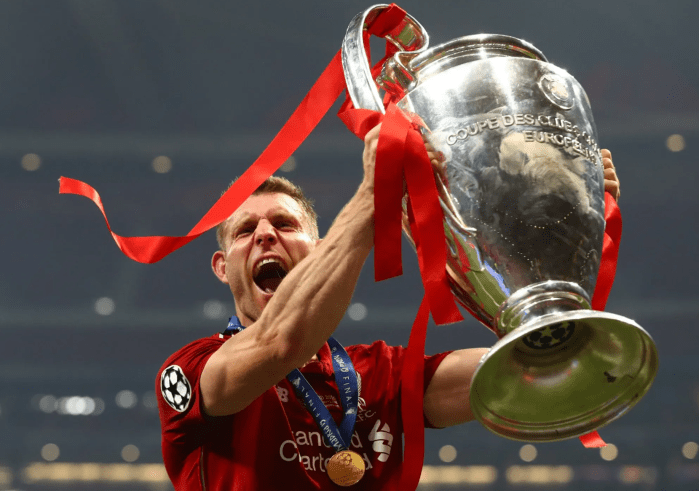
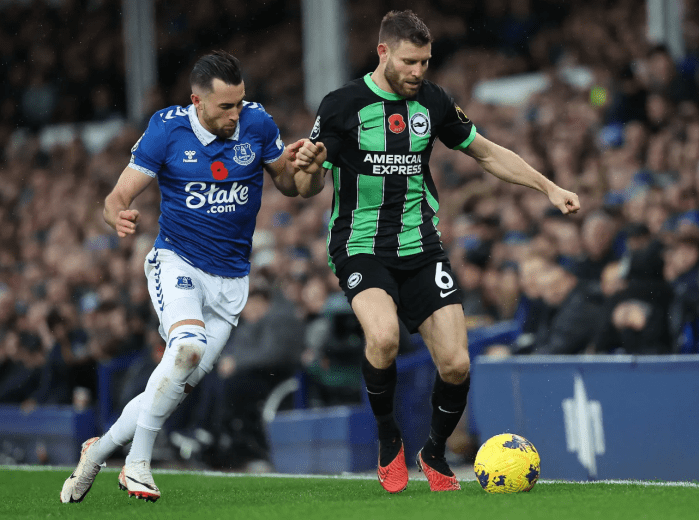


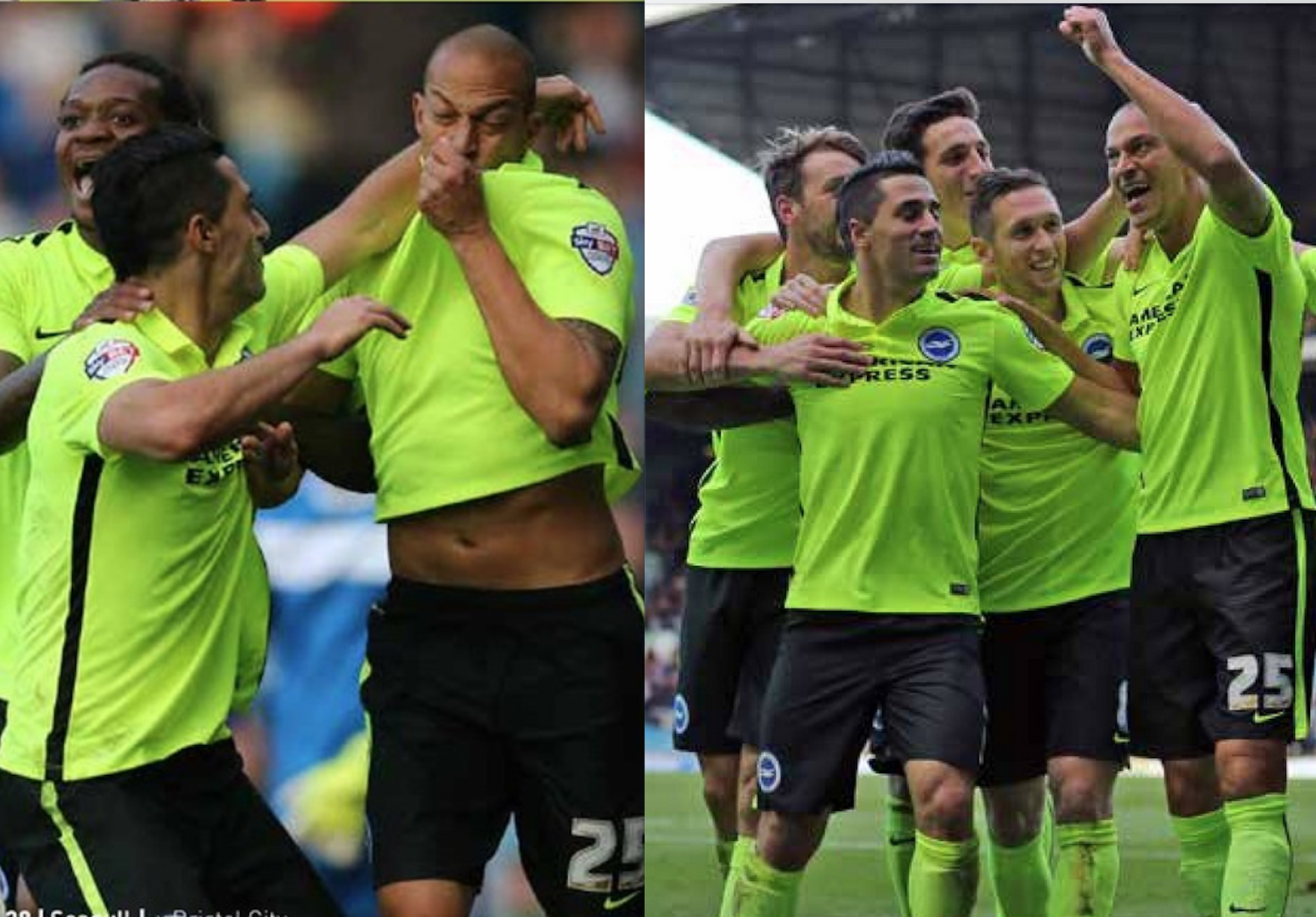


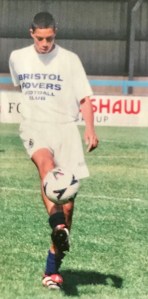



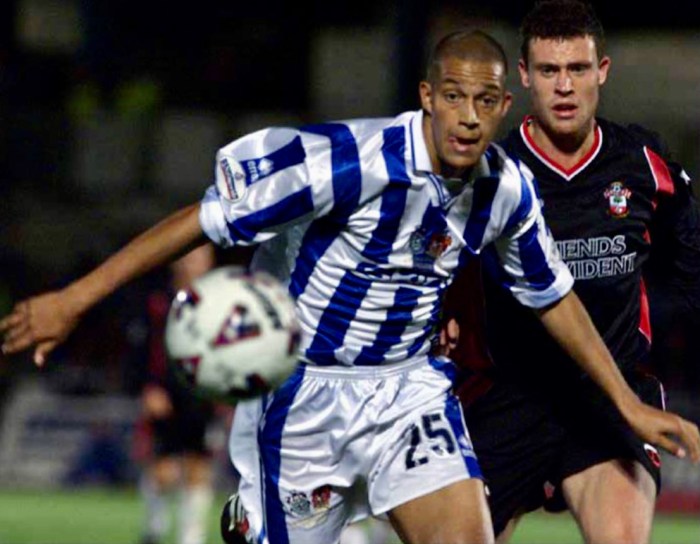
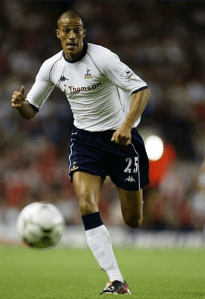


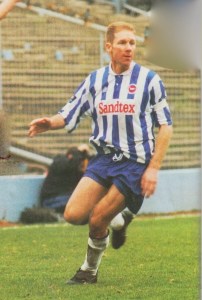


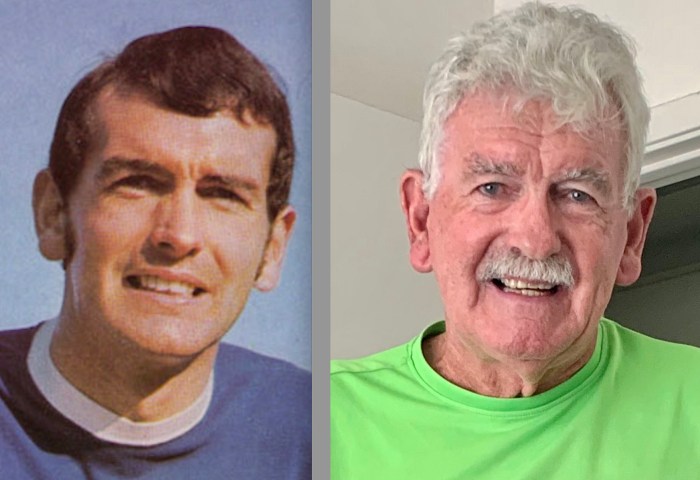
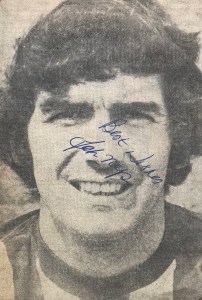


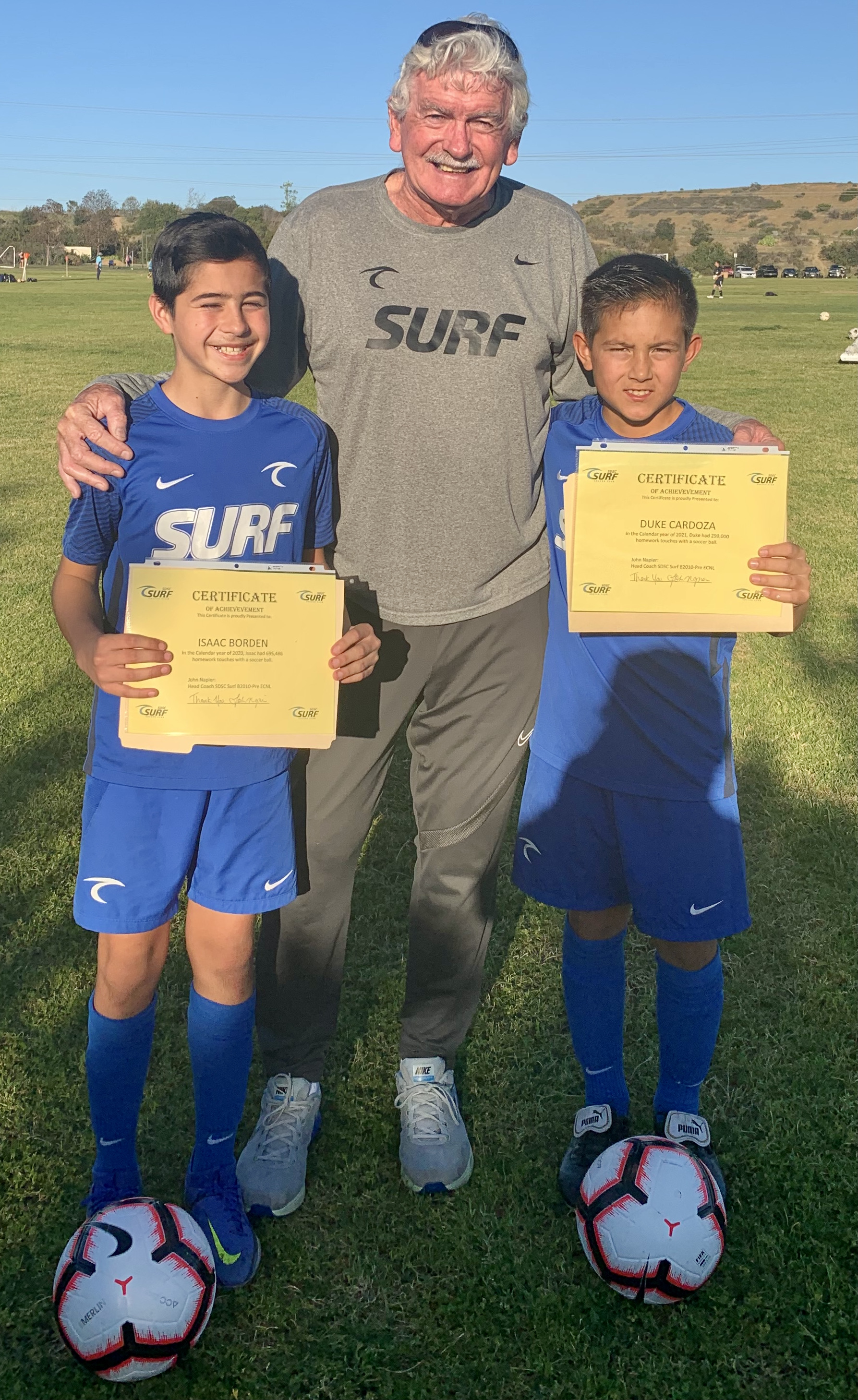

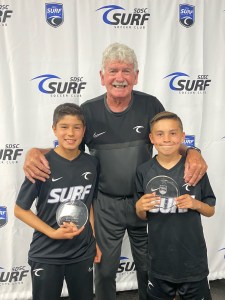
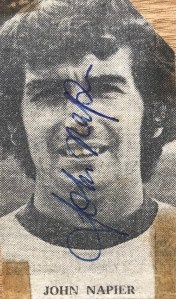

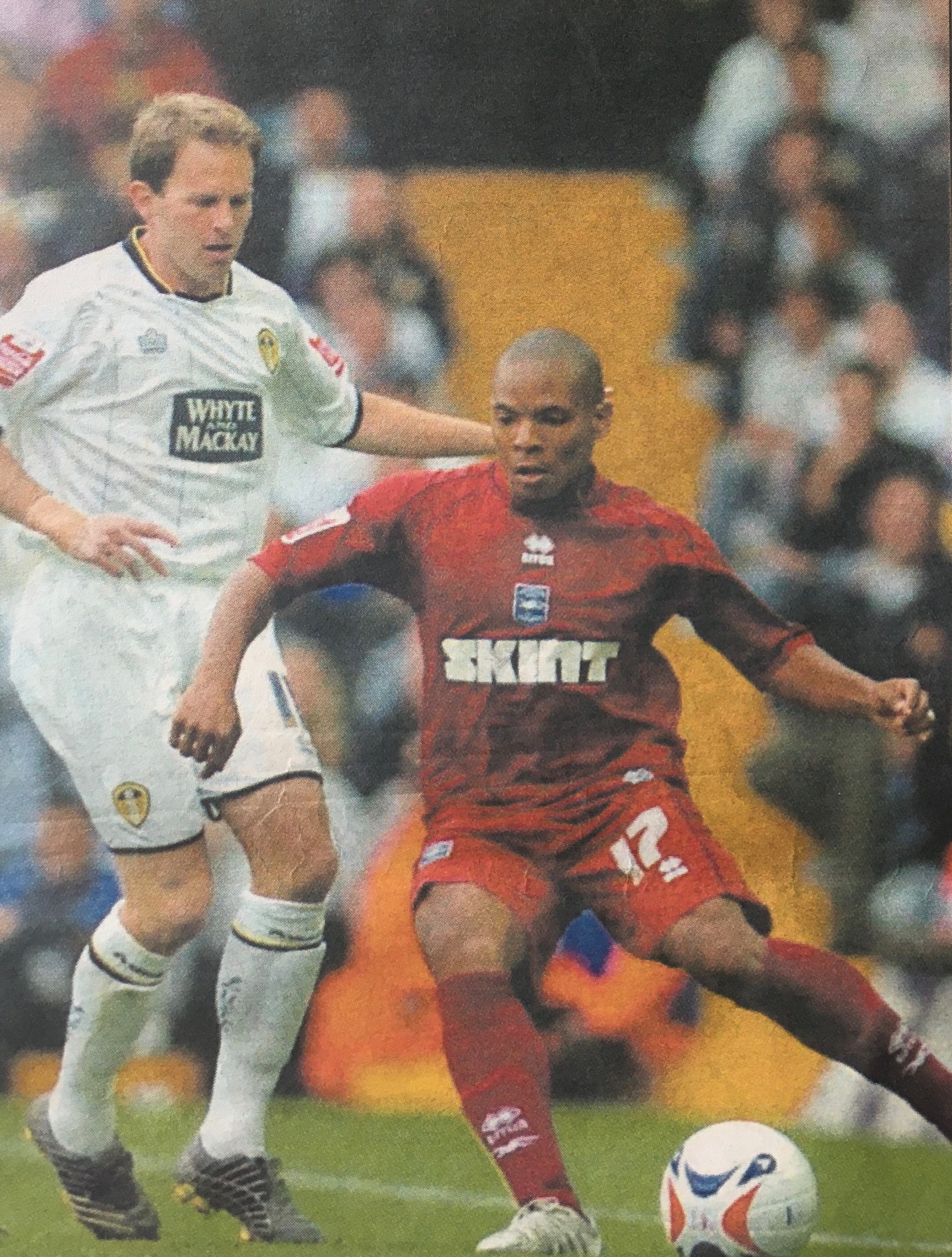


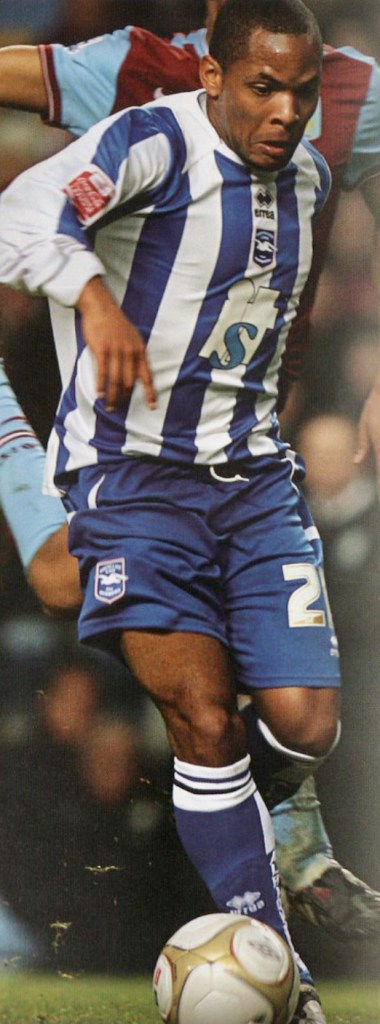
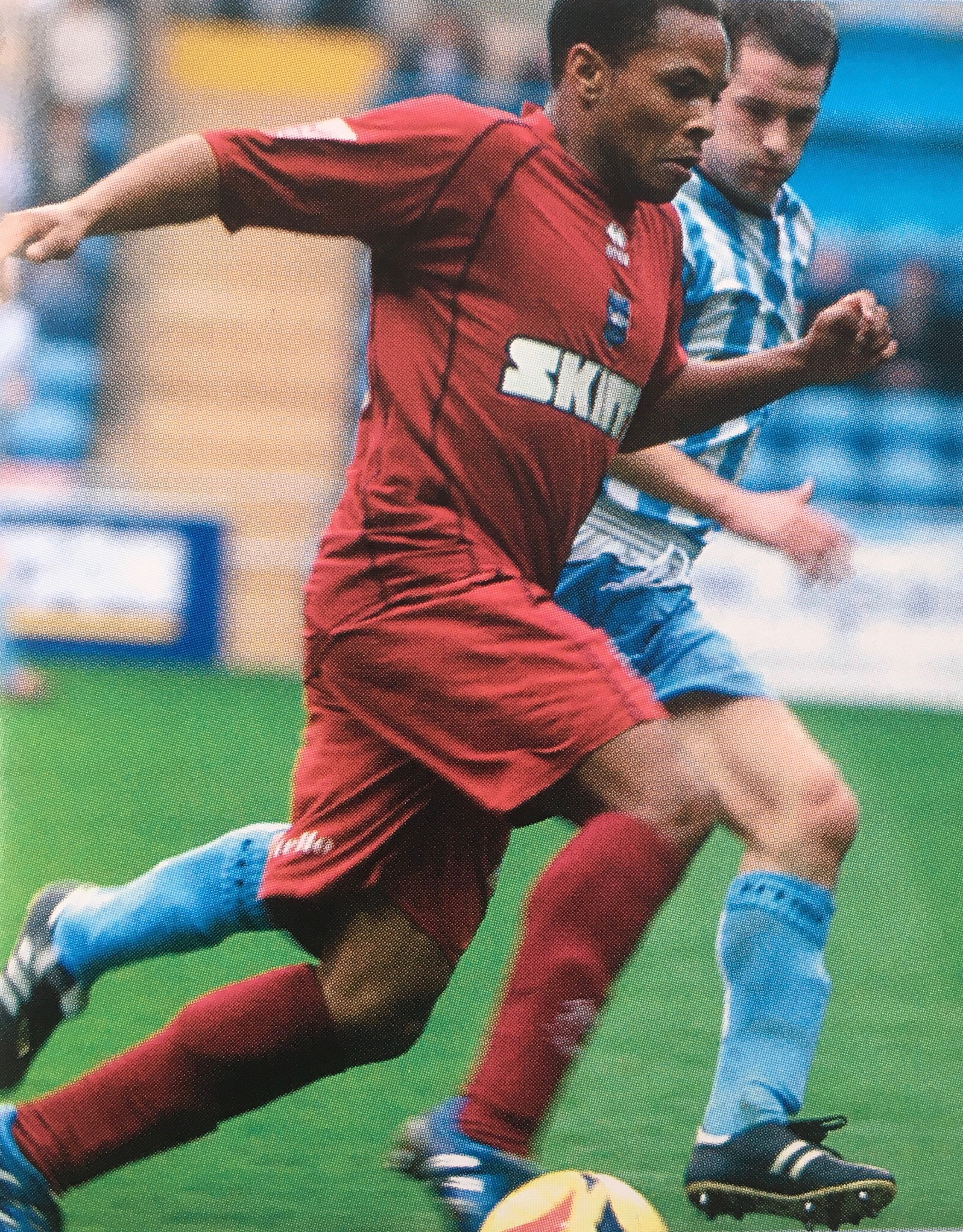

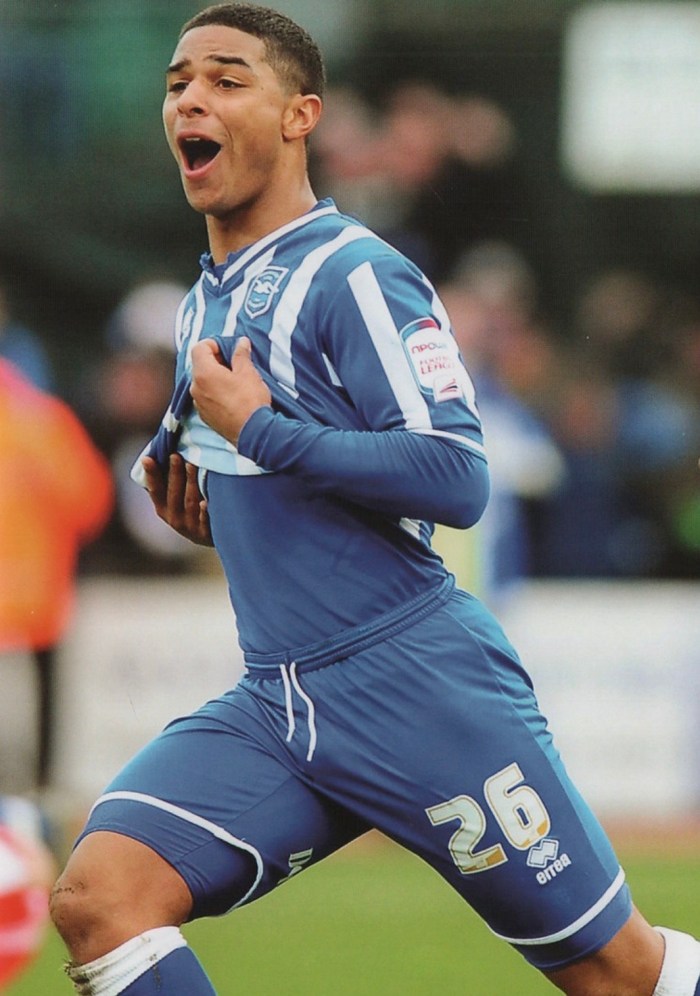


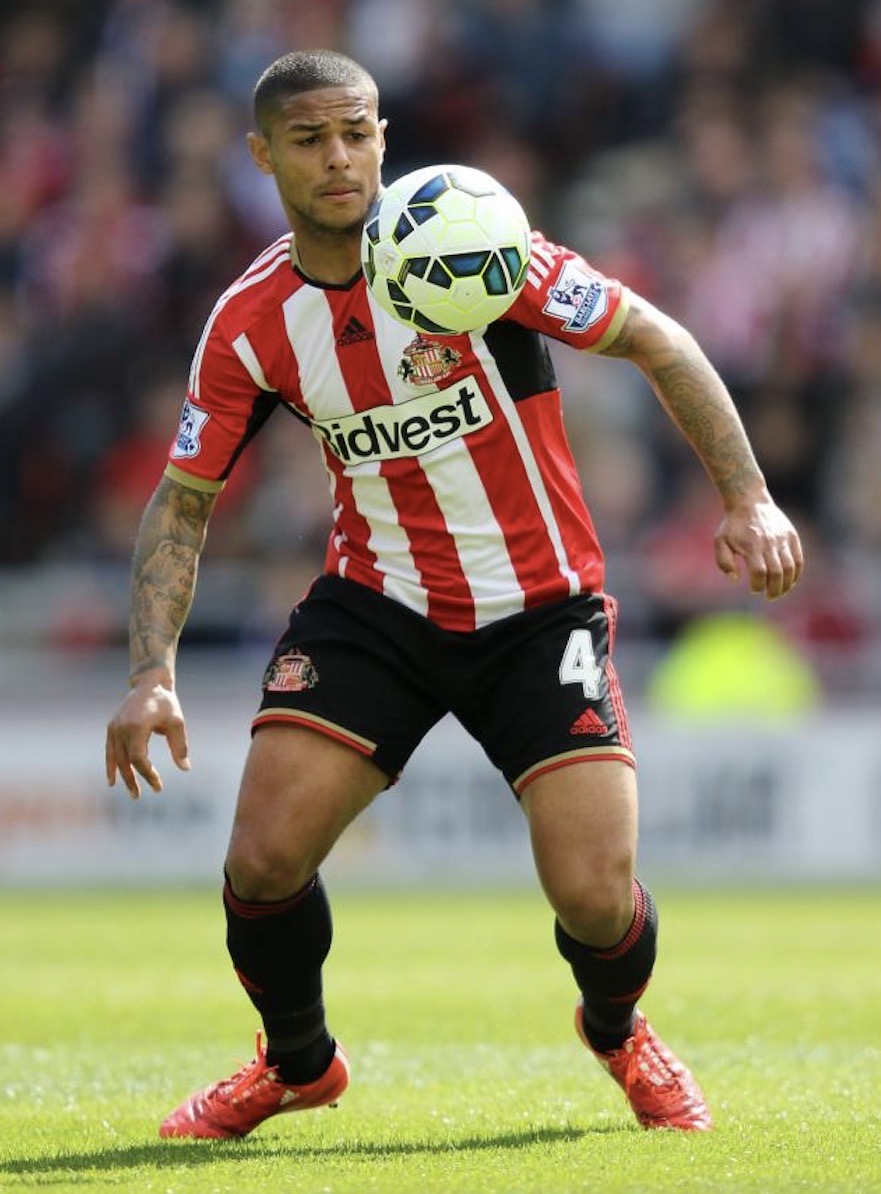
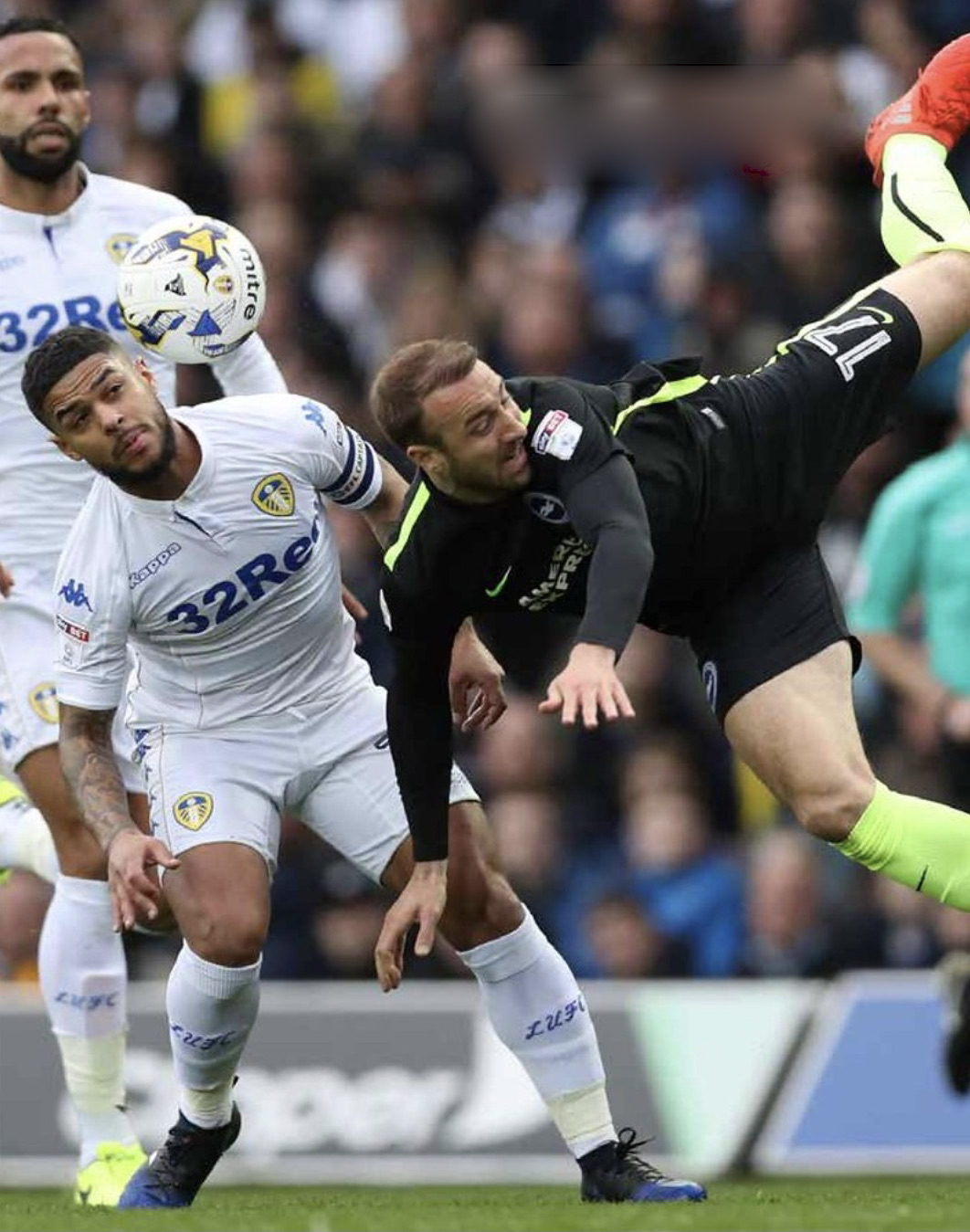


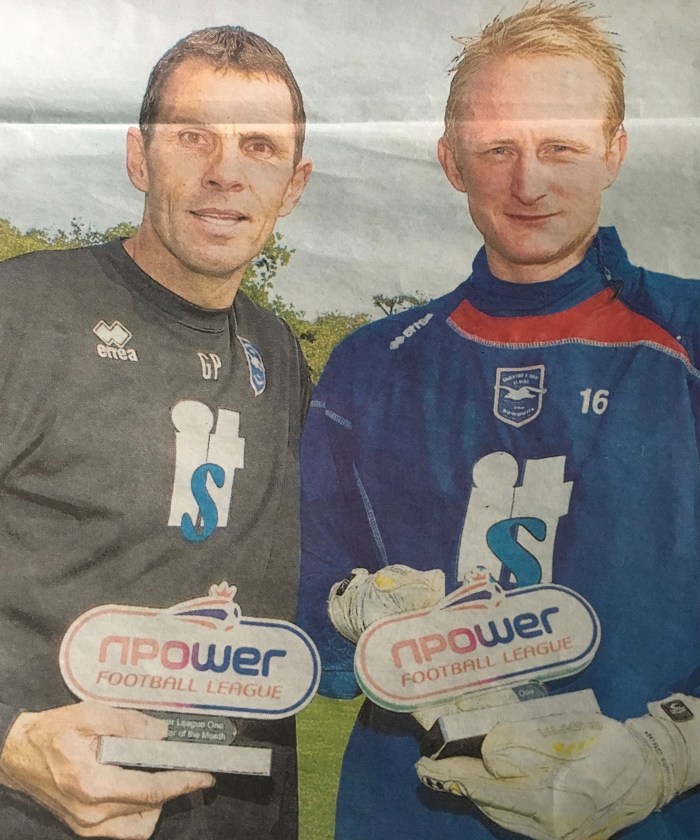

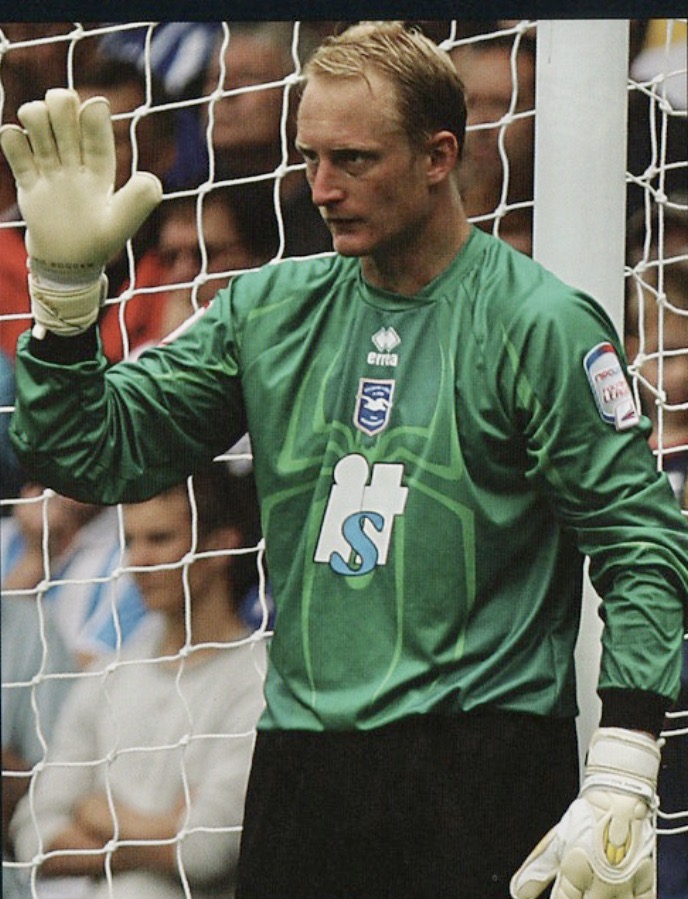
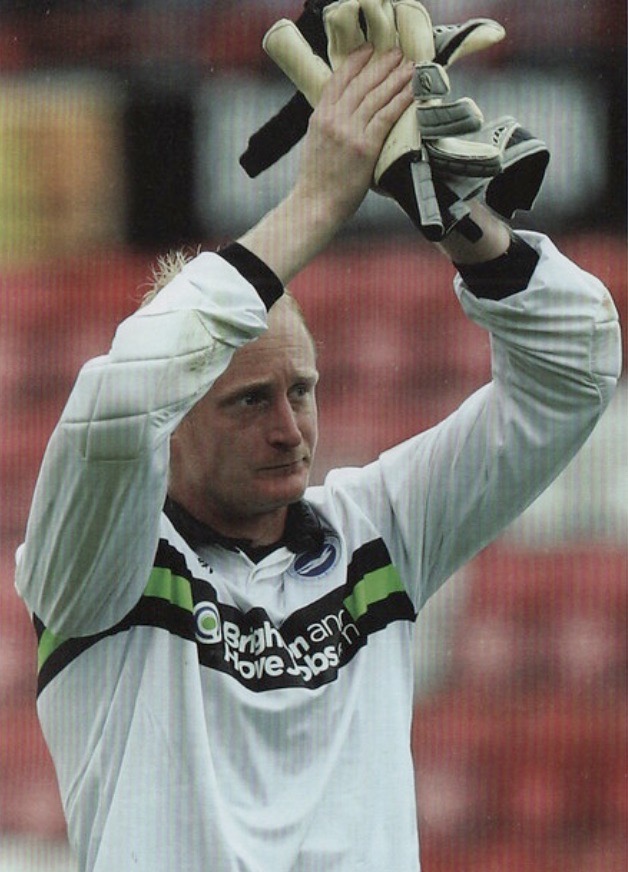
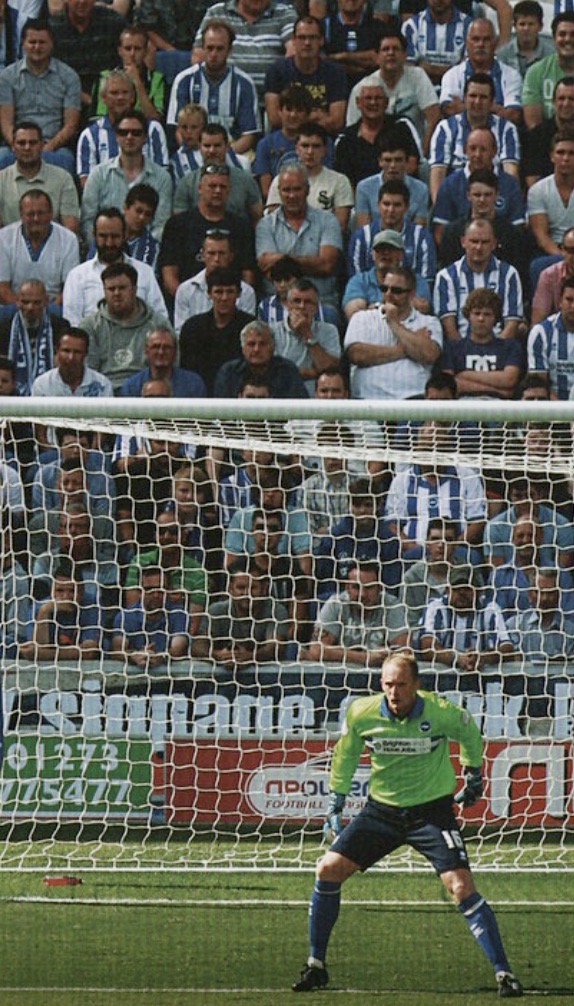
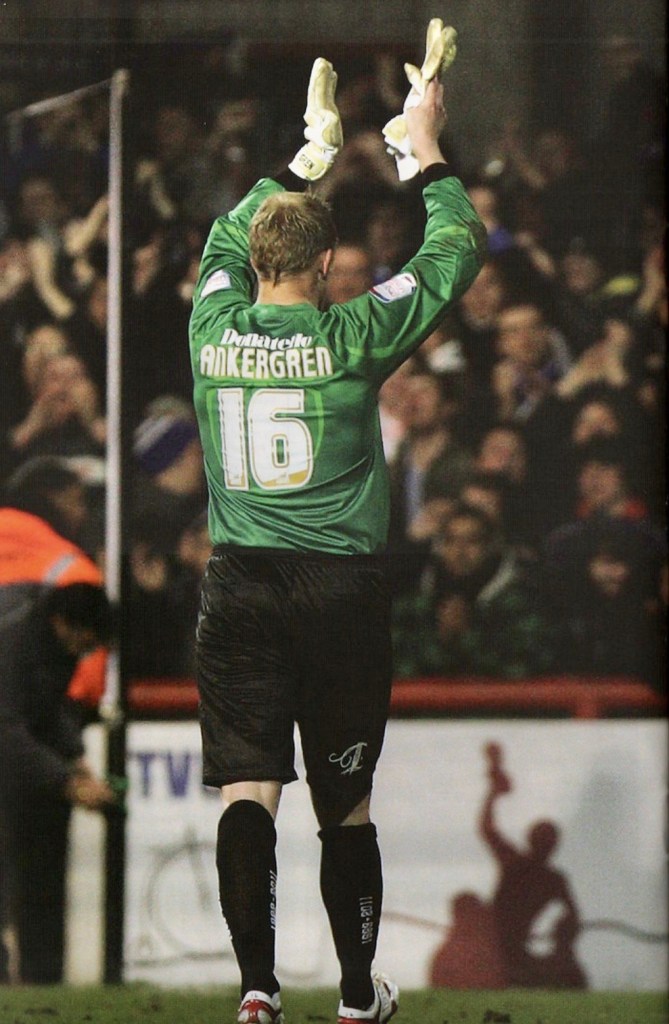


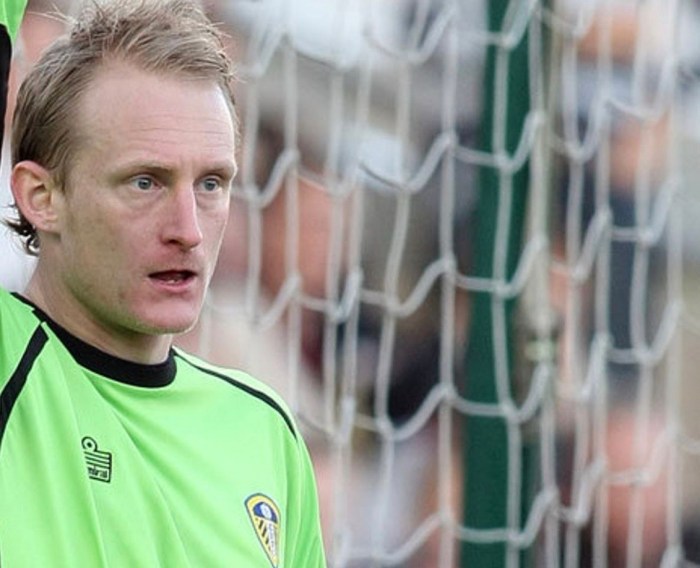


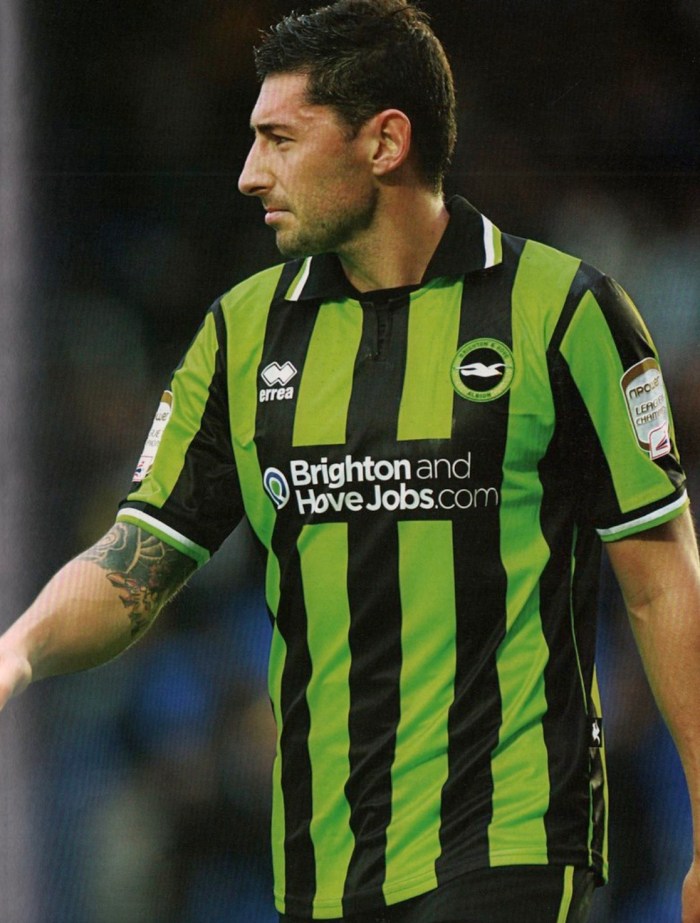
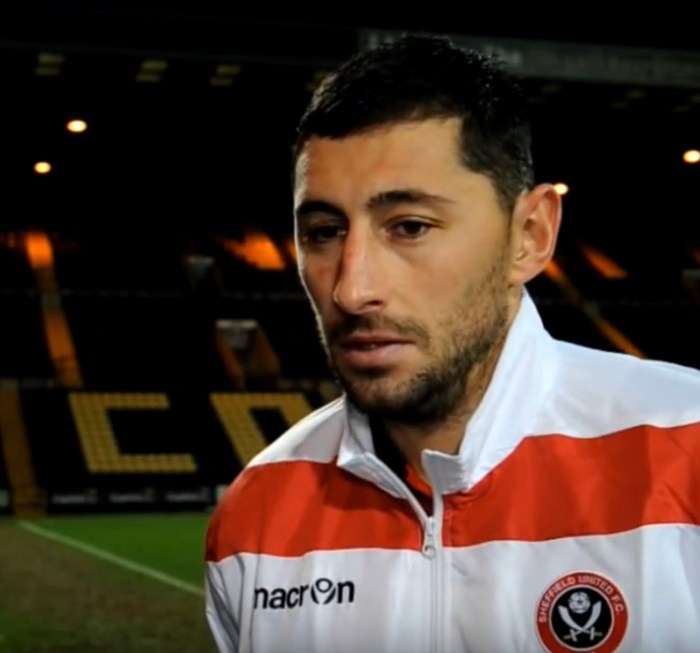


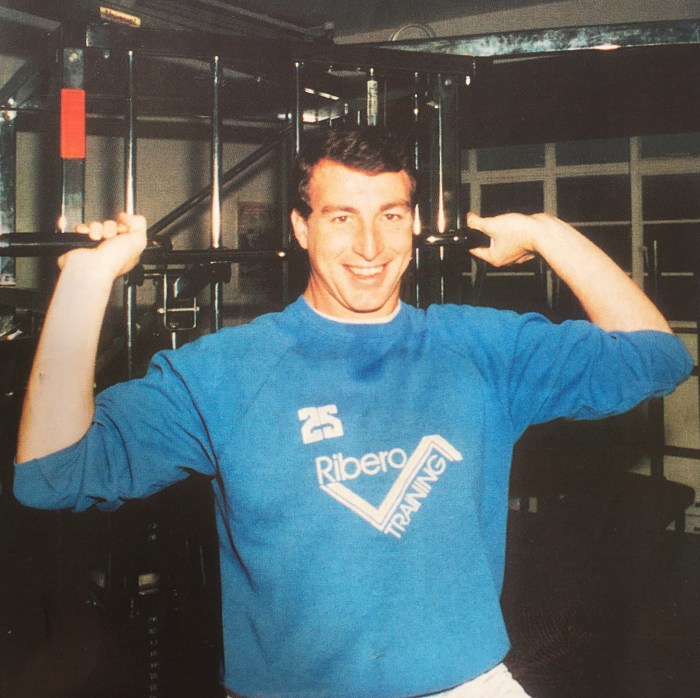

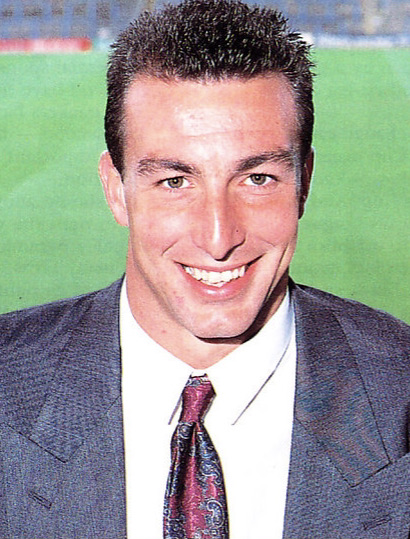


 In parallel lines