

THE MAN whose all-time appearance record was overtaken by James Milner in February 2026 spent six years from the age of nine training once a week at Albion’s school of excellence in Seaford.
Hastings-born Gareth Barry made one substitute appearance for the youth team but, with off-field issues clouding Albion’s horizon at the time, decided to continue his football education at Premier League Aston Villa.
“It wasn’t nice being at Brighton then,” Barry told Spencer Vignes in a matchday programme interview. “There was talk about the club folding and, if that had happened, I could have been left in the middle of nowhere.
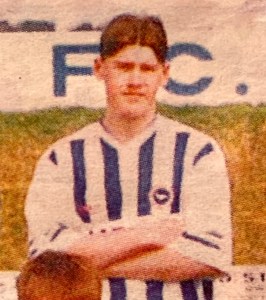
“They were in Division Three and looking like they were going out of the league, so there were a lot of things favouring a move away.”
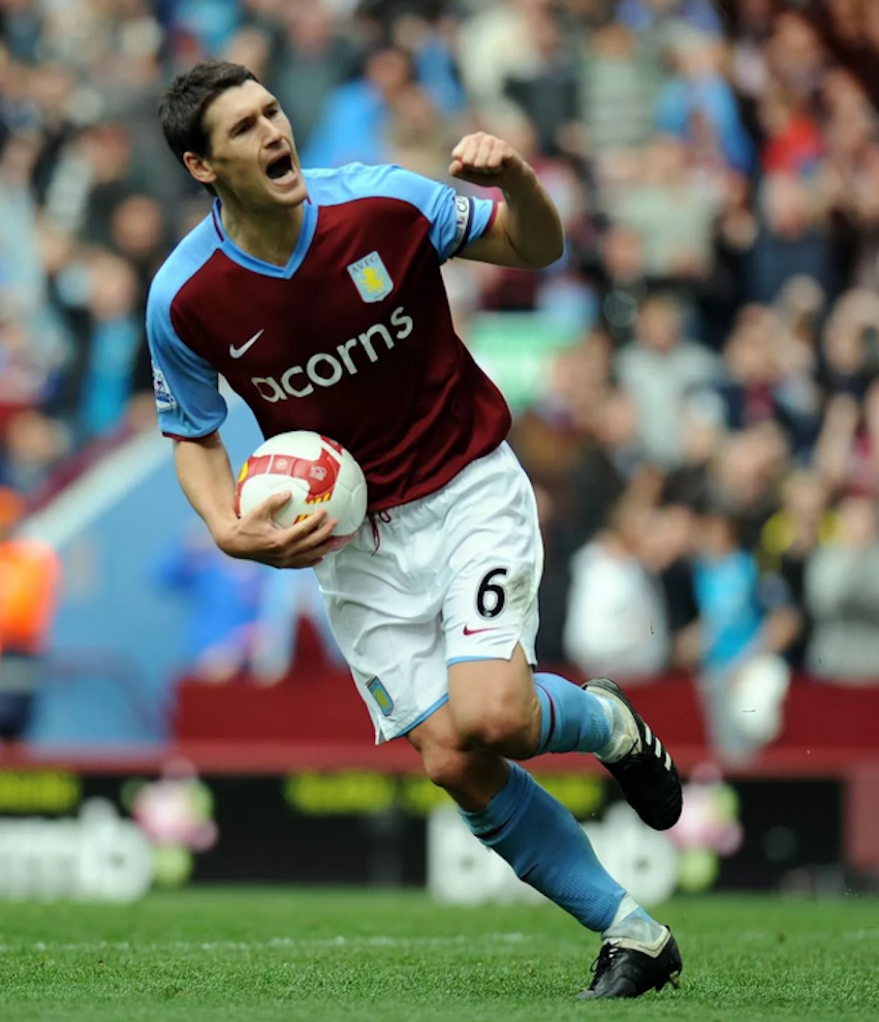
His move to the Birmingham suburb of Sutton Coldfield was the springboard to a stellar career that saw him go on to make an all-time record 653 Premier League appearances for Villa, Manchester City, Everton and West Brom as well as earn 53 caps for England.
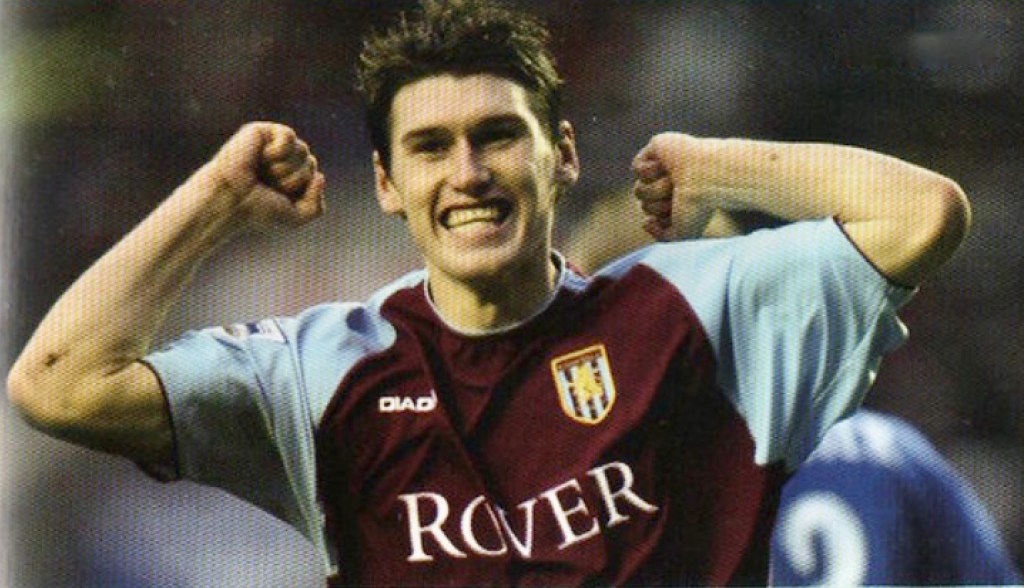
He spent 12 years at Villa, became the club captain, was their Player of the Season in 2006-07 and made 440 league and cup appearances.
He made his Premier League debut at 17 on 2 May 1998, going on as a 49th minute substitute for Ian Taylor in a 3-1 win away to Sheffield Wednesday (Lee Hendrie was one of Villa’s scorers and future England manager Gareth Southgate was in defence).
His first start came in the last game of that season against champions Arsenal: it was eventful. He started in midfield up against Patrick Vieira and Emmanuel Petit and ended at centre-half covering for Ugo Ehiogu who’d been sent off. Before long he was a regular first team pick.
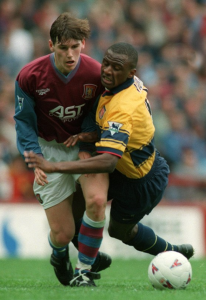
Noting the progress of their former player, the then hard-up Seagulls (as they were back in the 1990s) sought compensation for their early nurturing of Barry and his friend Michael Standing, who’d also switched from Albion to Villa at the same time.
Villa disputed the claim and, at a Football League Appeals Tribunal in London, Villa’s manager, the ex-Albion player John Gregory, declared Brighton chairman Dick Knight wouldn’t recognise Barry if he stood on Brighton Pier with a ball under his arm and a seagull on his head.
If he thought that was funny, the smile was soon wiped from his face when the powers-that-be sided with little old Brighton and ordered the Villains to cough up.
During the hearing, Les Rogers, the Albion youth coach spoke with knowledge and passion about the work he had done with Barry and Standing from under 10s to under 16s.
Although he had only played one youth team game as a sub, Barry had featured in various age group teams as a left-sided defender, left-back and in midfield (Standing had actually been the better prospect in the younger age groups but he never made it to the Villa first team).
“We made the case that Albion had seen Gareth as a player of real potential from the early days and had given him and Michael top-quality coaching,” Knight recalled in his autobiography, Mad Man: From The Gutter To The Stars. “Whatever this boy had become – he was already being talked about as a future England international – was 95 per cent down to the football education he’d received from Brighton.”
The tribunal worked out a club and international appearances payment instalments package Villa should pay to Albion that, over time, would have totalled £1,025,000, plus a sell-on percentage. (There was a technical hitch over the compensation for Standing. It was eventually set at £200,000).
In spite of the ruling over Barry, aggrieved Villa started to stall on the payments due and, because Knight was desperate for cash to keep ailing Albion alive, he eventually did a once-and-for-all deal with Villa chairman ‘Deadly’ Doug Ellis.
It meant the total Villa paid Albion for Barry was £850,000. As Knight would later rue, it meant when Barry was sold to Manchester City for £12.5million, Brighton missed out on £1.8million they would have received if the original tribunal settlement had remained valid.
Born on 23 February 1981, Barry’s footballing prowess first showed at William Parker Grammar School and as well as training with Brighton’s East Sussex school of excellence at Seaford, he earned recognition at school, district and county levels.
“My upbringing wasn’t overly comfortable,” Barry told reporter Joe Bernstein in a 2016 interview for the Daily Mail. “I’ve got three brothers and two sisters. Dad was a plumber who worked really hard to support six children, and mum was busy at home. The four brothers shared a room, a bunk bed on each side. It wasn’t luxurious.”
It was only in his final year at William Parker that national scouts took notice and he had a number of suitors prepared to take him on. He shunned offers from Brighton, Arsenal, Chelsea and Crystal Palace, and took his mum and dad’s advice to move 200 miles from home.
“My mum and dad were keen for me to skip London and go to the Midlands. They felt a proper move would serve me better than coming home every weekend. So, I did my GCSEs and left,” he recalled.
“I lived in digs, the minibus would arrive at seven in the morning and I wouldn’t get back until five in the afternoon. I missed my family but drilled it into my mind that I was there for the football. It was a very good decision from my parents.”
Managers came and went at Villa – Graham Taylor and David O’Leary before Martin O’Neill – and Barry remained a stalwart of the side, appointed captain under O’Neill in August 2006.
Bigger clubs started sniffing around him and in 2008 it looked like he would move to Liverpool with Steve Finnan as a makeweight, but Liverpool weren’t prepared to meet Villa’s asking price.
Barry took an unwise move to go public with his desire to leave and ended up having the captaincy withdrawn, being fined and ordered to train on his own, before patching things up.
O’Neill told the Birmingham Mail: “We obviously don’t want him to go, so the price we are asking is a fair and realistic one for a player who is so good. In fact, I think it is really cheap.
“My own view is that he should hang around for another year and see if we can make further progress as he would want.
“Gareth is still only 28 next year – if we don’t get where he wants to go, everybody would wish him well.” The following year fees were agreed with Manchester City and Liverpool.
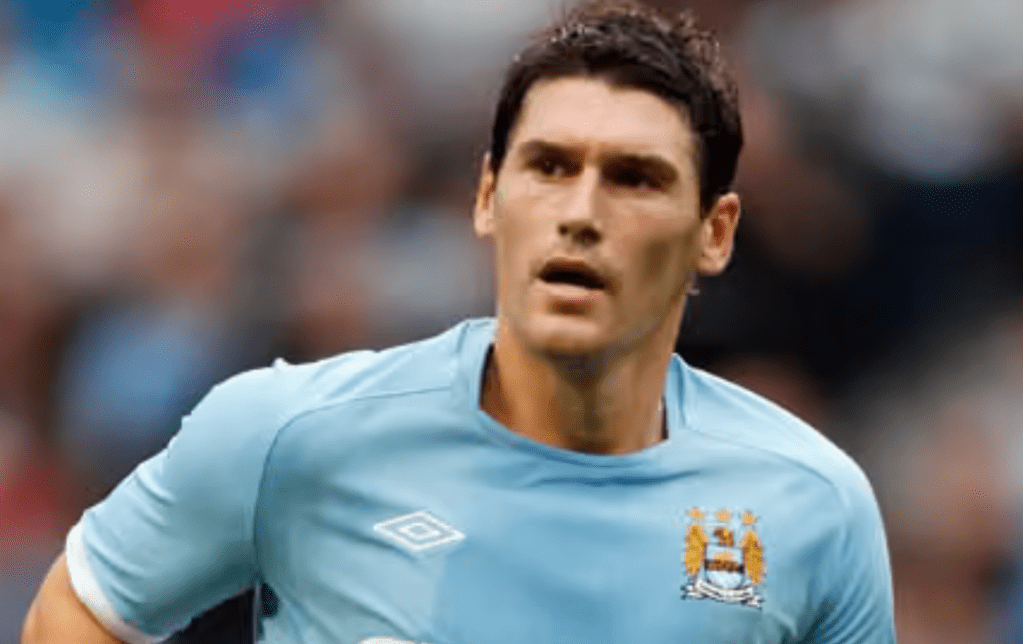
Barry chose City because he was annoyed that Liverpool hadn’t found the cash the year before and he also didn’t pick up the right mood music from Reds’ boss Rafa Benitez about where he would fit into their set-up.
“I met the City manager Mark Hughes in a hotel. He emphasised the ambition of the owners. He described it as a speeding train and his advice was to jump on,” said Barry. “’It appealed to me that City hadn’t won a trophy for so long and I’d be part of the team to end it.”
It was the right choice because he went on to win the FA Cup in 2011 and the Premier League in 2012.
Barry’s development into a full England international began with selection at under-16 level, he went on to captain the under-18s and earned 27 caps for the under-21s between 1998 and 2003, equalling Jamie Carragher’s record, until it was beaten by James Milner.
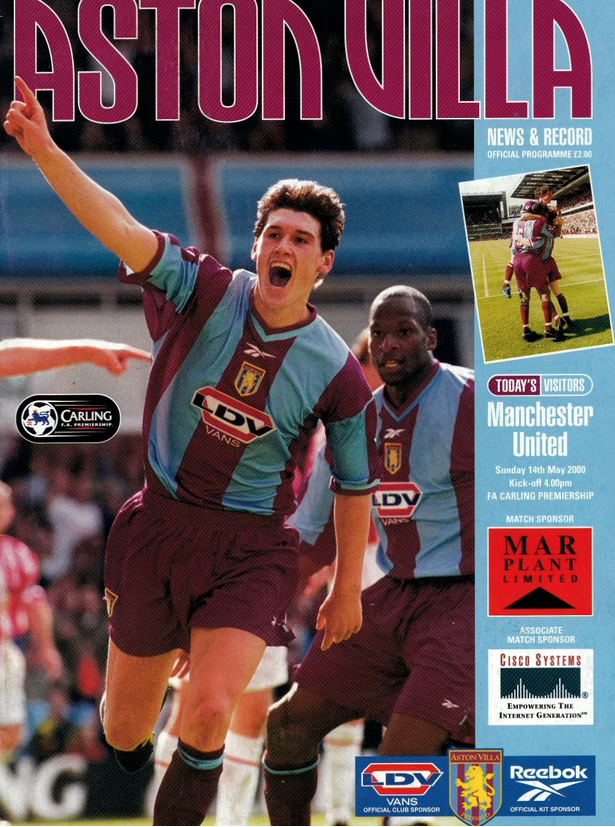
When still only 19, Barry made two substitute appearances for Kevin Keegan’s senior team, picking up his first full cap against Ukraine in a Wembley friendly on 31 May 2000, shortly after he’d played in Villa’s 1-0 FA Cup Final defeat to Chelsea.
His first start for England was four months later in a 1–1 draw against France and he was a halftime sub against Germany in the 1-0 defeat that was Keegan’s last in charge and the last game played at the old Wembley.
Caretaker manager Howard Wilkinson selected him at left-back for a World Cup qualifier in Helsinki with Martin Keown captain for the one and only time. Antti Niemi and Sami Hyypia were playing for Finland. The game finished 0-0 but was full of controversy in that some felt Niemi should have been sent off for wiping out Teddy Sheringham outside his area in only the fifth minute and a late ‘goal’ by Ray Parlour was deemed not to have crossed the line.
During Sven Goran Eriksson’s time in charge Barry lost his England place to Ashley Cole and Wayne Bridge although he did make late sub appearances in May 2003 against South Africa and Serbia and Montenegro.
It was then another four years before he was recalled and became a regular, firstly under Steve McClaren and then Fabio Capello. Barry captained England against Ghana in a 1-1 draw in March 2011 and won his 50th cap for England against Spain later that year.
He scored in games against Trinidad and Kazakhstan and his headed goal (some said it was a Daniel Majstorović own goal) against Sweden in November 2011 was a landmark one – the 2,000th for England since their first international in 1872.
Bobby Zamora was up front for England that day, replaced in the 70th minute by Darren Bent, and Milner went on for Jack Rodwell. David Stockdale was an unused sub.
Barry’s last cap came when Roy Hodgson sent him on as a half-time sub for Steven Gerrard in a 1-0 win away to Norway in May 2012 and was then subbed off injured in the 73rd minute.
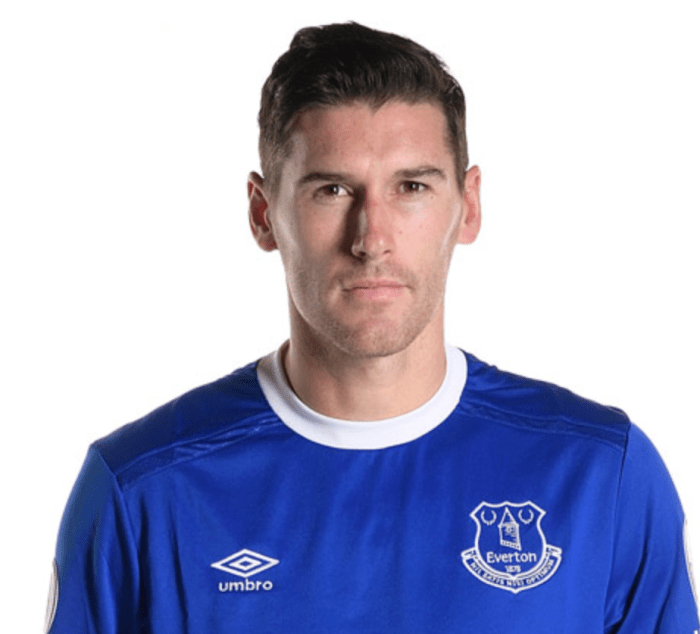
Barry initially left City for Everton on a season-long loan for the 2013-14 campaign during which he joined an elite club in going past 500 Premier League appearances and helped the Toffees seal a return to European competition for the first time since 2010 when they finished fifth.
He moved to Goodison Park on a permanent three-year deal in 2014 and played in all but one of their 10 UEFA Europa League games in 2014-15. The following season, when he turned 35, Barry claimed an awards double by being named both Everton’s Player and Players’ Player of the Season.
He told evertonfc.com: “It’s fantastic. It was great for me to be nominated and win these awards. If you look at the talent in our dressing room, for me to be chosen as the Player of the Season, it means a lot to me.
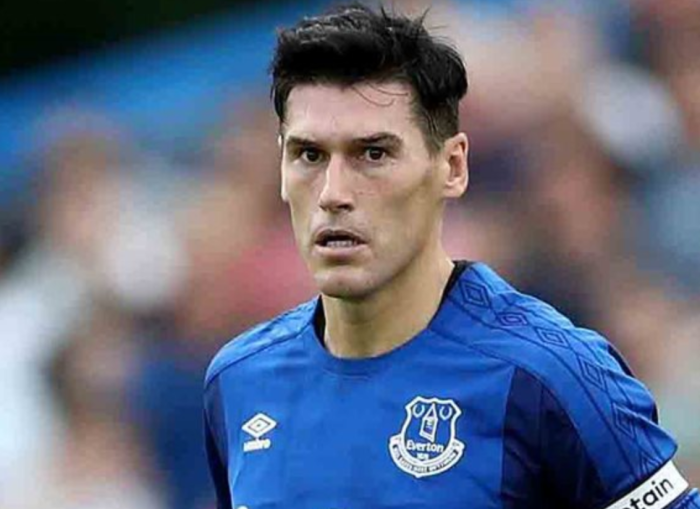
“Both awards mean so much and when you are getting voted by the players you are training with each day and then playing with, any professional will tell you that it means a lot.”
After a total of 154 appearances for Everton, he joined West Brom in August 2017 to fill the void left by the departure of Darren Fletcher.
Albion head coach Tony Pulis said: “He’s a fantastic player and I think his attitude towards playing is really gauged by the fact that Everton had offered him a two-year contract to stay there. He really wants to play and I’m really looking forward to working with him.”
Barry had one season in the Premier League with Albion, and another in the Championship after their relegation in 2018. Injury brought his 2018-19 season to an early end and he was initially released before re-signing in November 2019 until the end of the season.
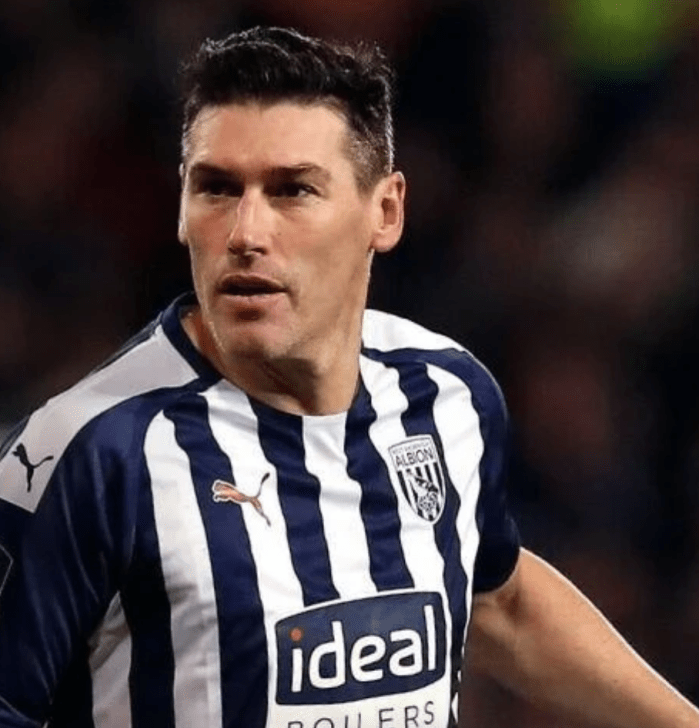
Although 38 by then, he said: “I came to West Brom as a Premier League club and I want to help take it back there. I believe it is where this club really deserves to be.”
Baggies boss Slaven Bilic told BBC WM: “It will be brilliant to have him with us.
“You need that kind of quality in the middle of the park, and you need that kind of character around you in good times and hard times because he has been through it all.”
He finally called time on his career in August 2020, however, Barry didn’t stop pulling on his boots and turned out for Kidderminster-based Comberton Dynamoes Vets (who also included another ex-Villa player in Darren Byfield in their ranks).
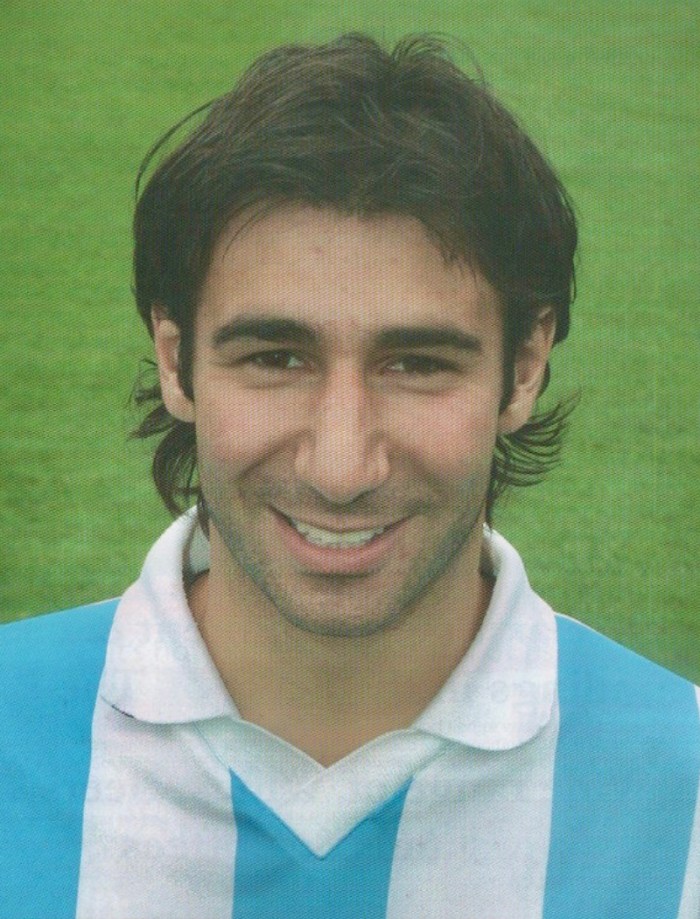
He was once again in the headlines in July 2024 when, aged 43, he signed for 12th-tier Hurstpierpoint, in the second tier of the Mid Sussex Football League, to play alongside his lifelong friend and agent Michael Standing.
• As Milner closed in on Barry’s all-time Premier League appearances record, Barry told OLBG.com editor-in-chief Steve Madgwick: “Having played with James at Villa, Man City and England, and he’s a good friend, I know how hard he’s worked and he’s left no stone unturned.
“He is the ultimate professional, so if James is to pass it, it’s going to someone that fully deserves it because he’s getting every ounce out of the career that he deserves because he’s putting the maximum effort in. Now with that, he’s got quality as well. That’s not to be underrated.”





 In parallel lines