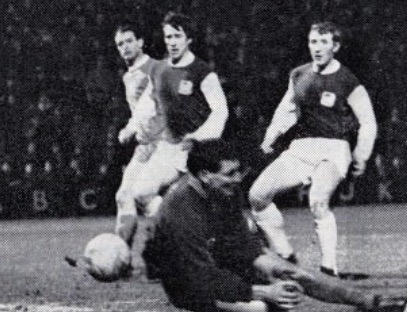
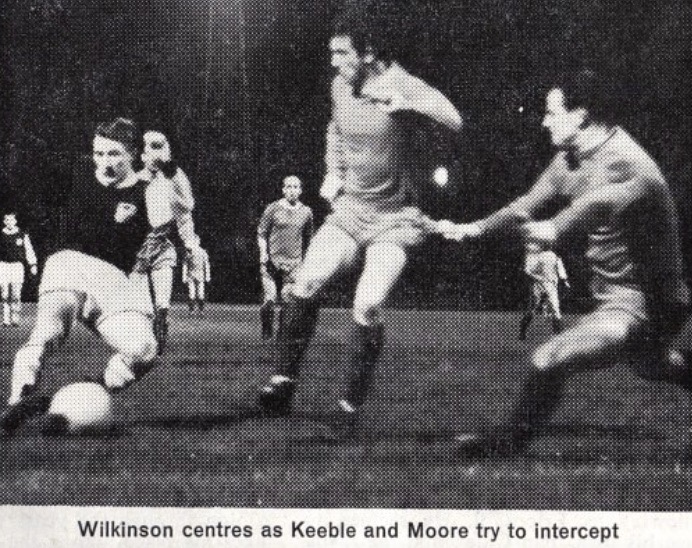
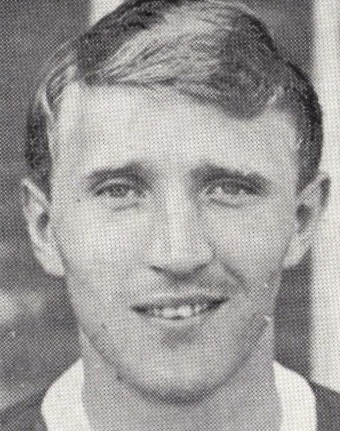
High-flying Canary Culverhouse flew with lowly Seagulls too

ONE-TIME Norwich City hero Ian Culverhouse flew high in the Premier League and Europe with the Canaries and ended his playing days at basement Brighton where he began a lengthy coaching and managing career.

It was only at the end of November 2024 that Culverhouse began a new managerial post, taking charge of sixth tier (National League South) side St Albans City.

A few weeks previously he had parted company from Boston United because they were struggling to come to terms with life in the tier above.

Culverhouse was brought to Brighton by Brian Horton in 1998, shortly after he’d been picked up by non-league Kingstonian having been given a free transfer earlier in the year by Swindon Town. He’d spent three and a half years at the County Ground, including being a key player in their Second Division Championship-winning squad of 1995-96, but left the Robins after falling-out with manager Steve McMahon.

He’d only played twice for Kingstonian before he joined Brighton, who were playing in exile at Gillingham at the time.

Signed on a monthly contract initially, his presence as a sweeper helped plug holes at the back and saw Torquay United, Scarborough and Swansea City all beaten. But after two months, Horton decided to dispense with a sweeper and play a flat back four, so Culverhouse was let go.

But when Albion promptly lost 3-1 to Mansfield Town without him, Horton had a change of heart. He re-signed Culverhouse before a week was up, gave him a contract until the end of the season and even made him captain (in the absence of injured Gary Hobson). Quite some turnaround.

“He was one of the best readers of the game the Albion have had,” reckoned wearebrighton.com. “Culverhouse would always be in the right place at the right time, on the scene to stop danger before anybody realised that there was danger coming.”

The musically-minded wags amongst the Albion die-hards also found the perfect terrace song for him – sung to the tune of Our House by Madness, ‘Culverhouse, in the middle of defence’ became a popular ditty.

He completed 38 appearances for the Seagulls that season and took his first steps towards a coaching and managing career under Horton’s successor, Jeff Wood, when he began coaching the reserve side. Wood said: “Ian has shown on the field that he is a player of immense ability. In his new coaching role, he will now have the opportunity to pass his knowledge on to the younger players at the club.”

A grateful Culverhouse added: “This is a good opportunity for me and I am looking forward to it.

“It’s the first chance I’ve had to coach and it’s something I wanted to do anyway when my career finished. It has just come at a nice time.”

Albion’s then chairman, Dick Knight, told the Argus: “Ian has impressed me greatly with not only his experience but his attitude.

“He has been a real leader in the dressing room as well as on the field and we are giving him a chance to bring that know-how to bear on the coaching side.”

Culverhouse was retained as reserve team coach after Micky Adams took over from Wood towards the end of the season, and the new boss told the Argus: “Ian reminds me a bit of myself. You have got to get on the ladder somewhere. He is enthusiastic, has had a good career and sets himself high standards.

“He has a lot to learn in terms of coaching, but I hope he will become fully qualified along with the rest of my staff.

“He will still be registered as a player as well in case we need him in emergencies, but I don’t envisage him playing too many games.”

In fact, there was just the one final first team appearance for him, when Adams tried to bring a halt to a six-game winless run at the start of 2000. But it didn’t go well and he was subbed off in a 2-0 defeat at Hull.

“It is fair to say we have possibly seen the last of Culvs in a first team shirt,” Adams admitted later. “He is still registered as a player, but his career is probably over. It was me that persuaded him to play at Hull. He wasn’t sure he would be up to it in terms of fitness.”

Born in Bishops Stortford, Hertfordshire, on 22 September 1964, Culverhouse was in the England Youth squad for an international junior tournament in Norway in the summer of 1982, starting in a 4-1 defeat to the home nation and gaining a second cap as a sub in a 3-2 win over Poland.

In the same year, he began as an apprentice at Tottenham. He impressed in Spurs’ youth and reserve sides and spent three years at the Lane. “I was playing alongside players like Ricky Villa, Ossie Ardiles and Glenn Hoddle, which was tremendous experience,” he said.

He even collected a UEFA Cup winners’ medal in 1984 as an unused substitute in the first leg of Spurs’ win (on penalties) over Anderlecht; future Albion boss Chris Hughton was left-back and recent signing from Albion, Gary Stevens, was in midfield, and scored one of the decisive penalties.

But Culverhouse only made one full appearance for the first team, plus one as a substitute, and in October 1985 moved to Norwich under Ken Brown for a £50,000 fee. He was part of the Norfolk club’s Second Division title-winning side of 1985-86 in his first season and became an established defender, usually as a right-back but also as a sweeper.

Culverhouse for the Canaries

He was part of the successful Canaries side that finished third in the inaugural Premier League season of 1992-93 after enjoying three top five finishes in the old First Division, reaching two FA Cup semi-finals (1989 and 1992) and playing in Europe (1993-94). He won the club’s player-of the-year award in 1990-91.

The excellent Norwich fans website Flown From The Nest blamed the Robert Chase regime for Culverhouse’s eventual departure from Carrow Road after nine years.

“From being an integral part of the City team that finished third in the Premiership and enjoyed UEFA Cup success, Ian Culverhouse found himself at the start of the 1994-95 season out of contract and out of favour with Robert Chase and manager John Deehan,” it said. “Similar problems had occurred the previous season with Dave Phillips.”

Culverhouse with the Robins

Together with the contract issues, Culverhouse went public to criticise Deehan’s decision to drop him, which ended any chance he had of regaining his place. Eventually, he was transferred to Swindon for the bargain sum of £150,000 in December 1994, the fee being fixed by a tribunal.

After he left Brighton in 2000, Culverhouse became youth coach at Barnet and two years later joined Leyton Orient in a similar role before being elevated to assistant manager. He left the Os in August 2005 – replaced by future Villa boss Dean Smith – but was then appointed coach at Wycombe Wanderers by former Swindon boss John Gorman.

When Paul Lambert succeeded Gorman, he and Culverhouse developed a strong bond. He followed Lambert to Colchester United to become assistant manager, then returned to Norwich in the same role, where he didn’t forget Wood’s role in setting him on the coaching ladder, being instrumental in the former Albion manager’s appointment as Norwich’s goalkeeping coach.

At the end of their first season, Lambert and Culverhouse steered Norwich to the League One title. The following season, they won promotion to the Premier League and finished 12th in their inaugural season back at the elite level. When Lambert quit Norwich to take charge at Aston Villa in July 2012, Culverhouse and fellow ‘lieutenant’ Gary Karsa followed him.
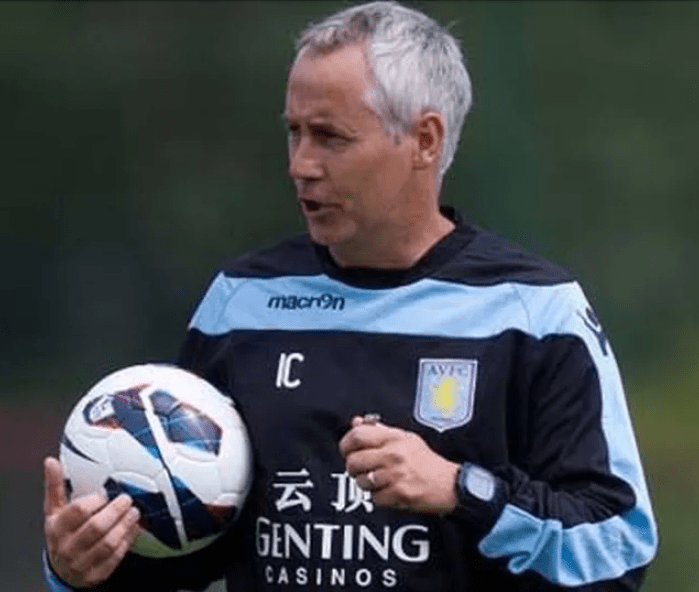
Coach at Villa under Paul Lambert

In June 2013, Lambert told the Birmingham Mail how much trust he placed in his right-hand man. “My assistant boss Ian Culverhouse has a real eye for a player,” he said. “If he reckons we should go for someone I will back his judgement 100 per cent.”

But in April 2014 Culverhouse and Karsa were suspended by the club after being accused of bullying and aggressiveness by players and other staff members, and they were sacked the following month.

Between January 2016 and February 2017, Culverhouse was assistant manager to veteran boss John Still at Dagenham & Redbridge. He left the Daggers to become manager of Southern League Premier Division side King’s Lynn Town. In May 2018, he moved on to Grantham Town but left after only five months and returned to King’s Lynn.

He led them to a second place finish in the Southern League, and. in the subsequent play-offs against Northern Premier League Warrington, saw the Linnets win 3-2 in extra time to earn a place in the National League (North) for 2019-20.

This was the Covid-affected season in which the fixtures weren’t completed. Lynn finished the games played two points behind York City with two games in hand. The National League board ultimately decided, using an “unweighted points per game” formula that Lynn would have won the title and they therefore gained promotion to the National League.

However, on 29 November 2021 he was sacked by Lynn on the back of a run of eight league defeats in a row which left the club second from bottom of the National League and struggling for survival. 

Two months later, he was back in management at National League North Kettering Town, together with assistant Paul Bastock, although that tenure only lasted four months.

Next stop was Boston United in September of the same year, a club all too familiar to Bastock, who played 679 games for the Pilgrims (and broke Peter Shilton’s record in competitive club football when he made his 1,250th appearance in the game in 2017).

The pair helped to preserve Boston’s league status in their first season and then guided them to promotion via the play-offs in May 2024. United’s struggle in higher company – only two wins in 16 matches – led to Culverhouse and Bastock leaving the Jakemans Community Stadium in October 2024.

‘Rooster’ became pivotal to developing young players

FORMER BRIGHTON apprentice Kevin Russell enjoyed a 20-year playing career in which he scored 105 goals in 552 games but he had forgettable spells at three South Coast clubs.

As we learned in my previous blog post, England Youth international Russell scored goals for Albion’s youth team and reserves but moved on before making the first team after a falling out with manager Chris Cattlin.

He got on better with Alan Ball at Portsmouth but only played eight games in three years at Pompey.

In March 1994, he was back in the south after a £125,000 move from Burnley to AFC Bournemouth. Unfortunately, his time at Dean Court coincided with dismal form on the pitch and financial pressures off it.

Russell was signed by Tony Pulis, who, it turned out, was in the final throes of his first spell as a manager, having succeeded Harry Redknapp at Dean Court.

The side had a dreadful run of form the month after Russell joined, suffering five defeats and three draws in eight matches. It was in the last of these that Russell finally got on the scoresheet for the Cherries as they picked up a point in a 1-1 draw at Hull City (his only goal in 17 matches).

While Mark McGhee won the Division Two title with Reading and Russell’s former club Burnley won promotion via a play-off final win over Stockport County, the Cherries finished a disappointing 17th in the table.

Portsmouth-born Russell had joined a squad (above) that included a number of players with past or future Brighton connections: Gary Chivers, Mark Morris, Paul Wood, Steve Cotterill and Warren Aspinall.

Cotterill recalled in a 2023 interview with gloucestershirelive.co.uk: “I know Rooster very well. I played with him at Bournemouth and he’s a great guy and a good coach.

“I liked him when I played with him because he used to stick crosses on a sixpence for me. I remember scoring a few goals from his crosses.”

Back in 1994, Pulis was sacked early on in the new season and former player Mel Machin took over, but the Cherries had managed only one win and a draw in their first 14 matches by the time they met the Albion at the Goldstone on 2 November 1994.

The game ended in a 0-0 draw and, although they won their next game, by Christmas they’d only got nine points from 21 games. Staring down the barrel of relegation, a last ditch revival in fortunes saw the season go down in memory as ‘The Great Escape’ because Bournemouth managed to avoided the drop by two points.

Russell, who had scored twice in 18 matches, had moved on by then and according to Aspinall, in a September 2011 interview with the Bournemouth Daily Echo: “Mel wanted rid of myself and Kevin Russell.”

Russell, who later had a habit of scoring against the Cherries – he hit four in 10 games against them – said after a 2001 encounter between Wrexham and Bournemouth: “The club was in a bad state when I was there, but Mel Machin and Sean O’Driscoll have turned things round and you know you’re always going to have a hard game against them.

“I don’t try any harder than normal when I play against them, but because I am playing up front and not in midfield or out wide, I get more chances to score.”

Aspinall had a couple of trial matches for the Albion before being packed off to Carlisle, while in February 1995 Russell joined First Division strugglers Notts County where he was reunited with former Leicester teammates Gary Mills and Phil Turner.

Howard Kendall was in charge at the time but County, who got through four managers that season (including Russell Slade for four months), finished bottom of the table having won only nine matches all season.

Russell then returned to his spiritual home in north Wales and, over the next seven years, played a further 240 matches for Wrexham, scoring 23 goals along the way.

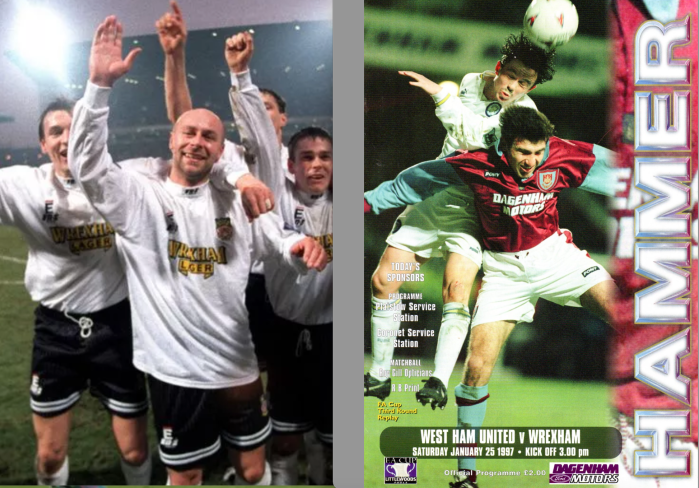
One of the most memorable was a last-minute winner at the Boleyn Ground in January 1997 as Wrexham pulled off a FA Cup giant-killing against West Ham. Having held the Hammers to a 1-1 draw at the Racecourse Ground, Russell went on as a 75th minute sub in the replay and scored a screamer in the dying seconds against a side that included Rio Ferdinand and Frank Lampard.

While the Dragons fans were elated, protesting home supporters spilled onto the pitch in anger at Harry Redknapp’s side’s performance and lowly Premier League position.

Slaven Bilic, later West Ham’s manager, was playing alongside Ferdinand and remembered the game thus: “We were struggling. We weren’t conceding a lot of goals but we couldn’t score and then Wrexham came and they scored at the end of the game, a great goal from 25 yards. After that we signed Johnny Hartson and Paul Kitson and we stayed up.”

When Russell’s playing days were over, he stayed on as a coach and worked as assistant manager under Denis Smith, taking Wrexham to promotion from the Third Division in 2002-03 and winning the LDV (English Football League) trophy in 2005.

That same year his loyalty and service to the club were rewarded with a pre-season testimonial against Manchester United – managed by his former teammate and captain Darren Ferguson’s dad!

Russell played the first 14 minutes of the match against a largely youthful United before being replaced by Ferguson. United won the game 3-1 with goals from Giuseppe Rossi, Liam Miller and Frazier Campbell and one of their subs that day was Paul McShane.

“I can’t speak highly enough of Alex for bringing his side here for me,” said Russell. “I’ve been treated to a special team with a lot of quality. I know there were a lot of young players out there, but you could see the potential they’ve got is immense.”

A crowd of nearly 6,000 watched the match and Wrexham secretary Geraint Parry said: “It just shows how well respected Kevin Russell is after his many years in the game.”

Smith and Russell were sacked in January 2007 but he went straight to Peterborough with Ferguson, who had been appointed Posh player-manager.

“We had an unbelievable time at Peterborough,” Russell told John Hutchinson. “We took them from the bottom league to the Championship in successive seasons in 2008 and 2009.”

There was a brief and unsuccessful spell for the managerial duo at Preston North End in 2010 – they were sacked four days after Christmas with Preston bottom of the Championship – but they weren’t out of work for long because they were re-appointed at Peterborough the following month.

They lost their first game back in charge though – to Brighton. Albion, on course to be league one champions under Gus Poyet that season, beat Posh 3-1: Chris Wood two and Elliott Bennett the scorers while Craig Noone made his home debut for the Seagulls.

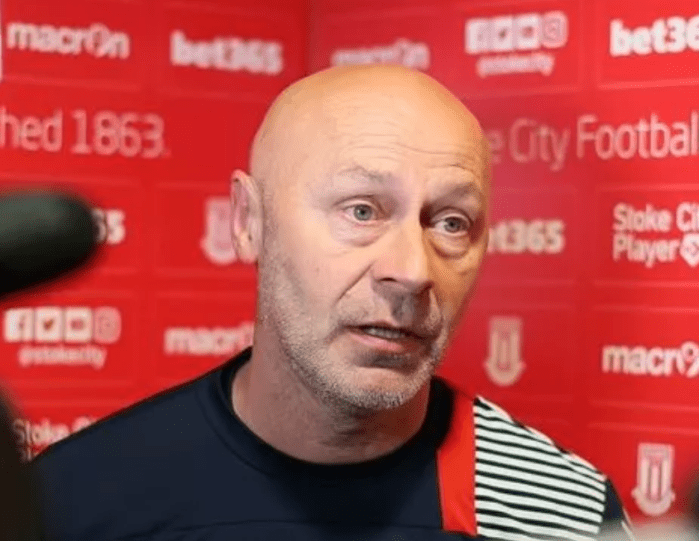
After three years at Peterborough, Russell moved back to the Potteries to join the coaching staff at Stoke (below) and stayed for nine years! He mainly worked with the under 18s and under 21s but also helped with the first team in between managerial changes in 2018 and 2019.

In May 2023, Russell joined Cheltenham Town as assistant manager to Wade Elliott. He was in caretaker charge for two matches when Elliott was sacked four months later but didn’t want the job on a permanent basis and left the club in October 2023 when Darrell Clarke was appointed.

Robins chairman David Bloxham said: “I am extremely grateful to Kevin for all his hard work and dedication and for his willingness to step in to manage the side in an extremely difficult period between Wade leaving and Darrell’s appointment.”

Once again, Russell wasn’t out of work for long. In January 2024, he was reunited with former Stoke technical director Mark Cartwright, a former goalkeeper who played 15 matches in Brighton’s 2000-01 promotion winning side, at Huddersfield Town.

Back in the game at Huddersfield Town

He was appointed as B team manager with a glowing endorsement from Cartwright, now Town’s sporting director, who said: “Not only is Kevin a great coach, but he also has a brilliant ability to develop relationships with young players.

“He’s a lively character and he knows how to relate to individuals to get the best out of them. Whilst at Stoke City, he played the pivotal role in developing players such as Nathan Collins, Harry Souttar, Tyrese Campbell, and Josh Tymon, alongside many others.

“He’s been so successful in doing that because he has a great understanding of the qualities that senior coaching staff want to see in young players.”

Cattlin bust-up didn’t stop goalscoring ‘Rooster’ Russell

BEING LET GO by the Albion as an apprentice didn’t stop Kevin Russell from going on to enjoy a multi-club league career as a player and a coach involved in no fewer than eight play-off finals and promotions.

A talented teenager good enough to earn selection for the England Youth team, Russell didn’t progress beyond Brighton’s youth and reserve sides between 1982 and 1984.

Although he was a regular goalscorer in the junior sides, a falling out with manager Chris Cattlin saw him depart the club without earning a competitive first team call-up.

Hailing from Paulsgrove in north Portsmouth, Russell returned home and linked up with his hometown club to complete his scholarship under World Cup winner Alan Ball.

Ball also gave him his first team debut but he only had eight first team outings for Pompey. It wasn’t until he joined Fourth Division Wrexham for £10,000 that his career began to take off and he was in the Wrexham side that reached the 1989 play-off final where they lost 2-1 to Frank Clark’s Leyton Orient. In the first of two spells in north Wales, playing at centre forward, Russell scored an impressive 47 goals in 102 games.

Prolific goalscorer for Wrexham

An ever-present in the 1988-89 season, his 25 goals in a total of 60 league and cup matches was recognised by his peers when he was selected in the PFA divisional team of the year.

That caught the eye of David Pleat at Leicester City, then playing in the ‘old’ Second Division, and a fee of £175,000 took him to Filbert Street.

At Leicester he played wide right rather than in the centre but he still had a knack for scoring goals and he eventually became something of a cult hero with Foxes supporters for the goals he scored in City’s escape from second tier relegation in 1991 and in their run up to the 1992 play-off final.

However, only a month after joining Leicester he had to undergo a hernia operation that put him out of action for eight weeks. When fit, he was sent out on a month’s loan to Peterborough …and suffered a broken leg!

When ready to play again, his effort to resume match fitness saw him go on another month’s loan, to Fourth Division Cardiff City. In the meantime, Pleat was sacked and Gordon Lee took over. Russell returned as the Foxes fought to avoid relegation to the third tier.

Perhaps inevitably one of the vital goals he scored (on 6 April 1991) was against promotion-seeking Albion in a 3-0 win that helped the Foxes in the hunt to stave off the dreaded drop.

Two years later, after he had moved on to Burnley via Stoke City, Russell’s first goals for the Clarets (above) were also scored in a 3-0 win over the Seagulls.

Born in Portsmouth on 6 December 1966, the nickname Rooster was coined at an early age because his hair formed something of a quiff when he was a boy – ironically, he went prematurely bald but the name stuck.

Russell’s first appearances in Albion’s colours came in the early autumn of 1982 playing in the junior division of the South East Counties League. He was still a 15-year-old schoolboy at the time.

By the spring of 1983, while the Albion first team were edging towards the FA Cup final at Wembley, Russell had stepped up to the reserves, as the matchday programme reported after he’d been involved in a close game against an experienced West Ham second string.

“Kevin Russell is just sixteen and he doesn’t leave school until he has taken his examinations next month,” it said. “But at Upton Park he found himself playing against such experienced men as Trevor Brooking and Jimmy Neighbour.

“Many schoolboys would have given their right arm to play on the same field as Brooking and there was Kevin playing on equal terms.

“Although we lost 2-1, it should be remembered that in Kieran O’Regan, Mark Fleet, Matthew Wiltshire, Gerry McTeague, Gary Howlett, Chris Rodon and Kevin Russell we had seven players under 20, while the Hammers had Paul Allen, Paul Brush and Pat Holland, all of whom have played in European competition, as well as Neighbour and Brooking in their line-up.”

John Shepherd was in charge of the side, aided by John Jackson, who had been signed as goalkeeping cover and was helping out with coaching too.

Russell’s official arrival as an apprentice at Brighton earned a mention in the matchday programme for the home game with Chelsea on 3 September 1983 and he was one of five apprentices on the staff that autumn, together with Dave Ellis, Darron Gearing, Gary Mitchell and Mark Wakefield. Martin Lambert had stepped up to sign as a full professional that summer.

In those days, the youth team played home matches at Lancing College and were looked after by Shepherd and Mick Fogden before experienced George Petchey was brought in to oversee youth development and run the reserves.

It was while a Brighton player that Russell won the first of six England under-18 caps (five starts plus one as sub), and he scored in the first of them – a 2-2 draw with Austria on 6 September 1984 – and in his fourth game, six days later, which England lost 4-1 to Yugoslavia. His strike partner in that side was Manchester City’s Paul Moulden, later an Albion loanee.

With the likes of Terry Connor, Alan Young and Frank Worthington in the first team, and promising youngsters in the reserves, such as Lambert, Rodon and Michael Ring, it is perhaps not surprising that Russell couldn’t break through.

He did have one outing in first team company, though, in a testimonial match for Gary Williams: he scored (along with Young and Connor) in a 3-3 draw against an ex-Albion XI.

The same game saw defender Jim Heggarty appear: like Russell he also went on to play for Burnley without playing a competitive first team game for the Albion.

While on that theme, a frequent partner of Russell’s in the reserves was Ian Muir, another striker who slipped through Albion’s net and ended up scoring goals for Burnley.

After his departure from the Albion in October 1984, Russell made the most of the opportunity Portsmouth presented him to learn from the former Everton, Arsenal and Southampton midfield dynamo Ball.

“I had three years there under him which was fantastic,” Russell told Leicester City club historian John Hutchinson in March 2018. “He was brilliant as a coach and it was very educational. I got the rest of my (under-18) caps at Portsmouth.

“Alan Ball treated us well. I was playing men’s football at 18. I played a few games in the first team and we managed to get promoted into what is now the Premier League.”

Although disappointed to be advised to move on to get more games, Russell’s switch to north Wales was the launchpad for his career, and the beginning of an association with Wrexham that lasted many years.

“It was a gamble worth taking because it meant first team football,” said Russell. “Dixie McNeill was the manager. He used to be a famous striker for them. He was fantastic for me and was an old school kind of manager; a proper man’s manager. It was a good time.”

Mixed fortunes at Leicester City

After Russell’s part in keeping Leicester in the second tier in 1991, he found himself on the outside looking in when Brian Little replaced Gordon Lee as manager and to get some playing time went on a month’s loan to Hereford United and then spent a month at Lou Macari’s Stoke City.

But Little recalled him in February and in his first game back he once again found the net against a former club, scoring in a 2-2 draw with Portsmouth. He kept his place through to the play-off final at Wembley, where they faced Kenny Dalglish’s Blackburn Rovers, and lost to a “dodgy penalty” scored by ex-Leicester player Mike Newell.

“It was a very scrappy game. Both teams were under a lot of pressure and never really got into their rhythm,” said Russell. “We had worked so hard that season to get to where we did get to. The result was a big disappointment, but it was an occasion that I’ll never forget.”

A promotion winner with Stoke City

It also turned out to be his last game for Leicester because that summer he returned to third tier Stoke on a permanent basis. He is fondly remembered for his part in Stoke winning promotion in 1992-93, scoring six goals in 39 league and cup matches (plus 11 as a sub), but he moved on again, this time to Burnley.

Third-tier Burnley signed him from Stoke for £150,000 (or was it £95,000 – I’ve seen both prices quoted) in June 1993 and, although he only stayed for eight months at Turf Moor, he scored eight goals in 35 games (plus two as sub) in Jimmy Mullen’s Clarets side.

Two of those goals – his first for Burnley – were scored against the Albion. I was at Turf Moor for a midweek game on 14 September 1993 when Russell scored with only a minute on the clock and he got a tap-in on 47 minutes in a 3-0 stroll for the home side. Steve Davis got Burnley’s third.

Brighton were a very different club to the one Russell had left in 1984, though. With a win in a League Cup match their only victory in the opening eight matches, it was the beginning of the end of Barry Lloyd’s tumultuous reign in charge, against a backdrop of financial hardship and boardroom mismanagement off the pitch.

Russell’s habit of scoring against his former clubs manifested itself again two days after Christmas, when he netted in a 2-1 home win over Wrexham. He scored again five days later in a New Year’s Day 3-1 home win over Lancashire rivals Blackpool.

But he was not around to be part of the side promoted via the play-offs, having moved back south, to Bournemouth, for £125,000 in March 1994.

• Another move, a return to north Wales and a career in coaching as Russell’s story continues.

Illness and injury brought Izzy Brown’s dream to an early end

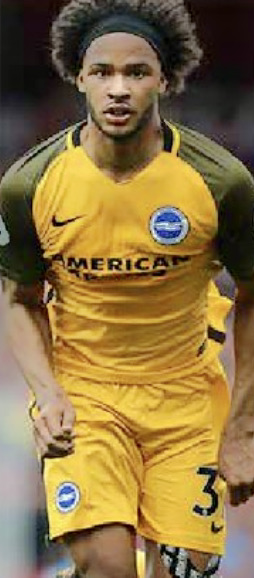
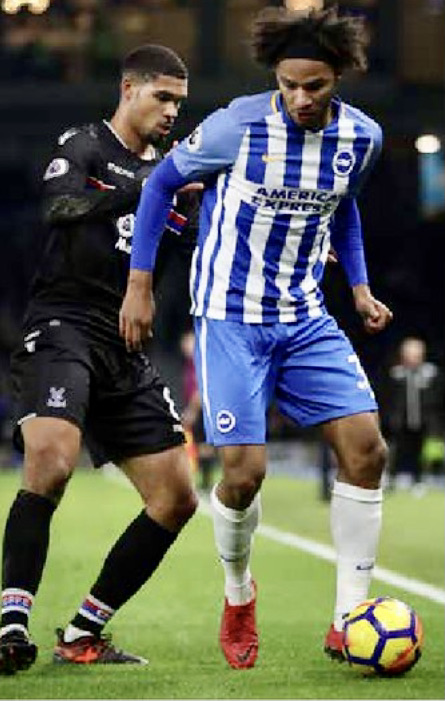
IZZY BROWN was just 20 when he joined Albion on a season-long loan from Chelsea hoping to prove his worth as a Premier League striker.

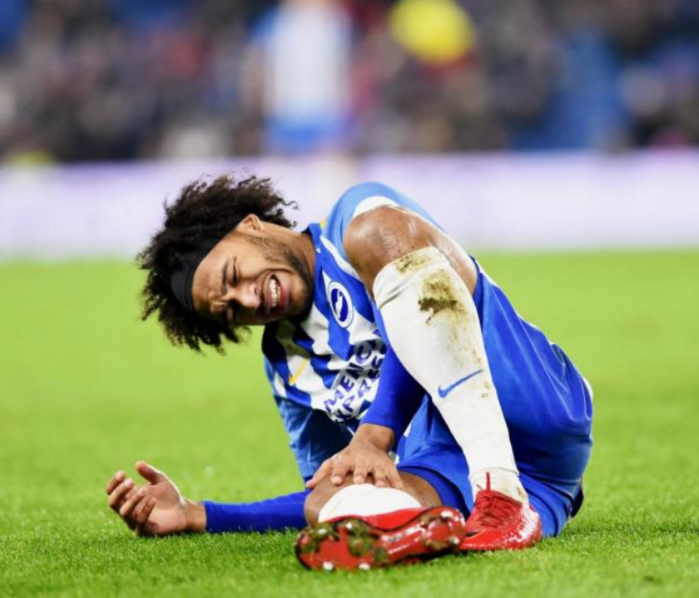
Sadly, a serious anterior cruciate ligament (ACL) injury meant that ambition was thwarted after only four starts and eight appearances off the bench.

Then, at the age of 26, a twice-ruptured Achilles tendon forced him to quit the game altogether.

Brown’s ascent to the elite level of English football was rapid. He was only 16 when he made his debut for West Bromwich Albion, becoming the second-youngest player in Premier League history when he went on for the Baggies towards the end of a 3-2 defeat against Wigan in May 2013.

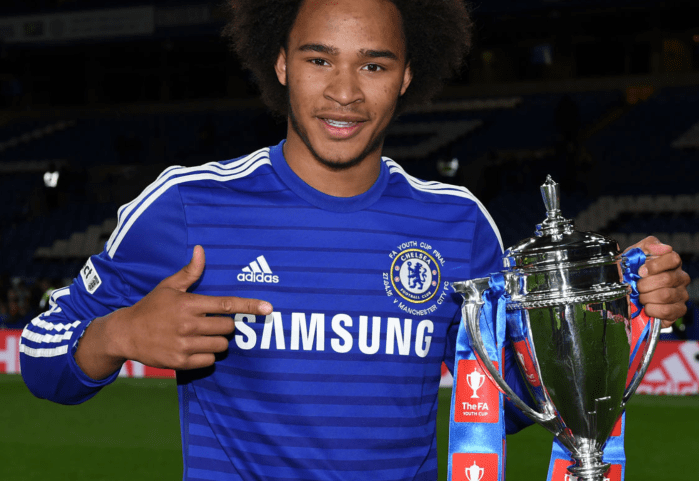
Two months later, Chelsea offered him five times more than West Brom were paying him and he switched to Stamford Bridge to join their scholarship scheme.

The financial cushion they gave him at such a tender age meant retiring from the game early came as less of a blow than it might have done.

“I’m thankful to Chelsea for everything they’ve ever done for me because if it wasn’t for them, I don’t know what my life would be like now,” Brown told Nancy Froston in an exclusive April 2023 interview with The Athletic.

“They put me in a position where, while it’s not that I don’t ever want to work again, it has set me up to provide for my family for quite a few years.”

Brown spent eight years as a Chelsea player although Brighton were the fourth of seven clubs he joined on loan over that period.

Although he scored twice on his Chelsea debut in a 5-0 pre-season friendly win over Wycombe Wanderers, he made only one competitive first team appearance and that was as a sub against his old club, West Brom, in May 2015. Chelsea lost 3-0 and Brown saw only 11 minutes of action when Jose Mourinho sent him on to replace Loic Remy.

Brown had previously been an unused sub on several occasions in the second half of the 2014-15 season, but that summer he was sent on loan to Vitesse Arnhem where he registered just the one goal in 24 appearances.

In the 2016-17 season, Brown had two loans in Yorkshire: scoring three in 20 matches for Rotherham United and then five in 21 for their fellow Championship side Huddersfield Town.

He was involved in the Terriers’ Championship play-off final win over Reading and there were reports they wanted to make his move permanent, with a fee of £8m mentioned.

But Brown thought it wasn’t the right move for him, still harbouring hopes of making it at Chelsea. “I’m still learning and I feel Brighton is the place for me to develop further,” he said.

“There were plenty of clubs calling my agent but Brighton was always my number one choice,” he told the matchday programme. He explained he wanted to learn from manager Chris Hughton, adding: “The facilities here and the ambition of the club was also important for me.”

Hughton said of the youngster: “He’s a very flexible forward player. We brought him in very much as a (number) ten, where he had played for Huddersfield last season.

“In his first loan at Rotherham he played very much off the front, went abroad played off the left, and in his first game for us and in pre-season was on the left. He has that versatility in his game.”

That first league game was the opening day defeat at home to Manchester City and he went off injured (replaced by Jamie Murphy) as Albion went down 2-0. He didn’t re-appear until 1 October away to Arsenal when he struggled as an orthodox striker in another 2-0 defeat.

Thereafter, he only made two more league starts – the 5-1 home battering by Liverpool and a 2-0 defeat at Huddersfield.

Although Crystal Palace in the third round of the FA Cup on 8 January gave him a chance to show what he could do from the start, the game was only six minutes old when he was forced off with the knee injury that brought his time with Albion to a close.

Hughton saw it as a big blow because he had been planning to make much more use of the young striker in the second half of the season.

“You would have seen him much more involved,” he said. “He’d had a slight hamstring injury when he first came which kept him out for a few weeks.

“But certainly I would have seen him play in more games than perhaps in that first half,” said Hughton.

“He is a very popular player here. Before he’d come here, he’d had a couple of other loans and I think that adapted him well going into a new environment.”

Brown himself had said the only player he knew before his arrival was Connor Goldson through his friendship with Jonny Taylor, who Brown had played with at Rotherham.

Deprived of Brown’s services, Hughton brought in Jurgen Locadia from PSV Eindhoven and a familiar face in Leonardo Ulloa, returning to the Amex on loan from Leicester City.

Although both were on the scoresheet when Albion dispensed with Coventry City in the fifth round of the FA Cup, it would probably be fair to say neither were a rip-roaring success. The combination of Glenn Murray and Pascal Gross were the main goal contributors.

Born in Peterborough on 7 January 1997, Isaiah Brown, to give him his proper name, said in an emotional open letter on his retirement: “As soon as I could walk, I always had a football at my feet. That was me, that was my happy place.”

He was talented enough to represent England at under 16, under 17, under 19 and under 20 levels, winning a total of 34 caps.

At Chelsea, he was in the side that won the Under-21 Premier League title in 2013-14 and the UEFA Youth League the following season.

After the disappointment of his time at Brighton being curtailed, he was still recovering in August 2018 when he went back to Yorkshire on loan to Championship Leeds United under Marcelo Bielsa.

But once recovered, he was mainly involved in United’s under 21 side. He only made two substitute appearances for the first team, one in a 1-0 league defeat at QPR and one in the end-of-season play-off final that Leeds lost 4-3 on aggregate to Derby.

The following season once again saw him head out on loan for a season, this time to Luton Town. He scored once in 19 starts, plus nine games as a sub, as the Hatters narrowly avoided relegation from the Championship.

The 2020-21 season once again saw Brown heading to Yorkshire, this time with Sheffield Wednesday in the Championship.

It was a season that saw the club have three full-time managers and a caretaker, finishing bottom of the league and relegated to League One. Brown made only five starts plus 16 appearances off the bench.

With his contract at Chelsea finally coming to an end, his next move was a permanent switch away from the Bridge, and he signed a one-year deal with Preston North End.

Head coach Frankie McAvoy said: “He’s got good pedigree. He’s got great experience in terms of playing in the Championship and an ex-Chelsea player from a young age.

“He’s had quite a few loans over his time, some he’s done well, others maybe latterly not done as well as he hoped, so he just needs to find that self-belief again and confidence. But we’re certainly getting a player with undoubted talent, very offensive and we’re looking forward to working with him.

“He can play across the front, but probably his preferred position is a ten behind a striker or two, depending on how we play.

“He can also play in pockets off right and left, so he adds that bit of versatility to our front players and I think if we can get him up and running, believing in himself, being confident in his own ability then I’m sure he’ll endear himself to the Preston faithful.”

Brown, by then 24, said: “Now I’m getting to that age where I want to develop myself as a player and hopefully be a legend at a club, and I really feel like Preston’s a place where I could do that.”

But less than a month after signing for North End, he ruptured an Achilles during pre-season training – and he never actually played a competitive game for Preston.

“We had a pre-season game against Celtic when I was at Preston and I felt some pain in my Achilles, but it wasn’t too bad,” Brown told Froston. “Then we had a couple of days off, I came back for training and then I just passed the football, like I’d done a million times before, and I heard a pop. I thought someone had kicked me but no one was around me.

“It had snapped. So I had the surgery and it went well, but we noticed there was like a little gap in my Achilles.

“We thought maybe it’s not healed properly, but this was only after two months so we gave it time. Then I went out for some dinner and stepped down a small step and it snapped again.

“So I had two Achilles surgeries in the space of three and a half months. To come back from one is hard. To come back from two is basically impossible.”

On top of those football injuries, he got sick with hand, foot and mouth disease, then had an issue with his nervous system that led to muscle loss and affected the nerves in his feet.

He was subsequently told he had a rare and serious condition called Guillain-Barre syndrome and it was apparent he would have to retire from playing football.

In a revealing interview with Froston, he concluded: “Football was my dream. It still is my dream. But dreams have to end one day.”

In the open letter he wrote on his retirement, he said: “Football doesn’t define me as a person. I’m a father, a son, a brother and a friend, and I will be that after football.

“I’ve lived my dream and memories that will stay with me forever. To every club that I have played for, I really appreciate you all for believing in me and giving me a chance to play the game I love.”

Seagulls gave Martin Keown first team football opportunity

MARTIN KEOWN, who was born in Oxford six days before England won the World Cup in 1966, made his breakthrough into what became an illustrious playing career with Brighton.

The TV pundit football fans see today was famously a stalwart defender for Arsenal, Everton and Aston Villa, not to mention England.

But as an emerging player yet to break through at the Gunners, he got the chance of first team football courtesy of Brighton boss Chris Cattlin, who negotiated with Arsenal boss Don Howe to secure his services on loan.

“He is a young player with plenty of potential,” Cattlin wrote in his Albion matchday programme notes. “He is still learning and will make the odd mistake, but these are all part of learning and I feel he will be a very good player in the very near future.”

MK BWHe made his debut away to Manchester City in February 1985 and, in two spells, stayed a total of six months with the Seagulls, making 23 appearances. It wasn’t long before he earned the divisional young player of the month award and Cattlin said: “Martin has done very well and done himself great credit in coming into the heat and tension of a promotion battle and coping well.”

He made such a great impression, it wasn’t long before the Albion matchday programme went to town with a somewhat gushing feature about the young man.

“Fans and Albion players alike have been impressed by the character and maturity displayed by the 18-year-old English Youth International,” said Tony Norman. “No less a judge than former England manager Ron Greenwood was instrumental in Martin’s recent Robinson Young Player of the Month award.

Keown prog front“So, the young man from Oxford must have something special going for him. On the field he is a sharp, decisive player, but away from the game he is quietly spoken and unassuming.”

Some things obviously changed!

“His progress in football has not gone to his head and he is quick to thank the special people who have helped him find success,” Norman continued.

Keown told him: “Going back to the early days in Oxford, I think my parents were the greatest help of all. I played for several different teams, so there was never a particular coach who helped me. But my family were always there giving me their full encouragement and support.”

At Highbury, he credited the scout who took him to Arsenal, Terry Murphy, as his greatest help in his early years, helping him to settle into the professional game.

“He was very good to me,” said Keown. “I was only 15 when I joined Arsenal as an apprentice. I was in digs in North London and it was all quite a change from life in Oxford. It took a bit of getting used to.”

The former Chelsea midfield player John Hollins, who played for Arsenal between 1979 and 1983, was also an influence.

“He always had a word of encouragement for the youngsters,” said Keown. “He is the kind of man who can make a club happier just by being there. I liked and respected him a great deal. He was a model professional.”

During his time with Brighton, young Keown lived with physiotherapist Malcom Stuart and his family. “They have made me feel very much at home,” he said. “It has been a happy time for me.”

M Keown ArseUnfortunately for Brighton, Keown returned to Highbury and it wasn’t long before Howe, the former coach who’d become Arsenal manager, gave him his first team debut on 23 November 1985 in a 0-0 draw away to West Brom.

In much the same way he has become something of a Marmite pundit on the TV, Keown wasn’t every manager’s flavour. When George Graham was appointed Arsenal boss in 1986, Keown didn’t figure in his plans and he sold him to Aston Villa (see picture below) for £200,000.

M Keown villaThree years later, he became what Colin Harvey described as his best signing during his time as boss of Everton. A fee of £750,000 took him to Goodison.

In an interview with the Liverpool Echo back in 2013, Keown declared: “I thoroughly enjoyed my time at Everton. The only disappointment was that I couldn’t contribute to the club winning anything tangible in my four years there.

“I played under Colin Harvey and Howard Kendall and I was eternally grateful to them for the opportunity to play at a club like Everton.

“Looking back, in hindsight it was probably a bit much to ask a young lad, which I was then, to step into the boots of a club legend like Kevin Ratcliffe. But I always gave absolutely everything.”

Keown added: “The atmosphere was always superb at Goodison. Even though I played a lot of my career at Highbury, I loved Goodison.”

It was during his time at Everton that he won the first of his 43 England caps, getting the call-up from Graham Taylor to join the squad in 1992 to replace Mark Wright. When Terry Venables took over, he didn’t get a look-in.

But Glenn Hoddle restored him to the squad in 1997 and, although he was part of the 1998 World Cup squad, he didn’t get a game. He was a regular under Kevin Keegan and, in a game against Finland, had the honour of captaining the side. Age began to count against him by the time Sven-Goran Eriksson took charge of England and, although he was part of the 2002 World Cup squad, he wasn’t selected for any games.

His return to Arsenal in February 1993 meant he was the first player since the days of the Second World War to rejoin the Gunners, and it went on to become a 10-year spell in which he helped the club to win three Premier League titles and the FA Cup three times.

Arsenal paid a £2m fee to bring back their former apprentice and he and Andy Linighan were more than able deputies who kept established first choices Steve Bould and Tony Adams on their toes.

“Martin was deployed most frequently at centre-half where his formidable pace and thunderous tackling combined to thwart both target men and strikers running in behind,” declared an article on arsenal.com, lauding the merits of the ‘50 greatest Arsenal players’. “It meant, too, that he was vastly capable in an anchoring midfield role; something utilised by his manager.”

While not always a regular, Keown became an integral part of Arsene Wenger’s double-winning sides of 1998 and 2002 and remained a part of the set-up through to the winning of the FA Cup against Southampton in Cardiff in 2003.

The following season included the much-repeated TV moment when Keown mocked Ruud van Nistelrooy for missing a late penalty in a 0-0 draw at Old Trafford, an incident still being discussed only last summer.

Although Arsenal went on to win the title, Keown played only 10 league games and was given a free transfer at the end of the season.

He joined Leicester City, where he played 17 games but moved on to Reading six months later, ending his league career with five games at the Madejski.

Since calling time on his playing career, Keown has, of course, become known for his TV punditry with both the BBC and BT Sport, as well as being a newspaper columnist and contributor to many different media.

On Twitter, @martinkeown5 has 278,000 followers! He has also coached back at Arsenal and been a regular on the football speaker circuit.

Fans took Alan Duffy to their hearts after debut goal

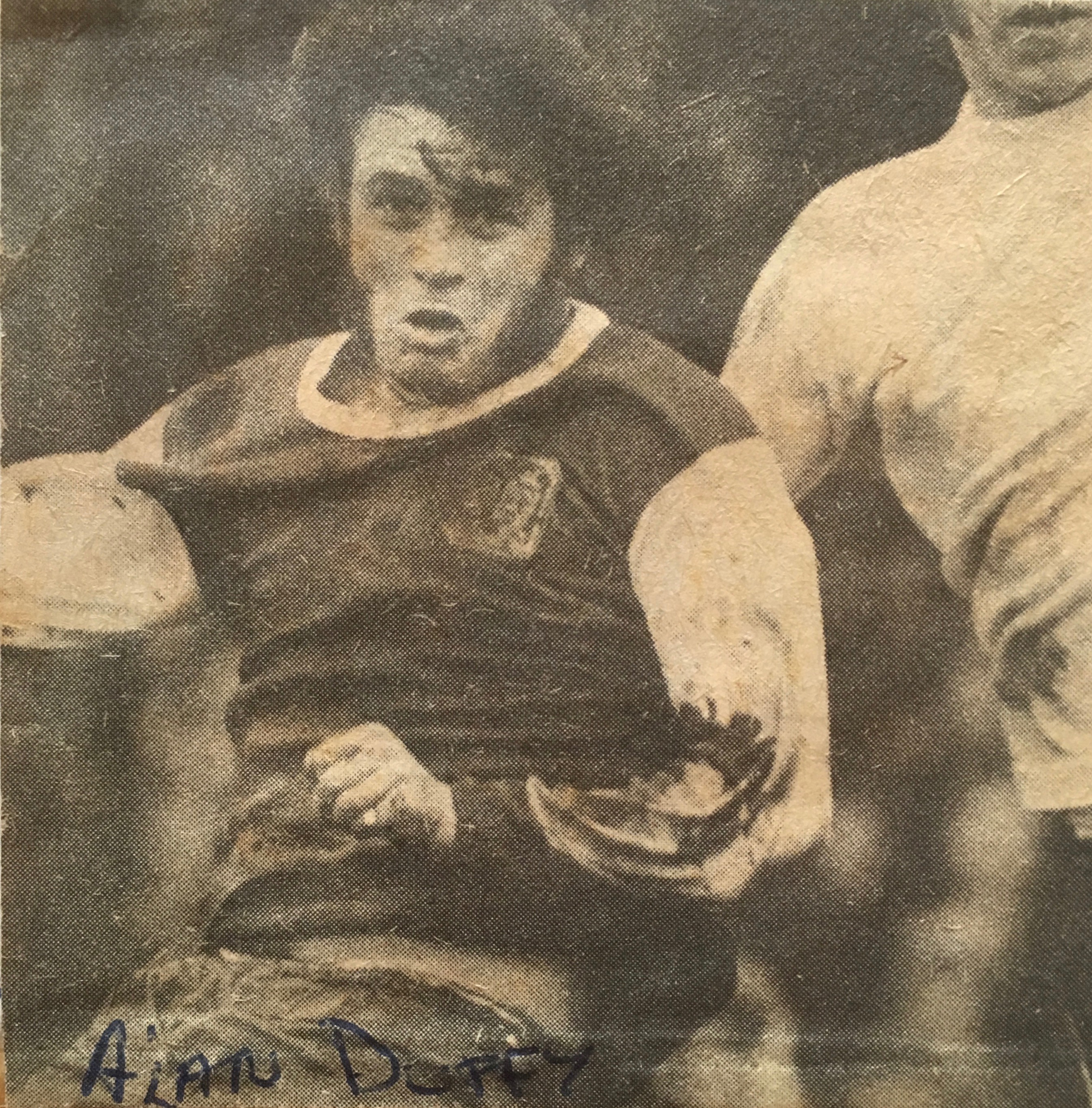
TWENTY-year-old Alan Duffy couldn’t have wished for a better start to his Brighton career than scoring a belter on his debut.

A £10,000 signing from Newcastle United, he was quickly off the mark on 17 January 1970 in a 2-1 Third Division win over Bradford City.

He appeared to be “the Third Division answer to George Best by beating two Bradford players and smashing a ferocious shot in off the crossbar” according to Seagulls TV, which recounted he was a “stocky striker with a robust style”.

Fan Mo Gosfield, posting on North Stand Chat in January 2011, described the goal as “one of my top 10 Albion moments, because it took your breath away”.

Mo added: “He had all the makings of a cult figure at Brighton. The swagger, the shock of hair, the slight beer belly. I loved him, but he never quite lived up to that sensational start.”

The fans in the old North Stand adapted the Hare Krishna chant to incorporate his name and, after that promising debut, the young striker kept his place in the starting line-up through to the end of the season.

He repaid manager Freddie Goodwin’s faith in him with five more goals. Particularly memorable were Duffy’s two goals in Albion’s 2-1 win over Reading on Good Friday when a huge crowd of 32,036 packed into the Goldstone.

2 AD action BW.jpg

Brighton were top of the league going into the game and looking a good bet for promotion.

Former goalkeeper Brian Powney discussed that game – and Duffy – when he was interviewed by Brian Owen for an article in the Argus on 20 February 2017.

There were question marks over both Duffy’s goals – a suspicion of handball for one, the other possibly offside – but, while both stood, a seemingly good goal from the youngster was ruled out later on.

Looking back on the game was a painful reminder for Powney, who dislocated a finger which physio Mike Yaxley had to put back while out on the pitch, it being the era long before substitute goalkeepers were available.

Unfortunately, too, Albion blew their promotion chances by losing four of the last five games after that Easter win over the Royals.

The only other points collected came in the penultimate game, a 2-1 home win over Rotherham, when Duffy again scored twice – one a penalty.

Asked about Duffy in that 2017 interview, Powney said: “Alan was hit and miss, a bit madcap.

“He had a lot of talent and, had he applied himself, he would have had a longer career. He was a good player but not such a good pro.”

Like many a player before and since, a change of manager in that World Cup summer of 1970 didn’t help Duffy’s progress at Brighton although, according to Seagulls TV: “Weight issues and injury woes, starting with a thigh problem on the opening day, marred his 1970-71 campaign.”

Duffy began in the no.8 shirt for the opening two games of that season under Goodwin’s replacement,Pat Saward, but a thigh injury picked up away to Bristol Rovers proved more problematic than first thought and he missed a large part of the first half of the season.

Duffy was out of the side from mid-October to February and, on his return to the starting line-up, was involved in one of the most curious incidents I ever saw at the Goldstone.

On 27 February 1971, against Preston North End, Albion won a controversial penalty at the south stand end of the pitch after Duffy somewhat unconvincingly tumbled in the area.

Centre forward Kit Napier took the spot-kick;  ‘keeper Alan Kelly saved it, but referee Tom Reynolds ordered a retake because of encroachment. As Napier steadied himself for the retake, Duffy stepped forward, pushed his teammate out of the way, took the penalty himself – and missed!

In the Argus, reporter John Vinicombe wrote: “Napier watched aghast as the ball thudded against the bar. Duffy hung his head, as well he might.” The game finished in a disappointing 0-0 draw.

“The manager went mad at him afterwards,” Powney recalled, and Saward promptly dropped Duffy to the bench for the next two matches.

In the meantime, the manager brought in the experienced Bert Murray and Willie Irvine on loan to add some nous and quality. Although Duffy did get back in the side for six games, the rest of the time he was on the bench.

One time when he entered the fray from the bench against Aston Villa, a BBC radio commentator described him as “a square little man – an oddity” but he was soon singing his praises for a through ball that set up Napier to score.

His only goals of the season came in the same match – against Bradford City, in a 3-2 win at Valley Parade on Easter Monday. Duffy struck twice in the second half as Albion came back from being 2-1 down at half-time.

By the season’s end, he had made just 15 starts, and was subbed off on five occasions. There were seven appearances off the bench, plus three occasions when he was a non-playing sub.

In 1971-72, he made just one start – in a league cup match – and was only ever a substitute in the league, coming on 12 times and not being used on 10 other occasions.

A Brighton & Hove Gazette special publication noted that shortly after coming on as a substitute in a second round FA Cup game at home to Walsall in December 1971, he was booked for fighting with the Saddlers’ goalkeeper, Bob Wesson.

A subsequent post-match incident with the goalkeeper led to Duffy being suspended for six weeks. His final appearance saw him come on for Murray in a 4-2 win away to Oldham Athletic in mid-January 1972.

Saward clearly didn’t see Duffy as a long-term part of his plans and when he plunged into the transfer market on deadline day in March, the Geordie was used as a makeweight in the deal which brought Tranmere Rovers striker Ken Beamish to the Goldstone for a fee of £25,000. On the same day, Wolves’ Irish international Bertie Lutton returned to the Albion following a loan spell earlier in the season.

In two years at Prenton Park, Duffy made 33 appearances and scored just twice, before heading back to the north east in 1973 to join Darlington.

In the 1973-74 season, he played 24 games for Darlington without getting on the scoresheet and the following season drifted into non-league football, playing for Consett.

It was quite some fall from that glorious day on 21 September 1968 when he had made his Newcastle first team debut against Manchester United at Old Trafford in a 3-1 defeat.

Born on 20 December 1949 in Stanley, Co Durham, Duffy joined Newcastle in 1966 and on 7 April 1968 won an England Youth international cap when he featured in a 0-0 draw away to Bulgaria.

The game took place in Nimes, France, and was part of the UEFA Youth tournament. Amongst his teammates were Burnley’s Dave Thomas and Steve Kindon and fellow Magpie Alan Foggon.

After that debut at Old Trafford, Duffy didn’t play for the first team again until 9 August 1969, coming on as a sub in a 1-0 defeat v West Ham.

His next chance came on 20 September 1969 when he came on as a sub in a 1-1 draw with Southampton.

A week later, he got a start in another 1-1 draw, this time against Wolverhampton Wanderers. But Toon1892.com recounted: “In his time at Newcastle he was always considered to be Pop Robson’s deputy rather than a first team choice.”

When the Toon decided to let him join Brighton, Duffy had to admit he’d never previously ventured that far south before. At least there was a familiar face waiting for him when he arrived: at the time, Albion had a young Newcastle goalkeeper, Martin Burleigh, on loan.

The matchday programme revealed how manager Goodwin and club secretary Alan Leather had quite a journey travelling to the North East to clinch the deal for Duffy because bad weather caused them to alter their train and plane arrangements.

Leather then had to dash from Newcastle to the Football League headquarters at St Annes on the Lancashire coast to register the paperwork ahead of the 48-hour deadline for new signings so that Duffy would be eligible to play in Albion’s away game at Barrow. He managed it…..but then the match was postponed!

Pictures from my scrapbook either originated in the matchday programme or were published in the Evening Argus. Also featured, a special publication produced by the Brighton & Hove Gazette.

Howard Wilkinson – aka ‘Sergeant Wilko’ – began coaching at Albion

wilko bhaYORKSHIREMAN Howard Wilkinson was a key part of the first Albion side I watched. The former Sheffield Wednesday player was a speedy winger in Freddie Goodwin’s 1969 team.

But away from The Goldstone, he had already been sowing the seeds of his future coaching and managerial success.

My father was a founder of local amateur side Shoreham United, a Brighton League team, and the future “Sergeant Wilko” (as the press liked to dub him) was brought in to do some expert coaching with United’s first team.

I well remember as a young boy sitting on the sidelines in Buckingham Park, Shoreham, watching him put the players through their paces with various routines.

I waited eagerly with my autograph book as Wilkinson shared the benefit of his skills and experience with the willing amateurs.

I was chuffed to bits when he rewarded my patience with his signature at the end of the session but who would have thought the man before me would go on to manage League Champions Leeds United as well as the England national team!

I’ve since discovered how Wilkinson had taken his preliminary coaching badge shortly after joining Brighton in the summer of 1966. Readers of the matchday programme were told how Wilkinson was one of six Albion players who were taking the badge at Whitehawk under former Brighton wing half Steve Burtenshaw, who’d turned to coaching that year after his Albion playing career had come to an end.

By the summer of 1968, Wilkinson had already taken his full FA coaching badge at Lilleshall when only 25, and, as well as Shoreham United, he was coaching youngsters at Fawcett Secondary School, Brighton Boys, Sussex University and the Sussex County XI.

Born in the Netherthorpe district of Sheffield on 13 November 1943, he earned early recognition for his footballing ability playing for Yorkshire Grammar Schools and England Grammar Schools.

Wilkinson earned five caps for England Youth in 1962. He scored on his debut in a 4-0 win over Wales at the County Ground, Swindon, on 17 March 1962 in a side that also featured future full England international Paul Madeley (Leeds United).

He also appeared in the UEFA Youth Tournament in Romania the following month when England were beaten 5-0 by Yugoslavia, 3-0 by the Netherlands and drew 0-0 with Bulgaria. The following month he was in the England side beaten 2-1 by Northern Ireland in Londonderry in the Amateur Youth Championship for the British Association.

Wilkinson played local football with Hallam when he started to attract attention and was initially on the books of Sheffield United but it was city rivals Wednesday who took him on as a professional. The manager at the time was Vic Buckingham, known as the pioneer of ‘total football’, the philosophy later adopted by his protege Johann Cruyff.  But it wasn’t until the 1964-65 season under Alan Brown that Wilkinson broke into the first team, making his debut on 9 September 1964.

“My football league debut was a tough one against Chelsea, who were then top of the league, at Stamford Bridge,” he said. “We forced a 1-1 draw and I quite enjoyed the match.” He also played the following Saturday in the return fixture when they lost 3-2 at home to Chelsea (Bert Murray scored two of Chelsea’s goals). Wilkinson made 12 appearances across the season as Wednesday finished sixth in the old First Division.

The following season he scored both Wednesday goals in a 4-2 defeat away to West Ham United on 16 October 1965 and on 8 January he was on the scoresheet in a home 2-1 defeat versus Leicester City, but he only made eight appearances all season, playing his last game for the Owls on 19 March 1966. He wasn’t part of the Wednesday team who lost 3-2 to Everton in the 1966 FA Cup Final.

Wilkinson left Hillsborough for the Albion a few days after England won the World Cup and scored on his debut in the opening match of the season as Brighton drew 2-2 at home to Swindon Town. He was on the mark again two games later getting Albion’s goal in a 1-1 draw at Reading. He was also a scorer in one of the few highlights of that first season, when third tier Brighton beat Jimmy Hill’s top tier Coventry City 3-1 in a League Cup replay.

The winger from Wednesday continued to earn rave reviews for his performances until suffering concussion and a fractured cheekbone during a match away to Middlesbrough. In the days when medicine still had a long way to go, Wilkinson was out of the side for ages.

“I seemed to be out for an eternity after that injury,” Wilkinson told journalist Spencer Vignes in a matchday programme article. “They didn’t have the technology back then that they do today to mend injuries like that. I had an operation, they reset it, and I was on fluids for ages. It wasn’t nice.”

I’m grateful to the excellent Albion retro blog, The Goldstone Wrap, for digging out a quote from Wilkinson’s 1992 book, Managing to Succeed, in which he revealed this nugget about life on the south coast:

“When I was a player at Brighton, under manager Archie Macaulay’s guidance, we had some remarkable preparations for important matches and cup-ties. There were liberal doses of sherry and raw eggs, calves foot jelly, fillet steak, and plenty of walks on the seafront where we were taken to fill our lungs with the ozone.”

In five years with Brighton, he made 130 appearances (plus 17 as a sub), scoring 19 goals. He always had an eye towards what would happen after his playing days, explaining: “It was during my last year at Brighton that I decided to try and do a teaching qualification combined with a degree, ready for when I finished playing.”

He moved on from the Albion at the end of Pat Saward’s first season, having made only 18 starts under the new Irish manager. Jim Smith had contacted him to ask if he would join him at Boston United as player-coach. “It turned out that I would be on just as much money as I was at Brighton, even though Boston were non-league, so I went.”

Wilkinson enrolled on a degree course in Physical Education at Sheffield University and over four years combined coaching and playing with being a student, a husband and a father. On top of that, he ended up as manager after Smith left. Boston won the Northern Premier League title four times in his six years at the club and people started to take notice.

The FA appointed him as their regional coach for the Sheffield area and by 1978 he was helping out Dave Sexton and Terry Venables with the England under-21s. In December 1979, he joined Notts County as a coach under Jimmy Sirrel, eventually taking over as team manager for the 1982-83 season when County were a top-tier side.

In June 1983, he returned to Wednesday as manager and, in his first season in charge, steered them to promotion from the second tier. He kept them among the elite for four seasons.

Undoubtedly the pinnacle of his career was guiding Leeds United to the League Championship in 1992. He moved to Elland Road in 1988 and built a decent side captained by the future Scotland manager Gordon Strachan.

They won the last of the old Football League Division One titles and, remarkably, to this day Wilkinson remains the last English manager to achieve that feat. Not surprisingly he was that season’s Manager of the Year.

United fanzine The Square Ball had only good things to say about the man in a 2011 article. “Howard Wilkinson gave Leeds three fantastic seasons of unforgettable glory in 1989/90, 1990/91 and 1991/92; and the Charity Shield at Wembley and the European glory nights against Stuttgart and Monaco stand with the best memories of Leeds’ modern era. More than that, he gave Leeds United back its sense of justifiable self-worth; no longer living in the past, no longer derided in playgrounds, Leeds were a proper football club again, fit for the modern era.”

Sacked by Leeds in 1996, he then began to move ‘upstairs’ so to speak and was appointed as the Football Association’s technical director as the forerunner to several executive-style appointments.

However, he twice found himself in temporary charge of the England national team, firstly after Glenn Hoddle was forced to resign.

He oversaw a 2-0 defeat to France in a friendly at Wembley before Kevin Keegan took the reigns. Twenty months later he stepped into the breach again when Keegan quit and took charge of a World Cup preliminary match in Helsinki, England drawing 0-0 against Finland.

After England, he had a brief unsuccessful spell at Sunderland, assisted by Steve Cotterill, and later was involved in and around the boardroom back at Hillsborough.

Wilkinson’s work as technical director of the FA between 1998 and 2002 has been hailed as having a major impact and influence on the domestic game, providing a blueprint for the subsequent building of the National Football Centre at St. George’s Park.

In the 2024 New Year Honours List, having just turned 80, Wilkinson was awarded an OBE for his services to football and charity, including ongoing work as chairman of the League Managers Association. LMA chief executive Richard Bevan OBE said: “Howard’s legacy in English football may be one of the most unheralded yet important in the modern game.

“Universally respected and loved by his colleagues and peers in the game, he has built an association of professional football managers, which is globally recognised as one of the most progressive organisations in world sport.

“As one of English football’s greatest thinkers, he has supported thousands of managers, coaches, players and administrators in the game to fulfil their potential and build impactful careers in football.

“He has achieved so much in his life, whilst retaining the values, humility and decorum that were instilled in him as a young coach, passing on these values to everyone he has worked with and for.”