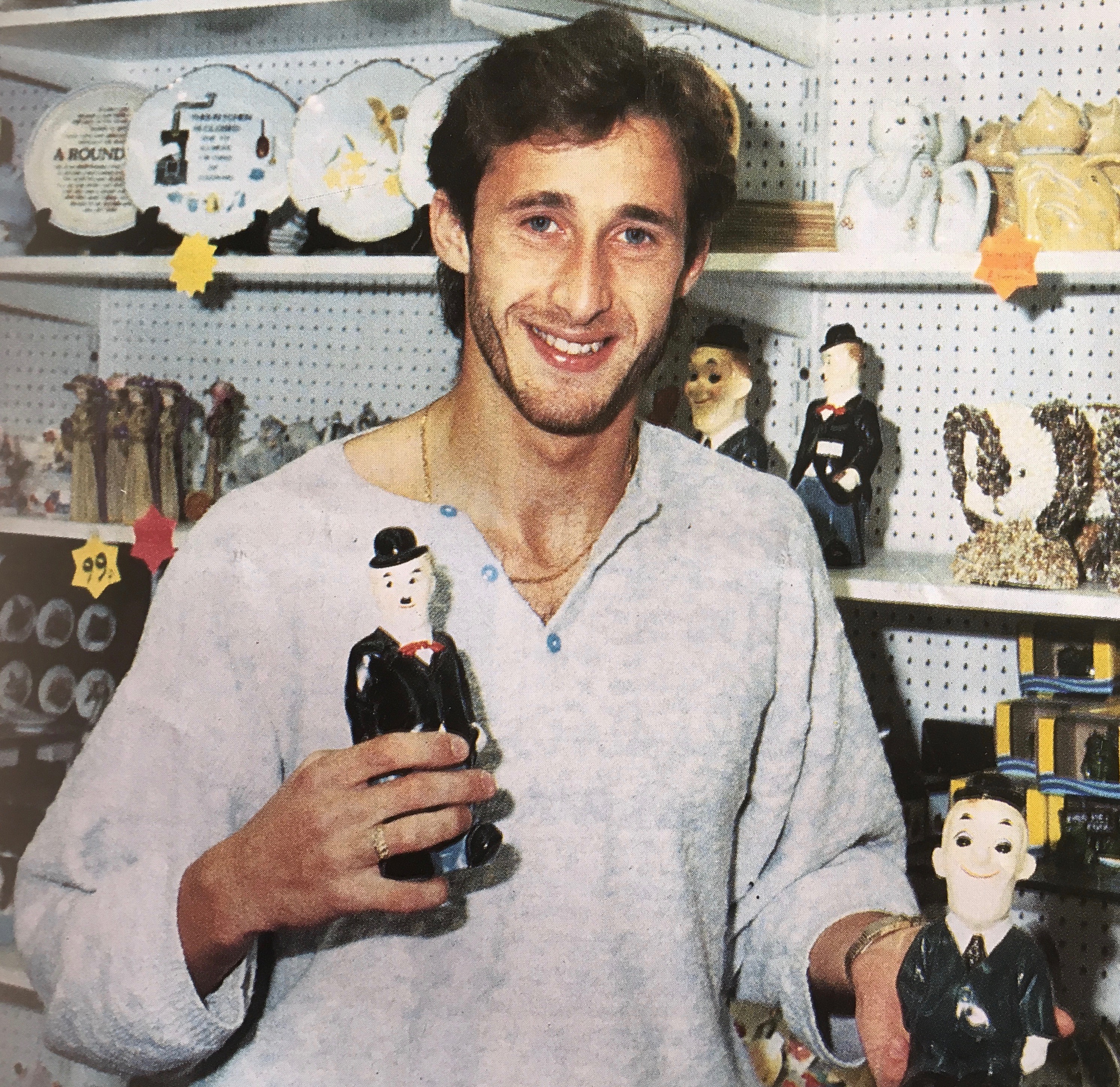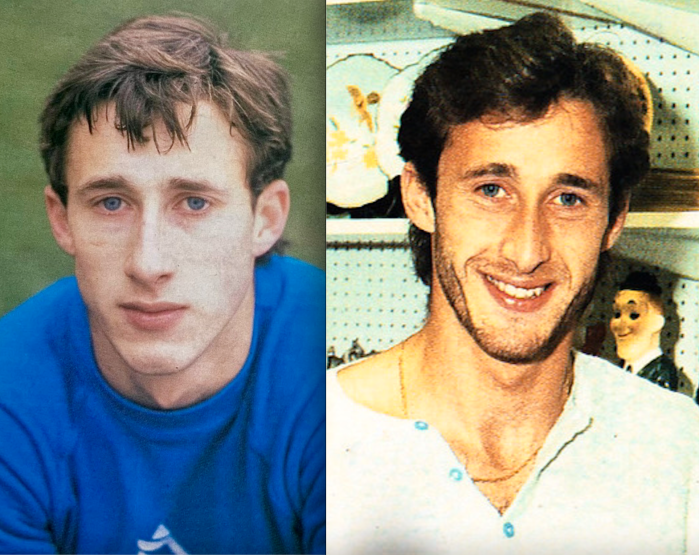
The FA Youth Cup winner with a sweet left foot

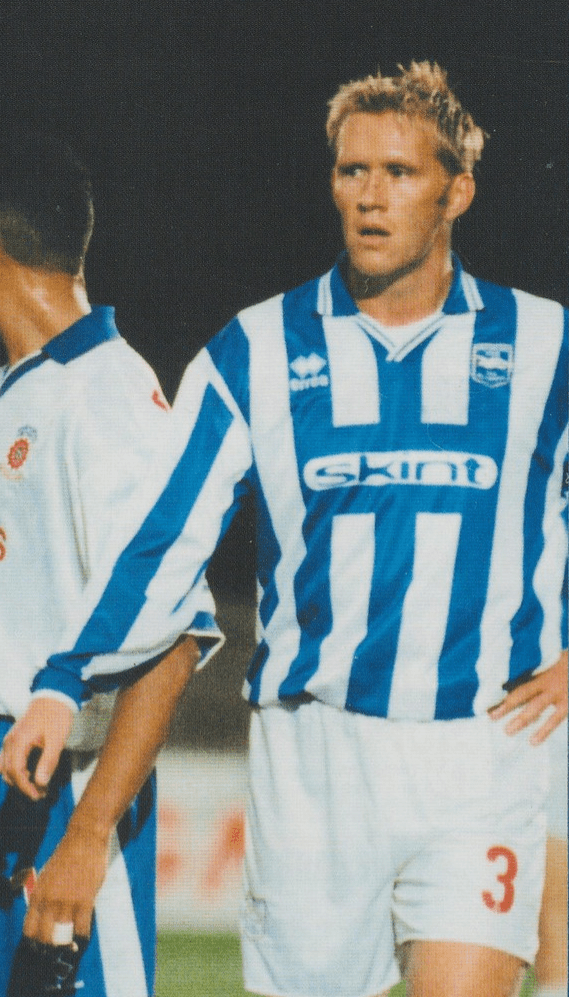
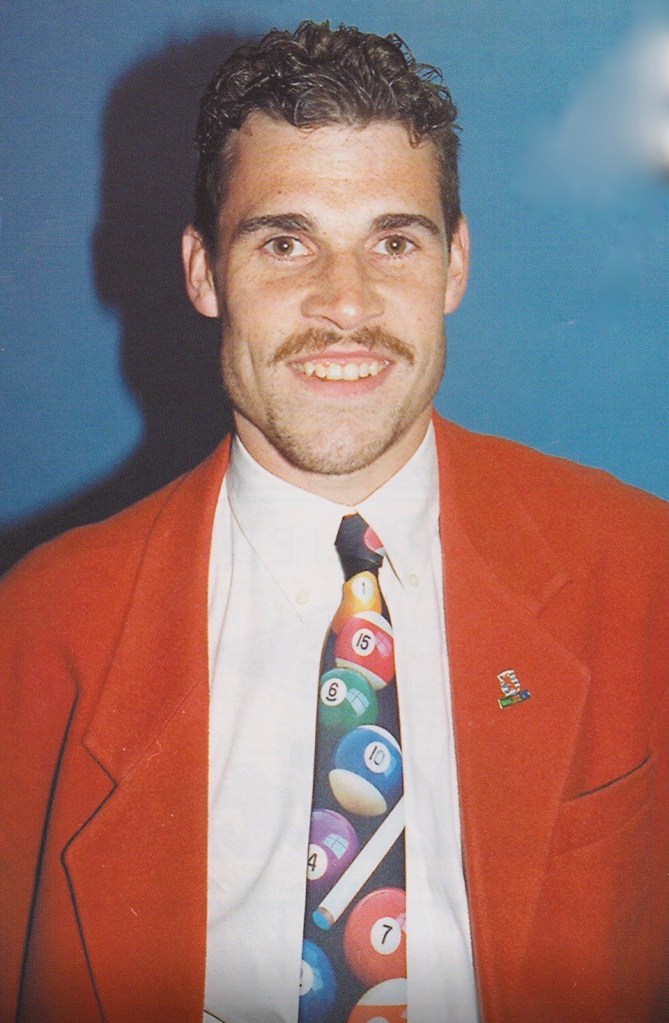
PACY DARREN HUGHES made his Everton first team debut two days after Christmas 1983 while still a member of the club’s youth team.

That game at Molineux ended in a 3-0 defeat for the young defender against bottom-of-the-table Wolves who had Tony Towner on the wing and John Humphrey at right-back.

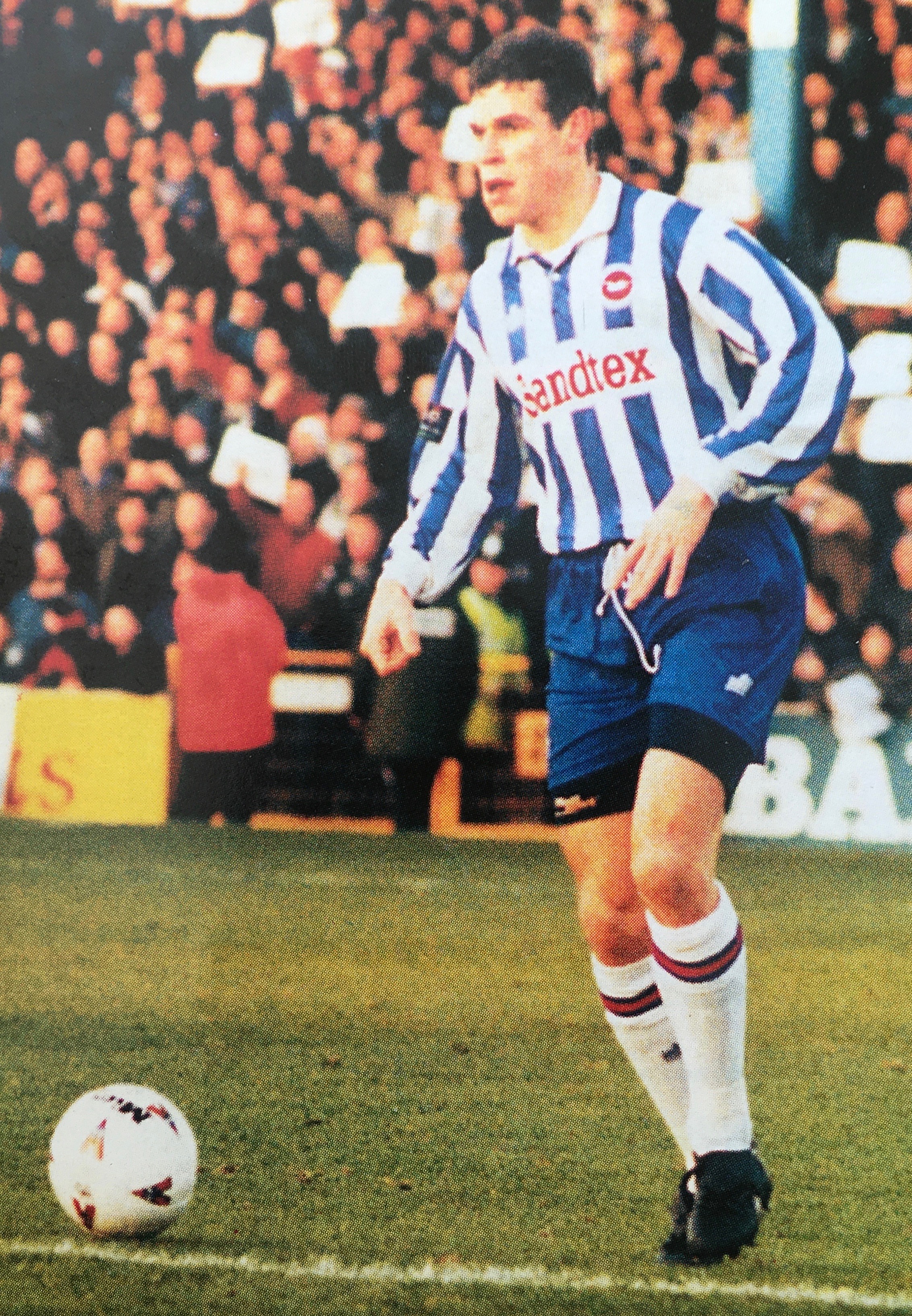
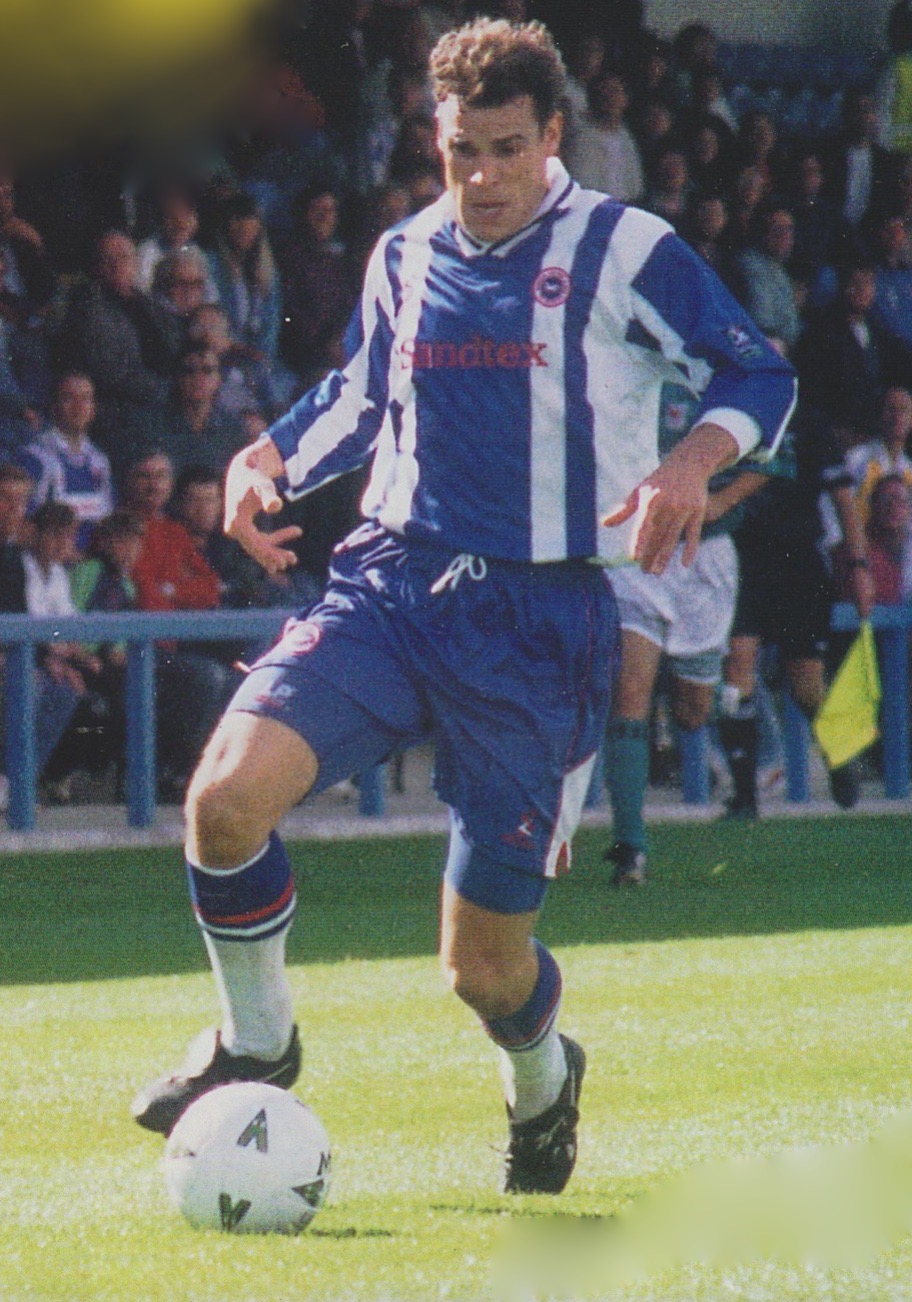
Exactly three years later, a picture of Hughes in full flight was on the front cover of Albion’s programme for their home festive fixture against Reading, the Scouser having signed for the second-tier Seagulls for £30,000.
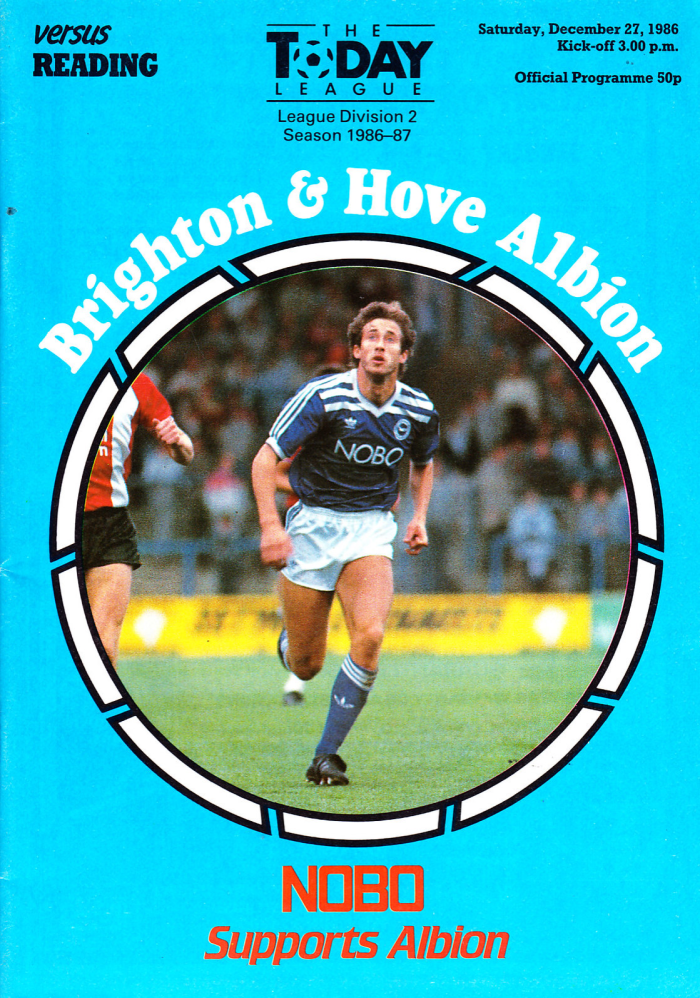
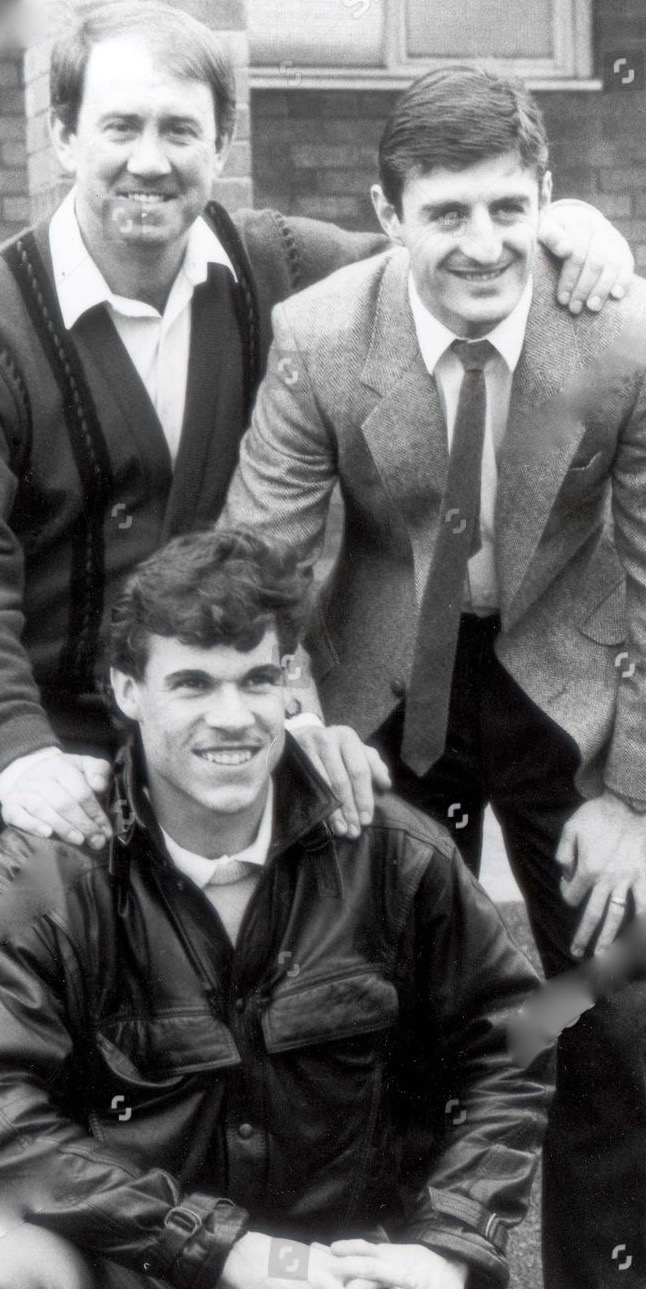
The money to buy him came from the supporter-funded Lifeline scheme which also helped to buy goalkeeper John Keeley for £1,500 from non-league Chelmsford and striker Gary Rowell, from Middlesbrough.

Hughes had made only two more first team appearances for Everton before a free transfer move took him to second tier Shrewsbury Town, for whom he made 46 appearances.

It was while playing for the Shrews in a 1-0 win over Brighton that he had caught the eye of Alan Mullery, back in the Albion hotseat at the start of the 1986-87 season.

In his matchday programme notes, Mullery wrote: “Darren could become a really good player here. I was impressed with him when he played against us recently.

“He started at Everton and came through their youth scheme and had already played in their first team at 18. The grounding he received at Goodison should stand him in good stead.

“He has already shown he is the fastest player we have here, in training he even beat Dean Saunders in the sprints.”

Interviewed for the matchday programme, Hughes told interviewer Tony Norman: “I was quite happy at Shrewsbury. But when the manager told me Brighton were interested in signing me I thought it would be another step up the ladder. It’s a bigger club with better prospects and it’s a nice town as well.”
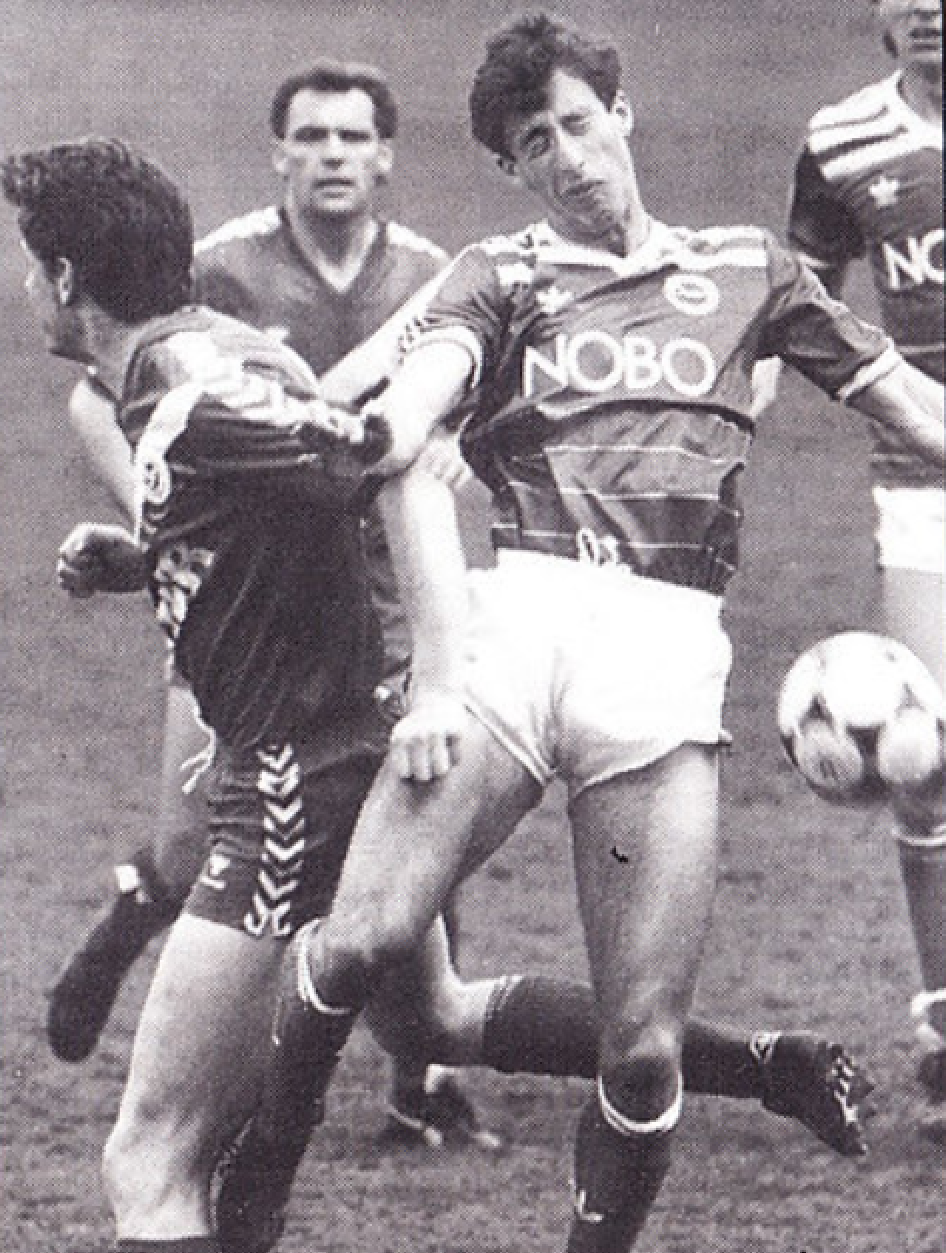
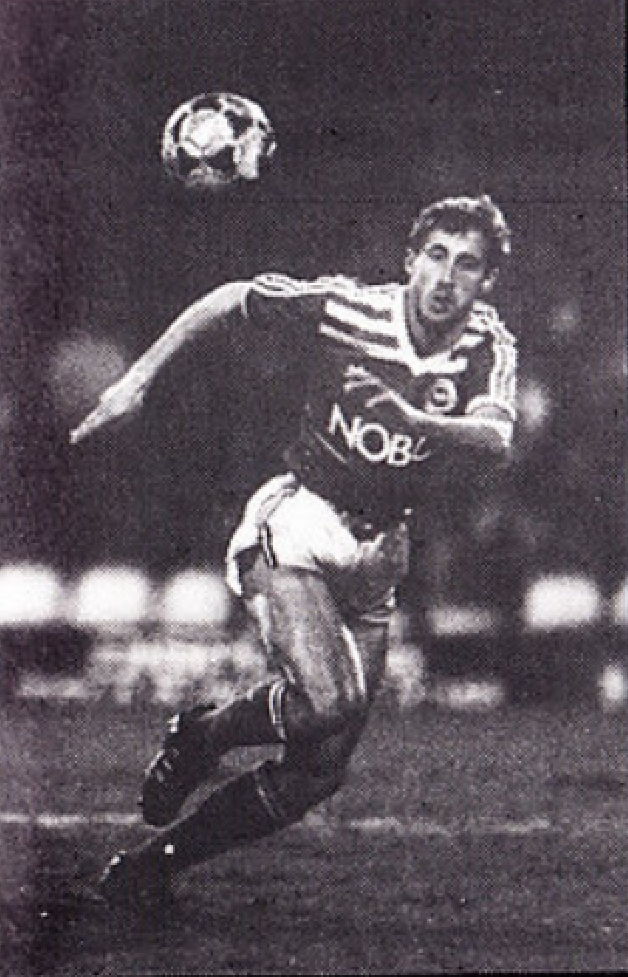
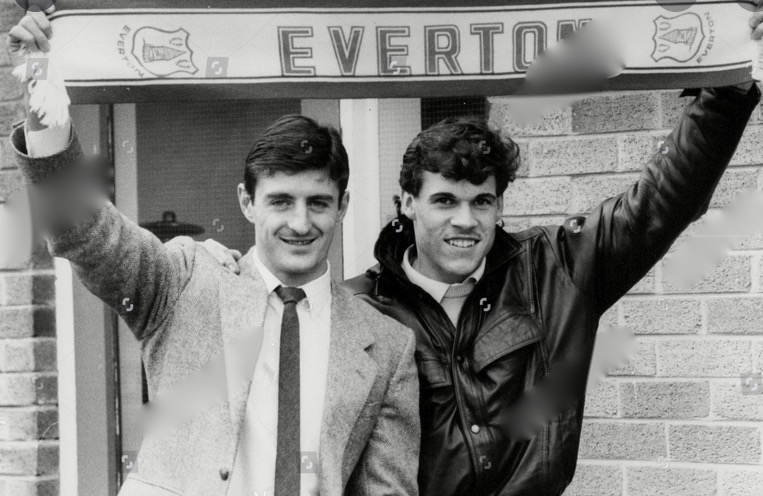
Hughes moved into digs in Hove run by Val and Dave Tillson where a few months later he was joined by Kevan Brown, another new signing, from Southampton.

Hughes meanwhile had made his Albion debut in a 3-0 defeat at home to Birmingham in the Full Members Cup on 1 October 1986 and his first league match came in a 1—0 home win over Stoke City three days later courtesy of a Danny Wilson penalty.

He scored his first goal for the Seagulls in a 2-2 Goldstone draw against Bradford City as Mullery continued to see points slip away. With financial issues continuing to cloud hoped-for progress, 1987 had barely begun before Mullery’s services were dispensed with.

Hughes played 16 games under his successor Barry Lloyd but those games yielded only two wins and the Albion finished the season rock bottom of the division, dropping the Albion back into the third tier for the first time in 10 years.
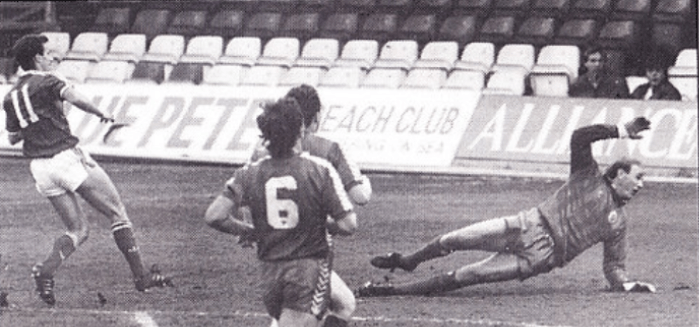
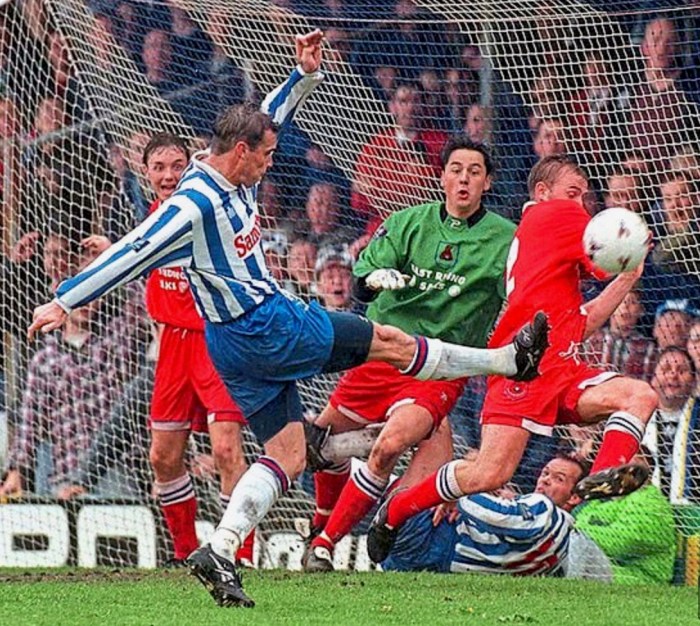
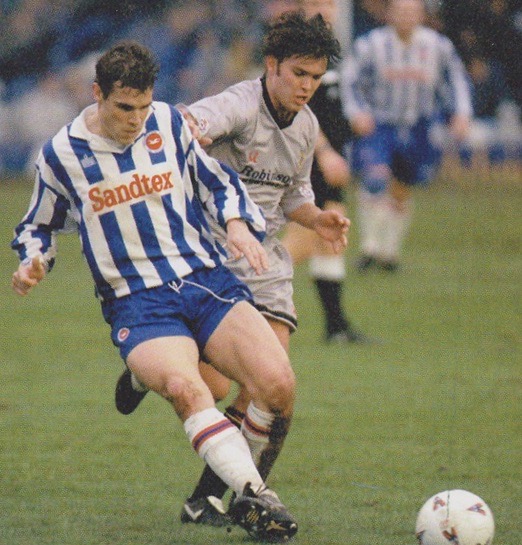
A rare happy moment during that spell was (pictured above) when Hughes slotted past George Wood in a 2-0 home win over Crystal Palace on Easter Monday although that game is remembered more for violent clashes between supporters outside the Goldstone Ground after fans left before the game had finished.

What turned out to be his 25th and final league appearance in a Seagulls shirt came in a 1-0 home defeat to Leeds when he was subbed off in favour of youngster David Gipp.
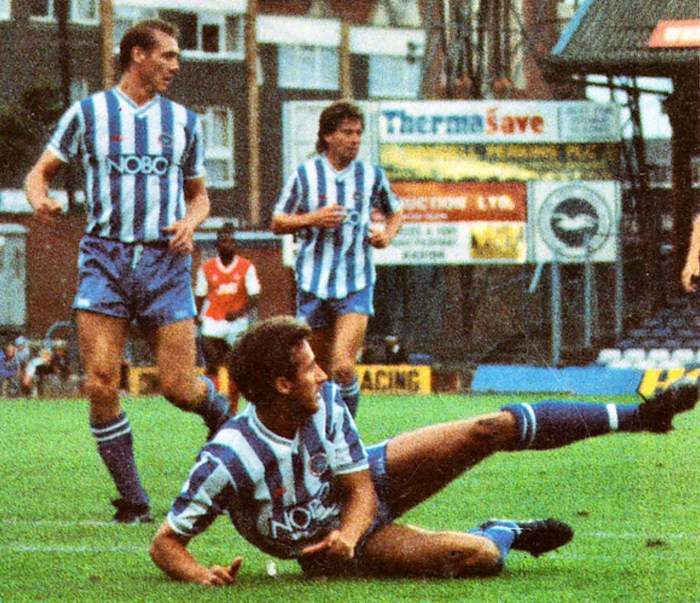
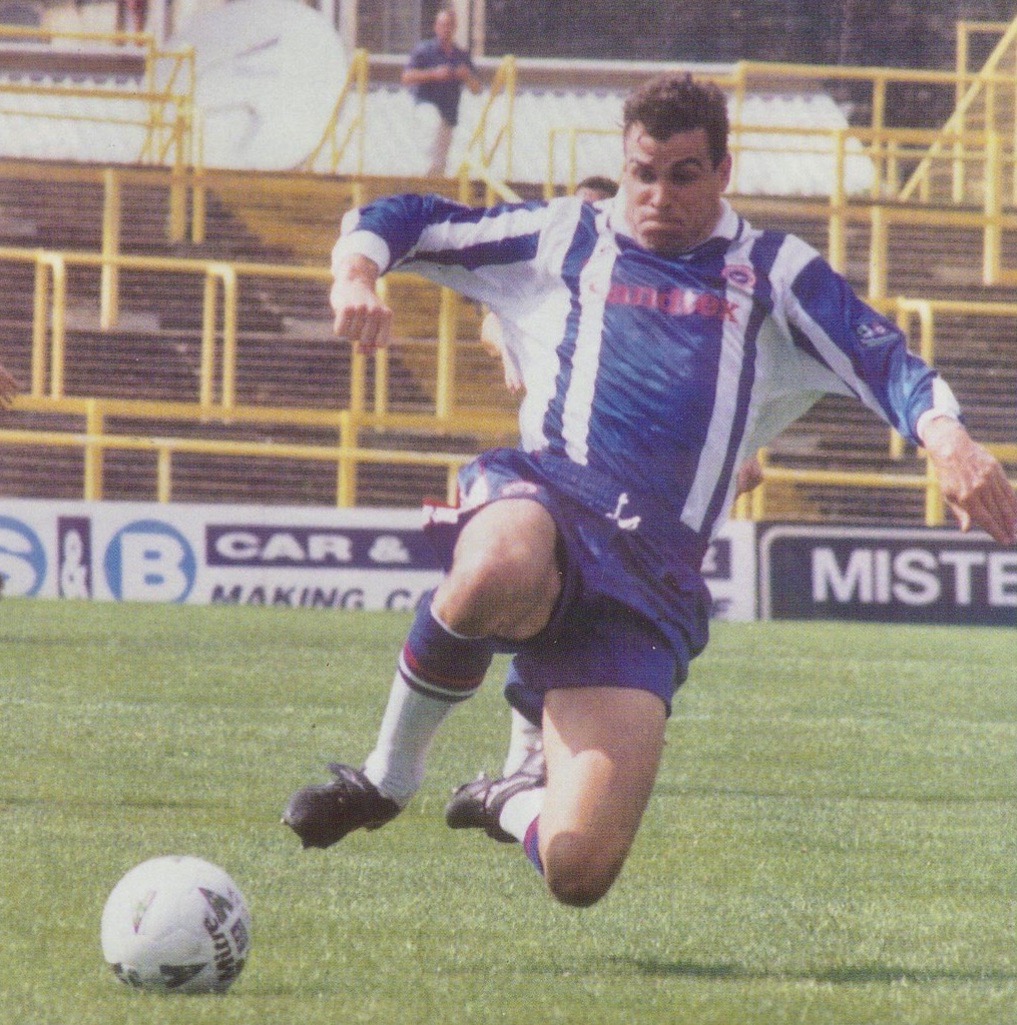
Going to ground in a pre-season friendly against Arsenal

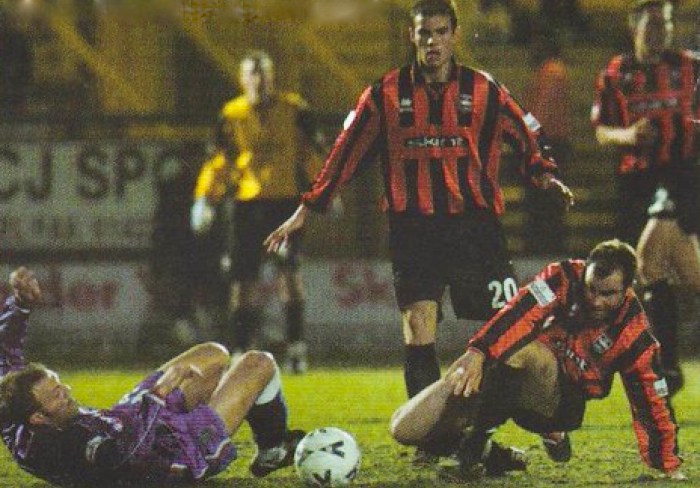
Hughes did start at left-back in a pre-season friendly against Arsenal at the Goldstone in early August (when a Charlie Nicholas hat-trick helped the Gunners to a 7-2 win) but when league action began he was on the outside looking in.
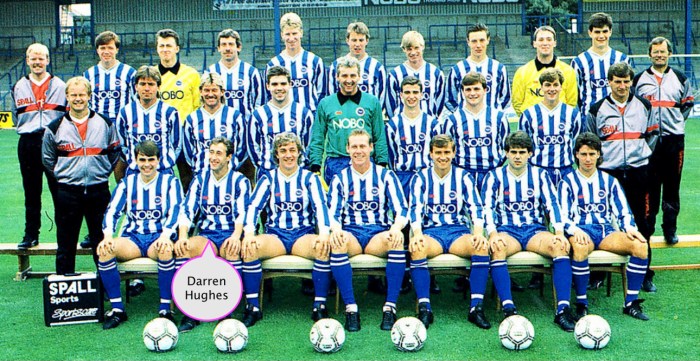
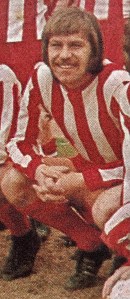
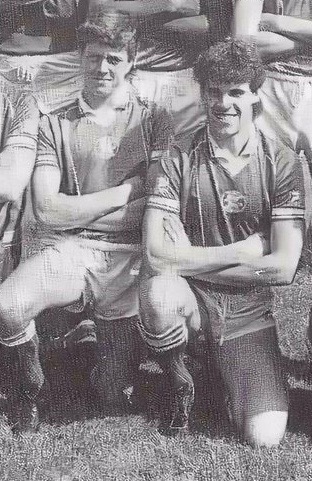
He was in the front row of the official team photo line-up for the start of the 1987-88 season, but Lloyd was building a new side with several new signings, such as Keith Dublin and Alan Curbishley, and young Ian Chapman was also beginning to stake a claim.

Hughes earned mentions in dispatches for his performances in the reserves’ defeats to Portsmouth and Spurs but come September he switched to fellow Third Division side Port Vale, initially on loan before making the move permanent.

Perhaps it was inevitable that when the Seagulls travelled to Vale Park on 28 September, Hughes was on the scoresheet, netting a second goal for the home side in the 84th minute to complete a 2-0 win.

Born less than 10 miles from Goodison Park, in Prescot, on 6 October 1965, Hughes went to Grange Comprehensive School in Runcorn and earned football representative honours playing for Runcorn and Cheshire Boys. He joined Everton as an apprentice in July 1982.
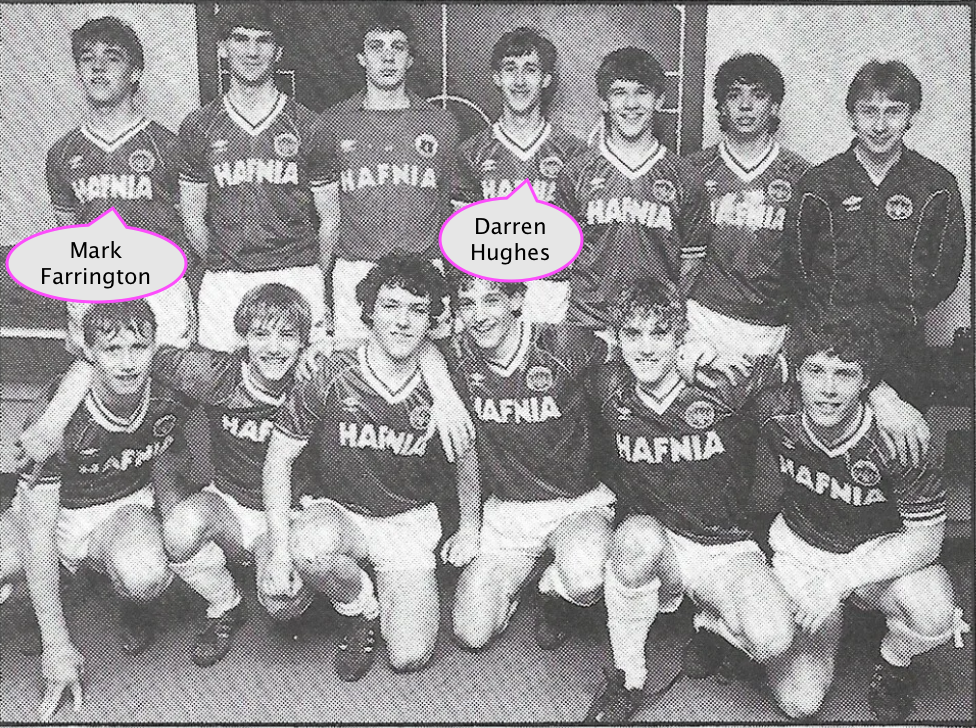
Originally a midfield player, he switched to left-back in the two-legged 1983 FA Youth Cup semi-final against Sheffield Wednesday (when Mark Farrington scored four in Everton’s 7-0 second leg win).

In the final against Norwich City, two-goal Farrington missed a late penalty in the first leg in front of an extraordinary 15,540 crowd at Goodison Park. The tie was drawn 5-5 but the Canaries edged it 1-0 in a replay to win the trophy for the first time.

If that was so near and yet so far, youth team coach Graham Smith saw his young charges make up for it the following year. Hughes was on the scoresheet as Everton won the FA Youth Cup for the first time in 19 years.
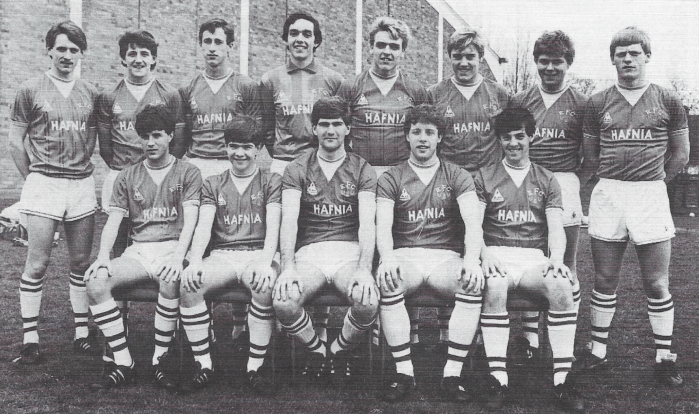
This is how the Liverpool Echo reported it: “Everton’s brave youngsters survived a terrific onslaught to take home the Youth Cup when beating Stoke City Youth 2-0 and winning by a 4-2 aggregate.

“And the man to set them on their way was 18-year old full-back Darren Hughes, who set the game alight in the 62nd minute with a brilliant goal.

“The Everton left-back picked the ball up on the halfway line and surged into the Stoke half before sending a wicked, bending drive past keeper Dawson.”

Eleven days later, there were even more Goodison celebrations when the first team won that season’s FA Cup, beating Watford 2-0 at Wembley.

Not long into the following season, Hughes learnt the hard way not to take anything for granted, as the website efcstatto.com revealed.

Manager Howard Kendall saw Everton Reserves, 2-0 up at half-time, concede six second half goals and lose 6-2 to Sheffield Wednesday Reserves.

He didn’t like the attitude he saw in several players and promptly put five of them, including Hughes, on the transfer list.

“It was important that we showed the players concerned how serious we were in our assessment of the game,” said Kendall. “Attitude in young players is so important. These lads would not be here if we did not think they have skill or we thought they would not have a chance of becoming First Division players.

“At some time, however, they must come to learn that football is not always a comfortable lifestyle. There are times when the only course of action is to roll up your sleeves and battle for yourself, your teammates and your club.”

Even though they were put on the transfer list, he said that they still had a future at the club as long as they behaved accordingly.

“What it does mean is that we shall be watching them very carefully over the next few months to see whether they have the right attitude in them – because it is a must,” said Kendall.

Hughes did knuckle down and at the end of what has come to be regarded as perhaps Everton’s greatest-ever season – they won the league (13 points clear of runners up Liverpool) and the European Cup Winners’ Cup (beating Rapid Vienna 3-1) and were runners up to Manchester United in the FA Cup (0-1) – he played two more first team games.

They were the penultimate and last matches of the season but were ‘dead rubbers’ because Everton had already won the league title and Kendall could afford to shuffle his pack to keep players fresh for the prestigious cup games that were played within four days of each other.

Hughes was in the Everton side humbled 4-1 at Coventry City, for whom Micky Adams opened the scoring (Cyrille Regis (2) and Terry Gibson also scored; Paul Wilkinson replying for Everton).

Two days later, he was again on the losing side when only two (Neville Southall and Pat Van Den Hauwe) of the team that faced Man Utd in the FA Cup Final were selected and the visitors succumbed 2-0 to a Luton Town who had Steve Foster at the back.

With the experienced John Bailey and Belgian-born Welsh international Van Den Hauwe in front of Hughes in the Everton pecking order, Kendall gave the youngster a free transfer at the end of the season.
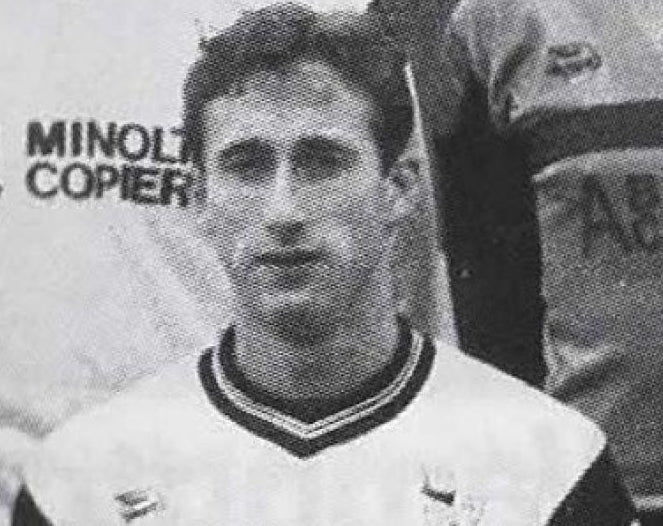
After he left Brighton, Hughes enjoyed some success at Vale, and according to onevalefan.co.uk formed one of the club’s best full-back partnerships together with right-back Simon Mills.

A highlight was being part of the side that earned promotion to the second tier in 1988-89, but his time with Vale was punctuated by two bad injuries – a hernia and a ruptured thigh muscle.

Vale released him in February 1994 but he initially took the club to a tribunal for unfair dismissal. He was subsequently given a six-week trial in August to prove his fitness and, upset with that treatment, he left the club in November 1994.

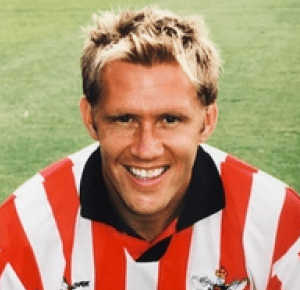
Between January and November 1995, he played 22 games for Third Division Northampton Town. He then moved to Exeter City, at the time managed by former goalkeeper Peter Fox, and made a total of 67 appearances before leaving the West Country club at the end of the 1996-97 season.
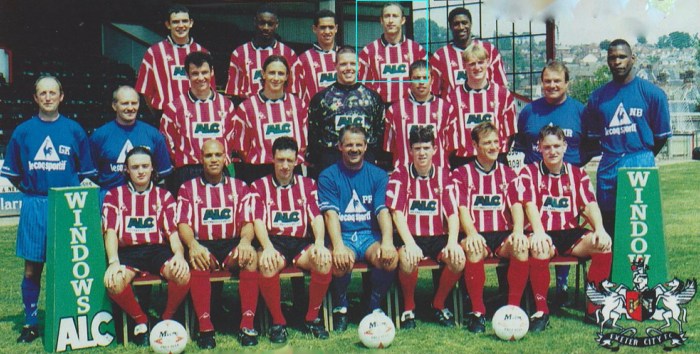
Hughes in an Exeter City line-up

He ended his career in non-league football with Morecambe and Newcastle Town. After his playing days were over, according to Where Are They Now? he set up a construction business.
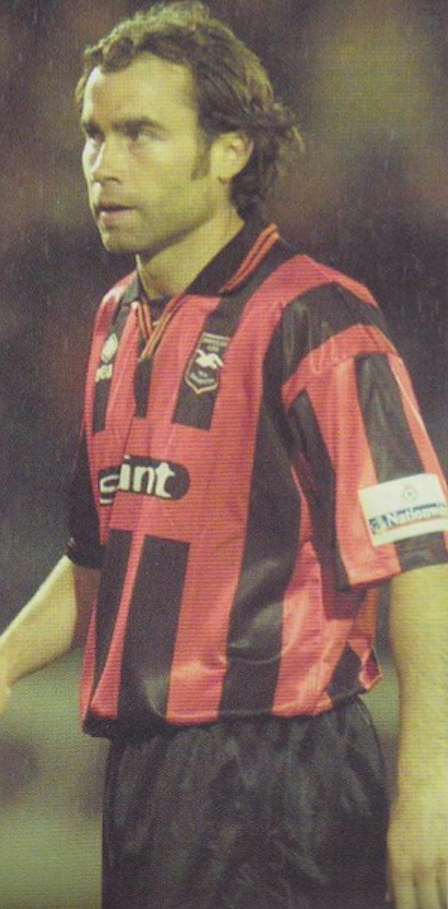
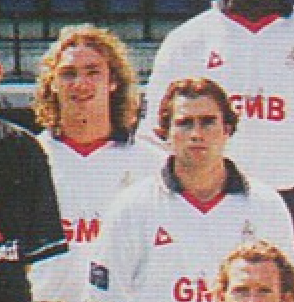
Thomas swapped a relegation struggle for another promotion push

MARTIN THOMAS was a fourth-tier promotion winner with Fulham, Swansea and Brighton – twice under manager Micky Adams.

Thomas played 90 matches for the west London side between 1994 and 1998 and was part of the side promoted from the basement division in 1997 when runners up behind Wigan Athletic.

He was in the Swansea side that won promotion from the same division as champions three years later.

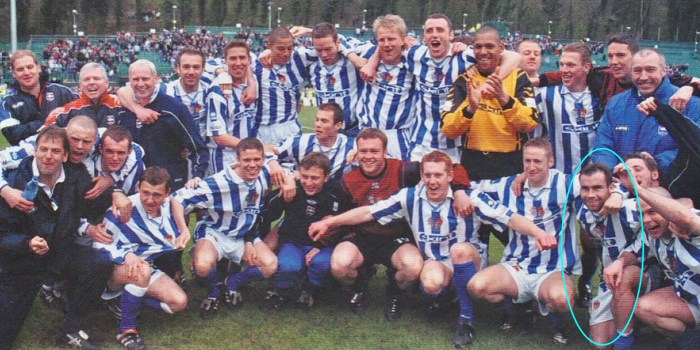
And following his March transfer deadline day switch to the Seagulls in 2001, Thomas was once again a promotion winner from that division when Adams’ Albion topped the table 10 points clear of second-placed Cardiff, who had tried to sign Thomas themselves.

The manager certainly knew what he was bringing to the squad that spring having known Thomas since he’d been a trainee on the books at Southampton, where Adams had spent five years as a player.

Having been a regular at Swansea for two years, he’d been in and out of the side as City struggled near the bottom of the Second Division. He’d made the last of his 24 appearances that season just before Christmas and had missed two months with a bruised ankle bone.

He was on the transfer list after falling out with boss John Hollins and Albion agreed to take over his contract for the rest of the season, although the paperwork was only completed 45 minutes before the transfer deadline.

The Argus noted that Thomas then caught a train to his parents’ home near Romsey and borrowed his mum’s car the following morning to drive to Sussex for his first training session with the Albion. There were plenty of familiar faces to greet him.

Apart from Adams, there was Richard Carpenter, Danny Cullip, Paul Watson, Paul Brooker, and Darren Freeman. (Thomas is pictured below with Freeman at Fulham and warming up as Brighton substitutes)

Carpenter told The Argus: “I played with Thomo at Fulham for just under two seasons. He is a hard-working player who puts his foot in and never gives less than 100 per cent.

“I would say he is much the same as Charlie (Oatway). Both are tough tacklers and very aggressive.”

There’s no love lost between Swansea and their south Wales rivals Cardiff City and Adams’ former no. 2, Alan Cork, who was boss at the Bluebirds at the time, admitted to The Argus that he’d hoped to sign Thomas for their own promotion push.

“I tried to take Martin until the end of the season two weeks before Micky got him, but Swansea wouldn’t deal with us,” said Cork. “Martin is a very aggressive, up and down midfielder,” he said. “He has a lot of pace, works his heart out for the team and is a good all-round player.”

The player himself told The Argus: “I wanted to get away because I need to be playing and I am excited about coming here. I made my mind up straight away.

Thomas in the heart of the goalmouth action for Brighton

“It looks like Brighton are going up and I just hope I can help them get there. The lads have done all the hard work so far this season. I just hope I can add that little bit more.”

It certainly looked like a smart move for a player who’d twice before played a part in winning promotion from the basement division, and Swansea supporters were sad to see him go.

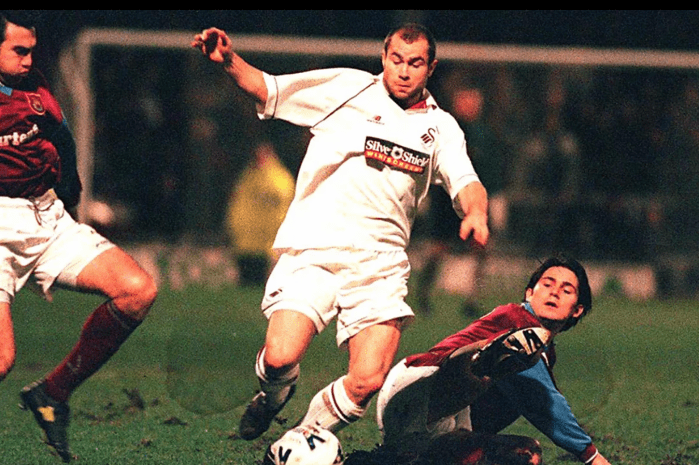
The previous season he’d been headline news after scoring the only goal when the Swans knocked Premier League West Ham out of the FA Cup in a third round replay at the Vetch Field.

Thomas, evading a Frank Lampard tackle, hit the headlines when scoring in Swansea’s FA Cup win over West Ham.

He’d already gone close to breaking the deadlock midway through the first half when he beat Hammers’ goalkeeper Shaka Hislop only to see his shot hit the crossbar. Eight minutes later he hit the target from 25 yards, firing into the bottom corner of the net. Swansea duly became the first Third Division side to knock a Premier League side out of the FA Cup.

Swansea supporters’ leader Keith Haynes reckoned: “Brighton have definitely got a bargain.

“All the Swansea fans I know are fed up that Martin has gone. Every side needs a grafter in midfield and we haven’t got one now.

“He is the sort of battling, hard-tackling player you will get 100 per cent from whoever he plays for. He has been one of the favourites at Swansea because he scores crucial goals as well.”

Haynes added: “He is a top man, the type you need either to get out of trouble or get out of the division you are in.”

Thomas made his debut as a substitute for skipper Paul Rogers in a 2-0 home win over Mansfield Town, the first of seven involvements off the bench.

His only start came in the penultimate game, a 0-0 draw away to Halifax Town. Adams made numerous changes to the side that had clinched the championship at Withdean two days earlier when promotion rivals Chesterfield were beaten 1-0 by defender Cullip’s goal.

Thomas joins in promotion celebrations at the Withdean Stadium

Born in the New Forest town of Lymington on 12 October 1973, Thomas was a trainee with Southampton and signed professional terms for them in June 1992.

But he left without making a first-team appearance, moving to east London to join Leyton Orient in March 1994. He scored on his debut, ironically in a 2-2 draw with Fulham, a week after the Os had lost 2-0 at Brighton (Robert Codner and Andy Kennedy with the goals). He scored again in a 3-2 home defeat to Port Vale but only made five appearances in total.

Next stop was Craven Cottage which was to be his home for the next four seasons.

Thomas and Brooker were among the scorers when Third Division Fulham beat Second Division Swansea 7-0 at Craven Cottage in the first round of the 1995-96 FA Cup – the biggest victory over a team from a higher division in the history of the competition. Cusack, Jupp and Conroy (3) were the other scorers.

Thomas didn’t leave the Cottage quite as swiftly as the likes of Aidan Newhouse, Watson, Mark Walton and Cullip after Kevin Keegan and Ray Wilkins were installed in place of Adams, following Mohammed Al Fayed’s takeover of the club.

But in July 1998 he moved to south Wales where former Chelsea, Arsenal and QPR midfielder Hollins had just been appointed Swansea manager.

Thomas scored in first half stoppage time on his debut to give his new club the advantage in the new season opener at home to future employer Exeter City; they went on to win 2-0.

There was disappointment at the season’s end when they lost out to Scunthorpe United at the play-offs semi-final stage but that was all behind them when they topped the division the following campaign.

Thomas had played at the Withdean when Swansea suffered their fifth winless game on the trot on 1 April 2000 but their form eventually returned with four successive wins to carry off the title.

After his cameo in Brighton’s promotion, Thomas stayed in the basement division when he moved on to newly-relegated Oxford United under Mark Wright and then Ian Atkins. But having made only 14 league appearances for Oxford, he moved on again, to Exeter City, in August 2002. 

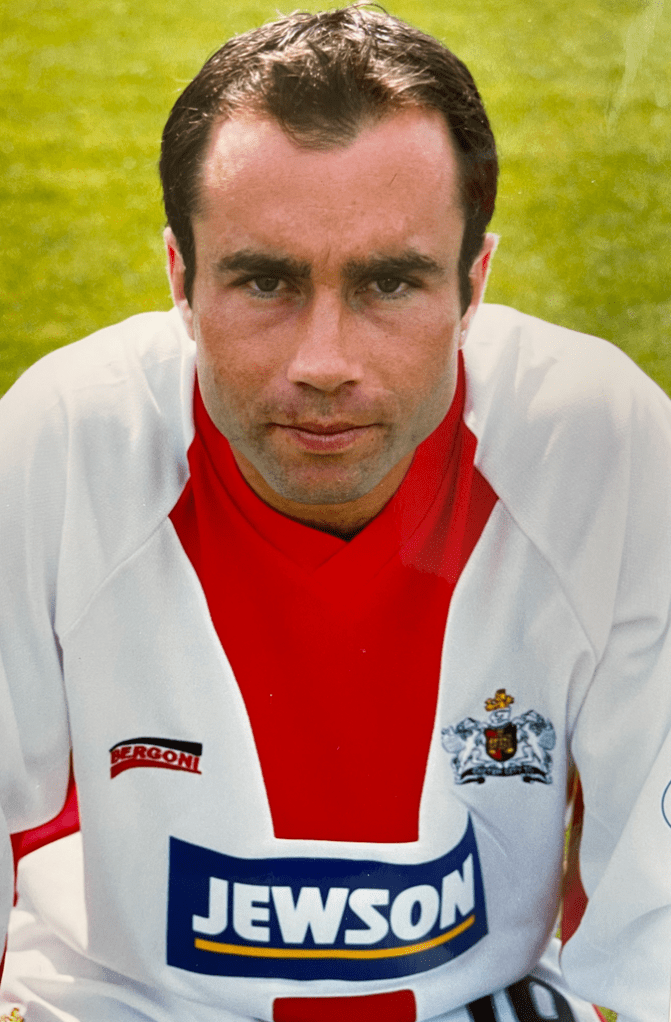
A Grecians turn for Martin Thomas: relegation at Exeter City

I’m indebted to The Grecian Archive to learn that Thomas made his debut as a substitute on the opening day of the season at Shrewsbury Town. He made 22 league starts, with another four appearances from the bench, but was not in the side towards the end of the season which ended in relegation from the Football League.

Thomas appeared in 10 games in the Conference for Exeter but, after reportedly turning down a reduced-terms two-year contract with the Grecians, he joined Isthmian Premier Eastleigh on a free transfer in July 2004.

He was still only 30 but Eastleigh manager Paul Doswell told the Daily Echo that Thomas decided to pack up full-time football to go into a plumbing job with his brother-in-law.

“It’s great news for us to get someone with that much experience on a free transfer,” Doswell told the Echo. “Nicky Banger (ex-Southampton) recommended him last season when we were talking about the need to get a midfielder who gets his head above the parapet when the going gets tough.

“Martin’s that kind of player and he’s very fit for a 30-year-old.”

Doswell added: “What impresses me about him is that he’s very motivated to finish his career on a high with us.”

That said, Thomas later played for AFC Totton and Winchester City before hanging up his boots.

Top goalscorer Fred Binney ousted by one of the best

DEVONIAN FRED BINNEY was a prolific goalscorer for Brighton but the emergence of one of the club’s all-time great players brought a premature end to his stay in Sussex.

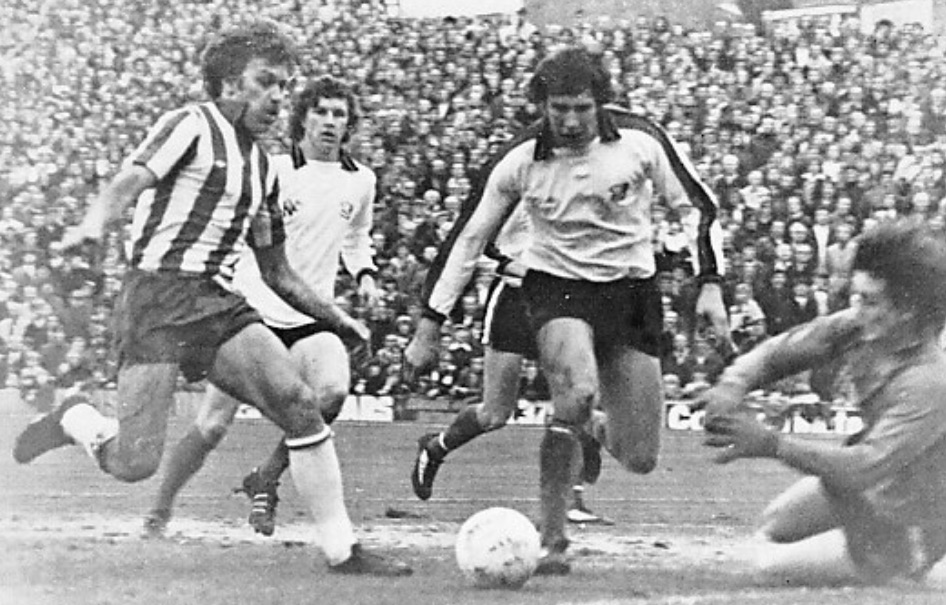
Binney was not afraid to put a head or boot in where it hurt and black and white action photographs in matchday programmes from the 1974-75 and 1975-76 seasons and in the Evening Argus invariably featured goalmouth action involving the moustachioed or bearded Binney.

I particularly remember a shot of him continuing to play wearing a bloodied head bandage after he’d cut himself but played on in a home game against Hereford United, a club he later played for and coached.

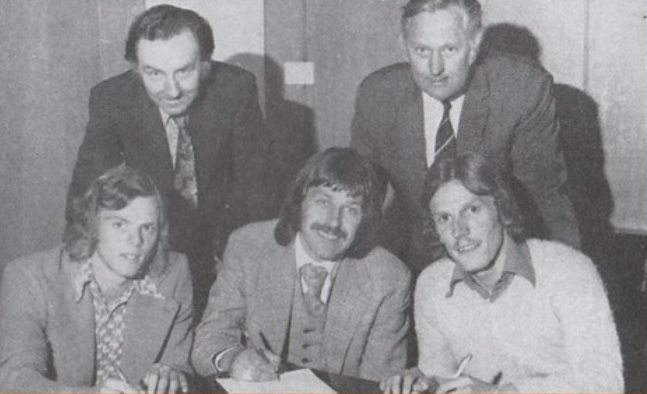
The ‘old school’ centre forward was signed by Brian Clough and Peter Taylor from Exeter City at the end of the 1973-74 season in exchange for Lammie Robertson and John Templeman plus £25,000.

Taylor had sought the opinion of David Pleat, later a manager of Luton, Tottenham and Leicester, who had played alongside Binney for the Grecians.

Mike Bamber and Peter Taylor capture Fred Binney’s signature with John Templeman and Lammie Robertson going to Exeter in exchange

Pleat recalls in the Summer 2025 edition of Backpass magazine: “I told him that he was a clinical finisher, very sharp, had an eye for goal but tended to be caught offside too often.”

Incidentally, Templeman, a Sussex lad who had been an Albion player for eight years, didn’t want to leave but, as he told Spencer Vignes in his book Bloody Southerners (Biteback Publishing 2018), Taylor told him he’d never play league football again if he didn’t agree to the move.

Binney’s arrival came as the former league title-winning duo set about clearing out most of the squad they inherited from Pat Saward as they sought to rebuild. Around the same time, a triple signing from Norwich City saw Ian Mellor, Andy Rollings and Steve Govier arrive.

Clough clearly didn’t fancy the forwards Saward had signed and, as well as using Robertson as a makeweight also let go two previous record signings in Ken Beamish and Barry Bridges.

Binney hadn’t managed to kick a ball in anger for Clough before the outspoken boss left to manage Leeds, but sidekick Taylor felt he owed it to chairman Mike Bamber to stay, and took on the job alone (bringing in ex-Long Eaton manager Brian Daykin as his no.2).

Binney making a splash at the Goldstone

Taylor also recruited Ricky Marlowe, a youngster who’d been a reserve at their old club, Derby County, to play up front with Binney, along with several other new arrivals with past Rams connections, such as Jim Walker and Tommy Mason.

It was not really surprising they thought Binney could do a job for Brighton because in 1972-73 he had scored 28 league goals for Exeter, making him the season’s joint-top goal scorer in the entire Football League (along with West Ham’s Bryan Robson). And in 1973-74, he was voted the PFA Division Four Player of the Year and Exeter City Player of the Year after he’d scored another 30 league and cup goals.

It was said the Grecians had already turned down an offer from Swindon Town before he made the move to Sussex.

With so many new arrivals at the Goldstone, perhaps, not surprisingly, consistency was hard to find in the 1974-75 campaign and Binney didn’t come close to repeating that scoring form with only 13 goals to his name as Albion finished a disappointing 19th in the table.

That all changed in 1975-76 – Albion’s 75th anniversary season – and Binney was on fire, netting 23 goals as Albion narrowly missed out on promotion. Taylor still couldn’t resist chopping and changing Binney’s strike partners. He started out with new arrival Neil Martin, an experienced Scottish international, then had Nottingham Forest loanee Barry Butlin.

When craggy Northern Irish international Sammy Morgan arrived from Aston Villa, it looked like Taylor had finally found his ideal pair, although it took Morgan six matches before he struck a rich vein of form.

Meanwhile a young reserve who’d been blooded in a friendly against First Division Ipswich Town on Friday 13th February 1976 began to find himself included in the first team picture.

He’d been a non-playing substitute three times before a big top-of-the-table clash away to leaders Hereford on 27 March, which BBC’s Match of the Day had chosen to cover.

In the pre-match team meeting, manager Taylor announced that Binney wouldn’t be playing and that Peter Ward would take his place.

“Fred Binney was nice, a great fella; there was no friction between us and I didn’t really have time to think about how he was feeling,” Ward said in Matthew Horner’s 2009 book about him (He Shot, He Scored, Sea View Media).

Just 50 seconds into the game, Ward scored, the game finished 1-1 – but Ward didn’t look back and went on to become one of the club’s greatest ever players.

Binney wasn’t quite finished but it was the beginning of the end. Ward scored again in his second match as Binney’s replacement (another 1-1 draw, at Rotherham) but after a 2-1 defeat at Chesterfield, Binney was restored to the starting line-up in place of Morgan and opened the scoring in a 3-0 home win over Port Vale (Ward and Mellor also scored).

Sadly, it was Albion’s last win of the season. They lost 3-1 away to promotion rivals Millwall and drew the last three games resulting in them finishing fourth, three points off the promotion spots.

Binney gets a shot away at The Den – and later had to make his own way home!

Binney scored a consolation goal in that game at The Den but ended up having to make his own way home when fuming Taylor ordered the team coach driver to leave without him!

Ward recounted the story in Horner’s book: “Pete Taylor had just had a real go at us in the changing rooms and we were all sitting in silence on the coach, wanting to get home as soon as we could.

“Fred was the only one still not on the bus because he was standing around talking to someone. Pete wouldn’t wait and said to the bus driver, ‘F••• him. Leave him. Let’s go’. It wasn’t the sort of place at which you’d want to be left but, luckily for Fred, he got a lift from some fans and managed to get back to Brighton before the coach.”

In his review of the season for the Argus, John Vinicombe wrote: “Few forwards in the division could match Fred Binney for converting half chances into goals,” although he observed that only eight of his goals were scored away from the Goldstone. “Away from home, Binney did not fit into the tactical plan. He looked lost,” wrote Vinicombe.

While the team missed out on promotion because of those draws, young Ward enhanced his credentials by scoring the equaliser in each of them, taking his tally to six goals in eight games.

Taylor decided to team up with Clough once again, at Nottingham Forest, and disappointed chairman Mike Bamber turned to former Spurs captain Alan Mullery who had thought he was going to take charge of Fulham after retiring from playing but was spurned in favour of Bobby Campbell.

As he assessed the strengths and weaknesses of his squad in pre-season training, Mullery quickly took a liking to Ward and gave Binney short shrift when he tried to persuade him that picking the youngster instead of him would get him the sack.

Even so Binney started the first ten games of the 1976-77 season, and scored four goals, but he was subbed off in favour of Gerry Fell on 50 minutes of the September home game v York City when the score was 2-2 and suddenly the floodgates opened with Albion scoring five without reply in front of the Match of the Day cameras. Binney didn’t play another game for the first team.

In the days of only one substitute, invariably it was his old strike partner Morgan who got the seat on the bench. In his autobiography, Mullery wrongly recollects that he sold Binney to Exeter within two months. While there were plenty of rumours of Binney moving on, with Torquay, Reading, Crystal Palace and Gillingham all keen to sign him, he spent the rest of the season turning out for Albion reserves.

“One of the best goalscorers in the lower divisions and popular with the Albion supporters, Binney was perhaps the biggest victim of Ward’s stunning introduction to league football,” Horner observed, noting that in 15 games in which they played together, that Vale game was the only match when they both scored.

Binney left Brighton having scored an impressive 35 goals in 70 matches and, as was often the case at that time, a chance to play in America would prove to be a blessing for him.

Binney up against Welsh international Mike England, left for Albion v Cardiff, right for St Louis Stars

He joined Missouri-based St. Louis Stars in the North American Soccer League, who had John Jackson in goal and former Spurs player Ray Evans in defence along with ex-Albion defender Dennis Burnett and ex-Palace and Liverpool full-back Peter Wall.

In a side managed by ex-Palace and Orient player John Sewell, Binney kept up his impressive scoring record by bagging nine goals in 18 appearances. Fellow striker Barry Salvage, who’d played for the likes of Fulham, QPR, Brentford and Millwall, only scored once in 25 games.

Born in Plymouth on 12 August 1946, it was to his hometown club that he moved on his return to the UK from America.

Binney had been raised in the Barbican area of Plymouth and I am grateful to Ian De-Lar of Vital Argyle for filling in details of his early playing career.

He was a prolific goalscorer in junior football whilst playing for CM Department juniors and was signed by South Western League side Launceston.

While starting work as an apprentice at Devonport Dockyard, he also played for John Conway in the Devon Wednesday League, where he was spotted by Torquay United scout Don Mills.

Torquay took him on as an amateur before he signed a professional contract in October 1966. Although he made his first team debut in September 1967, he was mainly a reserve team player and went on loan to Exeter City in February 1969 before joining them on a permanent basis in March 1970 for £4,000.

He’d scored 11 goals in 24 starts for the Gulls but in view of his future success Torbay Weekly reporter Dave Thomas declared: “If there was a ‘One That Got Away’ story from that era, it was surely Fred Binney.

“The bustling, irrepressible Plymothian was snapped up by United as a teenager, but despite hitting the net at will in the reserves, he could never convince (manager Frank) O’Farrell that he was the real deal.”

It was during the brief managerial reign of former goalkeeper Mike Kelly that Binney joined Argyle in October 1977 and although he scored nine in 18 matches, he wasn’t able to hold down a regular starting spot.

But when the wily former Crystal Palace and Manchester City manager Malcolm Allison returned to Home Park as manager, Binney’s fortunes turned round and, in the 1978-79 season, he scored a total of 28 goals, was the team’s leading goalscorer and ‘Player of the Year’.

In Allison’s first away match, on 21 March 1978, he was rewarded for giving Binney his first senior game for 10 weeks when the predatory striker scored twice in a 5-1 win at Fratton Park. Also on the scoresheet was 18-year-old substitute Mike Trusson, who replaced the injured Steve Perrin. Pompey’s consolation was scored by Binney’s former Albion teammate Steve Piper, on as a sub for the home side.

Binney’s goal-every-other-game ratio at Argyle saw him net a total of 42 goals in 81 games – 40 while Allison was his manager. That Argyle squad had Tony Burns as back-up goalkeeper to Martin Hodge.

Great Pilgrim

Those goals helped to earn Binney 20th place in a list of the top 25 ‘Greatest Pilgrims’ voted for in July 2019.
But Allison’s successor, the former Argyle player Bobby Saxton, had different ideas and sold Binney to Hereford United for £37,000 in October 1979.

He scored six times in 27 appearances for the Bulls before moving into coaching, at first becoming assistant manager to Hereford boss Frank Lord. When Lord left in 1982 to manage the Malaysia national team, Binney went too.

He returned to England in 1985 to become assistant manager to Colin Appleton at his old club Exeter. When Appleton was sacked in December 1987, Binney went with him, taking up a role as recreation officer at Plymouth University. He subsequently became president and coach of its football club, and retired in 2013.

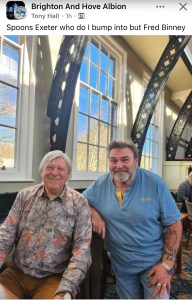
Albion fan Tony Hall posted this picture on Facebook of a chance pub encounter with Binney in 2025

That year, Binney’s son Adam was in touch with the excellent The Goldstone Wrap blog, saying of his dad: “He is not really interested in being lauded and doesn’t look for any kind of adoration. He doesn’t really like the attention, but he does love Brighton & Hove Albion and remembers his time there fondly.”

• In the Backpass article (left), Pleat recalls how, during his time as Leicester manager, Binney was his West Country talent scout. He also tells how Binney and his wife Lesley ran a cream tea shop in Modbury, Devon, for many years and how the former striker enjoyed travelling the length and breadth of the country’s canals on his own longboat, Escargot.

Utility man Jamie Campbell a magnet for frustration

JAMIE CAMPBELL played in the top flight for Luton Town and later filled the left-back berth in the opening months of the season when Albion returned to Brighton after two years in exile at Gillingham.

However, by the time Albion won promotion from the fourth tier in May 2000, Campbell was on the outside looking in, Kerry Mayo having taken his place, and he was given a free transfer halfway through his two-year contract.

Campbell had been one of numerous new arrivals brought in by Micky Adams ahead of the 1999-2000 season having been given a free transfer by newly promoted Cambridge United where he had only missed one match in two years.

Although Albion famously beat Mansfield Town 6-0 in the season opener at the Withdean Stadium, subsequent form had some pondering whether it had been a flash in the pan.

Campbell, the only ever-present defender after eight games (three wins, two draws, three defeats), reassured supporters when he told the Argus: “At Cambridge we had some terrible hiccups at the start of the season. It was a new team, the same as Micky has put together here, and it does take time to gel.

“It’s early days yet. There are a lot of points to be played for and it’s a long old season. It’s far too early to start panicking. Let’s give it until Christmas, see where we are, and take it from there.”

In truth, there were few highlights for Campbell to enjoy in his time with the Seagulls. He put through his own net in only his fourth league outing, heading past the recalled Mark Walton at Darlington when filling in at centre back, although Gary Hart subsequently levelled it up.

He did score (left) in the right end to bag the only goal of the game in a Withdean win over Hartlepool on 6 November 1999, but the following month, when Albion were up against it with several players injured, ill or suspended, Campbell got himself sent off after only 25 minutes in a 2-0 defeat at Swansea City prompting Adams to drop him and relegate him to the reserves.

Campbell was shown the red card by Premiership referee Dermot Gallagher after twice sliding in recklessly on Jason Price in the space of just over a minute. He was Albion’s sixth player to be suspended that season.

“Campbell’s stupidity couldn’t have come at a worse time as a flu-ravaged squad had a hard enough task against the eventual Division Three champions without having to play for over an hour with 10 men,” recalled wearebrighton.com.

Campbell clears from Orient’s Martin Ling

Boss Adams, who had already fined Darren Freeman for a red card at Plymouth, told the Argus: “The boy will be disciplined. They’ve got to learn. In wet conditions like that, good defenders stay on their feet, it’s as simple as that.

“Obviously it’s a worry because with small squads in the third division you can’t afford too many sendings-off.”

Having lost his place, things then got worse for Campbell in February of the new century when he had to undergo a hernia operation, dashing any hopes he might have had of winning back a starting place. With Mayo and new arrival Nathan Jones vying for the left back spot, Campbell became surplus to requirements.

He moved on to Exeter City where he was almost ever-present in the 2000-01 season under Noel Blake and was named the Grecians’ player of the year.

Not long into his first season at St James’s Park, he was interviewed by the local paper and compared the situation at City to his experience with Brighton, because Blake, like his former Leeds teammate Adams, had assembled a new squad of players.

“You’ve got to quickly get to know everyone’s strengths and weaknesses so you can gel as a team,” he said. “He (Blake) has got standards and he wants people to believe in them.

“The boss runs things very professionally, he thrives on running the club like a First Division or even a Premiership club.

“And the good thing with the boss is that he admits he is still learning and his door is always free for us to knock on.”

On his return to the Withdean in the red and white stripes of Exeter three days before Christmas 2000 (above), Campbell’s penchant for own goals once again came to the fore when he deflected a Gary Hart effort that was going wide past the City ‘keeper to contribute to a 2-0 win for the Seagulls.

Not long into the 2001-02 season, Blake was replaced by former City player John Cornforth and, although Campbell played 20 games for the Grecians that season, he switched to Conference side Stevenage Borough in March 2002, where he linked up with former Albion players Simon Wormull and Andy Arnott.

The website boroguide.co.uk seems to be singularly underwhelmed by the Wayne Turner signing declaring: “It was perhaps indicative of the poor form that we found ourselves in that Campbell was often a beacon of mediocrity.

“In defence or midfield, the utility player often had little impact; frustration becoming a buzz word when describing JC’s performances.

“So, it was only natural therefore, that he ended up at Woking. Like many other former Boro’ players who didn’t live up to expectations, all roads lead to Kingfield.”

That move took place in February 2003, and he moved on again a year later, to Havant & Waterlooville where he stayed until July 2005, when he retired from playing.

Born in Birmingham on 21 October 1972, he was a trainee at Luton before signing professional in July 1991. He broke through under David Pleat in the 1991-92 season when Town were relegated from the top flight after 10 seasons at that level.

Young Hatter Campbell

 Campbell made four starts plus nine appearances off the bench as the Hatters lost their place amongst the elite. Pleat’s squad also included a young Kurt Nogan and combative midfielder Chris Kamara.

On other occasions Campbell was part of Town line-ups that included one-game Albion loanee goalkeeper Juergen Sommer and Arsenal loanee striker Paul Dickov. The excellent Hatters Heritage website said of him: “Jamie was regarded as a utility man at Kenilworth Road with his versatility meaning that he was used mainly as a substitute, which sadly ensured that he could never claim a permanent position in the Hatters side.” Somewhat ignominiously, the fans podcast We Are Luton Town named the defender in their worst-ever Hatters XI.

When he found first team opportunities were limited at Kenilworth Road, Campbell went on loan to Mansfield Town and Cambridge United and left Luton in July 1995 to sign for Barnet.

During two seasons at Underhill, Campbell featured in 67 league matches (and scored five goals) before moving back to Cambridge on a permanent basis in August 1997.

While playing for the Us, Campbell put the ball in the wrong net but ended up on the winning side in a memorable second round second leg League Cup match in 1998.

Roy McFarland’s basement league United side knocked out Premier League Sheffield Wednesday 2-1 on aggregate, having nicked a 1-0 win at Hillsborough in the first leg.

Campbell for Cambridge tries to block a cross by Albion’s Paul Armstrong

Fan Matt Ramsay recalled: “Jamie Campbell’s freak headed 20-yard own goal summarised the cruel nature the sport can possess as it handed the big guns the initiative.

“Yet just as supporters began to embrace the familiar underdog emotion of consoling each other with the knowledge that at least it was a valiant effort, the magic moment arrived.

“Just as football is cruel when it goes against you, the success brings delirium. As Trevor Benjamin thumped home a right wing freekick to put United back into the lead, and as the final whistle fifteen minutes later heralded a major cup upset, there was proof that there is reward for the eternal hope that all fans of all clubs require.”

Arron Davies and pal Gareth Bale’s careers diverged!

ARRON DAVIES moved to Nottingham Forest two months after scoring twice against them to shatter their chances of promotion via the League One play-offs.

Davies was in the Yeovil side, managed by Russell Slade, that beat Forest 5-2 in the first leg of their play-off semi-final in 2007 and edged the tie 5-4 on aggregate before losing to Blackpool in the final.

Liking what he saw in the opponents’ line-up, Forest boss Colin Calderwood, later Albion assistant manager to Chris Hughton, promptly signed Davies and his Glovers teammate Chris Cohen for £1.2m.

But a freak leg-break in a pre-season game in Scotland dealt Davies a massive blow and he was mainly on the fringes as Forest made up for the previous season’s disappointment by winning promotion in second place.

While he made ten starts, plus 12 appearances off the bench, Cohen, was a regular in the Forest midfield and became a fans’ favourite.

When Davies only featured in two Carling Cup games for Forest at the start of the 2009-10 season, his old boss, Slade, took him on a half-season loan to League One Brighton.

It wasn’t a completely strange dressing room for him to join; Forest teammate Matt Thornhill was already on loan, having joined as part of the deal that saw Albion defender Joel Lynch move to the City Ground.

He also knew Craig Davies and Andrew Crofts from involvement in the Wales under 21 team for who he won 14 caps and was made captain by Brian Flynn. In 2006, manager John Toshack gave him his solitary full cap for his country, aged just 17, going on as a sub (as did Davies and Crofts) in a 2-1 friendly win over Trinidad and Tobago. It was the match that marked his close friend (and fellow Southampton teenager) Gareth Bale’s debut as Wales’ youngest ever full international at the age of 16 years and 315 days.

On clinching his former player’s signing for the Albion, Slade told the Albion website: “Arron can play on either wing or as an attacking midfielder. He is a player I know very well from my time at Yeovil and I expect him to be a very good acquisition for the club.”

Davies was effectively a straight replacement for winger Mark Wright, who’d joined as a free agent that summer but failed to settle and was sold to Bristol Rovers after only two games.

He told the matchday programme: “Russell is a very good manager. I played under him for one season at Yeovil and we had a very good year that year as he led us to the play-off final.

“That was my most enjoyable year in football. It was a great season for me, getting to Wembley, and eventually getting a move to Nottingham Forest. He did a lot for me and hopefully I can repay him this time round.

“I have played the majority of my career at this level, in this league, and I know what it is all about. I have won promotion with Nottingham Forest and came very close with Yeovil, so I know what it takes.”

In the absence of Dean Cox through injury, Davies made eight starts for the Seagulls, but he was subbed off in seven of the games (Albion only won three of them).

When the 3-3 draw at home to Hartlepool signalled the end of Slade’s reign, it also marked the last game Davies played in the stripes. Unfortunately for him, new boss Gus Poyet preferred alternative options.

Born in Cardiff on 22 June 1984, Davies was brought up in the delightfully named Llantwit Major. He spent four years in Cardiff City’s youth set up but moved to Southampton in 1997 and eventually broke through to become a regular in their reserves during the 2002-03 season.

He had a sniff of involvement in the 2003 FA Cup final when Saints played Arsenal in Cardiff but manager Gordon Strachan didn’t select him in the matchday squad. He subsequently travelled to Bucharest where Saints played in a UEFA Cup tie but again didn’t play.

“I was fairly close to Gordon,” Davies told walesonline.co.uk in December 2018. “He made me travel with the first team and got me involved with training daily. He put me on the bench and spoke to me quite a bit.

“He liked the way I played football and he believed in me.”

He had a brief loan spell with Barnsley in February 2004, where he played four matches, but, on the day Harry Redknapp replaced Strachan as Saints manager, the youngster was released.

“They were a Premier League club at the time and I got close,” he said. “Obviously, though, it wasn’t close enough. I just decided to leave and then that year they got relegated.

“If I’d stayed, perhaps with hindsight I would have played a bit more in the Championship the year after.

“But it was the best decision I made as I had to go out and get first team football. From there, at Yeovil, that’s where my career really started.”

Davies joined Yeovil on a free transfer and went on to score 27 goals in 115 matches over the next three years.

If the move to Forest looked promising, a freak injury during a pre-season game at Motherwell changed everything.

A nudge knocked him off balance and he stumbled on his leg, causing a spiral fracture and a chip on the bone – rather than a clean break – which made it more difficult to fix.

“That was a massive setback,” he told BBC Radio Nottingham. Although he recovered to make his debut in October 2007, his three years in the East Midlands were blighted by injury. He played just 40 games for the Reds. “I couldn’t really get fit,” he said. “I couldn’t get a run of games, I couldn’t get a run of form going. I still have ongoing issues, it is mainly in my calf.

“Obviously if I could turn back time, I would have to miss the game away at Motherwell and not get injured. It’s pretty sad that it didn’t work out. I was pretty gutted about that. If I hadn’t have got injured it would have been a different story.”

When managerial change meant things didn’t work out for him at Brighton, he returned to Yeovil on loan, making a further 10 appearances.

In the summer of 2010, another former Yeovil boss, Gary Johnson, signed him for Peterborough United but after playing 28 games for Posh, Johnson’s successor, Darren Ferguson dispensed with his services.

Next stop was Northampton Town, signed for a third time by Johnson, who had become manager of the Cobblers. He played 19 times and scored four goals for Town, his best return for five years. But, in what was becoming a familiar pattern, when Johnson left, Davies found opportunities limited under successor Aidy Boothroyd.

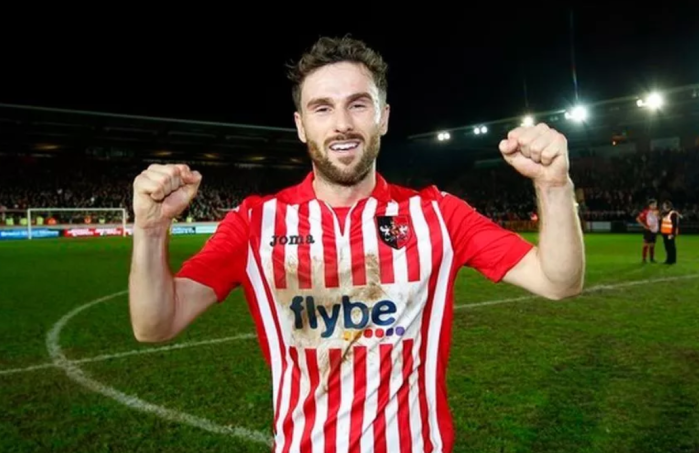
He joined League Two Exeter City in the summer of 2012, with their manager Paul Tisdale telling BBC Sport: “It’s a good opportunity for him and I think he’s the right type of player to fit in with us. He’s an attack-minded player and I had to find some attack-minded players to fit into the squad.”

Tisdale saw it as a chance for Davies to resurrect his career, and over the course of four seasons he played more matches (148) than he’d played for any of his previous clubs, adding a further 10 goals to his career tally.

By 2016, Exeter couldn’t afford to give him a new contract and, ironically, he scored against them for new club Accrington Stanley in a 2-1 defeat at home to the Grecians in August 2016. However, it was his only goal in 10 appearances for Accrington before he retired.

After his playing days were over, he became an agent. “Throughout my time as a player people sort of gauged my advice on things and came to me, so I leaned towards that and did my badges as well,” he told walesonline.

“Even when I was playing League Two football I had friends in the Premier League that were ringing me and asking for advice.

“It was something I always liked doing, so I’m doing it full-time. It’s enjoyable, it’s demanding and it keeps me in football and I can’t ever picture not being involved in football.”

Davies told devonlive.com: “I did look into coaching, I’ve done a few of my badges, but the agent side of it really hooked me in.

“There’s no limits on it, you can be as good as you want, so I’m out, trying to work as hard as I possibly can.”

Knock-out stories of Mark ‘The Fizz’ Leather

MARK LEATHER spent six years as the first team physiotherapist at Anfield having previously been Brighton’s physio in the early days of Barry Lloyd’s reign as manager.

Leather tended the injured when Albion were promoted from the old Third Division in 1987-88 and half of the 1988-89 tier two campaign before moving back to his native north west.

Roy Evans added Leather’s specialist knowledge to the backroom team at Anfield in 1994 but the physio was controversially sacked by his successor Gerard Houllier following a row over the then teenage striker Michael Owen’s fitness.

A sign of the way Leather expected to work with managers came in an interview for Albion’s matchday programme. “Barry Lloyd will respect the decision if I say a player needs more time to get back to fitness,” he told interviewer Dave Beckett. “From that point of view, he is sadly in the minority.

“If it was different, I wouldn’t hang around, but it still amazes me that some clubs don’t realise that if we all stick to what we know things will run more smoothly.”

Leather, who’d spent three years studying for a diploma, and gained experience in the National Health Service, added: “We’re getting away from the old ‘bucket-and-sponge’ image.”

Ahead of his arrival at the Goldstone, Leather had combined his studies with helping out Exeter City, Leek Town, Port Vale and Sheffield Wednesday. And during the Commonwealth Games in Edinburgh in 1986, Leather provided specialist medical support for the weightlifters and wrestlers.

He revealed a funny story against himself in a matchday programme article. Asked to reveal his ‘most embarrassing moment’ he said: “During the Port Vale and Scunthorpe match in 1985, when Port Vale scored, I jumped up out of the bench hitting my head on the dugout roof and needed smelling salts and a cold sponge.”

Perhaps predictably nicknamed ‘The Fizz’, Leather sought to give an insight to his role in his matchday programme interview. “I try to be friends with all of the lads and the management too, but sometimes you really do have to sit on the fence,” he said.

“There’s pressure sometimes from both sides to say a player’s ready to return, but you have to stand back from the situation and give a professional opinion.”

The Albion gave him a regular slot in the matchday programme which he used to give readers updates on the progress of injured players, and in recent times he has become a regular source for the media seeking expert comments on football injuries.

Leather now has his own physiotherapy business and back in the day at Brighton he and his physiotherapist wife Lucy ran a sports injury clinic for the general public two evenings a week.

Born in Bolton on 24 June 1961, Leather left the Seagulls halfway through the 1988-89 season to return to more a familiar part of the country and took a job in the NHS in Chorley, Lancashire.

Leather had been an ardent Bolton Wanderers fan from an early age and his all-time favourite player was Frank Worthington, who had played for the Seagulls during the 1984-85 season.

When Evans stepped up to take charge of Liverpool, Leather was one of his first appointments (along with goalkeeping coach Joe Corrigan, whose playing career had ended with the Seagulls).

Leather and Corrigan together in Liverpool backroom team

An insight into Evans’ decision-making was given in the book Men In White Suits, by Simon Hughes. “With Mark Leather’s arrival, there was an end to the running repair jobs carried out by a succession of unqualified coaches mid game,” he wrote.

“Regularly injured players had long been treated with suspicion at Liverpool. (Bill) Shankly maintained his side were the fittest in the league, with pre-season geared towards building stamina and therefore preventing muscle tears.

“It was a difficult theory to argue against. Liverpool won the 1965-66 title using just 14 players all season. Anyone who suffered an injury was almost bullied into feeling better. ‘Otherwise you really were persona non grata,’ Alan Hansen said.

“Leather’s recruitment meant that (Ronnie) Moran could focus on drilling the first team in the Liverpool way rather than writing what Evans describes as ‘little scribbles’ on an old ledger, charting training patterns.”

Endorsements to Leather’s attributes appear on his website from the likes of Robbie Fowler and Jamie Redknapp, who is quoted as saying: “Mark Leather has been brilliant with me. He has kept me going and it’s because of him really that I’m back to full fitness as soon as I am.”

In 1999 media reports said Houllier was facing “a furious players’ backlash after his escalating row with Liverpool physio Mark Leather took a dramatic twist”.

Leather was left in the UK when Liverpool went to Oslo for pre-season games, a move which was said to be causing disquiet in the dressing room.

Leather clashed with Houllier over the condition of injured Michael Owen

“Leather is one of the game’s top physios and he was publicly praised by Robbie Fowler after helping the striker make a miraculous recovery from a cruciate knee ligament injury last season,” said one report in the Scottish Daily Record. “Other stars, including Michael Owen and skipper Jamie Redknapp, are known to have a close bond with the medic.”

Houllier was angry at the length of time it was taking for Owen to return to full training after a hamstring injury and sent him to a specialist in Germany for a course of treatment.

In 2013, when Owen’s many injuries finally forced him to his retire from the game, he recalled bad decisions in the past that ultimately affected his career.

“I was compromised because I played too much too soon as a youngster at Liverpool. In my opinion, had I been managed differently I would have been at my best for longer as opposed to being a better player,” he said in The Mirror.

“I basically run on two hamstrings on my right leg and three on the other. I lost a third of the power.

“If I hadn’t, 90 per cent of the other injuries wouldn’t have happened and I would have been the all-time leading scorer for England.”

The Mirror article continued: “If there was a defining moment in his career, then it was a snapped hamstring when his then-manager Houllier ignored the advice of his physio and insisted Owen be brought back from injury quickly because he needed his goal threat so desperately.

“The French coach fell out so badly with the physio, Mark Leather, he forced him out, but Houllier later admitted to the mistake, which Owen believes led to the moment that changed his career – on a cold March evening at Elland Road, Leeds, in 1999. ‘My hamstring snapped in two and it was at that point that my ability to perform unimpeded was finished,’ said Owen.

Leather wasn’t finished with football, however, and he moved to his beloved Bolton Wanderers as Sam Allardyce’s physio for a year, before joining former Trotter Peter Reid at the Stadium of Light.

“From a personal point of view, I’ve had the privilege of working with two guys I used to support from the terraces at Burnden,” Leather told the Bolton News ahead of a match between Bolton and the Black Cats in September 2001. “There’s only one team I’ve ever supported and leaving them last year was purely a professional decision,” he said. “Financially and from a facility point of view, it was the right move for me, but I’ll never stop supporting the Wanderers.”

Leather spent four years (2000-2004) as the head physio at Sunderland straddling the managerial reigns of Reid, Howard Wilkinson and Mick McCarthy.

It certainly wasn’t all plain sailing for Leather on Wearside, as the Republic of Ireland winger Kevin Kilbane, now a TV pundit on the BBC, mentioned in his autobiography (Killa: The Autobiography of Kevin Kilbane; Aurum Press Ltd, 2014).

The player was determined to play for his country but the physio obviously didn’t feel he should because he was still trying to recover from an ankle injury.

Leather had already put him through some tough routines to test the strength of his ankle and when they were then on opposing sides in a two-a-side hockey match, Leather caught Kilbane on the tender joint with his hockey stick.

“After a few times and much pain, I finally snapped, and I gave him a left hook and decked him, leaving him with a fat lip and a very surprised look on his face,” Kilbane admitted.

Although he told the assistant manager Bobby Saxton what had happened, nothing more was done about it. Kilbane said: “I later apologised to Mark Leather but was disappointed he didn’t reciprocate. Things were never right between us after that, although we didn’t let it interfere with our professional relationship.”

After Sunderland, Leather switched sports and took on a similar position with Wigan Warriors rugby league side before moving into the world of academia. He spent seven years at Edge Hill University as a senior lecturer in sports therapy and programme leader for the Football Rehabilitation MSc course.

In October 2006,Leather joined Chester City as club physio, with City chairman Stephen Vaughan declaring: “He is a fully qualified physio and has a wealth of experience at Premier League level, so it’s something of a coup to bring him to the Deva Stadium.”

In 2013, he returned to Bolton, spending three years as Head of Sports Performance.

He had also set up his own physiotherapy business in 2008 and, since 2016, has been a senior lecturer and course leader for the Football Science and Rehabilitation MSc course at the University of Central Lancashire.

• Pictures from the Albion matchday programme and various online sources.

Transfer makeweight Storer became all-time Seagulls hero

STUART Storer cemented his place in Brighton’s history when he scrambled home a last-gasp winner in the final ever home game at the Goldstone Ground.

When a seemingly goal-bound header from Mark Morris bounced off the south stand end’s crossbar, fortunately it fell into the path of the onrushing Storer who managed to scramble it over the line among a sea of flailing Doncaster Rovers legs.

That moment on 26 April 1997 is often brought up with Storer via media interviews or simply when bumping into Brighton fans while on his travels. The goal is featured in the pre-match video montage shown on the TV screens at the Amex, so it has been seen by various generations of fans.

“I’m proud that people hold me in so much esteem and I’m very fortunate to be part of the club’s history,” Storer told Brighton & Hove Independent in an April 2017 interview. “Younger people that I teach watch the video and take the Mickey but they’ll never kill my pride. I’m very proud of that moment.”

The goal ensured a vital three points were secured in the fight to avoid relegation from the lowest tier in the Football League. In the one remaining game the following week, Albion managed to get the point needed to stay up while simultaneously relegating Hereford United.

Those crucial matches were just two of more than 150 games Storer played for the Albion under six different managers during an extraordinarily turbulent time for the club.

It was, though, a rather curious playing career all round that saw some of the game’s biggest names – Liam Brady, Alan Ball, Howard Kendall and Ron Saunders – sign him for their clubs. And he carried on playing until he was 42.

In 2006 and 2007, he was part of Everton’s Masters’ six-a-side team in the televised tournament featuring veteran players. Storer’s teammates included the likes of Neville Southall, Adrian Heath and Alan Harper.

Storer had been at Goodison Park the last time the Toffees were the English league champions. However, he didn’t make a first team appearance, invariably being the 13th man in the days when there was only one substitute.

He’d arrived on Merseyside as a transfer makeweight in a £300,000 deal Kendall struck with Birmingham City to sign Wolverhampton-born striker Wayne Clarke – the youngest of five brothers who played league football.

Clarke’s former club, Wolves, were convinced Storer had been included in the deal simply to lower the sell-on amount they were due as part of a previous agreement.

Clarke scored five goals in 10 games – including a hat-trick in a 3-0 win over Newcastle United on Easter Monday – to help Everton win the League Championship. Storer had made only 12 appearances for City in three years so his chances of making an impact with the title-chasers were slim.

Although Storer was on Everton’s books for nine months, he never crossed the white line for the first team and went on loan to Wigan Athletic, making his debut on the opening day of the 1987-88 season in a 4-4 draw away to Notts County (Garry Birtles scored two of County’s goals).

Storer was no stranger to a 4-4 draw. He played in two for Albion in 1997 – on 8 March at home to Orient and on Boxing Day later the same year when they drew at Priestfield against Colchester United (Paul Emblen got a hat-trick for the Seagulls).

Storer started nine games for the Latics and came on as a sub three times under Ray Matthias but they didn’t have the funds for a permanent transfer. Instead, the loan was cut short and, on Christmas Eve 1987, Everton sold him to then Fourth Division Bolton Wanderers for £25,000. He scored his first goal for the Trotters four days later in a 2-1 home win over Stockport County.

He enjoyed seven seasons at Burnden Park as they progressed from the basement division to the third tier under former Liverpool and England full-back Phil Neal.

His time with the Trotters included two trips to Wembley. He was a late substitute in the Wanderers side captained by Phil Brown who beat Torquay United 4-1 in to win the Sherpa van Trophy in 1989. And he was a starter in the Wanderers side who lost the 1991 Third Division play-off final to Tranmere Rovers.

Having broken an ankle and seen Neal switch to become Steve Coppell’s assistant manager at Manchester City, Storer was sold to Exeter City in March 1993 by Neal’s successor Bruce Rioch. Storer made 177 appearances for Bolton, but Rioch’s signing of David Lee had signalled the beginning of the end of his time there.

It was former World Cup winner Ball, then boss of Exeter City, who paid £25,000 for Storer’s services. He made 75 appearances (plus two as a sub) for the Grecians, initially under Ball and then his successor, former Leeds and England left-back Terry Cooper in the 1994-95 season.

Financial problems at the Devon club led to his departure. Early negotiations with a view to a transfer to Brighton initially broke down but Brady finally managed to secure his services for £15,000 in March 1995.

Ironically, he then suffered an injury during his first day’s training with the Seagulls, delaying his first appearance until 29 April. But it was memorable as he scored in a 3-3 draw away to his former club, Birmingham.

He recalled in a March 2019 interview with Michael Walker for the Daily Mail: “I was in an untenable situation at Exeter because they were going into administration. I had to get out. It was from the frying pan into the fire.”

However, Storer said, at the time he signed, he was unaware of the tensions going on around the Albion, although he knew he was the first player signed after a transfer embargo had been lifted. Not for the first time in the club’s history, fans dipped into their pockets to help buy the player.

“I think the fans just wanted to buy a player, any player, and they chipped in,” said Storer.

Born in the village of Harborough Magna, just north of Rugby, on 16 January 1967, he was raised in the village of Dunchurch, just south of Rugby, attending its local junior school before moving on to Bilton High School, where his footballing ability was recognised with selection in the Rugby Boys and Warwickshire Boys representative sides.

Wolverhampton Wanderers scout John Jarman spotted him and he went along to Molineux during the Ian Greaves managerial reign. When a takeover at Wolves saw Jarman and Greaves depart for Mansfield Town, they took the young Storer on as a trainee at Field Mill.

He began playing for their youth side but he was given his Mansfield first team debut aged only 16 in a 4-0 win over Hartlepool.

Storer and Julian Dicks at Birmingham City

Released after only a year with the Stags, he was offered another chance to build a league career by Birmingham who he joined in July 1984, initially signing as a trainee and then becoming a professional. But after limited first team opportunities at St Andrews, Saunders’ successor, John Bond, sold him to Everton as part of the Clarke transfer.

After Storer’s crucial part in keeping Albion in the League, he remained at the club until 1999, playing a total of 152 games and being part of the side who had to spend two years playing home games at Gillingham.

He moved back to Warwickshire on the day the Seagulls played their first friendly at Withdean on 24 July 1999,signing for Southern League Premier Division side Atherstone United, but he was only there for two months before moving to Kettering Town, who were playing in the Football Conference, the tier just below the Football League.

In May 2000, Storer signed for Isthmian League Premier Division side Chesham United and spent a season with them, before moving nearer to his Midlands base and signing for Hinckley United in March 2001.

Storer was made club captain, and as he approached his late 30s, he got more involved with coaching. At the age of 40, Storer was a member of the Hinckley team that achieved their highest ever league position of fourth in the Conference North, losing in the play-off final to deny them promotion.

After eight seasons, he had made more than 300 appearances for the part-timers of Hinckley while working as a PE teacher at various colleges in Coventry.

Storer continued to play until he was 42 and since 2013 has managed Bedworth United, where he is still in charge and also runs academies for boys and girls and A Level courses. He said: “I played until I was 42 at Hinckley in the Conference and then my legs gave way and I had to do something else in football.”

There’s a Michael Portillo style to Storer’s attire here and he admitted in a matchday programme article to having a penchant for “having a bizarre choice in clothing” as well as being an avid collector of hats.

Elite career eluded Darren Hughes after cup-winning start

HughesDARREN Hughes won the FA Youth Cup with Everton but it was lower down the league where he built a long career which included a season with second tier Brighton & Hove Albion.

Born in Prescot on Merseyside on 6 October 1965, left-back Hughes played for Everton in two successive FA Youth Cup finals.

He was on the losing side against Norwich City in 1983 (when among his Everton teammates was centre forward Mark Farrington, who later proved to be a disastrous signing for Barry Lloyd’s Brighton).

The tie went to a third game after it was 5-5 on aggregate over the first two legs. The Canaries won the decider 1-0 at Goodison Park. The following year, Hughes was a scorer, and collected a winners’ medal, as Everton beat Stoke City 4-2 on aggregate.

Meanwhile, the young Hughes had broken into Everton’s first team as an understudy to stalwart John Bailey, making his Everton debut two days after Christmas in 1983.

Unfortunately, the game ended in a 3-0 defeat away to Wolverhampton Wanderers, for whom former Albion winger Tony Towner was playing.

It wasn’t until May 1985 that Hughes next got a first team opportunity, featuring in a 4-1 defeat to Coventry City at Highfield Road and a 2-0 defeat to Luton Town – manager Howard Kendall resting some of the first-choice players after the League title had already been won and ahead of the European Cup Winners’ Cup Final against Rapid Vienna.

With the experienced Bailey and Pat Van Den Hauwe in front of Hughes in the pecking order, Kendall gave the youngster a free transfer at the end of the season, and he joined Second Division Shrewsbury Town, where he made 46 appearances.

Hughes played against Albion for Shrewsbury at Gay Meadow on 16 September 1986, and, two weeks’ later, Alan Mullery, back in charge of the Seagulls for a second spell, signed the 21-year-old for a £30,000 fee.

D Hughes blue

Not for the first time, hard-up Albion had devised a scheme to raise transfer funds from supporters, and the money for the purchase of Hughes came from the Lifeline fund which also helped Mullery to buy goalkeeper John Keeley for £1,500 from non-league Chelmsford and striker Gary Rowell, from Middlesbrough.

Hughes made his Albion debut in a 3-0 defeat at home to Birmingham in the Full Members Cup on 1 October 1986 and his first league match came in a 1—0 home win over Stoke City three days later.

“I was quite happy at Shrewsbury,” Hughes told matchday programme interviewer, Tony Norman. “But when the manager told me Brighton were interested in signing me I thought it would be another step up the ladder. It’s a bigger club with better prospects and it’s a nice town as well.”

The single lad, whose parents were living in Widnes, moved into digs in Hove run by Val and Dave Tillson. He was later joined there by Kevan Brown, another new signing, from Southampton.

Hughes said away from football he enjoyed golf and had played rounds with Steve Penney, Dean Saunders and Steve Gatting.

Brown, in a similar programme feature, said Hughes had been a big help in him settling into his new surroundings. “He has been showing me around the area and we’ve become good friends,” he said. “I’m glad I wasn’t put in a hotel on my own.”

Unfortunately for Hughes, life on the pitch didn’t go quite according to plan.

Mullery was somewhat controversially sacked on 5 January 1987 and, although Hughes played 16 games under successor Lloyd, those games yielded only two wins and the Albion finished the season rock bottom of the division.

The only consolation for Hughes was scoring in a 2-0 home win over Crystal Palace on 20 April. His final appearance in a Seagulls shirt came in a 1-0 home defeat to Leeds when he was subbed off in favour of youngster David Gipp.

Having played only 29 games, mostly in midfield, for Brighton, Hughes joined Third Division Port Vale in September 1987, initially on loan, before a £5,000 fee made the deal permanent.

It must have given him some satisfaction to score for his new employer in a 2-0 win against Brighton that very same month.

Hughes spent seven years with the Valiants, helping them to win promotion from the Third Division in 1989, making a total of 222 appearances, mainly as a left back.

His time with Vale was punctuated by two bad injuries – a hernia and a ruptured thigh muscle – and they released him in February 1994.

However, he gradually managed to restore his fitness and in 1995, between January and November, he played 22 games for Third Division Northampton Town.

He then moved to Exeter City, at the time managed by former goalkeeper Peter Fox, where he made a total of 67 appearances before leaving the West Country club at the end of the 1996-97 season.

He ended his career in non-league football with Morecambe and Newcastle Town but could look back on a total of 388 league and cup appearances for six clubs over a 14-year career.

After his playing days were over, according to Where Are They Now? he set up a construction business.
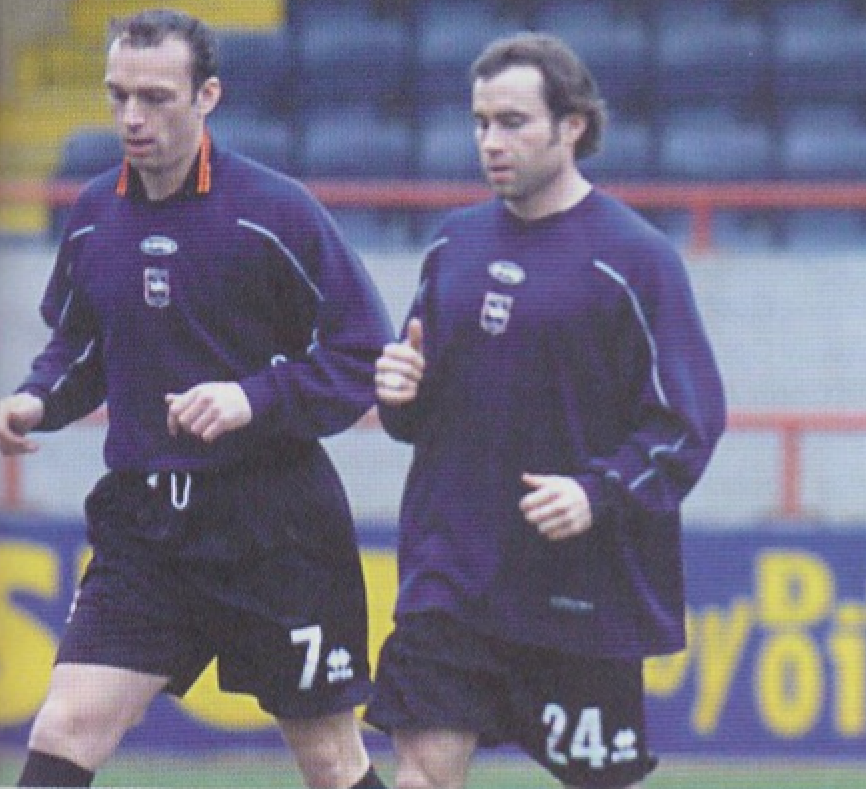
D hughes by tony gordon

Pictures: matchday programme.

Neil McNab: Brighton fans ‘worst crowd I’ve played for’

FIERY SCOT Neil McNab left Brighton for a sizeable loss on their initial outlay and went on to be voted Manchester City’s Player of the Year twice.

No stranger to brushes with the football authorities, McNab joined Brighton in the second half of their first-ever season in the top flight.

In his autobiography, manager Alan Mullery said: “Neil McNab was a Scottish whippet, a fierce competitor in midfield who never stopped running or competing.

“I bought him halfway through the season from Bolton Wanderers and he gave us the extra edge we needed.”

The player to give way at the time was Republic of Ireland international Gerry Ryan, and it would be fair to say the football writers were impressed by the tenacious Scot’s early impact.

After watching a 5-1 drubbing against Southampton from the subs bench, McNab made his debut at home to West Brom in a game that finished goalless. “McNab showed some touches of class in his home debut but scarcely as much as the home crowd expected from their £230,000 capture,” said Harold Palmer in the Sunday Express.
The News of the World’s Peter Jarman was slightly more effusive and described it as “impressive” and John Vinicombe in the Evening Argus said: “McNab, on his home debut, impressed with his industry and general involvement.”

Of his second game, a 1-1 draw away to Leeds, the Sunday People’s Keith Ray observed: “McNab looked light years from the off-key young man that Bolton sold. His prompting coupled nicely with Lawrenson’s hard work, and Ward had two chances to hit the target before he made the vital strike.”

A demonstration of his appetite came in the next game, another 1-1 draw, at home to Coventry, when he ran 25 yards to stop Peter O’Sullivan from taking a corner that he fancied for himself. He whipped the ball in and Ray Clarke thumped a header past Jim Blyth in the Coventry goal.

Gordon Smith, another Albion player who moved to Manchester City, remembered McNab’s quick wit in his autobiography, And Smith Did Score.

When it looked like Brighton were heading for relegation, Mullery, in fear of losing his job, famously threatened the players that he’d run them down in his car if that happened.

Smith recounted how the players were huddled round trying not to laugh at the astonishing outburst. “I almost fell off my chair when Neil leant over and whispered, ‘If he loses his job, he’ll no’ have a f****** car!’”

It was no laughing matter for player or club, though, when the tenacious McNab was suspended for four matches for pushing a referee. In the following season, he was up before the FA again after a skirmish with World Cup winner Alan Ball at the end of a 5-a-side tournament at the Brighton Centre.

Charged with bringing the game into disrepute, Ball was fined £100 but McNab was given a £250 fine and a two-game ban.

Manager Mike Bailey was clearly relieved and told the Daily Mail’s Brian Scovell: “Neil was expecting more but the last instance was entirely different. It was on the field of play when he touched the referee.

“We got a fair hearing. We’re not complaining. Both were guilty but the crimes were different as Neil’s part was unfortunately physical while Ball’s was verbal.”

McNab had the third highest number of appearances (44 plus two as sub) in the 1981-82 season, which saw Brighton’s highest ever finish of 13th, and all four of the goals he scored were from the penalty spot.

However, the safety-first style of play adopted by Bailey created a disconnect between players and fans. In the final home game of the season (a 1-0 defeat to Ipswich), McNab was substituted in the 62nd minute and the crowd booed him off.

The often-obtuse Vinicombe reported in the Argus: “When McNab was withdrawn, 30 minutes from time, his gestures to the crowd were capable of only one interpretation.” In the Daily Mail, McNab told Brian Scovell: “They are the worst crowd I’ve played for. When you do something good on the ball they don’t clap and if you make a mistake they give you stick.”

Worse was to follow after the row at the beginning of the 1982-83 season when Steve Foster and Michael Robinson slapped in transfer requests in protest at chairman Bamber refusing to sanction the acquisition of Charlie George, the former Arsenal, Derby and Southampton maverick, who had been on trial pre-season.

In what was supposed to have been a clear-the-air meeting, McNab let his feelings be known in no uncertain terms.

McNab still had five of six years left on his contract. They tried to offload him on loan to Newcastle, but the midfielder refused to budge. Instead, he made a bitter personal attack on the chairman, accusing him of picking the team, and slapped in his own transfer request.

McNab blasted: “The club is petty and small-minded, and players are treated disgracefully.” McNab made it clear he didn’t see his future at the club and after a few months eventually went to Leeds for a six-game spell and also to Portsmouth.

That came after Bailey had been sacked and his replacements, Jimmy Melia and George Aitken, gave the team a big shake-up, dropping McNab and adopting a more adventurous approach (which ultimately led to relegation).

Although completely out of the first team picture from early December 1982 onwards, McNab was to play one last game nearly five months later.

With Melia struggling to field a team because of injuries and suspensions, McNab got the nod for an away game at Notts County on 30 April 1983.

But he was unable to join in the FA Cup run to Wembley because he had been cup tied during his spell at Leeds. The 1-0 defeat to County was the Scot’s last ever Seagulls appearance.

Relegation led to the release of some of the high earners, and while Robinson and Gary Stevens were sold for sizeable fees, McNab was sold to Manchester City – who had been relegated with Albion – for just £35,000.

Born on 4 June 1957 in Greenock, McNab went to the town’s Highlanders Academy and he was in his primary school team at the age of eight. By the time he was 10, he was playing for the Greenock and District Under 12 representative side.

He moved on to Mount Secondary School, playing for the school team at all age groups, and at 14 was selected for the Scotland Schools side.

He played against England at Ibrox Park, against Ireland at Stranraer, and even travelled to Frankfurt to play against West Germany. All the attention alerted various scouts but he had already signed schoolboy forms for his local club, Greenock Morton.

He actually left school before he was 15 to join Morton as a professional and when he made his first team debut aged 15 in September 1972 he was the youngest outfield player ever to play in the Scottish League. McNab ended that season having played 11 matches and appeared a a sub on three occasions.

McNab SpursHe made 14 appearances for them before being snapped up for £40,000 by Tottenham Hotspur in 1974 and made his first team debut for Spurs while still only 16. A former teammate at that time, Andy Keeley said in a recent interview: “I’ll never forget how he played in a friendly match; first team v reserves. He controlled the game from start to finish. He was outstanding. He had a very good career but I never understood how he didn’t become a superstar.”
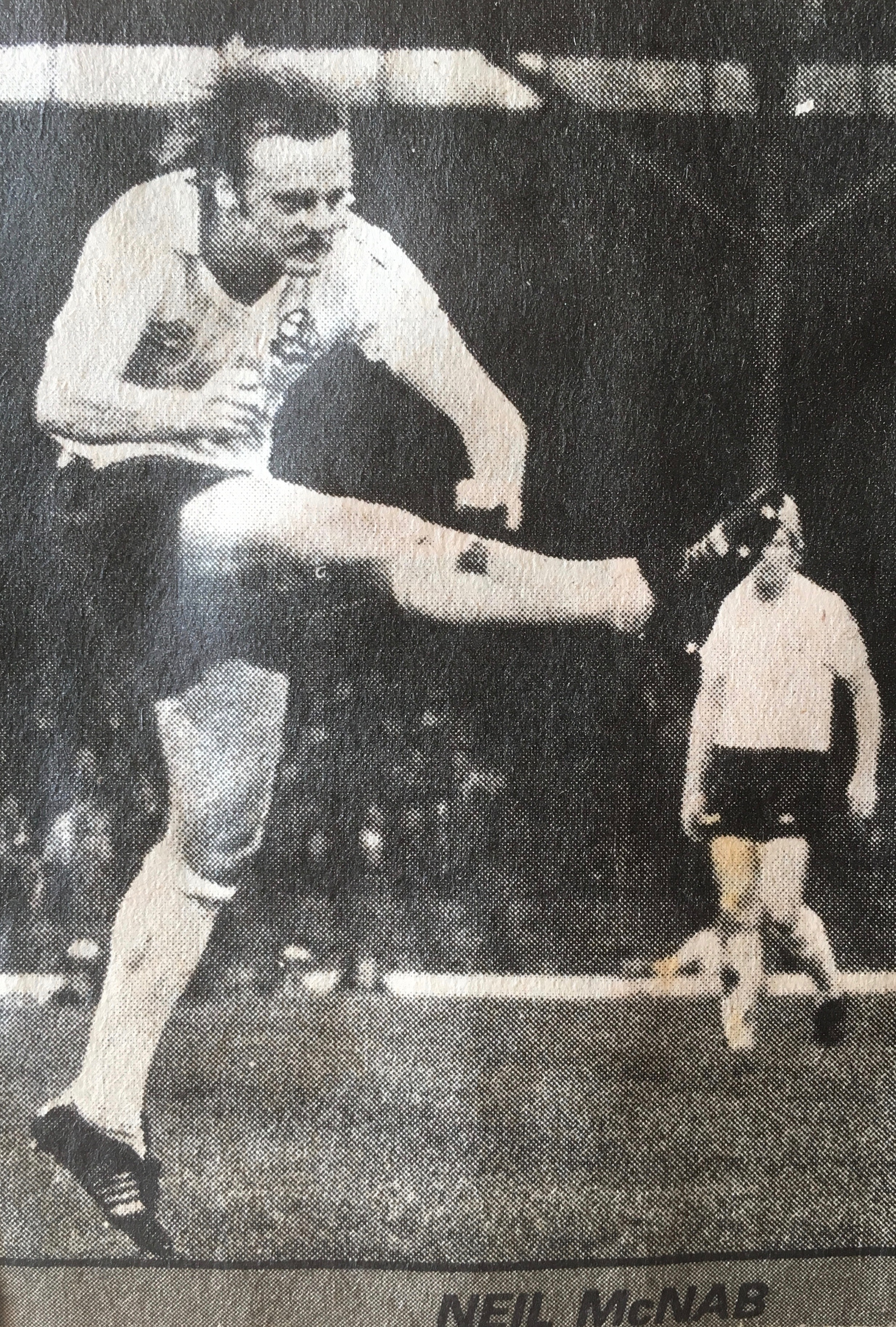
In four years at White Hart Lane, McNab played 72 matches and was selected by Scotland at under 15, under-18 and under-21 level, but never made it to the full Scotland team.

McNab - BoltonIn November 1978, Bolton Wanderers paid £250,000 for him but after only 35 appearances for the Trotters, in February 1980, Mullery signed him for Brighton.

When the former Scotland and Celtic captain Billy McNeill captured McNab’s signature in the summer of 1983, he began what would be a long association with Manchester City and he turned out to be a bargain buy considering in 1986-87 and 1988-89 he was voted City’s Player of the Year.

“Combative and always willing to stick a boot in, McNab was a key figure in City’s drive to promotion on more than one occasion,” was how manchestercity-mad.co.uk described him, while mancity.com, looking back at past players of the year, said: “Like a fine wine, got better as time went on.”

McNab w HartfordAcknowledging his initial signing failed to excite the City faithful, it added: “McNab developed into a skilful, combative midfielder who became a huge crowd favourite. Not unlike Asa Hartford (pictured above with McNab), McNab was a schemer who could pick a pass and kept the team’s tempo ticking over.”

McNab scored 19 goals in 261 league and cup games (plus five as sub) for City  but when Mel Machin’s successors at Maine Road (caretaker Tony Book and Howard Kendall) discarded him, he continued his playing career at Tranmere Rovers who paid £125,000 to take the 33-year-old to Prenton Park.

The combative midfielder added nous, steel and no little skill to the Rovers midfield, ending his first season in Birkenhead with two appearances at Wembley including the Leyland Daf Cup victory over Bristol Rovers,” said the Liverpool Echo.

He played 105 games for Tranmere, scoring six goals, and was part of the squad that secured promotion to English’s football’s second tier. He also earned the dubious distinction of being the first and thus far only Tranmere player to be sent off in a European game – a 2-1 win over Cosenza in the Anglo-Italian Cup.McNab HS

Determined to carry on playing, McNab had an 11-game loan spell at Huddersfield Town, returned to his native Scotland to turn out for Ayr United, appeared briefly for Darlington, played 13 games in Northern Ireland for Derry City, went non-league with Witton Albion (12 games) before finally calling it a day with Long Island Rough Riders in the States.

In 1994, he returned to Maine Road as youth team coach, when his old Albion teammate, Brian Horton, was City manager, and kept the position even when the aforementioned Alan Ball replaced Horton. But eventually he lost his job during another managerial upheaval in 1997 and took up a similar position at Portsmouth, once again working with Ball.

In October 2002, he finally landed a managerial position when he took the helm of League Two Exeter City. The reign was shortlived, though, and with only six wins in 26 matches (eight draws, 12 defeats) he was relieved of his duties.

McNab’s twin sons, Neil junior and Joe, who were born in Brighton, followed in their dad’s footsteps and were part of the young age group sides at Man City and Portsmouth. But after struggling to make the breakthrough, they moved to Wilmington, North Carolina, and have played for various sides in America.

Neil senior followed them to the States and in 2008 became director of coaching at Chiefs Futbol Club in Atlanta, Georgia, with Neil junior the club’s executive director.

In August 2017, it was reported Neil senior had suffered a severe stroke which left him fighting for his life.

On 2 March 2018, a message was sent via freelance writer Spencer Vignes to say that McNab had finally managed to return home after five months in hospital and in rehabilitation. “He has made tremendous progress, but still has a long way to go,” his son said.