The Foxes hero who led Albion’s line in an hour of need

STEVE CLARIDGE became a Leicester City hero long before briefly coming to Brighton’s rescue.

He scored the winner in a play-off final at Wembley to take the Foxes up to the Premier League at the expense of Crystal Palace, who’d discarded him at an early age.

Both sides had been relegated from the top flight the year before and Claridge’s right-foot strike past Nigel Martyn in the 120th minute meant it was an immediate return for Martin O’Neill’s side.

“The high is not equal to anything,” Claridge told Leicestershire Live.
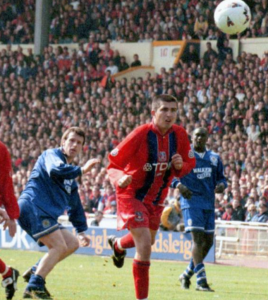
Scoring play-off winner v Palace

It came in 1996 and a year later he scored the only goal of the game (past Ben Roberts) in the 100th minute of a replay against Middlesbrough to win Leicester the League Cup, leading to him being named FourFourTwo’s ‘Cult Hero of 1997’.

Claridge had only completed a £1.2m move from Birmingham City two months before that play-off and he labelled it the most important goal of his life coming after a worrying period in which he wasn’t sure he’d ever be able to play again.

A mystery illness had ravaged his form and in only his fifth Leicester game he was taken off after 15 minutes. “Pins and needles from my knees down were so extreme, I could not even feel the ball,” he recalled.

It turned out a drug prescribed for a thyroid problem he’d had since the age of 12 was destroying his thyroid gland. “The main energy provider of my body was no longer functioning,” said Claridge.

However, once on the right medication, he made an almost unbelievable recovery, was restored to the side and helped to secure a play-off place.

After beating Stoke City in the semi-finals, they went a goal down to Palace in the final but pulled it back through a Garry Parker penalty before Claridge seized his chance in the dying moments of extra time.

Wembley winners for Leicester: Garry Parker and Steve Claridge

He collected a quick free kick from Parker and took aim, his shot from distance kissing the stanchion with goalkeeper Martyn motionless.

“The crowd is just really stunned in disbelief, I don’t know if that was because I’d hit it,” laughed Claridge. “It was so far out, and everybody was used to me scoring goals inside the six-yard box.”

He reflected: “To finish off after the lows I went through, the absolute lows where you’re thinking, ‘my career is over I can’t see a way out of this,’ to doing that and taking you to the ultimate high – winning that game of football. It’s unparalleled.”

Albion cover ‘boy’

Such experience was exactly what Championship strugglers Albion required when, on the back of three defeats, they faced the daunting prospect of promotion-seeking West Ham away on 13 November 2004.

Manager Mark McGhee, who’d previously signed Claridge when he was at Wolves and Millwall, was desperate to stem a tide which had seen eight goals conceded and no points on the board.

“He is one of the fittest players I’ve worked with and I had no doubt that after 18 months away from this level he would be able to perform,” said McGhee.

Claridge’s professional career looked to have run its course after he left Millwall in 2003 and became player-manager of Southern League side Weymouth.

But the disappointment of missing out on promotion had seen him and chairman Ian Ridley leave the club and Claridge, at the age of 38, was keen to give league football another go.

In what turned out to be a real backs-to-the-wall smash and grab raid, Albion earned the unlikeliest of 1-0 wins courtesy of a Guy Butters header from Richard Carpenter’s free kick.

Albion held firm despite a relentless wave of attacks by the home side and afterwards McGhee said: “We approached the game differently. Whereas before we thought we could win, today we did not, and played to make sure we didn’t get beaten.

“We kept the ball up front more which is important. Steve Claridge was key to that.”

Unfortunately, Brighton were not able to build on the win at the Boleyn Ground and there was only one more win (1-0 at home to Rotherham) during Claridge’s month with the club.

His fifth and final game for the Seagulls came away to his old club Millwall on 11 December 2004, when Albion lost 2-0.

In a programme feature about him that day, Claridge likened the circumstances of both clubs. “The club has no money and it is tough just to survive, but everyone is in it together,” he said. “At Millwall we had a great team spirit and togetherness, and that is very much the case here.”

McGhee’s tight budget prevented Claridge’s stay at Albion being extended and, after his deal was over, rather than it being one last hurrah, he went on to continue his league playing days at Brentford, Wycombe Wanderers, Gillingham, Bradford City and Walsall.

And, at the age of 40, and with him needing just one more game to fulfil the landmark of 1,000 professional games, his old club Bournemouth – where he’d started out as a professional in 1984 – gave him a match against Port Vale on 9 December 2006. No fairy tale, though, as they lost 4-0.

Born in Portsmouth on 10 April 1966, Claridge was brought up in Titchfield and began his football career at nearby Fareham Town in 1983. His initial foray into the pro game at Bournemouth only amounted to seven games before he moved to Weymouth for three years.

Crystal Palace offered him a route back to the full professional game in 1988 but he didn’t make their league side and after three months moved on to fourth tier Aldershot Town.

Two spells with Cambridge United followed between 1990 and 1994 for whom he scored 46 goals in 132 games. A falling out with manager John Beck saw him sold to Luton Town in 1992, but he was then bought back after Beck’s departure.

Birmingham City paid £350,000 to take Claridge to St Andrews and he became one of the club’s most prolific goalscorers, netting 35 in 88 games, and was top scorer with 25 goals when part of Barry Fry’s Blues side that won the Second Division title and the Auto Windscreens Shield (Football League Trophy) in the 1994-95 season.

After spending two years at Leicester, he went on a two-month loan to his hometown club, Portsmouth, but, in March 1998, McGhee signed him for the first time – and it didn’t go well.

The Scot, who had controversially left Leicester to take over at Wolves, took Claridge to Molineux for a £350,000 fee. But Wolves fans were not impressed, as Levelle revealed in this 2012 piece, and after just six games and no goals in the famous old gold shirt, he was sold to Portsmouth for £250,000 at the end of the season.

Even more galling for Wolves followers was that no sooner had Claridge made the switch to Portsmouth, he scored all three in a 3-1 win at Fratton Park!

David Miller in The Telegraph wrote: “The 34-year-old Steve Claridge, who had failed to score in five months when previously with Wolves, now gave sun-blessed Portsmouth a bank holiday funfair with a first- half hat-trick that was as easy as licking an ice-lolly.”

On the ball for Pompey

The goals and games came thick and fast for Claridge back on home turf – 34 in 104 – but his reign as player-manager at Fratton Park in 2000 was curtailed after just 25 games by the quirky chairman Milan Mandarić.

Remembering the player he’d seen only briefly a couple of years earlier, McGhee, by now in charge at Millwall, offered the striker a lifeline with the Lions, initially on loan and then as a permanent signing.

Going through the pain barrier at Millwall

Over two seasons in south east London, he became something of a fans’ favourite, scoring 26 in 85 matches, his efforts summed up by writer Mark Litchfield. “His style was unconventional, to say the least: shirt untucked, one sock down and no shin pads, any naïve defender probably thought they could eat him for breakfast. But hard work was a pre-requisite for Claridge – he wouldn’t give any opposition player a moment’s rest and would more often than not always get the better of them, too.”

Claridge had a less happy association with Millwall too when in July 2005 he was sacked after just 36 days as manager when the chairman who appointed him, Jeff Burnidge, was replaced by  Theo Paphitis, who wanted Colin Lee instead.

Even after achieving the 1,000-game landmark courtesy of Bournemouth, Claridge couldn’t resist the lure of another game, turning out for Worthing, Harrow Borough, Weymouth and Gosport Borough.

He was one of a group of five that formed Salisbury FC at the end of 2014, and as team manager was involved in gaining two promotions in the Southern League before leaving in October 2022.

Although he had officially hung up his boots in 2012 after helping Gosport to promotion to the Southern League Premier Division, in 2017 he played in a friendly defeat to Portsmouth in July and then put himself on against Paulton Rovers in the league a few weeks later.

His final ever game as a player came in a 3-2 victory over Fareham Town, when he was a remarkable 51, but he had to go off in the 71st-minute after picking up an injury. 
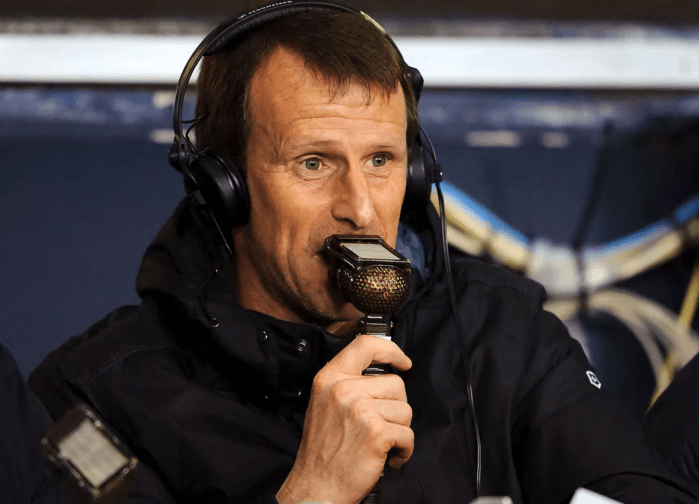
Pundit Claridge contributed his thoughts on radio and TV

Claridge also became a familiar face and voice working as a pundit for the BBC on TV at Football Focus and Final Score and on BBC Radio 5 Live. He also wrote scouting reports on promising players for The Guardian, numbering future Brighton signing Matt Sparrow among them.

“He is easy on the eye, links well with his forwards but also protects and helps his defenders by tackling from the wrong side and makes sure he tracks his runner whenever he threatens to get goal-side,” wrote Claridge of the then Scunthorpe United player in 2007.

Claridge later set up his own coaching scheme for youngsters in Salisbury and Warsash.

In 2023, he took over as manager of Gosport-based Wessex League Division One side Fleetlands FC for the 2023-24 season. In August 2024 they announced he was stepping down from the role “due to personal reasons”.  
On its website, a statement added: “The club would like to place on record our huge thanks to Steve for taking up the role in our hour of need and taking us to a fantastic 5th place finish last season.”

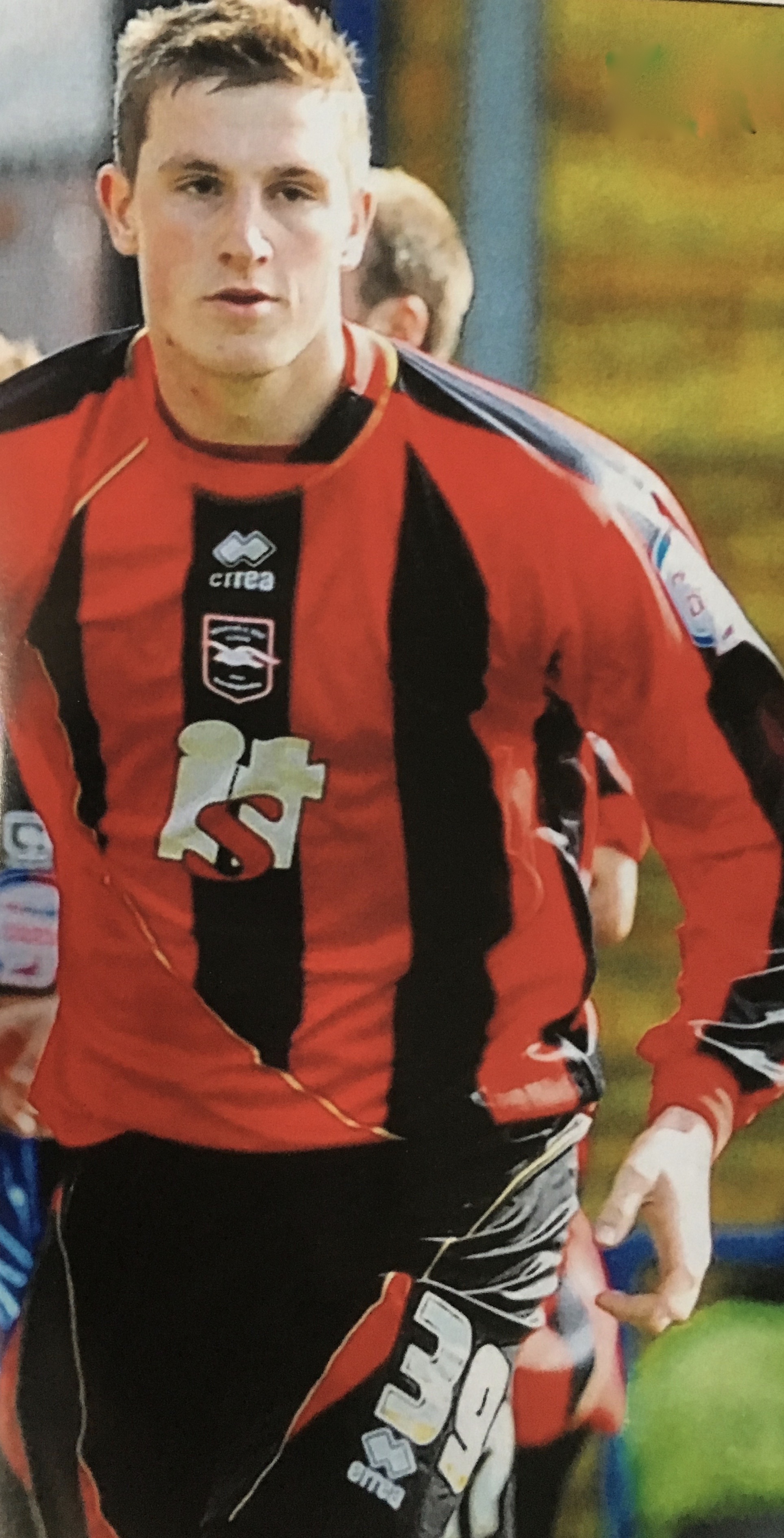
Kiwi Chris Wood took off with the Seagulls

TWO former Chelsea teammates were instrumental in enabling fledgling Kiwi international striker Chris Wood to develop his goalscoring craft with the Seagulls.

Roberto di Matteo allowed Wood to leave West Brom on loan in the 2010-11 season to add attacking options to Gus Poyet’s promotion-seeking Seagulls.

It was a temporary move that not only bolstered Division 1 Brighton’s goalscoring threat that season but also sowed the seeds of a partnership with Ashley Barnes that Burnley have profited from in the Premier League.

The pair dovetailed well with Glenn Murray (during his first spell at the Albion) and it is testimony to just how good the third-tier trio were that they all went on to score goals at the highest level.

Wood, who only scored three times in 27 games for the Baggies, scored nine in 24 matches (plus seven as sub) for the Albion, who he joined after an expected 93-day loan stint with Barnsley had been cut short.

Described by The Argus as “a fresh-faced teenager in a man’s body”, towards the end of the season, Wood told Andy Naylor: “It has been a big experience. I have been playing week in and week out. That is something I needed to do at my age.

“You don’t know if you really want to drop down that many levels, but I thought I could start scoring some goals, kick on my season and hopefully push my career up. It’s worked out very well.”

He somewhat presciently added: “I want to play in the Premier League one day, hopefully consistently.”

While that time would still be a little way off, Wood’s role in Brighton’s promotion squad earned him a League One winners’ medal and Poyet reckoned he left the south coast a much better player than the one who arrived six months previously.

“We helped him a lot,” Poyet told The Argus. “When he was here, he was one type of player and, when he went back, he was in shape, he was quicker, more mature, he scored ten (sic) goals, he did well.”

Wood went on to become something of a nemesis for Brighton, often scoring against the club for various other sides he played for on loan or on a permanent basis.

After he scored twice against the Seagulls in December 2012 while on loan at Millwall, Poyet sang his praises to the media, declaring: “He is the kind of player we would like to bring in. He’s only 21 and I feel he will be a top, top player.

“When he was with us on loan, he was a baby but now he is maturing. He’s a man now.

“He’s clinical and brave and we have played a part in helping him on his way.”

Di Matteo’s successor at West Brom, Roy Hodgson, had also sent the young striker out on loan, the shorter distance to Midlands neighbours Birmingham City, during Chris Hughton’s tenure as manager. He scored 11 in 15 games (+ 14 as a sub) for the Blues before spending the second half of the 2011-12 season at Bristol City.

Next up was Millwall for the first half of the 2012-13 season but WBA curtailed that stay because they wanted to sell him, and he joined Leicester in a permanent deal.

At Leicester, Wood was mainly involved off the substitutes’ bench as Nigel Pearson’s Foxes won the Championship in 2014, but one of his most memorable goals was a stunning long-range volley against his future employers, Burnley, in a 2-0 win at Turf Moor. “That was a nice one,” he said. “It kind of clinched Leicester’s championship. It was a ‘make or break’ game for who was going to win the league that year.”

Wood found his chances of Premier League football stymied by the arrival of Leonardo Ulloa from Brighton and after only seven substitute appearances ended the season on loan at Ipswich Town. Before Leicester’s famous title-winning season was under way, Wood had moved on to Leeds for £3m.

Wood felt he wasn’t given a fair crack of the whip at the King Power Stadium, telling the Leicester Mercury: “I was disappointed that I didn’t get more of a chance.

“I did well and felt I deserved at least an opportunity with the way I had played. That’s football at the end of the day, managers make the decisions, you have to live by them and move on.

“I think that experience has made me into a better player. It helped me to adapt and do things in a different way. It helps you prepare mentally, to understand and control.

“Not everything is going to be rosy along the way in your career. You’ll always have your ups and downs and it’s about how you deal with the downs which helps you become so much better.

“I don’t like sitting in the stands. I just wanted to get out, play football and progress my career.”

Wood scored 27 goals in Leeds’ 2016-17 Championship season under Garry Monk but, after beating Brighton 2-0 on 18 March, they fluffed their lines in the run-in, winning only one of the remaining eight matches and missing out on the top six as Brighton went up with Newcastle. To rub salt in the Yorkshire wounds, Huddersfield were promoted via the play-offs.

Wood, though, had the chance finally to make it to the elite when Burnley dangled a £15m fee to take him to Turf Moor, where he was to be reunited with Barnes.

Explaining his decision to make the move, Wood told The Times: “It had been my dream since I was a kid to play in the Premier League.

“I had spent seven years in the Championship waiting to get that break and I couldn’t guarantee that I would get another chance.”

The success of the Wood-Barnes partnership was analysed in a 2019 article by Benedict O’Neill for planetfootball.com in which Murray harked back to the 2010-11 season.

“I was the older head when they came in as two young lads,” he said. “We forged quite a formidable trio. It was good because they were just young and learning their trade – they got valuable game time and scored plenty of goals in that season.

“They’ve both gone on to have fantastic careers.”

Wood ended the 2020-21 season as Burnley’s top goalscorer with 12 goals (his fourth consecutive season in double figures) and he also collected their Player of the Season and Players’ Player of the Season accolades.

After netting a hat-trick against Wolves in April 2021, Andy Jones, for The Athletic, purred: “Unstoppable, unplayable. This was Wood at his best.

“Burnley’s big No 9 epitomised all the key components of the display, setting the tempo, pressing with energy, intensity and importantly, intent. No ball was a lost cause, no pass was going to be easy for Wolves.”

Burnley boss Sean Dyche told the Burnley Express: “His hold up play is improving all the time, his physicality is improving – he can be a real handful as well as being a talented player.

“I’ve been very impressed with him over the season for sure.”

In January 2022, Wood made a £25m move to Newcastle United but after finding his first team starts limited moved on to Nottingham Forest a year later, initially on loan until the end of the season. The move was made permanent in the summer of 2023.

He was Forest’s top scorer with 15 goals in 35 appearances in the 2023-24 season and when he scored the winner in Forest’s 3-2 win over Manchester United at Old Trafford in December 2024, his header meant he became Forest’s record Premier League scorer, overtaking Bryan Roy, by moving to 25 in the competition.

Born in Auckland, New Zealand, on 7 December 1991, Wood swiftly showed great promise in his homeland before his coach over there, Roger Wilkinson, switched to West Brom and recommended the youngster be taken on at Albion’s academy.

Wood’s English mother, Julie, had been instrumental in him taking up football rather than the oval-shaped ball game Kiwis are more accustomed to.

“I came over and they liked what they saw and offered me a scholarship,” he told the Birmingham Mail.

After he proved successful at youth team and reserve level, Wood made his West Brom first-team debut in 2009 away to Portsmouth.

In the same year, he made his international debut and, aged just 18, was in the New Zealand squad at the 2010 World Cup in South Africa. He has gone on to play nearly 60 times for his country. He also became the youngest captain of New Zealand when he led the side for the first time in November 2014.

A goal by over-age Wood against South Korea helped New Zealand secure their first ever men’s football win at an Olympic Games in Tokyo but the host nation beat them in a penalty shoot-out to deny the striker the chance of a medal.

That man from Argentina scored goals in the UK and Spain

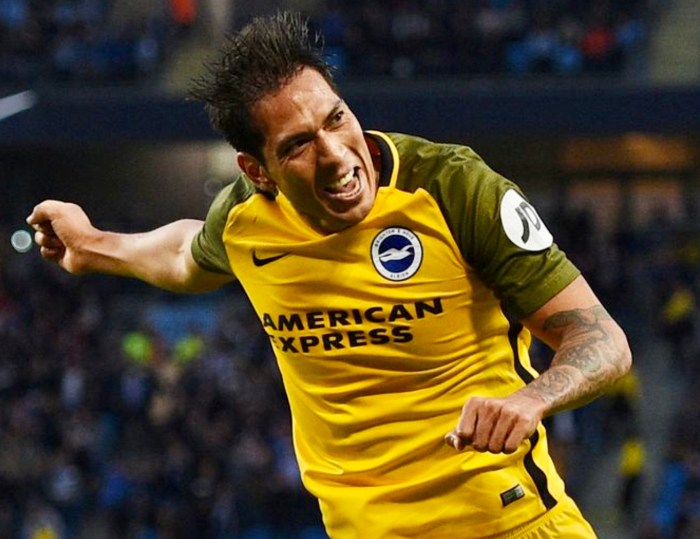
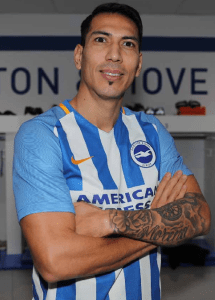
LEONARDO ULLOA brought down the curtain on his playing career in Madrid, netting six goals in 20 appearances (plus 12 off the bench) for Rayo Vallecano in the Spanish second division.

It was to the delight of Brighton fans that 28 of his career 148 goals were scored for the Albion, where he quickly established himself as a fans favourite by scoring on his debut against Arsenal in the FA Cup.

Previously virtually unknown in England, Ulloa’s arrival in January 2013 provided the tall, goalscoring presence up front Brighton had been craving since Glenn Murray headed to Crystal Palace in the summer of 2011.

Within two months, Ulloa was cementing his place in Albion history by scoring the first ever hat-trick at the Amex, in a 4-1 win over Huddersfield Town, and it wasn’t long before fans were serenading him with his own terrace song: “Who’s that man from Argentina, who’s that man we all adore…..”

His efforts in the stripes got even better when he scored twice in a memorable 3-0 win over Palace that March giving the Seagulls their first home win over their bitter rivals for 25 years.

After the game, manager Gus Poyet told BBC Radio Sussex: “Leonardo Ulloa is making the difference. I am pleased for him. If he had been here for the first six months I can’t imagine where we would be right now.

“What a prize for him, scoring two goals against our biggest rivals. I am very happy for him.” By the season’s end, Ulloa had scored 11 goals in 16 starts (plus one substitute appearance).

While Poyet departed acrimoniously after defeat in the play-off semi-finals, Ulloa continued to thrive under new boss Oscar Garcia. Top-scoring with 16 goals, he’ll always most memorably be known for nodding in a last-gasp header from Craig Mackail-Smith’s left-wing cross to secure a 2-1 win at the City Ground, Nottingham on 3 May 2014.

It earned Albion another play-offs place in the bid to secure promotion to the Premier League, although a 6-2 aggregate defeat at the hands of Derby County meant it didn’t end well.

Sadly, not only did it mark the end of Garcia’s reign, it also led to Ulloa’s exit from the club, but the £8m record fee newly-promoted Leicester City paid for his services was difficult to resist, quite apart from the player’s desire to play at the top level.

Switching to the East Midlands was a short hop compared to the journey he had to make when he was starting out in the game.

Born on 26 July 1986 in General Roca, a city in Argentina’s northern Patagonian province of Rio Negro, Ulloa moved 700 miles from home at the age of 15 to pursue his footballing dream, as he told Brian Owen of The Argus in a 2013 interview.

It was only when he wasn’t getting much playing time in Argentina that he took the opportunity to move to Spain, initially with Spanish second-tier side Castellon in the Valencia region.

When they were relegated in 2010, he stayed in the second tier by moving to the south east of the country to join Almeria, where he scored 39 times in 90 appearances. It was from there Albion bought him for an undisclosed sum, widely thought to be £2m.

The subsequent move to Leicester couldn’t have got off to a better start when Ulloa scored Leicester’s first Premier League goal for a decade in August 2014, hitting the net on his debut against Everton at the King Power Stadium. He also scored a brace of goals in a famous 5-3 victory over Manchester United.

Indeed at the end of that 2014-15 season, Ulloa was Leicester’s top scorer with 13 goals in 31 appearances (plus nine as a sub).

Few could have imagined it was going to get a whole lot better the following season, but as Claudio Ranieri’s City shocked the football world by climbing to the summit of the Premier League and staying there, Ulloa collected a title winners medal for his contribution.

Although he made just nine starts, as Jamie Vardy and Shinji Okazaki took centre stage, he appeared 22 times as a substitute and, in his supporting role, chipped in with six – often vital – goals.

He scored an 89th minute winner to earn a 1-0 win over Norwich City after entering the fray as a 78th minute sub and, when defeat at home to West Ham looked on the cards after Vardy had been sent off, he coolly netted a penalty in the fifth minute of added on time to secure a 2-2 draw.

With Vardy suspended for the following game, Ulloa stepped up with two goals in a 4-0 win at home to Swansea City.

Phil McNulty, BBC Sport’s chief football writer, said Ulloa had fully repaid the faith shown in him by Ranieri. “When Ulloa earned the Foxes a vital point with a stoppage-time penalty last weekend against West Ham, he showed he was not a man to be perturbed by pressure – and he relished the responsibility put on his shoulders against Swansea,” he wrote, describing how Ulloa “ran selflessly all afternoon to compensate for the darting, pacy threat of Vardy, and most importantly contributed two goals that eventually made this a stroll for Leicester City”.

It all turned sour for him at the King Power Stadium the following season and with a lack of involvement his frustration went public as he sought a move away. Sunderland, fighting (ultimately in vain) relegation from the Premiership, reportedly had three bids to sign him turned down in the January 2017 transfer window.

Ulloa told Sky Sports News reporter Rob Dorsett: “I’m a bit sad about the current situation. It’s been two wonderful years at the club but now, given my situation – not playing and not being part of the team’s plans – I feel that the best way forward is I leave and I can be happy somewhere else.”

He added: “They know I am not going to be used. The best thing for both parties is they sell me to another club and I can continue playing my football somewhere else.”

However, when Ranieri was sacked the following month, Ulloa found a path to first team football re-opened under new boss Craig Shakespeare. He only made four starts but he appeared off the bench 19 times, and, in August 2017, signed a new two-year contract with the Foxes.

Speaking to LCFC TV, Ulloa said: “I am so happy because I have lived massive moments with this club and it makes me happy to stay here and fight, to help the team and increase the club’s history. That is so important and I am so happy for this two-year contract. Now I have to fight to play. I will train and give my best. I appreciate it a lot to stay here and I am so happy here now. For that, I want to continue in this in the same way by working hard and working my best for the club.”

Shakespeare added: “Leo’s goals and performances have been key to some wonderful moments for this football club since he first joined and I’m delighted to have him with us for another two years. He’s a popular member of the squad and gives us an excellent option in attack.”

All of the words came to nought however, because Ulloa was barely involved, other than sitting on the subs bench and only getting on once. So, in January 2018, he was happy to return to Brighton on loan to supplement the striking options in Chris Hughton’s squad.

But with Glenn Murray in top form and Sam Baldock and Tomer Hemed as other striker options, Ulloa only made four starts plus eight appearances as a sub. He scored twice, including opening the scoring against Manchester City at the Etihad, but Albion didn’t share the striker’s enthusiasm for a permanent return to the Seagulls.

Instead of moving back to the south coast, Ulloa headed to Mexico to join Pachucha, and a year later he headed back to Europe, and back to Spain, to sign for Rayo Vallecano.

The striker spent eight months sidelined by a serious knee injury in 2020 but returned to action in October 2020 before retiring at the end of the 2020-21 season. Ulloa received a warm reception from Albion fans when he was interviewed on the Amex pitch in March 2023 when West Ham were the visitors.

Pictures from various online sources.

Great strike rate at Brighton but journeyman Benjamin had 29 clubs!

T Benj BTNSELDOM in his remarkable 29-club career did Trevor Benjamin enjoy such a successful spell as the 10 games he spent on loan at Brighton.

The bustling striker who had thrived under Micky Adams at Leicester City the season before scored five times for Mark McGhee’s promotion-chasing side in 2004.

McGhee was keen to keep him through to the end of the season but because of the timing of the three-month deal he wouldn’t have been eligible to play in the play-offs.

As a result, he went back to Leicester and McGhee brought in Chris Iwelumo instead, and, with a goalscoring debut in an away win at Chesterfield, there was no looking back.

Born on 8 February 1979 in Kettering, Benjamin was brought up in Wellingborough, Northants, and, having done well for Wellingborough Colts, was picked up by Kettering Town, playing for their youth team and reserves.

Cambridge United took him on as a trainee and he made his first team debut aged only 16 against Gillingham and went on to score 46 goals in 146 appearances.

Such a scoring record caught the eye of Leicester boss Peter Taylor and, on 12 July 2000, Benjamin joined the Foxes for a fee of £1.3 million.

However, he managed only a single goal in the 2000-01 season and the following season was sent out on loan to Crystal Palace, Norwich City and West Bromwich Albion.

He returned to Leicester for the whole of the 2002-03 season, including playing against the Albion at Withdean.

He said in a matchday programme article for that season’s return match against Brighton on 19 April 2003: “Brighton are a very similar team to ourselves. They have got a good work ethic and never give up.

“I came on as a substitute for the last 10 minutes when we played against them at the Withdean Stadium just before Christmas and that was a tough night.

TBenj Lei action“The conditions were terrible and both sides had to work hard to beat the elements. But I think our quality shone through on the night.” (Leicester won 1-0).

The following season, Benjamin was back on his travels, initially to Gillingham, then Rushden & Diamonds and, in January 2004, to Brighton.

Benjamin’s first Brighton goal came after just 12 minutes of Albion’s home game against Plymouth Argyle, who were then top of the league table. Leon Knight added a second goal before a jubilant celebration in front of the Sky cameras and Albion prevailed 2-1.

He followed that up by netting Albion’s goal in a 1-1 draw away to Wycombe Wanderers, and was again on the scoresheet in the 2-1 away defeat to Grimsby Town.

A 3-0 home win over AFC Bournemouth saw Benjamin score the second of Albion’s three goals at Withdean. When Tranmere Rovers were dispatched by the same score, he once again scored the second goal.

Back at Leicester, when Craig Levein was installed as boss, he cancelled Benjamin’s contract in January 2005. Benjamin initially dropped down a couple of divisions to play for Northampton but, three months later, his old Leicester boss, Adams, took him to Championship side Coventry City. He helped to set up both goals on his debut for the Sky Blues as they beat Reading 2-1.

In Coventry’s matchday programme for their home game against Brighton on 2 April 2005, he talked about how he had been settling in and the efforts he’d been making to try to improve his game.

“I’ve been training quite hard with Alan Cork on my finishing since I got here and he’s great to work with. He’s trying to get me to focus on what I am best at and hopefully when the games start again the practice will pay off.”

Benjamin’s arrival at Coventry may have seen him make a leap of two divisions but he was by no means unfamiliar with football at that level having played with Leicester for five years in both the Premiership and the Championship.

David Antill wrote: ‘During his time with the Foxes he was loaned out to no fewer than seven clubs before eventually signing permanently with Northampton Town but he is delighted to be back in a league he enjoys playing, for a manager he believes can get the best out of him.

“I’ve always believed in my own ability and thought I could play at this level and it was great to be given the chance to return to this league with Coventry,” said Benjamin. “My confidence never really slipped – I never had a doubt about coming here and being able to deliver the goods.

“I know what Micky Adams is all about and he knows what I’m all about so I enjoy working with him. What he’s brought here is exactly what he brought to Leicester and that’s what brought him success there. He’s a hard-working manager and he wants exactly the same thing from all of his players and I think he’s getting that.”

After scoring only once for the Sky Blues, in the summer of 2005 the burly forward linked up with Peterborough United, where he signed a three-year deal. However, he was loaned out several times, appearing for Watford, Swindon Town, Boston United and Walsall.

There was some stability and a return to goalscoring when he moved to Hereford United. He scored 10 in 34 games for the Bulls but was released in May 2008 and ended up drifting across the non-league scene for the next four years, popping up at no fewer than 13 different clubs.

It was all a far cry from the heady days of 2001 and 2002 when he briefly reached the international arena.

He went on as a substitute for Howard Wilkinson’s England under 21s as they beat Mexico 3-0 in a friendly at Filbert Street on 24 May 2001. Because he hadn’t played in a competitive fixture, he was then able to swap allegiances and played two matches for the full Jamaica international side in 2002.

Leicester lad Matt Heath plugged Albion defensive gap

Heath celebratesDUCK-loving Matt Heath didn’t shirk a challenge and came to Brighton’s rescue in 2009 when injury and suspension decimated Albion’s available defenders.

Albion were fighting for their League One lives and were in between managers when Heath arrived in March to plug a gap caused by Tommy Elphick, Adam Hinshelwood and Adam Virgo all being sidelined.

Experienced former Leicester City central defender Heath joined on loan from Colchester United, signed at the same time as striker Lloyd Owusu, who undoubtedly made more of a noteworthy contribution with some vital goals and his famous ‘raising the roof’ goal celebration.

As well as defensive problems, Albion also had Nicky Forster, Glenn Murray and loan signing Calvin Andrew out injured as they approached a period of games vital to their chances of staying in the division.

On signing the pair, caretaker manager Dean White told the Argus: “The injury situation meant it was vital to bring players in and Matt and Lloyd are two good additions. They certainly strengthen the squad and both have good experience at this level and higher.”

The 6ft 4ins Heath had made 11 appearances for Colchester that season but only one start since the turn of the year.

He played in six games and scored on his debut away to Leyton Orient on 8 March, the game which marked the beginning of Russell Slade’s period in charge of the Seagulls. Ultimately a recurrence of groin trouble brought an end to his brief Albion career.

Ironically, it was Slade’s predecessor at the Withdean, Micky Adams, who’d been Heath’s manager at Leicester, Coventry City and Colchester.

Born in Leicester on 11 January 1981, Heath came through the Foxes academy, made his debut in the 2001-02 season and went on to play 60 first team games for the club, including 17 Premier League games alongside Ricardo Scimeca. During the 2003-04 season, he had an eight-game loan spell with Stockport County.

Heath scors 4 Leic

In 2005, Adams went back to his old club to take Heath to Coventry City for a £45,000 fee. He played 26 games for the Sky Blues in 2005-06 but only eight games the following season and, in November 2006, was loaned out to Leeds United who made the move permanent in January 2007.

Heath relished his time playing under manager Dennis Wise and his assistant Gus Poyet but after playing 50 games for Leeds, Wise’s successor Gary McAllister deemed him surplus to requirements at Elland Road and Heath once again went to play for Adams, this time at Colchester.

He initially joined on loan but then spent five seasons on the Us’ books, making a total of 106 appearances, albeit during his time with them he had a couple of spells out on loan.

One of those was that brief stint at Brighton and the following season he played four games for Southend United.

When his contract was up at Colchester, he switched to Northampton Town, where the manager was one of his old Colchester bosses, Aidy Boothroyd, but he didn’t make any first team appearances and left the club to join non-league Harrogate Town in January 2008 where he made 29 appearances. Next up was Harrogate Railway FC.

However, Heath simultaneously pursued an education role in sport, and he became a course manager and lecturer at Askham Bryan College in York having studied football coaching at the University of East Anglia.

In March 2019, Askham Bryan College announced it was becoming a sports hub for Leeds United, with Heath playing a prominent role.

Heath talked about the importance of former professional players having a plan for life after football in an interview with Non-League Yorkshire.

He said: “I’ve had so many good friends in the pro game and they’re all five years younger than me and I’ve told all of them to do something because you have so much time on your hands when you’re playing pro football.

“I’ve said: ‘Get a qualification or do something because when it all finishes, you either get lucky and fall into something like myself or you’ll be in a place where you’re not sure what to do’.

“I think most of the lads in the pro game don’t realise that it just stops like that.”

In 2015, Heath combined his day job with captaining Northern League – North West Division side Tadcaster Albion and then became assistant manager for two years, working under Billy Miller, who was his boss (head of sports and public services) at Askham before being promoted to a director.

Heath subsequently became a teacher-coach in Leeds’ education department, working with a group of would-be footballer students in Nottingham.

“The kids finish their GCSEs and want to carry on in education and the college provide a programme where they carry on with their education, get a Level 3 BTEC-extended Diploma and we link it alongside training every day and play in the National League as well, ” he explained to Jonathan Waldron of the Colchester Gazette, in a February 2021 interview.

“So the kids get the training, the education and luckily I’ve got a role there where I’m part of both of it, in the classroom and out on the training field as well and matchdays for our college.”

Telling the reporter that he still looks out for the results of all the clubs he used to play for, he added: “It’s nice to reminisce but my family just tell me to shut up if I go on about it!

“I was lucky; dedication and hard work gets you a long way in football and you have to have a bit of a rub of the green, along the way and managers and coaches who take an interest in you and see something and then roll with it a little bit.

“I’m proud of what I achieved.”

Heath college coach