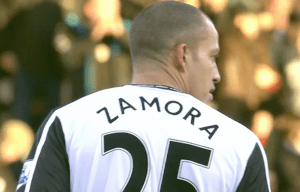
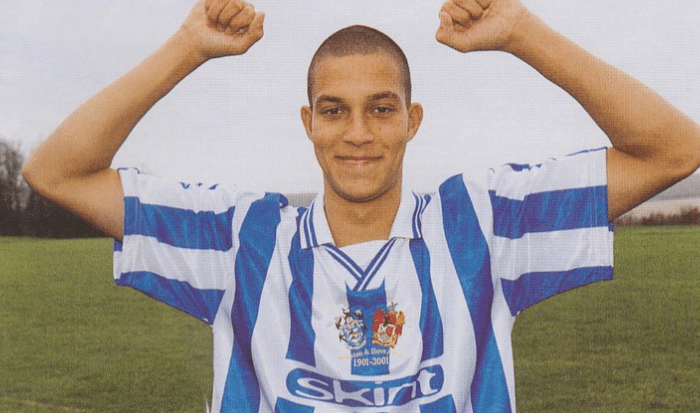
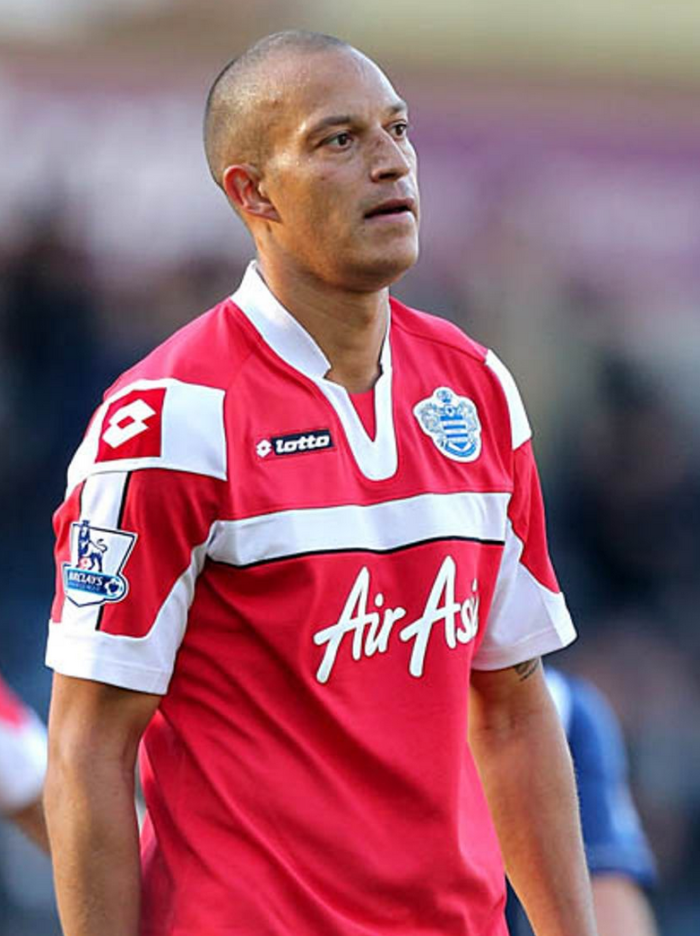
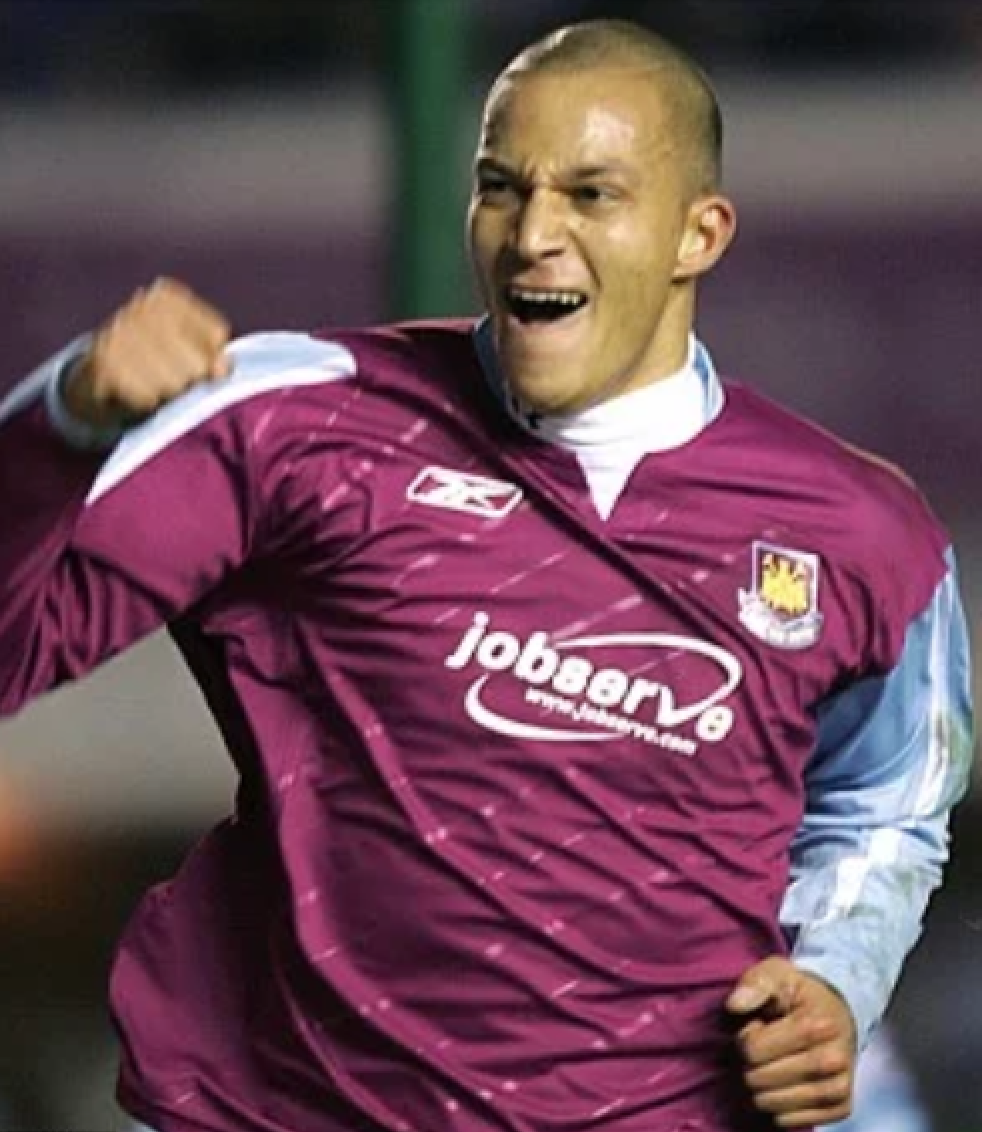
The Barking boy who became a Hammers play-off final hero

IT WAS A DREAM come true for Bobby Zamora to play for West Ham, the team he supported as a boy.

Born in Barking on 16 January 1981, he explained: “They were my local team and having been spotted by the club playing for my Sunday side, Senrab, I signed schoolboy forms and we’d be given tickets to watch the team on a Saturday afternoon at the Boleyn.”

Zamora’s favourite player was Tony Cottee and the side at that time included the likes of George Parris and Julian Dicks. “It was always a great atmosphere down there, singing ‘Bubbles’, and I count myself honoured and privileged to have played for the club that I grew up supporting,” he said.

Fellow Senrab players John Terry, Paul Konchesky, Ledley King and JLloyd Samuel were all snapped up by the Hammers at the same time but when the club decided to merge two centres of excellence they found themselves playing fewer games which prompted them all to leave.

Zamora joined Terry at Chelsea but suffered Osgood-Schlatter disease (which causes pain and swelling below the knee joint)and had to stop playing for six months. He described in the Undr The Cosh podcast how Norwich kept in touch with him to see how the injury was progressing so, when he was fit again he joined them and spent a season in Norfolk.

“They had a lot of London lads in their side but it was like playing in the Land of the Giants,” he explained in a matchday programme article. “They were all 15 going on 18, much bigger physically and taller than me, and I was released for being too small.”

His friend Luke Williams was also released but the pair of them were offered a trial by Bristol Rovers and, after only playing half a match, both were offered apprenticeships.

As described in my previous post, it was from Rovers that Zamora joined Brighton, while Williams played non-league before moving into coaching, which included a spell as development coach at Brighton.

When Spurs decided to swap Zamora for Jermain Defoe, a move to the Boleyn was a bit of a no-brainer for the former fan, although Premier League Leeds United were also keen to take him.

“The pull of West Ham was too great and although it was a drop into the Championship, the squad they had under Alan Pardew was more than good enough to go up,” he said.

Zamora got off to a good start with the Hammers, scoring on his debut and again on his home debut. That first goal came after he had gone on as a sub in a 2-1 win at Bradford City on 7 February 2004. He followed it up with the only goal of the game in a home win over Cardiff on 28 February.

Three more goals followed before the end of the 2003-04 campaign, but the season ended in disappointment when the Hammers lost in the Championship play-off final at the Millennium Stadium, Cardiff, against Crystal Palace the day before Brighton’s famous League One play-off win against Bristol City in the same stadium.

Zamora had a first half effort saved at point blank range by Palace keeper Nico Vaesen and a second half ‘goal’ ruled out for offside before being subbed off on 68 minutes as Palace won promotion courtesy of a Neil Shipperley goal.

All was put right a year later, though, when at the same ground Zamora was the Hammers hero. It was his turn to score the only goal of the game, against Preston North End, getting on the end of a Matthew Etherington cross to slot home from six yards in the 57th minute.

Play-off final scorer

Across the season, Zamora made 20 starts and 19 sub appearances, scoring 13 goals. His first double for the club came in a 3-2 League Cup second round win over Notts County at Upton Park on 21 September 2004.

Competition for forward places was fierce with Marlon Harewood, Teddy Sheringham and Sergei Rebrov also pushing for a place up front.

As well as scoring in that play-off final, Zamora had emphasised his claim to a starting berth by scoring in the 2-2 semi-final first leg home draw with Ipswich then twice in a 2-0 win at Portman Road in the second leg.

Pete Ellis on claretandhugh.info reckoned Zamora “played a key role for the Hammers at a pivotal point in our recent history” and he added: “The promotion season in 2005, where he and Etherington played like men possessed in the play-offs, still fills me with great pride.”

Back in the Premiership, Zamora scored 10 goals in 20 starts and 22 appearances off the bench and Ellis remembered “some great displays showing his ability to hold the ball up and have the craft and guile to bag a few tasty goals in the process.

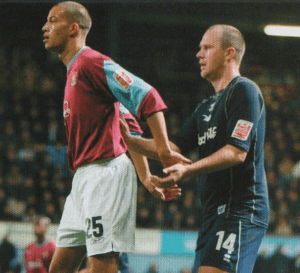
Zamora marked by former Brighton teammate Guy Butters who scored Albion’s goal in a 1-0 win for the Seagulls at the Boleyn Ground

“A proper character around the club, I enjoyed watching Bobby play and thought he never really got the plaudits that his talents and performances deserved.”

Amongst memorable goals in 2005-06 were a stunning solo effort in a 2-1 win at Birmingham and a goal in a 3-2 win at Highbury. Unfortunately, he’s also remembered for having his penalty saved by Pepe Reina in the FA Cup Final shoot-out with Liverpool.

The 2006-07 season saw Zamora make 30 starts and seven sub appearances, scoring 11 goals and named runner-up to Carlos Tevez in the Hammer of the Year contest.

A terrific start to the season saw him score five goals in his first four matches, including two against Charlton in a 3-1 opening day win.

A four-month barren spell came as the Irons struggled but he scored crucial goals against Blackburn, Everton, Middlesbrough and Arsenal (the last time West Ham played at Highbury).

Fans remember too his goal the following season – a chip over Jens Lehmann – that sealed a vital win for the Hammers at Arsenal’s new Emirates Stadium, with a heroic performance from ‘keeper Rob Green keeping out the Gunners at the other end.

The arrival of Craig Bellamy and return from injury of Dean Ashton added competition for Zamora, who missed seven months of the 2007-08 season with tendinitis.

His last Hammers goal was in a 2-1 win at the Boleyn against Derby on 19 April 2008, and his last game for the club was in a 2-2 draw at home to Aston Villa the following month. He had scored a total of 40 goals in 152 appearances for West Ham.

Even though he had missed a lot of games, and only scored once in 12 starts plus two off the bench across the whole season, he had no inkling he wouldn’t be offered a new contract.

“I went in at the start of the next season expecting to be talking about a new contract and they told me they’d agreed a deal to sell me to Fulham,” he told the Fulham website in a 2019 interview.

“It was obvious I wasn’t wanted and I made my way down to Motspur Park,” he said.

Zamora and team-mate John Paintsil moved to Fulham for a joint fee of £6.3m (Zamora was valued at £4.8m).

• I’ll explore how Zamora got on at Fulham ahead of Brighton’s game with them in March. His form with the Cottagers hit sufficient heights as to earn him two England caps.

When the ball hits the goal it’s not Shearer or Cole it’s Zamora!

EVERY NOW AND AGAIN as a football supporter a truly special player stands out well above the rest you’ve watched. Bobby Zamora was most definitely in that category.

As the new year dawns on what will be my 55th year supporting Brighton & Hove Albion, it is perhaps fitting to spend a little time remembering just how good Zamora was for the Seagulls before his outstanding ability to score goals was taken to higher levels: Tottenham Hotspur, West Ham, Fulham and ultimately, and, quite deservedly, England.

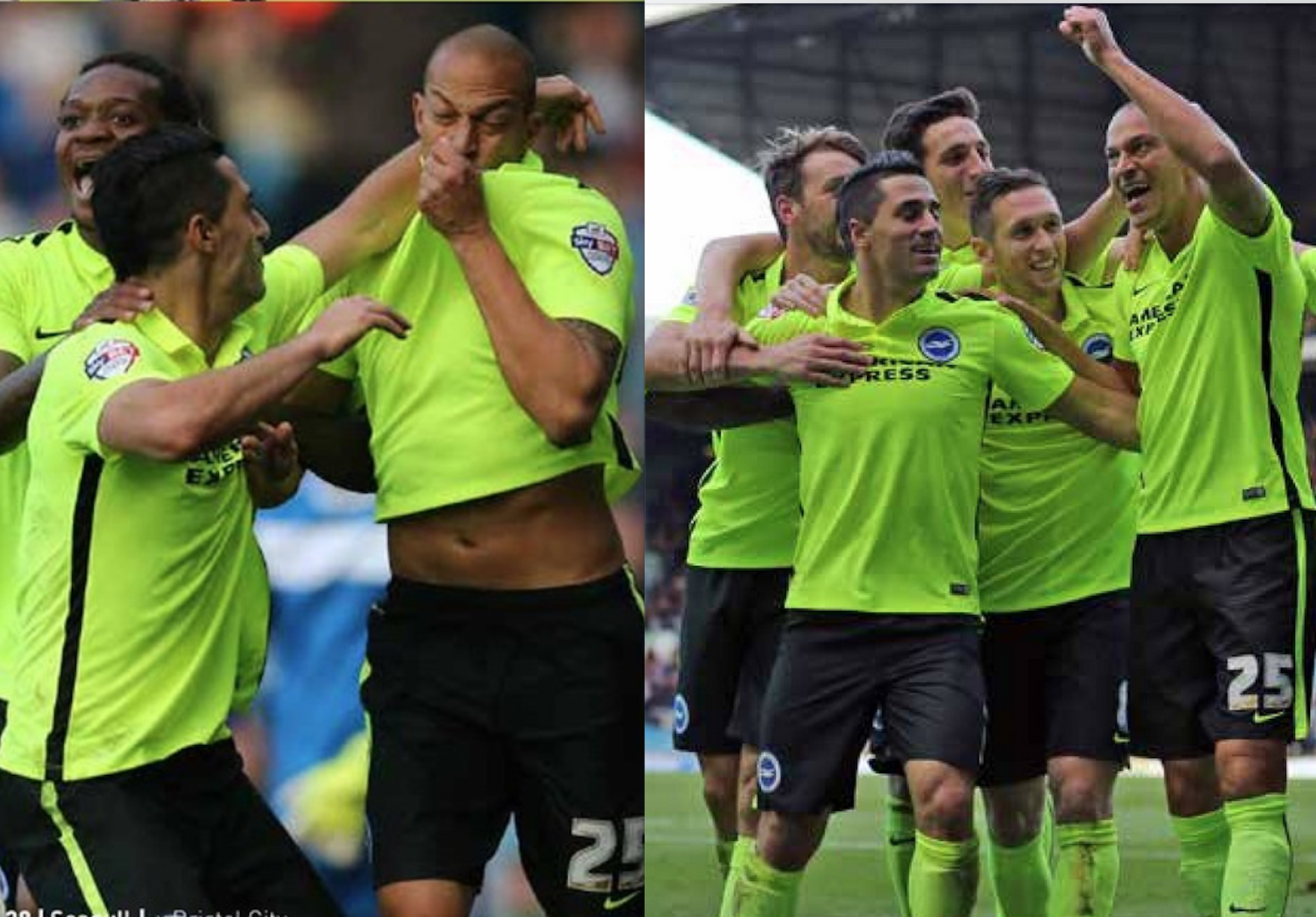
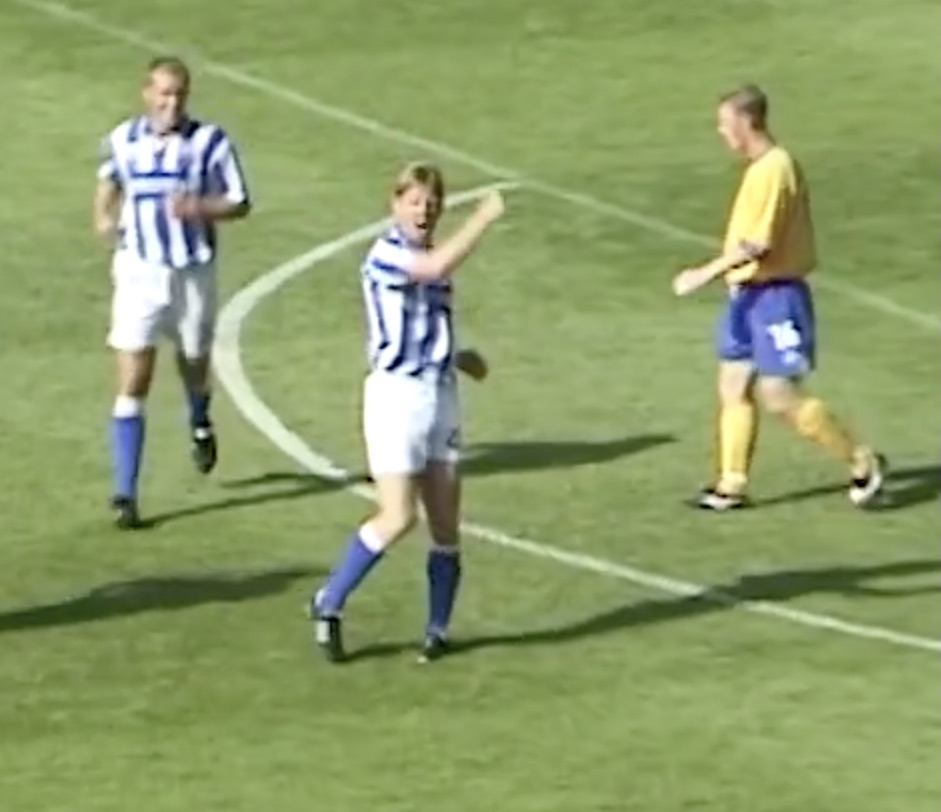
That he came back to the Albion from QPR as his career began to ebb was nothing short of a bonus­ – and, while I’m not a big gambler, I was delighted to get a modest return from the bookies when my punt on him being the last goalscorer came good after he had gone on as a sub at Elland Road on 15 October 2015 and chipped the winner (below) to register his first goal since rejoining!

“That goal was definitely the highlight of my season,” Zamora told interviewer Adam Virgo in a Seagulls World interview. “It was my first goal since coming back and to score the winner so late in the game was unbelievable. It was a special moment for me, and it settled the nerves knowing that we’d got the three points.”

Just four days later, Zamora repeated the feat going on as a 76th-minute substitute for Tomer Hemed at home to Bristol City and beating goalkeeper Frank Fielding with a low shot from 15 yards out. Albion won 2-1; Sam Baldock having levelled things up against his former club after Derrick Williams opened the scoring for City.

Unfortunately, Zamora managed just five more in that second spell. He made 10 starts plus 16 as a sub in Chris Hughton’s side but he was struggling with a hip injury.

It eventually caught up with him and prevented him from contributing further to Albion’s aim of promotion back to the elite; his last game being as a sub in a 0-0 draw at home to Sheffield Wednesday on 8 March 2016. “If I was fit, I would have scored some goals and we’d have been promoted automatically,” he told the UndrThe Cosh podcast (pictured above).

Thankfully another returning striker in the shape of Glenn Murray completed that task the following season and went on to cement his own place in Albion’s history: his 111 goals in 287 appearances putting him second in the list of Brighton’s all-time top goalscorers.

Golden goalscorers: Zamora + Murray

Each of the different eras I’ve watched the Albion has thrown up truly memorable players who have generated their own air of excitement and anticipation because of the goals they scored.

The first one for me was Alex Dawson, who netted seven in the first five games I watched in 1969. Then along came Willie Irvine whose goalscoring in third tier Albion’s promotion-winning season of 1972 earned him an unexpected recall to the Northern Ireland side – and an appearance (that I went to watch) in a 1-0 win against England at Wembley.

Next, of course, was the truly outstanding Peter Ward, who jinked his way past defenders with apparent ease and scored goals for fun, his 36 goals in 1976-77 smashing a decades-old record. Like Zamora, he came back to the scene of past glories (albeit only on loan) and scored a magnificent winner against the team he supported as a boy, Manchester United.

Garry Nelson, with 32 goals, and Kevin Bremner were a superb front pair in another third tier promotion-winning line-up in 1988 while, in 1990-91, Mike Small and John Byrne combined brilliantly to take the Seagulls within a hair’s breadth of a return to the big time.

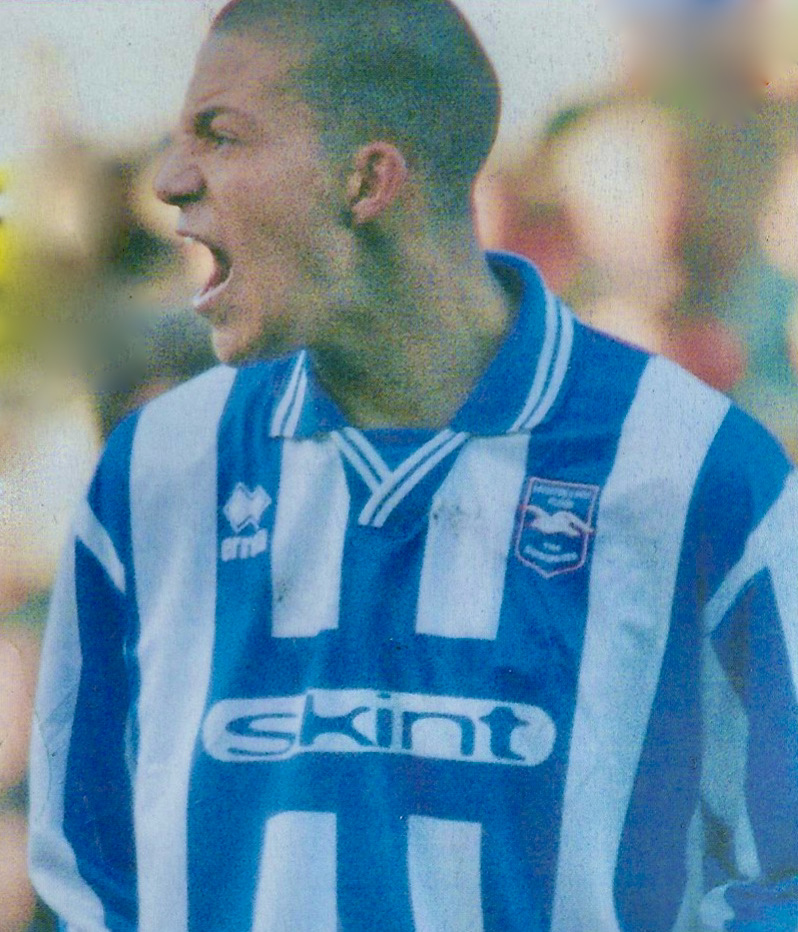
The arrival of a beanpole of a kid with an eye for goal in Zamora completely transformed Albion’s fortunes under Micky Adams and he was the talisman in back-to-back promotions following years in the doldrums.

Zamora’s Albion story is pretty well known but let’s remind ourselves of how it all began.

Depending on whose account you believe more, it was either Dick Knight or Adams who had the foresight to bring Zamora to the Withdean.

Adams said: “The first time I saw him he came onto the training ground; he looked like a kid. But he was tall and gangly with a useful left foot; there was potential there.”

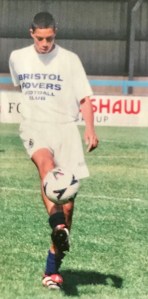
In fact, Zamora might never have arrived in Sussex if Albion had been successful in securing a permanent deal for on-loan Lorenzo Pinamonte. When Brentford outbid Brighton for the services of the Bristol City loanee, Albion turned their attention to Zamora (left), a Bristol Rovers player who was only getting sub appearances under Ian Holloway but had scored eight goals in six games on loan at nearby non-league Bath City.

“He was six foot one and we knew he had a very good first touch and could hold the ball up well, the type of player we wanted,” Knight recounted in his autobiography Mad Man: From The Gutter to the Stars (Vision Sports Publishing, 2013).

Zamora duly arrived on loan and scored six in six matches (including a hat-trick in a 7-1 away win at Chester). He scored an equaliser and was named Man of the Match on his debut v Plymouth and by the end of February was Player of the Month.

Hat-trick ball at Chester

While Knight and Adams wanted him to stay, he insisted on returning to Rovers where he thought he might force his way into Holloway’s starting line-up. But it was back only to the bench as Nathan Ellington, Jason Roberts and Jamie Cureton were ahead of him in the pecking order.

As preparations began for the new season, Albion offered £60,000 for Zamora but Rovers chairman Geoff Dunford wanted £250,000. An incredulous Knight said he wouldn’t go higher than £100,000 and couldn’t believe they could demand such a figure for someone who hadn’t actually started a first team game.

Zamora had Rovers’ youth team coach Phil Bater to thank for forcing through the move. He accompanied the shy youngster into a meeting with Holloway, who tried to say he’d get some games if he stayed. Bater reckoned the youngster was being strung along and argued Zamora’s cause saying he stood more chance of playing if Rovers let him join the Albion.

After some brinkmanship from each club’s respective chairmen, with Knight threatening to walk away from the deal, it finally went through two days before the start of the season, although Albion’s chairman reluctantly agreed to a 30 per cent sell-on clause for the player.

Zamora instantly became one of the top earners on £2,000 a week with a goal bonus built in.

“It was an absolute coup that we had finally secured this player,” said Knight. “I could only see good things in him, could only see that he would be a huge asset to us.

“Football is all a matter of opinions. There is little science to it. For me, Zamora was the best signing I ever made.”

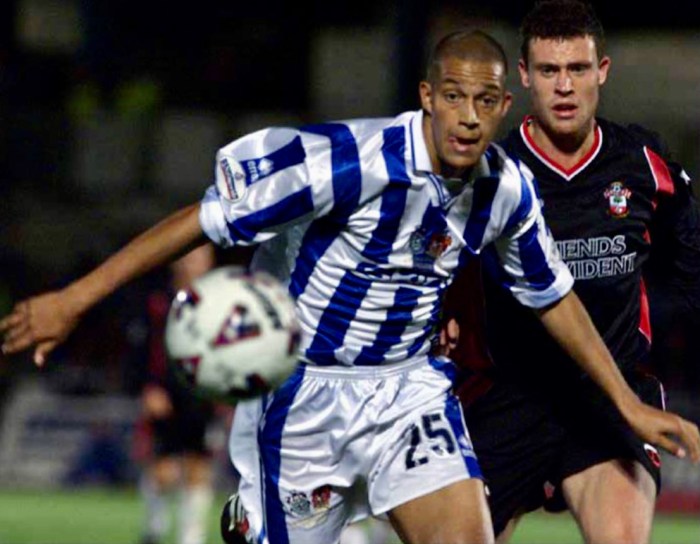
Zamora has eyes on the ball closely watched by a young Wayne Bridge for Southampton

Not only did Zamora manage to score 31 goals as Albion won promotion from the basement division, he went one better when they went straight to the top of the third tier the following season, netting 32 times in 46 matches.

A significant number of those goals came courtesy of Zamora’s excellent understanding with left-footed right-back Paul Watson, of whom he said: “He created a lot of goals for me with those quick free kicks. He didn’t put a foot wrong too often and was very underrated. He never got the credit his hard work deserved.”

Expanding on it in another interview, he said: “Whenever Watto got the ball I knew precisely where I needed to run to and he knew where to deliver it. It was such a great connection: Watto has an absolutely wonderful left foot and it made my job as a striker so much easier when you get deliveries like that.”

Declaring that even in the Premiership he hadn’t come across anybody with a better left foot, he added: “I was very lucky to have played in the same team as him; he created numerous goals for me; not only with his deliveries but with his intelligent play as well.”

Watson had arrived at the club with Charlie Oatway and was part of a cluster of players who had served under Adams at Brentford and Fulham. When Adams and assistant Bob Booker steered Albion to promotion as fourth tier champions, Zamora was player of the season and he and Danny Cullip were named in the PFA divisional XI.

Not long into the following season, the lure of taking over as manager at a Premier League club saw Adams quit Brighton, initially to become Dave Bassett’s no.2 at Leicester City, but with the promise of succeeding him.

“While I thought I had a shot at another promotion, it wasn’t a certainty,” Adams explained. “I knew I had put together a team of winners, and I knew I had a goalscorer in Bobby Zamora, but football’s fickle finger of fate could have disrupted that at any time.”

His successor, Peter Taylor, knew how fortunate he was to inherit an experienced squad, and said: “Of course the greatest asset we had was Bobby Zamora. Having him meant that we could play a front two at home and away from home we could play him on his own and he would still get us a goal out of nothing. He was an incredible player and miles too good for that level.”

And Zamora wasn’t only a star on the pitch, as Knight spoke about in his autobiography. “When he was at his zenith at Brighton, the requests we got for him to visit schools, hospitals and go to prize-givings far outweighed all the other players together, but he was always amenable. He was never starry, never refused. I couldn’t speak more highly of Bobby Zamora as a person.”

Knight recounted in his book how, after a 1-0 win at Peterborough, when Zamora missed a penalty but also scored the only goal of the game, Albion’s promotion to the second tier was confirmed and in his own inimitable way Posh boss Barry Fry said to Brighton’s star striker: “You’re a fucking great player and you’ll play for England one day, I’m fucking sure of it.”

Zamora was still only 21 when Tottenham signed him from relegated Brighton in July 2003. He left the south coast having scored a total of 83 goals in 136 appearances but in his last season in the stripes he netted just 14 as the Seagulls battled unsuccessfully to retain their tier two status.

Unfortunately, he missed eleven matches with a dislocated shoulder and, had former Premier League striker Paul Kitson been fit to play alongside him (he managed only seven starts plus three off the bench), the season may well have had a different outcome.

Everton’s Bill Kenwright had offered £3m for Zamora during the season but their manager Walter Smith seemed less convinced and, with Kevin Campbell and Wayne Rooney likely to be ahead of him, Zamora stayed in Sussex.

But chairman Dick Knight promised not to stand in his way if an opportunity was presented at the end of the season and that came from Tottenham. Manager Glenn Hoddle and assistant Chris Hughton had been to see Zamora in action at the Withdean on a number of occasions.

Spurs chairman Daniel Levy played hardball over the deal. Eventually, Knight settled on a £1.5m fee but, because of the original sell-on clause, £450,000 was due to Bristol Rovers.

Hoddle told The Guardian: “He has got good pace and great movement on and off the ball. No disrespect to Brighton, they have got a good team down there, but we have got players here who can make the most of his movement.”

The player’s agent Phil Smith told the newspaper: “The fee for Bobby is £1.5m which is a decent price in today’s market for a Second Division striker.

“It has been a long time coming for Bobby but he is delighted to be going into the Premiership. It has always been an ambition.”

Disappointed Albion manager Steve Coppell observed: “It is a big move for Bobby and nobody really expected we could hang onto him for much longer. But it has blown a big hole in any plans I had. I don’t have a better option than playing with Bobby Zamora up front.”

When he arrived at Spurs, one of the senior pros who took him under his wing was none other than Gus Poyet.

“As a young guy coming into the team, he was one of the senior pros who would always talk to me and encourage me,” Zamora told the matchday programme. “He didn’t have to do that, but he went out of his way to do so and you could see he had coaching qualities. He would often point things out on the pitch that you’d pick up on, and when he spoke, you’d listen.

“He wasn’t starting every game either, so in training I did more things with him than maybe the rest. I really got on well with him.”

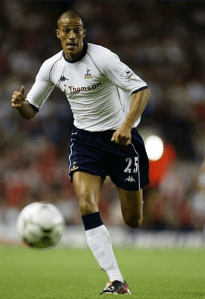
As it turned out, Zamora made only 18 appearances for Spurs (11 as a substitute) and only scored once – ironically a single goal that knocked West Ham out of the Carling Cup in October 2003.

In January 2004, Spurs chose to use him as a makeweight in taking Jermain Defoe from the Boleyn Ground to White Hart Lane.

Phlegmatic Zamora didn’t look on it as a failure but embraced the “learning curve” of training alongside the likes of Poyet, Robbie Keane, Darren Anderton and Jamie Redknapp.

“I came away a better player and with more experience,” he said. “Glenn Hoddle had signed me and then he got sacked not long afterwards. David Pleat took charge and we didn’t really see eye-to-eye, but the lads and the club were brilliant and I learned so much from my time there.

“I took a chance by stepping back down to the Championship with West Ham – but it was the opportunity of playing regular football again that was the pull for me.”

Stockdale’s key role in Albion’s rise to the Premier League

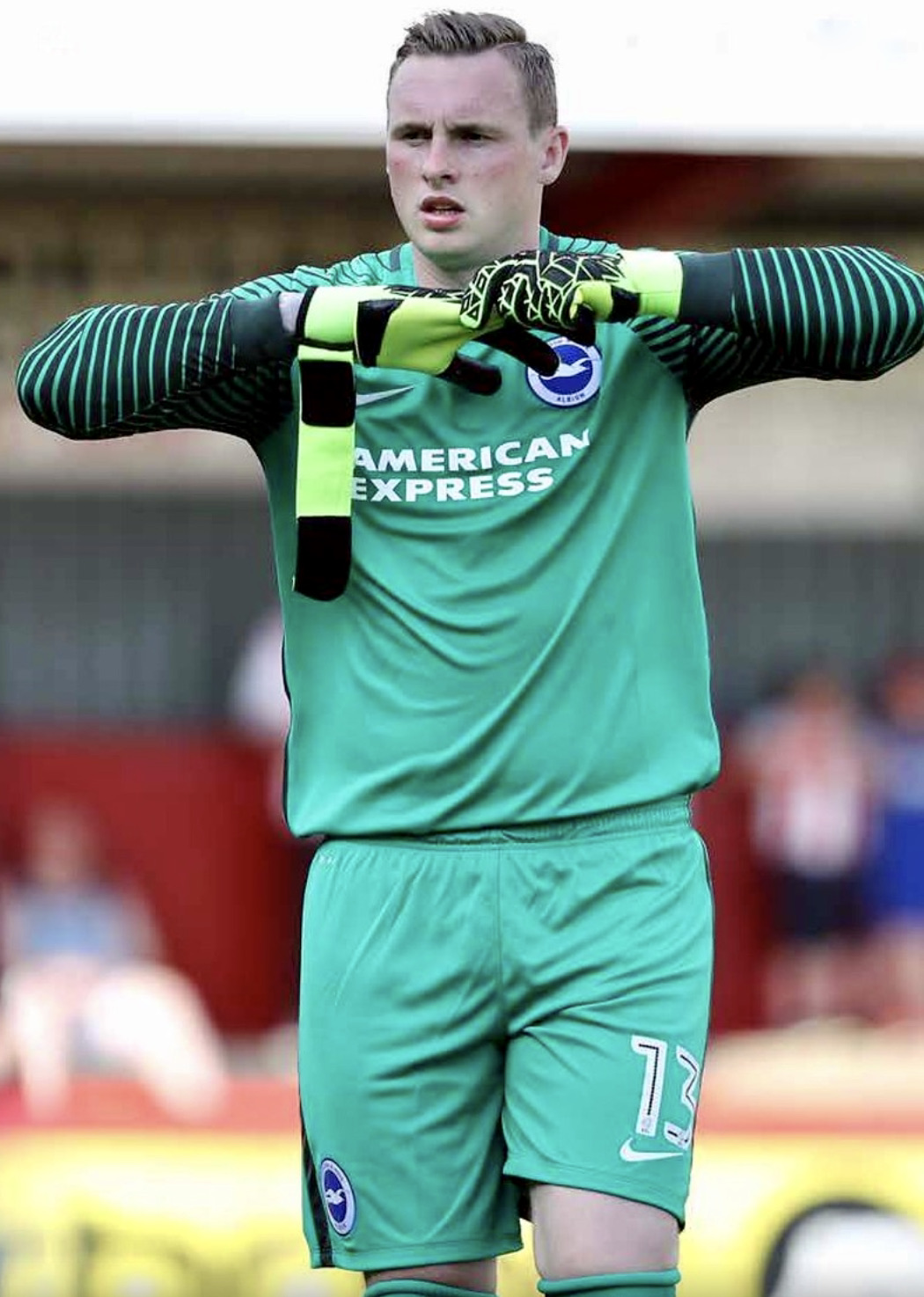
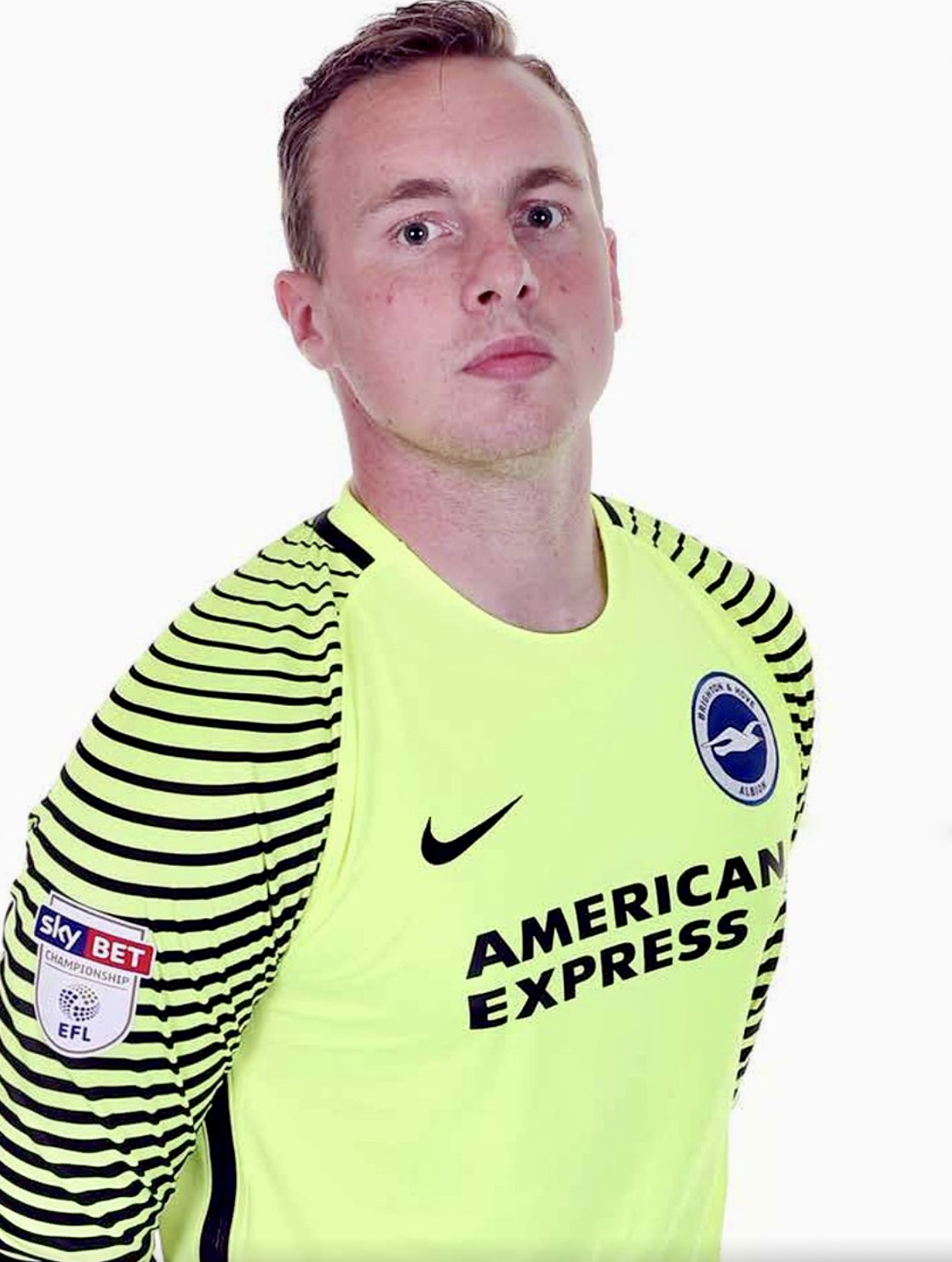
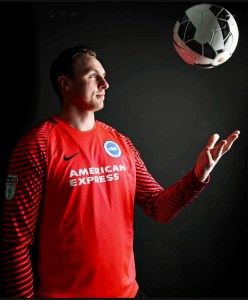
DAVID STOCKDALE kept 20 clean sheets as Brighton were promoted from the Championship to the Premier League.

He was chosen by his peers in the PFA Championship team of the year and was runner up to Anthony Knockaert as player of the season.

What seemed like a mystery at the time, though, was that he then remained in the Championship by signing a three-year contract with Birmingham City (at the time managed by Harry Redknapp).

“I’m not ashamed to say I put my family first and football second for a change,” Stockdale explained, referring to his desire to sign a longer term deal than the Seagulls offered because he didn’t want the upheaval of a move that might have unsettled his daughter’s education at a time she was about to take exams.

Stockdale had joined the Seagulls from Fulham in the summer of 2014 and was first choice ‘keeper for three seasons, playing a total of 139 matches for the club.

Remembered for some notable performances between the sticks, Stockdale impressed off it too. In the wake of the Shoreham air crash, he showed great compassion for the victims.

Before the next game, away to Ipswich Town, he wore personalised gloves and a training top bearing the names of two of them, Albion groundsman Matt Grimstone, who was Worthing United’s goalkeeper, and his teammate Jacob Schilt.

He also spent time talking to Matt’s family, visiting with Albion ambassador Alan Mullery. “We are all guilty of complaining about the little things in life but there are far more important things to worry about and I wish more people realised that,” he told the matchday programme.

At the end of the season, Stockdale’s support was recognised by the award of the PFA Community Champion trophy. “A lot of tears were shed,” he told Albion reporter Andy Naylor, when he got the inside track on Stockdale’s story in an interview for The Athletic on 17 November 2019.

“I’d spoken to Matt a few times, with him being a goalkeeper. We used to shout across at each other. I’d joke, ‘You come and train with us and I’ll do that (groundskeeping)’.”

The way the club rallied round didn’t surprise the goalkeeper because he’d heard good things from Fulham teammate and all time Albion legend Bobby Zamora when he was mulling over the move.

“I knew it was a good club, a very progressive club, but when Bobby told me it was the best club, that was good enough for me,” he said.

There was a familiar face waiting for him at training too because the goalkeeping coach when he arrived was Antti Niemi, who had taken him under his wing in his early days at Fulham.

“I was only 21 at the time, at a big Premier League club, and he spoke to me a lot in those early days,” he said. “Although he’s the goalkeeping coach here now, it sometimes feels the same as it did back then.

“He’s the one putting on the sessions now, and I’ve enjoyed them like I did when I trained with him before,” he said.

Even so, Stockdale was even more impressed by Niemi’s successor, Ben Roberts. “There’s no better goalkeeping coach than him,” he said. “Ben and I had tried to work together at previous clubs and it hadn’t come off. So, when we finally did at Brighton, he said ‘this is what I want you to work on, stay with me and trust me and the process’.

“It wasn’t always easy, I was 30 at the time trying to adapt my style, sometimes it’s hard. But I trusted him and it worked. He’s shown with numerous keepers that he can help anyone improve. That’s why people hold him in such high regard.”

A personal highlight for Stockdale came in January 2017 at the Amex when he made a double save from a Fernando Forestieri penalty against Sheffield Wednesday that helped put Brighton top of the division.

Less memorable were two own goals in a 2-0 defeat at Norwich City when Alex Pritchard shots rebounded off the woodwork, hit him and went in.

And when Albion had a chance to clinch the Championship title at Villa Park, Stockdale fumbled a long-range Jack Grealish shot to concede a late equaliser which meant Newcastle finished top instead.

“I left with great memories, on a high, apart from the Villa game,” Stockdale told Naylor. “It was one of those when everyone knows it was a mistake. It just wasn’t meant to be, but as a player you feel the responsibility.

“We got what we wanted, got promoted, but I think it left a bit of a bad feeling.”

Born in Leeds on 20 September 1985, Stockdale stayed in Yorkshire in the early part of his career, initially in the youth sides of Huddersfield Town and York City.

It was York who took him on as a trainee, in 2000, and in the last game of the 2002-03 season, aged just 17, Terry Dolan gave him his first team debut as a half-time substitute for Michael Ingham, who was suffering a shoulder injury, although City lost 2-0 to Oxford United.

By then in the Conference, Stockdale made 19 consecutive appearances for the Minstermen between August and December 2004 before being dropped by caretaker manager Viv Busby.

It was during that run of games that Stockdale first gained international recognition, being selected for the England C (non-league) squad for a friendly v Italy (he went on as a sub for Nikki Bull).

After his club disappointment, he told the York Evening Press: “I was gutted when I was taken out of the team but I’ve just gone back to the training ground and worked as hard as I can.

“I have got my best years to come. I am only 19 and I hope I can get a contract for next year and stay at the club.”

When former Albion midfielder Billy McEwan took charge, he offered Stockdale his first professional contract, although the youngster prevaricated over signing it, much to the manager’s dismay.

McEwan told the York Evening Press: “If the players don’t want to sign, then it’s up to them. They can go because I want players who want to play for York City Football Club.

“But David Stockdale is the biggest disappointment to me and I have told him that. He’s a young apprentice getting his first professional contract and the last thing in his mind should be money. That should be of secondary importance and he should be grateful York City are offering him a contract.

“On the evidence of his last performance of the season, he has to do better if he wants to get into the team.

“At the moment, he has potential but so have a lot of players. Maybe he feels he can get an automatic number one spot but that’s up for grabs this summer.”

Shortly after signing the contract, Stockdale went on loan to Northern Premier League club Wakefield-Emley and the following March joined Worksop Town on a temporary basis.

Stockdale was released by York at the end of the 2005-06 season with some more harsh words from McEwan about his weight ringing in his ears. After signing for League Two Darlington, Stockdale told the York Evening Press being released had been the incentive he needed to save his career.

“I have done well in pre-season and got back into shape after letting myself go at York, which was well-documented,” he said. “I accept now that was the case and agree with the manager but I would have preferred not to have been criticised in public.

“It has probably given me a kick up the backside though to get me going again and I feel a better person now. I would have loved to have stayed at York because I was there for a long time and have a great affection for the club.

“I would like to thank everybody there for all the help they have given me. The fans were always great and I learnt everything there so it was a bit of a shock to go.”

Clearly benefiting from full-time goalkeeping coaching from former Darlington, Bristol Rovers and Middlesbrough no.1 Andy Collett, Stockdale became manager Dave Penney’s preferred first choice ‘keeper, ousting former Derby and Bolton stopper Andy Oakes.

Scouts from Birmingham and Newcastle were said to be monitoring his development but it was Fulham who stepped in and signed him in April 2008 for an undisclosed sum (thought to be £350,000 rising to a possible £600,000). He was loaned back to Darlo to finish the season when they lost out in the League Two play-off semi-finals.

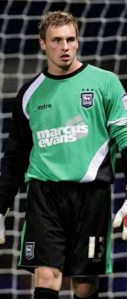
Although he was at Fulham for six years, much of Stockdale’s time on their books was spent out on loan: in League Two with Rotherham United, League One at Leicester City, and in the Championship with Plymouth Argyle, Ipswich Town and Hull City.

Temporary Tractor Boy

Nevertheless, his parent club did give him a reasonable sprinkling of first team outings: he played a total of 52 games, 39 in the Premier League.

Indeed in 2011, when he was covering for the injured Mark Schwarzer, Fabio Capello, the England boss at the time, called him up for international duty, although he didn’t get to play.

His best run of games for Fulham in the Premier League came in the 2013-14 season when he made 21 appearances (he also played five cup games).

After he left Brighton, Stockdale was Birmingham’s first choice ‘keeper throughout the 2017-18 season (apart from two months out with an injured wrist). He played 39 games, having replaced the previous season’s no.1, Tomasz Kuszczak, who had also moved to City from Brighton.

Blues only narrowly avoided relegation from the Championship with Redknapp only lasting until mid-September as manager; Lee Carsley briefly in temporary charge, Steve Cotterill for five months and then Garry Monk.

Monk brought in Lee Camp as his first-choice ‘keeper and Stockdale was sent out on loan to three different League One clubs: Southend United (on an emergency seven-day arrangement), Wycombe Wanderers and Coventry City.

After making a single appearance for Birmingham under Monk’s successor Pep Clotet at the start of the 2019-20 season, Stockdale rejoined Wycombe in January 2020 on a half-season loan.

He then moved to Wycombe on a permanent contract in September 2020 but only played twice, with Ryan Allsop the preferred no.1. In February 2021, he linked up with League Two Stevenage on loan and played five matches before having to return to Wycombe when Allsop was injured.

He kept the shirt until the end of the season, when Wanderers were relegated to League One, and, with Allsop having been released, Stockdale stepped up and was ever-present throughout the 2021-22 season. His 18 clean sheets earned him the League One Golden Glove award, jointly with Michael Cooper of Plymouth.

Nevertheless, with his contract up, he then returned to Yorkshire, signing for Darren Moore’s Sheffield Wednesday, where he played 27 games in the 2022-23 season.

They say what goes around comes around, and at the start of the 2023-24 season Stockdale went back to York City, although he sustained an injury early on in the season that caused him to be sidelined from the National League team.

As well as his familiar playing role, Stockdale began to look towards a time when he hangs up the gloves by also being appointed York’s head of recruitment. However, he was let go from the role in April 2024.

Away from his direct involvement in club football, he began a postgraduate diploma in Global Football Sport Directorship with the PFA Business School.

The Liddle and large story of Dan Burn’s football rescue

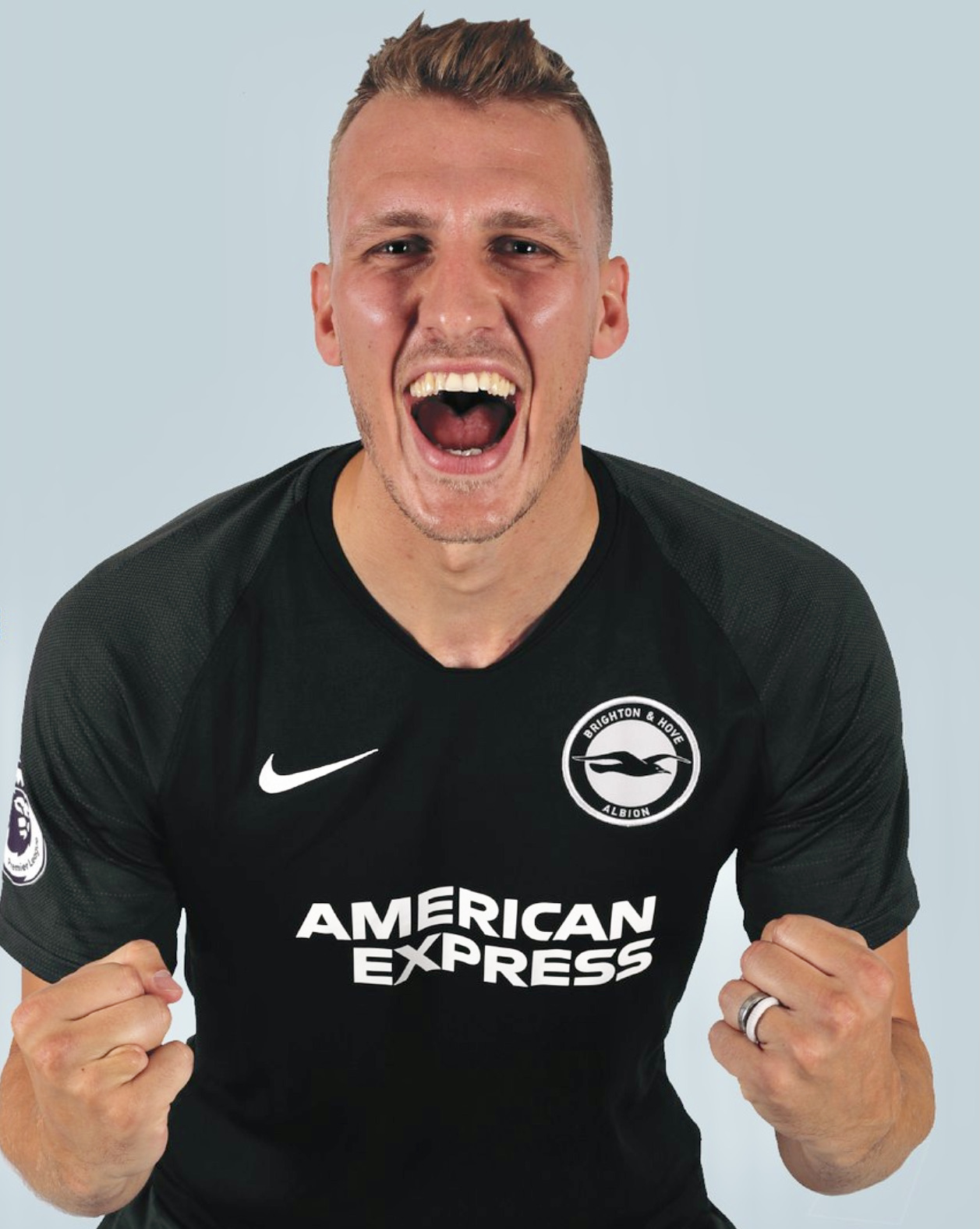
WHEN Albion beat Wigan Athletic 2-1 to win promotion to the Premier League in April 2017, few Brighton supporters were paying much attention to the tall defender lining up for the opposition.

“There was a party atmosphere around the place, with the players and everyone on the pitch – so it was a great time for Brighton, but not such a great time for us as Wigan players,” recalled 6’6” Dan Burn. “We were all but relegated to League One, which was a low point in my career.”

By the time he next stepped out at the Amex, in January 2019, he was wearing Albion’s colours, and making his debut in a 0-0 stalemate v West Brom in the fourth round of the FA Cup.

Signed on a four-year contract towards the end of the Chris Hughton era, to say Burn’s Albion career had a slow start would be an understatement. He joined the Seagulls on August deadline day in 2018, but was immediately loaned back to the Latics while also nursing a foot injury.

He told the Albion matchday programme: “I’m buzzing to get another crack at the Premier League but I know it won’t be easy. The competition within the squad is very good in my position.

“I’m under no illusions that it’s going to be a very tough ask but, when I do get a chance, I’ve got to show what I can do.”

Hughton, a former Newcastle United boss when Burn was a season ticket holder at St James’s Park, said: “Dan has a wealth of experience from his time with Fulham, Birmingham City and Wigan, amongst others.

“He’s an imposing figure and had an excellent season helping Wigan to the League One championship. He also impressed in an excellent FA Cup run to last season’s quarter-finals.” 

Once recovered from his foot injury, Burn played 13 games, plus once as a sub, for Paul Cook’s Latics before arriving at Falmer in January.

He managed just three FA Cup games under Hughton, but his fortunes changed dramatically with the arrival of Graham Potter, initially slotting in on the left of Shane Duffy and Lewis Dunk in a back three, and later showing versatility and no little ability on the ball as a left-back or left wing back.

“Graham had a meeting with the lads, sat us down and told us the past was past and we just had to go out and prove we could play.

“I’m a good trainer; I train as I play and so always felt I had a chance. I also learn best when I’m out of my comfort zone. Playing left of three or left-back or left wing back, I’ve proved a lot of people wrong, which is what I like to do.”

Burn’s Albion Premier League debut came in the impressive 3-0 away win at Watford that opened the 2019-20 season, and, after Albion supporters had voiced their approval, Burn told the matchday programme: “It’s nice to be appreciated by our fans who are tremendous both home and away and for me to prove to people that I can play at this level.”

It was certainly a special occasion for Burn when Albion travelled to St James’s Park on 14 September 2019. He admitted: “Even coming out the tunnel and listening to Local Hero being belted out of the speakers was emotional for me. As a season-ticket holder for years, I could see my old seat.

“All my family were there, dotted around the stadium, people I used to go to school with, parents of friends. On the day I just had to focus solely on the game and then afterwards I could relax a little bit and go up to see my family.”

Burn was born in Blyth, the seaside town 13 miles north of Newcastle, on 9 May 1992. Because his dad was an ardent Newcastle fan, his son was quickly enrolled as a supporter and, having begun playing football with some pals when he was six or seven, he admitted: “Once I started going with him and watching games I never looked back. I was always out on the back field playing football or playing at school.

“Around 99 per cent of people in Blyth supported Newcastle. Everyone dreamed of playing for Newcastle.”

The dream looked like it might become a reality when he was just nine. While playing for the junior side of Blyth Spartans, he was scouted by Newcastle and invited to join their development centre.

“You have the Academy, where the best players went, and the development centre would run alongside that, where you would train Fridays, and they kept an eye on the players’ progress,” Burn recalled in a matchday programme interview.

“It wasn’t that great to be honest. While I was a good footballer when I joined them, as the two or three years went on, I declined quite rapidly. My body shot up, and I didn’t really catch up with myself football-wise until I was 15 or 16.”

He left the Toon at 11 and reflected: “It wasn’t a particularly good experience being let go by the club you support, with the realisation setting in that you’re probably not good enough to play at that level. I got released around Christmas time too, and it knocked my confidence.”

His chance of making it in the game wasn’t lost, though. He played for Blyth Town and Blyth Spartans, as well as New Hartley Juniors, and was spotted by a scout working for an organisation which selected players who weren’t associated with professional clubs.

Still a sixth former at school, he played for an England representative side against the other home nations and did enough to persuade Darlington’s youth team manager Craig Liddle to invite him for a trial. Burn credits Liddle with giving him the belief he could play at a higher level.

He was given a two-year YTS deal in July 2009 and it certainly beat pushing shopping trolleys for ASDA, which he’d been doing to make a bit of money.

In December 2009, with the League Two club in some trouble, Burn suddenly found himself given a first team chance. At just 17, he made his debut as a first half substitute away to Torquay.

“Although we got beat 5-0, I came off the pitch buzzing,” he recalled. “Here I was, a 17-year-old, and I was playing in League Two. We’d been pumped away from home, facing this horrendous journey home, but I was over the moon when I got back to my car – ridiculous really.”

Burn the Quaker

Unfortunately, Darlo were relegated to the Conference at the end of that season. In January the following season, Burn managed to get a foothold in the side.

His performances caught the eye of Premier League Fulham and a £350,000 fee – a lifeline towards keeping the Quakers going for a little while – took him to London. Somewhat ironically, Burn revealed that Newcastle (at the time managed by Alan Pardew) matched Fulham’s offer “but I’d already been down to Fulham, had a tour of the ground and done my medical, so was happy to sign for them”.

Being 18 at the time, he realised staying in the north-east could have made it difficult to avoid the temptations of nights out with his mates, quite apart from the scrutiny that locals give their local football heroes.

Winning a header in Fulham’s colours

“I would have loved to play for Newcastle but, at that age, at that time in my career, it was the best decision for me to get away from that goldfish bowl where everyone’s analysing what you’re doing,” he reflected. “I just wanted to get away and concentrate solely on my football which was the correct decision.”

Burn spent five years as a Fulham player but with decidedly mixed fortunes, as managers came and went.

He spent most of 2012-13 on loan at Gary Johnson’s Yeovil Town and scored the winner in the 2013 League One play-off final at Wembley when the Glovers beat Brentford 2-1.

“I remember my header going in and losing all control,” he said. “I was running round like a madman!” He added: “For a club like that to be in the Championship was ridiculous but I’ll forever be thankful for Yeovil taking a punt on me.

Wembley winner with Yeovil Town

“I really grew up as a player and learnt what it really meant to be a footballer.”

Loan spell at Bimingham under Toon legends Lee Clark and Steve Watson

Although he signed a new two-year contract with Fulham, he then went to Birmingham on loan (playing under Toon ‘legends’ Lee Clark and Steve Watson) for six months before returning to the Cottage in January 2014.

With Rene Meulensteen having succeeded Martin Jol as manager, Burn made his Premier League debut in a 2-0 defeat to Arsenal at the Emirates, and retained his place against the likes of Chelsea, Man Utd and Liverpool.

By then he was 21 and was just enjoying playing but, when relegation saw Meulensteen sacked, in the Championship Burn sometimes found himself not even getting into matchday squads under Slavisa Jokanovic.

“It was such an anti-climax; I’d been on top of the world playing and now it was the complete opposite.” He admitted speaking to a psychologist about the situation to help him through.

He played 35 matches in 2015-16 as Fulham narrowly avoided dropping into League One but was not retained at the end of the season. He made the switch to newly-promoted Wigan Athletic whose manager Gary Caldwell said: “He is a powerful defender, but he likes to play as well.”

The 2016-17 season proved to be bittersweet: the Latics were relegated back to League One, but, according to Paul Kendrick of Wigan Today: “After a shaky start, Burn barely put a foot wrong on a personal level, with a series of highly consistent displays that ensured he was the landslide winner of the Player of the Year award.”

Under new manager Paul Cook, Burn was an ever-present for Wigan throughout the 2017-18 season when they bounced straight back, collecting the League One title with 98 points, two ahead of Blackburn Rovers.

Burn’s performances earned him a place in the PFA’s League One team of the year, and the new season was less than a month old when Albion made their move for him.

Of course, a significant part of Burn’s three years with the club covered the period when Covid prevented fans from attending matches but Burn scored a truly memorable first goal for the club when there was a partial return of supporters.

In front of 8,000 noisy fans at the Amex on 18 May 2021, Burn, in his 60th match for the club, sealed a remarkable comeback from 2-0 down to secure a 3-2 win for the Seagulls. His 76th-minute winner came after Leandro Trossard (50th minute) and Adam Webster (72nd) had made it 2-2. It was the Seagulls’ first top-flight win over City since 1981.

“That was a real high point for the team and for me personally,” he said.

Burn’s second goal was pretty special too, coming at Goodison Park on 2 January 2022, sandwiched between Alexis Mac Allister’s brace, as Albion beat Everton on their own turf for the first time ever.

It was towards the end of that month’s transfer window that Albion initially rebuffed newly-Saudi-enriched Newcastle’s attempts to sign Burn, but the lure of a return ‘home’ was too great and on deadline day he eventually departed for a fee said to have been £13million.

In an emotional farewell on the club website, he said: “The transfer came as a surprise. I had no desire to leave, but the opportunity to join my hometown club Newcastle United was the only way I would have wanted to leave. While I am excited to begin this new chapter, I am also sad to be ending another.

“Brighton has been a hugely successful period of my career and it’s been a memorable time for me off the pitch. We had my son down here, and I have loved seeing my family grow up as part of the community and living in Brighton & Hove. 

“Newcastle were the only club who could have tempted me away. Second to Newcastle United, Brighton & Hove Albion, the city and those associated with the club will always have a special place in my heart.”

When Burn scored his first goal for Newcastle in a 2-0 Carabao Cup quarter final at home to Leicester on 10 January 2023, manager Eddie Howe described it as an “incredible moment”, telling the media: “I am so pleased for him. This is his club and he has come back here and he is savouring every moment.”

The goal came when Burn ran on to Joelinton’s pass, beat two defenders and slotted a shot into the bottom corner.

“I used to sit in the east stand,” he said. “You always want to score in front of the Gallowgate end. To do that in front of my family was amazing.

“I like to get forward and it’s entertaining watching a guy my size running into the box.”

The FA Cup semi-final hat-trick hero who wore red and blue

ALEX DAWSON was even younger than Evan Ferguson when he scored a FA Cup semi-final hat-trick.

The bull-like centre forward who broke through at Manchester United in the wake of the Munich air crash wrote his name in football record books on 26 March 1958.

Dawson was just 18 years and 33 days old when he netted three goals in United’s 5-3 win over Fulham in front of 38,000 fans at Highbury, north London. No-one that young has ever repeated the feat.

Eleven years later, Dawson scored twice for Brighton in a Third Division match against Walsall. It was my first ever Albion game. He followed up the two he got in that game with six more in four other games I saw that 1968-69 season. They were enough to sow the seeds of a lifetime supporting the Albion and the burly Dawson, wearing number 9, became an instant hero to an impressionable 10-year-old.

Dawson scored twice v Walsall in 1969

Dawson is no longer with us but the memory of his goalscoring exploits live on amongst those fans of a certain vintage who had the pleasure of seeing him in action.

A man who played alongside him at Wembley in 1958 – Freddie Goodwin – made Dawson his first signing for Brighton, for £9,000, not long after he had taken over as manager in the winter of 1968.

By then, he was plying his trade with Bury. He had left United in 1961 after scoring a remarkable 54 goals in 93 games, including one on his debut aged just 17 (in a 2-0 win over Burnley).

After losing 2-0 to Bolton Wanderers in 1958, another losing Wembley appearance followed six years later. He scored a goal for Preston North End but the Lancastrian side lost 3-2 to West Ham United.

United pair Freddie Goodwin and Alex Dawson were reunited at Brighton

Nevertheless, Dawson was prolific for Preston scoring 132 goals in 237 league and cup games over six years. The purple patch I saw him have for Brighton saw him find the net no fewer than 17 times in just 23 games, including three braces and four in an away game at Hartlepool. That was only one behind top scorer Kit Napier whose 18 came in 49 matches.

Alex Dawson in snow action at the Goldstone Ground

In a curtain-raiser to the 1969-70 season, Dawson scored four times as Albion trounced a Gibraltar XI 6-0 at the Goldstone. But the signing of Allan Gilliver and, in the New Year, young Alan Duffy, began to reduce his playing time. He got 12 more goals in 28 appearances (plus three as sub) but, when Goodwin left the club, successor Pat Saward edged him out.

Even in a loan spell at Brentford he scored seven in 11 games. Greville Waterman, on bfctalk.wordpress.com in July 2014, recalled: “He was a gnarled veteran of thirty with a prominent broken nose and a face that surely only a mother could love, but he had an inspirational loan spell at Griffin Park in 1970.”

Still smiling and scoring goals at Corby

Released by the Albion at the end of the 1970-71 season, Dawson’s final footballing action was with non-league Corby Town, where he didn’t disappoint either.

In his first season at Occupation Road, he finished top scorer with 25 goals in 60 appearances and by the time he retired from playing on 4 May 1974, his tally for the Steelmen was 44 in 123 appearances.

When the curtain came down on his career, Dawson had scored 212 goals in 394 matches – more than one every two games. A true goalscorer.

It was in the wake of the decimating effect of the Munich air disaster that Dawson found himself thrust into the limelight at a tender age.

The crash claimed the lives of eight of United’s first choice team – Dawson’s pals. Youngsters and fringe players had to be drafted into the side to fulfil the remaining fixtures that season. One was Dawson, another was Goodwin.

Thirteen days after the accident, Dawson took his place beside survivors Bill Foulkes and Harry Gregg and scored one of United’s goals as they beat Sheffield Wednesday 3-0 in the fifth round of the Cup.

He scored again as United drew 2-2 with West Brom in the sixth round, before winning through 1-0 in a replay to go up against Fulham in the semi-final.

Dawson told manutd.com: “In our first game with Fulham (played at Villa Park), Bobby Charlton scored twice in a 2-2 draw, and I was put on the right wing. I was a centre-forward really and, when we played the replay at Highbury four days later, I was back in my normal position.

“Jimmy (Murphy) said before the game: ‘I fancy you this afternoon, big man. I fancy you to put about three in.’ I just said: ‘You know me Jim, I’ll do my best,’ but I couldn’t believe it when it happened.

“The first was a diving header, I think the second was a left-footer and the third was with my right foot.

“It was a long time ago, of course, and it’s still a club record for the youngest scorer of a hat-trick in United’s history. Records are there to be broken and I’m surprised that it’s gone on for over half a century.

“I’m a proud man to still hold this record. Even when it goes, nobody can ever take the achievement away from me.”

While Dawson was my first Albion hero, when he died in a Kettering care home at the age of 80 on 17 July 2020 the esteem in which he was held by others also came to the fore in the tributes paid by each of the clubs he played for.

Born in Aberdeen on 21 February 1940, Dawson went to the same school as United legend Denis Law, but his parents moved down to Hull and Dawson joined United straight from Hull Schoolboys.

Dawson and future Preston and Brighton teammate Nobby Lawton were both on the scoresheet as United beat West Ham 3-2 in the first leg of the 1957 FA Youth Cup Final and Dawson scored twice in the 5-0 second leg win. West Ham’s side included John Lyall, who later went on to manage them.

On redcafe.net, Julian Denny recalled how Dawson once scored three hat-tricks in a row for a United reserve team that was regularly watched by crowds of over 10,000.

After that goalscoring first team debut against Burnley in April 1957, he also scored in each of the final two matches that season (a 3-2 win at Cardiff and a 1-1 draw at home to West Brom) to help United win the title and secure their passage into Europe’s premier club competition.

Obviously, circumstances dictated Dawson’s rapid rise but, with the benefit of hindsight, some say his United career may have panned out differently if he hadn’t been thrust into first team action at such a young age.

He was just short of his 18th birthday when the accident happened. In an interview with Chris Roberts in the Daily Record (initially published 6 Feb 2008 then updated 1 July 2012), he recalled: “I used to go on those trips and had a passport and visa all ready but the boss just told me I wasn’t going this time.

“I had already been on two or three trips just to break me in. I know now how lucky I was to be left in Manchester. The omens were on my side.”

Dawson went on to describe the disbelief and the feelings they had at losing eight of the team, including Duncan Edwards several days later.

“We were all so close and Duncan was also a good friend to me before the accident,” said Dawson. “Duncan was such a good player, there is no doubt about that. He was a wonderful fellow as well as a real gentleman.

“I will never, ever forget him because he died on my birthday, 21 February, and before that he was the one who really helped me settle in.”

Dawson gradually became an increasingly bigger part of the first-team picture at United, making 11 appearances in 1958-59 and scoring four times. The following season he scored 15 in 23 games then went five better in 1960-61, scoring 20 in 34 games.

He was at the top of his game during the last week of 1960 when he scored in a 2-1 away win at Chelsea on Christmas Eve, netted a hat-trick as Chelsea were thumped 6-0 at Old Trafford on Boxing Day, and then scored another treble as United trounced neighbours City 5-1 on New Year’s Eve.

A fortnight later he had the chance to show another less well-known string to his footballing bow…. as a goalkeeper!

It was recalled by theguardian.com in 2013. When Tottenham were on their way to the first ever double and had an air of near-invincibility about them, they arrived at Old Trafford having lost only once all season, and had scored in every single game.

Long before the days of a bench full of substitutes, when ‘keeper Harry Gregg sustained a shoulder injury, Dawson had to take over in goal.

Dawson excelled when called upon, at one point performing, according to the Guardian’s match report, “a save from Allen that Gregg himself could not have improved upon”.

The article said: “Tottenham’s attempts to get back into the game came to nought and Dawson achieved what no genuine goalkeeper had all season: keep out Tottenham’s champions-elect. In the end, there were only two games all season in which Spurs failed to score, and this was one of them.”

Scoring for Preston North End

Tottenham’s north London neighbours, Arsenal, finished a disappointing 25 points behind Spurs in 11th place, but United manager Matt Busby had been keeping tabs on the Gunners’ prolific centre forward David Herd (Arsenal’s top scorer for four seasons), and in July 1961 took him to Old Trafford for £35,000. It signalled the end of Dawson’s time with United.

When the new season kicked off, Dawson had a new apprentice looking after the cleaning of his boots….a young Irishman called George Best. In his 1994 book, The Best of Times (written with Les Scott),

Best said: “Alex Dawson was a brawny centre forward whose backside was so huge he appeared taller when he sat down. To me, Alex looked like Goliath, although he was only 5’10”. What made him such an imposing figure was his girth.

“He weighed 13st 12lbs, a stone heavier than centre half Bill Foulkes who was well over 6ft tall. What’s more, there wasn’t an ounce of fat on Alex – it was all muscle.”

Best’s responsibilities for Dawson’s boots didn’t last long, however, because in October that year, Busby sold the centre forward to Preston for £18,000.

In 1967, Dawson took the short journey to Bury FC where his goalscoring exploits continued with 21 goals in 50 appearances, before he joined Goodwin’s regime at Brighton.

What a career to look back on: Alex Dawson recalling his goalscoring exploits

Great start, but Fulham stalwart Stan Brown couldn’t help slide

A WIN ON his debut was as good as it got in Sussex-born tenacious midfielder Stan Brown’s two months as a Brighton player.

Brown, who spent 15 years with Fulham, was one of too many loan signings manager Pat Saward turned to as he dismantled his 1972 promotion-winning side and tried in vain to get Albion to adapt to the old Second Division.

Brown had six seasons as a Fulham regular in the old First Division, two in the Second and two in the Third before his two-month loan with the Albion.

He was following in the footsteps of two of his five brothers, Irvin and Alan, who had both played briefly for Brighton several years earlier.

Stan certainly couldn’t have wished for a better start, in a side with another loanee debutant, Luton’s John Moore (in as a replacement for sold ex-skipper John Napier), for an away match at Huddersfield Town on 14 October 1972.

With only one win (ironically against Fulham) in the opening 12 league games, there was cause for optimism that a corner had been turned when the Albion earned a surprise 2-0 victory in south Yorkshire (Eddie Spearritt and Barry Bridges the scorers).

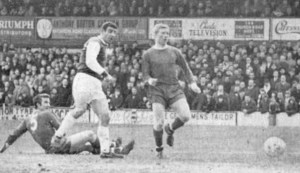
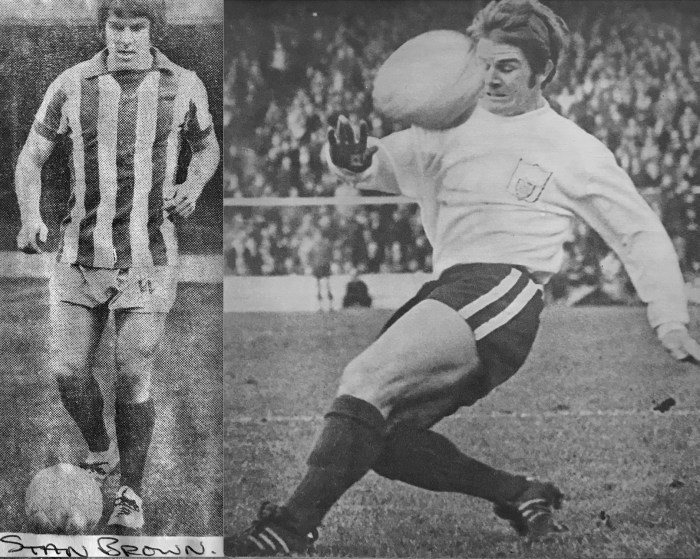
A Goal magazine picture shows Brown in action for Fulham against Albion’s Eddie Spearritt in 1969-70

“It was as if I had been playing for Albion all my life,” Brown told the matchday programme. “You see, I live at Lewes, the training ground is only four miles from my house and I have known Bert Murray and Barry Bridges for a long time.

“As for the rest of the lads, I felt I knew them too from reading about them in the Evening Argus every night. So, when it actually came to turn out for Albion at Huddersfield I knew all the players by their first names.”

Manager Saward was certainly impressed by the impact of his two new acquisitions. “The new men played a major part in our success,” he said. “It was quite remarkable really the way they slotted into the side as if they had been playing for Albion all season.

“They are, of course, experienced professionals who have been around the game a long time. But even the best professionals sometimes take time to settle into new environments and this is why the performances of these two was so outstanding.”

Injuries to regular midfielders John Templeman and Brian Bromley had provided an opening for Brown and his subsequent involvement helped the side to three successive draws. But the wheels fell off big time in his last five games as Albion lost the lot without scoring a goal.

Brown returned briefly to Craven Cottage before moving on to Colchester United while Albion’s losing streak continued through to the following February!

Although fortunes eventually improved in the final third of the season, the damage had been done and Albion dropped straight back down to the old Third Division.

Born in Lewes on 15 September 1941, Brown played for East Sussex schoolboys and captained Sussex Schools. It was in that representative side that he was spotted by Fulham, who took him on as a 16-year-old apprentice in 1957.

Older brother Irvin, a centre-half, had joined Albion’s staff in 1951 but only played three games in the 1957-58 season before moving on to greater success with Bournemouth; signed by Don Welsh, the manager who’d taken him to Brighton.

The day after Irvin left the Albion in 1958, 6’4” brother Alan signed for the club as a centre-half but was converted into a centre-forward and scored twice in eight first team games before moving on to Exeter City; signed by former Brighton teammate Glen Wilson.

Stan was undoubtedly the most successful of the three although, when he made his Fulham first team debut on 21 January 1961, it was memorable for all the wrong reasons: he was in for the injured Johnny Haynes and Fulham lost 6-1 at home to Sheffield Wednesday.

Johnny Haynes & Stan Brown

Initially a centre-forward, at 5ft 7ins he was on the small side to lead the attack, so switched to midfield – his preferred position – but he also featured in the back four.

It was in the 1962-63 season that he earned a regular place in the side and was known as a “player’s player” for his selflessness and desire to put the team before his own ambitions. He enjoyed playing in midfield alongside Haynes and Alan Mullery but was prepared to slot in anywhere if necessary.

Fulham fan Pete Grinham summed him up as “a high octane team player of the highest calibre without the individual skills of his more illustrious teammates but with the heart of a lion”.

The supporter added: “He was a very effective, tenacious tackler, and his distribution was extremely good. He did the lion’s share of the hard graft allowing others to shine.

“This selfless work for the team was not always appreciated in some fan quarters but if you could ask any player who played with him, they would commend his importance to the team.”

His loyalty to Fulham was rewarded with a testimonial game in late 1970, Fulham losing 2-0 to Chelsea at Craven Cottage watched by a crowd of 11,024.

His total of 393 appearances for Fulham, plus five as a substitute, put him in the Cottagers’ top 20 appearances’ chart. It was only when Mullery returned to the Cottage from Spurs in the summer of 1972 that Brown lost his place.

Grinham was staggered to see Brown appear at the age of 59 in a testimonial for Simon Morgan, another Fulham stalwart, who won promotion with the Albion in 2002.

The game, on 2 August 2000, saw Brown play for a Fulham veterans side against Chelsea veterans, still displaying a remarkable level of fitness.

It was that fitness that had seen his post-Fulham career continue at Colchester for five months (he played 23 matches through to the end of the 1972-73 season), then Wimbledon (1973-74) and Margate.

He continued to play at Sussex County League level for a number of years, turning out for Haywards Heath, Ringmer, Southwick and Burgess Hill, and also playing for the county representative side.

When he died aged 76 on 16 March 2017, the Argus remembered how Brown helped to nurture young talent by coaching junior football teams Lewes Bridge View and Ringmer Rovers, as well as setting up and organising the Lewes Saturday Soccer School.

Confrontation was seldom far away in Micky Adams’ career

THE FIRST player ever to be sent off in a Premier League game managed Brighton twice.

Fiery Micky Adams saw red playing for Southampton when he decked England international midfielder Ray Wilkins.

“People asked me why I did it. I said I didn’t like him, but I didn’t really know him,” Adams recalls in his autobiography, My Life in Football (Biteback Publishing, 2017).

It was only the second game of the 1992-93 season and Adams was dismissed as Saints lost 3-1 at Queens Park Rangers.

Adams blamed the fact boss Ian Branfoot had played him in midfield that day, where he was never comfortable.

“He (Wilkins) was probably running rings around me. I turned around and thumped him. I was fined two weeks’ wages and hit with a three-match ban.”

It wasn’t the only time he would have cause not to like Wilkins either. The former Chelsea, Manchester United and England midfielder replaced Adams as boss of Fulham when Mohammed Al-Fayed took over.

His previously harmonious relationship with Ray’s younger brother, Dean, turned frosty too. When Adams first took charge at the Albion, he considered youth team boss Dean “one of my best mates”. But the two fell out when Seagulls chairman Dick Knight decided to bring Adams back to the club in 2008 to replace Wilkins, who’d taken over from Mark McGhee as manager.

“He thought I had stitched him up,” said Adams. “I told him that I wanted him to stay. We talked it through and, at the end of the meeting, we seemed to have agreed on the way forward.

“I thought I’d reassured him enough for him to believe he should stay on. But he declined the invitation. He obviously wasn’t happy and attacked me verbally. I did have to remind him about the hypocrisy of a member of the Wilkins family having a dig at me, particularly when his older brother had taken my first job at Fulham.

“We don’t speak now which is a regret because he was a good mate and one of the few people I felt I could talk to and confide in.”

With the benefit of hindsight, Adams also regretted returning to manage the Seagulls a second time considering his stock among Brighton supporters had been high having led them to promotion from the fourth tier in 2001. The side that won promotion to the second tier in 2002 was also regarded as Adams’ team, even though he had left for Leicester City by the time the Albion went up under Peter Taylor.

Adams first took charge of the Seagulls when home games were still being played at Gillingham’s Priestfield Stadium.  Jeff Wood’s short reign was brought to an end after he’d failed to galvanise the side following Brian Horton’s decision to quit to return to the north. Horton took over at Port Vale, where Adams himself would subsequently become manager for two separate stints.

Back in 1999, though, Adams had been at Nottingham Forest before accepting Knight’s offer to take charge of the Albion. He’d originally gone to Nottingham to work as no.2 to Dave Bassett but Ron Atkinson had been brought in to replace Bassett and Adams was switched to reserve team manager.

The Albion job gave him the opportunity to return to front line management, a role he had enjoyed at Fulham and Brentford before regime changes had brought about his departure from both clubs.

On taking the Albion reins, Adams said: “For too long now this club has, for one reason and another, had major problems. The one thing that has remained positive is the faith the supporters have shown in their club.

“The club has to turn around eventually and I want to be the man that helps to turn it around.”

The man who appointed him, Knight, said: “Micky is a formidable character with a proven track record. He knows what it takes to get a club promoted from this division. But, more than that, Micky shares our vision of the future and wants to be part of it. That is why I have offered him a four-year contract and he has agreed to that commitment.”

Not long after taking over the Albion hotseat, he was happy to say goodbye to the stadium he’d previously known as home when a Gillingham player in the ‘80s and it was a revamped squad he assembled for the Albion’s return to Brighton, albeit within the confines of the restricted capacity Withdean Stadium.

Darren Freeman and Aidan Newhouse, two players who’d played for Adams at Fulham, scored five of the six goals that buried Mansfield Town in the new season opener at the ‘Theatre of Trees’.

Considering he was only too happy to be photographed supporting the campaign to build the new stadium at Falmer, it’s disappointing to read in his autobiography what he really thought about it.

“My mates and I nicknamed it ‘Falmer – my arse’ although I never said this to Dick’s face,” he said. “There was always so much talk and we never felt like it was going to get done.”

The turning point in his first full season in charge was the arrival of Bobby Zamora on loan from Bristol Rovers. “The first time I saw him he came onto the training ground; he looked like a kid. But he was tall and gangly with a useful left foot; there was potential there.”

Interestingly, considering Adams makes a point of saying he usually ignored directors who tried to get involved on the playing side, he took up Knight’s suggestion that the side should switch to a 4-4-2 formation – and the Albion promptly won 7-1 at Chester with Zamora scoring a hat-trick!

After a so-so first season back in Brighton, not long into the next season Adams was forced to replace his no.2, Alan Cork, with Bob Booker because Cork was offered the manager’s job at Cardiff City, at the time owned by his former Wimbledon chairman, Sam Hammam. Adams reckoned Booker’s appointment was one of the best decisions he ever made.

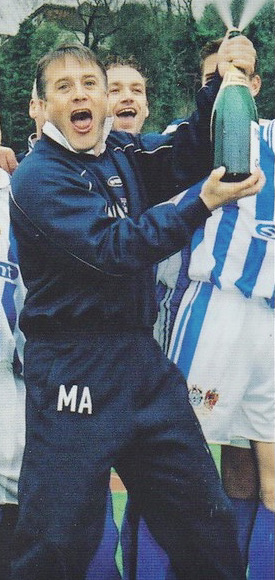
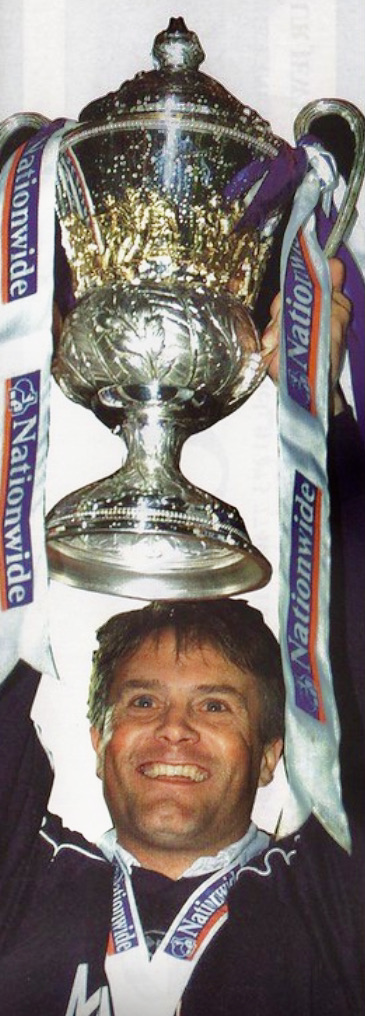
Surrounded by players who had served him well at Fulham and Brentford, together with the additions of Zamora, Michel Kuipers and Paul Rogers, Adams and Booker steered Albion to promotion as champions. Zamora was player of the season and he and Danny Cullip were named in the PFA divisional XI.

Not long into the new season, the lure of taking over as manager at a Premier League club saw Adams quit Brighton, initially to become Bassett’s no.2 at Leicester City, but with the promise of succeeding him.

“While I thought I had a shot at another promotion, it wasn’t a certainty,” Adams explained. “I knew I had put together a team of winners, and I knew I had a goalscorer in Bobby Zamora, but football’s fickle finger of fate could have disrupted that at any time.”

He admitted in the autobiography: “Had I been in charge at the age of 55, rather than 40, then I perhaps would have taken a different decision.”

While Albion enjoyed promotion under Taylor, what followed at Leicester for Adams was a lot more than he’d bargained for and, to his dismay, he is still associated with the ugly shenanigans surrounding the club’s mid-season trip to La Manga, to which he devotes a whole chapter of his book, aiming to set the record straight.

On the pitch, he experienced relegation and promotion with the Foxes and he doesn’t hold back from lashing out about ‘moaner’ Martin Keown, “one of the worst signings of my career”. Eventually, he’d had enough, and walked away from the club with 18 months left on his contract.

After a break in the Dordogne area of France, staying with at his sister-in-law and her husband’s vineyard, he looked for a way back into the game. He was interviewed for the job of managing MK Dons but was put off by a Brighton-style new-ground-in-the-future scenario. Then Peter Reid, a former Southampton teammate, was sacked by Coventry City. He put his name forward and took charge of a Championship side full of experienced players like Steve Staunton and Tim Sherwood.

The side’s fortunes were further boosted by the arrival of Dennis Wise, but, in an all-too-familiar scenario Adams had encountered elsewhere, the chairman who appointed him (Mike McGinnity) was replaced by Geoffrey Robinson. It wasn’t long before it was obvious the relationship was only going to end one way. As Adams tells it, Robinson was influenced by lifelong Sky Blues fan Richard Keys, the TV presenter, and it was pretty much on his say-so that Adams became an ex-City manager after two years in the job.

With an ex-wife and three children to support as well as his partner Claire, Adams couldn’t afford to be out of work for long and fortunately his next opportunity came courtesy of Geraint Williams, boss of newly promoted Colchester United, who took him on as his no.2.

However, it only got to the turn of the year before he was out of work once again, although, from what he describes, he wasn’t enjoying his time with the U’s anyway because Williams kept him at arm’s length when it came to tactics and team selection.

He was amongst the ranks of the unemployed once again when Albion chairman Knight gave him a call, but, with the benefit of hindsight, he said: “Going back turned out to be one of the biggest mistakes of my life.”

Adams blamed the backdrop of “the power struggle” between Knight and Tony Bloom on the lack of success during his second stint in the hotseat, and he reckons it was Bloom who “demanded my head on a platter”. The fateful meeting with Knight, when a parting of the ways was agreed, famously took place in the Little Chef on the A23 near Hickstead.

Looking back, Adams conceded he bowed to pressure from Knight to make certain signings – namely Jim McNulty, Jason Jarrett and Craig Davies in January 2009 – who didn’t work out. He reflected: “I shouldn’t have taken the job in the first place. I’d let my heart rule my head but, in fairness, I didn’t have any other offers coming through and it seemed like a good idea at the time.

“I wouldn’t ever say he (Knight) let me down, but he had his idea about players. I did listen to him, and maybe that’s where I went wrong.”

He added: “Going back to a club where success had been achieved before felt good, yet, the second time around, the same spark wasn’t there no matter how hard I tried.”

Born in Sheffield on 8 November 1961, Micky was the second son of four children. It might be argued his penchant for lashing out could have stemmed from seeing his father hitting his mother, which he chose to spoke about at his father’s funeral. Adams is obviously not sure if he did the right thing but he felt the record should be straight.

The Adams family were always Blades rather than Wednesdayites and, at 15, young Micky was in the youth set-up at Bramall Lane having made progress with Sunday league side Hackenthorpe Throstles.

While he thought he had done well under youth coach John Short during (former Brighton player) Jimmy Sirrel’s reign as first team manager, Sirrel’s successor, Harry Haslam, replaced Short and, not long afterwards, Adams was released.

However, Short moved to Gillingham and invited the young left winger to join the Gills. Adams linked up with a group of promising youngsters that included Steve Bruce.

In September 1979, he had a call-up to John Cartwright’s England Youth side, going on as a sub in a 1-1 draw with West Germany, and starting on the left wing away to Poland (0-1), Hungary (0-2) and Czechoslovakia (1-2) alongside the likes of Colin Pates, Paul Allen, Gary Mabbutt, Paul Walsh and Terry Gibson.

Adams honed his craft under the tutelage of a tough Northern Irishman Bill ‘Buster’ Collins and began to catch the attention of first team manager Gerry Summers and his assistant Alan Hodgkinson, who had played 675 games in goal for Sheffield United.

He made his debut aged just 17 against Rotherham United but didn’t properly break through until Summers and Hodgkinson were replaced by Keith Peacock (remember him, he was the first ever substitute in English football, in 1965, when he went on for Charlton Athletic against John Napier’s Bolton Wanderers) and Paul Taylor.

“Keith saw me as a full-back and that was probably the turning point of my career,” Adams recalled.

Once Adams and Bruce became regulars for the Gills, scouts from bigger clubs began to circle and at one point it looked like Spurs were about to sign Adams. That was until he came up against the aforementioned Peter Taylor, who was playing on the wing for Orient at the time (having previously played for Crystal Palace, Spurs and England).

“He nutmegged me three times in front of the main stand and, to cut a long story short, that was the end of that. Gillingham never heard from Spurs again,” Adams remembered.

Even so, Adams did get a move to play in the top division when Bobby Gould signed him for Coventry City. Managerial upheaval didn’t help his cause at Highfield Road and when John Sillett preferred Greg Downs at left-back, Adams dropped down a division to sign for Billy Bremner’s Leeds United (pictured below right with the legendary Scot).

“He had such a big influence on my career and life that I wouldn’t have swapped it for the world,” said Adams. But life at Elland Road changed with the arrival of Howard Wilkinson, and Adams found himself carpeted by the new boss after admitting punching physio Alan Sutton for making what an injured Adams considered an unreasonable demand to perform an exercise routine even though he was in plaster at the time.

Nevertheless, Adams admits he learned a great deal in terms of coaching from Wilkinson, especially when an improvement in results came about through repetitive fine-tuning on the training pitch.

“It is the one aspect of coaching that is extremely effective, if delivered properly,” said Adams. “I learnt this from Howard and took this lesson with me throughout my coaching and managerial career.”

However, Adams didn’t fit into Wilkinson’s plans for Leeds and he was transferred to Southampton, managed by former Aston Villa, Saints and Northern Ireland international Chris Nicholl. Adams joined Saints in the same week as Neil ‘Razor’ Ruddock and the pair were quickly summoned by Nicholl to explain the large size of the hotel bills they racked up.

Adams moved his family from Wakefield to Warsash and he went on to enjoy what he reflected on as “the best few years of my playing career”. He was at the club when a young Alan Shearer marked his debut by scoring a hat-trick and the “biggest fish in the pond at the Dell” was Jimmy Case.

Adams described the appointment of Branfoot in place of the sacked Nicholl as a watershed moment in his own career. “Overall he was decent to me and I found his methods good,” he said. And he pointed out: “I was getting older, I’d started my coaching badges and I already had one eye on my future.”

Adams recalled an incident during a two-week residential course at Lilleshall, after he had just completed his coaching badge, when he dislocated his shoulder trying to kick Neil Smillie.

“I was left-back and he was right-wing, and he took the piss out of me for 15 minutes. The fuse came out and I decided to boot him up in the air,” Adams recounted. “The only problem was that I missed. I fell over and managed to dislocate my shoulder hitting the ground. It was the worst pain I’ve ever had.”

If life was sweet at Southampton under Branfoot, that all changed when he was replaced by Alan Ball and the returning Lawrie McMenemy. Adams and other older players were left out of the side. Simon Charlton and Francis Benali were preferred at left-back. Eventually Adams went on a month’s loan to Stoke City, at the time managed by former Saints striker Joe Jordan, assisted by Asa Hartford.

On his return to Southampton, and by then 33, Adams was given a free transfer.

Former boss Branfoot came to his rescue, inviting him to move to League Two Fulham as a player-coach in charge of the reserve team. Branfoot also signed Alan Cork and he and Adams began a longstanding friendship that manifested itself in becoming a management pair at various clubs.

On the pitch, Branfoot struggled to galvanise Fulham and, with the team second from bottom of the league, he was sacked – and Adams replaced him. He kept Fulham up by improving fitness levels and introducing more of a passing game.

But he knew big changes were needed if they were going to improve and he gave free transfers to 17 players, despite clashing with Jimmy Hill, who had different ideas.

An admirer of what Tony Pulis was doing at Gillingham, Adams signed three of their players: Paul Watson, Richard Carpenter and Darren Freeman. He also got in goalkeeper Mark Walton and centre back Danny Cullip. Simon Morgan was one of the few who wasn’t let go, and Paul Brooker emerged as a skilful winger. All would later play under him at Brighton.

Promotion was secured and Adams was named divisional Manager of the Year but after all the celebrations had died down Mohamed Al-Fayed bought the club and things changed dramatically.

“The club was in a state of flux as it tried desperately to come to terms with its new status as a billionaire’s plaything,” Adams acerbically observed. “From having nothing, we had everything.”

Before too long, in spite of being given a new five-year contract, Adams was out of the Craven Cottage door, replaced by Wilkins and Kevin Keegan.

But he wasn’t out of work for long because Branfoot’s former deputy, Len Walker, introduced him to the chairman of Swansea City, who were on the brink of relieving Jan Molby of his duties as manager.

Various promises were made regarding funds that would be made available to him but when they were not forthcoming he realised something was not right and he quit, leaving Cork, the deputy he’d taken with him, to take over.

By his own admission, if he hadn’t been sitting on the £140,000 pay-off he’d received from Fulham, he probably would have stayed. As it was, he was out of work once again…..until he had a ‘phone call from David Webb, the former Chelsea and Southampton defender who was the owner of Brentford, but in the process of trying to sell the club.

His brief was to keep the side in the league and to make it attractive to potential purchasers. It was at Griffin Park that he first met up with the aforementioned Bob Booker, who was managing the under 18s at the time. “He is one of the most loyal and trustworthy friends I have ever known,” said Adams. “He would do anything for you.”

However, although he signed the likes of Cullip and Watson from Fulham, he wasn’t able to stop the Bees from being relegated. During the close season, former Palace chairman Ron Noades bought the club and announced he was also taking over as manager.

Once again, Adams was out of a job but his next step saw him appointed as no.2 to Dave Bassett at Nottingham Forest.

Which brings us almost full circle in the Adams career story, but not quite.

After the debacle of his second stint in charge of Brighton, he was twice manager at Port Vale, each spell straddling what turned out to be a disastrous period in charge of his family’s favourite club, Sheffield United.

It was Adams who gave a league debut to Harry Maguire during his time at Bramall Lane, but the side were relegated from the Championship on his watch, and he was sacked.

Adams took charge of 249 games as Vale boss but quit after a run of six defeats saying he’d fallen out of love with the game.

It didn’t prevent him having another go at it, though. He went to bottom of the league Tranmere Rovers and admitted in his book: “It was arrogance to think I could turn round a club that had been relegated twice in two seasons.”

In short, he couldn’t and he ended up leaving two games before the end of what was their third successive relegation.

“It was a really poor end to a career that had started so promisingly at Fulham,” he said.

Back-up ‘keeper Alan Dovey’s limited chances to shine

THE LIFE of a back-up ‘keeper can be pretty soul destroying, with first team opportunities often few and far between.

Such was the lot of former Chelsea youngster Alan Dovey, who was deputy to longstanding no.1 Brian Powney at the start of the 1970s, and only played eight first team matches for Brighton in two years.

Dovey initially joined on loan in March 1971. Powney’s rival for the no.1 shirt at the start of the season had been the experienced Geoff Sidebottom but he had been forced to retire because of a head injury.

Saward subsequently brought in Ian Seymour from Fulham on a temporary basis when Powney was out for three games, but Chelsea boss Dave Sexton, who’d previously played for the Albion, did his old side a favour by lending them youth team goalie Dovey until the end of the season.

He had to wait until the last two games before getting his chance to shine, making his debut in a 3-1 win away to Bristol Rovers and then appearing in the season’s finale at Wrexham, which ended in a 1-1 draw.

The loan became a permanent transfer that summer, Albion securing the young ‘keeper’s services for £1,000.

He played three times in Albion’s 1971-72 promotion season, and manager Pat Saward appeared content with the youngster, telling Goal magazine “It’s hard having to leave him out again, but what can you do. Chelsea manager Dave Sexton did us a great favour when he let Alan go for £1,000.”

His first game of the season was at Carrow Road, Norwich, when Albion were knocked out in the second round of the League Cup 2-0.

However, under the headline ‘Dovey’s daring display’ the matchday programme declared: “Despite the 2-0 defeat, the former Chelsea goalkeeper had a fine game and thrilled spectators with some daring saves. He had been nursing an injury and this was an in-at-the-deep-end experience but he came through it with great credit.”

It was more than three months before he got his next first team outing, but he once again earned rave notices for his performance in a 2-1 win away to York City, earning Albion’s Man of the Match accolade from Evening Argus reporter John Vinicombe.

The following matchday programme reported: “It was ‘all go’ for Alan. He had to race out of his goal in one York raid and was booked for an infringement, and also had numerous adventures in keeping out shots, centres and breaking up penalty box scrambles.”

Dovey was only ever back-up to Brian Powney

Saward didn’t next call on Dovey until 15 March, a 1-0 home defeat to Oldham Athletic which temporarily put the brakes on Albion’s bid for automatic promotion. Remarkably, that game against Oldham (which also saw a debut as substitute from new signing Ken Beamish) was the first time Dovey had played in front of the Goldstone faithful.

When Albion entertained Exeter City in the first round of the League Cup on 16 August 1972, the crowd may have been 6,500 down on the attendance for the season opener against Bristol City four days earlier but the game presented Dovey with another chance to show what he could do. (The game also saw the return of former captain John Napier to the centre of defence, although he was most likely being ‘shop windowed’ with a view to a transfer).

It is interesting to read an Exeter-angled summary of the game, which declared: “There was no denying that the first half belonged to City, and they deservedly led after 22 minutes with Fred Binney’s goal. There were a few moments early on when the back four and reserve goalkeeper Alan Dovey were little more than strangers in the night. 

“Eventually the pattern knitted together and Dovey gained confidence to make two fine saves in the last 20 minutes from Binney (who two years later joined the Albion in exchange for John Templeman and Lammie Robertson) and Dick Plumb – shots that could so easily have caused a shock defeat.”

Albion eventually prevailed thanks to goals from Willie Irvine and Beamish.

The two league matches Dovey featured in that season were not games he’d look back on fondly. Away to Preston North End on 25 November, Albion’s rookie ‘keeper conceded four when he deputised for ‘flu-hit Powney.

It was the same scoreline at Sunderland, who hadn’t won in 11 games, but who went on to reach that season’s FA Cup Final in which they famously beat Leeds United 1-0.

The Wearsiders hadn’t won at home since September but Brighton went to Roker Park having lost their previous nine matches and, according to the Sunderland Echo, “The winning margin could well have been doubled…. they applied themselves to the task of mastering Brighton’s strong-arm tactics and taking them apart.”

Sunderland took the lead in the ninth minute. Joe Bolton’s hammered left-foot shot struck Dovey in the face, knocking him over, and Billy Hughes pounced on the rebound to drive home a low shot.

Dennis Tueart added a second in the 45th minute and Brighton found the going tougher still in the second half.

After surviving a goalmouth scramble, Sunderland got their third goal in the 58th minute. A free-kick against George Ley for pushing Tueart was taken by Bobby Kerr, whose well-placed drive to the near post was brilliantly headed into goal by Hughes.

Hughes twice came close to completing a hat-trick but it was Bolton who hit what the Echo described as the goal of the game: “a right-foot drive, of such power that Dovey had no chance”.

Struggling to come up with a solution to the disastrous run, Saward went public and started to point the finger at players who he reckoned weren’t cutting it.

Dovey was transfer-listed along with veteran defender Norman Gall and Bertie Lutton. Lutton got a surprise move to West Ham but Gall stayed put and Dovey was released at the end of the season without playing another game.

Born in Stepney on 18 July 1952, Dovey grew up in Chadwell St Mary in Essex and played for Thurrock Boys before joining Chelsea straight from school in 1968 after writing to them to ask for a trial.

He became a youth team regular as well as playing a handful of games for the reserves. On 18 January 1969, he was in goal for a Chelsea side (which also included future first teamer and England international Alan Hudson) when they beat Brighton 5-2 in a South East Counties League youth team fixture.

It was always going to be difficult for Dovey to progress at Stamford Bridge because Worthing-born Peter Bonetti was an almost permanent fixture in Chelsea’s first team and he was understudied initially by Scotland under-23 international Tommy Hughes (who later played three games for the Albion on loan from Aston Villa in 1973) and then future Welsh international John Phillips, who was briefly Graham Moseley’s back-up during Albion’s second season (1980-81) in the First Division.

However, Dovey made national newspaper headlines when he came close to making a first team appearance on 10 January 1970.

Both Bonetti and Hughes went down with ‘flu ahead of a key match between third-placed Chelsea and Leeds United, who were in second place. Chelsea tried to get the game postponed but the Football League wouldn’t hear of it.

The Daily Mirror reported: “Chelsea failed to convince the Football League last night that it would be unfair to put 17-year-old Alan Dovey in goal against Leeds today.

“Dovey, untried beyond an occasional game in the reserves, stands by to face the League Champions.”

Veteran football reporter Ken Jones wrote: “Bonetti has no chance of playing. Unless Hughes has improved by this morning, Dovey will be drafted into the team.”

Chelsea boss Sexton told Jones: “We are hoping Hughes will recover. But if he doesn’t, we shall just have to put Alan in.

“It’s not the sort of thing we like doing with a youngster, but he won’t let us down if he has to play.”

Jones noted that although Dovey had only been a professional for six months, he didn’t display any nerves when interviewed.

“The things that happen in League football happen in youth football,” Dovey told him, “so it will only be the pace and the skill which will be different.

“When Dave Sexton told me I might have to play, that itself was a great thrill. It will be an even greater thrill if I do play against such a great side as Leeds.”

As it turned out, Hughes was adjudged fit after all, although he might have regretted it. In what was only his fifth senior game in five years at the club, he shipped five goals as United won 5-2 in front of a Stamford Bridge crowd of 57,221.

In August that year, Dovey was once again on standby to step up to the first team squad when Hughes suffered a broken leg. But Sexton went into the transfer market instead and bought Phillips from Aston Villa.

The Goldstone Wrap in 2014 noted Dovey stepped away from full-time football after the Albion let him go to pursue a career in insurance. Nevertheless, he played part-time for various Sussex clubs.

Notably he was at Southwick, along with former Albion teammate Paul Flood, at the same time as Ralf Rangnick, later to take temporary charge of Manchester United, was on their books.

Dovey also played for Worthing for three seasons, in their double promotion-winning squad of the early ‘80s, until, in April 1984, manager Barry Lloyd publicly criticised him, telling the Argus: “Alan has done exceptionally well for us over the past three years, but he’s not really aggressive enough in this premier division.”

Teenage prodigy Newhouse quit game to teach maths

AIDAN NEWHOUSE scored twice on his Albion debut but only started two games for the Seagulls!

The former Fulham striker netted two of Brighton’s six goals in the 1999-2000 season opening match at the Withdean Stadium.

He replaced hat-trick man Darren Freeman with the Albion 4-0 up on 7 August 1999 and promptly added two more goals to complete a 6-0 rout of Mansfield Town (pictures below).

Newhouse, wearing the no.25 later worn iconically by Bobby Zamora, was given a start in a 2-0 league cup defeat away to Torquay United. Although he regularly went on as a substitute, often for Freeman, he only began one other game: a 1-0 home league win over Cheltenham Town.

Newhouse had limited opportunities in Albion colours

Newhouse had previously played under manager Micky Adams at Fulham in 1997, and, unluckily for him, Freeman and Gary Hart were the first choice forward choices in those opening months.

Competition for places intensified in the autumn with the arrival of Warren Aspinall and Lorenzo Pinamonte. Newhouse was swiftly on his way to Conference club Sutton United.

When they were relegated at the end of the season, he switched to Northwich Victoria in 2001, but only played one match before quitting and becoming a schoolteacher.

Born in the Wirral town of Wallasey on 23 May 1972, Newhouse showed so much early promise that he made his debut for Chester City before his 16th birthday.

He was just 15 years and 350 days old when he was sent on as a substitute by manager Harry McNally on the final day of the 1987–88 season as Chester won away at Bury 1–0 in the Third Division.

The talented teenager was in David Burnside’s 1988-89 England side for the UEFA Under-18 Championship preliminary matches against Greece (home and away), France and Czechoslovakia, scoring in the 3-0 win away to Greece on 8 March 1989. He played up front with Andrew Cole, later of Manchester United and Newcastle United fame.

The following season he went on as a sub for Cole in a 0-0 draw with Denmark at Wembley; a game which was played at Wembley before the England-Brazil full international. Three weeks later he scored England’s third when he started in a 3-0 win over Poland, another game played before a full international (England v Denmark).

In July the same year, he started all three of England’s matches (a draw and two defeats) when they finished fourth in the UEFA Under-18 Championship in Hungary.

Chester cashed in on their young prodigy, selling him to then First Division Wimbledon for £100,000 in February 1990.

First team opportunities for Wimbledon were few and far between for Newhouse and he is in the same exalted company as former Albion loanee Gary Bull in being one of only four players to have scored on their single Premier League appearance.

Wimbledon scorer

Ironically, it came in a match in 1992-93 against Aston Villa best remembered for Dalian Atkinson’s individual goal that won the BBC’s Goal of the Season award. “It was deflected past the goalkeeper,” Newhouse told premierleague.com. “It was a bit of a low-life goal compared to Dalian Atkinson’s.”

It was Bobby Gould who gave him his Wimbledon debut but a stomach injury halted his progress under Gould’s successor Ray Harford, as well as the form of John Fashanu and Terry Gibson.

In a 1990-91 season matchday programme article, Newhouse said: “I was really looking forward to this season. Bobby Gould had given me a taste of first team action and I felt I was ready to really stake a claim for a place.

“Then I picked up the injury and it took me months even to get back into full training let alone playing well.”

Although he was a Wimbledon player for seven years, he went out on loan on four occasions: to Tranmere Rovers, Port Vale, Portsmouth and Torquay United. He eventually left permanently for Fulham in 1997.

He scored four goals in only 12 league and cup matches for Fulham: three in a two-legged League Cup match against Wycombe Wanderers and one in the league in a 2-0 win away to Bristol City on 2 September 1997 (Richard Carpenter scored the other). But, only a few weeks’ later, Adams was controversially replaced by Ray Wilkins and Kevin Keegan under the new Mohammed Al-Fayed regime.

Scoring for Fulham

Before long, Newhouse was on his way too. A £30,000 fee took him to Swansea City although, by the time he had arrived, Adams’ short tenure as boss was already over, his role filled by his former no.2 Alan Cork.

It’s probably an understatement to say things didn’t work out for Newhouse in South Wales. Indeed, in a FourFourTwo magazine poll inviting supporters to name their club’s worst player, Newhouse earned the tag from Swansea fans.

He failed to score in 17 appearances across two seasons and Steven Carroll, of the SOS Fanzine, cited a particular game in February 1999, when Carlisle visited the Vetch Field, to back up the claim.

“Due to injuries and suspensions, Newhouse was awarded a rare start. Early on, he was put through on goal and fouled by the ‘keeper inside the box – but while the referee looked set to award a penalty, with said goalkeeper on the floor and both Newhouse/the ball free, our hapless striker shot from close range and missed an open goal. No penalty.

“In the second half, Stuart Roberts received the ball on the edge on the box and was about to shoot, only for Newhouse to kick him in the back of the leg. He never played again after that.”

After retiring from the game in 2001, Newhouse became a maths teacher and he told premierleague.com: “Not all of us are Stevie G and the likes of Neymar,” he said. “I played 13 years, made about £250 a week on average.

“It shows you that, you know, we can do all sorts of things and eventually, to do a job that you enjoy, you will need some education. You will need that to give you an option and a choice.

“Teaching…it’s one of those things. It’s like football, there’s a camaraderie between you and the class.

“Once the guys realise they’re part of a team, there are some similarities. You can have a laugh with the lads and they realise you are there to try and help them succeed.”

Day of reckoning beckoned for talent spotter Mervyn

THE YOUNGEST goalkeeper to appear in a FA Cup final spent 20 months picking out future players for Brighton.

It was one of several different post-playing roles Mervyn Day filled for various clubs.

Day, who at 19 won a winners’ medal with West Ham in 1975, was Albion’s head of scouting and recruitment between November 2012 and the end of the 2013-2014 season under head of football operations David Burke.

At the time, his appointment was another indicator of the gear change taking place at the club as it built on the move to the Amex Stadium and sought to gain promotion from the Championship.

Day said in a matchday programme interview: “This club has come such a long way in such a short space of time.

“When you think of the debacle of the Goldstone, the wilderness of Gillingham, then Withdean, you only have to get a player through the front door at this wonderful stadium to have a chance of signing them.

“Hopefully, within the next year or so, the new training ground will be up and running and, when you’ve got that as well, you’ve got the perfect opportunity not only to encourage kids to sign but top quality players as well.

“If we are fortunate enough to get ourselves into the Premier League at some point, we’ll be able to attract top, top players.”

It was a case of ‘the goalkeepers union’ that led to him joining the Albion. Day explained he’d been chatting to Andy Beasley, Albion’s goalkeeping coach at the time, who had been a colleague when Day was chief scout at Elland Road. Beasley wondered if he’d like to help coach Albion’s academy goalkeepers but Burke, who he also knew, stepped in and offered something more substantial: the job of scouting and talent identification manager.

He certainly brought a wealth of experience to the task. He had previously been assistant manager to former Albion midfielder Alan Curbishley at Charlton and West Ham; manager and assistant manager at Carlisle United, a scout for Fulham and the FA (when Steve McClaren was England manager) and chief scout at Leeds until Neil Warnock took charge.

In addition to that background, in the days before full-time goalkeeper coaches, Day had worked at Southampton under David Jones, Chris Kamara at Bradford City and John Aldridge at Tranmere Rovers. Then in 1997 Everton came along and he joined Howard Kendall’s backroom team alongside Adrian Heath and Viv Busby. “I was living in Leeds at that time, so distance wasn’t an issue, but it was an interesting trip across the M62 in the winter months,” Day recalled in an October 2021 interview with efcheritagesociety.com.

Brighton made Day redundant at the end of the 2013-14 season following a reshuffle of the recruitment department amid criticism of the quality of signings brought in.

That assessment might have been rather harsh because during his time at the club there was a change in manager (Oscar Garcia taking over from Gus Poyet) and, although the season ended in play-off disappointment, the likes of former Hammer Matthew Upson (who’d played under Day when he was at West Ham) had signed permanently on a free transfer (having been on loan from Stoke City for half the previous season).

The experienced Keith Andrews and Stephen Ward also joined on season-long loan deals and played prominent roles in Garcia’s play-off reaching side.

It was under Day’s watch that the promising young goalkeeper Christian Walton was signed after a tip-off from Warren Aspinall. Aspinall told the Argus in 2015: “I went to Plymouth to do a match report. I set off early and took in a youth team game off my own back. He was outstanding, commanding his box. I reported straight back to Gus (Poyet). He told Mervyn Day. He went to see him, Mervyn liked him.”

It wasn’t the first time Day had played a role in securing a goalkeeper for the Albion. As far back as 2003 he had an influence on Ben Roberts’ arrival at the Albion. Manager Steve Coppell revealed: “He is one of three goalkeepers at Charlton and at the moment nearly all the Premiership clubs are very protective about their goalkeepers.

“I have seen him play a number of times, although I certainly haven’t seen him play recently. I spoke with Mervyn Day (Charlton coach) and he says Ben is in good form. It’s a little bit of a chance and it will certainly be a testing start for him, but he is looking forward to the challenge.”

Day was also sniffing around another future Albion ‘keeper when he was chief scout for Bristol City (between 2017 and 2019).  According to Sky Sports commentator Martin Tyler, Mat Ryan was on their radar in the summer of 2017 when he swapped Belgium for England. In an interview with Socceroos.com, Tyler reveals he was asked by City’s ‘head of recruitment’ (thought to be Day) to glean the opinions of Gary and Phil Neville (manager and coach of Valencia at the time) on Ryan and whether he’d be suitable for the English game.

“I got a text saying, ‘Can you find out from the Nevilles whether they rate Mat Ryan’,” Tyler said. “It wasn’t my opinion they were looking for – quite rightly – it was Gary and Phil’s. I was able to do that and both Gary and Phil gave Mat the thumbs up.”

After leaving Brighton, Day moved straight into a similar role with West Brom, where he worked under technical director Terry Burton and first team manager Alan Irvine, but he was only there a year before linking up with the Robins. He has since been first team domestic scout for Glasgow Rangers, although based in his home town of Chelmsford.

Day was born in Chelmsford on 26 June 1955 and educated at Kings Road Primary School, the same school that England and West Ham World Cup hero Geoff Hurst attended. He moved on to the town’s King Edward VI Grammar School and represented Essex Schools at all levels. He joined the Hammers under Ron Greenwood on a youth contract in 1971.

“On my first day as an associate schoolboy I got taken by goalkeeping coach Ernie Gregory into the little gym behind the Upton Park dressing room and he had Martin Peters, an England World Cup winner, firing shots at me,” Day later recounted. “As a 15-year-old that was incredible.

“The bond got even closer when my father died when I was 17. I was an apprentice but Ron signed me as a full pro within a very short space of time to enable me to earn a little more money to help out at home. A short while later he gave me another increase. He was almost a surrogate father to me.”

In the early part of 1971, Day played in the same England Youth side as Alan Boorn, a Coventry City apprentice Pat Saward took from his old club to the Albion in August 1971.

The goalkeeper was just 18 when he made his West Ham United debut, on 27 August 1973, in a 3-3 home draw with Ipswich Town.

He went on to play 33 matches in his first season and only missed one game in the following three.

Tony Hanna, for West Ham Till I Die, wrote: “In only his eleventh game for the Hammers he received a standing ovation from the Liverpool Kop in a 0-1 defeat that could have been a cricket score but for his fine display and, in his next visit to Anfield, he saved a penalty in a 2-2 draw.”

Day recalled: “As a kid, I had no fear, I took to playing in the first team really, really well. At West Ham, the ‘keeper always had lots to do as we were an entertaining team. We had forward-thinking centre-backs in Bobby Moore and Tommy Taylor, and then after Bobby came Kevin Lock.”

Mervyn Day in action for West Ham against Brighton at the Goldstone Ground, Hove.

In 1974, Day progressed to England’s Under-23 side. He won four caps that year and a fifth in 1975 but it was a golden era for England goalkeepers at the time and he didn’t progress to the full international side, despite being touted for a call-up.

By the time Day won that last cap, he had been voted PFA Young Player of the Year and, at 19, had become the youngest goalkeeper to appear in a FA Cup Final, keeping a clean sheet as West Ham beat Fulham 2-0 at Wembley.

Hanna continued: “At times he was performing heroics in the West Ham goal and he was fast becoming a fans favourite. Tall and agile, he was a brilliant shot stopper and he was playing like a ‘keeper well beyond his years.”

However, by the 1977-78 season Day’s form had tapered off as the Hammers were relegated. “His confidence was so bad he was eventually dropped and he only played 23 games that season,” said Hanna. “There are several theories to what triggered the loss of form, but one thing that did not help the lad was the stick he was getting from the Hammers supporters.

“In hindsight Mervyn said that he was ill prepared for such a tough run of form. The early seasons had gone so well that he had only known the good times and when the bad ones came he struggled to come to terms with the pressure.”

In 1979, West Ham smashed the world record transfer fee for a goalkeeper to bring in Phil Parkes from QPR and Day was sold to Leyton Orient, where he replaced long-standing stopper John Jackson, who later became a goalkeeper coach and youth team coach at Brighton.

Day spent four years at Brisbane Road before moving to Aston Villa as back-up ‘keeper to Nigel Spink. After a falling-out with Villa boss Graham Turner, he switched to Leeds under Eddie Gray and then Billy Bremner. During Bremner’s reign, he had the humiliation of conceding six at Stoke City at the start of the 1985-86 season and, in spite of vowing it wouldn’t happen again, let in seven in the repeat fixture the following season. Amongst his Leeds teammates that day were Andy Ritchie and Ian Baird.

Nevertheless, he ended up playing more games (268) for Leeds than any of his other clubs. He rarely missed a game up to the end of 1989-90, the season when was he was named Player of the Year and collected a Second Division championship medal.

Howard Wilkinson offered him a post as goalkeeping coach for United’s first season back in the elite, having lined up a £1m move for John Lukic from Arsenal. Day had a couple of loans spells – at Luton Town and Sheffield United in 1992 – but was otherwise back-up for Lukic, alongside his coaching duties, until Wilkinson saved Brighton’s future by signing Mark Beeney from the Seagulls.

After eight years at Elland Road, Day moved to the Cumbrian outpost of Carlisle in 1993. When he moved into the manager’s chair at Brunton Park, he not only led them to promotion from the Second Division in 1997, but they also won the (Auto Windscreens Shield) Football League Trophy. United beat Colchester 4-3 on penalties at Wembley after a goalless draw; one of the scorers being the aforementioned Warren Aspinall, later of Brighton and Radio Sussex.

Day worked under Curbishley at Charlton for eight years between 1998 and 2006, helping the club stabilise in the Premier League.

And, in December 2006, he followed Curbishley as his No.2 to West Ham, where the duo spent almost two years.

It was in 2010 that he returned to Leeds as chief scout, working under technical director Gwyn Williams. United manager Simon Grayson said at the time: “We’re restructuring the scouting department under Gwyn and Mervyn will be both producing match reports and watching our opposition and working on the recruitment of players.

“Merv’s knowledge and experience will prove important to the football club as we look to progress and develop what we are doing.”