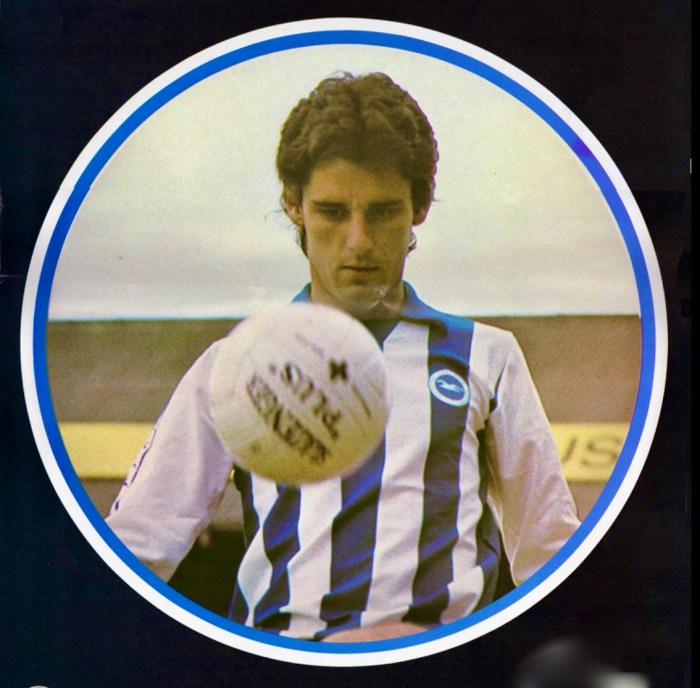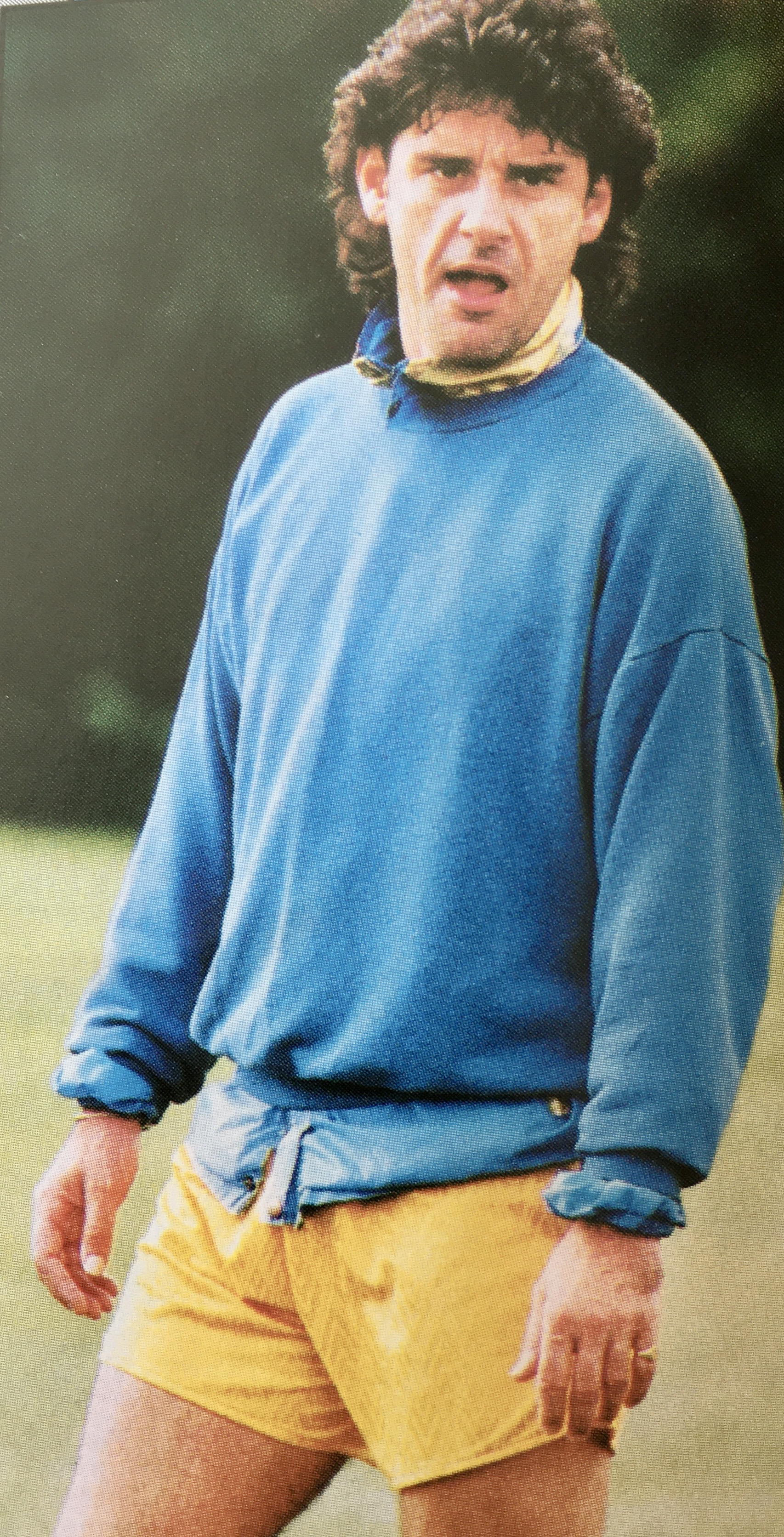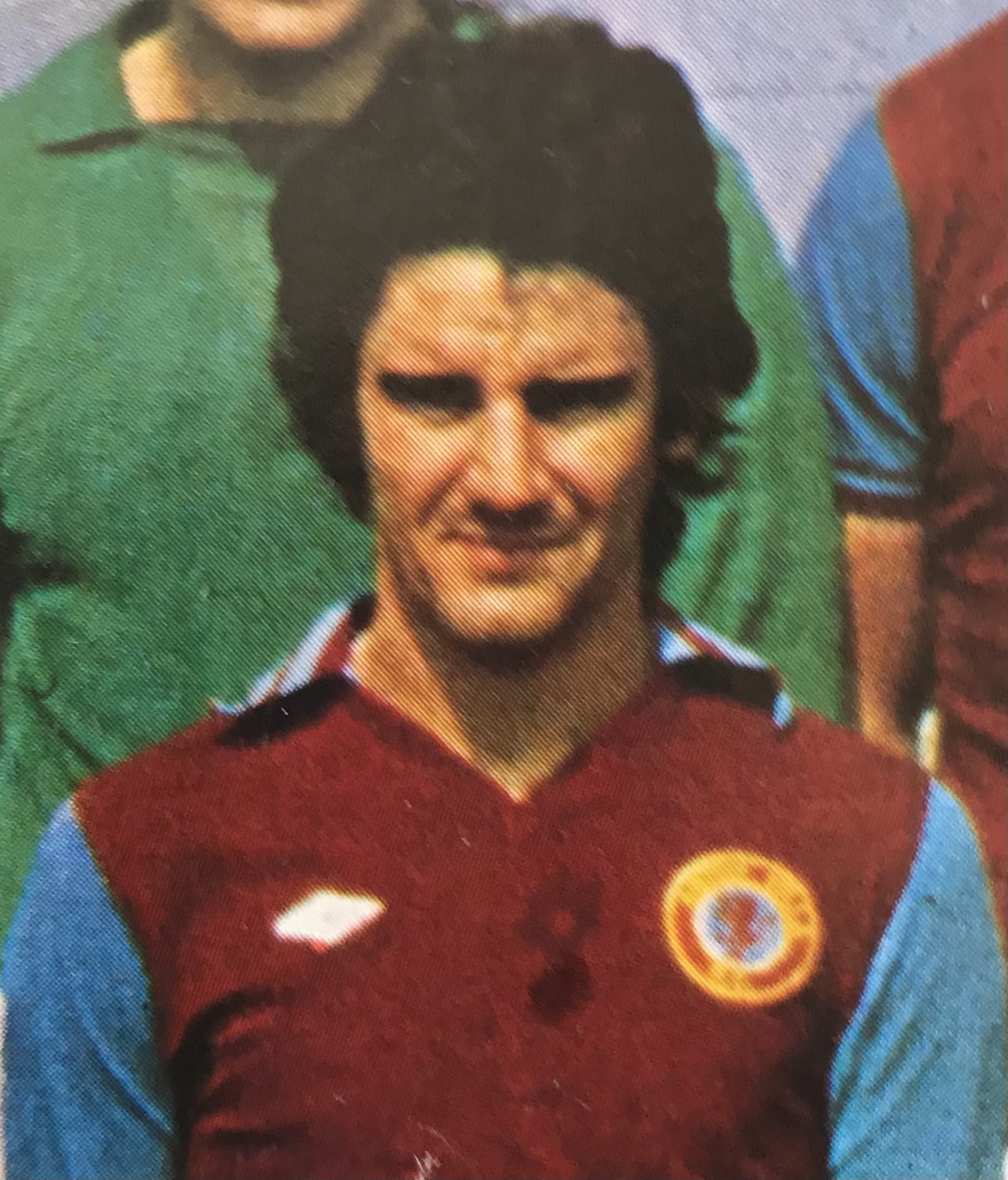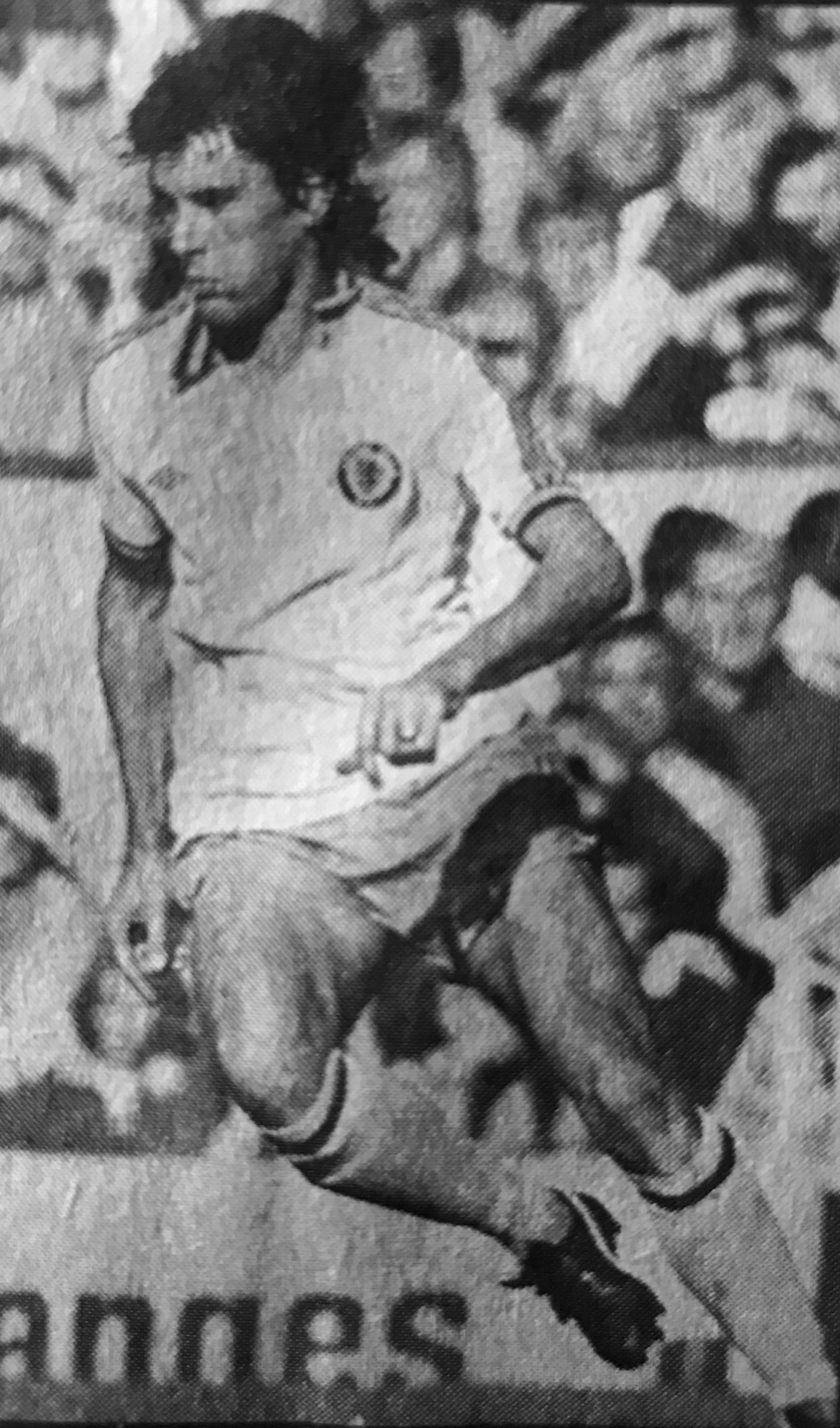
Not many of them, but Sidwell’s goals were memorable

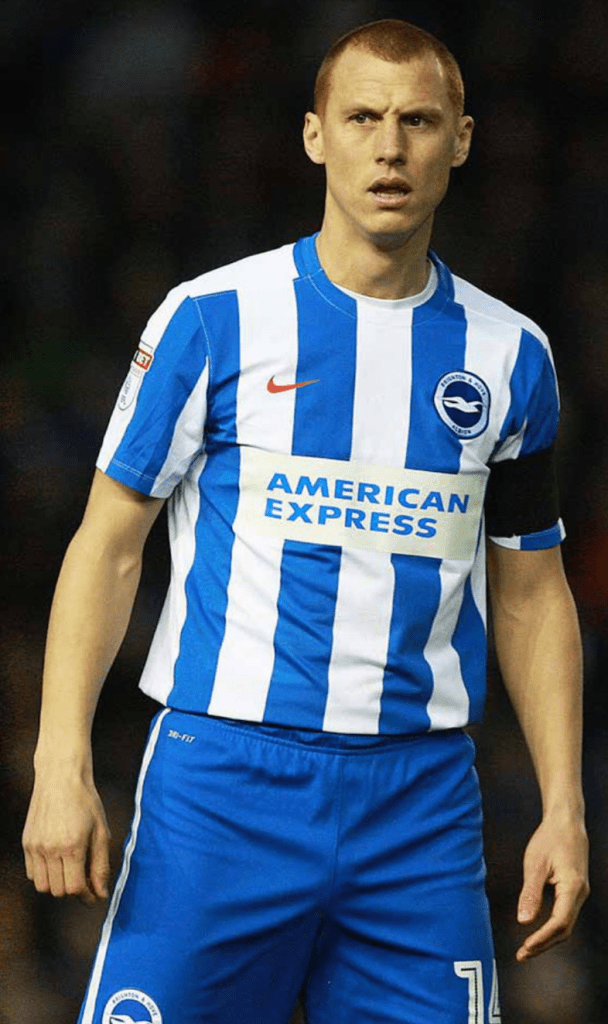
STEVE SIDWELL was not a recognised goalscorer but when he did find the back of the net it was often memorable and headline-making.

Such was his most talked about goal for Brighton – hit from the centre circle away to Bristol City in a Championship match on Bonfire Night in 2016. 

Eight years earlier, he stunned Goodison Park by rifling home from 25 yards after only 31 seconds of Aston Villa’s 7 December Premier League visit to Everton.

I was at Ashton Gate to see Sidwell’s amazing 50-yard lob over stranded Robins’ ‘keeper Richard O’Donnell (Jamie Murphy added a second in promotion-chasing Albion’s 2-0 win).

Manager Chris Hughton said: “It was a wonderful strike by Sidwell on his left foot when I would have expected it more from his right. It caught everyone by surprise, including their goalkeeper.”

I was also at the City Ground, Nottingham, seven months earlier when Sidwell went on as an 85th-minute sub and scored the winner (below) in the 91st minute to earn a 2-1 victory over Forest.

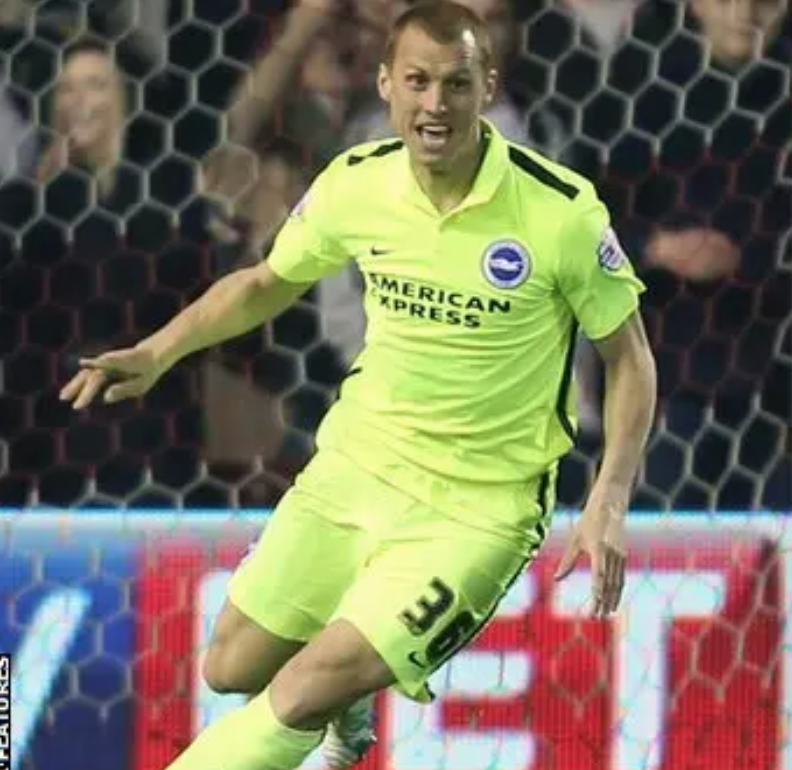
With his right foot this time, he drilled the ball in from 12 yards giving Albion a fourth win in five games which extended their unbeaten run to nine games.

“We felt that the game was becoming open and we felt we could bring players off the bench who could influence the game,” said Hughton. “One thing about Steve Sidwell is that he can break forward from midfield. I did not bring him on for that, but I am very glad he did it.”

Back to that game for Villa in 2008; moments after kick-off, Everton’s Mikel Arteta lost possession to Ashley Young. He fed James Milner who in turn found Sidwell. Finding himself with a sight at goal from 25 yards, he buried a stunning shot past Tim Howard. In an extraordinary end to the game, Young, who had scored Villa’s second, got a 94th-minute winner for the visitors after Joleon Lescott thought he’d salvaged a point in the 93rd minute, netting his second of the game. 
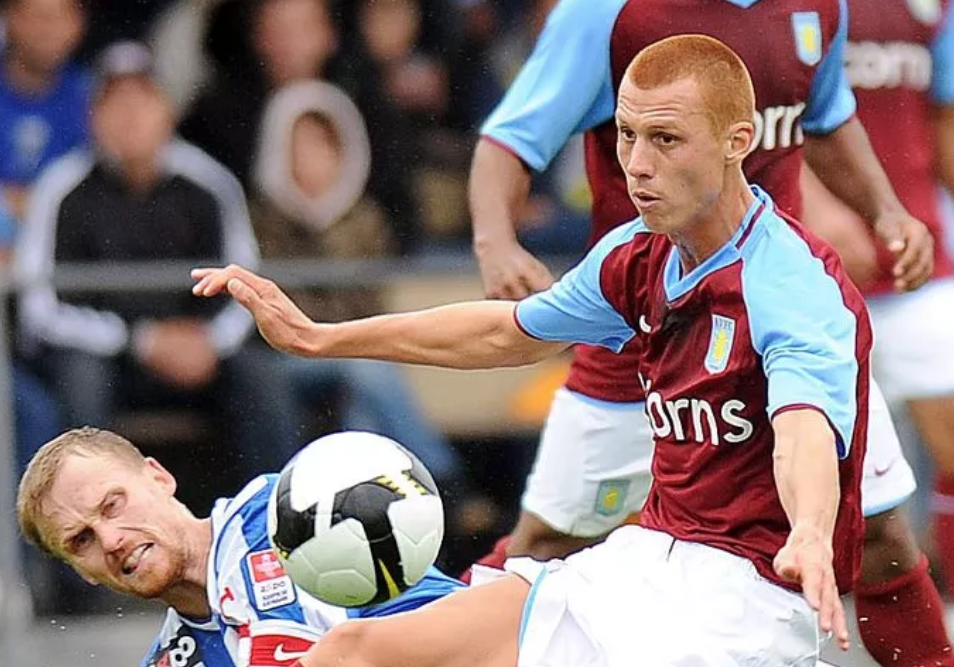
That opener at Goodison was a rare highlight for Sidwell in what overall was an unhappy two and a half years at Villa.

Sidwell had first caught Villa boss Martin O’Neill’s eye when he scored twice for Reading in a 2-0 home victory over Villa in February 2007.

O’Neill tried to land him before he opted to join Chelsea (the team he’d supported as a boy) and, by all accounts, predecessor David O’Leary had also tried to sign him.

So, it appeared to be a case of third time lucky when in July 2008 O’Neill took him for a reported £5million fee from being a Chelsea benchwarmer and gave him a three-year contract.

Sidwell during his first Albion spell

After success at Reading, where he had been reunited with Steve Coppell (who’d had him on loan at Brentford and Brighton as a young Arsenal player, as covered in my 2017 blog post), Sidwell had a disappointing season at Stamford Bridge, where he made just seven Premier League starts. 

Managerial change didn’t help his cause: he’d been signed by Jose Mourinho who left early in the season to be replaced by Avram Grant.

Sidwell later admitted: “I left for Aston Villa in search of regular football. In hindsight, I wished I’d stayed another six months because Luiz Felipe Scolari came in and you never know what might have happened then.”

At the time, Sidwell told Villa’s official website: “For me personally, it’s about getting back and playing. I have had a year of not playing as much as I would have liked so to get out on the pitch is the first aim.” 

Although he played in both legs of the InterToto Cup tie against Odense in July, knee and calf problems delayed his league debut until the end of October which he marked with a goal after going on as a late substitute in a 4-0 win at Wigan Athletic. That and the strike at Everton were two of four league and cup goals he scored for Villa that season when his 25 appearances (20 starts + five as sub) would ultimately amount to nearly half the total he made for the club: 37 starts + 27 as sub.

He didn’t add any more goals in the claret and blue and in the remainder of his time at Villa Park he was never really a regular, eg in 2009-10 only 14 of 33 appearances were as a starter and in 2010-11, three of six under Gérard Houllier.

Although he and O’Neill clashed on occasion, the Northern Irishman did say: “I’ve been very happy with him. It’s just that other players playing in positions all over the place have been playing brilliantly. Some people are playing out of their skin at this minute in our team. But I’ve been very pleased since he’s arrived at the football club.”

Sidwell’s former Reading teammate Nicky Shorey, who’d joined him at Villa Park, had high expectations of him ahead of his second season, telling the Birmingham Mail: “I don’t think Villa have seen the best of him yet. It’s been a strange season for Siddy. He’s been out injured for long periods and he’s picked up niggles here and there. I don’t think he’s ever had that before.

“For as long as I’ve known him, he’s never really been injured, so I think that’s something new for Siddy to try and learn from.”

Shorey said Sidwell had remained positive and upbeat around Bodymoor Heath and Villa Park and reckoned: “When he comes back for pre-season and hopefully has a good pre-season you’ll see the best of him and I think everyone will be impressed with how well he can do.

“When you know Siddy, that’s all he ever does – trains and plays with a smile. You haven’t got any worries with him on that count. He just keeps going and he’ll be fine. He’s just an all-round good midfielder and I’m sure he’ll show that before too long.”

Sidwell found himself competing for a midfield place with the likes of Milner (before his move to Manchester City), Gareth Barry, Stiliyan Petrov, Nigel Reo-Coker and Craig Gardner. He revealed later that he’d fallen out with O’Neill and at one point he went on the transfer list.

After O’Neill quit in protest at the sale of Milner to City, and ahead of Houllier’s appointment, Sidwell hoped to be given a new lease of life in claret and blue.

He overcame an Achilles’ problem and declared himself raring to go after playing 90 minutes in a 4-0 reserve team win over Blackpool at Bodymoor Heath.

“I feel I’ve shown glimpses,” he told the Birmingham Mail. “In the previous years, there have been good games and some poor games.

“If I get a run of games, I am sure I can perform to the best of my ability. Hopefully, now, whoever takes charge I will just get an opportunity and I will take it.

“It is going to be tough but it is down to individuals to perform in training, perform in reserve games and show the manager you are worthy of a start.

“Once you get that, you have to take it with both hands. Fitness wise, I’ve been training really well and looking sharp. It is just games that I need. I wasn’t unfit before the injury took place.”

When the Mail spoke to him ahead of a second city derby at the end of October 2010, Sidwell sought to exploit a two-month injury absence for Petrov saying: “It is all about opinions.

You don’t play under certain managers. Under certain managers you do get a chance.

“Once you get a chance it is about taking it and staying in the team.”

Sidwell started the game but was replaced by young Barry Bannan in the 58th minute of the dour goalless draw – and it turned out to be his last game for Villa (he was an unused sub away to Fulham the following week).

It was in a 2018 interview with Donald McRae of The Guardian that Sidwell revealed the extent of his disillusionment at Villa, telling the journalist: “When I was at Aston Villa I was on the most money in my career. But that was when I was at my unhappiest. I was living in Birmingham away from my wife and family.

“My middle son caught meningitis and was in hospital. The football never really took off and me and Martin O’Neill clashed. So, it was a combination of things.”

Released on a free transfer in January 2011, after being deemed surplus to requirements by Houllier, Sidwell joined Fulham – which is a story for another blog post.

After three years with the Cottagers, he followed ex-Fulham boss Mark Hughes to Stoke City and it was from there that he made his initial return to Brighton, on a half-season loan. 
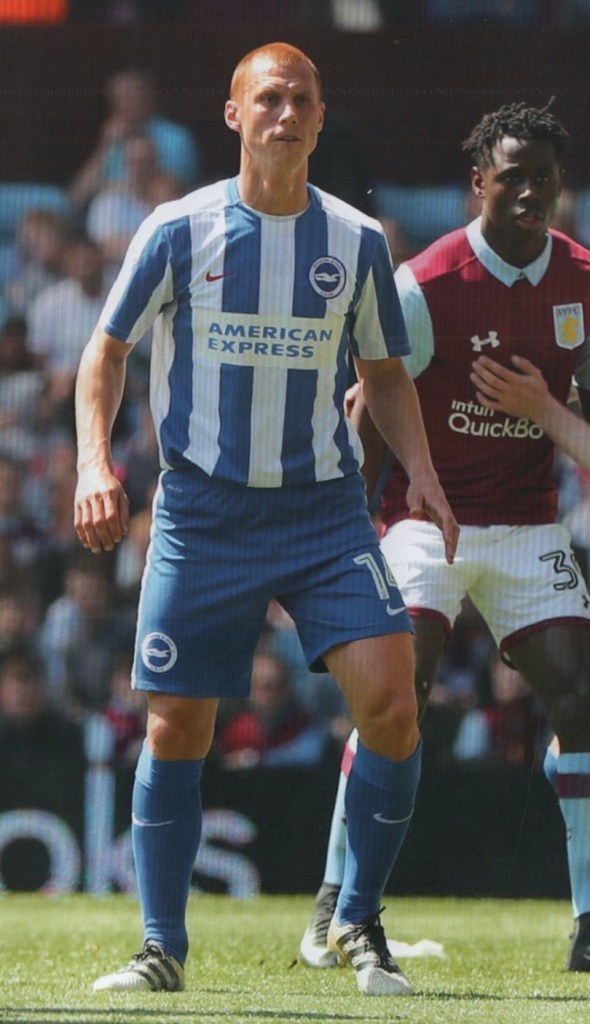
Sidwell in action for Albion against Villa

In clinching his signing in January 2016, Hughton told the Albion website: “Steve is an experienced player who has played virtually his entire career in the Premier League. He knows this club, as well as a few of the squad and will supplement our existing midfield options.

“Beram Kayal, Dale Stephens, Andrew Crofts and others have been excellent in midfield for us this season, but we also need to make sure we have good options in every position of the team, and options which will be enough for us through until the end of the season.

“Steve brings that, and in addition, he is another experienced head; he is a player who’s proven at the very top level of English football. Brighton fans will know Steve is also a great athlete and top professional.”

Although he only made six starts, Sidwell went on as a sub 13 times in that half-season. When Albion had to endure the end-of-season play-offs after missing out on automatic promotion by only drawing (1-1) the last game of the season at Middlesbrough, it was Sidwell who stepped in to fill the boots of Stephens, who was suspended after his controversial sending off by Mike Dean at the Riverside Stadium.

Unfortunately, Sidwell was one of four Albion players who had to go off injured in the 2-0 play-off first leg defeat at Sheffield Wednesday. He suffered ligament damage but was taped up and given medication to enable him to play in the home tie, although he later admitted: “I should never have played really.”

He reckoned the Amex atmosphere for that game was the best he’d ever been involved in. In spite of a valiant effort, it ended in a disappointing 1-1 draw although Sidwell said: “I ended up playing one of my better games in a Brighton shirt, which maybe cemented a contract for the following season.”

Released on a free transfer by Stoke, Sidwell signed on a permanent basis for the Seagulls and was a key component in the side that won promotion from the Championship in May 2017. He made 29 starts plus eight substitute appearances that campaign.

“The whole reason behind my return was to help the club into the Premier League,” he said.

Sidwell was on the bench as Albion began life amongst the elite but after that “a slipped disc, surgery, and then before you know it your career’s gone.”

Sidwell later admitted: “It was really hard. I came here to do a job, to get the football club into the Premier League, and then it was time to go and enjoy it. I thought I had two or three years left, but that was cut very short.”

Recognising he was blessed to have enjoyed a 20-year career, he nonetheless said: “To not really say goodbye to football, something I’d done since I left school, and also to Brighton, was really disappointing.”

He stayed on at Albion as under-16s coach (right) for a while but increasingly his work as a pitchside pundit for live TV coverage of matches took up more of his time. He is also now a regular co-host of the popular That Peter Crouch Podcast.

Sidwell is also business development director of Box3 Projects, a company that constructs and designs office spaces to be rented out or sold.

The Withdean visitors’ teenage winger went on to great things

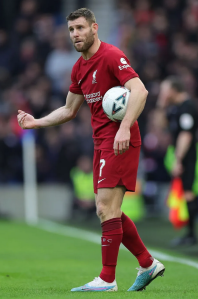
MY FIRST memory of watching James Milner play was at Withdean Stadium when he was on loan to Swindon Town from Leeds United.

Even then, as a seventeen-year-old, he had something about him – but I certainly didn’t imagine I would be watching him playing in the Premier League and Europe for Brighton 20 years later!

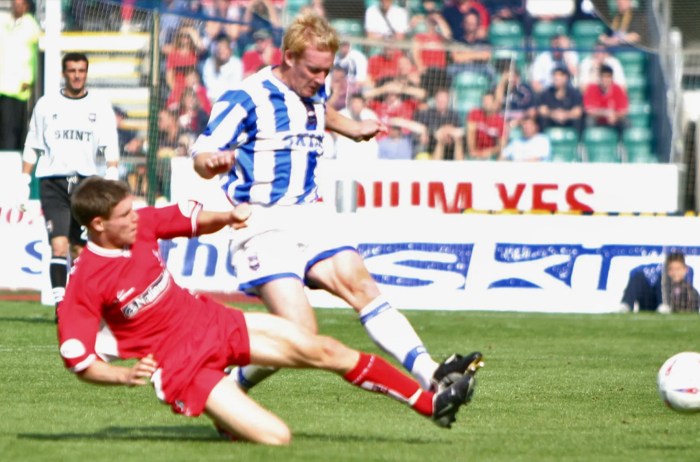
Young Milner tackles Brighton’s Kerry Mayo

That League One game on 6 September 2003 finished 2-2. Sam Parkin scored twice for Town and Albion’s goals came from Gary Hart and a penalty from on-loan Darius Henderson.

The Albion matchday programme subsequently recorded: “Kerry Mayo had a fine match, mainly subduing the impressive teenager James Milner.” (although, as the picture suggests, he wasn’t afraid to launch himself into a tackle).

Swindon’s manager Andy King had persuaded his old Everton teammate, Peter Reid (in charge of Leeds at the time) to loan Milner to the Robins for a month. In just six matches, the young winger scored twice.

“The boy is a terrific talent and everyone has been able to see the skills he has and I have no doubt he will go on to perform in the Premiership,” King told Sky Sports.

Milner already had two goals to his name for his parent club having scored twice in the Premier League in 2002-03 while still only 16.

On Boxing Day 2002, ten days short of his 17th birthday, he became the youngest player to score in the elite division, with a goal in a 2–1 win at Sunderland (the record had been set a couple of months earlier by Wayne Rooney for Everton and was subsequently taken by James Vaughan, also for the Toffees).

Milner had gone on as a 36th-minute sub for Alan Smith, a player he had admired when a boy growing up in Leeds. Terry Venables, Leeds manager at the time, said: “It’s not just a case of him simply coming through and helping out because every day he is getting better and better.”

Milner scored again three days later after going on as a 31st minute sub for Harry Kewell as Leeds beat Chelsea 2-0 at Elland Road.

“Picking up Mark Viduka’s pass in first-half injury time, Milner beat his man before thumping a right-foot shot low into the net with Blues keeper Ed de Goey powerless to stop him,” said the BBC report of the match.

“I am very pleased with him,” said Venables. “He is growing in this group and he has taken advantage of every day’s training to show what he can do.

“He has two good feet, he is courageous and everyone likes him a lot. He also is not only a nice, solid, good, well-mannered boy, he is a very talented player.

“It’s early days for the boy. At the moment he has not achieved anything and he is the first to admit that.

“But I think a lot of people are confident about his development. We have just got to take it easy.”

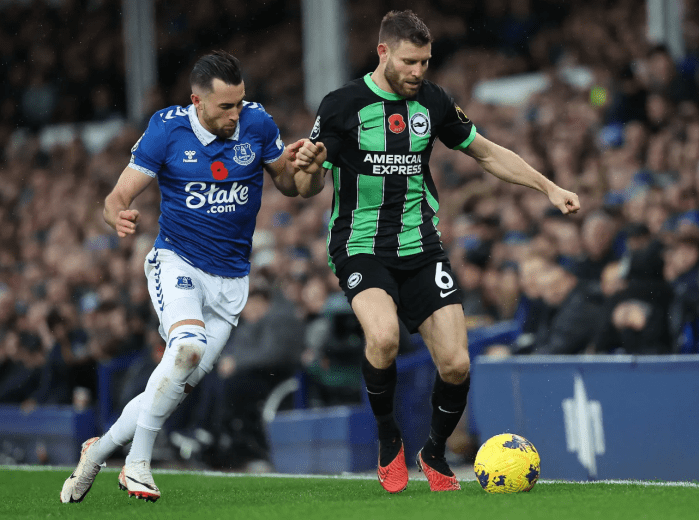
Wind on the clock more than two decades and Albion are now enjoying the benefit of Milner’s vast experience gained winning trophies galore for two of the country’s top clubs and playing for his country.

Born in Wortley, Leeds, on 4 January 1986, Milner broke through with Leeds United before joining Newcastle United at 18 and having loan and permanent spells at Aston Villa.

Milner went on to make more than 200 league and cup appearances for Manchester City and more than 300 for Liverpool as well as earning 61 full England caps and a record 46 at under 21 level.

Against Wolves on 22 January 2024, 38-year-old Milner overtook Ryan Giggs to go second outright on the Premier League’s all-time appearance list when he played in his 633rd top-flight match, 20 short of record holder Gareth Barry.

“I’ve had some luck,” Milner told TNT Sports. “I’ve worked hard and you have to enjoy it to put the work in every day. I’ve hopefully got a few more games in me.”

Milner’s free transfer move to Liverpool from Manchester City in the summer of 2015 proved an inspiration that brought him even more medals than he had won with the Sky Blues.

Over eight seasons, he made 332 appearances, scored 26 goals and lifted seven trophies along the way.  

“He’s a role model,” said manager Jürgen Klopp. “Nothing we have achieved in the last few years would have happened without James Milner, it’s as easy as that.

“Whether he was on the pitch or not, he’s set standards in a way not a lot of people can set standards, and it educated all of us.”

In a heartfelt tribute to the player, Klopp added: “From the first moment for me, he was a super-important player reference point.

“When you have a meeting and you look at Millie’s eyes and he’s not shaking his head, you know you’re on the right way. Nothing would have happened here without Millie because he kept it always going.

“From the player who was super-angry when he didn’t play, to the player when he did play, the way he pushed the whole dressing room before a game is absolutely second to none.”

For his part, Milner enjoyed a good relationship with Klopp, apart from once during a half-time flashpoint when the manager lost it, as Milner revealed to The High Performance Podcast.

“We had one moment where he was sharing his thoughts and I was sharing mine and I remember him smashing his hands on down the table and shouting, ‘Will you shut the f**k up!’ But Jurgen was brilliant, we had a great relationship and we were great off the pitch.”

It was Klopp’s predecessor, Brendan Rodgers, who persuaded Milner to make the journey along the M62, and he said at the time he signed him: “He had won the Premier League, he had won cups. His whole ambition was to win the Champions League and he felt that he would have a better opportunity to win it at Liverpool.”

Rodgers revealed that when Liverpool were trying to persuade him to sign, his wife Charlotte spent time chatting to Mrs Milner while he spent time with her husband!

“His actual football talent has probably gone under the radar because he’s played around some outstanding talents, but this is a guy who works tirelessly at his game,” said Rodgers.

“He’s in here at 7.45am making sure he’s prepared for his training, getting all of his food supplements and getting everything correct before training – he’s in two-and-a-half hours before he trains and then does his work, gives his maximum.

“He prepares himself like an elite player should. He’s also got big character and a big mentality.”

Rodgers was effusive in his praise of the new signing even before a ball had been kicked in anger after he scored the winner in a 2-1 pre-season victory over Brisbane Roar. Playing in the central role he preferred, he also provided a pass for Adam Lallana’s 27th-minute equaliser.

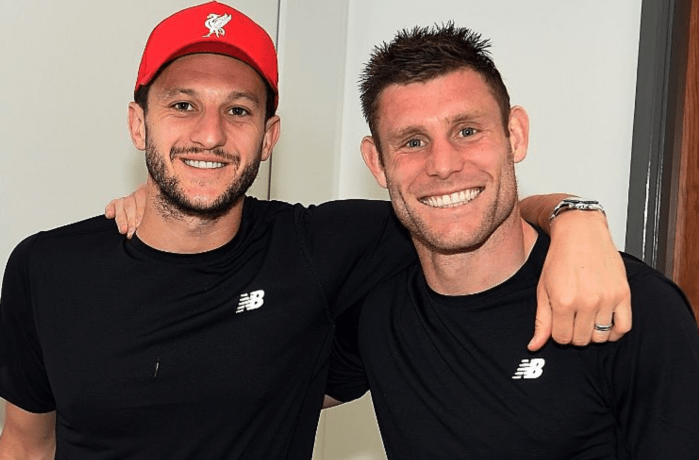
Former Liverpool teammates Adam Lallana and James Milner reunited at Brighton

“James Milner is a class act,” he told reporters. “We had to work very hard to get him in but I think we’ll see over the course of the season how important he is for us.

“He’s a wonderful personality and a top class footballer. When you see him play in his favourite position, you see all these qualities come out.”

Milner in action for Liverpool against Brighton during a lockdown match

Rodgers departed Anfield not long after Milner’s arrival but the player grew in stature under Klopp and, although it wasn’t his favourite position, he spent much of 2016-17, filling in at left-back.

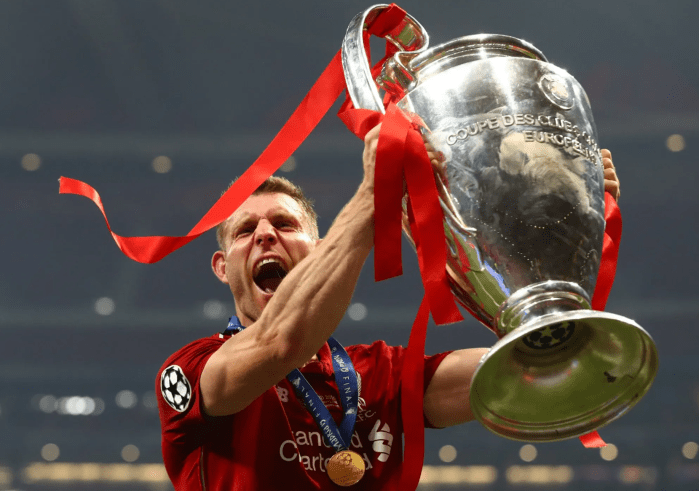
That season he made 40 appearances – 36 in the Premier League – as Liverpool qualified for the Champions League. They made it all the way to the final, only to lose to Real Madrid in Kyiv. But they made amends the following season and returned from Madrid with Liverpool’s sixth European Cup.

Milner went on as a second-half substitute in the Estadio Metropolitano in the 2-0 win over Tottenham Hotspur. “It will be nice going to Melwood seeing No.6 there,” he said. “Liverpool has a great history and when I signed for the club, I was desperate to add trophies as this club expects to win trophies and it has an amazing history – but we want to create our own history.”

Not only did they add the UEFA Super Cup and FIFA Club World Cup, Milner made 22 appearances as Liverpool clinched the Premier League title in 2019-20 with 99 points.

In 2021-22, Milner scored the first in Liverpool’s 11-10 penalty shoot-out win in Liverpool’s Carabao Cup defeat of Chelsea at Wembley, having gone on as an 80th minute sub, and he repeated the feat (as a 74th-minute sub) when the teams were also goalless at the end of the Emirates FA Cup final three months later. Liverpool won that 6-5 on penalties.

In his final season at Anfield, Milner featured 43 times and moved up to third spot on the Premier League’s all-time appearances list.

“I’m Leeds through and through and always have been and always will be – but I never probably thought that another club would get into me as much as Liverpool has,” said Milner.

The player he followed from Anfield to the Amex, Lallana, told the BBC exactly what Milner brings to a squad, especially in setting an example to younger players.

“He helps the management team in so many ways with the experience he’s built up,” said Lallana. “He knows what it takes to win. He knows what sacrifices need to be made.

“I’m not sure how he got the boring James Milner label, but he couldn’t be further away from that. He’s one of the loudest in the dressing room for sure. Full of life. Full of banter. But he’s definitely old school.”

Lallana added: “Those basics are always there and they’ll never change. I think that’s what’s made him who he is and given him his success. Those values that he’ll always live by. He taught me how to be a better professional and a better role model.”

It all began at Westbrook Lane Primary School in Horsforth and the secondary Horsforth School. He played local amateur football with Rawdon whose coach Graeme Coulson had first noticed Milner as a nine-year-old.
“I first came across him when I was refereeing a junior match involving Westbrook under nines at Horsforth,” Coulson told the Craven Herald and Pioneer. “He was so outstanding then that I asked some of the Horsforth parents who he was.

“I noted his name and it was one not to be forgotten. He was an outstanding talent scoring lots of goals but he was also very strong.”

Horsforth School spokeswoman Fran Morris said: “He was a first class student and he did really well at his GCSEs (he got eleven).

“He was very sporty at school and he won the PE prize which was handed out just before we broke up.

“He was the most wonderful young man and he was very popular, so we wish him all the best in his career. I am very sure he will do well and we are all proud of him at the school.”

Let alone his football ability, the young Milner also played cricket for Yorkshire Schools and excelled as an athlete: he was Leeds Schools’ cross-country champion for three successive years and district 100 metres champion for successive years.

Milner was a season ticket holder at Elland Road along with his parents Peter and Lesley before becoming a ball boy. He joined the Leeds United Academy after being spotted playing for Westbrook in Horsforth.

The sporty youngster was forced to decide between cricket and football, explaining in one interview: “I played for Yorkshire at the ages of 10 and 11 as a wicketkeeper-batsman. It was something I enjoyed but you get to a stage where you have to make a choice.

“I stopped playing cricket at 16 when I moved full time to the Leeds United Academy. They couldn’t take the risk of me getting injured, having my foot broken by a yorker or something like that.

“A couple of months later I made my Leeds debut. I still can’t take the risk for the same reason, but as soon as I retire from football, I’ll look forward to taking up cricket again.”

He completed his formal education at sports college Boston Spa School, which works in partnership with Leeds United, and, as soon as he left school, he was taken on as a trainee.

As he worked his way through United’s youth ranks, he also played for England at under-15 and under-17 levels.

Milner in action for the Albion against Everton at Goodison Park

Zamora’s wait for England while dad’s Trinidad came knocking

TEN DAYS after Barry Fry’s prediction about Bobby Zamora playing for England, he made his debut for the country’s under 21 side.

It was 16 April 2002 and the Brighton striker went on as a sub for Leeds’ Alan Smith in a 1-0 friendly defeat v Portugal at Stoke’s Britannia Stadium. Paul Konchesky, a fellow graduate of the East London boys’ team Senrab, was left-back that day.

While plenty of observers expected Zamora eventually to step up to the full England side, he had to wait until he was 30 to make his first (and only) start at that level, and not before being wooed to switch allegiance and play for Trinidad and Tobago.

That happened in 2005, when the Caribbean country’s Dutch coach, Leo Beenhakker, wanted him to play in a World Cup qualifier against Guatemala. Zamora told the News of the World: “Trinidad is my dad’s country and to play in the finals would be a dream but West Ham are more important.

“I am only thinking about the club at the moment and do not want to be distracted from that. The club mean everything to me and if I can help us have a good season that is all that matters.”

After an injury-hit 2007-08 season, though, West Ham sold him to Fulham in the summer of 2008. The following year it was reported Zamora and his old Senrab teammate Jloyd Samuel had both obtained Trinidad & Tobago passports in time to play in a 2010 World Cup qualifier.

Injury prevented Zamora from getting involved but Samuel did play twice for the Soca Warriors even though he had won seven England under 21 caps. (Samuel tragically died in a road accident aged 37 in 2018).

Zamora top-scored with 19 goals in Fulham’s memorable 2009-10 season under Roy Hodgson. The south London side finished 12th in the Premier League and made it through to the final of the Europa League (the first season of the revamped competition previously known as the UEFA Cup).

Zamora had been a fitness doubt before the game against Athletico Madrid in the People’s Park Stadium in Hamburg and he had to give way to Clint Dempsey 10 minutes into the second half.

The game went into extra time with the score 1-1 after 90 minutes and agonisingly Fulham succumbed to an extra time winner scored by Diego Forlan. Sergio Aguero, later of Man City fame, beat defender Aaron Hughes and crossed for Forlan to flick the ball home four minutes from the end.

Nevertheless, Zamora’s goalscoring form had caught the attention of England manager Fabio Capello and his deputy Franco Baldini who were keen to call him up for the 2010 World Cup.

Sadly, those hopes were dashed by an achilles injury, and Zamora conceded: “I told Fabio that I was struggling and I knew that, had I gone, I wouldn’t have done myself or England justice.”

The player told The Independent: “It’s been an up and down season because it’s been so good on the pitch and I’ve scored some important goals. To now pick up this injury has kicked me in the teeth.

“It’s come during the last couple of weeks and when there was the possibility of going to the World Cup with England. That’s football, it’s a cruel game.”

He added: “The World Cup’s a massive tournament. It’s not about myself, it’s about England.

“Capello wished me all the best, hoped that I get fit and would be available next season.”

True to his word, Zamora was one of five uncapped players included in Capello’s squad immediately after the disappointment in South Africa.

One of the first people to contact him was former West Ham teammate, Teddy Sheringham, who he said he learnt so much from. “I got a long text message from Teddy. He said I might be nervous beforehand but that I deserved this opportunity, and he said once I’d taken part in my first training session, I would realise that I deserved to be there. He was spot on; after that I did not look out of place and I embraced being part of the squad.”

The call up came in something of a crazy week for Zamora because only days earlier his wife gave birth to twin girls, Gisele and Siena.

“The twins were born last Monday, they came out (of hospital) on Friday, then I had a match on Saturday, was back home for one day and then I was away with England, so I have not seen them as much as I wanted to, but I am sure I will find some time when I get back home,” he said.

“The twins are a massive part of my life now, and with getting the call-up to play for your country is a massive honour. I am lost for words. I am extremely proud to be called up to play for my country.”

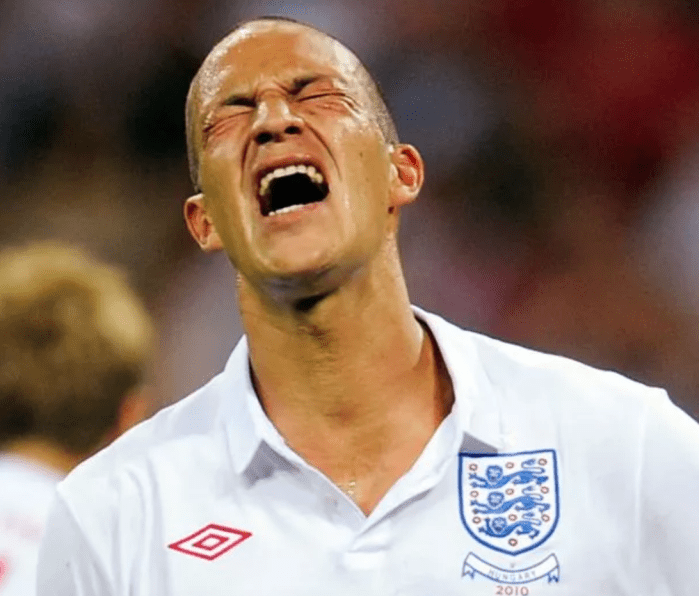
Capello sent him on as a second half substitute for Frank Lampard to play up front alongside Wayne Rooney in England’s 2-1 friendly win over Hungary at Wembley on 11 August 2010.

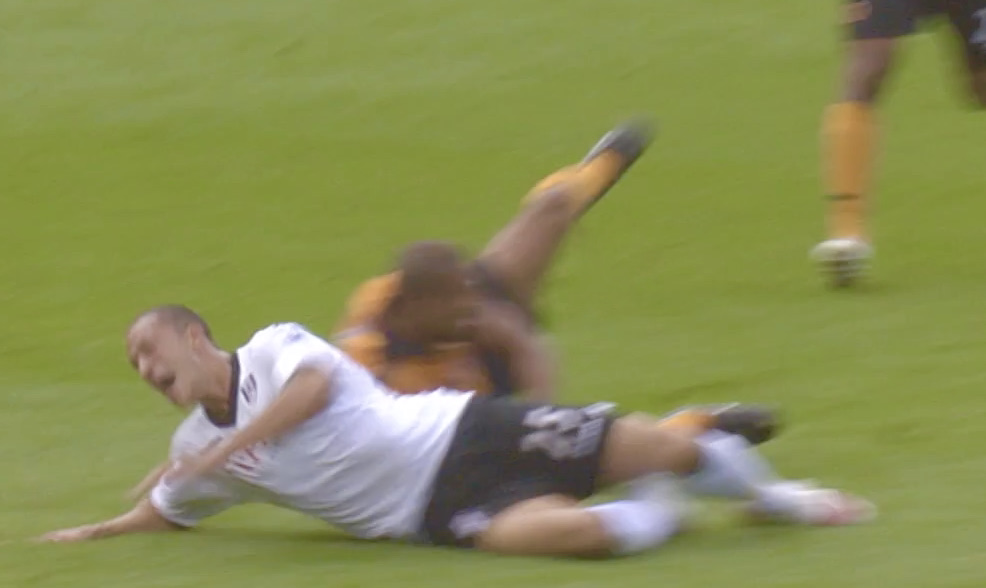
Having made that breakthrough, the day after he signed a new four-year contract with Fulham he agonisingly suffered another setback when he broke a leg (above) and sustained ankle ligament damage during a 2-1 win over Wolves. He was sidelined for five months.

Capello didn’t consign him to history, though, and called him up again in May 2011 (his teammate David Stockdale was in the same squad) to face Switzerland in a Euro 2012 qualifier. But neither were involved in the disappointing 2-2 Wembley draw.

His first start for England finally came six months later in a 1-0 home win over Sweden, the first time in 43 years that England had beaten the Scandinavian country. Zamora’s close friend (and another former Senrab graduate) John Terry was England captain and joining the striker in making first starts were right-back Kyle Walker and Everton’s Jack Rodwell.

Richard Williams in The Guardian clearly felt sorry for the debutant centre forward, though, writing: “Poor Bobby Zamora. Offered the opportunity to score England’s 2,000th goal on Tuesday night, a perennially unfortunate footballer was forced instead to stand and watch as Stewart Downing’s cross glanced off the side of Gareth Barry’s head and then off Daniel Majstorovic’s forehead before evading Andreas Isaksson’s dive as it looped inside the post for the most anticlimactic of own goals.”

Reporting on the narrow victory over the Swedes, Williams added: “Whichever side the ball went, Zamora made sure he was available. A double exchange of passes with Walcott in the 17th minute put Zamora in on goal, but after Isaksson blocked his first effort the follow-up was poked past the post from five yards.

“Any centre forward will ultimately be judged by the goals he scores rather than his total of assists, and Zamora spurned a wonderful chance in the 65th minute when Downing scampered down the left once more before pulling the ball back at precisely the right pace and angle for the striker to meet it with a first‑time connection. Jonas Olsson, however, flew in to deflect the shot for a corner.”

Zamora was subbed off in the 70th minute to be replaced by Darren Bent and the Guardian sports writer concluded: “England – and Zamora in particular – really should have inflicted greater punishment on such humdrum opposition.”

Bent had also replaced Zamora in his first start for England under 21s. That came in February 2003 in a 1-0 defeat to Italy in Carrara.

A month before his move to Spurs, he also started England’s 3-2 friendly win over Serbia and Montenegro at Hull’s Kingston Communications Stadium, on that occasion being replaced by Darren Ambrose. (His future Fulham and Albion teammate Steve Sidwell was in midfield that day).

Eight days later, in a UEFA under 21 championship preliminary match, he went on as a sub for Shola Ameobi as England beat Slovakia at the Stadium of Light, Sunderland.

Zamora showed England quality at an early age

After that under 21s debut against Portugal, he was selected in the squad for the UEFA under 21 championship finals in Switzerland. On 20 May 2002, David Platt sent him on as a sub for Gareth Barry in a 2-1 defeat to Italy in Basle.

Two days later, in the third group match, again a sub, he replaced Jermain Defoe as England lost 3-1 to Portugal and were eliminated from the competition.

On two other occasions Zamora was an unused sub but he didn’t add to his six caps. And, after

Capello quit the England job in February 2012, Zamora didn’t play for the full England side again.

• Ahead of Albion’s new year clash with West Ham, find out why Zamora’s move to the Boleyn Ground was so ideal in the next instalment.

Stadium lure too distant for promotion winner Peter Taylor

PETER TAYLOR steered Albion to promotion from the third tier in 2002 – a feat his namesake as Brighton boss fell short of achieving back in 1976.

The younger Taylor, who played for and managed arch rivals Crystal Palace, had quite an extraordinary managerial career – from taking charge of the England international side, when he appointed David Beckham as captain, to taking the reins at Isthmian League side Maldon & Tiptree at the age of 69.

He took the helm at third-placed third-tier Brighton in October 2001 after being sacked by Premier League Leicester City – who had created the Albion vacancy by recruiting manager Micky Adams to work as no.2 to newly-appointed Dave Bassett.

Starting at the Albion

Taylor revealed that it was on Adams’ advice that he accepted Albion’s offer. “Micky said they were a close bunch, a confident group and happy with each other,” Taylor told The Guardian. “My job now is to carry on the good work he has started.”

In dropping down two divisions Taylor returned to the level of a previous success, when he guided Gillingham to the First Division via (via a play-off final win over Wigan Athletic). In less than two years he went from the Second Division to the Premiership – managed England for one game along the way – and back again.

“I’ve not lost any self-belief after what happened at Leicester,” said Taylor. “I don’t feel I have anything to prove. Leicester is in the past now as far as I am concerned. I am not worried about the level I am managing at. Brighton has fantastic potential, particularly in size of support, and it is my job now to fulfil it.”

Albion press officer Paul Camillin wrote in the matchday programme: “Micky’s replacement is a man whose coaching ability is unquestionable. Here is a man who not so long ago was taking England training sessions under the gaze of Sven Goran Eriksson,”

Taylor’s knowledge of the game spanned all four divisions and beyond and Camillin pointed out: “He was the overwhelming choice of the board of directors.”

Indeed, chairman Dick Knight said: “Peter Taylor’s management experience at both Nationwide and higher levels of football make him ideal for the Albion.

“He quickly identified with the ambition and potential here and I’m very pleased he has chosen to join us.”

Top scorer Bobby Zamora was also delighted, telling The Guardian: “When I heard the list of who was being put forward, Peter Taylor was the name that stood out. He has proven his ability and has got an obvious wealth of experience.”

In young Zamora, Taylor inherited a magnificent key to unlock defences. One player he did bring in who also made a difference was a lanky goalscoring midfielder called Junior Lewis (remarkably Taylor also signed him for four of his other clubs – Dover, Hull, Gillingham and Leicester) and his contribution certainly helped to cement the title.

Working alongside Bob Booker

“Junior did exactly what he had done for me at Gillingham, which is make the team play more football,” Taylor told Nick Szczepanik.  “He wasn’t easy on the eye, but he was always available to get the ball from defenders and got it to the strikers and was very useful.”

While Taylor’s eight months as manager of Brighton culminated in promotion, he was never really credited with the success because many said he achieved it with Adams’ team.

“Micky had done the hard work because he signed all the squad before I got there, and they had done well so the last thing I was going to do was to change too much,” Taylor told Szczepanik, in an interview for the club website. “He had built a team with a great spirit.

“You could see why we went on to win the division because the squad was full of incredible characters – not just experienced professionals but good professionals who were desperate to do well for the club.”

Citing the experience and ability of Danny Cullip, he made special reference to “the greatest asset” Zamora, saying: “He was an incredible player and miles too good for that level.

Simon Morgan was another one. What a great defender – and yet he could hardly train because he had two bad knees. Whenever he played, he was such a good organiser at the back that we were always solid.”

Unfortunately, Taylor didn’t help to endear himself to Albion’s public when he quit within days of the victory parade along the seafront, but deep down not too many people could blame him considering the limitations prevailing at the time.

“People will think I was stupid to leave the club after we won the league but I think everyone understands the reasons, which were because of the budget I thought I’d need to keep them up and the new stadium not being as close as Dick promised in my interview,” Taylor explained.

“Some people assumed I must have a new job lined up, maybe at Palace, but no, I didn’t. My plans had been to win promotion at Brighton, move into the new stadium with a big budget and then try eventually to get them to the Premier League.”

Nevertheless, Knight said: “It’s a great shame that Peter has chosen to resign. He has done a terrific job for the club in leading the Albion to the Second Division title, and it’s sad that he doesn’t wish to continue.”

The captain at the time, Paul Rogers told The Argus: “It’s a big shock to me and I’m sure it will be a big shock to the other lads as well. He’s done really well here. Since he came in the lads took to him straight away.

“He is a good coach. His sessions were a lot more technical than we were used to and he’s improved some of the players during his time at the club.”

Six months after he left Brighton, Taylor took over at Hull City, who were about to move into the 25,000 all-seater KC Stadium and in four years he guided them from the bottom tier of football through to the Championship.

I recall a visit to the KC when Albion’s travelling supporters taunted him with a ‘Should have stayed with a big club’ chant, to which he responded by opening wide his arms to point out the plush new surroundings he was working in.

Born in Rochford, Essex, on 3 January 1953, Taylor was a Spurs supporter from an early age and had an unsuccessful trial with them – including playing in a South East Counties league match.

Looking back in an interview with superhotspur.com, he recalled that he didn’t perform well in his trial match at Cheshunt because he was up against Steve Perryman (who later became a close friend) and Graeme Souness in the Tottenham midfield.

Taylor also had an unsuccessful trial with Crystal Palace, so it was somewhat ironic that both clubs who rejected him as a youngster ended up paying handsome fees to sign him.

Taylor had first drawn attention while playing for South-East Essex Schools and Canvey Island but it was nearby Southend United who took him on as an apprentice in 1969.

The winger turned professional with the Shrimpers in January 1971 and scored 12 goals in 75 league matches for the Essex side.

It was the flamboyant Malcolm Allison who signed him for Palace in October 1973, paying a £110,000 fee. Allison told the player he had been trying to sign him for some time, including when he was in charge at Manchester City.

“He made me feel like a million dollars and I couldn’t thank anyone more than I would thank Malcolm for the career that I have had,” said Taylor. “He knew his stuff and he was an exciting coach, far ahead of his time, but the most important thing for me was that he made me feel that I was the best player in the world.”

Taylor went on to be Palace’s player of the season, although they were relegated to the third tier.

His time at Selhurst Park was his most successful as a player, he reckoned, and he scored 33 goals in 122 league games for the Eagles. But his notable performances when Palace made it through to the semi-finals of the FA Cup in 1976 led to Keith Burkinshaw signing him for Spurs for £400,000.

“I was desperate to play for Tottenham, because they were the team that I supported, so it was a wonderful move for me,” said Taylor.

Earlier that year, he had made his debut for England while playing in the third tier of English football, going on as a substitute in the second half of a Welsh FA centenary celebration match at the Racecourse Ground, Wrexham, and scoring the winner in a 2-1 victory.

He was the first Third Division player to be capped since Johnny Byrne in 1961, and also the first player to score while making his debut as a substitute. He went on to win four caps.

Two months later, against the same opponent, but at Ninian Park, Cardiff, in the Home International Championship, he scored again – this time the only goal of the game as Don Revie’s England won 1-0.

Taylor’s third cap came in the 2-1 defeat to Scotland at Hampden Park on 15 May 1976. And he went on as an 83rd minute sub for Kevin Keegan as England beat Team America 3-1 in America’s Bicentennial Tournament. Bobby Moore was Team America’s captain and the great Pelé was playing up front.

Although he scored 31 times in 123 league matches for Spurs, he was hampered by a pelvic injury during his time at White Hart Lane but superhotspur.com writer Lennon Branagan said: “A player with a real eye for goal, Peter Taylor was a really fine all-round winger, who also had good defensive qualities to his game.

“He was a very important player during his second season at Spurs, as he helped them to win promotion from the old Second Division, following their relegation to that division during the previous season.”

Taylor moved on from Spurs after four years when Burkinshaw couldn’t guarantee him a starting spot, leaving for £150,000 to join second tier Leyton Orient, where Jimmy Bloomfield was manager.

He scored 11 goals in 56 league games for the Os and had four games on loan for Joe Royle’s Oldham Athletic in January 1983. He then went non-league with Maidstone, apart from a brief spell back in the league, that he didn’t enjoy, playing under Gerry Francis at Exeter City.

Having returned to Maidstone to carry on playing, he eventually got his first managerial job at Dartford in 1986 as a player-manager.

He moved on to Enfield in a similar role, telling superhotspur.com: “I thoroughly enjoyed it, and I was learning all the time about coaching players, and then Steve Perryman asked me to be his assistant at Watford in 1991, and I had two fantastic years there of coaching and learning. So that was the start of my managerial career.”

His first league manager’s job then followed at his old club Southend, between 1993 and 1995, but he quit having not been able to raise them above mid-table in League One. Curiously, his next outpost was non-league Dover Athletic but he left when his former Spurs teammate Glenn Hoddle invited him to coach the England under 21 team.

A successful spell in which he presided over 11 wins, three draws and only one defeat came to an abrupt end when Taylor was controversially relieved of his duties by the FA and replaced by former Albion winger Howard Wilkinson.

Gillingham offered him a return to club management and, with Guy Butters at the back and the aforementioned Junior Lewis in midfield, he steered the Kent club to that play-off win, taking them into the top half of English league football for the first time in their history.

That achievement prompted Leicester to poach him and he got off to a great start with the Foxes, even earning a Premier League manager of the month award in September 2000.

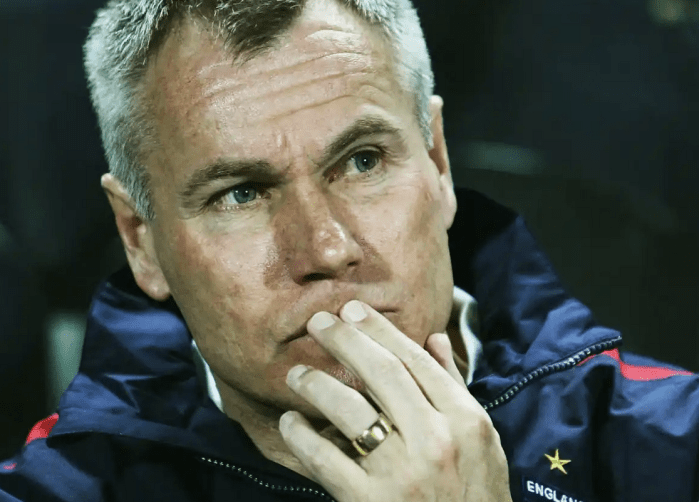
It was during his time at Leicester that he rode to England’s rescue two months later by taking caretaker charge of the England national side for a friendly against Italy in Turin. England lost 1-0 but the game is remembered for Taylor handing the captain’s armband to Beckham for the first time. He also included six players still young enough for the under 21s: Gareth Barry, Jamie Carragher, Kieron Dyer, Rio Ferdinand, Emile Heskey and Derby’s Seth Johnson (it was his only full cap).

Describing it as the proudest moment of his long career, Taylor told Branagan: “I never dreamt that opportunity would happen to me. I knew that it was only going to be for one game, but it’s on my memory bank, and no one will ever change that.” 

Back at Leicester, it all went pear-shaped towards the end of the season and when City were beaten 5-0 at home by newly promoted Bolton Wanderers in the new season opener, and then recorded a further four defeats, two draws with a solitary victory, Taylor was sacked.

He combined his job at Hull with once again coaching the England under 21 side between 2004 and 2006, and early into his reign called up Albion’s Dan Harding and Adam Hinshelwood (Jack Hinshelwood’s dad) for a home game v Wales and an away fixture in Azerbaijan. Harding started both matches and Hinshelwood was an unused sub.

Taylor oversaw nine wins, two draws and five defeats, selecting players such as James Milner, Darren Bent and Liam Ridgewell.

After promotion success with Albion and Hull, where he spent three and a half years, in the summer of 2006 Palace, in the Championship, stumped up £300,000 in compensation to take the Tigers boss back to Selhurst Park to succeed Iain Dowie.

Telling the BBC it had to be “something special” for him to leave Hull, Taylor added: “When I got the call from Simon (Jordan) there was no doubt in my mind that I wanted to be at Selhurst Park.”

Talking to cpfc.co.uk some years later, he said: “I was very confident as a manager. Very confident. I felt as though I would succeed.

“I didn’t look at my reputation too much. I looked at: ‘How can I get these into the top division?’ Even if I was worried about the reputation I had, I still would have taken the job.”

On the Palace bench with Kit Symons

After a promising start, results went awry and Palace finished the season in mid-table. When the Eagles managed only two wins in their first 10 games of the 2007-08 season, Taylor was sacked and replaced with Neil Warnock.

Undeterred, he stepped outside of the league for his next position, taking charge of then Conference team Stevenage Borough – recruiting Junior Lewis as his first signing!

Lewis followed him into his next job as well, this time as first team coach at Wycombe Wanderers, where Taylor succeeded Paul Lambert in May 2008. Taylor’s promotion-winning knack once more came to the fore when the Chairboys won promotion from League Two.

However, a poor start to life in League One cost him his job and Wycombe owner Steve Hayes told BBC Three Counties Radio: “We started the season reasonably well, but truthfully, six points from 33 is very worrying.

“We need a change. [Peter’s] body language in the last few weeks has not been great and he doesn’t seem to be as happy as he was last year.”

Taylor was approaching his fifth month out of the game when, in mid-February 2010, League Two Bradford City gave him a short-term deal to replace Stuart McCall. Once again, loyal Lewis joined him.

Hoping his stay at Valley Parade would ultimately be longer, he told the Yorkshire Post: “I remember what happened at Hull when I went in there (in 2002) with the club sitting 18th in the bottom division.

“We went on to enjoy a lot of success and I see similar potential here at Bradford. Certainly if we can go on a run then there is a potential of putting bums on seats.

“I still believe we can do something this year. But if that does not prove to be the case, then definitely next year.”

Taylor signed a contract extension and stuck at it even when he was offered the chance to become no.2 to Alan Pardew at Premier League Newcastle United at the beginning of January 2011.

“It’s flattering to be offered the position to work alongside Alan Pardew,” Taylor told BBC Radio Leeds. “I wasn’t comfortable leaving Bradford earlier than I need to, I know what the game is about, I can easily get the sack in a month’s time, I understand that, but I don’t really feel I want to leave at this particular time.”

Saying Bradford had “really switched me on”, he added: “I’ve always had a special feeling about the club, and I’ve still got that feeling.” Six weeks later he left City by mutual consent.

In the summer that year, Taylor headed to the Middle East and spent 15 months in charge of the Bahrain national side, leading them to success in the 2011 Arab Games in Doha when they beat Jordan 1-0. He was sacked in October 2012 after Bahrain lost 6-2 to the United Arab Emirates in a friendly.

The following summer, he was given a short-term contract to take charge of England’s under 20s at the Under 20 World Cup in Turkey. Hopes may have been high after a 3-0 win over Uruguay in a warm-up match but England were eliminated at the group stage after only managing to draw against Iraq and Chile and then losing to Egypt. The England side included the likes of Sam Johnstone, Jamal Lascelles, John Stones, Eric Dier, Conor Coady, James Ward-Prowse, Ross Barkley and Harry Kane.

Taylor found himself back in club football that autumn when Gillingham welcomed him back on an interim basis after they’d sacked Martin Allen. Handed a longer term deal a month later, he stayed with the League One Gills until halfway through the next season when, after only six wins in 23 matches, he was sacked on New Year’s Eve.

Another posting abroad was to follow in May 2015 when he was appointed head coach of Indian Super League side Kerala Blasters, taking over from former England goalkeeper David James.

But his time in India was brief. Despite winning five of six pre-season friendlies and the opening league fixture, the Blasters lost four and drew two of the next six matches and Taylor became the league’s first managerial sacking in October that year.

The New Zealand national side recruited Taylor to work with the country’s UK-based players in 2016-17 and a third spell at Gillingham followed in May 2017. He was named director of football at Priestfield where Adrian Pennock was head coach and he was briefly interim head coach when Pennock lost his job in September 2017.

That turned out to be his last job in league football. He joined National League Dagenham & Redbridge in June 2018 and spent 18 months in charge, leaving the club after a spell of nine defeats in 11 games.

Welling United, in the sixth tier of English football, appointed Taylor manager in September 2021 but with only six wins in 25 matches he left in March the following year. His final job was at Isthmian League Maldon & Tiptree, from December 2022 to August 2023.

Why John Gregory was a hero and a Villain

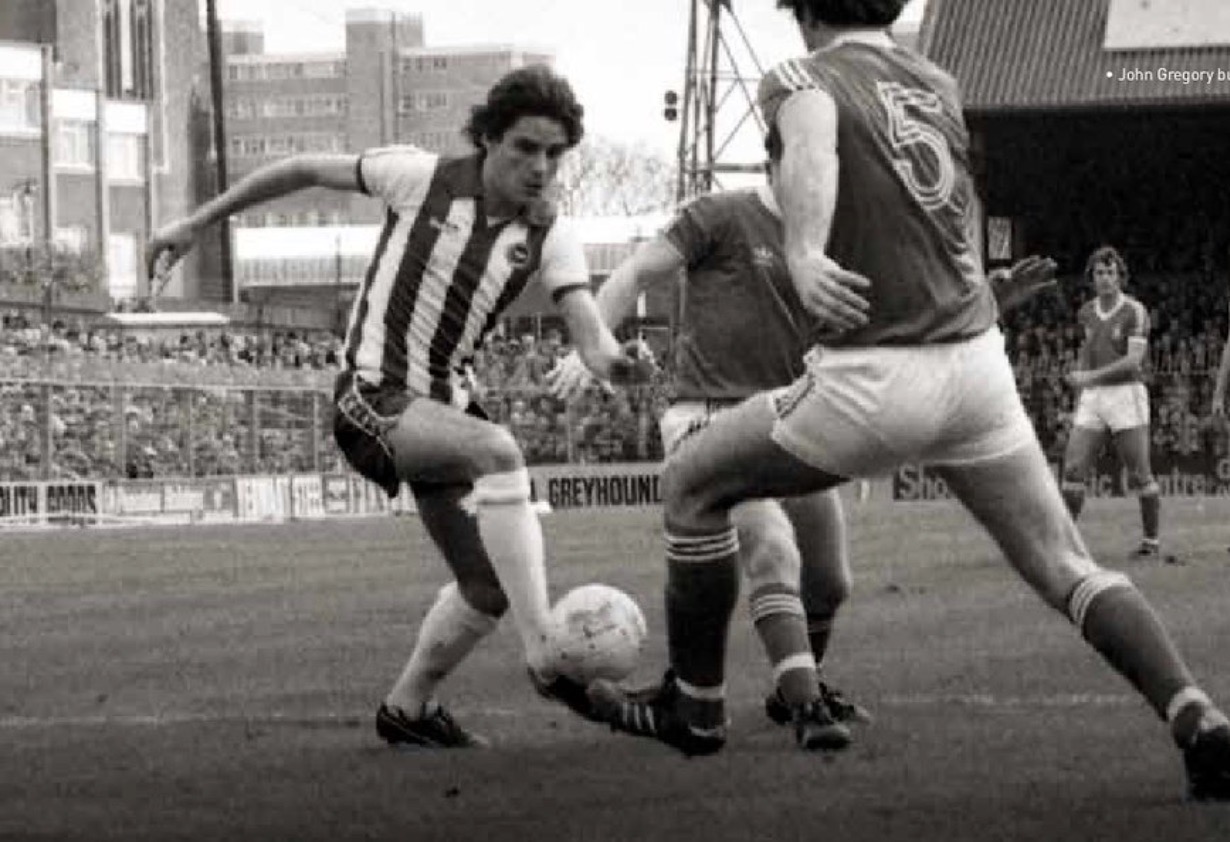
ANY Brighton player who scores twice in a win over Crystal Palace is generally revered forever. The sheen John Gregory acquired for that feat was somewhat tarnished when he was manager of Aston Villa.

Gregory’s brace in a vital 3-0 win over Palace on Easter Saturday 1981 helped ensure the Seagulls survived in the top-flight (while the Eagles were already heading for relegation).

In 1998, though, he was caught up in a wrangle over Brighton’s efforts to secure a sizeable fee for their input to the early career of Gareth Barry, who’d joined Villa while still a teenage prodigy.

Albion’s chairman Dick Knight pursued the matter through the correct football channels and eventually secured a potential seven-figure sum of compensation for the St Leonards-born player, who spent six years in Brighton’s youth ranks but refused to sign a YTS deal after Villa’s approach.

The Football League appeals tribunal met in London and ruled the Premiership side should pay Brighton £150,000 immediately, rising to a maximum £1,025,000 if he made 60 first-team appearances and was capped by England. Brighton were also to receive 15 per cent of any sell-on fee.

“It was what I had hoped for, although I hadn’t necessarily expected the tribunal to deliver it,” Knight said in his autobiography, Mad Man – From the Gutter to the Stars. “Villa certainly hadn’t; Gregory was furious and stormed out of the building.”

Gregory mockingly asserted that Knight wouldn’t have recognised the player if he’d stood on Brighton beach wearing an Albion shirt, a football under his arm and a seagull on his head.

“For a former Albion player, Gregory surprisingly seemed to take it as a personal affront,” said Knight. “His position was patronising and the behaviour of Aston Villa scandalous.”

Although Villa paid the initial instalment, they didn’t lie down and go with the ruling and ultimately Knight ended up doing a deal with Villa chairman, ‘Deadly’ Doug Ellis, for £850,000 that gave Brighton a huge cash injection in an hour of need.

Barry, of course, ended up having a stellar career, earning 53 England caps, making 653 Premier League appearances and captaining Villa during 11 years at the club.

Knight’s settlement with Ellis meant Brighton missed out on £1.8 million which they would have been entitled to when Barry was sold on to Manchester City in 2009.

But back to Gregory. He had a habit of returning to manage clubs he had previously played for. Villa was one (between February 1998 and January 2002). He also bossed QPR, who he played for after two years with the Albion, and Derby County, who he’d played for in the Third, Second and First Divisions.

His first foray into management had been at Portsmouth. He then worked as a coach under his former Villa teammate Brian Little at Leicester City (1991-1994) and Villa (1994-1996) before becoming a manager in his own right again during two years at Wycombe Wanderers.

The lure of Villa drew him back to take charge as manager at Villa Park in February 1998 when he was in charge of players such as Gareth Southgate, Paul Merson and David Ginola.

During his near four-year reign, Villa reached the 2000 FA Cup Final – they were beaten 2-0 by Chelsea – but won the UEFA Intertoto Cup in November 2001, beating Switzerland’s Basel 4-1.

Although his win percentage (43 per cent) was better at Villa than at any other club he managed, fan pressure had been building when league form slumped as the 2001-02 season went past the halfway mark and a ‘Gregory out’ banner was displayed in the crowd.

Gregory eventually bowed to the pressure and tendered his resignation, although chairman Ellis said: “John’s resignation is sad. It was most unexpected but has been amicable.”

He stepped out of the frying pan into the fire when he took charge of an ailing Derby County, who were bottom of the Premier League, and, after a winning start, he wasn’t able to keep them up.

County sacked him in March 2003 for alleged misconduct but in a protracted legal wrangle he eventually won £1m for unfair dismissal. However, the ongoing dispute meant he couldn’t take up another job and he spent much of the time as a TV pundit instead.

It was in September 2006 that he finally stepped back into a managerial role, taking over from Gary Waddock as QPR manager, and while he managed to save them from relegation from the Championship, ongoing poor form the following season led to him being sacked in October 2007.

It only emerged in 2013 that five years earlier Gregory had discovered he was suffering from prostate cancer. Nevertheless, he continued working, managing two clubs in Israel and one in Kazakhstan.

He had one other English managerial job, taking charge of Crawley Town in December 2013, although ill health brought his reign to an end after a year and former Albion striker Dean Saunders replaced him.

Two and a half years after leaving Crawley, Gregory emerged as head coach of Chennaiyin in the Indian Super League. With former Albion favourite Inigo Calderon part of his side, he led them in 2018 to a second league title win, and he was named the league’s coach of the year.

Born in Scunthorpe on 11 May 1954, Gregory was one of five sons and two daughters of a professional footballer also called John who had started his career at West Ham.

The Gregory family moved to Aldershot when young John was only two (his dad had been transferred to the Shots) but then moved to St Neots, near Huntingdon, when his father took up a job as a security guard after retiring from the game.

Young Gregory went to St Neots Junior School and his first football memories date from the age of nine, and he was selected as a striker for the Huntingdonshire County under 12 side.

He moved on to Longsands Comprehensive School and played at all age levels for Huntingdon before being selected for the Eastern Counties under 15 side in the English Schools Trophy.

Northampton Town signed him on apprentice terms at the age of 15 and he progressed to the first team having been converted to a defender and remained with the Cobblers for seven years.

It was in 1977 that Ron Saunders signed him for Villa for £65,000, which was considered quite a sum for a Fourth Division player.

Gregory famously played in every outfield position during his two years at Villa Park and he welcomed the move to newly promoted Albion because it finally gave him the chance to pin down a specific position.

Chris Cattlin had been right-back as Albion won promotion from the second tier for the first time in their history but he was coming to the end of his career and, in July 1979, the Albion paid what was at the time a record fee of £250,000 to sign Gregory to take over that position. Steve Foster joined at the same time, from Portsmouth.

“I wore every shirt at Villa,” Gregory told Shoot! magazine. “I never had an established position. I was always in the side, but there was a lot of switching around. When Alan Mullery came in for me, he made it clear he wanted me to play at right-back.”

The defender added: “I respect Alan Mullery as a manager and I like the way he thinks about the game.

“Brighton are a very attacking side. There’s nothing the boss loves more than skill. That comes first in his mind. He wants all ten outfield players to attack when they can. That attitude, more than anything else, played a big part in me coming here.”

Gregory started the first 12 games of the season but was then sidelined when he had to undergo an appendix operation.

He returned as first choice right-back in the second half of the season and had a good start to the 1980-81 campaign when he scored in the opening 2-0 home win over Wolves.

His second of the season came against his old club, a header from a pinpoint Gordon Smith cross giving Albion the lead at Villa Park against the run of play. But it was to be an unhappy return for Gregory because the home side fought back to win 4-1.

In November 1980, it looked like Gregory might leave the Goldstone in a proposed cash-plus-player swap for QPR’s Northern Ireland international David McCreery, but the player, settled with his family in Ovingdean, said he wanted to stay at the Goldstone.

“The offer Gregory received was fantastic, but he prefers to stay with us,” chairman Mike Bamber told the Evening Argus. “I regard this as a great compliment.”

The following month, he got the only goal of the game in a 1-0 Boxing Day win at Leicester but in March, with Albion desperate to collect points to avoid the drop, Mullery put Gregory into midfield. He responded with four goals in seven matches, netting in a 1-1 draw away to Man City, grabbing the aforementioned pair at Selhurst Park on Easter Saturday and the opener two days later when Leicester were beaten 2-1 at the Goldstone.

Little did he know it would be his last as a Brighton player because within weeks Mullery quit as manager and Bamber finally couldn’t resist QPR’s overtures.

“I know Alan Mullery turned down a bid but a couple of days after he resigned chairman Mike Bamber accepted QPR’s offer,” Gregory recalled in an interview with Match Weekly. “I hadn’t asked for a move so the news that I was to be allowed to go was quite a surprise.”

He added: “It was a wrench. I found it difficult to turn my back on the lads at Brighton.

“I enjoyed two years at the Goldstone Ground and made many friends, but the prospect of a new challenge at Rangers appealed to me.”

Gregory admitted he used to watch Spurs as a youngster and ironically his two favourite players were Venables and Mullery – and he ended up playing for them both.

Although he dropped down a division to play for QPR, he said: “Rangers are a First Division set up and I’m sure we’ll be back soon.”

Not only did he win promotion with Rangers in the 1983-84 season but, at the age of 29, he earned a call up to the England set-up under Bobby Robson.

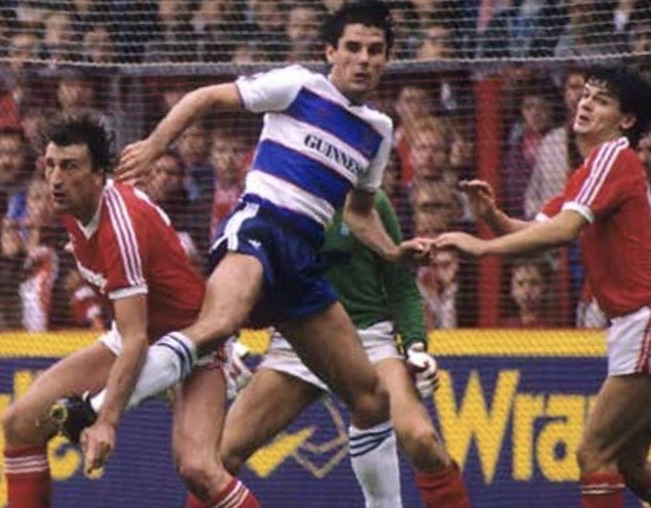
He won six caps, the first three of which (right) came against Australia when they played three games (two draws and an England win) in a week in June 1983, in a side also featuring Russell Osman and Mark Barham.

Gregory retained his midfield place for the European Championship preliminary match in September when England lost 1-0 to Denmark at Wembley but he was switched to right-back for the 3-0 away win over Hungary the following month.  

His sixth and final cap came in the Home International Championship match in Wrexham in May 1984 when he was back in midfield as England succumbed to a 1-0 defeat to Wales, a game in which his QPR teammate Terry Fenwick went on as a substitute to earn the first of 20 caps for England.

Gregory continues to demonstrate his love for the game, and particularly Villa, via his Twitter account and earlier in the 2021-22 season, his 32,000 followers saw a heartfelt reaction to the sacking of Dean Smith.

“Dean Smith gave Aston Villa Football Club the kiss of life when the club was an embarrassment to Villa fans and he rekindled the love and passion and success on the field where so many others had failed hopelessly,” said Gregory.

• Pictures from the Albion matchday programme, Shoot! magazine and various online sources.