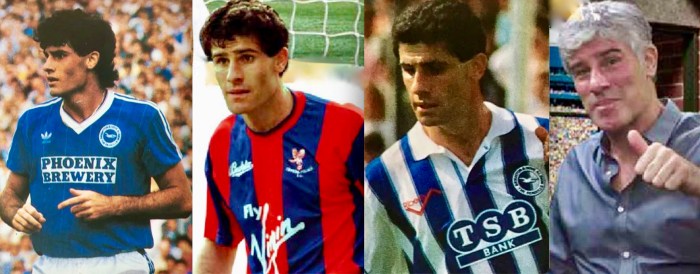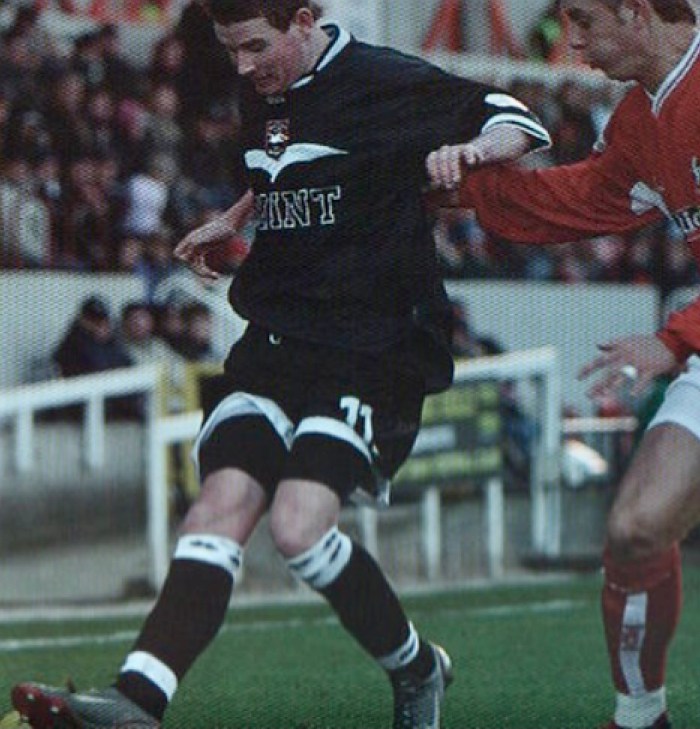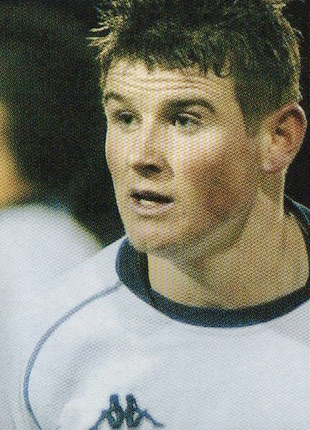
Jamie Moralee’s pitfalls a valuable lesson for future prosperity

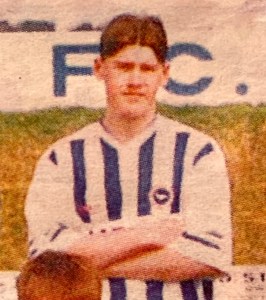
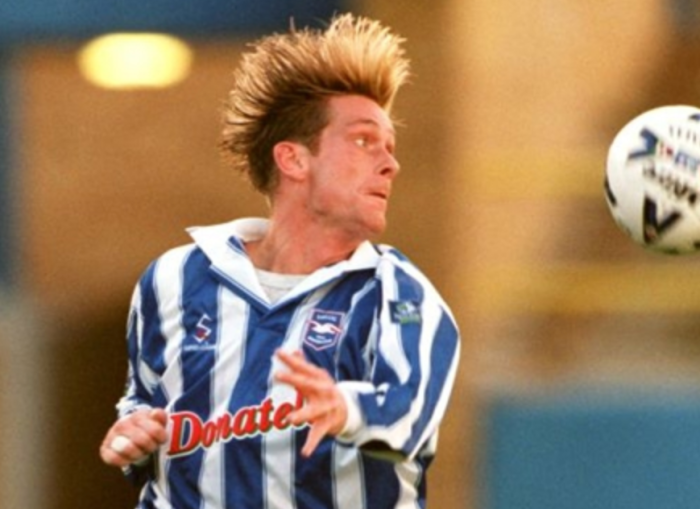
IT WOULD BE an understatement to say striker Jamie Moralee had mixed fortunes during his time with Brighton.

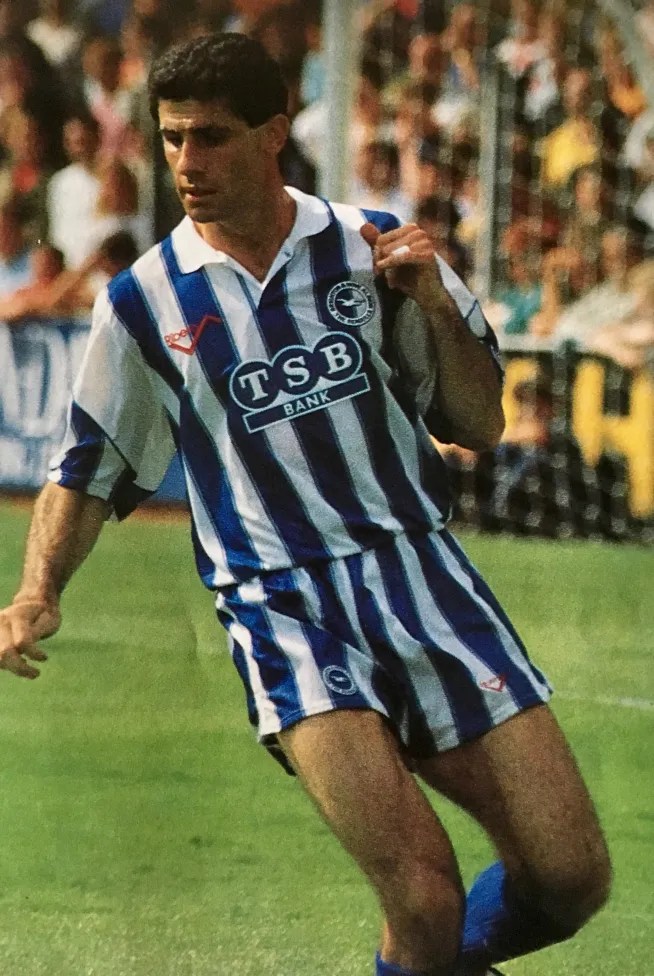
A one-time £450,000 signing, the former Crystal Palace player joined the lowly Seagulls on a free transfer when they were playing home games in exile at Gillingham in 1998-99.

His lack of goals earned a certain amount of derision from the handful of Albion followers who supported the club in those dark days.

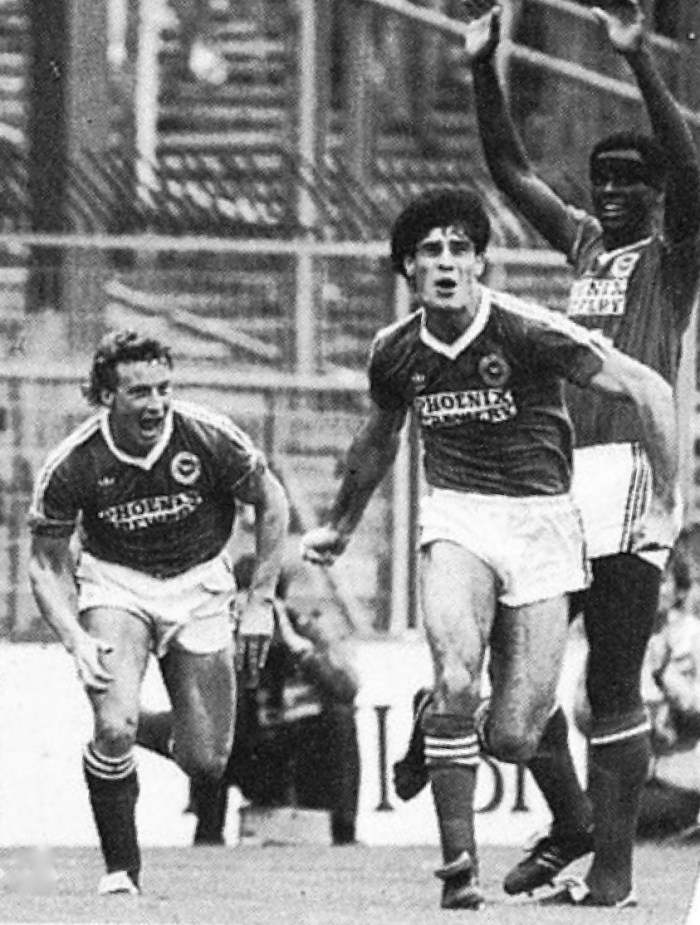
And on one infamous occasion, in March 1999, he managed to get himself sent off within a minute of going on as a late substitute, without touching the ball.

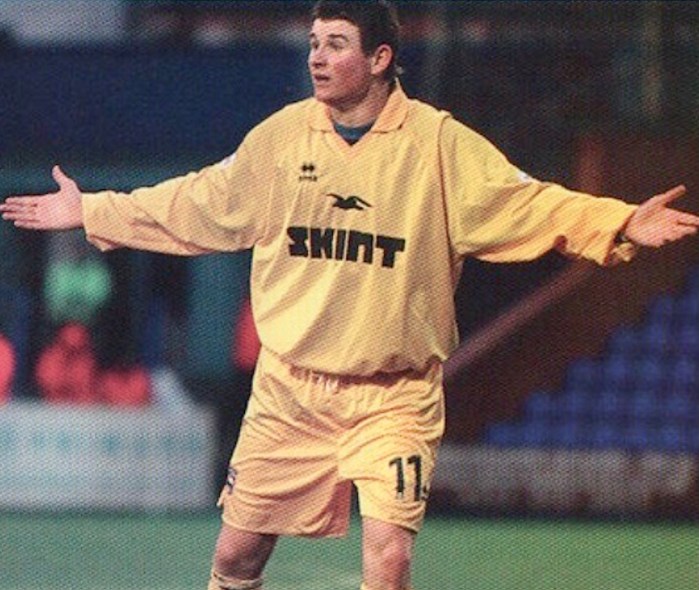
Moralee sees red at Scunthorpe

To make matters worse, the punch he threw didn’t even catch the opponent, John Eyre, who promptly added to Albion’s woes by completing his hat-trick in a 3-1 home win for Scunthorpe United.

The Argus put Moralee’s “moment of madness” down to frustration at so regularly being on the subs bench (16 times – and only sent on in eight of them).

“He did not actually connect, but the intent was obvious and the resulting red card inevitable,” the newspaper reported.

Signed at the start of the season on a month-to-month contract, Moralee had a run of 14 starts under Brian Horton but after scoring just the one goal (in a 3-1 defeat against Mansfield), he was dropped to the bench.

Just before Horton quit to move to Port Vale, he gave Moralee a contract until the end of the season and in January, after Jeff Wood briefly took charge, the player hoped his impact as a sub when laying on a winning goal for Paul Armstrong against Scarborough would help change supporters’ views of his contribution.

“It was nice to be a bit of a hero for a change,” he told The Argus. “I was a bit unlucky with a goal which was disallowed at Chester in the game before and I just want to get on with Brighton and do my best.

“I’ll take the credit because I’ve not had much this season. Hopefully the corner has turned for me.”

Moralee said he had been asked to play several different roles and reckoned much of the criticism aimed his way was unjustified.

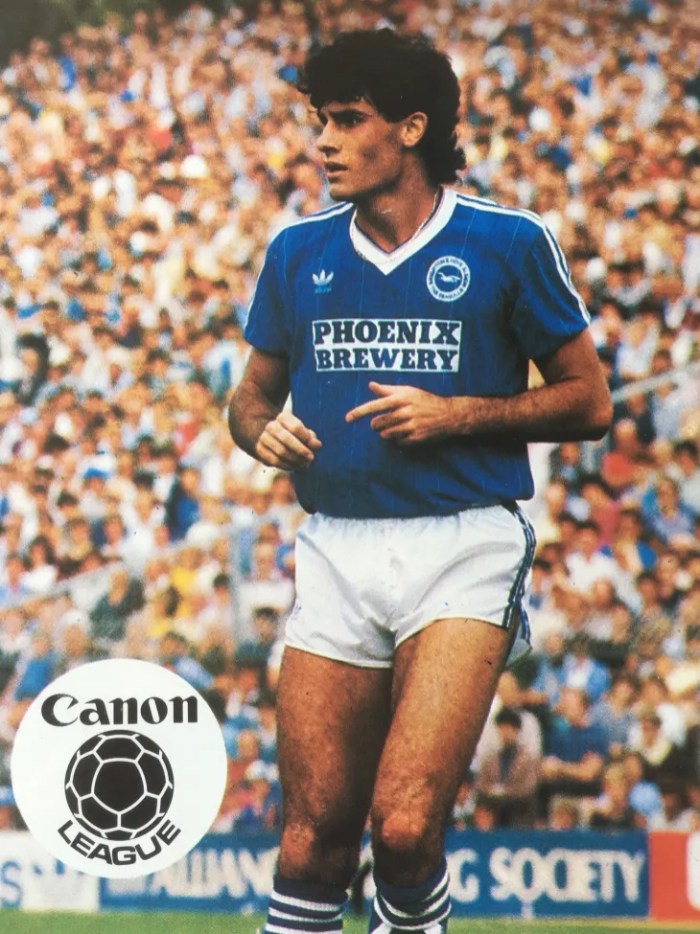
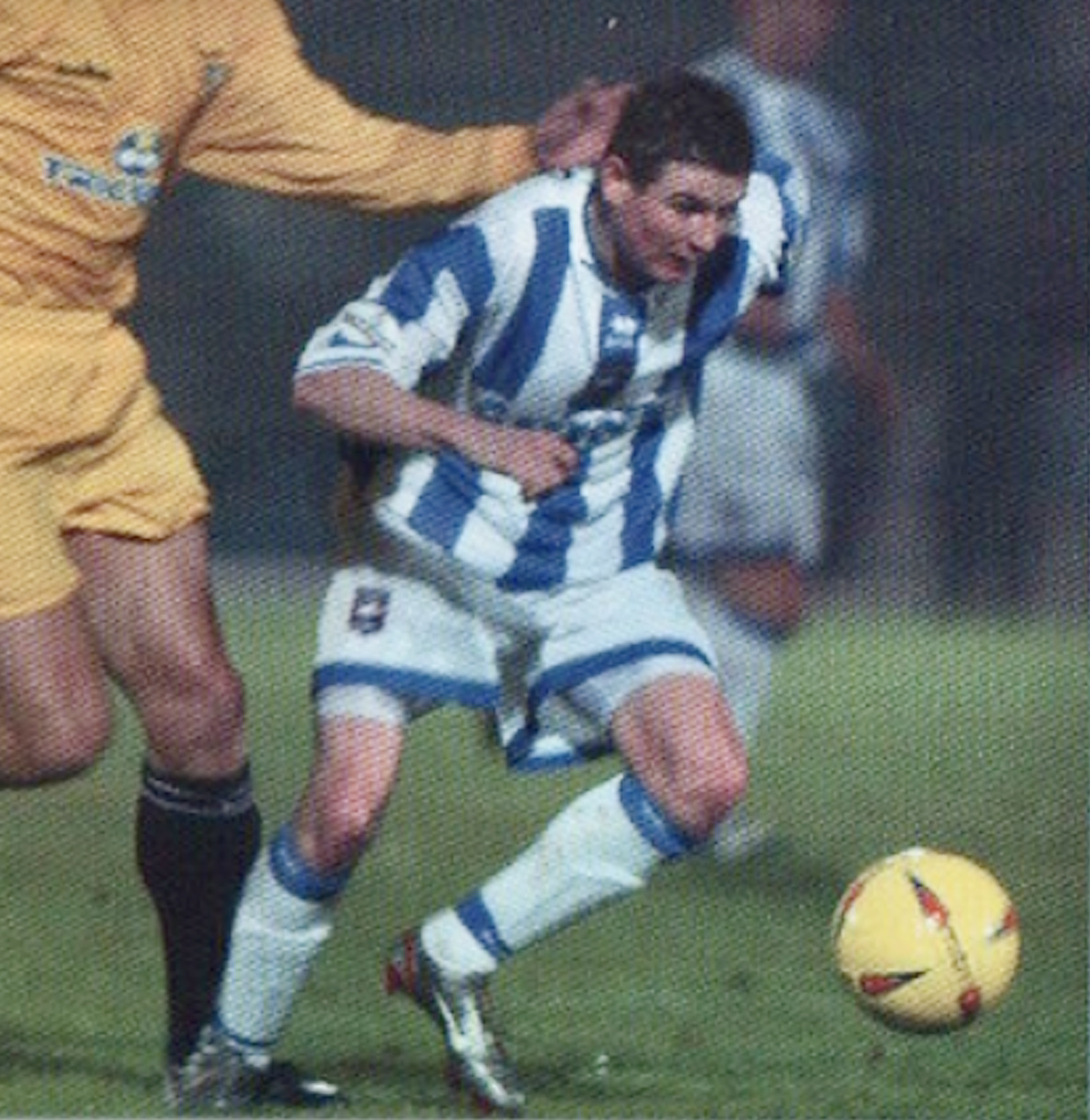
Moralee gets stuck in

“I feel I have done all right,” he maintained. “I don’t think the supporters really appreciate me and they let me know that when I came on, but I will just keep doing my job.

“The players give me all the support I need and I am confident enough to go out and do the business. I certainly won’t hide.”

Having missed several matches after the red mist descended at Scunthorpe, a third manager arrived in the shape of Micky Adams, and Moralee started the last seven matches of the season under the new boss, scoring once.

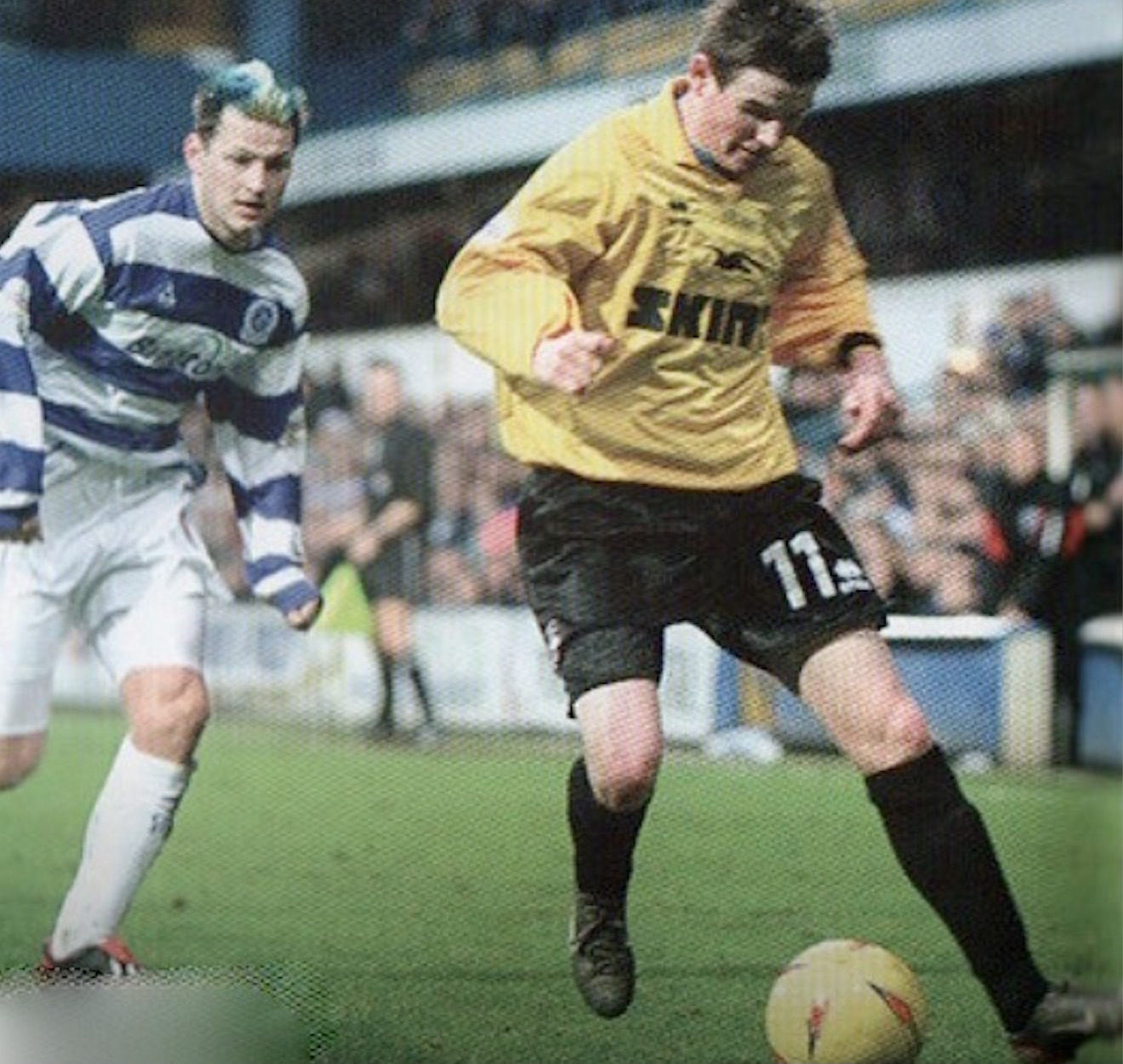
Moralee slides in

But it wasn’t enough to earn a new deal and Moralee was one of eight players released at the end of the season. Having played under three managers in one season for the Albion, there was swift change in the dugout at his next port of call too.

He began the next season up a division with Colchester United, whose manager Mick Wadsworth said: “I remember him as a very outstanding young player with Millwall. We watched him several times during last season.

“He is very sharp in and around the penalty box and his hold-up play is exceptional – a quality we were sadly lacking in the season just gone.

“Jamie was an outstanding prospect as a young player with Millwall and was sold on to Watford for £450,000 around five years ago before his career became blighted by injuries.

“Last season was his first full season for some time as he battled to shrug off a string of injuries and has probably used Brighton to get back to full fitness and match sharpness.”

The season was only three games old when Wadsworth resigned and was replaced by Steve Whitton who saw his United side beat Reading 3-2 in his first match (Warren Aspinall scored twice and Nicky Forster scored one for the visitors). Moralee, making his league debut for Colchester, was subbed off on 76 minutes.

After that, Colchester went on an 11-game winless run and other than a positive spell in January, had a forgettable season and finished third from bottom. Moralee made 21 starts plus eight as a sub.

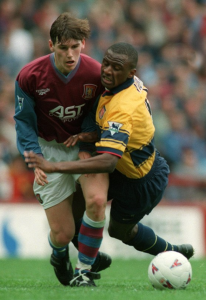
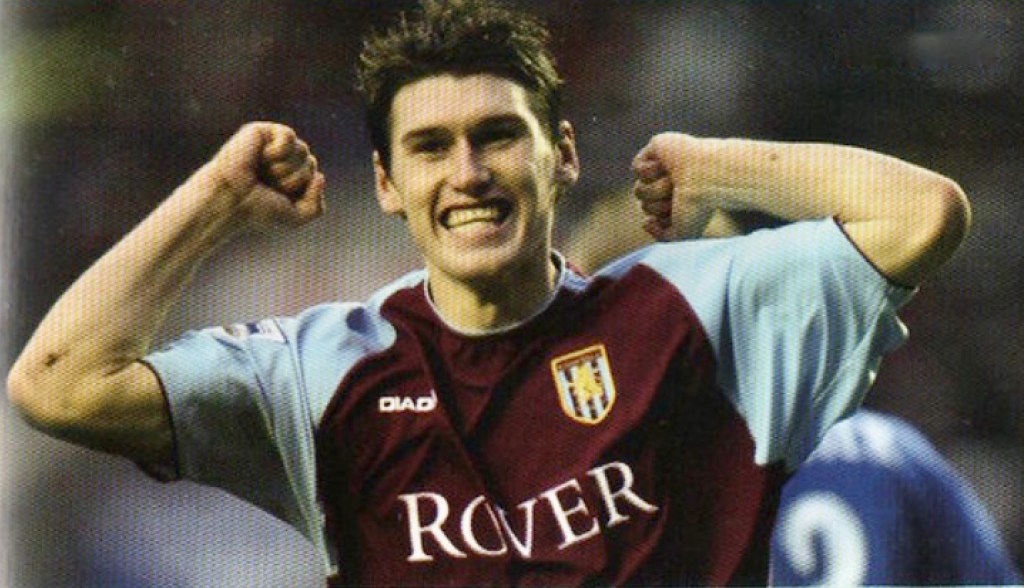
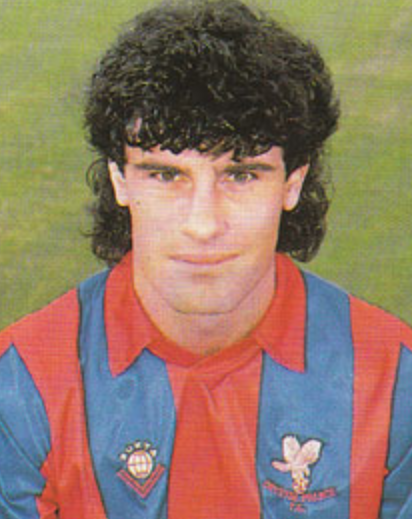
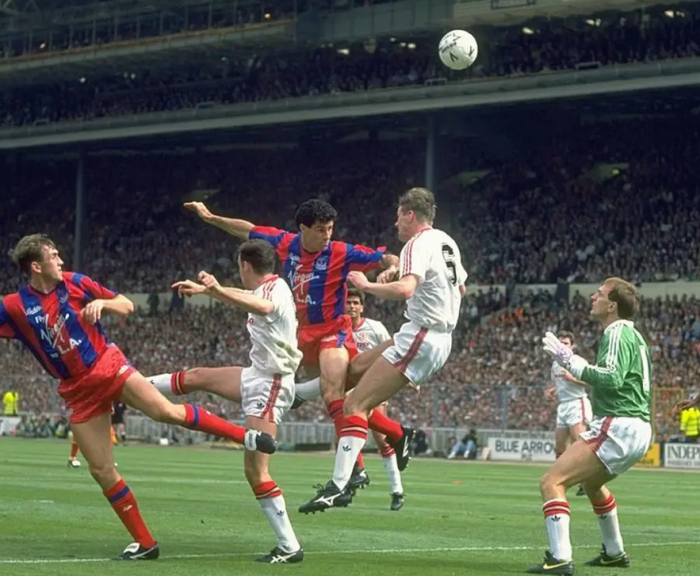
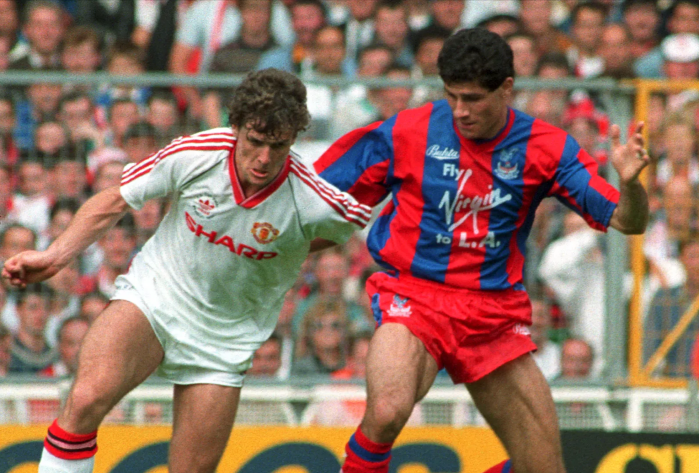
Born in Wandsworth, London, on 2 December 1971, Moralee joined Palace as a YTS trainee, working his way through the levels alongside Gareth Southgate. He was a regular in the Palace reserves playing up front with Stan Collymore.

But after just two first team starts and four sub appearances under Steve Coppell, he was traded as a makeweight in exchange for Millwall’s Chris Armstrong.

Happy days in the Lions’ Den

When unveiled to Lions fans in a matchday programme article, Moralee boldly declared: “Having broken though into first team football with Palace last season and learned from strikers like Mark Bright and Garry Thompson, I feel I’m ready to come to a club like Millwall and score twenty goals a season.”

Amongst the goals for Millwall

Of the player he swapped places with, he even went as far as to say: “Chris was quick and by all accounts did very well here in the opening games this season, but I’ll score more goals than him.”

Continuing in a similar vein, he added: “I’m most effective in the box, I like the ball into my feet and, at the risk of sounding over confident, if I get the chances I’ll score goals for you.”

True to his word, Moralee did get amongst the goals for Mick McCarthy’s side and 20 goals in 63 appearances (plus 13 as a sub) over two seasons earned him a £450,000 move to Watford.

Moralee made a big money move from Millwall to Watford

But the Glenn Roeder signing had a tough time with the Hornets, only seeing his fortunes change after Graham Taylor returned to the club as manager. He explained the circumstances in a full-page piece in the Wolves v Watford matchday programme of 30 March 1996.

“Glenn bought me to play up front with a big target man, which I was used to at Millwall. But the partners I had were all smaller than me and I was now the big target man, a role that did not suit me and one that I do not enjoy.

“I had always been used to scoring, something that wasn’t happening, and this resulted in a loss of confidence.

“The intentions were there, but I needed a big target man to feed me the ball. It just did not work out.”

When Taylor took over from Roeder, Moralee got back the starting place he’d lost and learned how to play as a lone striker. “It is a lot of work but I believe I have developed into a better all-round player,” he said. “It is nice to have a manager with a little faith in me.”

After Watford were relegated to Division Two, in the summer of 1996 he moved on a free transfer to Crewe Alexandra where he didn’t register any goals and made just 13 starts and six sub appearances.

He ended the 1997-98 season with Royal Antwerp in Belgium and spent pre-season with Fulham before Horton took him on at the Albion, initially on a monthly contract basis, at the start of the 1998-99 season.

After his season at Layer Road, he linked up with former Crystal Palace colleague Peter Nicholas at Welsh Premier League side Barry Town. He spent three seasons with Barry, winning the Welsh Premier-Welsh Cup double each season. He was also involved in three Champions League campaigns with the club and netted 59 goals in 96 appearances.

Financial problems at Barry led to Moralee moving on and he had spells with Forest Green Rovers, Newport County and Chelmsford City before ending his playing career in 2006.

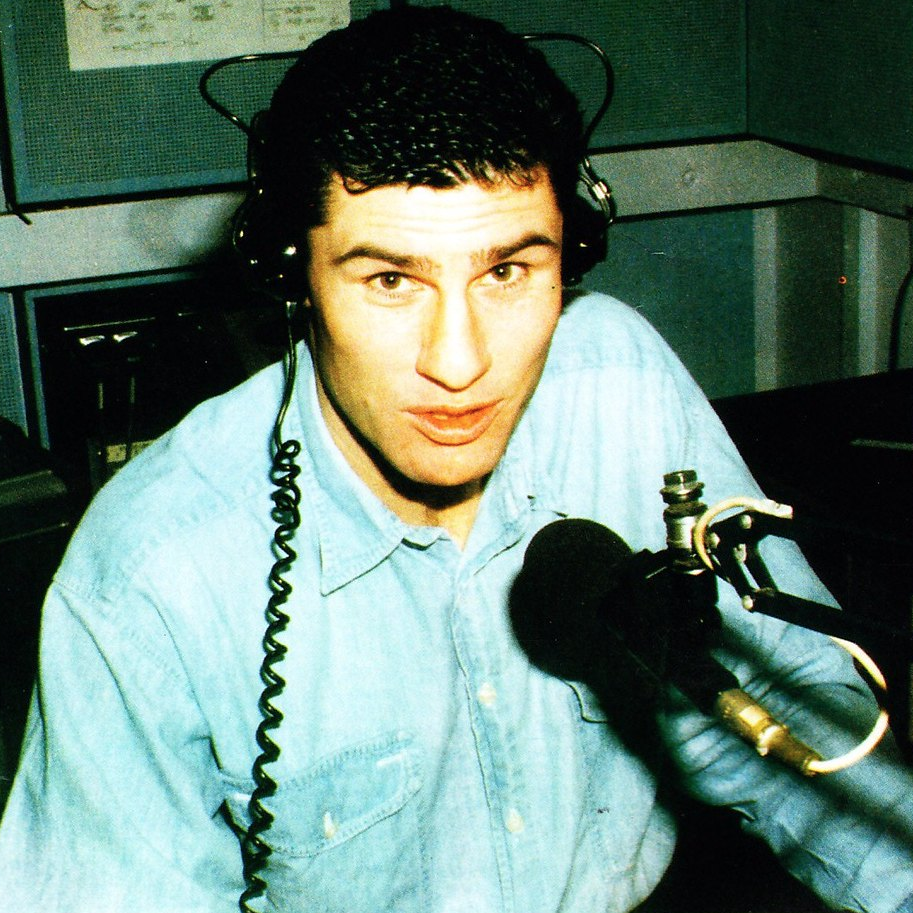
After retiring from playing, Moralee set up his own football agency, New Era, in conjunction with former Albion teammate Peter Smith, with Rio Ferdinand as its highest profile client.

In an interview for a webinar, Moralee said the agency aims to teach up and coming talented footballers how to avoid the pitfalls that affected his own playing career.

Describing his own “very up and down career with a couple of highs and many, many lows”, he explained to The Player, The Coach, The Person webinar: “When I got a few quid, I was spending it on all the wrong things. Buying cars and watches and going out too much; drinking too much. I wasn’t investing it.”

Hard work, application and a ruthlessness to succeed in life are aspects he’s now passing on having realised they were attributes that would have made a difference to his own career as a player.

“I needed to stay in football in some capacity,” he said. “I didn’t want to be a coach or manager.I knew that young players, if they got to the edge of the pitfalls I fell down, I could help them.”

He is particularly pleased to have helped players who had rejection in their early days who went on to have successful careers, such as Welsh internationals Chris Gunter, Neil Taylor and Ashley Williams.

Moralee spoke openly about his 20-year friendship with Rio Ferdinand in a 2018 film for the ‘Best Man Project’ of The Campaign Against Living Miserably (Calm): an initiative to celebrate the power of friendships which supports men in looking out for their mates.

Opening up on the power of friendships in football

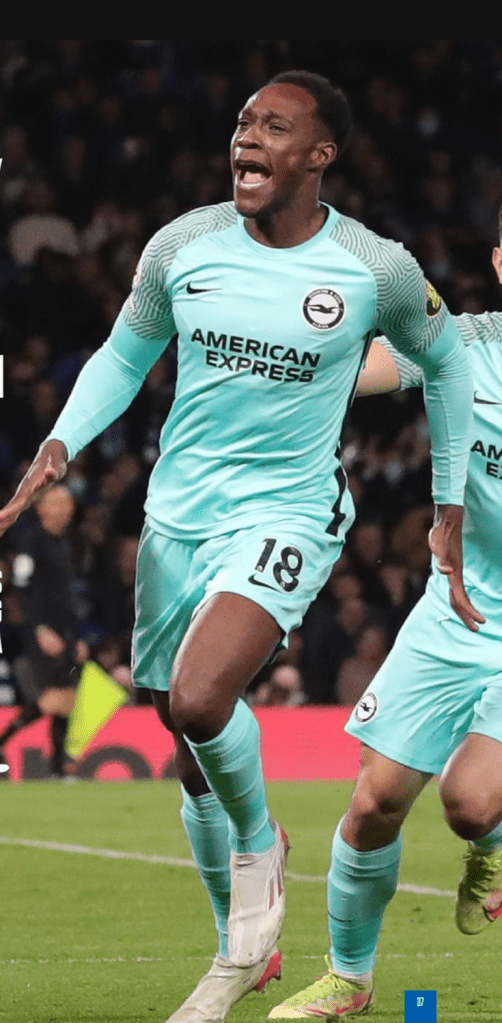
Dat guy Danny Welbeck “a top player and a top person”

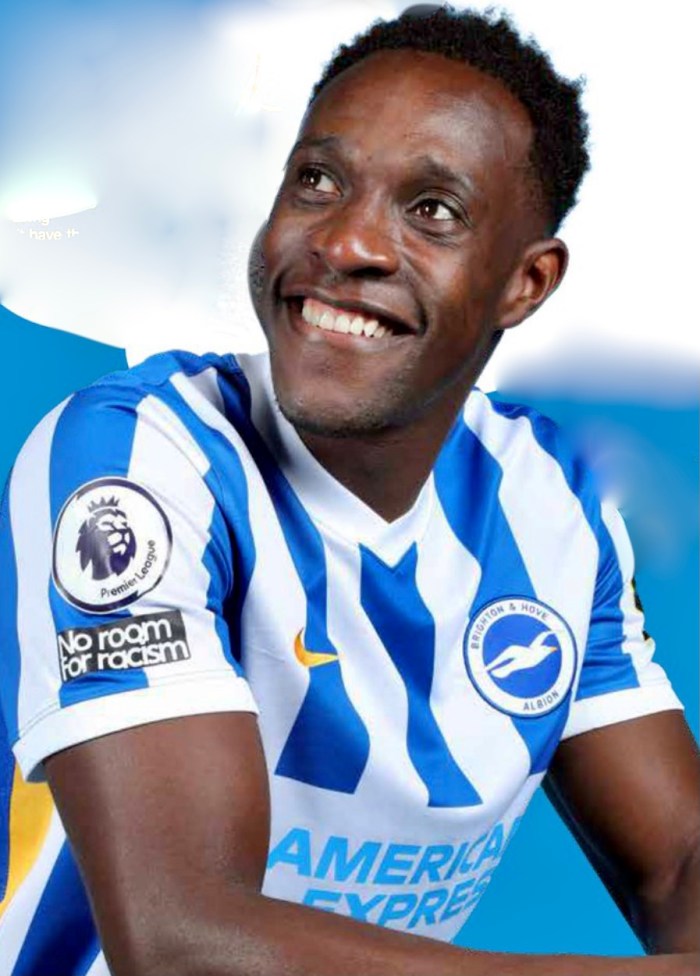
INJURY has undoubtedly caused Danny Welbeck to miss more games of football than he would have wished but the game is full of admirers for the longevity of his career.

As Gabby Logan said on Match of the Day, like a good wine, Welbeck seems to be getting better with age. He has scored more Premier League goals per game in his thirties than he did in his twenties or teens.

His 10 Premier League goals for Brighton last season was his best goalscoring campaign in the top flight and in the autumn of 2025 he has already scored two goals apiece against Newcastle and Chelsea, opponents competing in the Champions League.

“I have the passion and love for football,” he told Match of the Day after scoring the pair against Newcastle. “It’s what I want to do. I feel good. I feel strong and fit so I won’t be stopping soon.”

And as BBC Sport reporter Ciaran Kelly pointed out, Welbeck has the knack of scoring crucial goals for the Seagulls: 11 of his last 12 Premier League goals for Brighton have either put the side ahead (eight) or drawn the game level (three).

Welbeck has now played more matches for Brighton than Manchester United, the club he joined aged eight and where he spent 15 years, rising from the club’s academy, making his way through the junior sides and going on to play 142 first team games (90 starts + 52 as sub) between 2008 and 2014.

The 29 goals he scored along the way played a big part in him earning selection for the England national team for whom he collected 42 caps between 2011 and 2018 having also won 42 caps across the various junior England levels. Welbeck netted 16 times for the full England side.

That there have been calls in certain spheres for United to try to take him back to Old Trafford as he approaches his 35th birthday are a mark of the man and the quality he still exudes.

Striker-turned-pundit Tony Cascarino even urged Thomas Tuchel to recall him for England as back-up for Harry Kane. He told talkSPORT: “Welbeck contributes in various ways beyond scoring. His goal tally isn’t huge, but it’s a decent level and, above all, he is an excellent team player.

“I’ve never seen anyone speak ill of his attitude or professionalism. He is truly an exemplary veteran,”

Cascarino added: “Poland still uses superstars like Robert Lewandowski. If a team needs a veteran, I think there’s absolutely no problem calling Welbeck back,”

Graham Potter was in charge when Welbeck arrived at the Albion in October 2020 on a free transfer, signing a one-year contract.

Welbeck scores for Albion at Old Trafford

Potter moved on but in October 2024 he couldn’t speak highly enough of what the player had brought to the Seagulls, in particular as an influence on others.

“Somebody like Danny is a role model. He can teach you how to act, how to be, how to condition yourself and how to interact with your team-mates at the highest level,” said Potter, speaking on BBC Sounds’ Planet Premier League podcast.

“He is a top player and a top person. Credit to the club – they didn’t just recognise that it is about signing young players, it is also about understanding what older players can do for the environment and for the collective.

“To have someone [in your squad] that has been there and done it, and can just handle it well, I think is priceless as a coach.

“If you see what Danny has had to go through, I think he is also a resilient character. He is a good human being, so he doesn’t get carried away too much with the nonsense of football.”

Potter’s successor Roberto De Zerbi was equally effusive. “Great player, great guy,” said the Italian. Speaking in April 2024, when his own Albion future was in doubt, he said of Welbeck: “We have to keep him for a lot of years. He is playing very well and he is important for the young players, for the dressing room.”

A couple of months earlier in the season, De Zerbi’s assistant, Andrea Maldera, told Andy Naylor of The Athletic: “Danny is one of the best teachers on the pitch.

“He is always positive and he is not only a teacher on the pitch. He can speak with a young player when he is eating with them or when he is on the bus.

“He always gives a lot of advice to everybody. He is a big teacher, he has the soul of a teacher. I don’t know what he wants to do in the future in his life, but he is always very clear-minded. On the pitch, it is the same. He doesn’t speak a lot, but he’ll go close to the players, sometimes work a little with them on the training ground.”

Welbeck himself appreciated the influences of more experienced players in his own early days and told BBC Sport’s Simon Stone: “At Manchester United there were lots of players to guide me and give me advice. It meant a lot back then hearing that sort of stuff, listening to people who had been through certain situations and different experiences, who have a lot of knowledge in the game.

“I am always happy to help with the other players. It is pretty easy for them to come and talk to me. It’s nice to pass on a bit of knowledge and experience.”

Born in the Longsight suburb of Manchester on 26 November 1990, Welbeck’s first games of football were played with his older brothers Wayne and Chris when he was just four or five.

Wes Brown, who was already on United’s books, and his brothers lived nearby and the young Welbeck was inspired to follow in Brown’s footsteps.

He actually had a trial for City when he was eight but they didn’t have an age group side for him. It was while he was playing for local side Fletcher Moss Rangers that United seized the opportunity to offer him a two-week trial, and he didn’t look back.

After progressing though the academy schoolboy squads, he made his debut for the youth team in December 2006, debuted for the reserves the following October and was United Young Player of the Year for the 2007-08 season, going on to sign as a professional in July 2008.

On the ball for United

Three months later, Sir Alex Ferguson gave him his first team debut, starting up front alongside Cristiano Ronaldo at home to Middlesbrough in the third round of the League Cup, when United won 3-1.

In November, he went on as a substitute to make his Premier League debut and scored United’s fourth goal in a 5-0 thumping of Stoke City, unleashing a swerving shot from 30 yards.

Welbeck was winning his first significant medal before that season was over after he had started for United in the League Cup final, when they beat Tottenham on penalties at Wembley (although Welbeck had been subbed off 10 minutes into the second half, the BBC match report noting “youngster Welbeck was having a tough time making an impact in the face of the physical presence of Dawson and King”).

He scored twice in eight matches on loan to Preston North End in 2010 and then spent the 2010-11 season on loan to Sunderland, scoring six in 28 matches (23 starts plus five as sub) for ex-United skipper Steve Bruce’s Premier League side.

“He has always had ability but made slow progress because he had a bit of a knee growth problem, so we knew we had to wait for him,” said Ferguson in August 2011. “We put him on loan to Sunderland last season and that is when he became a man. He has grown up.”

Dat Guy (Mancunian slang for The Man), the nickname given to him by former United teammate Ravel Morrison, was part of the 2012-13 Premier League title-winning squad (23 starts plus 17 as sub) which turned out to be Ferguson’s last in the hotseat.

He scored 10 in 24 starts plus 12 as sub under David Moyes, but Dutchman Louis van Gaal preferred to bring in Colombian striker Radamel Falcao and, after only three games at the start of the 2014-15 season, Welbeck was sold to Arsenal for £16m (Ferguson putting in a good word with Gunners boss Arsene Wenger).

Plenty of iconic United names, such as Rio Ferdinand, Paul Scholes and Bryan Robson, voiced their disapproval of the decision and former coach Rene Meulensteen was adamant Ferguson wouldn’t have sold him if he’d still been in charge.

Meulensteen told talkSPORT: “We were always keen on bringing young players through and giving them a chance. I had him from when he was 8, 9 years of age and I think the best of Danny is yet to come.

“He is a very versatile player and I’m 100 per cent sure he will do very, very well for Arsenal. Danny is a perfect match for Arsenal. He is such a versatile player.

“He is very good in short, creative, combination play, showing for the ball, passing and moving, picking up different positions. At the same time, he has the pace and power to break away if they break from their own half.”

Robson said: “He came through the ranks, he has a great attitude, he’s a great lad.” And Wayne Rooney told The Mirror: “Danny’s great to play alongside. If I’m completely honest, I’d probably like to still see him here, playing for Manchester United.”

Saying United let him go too quickly, Gary Neville added: “He’s actually perfect for how Manchester United should play. Threatening space in behind, playing off front players. This idea that he’s not good enough for Manchester United is absolutely rubbish.”

In a January 2025 interview with the Manchester Evening News, Welbeck remembered: “At the time I was playing on the left-wing a lot and in a 4-4-2, which is very difficult for me because I can’t make an impact on the game.

“I can play it to the best of my ability but that’s not best for the team, and I could make a bigger impact playing in my preferred position.

Welbeck and Ashley Young at United

“You start to have thoughts but at that time you’re still going to training and I was still giving 100 per cent and giving my all in every single game – that’s just me, I’m not going to change that. But you do start to think about what’s best for you.”

Apart from anything else, Welbeck was an established member of the England set-up by then.

He had been on loan at Sunderland when he was first called up to the England senior squad (following the withdrawal of Aaron Lennon) only days after scoring for England Under-21s in a win over Denmark.

Ironically, the opponents at Wembley on 29 March 2011 were Ghana – the country his parents came from – and Fabio Capello sent him on in the 81st minute as a sub for Ashley Young. The game ended 1-1.

He ultimately featured under four different England managers (albeit Stuart Pearce only managed one game) with the majority (29) under Roy Hodgson. His final England game was as a sub for Trent Alexander-Arnold at the 2018 World Cup in a 1-0 defeat to Belgium.

When Welbeck suffered a badly broken night ankle in a Europa League match for Arsenal in November 2018, and was forced to withdraw from the England squad, Gareth Southgate revealed how the squad showed their strong bond with him by placing his photo on a TV they were watching ahead of a Nations League match.

And after he’d left Arsenal in the summer of 2019, but was still recovering from the ankle injury, the FA helped his comeback by allowing him to use all of the facilities he needed at the St George’s Park national centre.

Welbeck nets in the FA Cup against Newcastle

Another illustration of the enduring relationships Welbeck has built during his career came after he’d scored an extra-time winner for Brighton at St James’ Park in March 2025 to book an FA Cup quarter-final against Nottingham Forest.

Ferguson phoned the player after the game, and Welbeck told BBC Football Focus: “He talked about the goal and the performance. He was buzzing and to have that sort of connection, he is a manager who is always looking out for his players, always wants the best for them, and still to this day is in contact.”

At Arsenal, Welbeck played under another great manager and he told the programme: “Sir Alex Ferguson got success in his own way, Arsene Wenger had success in his way. There’s different ways to reach success. Those two managers played a huge part in my life, not just my career.”

• More about Welbeck’s time at Arsenal in my next blog post.

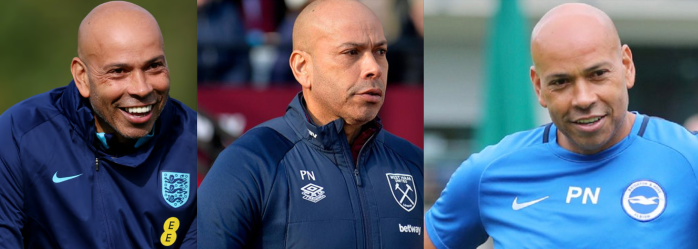
Tigana ‘disciple’ Paul Nevin the respected analytical coach

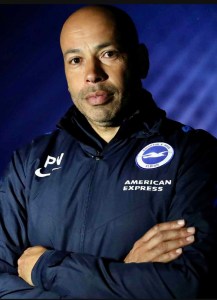
PAUL NEVIN didn’t rise to great heights as a player but he became “one of the most respected and most widely experienced coaches in the country”.

He was a Premier League coach at Brighton and West Ham, not to mention being part of Gareth Southgate’s coaching team for England.

They were just three of a broad variety of coaching jobs he has filled in different corners of the world – and, interestingly, Jean Tigana, one of the top French footballers of his generation, influenced Nevin the most (more of which, later).

All a far cry for a lad born in Lewisham, south east London, on 23 June 1969 who had a humble playing career that began at Division Two Shrewsbury Town and later involved short spells at Carlisle United and Yeovil Town.

Nevin the player

He was a former teammate of Albion’s head of football David Weir for three years when both played for the University of Evansville’s Purple Aces team in Missouri, America.

Having taken his A-levels while playing for Shrewsbury reserves, Nevin wanted a back-up career in case football didn’t work out and he took a scholarship to gain a bachelor’s degree in communications while playing for the American college team.

After gaining his degree, he returned to the UK and spent the 1991-92 season with Fourth Division Carlisle before moving south to join then Conference side Yeovil. He was there for two years but suffered a bad back injury that forced him to retire from playing when still only 24.

Nevin picked up the story in an interview with the Albion matchday programme. “While I was playing at Yeovil, I also volunteered at a children’s home and as a result I was soon offered a job as a social worker in Wandsworth, south London.”

He later explained: “That gave me the opportunity to develop a lot of skills that transcend into coaching – counselling skills, working with young people, trying to build self-esteem and motivation – which I can take into a sporting arena.”

He kept in touch with football, though, by working part-time for Fulham’s Centre of Excellence.

It was during the period when since-disgraced Mohamed Al Fayed took over Fulham, sacked Micky Adams and appointed Ray Wilkins and Kevin Keegan.

In the shake-up, Nevin worked his way up the academy system, eventually becoming youth team coach and then reserve team manager working alongside Chris Coleman. Within a year he had become full-time and by 2000 was working under Fulham boss Tigana.

“He had a major influence on my coaching career and my philosophy towards football,” said Nevin.

“The methodology of training, his highly technical approach, working with sports scientist and nutritionists, it was all new in this country and made a big impression on me.”

Together with Christian Damiano, the pair’s methods had been nurtured at the French national academy in Clairefontaine and had a profound effect on Nevin.

“We had a core of good young players coming through the club, the likes of Liam Rosenior, Zat Knight, Sean Davies, Zesh Rehman and Mark Hudson, who all went on the have successful careers in the game.”

In 2006, by which time he already held the Uefa Pro Licence as a coach, he moved with his wife and two children to Auckland to become manager of the New Zealand Knights, who played in the Australian A League.

That lasted a year before he moved to the Middle East and spent five years as football performance manager at the Aspire Academy in Qatar working with young players and coaches.

Chris Hughton brought him back to the UK to become first team coach at Norwich City when they were in the Premier League in the 2013-14 season.

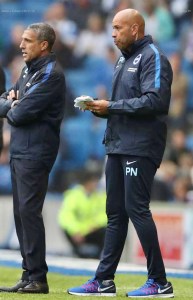
Nevin was reunited with Chris Hughton at Brighton having worked with him at Norwich.

From Carrow Road, he then worked as head of coaching for the Premier League, a role that saw him run a diploma course to develop coaches with great potential as well as acting as a sounding board for coaches working in Premier League academies.

Nevin was reunited with Hughton at Brighton just ahead of the club’s debut season in the Premier League, replacing Simon Rusk who had stepped up temporarily from being under 21 coach when Nathan Jones left to become manager of Luton Town.

Hughton said: “Paul is an excellent coach and a good appointment for the club. I’m delighted he is on board and looking forward to working with him again.”

Asked whether his lack of high level playing experience was a hindrance to working as a Premier League coach, Nevin replied: “Coaching and playing are very different things. While I might not have played Premier League football, I am a real student of the game and have worked alongside some great coaches and managers. I have developed a healthy understanding of top-level football from a coaching perspective.”

On England duty with Gareth Southgate

When Lewis Dunk made his England debut in a 3-0 friendly win over USA at Wembley in October, 2018, Nevin was part of the coaching team supporting Gareth Southgate as part of an initiative to place black, Asian and minority ethnic coaches in all England squads. Formally known as the Elite Coach Placement programme, it was a key strand of the FA’s Pursuit of Progress strategy, designed to increase diversity in coaching roles.

However, Nevin and Southgate were already known to each other. At Fulham, he was assistant academy manager to former Crystal Palace boss Alan Smith, who had managed Southgate at Selhurst. Nevin got to know Southgate through Smith.

“I was a little unsure as to what the setup would be like, but to get the opportunity to work with Gareth Southgate, Steve Holland (the assistant manager) and the rest of the senior men’s setup was something I couldn’t turn down,” Nevin told the FA’s in-house media.

“The biggest challenge I found was that, if working inside a club, you get to work with the players and other coaches on ideas each day. You start preparing for a match at the weekend at the beginning of the week, with days to get the clarity of message through.

“But on the international stage, there’s a finite amount of time to get critical information across and to develop strong harmony across the squad. It’s a challenge that makes you acutely aware that every moment during an international camp counts.”

It wasn’t the first time that Nevin had worked for the FA, though. When he was head of coaching at the Premier League, between August 2014 and April 2016, he coached England’s under-16s who at the time included Phil Foden and Jadon Sancho.

Nevin, by then 49, said: “When I got the call, I was absolutely delighted and feel it’s a very privileged position. First and foremost, I’m very thankful to Gareth and The FA for the opportunity.”

Albion happy to see Nevin develop with England

He appreciated Brighton giving him the time to do something which was a development opportunity and added: “This is a chance to work with the best players in the country. Obviously, I see them week-to-week in the Premier League but working with them en-masse in a squad setting is going to be immense.

“Having had a brief experience of working at international youth development levels, it’s a chance to see the final product that’s coming through the system while working alongside the top coaches in the country.

“Being a part of that environment at the highest level of international football and looking at how they work and function will have the biggest impact on me. I previously had a spell working in coach development at the Premier League so I’m aware of the need to give opportunities to the quality BAME coaches out there.”

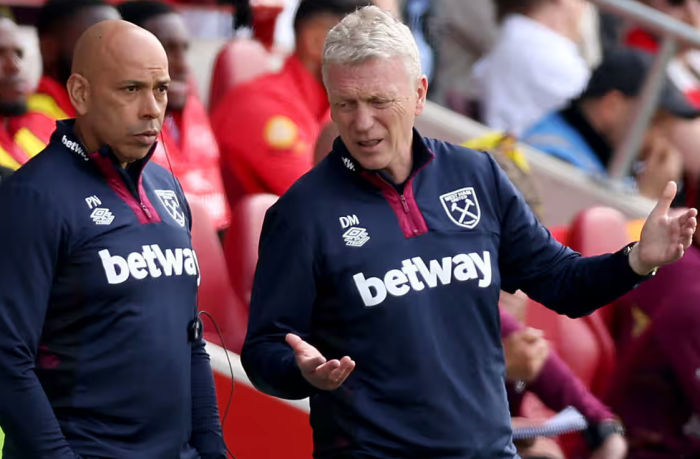
Nevin parted company with the Seagulls when Hughton was relieved of his duties at the end of the 2018-19 season but he wasn’t away from football’s top table for long because in February 2020 he joined West Ham along with former Hammers captain Kevin Nolan to work with David Moyes and his assistant Alan Irvine.

In October 2022, Malik Ouzia in The Standard wrote: “Nevin is one of the most respected and most widely experienced coaches in the country, a key lieutenant under David Moyes, as well as Gareth Southgate at England.”

According to Roshane Thomas, writing for The Athletic in December 2022, Nevin’s role at West Ham was to focus on creation and delivery in attacking set-plays and analysing opponents’ set-plays.

“I’m fluent in analysis tools so I can do my own analysis, I have done that for 20-odd years,” Nevin explained in an interview with premierleague.com.

Hammering home a point

The Hammers achieved European qualification in each of Nevin’s three seasons with them and he left shortly after they won the UEFA Europa Conference League trophy. Manager Moyes said: “Paul has played an important role for us during his time here and I would like to thank him for all his support and hard work during his time at West Ham United.
“He is highly ambitious as a coach and is keen to test himself in a new environment and we wish him well in doing so.”

Nevin said: “I’ll always look back on my time and the opportunity I had to work at West Ham with great fondness.

“In the three and a half years, we enjoyed a period of great success in West Ham’s history, culminating in the Europa Conference League win last season, which gives the club a fantastic opportunity and platform to go on to even greater levels in the future.”

From West Ham, he moved to French Ligue 1 side Strasbourg, where he worked as first-team coach under Patrick Vieira, who was appointed head coach by the club’s new owners, BlueCo, who also own Chelsea. Nevin didn’t stay on when Vieira left after one season to be replaced by former Albion player Liam Rosenior.

Last minute instructions for Cole Palmer at the 2024 Euros

Nevin had rejoined the senior England men’s team coaching staff in August 2021 and was part of Southgate’s support team through to the 2024 Euros in Germany. In August 2024, he took charge of England’s Elite League Squad on an interim basis when Ben Futcher stepped up to Under-21s manager following Lee Carsley’s temporary rise to take the full England team.

When asked whether he held ambitions to become a manager in his own right, Nevin told The Standard: “I owe it to myself and the people I’ve worked with.

“If the right opportunity came at the right time, then I need to give it a go because maybe with that nudge at the door, if I’m successful, it can allow me to bring others in and give others opportunities.”
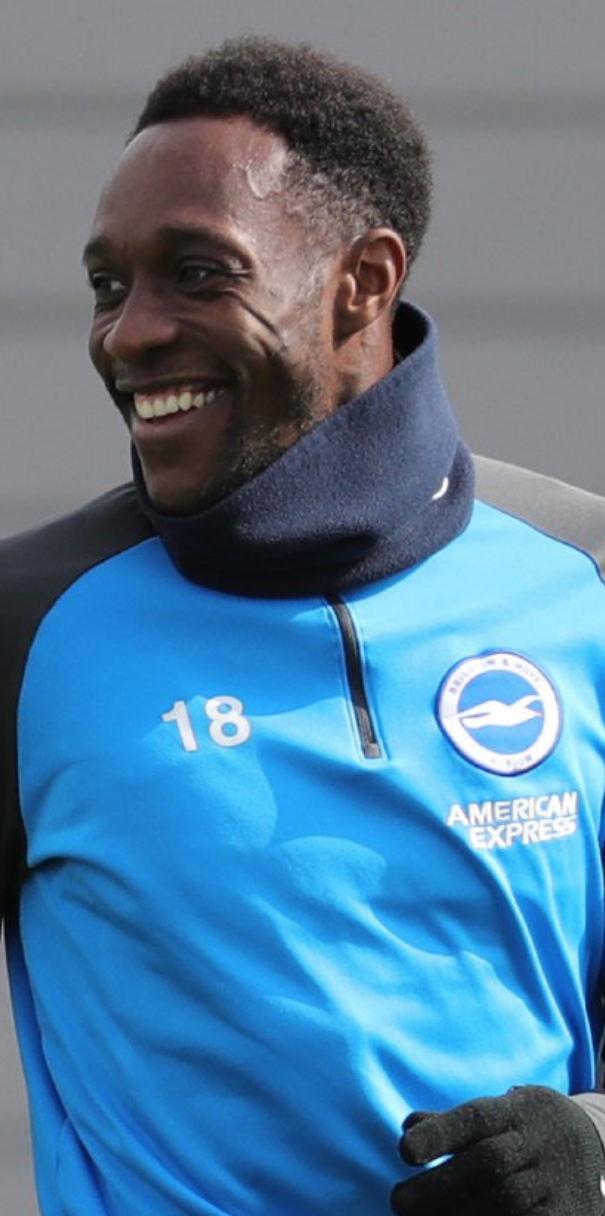
Expanding on his experience in that premierleague.com interview, he said:“I’ve worked with young people outside of football, within social work, trying to study languages as well. When I’ve worked with French players and Spanish players – and I’m not saying I’m fluent by any means – but just a little bit of connection there, those little things help.

“I’ve worked in this game around the globe as well, so it’s not like I’ve just been at domestic level. I was a manager in the Australian League, I’ve worked in Qatar with the junior national teams. It’s just getting that variety and taking opportunities when they come.

“It may not necessarily be the thing you want at that particular moment, but if it opens an opportunity to show what you can do and to learn, then I think it’s always worth grasping that.”

And on a philosophical note about the art of coaching, he said: “A coach, first and foremost, has to have the knowledge and credibility to deliver, but you’re dealing with human beings.

“A lot of people can have the knowledge, but it’s about transmitting that, making the players feel valued and being able to develop relationships which help them reach their fullest potential.

“It’s probably that aspect, really getting into the human being that drives the performance, which is my strongest.”

Nevin returned to club football in January 2025 when he was appointed as one of two assistant managers to Mark Robins at Stoke City. He stood down from his role as interim England under-20s manager, where he was undefeated in six matches, to take the job.

Coppell’s Palace signing Humphrey knew all about ups and downs

FULL-BACK John Humphrey signed for Crystal Palace in lieu of rent his previous club, newly-relegated Charlton Athletic, owed for playing home matches at Selhurst Park!

Humphrey was 29 and with more than 350 senior appearances behind him when Steve Coppell added him to an experienced defence to play alongside Eric Young and Andy Thorn in the old First Division.

It was a level Humphrey was well used to having started out there with Wolves (where he played in the same side as Tony Towner) and at Charlton in a defence that included  Colin Pates.

All that came before Humphrey came to Albion’s rescue in the dark days of the 1996-97 season, as I recounted in my 2020 blog post about him.

This time I’m highlighting his time at Selhurst Park, which he spoke about at length in a January 2023 interview with cpfc.co.uk.

“I saw myself as one of the senior players,” Humphrey remembered. “We had the likes of Richard Shaw coming through and Gareth [Southgate] coming through and we signed people like Chris Coleman and Chris Armstrong. Alongside that we had some experience with Eric Young and [Andy] Thorny, so I hoped I fitted in to part of the jigsaw.

“[The challenge] for me was getting used to the style of play, because at that time I know Stevie was not so much direct but he wanted to get the ball forward as early as possible because of the threat of [Ian] Wright and [Mark] Bright. So, it took me a while to get used to that.

“I do remember after a few games Stevie dropped me for a game to say: ‘This is what I want you to do.’ Then he put me back in… I was part of his restructuring and in that first year it worked out very well.”

So much so that at the end of his first year at the club Palace reached third – their highest league finish in history – and won the Zenith Data Systems trophy (otherwise known as the Full Members’ Cup) at Wembley, beating Everton 4-1.

Humphrey was still playing in the Premier League at the age of 34 and clocked up 203 appearances for the Eagles before briefly returning to Charlton for the 1995-96 season, moving on to Gillingham and then helping out his old Charlton teammate Steve Gritt in Brighton’s hour of need.

Revered at Charlton, chicagoaddick.com wrote of him: “In the five seasons he patrolled our right side of defence he missed only one league game and faced the best wingers and strikers playing in the country at that time: Barnes, Waddle, Le Tissier, Lineker, Rush, Aldridge, Beardsley, Fashanu.

“Maybe it was because we stood in the decrepit Arthur Wait Stand but Humphrey was fantastic to watch up close. Graceful, but strong in the tackle. He was a quick-thinker and a quick mover. He would glide down the right wing and put in some peaches of a cross.”

Humphrey won three consecutive player of the year awards (1988, 1989, 1990) – an honour no other Charlton player has received.

Humphrey in action for the Albion at Gillingham

By the time he arrived at Brighton, he was 36 and had played close on 650 professional matches.

“Steve wanted me because I was experienced, could get the players organised and was able to talk them through matches,” Humphrey told the Argus in a January 2002 interview. “He knew I was steady, reliable and dependable, that nine games out of ten I’d play pretty well and that I would give 100 per cent.

“It was a lot of pressure but I’d been through a few promotions (three) and relegations (six) with Wolves, Charlton and Crystal Palace.” He continued: “The stressful situations I had gone through with those other clubs had given me experience of how to try and keep a season alive.

“I could do a job for Brighton and I felt I did that and the team turned out to be good enough to hang on. It was one of the biggest achievements of my career.”

He added: “It might have been going out of the frying pan of Gillingham into the fire at Albion but I’m glad I made the jump.”

Humphrey looked back fondly on those difficult times and told the newspaper: “They have great fans and the Goldstone was always packed for the home games.

“You couldn’t help but be lifted by the crowd. The team couldn’t win away, but managed to win at home. So, one win every two games was decent and led to that eventful day at Hereford.”

When he left the Albion as part of a cost-saving measure the following season, he turned semi-pro and played initially for Chesham in the Ryman League premier division, then Carshalton, Dulwich Hamlet and Walton and Hersham.

“Having come from the professional ranks to semi-pro it was difficult to adjust to the different standards like some of the attitudes of players to training for instance,” Humphrey said. “Also, I found the training itself wasn’t that enjoyable.

“I remember at Walton and Hersham turning up for a session, but we weren’t allowed on the pitch and had to do a road run. That was frustrating and I begun to think that maybe there were other things in life than just playing football.”

Former teammate Pates was his conduit to a new career as a teacher at Whitgift School in Croydon, where ex-Palace and Chelsea midfielder Steve Kember also joined them.

“I knew Colin from Charlton when we roomed together,” he explained. “I was aware he was at the school and he said he needed help for after-school sessions and asked me to come along.

“So I did and the football took off at the school and I got involved in other sports like rugby and basketball and got a full-time job there.”

He also retained his links with Charlton, coaching their under-15 team, and told the Argus in that 2002 piece: “I deal with privileged kids at Whitgift who may go on to be doctors, lawyers or solicitors while at Charlton the kids usually aren’t so privileged.

“To a lot of them, football is a way of making something of themselves. It gives me a great buzz when one of the Charlton youngsters makes positive progress.”

Humphrey later moved on to become head of football at Highgate School in north London.

The moment Lee Hendrie felt ten feet tall at Brighton

SKY SPORTS pundit Lee Hendrie has reached heights and plumbed depths in a life that saw him stop off at third-tier Brighton in 2010 after 17 years with Aston Villa.

Hendrie was something of a forgotten man of football when Gus Poyet snapped him up for the Seagulls on loan from Derby County in March 2010.

Hendrie featured in eight Albion games in the last six weeks of the season: four wins, two draws and two defeats.

Turning out in League One was quite a fall for a player Glenn Hoddle selected for England, but he told the matchday programme: “The main thing is to play football. If you’re not playing then you tend to get forgotten but hopefully I can get some game time between now and the end of the season.”

And he later said to football.co.uk: “I went to Brighton to get my face back out there. Gus Poyet was brilliant. He got the lads together in a circle and said, ‘******* hell, we’ve got Lee Hendrie here’. Let me tell you, after feeling so unwanted I suddenly felt 10 feet tall.”
Hendrie made his debut as a 75th minute substitute for Sebastien Carole in a 3-0 home win over Tranmere Rovers, and he told the matchday programme: “We could have had more than three goals and I should have scored.”

But Hendrie was bubbling after his involvement and said: “Listening to the gaffer in the changing room, you can see why the lads are playing with a lot of confidence and have improved so much.

“I’ve played under a few managers, but not many, can I say, are like Gus, who is so enthusiastic and tells the players to go and enjoy themselves. There is nothing a player wants more than a gaffer telling you to enjoy your game.”

Of Albion’s midfield triumvirate of Gary Dicker, Alan Navarro and Andrew Crofts, it tended to be Dicker who was edged out by Hendrie’s arrival.

However it was in Crofts’ place that the loanee got his first start, in a 2-0 Easter Monday defeat at Hartlepool in which former Albion loanee ‘keeper Scott Flinders prevented the visitors from leaving with a point. Hendrie was subbed off on 58 minutes when Kazenga LuaLua took over.

Hendrie went on as a sub for Dicker in the following home game against Carlisle United and it was his cross that set up what looked like a late equaliser by Tommy Elphick, only for Gary Madine to nick all three points with a second for United two minutes from the end.

Hendrie started in place of Dicker away to Gillingham but gave way to the Irishman in the 79th minute and the game ended 1-1. Hendrie started once again in the 1-0 win away to Southend, but Dicker replaced him on 65 minutes.

Hendrie’s third successive start in place of Dicker came at home to Bristol Rovers, when Albion won 2-1, but once again he didn’t last the 90 minutes as Dicker took over on 74 minutes.

In the penultimate game of the season, away to MK Dons, the game finished goalless although Alex Rae and Diego Arismendi were red carded for brawling. Hendrie started and Dicker replaced him on 58 minutes.

The on-loan midfielder’s only full 90-minute appearance came in the last game of the season when Yeovil were beaten 1-0 at the Withdean Stadium; Elliott Bennett scoring the only goal of the game a minute before half-time.

The chances of a permanent deal for Hendrie looked unlikely with Poyet admitting: “We were very pleased with him and he was pleased to be here. We will wait to see if, when we start putting the squad together, there is a possibility of it happening. It’s not an easy one, because of the wages.”

Born in Solihull on 18 May 1977, football was in Hendrie’s blood: Scottish dad Paul had played for Villa’s arch rivals Birmingham City and he was playing professionally for Portland Timbers at the time his son was born. He later played for Bristol Rovers, Halifax Town and Stockport County.

For someone who became Villa through and through, Hendrie admitted to the Birmingham Mail that he had actually been at city rivals Birmingham’s school of excellence before ‘Big’ Ron Atkinson snapped him up as a teenager.

As well as his dad having played for them, his nan was a City season ticket holder and his uncle also supported them. “Villa didn’t come and scout me at the time and Blues were the first club that did. It was an opportunity for me to get myself into the pro ranks and see what it was all about. Dad said it would be good to go and have a feel for it, which I did.”

But ever since he’d scored two goals in a schools’ cup final victory for his school, Washwood Heath, against Hodge Heath at Villa Park, he had dreamed of playing for Villa.

The dream came closer when Hendrie signed on the dotted line as a 14-year-old at Villa’s Bodymoor Heath training ground, although he remembers his dad tempering his excitement.

“When we came out after I’d signed, I’d got given a load of training clobber and I thought this was it, I’d made it,” he said. “My dad said: ‘Take a step back, you, you ain’t got anywhere yet, this is the start of a long road. Just because you’ve got all the kit it doesn’t mean you’re a professional footballer and an Aston Villa player – relax yourself’.”

Hendrie and his best mate Darren Byfield, who had been strike partners in Erdington Star and Erdington & Saltley district team as kids, developed a reputation as a dynamic duo on and off the pitch, and soon became Atkinson’s ‘teacher’s pets’.

Atkinson converted Hendrie from a centre forward to left winger (even predicting he’s one day play for England in that position) and the duo continued to do well for the Villa youth team.

As it turned out, it was Atkinson’s successor, Brian Little, who ended up giving Hendrie his first team debut – although it was memorable for all the wrong reasons!

It came two days before Christmas in 1995 when he went on as a 33rd minute substitute for Mark Draper away to Queens Park Rangers. He collected a yellow card for kicking the ball away and was red carded in stoppage time; a second booking for an innocuous foul on Rufus Brevett. Into the bargain, Villa lost 1-0.

A devastated Hendrie revealed it was the opposition player-manager, Ray Wilkins, rather than Little, who put a comforting arm round him. “Someone who I’ve seen play football, a legend of the game, to come and console me and say: ‘This is football, welcome to football, these are the ups and downs you’re going to have in your career’.

“He said there’s lot of people who are talking highly of you, you’ve got a big future in the game, kid. As he got up, he tapped my shoulder and said: ‘Keep that up’.”

Few subsequent chances were given to him under Little but, when John Gregory took over, he became more established.

He would go on to make a total of 308 appearances for Villa (243 league and cup starts), scoring 32 goals, with his best performances coming in Gregory’s tenure. He wasn’t quite the same player under Graham Taylor or David O’Leary.

It was on November 18 1998 that he won his one and only England cap, sent on by Glenn Hoddle as a 77th minute substitute for Villa team-mate Paul Merson in a 2-0 win over the Czech Republic at Wembley. Two other Villa teammates, Dion Dublin and Gareth Southgate, were also part of Hoddle’s squad.

Unfortunately for Hendrie, Hoddle was sacked two months later and no subsequent England bosses called on him. “It’s a regret that I didn’t go on and make more of my England career,” he said. “It’s great that I’ve got a cap and it’s something you can’t take away from me, but I hate being classed as a one-cap wonder.”

Hendrie’s days at Villa came to an end in August 2006, his last involvement being from the bench in Martin O’Neill’s first match in charge, a 1-1 Premier League draw at Arsenal on the opening day of the 2006-07 campaign.

While Hendrie, by then 30, was excited about playing for O’Neill, the new boss had other plans and told him he was not part of them.

Initially he joined Stoke City under Tony Pulis on a season-long loan but Bryan Robson at Sheffield United outbid the Potters for his services on a permanent basis, and he signed a three-year deal at Bramall Lane at the start of the 2007-08 season.

Unfortunately, when Robson swiftly parted company with the Blades, Hendrie didn’t see eye to eye with his successor, Kevin Blackwell, who accused the player of being a money-grabber.

“Sheffield United was just the worst thing I could have done,” he told the Claret & Blue podcast.

“Kevin Blackwell was one of the worst managers I have ever, ever been under. He put the nail in the coffin for (my career).”

Blackwell sent him on loan to Leicester City, where he played nine games, and he later went to Blackpool too. United moved him on to Derby County but when he struggled for games there, he joined Brighton.

If the spell at Brighton was a temporary relief from his mounting problems, he revealed in a Guardian interview with Donald McRae that 2010 turned out to be one of the worst years of his life, and he attempted suicide on several occasions.

A property empire he had built up amassed insurmountable debts which even saw his mother’s home repossessed. He lost his own house as well, and it sent him into depression. Divorce and bankruptcy made the situation even worse.

“The football was almost over and my head was gone. I’d been trying to sell property, but the housing market crashed,” he said. “I got to the stage where I just wanted to end it all. I’d hit rock bottom.”

The ups and downs of Hendrie’s colourful life have featured in various media interviews.

The rise and fall tale was charted by the sporting.blog and Hendrie’s spoken about his troubles on Sky Sports, where he later became a pundit.

He was in tears on Harry’s Heroes: Euro Having A Laugh discussing his depression struggles with Vinnie Jones. The BBC radio programme You and Yours highlighted his plight in a March 2013 episode.

On the footballing front, a brief spell at Bradford City was followed by a host of short stopovers at Bandung (2011), Daventry Town (2011), Kidderminster Harriers (2011-12), Chasetown (2012), Redditch United (2012) and Tamworth (2012-13) before he retired as a professional.

He then played for Corby Town (2013), Highgate United (2013), Basford United (2013 – 2015), Montpellier (2016-17), Redditch United (2016), Nuneaton Griff (2019) and Highgate United (2019) on a non-professional basis.

As he tried to find a new purpose in life, alongside his media work, Hendrie set up FootieBugs, a football academy for kids aged from three to 12.

Hendrie chats on TV with Dion Dublin, a former Villa teammate

Did Albion fans only get to see half a Lita?

PROLIFIC second tier goalscorer Leroy Lita was a Gareth Southgate free transfer signing for Middlesbrough where he scored 20 in 82 games.

Two years after Boro cashed in and sold him for £1.75m to newly promoted Premier League side Swansea City, Lita joined an injury-hit Brighton side three months into Oscar Garcia’s reign.

Goals had been harder to come by for Lita after Brendan Rodgers had signed him for the Swans and he was sent out on loan, spending time back in the Championship with Birmingham City and Sheffield Wednesday.

It was a familiar story for Lita who had been Reading’s first £1m player when Steve Coppell signed him from Bristol City in 2005.

He netted a goal every three games for the Royals, but towards the end of his four years at the Madejski Stadium, he’d gone on loan to Charlton Athletic and Norwich City.

By the autumn of 2013, Lita had become something of a footballing nomad, fed up with a lack of first team action under Michael Laudrup.

With Albion’s leading striker Leo Ulloa out for two months with a broken foot, and Craig Mackail-Smith and Will Hoskins also sidelined, Garcia brought the diminutive striker to Brighton on a three-month loan arrangement.

“He is strong, fast and direct, and he has shown he can score goals in the Championship,” Garcia told the club website. “He offers us something different going forward.”

I can remember being at the Keepmoat Stadium, Doncaster, when he scored his only goal for the club two minutes after going on as a substitute for Jake Forster-Caskey (he’d played with his stepdad Nicky Forster at Reading).

Forster-Caskey had scored a wonder goal with his left foot from 35 yards before Rovers equalised but visiting Albion went on to collect three points in a 3-1 win (David Lopez scored the other with a long range free kick).

Lita had made his debut in a 0-0 draw at Yeovil on 11 October, going on as a sub for Ashley Barnes and his home debut saw him replacing another loanee, Craig Conway, in a 1-1 draw with Watford.

The eager striker made a public plea via the Argus to be given a start but Garcia only ever used Lita off the bench for the Seagulls (he went on as a sub on five occasions and was an unused sub for three games).

“The staff have a bit of doubt but I feel fine,” Lita said. “When I am on the pitch my mind just takes over anyway.
“I don’t ever feel tired or not match fit. I know you still need your match fitness, but you have to get that at some point, so hopefully this week.”

Having got off the mark for the fifth Championship club he had served on loan, he added: “Once you get that first goal you are thinking about the next one and the next one. I am just looking forward to scoring plenty of goals.

“I know I can score goals wherever I go so I’ve never had that doubt. Whoever has doubted me it’s up to them. My belief in myself is not going to end until I am 50 years old and can’t move!”

But with Ulloa’s fitness restored, Lita’s final appearance in an Albion shirt was on 3 December when he went on for Barnes at the Amex as the Seagulls succumbed 2-1 to Barnsley.

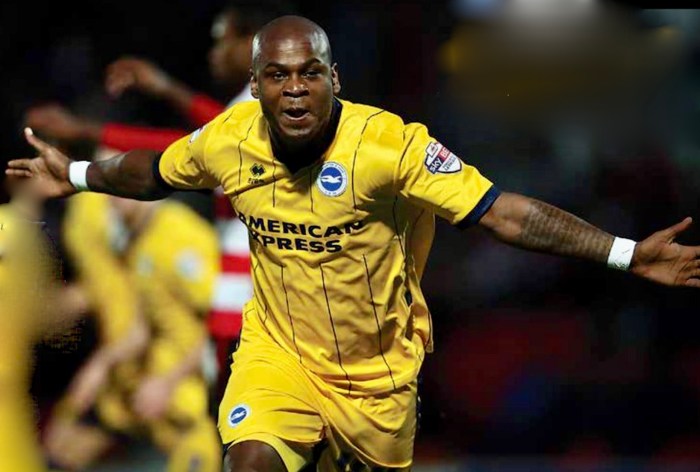
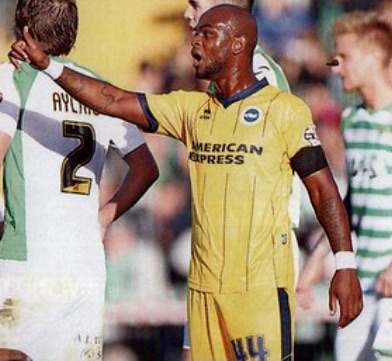
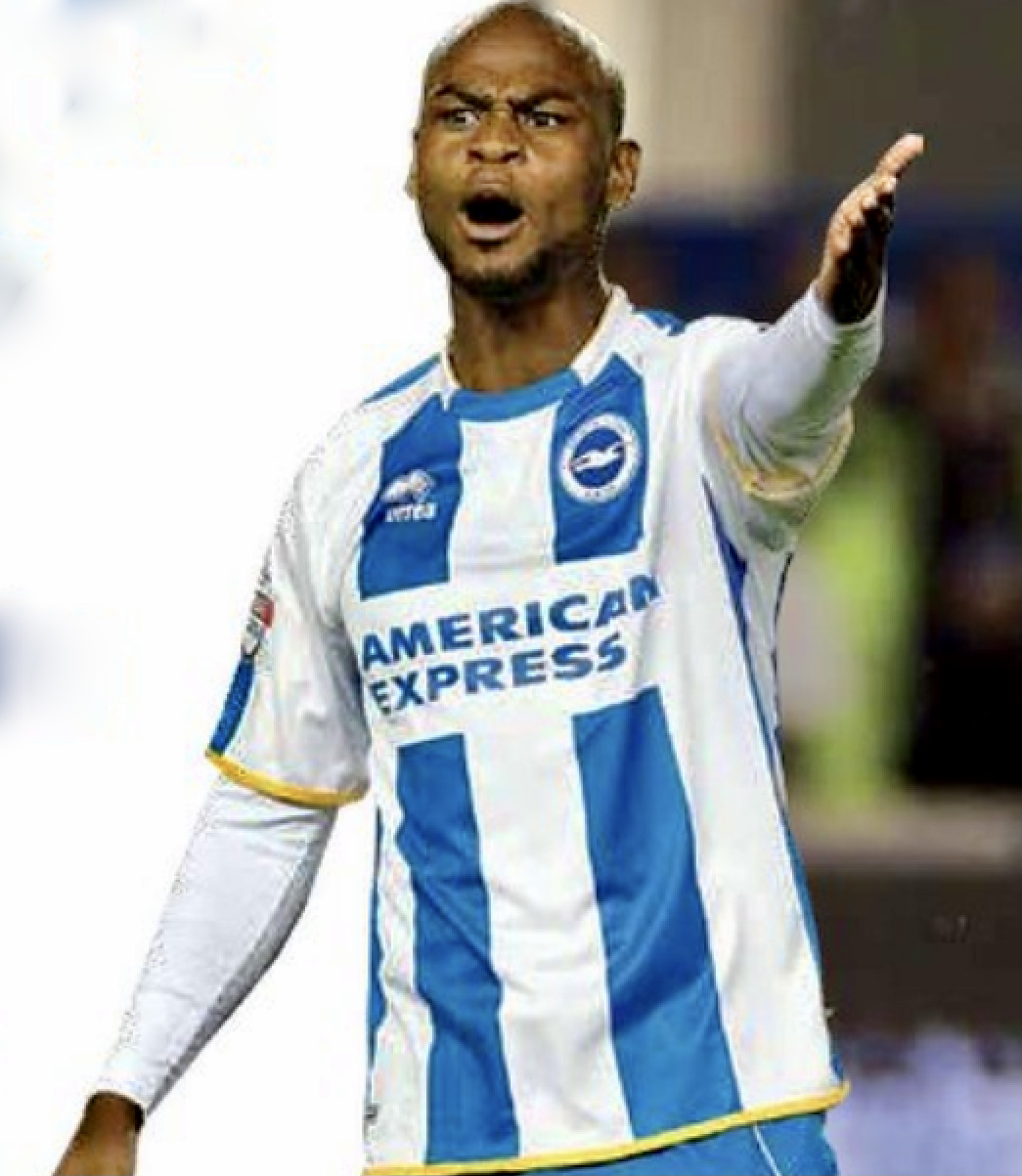
Maybe Lita’s Albion spell was cursed from the start when he was handed squad number 44 (all the fours, droopy drawers)?

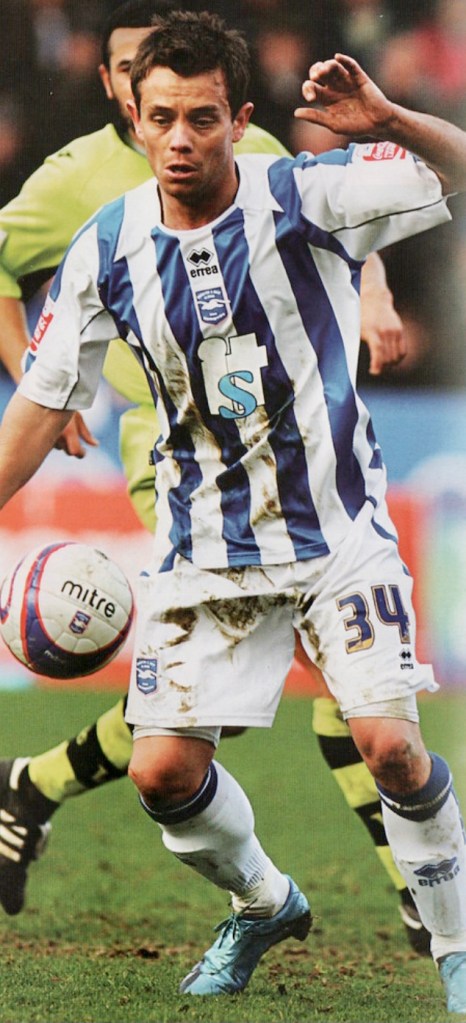
He was still only 28 when he arrived at the Amex with an impressive record of 101 goals in 330 league and cup games, 14 of which had been in Reading’s 2006-07 Premier League season.

“I know the Championship well,” Lita said in the matchday programme. “Consistency is the main thing at this level because everyone beats everyone; some teams start well and drop off, while others start badly then pick up a run of results. So, it’s all about putting a good run together then you never know what might happen.”

Lita followed in the footsteps of former Swansea teammates Kemy Agustien and Andrea Orlandi to the Amex, but he also knew Liam Bridcutt and Andrew Crofts from his time as a youngster at Chelsea.

He recalled summer training camps at Horsham with Bridcutt and he played in the same Chelsea junior side as Crofts. “They have both gone on to become really good players,” he said.

“It helps when you go to a club and know a few people but I think the style of play here will also suit me.

“It is similar to Swansea and the club only signs players here who know the system.

“I played against Brighton last season, scoring on my home debut for Sheffield Wednesday, and although we won that day, I was still impressed by the way the team played.” He had also played at the Amex before when he was on loan at Birmingham and (below right) was the subject of a page feature in the matchday programme.

Born in Kinshasa in the Democratic Republic of Congo on 28 December 1984, it was as a teenager on Chelsea’s books that he couldn’t believe his luck to be sharing a training pitch with Jimmy Floyd Hasselbaink and Eidur Gudjohnsen.

“I would go home and see them on TV and the next day I would be training with them,” he told The Guardian. “It was unbelievable.”

Reporter Jon Brodkin wrote: “Chelsea broke his heart by releasing him but his three years at the club he supports were hardly wasted. The thrill of being a ballboy was surpassed by training with the first team’s front two.”

Lita told him: “I was 15 and the academy director said he had spoken to my school and I could have a couple of days off a week to train with the first team and the ressies [reserves]. It was a great opportunity and I learned a lot from it.

“Hasselbaink’s finishing was unbelievable, he didn’t mess about. He could place it and smash it. I mainly did finishing with them, not much else, but I could see as well how professional they were and how they looked after themselves.”

After Lita’s release, he contacted a few clubs – Fulham were interested but didn’t offer a contract – and he was aware that after leaving Arsenal Andy Cole had made a new start to his successful career at Bristol City.

It was the Robins who gave Lita an opportunity and former Albion skipper Danny Wilson handed him his first team debut at the beginning of the 2002-03 season when he was still only 17.

His first league goal was a late winner on 28 September 2002 to secure a 3-2 victory after going on as a substitute at Port Vale (for whom an 18-year-old Billy Paynter had scored).

“The striker hit a glorious goal to end Vale’s hopes of a point after they had fought back to level matters just a minute earlier,” said the BBC report of the game.

It wasn’t until the following season that he was given a professional contract and it was only after Brian Tinnion succeeded Wilson as manager in 2004-05 that Lita established himself in the City side. He scored 29 goals in all competitions and that form earned him a call-up to the England under-21s, Lita having decided not to play for his birth country.

He scored on his debut on 8 February 2005 when he went on as a sub for Justin Hoyte in a 2-1 defeat against the Netherlands at Derby’s Pride Park.

Those goals also earned him a £1m move to Reading, even though Tinnion advised him against the move, believing a Premiership club would come in for him.

“Once I got down here, I knew it was right,” Lita told The Guardian. “I want to go a step at a time. Reading are a good club, they’re looking to get into the Premiership and that’s where I want to be.”

He went on to score 15 goals in 25 league and cup games (+ seven as a sub) as Reading topped the Championship, and he returned to the England under-21 fold in February 2006.

He was on home turf at the Madejski Stadium when he earned his second cap, again as a sub, replacing David Nugent in a 3-1 win over Norway (future Albion loanee Liam Ridgewell was among his teammates).

A year later, after finding the net in the Premier League with Reading, Lita got a third cap as a substitute (for James Milner) and scored again in a 2-2 draw against Spain at Pride Park. Liam Rosenior was also a substitute that day.

Lita’s first start for the under 21s came the following month, on 24 March, in a 3-3 draw with Italy in the first game played at the new Wembley Stadium, in front of 55,700. On 5 June the same year, Lita scored England’s fifth goal in a 5-0 win over Slovakia at Carrow Road after he’d gone on as a sub for Nigel Reo-Coker.

Lita was an overage player in the 2007 UEFA European Under 21 Championship: he missed an 88th minute penalty after going on as a sub in a 0-0 draw with the Czech Republic but scored in each of the three games he started: 2-2 v Italy, 2-0 v Serbia and 1-1 v the Netherlands (who won the tie 13-12 on penalties). But a full cap eluded him.

Lita was a regular throughout Reading’s first top-flight campaign. In a side that include Ivar Ingimarsson and Steve Sidwell, Lita scored 14 times in 26 league and cup starts plus 12 appearances off the bench.

But with Kevin Doyle and Dave Kitson the preferred strike duo in 2007-08, Lita’s game time was much reduced and he went on loan to Charlton in March 2008.

It was a similar story the following season when he scored seven times in 16 games during a three-month loan at Norwich City – the haul included a hat-trick against eventual champions Wolves.

The excellent Flown From The Nest website, that profiles former Norwich players, recalled how that treble attracted the interest of plenty of other clubs, but City boss Glenn Roeder said: “It’s a better problem to have than him not scoring and playing rubbish – then none of us want him. What can you do?

“He was brought here to score goals. He was a little bit rusty in his first game which was understandable. He did better in the second game against Bristol City when he had a couple of chances which unfortunately never went in, and then in the third game on Tuesday night, we saw the real Leroy Lita and what he is all about.”

Lita returned to Reading and played in a FA Cup third round defeat at Cardiff and although Sheffield United made a bid for him, he preferred to stay with the Royals.

Nevertheless, at the end of the season, he finally left the Madejski and headed to Teesside on a three-year deal.

On signing for Boro, Lita said: “The manager has been after me for about a year, it’s great to feel wanted. I have a lot of respect for the gaffer and I want to do well for him and the club.

“I aim to repay him for his faith in me with goals. That’s the main strength to my game and I’m looking forward to scoring goals for Middlesbrough.”

He told the Northern Echo: “I’m raring to go. I haven’t enjoyed the last two seasons one bit, but this is a fresh start and I’m excited about the challenge.

“Other clubs were interested in signing me, but there was only once place I wanted to go and that was Middlesbrough.”

Southgate added: “Leroy has a hunger to score goals and his goalscoring record in the Championship in particular is very strong.

“His record says he gets one in two at this level so that will be important for us. I think he has a point to prove and, when he’s fully fit, he will relish the challenge.”

It wasn’t long before Southgate was succeeded by Gordon Strachan but Lita made the second highest number of appearances (41) in that season’s squad and scored nine goals as Boro finished mid-table.

There was yet another managerial change the following season, with the return of former player Tony Mowbray, but Boro once again finished mid-table with a side that featured Joe Bennett at left back and Jason Steele in goal.

Lita scored 11 times in 40 matches, which was enough to attract newly-promoted Swansea. “I’ve had a good chat with Leroy,” said Mowbray. “He has a chance to play in the Premier League and good on him. His talent has earned him that chance.”

But he only scored twice in six starts (+ 12 appearances off the bench) all season and in September 2012, Lee Clark signed him on a three-month loan for Birmingham.

“I know Leroy very well having worked with him at Norwich during a loan spell in which he scored seven goals in 16 games,” said Clark. “He’s a proven goalscorer who has power and pace and there’s no doubt that he’ll add quality to my squad.”

Lita scored three goals in 10 games for Birmingham before being recalled early, but in late January 2013, he joined Sheffield Wednesday on loan until the end of the season.

Wednesday manager Dave Jones told BBC Radio Sheffield: “Leroy has a lot of experience at this level and the one above. It could be with a view to a permanent deal. This lets us have a look at him and he can have a look at us.” But he only scored twice in nine appearances for the Owls.

Released by Swansea at the end of the 2013-14 season, Lita was then reunited with Danny Wilson, manager at newly relegated League One Barnsley.

“He was my first manager and I like the way he works,” said Lita. “He’s got a lot of trust in me and I’ve got a lot of trust in him.

“I enjoyed my time under him as a youngster. He helped me a lot and helped me progress in my career so far. I just want to get back to playing football regularly again and I’m going to get that opportunity here.”

He scored in his first two league games but didn’t register again for 21 games. When Wilson was replaced by Lee Johnson in February 2015, within a matter of weeks Lita joined lowly Notts County on loan until the end of the season but was unable to prevent their relegation.

On expiry of his Barnsley contract, Lita moved to Crete side AO Chania in August 2015 but was back in England the following March, signing a short term deal with League Two Yeovil Town, where he scored once in eight games. That was his last league club in England.

He scored five goals in 21 games for Thai Premier League side Sisaket in 2017 and on his return to the UK turned out for a number of non-league clubs: Margate, Haverhill Rovers, Salisbury and Chelmsford City.

In May 2020, the Coventry Evening Telegraph hailed his signing for Nuneaton Borough, whose manager Jimmy Ginnelly told the newspaper: “His partner is from Nuneaton and they’ve recently moved into a house on The Longshoot, which is just five minutes from the ground, so this is a win-win situation for both parties.

“These sorts of players don’t come onto Nuneaton’s radar very often so we moved quickly and obviously all of us here at the Boro are very excited.”

He scored eight goals in 33 appearances for Nuneaton, went on to play for Southern League Premier Division Central rivals Stratford Town before moving on to Hednesford Town, where he’s still playing.

In March 2022, the Express and Star reported: “Lita lit up Keys Park last night as he smashed a debut hat-trick to help Hednesford to a 3-1 victory over Stourbridge.”

McGhee provided Albion platform for playmaker Mark Yeates

TRICKY playmaker Mark Yeates spent five years as a Tottenham Hotspur player but it was with Brighton that he played his first competitive football.

Yeates looked like a useful loan signing when he joined new manager Mark McGhee’s Albion squad in November 2003. He drew plenty of admirers and featured in 10 games over two months.

It wasn’t long before McGhee was talking about the possibility of signing him on a permanent basis, but Spurs had other ideas. He eventually had to leave north London to pursue his career but he ultimately made nearly 500 professional appearances.

Eighteen-year-old Yeates arrived on the south coast shortly after Zesh Rehman had also signed on loan (from Fulham), Albion having lost midfield duo Charlie Oatway and Simon Rodger to injuries.

The diminutive Irishman made his debut in McGhee’s first match in charge: a 4-1 defeat to Sheffield United at Withdean.

The matchday programme’s assessment was thus: “The second half was better. Mark Yeates moved into the centre of midfield and so had an opportunity to show what he can do. He could beat players, look up, and try a perceptive through ball. Wide on the left in the first half, he’d been exposed and given the ball away too often.”

On the day England won the Rugby World Cup, Yeates was one of six Albion players booked as the Seagulls beat Notts County 2-1 at Meadow Lane; an eventful game which saw Adam El-Abd make his league debut, Leon Knight score twice and John Piercy sent off for two bookable offences.

After only his third game, Yeates was off on international duty, playing for the Republic of Ireland under 19s away to France.

It was in early December that McGhee spoke about wanting to take Yeates on a permanent basis, telling the club’s website: “I’ve said already that I knew before he came here what a good player he is and I imagined he would do well in this team, and he has done that.”

McGhee told the Argus: “He has a kind of Gaelic confidence. Robbie Keane had it and Mark is similar in that respect.

“His character is perfect really for the way he plays. It goes with the ability and flair.”

Yeates hailed from the same Tallaght district of Dublin as Keane – a player McGhee knew well having given him his English football debut at 17 when manager of Wolves.

After extending his stay at the Albion to a second month, Yeates told the Argus: “Before I came here I had never really played in the centre of midfield. I usually play up front off a big man.

Yeates takes control watched by Adam Hinshelwood

“The gaffer tried me up front in the first half at QPR (in the LDV Vans Trophy) but we didn’t get the ball into mine and Leon’s feet, and with two little men you are not going to get much joy.

“At Tottenham we play with wingbacks and two holding midfielders and I am allowed a free role.

“I have to be a bit more disciplined here. Sometimes I can go running about a bit, it’s just up to the lads to call me back in to help out.”

Yeates appreciated the opportunity Albion had given him to taste senior football, telling the newspaper: “It’s great for me just to be getting first team football, plus the reason I am staying here is because they are a good bunch down here.”

He observed: “It’s a lot more fast and furious because everyone is playing for their living. You have to give a bit more and get more out of yourself which you probably wouldn’t get in a reserve game.

“In reserve football, players are going through the motions. It’s just a matter of playing a game.”

After he’d played his final game on loan, a 0-0 home draw with Oldham Athletic, the matchday programme observed: “Yeates showed some neat touches and was Albion’s most creative outlet once again.”

When Albion struggled to beat Barnsley 1-0 in the FA Cup, the matchday programme noted: “The passing abilities of Mark Yeates, and his desire to get into the penalty area, were sorely missed.”

Back at Spurs, Yeates had to wait until the very last game of the season to make his Premier League debut. He’d previously been an unused substitute when Glenn Hoddle’s Tottenham were thrashed 5-1 by Middlesbrough at the end of the 2002-03 season.

But in May 2004, David Pleat selected him to start in a side also featuring Ledley King, Jamie Redknapp, Christian Ziege, Jermain Defoe and Robbie Keane.

The fixture at Molineux ended in a 2-0 win for the visitors and Yeates helped Spurs take the lead against the run of play, laying on a cross for Keane to score against his former club. Defoe netted a second to seal the win.

Born in Tallaght on 11 January 1985, Yeates was the eldest son of former Shelbourne, Shamrock Rovers, Athlone Town and Kilkenny City striker Stephen Yeates, who died aged just 38 following a tragic accident, just as Mark was making his way through the youth ranks at Spurs.

The young Yeates first played competitive football with Greenhills Boys, a club who his grandfather and father had been involved with, and then moved on to Cherry Orchard, a Dublin side renowned for producing a number of players who went on to have successful professional careers.

In an extended interview with Lennon Branagan for superhotspur.com, Yeates recalled how Tottenham scout Terry Arber did a two-day coaching course at Cherry Orchard, after which he, Willo Flood (later to play for Manchester City and Dundee United) and Stephen Quinn (who went on to play for Sheffield United) were invited to London for a trial with Spurs.

Yeates was only 15 but he was taken on and had to up sticks from home and move into digs in London.

“As a skilful dribbler who was regularly a source of assists and goals in the youth set-up, Yeates quickly demonstrated to the coaching staff at Tottenham that he possessed the raw materials required to graduate to the next level,” wrote Paul Dollery in an October 2021 article for the42.ie.

Sadly, his progress through the youth ranks was interrupted by the shock news of his father’s death in an accident. Yeates told Dollery how it could have all gone the wrong way, but he thankfully remained focused.

“It was really tough, but you’d ask yourself what else you could do if you didn’t keep going – go home to your estate in Tallaght, drink cans every weekend and get roped into whatever else? 

“I could have done that, or I could look at the three-year contract that was on the table at Tottenham and get my head down to go after that.

“It was hard, but a bit of willpower and the desire to be a footballer – which I had since I started kicking a ball – got me through it.”

In his interview with Branagan, Yeates said: “I started to train with the first team at a decent age and really being involved quite a bit as well as being a regular with the reserves group with Colin Calderwood and Chris Hughton at the time.

“I’ve just got so many unbelievable things to say when I look back now and I can only say so many good things about Spurs because it sort of built me and gave me so much.”

It was in January 2005 when Yeates next appeared for the Spurs first team, Martin Jol sending him on as a sub in the third round FA Cup tie against Brighton at White Hart Lane when Tottenham edged it 2-1.

The following week he once again replaced Pedro Mendes as a sub when a star-studded Chelsea side won 2-0 on their way to winning their first Premier League title under Jose Mourinho. He also got on in the next game, as Spurs crashed 3-0 at Crystal Palace,

While he could have continued to bide his time at Spurs, he preferred to go out on loan again to get some games under his belt. He played four times for League One Swindon Town and then had a season-long loan at Colchester United, helping them to promotion from League One in 2005-06 in a squad which included Greg Halford and Chris Iwelumo.

Further loan spells followed at Hull City and Leicester City but, in the summer of 2007, he joined Colchester on a permanent deal.

Yeates scored 21 goals in 81 games for United drawing him to the attention of future England manager Gareth Southgate who took him to Middlesbrough (who had just been relegated from the Premier League) for a £500,000 fee.

On signing a three-year deal, Yeates said: “This is massive for me. There was interest from other clubs but there was only one thing on my mind once my agent told me Middlesbrough had been in touch.

“This club belongs in the Premier League, the fans deserve to be there and I can’t wait to play in front of them. It’s a Premiership club in my mind – all you have to do is look around the facilities, the training ground, the stadium, everything is spot on.”

Yeates reckoned his versatility would suit Boro. “I can play on the right or the left,” he said. “I played a full season’s Championship football on the right for Colchester, while I played most of last season on the left. But then, in probably eight of the last 10 games, I played behind the front two.

“For a winger, I think my goals record is quite good,” he added. “I got 14 last season and nine by Christmas the season before I got injured.

“I like to get on the ball and take on defenders. The number one job of being a wide man is creating chances and I certainly like to do that, but scoring goals isn’t a bad habit to have either. I promise the fans I’ll give 110 per cent. I’m hungry to prove that I deserve to be here.”

Fine words but it didn’t pan out well for him because Southgate was sacked in October 2009 and his successor Gordon Strachan shunned the Irishman. By January 2010, Yeates was on the move again, this time to Sheffield United.

Blades boss Kevin Blackwell told the club’s website: “He’s a player we have looked at before, I’ve had my eye on him for a year or two but we couldn’t agree terms with Colchester. I’m delighted to finally get my man, although I was surprised that Boro would let him go.”

Yeates was reunited with Stephen Quinn and another former Albion loanee, Darius Henderson, was up front for the Blades. Yeates reckoned he had his best ever spell playing under Blackwell’s successor, Gary Speed.

“He was just an unbelievable man and, going back to when I was at Tottenham as a young lad, he was the prime example of the player you should aspire to be like,” he said. “He had faith in me.”

Unfortunately, when Speed left to manage Wales, former Albion boss Micky Adams took charge and the pair didn’t see eye to eye, as he explained to watfordlegends.com.

“I was at Sheffield United and it was the season when we went from the Championship to League One. Micky Adams was the manager and we weren’t getting on. In the summer Micky was sacked and Danny Wilson came in as manager.

“I trained for the full pre-season with the club, but I was aware that there were a couple of clubs keeping an eye on my situation throughout the summer. It was Blackpool and Watford who put in offers for me, and I spoke with both clubs, but when I met Dychey (Sean Dyche) I decided to sign for Watford.

“I still had a house in Loughton so overall it was a good opportunity to get back down south, and everything that Sean said to me on the phone really appealed to me.”

Yeates was at Watford for two seasons, initially under Dyche and then Gianfranco Zola, but his contract wasn’t renewed in the summer of 2013 and he decided to link up once again with his former Colchester and Hull boss, Phil Parkinson, at League One Bradford City.

He was one of the goalscorers for Bradford when they completed a massive upset by beating Premier League table toppers Chelsea 4-2 at Stamford Bridge in the fourth round of the 2015 FA Cup.

However, released that summer, he switched across the Pennines to join Oldham Athletic and six months later was on the move again, this time to Blackpool.

“Since leaving Hull it’s been a bit up and down,” he told Branagan. “I was on a short term deal at Oldham which went alright before then deciding to go to Blackpool because of a longer contract which was put in front of me which I don’t regret, as I’ve been living around the St Annes area now for five years and my children have grown up here and are at school and it’s a great area to raise a family in.”

His final league club as a player was Notts County, who he joined on a short-term deal in January 2017, and he appeared in 11 games plus three as a substitute as new manager Kevin Nolan’s side turned what at one point looked like relegation from the league into a 16th place finish (although two years later County lost the league status they’d held for 157 years).

After playing non-league for Eastleigh, in 2019 Yeates moved closer to home and signed for AFC Fylde. In September 2021, he became an academy coach at Fleetwood Town, although he continued to keep his hand in as a player at Bamber Bridge.

Reflecting on the player’s career, Dollery wrote: “With a ball at his feet, Yeates was one of the most technically accomplished Irish players of his generation, cut from the same cloth as the likes of (Wes) Hoolahan and Andy Reid.

“That such a claim isn’t backed up by international achievements can perhaps be partly explained by his own admission that he didn’t marry his talent with a devotion to other aspects of the game that were beginning to play a more prominent role in the life of a professional footballer.

“If fitness coaches scheduled a gym session, Yeates felt his time would be better spent by staying on the training pitch to perfect his free kicks. A predilection for crisps, fizzy drinks and nights out didn’t aid his cause either.”

Yeates recognised he could have done things differently and said: “The reality was that I didn’t live like a saint.

“Everyone who knows me would know that that’s just not my personality. I’ve always been a fella who likes a bit of craic; just a normal Irish lad from an estate who happened to love playing football.”

• Pictures from the Albion matchday programme and various online sources.

Why John Gregory was a hero and a Villain

ANY Brighton player who scores twice in a win over Crystal Palace is generally revered forever. The sheen John Gregory acquired for that feat was somewhat tarnished when he was manager of Aston Villa.

Gregory’s brace in a vital 3-0 win over Palace on Easter Saturday 1981 helped ensure the Seagulls survived in the top-flight (while the Eagles were already heading for relegation).

In 1998, though, he was caught up in a wrangle over Brighton’s efforts to secure a sizeable fee for their input to the early career of Gareth Barry, who’d joined Villa while still a teenage prodigy.

Albion’s chairman Dick Knight pursued the matter through the correct football channels and eventually secured a potential seven-figure sum of compensation for the St Leonards-born player, who spent six years in Brighton’s youth ranks but refused to sign a YTS deal after Villa’s approach.

The Football League appeals tribunal met in London and ruled the Premiership side should pay Brighton £150,000 immediately, rising to a maximum £1,025,000 if he made 60 first-team appearances and was capped by England. Brighton were also to receive 15 per cent of any sell-on fee.

“It was what I had hoped for, although I hadn’t necessarily expected the tribunal to deliver it,” Knight said in his autobiography, Mad Man – From the Gutter to the Stars. “Villa certainly hadn’t; Gregory was furious and stormed out of the building.”

Gregory mockingly asserted that Knight wouldn’t have recognised the player if he’d stood on Brighton beach wearing an Albion shirt, a football under his arm and a seagull on his head.

“For a former Albion player, Gregory surprisingly seemed to take it as a personal affront,” said Knight. “His position was patronising and the behaviour of Aston Villa scandalous.”

Although Villa paid the initial instalment, they didn’t lie down and go with the ruling and ultimately Knight ended up doing a deal with Villa chairman, ‘Deadly’ Doug Ellis, for £850,000 that gave Brighton a huge cash injection in an hour of need.

Barry, of course, ended up having a stellar career, earning 53 England caps, making 653 Premier League appearances and captaining Villa during 11 years at the club.

Knight’s settlement with Ellis meant Brighton missed out on £1.8 million which they would have been entitled to when Barry was sold on to Manchester City in 2009.

But back to Gregory. He had a habit of returning to manage clubs he had previously played for. Villa was one (between February 1998 and January 2002). He also bossed QPR, who he played for after two years with the Albion, and Derby County, who he’d played for in the Third, Second and First Divisions.

His first foray into management had been at Portsmouth. He then worked as a coach under his former Villa teammate Brian Little at Leicester City (1991-1994) and Villa (1994-1996) before becoming a manager in his own right again during two years at Wycombe Wanderers.

The lure of Villa drew him back to take charge as manager at Villa Park in February 1998 when he was in charge of players such as Gareth Southgate, Paul Merson and David Ginola.

During his near four-year reign, Villa reached the 2000 FA Cup Final – they were beaten 2-0 by Chelsea – but won the UEFA Intertoto Cup in November 2001, beating Switzerland’s Basel 4-1.

Although his win percentage (43 per cent) was better at Villa than at any other club he managed, fan pressure had been building when league form slumped as the 2001-02 season went past the halfway mark and a ‘Gregory out’ banner was displayed in the crowd.

Gregory eventually bowed to the pressure and tendered his resignation, although chairman Ellis said: “John’s resignation is sad. It was most unexpected but has been amicable.”

He stepped out of the frying pan into the fire when he took charge of an ailing Derby County, who were bottom of the Premier League, and, after a winning start, he wasn’t able to keep them up.

County sacked him in March 2003 for alleged misconduct but in a protracted legal wrangle he eventually won £1m for unfair dismissal. However, the ongoing dispute meant he couldn’t take up another job and he spent much of the time as a TV pundit instead.

It was in September 2006 that he finally stepped back into a managerial role, taking over from Gary Waddock as QPR manager, and while he managed to save them from relegation from the Championship, ongoing poor form the following season led to him being sacked in October 2007.

It only emerged in 2013 that five years earlier Gregory had discovered he was suffering from prostate cancer. Nevertheless, he continued working, managing two clubs in Israel and one in Kazakhstan.

He had one other English managerial job, taking charge of Crawley Town in December 2013, although ill health brought his reign to an end after a year and former Albion striker Dean Saunders replaced him.

Two and a half years after leaving Crawley, Gregory emerged as head coach of Chennaiyin in the Indian Super League. With former Albion favourite Inigo Calderon part of his side, he led them in 2018 to a second league title win, and he was named the league’s coach of the year.

Born in Scunthorpe on 11 May 1954, Gregory was one of five sons and two daughters of a professional footballer also called John who had started his career at West Ham.

The Gregory family moved to Aldershot when young John was only two (his dad had been transferred to the Shots) but then moved to St Neots, near Huntingdon, when his father took up a job as a security guard after retiring from the game.

Young Gregory went to St Neots Junior School and his first football memories date from the age of nine, and he was selected as a striker for the Huntingdonshire County under 12 side.

He moved on to Longsands Comprehensive School and played at all age levels for Huntingdon before being selected for the Eastern Counties under 15 side in the English Schools Trophy.

Northampton Town signed him on apprentice terms at the age of 15 and he progressed to the first team having been converted to a defender and remained with the Cobblers for seven years.

It was in 1977 that Ron Saunders signed him for Villa for £65,000, which was considered quite a sum for a Fourth Division player.

Gregory famously played in every outfield position during his two years at Villa Park and he welcomed the move to newly promoted Albion because it finally gave him the chance to pin down a specific position.

Chris Cattlin had been right-back as Albion won promotion from the second tier for the first time in their history but he was coming to the end of his career and, in July 1979, the Albion paid what was at the time a record fee of £250,000 to sign Gregory to take over that position. Steve Foster joined at the same time, from Portsmouth.

“I wore every shirt at Villa,” Gregory told Shoot! magazine. “I never had an established position. I was always in the side, but there was a lot of switching around. When Alan Mullery came in for me, he made it clear he wanted me to play at right-back.”

The defender added: “I respect Alan Mullery as a manager and I like the way he thinks about the game.

“Brighton are a very attacking side. There’s nothing the boss loves more than skill. That comes first in his mind. He wants all ten outfield players to attack when they can. That attitude, more than anything else, played a big part in me coming here.”

Gregory started the first 12 games of the season but was then sidelined when he had to undergo an appendix operation.

He returned as first choice right-back in the second half of the season and had a good start to the 1980-81 campaign when he scored in the opening 2-0 home win over Wolves.

His second of the season came against his old club, a header from a pinpoint Gordon Smith cross giving Albion the lead at Villa Park against the run of play. But it was to be an unhappy return for Gregory because the home side fought back to win 4-1.

In November 1980, it looked like Gregory might leave the Goldstone in a proposed cash-plus-player swap for QPR’s Northern Ireland international David McCreery, but the player, settled with his family in Ovingdean, said he wanted to stay at the Goldstone.

“The offer Gregory received was fantastic, but he prefers to stay with us,” chairman Mike Bamber told the Evening Argus. “I regard this as a great compliment.”

The following month, he got the only goal of the game in a 1-0 Boxing Day win at Leicester but in March, with Albion desperate to collect points to avoid the drop, Mullery put Gregory into midfield. He responded with four goals in seven matches, netting in a 1-1 draw away to Man City, grabbing the aforementioned pair at Selhurst Park on Easter Saturday and the opener two days later when Leicester were beaten 2-1 at the Goldstone.

Little did he know it would be his last as a Brighton player because within weeks Mullery quit as manager and Bamber finally couldn’t resist QPR’s overtures.

“I know Alan Mullery turned down a bid but a couple of days after he resigned chairman Mike Bamber accepted QPR’s offer,” Gregory recalled in an interview with Match Weekly. “I hadn’t asked for a move so the news that I was to be allowed to go was quite a surprise.”

He added: “It was a wrench. I found it difficult to turn my back on the lads at Brighton.

“I enjoyed two years at the Goldstone Ground and made many friends, but the prospect of a new challenge at Rangers appealed to me.”

Gregory admitted he used to watch Spurs as a youngster and ironically his two favourite players were Venables and Mullery – and he ended up playing for them both.

Although he dropped down a division to play for QPR, he said: “Rangers are a First Division set up and I’m sure we’ll be back soon.”

Not only did he win promotion with Rangers in the 1983-84 season but, at the age of 29, he earned a call up to the England set-up under Bobby Robson.

He won six caps, the first three of which (right) came against Australia when they played three games (two draws and an England win) in a week in June 1983, in a side also featuring Russell Osman and Mark Barham.

Gregory retained his midfield place for the European Championship preliminary match in September when England lost 1-0 to Denmark at Wembley but he was switched to right-back for the 3-0 away win over Hungary the following month.  

His sixth and final cap came in the Home International Championship match in Wrexham in May 1984 when he was back in midfield as England succumbed to a 1-0 defeat to Wales, a game in which his QPR teammate Terry Fenwick went on as a substitute to earn the first of 20 caps for England.

Gregory continues to demonstrate his love for the game, and particularly Villa, via his Twitter account and earlier in the 2021-22 season, his 32,000 followers saw a heartfelt reaction to the sacking of Dean Smith.

“Dean Smith gave Aston Villa Football Club the kiss of life when the club was an embarrassment to Villa fans and he rekindled the love and passion and success on the field where so many others had failed hopelessly,” said Gregory.

• Pictures from the Albion matchday programme, Shoot! magazine and various online sources.

The only way was up after Tomori’s awkward Albion debut

FIKAYO TOMORI couldn’t have had a worse debut for Brighton.

The teenage defender on loan from Chelsea was booked on 37 minutes and scored an own goal in the 62nd as Brighton were humiliated 3-1 in the FA Cup by non-league opponents, National League Lincoln City.

Tomori, playing at right back, sliced Nathan Arnold’s cross past a startled Casper Ankergren who’d only just come on as a sub for the injured Niki Mäenpää.

In fact, Tomori wasn’t on the winning side in any of the three matches he started for the Seagulls.

However, he saw plenty of action when making seven appearances off the bench. For example, he played an hour in Albion’s 3-1 home win over Birmingham City when sickness forced off Lewis Dunk on the half-hour mark and slotted in alongside Uwe Huenemeier, who himself was deputising for injured Shane Duffy.

“We knew Lewis wasn’t quite right before the game and everyone had told me to be ready,” he said later. The matchday programme observed: “Tomori looked as if he’d been playing all season alongside Uwe, such was their understanding.”

The two were also paired together in the second half of the 2-1 win away to QPR when Tomori replaced Dunk at half-time. And Tomori lined up alongside Dunk in the centre of defence for the last game of the season at Villa Park when Jack Grealish’s last-minute equaliser denied Albion the Championship title.

Nevertheless, the talented youngster, who went on to be capped by England, was recognised as having played his part in the Albion winning promotion that 2016-17 season.

“I would have liked to play more football but this team’s pushing for promotion and I knew before I came here that getting in the side was going to be difficult,” he said in a matchday programme interview.

“I’ve had to be make sure I’ve been ready when called upon and take any opportunities that have come my way. It’s a challenge I’ve embraced. The manager has been really good to me and I’ve taken a lot of confidence from the fact that when we have had injuries in defence, I’m pretty much the first player to come on.

“I’ve really enjoyed it here. Being involved with a club that’s going for promotion has been a different sort of challenge to what I’ve been used to.”

Reflecting on that period a few years later, Tomori said: “It was a big part of my development, playing every day with professionals who have been playing the game for 10, 15 years.

“That focus, will to win and need to be at the top of your game every game was something I had to learn, and it was really important for my development.”

He added: “They were trying to get their first promotion to the Premier League. The team was really together and focused, and when the games came, they were really on it.

“It was my first taste of senior football and being in a senior changing room and being part of a matchday and stuff like that. It was a great learning experience and obviously we got promoted which was great.”

Born in Calgary, Canada, on 19 December 1997 to wealthy Nigerian parents, Yinka and Mo, who originate from Osun in the south west region of Nigeria, Tomori was less than a year old when the family moved to England.

The family home was in Woolwich and he enjoyed a kickabout with his friends from the age of five or six before starting organised football with Riverview United. The youngster admitted he modelled his game on Thierry Henry.

“I wore my socks above my knees like him, I wore gloves like him even if it wasn’t cold, and I celebrated like him,” he said. “I loved everything about him. Back then it was all about having fun and never did I think that one day I would end up playing for Chelsea.”

Tomori was taken on by the Chelsea academy as a seven-year-old but it wasn’t all about football and, after passing his 11+ exams, he attained 10 GCSEs (six As, three Bs and a C) at Gravesend Grammar School, where he was a pupil between 2009 and 2014.

Assistant head James Fotheringham told The Sun Tomori was the first Gravesend pupil to “really make it” as a footballer, pointing out: “We’ve had a number of boys promised the world by different football clubs and then they get dropped and end up nowhere.

“I asked Chelsea, ‘What makes Fikayo different?’ The guy said, ‘Because he’s got all the attributes of a footballer’s skills but he’s incredibly bright and he just reads the game. He’s got a couple of yards on people because he’s so bright’.”

At Chelsea, Tomori bonded with Tammy Abraham from an early age. They became good friends and made their way through the ranks and were part of the team that recorded back-to-back wins in the UEFA Youth League and the FA Youth Cup in 2015 and 2016.

The 2015-16 season saw Tomori named the Chelsea Academy Player of the Year and he rounded it off by making his first team debut as a substitute against Leicester City on the final day. He described it as “the proudest moment of his career” and explained: “To be out there playing with the likes of Eden Hazard and Willian was a fantastic feeling for me and my family.”

As Albion adjusted to the demands of the Premier League, Tomori remained in the Championship having gone on loan to a Hull City side battling to avoid the drop – a very different experience to his time with the Seagulls.

“My first full season on loan was at Hull and it was my first time away from home too,” he said. “We were hovering over the relegation zone for the whole season, so that was a different kind of challenge mentally.

“You weren’t sure if you were going to be in the team the next week if we had lost the game, because the club needed the points to stay up.

“Those loans really gave me a good outlook on football. Coming from Chelsea, you’re winning a lot of games and trophies, and are protected in a way. Those loans were what moulded me as a person and as a man and made me grow up a lot quicker.”

Tomori’s rapid progress earned him England international recognition and, in 2017, he was in the England under 20 team who won the World Cup in South Korea and in 2018 was with the under 21s when they won the Toulon tournament.

As a forerunner to his breakthrough at Chelsea, Tomori spent the 2018-19 season on loan at Derby County, where Frank Lampard had taken over as manager.

Fikayo played a total of 55 league and cup matches as County made it all the way to the play-off final where their tilt for promotion to the Premier League was finally quashed when Aston Villa beat them 2-1 at Wembley.

Nevertheless, the young defender was named as Derby’s Player of the Year, and perhaps it was no surprise that when Lampard’s next move was to become manager of Chelsea, he was quick to put Tomori into the first team at Stamford Bridge.

The majority of his 27 matches for Chelsea came in that 2019-20 season, and, although defending might have been his priority, he popped up with a couple of goals. A long-range screamer he scored against Wolves was voted Chelsea Goal of the Year.

The same season, Tomori stepped up to the full England side and made his debut as an 84th-minute substitute for Trent Alexander-Arnold in the 4-0 away win against Kosovo in a Euro 2020 qualifier in November 2019. In doing so, he became the 50th Chelsea player to be capped by England.

However, it was another two years before Gareth Southgate selected him again, by which time he had moved to AC Milan.

After falling out of contention at Chelsea, he joined the Italian side on loan initially in January 2021 but then made the move permanent in June 2021, signing a four-year deal.

In a lengthy interview with Sky Sports, he spoke about how his career had turned round after the disappointment of losing his place at Chelsea.

“It was a difficult time – every footballer wants to play, and every footballer wants to show themselves on the pitch,” he said.

“When you are not able to do that, it is difficult – and being able to overcome and forget about that is part of the reason why it is now going so well.

“I didn’t really dwell on it and just moved on and put it as part of football, part of life.

“I had a really good support system with my family and my friends – and now I’ve overcome that I want to take it further and keep progressing.”

On 9 October 2021, Tomori was a 60th minute substitute for John Stones in England’s 5-0 thrashing of Andorra, when his good friend Abraham was among the scorers.

The pair were up against each other 22 days later when Tomori’s Milan beat Abraham’s AS Roma 2-1 in a Serie A clash. Zlatan Ibrahimovic scored his 400th league goal (and 150th in Italian football).

Determined Joe pursued his dream to the top

JOE BENNETT played more league matches (41) than any other outfield Brighton player during the 2014-15 season.

Not bad for a loan signing who’d been edged out at Aston Villa after a season in their first team.

Bennett’s appearance record for the Seagulls was perhaps even more noteworthy in that it spanned the reigns of three managers.

Brought in by Sami Hyypia, the defender retained the left-back berth during Nathan Jones’ temporary spell in charge right through to the end of the season after Chris Hughton had taken over.

Bennett hasn’t been afraid to travel the length and breadth of the country plying his trade as a footballer.

It all began in his home town, Rochdale, where he was born on 28 March 1990. His early promise with a football saw him join up with the under-eights at their centre of excellence.

When he was 10, his parents separated and he moved to the north east to live with his mum and stepdad in Swainby, eight miles north east of Northallerton.

He quickly got fixed up with Sunday league side Northallerton Town. One of their coaches, Gary Ramsbotham, also scouted for Middlesbrough and through him Bennett went for a trial and got taken on.

His progress suffered a setback when he was 15. He was de-registered by Boro and had a year away from the club, during which time he worked hard on his fitness and strength before being taken back on.

“The year away really helped me focus on my football and I realised then how badly I wanted to make it,” he told Tony Higgins in an interview for gazettelive.co.uk.

As he progressed through the youth ranks, Bennett, who’d originally been a striker, was converted to a left-back by Boro coach Steve Agnew.

He also had a perfect work experience stint from school when he got to go training with Boro’s under 18 side, and he relished the opportunity of being a ballboy at Riverside home games.

Eventually, he made it to the first team, Gareth Southgate giving him his debut as a substitute in the final game of the 2008-09 Premier League season against West Ham, although Boro had already been relegated by then.

Bennett thought he’d get chances to play in the Championship, but new boss Gordon Strachan turned to more experienced players, and Bennett only made 13 appearances in 2009-10.  

It was a different story following the arrival of Tony Mowbray and the young full-back was a regular over the following two seasons, eventually starting 84 matches for Boro and going on as a sub eight times.

He earned the club’s young player of the year title at the end of the 2010-11 season and the North East Football Writers’ Association’s young player of the year accolade in 2011-12.

2011 was a good year for him because he also caught the eye of the international selectors and won three caps for England under-21s.

His debut came in a 1-0 defeat away to Italy on 8 February 2011, he was a sub for Ryan Bertrand in England’s 2-1 home defeat to Iceland on 28 March, and he started the 5 September game against Israel at Barnsley’s Oakwell ground which England won 4-1, with Jonjo Shelvey and Ross Barkley pulling the strings in midfield.

In August 2012, Premier League Aston Villa paid £3m to take him to Villa Park. Boss Paul Lambert told avfc.co.uk: “Joe’s a really good player, young and hungry to succeed and he’s exactly the type of player we want here at the football club.

“There’s no doubt in my mind that he will thrive in this environment and he fits in exactly with what we are trying to build here.

“His energy level is really high and he can get up and down the pitch really well, which will be important for the team and important in terms of how we want to play as a team.

“He’s an exciting signing for the club and I’m really pleased we’ve been able to take him here.”

While Bennett made 30 appearances for Villa in his first season, increased competition and back and knee injuries restricted his involvement in 2013-14 to only seven matches.

At the start of the 2014-15 season, Albion had been expecting Irish international Stephen Ward to join permanently after his season on loan from Wolves. But his last-minute u-turn en route to putting pen to paper on the deal meant the Seagulls were in the market for a new left-back because new boss Hyypia wanted someone more experienced than Adam Chicksen.

With playing time at Villa again looking like only being sporadic, Bennett went along to Elland Road on 19 August 2014 and liked what he saw as Albion won 2-0 in what would turn out to be one of the few decent performances under Hyypia.

“I went to watch them against Leeds and I think that just made me realise what a good team they are,” said Bennett. “They just kept the ball really well, from the back to the front, defended well and they looked like they had a lot of energy.

“The full-backs like to go forward as well which is part of my game as I like to go forward and get involved a bit more up the pitch, so it was nice to see.

“I spoke to the manager and he told me a bit about how he likes the team to play and how I could fit in to that, and hopefully I can.”

After the Hyypia reign came to an early end, Bennett remained suitably diplomatic in interviews and in a matchday programme feature spoke about the positive influence on his game of former full-back Hughton.

“Obviously it’s good for me on a personal level having a former defender as manager,” he said. “He knows his stuff and is there to give me plenty of advice, especially in the left-back role. Since the gaffer came in he’s been working hard on defensive shape and being more compact as a team.”

He spoke about Hughton’s greater emphasis on defending compared to Hyypia’s desire for the full-backs to push up. “I’ve got a more defensive role now but I’m really enjoying my football under Chris. I feel I’m learning all the time,” he said.

At one point it looked like Bennett might join Albion on a permanent basis, but when Tim Sherwood took over from Lambert, he indicated the full-back may yet have a future at Villa Park.

The new Villa boss ran his eye over the defender and said: “Joe has done very, very well. I am now looking forward to seeing him in pre-season.”

He did enough to earn a one-year contract extension and scored his first goal for the club in a 5-3 League Cup win over Notts County. But, with Aly Cissokho still ahead of him in the pecking order, and with only an hour to go before the end of the August transfer window, Bennett was loaned to newly-promoted AFC Bournemouth.

Ostensibly he was signed as cover for Tyrone Mings and Charlie Daniels, but he hoped the move would give him the opportunity to play regularly in the Premier League.

“I’m really excited about the prospect of playing for Bournemouth and hopefully helping them perform well this season,” he told Villa’s website. “They’ve already made a positive start to the new season and, like everyone else, I’ve been really impressed with the fantastic job Eddie Howe has done. They have a really good side.”

Unfortunately, it didn’t unfold how Bennett had hoped. He didn’t make any appearances for Bournemouth and returned early to Villa Park after suffering an achilles tendon injury.

Recovered from the injury, Bennett joined Sheffield Wednesday on loan in mid-January 2016 until the end of the season. Again, a permanent move looked on the cards, especially when new Villa boss Roberto Di Matteo indicated he wouldn’t be part of his first-team plans.

Villa chairman Tony Xia blocked the move, not wishing to sell to a Championship rival, but, within a fortnight, Bennett moved on a free transfer to fellow Championship side Cardiff City. A calf injury meant he had to wait two months before making his debut, but he went on to spend an eventful five years in South Wales, riding a rollercoaster emotionally, on and off the field.

Nevertheless, his popularity with the Bluebirds was perhaps best encapsulated by chairman Mehmet Dalman who described him as “the best left back in the league”.

Bennett endured a somewhat turbulent relationship with boss Neil Warnock, although he admitted in an extended interview with Oscar Johnson: “He is a nice, genuine and down-to-earth guy. He was really good to me during his time here.

“At first, I don’t think he really fancied playing me to be honest, but I was the only left-back at the club, so he didn’t have a choice.

“Our relationship got better as it went along and he was really good for me both personally and as a player.”

That didn’t seem to be the case in January 2018 when Bennett was in the headlines for the wrong reason. He escaped what looked like a straight red card for a bad foul on Leroy Sane in a FA Cup tie against Manchester City but eventually saw red for a second booking, which incurred Warnock’s wrath.

“I was disappointed he got sent off at the end,” said Warnock. “Obviously he doesn’t want to go to Leeds next weekend, because it was an absolutely pathetic challenge when on a booking. To do something like that I think is disrespectful to teammates.”

Even so, Bennett was a regular fixture in defence during Cardiff’s brief spell in the Premier League, playing 30 of the 38 matches.

“Being relegated after one season was obviously gutting, but nobody had given us a chance of staying up before the season began, so to battle as long and hard as we did was definitely something to be proud of,” he said.

“We had a really good team and got some really good results over the course of the season. I think that, with a little bit of luck, we could maybe have stayed up. If VAR had been in use, we might have done it because we had some horrible decisions go against us.”

In March 2019, Bennett opened up to Dominic Booth about how it felt playing against the backdrop of losing the father who had first urged him to pursue his dream of becoming a professional footballer.

He remained with Cardiff and was enjoying a new lease of life after Mick McCarthy’s appointment as manager when he suffered an anterior cruciate knee ligament injury in March 2021 that put him out of the game for the rest of the season.

After surgery, he made a swift-than-expected recovery and, even though he’d been given a free transfer at the end of his contract, he continued his recovery by training with the Bluebirds.

“The club had a duty of care to aid the player’s rehabilitation and, as such, Bennett has been at the club’s Vale of Glamorgan HQ gradually working his way back to fitness,” reported walesonline.co.uk.

McCarthy explained that a new deal had been in the offing before the injury, but it never got signed. “I was quite sad about it because I spoke to Benno when I came in, I knew his contract was running out,” he said. “I discussed with him about staying, then injury comes and it changed it all.”

Bennett was not the only departure at the end of the season, and a statement on the club website read: “We would like to place on record our sincerest thanks and best wishes to Sol Bamba, Joe Bennett and Junior Hoilett who will be moving on this summer upon the expiration of their current deals.

“The three players joined us in 2016 and would go on to become key figures in our 2017-18 promotion squad. Between them they made a total of 478 appearances across a five-year period, representing a significant contribution to the club’s recent progress and history.”

Bennett subsequently moved north and signed a two-year deal with Wigan Athletic.